TALES OF THE UNEXPECTED RUSSIAN SURPRISE?
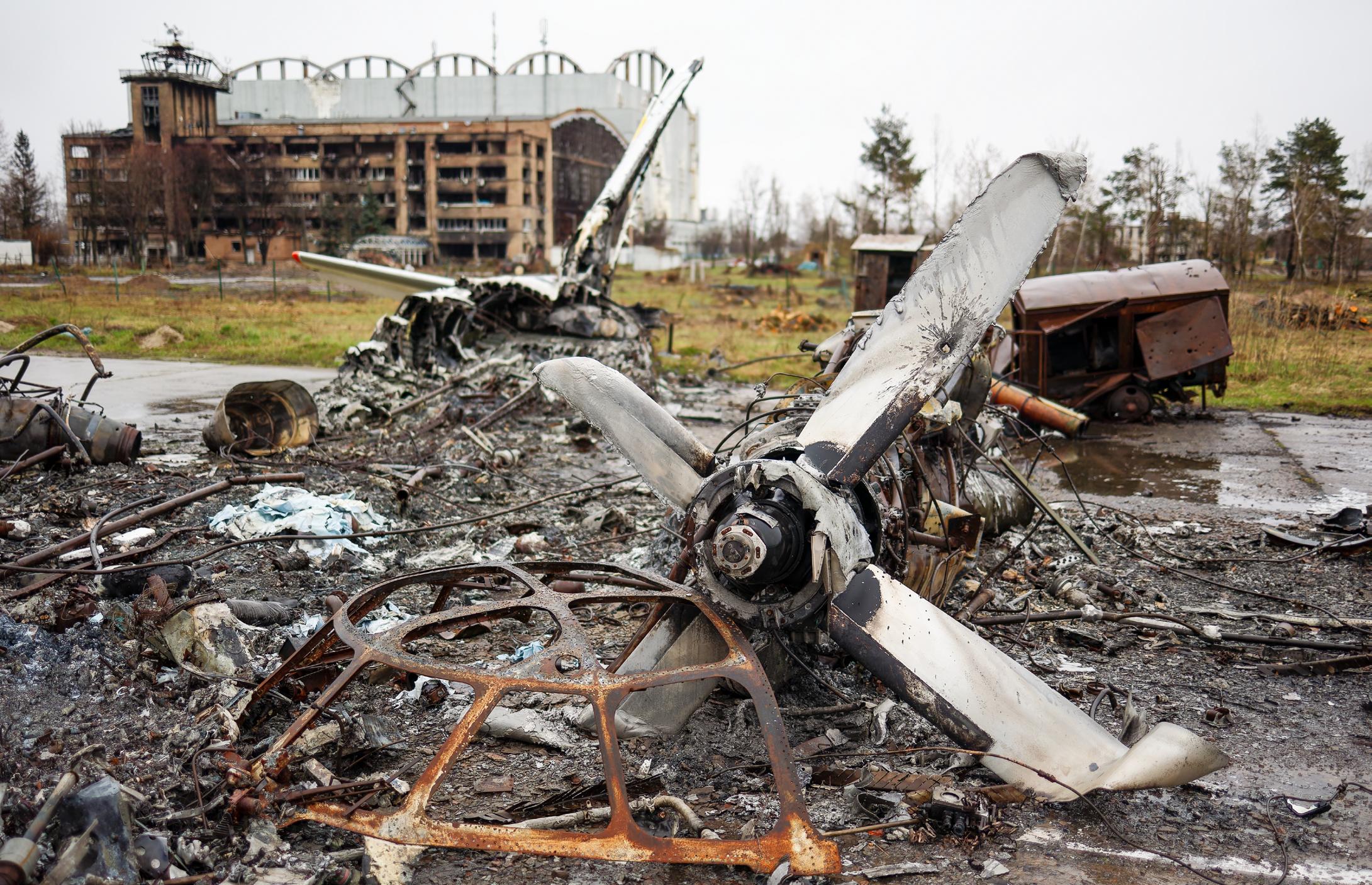
IN the business of war, the line between crushing surprise and utter defeat is narrow. The fight for Ukraine’s Antonov airport, on the northern outskirts of the town of Hostomel, lasted for 36 hours and provides the most recent example of what might be achieved if ‘plan’ and ‘execution’ can overcome both a determined physical opponent and ‘friction’s’ vagaries. On the 24 February 2022 – the opening morning of their full invasion of Ukraine – the Russian military attempted a vertical flank assault, targeting Kyiv as the centre of gravity. Its capture offered the opportunity both to secure the country’s seat of power and neutralise its leadership. The initial heliborne coup de main aimed to create an airbridge for reinforcements which would likely make untenable any efforts to save the capital, only 12 miles distant. A hasty
defence enacted by Ukrainian National Guard conscripts was able to delay the attackers and the unexpected level of resistance – which included losses inflicted by Man-Portable Air-Defence Systems (perhaps 20 per cent of the total Russian helicopter force), a failure to suppress air defences and even the Ukrainian ability to place obstructions on the runway –along with the psychological impact proved decisive and the larger second airlanding wave was abandoned. In the continuing ground battle for the airstrip which followed, although recaptured but then lost again, it was so badly damaged as to make it unusable. Five weeks later, Russian forces finally withdrew as part of a general evacuation from Kyiv Oblast having lost any possibility of securing a quick, limited cost outcome.1
Already a well-examined
moment, in what has become a much longer and now likely in some form perpetual conflict, a commonly shared argument is that there was nothing entirely surprising about the initial Russian attack. Western intelligence agencies had detected worrying indications from late 2021, sharing these with the government in Kyiv and more widely to the international community.2 The surprise could therefore be seen as being the lack of response.3 While the opening 72 hours of the invasion
1Liam Collins, Michael Kofman and John Spencer, ‘The Battle of Hostomel Airport: A Key Moment in Russia’s Defeat in Kyiv’, Commentary, War on the Rocks, 10 August 2023; Tim Cooper et al, War in Ukraine, Volume 2: Russian Invasion, February 2022 (Helion & Company Limited, 2023), 3945; Liam Collins, James Sladden and Ben Connable, ‘The Battle of Irpin River’, The British Army Review (Issue #187; Spring 2024), 17-21
2Eliot A. Cohen and Phillips O’Brien, ‘The Russia-Ukraine War: A Study in Analytic Failure’, CSIS (September 2024), 1.
have been characterised by its “shock and mutual surprise”, elsewhere it has been noted that the Russian adoption of a ‘highrisk, high reward strategy’ was not unusual.4 From 1968 to 2014, from Czechoslovakia to Crimea with Afghanistan in between, there have been a number of previous Soviet and Russian operations conducted in an opponent’s rear. Invariably these have aimed to secure centres of gravity and set the conditions for rapid follow-on land operations.
Other than the disastrous attempt to capture Grozny in 1994, the failure at Hostomel seemed more an exception than the rule. At the end of the Cold War, NATO officials assessed there would be between 40 and 50 days to prepare before any future Russian attack. The collapsing Warsaw Pact now provided a buffer with the conclusion of one official being “it would now take the Soviets longer to march across Eastern Europe than it would for them to conquer Western Europe”.5 But an embedded strategic principle remains just that. An essay written the year before the Chechen disaster argued that, despite rapid advances in technology, including increased availability of sensors, there was no reason to believe these were “stifling” interest in surprise. For the Russian military, the conclusion was that in “light of the increased destructive power of modern forces, surprise is more important than ever”.6
It is important to fully comprehend just how integral to the Russian military the use of surprise has been, certainly since its transition first to a Soviet and now post-Soviet organisation. More generally, it is also a concept much beloved by strategic thinkers and writers. Most obviously Carl von Clausewitz – “when it is successful in a high degree, confusion and broken courage in the enemy’s ranks are the consequences; and of the degree to which these multiply a success, there are examples enough great and small” – and not ignoring Basil Liddell Hart and ‘The Strategy of the Indirect Approach’ which seeks “the dislocation of the enemy’s moral, mental or material balance” and “the highest and widest fulfilment of the principle of surprise”.7 Amongst the many definitions Mark Cancian has recently provided an excellent contribution, placing the psychological aspect front and centre; for him surprise is “when events occur that so contravene the victim’s expectation that opponents gain a major advantage”. This is rarely absolute and, in most incidents he included in his research, “the victim had some inkling of what was about to happen [but] either could not come to a decision in time or acted too late to make effective preparations”.8
A foundation block for Soviet operational art, such is the
nuance and sophistication within the concept that three terms were employed in its discussion, “siurpriz, representing the abstract idea of surprise, in the universal or rather civilian context … neozhidannost (tactical surprise), pointing towards the occurrence of an unexpected tactical act, like an attack from an unpredicted direction [and] vnezapnost (operational surprise), implying the materialization of some occurrence, lying beyond the mental threshold of the rival command”.9 Accessible texts were pored over by Western analysts, particularly during the Cold War, to better understand what Vladimir Lenin had first championed when he argued the enemy should be hit by strikes “where and when he least of all anticipates an attack”.10 When, in 1986, the noted specialist Charles Dick considered the Soviet search for a rapid victory, the last of his ‘five essentials’ was surprise.11 To better illustrate his argument, he referred to Lieutenant General Vasiliĭ Gerasimovich Reznichenko’s speech, made two years before, which argued “the element of surprise has long been the most important principle of military art” and its role had “drastically increased”.12 Speaking on the release of an updated version of Taktika, published originally in 1966, he had expanded upon the many advantages it offered: “Surprise makes it possible to take the enemy unawares, to
cause panic in his ranks, to paralyze his will to resist, to drastically reduce his fighting efficiency, to contain his actions, to disrupt his troop control, and to deny him the opportunity to take effective countermeasures quickly”. Combined, this made
3Kristian Gustafson et al, ‘Intelligence Warning in the Ukraine war, Autumn 2021 – Summer 2022’, Intelligence and National Security (Vol.39, No.3; 2024), 402-407.
4Mykhaylo Zabrodskyi et al, ‘Preliminary Lessons in Conventional Warfighting from Russia’s Invasion of Ukraine: February–July 2022’, RUSI (November 2022), 24-27.
5‘Threat of Soviet sneak attack fades’, Reuters, 19 January 1990.
6Colonel B.R. Isbell, ‘The Future of Surprise on the Transparent Battlefield’, in Brian Holden-Reid (ed.), The Science of War: Back to First Principles (Taylor & Francis Group, 1993), 158.
7Carl von Clausewitz (translated by Col. James Graham) On War: Vol.I (Routledge & Kegan Paul, 1949), 199.
8Mark Cancian, ‘Avoiding Coping with Surprise in Great Power Conflicts’, CSIS International Security Program (February 2018), 11.
9V.G. Reznichenko (ed.), ‘Tactics – A Soviet View’, Moscow 1984; translated by CIS Multilingual Service, Secretary of State Department, Canada, January 1987, ‘Soviet Military Thought Vol.21’, 44.
10Shimon Naveh, In Pursuit of Military Excellence: The Evolution of Military Theory (Frank Cass, 2004), 19 (Kindle).
11C.J. Dick, ‘Catching NATO Unawares: Soviet Army Surprise and Deception Techniques’, in Hy Rothstein and Barton Whaley (eds.), The Art and Science of Military Deception (Artech House, 2013), 182. The other four were the so-called ‘heavy blow’, a rapid advance, simultaneous attacks throughout the enemy’s depth and air superiority.
“SURPRISE MAKES IT POSSIBLE TO TAKE THE ENEMY UNAWARES, TO CAUSE PANIC IN HIS RANKS, TO PARALYZE HIS WILL TO RESIST, TO DRASTICALLY REDUCE HIS FIGHTING EFFICIENCY, TO CONTAIN HIS ACTIONS, TO DISRUPT HIS TROOP CONTROL, AND TO DENY HIM THE OPPORTUNITY TO TAKE EFFECTIVE COUNTERMEASURES QUICKLY.”
it possible to “successfully rout even superior enemy forces with the least possible losses to friendly forces”. Another of those reviewed was Colonel Vasily Savkin and, in his writing about how to achieve a rapid victory, he highlighted that surprise “had begun to permeate all decisions for the conduct of operations and battles”. As with Reznichenko, he also concluded that when combined with decisive offensive operations, “the enemy’s capabilities are sharply lowered and the correlation of forces changes immediately. He may panic and his morale may be crushed”.13
The concluding decade of the Cold War, which can be seen as representing the zenith of Soviet military thinking, is perhaps key to understanding the modern Russian military approach. The underpinning strategic scaffolding remained increasingly bound by two convictions and surprise was common to both. The first was a now deep-rooted emphasis on pre-emption, based in part on concerns about the vulnerability of their own military forces, and which had led planners beginning in the mid-1950s to stress the importance of seizing the initiative. In part, this also reflected the strategic shock of 1941 and the profound effect
12Reznichenko (ed.), ‘Tactics – A Soviet View’, 44-45.
13Vasily Savkin, The Basic Principles of Operational Art and Tactics (Soviet View), translated under the auspice of the US Air Force (Washington DC: GPO, 1972); cited in Otto P. Chaney Jr., ‘The Soviet Threat to Europe: Prospects for the 1980s’, Parameters, (Sept. 1983), 5-6.
14Ivo Paparella, ‘“Soviet Strategy”: A Methodological Approach’, RUSI Journal (Vol.131, No.1; March 1986), 29.
15Cynthia A. Roberts, ‘Soviet Military Policy in Transition’, Current History (October 1984), 332.
16Raymond Garthoff, How Russia Makes War: Soviet Military Doctrine (George Allen & Unwin Ltd, 1954), 67-68, 97-100, 117-119.
“PRE-EMPTIVE USE OF NUCLEAR WEAPONS WAS INITIALLY FELT THE BEST RESPONSE, BUT FROM THE MID-1960s, AND COINCIDING WITH A RESURGENCE OF INTEREST IN TUKHACHEVSKIY AND HIS THEORIES OF CONDUCTING DEEP OPERATIONS, THERE WAS A SWITCH IN EMPHASIS TO EMPLOYING ARMED FORCES CAPABLE OF FIGHTING WITH CONVENTIONAL WEAPONS.”
that the German attack had on Soviet strategic thought. Looking beyond their own experience of the Second World War, the example of Pearl Harbor further strengthened the resolve to be constantly prepared for a surprise attack.14 Pre-emptive use of nuclear weapons was initially felt the best response, but from the mid-1960s, and coinciding with a resurgence of interest in Mikhail Tukhachevskiy and his theories of conducting deep operations, there was a switch in emphasis to employing armed forces capable of fighting with conventional weapons.15 Further embedded within this approach, certainly by the early 1980s, was the imperative to destroy NATO rapidly before the use of tactical nuclear weapons became a possibility for either side.
The other principle placed an emphasis on the ‘activity’ and ‘initiative’ of offensive action as opposed to the ‘passive’, ‘static’ nature of the defensive. With the attacker holding the initiative and choosing the time and the place of action, the aim was the annihilation of enemy forces. While the ‘Russian steamroller’ was a well-known First World War metaphor, this now required decisive
manoeuvre, most commonly termed as the ‘crushing blow’, with multiple simultaneous attacks on a wide front to obscure the direction of the main effort. When successful, vastly superior forces and shock power would overwhelm an opponent creating the conditions for them to be destroyed in detail. Noting the potential for encirclement and double envelopment, there also remained considerable interest in the flanks, both protecting and striking at them. The 1936 Field Regulations noted that flanks and sector joints were “the most vulnerable place in the defence” and were to be searched for by all means and attacked “expediently”.16
Repelling – or at least halting – this anticipated violent and rapid Soviet push dominated NATO planners’ collective energies. The enemy plan was well understood, detailed in a 1984 US Defense Department review as being: “A very rapid, combined arms operation to reach the Atlantic in the shortest time possible. Soviet ground formations hope to achieve a rate of advance of up to 100 kilometres per day. Formations that met stiff resistance would be rapidly reinforced by second echelon forces…” Further
highlighting how recent history had been studied (and understood) by both sides, the intent was understood by both sides as being to defeat NATO and occupy Western Europe before it could be reinforced by any expeditionary force. With a growing belief that American technological strength had the potential to alter the balance, US analysts (and others) held the view that surprise represented the Soviet’s only hope of success and could best be employed pre-emptively before any “crisis has reached a point that justifies overt military action”.17 What was less clear was the likelihood of any warning and how quickly an attack might develop.18 For example, a British Joint Intelligence Committee assessment in 1977 anticipated that only two weeks warning would be available to NATO, maybe even only 48 hours “in the less likely event of the Soviet Union choosing to optimize strategic surprise by opening hostilities before achieving a full war posture”.19 What was termed as a ‘Rapidly Moving Crisis’ was one of three potential scenarios, the others being ‘intermediate timescale’ with NATO receiving seven to 14 days warning and a ‘slow-moving timescale’ with anything up to a month of
rising tension before hostilities began.20 Four years later, a 1981 assessment by the British Chiefs of Staff reckoned on 60 days of tension followed by 30 days of war.21
With the Soviets close to introducing their Operational Maneuver Group concept, which replaced mobilised mass with even greater use of surprise and rapid dispersed thrusts, the Cold War’s rapid conclusion meant that there were never any definitive answers to the questions about how a third world war would have developed. The subsequent decades have done little to resolve the uncertainty. The highly flawed Russian operations in February 2022, and the many mistakes in the period following, driven by institutional and individual complacency and hubris, should not be seen as portraying an organisation beyond repair. As its complex thinking on the use of surprise highlights, Russia has demonstrated at points over the last hundred years a sophisticated learning culture and an ability to
“WITH GROWING VIOLATIONS OF NATO AIRSPACE AND DORMANT FIGHTING POWER APPEARING TO BE UNFURLED, NOTABLY ALONG THE FINNISH BORDER AND IN ITS ARCTIC REGION, THERE IS
NO REASON TO BELIEVE THAT, WERE THE KREMLIN TO AGAIN SEEK THE DISTRACTION OF FOREIGN ADVENTURES IT WOULD STUMBLE ONCE MORE INTO DISASTER.”
fascinating observations about their “unfathomable” enemy, warning: “The characteristics of the Russia soldier, like his vast country, are strange and full of contradictions … The Russian is generally impervious to crises, but he can also be sensitive to them. He has no fear of a threat to his flanks, but at the same time he can be most touchy about the flanks. He disregards all the old established rules of tactics, but he clings to the absolute letter of his own precepts.”22
For the wartime German military commanders, their experiences quickly taught them that “predictive calculation was out of the picture, and every action was full of suspense and surprise”.23 Much the same seems to remain the case now. A recently published – and fascinating – short ‘what if’ can be viewed as further evidence
responses.24 Set in March 2028, Russian troops rapidly capture both the key Estonian town of Narva and the Baltic island of Hiiumaa, flanking the capital Tallinn as part of a decisive attack. While the military action is discussed in only the briefest terms, deception, misdirection and speed are all paramount in achieving the desired effect, demonstrating vividly the value of surprise. With growing violations of NATO airspace and dormant fighting power appearing to be unfurled, notably along the Finnish border and in its Arctic region, there is no reason to believe that, were the Kremlin to again seek the distraction of foreign adventures it would stumble once more into disaster.
While the ‘where’ might not be entirely clear – Narva is one option for further Russian

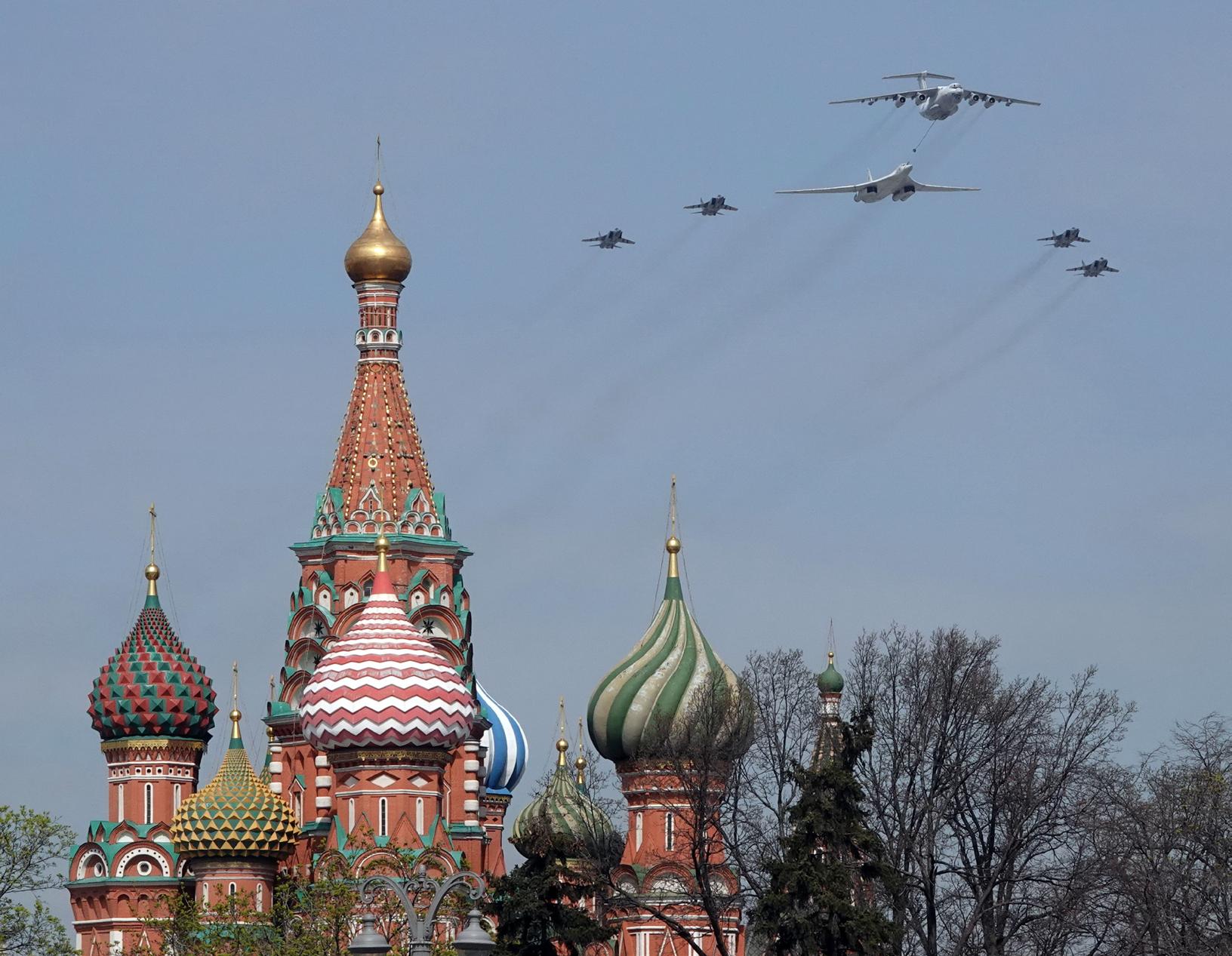
testing of resolve but there are others ranging from Central Asia to the High Northern littoral – the few commentaries produced about the recently concluded Zapad-2025 have offered evidence on the ‘how’. With observers excluded from some of the naval manoeuvres, including in the Baltic, as well as drills conducted close to the Polish and Lithuanian borders, there was passing reference to the airborne and amphibious operations which reportedly formed part of the exercise. More helpful was a lengthy RUSI commentary which viewed the exercise as testing the central doctrine of the Initial Period of War with its simulation of rapid deep strikes against an adversary’s rear and assembly areas. The words of a letter published in The New York Times at the Cold War’s end appear prophetic; in referencing Soviet doctrine, it stressed “the opening phase of war is the basic, decisive period [and] determines the outcome of the
17Phillip A. Petersen and John G. Hines, ‘Military Power in Soviet Strategy against NATO’, RUSI Journal (Vol.128, No.4; 1983), 52.
18Kenton White, ‘British Defence Planning and Britain’s NATO commitment, 19791985’, PhD Thesis, University of Reading (October 2016), 150-154.
19-20‘The Growth of Soviet Military Power, Preparedness: JIC Assessment of Soviet Threat’, 23 March 1977, PREM 16/2259, The National Archives, Kew (hereafter ‘TNA’).
21‘Strategic Stockpiles, Home Office memorandum to VCDS(P&L): NATO Logistics Policy General UK Logistics Assumptions’, 17 July 1981, DEFE 25/432, TNA.
22‘Peculiarities of Russian Warfare’, Department of the Army Historical Division (June 1949), MS#T-22, 6. 23Ibid., 53.
“THE MAIN REASON SURPRISE WORKS IS ‘THE FALLIBILITY OF THE HUMAN MIND ESPECIALLY WHILST UNDER PRESSURE’. THIS NEEDS TO BE CONSIDERED WHEN REVIEWING THE MOUNTING ARGUMENT THAT ARTIFICIAL INTELLIGENCE CAN RESOLVE ALL OF THE CHALLENGES FACING A MILITARY COMMANDER, EVEN POSSIBLY MITIGATING AGAINST THE MANY CONSIDERATIONS NEEDED WHEN TACKLING THE GREAT UNKNOWN THAT IS FRICTION.”
entire war” with surprise and concealment of the preparation for these initial attacks having a crucial role to play.25 Add to this the conclusions of a 1997 RAND essay: “Surprise may become the decisive factor in determining both the ‘course and outcome’ of a war; in fact, these may now be described as ‘a single phenomenon’. As a result, the initial period may now be in effect the only period in future warfare.” And Charles Dick’s argument, writing shortly before his death in 2021, that the key to Russian success will “lie in surprise, and in the high-combat readiness and high mobility that will both enable and capitalize on surprise”.26 Taken together, and with an understanding of the Cold War foundations, this could certainly all be seen as confirming a still enduring interest in inflicting potential surprises in the rear and flanks.27
This remains a vitally important theme for study, not least
because it is fundamentally central to any discussion and understanding of hybrid and cognitive warfare which now dominate so much conceptual space.28 As was explained by a British military thinker more than 30 years ago, the main reason surprise works is “the fallibility of the human mind especially whilst under pressure”.29 This needs to be considered when reviewing the mounting argument that artificial intelligence can resolve all of the challenges facing a military commander, even possibly mitigating against the many considerations needed when tackling the great unknown that is friction. The Soviets never sought to achieve complete surprise, the intent was that NATO forces “remain unaware until it is too late to take effective counteraction”; how this distinction can be factored into a logic based calculation is not clear.30 In a similar vein, as the
high tempo battles of the future. The danger may be that it is not NATO that proves the most adept in using it to best effect.
24Carlo Masala, If Russia Wins: A Scenario (London: Atlantic Books, 2025); Matthew Cambell, ‘What happens if Russia attacks Nato?’, The Sunday Times, 28 September 2025; Andrew Stewart, ‘Defending NATO’s front-line?’, CHACR Commentary, 18 June 2025, chacr.org.uk/2025/06/18/ defending-natos-front-line
25Joseph Churba, ‘Letter: Soviet Military Doctrine Still Stresses Offense’, New York Times, 23 March 1988; the work referenced was Col. Gen. Mikhail A. Gareyev’s ‘M.V. Frunze - Voyennii Teoretik’.
26Norman Davis, ‘An Information-Based Revolution in Military Affairs’, in John Arquilla and David F. Ronfeldt (eds.), In Athena’s Camp: Preparing for Conflict in the Information Age (RAND, 1997), 88; Charles Dick, ‘Russian Ground Forces Posture Towards the West’, Chatham House Russia and Eurasia Programme (April 2019), 8.
annexation of the Crimea in 2014 demonstrated, it would be difficult to tell when posturing and threats transitioned into aggression. In a speech the year before the appearance of the so-called ‘little green men’, General Valery Gerasimov made prominent reference to the assertion made by 1930s’ theorist Georgy Isserson that “mobilization and concentration is not part of the period after the onset of war … but rather unnoticed, proceeds long before that”.31 Based around misdirection, deceit and outright dishonesty, it is not clear how technology can effectively anticipate this human action which seeks to deliberately manipulate and confuse.
One of the most effective of force multipliers, there is no compelling reason why surprise (and its equally important partner deception) will not continue to make a critical contribution to winning the
27Stavros Atlamazoglou, ‘Russia’s Zapad Drill Is Tiny This Year Thanks to Its Invasion of Ukraine’, National Interest (Blog), 23 September 2025, nationalinterest. org/blog/buzz/russias-zapad-2025-istiny-this-year-thanks-to-its-invasion-ofukraine-sa-092325; Elis Gjevori, ‘Belarus, Russia conduct joint military drills amid NATO tensions’, AFP and Reuters, 15 Sep 2025, aljazeera.com/news/2025/9/15/ belarus-russia-conduct-joint-military-drillsamid-nato-tensions; Fabrizio Minniti and Dr Giangiuseppe Pili, ‘Wartime Zapad 2025 Exercise: Russia’s Strategic Adaptation and NATO’, RUSI Commentary, 22 September 2025, rusi.org/explore-our-research/ publications/commentary/wartime-zapad2025-exercise-russias-strategic-adaptationand-nato
28The Russian ‘way of war’ has been examined closely in a number of publications since 2014, including a recent wealth of additions; Luke Turrell, ‘Review: Andrew Monaghan, Blitzkrieg and the Russian Art of War’, British Army Review (Issue #195; Autumn 2025), 53-54.
29Isbell, ‘The Future of Surprise on the Transparent Battlefield’, 158.
30A.C. Bevilacqua, ‘Seven Principles of Soviet Tactical Doctrine’, Marine Corps Gazette (September 1982), 37.
31General of the Army Valery Gerasimov (Chief of the General Staff of the Russian Federation Armed Forces), ‘The Value of Science is in the Foresight: New Challenges Demand Rethinking the Forms and Methods of Carrying out Combat Operations’, Military-Industrial Kurier, 27 February 2013 (translated from Russian and published in Military Review (January-February 2016), 29).