THE MOVE FROM MASS TO MASS-PRECISION A RUSSIAN
RUSSIAN counterbattery fire has evolved from a model that favoured mass in February 2022 to one that places emphasis on the mass use of precision-guided munitions to engage Ukrainian indirect fire systems. Russian units are now fast and efficient when engaging Ukrainian fires, leading to the adoption of tactics, techniques and procedures that limit their efficacy. This is important for the British Army and its allies as the available evidence indicates that Russia has moved away from the Soviet roots that informed its counter-battery doctrine, towards one that is precise, lethal and operable at scale. These changes are likely to remain, indelibly printed onto the psyche of Russian commanders and soldiers who have decisively contributed to
turning the stakes in Ukraine in Russia’s favour.
When Russian forces first entered Ukraine in 2014 their firepower quickly became a key topic of conversation as it became clear that they were able to close targeting cycles in minutes. In 2014 a strike on Ukraine’s 24th and 72nd Mechanised Brigades and the 79th Airmobile Brigade, who had established a camp near Zelenopillya, became the stuff of legend; the three battalions had been observed with drones and their tactical radios reportedly jammed a few minutes before a combined barrage of cluster munitions, thermobaric rockets, and howitzer rounds fell on them. The barrage reportedly lasted three minutes and left more than 100 Ukrainians dead and wounded and dozens of vehicles destroyed at a time when Ukraine was struggling to maintain its
forces in the field. The strike was a demonstration of Russia’s reconnaissance-fires contour; essentially the integration of tactical fires with intelligence, surveillance and reconnaissance in real time.
The coordination of drones and fires was portrayed, at the time, as a universal adaptation across the Russian Armed Forces, seemingly indicating that NATO would face a whirlwind of very accurate and coordinated fires coming down on its forces within minutes if it entered into a Russian area of operations. However, the likelihood is that Russia was experimenting with dronecoordinated fires; a presentation supposedly leaked from the Russian Ministry of Defence indicated that it was gathering data on the coordination of Orlan-10s with the 122mm 2S1 Gvozdika self-propelled
howitzer.1 It was unlikely to have been a fully fledged method of conducting recce-fire strikes or counter-battery fires at the time. The process was developed and matured in training and in Ukraine and Syria, leading to an assessment by Chuck Bartles and Lester Grau in 2018 that the recce-fire system had “come of age”.2 The Russian Armed Forces were in the process of distributing the Orlan-10 uncrewed aerial vehicle throughout artillery forces and attaching them to units where possible. However, this did not drive a wholesale change in counter-battery doctrine.
Soviet doctrine for counterbattery fires required a constant pressure on the adversary’s own fires assets, in what Western practitioners would term proactive counter-battery fires. It was assumed that doing this would guarantee fire superiority, which in turn was deemed essential for success. A Soviet Army Group would be able to designate several battalions of howitzers and multiple rocket launchers to the counterbattery mission and they would focus only on this.3 For reactive counter-battery fires, it was acceptable for a Soviet commander outside of those units designated specifically to
1Samuel Cranny-Evans, “Eyes in the Sky Part 1: How the Orlan-10 UAV is shaping Russian artillery ops,” International Defence Review, March 2020.
2Lester W. Grau and Charles K. Bartles, “The Russian Reconnaissance Fire Complex Comes of Age,” Changing Character of War Centre Pembroke College, University of Oxford, May 2018.
3Field Manual No. 100-2-1, The Soviet Army: Operations and Tactics, Headquarters Department of the Army Washington, 16 July 1984, pp. 112 - 115.
4Author interview with Mike Kofman, Senior fellow in the Russia and Eurasia Program at the Carnegie Endowment for International Peace, 15th November 2024.
5The Grau code 2K25 refers to the Krasnopol system, including a laser designator, shot coordination system and the round itself. The complete round is called 3OF39, the modernised version is called 3OF95.
“THE
FIGHT HAS CHANGED AND RUSSIA HAS CHANGED WITH IT. THE CURRENT STATE OF PLAY INDICATES THAT WHILE SIGNIFICANT RESOURCES ARE STILL ALLOCATED TO THE COUNTER-BATTERY FIGHT, RELIANCE HAS SHIFTED FROM MASSED FIRES AND LARGE DETECTION SYSTEMS TO SMALLER, MORE AGILE AND UBIQUITOUS INTELLIGENCE, SURVEILLANCE AND RECONNAISSANCE COMBINED WITH PRECISION STRIKE ASSETS.”
the counter-battery mission to keep some of his guns in reserve specifically for that mission as it was considered sufficiently important to take resources away from the close support of advancing units. This practice continued into Ukraine in 2022, where it was common for at least one battery within a Russian artillery unit to be kept out of the close fight to provide counterbattery fire.4
This approach was relatively effective as long as Ukraine was concentrating its artillery and command and control nodes, as a battery’s fire could be reasonably effective against a concentrated target in the vast Ukrainian plains. But the fight has changed and Russia has changed with it. The current state of play indicates that while significant resources are still allocated to the counterbattery fight, reliance has shifted from massed fires and large detection systems to smaller, more agile and ubiquitous intelligence, surveillance and reconnaissance combined with precision strike assets. This approach is effective and lethal
– it not only degrades Ukraine’s limited artillery park, but often succeeds in suppressing it and has clearly altered the tactics, techniques and procedures that Ukraine uses to the detriment of its indirect fires. To be clear, a lack of ammunition is also responsible for this change, but it is not the only reason and Russia’s ability to find and engage Ukraine’s howitzers is a key determinant.
RUSSIA’S COUNTERBATTERY ECOSYSTEM
Russia’s counter-battery ecosystem is relatively well understood and would be familiar to most Western style militaries. It includes acoustic sound ranging systems and counter-battery radars for shot detection and location, as well as precision-guided munitions and area effect weapons. However, from 2022 the ecosystem has evolved and developed. Initially, the Russian ground forces worked with large counterbattery radars, like the 1L219M ‘Zoopark-1’ and L1260 ‘Zoopark1M’ as well as the AZK-7M Mezotron sound ranging system,
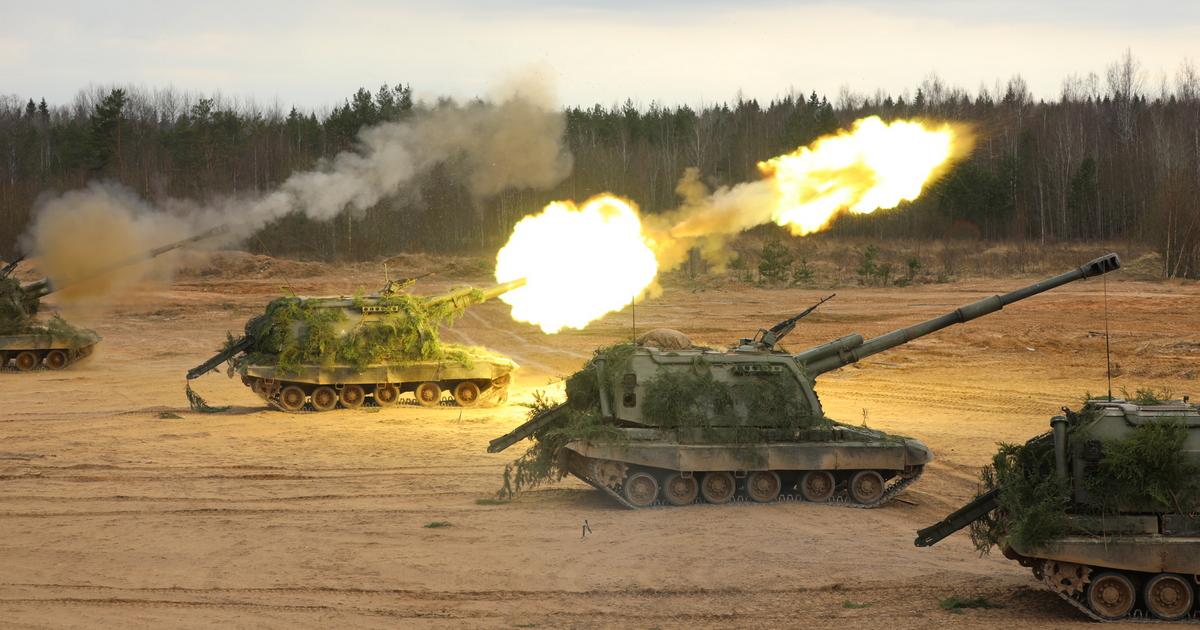
and Orlan-10 uncrewed aerial vehicles to locate and engage Ukrainian guns, typically with full multiple rocket launchers salvos or from batteries of selfpropelled guns like the 152mm 2S19 Msta-S and 2S5 Giatsint, as well as the 204mm 2S7M Malka. They made occasional use of the 2K25 Krasnopol laser-guided artillery round depending on the targeting assets available.5 However, this model has evolved as a result of multiple pressures, not least among them is the availability of ammunition. Russia was firing a peak of 50,000 artillery rounds – presumably including tube, rocket and mortar – per day in June 2022. This figure had fallen to 20,000 by the same time in 2023, representing a ratio of 2:1 in terms of shells fired by Russian forces. The number of rounds fired depends upon the line of effort that the Russians are pursuing, so it should be assumed that more of these rounds would be fired on a given sector of the front, rather than distributed evenly.
With fewer rounds available, Russian artillery commanders could not spend an entire battery of 122mm Grad rockets on a single Ukrainian howitzer, which became a significant driver of adaptation because the Ukrainians had taken to fighting with their guns in an extremely dispersed manner. Instead of co-locating them as a battery around a gun line, their howitzers operate as a ‘wandering gun’, with battery level fires coordinated from their respective positions, rather than coming together. This creates challenges for counterbattery fires. The physics of the gunnery problem means that a single howitzer in a tree line is a very poor target for unguided fires from a battery of howitzers with limited ammunition. It may be impacted by a battery of multiple rocket launchers, but if each launch vehicle is only allocated a handful of rockets for an entire week’s worth of fighting,
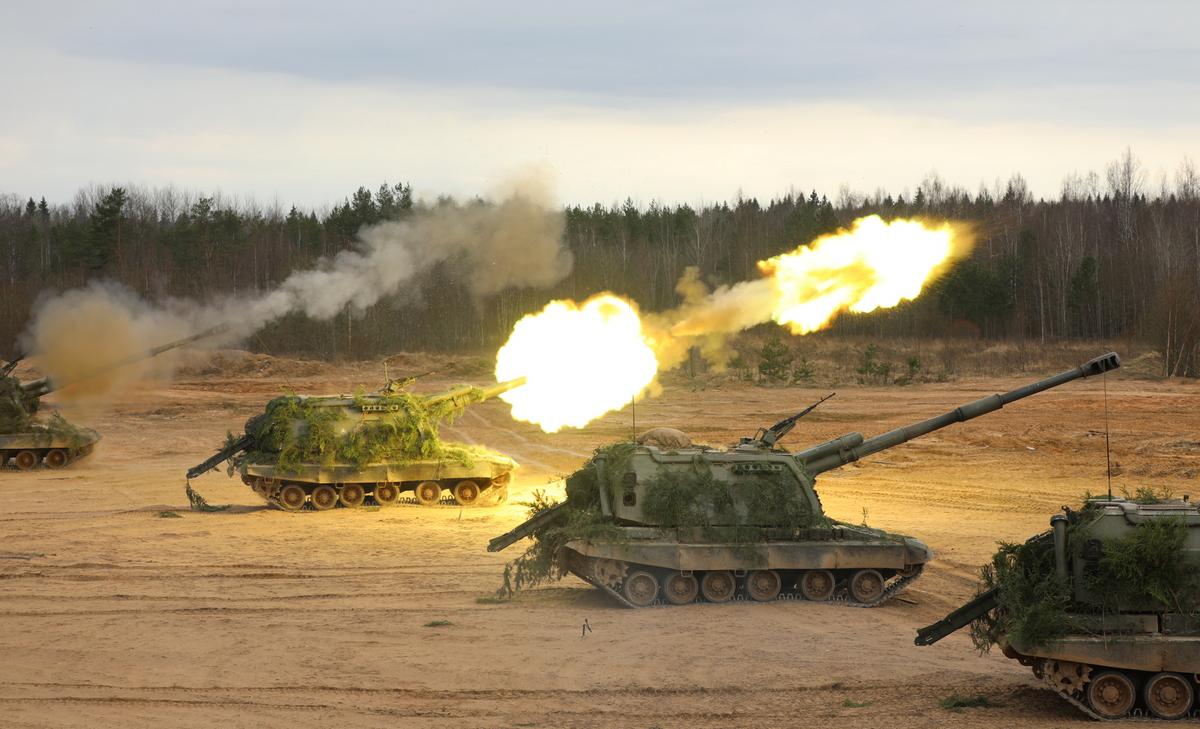
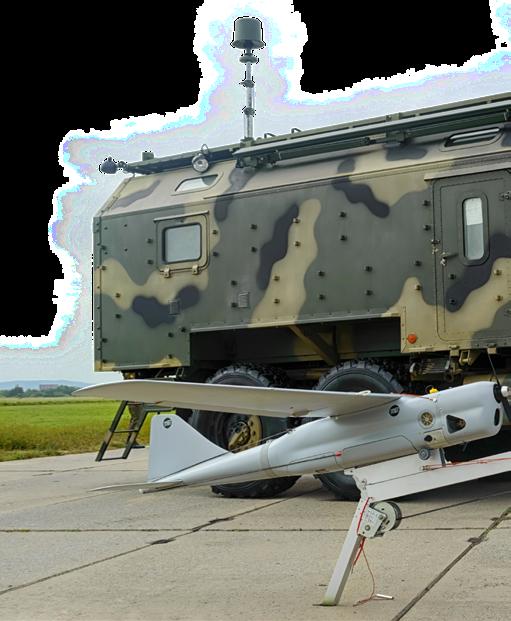
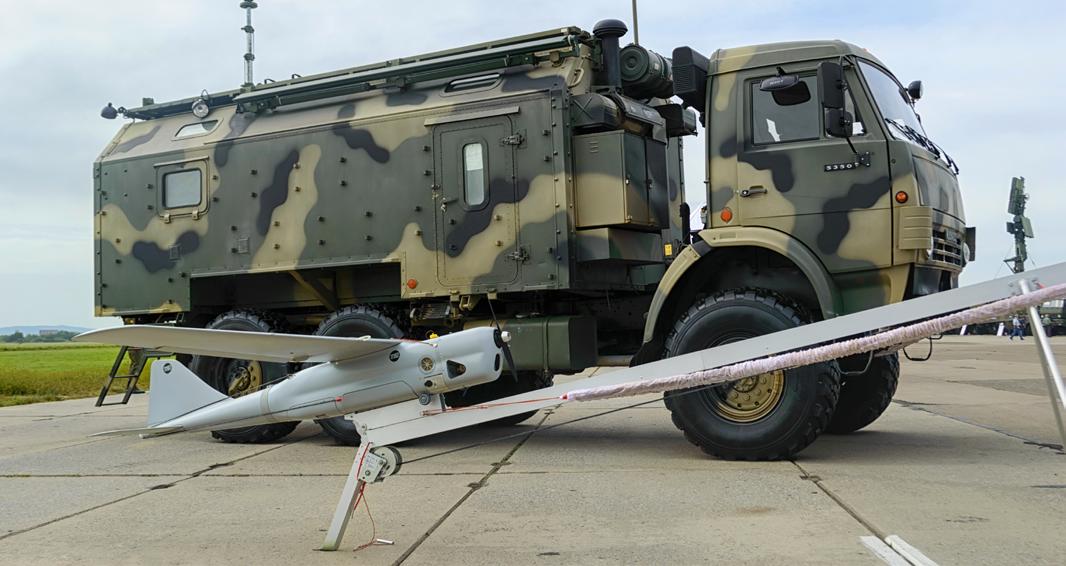
An Orlan-10 alongisde its control centre Picture: Константин Байдин - stock.adobe.com
they also cannot be spent without a reasonable degree of certainty that the result will be as desired. To address this, Russia began to exploit precision strike assets for almost all of its counter-battery fires. The picture is not uniform by any means; the primary threat in some regions of the frontline is the 2K25 Krasnopol, in others it is the Lancet loitering munition, and in exceptional circumstances the 9M723 Iskander quasiballistic missile. The counterbattery process naturally starts with detection.
DETECT
A key element of Russia’s counter-battery fires is the level of authority over what assets are used and when. For instance, the artillery commander may choose to withhold permission to unmask guns or a radar in all but the most pressing circumstances. There is some evidence that the counter-battery fight is conducted and controlled from an artillery command post, which is understood to be referred to as the Artillery Reconnaissance Battery (батареи артиллерийской разведки). This formation is either commanded by, or reports to, the deputy commander for artillery, a position found within
“THE RUSSIANS HAVE SHIFTED FROM RELIANCE UPON RADAR AND SOUND RANGING TO THE UNCREWED AERIAL VEHICLE PROVIDING INITIAL DETECTION. IF THEY DO NOT PROVIDE THE INITIAL DETECTION, THEY ARE ALMOST ALWAYS A PART OF A COUNTER-BATTERY ENGAGEMENT.”
Russia has modified the levels of authority and control for its counter-battery fires, but the likelihood is that authority has only been centralised to a greater degree with potentially more restrictive permissions on the use of most systems. So, it can be assumed that the Artillery Reconnaissance Battery and a position identical or similar to the deputy commander for artillery is responsible for coordinating the counterbattery fight within a brigade frontage, as well as balancing that with the wider needs of the supported formation. A TV Zvezda article from December 2022 indicates that all of the sources of detection fed into the Artillery Reconnaissance Battery and that targets were allocated from there. A Tass article from January 2024 also indicates that all data gathered by Russian counter-battery sensors is passed to a ‘command post’, so it stands to reason that the Artillery Reconnaissance Battery is the
It is important to note the frontline in Ukraine is not consistent; the means of detection in one sector will differ from the next, as will the available weapons. However, generally speaking, the Russians have shifted from reliance upon radar and sound ranging to the uncrewed aerial vehicle providing initial detection. If they do not provide the initial detection, they are almost always a part of a counter-battery engagement. There are three primary uncrewed aerial vehicle types; the Orlan-10, Orlan-30 and Zala-416. The uncrewed aerial vehicles are used to detect muzzle flashes of Ukrainian guns or their thermal signatures. If necessary, a counter-battery radar will be used briefly to get a better understanding of the location of the Ukrainian gun before the fire mission is established. The Russians have moved away from using the larger Zoopark radars for all of their counter-battery needs and instead make greater use of manportable and towed radars like the 1L217 Aistenok, which was originally designed for mortar
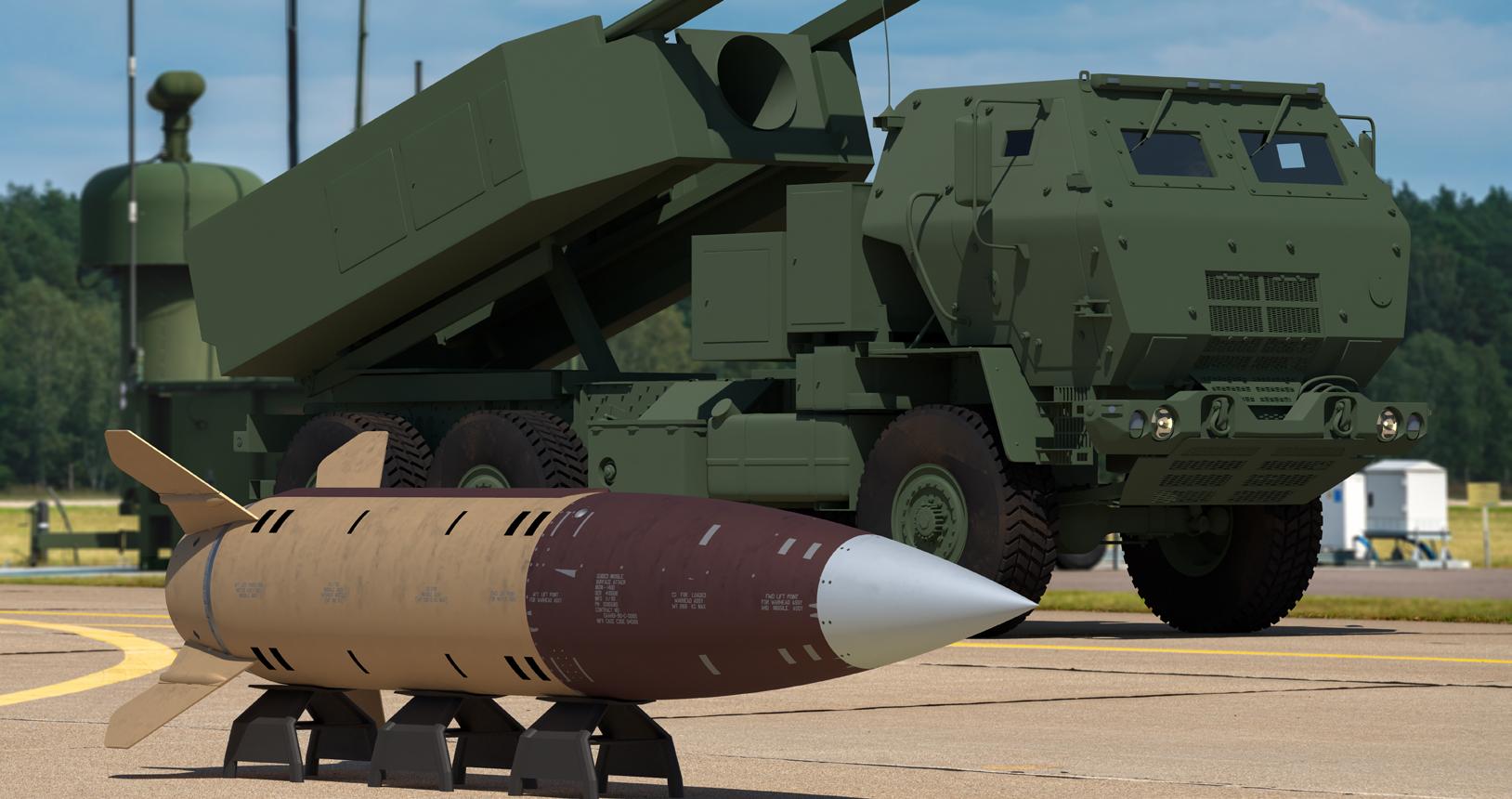
detection. The Aistenok has been found capable of detecting artillery rounds and anything above 30mm grenades, with large calibre artillery detection reported at ranges up to 15km –which would represent a 10km increase in range compared to the system’s declared ability to detect mortar rounds if true. Aistenok is technically classed as a portable radar to be held at the company or battalion level. It weighs 135kg and would be transported with its crew in a truck or similar vehicle. The Zoopark radars are employed in the older 1L219M ‘Zoopark-1’ configuration and the more modern L1260 ‘Zoopark-1M’. The L1260 is able to detect 155mm artillery rounds from a distance of 23km and the launch of ATACMS [Army Tactical Missile System, pictured below]sized missiles from 65km, it can provide coordinates within 20 seconds of the system firing. The 1L219M has shorter detection ranges of 15km for field artillery and 40km for tactical missiles, but both systems are capable of tracking multiple targets.7

They are paired with the AZK-7 Mezotron, a sound-ranging system that uses two sound stations, each with three sound locators, deployed at a distance from each other to localise the firing point of enemy artillery based upon the sound of the shot being fired. This can be done within 15 seconds and out to ranges of 16km against field artillery. The AZK-7 is an old system, but it was complemented in 2021 by the 1B75 Penicillin, which also uses acoustic signatures coupled with thermal signatures to identify enemy firing points – reportedly within five seconds at claimed ranges of 50km. However, as mentioned
6Lester Grau and Charles Bartles, The Russian Way of War; Force Structure, Tactics, and Modernization of the Russian Ground Forces, Foreign Military Studies Office (FMSO), p. 257.
7Ibid, pp. 254.
Picture: Mike Mareen - stock.adobe.com
“LANCET HAS BECOME A KEY ENABLER OF RUSSIA’S COUNTER-BATTERY FIGHT, PRIMARILY BECAUSE OF ITS ACCURACY BUT ALSO ITS ABILITY TO LOITER OVER AN AREA AND INTERCEPT UKRAINIAN HOWITZERS ON THE MOVE ”
above, uncrewed aerial vehicles are now the primary form of reconnaissance and artillery spotting. The Orlan-30, for example, can transmit video data up to 120km and has an eighthour endurance, enabling it to range deep into Ukraine’s rear positions or loiter for extended periods over the frontline. Perhaps most importantly for the counter-battery fight, it is able to use its laser designator to target the Krasnopol 152mm guided projectile. Once a target has been identified, the coordinates can be entered into the Planshet-A artillery fire control system, which allows an artillery commander to receive intelligence feeds from all sources of reconnaissance and provide fire control orders to any form of artillery. However, deliveries of this system on a wheeled vehicle only started in 2024 and it is not clear whether it was in wider circulation and use before then. Russian commanders did
have good access to the Strelets reconnaissance command and control system, and some Russian articles on counter-battery operations in Ukraine do indicate that target coordinates are entered into a tablet. In any case, the information is likely relayed to the Artillery Reconnaissance Battery and the engagement is controlled from there.
ENGAGE
If available, a Lancet loitering munition will be launched to engage the detected howitzer, potentially followed by more with the Krasnopol as an alternative if the Lancet is unsuccessful, although this requires an Orlan-30 fitted with a laser designator. The initial strike is important, as a gun commander is normally obliged to make a survivability move after an engagement, which may expose their gun to routes observed by Lancets. Lancet [pictured above] has become a key enabler of
Russia’s counter-battery fight, primarily because of its accuracy but also its ability to loiter over an area and intercept Ukrainian howitzers on the move. This means that it is also used for opportune strikes, where it is deployed over Ukrainian lines with permission to engage howitzers and other high priority targets. The pro-Russian website, Lostarmour, had documented 898 separate uses of Lancet in Ukraine by 6th January 2024. By the 4th January 2025, the website’s owners had documented 2,722 uses of Lancet through video footage, an increase of 1,824 strikes in just under a year or an average of five per day. Of those, 1,300 were against towed and self-propelled howitzers and multiple rocket launchers, and they assess that 329 of those strikes resulted in total destruction of the target vehicle while 679 led to damage. The remaining 292 either missed or the result is unknown. Whilst all
data collected in this way must be treated with caution, not least because it is heavily subject to the bias of the authors, it at least indicates the growth in Lancet strikes, its importance in the counter-battery role, and the impact that it has had.
It is a particularly effective system because it has a reported range of 70km depending on variant and the availability of a signal repeater. Its camera provides a relatively high and steady resolution, which means it is suitable for tracking and engaging Ukrainian howitzers as they move. Lancet is also used for engaging any Ukrainian target deemed suitable, so it is not confined to the counterbattery fight, and this was seen extensively during Ukraine’s rush to defend against the Kharkiv offensive in May 2024. The munition was used to engage armoured vehicles and howitzers behind the line of advance, often
on heavy equipment transports, and so it can also be seen as a deep-strike weapon. Initial variants appeared to lack lethality against towed guns as they carried a KZ-6 shaped charge, initially designed for mining purposes, which can penetrate up to 215mm of armour. This is easily sufficient to penetrate the turret armour of any modern howitzer without additional protection, and it is common for Lancet operators to manoeuvre the munition into position to strike at an assessed weak point. There have been at least two strikes against Archers in Ukraine, both show the munition being positioned to strike at the ammunition bustle, rather than the crew, where the shaped charge is most likely to destroy the vehicle through detonating the ammunition. This means that a single strike does not guarantee that the target howitzer will be defeated, which can lead to follow-on strikes until the desired effect has been achieved.
The Krasnopol round is laser guided and has been through some design revisions to adapt it to better suit conditions in Ukraine. It leverages technology first deployed by Soviet forces in Afghanistan to make the 2S4 240mm mortar into a precise antifortification weapon.8 The 152mm version has a range of 20-25km and can be used to hit targets moving at speeds up to 36km/h. It carries 6kg of high explosives within a 20kg warhead, and is an effective weapon that can be difficult to counter. Additionally, Rostec reported in April 2024 that the new Msta 2S19 is fitted with a digital fire control system that allows it to receive targeting data directly from an uncrewed aerial vehicle. Again, these claims must be treated with caution, this kind of capability would only be of use if the system was firing guided projectiles, indicating that there may be an aspiration for some Russian self-propelled Mstas to receive targets directly from

“THE ABILITY TO PASS DATA BETWEEN RECONNAISSANCE ASSETS AND ARTILLERY COMMAND POSTS MAY BE IMPROVED IN THE NEAR FUTURE THROUGH AUTOMATION AND DATA NETWORKING.”
an Orlan-30, side-stepping the Artillery Reconnaissance Battery and commander
CONCLUSION
Overall, Russian artillery has evolved throughout the war in Ukraine, from a machine that relied on mass to defeat its targets to one that has had to become leaner and more precise to survive. The experience gained in Ukraine will lead to further doctrinal reforms, meaning that Western forces should expect to face similar weapons and tactics, techniques and procedures in the event of a war with Russia. It is clear that Russia is able to find and engage Ukrainian howitzers at scale – the Lancet figures alone indicate an extensive ability to precisely target singular vehicles at a tactical level. It should be said, albeit briefly, that Russia retains the ability to conduct large massed fire missions against area targets consisting of multiple batteries and artillery types. So, it should not be assumed that the practice for the counter-battery fight is detracting from the ability of the ground forces to conduct fires at scale in support of an offensive or
defensive operation. Massed fires are largely a function of logistics and Russia’s defence industry, the latter is scaling its production of ammunition and has likely learned a lot about how to make its supply chains survivable – meaning it may prove very resilient to Western attempts to disrupt it.
The process appears to be relatively refined, with a lot of focus on the detection phase of targets. The ability to pass data between reconnaissance assets and artillery command posts may be improved in the near future through automation and data networking as indicated by the Planshet-A deliveries mentioned above. This would speed up Russian counter-battery responses, although it should be noted that those are already very fast in some circumstances. There is also evidence of direct linking between uncrewed aerial vehicles and howitzers, which could lead to a new form of counterbattery warfare in which lone guns are assigned an uncrewed aerial vehicle and magazine of guided rounds to find and engage howitzers at will. Finally, Ukraine
has shown a good ability to locate and engage large counter-battery radars, forcing Russia to alter its use of them and favour smaller, notionally less capable systems, which indicates that there are fragilities within the counterbattery ecosystem that could be exploited. However, this must be treated with some caution. Russia’s ground forces are heavily committed and responding to a changing and versatile adversary. Once the war in Ukraine is over, it is likely that they will be able to reconstitute their conventional capabilities and reconsider the way that they are used. The present state also reflects an army that has suffered heavy casualties and is not able to fully exploit its technological capabilities. It stands to reason that many of the current weaknesses will be addressed, at least partially, before Russia ever considers another war. Continued monitoring and support for artillery intelligence is therefore essential.
8Lester Grau, “The High-Precision Tulip: Development And Combat Employment Of The Soviet Laser-Guided Mortar Round,” FMSO, 1st January 2006.