A MISSED OPPORTUNITY BUT NOT AN OPPORTUNITY LOST
THE 16th BRICS Summit, held in late October 2024, marked the conclusion of a four-year stint of heightened tensions between India and China. Triggered by the Galwan Valley crisis in 2020, this period was characterised by mutual military build-ups, aggressive posturing, heated political discourse and an escalation of nationalist rhetoric. Given the heightened threat of conflict between these two nucleararmed powers, the warm handshakes and conciliatory gestures exchanged between President Xi Jinping and Prime Minister Narendra Modi on the sidelines of the BRICS Summit were rightly celebrated by the international community for helping to restore stability to the region.1
Though the Galwan crisis
resulted in a regrettable escalation of tensions along the contested border, it also opened a critical window of opportunity for Western governments. Confronted with its vulnerabilities in the face of an emboldened China, India became increasingly proactive in seeking external support to counterbalance Beijing’s growing assertiveness. This created a unique chance for the US, UK and their allies to not only strengthen defence partnerships with New Delhi but also align their strategic interests in countering China’s influence across the Indo-Pacific. Seen from this perspective, the Galwan moment was marked by both substantial achievements and squandered potential. While significant strides were made in areas like joint initiatives and technology sharing, missteps in diplomatic messaging and
an overemphasis on shared democratic values undermined the momentum.
Though the West may have missed the full opportunity presented by the Galwan moment, however, this does not mean future chances to strengthen ties with India are lost. While the current thaw in Sino-Indian dynamics offers a sunny short-term forecast for their bilateral relationship, structural tensions – rooted in territorial disputes, competing ambitions and regional dynamics – ensure that the two Asian powers remain locked in a longterm geopolitical struggle. Over the next decade, these tensions are only likely to intensify,
1Krishn Kaushik and Ethan Wang, ‘BRICS Summit: China and India should manage differences, Xi tells Modi’, Reuters, 23 October 2024.
creating fresh opportunities for defence collaboration and regional influence.
This is therefore a pivotal moment for Western governments to forge strong relationships with India based on shared security concerns in the Indo-Pacific. Seen from this
2Aaditya Dave, ‘India-China Clashes: Escalation Along the Line of Actual Control’, RUSI, 18 June 2020.
3This convention is based on a mutual interpretation of Article VI in the ‘Agreement between the Government of the Republic of India and The Government of the People’s Republic of China on Confidence Building Measures in the Military Field Along the Line of Actual Control in the India-China Border Areas’, 29 November 1996.
4See, for example, Anthony Klan, ‘“Major drowning” of Chinese soldiers in India skirmish: new claims’, The Klaxon, 2 February 2022.
5For a discussion on the possibility of nuclear conflict between India and China see Toby Dalton, Tong Zhao, and Rukmani Gupta, ‘After the Border Clash, will China-India Competition Go Nuclear?’, Carnegie Endowment for International Peace, 29 October 2020.
6Anon, ‘All you need to know about “stapled visas’ issued by China to Indians from Arunachal Pradesh’, The Times of India, 29 July 2023.
7John Swartz, ‘Tracking India’s infrastructure development near the Line of Actual Control’, Observer Research Foundation (ORF), Occasional Paper 417 (2023).
8Sarahbeth George, ‘From Galwan to 2024: How India’s defence budget reflects strategic changes’, The Economic Times, 16 July 2024; Manoj Kumar, ‘India raises defence budget to $72.6bln amid tensions with China’, Reuters, 1 February 2023.
perspective, the closing of the Galwan window is not a lost cause so much as it is a reminder to learn from these successes and failures. By building on this understanding and prioritising pragmatic engagement, Western powers can position themselves to act decisively when the geopolitical pendulum inevitably swings back in their favour.
A CONTESTED BORDER AND DEEPENING DIVIDE
Fought on both sides by soldiers wielding sticks, clubs and an assortment of improvised weapons, the 2020 melee in the Galwan river valley was a brutal reminder of how fragile peace is along one of the world’s most contested borders.2 Occurring on the night of the 15th June, the clash erupted when Indian troops attempted to remove a Chinese encampment on the Indian side of the Line of Actual Control. In accordance with a 1996 agreement barring the use of firearms along the contested border, the confrontation devolved into hand-to-hand combat.3 The chaotic fight, taking place in the freezing heights of Ladakh, left at least 20 Indian soldiers dead and an undisclosed number of Chinese casualties.4
Predictably enough, the violence triggered further instability. In the weeks following the Galwan clash, a series of border skirmishes erupted in the Ladakh region, culminating in high-altitude stand-offs in key areas such as the Depsang Plains and Hot Springs. At the strategically significant Pangong Tso Lake, meanwhile, Chinese troops advanced into Indian-controlled territory and established new positions,
prompting India to mobilise thousands of troops, supported by tanks, artillery and fighter aircraft. With the escalating confrontation attracting attention from the world’s press, fears of a broader conflict between the two nuclear-armed powers loomed large, casting a shadow over regional stability and international security.5
TERRITORIAL DISPUTES: FLASHPOINTS OF SINO-INDIAN RIVALRY
Though the Galwan Valley melee of 2020 followed a period of relative calm along the contested border it was, in reality, the manifestation of deeply-rooted tensions stemming from unresolved territorial disputes and long-standing strategic mistrust. At the heart of these disagreements lie two key regions: Aksai Chin and Arunachal Pradesh. Aksai Chin, a high-altitude desert region, has been under Chinese control since the 1962 Sino-Indian War but is claimed by India as part of Ladakh. Conversely, Arunachal Pradesh, administered by India, is claimed by China as ‘South Tibet’, with Beijing routinely issuing stapled visas to its residents in a symbolic challenge to India’s sovereignty.6
These disputes are not merely symbolic but have strategic significance. For China, Aksai Chin forms a critical part of its link between Tibet and Xinjiang, with the strategic G219 highway running through the region. For India, retaining control of Arunachal Pradesh is not only about safeguarding its territorial integrity but also about securing its north-eastern states against perceived Chinese expansionism.
With tensions running high for decades, matters have only been further exacerbated by China’s extensive infrastructure development along the Line of Actual Control. Beijing has invested heavily in road and rail networks, airbases and forward posts, enabling rapid mobilisation of troops in contested areas. India, in response, has accelerated its own infrastructure projects, including the strategic DarbukShyok-Daulat Beg Oldie road, which provides vital access to its northernmost military outpost near the disputed Depsang Plains. For India, the road is not only strategic but symbolic of its resolve to secure the region against growing Chinese encroachments.7
These infrastructural arms races have made the border more volatile. In regions like the aforementioned Pangong Tso Lake, which straddles the Line of Actual Control, the presence of permanent outposts and patrol boats from both nations has led to recurring stand-offs. Meanwhile, China’s deployment of advanced surveillance and weaponry along the Line of Actual Control has raised alarms in New Delhi, prompting India to ramp up its defence spending and capabilities.8
REGIONAL AMBITIONS AND OVERLAPPING INTERESTS
These territorial tensions reflect but one aspect of the Sino-Indian rivalry. Beyond the contested highlands, the two nations vie for influence across South
Asia – a region that, for decades, has been firmly within India’s sphere of influence. As the dominant power in the region, India has historically acted as the political, economic and cultural linchpin for its South Asian neighbours. Yet, China’s Belt and Road Initiative, launched in 2013, has disrupted this dynamic, transforming South Asia into a battleground for regional supremacy. Through its ambitious investments, Beijing is challenging New Delhi in its own backyard, undermining the region’s traditional balance of power and threatening India’s long-standing primacy.9
China’s ambitions, however, extend far beyond South Asia. Its investments in the region are integral to a broader strategy of securing access to the Indian Ocean – a vital maritime highway underpinning China’s economic and energy security. The Indian Ocean’s sea lines of communication are crucial for transporting Middle Eastern oil to China’s ports and sustaining Beijing’s trade networks. Strategic chokepoints like the Strait of
Malacca, through which much of China’s energy imports pass, add urgency to Beijing’s efforts to establish footholds in the region. By constructing a network of ports and infrastructure projects, China aims to secure influence over these key waterways and reduce its vulnerabilities to potential disruptions.10
To this end, China has pursued a series of high-profile projects that have drawn international attention and alarmed New Delhi. The China-Pakistan Economic Corridor, anchored by the strategically vital Gwadar Port, and the China-Myanmar Economic Corridor, centred on the deep-water port at Kyaukphyu, are pivotal to Beijing’s efforts to link its interior provinces with the Indian Ocean. Complementing these corridors are projects such as Hambantota Port in Sri Lanka and the expansion of Chittagong Port in Bangladesh, which consolidate China’s presence across the region.11 In the Maldives, meanwhile, the recent election outcome favoured Beijing, underscoring its ability to leverage economic investments
for political advantage and further encroach on India’s traditional sphere of influence.12
From New Delhi’s perspective, these projects are far more than economic ventures. They are seen as components of a ‘String of Pearls’ strategy [see figure 1], designed to encircle India with Chinese-aligned ports and strategic outposts.13 The potential for these deep-water ports and associated facilities to serve as dual-use infrastructure, which both support commercial shipping and Chinese naval operations, has heightened Indian fears of encirclement. For India, therefore, Beijing’s economic investments in South Asia are designed to produce tools of geopolitical leverage which threaten its historical role as the regional hegemon and reshapes the power dynamics of the Indian Ocean region as a whole.
These concerns over encirclement reflect a broader anxiety for India, which views China’s growing regional presence as both an economic and security threat. The presence of Chinese investments
in Pakistan-occupied Kashmir, for instance, has drawn sharp rebukes from New Delhi, which sees the corridor as a violation of its sovereignty.14 More troubling is the possibility that Beijing’s
9See Sebasian Raj Pender, ‘Indo-China Competition in South Asia and the Global Balance of Power’, CHACR, In-Depth Briefings 60, 23 August 2023.
10Anu Anwar, ‘South Asia and China’s Belt and Road Initiative: Security Implications and Ways forward’, in Alexander L. Vuving (ed.), Hindsight, Insight, Foresight: Thinking About Security in the Indo-Pacific, (Honolulu: Asia- Pacific Centre for Security Studies, 2020) pp.161-178.
11Manjari Chatterjee Miller, ‘China and the Belt and Road Initiative in South Asia’, Council on Foreign Relations, Discussion Paper, June 2022.
12Sebastian Raj Pender, ‘Ballot Box Bounty: Why the Presidential Race in the Maldives Matters to Power Competition in South Asia’, CHACR, In-Depth Briefings 65, 13 September 2023.
13The string of Pearls theory has gained widespread currency over the past two decades. See Bertil Lintner, The Costliest Pearl: China’s Struggle for India’s Ocean, (London: Hurst, 2019).
14‘Official Spokesperson’s response to media queries on references to Jammu & Kashmir in the China-Pakistan Joint Statement’, Ministry of External Affairs, Government of India, June 13 2024.
expanding civilian and economic footprint could pave the way for a more overt military presence, as demonstrated by China’s first overseas base in Djibouti.
Yet, competition is not the whole story. Platforms like BRICS and the Shanghai Cooperation Organization demonstrate areas where the two nations align, particularly on pragmatic goals such as addressing climate change, enhancing regional stability and fostering economic growth through multilateral frameworks. Their robust trade ties also stand in stark contrast to their animosities, with China remaining one of India’s largest trading partners.15
While these platforms highlight potential areas for cooperation, India has responded to China’s regional ambitions by leveraging its own strategic initiatives. The development of Chabahar Port in Iran, strategically positioned near Gwadar, and partnerships with nations such as Vietnam and Indonesia exemplify New Delhi’s efforts to build a coalition capable of countering Chinese influence in the Indian Ocean.16 Additionally, India is asserting its presence diplomatically and culturally, emphasising its historic ties to the region through initiatives like Project Mausam, which reframes the Indian Ocean’s shared history around
India and the monsoon winds, rather than China’s maritime Silk Road.17
PARTIAL GAINS AND MISSED CHANCES IN THE SHADOW OF GALWAN
Given the deep-rooted structural rivalry between India and China, therefore, the Galwan Valley crisis marked more than just a bloody clash in a remote, contested borderland; it was a moment that reshaped India’s calculus and opened a window for the West to deepen its partnership with New Delhi. As tensions with Beijing escalated, India grew more receptive to external engagement, particularly in defence and strategic cooperation. Yet, this opportunity yielded mixed results. While notable successes strengthened the foundation of an Indo-Western partnership, missteps rooted in diplomatic misjudgements and clashing priorities served as stark reminders of the complexities involved.
Among the most significant progress during this period was the transformation of the Quadrilateral Security Dialogue, better known as the QUAD, into a cornerstone of Indo-Pacific strategy. Comprising the United States, Japan, Australia and
India, the QUAD can trace its origins to an ad-hoc coalition coordinating disaster relief after the devastating 2004 Indian Ocean tsunami.18 Its success in providing humanitarian aid revealed the potential of multilateral cooperation, yet the group quickly receded into dormancy once the immediate crisis passed. In 2017, as China’s assertiveness in the Indo-Pacific grew overt, however, the QUAD was revived with a sharper strategic focus: ensuring a ‘free and open Indo-Pacific’ while countering Beijing’s growing influence.
This revival was not without challenges, however. India, wary of being seen as part of an ‘Asian NATO’, remained the most cautious member, preferring its traditional policy of non-alignment.19 Yet the Galwan Valley crisis of 2020 proved transformative. Faced with unprecedented Chinese aggression along its borders, New Delhi began to perceive the QUAD as an asset rather than a liability. Post-Galwan, India not only deepened its engagement with the QUAD but also spearheaded several initiatives, participating actively in military manoeuvres like the Malabar Exercises and endorsing joint statements on regional security.20
At the heart of the visit were defence deals that elevated the partnership to new heights. Most notably, India secured an agreement with General Electric to co-produce fighter jet engines domestically, further helping bolster India’s defence manufacturing capabilities in the process. The deal also included the transfer of cutting-edge technology, a rare concession by Washington that highlighted its trust in New Delhi as a long-term partner in the Indo-Pacific.22
Additionally, India agreed to purchase MQ-9B Predator drones. These systems have the potential to enhance India’s intelligence-gathering capabilities, particularly in the Indian Ocean region, where China’s naval activity has become a growing concern. Beyond hardware, the visit expanded cooperation into critical areas such as artificial intelligence, space exploration and cyber defence which are all fields essential for maintaining
15‘Qian Zhou and Giulia Interesse, ‘ChinaIndia Economic Ties: Trade, investment, and Opportunities’, China Briefing Dezan Shira and Associates, October 11 2024.
16‘India’s Act East Policy has emerged as an important component of the nation’s foreign policy. See Abhishek Sharma and Pratnashree Basu, ‘Ten Years of India’s Act East Policy’, Observer Research Foundation, 10 October 2024.
MODI’S VISIT TO WASHINGTON: DEFENCE DEALS AND HIGH-TECH PARTNERSHIPS
Amid the geopolitical recalibrations prompted by the Galwan Valley crisis, Prime Minister Narendra Modi’s high-profile visit to Washington in 2023 was a watershed moment for Indo-US relations. Driven by a shared resolve to counterbalance China’s assertiveness, the visit resulted in a series of landmark agreements that underscored a growing strategic partnership grounded in mutual interests.21
17‘Anon, ‘Mausam: Maritime Routes and Cultural Landscapes’, Ministry of Culture: Government of India.
18Tanvi Madan, ‘The Rise, Fall, and Rebirth of the “Quad”’, War on the Rocks, 16 November 2017.
19India continues to reject any suggestion of the Quad resembling an “Asian NATO”, see David Brunnstrom, ‘Indian foreign minister says does not share Ishiba vision for Asian NATO’, Reuters, 1 October 2024.
20Trevor Hunnicutt and David Brunnstrom, ‘Quad group expands maritime security cooperation at Biden’s farewell summit’, Reuters, 22 September 2024.
21Richard M. Rossow, ‘Modi’s State Visit to Washington: Renewed Momentum in U.S.-India Ties’, Centre for Strategic and International Studies.
22‘Joint Statement from the United States and India’, 22 June 2023, The White House.
technological and strategic parity with Beijing.23 Whilst the visit delivered practical gains, its symbolic significance was equally profound. Modi’s address to a joint session of Congress, an honour accorded to few world leaders, signalled bipartisan support for stronger Indo-US ties.
UK-INDIA MILITARY PARTNERSHIPS: NAVAL EXERCISES AND BEYOND
In the shadow of the Galwan Valley crisis, the UK-India defence partnership gained new momentum, building on decades of collaboration. A cornerstone of this partnership has been the Konkan naval exercises, first established in 2004 to enhance interoperability between the Royal Navy and the Indian Navy. While initially focused on basic naval drills and fostering goodwill, the scope and complexity of these exercises have evolved significantly in response to shifting geopolitical dynamics.
concerns over Beijing’s growing submarine presence in the Indian Ocean.24 By aligning their naval cooperation more closely with India’s maritime priorities, the UK has demonstrated its commitment to addressing shared security challenges in the region, while solidifying its role as a key partner in India’s Indo-Pacific strategy.
enhance collaboration in defence technology, with a focus on areas such as radar systems, missile defence and naval capabilities. For example, discussions around codevelopment of advanced military platforms have highlighted the UK’s willingness to invest in India’s defence modernisation.26
Indeed, Konkan has increasingly evolved to address specific maritime threats posed by China in the Indo-Pacific, with a focus on countering Beijing’s growing naval capabilities and assertive presence in critical waterways. Recent iterations have incorporated advanced anti-submarine warfare drills, reflecting New Delhi’s acute
23‘Joint Statement from the United States and India’, 22 June 2023, The White House.
24Anon, ‘India, UK hold bilateral maritime exercise “Konkan”’, The Economic Times, 23 March 2023.
25‘Ceremonial welcome affirms UK-Indian partnership’, The British Army, 10 August 2023.
26Rahul Roy-Chaudhury, ‘India’s defence minister visits the UK’, International Institute for Strategic Studies, 15 January 2024.
27For a nuanced and extremely well-presented critique of how the US has long emphasised shared values with India, see Daniel Markey, ‘India as it is: Washington and New Delhi Share interests, Not Values’, Foreign Affairs, 102:4, pp.128-41.
Beyond the Konkan exercises, high-level army staff visits and joint training programmes have further reinforced ties between the UK and India’s armed forces. These exchanges have facilitated operational collaboration while fostering a deeper understanding of each nation’s strategic priorities and shared security challenges. Notably, senior defence officials from both countries have participated in reciprocal visits to discuss regional security dynamics, counterterrorism strategies and maritime cooperation. Joint training programmes, such as those focused on mountain warfare and counterinsurgency, have provided valuable opportunities for knowledge sharing and capacity building.25
In addition to these direct military engagements, the UK has sought to position itself as a reliable and forward-looking defence partner for India. This has included initiatives to
Perhaps most notably, the UK’s renewed interest in the IndoPacific post-Brexit has dovetailed with India’s own strategic priorities. The announcement of the UK’s ‘Indo-Pacific tilt’ in its 2021 Integrated Review and subsequent 2023 Refresh, marked a shift in British foreign policy, positioning India as a key partner in addressing shared challenges in the region. While still a work in progress, the UK-India defence partnership has demonstrated its potential to contribute meaningfully to regional stability.
FAILURES: MISSTEPS AND CLASHING PRIORITIES
Despite the strategic gains made during the Galwan moment, the Western approach to engaging India was marred by significant missteps. Chief among these were the criticisms directed at the health of India’s democratic system, which came to the forefront during the lead-up to the 2024 general election. These critiques, alongside high-
profile coverage like the BBC documentary examining Prime Minister Modi’s tenure, stemmed from the West’s broader approach to India, which has consistently emphasised shared democratic values alongside shared strategic priorities.27 By framing the partnership in terms of a shared commitment to democracy, Western commentators placed themselves in a position where they felt compelled to criticise perceived lapses in India’s democratic practices, even when such criticisms risked straining bilateral relations.
This approach, unsurprisingly, backfired in New Delhi. Far from constructive, these criticisms were widely perceived as hypocritical by Indian commentators, who viewed them as emblematic of a broader pattern of Western double standards. External Affairs Minister S. Jaishankar’s responses to Western critiques of India’s human rights record, democratic processes and press freedom encapsulated this sentiment. By inverting the discourse and turning criticism back on the West, Jaishankar reminds his audience of events including the Capitol Hill riots and the attempted assassination of former President Trump. In doing so, he highlights the inconsistencies in the Western narrative and underscored the fragility of its
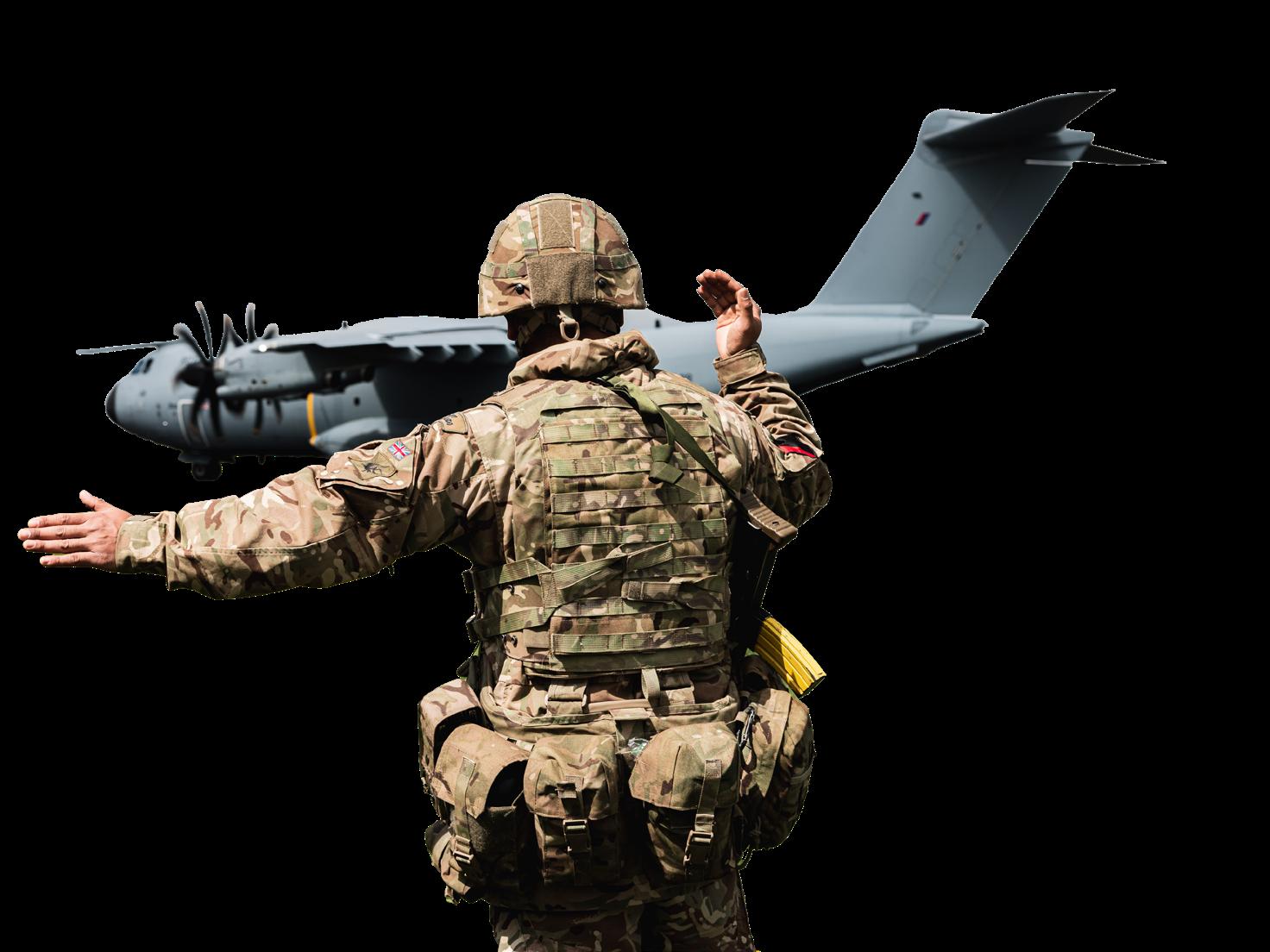
Soldiers from the 6th Battalion Bihar Regiment run from the back of a Royal Air Force A400M during Exercise Ajeya Warrior 7 Picture: UK MOD © Crown copyright
moral high ground.28 For India, being lectured on democracy by nations grappling with their own democratic crises was seen as both poorly timed and selfrighteous.
Adding to this friction was the controversy surrounding the alleged involvement of Indian agents in the attempted assassinations of Sikh separatists abroad.29 From a Western perspective, these incidents were shocking breaches of sovereignty and international norms, prompting widespread condemnation and calls for accountability. From India’s viewpoint, however, this outrage was yet another instance of perceived hypocrisy. For many in New Delhi, Western nations, particularly the United States, had long justified aggressive postures abroad under the guise of counterterrorism, including drone strikes and targeted killings. The suggestion that India’s actions warranted greater scrutiny than those of the West was viewed not only as hypocritical but as emblematic of a double standard that has long marred Indo-Western relations.30
This clash of interpretations reveals the tightrope that Western governments must navigate when addressing India. The controversy over the Sikh separatist issue, like the critiques of India’s democratic practices, gained outsized prominence in domestic and international discourse because of the West’s continued emphasis on shared values as the cornerstone of its relationship with New Delhi. While such actions are naturally appalling to liberal observers, it is vital to recognise how the emphasis on shared democratic ideals amplified tensions. By framing the partnership with India in moralistic terms rather than primarily strategic ones, Western leaders created a narrative in which such incidents naturally took centre stage in
their international dealings and multilateral relationship.
LESSONS FOR THE UK: FOCUSING ON STRATEGIC INTERESTS
The Galwan moment, with its mix of successes and failures, serves as a case study for Western engagement with India in the 21st century. For the United Kingdom, in particular, this period underscores the need to recalibrate its approach, focusing less on ideological alignment and more on pragmatic, strategic cooperation. As the Indo-Pacific emerges as the critical theatre of global geopolitics, the UK cannot afford missteps in forging a meaningful partnership with India.
At the heart of this recalibration lies the necessity to prioritise shared strategic interests over aspirational rhetoric about shared values. While the democratic principles binding the UK and India offer a valuable foundation for collaboration, overemphasising these ideals risks alienating New Delhi, as the Galwan moment demonstrated. Instead, Britain should focus on areas where its strengths align with India’s strategic needs, prioritising pragmatic cooperation over rhetorical ideals. Defence partnerships, particularly in maritime security and advanced technology, remain pivotal. Expanding joint military exercises like the Konkan series, co-developing critical defence technologies and fostering collaboration on cyber security and artificial intelligence are avenues ripe for exploration. Similarly, economic engagement in sectors such as green energy, digital infrastructure and supply chain resilience offers opportunities to deepen ties while addressing global challenges.
This pragmatic engagement requires a shift in Westminster’s approach, moving away from paternalistic postures
and recognising India’s dual identity as both a partner and a rising global power with its own strategic priorities. Over the past decade, New Delhi has grown adept at leveraging its geopolitical importance, engaging with multiple partners on its own terms. For the UK to build a meaningful relationship, it must approach India as an equal, respecting its agency and recognising its independent calculus.
David Lammy’s “Progressive Realism”, a guiding principle of Labour’s foreign policy, encapsulates the challenge.31 While the promotion of democratic values has its place, overemphasising ideals at the expense of strategic realities risks repeating the very mistakes that marred the Galwan window. Britain must instead recalibrate its approach to focus on mutual benefits. By prioritising tangible outcomes such as joint defence initiatives and economic partnerships, the UK can position itself as a trusted ally and ensure its engagement with India is grounded in mutual respect and shared interests.
A PARTNERSHIP FOR THE 21ST CENTURY
The Indo-Pacific is not merely a theatre of geopolitical contest but the defining arena for global power dynamics in the 21st century. At its heart lies India, a nation whose strategic position, economic potential and military capabilities make it an indispensable partner for the West. Yet, as the window of opportunity opened by the Galwan Valley crisis demonstrated, forging a meaningful and enduring partnership with New Delhi demands a nuanced and strategic approach.
As argued above, the Galwan moment served as both a warning and a lesson. It underscored the enduring structural rivalry
between India and China, as well as the possibility for deeper Indo-Western cooperation in the face of Beijing’s growing assertiveness. At the same time, it revealed the pitfalls of a Western approach overly fixated on shared values at the expense of strategic pragmatism. The successes of defence agreements, QUAD cooperationand enhanced military exercises demonstrated the tangible benefits of aligning interests, while the diplomatic missteps and misplaced emphasis on democratic ideals highlighted the risks of alienating a critical partner through misjudged messaging.
For Britain and its allies, the path forward is clear. The next window of opportunity will demand a strategy grounded in pragmatism, mutual respect and an unwavering focus on shared interests. Moving beyond the rhetoric of shared values does not mean abandoning ideals; it means recognising that partnerships are built on trust, reciprocity and concrete benefits. By embracing this approach, the UK can position itself as a trusted and reliable partner for India – a cornerstone in its Indo-Pacific strategy and a vital ally in addressing the defining geopolitical challenges of the century.
28Jaishankar has recently addressed western criticism of democracy in India. See ‘Transcript of External Affairs Minister, Dr. S. Jaishankar, in conversation with MarianoFlorentino (Tino) Cuéllar of Carnegie Endowment, Washington DC’, Ministry of External Affairs: Government of India, 2 October 2024.
29Luc Cohen and Krishn Kaushik, ‘How alleged India plots to kill Sikh separatists in the US and Canada unfolded’, Reuters, 1 December 2023.
30Samir Saran, President of the Observer Research Foundation, gave an eloquent account of how many in India saw criticism of India’s democracy during the ‘US-India relations and the Indo-Pacific’ roundtable event hosted by Chatham House on 15 May 2024.
31David Lammy, ‘The Case for Progressive Realism: Why Britain Must Chart a New Global Course’, Foreign Affairs, 103:3, pp125-137.