AND THE WEST MIDDLE POWERS
at middle powers outside the traditional hierarchy, it is much easier to understand them in a horizontal rather than vertical definition. In this view, great powers and middle powers exist in a more balanced relationship. Rather than merely occupying a lower rung on the ladder, middle powers serve as crucial intermediaries
If we envision the global order as a structure, the great powers are like massive slabs of rock, while the middle powers are the concrete between them, preventing them from clashing directly and providing shape to the structure as a whole. Middle power is no longer just a category; it has become an identity. To be recognised as a middle power, a nation must declare itself as such, act accordingly, and be acknowledged by both peers and great powers.
Middle powers are innately diverse and have no ‘unifying ideology’, but this title serves as a sign of affinity for those who share the same broad notion of worldview : steering the
world away from great power rivalry while pushing for a more inclusive and just system of global governance. This identity is not rooted in a single political or economic ideology but rather in a commitment to multilateralism, stability and the equitable distribution of power and resources on the global stage.
The liberal world order provided the framework within which middle powers could grow and gain influence. It has facilitated economic development, international trade and political engagement, allowing countries previously on the periphery to assert themselves on the global stage. However, as these middle powers have become more assertive, they have also become more aware of the system’s shortcomings. They see the inconsistency in the application of rules and the disproportionate influence of major powers, which often results in a system that benefits a few while marginalising others.
This is where the rift in understanding between middle
“THE [WEST] VIEWS THE US-LED LIBERAL WORLD ORDER AND ITS ASSOCIATED INSTITUTIONS AS INDISPENSABLE COMPONENTS OF THE GLOBAL GOVERNANCE SYSTEM. WESTERN NATIONS SEE THOSE WHO CHALLENGE THIS ORDER, SUCH AS CHINA OR RUSSIA, AS RIVALS.”
powers, particularly in the Global South, and the West begins. The latter views the US-led liberal world order and its associated institutions as indispensable components of the global governance system. Western nations see those who challenge this order, such as China or Russia, as rivals. At its core, this is a question of power. The West perceives threats to its hegemony and the established international norms it champions.
On the other hand, middle powers often feel that the system in which they have operated has ignored, sidelined and marginalised them – and to an extent still does. For these nations, the call for change is about fairness and inclusion. They advocate for a reformed global order that genuinely embodies liberal principles, ensuring a more equitable distribution of influence and benefits. In essence, while China and Russia overtly challenge the dominance of the liberal world order, middle powers seek its transformation to become truly ‘liberal’ in spirit and practice. They push for a system that acknowledges their voices and addresses their needs. So, why do these middle powers seem to be
developing closer ties with China and Russia?
The interests of Russia or China may be ‘aligned’ with the interests of middle powers, but they are not ‘alike’. The buzzword for middle powers in the 2020s seems to be ‘multialignment’. This concept, also referred to as multi-vector foreign policy or equidistance, fundamentally seeks to balance relationships with various global powers. Despite the different terminologies, the core idea remains consistent: middle powers strive to avoid exclusive alignment with any single bloc or alliance, thereby maintaining the flexibility to engage with a diverse array of nations.
From a Western perspective, this behaviour is increasingly seen as disruptive. The traditional global order, largely dominated by Western influence, relies on clear alliances and predictable partnerships. Multialignment challenges this structure by introducing an element of unpredictability. Middle powers, by not committing fully to any one major power, can create uncertainty in diplomatic, economic and security landscapes. Their ability to pivot between different global
powers depending on the context and their national interests undermines the established norms of alliance politics. This strategic ambiguity allows middle powers to manoeuvre more freely, but it complicates the West’s ability to exert influence and maintain cohesion within its preferred global framework. As a result, Western powers may view multialignment as a threat to their ability to shape international outcomes and sustain their dominance in global governance.
The underlying issue is that while the West remains the most valuable partner for middle powers in many sectors, it is losing the competition in the open market – a market that it largely helped create. This situation exposes a critical flaw in the West’s reliance on value-based diplomacy. As a reactive and conservative strategy, it is rooted in outdated assumptions and has been maintained for too long.
Using values as a bargaining chip not only dilutes their inherent worth but also alienates potential partners with unique circumstances that are often overlooked. Valuebased diplomacy, as it currently stands, is driven by a strategy of fear and loss mitigation rather
than a proactive approach to competition and success. It focuses on preserving existing influence and deterring rivals, rather than adapting to new realities and seizing opportunities. From the perspective of middle powers, the problems with value-based diplomacy can be broadly categorised into coercion, inconsistency and security risks.
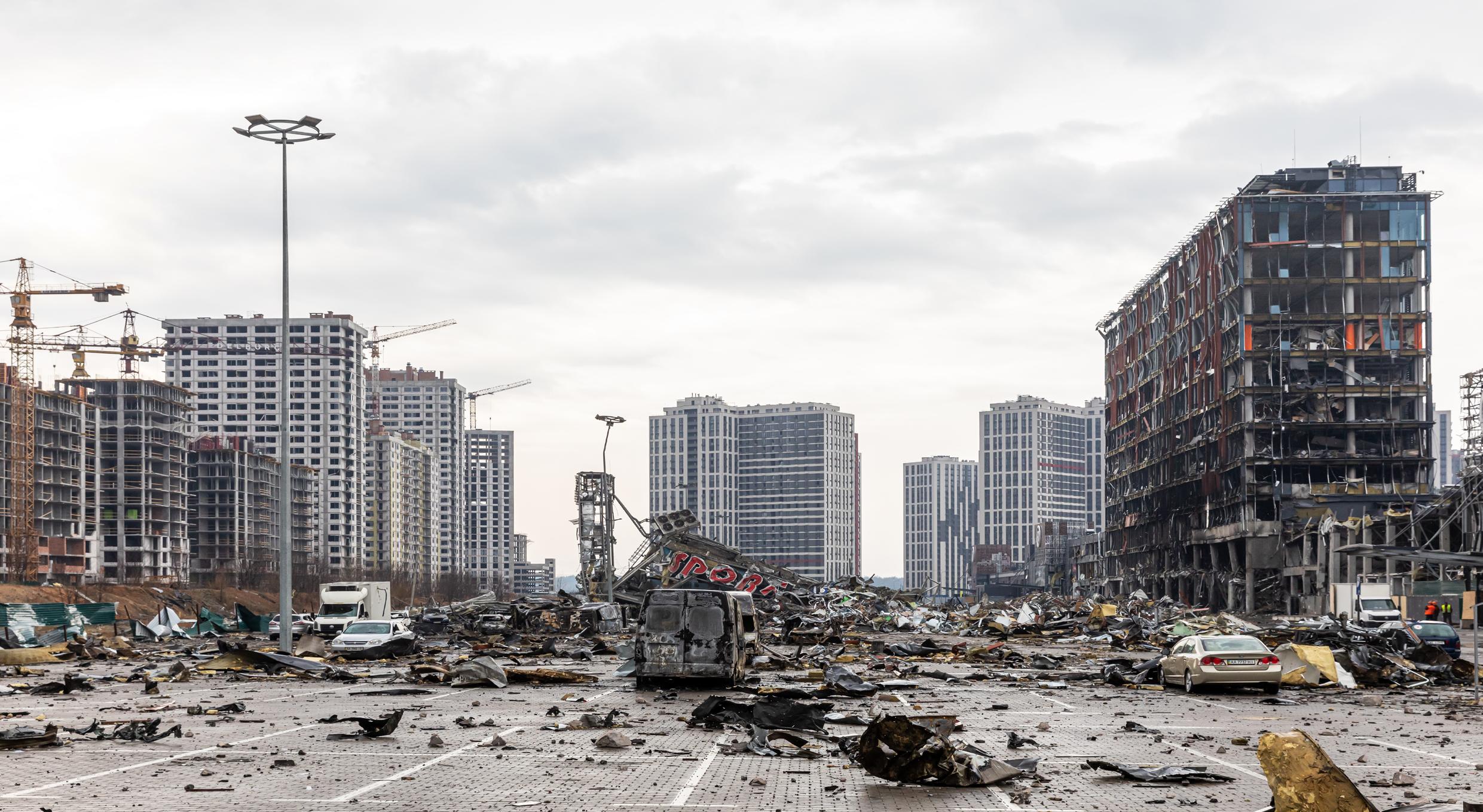
The pivot point was the war in Ukraine, which exemplified these points for middle powers. First, the liberal world order failed to provide any semblance of security for its participants. The idealistic theory that each country is free to choose its own path was shattered by the reality of one great power’s readiness and willingness to resort to violence to protect its stated interests. The global security system, previously criticised for preferentialism and turning a blind eye to conflicts outside the West’s zone of interest or initiated by the West, was further discredited. The Russian intervention in Ukraine, considered a Western ally with vested interests from the West, proved that the system is not just biased; it is fundamentally ineffective.
Second, the great power rivalry
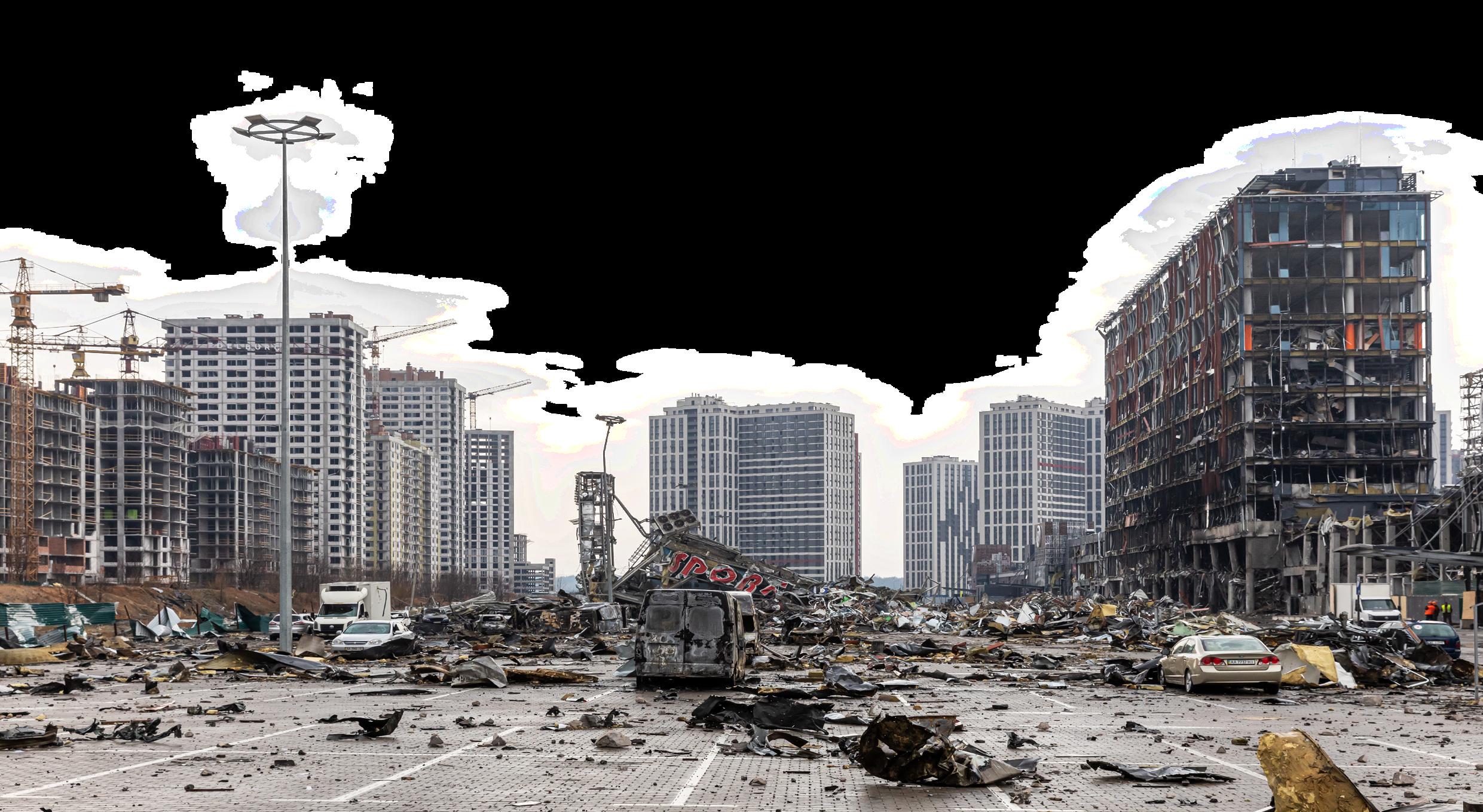
is on the brink of a hot phase, and any country caught in the crossfire will suffer. Regardless of how this war ends from the great power perspective, from the middle power perspective, Ukraine represents an unmitigated disaster. The devastation and suffering endured by Ukraine illustrate the dire consequences for countries that become battlegrounds in great power conflicts.
Third, it is preferable to have no enemies rather than committed allies. Choosing one side inevitably creates adversaries on the other. Therefore, middle powers do not favour transactional relations over long-term commitments. Instead, they tend to avoid any deals that would exclude other parties and have the potential to start a political ‘tug of war’ that could pull them into the quagmire of great power rivalry.
THE BITTER TASTE OF COERCION
The inclination of the West to choose partners based on shared liberal and democratic
“THE DEVASTATION AND SUFFERING ENDURED BY UKRAINE ILLUSTRATE THE DIRE CONSEQUENCES FOR COUNTRIES THAT BECOME BATTLEGROUNDS IN GREAT POWER CONFLICTS.”
of implementation of these values is arguably the biggest reason why countries of the Global South feel unjustly excluded from the liberal world order. While the idea might have seemed reasonable in the context of the ‘end of history’ following the end of the Cold War, the fact that desperately needed funds and investments for developing countries were gatekept behind the forced implementation of a ‘one-size-fits-all’ model of liberal democracy was bound to backfire. And it did.
The ignorance of the fact that democratic and liberal changes need to be accepted and supported from the bottomup in societies that are willing and ready to adopt them led to the emergence of ‘illiberal democracies’ – systems with the facade of reforms but not the substance. This short-cut also contradicted the formula that
This coercion leaves states with a bitter taste. In many cases, these poorly prepared and implemented reforms failed to yield the desired results, giving rise not to critics of the strategy and implementation, but to critics of the values themselves. The resulting populism, focused on short-term decisions rather than long-term goals, tends to back-pedal liberal achievements, turning these countries into cauldrons of political turmoil.
Moreover, mixing the objective value of liberal principles with the subjective policy and economic outcomes of states that promote them has led to the equation of liberalisation and democratisation with Westernisation. By exploiting sensitive topics such as identity, gender and racial politics, while contrasting them with traditional conservative values, Russia and China have put the West on the
traditional conservative values and portraying themselves as defenders against Western cultural imperialism, Russia and China have managed to gain influence among middle powers and developing countries. They have framed the narrative to suggest that Westernisation undermines local traditions and identities, thereby positioning themselves as more respectful of national sovereignty and cultural diversity. The insistence on ideological conformity as a precondition for cooperation not only alienates potential partners but also undermines the very principles of fairness and inclusivity that the liberal world order claims to uphold.
SYSTEMIC INCONSISTENCY
In a multipolar world, middle powers have more options. Middle powers, driven by the need for stability, economic development and security, are less inclined to undergo extensive reforms that yield uncertain future benefits when more immediate and tangible opportunities are available elsewhere. This dynamic erodes
powers prioritise pragmatic and immediate gains over long-term ideological commitments.
This challenge is compounded by the very success of implementing democratic norms – freedom of choice. Leaders of developing countries face numerous challenges. Unlike their counterparts in developed countries, they lack the economic and political resilience to withstand global issues such as economic recessions, supply chain disruptions, growing inflation and rising poverty. These countries are also more vulnerable to climate change, energy crises and health pandemics, among other global challenges.
Once again, while this valuebased approach could work in a unipolar world where the West held a dominant position, its flaws become increasingly obvious as the world shifts to multipolarity. When economic and political cooperation are tied to the implementation of liberal values in a market with other potential partners, you run into the problem of diminishing returns. Further rounds of liberalisation require even more time and effort while yielding increasingly delayed
benefits. The only immediate value is the ability to foster cooperation with one partner, while there are others available that are ready to cooperate ‘with no strings attached’.
As Dr Ishmael put it during US Vice President Harris’ tour to Africa in 2023, “when the Chinese visit, they build bridges; when Americans visit, they give lectures”. This statement captures the frustration felt by many leaders in the Global South. While Western countries often emphasise governance and political reform, countries like China focus on tangible infrastructure and economic projects.
For democratically elected governments of middle powers, the primary responsibility is to work for the benefit of the people who elected them. This means prioritising safety, economic development and the provision of essential services. In recent years, this has increasingly entailed balancing relations rather than aligning with one bloc or another. The freedom of choice afforded by democratic norms allows these countries to pursue diverse partnerships that best serve their national interests, even if it means engaging with non-democratic powers.
The West currently lacks a real remedy for addressing the challenges posed by the rise of middle powers. For too long, it has allowed this issue to go largely unattended, failing to prioritise a coherent strategy towards these increasingly influential states. As a result, much of the focus has been on how to retain power rather than adapting to cooperate more successfully in
“WHEN THE CHINESE VISIT, THEY BUILD BRIDGES; WHEN AMERICANS VISIT, THEY GIVE LECTURES.”
a changed global environment.
The need for a comprehensive change in strategy is vital. However, the West’s response so far has been to double down on value-based diplomacy, often making it more punitive. This approach frequently manifests through the use of sanctions as a form of economic, political and diplomatic pressure. The problem with sanctions is not just that they fuel fears of neo-colonialism, but also that they have wideranging impacts. Sanctions often affect not only the targeted countries but also those with economic or political ties to them – mostly middle powers.
Another significant issue with sanctions is their arbitrary nature and the inconsistencies in their application. These measures can appear selective and biased, undermining the credibility of the international system that imposes them. Sanctions, while intended to coerce behaviour change or punish certain actions, can often backfire by entrenching the positions of targeted governments and alienating potential partners.
THE PERILS OF BEING IN THE MIDDLE
The vision of a changing world as a renewed bipolar dynamic is unbalanced. The reductive nature of a world split into Western and Sino-Russian groupings creates a security dilemma and tit-fortat behaviour that puts middle powers at risk. As both sides become more self-interested, viewing global security as a zerosum game, they act at the expense of the other. The end result is greater insecurity for all
This does not mean that middle powers are inclined to support China or Russia in their challenges to the liberal order. Middle powers are not interested in merely replacing one hegemon with another, in the hope that the new one will treat
them better. They recognise that any hegemonic order, based on power, will inevitably encounter the same problem: the temptation to bend the rules it created to sustain its dominance as it begins to falter.
The liberal order, despite its flaws, has played a crucial role in elevating middle powers, allowing them to become more visible and influential on the global stage. The system’s imperfections, however, have provided these countries with a unifying idea: the desire to transform it into a genuinely rules-based order. Middle powers advocate for a system where rules are applied consistently and fairly, without exceptions for the powerful. They seek an order that respects sovereignty, promotes equitable cooperation, and offers all nations, regardless of size or power, a voice in global governance.
This aspiration is not about abandoning the principles of liberal democracy but about ensuring that those principles are upheld universally. Middle powers want to reform the system so that it aligns with its stated ideals, not one where rules are selectively enforced or changed at the convenience of the powerful. They envision a world order where international laws and agreements are honoured, and where the global system operates transparently and predictably, providing stability and fairness for all.
The West’s strategy must adapt to this reality. This involves recognising and respecting the diverse political and cultural contexts of middle powers, and engaging with them on terms that acknowledge their unique needs and aspirations. By offering partnerships that emphasise mutual respect, shared interests and pragmatic collaboration, the West can remain relevant and influential in an increasingly multipolar world.