DDUE SOUTH: WHY IT’S TIME TO LOOK DOWN
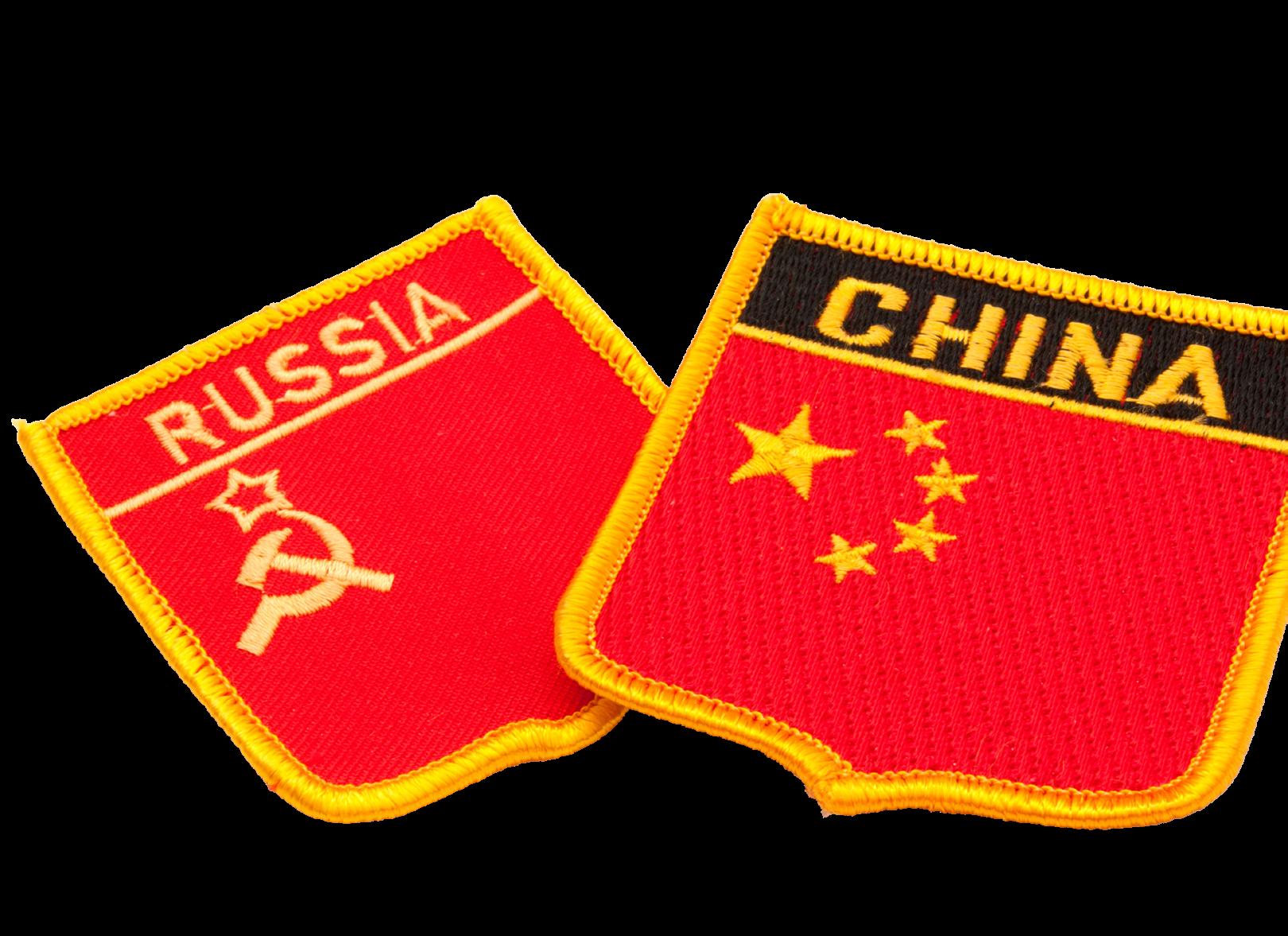
MITRY Trenin was previously the Director of the Carnegie Endowment for International Peace Center in Moscow in the early 2000s. He was a strong advocate for Russia joining the EU and NATO and “what Trenin said mattered”. However, in a recent RT article he highlighted Russia’s reorientation away from the US and the West towards “the world majority”; a revolutionary and deliberate foreign policy move. Trenin now accuses the West of running the world order for their own benefit and constraining and punishing those who don’t align themselves to it. In a view highly likely to be state sponsored, he suggests that Russia must transform from being a disrespected outlier to the US system into a self-sufficient state, built on pragmatic relationships of convenience and mutual interest with other afflicted states.
This highlights the emergence of two significant trends coalescing and having a dramatic impact
on the current ‘rules based’, international system. The first trend is China and Russia’s publicly stated aim of breaking US hegemony and generating a multi-polar world. The second is the growth of a more assertive group of countries historically referred to as ‘the Global South’. The two trends are connected by an increasingly sophisticated system of disinformation that commentators warn should not be considered inconsequential or underestimated in its disruptive power. The challenge for the US and Western powers is to reduce Chinese and Russian influence in the Global South and, in doing so, rebuild their own credibility and relationships with key partners.
Whilst many Western and European countries benefitted economically and socially from the effects of globalisation and the post-Cold War ‘peace dividend’, the benefits were not equally felt. This inequality, overlooked in the declaration of a universal ‘rules based international order’ was keenly felt by countries in what became known as the Global
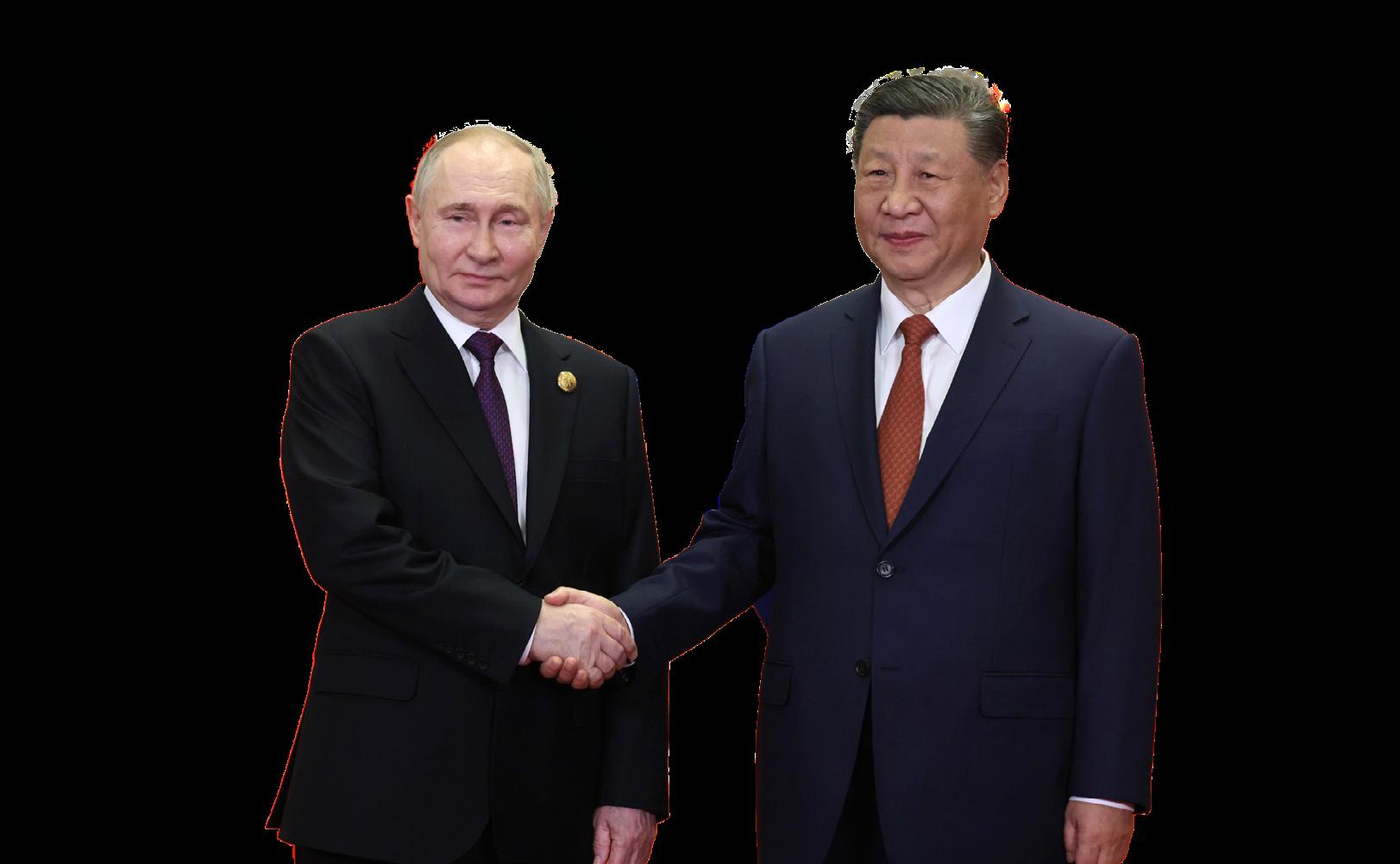
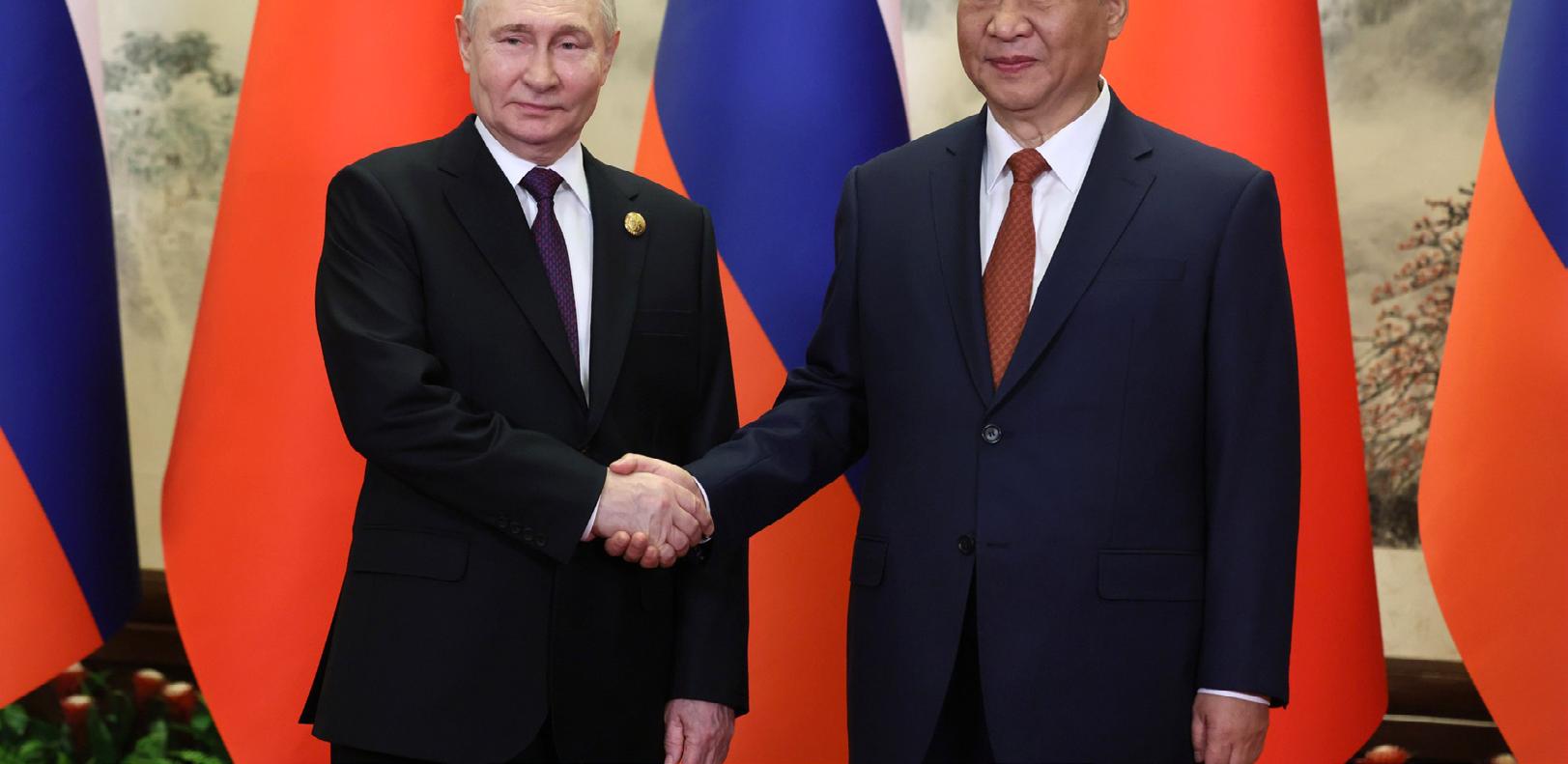
South, countries that are now assertively seeking alternative partners. At the Voice of Global South Summit on 17th November 2023 Indian Prime Minister Modi demonstrated India’s endeavour to provide a voice to the Global South However, the effort to reshape the universal system, viewed as a synonym for US hegemony, is in reality being led by China. President Xi has been explicit in his desire for a “global community of shared future” that opposes US hegemony, enabled by a “Cold War mentality”. In mid-May 2024 he pledged during the summit with President Putin to promote “multi-polarity in the world”, a clear challenge to the assumption of US unipolarity. To achieve this, Xi can increasingly rely on “mutually beneficial cooperation” with Russian President Putin. This takes many forms including at the increasingly dysfunctional United Nations Security Council, where Russia has in the past year vetoed humanitarian aid to rebel-held areas of Syria, sanctions on Mali and a UN mission to monitor North Korean compliance with
1 // IN-DEPTH BRIEFING // CHACR
nuclear and ballistic missile sanctions.
From a Russian perspective, globalisation no longer involves America and its allies. Economic sanctions were designed to weaken Russia following the invasion of Ukraine but have actually had the effect of reducing US global economic dominance. This is because sanctioned countries have found ways around them using middle powers like Turkey, Indonesia or India, who are integrated into the US financial system but sufficiently distanced from it.1 The combined effect, in conjunction with bilateral agreements with Iran and North Korea, has the systemic effect of weakening US global power and influence.
Commentators have suggested the so-called ‘coalition of the sanctioned’ is simply a series of pragmatic, transactional trade relationships. However, the concerted effort to highlight western hypocrisy or simply amplify historic resentment and forge stronger relationships with countries in the Global South, often at the expense of existing western relationships is increasingly noticeable.
South Africa has petitioned the International Court of Justice four times since October of last year, accusing Israel of committing genocide and demanding Israel stop its military operations, a demand that the court endorsed, with a majority of 13 to 2, on the 24th of May 2024. The court does not have the power to enforce the ruling but, alongside the US veto of the Algerian draft resolution calling for a ceasefire in Gaza, it has been taken as proof of US self-interest and hypocrisy. Countries in the General Assembly even accused the US
“RUSSIA AND CHINA ARE APPEALING PARTNERS... [THEY] ARE LESS LIKELY TO IMPOSE DEMOCRATIC, SOCIETAL OR HUMAN RIGHTS LIMITATIONS AS A CONDITION OF AID OR SUPPORT; SOMETHING THAT HAS BEEN REPEATEDLY CONSIDERED A COLONIAL HANGOVER WHEN APPLIED BY THE USA.”
of exacerbating the conflict and preventing a peaceful solution. This reinforces evidence, all too apparent to countries across Africa and the Middle East, that ‘Europe’s problems are the world’s problems, but the world’s problems are not Europe’s problems’. And it is in sharp contrast to the carefully calibrated way China has dealt with the Houthi conflict, framing themselves as the peacemaker in contrast to the dangerous, hypocritical US hegemon.
In May China’s UN ambassador, Fu Cong, attacked the West in defence of African states for “adhering to the old mentality from the colonial era, wantonly interfering in the internal affairs of African states” and “always resorting to pressure and sanctions”. African countries are sick and tired of former colonial powers telling them what to do, however, they are not simply transferring suzerainty to Russia and China. Ugandan President Yoweri Museveni recently told the visiting Russian Minister “we don’t believe in being enemies of somebody’s enemy, we want to make our own enemies”. Mahamat Idriss Déby, Chad’s recently elected president, declared “we’re not going to act like a slave who
wants to change his master”. Chad is a good example of a more activist and assertive Global South country. It has a substantial French military presence and yet is pursuing alliances of equal magnitude with Russia, Turkey and the UAE. The President Bush era political mantra of ‘you’re either with us or against us’ looks increasingly simplistic. This trend seen across the Global South has been enabled by more assertive foreign policies and increased competition by middle powers such as Turkey and the United Arab Emirates.
Russia is actively courting middle powers and those of the Global South. In February and May 2024 large anti-colonialism forums in Russia ‘For the Freedom of Nations’ and ‘Russia and the Islamic World Kazan’ included large delegations from more than 79 countries. These large set-piece events are then accompanied by Sergey Lavrov’s numerous international visits. In Latin America even the policy of “non-alignment” reduces the number of votes against Chinese and Russian actions within multilateral forums. More aggressively, it has been argued Iran sees the failure of the USA to compel Russia to
reverse its attack on Ukraine as a clear indication of systemic US weakness. In short, they smell blood on the weakened lion. And are emboldened to fulfil its long held foreign policy aim of dealing a lethal blow to ‘the Great Satan’. More systemically, Russia and China are enabling a number of countries to independently challenge US dominance, creating an interconnected challenge to the West and the international system since 1945. And the network is expanding into Europe with Hungary now an ‘all-weather friend’ to China as part of the ‘global community of shared future’.
Pragmatically, Russia and China are appealing partners. Russia’s Wagner Group have proved brutally effective in the Sahel where France’s Army were previously hamstrung and unsuccessful. China and Russia are also less likely to impose democratic, societal or human rights limitations as a condition of aid or support; something that has been repeatedly considered a colonial hangover when applied by the US. And Russia and China also have the economic power to make grand gestures – such as the writing off of 90 per cent of North Korea’s Soviet era debt
2 // IN-DEPTH BRIEFING // CHACR
CC BY 4.0
Picture:
Kremlin.ru,
IN-DEPTH BRIEFING // DUE SOUTH
1Cerian Richmond Jones, “Why aren’t sanctions against Russia working?” The Economist video, accessed 16 May 2024.
Iran doesn’t need any encouragement to strike against the USA. However, there is significant evidence of aggressive disinformation campaigns throughout the world. The Africa Centre for Strategic Studies recently published a report showing that nearly 40 per cent of disinformation campaigns across Africa originate from Russian state linked organisations. The Russian narrative is simple and repeatable. It encourages resentment, non-alignment with the West and echoes Soviet era messages of decolonisation. And it is working. Over two-thirds of the world’s population live in countries that are not sanctioning Russia as a result of their invasion of Ukraine. Moscow’s propaganda and disinformation campaigns have proven successful in undermining Western, specifically French, influence in Mali and Burkina Faso, while Niger is ending security cooperation with the US. And a recent report by PEN America detailed how Beijing’s censors are gaining increasing control over Hollywood and the global filmmaking industry. Even the
“MORE MUST BE DONE TO CHALLENGE AND COUNTER RUSSIAN AND CHINESE NARRATIVES ACROSS THE GLOBAL SOUTH. THIS NEEDS TO BE DONE WITH WORDS AND ACTIONS.”
movement of Western politicians is being constrained – with Tim Loughton MP, co-chair of the All-Party Parliamentary Group on Tibet, being denied access and deported from Djibouti
It is clear two significant trends are coalescing on the ‘rules based’, international system. China and Russia have publicly and repeatedly stated their aim to break US hegemony and create a multi-polar world. This message, delivered through manipulation of the failing multilateral system and an increasingly sophisticated system of disinformation, has found fertile ground. A growing group of countries now recognise the immediate benefits of relationships with Russia and China and yet are also assertive enough to reject overt subordination. The future appears to hold a breakdown of the current system although it is less clear if China has an ideological plan
MUST WATCH...
n “The idea of an elaborate, Star Trek-esque hologram form of training is pretty pie in the sky. Do I buy into the romantic vision of what that could be? Yes – it’s a cool idea but we don’t know what the metaverse is and we certainly don’t know what the military metaverse is going to look like. It’s a long way away.” – Sam Vine, Professor of Psychology at the University of Exeter and Chief Scientific Officer at Cineon, talks to the CHACR about the performance power-up technology can afford those in the Armed Forces, ‘marginal losses’ and the economics of Extended Reality. Scan the QR code below left to watch.

for its replacement. In a recent paper Chatham House encourages the US and UK to respond to Russia’s manipulation of the Global South and mitigate the geopolitical rift with the Global South. The path to achieving the former includes supporting the reform of the United Nations Security Council, a “dysfunctional theatre of polemics” according to Trenin, to recognise the reality of a multilateral international order and repair faith in multilateral forums.
To achieve the second of Chatham House’s recommendations more must be done to challenge and counter Russian and Chinese narratives across the Global South. This needs to be done with words and actions. Targeted bilateral relationships are more important than ever. As an example, US focus in Africa follows the announcement in February from the Africa adviser
in the National Security Council that “as the international system has been re-ordered and the global governance architecture has changed, Africa has to be much more a part of it”. On 23rd May 2024 the President of Kenya became the first African leader for 16 years to make a state visit to the USA. During the visit Kenya became America’s 19th ‘major non-NATO ally’ with infrastructure and defence agreements on security, joint exercises and the expansion and upgrading of the Manda Bay Airfield. More strategically they agreed to work together to enable Kenya’s semiconductor industry and provide greater resilience in the global market.
What is clear is that Russia’s revolutionary relationships of convenience with ‘the world majority’ will continue, as will China’s aim of a multi-polar, global community. The US and the UK must recognise that they need humility rather than hubris to re-establish productive relationships with states they previously ignored but who are now growing in importance.

n “The world is entering its most dangerous 25-year period for quite a long time. The way in which Ukrainians have had to defend themselves is just something that the Poles, the Lats, the Estonians, the Finns and, critically, probably the Germans will have to show their willingness to do.”
– Peter Apps, Reuters’ global defence commentator and the author of Deterring Armageddon: A Biography of NATO, shares his assessment of the Alliance’s 75-year history and its next chapter. Scan the QR code right to watch his exclusive interview with the CHACR.

3 // IN-DEPTH BRIEFING // CHACR
IN-DEPTH BRIEFING // DUE SOUTH