AUTHOR


The Centre for Historical Analysis and Conflict Research is the British Army’s think tank and tasked with enhancing the conceptual component of its fighting power. The views expressed in this In Depth Briefing are those of the author, and not of the CHACR, Royal Military Academy Sandhurst, Ministry of Defence or the British Army. The aim of the briefing is to provide a neutral platform for external researchers and experts to offer their views on critical issues. This document cannot be reproduced or used in part or whole without the permission of the CHACR. www.chacr.org.uk
IN 2024, NATO will mark its 75th anniversary, thereby overtaking the Greek, city-state focused, Delian League as the oldest alliance in history. However, NATO’s landmark birthday comes at a tumultuous point in its history. Although Russia’s 2021 invasion of Ukraine validates its raison d’etre, after an uneasy period of unilateral counter-insurgency campaigns, big questions remain around the organisation’s stability, commitment, and capability. In line with a recent presentation by Peter Apps at the Centre for Historical Analysis and Conflict Research (NATO at 75: What it means for the British Army) – and the speaker’s latest book, Deterring Armageddon: A Biography of NATO – this article will seek to extract the five key points of analysis highlighted by the visiting expert, before exploring the implications of them to the British Army as one of NATO’s premier component militaries.

The first point highlighted by Apps for consideration, is that
although NATO provides the vital framework for the defence of Europe, the organisation has never been truly tested in an existential fight. Previously blighted by political deadlock and differing opinions, there are concerns that member states may not actually ‘turn up’ in a crisis. Such a concern is, of course, as old as the alliance itself. Originally described by Michael Howard in the early 2000s as an “unhappy marriage”, Apps suggests that NATO might be better analogised as a “polyamorous commune of thirty plus, with nuclear weapons”.1 Having bloated from its original 12 members to its current 31, NATO’s ambitions can prove divisive to a varied group of member states with disparate domestic policies on national defence. Conversely, however, the actions of individual members can also result in friction amongst the wider organisation. In 1956, the French and British response to the nationalisation of the Suez Canal Company by Egyptian President Gamal Abdel Nasser resulted in a humiliating Anglo-French withdrawal under pressure from the US and the UN. As William
Lewis wrote: “Britain colluding with France, her historic rival in the Middle East, and Israel, the state formed against British wishes in 1948, against Egypt, Britain’s long-time ally in the Middle East... would present enough issues, were it not for the United States and the Soviet Union joining in the United Nations against the Anglo-FrenchIsraeli attack to finally ensure the failure of the expedition.”2
Aside from the US’ role in the Suez Crisis, its dominance within NATO and enthusiasm to degrade the colonial enterprise would prove too much for France and, in 1966, France took unprecedented steps to formally withdraw from NATO’s Integrated Military Command. However, internal division amongst NATO is not a thing of the past. In 2003 members were split over their willingness to support the invasion of Iraq,

with France, Germany and Turkey refusing to participate or endorse military actions, and more recently Turkey has stalled the accession of Sweden and Finland to the alliance over their support to the Kurdistan Worker’s Party. Political divergence amongst NATO members will endure and, as the network of dependants, allies, and adversaries they maintain develops, managing relations within the organisation will only become more complicated. Nonetheless, members should be pragmatic. Internal frictions should not be expressed by political deadlock and should never impede on the treaty’s key function of collective defence. Regardless of disparities, NATO is the vital framework for the defence of Europe, and its ability to ‘turn up’ need not be tested, so long as its members truly understand the necessity of their shared commitment to the concept.
The resulting implications of this commitment to the British Army are obvious. Not only should it be willing and capable to interdict aggression against NATO allies, but it should forcibly and convincingly communicate its willingness to do so. The UK’s commitment to the defence of Ukraine has gone some way to achieving this. As the 2023 Integrated Review Refresh states, “when the security of our continent has been threatened, we have been at the forefront of its defence, and we will maintain that commitment for as long as it
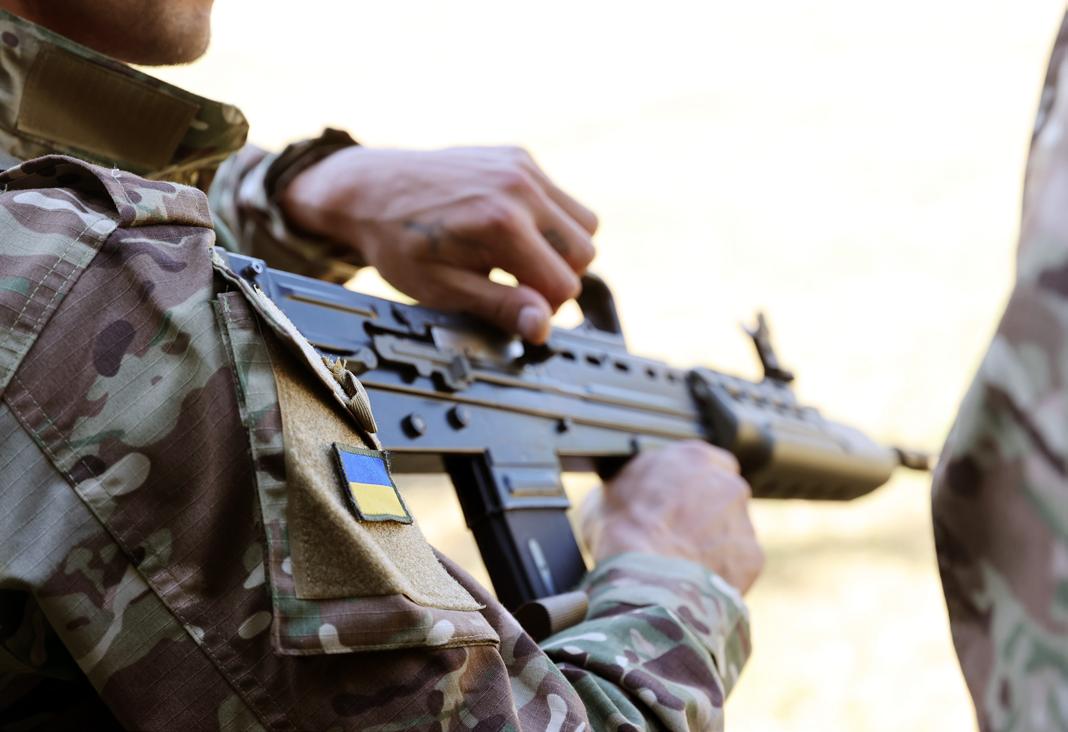
takes,”3 and as a lead proponent in providing support to Ukraine, the UK should now seek to inspire continued and consistent commitment from less assured NATO allies.
However, commitment from NATO members to Ukraine should not be the organisation’s only concern. As highlighted by Apps in his second point, activity creates effect and NATO’s most exposed members need credible and tangible assets to ensure that the deterrence role of the treaty is fulfilled. Whilst political willing and effective communication of their intent will reinforce NATO’s deterrence narrative, member states should also be willing and capable of providing tangible military hardware to underwrite their deterrence policy. Perhaps the most obvious indicator of a state’s capability and willing is the extent to which it meets the two per cent defence investment guideline. In 2006, NATO defence ministers agreed to commit a minimum two per cent of their gross domestic product to defence spending, however,
these guidelines are frequently missed. Prior to the July 2023 NATO summit in Vilnius, only 11 members were set to meet the 2023 target – an improvement on the previous year, where only a meagre seven out of 31 cleared the threshold. Of course, ‘since Russia’s full-scale invasion of Ukraine... a majority of allies, have committed to investing more, and more quickly, in defence’, but it might be too little, too late.4
Discussions around the contributions of member states to NATO are as divisive and well established as those around commitment to collective defence. However, as NATO approaches its 75th anniversary, the domestic interpretation of funding discrepancies continues to become increasingly relevant to the wider organisation. The most notable fiscal discrepancy that exists in NATO is the gulf between US and non-US contributions to the Alliance. Whilst the combined wealth of non-US members, for example, is approximately equal to that of the US, these members still
spend less than half of the US on relevant defence spending.5 Overall, ‘the total volume of the US defence expenditure represents approximately twothirds of the defence spending of the Alliance as a whole’, with the US sending approximately $31 billion to Europe each year.6
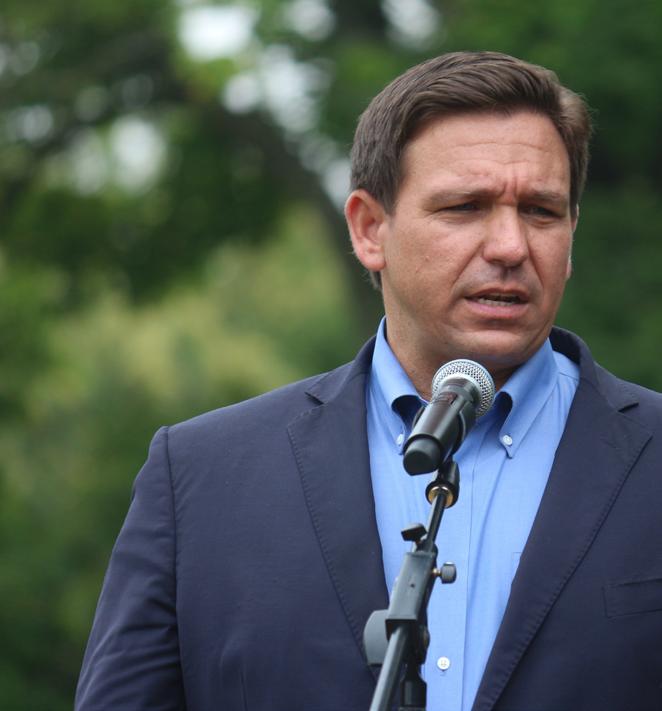
NATO’s first Secretary General, Lord Hastings Ismay, once quipped that NATO was created to “keep the Soviet Union out, the Americans in and the Germans down”. However, a combination of disproportionate investment and an emergent Chinese threat in the Indo-Pacific has caused US domestic opinion to grow increasingly weary of European responsibility. In July 2018, whilst attending the NATO conference in Brussels, the then President Donald Trump warned other leaders that if their respective country’s aid did not meet the two per cent standard by January 2019, the United States would go it alone, ‘a comment that some interpreted as a threat to withdraw from the alliance’.7 More recently however, Trump’s scepticism around the efficacy and importance of NATO has gained traction in the US. Florida Governor, Ron DeSantis, second only to Trump in the 2024 Republican presidential nomination race, has also bemoaned how “the Europeans
3Integrated Review Refresh 2023: Responding to a more contested and volatile world, accessed 09/09/23, Pg 2.
4NATO.int Editors, (01/07/23), ‘Funding NATO’, NATO.int/cps/en/natohq/ topics_67655.htm, accessed. 10/09/23. 5Ibid.
6Erlanger. S., Hirschfeld Davis. J., Rogers. K., (01/07/18), ‘NATO Survives Trump, But the Turmoil Is Leaving Scars’, New York Times, nytimes.com/2018/07/12/world/ europe/trump-nato-russia.html, accessed. 11/09/23.
7Ibid.
8Gancarshi. A. G., (27/06/23), ‘Ron DeSantis Challenges NATO to Pull its Weight, Unite Against China’, Florida Politics, accessed. 10/09/23.

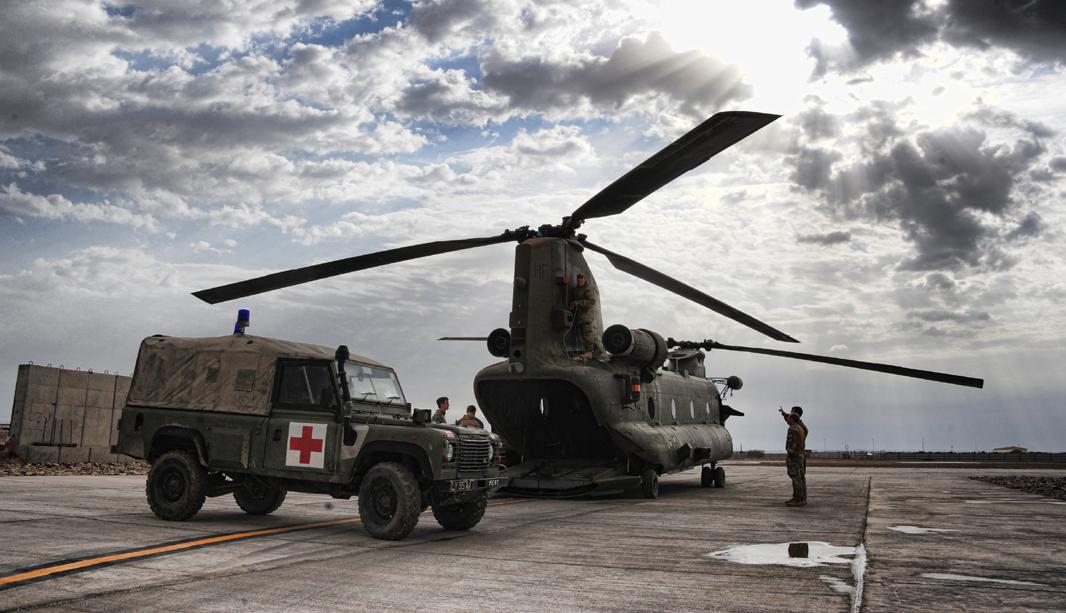
“AS A LEAD PROPONENT IN PROVIDING SUPPORT TO UKRAINE, THE UK SHOULD NOW SEEK TO INSPIRE CONTINUED AND CONSISTENT COMMITMENT FROM LESS ASSURED NATO ALLIES.”Picture: Soldier Magazine © Crown copyright
“NATO ALLIES DON’T NECESSARILY SEE EYE-TO-EYE WITH US ABOUT OUR FOREMOST THREAT, WHICH IS CHINA.” – RON DESANTISPicture: Right Cheer, CC BY 2.0
really need to do more”.8 Perhaps more significant, however, was his assertion that China is now the US’ primary security concern. During a campaign event in July, DeSantis explained how the Alliance was disjointed in its priorities and how “NATO allies don’t necessarily see eye-to-eye with us about our foremost threat, which is China”. 9
Whilst the prioritisation of the Indo-Pacific and China by Americans might be a sobering thought for NATO’s most exposed members, it does vindicate the third of Apps’ thoughts on the Alliance. Although the war in Ukraine has once again put the US at the front and centre of NATO’s framework, their shifting focus should not be underestimated, and European members should be prepared to mount a collective defence absent of the US. As we have discussed, it is not unreasonable to believe that the conclusion of President Biden’s time in the Oval Office could represent the conclusion of Euro-Atlantic focused administrations and NATO should understand the implications. For the British Army, and wider British defence, the implications for such a shift would be two-fold. Firstly, Britain should reaffirm its commitment to counter Russian aggression in the Euro-Atlantic sphere. As the 2024 US presidential elections approach, ‘US voters’ interest
9Ibid.
10Nixey. J., (30/08/23), ‘Pushing Ukraine to Negotiate Now Would Be Disastrous’, Chatham House, chathamhouse. org/2023/08/pushing-ukraine-negotiatenow-would-be-disastrous, accessed. 11/09/23.
11Ibid.
12Monaghan. S., Arnold. E., (27/06/22), ‘Indispensable: NATO’s Framework Nations Concept Beyond Madrid’, Centre for Strategic and International Studies, csis.org/ analysis/indispensable-natos-frameworknations-concept-beyond-madrid, accessed. 09/09/23.
13Ibid.
in the war wanes’, and ‘talk of negotiations in US policy-making circles is no longer confined to Trump and his supporters.’10 However, as James Nixey writes: “Raising negotiations at this stage can only suggest a lack of belief in a Ukrainian victory... and an unwillingness to stay the course. It would also confirm to Russia the limits of the West’s resolve.”11 As such, British support for the defeat of Russian forces in Ukraine should continue to be resolute. The pledge to continue supporting Ukrainian efforts made by Grant Schapps upon his appointment to Defence Secretary in September was therefore not only a message to Ukraine and the more vulnerable members of NATO, but also to the Russian war machine.
Secondly, to re-affirm the capability of European NATO members to defend themselves absent of the US, the UK should champion and nurture the Framework Nations Concept amongst other continental allies. Established at the 2014 NATO summit, the initiative sought to
address military and hardware shortfalls amongst the alliance by organising members according to geographic location and capability. In doing so, co-located armed forces that might be relied upon to provide mutual support ‘developed a co-ordinated basis so that they can operate most economically and efficiently in accordance with a common strategic plan’.12 In addition to enhancing interoperability and regional defence, the Framework Nations Concept acknowledges the limitations of smaller alliance members and shares responsibilities accordingly. Divided into the UK, German and Italian led frameworks, these larger militaries are responsible for the defence of Northern Europe, Western and Central Europe, and the Adriatic region respectively, whilst incorporating the proportional contributions of smaller members. The UK-led Framework Nations Concept or Joint Expeditionary Force, is perhaps the success story of the initiative thus far. Comprising of Denmark, Estonia, Finland, Iceland, Latvia,
Lithuania, The Netherlands, Norway, Sweden, and the UK, the Joint Expeditionary Force has taken an active role since Russia’s invasion of Ukraine by conducting summits in London and deploying joint headquarters to the Baltic region. By contrast, the German and Italian-led frameworks are yet to be widely established beyond official circles. With no available policy direction and lacking any identifiable brand, both lag behind the refined and active Joint Expeditionary Force, which communicates a strong capability narrative reinforced by a drumbeat of training, exercising and operations.13
Facing the prospect of an absent US, European powers should, therefore, be weaned from their dependence on Washington. Although such a shift may weaken Europe’s defensive capability in the short run, the resulting clarity and commitment to collective defence, free of American uncertainty, will serve to strengthen the conceptual resolve of the organisation.
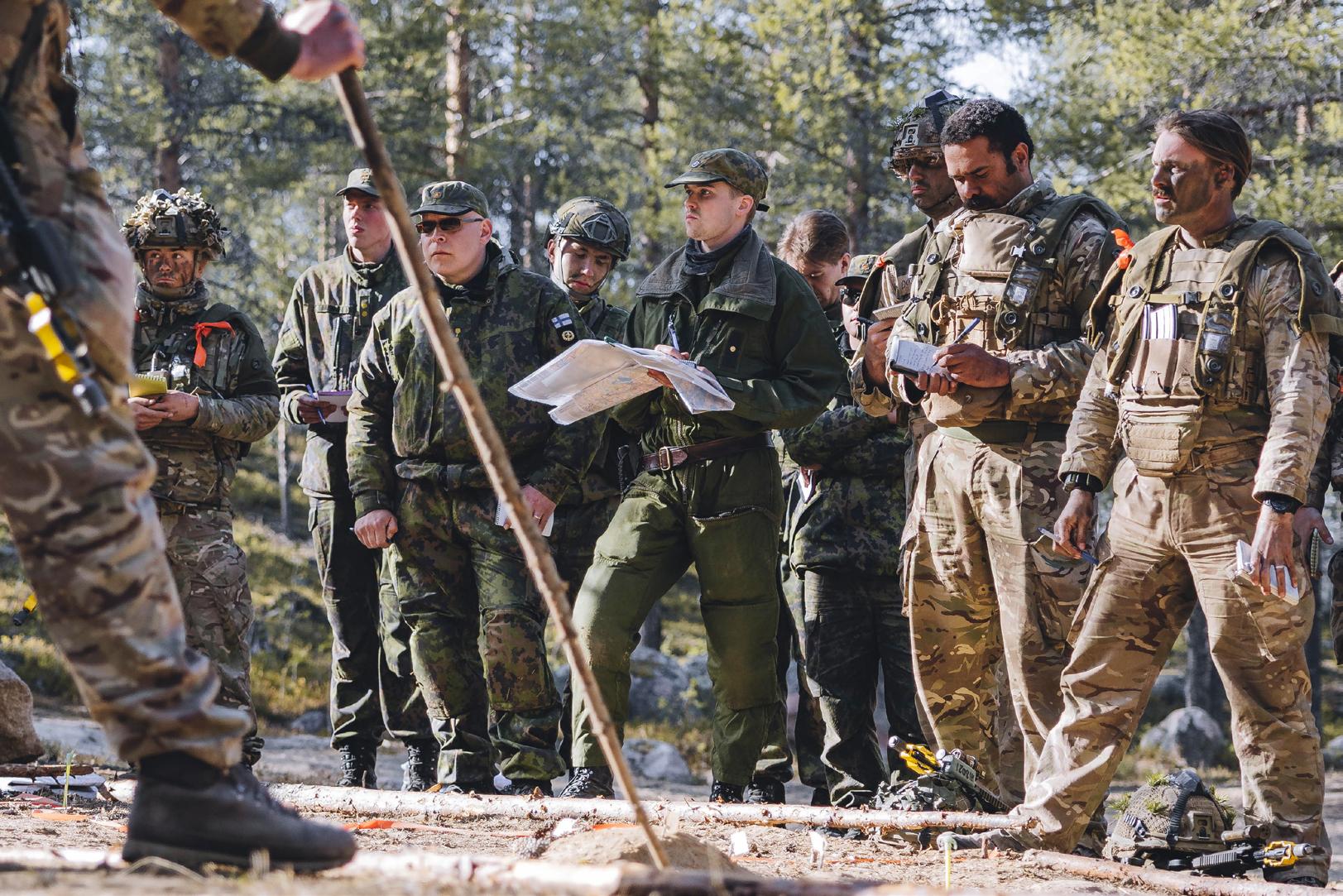
“THE REFINED AND ACTIVE JOINT EXPEDITIONARY FORCE... COMMUNICATES A STRONG CAPABILITY NARRATIVE REINFORCED BY A DRUMBEAT OF TRAINING, EXERCISING AND OPERATIONS.”
Thus far, Britain has shored up the conceptual commitment European NATO members pledge to Ukraine. In doing so, it has acted in spite of US hesitancy and, arguably, nominated itself as the successor mouthpiece for those within the alliance primarily concerned with Euro-Atlantic security. However, despite Britain’s conspicuous commitment to the concept of Ukrainian sovereignty, it, and other European NATO members, cannot back this up with tangible assets. Instead, European members of the alliance should revitalise the core purpose of the organisation and develop its ability to co-ordinate interoperable and mutually supporting militaries. The UK has successfully achieved this within the Joint Expeditionary Force, and it should now impress upon other framework nations the importance of following suit.
Having discussed three considerations for NATO on its 75th anniversary and the implications for the British Army, Apps’ fourth point highlights the importance of
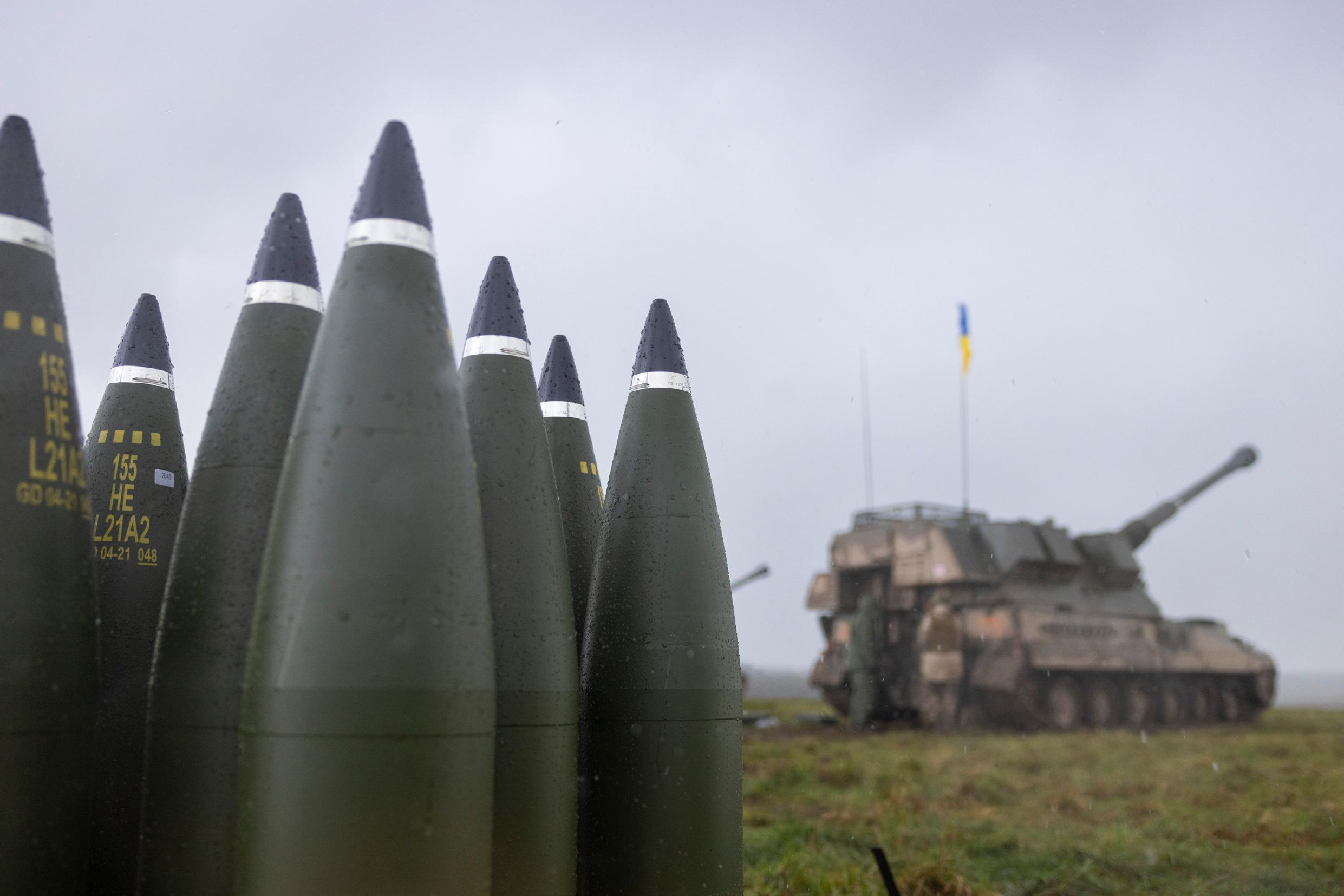
logistics reach and sustainability to effective deterrence. Much like the frictions emanating from financial contributions, discussions concerning the maintenance of a protracted European defence are wellestablished. During the Cold War, Western powers would typically maintain ample stockpiles of ammunition and hardware to maintain a European defence against Russian aggression for 30 to 60 days. Although this is a modest ambition, such a reserve was deemed adequate at a time when, in the event of war, British Army of the Rhine tank commanders had an estimated life expectancy of 36 hours.14 However, as the conflict in Ukraine approaches its 600th day, it is becoming increasingly clear that NATO alliance members are not prepared for the protracted, conventional, manoeuvrist warfare they are most likely to face. As the Commons Defence Committee stated this year, ‘it is clear that the
UK and its NATO allies have allowed ammunition stockpiles to dwindle to dangerously low levels’.15 Even the US, whose reinforcement has always provided the theoretical backstop to Russian advancement, is suffering with issues of supply. In July, Washington committed to raising the monthly production goal for artillery rounds from 14,400 shells before the war to 90,000 shells, despite indications that Ukrainian troops were firing up to 10,000 shells per day in early 2023.16 However, there are still signs of perseverance. The collective defence of Europe has traditionally been based on the aggregation of US military power in Eastern Europe and, despite discussions surrounding an American refocus to the Indo-Pacific, we should still recognise the regular work that is undertaken to ensure the reach and sustainability of NATO forces to this region. Exercise Defender Europe, for example, is an annual, US run, movement exercise featuring up
to 20 NATO allied countries. In 2023, 7,000 US personnel and 17,000 international service personnel participated in the exercise and demonstrated the reach and efficacy of the alliance’s movement corridor to the far reaches of NATO’s boundaries.
Nonetheless, the implications for the British Army are stark. Following a 20-year counterinsurgency campaign in Afghanistan, NATO members should now face the realities of maintaining hardware, logistics and sustainability in large-scale conventional combat; but the British Army is unprepared. Much has been written on the reorganisation and reprioritisation of the British Army’s funding over the last decade, and since the invasion of Ukraine, defence spending figures
14nam.ac.uk/explore/nato-and-british-army, accessed. 08/09/23.
15news.sky.com/story/uks-inability-toreplenish-dwindling-munitions-stockpilea-risk-to-national-security-12827717, accessed. 28/08/23.
16reuters.com/business/aerospace-defense/ nato-expected-raise-munitions-stockpiletargets-war-depletes-reserves-2023-02-13, accessed. 29/08/23.
“IT IS CLEAR THAT THE UK AND ITS NATO ALLIES HAVE ALLOWED AMMUNITION STOCKPILES TO DWINDLE TO DANGEROUSLY LOW LEVELS.”Picture: UK MOD © Crown copyright
have become common parlance. However, despite the UK’s annual defence budget of 2024/25 rising to £5.8 billion more in cash terms than in 2021/22, the Ministry of Defence’s day-to-day budget is actually set to decline in real terms.17 Objectively, a reduction in defence spending is not an inherently bad thing, however, the timing is rash. “We are more likely to see war in Europe that tests NATO in the next 25 years,” asserts Apps, “than we have been at any of the previous 75”.18 Having explored Britain’s inherited role as the lead component and de facto champion of Euro-Atlantic security, it is therefore clear that Britain should now be ‘doubling down’ on its financial and material commitment to the alliance as opposed to economising it.
The increased demand for military hardware, however, is not the only evolution NATO and the British Army will be required to make in the wake of the Ukrainian war. Although precise figures are difficult to obtain, as of August, US officials put combined Ukrainian and Russian casualty numbers at approximately 500,000, and the Ukrainian offensive is yet to ebb for the winter months.19 Ukrainian ‘citizen-soldiers’, that find themselves injured on the frontline, are afforded relatively rudimentary treatment, and can be recovered to overwhelmed medical facilities. These realities of contemporary conventional warfare are far removed from the British Army’s recent experiences in Afghanistan, where personnel could frequently rely upon medical emergency response teams coverage and world-class medical attention within an hour of wounding. Similarly, the resurgence of the ‘home front’ and the far-reaching impact of the conflict have demanded a resolve amongst civilian populations unfamiliar to many Western observers. Both British military
personnel and the British public should, therefore, be made aware of the shift in mindset required on the occasion of Russian aggression. Gone are the farremoved campaigns which only pervaded the public consciousness through news bulletins and public funerals. Instead, as Apps asserts in his fifth highlighted point, we should accept that NATO’s next conflict will be one of conscription and levies.
Among NATO’s 31 members, only four maintain mandatory military service, however given the employment of vast reserves in Ukraine, more are considering following suit.20 In February, Germany’s defence minister, Boris Pistorius lamented the 2011 decision to abolish compulsory military service and advocated its return.21 Pistorius’ comments are, however, indicative of a wider discussion amongst alliance members on whether to introduce or restore mandatory military service. Over the last 12 months, the Netherlands, Italy and Poland have all tabled serious discussions on the topic and, as of 1st July 2023, mandatory service for men is again compulsory in Latvia. Such discussions have not, yet, permeated to the UK, but the implications for the British Army are still apparent. Whilst there is no doubt that ‘a country’s ability to rapidly reconstitute a military force suffering from... casualties will be a key factor in sustaining any similarly intense state-onstate fight in the 21st century’, questions still remain about how best to achieve this in Britain.22
Traditionally, the British Army has maintained a comparatively capable Reserve force capable of augmenting regular forces as required. More recently however, there has been a departure from the ‘back-fill’ role of the Reserves, especially as His Majesty’s Government seeks to present the force as an individual entity capable of unilateral action. As the Future Soldier Guide states, ‘every part of the Army Reserve will have a clear warfighting role and stand ready to fight’, an ambition underlined by the reformation of the 19th Light Brigade in July, the British Army’s first Reserve Brigade since the Second World War.23 However, there is still some way to go. Bureaucratic application processes, informal training arrangements and an unattractiveness to civilian specialists all serve to constrain the Reserve’s growth and effectiveness, resulting in the force falling 4,000 personnel short of its 30,100 trained personnel target.24 Timed, as they are, in conjunction with shrinking regular counterparts, such shortfalls could have significant consequences.
NATO’s 75th anniversary therefore represents far more than a significant milestone for the alliance. Russian aggression in Ukraine has finally vindicated the organisation’s formation, and yet, some member states appear unprepared or unwilling to confront their present situation. Regardless of the results of the 2024 US presidential elections, European members of NATO should become a
self-sufficient and, exclusively, Euro-Atlantic focused entity. This reconfiguration will not be easy, nor cheap. Member states will be forced to achieve their aspirational two per cent commitment and further embrace opportunities to enhance the ailing Framework Nations Concept. Development is, however, essential. In September, Russian President Vladimir Putin characterised the legal proceedings against former President Trump as a political witch hunt.25 Through his attempts to flatter the former US President, Putin has illustrated his belief in the fragility of the North Atlantic Treaty. His endearment to a wavering US administration preoccupied with a proximal adversary will free up Russia to de-construct the alliance and dissipate resolve amongst Western adversaries. Now, perhaps, more than ever, NATO members should therefore communicate their commitment to NATO’s founding principle. By doing so, NATO will be refining its most potent tool in the policy of deterrence; its unfaltering commitment to a policy of collective defence.
17commonslibrary.parliament.uk/researchbriefings/cbp-8175/, accessed. 30/08/23. 18chacr.org.uk/2023/07/05/ nato-at-75/?utm_source=rss&utm_ medium=rss&utm_campaign=nato-at-75, accessed. 25/08/23.
19theguardian.com/world/2023/aug/18/ ukraine-russia-war-battlefield-deaths-rise, accessed. 29/08/23.
20foreignpolicy.com/2023/02/14/ europe-nato-military-russia-war-ukraineconscription-draft-reserves-trainingmanpower/, accessed. 31/08/23.
21Ibid.
22Ibid.
23army.mod.uk/news-and-events/ news/2022/07/19th-brigade-reform-inyork/, accessed. 20/09/23. 24wavellroom.com/2023/03/29/ improving-defence-reserves-forces/, accessed. 19/09/23.
25wionews.com/world/putin-brands-trumpslegal-battles-as-political-witch-hunt-as-usrussia-tensions-escalate-635278, accessed. 20/09/23.