CHACRDIGEST
AUTHOR: Professor Andrew Stewart, Head of Conflict Research

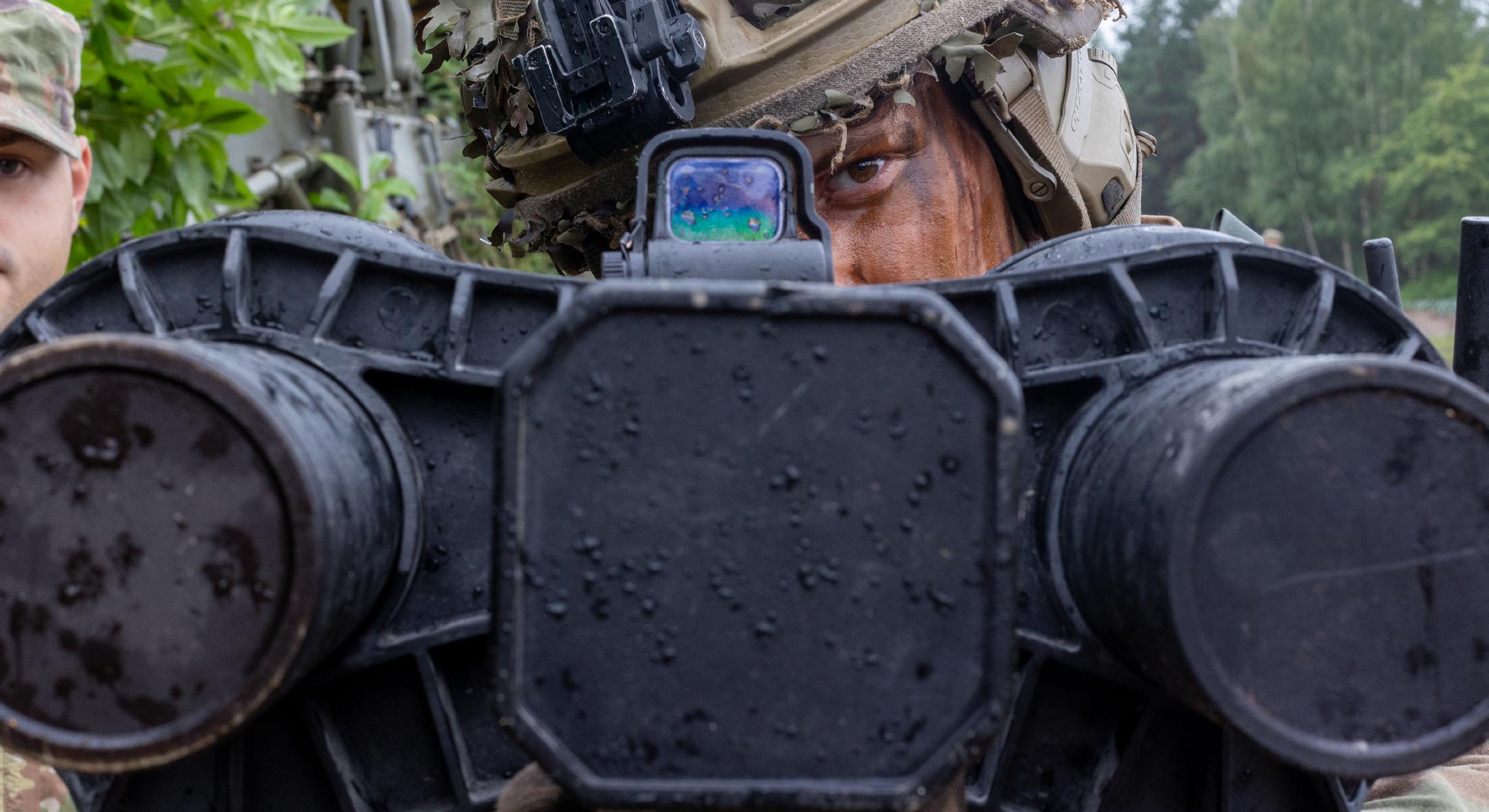
In Europe, a sharp critique has condemned Germany’s new military strategy for the severe delays it will create in combat readiness and a failure to mandate urgent structural reforms. Concurrently, it is argued that NATO’s centre of gravity has permanently shifted eastward to the Nordic-Baltic-Polish corridor. This necessitates a new division of labour where European nations assume primary responsibility for conventional deterrence, allowing the US to continue providing strategic assets and increase its focus on the Indo-Pacific. This proposed realignment is further complicated by a stark decline in the perceived reliability of the US as an international partner, with trust in President Trump’s administration plummeting among key allies. In the Indo-Pacific, China’s military threat continues to escalate. The People’s Liberation Army is increasingly integrating civilian dual-use vessels into complex amphibious assault rehearsals, while simultaneously dominating global submarine construction with rapid advancements in nuclear and autonomous underwater platforms. Reflecting on the recent Arabian Gulf conflict, notes that cheap, precision-guided drones and missiles have created a new ‘grammar’ of warfare. While some analysts praise limited US military engagements, others warn that the conflict exposes a critical Western vulnerability: open democracies lack the long-term strategic endurance of authoritarian regimes. Finally, the profound impact of the Ukraine war on global military practices is examined. While drone technology is actively proliferating across Africa, significantly empowering non-state actors, the first confirmed combat deaths in Ukraine executed by fully autonomous artificial intelligence (AI) drones has ignited fierce ethical debates. In learning lessons from the war, it is also argued that combat medicine, particularly advanced resuscitation and prolonged care, needs to be pushed to the absolute front lines to preserve fighting strength.
EUROPE
Amidst continuing arguments for greater efforts to be made to strengthen its security, concerns remain that, despite possessing the world’s second-largest defence budget, Europe is still dangerously dependent on the United States. In this context, Roderich Kiesewetter has provided a critique of Germany’s newly released military strategy. He argues the document is fundamentally flawed and is a strategy primarily designed to support claims for European leadership as opposed to providing a practical operational blueprint for the Bundeswehr. While German intelligence predicts the greatest threat from Russia will emerge between 2026 and 2028, the strategy does not envision basic defence readiness being achieved until 2029. Furthermore, full technological modernisation is delayed until 2035 and the intention to become Europe’s strongest conventional army is postponed until 2039. Kiesewetter asserts this severe lack of urgency leaves Germany utterly unable to meet current NATO obligations or establish credible deterrence. Furthermore, he argues the strategy fails to mandate the urgent structural reforms required for modern warfare. Despite correctly identifying the importance of drones, artificial intelligence and multi-domain operations, the Bundeswehr remains bogged down by bureaucratic procurement processes, such as taking 18 months just to certify a single drone. He insists the military must urgently integrate technical innovations, create new ‘mil-tech’ personnel profiles and introduce conscription to address severe manpower shortages. Describing these as “vital proposals”, he argues the government actively avoids them for domestic political reasons. Additionally, there is criticism of a narrow geographic focus that completely ignores the interconnected ‘CRINK’ alliance of China, Russia, Iran and North Korea. By treating theatres like the Indo-Pacific and the Middle East as non-priorities, and refusing to recognise how adversaries actively collaborate against Western interests, it is suggested that Germany’s leadership is dangerously
misreading the modern global security environment. Ultimately, Kiesewetter concludes the strategy is crippled by political timidity and until policymakers embrace unfiltered military advice, explicitly commit to winning when democracies are attacked and stop withholding crucial capabilities like long-range precision weapons out of an exaggerated fear of escalation, the country’s claims to European military leadership will remain little more than empty rhetoric.
In his analysis of NATO’s strategic future, Andrew A. Michta presents an alternative vision of European security. He argues the Alliance’s centre of gravity has permanently shifted from Western Germany to the Nordic-Baltic-Polish corridor. While Western European nations spent the post-Cold War decades dismantling their military capabilities under the false assumption that economic integration had replaced the need for deterrence, he notes that countries closest to Russia recognised that true deterrence relies on robust military capabilities. Consequently, nations like Poland, Finland, Sweden and the Baltic states have heavily invested in defence and modernisation, transforming what was once NATO’s periphery into its new strategic core. With a $40 trillion national debt and the pressing need to balance against China in the Indo-Pacific, he suggests the US must adapt its strategy to reflect this new geostrategic map. No longer indefinitely subsidising conventional defence, he instead advocates for a more sustainable division of labour in which Europe takes primary responsibility for conventional deterrence, while the US continues to provide unique assets like its nuclear umbrella, long-range strike capabilities and strategic intelligence. Finally, the author contends that Washington must concentrate its remaining European resources where they will be most effective, shifting American force posture and military infrastructure investments eastward to reinforce this new north-eastern flank. In this new architecture, Poland serves as the crucial anchor due to its critical geographic position at the intersection of the Baltic and Central European theatres, as well as its status as the location of what he terms as “Europe’s most ambitious military modernization effort”. Ultimately, Michta concludes that to remain credible, NATO must align its modern strategy with this new geographic reality.


The Pew Research Center has published a survey of 36 countries which examines attitudes towards the United States and President Donald Trump. The core conclusion is that overwhelmingly negative views are held about the American leader with increasing doubts about the country’s reliability, its foreign policy motives and its domestic democratic health. A median of just 23 per cent of adults trust President Trump to do the right thing in world affairs, placing him below leaders like France’s Emmanuel Macron, Ukraine’s Volodymyr Zelenskyy, China’s Xi Jinping and Russia’s Vladimir Putin. Majorities globally disapprove of his handling of key issues, including the conflict in Gaza, the Russia-Ukraine war, Iran and trade tariffs. Britain strongly reflects this scepticism: 74 per cent of those questioned expressed no confidence in his international leadership. Furthermore, tariff policies are notably unpopular in the UK, where only 27 per cent approve of his approach. The report also argues that traditional allies are rapidly losing faith in the US as a dependable partner. Since 2022, the perception of reliability has suffered steep, double-digit drops across the globe. This collapse is glaringly evident in Britain where the belief that the US is a reliable partner plummeted by 33 percentage points, dropping from 82 per cent in 2022 to just 49 per cent in 2026. A median of only 32 per cent believe the US considers other nations’ interests; a striking 73 per cent now say the US does not take their interests into account, reflecting levels of transatlantic tension not seen since the early 2000s. Another key finding is that the US is increasingly viewed as an interfering, rather than stabilising, global force. The survey also argues that the global perception of American democracy is actively fracturing. Only a 35 per cent median of international respondents believe the US contributes to global peace and stability. A median of 56 per cent no longer believe the US government respects the personal freedoms of its people. In the UK, only 40 per cent of the public now believes the US respects personal freedoms, an 18-point decline since 2021. These metrics have hit historic lows among traditional Western allies. Overall favourable views of the US in the UK stand at just 41 per cent, compared to 58 per cent unfavourable. Ultimately, the analysis concludes that controversial foreign policies and broader concerns over US democratic stability have severely damaged America’s global standing. Even among its closest allies like the UK, the US is increasingly perceived as an unreliable, self-interested actor rather than a pillar of global stability.
THE AMERICAS
INDO-PACIFIC
A possible future conflict over Taiwan continues to be widely discussed. Considering a potential Chinese attack, Gary Anderson presents a strategic framework for American success. He first focuses on the initial phase of conflict, asserting that the US must use advanced intelligence to detect China’s disguised military build-up. Early detection would allow for the rapid deployment of the 18th Airborne Corps and III Marine Expeditionary Force to help Taiwan withstand an initial ‘amphibious blitzkrieg’. Second, Anderson argues that instead of risking aircraft carriers early in the conflict, the US should degrade China’s anti-navy reconnaissance-strike capabilities within the South China Sea using innovative, cost-effective tactics. This includes utilising converted commercial ships equipped with ‘rocket in a box’ missile configurations and deploying drone-dropped micro-sensors to track and destroy mobile missile launchers. Third, the author emphasises that the decisive theatre of the war would not actually be Taiwan, but rather critical global maritime choke points such as the Straits of Hormuz, the Bab al Mandeb and the South China Sea itself. By utilising attack submarines and marine task forces to blockade China’s oil imports and economic exports, the US could threaten China’s economy with collapse, forcing Beijing to the negotiating table. Anderson argues, however that this potential operational scenario is currently jeopardised by critical American capability gaps. He is highly critical of the Marine Corps’ recent ‘Force Design’ concept for divesting tanks and heavy artillery, arguing it reduces Marines to under-equipped light infantry unable to survive high-end conventional combat. He concludes that abandoning this flawed design, fielding necessary sensor technologies and clearly signalling America’s intent to economically paralyse China will serve as the ultimate deterrent against Chinese aggression.
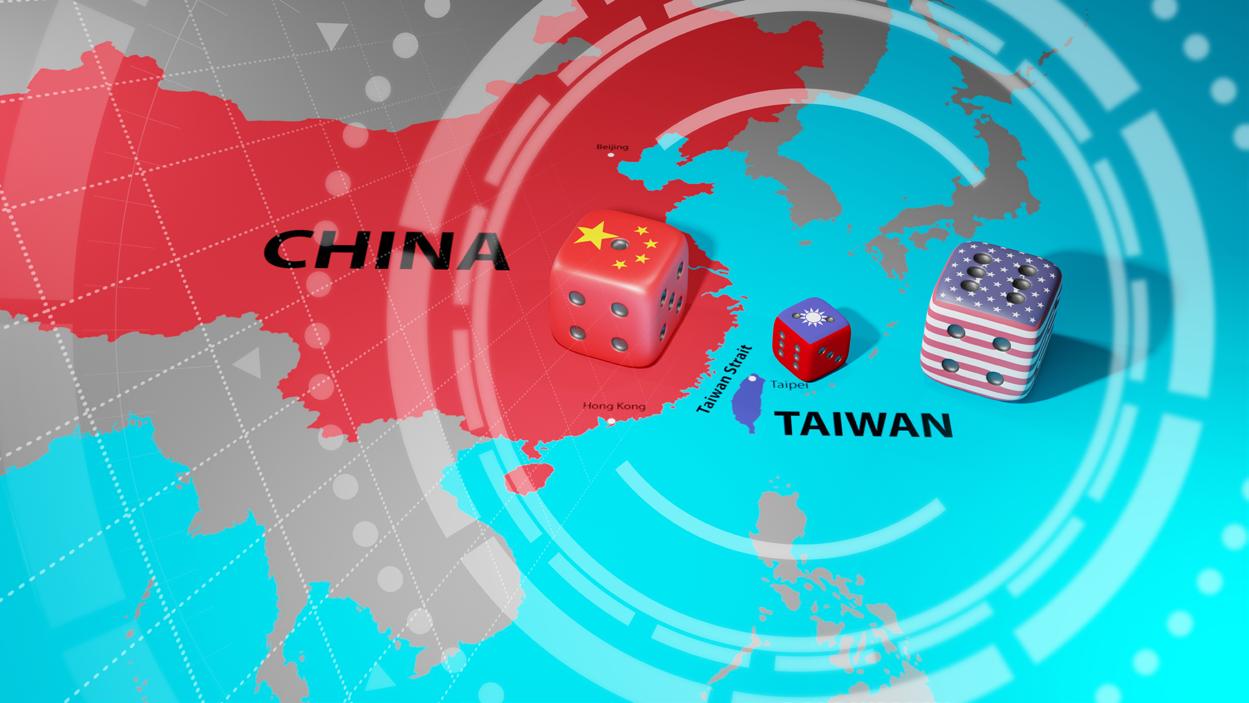
Viewed from the other side, a report for the Center for International Maritime Security argues the Chinese People’s Liberation Army (PLA) has fundamentally shifted its amphibious training from merely addressing a shortage of military ships to rehearsing complex, multi-axis campaigns. Instead of conducting isolated drills, the PLA’s August 2025 capstone exercise demonstrated synchronised amphibious activity across multiple geographic locations, utilising spacing that actively mirrors the coastline of western Taiwan. A central argument is that civilian maritime assets are no longer peripheral to China’s military strategy, but are deeply integrated into its operational logistics. The PLA is actively experimenting with commercial roll-on/roll-off ferries, deck cargo ships and landing craft to deploy military equipment ashore. Crucially, the authors argue that this reliance on dual-use vessels grants Beijing dangerous “lowobservable options”. By distributing a military build-up across multiple smaller commercial ports, China can disguise an impending invasion as routine maritime activity, significantly increasing the monitoring burden on Taiwanese and allied intelligence. Furthermore, it is explained that the PLA is introducing greater realism into its training by forcing amphibious units to navigate cluttered littoral environments, including dense aquaculture zones and beach obstacles. However, there is also caution that these exercises do not prove China is currently capable of a successful invasion as the PLA has yet to demonstrate it can execute the required highly complex, integrated logistics operations under severe weather conditions or within a heavily contested air and maritime environment. Nonetheless, the authors argue that defence planning must be urgently reframed, particularly intelligence capabilities which need to be enhanced to monitor China’s civilian maritime sector.
Writing for the Naval News, H.I. Sutton also warns that China has definitively emerged as the world’s dominant force in submarine production. Over the past five years, approximately 24 submarines have been launched, double Russia’s output and more than triple the seven boats launched by the United States. A central argument is that China’s advantage lies not just in raw volume, but in its unprecedented rate of technological development. While the US and Russia have largely relied on established models, China has introduced seven entirely new classes of submarines in the same timeframe. Crucially, China holds a clear global edge in nextgeneration underwater capabilities, being the only nation constructing extra-extra-large underwater drones (XXLUUVs) that match the dimensions of regular crewed submarines. Furthermore, they are pioneering ‘nuclear-AIP’ (air-independent power) technology featuring small nuclear reactors, as demonstrated by the new Type-041 Zhou Class. Sutton highlights a fundamental strategic shift: China is rapidly transitioning its core focus from conventional, non-nuclear submarines to a nuclear-powered fleet and expanding its nuclear submarine construction capacity. The author estimates this will soon allow China to launch around six nuclear submarines annually, a production rate that is triple the target set by the United States. As he concludes, even as more nations enter the submarine manufacturing market, immense industrial capacity and rapid innovation will ensure China continues to dominate the global underwater domain.
MIDDLE EAST AND MAGHREB
Although the conflict in the Arabian Gulf has yet to be concluded, a number of analysts have presented conclusions about what can be learned. In one of a series of essays published on the subject by the Hoover Institution, Michael Doran argues the conflict offers several vital lessons for modern grand strategy. First, he asserts that warfare is now defined by a new “grammar” of cheap, precision-guided drones and missiles. This shift has granted Iran an asymmetric “overmatch”, allowing it to impose devastating economic and operational costs that overwhelm expensive American and Israeli defensive systems. He argues the 2015 nuclear deal directly accelerated this threat by providing the resources Iran used to expand this conventional shield. Second, because Iran was rapidly moving its assets into hardened underground facilities, the recent conflict was a “war of necessity” to stop Tehran from reaching a “zone of immunity” where its nuclear programme would become practically untouchable. Doran contends that in this modern military environment, passive defence fails; effective deterrence now demands sustained, offensive military strikes against
Iranian infrastructure, proxies and leadership. It is also argued that Iran is not an isolated threat. Tehran operates as a critical asset for a broader anti-Western coalition spearheaded by China, Russia and North Korea. By heavily backing Iran, it is argued Beijing has aimed to drain US resources and threaten vital maritime choke points. Doran emphasises that because the global “energy transition” remains an illusion, American allies in the Indo-Pacific are still deeply dependent on Gulf oil, creating a severe vulnerability China could exploit during a future Taiwan crisis. Finally, the conflict redefines effective international partnerships. Doran concludes that, for the US, Israel now represents the quintessential 21st-century “model ally”. Unlike many Western partners, it proved uniquely willing and able to conduct sustained, high-risk offensive operations to neutralise a shared adversary.
In their assessment, Justin Bassi and Adel Abdel Ghafar argue that the conflict has so far produced a contradictory outcome: while the United States appeared to achieve a decisive military victory, the Iranian regime has emerged politically entrenched and strategically resilient. The authors contend that understanding how these dual realities interact is far more critical for the future international order than simply debating who won. Repeating concerns that have been widely expressed about the long-term durability of the current ceasefire and which side may ultimately benefit most, such as those shared by the Council on Foreign Relations, the authors also argue an unbalanced settlement exposes a critical Western vulnerability: a lack of strategic endurance. Driven by domestic political pressures, such as upcoming US midterm elections and President Trump’s desire to prioritise celebrations marking the country’s 250th anniversary, as well as economic complaints from allies, the US showed a waning appetite for sustained confrontation. Reinforcing the calculation that open democracies struggle to endure the protracted costs of war compared to authoritarian regimes, there are potentially profound global implications. Also highlighting the implications for the Indo-Pacific region, the authors note China’s reported close study of the conflict and the recognition that any future conflict over Taiwan would require immense, long-term US endurance rather than just initial military firepower.
Defending President Trump’s leadership, Francis P. Sempa argues in the American Spectator that he is masterfully employing a ‘Bismarckian’ strategy to achieve American geopolitical goals. The author contends that despite facing fierce criticism from the Left for waging a “failed war” and from Republican hawks demanding outright regime change, Trump is prudently blending military force, economic coercion and diplomacy to stabilise the Middle East and neutralise Iran’s nuclear ambitions while pursuing a disciplined approach that sharply contrasts with the disastrous “endless wars” of his predecessors. Sempa criticises George W. Bush for turning the Iraq and Afghanistan conflicts into failed, regional nation-building exercises, Obama for promoting the chaotic ‘Arab Spring’ and Biden for severely undermining US credibility through a flawed nuclear deal and a catastrophic Afghanistan withdrawal. In contrast, it is argued Trump’s actions – relying on short, highly decisive military campaigns alongside Israel in June 2025 and February 2026 to strike Iranian nuclear and leadership facilities – demonstrate a focused, calculated alignment of war and policy without overextending American resources. Furthermore, the author emphasises that the conflict’s resolution will reflect Bismarck’s philosophy of achieving specific state interests without rushing into wider, unmanageable wars. Sempa asserts that successfully securing these objectives through limited military engagements constitutes a monumental diplomatic and strategic victory and, by modelling his statesmanship on Otto von Bismarck, Trump proves that a nation can effectively steer the current of global events through calculated restraint and the precise application of force.
AFRICA
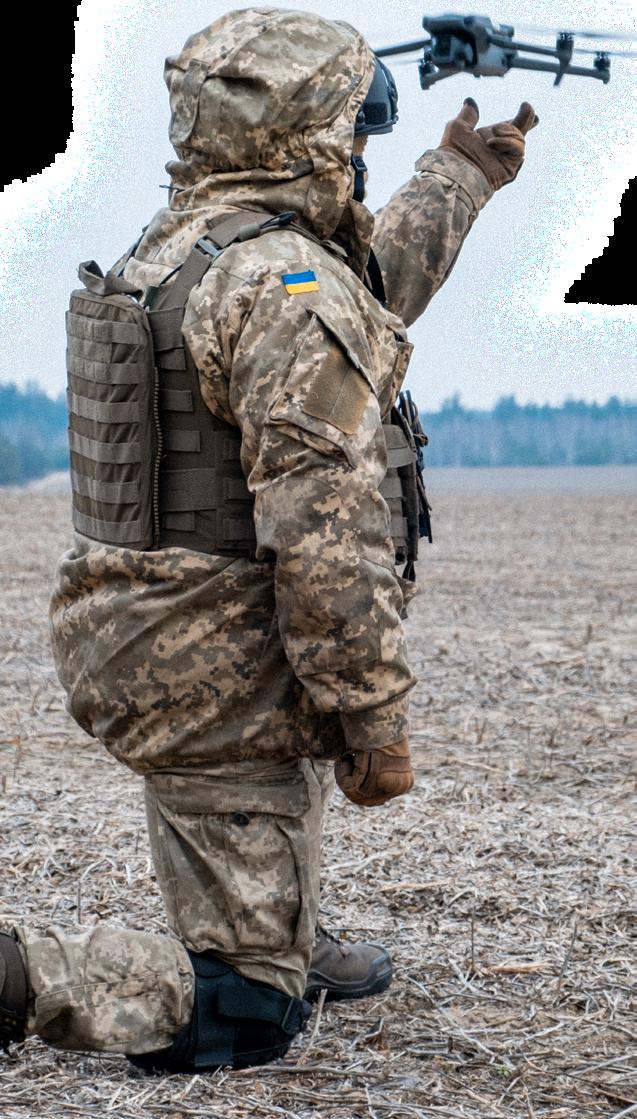
There is mounting evidence that the war in Ukraine is impacting Africa beyond the serious and continuing disruption to global trade which has created food security issues for a number of the continent’s states. There has been very little European media coverage of how young Africans are being recruited to fight within the Russian military in Ukraine but Guyo Chepe Turi, writing for ISS Today, has previously explained how, in the case of Kenya, severe youth unemployment and its associated economic hardship is driving desperate men into the hands of exploitative international labour syndicates. Writing for the same publication, Karen Allen has described how the proliferation of Ukrainian drone technology and expertise is rapidly transforming the military landscape in Africa, shifting the balance of power between state militaries and non-state armed groups. Ukraine is actively developing a drone modification industry to supply African clients with surveillance and armed drones, with countries like Ghana formally expressing interest. Furthermore, defence ties are deepening, evidenced by the reported presence of Ukrainian drone instructors in the Democratic Republic of the Congo (DRC) and South Sudan, as well as Ukrainian drone strikes against Russian mercenaries in Sudan. Private military contractors are also facilitating this transfer, linking investments in Ukrainian drone start-ups with mercenary operations in the DRC. The writer argues the affordability and adaptability of these commercial drones severely diminishes the traditional monopoly on force once held by African state militaries. For non-state actors and insurgents, drones offer vital surveillance, growing kinetic strike capabilities and significant propaganda value, allowing them to project power over much wider areas. Ultimately, the uncontrolled spread of this technology raises alarms about smuggling networks trading drone components, positioning Africa as a highly competitive new arena for adaptive drone warfare.
FUTURES
Following the recent revelation that fully autonomous drones have killed human soldiers without any operator, a report in the New Scientist has argued this marks a profound watershed moment in modern warfare. The Ukrainian government formally bans the use of fully autonomous AI during the final stage of lethal interception but, in what is described by a senior Ukraine defence official as “a one-off test”, Russian soldiers were successfully targeted and killed and equipment destroyed. Once launched, these test drones operated without any video feed or connection to an operator, autonomously intercepting and eliminating whatever targets they found in a designated area. While militaries globally utilise AI for data analysis and target acquisition, this incident provides the most categorical evidence to date of it being used to execute a combat death. A central argument surrounding this event focuses on the stark ethical and legal ramifications of removing human judgment from lethal military actions and critics have reacted sharply to the news. They argue that lethal autonomous weapons violate international humanitarian laws, strip human beings of their dignity and severely obscure the lines of accountability in war. Furthermore, they warn there is a high risk of these systems making fatal errors, potentially striking ‘friendly’ forces or civilians. For experts such as Professor Tony King, they argue maintaining human oversight is currently more militarily effective than relying on fully autonomous systems, which may not be the decisive tactical tools some developers presume them to be. Finally, the text highlights a growing tension between existing regulations and the push for greater automation by defence contractors. Ukrainian developers are actively working on new AI-driven systems, such as the ALITA drone interceptor network, which uses automation to dramatically reduce personnel requirements, and advocating for fully autonomous operations to be allowed. With it widely reported the degree to which the Trump administration’s push for unrestricted military AI and the caution urged by military leaders and tech companies has created considerable tensions, this example is highlighted as evidence of an ongoing and contentious debate over the acceptable limits of AI in combat.
DEFENCE MEDICINE
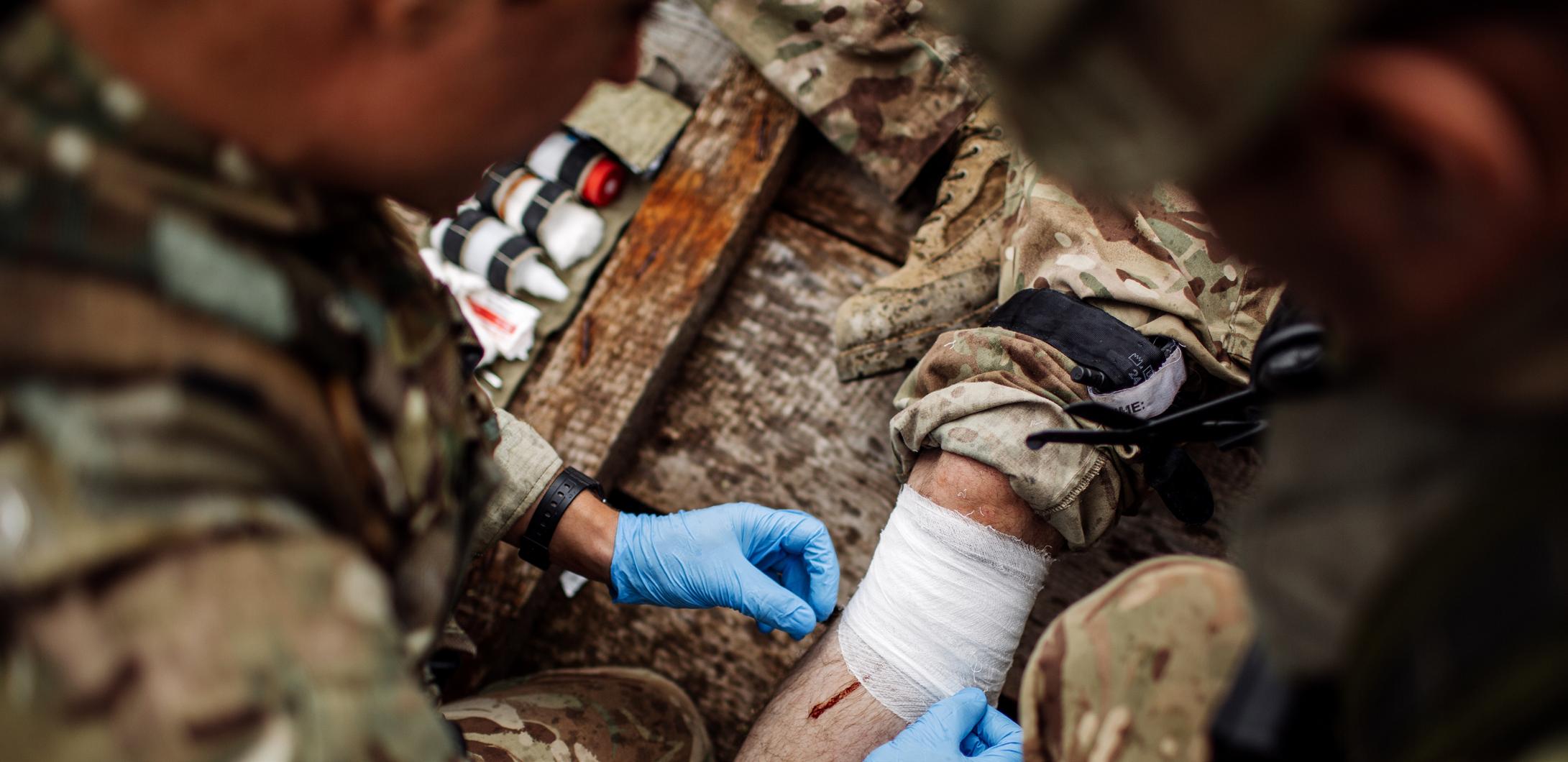
In his analysis of combat medicine drawn from the current conflict in Ukraine (published in War on the Rocks), John Quinn argues “good medicine is combat power” and preserving fighting strength in future wars will depend heavily on the ability to deliver advanced medical care under fire. With casualty care having been fundamentally transformed, there are a number of critical lessons NATO and allied nations must actively assimilate rather than merely observe. The first is the necessity to push lifesaving capabilities far forward. Because Russian strikes frequently target medical infrastructure and delay evacuations, Ukrainian medical teams have moved advanced resuscitation closer to the point of injury. A prime example is the successful ‘blood forward’ initiative which expands the use of low-titer whole blood and dried plasma in austere environments. Additionally, due to chronic supply shortages, basic medics have been forced to perform complex damage-control procedures, such as utilising specialised catheters to temporarily halt catastrophic bleeding. The writer argues militaries must proactively train and equip forward teams for these advanced tasks, rather than forcing them to improvise under fire. Second, because traditional evacuation routes are often compromised by long-range fires and surveillance, prolonged casualty care has become a baseline requirement, driving innovations like the extensive use of civilian railway networks for mass medical evacuations. With conventional hospitals serving as vulnerable targets, Ukraine has shifted to dispersed, semi-hardened and underground stabilisation sites. Third, mass traumatic injuries combined with disrupted laboratories often force clinicians to rely on broad-spectrum antibiotics. This fuels dangerous resistant organisms – antimicrobial resistance (AMR) is identified as an ‘invisible battlefield’ – that hinder recovery and international evacuation and highlight the need to treat infection prevention as a critical warfighting function starting at the point of injury. Finally, to overcome NATO’s dangerous bureaucratic lag, Quinn advocates for a structured medical secondment programme. By deploying pre-credentialed military and civilian medical personnel to Ukraine for short-term, voluntary rotations, nations could create a reciprocal partnership. This would immediately bolster Ukrainian clinical capacity while giving NATO medical forces invaluable, real-world combat experience, enabling front-line innovations to be translated rapidly into standardised doctrine and create the conditions for genuine interoperability.