modern history of Russia”. One suggestion is that these strikes – along with attacks against the Black Sea port of Novorossiisk, the damage suffered by the Druzhba pipeline through Ukraine and disruptions caused by seizures of Russian tankers from its so-called shadow fleet – have combined to reduce Russian oil exports by half.
As its struggles with its ‘special military operation’ in Ukraine, the hybrid and complex nature of the Russian threat is becoming increasingly reported upon. Marion Solletty, in an investigation published by Politico, has highlighted how camps in the Balkans have been used to train saboteurs for operations across Europe. (Le Monde International has also recently warned about Serbia’s prominent role in Russian destabilisation operations). Recruiters targeted ‘vulnerable young men’ with no criminal records and with EU passports, if possible, some as young as 14 or 15 years of age, as part of a coordinated Russia-backed effort to conduct destabilisation operations. The report explains how those attending camps in dense forests surrounding the city of Banja Luka in Republika Srpska learnt from instructors who were part of an international network with ties to Russia’s Wagner mercenary group. The curriculum focussed on flying drones, handling incendiary devices and learning how to organise protests and evade law enforcement. The investigation focuses on recruits from Moldova – many but not all from the breakaway pro-Russian Transnistria – which has been a major front in Russia’s hybrid activities with alleged interference in a 2024 referendum on whether the country should join the EU, as well as last year’s parliamentary elections. The government has highlighted the use of large-scale vote-buying networks, staged protests, cyberattacks, troll farms and AI-generated deepfakes – tactics that are being seen elsewhere across Europe. The report concludes with a comment from a EU document stating that neither “member states nor its neighbours are safe from hybrid threats”. This assessment is confirmed by another recent report in which the International Centre for Counter-Terrorism highlighted the existence of what was referred to as “an expanding sabotage campaign being orchestrated by Russia across Europe”. This noted that, among the 151 cases of sabotage in Europe it identified between February 2022 and February 2026, 31 took place in Poland. Of the 41 cases newly identified since September 2025, more than a quarter took place in Poland. This included the November 2025 attack in which Ukrainian nationals working on behalf of Russian intelligence blew up a railway line in an apparent attempt to derail trains. The Estonian Foreign Minister also recently warned about global security being threatened by a peace deal in Ukraine which could lead to out-of-work fighters spreading “systemic hybrid warfare”. During a visit to Australia, he asked how in a post-conflict setting Valdimir Putin, who has previously ‘weaponised’ migration, could use a million unemployed and violent men to destabilise those countries that he believes oppose him.

Faced with such diverse irregular challenges, it was announced that France will extend a nuclear umbrella to cover Britain, Germany, Poland, the Netherlands, Belgium, Greece, Sweden and Denmark. Though France will retain sole control of the deterrent force, and stressing that this was not intended to replace NATO’s nuclear deterrent, according to one assessment President Macron has extended an “offer to ‘Europeanize’ the force de frappe”. This, it is explained, follows the public differences between the United States and Europe’s NATO members over both the conflicts in Ukraine and the Arabian Gulf and has received positive reviews from European observers, including the French leader’s additional proposal that Britain add its nuclear force to this potential European focussed deterrent. The International Institute for Strategic Studies provides the details of this force, which extends to around 500 warheads, mostly on submarines and aircraft. There is also reference to a recent report by the European Nuclear Study Group which highlighted five possible policy options to enhance Europe’s deterrent posture. Continued reliance on the United States was the first, President Macron’s the second, developing a common European deterrent, pursuing new, independent national nuclear deterrents and investing in conventional deterrence without a nuclear component being the others. Published by an American conservative academic journal, the writer comments that “an effective European nuclear deterrent would mean that the United States could safely leave NATO”. While he concludes this would not happen immediately, he suggests that it is “high time that the wealthy nations of Europe defended themselves against both conventional and nuclear threats”. Following a transition period while the European nuclear force expands and is integrated into what he terms “a wholly European NATO defense strategy”, this would then allow Washington to “concentrate on its greater security interests in the Indo-Pacific”.
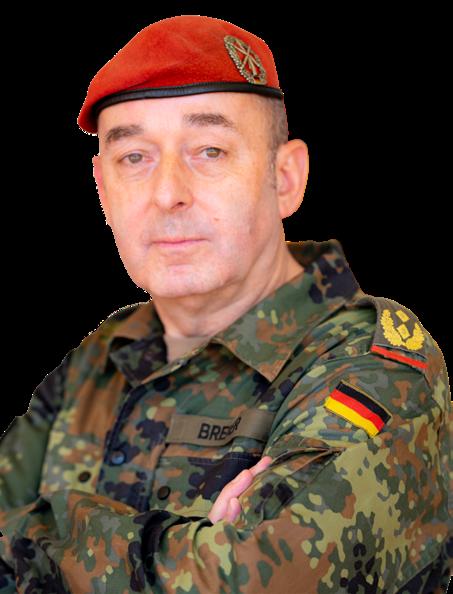
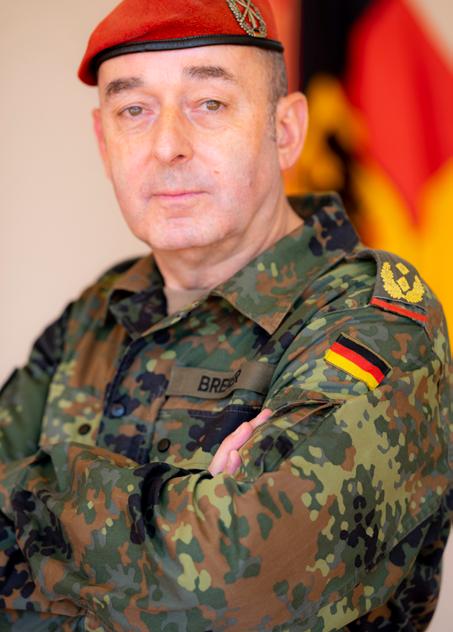
A leading force in European security planning is Germany and, more than four years after then Chancellor Olaf Scholz announced to the German Bundestag the Zeitenwende and a one-off injection of just under £90 billion in defence spending (based on current rates), the country’s plans to strengthen its military are being examined. The BBC has published a long – nearly 3,000 word – indepth piece based around an interview with General Carsten Breuer who, after more than 40 years of military service, is now head of Germany’s armed forces. Describing him as “the most powerful, and arguably the most important, soldier in Europe”, the article sets out not just the general’s thinking but also the country’s current defence policy and the increasingly visible actions it is taking in response to a perceived growing Russian threat. Under his command, the German armed forces are rapidly expanding in strength and numbers. The writer explains that the scale of rearmament has required a major change in the way the country thinks about its defence and the place of the armed forces in society. Last year’s parliamentary vote to change the constitution, so that strict constraints on borrowing could be lifted to fund an expanded defence budget, now means that by 2029 Germany is projected to spend £140 billion on its military, an investment which has strong public support. While the country wants to be less dependent on US-manufactured munitions and has implemented a quiet policy of ‘buy German where possible’, General Breuer lists four urgent requirements as ISR (Intelligence, Surveillance and Reconnaissance), drones, deep precision strike and space capabilities. He is also quoted as saying that Germany currently has 182,000 service personnel under arms, a total he wants to increase by 20,000 within a
year and by 60,000 within a decade. With the standing force further supplemented by a reserve of 200,000, he also confirmed that if the recruitment drive does not attract sufficient numbers he will, in time, argue for a return to conscription. There is also reference to how this rapid strengthening is viewed by Germany’s neighbours. The interview explains the role of Panzerbrigade 45 with its current 1,200 troops in Lithuania and which will rise to nearly 5,000 by the end of next year. While the Suwalki Corridor and the Brest Gate are often mentioned in terms of possible Russian lines of advance, it notes that the Great European Plain running from the North and Baltic Seas through western Russia has few naturally occurring barriers and is highly vulnerable to invasion as has been demonstrated throughout Europe’s post-Westphalian history. Conducted under a NATO banner, this deployment has been a well-received by the Baltic states. Writing for War on the Rocks, Sławomir Dębski confirms a similarly positive outlook in Poland to German military spending despite almost 70 per cent of the country reportedly still believing successive leaders in Berlin have not made amends for the destruction wrought during the Second World War. In his lengthy study of the Polish-German relationship – which also includes a detailed explanation and analysis of Polish military restructuring – he argues that “fragile trust” and “historical debt” can be resolved through “concrete investments” in Poland’s defence and NATO’s eastern flank. The BBC interview highlights General Breuer’s “insistence on the language of co-operation” and a recognition of the impact of the past, which is still recent for some. At the same time, he also understands his role and the responsibility of leadership in the face of a renewed and expanding Russian threat.
THE AMERICAS
Politico has reported there will be no Global Posture Review, the published document previously produced early in an administration’s term and used by domestic lawmakers to determine budgets and allies (to better understand American military policy). The last review, released in 2021 under the Biden administration, indicated an increased focus on the Pacific and focus on the challenges from China and Russia as opposed to counter-terrorism operations. According to American, NATO and European defence officials, President Trump’s administration believes it has provided enough information in strategy documents that point to a shifted focus to the Western Hemisphere. There is also renewed reference to the recently approved National Defense Authorization Act, which blocks the Pentagon from reducing the number of troops stationed or deployed to Europe below 76,000 for longer than 45 days and would traditionally have provided some guarantee that there will not be any sudden changes. Although yet to be confirmed officially, the report notes, however, that this decision reinforces the “go-it-alone pattern of this White House” which has consistently failed to inform allies and Congress of military actions until after they have happened. This has led to growing concerns within the American political system about the lack of information being supplied from the Pentagon and a failure to include them in any decision-making. Both Democratic and Republican members of the Senate Armed Services Committee were quoted as saying that pushing ahead without the review’s analysis would prove problematic. NATO allies have also voiced concerns since last year’s decision not to replace a rotational Army brigade in Romania and, as the report notes, comes with rumours once more growing about future American military forces in Germany.
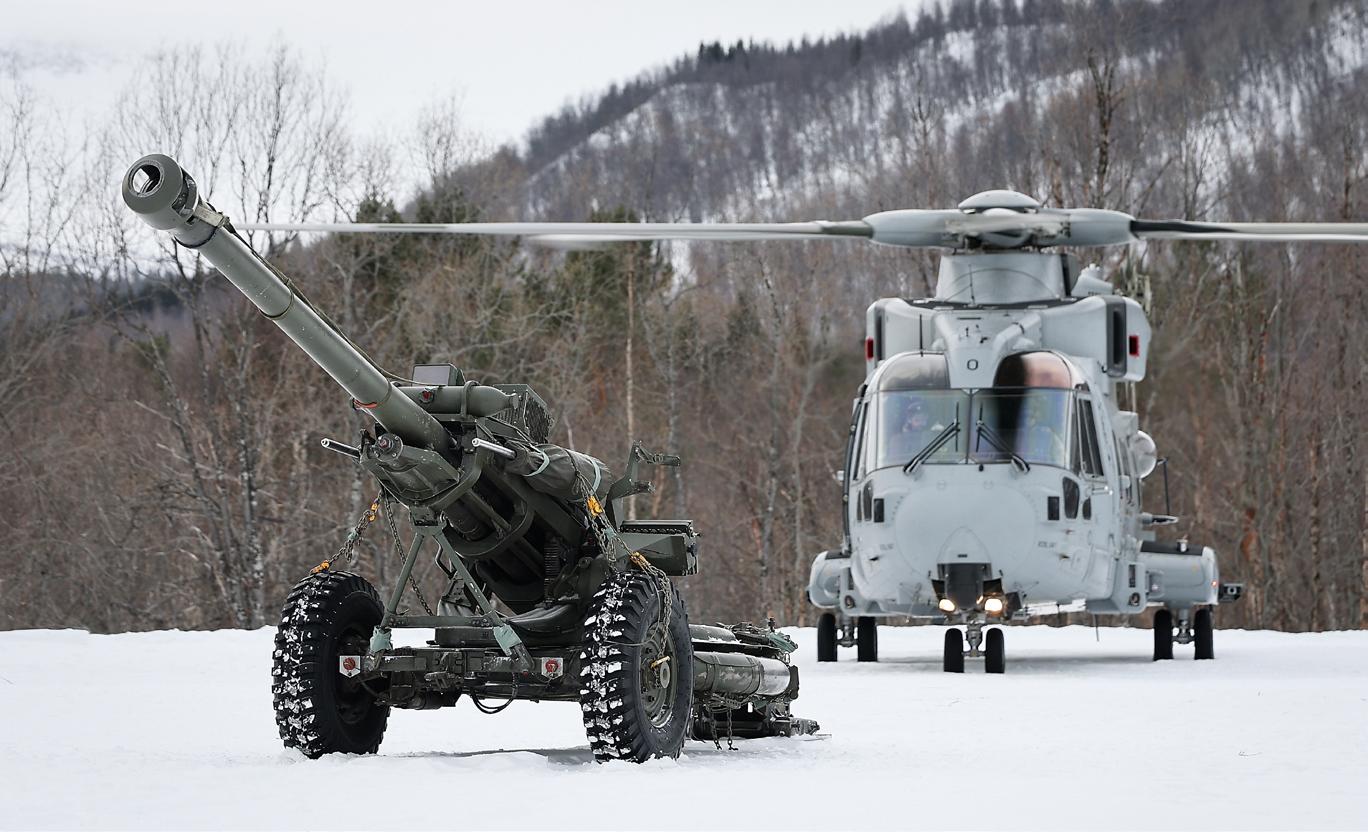
While uncertainty remains about American strategic focus, an area of clear interest is the Arctic. The recent Arctic Edge 2026 and Cold Response 2026 have certainly demonstrated the priority attached to its defence by NATO allies and with some breadth to regional defence thinking. The first exercise included a focus on missile defence, with a particular emphasis on the threat from cruise missiles, and the second involved tens of thousands of troops training for large-scale operations in Arctic and sub-Arctic environments. According to S.L. Nelson, a regular serving military office and contributor to the online RealClear Defense, by the end of this decade the region “will not be a specialty assignment for a few hardy units and a rotating cast of conference-panel experts. It will be a theatre, operationally demanding, strategically charged, and peculiarly unforgiving to organizations that confuse planning with preparation”. In a long discussion about the unique challenges presented by this area of operations, he discusses the strategic and operational challenges of thinking in “polar time” which “exposes hidden assumptions in modern military power”. To better anticipate and understand these, he proposes the use of wargaming and advanced analysis supported by artificial intelligence to provide “credible alternative futures”. He warns that without more urgency in thinking about the region and testing of ideas, along with actioning of procurement decisions needed to operate there, the consequences will be serious and punishing to those still working to “yesterday’s assumptions” and a “static map”. Reinforcing the need for change, Michael Margolius and Travis Pantaleo writing for the US Army War College War Room have argued for the creation of a Combined, Joint, Interagency Task Force Polar Regions (CJIATF-PR). This they see as a response to China’s activities and the conditions these are assessed as setting for future operations in these areas. A key difference is the expansion of geographic scope, the proposed task forces will be expected to respond to challenges in both the Arctic and Antarctic and be able “to monitor for and respond to adversarial activity” in both. It notes that in the former, despite having no recognised geographical claim – China claims to be “polar adjacent” – it continues to increase its access and ambitions for strategic and commercial benefits. For the latter, the CJIATF-PR focus appears to be more a response to Beijing’s five Antarctic ‘research’ stations which have not been inspected since 2020 and which, it is argued, there are unknown intentions.
MIDDLE EAST AND MAGHREB
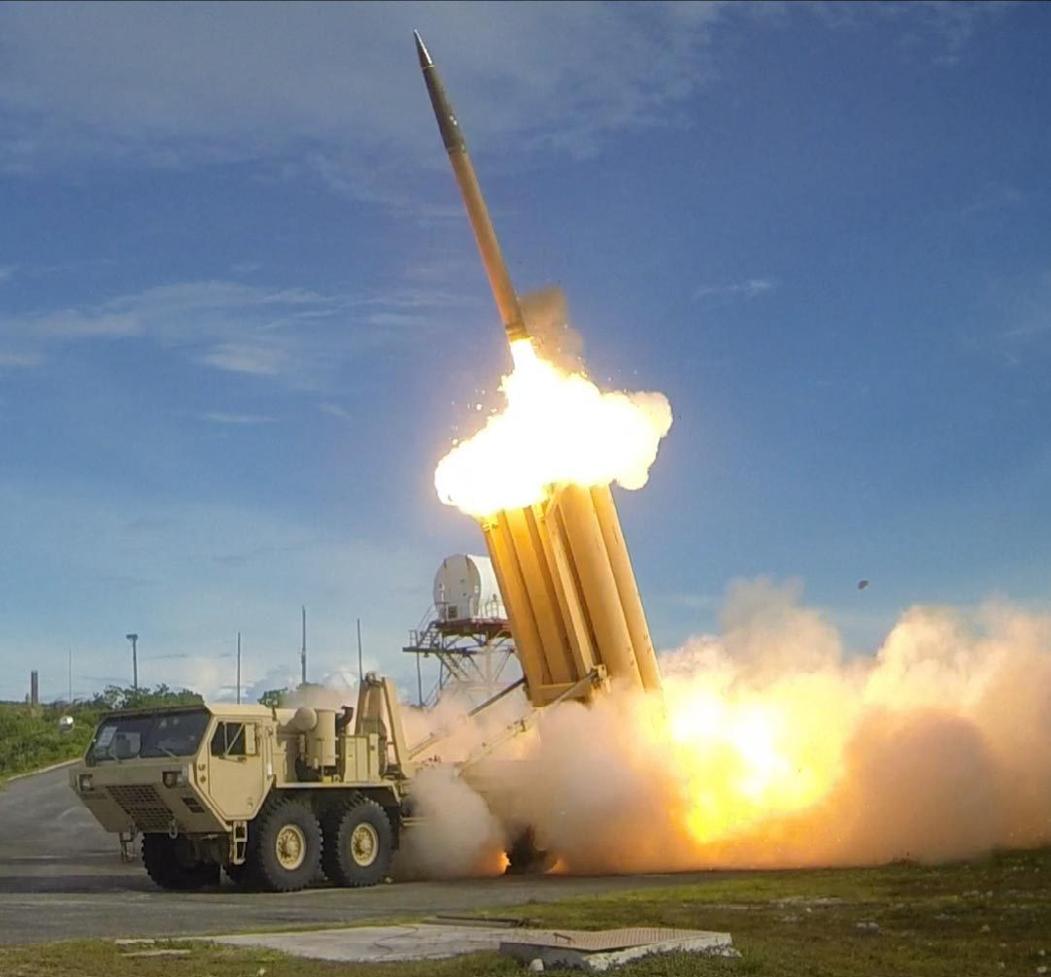
There has been significant coverage of the conflict in the Arabian Gulf. This has ranged from detailed scrutiny of the equipment being used – such as is being provided by the Atlantic Council’s regularly updated tracker – and analysis of what this means for the United States military and its global defence and security commitments. In tandem with this has been equally detailed examination of the conflict’s costs even if they are much more difficult for open source analysis. The Christian Science Monitor reported that, for just the first six days, a closed-door congressional briefing was told a total of roughly $11.3 billion had already been spent, although the actual figure is thought to be much higher. The cost of replenishing munitions alone has been calculated as $760 million daily while there are also air operations (about $30 million), operating the large maritime presence (about $15 million) and even hazard pay and family separation allowances (estimated at $10.5 million daily). This has led to a request for an additional $200 billion for additional defence expenditure along with a rumoured annual budget request of $1.5 trillion. Some experts estimate that roughly 10 per cent of cruise missiles and a quarter of all Terminal High Altitude Area Defense (THAAD, pictured) missile interceptor weapons were used in the first days and half of the US interceptor stockpile will be exhausted within the first four to five weeks of the conflict. The report has also highlighted that the US Department of Defense is one of the largest consumers of fuel in the world, and though the fuel on which its operations rely includes a mix of long-term contracts and stockpiles, a $10 increase in the price of a barrel of oil can raise overall Pentagon annual operating costs by an estimated $1.3 billion. Media and commentary analysis has also included war aims and the degree to which President Trump’s approach is having a negative impact. Writing for The Hill, Jonathan Sweet and Mark Toth have warned about the American leader’s tendency to make emotional decisions which disrupt military planning and operations and urged that he “begin embracing the art of strategic patience”. They also question the effectiveness of his preference for using apparently poorly experienced and ill-equipped negotiators who “keep making him look weak and desperate” and the degree to which the military is being kept fully updated on what could be viewed as steps to bring about conflict termination. The writers argue that the primary end state must be total regime change and the destruction of the Islamic Revolutionary Guard Corps which represents Iran’s centre of gravity and its military leadership as well as the uranium enrichment, ballistic missile and drone programmes. Finally, and while some of the targeted capabilities may have changed, Rob Macaire writing for Engelsberg Ideas highlights an historical parallel. Warning about the failures of previous regional interventions, and the uncertain legal basis for such operations then and now, he highlights how the situation in Iran may end up like Iraq – “a country with its military decimated in a decisive war, but its leadership still clinging on to power; crippled by years of sanctions; its nuclear programme recently comprehensively dismantled; an international pariah that is periodically bombed by dominant Western forces, but continues to terrorise its own people”.
REPORTS
With the new Permanent Secretary at the Ministry of Defence, Jeremy Pocklington, also having given evidence to the parliamentary Defence Committee, with updates on both the Defence Investment Plan and Defence Reform, two publications released by the British government have provided examples of its thinking about “future operating and engagement spaces” and how it views international relationships with allies and partners being used to support defence and wider foreign policy. The 41-page Future Operating Environments 2040 provides “an extensive horizon scan of the strategic landscape for emerging trends, threats and opportunities that may shape future operational contexts”. Divided into two parts – Future Operating Environments 2040 which looks at key factors and actors and Disruptors which are expected to transform the conduct of operations – the final section of ‘key takeaways’ are summarised as ‘good’, ‘probable’ or ‘high impact, low probability’. Within the latter, this ranges from the good bet of 2040’s operating environment being congested and difficult to coordinate command and control through to the probable bet of space becoming more militarised but with a lower probability that generalised space warfare breaks out. The new Defence Diplomacy Strategy is a slightly shorter document which “sets clear and focused direction to deliver international impact”. This delivers on a 2025 Strategic Defence Review commitment and provides the first formal strategy for how UK Defence can better draw on “international relationships with allies and partners to support defence and wider foreign policy”. It sets out five actions to be implemented ranging from the delivery of NATO First and the development of nuclear relationships with Britain’s closest allies through to making better use of independent defence and security think tanks – described as “an incredible soft power resource for the country” with a review of how they are used “as part of external assistance”.
During a busy month for published senior level defence and security reports, the NATO Secretary-General Mark Rutte has also released his annual report. With sections focussing on deterrence, national resilience, manufacturing security and continuing support to Ukraine, it was noted that NATO’s European allies and Canada had increased defence spending by 20 per cent in 2025 compared to the previous year in real terms. The report hoped that this momentum will be maintained at the NATO Summit, which will be held in Ankara in July, where it is anticipated details will be provided of how allies will each reach the now stated objective of five per cent GDP spending on defence and related investments by 2035. Three NATO countries – Poland, Lithuania and Latvia – are already at or near this figure; in total, the 32 member alliance spent 2.77 per cent of GDP on defence in 2025 with the United States accounting for around 60 per cent of the alliance’s total defence expenditure.