CHACRDIGEST
Concerns about European security have grown as Russia continues its illegal war in Ukraine while also showing heightened interest in testing NATO’s resolve. Described as ‘Phase 0’ activity, drone incursions and acts of apparent sabotage are increasingly forcing responses beyond simply investing more in the manufacture of military equipment. A number of states have announced some form of increase in reserve or volunteer forces, which can also be seen as early indicators of possible conscription. Meanwhile, Ukraine fights on but faces mounting pressures, notably in regard to ammunition supplies and manpower. At the same time, instability and potential conflict are not limited to eastern Europe with the potential for a resumption of conflicts in Lebanon and Ethiopia along with the more long-term fears about Chinese intentions in the Indo-Pacific. And as the global community rearms, waning support for humanitarian assistance and long-term development programmes offers a clear indication that soft power is being abandoned by many Western states, even if this carries the potential for longer terms security challenges.
EUROPE


Preparations continue to advance across Europe in response to Russia’s challenge to regional security. As Lt Gen Alexander Sollfrank, head of the German armed forces’ Operational Command, warned at the Bundeswehr’s annual conference in Berlin: “After the end of Russia’s war against Ukraine, and if its rearmament continues unchecked, a large-scale attack on NATO could become possible – and soon… That means we have to deal with the possibility of an attack against us, whether we like it or not. And beyond that, we have no time to lose.” His comments formed part of the announcement of ‘Operation Plan Germany’, a new national defence plan aligned with NATO’s regional strategy – described as not a war plan but rather “a war-prevention plan at its core” – which organises how up to 800,000 alliance troops could move through Germany within 180 days as reinforcement for the eastern flank. This was followed later in the month by confirmation that Poland has launched ‘Operation Horizon’, deploying troops to protect critical infrastructure and key transport hubs. This was in response to a section of track on the strategic Warsaw-Dorohusk rail line used to transport Western aid to Ukraine being destroyed, reportedly by individuals working for Russian intelligence. Working in support of civilian services, the operation will be run by the Operational Command of the Armed Forces, which will have up to 10,000 troops at its disposal from various branches, including the Territorial Defence Force, Special Forces, Cyber Defence, engineers and drone units, to monitor rail and road networks. And in France, President Emmanuel Macron’s announced a restoration of military national service, albeit, at this stage, entirely made up of volunteers completing ‘serious’ combat training. The reported aim is to train between 2,000-3,000 voluntary recruits in the first year and up to 50,000 per year as the programme evolves. With further drone incursions into Romania, travelling 100 kilometres into the country’s territory in what the authorities in Bucharest called “a Russian provocation”, tensions continue to rise.
With the conflict in Ukraine remaining a constant theme for global media and think-tanks, there is continuing interest about how the war is being fought and the questions it has raised about how future wars are conducted. The Modern War Institute at West Point has considered what can be learned about interoperability and standardisation, with a focus on how huge Ukrainian ammunition expenditure, particularly in terms of 155-millimetre artillery rounds, has threatened to overwhelm NATO’s long-standing production agreements. This is not surprising: Ukrainian forces operate 17 different types of 155-millimetre howitzers and an even wider variety of sources of ammunition, including nearly 50 models of high-explosive shells. As a result, howitzers and munitions are not truly interoperable. A detailed examination of how fires has evolved in response to this challenge argues that if true interoperability is to be achieved, four lines of effort are crucial. The last requires NATO members to investigate ways to further standardise not only the technical specifications but the ballistic characteristics of 155-millimetre ammunition. As the author – a US field artillery officer –concludes: “If NATO or other US allies find themselves in a major war, they won’t just need to have enough artillery ammunition. They will need to be able to fire it, safely and effectively, in whatever gun and ammo combination is available.”
The role played by artillery in the Ukraine conflict and the potential for future NATO shortages of ammunition are also considered by The National Interest, the American bi-monthly international relations magazine published by the Center for the National Interest. It notes that the German manufacturer Rheinmetall has started construction of a large 155mm artillery shell factory in Lithuania which should be completed by the second half of 2026 and will produce annually tens of thousands of shells. This, it is suggested, is evidence that NATO European members once again see Russia as posing a threat to regional security and that they are rearming
and demonstrating to the United States a commitment to the Alliance. The project is “presented as strengthening NATO logistics and deterrence in the Baltics”. In addition to offering further details about current challenges facing Ukraine in sourcing ammunition, it also notes that the Russian military industrial base is primed for the mass production of heavy artillery shells, leaving it ideally placed to fight a war in which the use of fires dominates. The conclusion is that, whilst this represents a positive step, it is no more than an initial move such is the production advantage held by Moscow.
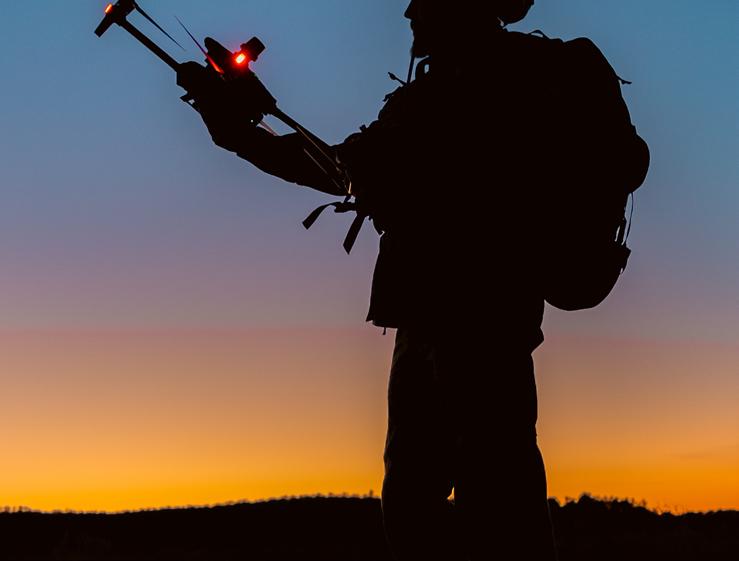
Retired Australian Major-General Mick Ryan, who has published widely on the conflict in Ukraine, has released another report through the Center for Strategic and International Studies presenting what he terms as “seven contemporary insights on the state of the Ukraine war”. Building on a series of publications with a wide range of global think-tanks and media commentary pieces, and drawing on numerous visits, this offers not just insights but also his assessment on what they mean for “possible conflict trajectories”. He notes seven key findings and includes discussion about drones and the continuing evolution of their battlefield use – including the comment that this “is not a drone war, it is a war where drones have gained prominence” – through to how long-range strike and ground-based air defence have also developed. Russia is acknowledged as having developed an asymmetric advantage although the author remains generally positive arguing that Ukraine retains some advantages, not least in that it is fighting at home for its territory and the average quality of its soldiers remains higher than Russia’s. Ukraine has also out-thought Russian tactical leaders and methods for much of the war. A constant theme in his other writing is the discussion about what he refers to here as “the adaptation battle”. Having spent three years trying to “learn how to learn better”, he believes Russia’s commanders have now achieved critical mass which is “paying dividends at the tactical and strategic levels” and he concludes that “Russia has learned to learn better, which bodes ill for Ukraine as well as for eastern Europe’s future security”. Another growing concern highlighted in the report is manpower, an increasingly important consideration also raised in an interview with Western media sources by Kyiv Mayor Vitali Klitschko. A Ukraine government decree issued in August allowed men aged 18 to 22 to leave the country and recent data shows that the following month EU countries –notably Poland and Germany – granted more than 79,000 new temporary protection decisions, the highest monthly figure in two years.
Discussion about Russia’s military and signs of improvement in its performance have been reported on in some detail by the leading American media source CNN. The focus is the long-running battle for Pokrovsk which, were it to fall to Russia would be Ukraine’s worst military defeat since May 2023 and the capture of Bakhmut. But as the writer notes, both former cities have been mostly reduced to rubble and retain little strategic importance but both represent symbols of Ukraine’s resistance. Based around interviews with a large number of Ukrainians involved in the defence along with Western military analysts, this offers a contribution to the widening discussion about how war has evolved over the past two years. The main reason for the transformation is the massive proliferation of drones, with recent technological advances making it possible to deploy many more of them across much larger distances. This has effectively extended ‘kill zones’ on either side of the front line making battlefield advances for either side much more difficult. In response, rather than using heavy armour, Russian troops are increasingly looking to infiltrate Ukrainian areas with unconventional vehicles, even using mopeds and small buggies. The battle of Bakhmut became synonymous with so-called ‘meat grinder’ assaults in which waves of Russian troops would advance towards well-defended Ukrainian positions forcing them to fire and reveal their positions. At Pokrovsk, the aim has become to get as close to Ukrainian positions as possible with groups as small as three men but hundreds of these micro-units moving forward over the course of a single day. According to one analyst, the aim is “to force Ukrainian troops to eventually withdraw, or ideally encircle Ukrainian forces completely”. The report quotes figures from the Ministry of Defence, which estimates that of the more than 1.1 million casualties Russia has suffered since it launched its fullscale invasion of Ukraine in February 2022, a third were killed or wounded this year. The city has yet to be entirely surrounded and Ukrainian supply lines have not been severed but there are serious challenges in withdrawing evacuated personnel with unmanned armoured vehicles being used in attempts to extract casualties. These are targeted by Russian forces and the suggestion is that very few of the injured troops receive treatment.
INDO-PACIFIC
In the face of continuing uncertainty about Chinese actions, Taiwan has announced it will introduce an approximately £30 billion supplementary defence budget. Reported by Reuters, Taiwanese President Lai Ching-te said history had proven that trying to compromise in the face of aggression brought nothing but “enslavement”. Defence Minister Wellington Koo said the budget, which will run from 2026-2033, will cover items including missiles and drones as well as the new ‘T-Dome’ air defence system. As the correspondents highlight, while the announcement has been welcomed by the United States it follows concerns about President Donald Trump’s commitment to Taiwan’s future security with him having approved only one new arms sale, for fighter jets and other aircraft parts, since he took office. Also announced were plans for annual defence spending to cross a three percent threshold for the first time since 2009 and remain at that level. The spending will need to be passed by Taiwan’s opposition-dominated parliament which has previously rejected such proposals. China has criticised the announcements warning “this will only plunge Taiwan into disaster”.

The Australian think-tank ASPI has published a commentary examining the US Marine Corps’ (USMC) newly released Force Design Update 2025 and assessing its implication for home defence. This document is seen as representing “a strategic pivot disguised as a technical document”, not least because Australia features prominently in terms as a key location from where American military forces will fight in any future regional conflict. For the first time, Australia is formally included in the USMC’s prepositioning and sustainment network, alongside the Philippines and Palau, with northern Australia effectively becoming “an operational node within the US Indo-Pacific logistics web”. The author, who is director of the think-tank’s National Security Programs, raises concerns about how Australia can best leverage “this unprecedented posture alignment” to ensure that strengthening its defence does not result in diluting sovereignty or strategic autonomy. It goes on to argue that the Australian Defence Force (ADF) must ensure that interoperability “doesn’t become dependency” and that working in close alignment with the USMC does not mean losing control of data, command and control and even rules of engagement. There are also concerns that for the country’s Southeast Asian neighbours, the report will reinforce already existing perceptions that Australia provides “an extension of US military reach”. This will require the government in Canberra to demonstrate that this American announcement enhances regional stability and is not about the USMC “projecting US power unchecked” from the Australian northern littoral. There are potential benefits recognised within the document, specifically that it “creates a once-in-a-generation chance for Australia to use the alliance to build up its independent capability”. The proposed development and expansion by the USMC of local basing will provide opportunities for local businesses, “powering a domestic defence ecosystem” that will also benefit the ADF. The report concludes by reiterating the need to ensure that, whilst demonstrating a commitment to working with the United States to ensure regional security, Australian interests must be protected.
MIDDLE EAST


While there has been much media and academic focus on Gaza in recent weeks following the American-brokered ceasefire, tensions have remained between Israel and the Lebanese militant group Hezbollah. Beginning in October 2023 and lasting for 13 months, the two fought one another with 4,000 Lebanese and 120 Israelis being killed before a ceasefire was agreed. Australia’s ABC has reported on an apparently once again deteriorating situation, with the Israel Defence Forces (IDF) bombing Beirut and killing Hezbollah’s military chief. Israel has sought to prevent Hezbollah from rearming and redeploying its forces in southern Lebanon and the United Nations peacekeeping force has recorded more than 10,000 breaches of the ceasefire agreement since it was implemented and this report warns that there is a potential for a resumption of heavier fighting. Israeli military and political officers have claimed Hezbollah has been attempting to rebuild missile and rocket launch sites and repair other destroyed military infrastructure in the rural villages of southern Lebanon. They have also alleged the group is attempting to manufacture weapons again and is smuggling them from Iran via Syria. The Lebanese Armed Forces, despite only being lightly armed, have had some success in administering the ceasefire terms removing 10,000 rockets, 400 missiles and 205,000 unexploded ordnance fragments over 12 months but they have not been able to disarm Hezbollah. This reflects the complex domestic political situation within the country and the risk that, if further destabilised, it could fall back into a civil conflict and the sectarian violence and instability which dominated the final years of the last century. The writer concludes by highlighting that Lebanon is “caught between potentially precipitous action and renewed destruction”.
AFRICA
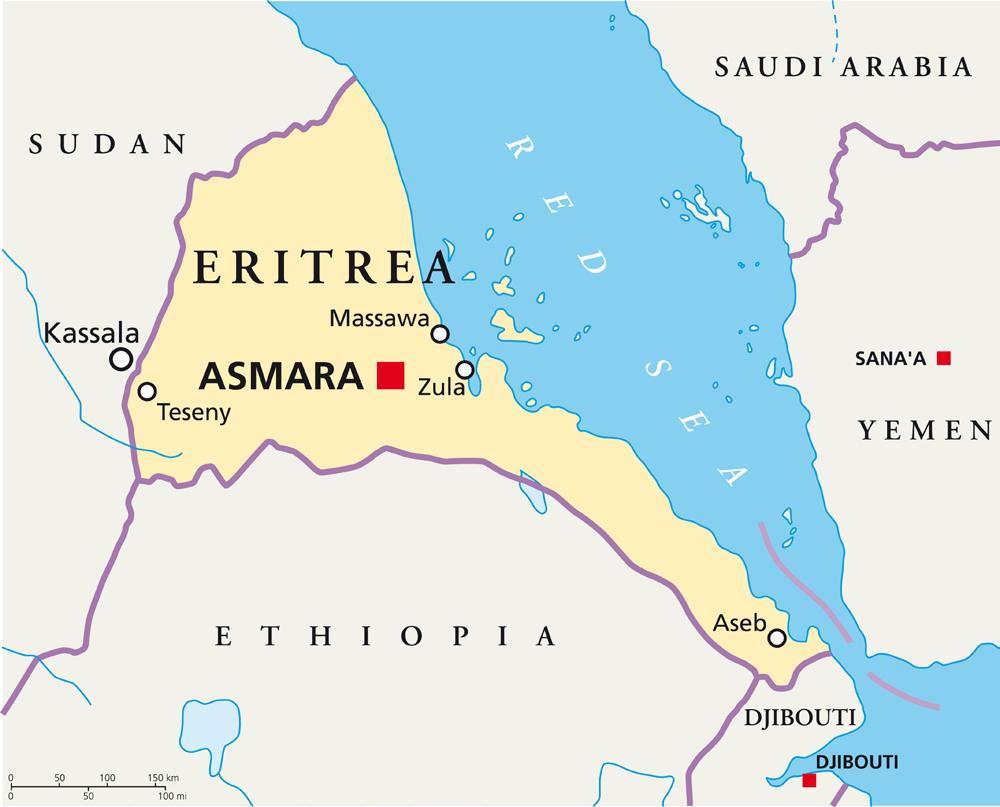
BBC Monitoring has reported on the growing renewed deterioration in relations between Ethiopia and Eritrea and the potential for further conflict between the two countries. Relations have frequently been strained since Eritrea officially seceded from Ethiopia in 1993 following a long war. One of the consequences of its ‘victory’ was that Ethiopia was left land-locked and this has remained a focus for subsequent tensions which have seen periodic renewals of fighting. As this report notes, Ethiopian Prime Minister Abiy Ahmed first openly declared in 2023 that his nation’s access to the sea was an existential matter and he, along with army chief Field Marshal Birhanu Jula, has made a number of public statements claiming ownership of Eritrea’s southern port of Assab, about 60km from the border between the two countries. Ethiopian rhetoric has heightened throughout this year with numerous comments threatening the use of force. The Eritreans have been more restrained but, in recent weeks, there have been warnings about the consequences of “crossing a red line” – highlighting the role being played by the respective media in disseminating increasingly hostile messaging, including outlets normally hostile to their own governments.