CHACRDIGEST
The continuing conflict in the Middle East (with understandable attention given to the ceasefire forced on Israel and Hamas by President Donald Trump) and in Ukraine (but viewed increasingly as part of potentially worsening security conditions across Europe) have very much remained central to discussion and analysis. Interpretation of Russian actions and intentions is a regular theme and various ideas emerge along with observations about what the near future might hold. Equally significant are the efforts to do similar with the United States as the US leadership pursues dynamic domestic and international policies which challenge the status quo and increasingly create doubt and uncertainty about an overall strategy. War remains a constant in the global system and while these conflicts dominate attention, events in Venezuela and Sudan demonstrate that they are by no means the only examples of insecurity that warrant attention.
EUROPE

AUTHOR: Professor Andrew Stewart, Head of Conflict Research


In an interview with The i Paper, and following evidence given to Parliament’s joint committee on the national security strategy, the chairman of the UK’s National Preparedness Commission has warned about dangers facing Britain. He urged that the country needs to be better prepared, both militarily and across society, for a widespread conflict happening in the next three to four years with lives “being changed or likely to be changed in the foreseeable future”. In a wide-ranging interview, Lord Harris suggested this includes stockpiling three days of emergency supplies to be used in the event of attacks on critical national infrastructure and argued the government’s ‘Prepare’ website should be made more visible with regular advertising campaigns on radio, TV and social media, as well as via lessons for schoolchildren. Referencing recent comments by MI5 chief Sir Ken McCallum that Moscow was “committed to causing havoc and destruction” around the world, Lord Harris also cautioned it may be difficult for the UK to declare at what point this grey-zone activity goes from a ‘normal’ level of noise to NATO having to invoke Article 1 and, compared with many other nations, Britain is ill-prepared across the spectrum of issues which exist on the national risk register.
Recent drone incursions have heightened awareness across Europe of the potential threat posed by Russia. An immediate, but longanticipated, response from the European Union (EU) is the Defence Readiness Roadmap 2030 with plans for a ‘drone wall’. The EU had previously set a list of nine capability priority areas for member states to invest in as a matter of urgency, including ammunition, drone and anti-drone technology. The Commission has also proposed four pan-European flagship projects to be prioritised and, while the Air Defence Shield and a Defence Space Shield are viewed as important, the Eastern Flank Watch, including the European Drone Wall, is the most critical. Although questions remain about how domestic restrictions might impact on involvement by member states, the flank and the drone wall are viewed as the most urgent and the aim is for these to be fully operational by the end of the following year. With the Commission’s defence loan scheme, dubbed SAFE, and the European Defence Technological and Industrial Base (EDTIB) announced previously, this roadmap also now provides new targets with member states asked to organise at least 40 percent of defence procurement as joint procurement by the end of 2027, rising to 60 percent by 2030.
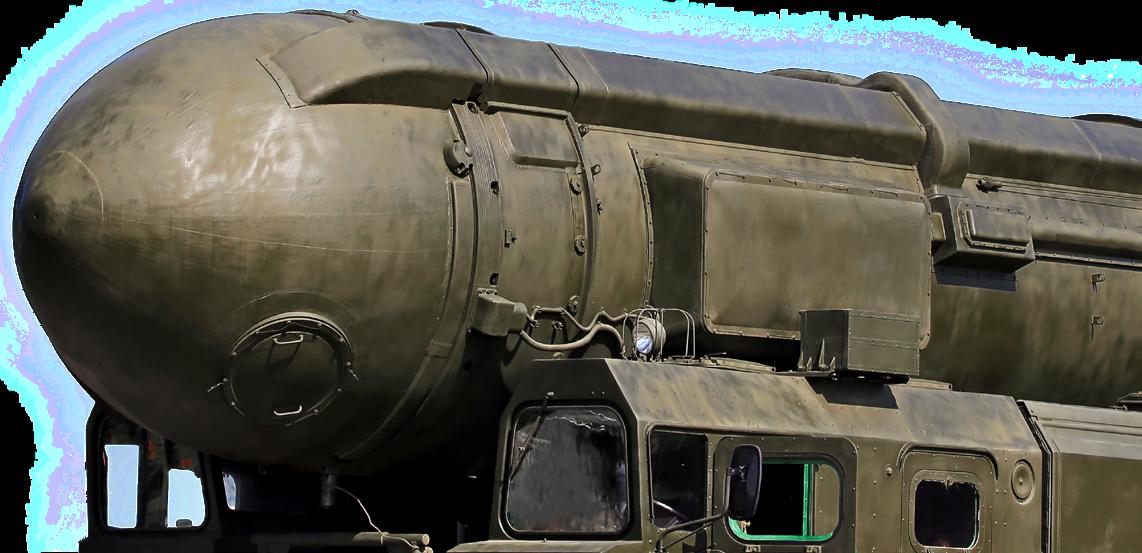
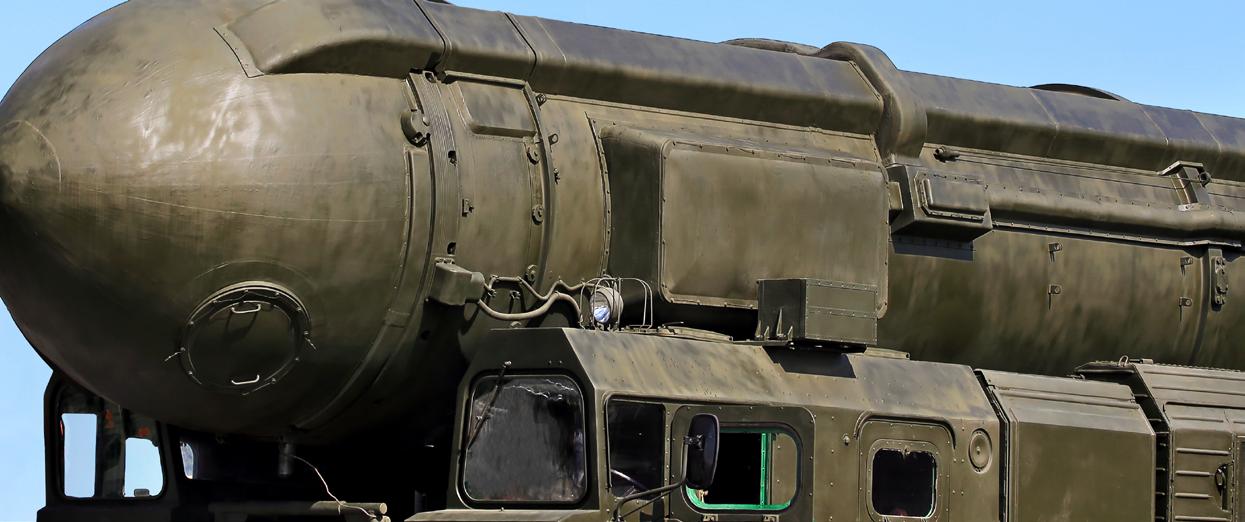
Continuing with their recent more visible military flexing, Russia’s military are reported to have conducted large scale exercises testing the capabilities of their strategic nuclear forces. Missiles launched included a Yars land-based intercontinental ballistic missile (pictured), a R-29RMU Sineva submarine-launched intercontinental range ballistic missile and multiple cruise missile launches from Tu-95MS strategic bombers. This report notes that, while there are weaknesses in Russia’s conventional forces when compared to those of NATO members, its nuclear forces are considered to have full parity. Of note, the report explains that while the air arm appears weaker as a result of the destruction of Tu-95MS aircraft by Ukrainian drones and a shortfall in funding for replacement and modernisation of Tu-22M3 and Tu-160M aircraft, the current Delta IV class submarines are rapidly being phased out and replaced with significantly larger and more advanced Borei class ships which each carry 16 RSM-56 intercontinental range ballistic missiles with longer ranges and capacities for up to six warheads. Further reports from Russian sources have also claimed a recent test of its nuclear-powered Burevestnik cruise missile (also known to NATO as SSC-X-9 Skyfall) with claims that it flew 8,700 miles. This in turn provoked some anger from President Donald Trump, who called on his Russian counterpart Vladimir Putin “to end the war in Ukraine instead of testing missiles”. In a detailed analysis of what is
known about this weapon system, which highlights the potential challenges, there is acknowledgement that it offers possible huge advantages. The missile can be launched pre-emptively and approach its target from any vector long after launch with a flight path that is entirely unpredictable. As the writer also highlighted, this reported test follows on from the US Golden Dome initiative and appears to support the need for such a system.
With no shortage of analysis of Russian military intentions, including Eerik Kross and Dr Greg Mills’ recent RUSI publication, Andrew Monaghan has followed his recent contribution to The British Army Review with further reflections on how Russia sees the next war. Writing for Engelsberg Ideas with the NATO Defence College Director of Research Florence Gaub, this builds on an analysis of more than 35 official declarations from NATO members that reference a potential Russian attack leading to war. The conclusion from these is that there is clear evidence of a timescale (by 2030), location (an invasion of the Baltic States) and tactics (increasing use of drones) but this apparent consensus presents cause for concern. As the writers caution, “there is a very real danger that the strengthening consensus around the ‘known future’ of a Russian invasion of the Baltic States becomes an orthodoxy that causes us to overlook all the other possible ways in which a war with Russia could unfold”. Noting that throughout the modern era there has been consistent failure when thinking about the future of war, the discussion considers the challenges of forecasting, whether it be in terms of timing but also across the entire range of considerations in any discussion of the character (and to a degree nature) of war. There is some value in generating scenarios which can offer useful reference points for decision-making but there are also limitations, such as the inability to fully consider the many practical challenges that have hindered all recent Russian military campaigns. A consistent theme presented is the need for scenarios to better consider how Russia will respond to its Ukraine experiences and its assessment of the future, noting the Russian leadership invests considerable effort in foresight and planning both at state and military levels. Foresight is part of statecraft but this must not be fixed on lessons drawn from the past.
THE AMERICAS
Attempts to better understand President Trump’s strategic vision remain of global interest. Following recent dramatic developments in the Middle East, alongside continuing uncertainty about his responses to the war in Ukraine and longer term relations with China, Frederick Kempe – writing for the Atlantic Council – argues that the US leader’s real legacy will come from his ability to work alongside allies to address the threat posed by China, Russia, Iran and North Korea, increasingly known as the CRINK. Recognising that he has had “a string of foreign policy wins that have the potential to be historic”, it is the great power rivals that present more complex and higher-stakes challenges. Ukraine remains particularly perplexing. On the positive side is the announcement of US sanctions on Russia’s two largest oil companies – Lukoil and Rosneft – and subsidiaries and reports that authority for approving missile strikes has been given to Supreme Allied Commander Europe General Alexus Grynkewich, who better understands battleground realities. This, it is argued, suggests “Trump may have grown tired of Putin’s manipulation and humiliation” and may now seek to replicate what he views as a successful strategy over Gaza “by imposing unsustainable military and financial costs on Russia”. The core argument is that what is required is “greater creativity, negotiating skill, strategic thinking, and cooperation with allies than has been achieved thus far” and developing a consistent strategy which is less transactional and based around “striking deals of the moment”.
In this context, further airstrikes against fast speedboats operated by reported ‘narcoterrorists’ are being viewed as evidence of what has become a defence and security priority. Writing for War on the Rocks, director of innovation and analysis at the Air University, J. William DeMarco, provides a detailed description and analysis of what has been referred to as a renewed ‘war on drugs’. He argues that it cannot be seen as an effective strategy but a “spectacle imbued with multiple meanings” meant to intimidate the Venezuelan leadership and demonstrate American strength and resolve to China and Russia. With the Trump administration reported to have secretly authorised covert action in Venezuela, potentially targeting the government directly, it seems that regime change may be the intended end state. Especially as there has been evidence of more overt escalation as three B-52 bombers flew within 150 miles of the coast at the same time as a deployment of eight warships, a nuclear-powered submarine, and 10,000 US personnel in the region. A key theme put forward by the writer is that recent US external commitments, ranging from the ‘Global War on Terror’ to operations in Libya and elsewhere in Africa confused short-term disruption with long-term strategy. Presented as part of a regional counter-narcotics campaign, the destruction of these boats should be viewed as what he terms “gray zone coercion”, and using military force below the threshold of open war, alongside “narrative generation”, where perception and storytelling matter as much as interdiction. The concern is that there is a risk of repeating old mistakes. Not least that the questionable use of lethal action also carries the danger of normalising covert regime pressure as peacetime tools of statecraft. Of greater concern is that tactics are being presented as a substitute for strategy and this carries the potential for endless campaigns. The conclusion argues that “the United States needs a coherent strategy that aligns resources with realistic outcomes” as opposed to recent strikes which risk “confusing activity for progress, deterrence for disruption, and counternarcotics for regime change”. Further discussion is provided in a long essay which considers President Trump’s grand strategy and concludes it is “nostalgic and revolutionary, insular and imperial, defensive and expansive. Like the man himself, it’s everything everywhere all at once”.
As part of this, securing control of Greenland continues to be an ambition, according to a recently published commentary by Mujtaba Rahman, a senior figure in the Eurasia Group. Potentially the “biggest car crash in transatlantic relations”, the Danish assessment is that the obsession is both irrational and genuine. As is noted, the drivers behind American claims seem misplaced as there is no immediate security threat to Greenland from Russia or China and the exploitation of Greenland’s minerals and rare earths is already open to investors but with few expressions of interest. Similar to his thinking on Canada, “Trump regards the huge, empty foreign landmass to his northeast as an affront to American greatness” but without any thinking about sovereignty or self-determination. With
reports about US intelligence agencies trying to identify ‘useful’ sympathetic Greenlanders, the conclusion is that there is no danger of a military invasion but instead the economic lever of power being used and a campaign to buy influence and local politicians. This commentary also highlights Danish concerns that some of their European partners in the EU and NATO have failed to understand the threat and remain reluctant to provoke “the volatile American leader”. With France providing a notable example of stalwart support, the strategy is to gain similar backing from Berlin and EU institutions for a commitment to Greenland’s security. Nonetheless, the conclusion is that this is a “brief lull” and “a transatlantic — or Arctic — collision seems inevitable”.
INDO-PACIFIC
Discussing a potential conflict with China, Andrew Latham, writing in the National Security Journal, warns that the opening phases would require the US to “absorb a massive opening punch of over a thousand missiles and drones aimed at paralyzing its forces” and the first two days of fighting “could be ugly”. In his key conclusions, he highlights the importance of being able to “fight hurt” and build up a resilient force and command and control structure, through initiatives such as Agile Combat Employment, which disperses aircraft across many smaller bases, and greater magazine depth – all of which allow the military to “survive the opening hours and win the longer campaign”. In a detailed analysis of potential Chinese actions, in which its Rocket Force is a principal means for pursuing its aims, it is argued that runways, fuel, command and control and “the electromagnetic seams where kill chains are stitched together” will all be priority targets as part of efforts “to stress US posture and tempo”. The best outcome for American forces will be “degraded operations, not paralysis; a fractured picture, not blindness”. Considering each of the domains, despite some controversy about the Marine Corps’ new littoral regiments, in this assessment they are seen as “quiet disruptors” which will threaten Chinese sea lines of communication and key maritime chokepoints. The conclusion is that, while the US military should anticipate losing at first, it can ultimately win. As the writer puts it “a battle decided in a day rewards the side that breaks things; a campaign decided over weeks rewards the side that fixes them faster”.
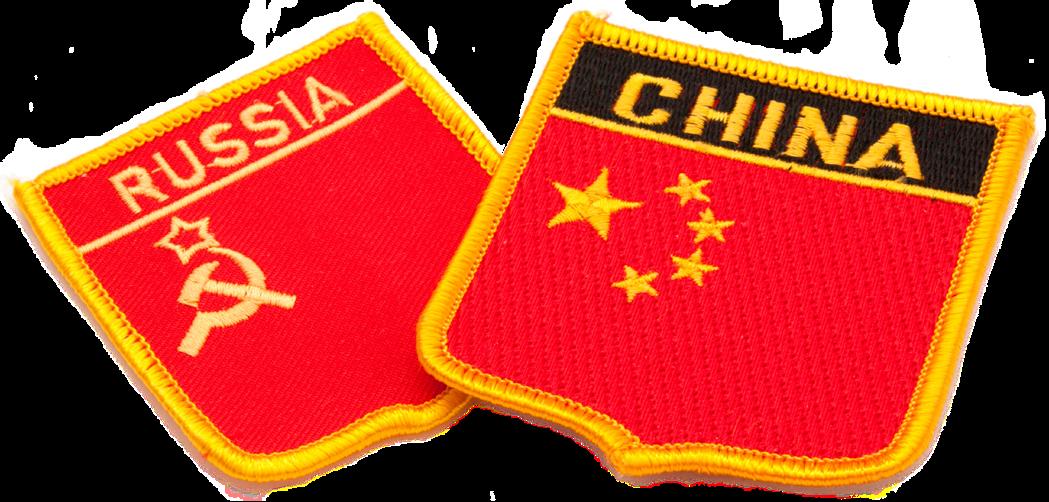
An alternate view is presented by Justyna Szczudlik, who questions how the West views China and the hard security challenge it presents. Noting that prior to 2022 it was primarily considered an economic threat, its implicit involvement in the Ukraine conflict has changed views. Without China’s political, economic, technological and dual-use support, Russia would be unable to continue its war against Ukraine leading to an argument that the leadership in Beijing is responsible for the protracted conflict. China is creating economic and security dependence and also exploiting the opportunity to acquire energy resources at very low prices. Yet, in examining the drivers behind China’s support, the conclusion is that Beijing would not necessarily offer the same support in the event of a Russian invasion of a NATO member. And within this discussion there is specific reference to how China views Russian threats to use nuclear weapons and its continuing efforts to ensure this does not happen. At the same time, the analysis does highlight a key difference in Moscow and Beijing’s thinking: China is interested in maintaining the US focus on troop presence in Europe, Russia is interested in the opposite. The key conclusion is that the two countries should not be viewed as a single threat and the West should focus on preventing the alliance from growing stronger.
MIDDLE EAST
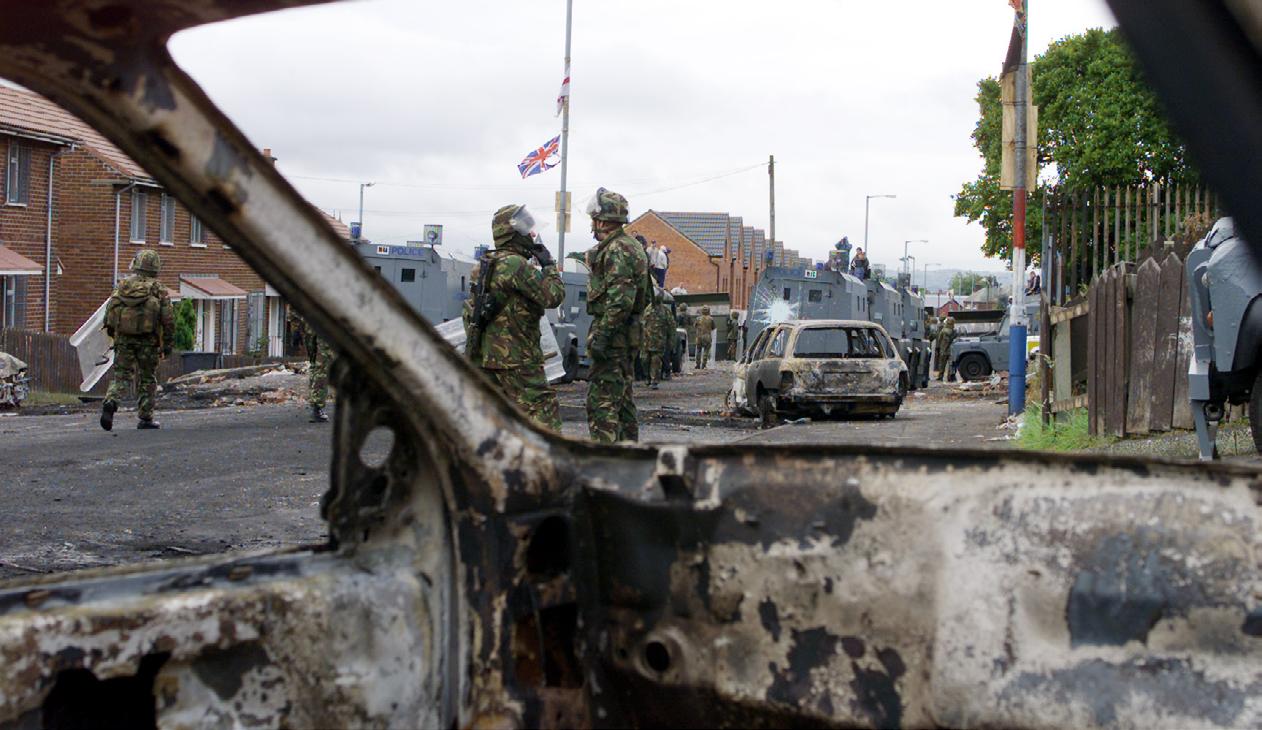
Following the recent ceasefire between Israel and Hamas, Eliot Wilson has provided an American audience with a British perspective on the challenge ahead. Noting its historic regional involvement since the 1917 Balfour Declaration, he argues that Britain has been an actor in the Arab-Israeli conflict but in President Trump’s peace plan involvement has been marginal. As the discussion explains, there have been some wildly divergent American comments on the subject and “pinning down exactly what Britain had contributed has been challenging”. The suggestion is that Prime Minister Keir Starmer sees the 1998 Belfast Agreement – and the knowledge and experience gained from the Northern Ireland peace settlement – as offering an opportunity to present a role. With the uncertainty about US grand strategy and President Trump’s grand strategy, countries with longstanding alliances and agreements with Washington continue to search for a role and mechanisms to strengthen the relationship. The conclusion put forward here is that the experience of Northern Ireland will not help in the current situation as it is not possible “to apply the methods of dealing with rational, if bloodthirsty, terrorists to the disarmament of a genocidal movement of religious zealotry”.
AFRICA
With much of the global focus on events elsewhere, there have been violent developments in the latest iteration of Sudan’s longrunning civil conflict with the potential for paramilitary forces to overrun the army’s last stronghold in the Darfur region. The reported withdrawal from the city of el-Fasher has left over a quarter of a million people, half of them children, under the control of the Rapid Support Forces and reported chaotic scenes as fighting continues. With rebel fighters reportedly carrying out atrocities including summary executions of civilians, the United Nations has warned about the impact on a country already experiencing the world’s worst humanitarian crisis. With a resurgence of instability in neighbouring Somalia, the report cautions that there increasingly exists the potential for a split of Sudan, not much more than a decade after South Sudan’s creation.
DEFENCE
The Modern War Institute at West Point has published a long and wide-ranging essay examining the Ukrainian military and what are the key lessons for the US Army. Lieutenant Colonel Jeremy Flake begins with a clear observation that warfare demands speed, adaptability and technological superiority, and has created an imperative for lessons to be learned and rapid adaptation to be implemented. Discussing the Army Transformation Initiative, he presents this as “a bold shift toward a more agile, lethal, and resilient US Army, capable of facing near-peer adversaries in fast-changing, multidomain battlefields”. He also acknowledges the debt it owes to the conflict in Ukraine and the lessons learned whilst highlighting a flawed assumption which has undermined much of the analysis, that NATO forces would begin a future conflict with the same capability disadvantages that Ukraine faced when the war began. As a result, he proposes that how the battlefield might have looked if Ukraine had NATO-level capabilities from the outset needs to be the baseline for assessment. Explaining the situation as it existed and the progressive support provided by NATO, initially with an emphasis on defensive systems, as well as why Ukraine’s 2023 counter-offensive failed, the essay moves towards its key arguments. With more decisive NATO systems, Russia could have been deterred from launching the invasion and, if this had failed, Ukraine could have contested initial enemy air superiority as well as striking its formations before contact, disrupting logistics and forcing slower, less coherent advances. He argues that the war’s “early dynamics were shaped not by Russian superiority, but by Ukraine’s initial capability deficit” and the key lesson for the US is to ensure the same never happens. And as he concludes: “Decisive battles in future wars are likely to be shaped by the first seventy-two hours, not by what happens over the course of seventy-two weeks. The United States Army must be ready from the start”.