CHACRDIGEST


UKRAINE / RUSSIA
The views expressed in this Digest are not those of the British Army or UK Government. This document cannot be reproduced or used in part or whole without the permission of the CHACR. chacr.org.uk
Understanding how Russia actually functions is proving increasingly difficult and therefore Carnegie’s recent podcast episode and article, What a minister’s death reveals about the Russian power vertical, are fascinating insights. They conclude that Cabinet Minister Starovoit’s demise shows how Putin’s system, built on controlled fear, is now entering a phase of uncontrolled fear and, as a result, initiative will grind to a halt, governance is falling into disarray and given the level of repression and mistrust, Russians will focus on survival, not change.
In an article for Chatham House, Keir Giles continues his focus on the lack of understanding of Putin’s Russia within NATO and across the world. Interestingly, he highlights that the Moscow stock exchange rose after President Trump’s ‘big announcement’, suggesting Moscow had anticipated far more drastic and immediate steps and priced in the risk accordingly. However, Giles also acknowledges President Putin may have spurned Trump’s overtures once too often – a view echoed by Sir Alex Younger, former Chief of the Secret Intelligence Service on BBC’s Newsnight. This is also reflected in a Lowy Institute article that suggests Russian soft power is declining in the Caucasus and a succession of Russian overtures across Europe have failed, with Albania now firmly pro-EU and Serbia now less willing to do Moscow’s bidding.
Meanwhile, Russia’s summer Ukraine offensive looks like its deadliest yet, according to The Economist’s algorithm and satellite data from a NASA programme originally designed to monitor forest fires. The title’s analysis reveals Russia has gained about nine acres per dead Russian soldier and, by that and other measures, it would take another 89 years to conquer all of Ukraine. However, Russia is recruiting 10,000-15,000 more troops per month than Ukraine, a factor which suggests the war is not going to end any time soon. This is highlighted by Jack Watling, writing for the Royal United Services Institute, who indicates that a concerted effort by European states over the next 12 months could lay the foundations for the enduring security of Europe, suggesting that “if Ukraine can hold on for another year… Russia may be pushed beyond its ability to readily recover”. Equally, Orysia Lutsevych argues that “the post-war reconstruction of Ukraine is one of the most significant long-term economic and political challenges facing Europe today” and whilst the war is ongoing, planning for recovery cannot wait until Russia’s invasion is over
More broadly, the RAND paper Evolving Russian perceptions of the British and French nuclear deterrents argues it is essential to understand how Moscow evaluates the deterrents of European countries and concludes that while Russia perceives the UK’s deterrent as a credible threat, the credibility of British capabilities is considered relatively weaker than France due to the UK’s greater reliance on the US. Equally, it maintains the importance of the deterrent effect (or lack thereof) of strategic conventional capabilities such as long-range missile systems.
MIDDLE EAST AND NORTH AFRICA
Despite extensive US strikes on Iran, Mohammad Ayatollahi Tabaar, a Fellow at the Harvard Kennedy School, writes that the Islamic Republic appears to have gained a new lease of life courtesy of a “rally-around-the-flag effect” and an outburst of nationalism. He suggests the regime may establish a new social contract that prioritises national security and resolve as the only way to deter their opponents. Critically, he assesses, they will trust diplomacy even less and lay the groundwork for a long war of attrition with Israel –and a potential nuclear breakout.
However, Amos Yadlin, who served as Israel’s Defence Intelligence Chief (2006-2010), suggests that “with Tehran weaker than it has been in ages, Israel and Washington now have a chance to secure a robust nuclear deal… establish a stable Post-Iranian Middle East, and reinforce their alliance for decades to come”. Of note, he considers how Israel and the United States gathered intelligence, countered Iran’s ballistic missile and drone capabilities, suppressed air defences, and targeted Iranian military leaders and nuclear scientists.
The US/Israeli strikes on Iran have had a profound effect across the region. RUSI’s article on how Turkey navigates an escalating Israel-Iran rivalry concludes that characterisation of Turkey as the principal beneficiary of the recent conflict oversimplifies the pressures facing Ankara’s foreign and security policy. In reality, Ankara’s calibrated response actually reflects a strategic balancing act of long-term, interrelated perceptions of threat with regional aspirations. Whilst Turkey’s opposition to Israel should not be misconstrued as alignment with or tacit endorsement of Iran’s nuclear ambitions, a more imminent risk of a sub-threshold conflict between Turkey and Israel is fuelling efforts to strengthen Turkey’s indigenous military capabilities. Of note, the article concludes that if tensions between Turkey and Israel escalate to a military standoff, it will most likely spark in Syria. In that context, IISS’ article on Syria’s new geo-economic strategy provides a valuable insight into the evolving strategic situation in Syria. It highlights the termination of the contract with a Russian company to manage the port of Tartus as a sign of their strategy to diversify Syria’s economic partners and questions Russia’s continued basing presence in the Mediterranean. Equally, it highlights that the country’s full economic recovery could be delayed as long as UN Security Council’s counter-terrorism sanctions against the interim Syrian president, Ahmed al-Sharaa, remain in force and Syria remains on the Financial Action Task Force’s ‘grey list’.
It is also worth looking at the Carnegie article about how power flows within the Sisi dominated Egyptian regime and the Irregular Warfare Initiative article on Hezbollah’s relative decline
INDO-PACIFIC REGION
America’s fixation on Beijing has raised the strategic cost of aligning with the US for its Indo-Pacific allies, which now comes with higher financial costs, more demands and inconsistent conditions. This is all the more worrying, points out Chatham House, because there are no obvious strategic security alternatives to a US alliance. Similarly, a recent US Marine Corps War College war game highlighted the need for pre-planned de-escalation channels and credible crisis communication to avoid rivals seeing escalation as the only recourse.
This comparison to the relationships in NATO is discussed by The Lowy Institute, which identifies growing unease among Indo-Pacific partners. They also highlight the danger of a two-tier NATO: those who can meet NATO’s demands, and those who choose not to or cannot, and a sense that Alliance discipline is now enforced by economic coercion, with defence spending as a marker of political loyalty. The article concludes “the 5% benchmark symbolises a shift in NATO’s identity – from a consensus-based community to a more hierarchical bloc”, with the warning that “Spain’s careful distancing and the IP4’s absence are not minor footnotes”.
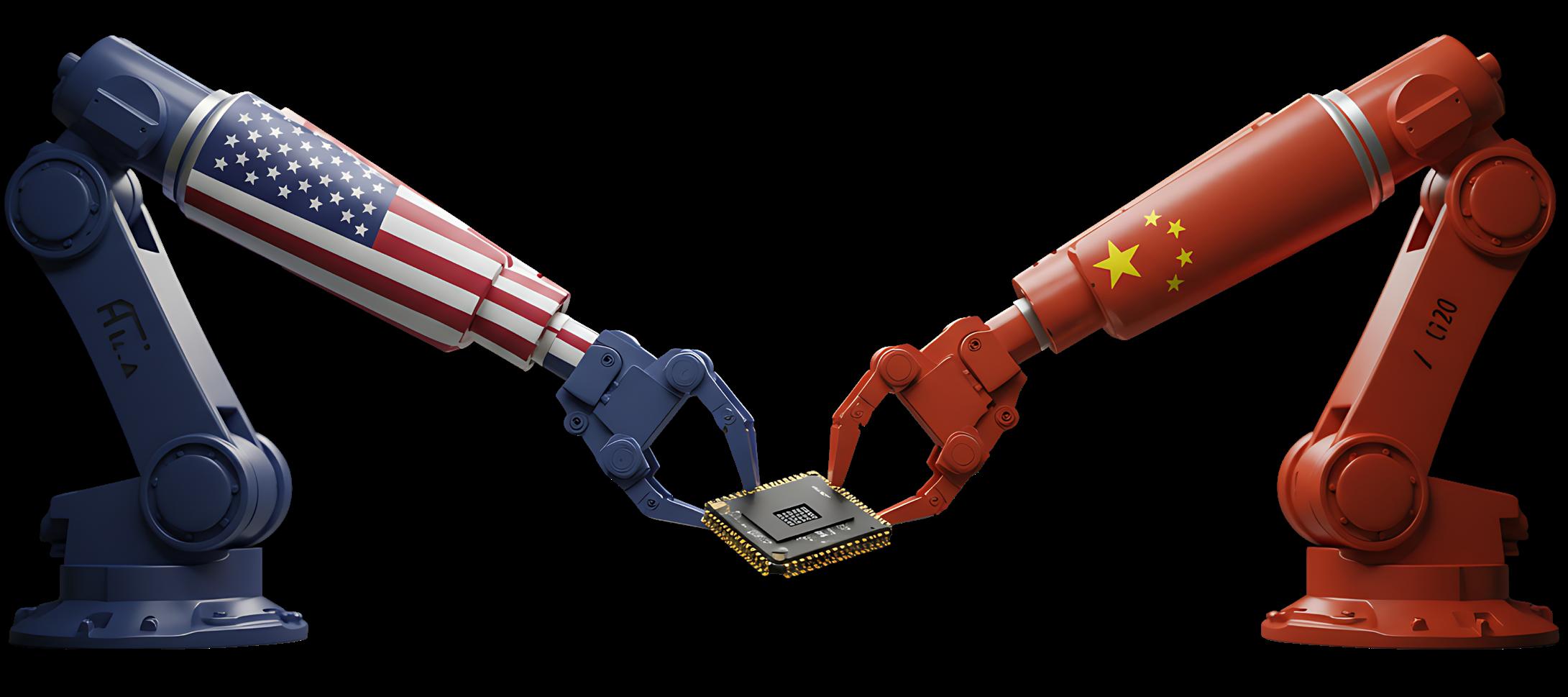
Meanwhile, an IISS article highlights that US-China strategic competition is entering a new, more transactional phase and the shifting geopolitical battleground is now defined by chokepoints, coalition-building, and the race to reduce
UNITED KINGDOM
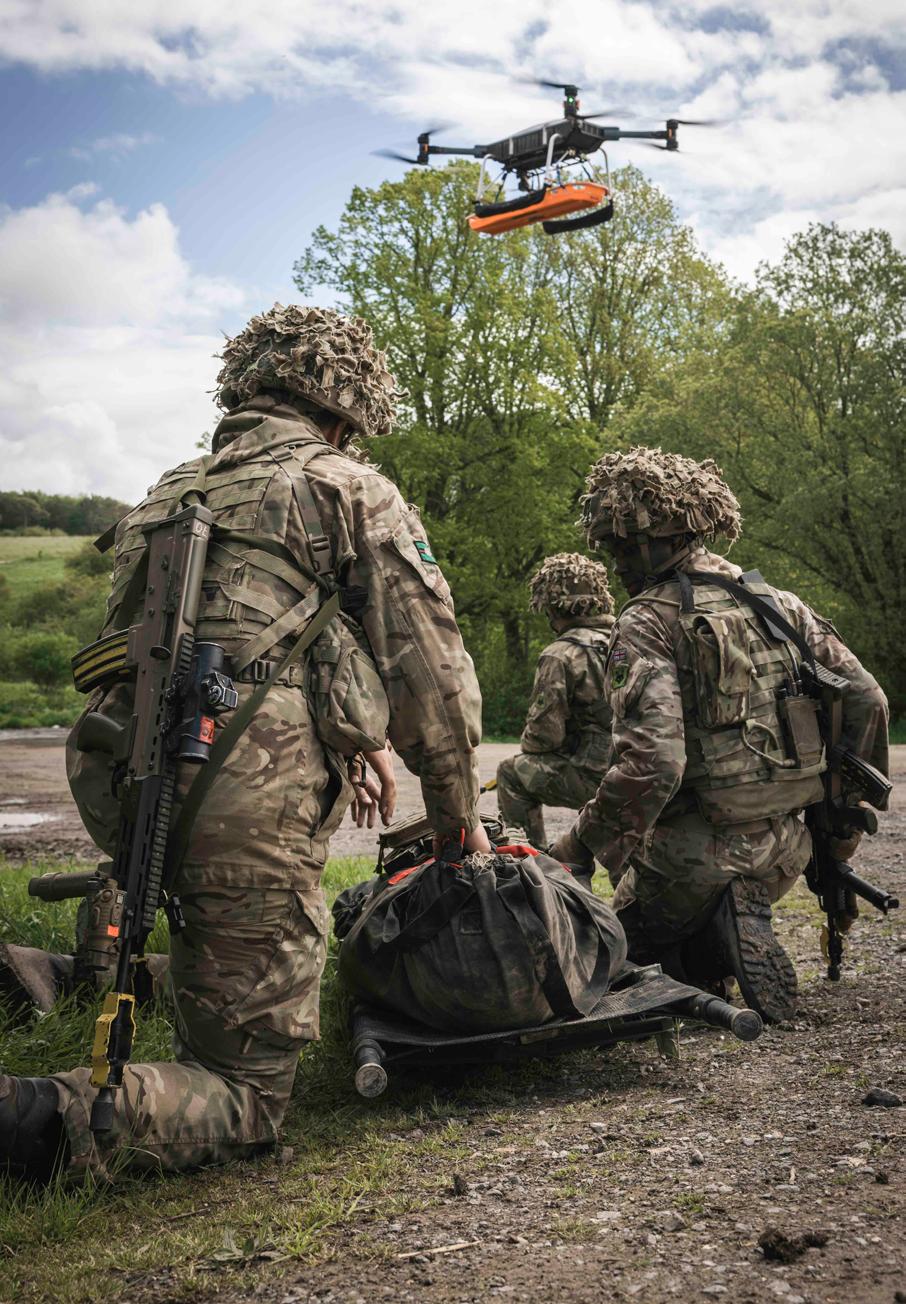
John Foreman, writing for The Spectator, reflects on the recent RUSI conference and concludes: “At a time of increased focus on national defence, it was a poor day for transparency.” His view was provoked by government restrictions on press engagement, a move he suggests weakens public understanding of defence, actively working against the government’s agenda of ‘reconnecting defence with society’ and displays an astonishing lack of trust. He concludes “control freakery diminishes the public realm” and “a ‘whole of society’ approach on defence means just that”. In a similar vein, Sir Julian Brazier’s article, Unshackling training with drones, laments how the UK’s bureaucratic approach to safety regulations is crippling the Army’s ability to train. In addition, the Financial Times article on how the British state’s battle to contain the fallout from a catastrophic Afghan data leak suggests intense scrutiny awaits the Ministry of Defence over a breach that it knew nothing about for 18 months.
Geopolitically, Chatham House published an article entitled What the UK must get right in its China strategy, concluding that deeper bilateral links are unavoidable given China’s geopolitical and economic influence, but closer engagement requires stronger mitigation of the risks China poses to UK national security. Following visits to the UK from the French President and German Chancellor in July, Chatham House also argues that the E3 group – France, Germany and the UK – has the potential to tie a complex architecture together that will serve as the driving force of European security, reinforced by a “triangle of bilateral treaties”.
Alongside these offerings, the Financial Times’ interactive article Is Europe prepared for war? is essential reading for anyone unfamiliar with Russian aggression and Finnish and the Baltic States’ preparedness for conflict.
LATIN AMERICA
The BRICS summit in Rio de Janeiro on 6-7 July was notable for the absence of Vladimir Putin and Xi Jinping, the latter missing for the first time since taking power in 2012, and the lack of anti-Western and anti-colonial rhetoric that characterised the last event in Kazan. It also revealed two inherent weaknesses of the BRICS, increasingly diverse, grouping: its lack of geopolitical identity and the limits of purely transactional multilateralism. Chatham House’s article on the summit concludes: “As national interests prevail over multilateral commitments and diversity inhibits the emergence of a coherent geopolitical identity, BRICS is not a platform for bridging differences. If anything, it highlights them.”
AFRICA
Donald Trump’s business lunch with the leaders of Gabon, Guinea-Bissau, Liberia, Mauritania and Senegal in July highlights the White House’s aims in Africa: to secure mineral deals and supply chains and compete with China, writes Chatham House. The article outlines that the US is abandoning a charity-based foreign aid model in preference to a transactional approach where good governance, human rights and institution building is replaced by deal-making. Of note, US ambassadors in Africa will now be rated on the number of commercial deals they strike.
Meanwhile, The African Center for Strategic Studies, an academic institution established and funded by the US Congress, has published a series of fascinating infographics highlighting a record level of lethality as a result of militant Islamist groups that represent a 60 per cent increase from the 2020-2022 period. Tellingly, the past year has seen groups in the Sahel and Somalia expand their hold on territory with an estimated 950,000 square kilometres outside of government control, an area equivalent to the size of Tanzania.
ARTIFICIAL INTELLIGENCE
Dr Aaron Arnold argues that the dawn of AI-enabled sanctions evasion is here, threatening to fundamentally reshape global financial security as the technology can automate complex tasks, generate deceptive content, and create layers of obfuscation at a scale and speed that most monitoring and enforcement mechanisms are unable to handle. More worryingly, a recent Financial Action Task Force report recognises that only 16 per cent of countries are deemed to have effectively implemented recommendations related to proliferation financing.
The UK remains a distant third in the AI race and faces challenges in its capacity to acquire semiconductors, expand its energy infrastructure and build data centres. The UK also has major structural barriers and while the US and China remain the dominant AI superpowers, investing in and nurturing talent looks like the UK’s best strategy for maintaining its relevance in the global AI sprint.