CHACRDIGEST


IRAN STRIKES ISRAEL
Fears of a wider regional war have grown after Israel and Iran’s 30-year “shadow war” entered a new stage. After Israeli airstrikes killed a leading Islamic Revolutionary Guard Corps commander in Damascus, Iran launched more than 300 Shahed drones, mediumrange ballistic missiles and land-attack cruise missiles in retaliation. Tom Karako, the director of the Missile Defence Project at the Centre for International and Strategic Studies, explains how Israel and its partners – including the US, UK, France and Jordan –achieved a 99 per cent interception rate. Despite this success, Karako and Peter Mitchell question whether other militaries are able to replicate Israel’s layered air defence network. They both argue that geography, access to advanced technology and support from the US provides Israel with significant advantages over other states.
ISRAEL STRIKES BACK
Almost a week after Iran’s attack on Israel, the Israel Defence Forces conducted a limited, stand-off strike near the Iranian city of Isfahan. Experts from the Atlantic Council broadly agreed that further escalation was unlikely as Iranian officials sought to downplay the incident. By striking the well-defended Iranian air base – satellite imagery shows the base was protected by the Soviet-built S-300 air defence system – Charles Lister, a senior fellow at the Middle East Institute, argued that Israel aimed to signal its military superiority over Iran.
ARTIFICIAL INTELLIGENCE AND THE WAR IN GAZA

The conflict in Gaza has focused attention on the use of AI-based tools by the Israel Defence Forces (IDF). The IDF’s motivation for developing powerful AI software to support targeting is based on its experience of previous rounds of fighting in Gaza when the air force quickly exhausted its list of pre-identified targets. Tal Mimran, Magda Pacholska, Gal Dahan and Lena Trabucco describe the various AI-powered decision support systems used by the IDF to identify and classify targets. They argue that the controversy surrounding the IDF’s use of AI misrepresents “what AI-powered tools realistically can and cannot do”. That said, the authors urge military commanders to avoid “automation bias” by not over-relying on AI tools. Rob Solly and Daniel Tarshish also warn of the limitations of AI systems, particularly when faced with “edge cases” (unexpected incidents or data). The discussion around AI is part of a wider debate within Israel, where the IDF has been heavily criticised for being over-reliant on technology.


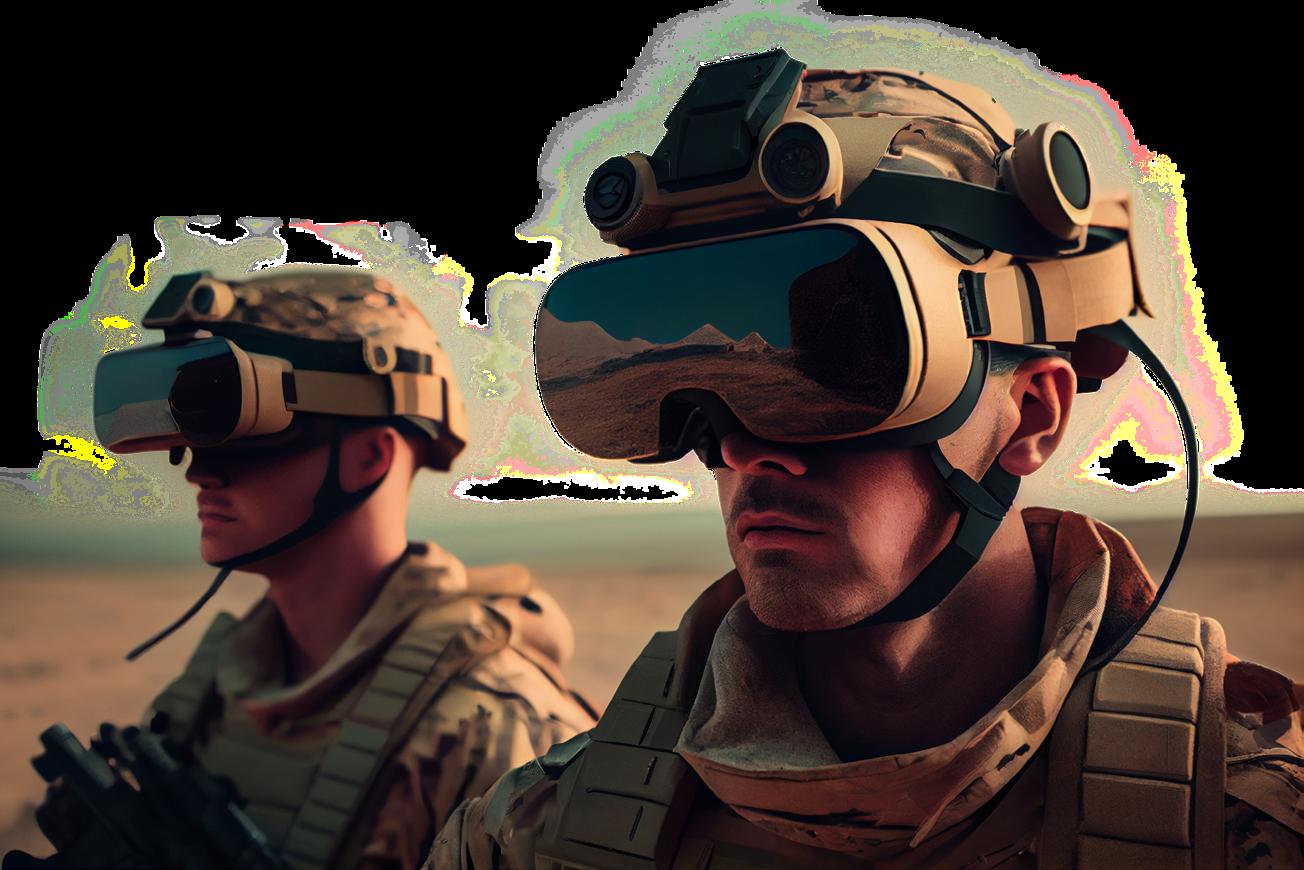
The proliferation of drones is one of the defining features of the conflict in Ukraine. The New Yorker, follows Ukraine’s 1st Separate Assault Battalion as it tries to recapture a town near the city of Kupyansk. The article provides insights into small unit tactics, detailing how a Ukrainian assault team flanks a Russian platoon with the support of first-person view drones. Meanwhile, Reuters journalists Mariano Zafra, Max Hunder, Anurag Rao and Sudev Kiyada analyse video footage and speak with frontline soldiers to explain how drones have transformed this conflict. The article maps long-range Ukrainian drone strikes on targets inside Russia and describes the challenges posed by electronic warfare systems, and shows how dedicated drone units are now assigned to most battalions within a Ukrainian brigade.
ISLAMIC STATE ATTACKS MOSCOW
On 22 March, four Islamic State (IS) terrorists killed more than 140 people at Crocus City Hall near Moscow. While the attack highlights IS’s enduring threat and global reach, it also raises questions about Russia’s ability to manage threats to its internal security. Mark Galeotti, a historian and expert on Russian security affairs, argues that Russia’s domestic security apparatus struggles to manage terrorist threats from Central Asia (all four of the IS militants responsible are from Tajikistan) for two reasons: firstly, Russia’s intelligence agencies find it difficult to recruit informants within close-knit Central Asian migrant labour communities; secondly, information shared by intelligence agencies from Central Asian countries is often highly politicised (i.e., passing off regime critics as terrorists). These factors make the threat of Central Asian radicalism a “nightmare” for Russian authorities.
SOMALIA’S STALLING OFFENSIVE
In an effort to capitalise on clan uprisings against al-Shabaab (AS), the Federal Government of Somalia (FGS) launched a fresh offensive against the group in August 2022. Backed by Turkish and US drones and supported by clan militias, the Somali National Army made early gains. However, the offensive has since stalled with the militant group regaining some lost territory. Daisy Muibu explains that overly ambitious timelines, donor fatigue, logistical challenges and political infighting have undermined the FGS’ efforts to consolidate its gains. AS’s ability to regroup after suffering early battlefield losses also highlights the group’s enduring resilience and internal cohesion. With the Somali government’s offensive struggling to regain momentum, its international partners, including the UK, may need to step up support ahead of the planned drawdown of African Union Transition Mission in Somalia forces in December 2024.
DISINFORMATION IN AFRICA
A recent study by the Africa Centre for Strategic Studies shows a proliferation of disinformation targeted at audiences in Africa. The research identifies Russia as the primary culprit, attributing nearly 40 per cent of all disinformation campaigns on the continent to Kremlin-linked entities. Moscow’s propaganda and disinformation campaigns have proven successful in undermining Western influence in Mali and Burkina Faso where French forces have been withdrawn from both countries, while officials in Niger announced that the country was ending its security cooperation agreement with the US. Russia’s recent successes have encouraged other actors to emulate Moscow’s model. For example, the United Arab Emirates and Egypt are both accused of spreading disinformation in Sudan. Senior Western military leaders are demanding that their governments do more to challenge and counter adversary narratives in Africa. With increasing focus on the battle for influence within the Global South, the study provides an understanding of where Western efforts might be most effectively targeted.
DRONES ON THE FRONTLINES
NEWS STORIES TO WATCH OUT FOR
With tensions in the Middle East and the conflict in Ukraine continuing to dominate headlines, here are some other topics to keep an eye on:
South Korea’s opposition parties won a landslide victory in parliamentary elections in April. The results are a setback for Yoon Suk-yeol’s administration, which has pursued a trilateral security partnership with the US and Japan.
Voting has begun in India’s general elections as Prime Minister Narendra Modi seeks a third term in office. Voting will be held between 19 April and 1 June with results due to be announced on 4 June.
Jaish al-Adl, a Baluch separatist militant group, launched a number of attacks in Iran’s southeastern province of Sistan and Baluchistan in April. Iranian authorities have faced a range of domestic security threats since violent protests rocked the country in 2022.
Mexico suspended diplomatic relations with Ecuador following a raid by Ecuadorean police on the Mexican Embassy in Quito. The police arrested a former Ecuadorean vice-president who had taken refuge in the Embassy.
The US House of Representatives voted to provide additional aid to Ukraine, Israel and Taiwan after months of delay. The combined bill will now head to the Senate.
The UK, Belgium, Norway, the Netherlands, Germany and Denmark signed a new agreement to protect critical underwater infrastructure in the North Sea. The agreement comes after several incidents in 2022 and 2023 raised concerns about underwater sabotage.
South Africa’s ruling African National Congress (ANC) party faces its worst election result since 1994 as the country prepares for elections on 29 May. Jacob Zuma, the former president and ANC leader, has established a new political party in order to challenge the ANC in the upcoming elections.