CHACRDIGEST#18

The views expressed in this Digest are not those of the British Army or UK Government. This document cannot be reproduced or used in part or whole without the permission of the CHACR. www.chacr.org.uk
THE WAR IN UKRAINE AND MULTIPOLARITY

More than a year after Russia’s full-scale invasion of Ukraine, divisions between the West and Russia have solidified. Beyond Europe and the US, however, countries have been much more cautious in terms of how to position themselves. The notion that we are entering a new multipolar era is being widely debated, with some suggesting that a bipolar world order – with the US on one side and China on the other – is more likely. Regardless, many countries in the Global South, in particular, insist that they will not be forced to take sides and are instead working to navigate a multipolar world. This report by Aldo Ferrari and Eleonora Tafuro Ambrosetti at the Italian Institute for International Political Studies unpacks the question of the multipolar world order and queries how new it actually is.
WHY DID JACK TEIXEIRA HAVE ACCESS TO SENSITIVE INTEL?
Following the extraordinary story of Jack Teixeira’s leaking of highly classified information to his online chat buddies, a large inquiry has taken place as to how such sensitive data was allowed to be accessed by a part-time serviceman of junior rank. This analysis by the BBC explains how Teixeira may have been allowed to both access such documents, as well as ensure that they were removed from secure facilities. While his motivations remain highly unusual, in that the leaks seem to be driven by nothing more than showing off, questions around the security ecosystem require deep introspection and a possible re-engineering of the handling of sensitive data in the post 9/11 world.
LOOKING AHEAD TO THE NATO SUMMIT

This year’s NATO Summit is due to take place in Lithuania’s Vilnius in July. Inevitably, the agenda will be topped by the war in Ukraine and Finland’s (completed) and Sweden’s (still outstanding) joining of the alliance. This report by Franklin Kramer at the Atlantic Council sets out key priorities NATO should adopt to enhance its defence and deterrence capabilities. Amongst other things, he argues for increasing the standard defence spending pledge for members from two per cent to 2.5 per cent of gross domestic product; efforts to expand unmanned air and maritime capabilities, including through investments in artificial intelligence; and the establishment of a ‘sustainment initiative’ to ensure NATO stocks are sufficient to fight extended campaigns.

THE CHALLENGE TO INDIAN MILITARY MODERNISATION: PEOPLE
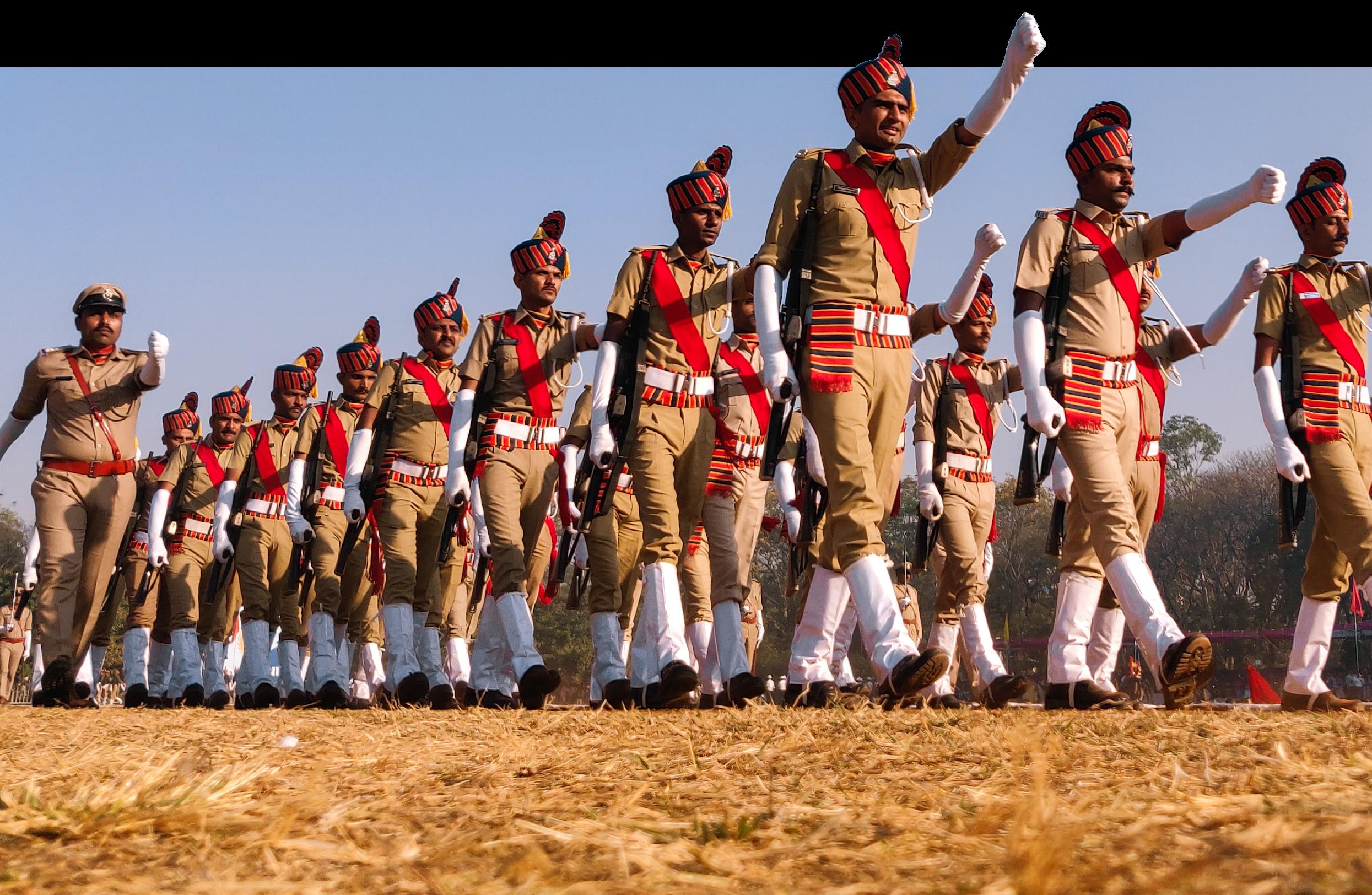
India’s 2023 defence budget is $73.8 billion, the third largest in the world behind only the US and China. However, India is facing a number of immense challenges as it seeks to modernise its armed forces. One problem is India’s dependence on Russian-made defence equipment. As sanctions continue to hamper Russia’s defence industry, which is increasingly focused on equipping Russian forces for the war in Ukraine, India may have to look elsewhere and find more effective ways to boost its domestic defence industry. The most significant challenge, however, as Fenella McGerty and Viraj Solanki at IISS point out, is finding a way to control personnel costs. More than half of India’s budget is currently consumed by salaries and pensions.
HOW THE ABRAHAM ACCORDS ARE RESHAPING THE MIDDLE EAST
The Abraham Accords (normalisation agreements between Israel and several Arab states) are nearing their third birthday. Once dismissed as a Trump administration gimmick, the Accords have become a genuine driver of the changing regional order of the Middle East. The Israel-UAE relationship is going from strength to strength, thus far mostly unencumbered by the hard-right government in Jerusalem and the rising tensions in the West Bank; and trends towards more regional engagement are also continuing. Sanam Vakil and Neil Quilliam’s research paper explains how the Accords have already reshaped the Middle East, and what else we might expect in the coming years. They also highlight the central role of the US in the Accords, which underscores the importance of discussions about the future of Washington’s commitment to the security of the region. The launch event for the paper, with comments from both authors and additional experts, can be re-watched on the Chatham House website
ISRAEL’S JUDICIAL REFORM AND NATIONAL SECURITY
The Institute for National Security Studies (INSS), Israel’s premier think tank focusing on defence and security issues, has issued a ‘Strategic Alert’, a research paper in which it outlines how it sees the Israeli government’s highly controversial judicial reform package posing a serious threat to national security. Considering that many of INSS’s senior leaders are former defence and security officials, this direct criticism of government policy is particularly interesting. The paper argues that the reforms are not just undermining Israeli democracy, but could negatively affect Israel’s ability to deal with key threats such as that posed by Iran. The launch event, with a speech by INSS director Manuel Trajtenberg, is also worth watching.
WIDER READING
In Spying through a Glass Darkly, Oxford Professor Cecile Fabre debates the ethics and philosophical underpinnings behind the profession of espionage. The premise of the book is that the profession (seen by some such as Immanuel Kant as morally indefensible) is a necessary tool of statecraft, and indeed carries an intrinsic moral good if it results in the protection of lives. However, Fabre readily admits that the tools of espionage such as deception, blackmail, and mass surveillance can be extremely contentious, and pose deep moral conundrums – especially for democracies. The text is thought provoking and raises pertinent questions for those acting in the national security space. This is an extremely well thought out work that is more on the scholarly side than the policy side, but for those in the Armed Forces who have served on front-lines the broad moral contours that govern espionage will feel familiar.
NEWS STORIES TO WATCH OUT FOR

As the war in Ukraine and its multi-dimensional repercussions continue to dominate headlines, here are some other topics to keep an eye on:
Mexico City police has arrested notorious MS13 gang leader Mara Salvestrucha and extradited him to El Salvador; it is the latest development in Mexico’s ongoing struggle to restore public safety in the face of gang and cartel violence, which also has a regional dimension that stretches both north and south.
Brazil’s President Lula da Silva continues to insist that he can make a contribution to bringing Russia’s war in Ukraine to an end; Russia has welcomed Brazil’s initiative, the US and most of the West remain sceptical to critical.
The UN warns that at least 48 million people in West and Central Africa face acute food insecurity in the coming months that could escalate into full-scale famine.
Tunisian President Said continues to crack down on any form of opposition; his most recent steps include the arrest of Rashid Ghannouchi, leader of the Islamist Ennahda party.
The UK’s GCHQ warns that China is seeking to establish ‘global technological supremacy’ in cyberspace, emphasising the need for the UK and its allies to double their efforts in the domain.
Syria’s reintegration into regional politics in the Middle East has advanced further in early April, most notably with the visit of Saudi Foreign Minister Faisal bin Farhan to Damascus.
China’s latest set of military exercises in around Taiwan further fuel concerns of an impending conflict.