JULY 2026 #20
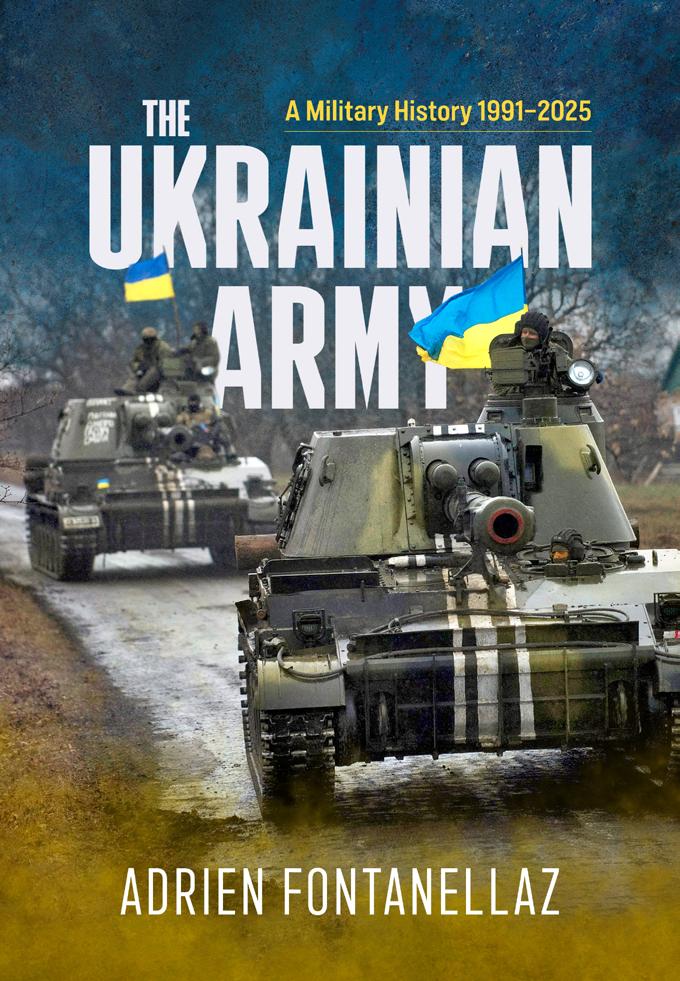

TITLE
Published by Helion & Company, Hardback, ISBN: 978-1806723706
The Ukrainian Army: A Military History 1991-2025
AUTHOR Adrien Fontanellaz
REVIEWER
Professor Andrew Stewart, Head of Conflict Research, CHACR


JULY 2026 #20
TITLE
Published by Helion & Company, Hardback, ISBN: 978-1806723706
The Ukrainian Army: A Military History 1991-2025
AUTHOR Adrien Fontanellaz
REVIEWER
Professor Andrew Stewart, Head of Conflict Research, CHACR
Writing the history of an ongoing conflict is an inherently fraught intellectual exercise. As Adrien Fontanellaz acknowledges in the introduction to The Ukrainian Army: A Military History 1991-2025, works of “immediate history” rely on contemporary sources that are “partial and almost inevitably biased”. Yet, he successfully navigates this historiographical challenge, synthesising official communications, academic reports and open-source intelligence to deliver a comprehensive analysis of the Ukrainian Armed Forces (ZSU). The result is a meticulous institutional and operational history that traces Ukraine’s military evolution from a bloated, decaying post-Soviet apparatus into one of the most battle-tested, technologically innovative – yet structurally strained –fighting forces in the modern world.
The book’s opening chapters provide essential context by examining the ZSU’s post-1991 genesis. Inheriting a colossal but utterly disproportionate Soviet military footprint –including 780,000 personnel and the world’s third-largest nuclear arsenal – the newly independent Ukrainian state faced rapid economic collapse and Western pressure to demilitarise. Fontanellaz reveals the 1990s and 2000s to have been a dark age of chronic underfunding during which the ZSU devolved into an “army of paupers”. Budgets were so anaemic that military exercises ceased entirely, corruption became endemic and morale plummeted; the institutional despair was perhaps best captured by a young lieutenant who committed suicide in 1999, leaving a note stating that Ukrainian officers “do not live, but exist”, condemned to an “animal existence”. This systemic decay meant that when the Yanukovych regime fell during the 2014 Revolution of Dignity, Ukraine was functionally defenceless.
The strategic shock of 2014 served as the catalyst for the ZSU’s first major transformation. Fontanellaz provides a
clinical autopsy of Russia’s annexation of Crimea and the subsequent Donbas war. Faced with the infiltration of Russian regular forces and proxies, the Ukrainian Army initially found itself paralysed, with commanders noting they were “unprepared to fire on our own people”. This vacuum was rapidly filled by a remarkable mobilisation of civil society, giving rise to volunteer militias and crowd-sourced logistics. However, the limits of ad hoc militia warfare were brutally exposed when conventional Russian Battalion Tactical Groups intervened, leading to the Ukrainian operational disasters and encirclements at Ilovaisk and Debaltseve.
One of the book’s most compelling analytical threads is its examination of Ukraine’s subsequent doctrinal evolution. As Kyiv pivoted towards NATO integration, it attempted to adopt Western mission command and empower a professional non-commissioned officer corps. Yet, this transformation was highly uneven and Fontanellaz does not shy away from exposing the cultural friction within the ZSU. He quotes a British officer observing in 2021 that the Ukrainian military’s “bones and flesh remain consistently Soviet, both in approach and methods”, characterised by pervasive secrecy and an aversion to initiative. Even General Valerii Zaluzhnyi, the architect of Ukraine’s 2022 defence, candidly admitted his admiration for Russian Chief of the General Staff Valery Gerasimov, noting, “I was brought up on Russian military doctrine”.
This hybrid institutional identity defined Ukraine’s performance during the fullscale Russian invasion of February 2022. Fontanellaz critically deconstructs the Battle of Kyiv, demonstrating how extreme decentralisation saved the capital. Operating under a collapsed communication network, junior Ukrainian officers fought in highly autonomous, mobile combinedarms detachments and leveraged local intelligence and civil resistance to channel Russian mechanised columns into kill zones
“before cutting them off from their rear and then pulverising them”. The author effectively details how software innovations from the Ukrainian tech sector, such as the Kropyva tactical mapping system (often dubbed an ‘Uber for artillery’), acted as significant force multipliers that outperformed Russian equivalents.
As the conflict transitioned from the fluid manoeuvre warfare of 2022 – highlighted by the stunning Ukrainian operational successes in Kharkiv and Kherson – to the gruelling, positional attrition of 2023 and 2024, Fontanellaz shifts his focus to the strategic and political frictions constraining the ZSU. He meticulously outlines the civil-military divide, particularly the tension between the military logic of the General Staff and the political imperatives of the Stavka (the supreme command led by President Volodymyr Zelensky). The defence of Bakhmut against the Wagner Group’s brutal ‘meat grinder’ tactics serves as a prime example. While the military sought to preserve forces, the political leadership demanded the city be held, conscious that Western arms deliveries were contingent on narratives of unbroken resistance. As Zelensky starkly noted, “as cynical as it may sound, everyone wants to be on the winning side”.
Fontanellaz also excels in chronicling the technological revolution spurred by the war, particularly the maturation of asymmetric drone warfare. He analyses the Black Sea campaign, where the Ukrainian military, bereft of a conventional navy, embraced the doctrines of the 19th-century French Jeune École. Utilising indigenously developed uncrewed surface vessels, such as the Magura and Sea Baby, alongside Western cruise missiles, Ukraine successfully sank or damaged a significant portion of the Russian Black Sea Fleet, breaking the naval blockade. Similarly, the writer unpacks the ‘quadcopter revolution’ and charts how the mass deployment of first-person view drones fundamentally altered the morphology of the battlefield, making concentration of armoured vehicles nearly impossible and forcing units to disperse into small, highly vulnerable infantry assault groups. Crucially, he links this technological agility directly to civil society, noting that “the Ukrainian army is unique in its self-financing efforts”, with grassroots crowd-funding bypassing bureaucratic bottlenecks to supply front-line units directly.
Despite these tactical and technological triumphs, the book’s concluding chapters
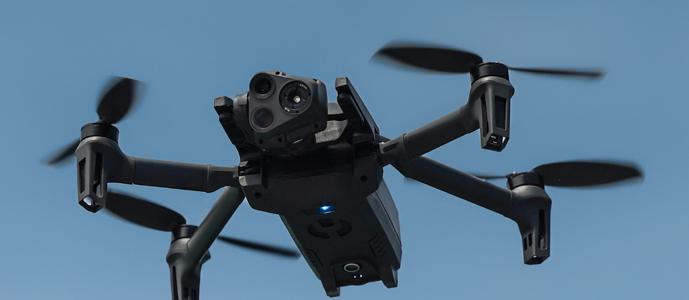
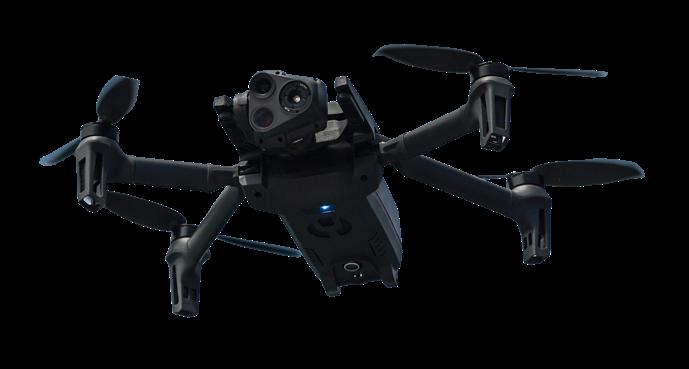
“The writer unpacks the ‘quadcopter revolution’ and charts how the mass deployment of first-person view drones fundamentally altered the morphology of the battlefield, making concentration of armoured vehicles nearly impossible and forcing units to disperse into small, highly vulnerable infantry assault groups.”
paint a sombre picture of an army increasingly bled dry by attrition. Fontanellaz is highly critical of the West’s hesitancy, characterising allied military aid as perpetually “too little, too late”. The failure of the highly anticipated 2023 Melitopol counter-offensive is attributed both to the formidable Russian ‘Surovikin Line’ defences and the delayed delivery of vital Western armour and demining equipment. The subsequent suspension of US military aid in late 2023 left Ukrainian artillery severely outgunned, forcing the ZSU to rely on firstperson view drones as a desperate stopgap. The author also critically assesses Ukraine’s own systemic failures, pointing to a chaotic force generation system, chronic infantry shortages, an aging combat force and a delayed mobilisation policy that, by 2024, combined to create a spike in desertions.
This is a most valuable text both for those interested in contemporary defence and security and military historians. By avoiding triumphalism and grounding its analysis in operational realities, logistical constraints and civil-military dynamics, Fontanellaz has produced an important, albeit provisional, history of what may already be viewed as the defining conflict of the 21st century. In his final assessment, he concludes that while Ukraine has achieved an historic strategic victory simply by preserving its statehood and sovereignty against a vastly superior foe, its military remains caught in a perilous limbo. Western support has provided “barely enough to hold out, but certainly not enough to win”. Nonetheless, events still ongoing may well dictate the need for an early updating of this account and the addition
of another chapter outlining how the ZSU ultimately prevailed.
Facing similar historiographical challenges, in his detailed and illuminating study of the Battle of Chernihiv, Mykhailo Zhirokhov also successfully bridges the gap between immediate journalism and rigorous military analysis. The head of the Chernihiv Military History Museum and a historian specialising in post-Soviet conflicts, he leverages his localised expertise to deliver a meticulous operational autopsy of the Russian Armed Forces’ (VSRF) failed decapitation strike through northern Ukraine. Tracing the geopolitical escalation from the spring of 2021, the author explains how Russia masked its invasion preparations behind the facade of large-scale military exercises. When the invasion commenced on 24 February 2022, the Russian General Staff’s operational blueprint relied heavily on hubris. As Zhirokhov notes, the plan “closely resembled Soviet operations in Czechoslovakia in 1968, and Afghanistan in 1979”, premised on the assumption that Russian columns would rapidly bypass or drive through urban centres unmolested, ultimately isolating Kyiv. The Russian 41st Combined Arms Army and the 2nd Guards Combined Arms Army were ordered to advance down primary highways, expecting to be greeted by a pliant population.
Part of the publisher’s larger War in Ukraine series, Zhirokhov’s most significant analytical contribution lies in his deconstruction of the Russian Battalion Tactical Groups and their catastrophic failure. He argues compellingly that the VSRF did not conduct a conventional offensive, but rather a poorly coordinated ‘raid’. Because the muddy terrain of the Chernihiv region – characterised by dense forests and an abundance of rivers –rendered off-road movement impossible, the heavily mechanised Russian forces were entirely road-bound. The text exposes the fatal flaws of the Battalion Tactical Group structure in this environment: “They had too few tanks, infantry, and artillery” and lacked the combined-arms cohesion required to break through fortified positions. Consequently, when Russian spearheads encountered resistance, they were incapable of transitioning from marching columns to deployed combat formations, leaving their exposed flanks and logistical tails vulnerable to systematic destruction.
In stark contrast, Zhirokhov details the ZSU’s institutional adaptation and tactical agility. Forewarned by intelligence and pre-invasion exercises, local Ukrainian
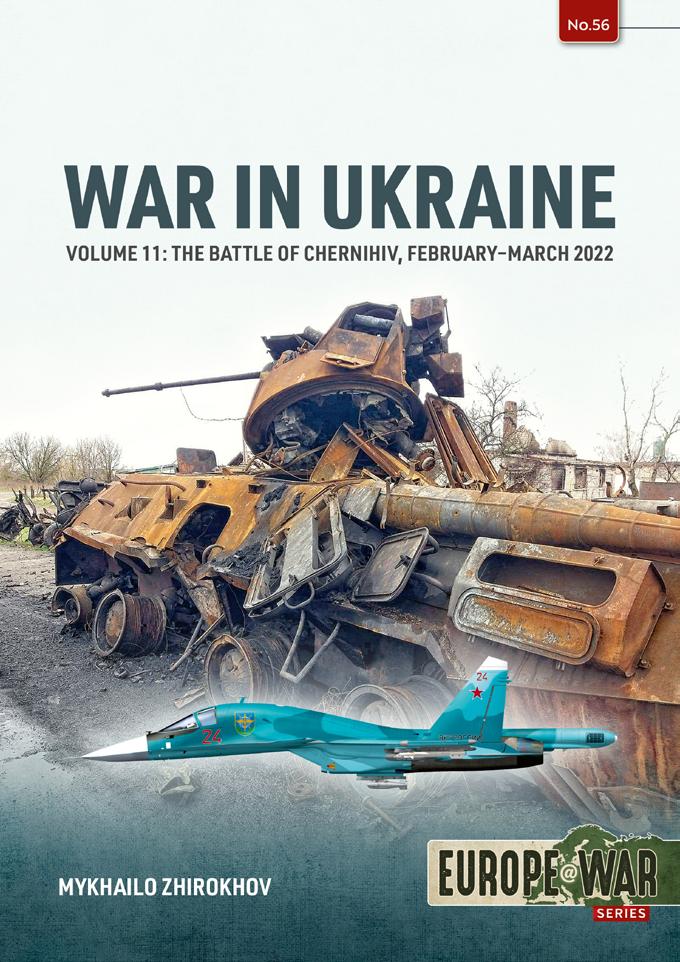
TITLE
Published by Helion & Company, Paperback, £19.95, ISBN: 9781804519677
War in Ukraine Volume 11: The Battle of Chernihiv, February-March 2022
AUTHOR
Mykhailo Zhirokhov
REVIEWER
Professor Andrew Stewart, Head of Conflict Research, CHACR
units, particularly the elite 1st Separate Tank Brigade, dispersed their assets and prepared for mobile, asymmetric defence. There are gripping accounts of early engagements, such as the ambush at Khalyavyn, where a small detachment of Ukrainian T-64 tanks and infantry armed with rocket-propelled grenades decimated the spearhead of the Russian 74th Guards Motor Rifle Brigade. The author highlights the critical role of Ukrainian artillery, particularly the 27th Rocket Artillery Brigade, which utilised BM27 multiple rocket launchers and OTR-21 Tochka ballistic missiles to obliterate Russian bridging operations over the Desna River at Makoshyne and Shestovystya, repeatedly denying the VSRF operational depth.
Crucially, the book elevates the narrative beyond conventional military history by documenting the profound impact of the civilian resistance movement. Similarly to Fontanellaz, Zhirokhov reveals how everyday citizens operated as a vast, decentralised intelligence network coordinated by the ZSU, the Security Service of Ukraine and military intelligence. As one resistance coordinator noted: “A member of the resistance movement was an average inhabitant… The work is structured in such a way that there were several of these people in each settlement, and they, of course, did not know each other at all.” This crowd-sourced intelligence enabled precise artillery strikes on Russian logistics and pontoon crossings, effectively breaking the back of the enemy’s supply chain and stalling the advance of tens of thousands of troops. Furthermore, unarmed civilians actively engaged in
“[Zhirokhov] identifies the Battle of Chernihiv as a paradigm of modern defensive success. The Russian withdrawal in early April 2022 was not a ‘goodwill gesture’, as Moscow’s propaganda claimed, but a forced retreat dictated by unsustainable losses.”
physical resistance, blocking highways with felled trees to trap Russian fuel trucks.
With his local knowledge, access to firsthand sources and historian training, the author has produced a well-evidenced account of the opening salvos of the RussoUkrainian War. His access to primary combatant testimonies, precise orders of battle and intimate knowledge of the region’s geography gives it real value. In his concluding assessment, he identifies the Battle of Chernihiv as a paradigm of modern defensive success. The Russian withdrawal in early April 2022 was not a ‘good-will gesture’, as Moscow’s propaganda claimed, but a forced retreat dictated by unsustainable losses – estimated at 85-90 per cent of the combat effectiveness of the initial invasion force in that sector. The combination of Ukrainian “resilience and active defence”, non-standard tactical decisions and absolute societal mobilisation shattered Vladimir Putin’s strategic objective of seizing the capital.