
BY: Major Rocco P. Santurri III, US Army Civil Affairs and Psychological Operations Command
THIS year is proving to be a particularly busy one for the United States military, contrary to analyst predictions and the pledges of its Commander-in-Chief. Within 72 hours of 2026’s arrival, the US conducted a daring raid into Venezuela to capture President Nicholas Maduro and his wife. Currently, both remain in custody in a New York prison, with the former appearing noticeably slimmer in a recent court appearance. The operation was preceded by US strikes against drug smuggling boats in the Caribbean, underpinned by dubious legal justification Less than two months later, the US launched Operation Epic Fury, a large-scale, joint military operation tasked with destroying Iranian ballistic missiles, missile production facilities and materials required to build a nuclear weapon. Since then, US military power (and its limitations) has been on full display. The Iranian Navy has experienced catastrophic losses, its air force has been removed from the sky and 85 per cent of the Iranian defence industrial base has been destroyed. Ballistic missile sites and drone production sites have also been heavily targeted. Nevertheless, battle damage assessment
remains murky, with general conclusions being that Iran will retain a credible deterrence and could reconstitute quickly, especially with assistance from its allies.
The results have followed a recurring pattern for the Americans: military objectives are achieved, but consolidated political gains remain elusive. As of mid-April, the demonstrated capacity of the US Navy to impose a blockade in the Gulf has the potential to reframe the strategic calculus in the Middle East and snatch for the US a rare political victory atop successful military action. Regardless of the outcome, however, conclusions can be drawn from the conflict that go beyond the US, with ramifications not only for its Gulf allies but also its NATO partners.
“They want us to do more than they are willing to do for themselves.” – General James Mattis (Ret.), former US Secretary of Defense, on Gulf States relying on America to counter Iran
Rivalling the destruction of Iranian military production facilities and assets has been (in American eyes) the reputational damage to several Gulf States, most notably Saudi
Arabia. Riyadh in particular has strongly encouraged the US to take advantage of a “historic” opportunity to reset the balance of power in the Gulf. However, the Gulf States have been reluctant to join the Americans in the attack; instead, their collective contributions have been to protect their own territory in a decidedly defensive posture. The apparent lack of élan on the part of the Gulf States is more mind over machine; many possess advanced US military software and hardware but remain reluctant to launch offensive operations. The Gulf States can point to non-military considerations for their inaction, notably regime security and the vulnerability of their oil fields and desalination plants to Iranian asymmetric attacks their American-made hardware could struggle to repel. Saudi experiences against the Houthis in Yemen would certainly support that consideration.
Perhaps there is also a latent belief among Gulf States that staying on the sidelines is quid pro quo for permitting the US basing rights on their territory. However, several have refused base usage to attack Iran, making confidence in a neutral position a path fraught with danger. Concerned voices are growing in
Washington about the apparent eagerness of Gulf States to let the US go it alone, content to see their main rival withstand the American onslaught while they avoid getting their hands dirty. Given that the Gulf States warned Trump to avoid a conflict with Iran and vowed to stay neutral, operational assistance might be viewed as optional, but that is failing to understand the decision-making calculus of the US President. Regardless of the contributing factors and the outcome of the conflict, reappraisal of US relations with the Gulf States is likely, certainly not a promising development given the transactional mindset of the White House’s current occupant.
Trump’s strategic outlook toward the Gulf States vis-à-vis NATO is grounded in differing rationales but reaches strikingly similar judgments. The Gulf States’ reluctance to act against Iran mirrors the refusal of numerous NATO members to invest in the Alliance. Most notably, “laggards” such as Spain and political “irritants” like [until recently] Orban’s Hungary fuel frequent American accusations of a “Free-Rider” issue in the Alliance. While the defeat of Orban in April’s election opens the door to a rapprochement
between Budapest and Brussels, the laggards in the Alliance still threaten to hasten NATO’s transformation into two camps: the ‘committed’ and the ‘complacent’. The committed include those above three per cent gross domestic product on military spending (exceeding NATO’s two per cent threshold). Unsurprisingly, most members in this grouping share a border with Russia. Leading the way are Poland, Lithuania, Latvia and Estonia, who make clear that their commitment to defence is not an option, but rather an existential necessity based on a painful history.
The complacent camp resides, predictably, far from Russian borders. Spain, Portugal and Italy are among the member states at or barely above the two per cent threshold. Spain has been particularly vocal about its refusal to align with the NATO-wide push to increase defence spending to five per cent, insistent that reaching 2.1 per cent in 2025 fulfils its requirement. While a significant increase from its defence spending in 2023, a dismal 1.3 per cent, Spain’s consistently low levels of expenditure solidifies its status as an underachieving member state, historically comfortable relying upon the American peace dividend and extended deterrence. While the geography of members such as Spain makes security more of a concept than contingency, it points to a systemic issue within NATO; can all 32 members adequately support the Alliance in a future conflict?
“History rewards those who act, not those who reminisce.”
– Henry Kissinger, US National Security Advisor
Brussels should not underestimate divisions in NATO, given the evolving nature of the geopolitical world and the crumbling rulesbased international order. The American Empire is fading, a near-power is rising, and the middle powers are growing in
“THE LAGGARDS THREATEN TO HASTEN NATO’S TRANSFORMATION INTO TWO CAMPS: THE ‘COMMITTED’ AND THE ‘COMPLACENT’. THE COMMITTED INCLUDE THOSE ABOVE THREE PER CENT GROSS DOMESTIC PRODUCT ON MILITARY SPENDING... THE COMPLACENT CAMP RESIDES, PREDICTABLY, FAR FROM RUSSIAN BORDERS.”
strength, influence and leverage. Despite the most optimistic appraisals from pro-American media voices, the US has begun the ‘Empire Afterglow’ phase of its existence. Strategic overreach has fuelled strategic fatigue and quashed a pivot to Asia, consistently derailed from within by interventions in the Middle East and now South America as well. Ironically, growing energy independence has fuelled a more assertive, ‘America-first’, go-it-alone brand that contrasts with the rise of global multipolarity and a polycentric security architecture An American security guarantee no longer has the credibility it once did, even with extended nuclear deterrence on the table. Consensus is growing that the American monopoly on security is no more amid the end of unipolarity, political turbulence in Washington, and the evolution of warfare, most notably the asymmetrical capabilities on full display in the current conflict in the Gulf.
Such developments should ring alarm bells in NATO capitals, not just those threatened by inescapable geographic realities. The planning assumptions of NATO, as well as its esprit de corps, need updating before further divisions entrench the differing camps and threaten the
Alliance’s cohesion and collective strength. The old model had an historic run characterised by decades of peace and American strength, which provided the political space for many member states to prioritise extensive social welfare programmes over defence spending. Domestic politics benefitted while comfort and confidence persisted, knowing that an iron-clad American security guarantee would deter a nuclear attack and, if needed, meet and defeat the conventional threat. Basing a national strategy on such assumptions in 2026 and beyond is a critical miscalculation that blinds NATO to the inevitability of American decline. The influence of American afterglow is firmly descending upon the geopolitical world with a multitude of implications; NATO is no exception.
“I was never swayed by NATO. I always knew they were a paper tiger, and Putin knows that too, by the way.” – US President Donald Trump
Such a grave situation demands urgent and foundational change unparalleled in the history of the Alliance; there is no precedent to fall back upon to guide the path forward. Fortunately, the core problem itself can be clearly defined: NATO needs a process that provides formal
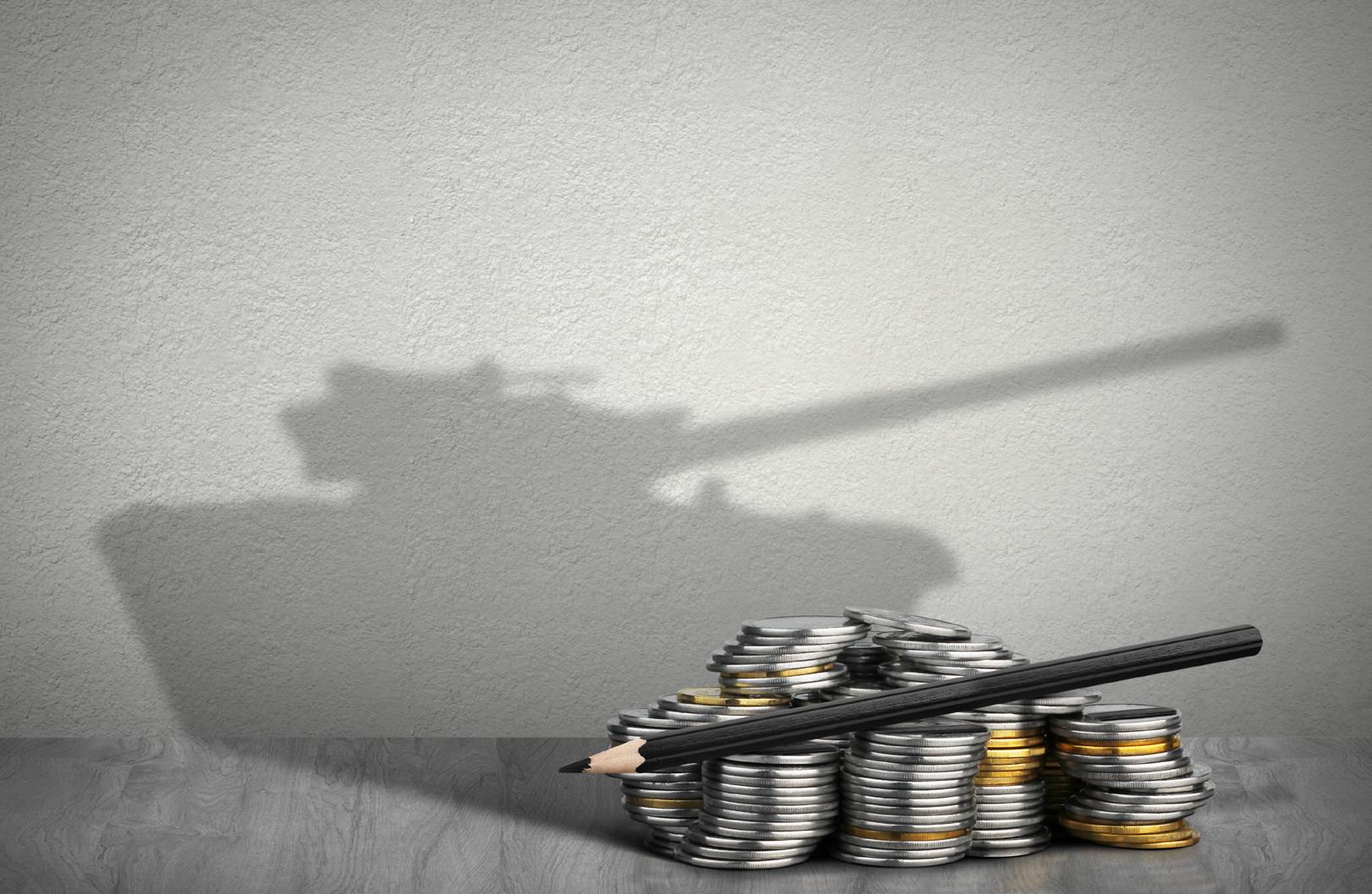
accountability amongst its 32 members. Public shaming, taken to an extreme degree by Trump, has proven somewhat effective, but consistently investing more in defence is a far cry from pledging to do so. Given the rapidly changing nature of warfare as seen in Ukraine and Iran, significant funding must be allocated to research, development, testing and evaluation to ensure that weapon systems are not obsolete before becoming operational. Already, this ask is consuming a greater share of defence budgets. For Fiscal Year 2025, the US Department of War requested over $149 billion for research, development, testing and evaluation, its highest amount ever. Frontier research and development –focused on cyber, space, artificial intelligence and unmanned vehicles – is critical to a credible deterrence against Russia, which has rapidly closed the technology gap between East and West. NATO programmes designed to meet these needs, such as DIANA and the NATO Innovation Fund, require consistent, secure funding. Taken as a whole, the existential issues facing NATO demand member state spending commitments exceed two per cent. Given historical funding issues in the complacent camp, NATO’s adoption of an accountability mechanism is the next logical
step to ensure the Alliance can meet the challenges of today and tomorrow.
For this purpose, the concept of a ‘Strategic Alignment Council’ is proposed. A standing body designed to codify and institutionalise member state accountability, the seven-seat Strategic Alignment Council would report directly to the North Atlantic Council, NATO’s primary political decisionmaking body. Residing alongside the Nuclear Planning Group and Military Committee in the NATO structure but operating independently, the Strategic Alignment Council would provide NATO with an influential body that balances merit-based membership with inclusivity, while serving as a forceful tool for accountability and incentivised reform. Given its importance, the Strategic Alignment Council should be a permanent body that provides an enduring and impactful tool for accountability. Crucially, it should reward merit while reinforcing the importance of the collective body. Permanent seats (one each) would be allocated for the US, UK and France as NATO’s North American and European nuclear-armed member states. High-readiness members, defined as those at or above 2.5 per cent of gross domestic product in defence spending, or those hosting a NATO Battle
Group, should occupy three seats. Achieving 2.5 per cent represents the first phase of a proposed target of three per cent by 2030. In addition, a ‘wild card’ lottery pick would be reserved for members below the 2.5 per cent threshold. Crucially, this seat would ensure inclusion and serve as a meaningful incentive for member states to increase defence spending. While Strategic Alignment Council membership would be limited, all 32 members would have representation through like-minded peers. In summary, the new Council would directly advise the North Atlantic Council, integrate political, economic and military perspectives, ensure coherence across NATO’s strategic direction, operate independently of existing committees, and provide a cross cutting strategic lens that NATO currently lacks.
On face value, criticisms of such a proposal immediately rush to the surface. Concerns range from the development of a bifurcated Alliance to the process of awarding seats with an exclusive spirit that violates NATO’s organisational ethos of consensusbuilding. However, the suggested structure of the Strategic Alignment Council would make such concerns negligible. Foremost, its role would be to make recommendations to the North Atlantic Council; it would strictly remain an advisory body
“ESSENTIAL TO DETERRENCE AND WARFARE IN THE PAST, PRESENT OR FUTURE, HAS BEEN AND WILL BE THE CONCEPT OF ALLIANCE, MAKING ACCOUNTABILITY A UNIQUE WEAPON SYSTEM THAT PERMEATES THE POLITICAL, ECONOMIC, MILITARY AND SOCIAL DIMENSIONS OF CONFLICT.”
as codified within its founding. In turn, the North Atlantic Council would retain ultimate decisionmaking authority and have the choice to consider, discuss, employ, ignore or implement recommendations. The inclusion of a lottery selection would address concerns of a twotiered structure and provide a consolidated voice for members worried about increased defence spending and reduced resources for pressing domestic issues. Contrary to claims that a Strategic Alignment Council would deter consensus, its aim would be to achieve the opposite; its greatest strength would be its transparent communication, designed to address disagreements and forge consensus through a better understanding of member state considerations. Negotiation and agreement in the Strategic Alignment Council could lead to North Atlantic Council action, but only if all 32 members agreed. Even if the Strategic Alignment Council merely provided a forum for contentious discussion on divisive issues at the workinggroup level, it could still provide value by setting the conditions for consensus. In this manner, it could lay the groundwork for a future path of greater efficiency in nominating and refining recommendations of varying time horizons. But once again, all decision-making power would reside in the North Atlantic Council.
“I fear German inaction more than I fear German power.”
– Andrzej Duda, President of Poland
Finally, the formation of a Strategic Alignment Council would send a strong message to member states and foes. IntraNATO squabbles have existed throughout the history of the Alliance, some more egregious than others. One might offer that the current times offer the greatest challenge, with Trump calling out NATO allies and threatening to leave the Alliance. The creation of a Strategic Alignment Council would signify
a seismic shift for NATO; internal frustrations within the Alliance would have a more focused forum designed to address and self-correct lingering strategiclevel issues. Additionally, the body would avoid stove-piped irrelevance in committees lacking direct access to the North Atlantic Council. While not as threatening as employing a codification mechanism to remove under-performing member states, its organisational structure would highlight the fault line between the committed and the complacent. Bridging that gap is imperative to NATO’s evolution and continued relevance. Within the context of an increasingly multipolar world, complicated by a litany of variable geometric security arrangements, it is existential for NATO to ensure that all members are committed to the Alliance, in words and deeds.
Unconditional security guarantees no longer possess the iron-clad quality of decades past. As America fades, threats grow strategically and asymmetrically, levelling the pitch on which colossus and upstart meet. Indeed, artificial intelligence, cyber capabilities, uncrewed platforms, robotics and quantum physics define the future of warfare. Yet essential to deterrence and warfare in the past, present or future, has been and will be the concept of alliance, making accountability a unique weapon system that permeates the political, economic, military and social dimensions of conflict. Against this backdrop, NATO should reinvest in the perennial currency of deterrence: accountability. As Goethe observed: “Knowing is not enough; we must apply.” At a minimum, Brussels would be wise to form an exploratory group to weigh a Strategic Alignment Council charter. In the great battle of our time, or those of our descendants, the unshakeable commitment of all NATO members will remain essential to the preservation of peace, freedom and prosperity.