
CHACR COMMENTARY // JULY 2026
BY: Major Laurence Thomson and Nick Reynolds
THE debate surrounding the utility of armoured forces on the modern battlefield is not new and Russia’s invasion of Ukraine in February 2022 has only brought the topic into sharper focus. Whilst both critics and advocates use the ongoing war to validate their respective positions, the British Army’s Chief of the General Staff is unequivocal: there is an enduring necessity for armoured heavy forces. Armour has pride of place within NATO’s strengthening deterrence posture and a central role in the Eastern Flank Deterrence Line.
The British Army has been directed in the Strategic Defence Review 2025 to “modernise the two divisions and the Corps HQ
that it provides to NATO as one of the Alliance’s two Strategic Reserves Corps”. Both divisions – the 1st and the 3rd – are to be equally capable but nonetheless different. 1 (UK) Div, as has already been examined, is to be light and built for speed, with the operational flexibility to intercede in NATO’s first-battle. 3 (UK) Div is armoured and mechanised, centred around “heavy metal” and designed to fight in NATO’s second-battle and fight to ‘restore’ its territorial integrity.
3 (UK) Div is the focus of this CHACR Commentary, which considers how it will simultaneously optimise and modernise for war. Section one considers the reality of contemporary war on the battlefields of Ukraine and draws lessons relevant for those
formations seeking to optimise legacy equipment ready for a ‘fight tonight’ scenario. Section two examines what priorities are needed for transformation programmes for ‘fight tomorrow’. Section 3 recommends what 3 (UK) Div can do in the near and medium-term, including priorities for rapid procurement and refining the multi-year Programme of Record
The Russo-Ukrainian War provides evidence for understanding armoured forces’ contemporary utility in highintensity warfare. However, it offers limited insight in to how British armour might fare on a battlefield characterised by pervasive surveillance, precision fires and integrated air defence
– operating in a NATO context of multi-domain combined arms manoeuvre is more nuanced. Regardless, Ukraine has validated that armoured forces are indispensable, whilst revealing how their employment must adapt: the tank is not dead but its tactical role must change.
The indispensability of armour Ukraine’s defence and counteroffensive operations have demonstrated that armoured forces remain essential for territorial defence and offensive manoeuvre. During the initial invasion in February 2022, Ukrainian armoured and mechanised units provided the mobile firepower to blunt Russian advances and conduct effective counterattacks. Admittedly, light forces with anti-tank guided missiles proved invaluable in
ambush operations, but armoured units assisted in halting Russian momentum and conducted the Kharkiv counteroffensive in September 2022.
Kharkiv exemplifies armoured forces’ unique utility. Ukraine concentrated mechanised brigades, supported by artillery and engineers, to achieve a manoeuvre breakout against Russian defensive positions. This required understanding where the Russian ground forces were taking risk, particularly the weakened and overstretched 1st Guards Tank Army, and a combination of deception and rapid tactical repositioning immediately prior to H-Hour to achieve surprise. Once Ukrainian forces penetrated Russian lines they exploited at operational depth, advancing over 50 kilometres in days and liberating over 3,000 square kilometres of territory. This operation validated that protected mobility and concentrated firepower remain essential for operational manoeuvre, also showing the additional risks from nearsurface capabilities. When used in the right operational context, armoured forces have capabilities that light forces cannot replicate.
Equally, in defensive operations, armour has proved indispensable. Ukrainian forces defending ‘fortress cities’ such as Mariupol, Severodonetsk and Bakhmut relied heavily on armoured fighting vehicles to maintain mobility under fire, evacuate casualties and conduct local counterattacks. In static defence, tanks provide mobile fire support that can rapidly concentrate against enemy penetrations – a capability that towed artillery and dismounted infantry cannot match. The defence of Avdiivka through 2023–2024 demonstrated how armoured reserves could counter-attack Russian breaches to prevent breakout and restore defensive lines.
Vulnerabilities and adaptations Ukraine has revealed how modern surveillance and
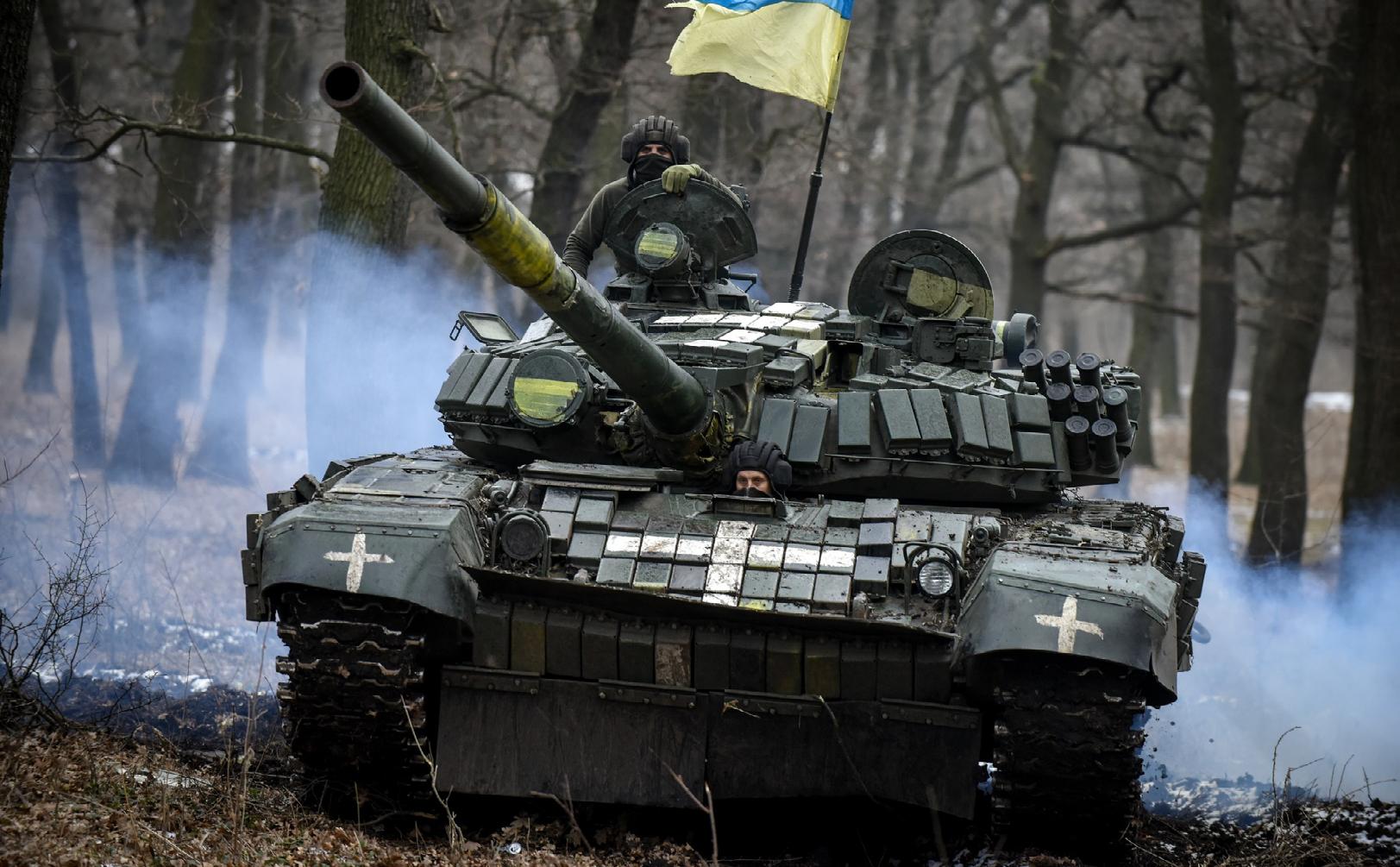
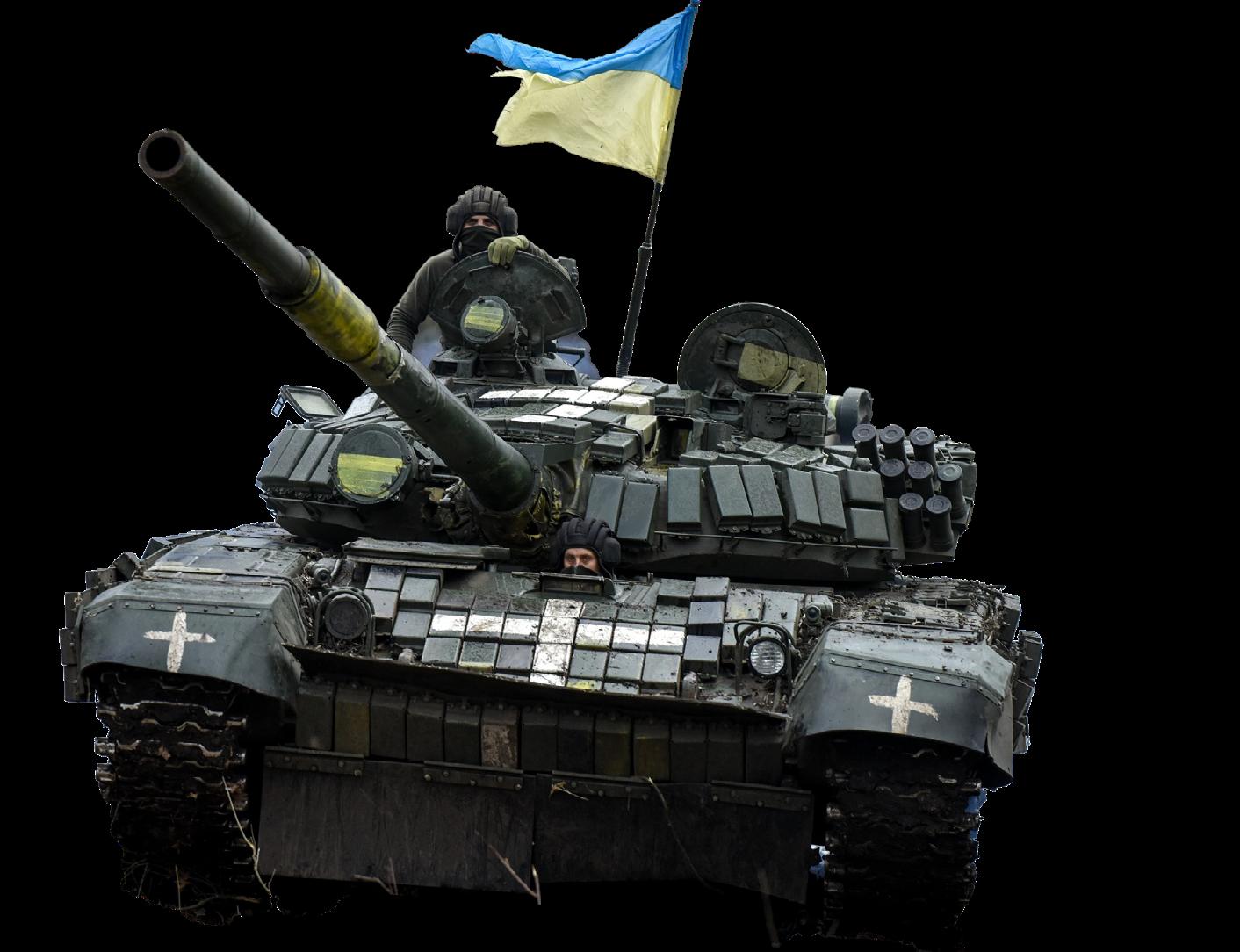
precision fires increase risks to armoured forces and necessitate adaptation. Uncrewed Aerial Systems (UAS) provide persistent surveillance on an increasingly transparent battlefield that make force concentration highly visible. This makes armour vulnerable to loitering munitions, one-way effectors or anti-tank guided missile ambush, which increases lethality across the depth of operations, especially along roads and tracks within terrain that channels and canalises vehicles. Russia’s extensive use of mines –estimated at over 174,000 square kilometres of contaminated territory – has constrained manoeuvre and increased casualties, particularly during counter-mobility and breaching missions.
Ukraine’s unsuccessful Zaporizhzhia counteroffensive in the summer of 2023 demonstrated the costs of inadequate adaptation. Ukrainian armoured brigades, despite receiving Western equipment including tanks, suffered significant casualties when attacking prepared defences with inadequate reconnaissance, engineer support and air superiority. The operation reaffirmed that armoured forces require combined arms integration: dedicated counterUAS capabilities, electronic warfare support, engineer
breaching capabilities, integrated air defence and overwhelming close-support artillery. Even then, the window for capitalising a limited tactical breach into an operational breakout is finite and a follow-on exploitation force is critical.
Successful armoured operations in Ukraine share common characteristics. They achieve tactical surprise through deception and rapid concentration of effects rather than prolonged force build-up. They employ comprehensive reconnaissance – principally through unmanned systems – to identify gaps rather than attacking defences. They closely integrate combat support and service support forces, particularly engineers, with armoured manoeuvre for obstacle breaching. They mass artillery and cross-domain fires to suppress enemy defensive systems during the assault –variously called a ‘snowdome’ or ‘convergence window’. They employ electronic warfare to degrade enemy command and control and target acquisition. Most importantly, they maintain operational tempo once a breakout is achieved, exploiting before enemy reserves can react.
Attrition and sustainability
High-intensity warfighting generates attrition rates
routinely exceeding theoretical assumptions. Both Russia and Ukraine have lost thousands of armoured vehicles, with replacement rates struggling to match. This has several implications for NATO:
n Armoured units must train to operate at reduced strength and with mixed equipment fleets as attrition degrades capabilities.
n Maintenance and recovery capabilities are as important as initial combat power – the ability to repair and return damaged vehicles to service significantly impacts sustained operations.
n Crew training throughput becomes a critical constraint as casualties and expansion demands exceed pre-war training capacity.
n There needs to be sufficient reserves of equipment, spares and industrial capacity to maintain the vehicle fleet.
Ukraine has also demonstrated that armoured forces require substantial logistic support. Modern main battle tanks consume fuel at rates of 200-300 litres per 100 kilometres, whilst firing main armament and coaxial weapons expends ammunition rapidly. According to doctrine, British armoured battlegroups require approximately 800,000
litres of fuel and 500 tonnes of ammunition per week of high-intensity operations. Protecting supply lines and establishing forward logistics nodes becomes essential, with dispersed resupply operations necessary to avoid creating profitable targets for enemy precision fires. Developments in UAVs, autonomous resupply and automated ‘last-mile logistics’ holds much promise for hardening lines of supply.
Maintenance and recovery has become acutely difficult. As firepower range and volume has grown, keeping maintenance assets in the divisional rear is no longer a guarantee of their safety. Vehicles may now need to be recovered hundreds of kilometres behind the front line to avoid being destroyed whilst awaiting repair. Ukrainian forces have taught the value of dispersed industry to affect repairs far from the frontline as concentrating forces in one location presents a high value target. Formation-level repair therefore either needs to be dispersed – difficult given that training proficient mechanics takes months, and it is difficult to spread them and their equipment across the force – or the capacity of formations to conduct this activity must be accepted as reduced due to the changing threat environment. This closely links with crew expertise and initial crew training, and reconstitution and regeneration with replacements. Experienced crews build expertise over time and should be able to keep their
vehicles operational for longer during operations. Likewise, future vehicle designs should emphasise simplicity and ease of maintenance to enable Level 1 (crew) rather than necessitate Level 2 (repair specialist) or higher. Specialised recovery and repair personnel should have capacity freed up for unavoidable tasks, such as major parts being replaced from spares packs.
Contemporary operational environments present numerous conditions where armoured forces can operate, providing tactical options that force-types cannot replicate. Understanding these conditions enables optimal employment and force design.
Armoured forces remain essential for offensive operations. When NATO must restore territorial integrity, armoured forces provide the combat power necessary to penetrate defences and quickly advance beyond them into enemy rear areas. Modern defensive systems will have extensive minefields, preregistered artillery, anti-tank matrices and layers of UAS, alongside formidable obstacle belts that armoured forces can only overcome with survivability and tempo. The Ukrainian failure in the 2023 counteroffensive
against the Surovikin Line is testament to this.
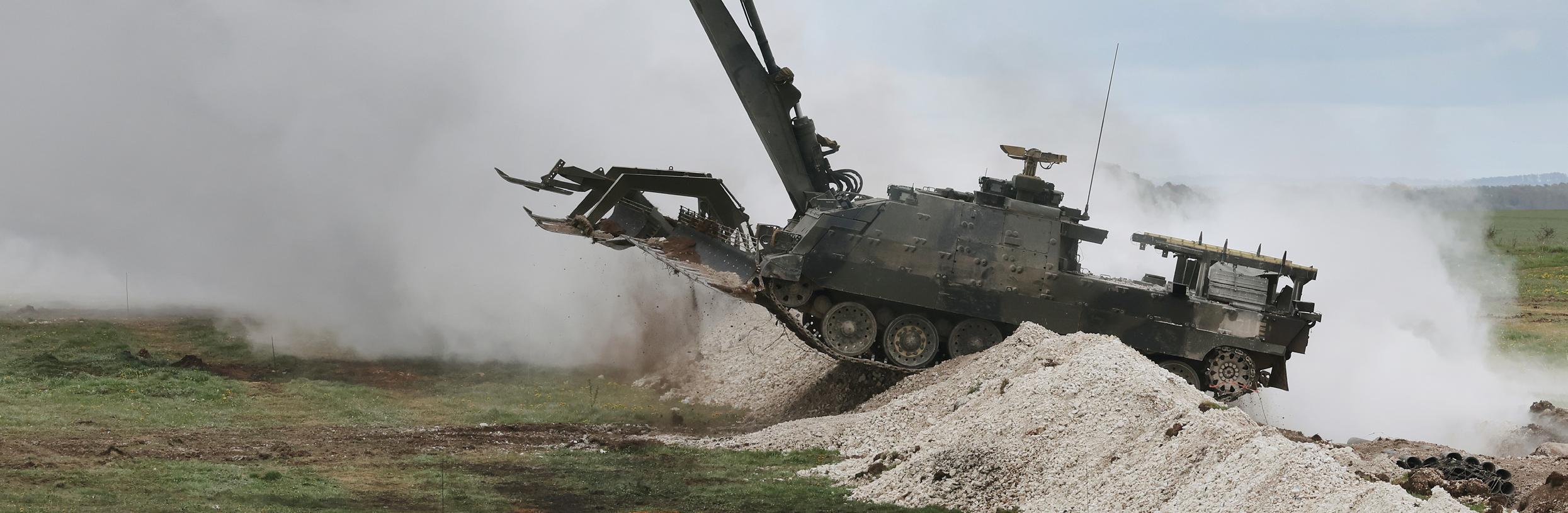
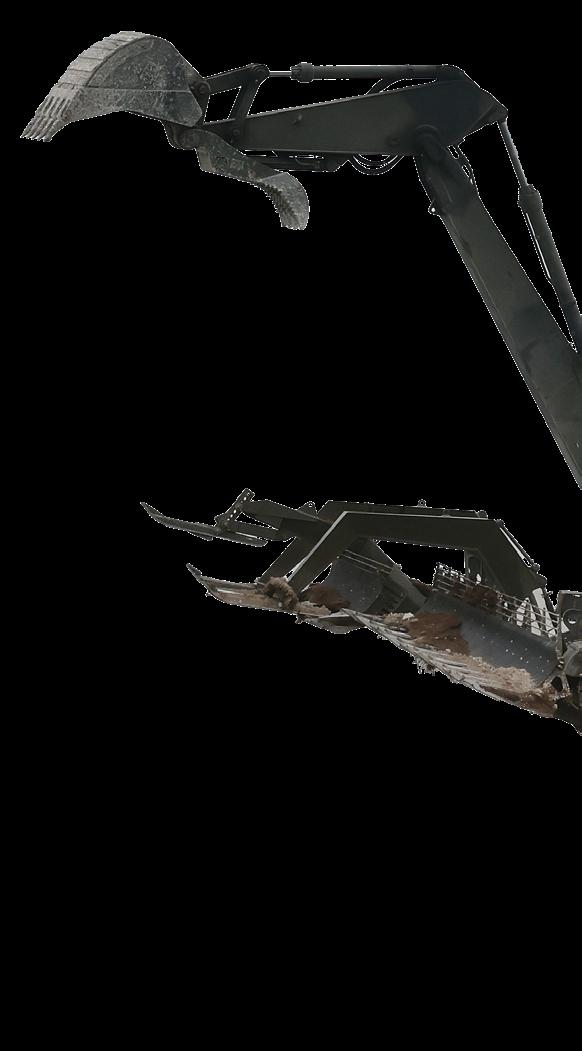
Deliberate breach operations exemplify armoured forces’ unique utility. Armoured engineer assets can create safe passage through minefields whilst under fire and work has already begun through Project Atilla to develop autonomous vehicles with front-end breaching equipment. Infantry fighting vehicles can quickly be concentrated on a position, using protection and mobility, with the platforms’ firepower able to organically suppress equivalent enemy armour, bunkers and defended buildings. Main battle tanks likewise can provide direct fire support against depth positions but are better suited to contesting adversary vehicles and armour, whilst self-propelled artillery delivers massed fires to suppress and neutralise. Only armoured forces can integrate these capabilities at pace whilst maintaining protection sufficient to sustain operations under heavy fire.
relevant for infantry fighting vehicles to be able to keep pace with main battle tanks. Whilst armoured forces require fewer immediate logistics pauses than lighter formations, when they do pause the requirements are greater and the duration longer. Fuel, ammunition and maintenance demands at scale cannot be rapidly resolved forward nor organically. The critical advantage is the time and distance armoured forces can cover before that point of culmination arrives. This exceeds what light forces can sustain under equivalent pressure. Light forces lack the protection and organic firepower to maintain momentum in open terrain; armoured forces combine the necessary mobility, protection and firepower to exploit at the depth and tempo required. The challenge is how to maintain this manoeuvre within an intelligence, surveillance and reconnaissancesaturated battlespace with myriad near-surface effectors.
Mobile defence and counterattack
Exploitation following breakout requires protected mobility that armoured forces uniquely provide. Once penetration is achieved, exploitation forces must advance rapidly through enemy depth before reserves can establish new defensive lines. This requires forces that can move whilst engaged, maintain cohesion under fire whilst dispersed and cover significant ground before tactically culminating. This is particularly
Armoured forces provide capabilities essential for mobile defence – the defensive form that NATO doctrine prioritises for defending extensive frontages. Mobile defence trades space for time, using economy of force units to delay enemy advance whilst armoured reserves counterattack to destroy penetrations. This approach requires substantial armoured reserves capable of rapid concentration and sustained
combat power – exactly what 3 (UK) Div can provide.
Counterattacks demand specific capabilities with which armoured forces excel. They must concentrate rapidly without extensive preparation that telegraphs intentions. They must close with enemy penetrations whilst under fire. They must deliver sufficient shock action to disrupt enemy momentum and restore defensive lines. Light and mechanised forces can conduct such operations but will struggle to sustain them against a peer adversary in open or mixed terrain – lacking either the protection or firepower. Where an adversary has seized urban or forested ground, light forces may be better suited to counterattack, exploiting the concealment and restrictive conditions that degrade the advantage of heavier formations. Given the predicated areas of operations on NATO’s eastern flank, counterattack planning must account for both force types. The key judgement is matching the force to the ground, rather than defaulting to armour in all circumstances.
Terrain significantly influences optimal force type, with armoured forces having the potential to excel in open and mixed terrain that characterise likely deployment areas. The North European Plain –stretching from the Netherlands through Germany and Poland into the Baltics – features extensive areas of open rolling terrain interspersed with forests and urban areas. Such terrain favours forces that combine protected mobility with massed firepower whilst maintaining allterrain capability.
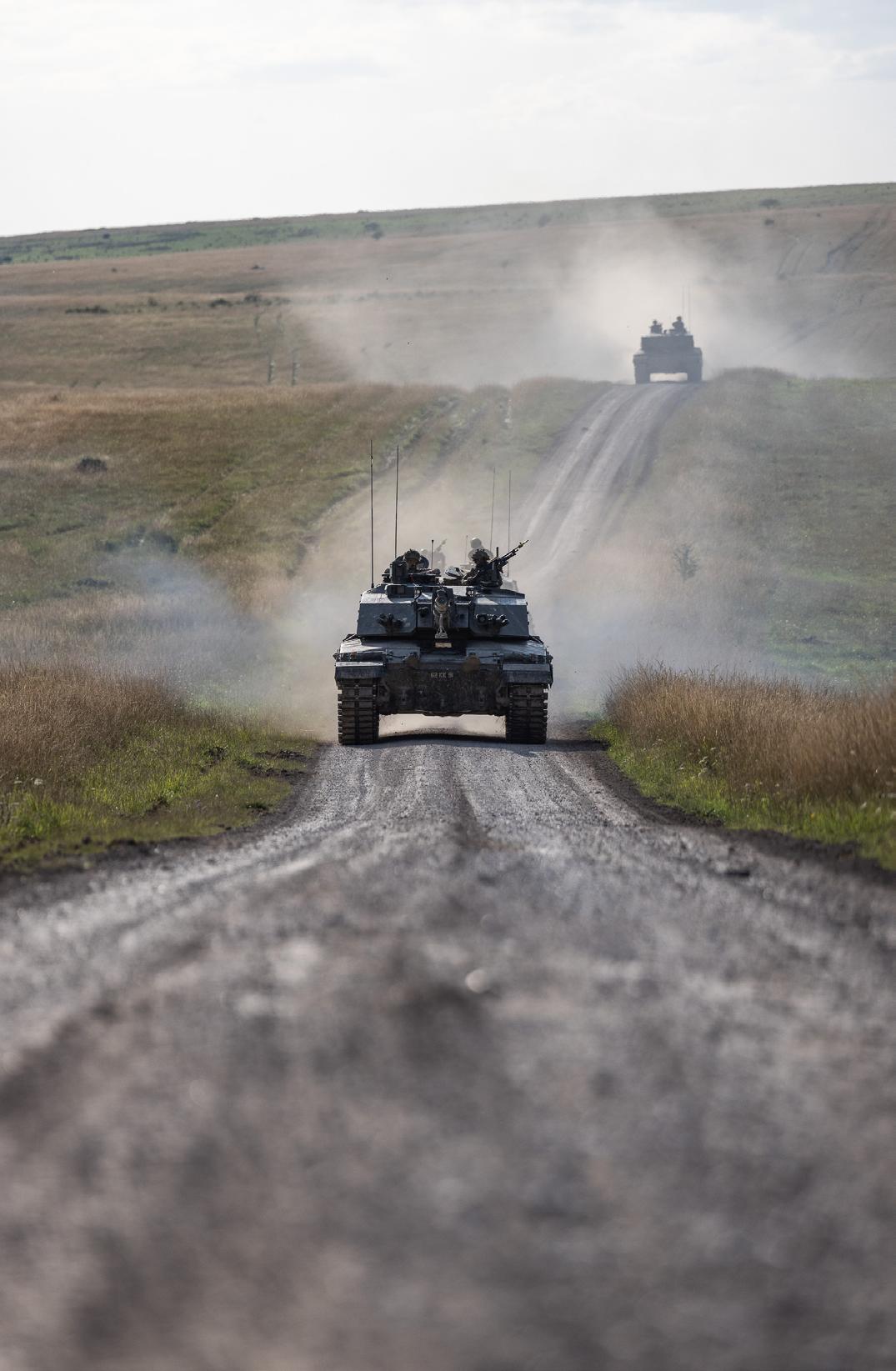
Open terrain operations expose forces to enemy observation and direct fire across extended ranges. Light forces operating in open terrain become highly vulnerable to artillery, direct fire and air attack. Armoured forces’ protection enables manoeuvre
“ARMOUR MUST WORK WITHIN THE BROADER COMBINED ARMS SYSTEM TO PROJECT LETHAL EFFECT BEYOND BARREL TELEMETRY. THE COMBINATION ENABLES ARMOURED FORCES TO MANOEUVRE AND WIN FIREFIGHTS IN TERRAIN WHERE LIGHT FORCES WOULD SUFFER PROHIBITIVE CASUALTIES.”
under fire, whilst their organic firepower – 120mm main guns engaging at >2,500m and 30mm cannons suppressing infantry at >2,000m – dominates engagement ranges. However, armour must work within the broader combined arms system to project lethal effect beyond barrel telemetry. The combination enables armoured forces to manoeuvre and win firefights in terrain where light forces would suffer prohibitive casualties. However, remaining static or exposed in the open equally makes them targeted. The principles of deception, dispersion and evasion are applicable to both light and heavy forces because ubiquitous intelligence, surveillance and reconnaissance coverage affects both.
Mixed terrain operations requiring transitions between open areas, forests and urban environments also favour armoured forces. Modern
Networking Sense-Decide-EffectSustain (SDES) capabilities are critical to the modern utility of armoured force effectiveness and integrating the emerging roles of attritable and consumable capabilities. Digital battle management systems will provide real-time situational awareness, enabling commanders to identify opportunities and threats faster than adversaries. Automated target handoff enables rapid engagement of targets whilst data-linking with land fires, aviation, electronic warfare etc enables coordinated employment of capabilities across the high value/high payoff target list. These networks must be resilient against enemy electronic warfare and cyber-attacks, requiring robust electronic security and redundant systems throughout the force. It is not about platformcentric survivability but about enabling the Digital Targeting Web of the MOD’s Integrated Force.
infantry fighting vehicles and main battle tanks maintain tactical mobility across varied terrain types, providing consistent capabilities regardless of environment. Armoured forces can secure urban areas using their organic infantry, conduct mobile operations in open areas using armour, and operate in forests using combined arms teams that can include light and mechanised forces.
3 (UK) Div’s ability to fight and win on the contemporary battlefield will not be determined by a platform-centric approach but a holistic modernisation and adoption of a network-centric one. Realising the potential of the British Army’s emerging 20:40:40 concept depends upon three complementary lines of effort:
1) Aggregated combined arms manoeuvre
Equally important is counterreconnaissance. Given how difficult it is to defeat offensive UAS capabilities at the tacticallevel, emphasis must be placed on the fires plan systematically destroying enemy sensors, ground control stations and data links. Reducing the effectiveness of enemy targeting before it can reach armoured formations is preferable to defending against its effects in the moment. 3 (UK) Div will employ shaping land and cross-domains fires, electronic warfare, deception and unmanned systems to create the necessary ‘convergence windows’ to set the conditions for armoured exploitation. Ultimately, preserving combat power will be critical to maintaining 3 (UK) Div’s ability to fight because of the time it will take to replace vehicles, especially acute when deployed at the limit of contested strategic supply lines. Forward positioning stocks and the ability to project to the point of most relevance must be developed as reliance on mass movement of selfpropelled vehicles will guarantee
a significant number will be lost to mechanical failure before 3 (UK) Div comes into range of an adversary.
2) Organic SHORAD
Having Short-Range Air Defence (SHORAD) integral within an armoured formation is essential and must be cannon-based given the volume of UAS already evident on the battlefield and the prohibitive cost of missile munitions as a primary solution. The technology is well understood and existing systems are effective. However, SHORAD systems are vulnerable if surprised or engaged from unexpected directions, and incoming unmanned systems can terrain-mask, rendering ground-based systems insufficient except in open terrain. Armoured formations therefore require integrated UAS for situational awareness, detecting incoming threats early and enabling other ground-based air defence to be positioned and cued effectively. Air defence integration at this level for the British Army is both industrially challenging and operationally untested. Equally, the ability to integrate new sensors and hard/soft kill countermeasures rapidly will be critical as technology continues to evolve.
3) Training and doctrine
Failing to modernise how it fights or an unthinking return to Cold War-era doctrine will mean the British Army uses modern technology in outdated ways. Fighting under dense overhead surveillance and precision strike demands adaptation not only to doctrine but to force structures. It is not yet clear exactly what shape these should take but planning based on assumptions founded on legacy data must change. However, once available SHORAD, electronic warfare and counter-UAS capabilities are determined, experimenting with and developing tactics and battle drills in conjunction with the Land Warfare Centre will be essential to ensure the Division fights as an integrated combined arms force rather
than a collection of modernised platforms. Cross training of vehicle crews to ensure better routine maintenance also gives the ability to form ad-hoc crews in the event of vehicle destruction or immobilisation.
The three lines of effort are necessary but they will only deliver if 3 (UK) Div is clear-eyed about the scale of the challenge it faces. Exercise Hedgehog in Estonia in May 2025 offers an unambiguous data point. In one scenario, approximately ten Ukrainian drone operators were able to simulate the destruction of 17 armoured vehicles and conducted around 30 additional strikes within half a day. Two battalions were assessed as combat ineffective – the result of formations moving in large columns without concealment and failing to check routes before movement. Reporting on the exercise, The Wall Street Journal noted the results revealed serious vulnerabilities in how NATO formations operate on the modern battlefield; the Ukrainians involved were direct: “technologies have fundamentally changed and continue to change the battlefield” The problem was not one of capability but of habit. Exercises such as Hedgehog replicate the environment in which to learn and test how survivability is achieved against contemporary threats. 3 (UK) Div must ‘train as it fights’ and be resourced appropriately, developing the necessary drills and techniques to reduce vulnerability.
That lesson sits alongside two
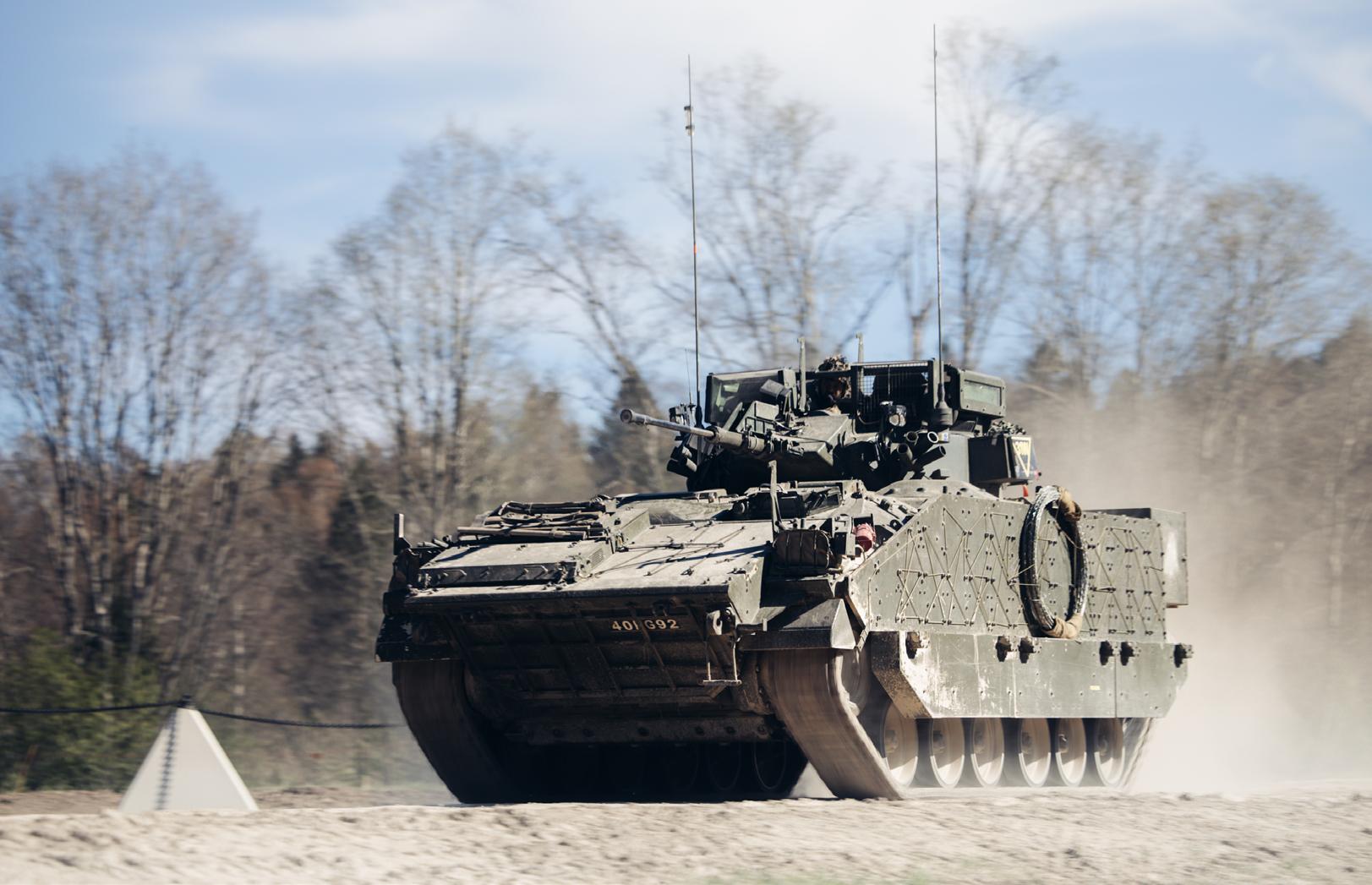
significant capability gaps. First, the British Army will have no infantry fighting vehicles from 2027 when Warrior [pictured below] leaves service with no extension planned. Boxer, whilst a capable protected mobility platform, cannot provide intimate protection nor defeat equivalent enemy armour without a turreted variant – a capability a tracked infantry fighting vehicle delivers organically. Second, Ajax, was suspended from use shortly after reaching initial operating capability and remains under review despite costing more than £6 billion. This potentially leaves 3 (UK) Div without a functioning armoured reconnaissance platform. Both gaps have direct implications for how realistic the Division’s overall optimisation and modernisation ambitions are.
Both heavy and light force capabilities are strategically vital for NATO to have credible deterrence but armoured forces provide capabilities no other force type can replicate Principally these are: substantial organic combat power; remaining tactically mobile whilst “in direct contact with the enemy”; and ability to seize and hold ground. They also have a correspondingly larger logistic need than light forces, with greater maintenance support demand. Their primary
challenge is adapting and evolving in response to broader threats on the battlefield, rather than avoiding obsolescence. Their primary requirement, therefore, is conceptually to move away from passive protection to active protection via mobility and crossdomain integration in pursuit of survivability. This includes a need to have better use of deception, including decoys and multispectral camouflage to counter improved enemy surveillance capabilities. Likewise, integrating uncrewed ground and aerial vehicles to aid situational awareness without increasing vehicle weights.
NATO’s Regional Plans for defending the Alliance’s Eastern Flank Deterrence Line depend upon mobile defence in-depth. Forward Land Forces – including the Enhanced Forward Presence battlegroups and multinational brigades – will conduct delay operations to provide time for activated Strategic Reserve Corps to ready and deploy. Once in theatre, armoured divisions like 3 (UK) Div will provide the decisive counterattack capability necessary to defeat Russian penetrations. This role requires forces optimised for high-intensity armoured warfare, extensively trained in combined arms operations and equipped with modern protected platforms.