
IN THIS ISSUE
» Industry Insight: The Complexity of Campus Infrastructure
» What’s New?
» Owner's Corner
» Featured Projects
» Featured Service: renu360
» Insights from an On-site Representative
» New Beginnings


» Industry Insight: The Complexity of Campus Infrastructure
» What’s New?
» Owner's Corner
» Featured Projects
» Featured Service: renu360
» Insights from an On-site Representative
» New Beginnings
By Shawn Cormier, CSL, Senior Project Manager and Meghan Lacoche, AIA, LEED AP, NCARB, Project Manager
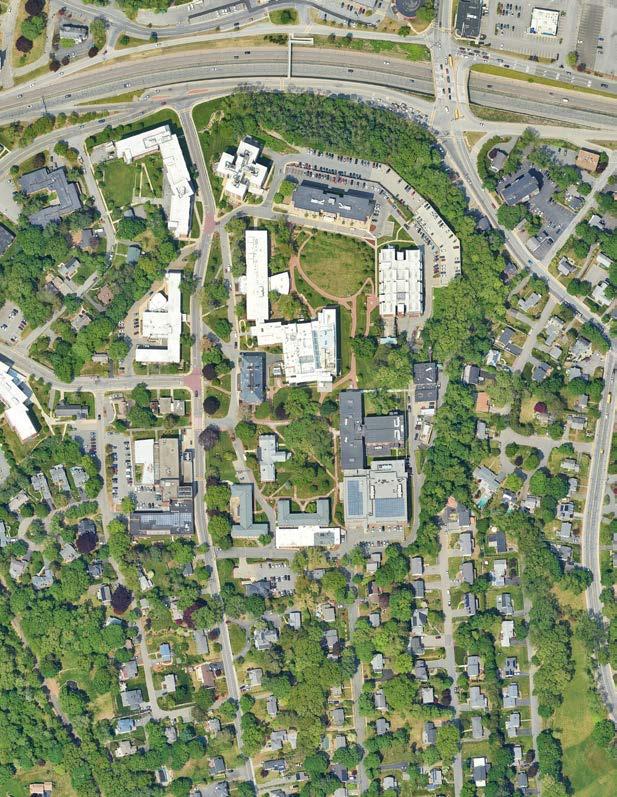
Higher education campuses are microcosms of architectural diversity, operational complexity, technological innovation, and evolving student needs. As institutions strive to modernize aging infrastructure, maximize their use of existing space, build and expand responsibly, improve campus amenities, and meet stringent regulatory codes, capital projects on college campuses have become increasingly intricate. Campus facility managers face significant challenges as they plan and deliver complex projects, often while accommodating existing operations and learning.
For many campuses, building new facilities is often cost-prohibitive. Instead, institutions opt for complex renovations, even when these projects present significant logistical and technical hurdles. A prime example of this was a recent renovation at Framingham State University in Massachusetts (FSU). The FSU facilities team faced a significant challenge involving their power plant. It was tasked with replacing an entire garage slab above a basement packed with critical electrical and HVAC equipment that supports the entire campus.
Relocating equipment or constructing a new building was not financially viable. Instead, the team focused on meticulous, phased work to minimize risk and cost, a common approach in higher education where budgets are tight and deferred maintenance is a persistent issue. The project required intricate staging, shoring, and demolition, all while keeping essential systems operational. The risk was significant: any misstep could disrupt power and life safety systems campus-wide. This scenario demanded exhaustive planning, scenario analysis, and close coordination with the owner, the OPM team, contractors, and campus facilities. Safety, not speed, became the guiding principle, with work deliberately slowed to ensure every detail was addressed.
Staff augmentation—bringing in outside project managers or on-site representatives—has become a valuable tool for many colleges and universities. Staff augmentation enables institutions to flexibly scale their teams, especially during peak construction periods such as “Summer Slammers,” when multiple projects must be completed in a short window. This approach also brings continuity and specialized expertise, particularly for permitting, pre-construction, and complex coordination tasks that may exceed the experience of in-house facilities staff.
Deferred maintenance is a universal challenge. Many campuses, especially those built during mid-century booms, now face simultaneous aging of multiple buildings. This leads to a cascade of repairs, upgrades, and emergency fixes. While some institutions have a variety of building ages and types, others find themselves with a portfolio of structures all reaching critical maintenance thresholds at once. The result is a constant balancing act between immediate needs and long-term planning.
Renovations on campus almost always trigger requirements for Americans with Disabilities Act (ADA) accessibility and fire protection upgrades. Even small projects can trigger a chain reaction of code compliance work, especially when cumulative project costs reach regulatory thresholds. It is important to understand the necessary compliance requirements and regulatory thresholds when implementing accessibility improvements, such as ramps and lifts, which have become essential to the daily experience of staff and students. Fire protection upgrades, including sprinkler installations, are also routine, with feasibility studies and equipment assessments guiding the scope of work.
Continued on Page 7
Jennifer McGrory has been named CHA’s newest OPM Project Executive. As a Project Executive, Jennifer’s talents are tapped to deliver projects on time, within scope, and to the highest standards for schools, libraries, and municipalities. As a trained architect, she has cemented her reputation as a skilled project leader through her keen eye, attention to detail, and focus on collaboration and proactive problem-solving.

With nearly 30 years of experience in building and construction, Jennifer excels at guiding design and construction projects from concept to completion, aligning them with an owner’s vision. Jennifer is currently managing several library projects across Massachusetts and supporting the renovation of Symphony Station in Boston. She is passionate about this work and finds library projects incredibly rewarding.
“With a deep understanding of architecture and interior environments, I advocate for clients by managing complexity, fostering collaboration, and delivering library spaces that enhance culture and the well-being of the community.”


In June, CHA acquired FALCON Engineering Services, Inc., a California-based engineering and construction management firm. In September, CHA acquired Midwestern Engineers, Inc., an Indiana-based engineering firm with a long-established reputation for delivering critical water, wastewater, and stormwater solutions. In October, CHA acquired Steger & Bizzell Engineering, LLC, a leading Central Texas civil engineering firm delivering water and wastewater, land development and survey services.
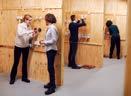
From carpentry and plumbing to electrical and masonry, SPARK MV introduces youth to the trades through hands-on experiences designed by skilled tradespeople. Hosted by the Martha’s Vineyard Builders Association, CHA is proud to be a sponsor and supporter of this important event, which aims to spark an interest in the trades. For more information about SPARK MV, visit mvbuilders.org
To kick off the New Year, CHA exhibited at Connect 351, the premier municipal conference sponsored by the Massachusetts Municipal Association (MMA), where we talked about upcoming projects and other services CHA offers to help municipalities address their evolving challenges related to water, transportation, and buildings.
CHA’s 2024 Sustainability Report, highlighting innovative solutions to our clients’ most pressing sustainability challenges, is now available on the CHA website at CHASOLUTIONS.COM
2026 marks an important evolution at CHA. We’re formally broadening our focus beyond traditional cost estimating into a more comprehensive project controls offering. Our experienced team will provide cost consulting, change order analysis, scheduling, and document controls—tools that are essential not just for managing numbers but for protecting project integrity, quality, and overall project outcomes. For more information, contact Jeff Birenbaum at jbirenbaum@chasolutions.com or visit CHASOLUTIONS.COM/PMCM
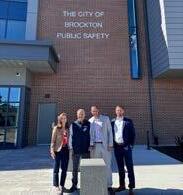
In September, the new Brockton Public Safety Facility was the site of an important roundtable discussion about law enforcement in Massachusetts, featuring Governor Maura Healey, Brockton Police Chief Brenda Perez, prosecutors, Massachusetts State Police, and local law enforcement leaders representing every corner of the Commonwealth. The Governor’s primary message was simple: it takes all these entities working together to make Massachusetts safer. With its new facilities, the Brockton Public Safety Facility was an ideal location for this vital conversation.
Please join us in welcoming some exceptional new talent to our Boston PMCM team. We welcome Project Manager Meghan Lacoche, AIA, LEED AP, NCARB; On-Site Representative Thomas Geraghty; and Assistant Project Manager Colby Ciffolillo. We also congratulate Jennifer McGrory, AIA, LEED AP, on her recent promotion to Project Executive.



We were proud to recognize and honor two exceptional CHA employees at a recent holiday event. Assistant Project Manager Prajakta Patil was awarded the Strong Back Award, and On-site Representative Derin Johnson was recognized with the Courage Award. This was the fifth annual award ceremony. The Strong Back Award is presented to someone on our team who “Lifted up their project teams, pushed along the projects, and carried everyone across the finish line.” The Courage Award is presented to the person on our team who “Forged the way through fearless leadership, encouraging excellence, promoting collaboration, lifting colleagues, and delivering on promises.” Congratulations, Prajakta and Derin!
Featured Owner: University of Massachusetts Dartmouth, Dartmouth, MA, Jeff Martin, Associate Vice Chancellor for Campus Master Planning and Capital Projects, and Christina Bowen, Assistant Vice Chancellor for Campus Planning and Capital Projects
Preserving history while meeting the needs of today’s higher education students is no easy task. College campuses are large, diverse, and evolving, and those with historic buildings face the additional challenge of sustaining aging spaces and treasured traditions. Every narrow doorway, tired hallway, and steep staircase tells a story and also poses a challenge to the small teams on a campus charged with balancing preservation with modern safety standards and evolving technological demands. Those charged with campus planning, renovations, capital projects, safety, and sustainability bring a unique blend of skills, knowledge, and creativity to projects big and small. These managers aren’t just caretakers of campus buildings; they are custodians of history and navigators of ingenuity.
The work of facility leaders is a daily negotiation between stewardship and service—protecting campus heritage while delivering safe, accessible, sustainable, and contemporary learning environments. A recent conversation with Jeff Martin and Christina Bowen at UMass Dartmouth highlighted the scale of this challenge on just one campus, offering practical lessons for other campus facility leaders.
UMass Dartmouth’s capital program is expansive, with roughly $150 million in projects across various stages, led by a staff of four juggling about 26 concurrent efforts—from furniture moves and signage to sophisticated lab renovations and building overhauls. This “lean and mean” staffing scenario is typical across many institutions, particularly those with midcentury campuses now hitting end-of-life for critical systems. CHA has been providing OPM staff augmentation services to UMass Dartmouth.
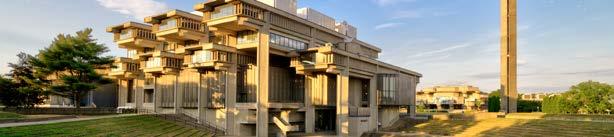
The UMass Dartmouth core is a Brutalist campus designed by Paul Rudolph, much of which is subject to historic preservation oversight. The flagship Liberal Arts Building,
opened in 1966, is undergoing a $100 million renovation involving the envelope and infrastructure (new windows, roof, HVAC, and electrical systems) paired with classroom modernization. Another firm’s OPM team is collaborating with UMass, architects, and a construction manager to phase work over roughly 18 months, all while adhering to state historic guidelines and carbon-reduction goals. Early successes on this large project came from establishing precedents with the Massachusetts Historic Commission, including approved door and window assemblies that respect Rudolph’s design while delivering energy performance. Those standards now accelerate subsequent projects (e.g., triple pane window systems replacing double pane) without relitigating design intent each time. The result is consistency across the quad and smoother approvals. UMass Dartmouth is also adding geothermal heating and cooling where feasible, converting to LED lighting, and improving fire protection—including installing sprinklers that were not present in the original buildings—while striving to reduce carbon emissions even as mechanical cooling expands. An important lesson learned is to pair deep energy measures with life-safety upgrades as integral components of any capital scope.
ADA compliance is a crucial component of any campus project. On this campus of long treads and deep risers, the team is reprofiling stairs, correcting handrails, and creating single-use accessible restrooms. Fortunately, most buildings have compliant door entrances, so door frames can remain untouched with card access systems added for universal entry and security, along with ramping and pitch adjustments.
One of the biggest challenges with any campus project is the availability of swing space. Closing the largest building on a campus with no swing space necessitated creative reprogramming, including converting first-floor dorm rooms into faculty offices, saturating library zones with displaced programs, and staging modular buildings on the quad. Classroom hours were stretched from early morning to late evening to use rooms more intensively. While this is a very typical challenge for campuses, campus leaders have identified numerous options, ranging from leasing off-site space to creatively flexing on-campus space.
UMass Dartmouth chose to keep students, faculty, and staff on campus, preserving community and service continuity.
According to the UMass Dartmouth team, weekly surprises lurk behind concrete and masonry that have weathered six decades. Structural oddities, collapsed assumptions, and code conflicts are routine. That unpredictability necessitates destructive investigation during design—opening walls and floors to ground scope, budget, and schedule—and requires OPMs who can “wrangle all the troops” and maintain momentum when conditions change.
Another common theme on a college campus is the pressure to complete projects while buildings remain occupied. Except for full closures, such as the Liberal Arts Building at UMass Dartmouth, most projects proceed with occupants in place, classes in session, and full occupancy. The choreography of temporary moves, window replacements, and furniture out/in cycles depends on relentless communication: open forums, dean engagement, and frequent updates that reduce noise, even if they cannot eliminate all friction between stakeholders and the facilities team.
The UMass Dartmouth Team Offered These Three Key Lessons Learned:
1. Plan, then fast-track (not the reverse). A rushed project can be more costly in the long run; emphasize the need for adequate planning time.
2. Think holistically, not piecemeal. Mixing new chillers with legacy distribution rarely yields comfort or efficiency. When funding becomes available, prioritize integrated system upgrades over isolated component replacements.
3. Augment strategically. Third-party staff can be indispensable; success hinges on integration, responsiveness, and communication so consultants are perceived as part of the campus team, not outsiders.
Historic campuses are vital to the past, present, and future, and today’s facility leaders are charged with honoring the past while meeting today’s needs and preparing for what’s to come. UMass Dartmouth’s experience demonstrates that, with rigorous planning, transparent communication, and a willingness to seek help, a campus can be modernized and deliver spaces worthy of its students and the successful future they strive for.
Industry Insight Continued from Page 3
Frequently, the OPM supporting a project employs licensed architects who have a deep understanding of code compliance and are trained to recognize when those chain reactions are triggered. In fact, CHA’s team includes 4 architects in addition to a former Commissioner of Public Safety for Massachusetts, who oversaw building codes and brings a depth of technical knowledge that enables our team to accurately identify and prioritize needs and budgets, which can be an essential strength when every dollar counts.
A recurring theme when working on any campus is the critical importance of thorough upfront planning and design review. With architects and engineers under pressure to deliver quickly, errors or omissions in drawings can lead to costly surprises during construction. The value of a second set of eyes, whether from an OPM or an experienced on-site representative, cannot be overstated. Early identification of issues, careful review of plans, and clear communication among all parties are essential for project success. CHA’s full-time on-site representatives bring valuable field
expertise to the earliest stages of every project, stepping in during design review to help identify potential gaps or inconsistencies. Their hands-on experience working closely with both architects and construction managers across a wide range of projects gives them a sharp, informed perspective on constructability issues. By catching errors early, they help deliver a smoother, more efficient construction process with fewer interruptions in the field.
Sustainability is also a growing priority, with campuses striving to meet stringent energy codes and reduce long-term maintenance costs. In cities like Boston, regulatory incentives and penalties are accelerating the adoption of sustainable building practices.
Ultimately, the success of higher education capital projects hinges on teamwork, communication, thorough planning, and a shared commitment to safety and quality. Strong relationships among owners, OPMs, and contractors are the foundation for overcoming challenges and delivering projects that serve the evolving needs of campus communities.
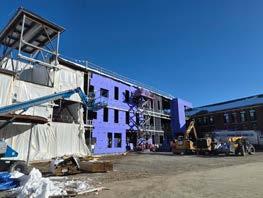
Estimated Completion: Spring 2027
CHA is providing OPM services beginning with the feasibility study and schematic design phases for the redevelopment of the K-5 Franklin Elementary School. In 1938, the building was constructed as a Works Progress Administration (WPA) project. A WPA project was a public works and job creation program established during the Great Depression to employ Americans in building infrastructure, parks, and public buildings. According to today’s learning standards, the building lacks sufficient space for modern learning, and its mechanical, electrical, and plumbing systems are nearing the end of their useful lives.
As a result of the feasibility study, the city selected construction of a new 70,000 SF two-wing elementary school on the athletic fields of the existing school. The school will be designed and constructed Net Zero Ready and will include a geothermal heating and cooling system featuring over 40 geothermal wells.
The project has involved extensive community input, including staff visioning sessions, school building and design review committees, and public meetings to discuss swing space options during construction.
Construction of the new $72.6 million educational facility began in the summer of 2025.
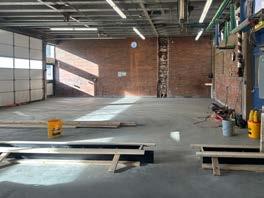
Estimated Completion: Spring 2026
CHA is providing OPM services for the design development, construction, and closeout phases of significant concrete work, structural updates, and drainage improvements to the power plant garage and service tunnel at Framingham State University.
Prolonged exposure to water and calcium chloride has resulted in the degradation and spalling of the first-floor elevated concrete slab and the adjacent underground utility tunnel, with visible corrosion of the reinforcing steel. The scope of this project includes replacing the garage’s reinforced slab, concrete beams, and affected mechanical and electrical systems and improving surface drainage around the adjacent utility tunnel structure to protect the concrete and structure against further water penetration.
This project exemplifies the importance of maintaining essential infrastructure on a higher education campus and the complexity that often accompanies it.
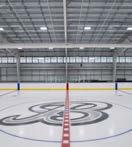
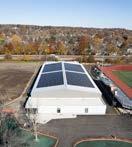

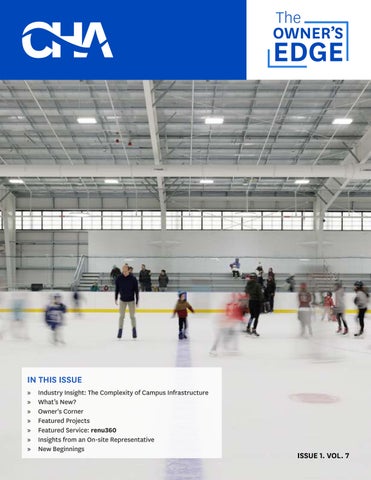
The Town of Belmont undertook a major transformation of its Skip Viglirolo Ice Rink, replacing the aging facility with a modern, year-round municipal rink integrated into the high school athletic campus. A key highlight of the new facility is its commitment to sustainability.
As OPM, CHA played a pivotal role, guiding the Municipal Skating Rink Building Committee (MSRBC) through budget updates, risk management, and contingency planning, as well as supporting the negotiation and approval of the Guaranteed Maximum Price (GMP) amendment. CHA also helped ensure operational readiness.
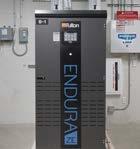
The facility spans 40,300 SF and includes an NHL-standard ice sheet, locker rooms, dressing rooms, bleachers, and concessions. The rink is a fossil-fuel-free building that utilizes an innovative CO₂ refrigeration system (unique in the United States), heat recovery systems, and a roof-mounted photovoltaic (PV) array designed to offset a substantial portion of its energy use. These features are expected to reduce operating costs by up to 40%.
The ability to deliver on your mission often depends on your facility’s ability to support your work. Utilizing our renu360 Insight platform, and deploying CHA’s renu360 approach to comprehensive stewardship, help management assess, understand, and predict the life cycles of their built assets, the vulnerabilities they pose, current and future investment needs, and how those deficiencies will impact their overall operations in the future.
experiences to consult and provide direction that can be translated into meaningful impacts on campuses.
To understand which buildings are at risk or require the most investment, we conduct a comprehensive Facility Condition Assessment (FCA) to evaluate all your building assets and their physical condition. The FCA index score reveals the overall vulnerabilities your assets pose and provides insight into which deficiencies will affect your operations.
Empowering Stewardship of your Built Assets
renu360 provides clients with a thorough understanding of their vertical and linear assets. This includes facilities, roadway and parking structures, utilities and stormwater management, electrical distribution and demand, and sustainability and resilience strategies. We tap into our collective subject matter experts and combined CHA
The renu360 approach leverages our comprehensive knowledge of the built environment to help clients think strategically, predicting and planning for longterm asset management. This involves evaluating current vulnerabilities and incorporating them into overall budgets and long-term planning.
For more information on renu360, contact Sean Sweeney at ssweeney@chasolutions.com

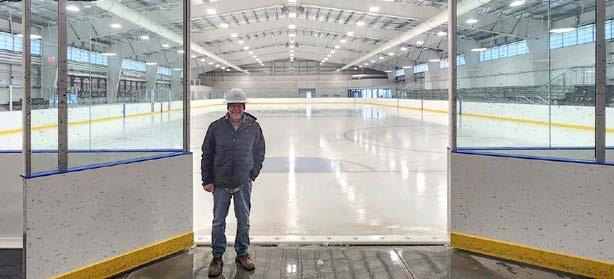
On-site representatives play a crucial role in project completion and success, navigating a wide range of challenges that can derail a project if not properly managed. One of CHA’s seasoned on-site representatives, Rob St. Laurent, was happy to share his most valuable lessons learned. Over a career spanning nearly 30 years, Rob has worked on a vast array of projects, including the Miami Zoo and Kennedy Space Center, as well as multi-family housing, libraries, ice rinks, and higher education campus buildings. Rob shares several important lessons learned for successful higher education projects.
According to Rob, higher education projects are unique and require the on-site representative to manage complex schedules that often involve occupied buildings and stakeholders who want the work done but don’t want to be bothered by it. Working in occupied buildings requires creative, flexible scheduling, akin to choreographing a dance.
Rob recommends getting to know all the stakeholders and learning what matters to them. This will make all the difference in a project. Informed and engaged stakeholders help a project progress more successfully.
If you’ve worked in higher education, you know how important “Summer Slammers” are. Planning is vital for completing critical projects during the short summer window when students are not on campus.
This is one of the most effective ways to complete projects on a campus with limited staffing. As someone who has served in a staff augmentation role, Rob’s best advice is to quickly understand how the business operates and integrate with the team—success results when the staff augmentation morphs into what they need, when they need it.
Planning is key to most projects, and sometimes the smallest details and projects are the toughest—don’t underestimate them. Rob’s recommendation is to understand programmatic needs, start with thorough planning, and focus on the end use of the facilities rather than aesthetics alone.
At CHA, we rely on on-site representatives to be the eyes and ears of a project. If you have a question about a current project, don’t hesitate to contact the on-site representative and tap into their insight and expertise.
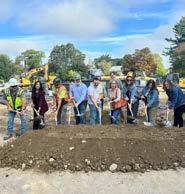
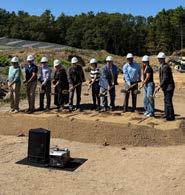

Just after the new school year began in September, the City of Newton held a groundbreaking ceremony for the new Franklin Elementary School. School and town officials were joined by students, alums, and neighbors to celebrate the start of construction on their new 70,000 SF two-wing elementary school being built on the athletic fields of the existing school. The school will be designed and constructed Net Zero Ready and will include a geothermal heating and cooling system featuring over 40 geothermal wells. CHA is providing OPM services, which began with the feasibility study and schematic design phases. Completion is anticipated in the spring of 2027.
In September, the Town of Boxford, along with many local elected officials and community members, joyously celebrated the groundbreaking of its new DPW building. The new 25,000 SF facility will house administrative and staff spaces, an equipment and fleet garage with maintenance space, and a wash bay. Plans for the site also include the reconfiguration and relocation of the existing salt shed, as well as the construction of a new fuel station. CHA is providing OPM services for the design and construction.
In October, the City of Brockton hosted a ribbon-cutting ceremony to celebrate the completion of its new Public Safety Facility. CHA provided OPM services for this new state-of-the-art combined public safety complex. The sleek, technologydriven building replaces the city’s outdated police station and historic fire station. At an expansive 149,275 SF and spanning four stories, the public safety facility houses the operations of the Brockton Police Department and the Brockton Fire Department. It will also feature a joint emergency dispatch center, administrative and support offices for the Brockton Emergency Management Agency, and offices and an equipment room for the Brockton Information Technology Center.
Just in time for winter sports and seasonal fun, the ribbon has been officially cut at the Town of Belmont’s new skating rink. On November 15, the community, local elected officials, former Boston Bruins player Zdeno Chara, and the project team came together to celebrate the grand opening of this highly anticipated sports venue. The new building houses a rink complex with a conventional 200-footby-85-foot ice sheet, team locker rooms, general dressing rooms, restrooms, bleacher seating, and a concession stand. CHA was proud to manage this project for the community, delivering a multifunctional space where residents of all ages can enjoy both recreational skating and competitive activities.