IN THIS ISSUE
» Industry Insight: From Construction to Connection
» What’s New?
» Owner's Corner
» Featured Service: Public Engagement
» Featured Projects
» Insights from an Onsite Representative
» New Beginnings


» Industry Insight: From Construction to Connection
» What’s New?
» Owner's Corner
» Featured Service: Public Engagement
» Featured Projects
» Insights from an Onsite Representative
» New Beginnings
By Tom Gatzunis, PE, Project Executive, and Jennifer McGrory, AIA, LEED AP, Project Manager
In today’s fast-paced and changing society, there is one constant still found in most communities: a public library. That library is important to many different groups for diverse reasons. From seniors and families to children, teens, young adults, and those seeking technology, the library is there to serve. In many communities, the library has evolved into a community hub, providing meeting space, after-school activities, and access to technology and resources far beyond books and computers, including things like sewing machines and hand tools. To meet the changing needs of their communities, many libraries are renovating and expanding.
Library renovation and expansion projects generally take years of planning and face a host of challenges ranging from funding to handicapped accessibility and historical preservation. Despite complex challenges and difficult questions to be answered before construction can begin, communities large and small are proving they are up to the task of planning and building the libraries of the future. Across Massachusetts, the team at CHA has been fortunate to collaborate with numerous communities to renovate their libraries.
Community engagement is key to a library project. The community must be involved in the process, and a variety of voices must be heard to fully understand what is needed to serve the entire community. In most communities, some residents value and support the library, while others question its relevance in the digital age or remain indifferent. The challenge is helping everyone understand the value of investment in a library and the benefits to future generations and the larger community.
Every public construction project presents funding challenges, with stakeholders wanting accountability for spending and funds that can be limited. From grants to
fundraising, the cost of a library renovation is generally a shared responsibility. The library itself may fundraise, the municipality will contribute, and the community may seek out grant funding sources. In Massachusetts, the Massachusetts Board of Library Commissioners (MBLC) grants funds to libraries for design and construction projects. These grants empower communities to pursue library projects and provide guidance along the way. MBLC grants are especially impactful in lower-income communities where funding is especially challenging to come by.
As with any construction project, unexpected costs and budget shortfalls may arise once the project is underway, requiring the owner and contractor to collaborate on innovative solutions. Hidden obstacles on the site or historic elements may require more preservation work than originally anticipated. As a society, we are also facing some economic uncertainty, with fluctuating building material and labor costs impacting library projects.
Historic preservation is a common theme among library projects because many libraries are located in historic buildings beloved by their communities. While many communities are anxious to expand and renovate their library spaces, they also want to preserve some of the elements of their historic buildings, including façades, original entries, and special architectural elements. This preservation may be expensive and ambitious and sometimes leads to uncovering unforeseen expenses, but it remains an important component of many library renovation projects.
Many libraries are housed in historic or older buildings that lack essential accessibility features such as ramps, wide doorways, accessible restrooms, and inclusive community spaces. Handicapped accessibility is a common focus of library projects, and these elements are now thoughtfully integrated
Continued on Page 7

Basel Alhadidi, CSL, MCPPO, is a man of many talents. His background spans civil engineering, construction supervision, site design, and project management. It is not surprising that he plays both soccer and chess, since he brings a blend of strategy, adaptability, and teamwork to his work as an owner’s project manager, tapping the same skills he uses on the soccer field or facing a chess opponent. His strong communication skills, critical thinking, and ability to adapt to new concepts quickly make him an asset to every project he manages.
During most of his three years at CHA, Basel has provided OPM project management services for more than 40 capital improvement projects across ten buildings on the UMass Dartmouth campus. Projects have included a laboratory renovation, an elevator modernization, a stormwater mitigation project, and a chiller replacement. He is currently managing the envelope upgrade project for the College of Visual & Performing Arts (CVPA). This project includes the exterior concrete structure, exterior masonry wall, structural support curtainwall windows and entrance systems, roofing and associated flashings, and site walkways and stairs. Basel is based at the university as an extension of UMass's staff, where he has also been overseeing move management services for term agreement projects, which have required move coordination of furnishings, fixtures, and critical laboratory equipment.
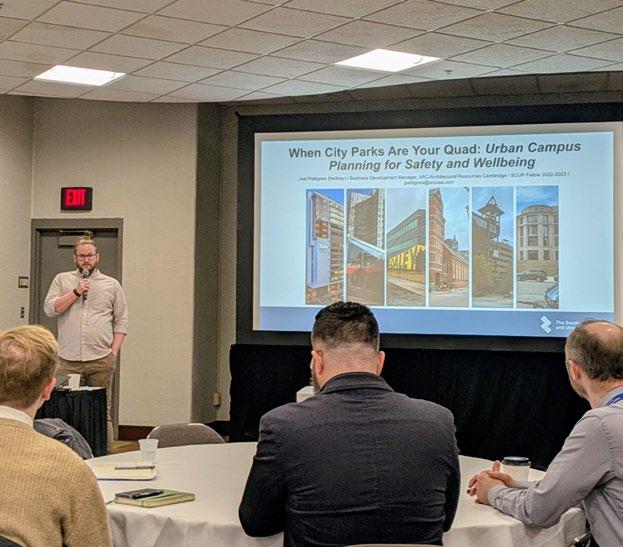
CHA’s Sean Sweeney recently presented at the Southern New England Chapter of APPA (SNEAPPA) Summer Meeting. Sean presented an enlightening session on the transformative power of Artificial Intelligence (AI) in facility management, discussing how AI is reshaping the landscape of procurement, predictive maintenance, operation & maintenance, and key performance indicators (KPIs) to build and manage facilities.
Sean also attended the Society for College and University Planning - North Atlantic 2025 Regional Conference in Buffalo, NY, where he had an opportunity to connect with peers and clients and learn about innovative and collaborative approaches to integrated planning between higher education institutions and surrounding communities.
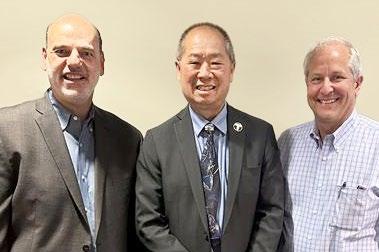
CHA is proud to support important MBTA projects improving communities in Massachusetts. CHA's Louis Tarmy and Tom Gatzunis are pictured with Phil Eng, MBTA General Manager.
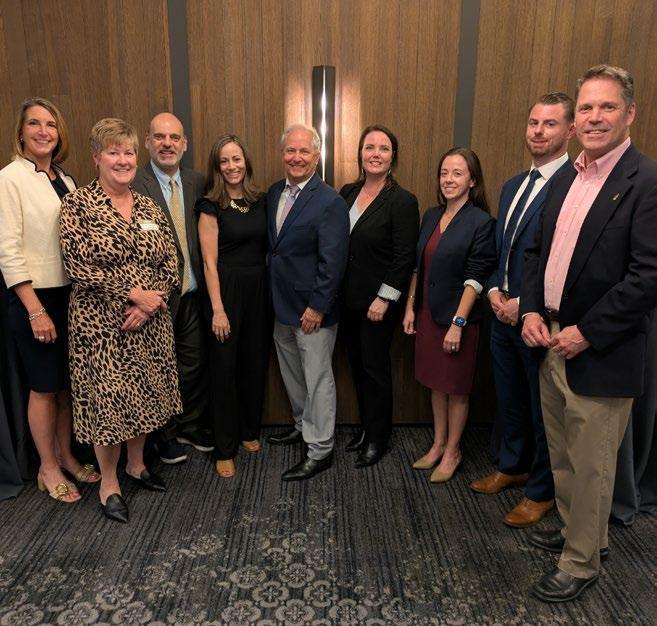


Representatives from CHA’s PMCM, Campus & Institutional, Government Market, and Transportation groups recently joined hundreds of industry and community leaders at a dinner to support the Francis M. Keville Memorial Fund, established to raise funds for cancer research, award scholarships, and donate to charities. The fund continues Francis M. Keville's impressive legacy and his outstanding efforts and abilities to make his vision of large public transportation projects a reality.
CHA has been awarded a Highwire Gold Safety Award for 2025, reflecting the strength of our safety programs, systems and initiatives. Highwire, a third-party contractor risk management platform, awards firms that are strongly dedicated to improving risk management. To achieve the Gold Safety Award, contractors must score between 85 and 94 on Highwire's rigorous safety assessment, which reflects historical safety performance metrics and leading indicators such as management systems, programs, and advanced safety initiatives.
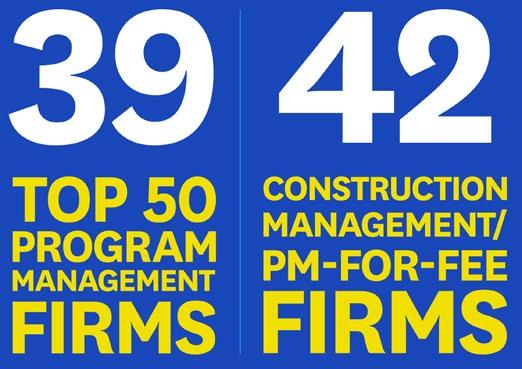
CHA has climbed to #63 on Engineering News-Record’s (ENR’s) recently published 2025 Top 500 Design Firms list. Additionally, CHA now ranks #52 on the Top 100 Pure Designers list, #39 on the Top 50 Program Management Firms list, and #42 on the Construction Management/PM-for-Fee Firms list.
We are delighted to welcome more exceptional talent to our Boston PMCM Team. We welcome Shawn Cormier – Project Executive, Tom Downie – Senior Project Manager, and Deepa Venkat – Project Manager.



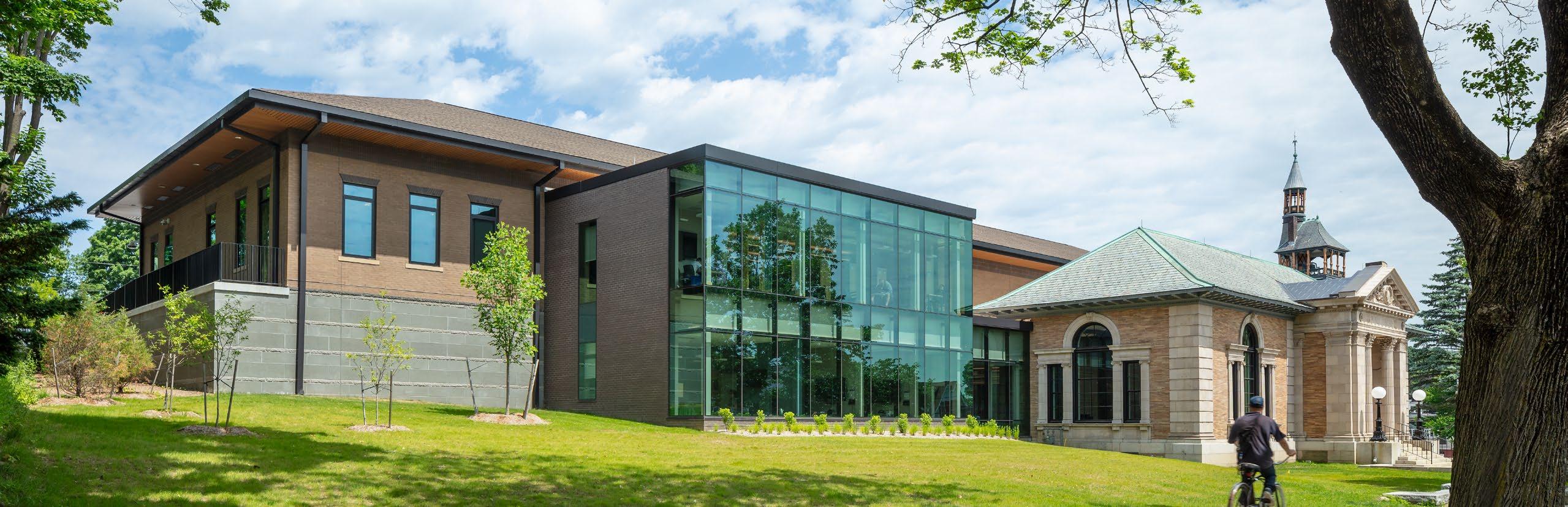
Featured Owner: Sara Belisle, Library Director, Marlborough Public Library, Marlborough, MA
Libraries are special to communities. Within their walls, we grow, learn new things, and become connected to our neighbors. As times have changed, so too have libraries, making way for technology, new media, and shifting roles to become gathering spots and hubs for community activities. Recognizing that libraries need to grow and change with their patrons, there are many library renovation and expansion projects underway across Massachusetts, and plenty of wisdom to be gleaned from someone who recently experienced a renovation project.
Marlborough Public Library Director Sara Belisle recently experienced a major library renovation and expansion project. This project involved renovating and adding a major addition to a historic Carnegie building, built in 1904, and sought to preserve the building’s aesthetic and exterior while modernizing the interior and expanding. Sara joined the library in January 2023 and saw the project through its final stages when it opened in October of that year.
This project began 30 years ago, with the founding of the Marlborough Public Library Foundation, which aimed to raise funds for a new library. The project gained momentum when the Library Director, Margaret Cardello, applied for and received a construction grant from the Massachusetts Board of Library Commissioners (MBLC) in 2016-2017. The grant was awarded in 2020, and construction began in April 2021.
While Sara came to the library well into the project, she emphasized the significance of public engagement during a library construction project, sharing her experience of first learning about this project at a city event where the Marlborough Public Library Foundation was tabling.
This initial exposure to the project underscored the importance of community involvement and awareness. She also highlighted the value of continuously communicating with the public during the project, including sending monthly emails to library cardholders and providing updates with pictures. In the months leading to the library's reopening, the staff communicated through various channels, including social media and email. This consistent communication kept the community well-informed and excited about the new library facilities.
As part of the communication efforts, Sara highlighted the importance of keeping statistics about the use of the library after reopening. Data collection included the number of books borrowed, program attendance, meeting room usage, and study room reservations. This data was crucial for demonstrating the library's impact on the community and her request for additional budget. She also shared year-end wrap-up reports detailing the library's achievements and usage statistics. These reports helped illustrate the library's positive impact and the benefits of the renovation project, reinforcing the value of the investment.
Sara also shared three lessons learned during the project:
1. Flexibility: You must be able to pivot plans quickly. Throughout the project, unexpected changes required rapid adjustments, especially in the later stages. This flexibility was crucial for managing the project's progress and addressing unforeseen challenges.
2. Staff Communication: You must keep your staff informed about the project's progress and any changes. This transparency helped alleviate staff anxiety and ensured they were prepared to manage public inquiries.
3. Acceptance of Imperfection: It is important to accept that not everything will be perfect upon reopening. You should manage expectations and focus on progress, rather than striving for perfection. This mindset helped reduce stress and allowed a smoother transition to the new library.
Several significant unexpected challenges occurred during this project. The first challenge was navigating the COVID-19 pandemic while moving to a temporary space with limited staff and implementing curbside pickup services to continue providing access to library materials. The staff did an exceptional job during this time.
The other unexpected challenges were related to the building and site, which are typical of a construction project, particularly when renovating a historic building.
During construction, the team discovered a significant amount of ledge under the soil, which required extensive work to break up and remove. This discovery delayed the project and added complexity to construction. Another complex situation was revealed on an element of the original building to be preserved. The restoration of a historic terracotta pediment revealed that the support beams had
completely rusted through, posing a safety hazard. The team had to collaborate with a specialized company to reconstruct the pediment, which added $1 million to the project cost.
While renovation and expansion projects can be difficult on staff and patrons, the positive impact of investing in a new library building is well worth the effort. Once renovated, the Marlborough Library saw a significant increase in the use of meeting and study rooms. The new facilities met a clear community need and were in constant use after the reopening. The library renovation also contributed to increased property values in the surrounding neighborhood and positively impacted the local real estate market.
According to Sara Belisle, “The community benefits have been numerous, including enhanced public services and a stronger sense of community. The new library has provided a valuable resource for residents and supported the city’s growth and development.”
Sara advises other library directors and communities to consider the importance of a library project and its impact on the community, and she encourages utilizing state grant programs to help fund these very important projects.
into modern renovations. The needs of all building users, including those with neurodiversity needs, are considered.
Another important consideration in a library renovation project is the addition of adequate community spaces. These spaces may include small private rooms where patrons can participate in an online meeting, tutoring session, or small group gathering, or involve larger meeting rooms accessible after hours, offering meeting technology such as remote meeting access. MBLC-funded projects mandate that libraries have a community meeting room, the size of which will vary based on the size of the community.
Renovation and expansion projects now include and often prioritize initiatives and goals that address sustainability, from both a building material perspective and an operational and maintenance perspective. The initiatives may include energy-efficient building systems for heating and cooling, carbon reduction goals, sustainable building materials, and green design, including building certifications such as LEED.
Parking is another issue that often needs to be included in a library renovation project. As communities have grown, the need for more parking, including accessible parking, has become a priority and critical element in the overall planning.
Finally, library projects consider technology needs now with an eye toward the future so they can be prepared for future impacts and changes. Many libraries are relied on not just for computer usage but also for access to Wi-Fi and other technology, including AV equipment for meetings, which makes this an important component during planning.
Working with communities to understand the needs of their residents and collaborating with them to renovate and expand a treasured library is rewarding work. Witnessing the excitement when a new library opens is truly special. A few of CHA’s most recently completed library projects include the Marlborough Public Library; the Sharon Public Library; the Belmont Public Library, expected to be completed later this fall; and the J.V. Fletcher Library in Westford, MA, which is just beginning construction. The CHA team is passionate about this work and looks forward to working with many more communities who may be just starting or considering the journey of a library renovation project.
For more information on library renovation projects, contact Tom Gatzunis at Tgatzunis@chasolutions.com or Jennifer McGrory at Jmcgrory@chasolutions.com
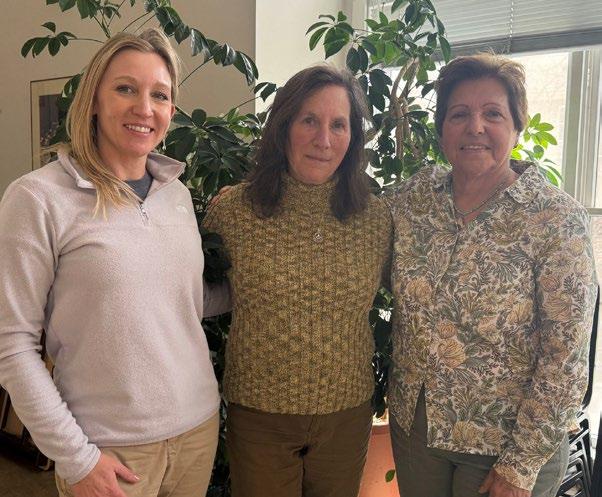
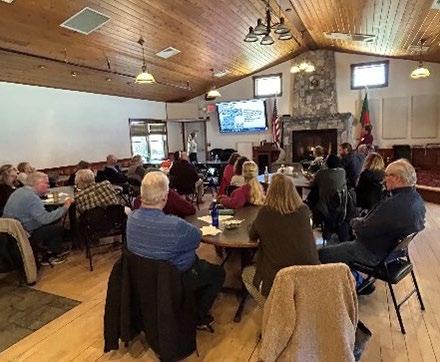

Most public projects begin with public engagement, an important, strategic two-way communication process intended to share vital project information with stakeholders and gather essential feedback, support and input.
Public construction projects—schools, libraries, public safety facilities, and fire houses—impact numerous stakeholder groups with strong feelings about their needs, costs, and impacts on their community. Proactive and thoughtfully implemented public engagement between construction teams and the impacted community helps build trust and enhances the final project delivery.
Public engagement approaches are tailored to the community and stakeholders. Efforts may include partnering with local influencers to understand a community and tap into specific engagement opportunities. While public meetings can be effective for some communities, others require a “grassroots” effort where the public engagement team can communicate with small pockets of stakeholders in their safe spaces, like libraries and community centers. These smaller groups then spread information to others, encouraging broader community engagement.
There are many tools for communicating about a construction project, and a solid public engagement effort will tap every avenue to reach those who will be impacted. From press conferences, booths, tabling at community events, and public meetings to project websites, newsletters, social media, QR codes, podcasts, emails, surveys, mailers, and news stories, these tools are used throughout the project to communicate important information and milestones. Public engagement is most effective when it aligns and integrates seamlessly with project management.
CHA Project Manager Annalisa Lewis, currently providing public engagement services for the Martha’s Vineyard Regional High School project, explains public engagement in this way: “It’s our job to listen, and it’s our job to share information. We want it to be collaborative – we need everybody; it’s about inspiring people to want to get involved because it will impact them.”
Public engagement can be transformational for a community. Gaining a full understanding of a project and becoming informed participants to build something to benefit future generations can leave a lasting impact.
For more information about public engagement services, you can reach Project Manager Annalisa Lewis, MCPPO, at alewis@chasolutions.com
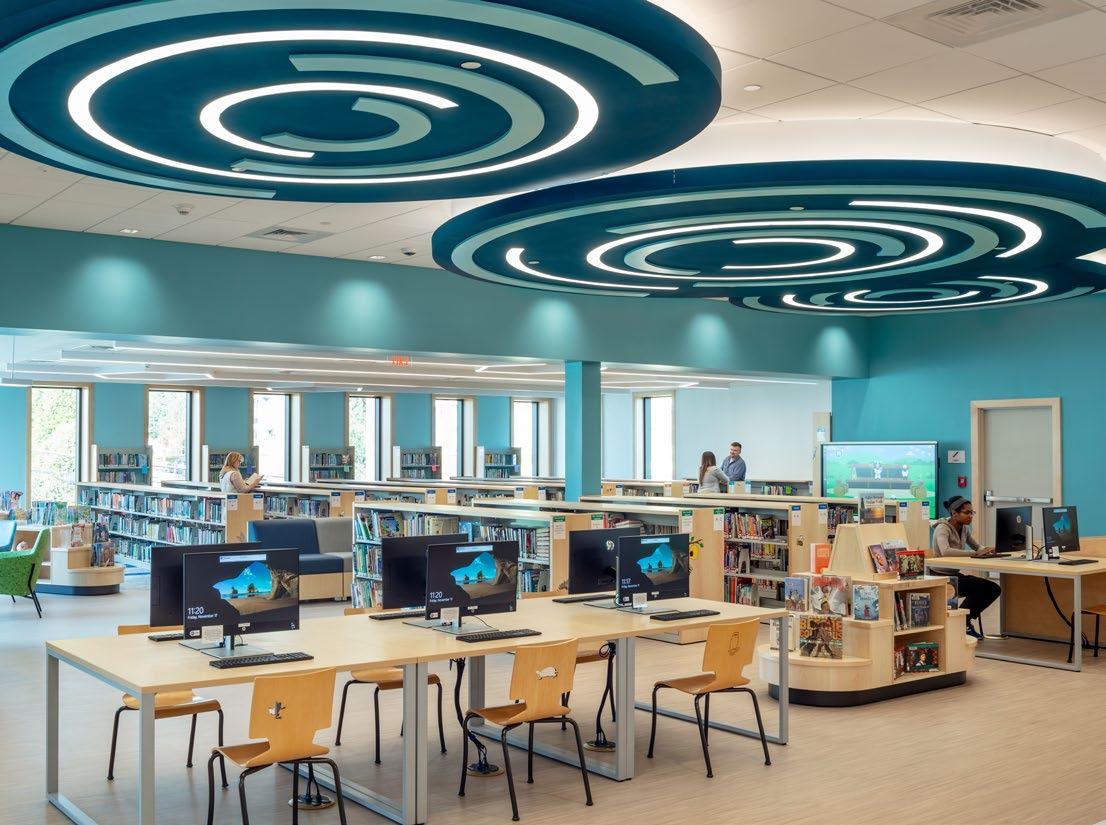
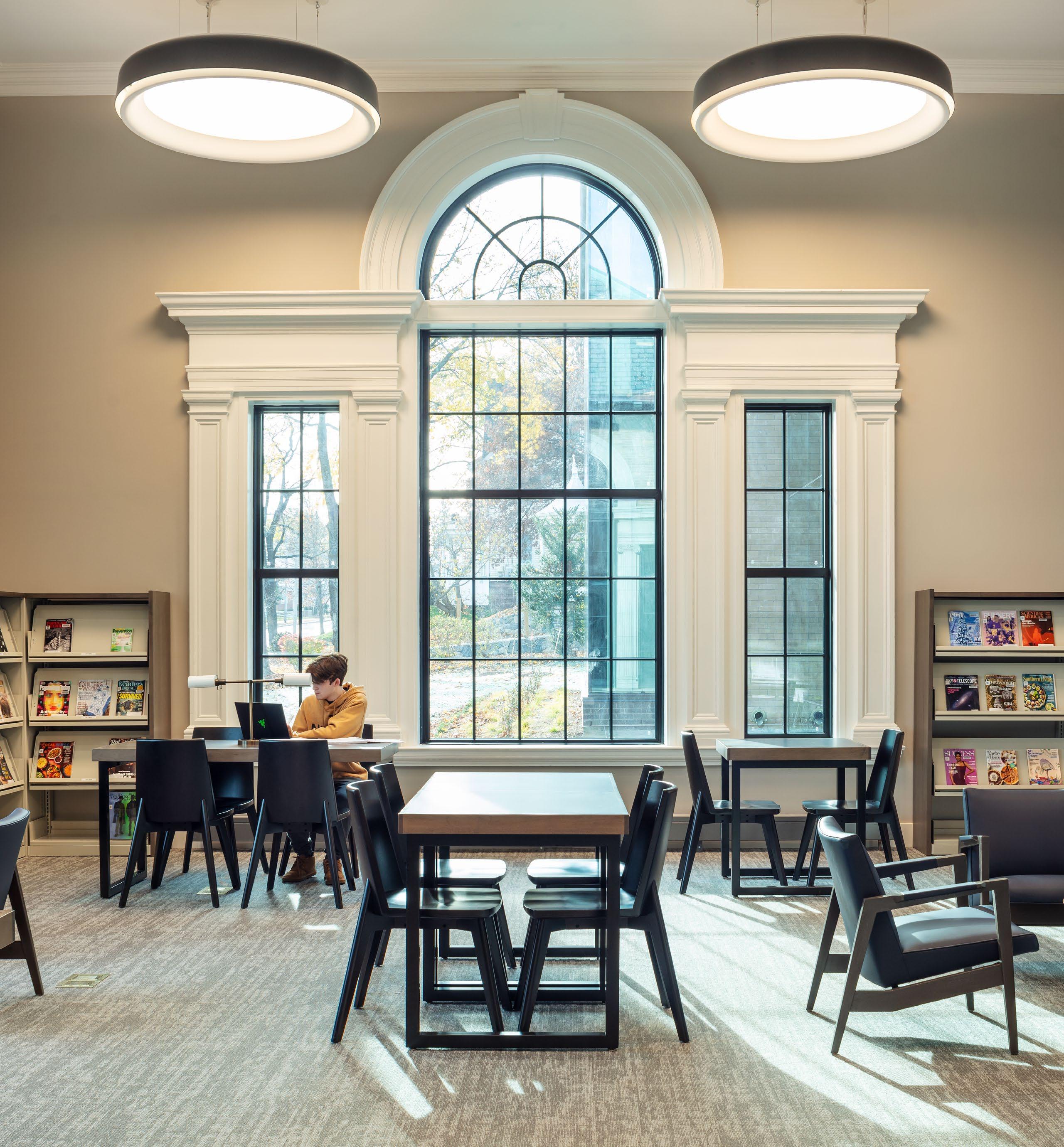
Originally built as a Carnegie Library in the early 1900s and last renovated in 1969, the Marlborough Public Library lacked room for meetings and quiet study. A phased design and construction plan was developed to expand the existing facility from 22,300 SF to 38,306 SF. Much of the existing building was demolished and replaced with a new addition, while the historic façade and front rooms were retained and reestablished. CHA provided OPM services for this MBLC-funded library renovation and expansion project.
The new library building has improved access to technologies, after-hours access to community meeting rooms, and new spaces for casual study and reading. New features of the library include an expanded children’s area, an expanded area for teens, group study and individualized tutor rooms, a local history room, and training/program spaces that can be used to host a variety of community events. The project also added much-needed additional parking.
CHA also assisted the library with its temporary relocation to a nearby municipal building in Marlborough until the renovation and expansion was complete.
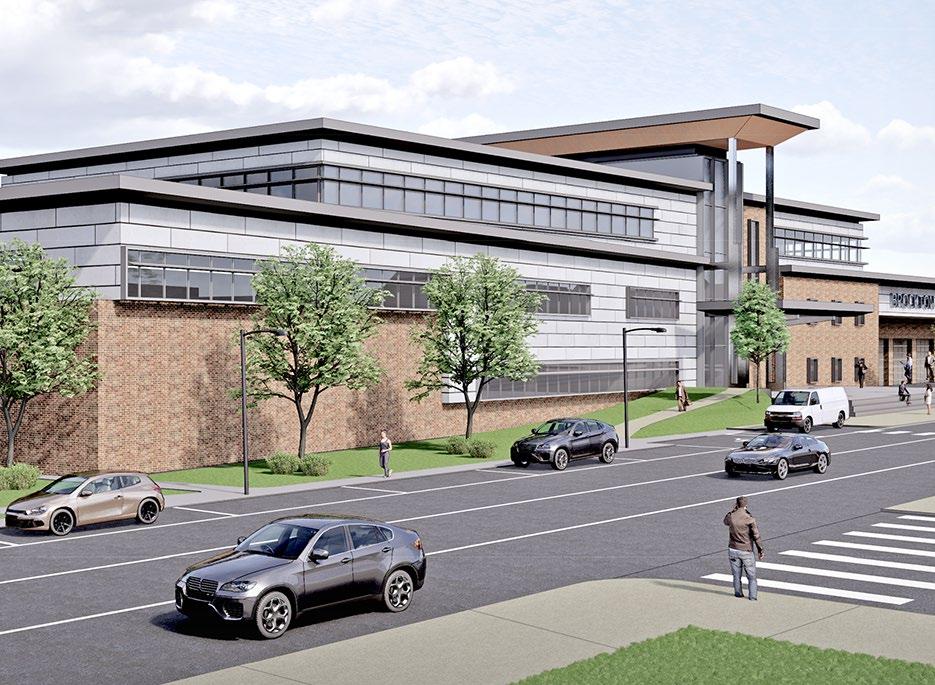
CHA is providing OPM services for a Construction Manager at Risk (CMAR) construction project to build a new, state-ofthe-art, combined public safety complex to replace the City of Brockton’s outdated police station and historic fire station.
The four-story, 149,275 SF public safety facility will house the operations of the police and fire departments, a joint emergency dispatch center, and administrative and support offices for the emergency management and IT departments. The complex will include a 300-vehicle parking garage. Public lobby space will be available on each floor, providing easy access to services and information for the community.
Construction began in March 2023 following the demolition of the old building located on the corner of West Elm Street and Warren Avenue, which had served as different institutions over the years, including the former Brockton High School, Eldon B. Keith School, Frederick Douglass Academy, and Champion School. The new facility will repurpose some of the building’s pillars and other infrastructure elements, adding a sense of history to the modern structure.
CHA has been actively involved in every aspect of the project, including designer selection, space needs assessment, program development, site evaluation, and cost estimates. With an ambitious construction timeline, this multi-phase project is anticipated to be completed in 2026.
On-site representatives play a crucial role in the successful completion of construction projects. Library projects can be especially complex due to moving and relocating services, historic preservation challenges, the urgency to reopen, ADA compliance, and their location, which is generally highly visible and in the middle of a town or neighborhood.
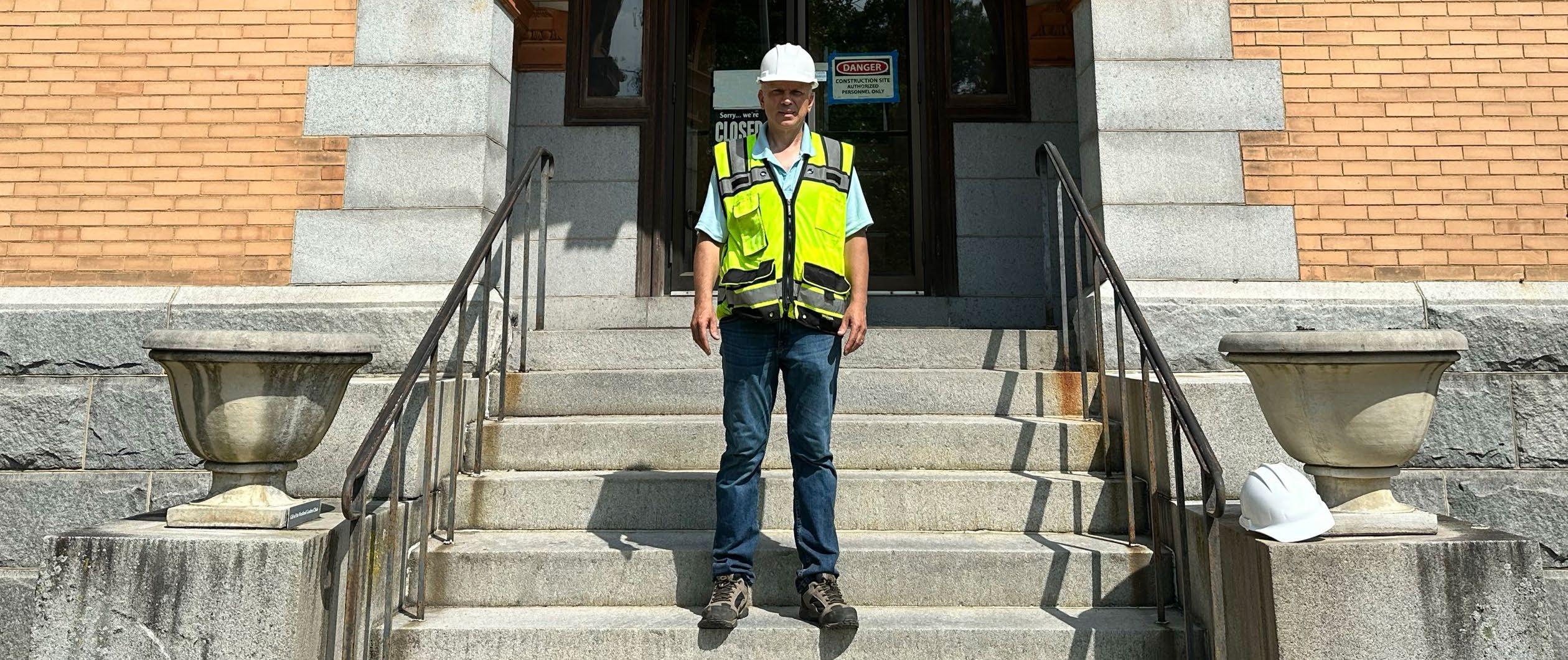
CHA’s Mark Luzaitis is skilled at liaising between owners and general contractors, subcontractors, engineers, architects, field representatives, and project managers. He is currently serving as the on-site representative at the J.V. Fletcher Library in Westford, MA. This library, originally constructed in 1895, is being preserved while modernized to meet ADA compliance, accessibility, and other contemporary needs.
Mark’s on-site role is representing the owner, in this case, the Town of Westford. During the day, he may assist the owner with something related to the project, document daily activities, and ensure compliance with safety protocols. Mark is responsible for documenting all site activities, including producing daily reports, taking photographs, and ensuring that all work activities are recorded accurately for internal
use and updates to stakeholders. Construction projects have a collaborative nature that requires working closely with the general contractor, design team, and other stakeholders to solve problems and keep the project moving forward.
The role of an on-site representative also has a significant public relations aspect, which involves face-to-face interactions, emails, and weekly updates to keep neighbors and other stakeholders informed about the project's progress and any potential disruptions. Ensuring compliance with safety protocols is another critical part of the job. This includes adhering to safety standards, preparing for inspections, and coordinating with the fire department and OSHA to maintain a safe work environment.
Mark has a background in accounting and real estate development. He finds his work as an on-site representative provides a lot of personal satisfaction, as he sees projects come to fruition and make tangible impacts on communities. He enjoys learning about the history of the libraries and collaborating with various stakeholders to achieve successful outcomes.
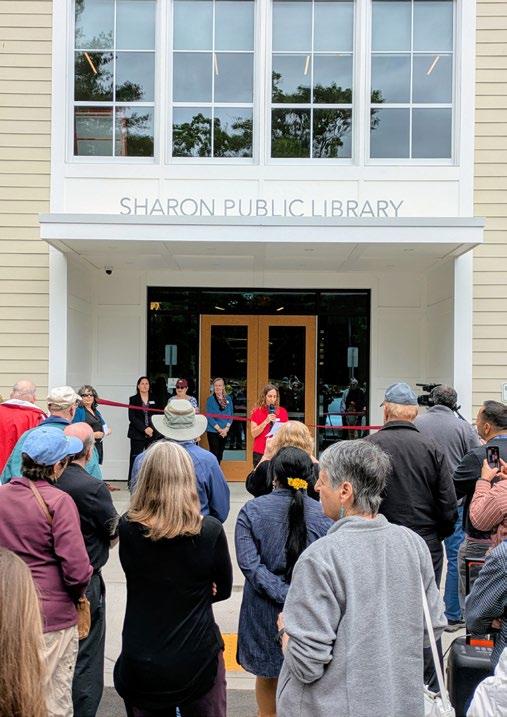
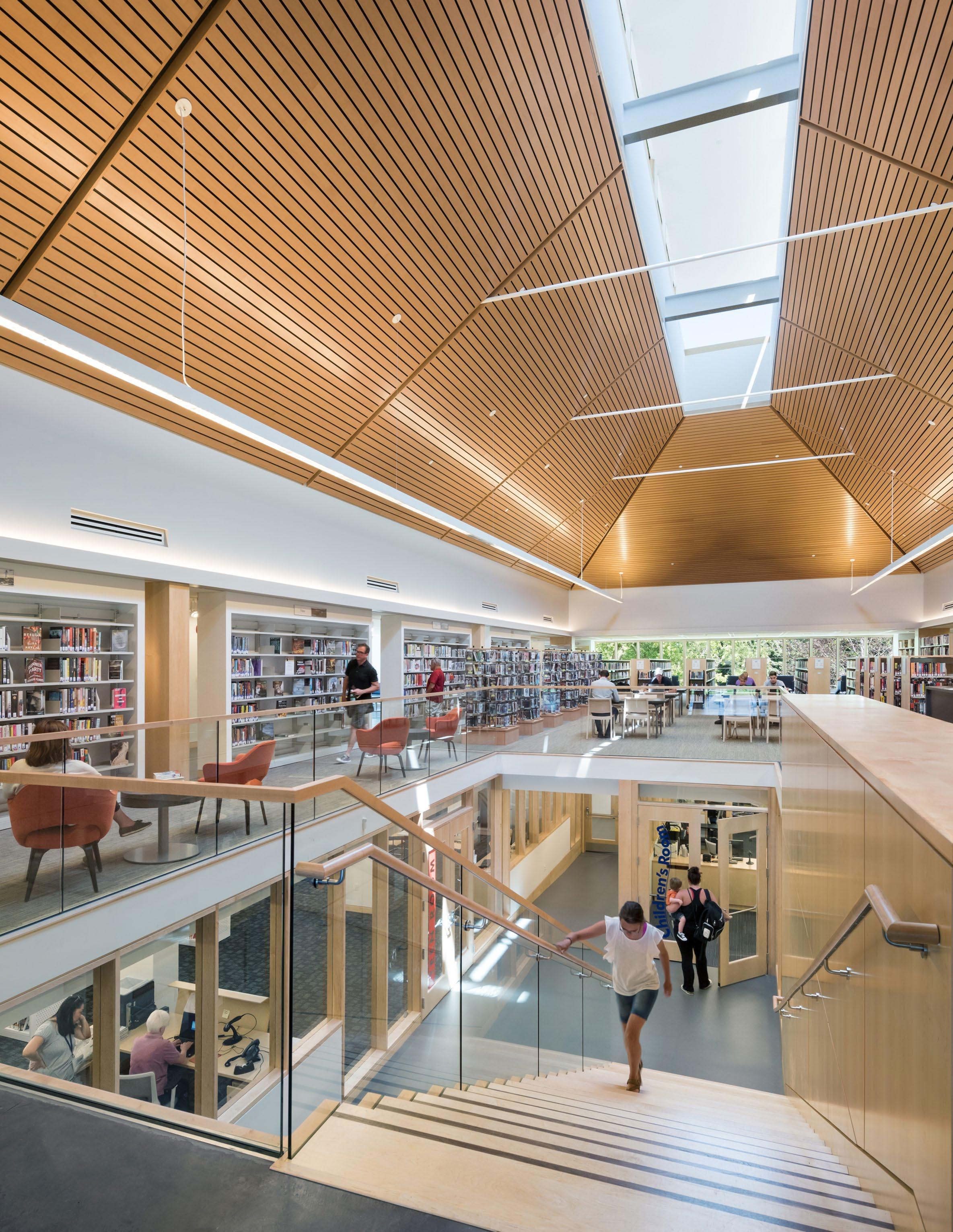
In May, the Town of Sharon, MA, joyously celebrated the ribbon-cutting of its new library. The library is bright, vibrant and welcoming, and includes expanded space for patrons, staff and programming. Some new amenities include a teen room, a media lab, quiet study spaces, a larger community room, and most importantly, accessibility for all. CHA provided OPM services for the design and construction of the new two-floor library building.
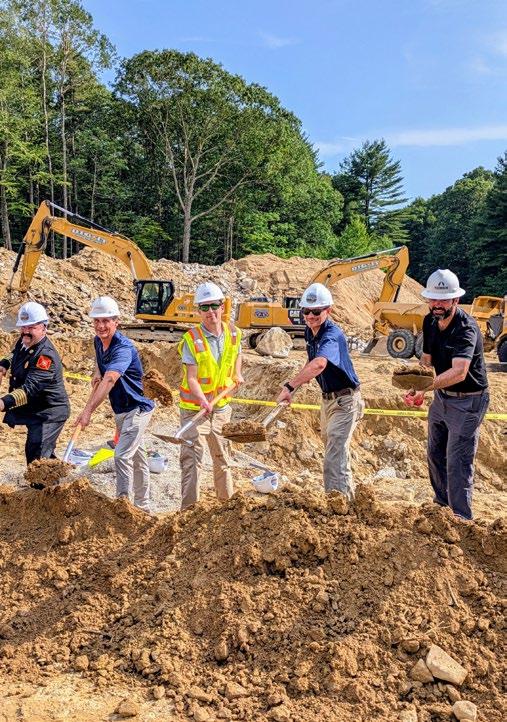
In June, the Town of Charlton, MA, hosted a groundbreaking ceremony to commemorate the beginning of construction on its new fire substation. CHA is providing OPM services for the design and construction of the new two-story, 13,000 SF fire substation with four drive-thru apparatus bays. The first floor will include sufficient space for emergency vehicles, administrative and building support areas, and space for training, meetings, and engaging with the public. Firefighter living quarters will be located on the second floor. Completion is scheduled for early 2027.
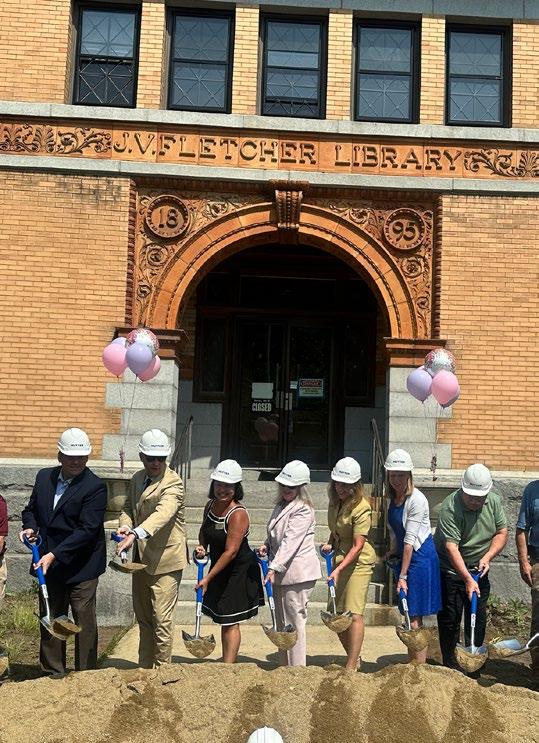
On June 20, many longtime library supporters of the J.V. Fletcher Library in Westford, MA, gathered with elected officials, community members, and the construction project team to celebrate a groundbreaking to mark the beginning of its expansion and renovation project. The J.V. Fletcher Library is located within Westford’s historic downtown. The historic front façade of the library will not change, but the project will greatly expand the areas for children and young adults and double public meeting spaces. It will also allow for improved handicap accessibility, advanced technology, and better traffic flow. The project is expected to be completed in early 2027.
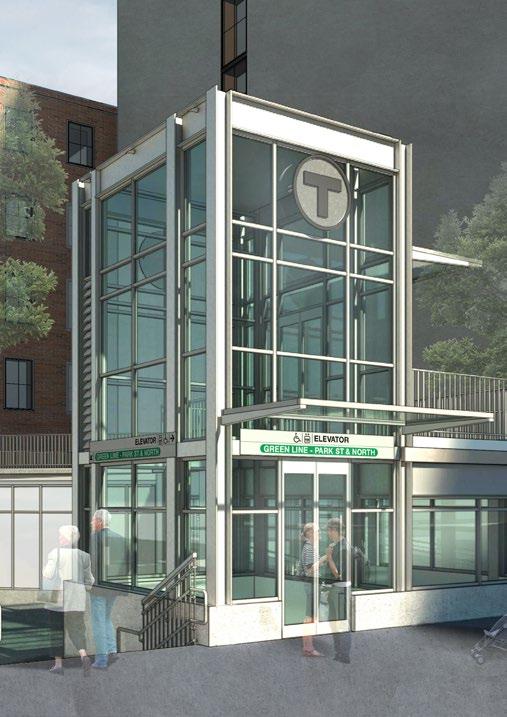
CHA is providing OPM services for the renovation of the MBTA’s Symphony Station, which serves one of Boston’s historic neighborhoods. This important renovation is focused on major improvements to make the station safer and more accessible for MBTA’s ridership.
The MBTA has also selected CHA to provide OPM services to assist the MBTA in the oversight of capital projects utilizing the CMAR project delivery method. Our team will play a key role in the CMAR selection process, preconstruction phase services, project construction, commissioning, and final closeout.
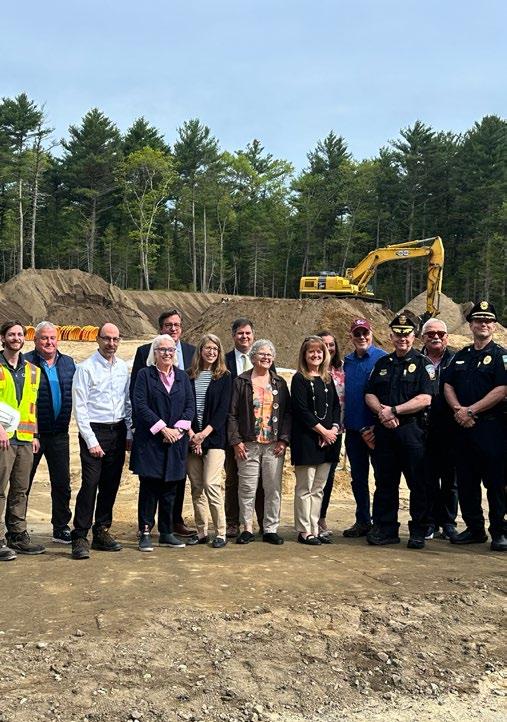
In May, the Town of Duxbury, MA, celebrated the groundbreaking for its new department of works facility. CHA is providing OPM services for the final design, engineering, and construction administration of this sustainable 43,248 SF modern facility containing administrative and support spaces, employee facilities, workshops, vehicle and equipment storage, and vehicle maintenance and wash bays. One of the highly anticipated features of the new facility will be indoor space for all DPW equipment, resulting in improved employee safety, decreased response times, and extended vehicle and equipment lifespans. The expected completion is summer 2026.