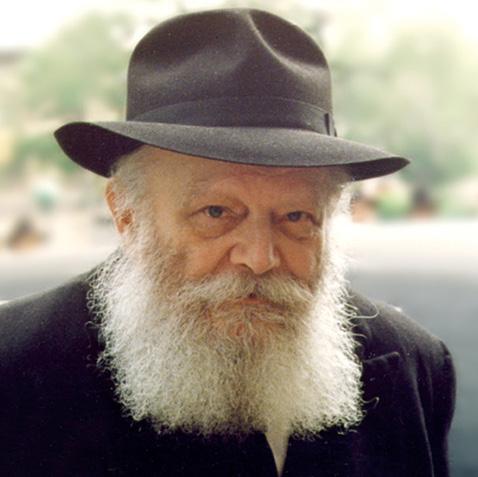
DEDICATED TO THE LOVE AND INSPIRATION OF THE LUBAVITCHER REBBE
Published by
Chabad Lubavitch of Your Town
123 South Street, Brooklyn, NY 11211
718-718-7180
www.ChabadofYourTown.com
EDITORS:
Rabbi Shmuel & Bluma Marcus
DESIGN:
Mijal Posner, Siyata Studios, Carasmatic Design
PROJECT MANAGER: Yakov “Jeb” Brilliant
CTO: Zalman Lieberman
ADVERTISING:
Dear Readers,
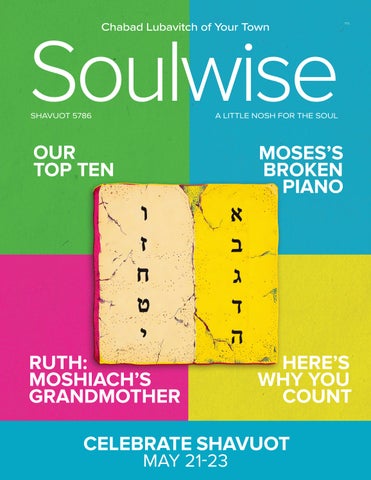
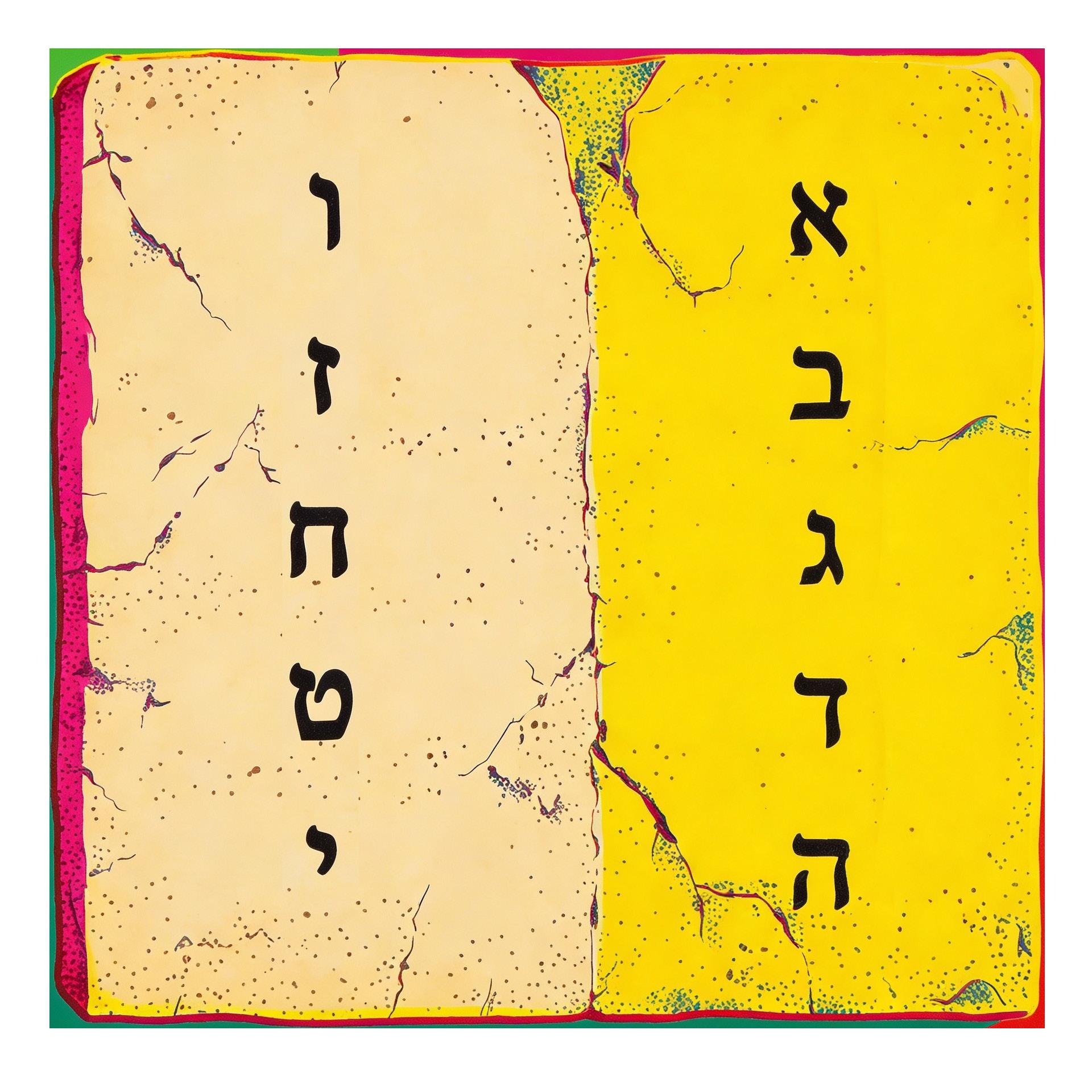
As we gather once again to hear the Ten Commandments and relive the moment of Sinai, it’s important to remember: It’s personal.
Shavuot is about who the Torah was given to. And the answer is: you.
The Torah doesn’t belong to scholars of the past or sages alone. It’s not a reward for good behavior or a gift for the spiritually elite. It’s an inheritance, which means it’s yours by birthright. As the verse says, “The Torah that Moses commanded us is the inheritance of the congregation of Jacob.”
The Rebbe explains this beautifully. A paycheck is earned. A gift is given. But inheritance is different. It’s yours by virtue of who you are, not what you’ve done. You don’t earn an inheritance. You don’t have to qualify for it.
So, this Shavuot, take it personally. When you stand in shul and hear the Ten Commandments, don’t think of it as a grand event from the past. Think of it as your inheritance being handed to you again.
The Torah is yours. It belongs to every Jew. So go claim it.
With blessings for a happy Shavuot,
Rabbi and Mrs. Shluchim
Directors, Chabad Jewish Center
PS: Join us for Shavuot Party May 21 at 10am and May 22nd for Yizkor at 11am
THE COLLECTIVE SPACE THAT RE-CREATES THE REVELATION AT SINAI ANUALLY
SpiritShul
We tend to think of time as linear, moving forward in a straight line from past to future. But in Jewish thought, time is circular. It moves in cycles, returning again and again.
Think about a birthday. Each year, we say “Happy Birthday” because, in a real sense, something returns. The energy of that original day, the moment you came into the world, circles back. The same light, the same opportunity, the same potential is present again.
The same is true for our holidays.
When we recite the blessing over the festivals, we speak of “those days” happening “in our time.” The holidays are not just commemorations of the past. They are re-experiences. The spiritual energy of those original events returns, inviting us to step into them once again.
This is how we celebrate Shavuot.
Each year, we return to Mount Sinai. Just as we once said “we will do and then we will listen,” embracing a
commitment beyond logic, so too we renew that same devotion each year on Shavuot. We both commemorate the events at Sinai and re-experience it.
That’s why, each year on Shavuot, we come together as a community, young and old, parents and children, to relive that moment. We stand, we listen, and we renew our eternal commitment to the Torah and its teachings. Children are not just included, they are essential. They represent the future, the guarantors of the Torah.
This is how Jews do spirituality.
We come together as a community and receive the Torah not as a burden, but as a privilege. Not as an obligation, but as a joy.
Time circles back. Sinai returns. And when we step into a shul on Shavuot, we are not remembering history. We are living it. So this year bring your children and your parents and enjoy the bliss of feeling “Spiritshul.”
BY: SIYATA STUDIOS
Did You Know?
At Sinai, the Jews said “we will do before we will listen,”as it says, “na’aseh v’nishma” (Book of Exodus 24:7), which means that some truths can’t be understood from the outside; they have to be lived first.
Just like music only makes sense when you hear it, mitzvot reveal their meaning through experience. But it’s even deeper than that: it reflects an essential, almost “irrational” bond between the Jewish people and the Torah. We do it because it’s who we are.
BY: RABBI SHMUEL MARCUS
Rabbi Shmuel Marcus is the editor of Chabad Magazine. He co-directs the Chabad in Los Alamitos with his wife Bluma and their children.
Jackson
Pollock
my moment
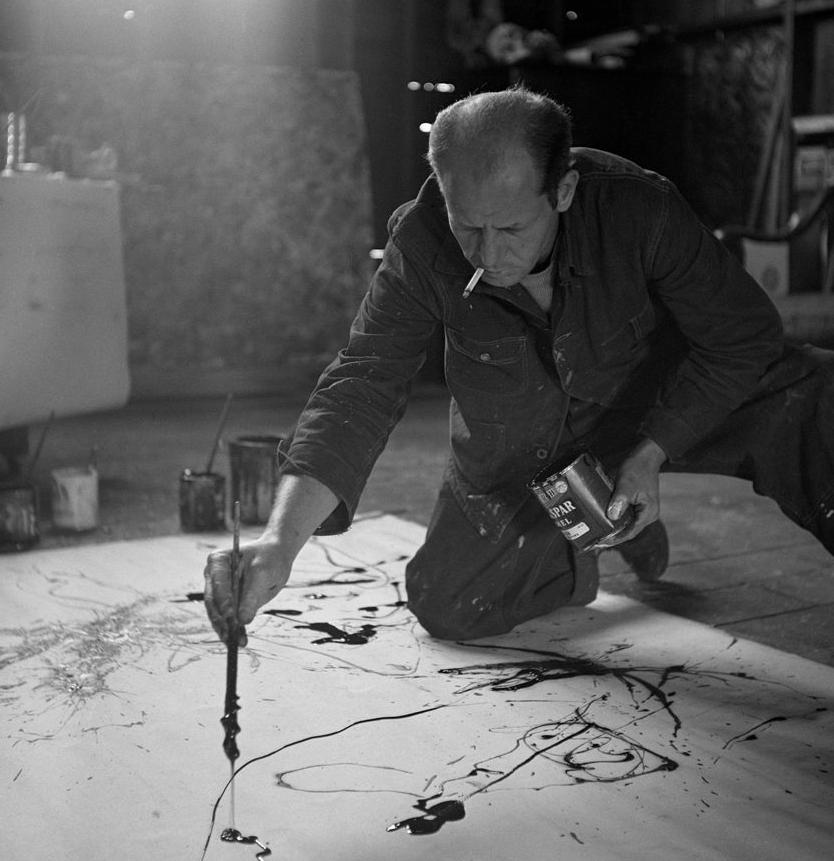
The famous abstract expressionist Jackson Pollock would splash different colors of paint onto a large white canvas to create a unique work of art. I decided to try his “Drip technique” with words and punctuation, hoping to create a colorful piece of literature.
Istuffed random words into an old duffel bag. Everyday words like cat, snap, green, skyscraper, Lego, canoe, Baltimore, ample, mint, and rag. Then I mixed in some punctuation, a few italics, and a handful of quotation marks, and scrambled everything together.
Next, I carefully hooked the duffel bag of words and punctuation to my son’s Super Soaker. The words automatically loaded into the chamber, like a machine gun pulling ammo from a magazine. Feeling like Pollock, I aimed at a large white canvas and pulled the trigger.
As I sprayed, words flew out in every direction. Somehow, a colorful love story began to emerge, a tale between an army veteran and a wealthy widow. I reloaded, aimed at another blank canvas, and fired again, watching familiar words burst out in rapid succession.
That’s how I wrote this article.
No, that didn’t happen.
There is nothing random about the way your heart beats or how your hair grows.
If you read a story, there is an author. Words do not fall off imaginary word trees and gather into puddles that somehow form a murder mystery or a traveler’s guide to Italy. If there is a book, there is a source. The pattern of words is not random. Each one is placed exactly where it belongs. Now consider this. Your ability to read and write, to digest food, or even to ride a bike is far more complex than any book. Writing a guide to Italy is easier than explaining how the human brain works. People are more intricate than any piece of fiction. So just like a book has an author, you, the reader, have a Creator.There is nothing random about the way your heart beats or how your hair grows. A master Author is constantly writing and editing your story, shaping each chapter with intention. But it does not always feel that way.
When we discover a hole in our pants, or something in life stops “working,” we begin to wonder if the Tailor of all tailors has forgotten us. We assume there is a glitch in the system. Suddenly, the Super Soaker of life seems to be pulling
only the wrong words from the bag. The world appears to move forward without us. We feel stuck, out of sync, as if we have fallen out of favor with the Source.
Our imperfections make us feel unimportant in a world that seems to demand perfection. It feels like others are flying the plane while we are stuck in a middle seat in row fifty-something. We press the call button, hoping for help, but no one comes. In the distance, we hear laughter and the clinking of glasses from first class.
When cheaters prosper and good people struggle, dark clouds begin to gather. It becomes harder to believe there is any order at all.
But then, something shifts.
There is a moment, a flash of clarity, like thunder and lightning at Sinai. Suddenly, the Source reveals itself. The scattered pieces begin to connect. The random words, the events, the struggles, they all come together.
And in that moment, we realize something profound.
This was never random.
It was a Jackson Pollack masterpiece all along, carefully written by the Creator Himself.
Basic Jewish Terms and Lingo
Congratulations! Great job on learning new words.
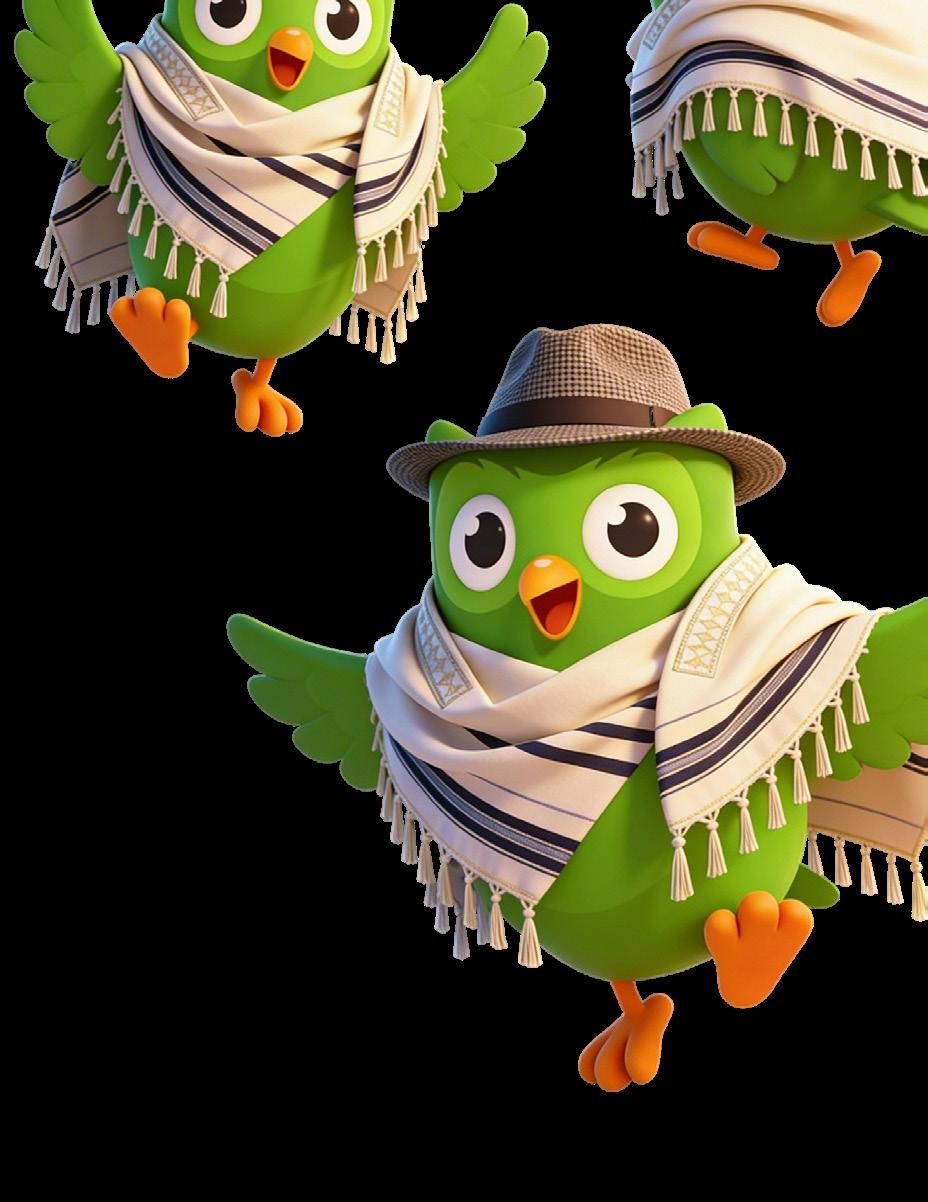
Shavuot (weeks) is the word for today, but have you counted today?” Because Shavuot is all about weeks, shavua is one week, Shavuot is many, and we count seven of them for a total of forty-nine days from Passover until the receiving of the Torah like spiritual pushups. Miss a day? The Jewish owl knows.
But here’s where it gets fun. Shavuot doesn’t just mean weeks. It also means promises. Like when we said at Sinai, “we’re in,” no fine print, no pause button. A shavua means a promise, and Shavuot celebrates our bold, irrational, totally beautiful commitment to Torah. Not “I’ll try,” not “what’s in it for me?” but “I’m all in.”
And then comes my favorite twist. The Hebrew word for satisfied is savua. Coincidence? Not really. Because a life built on those seven weeks of growth and those promises we keep leads to something rare: real contentment. Body and soul, synced up. No streak freeze needed.
So yes, count your Shavuot weeks till Sinai. Keep your Shavuot promises to the Torah, and you’ll find that satisfaction is guaranteed.
Great job on your Joulingo lesson! See you soon.
Moses's BROKEN PIANO
In 1975, world-class American jazz pianist Keith Jarrett arrived at the Cologne Opera House, only to discover a major problem. There had been a misunderstanding about the piano.
Instead of a concert grand suited for the venue, a small, worn baby grand had been placed on stage. It was meant only for rehearsals. Some of the high keys did not work, the pedals stuck, and the instrument was badly out of tune.
The story could have ended there.
Jarrett, exhausted and unwell, had barely slept. Frustrated and disappointed, he stormed off the stage shortly after arriving. But somehow, after all that, he agreed to perform.
What happened next became history.
“JARRETT STOOD AS HE PLAYED, PUSHING THAT SMALL, IMPERFECT INSTRUMENT TO ITS LIMITS”
The recording of that night went on to become his best-selling jazz album of all time.
Chasidic teachings use olive oil as a metaphor for this phenomenon.You must crush an olive to extract its oil. The daily struggles and challenges we all face are not the end of our story. It is what the extraction feels like.
That’s why we are all born with faults and weaknesses. We can only access our purest “oil,” and finest diamonds by digging, not ease. In Chabad philosophy, obstacles are not setbacks. They are invitations. Small, hidden gifts from G-d, pushing us to reach deeper and play harder.
Just as Jarrett’s greatest music emerged from a broken piano, our truest voice often emerges when we work through our imperfections.
That night, Jarrett stood as he played, pushing that small, imperfect instrument to its limits, playing louder, deeper, more intensely to fill the vast opera house with music. And somehow, he did.
This idea is older than jazz.
According to the Midrash, while Moses was on top of Mount Sinai eager to receive the Torah, the angels resisted. They argued that the Torah, sacred and divine, belonged in heaven, not in the hands of flawed human beings.
Moses turned to G-d, but G-d insisted that Moses answer them himself. It was as if G-d wanted Moses to demonstrate that he
truly understood the Torah’s purpose.
Moses began to respond.
“I am the L-rd your G-d who took you out of Egypt,” he said. Then he turned to the angels. “Were you slaves in Egypt?”
He continued. “Honor your father and mother. Do you have parents?”
And then he pressed further, speaking of theft, of murder, of adultery. “Do you struggle with temptation, with jealousy, with desire?”
The angels had no answer and they stepped aside.
In that moment, Moses revealed something profound. The Torah was not meant for perfection and ease. It was meant for struggle and digging.
Angels may be flawless, but they cannot change or grow. They cannot overcome a bad habit. They cannot transform an ego.
Only human beings can.
As Moses slowly walked past the baffled angels, it was clear that the Heavens may be full of G-d’s Glory, but the earth contained a rich spiritual oil of human refinement. Moses needed to bring the Torah down to earth so the people camped at the foot of the mountain could find the undiscovered beauty buried deep inside a physical world of greedy, lustful humans born of regular parents.
This is why G-d wanted to create the world we live in, because there are no broken pianos in Heaven.
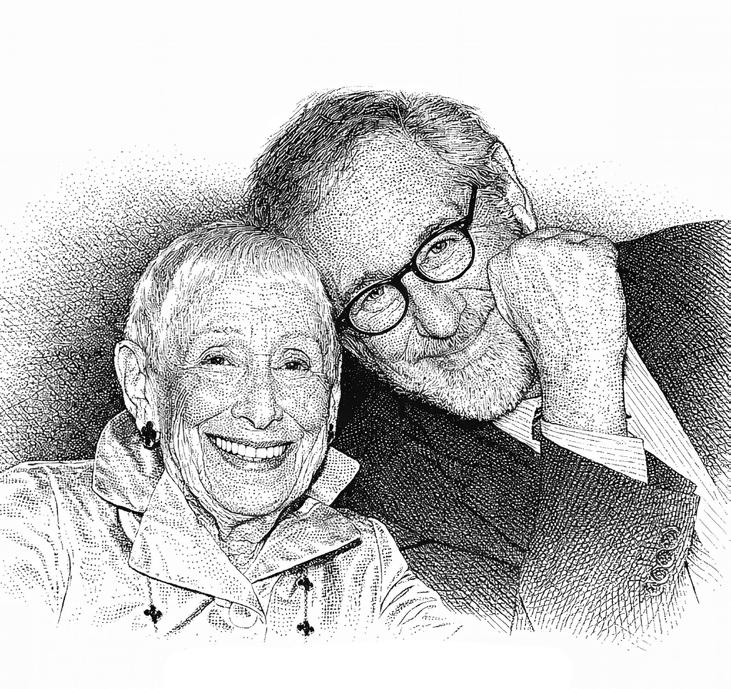
On Shavuot it is a custom to eat dairy. We remember Los Angeles’s Cheese Blintz Queen. Leah Adler (1920–2017), mother of Steven Spielberg, was the beloved proprietor of The Milky Way for over thirty years. She created a unique kosher menu that blended traditional Jewish comfort food with bold international flavors. Her iconic smile stood behind her dishes that included her signature kosher cheese blintzes and her famous classic cheesecake. She greeted each guest and radiated joy, moving from table to table sharing not just delicious food, but the love of a Jewish mother.
Today, her smile and recipes continue to bring warmth and comfort to kosher diners at The Milky Way.
milkywayla.com
BY: BENJAMIN SHERMAN
how to live “VERY”
VERY WELL
Discover the Rebbe’s powerful insight into the hidden “very” within you, the part that goes beyond heart and soul, and learn how tapping into it can transform your mindset, your relationships, and your entire approach to life.
In 1974, Rabbi Moshe Hecht, the Rebbe’s emissary to New Haven, wrote a heartfelt letter describing the overwhelming challenges he faced. He felt worn down, inadequate, and in need of help.
The Rebbe’s response was unexpected:
“I anticipated your request and have already acted on your behalf. Rabbi Moshe Hecht has been sent to your city. It seems from your letters that you may not be familiar with Rabbi Hecht or the abilities he possesses. I encourage you to get to know him.”
Like Rabbi Hecht, many of us look in the mirror and see only a body and a soul. We see our limits, our aging body, and worn out soul. What we fail to see is the divine lifeforce that holds it all together. So we ask for help when we feel heartbroken, lost, or spiritually empty.
But the Rebbe answers that help has already arrived. It is you.
The Rebbe’s answer to people like Rabbi Hecht is to
discover your very essence. This is the part of you that is a spark of the Creator, the non-self within that exists beyond heart and soul. It is always present, always pure, always awake. It is the inner “very” that’s immune to negativity and can give us strength when everything else feels depleted.
You might call this the Meod Method.
The Rebbe’s approach can perhaps be traced back to Deuteronomy 6:5: “And you shall love the Lord your G-d with all your heart, with all your soul, and with all your meod.”
The commentaries offer different translations for meod, including all your means, strength, or even your wealth. But in Hebrew, meod literally means “very.” This suggests that beyond loving G-d with heart and soul, there is still something more to give. There is an infinite creator-like dimension, the “very” within you.
This meod vision of the self redirects us. We stop running upward in search of spiritual escape or downward
into material distraction. Instead, we find inner strength and power from a source beyond both heart and soul.
Your heart and soul can be defined. They have structure, boundaries, and limitations. But “very” is different. It has no shape and no fixed place. It is not something you can point to. Yet, it is something that comes alive when we most need it and can elevate anything it touches.
It is no coincidence that the words adam and meod share the same Hebrew letters.
Yet so often, we lose touch with this truth. The world convinces us to see ourselves as small, limited, and defined by circumstance. We begin to believe we are something less than we truly are. We start to see ourselves as ducks when we were born eagles.
So, the Rebbe reminds us who we are. Telling us to find that inner “very,” that limitless capacity within each of us, to live a life of meod, and ultimately, we learn how to live “very,” very well.
(Based on the Rebbe’s Maamar Tzena U’Rena 1959, Lahak 2020)
Between the Lines
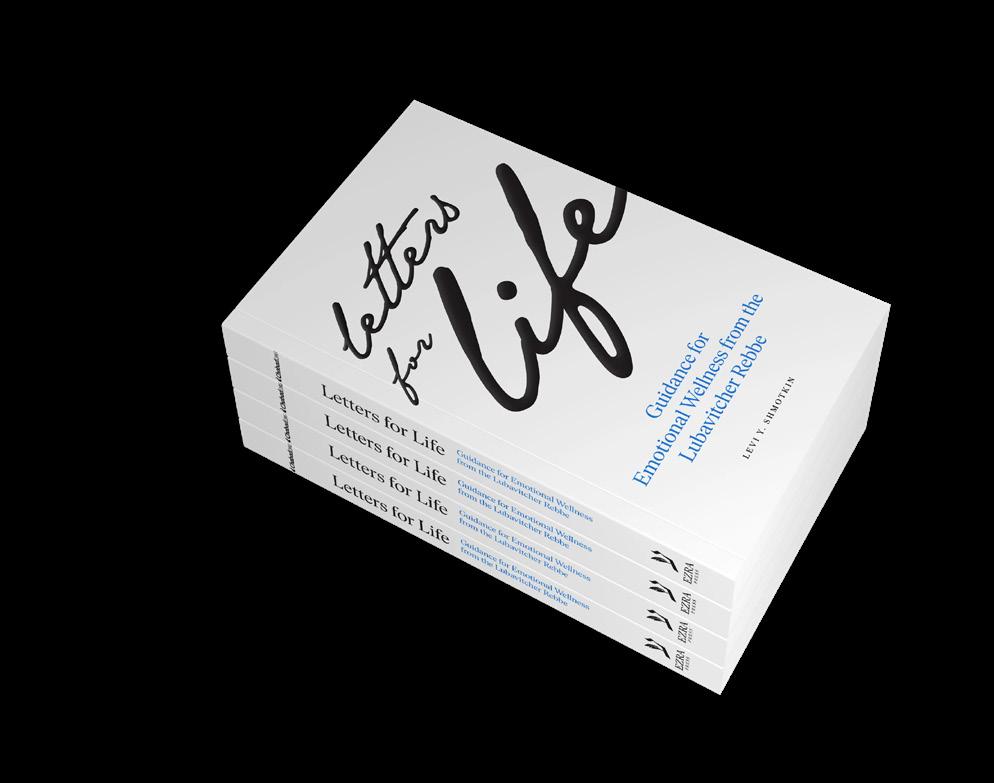
People from every walk of life approached the Rebbe for help daily. Drawing on Jewish wisdom, he offered clear, compassionate guidance toward inner health, harmony, and wholeness. Until recently, much of this treasure remained largely inaccessible to the wider public.
In Letters for Life, Levi Shmotkin distills years of research into the Rebbe’s correspondence into twelve powerful themes of emotional wellness. Through moving letters, stories, and practical insights, the book presents timeless tools for building resilience and balance in an often unsteady world.
Available at Kehot.com
Ruth: meet
Some read the Book of Ruth on Shavuot primarily because it records the ancestry of King David, who was born and passed away on Shavuot. Additionally, Ruth was a sincere convert who accepted the Torah, mirroring how we accepted the Torah at Sinai
The Moabite Princess and greatgrandmother of Moshiach
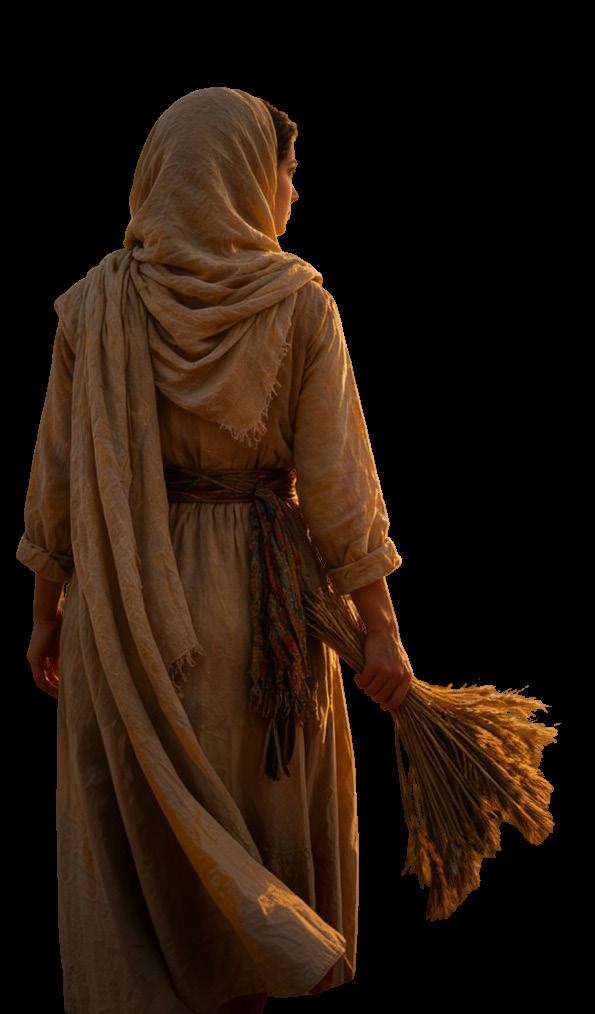
The Book of Ruth tells the story of a Moabite princess who leaves behind her royal, idolatrous life to join the Jewish people, driven by deep loyalty to her mother-in-law, Naomi. She embraces a life of hardship, sincerely converts, and ultimately becomes the greatgrandmother of King David and the Moshiach.
The Talmudist Rabbi Zeira famously asked, “This scroll of Ruth does not contain the laws of impurity or purity, prohibitions or permissions. So why was it written?” The answer lies not in laws, but in dedication to the law. Ruth chose faith over fortune and commitment over comfort. Her journey was not easy. It was filled with loss, uncertainty, and sacrifice. Yet her unwavering dedication provides a powerful blueprint for what it means to be Jewish.
THE
FOLLOWING ARE TIPS AND TIMELESS LESSONS FROM RUTH.
Step One: Let Go of Your Past
Ruth “left the place where she had been living” to go to the land of Judah. This was not just a physical move. It was a spiritual one. In order to embrace something new, she first had to let go of what came before. Growth requires letting go of old versions of yourself and old notions that no longer serve your new purpose.
Get Ready to Sacrifice
Ruth and her mother-in-law Naomi set out on their journey with absolutely nothing. The sages describe them walking barefoot after losing their husbands and their livelihood. Ruth understood that pursuing truth and purpose often comes with discomfort. She chose the path anyway. New horizons often require dedication and endurance to push through the cold dark nights of upset. Find your Ruth-like strength to stay the course.
Don’t Let Others Define You
Ruth began as an outsider. She could have remained on the margins, defined by how others saw her. Instead, she stayed committed. By the time she reached Bethlehem, the verse indicates that she and her Jewish mother-in-law Naomi were seen as equals. Identity is not determined by where you start, but by where you are going.
Make Every Minute Count
Ruth declared her commitment to fulfill mitzvot whenever possible. She understood a profound truth. This is the world of action and we have the opportunity to act. In the next world of eternity, we may bask in the glory of G-d but we can only perform mitzvot in this world. Don’t waste time. Use every moment as an opportunity, mindful that this minute will not return.
Identity is not determined by where you start, but by where you are going
Ask For Help
Ruth did not act alone. Before going to the fields, she sought Naomi’s guidance. Naomi was a woman of wisdom and kindness, and Ruth recognized the importance of having a mentor. We cannot be our own advisor and to reach our goals we need to seek counsel from the wise. Make sure you have a good friend and wise teacher you can reach out to periodically.
Just Do It
Ruth did not remain passive. She rose and went to glean in the fields. She worked. She acted. Knowledge and intention matter, but it is action that shapes a person’s future. G-d places the grain in the field, but we must go out and gather it. The blessings meant for you are already there, waiting for you to reach out and take hold of them.
Be Bold and Nice
In the end, Rabbi Zeira answers his own question. The Book of Ruth was written to teach kindness. As her descendant King Solomon would later write, the ways of the Torah “are ways of pleasantness, and all her paths are peace.” Sadly, devotion can sometimes be expressed at the expense of others. Ruth shows us a different path. Her loyalty to Naomi and her care for those around her are a masterclass in leading with kindness and empathy. Her strength was not only in her commitment, but in the way she treated people along the way. That kindness echoed through generations, leading her to become the great-grandmother of King David and the Moshiach, the redeemers of Israel.
Ruth’s story is about living with conviction and compassion,. And in doing so, she transformed her story from idolatry and poverty into one of redemption.
Some holidays, like Passover, arrive whether you’re ready or not. They come as a gift, unearned and unconditional. But the next Jewish holiday, Shavuot, is different. It does not simply arrive on its own. It depends on you, and that is by design.
The Torah does not assign Shavuot a fixed date. Instead, beginning on the second night of Passover, we are commanded to count seven complete weeks, a process known as Sefirat HaOmer, the Counting of the Omer. Only after these forty-nine days do we arrive at Shavuot, the day we receive the Torah at Sinai.
This makes Shavuot unique. You make it happen.
But how does counting days create a holiday?
Counting may sound simple, like a child counting fingers and toes or a baker tallying bagels. Yet in Hebrew, the word sefira is related to sapir, a radiant sapphire stone. Counting, in this sense, is not just about numbers. It is about refinement and polishing.
There are seven weeks of the Omer and seven core human emotions. This is no coincidence. Each day of counting invites us to examine a different aspect of our character, to smooth its rough edges and elevate it. Through this daily process of
WHY HERE’S YOU COUNT
self-improvement, we can truly shine.
By Shira Gold
Shavuot highlights and celebrates this empowerment. G-d intended to give the Torah to a free people, a nation with divine agency. Yes, Sinai was filled with thunder, lightning, and divine revelation. But Shavuot is also about our ability to create a holiday by our counting days and polishing our character.
Today, we may take for granted our ability to grow and change. Before Sinai, the world was divided. Heaven was holy, and earth was mundane. Only G-d could bridge that gap, humans couldn't. It took generations of struggle, the miracles of the Exodus, and forty-nine days of preparation for humanity to receive a new gift: The power to transform ourselves and the world around us.
At Sinai, G-d descended, and Moses ascended, creating a lasting connection between heaven and earth. From that moment on, human actions could create real change. We gained the ability to turn ordinary homes into sacred spaces, everyday objects into holy mitzvot, and regular days into holidays.
This empowerment is the essence of Shavuot, and it is worth celebrating.
Witnessing miracles, like the splitting of the sea, is inspiring and tells us how powerful G-d is. But Shavuot tells us how powerful we are and knowing that our own actions have the power to elevate the world is truly transformative.
Shavuot is when G-d gave us the Torah and also gave us the ability to shape our lives, refine our character, and bring holiness into the world. So, we count the days from Passover to Shavuot because that’s how you change the world: Step by step, day by day.
Shira Gold is a staff writer at Chabad Magazine. She lives in Southern California with husband and five children.
Eve Of Shavuot - Thursday, May 21
DECORATE: Some have the custom to decorate their homes (and synagogues) with flowers and sweet-smelling plants in advance of Shavuot. The Midrash tells us that the small mountain sprouted beautiful flowers to provide the perfect setting for the giving of the Torah. The branches also remind us that Shavuot is the time when judgment is rendered regarding the fruits of the field.
ERUV TAVSHILIN: Before the start of Shavuot, Eruv Tavshilin should be done. See Kehot Siddur page 327 for details.
LIGHT: Women and girls light holiday candles to usher in the holiday on both the first and second evenings of the holiday and recite these blessings:
REST: As on other holidays, special meals are eaten, and no “work” may be performed.
PRAY: The evening service includes the Amidah for festivals. Recite the sections for Shavuot. The Amidah for festivals is found in Chabad’s Kehot Siddur on page 331.
KIDDUSH: We hold a cup of wine in our right palm and we recite the Kiddush for Shavuot found on page 329 in Chabad’s Kehot Siddur.
EAT: Enjoy your festive meal.
THE ALL NIGHTER: It is customary to stay up all night learning Torah on the first night of Shavuot.
First Day Of Shavuot - Friday, May 22
PRAY: The Shavuot service includes the Amidah for festivals. Recite the sections for Shavuot. The Amidah for festivals is found in Chabad’s Kehot Siddur on page 331.
The Musaf prayer for Shavuot is found in Chabad’s Kehot siddur on page 340. Insert sections for Shavuot.
READ: The 10 Commandments. During the morning service all men, women and children should hear the reading of the 10 Commandments.
The Torah reading for the first day of Shavuot is found in Chabad’s Kehot Siddur on page 520-522.
KIDDUSH: The Shavuot lunch begins with a cup of wine as we recite the Kiddush found in
Chabad’s Kehot Siddur on page 357.
EAT: It is customary to eat dairy foods on Shavuot. Menus range from traditional cheese blintzes to quiches, casseroles and more. If you are allergic or lactose-free, kindly leave this custom for others to enjoy on your behalf.
LIGHT: Many have the custom to light a yahrzeit candle in honor of a loved one. The memorial prayer of Yizkor will be said on the 2nd day of Shavuot. Be sure to light the Yahrzeit candle from a pre-existing flame before sunset.
LIGHT: After nightfall women and girls light candles from a pre-existing flame and recite these blessings:
PRAY: The evening service includes the Amidah for festivals. Recite the sections for Shavuot (and insert the sections for Shabbat). The Amidah for festivals is found in Chabad’s Kehot Siddur on page 331.
KIDDUSH: We hold a cup of wine in our right palm and we recite the Kiddush for Shavuot found on page 329 in Chabad’s Kehot Siddur.
Eat: Enjoy your festive meal.
Second Day Of Shavuot - Shabbat, May 23
PRAY: The Shavuot service includes the Amidah for festivals. Recite the sections for Shavuot. The Amidah for festivals is found in Chabad’s Kehot Siddur on page 331.
The Musaf prayer for Shavuot is found in Chabad’s Kehot Siddur on page 340. Insert sections for Shavuot.
YIZKOR: On the second day of Shavuot, the Yizkor memorial service is recited. Yizkor is found in Chabad’s Kehot Siddur on page 337
READ: Some communities read the Book of Ruth publicly, as King David—whose passing occurred on this day—was a descendant of Ruth the Moabite.
Kiddush: Recite the Kiddush for Shavuot on page 357 in Chabad’s Kehot Siddur.
EAT: Enjoy your festive meal.
HAVDALAH: At nightfall recite the Havdalah over a cup of wine, spices and Havdalah candle. The blessings are found in page 297 in Chabad's Kehot Siddur.
This Shavuot
By: Shira Gold
THETORAH:
Your Blueprint Is Ready
A
Chasidic perspective
on
how
the Torah precedes the world, and how that truth can transform your outlook on life, especially when things go wrong.
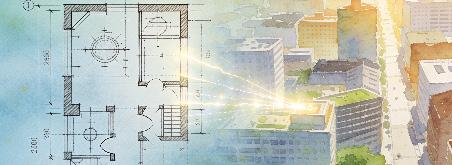
The word Torah means “instruction” or “guide,” and it is often described as G-d’s “user manual” for the world. But unlike an ordinary user manual, which is written after the product exists, the Torah comes first.
According to Kabbalah, just as a builder follows a blueprint, G-d looked into the Torah and created the world.
The Torah is not a manual written after creation to manage a world that has gone off course. It is the very reason creation exists. The Torah is primary, and the world is its expression, brought into being to make its teachings possible. In other words, G-d created the world so that the instructions of the Torah could be lived and fulfilled.
The same is true for each of us.
Your divine mission is primary. Your circumstances are secondary. Your current situation is not the product of random events, it’s the setting of the stage in which your real story unfolds.
A powerful example of this perspective took place when a snowstorm stranded a group of Jewish women in a Detroit airport. Feeling stuck and frustrated, they reached out to the Rebbe for guidance. His response became famous: “A Jew is never stuck. Wherever you find yourself, it is by Divine design.”
What seemed like an inconvenience was, in truth, an opportunity. Inspired by the Rebbe’s words, the women began reaching out to other stranded Jewish travelers. What started as a delay became connection, community, and lasting impact.
The Baal Shem Tov taught his followers that everything we encounter in life is by divine design. Nothing is incidental. The message is simple but profound. Even something as inconvenient as a snowstorm or a canceled flight is not random. It is purposeful.
This idea extends even further into our interactions with others. Think of it like the personalized feed you see online. The content that appears is not random. It is tailored based on who you are and where you are. In a deeper sense, life works the same way. What shows up in your world is there for a reason.
The Baal Shem Tov explains that if you notice a flaw in someone else, it is not only about them. It can serve as a mirror, reflecting something within you that needs attention. We often overlook our own shortcomings, yet see them clearly in others. What appears in your “feed” may be there to help you recognize your own blind spots and grow.
In a world created to fulfill the Torah and your divine mission, things do not simply happen to you. They happen for you.
Your City, State 12345 www.ChabadYourPlace.com
Celebrate Shavuot!
HEAR THE TEN COMMANDMENTS READ FROM THE TORAH ON SHAVUOT