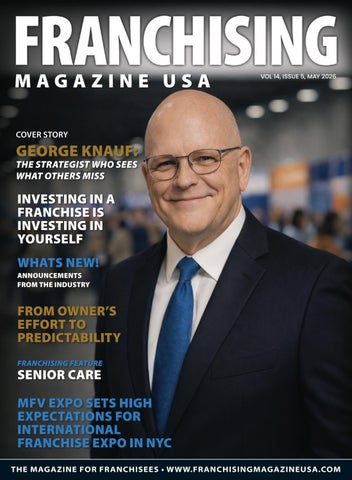
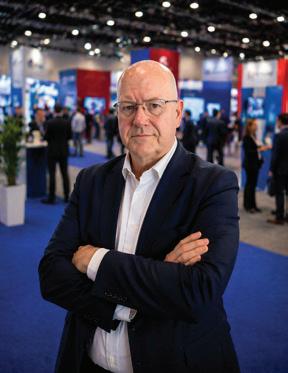
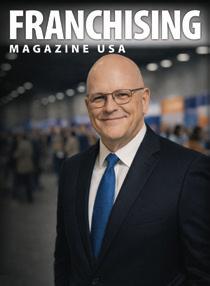
george knau F: t he strategist Who s ees What others Miss COVER stORy
MFV expo sets high expectations For international F ranchise expo in n yc in V esting in a F ranchise is in V esting in yourselF franchising feature senior care F ro M owner’s e FFort to predictability whats new! announce M ents F ro M the industry
VOLUME 14, IssUE 4, 2026
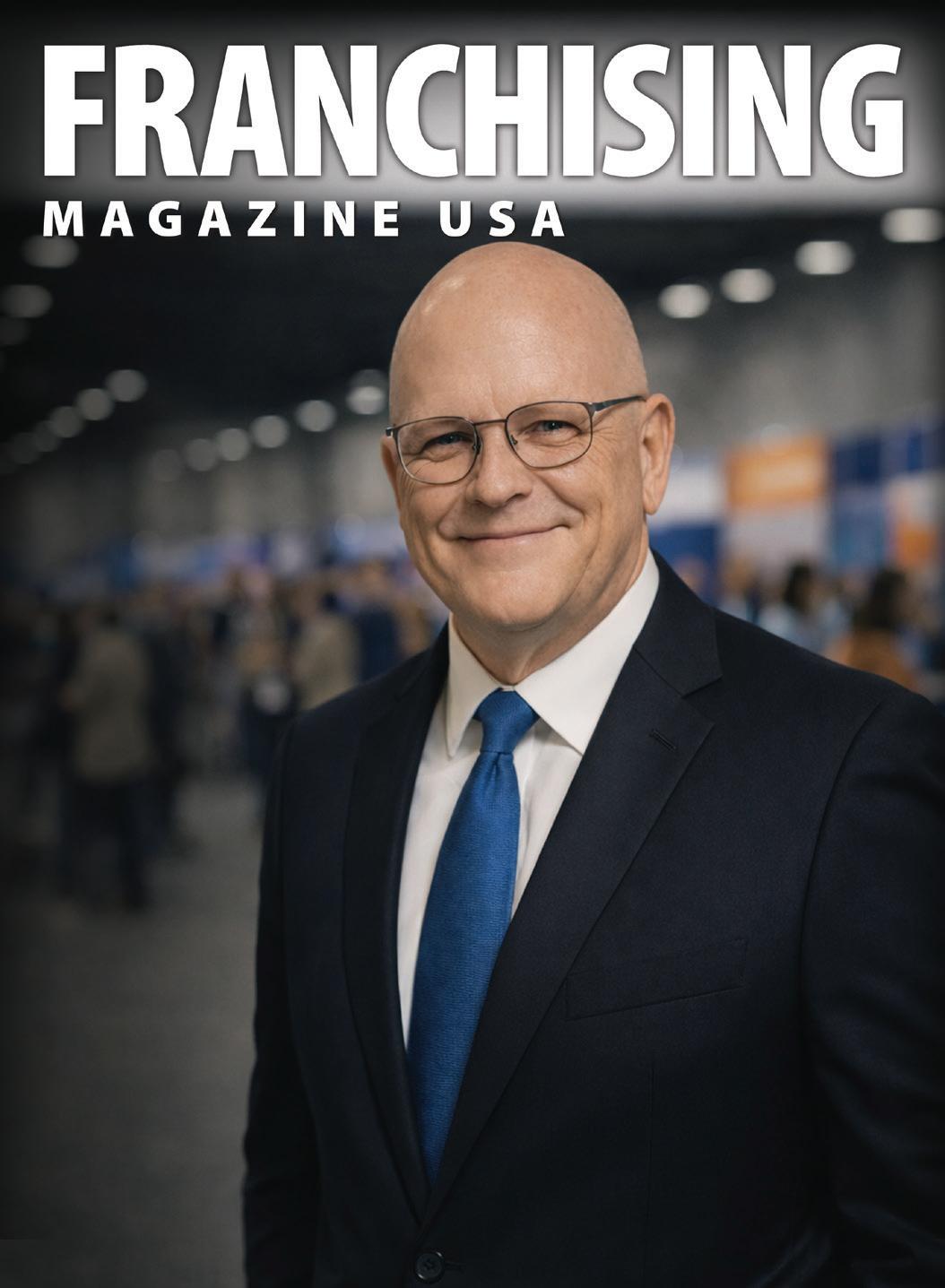
On the cover: g E org E knaUF
pRE s I d E nt: colin Bradbury. colin@cgbpublishing.com
pU b LI sh ER : Vikki Bradbury. vikki@cgbpublishing.com
E d I tORI a L d E pa R t ME nt: editor@cgbpublishing.com
adVER t I s I ng: Jastine supleo. advertising@cgbpublishing.com
Cgb pUbLIshIng canadian o ffice: sidney B.c canada
U. s. Office: seattle, Wa www.franchisingmagazineusa.com
Welcome to the May 2026 issue of Franchising Magazine Usa!
h ere we are already in May and this issue is full of opportunities and great advice. We are excited to also be at the International Franchise Expo in n ew york again this year May 29th and 30th at the Javits Centre you can find us at booth 259 and to get your FREE pass go to https://www.franchiseexpo.com/ife with code: [FR an M ag]. I always look forward to not only meeting potential franchisees but also review some of the exciting franchises on display and meet experts in this field. t he franchising world is full of exciting developments and opportunities.
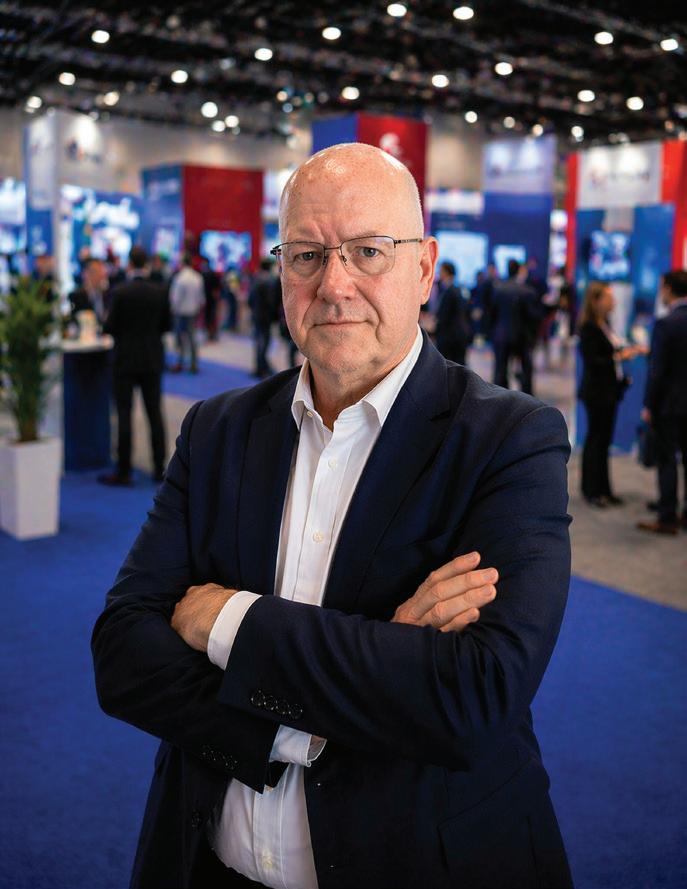
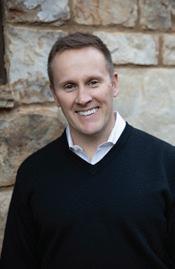
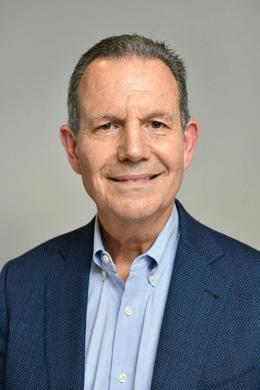
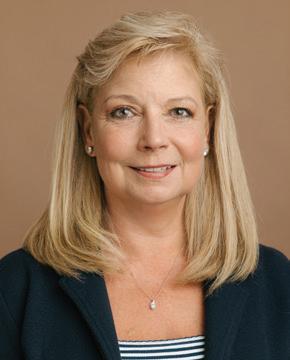
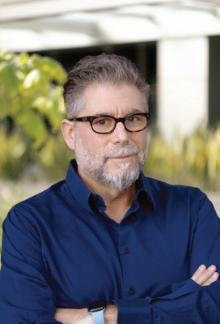
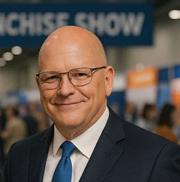
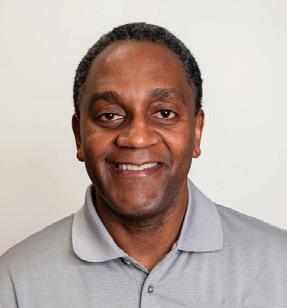
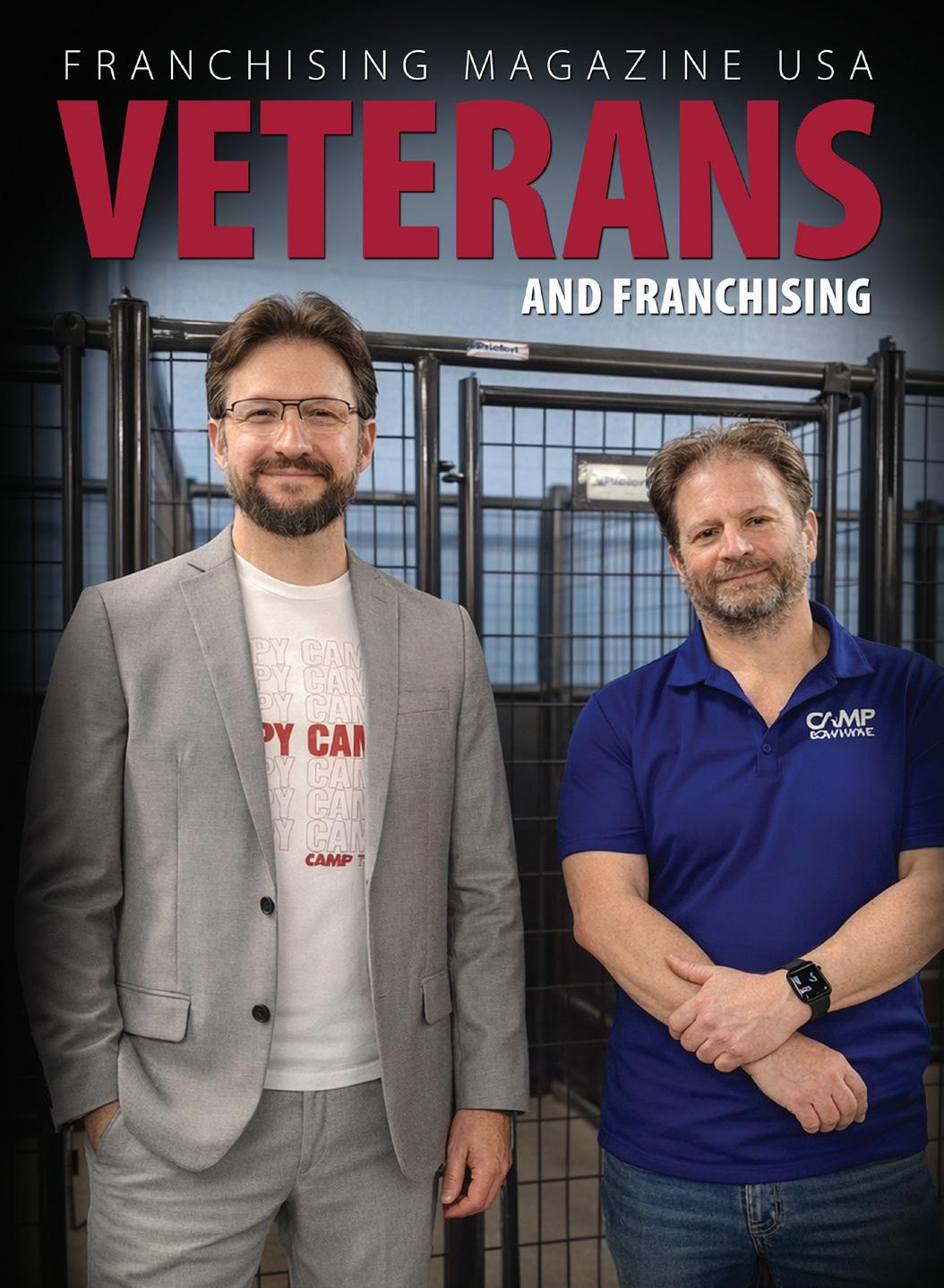
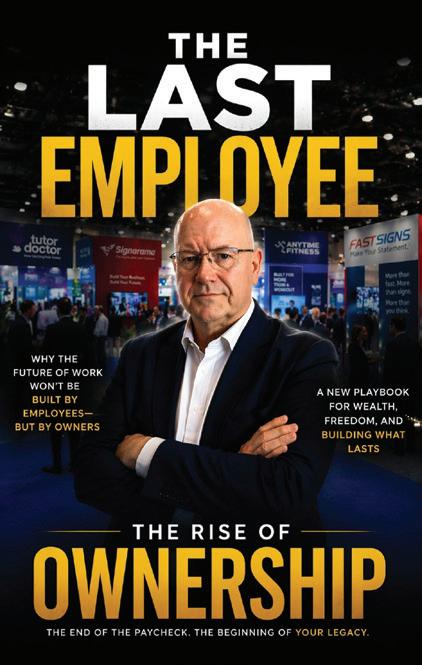
o n our front cover this issue we meet one of the experts g eorge k nauf, g eorge has been involved in Franchising for over 30 years on every side of the table and has a substantial amount of knowledge. g eorge is also a published author and his new book The Last Employee is a must read. To learn more about what g eorge has to say, turn to the contents page and check out his cover story, he also offers more great advice further in the magazine as our resident expert.
More of our residential experts also offer some great advice and thought-provoking questions, such as Luke Frey who discusses from owners’ effort to predictability. Evan hackel also asks you to rethink everything and why innovation is no longer optional in franchising,
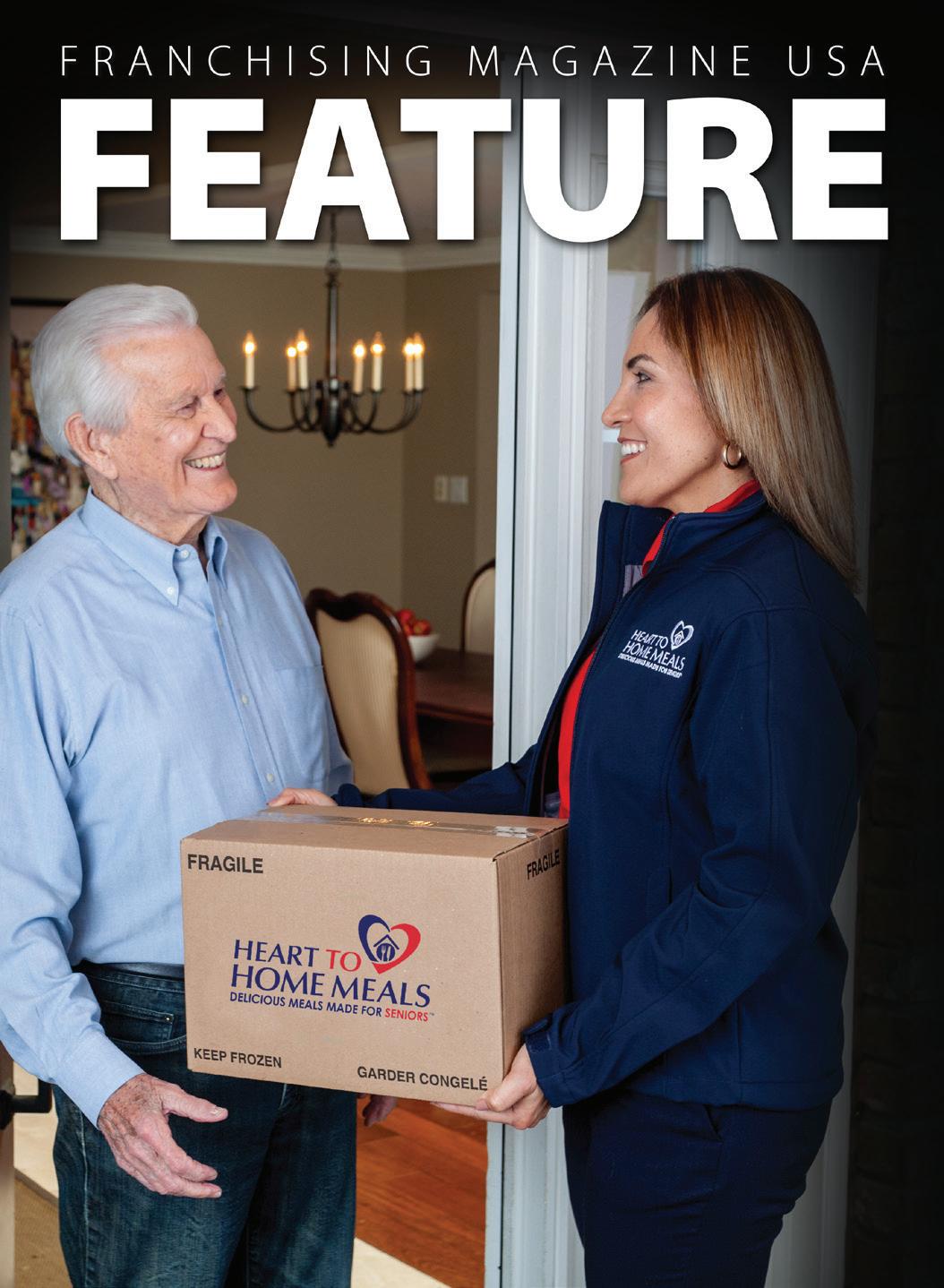
o ur special supplement this issue is on the s enior and h ome c are franchising sector. o n the Feature Front cover we have
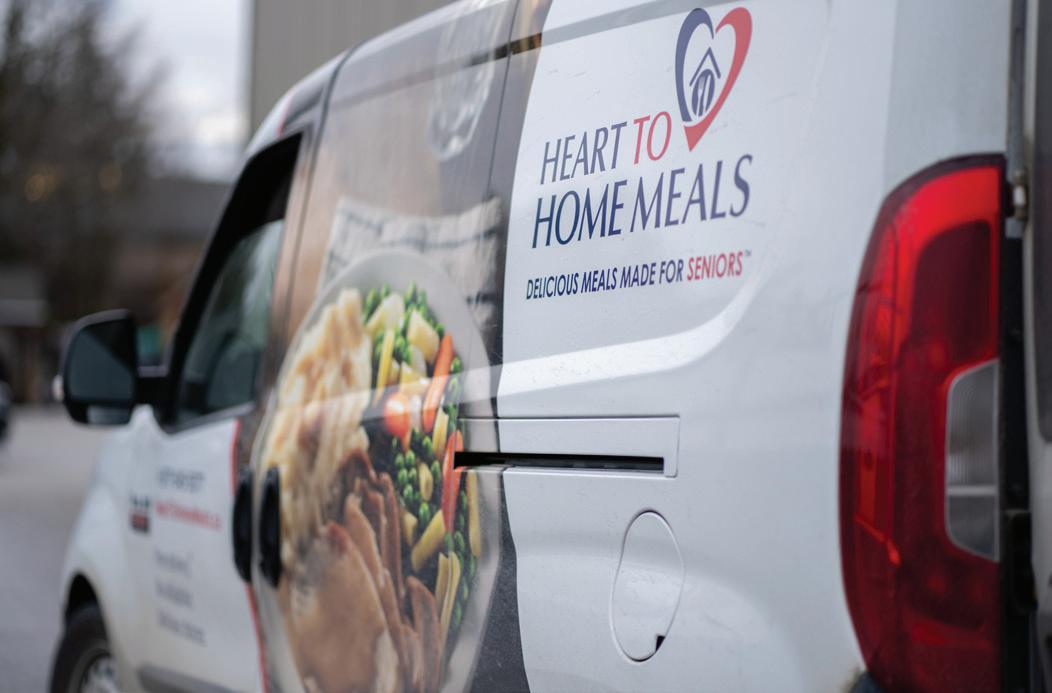
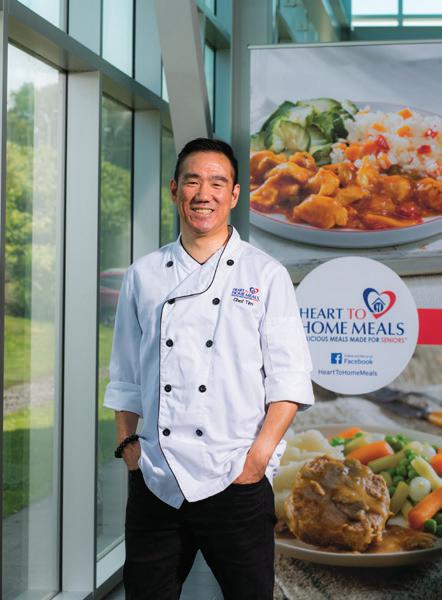
h eart to h ome Meals with a global legacy and who are now having a local impact in scaling purpose driven franchising in the U. s chis conner our resident feature expert discusses The r eigning Differentiator in this high demand, high turnover industry. You can also read about a number of other franchise systems in this sector.
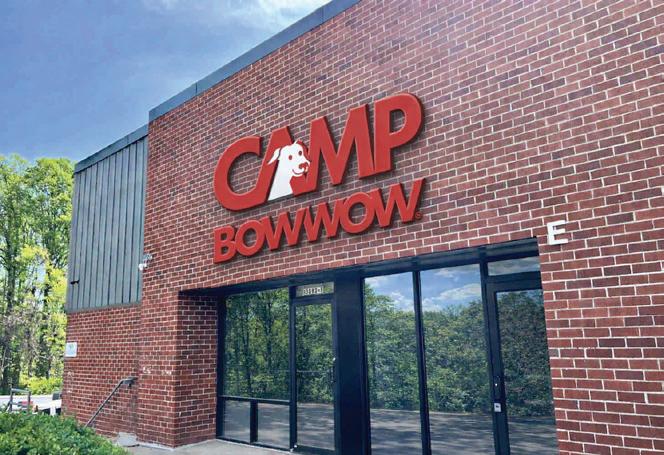
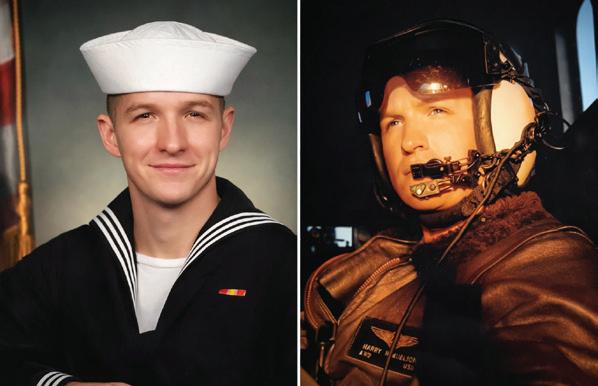
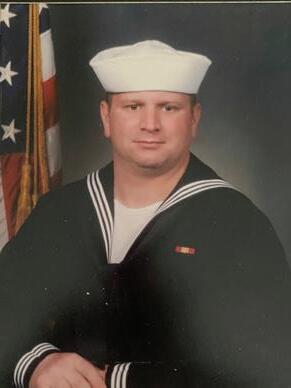
For our veteran readers, The Veterans in Franchising supplement has c amp Bow Wow on the cover and we meet 2 Franchisees, harry s amulson and Jay Mollet and who have joined forces and gone from flight paths to front desks as they prepare to launch c amp Bow Wow Dulles. Turn to the Veterans supplement to also read other great stories.
Plus, don’t miss our a-Z Franchise Directory, which offers a comprehensive guide to exciting franchise opportunities across industries.
We hope this issue inspires and equips you to take your franchise journey to the next level. happy reading!
Vikki Bradbury | Publisher Franchising Magazine USA
The public and policymakers need to understand franchising.
Our purpose
@OurFranchise is an industry-wide campaign created to spread the word about the value of franchising and share the stories of men and women just like you, who are leading the way as franchisors, franchisees, and franchise employees. The franchise business model has been proven time and time again to work, but it’s threatened when the public and politicians don’t understand how it operates to benefit local, independent franchise establishment owners and their communities. Putting a spotlight on real leaders succeeding with the franchise model is how we’ll ensure franchising is stronger than ever before.
Follow us
Share the tools and resources offered on AtOurFranchise.org/resources
Help us keep the momentum going
Since our launch in June 2016, we’ve reached 1.7 million people through outreach efforts, including events in key cities and states, where we spoke directly with business owners, employees, policymakers, and the media. Additionally, we’ve reached people across America through our website and social media channels, digital advertisements, and the promotion of We the Franchisees on Politico – but there is much more work to do. As a franchisor, franchisee, or franchise vendor, you are a leader in your community – and we need your support, now more than ever.
b a x
Our Franchise @OurFranchise @OurFranchise
You benefit by joining
By joining @OurFranchise, you’ll get access to exclusive stories and resources that can help grow your franchise business, educate employees at all levels about the franchise business model, and share the economic importance of franchising with consumers. You will also have the opportunity to share your franchise success story with your peers.
Visit AtOurFranchise.org
Contact Erica Farage, Senior Director of Political Affairs and Grassroots Advocacy and Multi-Unit Franchisee Engagement International Franchise Association efarage@franchise.org (202) 662-0760
This is just the beginning
Make sure you stay up to date with the campaign’s latest efforts through email updates and social media. Visit our website to read and share the latest stories of franchisors and franchisees making an impact in their communities. Become a franchise advocate to help ensure Americans, now and in the future, have the opportunity to start franchise businesses. Take the lead today!
contents M a Y 2026
10 George Knauf: The strategist Who sees What others Miss
6 What’s New! Announcements from the Industry 37 Feature Supplement: Senior Care Franchising
98 A-Z Franchise & Services Directory
Frenchies: Building With intention: amit shah 28 Orangetheory: Beyond The nFL: kevin and kayla curtis
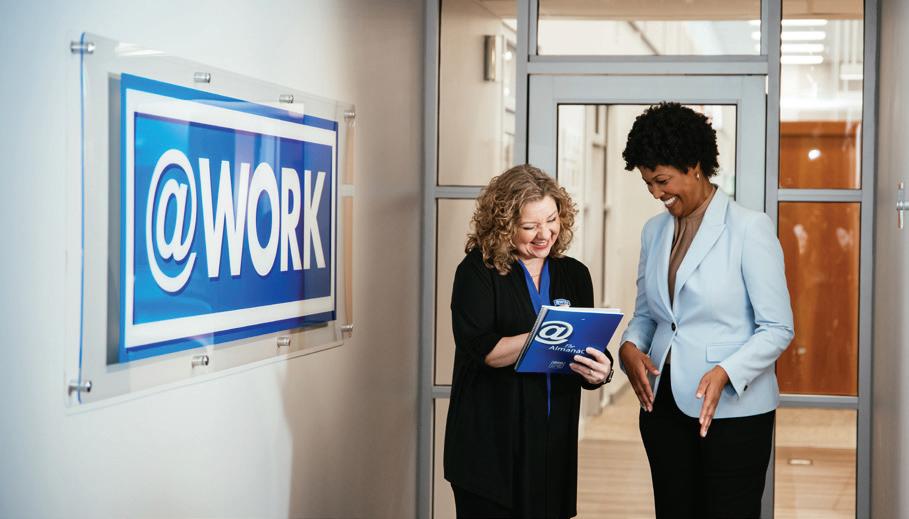
56 Atwork: That Franchise guy returns With a Powerhouse Team To Put People To Work
Have Your Say
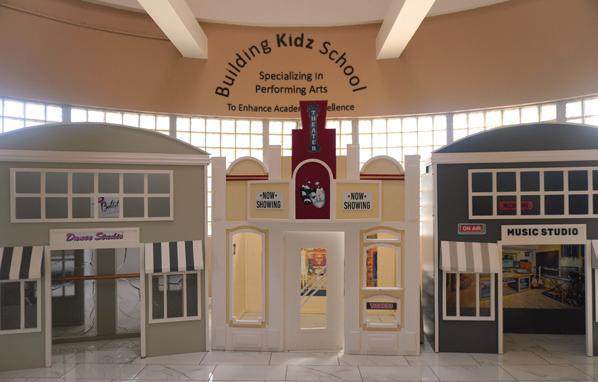
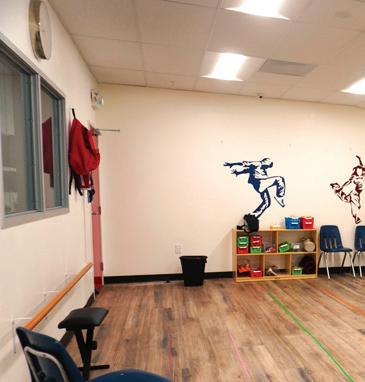
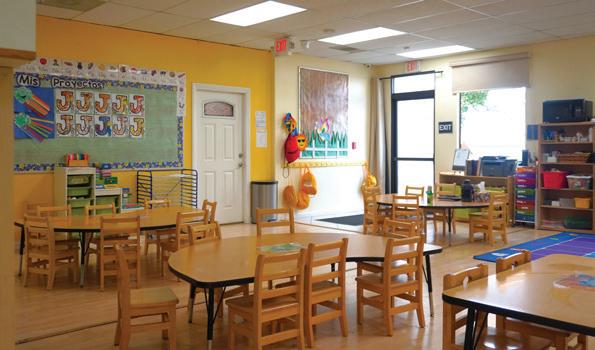
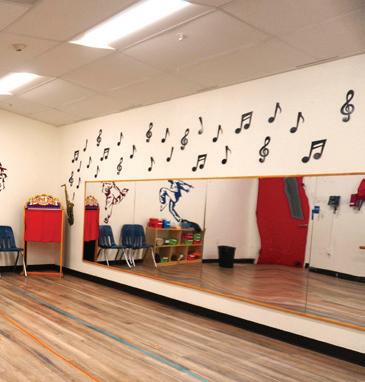
34 Vineeta Bhandari Building Kidz School: The case For arts integration in Early childhood Education Franchising
58 Bob Kaufman: The 70/30 rule: how To Expand internationally Without Losing Your Brand
62 Heather Ripley: how ai is Quietly Deciding Which Franchises Win The Visibility Wars
Snapshot
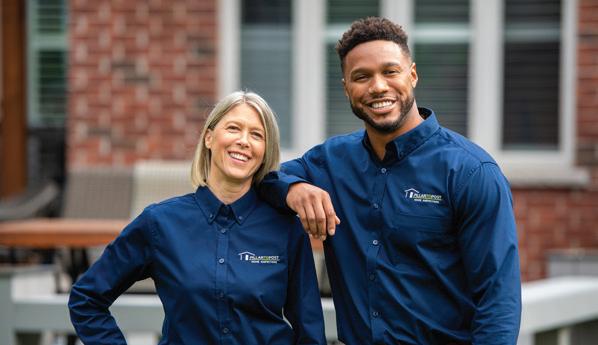
68 Pillar To Post: appoints D’Wayne Tanner as Vice President of Franchise Development
Franchisor in Depth
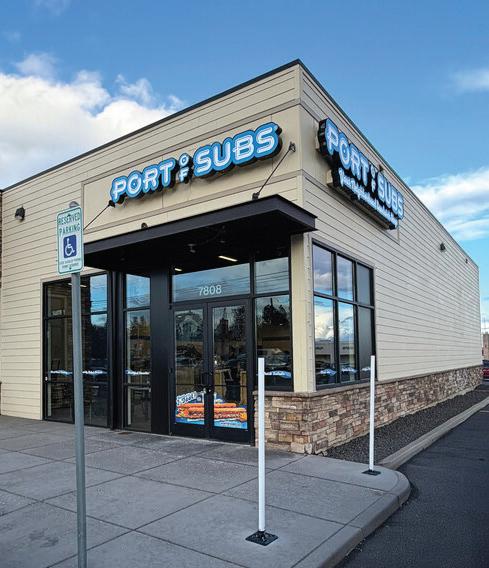
18 Port Of Subs: charts new course across The inland northwest
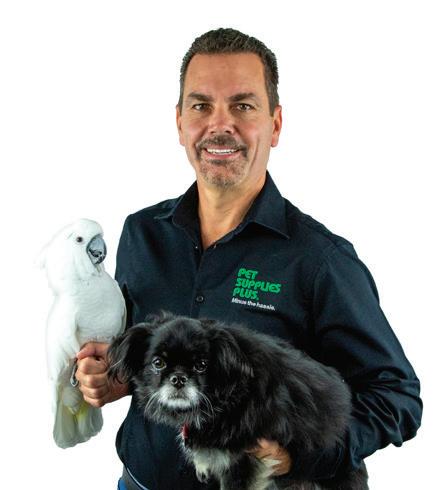
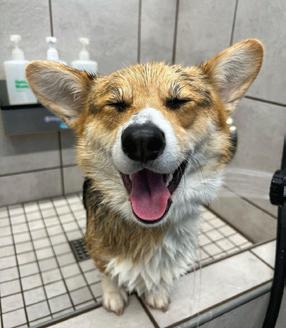
30 Pet Supplies Plus and Wag N’Wash: reinforce commitment To Local communities, Expand Local giving initiatives
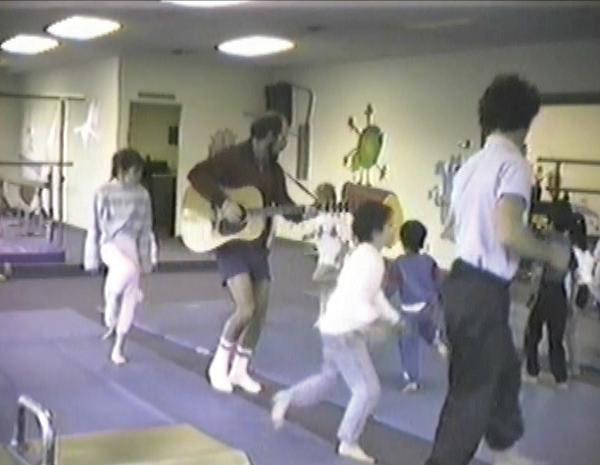
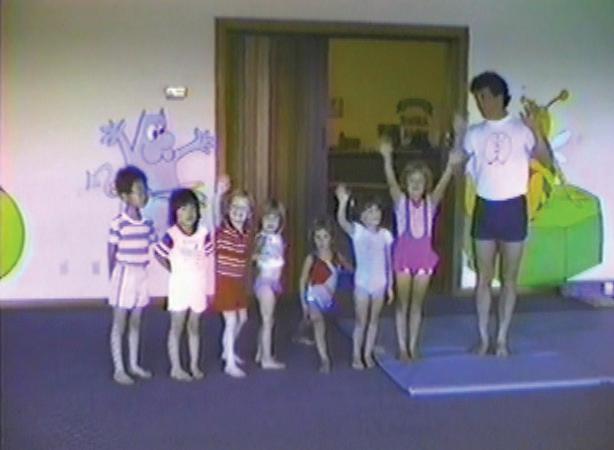
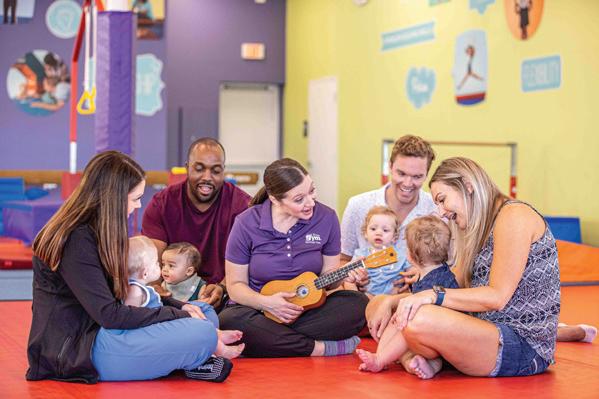
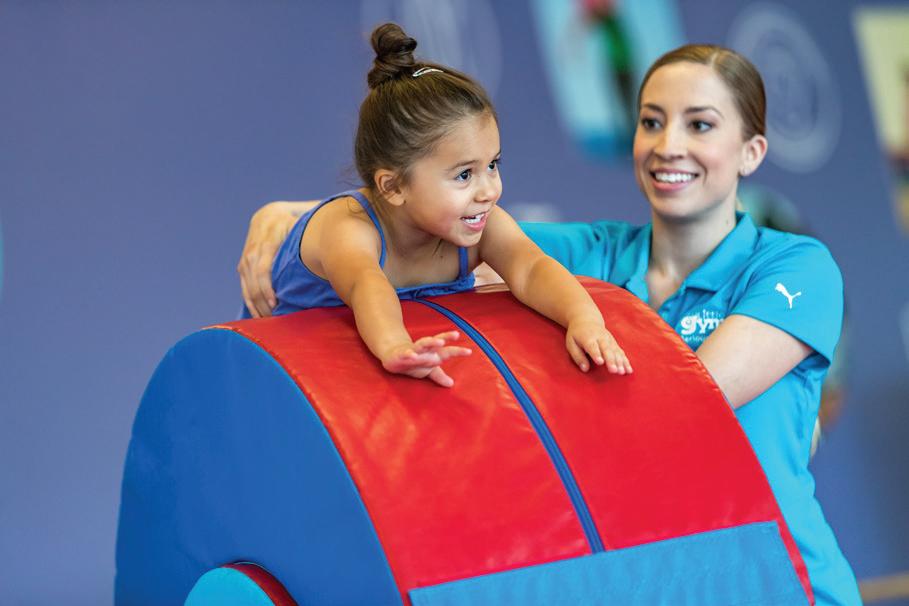
64 Unleashed Brands: The Little gym Turns 50
Expert Advice
12 Marshall Reddy: investing in a Franchise is investing in Yourself
16 Evan Hackel: rethink Everything: Why innovation is no Longer optional in Franchising
26 Chanel Christoff Davis: how cFo’s can reduce sales Tax Exposure
32 Luke Frey: From owners Effort To Predictability
54 Mark Waslefsky: The return of Value – and What it reveals about Today’s restaurant Economy
60 George Knauf: The First Decision
66 Aman Tagore: The hidden cash Trap: Why Profitable Franchises Fail During Expansion
Women In Franchising
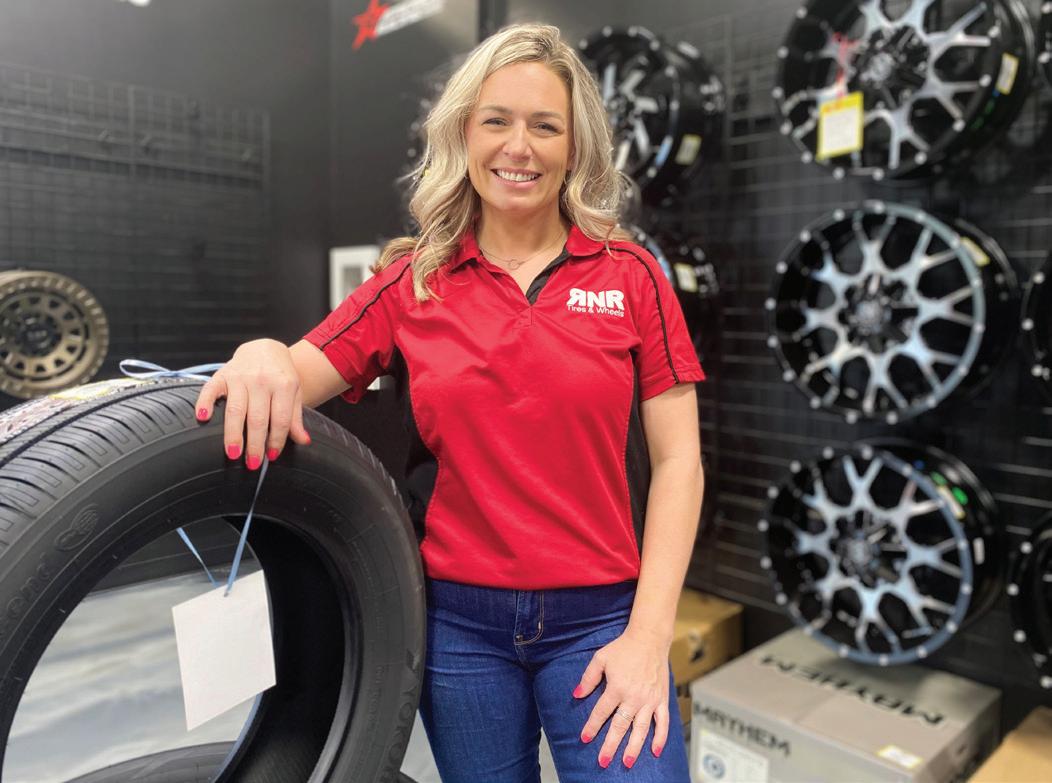
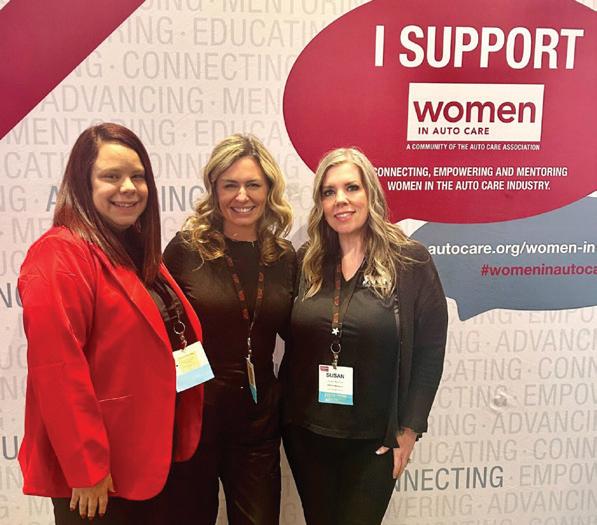
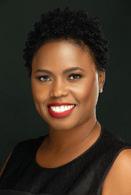
20 Breanne Braddock, RNR: Driving change From The inside out
Spotlight on Service
24 MFV Expo: sets high Expectations For international Franchise Expo in nYc
VETE rans s UPPLEME n T
Cover Story
70 Camp Bow Wow: From Flight Decks To Front Desks Snapshot
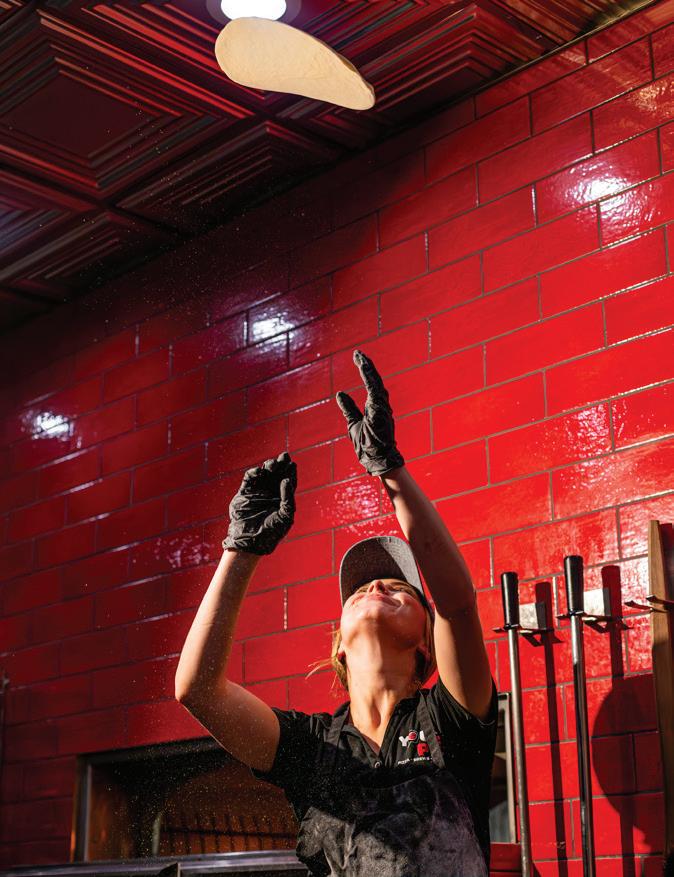
84 Your Pie: Targets southeast Expansion With streamlined restaurant Model
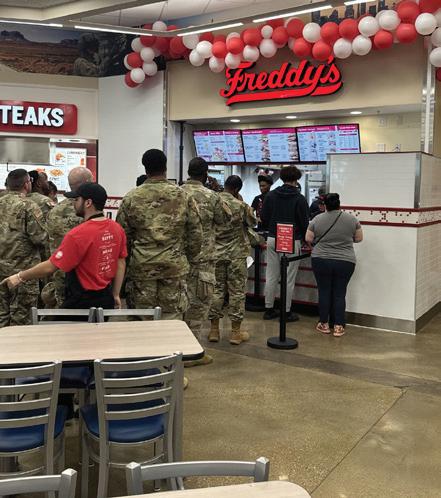
86 Freddy’s: opens First Ever Military Base Location
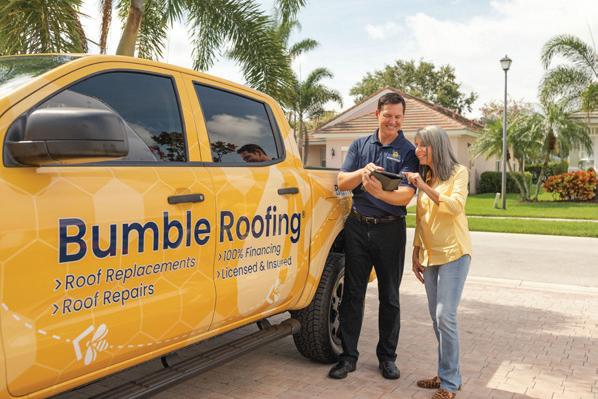
87 Bumble Roofing: Builds on Dallas growth, sets sights on Fort Worth Expansion
Have Your Say
80 Paul Flick: Why We aquired Basecamp Fitness and What We’re Building For The Future of Boutique Fitness
Franchisee in Action
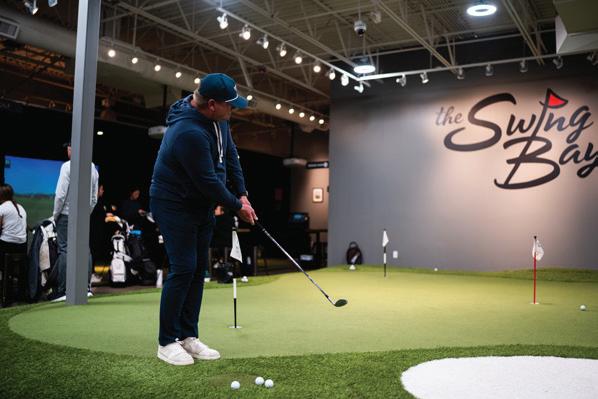
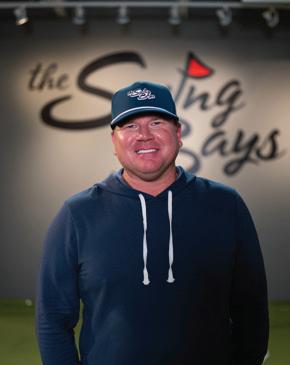
72 The Swing Bays: Lands another Multi-Unit Deal With Marine corps Veteran
Franchisor In Depth
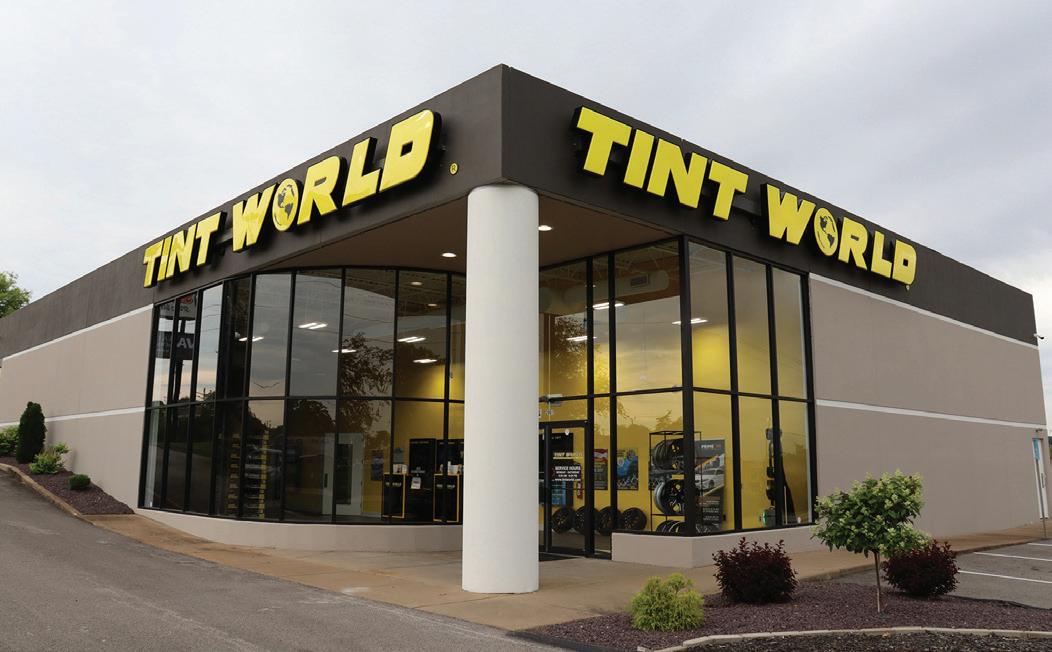
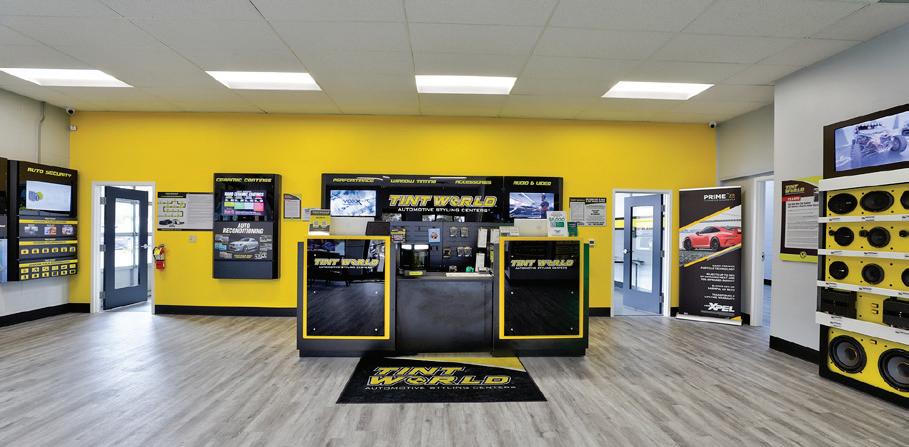
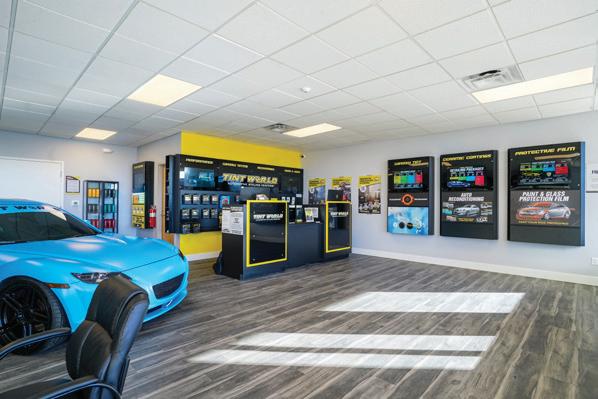
74 Tint World: accelerates growth With $100M Milestone and Expand corporate Team
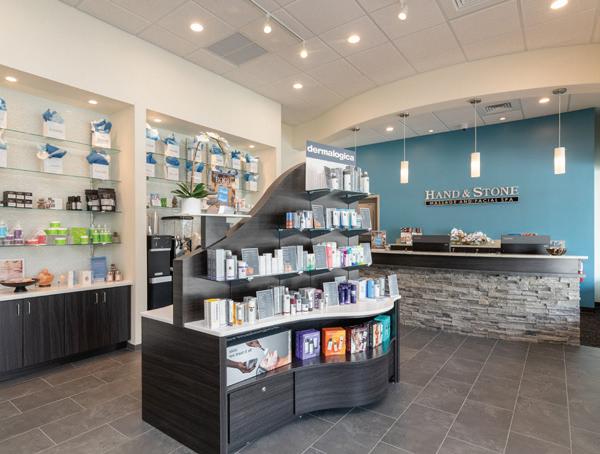
76 Hand & Stone Massage And Facial Spa: signs 9 Franchise agreements and opens 5 spas in Q1
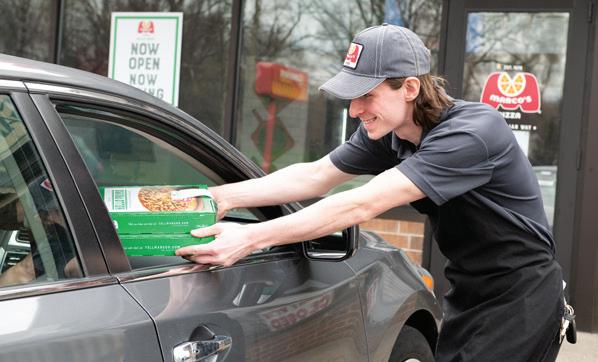
78 Marco’s Pizza: accelerates West coast growth With 12 Unit signed agreement in california
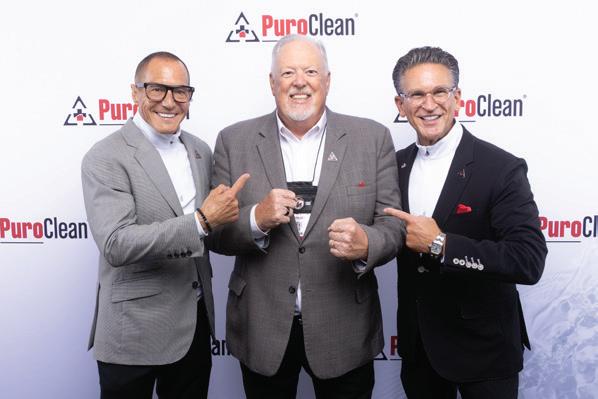
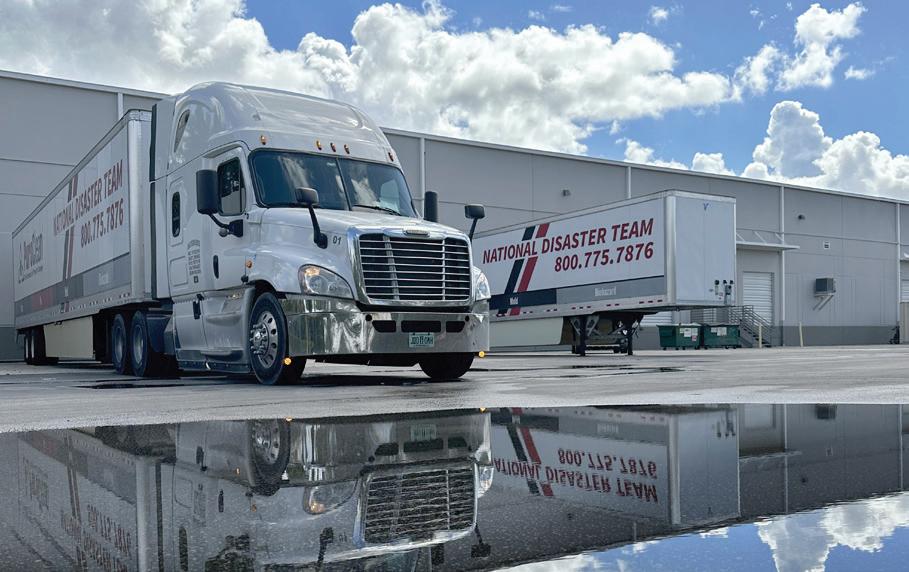
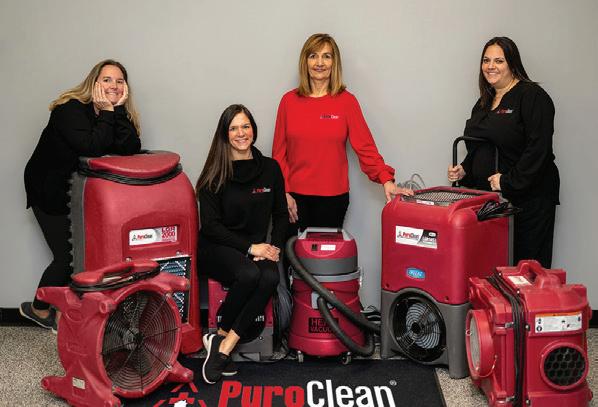
82 Puroclean: What holds a Franchise system Together For 25 Years
Keely Power Systems Joins ABM Franchising Group’s TEGG Network to Expand Electrical Asset Management in Idaho
ABM (NYSE: ABM), a leading provider of integrated facility, engineering, and infrastructure solutions, today announced that Keely Power Systems, a leading electrical services provider serving commercial and industrial clients across Idaho, signed an agreement to join the TEGG franchise network. TEGG is a franchise brand of ABM Franchising Group, LLC, a subsidiary of ABM.
“ keely Power systems’ growth strategy aligns perfectly with the TEgg model of electrical asset management,” said kelly Pnacek, Vice President of aBM Franchising g roup. “TEgg contractors specialize in
testing and condition-based maintenance to keep facilities safe and resilient. We welcome keely Power systems and their expertise to the advancing electrical asset management capabilities of the TEgg network.”
Founded in 2020, keely Power systems has scaled quickly in response to surging demand for increasingly complex projects across the region. a s a family-owned business dedicated to the skilled trades, keely Power systems plans to expand preventative and proactive services for clients alongside projects and design/ build solutions.
“The electrical contracting industry has always evolved alongside shifting markets and rising client expectations,” said clint keely, Principal of keely Power systems. “While i was familiar with TEgg services
from my time working with american Electric in hawaii, the organization’s depth of technical education and strong national network made the decision to join clear. Providing TEgg services positions keely Power systems to serve as a trusted expert in an ever-changing industry.”
aBM Franchising g roup offers a portfolio of franchise networks that deliver building performance for commercial and industrial buildings through electrical and mechanical services and preventive maintenance solutions. aBM Franchising g roup consists of two franchise brands: TEgg and Linc s ervice. keely Power systems will operate under the TEgg franchise brand.
For more information, visit www.abm.com
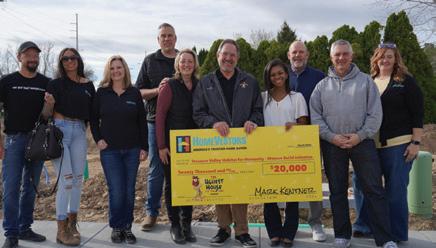
HomeVestors Makes “Beautiful” $20,000 Donation
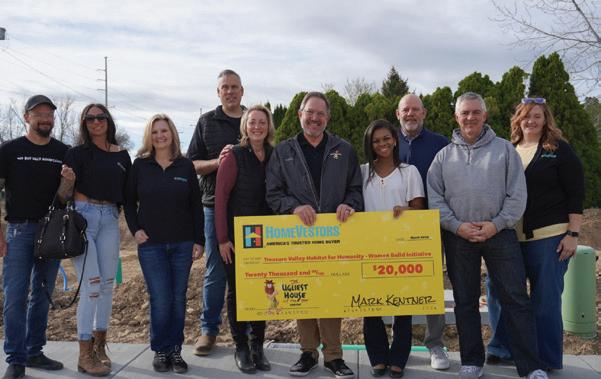
HomeVestors® presented a check for $20,000 to Treasure Valley Habitat for Humanity in honor of a Boise home winning The Ugliest House Of The Year® 2025.
The national contest highlights the most dramatic “befores” and “afters” from the houses purchased and renovated by h omeVestors of america’s franchises around the country, and husband and wife team Paul and Tanice Myers won the 19th annual heated competition.
o ver the years, the Myers have beautified more than 500 houses with their team of eight, bonding with grateful homeowners and neighbors as they caringly breathe new life into the homes
they renovate. Treasure Valley habitat for humanity works in partnership with the community to provide decent, affordable homes and to promote responsible homeownership for people in need.
“ it meant a lot to feel the enthusiasm and care h omeVestors brought to this project,” said Janessa chastain, chief Executive o fficer Treasure Valley habitat for humanity. “Events like this don’t come together without a whole team of people willing to go above and beyond.
“The stars aligned beautifully this year with a women-owned business winning The Ugliest h ouse o f The Year competition, which also helped bring attention to the Women Build initiative,” added Joshua Waltzer, chief Executive o fficer of h omeVestors.
“This is the fifth year we have partnered with a local habitat for humanity chapter to donate in honor of the annual winner, and we couldn’t be happier with how our two missions have aligned as we both work towards a shared vision of a world where everyone has a decent and affordable place to live.”
h omeVestors marks a notable milestone this year as it celebrates 30 years as america’s Trusted h ome Buyer. The dual celebrations at a Women Build project during Women’s history Month also highlights the opportunities h omeVestors creates for women owners like Tanice.
ALe XI s LAU ren to Debut First Orlando Location in Winter Park
ALEXIS LAUREN, the ultra-luxe, founder-led medspa brand redefining personalised aesthetic treatments and skincare, has announced its expansion into Central Florida with its first Orlandoarea location. The new corporate flagship is set to open in Winter Park in Fall 2026, following the signing of a lease at 415 S Orlando Ave, Suite 112.
This milestone marks the brand’s growth beyond its s outh Florida roots, introducing its elevated, membership-driven model to one of the region’s most design-forward, experience-oriented communities. k nown for its upscale shopping districts and premium retail mix, Winter Park is a natural fit for aLEXis L aUr En ’s refined approach to medical-grade aesthetics and hospitality.
“Winter Park has long been on our radar as a destination that truly values intentional, elevated experiences—exactly what we aim to deliver,” said alexis r enda, Founder and cEo. “ it’s a market that appreciates attention to detail, making it the perfect
place to extend our vision beyond coral g ables and Bay harbor islands.”
aLEXis L aUr En delivers a modern medspa experience that blends advanced aesthetic treatments with elevated hospitality and a simplified client journey. r ather than navigating complex service menus, clients are guided by trained professionals through personalised, results-driven care, removing decision fatigue. Each location is designed as more than a medspa— hosting curated events, fostering local collaborations, and creating spaces centred on connection and care.
“This expansion represents a significant step in our growth strategy,” said Jen allers, Director of Franchise Development. “ it reinforces the strength of our membership-driven, hospitality-focused model and supports our ongoing national expansion.”
The brand is actively seeking franchise partners interested in building a luxury, community-focused business in the
Fr Anc HI se e XP o G erm An Y
rapidly growing medspa sector. n o medical background is required, with full operational support provided. For more information, visit alexislauren. com.
Will Return On November 6 and 7, 2026, in Frankfurt as A Leading International Event
Now in its 8th edition, the show will bring together leading franchise brands, investors, and key ecosystem players, creating a dynamic platform for successful growth, partnerships, and sustainable business development.
o rganized by MFV Expositions / comexposium - the world leading franchise event organizer - the exhibition combines international expertise with indepth market knowledge, offering optimal conditions for successful expansion and investment in franchising.
With around 100 franchise brands and 2,350 visitors, Franchise Expo g ermany 2025 confirmed its strong market position. Building on this success, the 2026 edition will further expand its international reach and reinforce its role as a key platform connecting global franchise concepts with local market opportunities—driving sustainable growth and successful franchise development.
against the backdrop of a dynamic market environment, Franchise Expo g ermany 2026 introduces an enhanced event format with a clear focus on efficiency, quality, and measurable business impact.
The priority: facilitating high-value connections and fostering investment in scalable, future-proof business models.
A NEW FORMAT FOCUSED ON EFFICIENCY AND RESULTS
With a compact two-day format and a strong business focus, the event sets new standards for efficient networking and high-quality deal-making.
Taking Place on Friday, n ovember 6, and s aturday, n ovember 7, 2026, at the Forum Messe Frankfurt - a modern premium venue - the show is designed to maximize meaningful interactions.
The objective is clear: connect qualified entrepreneurs, investors, and franchisors while maximizing the business impact of every meeting.
Franchise Expo g ermany will take place on n ovember 6–7, 2026, Forum Messe Frankfurt.
More information: https://de.franchiseexpo-germany.com
We LLB I z Br Ands Announces Michelle DeVore as New CMO
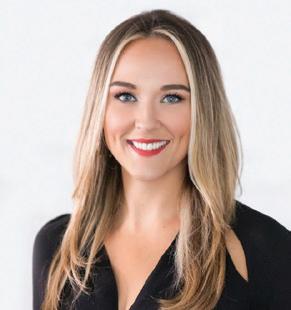
WellBiz Brands, Inc., the global franchisor of five leading beauty and wellness brands — Drybar®, Elements Massage®, Fitness Together®, Amazing Lash Studio® and Radiant Waxing®, announced today the appointment of Michelle DeVore as the chief marketing officer (CMO). DeVore will oversee brand marketing across the WellBiz Brands portfolio through creative, data-driven marketing strategies to deepen guest relationships and accelerate portfolio-wide growth.
“Michelle is an instrumental addition to the WellBiz Brands leadership team and the strategic growth of our portfolio. she has an extensive track record of leading brand and digital initiatives across franchised services, beauty, and luxury retail. a s a leader, she exemplifies our values and brings the strategic direction needed to sharpen the customer experience, brand
awareness and loyalty across the portfolio,” said amanda clark, cEo of WellBiz Brands.
DeVore is an experienced marketing professional who brings more than 20 years of experience to the new role. Before joining WellBiz, she served as senior vice president and head of marketing at r egis corporation, where she led the launch of the first-of-its-kind programmatic loyalty program in the haircut franchise category for supercuts, and introduced a new model for guest engagement and retention across a national salon system. Before her time at r egis, she also worked for brands like European Wax center and the n eiman Marcus g roup, implementing systems to enhance guest experience and support guest growth, loyalty programs and brand partnerships.
“Franchising is such a unique model because it brings together national scale
with the passion of local entrepreneurs, and that energy is what drew me to WellBiz Brands. i ’ve long admired the strength of the portfolio and the engagement of its franchisees, which creates a strong foundation for growth,” said DeVore. visit our website.
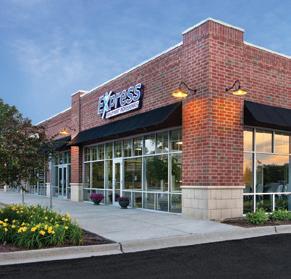
eXPress e m PLoYment Pro Fess I on AL s Launches 2026 Fast Track Incentive for New Franchise Owners
Leading global staffing franchise Express Employment Professionals has announced the continuation of its Fast Track incentive program in 2026, offering new franchise owners the opportunity to earn back up to 100 percent of their initial franchise fee by achieving early performance milestones.
o riginally introduced in 2023, the program is designed to help new owners build strong sales habits, develop a broad client base, and generate momentum within their first six months of operation.
“Fast Track is about creating early momentum where it matters most,” said Melissa Davis, Vice President of Franchising. “When new franchise owners focus on client relationships and consistent sales activity from day one, it sets the foundation for long-term growth.”
Under the program, first-time franchise owners can earn back 50 percent of their franchise fee by either billing 16 clients in a single week or achieving $65,000 in gross margin within their first 26 weeks. Those who reach both milestones qualify for Double Fast Track, earning 100 percent of their franchise fee returned.
The initiative has already seen strong uptake. in 2025, 21 franchise owners achieved Fast Track status, with six reaching Double Fast Track. additionally, 63 percent of Fast Track achievers have gone on to reach circle of Excellence, the company’s recognition program for topperforming franchisees.
“Fast Track pushed me to understand exactly what to do as a new owner,” said franchisee Martin Minkowicz. “ it’s not just about the financial reward—it’s about building confidence and making an impact in your community.”
a s the brand expands, franchise development is focused on key markets across the U. s . and c anada, supporting its long-term growth strategy.
For more information, visit www. ExpressFranchising.com.
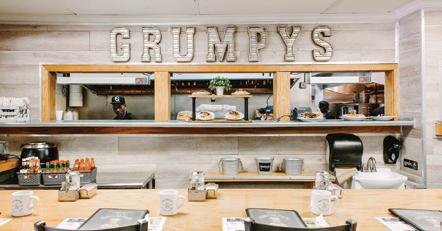
Gr U m PY’s r estAU r Ant Reports Strong Q1 Growth and $3.17M Average Unit Volume, Accelerating Franchise Expansion
Grumpy’s Restaurant, an award-winning full-service Americana diner known for its scratch-made menu and genuine hospitality, is reporting a strong start to 2026 with consistent first-quarter sales growth, continued franchise expansion, and increased brand momentum across Northeast Florida.
Driven by disciplined operations, a scratch kitchen model, and strong guest loyalty, the brand delivered steady year-over-year growth throughout Q1: • Jan: +7.62% • Feb: +8.62% • Mar: +3.44%
“We’re seeing strong, steady growth to start the year, which reflects the consistency of our operating systems and the loyalty of our guests,” said Daniel DeLeon, President & cEo of g rumpy’s r estaurant. “o ur focus on high-quality, made-from-scratch food and genuine hospitality continues to resonate, and we’re excited to build on this momentum.”
The Q1 results build on a strong 2025 for the brand, during which g rumpy’s achieved:
• Average Unit Volume (AUV): $3.17 million (up from $2.98 million in 2024)
• System Sales Growth: +6.91%
a s the brand continues to scale, g rumpy’s is expanding its footprint with a new location currently under development in Fleming island by existing franchisees the h oard family, who are
continuing to grow their partnership as multi-unit operators. The new restaurant is anticipated to open in late Q2 2026 and will mark the sixth g rumpy’s location in the Jacksonville market. This continued reinvestment by existing franchise partners reflects the strength of the brand’s operating model and its long-term growth strategy focused on multi-unit development.
g rumpy’s also received strong community recognition, with its n eptune Beach location earning “Best Breakfast” and “Best sweet Tea” in the 2025 Best of the Beaches awards, presented by The Ponte Vedra r ecorder and First coast r egister.
“This strong start to the year reinforces the momentum we’ve been building over the past several years,” continued DeLeon. www.GrumpysRestaurantCo.com
m one YPenn Y Strengthens AI Offering with Expert Human
Moneypenny has appointed Alex James as AI Sales Solution Specialist, as the international company continues to invest in AI-driven client solutions and its expansion across the US. In his new role, Alex will focus on driving adoption of AI-powered solutions and supporting business growth, helping organizations stateside deliver smarter, more efficient customer interactions in an everchanging field.
alex joins the Us team from the Uk , bringing more than four years of experience within Moneypenny. his international move reflects both the company’s commitment to global talent development and its strategic focus on accelerating growth in the Us
“alex’s deep understanding of our clients, combined with his hands-on experience in developing our ai r eceptionist solution, makes him the ideal person to help drive our ai growth in the Us,” said Jesper WithFogstrup, g roup cEo of Moneypenny.
“ his move reflects both our investment in innovation and our commitment to expanding our presence internationally, and we’re delighted to have him leading this charge.”
Most recently serving as Business Development Manager, alex played a key role in driving growth across the accounting and legal sectors,
helping clients enhance their customer communications through phone answering and live chat services. Working closely with product and technical teams, he supported the development and launch last year of Moneypenny’s innovative ai r eceptionist solution. his contributions have included defining sales workflows, shaping trial processes, and aligning customer needs with emerging ai capabilities - experience that will be central to his new role, which he will perform from Moneypenny’s Us headquarters in atlanta.
Earlier this year, Moneypenny reached a major milestone, having handled more than 180 million calls on behalf of businesses and organizations since its founding in the year 2000. Each call represents a customer need answered, an opportunity captured and a real conversation delivered when it mattered most.
The S TraTegi ST Who See S WhaT oTher S Mi SS
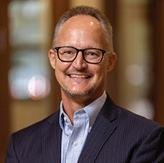
George Knauf has spent over thirty years inside franchising — on every side of the table. His frameworks have changed how serious investors think about ownership. His new book marks the moment the wider world catches up.
When George Knauf walks a franchise show floor, he is not watching the booths. He is watching the people — specifically, what happens in the moment someone picks up a brochure, pauses, reads the back, and puts it down.
“That pause is the whole game,” he says. “Something in them already knows the answer. My job is to find out what question they’re actually asking.”
Knauf has been having some version of that conversation for thirty years. He has been a franchisee himself. He has worked inside franchisor organizations in both operations and development. He has owned independent businesses. And for twenty-two years he has sat on the buyer’s side of the table as a franchise investment strategist — the only side, he is quick to note, that represents the person writing the check.
That five-role credential stack is uncommon in an industry where most consultants have seen franchising from one or two vantage points. It is why serious investors seek Knauf out, and why this May, Franchising Magazine USA has given him its cover.
“Most people in this industry have seen franchising from one or two angles. I’ve sat in every seat. that changes what you see.”
— George Knauf
the map nobody Was drawing
Ask Knauf what has frustrated him most over three decades and the answer comes quickly: “The number of people who bought a single franchise, built something solid, and then stopped — not because they wanted to, but because nobody showed them there was more road.”
That frustration became a framework. Knauf’s Hierarchy of Franchising maps the complete ownership trajectory across six levels — from the initial decision to leave employment all the way to building a legacy enterprise with institutional exit value. It is the kind of structured, longrange thinking that did not previously exist in a field that tends to sell individual opportunities rather than lifetime ownership strategy.
The Hierarchy runs from Level One — the employee not yet having made the ownership decision — to Level Six: the Legacy Owner, whose business structure outlasts their daily involvement and exits entirely on their own terms. The levels between map the decisions, capital deployments, and operational thresholds that separate each stage.
“The Hierarchy is not aspirational,” Knauf says. “It is descriptive. These are the actual stages successful franchise investors move through. The ones who build real wealth know where they are going before they buy their first unit.”
“ the investors who build real wealth know where they’re going before they buy their first unit.”
— George Knauf
What He sees right now — And Why It matters
Knauf is not given to hype. Three decades in an industry full of it has made him averse to enthusiasm that substitutes for analysis. So when he describes the current moment in franchising as the most significant ownership opportunity in a generation, the statement carries weight.
His reasoning centers on what he calls the Four Forces: AI displacement of knowledge-worker roles, the largest
generational business transfer in American history, a structural trades labor shortage, and the maturation of franchising into a sophisticated investment-grade asset class. Each force alone would reshape the landscape. Together they are compounding.
“The person who understands both the AI displacement wave and the Boomer business transfer — and positions at the intersection — is not lucky,” Knauf says. “They are early.”
It is the kind of systems-level thinking that defines his practice and separates his work from the transactional model that dominates most of the industry. He is not matching candidates to available brands.
He is analyzing where a person’s capital, skills, and timeline intersect with durable market forces — then building a strategy around it.
the Book, the moment, and the mission
Knauf’s new book, The Last Employee: The Rise of Ownership, publishes May 1, 2026 — simultaneous with this cover. The foreword is written by Vikki Bradbury, publisher of Franchising Magazine USA. The timing is not coincidental.
The book makes a direct argument: that the era of employment as a reliable path to financial security is ending, and that the franchise model — properly understood and strategically deployed — is the most accessible on-ramp to the ownership economy for most Americans. It is thirty years of observation, framework development, and client outcomes distilled for the person standing at the inflection point between employment and ownership.
It is the first volume in a planned threebook series. Book Two, The Strategic Franchisee, covers portfolio construction through the middle levels of the Hierarchy.
Book Three, Franchise Apex, addresses the Franchise Portfolio Enterprise — the ownership structure that closes the gap between franchisee and franchisor exit multiples. Three books. One argument. Thirty years of evidence.
george knau F — by the nuM bers
30+ years in franchising
22 years as a buyer-side franchise investment strategist
5 distinct roles inside the franchise industry
15–25× typical franchisor exit multiple vs. 3–6× for franchisees
1 May the Last employee: the rise of Ownership — on sale now
At the end of every first conversation, Knauf asks his clients the same question: “If you keep doing exactly what you’re doing today, where will you be in ten years?” The pause that follows is where the real work begins.
The window is open. The only question is who picks up the map.
ABoUt GeorG e KnAUF:
George Knauf is a Franchise Investment Strategist with thirty years in franchising and twenty-two years as a buyer-side franchise investment consultant. He is the founder of MyPerfectFranchise. com and Orca Franchising, creator of Knauf’s Hierarchy of Franchising, and the only franchise consultant to keynote a major IFA event — the inaugural IFA World Franchise Show, Miami, May 2025. He holds an expert columnist role at Franchising Magazine USA.
• MyPerfectFranchise.com
• OrcaZee.com
• AskFranchiseGPT.com
inve STing in a FranchiS e i S inve STing in Your S elF
“By far, the best investment you can make is in yourself; if you invest in yourself, nobody can take it away from you.”
- Warren Buffett
I hear it all the time from people who are considering business ownership: “But buying a franchise takes a big investment, right?” The answer is yes, but the financial investment is not the full picture - and might be less costly than you think.
Let’s talk about the investment it takes to start a business by buying a franchise:
The financial investment may be more manageable than you think. Eleven percent of franchises require less than $50,000 in capital. That’s the cost of a new SUV. 27 percent require less than $100,000. And more than half (55 percent) require less than $250,000. It’s a significant sum, but perhaps not even your largest personal investment.
You also have options for finding the funds. You might not even need to apply for a business loan; you can consider taking out a second mortgage, a home equity line of credit, use your life insurance policy or credit cards, or leverage your 401K.
Some executives will take advantage of performance bonuses or early retirement buyouts to buy a franchise. The funds can be used for a down payment on a traditional or SBA loan, reducing the monthly debt service the company will be responsible for. The funds may also help close the income gap as the owner grows the business to meet their financial goals.
The time investment may feel daunting, but you’re working on your exit strategy from corporate life. The best time to start a business or purchase a franchise is while you have a job. You don’t have to worry as much about your income or making business decisions that might not work: your corporate income will help cushion
you until you become profitable. Yes, you’ll be working harder than when you were strictly 9–5, but the extra hours you put in will help build your off-ramp. What business owners know is that they get most of the benefit from your hard work, unlike salaried employees. You’re working harder, but you’re also building something that will generate wealth over time.
It’s easy to let external factors get in your way. The economy is uncertain. Inflation is rising. Money is tight. I hear it’s very hard to hire good people right now. If we go into a recession, will customers stop buying? All kinds of things that are out of your control make it easy to tell yourself now isn’t the time, or that you simply don’t have enough time to do double duty.
There’s never a perfect time to start a business. But there’s never a bad time, either. I know dozens of people who started a business in what turned out to be the worst time they could have chosen.
Marshall Reddy is a franchise consultant and industry thought leader who helps professionals transition into business ownership through franchising. As the Founder of WhatTheFranchise.com, he provides insights on evaluating opportunities, minimizing risk, and building long-term success. For more information or to contact Marshall go to: Whatthefranchise.com
Recessions, financial crises, a pandemic… But they still thrived. What happens in the world, in the economy, in your industry, is unpredictable. But as a business owner, you won’t just be a passenger on stormy seas –you’ll be the captain.
The emotional investment will build confidence and a sense of achievement. No doubt you care deeply about being good at what you do, and owning a business intensifies those feelings. Gradually, risk aversion, self-doubt, and fear give way to pride, self-respect, and the satisfaction of knowing you’re creating jobs and contributing to your community. It might be a roller coaster ride, but you know you’re in charge of your own success, and you have a system and the support of a corporation with a track record of success. Your mistakes are your own, but they help you improve. The difference is that your triumphs are yours as well, and you can enjoy them even more because you get the full benefit.
Understanding your intrinsic motivation is a vital step in finding a good business match. It’s important to understand your drivers. Are you driven by recognition or prestige? Achievement? Solving tough problems? Security? Helping others? Building relationships? Knowing yourself is the key to knowing what business is right for you.
Here’s what I’ve observed over the years: if you change nothing, nothing changes. What felt safe a few years ago is no longer the safest option. Education, performance, or experience don’t layoff-proof you anymore. Neither does hard work or loyalty.
It’s true that risk feels, well, risky. And that’s why I have made my career connecting people with franchises. Average success rates are important, because 94% of U.S. startups fail within 5 years. Even a business that’s not a startup has a strong risk of failing: 20% fail during the first year, 50% by year 5, and nearly 66% by year 10. Those aren’t great odds, no matter how smart and hardworking an owner might be.
Franchises have a 90% success rate overall, because they’ve already proven that the business model is profitable and meets the needs of their customers. Prospective owners are carefully screened and required to spend some time inside a franchise unit before being approved for a purchase.
To make a good decision about your future, you’ll have to compare the cost of investing in a franchise to the cost of remaining stuck. Almost 70 percent of people who choose to buy a franchise do it to improve their quality of life.
If you don’t take any steps toward your dream of becoming an entrepreneur, you’ll be sitting in the same place you are now when the calendar flips to next year. You will never know for certain where you might be if you had taken the first steps a few years ago.
If you think you’re worth the investment, start by taking the franchise assessment. There’s no obligation to go any further, but you’ll be able to consider another option for taking charge of your own life and earning power. v
Building with intention:
h o W aM i T Shah Scaled a MulT i-S TaT e Frenchie S Por TFolio
Through S T raT eg Y and Peo Ple-Fir ST leader S hi P
After years spent in corporate boardrooms analyzing mergers, acquisitions and turnaround strategies, Amit Shah understood how businesses succeed—and how they fail. But as his career progressed, he found himself wanting something additional: the opportunity to build, lead and scale a business of his own.
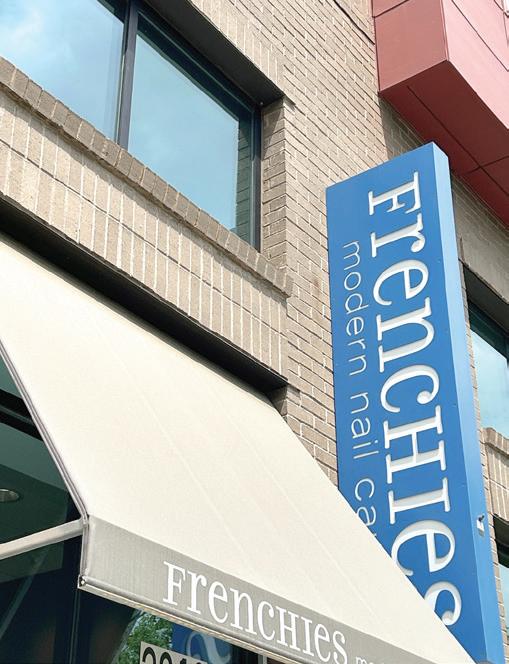
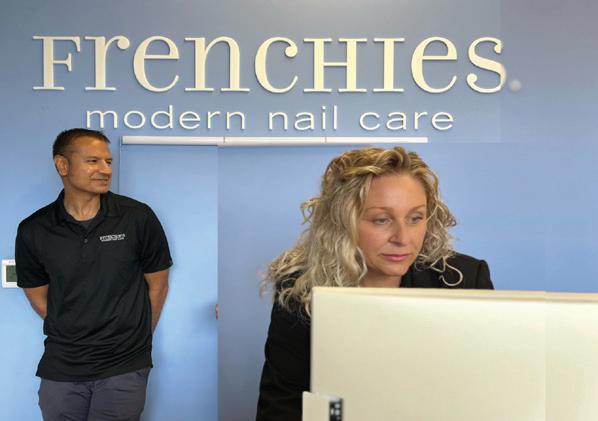
That opportunity came in 2019, when Shah opened his first Frenchies Modern Nail Care location in Pittsburgh. Today, alongside his business partner Toni Careccia, he owns five locations across Georgia, Ohio, Pennsylvania, and Tennessee. Their journey into franchising was a deliberate decision rooted in strategy, complementary expertise and a shared commitment to building something meaningful.
A strategic shift toward ownership
Shah’s professional background is anything but traditional for the beauty industry. After earning an engineering degree from Penn State and later attending graduate school at USC and business school at Carnegie Mellon, he built a career in consulting and corporate strategy. His work focused heavily on M&A and corporate turnarounds, followed by nearly a decade at PNC, where he led initiatives in asset management, talent development and strategic growth.
“I spent years evaluating businesses and thinking about risk,” Shah says. “At some point, I wanted to apply that knowledge to something I could build myself.”
After exploring acquisitions and independent business opportunities, he turned to franchising as a more structured and scalable path to entrepreneurship.
In the early stages of building his portfolio, Shah took a long-term approach, reinvesting in the business and prioritizing growth over immediate income, including forgoing a paycheck as he opened and scaled his first locations.
choosing the right concept and the right Partner
Shah initially explored a range of franchise concepts but ultimately narrowed his focus to the beauty industry due to its resilience and recurring demand.
“The beauty space is relatively recession-resistant,” he explains. “It’s a high-value, low-cost service for the consumer, and there’s consistent demand.”
What stood out most, however, was the opportunity to improve upon existing industry standards, particularly in customer experience, labor practices and team development. That’s what led him to Frenchies.
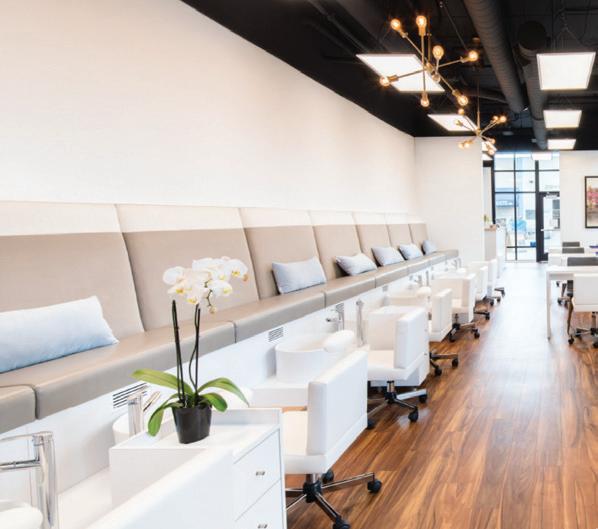
“The brand stood out for its clean, non-toxic approach, its emphasis on the guest experience and the simplicity of the model,” Shah says. “It felt like a concept that was doing things differently, but doing them the right way.”
A key factor in scaling successfully has been Shah’s partnership with Careccia, whose background complements his own.
After studying at NYU, Careccia began her career in telecommunications sales on Wall Street before transitioning into the beauty space. Starting at the front desk of an Aveda salon, she quickly moved into a corporate role supporting 27 salon locations. She later earned her cosmetology license and worked directly in salons, developing a strong understanding of both operations and talent development.
“We each bring something very different to the table,” said Careccia. “That balance is what allows us to operate effectively and grow.”
scaling through People and discipline
For Shah and Careccia, success starts with their teams.
“Leaders are responsible for setting the culture,” Shah says. “And culture drives everything.”
From the beginning, they’ve prioritized employee development, retention and long-term career growth. Their South Hills location in Pittsburgh is now the highest
performing in the Frenchies system and is also home to some of the brand’s most tenured staff. They credit this to building trust with their teams, which in turn has created consistent client experiences and stability in their business.
Their approach includes structured scheduling, consistent communication and intentional career pathing. Regular check-ins focus not solely on performance, but also on personal goals and long-term aspirations.
“You’re not working for us, you’re working with us,” shared Shah. “We want to understand what our team members want out of their lives and help them get there.”
As they’ve expanded across multiple states, Shah’s analytical background has remained central to their growth strategy. The team emphasizes rigorous forecasting, annual planning and disciplined budgeting to ensure each location is positioned for longterm success.
“Analytics and planning are a huge part of what we do well,” he adds. “It allows us to provide consistency, not only for the business, but for our employees.”
Hands- on Leadership, Lasting Impact
Despite the systems and support that come with franchising, Shah and Careccia are quick to address a common misconception: that franchise ownership is passive.
“This is not a hands-off investment,” Shah states. “You have to be involved, understand the risks, and execute every day.”
Careccia echoes that sentiment, emphasizing the importance of adaptability.
“You’re given a playbook, but you still have to figure out what works best for your specific market, your team and your customers,” she says. “It’s important to identify the right tools and use them effectively.”
Beyond operations, Shah and Careccia are deeply committed to their communities. In Pittsburgh, for example, they support local schools and sponsor a professional women’s soccer team and its youth academy, an initiative focused on empowering young girls through sports. For them, business success and community impact go hand in hand.
That impact extends internally as well, with team members advancing into leadership roles, achieving financial stability and reaching personal milestones like homeownership.
At its core, Shah and Careccia’s story is about intentional leadership, strong partnerships and a commitment to people. By combining analytical rigor with a people-first mindset, they’ve built a portfolio of successful locations while fostering a culture that supports both employees and customers—helping raise the bar for what thoughtful, sustainable franchise ownership can look like. v
r e Think e ver YThing:
W H y Inn OvATIO n IS nO LO n GER OpTIO n
OF “Thi S iS h o W We’ve alWaYS d one iT ”
Franchise systems are designed for replication and consistency. Yet those strengths become weaknesses when markets shift faster than systems evolve. Many organizations fall into the mindset: If it’s working, don’t change it. That thinking leads to stagnation and missed opportunity.
The most successful franchises aren’t those that preserve the status quo, but those that continuously challenge it. Innovation begins with tough questions:
• Why do we do it this way?
• What would we build if we started from scratch today?
• What assumptions are no longer true?
These questions may be uncomfortable— but they are essential.
AI Is Accelerating the need for reinvention
Artificial intelligence isn’t just another technology trend. It’s a fundamental shift in how business gets done. AI is transforming customer service through automation and personalization, marketing through predictive analytics, operations through data-driven decision-making, and training through adaptive learning.
Franchise systems that embrace AI will gain speed, insight, and competitive advantage. Those that resist risk becoming irrelevant. But AI is more than a tool— it’s a catalyst for rethinking your entire business model.
As an author, keynote speaker, consultant, and entrepreneur, Evan hackel has been instrumental in launching more than 20 businesses and has managed a portfolio of brands with systemwide sales of more than $5 billion. He is the creator of Ingaged Leadership, the author of the book Ingaging Leadership: The Ultimate Edition, and a thought leader in leadership and success.
Evan is the CEO of Ingage Consulting. Visit www.evanhackel.com
Ask yourself:
• If AI handles customer inquiries, what does your customer experience become?
• If AI analyzes performance across locations, how do you lead differently?
• If AI personalizes marketing at scale, what does brand consistency mean now?
This isn’t about adding technology. It’s about redesigning the business around new possibilities.
Innovation requires a shift in Leadership
The biggest barrier to innovation isn’t technology—it’s leadership mindset. Traditional leadership assumes direction flows from the top down. But in a fastchanging world, that model breaks down. The best ideas don’t come only from executives; they exist everywhere—in franchisees, employees, customers, and partners.
High-performing organizations involve people at all levels in shaping ideas and driving change. When leaders seek input and collaboration, the quality of ideas improves and execution is stronger. This isn’t about giving up control—it’s about gaining deeper insight.
Franchisees: the Untapped Innovation engine
Franchise systems have a unique advantage: a network of independent operators close to the customer every day. Franchisees see trends first, hear feedback in real time, and often experiment with new approaches. Yet many systems fail to leverage this asset, involving franchisees only after decisions are made.
That’s not innovation—it’s validation. True innovation happens when franchisees are included early, helping shape strategy rather than just implementing it. Research shows that when stakeholders are actively involved in decision-making, engagement rises and outcomes improve. To innovate faster, start by listening more.
curiosity: the most Underrated Leadership skill
At the heart of innovation is curiosity. Great leaders aren’t defined by having all the answers but by their willingness to explore, question, and learn. Curious leaders:
• Seek out perspectives different from their own
• Stay open to being wrong
• Encourage experimentation and learning
Curiosity drives discovery, and discovery drives innovation. In a world shaped by AI and constant change, leaders who stop being curious fall behind. Those who stay curious build organizations that adapt, evolve, and lead.
Building a culture that supports reinvention
Innovation isn’t a one-time initiative—it’s a cultural commitment. To truly rethink your business, create an environment where:
• Ideas are welcomed from all levels
• Experimentation is encouraged—even when it fails
• Communication is open and transparent
• People feel ownership over outcomes
When team members and franchisees feel heard, they become invested, contribute more ideas, and take more initiative.
Conversely, when people believe their ideas won’t be valued, they stop contributing— and innovation stalls. Culture differentiates organizations that talk about innovation from those that achieve it.
reinvention Is continuous
Innovation doesn’t happen in bursts—it’s continuous. It’s a mindset, a discipline, a way of operating. Thriving organizations constantly ask:
• What’s next?
• What’s changing?
• How can we do this better?
They don’t wait for disruption. They create it.
the new Foundation for Franchise success
Franchising has always relied on proven systems and repeatable success. But today, success depends on something more: the courage to rethink those systems. AI is accelerating change. Customers are raising expectations. Employees and franchisees want involvement and purpose.
The opportunity is enormous—but only for those willing to challenge themselves. Look at your business with fresh eyes. Question what you take for granted. Stay relentlessly curious. And invite ideas from everywhere.
“
Franchise systems that embrace AI will gain speed, insight, and competitive advantage. Those that resist risk becoming irrelevant. But AI is more than a tool—it’s a catalyst for rethinking your entire business model.”
PorT oF SubS
The inland norThWeST
Port of Subs®, the neighborhood sandwich franchise serving up fresh, made-to-order subs, is accelerating its growth in Washington with ambitious regional development plans. Building on the brand’s existing footprint in Bellingham, Mill Creek, Mountlake Terrace, Tulalip, Regional Developer Ben Pearson has opened his first store in Spokane as part of a 10 -unit development deal across Eastern Washington and Northern Idaho.
As the brand accelerates its growth across the Inland Northwest, Port of Subs® is also expanding its presence in Seattle with its first location coming to Seattle Tacoma International Airport in Spring 2026, and goals to open additional locations throughout the city.
A longtime Kennewick resident and Eastern Washington native, Pearson brings a proven leadership background shaped by eight years in the U.S. Navy aboard nuclear submarines and 15 years at Grant PUD. Drawn to Port of Subs for its fresh-sliced quality, strong franchisee support, and neighborhood driven culture, his recently
opened flagship Spokane location is already surpassing new store performance records. His continued growth plan includes priority markets such as Spokane, the Tri-Cities (Kennewick, Pasco, and Richland) Coeur d’Alene, Walla Walla, and Ritzville.
“Port of Subs and its focus on quality and consistency strongly align with my values as a business leader,” said Pearson. “I look forward to bringing the neighborhood sandwich shop experience to the Inland Northwest by building strong community connections and providing excellent customer service to communities across Eastern Washington and Northern Idaho.”
Further expanding their footprint in the state, the first Sea-Tac airport location will be led by U.S. military veteran and experienced restaurant operator Rod O’Neil, reflecting the brand’s commitment to growing into non-traditional locations. O’Neil is partnering with longtime partner Jerry Whitsett, operator of Port of Subs’ high-volume airport locations at Harry Reid International Airport (LAS). They served together in the U.S. Army, and have carried that shared foundation of discipline, teamwork, and high standards into their business partnership. Their expansion into Sea-Tac, one of the nation’s busiest airports with more than 50 million annual passengers, marks a major growth
milestone and will introduce the brand to millions of new travelers across the Pacific Northwest. Beyond the initial airport location, Port of Subs is actively seeking prospective Regional Developers to bring new restaurants to the Greater Seattle area.
“With a new 10-unit development deal in Washington, a record-breaking start in Spokane, and our first SeaTac Airport location on the way, this is a pivotal moment for our growth in the Pacific Northwest,” said Healey Mendicino, President and CEO of Port of Subs®
“After more than 20 years in the region, expanding more deeply into Seattle and across Washington is a natural next step, and an opportunity to bring even more neighborhood locations to the guests who’ve supported us for decades. Like Port of Subs®, Seattle’s food culture has always embraced freshness and craftsmanship, so we are eager to find likeminded partners to help bring this experience to more communities throughout the city.”
Port of Subs ® offers a unique model, offering Regional Developers the opportunity to act as self-sufficient local extensions of the brand driving growth in the region while building on an established foundation. With over 50 years in business, a strong leadership team, and the backing of franchise growth engine Area 15 Ventures, both Regional Developers and franchisees benefit from experienced operational, marketing, and technology support and a proven pathway to scalable growth.
The brand’s flexible footprint allows it to operate in both traditional and nontraditional spaces such as plazas, food courts, and freestanding restaurants. As the brand expands its franchise footprint, it remains rooted in community, guided by core values and a family-oriented, relationship driven culture that resonates with owners and guests alike. v
d riving c hange
Fro M The in S ide o u T:
w hat i t takes to Build Female l eaders in a m aled ominated industry
From rising through store-level roles to launching Women of RNR, Breanne Braddock shares how mentorship, connection, and opportunity are shaping the next generation of leaders in the automotive industry.
I didn’t set out to build a career in automotive. Like a lot of people in this industry, I found my way into it through an opportunity that grew over time. I started out in a storelevel role more than 20 years ago, working for the same owner I’m still with today. Back then, I was focused on learning the business and taking on whatever opportunities came my way.
I was usually the only woman in the room. That was just the norm. You figure out pretty quickly how to speak up, when to stand your ground, and how to earn trust, not just from your team, but from customers who may not expect to see you in that role. I spent a lot of time early on making sure I knew the business inside and out because I didn’t want there to be any question about whether I belonged. That was especially true when it came to the operational side of the business. Across the automotive industry, things like shop management, inventory, and the technical side aren’t always areas women are immediately exposed to early on, and those are critical for long-term growth. What I’ve seen over time is that when that exposure is there, when women are given
the opportunity to step into those parts of the business, they excel.
Over time, I moved through sales, running a store, stepping into marketing and team development as we grew. Eventually, I stepped into my current role supporting 13 locations across four states. Every step came with a learning curve, but also with people who were willing to invest in me, even when I was still figuring things out. That’s a big part of why I care so much about creating those same opportunities for others now.
Nationally, women make up just 16% of the automotive repair workforce. In our region, about 30% of our store managers are women. That didn’t happen by accident. It happened because someone gave them a shot, because they were supported, and because they were given opportunities to learn parts of the business they might not have been exposed to otherwise.
This was the driving force behind launching Women of RNR, a peer-led initiative designed to support connection, development, and retention among women across our organization. For us, the goal is simple: take what we’ve learned, earned, and experienced over the years and create more accessible pathways for the next generation of leaders. Many of us didn’t have a clear roadmap when we started. Now, we have the opportunity and the responsibility to help build one.
What I’ve noticed over the years is that women in this industry aren’t lacking in ability, they just often don’t have the same visibility or built-in support systems. In a multi-unit environment, that gap can show up quickly. If people don’t see a path forward or feel supported in getting there, it impacts retention, engagement, and ultimately the strength of your bench.
That’s something I’m intentional about now, making sure those opportunities are more visible and accessible than they used to be. After attending a women’s automotive conference last year, I realized we needed to create something of our own. Not another training or a meeting focused on numbers, just a space where women across our stores could connect. That’s how Women of RNR started.
It’s simple. We host monthly connection circles, led by different women across our locations. There’s no agenda tied to
KPIs or daily operations. Sometimes we talk about goals. Sometimes it’s about confidence or learning how to say no without feeling guilty. Sometimes it’s just listening. Women join from their stores, cars, or home, wherever they can carve out a few minutes.
In a short time, I’ve seen a shift. More confidence, more willingness to speak up, more connection between people who may have never crossed paths otherwise. Mentorship has developed naturally with women reaching out to each other, sharing experiences, asking questions, supporting each other through challenges. That kind of connection is hard to build day-to-day, especially when you might be the only woman on your team, but it makes a real difference.
When people feel supported, they stay. They grow. They start to see a future for themselves that maybe they didn’t see before. And in a business like ours, where strong store-level leadership directly impacts team performance and the customer experience, that kind of growth carries across the entire operation.
Franchising is built on systems, processes, and consistency, but it only works when the right people are in place to execute it effectively. For me, this work is about making the path a little more visible and a little more accessible. Sometimes it’s having a conversation that helps someone see their potential. Sometimes it’s giving them exposure to a part of the business
they’ve never touched. Sometimes it’s creating a space where they can ask questions without feeling the need to prove themselves.
We’re also building structured opportunities, like a women’s-only TIA certification course, to give handson experience in areas that can feel intimidating if you’ve never been exposed to them. It’s not about separating; it’s about building confidence, so women are ready when they step into those environments.
For women looking to grow into leadership roles, especially in industries like this, my advice is always the same: don’t wait until you feel completely ready. Say yes to the opportunity. Learn the business. Ask the questions. Put yourself in the rooms that feel a little uncomfortable at first. That’s where the growth happens. And find your people. A mentor, a peer, or a group like Women of RNR can make all the difference.
Most importantly, know that you belong there. This industry is changing. Every time a woman steps into a leadership role, speaks up in a meeting, or takes on something new, it moves things forward. I’ve seen what happens when women are given the opportunity. They don’t just succeed; they raise the standard for everyone around them. In a business built on people, that kind of impact doesn’t stay in one store; it carries across the entire system. v
MF v e x P o Se TS high
e x Pec TaTion S For inTernaTional Franchi S
e e x P o
in n Yc
Attendees from over 60 countries expected to attend global franchising event May 29-30
MFV Expositions (“MFV”) and Comexposium, the undisputed industry leader connecting highly motivated entrepreneurs with a wide range of diverse franchise opportunities, is set to host attendees from over 60 foreign countries at the International Franchise Expo (IFE) on May 29-30.
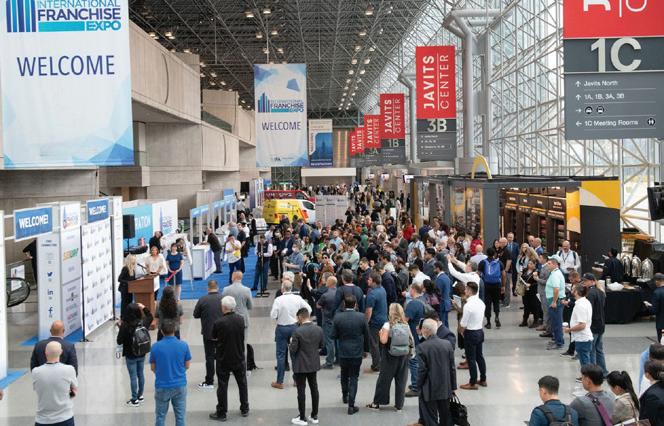
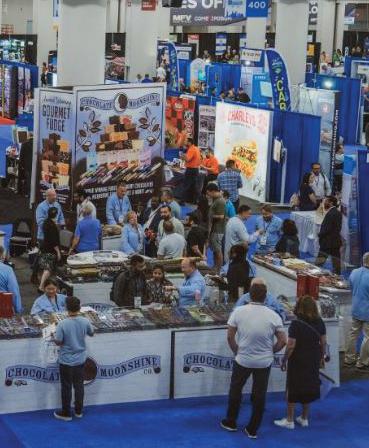
Hosted annually at the spacious and elegant Jacob Javits Convention Center in midtown Manhattan, the International Franchise Expo is MFV Expo’s flagship trade show event, with more than 40+ workshops and educational programs emphasizing the power and potential of
small business ownership. For attendees, it’s a chance to meet face-to-face with high-level contacts representing more than 150+ franchise brands across a wide variety of industries. Pre-event registration has officially opened, with complimentary admission for those who use the promo code: NYC2026.
“For those considering a career transition or establishing an entrepreneurial future for themselves, the International Franchise Expo is the perfect time and place to begin your journey,” stated Martin Joksimovic, president of MFV Expositions. “Whether you’re an exhibitor or guest, this event is intended to be a mutually beneficial experience – both for franchise brands looking to extend their global and domestic reach and motivated entrepreneurs who
want to take charge of their own destiny. The International Franchise Expo is the place where introductions take place, conversations begin, and life-changing outcomes are always a possibility. MFV Expo takes pride in our ability to connect entrepreneurs and institutional investors with global franchise brands from all industries and investment levels.”
IFe nYc e xhibitors
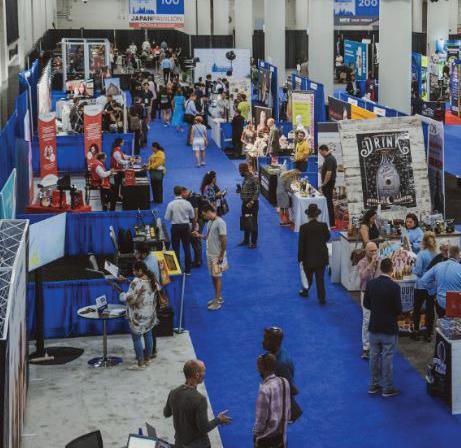
This year’s International Expo features an exciting lineup of franchise exhibitors, led by high-profile franchise brands such as McDonald’s, Nathan’s Famous, Perkin’s American Food Co., Xponential Fitness, and Juan Valdez Colombian Coffee. In addition to these well-known entities, attendees and international guests can experience a diverse lineup of franchise vendors, service providers, industry experts, and suppliers. MFV Expo makes an intentional effort to include franchise representation from a wide range of industries, business sectors, and investment levels. The list of confirmed exhibitors includes both established brands, and new and emerging concepts in multiple categories - everything from automotive and home improvement services to
fitness concepts, fast casual restaurants, healthcare, and retail. Among the 150+ exhibitors at the International Franchise Expo, many earned the distinction of being named to Entrepreneur’s prestigious Franchise 500 list in 2026. To review the full list of exhibiting brands, please visit our Exhibitor’s page.
IFe nYc Programming and Workshops
The International Franchise Expo offers attendees an agenda full of carefully curated educational programming, featuring more than 40+ sessions and a roster of highly influential keynote speakers. MFV Expo is scheduled to bring back two immensely popular workshops that have garnered lots of positive feedback from previous attendees, the A-to-Z’s of Buying a Franchise and How to Franchise Your Business. These highly engaging workshops provide an intimate setting where motivated entrepreneurial candidates can learn more about the fundamental aspects of franchising.
IFe nYc speaking Lineup
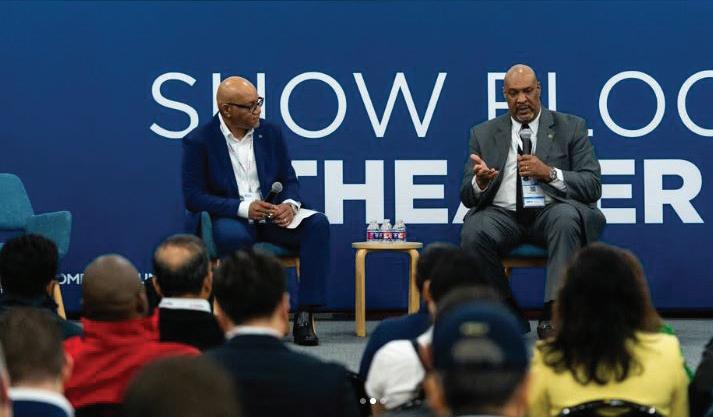
MFV Expo has vetted a world-class speaking lineup, headlined by a special session entitled, “What You Should Know Before You Buy a Franchise.” This program will be co-led by Dale E. Cantone, the Assistant Attorney General of Maryland (Securities Division) and Joseph Punturo, head of the Franchising Unit in the New York State Attorney General’s office. Other keynote speakers slated to address the International Franchise Expo include John Hayes, the Titus Chair for
Franchise Leadership at Palm Beach Atlantic University, and Andre Kay, founder and CEO of Sociallybuzz.
IFe nYc designated trade show Floor Areas
The International Franchise Expo gets underway the morning of Friday, May 29, from 10:00 a.m. to 5:00 p.m. and then Saturday, May 30 from 10:00 a.m. to 4:00 p.m. MFV Expo will also have designated pavilions reserved for Japan and Kyrgyzstan, which offer convenient networking opportunities for international investment groups, institutional investors, trade delegations, private equity groups, and international franchisors looking to sign master franchisee agreements in their home countries to expand their global reach. Similar to IFE events in the past, attendees can expect to encounter space on the trade show floor reserved for designated areas including:
- Emerging Brand Pavilion – one of the busiest areas of the trade show floor, this space is exclusively reserved for emerging franchisors - typically brands with 10 establishments or less
- Business Resource Center – this reserved section is home to valuable business contacts that cater exclusively to the franchising industry
- IFE Unplugged – always a favorite, MFV Expositions brings the franchise industry’s wildly popular Social Geek Radio team for onsite podcast interviews with some of the most influential executives in the world of franchising
The International Franchise Expo is the
second stop on MFV Expo’s domestic schedule in 2026, as the organization wrapped up their initial Franchise Expo South event back in mid-January. As for the remainder of this year, MFV Exposition will be hosting trade show events in Dallas (Sep. 18-19), Cincinnati (Oct. 23-24), and a final stop in Glendale, Arizona (Nov. 13-14). Post-event analysis from previous International Franchise Expos reveal that an overwhelming number of attendees come from the Tri-State Area - an adjacent metro area that includes New York, New Jersey, and Connecticut. When it comes to online reviews, MFV Expo is proud to share positive feedback and testimonials from its previous IFE exhibitors and trade show attendees.
Those who wish to attend this year’s International Franchise Expo in New York City are encouraged to register online, and franchisors interested in exhibiting in the main hall may request information here. For information on air travel, hotel accommodations, and more, please visit MFV Expo’s Travel Information page. Members of local and regional chambers of commerce, civic groups, and entrepreneurial organizations are encouraged to contact Linda Thompson, marketing director of MFV Expo, at linda. thompson@comexposium.com to explore mutually beneficial sponsor partnership opportunities that include complimentary admission to the two-day event.
For all other information, please visit https://IFEinfo.com or connect with us by visiting MFV Expo’s Contact Us page.
h o W c FoS c an reduce Sale S Tax
e x P o Sure be Fore an audiT h aPPen S
Chanel Christoff Davis is a founding partner and CEO of the award-winning firm Davis Davis & Harmon LLC. Established in 2001, DDH is the largest woman and minority- owned sales tax advisory practice in the nation. previously, she was a Senior Consultant at a Big 4 Firm and has conducted numerous financial statement and 401K plan audits within the technology, manufacturing, real estate, and not-for-profit industries. Chanel is a Board Member of the Women’s Business Council Southwest and the Women’s Business Executive national Council Forum. She is also a member of Delta Sigma Theta Sorority, The national Association of Black Accountants, and the Institute of professionals in Taxation. In addition to managing DDH, Davis is a highly sought-after public speaker and the host of the podcast “Follow The Leader.
For growth-minded companies, sales tax risk rarely shows up all at once. A new franchise location opens in one state, inventory shifts in another, and a marketplace channel starts creating revenue where no one expected a filing obligation.
That is why 2026 planning deserves more attention than usual. For businesses expanding across state lines, sales tax compliance is getting harder to manage through spreadsheets and “we’ll clean it up later” thinking.
Why e xpansion changes the risk equation
Opening in multiple states does more than increase revenue opportunity. It multiplies tax contact points. Physical locations, inventory storage, drop shipping, marketplace sales, direct ecommerce, and local registration rules can all create obligations at different times.
A finance team may focus on store opening dates while a state looks at first sales activity, stored inventory, payroll presence,
or economic nexus thresholds. By the time an audit notice arrives, the issue is rarely just unpaid tax. It can also involve penalties, interest, registration gaps, and weak records.
the 2026 Pressure Points cFos should Watch
Not every state is changing in the same way, but a few pressure points are becoming more obvious as companies scale:
• More aggressive nexus enforcement as states compare filing records against marketplace, payroll, and business registration data
• Greater scrutiny of businesses operating across several sales channels with inconsistent reporting
• More exposure is tied to product taxability decisions that were made informally, then left unreviewed None of that is exotic. It is ordinary growth friction.
A Practical Pre-Audit review should cover Five Areas
The most useful reviews are not theoretical. They test how the business is actually operating now.
1. Nexus
Where has the business created an obligation to register and file? This should include:
• Franchise or store locations
• Inventory and fulfillment points
• Employee or contractor presence
• Revenue thresholds by state
• Marketplace and direct-channel activit
2. Taxability
Many businesses assume their products or services are taxed the same way everywhere. They are not. CFOs should confirm whether any state-by-state taxability positions were made casually, inherited from software, or never reviewed at all.
K E y ta KE aWays:
• Multi-state expansion creates sales tax exposure faster than many finance teams expect, especially when franchise growth and inventory movement overlap.
• The cheapest time to fix a sales tax problem is usually before a notice arrives, not after.
• A practical pre-audit framework should cover nexus, taxability, registrations, exemption documentation, and filing discipline.
3. Registrations
A company may be registered where it should not be, unregistered where it should be, or registered under the wrong assumptions about how tax is collected. All three scenarios can create headaches.
4. Documentation
Exemption certificates, resale records, internal support for tax decisions, and filing workpapers matter far more during an audit than they seem to during quarter-end. If the file is weak, the position is weak.
5. Filing Discipline
Late returns, zero returns that were skipped, and inconsistent frequency treatment can turn manageable issues into patterns that attract scrutiny.
What cFos can do Before there Is a notice
The best risk reduction work usually happens through routine discipline, not heroics:
1. Map every state where the company has sales, property, people, or franchise activity.
2. Reconcile that map against active registrations and filing calendars.
3. Review taxability assumptions for core revenue streams and any unusual transactions.
4. Test exemption and resale documentation for completeness, not just existence.
5. Identify historical gaps early enough to evaluate remediation options before a state contacts the business.
That last point matters. Once a state reaches out first, some cleanup options shrink fast.
Why Waiting for an Audit Is so e xpensive
Audit defense costs more than proactive review for a simple reason: the company is then working under pressure, with incomplete records and a clock running. Internal teams get pulled off normal work,
and old assumptions harden into disputed positions.
Build an escalation Process Before You need one
CFOs do not need to personally review every sales tax issue. They do need a trigger system. When the business enters a new state, launches a new channel, changes fulfillment methods, or buys another operation, tax review should be part of the checklist.
Good escalation questions are simple:
• Did this create economic sales tax nexus in a new state?
• Did our product mix or taxability position change?
• Are exemption documents still valid?
• Do current filings still match how revenue is actually being earned?
If the answers are murky, that is the signal to investigate, not to defer.
What to Look for in outside specialist support
W hen outside help is needed, CFOs should look for advisors who can do more than quote rules. The right support usually brings:
• Deep experience with state and local sales tax, not general tax knowledge alone
• Clear explanations of business risk, not just technical citations
• Responsiveness when issues are timesensitive
• Experience with audits, remediation, and multi-state compliance strategy
• A practical approach to records, process fixes, and next-step prioritization
Final thoughts
Sales tax exposure rarely becomes dangerous because one rule changed overnight. More often, it builds because the business expanded faster than its controls did.
The goal is early visibility, clean documentation, and a workable response plan before an audit notice forces the issue. Companies that review nexus, taxability, registrations, and filings now will be in a much stronger position later. And if outside support is needed, choose a specialist who can explain the risk plainly, move quickly, and help fix the right problems first.
https://ddhtax.com
be Yond The nFl
Building Family, Community, and Pur P ose
t hrough o rangetheory Fitness
For most of our lives, sports and movement have defined us, have driven us.
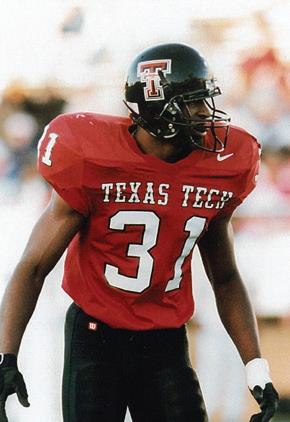
For Kevin, it started on the football field in a small town in Texas. Football turned into a decades-long career—from playing at the college level at Texas Tech to playing professionally for the 49ers, Texans, and in Europe, to returning to the field as a coach for top colleges. Playing and coaching was a career and an identity, but the long hours, travel, and pressure came with the grind. Over time, the sacrifices became clearer, especially at home.
For Kayla, it started on the court playing basketball in high school and college. Movement was always more than sports and about being a part of a team and the science behind it. With a degree and background in exercise and sports science, fitness also became a career and identity. Together, we built our relationship around our shared values of discipline, consistency, faith, and family.
Married for nearly 10 years and raising two boys, we eventually arrived at a moment many families face: a growing sense that something needed to change. We didn’t want to stop working hard, but we wanted to start working for ourselves and working toward something new.
choosing a new Kind of team
Kevin spent years coaching young athletes, building programs, and leading teams, but the schedule was relentless. There were milestones missed and moments we couldn’t get back. We had conversations about what we wanted our lives to look like in five, ten, and twenty years. We knew that meant a career shift, but it needed to be something we believed in.
We were members of Orangetheory Fitness and loved the science-backed workout, the inclusivity of the environment, and the energy of the community. The workouts are approachable, welcoming, and again, created a community. The entire Orangetheory ecosystem was something we aligned with. The brand comes with a framework, system, and culture, and for two people coming from coaching and athletics, that type of structure really mattered to us. What drew us to franchising was the ability to step into a proven system while focusing our energy on leadership, culture, and execution.
trading Playbooks for Presence
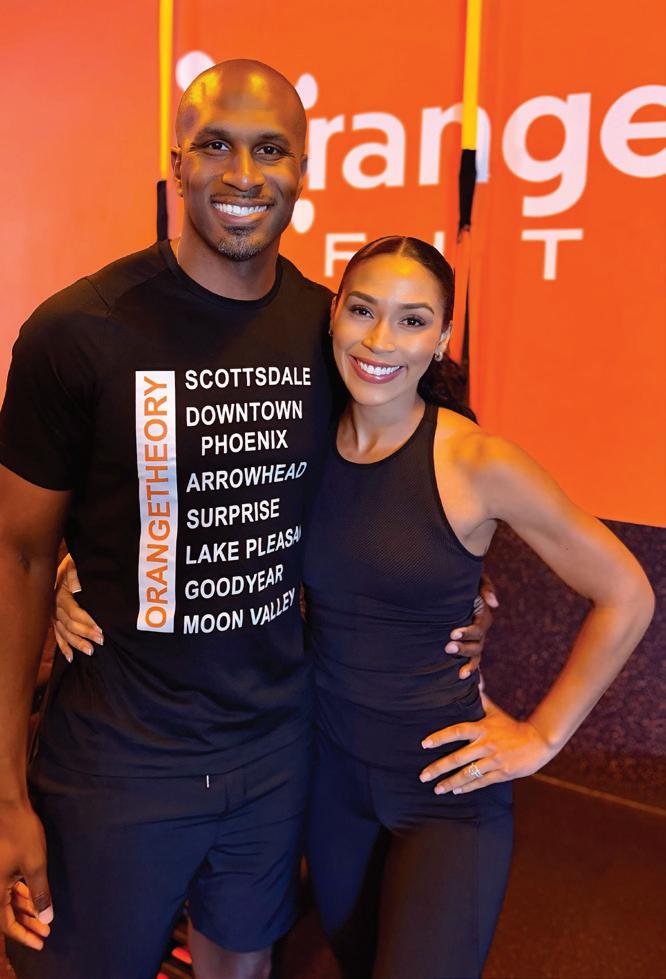
In late 2025, we made the decision to step into ownership at scale, purchasing seven Orangetheory Fitness studios across the Phoenix metro area.
From the beginning, we made a promise to ourselves. We decided that if we were going to do this, we were going to be present and committed. We wanted to be present at home with our family, we wanted to be present for the business, and we wanted to be present in the studios for our members.
And we are doing just that! You’ll find us working out alongside our teams, talking with coaches, welcoming first-timers, and learning the rhythm of each studio’s community. Our choice of commitment has shaped our whole lives. We moved our
family to Phoenix, laced up our shoes, and got to work.
Where teams turn Into Family
We’ve always been part of teams, and that was one of the most powerful draws of franchising—you get to be a part of a larger group while building your own. Owners from across the Orangetheory system reached out to welcome us, members introduced themselves, and coaches shared their stories. Almost immediately, these studios felt like extended family, and it became clear that our business was really about belonging.
For Kayla, this new extended family came at a deeply personal time. After welcoming our youngest son, she began documenting her postpartum fitness journey through Orangetheory. By sharing that vulnerable season and the process of rebuilding confidence, the response from women and mothers has been overwhelming. Messages have come in from people who felt seen, encouraged, and hopeful.
When it comes to working together as a married couple, having these franchises has not created friction, but instead has strengthened our relationship. We each lean into our strengths, communicate constantly, and remind each other why we started. This business hasn’t pulled us away from family — it has brought us closer to each other, our children, and a new extended family through our studios.
“ For us, Orangetheory Fitness isn’t just a business — it’s the platform we’re using to build leaders, impact families, and show our kids what it looks like to pursue purpose with discipline.
Building something Bigger than ourselves
The best teams are built on trust. Kevin’s years as a coach shaped how we approach leadership. We empower our studio leaders, trust our coaches, and support our staff with the same intention Kevin brought to his athletes.
Part of that trust has to be extended to the franchisor for a healthy franchisorfranchisee relationship. We invest in systems that work, and the Orangetheory System works.
What continues to excite us about Orangetheory is the integrity of the model. The workout is grounded in sports science. The technology provides real-time feedback. The structure allows people of all fitness levels to succeed in the same room, at the same time, without comparison.
For Kayla, that science-first approach reinforces everything she believes about sustainable fitness. For Kevin, it echoes the performance metrics he relied on as a coach.
We knew we wanted to step into franchising to build something meaningful. Our goal is to leave our family, our teams, and our communities better than we found them. We want to show entrepreneurs that a husband and wife can build something together and come out stronger. And we want our kids to grow up seeing what purpose, discipline, and teamwork really look like.
For us, Orangetheory Fitness isn’t just a business — it’s the platform we’re using to build leaders, impact families, and show our kids what it looks like to pursue purpose with discipline. v
Pe T Su PPlie S PluS and Wag n ’ Wa S h
r ein Force co MM iTM en T T o local co MM uniT ie S, e x Pand local g iving i niT iaT ive S
• Local-First Initiatives Underscore Brands’ Mission to Support Pets, People, and Neighborhoods Nationwide
• Leading Pet Retailers Announce Goal of Completing 30,000 Adoptions in 2026
Pet Supplies Plus and Wag N’ Wash are deepening their long-standing commitment to pets and the communities they serve through expanded adoption, fundraising and local engagement initiatives designed to create measurable impact across the U.S. These efforts reflect the brands’ belief that making a strong, lasting impact begins at the local level.
At the heart of this commitment is the brands’ ongoing pet adoption initiative, which partners with thousands of local
animal rescue organizations nationwide to help pets find loving homes. In 2025, Pet Supplies Plus and Wag N’ Wash completed 28,546 adoptions, surpassing their goal of 20,000. Building on that momentum, the brands have set a new goal of facilitating 30,000 adoptions in 2026.
“Being local isn’t just about where our stores are – it’s how we show up for pets, pet parents, and communities,” said Chris Rowland, CEO of Pet Supplies Plus and Wag N’ Wash. “From helping shelter pets find homes to supporting the organizations doing the work on the ground every day, our mission is rooted in making a difference where it matters most.”
In addition to in-store adoption events, the brands continue to support animal welfare organizations through customer-driven fundraising initiatives. During the 2025 holiday season, a portion of proceeds from select holiday plush toy sales benefited leading national animal welfare organization Best Friends Animal Society, resulting in a total donation of $26,207. The initiative enabled shoppers to directly contribute to the organization’s goal of saving the lives of dogs and cats in shelters and making the country no-kill.
Pet Supplies Plus’ corporate office is also launching a new local initiative in its home market of Detroit, MI. To kick off the program, the company is partnering
with Canine Companions Rescue Center, sponsoring two rescue dogs as they search for their forever homes. The dogs will spend a day at “Pet Central,” the company’s headquarters, before visiting a local store to receive toys, treats and personal attention from team members. The program emphasizes the role of the people behind the brand and their personal investment in supporting pets beyond the store level.
Offering neighbors everything they need to care for their beloved pets continues to be a top priority for Pet Supplies Plus. This commitment has not gone unnoticed as Pet Supplies Plus recently ranked on Forbes 2026 Best Customer Service List, leading the category of pet retail.
ABoUt Pet sUPPLIes PLUs:
Your neighborhood Pet Supplies Plus has everything you need for your furry, scaly and feathery friends. Its shelves are stocked with pet essentials, including a wide selection of over 11,000 products from 400 brands. Easily find all their favorites at prices you love, whether you shop in store or online using free curbside pickup, same-day delivery or Autoship. To help keep your pets happy and healthy, pet prescriptions can be filled online and delivered directly to your door. As the nation’s largest pet retail franchise with over 725 locations and counting, Pet Supplies Plus makes shopping local simple.
For more information visit www.petsuppliesplus.com.
ABoUt WAG n’ WAsH:
Wag N’ Wash Natural Pet Food & Grooming, a full-line dog grooming and self-wash specialty retail destination, has a mission to recognize, promote and foster the positive impact that companion pets and their humans have on each other. Wag N’ Wash provides full-service grooming, self-wash facilities, baked dog treats, natural food, supplements, and toys. Wag N’ Wash has ranked on Denver Business Journal’s Colorado-Based Franchisors List, Franchise Times’ Top 200+ List and Franchise Gator’s Top 100 Franchisees List. Today, there are 25 Wag N’ Wash locations open across the nation.
To learn more about Wag N’ Wash, please visit wagnwashfranchising.com.
Fro M oWner’S eFFor T
T o Predic TabiliTY
One of the biggest challenges for a fire chief leading a volunteer department is not knowing who is available when the call comes in. You can have capable people, committed people, even motivated people, and still face uncertainty in the moment that matters most.
The solution is not more motivation. It’s systems and training.
The same principle applies to building a stable franchise business. Systems work when the team is trained.
the stability Illusion
Most leaders wake up motivated to win the day.
When adversity hits, that motivation seeks stability that never seems to arrive. This is where long hours and burnout appear.
Early in a career, stability feels earned through effort. You show up. You respond. You hustle. The harder you work, the safer things feel.
Later, that same effort becomes the very thing destabilizing the business. The organization relies on your energy instead of its structure. Progress depends on how hard you push, not how well things are built.
That’s where motivation begins to drift.
Building
Over the last 3 months, we’ve been walking a progression.
February reframed identity from employee to owner to CEO.
March reframed emotions as signals, not weaknesses.
April reframed time as evidence of leadersh ip, not just activity.
This mont hs’s article addresses what happens when leaders rely on motivation
uke Frey is a seasoned franchise strategist with over two decades of experience in leadership and business development. His journey from the front lines as a fire chief to the helm of his own successful franchise has equipped him with unique insights into the challenges and triumphs of franchise ownership. As the author of our Guide to 90-Day Success: The Franchisee’s Strategy for Early Wins, Luke empowers franchisees to achieve early wins and sustainable growth by shortening the steep learning curve of business ownership. assionate about helping others succeed, Luke offers actionable strategies that blend practical business acumen with a deep understanding of human dynamics. Through his work, he’s committed to shaping the future of franchising, one successful business at a time.
instead of structure. That’s where drift begins, quietly and consistently.
Employee Motivation: Consistency and Predictability
employees are motivated by consistency and predictability with:
• Clear expectations
• Predictable rhythms
• Known outcomes.
Stability comes from showing up and executing assigned work inside an existing system. That model works well when the system already exists.
It breaks when you transition to owner and are responsible for building the system.
Inside organizations, motivation is reinforced by structure. Outside of structure, motivation gets stretched thin without proven systems.
the subtle shift Leaders don’t e xpect
When leaders move into ownership, motivation cha nges.
What once worked; effort, responsiveness, hustle starts producing diminishing returns. The work doesn’t stop. In many cases, it increases.
This is where frustration grows without a clear cause. Leaders feel busy, responsible, and committed, yet the business becomes increasingly unstable.
The problem isn’t effort. It’s that effort is standing in for design.
owner motivation: optionality and Leverage
Owners are motivated differently, whether they realize it or not:
• Decision-making matters.
• Leverage matters
• The ability to influence outcomes without personal exhaustion matters.
When owners spend most of their energy executing instead of designing, motivation erodes. They work harder for less stability and start wondering why success feels heavier than expected.
This isn’t a character flaw. It’s a mindset shift.
the ceo truth About stability
CEOs don’t create stability through effort. They create it through systems and effective training for their team.
Systems remove repeated decisions. They reduce emotional drag. They lower dependency on daily motivation and heroics.
Effort keeps things alive. Systems make them predictable.
Peter Drucker captured this shift succinctly: “Nothing is less productive than to make more efficient what should not be done at all.”
Systems force leaders to decide what matters, and build around it.
Where Hustle Quietly replaces systems
Most growing businesses have hidden
“hustle systems:”
• Founder memory instead of documentation
• Heroics instead of delegation
• Availability instead of process. These behaviors feel responsible. They often get praised in early stages. They are also fragile.
Research from McKinsey shows that leaders spend up to 60% of their time on coordination and internal processes, much of it compensating for missing systems rather than creating value (McKinsey Global Institute, The Social Economy).
Stability built on hustle collapses under scale. Onboarding 10 new franchisees this month is different than the first 5 franchisees that first year.
motivation drift as an early Warning signal
When leaders say things like:
• “I just need to push through this unexpected challenge.”
• “Once things slow down, I’ll fix it.”
• “It’s faster if I just do it myself.”
They’re not lazy. They’re compensating for missing systems and insufficient training.
Motivation drift and frustration aren’t failure signals. They’re design signals.
Andy Grove, former CEO of Intel, put it plainly: “The output of a manager is the output of the organization.”
When individual motivation is doing the work of systems, the organization is exposed.
A small, Intentional Action
This month’s action is intentionally small. Identify one recurring task or decision you are currently solving with effort.
Ask yourself:
• Why does this require my energy every time?
• What system would make this predictable?
Write it down. Design the system before adding more effort.
You’re not trying to fix everything. You’re replacing one hustle with structure, one decision at a time.
normalizing the e xperience
Every growing leader goes through this phase.
Nothing is wrong with your drive. Nothing is broken in your motivation. What worked at one stage is becoming a liability at the next.
That’s not failure. That’s growth. Harvard Business Review has consistently shown that organizations relying on individual heroics plateau faster than those investing in repeatable systems and decision frameworks. Stability scales when design replaces effort.
tying the series together
Identity sets posture.
Emotions signal pressure.
Time reveals behavior.
Systems, with effective training, determine stability.
This is the shift from working harder to building smarter. From firefighting to proactive leadership.
A simple Invitation
If you want to talk through where hustle is quietly replacing systems in your business, schedule a conversation using the link in the comments.
No pitch. Just clarity.
Looking Ahead
Last month was about how you spend your time.
This month is about why effort stops producing stability.
Next month, we’ll talk about decision compression, and why fewer decisions, made earlier, unlock momentum and reduce stress across the system.
That’s where your time changes hands and becomes the platform for growth.
My perspective on early childhood education is shaped by my roles as a founder and parent. Those lenses have reinforced a belief I’ve carried since I opened my first school more than 20 years ago – how children learn matters just as much as what they learn.
When I was searching for a preschool for my daughter, who was managing juvenile diabetes, I wasn’t looking for anything extraordinary. I wanted a place that would see her as a fully capable child and provide an environment where she could genuinely grow.
I couldn’t find it. So, I built it. What I discovered in building that first school was that the gap I experienced as a parent wasn’t unique to my family. It pointed to something broader about what early childhood education has been, and the opportunity to make it greater.
the Brain doesn’t separate Learning from e xperience
The first five years of a child’s life are among the most developmentally significant. During this period, the brain
is forming the foundation for language, reasoning, emotional regulation and social connection. These aren’t just academic building blocks – they form the foundation a child carries into every stage of life.
For decades, early childhood education has largely treated academic learning and creative development as separate tracks. Children either sit down and learn, or they play. However, that framing misses how young children actually absorb and retain information.
When learning is active and fun –involving movement, music, storytelling and performance – children aren’t just
receiving content, they’re experiencing it. A song reinforces language patterns in a way that repetition alone doesn’t. Dance builds an understanding of rhythm and sequence. Theater develops confidence and self-expression in ways that structured exercises rarely can. Research in developmental psychology consistently supports what educators see daily – that emotional engagement deepens retention. When a child connects with what they’re learning, it stays with them.
This isn’t an argument against academic structure. Rather, it’s an argument for expanding what structure can look like.
The most effective early childhood programs aren’t choosing between rigorous academics and creative development –they’re using creativity to make academics more developmentally appropriate and genuinely memorable. For children ages 2-6, that distinction really matters. These years only come once, and what happens throughout shapes how a child learns for the rest of their life.
In a crowded market, Philosophy is a differentiator
Early childhood education is a resilient market.
Demand is tied to working families and long-term demographic trends rather than short-term economic cycles, which gives the category a stability that many franchise sectors don’t have. Within the category, however, performance can vary significantly from one concept to another.
The market is crowded. Many programs offer similar structures, schedules and messaging. In that environment, operational efficiency only goes so far. What creates lasting competitive advantage is a clear, well-defined educational philosophy. Something that families can see and feel, not just read about.
When a franchise concept is built around a genuine view on how children learn, it creates trust, and trust drives enrollment. Parents aren’t just considering price or proximity. They’re evaluating whether this is the right place for their child. A concept with a differentiating, clear approach to learning answers that question better than
one that feels interchangeable with other market options.
Trust also drives retention. When families see consistent, visible growth in their child – more confidence and stronger engagement, which show up at home –they stay and refer. Word-of-mouth from genuinely satisfied families is one of the most powerful enrollment drivers in private preschool, and it flows directly from the quality of the child’s experience. It also shifts the conversation away from price. When an early education program’s value is clear and differentiated, families are less focused on comparing tuition rates, which supports more stable occupancy and predictable unit performance over time.
the right model Attracts the right operator
Early childhood education is not a passive investment. The operators who succeed in this space tend to share a common trait –they’re genuinely connected to what they’re building and the purpose behind the model. That alignment is a meaningful performance indicator. An owner who believes in what their school delivers shows up differently than one who is simply running a location. It shapes how they hire teachers and directors, how they communicate with families and the culture they build within their schools. In a people-driven business, that culture is truly the product. Families experience it from their first visit, and it drives every metric that matters, including retention, referrals and community reputation.
An early childhood education franchise built around a clear educational philosophy tends to attract owners with that belief from the start. The result is operational and experiential consistency, which is what families are choosing when they enroll.
the next Generation of this category Will be Built on substance
The early childhood education franchises that define the next 20 years won’t necessarily be the ones with the most schools. They’ll be the brands with a clear, well-executed point of view on how children learn, and the infrastructure to deliver that experience consistently at scale.
ABoUt sAL cALAUttI :
Sal Calautti is the owner of Fully Promoted of Southern New Hampshire (FPSNH). He has over three decades of management experience across an array of industries and serves on the boards of various regional groups and industry associations. FPSNH the third largest Fully Promoted franchise in the U.S., offering comprehensive branding solutions with an impressive lineup of top names in apparel, thousands of unique products, and expert embroidery and printing services.
At the franchise level, Vineeta diligently exemplifies the organization’s vision and serves as the brand’s public face, ensuring franchisees feel connected to something truly exceptional. With a diverse range of responsibilities, she oversees crucial tasks such as awarding franchises, strategically ensuring the success and growth of franchisees through effective marketing, curriculum enhancements, ongoing training, and the effective integration of performing arts.
Furthermore, she remains actively engaged in corporate social responsibility by focusing on educating and supporting underprivileged communities.
Vineeta’s dedication to Early Childhood Education dates back to 2002. Prior to starting Building Kidz, she gained invaluable experience working at reputable companies such as Murdock and Associates, Sun Micro Systems, Lam Research, and Levis Strauss, spanning the high-tech and low-tech sectors.
Arts integration – when genuinely embedded into a program’s foundation rather than offered as an add-on – has the power to create that experience. It doesn’t compete with traditional academics. It deepens them by making learning more active, memorable and aligned with how young children develop.
For franchisees evaluating this category, the most important question isn’t just whether a concept is financially viable. It’s whether the model is built on something substantive enough to earn lasting family trust and attract operators genuinely invested in the mission.
When those two things align, strong early childhood education franchises are built, and children are set up for long-term success. v
Vineeta Bhandari is the esteemed founder and CEO & CMO of Building Kidz Worldwide, where she upholds a collaborative culture among franchisees, staff, and schools.
GLOBAL E xp ANSION
We can help to put your franchise system in an operational position to attract successful franchisees.
We are members of the IFA and other respected organisations.
The transition process can be daunting, but we know the trusted business and legal players who can take you through the first minefield.
Constant changes within the codes of conduct can create a massive challenge to franchise systems wanting to move outside of their established markets.
t he r eigning d i FF erentiator in a h igh- d e M and, h igh-t urnoV er i ndustry h eart to h o M e Meals f ro M g lobal l egacy to local iM pact
Heart To Home Meals: From global Legacy To Local impact
42 Chris Conner: The reigning Differentiator in a high-Demand, high-Turnover industry
Dan Deak: home halo Launches home caring Franchise opportunity
Jake Brown: always Best care, Why senior care Franchising is The opportunity Entrepreneurs shouldn’t overlook 52 Bryan Dylewski: solenvia caregivers, in senior home care Franchising, caregiver reliability is a Winning growth strategy
Fatema Kapasi: owner of a Place at home – Dublin and 2026 Franchisee Excellence award Winner
Fro M g lobal legac Y T o local iMPac T:
h oW hear T T o h o M e Meal S
iS Scaling Pur P o S
e- d riven Franchi S ing in T he u.S.
In franchising, there is often a gap between concept and proof. Many brands enter the U.S. market with compelling ideas, but few arrive with the operational depth and track record needed to scale with confidence.
At Heart to Home Meals, our U.S. story is just beginning, built on nearly seven decades of experience delivering nutrition-focused care across Europe and North America. Today, as we expand our franchise footprint, we are seeing clear validation that our model resonates with both consumers and franchise partners alike.
Our most recent milestone, a newly signed development agreement in Somerset, New Jersey, marks our third U.S. franchise and an important step forward in our Northeast growth strategy. More than a single deal, it is a signal that our approach is working in the U.S. market.
A model Built on decades of Global success
Heart to Home Meals traces its roots back to 1958 in the United Kingdom, where our parent company, apetito, began with a simple but powerful mission: to provide high-quality, nutritious meals to those who need them most. Over the decades, that mission has expanded across Europe and into Canada, where we launched in 2010 and built a strong, scalable operation serving thousands of seniors annually.
Today, apetito generates more than $1 billion in global annual sales and has earned multiple awards for innovation and sustainability. This foundation gives us a unique advantage as we grow in the United States. We are not testing a concept. We are refining and localizing a proven system.
That distinction matters to franchisees. They are not stepping into uncertainty. They are joining a brand with established supply chains, tested operating systems, and a deep understanding of how nutrition supports health outcomes, particularly for aging populations.
meeting a defining demographic moment
The timing of our U.S. expansion is not accidental. Every day, approximately 10,000 Americans turn 65, and the demand for solutions that support aging in place continues to accelerate.
This shift is reshaping multiple industries, from healthcare to housing to foodservice. For us, it reinforces a simple truth: access to nutritious, medically aligned meals is not a convenience. It is essential to maintaining independence and quality of life.
Our model sits at the intersection of food and care. We provide chef-prepared meals tailored to a range of dietary needs, delivered directly into the homes of seniors. But what truly differentiates us is the human element. Our trained drivers do more than deliver meals. They build relationships, offer a moment of connection, and serve as an extra set of eyes and ears for families.
That combination of operational efficiency and genuine social impact is what draws many of our franchise partners to the brand.
From massachusetts to momentum
Before launching franchising in the U.S. in 2024, we established a strong corporate presence in New England, serving communities across Massachusetts, New Hampshire, and parts of Connecticut and Rhode Island.
This footprint allowed us to validate the model and adapt to U.S. market dynamics. From there, we began expanding through franchising, starting with our first U.S. franchise in Raleigh, North Carolina.
That early momentum has continued with growth in the Chicagoland area and now our entry into New Jersey.
The Somerset County development deal is particularly meaningful. It represents our first entry into New Jersey and aligns with our targeted focus on the Northeast and Mid-Atlantic, regions with strong senior demographics and established healthcare infrastructure.
Why the model is resonating with Franchisees
As someone who has spent more than 30 years in franchise development, I have seen firsthand what attracts entrepreneurs to a brand and what ultimately sustains long-term growth.
Today’s franchisees are looking for more than financial returns. They want purpose, stability, and community impact.
Heart to Home meals delivers on all three.
First, there is the mission. Our franchisees are not simply running a food business. They are helping seniors maintain independence and dignity in their own homes. That sense of impact is a powerful motivator and a key driver of engagement at the local level.
Second, the model is designed for performance. With a relatively
low initial investment, no ongoing royalties, and strong average unit economics demonstrated in Canada, we offer a compelling financial opportunity supported by real-world data.
Third, we provide a level of support that reflects our long-term commitment to franchisee success. From training to ongoing coaching and marketing support, we are focused on building sustainable businesses, not just selling territories.
Proof in the early results
The true test of any franchise system is how it performs in new markets. While we are still in the early stages of U.S. expansion, the signs are encouraging.
We are seeing strong interest from prospective franchisees, particularly in regions where demographic trends align with our service offering. More importantly, we see validation at the community level, where demand for reliable, high-quality meal solutions continues to grow.
The New Jersey development deal is a clear example of this momentum. It reflects both market demand and confidence in our model from new franchise partners who recognize the opportunity to combine purpose with performance.
Looking Ahead
Our focus now is on thoughtful, strategic growth. We are targeting key regions including the Northeast, Florida, Texas, and other high-potential markets where we can build density and support franchisees effectively.
At the same time, we remain committed to preserving what makes our brand unique. We are focused on the right partners, those who are service-driven and aligned with our mission.
Franchising, at its best, is about more than expansion. It is about creating opportunities for entrepreneurs while delivering meaningful value to the communities they serve.
At Heart to Home Meals, we believe we are doing exactly that. With a proven international foundation, a growing U.S. presence, and milestones like our Somerset, New Jersey deal, we are building a franchise system that is both scalable and truly impactful.
And in today’s market, that combination is what sets a brand apart. v
The r eigning d iFFerenTiaT or in a high- d e M and, highTurnover induSTr Y
How are franchise systems building reliable caregiver teams in the middle of a labor shortage that continues to worsen year after year? It’s certainly not by accident; it’s by design.
In a labor-constrained environment, engineered retention has become the defining growth strategy in senior care. Increasingly, franchise systems are proving that with the right infrastructure, a willingness to adapt, and a stronger focus on employee-first culture, staffing challenges can be managed and even turned into a competitive advantage.
Senior care remains one of the most attractive service-based franchise categories in the country, driven by rising demand and a never-stopping supply of aging individuals. Unlike many home service businesses, success in this space depends entirely on people — more specifically, qualified and dependable caregivers.
High turnover rates, scheduling complexities, and the emotional demands of caregiving have long created a constant hiring cycle for many business owners. This can even become the limiting factor to growth for independent businesses.
Franchise systems, however, have developed approaches that reduce the turnover plaguing many industries, and they build those strategies directly into scalable operating systems. Rather than reacting to staffing shortages, they are building structured models designed to recruit, train, and retain caregivers more effectively from the start.
Staffing challenges in senior care aren’t
and develop franchise distribution channels. He founded Franchise Marketing Systems in 2009, which now includes a team of 27 franchise consultants based in and Canada and supports brands around the world to grow and scale through franchise expansion.
Visit www.fmsfranchise.com for more information
a new phenomenon, but the past several years have accelerated them dramatically. The COVID-19 pandemic placed unprecedented strain on the healthcare workforce, with many providers facing critical staffing shortages. Burnout, safety concerns, and emotional fatigue pushed many workers out of the field throughout the years to follow, while others retired or transitioned into less demanding roles.
As demand for care continues to rise, many of us are beginning to recognize a sobering reality — we are helping build the very systems we may rely on ourselves in the decades ahead. There is a widening gap between the number of people who need care and the number of qualified professionals available to provide it. That gap is expected to persist for years to come.
And this is where the rubber meets the road: franchise systems are beginning to separate themselves, not by avoiding the staffing crisis, but by building models designed to operate within it.
An Intentional structural Advantage for Franchises
The most effective senior care franchise systems have shifted their focus from simply filling roles to building sustainable workforce models. Recruiting qualified caregivers is only the first step. Without a strong structure in place, even solid
teams can quickly erode. Instead, leading franchises are engineering retention directly into the business, creating systems designed to support, develop, and keep caregivers long-term.
Instead of leaving hiring and team development up to individual operators, these franchise systems are implementing structured approaches that prioritize caregiver support from day one. This includes standardized onboarding, ongoing training programs, clear communication channels, and outlined pathways for professional growth.
Another critical element of retention is recognizing the caregiver as a person — not just a position. The brands seeing the most success are investing in the culture of their teams, creating meaningful recognition opportunities, and building clear paths for long-term growth within the company. It’s not just about compensation in healthcare — it’s about caring for the employee in a more holistic way and acknowledging the very real emotional and physical demands that come with senior care. These are the elements that ultimately shape a sustainable, successful staffing strategy.
Some emerging concepts, such as In Home Care 4u, have embraced a caregiver-first philosophy that places equal emphasis
Chris Conner has worked in the franchise development industry for almost 20 years and helped over 600 brands franchise their brand
on employee experience and client care. Through ongoing training, performancebased incentives, and a focus on career development, franchisees are equipped with tools to build more stable, engaged teams. Initiatives like paid training, education support, recognition programs, and incremental benefits growth are designed not only to attract caregivers, but to give them a reason to stay.
This type of approach — one that marries intentionality with structure — is what separates franchise systems from many stand-alone brands. These franchise models recognized the problem and wove the solution into their framework before they even hit the first stroke on their FDD.
Where the Burden differs
While staffing is a defining challenge across senior care, not all franchise models approach it in the same way. Understanding these differences is critical for prospective franchise owners evaluating where they fit within the industry.
Traditional non-medical home care franchises tend to be the most laborintensive. These models rely on a consistent pipeline of caregivers to meet ongoing client needs, often requiring careful scheduling, active recruitment, and strong retention practices to maintain quality care and service.
Other segments within the senior services space, however, offer alternative
approaches for franchise buyers.
Care management and advocacy franchises, for example, typically operate with smaller, more specialized teams. These models focus on coordination, planning, and oversight rather than direct care, which can reduce the volume of staff required while still addressing a critical need within the senior population. Coordinating moves, advocating for patients, and placing individuals in better living situations simply don’t require the same level of hands-on staffing — and therefore don’t demand the same level of operational evolution.
Similarly, nurse staffing service models, like 247 All Staff, approach the market from a different angle. Rather than ongoing care, these types of businesses provide staffing for facilities and businesses in the medical field. The business model is low overhead and produces strong margins by placing staff in positions with organizations within the medical field.
Even within companion care and lifestylefocused services, the staffing model can differ, with less clinical demand and more flexibility in hiring and scheduling.
For a franchise buyer, these distinctions in each model will mean all the difference.
the competitive Advantage You Want
The question is not whether or not these staffing issues exist, but how a franchise
system has chosen to design their systems around them.
Franchise systems provide a tested framework designed to support workforce development from the outset. They are built not on guesswork, but on thorough examination. This includes everything from recruitment messaging and onboarding systems to operational support and performance tracking. More importantly, it creates consistency, allowing franchisees to focus less on reinventing processes and more on executing them effectively.
In a market where staffing can make or break a business, that level of structure is the competitive advantage needed to thrive.
Senior care franchising continues to stand out as both a meaningful and resilient investment opportunity — but success in this space is about more than meeting demand. It’s about building teams, supporting caregivers, and creating systems that can sustain growth in the face of real workforce challenges.
At its core, this is an industry rooted in care; that care is not just for clients, but for the people delivering that care every day. The brands that recognize this, and continue evolving their models around it, are the ones setting the pace for the future of senior services.
For franchise buyers, that presents a unique opportunity: to invest in a business that is not only positioned for long-term growth, but one that makes a tangible difference in the lives of others, and, ultimately, in the kind of care we all may come to rely on.
For those exploring senior care franchise opportunities, Franchise Marketing Systems works with a range of emerging and established brands designed to meet the demands of today’s market. With experience supporting over 1,500 franchise systems and entrepreneurs, the team helps connect prospective owners with opportunities built for both impact and scalability.
To learn more, visit www.fmsfranchise.com or start the conversation by email Chris Conner at chris.conner@fmsfranchise.com.
d e S igned For c lien TS, builT For Franchi S ee Succe SS: a ne W S Tandard in Parkin S on’S c are
As the population ages and the demand for specialized senior care continues to rise, families are seeking solutions that allow their loved ones to age safely and comfortably at home. For individuals living with Parkinson’s disease, finding the right care can be particularly complex.
Recognizing both the care gap and the growing demand for age-in-place support, ComForCare, a leading franchised provider of in-home caregiving services, has introduced Parkinson’s Pathway, an innovative program designed to deliver personalized, holistic care to individuals living with Parkinson’s, further elevating its quality of care and franchise system in an increasingly competitive landscape.
rising demand for conditionspecific senior care
According to the Parkinson’s Foundation, more than 1.1 million people currently live with Parkinson’s disease, making it the second most common neurodegenerative
disorder after Alzheimer’s. With approximately 90,000 new diagnoses each year, the need for specialized in-home care continues to grow.
What makes Parkinson’s particularly challenging is its complexity. Symptoms vary widely and evolve over time, ranging from tremors and mobility issues to cognitive and emotional changes. This progression often places a significant burden not only on individuals diagnosed with the disease, but also on family caregivers. And traditional, generalized home care models often fall short.
“Parkinson’s disease presents a complex set of physical, cognitive and emotional challenges that evolve over time, and families often struggle to find care that truly understands those nuances,” said Stephanie Wierzbicka, director of strategic health programs at ComForCare.
For franchisees, that complexity translates into a clear opportunity: communities are actively seeking providers equipped to handle specialized, condition-specific care.
A systemwide model
Built for consistency and differentiation
While there currently is no cure, research shows there are steps individuals living with Parkinson’s can take to improve quality of life and slow disease progression. That’s where ComForCare’s Parkinson’s Pathway comes in.
Importantly for franchisees, the program is not simply a concept. It is a systemwide framework supported by standardized training, operational guidelines and caregiver education tools designed to ensure support that goes beyond basic assistance, focused on holistic care. This ensures consistent execution across markets while allowing small business owners to confidently position themselves as specialists within their local communities.
the four pillars of Parkinson’s Pathway are:
Medication Management – Caregivers are trained to support accurate dosing, ensuring medications are taken within a precise 15–30 minute window to keep symptoms at bay. By keeping a watchful eye on side effects and tracking “on” and “off” periods, caregivers gather small details that help doctors make a big difference in treatment. More than just technical support, they bridge the gap for families offering the training and consistency needed to significantly impact symptom control and overall stability in the home.
Movement and Exercise – According to the Parkinson’s Foundation, regular physical activity is a cornerstone of Parkinson’s care, with guidelines recommending adults aim for at least 150 minutes of moderate-intensity exercise per week to support overall health and brain function. The Parkinson’s Pathway program incorporates prescribed exercise plans, balance training and mobility to support strengthening dopamine signals, maintain strength, reduce fall risk and promote independence.
Nutrition – Caregivers and agency teams that support them provide a vital layer of safety and health for clients by overseeing mealtime needs, from planning nutrient-rich diets that boost medication effectiveness to monitoring for signs of swallowing difficulties. By adjusting food textures and ensuring proper hydration, caregivers help prevent complications like aspiration, turning daily nutrition into a powerful tool for consistent symptom management and long-term stability.
Emotional Support – Social isolation, a sedentary lifestyle, anxiety and depression are common among those living with chronic conditions like Parkinson’s. Through companionship, engagement
and attentive monitoring, caregivers help foster emotional well-being and a sense of connection for individuals living with Parkinson’s.
This structured approach allows franchisees to move beyond basic hourly care and toward more specialized, valuedriven service offerings.
training that strengthens care and referral relationships
At the heart of Parkinson’s Pathway is caregiver education. The program equips ComForCare’s care teams with resources and tools to better understand the progression of Parkinson’s, respond to its unique challenges and educate the families impacted.
“With Parkinson’s Pathway, we are
equipping caregivers with training and structured support so individuals living with Parkinson’s can remain safe, active and engaged at home,” Wierzbicka said. “At the same time, we’re easing the burden on family caregivers who are navigating this journey alongside them.”
For franchisees, that training does more than elevate care delivery. It strengthens credibility with referral partners, including physical and occupational therapists, physicians, neurologists and rehabilitation professionals, a key driver of sustained growth in home care markets. For families, this support can be transformative. Having access to trained professionals who understand Parkinson’s can provide both practical assistance and peace of mind knowing their loved ones are in good hands.
e xpanding a researchBacked Portfolio of care Programs
Parkinson’s Pathway is the latest addition to ComForCare’s Care Enhancement Programs, a suite of specialized, researchbacked offerings designed to address a range of conditions and care needs. These programs reflect the brand’s broader strategy to equip franchisees with structured, scalable tools that meet evolving healthcare demands.
“Our mission is to deliver care that is not only clinically informed, but also aligned with our brand mission: to help clients live their best lives,” said Rebecca Bouchard, brand president of ComForCare. “We do that by equipping caregivers with the necessary education to be true partners in care, building confidence, encouraging acceptance in-home support and fostering a greater sense of well-being achieved together.”
By integrating specialized programs like Parkinson’s Pathway across its franchise network, ComForCare continues to strengthen systemwide consistency while meeting the diverse and changing needs of aging adults and their families.
Positioned for Long-term Growth in Aging-in-Place services
The number of Americans aged 65 and older is projected to increase from 58 million in 2022 to 82 million by 2050. And as more seniors express a desire to age in place, the role of in-home care providers will only become more critical. Programs like Parkinson’s Pathway highlight an important shift in the industry from generalized care to specialized, conditionspecific support that addresses the full spectrum of a person’s needs.
For individuals living with Parkinson’s, this evolution offers greater independence, dignity and stability at home. For families, it provides reassurance. And for franchisees, it represents a strategic investment in specialized training, competitive positioning and longterm market relevance within one of franchising’s fastest-growing sectors.
T uniTY aFTer Scaling Tech-For Ward
S acro SS e igh T S TaTe S
After growing its presence across multiple states and solidifying a tech-forward infrastructure, Home Halo is now franchising, positioning operators for success in the evolving senior care landscape
The senior population is growing faster than ever, and the opportunity in the home care franchise space is growing accordingly. While the market potential is clear, it’s crucial that home care leaders recognize the industry's demands, too. Home care is not an industry where we can hand a franchisee an operations binder and wish them luck, and that’s exactly why we waited to launch franchise opportunities with Home Halo.
Rather than rolling a franchise program out immediately, we dedicated time and effort to building a corporate presence across eight states, stress-testing the playbook and building a model that operators trust. By outlining clear standards and building robust support systems, we ensure our franchise partners are positioned to provide personalized in-home care that helps seniors live safely and independently in the comfort of their homes while protecting
the Home Halo name and reputation as we scale.
Building the Foundation
Through our experience operating corporately owned Home Halo businesses, we learned how detail-oriented and peopledriven the senior care industry really is. There are specific local requirements that must be met, best practices to embrace and soft skills that must be fine-tuned before launching a local senior care business. As we identified these demands in our own businesses, we proactively documented them and their solutions to ensure we could address the same concerns with future franchisees.
With this, we’ve built a next-generation home care brand. We built a 160-step onboarding process, covering caregiver hiring and retention, business development and lead conversion, and validated it through real experiences during our corporate growth phase. Now, it serves as a blueprint to ensure franchisees launch with something tangible and proven, and we remain hands-on throughout the business's lifespan.
As we’ve built the foundation, we’ve validated our current practices while staying open to more forward-thinking tools and processes that will keep us at the forefront of an evolving industry.
Integrating technology at scale
As a part of our intentional growth, we’ve looked closely at how technology can support Home Halo. We’re not removing the personal aspect of caregiving from the equation. Rather, we’re identifying ways to enhance our offerings and clients’ safety and satisfaction without driving up costs for local owners or their clients.
This has been another key benefit as we’ve prepared to grow through franchising. We know we need to take an innovative approach to how we service the industry, and we understand how difficult it can be to implement technology tools in a disjointed system.
For us, laying the foundation for a technology-forward brand was another necessity before launching franchising. This way, modern tools and processes serve as the baseline, not something
owners must make a significant effort to update or replace.
For example, Home Halo is operating with SENSI, an artificial intelligence tool that captures environmental insights to identify risks, changes in routine or potential safety concerns and help us service our clients even more thoroughly. Given we’ve thoroughly tested the tool in our own businesses, we felt confident rolling it out system-wide and making it a standard part of the business model. Because it’s fully integrated, SENSI offers a decisive competitive edge to Home Halo franchisees simply by joining the system.
A Growth opportunity combining Forward thinking and operational maturity
As we look toward the future of Home Halo, the entire team is incredibly optimistic. The need for non-medical inhome care is only climbing, and research
has consistently shown that seniors prefer to age in place whenever possible.
The demand is there. For franchises, the next hurdle is having a model that’s both systematically strong and clearly differentiated in the market. We do. We spent years building Home Halo up and are now entering the franchise landscape from a place of operational maturity.
Now, with the backing of a strong brand and a leadership team that is not only passionate about the industry but well aware of what it demands, franchise owners have an opportunity to bring dependable, high-quality in-home care to their communities. As they develop the business, lead teams and ensure top-notch service each day, making a real difference in clients’ lives, Home Halo franchisees are able to do so with confidence, knowing we’ve put in the work to position them for the best outcome possible.
ABoUt dAn de AK:
Dan Deak is the founder and CEO of Home Halo®, a non-medical home care agency dedicated to providing compassionate, personalized care for seniors and veterans. A seasoned professional with over a decade of expertise in the home care industry, including launching and operating offices across the United States, Deak’s passion for senior care was ignited by his personal experience caring for his mother after a life-changing injury. His experience includes serving as Director of Business Development for Emerging Markets at FirstLight Home Care, specializing in launching new locations, and as Executive Director for Cornerstone at Home, where he built a non-medical home health agency from the ground up. Witnessing firsthand the challenges seniors face when their independence is compromised, he developed a deep understanding of their unique needs and a desire to make a positive impact. Driven by this personal connection, Deak established Home Halo® to empower seniors and veterans to live fulfilling lives at home, offering comprehensive support that honors their dignity and unique needs. His leadership and vision are the driving force behind Home Halo®’s mission to provide exceptional care and enhance the well-being of those they serve.
Fatema kapasi
owner of a Place at home – d ublin
and 2026 Franchisee excellence award Winner with
When Fatema Kapasi opened A Place At Home – Dublin in January 2024, she brought nearly two decades of experience as a physical therapist and a deep understanding of what families need when navigating care transitions. Since opening, she has been named one of the top 50 franchise owners in North America through the 2026 Franchisee Excellence Awards, recognizing franchisees for performance, leadership and community impact.
In this Q&A, Fatema shares how she made the leap from healthcare to franchise ownership, what fueled her early success and why empathy remains the core of her leadership.
What led you from physical therapy into franchise ownership, and what did your early months look like?
I started as a physical therapist in 2007, and about a decade ago, I moved into the business side of healthcare. I led business development at Encompass and later became Director of Business Development at an inpatient rehab hospital in Dublin. When the hospital was acquired, my path would have meant going regional and traveling — and I didn’t want that.
More importantly, I’d spent years watching the same challenge play out: patients ready to go home, but families stuck waiting on authorizations, equipment, and support.
I saw how often the discharge plan broke down once someone got home. That’s when I realized I could build something that blended my clinical background and my business experience — right here in my community.
Pre-launch was all hands on deck: management software, payroll, office space, and hiring caregivers. I pretty much lived in my car for the first six months. I was constantly out meeting people — nurses, case managers, discharge planners — introducing myself and building trust one conversation at a time. I knocked on many doors, introduced myself everywhere and shared my passion and my vision because that’s all I had at the beginning.
You earned dozens of fivestar reviews within your first six months. How did you build trust so quickly, and how does your Pt background shape your leadership?
From day one, I was clear that etiquette and customer service aren’t optional, they’re part of care. The tone you set in the first call, the first visit, the first follow-up matters. We talk about responsiveness,
professionalism, and communication constantly, because that’s what earns trust.
And yes, reviews matter, especially in a market where some agencies have been established for years. Early on, our reputation and the way families felt after interacting with us were everything.
People call caregiving “non-medical, but it’s not un-skilled. There is a lot of skill involved in caring for an individual. And while you can train skills, you can’t teach heart — and I hire for that. I’ve always had that caregiving heart. I’ll jump in any minute to help with a transfer, a shower or toileting. I don’t think twice about it. That empathy comes through, and I think it’s important for any business owner in this field.
can you share a moment when your team really demonstrated that care-driven leadership?
I see examples daily, but one recent moment stands out. One of my patients who has been with me since the very beginning had a fall at night when she was alone and fractured her hip. My caregivers visited her in the hospital and at the rehab facility. They constantly checked in with the office to see how she was doing. When she was preparing to come home, two caregivers took time out of their day to attend a therapy session and get full education from the therapists and nurses. They wanted to know exactly how to support her at home - transfers, pain management, exercises - so her transition would be safe. That’s the kind of care we aim for: personal, prepared, and consistent.
What has been the most meaningful part of being a franchise owner, and how has the system supported you?
Ownership can be isolating, and I’ve never felt alone here. If I have a question, someone at headquarters responds quickly, and the owner network is just as strong. When something comes up, there’s always someone who’s been through it and will talk it through with you. I really enjoy being part of a community. I’ve always felt supported at A Place At Home.
What does winning the Franchisee e xcellence Award mean to you, and what’s next for your location?
I’m grateful for the recognition, but what matters most to me is the impact we’re making. This award belongs to my caregivers and my office team. They’re the reason families trust us.
We’ve grown quickly, from our first caregiver hire to 70 active caregivers in two years, and we expanded by purchasing two additional territories last year. Now we’re focused on doing the fundamentals even better: strengthening our office team, investing in training, and continuing to raise our standing in the community.
A Place At Home was recently acquired by dovida, a global home care provider. What does that change mean to you as a franchise owner?
The more I learn about Dovida, the more optimistic I am. The company has deep experience in home care internationally, and I’m encouraged that they’re investing in this space long-term. If that support translates into stronger training, better tools, and more resources for owners, it helps everyone, especially caregivers and the families we serve. Health care is always changing, so I’m focused on staying adaptable and using any added support to keep raising the standard locally.
Wh Y Senior c are Franchi S ing
iS The oPP or T uniTY e nTre Preneur S Shouldn’ T overlook
The most common assumption entrepreneurs make when they first consider senior care franchising is that it requires a healthcare background. It doesn’t. What it requires is something far more transferable: the ability to hire well, manage a team, execute a sales process, and build relationships in a community.
Those skills have produced some of the most successful operators in our system. They came from corporate management, retail operations, financial services, and logistics and found in senior care a business that rewards exactly what they’d spent their careers developing.
The demographic case for entering this space is no longer speculative. For more than 15 years, over 10,000 Americans
have turned 65 every day. But 2025 and 2026 mark a more significant inflection point: those same Baby Boomers are now turning 80, and the 80-plus population is projected to grow by more than 55 percent by 2035 – outnumbering children for the first time in U.S. history, according to the Census Bureau. That population requires the most intensive care, and that demand is not discretionary. Families don’t defer care for an aging parent because the stock market is down. That’s what makes this sector structurally different from most franchise categories. When entrepreneurs ask me whether senior care is recessionresistant, I tell them it’s more than that — it’s necessity-driven.
Built to run lean
One of the things that surprises prospective franchisees most is how efficient the financial model can be. Because most services are delivered in the client’s
home, operators don’t need significant commercial real estate. The initial investment for a non-medical in-home care franchise can range from approximately $89,725 to $145,900, which, relative to the revenue potential of a mature franchise, represents a strong multiple. A new franchise can start with two full-time office staff and five caregivers; our most established franchisees operate with more than 10 office personnel and more than 100 caregivers.
The non-medical in-home care model is the largest entry point in the sector, and it’s where most entrepreneurs begin. Caregivers provide personal support for activities of daily living — bathing, grooming, meal preparation, transportation, and companionship — that allows older adults to remain in their homes safely and with dignity. Increasingly, seniors and their families alike are clearly expressing a preference for aging in place, and the model is built to meet that preference.
multiple revenue streams within a single system
What distinguishes a well-structured senior care franchise from a singleservice operator is the ability to serve a family across the continuum of care. To use Always Best Care as an example, franchisees can operate across three distinct revenue streams: non-medical inhome care, skilled home health care, and assisted living placement services. Each addresses a different point in a client’s care journey, and together they allow a franchisee to serve a family from the earliest need for companionship through to clinical support or, when appropriate, a transition to a residential facility.
• Skilled home health care is a distinct operating model from non-medical care. It involves nurse-supervised delivery of doctor-ordered clinical services — physical therapy, wound care, postsurgical support, and pain management — and requires accreditation, certification, and licensed clinical staff. The regulatory environment is significantly more complex, and so is the revenue profile. Operators considering this model need to understand the reimbursement landscape, including the payer mix dynamics introduced by Medicare and Medicaid, and approach compliance with rigor from day one.
• Memory care is one of the fastestgrowing segments in the sector, driven by the prevalence of Alzheimer’s disease and other forms of dementia. Effective delivery in this segment requires careful caregiver matching — pairing clients with caregivers who have both the training and the temperament to provide consistent, dignity-centered support. Franchisees who have built strong memory care practices tend to share a common approach: they work closely with families to develop individualized care plans, partner with organizations such as the Alzheimer’s Association, and often establish referral relationships with assisted living and memory care facilities for families considering longerterm transitions.
• Assisted living placement is often misunderstood as a secondary or supplemental activity, but it’s a genuine
business model in its own right. A franchisee matches a family with the right facility based on budget, care level, location, and preferences. If the client moves in, the facility pays a referral fee. The skills that drive success here are relational: the ability to build trusted relationships with facility staff and to serve families who are often making emotionally difficult decisions under time pressure. Networking and sales experience translate directly.
trust is the product
The most durable competitive advantage in senior care isn’t brand recognition — it’s the depth of relationships an operator builds within the local care ecosystem. Hospital discharge planners, case managers, geriatric social workers, VA program administrators, long-term care insurance coordinators, and senior center staff are referral sources that franchisees can convert into recurring business partners. These relationships require persistent, consultative engagement — understanding how referral sources manage their patient populations and consistently deliver quality so they will send the next family, and the one after that. This is where the operational discipline of following a proven model matters most. Entrepreneurs who know how to hire and develop the right office personnel — the individuals who build those external relationships every day — tend to be the ones who scale. As the business grows, the franchisee’s role shifts from doing that work personally to building the team that
does it. Those who make that transition successfully are the ones who build genuinely strong businesses.
What separates the top performers
The entrepreneurs who tend to thrive in this sector ask a specific question during the evaluation process: not “what is the average revenue?” but “why do some franchises significantly outperform others — and what do I need to do to be in that group?” That question signals the orientation that predicts success.
The answer, consistently, comes down to executing the sales and marketing model, the quality of caregiver recruitment and retention, and the operational discipline to follow the system as the business scales.
Senior care is not a passive investment. It is a people-intensive, relationship-driven business that rewards operators who bring genuine energy to both the commercial and mission-driven dimensions of the work.
The entrepreneurs who last are typically those who find that building a financially strong business and improving the quality of life for seniors and their families are, in practice, the same objective.
The market window for that kind of work has never been more open. v
Jake Brown is the President and CEO of Always Best Care Senior Services, a franchise system offering non-medical inhome care, skilled home health care, and assisted living placement services across the United States.
in
Senior h o M e c are
Franchi S ing, c aregiver
r eliabiliTY iS a Winning g ro WTh S TraTeg Y
In senior home care, operators learn that the more challenging part isn’t finding clients. It’s delivering consistent, reliable care to those clients regardless of circumstances.
That consistency depends on a caregiver getting to a client’s home on time and ready to work. When that breaks down, everything else can break with it.
Caregiver reliability is the central operational challenge in senior home care. It’s also one the industry has been slow to address. For franchisees, that gap does create risk. However, it also represents a meaningful competitive advantage if addressed properly.
caregiver turnover data is Just Half the
story
Most franchisees entering senior home care understand that caregiver turnover is high. PHI National’s workforce data puts annual home care turnover at roughly 75%, which is among the highest of any industry in the country. The standard response is to recruit more aggressively or adjust wages. Both are important, but they don’t address a more fundamental barrier, and that’s whether caregivers can reliably get to work.
Transportation is a chronic, but underappreciated strain. Many caregivers don’t have consistent access to a personal vehicle. In suburban and rural markets, public transit is limited or nonexistent. In urban markets, long commutes and
traffic increase the likelihood of delays. Rideshare does offer a partial solution, but costs fluctuate during early morning shifts, evenings and severe weather, making it unsustainable over time.
The impact is predictable and includes missed visits, last-minute cancellations and rescheduled coverage. Client trust erodes, while caregiver morale suffers. Franchisees find themselves between a service promise and a logistics issue they didn’t anticipate.
A missed visit isn’t just a scheduling inconvenience. For a senior living alone, it can mean missed medications, a skipped meal, increased fall risk or hours of worry for a family counting on peace of mind. For a franchisee, it’s a client relationship –and referral source – at risk.
Why this challenge Hits Franchisees differently
Franchisees aren’t building from scratch. That’s a fundamental value proposition of the franchise model, incorporating proven processes, operational standards and infrastructure that doesn’t require reinvention. The challenge is that caregiver reliability, and the transportation barriers that drive it, is rarely treated as a system-
level problem. It’s absorbed locally, meaning franchisees are left managing an unpredictable issue largely on their own.
The economics make this costly. Franchisees invest significantly in training, marketing and client acquisition.
Every missed visit is a hit to revenue, reputation and the referral relationships that sustain growth. Senior home care franchisees depend on discharge planners, hospital case managers and senior living communities to generate business.
Those referral sources expect that care will arrive when promised. When it doesn’t, the referrals stop.
The franchisee who can demonstrate reliable, on-time care delivery has an advantage over competitors who can’t. In a market where word-of-mouth and referral relationships drive a ton of new business, that advantage compounds fast.
reliability Is a Franchisor’s responsibility
My journey into this industry came through personal experience. When my father was battling ALS, our family navigated in-home care firsthand. We had capable, compassionate caregivers, but reliability was a continuous challenge. The issue wasn’t caregiver quality or commitment, but logistics. That experience showed me that caregivers can’t be expected to solve this problem on their own.
Franchise systems that take reliability seriously need to build it into their operating model. For senior home care, that means confronting the transportation issue directly. Absorbing the transportation burden at the corporate level, rather than pushing it onto individual caregivers and franchisees, leads to fewer missed visits,
more consistent caregiver performance and stronger client retention.
The results show up most clearly under pressure. When significant winter weather recently disrupted operations across the Northeast, widespread caregiver callouts affected home care providers throughout the region. Since we’ve addressed transportation infrastructure across the system, care continued as normal, while other providers had real challenges getting to clients.
response time should be a Franchise Growth metric
Focusing on caregiver reliability also means optimizing response time. Across the senior home care industry, families often wait several days from initial inquiry to the start of services. In many cases, caregivers are available but can’t get to the client quickly and reliably.
Franchise systems that address transportation at the operational level can close that window significantly. Our ability to deploy a caregiver within 2-3 hours of a request is a meaningful departure from industry norms and a tangible differentiator across markets. For a family managing a hospital discharge or a sudden care gap, that response time is often the deciding factor in which provider they choose.
Speed to service builds trust! In this industry, trust is the business.
the Franchisees that Win Will Focus on reliability First
The senior home care market is expanding at a rate few other franchise industries can match. The U.S. Bureau of Labor Statistics projects employment for home health and personal care aides to grow 17% until 2034. That’s well above the national
Bryan Dylewski is the founder of SOLENVIA Caregivers and a longtime leader in the senior care industry, with more than three decades of experience. He previously built and scaled a durable medical equipment company into one of the largest mobility providers in the country, operating across 42 states.
In 2014, Bryan founded SOLENVIA Caregivers following his personal experience caring for his father during his battle with ALS and has serviced more than 3,500 families throughout Connecticut and Massachusetts. Through franchising, SOLENVIA Caregivers is now looking to grow in markets nationwide.
average across all occupations. An aging population, longer life expectancy and a strong preference for aging in place are all sustaining that demand.
That growth creates genuine opportunity for franchisees, but capturing it requires building a business that families and referral sources trust.
Recruitment strategies, the right marketing, competitive wages and proper training programs are all vital. However, none of those investments protect a franchisee from the reality that care can’t be delivered if a caregiver can’t get there.
Caregiver reliability is the foundation of the client relationship, referral pipeline and the franchisee’s sustained growth. Franchisors that address it give operators a structural advantage that is difficult for competing brands to replicate.
Transportation, as an example, has long been treated as the caregiver’s problem to manage. The franchisees who benefit most from senior home care’s growth will be the ones whose systems made reliability a nonnegotiable, while building the complete infrastructure for long-term franchisee success. v
ABoUt BrYAn dYLeWsKI:
The r e T urn o F value – and WhaT iT reveal S abou T
TodaY
’S r e STauranT econo MY
Value is back in focus across the restaurant industry. Since mid-2024, its resurgence has accelerated as consumers grow more selective, and more divided, in how they spend.
From $5 bundled meals and $1 any size drinks to revived “extra value” offerings, restaurant brands across quick-service and casual dining continue to lean into affordability. A value menu, at its core, is a set of temporarily discounted priced items designed to create a strong sense of perceived value that gives customers the
feeling they’re getting more for less. When deployed effectively, these items can attract new customers, increase frequency from existing customers, and encourage incremental spending. But they’re also a strategic lever, one that operators must use carefully given the pressure they can place on margins. Today, as value menus proliferate, that balance is becoming increasingly difficult to manage.
A more divided consumer Backdrop
In the years immediately following the pandemic, many consumers benefited from elevated disposable income, supported
by stimulus programs, reduced expenses, and excess savings. That environment gave restaurants significant pricing power, allowing them to raise prices aggressively and widen the gap between dining out and eating at home.
That dynamic has shifted. As the stimulus drove record inflation, wages will take years to catch up, if ever. As a result, today’s environment is increasingly defined by a K-shaped economy, where higher-income consumers remain resilient while lower-income consumers face more persistent financial pressure.
This divide is already visible across the
restaurant landscape. Traffic declines have been most pronounced among lowerincome consumers, particularly within quick-service and fast-casual segments, with 44% of lower-income diners reporting they eat away from home less often than in 2024. At the same time, casual dining and higher-end concepts have held up comparatively well.
For lower-income households, value perception is becoming increasingly important. Stimulus driven inflation is largely permanent, and wages have yet to catch up, making affordability a primary driver of decision-making. Lower-priced options, when structured carefully and marketed effectively, can reinforce customer loyalty and attract new traffic, giving brands an opportunity to capture a greater share of what is, for many consumers, a shrinking wallet.
Value as a competitive reset
In response, and due to competitive necessity, many brands have turned back to value. It’s now driving more direct competition across restaurant categories, with quick-service and casual dining brands increasingly meeting consumers at the same price points.
McDonald’s, for example, recently expanded its value lineup with a broader mix of bundled meals and nearly a dozen items priced at $3 or less. Chili’s has leaned into its “3 For Me” platform, offering guests an entrée, fries, bottomless chips and salsa, and a fountain drink for $10.99.
That strategy is delivering results. Chili’s posted 24% sales growth without adding new locations, underscoring how powerful a well-executed value proposition can be in the current environment. Applebee’s has seen a similar benefit from its “Twofor-$25” promotion, helping reverse a multi-year stretch of declining sales. For brands that can support it, this is a critical moment to reinforce their value proposition to both new and existing customers. As household budgets come under pressure, operators have an opportunity to make a stronger case for why they deserve a share of that spending. But not every brand is positioned to compete this way. Delivering compelling
Mark Wasilefsky is the Head of the Restaurant Franchise Finance Group at TD, where he leads the bank’s efforts to support growth, acquisitions, and innovation in the restaurant and franchise sectors. He brings over two decades of experience in investment and commercial banking, with a deep specialization in franchise finance. Before joining TD, he was senior vice president at RBS Greenwich Capital. Mark holds an MBA in Finance from Western new England University and a BA in economics from the University of Connecticut.
value at lower price points requires flexibility in both menu design and margin structure. When those conditions are in place, however, value-oriented strategies can be highly effective tools for driving traffic and maintaining relevance in a tighter economic environment.
the margin squeeze Behind the menu
While value menus can be effective at driving traffic, they come with a fundamental trade-off.
There’s often a natural tension between franchisors and franchisees when balancing top-line growth and operating margins. Franchisors typically earn a percentage of revenue, making them more focused on driving sales, while franchisees are responsible for managing day-to-day profitability at the unit level. Valueoriented promotions can amplify this dynamic.
Take $1 soft drink promotions, for example. These offers are highly effective at attracting customers, but beverages typically carry higher margins than food. Discounting them, particularly through “any size” formats, can have a disproportionate impact on profitability. What drives traffic at the system level does not always translate to sustainable economics at the store level.
As a result, value menus are rarely permanent. They tend to rotate over time, allowing operators to balance traffic generation with margin protection. In some cases, franchisees may also push for regional adjustments, particularly in markets with higher operating costs or different consumer dynamics.
Where operators Are turning next
While value will remain a critical lever, it isn’t the only one brands can rely on. Many
are turning to technology and operational innovation, including AI, to offset cost pressures and improve efficiency. According to a TD survey of 253 restaurant and franchise professionals, 40% identified labor efficiency, training, and scheduling as the top area where AI can deliver meaningful improvements, followed by consumer data analysis (34%) and customer experience and personalization (28%).
Maintaining a clear view of financial performance is also essential. Strong cash flow in the short term can obscure underlying trends, making consistent analysis of profit-and-loss statements critical for identifying shifts in margins, expense structures, and seasonality. In an environment where every dollar matters, disciplined financial management is as important as any pricing strategy.
Getting Value right
Value is a deceptively complex concept. It can mean the lowest price on the menu or a premium product that justifies its cost through quality and experience. For restaurant operators, the challenge isn’t simply to lower prices, but to create a compelling equation between price, product, and perception.
The resurgence of value menus reflects broader industry shifts, driven by a more divided consumer base and tighter economic conditions. Despite these headwinds, operators remain optimistic, with 53% citing value menus and mobile ordering as top growth drivers for 2026. The past several years have underscored the resilience of restaurant operators. Those who can strike the right balance between affordability and profitability, while continuing to invest in innovation and operational discipline, will be best positioned to navigate what comes next and build lasting momentum in a rapidly evolving marketplace. v
T
“ThaT FranchiS e g u Y ”
S h o M e WiTh a Po W erhouS
Tea M To Pu T Peo Ple To Work
When franchise professionals transition to ownership, they know exactly what they are getting into. John Anderson of Tulsa, Oklahoma, has that edge. For nearly 20 years, he's lived franchising from multiple angles as a successful multi-unit franchisee, advisor, consultant and someone who's helped hundreds of entrepreneurs find their fit.
Now he is taking that expertise into staffing. John, his wife Melanie, and multi-unit operator Josee Minero just launched a new AtWork® location in Tulsa. It is the kind of opening that signals real momentum when experienced operators commit to a brand.
AtWork is an award-winning staffing franchise known for helping businesses find dependable talent and helping people find meaningful work. The brand provides comprehensive workforce solutions, including temporary staffing, temp-tohire and direct hire services, supporting companies across a wide range of industries.
John’s path to this moment is unconventional. After graduating from USC in 1989, he entered mortgage banking and met Melanie in the industry. But when they had triplets, priorities shifted. In 2006, they made what John calls the “reverse Beverly Hillbillies move,” leaving California for his hometown of Tulsa. He knew he did not want to return to mortgage banking and instead turned to franchising, first opening a children’s entertainment
business. By 2016, he’d pivoted to franchise brokering, helping others navigate the same decisions he’d faced.
“In staffing, relationships drive everything,” John says. “I have spent two decades learning franchising from every perspective. Now I am applying that to building something meaningful here in Tulsa.”
His background and varied experience matter. John has been number one in his market with BounceU, a children’s birthday party franchise, since year one. He expanded that concept to multiple locations, sat on the franchisor’s advisory council for six years and added three Knockouts Haircuts locations to his portfolio. Since 2016, when he earned the nickname “That Franchise Guy,” he has run Lakeport Franchise Group, helping
entrepreneurs navigate opportunities. Now Melanie is joining him in that work, as they look to support candidates’ understanding of AtWork and the opportunities it offers.
But franchising experience alone doesn't make a staffing business thrive. That is where Josee Minero comes in. She spent 35 years at a staffing firm, building deep expertise but no ownership stake in her future. She knew she wanted to stay in staffing, and then a LinkedIn advertisement introduced her to AtWork franchising.
"Franchising solved a problem I didn't even know I had," Minero says. "I spent 35 years building someone else's company. I wanted to create something for my family."
She opened her first AtWork location in Southern California over eight years ago and has since expanded into Missouri and Florida, even winning an award within AtWork in February of 2025. Her journey from corporate employee to multi-unit franchisee is exactly what makes her an unconventional partner in this expansion.
"Matching the right person to the right role does more than fill a job," Minero says. "It transforms careers and strengthens businesses. Having a partner who understands franchising strategy combined with decades of staffing expertise accelerates everything we're trying to build here."
Melanie rounds out the team with leadership and culture expertise. Together, the three bring something most new franchise locations do not: clarity of roles and proven execution across multiple business concepts.
For more than three decades, AtWork’s
mission has been to connect people with jobs and jobs with people. With 100 locations nationwide, AtWork puts over 30,000 individuals to work each year in manufacturing, administrative, light-industrial, accounting and finance, hospitality, IT and management-level positions at some of the nation’s largest and most recognizable companies. AtWork’s strong growth and franchisee support have secured its place on Franchise Business Review’s Top 200 Franchises for eight consecutive years, along with induction into the FBR Hall of Fame for more than 10 years of outstanding performance. Tulsa is the right market at the right time for AtWork, thanks to the region's economy which now spans manufacturing, aviation, oil and gas operations and tribal enterprises. This diversity creates staffing demand across light industrial, commercial, logistics, accounting, finance,
clerical and banking roles. It is a growing market with a business community hungry for reliable solutions. John and his team are not just opening another location. They are bringing combined expertise in how franchises scale, how staffing operations succeed and what works on the ground.
"I have owned several businesses, but this one is different because it touches people at a pivotal moment in their careers,” John says. "Helping people find positions where they can really thrive is so rewarding. When someone's skills and values align with the right opportunity, they do not just show up. They excel. And that strengthens teams, supports local businesses and makes our community stronger."
With AtWork Tulsa's opening, the brand now operates two locations across Oklahoma. For more information about AtWork Tulsa, visit AtWork.com/Tulsa.
aBoVe - left to right: John anderson, melanie anderson and Josee-minero.
The 70/30 rule:
H OW TO E X pAn D In TER nATIO n ALLy
W ITHOUT LOSIn G yOUR B RAn D
A while back, I was on a podcast discussing what it really takes to expand a brand beyond its home market and the importance of thoughtful adaptation.
In that conversation, I said it wouldn’t surprise me if as much as 30% of what makes a brand work domestically needs to change internationally.
That idea stuck, and that’s how the 70/30 rule was born.
What Is the 70/30 rule?
At its core, the 70/30 rule is simple:
• 70% of your brand should stay consistent
This is your identity. It’s what makes your brand recognizable and distinct.
• 30% should be adaptable
This is where you adjust to local culture, consumer behavior, and market realities.
If you get this balance right, the changes won’t feel like compromises. They’ll feel natural and almost invisible to the customer.
Why “copy-Paste” doesn’t Work
One of the most common mistakes brands make when going international is assuming that what worked at home will work everywhere. It won’t.
Consumer expectations, cultural norms, pricing sensitivity, real estate dynamics, marketing channels, these all vary widely across markets.
A strict “copy-paste” approach often leads to:
• Poor customer adoption
• Misaligned messaging
• Operational friction
• Slower growth than expected
International expansion isn’t about replication; it’s about translation.
How to think About the 70/30 rule
The 70/30 rule is not a rigid formula. It’s a mindset.
Think of it as a lens that you will permanently look through as you enter a new market. You’re constantly evaluating:
• What must remain unchanged?
• What is a natural evolution to feel local? With experience, this becomes second nature.
the Five Principles Behind the 70/30 rule
1. Curiosity and an Open Mind
Don’t be literal about adjusting 30%.
The real takeaway is to approach every new market with curiosity and an open mind. Go and experience your competitors, take note of what’s working and what’s not. Ask questions. Listen more than you talk. Assume there are things you don’t know, and assume that you cannot just Copy-Paste. Be open to what might need to be localized.
2. Walking a Tightrope
International expansion is a constant balancing act.
Adapt too little, and your brand feels foreign and disconnected.
Adapt too much, and you risk brand dilution - meaning, losing what made your brand special in the first place.
The goal is to preserve your core while flexing at the edges.
3. Bridge Building
Your job is to build a bridge to local acceptance and then adoption.
That bridge is made up of small but meaningful adjustments:
• Messaging that resonates locally
• Experiences that feel familiar
• Touchpoints that align with daily life in that market
When done right, consumers don’t feel like they’re engaging with a foreign brand; they feel like it was built for them.
4. Leave the “Sacred Cows” at Home
Every brand has internal beliefs about “how things must be done.”
Some of those are essential. Many are not.
Be honest about what truly defines your brand and be willing to let go of the rest. What feels critical at home may be irrelevant, or even counterproductive abroad e.g., certain location based processes or particular marketing strategies.
5. Authenticity Wins
At the end of the day, authenticity is what people respond to.
You need to be:
• Authentic to your brand (the 70%)
• Authentic to the local market (the 30%)
If either side feels forced, customers will notice.
What Great e xecution Looks Like
When the 70/30 rule is executed well, something interesting happens: Nothing feels different, but everything works.
The customer doesn’t see the adjustments. They just feel that the brand “fits.”
One of my favorite examples comes from this social media post from a Club Pilates studio in Tokyo:
“Who knew Pilates would prepare you for Japanese trains?
Core strength = real-life skills. Come train with us.”
It’s simple, relevant, and unmistakably local, while still being true to the brand. That’s the 70/30 rule in action.
Final thought
Expanding internationally is one of the most exciting stages in a brand’s evolution.
But it requires a shift in mindset. The brands that win are the ones that protect what matters most while adapting where it counts.
Get that balance right, and your brand won’t just enter new markets; it will belong there. v
The Fir ST d eci S ion
Most people spend months researching franchise brands before they make any decision at all. Almost none of them get the first decision right — because they don’t know what it is. Everything that follows depends on getting this one correct.
Every week I talk to someone who has already done the research. They have attended expos, downloaded FDDs, watched the videos, and built a shortlist of brands they are excited about. They are confident they are close to making a decision.
They are not close. They have not made the first decision yet. They skipped it entirely and jumped straight to the second one.
The first decision in franchise investing is not which brand to buy. It is what you are actually trying to build — and what kind
of owner you intend to be. Those are not the same question, and most people treat them as though they do not exist.
“Brand selection is the second decision. Most people make it first. That is where the expensive mistakes begin.”
Here is what happens when you skip the first decision. You evaluate franchises based on what appeals to you right now: the industry feels interesting, the investment range looks reasonable, the validation calls went well. You are making a consumer choice dressed up as an investment decision. The brand
may be excellent. But if it does not fit the ownership model you are capable of executing — or the wealth outcome you are actually trying to build — it will underperform regardless of its quality.
I have watched this play out more times than I can count. A capable candidate buys a suppposedly “semi-absentee” franchise and discovers they are a hands-on operator who needs to be in the business to feel confident in it. An equally capable candidate buys an owner-operator model and discovers they cannot scale it because every location requires their personal presence. Neither franchise failed them. The first decision failed them.
So what does the first decision actually involve? Four things, assessed with precision and honesty before a single brand conversation begins.
Capital. Not just what you have, but what you are genuinely willing to deploy — at what risk level, over what timeline, and with what liquidity reserve. The number that matters is not your net worth. It is the number you can commit to without losing sleep, and the number at which you would stop if the business took longer than expected to perform.
Time model. Whether you intend to be an owner-operator, a semi-absentee owner, or eventually an investor building toward a fully managed portfolio from the start. This
george Knauf is a Franchise Investment Strategist with thirty years in franchising and twenty-two years as a buyer-side franchise investment consultant. He is the creator of Knauf’s Hierarchy of Franchising, founder of MyperfectFranchise.com and Orca Franchising, and the only franchise consultant to keynote a major IFA event — the inaugural IFA World Franchise Show, Miami, May 2025. His book, The Last Employee: The Rise of Ownership (ISB n 979-8-234-05050-2), is available May 1, 2026.
is not about preference. It is about your current life. Your job situation, your family obligations, your geographic constraints, and your realistic bandwidth all determine which model is actually executable. Buying a franchise that requires your daily presence when your life does not allow for it is not a franchise problem. It is a planning failure.
Growth horizon. Whether this is a singleunit lifestyle business or the first unit in a multi-brand portfolio you intend to exit in ten years. The answer to this question changes which brands are relevant, which markets matter, which capital structures make sense, and which legal agreements you should negotiate differently. A buyer building toward Level Five of Knauf’s Hierarchy — a Franchise Portfolio Enterprise — needs entirely different agreements than a buyer building a single location near their home.
Exit architecture. I know that sounds counterintuitive before you have bought anything. But the ownership structure you establish from unit one determines your exit options at year five, year ten, and beyond. The investor who buys a single unit with no growth plan exits at three to six times earnings. The investor who builds a portfolio with professional management, documented systems, and multi-brand diversification exits at an entirely different multiple — because they built an entirely different asset. That architecture begins with the first decision, not the fifth.
“When you know what you are building before you start, brand selection becomes straightforward. You are no longer searching. You are matching.”
When you know the answers to those four questions with clarity, brand selection becomes simple. You are no longer asking which franchise is best. You are asking which franchise fits this specific investment profile — your capital, your time model, your growth horizon, your exit target. That is a far more answerable question, and the answer narrows the field dramatically. You stop being a prospect for every brand at the show and start being exactly the right buyer for a very specific set of opportunities.
None of this is complicated. But it requires a level of honesty that most people are not ready to bring to the process, because they arrive excited about a brand before they have done the foundational work. The expo floor amplifies that. Every booth is designed to make a brand feel like the answer before you have clearly defined the question. Excitement is not a strategy. Clarity is. And clarity starts before you walk through the door.
If you are at this show, something brought you here. The question is whether you are thinking about the right decision first.
Get that one right. Everything else follows.
h o W ai iS Quie TlY d eciding
Which Franchi S e S Win The v i S ibiliTY War S
In just a few short months, the way prospective franchise candidates search for brands has fundamentally changed, and it is already influencing which opportunities they consider and which they ignore.
Search engine optimization (SEO) used to be all about keywords, backlinks and where your website landed in search rankings. But now, AI platforms like ChatGPT and Gemini are changing the
way people search for information and what influences their decisions.
Instead of digging through pages of results, prospective franchisees can now get clear answers, tailored recommendations, and easy side-by-side comparisons. For franchisors, that means your brand is being evaluated and often filtered out before prospects ever visit your website.
This shift is not theoretical. It is now actively shaping which franchises make it onto a candidate’s shortlist.
Keeping up with these changes is no longer optional. It’s essential. Brands that adapt
will be the ones that attract new franchise owners and will continue to grow.
From search results to AI recommendations
AI-driven search engines now prioritize context instead of keywords. When a potential franchisee is looking for the best home service franchise or a consumer is searching for a reliable local brand, these AI tools are generating answers based on what they determine to be the most trustworthy and relevant information available.
This changes how you need to think about
your franchise’s visibility. It’s no longer enough to show up at the top of a Google search. Your brand must be consistently recognized, accurately represented and frequently mentioned across the kinds of credible sources that AI platforms rely on to build responses.
If your franchise is not part of that conversation, you risk being left off of the shortlists your future franchisees are already making.
Why earned media matters more than ever
AI-powered search tools focus less on keywords and more on understanding intent and context. While your website and marketing materials still matter, they don’t carry the same weight as independent media coverage.
This is where public relations becomes essential. Earned media helps establish your brand as credible, relevant and authoritative. When your franchise is
featured in respected publications, AI systems are more likely to recognize it as a legitimate player in your industry.
For franchisors, this isn’t just about brand awareness. It directly influences how serious candidates view your stability, your growth potential and your credibility. Strong media visibility helps attract customers while also influencing how prospective franchise owners evaluate their options.
media coverage is AI Fuel
Think of media coverage as a signal that helps AI understand who you are. Articles, interviews and features all contribute to your digital presence and shape how your franchise is viewed.
When your franchise shows up consistently in both national and local outlets, it reinforces your story, your growth and your expertise. That consistency matters even more for franchise systems with multiple locations, where keeping everyone on the same page can be tough.
The more your brand appears in credible places, the more likely AI is to recognize and include you in recommendations, summaries, and comparisons. In many cases, that visibility can determine whether a potential franchisee even considers you.
staying relevant requires consistency
AI also tends to favor content that is current and relevant. Brands that appear regularly in earned media outlets are more likely to stay visible over time.
For franchisors, that means keeping a steady stream of news and stories flowing. New openings, leadership updates, community involvement and franchisee success stories all help keep your brand active and top of mind.
Consistency in messaging is just as important. AI looks for patterns across sources to confirm credibility. If your message shifts too much from one location to another, it can create confusion and weaken your authority in AI-powered results.
With a strong PR partner, you can keep your story consistent everywhere, and that builds trust.
Heather Ripley is founder and CEO of Ripley PR, an elite, global public relations agency specializing in the franchising, skilled trades, manufacturing and B2B tech industries.
sAL cALAUttI :
Sal Calautti is the owner of Fully Promoted of Southern New Hampshire (FPSNH). He has over three decades of management experience across an array of industries and serves on the boards of various regional groups and industry associations. FPSNH the third largest Fully Promoted franchise in the U.S., offering comprehensive branding solutions with an impressive lineup of top names in apparel, thousands of unique products, and expert embroidery and printing services.
Ripley PR has been listed by Entrepreneur Magazine as a Top Franchise PR Agency for eight consecutive years and was named as one of Newsweek’s America’s Best Public Relations Agencies for 2024. Heather Ripley was named as a 2024 PRNews Top Women honoree in the business entrepreneur category, and to ACHR NEWS’ Top Women in HVAC list in 2024. She is also the author of “NEXT LEVEL NOW: PR Secrets to Drive Explosive Growth for your Home Service Business,” which is available on Amazon.
For additional information, visit www.ripleypr.com.
thought Leadership drives Long-term Growth
Beyond news coverage, thought leadership plays a big role in how AI interprets your brand. When franchisors and their leadership teams consistently share insights, trends and expertise, they establish themselves as an authority in the industry.
And this kind of content has staying power. Articles, interviews and expert commentary continue to influence AI searches long after they’re published. Over time, this builds a strong foundation of credibility that influences how your franchise is perceived and recommended.
the Bottom Line
For franchisors, the takeaway is clear: if your brand isn’t consistently showing up in credible, third-party sources, it’s likely not showing up where future franchisees are making decisions. That means that a strategic, ongoing PR effort isn’t optional anymore. In fact, it’s a critical part of how franchises grow in an AI-driven world. v
ABoUt
The liTTle gYM Turn S 50: A L EGAC y B RAn D L EADIn G
THE C HILD SERv ICES B OOM
Child services is poised to be the fastest-growing sector in franchising in 2026, according to the International Franchise Association’s latest Franchising Economic Outlook. The report points to rising demand for businesses that support children’s development, enrichment and education — a shift that is creating new momentum across the category.
At the forefront of this trend is The Little Gym. The enrichment and physical development concept, which serves children ages four months through 12, is marking its 50th anniversary this year while coming off its biggest growth year to date.
Founded in 1976 and acquired by Unleashed Brands in 2021, The Little Gym has spent five decades building a reputation around movement-based learning and confidence-building for children. Now, as consumer demand for structured youth programming continues to grow, the
brand’s milestone year is also becoming a case study in why child services has become one of franchising’s most promising categories.
A Legacy Brand in e xpansion mode
The Little Gym’s recent expansion underscores just how much momentum the brand has entering its 50th anniversary year. In 2025, it opened 44 new locations
and signed 74 new franchise agreements, averaging nearly one new gym per week. That same momentum helped propel The Little Gym to No. 125 on Entrepreneur’s 2026 Franchise 500 list, a 73-spot jump from the prior year.
The brand’s growth has been shaped in large part by its evolution since joining Unleashed Brands in 2021—illustrating the value of pairing an established concept
“
The Little Gym’s success is part of a broader shift taking place across franchising. According to the International Franchise Association, child services is projected to be the fastest-growing franchise industry this year, with unit growth of 4.3%.
”
with a platform built to scale youthfocused brands. In the first year following the acquisition, The Little Gym grew systemwide revenue, average revenue per gym and enrollment by more than 50% across its U.S. locations, and it has continued to build on that progress in the years since.
With the credibility and operating history of a mature franchise system and the resources and strategic focus of a growthoriented platform, The Little Gym offers a case study in how legacy brands can continue evolving to meet the needs of today’s families and franchisees.
Why child services Are surging
The Little Gym’s success is part of a broader shift taking place across franchising. According to the International Franchise Association, child services is projected to be the fastest-growing franchise industry this year, with unit growth of 4.3%. The sector is also expected to add roughly 57,000 jobs and generate $22.7 billion in output.
This shift is being fueled by rising consumer demand for services that support children’s development in more intentional ways. Families are increasingly prioritizing programs that go beyond basic care and supervision. They seek out experiences that help children build physical, cognitive, and social-emotional skills. At the same time, broader household shifts — including dualincome families, single-parent households, rising female workforce participation and more parents returning to in-person work — are increasing demand for structured,
dependable youth programming that fits into the busy modern family life.
The category is also proving to be notably durable. Child services continues to benefit from demand that is both consistent and need-based, even in a more selective economic environment. While discretionary spending may fluctuate in other areas, parents often remain willing to invest in experiences tied to their children’s growth, well-being and longterm development. That combination of resilience and relevance has made child services especially appealing within the franchise sector.
For The Little Gym, those trends reinforce the role the brand has played for families for nearly five decades. Its programming has long centered on movement, confidence-building and age-appropriate development — the very qualities more parents are seeking today. As demand for purposeful, structured enrichment continues to heighten, The Little Gym’s milestone year highlights why the brand stands out not only to families, but to franchisees looking for a concept rooted in enduring consumer demand and positioned within one of the industry’s most resilient growth categories.
What 50 Years signals to Franchisees
As The Little Gym turns 50, its momentum reflects both the strength of a legacy brand, as well as the direction of the broader franchise market, where child services is gaining ground as families place greater value on enrichment, development and dependable programming for their children.
In that context, The Little Gym’s recent growth helps illustrate why the category is drawing increased interest from prospective franchisees. The brand combines a long-established model with strong consumer relevance, offering a concept grounded in decades of trust while remaining aligned with today’s family priorities.
Its milestone year serves as more than an anniversary moment. It underscores how established brands can continue to grow when they are positioned within the right category and supported by the right platform. As child services expands, The Little Gym stands as an example of how legacy, demand and franchise opportunity can converge in a way that is both timely and sustainable. v
The hidden c a S h TraP:
Most franchise owners believe they’re ready to expand. Their numbers look good. Revenue is strong. They’ve run one location successfully – how different can two be? The answer is jarring: financial complexity grows faster than sales, and profitability is not the same as having cash to scale.
In working with business owners across the franchise space, the most dangerous moment isn’t the leap to a second location – it’s the blind spot that precedes it. Owners discover too late that the financial systems, visibility, and decision-making frameworks that worked for one unit collapse under the weight of multiple locations. The difference between thriving through expansion and struggling to fund it often comes down to one critical shift: moving from being an operator who can
see everything, to an investor who must trust systems, numbers, and strategic guidance.
The shift from operator to investor happens faster than owners anticipate – and it exposes a critical vulnerability. When you’re running to one location, you feel every decision in real time. You know your margins, you see cash flow, you make adjustments daily. The moment you add a second location, that visibility shatters. Now you’re managing two separate cost
structures, two payroll cycles, two cash flow timelines – but most owners are still using the same financial framework they used for one. This is where the blind spot forms.
Here’s what separates owners who scale successfully from those who run out of cash: they distinguish between bookkeeping and accounting. Bookkeeping tells you what happened. Accounting tells you what it means and what comes next. One is a record. The other is a decisionmaking instrument. Most franchisees have bookkeeping locked down – clean records, tax compliance, transaction logs. Few have accounting infrastructure. And that’s the gap that kills expansion.
Aman Tagore is the Founder of Reach Accounting & Tax professional, an accounting and advisory firm helping business owners move beyond reporting to make more confident, strategic financial decisions. With over 20 years of experience, she works closely with business owners and entrepreneurs to bring clarity to financial performance and uncover opportunities for sustainable growth. www.reachprofessional.ca
when employees, suppliers, and franchisors are paid and when client revenue arrives. This results in gaps that rapidly widen in multiple locations.
the three Blind spots that derail e xpansion
Without location-level accounting visibility, you can’t answer the questions that matter: Which location is actually profitable? Where is cash flowing out faster than it’s coming in? Can you actually afford to open location three? These blind spots don’t announce themselves. Owners discover them only after months of silent losses masked by overall results.
Profitable on Paper - But can You Fund It?
Business owners need to understand that profitability doesn’t necessarily equal having available cash for expansion. There are many visible and hidden challenges in terms of cash flow and financial visibility to be aware of.
A company’s profitability marks its effectiveness as a business, but the ability to make it through the next 90 days is indicated by cash flow. Both are important, but from an expansion standpoint, cash flow becomes a more critical lens. Any owner looking to expand their business must consider not just whether a new location will make money, but more importantly, ask: “Can I fund it through to the point where it does?”
At the same time, royalties, overhead, and timing impact the cash flow significantly. Royalties are calculated as a proportion of total revenue rather than profit; therefore, they have to be incurred even when a location isn’t yet successful. The overhead cost stands fixed and additionally, there are scheduling discrepancies between
Business owners need to be aware of the blind spots that arise when financials aren’t tracked at the location level. When revenue and expenses aren’t recorded independently per site, performance gets obscured. Although the firm may appear to be doing well on paper, it becomes difficult to determine which location is actually carrying the other. Too often, owners discover the issue too late, after months of silent losses at one site masked by overall results.
Another blind spot is underestimating working capital during the ramp-up phase. It can take six to 12 months for a new location to reach capacity, and a new franchise does not always generate full revenue right away. The costs, however, start on day one. Rent, payroll, supplies, and royalties must be covered whether the business is full or not.
A third blind spot is the cumulative weight of royalties across locations. While a single royalty payment may seem manageable, each site contributes its own, typically based on gross revenue rather than profit. This means paying royalties on income that may not yet be generating meaningful margin during the expansion phase. As locations are added, the impact compounds quickly, putting pressure on overall cash flow in ways owners often do not anticipate until they begin to feel it.
the Financial Foundation e xpansion requires
Before jumping into opening a new
location, owners need to monitor the existing dynamics, conduct future forecasts and make space for unexpected expenses. Some of the considerations include:
1. Maintaining clean books at the current location: It is essential to have numbers that can be reviewed and acted on monthly, not just tax-ready financials prepared once a year. Adding a second location only compounds the issue if there is a lack of clarity on the first.
2. Understanding unit economics: This is the true margin after all expenses, including overhead, royalties, and time invested. Many owners feel financially secure without fully understanding how profitable their location actually is. That number becomes the benchmark for all future expansion.
3. Creating a cash flow forecast: Forecasting cash flow, especially during the ramp-up phase when expenses are ongoing and revenue is still building, is critical. Owners need to be prepared for timelines to extend beyond expectations, as they often do.
Financial visibility, cash flow and profitability will always intermingle with each other. What sets successful franchisers apart is that they handle their money like a dashboard rather than a report card. To make judgments in real time, they are routinely checking numbers by location.
Additionally, they are not making financial decisions alone because they have strategic support and guidance from advisors, accountants, and fractional CFOs. From dealing with financial blind spots to cash flow variations, franchise expansion can pose challenges, but with the right planning and experience, it can be achieved effectively. v
Pillar To Po ST aPP oinTS
d
’WaY ne Tanner a S v ice Pre S idenT
o F Franchi S e d evelo PM en T
Veteran Franchise Leader to Drive Strategic Growth and Strengthen Franchise Business Owner Relationships
Pillar To Post Home Inspectors
(Pillar To Post), North America’s largest home inspection company, proudly announces the appointment of D’Wayne Tanner as its new Vice President of Franchise Development.
Tanner brings more than 30 years of franchising experience and will lead the brand’s development strategy, focusing on sustainable growth, strong franchise
business owner alignment and expanded engagement across the brokerage community.
Tanner began his career after graduating from Rice University before moving into franchising, where he built a diverse background across some of the industry’s most recognized brands. He has held leadership roles with organizations including Yum! Brands, Wendy’s International, and FOCUS Brands, among others. Tanner most recently spent more than a decade with BELFOR Franchise Group, supporting the growth and development of franchise systems across the home services sector.
“What drew me to Pillar To Post is the opportunity to be part of a brand that plays such an important role in the homebuying journey,” said Tanner. “There’s significant opportunity ahead, and I’m excited to help grow the system with the right franchise business owners who are committed to building strong relationships in their communities.”
In his new role, Tanner will focus on strengthening relationships across
franchise brokerage and consultant networks, refining development processes and supporting the continued expansion of Pillar To Post’s footprint across North America. He will also work closely with internal leadership to ensure new franchise business owners are positioned for longterm success through alignment, training and ongoing support. He is particularly energized by the home inspection industry’s potential, noting its resilience and relevance regardless of market conditions.
“D’Wayne’s experience across franchising makes him a tremendous addition to our team,” said Charles Furlough, CEO of Pillar To Post Home Inspectors. “He understands what it takes to build strong franchise systems and, more importantly, how to support the people behind them. His expertise will be instrumental as we continue to grow with the right partners and strengthen our presence across the industry.”
As Pillar To Post continues to expand, Tanner will play a key role in elevating the brand’s visibility within the franchise community while helping attract experienced, relationship-driven entrepreneurs to the system.
ABoUt PILLAr to Post Home InsPectors® :
Founded in 1994, Pillar To Post Home Inspectors is the largest home inspection company in North America with home offices in Toronto and Tampa. There are 400+ franchises located across the United States and Canada. The company has been named as Best in Category in Entrepreneur Magazine’s Franchise500® ranking for 19 years in a row.
For further information, please visit www.pillartopost.com.
c a M p b ow wow
Fro M Flight d ecks to Front d esks: h ow t wo n aV y Veterans are e ngineering the Future o F pet c are in d ulles
Fro M FlighT d eck S To FronT
d e S k S: How Two navy veterans are Engineering the Future of pet Care in Dulles
In the high-stakes world of Naval aviation, there is no such thing as "good enough." Success is binary: either the mission is accomplished safely, or it isn’t. For Harry Samuelson and Jay Mollet, the journey from maintaining multi-million dollar aircraft to opening the doors of a pet care facility might seem like a drastic shift, but for them, it’s a natural evolution.
As they prepare to launch Camp Bow Wow Dulles, they aren't just opening a dog daycare; they are deploying decades of operational excellence to redefine what the $140 billion pet industry looks like in Northern Virginia.
the Foundation of service
To understand why Harry and Jay are the ideal candidates to lead the first of Camp Bow Wow’s new "Agile" model locations, you have to look at where they started. In the military, "Standard Operating Procedure" is the backbone of safety and efficiency.
Harry Samuelson’s Navy career was defined by this discipline. Starting at Recruit Training Command, Harry was quickly identified as a leader, serving as Master-at-Arms, a role that demands absolute accountability and the ability to lead under pressure. He eventually graduated at the top of his class as an Aviation Machinist’s Mate, responsible for the massive powerplants of the MH-53E Sea Dragon. Whether he was supporting disaster relief efforts after Hurricane Katrina or executive-level security missions in South America, Harry operated with the understanding that credibility is earned through meticulous action, not just rank.
Jay Mollet’s path followed a similarly rigorous trajectory. Enlisting at 31, following the 9/11 attacks, Jay felt a distinct calling to serve. He spent six years in a Special Projects squadron based in Hawaii, a high-tempo environment where the team was deployed 365 days a year to global hotspots, including Iraq and Afghanistan. "The military teaches you to find the objective and ignore the noise," Jay reflects. "In Special Projects, 'mission success' isn't a buzzword; it’s the only acceptable outcome. You learn to find a way to 'yes' regardless of the obstacles in front of you."
the corporate Itch and the Leidos connection
Post-service, both men found significant success in the civilian defense sector. Their paths converged at Leidos, a Fortune 500 defense contractor, where the stakes remained high. Harry oversaw quality assurance for aviation programs valued at over $2.5 billion, while Jay rose through the ranks to become a Director of Engineering.
They had achieved the "civilian dream": the titles, the stability, and the high-level responsibilities. However, for both men, something was missing. The white picket fence of corporate America began to wear against their desire for direct impact and ownership.
"I reached a level where I was managing spreadsheets and high-level strategy, but I lost touch with the actual work," Jay says.
"I wanted to get my hands dirty again. I wanted to build something that I truly owned, where I could see the faces of the people, and the pets, we were serving every single day."
The partnership was forged across boardrooms and flight lines. While working together at Leidos, they discovered a shared work ethic and a mutual obsession with quality. "We have different gears, which is why this works," Jay explains. "I’m the pace-setter, the one pushing the project forward. Harry is the process leader who ensures our foundation is rock-solid. We trust each other because we’ve both been tested in environments where trust was the only thing that kept people safe."
engineering a Better Way: the "Agile" model
When it came time to choose a business, Harry and Jay weren't looking for a hobby; they were looking for a system. As lifelong dog owners, they were drawn to Camp Bow Wow’s "Cabins over Kennels" philosophy. They recognized that the brand’s commitment to safety and a shelter-free environment mirrored their own values.
However, it was the brand’s latest innovation that sealed the deal. Their Dulles location is the debut of Camp Bow Wow’s "Agile" buildout, a smaller, more efficient, and tech-forward footprint designed to maximize Return on Investment without compromising the "Camper" experience.
"In the military, we are trained to hate waste," Jay notes. "Traditional big-box
models often involve paying for empty square footage during off-peak seasons. This Agile model is lean. It lowers our initial costs and allows us to focus our resources on the things that matter: the safety of the dogs and the training of our staff."
For Harry, the data-driven nature of the new design was the clincher. "Coming from a quality assurance and engineering background, I love that this format is measurable. We can stay nimble, monitor performance, and ensure that every inch of the facility is contributing to a premium experience for the dogs. We are setting the goal for Dulles to be the gold standard for this new buildout."
mission-First: Advice for Fellow Veterans
As they gear up for their grand opening, Harry and Jay are using their platform to speak to other Veterans who might be sitting in corporate cubicles, wondering if they have what it takes to own a business.
"Don't let the fear of transition hold you back," Harry advises. "Be honest about the fear; it’s a calculated risk, but remember that you’ve already operated under far more pressure than a business will ever provide. The reward isn't just financial; it’s the freedom to own your path."
Jay echoes this sentiment, focusing on the mindset shift required for ownership. "Leadership is universal. In the military, you had a manual for everything. In business, you have to trust your instincts and your training. The buck stops with
you, and that is exactly where a Veteran belongs: in command."
A "Paws-itive" Future
With plans to open three Camps, Harry and Jay are just getting started. Beyond the business metrics, they view their Camp as a community asset. They are particularly passionate about the intersection of Veteran mental health and the therapeutic power of dogs, hoping to use their business as a platform for awareness and support.
For the residents of Dulles, this means their dogs aren't just being "watched"; they are being cared for by a team led by two of the most disciplined, qualityfocused professionals in the industry. For the franchise world, it’s a clear signal that when you combine a proven system with the leadership of a Veteran, the results are nothing short of "Best in Show."
Unleash Your Potential: the camp Bow Wow opportunity
Camp Bow Wow is actively seeking motivated Veterans and first responders to join our growing family. To honor your service, we offer a 50% discount on the initial franchise fee. With our new highefficiency "Agile" model and a $140 billion industry at your back, there has never been a better time to transition into business ownership.
Take Command of Your Future Today. For more information on franchising opportunities, contact: Mark L. Jameson, Chief Development Officer.
Ph: 214-346-5679
E: Mark.Jameson@propelledbrands.com
h arry s amuelson
Jay Mollet
The S W ing baYS l and S ano Ther MulTi- u
niT d eal
W iTh Marine cor PS v e Teran
The Swing Bays, an indoor golf instruction and golf fitness membership franchise headquartered in Colorado, continues its coast-to-coast expansion with another multiunit development deal in North Carolina, led by its third franchisee, Shaun Kelley.
Bringing more than 35 years of business experience and prior service in the Marine Corps, Kelley has long prioritized people—a philosophy he shares with the Swing Bays and one that led him to sign the deal in Clayton.
“From early on, when I first joined the Marine Corps, people have been at the center of everything I focus on first,” said Kelley. “There’s a really strong correlation between that and the Swing Bays philosophy.”
Dustin Miller, PGA Professional and co-founder of the Swing Bays, said the vision has always been to make golf
more approachable, educational, and community-driven—giving golfers a place to grow their game year-round.
“From day one, we wanted to create a space where golf feels welcoming, not intimidating. The Swing Bays is about helping golfers improve—building skills, confidence, and connections within a supportive community,” said Miller.
Kelley found more than just shared values in the Swing Bays —he saw a personal opportunity to reach beyond the day-to-day operations he had overseen for others.
“I’ve built businesses for other companies for many years and run companies successfully for many years,” said Kelley. “It’s time to do something on my own and build something that is mine.”
Beyond centering human connection at the core of everything this franchise does, what draws prospects to the Swing Bays franchise is simple. For golf lovers, it’s a home away from the course. For franchisees, it offers low overhead and, built on the expertise of PGA Professional and co-founder Dustin Miller, a golfer-
focused experience rooted in expert instruction. Most attractively, each Swing Bays location provides eight revenue streams that franchisees can profit from. While membership is the ultimate revenue driver, the remaining streams include earnings generated from fitness programs, the bar and refreshments, hourly rentals, private and social events, club repair and fitting, retail and golf equipment, and, of course, golf lessons.
“In my head, I was wondering: how do you fit all of this into such a small space?” said Kelley. “The locations are very well laid out, very organized—there’s great flow.”
The Swing Bays' layout not only supports personal athletic improvement, but Kelley noted he was equally impressed by the number of guests simply grabbing a drink at the bar — a sign of the growing community atmosphere the space fosters.
“They weren’t even playing golf, but they were members,” said Kelley.
In his pursuit of a franchise model he could invest in, Kelley shared he reviewed five other simulator brands before signing with
the Swing Bays. “The model that Dustin and Brenna created is a great model,” said Kelley. He added that the other simulator brands all seemed to be “lacking something” and that the Swing Bays franchise opportunity provides a more complete golf and community experience. Now, as a franchisee, Kelley targets an early fall Swing Bays expansion in the Clayton, North Carolina area, just after another Swing Bays franchise opening in Los Angeles this summer.
To support the growth of indoor golf instruction, fitness, and community experiences, the Swing Bays has partnered with Fransmart, a franchise development company founded by Dan Rowe, with 25 years of experience helping franchises
expand. Fransmart has successfully assisted brands like Five Guys, QDOBA, and The Halal Guys in expanding worldwide. Through this partnership, the Swing Bays franchisees receive guidance on real estate site selection, operations, and marketing strategies. Fransmart also offers support for grand opening execution and ongoing assistance as franchisees grow their operations.
“Looking ahead, we see the Swing Bays becoming the go-to destination for golfers to connect year-round and get better, longer—building their skills over time, not just hitting balls,” said Rowe. “For franchisees, it’s a model built on multiple revenue streams and strong unit economics. We’re just getting started.”
ABoUt tH e sWInG BAYs:
The Swing Bays is an innovative indoor golf and fitness franchise co-founded by PGA Professional and Golf Digest Best Teacher Dustin Miller, PGA. The franchise combines data analytics, fitness programming, and traditional golf instruction into personalized training plans for each member, setting it apart from conventional golf training facilities. The Swing Bays is expanding nationwide and has open territories in most states. Visit theswingbays.com for more information on the brand, or ownaswingbays.com. for franchise opportunities.
ABoUt Fr AnsmArt:
Fransmart is a leading franchise development company specializing in helping emerging restaurant and retail concepts expand through strategic franchising solutions. Founded 25 years ago by Dan Rowe, Fransmart has a proven track record of transforming single-unit stores into successful franchise systems. The company has played an instrumental role in building franchising programs for internationally recognized brands, including Five Guys and The Halal Guys, demonstrating its expertise in scaling innovative concepts from startup to global franchises. For more information on Fransmart, visit fransmart.com.
The Swing Bays is actively seeking qualified franchisees in markets nationwide. The brand targets entrepreneurs with a passion for service and commitment to membership. For more information, visit ownaswingbays.com.
Pictured left: dustin miller. Pictured right: shaun kelley (left)_golfing with son
TinT World® acceleraTe S g ro WTh
WiTh $100M Mile ST one and e x Panded cor P oraTe Tea M
In franchising, growth gets the headlines, but infrastructure determines whether that growth lasts. Reaching new markets, signing new franchisees, and opening new locations are all important milestones, yet they only matter if the brand has the leadership, discipline, and support systems to sustain them. At Tint World®, that belief has shaped how the company is approaching its next phase after surpassing $100 million in store revenue and expanding its leadership team to support continued momentum.
The lesson is simple: responsible growth is not about moving as fast as possible. It is about building the kind of foundation that gives franchisees confidence, protects the customer experience, and creates long-term value across the system. For emerging and mid-stage franchise brands alike, that starts with leadership.
Leadership should scale before the footprint does
One of the most common mistakes growing franchise systems make is waiting too long to strengthen the corporate bench. When development speeds up but leadership structure stays the same, the strain shows up quickly. Communication slows down, site selection becomes reactive, franchisee support gets stretched,
and strategic decisions begin to happen too late.
That is why expanding leadership ahead of the next wave of openings is so important. Tint World® recently added Eric Taylor as Chief Development Officer and Craig Martin as Vice President of Finance, bringing in leadership focused not only on expansion, but on doing it the right way. Development leadership helps define priority markets, improve real estate strategy, and build a stronger pipeline. Finance leadership ensures that growth is supported by better reporting, sharper planning, and stronger accountability.
The broader takeaway for franchisors is clear: hiring senior leaders should not be treated as a reaction to growth. It should be treated as an investment in readiness.
The brands that scale best are usually the ones that prepare for complexity before it arrives.
Financial infrastructure is a growth strategy
Franchise growth is often discussed in terms of unit count, but financial infrastructure is just as important as development. A larger system creates more moving parts: more reporting, more forecasting, more decision points, and more responsibility to franchisees. Without the right financial discipline, growth can create uncertainty instead of confidence.
Strong finance leadership does more than close the books. It helps a brand understand where it is performing well, where it needs to improve, and how to allocate resources in ways that support franchisees. It also helps ensure that expansion targets are
grounded in reality rather than optimism alone. For a growing brand, disciplined financial systems are not back-office extras. They are a core part of the operating model.
development goals have to match support capacity
Ambitious development goals can energize a franchise system, but only when they are matched by operational support. Tint World® entered 2026 with 56 stores in development after signing 39 franchise agreements and opened 10 stores in 2025, while also setting a goal of awarding 85 new franchises and opening more than 50 additional locations. Numbers like these can signal momentum, but they also raise an important question every franchisor should ask: can the system support the next franchisee as effectively as the last one?
That means making sure training, field support, marketing, onboarding, and technology continue to evolve alongside development. Growth should never outpace the systems designed to help owners succeed. The best franchise brands understand that every new agreement represents a long-term relationship, not just a short-term win.
A milestone is a signal, not a finish line
Crossing the $100 million revenue mark and earning the No. 1 ranking in the Window Tinting category in the 2026 Franchise 500® are meaningful achievements for Tint World®, but milestones should create focus, not complacency. They signal that the brand has entered a new stage - one that requires even more intentional leadership, sharper execution, and continued investment in franchisee success.
For franchise brands looking to grow, the real objective is not growth for growth’s sake. It is sustainable expansion built on the right people, the right systems, and the right support. When those elements are in place, growth becomes more than a headline. It becomes a durable advantage.
“As we continue scaling the brand, our focus remains on building the right foundation for long-term success,” said Charles Bonfiglio, Founder and CEO of Tint World®. “That means investing in experienced leadership, strengthening our infrastructure, and giving franchisees the support they need to grow with confidence.” v
h and & S T one Ma SS age and Facial S Pa Sign S 9 Franchi S e agree M enTS and oPen S 5 S Pa S in Q1 2026, conTinuing
S Trong d evelo PM enT n aTion W ide
First
quarter signings and openings span growth across 10 states, fueled by existing-owner and military veteran expansion
Hand & Stone Massage and Facial Spa (Hand & Stone), the fastest-growing spa franchise in North America and a 650-plusunit accessible luxury wellness brand, today announced strong first-quarter development results, building on its momentum entering 2026.
In Q1 2026, Hand & Stone signed nine franchise agreements – marking the second-highest number of first-quarter signings in the past five years – and opened five new spas, expanding access to massage, facial and skincare services across the U.S. The quarter also included three newly signed leases for locations
scheduled to open later this year.
Additionally, more than half of the signed franchise agreements were driven by existing owners expanding their Hand & Stone portfolios – a clear signal of franchisee satisfaction and confidence in the brand’s membership-driven model, as well as spa franchise-leading $1.4 million average unit volume (AUV).
About 50% of the quarter’s agreements also leveraged Hand & Stone’s military incentive program, underscoring the brand’s meaningful appeal with veteran operators. Among the new commitments are deals in the Los Angeles DMA, one of the nation’s most dynamic wellness markets and a region where Hand & Stone sees significant white space and a compelling long-term growth opportunity.
“Our first quarter results are a direct reflection of the investments we’ve made in our development team and infrastructure – featuring more talent, new tools and a sharper focus on presenting what makes our brand special to the right candidates,” said Matt Stanton, Chief Development Officer. “When you see existing operators doubling down, veteran entrepreneurs choosing Hand & Stone and meaningful expansion into high-growth markets, it tells you the model is resonating, and the team is executing. We’re expanding thoughtfully and strategically, and it’s exciting to see the potential of where our brand is headed.”
Q1 spa openings e xpand Access to Wellness
Translating signed agreements into open spas is one of the clearest measures of a
Matt Stanton, Chief Development Officer
franchise system’s health, and Hand & Stone’s five Q1 openings reflect that. New locations during the quarter opened in Harleysville, Pennsylvania; Millcreek, Utah; Punta Gorda, Florida; Coon Rapids, Minnesota; and Houston Heights, Texas –each bringing professional, affordable and convenient wellness services to its local community.
signed Leases Bringing new spas to three states
Beyond new openings, Hand & Stone’s development pipeline continued to build momentum with three leases signed during the quarter.
New spa openings are projected for later in 2026 in Burr Ridge, Illinois; New Smyrna Beach, Florida; and Stamford, Connecticut – further extending the brand’s presence across established and emerging markets. Notably, the Stamford location will be operated by first-time Hand & Stone franchisees, reflecting the brand’s continued ability to attract new operators who are drawn to its accessible luxury positioning and proven membership model.
Growing demand and Hand & stone’s Franchise model drives e xpansion
Hand & Stone’s growth is fueled by rising demand for professional massage and skincare services, delivered at an accessible price point to a broad and loyal client base. The brand’s membership-based model also creates predictable, recurring revenue for franchise owners while driving strong client retention and engagement.
Additional competitive advantages supporting Hand & Stone’s franchise growth include:
• Named #1 in the Massage & Spa Services category by Entrepreneur in the 2026 Franchise 500 and #1 spa franchise in the 2025 Franchise Times Top 400
• The world’s #1 provider of facials, delivering more than 1.6 million facials in 2025 alone, representing approximately one-third of systemwide sales and driving diversified, highmargin revenue
• Multiple revenue streams including memberships, non-member services, retail and gift cards
• Strategic partnerships with Dermalogica® and Image Skincare, enabling franchisees to offer in-demand skin treatments such as DiamondGlow®, NuFACE® and LED therapy –positioning Hand & Stone as the go-to destination for advanced skincare
• Value-added upsell opportunities across all services that enhance the client experience and produce incremental revenue for owners
• Significant white space for expansion, enabling franchisees to capitalize on the rapidly growing wellness market
With a strong pipeline, refreshed development team and brand proposition that continues to resonate with clients and franchisees, Hand & Stone enters the remainder of 2026 with confidence.
“As we look ahead, our opportunity is to continue elevating the brand while expanding our footprint in a disciplined, strategic way,” Stanton added. “We’re focused on delivering a consistent, highquality experience at all of our spas, while building a system that drives long-term, sustainable success for our franchisees.”
With more than 650 locations across 38 states and Canada, Hand & Stone is actively seeking qualified franchise candidates to expand in major metro areas nationwide.
For more information on Hand & Stone franchise opportunities, please visit https://handandstone.com/franchise/.
ABoUt HAnd & stone mAssAG e And FAcIAL sPA:
Hand & Stone is a more than 650-unit massage and facial spa franchise with a mission to deliver premium spa services to the middle market in a professional, affordable and convenient manner. Launched in 2004, Hand & Stone now has locations across 38 states and Canada. Each spa features best-in-class massage and skincare treatment. Available for women, men and teens, a wide range of services are tailored to each individual’s needs or skin concerns. Hand & Stone facial treatments are performed by licensed estheticians, using top-of-theline products backed by science including Dermalogica and IMAGE Skincare.
The fastest-growing spa franchise in the country, Hand & Stone has been named No. 1 in the spa category by Entrepreneur Magazine in 2026, 2023, 2021 and 2020 and was ranked No. 8 on Forbes’ Best Franchises to Buy list in the high investment category.
h and and Stone Erin Powell and Dale g oodrich ( n olensville, T n )
Marco’S Pizza acceleraTe S We ST coa ST g ro WTh W iTh 12- u niT
Signed agree M enT in c aliFornia
Experienced Multi Brand, Multi Unit Operator Deepens Investment, Fueling Southern California Expansion
Marco’s Pizza, one of the nation’s fastest-growing pizza brands, announces a 12-unit franchise agreement with experienced multi-unit operator Baljit Gill, accelerating the brand’s expansion across Southern California.
Gill began his career as an engineer, spending several years in the corporate world before pivoting to entrepreneurship. After gaining exposure to retail operations through his wife’s leadership role with Circle K, he began franchising in 1998 with Subway. Over the next two decades, his family developed more than 30 units and today operates 21 Subway locations and one Auntie Anne’s across Southern California.
After years in the sandwich segment, Gill began exploring diversification opportunities during the pandemic, when pizza demand surged nationwide. He was drawn to Marco’s Pizza for its collaborative culture, comprehensive franchisee support system, and developed operating model – one that provides structure while still allowing experienced operators to apply their own leadership and creativity.
What began as a four-unit agreement has since expanded with the additional 12-unit commitment, underscoring Gill’s confidence in the brand’s long-term potential. Today, three Marco’s Pizza locations are open in Upland, Fontana, and Hesperia, with two additional stores in development in Yucaipa and Highland slated to open in early April. The remaining units are currently in site selection throughout Southern California.
“As a multi-unit operator, you look for a brand that combines structure with opportunity,” said Gill. “Marco’s offered a strong foundation, robust support, and a team that truly partners with franchisees. That balance allows us to be creative operators while working within a system designed for growth. We’re proud of the momentum we’ve built so far and are excited to continue expanding across California, bringing Marco’s to even more communities throughout the region.”
Today, franchising remains a family affair. Gill’s wife oversees the Subway portfolio, his daughter now leads the Marco’s Pizza operations, and his son is beginning to step into the business. Gill provides strategic and back-office support, leveraging his engineering background to bring structure, creativity, and operational discipline to each concept.
ABoUt mArco’s PIzz A:
Headquartered in Toledo, Ohio, Marco’s Pizza is one of the fastest-growing pizza brands in the United States. Marco’s was founded in 1978 by Italian-born Pasquale (“Pat”) Giammarco and thrives to deliver a high-quality pizza experience, known for its dough made from scratch and its three fresh signature cheeses. The company has grown from its roots as a beloved Ohio brand to operate over 1,200 stores in 35 states with locations in Puerto Rico, the Bahamas, and Mexico. Notably, Marco’s was recognized as America’s Favorite Restaurant in the Limited-Service Pizza category by Nation’s Restaurant News using Technomic Ignite Consumer 2025 data. Other recent accolades include being recognized by QSR as one of the “16 Best Franchise Deals for 2025”, ranking No. 50 on Entrepreneur Magazine’s 2026 “Franchise 500” ranking, earning a coveted spot as the only top 5 pizza chain to rank on Newsweek’s 2025 “America’s Best Customer Service” in pizza chains list, earning a spot on QSR’s Top 50, and being featured on Nation’s Restaurant News’ prestigious “Top 500” ranking.
“Baljit exemplifies the type of experienced, growth-minded operator we’re proud to partner with,” said Gerardo Flores, Chief Development Officer of Marco's Pizza. “His disciplined approach, family-led infrastructure, and deep understanding of multi-unit operations position him for strong growth in Southern California, and we’re excited to support his continued expansion.”
With continued demand for development in California, Marco’s Pizza remains focused on attracting experienced multi-unit franchisees seeking a scalable platform and long-term growth potential. Marco’s leadership prioritizes a development support system, including technology and tools to help identify territories for expansion, plus support in real estate, construction management, field operations, and information related to financing.
Prospects are taking note of the business opportunity, as Marco’s Franchise Disclosure Document reports $1.3M AUV for the top 25% of franchised stores in 2024.*
For more information Marco's Pizza franchise opportunities, visit https:// www.marcos.com/franchising/ or contact Brad Smith at bradsmith@marcos.com or 419-279-5795.
Wh Y We acQ uired ba S eca MP FiTne SS and WhaT We’re building For The Fu T ure o F b ou Ti Q ue FiTne SS
When we first evaluated Basecamp Fitness, my team approached the opportunity with a healthy degree of scrutiny. The boutique fitness landscape is highly competitive, and at first glance, another high-intensity interval training (HIIT) concept needed a clear point of differentiation. But the more time I spent with the brand, the more I kept returning to one defining detail: 35 minutes.
Thirty-five minutes. I kept coming back to that number. Because in my experience, the fitness concepts that struggle are the ones asking too much of people - too much time, too much complexity, too much willpower. Basecamp doesn't do that. You show up, you go hard, you leave. People can actually fit that into a Tuesday.
That realization ultimately led to our decision to acquire the brand.
At Extraordinary Brands, we are not striving to become the largest franchisor in boutique fitness. Instead, our focus is on building a disciplined, high-performing portfolio that delivers long-term value for franchisees. Today, our platform includes CycleBar, Rumble Boxing, Row House, NEIGHBORHOOD barre and, now, Basecamp Fitness. With each acquisition, we ask a fundamental question: Does this addition strengthen our franchisees’ ability to succeed, or does it simply expand our footprint?
With Basecamp Fitness, we believe the answer is clear.
A strategic Fit for modern Franchise Growth
When I walked into my first Basecamp location, the thing that stood out wasn’t the workout - it was the footprint. You don’t need a massive space. You don’t need a big team.
For a franchisee already running one or two studios, that changes the math. It’s a model that’s easier to layer into what they’re already doing, and we’ve seen that play out across our other brands.
For operators already in our system, this becomes a very straightforward expansion. A CycleBar or Row House owner can open a Basecamp in the same market, use what they’ve already built, and bring in a different type of customer without reinventing the business.
Building a Platform designed for Franchisee success
The shared services model at Extraordinary Brands isn’t the flashiest part of the business - but it’s where franchisees actually feel the difference. It shows up in the day-to-day. Marketing that doesn’t have to be reinvented at the local level. Technology that works the way it’s supposed to. Someone picking up the phone when something breaks.
Katy Richardson, our Chief Operating Officer, has spent the last couple of years focused on that layer of the business. As the founder of NEIGHBORHOOD barre, she’s been on the other side of it - trying to hold everything together without enough support - and she’s very clear on where systems tend to fail.
Her view is straightforward: “Most
franchisees don’t fail because of the concept. They fail because they run out of support at exactly the wrong moment.”
That’s really the job. Making sure that moment doesn’t happen.
Preserving What makes Basecamp Unique
Like any acquisition, integrating a new brand requires thoughtful execution. There is a period of alignment during which systems are evaluated, vendor relationships are optimized and best practices are integrated. However, preserving the elements that make a brand successful remains paramount.
With Basecamp Fitness, what stands out is the community. The loyalty inside those studios is real, and it’s something we’re not looking to disrupt.
The goal isn’t to come in and overhaul the brand. It’s to give the team better support through stronger franchise development, better tools, and more opportunity to grow into markets where they don’t exist today.
That’s where we think the upside is: helping the brand scale without losing what made it work in the first place.
A Profit-First Approach to Franchising
The boutique fitness industry is experiencing continued consolidation, driven by the need for scale, efficiency and operational excellence. For franchisors, the question is not whether to grow, but how to grow responsibly.
At Extraordinary Brands, our guiding principle is franchisee profitability. Nigel Skiathitis, President of Emerging Brands at Extraordinary Brands, reinforces this
commitment by holding our leadership team accountable to the long-term success of our operators. System-wide revenue and unit count are important, but they are secondary to ensuring that franchisees build sustainable and profitable businesses.
A compelling opportunity for entrepreneurs
Basecamp Fitness adds something different to the portfolio, especially for operators looking to grow without taking on a heavier lift. There’s still a lot of open territory across the U.S., and demand for shorter, more efficient workouts isn’t slowing down. From our perspective, that creates a clear path to expand - but in a way that stays practical for franchisees.
For prospective franchisees, the value proposition is straightforward: a proven concept, a disciplined franchisor and a leadership team committed to providing the tools necessary for success.
Looking Ahead
Boutique fitness isn’t going away, but the way brands scale is changing. Growth without the right support structure doesn’t hold, and that’s something the industry has learned over the past few years.
ABoUt tH e AUtHor:
That’s where our focus is - building a platform that gives strong concepts a better chance to succeed over the long term. Basecamp Fitness fits into that strategy. Not simply as another brand in the portfolio, but as a concept we believe can perform for franchisees with the right level of support behind it.
That is what we are building, and we believe the best is yet to come. v
Paul Flick is the Founder and CEO of Extraordinary Brands, a multi-brand franchisor specializing in boutique fitness and wellness concepts. The company’s portfolio includes CycleBar, Rumble Boxing, Row House, NEIGHBORHOOD barre and Basecamp Fitness. Through a shared services model and a commitment to franchisee success, Extraordinary Brands empowers entrepreneurs to build and scale thriving fitness franchises.
WhaT h old S a Franchi S e S YSTe M
Toge Ther For 25 Year S
A look at PuroClean’s 25-year history is not just a reflection of growth, but proof of a franchise model that has been built, tested, and refined for over two decades. In the property damage restoration industry where demand is constant and execution varies, longevity of the brand alone is not the achievement. The ability to perform consistently across markets is what defines a successful franchise system like PuroClean.
Much of the brand’s evolution accelerated over the past decade under the leadership of Chairman & CEO Mark W. Davis, Vice Chairman Frank Torre, and President Steve White. Since acquiring the company in 2015, Davis and Torre have elevated standards, driving measurable gains in system-wide sales, Franchise Owner profitability, and operational capability. Just as importantly, they reinforced a culture rooted in Servant Leadership.
Davis and Torre are known for their
memorable sayings that have become part of the PuroClean lexicon, helping drive the brand forward. Some of the most quoted include, “1% better each day,” “99% equals zero,” and “You have two ears and one mouth, use them in proportion.” These sayings have been imprinted on the Home Office Support Team and they guide the way business is done at PuroClean. Their leadership and notable private ownership also expanded what the PuroClean brand is capable of delivering. Through increased investment in commercial capability, training, and strategic partnerships, Franchise Owners today can take on more complex, highermargin work across a broader range of sectors.
Through the National Response Team, led by multi-unit Franchise Owner Joe Thomas, Franchise Owners are now able to participate in large-scale commercial projects and catastrophic event response— opportunities that extend beyond local markets and into coordinated national execution. This capability is reinforced by a business development engine that has evolved into a major driver for the network.
Over the past 25 years at PuroClean, business development has progressed from relationship-based opportunity to a disciplined, national program. Today, PuroClean maintains 22 national partnerships, including three of the top five national insurance carriers, along with commercial clients and third-party administrator networks. These partnerships generate approximately 25% of total company revenue, creating a level of access and consistency that is difficult for independent operators to replicate. This performance is reflected across the network, with system-wide sales increasing 48% since 2022.
While systems and partnerships provide the structure, the strength of the model is ultimately reflected in its Franchise Owners. From founding families who were here before PuroClean’s franchise model was established, to long-standing operators, Canadian leaders, successors, multi-unit champions, and next-generation entrepreneurs, each chapter of PuroClean’s story reflects a network built across generations, markets, and moments of change.
In a franchise system designed for long term ownership, continuity takes on many forms. For some, it means recommitting. After purchasing his first location in 2005, Franchise Owner Darrel Depot expanded alongside the brand and, in 2025, re-signed his franchise agreement for another 20 years, reflecting both trust and confidence in the system.
“The journey has been equal parts risky, challenging, frustrating, rewarding, and deeply fulfilling. Was it worth it? Absolutely,” Depot said.
For others, it means investing in the success of the broader network. Becky Edgren, a tenured Franchise Owner, has built her business alongside her daughters while also mentoring other Franchise
Owners and strengthening collaboration across the system through shared practices.
“One of the best parts of being with PuroClean is the relationships I’ve built over my 17 years and being part of a community where there’s always someone willing to help. Celebrating 25 years and still privately owned is a huge differentiator for the network and future generations,” Edgren said.
That same commitment to the brand scales through Franchise Owners like
Keegan Trudgen and Tim Lohse, who have expanded across five states and 14 locations while remaining deeply engaged in leadership, mentorship, and network development. Their growth reflects a key principle within PuroClean: expansion does not come at the expense of culture, it reinforces it.
This extends beyond the contiguous United States, and into Hawaii, Puerto Rico, and Canada. From its launch in 2009 to more than 60 locations today, PuroClean
Canada reflects the same pattern of disciplined growth, shared commitment, and operational alignment. Across North America, the network now serves 53 states, provinces, and territories, demonstrating the model’s ability to perform across diverse markets.
That performance is also reflected in how the brand is recognized across the franchising industry. PuroClean has ranked in Entrepreneur Magazine’s Franchise 500 22 times over and has earned Franchise Business Review’s Top Franchise Satisfaction Award for eight consecutive years. These recognitions are not indicators of momentum alone, they reflect a system built for Franchise Owner success, operational consistency, and long-term performance.
After 25 years, the PuroClean story is not defined by how quickly the brand has grown, but by how consistently the model has delivered. Through aligned leadership, structured Support Team members, and a network of engaged Franchise Owners, PuroClean has built a system designed not just to expand, but to perform. That’s what holds a franchise system together. v
Your Pie Targe TS Sou Thea ST e x Pan S ion WiTh S Trea M lined r e STauranT Model
Your Pie, the Ischia-inspired pizza brand known for its customizable brick-oven pizzas and open-kitchen dining experience, is entering a pivotal growth chapter as it sets its sights on expanding its franchise footprint nationwide.
After spending 2025 refining its restaurant model and operational strategy by opening 8 stores, Your Pie has rounded out Q1 with a renewed focus on executing strategic franchise growth.
Following an 18-month period of refinement, the brand has introduced a redesigned restaurant model built to improve efficiency and scalability for franchise partners. Updates include:
• A smaller, more flexible footprint of roughly 2,000 square feet
• Streamlined kitchen equipment and cooking processes
• Enhanced ordering model designed to elevate the guest experience
• Expanded online ordering capabilities for increased convenience
Your Pie broadened its catering offerings, enabling franchisees to better serve group dining, office meals, and eventdriven occasions as off-premise demand continues to rise. The brand also invested in non-traditional campus locations and new company-owned restaurants, while experimenting with updated operating formats.
Now, the beloved brand looks to prioritize development with experienced restaurant and hospitality operators in high-growth Southeast markets, including Columbia, the Atlanta metro area and the ChattanoogaKnoxville corridor.
Fueled by business-friendly policies, lower costs of living and continued population growth, the Southeast is expected to remain one of the tops regions for franchised business expansion in the U.S., with projected growth of 1.7%. These markets continue to see a strong demand for differentiated fast-casual dining concepts. The brand provides franchisees with training, operational support and access to its updated restaurant model as they develop and operate locations.
The idea for Your Pie began during founders Drew & Natalie French’s honeymoon on the Italian island of Ischia, where the couple was inspired by the island’s vibrant food culture and woodfired pizza. They brought that inspiration back to the U.S., opening the first Your Pie in Athens, Georgia in 2008 with a fastcasual concept centered on customizable
brick-oven pizzas made with hand-tossed dough and fresh ingredients.
Today, the menu extends beyond pizza to include oven-baked pastas, fresh salads, oven-fired wings and handcrafted sandwiches, alongside Italian-style gelato and a curated selection of craft beer and wine. Customer feedback continues to shape the menu, inspiring seasonal and chef-driven offerings like the Cubano Craft series and the award-winning Peach Prosciutto Pie. The brand also drives engagement through annual systemwide promotions and events, including its Pi(e) Day celebration each March 14.
As it enters this next phase of growth, Your Pie is focused on expanding its presence in markets nationwide while continuing to strengthen its operations and support franchise partners. v
FreddY ’S oPen S Fir ST- e ver
MiliTar
Y ba S e locaTion
Brand Honors Founder’s Military Roots While Expanding Its Nontraditional Growth Strategy
frozen custard treats, is officially opening its firstever restaurant on a U.S. military base, located within the Fort Lee Army installation commissary. The milestone marks a significant moment for the brand whose namesake, Freddy Simon, was a decorated World War II veteran.
The restaurant opened its doors on April 15th. A formal grand opening and ribbon-cutting ceremony is planned for a later date.
Inside the base commissary alongside other dining options, the Freddy’s location features a streamlined kitchen and a simplified menu designed specifically for the space.
“This really started as a partnership opportunity with the base, and from day one it’s been a collaborative effort,” said Cam Blakely, President at JRI Hospitality. “We’ve built a great relationship with the base team and are excited to officially open our doors.”
Built for the Base environment
Located inside the base commissary alongside other dining options, the Fort Lee restaurant operates within a smaller footprint than a traditional Freddy’s. It features a streamlined kitchen and a simplified menu designed specifically for the space.
“We had to be flexible in how we approached this location, from the size of the space to how we operate day to day,” said Blakely.
“But at the end of the day, we’re still delivering the same Freddy’s experience our guests know and love.”
To meet military requirements, the team navigated an extended approval process, completed background checks for all staff, and adapted to base-directed guidelines. Construction was also notably faster than a typical restaurant build, with the space completed in approximately one month.
Part of a Broader Growth strategy
The Fort Lee restaurant marks Freddy’s 25th nontraditional location, including airports, student centers, stadiums and arenas. With strong support from both corporate leadership and regional teams, the brand sees this as a promising first step toward expanding Freddy’s footprint across additional military installations nationwide.
“This is a really exciting milestone for us,” said Chris Dull, President & CEO of Freddy’s. “It’s meaningful because of Freddy’s military roots, and it also demonstrates our ability to strategically adapt to different environments. We see this as a strong first step toward bringing Freddy’s to more military bases in the future.”
As Freddy’s continues to evolve its development strategy, the Fort Lee opening serves as a powerful example of how the brand is adapting to new spaces while staying true to its core offering of delivering quality, hospitality, and a classic American dining experience.
For information on franchising opportunities with Freddy’s, visit freddysfranchising.com.
ABoUt FreddY’s Frozen cUstArd & ste AKBU
rG ers:
Freddy’s Frozen Custard & Steakburgers is a leading fast-casual franchise concept with over 580 locations across the United States and Canada. Founded in Wichita, Kansas, in 2002, the brand offers a unique combination of cooked-to-order steakburgers, all-beef hot dogs, shoestring fries and other savory items, along with freshly churned frozen custard treats. Known for operating The Freddy’s Way, Guests experience genuine hospitality and food prepared fresh with premium ingredients. This signature approach has fueled Freddy’s ongoing growth throughout the U.S. and garnered national recognition from industry-leading rankings, including being named No. 60 on Fast Casual’s Top 100 Movers + Shakers, No. 85 on Entrepreneur’s Franchise 500, No. 60 on Technomic’s Top 500 and No. 7 on Yelp’s 50 Fastest Growing Brands. For more on Freddy’s, visit the Newsroom and follow us on Facebook and Instagram. For more information about development opportunities, visit https://freddysfranchising.com/.
bu M ble r oo Fing build S on dalla S g ro WTh, Se TS Sigh TS on
For T Wor Th e x Pan S ion
Home services franchise targets renewed territory growth across North Texas after high-performing prior campaign and strong media momentum
Bumble Roofing, a fast-growing roofing repair and installation company founded in client service and technology, announced a renewed focus on the Dallas-Fort Worth metroplex as a priority target market for franchise development. Building off the strong momentum in the region, the brand is preparing to accelerate territory growth across North Texas.
Bumble Roofing previously entered the Dallas market and saw measurable success, including 4 new territories awarded, and is now leveraging that momentum to expand its footprint in one of the nation’s fastestgrowing metro areas. Continued residential growth, expanding suburbs and recurring severe weather such as hail and high winds are driving steady demand for roof repair
and replacement services, positioning the region as a strong opportunity for franchise ownership and long-term growth.
“Our experience in Dallas confirmed what we believed about the strength of this market,” said David Bitan, founder and brand president of Bumble Roofing.
“We saw strong community engagement, meaningful media traction and real interest from entrepreneurs looking for a scalable home services business. We are excited to build on that momentum and continue growing across North Texas.”
Bumble Roofing differentiates itself through proprietary roof scanning and visualization technology that delivers accurate estimates and a digital project tracking system that keeps homeowners informed throughout the process. The company emphasizes transparent pricing and a no-pressure sales approach, even following major storm events.
The renewed North Texas initiative is
expected to support local job creation and generate significant regional economic impact, with projections of 20+ new jobs created and approximately $20+ million in annual economic activity as territories open and mature.
Bumble Roofing is seeking qualified franchise candidates throughout Dallas, Fort Worth and surrounding communities. The total investment ranges from $164,000 to $261,000, including the initial franchise fee. Veterans and first responders are eligible for a discount.
Bumble Roofing has also been named to Entrepreneur’s 2026 Top New and Emerging Franchises list.
For more information on becoming a Bumble Roofing franchisee and establishing a territory in the North Texas area, visit bumbleroofingfranchising.com
ABoUt BUm BLe roo FInG:
Established in 2019 by brand president and founder David Bitan, Bumble Roofing is revolutionizing the industry with transparent pricing, advanced technology and customer-centric processes. Following its acquisition by Empower Brands in 2023, Bumble Roofing set out to incubate and franchise its business model to take its modern roofing solutions across the country. As a part of Empower Brands, Bumble Roofing continues to set new standards in the roofing industry, empowering entrepreneurs and providing unparalleled service. Today, Bumble Roofing is not only a leader in quality roofing but also in integrating technology and focusing on the customer experience. Its commitment to excellence is evident in every project, ensuring superior service for homes and businesses.
Arom A Joe’s
Founded in 2000, aroma Joe’s is a coffee and beverage destination known for handcrafted drinks, signature a J’s rUsh ® Energy Drinks, and all-day food served in a friendly, upbeat environment. headquartered in scarborough, Maine, the brand has grown to more than 100 locations across the East coast and continues to expand.
aroma Joe’s is committed to positively impacting people through passion, caring, and commitment to excellence. its proprietary coffee is craft roasted and rainforest alliance certified, ensuring it is sustainably
BAtter I es PLU s
Batteries Plus is the nation’s leading battery and power solutions service center, offering a comprehensive selection of products, technical expertise, and customized services through a nationwide network of over 800 locations open and in development.
headquartered in hartland, Wisconsin, and
Br I t I s H sWI m s c H oo L
British swim school is a leading swim education franchise dedicated to building confidence in every stroke and safety for life. With over 45 years of experience, British swim school empowers swimmers of all ages and abilities with essential water survival skills that last a lifetime.
serving communities across the United states and canada, British swim school offers expert-led swim lessons through a progressive, skill-building program designed to meet swimmers where they are, whether they are just getting comfortable in the water or refining advanced techniques. Lessons are held at
cA m P B oW WoW
camp Bow Wow is the premier dog care franchise, built upon a proven, scalable business model successfully operating for 25 years. recognized as a leader in brand awareness, we offer an emotionally rewarding and robust business opportunity through four key revenue streams: Doggy Daycare, o vernight Boarding, grooming, and Training/Enrichment.
The “campLife” experience is defined by an uncompromising focus on safety and fun. Dogs
co Lor G Lo Intern At I on AL
color glo international is a world leader in restoration and reconditioning, offering patented, environmentally safe, and iso -certified products that serve automotive, residential, commercial, marine, and aviation markets. Founded in 1976, color glo has grown from eight proprietary products to more than one hundred, empowering franchisees with unmatched quality, global demand, and a system designed for long-term success.
Today, color glo enters a new era of expansion under the leadership of cEo James M., cFo anthony V., and
grown and ethically sourced. in partnership with its roaster, the company also supports a coffee Farmers Group of 40 family-owned farms in Honduras, each audited annually for environmental, social, and economic standards.
Focused on genuine connection, every customer is greeted by a barista and served with a smile. With flexible build-out options, strong community engagement, and multi-unit franchise opportunities, aroma Joe’s
For more information contact a shley sidney at: franchising@aromajoes.com franchising.aromajoes.com
owned by Freeman spogli, Batteries Plus is dedicated to providing reliable, commercial and residential power solutions – including batteries, lighting, and repair services – to help organizations and customers minimize downtime and maximize efficiency.
For more information about Batteries Plus and its franchising opportunities visit batteriesplusfranchise.com.
convenient, accessible pool locations and taught by highly trained instructors in a warm, welcoming environment.
British swim school’s inclusive approach ensures that everyone, from infants and toddlers to adults and individuals with special abilities, has the opportunity to become a safe and happy swimmer. Through trusted instruction and a proven method, British swim school helps families swim smarter, safer, and stronger at every age and every stage.
For more information contact a shley gundlach at: Phone: 844-576-2796
enjoy supervised, all-day play in dedicated yards, overseen by our certified camp counselors® who are trained in pet first aid and cPr . We provide pet parents peace of mind with 24/7 live-streaming webcams. With over 220 locations and high multiunit ownership, camp Bow Wow offers a strong, established system for entrepreneurs passionate about dogs.
For more information contact Mark L. Jameson at : Phone: 214-346-5679
President Mike a ., whose combined vision, analytical discipline, and global development expertise are propelling the brand forward. With extensive franchise training, ongoing support, world-class r&D, and Faa-compliant processes for aviation interiors, the company continues to raise the bar for quality and professionalism.
recognized among Entrepreneur Magazine’s Top global Franchises for 2025, color glo international remains committed to innovation, opportunity, and international growth. www.colorglo.com
corn W e LL Q UALI t Y too L s com PA n Y
cornwell Quality Tools has been “The choice of Professionals®” since 1919. For more than 100 years, we’ve been building a reputation for producing the best tools and equipment around, trusted by professionals across the automotive, heavy-duty, and related repair industries.
We proudly manufacture quality tools and storage equipment that’s built to last. and we make it convenient for automotive technicians and shops to purchase what they need, so they can spend more
c re At IV e Arts mA n AG ement Inc.
robodrone’s work is incredibly interesting and certainly additive to the wider conversation and growth of the digital art and nFT market”- Matthew rubinger, g lobal head of corporate & Digital Marketing, christie’s (world’s most famous art gallery and auction house).
he was awarded 9 Us patents (1997-2001) for digital inventions by the Us Patent & Trademark o ffice and has licensed, all the technologies in them to some of the largest Us tech companies in the world between 2007 and 2012.
robodrone pioneered social Media-Enabling art, from
FR an C h I s I ng Usa
a-Z Listings are a great way to promote your business, giving you a presence within our publication and also the Franchising Usa website.
Each detailed, full colour a-Z listing comes with a 150 word write up and your logo.
Ford’s G A r AG e
The franchise offered is for a Ford’s garage restaurant that offers Prime Burgers and craft Beers alongside a full menu and full bar.
Ford’s garage gives customers the vibe of being in a 1920’s service station/ prohibition bar with its old-style brick, dark
Free WAY Ins U r A nce
Becoming your own boss is a wish held by many, and franchising makes that possible. The insurance industry is an incredible option with a unique mix of limitless potential and true security: People will always need insurance — no matter the state of the economy.
choosing your insurance franchise partner relies on forming an alliance with a company that shares your values, growth expectations and, most of all, offers you the life you envision. Freeway insurance guarantees a franchise model built with your success
time focusing on getting their job done.
o ur franchisees become the go-to source for these professionals in their communities, offering them the tools and equipment they want at competitive prices. o ur franchise owners provide excellent, reliable customer service, meeting the demand as they expand and manage all aspects of their tool truck franchise.
For more information contact andrew scott at: Phone: 330-336-3506
2012, based on some of his digital technology inventions including official collaborations with and exhibitions at Meta-Facebook and Twitter-X hQ’s in London.
robodrone’s social Media-Enabling art, has been used and celebrated by some of the biggest stars in hollywood, LoVE isL anD reality TV and members of Monty Python.
2.3 billion people, worldwide, have viewed/shared robodrone’s giFs via giphy.com, the world’s largest library of animated gifs.
For more information:
Ph: 1.574.500.6515
Email: velma@camdc.org
Web: robodrone.cam
Excellent for branding and recognition. choose a 12 or 6 month package or simply add the a-Z directory onto your Focus, Profile or ad! To learn about the a-Z directory or any other products please contact Vikki Bradbury: advertising@cgbpublishing.com or 778-426-2446
colors, rich wood and hand-hammered copper bar tops.
The atmosphere allows customers to enjoy music, sports on the big-screen, and a delicious meal with friends or family.
For more information contact David ragosa at: Dragosa@fordsgarageusa.com Fordsgarageusa.com
as top priority. Freeway’s winning culture revolves around people first: You, your customers and your community. simply put, we deliver the best cost, choice and convenience. That’s our customer Trifecta. With Freeway insurance’s established franchise model, focus on diversity and accessibility, and continuous support, we will turn your passion into a winning business.
For more information contact Alex Trachtman at: Phone: 214-505-6973; Email: alex.trachtman@confie.com or visit www.freewayfranchise.com
He
A rt to Home m e AL s
heart to home Meals delivers nutritious, chefcurated meals directly to the homes of older adults.
With 150+ menu options tailored to a range of dietary needs, heart to home helps seniors age in place with dignity and ease. since launching in the U. s. in 2019, heart to home Meals is where local teams deliver more than just meals by fostering meaningful personal connections
K U mon n ort H Amer I c A Inc.
high school math teacher Toru kumon developed the kumon Method of learning more than 60 years ago in Japan, when his son was struggling with second-grade arithmetic.
realizing that a strong foundation in the basics-addition, subtraction, multiplication and division-was essential for higher-level math, kumon created a series of math worksheets for his son to work on after school.
n erds toGo
Build a future with the computer service industry pioneers and accomplish your business dreams with NerdsToGo!
computers, handheld devices, tablets, and mobile phones are all things that only continue to grow and change the landscape of the technology industry in the 21st century. That is why nerdsTo g o is such a lucrative concept. With businesses, homeowners, and individuals continuing to rely
Penn s tAt I on eA st coA st sUB s
Penn station is a fast-casual sandwich franchise built on craveable flavor, operational discipline, and a commitment to doing things right. For more than 40 years, the brand has been known for grilled-to-order subs, classic deli sandwiches, fresh-cut fries, and fresh-squeezed lemonade—made with care by teams who take pride in the food they serve. Penn station meets guests where they are, offering sandwiches, wraps, salads, and kid meals, with options available grilled or served cold as deli classics. customers can order in-store, online for pickup, or delivery, and enjoy
PILLA r to Post Home Ins Pectors
at Pillar To Post we are the leader in the home inspection industry, as we have more owners and inspectors than any other home inspection company, highest average invoice, more million-dollar producers, more innovations, more hours of training, and more coaches than any other brand.
We offer an executive model, where the franchise business owner has full-time involvement in the business but does not have to be a home inspector.
in addition to customers paying privately for our meals, heart to home Meals also partners with various Medicaid and Medicare advantage insurances, underscoring our dedication to health equity and further emphasizing our mission to provide nutritious and delightful meals effortlessly.
For more information contact richard Peroe at: Phone: 757-818-5088
Email: richard.peroe@hearttohomemeals.com
Web: https://hearttohomemealsfranchiseusa.com
With daily practice, kumon’s son gradually expanded his mastery of mathematical skills and by sixth grade was able to solve differential equations and integral calculus problems.
Today, at locations throughout north america, kumon franchisees apply this method of daily practice and self-paced advancement to children’s math and reading skills.
Phone: 201-928-0444
Website: kumonfranchise.com
on technology, handling the repairs, computer service and support, and other computer services that can accompany a technologically based society seems like second nature. This means franchise owners can tend to the high demands of a reliable customer base and reap the financial benefits by taking advantage of a constantly innovative, inventive, and lucrative industry. contact us today to learn why nerdsTo g o is one of the fastest growing computer service and technology franchises in the United states!
a welcoming, energetic in-restaurant environment.
Behind the scenes, the brand is deeply focused on franchise owner profitability, investing heavily in training, operations support, marketing, and technology. Penn station strives to turn customer love into repeat visits, stronger sales, and long-term, sustainable growth for its franchisees.
contact: Jane McPherson
Phone: 513-474-5957 EXT 107
Email: Jane.mcpherson@penn-station.com
Website: https://www.penn-station.com/
The owner is focused on building a scalable locale team.
With an established brand of 450+ franchises in the Us and canada, with a reputation for integrity and professionalism, inspiring our clients to trust us in every market. By focusing on these values, we have become the largest home inspection franchise in north america and we’re proud of our rapid growth. We are also under the First service Brands umbrella alongside Floor coverings international, certaPro Painters, Paul Davis, and california closets. https://franchise.pillartopost.com/
rA ndY ’s d on U ts
Randy’s donuts: a Franchise built on Iconic history and Fresh Opportunity
Founded in 1952, randy’s Donuts is world-famous for its giant rooftop donut and handmade treats. The brand has grown from a southern california icon to a global sensation featured in film, TV, and pop culture. since 2015, under the kelegian family’s leadership, randy’s has modernized operations while preserving its legacy of quality and freshness. With over 70 years of donut-making expertise, the brand has earned top franchise rankings and continues expanding through
rH e A L A n A’s Fr A nc HI s I n G sYstems, Inc.
rhea Lana’s is the nationally recognized, awardwinning children’s consignment franchise that helps families save money, earn income, and shop highquality items for their kids.
Founded in 1997, our mission is to serve families with excellence by hosting seasonal, week-long consignment events that feature gently used, name-brand clothing, toys, baby gear, and more at a fraction of retail prices. consignors earn a generous percentage on their items, while shoppers enjoy
r od I z I o Gr ILL
Established in 1995, rodizio grill® The Brazilian steakhouse™ is the first authentic Brazilian steakhouse in the U.s
Founded by ivan Utrera, who wanted to bring this popular Brazilian churrascaria concept, along with cherished family
s tr At U s B UIL d I n G s o LU t I ons
stratus Building solutions offers one of the most powerful Master Franchise opportunities in the industry.
ranked consistently among the top commercial cleaning franchises, stratus empowers entrepreneurs to build scalable businesses by granting exclusive regional rights to develop their own network of unit franchisees.
a s a Master Franchise o wner, you step into a proven $100+ billion industry with multiple recurring revenue streams, low overhead, and recession-resistant demand. stratus provides unmatched training, marketing,
a proven hub-and-spoke model ideal for multi-unit investors. Franchisees benefit from flexible formats, no corporate markups on supplies, and hands-on training and support.
From onboarding to grand opening and beyond, randy’s provides tools, proprietary recipes, and ongoing guidance to help owners thrive. Backed by strong brand recognition, a focus on quality, and multiple revenue streams, randy’s Donuts offers a one-of-a-kind opportunity to grow with one of the most beloved brands in the world.
https://randysdonuts.com
incredible value. With locations nationwide, rhea Lana’s has become a trusted name in communitybased resale, combining a professional, organized shopping experience with a heart for giving back through charitable donations. o ur proven business model offers franchise owners flexibility, profitability, and the opportunity to make a meaningful impact in their communities.
For more information contact riley norman at:
Ph: (501) 499-0009
Email: rileynorman@rhealana.com
Web: www.rhealana.com
recipes, to the Usa from his home country of Brazil. rodizio grill’s all-inclusive menu offers unlimited Brazilian sides, over 30 gourmet salads, and rotisserie grilled meats and grilled items, carved tableside by rodizio gauchos.
For more information, visit rodizio.com.
technology, and back-office support so you can focus on growth, recruiting and leadership.
This isn’t just another franchise it’s a business empire in a box. With more than 93 Master Franchise territories awarded across north america, stratus is changing the way ambitious professionals enter franchising, offering stability, scalability and true legacy-building potential. if you’re ready to control your future, stratus is the opportunity that puts you at the top.
For more information contact rob Lancit at: Phone: 516-551-4773
Email: rlancit@stratusclean.com
Web: www.stratusfranchsing.com
FR an C h I s I ng Usa
a-Z Listings are a great way to promote your business, giving you a presence within our publication and also the Franchising Usa website.
Each detailed, full colour a-Z listing comes with a 150 word write up and your logo.
Excellent for branding and recognition. choose a 12 or 6 month package or simply add the a-Z directory onto your Focus, Profile or ad! To learn about the a-Z directory or any other products please contact Vikki Bradbury: advertising@cgbpublishing.com or 778-426-2446
The LAST Employee
The era of employment as a path to security is ending. Four forces are converging — and most will miss it.
u AI DISPLACEMENT
Knowledge-worker roles disappearing now
u THE BOOMER TRANSFER
Largest business handoff in US history
u THE TRADES BOOM
Structural shortage, defensible assets
u FRANCHISING MATURED
Institutional-grade exit pathways open
By George Knauf
Franchise Investment Strategist & IFA Keynote Speaker Creator, Knauf’s Hierarchy of Franchising
30 Years in Franchising · 22 Years Buyer-Side
Foreword by Vikki Bradbury, Publisher, Franchising Magazine USA
A VAILABL e mAY 1, 2026
G et t H e B oo K 30
“I’ve known George Knauf for decades and he’s a big picture genius in the franchising industry. He sees complicated situations and trends with a crystal-clear vision that allows him to cut through the fog and produce hard hitting analysis and advice. Best of all, he knows how to explain things in a way that creates easy understanding and a definite plan of action. If you want to WIN BIG in the next decade, you need to read this his book, The Last Employee, right now.”
- Jeff Elgin, Founder, FranChoice
“George is uniquely positioned, and The Last Employee hits the right chord of what entrepreneurship is all about and how franchising can support that journey. It is a great read if you are looking to take control of your future.” - Paul Flick, CEO, Premium Service Brands