How to o rc H estrate communications in Your Franc H ise
franchising feature women in F ranc H isin G Don’t iG nore e motions 3 s teps to LeveraG e tH em w H ats new! announcements F rom t H e in D ustrY penn s tation e ast coast s ubs: a Brand Built on food, Peo P le, and Pur P oseful g rowth COVER stORy
VOLUME 14, IssUE 3, 2026
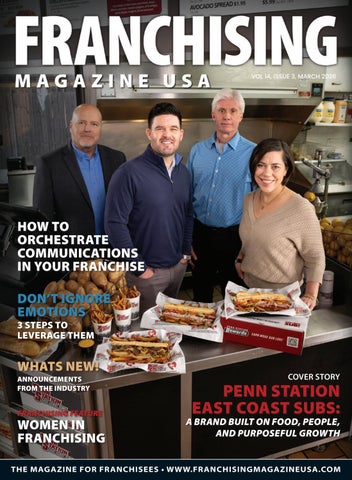
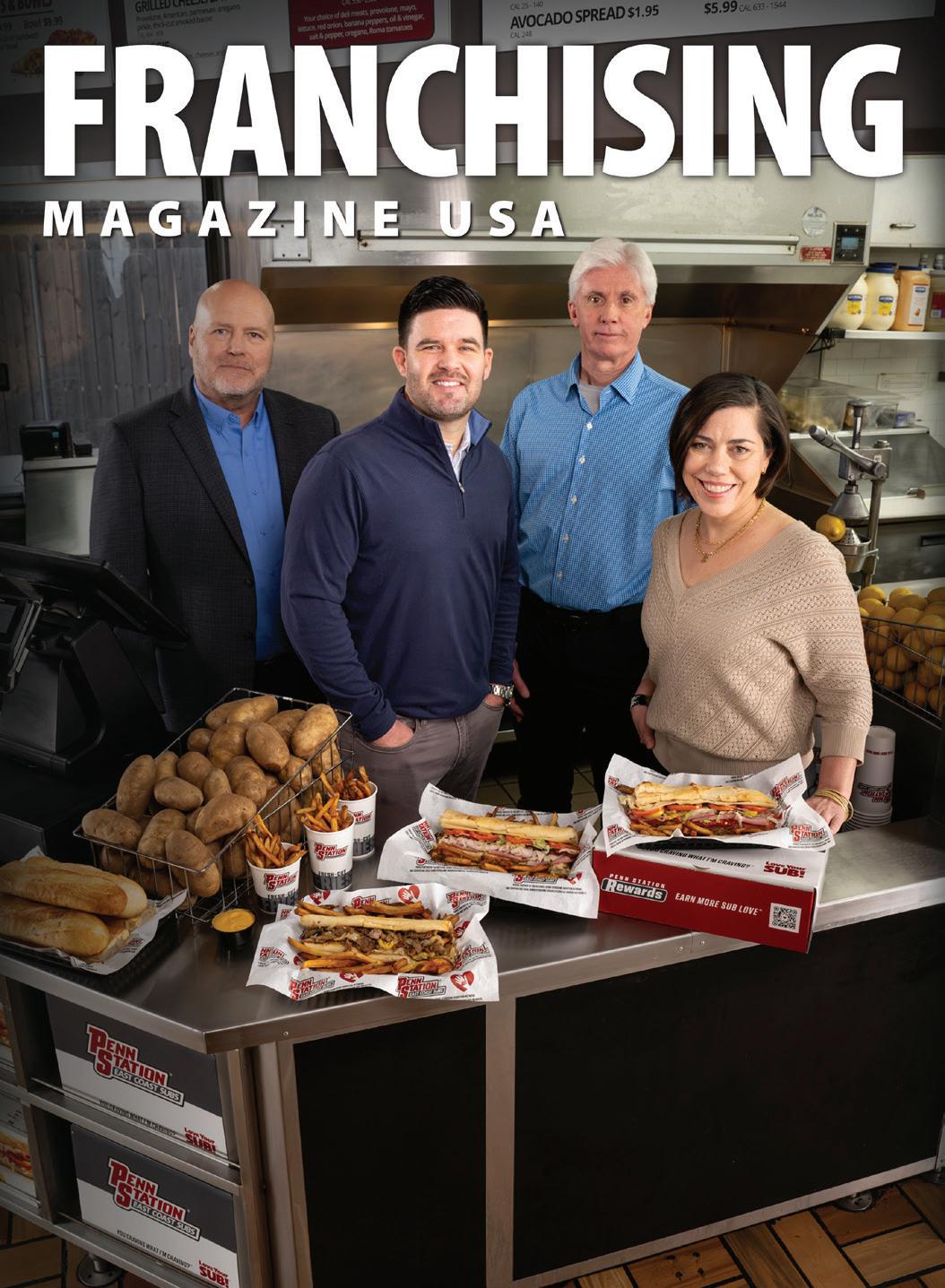
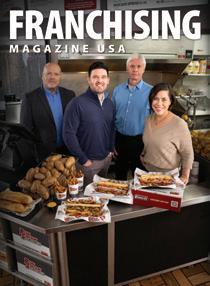
On the cover: PEnn s tation East coast sU bs
pRE s I d E nt: colin bradbury. colin@cgbpublishing.com
pU b LI sh ER : Vikki bradbury. vikki@cgbpublishing.com
E d I tORI a L d E pa R t ME nt: editor@cgbpublishing.com
adVER t I s I ng: vikki@cgbpublishing.com advertising@cgbpublishing.com
Cgb pUbLIshIng canadian o ffice: sidney b c canada
U. s. Office: seattle, Wa www.franchisingmagazineusa.com
Welcome to the March 2026 issue of Franchising Magazine Usa
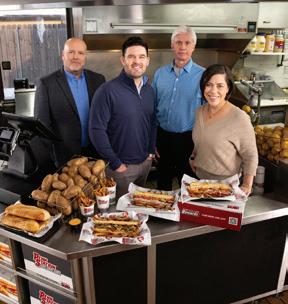
h ere we are in March already and lots happening in the Franchising world positively moving forward. to start us off, we have our Cover story on penn station East Coast subs. For nearly 40 years they have been a brand built on food, people and purposeful growth. you can read more about this on page 10.
a s usual our top experts in the industry continue to deliver great advice. Lucas Frey tells us not to ignore emotions and gives us 3 steps to leverage them. g eorge Knauf points out why most franchise buyers ask the wrong first question. Evan hackel in this issue tells us how to orchestrate communications in your franchise. o ur guest contributors this issue are Jamie izaks and he discusses how federal policy is influencing the franchise landscape in 2026. art coley talks about 4 innovative approaches to invigorate franchise recruitment. Last, but not least we have steven F. c arroll who helps us understand how to build a Franchise emergency fund.
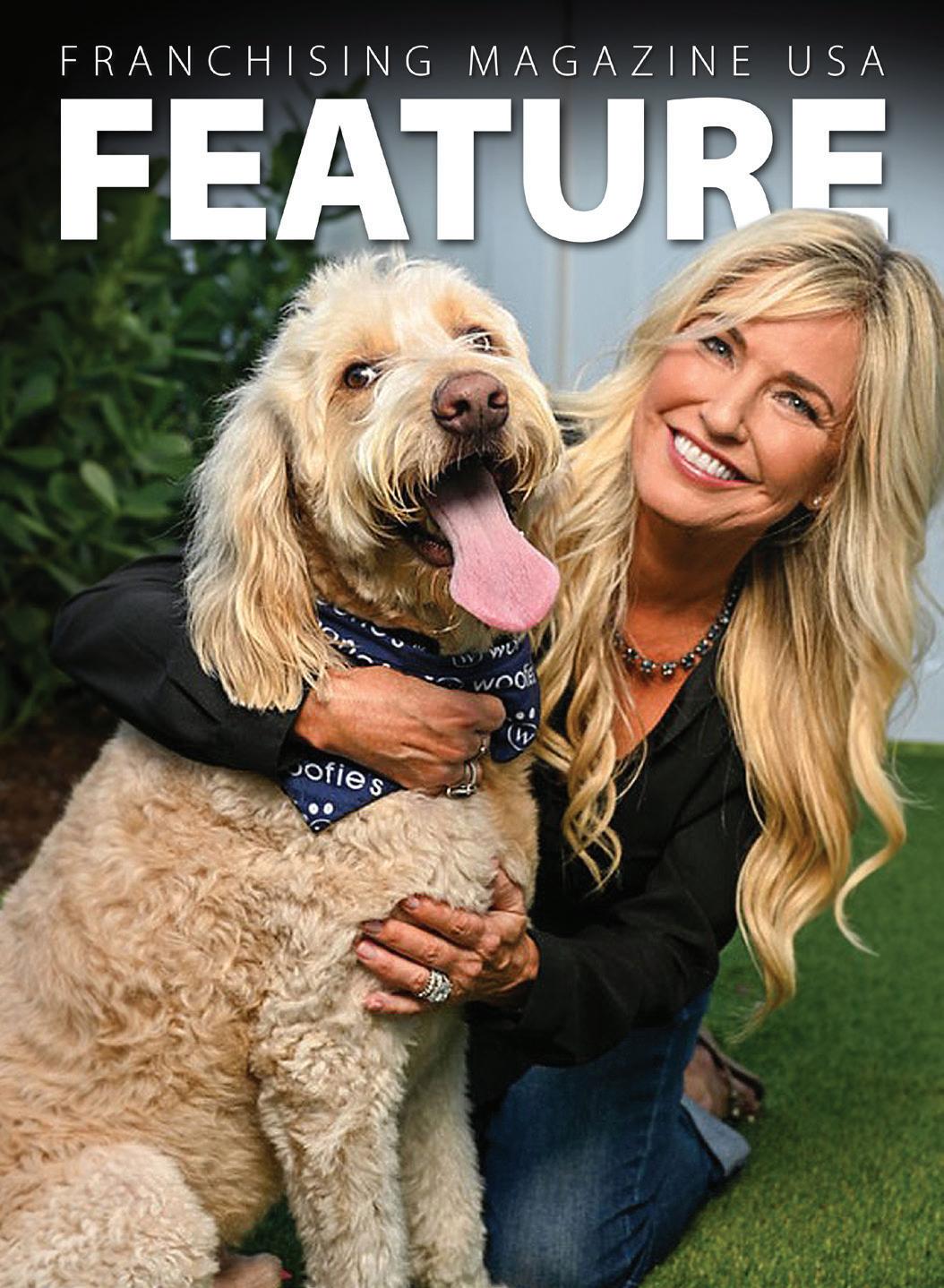
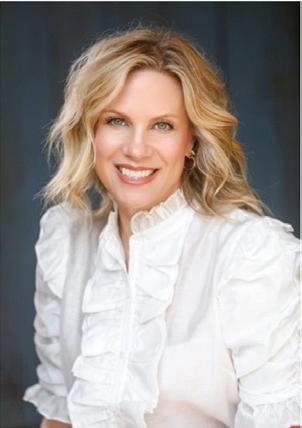
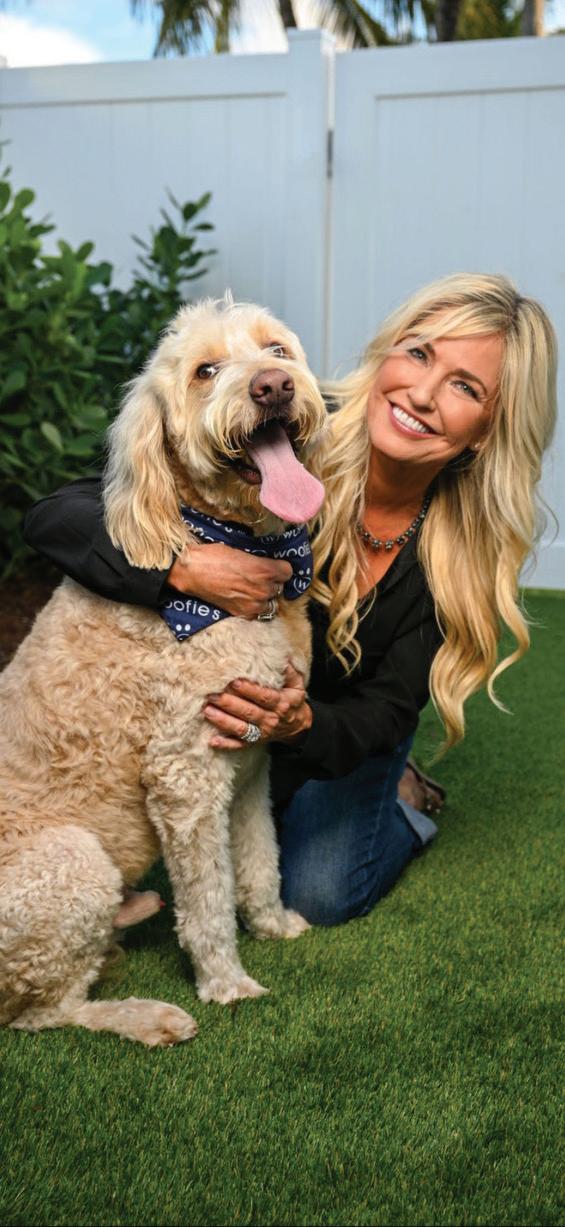
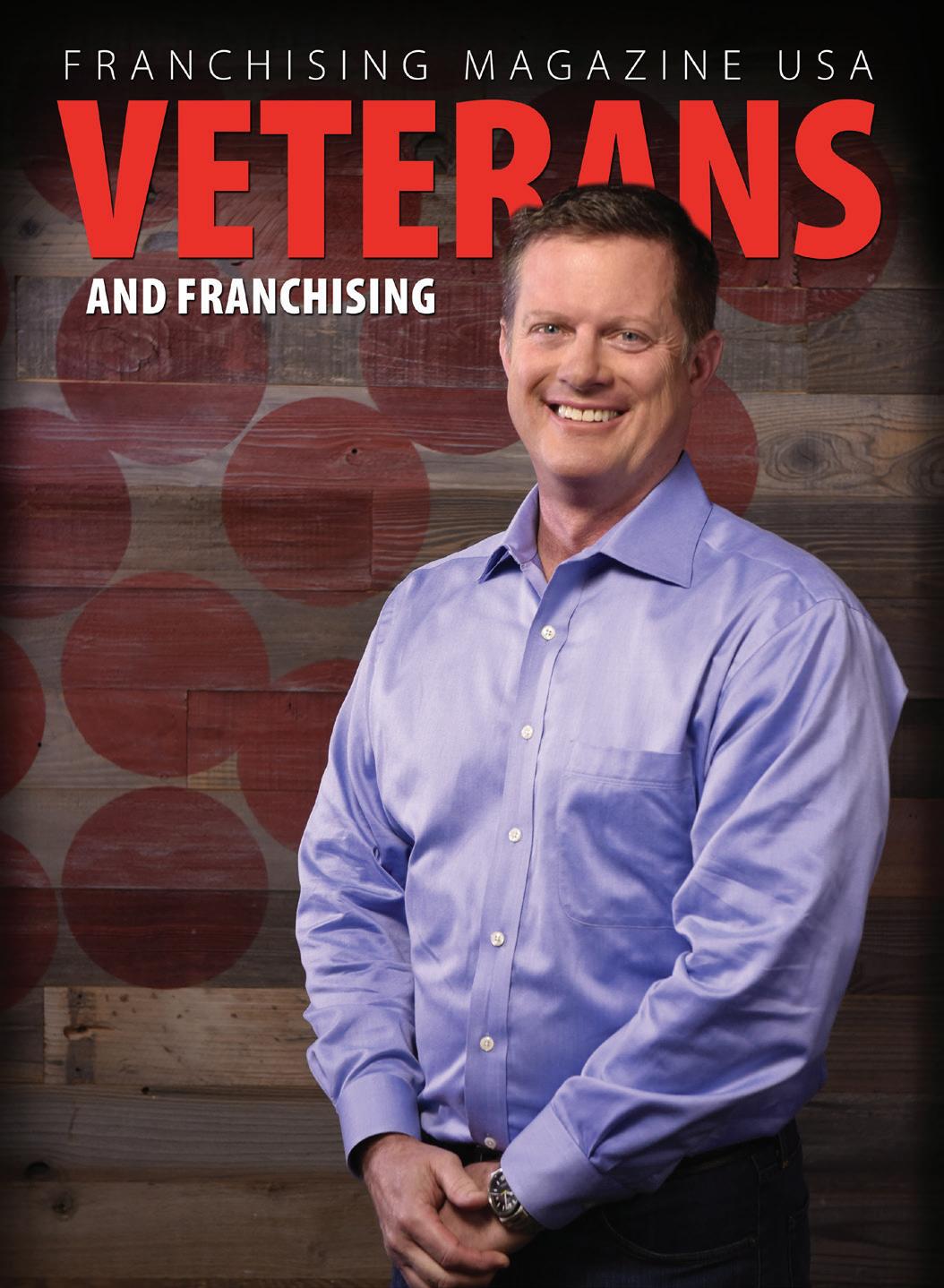
o ur main Feature this issue is Women in Franchising, and we meet a great number of women who have succeeded in the franchising world. o n the cover we meet amy addington co-founder and president of Woofie’s and she offers some advice on what to consider with multi-brand franchising. We also meet t he spice & tea Exchange who are elevating women nationwide; Express Employment Professionals who are empowering women through opportunity. turn to page 39 to find more great stories in this issue.
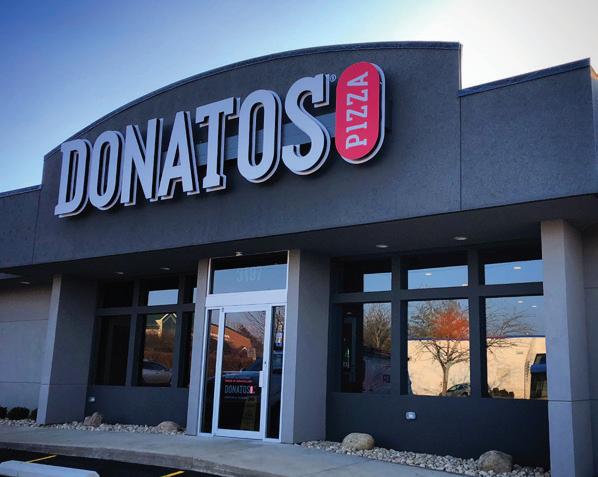
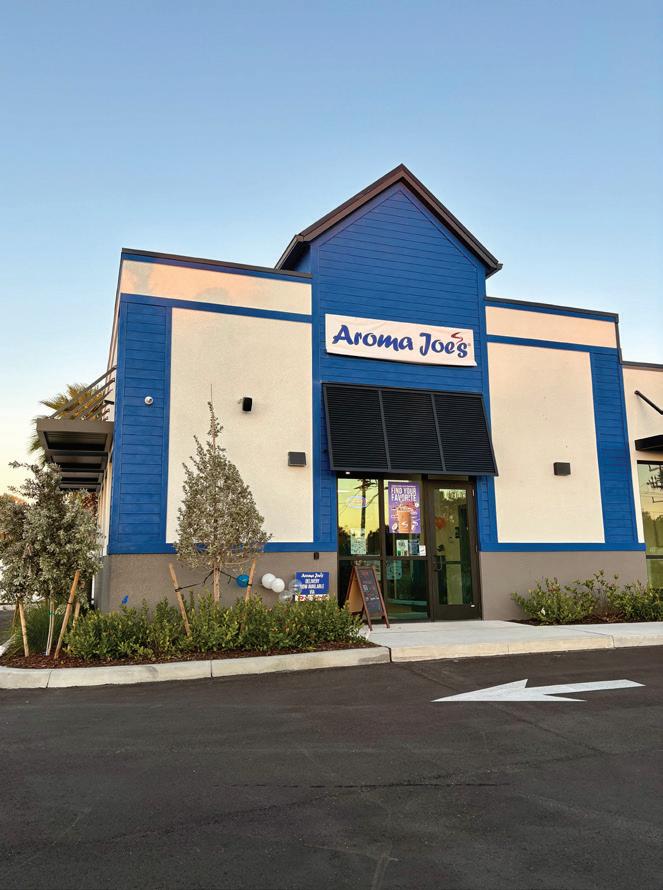
a s always, we have our Veterans covered in this issue, the brands covered in this issue are Donato’s, aroma Joe’s, atwork and take 5 o il change. We will bring you more great stories in our april issue.
a s always, i really hope you enjoy reading this issue and don’t forget to take a moment to scroll thorough to our a-Z Directory at the back of the magazine or visit the website www.franchisingmagazineusa.com to find more exciting franchises and advice. happy r eading.
Vikki Bradbury | Publisher Franchising Magazine USA
proud member of the IFa:
The public and policymakers need to understand franchising.
Our purpose
@OurFranchise is an industry-wide campaign created to spread the word about the value of franchising and share the stories of men and women just like you, who are leading the way as franchisors, franchisees, and franchise employees. The franchise business model has been proven time and time again to work, but it’s threatened when the public and politicians don’t understand how it operates to benefit local, independent franchise establishment owners and their communities. Putting a spotlight on real leaders succeeding with the franchise model is how we’ll ensure franchising is stronger than ever before.
Follow us
Share the tools and resources offered on AtOurFranchise.org/resources
Help us keep the momentum going
Since our launch in June 2016, we’ve reached 1.7 million people through outreach efforts, including events in key cities and states, where we spoke directly with business owners, employees, policymakers, and the media. Additionally, we’ve reached people across America through our website and social media channels, digital advertisements, and the promotion of We the Franchisees on Politico – but there is much more work to do. As a franchisor, franchisee, or franchise vendor, you are a leader in your community – and we need your support, now more than ever.
b a x
Our Franchise @OurFranchise @OurFranchise
You benefit by joining
By joining @OurFranchise, you’ll get access to exclusive stories and resources that can help grow your franchise business, educate employees at all levels about the franchise business model, and share the economic importance of franchising with consumers. You will also have the opportunity to share your franchise success story with your peers.
Visit AtOurFranchise.org
Contact Erica Farage, Senior Director of Political Affairs and Grassroots Advocacy and Multi-Unit Franchisee Engagement International Franchise Association efarage@franchise.org (202) 662-0760
This is just the beginning
Make sure you stay up to date with the campaign’s latest efforts through email updates and social media. Visit our website to read and share the latest stories of franchisors and franchisees making an impact in their communities. Become a franchise advocate to help ensure Americans, now and in the future, have the opportunity to start franchise businesses. Take the lead today!
contents M arch 2026
Cover Story
10 Penn Station East Coast Subs: a brand built on Food, People, and Purposeful growth
In every issue
6 What’s New! Announcements from the Industry
37 Feature Supplement: Women In Franchising
78 A-Z Franchise & Services Directory
Franchisee in Action
16 Painting with a Twist: brushstrokes, business and baby bottles: how heather and Levi schoonover built boise’s First Painting with a twist
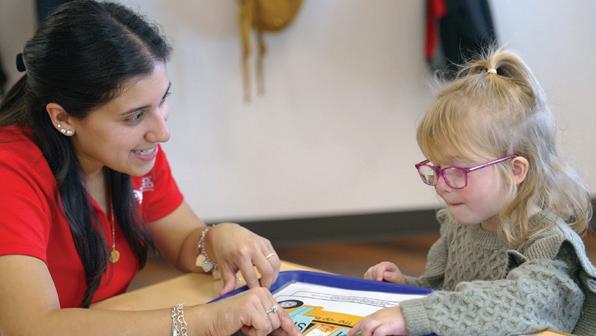
28 The Little Gym: From instructors to Multi-brand builders
Have Your Say
24 Booxkeeping: Why sMbs are abandoning the DiY Model and outsourcing Everything in 2026
32 Zoom Room: Your clients already Expect Data. is Your Franchise Delivering it?
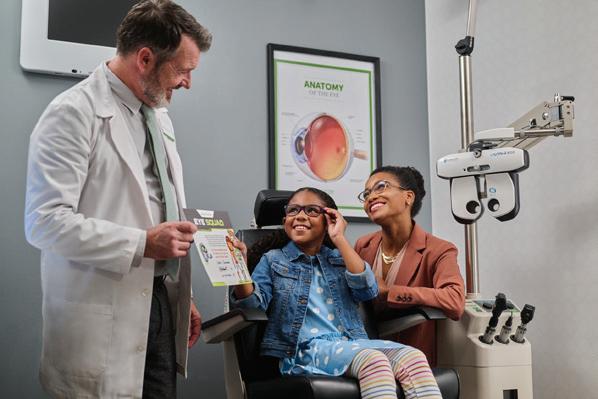
58 Pearle Vision: Five trends reshaping optical Franchising in 2026
66 Ray Titus: What’s in Your Pipeline? getting Fanatical about the Lost art of Prospecting
20
Franchisor in Depth
14 Timber Pizza: the Pizza truck that became a Franchise Phenomenon
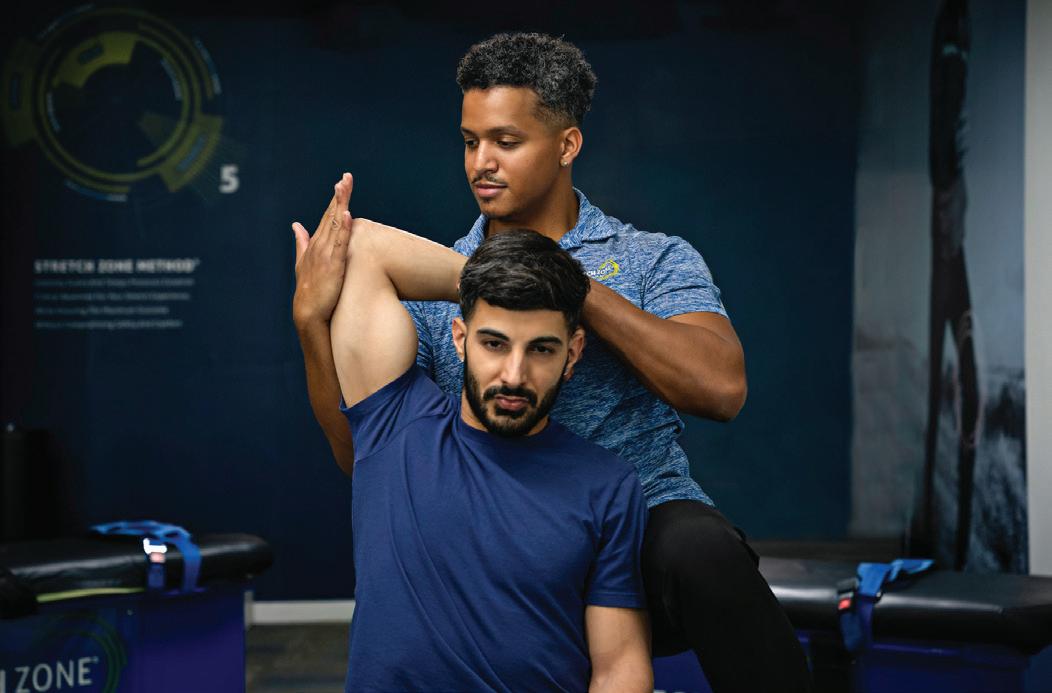
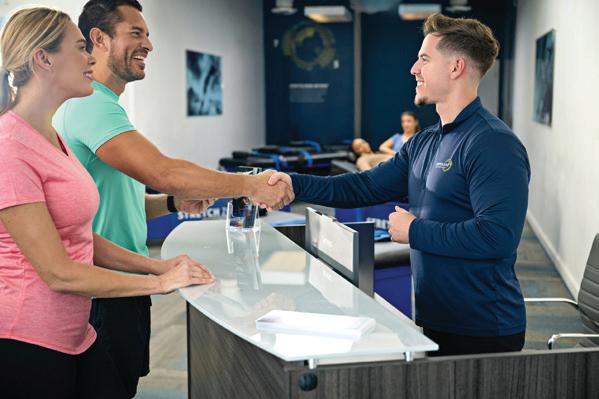
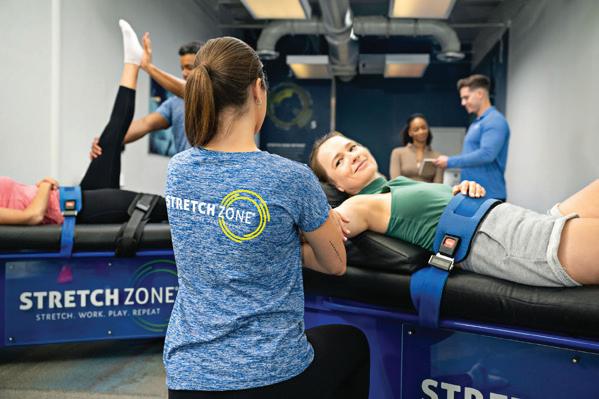
20 Stretch Zone: Why Evidence is the Ultimate competitive advantage in Wellness Franchising
26 PuroClean: celebrating 25 Years of Puroclean: the restoration Franchise built on heroic service
Expert Advice
12 Lucas Frey: Don’t ignore Emotions 3 steps to Leverage them
18 Evan Hackel: how to orchestrate communications in Your Franchise
30 Steven F. Carroll: building a Franchise Emergency Fund: Protecting against Unexpected Financial challenge
34 Art Coley: Four innovative approaches to invigorate Franchise recruiting in 2026
60 George Knauf: Why Most Franchise buyers ask the Wrong First Question
Q&A
62 Del Salinas: Why are tech and corporate workers increasingly choosing franchising and senior care?
VE t E rans s UPPLEME nt
Have Your Say
70 Donatos Pizza Dayton: From the Military to Multi-Unit Franchising: Why Veterans are built for business ownership
Franchisor In Depth
72 Aroma Joe’s: opens new Locations in cape coral, Florida
Franchisee In Action
74 AtWork: From serving to stewarding Employment opportunities, Former Marine opens atWork in Virginia
Snapshot
76 Take 5 Oil Change: take 5 oil change appoints Driven brands Leader Phil hoblet as senior Vice President of Franchise
64 Jamie Izaks: how Federal Policy is influencing the Franchise Landscape in 2026 10 62
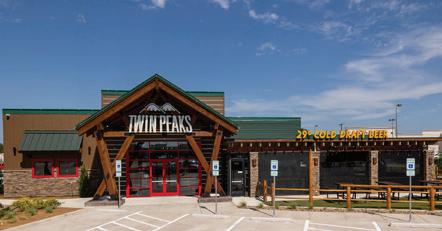
t win Peaks Opens New Lodge in Fayetteville, North Carolina
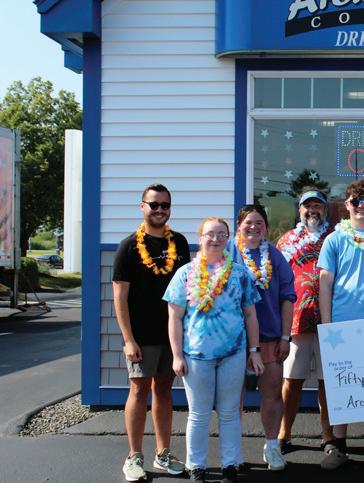
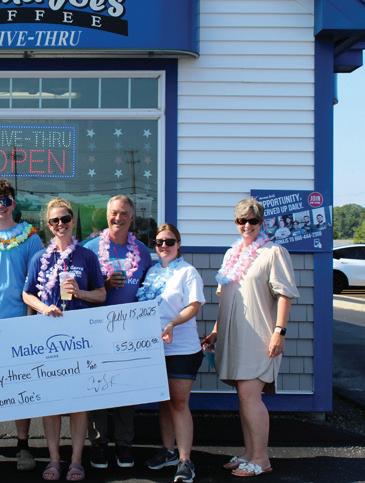
Twin Hospitality Group Inc. (Nasdaq: TWNP), parent company of Twin Peaks Restaurant, today announced the grand opening of its new Fayetteville lodge, located at 1891 Skibo Road near Cross Creek Mall. The new location marks Twin Peaks’ second restaurant in North Carolina and its 115th systemwide.
twin Peaks Fayetteville will celebrate its opening with a ribboncutting ceremony at 10:30 a.m. on Feb. 10 in partnership with the g reater Fayetteville chamber of commerce. Following the ceremony, guests are invited to enjoy twin Peaks’ signature made-from-scratch menu, ice-cold 29° draft beer from 30+ taps, and an immersive sports-viewing experience designed for fans.
spanning approximately 8,200 square feet, the Fayetteville lodge features more than 55 wall-to-wall t Vs, an indoor bar, and an energetic lodge atmosphere built for watching every major matchup. t he restaurant will carry nFL sunday t icket, E sPn programming, college football, nba League Pass, and show all UFc fights live, making it a year-round destination for sports fans.
“ twin Peaks is proud to officially join the Fayetteville community,” said Frank chopski, franchisee with Music city LLc . “We invite guests to enjoy our made-from-scratch menu, lodge atmosphere, and the elevated sports-viewing experience twin Peaks is
known for. o ur team is ready to deliver a welcoming, high-quality experience from day one.”
r egular operating hours are sunday through t hursday from 11 a.m. to midnight and Friday and s aturday from 11 to 1 a.m.
g uests can enjoy twin Peaks favorites such as hand-smashed burgers, smoked and grilled wings, flatbreads made from scratch, hand-cut steaks, and signature items like billionaire’s b acon. t he beverage menu includes 29° draft beer served in frosted mugs, along with a full lineup of handcrafted cocktails.
TwinPeaksRestaurant.com.
Go Mini’s Targeting Further Development
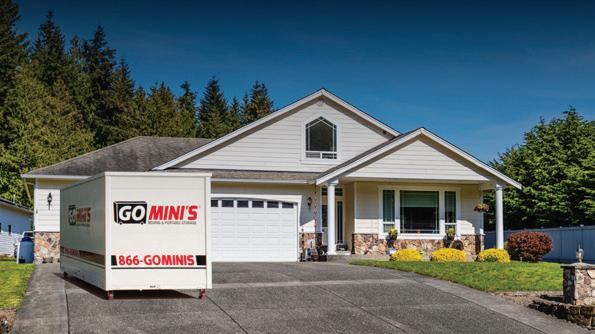
g o Mini’s, the portable storage franchise that offers containers for moving, storage, renovation, and restoration needs, has entered 2026 with plans for continued national expansion following a year of growth in new markets, services and partnerships. t he company expanded
in 2025 into key markets such as Myrtle b each, s c .; Waco, texas; nashville, tenn.; and hartford, conn., while strengthening its presence in established regions including Dallas and s outhern n ew England.
t he brand is now targeting further
development in the Dallas–Fort Worth area, the g ulf coast and states including Montana and Minnesota, with additional markets under evaluation in the s outhwest and n ortheast. Leadership says the focus remains on measured, franchisee-first growth rather than rapid unit count.
t his past year, the company also formed partnerships with restoration and moving brands including Puro clean and college hunks hauling Junk & Moving to strengthen their service offerings.
t heir commitment to franchisee satisfaction has continued to earn recognition, earning a top 200 Franchise ranking from Franchise business. Founded in 2002, the company now operates across 41 U. s . states and internationally, with 114 sold franchises across the Us, c anada, and Mexico.
R n R t i R e e x PR ess Names Winner of Monumental 25th Anniversary Giveaway
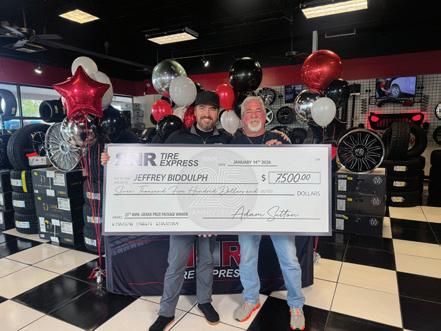
RNR Tire Express (RNR), the leading franchise retailer for tires and custom wheels, celebrated 25 years as a brand with its biggest giveaway to date. This past December, RNR hosted 31 days of giveaways, awarding over $25,000 to 25 winners. Out of over 33,000 entries, one lucky participant took home the Grand Prize.
t he winner of rnr ’s 25th anniversary giveaway is Jeff biddulph from bradenton, FL. a s the grand prize winner, rnr t ire Express awarded biddulph:
• $3,000 RNR gift certificate for a set of tires/wheels
• $1,000 gas card
• Two-year-long memberships for car washes
• Car care kit
• Professional full-car detailing
• Aftermarket upgrades of choice
• Visa gift card
• Publix gift card
t he giveaway also included four weekly major prize winners, each receiving new tires and wheels (up to $2,000 value) and a $500 gas card, as well as daily instant prizes totaling $5,000. These included discounts on tires and wheels, gas cards, Visa gift cards, and rnr merchandise.
“25 years in the business is a milestone made possible by the communities we serve,” says adam sutton, cEo of rnr t ire Express. “We’re proud of what we’ve built together and honored to give back to those who have helped shape rnr t ire Express.”
since its founding in 2000, rnr t ire Express has grown from a single-store operation into a national franchise system with a strong commitment to affordability, flexible payment options, and local community involvement. t he 25th anniversary initiative reflects that mission, continuing a legacy of customer appreciation and value-driven efforts.
o utside of the 25th anniversary giveaway, rnr t ire Express makes philanthropy a framework for their business year-round. rnr prioritizes local giveback, hosting annual Mother’s Day, Father’s Day, back-to-school supplies, teacher giveaways, and breast c ancer awareness campaigns.
www.RNRfranchise.com.
Poolwe R x Announces New Opening in Georgia
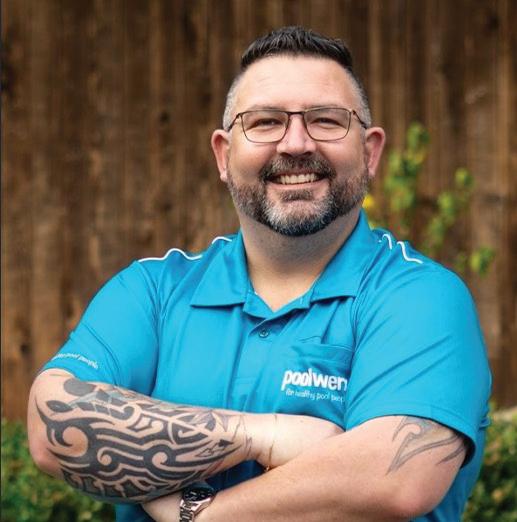
The largest global franchise pool service brand, Poolwerx, continues its U.S. expansion with the opening of a new territory servicing Alpharetta, Marietta, and Sandy Springs Georgia. The location is owned and operated by John Lange, a seasoned entrepreneur and chemical engineer whose passion for business ownership and community involvement made Poolwerx a natural fit.
business ownership has been a lifelong pursuit for Lange, who launched his first company at just 20 years old. n early two decades later, his businesses remain successful and operational, forming the foundation of a family legacy he plans to continue building.
“ t he pool industry is a steady, untapped market that continues to gain traction. More and more people are realizing that time is precious and are shifting pool maintenance responsibilities to professionals,” said Lange. “Poolwerx allows me to combine my engineering background with something that brings people joy. Pools are where families slow down, reconnect, and make memories, and being part of that is incredibly rewarding.”
Lange holds an Mba from stellenbosch University in s outh africa and brings extensive experience across industrial water treatment, steel fabrication, and entertainment sectors. after relocating to the United states to focus on expansion opportunities, he identified alpharetta, Marietta, and s andy springs as the ideal markets to establish a long-term, service-driven business.
“at Poolwerx, we look for franchise partners who lead with integrity and have a true commitment to their communities,” said Darlene Viering, s enior Vice President of Franchise Development at Poolwerx. “John embodies those qualities, and we’re proud to support him as he introduces the Poolwerx experience to g eorgia. We know he is going to a make a meaningful impact for these local pool owners.”
https://poolwerxfranchising.com.
i deal s idin G Opens 20+ Locations in 2025, Kicks Off 2026 on Path to 100+ Units
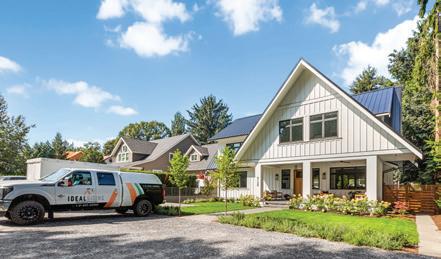
Ideal Siding, North America’s largest siding renovation company, enters 2026 following a year of significant systemwide growth, strategic expansion, and operational milestones that position the brand to surpass 100 locations early into the new year.
During 2025, i deal siding awarded 19 new franchise agreements, 17 in the United states and two in c anada, and opened approximately 23 new locations across n orth america. With additional agreements finalized at the start of 2026, the brand is expected to exceed 100 operating locations soon, marking a major milestone in its expansion.
“Last year was about proving the strength of the model at scale,” said alex Filipuk, cEo and Founder of i deal siding. “We grew quickly, but more importantly, we grew deliberately with strong operators, the right markets, and systems that can support longterm success.”
strategic Market Expansion Fuels national Footprint
in 2025, i deal siding expanded into several priority territories identified early in the year, including the Washington, D.c . Metro area, with new locations in b altimore and Dulles, as well as r ichmond, Virginia. additional market entries include chicago, illinois; Long island, n ew York; cincinnati, o hio; o ttawa, o ntario; and Providence, r hode island.
t hat momentum continues into 2026, with franchisees scheduled to open in Lafayette, Louisiana; huntsville, alabama; and n ew o rleans, Louisiana in the first half of the year. i deal siding is also actively recruiting franchise partners in growth markets including Philadelphia, indianapolis, Detroit, cleveland, hawaii, and c alifornia.
“We’re starting this year with a strong foundation and clear direction,” Filipuk added. “o ur focus in 2026 is on deepening our presence in existing markets while continuing to expand responsibly into new ones.”
Leans Into 2026 with Focus on Growth, Operational Excellence
United Franchise Group™ (UFG), a global leader in providing innovative franchise opportunities, development services and ongoing support to entrepreneurs, begins 2026 with an executive realignment that focuses more closely on the strengths each member brings to the team. The plan emphasizes operational excellence and long-term growth, building on the results-driven approach that is UFG’s foundation.
t he realignment leverages each member’s expert skills to continue driving the company forward:
• Ray Titus: chairman, cEo and Founder; vision, culture, investments and longterm strategic direction
• A.J. Titus: United Franchise g roup Executive Director (o perations) and signarama President
• Andrew Titus: President of United Franchise g roup (g rowth) and Fully Promoted
• Brady Lee: chief o perating o fficer and President of Xsella acquisitions; operational excellence and acquisitions
• Michael White: chief Development o fficer at UFg international; Director of franchise sales and international growth
• Austin Titus: President of accurate Franchising; franchise development and broker relations
“ t his is not a great departure from what we’ve always done – we’re just taking a more focused, intentional approach,” said r ay t itus, chairman, cEo and Founder of the company that shares four decades of franchising expertise with its entrepreneurs. “ s everal of our brands
have had remarkable years of growth and development, and we want to be sure we continue that trajectory companywide. b y assigning a particular focus to each executive, we keep growth and operational excellence top of mind as we strive to reach our goals as a company and as individuals.”
t he realignment signifies the company’s commitment to growing the business and continued support of its 1,800 franchisees around the globe.
For more information about United Franchise Group and its affiliated family of brands, visit www.UnitedFranchiseGroup.com.
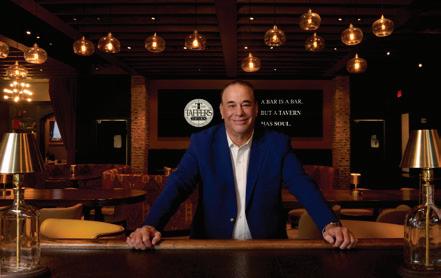
“Bar Rescue” Star and Hospitality Entrepreneur Jon Taffer Expands taffe R ’s tave R n Franchise in Midtown Atlanta
Hospitality expert, entrepreneur, television personality, and executive producer Jon Taffer continues the national expansion of his modern tavern concept with the opening of Taffer’s Tavern in Midtown Atlanta. Located at 1382 Peachtree St. NE, the new location introduces an evolved menu, expanded local favorites, and a next-generation design to one of Atlanta’s most vibrant districts, bringing the brand’s signature tavern experience to life.
Designed as a modern, elevated tavern, taffer’s tavern blends a hospitality-first approach dedicated to creating a tavern with soul, where warmth, care and consistency define the guest experience. o wned and operated by multi-unit franchisee h emant suri and his partners, the Midtown atlanta location marks the third taffer’s tavern for the team, following successful openings in alpharetta, g eorgia – the home to the first-ever taffer’s tavern – and Mercedes- b enz stadium.
Known for helping turn around thousands of bars across the country on Paramount n etwork’s “ b ar r escue”, Jon taffer built the brand on decades of experience in the people business, where systems support service and food and cocktails bring people together. taffer’s tavern in Midtown atlanta also highlights the brand’s culinary evolution, featuring bold takes on familiar classics.
spirit-forward sauces, developed in collaboration with taffer’s spirits portfolio, bring distinctive flavor to classic dishes, while a refined menu of guest favorites and new offerings reflects the brand’s focus on world-class quality.
along with its food and beverage offerings, the Midtown atlanta location will feature proprietary cocktails crafted with taffer’s browned butter b ourbon – a rich, full-bodied whiskey with notes of vanilla and toffee. created in alpharetta, the spirit reflects taffer’s dedication to innovation rooted in experience.
bluefrog plumbing + drain Appoints Industry Veteran to VP of Operations to Drive Franchise Growth and Operational Excellence
bluefrog Plumbing + Drain, a trusted national network and local partner in residential plumbing and drain solutions, announces the appointment of industry veteran Richard Fulghum as Vice President of Operations to drive national franchise growth and create operational excellence.
Fulghum joins bluefrog at a pivotal time as the brand continues to expand its footprint while reinforcing its commitment to being the “Plumber for Life” in every community it serves. his leadership will focus on delivering consistent, high-quality service experiences that protect what matters most: home comfort, efficiency, and peace of mind, so families can keep life moving without disruption.
Fulghum’s appointment signals a new era of operational excellence for bluefrog Plumbing + Drain, emphasizing consistency,
growth, and a customer-first standard that strengthens the brand’s role as a trusted local partner and resource for homeowners.
“i’m excited to join an emerging brand that has such a strong foundation and potential for growth,” said Fulghum. “bluefrog is built on treating customers like neighbors and showing up as a reliable partner they can count on for the long term. i look forward to supporting our franchise owners as we deliver that consistent experience in every community we serve.”
Fulghum brings over two decades of operational leadership expertise to the role, beginning his career managing operations for flagship hotel locations of Marriott hotels. transitioning into the home services sector, he spent several years at airtron heating & air conditioning, where he successfully developed operational frameworks for both new construction and retail divisions, with a specialized focus on
the in-home customer experience.
“We’re thrilled to welcome richard to the bluefrog leadership team,” said Jessica Wescott, cEo of parent company stellar service brands.
www.bluefrogfranchise.com/.
Penn Station e a S t Coa S t SubS:
A Br A nd Built on Food, Peo Ple, A nd
Pur P ose Ful Growth
In an industry often driven by speed and competition, Penn Station East Coast Subs has quietly built one of the most enduring and respected brands in fast-casual dining.
Born in the heartland of America, the Midwest-based concept has spent 40 years proving that quality food, thoughtful leadership, and genuine care for people can fuel long-term success. With more than 320 locations and a growing presence across the country, Penn Station’s momentum today is the result of steady, intentional decisions rooted in values that have guided the brand since day one.
Penn Station is, at its core, a people-first brand. While its product is food, Penn Station’s underlying mission is to serve guests high-quality subs and deliver a high-quality franchise opportunity to its owners. This approach has proven to be a recipe for success.
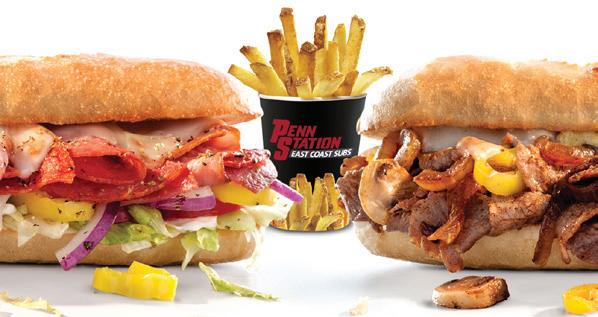
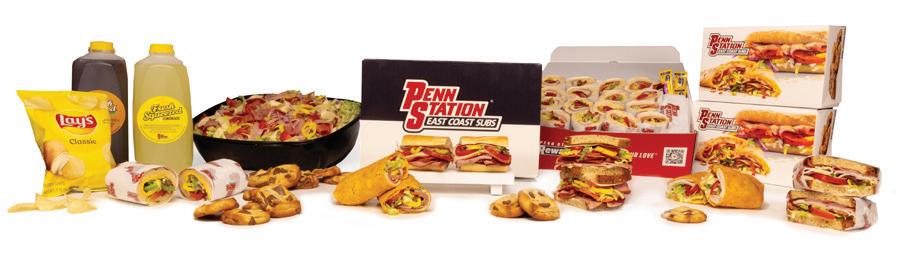
Award-winning, grilled, made-to-order subs define the Penn Station experience. The menu is simple by design, but execution is anything but ordinary. Each sub is crafted hot off the grill and built to order, giving guests the flexibility to enjoy their favorite flavors on classic sub bread, as a wrap, or even as a salad. That deep level of customization allows Penn Station to serve a wide range of preferences without overcomplicating the menu.
What truly sets the brand apart, however, is its unwavering commitment to freshness and craveability. For example, the fresh cut fries are prepared in-house every day using Idaho potatoes, delivering a hot, satisfying side that elevates the entire meal. In a category where many sandwich shops rely on prepackaged chips, Penn Station’s fries redefine what a sandwich pairing can be.
This winning combination of hot grilled subs and fresh fries naturally expands the brand beyond a traditional lunchtime occasion, unlocking both lunch and dinner dayparts and making it an appealing option for families and guests seeking a more complete, craveable meal.
That difference has meaningful implications for the business. A grilled sub paired with fresh fries opens the door to both lunch and dinner occasions, making Penn Station a destination for families as well as individuals. Add in hand-squeezed
lemonade, kids’ meals, value meals, and catering options, and the brand becomes an easy choice for group gatherings, weeknight dinners, and special occasions. This broad appeal is a key reason Penn Station franchise owners continue to invest in the system. The food is craveable, consistent, and versatile, and it keeps guests coming back.
While the product is the draw, the culture is what sustains the brand. Penn Station’s people are known for being warm, welcoming, and deeply committed to hospitality. That spirit is not accidental. It is reinforced through leadership that understands the business from the ground up. Many franchise owners began their journey with Penn Station as teenagers working their first summer jobs, learning how to make sandwiches and serve guests. Years later, they returned to the brand as owners, drawn back by positive
experiences and a belief in what the concept represents.
That same story is reflected at the highest levels of leadership. The brand’s president, Lance Vaught, began as a college intern and worked every role in the restaurant before stepping into the top position. The senior vice president of sales and franchise development, Don Champion previously operated franchises himself, giving him firsthand insight into the challenges and opportunities owners face. The chief operating officer, Craig Dunaway, has owned 17 franchises, bringing practical, operator-driven perspective to every decision. Jane McPherson, the senior vice president of marketing has spent her career in franchise marketing within the sandwich space, strengthening the brand’s ability to communicate clearly and effectively with both guests and franchise partners.
This depth of experience creates alignment. Decisions are made with an understanding of daily operations, long-term growth, and what truly drives unit-level success. Franchisees feel heard, supported, and understood, which strengthens trust across the system and contributes to strong returns on investment.
A key contributor to Penn Station’s recent growth has been its Managing Owner Program, which supports expansion while maintaining operational excellence. The model pairs multi-unit owners with managing partners who hold meaningful ownership stakes and oversee day-today restaurant operations. This structure creates shared accountability, allowing the business to scale responsibly without losing focus on execution. It also creates leadership pathways for individuals who want to grow within the brand, reinforcing Penn Station’s commitment to developing talent from within.
Beyond operations and growth, Penn
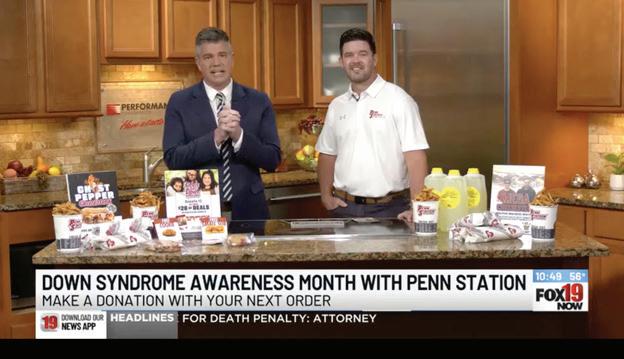
Station has long demonstrated that business success and social responsibility can coexist. For decades, the brand has supported Deals for Down Syndrome, an initiative that began long before purposedriven business became a widespread trend. The program reflects Penn Station’s belief in giving back consistently and authentically, strengthening community ties and reinforcing the values that define the brand. Since its inception, Penn Station has raised over two-million dollars to support families with Down Syndrome in communities where they have restaurants.
Penn Station’s growth today is happening against a backdrop of meaningful industry change. Consumer preferences have shifted, with fast casual emerging as one of the strongest segments in the restaurant space. Case in point, the addition of the brand’s new 9-grain sandwiches as a result of guests request. Guests want quality food delivered quickly and conveniently, and Penn Station has responded by evolving thoughtfully. Takeout now accounts for a significant portion of sales, and the brand continues to invest in a high-tech app, digital ordering, loyalty programs, and limited-time offerings that keep the experience fresh without compromising quality.
The company’s growth strategy is ambitious yet disciplined. Penn Station plans to double in size over the next five years, expanding from approximately 320 locations to 650. This growth is concentrated within a defined geographic radius in target cities like Columbus, Pittsburgh, Detroit, Nashville, Richmond–500 viable locations, supported by internal benchmarks designed to ensure sustainable expansion.
Thus far, much of this growth has been driven by existing franchise owners who are choosing to open additional locations.
That reinvestment speaks volumes about confidence in the model and the brand’s unit economics. Before accelerating expansion, Penn Station strengthened its internal infrastructure, investing in real estate, marketing, development, finance, and operations to ensure the support systems are in place to help new and existing owners succeed.
That focus on people is reinforced through Penn Path, the brand’s award-winning proprietary training and development platform. Designed to support everyone from frontline employees to corporate teams, Penn Path streamlines onboarding, training, and ongoing development through an interactive, digital first experience. The platform uses gamification, real time updates, and modular learning to accommodate different learning styles while keeping teams engaged and informed.
Unlike outsourced systems, Penn Path is fully managed in house, allowing the brand to adapt quickly to franchisee needs without passing additional costs down the system. The results have been measurable, with increases in employee engagement, franchisee participation in digital training, and overall learning hours. More importantly, the platform connects training directly to business performance, allowing the brand to evaluate the impact on profitability, sales, cost control, and guest feedback.
Perhaps most notably, Penn Station has managed to grow without losing its family feel. After nearly four decades, the brand continues to balance tradition with innovation, rolling out new offerings, embracing technology, and staying relevant while protecting the qualities that made it successful in the first place. It is a brand built on trust, craveable food, and people who care deeply about serving others well.
Four decades after opening its first restaurant, Penn Station East Coast Subs stands as a model of what intentional growth can achieve. By investing in people, maintaining operational discipline, and staying true to its values, the brand has created a franchise system built not just to grow, but to last. As Penn Station looks ahead, its success will continue to be defined not by how fast it expands, but by how well it supports those who grow alongside it. Penn Station is not just growing. It is growing the right way. v
Don’t ignore e motion S 3 s teP s to lever AGe t hem
My grandfathers were stoic men. They were good men. Both owned local service businesses and were hardworking, reliable, and steady. They taught me, directly and indirectly, to keep emotions in check, to handle what needed to be done without making things complicated. For a long time, that approach worked.
Until it didn’t.
As a franchise business owner and later as a fire chief, I learned that emotions don’t disappear because you ignore them. They
go underground. And when emotions go underground, they don’t stay quiet. They show up in tone, timing, and decisions, usually when you least want them to.
The shift for me wasn’t becoming more emotional. It was becoming more selfaware. Recognizing the emotion, accepting that it was present, assessing why it showed up, and then using that information intentionally became a leadership skill. One that helped me lift up my teams and better serve the people we served.
from identity to internal Pressure
Last week, we talked about identity. Specifically, reframing your career story from a ceiling into an asset to support what
comes next. That shift matters more than most people realize.
This week is about what shows up after that identity shift. Once you stop seeing yourself as “the operator,” the “good soldier,” or “the employee,” responsibility increases, and insulation decreases. That’s when emotions grow louder, not because something is wrong, but because more is at stake.
Emotions don’t disappear with growth. They change roles.
the employee emotional environment
In most employee roles, corporate, military, or franchise operator, the emotional environment is predictable. Safety and
approval matter. Certainty becomes a form of currency. Your decisions are rarely final, and there is almost always a corporate or organizational safety net.
Someone upstream absorbs the risk. Policies exist for escalation. Consequences are shared.
Those emotions aren’t weaknesses. They are appropriate to the role. You weren’t avoiding responsibility. You were operating inside a system designed to distribute it.
the emotional shift Most People don’t e xpect
Ownership changes the emotional math. Buffers disappear. Decisions feel heavier because they are heavier. No one else absorbs the consequences, and there is no longer a place to forward the email.
This shows up quickly, whether you’re a franchise owner choosing a location, a franchisor deciding when to hire your first franchise developer, or a founder determining where to establish a banking relationship. Even decisions that once felt minor now carry weight.
That isn’t a flaw in ownership. That’s the point.
owner emotional Realities
Here’s the honest trade that comes with accountability:
• Responsibility replaces safety.
• Exposure replaces approval.
• Solitude replaces certainty.
This happens immediately, and it happens inevitably. Every decision has consequences, including the ones that don’t feel dramatic at the time. The absence of a safety net is what creates leadership growth and it explains why emotions feel sharper.
a ceo truth worth saying out loud
Discomfort increases with authority. If discomfort isn’t increasing, authority isn’t either.
Luke Frey is a seasoned franchise strategist with over two decades of experience in leadership and business development. His journey from the front lines as a fire chief to the helm of his own successful franchise has equipped him with unique insights into the challenges and triumphs of franchise ownership. As the author of Your Guide to 90-Day Success: The Franchisee’s Strategy for Early Wins, Luke empowers franchisees to achieve early wins and sustainable growth by shortening the steep learning curve of business ownership.
Passionate about helping others succeed, Luke offers actionable strategies that blend practical business acumen with a deep understanding of human dynamics. Through his work, he’s committed to shaping the future of franchising, one successful business at a time.
Top 1% CEOs aren’t calmer because they care less. They’re calmer because they’ve learned how to operate while discomfort is present. This is also where impostor syndrome shows up, and that matters.
Impostor syndrome is not a reason for failure. It’s a strategic indicator. It highlights the leadership skills being stretched and refined. It doesn’t mean you’re unqualified. It means you’re operating at a new level.
normalizing the e xperience
Feeling uneasy doesn’t mean something is wrong. It often means you’re closer to the edge of growth. That edge is where CEOs operate, and it’s rarely comfortable.
If you never feel exposed, you’re playing too small. If you never feel uncertain, you’re deferring decisions. Growth doesn’t eliminate emotion. It requires a greater self-awareness to work with it.
common avoidance Patterns
Avoidance seldom looks like avoidance. It often shows up as delay disguised as “thinking it through,” or persistent “I should” statements, or seeking advice from disinterested sources instead of making decisions. Sometimes it shows up as activity that feels productive but avoids ownership.
It feels responsible. It feels prudent. It’s often fear wearing a productivity costume.
this Month’s action
Name one emotion that consistently shows up for you over the last few months. Write
it down. Next to it, list your decision options.
Many clients tell me, “I know what I should do. I want to be sure.”
Then make the decision, balancing risk and impact. Not recklessly, rather intentionally. There is never perfect information and not every decision works out the way you expect.
Action is the key. Test, measure, and adapt to sharpen the decision for long-term success.
You don’t need perfect confidence. Perfection isn’t possible. You need clarity and progress toward your vision.
Your ceo Growth
Clarity doesn’t remove emotion. It teaches you how to recognize it, evaluate why it’s present, and act with it in the room. That’s the upgrade, and you don’t have to do it alone.
closing
Last month was about reframing your story. This month is about leading yourself through discomfort. That’s CEO growth.
Next month, we’ll talk about how time changes hands when ownership begins, and why that shift determines whether growth feels empowering or exhausting.
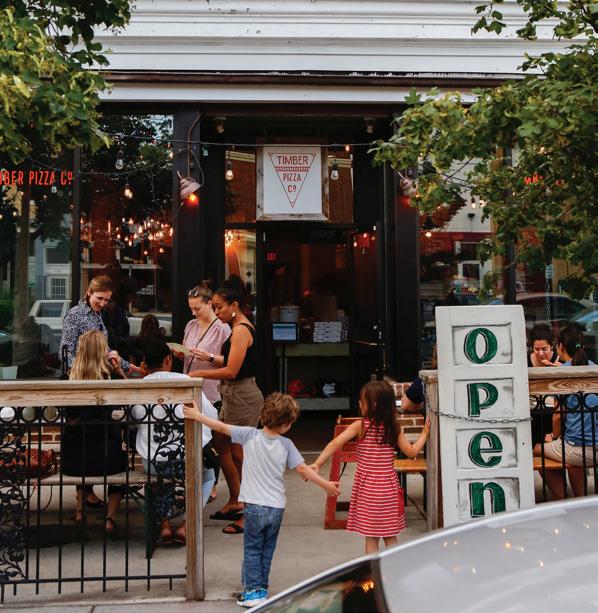
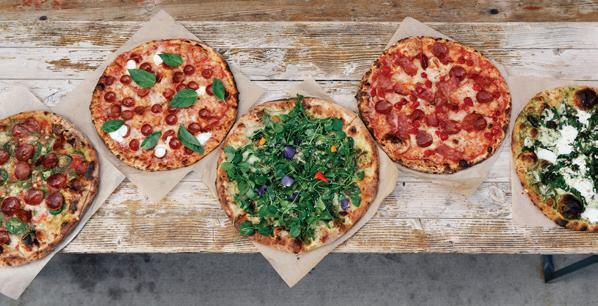
In 2014, Andrew Dana and Chris Brady launched Timber Pizza Company during their off-hours with nothing more than a pizza oven, a ’67 Chevy pickup truck, and a shared love of dough.
When Chef Dani Moreira joined the duo after graduating from the Culinary Institute of America, the Timber “Fam” officially took shape. Two years later, the team opened their first brick and mortar shop in Washington, D.C.’s Petworth neighborhood.
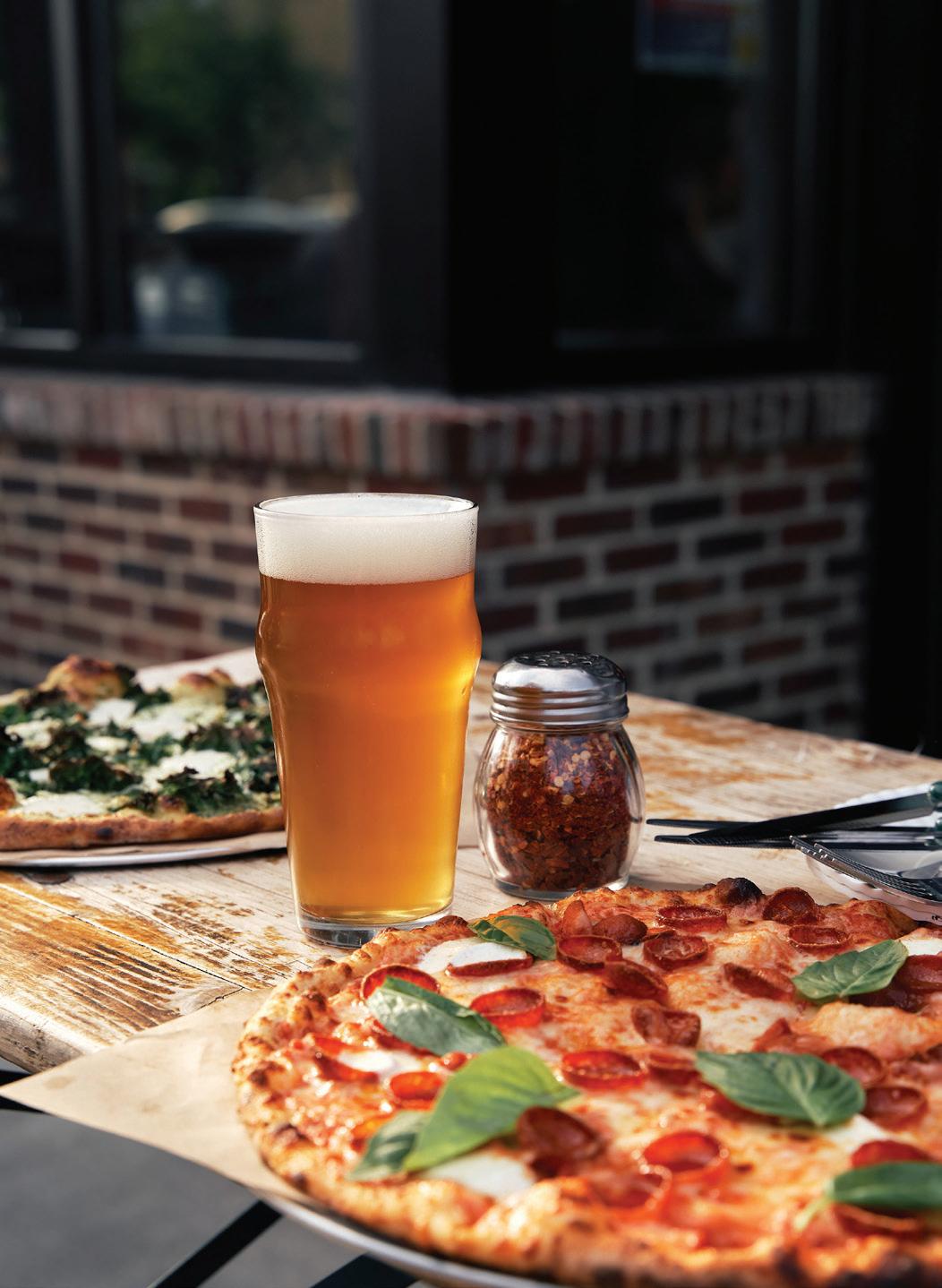
Timber Pizza has served countless pies while staying true to its mission of delivering amazing experiences to its community. Today, the team continues to dish out extra love (and plenty of pepperoni) to friends old and new.
A Michelin Bib Gourmand recipient and Bon Appétit’s Pizzeria of the Year, Timber Pizza has earned national recognition for its inventive pies and community driven spirit. Since its early days, the brand has grown into a beloved name across D.C., Maryland, and Virginia, consistently ranked as a top pizza destination by publications such as Eater, QSR, and Raleigh Magazine. Now, with its reputation firmly established, Timber Pizza is looking to partner with aspiring entrepreneurs to bring its celebrated concept beyond its home region.
In just over a year, Timber Pizza has opened six franchise locations, with new shops thriving in Charleston, Raleigh, and Durham, and additional stores set to open in Alexandria and Richmond later this year. The franchise opportunity is drawing interest from entrepreneurs in cities like Atlanta, Charlotte, Savannah, and Wilmington, where population growth
and shifting lifestyles are fueling demand for high-quality restaurants that feel local, intentional, and connected.
For Co-founder and President, Chris Brady, the momentum is a clear sign that Timber Pizza’s blend of quality, culture, and community has the potential to resonate far beyond its Washington D.C. roots.
“The success we’ve seen over the past year has reinforced that we’re building something special,” Brady said. “There’s real demand for what we do and we’re ready to take it to the next level.”
That demand is fueled by more than great pizza. As consumers become increasingly intentional about where their food comes from, Timber’s commitment to sustainably sourced ingredients and thoughtfully crafted wood fired pies continues to set it apart. At the same time, its franchise model is drawing a new generation of multi unit operators. With an efficient menu, flexible operating hours, and strong brand recognition, Timber offers entrepreneurs the opportunity to stay closely involved in daily operations while expanding into metropolitan and fast growing suburban markets.
CEO Luke Watson sees the brand’s growth as an opportunity to bring Timber’s neighborhood first spirit to more communities without losing the authenticity that made it a standout.
“There’s still a tremendous amount of white space for Timber across the Southeast and beyond,” Watson said. “At its core, Timber is about creating a shared experience—a place where food, community, and lifestyle come together and feel like home. My focus is making the franchisee journey seamless so our partners can spend more time building spaces that truly belong in their neighborhoods.”
The brand has remained true to its roots, choosing each new location with intention, selecting franchise partners for alignment rather than ambition alone, and designing every shop to feel equally suited for a quick bite or an unhurried hangout with friends. The brand now offers a franchise opportunity grounded in genuine work–life balance, a strong sense of community, and a commitment to consistency that
distinguishes it within both the restaurant and franchise sectors.
With systemwide sales of $11,637,262.90 and a small, efficient footprint, the company gives franchise partners the rare chance to secure high value territories supported by a proven, profitable model.
As the company continues to scale, its combination of strong economics and an operator friendly culture positions it as an appealing choice for entrepreneurs seeking a meaningful, sustainable business. Its commitment to responsibly sourced ingredients, genuine community connection, and an elevated yet approachable menu shapes the kind of franchise partners the brand is looking for. Ideal owners are those who share Timber’s
passion for quality and authenticity, people who value relationships, love being part of their neighborhoods, and want to create spaces where guests feel at home the moment they walk in.
The franchise is seeking operators who embrace its “Timber Fam” spirit, bringing fun, warmth, and purpose to their restaurants while upholding the craftsmanship and ingredient standards that define the brand. For franchisees who care about community as much as great food, Timber Pizza Co. offers a meaningful, values-driven opportunity. As Timber steps into its next chapter, it is building a network of neighborhood pizza shops that feel personal, grounded, and unmistakably Timber. v
bruS h S troke S,
First PA intin G with A t wist
From late nights in an Airstream to life as new parents, the Schoonovers share their secrets to balancing marriage, parenthood, and management
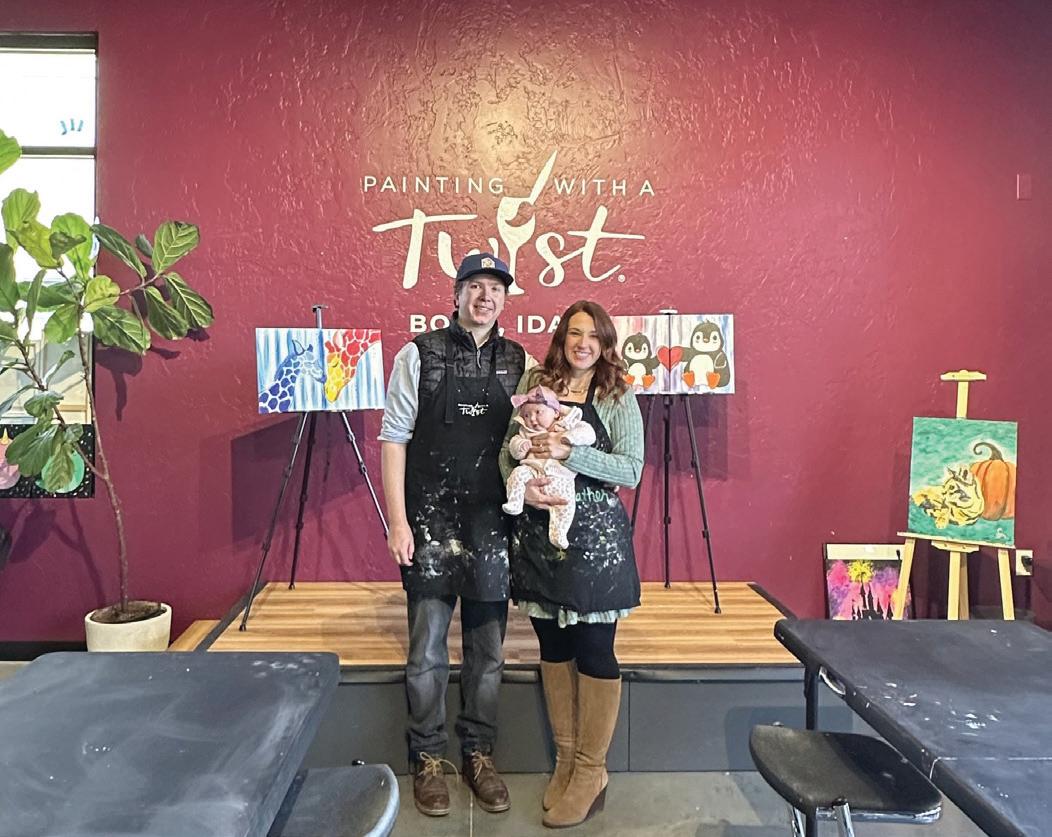
When people ask us how we learned to work together as a married couple and business partners, we usually smile before answering. Because the real story didn’t start with our first franchise. It started in a 1957 Airstream trailer.
A few years ago, we moved into that silver bullet vehicle with our two big dogs and lived at our warehouse while we relaunched our existing businesses— Trophy House Pros and Meridian Trophy. We slept, worked, planned, laughed and built our future inside a space barely big enough for two adults and a coffee maker. At the time, it felt a little crazy. Now, we see it for what it was: our crash course in marriage, management and grace.
If you can relaunch a business while living in an Airstream together, you can probably handle just about anything.
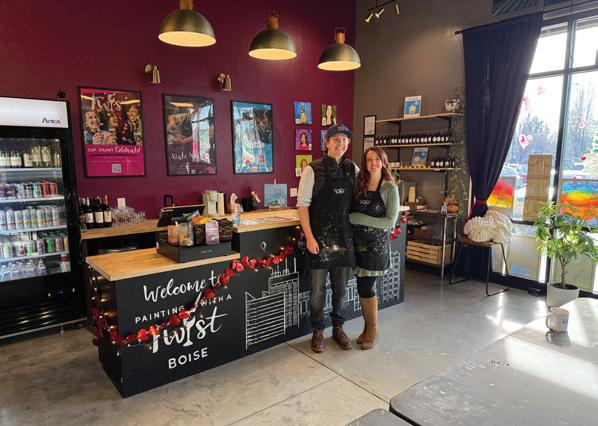
That lesson followed us when we opened Boise’s first Painting with a Twist studio in May 2025. We were stepping into franchising for the first time, but not into entrepreneurship for the first time. The difference this time was intention. Painting with a Twist allowed us to merge what we already loved—art, people, community and building something meaningful—into a business we could run side by side.
Heather comes from a background as a graphic designer and art educator, and she
leads the creative heartbeat of the studio. Levi brings operational experience and deep community ties that reach far beyond business. Together, we try to balance creativity with structure and vision with follow-through. That balance is what made the opportunity feel right.
But the real test of “marriage and management” came quickly.
We built the studio ourselves. We poured in the concrete. We installed the electrical wires. We painted walls. We interviewed artists to become our employees. We solved problems in dusty clothes and late nights, standing in an empty space and imagining what it could become. We weren’t supportive spouses watching from the sidelines—we were partners in the trenches.
For many couples, the advice is, “Don’t take your work home with you.” We’ve learned the opposite works better for us. We don’t chase balance. We choose integration.
Our businesses, our marriage and our community life are deeply intertwined. Whether we’re organizing a community bike ride to spotlight local businesses or donating through our trophy shop, we’ve made service part of our marriage—not just our brand. Community anchors us. Building businesses can be isolating if you let it be. Staying connected to people, causes and places reminds us why growth matters in the first place.
That “why” became very real last November, when our daughter, Zoe, was born. We call it the Zoe factor.
Becoming brand-new parents reshaped everything in the best way. Zoe fuels our ambition. We want to build something she can be proud of. But she also reminds us when to slow down. She taught us, almost immediately, that being present is just as important as being productive.
High-capacity lives come with highpressure moments—especially with a newborn in the mix. Our most important tool has become grace. We watch for when the other one is stretched thin. We step in without being asked. And we still make time to slow down together, watch a movie and reset so we can show up better for each other and for Zoe.
One of the biggest misconceptions about working with your spouse is that you need rigid roles to survive. We’ve found the opposite. We don’t claim to have all the answers—we’re navigating this day by day just like everyone else—but we have found a few “secrets” that keep our businesses running and our marriage thriving.
In our house and in our businesses, there’s no permanent job description. If something needs to be done, whoever is closest handles it. The rule is simple: don’t get locked into expectations. Some seasons require the business to get most of our energy. Other seasons—like the one we’re in now—require family to get everything. We stay fluid and adjust to what matters most in the moment.
That flexibility only works because we’ve invested heavily in people and processes.
We were able to truly enjoy the newborn phase with Zoe because we hired people we trust and built systems that allow the business to run without us hovering. When something breaks, we don’t look for someone to blame—we look at the process. Clear expectations give everyone freedom, including us. Systems are our sanity. Working together has also taught us something we didn’t fully expect—love is a real business advantage.
As first-time franchise owners and new parents, we lead with flexibility because we have to. We understand that life shows up unexpectedly. That understanding shapes our studio culture. It makes our space more human.
We believe deeply in staying fun. We believe in trusting the universe and each other. We eat healthy, share a glass of wine after long days and operate on a foundation of optimism even when things feel uncertain. We want to look back years from now and know we took the chance, grew through the hard parts and enjoyed the ride together.
Building a successful business while protecting a meaningful marriage isn’t about perfect balance. It’s about shared vision, fluid roles, strong community and daily connection. It’s about grace when things are messy and presence when things are beautiful. We learned that in an Airstream. We practice it every day in our studio. And now, we carry it home to a tiny human who reminds us why all of it matters. v
h ow to o rC he S trate Communi C ation S in your Fran C hiS e
Imagine your franchise as a finely tuned orchestra, where every member works in harmony under the guidance of a skilled conductor.
When communication flows seamlessly, the result is a beautiful symphony of collaboration, energy, and shared purpose. But if your franchise feels more like a cacophony than a concert, don’t worry - it can be transformed. I’ve helped turn around franchises in crisis, including a $700 million system that grew to $2 billion in four years. The key lesson? Communication is the foundation of success.
Today’s world is filled with distractions - smartphones, social media, and endless emails that make effective communication harder than ever. As franchises grow and become more complex, the need for clear, strategic communication increases. Yet many organizations struggle with fragmented, repetitive messaging. Franchisors feel ignored, while franchisees are overwhelmed and confused about expectations. This breakdown stifles ambition and makes even basic execution difficult.
When communication fails, the true benefits of franchising - shared resources, brand power, and motivated stakeholders - are lost. Instead of working toward
common goals, everyone pursues their own agenda, turning up the volume to be heard. The result is noise, not harmony, and people stop listening altogether. It’s like trying to drink from a fire hose: overwhelming and ineffective.
If these problems sound familiar, know that solutions exist. At Ingage Consulting, we’ve seen franchises thrive by adopting the following strategies: communicate the “ what’s in it for Me?” (wiifM) and the “ why”
Departments often push out directives without explaining the benefits. Instead of simply instructing franchisees to post
on Facebook or enroll in training, clarify how these actions will help them - more customers, increased satisfaction, and repeat business. When you emphasize WIIFM and the “Why,” people pay attention. Always consider why your audience should care and make those reasons explicit.
Have a Plan for communication
Many franchises bombard their teams with constant, uncoordinated emails, leaving franchisees feeling overwhelmed. To fix this, develop a central communication plan: decide what, when, and how to communicate, and designate one person to oversee it. This structure reduces noise and ensures messages are purposeful and clear.
let the listener know their Role
Information without clear instructions leads to confusion. When announcing new initiatives, always specify what action is required and by whom. Explaining next steps upfront prevents a flood of follow-up questions and streamlines communication, making everyone’s job easier.
communicate strategically to the People who need to know
Don’t rely solely on franchise owners to relay information. Direct communications to the managers and employees who need them - sales, marketing, operations. Share system-wide updates with all staff. Remember that even bad news is better than no news, which breeds uncertainty and disengagement. And when people are getting no news but sense that sense that “something is up,” they start to fabricate stories that are always worse than the reality of what is happening.
leverage Your franchise Business consultants
Include franchise business consultants in your communication strategy. They should be fully informed about organizational developments and clearly understand their role in relaying key messages to franchisees. Don’t assume they know what’s expected. Spell everything out to ensure alignment and effectiveness.
Evan Hackel MBA, CFE (Certified Franchise Executive), is an author, speaker, consultant, and entrepreneur who has helped launch more than 20 businesses and led brand portfolios exceeding $5 billion in systemwide sales. He is President of the New England Franchise Association, creator of Ingaged Leadership, author of Ingaging Leadership: The Ultimate Edition, and CEO of Ingage Consulting.
To explore speaking, consulting, or franchise advisory support, visit www.evanhackel.com.
communicate to appropriate internal staff in Headquarters too
Internal staff need to be kept in the loop, not just franchisees. Failing to inform managers and colleagues can lead to frustration and missed opportunities. Make sure everyone in headquarters knows about new programs and initiatives so they can respond knowledgeably and support the system.
Have an internal communication Hub where all information Resides
Centralize communications on your company intranet, managed by a communications leader.
• Ensure the hub contains all essential information, reducing reliance on scattered emails.
• Use teaser emails with links to drive traffic to the hub, encouraging engagement.
• Customize alerts so only relevant people receive urgent updates.
• Incorporate feedback loops and suggestion boxes to gather input and improve communication.
create structures that encourage face-to- face communications
Online tools are valuable, but in-person interactions build trust and transfer knowledge.
• Organize regional networking groups and town hall meetings for franchisees to share ideas and solve problems together.
• Use surveys to gather franchisee opinions and foster teamwork.
• Engage independent survey companies for benchmarking and insights.
Have an annual conference for Your franchisees that is informative, inspiring and wonderful
• Go beyond announcing news—invite input on key plans like marketing, training, and branding, so franchisees feel invested.
• Encourage networking and sharing of ideas to build strong relationships between franchisees.
• Hold an awards dinner to recognize franchisees with meaningful rewards, such as travel.
• Enhance the experience with memorable activities, including sports events and visits to historical sites or museums, making the conference both productive and enjoyable.
create a franchisee communications advisory council
Invite franchise owners to collaborate with your communications director, shaping strategies and ensuring franchisee voices are heard. This council can provide ongoing feedback and help refine your approach.
the Result? a thing of Beauty
When communication is orchestrated with care, your franchise becomes a responsive, harmonious organization. Everyone knows their role, listens, and contributes to a shared vision. The outcome is not just operational excellence, but a culture of beauty and success. v
why e viD en C e iS the u ltimate
Com Petitive aDvantage in wellne SS Fran C hi S ing
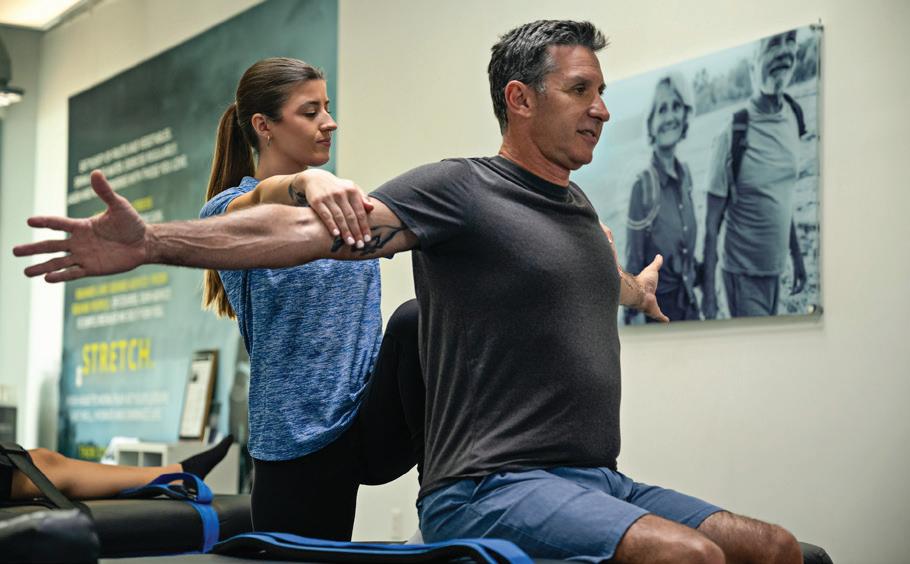
The wellness industry has reached an inflection point where consumer demand is no longer driven by trends alone, but by outcomes. Today’s customers want to know that the services they invest in will help them sleep better, move more freely, reduce discomfort, and sustain their energy over time.
As a result, wellness brands are being held to a higher standard, and franchisors are increasingly challenged to prove that their models deliver consistent, repeatable results at scale.
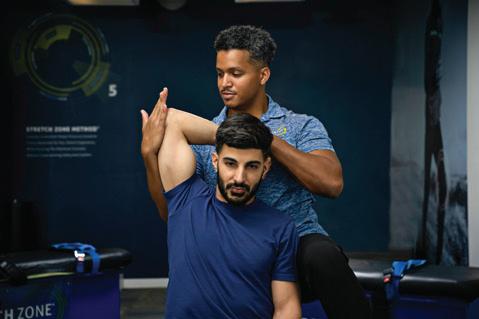
For franchise systems operating in this environment, growth without validation is risky. Expansion must be supported by evidence, operational discipline, and a service model that can scale without losing its integrity. This is what led Stretch Zone, a practitioner-assisted stretching franchise with over 420 locations across the U.S. and Canada, to invest in a proprietary research study that quantifies the impact of its assisted stretching method and establishes a new benchmark for scaling wellness franchises.
The decision reflects a broader shift in franchising: research is becoming a growth engine, not a luxury.
Rising demand for scienceBacked wellness
This new research proves what many operators are already seeing on the ground: consumers are prioritizing results-driven solutions. Wellness systems that improve mobility, reduce discomfort, support recovery, and enhance sleep quality are no longer discretionary add-ons. They’re becoming essential, repeatable services integrated into weekly routines.
Assisted stretching sits at the intersection of preventative health, recovery, and performance. Its appeal spans age groups and lifestyles, from aging populations focused on mobility and independence to athletes and everyday consumers seeking proactive care. As wellness shifts from reactive to preventative, services that
demonstrate measurable outcomes are positioned for sustained demand.
For franchisors, this creates opportunity, but only if the model can deliver consistent results across markets. Research plays a critical role in validating that opportunity and turning consumer interest into a scalable business strategy.
differentiation through a validated service Model
One of the challenges facing service-based franchises is differentiation. In a crowded fitness and wellness landscape, many offerings appear interchangeable on the surface. Stretch Zone’s practitioner-assisted model addresses this by delivering guided, hands-on stretching sessions that at-home routines and traditional fitness options can’t replicate.
What elevates the model further is standardization. Proprietary protocols, now validated through research, ensure that every session follows a proven methodology. This creates consistency across locations and practitioners, reducing variability and reinforcing brand trust.
The data also reinforces the business model itself. Findings show that members who attend two to three sessions per week experience the greatest results. This insight supports a high-frequency membership structure that drives retention, increases lifetime value, and creates predictable demand at the unit level. For franchisees, that predictability supports strong unit economics, reliable cash flow, and scalable operations.
turning outcomes into scalable advantage
The study examines real-world outcomes across mobility, discomfort, sleep quality, and energy, establishing a clear framework for evaluating both wellness impact and business relevance.
Research Results:
• 58% reported better sleep - leading to improved recovery and wellbeing
• 90% reinforced full-body benefit for perceived general health - creating a stronger mind-body connection
• 78% reduction in discomfort - easing chronic tension and discomfort.
• 61% experienced increased ease in daily activities - from bending and lifting to walking and playing
• 85% improved their range of motionmoving with freedom and confidence.
• 25% greater gains in flexibility – for those who came 2 – 3 times per week.
• Two, 60 minute sessions weekly delivered the greatest gains in trunk, hips, and shoulders, targeting key areas for mobility
o 81% maintained initial gains with regular sessions
o 8°-11° improvement in back extension
o 5°-10° gains in movement
o 1° of flexion unlocks huge mobility (A 1-degree change can impact a person’s functional mobility and quality of life, especially for those with chronic stiffness)
• 66% reported higher energy and reduced fatigue - making everyday life more vibrant.
When franchisees can confidently communicate results backed by data, sales conversations change. Proof replaces promises. Prospective members gain clarity on value, and operators are equipped with a compelling narrative that supports conversion and long-term engagement.
Evidence-based outcomes also open doors to new growth channels. Corporate wellness for one – to have data that can validate reduction in workplace injuries, tie to employee wellness and retention – that is a meaningful savings to corporations large and small. Research allows franchisors to engage these audiences with credibility, expanding reach without diluting the core offering.
Research as a franchise Growth and Risk-Mitigation tool
For franchise systems, consistency is everything. As brands expand, the risk of execution drift increases, especially in hands-on service models. Research mitigates that risk by creating a shared
At Stretch Zone, insights from the study are being integrated into practitioner training, operations, and franchise support. Additionally, training becomes more than onboarding; it becomes professional development grounded in validated outcomes, and operational standards are reinforced with data, enabling franchisors to support franchisees objectively rather than anecdotally.
This approach also strengthens franchise development. Research validation reduces perceived risk for prospective owners and investors who are evaluating long-term scalability. It proves that the franchisor is investing in infrastructure, not just expansion, and is committed to protecting brand integrity as the system grows.
what other service-Based franchises can learn
Stretch Zone’s research initiative offers a clear takeaway for service-based franchises: data is no longer optional. Even experiential, human-led services can be measured, refined, and scaled through evidence.
Research creates a common language across the system. It aligns franchisors
and franchisees around what works and why. It supports smarter decision-making, from marketing and training to expansion strategy. Most importantly, it future-proofs the brand by providing a foundation for innovation rooted in proven results.
As wellness franchises mature, those that embrace research early will be better positioned to adapt to changing consumer expectations without sacrificing consistency.
the future of evidencedriven franchising
As franchising continues to evolve, the brands that thrive will be those that pair growth with discipline. Research provides the framework to do both. It strengthens differentiation, supports franchisees, attracts sophisticated investors, and builds lasting consumer trust.
Stretch Zone’s investment in proprietary research reflects a larger truth: the future of wellness franchising belongs to brands that can prove their impact and scale it responsibly. In a results-driven market, evidence isn’t just credibility; it’s a competitive advantage. v
standard across the network.
why S mbS are abanD oning the D iy
m o D el anD o ut S ourC ing
e verything in 2026
As labor constraints and operational complexity intensify, franchise leaders are trading the DIY mindset for specialized outsourcing to eliminate bottlenecks and accelerate scalable growth.
For decades, the rugged individualist was the archetype of the American entrepreneur. We were taught that a business owner should be the first one in, the last one out and the person who knows how to fix every gear in the machine. But as we move through 2026, that do-it-yourself mentality has shifted from a badge of honor to a structural liability.
In the current franchise landscape, the do-it-all model is increasingly strained. In franchising, DIY doesn’t just slow one operator — it creates variability that the entire system has to support. Small- to medium-sized businesses and franchise systems are no longer trying to build every department from scratch. Instead, they’re moving toward a model of specialized support. My philosophy is simple: a leader should focus on the 10% of the business where they’re a true expert and outsource the other 90% to partners who are better at those specific functions.
The reasons for this shift aren’t just based on trends. They’re practical, economic and necessary when it comes to pursuing growth that’s actually sustainable.
why Generalists are Getting stretched thin
The primary driver of this change is a brutal reality in the labor market. For years, small business owners have struggled to compete with large corporations that can double a salary overnight to snatch up talent. If you’re an independent operator or a local franchisee, you cannot spend your day fighting for mid-level administrative talent.
Beyond labor, we’re facing an era of hypercomplexity. Technology is moving so fast that keeping up with it has become a full-time job.
Whether it’s navigating AI-driven software updates, changing regulatory requirements or the constant need for cybersecurity, a solo operator can’t reasonably stay current and still have enough time to serve clients. When you try to do everything, eventually, you hit a ceiling. I see it often with independent operators. They reach a certain level of success through local networking and hard work. But then that growth stops. They can’t hire help because they don’t have the infrastructure to manage employees. Beyond that, they can’t find the time to innovate because they’re buried in that 90% (the administrative weeds that don’t actually grow the business).
normalizing a Remote Reality
The outsourcing industry hit a significant turning point within the last several years. Key to that was the realization that you can be thousands of miles away, outside the office and still work productively with precision. Seamless video conferencing and the advent of cloud-based collaboration tools helped turn the idea of working remotely into a competitive advantage. Prioritizing efficiency and security over physical proximity is now the standard. In 2026, the most successful franchise systems have leaned into this. By reducing friction in onboarding and communication through specialized systems, franchisees can scale at a pace that was once considered impossible. When you remove the need for a physical office or local IT maintenance, you also remove the anchors that hold a business back.
why franchisors Must simplify
If I have one piece of advice for franchise executives this year, it is this: simplify. As leaders, we have a tendency to overcomplicate our systems. Whenever I’m faced with a complex task or a dense legal document, I look for a way to break it down into its simplest form. If you cannot explain your operational workflow to a child, your system is likely too heavy.
Franchisors who win in 2026 are those who reduce the administrative burden on their franchisees. We want owners focused on growth, culture and business development. We do not want them building websites or trying to figure out digital marketing from scratch.
For instance, when we handled our own marketing in-house, we struggled to get any traction. When we finally turned that function over to specialists, we saw immediate, organic results.
More importantly, it freed up time to do what a CEO is supposed to do: strategize and grow the brand. By providing franchisees with access to pre-trained staff and national brand assets, we allow them to step out of the technician role and into the owner role.
the Power of the network
There is also a human element to this shift. The DIY model is lonely. Solopreneurs spend a massive amount of time alone at a computer without a support system. One of the greatest benefits of the modern franchise model is the community.
aBoUt Booxkee PinG:
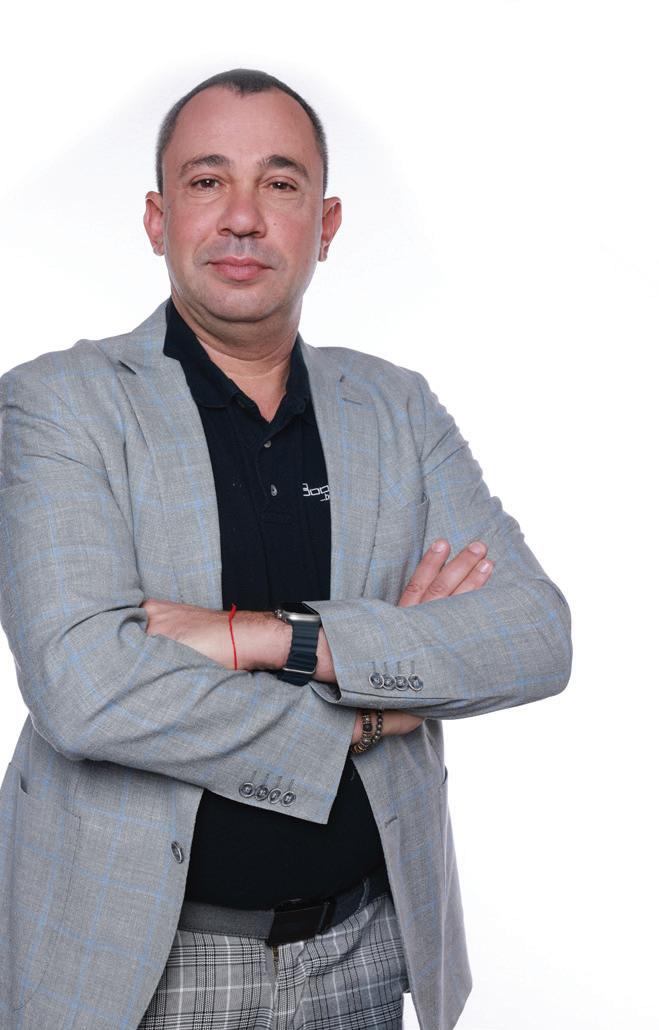
BooXkeeping is a bookkeeping franchise that combines professional expertise with genuine human connection to provide cutting-edge bookkeeping services for small and medium-sized businesses, franchisees, franchisors, CPA firms, and more. Founded by Max and Elena Emma, two entrepreneurial immigrants with in-depth experience in finance and accounting, the brand’s journey spans over 20 years. Today, with 15 franchise locations across the country and one corporate location, BooXkeeping has emerged as a unique player in the bookkeeping industry, emphasizing a human-driven approach and personalized service.
To learn more, visit https://www.booxkeepingfranchise.com/
In a specialized system, the culture shifts from being transactional to being relational. When you embrace a unique culture, you become distinct in the marketplace. Clients today do not just want a service; they want a relationship with someone who actually enjoys what they do. That energy is only possible when the owner isn’t burned out by the tasks they shouldn’t even be doing in the first place.
looking ahead
The data from the end of 2025 supports this trend. Strong demand for outsourced support services is signaling a broader shift in how franchise systems are built. Once the early adopters in a system succeed by following proven systems over DIY operations, momentum can accelerate.
We’re seeing a move toward models designed to help owners reach cashflow positivity faster by cutting out the traditional learning curve mistakes. This is the new benchmark for franchise support structures.
The era of the everything-expert is over. The future belongs to the specialists and the collaborators. If you want to scale in 2026, you should be willing to give up control. You have to find the right people, let them make their own decisions and focus your energy on the 10% where you’re truly indispensable.
The operators who win in 2026 will be the ones who protect their time, standardize the non-core work and build systems that make execution repeatable. v
Celebrating 25 y ear S
o F PuroClean:
t
he r estor Ation Fr A nchise Built on h eroic service
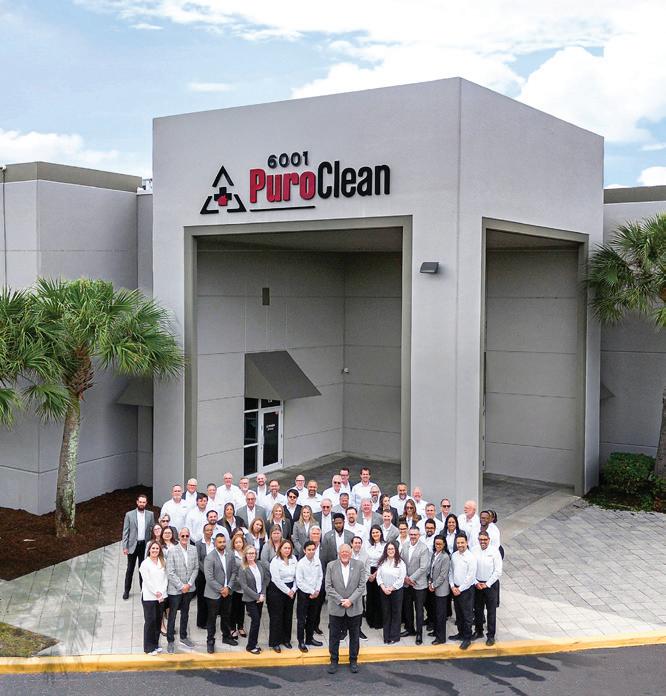
As PuroClean enters its 25th year in business, the restoration franchise is celebrating a landmark achievement that places it among the most successful franchise systems in North America: surpassing 500 locations across the United States and Canada.
According to the International Franchise Association (IFA), brands with more than 500 locations represent just 7 percent of franchise systems nationwide. At 25 years strong and more than 500 locations,
PuroClean stands among a highly select group of franchise brands that have achieved both scale and staying power.
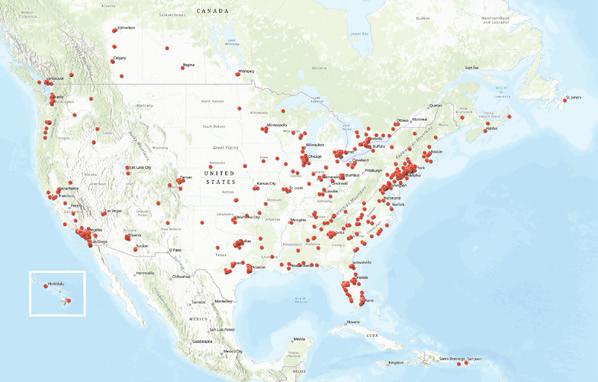
PuroClean’s network spans major metropolitan areas and secondary markets, delivering water, fire, mold, and biohazard remediation services through locally owned and operated businesses that help families and businesses recover after some of their most difficult moments.
twenty- five Years of Building with Purpose
Founded in 2001 as PuroClean, with roots dating back to 1986, the brand has evolved
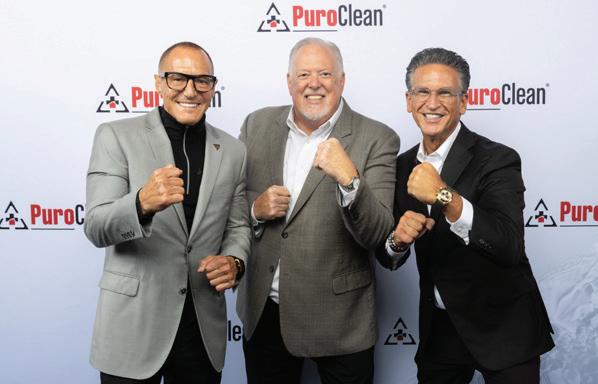
into the largest privately owned restoration franchise system in North America. Under the ownership of Chairman & CEO Mark W. Davis and Vice Chairman Frank Torre, alongside President Steve White, PuroClean has paired long-term, private ownership with strong, consistent performance. Supported by the unified leadership, system-wide sales have increased fivefold since 2014 while the brand continues to expand its footprint responsibly.
That philosophy has resonated across the franchise network. Today, 85 percent of PuroClean Franchise Owners report strong respect for the franchisor, reflecting the trust and alignment that have helped sustain the brand for a quarter century.
“As we enter our 25th year, we’re recognizing how far this brand has come while staying focused on what’s ahead,” said Davis. “Our growth is driven by our Servant Leadership culture and relentless commitment to the customer experience. Leadership for us means growing our brand while continuing to serve our Franchise Owners at every stage of their individual growth cycles.”
a legacy of Growth: key Moments from Puroclean’s first 25 Years
PuroClean’s journey has been marked by strategic expansion, industry innovation, and steady investment in training and support.
Key moments include:
• 2001: Corporate holding company
PuroSystems establishes PuroClean as the franchise brand
• 2005: “The Paramedics of Property Damage” slogan is registered
• 2009: Expansion into Canada
• 2011: Opening of the PuroClean Academy’s IICRC-approved Applied Structural Drying (ASD) “Flood House” in Tamarac, Florida, currently one of only 28 worldwide
• 2013: Steve White joins PuroClean as President & COO
• 2015: Mark W. Davis and Frank Torre acquire the company, ushering in a new era of private ownership, franchise-first
growth strategy supported by significant financial investment, quality talent, and technology designed to strengthen system-wide performance
• 2019: Launch of the PuroVet Program, creating a streamlined path to franchise ownership for military veterans
• 2022: Expansion into Puerto Rico
• 2023: PuroClean surpasses $400 million in system-wide sales
• 2025: The brand exceeds 500 locations across North America
• 2026: Brand celebrates 25-year anniversary, starting the year strong, as it is inducted into Entrepreneur Magazine’s 10-Year Consecutive Ranking Club and ranked #91 on its Franchise 500 list
Each milestone reflects a balance of measured growth and long-term system health, a balance Torre says is possible
because the company remains privately owned.
“Private ownership allows us to grow with intention,” Torre said. “It enables us to invest in people, partnerships, and infrastructure while staying true to the values that built this brand.”
strengthening the system through smart, Purposeful Partnerships
As PuroClean continues to expand how it supports customers and teams, the company has built stronger national support through strategic partnerships designed to improve both customer experience and field performance.
A new National Strategic Partnership with Go Mini’s gives PuroClean’s 500-plus locations access to secure, on-site portable storage containers delivered directly to job sites. This streamlines pack-outs and
safeguarding customers’ belongings during water, fire, mold, or biohazard restoration. With standardized discounts, priority response, and weatherproof, groundlevel units that fit even in tight spaces, the collaboration improves operational efficiency for Franchise Owners while providing homeowners with added peace of mind during stressful recovery periods.
Additionally, PuroClean has deepened its commitment to world-class training through a partnership with KnowHow, the AI-powered platform that delivers step-by-step operational guidance directly to technicians in the field. KnowHow complements PuroClean’s industry-leading training ecosystem by giving teams instant mobile access to more than 300 procedures across all major restoration disciplines. Together, these partnerships support reliable, expert service across North America as the brand enters its next 25 years.
industry Recognition sets the stage for the next chapter
PuroClean’s 25th anniversary year has already brought industry recognition, including being named one of Franchise Dictionary Magazine’s Top 100 Game Changers. The brand continues to invest in systems that help Franchise Owners grow, from advanced training to technology that strengthens performance across the network.
“Reaching 25 years and surpassing 500 locations speaks to the consistency of this brand and the strength of our Franchise Owners,” said Steve White, President of PuroClean. “Our focus has always been on building a system that supports long-term success.”
With more than 500 locations now in operation, PuroClean is setting its sights on underserved markets, expanded national partnerships, and a long-term goal of becoming a $1 billion franchise system.
Twenty-five years in, the company’s momentum shows no signs of slowing. For entrepreneurs looking to build a business with purpose, supported by a proven system and a culture that puts people first, PuroClean’s next chapter is just beginning. v
From in S truC tor S to multi- branD builD er S:
H OW W E Tur NED A L EAP OF FAITH AT 23 I NTO A $1M+
Fr ANCHISE BuSINESS AND A L ASTING FAMILY L EGACY
Most 23-year-olds are still figuring out their first steps in life and their career.
We were figuring out how to own a business.
In 1997, freshly out of roles as instructors and educators, we made a leap that changed the trajectory of our lives. We bought our first franchise of The Little Gym without any access to venture capital or business school pedigrees. What we did have was experience working with children, a belief in the value of youth enrichment, and a willingness to learn everything the hard way.
Choosing franchising as our entry point into entrepreneurship was intentional. The franchise model offered something we needed at that stage of life: a proven operating framework, established systems, and ongoing support. As first-time business owners, that structure allowed us to focus on execution instead of invention.
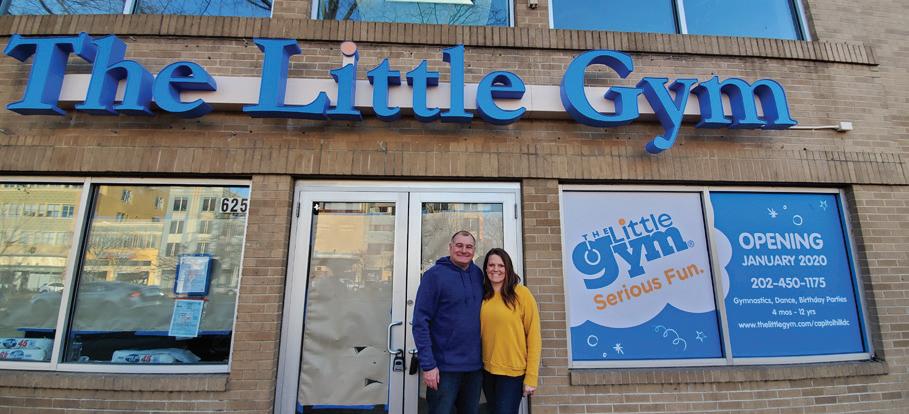
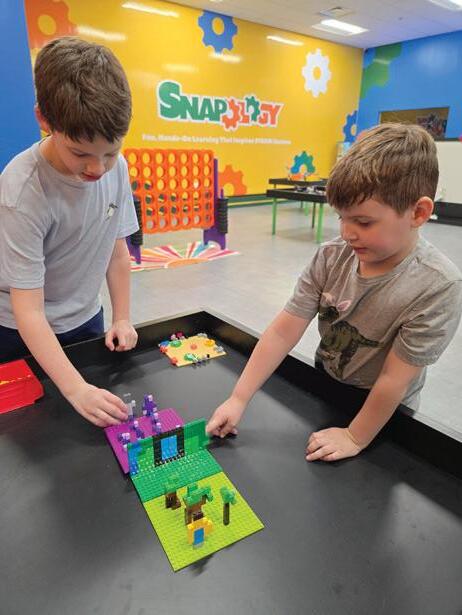
Today, nearly three decades later, we operate seven The Little Gym locations across Maryland and Virginia. Some of those locations generate more than $1 million in annual revenue. We also own and operate two Snapology STEAM education franchises, including one of the first co-branded The Little Gym and Snapology facilities in the country.
What started as a single leap of faith has evolved into a multibrand, multi-unit business built on systems, people, and purpose.
why franchising was the Right first step
As instructors, we understood how powerful structured programming could be for children and families. What we did not yet understand was how much structure matters in business ownership as well.
Franchising gave us a clear roadmap. We were not starting from scratch. We had operating manuals, training programs, and brand standards that created consistency from day one. That consistency helped us build trust with parents and confidence within our team.
Just as importantly, franchising accelerated our learning curve. We learned how to read financials, manage staffing, and make operational decisions within a system that had already been tested. For two 23-year-olds without capital or prior ownership experience, that support made the difference between surviving and building something sustainable.
Building systems that drive $1M+ locations
Revenue milestones like $1 million do not happen by accident. They are the result of disciplined operations and strong teams.
From early on, we focused on building systems that could scale. Staffing was a top priority. We hired people who aligned with our mission and invested heavily in training and leadership development. Clear expectations, documented processes, and accountability created stability, even as we expanded into multiple locations.
Operational consistency has become our competitive advantage. We standardize everything possible, including class schedules, customer communication, performance metrics, and financial reporting. This allowed us to identify trends early, replicate best practices, and address challenges before they became problems.
One of the hardest lessons we learned was letting go. It was tempting to stay involved in every detail, but we knew that true growth required delegation. When we shifted our focus from daily execution to coaching leaders and reviewing data, our business reached a new level of performance.
Managing Growth as a family Business
With five children who grew up in our gyms, family and business naturally overlapped. Over time, several of our kids chose to work in the business and take on leadership roles. That opportunity came with responsibility.
From the beginning, we established non-negotiable boundaries. Family members working in the business are held to the same standards as any other employee: roles were clearly defined, performance expectations were clear and advancement was earned. We also made a conscious effort to protect family time. Work conversations stay at work. Meals and vacations are for being parents, not business owners. That separation has been critical in maintaining healthy relationships while growing a successful company.
We didn’t set out to build a business that only works because it is family-run. We wanted to build a business strong enough to support the next generation – if they chose to be part of it.
e xpanding into a second Brand through coBranding
After years of success with The Little Gym, we began looking for opportunities to expand in a way that deepened our impact without diluting our focus. That search led us to Snapology, a youth STEAM education brand that complements physical development with creative and cognitive learning, and to the broader Unleashed Brands platform that made integration possible.
Both The Little Gym and Snapology are part of the Unleashed Brands portfolio, which is designed to create intentional synergies across complementary youth enrichment concepts. That shared platform allowed us to co-brand with confidence, knowing the systems, values, and customer experience standards were already aligned. Rather than operating as two disconnected businesses, the co-branded model functions as a single ecosystem focused on whole-child development through movement, creativity, and problem-solving.
Bringing the two brands together under one roof enhanced convenience for families while expanding the value we could offer. Children can build physical confidence through movementbased programs and then transition seamlessly into hands-on STEAM learning, all in one location with one trusted team. From an operational standpoint, the Unleashed platform supports efficiencies such as shared real estate, integrated staffing models, and cross-brand marketing, allowing us to scale thoughtfully without unnecessary overhead.
Most importantly, the co-branded approach strengthened our relationship with the community. Families were not just enrolling in classes. They were engaging with a unified enrichment experience designed to support kids academically, socially, and physically. For us, co-branding was not simply about adding another revenue stream. It was about leveraging the power of a platform built for strategic growth and long-term sustainability.
looking ahead
What started as a leap into franchising at 23 has become a longterm commitment to purposeful growth, operational excellence, and family values. Franchising gave us the foundation. Systems and people built the business. Clear boundaries allowed our family to grow alongside it.
For aspiring franchise owners, our advice is simple: choose a model you believe in and invest in systems early on. We would not be where we are today without building leaders, not just our locations. Our growth was not accidental – it was built one decision at a time. v
builD ing a Fran C hi S e
e mergen C y FunD: Protectin G
AGAinst u nex Pected Fin AnciAl c h Allen G e
In the dynamic world of franchising, financial unpredictability is a constant companion. These challenges often arise from unforeseen equipment maintenance and repairs, tariffs, rapid inflation pricing loyal customers out, and finding the right hires at the right cost.
Such expenses underscore the necessity for a well-thought-out emergency fund and contingency plan to safeguard against unexpected expenses, market fluctuations, or economic downturns.
identifying financial vulnerabilities in franchising
Franchises offer a structured business model with access to many corporate solutions, so franchisees do not have to start from scratch, though they are not immune to financial vulnerabilities. For example, some new franchisee owners may struggle with running high enough volume, or hiring the right people, at the right time, for the right among of money.
A new franchisee owner is likely not able to hire a white-collar leader or have full benefit packages with 401(k)s right off the bat. While benefits matter, intangibles matter too, such as a clear path for growth within an organization. New franchisee owners need to look at their business as a new small business from the start and give themselves some runway to build attractive incentive packages to retain workers.
Market fluctuations and economic downturns pose significant threats, as these can dramatically affect customer
With more than a decade of experience in the financial industry, Steven specializes in franchisee financial planning. He is a proud alumnus of Clemson university, where he earned a degree in Finance with a focus on Financial Planning. Steven’s perspective as an advisor, business owner and extensive franchise experience empowers him to deliver financial guidance grounded in real-world business success and sharp financial acumen.
spending patterns and the availability of raw products.
However, economic downturns can also present opportunities. For example, during a recession, there might be less competition, lower real estate prices, and access to a larger pool of talented workers due to increased unemployment. Understanding these vulnerabilities requires a balanced perspective that considers both the risks and opportunities.
Working with a financial advisor familiar with the franchise industry can help business owners identify and navigate these vulnerabilities and opportunities. A good financial advisor offers perspective. For example, consider recency bias, a psychological phenomenon where people give undue weight to recent events. This phenomenon often skews our perceptions, making it difficult to differentiate between genuine business struggles and the natural ebb and flow of a cyclical business environment. A trusted third party brings levity and perspective, without emotional reactions. Because it's crucial not to overreact during tough times but to remain strategic and focused on long-term goals. Similarly, during prosperous times, it's essential to save and build up emergency reserves rather than become complacent.
Building an emergency fund
An emergency fund in the context of franchising is a financial safety net designed to cover unforeseen expenses that could otherwise jeopardize a business's financial health. Unlike regular savings or investments, an emergency fund is specifically earmarked for crises. An emergency fund for your business is similar to a personal emergency fund, just bigger. Franchise owners can use the steps below to start an emergency fund for the business, while working with a financial advisor often yields the best results.
1. Assess Financial Needs: Determine the amount needed based on the business size and risk factors. Consider potential expenses like equipment repairs, legal fees, or a sudden drop in sales. Understanding these needs helps set realistic financial targets.
2. Set Clear Goals: Establish specific targets for the emergency fund. Decide on a realistic amount and a timeline for achieving it. Clear goals provide direction and motivation, making it easier to stay disciplined in building the fund.
3. Determine Funding Sources: Explore options like retained earnings, loans, or dedicated savings accounts. Consider
Steven F. Carroll, CFP®, RICP®, ChFC is a partner and private wealth advisor at Sozo Private Wealth, a Northwestern Mutual Private Client Group in Atlanta, Georgia.
which sources align best with your business model and financial situation.
Diversifying funding sources can enhance financial flexibility.
4. Regular Contributions: Encourage consistent and disciplined saving practices. Regularly contribute to the fund, treating it as a non-negotiable expense. This approach ensures steady growth of the fund over time, providing a reliable buffer against financial shocks.
Establishing an initial emergency fund for your emerging franchise is not merely advisable—it's imperative. A number of our clients have encountered financial challenges during the nascent stages of their businesses. As these franchises are built from the ground up, they culminate in a grand opening event to introduce themselves to the public. To prepare, franchisees must recruit a team and ensure they are on payroll, ready to meet anticipated customer demand and sales volume. However, accurately predicting these needs can be exceptionally difficult. Some of our clients have unfortunately overestimated their staffing requirements, leading to significant debt within the first 6-12 months of operation. Possessing sufficient capital to weather these initial challenges is of utmost importance. In every scenario I have observed, franchisees
have managed to overcome these setbacks and achieve success. However, the availability of emergency funds and secure financial resources was crucial in navigating what is inherently a highly stressful period.
strategies for Protecting against financial challenges
Franchise owners often overlook the importance of saving outside their business, focusing primarily on the equity within their franchise. While investing in your business is vital, diversifying your asset base by saving externally enhances financial security and provides confidence when planning exit strategies, especially since realizing business equity requires a buyer.
Relying solely on your franchise for financial stability can be limiting. Although aiming for a self-sufficient business is ideal, the notion of "never retiring" is often unrealistic. Diversification allows for more informed decision-making and a smoother path to eventual retirement. A strong protection mindset is crucial to enable better decision-making. By focusing on savings and diversification, you enhance your financial resilience.
Disability insurance is also an oftenneglected aspect of financial planning for
franchise owners. Given its complexity and importance, investing time and energy to secure this protection is essential, safeguarding against unforeseen events that could affect your capacity to manage your franchise.
These strategies can help protect franchise owners against financial challenges and ensure business stability and longevity.
conclusion
Building an emergency fund and a contingency plan is not just a safety measure but a strategic business decision. These tools help franchises navigate unforeseen expenses and market fluctuations, ensuring resilience in a volatile economic environment. By being prepared, franchise owners can protect their investments, maintain stability, and position themselves for long-term success.
Franchise owners are encouraged to collaborate with trusted financial advisors to begin building their emergency funds today. By taking proactive steps, they can safeguard their businesses and ensure long-term success. Start today by assessing financial needs, setting clear goals, and establishing a disciplined approach to saving. The future of your franchise depends on the actions you take now. v
your Client S alreaDy e x PeC t Data. iS your Fran C hi S e Delivering it?
When we founded Zoom Room in 2007, the idea was simple: build a place where people learn to train their own dogs. Not a drop-off facility. Not a daycare. An indoor gym where the human is the student and the dog is the willing partner.
Eighteen years and 60-plus locations later, that founding principle hasn’t changed. But the way we deliver on it has — and our most recent move might be the most significant evolution yet.
In late 2025, Zoom Room became one of the first national dog training franchises to embed wearable fitness technology directly into our clients’ day-to-day through a partnership with Fi, the leader in smart pet GPS technology. New clients at participating locations received a free Fi Mini GPS tracker — a $99 value — plus six months of complimentary service with a qualifying
purchase. But this isn’t a promotional gimmick. It’s a fundamental rethinking of how a service franchise can extend its value proposition beyond the four walls of a physical location.
This side of the year, we’re taking our partnership even further with the release of Leaderboards across participating gyms. Select Zoom Room locations will feature in-gym activity displays highlighting the dogs who log the most movement and visit the gym most consistently — turning individual progress into a shared, community-driven experience. We’re also rolling out nationwide challenges that connect clients across markets, giving dog owners a reason to stay engaged between sessions and a little friendly competition to keep the momentum going. It’s one thing to hand someone a tracker. It’s another to build an ecosystem around it that makes training feel like something you’re part of, not just something you attend.
Mark Van Wye, the CEO of Zoom Room, the nation’s highest-rated dog training franchise, and author of the #1 bestselling book Puppy Training in 7 Easy Steps.
the Problem with invisible Progress
Every service franchise faces the same challenge: what happens between visits? A personal training gym can prescribe a workout plan, but can’t verify whether a client followed through. A tutoring center can assign homework, but can’t watch the student study. In dog training, the gap is even more pronounced. Owners come to class once or twice a week, practice at home to varying degrees, and then wonder why progress feels inconsistent.
We’ve always said at Zoom Room that we train the people — and what owners do outside the gym matters as much as what happens inside. The challenge was that we had no way to see what was happening during those other 166 hours of the week. Fi changed that.
With real-time activity tracking, our clients can now see patterns that were previously invisible. A dog whose daily activity has dropped may start showing more destructive behaviors at home. A puppy who isn’t getting enough stimulation between sessions may struggle to focus in class. When you can see the data, you can adjust the approach. Training stops being something that only happens in a gym and starts becoming a lifestyle clients can measure.
why technology integration Matters for franchise Brands
The pet wearable market is projected to grow at a compound annual rate of roughly 13% through the end of this decade, and dogs represent more than 70% of that demand (Fortune Business Insights, USD Analytics). But this isn’t just a pet industry trend. Across every service category, consumers are developing higher expectations for data-driven experiences. They track their own sleep, steps, and heart rate. They expect their financial advisor to surface insights from their portfolio data, their doctor to interpret wearable health metrics, and their fitness coach to analyze recovery patterns. The question for franchise operators is straightforward: are you meeting that expectation, or are you still asking clients to trust the process on faith?
For franchise systems specifically, technology partnerships create a form of competitive differentiation that is extremely difficult to replicate at the independent operator level. A solo dog trainer can recommend a GPS tracker. A national franchise can negotiate a perk-filled integration, build it into the onboarding experience, create in-gym leaderboards, and run nationwide challenges that connect clients across markets. That kind of infrastructure-level advantage is exactly what franchise ownership should deliver — and exactly what prospective franchisees should be evaluating when they compare opportunities.
Making it operational, not Just aspirational
The biggest mistake franchise brands make with technology is treating it as a marketing announcement rather than an operational tool. A press release is not a strategy. For the Fi integration to actually work at the unit level, we’re thinking through every touchpoint.
First, we positioned Fi as an acquisition lever. New clients received the tracker as part of their onboarding during the holidays, which immediately differentiated the Zoom Room experience from every other training option in their market. It gave franchise owners a tangible, high-perceived-value offer to lead with — one that costs them nothing from their own margin. And we’re doing it again this year.
Second, we designed retention and engagement layers on top of it. Starting this year in 2026, select locations are rolling out in-gym activity leaderboards and nationwide challenges that highlight dogs who log the most movement or visit their gym most consistently. This transforms a tracking device into a community engagement tool — and gives franchise owners another reason for clients to keep coming back.
what this signals for the industry
Pet industry spending in the U.S. continues to grow, driven by the ongoing humanization of pets and rising expectations for premium, personalized service. Pet owners aren’t just buying food and vet visits anymore — they’re investing in experiences, data, and wellness ecosystems for their animals. Franchise brands that recognize this shift and build infrastructure to support it will capture disproportionate market share.
But the principle extends well beyond pets. Any franchise brand operating in a service category — fitness, education, healthcare, home services — should be asking: what data do our clients wish they had between visits, and how can we be the ones to give it to them? The brands that answer that question well will build deeper client relationships, higher retention, and stronger unit economics. At Zoom Room, we’ve always believed that the best training is a partnership between human and dog. Now, with the right technology, that partnership extends into every hour of every day. That’s not a disruption. It’s just the way service should work. v
Four innovative aPProaC he S to invigorate Fran C hi S e
r eC ruiting in 2026
A seasoned franchise sales and development veteran offers his perspective…
With the franchise industry approaching one million establishments in the U.S., it seems there’s never been a better time to consider an entrepreneurial future.
Culled from the glowing data and statistics that provide empirical evidence of franchising’s growth, here’s a noteworthy takeaway – it’s rare for specific industries to sustain a growth level that outpaces the broader economy during uncertain macro conditions. Franchising has done so multiple years in a row.
As one might expect, these robust times have accelerated the hyper-competitive landscape for the estimated 3,000-4,000 franchisors in the marketplace today. All are vying for the same thing – the attention of qualified candidates seeking the perfect match in a business opportunity. Putting it mildly, franchise sales and development teams are fighting tooth and nail for the attention of a finite audience, which in turn puts a premium on their recruitment efforts.
To get a handle on where things stand and what comes next, Franchising Magazine USA recruited an expert source for a meaningful Q&A session. Art Coley, founder and CEO of CGI Franchise, is one of the foremost experts and thought leaders on franchise recruitment. His firm specializes in finding ideal candidates through the use of proprietary assets such as the Recruitment Operating System® and the company’s ROS Reporting Program™, which aligns data, metrics, technology, training, and coaching to drive
Art Coley, Founder and CEO of CGI Franchise, is a leader in franchise development systems that help brands experience meaningful and measurable growth. After identifying a significant gap in how the industry approached franchise sales, development, and performance metrics, he created the recruitment Operating System® and the rOS reporting Program™, aligning data, metrics, technology, training, and coaching to drive predictability, accountability, and stronger recruitment outcomes. recognized as a thought leader in franchise development, Art is known for his passion for franchise sales, recruiting, onboarding, and metric driven performance.
He can be reached at acoley@cgifranchise.com.
predictability, accountability, and stronger recruitment outcomes.
The following question and answer session has been edited for brevity and length.
considering
the sheer amount of analytical resources at our disposal, why do so many franchisors continue to struggle with recruiting qualified candidates?
“This is one of the most common questions I hear, so I’ll get right to the point. Very few franchisors truly understand who their ideal candidate is, which means they really don’t know who they’re looking for. If you ask them, they’ll tell you, ‘We’re looking for people with the entrepreneurial spirit, or those looking to bail out of Corporate America, or people who want to establish financial independence.’ Well, guess what? That’s everybody. If you’re looking to define your ideal candidate, you need clarity on your value proposition – both for consumers and the franchisees you’re hoping to sign. Another factor? I see far too many brands working with budgets that simply don’t correlate with their goals and KPIs – the math just isn’t mathing. Lastly, another overlooked area is the onboarding process. When you have a world-class
onboarding program, with top-notch teams, systems, and processes, you’ll get the top picks. It’s just like the old saying goes, you don’t get a second chance to make a first impression.”
are there any areas of franchise recruitment where you’re seeing real progress?
“Yes, and one of the best examples that comes to mind is the level of inquisitiveness about the data and analytics they’re working with. Personally, I think it’s definitely linked to the advent of AI - and brands don’t want to make decisions while they’re flying blind. So, they’re asking us what type of data and analytics to use for measurement. They’re asking about what algorithms they should be using, the formulas they should be applying. They want to know how to interpret what the data is telling them and how to make course corrections to keep improving their recruiting efforts. Brands are also putting a lot more effort into synching up the sales process with the buying process – matching what feels right and naturally intuitive to the buyer. Overall, we’re seeing much more acknowledgement and understanding of how to fulfill their vision with development programs that are strategic, sustainable,
repeatable, targeted, and – above all –professional. More and more, brands are coming to the realization that having a good business model isn’t enough. They’re done playing games and we’re happy to see it. I’m constantly telling brands to cut it with the Mickey Mouse efforts – the part-time VPs, outsourcing to the latest fad firm, having anyone but themselves do the actual work. But just like anything else that’s worthwhile in life, there’s no shortcuts here – you have to do the real work on your own. Brands are beginning to understand that it takes a world-class development effort to recruit world-class franchisees.”
How can franchisors tighten up their goal setting with realistic numbers?
“I tell brands all the time – your historical data matters when setting realistic goals. Say, for instance, if it’s been taking a brand 200 leads to get one signing, then don’t set your budget to accommodate a ratio of 75:1 for the next 12 months. Or, if it’s taking 50 applications to get one candidate to discovery day, you don’t budget for a ratio of 10:1. Believe it or not, your salesto-conversion ratio is what it is. You’re not going to move the needle using some new age mathematical formula you just heard about during a panel discussion at the trade show you recently attended. Your historical data is what matters for setting realistic expectations. The same goes for setting realistic budgets to support your franchise recruitment efforts. Far too many franchise executives – and the private equity folks are just as guilty of this too –monkey around with the numbers, always trying to reduce costs and get to breakeven
quicker. But that’s not realistic and it’s also not a real strategy. When you’re factoring the cost of conversions for your brand, applying your historical numbers should play a significant role in the process.”
what do you think is the leading cause of missed conversions?
“The most simple and direct answer I can give you is that brands fail to have a process. And when you don’t have a process, what you have instead is a problem. Franchisors that continually miss conversions and fail to hit their sales numbers haven’t truly defined their recruitment process, nor their training process for that matter. And compounding the problem, they’re not holding anyone accountable for not having this welldefined process in place. It really is that simple. Brands need to establish a clear cut process. On paper – with real documentation. It takes constant reinforcement, role playing, continually challenging themselves to perform better. Failing to properly define your process is the leading cause of missed conversions.”
if you had to narrow it down, what are four innovative approaches brands can apply to invigorate their franchise recruitment efforts in 2026?
“There are lots of different ways to answer this question, but I think the overarching theme is this – you have to be brilliant about the basics. If you’re asking me to narrow it down and provide four actionable examples, here are some strategies I would consider:
1. Get your sales roles aligned properly. Don’t let your top executives work the top of the sales funnels, that’s for appointment setters. Even good sales people aren’t the best appointment setters, and appointment setters should never be your best salespeople
2. In the early phases of the discovery process, there’s no need to play God. Far too often, even good salespeople get too eager and overzealous – just looking for ways to close out the file. When you have a couple of good sessions under your belt, it’s time to qualify in – listen more closely, ask questions, but don’t play God
3. During the Discovery Day itself, spend the majority of your time together – as much as 80% - discussing the onboarding process – and work with the candidate to establish a good foundation of expectations. When going over sales, technology, support, training, help them visualize their soft opening. Show them what’s possible in 30, 60, 90 days out, setting benchmark expectations at every turn
4. List every resale in your network for the past five years in Item 19 of your FDD. Provide a comprehensive view of your sales numbers for the last 12 months – including every buy/sell agreement. Next, list the financial performance of every unit in the system – group them if you have to. Use a chart that breaks down your sales figures and list everything out. Establishing this level of transparency will attract some of the most qualified candidates out there. Trust me when I say you have a lot more to gain than lose by following this advice. v
In every issue
What’s New!
Announcements from the Industry
On the Cover
Woofie’s:
eyond one brand: considerations in Multi-brand Franchising
Have Your Say
Antoinette Gonzales Norris: ould You sell Your business on Your own
Bianca Evans: Leaving gas in the tank for a new owner
Express Employment Professionals: Empowering Women through opportunity
Franchisee In Action
AtWork: how Women at atWork are building success their Way
Franchisor In Depth
The Spice & Tea Exchange® is Elevating Women in Franchising nationwide
52 Children’s Lighthouse: Why curriculum is the true Differentiator in Early Education Franchising
48 Shannon Scott: cMo of hawaiian bros
fR an n et Appoints Amanda Duplantis as President to Lead Next Phase of Growth
FranNet, a multinational franchise consultancy firm with decades of experience guiding entrepreneurs into franchise business ownership, today announced the appointment of Amanda Duplantis as President. Duplantis will lead day-to-day operations and execution across the organization, working closely with FranNet’s leadership team, franchise owners, and Board of Directors to support long-term growth and operational excellence. Duplantis has spent several years in expanding leadership roles at Frann et, most recently serving as Vice President of technology and Franchisee r elations. During her tenure, she has helped strengthen Frann et’s internal foundation by modernizing systems and processes, optimizing software investments, leading the adoption of new technologies, and introducing ai training and tools across
the nationwide consulting network.
“amanda brings a rare combination of operational rigor, strategic thinking, and steady leadership,” said Frann et cEo Jania b ailey. “ h er appointment reflects both the impact she has already made and our confidence in her ability to guide Frann et forward during a pivotal time for our organization and the franchising industry.”
a s President of Frann et, Duplantis is responsible for translating strategy into execution and ensuring consistency and alignment across the franchise consulting system.
“ t he President role formalizes the leadership and operational responsibility i had already stepped into,” said Duplantis. “Frann et is at a pivotal moment. We’ve completed important foundation-building work and are now positioned to grow with intention. My focus is on strengthening
franchisee outcomes, modernizing how we operate, and continuing to raise the bar for excellence in franchise consulting.”
Looking ahead, Duplantis aims to further position Frann et as the gold standard in franchise consulting through sustainable growth, deeper partnerships across the franchising ecosystem, and a continued focus on supporting franchise owners with the tools, training, and clarity needed to succeed.
www.frannet.com.
Blo Blow dRY BaR Strengthens Franchise System in 2025, Builds Platform for Growth in 2026
Blo Blow Dry Bar, North America’s original blow dry bar franchise, closes out a record-breaking 2025 with strong franchise development momentum, fueling growing interest and strengthening the brand’s position as a leader in the beauty industry. Awarding 30 new franchise units in 2025, Blo Blow Dry Bar has seen a 50% increase over 2024 and opened 16 new locations across key markets in the U.S. and Canada.
n otably, 27% of new units awarded this year were signed by existing franchise partners, reflecting continued belief in the brand’s business model, operational support, and long-term growth potential. Expanding franchise agreements signed this year include o klahoma city, o K; cypress, t X; indianapolis, in; multiple
c anadian markets, multiple Florida markets, and the New Hampshire/ Massachusetts region.
“o ur growth in 2025 reflects the strength of our franchise partnerships and the trust entrepreneurs have in the b lo model,” said Vanessa Yakobson, cEo of b lo b low Dry b ar. “From first-time owners to seasoned multi-unit operators, our franchisees are scaling with purpose — and we’re proud to support them every step of the way.”
With the $450 billion global beauty industry projected to grow 5 percent annually through 2030, b lo b low Dry b ar’s momentum is further reinforced by industry recognition. t he brand has been recognized by Entrepreneur and Elite Franchise for its leadership and performance within the wellness and beauty franchise space.
Blo Blow Dry Bar is currently seeking single- and multi-unit operators to join the growing team and further expansion across North America with a key focus on development throughout the Northeast and Atlantic Coast. For more information about franchise opportunities visit https://franchise.blomedry.com/.
Nature-Based Enrichment Brand H awk s (Hiking Adventures With Kids) Secures Investment from Post Investment Group to Fuel National Franchise Expansion
HAWKs (Hiking Adventures With Kids), the nature-based children’s enrichment brand reconnecting kids with the outdoors, announced today a strategic investment from Post Investment Group to support its nationwide franchise expansion. The brand is thoughtfully opening franchise territories across the U.S., prioritizing mission-aligned operators and regions where families are seeking meaningful, screen-free enrichment options.
Founded in Los angeles in 2022 by Emma Flanders and Martha E. Flores, haWKs was created in response to a growing disconnect between children and time spent outdoors. haWKs offers immersive, screen-free experiences that build confidence, curiosity and real world skills through exploration and play.
t hrough year round after-school programs, day camps and weekend adventures, children spend their days hiking local trails, discovering nearby wild spaces and building strong connections with one another and the natural world.
“ haWKs was born from equal parts frustration and conviction,” said Emma Flanders, co-Founder and cEo of haWKs. “a s a working mom, i struggled to find programs that allowed kids to move freely, think independently and experience nature in a meaningful way. With this partnership, we now have the infrastructure and expertise to bring this experience to families nationwide.”
t he partnership brings together haWKs’ proven outdoor enrichment model with Post investment g roup’s experience scaling franchise systems that prioritize franchisee support and long term success. Post investment g roup’s franchise leadership team has built and expanded national franchise brands including t he noW Massage and sky Zone, providing deep expertise in franchising infrastructure, operational support and sustainable growth.
“g rowth only matters if it protects the heart of what we do,” said Flanders. “We look for franchise partners who believe kids learn best through exploration and who care deeply about the communities they serve.”
hawkskids.com/franchise
dU cklin G s Early Learning Center eyes expansion to match market demand
Ducklings Early Learning Center, a familyfounded daycare brand that is changing how childcare businesses grow through strategic franchise partnerships, seeks to continue its steady growth track with significant expansion further into the Mid-Atlantic region.
With the childcare industry expected to approach $68 billion in revenue this year ((s ource: towards h ealthcare), the brand seeks motivated investors looking for
a proven business model with strong franchise support and results-driven systems that fuel successful preschools.
Founded in 1994 by Jody t hompson, who as a pre-K teacher recognized the need for daycare to focus on education along with nurturing care, Ducklings had four large corporate locations when the brand announced the franchise opportunity in order to achieve consistent growth. an employee bought the first franchise location in 2019 and two or three centers have opened every year since, for a total of 17 franchise locations and three corporateowned centers today.
Ducklings blends strong community values with a playful, discoverybased curriculum. bright classrooms, indoor play areas, and safe outdoor playgrounds support every stage of early development—academically, socially,
and emotionally. t he proprietary h ere We g row!™ curriculum offers a well-rounded foundation that inspires each child’s development within a secure, nurturing atmosphere. Ducklings’ highly trained, degreed teachers encourage exploration and growth with a focus on mind, body, heart, and family.
Kim collier, chief Development o fficer and one of three of t hompson’s daughters who are part of the company, shares that the ideal franchise candidate is seeking a flexible, profitable business model structured around proven strategies and systems. Most importantly, however: “ t hey have a head for business and a heart for education.”
Interested franchisees can learn more about this opportunity at: https:// ducklingsfranchise.com/.
beyonD o ne branD: Con S iD eration S in multi- bran
D
Fran C hi S ing
amy addington is co-founder and president of Woofie’s—an authority brands company and premium pet services brand focused on pet sitting, dog walking and mobile pet spa services— that she built after leaving a successful corporate tech career more than 20 years ago. she can be reached at: aaddington@woofies.com.
The franchise industry was a $936B industry, based on output in 2025, with total sales up 4.4% from the previous year. In fact, the industry has grown faster than the broader U.S. economy in the past year, according to the Congressional Budget Office. The number of franchise establishments is expected to have increased to over 850,000 total units (a 2.5% increase) in 2025 (IFA).
Owning a franchise can lower entrepreneurial risk (given often wellestablished business models and offer potential for investment and growth. Some statistics on operating franchises suggest that they may have better success rates over independent businesses overall. Franchise ownership can also be appealing to those nearing retirement, looking for a second career, or seeking a more flexible lifestyle.
As an existing or prospective franchise owner, owning multiple franchise brands can be beneficial. Market Researcher FRANdata, estimates that multi-unit franchise operators control over 50% of all franchise units.
What are some of the benefits of multibrand franchising, and what should prospective franchisees consider if they think this diversification strategy might be the right move for them?
five Benefits and considerations in MultiBrand franchising:
Potential for revenue diversification, growth – Franchise owners that operate multiple brands may seek to build a more diversified “portfolio” of businesses to accelerate growth. Just as in expanding a portfolio of stocks, one benefit of multibrand franchising is the potential for owners to have more opportunities and be less dependent on the performance of a single unit or industry. Successful multi-brand franchise owners may be able to maintain a more stable or predictable cash flow and be less immune to economic or geographic factors if they are able to effectively spread risk across businesses,
markets, and/or locations. Some franchise owners approach multi-brand franchising with a goal of increasing EBITDA (or Earnings Before Interest, Taxes, Depreciation, and Amortization, a measure of how much revenue a business generates from core operations, used in determining the value of the business for resale), to grow the businesses and eventually expand exit options.
As a prospective multi-brand owner, consider: what is the industry and life stage of your existing, and prospective, franchise? Is there a need for the products and services in the market? Does the new brand truly diversify revenue, or does it overlap seasonally, operationally, or financially? Also look at the existing and prospective businesses’ product margins and efficiency of staff, seasonal and economic factors that may influence sales, and profitability. Are there ways to reduce high fixed costs from rent, software subscriptions, or others, and to ensure repeat business?
Leverage established systems and efficiencies – Franchisees that own more than one brand may be able to capitalize on existing operating procedures and roles, resources – overhead costs, management, staff, marketing – across brands. They may also be able to leverage purchasing power and cost control for greater economies of scale.
Those looking to partner with the same company for a different brand, may also benefit from familiarity with the franchisor, their systems, and operating playbooks, and similarities across brands, to enable a faster ramp-up. With a better understanding of existing processes and procedures, They may be able to more easily ramp up and scale a similar business that they have some experience and confidence in.
Consider: Your role/involvement and capabilities in taking on more responsibility, or to hire others; your ability to replicate proven processes, systems, and experiences, rather than starting from scratch; your relationship with your franchisor, and their existing procedures and resources, and how you might benefit from them. How might you capitalize on existing systems and what new systems and resources will need to be instituted?
Potential for lower customer acquisition costs - Multi-brand franchisees may benefit from word-of-mouth referrals or cross promotion to existing customers for complimentary services from a prospective franchise brand. They may also be able to share marketing costs across brands, including for:
o Marketing or social media staff
o Advertising – in print, billboard, signage, direct mail postcards, yard signs, door hangers, leave behind flyers
o Event booth space
o Local chamber and other organization memberships
Consider: Your existing customers, the ideal customers of the prospective franchise, and potential overlap. How might you leverage different types of marketing to gain loyalty across prospective brands?
Brand affinity and culture – For franchise owners that already have a strong relationship with their existing franchisor, adding a new brand may feel like a natural extension. If you are already working with a franchisor with strong leadership, respected brands, effective training, support, and resources, that you trust, expanding into multi-brand franchising with that franchisor may be a way to capitalize on the relationship and benefits.
Consider: Your relationship with your existing franchisor – what you like and what could be improved. Does the franchisor’s values align with your passions
and lifestyle? What other ways might you capitalize on existing strong resources?
Buying an additional franchise brand can be a smart decision, if thoughtfully and strategically assessed, and can have potential to compound learning, purchasing power, leadership, service, and customer depth. Could it be a fit for you? One way to assess it is to talk with other franchise owners, and your franchisor about how it might advance efficiencies, long-term wealth, resilience, and your exit options.
aBoUt woofie’s®
Woofie’s is a full-service mobile pet care franchise that offers pet owners convenient and quality pet care services, including mobile pet grooming, dog walking and pet sitting.
The franchise was founded by two ambitious women, Amy and Leslie. They saw a need in their community for exceptional pet services and had the entrepreneurial spirit required to meet the demand. As a franchising company owned by Authority Brands, Woofie’s allows franchise owners to benefit from its well-rounded business model and dedicated franchise support team.
Hear from our founders about the opportunity and impact of being a Woofie’s owner:
“Woofie’s offers pet parents the convenience, trust and peace of mind they deserve. o ur unparalleled combination of reliable pet sitting, dog walking, and mobile pet spa services will surely give every client and their pet an exceptional experience...
Join our team and help us bring customized, professional care and services to pets and their owners in your community.”
h ow the S Pi C e & tea e xC hange® iS e levating women in
Fran C hi S ing n ationwiD e
When Amy Freeman and Penny Rehling opened the doors to their first shop in St. Augustine, Florida in 2008, the world was in the middle of the Great Recession. It was a moment in time when most people were tightening their budgets, not launching new ventures. But Freeman and Rehling saw something worth building; something rooted not in trends or timing, but in connection.
Sixteen years later, that vision has blossomed into The Spice & Tea Exchange®, a women founded, women led franchise brand with nearly 100
locations across 38 states. With the arrival of Women’s History Month in March, the company stands as a vibrant example of how female entrepreneurship can shape communities, cultures, and even the franchise industry itself.
Launching a retail concept during one of the most challenging economic periods in recent history required grit, and Freeman and Rehling had plenty of it. Their first store quickly became a gathering place, drawing locals and visitors alike with its handcrafted spice blends, fine loose leaf teas, infused sugars, and globally sourced salts.
“When we founded The Spice & Tea Exchange®, our goal was to create something lasting; a brand that could bring
people together the way trading posts once did,” Freeman said. “Whether it’s a local guest discovering a new flavor or a franchise owner realizing their dream of business ownership, that sense of connection is still at the heart of everything that we do.”
Today, The Spice & Tea Exchange® is more than a retail brand. It’s a community of entrepreneurs, many of them women, who are building businesses that reflect their passions and their neighborhoods. Freeman, now CEO, and Rehling, now President, have intentionally shaped a culture rooted in empowerment, collaboration, and opportunity.
“Our stores are gathering places,” Rehling said. “Just like the trading posts that
“ Our stores are gathering places,” Rehling said. “Just like the trading posts that inspired us, they’re about much more than just commerce. These stores are about people. That is what has allowed our brand to grow and adapt through every challenge and every season.”
inspired us, they’re about much more than just commerce. These stores are about people. That is what has allowed our brand to grow and adapt through every challenge and every season.”
As the brand enters 2026, it does so after surpassing $50 million in systemwide sales, a remarkable leap from $33 million just four years earlier. For a women founded, women led franchise in experiential retail, the achievement stands as a testament to what intentional, community centered leadership can build.
In an industry where women still represent a minority of franchise owners and executives, The Spice & Tea Exchange® offers a compelling counterpoint: a system where women are not only present, but leading and shaping the future of the brand and the communities it serves.
As the nation celebrates Women’s History Month, The Spice & Tea Exchange® is reflecting on the values that have guided its journey: authenticity, connection, and staying power. Freeman and Rehling’s leadership has created a blueprint for what women led entrepreneurship can look like.
With eight new stores opened in 2025, more planned for 2026, and a new headquarters on the way, The Spice & Tea Exchange® is entering its next chapter with strong momentum and a clear vision. The brand’s growth reflects both the strength of its model and the rising influence of women in franchising, an influence woven into the company’s DNA since its founding.
Even as the system expands, the mission remains unchanged: creating and sharing the experience of a more flavorful life. As more women step into entrepreneurship, the brand is committed to supporting them, just as its founders once supported each other, ensuring the next phase of growth stays intentional and inclusive.
Amy Freeman and Penny Rehling have built something enduring: a brand where exploration is intentional, connection is real, and leadership is rooted in clarity and purpose. v
CoulD you Sell your buS ine SS o n your own
At least once a month, I get a call from an owner who has listed their business for sale by owner. It seems to be going well until they actually get some buyer interest – and they realize they’re in over their heads.
That’s why we recommend working with a business broker – a broker can make sure the biggest transaction of your life goes as smoothly as possible. Here are some things to consider (even if you already have a buyer who’s willing to make an offer):
Trying to sell the business while running the business is time-consuming and can quickly become overwhelming. As an owner, the highest and best use of your time is to ensure your business runs smoothly and profitably. It’s easy for owners to take their foot off the gas once they’ve listed the business, and understandable: you feel like you’re in the home stretch.
Add responding to the buyer’s team, which might include an army of accountants and attorneys, to the mix of your daily responsibilities and you’re likely to burn out fast. An experienced broker can take the burden of fielding inquiries and
responding to documentation requests off your hands so you can focus on running your company.
Finding buyers isn’t hard. Figuring out which ones are serious and qualified is. When you work with a business intermediary, you’ll be getting the benefit of their database of buyers who they know are a good fit for your business. They do the work of actively and confidentially marketing your company to the right kind of candidates. Then they’ll verify their financial viability and eliminate tirekickers and people who aren’t a good fit for the company. (They’ll also be on the lookout for employees or competitors who are looking for insider information.)
Finding the right person to be your company’s new owner is both an art and a science. You’re looking for someone who will take good care of your people and the brand you’ve worked so hard to build. You’ll also want someone with the skills and experience to keep the company profitable, especially if you’re holding a seller’s note or your payout is tied to future performance.
Antoinette gonzales Norris is a Bay Area–based business broker with more than 25 years of experience advising entrepreneurs on business sales, exit strategy, and value maximization. She brings a practical, real-world perspective shaped by decades of guiding owners through successful — and sometimes avoided — transactions.
A business intermediary is there to protect your interests and remove emotion from the negotiations. Selling a company can be an emotional roller coaster, and it’s easy for a seller to become defensive during diligence or negotiations. It’s understandable; you’re coming to terms with a big change in your life and letting go of your role as a business owner. It’s not just about the company –it’s about your legacy, as well. A business broker will make sure you get the best terms for the deal with as little rancor and contention as possible.
Your broker will also serve as the caretaker of the deal, making sure communication flows smoothly and the deal doesn’t lose momentum. They’ll use their experience to keep things moving toward a clean and quick closing.
You don’t know what you don’t know. Chances are, you’re selling a business for the first time ever – maybe the only time. In many cases, you’ll be up against professional buyers who do this every day. They are working to get the best price and most advantageous terms for themselves,
and they may have written dozens of offers, so they know how to achieve them. It makes sense to have someone on your side who also works with business deals every day. Your broker will help you understand the pros and cons of every offer and avoid costly pitfalls that may not only eat away at your profit from the sale but also expose you to future liability.
I’ve made a short video on the advice I give every seller. You can find it here. v
Shannon S Cott, CMO O f Hawaiian Br O s with
Describe your organization – how long has it been in operation? When did Hawaiian Bros start franchising? How many franchisees does Hawaiian Bros currently have?
Hawaiian Bros is an emerging fast-casual drive-thru concept with stellar customer ratings and a rapid growth plan. We began franchising in 2022, and we currently have 12 franchisees in our network. We are known for offering a simple, craveable menu that centers on the island-inspired plate lunch, which gives us a unique edge in the QSR space. At Hawaiian Bros, we pride ourselves on incredibly fast speeds, averaging a serving time of 30 seconds or less at the pick-up window.
Over the last year, we’ve embarked on a tactical franchise growth strategy targeting key areas of the U.S.–including the Midwest, mountain states, and the Southeast. We are committed to growing intentionally with multi-unit franchisees and experienced operators ready to diversify their portfolios with a unique concept, backed by strong unit economics and a leadership team with proven experience in successfully scaling restaurant brands.
What is your main product/ service?
The concept of Hawaiian Bros is inspired by the Hawaiian plate lunch–a simple, comforting meal built around grilled
proteins, rice, and macaroni salad. Our menu is intentionally focused, and everything is prepared fresh in-house daily, with no freezers, fryers, or microwaves. Beyond the food, we’re known for speed and welcoming hospitality. Many guests experience Hawaiian Bros through our drive-thru, where service is fast, friendly, and efficient, averaging 30 seconds or less. At the heart of everything we do is the Aloha Spirit — a community of kindness, warmth, and respect that shapes how we treat our guests, our teams, and the communities we serve.
What type of person would 'fit' the Hawaiian Bros franchisee profile?
Aside from possessing values rooted in community, quality food and customer service, we look for franchisees who also have a history of owning other franchise and restaurant concepts with at least 10 years of ownership experience. Due to our distinct business model and minimal category competition, Hawaiian Bros appeals to entrepreneurs who own other restaurant brands and are eager to diversify their portfolio.
Where are the current Hawaiian Bros locations/territories? Where are locations/territories available?
Currently, there are more than 70 Hawaiian Bros restaurants operating across 14 states, including Arizona, Arkansas, Georgia,
Illinois, Indiana, Iowa, Missouri, Nebraska, Nevada, Oklahoma, Oregon, Tennessee, Texas and our home state of Kansas.
We’re focusing our growth in primary markets across the Midwest, Southeast and Mountain states, with a healthy development pipeline of 300 additional restaurant locations. In just the past few months, we’ve announced several new agreements with multi-unit franchisees that will bring a total of 40 Hawaiian Bros restaurants to markets across North Carolina, West Central Georgia, Northern Alabama, Kentucky and Nevada in the coming years.
Why is there a need for this product/service? How is Hawaiian Bros different to your competition?
As it relates to our food, Hawaiian Bros upholds a commitment to quality ingredients and a simple menu, which means using fresh food. We have no freezers, fryers or microwaves on site, and our unique offerings and clear brand purpose create a major differentiator for guests and restaurant operators alike. In addition to our culinary edge, Hawaiian Bros has mastered the art of blending
quality and convenience for guests with products and packaging thoughtfully designed to accommodate delivery and takeout. The aspect of off-premise dining is important to us, as many of our locations generate over 80% of sales through drivethru and delivery. Finally, the Aloha Spirit is a core part of who we are. Guests feel the hospitality, warmth and positivity when they visit, and that emotional connection keeps them coming back.
How does Hawaiian Bros look after your franchisees? (e.g. what support/training/back up do you offer)
We offer an incredibly robust franchisee support program, starting with hands-on guidance through real estate, site selection, design, construction and operational planning. Our National Restaurant Opening team provides consistent, highquality training for every new location to ensure new teams are fully prepared on day one. Once their initial restaurants are open, franchisees receive ongoing operational support, performance insights and marketing guidance. We invest heavily in centralized brand strategy, creative development, and media planning, while also equipping franchisees with localized assets and guidance. That includes preapproved, turnkey campaign toolkits that can be customized to reflect local opportunities. We’re constantly sharing best practices and helping operators identify opportunities to optimize their restaurants. We want franchisees focused on operations and community engagement, and not having to invent marketing tactics from scratch.
Plans for new systems/concepts in 2026?
In 2026, our goal is to add more than 250 units to our already-impressive development pipeline. When it comes to openings, we are positioned for another exciting year with 25+ new restaurants slated to debut in 2026 in areas across Kentucky, Nevada, northern Alabama and the Greater Atlanta area. Our current expansion strategy also focuses on drivethru-forward restaurant formats, in-line and endcap conversions, and select ghost
kitchen models, offering franchisees flexibility and efficiency across diverse sites and markets.
Where do you see Hawaiian Bros as a franchise in the next five years?
In the next five years, we’ll continue prioritizing markets where we can cluster development and scale strategically with the right operators. Several of our franchise groups are planning to open five or more restaurants a year, which will accelerate our presence in key regions. Our focus remains on sustainable expansion, partnering with the best restaurant operators, delivering great food fast and continuing to spread the Aloha Spirit in every community we enter.
What is your advice for those exploring franchise opportunities?
My advice to prospective franchisees is to choose a concept with momentum, purpose, and long-term vision – not just a big brand name. When evaluating a new franchise opportunity, ensure that the franchisee support system is strong, offering comprehensive support from day one and ongoing guidance with advanced technology and industry expert input. From my experience, the Hawaiian Bros franchise opportunity resonates with rising entrepreneurs who are seeking an opportunity to grow alongside a young, flourishing brand that complements their existing portfolio.
How do you motivate your franchisees?
Communication and collaboration are key. At Hawaiian Bros, we work to ensure that there are multiple opportunities for franchisees to share their ideas, learn from one another, and celebrate wins together. We strive to create a motivational community by highlighting success stories, recognizing innovation, and reinforcing that everyone is part of one brand, moving in the same direction. v
Bianca Evans is a Certified Business Broker and Owner of My Florida Business Broker in Jacksonville. With over 200 business transaction completions since 2006 and multiple professional designations — including Certified Business Intermediary (CBI), Certified M&A Professional (CM&AP), and Board Certified Intermediary (BCI) — she helps business owners strategically prepare for sale, navigate deal terms, and maximize value with confidence.
leaving g a S in the tank For a new o wner
If you’ve ever rented a car, you know that you’re expected to return it to the rental company with gas in the tank – usually, with the same fuel level as when you picked it up.
That’s a good metaphor for what strategic buyers include in the terms of most deals: the seller is asked to leave behind a specific amount of working capital so the buyer–the new business owner–can be sure they have enough money to run the business for the next few weeks or months.
It’s a technical but important term that can be confusing for some sellers. Here’s what you need to know:
What is net working capital? In accounting terms, net working capital is equal to current assets minus current liabilities. Net working capital is the amount left over each month that allows the owner to operate and cover upcoming short-term obligations. It usually consists of a combination of inventory, Accounts Receivable, Accounts Payable, and occasionally operating cash in bank accounts as it relates to customer deposits.
It’s one of the key indicators of financial viability and liquidity that strategic buyers and private equity firms look for in an acquisition, but it can become a point of contention for sellers in some deals.
Buyers usually look for a ratio of 1.2 to 2.0 (assets/liabilities), which indicates financial stability and the ability to cover bills, invest in growth, and handle unexpected costs.
Factors that go into the ratio include how long inventory sits before being sold, how long customers take to pay, and how long the company takes to pay suppliers.
Why buyers ask owners to agree to include net working capital in a deal. Buyers want assurance that the business will be able to meet its obligations for the first few weeks after the sale, including accounts payable (money owed to suppliers), purchasing materials, meeting payroll, and servicing short-term debt.
Having the seller provide a specific amount of working capital also lowers the amount a buyer needs to borrow. The cost of obtaining working capital is reduced, making short-term cash flow less problematic.
How to avoid disputes about calculating net working capital. Strategic buyers will include a section in the Letter of Intent (LOI) outlining their methodology for calculating a net working capital figure, which will ultimately be determined during financial due diligence. Sellers can accept an LOI and redline the calculation pending negotiations after the diligence process.
Naturally, the seller wants the working capital number as low as possible, while the buyer wants it as high as possible. Conflicts arise because the seller’s sale price can be reduced by hundreds of thousands of dollars, which may dramatically change their profit from the sale or plans for retirement. Sellers also often balk at the idea of giving up Accounts Receivable, since they performed the work the customers have yet to pay for.
If an owner thinks they can improve or tighten the normal working capital figure, the time to do it is before they put the company up for sale. An owner can shorten customer payment terms or require upfront payments, reduce sales or processing times, or shorten the inventory cycle.
A seller may also choose to invest in a net working capital analysis to anticipate a buyer’s potential negotiating points and use the analysis’s findings to minimize purchase price erosion.
Working with an experienced broker can make estimating and negotiating net working capital numbers much less stressful for a seller. If I think it will impact a deal, I’ll have the discussion up front with an owner before we put the company on the market.
If you’re wondering what your business is worth in today’s market, click here for a free and confidential opinion of value. v
w hy Curri C ulum iS the true DiFFerentiator in e arly eD u C ation
Fran C hi S ing
The proprietary, values-driven Lighthouse Pathways® curriculum serves as the core differentiator for Children’s Lighthouse franchisees and the families they serve.
Curriculum is the true differentiator in early education franchising due to changing parent expectations in selecting early education options for their children and franchise owner requirements for consistent educational delivery across all locations.
Franchise owners look for education companies that can define their value proposition to the marketplace and deliver consistent educational results across each of their franchise locations. Parents
want more than a safe place to drop off their children while they go to work. Many are seeking schools that will build their children’s confidence, curiosity and academic readiness.
Reframing what early learning looks like
Children’s Lighthouse has always defined its purpose in delivering early education as being intentional and based upon research rather than being improvised or an afterthought. This was the foundation of developing Lighthouse Pathways®, which provides a way of blending academic instruction with everyday
values development. To date, Lighthouse Pathways® is one of the most obvious reasons why Children’s Lighthouse is a clear cut above many other early education and childcare franchises.
The second distinction that families may notice is how Children’s Lighthouse views itself. Children’s Lighthouse views itself as an early education institution, and not just a daycare. The view of the institution influences how classrooms are set up, how educators are trained, and how learning is assessed.
Every Children’s Lighthouse location is accredited by Cognia™, which is a well-respected organization in the area of education quality and continuous improvement. This accreditation supports what many parents have come to realize early in the process of enrolling their children into a program, that there is structure, intentionality, and design to the learning process, even when students are engaged in play-based activities.
One of the challenges of evaluating early childhood education is that so much of the learning takes place through the student’s own explorations and sensory experiences. The Lighthouse Pathways™ methodology helps to address this issue by providing visibility to the learning process. Each activity in the classroom is linked to a specific developmental skill, and
parents receive information via take home materials that link the activity to the skill that was developed during the day.
learning that evolves alongside the child
Another defining strength of the curriculum is its continuity. Children’s Lighthouse programs are built to support development from infancy through school age, with each stage intentionally preparing children for the next.
Lighthouse BRIGHT® serves infants and toddlers by focusing on sensory discovery, movement and early curiosity. At this age, learning is rooted in exploration and trustbuilding, which lays the groundwork for future academic success.
Preschoolers transition into Lighthouse Cares®, where literacy, early math, science and social-emotional learning take center stage. Children begin working collaboratively, expressing ideas verbally and developing independence through daily routines. These skills play a critical
role in kindergarten readiness.
xSTREAM Quest® offers project-based challenges for school-age students centered on science, technology, reading, engineering, art, and math. The goal is to keep older children involved in meaningful learning. Parents often say that their kids feel challenged and eager to participate.
Preparing franchise owners to lead with confidence
A fantastic curriculum is only as good as the way it’s taught. Lots of Children’s Lighthouse franchise owners haven’t worked in education before, which is exactly why the brand makes sure training is hands-on and never stops.
New owners actually spend time in schools that are already up and running. They get to see the curriculum in action and learn the best ways to talk about it with families. Right before they open their own school, they attend the Lighthouse Leadership Academy at the Support Center. There, they get focused lessons on
how the curriculum builds a positive school environment and helps them connect with parents.
Support continues long after a school opens. Franchise owners and directors participate in monthly curriculum discussions, access recorded training materials, and attend in-person sessions at conferences. Curriculum experiences are often incorporated directly into business events so owners can engage as learners themselves. That firsthand experience helps them speak authentically about what makes the program different.
Built to adapt, not stand still
Early education is constantly changing, and a curriculum must evolve to stay relevant. Lighthouse Pathways® was designed with flexibility in mind. The curriculum team closely tracks shifts in state requirements, universal pre-K standards, and broader educational trends.
The curriculum has been recently updated to reflect elementary school standards and the developmental needs that have come up post-pandemic. New enrichment programs are also being developed to address gaps educators are seeing across the industry. This forward-looking approach ensures Children’s Lighthouse schools and franchisees remain competitive.
curriculum as a Business advantage
Curriculum is a strategic advantage. A proprietary, accredited, values-driven curriculum gives franchise owners a clear point of differentiation in crowded markets. It builds trust with families, supports strong enrollment and encourages longterm relationships.
At Children’s Lighthouse, early education is viewed as both a responsibility and an opportunity. Lighthouse Pathways® allows franchise owners to operate a resilient business while making a lasting impact on the families they serve.
When parents see the thought, structure, and intention behind the curriculum, they understand they are choosing education rather than simple care. That understanding is what continues to set Children’s Lighthouse apart. v
e m P owering women through oPP ortunity: H OW T H r EE E XPr ESS E MPLOYMENT
Pr OFESSIONALS Fr ANCHISE OWNE r S Ar E
Bu ILDING BuSINESSES AND C HANGING L IVES
Across the country, more women are stepping into business ownership through franchising, drawn by the opportunity to lead teams, support their communities and build something of their own. In service-based industries, especially, franchising can offer a pathway into entrepreneurship for professionals coming from a wide range of career backgrounds.
At Express Employment Professionals, many owners discover that helping people find work can also create lasting local impact. This Women’s History Month, the company is highlighting three franchise owners whose paths to ownership were very different, but whose goals are closely aligned: Kelly Gillespie in Illinois, Paula Schmidt in Pennsylvania and Debra Dickinson in Missouri.
Each entered franchising from a different starting point: corporate leadership, career reinvention and an entry-level job placement, yet all three now serve as
workforce partners in their communities, connecting employers with talent and individuals with new opportunities.
kelly Gillespie: e xperience turned into ownership
Kelly Gillespie’s journey to ownership began inside the Express system. After years working in a local office and later in a leadership role at a franchise branch location, she developed a strong operational understanding of recruiting and client support. During that time, she earned multiple Top 50 sales recognitions and was invited to present to peers at the company’s International Leadership Conference on streamlining hiring processes. Those recognitions reflected her performance within the system and helped prepare her to run a business of her own.
In 2020, Gillespie opened her Express office in DeKalb, Illinois through the Bridge to Ownership program in partnership with Express Employment International. The office serves DeKalb, Boone, Ogle and Lee Counties. Opening during the COVID-19 pandemic created immediate challenges and reinforced the importance of the service. Employers were navigating uncertainty while job seekers
were looking for stability, and the office quickly became a resource for both.
Operating as a sole owner with a small team, Gillespie works closely with local manufacturers, offices and skilled trades employers to understand hiring needs and match candidates accordingly. Family support played a role in the launch, with relatives assisting during the build-out of the office.
For Gillespie, staffing supports both sides of the local economy. Each placement helps a business operate and gives an individual a clearer employment path. She plans to continue expanding her impact across Northern Illinois and is interested in opening additional locations in the future.
Paula schmidt: creating opportunity through determination
Paula Schmidt’s path to franchise ownership was built through persistence and a clear understanding of what employers need to grow. A single mother of three in the Pittsburgh area, she built her career in outside sales and business development while pursuing long-term stability and a bigger impact in her community.
Her introduction to Express began when an Express franchise owner came into her workplace, noticed her drive and potential, and asked for her resume. Not long after, she called Paula in for an interview for a business development role. After six years learning the business, Schmidt opened an Express office in Irwin, Pennsylvania in 2016, choosing the territory for its strong manufacturing base and proximity to her family. In 2022, she expanded by acquiring the Pittsburgh East location.
Schmidt’s experience supporting companies through changing demand has shaped her approach today: helping employers solve workforce gaps quickly without sacrificing quality. She partners closely with local leadership teams to understand production goals, culture, and performance expectations. She then builds reliable hiring pipelines that improve retention and keep operations moving.
Outside the office, Schmidt is active in community outreach, supporting organizations such as the Western Pennsylvania Diaper Bank and local veteran initiatives. Through volunteer efforts and donation drives, her team contributes to needs beyond hiring.
Looking ahead, her goal is to keep growing both offices while helping more employers stabilize their workforce and scale with
confidence - proving that disciplined service, strong relationships, and consistent execution still win.
debra dickinson: a career that came full circle
Debra Dickinson’s relationship with Express Employment Professionals began as a job search. At 20 years old, she walked into an Express office looking for work outside of waitressing. A temporary placement at the Springfield Business Journal turned into a long-term career in staffing.
Over the next three decades, Dickinson worked for franchise owners and learned every part of the operation, eventually becoming a top-performing sales leader. Through the company’s ownership pathway, she purchased her own office in Sedalia, Missouri in June 2020.
Dickinson leads with what she calls an “Associate for Life” philosophy. Her team stays in contact with workers after placements, checks in periodically, and builds relationships that often lead to referrals. Many job seekers want to feel recognized as individuals.
Family is connected to the business, with her husband as a part owner and her son working as a remote recruiter. She also supports local nonprofit fundraising efforts
benefiting service animal organizations. Looking ahead, Dickinson aims to grow the office, develop future leaders within her team, and expand the number of people she can help find employment.
a shared impact through franchising
Although their paths differed, Gillespie, Schmidt and Dickinson share a common perspective: staffing is centered on people. Franchising provided each of them with structure and support while still allowing independence in how they operate their offices and serve their communities.
Through Express Employment Professionals, they gained training, operational guidance and a network of fellow owners, while their day-to-day work remains local. They help companies build teams and help individuals build careers.
As Women’s History Month highlights women in leadership, these franchise owners demonstrate how entrepreneurship can grow from experience, resilience and community connection. Their work shows that business ownership is not only about running a company. It is also about opening doors for others and strengthening the communities they serve. v
Kelly gillespie
Paula Schmidt
Debra Dickinson
h ow women at at work are builD ing Su CC e SS their way
Success in business rarely follows a single path. That’s certainly the case for Carmen Matthews and Lori Brower— franchise leaders from AtWork, the national staffing franchise that connects businesses with qualified talent. While their backgrounds and motivations differ, both women have proven to be strong and effective leaders in their own distinctive way.
In honor of Women’s History Month, their stories illustrate the many ways women lead, with vision, empathy, courage and conviction. Proof that there is no single blueprint for success, only the determination to build it.
carmen
Matthews- atwork corporate
Carmen Matthews has never shied away from a challenge. In fact, she has built her career by running toward them.
Born and raised in Houston, Carmen joined the United States Marine Corps immediately after high school, a decision that reflected the drive, discipline and competitiveness that have defined her life. Determined to push herself beyond expectations, she became the second woman to graduate from the Marines’ Aircraft Firefighter School, an accomplishment that required extraordinary physical and mental endurance.
Standing just 5-foot-1, Carmen was often the smallest person in the room. Training was grueling. She worked on airfields ensuring F-16 and F-18 fighter jets landed safely without incident. Days were filled with live-fire simulations, hazardous materials training, confined space rescues and physically demanding drills designed to test limits.
One training exercise stands out. Carmen was tasked with rescuing a 220-pound dummy from a mock helicopter fire, a challenging assignment on its own. As she struggled to move the weight, she realized
her staff sergeant was standing on the dummy, making the drill even harder.
“I remember looking up and thinking, ‘You’ve got to be kidding me,’” Carmen recalls. “But in that moment, I knew I had two choices — give up or prove I belonged there. So, I moved him out of the way and got the job done.”
At graduation, that same staff sergeant approached her, shook her hand and explained why he had pushed her so hard. He told her he wanted her to succeed and knew the odds would be stacked against her as a Hispanic woman in a demanding field. Rather than discouraging her, the experience motivated her.
That resilience has carried Carmen throughout her civilian career, particularly in staffing, where she has found both purpose and impact.
Today, Carmen serves as Senior Vice President of Operations for six corporateowned AtWork locations across Tennessee, Texas and Alabama. She’s proud to be a Hispanic woman who has achieved success through a strong work ethic and determination. For Carmen, the mission is personal.
“AtWork is about service,” Carmen says. “We’re helping people build their futures. A job can change someone’s entire trajectory and that’s something I never take lightly.”
Just as importantly, she is passionate about mentoring her own team, helping develop leaders who understand both the human and business sides of staffing.
As a mother of two daughters, Carmen is especially mindful of the example she sets. She hopes the next generation of female leaders, particularly young Hispanic women, feel empowered to pursue ambitious goals without hesitation.
“The doors are more open now,” she says.
“But you still have to walk through them with confidence. Hard work matters. Believing in yourself matters. And sometimes, the challenges that push you the hardest are the ones that prepare you the most.”
lori Brower- atwork MultiUnit franchisee
Lori Brower didn’t begin her career with entrepreneurship in mind. She initially thought she would become a teacher, but her professional journey evolved into IT and project management, a path that sharpened her operational and leadership skills.
It was a deeply personal experience, however, that ultimately reshaped her purpose.
When her mother was diagnosed with cancer, Lori and her sister faced the difficult reality of navigating care for a loved one. The experience opened Lori’s eyes to how overwhelming that season can be for families. Wanting to help others in similar situations, she launched a homecare franchise focused on serving families in need. It was business rooted in empathy.
After successfully building and selling that company, Lori began searching for her next meaningful venture, one that would allow her to continue making a difference in people’s lives; all arrows pointed to AtWork.
Today, Lori is a multi-unit AtWork franchise owner operating in Orange County and San Bernardino, California.
Though Lori had no prior experience in sales or staffing, she took a leap of faith, confident that workforce development aligned with her core values.
Driven by a desire to help others, Lori built a successful, family-run business alongside her sister, with the support of her husband and two children. Through AtWork, she helps individuals secure jobs, providing stability and opportunity, something she believes is transforming the lives of people in her community.
That commitment to service extends beyond her office. Grounded in kindness, Lori and her team volunteer monthly at a local food pantry, reinforcing her belief that meaningful leadership is rooted in compassion and action. For Lori, kindness is not a soft skill, it’s a powerful leadership quality, especially for women who balance ambition with empathy.
“I love empowering women,” Lori says. “I don’t know if I could have lived back in a time when women weren’t valued the same way. Women are so multifaceted. We work hard. We lead. We nurture. Women’s History Month just shows how amazing women are day in and day out. Honestly, we should probably be honored 365 days, but we’ll take the month!”
Through AtWork, both Lori Brower and Carmen Matthews demonstrate that leadership does not follow a single formula. For women in business, success is distinctly personal, shaped by individual experiences, yet equally impactful in the opportunities they create for others. v
Carmen Matthews
Lori Brower
Five trenDS r e S haPing oP ti C al Fran C hi S ing in 2026
If I had to summarize what is changing in optical franchising this year, I’d say this: the industry is moving from a transactional, productled model to a care-led, technology-enabled model where trust and continuity are driving growth.
I’ve worked across private practice, consulting, corporate environments, and multi-location growth models. In every setting, the same pattern keeps showing up in 2026: operators who align clinical quality, operational discipline, and patient experience are separating from the pack. At Pearle Vision, that alignment is central to how we support franchisees in a changing market.
These are the five trends I believe are reshaping optical franchising right now.
1Private equity is changing local competition faster than many owners expected
In many markets, private equity-backed groups acquire multiple practices within a 10- to 20-mile radius and centralize major functions such as scheduling, staffing, and marketing. On the surface, patients see convenience: expanded hours, aggressive first exam promotions, and faster appointment availability because provider pools are shared.
But scale alone does not create loyalty. What I’ve observed is that patients may try a competitor once for convenience, then return to practices where care feels consistent and personal. When provider rotation is high and communication styles vary too much across visits, the patient experience can feel fragmented. That fragmentation is an opportunity for franchise operators who execute well.
At Pearle Vision, our strongest operators are leaning into continuity as a strategic advantage: stable doctor schedules, stronger follow-up discipline, and clearer patient communication. In a consolidating market, those fundamentals matter as much as any promotional offer.
2Personalization now depends on process, not personality
Many organizations talk about personalized care. In 2026, the winners are building systems that put personalization on repeat.
I’m seeing three operational levers matter most:
• Doctor continuity scheduling: Pairing patients with the same doctor whenever possible and using preferred provider flags in scheduling workflows.
• Standardized exam to optical handoff: Doctor-led recommendation language that bridges clinical findings to optical choices in a consistent way.
• Documented care pathways: Especially for dry eye, myopia, and medical followup, so quality does not vary by location or shift.
When these systems are in place, patients experience familiarity and clarity. They know who they are seeing, understand why recommendations are being made, and know what happens next. That consistency builds trust.
At Pearle Vision, this is where brand support can accelerate execution. Franchisees are not building every workflow from scratch. They can adapt proven playbooks, align teams faster, and maintain consistency across growth stages.
3smart eyewear is moving past novelty and into practical use cases
Smart eyewear has moved beyond novelty. The most successful adoption occurs when teams present it as a functional lifestyle solution rather than a gadget. The ideal users are clear: digital heavy professionals, commuters, active consumers, and patients seeking accessibility or productivity enhancements.
A simple workflow is driving results:
1. Introduce smart eyewear only when there is a clear use case.
2. Provide a quick hands-on demo in optical.
3. Focus on day-to-day functional value— not hype.
Within qualified recommendations, many locations are seeing 10–20% conversion over 6–12 months, driven by demos rather than discounts.
Pearle Vision’s early involvement in emerging technologies, including initiatives like Nuance Audio, reflects a broader strategic direction: practical innovation that aligns with real patient needs.
4technology strategy is becoming more sequenced and more disciplined
One of the biggest mistakes I see is investing in technology in the wrong order. The most effective operators in 2026 are sequencing investments, so each layer supports the next.
I typically frame it this way:
• First: Foundational diagnostic technology that immediately improves exam quality and clinical confidence.
• Second: Workflow and utilization systems that improve scheduling, recall effectiveness, and provider productivity.
• Third: Specialty and emerging technologies once demand and team proficiency are established.
This sequence reduces risk and maximizes ROI. Pearle Vision’s network benefits from shared learning, aligned vendor partnerships, and training support— making adoption faster and more
predictable than navigating the journey alone.
Healthy year one patterns often include:
• 5–10 point increases in exam utilization
• 5–15% growth in recommended care acceptance
• Recall effectiveness above 65–70%
• Revenue per exam is growing without longer exam times
• Patient satisfaction/NPS holding steady or improving
The objective isn’t more technology – it’s better outcomes and patient experience.
5the digital
+ in-store model is now the standard
E-commerce is still growing, and digital expectations are not going away. But what I’m seeing is a clearer boundary between what digital tools do well and where inperson care remains irreplaceable.
Digital works extremely well for:
• scheduling and reminders
• pre-visit education
• convenience-driven communications
In-person expertise remains essential for:
• diagnosis and clinical interpretation
• personalized recommendations
• long-term care planning and trust building
The strongest models, including Pearle Vision, blend both. Patients can start digitally, but they still want confidence when decisions are clinical, personal, or complex.
This is an area where Pearle Vision’s model is well-positioned: pairing digital convenience with in-person clinical authority, local ownership, and trusted care within the community.
In 2026, optical franchising will favor operators who execute effectively at the intersection of people, technology, and strategy. At Pearle Vision, we believe growth should never come at the expense of patient trust. The future belongs to operators who scale both care quality and relationships. v
why m o S t Fran C hi S e buyer S aS k the wrong Fir S t Que S tion
the definitive answer
Most franchise buyers begin with the wrong question:
“Which franchise should I buy?”
The better first question is:
“What type of investor am I — and what level of risk, time involvement, and capital exposure am I prepared to manage?”
Franchise selection is not primarily a brand decision. It is a capital allocation decision. After more than three decades working with franchise buyers across industries, the biggest predictor of long-term satisfaction is not the brand they chose — it is whether they understood themselves before choosing it.
the investor- first franchise selection Model
In my work with franchise buyers — and in this column for Franchising Magazine USA — I use what I call the Investor-First Franchise Selection Model. It shifts the process away from brand shopping and toward structured decision-making.
The model has four components.
1Risk Profile Before Brand Profile
Every franchise carries operational and financial risk. The real question is not whether risk exists — it is whether the buyer’s risk tolerance aligns with it.
Consider:
• Are you comfortable with hiring and managing employees?
• Can you tolerate unpredictable revenue in the first 12–24 months?
• Are you financially prepared for a slower ramp than projected?
Buyers who ignore risk alignment often blame the franchise later for discomfort that was predictable from the beginning.
2time leverage vs. owner dependence
Not all franchises are built for the same level of owner involvement.
Some require:
• Full-time owner-operator presence
• Daily sales and management oversight
• Hands-on operational control
Others allow:
• Management-layer buildout
• Multi-unit scaling
• Executive-style ownership
Choosing the wrong involvement model creates friction. A corporate executive seeking scale often becomes frustrated inside a concept that requires daily personal execution. Likewise, a hands-on operator may struggle in a system that demands delegation and strategic oversight. Clarity on time expectations must precede brand exploration.
3capital depth, not Just capital Minimum
One of the most dangerous misunderstandings in franchising is confusing “minimum investment” with “required survivability.”
Buyers should evaluate:
• Total startup cost
• Working capital runway
• Personal financial resilience during ramp-up
• Ability to weather economic softness
Under-capitalization is one of the most common causes of franchise distress — and it is almost always avoidable.
Franchise fees are visible. Burn rate is not.
4skill transferability
Franchise systems reduce complexity, but they do not eliminate the need for transferable skills.
Buyers should ask:
• Does my background support sales, operations, or leadership demands of this model?
• Am I energized by the day-to-day activity required?
• Will I thrive in the culture of this business?
Alignment between prior experience and operational demands reduces stress and increases longevity.
why Brand- first thinking fails
When buyers start with brand research, rankings, or trending concepts, they often mistake visibility for fit.
Common early questions include:
• “What’s the fastest growing franchise?”
• “What franchise has the highest average revenue?”
• “Which brand is most popular right now?”
These questions are understandable — but incomplete.
A fast-growing brand can still be:
• Capital intensive
• Operationally complex
• Poorly suited to your temperament
A highly ranked franchise can still:
• Require skills you do not enjoy using
• Demand time commitments you cannot sustain
g eorge Knauf is a trusted franchise advisor with over 20 years of experience helping individuals and companies—from startups to public brands—build success through franchising. He founded OrcaZee.com (Orca Franchising ), a program for elite franchise owners seeking to build portfolios and exit to private equity. MyPerfectFranchise.com, a free service, to guide aspiring owners toward the right opportunities and provided the deep knowledgebase behind AskFranchiseGPT.com, the #1 AI tool for franchise discovery and growth.
• Create stress inconsistent with your longterm goals
Selection should begin with self-definition, not brand comparison.
What Sophisticated Buyers Do Differently
Experienced franchise investors reverse the order.
They define:
1. Their capital parameters
2. Their time expectations
3. Their risk tolerance
4. Their scaling goals
Only then do they evaluate specific franchise systems.
This approach does not eliminate risk — but it reduces regret.
frequently asked Questions
How should I choose a franchise?
Start by evaluating your risk tolerance, time availability, capital depth, and skill alignment. Only after defining these factors should you compare specific franchise brands.
Is it better to choose a well-known franchise?
Brand recognition can reduce marketing friction, but it does not guarantee fit or profitability. Alignment with your investor profile matters more than brand familiarity.
Can I rely on franchise rankings to make a decision?
Rankings can be useful reference tools, but they should not replace structured evaluation of risk, capital, and operational fit.
What is the biggest mistake franchise buyers make?
Beginning with brand selection instead of investor self-assessment.
the core insight
Franchising is often marketed as a business opportunity. In reality, it is a structured investment decision.
When buyers begin with brand curiosity instead of investor clarity, they create avoidable risk.
When they begin with self-definition, franchise selection becomes strategic instead of emotional.
That distinction alone changes outcomes.
franchising Magazine
Usa and orca franchising definitions
Definition of Franchise Selection:
Franchise selection is the structured process of aligning an investor’s risk tolerance, capital depth, time involvement expectations, and transferable skills with a franchise system capable of producing sustainable results.
Definition: Investor-First Franchise Buyer
An investor-first franchise buyer is an individual who evaluates franchise opportunities by first defining their risk tolerance, capital depth, time commitment, and transferable skills before comparing specific franchise brands.
Definition: Franchise Fit
Franchise fit is the degree to which a franchise system’s operational demands, capital requirements, and growth model align with a buyer’s financial capacity, leadership style, and long-term objectives.
Definition: Franchise Capital Exposure
Franchise capital exposure is the total financial risk assumed by a franchise owner, including startup costs, working capital requirements, debt obligations, and personal liquidity impact during ramp-up.
S with
What is driving the rise in corporate and tech professionals leaving traditional roles to pursue business ownership right now?
The daily grind and long hours spent building something for someone else can wear people down over time. Once the opportunity to build something of your own is clear and your efforts directly drive your success, it becomes a powerful alternative.
How does the current job market make business ownership a more appealing option compared to staying in corporate or tech positions?
There is always uncertainty in corporate or tech jobs because you never know what department or budget will be cut next. When you are in business for yourself, you hold all the cards. Owning a business provides greater autonomy and allows you to influence your future instead of reacting to decisions made by others.
What skills from corporate and tech careers tend to translate best when transitioning into a service-based franchise?
A strong service mindset and the ability to follow systems and structure translate extremely well. Franchising is built on proven processes, so professionals who are used to working within established frameworks often adapt quickly and succeed.
Why are mission-driven industries like senior care resonating with professionals coming from high-pressure corporate environments?
Many professionals reach a point where they want their hard work to have a more personal meaning and make a real impact on people's lives. Senior care offers the opportunity to make a real difference rather than simply driving sales or meeting quarterly goals.
What misconceptions do corporate and tech professionals often have before making the move into business ownership?
One common misconception is underestimating the people side of business ownership. Many corporate and tech professionals assume technical expertise alone will carry them, but owning a business requires strong leadership and people management. Long-term success depends on clearly setting expectations and intentionally shaping the culture. You’re not just running the business, you’re setting the tone for how the team operates.
How do proven operational models help reduce risk for professionals who are new to running a business?
With a franchise, the systems tools and training are already established and tested. New owners don’t need to reinvent the wheel as long as they trust the model,
follow the process, put in the legwork and commit.
What role does flexibility and long-term stability play in these career transitions?
Flexibility plays a huge role, and the ability to create, manage and control your schedule is a major benefit and driving force behind these career transitions. You control the business and ultimately get out of it what you put in.
What advice would Del give to professionals who feel burned out but are hesitant to take the leap into business ownership?
Put in the work for yourself. Be ready to grow, excel and make an impact in your community by providing a valuable service and creating jobs. You can make a lasting difference by becoming a trusted source of care and hard work. Trust the process, work the process, stay open to direction and reach out for support when needed.
How does Caring Senior Service support new owners who are making this transition later in their careers?
Caring Senior Service puts the playbook in your hands. We provide comprehensive support, including training tools, an engaged franchisee community and an experienced corporate team. New owners are supported at every stage to help make the transition as smooth as possible.
What is the most important thing a corporate or tech worker transitioning into franchise ownership should know?
It is not all about technology or numbers. It is a combination and a balance. It is about the people, the relationships and the emotional side of what your clients and your team truly need. Numbers will matter, but people will always matter most. v
h ow Fe D eral Poli C y iS inFluen C ing the Fran C hi S e l an DSC aPe in 2026
Franchising has always operated at the intersection of entrepreneurship, regulation and economic policy. Because the model relies on independent owners operating under shared brand systems, even small shifts in federal policy can influence how confidently brands expand, hire and recruit new operators.
During the Trump Administration, many franchise leaders are watching Washington with renewed interest. Not because policy alone determines success, but because
clarity and stability at the federal level can affect how brands plan for the future. Across the franchise systems we work with, there is less focus on reacting to regulatory uncertainty and more focus on understanding what the current environment means for sustainable growth. Several areas are shaping that conversation, including proposed legislation affecting the franchise model, public signals of support for small business ownership and ongoing tax and regulatory developments. None of these elements operate in isolation, but together they help frame how franchisors and franchisees think about risk, investment and expansion.
defining the lines Between Brand control and Business ownership
One of the most discussed developments in franchise policy has been the bipartisan American Franchise Act, which seeks to clarify how the joint employer standard applies to franchising. For years, the joint employer standard has created uncertainty around where franchisor oversight ends and franchisee responsibility begins in employment practices and human resources.
At its core, the conversation is about preserving the independence of franchisees as small business owners while allowing
franchisors to maintain brand standards. Franchise systems can’t control day-to-day employment decisions, and franchisees value their autonomy. Clearer guidelines help both sides understand their roles.
The broader effort to define these boundaries reflects a recognition that franchising is a distinct business model. For many brands, greater clarity around this issue makes it easier to design support systems, training programs and operational guidance without fear of overstepping into areas that could blur legal lines.
franchising in the national small Business conversation
Public recognition of franchising as a
Jamie Izaks is the President of All Points Public relations, a franchise-focused integrated Pr agency based in the Chicagoland area.
www.allpointspr.com.
contributor to small business growth and job creation also shapes industry sentiment. When federal leaders reference franchising as part of the broader small business ecosystem, it signals that the model is understood as a driver of local entrepreneurship.
This does not mean policy becomes simpler overnight, nor does it eliminate regulatory oversight. But acknowledgment of franchising’s economic role can influence how the model is discussed in policy and business circles. It also reinforces what many franchise owners already see firsthand: franchising provides a structured pathway into entrepreneurship for people who may not have the resources or infrastructure to launch an independent business on their own.
From a practical standpoint, this kind of visibility can affect confidence. Franchising is a long-term investment, and operators often look for signals of stability when deciding whether to expand or enter new markets. Positive recognition of the sector contributes to validation, which matters in planning cycles that span years, not months.
the Role of tax Policy in franchise Planning
Tax policy is another area that quietly but meaningfully affects franchising. Depreciation rules, investment incentives and deductions tied to business ownership can influence how franchisees plan capital expenditures and multi-unit growth.
Franchisees, like other small business owners, rely on predictable tax structures when evaluating investments. That can shape decisions about when to reinvest in locations or expand into additional territories.
Importantly, tax considerations rarely drive decisions alone. They are one factor among many. But when paired with regulatory clarity and stable consumer demand, they contribute to an environment where growth planning feels more grounded.
How franchise Brands are framing the Moment through PR
Policy developments do not automatically translate into growth. They must be interpreted, communicated and contextualized for franchisees, investors and employees. This is where communication plays a critical role.
In past years, much of the narrative in franchising focused on protecting the model from uncertainty. Today, industry messaging is gradually shifting that narrative toward measured growth and long-term opportunity.
Strong franchise systems are careful in how they communicate policy changes. Rather than making promises, they focus on what new clarity allows them to do more confidently, such as investing in support infrastructure, refining development strategies or strengthening franchisee recruitment.
a Measured outlook
Franchising has proven resilient across economic cycles, policy shifts and market changes. That resilience comes from the model itself: shared systems, local ownership and adaptable brands.
Federal policy can influence the environment, but it does not replace fundamentals like strong unit economics, good locations and supportive franchisorfranchisee relationships. The brands that succeed long term are those that plan carefully, communicate clearly and stay focused on delivering value to customers.
In that sense, the franchise landscape today is not defined by politics or policy alone. It is defined by how brands and operators respond to the information available to them, and how they balance opportunity with staying in the guardrails of franchising. v
what’S in your PiPeline? getting FanatiCal about the loSt art oF
ProSPeCting
When I started in sales more than four decades ago, I brought enthusiasm, passion and hard work to the job. I needed knowledge to make it all work together. I needed more than book learning, though I’m a big believer in that. I needed the knowledge that comes from simply doing the job. The more you do it, the better you get at it.
It’s a simple formula for success, especially in sales. But fewer and fewer people are putting it to work. That’s why I was so glad to pick up Fanatical Prospecting by Jeb Blount, a sales acceleration specialist who lays out the tools for finding and cultivating leads that can be converted to customers.
It’s probably the one book to read if you own a franchise or you’re starting a business.
It’s all about mindset, Blount writes. “It takes grit. You have to grind to shine,” he advises. “Losing is a choice. Mediocrity is a choice.” And so is success.
For me and for Blount, it all comes down to hard work and persistence. How hard can you work to fill your pipeline every day, so you never have to scramble to refill it? How many prospects will you see each day, and what will you do every day to get out and meet them?
Without a steady flow of opportunities, how can you expect to succeed year after year? The best time to build future business isn’t when things slow down –it’s when momentum is already strong. And the way to sustain that momentum is through relentless prospecting, including the lost art of cold calling.
I was introduced to cold calling soon after joining Minuteman Press, founded by my dad. He handed me a stack of fliers and
said, “OK, go out there and sell.” We didn’t get much training; we had to learn from being out there. I learned very quickly, by saying yes to almost everything. It was probably three or four weeks before I started getting my feet under me, and after a couple of months, I could really zone in.
It’s hard to keep at this, but it’s what you have to do. Every tool Blount recommends will work if you work. It’s the grit, that mental toughness, being willing to put in the time that leads to sales. The real workers out there are going to be the ones who succeed greatly.
You can never get away from the need to work hard, even if you’re the boss. You have to lead by living the example of your work ethic, and you can never lower the bar. The minute you start lowering your expectations and accepting less, that’s when results are put at risk.
At United Franchise Group, we encourage our salespeople to call or go out to meet a prospect in person. Because while email and text may capture a lead, calling and personal networking are the tools that often turn a prospect into a customer. Right at our core, that’s who we are. We’re about inperson meetings, face-to-face networking, and jumping on the phone. It’s how we built our company and our franchise owners follow suit.
If you’re not in sales, you’re not off the hook. One of my biggest takeaways from Blount’s book is that every employee, not just salespeople, owns a pipeline. It’s a philosophy our company fully shares. From Purchasing to Legal to Accounting, everyone has a defined stream of work that goes beyond a daily to-do list. Each role is built around a strategy for supporting sales, with the expectation that their efforts ultimately drive revenue. Everyone should operate with that mindset –understanding what feeds the business and why consistently filling that flow of work matters.
Prospecting through personal contact with cold calling is a dying art, and it needs to be revived. Social media and digital tools have their place but, often, they’re used as substitutes for human contact that can be so important in opening and closing a sale.
All this is not to say that technology should be rejected because human interaction is better. Blount believes, and I agree, that prospecting has to strike a balance between old school and new school. One example is having a telemarketing room to make outgoing sales calls and take incoming calls, using leads generated by AI. Send out bots to start conversations with people in the fields you want to sell to.
Bots only start conversations. Humans finish them. And the more diligently you engage, the more success will come your way. All you have to do is pick up the phone to set up a meeting and start selling. v
Ray Titus 40-year franchising veteran and founder and CEO of United Franchise g roup.
D onatos
F rom t H e mi LitarY to mu Lti - unit F ranc H isin G: w HY veterans are bui Lt For business owners H ip
aroma J oe ’s opens new Location in cape cora L, FLori Da
take 5 o i L cH an G e aPP oints d riven Brands
l eader Phil h o B let as s enior v ice President of f ranchise
From s ervin G to s tewar D in G e mpLoYment o pportunities, Former m arine o pens at work in v ir G inia
From the m ilitary to multi- u nit
Fran C hi S ing: why v eteran S are built
For buS ine SS o wner S hiP
When people learn that I own and operate 17 Donatos Pizza locations, they often assume I spent years working in restaurants before becoming a franchisee. In reality, I had never worked in a restaurant before my first day of Donatos training. What I did possess was four years as an officer in the U.S. Air Force, and an MBA earned while on active duty.
From the moment I entered the Donatos system, my mindset was clear. I loved the level of responsibility I was given in the Air Force and wanted a career that carried that same sense of ownership and accountability. Franchise ownership offered that opportunity. This was not a trial period or a side investment; I was committed fully to building a restaurant business that would be my career for life, and every decision from that point forward reflected that long-term commitment.
That level of commitment matters in franchising. Restaurant ownership rewards people who are hands-on, fully invested in the day-to-day realities of the business and willing to grow through challenges over time. For veterans, that sense of longterm mission and ownership often comes naturally.
engineering a Problemsolving Mindset
Before entering the Air Force, I earned a degree in industrial and systems engineering. That education taught me how to think critically and solve problems in a logical, structured way. Engineering requires breaking down challenges, evaluating variables, and applying logical solutions, skills that became essential both in the military and later as a franchisee.
Restaurant operations are fast paced and people driven. Each day brings new challenges related to staffing, customer expectations, supply chain realities, and operational execution. My background in engineering helped me approach those challenges calmly and analytically, instead of reacting purely on emotion.
Military leadership in a franchise environment
Military training reinforces habits that align naturally with franchising. It was all about discipline, communication, teamwork, and problem-solving, key skills for any business owner to possess.
One of the most important lessons I learned in the Air Force was the value of
clear and effective communication at every level of an organization. Whether briefing senior leadership or working alongside my team, success depended on clarity, preparation, and accountability. Those same principles guide how I operate my restaurants and guide my staff today.
the strength of a Proven operating system
The military also places a strong emphasis on standard operating procedures. SOPs provide structure and predictability. When properly developed and consistently followed, they reduce variability and improve outcomes. That approach mirrors the franchise model and creates a strong foundation for scaling.
One of Donatos’ greatest strengths is its operating system. Jim Grote, our founder, built a framework based on repeatable processes that, when followed, produce consistent, high-quality food and service over and over again. This is a huge reason why the company has been so successful, and a big appeal when I was looking into becoming a franchisee.
developing People through trust and empowerment
While systems are essential, it is the people who determine results. From the beginning, my primary focus has been developing strong teams and future leaders. That meant hiring for character, work ethic, and cultural fit rather than credentials alone.
Military leadership emphasizes preparing
people thoroughly, then trusting them to make decisions. This same approach applies in franchising. When people feel trusted and supported, they take ownership of their roles.
Over time, this approach helped build a strong leadership pipeline within my restaurants. Many of our managers and leaders began in entry-level roles and grew because they were given responsibility and guidance, and we’ve built a tight-knit culture because of it.
scaling while staying focused on the core
As a business grows, maintaining consistency becomes more challenging. Scaling successfully requires staying focused on the fundamentals: providing high-quality pizza, delivering great service, and developing people at every level of my business.
Military training reinforced the importance of leading by example, particularly during difficult times. During periods of uncertainty, including the COVID pandemic, I spent significant time working in our restaurants to support our teams during high-demand and often intense periods. I’d do delivery in snowstorms and work the shifts that no one wanted to take. That presence reinforced trust and demonstrated a shared camaraderie and commitment to getting through difficult situations together.
Hands-on leadership remains critical in the restaurant industry. Staying involved allows owners to identify issues early and address them before they escalate, while also reinforcing a culture of accountability and teamwork.
why veterans are well suited for franchising
Veterans are accustomed to responsibility, structure, and mission-driven work. Franchising provides all three, in an environment where those qualities are valued and rewarded.
Prior restaurant experience is not a prerequisite for success. A willingness to learn, follow systems, and invest in people matters far more. Those qualities are deeply ingrained through military service, and, when applied to this industry, it can create a lifelong career path that’s rewarding in every aspect. v
aroma J oe’S o Pen S new lo C ation in C aPe Coral , FloriDa
Aroma Joe’s, one of the nation’s leading handcrafted beverage franchises, is proud to announce the opening of its newest location at 4320 Del Prado Blvd. in Cape Coral, Florida. The newly built, 1,500-square-foot drive-thru and coffee house location expands the brand’s footprint in Florida – one of its growth markets – and reinforces its commitment to serving local communities with positivity, passion, and exceptional coffee.
The Cape Coral location is owned and operated by experienced franchisees, Robert Brennan and Aaron Wiswell. They grew up in Aroma Joe’s home turf of New Hampshire and Maine, respectively, but Brennan now lives in Cape Coral. They own seven locations together. Wiswell has been a franchisee for nearly 10 years, and Brennan joined the brand in 2023.
“After relocating to Florida, I knew I wanted to open an Aroma Joe’s location in my new community here,” said Brennan. “We are passionate about selling happiness in a cup – bringing more of that happiness to Florida is the perfect next step.”
The new Cape Coral shop will employ 30
local team members, creating new jobs while continuing Aroma Joe’s tradition of friendly, upbeat service. Florida continues to be an important expansion market for Aroma Joe’s, with three locations currently, including Cape Coral, and two more locations under construction in Fort Myers and Port Charlotte.
Aroma Joe’s has become a major disruptor in the quick-service coffee space by delivering a uniquely personal approach. Unlike traditional drive-thru coffee chains, every order is taken face-to-face, ensuring customers feel valued and heard.
Aroma Joe’s menu features a wide variety of premium beverages, including freshbrewed coffee, handcrafted espresso drinks, signature AJ’s Rush® energy drinks – including the recently launched AJ’s Zero Caffeine Rush® – and refreshing infused beverages. In addition to the signature drinks, food options include breakfast sandwiches, soft pretzels, cinnamon rolls, and donuts for both breakfast and afternoon snacks.
Aroma Joe’s is headquartered in Scarborough, Maine and now with 132 locations across Maine, New Hampshire, Massachusetts, Pennsylvania, Florida, Rhode Island, Connecticut and New York. They are currently planning development and opening new stores along the East Coast from Maine to Florida. The chain’s proprietary coffee blends are craft roasted
and Rainforest Alliance Certified which means they are sustainably grown and ethically sourced. And their signature AJ’s RUSH® Energy drinks have resonated with a new generation seeking their daily energy in new and unique beverages.
aroma Joe’s also announces a J’s cares foundation
Aroma Joe’s, a leading handcrafted beverage franchise, is excited to announce that its AJ’s Cares Foundation has been officially approved as a 501(c)(3) non-profit organization. This new status will allow the foundation to further its mission of positively impacting local communities.
The AJ’s Cares Foundation focuses on several key pillars to achieve its mission and donates to organizations that align with these pillars:
• Supporting Children’s Growth: Help children grow up healthy, safe, and prepared for the future through after-school programs, mentorship, and other services. They also work to fulfill special wishes for children facing serious challenges, creating moments of joy through events, gifts, or special experiences. Examples include supporting the Make-A-Wish Foundation to help grant wishes to local children and raising money for kids in local communities who are fighting cancer, such as the Cole Strong campaign in
Swansea, Mass., which raised over $2500.
• Fighting Childhood Hunger: Ensuring children and their families have reliable access to nutritious food through initiatives like food drives and meal programs. Stores have conducted food drives to donate to nonprofits located near them.
• Creating Educational Opportunities: Provide baristas and children in the community with the tools and support needed to succeed in school and higher education. Examples include tutoring, scholarships, and providing school supplies.
• Serving Veterans and Their Families: Working closely with the Travis Mills Foundation to address basic needs, improving their quality of life, and honoring their service. This includes providing access to meals, housing assistance, and mental health support. Also supports The Dan Healy Foundation Memorial 5K each year in its founding state of New Hampshire.
• Caring for the Environment: Through community cleanups, recycling programs, and garden projects, the foundation teaches simple ways to protect the outdoors and keep
communities clean. Examples include volunteering for the Clean River Project in Methuen, Mass., pulling multiple items from the river including two TVs, a mattress, picnic tables and more, and cleaning up the Marie Strese Conservation Area in Mansfield, Mass. Funds are primarily raised through local franchisees hosting community donation days in which a percentage of sales goes to a specific organization that supports one of the following pillars, as well as through private donations, community events and sales from merchandise. Later this year, point-of-purchase campaigns will launch for Aroma Joe’s customers to support the foundation by donating funds when they buy their daily beverages.
“We are incredibly proud to announce the AJ’s Cares Foundation’s recognition as a 501(c)(3) organization,” said Dave Tucci, President of Aroma Joe’s. “This is the natural next step in furthering the Aroma Joe’s mission, and we look forward to the foundation positively impacting people throughout Aroma Joe’s growing footprint and beyond.”
For more information, please visit www.aromajoes.com or follow us on Facebook (www.facebook.com/ aromajoescoffee), or Instagram (www.instagram.com/aromajoescoffee).
From Serving to Stewar D ing
e m Ployment oPP ortunitie S,
Former m arine oPen S at work in v irginia
Transitioning from military service to civilian work can be one of the most challenging chapters in a person’s career. For many veterans, the shift is not just about finding a job. It is about translating skills into a new environment, rebuilding routine and confidence and finding a workplace where their experience is understood and valued.
Dan Garvey knows that reality personally, and he is using his own journey to create a new kind of support system for job seekers and employers in Northern Virginia.
Garvey is the owner and operator of the newly opened AtWork Tysons, a staffing agency now serving job seekers and local businesses in and around Tysons, including areas like Reston, Great Falls, Wolf Trap, McLean and Vienna. With AtWork Tysons, Garvey is building a resource designed to connect people to opportunity and help companies find reliable talent to meet their goals.
AtWork Tysons is one of the newest locations in AtWork’s national staffing franchise network, which encompasses 100 locations across the United States. For more than three decades, AtWork’s mission has been straightforward and consistent: connect people with jobs and jobs with people. Each year, AtWork puts more than 30,000 individuals to work in roles spanning manufacturing, administrative, light-industrial, accounting and finance, hospitality, IT and managementlevel positions. For job seekers, the organization’s scale can open doors to meaningful roles. For businesses, it
provides a proven staffing partner that can help them grow with the right people in the right positions.
For Garvey, staffing is not just a business. It is a continuation of service, built on the idea that the right connection at the right time can change a person’s trajectory.
“I know firsthand how difficult it can be to find the right career path, and that’s why I’m so passionate about what we’re building with AtWork,” said Garvey. “Our team will help people find meaningful roles and connect businesses with the reliable talent they need to grow. Helping candidates build better futures and helping companies thrive is the impact I want to make in this community.”
Garvey’s career path has prepared him
to lead with both empathy and precision. Originally from New York, he attended the State University of New York Maritime College, where he earned his unlimited Coast Guard license. He went on to serve as an officer on military vessels and later worked as a private contractor for the U.S. Navy. That experience shaped his leadership style and reinforced the importance of reliability, communication and accountability, traits that carry over directly into the staffing world.
After his time in marine operations, Garvey spent the past eight years building a successful career in medical device sales. It is a field where trust matters and where outcomes are tied closely to the quality of a recommendation. In that environment, Garvey honed his ability to listen closely,
understand the true need behind a request and connect people with solutions that have a real impact. Those same skills are critical in staffing, where the wrong match can cost time, money and morale, and where the right match can help a person gain stability and a company reach new levels of performance.
For veterans and others navigating a major career transition, the value of a supportive staffing partner can be significant. The shift from military or governmentrelated work to civilian employment often comes with questions about how experience translates, how to talk about skills and leadership and how to find the right environment to continue growing.
Garvey’s background in U.S. Navy marine operations gives him firsthand insight into high-stakes responsibility and the challenges of transitioning from one professional environment to the next.
AtWork Tysons is positioned to be a place where candidates can find guidance, clarity and momentum. Whether someone is seeking their first role after service, returning to the workforce after time away or simply ready for a better fit, the agency’s goal is to help them move forward with confidence.
For Garvey, the opening of AtWork Tysons is the beginning of building something that lasts. The goal is not just to fill roles, but to create meaningful connections that help people build stability and help employers build strong teams. In many ways, that is the heart of staffing when it is done well: understanding that behind every resume is a person and behind every open role is a business reliant on the right hire.
AtWork Tysons is now available to support both job seekers and employers across the Tysons area and nearby communities. For businesses, the team can help identify candidates who meet the demands of the role and the pace of the organization. For candidates, it can be a partner in finding not only a position, but a better path forward.
For more information about AtWork Tysons or to explore available franchise opportunities, visit AtWork.com/Tysons-va.
take 5 o il Change aPP oint S Driven bran DS leaD er Phil h oblet
a S Senior v i C e Pre S iD ent o F Fran C hi S e
Take 5 Oil Change, a leading provider of fast, friendly, and simple car maintenance, has named Phil Hoblet as Senior Vice President of Franchise, effective immediately. A respected leader within Take 5’s parent company, Driven Brands, for the past six years, Hoblet brings deep experience in procurement, vendor management, and large -scale operational improvement across the automotive and retail sectors.
Hoblet most recently served as Senior Vice President, Category Management,
where he helped the organization navigate pandemic- era supply chain disruptions, streamline procurement processes, and implement cost-saving initiatives that strengthened both corporate and franchise performance.
Before joining Driven Brands, Hoblet advised consumer and retail clients at McKinsey & Company on complex productivity and transformation programs. Earlier in his career, he served as a U.S. Navy helicopter pilot and is a graduate of the U.S. Naval Academy, bringing a leadership style grounded in discipline, teamwork, and mission focus.
“Phil has been a trusted leader within Driven Brands for years,” said Tim Austin, President of Take 5 Oil Change. “His ability to navigate complex challenges,
support teams, and build scalable systems makes him the ideal person to lead our franchise business at this pivotal moment.”
In his new role, Hoblet will partner closely with the Take 5 franchise team to support current franchisees and onboard new owners as the brand continues expanding into new markets.
“I’m honored to step into this role at such an exciting moment for Take 5,” Hoblet said. “Our franchisees are the backbone of this brand, and I’m eager to support them as we continue to grow, scale responsibly, and deliver the fast, friendly experience guests count on.”
Hoblet will oversee franchise strategy, owner support, and systemwide consistency to ensure Take 5 continues delivering an exceptional guest experience. His successor in Category Management will be named at a later date.
aBoUt take 5 o il cHanG e:
Take 5 Oil Change® revolutionized the industry in 1984 by introducing the stay-in-your-car oil change, making vehicle maintenance faster, easier, and more convenient. The brand has grown to almost 1,300 company-owned and franchised service centers across North America. Known for its quick, friendly service, Take 5 Oil Change completes oil changes in just 10 minutes on average, while also checking tire pressure, topping off essential fluids and performing routine vehicle maintenance — all without you ever leaving your car. As part of Driven Brands™, the largest automotive services company in North America, Take 5 Oil Change continues to grow its presence across the U.S. and Canada. For more information or to find a location, visit Take5.com or follow along on Facebook and Instagram.
To learn more about Take 5 Oil Change franchise opportunities, visit https://take5franchise.com/.
aR o M a Joe’s
Founded in 2000, aroma Joe’s is a local destination for handcrafted coffee and espresso drinks, unique flavor infusions, signature a J’s rUsh ® Energy Drinks and all-day food offerings served with positivity, in a friendly and upbeat environment.
headquartered in scarborough, Maine with more than 100 locations across Maine, new hampshire, Massachusetts, Pennsylvania, Florida, rhode island, connecticut and new York, aroma Joe’s is actively expanding.
Batte R ies PlU s
batteries Plus is the nation’s leading battery and power solutions service center, offering a comprehensive selection of products, technical expertise, and customized services through a nationwide network of over 800 locations open and in development.
headquartered in hartland, Wisconsin, and
B R itis H s wi M s c H ool
british swim school is a leading swim education franchise dedicated to building confidence in every stroke and safety for life. With over 45 years of experience, british swim school empowers swimmers of all ages and abilities with essential water survival skills that last a lifetime.
serving communities across the United states and canada, british swim school offers expert-led swim lessons through a progressive, skill-building program designed to meet swimmers where they are, whether they are just getting comfortable in the water or refining advanced techniques. Lessons are held at
c a MP B ow wow
camp bow Wow is the premier dog care franchise, built upon a proven, scalable business model successfully operating for 25 years. recognized as a leader in brand awareness, we offer an emotionally rewarding and robust business opportunity through four key revenue streams: Doggy Daycare, o vernight boarding, grooming, and Training/Enrichment.
t he “campLife” experience is defined by an uncompromising focus on safety and fun. Dogs
colo R Glo i nte R national
color glo international is a world leader in restoration and reconditioning, offering patented, environmentally safe, and iso -certified products that serve automotive, residential, commercial, marine, and aviation markets. Founded in 1976, color glo has grown from eight proprietary products to more than one hundred, empowering franchisees with unmatched quality, global demand, and a system designed for long-term success.
today, color glo enters a new era of expansion under the leadership of cEo James M., cFo anthony V., and
aroma Joe’s is positively impacting people with passion, caring and a commitment to excellence throughout every shop and community. Multi-unit franchise opportunities are available. aroma Joe’s advantages include low franchise fee compared to other coffee business opportunities, varying build-out options, community engagement and an opportunity to positively impact people.
Learn more about aroma Joe’s franchising at https://franchising.aromajoes.com/
owned by Freeman spogli, batteries Plus is dedicated to providing reliable, commercial and residential power solutions – including batteries, lighting, and repair services – to help organizations and customers minimize downtime and maximize efficiency.
For more information about batteries Plus and its franchising opportunities visit batteriesplusfranchise.com.
convenient, accessible pool locations and taught by highly trained instructors in a warm, welcoming environment.
british swim school’s inclusive approach ensures that everyone, from infants and toddlers to adults and individuals with special abilities, has the opportunity to become a safe and happy swimmer. t hrough trusted instruction and a proven method, british swim school helps families swim smarter, safer, and stronger at every age and every stage.
For more information contact a shley gundlach at: Phone: 844-576-2796
Email: goswim@britishswimschool.com
Website: https://britishswimschool.com/
enjoy supervised, all-day play in dedicated yards, overseen by our certified camp counselors® who are trained in pet first aid and cPr . We provide pet parents peace of mind with 24/7 live-streaming webcams. With over 220 locations and high multiunit ownership, camp bow Wow offers a strong, established system for entrepreneurs passionate about dogs.
For more information contact Mark L. Jameson at : Phone: 214-346-5679
President Mike a ., whose combined vision, analytical discipline, and global development expertise are propelling the brand forward. With extensive franchise training, ongoing support, world-class r&D, and Faa-compliant processes for aviation interiors, the company continues to raise the bar for quality and professionalism.
recognized among Entrepreneur Magazine’s top global Franchises for 2025, color glo international remains committed to innovation, opportunity, and international growth. www.colorglo.com
co R nwell Q Ualit Y tools
co MPan Y
cornwell Quality tools has been “ t he choice of Professionals®” since 1919. For more than 100 years, we’ve been building a reputation for producing the best tools and equipment around, trusted by professionals across the automotive, heavy-duty, and related repair industries.
We proudly manufacture quality tools and storage equipment that’s built to last. and we make it convenient for automotive technicians and shops to purchase what they need, so they can spend more
cR eative aR ts ManaG e M ent i nc.
robodrone’s work is incredibly interesting and certainly additive to the wider conversation and growth of the digital art and nF t market”- Matthew rubinger, g lobal head of corporate & Digital Marketing, christie’s (world’s most famous art gallery and auction house).
he was awarded 9 Us patents (1997-2001) for digital inventions by the Us Patent & trademark o ffice and has licensed, all the technologies in them to some of the largest Us tech companies in the world between 2007 and 2012.
robodrone pioneered social Media-Enabling art, from
fR eewaY i ns UR ance
b ecoming your own boss is a wish held by many, and franchising makes that possible. t he insurance industry is an incredible option with a unique mix of limitless potential and true security: People will always need insurance — no matter the state of the economy.
choosing your insurance franchise partner relies on forming an alliance with a company that shares your values, growth expectations and, most of all, offers you the life you envision. Freeway insurance guarantees a franchise model built with your success
k e Ys tone f inancial
Key stone Financial began in 2018 and made a commitment to offer a better loan product through proprietary lending models, fairness, transparency and superior customer service setting us apart from other competitors.
Key stone franchises are dedicated to smashing stereotypes associated with the small loan lending industry and setting a new industry standard for the ethical and fair treatment of customers.
We provide small personal short-term installment loans in the amount of $200 – $5000 to customers who may
time focusing on getting their job done.
o ur franchisees become the go-to source for these professionals in their communities, offering them the tools and equipment they want at competitive prices. o ur franchise owners provide excellent, reliable customer service, meeting the demand as they expand and manage all aspects of their tool truck franchise.
For more information contact andrew scott at: Phone: 330-336-3506
2012, based on some of his digital technology inventions including official collaborations with and exhibitions at Meta-Facebook and twitter-X hQ’s in London.
robodrone’s social Media-Enabling art, has been used and celebrated by some of the biggest stars in hollywood, LoVE isL anD reality t V and members of Monty Python.
2.3 billion people, worldwide, have viewed/shared robodrone’s giFs via giphy.com, the world’s largest library of animated gifs.
For more information:
Ph: 1.574.500.6515
Email: velma@camdc.org
Web: robodrone.cam
as top priority. Freeway’s winning culture revolves around people first: You, your customers and your community. simply put, we deliver the best cost, choice and convenience. t hat’s our customer trifecta. With Freeway insurance’s established franchise model, focus on diversity and accessibility, and continuous support, we will turn your passion into a winning business.
For more information contact alex trachtman at: Phone: 214-505-6973; Email: alex.trachtman@confie.com or visit www.freewayfranchise.com
have limited credit histories and/or some historically slow payments. all loans are underwritten using proven models as well as ensuring the customer has the ability to repay the loan.
We are one of the only small business franchise opportunities in america in which you function as the banker. t his lending business model offers a remarkable opportunity in which you can potentially earn a high yield on your investment.
For more information contact Jody anderson at: Phone: 443-934-3066
high school math teacher toru Kumon developed the Kumon Method of learning more than 60 years ago in Japan, when his son was struggling with second-grade arithmetic.
realizing that a strong foundation in the basics-addition, subtraction, multiplication and division-was essential for higher-level math, Kumon created a series of math worksheets for his son to work on after school.
With daily practice, Kumon’s son gradually expanded his mastery of mathematical skills and by sixth grade was able to solve differential equations and integral calculus problems. today, at locations throughout north america, Kumon franchisees apply this method of daily practice and self-paced advancement to children’s math and reading skills.
Phone: 201-928-0444
Website: Kumonfranchise.com
n e R ds toGo
Build a future with the computer service industry pioneers and accomplish your business dreams with NerdsToGo!
computers, handheld devices, tablets, and mobile phones are all things that only continue to grow and change the landscape of the technology industry in the 21st century. t hat is why nerdsto g o is such a lucrative concept. With businesses, homeowners, and individuals continuing to rely
Penn s tation e ast coast sUB s
Penn station is a fast-casual sandwich franchise built on craveable flavor, operational discipline, and a commitment to doing things right. For more than 40 years, the brand has been known for grilled-to-order subs, classic deli sandwiches, fresh-cut fries, and fresh-squeezed lemonade—made with care by teams who take pride in the food they serve. Penn station meets guests where they are, offering sandwiches, wraps, salads, and kid meals, with options available grilled or served cold as deli classics. customers can order in-store, online for pickup, or delivery, and enjoy
Pilla R to Post Ho M e
i ns Pecto R s
at Pillar to Post we are the leader in the home inspection industry, as we have more owners and inspectors than any other home inspection company, highest average invoice, more million-dollar producers, more innovations, more hours of training, and more coaches than any other brand.
We offer an executive model, where the franchise business owner has full-time involvement in the business but does not have to be a home inspector.
RandY ’s d on U ts
Randy’s donuts: a Franchise built on Iconic history and Fresh Opportunity
Founded in 1952, randy’s Donuts is world-famous for its giant rooftop donut and handmade treats. t he brand has grown from a southern california icon to a global sensation featured in film, t V, and pop culture. since 2015, under the Kelegian family’s leadership, randy’s has modernized operations while preserving its legacy of quality and freshness. With over 70 years of donut-making expertise, the brand has earned top franchise rankings and continues expanding through
on technology, handling the repairs, computer service and support, and other computer services that can accompany a technologically based society seems like second nature. t his means franchise owners can tend to the high demands of a reliable customer base and reap the financial benefits by taking advantage of a constantly innovative, inventive, and lucrative industry. contact us today to learn why nerdsto g o is one of the fastest growing computer service and technology franchises in the United states!
R H ea l ana’s fR anc H isin G sYste M s, i nc.
rhea Lana’s is the nationally recognized, awardwinning children’s consignment franchise that helps families save money, earn income, and shop highquality items for their kids.
Founded in 1997, our mission is to serve families with excellence by hosting seasonal, week-long consignment events that feature gently used, name-brand clothing, toys, baby gear, and more at a fraction of retail prices. consignors earn a generous percentage on their items, while shoppers enjoy
a welcoming, energetic in-restaurant environment.
b ehind the scenes, the brand is deeply focused on franchise owner profitability, investing heavily in training, operations support, marketing, and technology. Penn station strives to turn customer love into repeat visits, stronger sales, and long-term, sustainable growth for its franchisees.
contact: Jane McPherson
Phone: 513-474-5957 EX t 107
Email: Jane.mcpherson@penn-station.com
Website: https://www.penn-station.com/
t he owner is focused on building a scalable locale team.
With an established brand of 450+ franchises in the Us and canada, with a reputation for integrity and professionalism, inspiring our clients to trust us in every market. b y focusing on these values, we have become the largest home inspection franchise in north america and we’re proud of our rapid growth. We are also under the First service brands umbrella alongside Floor coverings international, certaPro Painters, Paul Davis, and california closets. https://franchise.pillartopost.com/
a proven hub-and-spoke model ideal for multi-unit investors. Franchisees benefit from flexible formats, no corporate markups on supplies, and hands-on training and support.
From onboarding to grand opening and beyond, randy’s provides tools, proprietary recipes, and ongoing guidance to help owners thrive. b acked by strong brand recognition, a focus on quality, and multiple revenue streams, randy’s Donuts offers a one-of-a-kind opportunity to grow with one of the most beloved brands in the world.
https://randysdonuts.com
incredible value. With locations nationwide, rhea Lana’s has become a trusted name in communitybased resale, combining a professional, organized shopping experience with a heart for giving back through charitable donations. o ur proven business model offers franchise owners flexibility, profitability, and the opportunity to make a meaningful impact in their communities.
For more information contact riley norman at:
Ph: (501) 499-0009
Email: rileynorman@rhealana.com
Web: www.rhealana.com
Rodizio G R ill
Established in 1995, rodizio grill® t he brazilian steakhouse™ is the first authentic brazilian steakhouse in the U.s
Founded by ivan Utrera, who wanted to bring this popular brazilian churrascaria concept, along with cherished family
s e RviceMaste R Resto R ation
BY c iocea
serviceMaster restoration by ciocea, established in 2019, is a leading provider of comprehensive restoration and recovery services for both residential and commercial properties. We specialize in water damage restoration, fire damage restoration, mold remediation, and complete reconstruction.
o ur expert team also offers pack-out and content management services, weather damage restoration— including storm, flood, and wind damage—and trauma and biohazard cleanup. additionally, we provide
s t R at U s B U ildin G s olU tions
stratus building solutions offers one of the most powerful Master Franchise opportunities in the industry.
ranked consistently among the top commercial cleaning franchises, stratus empowers entrepreneurs to build scalable businesses by granting exclusive regional rights to develop their own network of unit franchisees.
a s a Master Franchise o wner, you step into a proven $100+ billion industry with multiple recurring revenue streams, low overhead, and recession-resistant demand. stratus provides unmatched training, marketing,
v ict R a
Victra was founded as a partnership by richard and David balot in o ctober 1996 in Wilson, north carolina. Victra was incorporated as abc Phones of north carolina, inc. in 1999. today, Victra is independently owned and operated in raleigh, north carolina, with more than 200 people in the store support center.
in 2020, Victra opened its Victra contact center in greenville, nc, employing hundreds of team
recipes, to the Usa from his home country of brazil. rodizio grill’s all-inclusive menu offers unlimited brazilian sides, over 30 gourmet salads, and rotisserie grilled meats and grilled items, carved tableside by rodizio gauchos.
For more information, visit rodizio.com.
professional hoarding cleanup and board-up services to protect properties from further damage.
Whether you’re facing unexpected damage or preparing for future protection, serviceMaster restoration by ciocea is committed to delivering prompt, reliable, and highquality services to restore your property to its pre-loss condition.
With a focus on customer satisfaction, efficiency, and industry-leading techniques, our team is available 24/7 to handle emergencies and offer peace of mind during challenging times. We also work closely with insurance providers to ensure a seamless process throughout.
technology, and back-office support so you can focus on growth, recruiting and leadership.
t his isn’t just another franchise it’s a business empire in a box. With more than 93 Master Franchise territories awarded across north america, stratus is changing the way ambitious professionals enter franchising, offering stability, scalability and true legacy-building potential. if you’re ready to control your future, stratus is the opportunity that puts you at the top.
For more information contact rob Lancit at: Phone: 516-551-4773
Email: rlancit@stratusclean.com
Web: www.stratusfranchsing.com
members who handle consumer, business, and customer care calls, along with Victra store support. a s a company, Victra employs thousands of people and serves guests in more than 1,600 locations nationwide. t he Victra team is proud of its legacy of creating secondto-none customer experiences and is excited about the future.
For more information contact Michael Dugger on: 774-253-9387, Michael.dugger@victra.com or visit: total.victra.com
w in G s e tc.
Founded in 1994 in northern indiana, Wings Etc. grill & Pub began as a single location dedicated to creating a casual, welcoming atmosphere where friends and families could enjoy great food, ice-cold beer, and sports on t V.
o ver three decades later, Wings Etc. has grown into a thriving brand with more than 80 locations in 13 states, offering a community-focused alternative to big-box sports bars and trendy micropubs.
guests know us for our award-winning jumbo and
boneless wings, in a variety of signature sauces and rubs. o ur menu also features hand-smashed diner-style burgers, grilled and crispy chicken sandwiches, wraps, salads, and an incredible lineup of appetizers. Kids’ meals, daily specials, local craft beers and signature cocktails round out an experience everyone can enjoy.
From our laid-back atmosphere to our big-Flavor menu, we’re proud to be the neighborhood spot for “g ood Food, great t imes” over 30 years—and counting.
For more information contact g eorge Pasick at: gpasick@wingsetc.net