VOLume 20 ISSUE 06, 2026
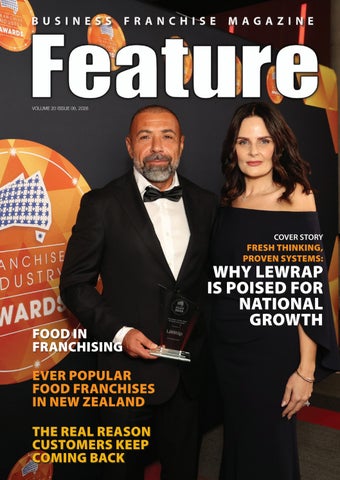
cover story
Fresh Thinking, Proven Systems:
Food in Franchising
Why LeWrap is Poised for National Growth
EVER POPULAR FOOD FRANCHISES IN NEW ZEALAND The Real Reason Customers Keep Coming Back business franchise MAGAZINE 31
Buying a franchise? KNOW WHAT YOU'RE SIGNING BEFORE YOU SIGN IT. A franchise can be an exciting business opportunity - and a significant legal and financial commitment. MST Lawyers' Franchise Law team can help you understand the agreement, identify potential risks and make an informed decision before you proceed.
Practical advice. Commercial perspective. Franchise experience. WE CAN ASSIST WITH: Franchise agreement reviews Franchise purchases and sales Franchise documentation Commercial agreements Property and leasing Franchise disputes
Speak to MST Lawyers' Franchise Law team. mst.com.au
03 8540 0200
mst@mst.com.au
32 business franchise MAGAZINE
conte nts
food and fr anchising Featured Cover Story 34 LeWrap: Fresh Thinking, Proven Systems: Why LeWrap Is Poised For National Growth
Franchisee in Action 42 Banjo’s Bakery Cafe: From One Bakery To Five: How Taimoor Ashraf Built A Thriving Franchise Journey With Banjo’s Bakery Café 48 Zarraffa’s: Accelerates Franchise Growth With New Logan Central Store
34
Profile 40 Yovie: Build Your Happy Vibe And Your Business With Yovie
Focus 46 Craveable Brands: Home Of Aussie Favourites Red Rooster, Chargrill Charlies, Oporto & Chicken Treat
Expert Advice
40
42
36 Robert Toth: Food In Franchising 44 Tony Meredith: The Real Reason Customers Keep Coming Back 50 Stewart Germann: Ever Popular Food Franchises
44
48 business franchise MAGAZINE 33
franchising feature
cover story: LeWrap
Fresh Thinking, Proven Systems:
Why LeWrap is Poised for National Growth By Vikki Bradbury, Publisher, Business Franchise Magazine Australia/New Zealand In Australia's competitive quickservice restaurant (QSR) sector, longevity is earned through consistency, innovation and an unwavering commitment to customer satisfaction. Few brands demonstrate these qualities better than LeWrap, an Australian-owned franchise that has spent more than two decades refining a fresh, made-to-order dining experience while steadily building a loyal customer base. Founded in Western Sydney in 2005, LeWrap has grown from a single concept into an established franchise network spanning New South Wales and Queensland. The brand's recent recognition as the 2026 FCA Franchisor of the Year further reinforces its position as one of Australia's most exciting franchise opportunities, recognising not only its operational excellence but also its commitment to franchisee success. 34 business franchise MAGAZINE
A Fresh Approach to Fast Food
Built on Experience
As consumer expectations continue to evolve, the demand for healthier, fresher and more customisable dining options has never been stronger. LeWrap has positioned itself perfectly within this growing market by delivering freshly made meals that combine the speed and convenience of quick-service dining with premium ingredients and visible freshness.
After more than 20 years in business, LeWrap has developed a mature operating model supported by a highly experienced Head Office team covering operations, marketing, training, technology, procurement, leasing and business development.
Unlike many traditional fast-food operators, LeWrap prepares vegetables fresh each day, grills proteins to order and assembles every meal in an open theatre-style kitchen where customers can watch their food being prepared. This transparency creates trust while reinforcing the brand's commitment to quality. Its menu of wraps, bowls and plates appeals to today's consumers looking for good food, without sacrificing flavour or convenience. The result is a concept that continues to resonate with busy professionals, families, students and shoppers looking for fresh alternatives to conventional fast food.
Today the network comprises more than 20 stores across New South Wales and Queensland, operating in shopping centres, food courts and selected street-front locations. This operational experience provides prospective franchisees with the confidence of joining a proven business that continues to evolve with changing consumer trends. Rather than chasing rapid expansion for its own sake, LeWrap has focused on measured, sustainable growth while continually investing in its systems and brand development.
The Ideal Franchise Partner LeWrap believes successful franchisees come from a variety of backgrounds. While hospitality experience is certainly an advantage, it is not considered essential.
Instead, the company seeks hands-on business owners who are passionate about customer service and committed to following proven systems. Strong leadership skills, commercial awareness and the ability to build and motivate a team are viewed as equally important qualities.
The company is actively seeking high-profile locations near supermarkets, transport hubs, universities, employment precincts and other major traffic generators. Flexible store formats—including kiosks, inline stores and street-front locations, allowing the brand to adapt to a wide variety of retail environments.
The business also values franchise partners who embrace continuous improvement and are willing to grow alongside the brand as new technology, marketing initiatives and operational innovations are introduced.
Importantly, expansion is supported by continued investment in technology and customer engagement.
This philosophy creates a collaborative relationship where franchisees are supported while maintaining ownership of their own business success.
Comprehensive Support Every Step of the Way One of LeWrap's greatest strengths lies in the breadth of support provided to franchise partners. Support begins well before a store opens, with assistance in site selection, lease negotiations, store design and construction. Comprehensive training prepares new franchisees for launch, while post-opening support ensures they transition confidently into daily operations. Ongoing assistance includes operational coaching, marketing programs, recruitment guidance, supplier management, technology systems, financial performance analysis and continual menu development. Regular communication, conferences and business reviews further strengthen the relationship between Head Office and franchise partners, creating an environment where franchisees feel connected and supported throughout their business journey. This long-term partnership approach has become a defining feature of the LeWrap franchise model.
Expansion with Purpose LeWrap is entering an exciting phase of strategic expansion, with growth focused across New South Wales, the ACT and Queensland.
Plans for 2026–27 include further rollout of the refreshed store design, expanded digital ordering capabilities, enhancements to the LeWrap app, white-label delivery solutions, improved customer data analytics and stronger performance dashboards for franchisees. These initiatives are designed not only to improve customer convenience but also to provide franchisees with better operational insights and stronger commercial outcomes.
A Partnership Built on Shared Success LeWrap understands that franchise success extends well beyond financial performance. The company works to keep franchisees engaged through open communication, recognition programs, business reviews, network conferences and opportunities for franchisees to learn from one another. Celebrating high-performing stores and sharing best practice across the network helps foster a culture of collaboration rather than competition. Most importantly, franchisees are encouraged to contribute ideas while remaining aligned with the brand's strategic direction. This balance of support, accountability and shared vision helps create confident business owners who feel invested in the future of the network.
carefully selected locations, capable franchise partners and a commitment to maintaining the operational standards that have underpinned the brand's success for more than two decades. The company also sees significant opportunities for existing franchisees to expand into multi-site ownership, creating additional pathways for long-term business growth within the network. While expansion remains a priority, LeWrap is clear that sustainable growth will always take precedence over rapid expansion.
Advice for Prospective Franchisees For anyone considering franchising, LeWrap offers practical advice that reflects its own business philosophy. Prospective franchisees are encouraged to undertake thorough due diligence by reviewing documentation carefully, speaking with existing franchisees and ensuring they have adequate working capital before investing. Equally important is choosing a brand whose culture, products and long-term vision genuinely align with personal values and business goals. Franchising provides proven systems and established branding, but success still depends on strong leadership, commitment and consistent execution. Price alone should never determine the decision. The quality of the support team, the strength of the business model and the franchisor's commitment to genuine partnership are equally critical factors.
Over the next five years, LeWrap aims to establish itself as Australia's leading fresh quick-service restaurant brand.
As LeWrap continues its national expansion, it offers an increasingly compelling opportunity for entrepreneurs seeking to join an award-winning Australian brand built on freshness, innovation and long-term franchise
Growth will continue to be driven by
success. v
Looking Ahead
business franchise MAGAZINE 35
franchising feature
EXPERT ADVICE: Robert Toth | Special Counsel | Sanicki Lawyers
in Franchising Did you know that Mark Knopfler’s song “Boom, Like That" released in 2004, was written about the true story of how Ray Kroc discovered the original McDonald’s milkshake store in San Bernardino California? Ray saw the volumes of kids lining up for milkshakes and pitched the idea of franchising to the McDonald brothers, bought them out and as we know the rest is history! Ray was known to be ruthless, with lines like: "If any of my competitors were drowning, I'd put a hose in their mouth and turn on the water." Which is my segue into the latest in food and franchising in Australia: what is happening here? What are the latest stats and trends, and where is franchising heading generally?
The Good, the Bad and the Ugly 7-Eleven is in the media for taking back profitable stores from franchisees without paying them any compensation or goodwill, leaving franchisees who worked for 10 years in the system with nothing at the end. Sounds cruel and unfair — but the Franchisor says it has acted within its legal rights. 36 business franchise MAGAZINE
Robert Toth is Special Counsel and Franchise Specialist at Sanicki Lawyers with over 35 years of experience in franchise, licensing and distribution law. Robert is also an Accredited Commercial Law Specialist and regularly publishes articles on franchising in Australia and overseas journals and acts for a number of overseas, local and master franchisors and acts in dispute resolution and mediations. Named by global law experts as Franchise Law Expert of the Year 2025 in Australia. Contact Robert@sanickilawyers.com.au or call him on mobile 0412 67 37 57 www.sanickilawyers.com.au
The driver seems to be that the company is moving more to corporate-owned stores rather than franchised stores, following the 2023 acquisition of 7-Eleven Australia by its Japanese parent company and their plans to transition Australian stores to the Japanese konbini convenience model. I could write a whole article on this issue alone, but the reality is it is a timing issue for these poor franchisees who signed their franchise agreements under the old Code provisions which gave them little to no protection. Even though under the new Code franchisees have better protection, it does not necessarily prevent a franchisor from deciding not to renew or extend the franchise term. Franchisees still need to show that the franchisor has not acted in good faith — for example, rejecting a proposed new franchisee for no valid reason. Under the new Code changes, franchisors are
prohibited from enforcing a restraint of trade clause if the franchisee requests a renewal or extension and the franchisor refuses. The new Code provisions were aimed at addressing “churning” — where a franchisor forces a franchisee out and then resells the business and make a profit at the expense of the outgoing franchisee. The lesson here for franchisees going into any franchise, is to ensure you do have options to exercise further terms under your agreement, in order to preserve your goodwill and your ability to sell your business as a going concern. I believe the affected 7-Eleven franchisees do have some equitable arguments as to the franchisor’s breach of good faith, making an unfair profit from their actions (aside from contract law) and unconscionable conduct — but as is often the case, it is difficult to take on a mega wealthy franchisor.
The times they are a changin’ (thanks Bob) We are all adapting to a new world order with inflation, higher interest rates, cost-of-living pressures, the new Franchise Code, AI’s impact on business generally and changing consumer tastes.
“
Consumers are eating out less frequently but spending more per visit. The cost of eating out has increased significantly so businesses have had to attract customers with special packaged meal and drink offers and “happy hour” promotions.
The new Franchising Code of Conduct (Code) kicked in on 1 April 2025, with tougher compliance around: • franchisor disclosure of capital expenditure,
”
• compensation for early network changes, and • greater scrutiny from the ACCC. Consumer spending has been impacted, and the hospitality sector has been hit with higher interest rates and inflation impacting many restaurants and venues. Many do not operate on a Monday or Tuesday to save on overheads. The QSR (Quick Service Restaurant) sector has largely maintained its composure through use of technology and the ability to reduce staff levels and costs. Overseas brands such as Wendy’s and Firehouse Subs have entered the market, with a number of new local brands offering specialist cuisines such as Indian, Vietnamese Thai, and other Asian brands establishing a local footprint. Consumers are eating out less frequently but spending more per visit. The cost of eating out has increased significantly so businesses have had to attract customers with special packaged meal and drink offers and "happy hour" promotions. Who would have thought you could charge $34.00 for a pizza or a spag bolognese!
Social media and Google Who would have thought these reviews can make or break a business and influence customers decision-making. One bad experience and a few bad reviews can destroy a business, so for franchisors and franchisees, maintaining quality standards and value is the key to remaining viable and attractive. Consumers are still looking for that hidden gem where the balance of good quality food at a reasonable price will attract positive reviews. Creative menus are also attracting younger consumers, where they can create their own Poke bowls or pasta dishes. The QSR sector needs to show they are environmentally aware and focussed, rely
on automation and offer healthier and more innovative food choices. Asian influences and regional Indian cuisines seem to be carrying the new wave of franchise offerings.
Some statistics The market size of the Franchise sector in 2026 in Australia is $179.5bn with over 1,343 businesses in the sector with a CAGR of 1.9% between 2021 and 2026. Although it did decline around 2% over the past 5 years, it is expected to grow over the next 3 to 5 years. The company holding the most market share in the franchise sector in Australia is Metcash, with a foothold in many brands in the food, liquor and hardware sectors. Food and QSR franchises remain one of the most popular business investment options in Australia. There are still many attractions for a franchisee, instead of having to build a brand from scratch, as a franchise system will provide: • an established brand; • operational systems and training; • proven menu concepts; and • marketing support. These reduce the risks of starting an independent business from scratch. How to select a good franchise So many systems and so little time! advertised on-line directly, or on social media by brokers and consultants, all spruiking the best system and great returns. Things to look out for: • An existing popular system that has an established brand is generally lower risk.
• Being a pioneer in a newer brand, system, or food category is a greater risk as you will be testing the market with the franchisor. • Selecting a QSR franchise will generally involve a lower upfront capital cost and ongoing operational costs as opposed to a full-service restaurant. • QSRs generally offer more acceptable working hours than a restaurant. • Look at the trends in your local shopping centre and neighbourhood: which venues are full and which ones are empty? What is the local demographic? Who will be your customers? • Healthy fast-casual dining with packaged deals and home delivery menu concepts. • Franchises operating in high-demand categories often experience more stable customer traffic. • Franchises that offer efficient kitchens, streamlined menus and structured training systems allow franchisees to operate their stores without needing highly specialised chefs, which helps to reduce costs. Investors look for franchise brands that are still expanding, or brands in early or mid-stage growth phases into which they can invest and grow the system through marketing, systems development and innovation.
Should I buy an existing franchise or go into a new ‘greenfield” site? Buying an existing franchised business The great benefit of buying an existing franchised business is that from day one you have revenue coming in the door, which hopefully means you need less working business franchise MAGAZINE 37
franchising feature
EXPERT ADVICE: Robert Toth | Special Counsel | Sanicki Lawyers Think about the exit plan before you go into the franchise – will you be there for 5 years or 10 years? What will you have to sell at the end? Every franchise has a “life span” after which the franchisee will want to sell or exit — and once you are in a franchise, there are only limited options to exit the system. Make sure you can take a reasonable salary out of the business as you go, as there may not be any large capital gain or profit at the end. So do your cash flow analysis before you commit, and get financial advice to make sure the business is viable and can cover your costs and salary. if the numbers don’t work, we suggest you walk away and look elsewhere as there are many franchise systems out there. capital for the first 12 months of operation. It also generally means paying an element of goodwill and therefore a larger outlay than a greenfield new location. The key things to look out for when buying an existing franchise are: • The Lease
This may require you to have greater working capital for the first 12 months of operation.
Good News Week! (and a practical checklist)
Franchisees should weigh up the option of taking up a new franchise system or buying into an established system and seek appropriate financial and legal advice.
With all of the challenges confronting business, there are still excellent opportunities for franchisees, but before you jump in, here is a checklist:
New players in the market
• Do your due diligence on the franchisor, just as much as they do their due diligence on you.
- What is the lease term and how does it fit with your franchise term?
There are many new brands and systems local and from overseas entering the market.
- Who will hold the lease — you or the Franchisor?
We have seen many cycles and trends over the years in franchising: the Pizza era, Chocolate and ice creameries, Coffee franchises, Burgers, Chicken, Bubble tea, Childcare (Early learning) and Aged and Home Care Services (now on offer).
- How much is the security deposit that needs to be held by the landlord? - Rent reviews: many leases provide for annual CPI increases which now favour the landlord. Fixing an annual 3% or 4% increase means you can budget for those increases. • Plant and Equipment – Is the equipment fit for purpose and functional, as the cost of upgrade or replacement can be expensive. • Refit or rebrand
This reminds me of the time when it was all about Pizzas and my article “How many pizzas can one country eat?” Quite a lot apparently. Now it could be an article on “How many Bubble Tea franchises can one city have”?
Burgers and Coffee: still going strong
• Is it a greenfield site (which may be a higher risk than an existing site)? • Are you being offered an A, B or C grade site? • Is the Franchisor big on technology and innovation? if not, how will they compete in the market sector they are in. • Is the store fit out due for an upgrade and refurbishment? • Is the plant and equipment new or will it need replacement? • Will you hold the lease or trade under an occupancy licence. • Be clear about your budget – what can you afford?
– Check if the franchisor or the lease requires you to refit the premises or rebrand shortly after you buy the business, as again, that can be a substantial extra capital cost.
We continue to see increased competition and new players in the burger sector with an increase in plant-based burger chains and also some new “boutique burger” brands such as Huxtable and Betty’s.
Establishing a new greenfield site
And we still have a love affair with coffee. We love our coffee — whether it’s from a café, a van or a hole in the wall ... but it must be good coffee!
• Factor in rent increases and fit out upgrades in your cash flow forecasts.
Choosing your franchise: lifestyle, skill set and exit plan
So, you can make an informed decision and limit your risk by seeking advice from a Specialist Franchise Lawyer who is a Member of the Franchise Council of Australia (FCA) and obtain independent financial advice before you jump in! v
The benefit of establishing a new greenfield site is that you have the latest fit out and you may be able to negotiate a reduced rent for the first 12 months. But, it may pose a greater risk than buying an established franchise as you have to build the business from scratch. 38 business franchise MAGAZINE
For new franchisees we recommend that you look at a franchise that suits your lifestyle and skill set.
• Ensure they have adequate working capital to cover the first 6 to 12 months of operation (particularly for a new greenfield site).
• Make sure the numbers work and you can take a salary for your efforts along the way.
Subscribe today!
VOLume 20 ISSu
e 06, 2026
6 issues
latest new s
in fr anchisi
th e n Chapter weitxt h tda Fr anCh ising
Fr anChisin For everyo g is is every wh ne and ere special feat
$69.95
cover sto
ry From Foun dations to the Futu re:
ng
INCLUDING GST, POSTAGE & handling
ur
Food Fr ae nCh
ising $4.95 (AUD),
$7.95 (NZ) inc.
GST. VOLume 20 ISSue 04, 2026 VOLume 20 ISSue
ISSue VOLume 20
20 VOLume
01, 2025 ISSue
cover story
Club Pil
te
rc e Ge Fo Gar ar alia: t stronG th ausnG a ow
ry
ates
nsive ComPrehe lia launChes austra aining in aCher tr
Gr
ws st neisin g latefra nch in
ews st nng late isi anch
ture special fea
in fr
s in Fr anChisenge iCe ra your Pr
o il olcan the v ry oF reta theo make ise h how to Fr anc your re-prooF tives Futu
ion ta intuit xt how dain g the ne is shaP anChise er a Fr
impera t Grow th Four silien For re
buy? build or w een a ne
$4.95
(AUD),
$7.95
(NZ) inc.
GST.
Mizael Partners
Big Bowl Kitcover story chen Redefining chine
AccountAnts | Auditors | Business Advisors
redefining growth, governance, and advisory for Modern australian Businesses
se fast food
r story Beforecove you
story cover
$4.95
05, 2026
02, 2026
cover sto
Buildi tion For da Foun
VOLume 20 ISSue
03, 2026
(AUD),
, $7.95 (NZ)
$4.95 (AUD)
$7.95
(NZ) inc.
inc. GST.
GST.
g betw and an Choosin territory s Fr anChise existing busines $4.95 (AUD), $7.95
(NZ) inc. GST.
Borrow: rr affa’s Za whatCo franchise ffee:
Buyers need to aDes wing Three DeC BreKnow anD right now Pose, of Passion, Pur suCCess franChise
franchising in ure special feat australia today es
moBile franC
his
specia
special feature
senior care news laTesT
in franchising
Buying a franchise fr anChising ay To with confidence Proven PaThw
The
enTrePreneur
shiP
latest news
in franchising
$4.95 (AUD), $7.95 (NZ) inc. GST.
$4.95 (AUD),
$7.95 (NZ) inc.
GST.
l feature home seRv ices tRuisms in fR anchisin g how to spot a genuinely pe fiRst fR anch opleise in a digital woR ld
latest new s in franchisin
g
Packed with information relating to many different sectors of the franchising industry, Business Franchise Australia and New Zealand is a valuable and informative source of guidance. Scan the QR code to order your 6 issues of Business Franchise Magazine Australia and New Zealand for only $69.95 (including GST, Postage & Handling) or go to: https://www.isubscribe.com.au/business-franchise-magazine-subscription.cfm
business franchise MAGAZINE 39
franchising feature
PROFILE: Yovie
Build Your Happy Vibe — and Your Business — with YOVIE YOVIE is bringing a fresh new era of customisable frozen yoghurt and vibrant matcha creations to communities across Australia. Built around our core philosophy, “Build Your Happy Vibe,” YOVIE takes a fresh, mainstream approach to frozen yoghurt, with exceptional flavour and quality ingredients at its heart. Our menu combines familiar flavours with contemporary creativity, featuring signature favourites such as vibrant Matcha, Watermelon Passionfruit and refreshing White Peach. Customers can personalise their creations at our interactive self-serve bar, choosing from more than 40 toppings and sauces. This gives every customer the freedom to create a dessert that is uniquely their own. With more than 30 yoghurt flavours available on rotation, every visit to YOVIE offers something fresh and exciting to discover.
A Streamlined Franchise Model YOVIE is ideally positioned for expansion within Australia’s growing self-serve dessert market. Our streamlined business model is designed to support operational simplicity, efficiency and strong commercial performance. Customers create, weigh and pay for their own desserts, helping franchise partners manage labour requirements and maintain a straightforward, easy-to-operate system— even during busy trading periods. Our product development and supply chain teams carefully select quality ingredients and continually test and refine new recipes. This focus on flavour, balance and product quality allows YOVIE to create distinctive products with broad customer appeal and gives customers new reasons to return.
Support at Every Stage Our franchise partners are at the heart of YOVIE’s growth. We support ambitious owner-operators with comprehensive training, practical systems and ongoing operational guidance. Whether you are an experienced hospitality professional or entering business ownership for the first time, you will be equipped with a straightforward, quick-to-learn operating model designed to support your success. 40 business franchise MAGAZINE
Finding the Right Location
Build Your Future with YOVIE
Site selection is critical to the YOVIE business model. Ideal locations include high-traffic dining precincts, cinema and entertainment complexes, shopping centres and established suburban retail strips.
Ready to build your happy vibe and grow your own business with YOVIE? Contact us today to explore available franchise opportunities across Australia.
business franchise MAGAZINE 41
franchising feature
franchisee in action: Taimoor Ashraf | Banjo’s Bakery Café
From one bakery to five:
How Taimoor Ashraf built a thriving franchise journey with Banjo’s Bakery Café
In just five years, Taimoor Ashraf has gone from an aspiring business owner to one of Banjo’s most successful franchisees. With a vision to build something of his own, Taimoor opened the doors to his first Banjo’s in Darra. What started as a single bakery has grown into five locations across Brisbane and North Queensland, including Burpengary, Richlands, Townsville West End and Idalia, with his original bakery in Darra named Banjo’s Bakery of the Year in 2024. But, for Taimoor, the true measure of success has never been the number of stores he owns. It’s the people, the communities and the future he is building along the way. “Success for me has always been about creating something meaningful - not just for myself, but for my family, my team and the communities we’re part of,” Taimoor says. “Franchising has given me the opportunity to build more than just a business. It has allowed me to create a future for my family, develop incredible teams and meet so many inspiring people along the way. It’s rewarding to know that what I’m building today can continue to grow long into the future.”
Growing from franchisee to business leader As Taimoor’s business expanded, so did his role within the Banjo’s network. Moving from one bakery to five required a shift in mindset. His focus evolved from managing basic tasks to building strong teams, developing leaders and creating the right foundations for each of his stores to succeed. “The biggest change has been learning that you can’t do everything yourself,” Taimoor says. “You need to build a strong team, trust your people and give them the opportunity to grow too.” As his experience grew, so did the opportunity to contribute beyond his own stores. Alongside running his locations, Taimoor also served on the internal Innovation Committee, where he helped test new ideas such as iced drinks and pie production processes, and shared learnings from his own stores to help shape initiatives across the wider network. 42 business franchise MAGAZINE
About Banjo’s: Banjo’s Bakery Cafe was founded in Tasmania in 1984 and has operated successfully since, growing to over 52 stores across Tasmania, Victoria, New South Wales, Queensland and South Australia, with more than 9 million customers visiting a Banjo’s store each year.
“Being able to share my ideas, alongside the network of franchisees and help shape initiatives that impact customers across Australia has been incredibly rewarding,” Taimoor says. “Everyone brings different experiences to the table and that’s what makes those conversations so valuable. We’re all working towards the same goal of making Banjo’s even better for our customers.”
Learning through challenges Running five locations means no two days look the same and some challenges are impossible to predict. For his North Queensland stores, this has included navigating the impact of devastating cyclones and balancing the need to keep his businesses moving while making sure his team and their families were safe and supported. Alongside these unexpected events, Taimoor has also had to manage the realities that come with running and expanding a business, including staffing pressures, construction delays and constantly changing economic conditions. “Challenges are inevitable when you’re building a business, but it’s how you respond to those moments that defines you,” Taimoor says. “You can’t control everything that’s thrown your way, but you can control how you respond. For me, it’s about staying calm, backing your team and finding a way forward.” “Being part of a franchise network also means there are people around you who understand exactly what you’re facing - the ups and downs, but also the little wins that make it all worthwhile,” Taimoor says. “And when challenges do arise, it’s really comforting to know you’ve got the support and guidance of Banjo’s to lean on. They’ve
always been incredibly helpful and accessible when I’ve needed them, and knowing there’s a franchisor there to support through those moments gives a lot of confidence that you’re not navigating them alone.”
Creating opportunities for others Opening more stores meant Taimoor was able to create more opportunities for his team members to build their skills, take on new responsibilities, and discover what they were capable of. One of Taimoor’s stand-out success stories is Daniel Monks, who joined Taimoor as a Head Baker, has progressed through a number of leadership roles including Production Manager and Store Manager, before becoming the Operating Franchisee of Banjo’s Idalia. For Taimoor, Daniel’s journey reflects the opportunities that exist within Banjo’s for people who are committed to learning and taking on new challenges. “Seeing people grow and achieve things they didn’t think were possible is one of the most rewarding parts of being a business owner,” Taimoor says. “Considering where I started and where I am now, it’s really special to be able to play a small part in someone else’s journey too. Watching people gain confidence, take on new positions and achieve things they may not have thought were possible is something I’m really proud of.”
Serving customer favourites Scaling five bakeries has given Taimoor a unique insight into how tastes and preferences can vary from one community to the next. “One of the fun parts about having stores in different areas is seeing what products locals can’t get enough of,” Taimoor says.
“What flies off the shelves in one town isn’t always the favourite somewhere else. Here in Queensland, the Beef, Bacon & Cheese Pie is the undisputed best seller. No matter which store you visit or the time of year, customers are always coming in looking for that pie.” “If someone is trying Banjo’s for the first time, I always recommend the Pulled Beef Brisket Pie. The combination of flavours is mouthwatering. It’s packed full and the jalapeños are something I never would have thought to put in a pie, but it works so well. The flavour is so good that one is never enough. I could easily eat a few in one sitting.”
Looking ahead Five years after opening his first Banjo’s Bakery Café, Taimoor still believes he’s only getting started. “What excites me most is that there’s always another challenge to take on and something new to learn,” Taimoor says. “Franchising can be incredibly rewarding, but it doesn’t happen overnight. You need to be prepared to put in the work, back yourself, trust the systems, and build a great team around you. If you do that, the opportunities really are endless.” To learn more about joining the network and becoming a Banjo’s Bakery Café franchisee, visit: https://www.franchise.banjos.com.au/ business franchise MAGAZINE 43
franchising feature
EXPERT ADVICE: Tony Meredith | Director and Head Coach | Tony Meredith Coaching
The Real Reason Customers Keep Coming Back Walk into almost any successful food franchise, and you will notice something interesting. Most customers are not deciding what they think of the business at the counter. In many cases, they made that decision before they walked through the door. They have already chosen one café over another. They may have driven past several takeaway shops to reach a particular restaurant. Often, they are not comparing menus, prices or promotions because they already believe they know what they will receive. The transaction may happen inside the restaurant, but the real decision was made earlier. That decision is built on trust. For a franchise business, trust carries an additional expectation. Customers do not simply expect consistency from one location. They expect the brand promise to travel with them. Whether they visit a store close to home, near the office or in another city, they expect the experience to feel familiar. It is easy to assume that trust is earned because the food is better. Sometimes it is. More often, the difference is less obvious. Over the years, I have seen businesses with exceptional products struggle to retain customers, while others with a fairly ordinary offering continue to grow. The product matters, but it rarely explains loyalty on its own. What customers remember long after the meal has finished is whether the business consistently delivered the experience they expected. That consistency is more valuable than many business owners realise.
through the door, curiosity played a role. The second visit is different. By then, curiosity has been replaced by experience. Customers are no longer relying on advertising, reviews or reputation. They are relying on what they personally observed. They remember whether the food arrived as expected, whether the service felt genuine and whether the restaurant reflected the standards the brand promised. They also remember whether the experience felt easy, professional and worth repeating. That shift matters because repeat business is not created by marketing alone. Marketing may encourage a customer to return, but confidence is what makes returning feel like an easy decision.
What Customers Are Really Buying
The first time someone visits your business, they are taking a chance.
As business owners, we often spend enormous amounts of time improving the product. We refine recipes, redesign menus, invest in equipment and search for ways to gain an advantage over competitors.
Perhaps a friend recommended you. Perhaps they found you online. Perhaps they were simply passing by. Whatever brought them
There is nothing wrong with that. Continuous improvement is part of building any successful business.
The First Visit Is Curiosity
44 business franchise MAGAZINE
The danger comes when we assume the product is the only thing customers are buying. In reality, customers are also buying confidence. They are buying the confidence that today’s experience will resemble the last one. They want to know that the coffee they enjoyed last week will taste the same today. They expect the team to greet them with the same professionalism and the service to feel equally reliable, regardless of who is working. I often think of this as the Confidence Gap. The Confidence Gap is the distance between what a business promises and what the customer believes will actually happen. A customer may hope they will have another good experience, or they may know they will. The gap between those two positions is commercially significant. Businesses that close the gap create trust. Businesses that leave it open create uncertainty. When customers know what to expect, choosing your business requires less thought. It becomes familiar, comfortable and low risk. That is where loyalty begins.
How Confidence Is Lost Businesses rarely lose customer confidence through one catastrophic failure. More often, confidence disappears gradually through a series of small inconsistencies. One visit, the service is outstanding. The next, it feels rushed. One team member follows the process. Another decides to do things differently. A problem that would once have been addressed immediately is overlooked because everyone is busy. Individually, these moments may seem insignificant. Customers, however, notice the pattern. Before long, they are no longer asking whether they enjoyed their last experience. They are wondering whether they will enjoy the next one. Every inconsistency creates a little doubt. Over time, that doubt builds, and customers start questioning whether the next experience will be as good as the last. Once that happens, loyalty becomes much harder to hold onto. That creates an opportunity for competitors.
Franchising Is the Replication of Trust This is particularly important in franchising because the strength of a franchise system lies in its ability to replicate success. Expansion is not simply about opening another location. It is about delivering the same standard, experience and confidence wherever the customer interacts with the brand. That is much harder than it sounds. Replicating a menu is relatively straightforward. Replicating leadership, culture and customer experience across multiple locations is where many businesses discover the real challenge of growth. The businesses that scale successfully understand that systems are not there simply to control people. They exist to protect the customer experience. Growth also exposes weaknesses that previously went unnoticed. Communication becomes more complicated. Training becomes more important. Variations between teams become more visible. Standards that once seemed obvious suddenly depend on individual interpretation. I have worked with enough growing businesses to know that expansion rarely creates these problems. It reveals the ones that were already there.
Tony Meredith is a Business Coach and founder of Tony Meredith Coaching. He partners with franchisors and franchisees across Australia to help them strengthen leadership, improve sales performance, and create sustainable growth. Drawing on more than 25 years of experience in business, leadership, and team development, Tony teaches franchise owners how to move from running operations to leading people. His work focuses on practical systems, consistent performance, and the human traits that turn good operators into great business owners. Email: info@tonymeredithcoaching.com.au Website: tonymeredithcoaching.com.au LinkedIn: linkedin.com/in/tony-meredith-coach Facebook: facebook.com/tonymeredithcoaching
Leadership Sets the Standard Many leaders believe consistency comes from procedures, checklists and operating manuals. Those things are important, but they only support consistency. They do not create it. People watch leaders far more closely than they read procedures. I have seen businesses with excellent operating manuals fail to deliver a consistent customer experience because the leadership team was not modelling the behaviours those manuals described. I have also seen businesses with simpler systems consistently outperform expectations because their leaders reinforced the right standards every day. People notice what leaders praise, what they ignore and what they are prepared to tolerate. If standards slip without consequence, the standard has effectively changed. If shortcuts become acceptable whenever the business is under pressure, those shortcuts soon become part of the culture. This is why consistency is not merely an operational objective. It is a leadership responsibility. Culture is not created during an induction session. It is created through the behaviours repeated, reinforced and rewarded every day. The strongest franchise businesses understand this. They do not simply train people to perform tasks. They develop leaders who protect the standards customers have come to trust.
Where Confidence Is Won or Lost Franchise leaders should regularly examine where the Confidence Gap may be opening inside their business. Which parts of the customer experience must never vary? Where are team members being left to interpret standards for themselves?
What behaviours are leaders tolerating that customers may experience as inconsistency? These questions matter because what feels like a minor operational issue internally may feel like a broken promise to the customer. A delayed order, an unclean table or an indifferent greeting may seem small in isolation. Yet each one shapes the customer’s perception of whether the business is dependable. Consistency is not about creating a robotic experience. Customers still value warmth, personality and genuine human interaction. It is about ensuring the essential promises of the brand are delivered every time.
What Customers Really Come Back For Marketing creates awareness. A strong product earns consideration. Consistency builds confidence. Confidence creates loyalty. When customers trust what they will receive, price is less likely to be the only factor guiding their decision. Competitors become less attractive because changing providers introduces uncertainty. For businesses operating in the food industry, that is worth remembering. The quality of the food will always matter, but it may not be the only reason customers return. Food may be what first attracts people to your business, but consistency is what earns their trust. Menus change. Prices move. Competitors enter the market and disappear again. Businesses that consistently deliver what they promise earn something that is difficult to copy. They earn customer confidence. And confidence is what turns a first visit into a habit. v business franchise MAGAZINE 45
franchising feature
Home of Aussie favourites Red Rooster, Chargrill Charlie’s, Oporto & Chicken Treat. Chicken is Australia’s #1 protein and we serve it every way Aussies crave it. Flame-grilled, fried or roasted. Always cooked to perfection. Turn your passion into a thriving franchise with: • Trusted national brands • Full training & support • A proven business model • Scalable growth potential
When it comes to classic food franchises, few brands in Australia hold the recognition and trust of Red Rooster. With a rich history spanning five decades and over 320 locations across cities, suburbs, stadiums, and airports, Red Rooster is an iconic brand with a strong national presence. For generations, Australians have turned to Red Rooster for fresh, delicious roast chicken. As Australia’s first and favourite chicken shop, we have earned a special place in the hearts of customers of all ages. But while our history is built on tradition, our future is driven by innovation and customer demand. What our Franchisees are saying: “With Reds we have the support of the parent company, Craveable Brands. So we know that if we have a real challenge to overcome, Reds would support us because of how we run the business. We’re ethical, we believe in the brand!” Chris Ianetta – Red Rooster Franchisee.
46 business franchise MAGAZINE
Oporto is one of Australia’s most recognisable quick-service restaurant (QSR) brands, with over 225 stores across the country, bringing the bold, fiery flavours of Portuguese-inspired flame-grilled chicken to customers nationwide. With its festive, youthful energy, contemporary branding, and vibrant, modern menu, Oporto has carved a unique space in the QSR industry, standing out as more than just a chicken shop, it’s an experience. Australians can’t get enough of our signature flame-grilled chicken, fresh rolls, burgers, and iconic Bondi Bites, and we need more passionate Franchisees to help us expand into key locations across the country. What our Franchisees are saying: “I was in the brand for so long and it gave me my first taste of the real world, and then a chance to step up and make a business for myself. Oporto is a remarkable brand, it’s been wonderful!” Akankssha Taneja Sandhu – Oporto Franchisee.
craveablebrands.com/franchising
Since 1989, Chargrill Charlie’s has been serving simple food, done well — delicious, handcrafted meals made with fresh, seasonal ingredients. From our charcoal-roasted chickens to our house-made sauces, spice mixes, and artisan rolls, everything is prepared in-house daily with care and quality. With 30 Stores across Sydney, Melbourne and Brisbane, Chargrill Charlie’s is expecting to double its sites and expand its footprint over the next three years. As demand for fresh, quality-driven food grows, Chargrill Charlie’s is primed for success and we’re always looking for passionate Franchisees to grow with us. What our Franchisees are saying: “When you’re opening a business, there is so much to focus on. With Craveable Brands I know the foundations are already there and I can put effort into building my team for success.” Avalon McRae – Chargrill Charlie’s Franchisee.
With over 50 years of success, Chicken Treat has built trust, expertise, and a loyal following. As a WA favourite, we know exactly what people crave and the proof is in store locations, our store designs and of course our food offering. From flavour-packed rotisserie and fried chicken to premium breast fillet burgers and signature snacks, our menu continues to evolve, keeping customers coming back for more. With 63 locations across WA, our proven success speaks for itself. Now, as we enter a new phase of expansion, we’re looking for passionate Franchisees to grow with us. What our Franchisees are saying: “Craveable Brands is very solid, supportive and right behind you. I’ve never been in a business with so many processes that support the franchisees. Over the nine years I’ve been with Craveable, it’s improved out of sight,” Tavis Armstrong – Chicken Treat Franchisee
craveablebrands.com/franchising
business franchise MAGAZINE 47
franchising feature
franchisee in action: Zarraffa’s Coffee
ZARRAFFA’S ACCELERATES FRANCHISE GROWTH WITH NEW LOGAN CENTRAL STORE Zarraffa’s Coffee is continuing its southeast Queensland expansion in its milestone 30th year, with the opening of a new Logan Central store led by longstanding Franchisee Justin Fu, marking his third location within the network. The new drive thru walk in site builds on the recent opening of Capalaba Park, reflecting continued investment from established franchise partners and reinforcing the brand’s presence across one of the region’s busiest retail and commuter corridors. Zarraffa’s Coffee CEO Marnie Sheldon said the opening highlights the strength of the brand’s franchise model and the long-term confidence of its network.
48 business franchise MAGAZINE
“Justin’s continued growth within the Zarraffa’s network is a strong reflection of the opportunities available to franchisees and the culture that underpins our business. His dedication and passion are what we stand for and has helped shape us as a brand over the past three decades,” Ms Sheldon said. “Franchisees who reinvest in the brand play a critical role in our expansion, and it’s valuable partnerships like these that continue to drive our presence into new communities.” The Logan Central store represents the next chapter in Justin’s 21 year journey with the brand, which began in 2005 when he purchased his first store in Toowong. Since then, he expanded to Cannon Hill in 2018 when the store relocated, Capalaba Park in late 2025 and now Logan Central, growing alongside the brand as it has evolved nationally.
“Zarraffa’s has always been about more than coffee, it’s about building relationships with customers and being part of the local community,” Justin said. “We are very much looking forward to bringing that same approach to our Logan Central store, to create a space where locals can enjoy great coffee and feel connected.” Strategically positioned to service the bustling Logan corridor and surrounding suburbs, the site has been designed to deliver convenience for customers on the move, while maintaining the brand’s focus on quality coffee and customer experiences. Leading the way in retail coffee innovation, Zarraffa’s continues to redefine how Australians enjoy their daily coffee with the Logan Central location primed for the brand’s latest iteration of its drive thru model.
Zarraffa’s has always been “ about more than coffee, it’s about building relationships with customers and being part of the local community.
”
Justin Fu, Franchisee
Justin Fu, Franchisee
Thoughtfully designed with a smaller footprint than a traditional store, the format allows for greater flexibility in site selection while still prioritising convenience for busy customers on-the-go. Since its introduction in 2023, the model has evolved from a purely drive thru concept to now include a walk up window, creating additional accessibility for customers who like to stretch their legs while maintaining speed of service.
Unlike a full-service store, this drive thru design is focused on delivering efficiency, convenience and adaptability across both metro and high-growth suburban locations. The store will feature Zarraffa’s renowned range of signature coffee blends, alongside a selection of food options including its freshly baked in store items, breakfast offerings and snacks crafted to complement the coffee experience.
The store is expected to create up to 30 new local jobs, supported by Justin’s broader multi-site team, with a focus on staff training and development opportunities as part of the group’s ongoing growth. As a hands-on franchisee, Justin will be a familiar face in store from day one. Leading the way in retail coffee innovation, the Australian owned and operated brand continues to grow towards its goal of expanding to 200 sites nationally ahead of the 2032 Brisbane Olympics. Zarraffa’s Coffee now proudly operates over 85 stores across Queensland, New South Wales, Western Australia, South Australia and Victoria. For more information about Zarraffa’s Coffee, visit www.zarraffas.com.
Zarraffa’s Coffee - Logan Central Team
business franchise MAGAZINE 49
EV
franchising feature
expert advice: Stewart Germann | Franchsing Lawyer | Auckland, New Zealand
OPULAR P ER
S E S I H C
ZEALAND EW
O O F
As you may be aware New Zealand is deregulated for franchising with no franchise specific legislation at all but we have the Franchise Association of New Zealand (FANZ). It publishes a Code of Practice and Ethics and all members must comply with the Code and operate according to the Constitution. New Zealand is also the most franchised country in the world per capita with 546 business format franchise systems, nearly 30,000 units operating in franchises and more than 114,000 people employed.
50 business franchise MAGAZINE
IN N
N A R F D
Franchise New Zealand website has a section “Popular Searches” and it lists six types of franchise systems as follows: • Trade-based • Coffee & café • Home-based • Food • Eco-friendly • Fitness, health and beauty Food, of course, is always very popular and many overseas food franchisors are attracted to New Zealand. Why? Farrah Rose, who is head of the International Development at The Franchising Centre in the UK and a member of the British Franchise
Association, has previously written that “… my recent visit to this wonderful country has shown me that New Zealand is probably one of the most sophisticated, discerning, and well-developed franchise markets in the world”. New Zealanders are hearty eaters and I personally love trying new food types from anywhere globally. Entrepreneur Magazine has listed franchises under the following categories: pets, Asian cuisine, personal care, health and wellness, home improvement, maintenance, recreation, retail, tech businesses, and even junk removal.
What is popular in New Zealand Back to trending franchise systems in New Zealand – how do I view it as a franchising lawyer acting for many franchisors but also acting for franchisees who want to go into a franchise system? In relation to food, I have to list McDonald’s, KFC and Taco Bell. For franchises in Australia and New Zealand that serve or process food, maintaining high standards of hygiene and staying current with employment laws is crucial. Franchisors must stay informed and offer clear guidance to their franchisees. Food safety is very important and health grades can make or break a restaurant. In New Zealand there are four statutes which govern the Ministry for Primary Industries’ Food Safety Responsibilities and these are: • Food Act 2014 • Animal Products Act 1999 • Agricultural Compounds and Veterinary Medicines Act 1997 • Wine Act 2003 All food businesses, including restaurants and cafes with an alcohol licence, have to be registered under the Food Act and any business which is not registered commits an offence and is liable for infringement fees. The laws not only apply to traditional restaurants but also extend to early childhood education centres that provide food, processors of nuts, seeds, and coffee beans, as well as manufacturers of food for vulnerable populations like infants and the elderly. Under these regulations, higher-risk businesses are required to have a written food safety plan in place. The Act defines “safety” as a condition where food, in relation to its intended use, is unlikely to cause illness, injury, or harm to human health or public safety. Local authorities are responsible for assessing and grading food establishments, and franchisors must remain aware of the Food Hygiene Regulations of 1974. Interestingly, food licenses are graded on
Stewart Germann who is acknowledged as New Zealand’s leading franchising lawyer with over 40 years’ experience in this area, is a recognised national and international guest speaker at franchise conferences in New Zealand, Australia and USA. Stewart Germann Law Office (SGL) is New Zealand’s longest established specialist franchising law firm and Stewart is recognised in the Lexology Index Thought Leaders 2025: Global Elite in the Franchising Category. SGL’s clients include many of New Zealand’s best known national and international franchise brands and Stewart has extensive franchising contacts worldwide and locally. Stewart Germann is actively involved in international franchising, has published articles in the International Journal of Franchising Law and has attended and participated in many FCA conferences. Stewart was awarded the ONZM in the New Year Honours List 2026 for services to franchise law. Email: stewart@germann.co.nz | Web: www.germann.co.nz
a scale from A to E, with no “C” grade. Establishments are either above or below average when it comes to food safety standards. The grading system is as follows: A (High), B (Good), D (Poor), and E (Unsatisfactory).
preparation or customer-facing services, it is crucial that employees maintain a drug-free status.
1. Discrimination Is Not Tolerated
• Class A (High risk): Methamphetamine, magic mushrooms, cocaine, heroin, LSD
It is crucial to understand that in New Zealand, lesbian, gay, bisexual, transgender, and intersex (LGBT) individuals have the same rights as everyone else. The Human Rights Act 1993 prohibits discrimination based on sexual orientation and, by extension, gender identity or expression. Although instances of discrimination still occur, significant progress has been made in protecting the rights of sexual and gender minorities. Key human rights related to sexual orientation and gender identity include the right to be free from discrimination, the right to be recognized as a person before the law, and the right to life, liberty, and security. Other rights include protection from arbitrary detention, the right to a fair trial, an adequate standard of living (including decent work and housing), access to education and healthcare, protection from medical abuse, participation in public and cultural life, and the right to freedom of expression, association, peaceful assembly, and thought. Franchisors and franchisees, particularly those employing staff, must be fully aware of LGBT rights and ensure these rights are respected at all times. Any infringement of these rights could constitute sexual harassment. For transgender individuals, it is solely their choice whether to disclose their gender identity, as a person’s sex or gender identity has no bearing on their ability to perform a job. There are very limited situations in which it may be legal to hire a specific gender for a role, but even in these cases, transgender individuals may need to provide evidence of their sex.
2. Drug Testing in Employment Agreements In New Zealand, many employment agreements grant employers the right to randomly test employees for illicit drug use with consent. For businesses involved in food
The Misuse of Drugs Act 1975 classifies illegal substances based on their level of risk. The key categories are:
• Class B (Moderate to High risk): Cannabis oil, hashish, morphine, opium, ecstasy, amphetamines • Class C (Moderate risk): Cannabis plants, cannabis seeds, codeine It is illegal to use, possess, cultivate, or traffic controlled drugs. Penalties for youth offenders (under 17) are less severe than for adults (17 and over). The most serious offence is trafficking, which includes manufacturing, distributing, or selling illegal drugs. If drugs are found in the workplace, employers should involve the police and an employee could be dismissed depending upon the employment contract. While employers are not obligated to provide support, some larger organizations include it in their drug testing policies.
Franchise Codes Regardless of what franchise system a person is looking at, you will be asked to sign a franchise agreement and it will cover the payments which must be made, including the upfront payment and ongoing royalty, the term of the franchise and rights of renewal of term, the training and support which the franchisor will provide, precise boundaries of the territory awarded to you, the nature and extent of the franchisee’s obligations, including buying supplies and services, and the right to sell or transfer the franchised business. When a prospective franchisee is doing its due diligence in relation to any franchise system, a lot of information must be ascertained from the franchisor including the franchisor’s financial health and history, how it has been franchising, the total cost of taking up the franchise, realistic working capital required, types and amounts of advertising support, any requirement to buy products from the franchisor, and the launch or opening assistance. v business franchise MAGAZINE 51
2021
2022
2023
Top 10
Top 10
2024
2024
Top 10
TOMERS WE HAVE CUS BE WAITING TO ! W SERVICED NO
• Full Turnkey Program • Proven Business Model • Extensive Support Management • 105 Years of History Stands Behind It • An Iconic Brand with Global Recognition
E S I H C FRAN ALE FOR S GREA
S OPPOR T BUSINES
TUNITY!
Don’t miss an issue
Get the App cover story: TDa FraNChisiNg
From Foundations to the Future:
The NexT ChapTer wiTh TDa FraNChisiNg The product was never the hard part TDA began with a single service and has grown into a one-stop destination for property investors yet ask either founder what changed along the way and neither point to the service menu: depreciation schedules and independent valuations are still the product, prepared by certified experts. The harder work was making sure the people who needed that product understood its value before they ever picked up the phone. That is a different discipline, and not one you can practise from behind a desk: it happens at industry events, in conversation, the moment an investor realises they have been leaving money on the table for years. Anyone who works in this industry knows the pattern: where the TDA name appears, you will usually find Theo and Daniel, or a room of people asking where they are. Theo makes the case for depreciation; Daniel shows you the numbers. Across a country of investors who could use the same guidance, the question became how to extend the reach of what they had built. TDA Franchising was not a growth strategy drawn up on a spreadsheet. It answered a specific question: how do you put that same expertise in front of an investor in Perth or Townsville, delivered by someone who belongs to that community?
Growth is easy to measure and difficult to earn. Many businesses expand by widening what they sell; a rare few expand because they have built something so compelling that others are drawn to carry it forward as their own. It is this second, harder kind of growth that has come to define TDA. Theo Mavratzakis and Daniel Farrugia, both Certified Quantity Surveyors, built one of Australia’s most respected property services
brands, and their partnership has shaped every milestone the company has reached. The chapter now being written is the most ambitious yet: TDA is now Australia’s first tax depreciation franchise, a vision honed by two founders and entrusted to operators across the country, each one determined to make it their own. It is one thing to build a business. It is another to build something that takes root in towns and cities beyond where its founders stand, and flourishes there in the hands of local people who believe in it. That is what sits at the centre of TDA Franchising, and the reason this next chapter matters.
The answer was local, and deliberately so. Rather than directing expertise outward from head office, the model places a franchisee inside the community they serve, someone who knows the local market, attends the local events, and becomes the recognisable face of TDA in a region of their own. That builds the kind of familiarity TDA was founded on and carries it into conversations a national brand cannot reach from a distance. Preparing the model to be handed over took the same commitment that built it, including travelling to Las Vegas for the International Franchise Association Annual Convention to sit among franchisors who had already worked through the same challenges, and to study how the best networks in the world operate at scale.
Handing over a business you built by hand is harder than it looks, and for years the value of TDA appeared to sit in Theo and Daniel being in the room. Franchising surfaced a more useful truth: the real measure of any franchise is not the logo and not the founders’ reputation, but whether the model holds regardless of who is running it.
Why now The negative gearing changes from the May 2026 Federal Budget are now law. Treasury Laws Amendment (Tax Reform No. 1) Act 2026 received Royal Assent on 26 June 2026, with the changes taking effect from 1 July 2027. Many investors have gone quiet on depreciation since the Budget announcement, assuming it’s been swept up in the reform. It hasn’t. Depreciation is separate, and the changes are narrower than the coverage suggests: commercial property, new builds, grandfathered contracts and super funds all sit outside them. That distinction is easily lost in a headline, and it’s exactly the kind of clarity a local franchise network can provide, market by market. Independent valuations have become more relevant at the same time, driven by capital gains and SMSF considerations that sit apart from negative gearing altogether.
VOLume
So, if you are wondering whether this is an odd moment to step forward, the answer is straightforward. When a market gets complicated, people look for specialists, and a complex market is no headwind for a business built on explaining complexity clearly. It is the reason the phone rings.
If you are a property professional looking to build something of your own, or weighing up your first franchise, what TDA offers is a model already tested in the market, a territory you can make your own, and two founders who are still in the room. The work of explaining depreciation to Australian investors is a long way from finished, and there is a place in it for you.
Pressed on where the network goes next, the founders’ answer is a TDA franchise in every Australian territory, supported by a head office that keeps strengthening the systems underneath. Success, as they measure it, is not franchise count; it is how many investors and property professionals understand what TDA does and why it matters.
Visit tdaqs.com.au/franchising to find out more.
One discipline has held since the first year: never put a number in front of a prospective franchisee that the business cannot stand
General information only and is not tax, financial or legal advice.
12 business franchise MaGaZine
business franchise MaGaZine 13
latest ne
in fran
chising
ws
cover stor y
From Fou
Fr anCh For everising is is everywyone and here special
ndation s to the Future :
th Chap e next tda Fr anter with Chising
feat
Food Frure anChisi
ng $4.95 (AUD),
52 business franchise MAGAZINE
20 ISSue
behind. That is easily said and harder to maintain as a network grows.
$7.95 (NZ)
inc. GST.
06, 2026