w hy h ome s ervice f ranchises s tand o ut in 2026 longer h ome ownership i s d riving g rowth in h ome s ervice f ranchises c indy s heller, wanda h oegren & daniel m cc arty ‘s
w hy commercial work i s the n ext f rontier for r esidential f ranchise n etworks
Expert Advice
34 Chris Conner: Longer homeownership is driving growth in home service Franchises
46 Corey Bennish: Why home service Franchises stand Out in 2026
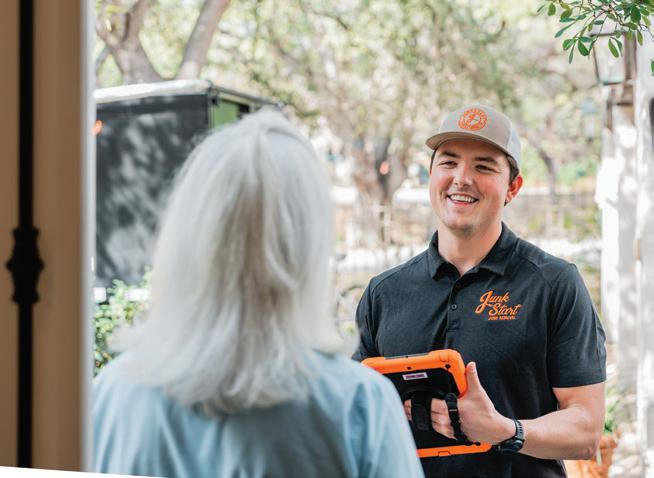
Daniel McCarty: Founder and cEO of Junkstart
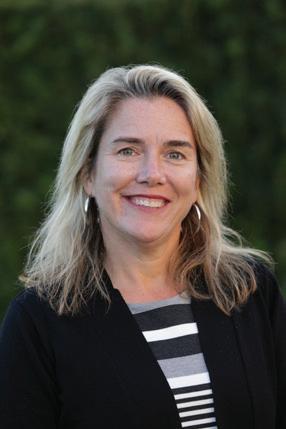
Cindy Sheller: caring senior service
Wanda Hoegren: President of gotcha covered
Have Your Say
40 Lime Painting: LiME Painting shares the Most Effective Paint Upgrades for Maximizing Property Value
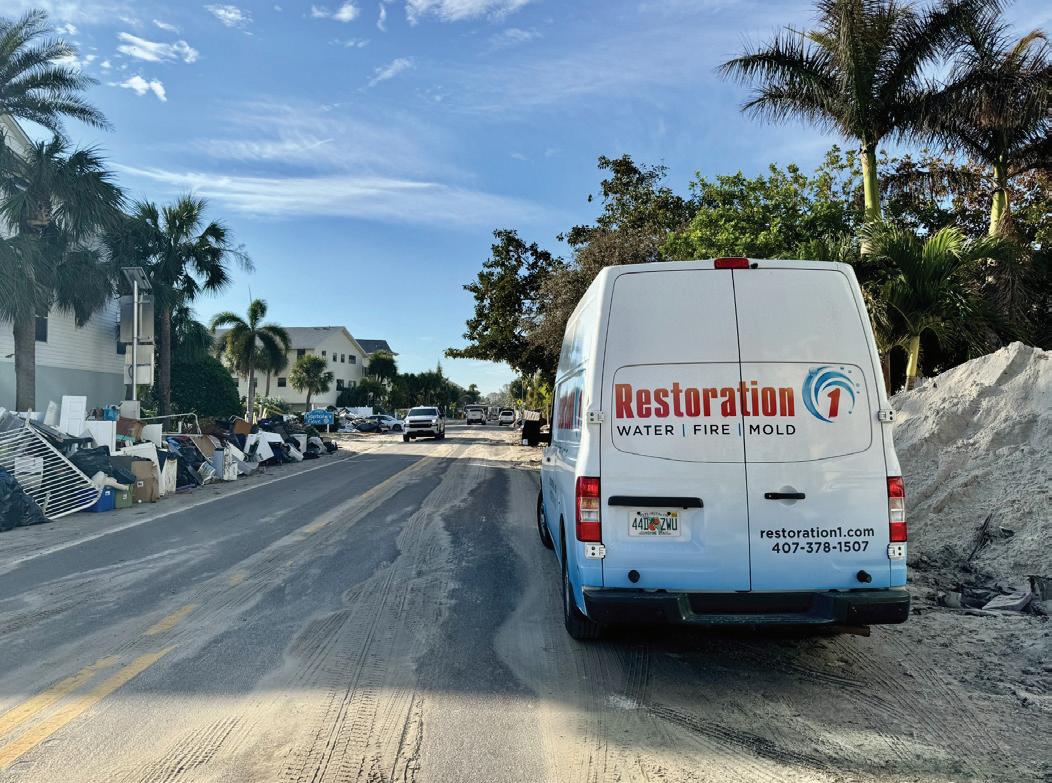
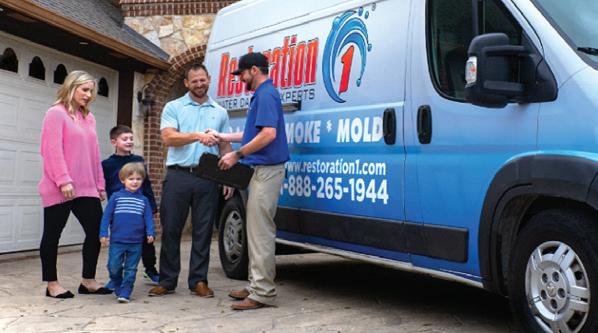
50 Restoration 1 Kevin Rychel: scaling smart: how home service Franchisees are raising the bar during their busiest seasons is a Winning growth strategy
Franchisor in Depth
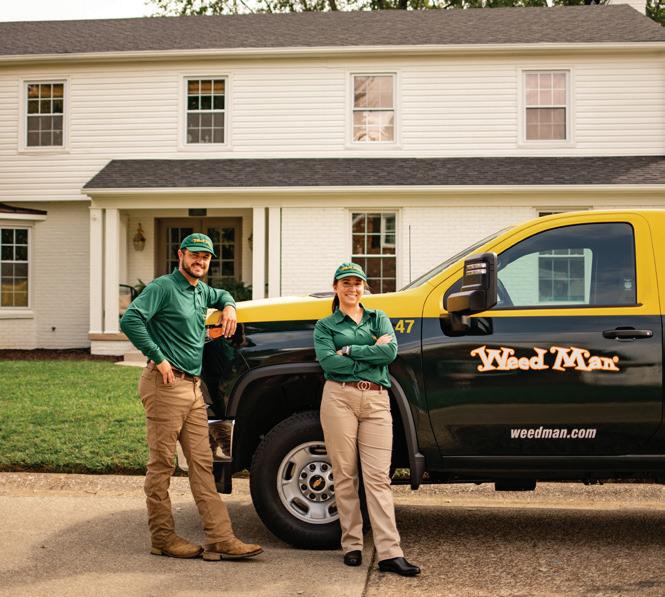
36 Weed Man: From Operator to cEO: how Jennifer Lemcke is Leading Weed Man into its next Era
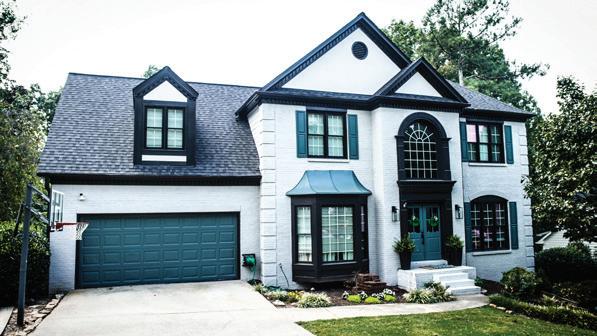
42 Ideal Sidings: Why commercial Work is the next Frontier for residential Franchise networks
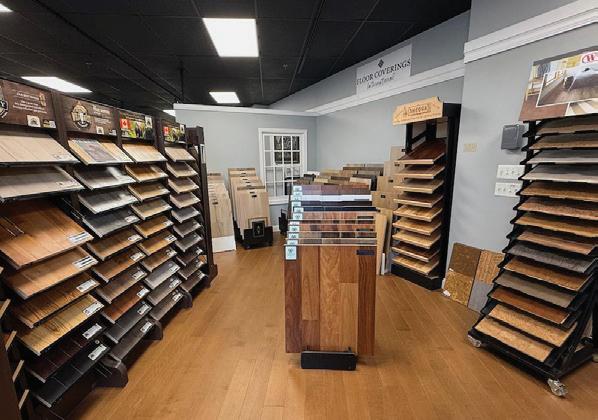
48 Grant Carter: Floor Coverings International continuous training to build a competitive Edge: the importance of hands-On Learning in home services
Franchisee in Action
54 76 Fence:
Local Entrepreneurs Expand 76 FEncE in greater cincinnati with two-territory Launch
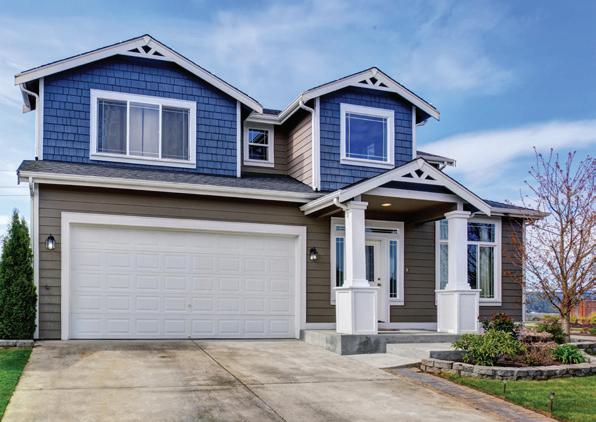
Homeowners are staying put longer than they once did — and that shift is creating new opportunities across the home services franchise sector.
According to Redfin, the average U.S. homeowner now stays in their home for roughly 12 years, nearly double the average tenure in 2005. As homeowners remain in place longer, many are placing greater emphasis on maintaining, protecting, and upgrading their properties rather than preparing them for resale.
At the same time, rising property values have left many homeowners with significantly more equity at their disposal. According to Intercontinental Exchange’s
August 2025 Mortgage Monitor report, U.S. homeowners held a record $17.8 trillion in home equity in the second quarter of 2025, with roughly $11.6 trillion considered accessible for borrowing while maintaining a 20% equity buffer.
For franchise operators, those trends are helping fuel demand for essential home services — particularly businesses tied to maintenance, infrastructure, inspections, and preventative care. From sewer and drain maintenance to pest control and diagnostic inspection services, homeowners are increasingly treating these services not as optional expenses, but as long-term investments in protecting their homes and avoiding larger repair costs down the road.
the shift to Proactive care
For years, many homeowners approached maintenance reactively, waiting until a problem became impossible to ignore before calling a professional. Overflowing toilets caused by clogged lines, backedup kitchen drains, water intrusion tied to drainage issues, hidden sewer line damage, and termite infestations are often problems that develop gradually before turning into expensive emergencies.
Today, that mindset is beginning to shift. As homeowners remain in their properties longer, many are becoming more proactive about protecting critical home systems and addressing maintenance concerns before they escalate into major repairs. Preventative care — once viewed as
optional — is increasingly becoming part of long-term homeownership.
the rise of the specialized service
That shift is creating more opportunities across several specialized home service categories. Econo Sewer & Drain, for example, focuses on sewer, drain, and infrastructure maintenance services for both residential and commercial properties. The company provides services ranging from septic line clearing and main sewer line cleaning to drain maintenance, gutter cleaning, hydro jetting, and sewer inspections. Many of those services also create recurring maintenance opportunities, particularly for septic systems that require periodic pumping and preventative servicing.
At the same time, Sewer Scope reflects the growing demand for diagnostic and inspection-based services within both the homeownership and real estate sectors. Rather than responding after a major failure occurs, homeowners and homebuyers are increasingly investing in sewer scope inspections to identify hidden issues before purchasing a property or before costly repairs become necessary.
As infrastructure ages across many U.S. housing markets —with an average median age of around 44 years old according to Harvard Joint Center for Housing Studies — preventative inspection services are becoming more common during both home transactions and ongoing property maintenance.
For brands like Sewer Scope, the home-office-based model also provides operational flexibility for franchisees while allowing them to build referral relationships with real estate agents, home inspectors, and homebuyers. Because many sewer line issues remain hidden underground until significant damage occurs, sewer scope inspections can provide buyers with valuable insight before closing on a property, helping them avoid unexpected repair costs while positioning franchise operators as trusted specialists within the home buying process.
Chris Conner has worked in the franchise development industry for almost 20 years and helped over 600 brands franchise their brand and develop franchise distribution channels. He founded Franchise Marketing Systems in 2009, which now includes a team of 27 franchise consultants based in and Canada and supports brands around the world to grow and scale through franchise expansion.
Visit www.fmsfranchise.com for more information
In addition to recurring demand, many of these home service concepts appeal to entrepreneurs because of their operational flexibility and mobile business structure. Unlike traditional retail or restaurant franchises, brands like Econo Sewer & Drain, Sewer Scope, and Cedar Pest Control typically operate without large storefront footprints or extensive product inventory requirements. Instead, franchisees can scale operations gradually through service vehicles, technician hiring, territory expansion, and recurring customer relationships.
Home service concept flexibility can also include emergency and 24/7 service opportunities, allowing operators to respond to urgent customer needs while building scalable service-based businesses over time. Similar operational efficiencies exist across inspection and pest control models, where streamlined staffing structures and route-based service systems can support long-term growth without many of the overhead challenges associated with traditional brick-and-mortar concepts.
Prevention- based services can boost recurring
revenue
The collective move towards preventative property maintenance is also working in favor of pest control services.
Cedar Pest Control operates within a category increasingly tied to long-term home protection, recurring customer relationships, and year-round service demand. Rather than waiting for infestations or structural damage to occur, many homeowners are incorporating routine pest management into their broader approach to protecting property value and maintaining healthier living environments.
Together, these brands reflect a larger evolution taking place across the home services sector — one where homeowners are prioritizing ongoing maintenance, early detection, and preventative care over costly emergency repairs. For franchise operators, this means more opportunities in specialized service categories built around recurring demand and essential homeowner needs.
opportunity is Knocking
As homeowners continue investing in preventative maintenance and long-term property protection, specialized home service franchises are well positioned throughout both residential and commercial markets. These essential-service categories continue to attract entrepreneurs seeking scalable, mobile, recurring-revenue business models tied to ongoing consumer needs rather than discretionary spending.
Franchise Marketing Systems works with a range of emerging and established franchise brands within the home services sector, helping entrepreneurs identify franchise opportunities aligned with today’s evolving homeowner trends. With experience supporting more than 1,500 franchise systems and franchise owners, the company provides franchise development, marketing, and strategic growth support across a wide range of industries.
To learn more about franchise opportunities in the home services sector, visit www.fmsfranchise.com or contact Chris Conner at chris.conner@fmsfranchise.com.
From o perator to ceo:
h
ow JenniFer lemcke is leading
w eed m an into its n ext e ra
Long before Jennifer Lemcke was leading Weed Man, she was learning the lawn care business from the ground up.
Her journey with the Canada-based franchise began 40 years ago, when her father, Roger Mongeon, purchased a singleterritory Weed Man franchise in 1986. Within a decade, Mongeon had grown into the brand’s largest multi-unit operator, and Lemcke began to gain valuable experience as a franchisee within the system.
In 1996, her father’s company acquired the rights to expand Weed Man into the United States, and Lemcke joined the operation to help lead the brand’s U.S. growth. In 2018, they purchased the worldwide rights to Weed Man. By 2020, Lemcke had stepped into the CEO role, bringing with her the rare perspective of someone who had experienced the business from nearly every angle: employee, franchisee and now franchisor.
Since then, Weed Man has grown from
$173 million to over $426 million in systemwide sales and counting. Lemcke is now leading the brand toward an even larger goal: becoming a $1 billion company that sets the standard for excellence in lawn care.
leading with boots-on-theGround roots
Throughout her career, Lemcke has worked across nearly every part of the Weed Man system, from marketing and administration to field operations. She’s experienced the business from both the franchisee and franchisor sides. That range of knowledge shaped the way she leads today, giving her a practical understanding of the decisions, challenges and day-to-day realities that exist at both the local and systemwide level.
That perspective is also reflected across
Weed Man’s head office where most team members have firsthand experience working at the franchise level. As the brand has grown, that operational background has helped shape a support model rooted in real-world experience and a shared understanding of the business.
Lemcke’s philosophy is grounded in servant leadership and the belief that growth at the franchisor level is only possible when franchisees are positioned to grow at the unit level. As Weed Man continues to scale, franchisee success remains the central focus, and investing in the people behind the brand serves as the foundation for its next chapter.
scaling a legacy brand with a clear Vision
Scaling with purpose has always been central to Lemcke’s vision for Weed Man.
Early in her career, she saw firsthand what strategic growth could look like at the unit level, growing her Ottawa franchise from $240,000 upon acquiring it to over $2 million over the course of six years. She carried that same growth mindset into Weed Man’s U.S. launch and later into her leadership of the broader system. Today, Weed Man has become the fastest-growing franchised lawn care company in North America, with nearly 1,000 territories across the US and Canada.
That systemwide growth has been driven in part by strategic mergers and acquisitions, which have helped create larger, more robust franchise groups capable of delivering consistent service and operational excellence across markets. The brand has also made significant investments in operational support, marketing and technology, all designed to help franchisees scale while maintaining the brand’s reputation for high-quality service.
At the unit-level, that growth mindset is reinforced through a culture of friendly competition. When franchisees can see where they stand, how other markets are performing and what is possible within the system, it creates motivation and accountability. That culture of “keeping score” helps owners continue improving while reinforcing the shared pursuit of excellence across the brand.
Lemcke’s overarching vision is for Weed Man to become a $1 billion company. But even as the brand grows, the philosophy behind the business remains simple: every call, every visit, and every conversation starts with one person, one truck and a commitment to providing exceptional care.
Modernizing without losing the culture
For a service brand founded in 1970, modernization is essential. Customer expectations have changed, marketing has evolved and technology is reshaping how service businesses operate. Legacy brands like Weed Man face the challenge of adapting to those changes while preserving the relationships and values that have defined the brand for decades.
Under Lemcke’s leadership, Weed Man is undergoing a period of digital transformation. The company is standardizing how it does business, transforming its technologies and modernizing its data so it can stay competitive across digital and traditional marketing, technology, automation and AI. That type of transformation can be challenging in any franchise system, particularly one with a long history and a deeply established culture. For Lemcke, the key is making sure change is always tied back to franchisee success. New systems, tools and processes are not introduced simply for the sake of modernization, but to help owners operate more efficiently, serve customers more effectively and build stronger businesses.
Even as Weed Man expands, the system remains a tight-knit network. Franchisees support one another, celebrate wins together and share knowledge across markets. That culture has become a competitive advantage, helping the brand maintain alignment through periods of growth and change.
widening the Path for Future leaders
Lemcke’s leadership has also been shaped by her experience as a woman in a historically male-dominated industry.
Early in her career, she was often the only woman in the room. Even as she rose from committee member to board member to executive leadership, she encountered moments where she was delegated administrative tasks rather than immediately recognized as a strategic voice.
Instead of allowing those experiences to limit her, Lemcke used them as motivation. Her father advised her to listen closely, identify gaps and become the person who could solve them. That advice became a cornerstone of her leadership style today.
Today, Lemcke is proud to see more women emerging across the green industry and within the Weed Man system, including franchise owners, employees, corporate leaders and lawn technicians. Her own path from operator to CEO demonstrates what is possible when experience, persistence and opportunity intersect.
For Lemcke, the path forward is about honoring Weed Man’s legacy while building the infrastructure needed for its next era. Her journey reflects the same principle guiding Weed Man’s growth today: sustainable success starts with people who understand the work, believe in the vision and are committed to building something lasting together. v
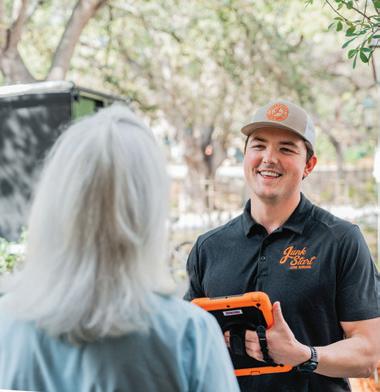
daniel mccarty Founder and CEO of JunkStart with
Daniel McCarty is the founder and CEO of JunkStart, the first and only pay-by-weight junk removal company in the United States.
Based in San Antonio, Texas, JunkStart is redefining the junk removal industry through transparent pricing, onboard weighing technology, and a franchise growth strategy focused on operational excellence and long-term value creation. Since launching in 2023, the company has expanded rapidly and recently signed its first franchise partner in Omaha, Nebraska as it begins expanding nationally.
what was your background before starting the business?
I grew up in a very entrepreneurial family and got to see firsthand what successful long-term family businesses look like. My
family has been involved in industries like aggregate mining, ready-mix concrete, and waste disposal, and we still own and operate a landfill in the San Antonio market today.
Because of that background, I developed a deep understanding of the waste industry from an early age and learned a lot about operations, customer service, and longterm ownership. That exposure ultimately led me to starting JunkStart after identifying a major gap in the market and an opportunity to innovate in an industry that hadn’t changed much in decades.
when did you launch the company and what stage of growth are you at today?
We launched JunkStart in early 2023, so we’re now a little over three years into building the company. Since then, we’ve grown significantly in the San Antonio
market, expanded our fleet, and built a strong corporate operation around our payby-weight model.
Today, we’ve essentially created a new category within junk removal as the first and only pay-by-weight junk removal company in the country. We recently signed and are launching our first franchisee in Omaha, which is a major milestone for us.
We still feel early, but there’s a lot of momentum behind the brand right now, and we’re excited about the opportunity to scale nationally over the coming years.
what
made you decide to enter the junk removal industry and did you always want to build a franchise brand?
After selling a couple of businesses around 2020 and 2021, I spent time evaluating what I wanted to do next. I ultimately decided I wanted to build something from scratch that was large enough and scalable enough to dedicate the next 20 or 30 years of my life to.
I’ve always been fascinated by franchising and the franchisor model specifically. I love the idea of building a great operating system, constantly testing and improving it, and then partnering with other entrepreneurs to go execute it in their local markets.
From the beginning, I knew I wanted JunkStart to become a franchise brand. Originally, we launched with a fairly traditional model similar to everyone else in the industry. But over time, we realized there was a much bigger opportunity to completely rethink pricing and transparency. That ultimately led us to becoming the first and only pay-by-weight junk removal company in the country.
your company uses a weightbased pricing system instead of the traditional model. what inspired that approach?
A big part of the inspiration came from the operational challenges of the traditional volume-based model.
Early on, we operated similarly to most junk removal companies. That meant our crews not only had to handle the physical work and customer service, but they also
had to become onsite salespeople. Pricing could vary dramatically depending on the employee, the customer, or the situation.
As we grew, I realized that model was difficult to scale well operationally because there were simply too many subjective variables involved.
The breakthrough came when we stepped back and asked a simple question: if disposal is already charged by weight at the landfill, why shouldn’t pricing for the customer work the same way?
That led us to develop our onboard weighing system and become the first and only pay-by-weight junk removal company in the country. The result has been a much more transparent customer experience, a more scalable operating model, and significantly better operational consistency across the business.
what competitive advantages do you believe your business has in the marketplace?
The biggest advantage is differentiation. We are the first and only pay-by-weight junk removal company in the country, with patent-pending technology around our onboard weighing systems.
We can openly explain to customers that the traditional model is often inconsistent and subjective, and instead offer a pricing system that’s transparent, measurable, and based on actual weight. Customers immediately understand the concept because paying by actual weight simply feels more fair and intuitive.
Another major advantage is operational efficiency. Because we charge by weight rather than volume, our truck beds have continued getting larger over time. Our goal is to maximize productive capacity before our crews have to stop and drive across town to dump.
Our model aligns incentives much better for both the customer and the business. Customers get transparent pricing, and we get a more scalable and operationally efficient system.
what has surprised you the most about growing from a local operation into a franchise system?
What surprised me most is probably the
range in quality across franchising as an industry.
There are some truly exceptional franchisors that create enormous value for their franchisees through systems, support, leadership, and operational excellence. At the same time, I’ve also seen concepts where, candidly, I don’t think they should have been franchised in the first place.
That contrast has reinforced how important it is for us to build the right way. We want to create a system that genuinely helps franchisees win by providing real operational support, a strong playbook, differentiated marketing, and a business model that creates value in local communities.
The best franchise systems are much more than a brand name or a licensing model. They’re real operating platforms that help entrepreneurs succeed faster and with less risk than they could on their own.
what qualities do you look for in franchise owners running the brand?
One of our core internal phrases is “hilltakers.” We want franchise partners who see an opportunity, see a hill worth taking, and want to go become the number one operator in their market.
We’re looking for ambitious people who want to scale, lead teams, serve customers well, and build something meaningful over time.
Beyond ambition, we look for highagency people with integrity, resilience, and accountability. Ultimately, we’re looking for people who are competitive, dependable, growth-oriented, and excited by the challenge of building a great business the right way.
what kind of training and support do franchisees receive?
We’re extremely focused on building a strong support system for our franchise partners.
That starts with initial training, operational playbooks, systems, and ongoing coaching around how to run a high-performing business. We want franchisees to have a very clear roadmap rather than having to figure everything out from scratch.
One major differentiator for us is our
centralized revenue and customer support infrastructure. We also provide marketing support including websites, local SEO, digital advertising guidance, and vetted marketing partners to help franchisees grow efficiently.
Commercial and recurring B2B accounts now represent over 50% of our business, so commercial sales is another major focus for us. Our goal is to provide franchisees with real operational leverage and revenue-driving support so they can focus on execution and growth in their local markets.
what has been your approach to building customer trust and brand awareness?
For us, customer trust starts with the business model itself.
When we shifted to pay-by-weight pricing, we intentionally positioned ourselves as a challenger brand. We openly explain how traditional volume-based pricing works and why we believe a transparent pay-byweight system is better for the customer.
Our messaging is built around being fair, fast, and easy. We want customers to immediately understand what makes us different and why that difference benefits them.
So building trust has really been a combination of transparent pricing, differentiated branding, operational execution, and consistently trying to do right by the customer.
what have been some of your biggest lessons learned so far as an emerging franchisor?
One of the biggest lessons has been realizing that building a truly great brand is possible if you stay disciplined and execute consistently over a long period of time.
I’ve also learned that building a business takes significantly more time, money, and effort than almost anyone expects. Everything takes longer. Everything is harder. But that’s also what makes it rewarding.
At this stage, I’m incredibly optimistic about what we’re building. We have a differentiated model, strong positioning, talented people, and a business that resonates with customers. v
lime painting s hares the m ost eFFective paint u pgrades For m aximizing property value
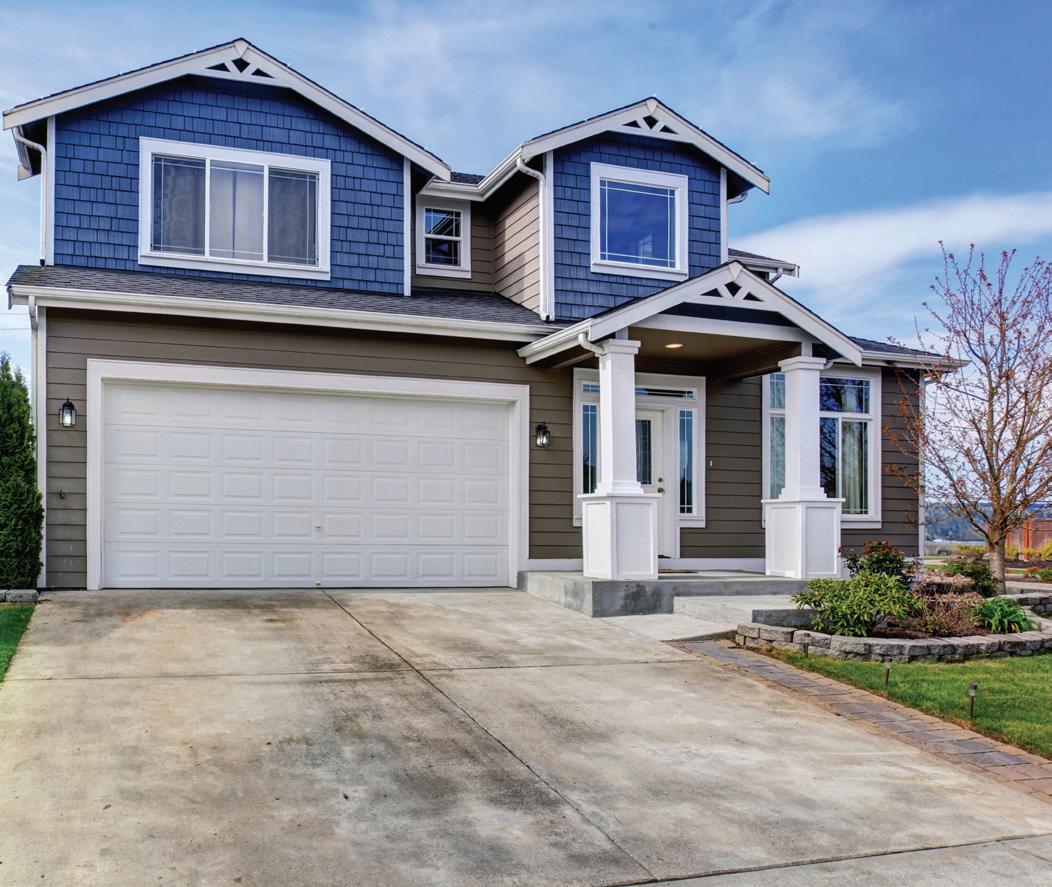
home improvements for sellers and value-focused owners alike. According to Open Door, exterior painting can increase a home’s value by 2% to 5%, while professional paint work often yields some of the highest returns on investment of any improvement project (sometimes exceeding 100% ROI.)
“Every homeowner wants to maximize the value of their property, whether they’re preparing to sell or simply investing in its long-term appeal.” said Nick Lopez, Founder and CEO of LIME Painting. “A well-executed painting and refinishing job not only elevates the look of a home, but it also signals to buyers that the property has been thoughtfully cared for and maintained.”
LIME Painting recommends the following expert strategies for increasing home value:
• High-Quality Exterior Painting — A fresh, professionally applied exterior paint job instantly revitalizes a home’s facade, protects it from weather and wear, and strengthens curb appeal. A key factor in buyer interest and offers.
• Cabinet Refinishing & Painting — Refreshing kitchen and bathroom cabinetry with premium paints and finishes provides a modern, updated feel without the expense of a full renovation, delivering strong ROI.
• Stucco & Masonry Painting and Sealing — Painting and sealing exterior stucco, brick, and stone surfaces enhances visual appeal while adding protective benefits that can reduce maintenance costs over time.
boosting commercial Property Value
As homeowners across the country seek impactful ways to boost their property’s market value, LIME Painting, the nation’s premier painting and restoration franchise, is sharing expert guidance on how targeted painting upgrades can significantly enhance curb appeal and resale potential.
With a focus on high-quality residential painting and a strong commitment to craftsmanship and customer satisfaction, LIME Painting helps homeowners enhance curb appeal and protect long-term property value.
boosting residential Property Value
Industry research shows that professional paint projects are among the most effective
Painting is one of the most cost-effective ways to increase a home’s sale price, with the National Association of Realtors estimating that interior painting offers up to a 107% return on investment (ROI). A fresh, neutral paint job helps a home appear well cared for and move in ready, which can draw in more buyers and potentially increase the final sale price by as much as 5–10%.
“Business owners often underestimate how much their physical environment
impacts customer behavior and sales,” said Nick Lopez, Founder and CEO of LIME Painting. “By investing in professional painting, refinishing, and design enhancements, businesses can not only elevate their aesthetic but also create a space that builds trust, engagement, and long-term loyalty.”
LIME Painting recommends the following expert strategies for businesses looking to revamp their presence and drive revenue:
• Exterior and Facade Upgrades — A fresh, high-quality exterior paint job immediately elevates curb appeal, attracts new customers, and signals professionalism and care.
• Interior Color Refreshes & Brand Alignment — Updating interior walls, accent features, and signage colors in line with brand identity creates a cohesive, inviting space that enhances customer experience.
• Specialty Surface Refinishing — Refinishing counters, cabinetry, and other high-touch surfaces improves aesthetics and longevity, ensuring a modern, welcoming environment without costly full renovations.
• Surface Protection & Longevity Solutions — Applying premium coatings and sealants protects surfaces from wear and tear, maintaining a polished look that supports long-term business credibility.
High-Quality Paint to Match a High-Quality Job
When it comes to boosting property value, what your paint is made of is just as important as what it looks like. Using eco-friendly paint can help a commercial or residential space sell for more, or at least faster, by appealing to modern buyers who prioritize health, sustainability, and “turnkey” properties. While painting in general can increase a home’s value,
utilizing low-VOC (Volatile Organic Compound) or zero-VOC paint provides a competitive edge in eco-conscious markets.
As such, LIME Painting is leading the way with sustainable paints and coatings that reduce energy costs, improve indoor air quality, and deliver the quality finishes homeowners expect:
• Low- and zero-VOC paints that reduce harmful emissions and protect indoor air quality.
• Greenguard Gold Certified coatings that meet rigorous standards for safety and sustainability.
• Air purifying paints that help capture VOCs and eliminate common household odors.
• EPA-registered antimicrobial paints that inhibit bacteria and mold growth on painted surfaces.
• LEED-compliant products that contribute to more sustainable construction and design.
Beyond these core services, LIME Painting’s expertise in color consulting, surface preparation, and premium coating systems along with 40+ additional specialized services ensures lasting results that appeal to today’s discerning buyers.
After discovering his passion for home improvement while owning his first painting LLC, Nick Lopez founded LIME Painting in 2013 to set the standard of excellence in painting luxury residential and commercial properties. Five years later, he put his perfected business model to the test and began franchising to provide high-quality interior and exterior painting, coating, and other restoration services to maintain the aesthetic and integrity of luxury properties across the country. LIME Painting currently serves luxury home and business owners in all 90+ locations in 21+ states.
For more information, go to https://limepainting.com/.
why commercial work i s the next Frontier For r esidential Franchise networks
Franchise networks grow in stages. The first is local: you prove the model in one market, refine it, and replicate. The second is geographic: you expand into new regions, recruit operators, and build the operational depth to support them. The third stage is less talked about but increasingly common across home services franchising. It is the moment when demand starts pulling your franchisees into newer project categories.
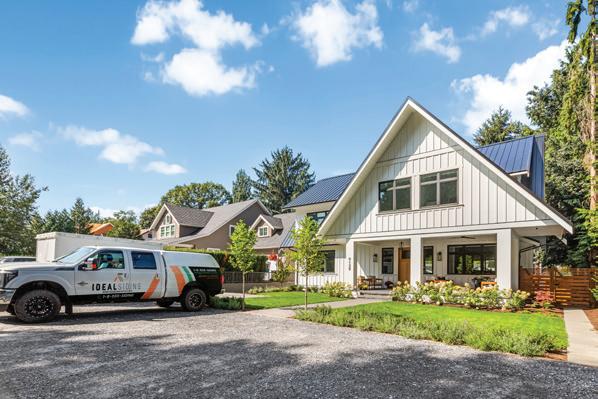
For our network, that moment arrived sooner than expected. Ideal Siding was built as a residential renovation franchise, and for most of our history that has been the lane. Our owners work directly with homeowners and execute with a standardized playbook that has helped us scale to more than 95 locations across the
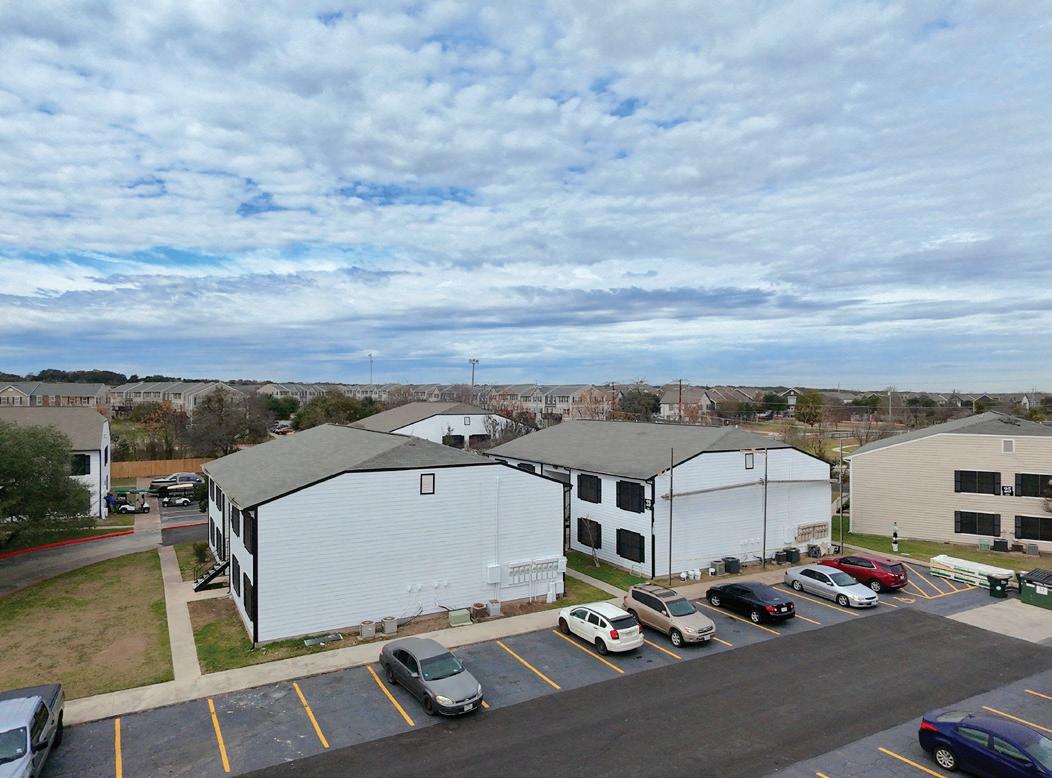
United States and Canada. Over the past few years, however, our franchisees have been receiving inquiries from a different kind of customer: general contractors managing townhome developments, property managers overseeing multi-family complexes, and commercial owners with mid-sized buildings due for re-siding.
Those opportunities were difficult to ignore. They were also difficult to execute without a different kind of support.
commercial work is not a bigger Version of residential
There is a common assumption inside home services that commercial projects are simply larger residential jobs. They are not. The work itself, the materials, the crews, the techniques, those translate. Everything that surrounds the work does not.
A residential project begins with a homeowner, a quote, and a contract that fits on a few pages. A commercial project begins with a set of architectural drawings, a request for proposal, a scope of work
written by someone other than the buyer, and a more robust contract. The estimator needs to read the drawings correctly. The proposal needs to be structured in a format the contractor expects. The franchisee needs to coordinate with general contractors, property managers, architects, and sometimes municipal permitting offices simultaneously.
The risk profile is also different. A misread on residential pricing is usually recoverable. A misread on commercial pricing, applied across an 18-unit complex, is not.
That gap, between the operational competence our franchisees already have and the procurement environment commercial work demands, was the problem we set out to solve.
building operational infrastructure, not a Marketing layer
We recently launched our Commercial Support Program designed specifically
to close that gap. We approached it as operational infrastructure for the network, structured around four areas of support.
The first is pipeline development. We help franchisees identify and build relationships with general contractors and property managers in their territories, including introductions to bidding opportunities they would not have access to alone.
The second is pre-construction support. Our team works alongside our franchisees to review construction documents, develop accurate estimates, and structure proposals in the formats commercial buyers expect.
The third is contract and risk navigation. We provide guidance on contract review, permit coordination, documentation
requirements, and determining whether a commercial project is profitable and what the risk level associated with it is.
The fourth is a centralized framework. Previously, commercial work in our network was handled case-by-case, which meant every franchisee was effectively reinventing the wheel. Our new program standardizes the approach so that knowledge gained in one market becomes accessible to operators in every market.
Local ownership and accountability remain central to our model. The program adds the back-office capability that surrounds that local expertise, so commercial scope becomes a realistic option for operators who want to pursue it.
early results in the Field
The first projects under the program are already in motion. In Texas, franchisee Aaron Lay is leading an approximately $800,000 siding replacement on an 18-unit apartment complex, a project significantly larger than anything in his original residential pipeline. In Hamilton, Ontario, a franchisee recently completed a $500,000 commercial project. Several additional projects are progressing across markets in the United States and Canada.
Aaron's reflection on the experience captured something we hear consistently from franchisees who have entered the program: a project of this scale comes with a lot of moving parts, and having support with estimating, proposals, and contract details lets the operator stay focused on execution. That is the outcome the program was designed to produce.
what this Means for Franchisors looking ahead
For franchisors operating in mature or maturing systems, demand will often expand before the support model does. Franchisees do not encounter commercial opportunities because the brand decided to enter that space. They encounter them because their reputation, their relationships, and their visibility in the market grow with time.
The question is whether the franchisor responds to that demand by leaving operators to figure it out individually, or by building infrastructure that converts a category of work into a repeatable capability across the system.
Commercial work is a natural evolution for any residential franchise that has reached real network density. The systems that benefit will be the ones that treat that evolution as an operational project, with the same rigor applied to documentation, pricing discipline, and risk management that the original residential model required. For our network, the months ahead will be about scaling the program responsibly: onboarding more franchisees, refining the documentation, and building case studies that help operators understand what commercial work actually looks like inside their territory. v
with
cindy sheller
o wner of caring senior service of tucson, arizona; caring senior service of dallas northwest; caring senior service of dallas mid- cities; and caring senior service of las vegas
what initially drew you to senior care, and how did that passion influence your decision to invest in this type of business?
I’ve been in the healthcare field in some capacity since 1994 and specifically in home healthcare since 2004. My passion for senior care was shaped both by personal experiences with family members and my professional background.
Over time, I realized I wanted to be in the driver’s seat as an owner, not an employee. I also saw a growing gap in how care was being delivered and managed day to day. With the increasing global demand for senior care, I saw an opportunity to build something more strategic, compassionate
and scalable that would allow me to serve more seniors in my community and beyond.
you operate across multiple states. what made you confident in scaling your business beyond a single market?
My confidence in scaling came from having proven operational systems, strong IT infrastructure and diversified revenue streams that help mitigate regional risk. I also knew that our model was highly replicable—from training and marketing to care delivery—which allows us to maintain a consistent client experience across markets.
As a leader, I’ve been intentional about building teams and leveraging both technology and existing staff to support growth, whether remotely or in person.
Many professionals today are rethinking traditional career paths. what advice would you offer them?
In many traditional professional settings, success is measured by efficiency and profit. In home care, the shift is that our “product” is serving people. If you lead with a genuine passion for serving others, the financial results will follow. If profit is the only focus, you may encounter challenges that can’t be solved through traditional business thinking alone.
How do you balance building a successful business while staying focused on purpose and impact in the communities you serve?
In home care, there is always a balance between profitability and purpose. If you focus only on the numbers, your culture will suffer. If you focus only on the “heart,” you won’t have the margins to sustain your mission.
Your caregivers and staff are your most valuable asset, so how you hire,
compensate, support and lead them directly impacts both your culture and the quality of care delivered. That’s why it’s equally important to measure both the human side and the business side of caregiving.
Tracking both hard and soft KPIs provides the operational insight needed to make informed decisions and pivot when necessary, ensuring you can grow sustainably while still delivering a quality service.
what
are some of the biggest misconceptions about investing in a people-first business like senior care?
One common misconception is that you need to be a healthcare professional to own a senior care business. In reality, many successful and compassionate owners come from non-healthcare backgrounds. The key is strong leadership, marketing and relationship-building skills.
Another misconception is market saturation. While there may be many providers, the market is still underserved when it comes to high-quality, compassionate care. Demand continues to outpace the supply of excellent providers, and that need is expected to grow significantly over the next decade.
There’s also a belief that massive capital is required. While adequate capitalization is important—especially in a franchise system—it is possible to start and scale with disciplined investment and strong execution.
Finally, some assume the industry is behind technologically. In reality, senior care is rapidly evolving, with technology and AI playing an increasing role in both operations and care delivery.
can you share a moment in your career that reinforced why meaningful work matters just
as much as financial success?
A defining moment for me was the
passing of my husband in 2022. It was an incredibly difficult time, and my youngest son was just 14. In that moment, I realized how important it was to be connected to meaningful work.
If I hadn’t built a business I truly believed in, I likely would have stepped away. Instead, the purpose behind what we do gave me a reason to continue. I was also deeply supported by my family and the Caring Senior Service community, who stepped in to help both personally and professionally. That experience reinforced for me that success isn’t just financial; it’s about impact, purpose and the people around you.
looking ahead, how do you see demand for senior care and values-based business ownership continuing to evolve?
The demand for senior care will continue to grow significantly. Today, approximately 90% of seniors prefer to age in place at home, and the first Baby Boomers turn 80 in 2026.
We’re also seeing a shift toward more value-based, high-precision care models. Higher-acuity care in the home is expected to increase substantially, while the availability of family caregivers is not keeping pace. Private pay is becoming more common as families seek more personalized and immediate care solutions. But organizations with strong values and purpose will have a competitive advantage, particularly in recruiting and retaining caregivers. A values-driven culture attracts higher-quality talent, which ultimately supports sustainable growth.
Finally, technology will also play a major role, driving efficiency in operations and enhancing care delivery. v
why h ome s ervice Franchises s tand o ut in 2026
The home services sector entered 2026 against a backdrop of continued financial pressure for many consumers, from higher everyday expenses like gas and groceries to broader economic uncertainty. While discretionary and trend-driven spending has softened in some categories, one area where consumers continue to prioritize spending is essential home services. Demand has remained steady as homeowners continue investing in the services that support the safety, comfort, and function of their homes and daily lives.
What makes this category especially compelling is that it isn’t built on fleeting trends. It’s grounded in durable consumer needs and supported by long-term behavioral shifts. As expectations and technology evolve, including the rise of AI becoming embedded in everyday experiences, the brands that invest in innovation, training and consumer experience are positioned to lead the next era of growth.
I believe there are several forces shaping the category and that will define the top home-service franchises to own in 2026 and beyond:
Home services are backed by Market Dynamics and consumer behavior shifts
The strength of home-service franchising today is rooted in several macro-
economic conditions that are reshaping how Americans think about their homes. An aging housing stock, slower newconstruction starts and higher interest rates compared to recent years mean homeowners are staying in their properties longer. As a result, they are more willing to reinvest in comfort, efficiency and functionality rather than entering a challenging housing market.
When combined with these market dynamics, the ongoing shift from a “do it myself” mindset to a “do it for me” society becomes even more powerful. Consumers are increasingly trading money for time and expertise, outsourcing household projects and specialized tasks so they can focus on income-earning potential or reclaim personal time. That shift is accelerating across every demographic. This behavior change increasingly favors home services that are tied to the functionality, maintenance, and daily use of the home. Categories such as window coverings, kitchen and bath remodeling, garage and closet organization, restoration, housecleaning, and pet care are becoming essential components of how consumers invest in their living environments and care for their families and pets. Home Franchise Concepts is strategically positioned within high-use areas of the home and service categories that tend to be less exposed to
seasonality, discretionary retail trends, or broader economic cyclicality, supporting more durable and consistent consumer demand over time.
In challenging economic times, consumers may adjust the size or timing of projects, but the underlying need remains. Homes still require updates to remain functional, efficient and enjoyable. That’s why home-service franchising continues to outperform categories that rely more heavily on discretionary spending or trenddriven consumer behavior.
why Home services continue to see steady consumer Demand
While many trend-driven and retail-facing concepts can be highly sensitive to swings in consumer confidence, the home services sector has demonstrated comparatively steadier demand, likely attributable to three stabilizing forces.
First, many of these services are driven by essential, needs-based demand. When a pipe bursts or a pet needs grooming, consumers don’t typically delay those purchases. These services are tied to the ongoing maintenance, functionality, and care of the home and family.
Second is recurring and long-term value. Homeowners continually invest in
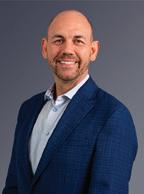
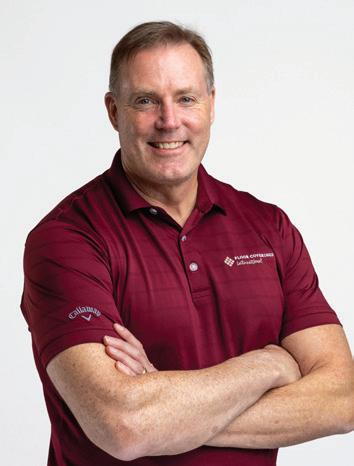
Corey Benish joined Home Franchise Conceptis in 2025 with the focus on growing and innovating our family of brands. He came to Home Franchise Concepts from our parent company, JM Family Enterprises, where he held several positions since 2022. He has a Bachelor of Arts degree in business from Concordia College and attended the Executive Education program at Columbia Business School.
comfort, efficiency and aesthetics. Window coverings, kitchen and bath updates, and garage or closet improvements all contribute to long-term home enjoyment. Lastly, home services have historically remained relatively stable through periods of economic uncertainty because many projects and repairs are difficult for homeowners to defer indefinitely. While consumers may become more selective, delay larger projects, or look for ways to manage costs, they continue prioritizing the maintenance and upkeep necessary to support their homes and overall homeownership experience.
This combination creates a level of stability and performance that trend-driven concepts simply can’t replicate.
consumer e xpectations are evolving. this is How strong brands are responding
Today’s consumer expects home projects to be easier, more transparent and more personalized. They want the ability to book, visualize and manage their services digitally. They want clarity in pricing and confidence in the experience.
Across the Home Franchise Concepts portfolio, we’re innovating to meet those expectations, starting with the products and services themselves. In categories like window coverings, we’re expanding into outdoor living solutions as homeowners extend their indoor comforts outside. In kitchens, baths, garages and closets, we’re broadening offerings to support the way people use their homes every day. These expansions strengthen the value proposition for franchisees and deepen the relevance of our brands in high-use areas of the home.
At the same time, AI is becoming embedded in every part of the consumer journey, shaping how homeowners discover, evaluate and purchase home services. It’s not a standalone initiative, it’s becoming a way of working.
We’re working to integrate AI-powered visualization and quoting tools that allow consumers to see their project before they commit tolevating the buying experience and improve closing rates. We’re also using AI to develop richer, more targeted marketing content that helps franchisees reach the right consumer with the right
message. And we’re leveraging AI for realtime sales coaching, giving franchisees timely insights and suggestions during the sales process to improve performance in the moment.
These investments in product expansion, consumer experience and embedded technology are designed to help franchisees operate more efficiently, present more compelling options and convert interest into revenue.
what Makes Home service
Franchises attractive for owners today and in the
Future
For first-time franchise owners, home services can offer a strong mix of operational consistency, scalability and steady consumer demand. Years of deep technical experience in the home services space is not necessary to get started because we have strong training programs and proven systems that are designed to support new franchisees.. What matters most in starting an independently owned and operated franchise business is leadership, growth-minded ownership and the ability to execute a plan. We’re looking for savvy operators who want to scale their business and grow, not just run a single territory.
The franchise owners who thrive in this category are those who embrace collaboration. They bring energy, curiosity and a willingness to innovate. They value clear playbooks, real-world feedback and the chance to help shape the future of the system. They also appreciate the stability that comes from operating in a category driven by essential needs rather than trends.
Looking ahead, the top home-service franchises will be the ones that deliver operational excellence while creating a seamless consumer experience and investing in data, training and innovation. Brands that stay aligned to real demand signals and create value for consumers, franchisees, partners and associates will offer the strongest long-term opportunities for new and experienced owners. v
continuous training to Build a competitive e dge:
the i mportance o F h ands- o n learning
in h ome s ervices
The home services industry has entered a new phase of growth. As demand continues to rise across commercial and residential sectors, franchisors continue to prioritize growth in an effort to capture market share and meet evolving expectations of both consumers and franchisees. But as brands scale, competition heightens, and franchisee evaluations become more critical.
Today’s franchise owners are seeking brands that they can parter with to sustain long-term growth, navigate operational complexities, and build adaptable systems.
In response, a clear white space has gained exposure as a major differentiator across home services franchising: continuous, hands-on training.
Traditionally, many franchise systems approached education primarily as a onetime onboarding event to get owners open and operational as quickly as possible. While foundational training remains crucial in opening businesses, the reality is that continuous education is necessary to keep those businesses operating.
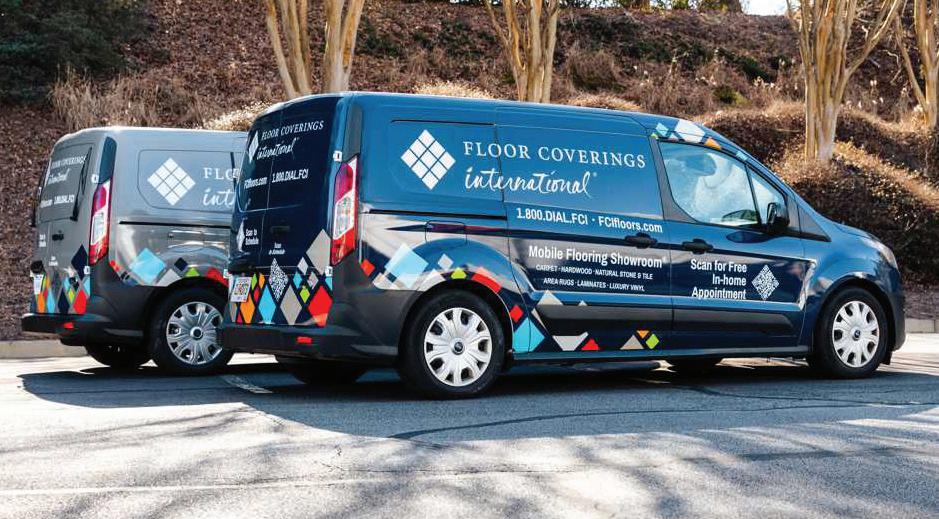
The brands that recognize this shift and reinvest in their teams will ultimately build long-term sustainability. In building systems around ongoing coaching, immersive field experience, and network development, these brands are building more resilient franchise networks. At Floor Coverings International, we pride ourselves
on our robust training program, handing franchisees a clear roadmap to long-term operations.
the limitations to traditional training Models
The home services industry is inherently operational. From managing teams and coordinating consultations to overseeing the customer experience and driving local marketing, franchisees are simultaneously responsible for ensuring multiple systems are operating smoothly and cohesively. Yet historically, most training is structured through static classroom instruction, and while there is value in these resources, they cannot comprehensively prepare owners for the realities of running a business dayto-day.
Franchisees benefit most when they have an opportunity to see firsthand how systems should operate, apply concepts in real-time, practical settings, and receive hands-on coaching to navigate challenges. Experiential learning through ride-alongs, shadowing opportunities, mentors, and live simulations allow franchisees to develop skills faster while minimizing operational error and reinforcing consistency systemwide. Rather than learning through trial and error after opening, franchisees get a head start, opening with more confidence and operational readiness.
building well- rounded training Programs to strengthen Franchisee autonomy
Many franchisees enter the home services industry without prior experience in the space, but many skills directly translate in creating a successful franchisee. What many lack in past industry experience, they often make up for in leadership ability, strong communication skills, and passion.
A key aspect of training is creating an environment where franchisees can build operational confidence to lead their business effectively. Well-rounded training programs that go beyond teaching technical processes set all franchisees up for success, in allowing them to strengthen their skills while acquiring new ones.
continuous coaching to create long-term stability
The biggest misconception in franchise training is that it ends once a location opens. The key to sustainable franchise growth is continuous development. Market conditions, consumer behavior, and technology are constantly evolving, forcing franchisors and operators to adapt to new expectations. Building ongoing support structures aids franchisees in that evolution, so they can grow alongside the brand as a whole.
The strongest brands are the ones that treat coaching as a long-term partnership rather than an initial phase of launch.
Regular operational check-ins, transparent communication on brand standards and expectations, advanced education programs, and leadership development initiatives hold franchisees accountable for their operations, as well as motivate them to continue to grow. As operators mature, personalized coaching allows them to expand even further, without reaching a ceiling for growth.
Continuous coaching is crucial in improving franchisee retention and overall system health. When owners are constantly engaging with their brands, they are better equipped to overcome unprecedented obstacles. In the home services space where brand reputation hangs on consistency, that alignment is everything.
leveraging top Performers to scale the system
Peer-led learning has taken on a larger role in franchise training. Top-performing franchisees are becoming active participants in the development of the brand and new owners, adding credibility to brands and establishing a collaborative culture systemwide.
New franchisees are given the opportunity to learn firsthand from operators who have been in their shoes and have faced similar day-to-day challenges. Rather than operating independently, franchisees are joining a community that is focused on shared success. As the system grows, leveraging experienced operators allows franchisors to expand their support infrastructure, aiding in efficient scaling.
training as a long-term Growth strategy
As the home services sector continues to expand, the long-term differentiator between franchisors will ultimately come down to how effectively brands set franchisees up for long-term sustainability. The systems that invest in immersive learning, ongoing coaching, and collaborative development are positioning themselves to build stronger, more consistent operations and customer experiences. v
s caling s mart:
h ow h ome s ervice
Franchisees are r aising the Bar d uring their
Busiest s easons
There’s a moment every restoration franchisee knows well. The phone starts ringing before sunrise. A storm rolled through overnight, and by 8 a.m. your inbox is full, your techs are already dispatched, and three more calls are sitting in voicemail. You built this business to help people during one of the most stressful times of their lives, but ensuring that all customers are being prioritized without dropping the ball is franchisees biggest priorities.
technology that works while you sleep
One of the biggest shifts we’re seeing in high-performing locations is a move toward smarter intake systems. When service requests spike, the first thing that breaks down is triage, determining what needs to happen right now versus what can wait until tomorrow morning.
Automated intake tools solve that problem before an employee even picks up the phone. The system reads each new request, applies simple preset rules such as a burst pipe is an emergency, a clogged drain is a priority, and a routine inspection is scheduled accordingly, and the system routes the job automatically. That means your team isn’t making judgment calls at 6 p.m. on a Friday when they’re exhausted.
Paired with a clear Service Level Agreement (SLA), SLA, this becomes even more powerful. An SLA is simply a written promise: emergencies get a response within two hours, priority jobs within 24 hours, routine work within three business days. When those timelines are built into your system, every open job has a countdown clock, and managers get an alert before anything slips through the cracks. Customers know what to expect and your team knows what’s required.
Tools like call tracking software capture every incoming call and show you exactly where it came from, so no lead goes cold and no request sits in voicemails. Virtual receptionist services can handle overflow and after-hours calls, collecting details and creating a ticket. And when calls, web forms, texts, and live chats flow into a single dispatch hub, your team is working from one list instead of sifting through five different inboxes.
The result is faster response times and an
organized, calm customer experience, even on your busiest days.
building your staffing roster before you need it
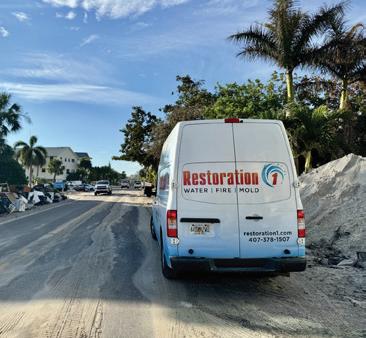
If technology handles the intake, employees handle the work that makes the impact. In the home services industry, demand doesn’t arrive on a predictable schedule, it arrives when a pipe bursts in January, when a hurricane hits in August, or when spring flooding catches an entire region off guard. That surge in work requires a surge in employees, and franchisees who wait until the rush hits to start hiring are already behind.
The franchisees doing it best aren’t waiting until they’re overwhelmed with intake calls. They keep a ready list: potential seasonal hires, reliable subcontractors, and referrals from current team members. When demand picks up, they make calls. They don’t start from scratch.
They also advertise where real people actually look, such as local Facebook groups and trade school job boards. Keeping the job post simple is key: clear pay, hours, and a quick-start bonus incentive. Some owners are even moving to same-day pay, which has become a genuine competitive advantage in markets where workers have options and won’t wait two weeks to see their first paycheck.
Once they’re in the field, pairing new seasonal hires with an experienced technician for their first five to ten jobs is one of the most valuable investments you can make. That mentorship window is where real learning happens, not just the technical steps, but the judgment calls, and clear customer communication. It also gives your senior staff a sense of ownership in the quality of work being completed in the community.
Holding the standard when the schedule is Full
Here’s where a lot of franchises struggle: they scale their volume but not their quality. The calls get answered, the jobs get booked, and somewhere in the rush, standards may slip.
Restoration 1’s brand promise doesn’t come with an asterisk that says “except during busy season.” Protecting that promise as a home service franchise when you’re fully booked takes intentional systems, not good intentions.
The most effective ones are also the simplest. A one-page checklist for each job type including covering safety steps, brandrequired procedures, and a customer signoff, creates accountability without adding complexity. Requiring before-and-after photos on every job means managers can verify work remotely without riding along. Dispatching the right tech to the right job including matching skills, location, and current workload, increases first-time fix rates and reduces costly callbacks.
Adding a 30-minute buffer on complex jobs isn’t wasted time. It’s the difference between a job done right and a callback the next morning.
A manager who reviews three completed jobs per day catches problems early. A 10-minute morning huddle that surfaces yesterday’s top issues and today’s current priorities keeps the whole team aligned. Weekly SOP refreshers, even just a short video or a quick walkthrough, keep brand standards top of mind before they drift. When subcontractors or seasonal employees are assisting during the company’s busiest times, they need to be held to the same bar. Require them to use your checklists, take photos, and work within your app. Audit them regularly. Your name is on every job they touch.
the Foundation underneath it all
What separates the franchisees who scale well from those who struggle isn’t access to better tools or a larger labor pool. It’s the discipline to build real systems including clear SOPs, consistent training, and the accountability to hold both, and then actually apply them every day, on every job.
When your systems are solid, a busy season isn’t a crisis. It’s a business handled well. v
wanda hoegren President of Gotcha Covered with
If you think premium window treatments are primarily relevant to new construction, think again. Blinds, shades and other window coverings can provide value to homeowners before their move-in day and for years to follow. As such, window treatments can be an economically sound option for a franchise owner.
Wanda Hoegren, brand president for Gotcha Covered, spoke with us about the unique benefits of the window treatment industry, explaining all the ways in which the franchise model supports new or firsttime owners, even through shifting market conditions.
why do window treatment businesses see sustained demand after new housing developments are completed?
New construction creates the initial moment, but it rarely captures the full opportunity. Homeowners move in with varying priorities — privacy, light control, energy efficiency, aesthetics — and those priorities often aren't fully formed until after they've lived in the space for a while. Then life changes: remodels happen, families grow, people move again. Each of those moments is a fresh opportunity for a window treatment business.
What that means practically is that operators aren't dependent on a single transaction or a single construction cycle. Window treatments are a recurring home improvement category. Owners who build relationships and stay in front of their customers over time find that one home often becomes several rooms, and one client often becomes several referrals.
How do population growth and new residential construction drive longterm demand for window coverings?
Every new household represents multiple windows, multiple rooms, and multiple decision points, most of which unfold over months or even years, not all at once. Population growth sustains that pipeline, and the demand compounds when you factor in move-up buyers, downsizers, and investors refreshing properties for resale.
New construction sparks initial interest, but the longer-term opportunity comes from the ongoing relationships owners build within their markets. That's where the real value accumulates.
what advantages do established window treatment business models offer owners entering fastgrowing markets?
High-growth markets can create a false sense of ease. Demand seems abundant, so new operators assume they can figure
out the execution as they go. That's where gaps show up. Without established vendor relationships, pricing frameworks, and proven sales processes, even well-funded operators can struggle to convert demand into consistent revenue.
Owners who enter a proven model skip that trial-and-error phase entirely. The vendor networks are already in place, the sales and consultation process is already tested, and the marketing infrastructure is already running. That allows them to focus on building customer relationships and closing
business from day one, rather than building the foundation while trying to operate.
How do shared systems and centralized support help window treatment businesses remain stable beyond construction cycles?
Consistency is what separates businesses that perform reliably from those that rise and fall with local market conditions. Shared systems, whether that's CRM infrastructure, vendor networks, or
centralized marketing, give owners a stable operational foundation regardless of what's happening in new construction locally. Equally important, that foundation provides flexibility. Owners with the right infrastructure in place can shift attention between new construction projects, retail homeowners, and commercial opportunities without losing momentum. They're not reacting to market shifts; they're positioned to move with them.
why are window treatments considered a strong service category for first-time business owners?
A few factors make this category particularly well-suited for first-time owners. There's no retail storefront to manage, no significant inventory to carry, and the overhead profile is lean relative to the revenue potential. What you're really running is a high-ticket, consultative sales business. It’s all about working directly with homeowners to solve real problems around light, privacy, energy efficiency, and aesthetics.
That model rewards relationship-building and process discipline more than prior industry experience. Owners who follow a structured sales and consultation approach, and who stay consistent in how they show up for customers, build confidence and revenue quickly. The learning curve is real, but it's manageable, and the upside is meaningful.
How
do proven operating playbooks help window treatment owners convert new homeowners into repeat and referral customers?
The playbook eliminates guesswork at every stage, from initial consultation through installation and post-install followup. When customers have a consistent, professional experience, trust builds naturally. And trust is what drives the second call: the additional room, the next home, the referral to a neighbor or realtor.
We know from experience that the owners who invest in follow-up — seasonal check-ins, proactive outreach after installs — consistently build stronger repeat and
referral pipelines than those who treat each job as a one-time transaction. Over time, that base of repeat and referral customers becomes the most reliable part of the business.
what role does national infrastructure play in helping window treatment businesses scale efficiently at the local level?
Local traction builds faster when owners aren't starting from zero. Brand recognition, vendor relationships, technology tools, and marketing support all take years to build independently. When they're already in place, owners can direct their energy toward serving customers and growing their local presence rather than constructing the foundation.
That's the underlying logic of the franchise model done well: owners operate independently and build something that's genuinely theirs, while benefiting from infrastructure that would be costprohibitive to replicate on their own.
why are window treatment businesses viewed as a lowerrisk option during periods of economic uncertainty?
The category sits at the intersection of need and want, which is a durable place to be. When budgets tighten, homeowners tend to prioritize improvements that enhance comfort or help manage costs. Window treatments address both. Energy efficiency, light control, and privacy are practical considerations that don't disappear in a downturn.
The business model supports that resilience. Low overhead, no inventory, and a flexible cost structure mean operators can adjust to shifts in demand without carrying the weight of a high fixed-cost operation. That combination of category durability plus model flexibility is what makes this an attractive option for owners who want both stability and long-term growth potential.
Wanda Hoegren is the Brand President for Gotcha Covered, a Five Star Franchising brand.
local e ntrepreneurs e xpand
76 Fence in g reater c incinnati with t wo-territory l aunch
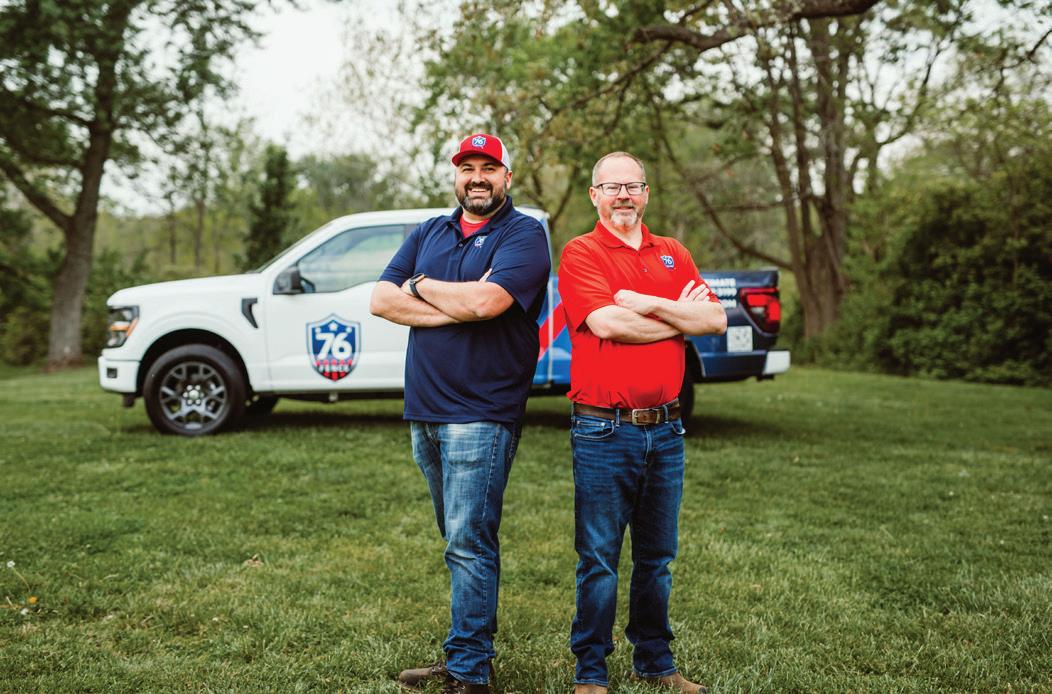
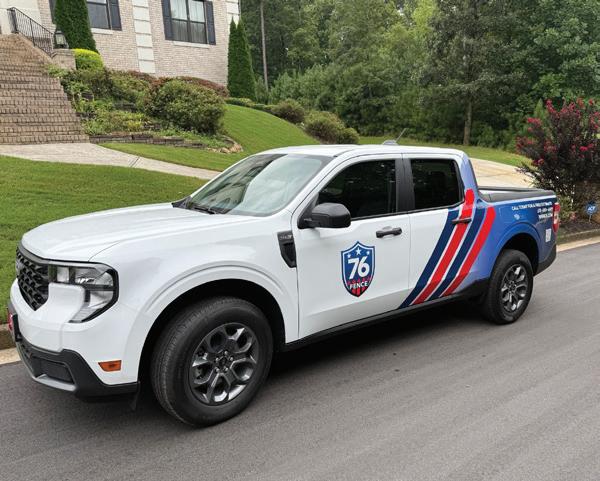
(May 4, 2026) CINCINNATI, OH — 76 FENCE, one of the fastest-growing fencing franchise brands in the country, is continuing its Midwest expansion with the launch of two territories in the Greater Cincinnati market under the ownership of business partners Andrew Ford and Dan Menninger.
The two-territory agreement marks the brand’s entry into the Cincinnati region and reflects continued strategic growth into strong residential markets where established neighborhoods, active real
estate activity and steady population trends drive sustained demand for professional home services.
Ford and Menninger bring complementary professional backgrounds rooted in leadership, operations, technology, and relationship management. They were drawn to the opportunity to build a scalable business and collaborate with skilled professionals across the industry to deliver a high level of service and consistency for customers.
“Cincinnati is a market we know well and believe in,” said Andrew Ford. “It’s a city built on strong neighborhoods and long-term homeownership. We saw an opportunity to introduce a more disciplined, process-driven approach to
fencing that prioritizes communication, reliability, and authenticity.”
Their decision to align with 76 FENCE was also driven by the brand’s infrastructure and growth model. “We were looking for a business with real systems behind it,” said Dan Menninger. “76 FENCE offers structured training, operational support and technology that allow us to scale thoughtfully across multiple territories. The two-territory commitment gives us room to grow while maintaining a strong local focus.”
Cincinnati’s diverse housing stock, mix of historic properties and new development, and consistent demand for privacy, safety and property enhancement make fencing an essential service category. The region’s
PhOTO (left to right): 76 fEnCE Cincinnati franchise Owners Andrew ford and Dan menninger
suburban communities in particular continue to see steady investment and renovation activity.
“Cincinnati is a strong and stable market that aligns well with our long-term expansion strategy,” said Ed Samane, president of 76 FENCE. “Dan and Andrew bring operational discipline and a clear vision for growth. Their two-territory launch is an important step as we expand our footprint into Ohio.”
The new Cincinnati territories will provide residential and commercial fencing installations supported by 76
FENCE’s proprietary systems, streamlined estimating and installation processes, and customer-first service standards. Ford and Menninger plan to focus early efforts on building installation capacity, establishing vendor relationships, and integrating into the local business community.
“Our goal is to build something sustainable,” Ford said. “We want to create a reputation in Cincinnati for doing what we say we’ll do, delivering quality work, and setting the standard for excellence.”
Community engagement will be central to their growth strategy.
“Cincinnati values relationships and trust,” said Menninger. “We intend to be active in the communities we serve and build long-term partnerships, not just complete projects.”
The Cincinnati launch continues 76 FENCE’s disciplined national expansion as the brand strengthens its presence across high-demand residential markets.
Additional updates regarding service availability and grand opening plans will be announced in the coming weeks. For more information, please visit www.76fence.com/cincinnati.
about 76 Fence:
76 FENCE is a leading provider of premium fencing solutions, offering both residential and commercial fencing installations. The company is known for its commitment to delivering a superior customer experience through quality products, efficient service, and a seamless installation process. 76 FENCE’s current footprint includes 129 territories in 11 states (Alabama, Delaware, Florida, Georgia, Illinois, Iowa, North Carolina, Ohio, Pennsylvania, Tennessee, and Texas). 76 FENCE franchisees receive comprehensive training and ongoing support to help them succeed in their local markets. For information about franchise opportunities nationwide, please visit: 76fence.com/ franchise. Disclaimer: The information provided is not intended as an offer to sell, or the solicitation of an offer to buy, a franchise.
threshold Brands appoints lauriena rideout as chie F operating o FFicer
Veteran Multi-Brand Franchise Executive Joins Home Services Leader to Strengthen Portfolio Growth and Franchisee Support
Threshold Brands, an industry leader in home services franchising, has appointed Lauriena Rideout as its chief operating officer. Rideout brings over 20 years of franchise operations and growth experience across multi-brand platforms to the role and will lead operational strategy, shared services and performance across Threshold Brands’ portfolio of best-in-class home services companies.
Based in Bucks County, Pennsylvania, Rideout most recently led operations at WOWorks, a multi-brand franchise platform, where she simultaneously held brand leadership roles across multiple concepts before being named chief operating officer, building scalable systems, strengthening shared services and creating performance visibility across the portfolio. Earlier in her career, she led operations at Rita’s Italian Ice. Throughout her career, she’s driven disciplined growth and unit economics while championing franchisee profitability across quick service, fast casual and multibrand franchise systems.
“Lauriena’s track record of building shared capabilities while preserving what makes each brand unique aligns perfectly with Threshold Brands’ vision,” said Chief Executive Officer Ted DeMarino. “Her expertise in portfolio scaling and franchisee operations will be instrumental as we strengthen our position in the home services space.”
Rideout’s background in building shared services across multibrand platforms made Threshold Brands’ opportunity immediately compelling. When asked what excites her most about the role, she puts it this way:
“What attracted me to Threshold was the opportunity to build stronger systems and shared capabilities across a portfolio of truly unique brands,” said Rideout. “There’s real potential to stand out by strengthening our operations, sharpening our systems and transforming our onboarding. I love collaborating across brands and teams to turn strategy into action, and Threshold Brands is exactly where I want to channel that energy.”
Rideout’s operating philosophy in franchising centers on clarity, consistency and listening. She believes franchisees should know what success looks like, have the tools and training to execute and feel confident the system is working in their favor.
“In a franchise system, there are constant needs from franchisees and internal teams, and it is important that we show up with
urgency and follow through,” Rideout said. “Answering the call means being responsive, accountable, action-oriented and getting ahead of challenges before they materialize. For me, that’s not just a purpose statement. That’s how I operate, and it’s what our franchisees deserve.”
For more information about franchising opportunities with Threshold Brands and its award-winning portfolio companies, visit thresholdbrands.com.
about tH resHolD bran Ds:
Threshold Brands is a collection of best-in-class home services companies united by a common purpose: to protect and care for people’s most valuable investment, their home or business, while making a real difference in their lives. Threshold Brands empowers its franchise owners to build and scale their companies through comprehensive support in marketing, technology, training and business coaching. The leading home services franchise features trusted and essential brands, including Granite Garage Floors, Heating + Air Paramedics, MaidPro, Men In Kilts Window Cleaning, Miracle Method Surface Refinishing, Mold Medics, PestMaster, Plumbing Paramedics, Sir Grout and USA Insulation. More information about Threshold Brands and its franchising opportunities is available at ThresholdBrands.com.