Fact Sheet: Colorado Water Conservation & Efficiency
Colorado Water Conservation & Efficiency
CONSERVATION VS. EFFICIENCY: WHAT’S THE DIFFERENCE?
The terms “water conservation” and “water efficiency” are often used interchangeably, but the words have different meanings and connotations in municipal and agricultural water use.
Conservation refers to measures that provide a verifiable reduction in the amount of water used and consumed.
• With municipal water use, conservation is often accomplished through behavior change.
• In agriculture, conservation means reducing crop consumptive use, which
usually equates to less water available for plants to grow, resulting in lower crop yields and reduced farm income. Conservation can also result from growing less water-intensive crops. Agricultural water conservation is usually accomplished by leaving water in the river or aquifer.
Efficiency focuses on minimizing the amount of water required to accomplish a task, typically by using technology.
• Efficiency in homes and cities can be achieved with items such as high-efficiency toilets and shower heads, high-efficiency clothes washers, and drip irrigation systems.
• Agricultural water efficiency is the ratio of water consumed by a crop
relative to the amount of water used to irrigate that crop. Improved irrigation efficiency results from reducing water delivery and irrigation amounts without reducing crop yields. This is accomplished by decreasing on-farm water seepage or runoff losses. For a farmer, the goal is to maintain a crop’s water use rate and yield while reducing water losses.
WHY CONSERVATION AND EFFICIENCY?
Colorado’s water supply is limited, and growing even more so, and water demands are expected to increase. The future could result in a gap — in which water demand exceeds supply — of 230,000 to 740,000 acre-feet per year for industrial and municipal uses. That would leave many water needs unmet or met in undesirable ways, according to the 2023 Colorado Water Plan. In agriculture, about 20% of water demand is currently unmet. The need to parse scarce water supplies among many valuable uses increases the necessity for conservation and efficient use. The 2019 Technical Update to the Colorado Water Plan estimated that conservation and efficiency measures could reduce Colorado’s future water needs by 300,000 acre-feet per year.
What’s limiting water availability?
• Temperature and precipitation patterns are becoming more
4,844,000 acre-feet
380,000 acre-feet
116,000 acre-feet
SOURCE: COLORADO DIVISION OF WATER RESOURCES
variable and less predictable under climate change.
• Population is rising - The Colorado Department of Local Affairs (DOLA) projects that Colorado’s population could reach 7.4 million people by 2050 — up from 5.9 million in 2024. Growth in population, commerce and industry drives municipal water demand.
The percentage of Colorado’s municipal water used for outdoor irrigation
The percentage of Colorado’s municipal and industrial outdoor water use that occurs in the South Platte River Basin
The percentage of Colorado’s municipal water that is lost en route to its destination
The average number of gallons that Coloradans use per capita per day for municipal purposes
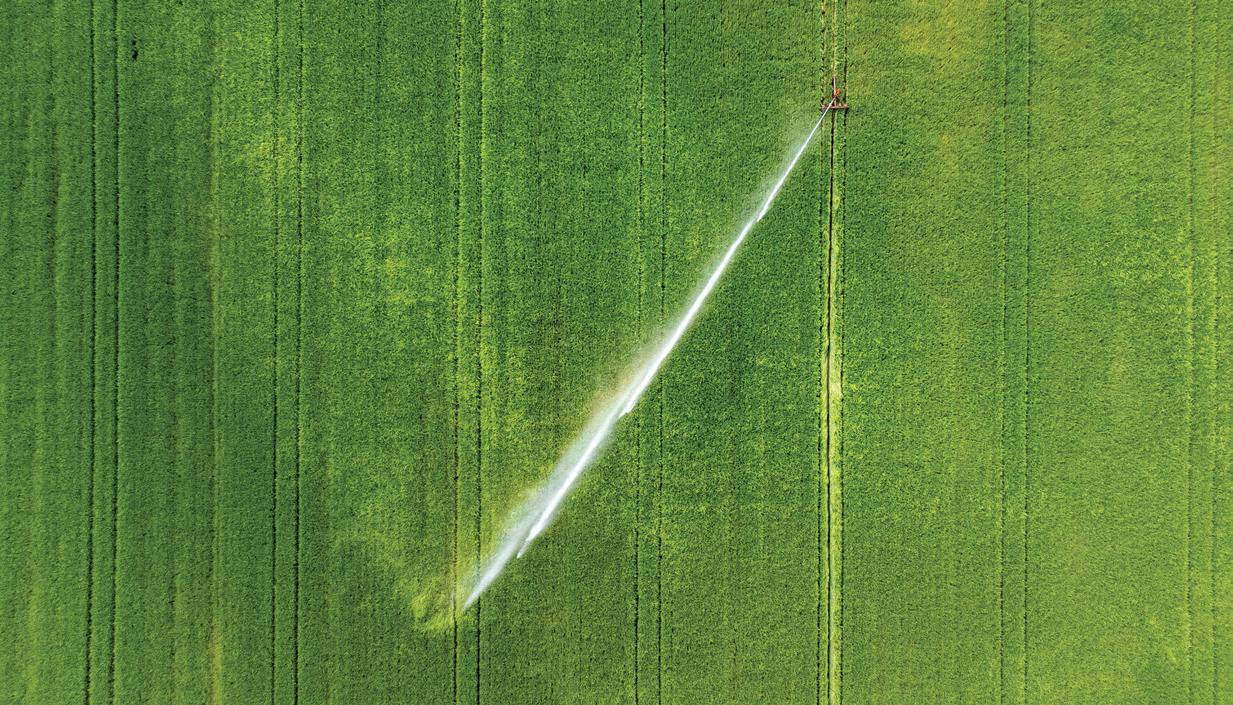
The percentage of agricultural sprinkler irrigation in the state that relies on center pivot systems
For additional information and resources, read the Community Guide to Colorado Water Conservation & Efficiency.
The number of irrigated acres projected to be fallowed by 2050 as a result of agricultural to municipal or industrial water transfers
LEARN MORE
Making Every Drop Count
From home landscapes to city policies, conservation happens at every scale. Here’s how individuals and communities across Colorado are working to use water wisely.
WHAT YOU CAN DO AT HOME
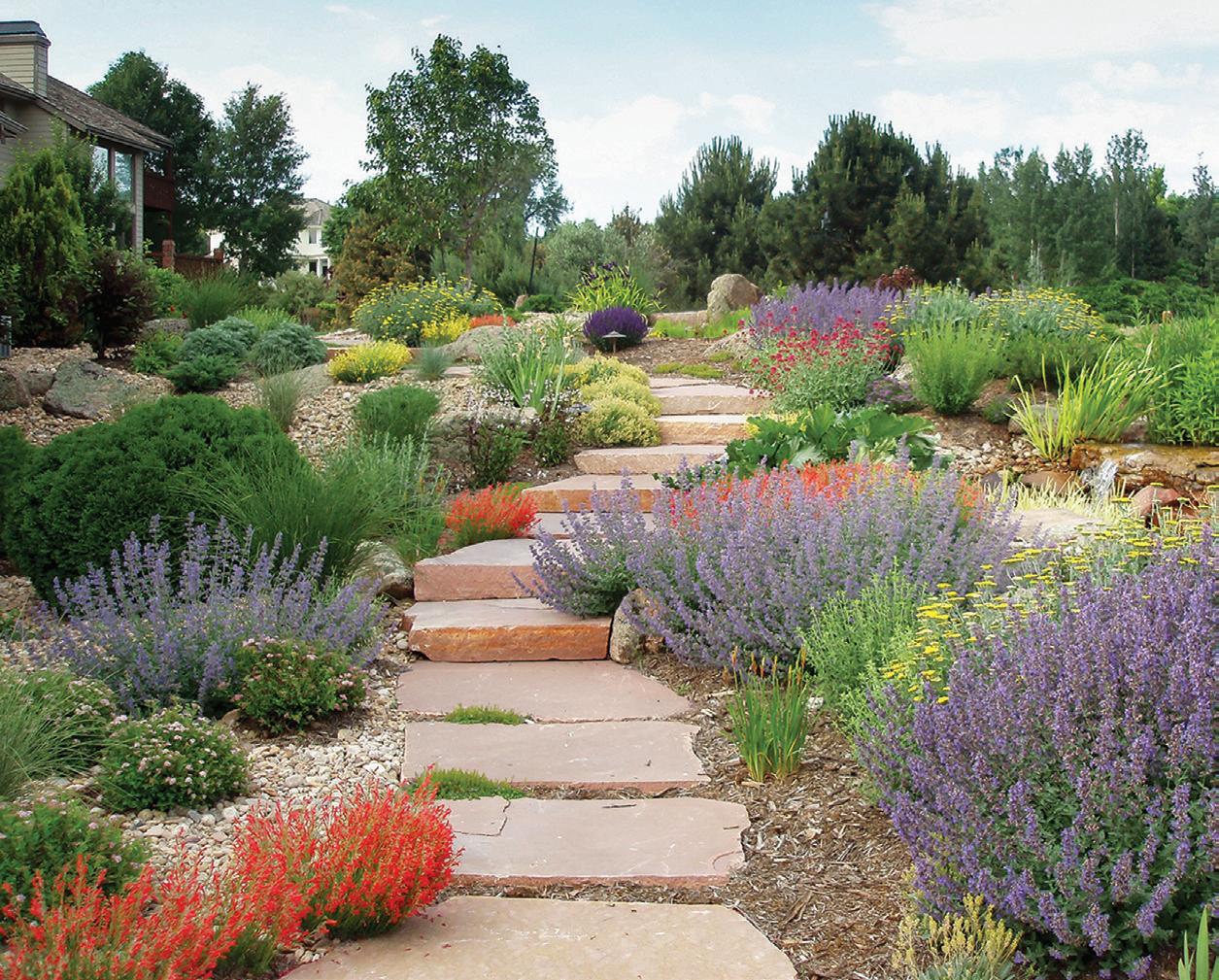
• Reduce or omit thirsty bluegrass and replace with ColoradoScaped native, drought-tolerant plants and flowers. Focus on landscape design by considering slope, soil, and stormwater conditions. Group plants according to their water needs, mulch and aerate. Take these steps and more to minimize landscaping’s water requirements.
• Upgrade to high efficiency appliances and fixtures. The average family can reduce water used for toilets alone by 20-60%.
• Use the dishwasher and washing machine instead of handwashing and run appliances only when full. You can save 15-20 gallons per load.
• Install efficient sprinkler systems like drip irrigation, rotary nozzles, and smart irrigation controllers — then program to water only at dawn and dusk, no more than three days per week. Then maintain by repairing broken sprinkler heads and changing program settings seasonally as water demands diminish.
• Capture rainfall with rainbarrels or direct downspouts to garden areas in order to put stormwater to use.
HOW CITIES ENCOURAGE CONSERVATION AND EFFICIENCY
• Landscape water budgets, conservation-oriented water rates, and water waste ordinances encourage water users to use water more efficiently. A conservation-oriented rate structure may be based on the amount of water used, it may compare one resident’s use to a neighbor’s; it may offer a tiered system where water is more costly when more is used. Ordinances are enforceable restrictions in which water users can be fined for wasteful watering.
• Rebates offered by water providers can minimize the financial barriers that stand in the way of efficiency upgrades. Some utilities offer rebates on high-efficiency toilets, smart irrigation controllers, and turf replacement projects.
• Education and outreach programs including K-12 education, farmers market outreach, water use audits, demonstration gardens, and more can all encourage water conservation and efficiency.
• Green building codes, policies, and planning tools direct development and can encourage denser development, integrate water efficiency into land use plans, and offer certification for water-efficient new homes.
• Conserve by delivering water efficiently. According to the Colorado Water Plan, 12% of municipal water demand in the state is lost en route to its destination. Water loss audits and control programs identify and remedy losses. By reducing loss, utilities can maximize their supplies and maintain their revenue.
The Future of Farm Water
Colorado farmers are finding new ways to stretch water — from efficient irrigation to crop and land management.
HOW IRRIGATORS CAN BOOST IRRIGATION EFFICIENCY
• Improving conveyance and delivery systems to reduce seepage and evaporation by lining ditches or converting them to pipelines.
• Selecting an efficient irrigation system — systems can include surface or flood and furrow systems; overhead sprinkler irrigation, such as center pivots, which are more efficient than surface systems; sideroll systems, which have big wheels that allow a system to be moved from one area to the next; and micro-irrigation systems, such as drip and micro-sprayers, which are the most efficient systems.
• Irrigation scheduling based on soil moisture and plant evapotranspiration rates can help irrigators apply the right amount of water at the right time to optimize plant growth.
• Conservation tillage and soil health management can help minimize runoff by holding snow and rainfall on the field, promote soil moisture retention and minimize
soil compaction. According to the Colorado Department of Agricutlure, for every 1% increase in soil organic matter, the soil’s ability to hold water increases by 3.7%.
AGRICULTURAL
WATER CONSERVATION IN PRACTICE
Agricultural water conservation results from reduced consumptive water use. It can be achieved by:
• Fallowing - the most common conservation strategy is to reduce the amount of irrigated land. The Colorado Water Plan estimates that between 150,000 and 300,000 acres of irrigated farmland will be fallowed due to agricultural to municipal and industrial water transfers by 2050 and another 200,000 acres will be fallowed for other reasons.
• Limited or deficit irrigationwater can also be conserved by reducing consumptive use on irrigated fields by changing from water-intensive crops to low-water-use crops, or by deficit irrigating crops.
A ColoradoScaped yard uses water-wise plantings in Niwot, Colorado.