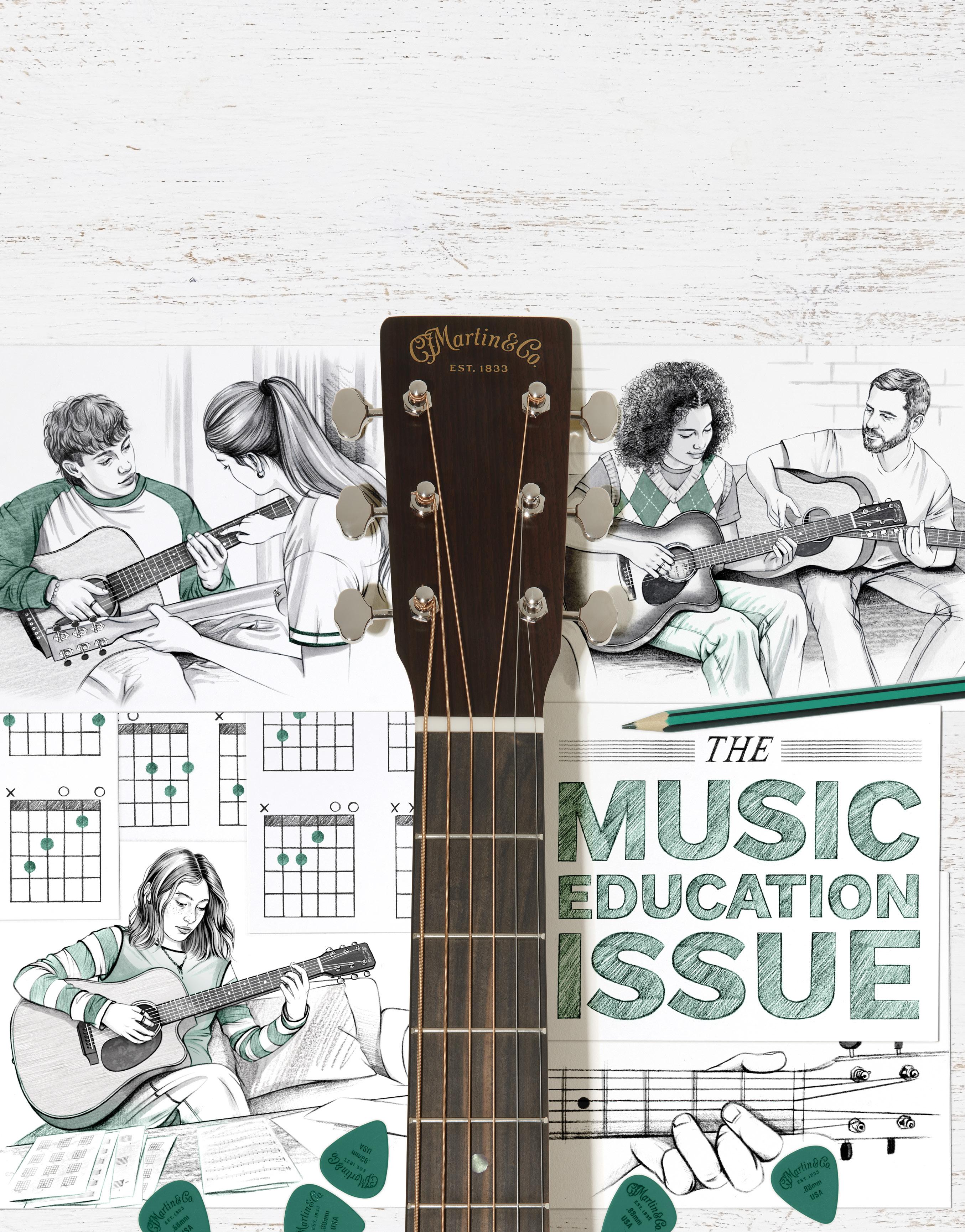
MARTIN | The Journal of Acoustic Guitars: Volume 16
C. F. Martin & Co., Inc.
PO Box 329, Nazareth, PA, 18064 martinguitar.com
C. F. MARTIN & CO.
Chairman of the Board: C. F. Martin IV
President & CEO: Thomas Ripsam
VP of Marketing: Michael Nelson
Sr Brand Marketing Manager: Kristi Bronico
Marketing Content Manager: Derrick Krom
Creative Manager: Mandee McEvoy
Graphic Designer: Vanessa Goffredo
Visual Content Producer: Eric Dowd
Archives & Museum Manager: Jason Ahner
Sr Artist Relations Manager: Rory Glass
W Coast Artist Relations Mgr: Brad Fillatre
Artist Relations Rep: Floyd Herrera
Photography: Eric Dowd, Juliana Hosea, Colton Shorman, Andrew Tomasino, Keaton Yoo
NME NETWORKS
Editor: Josh Gardner
Art Editor: Philip Millard
Associate Editor: Cillian Breathnach
Production Editor: Sean McGeady
Creative Director: Simon Freeborough Manager, Commercial & Partnerships: Joe Supple
Project Manager: Lou Phelps
Contributors: Tom Oxley, Michael Watts
Cover illustrations: Natalia Sanabria
Cover photography: Simon Vinall
SET LIST
A word from Chris Martin IV
Martin artists and employees share their guitarlearning stories
How Paul McCartney has secured Liverpool’s creative future through LIPA
How Martin empowers music education across the country
Celebrating thirty years of giving
The bluegrass phenomenon on her new signature Martin guitars
Recapping all the highlights of the first-ever Martin Sustainability Summit
The GRAMMY®-winning songwriter on his pair of signature models
Why Martin’s brand-new Era strings are built for the road
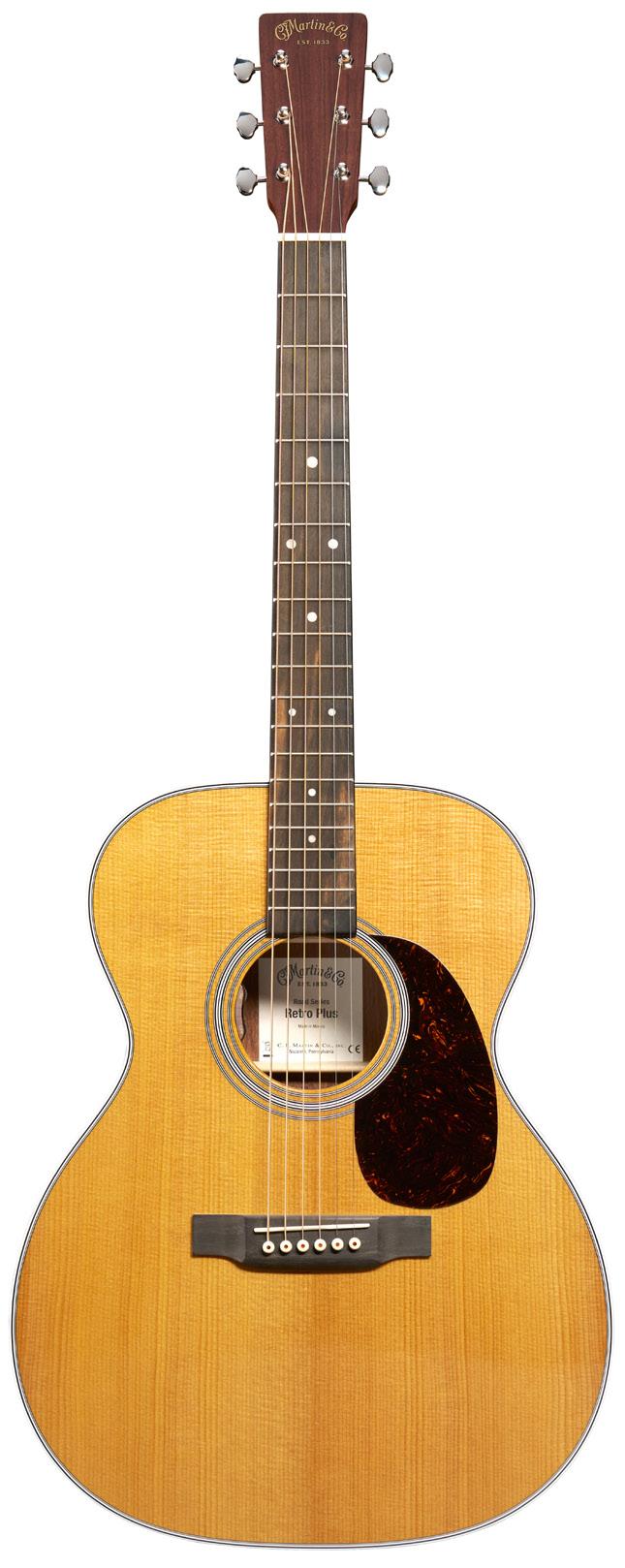
Up close with the refreshed Martin Road Series
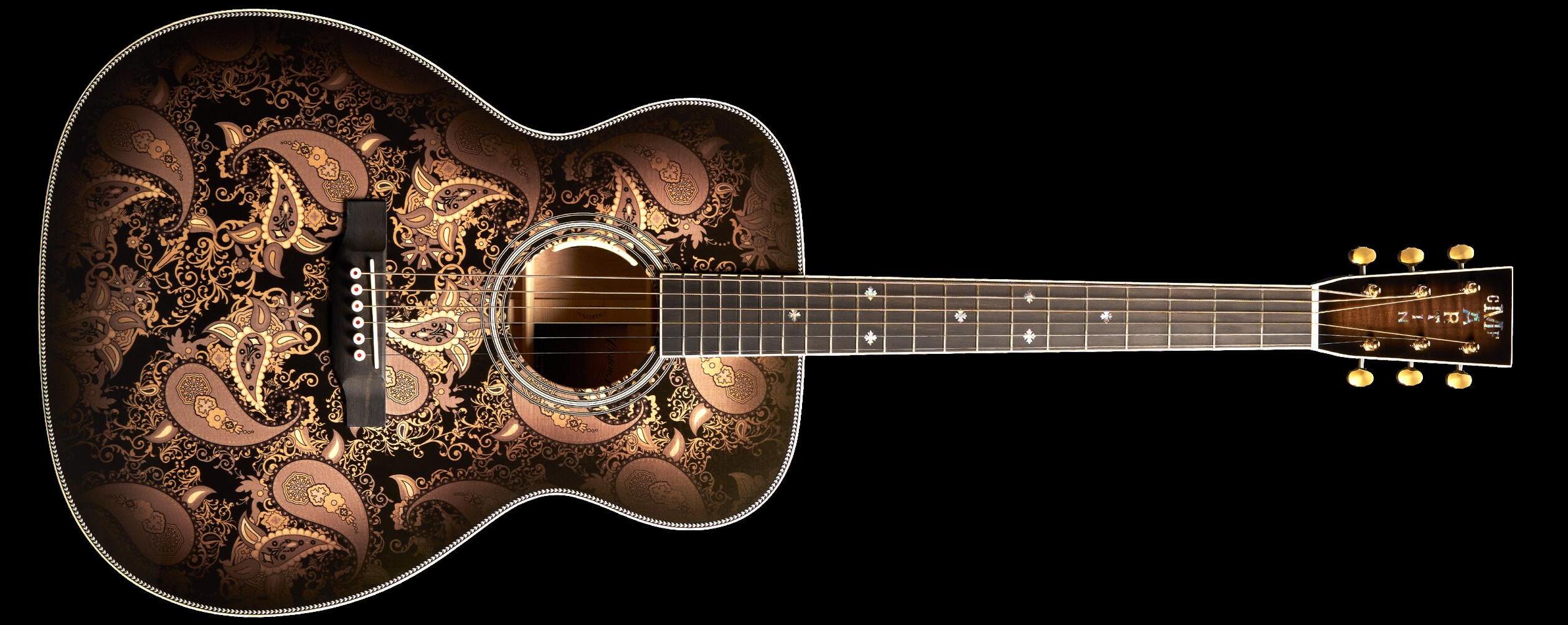
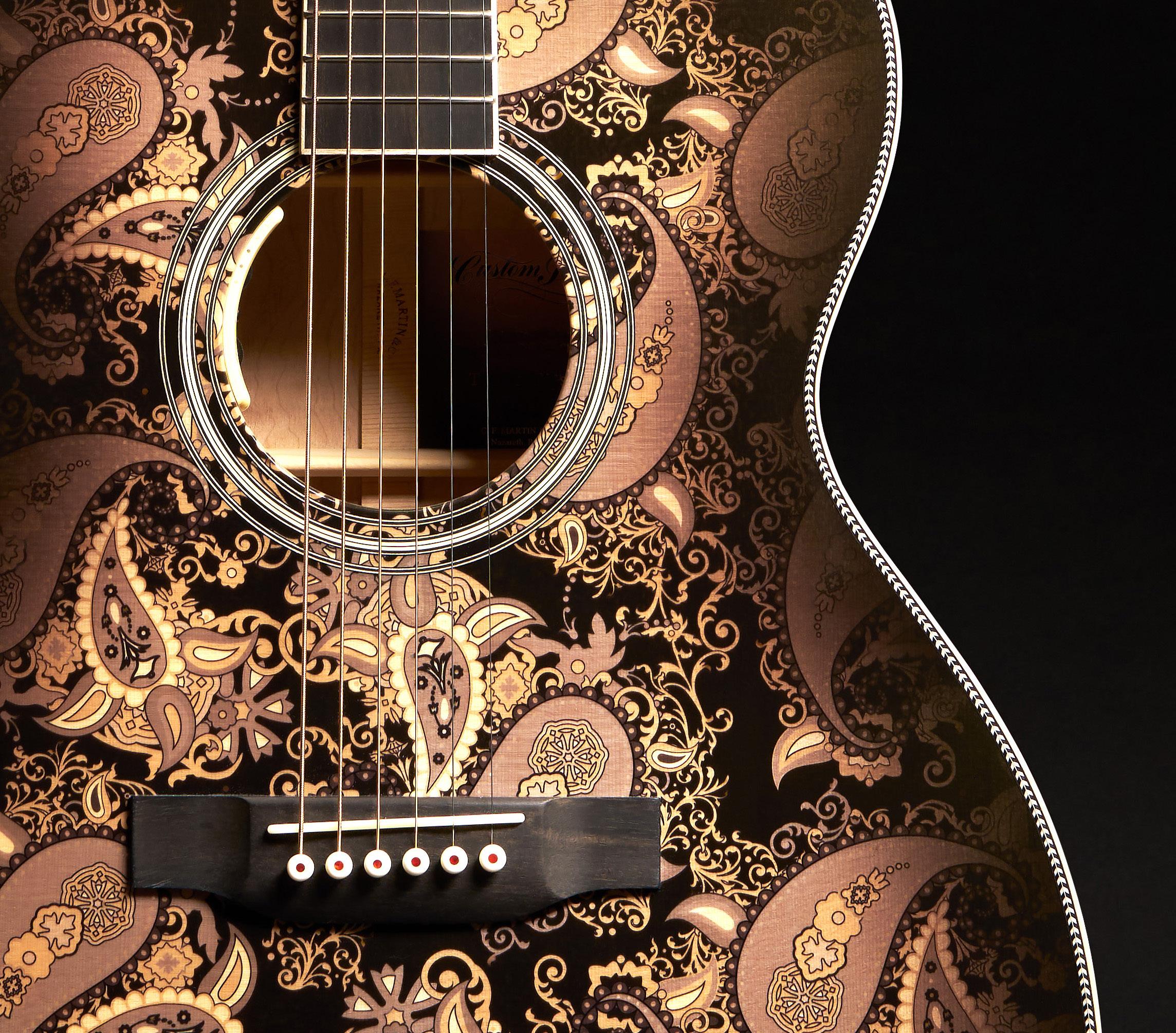
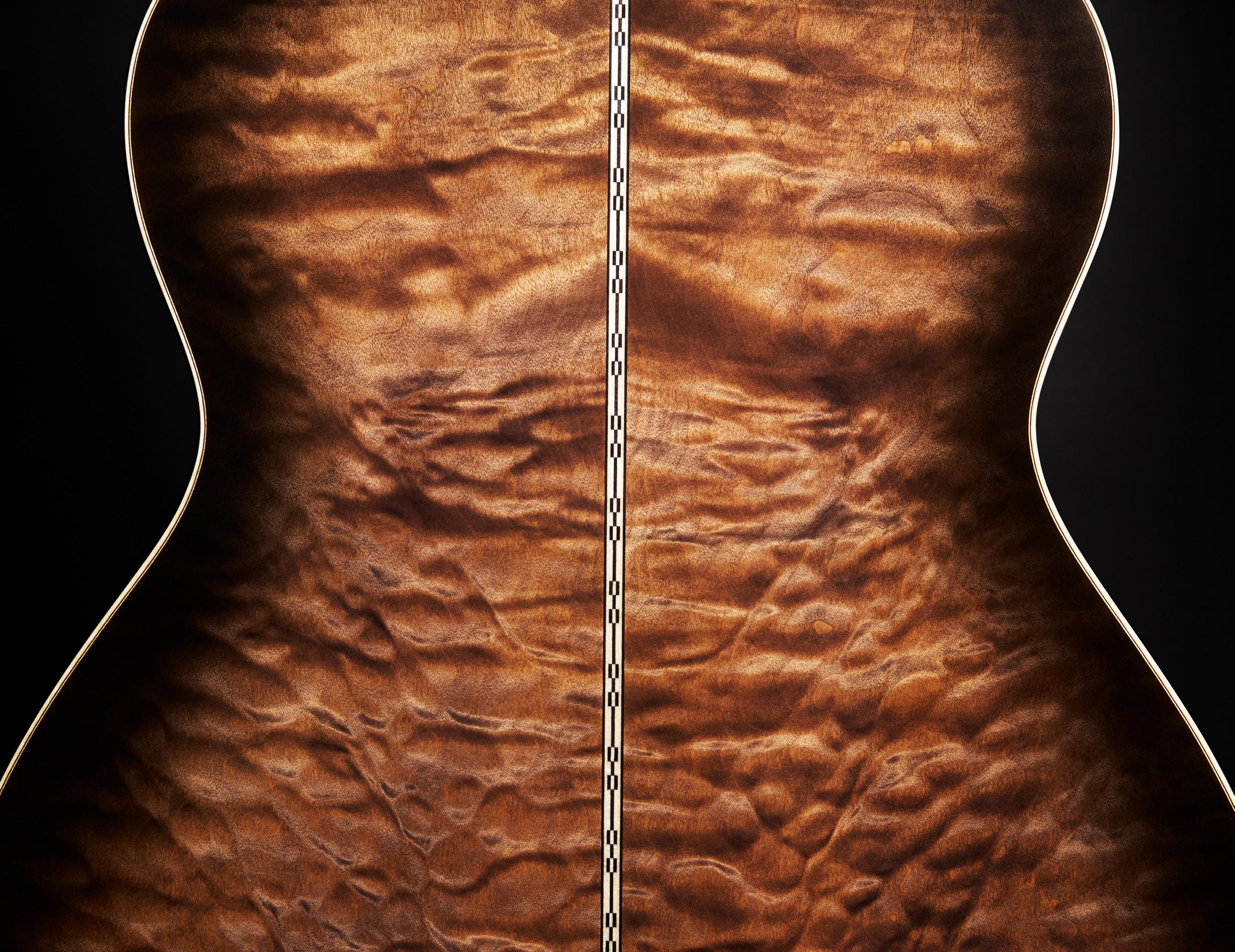
Thomas Ripsam on the stunning Custom Shop
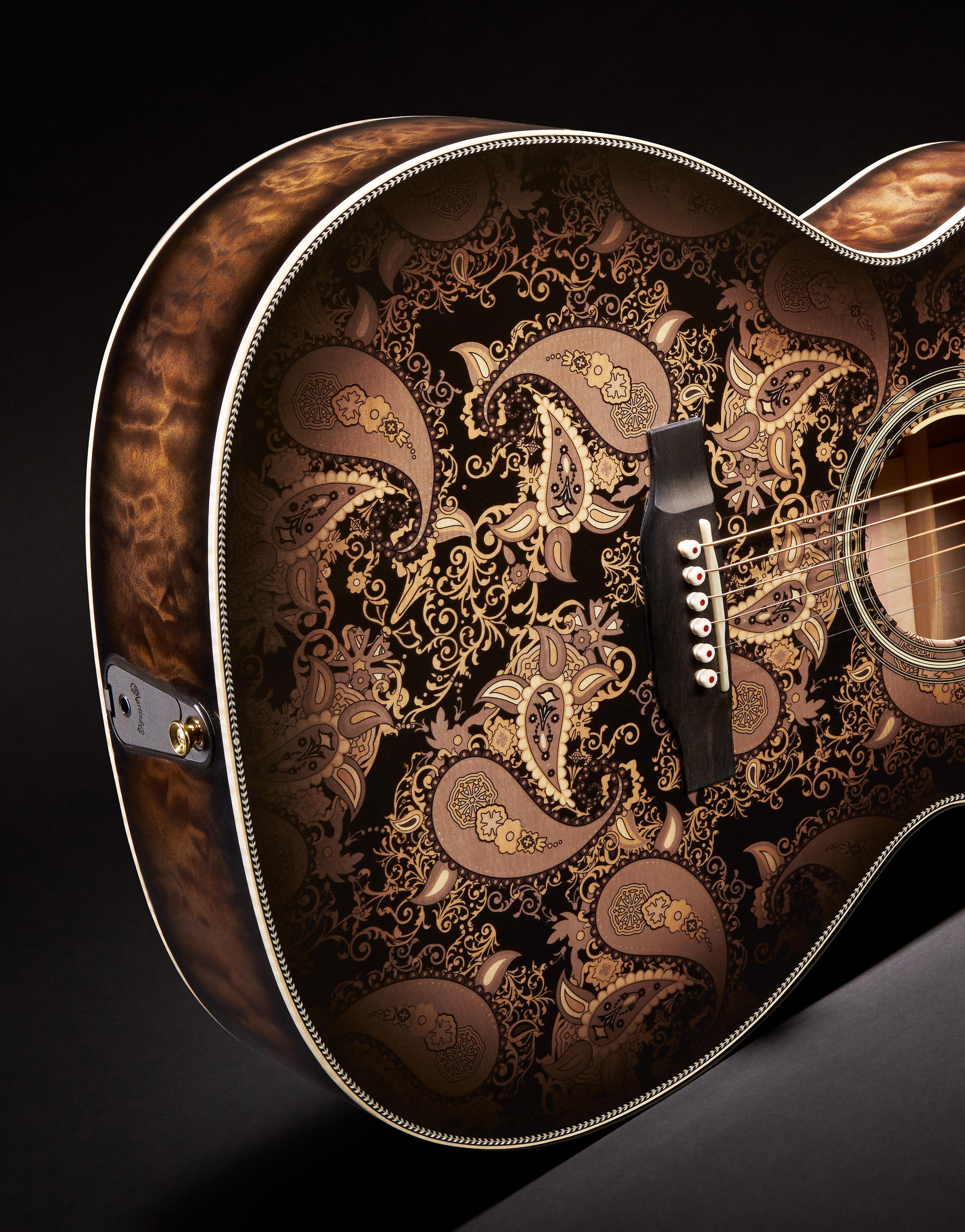
M Paisley Ember Burst
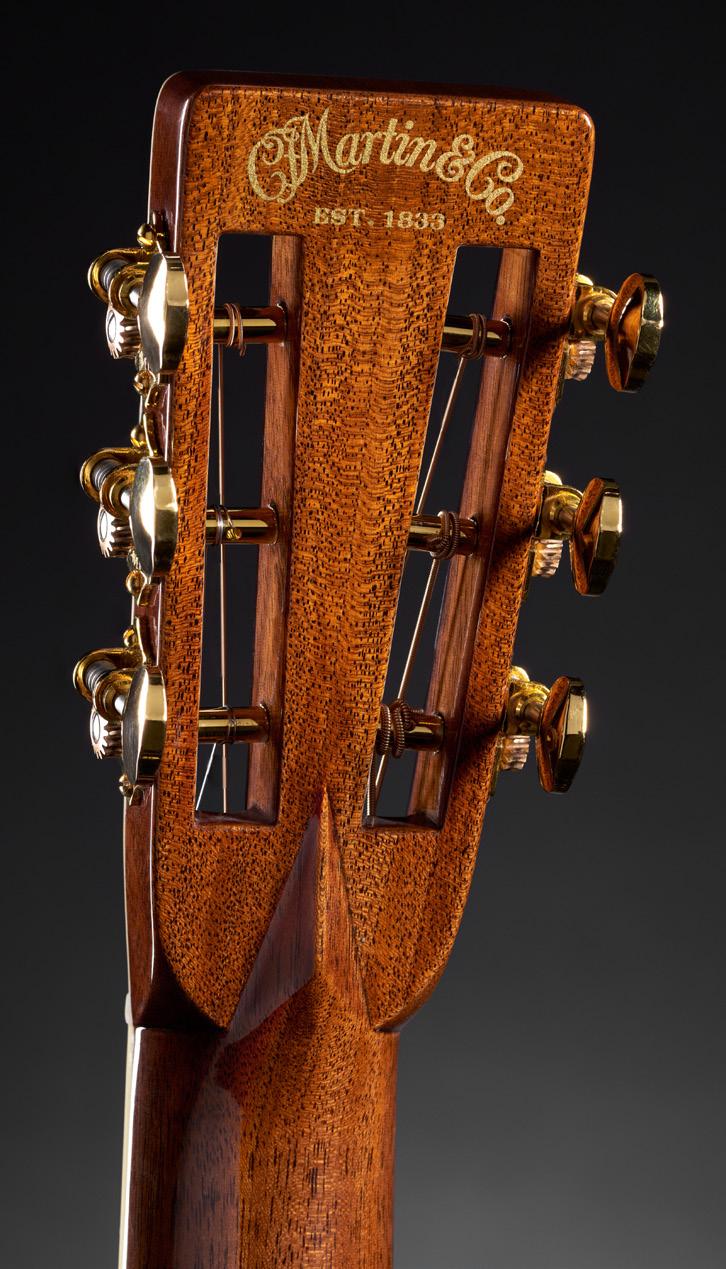
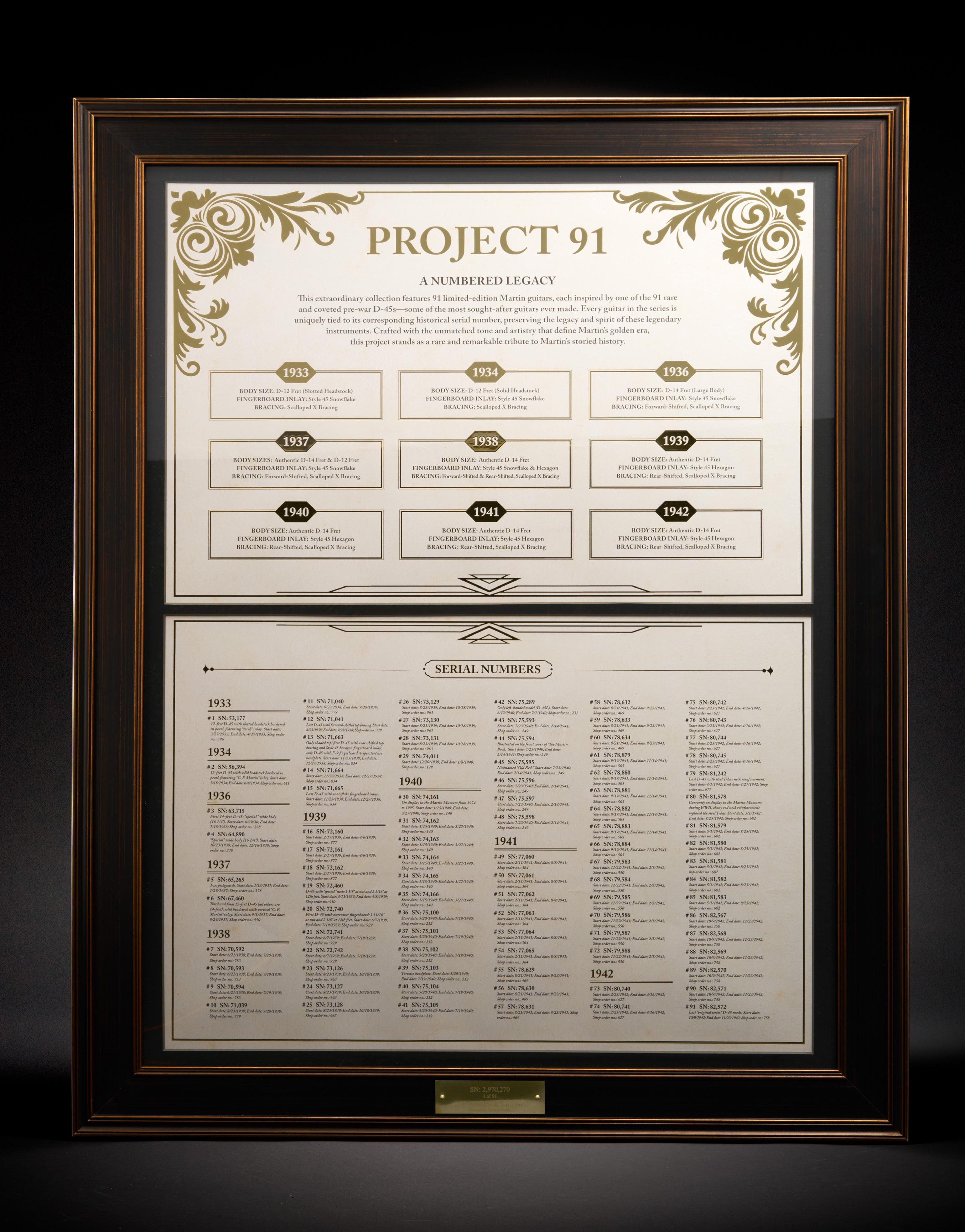
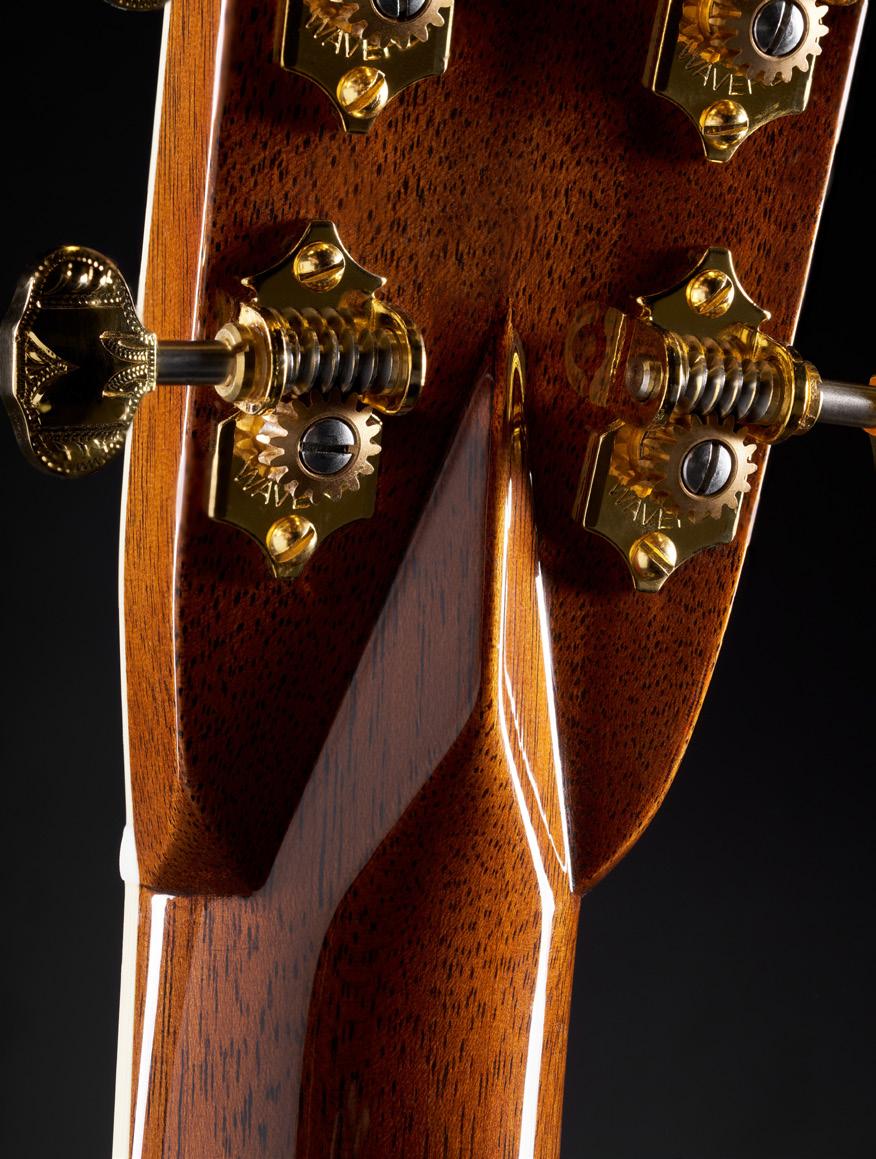
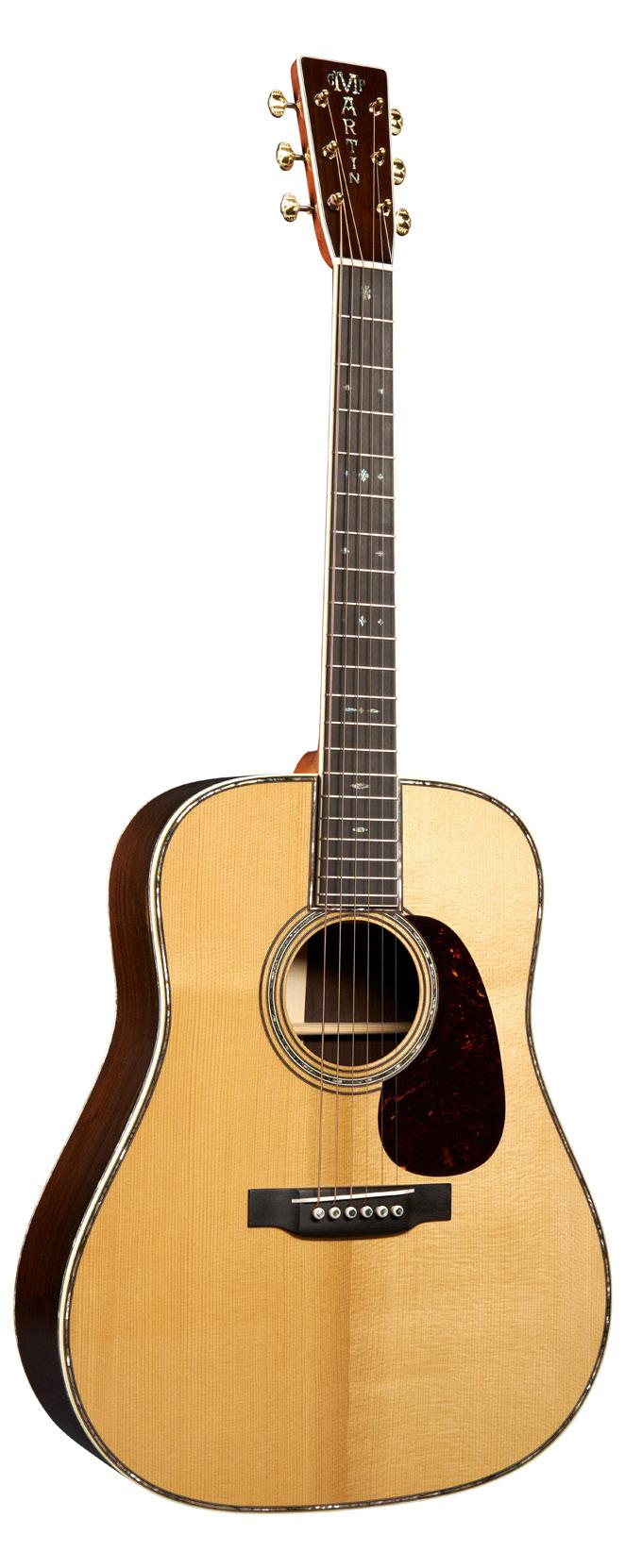
Chris Martin IV on Project 91 and recreating every pre-war Martin D-45
Go behind the glass of the Martin Museum
Meet the varied and exciting artists that make up the Class of 2026
from Thomas Ripsam
THEtop FROM
a word from
CHRIS
More to start and fewer to quit” was a phrase that NAMM embraced during my time on the board. It made perfect sense—making music is both challenging and deeply rewarding, and starting young can often be the key to success. After all, music forms an essential part of any well-rounded education. Too often, though, music and the arts are the first subjects to be cut from public school budgets.
On December 10, 2015, Congress passed the Every Student Succeeds Act, better known as ESSA. President Obama signed it into law that very same day. It marked the first time music was recognized as a standalone subject in federal education law. But these things don’t happen without advocacy. My friend, former Pennsylvania senator Bob Casey, played a significant role in shaping the definition of “well-rounded education” in that legislation.
Passionate music advocates from around the country sent more than 14,000 letters to legislators urging that “music” be specifically named as a core academic subject in the final legislation. And I personally traveled to Washington, DC, along with my fellow NAMM colleagues, to lobby our elected officials to fully fund that bill.
If you believe in the value of music and music education, speak up and speak out. Encourage your local school board to support music programs. Talk with your local and national representatives about your passion for making music and your desire to share that with the next generation through public school programs.
Many organizations—like the ones you can see opposite—help champion music education in the classroom and beyond. The Martin Guitar Charitable Foundation is proud to support them in our shared mission to encourage and empower music makers of all ages. You can, too.
C. F. MARTIN IV CHAIRMAN OF THE BOARD
Find out more about how Martin gives back on p22
A SINGLE
Every guitar JOURNEY begins with a SINGLE STEP into the UNKNOWN …
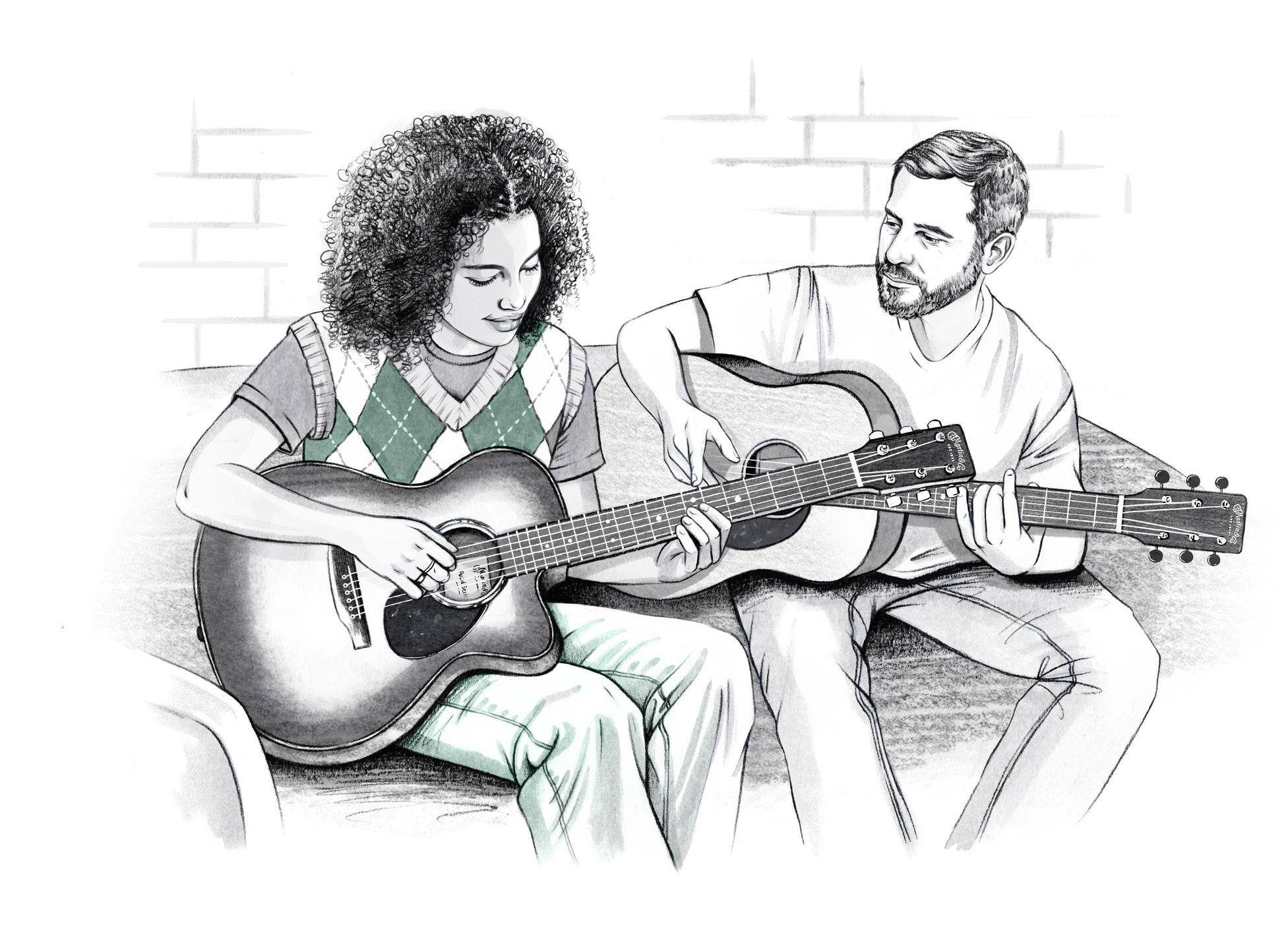
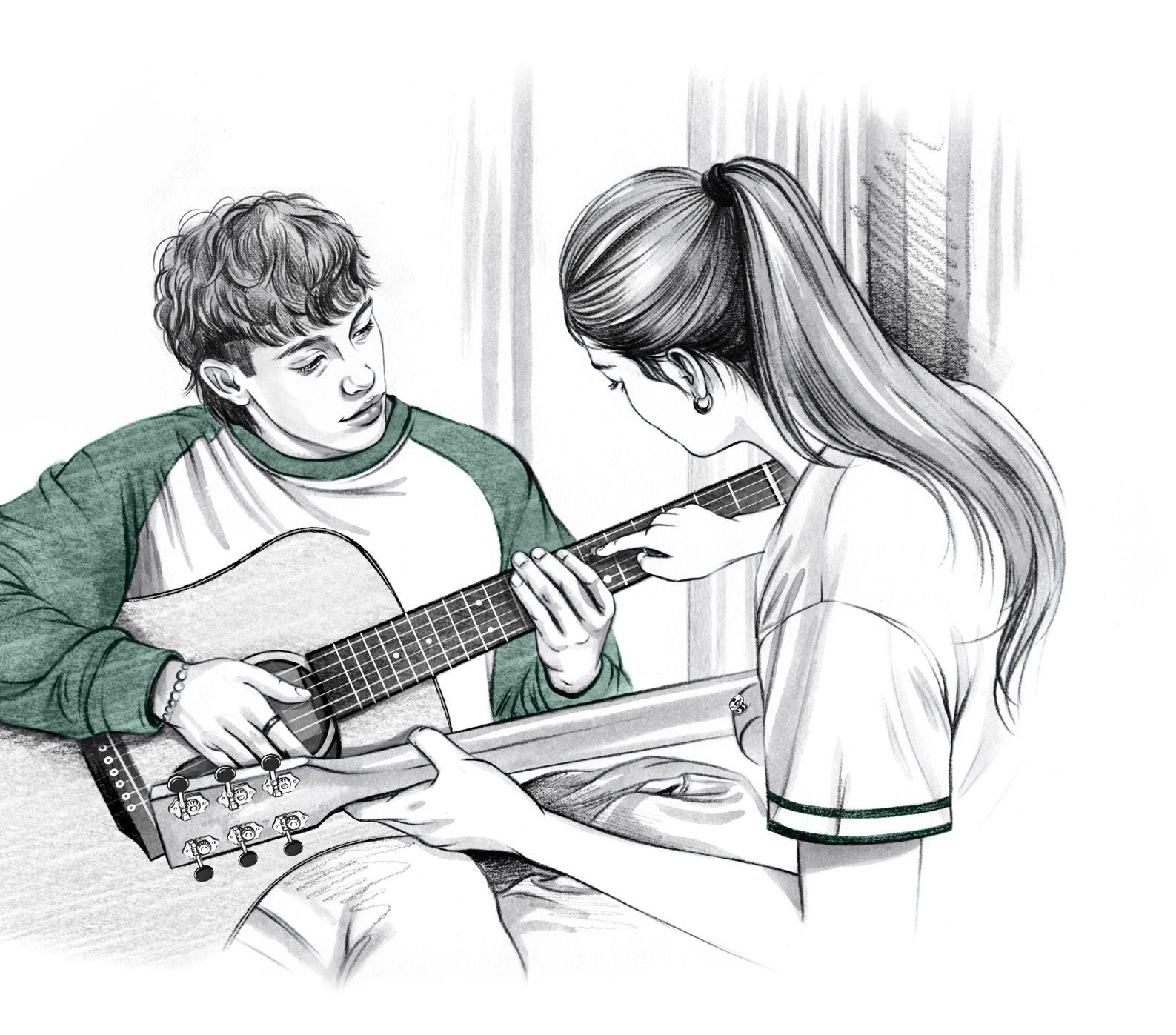
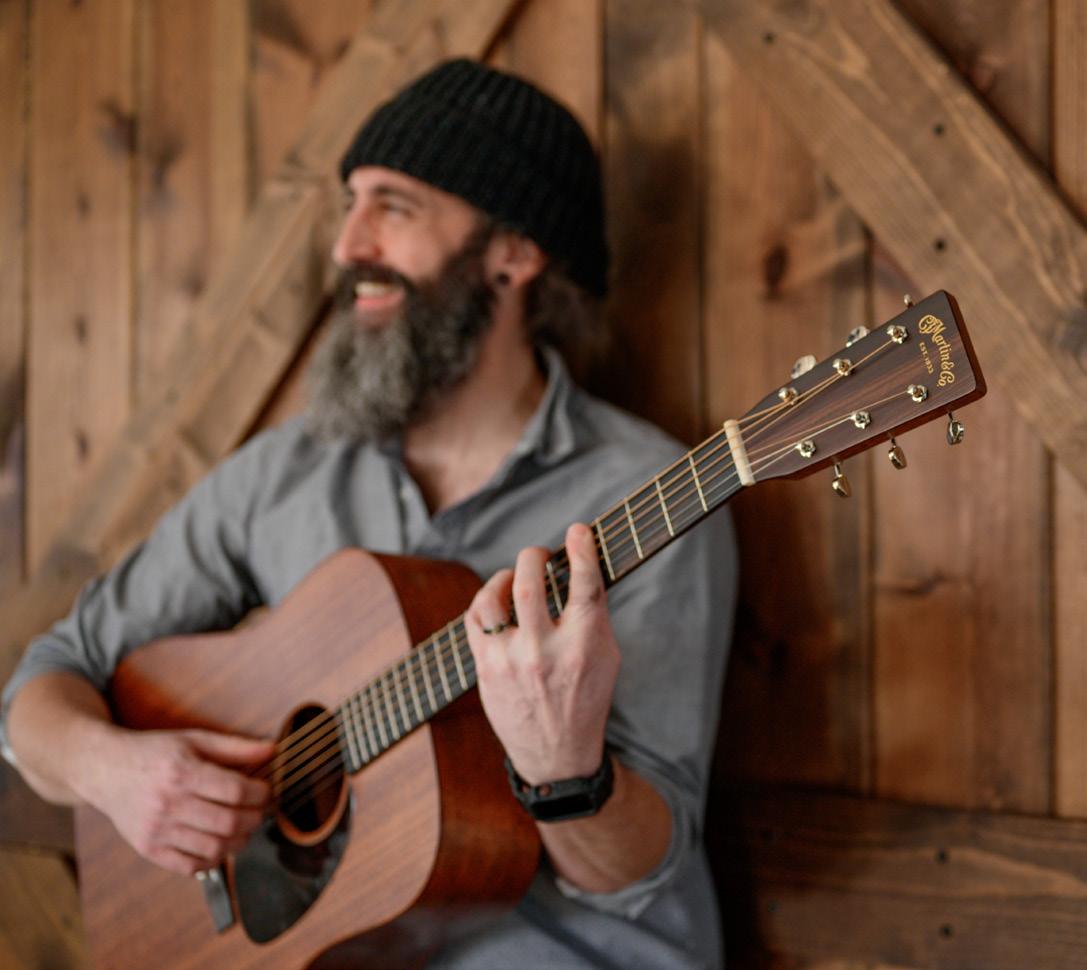
How did you first learn to play the guitar? It’s a question that never fails to provoke an interesting answer, whether you’re asking a globally famous rock star, an up-and-coming songwriter, or a new friend you just met at an open-mic night. These origin stories are the bedrock of everything that makes us guitar players, performers, songwriters, and artists—without them, none of us would be here today.
Everyone’s story is a little different, but they’re all united by a common factor: somewhere along the line, everyone learns to form their first chord shapes, to strum their first few patterns, to learn that first song. If you’re reading this, chances are you’re remembering your first steps into this world right now—how magical it felt to make music come alive beneath your fingertips, the rush of becoming an active participant in music, and not just a listener or appreciator.
In an issue dedicated to the magic of music education, then, we hit up Martin artists old and new—as well as some of the passionate team members who help craft the company’s instruments in Nazareth, Pennsylvania—to ask them that all-important question. Read on to find out how they got started.
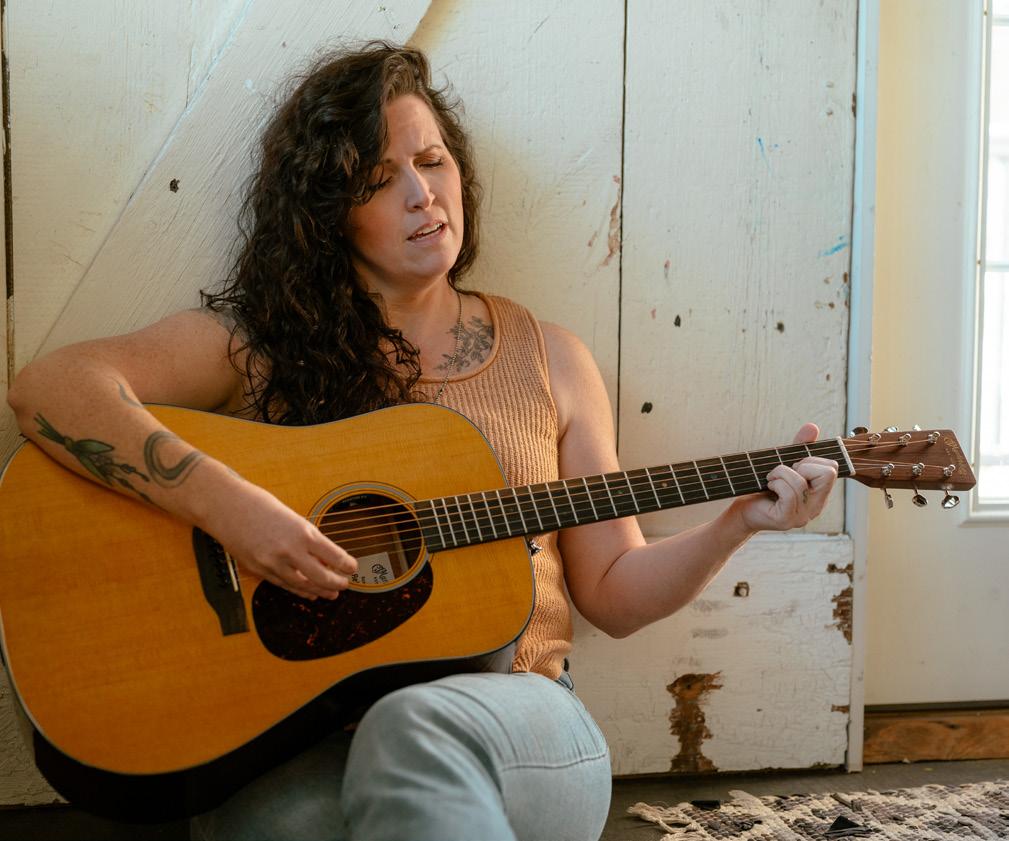
“My neighbor started getting guitar lessons, and I really wanted to learn how to play. When the tutor had finished my neighbor’s lesson, he’d come through our back gate and over to my house. My mom, knowing my personality, knew that I was going to need instant gratification going into the first lesson. She had previously got me lessons but the tutor went into music theory instantly, and I became pretty uninterested in it altogether. Going into this lesson, she gave my teacher a heads-up. He knew exactly what to do with me, and when I sat down, he asked me what my favorite song was. I told him it was ‘Kerosene’ by Miranda Lambert. We both took a listen, and he shaped my fingers into the D shape and showed me how to play that iconic intro riff from that song. I was immediately hooked, felt like a rock star, and wanted to keep feeling that rush of being able to play a song on guitar that I loved.”
KAITLIN BUTTS
“My father was my first guitar teacher. We would sit on the couch in our living room, and he
would show me simple chords and melodies starting when I was eight years old. After about a year or two of playing,
I
felt
driven
to practice more and more, and began
to play with other people besides my dad. He was always happy to sit with me and show me something new, and that kept me feeling excited to learn and improve.”
MOLLY TUTTLE
“When I first started, all I wanted to do was learn songs by The Beatles. I got my first guitar and started teaching myself with a VHS tape that Musician’s Friend had of some guy teaching basics, and another video teaching Beatles songs. From there, I learned a lot by ear and watching concert videos. I’ve taken some lessons over the years to hone my craft, but I’m 90 percent self-taught.”
JIMMIE
KLEINTOP JR, MARTIN
“Although I am a self-taught musician, I was inspired by my high school art teacher, Scott Myatt, and a Memphis musician, Andy Cohen. I tried to take lessons from them, but ultimately the best way for me to learn was by going alone and following what I call the ten-minute rule: just practice for ten minutes per day. I’ve never had natural rhythm, so playing instruments has always been a challenge for me. Breaking each day down to just ten minutes of playing has added up over the years to help me overcome the voice of doubt inside my mind.”
VALERIE JUNE
“The first person to teach me anything on the guitar was my dad. We sat down the night I got my first one, and he just started ripping into all the songs I’d been swirling in for the past couple years. He was playing the rhythms and hooks, singing along to some of the tunes, and just blowing my mind with every note. The most memorable was ‘Sweet Home Alabama,’ that opening riff, and then he took the lead—and I got goosebumps immediately! I sat there across from him, my jaw almost hitting the floor, and wanting to know how any of this was possible with six strings on some wood. Shortly after, he handed the guitar back to me and said that all that and more is possible and waiting, but you have to put in the effort to get there.”
ERIC KUMP, MARTIN
“My father showed me a couple of basic chords when I was about twelve or thirteen. After that, I learned the E minor chord. I’ve been obsessed ever since.”
CHRIS VANWHY, MARTIN
“I was thirteen years old when I started guitar lessons. John, my teacher, was a salty old blues dog who played a smoky, old acoustic strung with electric strings (so he could bend farther). Up to that point, I had only studied classical piano. John showed me a musical path with fewer rules and an emphasis on self-expression, which eventually set me up to write my first songs.”
SYML
“My father was the first person to put a guitar in my hand, and my grandfather was the first person to put a Martin in my hand—a 1964 D-18. The first steps then felt similar to the steps I am taking today. The guitar offered me the liberating potential to receive the luxury of living as a student who is in service to curiosity, harmony, and unity.”
DANIEL DONATO
“I’d been working at Martin for about a year, and while shopping at a local flea market, I stumbled upon a very cheap and beat-up classical guitar. I had always considered playing, but didn’t want to invest in an expensive guitar before I knew if I was going to like playing. I paid $20 for that guitar and practiced every day. I printed out chord charts from the internet and started to learn how to strum and fret notes properly. This was not a good guitar. The action was very high and very painful to play, but I was determined and was making good progress. After three months, I upgraded to a D-16GT, and everything became much easier—twenty-three years later, I’m still progressing with my playing and enjoying the ride every day.”
DONALD
ROTHROCK JR, MARTIN
“When I first wanted to learn how to play, I borrowed my cousin’s guitar and laid it face up on my lap and started playing ‘Seven Nation Army’ on the low E string, more or less trying to make sense of the fretboard like a piano keyboard. I’m embarrassed to admit that, but it’s true. Then I took to YouTube, spending hours watching GuitarZero2Hero and figuring out how to play some of my favorite songs. It’s really full circle to now watch him do a tutorial on one of my own songs. I really can’t believe it.”
NOAH RINKER
“I started taking guitar lessons with a local music instructor in Massachusetts when I was nine years old. I still remember walking in with my purple Hannah Montana guitar and learning a simplified version of ‘Here Comes the Sun’ by The Beatles. From that moment, I fell in love with the instrument, and I haven’t put it down since.”
LILY FITTS
“I started out learning songs by ear on YouTube with a borrowed guitar, but I got my own first guitar through a college internship at The Maury Show. The executive producer there had noticed the covers I was posting online, and one day he called me into his office and offered to buy me a guitar. It was an insanely generous and kind thing to do. It’s the guitar I’ve used to write almost all of the music I’ve put out. Getting that first guitar changed my life, and I’ve been playing it ever since.”
MARK AMBOR
“When I was about thirteen, I signed up for what I thought were typical guitar classes at the local community college— only to find out they were Renaissance guitar lessons. My first ‘real’ guitar teacher was a chain-smoking, Strat-wielding classic rocker. Every week, I’d squeeze into a broom closet with my Epiphone SG and work through the Guitar Method book one page at a time—but that only lasted for about a month. Instead of playing “Hells Bells” like I wanted to, I was playing “Jingle Bells”—and that got old fast. I think I made it to page three of the book. Luckily, it was around that time that YouTube was taking off, so I was able to learn at my own pace, and spend hours in my bedroom with binders full of tabs learning how to play my favorite songs. Just recently, I started taking lessons again for the first time since those smoky broom-closet days. Being my own teacher for most of my life has afforded me a lot of freedom to find my own sound and style, and given me the room and time to fall in love with the instrument I still love to this day. But it also taught me that no matter how much you think you know— and I don’t know much—there’s always more to learn.”
DERRICK KROM, MARTIN
“My very first lesson was from my uncle Gary, who gave me a book for Christmas in the early 1990s. My first regular instructor was my science teacher, Mr Bryant, at Troxell Junior High, Parkland District. I think learned more about music from him than I have from any other resource since.”
“I got my first guitar for Christmas in 1994: a Sigma from Fretz Music Center in Souderton, Pennsylvania. Shortly after, I got my first electric bass and began taking lessons on both with a guy named Dave Hendricks in Quakertown. Since then, I’ve owned 250 or so guitars, built countless electric kits and two acoustics from scratch, as well as a ukulele and a few cigar boxes.”
JARROD “GUS” CLARK, MARTIN
TRENT BEVERS, MARTIN
“I won my Martin 000-R in a raffle at Godfrey Daniels in Bethlehem. I was five years old, and not much bigger than the guitar! A few years later, my older cousin taught me how to play the ‘Smoke on the Water’ riff and a few other little power chord riffs. It felt really fulfilling to be able to produce actual music myself at a young age from this contraption made of wood and metal strings. Now here I am today in my thirties, not only working for Martin Guitar, but also continuing to perform and write songs with that 000-R!”
SCOTT REAGAN, MARTIN
“I was ten years old when I got my first guitar by trading a handful of cherry bombs to a kid across the street who had one sitting in the top of his closet. It was missing strings, and I had no idea how to replace them, tune, or play it. About a block and a half away, there was an older friend who would sit on his porch and play his guitar. He told me to go to the drugstore to buy the missing strings, since there wasn’t a music store in Gainesville at the time. I walked down to his house one day, and he put the strings on, showed me how to tune the guitar, and taught me how to play ‘Red River Valley.’ I was off and running. There was no teacher, no lessons, no music school. It was just me learning songs by ear. Even today, I can hear something once and play it back. At the time, that was the only way I knew how to learn guitar. Once I got my toes wet, I dove straight into the deep end.”
DON FELDER
“My dad has helped me here and there, but essentially, I’m self-taught, which explains my slow progress! I still don’t really know the names of chords—I play the same way I play piano, which is all from ear. Knowing piano so well was helpful for going into playing the guitar, as I knew what notes I needed for the chords to work—I just had to take the long way round to find them. Often the song I was writing would drive the discovery of new chords or pickings, and that’s still the case now; I’m still getting to grips with the instrument.”
ROSE BETTS
“I taught myself how to play the guitar by ear. I learned on my dad’s guitar—it was nearly the same size as me, so I would lay it flat on my lap and play it like a dulcimer because the fretboard was too big for me!”
DEBBII
DAWSON
“I first heard the sound of a guitar on BBC Radio’s Light Programme. It was either Eddie Cochran or Buddy Holly. Then I heard Hank Marvin, the lead guitarist of The Shadows, and my life changed forever. I played along with Hank, learning every track The Shadows released. I was eight years old when I started playing.
“At first, I played entirely by ear. When my parents realized how obsessed I was with the guitar, they sent me for classical guitar lessons. Still, I have to admit that playing along with Hank was much more my thing.
“Later, my dad brought home a Hot Club de France album featuring Django Reinhardt and Stéphane Grappelli. That definitely raised the bar. I quickly realized that Django was a freak of nature— his playing was masterful and continues to be studied by guitarists everywhere.
“As I entered my teens, I listened to every guitarist I could find. The blend of rock, jazz, and blues helped me define my own style. Even today, I feel the same excitement when I pick up a guitar as I did when I was eight. Thankfully, it’s a passion that never leaves.”
PETER FRAMPTON
Words • JOSH GARDNER
Liverpool SOUND THAT
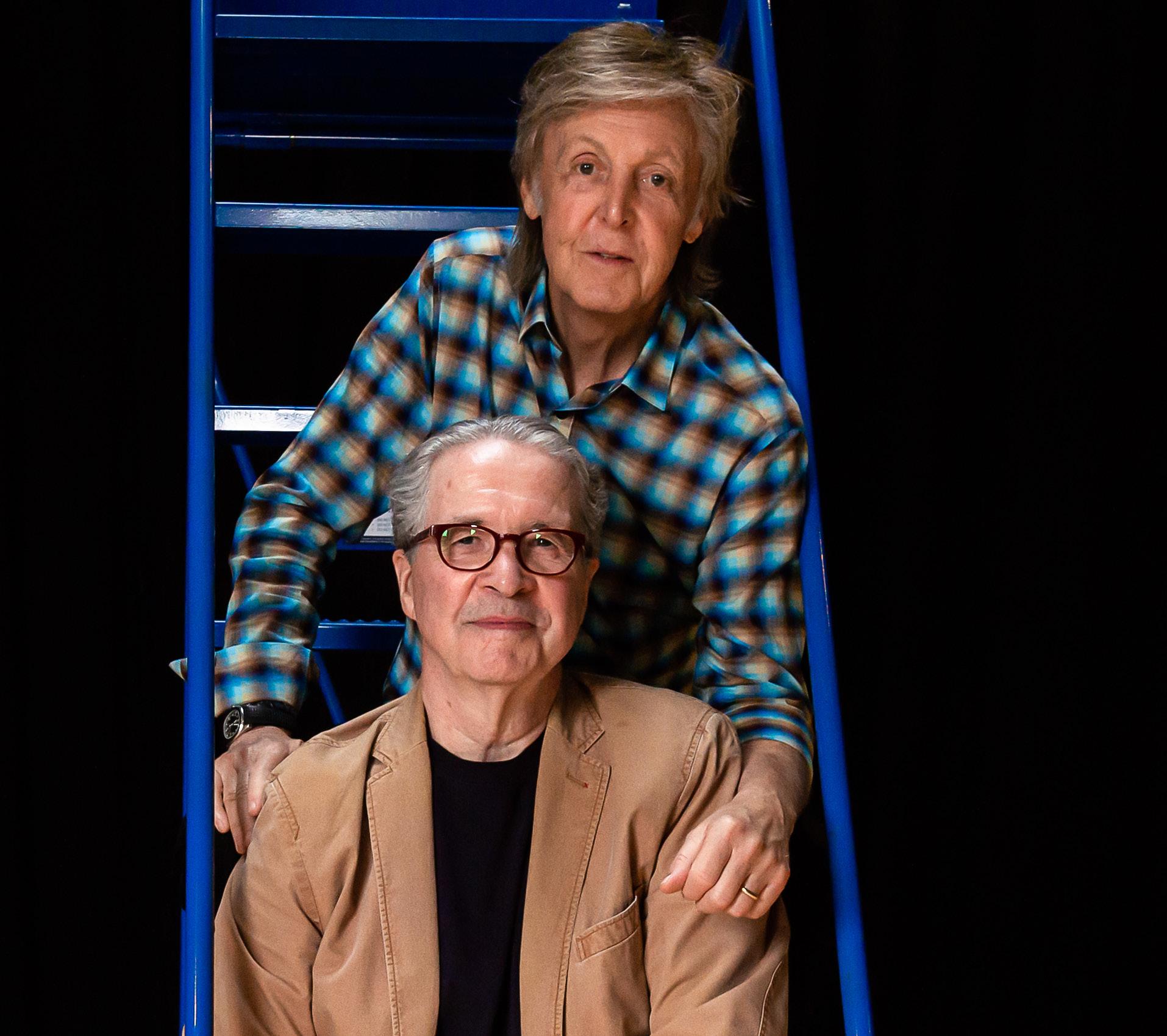
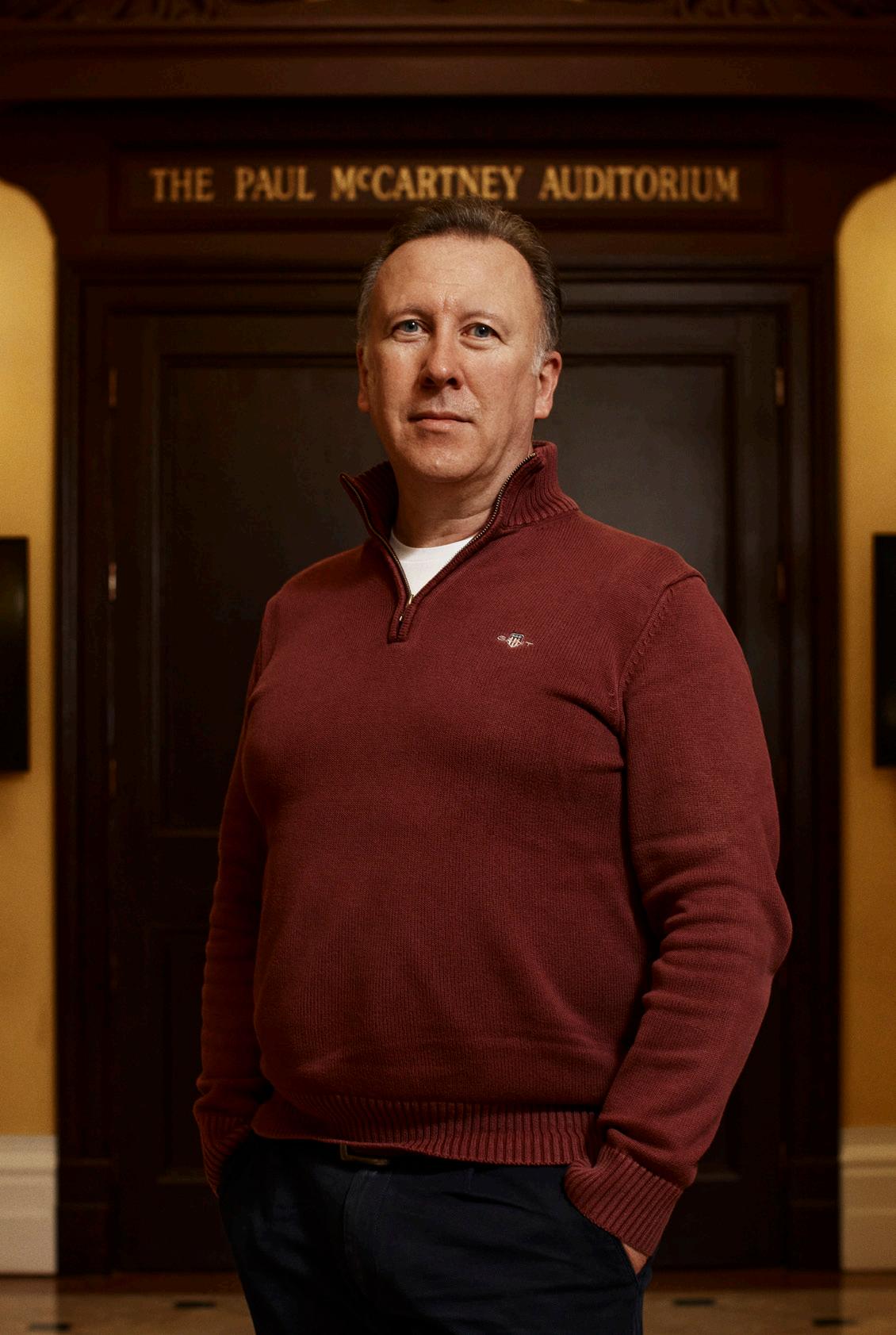
Three decades ago, SIR PAUL McCARTNEY and MARK FEATHERSTONE-WITTY had a vision to create a WORLDLEADING performing arts college in LIVERPOOL . Now, as LIPA CELEBRATES its 30th anniversary, MARTIN HAS PARTNERED with the school to help awaken and INSPIRE EVEN MORE ARTISTS . This is THE STORY of a remarkable place and some even more REMARKABLE PEOPLE
Sir Paul McCartney is in it for the long haul. The former Beatle sticks with things he believes in. That includes the Höfner Violin Bass, the instrument with which he is synonymous. He picked it up in 1961, during the earliest days of the band. But there’s another instrument with which McCartney has an equally important relationship: the Martin D-28. Since around the time of The White Album’s release in 1968, he has shown great affection for what is still his favorite acoustic guitar, nearly six decades later.
McCartney is loyal not just to his instruments, but also to the ideas he holds dear. This is evident in his relationship with the Liverpool Institute for Performing Arts, or LIPA, the school he co-founded thirty years ago, in 1996, with the dream of inspiring a new generation of creatives in his hometown.
Photos • TOM OXLEY
“Arts education is continually undervalued by governments who think it’s a luxury… but it’s really not”
MARK FEATHERSTONE-WITTY
Given McCartney’s long association with Martin, it’s little wonder that the company has chosen LIPA’s 30th-anniversary year to enter a new partnership with the school he created. But before we get into that, we should tell the unforgettable tale of LIPA—an unlikely project, borne of an unexpected partnership, that has become an internationally lauded hub for young performers and those who support them.
LIVERPOOL STREETS
At the tail-end of the 1980s, McCartney was working on his first major foray into classical music, which would become his Liverpool Oratorio, released in 1991. As part of the project, created to mark the 150th anniversary of the Royal Liverpool Philharmonic, McCartney returned to his birthplace looking to soak up some of the ambiance of the city. There, he ended up revisiting some of his old haunts.
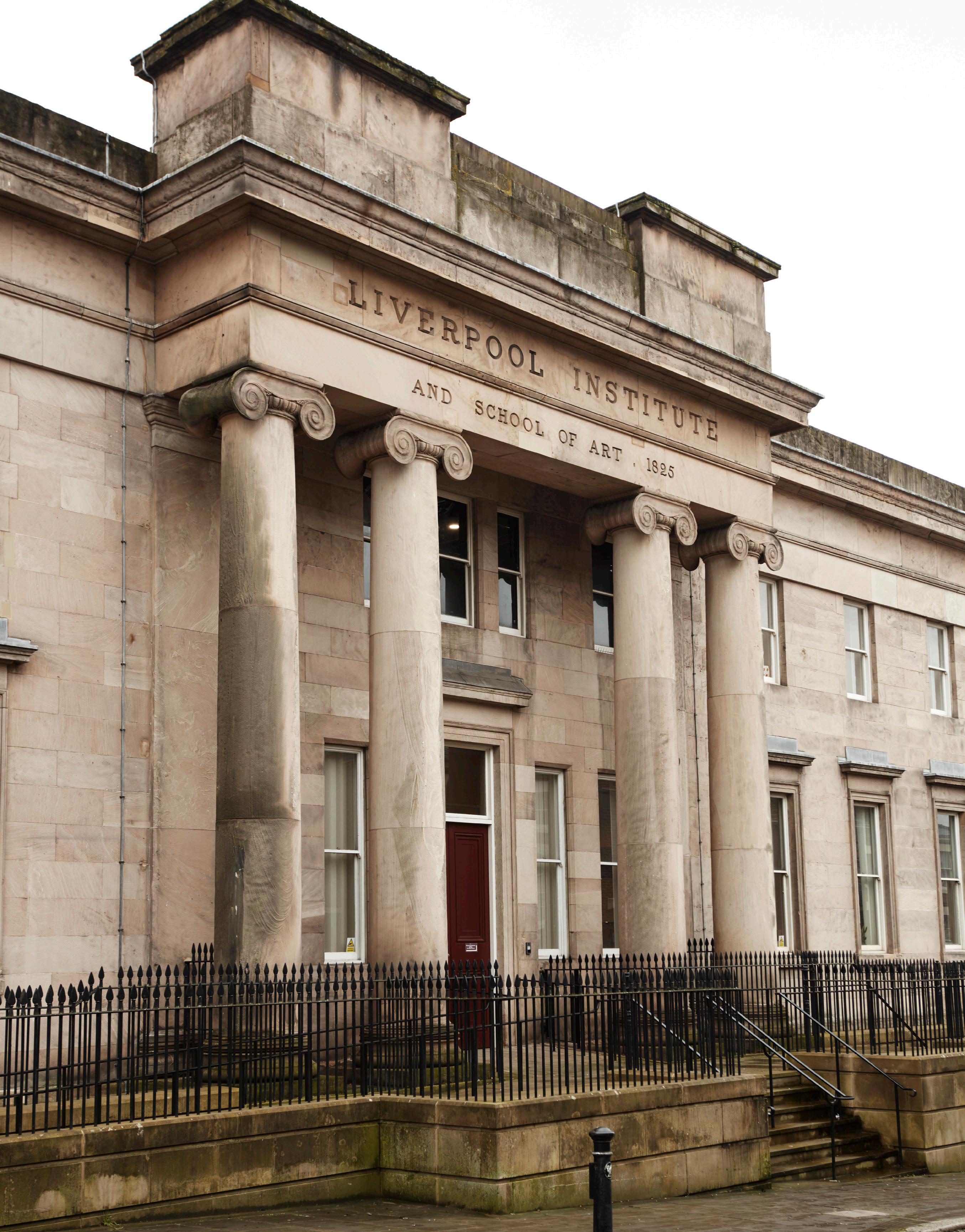
One of those was the Liverpool Institute High School for Boys, an imposingly designed former mechanics’ school, built in 1825, that had become the grammar school McCartney and fellow Beatle George Harrison had attended as young men. Changing demographics and political landscapes in Liverpool meant that the school had closed for good in 1985 and had quickly fallen into a state of disrepair.
McCartney left the dilapidated building with a sense that something should be done to preserve the grand Georgian edifice, but what to do? Enter his old friend George Martin, and a colorful character by the name of Mark Featherstone-Witty.
During the 1970s, Featherstone-Witty was a teacher with a heavy side interest in the performing arts. He discovered that the legendary Beatles producer was receptive to championing what became the BRIT School, the London-based performing arts institution that has given the world everyone from Adele and Amy Winehouse to Olivia Dean and Raye.
“I had been enthused by Alan Parker’s film Fame,” says the 79-year-old Featherstone-Witty. “And I wanted to start a [U.K.-based] school like that. Arts education is continually undervalued by governments who think it’s a luxury. In one sense, it could be described as that, but it’s really not.”
Featherstone-Witty, however, grew frustrated that most of the arts-based education in the U.K. was focused in and around its capital—there was barely anything for young
creatives in the working-class north. “It was surprising, really,” he says. “Because talent and ability, and love for this stuff, are spread everywhere. It doesn’t have to be in one place.”
So, in the mid-1990s, the stage was set. The most famous musician in the world was looking for a constructive and worthwhile use for a building in a northern working-class city that has been a remarkable cradle for music, acting, and theater, while a tutor was hungry to make arts education accessible to those outside of London. It’s no wonder their mutual friend Martin thought they should meet.
LIPA INTO THE UNKNOWN
“The first time I met Paul, he walked in through the door and I thought, ‘My God, that’s Paul McCartney,’” Featherstone-Witty says, with a chuckle. “But then the other part of me thought, ‘No, hang on. I’m here for a reason.’” That reason? To work on a plan that would see the old building renovated and turned into an institution that could foster and creatively empower the youth of Liverpool and beyond. With the plans set, all they had to do was make them a reality.
Naturally, the financial, logistical, and political hurdles would be many and varied. And in that regard, it didn’t hurt having one of Liverpool’s favorite sons—
For Sir Paul McCartney and Mark Featherstone-Witty, the success of LIPA has been a three-decade labour of love
Brian Roberts
“Paul doesn’t expect to go on tour and meet people in Peru who were students at LIPA! But the global reach is just amazing”
and one of the most famous people on the planet—in LIPA’s corner. “We were and are phenomenally fortunate that Paul McCartney put his name on it,” FeatherstoneWitty recalls. “There was nothing in this part of the world. There was nowhere else. It was just terrific.”
McCartney was prepared not just to put his money where his mouth was, but as a proud product of Liverpool’s state education system, he also felt strongly that the school had to be more than merely a passion project for a pop megastar. According to Featherstone-Witty, that never even entered his mind. “He said something in front of a politician at the time—‘I’m not responsible for the education of this country: you are.’ So clearly, he expected the government to do something about it!”
The initial investment required to get LIPA off the ground was enormous—the equivalent of about $68 million in today’s money. Featherstone-Witty admits that he and McCartney faced a steep learning curve. “We were kind of on an adventure together, I think,” he remembers, chuckling at the sheer scale of the renovation project they undertook and how quickly costs spiraled. “All I can say is, never renovate an old building!” Despite the many obstacles, in 1996, the Liverpool Institute of Performing
who felt that those people were being under-recognized as well as under-rewarded.”
Putting musicians and actors in lectures alongside those with less glamorous jobs helps to engender a shared appreciation of what everyone brings to the table, while also developing relationships that can pay dividends in students’ later careers. It’s a practical consideration that, from the very beginning, was deemed essential across the board.
Arts was opened by Her Majesty Queen Elizabeth II. And soon after, the adventure that Featherstone-Witty and McCartney had embarked upon together would begin to impact the lives of young creatives from around the world.
SETTING UP FOR SUCCESS
Creating any educational institution with the necessary means to equip hundreds of young people for a career in the arts would be an incredible achievement. But Featherstone-Witty, the school’s founding principal and CEO, was also keen to ensure that LIPA wasn’t just a school for performers.
“One thing that makes LIPA special is that we were training performers alongside those who made performance possible,” he explains of the engineers, producers, costume designers, and all the other unseen jobs that don’t get the obvious plaudits. “This really struck a chord with George Martin,
“The majority of small businesses in the creative and performing arts are made up of four people or less, and if you’re a performer, it’s probably just one person,” says Featherstone-Witty. “You have to do everything: you’re doing a bit of accounting, a bit of marketing, legal stuff—the whole thing!” By educating students not just in vocational aspects, but also the wider skills required to build a career, LIPA sets students up for success in a way that many other institutions don’t—today, 83 percent of LIPA students are employed in the creative industries within three years of graduation.
Some things remain, then. But, thirty years into its existence, LIPA has also changed in a variety of ways. Perhaps most notably for Beatles fans, in 2012, the institute expanded into next door’s Liverpool College of Art, England’s oldest school of art outside London. Back in the 1950s, its halls were home to John Lennon and original Beatles bassist Stuart Sutcliffe. The acquisition is yet another reminder of how LIPA is preserving the musical and cultural heritage of Liverpool.
Another of Featherstone-Witty’s dreams was to create a pathway for young people to explore the creative industry, all the way from their early years through to the college-level education that LIPA offers. Over the past two decades, that ambition has expressed itself in myriad ways. In 2003, the
LIPA’s historic buildings house state-of-the-art recording facilities
team launched LIPA 4-19, a part-time performing arts academy for school-aged children. In 2014 and 2016 respectively, they launched the LIPA School and LIPA Sixth Form College.
The final piece in the puzzle was completed in 2025. Previously, LIPA’s degrees were awarded by Liverpool John Moores University, but following a long process, LIPA received clearance from the British government to begin awarding its own degrees. The certification is about more than mere prestige—it frees up LIPA to shape its own curriculum and even more precisely, which means it can better cater to the needs of the hundreds of creative young people it welcomes every year. Not only that, but it allows LIPA to further cement itself as a world-leading institution in its field.
“It’s a huge thing for us,” says Sean McNamara, who succeeded Featherstone-Witty as LIPA’s CEO and principal in 2021. “It kind of completes the last step of the journey, if you like, from being established in what was a derelict building in 1996 to becoming an autonomous performing arts university.”
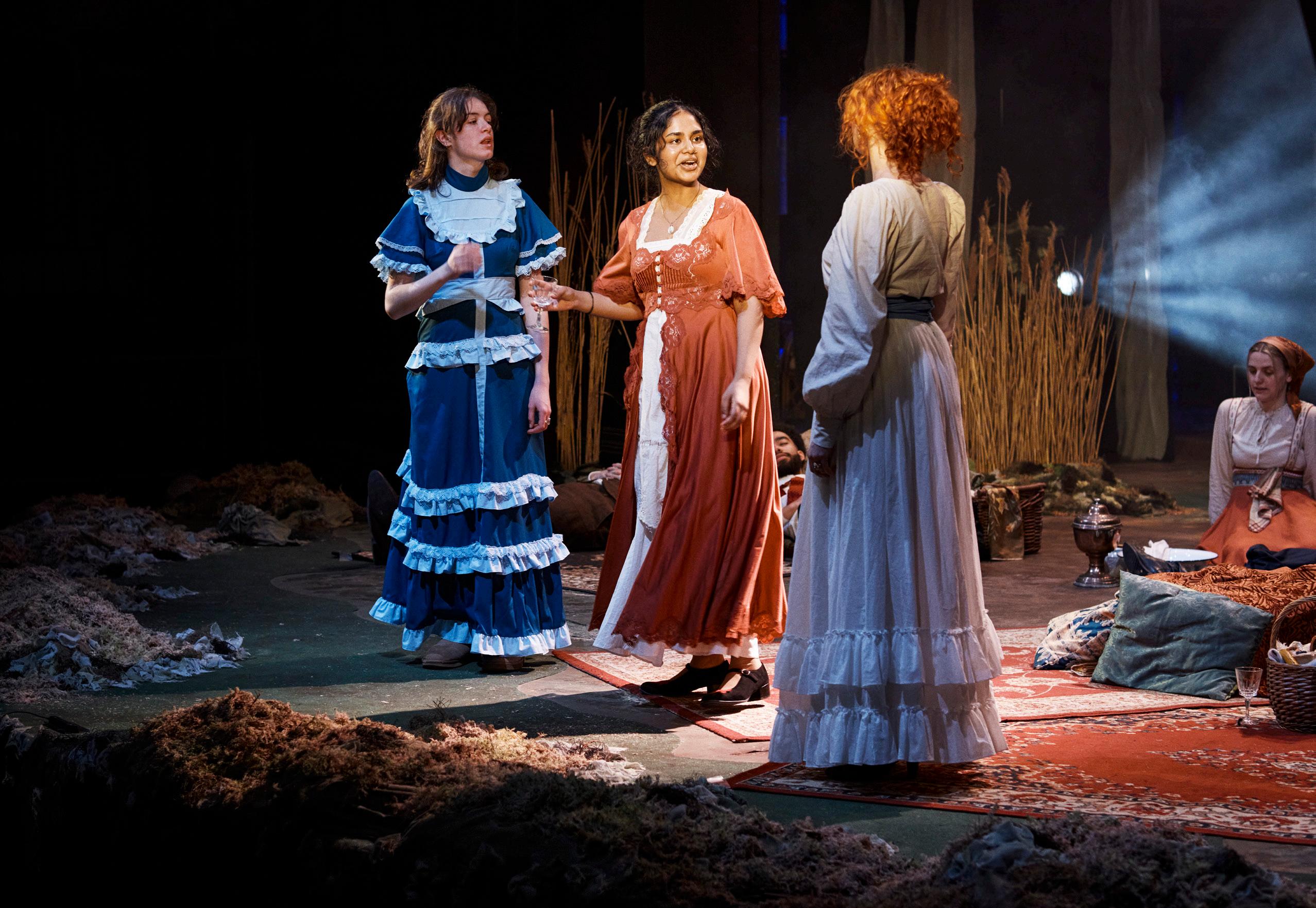
LIPA offers the full spectrum of performing arts courses: from music and drama to costume design and production. All under one roof
Even as a relative newcomer to the institute, McNamara has always found the purpose of LIPA clear and compelling. “I think the arts and culture are equally important, because they provide balance. They provide an understanding of what it is to be a human being,” he says. “LIPA was created to provide a learning environment in which performers and those who make performance possible could collaborate, create, and develop together through shared projects, productions, and professional practice. It is a genuinely multidisciplinary and interdisciplinary creative learning environment, designed to prepare emerging professionals for the collaborative realities of the creative industries.”
The institution’s Principal is equally conscious of the influence and significance that Sir Paul McCartney has as LIPA’s co-founder and figurehead. “We’ve been incredibly fortunate to have a founding patron like Paul, whose unwavering and enduring support has helped to elevate our profile and credibility both within Liverpool and internationally,” says McNamara. “He also brings a genuine authenticity to who we are, what we stand for, and what we seek to achieve through creative and vocational learning.”
“LIPA is always responding. It’s always evolving,” he adds. “And LIPA is always going to be a part of Paul’s landscape. What I’ve seen in my time here is somebody
“Music, imagination and creative expression are part of our DNA at LIPA, and you can feel that same spirit deeply embedded within Martin as well”
SEAN MCNAMARA
Part of LIPA’s ethos is encouraging students from different sides of the performing arts to collaborate and build mutual understanding
who has always been supportive, not just cheering us on, but really contributing in so many ways.”
KEEPING IT CLOSE
Over the past three decades, the community that LIPA has built in Liverpool and beyond has grown and diversified in ways that McCartney and Featherstone-Witty might never have imagined. The performing alumni—from early attendee Sandi Thom to more recently graduated talents such as Holly Humberstone—understandably get most of the attention. LIPA’s objective, though, is to seed every stratum of the performing arts field across the globe.
“Attending LIPA connects students to a global community of graduates built over the past thirty years,” says McNamara. “It means becoming part of an inclusive creative network, a community rooted in collaboration, mutual support, and shared experience. These connections often continue long after graduation, creating opportunities for friendship, creative partnership and professional collaboration across the creative industries.”
The reach and impact of LIPA graduates cannot be understated. The institute has welcomed students from more than seventy countries over the past three decades, and their diversity often takes even its founder by surprise. “When Paul
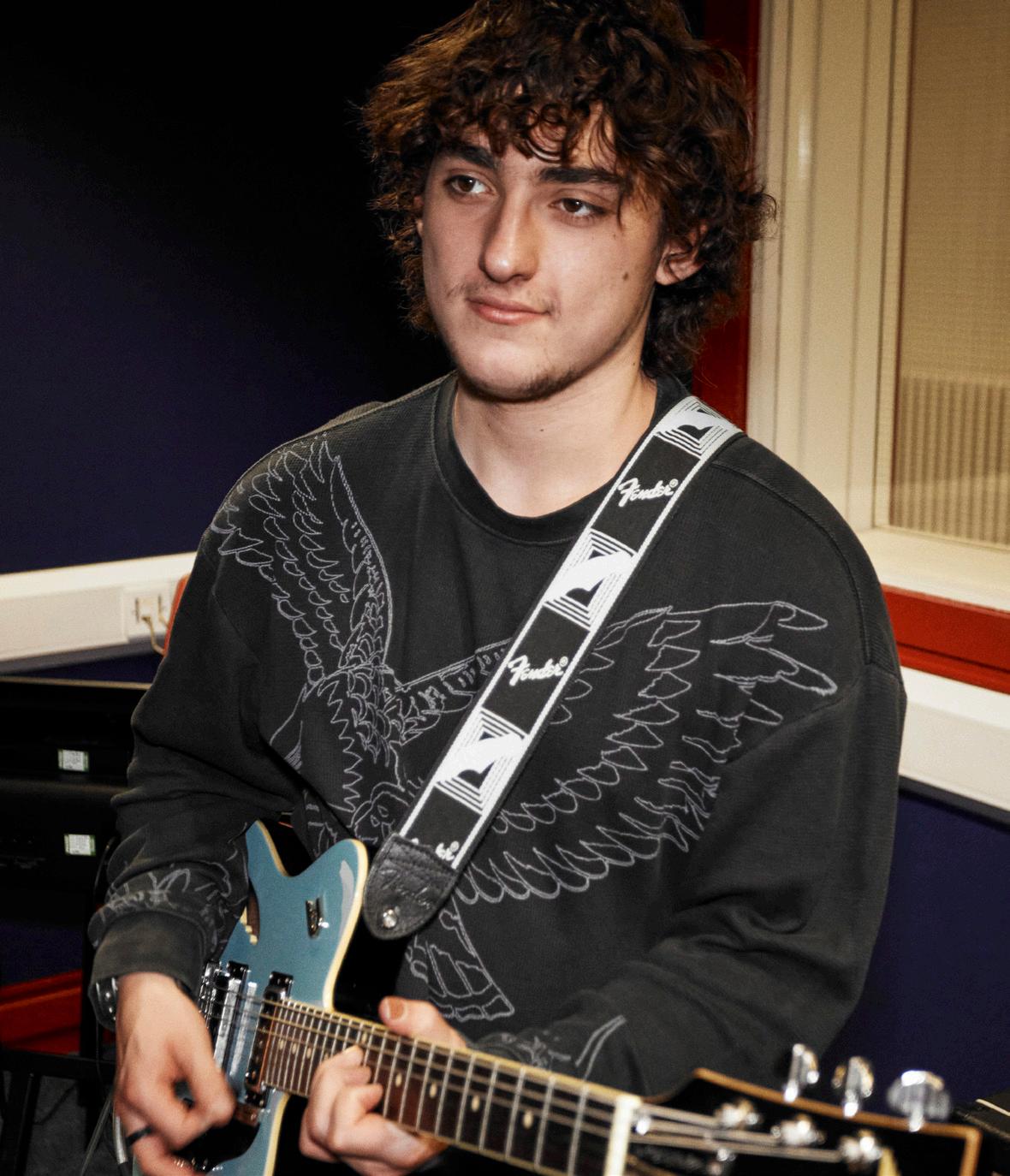
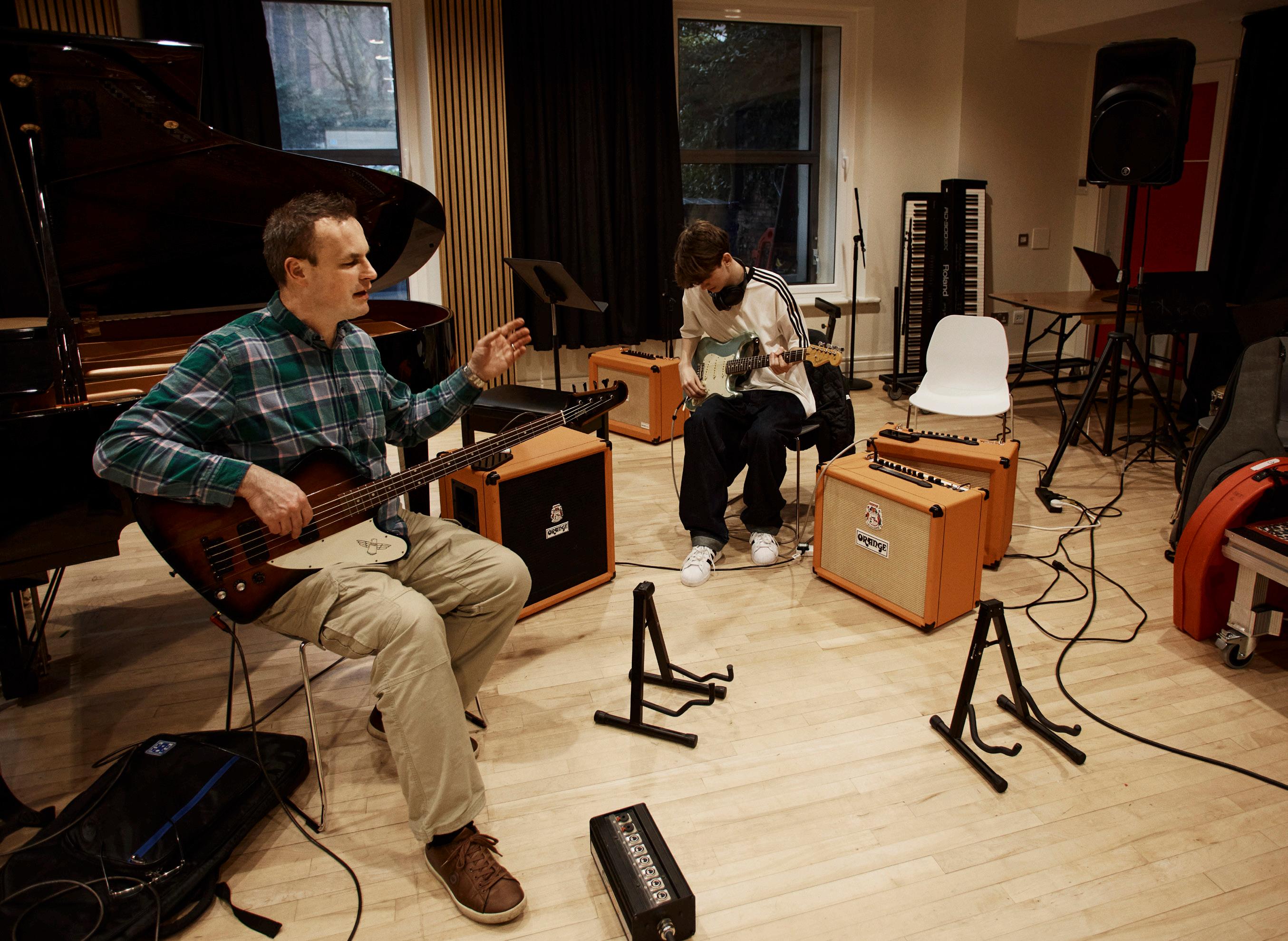
LIPA students can specialize in a variety of instruments, including bass and guitar
goes on tour, he meets people who come up and say, ‘Hi, I was a student at LIPA,’” Featherstone-Witty says, “but he doesn’t expect to meet people in Peru who say that! The global reach is just amazing.”
Despite its prestige and popularity, one thing that keeps LIPA true to its origins is its size. Every year, it welcomes only about 10 percent of its more than 3,000 applicants. This ensures that the school retains its community feel, which also aligns with the sensibilities fostered by Martin across the pond in Nazareth, Pennsylvania.
“There is something about the importance of keeping things to a certain size that allows the intimacy between all the various components, so that they feel they’re part of one group,” Featherstone-Witty says. “And this is very much part of Martin’s philosophy too. We’re completely on the same page.”
COMMUNITY FOCUS
This commitment to maintaining the level of the LIPA student body such that it can retain the necessary community and connection also allows its most famous patron to have a more involved role. “Sir Paul attends graduation every year, meets every single graduating student, and has a photograph with them,” McNamara says. “That takes time, it takes care, and there’s a real nurturing quality to it. There’s a real authenticity about wanting to give back and wanting to support the development and the progress of the next generation.”
When we ask Featherstone-Witty about his favorite LIPA moment with McCartney, he highlights another special aspect of the Beatle’s relationship with its students. “One of the things he does is hold individual sessions with promising singer-songwriters,” he says. “There’s usually twelve in each session, with each student bringing three songs to workshop with him. I remember once, we were having a break in the middle of this session, chit-chatting about the songs he’d just heard from the students, and I asked him, ‘Was there a particular song you found memorable?’ Now, remember, at this point, he’s heard eighteen different new songs in the past few hours. And he said, ‘Oh, I really like this one,’ and sat at the piano and just played it, all the way through—with both hands! I just sat there thinking, ‘How could you do that?!’ This is a man who lives music.”
The diverse community of students, alumni, faculty, and friends of LIPA, as well as partners such as Martin, are all united by McCartney’s passionate belief that artistic education can change the lives of students and the world around them.
“I think there is something incredibly powerful about knowing that the performing arts is where you belong, where you feel able to grow and thrive within a community of people who share your values, your aspirations and even your fears,” says McNamara. “It is a place shaped by creativity, collaboration and that innate human instinct to create, to share experiences and to tell stories together.”
In March, Martin furnished LIPA with five instruments— three guitars, a bass, and a ukulele—to help the students on their musical journeys. Martin will also award the top graduating guitar student with McCartney’s favorite six-string, a D-28. The partnership is not just about McCartney’s association with Martin, but a shared set of values. McNamara sees LIPA’s fundamental principles reflected in the people who make up America’s oldest and most iconic guitar company, too.
“It’s immediately clear when you visit the Martin factory that you are surrounded by craftsmanship, creativity and excellence,” he reflects. “It is not simply about the instruments themselves, but about the people, imagination and collaboration behind them. There is a real sense of community and shared purpose. These exceptional instruments only exist because of the skill, artistry and inspiration of the individuals who create them, and that human creativity can never truly be replaced. Music, imagination and creative expression are part of our DNA at LIPA, and you can feel that same spirit deeply embedded within Martin as well.”
Current principal and CEO Sean McNamara has stewarded LIPA into a new era, which includes the vital step of awarding its own degrees
& TELL Show
HOW
Martin Guitar FACILITATES music EDUCATION for people of all AGES and WALKS of LIFE
The magic of learning guitar is that it’s never stationary —and the reason this issue of the Martin Journal is dedicated to music education is to demonstrate how easy it is to pay it forward. The chances are that your first experience with the guitar came from someone showing you a chord or two, which ignited a spark that has yet to go out. Equally, no doubt, we imagine that at some point during your musical journey, you’ve been able to share the joy of learning a few chords and opening up the world of guitar to someone else, whether a friend, child, partner, or even a complete stranger.
You may never know the impact that a small act such as this— paying forward the gift of guitar—has on a person’s life, but it’s the will to encourage others and share in the excitement of music that unites us all.
As America’s oldest and most beloved guitar brand, Martin Guitar takes pride in assuming the responsibility, and privilege, of helping new players pick up the instrument and set themselves on the life-affirming path toward unleashing their inner artist. Through the incredible work of the Martin Guitar Charitable Foundation, the company donates more than half a million dollars annually to various initiatives and projects that help to inspire people of all ages to pick up the guitar for the first time and to keep the music going. These are some of the organizations that are especially close to the heart of Martin Guitar.
Guitars 4 VETS
Since 2007, Guitars 4 Vets (G4V) has been serving at-risk United States veterans impacted by PTSD and other service-related trauma. The nonprofit organization began from the simplest of situations, when guitar teacher Patrick Nettesheim began teaching Vietnam-era Marine Dan VanBuskirk how to play.
VanBuskirk had long wanted to learn guitar but found himself grappling with the invisible wounds of war. With Nettesheim’s encouragement, he was able to start making music and, over time, found that the communal act of playing, learning, and sharing music had a transformative effect on his mental health.
VanBuskirk decided that he wanted to share this transformative process with other veterans—and Guitars 4 Vets was born. Now with chapters across the country,
Guitars IN THE CLASSROOM
Guitars in the Classroom (GITC) started with a simple but beautiful idea: to equip and train classroom teachers in public schools with everything they need to integrate guitar and songwriting into their everyday teaching activities.
Founded by Jess Baron, GITC breaks music out of the confines of a standalone subject and makes it part of a wider learning experience across the curriculum. It does this by empowering educators— even those who have no prior experience with music or the guitar—to use the instrument as a tool for literacy, language development, social-emotional growth, and student engagement.
A key part of this is a learning program built around open G tuning, which enables educators and students to start making music with guitars quickly, while companies such as Martin provide instruments for the teachers and students to use. The fact that everyone is learning at the same time creates a bond between the teachers and kids that only sharing the magic of music can provide.
More than 15,000 teachers have trained with GITC during its twenty-one years, and about 1,500 more train every year, showing new generations of students that music can transcend the constraints of curriculum and enrich everything in their lives.
FIND OUT MORE: GUITARSINTHECLASSROOM.ORG
Guitars 4 Vets provides a ten-week structured guitar instruction program to help foster renewal, connection, and community among veterans from all walks of life.
Guitars 4 Vets serves U.S. veterans affected by PTSD, physical injuries, and other service-related trauma by offering free guitar lessons, instruments, and community support as a pathway to healing through music. Lessons are tailored to each veteran’s pace, and graduates receive a new guitar and accessory pack after completing the program.
As one testimonial recently put it: “It has been more than a year since starting my journey with G4V. In that time, not only can I play the instrument now, but I’m alive. Three years ago, I was a mess. Today, I have purpose. I have friends. And I’ve found a love in playing this guitar.”
Martin is proud to play a small part in helping these heroes find healing and purpose through music.
FIND OUT MORE: GUITARS4VETS.ORG
The NAMM FOUNDATION
The NAMM Foundation is the charitable arm of the National Association of Music Merchants (NAMM), the global trade association for the music products industry. Its mission is to advance active participation in music-making by supporting research, grant programs, awards, and public service initiatives that expand access to music education.
It aims to strengthen classroom music programs and help provide greater and more equitable access to music education for students of all backgrounds. It does this in part by providing practical resources and professional development for music teachers.
Beyond the practical assistance, The NAMM Foundation also raises awareness of the benefits of music education across cognitive, social, and community dimensions, and expands the reach of music education initiatives by encouraging NAMM members, such as Martin, to collaborate on philanthropic projects.
At The 2026 NAMM Show, Chris Martin pledged a $125,000 matching gift to The NAMM Foundation, doubling every donation made during the event to expand access to music education and career pathways for young and aspiring music makers.
These efforts support a future where every person can experience the magic of music first-hand.
FIND OUT MORE AT: NAMMFOUNDATION.ORG
Folk Alliance INTERNATIONAL
Folk Alliance International (FAI) is a global nonprofit organization of passionate artists, managers, agents, DJs, festivals, record labels, and fans with one purpose—to advance folk music and its communities by engaging, educating, and strengthening the global folk music ecosystem.
Founded in 1989, FAI boasts a global network of more than 3,000 cultural sector entrepreneurs and leaders, committed to the idea that folk is more than just a genre of music. It is an ethos that builds a welcoming and inclusive community of people who unite to celebrate varied and rich musical traditions from across the globe.
Over the past three decades, FAI has built a thriving ecosystem for folk and roots music across genres and cultures. Its annual conferences, advocacy efforts, and educational resources foster connection and growth for creators and leaders in the folk music landscape, helping to ensure that diverse musical traditions continue to thrive and be shared for generations to come.
FIND OUT MORE: FOLK.ORG
Junior AppalachianMUSICIANS
Without the impact of Appalachian folk music, the flattop acoustic guitar, and indeed Martin as a company, would be radically different. This is why Martin is proud to support Junior Appalachian Musicians (JAM), a nonprofit initiative dedicated to introducing children to the rich traditions of Appalachian, old-time, and bluegrass music.
JAM’s mission is to provide communities in the Appalachian region with the tools and support they need to teach children to play and dance to traditional old-time and bluegrass music. They do this in the belief that children who are engaged in mountain music are more connected and better prepared to strengthen their communities for future generations. Through community-based programs typically offered as after-school instruction, JAM teaches students to play instruments such as fiddle, banjo, guitar, bass, and dulcimer, and incorporates group performance, dance, and cultural enrichment activities. JAM nurtures both musical skills and a sense of belonging for young learners.
FIND OUT MORE: JAMKIDS.ORG
The Museum OF MAKING MUSIC
The Museum of Making Music is a division of The NAMM Foundation and located at NAMM’s headquarters in Carlsbad, California. Opened in 2000, the museum celebrates the history, cultural impact, and ongoing relevance of musical instruments and music-making. Exhibits at the museum explore how and why instruments are created, how they have evolved over time, and the roles they play in communities around the world.
But it’s not simply about celebrating the history of musical instruments—it’s about empowering and inspiring people to engage with these instruments themselves. Through hands-on exhibits, immersive galleries, educational workshops, and performances, the museum inspires curiosity and empowers learners to connect with music historically and experientially, making it a lively bridge between instrument craftsmanship and music education.
The mission of the museum is to help build a world in which the joy of making music is a precious element of daily living for everyone; a world in which every child has a deep desire to learn music and a recognized right to be taught; and in which every adult is a passionate champion and defender of that right.
FIND OUT MORE AT: MUSEUMOFMAKINGMUSIC.ORG
PAYING IT
The Martin Guitar Charitable Foundation celebrates its 30th anniversary this year—and three decades of making the world a better place through music
Back in 1996, Chris Martin IV had an idea. He decided that the company his ancestors had built from nothing into the most revered name in the world of acoustic guitar should give back, with gratitude, to the people who had fostered its success. The community, in this instance, was twofold: in the geographical sense, it meant the Lehigh Valley region of Pennsylvania; in a broader sense, it referred to the wider music, creative, and artistic community that had embraced Martin across the nation.
The Martin Guitar Charitable Foundation gave form to that vision. It would be a nonprofit organization dedicated to supporting the causes that Martin believes in, by giving back to nonprofit music, arts, education, environmental action, and human-services groups. Over the following three decades, the Foundation’s scope and aims have broadened to encompass wider support for music and educational nonprofits—including many that directly foster music learning and participation— plus regional and community organizations where Martin employees live and work, supporting education locally.
Every year, the Martin Guitar Charitable Foundation provides more than $500,000 in grants, supporting arts, music, and education initiatives nationwide, as well as community programs in Nazareth and the Lehigh Valley.
While Martin’s focus is naturally on music, the Foundation has helped organizations across the spectrum, from youth theater and childcare services for low-income families to community bike workshops and conservation projects.
“Giving back to the local community has always been part of the Martin culture,” says Chris Martin IV. “Through the Martin Guitar Charitable Foundation, we have expanded that giving to support organizations that bring music, education, and opportunity into people’s lives. It’s one way we honor the communities that have supported Martin for generations.”
Sharon Beales, Executive Director of the Martin Guitar Charitable Foundation, adds: “There are so many organizations doing good work out there, providing music education, music therapy, museums, and performances around acoustic music, arts and culture, as well as aiding the homeless, providing food pantries for those in need, and many others serving the community. It is with great honor that the Foundation supports as many organizations as we are able to.”
If you’d like to apply for a Martin Guitar Charitable Foundation grant, applications are now managed through the Lehigh Valley Community Foundation (LVCF). Applications are open from June 1 to August 31 for funding the following year. To find out more, visit martinguitar.com/charitablefoundation If you’d like to help the Foundation in its good work, consider donating via the Martin Guitar website, or via a check addressed to:
C. F. Martin & Co., Inc.
Attn: Martin Guitar Charitable Foundation 510 Sycamore Street P.O. Box 329
Nazareth, PA 18064
LIFE Tree of
Bluegrass phenomenon
MOLLY TUTTLE has a long, rich history with MARTIN DREADNOUGHTS . For 2026, Martin is CELEBRATING that connection with A PAIR of new SIGNATURE MODELS
Words • CILLIAN BREATHNACH
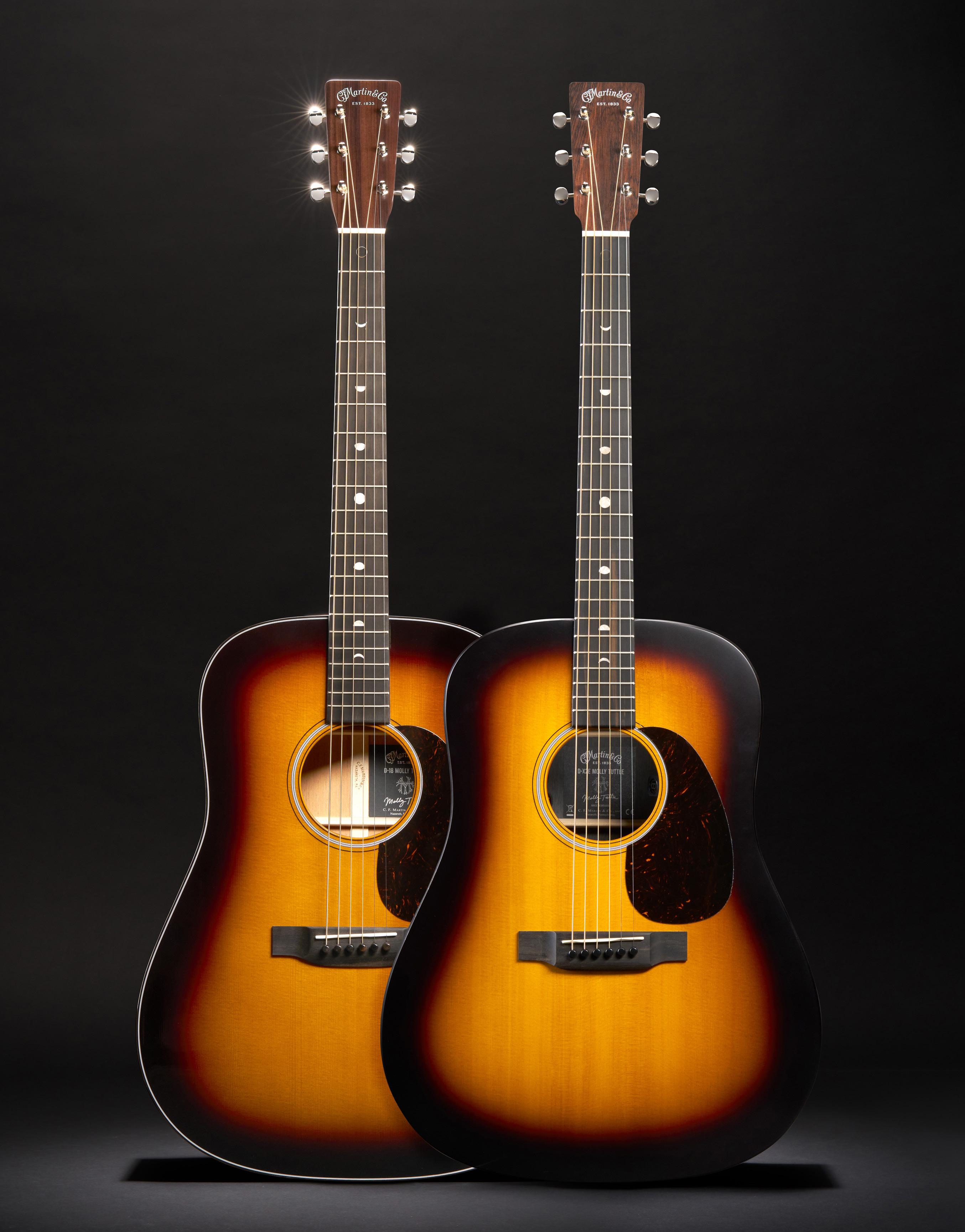
To fans of bluegrass, Molly Tuttle should need no introduction. She’s a modern legend in a timeless genre, with lightning-fast, laseraccurate flatpicking that’s matched only by the strength of her songwriting and power of her voice. And, like any solid bluegrass player, she has a healthy appreciation for the Martin Dreadnought and its place in music history. To honor that relationship, Martin has launched two new signature Dreadnoughts designed in collaboration with Molly: the D-18 Molly Tuttle and D-X2E Molly Tuttle, marking a few exciting firsts for both parties. But how did these models come about? What was the initial idea? And why did Molly ask for the moon?
VINTAGE OBSESSION
Molly’s history with vintage Martins dates back to the earliest days of her playing. Her father, Jack, was a guitar teacher, and there was a vintage Martin in her childhood home. Once the burgeoning player had graduated from her starter instrument to a more affordable Dreadnought-style guitar, she noticed something special hanging on the wall of the shop where her father taught: a 1940s Martin. “He had this little room in the back of the music shop where he would go in every day and teach,” says Molly. “And I would go into the store all the time; I just loved looking at all the instruments.”
“There’s just so much history, and bluegrass wouldn’t sound the same without these guitars”
The shop was Gryphon Strings in Palo Alto, California. And for a pre-teen guitarist like Molly, the possibilities must have seemed endless. “They had vintage Gibsons, vintage Martins, just all sorts of stringed instruments,” Molly adds. “I had coveted these Martin Dreadnoughts since I was a kid. In the end, my dad worked out a deal with the shop: if I could save up $2,000, they would let me buy a D-28.”
There’s nothing like an ambitious goal to inspire a young player. And Molly’s motivation intensified once she was able to pinpoint her dream Dreadnought. “I went in and played several different ones,” she says. “Eventually we settled on a particular guitar that I really loved. I was so obsessed with it that I memorized the serial number. I still remember it: 997250!”
The newly determined Molly got to work—literally—and, in the process of saving for the guitar, gained valuable performing experience that would stand her in good stead throughout her early career. “I would busk and play gigs all around town,” she says, recalling shows at local pizza parlors, farmers’ markets, and churches around Palo Alto, with her dad and two brothers in tow. Eventually, the group started getting gigs opening for bluegrass bands. Occasional odd jobs helped add to the pot, too. Before too long, the twelve-year-old Molly had money burning a Dreadnoughtshaped hole in her pocket. “I took the $2,000 in cash to the store,” she says. “There’s a great picture someone took of me handing them all this cash and them passing me the guitar. I’m really glad that it was documented like that.”
That wouldn’t be its only documentation either. The guitar stayed in the family and, in 2024, it was added to the Musical Instrument Museum in Phoenix, Arizona, displayed among pieces played by the likes of Elizabeth Cotten and John Hartford.
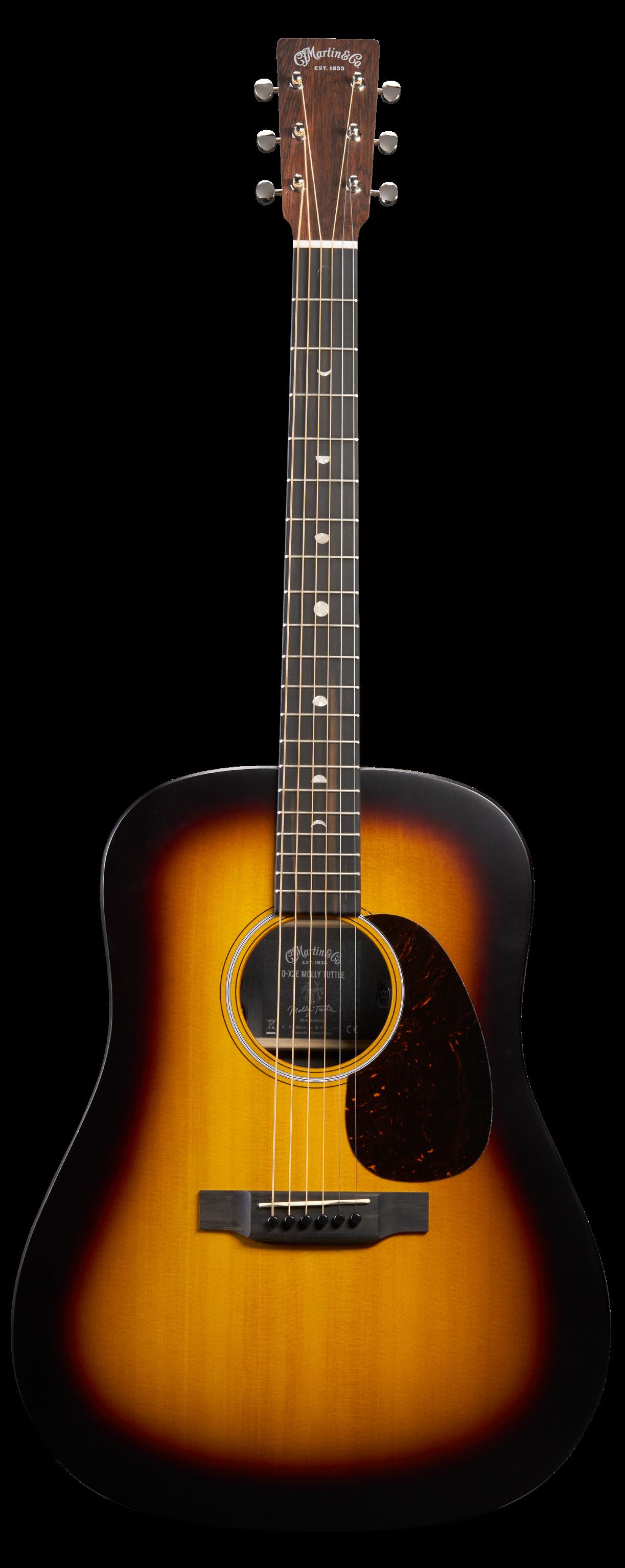
The Navojoa-made D-X2E Molly Tuttle offers a similar vibe at a more accessible price point
After playing a D-28 at just twelve years old, Molly’s love for vintage Martins only deepened. For her, the Martin Dreadnought is the definitive bluegrass guitar. “Ever since the early days of, say, Lester Flatt playing the G run on Martins, the Dreadnought has just been a fixture of this style of music, and it’s really developed alongside these guitars,” she says. “The sound of them is inseparable from bluegrass music. Someone like Tony Rice—who was one of my favorite guitar players growing up—didn’t always play Martins, but he would play guitars that were kind of modeled after them. There’s just so much history, and bluegrass wouldn’t sound the same without these guitars.” So how did Molly and Martin come together to make something new? And where did the idea come from?
GROWING FROM A CROOKED TREE
Molly received her first custom Martin, a shade top Dread with Madagascar rosewood back and sides and a V-shaped neck, in 2025. “It’s really beautiful, really swirly and finished in sunburst,” she says. Its inlays, designed as twisted branches, are themed after Molly’s 2022 album and song, Crooked Tree Throughout the instrument’s development, Molly’s connection to Martin and its people only intensified. Naturally, a true set of signature models was the next step—and “a total dream,” adds Molly. Perhaps unsurprisingly, the first decision was that the signatures would also be Dreadnought-style guitars. The specifics of their design, however, would take some refining. And Molly wanted the moon.
Molly’s prized possession, a 1943 Martin D-18, inspired the specs of her two signature models
D-X2E MOLLY TUTTLE
“I love the idea of making great-sounding instruments more affordable to everyone”
SUN AND MOON
For Molly, the moon is a symbol of creativity, with its different phases representing the concept of a musical idea coming to light. “When you’re dreaming up a new song, your subconscious really correlates with the moon,” she says. “I don’t know all the different symbolism but, for me, it’s been a little symbol of how these ideas that I come up with come to fruition.” So the moon is where it all began for the D-18 and D-X2E Molly Tuttle signature guitars.
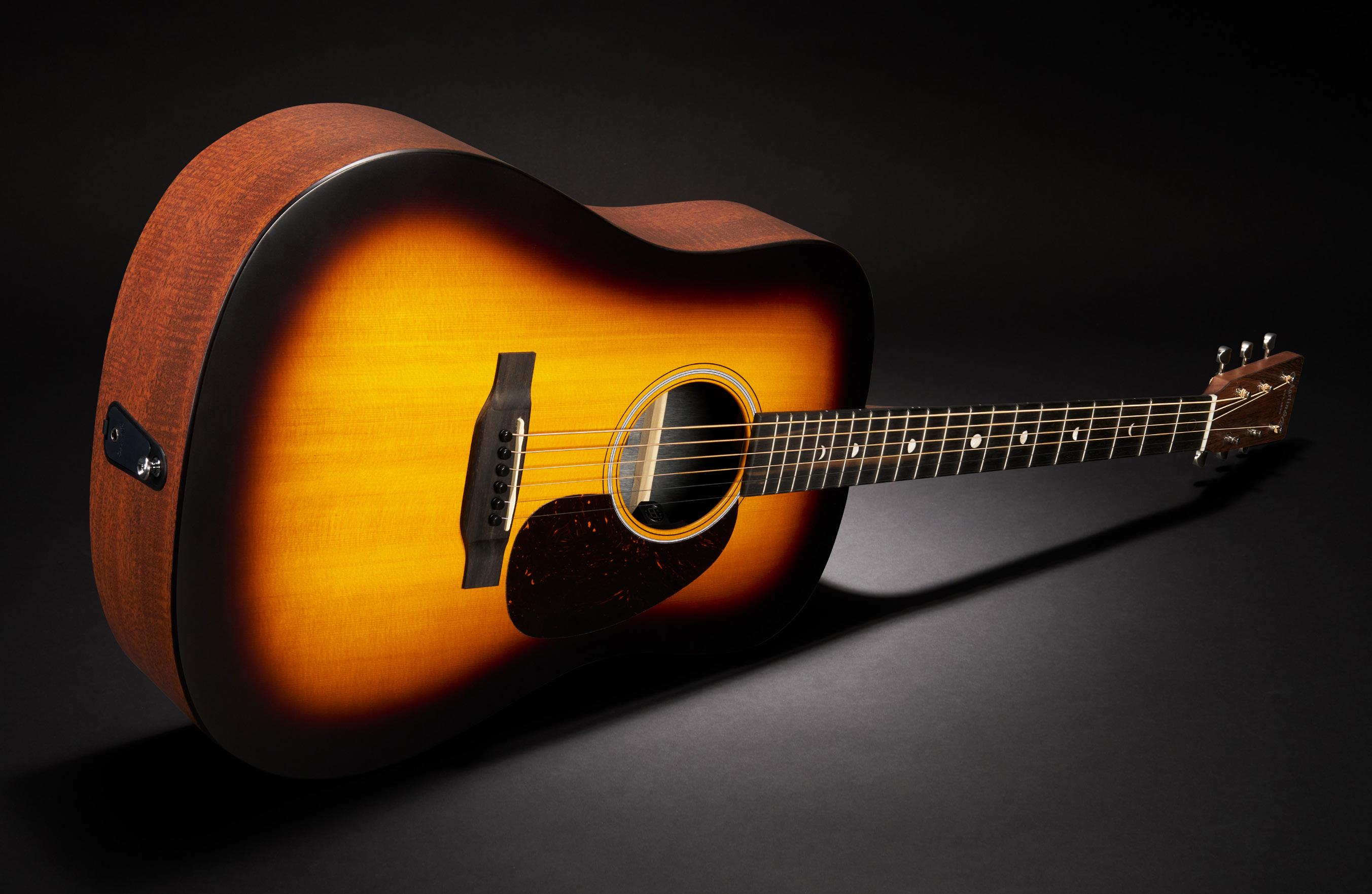
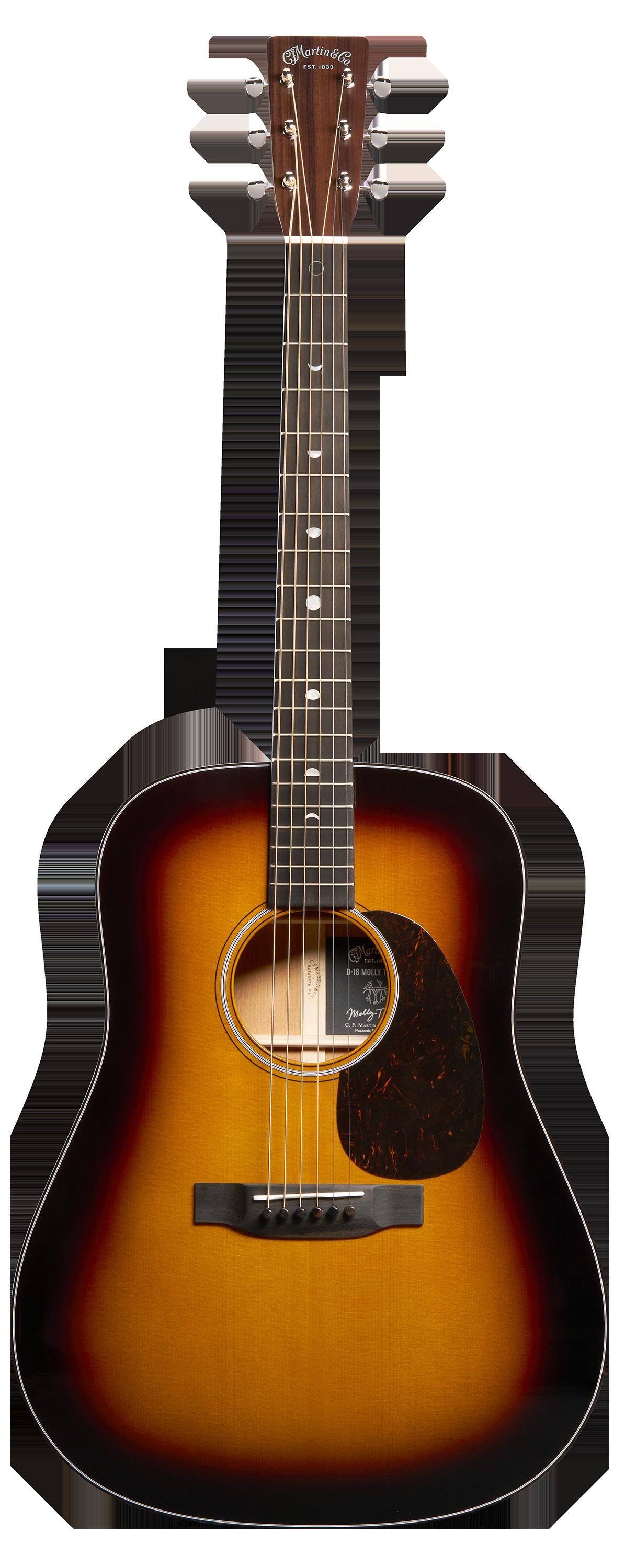
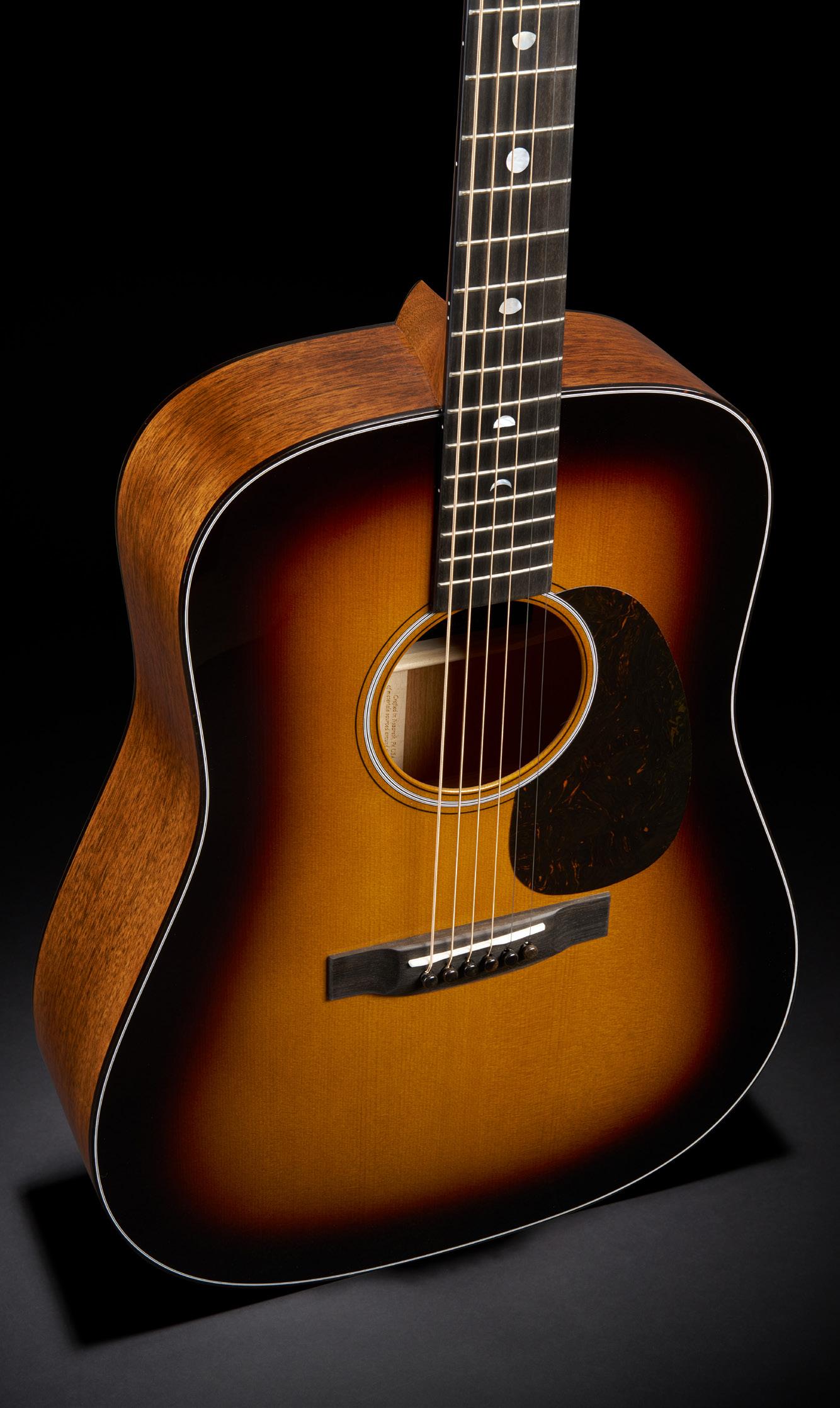
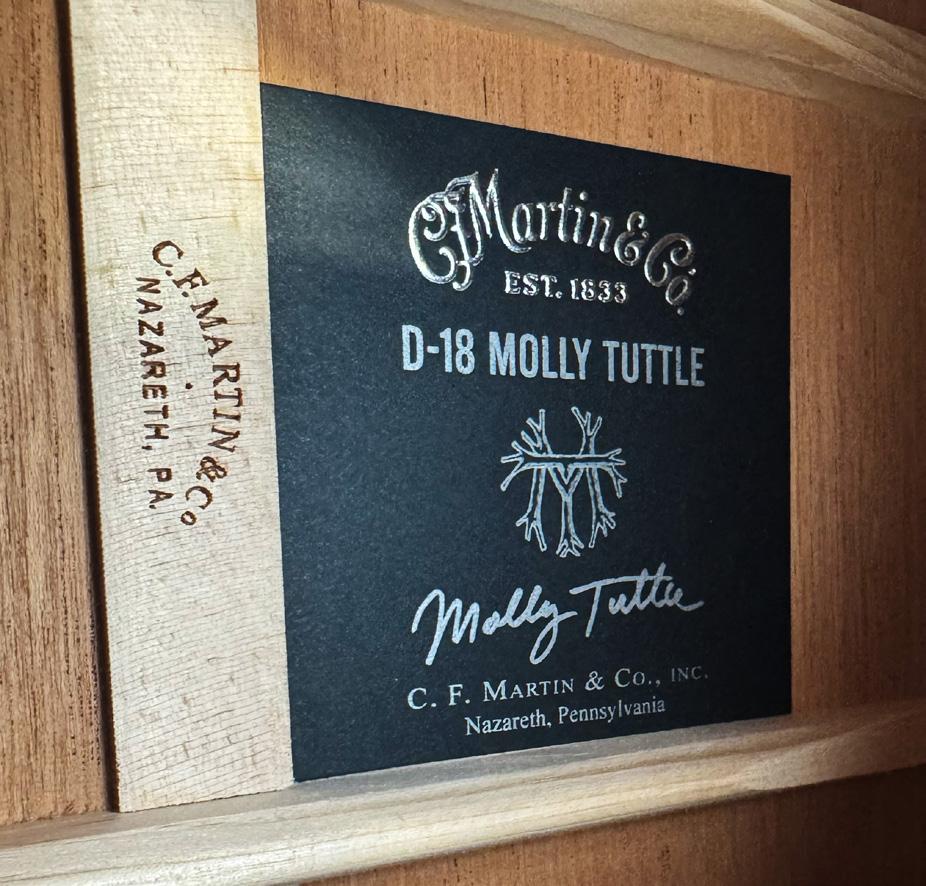
“We were in the Martin Custom Shop and I was looking around at all these amazing signature guitars they’ve done throughout the years, and there were so many fun inlays,” Molly says. “I saw this Johnny Cash guitar that had stars for fret markers and it made me think of doing moon phases.” The inlays of the Molly Tuttle Dreadnoughts progress from the near-invisible ring of a new moon on the first fret, all the way through the different phases to a waning crescent on the 17th. Then came the hardware. “A lot of my songs mention the moon and it’s been a bit of a through-line for me,” Molly adds. “So from there, we thought it would be fun to match everything with the silver of the moons: the tuning pegs are silver, the Martin logo is silver, and the sticker inside is silver.”
Throughout the development of the Molly Tuttle signatures, she and the Martin team had been debating whether the new model would be a D-28 or D-18. And during the deliberations, Molly bought a 1943 D-18. “It’s kind of the nicest guitar I’ve ever owned,” she says. “It was so exciting when I found it; I’d been looking for a guitar that I could keep at home and use in the studio rather than take on the road.”
Molly had taken a vintage Martin on the road before and found that its age presented more than a few problems. “It didn’t work out so well,” she says. “I had to get it repaired a lot of the time—and it wasn’t in great condition to begin with! So with the new guitar, which was really my dream guitar, I wanted to just use it at home and in the studio.”
The 1943 D-18 clicked so well with Molly that it changed the direction of the signature models. “I told Martin I’d gotten this ’43 D-18 that I was really excited about, and said that we should work out some of the specs of the signature models around it,” she says. “So we landed on it being a D-18 style, one with more of a 1940s neck, with the V-shape and the thinner 1 11/16-inch nut width, which I always found more comfortable. The folks at Martin were excited; they’d never done an X Series guitar with that 1940s-style neck before.”
D-18 MOLLY TUTTLE
Molly’s X Series signature, the D-X2E Molly Tuttle, brings her vision to a more accessible price point. “I want as many people to have access to these guitars as possible,” she says. “I love the idea of making great-sounding instruments more affordable to everyone.” The D-X2E has laminate rather than solid mahogany back and sides and a satin finish, but it wears the same sunburst as its D-18 counterpart. Molly didn’t always love sunbursts. “When I was a kid, my dad had guitars with and without a sunburst. And I just hated the sunburst. I called it the sad guitar—it was an archtop and I thought the F holes looked like sad eyes. I called the naturalfinished Martin the happy guitar.” That view, of course, has since softened. “I grew to like sunbursts as I got older. And now I play them all the time. I think they’re beautiful, and you don’t see them as much, especially with Martins. So I thought that could be a fun and unique touch, since I play them on stage so much. The moons are the other unique thing that we added, so for me these models were all about finding that balance between the classic Martin look and my own touches.”
The Martin D-18 Molly Tuttle features a solid spruce top and solid mahogany back and sides
The satin-finished mahogany neck with Molly’s preferred 1 11/16” nut width makes for smooth picking
SUMMIT Reaching the
Bringing TOGETHER more than 100 ARTISTS , ADVOCATES, and INDUSTRY figures, MARTIN is setting a NEW precedent for CROSS-INDUSTRY approaches to SUSTAINABILITY
Words • CILLIAN BREATHNACH
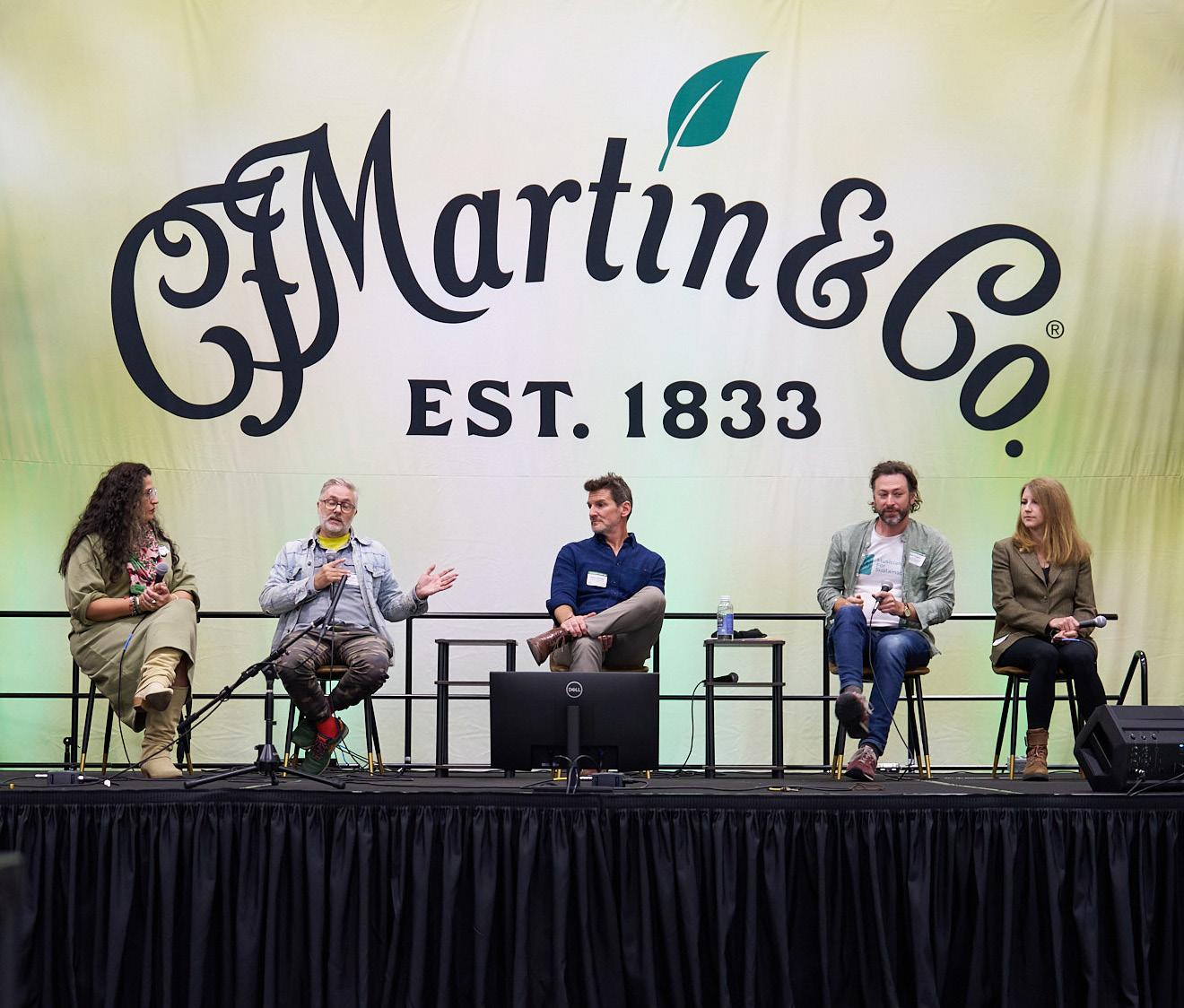
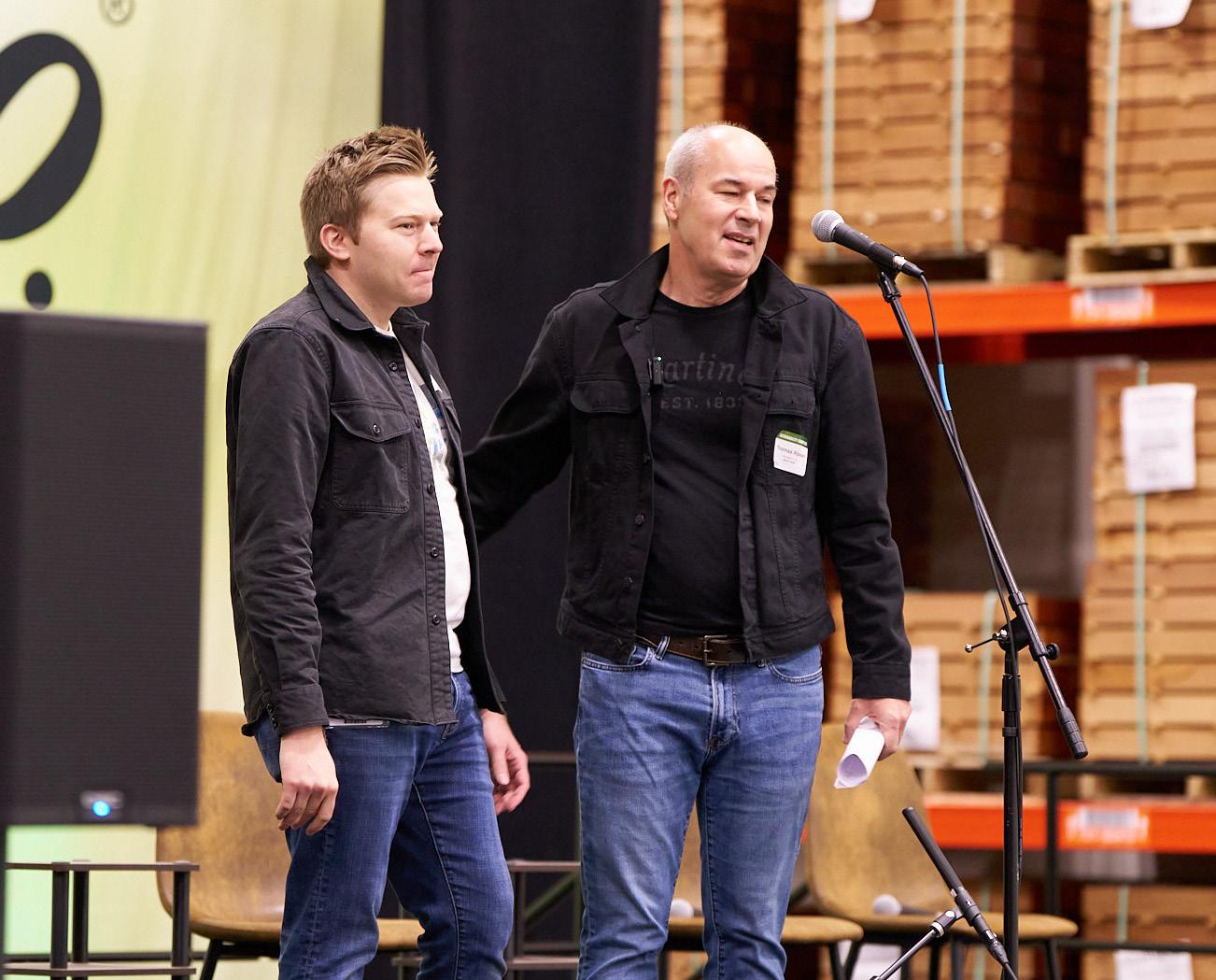
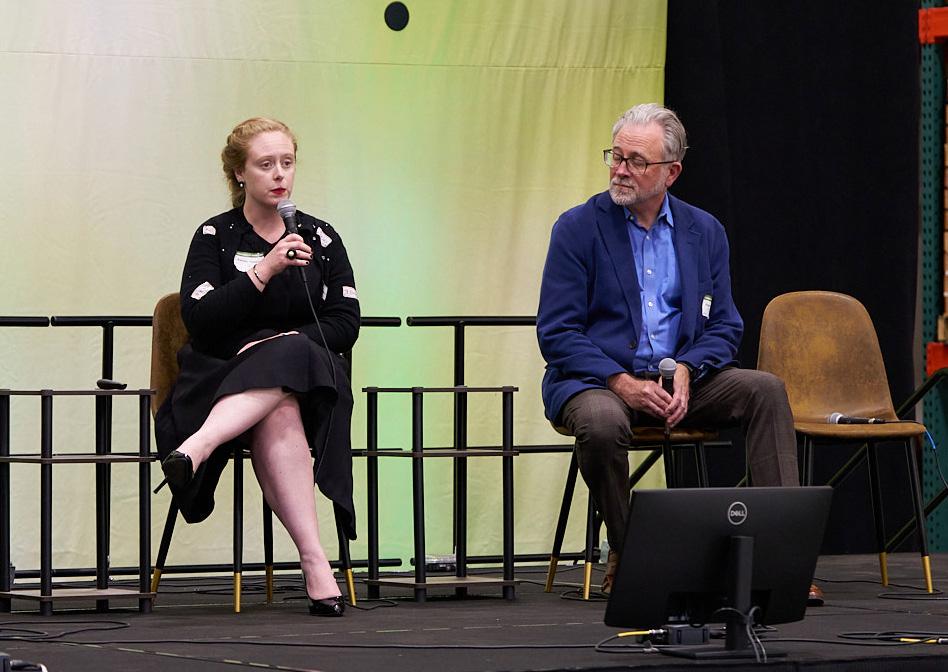
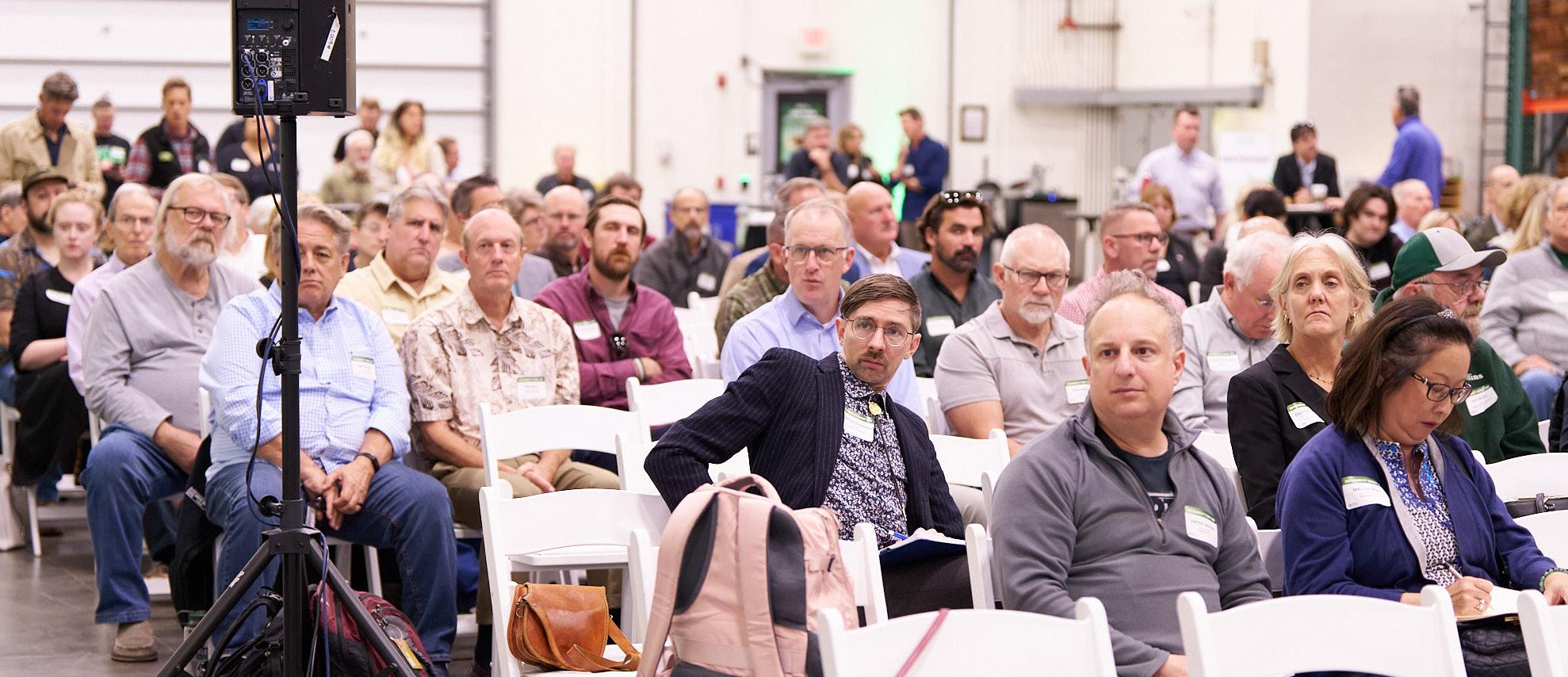
In 2025, Martin set the stage for a new approach to sustainable music and music manufacturing. On October 9, 2025, at Martin’s solar-powered Commerce Lane facility in Pennsylvania, more than 100 artists, industry leaders, educators, and sustainability advocates convened for the inaugural Martin Sustainability Summit.
For Martin President and CEO Thomas Ripsam, the summit marked an evolution in how the company approaches the topic of sustainability. Earlier Martin gatherings focused primarily on wood and materials. “We called them wood summits,” he notes, “and we brought stakeholders, suppliers, and experts centered around wood together for them.”
While materials remain an important part of the conversation, they’re not the entire story. “Last year, what was different was we realized that, throughout the musical instruments industry, there are different stakeholders across the value chain who all think about sustainability, but do it in their little silos,” says Thomas. “So we thought, what if we actually brought some key stakeholders together, and had more of a cross-industry dialogue? And I think it was fascinating. It was wonderful. Sustainability is something that obviously impacts everyone in the industry and beyond. We have to find ways to be more responsible, and wherever we are now, it’s just not enough. So we’re trying to evolve. And the event was fantastic.”
HEART OF THE MOVEMENT
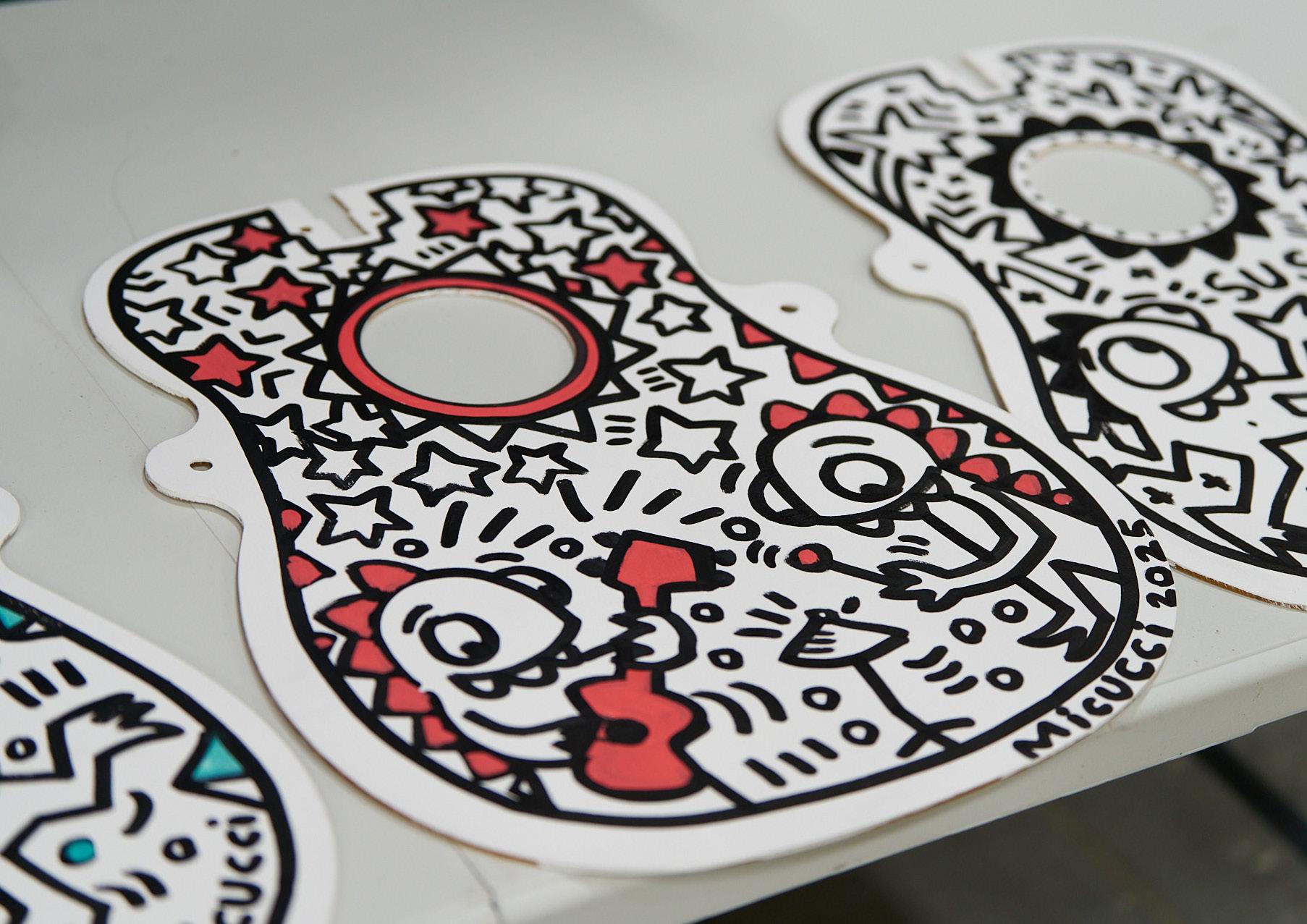
One of the defining goals of the Martin Sustainability Summit was to ensure that artists themselves have a voice in the conversation. To that end, Martin welcomed musician, comedian, and actor Kate Micucci to communicate the company’s commitment to sustainability in ways both musical and visual. Not only did Kate perform a song dedicated to Martin’s sustainability efforts on the fully FSC®-certified T1 Tenor
Ukulele, she also discussed the artistic way she’s been putting Martin’s otherwise discarded guitar tops to good use.
“I like to draw and paint on discarded objects,” says Kate. “This past summer I swung by the factory and just asked, you know, ‘Can I have some guitar tops that you’re not using?’” Martin was happy to oblige. For Kate, the finished pieces illustrate that “sustainability is about what we can do daily—making something bigger and more impactful together.”
Dylan Siegler, head of sustainability at Universal Music Group, puts it like this: “At Universal Music Group, we’re really focused on making sustainability accessible, as well as enabling our employees, our fans, and our artists, maybe most importantly, to be part of sustainable change. The summit has opened my eyes to a whole other universe of mechanisms that artists can use to be a part of sustainability.”
For Dylan, the summit helped cement the idea that these mechanisms include instruments themselves: “We all form the ‘supply chain of the artist’—record labels, manufacturers like Martin, and everyone in between, all creating the possibilities that help artists be more sustainable in their practices.”
A SUSTAINABLE APPROACH BUILT-IN
For Adam Gardner, co-founder of the green-music organization REVERB, and frontman of the band Guster, the day was a reminder that “sustainability is a process, not a destination.” He explains that REVERB’s approach “has always been to meet people where they’re at—whether they’re a fan, manufacturer, artist, or venue—and to help them move along the path toward sustainability.”
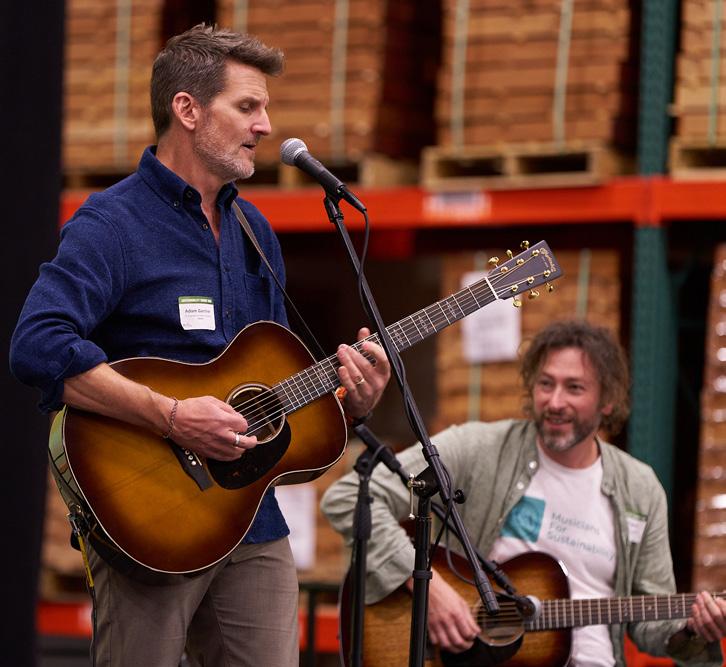
Gardner joined Jacob Tilley, guitarist for rock band Young the Giant, and Ben Kogan, founder of Musicians for Sustainability and Reusable Solutions, for a live set and a discussion around how artists can best use their platforms to raise awareness of environmental issues. The performances were a brilliant opportunity to showcase sustainable guitarmaking in the flesh—each musician performed on an FSCcertified Martin guitar, including a reissued 00DB Jeff Tweedy, a model that was launched on the day of the summit.
The Wilco frontman appeared at the summit too, via video to celebrate the launch of his two signature models, the reissued 00DB and new 000 Jr E Jeff Tweedy, both FSCcertified. He also offered a clear and succinct message: “Keep making sustainable guitars. It’s great for everybody, and it’s great for business—because what’s better than sustainable?”
STRONGER TOGETHER
The 2025 Martin Sustainability Summit was a broad-reaching event, and one that used instruments as a jumping-off point to discuss sustainability in the context of the music industry as a whole. On the day, Thomas Ripsam noted how Martin has always looked toward the future while still staying true to its
roots, taking landmark actions such as phasing out the use of ivory more than a century ago, and in the 1990s becoming the first guitar manufacturer with a formal environmental policy.
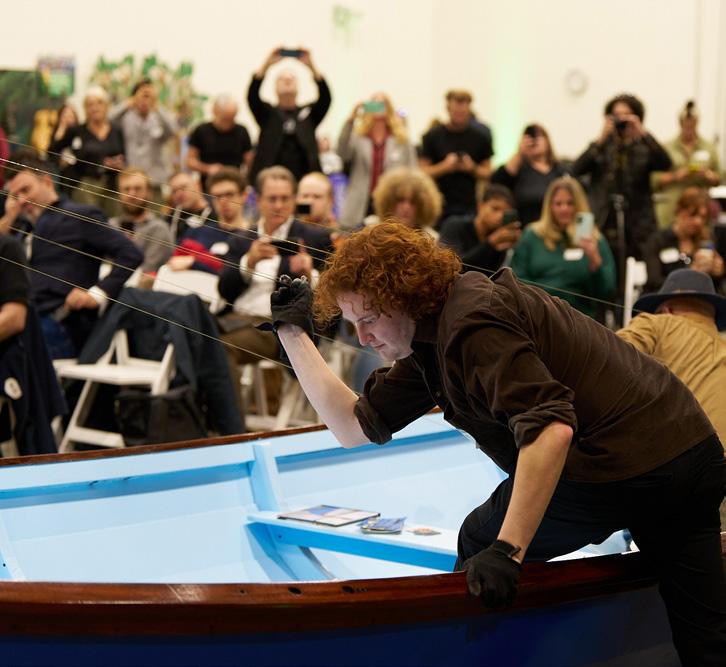
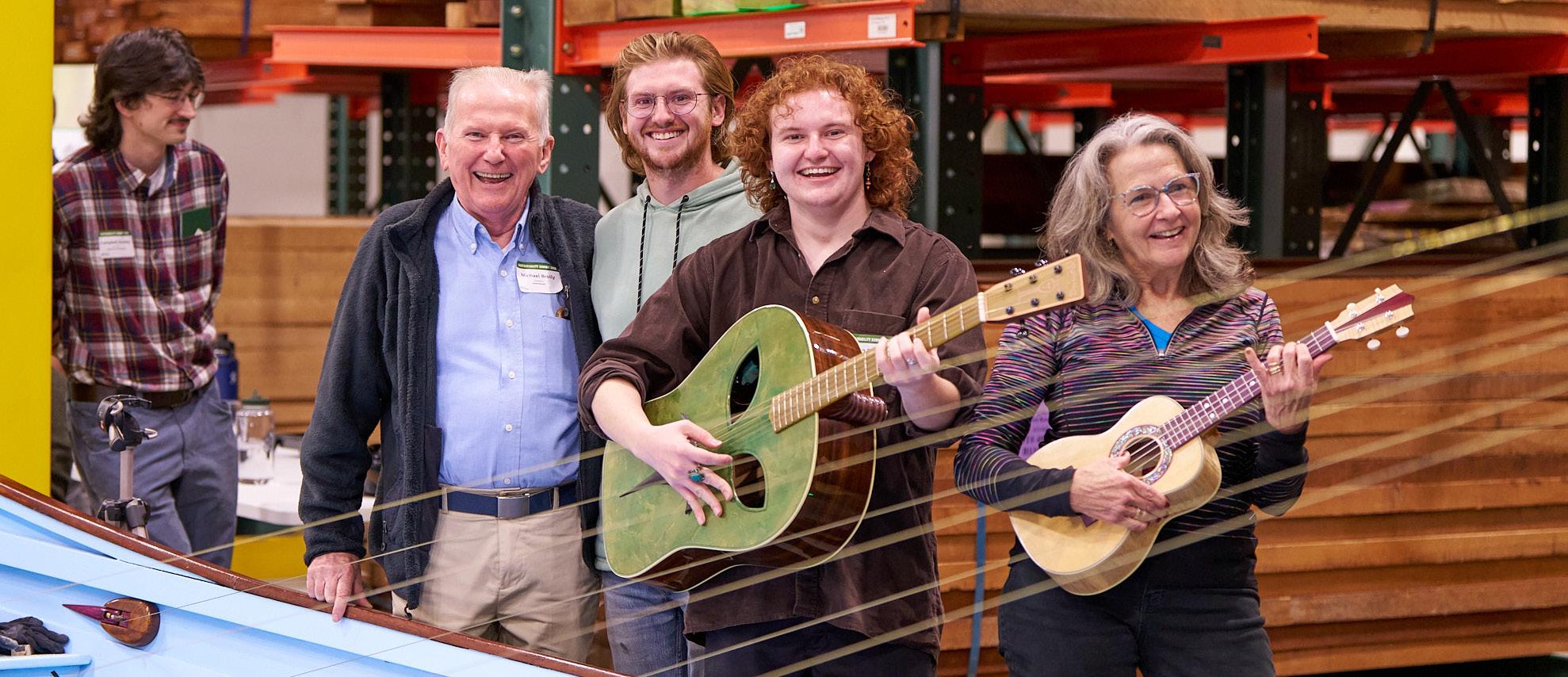
The event also featured a variety of panels and presentations, from discussions on the various ways that reclaimed wood can be used creatively to the future of CITES wood regulations ahead of the next COP20 summit of world leaders. One of the most striking presentations came from Michael Brolly. The artist and musician showed off his hand-crafted boat that doubles as a giant stringed instrument to enable him to communicate with whales—it was an inspiring means of delivering a powerful message on our impact on wildlife and the natural world.
Chris Martin IV spoke passionately about the importance of making the most of the tonewood we have left, and not squandering useful, great-sounding material because of outdated ideas about visuals. “We have to use all the wood that works,” Chris said. “And I will help try and tell the story that wood has character!”
Today, Thomas concludes that the real power of the event was in its cross-industry collaboration, with figures such as REVERB and Universal Music Group providing unique perspectives, and helping some of the world’s biggest names—and most popular artists—be part of the sustainability conversation. “We definitely got some good ideas that also apply to us,” Thomas says, “and some that, with just our traditional events, we never would have come up with on our own.”
Solo GOING
In 2025, JASON ISBELL recorded a GRAMMY®-NOMINATED solo album with just a 1940 0-17. That guitar then INSPIRED a pair of remarkable signature models that have given this LIFELONG Martin OBSESSIVE a new appreciation for the company’s CRAFTSMANSHIP and dedication
Words • JOSH GARDNER
JASON ISBELL: GOING SOLO
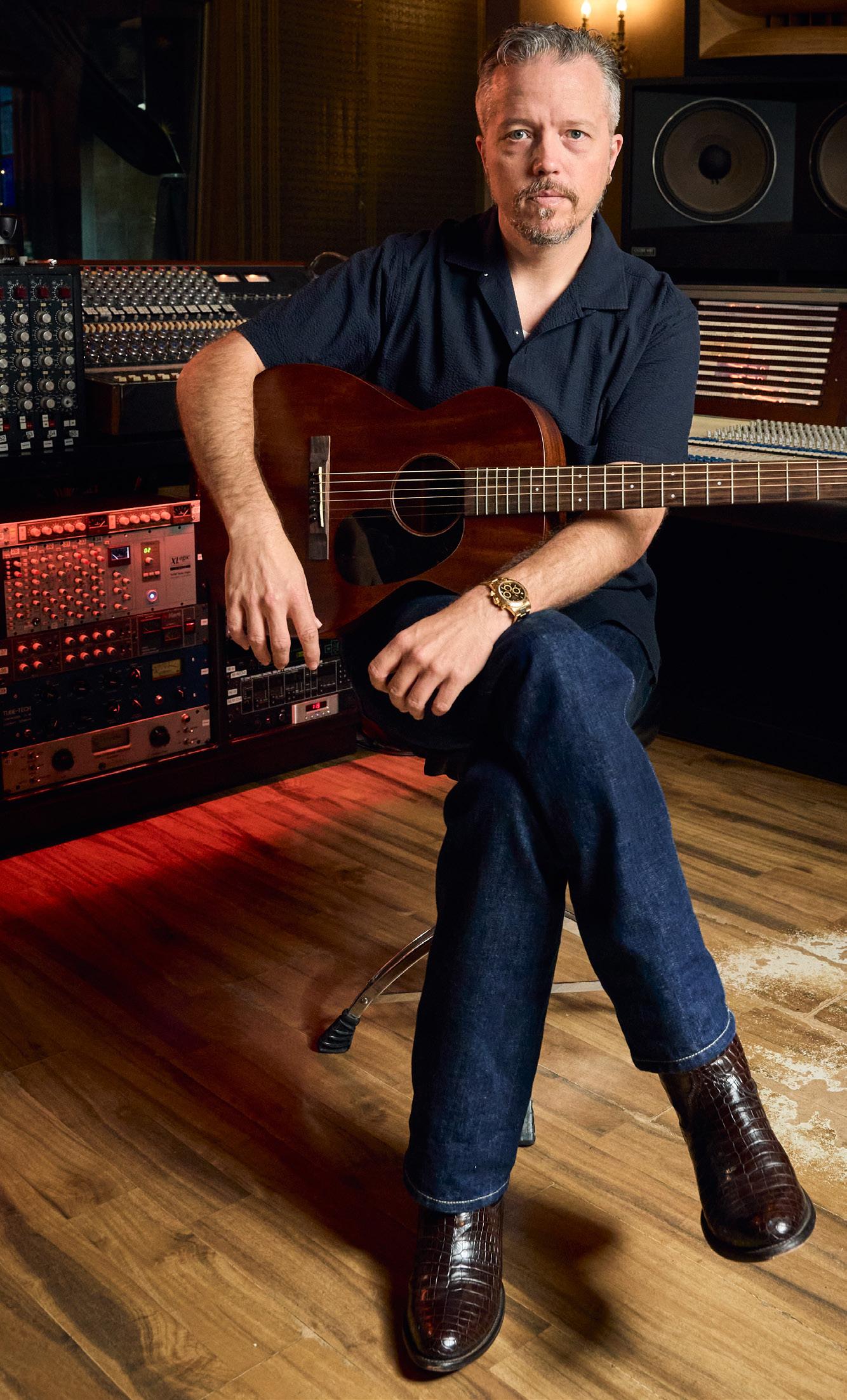
For Jason Isbell, the journey to his latest pair of Martin models began with a guitar and an idea.
After more than a decade making GRAMMYwinning albums alongside his band, The 400 Unit, the forty-seven-year-old musician wanted to record something truly solo.
“I wrote the songs with that idea in mind,” he says of the stripped-back setup—just him and a guitar. “But it’s different because there’s a risk there. You don’t have a lot of people who are going to say what they really think about the work when it’s just you and a guitar, with one or two other people in the studio.”
Writing became a similarly solitary activity—and when you’re exploring ideas and putting together a new acoustic record, what better excuse to buy a new Martin guitar, right?
“I was staying in New York a lot; my girlfriend lives there and her apartment’s not huge,” says Isbell. “It’s a good size for New York City, but it’s not like we have in Nashville. So I figured an old mahogany Martin would do the trick because I love the tone of those guitars. I love the way mahogany sounds. And it’s one of those things where it’s smaller but it’s not necessarily quieter. You still have the same frequency range as you do with a Dreadnought, relatively speaking, but it doesn’t take up as much space.”
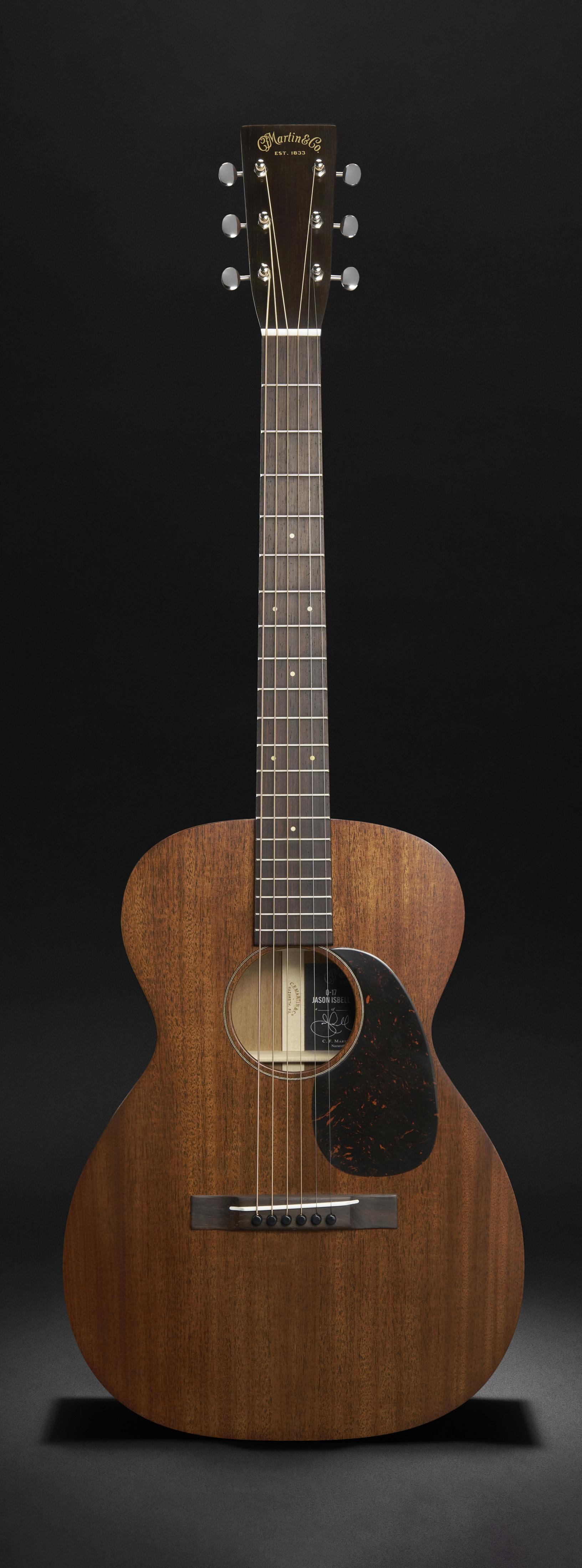
Isbell’s friend Shira at Brooklyn’s Retrofret Vintage Guitars soon turned him on to a 1940 0-17—and it was love at first strum. “It did everything I needed it to do,” Isbell says. “I think it’s easy for us to defer to a spruce top and a bigger guitar. But if you take everything else away and you’re just playing one instrument, the small mahogany body will really do everything you need it to. You can get all the dynamics you want out of a guitar of that size.”
FOX CATCHER
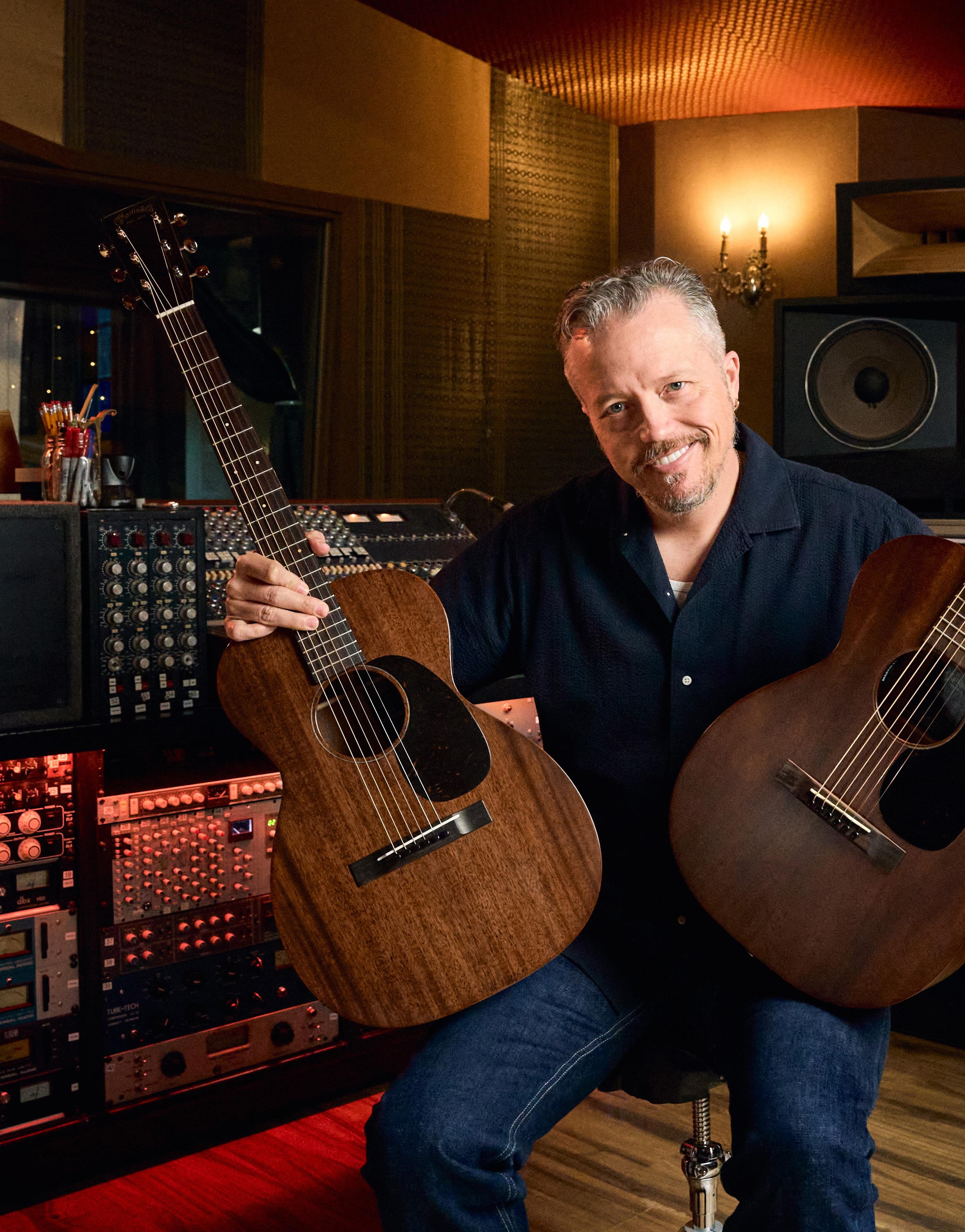
When the time came to record what would become his critically acclaimed tenth studio album, Foxes in the Snow, Isbell headed down to New York’s legendary Electric Lady Studios. For the sessions, he brought along a bunch of his other cherished Martin guitars, expecting that his old D-18 or another, more prestigious instrument would be best suited to the record’s vibe. When it came down to it, though, something about that all-mahogany 0-17 just kept him coming back.
“The other guitars just didn’t work as well; they just ate up all the frequency range,” he says. “If I’m playing in another setting, I’ve got a really great ’34 OM-28, and then I’ve got a ’37 D-18 that’s just fantastic. If I was making a guitar-driven record that was instrumental or really just meant to be listened to by guitar players, I think that it might have worked better to have
“ The small mahogany body will really do everything you need it to. You can get all the dynamics you want out of a guitar of that size”
a bigger, louder guitar. But, since I was trying to come at it from a singer-songwriter perspective, the ’40 0-17 sat in the mix perfectly.”
The 0-17 would be the only guitar featured on the record, which received three nominations at the 68th GRAMMY Awards® in February. It would also continue an interesting trend that stretches back almost a decade. Back in 2017, when Martin and Isbell first collaborated on a signature D-18, Isbell was an out-and-out Dreadnought guy. Over the past few years, though, you may have seen him playing more and more Auditorium-sized Martins. With the 0-17, he’s slimmed down once again.
“Maybe I’m just getting older, y’know—I’m shrinking! I’m getting arthritis!” he jokes. “But I think, for this particular project, the smaller guitar worked really well. If I was just going to get in the car with one guitar and go out and do a bunch of shows by myself, this 0-17 would be perfect.”
Isbell says it’s all about the delivery, the way an artist chooses to approach a song. “If what you really want is for the audience to hear the song, then a smaller guitar, just sonically, visually, in every way, can really meet those needs,” he adds, “so long as it’s built right. Because if it’s not, you’re going to get to a point where it just feels like a toy, and you hit it hard, and it dies on you, and there’s a low ceiling. But if it’s put together the right way, then you can get just as much dynamic range out of a very small guitar as you would from a bigger one.”
The guitarist’s relationship with Martin goes back to his great uncle “Dub,” owner of a herringbone D-28 that was the pinnacle of the instrument for the young Isbell. It kicked off a lifelong love affair that has seen him explore the whole gamut of
acoustic varieties, from brand-new Super Ds to pre-war icons, but always with that famous logo on the headstock.
“They’ve just always suited me really well,” Isbell says. “A Martin guitar doesn’t insist on being the main character, y’know? It’s an instrument that’s clearly designed for people who take their music seriously, but it’s not trying to be the most beautiful thing in the room. For me, that’s pretty important. I tend toward guitars that aren’t too ornate. And I like to use them as a tool. I have a lot of different types of Martins, and all of them serve a different purpose, but they all do it extremely well.”
TWO OF A KIND
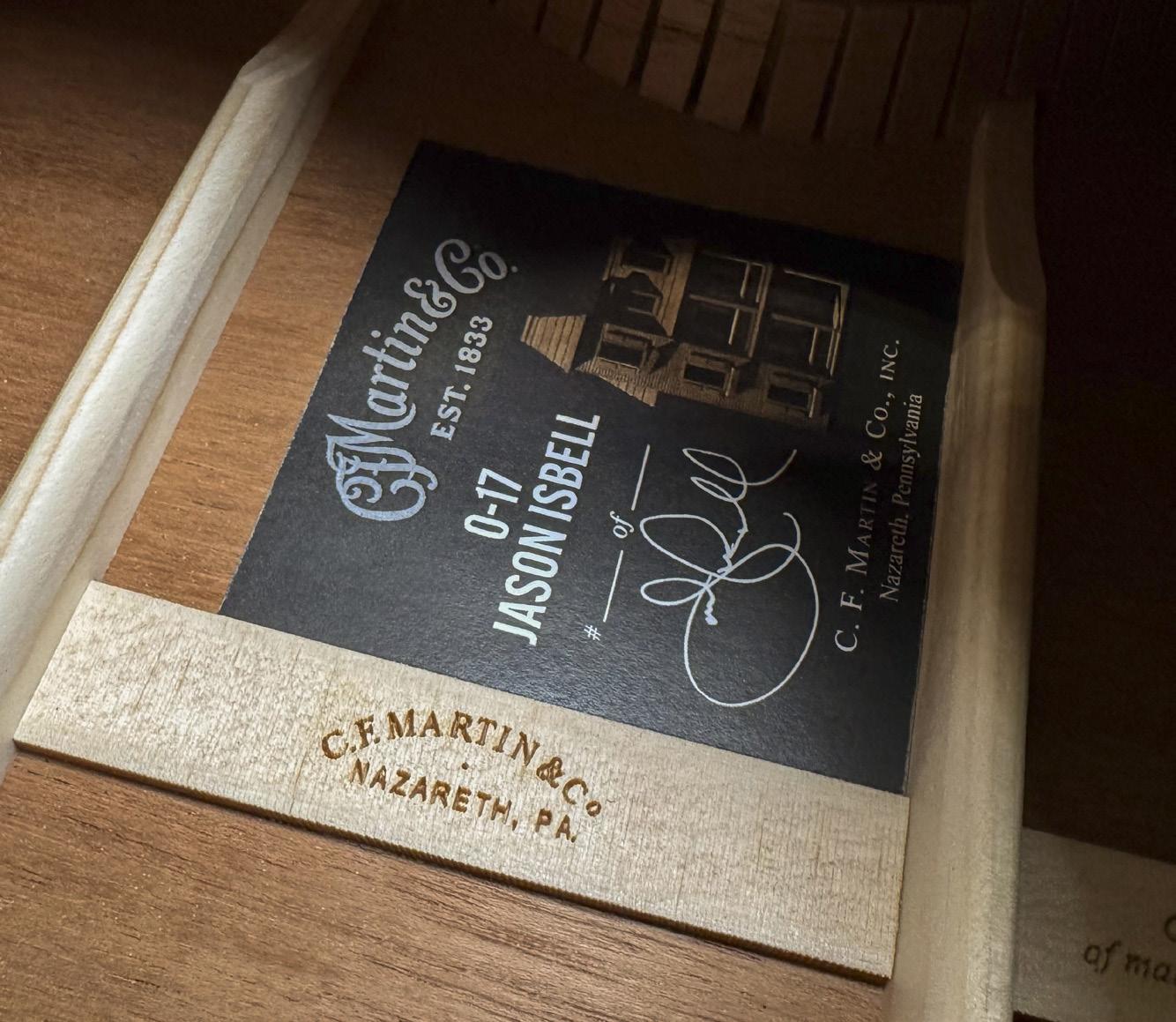
Now, Martin has partnered with Isbell once again to craft a pair of new signature models based on the 0-17 that shaped so much of Foxes in the Snow ’s sound. The idea came courtesy of Martin VP of Product Management Fred Greene. But Isbell would be lying if he said it hadn’t crossed his mind too.
“Usually, I wait on Fred to call because I don’t want to be begging him for something every five minutes,” says the guitarist. “But when I made this record, it just made a lot of sense because it’s a very good example of what a guitar like this can do—or at least some of the things it can do. I certainly didn’t reach its full potential. But if you want to know what a good Martin 0-17 sounds like, I don’t know that you’re going to find a better mic’d example. The way this album was engineered by Gena Johnson was brilliant. She did a very good job of putting the right mics in the right places, and taking care of how the guitar sounded.”
The idea was to create two similar but different instruments based on the 1940 model: one made in Nazareth and designed to get as close to the original as possible in terms of build and materials; the other made in Navojoa, Mexico, designed to capture the spirit of the original but in a form that would allow more people to appreciate the charms of an all-mahogany 0-17.
“When Fred called me with the idea, it seemed like a nobrainer,” Isbell says. “You could very easily just take this guitar out. And if you’ve got some songs and a good way to deliver them, you could make a living with just this guitar and a set of car keys.” But how best to harness that 1940 magic?
THE REAL THING
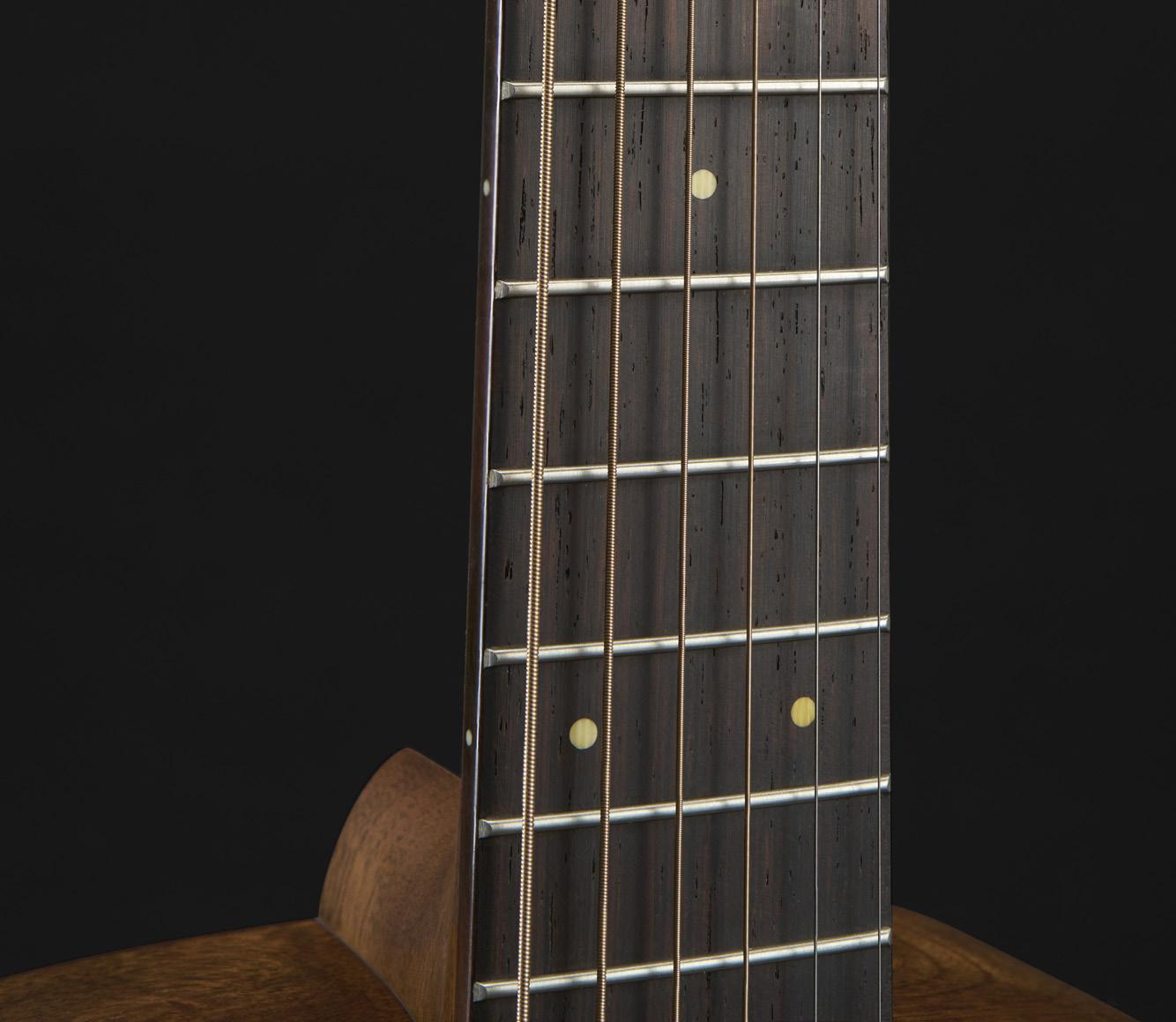
The most eyebrow-raising thing about the Nazareth-made 0-17 Jason Isbell signature model is the materials used to capture the majesty of the artist’s 1940 original. It’s remarkable in this day and age, to see any production instrument—even a limited-edition model such as this one—sporting a genuine Brazilian rosewood bridge and fingerboard. Isbell is clear about what that decision means for consumers—and about what it meant for the production process.
“You’re not going to find a cheaper guitar with a Brazilian board, I don’t think,” Isbell says. “But it was important to me.”
Greene told Isbell that perfecting the graduated V-shape of the 1940s neck profile was the trickiest part of the entire endeavor, but it was obviously essential to capturing the essence of the original six-string.
“It’s comparatively a simple instrument,” says Isbell. “It’s difficult to make, but there aren’t a lot of moving parts on a 0-17. So I wanted it to be as accurate to the original as possible. That means the bridge and the board are Brazilian. Martin got the neck profile right. It plays really comfortably.”
Isbell thinks there must have been something in the water in 1940 when the necks of the 0-17s were shaped. “They were hand-shaped back then, and I think they just turned out that way,” he says. “Somebody was really feeling it that day! They had a good lunch or something. And now, all these years later, there’s a team of folks at Martin trying to figure out how to make 50 of them!”
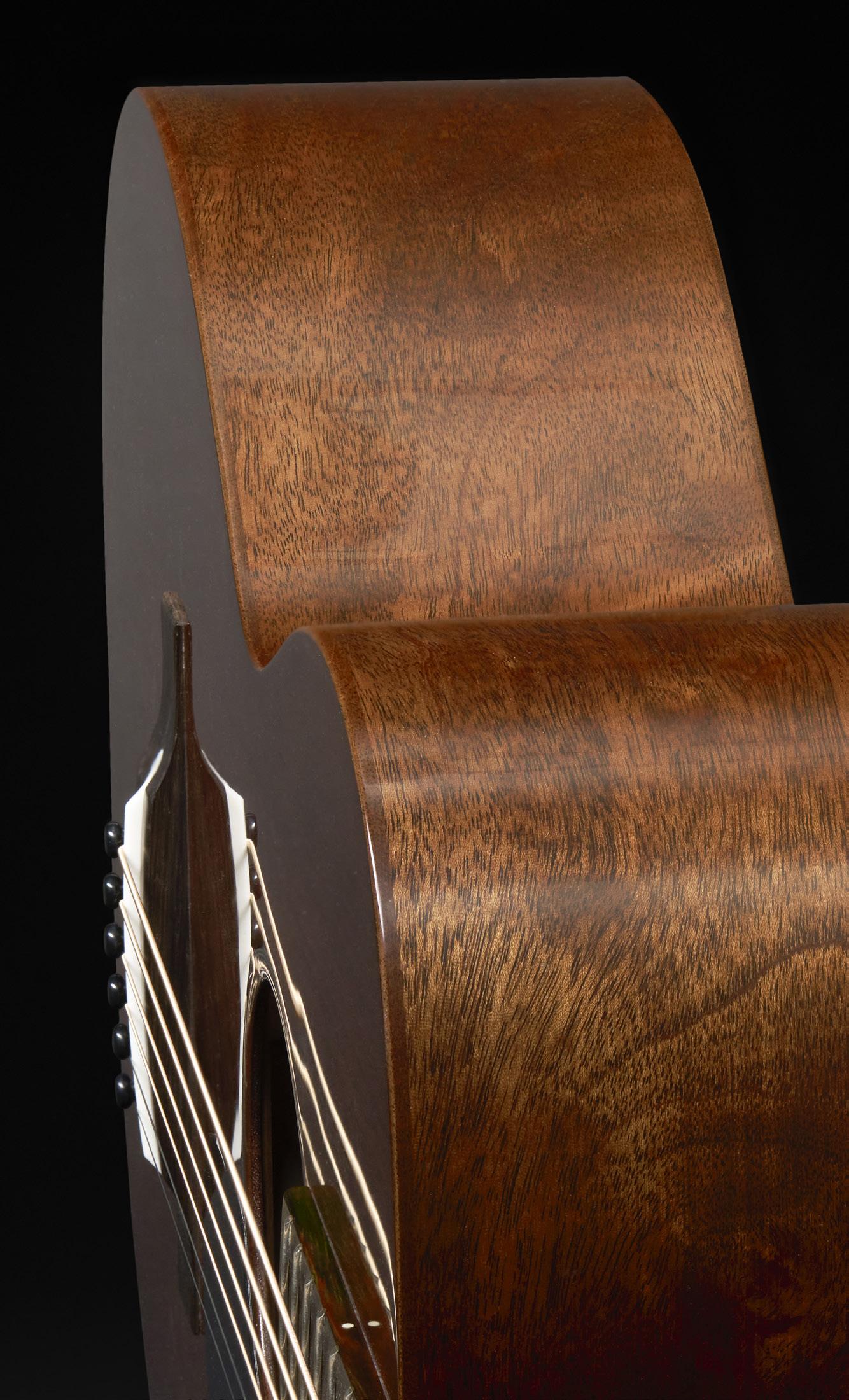
Another rare aspect of the Nazareth-made guitar was the use of sinker mahogany for the body—another rarefied tonewood that Isbell came to believe was essential to nailing the tone of the original model.
“When you’re trying to replicate an old acoustic guitar like that, it takes a whole lot of work, and it takes some very particular decisions when it comes to the materials,” he says. “And the sinker mahogany was as close as we could get to wood that was that old, that had been played that much. It took me a little while to be sold on the sinker, but I’m a convert now. I believe that it really, truly does add something. It makes the guitar feel old and sound old before it would feel and sound that way naturally.”
always been the standard for me—loudest one wins, y’know? And so Martin did everything they could to make the loudest, most responsive acoustic guitar they could. And as a result, that instrument cost a lot of money.
“This time around, I felt like a version that was more accessible would be a good idea because I didn’t want to split the difference. I feel like there wouldn’t be as much of a purpose in making one that was middle-of-the-road. I wanted one version that was as close to the old guitar as we could get, and one version that sort of had the spirit of that guitar but was more affordable.”
As ever, the proof is in the playing, and it speaks volumes to the quality of the Navojoa-made guitar that Isbell has been using both of them on his worldwide solo tour to celebrate the release of Foxes in the Snow
“It has that pre-war vibe. I could take this Mexican-made version out and play it on tour; nobody would know the difference”
The results speak for themselves, even if you don’t have an original 1940 guitar at hand to compare it with. “Irrespective of the original instrument, it’s a great guitar,” Isbell says. “You want the playability and the durability of a new guitar—one that plays really well and feels good—but that doesn’t really sound like a brand-new guitar. And to me, that’s huge.”
MARTINS FOR ALL
For fans of Isbell, the most exciting thing about this joint venture with Martin may be the Navojoa-made 0-10E Retro model, which, for the first time, offers a Jason Isbell signature Martin at an accessible price point. It’s something the company has been doing more of recently, with recent dual models for Billy Strings and Jeff Tweedy (not to mention the D-X2E Molly Tuttle on page 26). Almost a decade on from his first Martin signature, it’s something that clearly means a lot to Isbell.
“With the last Martin signature guitar I did, it was a really expensive guitar and not for everybody—I just wanted to make the best, loudest D-18 I could!” he says. “That had
“I’ve got both of them sitting here next to me. And, you know, there is a difference. But I think that comes down more to preference than it does to quality, because the neck on the 0-10 is faster! It’s a slimmer neck and to me it plays a little bit faster. I think it would be more comfortable for someone who wasn’t as used to playing barre chords on a big, round neck. At this price point, I don’t think anybody could have done a better job at making it reminiscent of the pre-war Martin. It definitely has that vibe to it. I could take this Mexican-made version out and play it on tour; nobody would know the difference.”
THROUGH THE WRINGER
Jason Isbell adores Martin guitars new and old, and the pride he feels in having renewed his relationship with the company through two new signature instruments as clear on stage as it is in private conversation.
“I have a whole lot of respect for those folks,” he says of his relationship with Martin and its people. “It’s still the kind of company that feels like a family-owned business. They’re still in the same place as when they started, and holding themselves to a certain standard, which not everybody does, especially people who make that many guitars.”
The last time Isbell was in Nazareth, he had a revealing conversation with Greene about just how many guitars the Martin factory turns out on a daily basis. “It’s insane,” he says. “And it makes me happy that there’s that bigger market for it again, now that there are popular artists who are just singing and playing acoustic guitar. It’s a really good thing for that. I’ve always respected the way Martin does business. And they’ve treated me really, really well. And more than anything else, they make great instruments that just hold up—I put ’em through a lot, and they hold up to that!”
BOLD Era
New
Martin’s latest INNOVATION in the world of strings blends the COMFORT, feel, and PLAYABILITY of an uncoated string with the long-lasting DURABILITY of a coated one. JASON ISBELL is so impressed, he even put HIS NAME on them
Being honored with a signature Martin guitar is a rare and prestigious distinction for any player, but when you’re talking about signature Martin strings, well, that’s an entirely different sort of rarefied environment. Martin’s roster of signature string artists includes Eric Clapton, Tommy Emmanuel, and Laurence Juber. And that’s the kind of exclusive company that takes even the latest addition, Jason Isbell, by surprise.
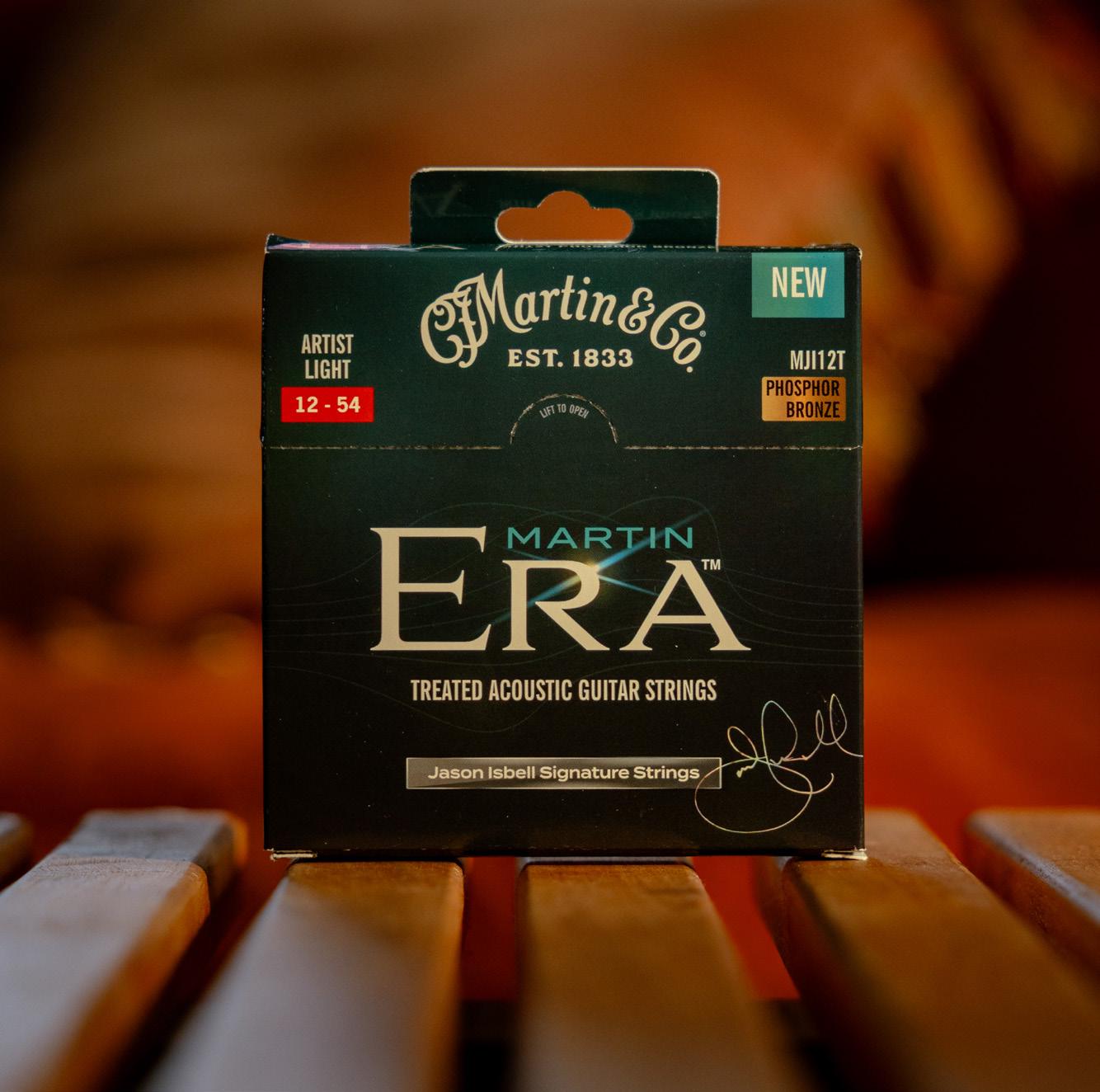
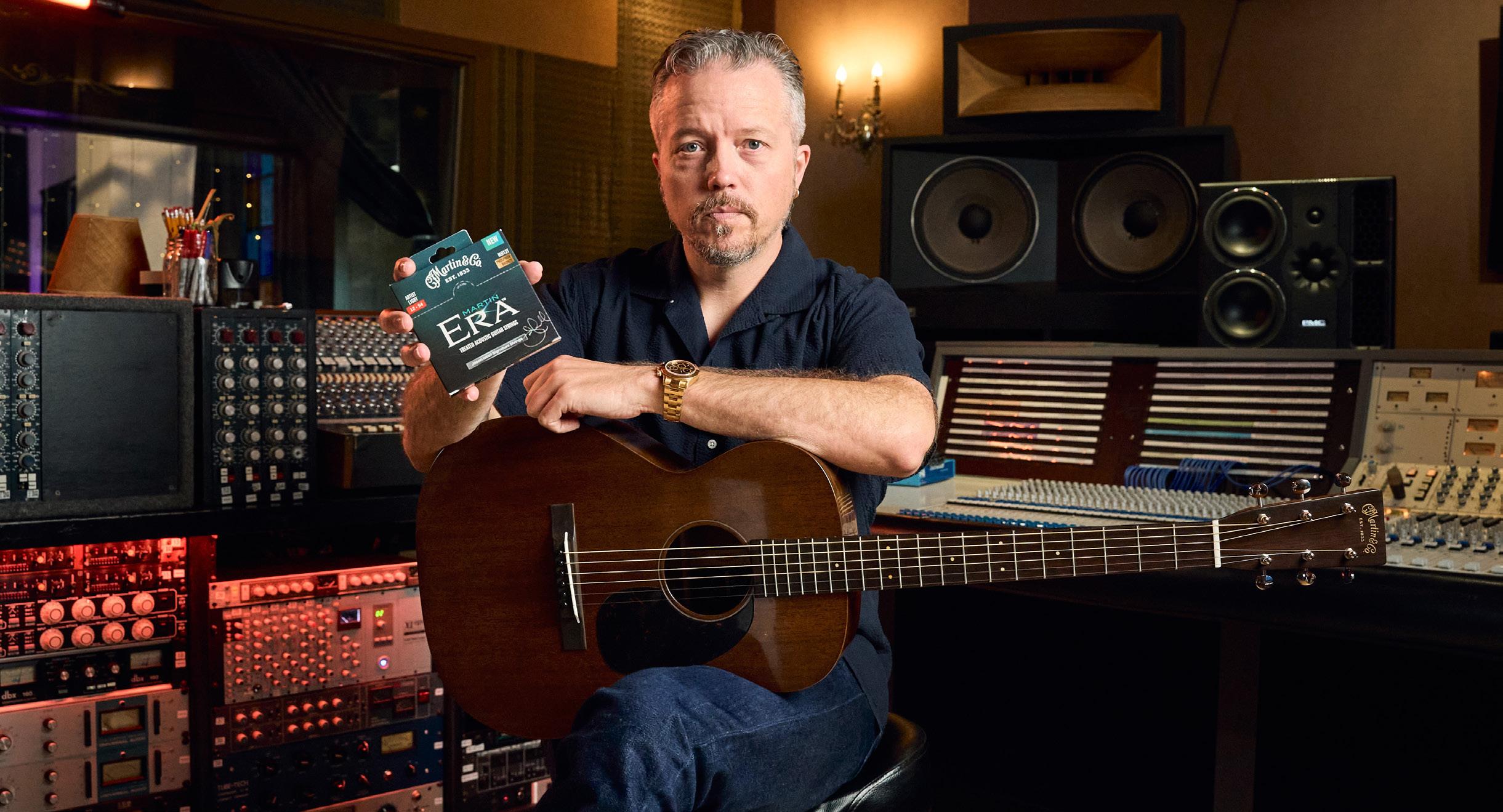
“Oh wow. That’s it?” Isbell says, pausing for a moment. “So I’m the youngest person with Martin signature strings? I’m forty-seven, so that’s the only thing I’m gonna be the youngest at this year!” All jokes aside, players getting their own set of Martin strings is not something that happens often. Rarer still is that a set of signature strings—let alone a debut set of signature strings—kicks off a whole new string technology, but that’s just what the Jason Isbell Era Treated strings are doing. The Martin Era™ strings are an exciting and all-new creation from the string experts in Nazareth. They aim to offer players who favor a more traditional string experience the best of all worlds in one irresistible package.
BACK TO THE FUTURE
Built to deliver the perfect balance of comfort, durability, and rich acoustic character, Era strings combine Martin’s heritage with modern innovation. That means you get the company’s Lifespan® treatment on the phosphor bronze strings, which guards against corrosion, as well as a new Flexible Core construction that enhances playability, and silk-wrapped ends to protect your instrument. It gives you all of the warm lows,
clear highs, and balanced mids you would expect from Martin guitar strings, but with durability that’s sure to last gig after gig after gig, and with the natural feel under the fingers that you’d want from uncoated strings. The ball ends of each string are also silk-wrapped to keep your bridge in perfect condition.
BIG RED
For the debut Isbell set, the Era strings get the artist’s preferred SP Core construction—which is strong, stable, and responsive—as well as a custom artist light gauge, and ball ends wrapped in crimson silk, a nod to Isbell’s home state of Alabama and his beloved football team, the Crimson Tide. Getting everything right, though, was a process.
“I’m kinda particular about strings,” Isbell admits. “I think it’s something that gets overlooked a whole lot. But I pick something and stick with it for a long time. And my issue with acoustic strings has always been that you either get something that’s treated and coated, and it’s going to last a long time, or you get a string that’s going to sound good soon after you put it on the guitar, but then it’s probably not going to last very long.”
The unique qualities of the Era strings managed to offer Isbell something that sat in the sweet spot between those two things—no mean feat for a demanding player who needs his acoustics to sound spectacular night after night.
“For me, using the silk wraps and the phosphor bronze on these increases the amount of time that the guitar is going to sound right,” he says. “Acoustic strings are like an avocado—you have a very brief window when they do what they’re supposed to do. Usually, when you get them out of the package, they
sound metallic, and brittle and new. And then within just a few days or weeks of playing, they’re old, and your fingers are dirty and uncomfortable, and they’re dead. So we tried with these to increase that window. And we did a really good job. They hold up well. They stay in tune for a long time, but they don’t sound like a pack of brand-new strings right out of the box.”
SIGNATURE FOR ALL
It helps that Isbell’s requirements are, in many ways, what most players want: a balance between sound and longevity. That gives the Jason Isbell Era Treated strings a universality that you wouldn’t typically expect from a signature product.
“We went with the .012s because it’s the gauge that I always use,” he says. “My playing is not bizarre. Like, there aren’t a lot of people on earth that play like Tommy [Emmanuel], y’know? But there are a lot of people that play like me. It’s not that complicated; it’s pretty much standard guitar playing. And I’ve done it for a long time. I’m not being falsely modest—like, I know how to play the guitar! But I don’t have a strange approach to the instrument, and I don’t have very acidic hands. So, I feel like a string that works really well for me will probably work really well for a lot of other people. It’s gonna cover the bases, and you can do a lot of different things with it. I use different tunings and very different types of guitars with the same strings. I think these strings will work in a lot of applications.”
With more gauges and options coming to the Era range later in 2026, there’s never been a better time to rethink your string choice—because the strings Jason Isbell relies on may just be perfect for you too.
the road to
DISCOVERY
It’s hard to believe that Martin’s Road Series turns thirty this year—clearly, time flies when you’re having fun. And for three decades now, the series has helped guitar players have a whole lot of it, encouraging them to take the next meaningful step on their guitar journey. Since its humble beginnings in 1996, the series’ roster, now twenty strong, has been made in Martin’s famed Navojoa facility. The Road Series has long been a beacon for aspiring artists who appreciate its impressive mix of player-friendly features, classic build elements, and competitive price range.
For 2026, the Road Series has had a total overhaul, elevating the lineup in ways never seen before. You only had to spend a few minutes at Martin’s booth at The 2026 NAMM Show to see the excitement that the refreshed series was inspiring in fans, dealers, and artists. No matter what your style or musical background, there’s a new Road Series guitar waiting to join you at your next session, your next gig, or on your next tour. And now more than ever, it’s easier to decide on the right Road Series instrument for you, as the updated line has been newly recategorized.
Most notably, there are now two new categories of Road Series guitars: Modern and Retro. And you don’t need to have worked in the marketing department in Nazareth to work out what that means in terms of the features and styles you’ll find in each. On the Modern side of things, you’ll find cutaway instruments, unconventional body shapes, and more unorthodox finishes. Over on the Retro side… well, you know what a classic Martin guitar looks like, right? The Retro Road Series is now the most affordable and accessible way to get that authentic vibe in your life.
Another welcome change to the Road Series for 2026 is a streamlined and unified naming convention that lets you know at a glance what level of cosmetic finery you can expect from each instrument. Anything with a 10 in its model name offers the stripped-down aesthetic of Martin’s least ornate guitars. Anything with a 12 in the name offers appointments inspired by the iconic Style 18 guitars of yore. Meanwhile, the Style 13 guitars are styled to reflect elements of the more expensive and elaborately decorated Style 28 instruments. Let’s take a look at some of the series’ highlights.
MODERN CLASSICS
The Road Series Modern guitars are aimed at players who require a little more from their Martin. Here you’ll find the company’s revolutionary SC body shape available in a variety of styles and finishes. This includes the stripped-down and striking all-sapele SC-10E Modern Sapele, which brings a little dusty Americana charm to the radical offset-waisted acoustic-electric design.
At the fancier end of the scale, you’ll find the SC-13E Modern, which features a combination of spruce and koa fine veneer and boasts premium under-the-hood features such as L.R. Baggs® Element™ electronics. The SC-13E Modern also
DC-10E MODERN
GPC-13E MODERN
OMC-10E MODERN
has a new finish option for 2026 in the form of the Mezcal Burst™. This striking golden sunburst is a fitting tip of the hat to the incredible work done by the Martin craftspeople in Navojoa, whose work has inspired so many artists throughout their Martin journey.
As you’d expect with any Martin SC guitar, each of the Modern SC instruments features the remarkable Sure Align® neck system, as well as the Low Profile Velocity neck shape, which allows for unprecedented playability and accessibility for a Martin instrument. If access to the upper frets is essential to your playing but the SC is a little too far outside your comfort zone, don’t worry—the Road Series Modern range also features a whole crop of cutaway acoustics in more conventional shapes and exciting finishes. The roster is made to accommodate all kinds of players.
SC-10E MODERN
SC-13E MODERN
The most striking instrument in the refreshed Road Series range may be the DC-10E Modern Black. This cutaway Dreadnought invites players to lean into the painted-top trend with a moody, all-over satin black finish. Underneath, you’ll find the reassuring quality of a solid spruce top with sapele back and sides, plus Martin E1 electronics. There’s a single ring of abalone-style trim around the soundhole, adding a touch of understated bling and making this the ultimate stealth Martin. But if all of that sounds like a bit much to you, fear not. The DC-13E Modern combines spruce and koa fine veneer in a much more conventional visual package but retains that all-important cutaway for easy access to the upper frets. Are you more interested in smaller cutaway guitars? Good news: the Road Series Modern lineup has two tempting options for you to consider. For players who prefer a classic OM body shape, the OMC-10E Modern Burst offers modern playability and accessibility, all wrapped up in a delightful 1935-style shade top. With a spruce top and sapele body, plus a single ring of faux abalone around the soundhole, it’s a timeless instrument that also lets you explore the upper reaches of the fretboard at will.
Those who want their cutaway to split the difference between an OM and a Dreadnought should turn their attention
D-10E RETRO
D-12E RETRO
to the GPC-13E Modern, which boasts the Grand Performance body shape. This wonderfully balanced and versatile instrument pairs spruce with koa veneer, offering all the projection and nuance you could ask for in a Martin guitar.
SETTING THE TONER
Those are the modern options. But what about the more old-school instruments? The Retro guitars are perhaps the most head-turning, ear-tickling aspect of the new Road Series. These six-strings combine everything players have historically loved about the tone, playability, and reliability of the Road Series with the aesthetics and visuals of the Standard Series, as well as the look of Martin guitars of yore.
More importantly for anyone who values that classically weathered look, all the spruce-topped instruments in the Retro range—from the pared-back Style 10 guitars to the premium Retro Plus models (more on those later)—feature Martin’s Aging Toner treatment. It lends these brand-new instruments the kind of wonderful caramel hue that you’d usually have to spend many hours playing in smoky bars in order to capture. The finish ties the Road Series Retro range together and adds a lovely played-in personality that so many guitarists are eager to experience straight out of the box.
As befits a range of instruments informed by Martin’s unparalleled history, the Retro guitars keep things simple with two spruce-topped models per style level: a 000 and a Dreadnought. There’s also a pair of wonderfully understated all-sapele Style 10 guitars that offer the most affordable and accessible entry point to the pleasure of owning a Road Series guitar.
000-10E RETRO
000-12E RETRO
000-13E RETRO
The Road Series’ other Style 10 guitars have a classic spruce/sapele tonewood pairing plus subtle black binding and a satin finish to add to that played-in feel. The Style 12 instruments feature the same wood but add a gloss finish, an Old Style 18 rosette, and classic nickel butterbean-style tuners. On the Style 13 guitars, you’ll find spruce and “Pennsylvania rosewood” black walnut for the back and sides, with a gloss finish, white binding, and a Style 28 rosette.
That’s not all, though. There’s another level to these more traditional Road Series instruments: the aforementioned Retro Plus. Comprising two 000s and two Dreadnoughts, the Retro Plus range blends Style 18- and 28-inspired visuals with premium materials to create true heirloom instruments. Available with solid mahogany
or solid granadillo (a Mexican tonewood similar to rosewood), the 000E and DE Retro Plus models feature torrefied spruce tops that are thermally aged for an open, broken-in sound from day one. Equipped with L.R. Baggs electronics, these premium guitars are ready for stages big or small, offering a slice of played-in Martin magic from the moment they come out of the case.
CREAM OF THE CROP
As the pinnacle of Martin’s Navojoa-made line, the refreshed Road Series showcases the artisanship and attention to detail that Martin’s Mexico-based craftspeople have built up over the past three decades. Each guitar in the range comes with a gig-ready softshell case, built-in electronics, and scalloped X-bracing, ensuring that you get the classic Martin look, feel, and sound no matter which guitar you choose to welcome into your collection.
The Road Series has long been a huge part of Martin’s lineup. Whether they represent a step into the world of guitar or a step up to a more premium model, they’re an important milestone for so many players on their own road to what’s next. With more options than ever, the all-new Road Series will continue this tradition for generations to come.
DE RETRO PLUS 000E RETRO PLUS
The M PAISLEY EMBER BURST is one of the most UNIQUE and visually STRIKING guitars to come out of the CUSTOM SHOP. Martin CEO THOMAS RIPSAM explains how he came up with this most UNCONVENTIONAL idea
Words • JOSH GARDNER
Given the cornucopia of beautiful, surprising, and eye-catching instruments that furnish the Martin Guitar booth at The NAMM Show every year, it takes a lot to stand out. In 2026, though, one guitar turned more heads than any other. In fact, the Custom Shop M Paisley Ember Burst may just be one of the most striking and singular instruments Martin has ever made.
It’s a guitar designed to be admired, that’s for sure. But how did Martin come to create such an individual and convention-shattering six-string? It all started with Martin’s President and CEO Thomas Ripsam.
“It’s definitely a personal passion project for me,” he says. “For the first time in the 193-year history of Martin, we have a paisley guitar, which I’m really excited about.” In the years that Thomas has been CEO of the company, he has always enjoyed pushing the unparalleled craftspeople who work in Nazareth to move out of their comfort zones on one-off projects—and the Paisley Ember Burst was born out of just such an endeavor.
“I love paisley,” Thomas says. “Obviously, on the electric side, you find them quite a lot, but on the acoustic side, not so much. So I wanted to create one just for me. But it came out so well that, once people saw it being built, there was a lot of interest, with people asking if we were planning to offer this to the public. And now we do.”
A 14-fret M/0000-sized acoustic, the Paisley Ember Burst is a stunning guitar with an Engelmann spruce top that features a stirring paisley pattern under an equally unconventional burst finish. But Martin’s first-ever paisley guitar couldn’t boast just any paisley pattern. It had to be exclusive, idiosyncratic, and created specifically for Martin.
“The paisley pattern was really important to get right,” Thomas says. “We didn’t just want to use a generic pattern, so we took some Martin-specific design motifs, such as the snowflake and the diamond, and incorporated it all into the pattern. And then, because with a paisley acoustic you have to consider the soundhole in the middle, you have to arrange the swirls of the paisley so that it looks good with that soundhole. That took us a while to get right.”
GOOD WOOD
The Custom Shop M Paisley Ember Burst isn’t all about the alluring pattern on its top, though. The guitar beneath the swirls is extraordinary too. It’s exceptional in a variety of ways—and not just because of that little-seen M-sized body. “On the back and sides, we have this beautiful, quilted maple
wood that actually complements the paisley,” Thomas says. “We thought about just having regular wood on the back and sides. But since the top is so stunning, we decided to go all in. And that’s why we did the quilted maple and the walnut neck.” There was a slight issue, however, with combining three different and equally enticing woods for the top, back, sides, and neck: choosing the right finish. It took the craftspeople at Martin multiple attempts to pinpoint the exact Ember Burst you see on the production guitar. “We experimented quite a bit with the finish and stain,” Thomas says. “There’s a lot of staining involved to bring all the wood together. And that’s what led us to this Ember Burst pattern.”
The Paisley Ember Burst is a limited edition, available only for 2026. And the get-it-while-you-can approach is being heard loud and clear by Martin fans and dealers alike.
“Even before The NAMM Show, we already had inquiries; some people had heard about it,” Thomas says. “We were quite surprised about the level of interest in this one.” What should not be a surprise at this point, however, is Martin continuing to make big, bold design decisions under Thomas’ watchful eye. From his CEO-11 acoustic-electric from 2025 to the D-3 Millionth, it’s clear he takes pride and pleasure in watching his team stretch themselves creatively.
“I think the beauty for me is that we can sometimes go really wild,” he says. “What can we do here that maybe we’ve never done before? That’s a big part of it. But I think what’s also important is that it always comes back to what a Martin guitar is, right? We love the challenge of creating something unique but, when you see it, when you play it, it shouldn’t look or feel like another brand. It still should be our brand. And so we are very intentional in these discussions—‘Is this moving too far away, or is this actually enhancing what we do?’”
The CEO-10 was Thomas’ first CEO model. For that guitar, made in 2023, he kept things pretty traditional. And that was intentional too. “I didn’t want to risk it all on my first design only to have people vomit all over it,” he says. “That would be it—no more CEO guitars! I think that gave me a little bit of confidence to say, ‘Okay, I’ve done that, now let’s do something different…’”
OUTSIDE THE BOX
For Martin, doing things differently applies not just to the design of its guitars—the spirit of challenging what’s possible is something Thomas is proud to see across Nazareth and the entire Martin range.
“One of the things that we actively talk about is taking more risks,” he says, “whether it’s with the design of a guitar or the artists we work with. Nobody expected that we would come out with a signature model with Mikael Åkerfeldt from
Opeth. But I really love metal, and I love the band, and so we’re branching out more and doing things that allow us to connect with more people, but always in a meaningful way. An old colleague of mine used to say that what excited him about his job was making the impossible possible. But if you want to do that, it challenges you to really push boundaries. And that’s what I love.”
Thomas extends the same sense of love and excitement to Martin’s owner, Chris Martin. “He often has passion projects like this too. We are part of a company that, frankly, gets excited about doing things that are not always done with the numbers or the commercial considerations first—it’s really about the craft, or the art, and about players and what could excite them.” And, if the early response is anything to go by, guitar players the world over are very much thrilled by the Martin Custom Shop M Paisley Ember Burst.
“I think that’s so cool,” adds Thomas, “and I’m humbled and honored to be part of it. Of course, my job as CEO is about running and driving a business. But it’s also about people and working with people to do something meaningful in the world, and to bring your own creativity into it. It’s literally a dream job, a dream company, and I want to do my part to keep it that way.”
Holy
GRAILS
Few acoustic guitars are AS ICONIC or DESIRABLE as a PRE-WAR D-45 . That’s why CHRIS MARTIN IV decided to METICULOUSLY recreate EVERY SINGLE ONE of the 91 INSTRUMENTS produced between 1933 and 1942 , exactly as they would have left the FACTORY in NAZARETH . This is the extraordinary tale of PROJECT 91
Words • MICHAEL WATTS
Throughout Martin’s storied history, one instrument has captured the imagination of players and collectors perhaps more than any other: the flagship D-45. Held in particular reverence are the few examples of this model built between 1933 and 1942, known collectively as the pre-war D-45s and spoken of in hushed tones among collectors.
“You know, if we introduced a model today and sold just one a year, we would discontinue it. We wouldn’t have kept it in the line,” says Chris Martin of the relatively small number of these holy-grail guitars that the company made during this period. “But back then, it was the Depression. ‘We got an order for a really expensive guitar? Take it!’”
You can sense the excitement in C. F. Martin IV’s voice as he begins the story of perhaps the most ambitious undertaking in the history of the company that bears his family name: Project 91. It will see Martin’s skilled craftspeople honor each and every one of the 91 pre-war D-45s with a detailed one-off recreation made with, among other period-correct features, old-growth Brazilian rosewood.
THE SINGING COWBOY
There are two stories here—nearly 100 years apart in terms of timeline, but with some surprising parallels in the telling. The first begins in 1933 with the commission of a spectacular new instrument for the soon-to-be film star Gene Autry.
“Gene was finding some success as a singing cowboy,” Chris continues. “I think the moon and stars kind of aligned with country music and Martin guitars during the Depression, because people either wanted to hear a song that made them feel good, or they wanted to hear a song that made them feel like the artist who sang that song understood them and their plight. And to me, pure, real, country music does that.”
The songs may have met people where they were, but Autry certainly didn’t lean into the hardscrabble nature of the time. “Gene was famous for his fancy clothes,” Chris says. “He would tuck his trousers into his boots so you could see them better. He was a showman, and he wanted a guitar that would reflect that. So, we took the order. Back then, you know, we weren’t building 14-fret Dreadnoughts. They came along in ’34. So he ordered what we were making, which was basically a D-28 with a lot of pearl on it.”
And a lot of pearl was perfect for Autry. “If you go back to the origins of the D-45, it evolved from the 42, which originated in the late 1800s,” adds Chris. “They said, ‘Hey, let’s put pearl around the sides and back too.’ And that became the 45-style. It was bold and ornate, and that’s what Gene wanted.”
Although the modern D-45 specs are now standard, that was not always the case, and combing the company’s records reveals an extraordinary evolution in the early serial numbers: 12-fret guitars with paddle headstocks, double pickguards (years before the Everly Brothers), and 14-fret wide bodies all made appearances before the D-45 even hit double figures.
Brazilian rosewood, the preeminent material when it comes to traditional acoustic guitar making, is an essential part of the story. But even during the 1930s, not every set of Brazilian was good enough for a D-45. Collectors today will certainly be able to tell the difference between Brazilian rosewood and the more desirable quarter-sawn old-growth wood, for example. So, is that what Martin is looking for?
“I hear you, and yes, it’s quarter-sawn Brazilian rosewood,” Chris says. “My grandfather would say that wood is the best tonewood in terms of sound and structural integrity. But it didn’t take too long before it became obvious that this wonderful wood was in finite supply. Over time, you know, the trees were getting smaller, the guitars were getting bigger. So, they began to be more flat-sawn. But me, I want the drama. I want it to look beautiful. Many people have asked me why there was never a mahogany D-45? I don’t know for certain, but I would guess that it’s because the wood, unless it’s heavily quilted, just doesn’t have that visual impact.”
THE WOOD IS GOOD
Faithfully recreating 91 guitars from some of the rarest wood on earth is a beautiful idea, but there was no doubt a daunting distance between concept and execution. “I’m going to go back in time just a little bit, say ten-ish years ago,” Martin’s Director of Instrument Design Tim Teel explains. “We were trying to do something very similar, but on a much smaller scale. Our first real attempt was taking the OM-35 from 1930. We bought that guitar at auction and displayed it in our museum, and I kept thinking, ‘Hey, can’t we get that thing into a proper reissue?’ Meaning that, not only would it be authentic in terms of how it was constructed, but also in terms of the wood choice, Brazilian at the time.
“That project worked, and it made us want to do more. In particular, it made us want to pay a fitting homage to the first D-45s. From my perspective, we were always looking for an opportunity. There was one problem though: we never had the Brazilian rosewood to recreate those famous D-45s from that Golden Era.”
Those nine years, from 1933 to 1942, were a significant time period for Martin in many ways. “It’s funny because for many, many years, there was just no wood available of the quality we needed,” Teel adds. “Then, all of a sudden, we started getting inquiries from people in the industry who had a stash of great wood and had decided to sell it instead of building with it.
“Of course, we have very stringent regulations on how we grade and sort wood. The majority of the first couple of batches we saw would yield a 00 size or maybe a 000 at best. So a lot of it still wasn’t going to work. We finally got a batch or two, and that made us believe it could work. But we had to process all of it. We had to make sure it was up to the quality levels and all of that.”
Assembling the right wood in the right quantities to make Project 91 a reality was clearly an enormous undertaking—so much so, in fact, that even Chris wondered whether it would ever be possible.
“You know, I never imagined that we would find more pre-CITES Brazilian rosewood in Dreadnought sizes,” he admits. “We often find pre-CITES Brazilian rosewood that was left over from someone who was going to make classical guitars, and we look at it, and we think it’s perfect for a classical guitar or a 00.
“The demand for 00 Brazilian rosewood guitars is not the same as the demand for Dreadnought-sized Brazilian rosewood guitars, so we often pass, but we still try to keep a good level of stock, even though the volume of Custom Shop Brazilian rosewood guitars we make is sporadic. And so I thought this was an opportunity to do something with some of this wood instead of waiting for orders—the time had finally come for Project 91.”
LIKE THE REAL THING
Given that the original instruments were made almost a century ago, how accurate can we expect these recreations to be?
“It’s important to know that we’re not calling this an Authentic project, but it’s being completed in the mindset or with the intention of Authentic,” Teel says. “Here’s the big difference: with an Authentic guitar, we have to physically have the guitar in front of us because we dig into the bracing layouts. Even though Martin’s product has always been very consistent—even back then—they were still handmade.
“However, with all that being said, we have done enough true Authentic work that we understand how things have evolved over the history of the company, and the guitars we have made, so we’re taking that approach with this project. And that’s why we call it Project 91. It’s basically that the materials are original to what they would have been back in the day.”
These are guitars designed to look and feel as they would have when they left the factory all those decades ago, which means you won’t find any artificial wear and tear on these instruments—with one notable exception, that is.
“We’re not doing any of our typical aging processes with the checking in the lacquer or any of that,” Teel says. “The guitars do have torrefied tops, though, because when you play an original one—and we have one here in-house from 1942—it just has a certain quality about it and the torrefaction really helps to bring out some of those shiny notes. I’ve played the first four guitars. They all sound incredible.”
Project 91 is evidently a great labor of love for Chris and the Martin company as a whole—one that pays tribute to an era of guitar making that truly changed the musical world forever. And one that might have been lost if not for the players and artists who were inspired by these famed instruments.
“We stopped making D-45s because of World War II,” Chris says. “The only reason we got back into them is that we saw people seeking out pre-war D-45s. It wasn’t something that came internally. Our dealers were saying, ‘Can’t you make me a new version of this pre-war guitar that my customer wants but can’t get?’”
It’s this hunger for rarefied quality that has revived these instruments—and Chris is no stranger to it either.
“This is a recreation of that Golden Era period in time, which is very exciting for many people,” he adds. “I’ve spoken with probably three or four folks who actually own one of these pre-war D-45s and a couple who don’t but really want to. The response has been fantastic. The Project 91 guitars are not cheap, but they’re selling as soon as they’re finished. All except for number 13, a recreation of the first ever D-45 with a shade top—that one is mine!”
Something
Join us behind the glass as we uncover some of the educational treasures in the Martin Museum’s storied archives
Words • JASON AHNER
William Foden was a prominent classical guitar teacher in the early 1900s. The special guitars Martin made for him were the first to have 20 frets something that soon became standard across the Martin range
here has been a connection between Martin Guitar and guitar instructors pretty much from the beginning. In the 1830s and 1840s, it was common for C. F. Martin, Sr. to sell his instruments to instructors, who at that point also acted as Martin dealers. One of them, John Coupa, was even a business partner of C. F. Martin, Sr. from the late 1830s until the early 1850s.
Martin later shifted to selling guitars primarily through distributors, but it never forgot about its relationships with instructors. The most notable tutor Martin did business with was perhaps Justin Holland, who taught guitar in Cleveland, Ohio. From 1874 onwards, Holland was one of the most prominent teachers in the U.S. There are multiple letters between Martin and Holland in the company archives. Most often, they concerned Holland ordering instruments for his students.
Later, we find William Foden, a classical guitarist and tutor who endorsed Martin guitars in the first decades of the twentieth century. He began ordering Martin guitars for his pupils circa 1900, and, in the 1910s, the company started building an exclusive line: the Foden Specials. They were similar to other Martin models but with some differences in inlay, mostly on the fingerboard and rosette. At the suggestion of Foden, his special models were built with 20-fret fingerboards rather than 19. The feature quickly became standard on most of Martin’s models. Published in the early 1920s, Foden’s two-book Grand Method for Guitar was considered an essential tool for up-and-coming classical guitarists of the era.
In 1923, Vahdah Olcott-Bickford founded the American Guitar Society, which is still in existence today. For years, she had been championing the guitar as an ensemble instrument whose sole purpose wasn’t simply to accompany vocals. Like William Foden, she also had a line of Martin guitars that she would order for her students and herself. Olcott-Bickford’s Style 44 “Soloist” models used premier woods such as those found on Style 45 guitars but featured minimal ornamentation. Later in her life, Olcott-Bickford dedicated her time to teaching. Her Method for Classic Guitar is considered one of the best instructional resources for the instrument.
While Bickford was at first skeptical of the ukulele, she soon came to realize its possibilities. Published by the Oliver Ditson Company, Bickford Method for the Ukulele, written by Vahdah and her husband Zahr, was just as monumental as her guitar methods. Her love for Martin instruments didn’t end with the guitar. As you can see on the cover, she is playing a Ditson Style 3 ukulele built by C. F. Martin & Co.
Justin Holland taught guitar in Cleveland, Ohio, and was one of the most prominent and respected guitar tutors in America in the 1870s
Showcase Class
2026 MARTIN ARTIST Meet the
Artists are the lifeblood of Martin Guitar. For all the talk of history and construction, it’s only when an artist picks up a guitar and makes it part of their musical voice that it truly comes alive. Every year, Martin honors this commitment with the Martin Artist Showcase. The annual program is dedicated to supporting breakthrough musicians at pivotal moments in their careers. And, like previous years, the Class of 2026 spans folk, pop, country, indie, rock, and beyond. These are players who are redefining genres and inspiring the next generation of songwriters and performers, and we are thrilled to welcome them to the Martin family. Let’s dive into the stories of the Class of 2026: Annahstasia, Maggie Antone, William Beckmann, Rose Betts, Kaitlin Butts, Debbii Dawson, Lily Fitts, Darren Kiely, MJ Lenderman, and Noah Rinker.
ANNAHSTASIA
Musician and visual artist Annahstasia explores complex themes and embraces vulnerability.
Across its eleven thoughtful, poetic, and unvarnished folk songs, her acclaimed debut album Tether, released in 2025, showcased not only her enviable musicianship but also her patience and resilience.
The Los Angeles-based musician’s journey began in her early teens. “I went on tour with my uncle as an excuse for summer camp, essentially,” she says. “It was the first time I got to see what songwriting could build, and his music was guitar-based. When I got home, I picked up my Toys“R”Us guitar and started to teach myself how to play. It wasn’t long before I was writing my songs, using the chord progressions I learned from a vintage folk tab book I got for twenty-five cents in a charity shop.”
The artist’s formative influences include Bill Withers, Nina Simone, Fiona Apple, Regina Spektor, and Aṣa. “I had eclectic taste as a teenager due to my parents’ own listening habits. But what I was drawn to, specifically, at that time was the way the voice could be used to tell a story—the nuance and intricacy of the timing and cadence and dynamics throughout, making you feel the words, and not just understand them.”
Outside of music, Annahstasia draws inspiration from nature, particularly its grandeur and enormous scale. “It makes me feel small but also part of something much more lasting in time,” she says. “I try to watch and listen for the wisdom that comes from the way our Earth holds all of the death and constant rebirth.”
While noting that her answer is subject to change, when asked about her favorite song she’s written, Annahstasia
nominates “Be Kind,” the opening track from Tether. “Mostly because I sing it so regularly and it captures so much of my life in the tableau of others’ lives,” she says, “ultimately grounding my experience every time. And the mantra of loving kindness is always a good one to be reminded of.”
Annahstasia’s history with Martin guitars began following her first tour. “For a long while, I just played whatever was around—I think most people do that before things get serious. But one day, after that first tour, I decided it was probably time for a guitar that I actually liked playing,” she says. “I walked into this used-guitar shop in the Valley, and in the back there was an impressive collection of vintage Martin parlor guitars— all of them more than $20k. They humored me and let me sit in the shop and play a while.”
As Annahstasia was getting ready to leave, she saw something else. “There was this acoustic hung up high, and I reached out to grab it. It was an instant kinship—I was honestly afraid to check the price. But out of all the guitars in that section, this was the only one within reach of what I had saved. It was meant to be. It’s a 2004 OMC-16RE. It’s still my main touring guitar since it sounds so beautiful just plugged straight into the DI.”
Following Tether, Annahstasia plans to release a live album. “There’s a freedom in live music that comes from leaving behind the obsession with precision and minutiae, and opting for connection and presence,” she says. “Playing for an audience always generates a different energy than being in the quiet safety of a studio, and I think it’s important to put both on the record over the course of time. It’s a type of archivist work, in my mind.”
ANTONEMaggie
With a compelling voice and songs that are comical and cathartic in equal measure, Maggie Antone radiates a captivating energy. Her debut album, Interpretations, was released back in 2022 on her own label, Love Big. As the title suggests, Interpretations features Maggie’s gentle, acousticaccompanied takes on songs from artists as diverse as Dolly Parton and Beyoncé to Blink-182.
Fast forward to 2024, and Maggie’s first album of original material, Rhinestoned, was released, on Love Big and Thirty Tigers. She followed it up with a U.S. tour, and ignited festival crowds at Under the Big Sky, Austin City Limits, Windy City Smokeout, and more. Coming hot off the heels of her solo track “The Devil’s Not In Hell,” Maggie released “White Horses” in February 2026 in collaboration with fellow up-and-comer Anna Bates.
The Virginia-born artist first picked up the guitar at just thirteen, and by sixteen had written her first song—and she’s continued to push herself creatively ever since. It’s no surprise, then, that when it comes to the topic of the favorite song she’s ever written, Maggie keeps her gaze locked forward: “I don’t believe I’ve written it yet,” she says.
For Maggie, her love of Martin guitars is tied to her love of the artists who play them. “I’ve watched my favorite musicians play on Martin guitars for years, and I’m so excited I get to join them,” she says, adding that it’s the “handcrafted nature” of the company’s instruments and the use of quality materials that set them apart.
As she looks to the future, Maggie takes a straightforward approach to her narrative-driven songwriting. “Life’s full of stories if you’re busy living,” she says. “I just write about those experiences honestly.”
BECKMANN William
William Beckmann embodies an old-school and varied take on modern country music, rolling influences from classic country, rock, pop, and mariachi music into his sound, all while drawing on his bilingual upbringing in southern Texas. He has bolstered his loyal following through near-constant touring and his heartfelt, story-driven songs. Released in the summer of 2025, his album Whiskey Lies & Alibis showcases his versatility, from its timeless country swagger to its sweeping heartbreak and focus on small-town melancholy.
William fell for country music and classic rock at the age of eleven. “I fell in love and took it upon myself to learn how to play,” he says, citing formative influences such as George Strait, the Eagles, Roy Orbison, Elvis Presley, Frank Sinatra, Willie Nelson, and Waylon Jennings. Aside from other musicians, William is always looking for inspiration from the everyday, he says, adding: “I try to constantly think of new
song ideas or song titles, and look for inspiration in the people I meet and interact with, and in conversations, movies, or just stories I’ve heard or read about.”
William is keen to express the environment of his upbringing in his songwriting. “I am from South Texas, right on the border of Mexico. I try to write about where I’m from and shed a little bit of light on that part of the state. It’s definitely a unique place and continues to inspire me as a songwriter.”
The artist bought his first Martin when he was just seventeen. “It was a brown D10E-01. I’ve loved Martins ever since, and I continue to play them on stage. My main stage guitar is a classic D-28. Martins are special to me because of the incredible craftsmanship and sound quality. They are so consistent and so playable right out of the box. They have always been top-level instruments, and will continue to be because of the consistent quality.”
Within William’s catalog, you’ll find a lot of the sweeping melancholy that country does like no other genre. “Sad country songs are appealing because everyone has felt those emotions,” he says. “Some more than others, but I like to believe that being vulnerable and honest is not always easy, and when someone hears a song that they relate to, it’s compelling and can often help that person make sense of their feelings in a way they might not otherwise have been able to understand or put into words.”
BETTS Rose
Rose Betts melds an indie sound with strong Celtic and English folk influences, as well as a dash of cinematic flair. The U.K.-born, Los Angeles-based artist has contributed music to the films of Zack Snyder— Justice League and Rebel Moon – Part Two: The Scargiver—bringing a fantastical dimension to her grounded, honest songwriting. Her 2022 debut album, White Orchids, helped solidify her presence across music and television, while recent releases continue to expand her global audience.
“I grew up in a very musical family. We were all singing together as soon as we could talk,” Rose says. “My dad plays guitar and would take it on holiday. We were staying in an old hunting lodge in Scotland, and one drizzly day I picked up his guitar and wrote my first song on it! I was about eleven. Piano became my main instrument, but I came back to the guitar about four years ago to open up my songwriting.”
In terms of her guiding influences, Rose follows what feels right for the song and always casts a wide net. “For my recent project, I listened to The Pogues, fun., and Noah Kahan. I called on my memories of Irish and English folk songs that we sang and played at home growing up, and I also have my north star of Joni Mitchell when it comes to lyric writing. I had a hope that I could find somewhere between pop and Celtic folk, so I would listen to artists and songs that I felt had some of that quality to their songs.”
Outside of music, Rose draws on fiction. “Russian writers like Tolstoy, Turgenev, and Pushkin really inspire me when it comes to storytelling and finding original ways to express
familiar ideas. I also read poetry, and the poet Seamus Heaney has been a favorite lately.”
When it comes to the topic of her own favorite songs, Rose has a clear and emotional standout. “My song ‘Take This Body Home,’ which I wrote for my grandad’s funeral, feels like a song that just had to exist,” she says. “It’s as if I was just in the right place at the right time to catch it, and even though it is so personal, it feels greater than me.
“I often have people message me that they’ve chosen the song for their own funeral or for the funeral of someone they love—sometimes they even perform it themselves. These interactions are so moving to me. I think the song says something delicate about death that isn’t commonly found in art, and when I think of all the pain that had to happen for the song to exist, it’s a wonderful testament to how art can transform pain into something beautiful, albeit bittersweet.”
Rose’s Martin journey began when she first moved to L.A. and walked into a Guitar Center to get something portable to write and perform on. “I played every guitar they had in there, and as soon as I picked up the Little Martin, I just felt the quality of the instrument—it felt solid and well made, and even though it was small, it still had character and resonance. I actually asked to keep the shop floor instrument as I liked it so much. Now I play a full-size Martin, and it’s opened up my playing so much.”
For Rose, working with Zack Snyder has helped her find a new side of her voice. “Music for film can have a lot more space and openness in it, so widening and simplifying a performance is always a good place to start. It adds drama and doesn’t overpower a scene when you can strip things back, sometimes even just to the voice. Lyrics become less important; it becomes more about the tone and melodic choices. I lean into my Celtic side a lot when I work with Zack; the colors lend themselves so well to fantasy.”
BUTTS Kaitlin
Tulsa-born Kaitlin Butts is bringing the murder ballad into the modern age. Her vibrant, fearless approach to country music found huge viral success in 2024 with her anthem “You Ain’t Gotta Die (To Be Dead To Me).” And her funny, engaging, and characterful take on the genre has gained her millions of streams and a global fanbase. She has supported the likes of Lainey Wilson and Dierks Bentley on stage. And in 2025, she released Yeehaw Sessions, an EP of covers that applies her playful approach to tracks by the likes of The Chicks and Chappell Roan.
Kaitlin’s musical journey started in earnest when she was fifteen, “when I was really into bands like The Wreckers, The Chicks, Taylor Swift, and Miranda Lambert,” she says. However, these days she finds it difficult to pinpoint a direction of influence. “I listen to all kinds of music, and I feel like that has directly impacted my sound, depending on the song,” she says. “Most songs I write come out straight-up country, but I love pop, rock’n’roll, punk, red dirt, Americana, rap, and musical theatre—and all those different sounds have molded me, and those influences peek out at different times.”
Outside of music, Kaitlin says she draws a lot of inspiration from movies and stand-up comedy. “When I was growing up, discovering new music almost always came from movies. Even talking about my influences just now, it made me remember the first time I heard each of them. For example, the first time I heard Joan Jett, it was because of Shrek ; Roger Miller was because of Robin Hood; Aerosmith was from Mrs. Doubtfire. I also love stand-up comedy; comedians are master storytellers. The way they set up a story, the hook, feels a lot like songwriting. And then there’s the banter with the audience. It’s a lot like the banter in between songs during a live show—that, to me, is almost as important as the song itself. I love to sing and play guitar, but at the core of it, I love to entertain and make people laugh, cry, or connect.”
When it comes to her own favorite songs, Kaitlin points to “What Else Can She Do,” which has a familial connection. “Although she wouldn’t let me give her credit, I wrote that song with my mom after hearing her sing the first line: ‘She left the country with big city dreams runnin’ wild in her mind.’ I loved the melody and the way it transported me into another world, where I knew who she was singing about from the first few words. And I loved how her phrasing sounded like something straight out of a Willie Nelson song. My mom is a teacher, and she’s a brilliant creative writer too.”
Kaitlin’s first Martin guitar was a celebratory gift from her husband to mark the occasion of her first publishing deal. “He was helping me make the move to Nashville and took me to Carter Vintage and bought me an HD-28—it’s been my goto guitar ever since. That guitar now features a signature from George Strait and has been with me to so many shows and helped me write all of my songs thus far. I love Martin because I like having the technology, reliability, and electronics of a new guitar, but the sound and richness of a guitar with history and years of playing.”
On her ear-catching contemporary twist on the murder ballad—“You Ain’t Gotta Die (To Be Dead To Me)”—Kaitlin is every bit as droll as you’d hope: “Everyone has someone in their life who they don’t talk to anymore because they’re dead… to them!” she says. “It’s cathartic, relatable, and cheeky, and I’m glad that a song I’m really proud of and that I identify with has made its way into the ears of so many people.”
Kaitlin’s favorite murder ballad is “Red Headed Stranger” by Willie Nelson, from the concept album of the same name released in 1975. “I love the simplicity of Willie’s iconic guitar being the main instrument of the track,” she says, “and I love how, in the end, everyone mutually agrees that the man did nothing wrong by killing the woman for trying to steal his lost love’s horse.”
DAWSON Debbii
With her contemporary approach to retro pop and rock, Minnesota-born Debbii Dawson crafts playful and imaginative worlds while drawing on a deeply rooted musical legacy. Since the release of her EPs Learning in 2023 and How To Be Human the following year, she has continued to push boundaries with her genre-defying songwriting.
Debbii’s musical journey began earlier than most. “When you’re born into a musical family, your musical journey starts before you’re even alive,” she says. “My parents were touring musicians, and I was on the road with them at two weeks old, even sharing the stage with them from a baby bouncer. I only started writing songs more seriously after high school, but I was extremely shy, so even though I really only knew my way around the piano, I started playing guitar because it was easier to use without anyone else hearing me.”
Her musical upbringing granted her a unique set of early touchstones, all of which formed an essential part of her story. “I grew up in a stricter, religious household, so my early influences were liturgical and gospel hymns, as well as classical music—some of my favorites are Mozart, Bach, Beethoven, and Rachmaninoff. I also had a nerdy period where I only listened to film scores—my favorite composers being Hans Zimmer, Ennio Morricone, and James Horner. “I think the common thread between all of these is the ability to communicate emotion to the listener without needing words to do it,” she adds. “I was later introduced to ABBA and Queen, and found honesty in the lyrics of older country artists like Jim Reeves and Patsy Cline. And I had my heart pierced by vocal powerhouses like Whitney Houston and Celine Dion. These are all artists I look up to, and I hope the music I make captures even a fraction of the magic they gave me.”
Debbii’s favorite of her own tracks is “You Killed the Music.” “It’s a diary entry that really encapsulates the thoughts and emotions I was feeling at the time, and continually serves as a reminder that I was able to overcome the situation I was going through,” she says.
Where did Debbii’s journey with Martin begin? “I got my first Martin a few years ago from a second-hand shop. It was a Junior Dreadnought. I’m very petite, so I was looking for a small guitar that still had a high-quality sound and a warmer tone to complement the higher timbre of my voice, so the guy in the shop handed me a Martin. I’ve had the privilege of working with some amazing musicians, and they always gush over the tone and playability of my Martin.”
Debbii’s music spans a lot of genres, sounds, and vibes, so it’s important for her to keep a grounded approach to this varied blend. “To be a good artist, you really have to get to know yourself,” she says. “People tried to tell me who I was or who they thought I should be, but it just never worked. Once I began to understand my own identity as a person, and accept that, I think the effects bled out into my musical fingerprint. I’m a weird girl who’s lived a strange life, and I try not to take things too seriously, so whatever genres or eras I dabble in, those truths are going to be the throughline. I also enjoy using contrast as a tool of cohesion, and I’m a sucker for some good chords and a great melody.”
FITTS Lily
Boston’s Lily Fitts is emerging as a compelling new artist defined by mature, emotional songwriting. She began by recording intimate covers for YouTube and TikTok, and has continually evolved her voice, anchoring her career in lyrical precision and emotional depth. Her debut album Getting By, released in 2025, has garnered almost 15 million streams by pairing sweeping, cinematic stories with ear-tickling pop hooks. She’s currently balancing a full touring schedule with the recording of her second album.
Lily’s journey with music began as soon as she could speak. “I was always singing,” she says, “running around the house and performing for my parents, my siblings, or anyone who would listen or watch. Music felt like a part of who I was from the very beginning. When I was nine years old, my dad bought me a purple Hannah Montana guitar for Christmas, and I started taking lessons. Playing the guitar opened up a whole new world for me. It gave me a way to express myself beyond singing, and that’s when I began writing my own songs, covering artists I loved and looked up to, and recording videos. From that point on, music became not just something I enjoyed, but something I truly connected to.”
Two formative influences come to mind for Lily. “Growing up, Fleetwood Mac was always playing in my house, and I was completely captivated by Stevie Nicks’ voice and presence, and the way she told stories through her songwriting. There was something so powerful and effortless about Stevie that stayed with me,” Lily says. “And Taylor Swift was also a major influence. Her honesty and vulnerability made music feel personal and accessible to me, and as a young girl, it lit a fire in me to start writing my own songs.”
Alongside these musical touchstones, Lily draws inspiration from the people and world around her. “From relationships and friendships to the quiet in-between moments,” she says, “from traveling to new places to returning home to New England. Each experience leaves its mark on my writing. My songs are honest and deeply personal, like pages from my diary. I hope they can be a place of comfort for others, a reminder that they’re not alone, and that when people hear my music, they feel truly seen.”
Lily’s first Martin experience came after she had proven that playing “guitar wasn’t just a phase”—that is, after a year or so of lessons and constant singing and playing. “My dad brought me to Guitar Center to help me find my first ‘real’ guitar,” Lily says. “We didn’t know much about brands or models, so I spent weeks going back and forth, trying different guitars and learning what felt right. I ultimately chose a Martin, and that guitar has been with me for the past twelve years. It’s incredibly sentimental to me and has been part of my growth not just as an artist, but as a person.”
It was Lily’s rewritten version of the Noah Kahan hit “Stick Season” in 2023 that helped break her into the popular imagination. “I think what connected people to my version was the honesty and perspective I brought to it. I’ll never forget the day I posted it—I was sitting in my kitchen, singing a chorus I had rewritten from a place of vulnerability, and I soon realized that people connected with it. The response completely took me by surprise. I’ve always been inspired by Noah Kahan’s music and his message, and being able to put my own emotional truth into his song and have it resonate with others was incredibly meaningful.”
KIELY Darren
Singer-songwriter Darren Kiely draws inspiration from the Irish folk music he grew up around in County Cork, Ireland. He blends this with modern influences that range from The Lumineers to Noah Kahan, drafting an inviting, emotive, and distinctive approach to the contemporary folk-pop sound.
Darren began singing in 2019. After winning several Irish traditional music honors at a national level, he found his way to New York in 2022 to continue his journey and develop his voice. In the U.S., he also spent some formative time in Nashville and honed his performing skills on international tours with stops as far-flung as South Africa and Australia. His latest projects include the recent EPs Lost and From the Dark, which explore themes of self-discovery and growth via his unique, driving sound.
Darren’s first instrument was the tin whistle, which he picked up when he was just five. At eight, he began learning the fiddle. It wasn’t until he was a teenager that the guitar entered his life. “When I was about fifteen or sixteen years old, I bought a tiny amp, a loop pedal, and a Martin LX1E because I really wanted to do the Ed Sheeran thing, and I went from there,” he says.
When it came to establishing his sound, Darren cites a range of influences. “It was definitely a mix of singersongwriters like David Gray and Damien Rice, as well as folk bands that were big when I was growing up, like The Lumineers and Mumford & Sons,” he says, adding that, outside of music,
he draws on “anything that makes me feel something on an emotional level” for his songwriting.
When it comes to his own favorite track, Darren points to “Slow Decay.” “That one is one of my favorites because the melody for the chorus follows what I did on the guitar, and that came about from completely randomly messing about.”
Darren’s Martin journey may have begun with the LX1E, but, ever since he started touring, he’s been playing a D-28. “I love the tone and projection of Martin guitars,” he says. “The durability of them on the road is second to none, and there is something very reassuring about knowing how solid they are, show after show.”
So how does Darren combine his contemporary and traditional sides? “I like to tune my guitar to more traditional Irish music and Celtic tunings, as that helps it feel more Irish,” he says. “I also think a blend of energy and melody in Irish music makes it special. A lot of making music for me is trying to create the feeling that I feel listening to Irish music.”
You’d be hard-pressed to think of two more different places than a quiet country town in Cork and the bustle of Nashville’s Broadway. But the time that Darren spent in Music City was incredibly instructive. “I’ve seen so many different ways people make music, be it writing songs or making records,” he says. “I’ve learned a lot from the many different ways people make great music. There is no one way to do it, and it’s been inspiring to see so many different ways of being creative and making music—the possibilities feel endless.”
LENDERMAN MJ
Indie rock standout MJ Lenderman rose to prominence as the guitarist of Wednesday, whose fifth studio album, Rat Saw God, was touted as not just one of the best indierock albums of 2023, but one of the best full stop. The record saw MJ raising walls of fuzzed-out guitar and catchy riffs amidst a chaotic and engaging interplay with pedal steel player Xandy Chelmis.
MJ’s latest solo offering, Manning Fireworks, landed to a whirlwind of critical acclaim too. His humorous songwriting and spiky, strange approach to the six-string have cemented his identity as one of the most distinctive musical voices in the world of indie rock.
For MJ, music began “probably as soon as I came home from the hospital,” he says. But it wouldn’t be until he was about seven that he would first pick up a guitar. His most formative influences were artists such as Neil Young, DriveBy Truckers, Dinosaur Jr., Pavement, Silver Jews, Sonic Youth,
Magnolia Electric Co., and Sparklehorse. “I like all of these bands because they make great music that is at times sloppy, but it’s from the heart. For whatever reason, some of these bands made me feel like I could also make music if I wanted to,” MJ adds.
For all of the heartfelt, honest songwriting that inspires him, he’s also not afraid of simply knuckling down and putting the work in. He says that just “sitting in a chair for a long time” can lead to some of his best songwriting. He notes that, at any given time, his favorite song of his own is “whatever I wrote last, because it’s what I relate to the most.”
MJ’s Martin journey started when he was just a kid, absorbing the energy of his dad’s hunt for a dependable acoustic. “My dad really wanted a Martin when I was a kid. I remember we drove somewhere in east Tennessee one weekend so he could try playing some. That was probably the first time I heard of them.” Nowadays, though, MJ is inspired as much by the sound as he is by “the history and the players who like to use Martins.” He also thinks the guitars “feel kind of biblical, with the ‘Nazareth’ in the soundhole.”
As accomplished and impressive on the electric guitar as he is on the acoustic, MJ decides which of his instruments to reach for mainly based on the needs of the song in question. “There’s a percussion to a strummed acoustic guitar that can be really satisfying,” he says.
RINKER Noah
Noah Rinker is a true California native, drawing inspiration for his raw and introspective music from the mountains around where he grew up, in Shaver Lake. Noah showcases the expansive beauty of his home state in his videos, which see him performing in front of sweeping vistas, or simply out in nature, lit only by a crackling fire. Tracks such as “Save My Soul” and “Wherever I Go” have drawn a rapidly growing audience appreciative of their stripped-down, intimate storytelling.
Noah’s musical journey began very early on. “My parents got me a little toy keyboard at four or five years old, and I started playing by ear. It wasn’t until I was about fourteen that I picked up the guitar, and that’s when things got exciting for me. It expanded my love for music so much,” he says.
When it comes to how Noah found his sound, there’s one key artist that he drew from. “I’ve listened to a lot of John Mayer. I think he is one of the most influential guitar players of all time,” he says. “I’ll always remember watching his Where the Light Is show for the first time on YouTube. It inspired me to put my own musicianship forward and try to be the best guitar player I could.”
Alongside this, Noah cites the likes of Tyler Childers, Kings of Leon, John Mellencamp, and Jason Isbell—and, more broadly, the totally incomparable energy of a live show. “I try to go to shows as often as I can to see the best musicians master their craft,” he says. “It’s always such an inspiring experience to me, and I will never not be awestruck by an amazing performance from someone I’ve been dying to see live for the first time.”
When it comes to his personal favorite of his own tracks, Noah highlights his song “Matches and Gasoline.” “I think a big reason why it’s my favorite right now is that it came from a very real place, and a very real end to my first relationship. It’s
the most truthful thing I have written about that. I got to finish the record up with Ian Fitchuk, and I’m just so proud of it. Playing it live is my favorite part of my set. I feel the emotion of it as if I’d just written it that afternoon, and something about that makes me so happy.”
Noah first took notice of Martin guitars right at the start of his guitar-playing journey. “The person who encouraged me to start playing guitar was a neighbor of mine named Kenny Strickland. He took me to Guitar Center to buy my first guitar. I had a pretty tight budget but couldn’t help but admire the Martins on the wall. He said to me something along the lines of, ‘One day whenever you can, get yourself one of those— it’ll blow your mind.’ Turns out he was right. There’s a clarity and warmth to Martin guitars that feels timeless. I’ve played brand-new ones and super-old ones, and they just have that thing, that special magic that nothing else on the market has.”
Noah often writes and performs among the California mountains—a landscape that has “shaped everything” for him. “There’s nothing like listening to my favorite songs while driving through the mountains, or getting to write a new song by a campfire or sitting on the tailgate of my truck in the middle of a pine grove. It’s magic, and has allowed me to sit with myself and think and write from a pure and honest place.”
Far from an isolated campfire in the woods, Noah also got to make his Grand Ole Opry debut in 2025, an experience he describes as “one of the most surreal things I’ve ever done. They make you feel so special in every way, starting right when you walk through the artist entrance,” he says. “I thought I’d be more nervous on such a big and historic stage, but I ended up feeling so incredibly comfortable and got to stand in the circle and just enjoy the moment. I’m so thankful to the folks there who make it all run so smoothly. I got to play my sunburst 000-28 up there—I’ll never forget it.”
a
word from THOMAS
Having been a lifelong guitar player and learner, I know that music education is about more than learning notes and chords—it’s a pathway to creativity, confidence, discipline, and human connection. Whether in classrooms, as part of community programs, or around a kitchen table, music shapes the ways people think, feel, and engage with the world. Research consistently shows that students involved in music education perform better academically, develop stronger problemsolving skills, and build resilience through practice and performance.
At the heart of this journey is access: to quality instruments, inspiring teachers and tools, learning content, and opportunities to grow. That’s where C. F. Martin & Co. plays a meaningful role. For nearly two centuries, we have had the privilege of placing quality instruments at various price points into the hands of players at every stage of their journey. This matters: a well-made instrument not only sounds better but also makes learning more enjoyable, increasing the likelihood that students stick with it.
Beyond instruments, as you’ll have read about on p. 22, we invest in partnerships with schools, non-profits, and community organizations. These collaborations help provide guitars to under-resourced programs, fund music initiatives, and create environments where students can discover their potential with Martin instruments as well as curated content. For many learners, especially those in underserved communities, this support can be transformative—helping to turn a potentially distant interest into a lifelong passion.
We also recognize that inspiration is every bit as critical as access. By connecting learners to the broader musical community—through artist relationships, storytelling, and educational content—we help students see what’s possible. When a beginner picks up a guitar knowing it’s the same brand played by iconic musicians, it creates a sense of aspiration and belonging that can fuel their motivation.
Importantly, our approach aligns with a broader shift in music education: moving from rigid instruction toward more inclusive, expressive, and lifelong learning models. Today’s learners are not just studying music; they are creating it, sharing it, and integrating it into their identities.
The result is more than simply helping to unleash the artist within; it’s about building more confident individuals, stronger communities, and a richer cultural landscape for everyone.
THOMAS RIPSAM PRESIDENT & CEO
16 | 2026 Volume CREATED IN PARTNERSHIP WITH NME NETWORKS