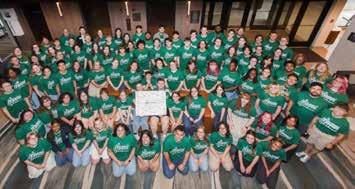
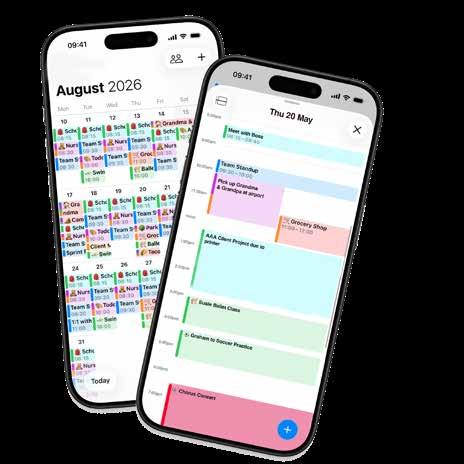
When students can quickly connect theory to the music in front of them, everything changes. Breezin’ Thru Theory builds rapid response, stronger sight reading, and deeper understanding. It’s fun and supports teachers in two powerful ways:
• In-the-moment: with NEW Theory On The Go and Breezin’ Thru Fingerings, you can address concepts quickly during rehearsals.
• Beyond rehearsal: with 24 chapters of sca olded content, it builds skills methodically thru the year, ensuring no learning gaps, and saving you class and marking time.
The result? Less time struggling, more time making music, and rehearsals that really sing.
Executive Director Florida Music Education Association
Scott Evans Hinckley Center for Fine Arts Education 402 Office Plaza Tallahassee, FL 32301 (850) 878-6844 or (800) 301-3632 (scottevans@flmusiced.org
Editor-in-Chief
Kelly Miller, DMA University of Central Florida 12488 Centaurus Blvd. Orlando, FL 32816-8009 (407) 823-4545 (kelly.miller@ucf.edu)
Editorial Committee
Terice Allen (850) 245-8700, Tallahassee (tallen1962@hotmail.com)
John K. Southall, PhD Indian River State College, Fort Pierce (772) 462-7810; (johnsouthall@FMEA.org)
Advertising Sales Valeria Anderson (val@FMEA.org) 402 Office Plaza Tallahassee, FL 32301 (850) 878-6844
Official FMEA and FMD Photographers
Bob O’Lary Amanda Crawford Art Director & Production Manager
Lori Danello Roberts LDR Design Inc. (lori@flmusiced.org)
Circulation & Copy Manager
Valeria Anderson, (800) 301-3632
Copy Editor Susan Trainor
2026–27 FMEA MEMBERSHIP: You are eligible for membership in the Florida Music Education Association if you are an individual engaged in the teaching, supervision, or administration of music in elementary and secondary schools, colleges, or universities within the state. Visit FMEA. org/membership to learn more about the benefits of active membership.
SUBSCRIPTIONS: Direct correspondence regarding subscriptions to: Hinckley Center for Fine Arts Education, 402 Office Plaza, Tallahassee, FL, 32301-2757. Subscription cost included in FMEA membership dues ($9); libraries, educational institutions, and all others within the United States: $27 plus 7.5% sales tax.
SUBMISSIONS: Article and art submissions are always considered and should be submitted on or before the 1st of the month, one month prior to the publication issue to: Kelly Miller, DMA, kelly.miller@ ucf.edu.
All articles must be provided in digital format (e.g., Microsoft Word). All applicable fonts and images must be provided. Images must be at least 300 dpi resolution at 100% of the size. All submissions must be accompanied by a proof (color, if applicable). Ads may be submitted via email to val@FMEA.org.
CIRCULATION: The circulation of the Florida Music Director is 4,500 educators. Published eight times annually by The Florida Music Education Association, Hinckley Center for Fine Arts Education: 402 Office Plaza, Tallahassee, FL 32301-2757. FMEA reserves the right to approve any application for appearance and to edit all materials proposed for distribution. Permission is granted to all FMEA members to reprint articles from the Florida Music Director for non-commercial, educational purposes. Non-members may request permission from the FMEA office.
Advertiser Index
The Florida Music Director is made possible by businesses and organizations that advertise with us. They make it possible to provide you with a high-quality publication, and we gratefully acknowledge their support of our mission. We hope you will take special notice of the following advertisement and consider the products and services offered. It is another important way you can support your professional association and the enhancement of Florida music education.
The publisher does not endorse any particular company, product, or service. The Florida Music Education Association (FMEA) is not responsible for the content of any advertisement and reserves the right to accept or refuse any advertisement submitted for publication. Information for advertisers (rate card, insertion orders, graphics requirements, etc.) can be found at FMEAMediaKit. org Florida Music Director reserves the right to refuse any ad not prepared to the correct specifications OR to rework the ad as needed with fees applied.
ADVERTISER
President’s MESSAGE
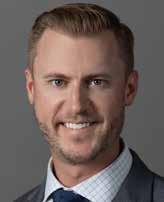
Harry “Skip” Pardee, EdD President Florida Music Education Association
Happy New School Year, FMEA!
Onbehalf of the FMEA Board of Directors, we hope each of you has been able to spend some quality summertime with loved ones and you are recharged for another great school year ahead. Our association was hard at work all summer, with SummerCon 2026 (FMEA Think Tank, Emerging Leaders, Multicultural Network Summer Workshop, and our inaugural Elementary Leadership Seminar), component summer conventions, council meetings, FSMA Leadership Summit, and NAfME National Assembly and Hill Day. Our FMEA leaders have done an extraordinary job juggling all these impactful events. A special shout-out to our staff at the Center for Fine Arts Education, who coordinated all the logistics for each of these initiatives. Thank you, Team CFAE!
While we celebrate the outstanding work of colleagues across our great state this summer, we also must take time to acknowledge and prayerfully reflect on the legacy of our recently departed mentor and friend, Dr. Carlos Abril. Carlos was nothing short of a master educator—an exemplary student-centered pedagogue, a world-class researcher whose publications will impact our field for generations, and a brilliant servant leader to the international music education community. Those of us who knew his heartful work through FMEA and NAfME know also that his brilliance was only surpassed by his genuine kindness. Each of us remembers his infectious smile, his warm and thoughtful service to his students, and of course, his true celebrity status in our field. He will be deeply missed. Colleagues, please be assured that FMEA leadership is considering many options to honor Dr. Abril’s legacy in perpetuity. We know your condolences are sent to his loved ones, and your fond memories of this amazing man are treasured.
Looking forward to this year, we know your students are busily preparing their all-state auditions so they can be included in one of our world-class FMEA all-state ensembles set to perform at our annual Professional Learning Conference. We have a tremendous lineup of performers and speakers contracted for the general sessions, and superb school ensemble performance invitations for the President’s Concert, concert hours, and mini-concerts at the 2027 conference, along with an unmatched FMEA Exhibition Hall featuring our Corporate and Academic Partners. All of this is possible thanks to the teaching you commit yourselves to each day, which serves as a catalyst for our young musicians’ success. Thank you for all you do, and as always, if you would like to book a one-on-one conversation, meeting, or check-in, I am happy to schedule with you personally (skippardee@FMEA.org). Have a great start to your school year!
Always musically,
Harry “Skip” Pardee, EdD, President Florida Music Education Association
2026–27 BOARD OF DIRECTORS
Harry “Skip” Pardee, EdD President
Jason P. Locker Past President
Bernard “Bernie” Hendricks, Jr. President-Elect
Michael Antmann, EdD FBA President
Kyle Prescott, DMA FCMEA President
Clint Randles, PhD FCMMA President
Meghan Alfaro FEMEA President
Christopher Perez FGEA President
John J. Dupuis FMSA President
Grace Wieckowski FL-NAfME Collegiate President
Andrea Szarowicz FOA President
William Sahely FSEA President
Jeannine Stemmer FVA President
Arnekua Jackson, PhD Multicultural Network
Steven N. Kelly, PhD Member-at-Large
2026–27 COMMITTEE CHAIRS
PROFESSIONAL
Bula, PhD, CAE (josh@FMEA .org)
Anderson, IOM, QAS (val@FMEA .org) Technology
VanWeelden (jasmine@FMEA .org)
Deaton (siena@FMEA .org)
Harry “Skip” Pardee, EdD All-State Eligibility, Budget/ Finance, Development
Sondra A. W. Collins Awards
Christine Lapka, EdD Diverse Learners
Jason Locker Emerging Leaders (Co-Chair)
Bernard “Bernie” Hendricks, Jr. Emerging Leaders (Co-Chair)
Fred Schiff Florida Corporate & Academic Partners
Jeanne W. Reynolds Government Relations (Co-Chair)
Angela Hartvigsen Government Relations (Co-Chair)
Ajori Spencer Professional Learning
John K. Southall, PhD Conference Planning Chair
David Pletincks DOE Arts Education Consultant
D. Gregory Springer, PhD Research
Charlene Cannon Student Engagement
Kelly Miller, DMA Florida Music Director Editor-in-Chief
Scott Evans FMEA/FSMA Executive Director
Mark A. Belfast, Jr., PhD FL-NAfME Collegiate Advisor
Keith Griffis FSMA President
Mary Palmer, EdD Hall of Fame Chair
Government Relations
The Power of Our Collective Voice Reflections From My First NAfME Hill Day
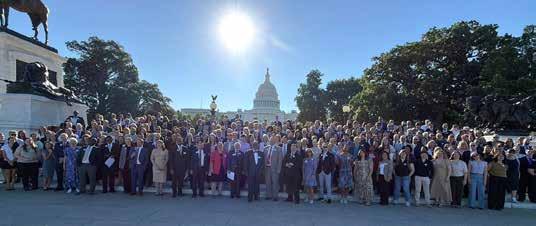
In June, I had the opportunity to participate in my first NAfME Hill Day, an experience that was both eye-opening and deeply gratifying. For those unfamiliar, NAfME Hill Day is an annual, invitation-only advocacy event in Washington, D.C., where hundreds of music education advocates meet with members of Congress and their staff to champion federal policies that expand access to high-quality music education. Here in Florida, FMEA hosts a similar event each spring with our own state legislators, but seeing
BY ANGELA HARTVIGSEN
the national version up close added a new layer of understanding and purpose.
Your Voice Matters
What struck me immediately was how powerfully Hill Day affirms the importance of each person’s individual voice. It also reminded me that our nation’s legislators, and their staffers, are simply people, just like all of us. They respond to authentic stories, genuine passion, and the lived experiences we bring from our classrooms and communities.
Florida’s delegation
Important Election Dates
✪ Primary Election: August 18, 2026
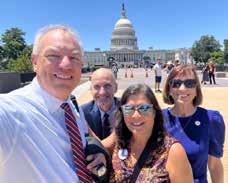
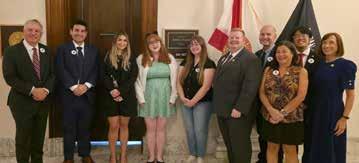
included the FMEA Executive Committee (President Skip Pardee, Past President Jason Locker, and President-Elect Bernie Hendricks), FMEA Executive Director and CFAE President/CEO Scott Evans, a few long-time advocates (Jeanne Reynolds, Christopher Perez, and me), and six outstanding Florida NAfME Collegiate students from across the state (named below). Together, we spent the day walking the halls of Congress, sharing our stories, and advocating for the students and teachers we serve.
✪ Voter Registration Deadline for General Election: October 5, 2026
✪ General Election: November 3, 2026
The Ask: Arts Funding
We were there to urge legislators to continue funding Titles I, II, and IV-A at the levels Congress has supported in the past rather than the levels proposed in the president’s budget. This same type of advocacy was successful last year when a similar situation arose. We also encouraged legislators to support the Guarantee Access to Arts and Music Education Act of 2026, which would amend the Elementary and Secondary Education Act to encourage the use of Title I funds to hire certified music and arts educators and to support the purchase of instruments, professional learning, and music instruction.
My biggest takeaways: w Legislators value hearing directly from educators. Again and again, we heard how meaningful it was that we took the time as citizen educators and future educators, not lobbyists, to speak with them. Our stories from “the trenches” matter, and they For deadlines and information about vote-by-mail (absentee ballots), early voting, and specific precinct locations, visit your county’s supervisor of elections website. Go to FMEA.org/Advocacy/Vote and click “Find Your Supervisor of Elections.”
Angela Hartvigsen
Jeanne W. Reynolds
shape policy more often than we realize.
w The nation’s legislative hallways truly belong to its citizens. While the maze of buildings, floors, and security can feel overwhelming at first, once inside you see groups from every imaginable interest area, all there to advocate for what they believe in. It is a powerful reminder that our democracy is participatory, and we are meant to be part of it.
w The future of our profession is bright. The Florida NAfME Collegiate members who joined us from Florida International University (Malik Nicolas and Jordan Mash), Florida State University (Sebastian Bravo), Stetson (Grace Wieckowski), the University of Miami (Ella Pelligra), and the University of North Florida (Christina Beaver) were eloquent, strategic, and poised as they shared their stories with legislators and staffers. We saw the same strength during April’s Florida Collegiate Advocacy Day in Tallahassee. Had I been afforded such an opportunity as a young adult, my advocacy skills would be even more well-honed today. I left with deep respect and gratitude for our collegiate members
and the leadership they are already demonstrating.
w Our FMEA/CFAE leadership works tirelessly on behalf of Florida’s music educators. From navigating the labyrinth of scheduling meetings for our three delegate groups to standing shoulder to shoulder with our collegiate members, our leadership team demonstrated unwavering commitment to elevating the power of music education for all Florida students in every conversation.
Challenges and Opportunities
The experience was not without its challenges. In almost every case, our delegate groups met with a legislator’s staffer rather than with the representative or senator themselves. However, the aides are generally very influential and tend to have specific assignments (such as “Education” or “Arts and Culture”). We made strong connections with the aides, but we left wondering how our conversations with them will translate into meaningful change, especially for the legislators who are not typically as supportive of our mission. This reminded me of the importance of following up with those staffers so we remain present in their minds and increase the likelihood they will share the
information we left behind for further study with their bosses.
Of course, there were also surprises. Many of the aides we met with were quite young, in some cases barely older than the collegiate members in our delegate group. This made the presence of our collegiate members even more impactful, because we watched genuine connections take place. As we listened to staffers share reflections about their own musical experiences, it became clear that they might be more individually supportive than we realize. It is a good reminder that supporting music education is widely viewed as a “white hat” issue, meaning it is broadly seen as positive and completely nonpartisan. We now hope that the funding currently hanging in the balance will be maintained, or even increased, from the previous year.
Next Steps
Hill Day reminded me that the power of advocacy is simply educators, future educators, and music education leaders telling the truth about our students, their programs, and the transformative power of music. Whether we are in Washington, Tallahassee, or speaking with a legislator in their home office in our
district, our voices matter and they make a difference.
As we enter primary season, please take a moment to ensure your voter registration is current and active. Because school board elections in Florida are nonpartisan, many of these races are effectively decided during the primary. It is essential to stay informed and to make your voice heard in both the primary and the general election.
As the FMEA campaign reminds us:
THE ARTS MATTER. SO DOES YOUR VOTE.
Please confirm any voting information with an official source such as the Florida Division of Elections or your local supervisor of elections. Check your voter registration status, particularly if you recently renewed your license. If you choose to vote by mail, check your vote-bymail status as well.
I returned home from NAfME Hill Day energized, grateful, and more committed than ever to ensuring that every Florida student has access to the high-quality music education they deserve. Our collective voice is strong, and when we show up together, it becomes even stronger. I am honored to be part of this work and excited for what we will continue to accomplish as a statewide community of advocates.
PRIMARY ELECTION DAY: AUGUST 18, 2026 GENERAL ELECTION DAY: NOVEMBER 3, 2026
From local school boards to state leadership, the representatives we elect shape Florida’s cultural landscape. Research the candidates and make your voice heard.
FLORIDA GENERAL ELECTION VOTER REGISTRATION DEADLINE: OCTOBER 5, 2026 RegisterToVoteFlorida.gov
N O T E S
FLORIDA SCHOOL MUSIC ASSOCIATION
Keith Griffis President Florida School Music Association
Transformational Teaching
Greetings, Florida music family! It’s my sincere hope that you’ve enjoyed a restful summer and that, like me, you feel recharged for the coming year. It is with great humility and appreciation that I introduce myself as president of the Florida School Music Association (FSMA) and express my excitement for the 2026–27 school year!
My commitment to promoting quality music education in our schools runs deep. Growing up as a student in Florida, my experiences in school music programs were not just enjoyable; they were transformational. Like so many of you, my gratitude for these school music experiences and my extraordinary teachers is immense and is simply a part of who I am. As music educators, we are driven by our mission to create opportunities for students to experience musical growth and artistry at the highest level. It is this same mission that drives our work in the Florida School Music Association.
The coming year will undoubtedly bring new twists, turns, and challenges. Equally so, however, the year will present opportunities for discovery, music to perform, and goals to achieve. It’s my hope that the prospect of changing lives through music will propel you through each difficulty you face, and that you will be reminded that your music program is more than just a subject to study or a course on a class schedule. The musical experiences created in our programs this year will positively shape students’ lives and become part of who they are.
The mission of the Florida School Music Association is clear: to provide leadership, advocacy, and services for school music programs in support of quality music education experiences for students. It will be my honor to continue our work supporting Florida music programs in providing impactful assessments and meaningful musical experiences. I have full confidence that our work, together, will continue to lead to more transformational musical experiences for our Florida students.
Sincerely,
Florida School Music Association
How do I get to the conference?
Making your case to attend the 2027 FMEA Professional Learning Conference
GGetting approval to attend the Florida Music Education Association Professional Learning Conference may require developing a proposal. Due to tight budgets in today’s economy, school principals and districts scrutinize requests to attend professional learning. That does not mean you should not give it your best effort by showing your administrators how your attendance will benefit the students in your school. Rather than assuming your administrators are aware of the critical importance of you professionally benefiting from content-specific sessions, consider submitting a formal proposal.
Through this proposal, you can demonstrate how your participation directly relates to the strategies and the objectives of your school (including those beyond the classroom). This will allow you to articulate the need for your continuing education and how it will benefit your students, your school, and you.
Develop Your Case
w Write down three of the most important goals and strategies being addressed in your school’s plan.
w Think about how you personally contribute to those three goals and strategies. How does your work as a music educator affect the overall mission of your school? Make a list of your personal contributions to your school’s goals and strategies.
w Review the conference’s professional learning schedule to better understand how the information provided will support your school’s goals. Mark meetings that relate to your list of personal contributions to the attainment of those goals and strategies and make note of the clinicians and others you will be able to observe and/or with whom you will be able to interact while at the conference. List the high-quality performances you will observe and from which you will learn. You can download the conference app from the FMEA’s website and bookmark your sessions. Write down your case for how attending the FMEA Professional Learning Conference and meeting the people there will help you contribute to your school’s goals and strategies and use this case with your administrators when making your request to attend the conference.
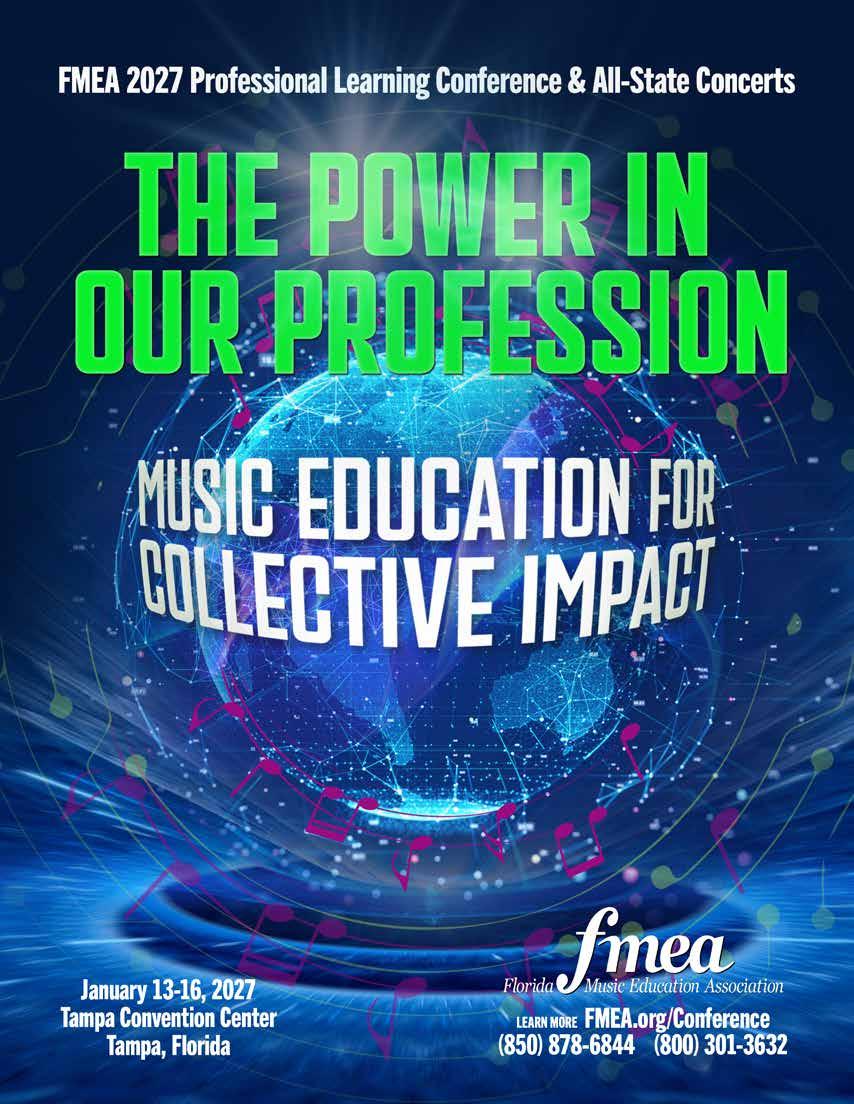
THEPOWERIN OUR PROFESSION
THE POWER IN OUR PROFESSION
Conference&All-State Conc
When you create your proposal, in addition to providing a summary of the funding you will need, detail your case for attending. List your school’s goals, download the conference schedule, list the sessions and the clinicians and presenters who will be there, and list the specific sessions you plan to attend. Also, list the performing groups you will have the opportunity to observe during rehearsals with national clinicians as well as the performances by these well-known conductors (from whom you can gain programming and conducting ideas). Additionally, let your administrators know that this conference has more than 10,000 teachers, administrators, students, and parents in attendance, the second largest music education conference in the nation.
Finally, ask your administrators to support you to attend the FMEA Professional Learning Conference in Tampa, Florida, January 13–16, 2027.
Important Conference Dates & Information
(subject to change)
September 11, 2026
w Early registration opens.
MUSIC EDUCATION FOR COLLECTIVE IMPACT 2027
FMEA 2027 Professional Learning Conference & All-State Concerts
w Nominations are open for Student Conference Experience and Tri-M Experience.
September 26, 2026
w Hotels begin taking reservations at 9:00 am.
October 1, 2026
w Presenters’ deadline for editing session details and requesting A/V equipment
October 22, 2026
w Popular Music Collective submission deadline
October 31, 2026
w Student Conference Experience nomination deadline
November 6, 2026
w Digital Music Showcase submission deadline
November 7, 2025
w Hotel room cancellation deadline is 5:00 pm.
November 10, 2026
w Hotels will charge your credit card a nonrefundable deposit for the first night of each room that was not cancelled by the deadline.
December 11, 2026
w Early registration closes at 11:59:59 pm Eastern Time (10:59:59 pm Central). Prices increase to the regular registration rates. You may continue to register and pay online until the conference.
w Postmark deadline for checks mailed to pay for conference registration; after this date, all unpaid conference registrations must be paid by credit card online, or a check must be brought with you to the conference.
December 14, 2026
w All school lodging checks are due to hotels, payable to the hotel where reservations were made for you and/or your students.
w The final deadline for discounted hotel blocks; unsold rooms in the FMEA blocks are released back to hotels.
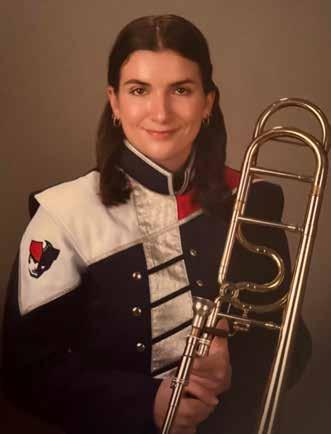
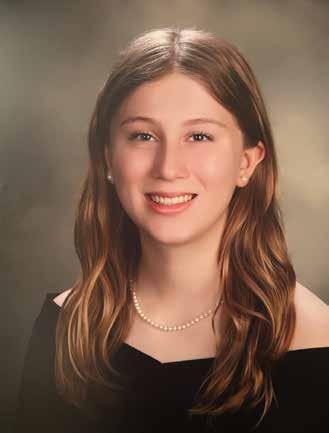
Applicants were asked to respond to the prompts “Why do you wish to become a music educator?” and “Why should music be available to all students?” Julia’s essay appears here with minor editing and the addition of a headline.
Helping and Guiding Others to Grow as Musicians
BY JULIA ANTMANN
AAt nine years old, I watched from the ensemble as my dad directed a group full of kids my age trying new instruments at summer camp. I had just picked up a trombone because no one else seemed to do it, and I always strived to be unique. Eight years later, I found myself standing in front of my own ensemble, conducting a brass choir of younger students, being driven by their joy from their own successes. From the age of five, singing along to my favorite songs, to walking out of my first college audition, I’ve had a lifelong commitment and passion for music. I fell in love with playing the trombone after making All-State for the first time in eighth grade, securing that music was my path. However, a few years later, I earned a spot on the Operations Team for my high school marching band for my sophomore year, which led me to apply and achieve a section leader role my junior year. Upon earning my section leader band leadership title at school, I gained a new love: one for helping and guiding others to grow as musicians, just as much as I had for improving myself. As I’m nearing the end of high school, I am confident that instrumental music
education is the path for me. I want to dedicate my life to spreading my love for music with the future generations by being a band director, just like all of my music instructors did for me. Specifically, I aim to teach middle schoolers. Due to the psychological stage of developing minds and self-discovery at that age, I believe that I can have the biggest impact on their musical journeys at this stage of life, spreading a long-lasting love for making music that I source from my own. But looking in a short-term lens, I want to begin by pursuing a four-year bachelor’s degree in instrumental music education at a university, filling in all the knowledge gaps I may have on what it takes to lead a group of aspiring musicians and how to tailor to their diverse needs. I believe that a key to being an impactful educator, along with a drive and passion for what you do, is being a library of knowledge on the subjects that you teach. My own education has always been a highlight and priority of mine, and I want to receive as much more in the future as I can get. That highlight is also a primary drive for my goal in being an educator as well. The loss of creativity through develop-
ing technology can be avenged by leaders fired with passion for art. Music gets me out of bed in the morning, and I look forward to whenever I can share, make, and listen to it. With time, students are losing drive in the arts, as many lack a motivating reason to come to school, such as a teacher or community that embodies their fervor. From personal experience, I’ve learned that passion results from a leader who carries the most passion in the room, characterizing the leader I strive to be for future generations. I want to spread the joy and achievement music has given me from the podium, and shape young minds to self-express through art. From the lens of my future, being a band director is the ultimate vision I carry for myself, and it is my primary purpose and aspiration.
Building on that, arts education is a valuable resource and experience that all students should be able to access, which is part of my motivation in becoming a music educator. While all students are required to come to school to achieve a common goal, learning and succeeding in their core education, their drive is what sets them apart and makes them
unique. These drives can come from sports, clubs, specialized programs, and for many, the arts and music. Students who may be failing various classes, but are interested in music, can be brought to attend school by their passion for their music education. For example, the Tri-M Music Honor Society at my school held a Music in Our Schools Week, which held daily musical lunch activities, where students were more engaged and active in their participation than they may have been in their previous class period’s lecture. If a goal of a school is to improve attendance and performance in their students’ education, providing them with an intrinsic incentive such as their school’s music programs can help them achieve that. Additionally, many studies show that participating in music can help to improve one’s academic performance, setting music students ahead of their peers due to enhanced cognitive skills and improved memory developed through music. Providing students with an internal motivation to come to school is one of the many benefits of making music programs available to them in their education.
Furthermore, the availability of a music education to students in schools helps to promote lasting culture and community building. Many schools, especially in the state of Florida, have a mix of cultures and languages within their student bodies that may separate students with different backgrounds. However, a music ensemble is one of the only places that those differ-
ent backgrounds can merge together with fluidity, as music is a universal language that anyone can learn. As a band member myself, I’ve gotten the opportunity to perform and learn music celebrating many different cultures that I may not have gotten the chance to learn about otherwise. That universality also gives me, as well as many other students, the opportunity to communicate with other students through the music we create, even if we don’t speak the same language. Music has the power to foster communications and cultural expressions between students of different communities that would have a hard time connecting in other scenarios. In a similar way, music ensemble classes also show to be larger on average than core academic classes, and music ensemble classes connect that extended population through teamwork, providing students the opportunity to be part of a community and team with a common goal of making music.
Through having two music educators as my parents, I’ve been able to see the strong and lasting impacts of one’s music education first-hand, and have felt it myself in my own education. In partic-
ipating in marching band myself, and having a father who taught it as a high school band director, I’ve seen how the activity truly gives a learning experience that is complex and stimulating, fostering an unreplicable effect. Students, many of which don’t primarily speak the language of their teacher or have struggled in earlier education, are taught in one season how to march in time with a specific form, play and memorize challenging musical works, display their message visually, and combine all those skills together to create a work with a large team of other students. Seeing students from all different backgrounds, family situations, identities, and home lives come together and have an equal opportunity to advance so far in musical skills has been one of the most inspiring things to view from the position I’m in, and the continuation of providing and funding school music programs will continue to make this beautiful symbol of opportunity and passion keep changing lives.
Due to these key importances in providing music education to all students in school, I want to dedicate my life to supporting that purpose and making sure that education is valuable to the future generations. I am eager to take these next years to improve my skills, both teaching-based and musically, so that I can fulfill my goals and spread my passion to as many people as I can as a future music educator.
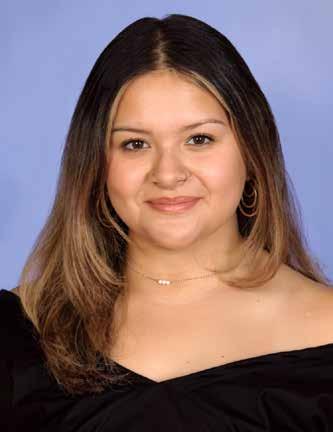
Applicants were asked to respond to the prompts “Why do you wish to become a music educator?” and “Why should music be available to all students?” Annabelle’s essay appears here with minor editing and the addition of a headline.
Helping People Find Their Voice
BY ANNABELLE CAMARGO
MMusic is more than just something I participate in. It has been a way for me to grow, connect with others, and understand myself better. Over time, I have realized that the reason music has had such a strong impact on my life is because of the people who taught it to me. Because of that, I want to become a music educator so I can create the same kind of meaningful experience for other students.
One of the moments that really shaped this goal for me was my time volunteering at Music Makers Summer Camp for children with special needs. While I was there, I worked alongside therapists and saw how music could be used in ways that went far beyond performance. I remember a camper who had difficulty staying focused during activities, but once a steady rhythm was introduced, they were able to stay engaged and complete what they started. Another camper, who was usually very quiet, began making sounds during a simple musical interaction. Watching that happen made me realize that music can give people a way to communicate when words are not enough. It showed me that music education is not just about teaching notes or rhythms, but about helping people find their voice.
As I continued to grow as a musician, I began to understand how much my teachers played a role in my development. Because of their guidance and support, I have been able to take part in opportunities that challenged me and helped me improve. I was selected to be part of the ACDA SATB Honor Choir this year, and I have participated in all-state choir for the past two years. In 11th grade, I was accepted into the SSA choir, and this year I have advanced past the primary round and am awaiting final results. I have also participated in all-county choir in both 10th and 11th grade, earned an excellent rating in district solo and ensemble in 11th grade, and received superior ratings at MPA for choir throughout 9th, 10th, and 11th grade. I also had the opportunity to perform in the National Concert Honor Choir at Carnegie Hall, which was an unforgettable experience. I have been involved in Friends of Music for two years and have participated in Disney’s Candlelight Processional throughout high school.
While these accomplishments are important to me, they did not happen on their own. They are the result of teachers who pushed me, supported me, and
believed in me even when I doubted myself. They created an environment where I felt encouraged to take risks and improve. Seeing the impact they had on me made me realize that I want to be that person for someone else. I want to help students discover their potential and give them the confidence to grow through music.
My experiences outside of choir have also shaped my desire to become an educator. As a junior coach in cheer, I learned how important it is to adapt to different learning styles. Not every student understands things the same way, so I had to find new ways to explain timing and movement. I used claps, steps, and simple patterns to help them understand rhythm. When something finally made sense to them, it was incredibly rewarding. That experience taught me that teaching is not just about delivering information, but about finding ways to connect with each individual student.
In addition to this, my involvement in the Best Buddies program has helped me grow as a leader and as a person. As president, I have worked to create an inclusive environment where students with intellectual and developmental
disabilities feel supported and valued. Through over 450 volunteer hours, I have learned the importance of patience, understanding, and building genuine connections. These experiences have shown me that every student deserves to feel included and heard, which is something I plan to carry into my future classroom.
This is one of the main reasons why I believe music should be available to all students. Music education is not just about learning how to sing or read music. It helps students develop confidence, discipline, and teamwork. It gives them a place where they can express themselves freely and be part of something meaningful. For many students, music becomes a space where they feel successful, even if they struggle in other areas.
Music also provides opportunities that students may not find anywhere else. It can open doors to experiences like performing in large ensembles, traveling, or being part of something bigger than themselves. I have been fortunate to have these opportunities, and I know how much they have impacted my growth. Every student should have the chance to experience that same sense of accomplishment and belonging.
Another important reason music should be available to all students is because it creates connection. In a music classroom, differences like social status, financial background, or personal beliefs do not define a student’s place. Everyone comes
together with the same goal, which is to create something meaningful through sound. Whether it is in a choir, band, or ensemble, students learn to listen to one another, support each other, and work as one group. Music puts everyone on the same level and allows them to build something together that none of them could create alone. That shared experience creates a sense of unity and respect, and it encourages students to uplift one another. Music brings people together in a way that few other subjects can.
However, not all students have access to strong music programs. Limited funding and resources can prevent schools from offering the same opportunities. This is why it is so important to continue supporting music education and making it accessible to everyone. No student should miss out on the benefits of music because of their circumstances.
As a future music educator, I want to create a classroom where all students feel welcome and supported. I want to build an environment where students are encouraged to grow, take risks, and express themselves. I also want to make sure that every student, regardless of their
background or ability level, has the opportunity to experience music in a meaningful way.
Receiving the June M. Hinckley Music Education Scholarship would help me continue working toward this goal. It would support my educational costs such as housing, musical instruments, and supporting materials needed to allow me to focus on developing the skills I need to become an effective and compassionate educator. More importantly, it would help me move closer to a future where I can give back to others through music.
Music has shaped who I am, and I want to use it to shape the lives of others. By becoming a music educator, I hope to inspire students, support their growth, and create a space where they feel understood. Music should not be something only some students have access to. It should be something every student can experience, learn from, and carry with them throughout their lives. If I can help even one student find their voice through music, then I will know I have made a difference that lasts far beyond the classroom.
Applicants were asked to respond to the prompts “Why do you wish to become a music educator?” and “Why should music be available to all students?” Maddie’s essay appears here with minor editing and the addition of a headline.
Sharing My Love for Music With Others
BY MADDIE LEIMER
GGrowing up in a family of musicians, I always k new t hat music was going to be part of my life My mother is a high school band director, so I was constantly in t he band room or at rehearsals, football games, and concerts. Her job is t i me-consum ing, but growing up she always brought my brother and me along so that we could st ill spend t i me toget her as a fam ily Her band st udents became like an extended family, and t heir music became t he soundtrack to our c hildhood. I couldn’t wait to be in her band one day myself
Inspired by my older brother, I started tak ing piano lessons at age four In elementary sc hool, I joined the after-school choir and in middle sc hool I found my tr ue passion for music when I joined band and started learning the flute My m iddle sc hool band director, Mr. R icketts, made band so much fun that I couldn’t wait to cont inue in high sc hool and beyond. This is where I started thi n king about music as a possible career c hoice Band quick ly became my favorite class, and I wanted to be in the band room all t he t ime. Before I decided to focus my energy solely into music, softball was also some-
t hing t hat I was extremely passionate about. For 12 years I devoted t ime to three-hour pract ices, three days a week, with tournaments every weekend. I was on a compet it ive travel team, so we drove over a n hour for practices and traveled all over Florida to attend tour nament s. It was a huge part of my life, but when I got into high school, I realized t hat my love for music was greater t han my love for softball a nd that if I wanted to really make a difference in t his world, it would be t h rough music education. To pursue this career pat h, I needed to devote more of my t ime outside of school to getting better at my instrument At t his point, I decided to make softball somet h i ng I could enjoy recreationally and turned my foc us to music
I discovere d my love for teaching duri ng my sophomore year when I became a sect ion leader Being section leader gave me the opport unity to share my love for music wit h ot hers. This was my first taste of teaching, and I was hooked! I really enjoyed being able to help ot hers become better musicians and find joy through mak ing music I served as
t he sect ion leader for two years, and at the end of my junior year I was selected to be a dr um major for my senior year Serving as drum major has been more fulfilling t han I could have ever imag ined and has aff irmed my desire to become a music educator. Every t ime I stand in front of t he band, I feel at home I love having the opportunity to teach alongside my band director (who is also my mot her) and motivate our band to become the very best version of t hemselves. Leading my peers in t his way has only strengthened my desire to pursue a career in music educat ion. My professional goal is to be a music educator, specif ically a band director. I have a deep passion for music and want to share it wit h ot hers to help t hem ig nite t heir ow n musical passion. All my music teachers have inspired me to follow in t heir footsteps and become a music teacher myself so that I can also inspire ot hers t h rough music. Th rough college and beyond, I want to gain all the resources necessary to teac h and inspire t he next generat ion of music students to become better people t h rough music
I also want to do everything that I ca n
to make sure t hat all st udents have access to a high-quality music education in a nurturing, sa fe env i ron ment. Th roug h my experiences in my ow n high school band, I have had the opport unity to make music alongside so many different people, including people with intellect ual di fferences. Last year, a f lute player who is on the autism spectrum joined our band as a fresh man. She was new to t he area and didn’t k now anyone in t he band or even at our sc hool. As her sect ion leader, I took responsibility for helping her meet people and get acclimated to our band program in addit ion to helping her wit h music Through th is process I quickly got to k now what an amazing person she is and really wa nted to be her friend. I started inviting her to have lunc h wit h my friend group and to hang out wit h us after ba nd practice. Since then, we have become very close So close t hat I see her as my little sister, and she calls me her best friend. Music is what brought us toget her and allowed me to get to know such an amazing person. I see t he way she work s harder t han most to learn her music and get better. I see the joy and excitement
she gets from being able to play her music well, which boosts her confidence and g ives her somet hing to be proud of She has grow n so much in her confidence as a musician since last year t hat now she’s even tak ing solos and playing alone in front of the entire band. I’m so proud of her! If it weren’t for band, I probably would have never had the opportunity to get to k now t his wonderf ul person and appreciate all the things t hat make her unique and special. Music classes, especially ensembles, open doors for students to grow as people, not just as musicians. By work ing as a team to make music and accomplish something together with people who are different t han ourselves, we lear n so much more than just music, and I think t hat is an invaluable li fe lesson. Music is for all students because it helps t hem become better humans who a re ex pre ssive, understanding, empathetic, collaborat ive, k ind, inclusive, and muc h more If all people were involved with music during their format ive years, imag ine how great our world would be!
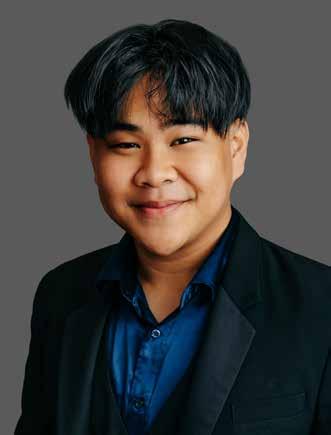
Applicants were asked to respond to the prompts “Why do you wish to become a music educator?” and “Why should music be available to all students?” Anthony’s essay appears here with minor editing and the addition of a headline.
Building Confidence and Community Through Music
BY ANTHONY TRAN
II want to pursue the arts as a music educator because I believe music is a cornerstone of society. It helps build strong and healthy communities by bringing people of all ages and backgrounds together. Music has always been a constant in my life. Even on my worst days, it has been an outlet for expression, especially during times when I could not fully understand my own emotions.
During the pandemic, I moved from my hometown of Denver, Colorado, to Florida just one week before school started. I had no time to choose my electives, so a school counselor who had no knowledge of my interests placed me in band and chorus, two classes I had never planned on taking. When I saw them on my schedule, I dreaded starting school. I even remember begging my dad to let me transfer to a different school. Music was not something I identified with, and the idea of performing or singing in front of others filled me with anxiety.
I will never forget my first week when my director asked me to say a few simple sentences in front of the class to determine my voice part. It felt terrifying. I stumbled through it and replayed that moment in my head for days thinking that I looked stupid for trying. I was the only
male first-year student in my class, which made me extremely self-conscious about my voice and where I fit in. For the first month, I refused to sing. Mouthing words, hiding behind other voices, and in general being completely uninvolved in class.
Over time, that began to change. With the patience and encouragement of my directors, I slowly found comfort in music. I started staying after school to practice, and each day I became a little more confident. I began to let myself be involved in something I once avoided. I raised my hand to read rhythms in choir, played scales on the oboe in front of my class, and even started participating more in my STEM classes. By the second half of eighth grade, I had developed a passion for something I once feared. That shift changed my life.
I realized I wanted to pursue music education after seeing how my choral and band directors impacted not only me, but also my peers. They nurtured my growing interest in the arts with patience and kindness, and that support has stayed with me ever since. They showed me what it means to be an educator who truly makes a difference.
Now, I have had opportunities to experience that role myself. Whether it is lead-
ing rehearsals in my high school choir, participating in my community choir, or teaching piano to younger students, I find real joy in helping others discover their love for music. I would not be the person I am today without the confidence that music has given me.
I know there are many students who feel the same way I once did, afraid to speak, unsure of where they belong, and hesitant to use a voice they do not yet understand. Music has the power to change that. It creates a space where students can grow, express themselves, and feel seen. I truly believe that through music, every student can find their own unique voice.
Music should be available to all students because it gives them that opportunity. Not just in the sense of singing, but as a way to express themselves, connect with others, and feel understood. Choral education in particular helps students grow beyond the classroom. It builds confidence, teaches teamwork, and supports mental health by giving students a safe space to express their emotions. Music is not just a class. It is an experience that can shape who a student becomes. Choir is different from many other classes because it depends
on everyone working together. Each person’s voice matters, and the group only sounds complete when everyone is contributing. Students learn how to listen to each other, adjust, and support the people around them. These are skills that can help in school and in life. It also teaches students that even if they are not the loudest, they still play an important role.
One of the most important parts of choral education is emotional expression. Many students deal with stress, anxiety, or feelings they do not know how to explain. School can sometimes feel overwhelming, and not every student feels comfortable talking about what they are going through. Choir gives students a safe place to express those emotions through music. Singing can help release stress and make students feel calmer and more in control of their emotions. It allows them to connect to what they are feeling in a healthy way.
Choir also helps build confidence over time. Students might start out feeling nervous or unsure, especially when it comes to singing in front of others. But as they practice and improve, they begin to feel more comfortable using their voice. Performing and participating in class can help students feel more confident, not just in choir but in other classes too. That confidence can carry over into speaking in class, working with others, and trying new things.
Another important part of choir is the sense of community it creates. Students spend time rehearsing and performing together, which helps them build strong
connections. Personally I have met hundreds of people, and they all seem to chase the same trait, kindness. Choir can become a place where students feel accepted and supported. For students who might feel isolated within their personal lives, this sense of belonging can make a big difference. Feeling like you are part of something can improve how you see yourself and how you experience school and help you get through hard times especially when feeling lonely. Even though music has so many benefits, it is often treated as less important than other subjects. Some schools cut choir programs or do not give them enough support. When that happens, students lose more than just a class. They lose a space where they can express themselves, manage their stress, and feel like they belong. The stigma of music being a backburner to a quality education is something that I would love to help change throughout schools.
JANUARY 13-16, 2027
Celebrating the Life of Carlos R. Abril, PhD
APRIL 11, 1970 – JUNE 30, 2026
JJohn Quincy Adams wrote that leaders inspire others “to dream more, learn more, do more, and become more.” By that measure, few have led as faithfully or as generously as Carlos R. Abril. Carlos devoted his life to a simple but profound belief: Music belongs to everyone. Throughout an extraordinary career as a gifted leader and scholar, mentor and advocate, he transformed countless lives by reminding us that music education is about creating opportunities for every child to discover beauty, connection, identity, and joy.
When Scott Evans asked me to write this tribute to Carlos, my first thought was how could anyone possibly convey the deep loss we are all experiencing at Carlos’s passing? It is impossible. Though still a daunting task, perhaps through personal experiences with Carlos and letters I gathered in support of his nomination for the 2024 FMEA Collegiate Teacher of the Year, I can convey, however imperfectly, the gift he was to us as a leader, colleague, educator, friend, and intellect.
Carlos as a leader. Carlos’s leadership spanned two nationally recognized academic institutions, national and international music education organizations, numerous editorial and advisory boards, national research panels, and chairmanships of the most influential committees within all these organizations and boards.
BY ALICE-ANN DARROW, PHD
… a leader who elevated those around him, helping others find confidence in their own ideas while always treating them with respect.
As an academic leader, Carlos mentored countless graduate students, junior faculty, and practicing teachers. He was known for investing his time generously in others’ success, offering careful guidance, thoughtful feedback, and genuine encouragement. Many who worked with him describe him as a leader who elevated those around him, helping others find confidence in their own ideas while always treating them with respect. Through service to major music education organizations, editorial leadership, conference presentations, and collaborative research, he helped shape conversations that influenced music educators across the United States and around the world. Colleagues looked to him not only because of his expertise, but because he listened carefully, welcomed differing perspectives, and sought solutions that benefited the broader community. Perhaps most importantly, Carlos led by example. He demonstrated that true leadership is grounded in service and empowering others. He understood that leadership is less about control than about leading others to grow, question, and contribute.
Through his leadership and prolific publications, Carlos became one of the most respected voices in music education. His research challenged educators to remove barriers that prevented students from participating in music, while inspiring future music educators to build classrooms rooted in equity, cultural understanding, and genuine human connection. His scholarship reached across continents, influencing teachers and researchers across the nation and around the world. His intellect impressed us all, but it was his humanity that captured our hearts.
Carlos as an educator. Carlos’s humanity, though ever present in his relationships, was observed most clearly in the classroom. As I gathered letters from former students for his nomination as FMEA Collegiate Teacher of the Year, I was struck by a consistent theme: Carlos made every student feel seen and heard. He believed that every student’s musical journey mattered. He encouraged future music educators to embrace diverse musical traditions and to recognize the richness that different cultures bring to the classroom. His writings, presentations, and books continue to challenge and inspire future teachers to think more deeply about their purpose and responsibility to every learner. He understood that meaningful education begins with caring teachers
Carlos R. Abril, PhD
continued from page 22
who believe in the limitless potential of their students. Perhaps Carlos’s greatest legacy will be found in the thousands of former students who now carry his ideas into classrooms. Through them, millions of children will experience music in ways that are more inclusive, more meaningful, and more reflective of the diverse world they inhabit. His influence echoes in every educator who chooses opportunities over exclusion, or who chooses to support students who are belittled or harassed because of their differences.
Carlos as a colleague. As a colleague, Carlos Abril was admired not only for his remarkable scholarship but also for his generosity, humility, and genuineness. He approached professional relationships with warmth and respect, making everyone—from new graduate students to senior faculty—feel valued and heard. Colleagues often remarked that his door was always open to offer thoughtful advice, careful feedback, or words of encouragement. He was an exceptional collaborator who believed that the best ideas emerged through shared inquiry and mutual respect. He listened intently, welcomed diverse perspectives, and fostered an atmosphere of trust in which colleagues felt comfortable exchanging ideas. Those fortunate enough to work alongside him speak of a colleague who encouraged others and mentored generously. Whether interacting with undergraduate students, guiding doctoral researchers, or collaborating with fellow scholars, Carlos treated everyone with respect and dignity. Despite his many accomplishments, he remained approachable, collaborative, and deeply committed to the people around him. His calm demeanor, sense of humor, and thoughtful presence made him both a dependable colleague and a cherished friend.
Carlos as a friend. Carlos and I shared a close friendship, as did so many others.
Carlos leaves behind a profession that is wiser because of his scholarship, stronger because of his leadership, and kinder because of his friendship.
One of our first conversations was about his uncle, who was my favorite GTA in music theory my freshman year in college. We later bonded over our lived experiences growing up in the same Miami neighborhoods, attending the same schools, and sharing many of the same musical experiences. We both chose to return to Dade County to begin our teaching careers. Growing up and teaching in Miami gave us an appreciation for diversity and multiculturalism that we carried with us into our professional careers. Perhaps what bonded us most was our shared commitment to marginalized populations and our advocacy for their inclusion and acceptance in music classrooms. Though well over a decade younger and heavily committed professionally, he still texted to set a time for a meal or drinks as we approached the dates of our annual conferences. One of Carlos’s most endearing qualities was his devotion and loyalty to friends. I will forever miss his friendship, late-night texts, and our conversations on Miami culture, politics, theater, home renovation, and the marginalization of our most vulnerable youth.
Carlos as a humanist and intellect. Outside his professional accomplishments, Carlos appreciated beauty in all its forms. He delighted in architecture, art, film, literature, travel, and the creative process itself. These passions reflected the intellectual curiosity that made him such an engaging teacher and companion. He approached life with wonder, always eager to discover, to learn, and to share those discoveries with friends. One of my most treasured
belongings is a gift from Carlos, a book of poetry by Richard Blanco who was born to Cuban-exile parents and raised in Miami. His work explores universal themes of cultural identity, place, and belonging. As a personal tribute to Carlos, I read Blanco’s poetry yesterday—on the 4th of July. In doing so, I was reminded of Carlos’s reminisces as a child growing up in multilingual Miami listening to the national anthem and struggling to understand its meaning. In his article Functions of a National Anthem in Society and Education (CRME, Spring 2007, No. 172), he reminds us that music, like all art forms, is open to multiple meanings. He encourages us to provide students with opportunities to explore as many perspectives as possible, and to use music as an open space for inquiry, dialogue, and mutual understanding.
In closing. The measure of a remarkable educator is not only what they accomplish during their lifetime, but what continues long after they are gone. Carlos leaves behind a profession that is wiser because of his scholarship, stronger because of his leadership, and kinder because of his friendship. His life’s work as an educator reminds us that music has the power to unite and to reveal our shared humanity. For that enduring gift, and for the countless lives he enriched, we honor him.
Finally, I believe Carlos would want his friends to know he was at peace in his final days and found solace in the poetry he loved. There was no poor me, why me. In true reflection of his character, he expressed only appreciation for his friends and colleagues, profound gratitude for the love of his family, the devotion of his sisters, and the treasured gift that was the love of his life—his beloved husband, Miguel. In turn, Carlos will be remembered by all of us with profound gratitude, deep admiration, and lasting affection.
FMEA “Immediate Impact” Music Educator Spotlight
Recognizing outstanding accomplishments of early-career music educators
RYAN LUMM
Chorus and Orchestra Teacher
Legacy Middle School
Orange County
Meet Ryan Lumm, chorus and orchestra teacher at Legacy Middle School. Mr. Lumm has wrapped up his first year as a Florida music educator, during which he restarted the choir program and expanded musical opportunities for orchestra students. Under his leadership, both orchestra and chorus hosted their first stand-alone concerts since the pandemic. Legacy Middle School, a 2026 FMEA Secondary Music Enrollment Award winner, has seen enough program growth that Mr. Lumm will teach only chorus next year, with another full-time music faculty member coming on board to lead orchestra. Mr. Lumm also secured two grants from the Phoenix Foundation of Central Florida, purchasing 20 new instruments for the orchestra department and enhancing the audio capabilities of Legacy’s performing arts space. In May, he was invited to share reflections on his first year of teaching with Orange County Public Schools Superintendent Maria Vazquez, EdD, on her weekly program, Mondays with Maria. Mr. Lumm’s strong belief in the power of collective music-making to create a sense of belonging has fueled the growth of both the chorus and orchestra programs, helping students feel welcomed as themselves.
LET US BRAG ABOUT YOU!
Please submit the FMEA “Immediate Impact” Music Educator Spotlight form and materials for yourself or a colleague who exemplifies the criteria for educators making an immediate impact on their schools, communities, and students.
TO NOMINATE A DESERVING CANDIDATE.
FMEA.org/programs/spotlight
Partners as of July 1, 2026.
*Please visit FMEA.org/partners for partnership details or call 850-878-6844.
Please take time to thank and support our 2025-2026 & 2026-2027 Corporate Partners.
PARTNERS
Cathy’s Choir Class Choristers Guild
GIA Publications, Inc.
Hal Leonard
Head’s House of Music
J.W. Pepper & Son, Inc.
BRONZE PARTNERS
Music and the Brain - Building for the Arts Music is Elementary MusicFirst PACE Travel
Sight Reading Factory West Music Company
Building Community and Culture IN THE MUSIC PROGRAM
BY ZACHARY THOMPSON
MMusic education has the potential to impact people in ways that go beyond students learning how to sing or to play an instrument. Building community and culture in the music program creates an environment for increased learning, greater community involvement, and deeper understanding of other people’s views for the students and the music educator. Many music educators, throughout their career, may face the challenge of either building or rebuilding a music program. West (2023, p.51) found that “(re)building hinges on a series of student choices: whether to initially enroll, whether to productively engage once there, and whether to come back in subsequent years. Any break in this chain, any adverse choice, is a potential setback.” Once students are enrolled in the music program, it is the task of the music educator to create a successful environment that encourages students to return for subsequent years. West (2023) also suggested that music educators encourage their students to engage in musical activities outside of the classroom such as rock bands, church choirs, or other community music groups. Music educators should encourage their students to be
lifelong learners. Students who possess this type of outlook should be more likely to continue with music education and to seek out additional opportunities to grow as musicians.
It is important to first establish the role and benefits of music in the community. Music has the power to bring people together and make connections that might not otherwise exist in the community (Weatherly, 2025). It is through these connections that people can come together and find more in common with one another. These relationships serve to help make the community stronger and more connected. This article seeks to provide music educators with information on the concepts of appreciative inquiry and culturally responsive teaching to help build community and culture in the music program.
Appreciative Inquiry
Music educators can use the process of appreciative inquiry to assess their music program. The appreciative inquiry process helps music educators discover the assets and
Building Community and Culture
continued from page 28
resources within their program and within the community. San Martin (2023, p.1) defined appreciative inquiry (AI) as “a framework that helps people discover ‘who we are’ and ‘what we want.’” Music educators who use the AI process can find out what is going well and what needs to be improved within their program. Rather than being a task-oriented model, AI focuses on the positive impacts and is more people-oriented in nature.
According to the Center for Appreciative Inquiry (2026), AI can be broken down into the five “Ds”:
D
EFINE, D ISCOVER, D REAM, D ESIGN, AND D ESTINY.
Here is a practical example of using AI for my school’s recent building addition for a new choir and modern worship band room. I began by defining the scope of inquiry for how to best use the new music building. Next, I discovered the positive aspects for both my teaching practice and for student engagement and enrollment in my music classes. Then, I dreamed of ways in which the new building could best serve our school community and provide a positive space for music learning and enjoyment. Next, I designed specific events to introduce it to the students and greater community. This stage in the AI process has the most concrete results, such as creating new events, implementing new teaching methods, or
forging new educational partnerships. Finally, I lived my destiny by implementing the ideas and events brought forth throughout the AI process. When a music educator reaches the final stage in the AI process, the work does not stop. Music educators should then have ongoing reflection on the implementation of the new practices or events and seek to further increase their effectiveness.
Culturally Responsive Teaching
It is important for music educators to teach the whole child and not simply disseminate concepts and knowledge broadly to a class. McKoy and Lind (2023, p. 170) defined culturally responsive teaching as a system that “uses the cultural characteristics, experiences, and perspectives of ethnically diverse students as conduits for teaching them more effectively.” Music educators who identify and appreciate their students’ cultural backgrounds can increase the students’ level of engagement throughout the learning process. To build a culture of connection within the ensemble, music educators should be willing to show vulnerability when appropriate. Maunu (2019, p. 65) wrote, “The most important thing you can do as a choral director to encourage the development of vulnerability in choir is to be vulnerable yourself. Share things about yourself and freely talk about difficult things.” This is not to suggest that music educators should share inappropriate information about their personal lives. However, music educators who are willing to be vulnerable when appropriate encourage an environment where students will be more open to connecting with others.
One way for music educators to integrate their students’ cultures into the music program is to allow students to help select repertoire for study and performance. Culturally responsive teaching helps to integrate repertoire outside of the traditional music history canon (Allsup and Shieh, 2021). Even while under guided parameters set by the music educator, students who can showcase their culture through repertoire selection often show more ownership and engagement in the learning process.
Providing several options of repertoire to a small group of students is a practical way to integrate culturally responsive teaching into the music classroom. These students could be your seniors, student leaders, or highest grade level if you teach multiple grades. For the spring concert, I often offer the section leaders a choice of songs from popular musicals or pop songs. Each of the options
has already been approved for content and appropriate style for the group’s ability level. By having students choose which song they would like to learn and perform, they take more ownership of the learning process and have increased classroom engagement.
Conclusion
Building community and culture in the music program is a challenging yet important task. Music educators who systemically integrate the students’ culture into the learning process build deeper professional relationships. As a result of culturally responsive teaching, students’ engagement and sense of ownership are elevated in the music classroom. Music educators can use the five “Ds” of AI to find out what is working well, what needs to be improved, and how to better plan for the future. All music educators, regardless of student age level or ensemble type, can integrate the concepts discussed in this article to help lead and teach their students as individuals.
Zachary Thompson is the middle school and high school choir director and worship band teacher at Covenant Day School in Matthews, North Carolina, and the director of music ministry at Dilworth United Methodist Church in Charlotte, North Carolina. He is also a DME student at Liberty University.
References
Abeles, H. F., and Custodero, L. A. (2022). Critical issues in music education: Contemporary theory and practice. New York: Oxford University Press.
Center for Appreciative Inquiry. (2026, January 16). What is appreciative inquiry (AI)?. https://centerforappreciativeinquiry. net/resources/what-is-appreciative-inquiry-ai/ Maunu, C. (2019). Let’s get real: creating a culture of vulnerability in choir. The Choral Journal, 60(1), 63–7. https://www.proquest. com/scholarly-journals/lets-get-real-creating-culturevulnerability/docview/2256069040/se-2
McKoy, C. L. and Lind, V. R. (2023). Culturally responsive teaching in music education. New York: Routledge.
San Martin, T. (2023). Leadership playbook for addressing rapid change in education: Empowered for success. New York: Routledge, https://doi.org/10.4324/9781003350804
Weatherly, K. I. C. H. (2025). What is music for?: The power of community music programs. Journal of General Music Education, 38(2), 33–35. https://doi.org/10.1177/27527646241284603
West, J. J. (2023). How to (re)build the secondary school choir: Cues from a recent case study. The Choral Journal, 64(1), 49–51, https://www.proquest.com/scholarly-journals/how-re-buildsecondary-school-choir-cues-recent/docview/2847943471/se-2
A Practical Framework for String Instruction in the Public School Orchestra Classroom
BY KEITH DODSON, PHD
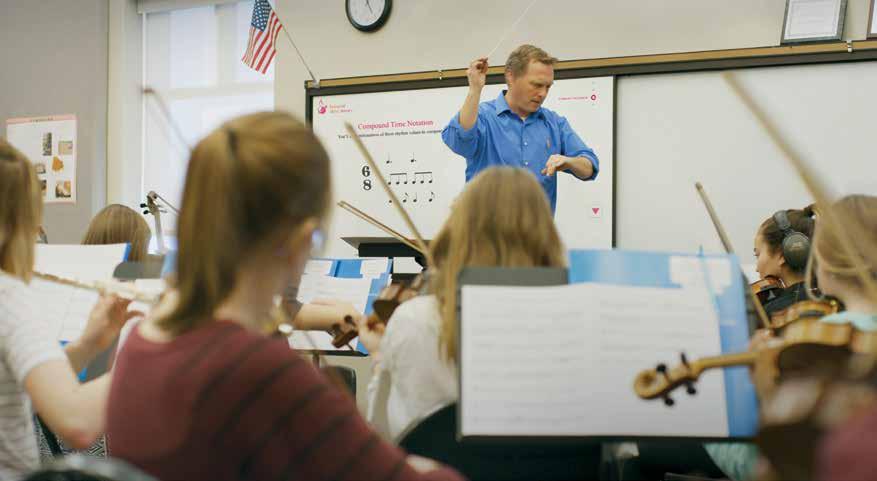
Excellence in the orchestra classroom is not accidental. Strong ensemble performance emerges from intentional teaching, consistent expectations, and a rehearsal culture built on daily reinforcement of instrument fundamentals. Regardless of the socioeconomic setting, ensemble level, or access to private instruction, students can achieve high artistic standards when teachers provide clear expectations and meaningful technical feedback. In my experience, effective string instruction centers on five essential areas of individual and ensemble development: tone, intonation, rhythm, technique, and student motivation.
Tone Production
Tone production is, to my ear, the most immediate indicator of ensemble quality. The right hand controls the initiation, sustain, and release of sound; therefore, instructors must prioritize bow technique and sound production in individual students, across multiple instrument groups, on a daily basis. Good tone is the prerequisite to proper articulation, style, character, and musical expression. Expectations for tone quality cannot be vague or occasional. Ideally, tone will be modeled and assessed daily.
Building Excellence in the Orchestra Classroom
Building Excellence in the Orchestra Classroom
continued from page 32
The often overlooked first step requires the modeling of bow hold for all instruments. This can gradually advance to nuanced creation, controlled sustain, and artistic release of sound. Additionally, posture significantly affects the range of joint movement, extension of the arm, tension of the body overall, and the bow angle on the string. Correct posture, modeled and assessed daily, gives students access to all the contact points. Finally, combining competent bow holds with proper posture, students can achieve various bow strokes (legato, detache, martele, spiccato, etc.) with varied levels of contact and in different parts of the bow.
Directors should reference evaluative tools such as the American String Teachers Association (ASTA) curriculum framework to reinforce these expectations. When students believe and understand that there is a purpose to making technical changes to the right hand, they will buy in quickly.
Developing Intonation
Accurate intonation is not achieved through chance; rather, it develops through expectation, repetition, and active listening. Good teachers want their students to
play in tune. Great teachers expect students to play in tune. This distinction underscores the importance of accountability in ensemble instruction.
Students should sing regularly in rehearsal to experience and internalize pitch awareness. Linking singing with technical manipulation is even better. For example, have students sing note names, solfège, or scale degrees while practicing the left-hand mechanics on the fingerboard. Students also benefit from singing intervals (whole step, half step). This reinforces the usefulness of block fingering, where the half and whole steps can be visualized and set. Teachers should be willing to isolate sections or individual players when pitch inconsistencies arise. Intentional and regular spot-checking allows problems to be identified and corrected immediately, rather than subtly reinforcing the intonation errors. Implementing this regularly in the orchestra culture creates an expectation for active listening and active correction on an individual level.
Effective directors do not ignore intonation issues; instead, they address them directly and systematically. If students demonstrate mastery, rehearsal can continue efficiently. If not, correction must occur immediately before inaccuracies become habitual.
Rhythm and Subdivision
Rhythmic precision serves as the organizational framework for ensemble performance. Students must understand not only what rhythms they are performing, but also how those rhythms fit within a larger subdivision structure. Conducting gestures alone are insufficient for developing rhythmic independence.
Individual Understanding
A regular question I lead with when teaching conducting is “What are you subdividing?” The reality is that most young musicians, including undergraduates, forget the critical nature of subdivisions. Students should
consistently identify subdivisions and understand how they may shift between measures or musical styles. Effective directors reinforce rhythmic understanding through deliberate repetition, slow practice, and varied rhythmic exercises. For example, the director can have students speak subdivisions (1+2+, 1e+a, 1-la-li) or simplify to percussive sounds such as “cha-cha.” Much like experiencing intonation in the body via singing, many students may benefit rhythmically through body movement. This might include clapping, patting, stomping, walking, swaying, etc., to reinforce pulse while singing or saying rhythms.
Ensemble Understanding
As individual students gain mastery of pulse, subdivisions, and utilizing the left hand while counting, the group can better develop an ensemble pulse. For this reason teachers should insist on breathing as preparation for entrances as well as visual connection across sections. Rhythmic clarity in the ensemble is improved by student awareness of the bow usage across the ensemble. Teachers may reinforce this awareness by regularly holding unconducted rehearsals. This allows the teacher freedom to roam the room to model, assess, and assist.
Technique to Artistry
Technical instruction needs to be balanced between left and right hand skills. Many teachers may make assumptions about student understanding. A classroom culture
Bow hold thumb placement
Shifting speed
Dynamic contrast using weight
Change of contact point
Finger facility in fast passages originating from larger arm/joint movement
where technical reinforcement is frequent can create an environment of safety for students as they are acquiring information, organizing it in their own mind, and producing it on the instrument. The process is quick and smooth for some, but frustrating and slow for others. The wonderful thing about reinforcing technique often is that the students who “get it” will start to transfer concepts deeper and farther, eliciting greater proficiency and detailed playing. The students who have yet to “get it” will have a chance to understand for the first time.
One approach to balancing and reinforcing technical instruction can be thought of this way: For many left hand ( ) techniques, there is a relative right hand ( ) technique to be addressed (or vice versa). A few examples of this may include:
opportunity to quickly reinforce thumb shape/ placement/pressure on the neck
opportunity to discuss bow speed change as the hand moves
opportunity to remind students not to press fingers harder than necessary on fingerboard
opportunity to remind students the finger shape, angle, and point of contact with the strings is part of tone production and intonation
opportunity to remind students of passive finger motion in bow
Building Excellence in the Orchestra Classroom
continued from page 35
Great teachers never assume complete understanding or ignorance. The only safe assumption is that students need constant repetition of hearing, seeing, and implementing technique in both hands over time as they relate to each other. Repetition of technical instruction leads to understanding leads to execution leads to transfer of ideas across the scope of the instrument leads to mastery leads to a consummate student musician.
Motivation and Mindset
Successful orchestra teaching requires directors to adopt a mindset grounded in patience and repetition. The willingness of an educator to always meet students where they are, while continually calling them to a higher level of mastery, is critical to a healthy teacher-student relationship. Students will feel safe to try, fail, succeed, and all of the in-between.
This mindset also influences rehearsal pacing and structure. Directors should move throughout the ensemble and observe students closely. It is advisable to begin rehearsal only when all students demonstrate proper posture, bow hold, and physical readiness. That classroom standard alone will procure ample opportunities to review the bow hold.
Student motivation is foundational to successful orchestra teaching. Students who know their teacher as the person who will take them where they are and give them the information and opportunities to get better every day will be easier to retain. It is not fun for anyone to be medi-
ocre. Classroom culture is derived from the educator’s mindset and its effect on students. Vapid positivity does not meaningfully contribute to student success. Positivity, informed by the teacher’s own musicianship and technical mastery, alongside their ability to communicate these concepts with patience, will inspire and retain the young musicians as individuals and as an ensemble.
Conclusion
Building excellence in the orchestra classroom requires more than individually talented students. Exceptional ensembles emerge from a culture of intentional teaching, clear expectations, and continual reinforcement of foundational skills. Tone, intonation, rhythm, technique, and motivation must all be addressed systematically and consistently. When directors establish high standards and provide meaningful follow-up, students experience success and recognize their own improvement. In this environment, excellence becomes not an accident, but an expectation embedded within the daily rehearsal process.
Keith Dodson, PhD, is director of orchestral activities at Central Michigan University in Mount Pleasant, Michigan. He completed his PhD in music education and orchestral conducting at Florida State University. Dr. Dodson will serve as a conductor of Florida and Texas all-state orchestras in spring 2027.
FLORIDA MUSIC EDUCATION ASSOCIATION
2025-2026 & 2026-2027 DONORS
FMEA Scholarship Fund
Thank you to all of the donors who have shown their dedication to the improvement of music education in Florida by supporting our Mission through financial contributions.
Donors may direct their contributions to the FMEA funds that align with the specific causes they wish to support from the following. Learn more about these scholarships and funds at: FMEA.org/flmusicapps/donate
Music Education Advocacy
General Fund
June M. Hinckley Scholarship
Professional Learning for Members
Mel & Sally Schiff Music Education Relief Fund
The following have graciously donated to FMEA from April 1, 2025, through July 1, 2026.
MAESTRO’S CIRCLE
($10,000 and up)
No current donors at this time.
ARTIST’S CIRCLE
$1,000 – $9,999
All County Music
Artie Almeida
In Honor of my sister, Joyce Slatton, & my niece, Katie Grace Miller
Russell Robinson
Fred Schiff In Memory of Mom & Dad
Leiland Theriot
In Honor of all those currently working in music education classrooms
Donors continued on following pages
DONATE TODAY FOR A STRONGER TOMORROW.
With your support, FMEA will continue to grow its programs for teachers and students, strengthen united advocacy efforts, and improve your professional learning opportunities. Visit FMEA.org to learn more information about each fund and to make a donation.
Carlos Abril
In Honor of Ms. Terry Paulen
Sandra Adorno
Andre Arrouet
Lucinda Balistreri
In Honor of Sarasota County Music & Arts Educators
Gordon Brock
Trent Brown In Honor of J. Mark Scott
Kasia Bugaj
Judith Bula Wise In Honor of Dr. Josh Bula
Dale Choate
In Honor of the Music Teachers of Duval County
Dayna Cole
In Memory of Linda Mann
Alice-Ann Darrow
Virginia Densmore
In Memory of Gene Densmore
Shelby Fullerton Deragon In Honor of Kathy Sanz
Virginia Dickert
In Memory of Lindsay Keller & Debbie Liles
Michael Dye In Honor of Michelle R. Tredway
SUSTAINERS
$100 – $999
William Fredrickson
In Honor of Clifford Madsen
Kathleen James
In Memory of Dr. Dale Blackwell
Beth & Steven Kelly
Sheila King In Memory of John King
Jason Locker
In Memory of June M. Hinckley
Joseph Luechauer
Deborah Mar In Memory of Barbara Kingman
David Martinez-Cooley
John Nista
In Memory of Stanley Dmitrenko
Mary Palmer
Douglas Phillips
In Memory of Dr. Bobby Adams
Kyle Prescott
Clinton Randles In Honor of John Kratus
Jeanne Reynolds
In Honor of Pinellas County Performing Arts Teachers
Mary Catherine Salo In Memory of Gary Rivenbark & Wes Rainer
Steven Salo
In Memory of John “Buck” Jamison & John Aiello & in Honor of Dr. Bill Prince
Alicia Romero-Sardinas In Memory of John Rose
Kathleen Sanz In Memory of June Hinckley
J. Mark Scott
In Honor of Jason Locker, Michael Dye, Dr. Judy Bowers, Dr. Judy Arthur, & Dr. André Thomas
D. Gregory Springer
Jeannine Stemmer
In Memory of Barbara Kingman, Lauren Alonso & Doug McCall
Leiland Theriot In Memory of Clayton Krehbiel
Richard Uhler
Howard Weinstein
In Memory of Barry Weinstein
Donald West
In Memory of Ronald A. Lagg
Kenneth Williams
Anonymous (2)
Anonymous In Memory of Joan Lee Alkyer
Anonymous In Memory of Grace Reidy
Help Us Support Music Education in the Schools!
Donate today for a stronger tomorrow.
Donations are submitted monthly by individuals. Your donation keeps the pipeline full of innovation, advancements, and funding through grants and other initiatives.
Donate Now: flmusiced.org/flmusicapps/donate
A copy of the official registration and financial information may be obtained from the Division of Consumer Services by calling toll-free 1-800-HELP-FLA (435-7352) within the state or www.FloridaConsumerHelp.com. Registration does not imply endoresement, approval, or recommendation by the state. Registration number CH7379.
Meghan Alfaro
David Bayardelle In Memory of Dr. George Sparks
Mark Belfast In Memory of Dr. Mark A. Belfast, Sr.
Greg Carswell In Memory of all deceased members of the FMEA
William Castillo
Jeff Cayer
Shelby Chipman
Zachary Chowning
Patrick Cooper In Memory of Martha Matteson
Dewey Dodds
Patrick Dunnigan
Judith Evans
Margaret Flood
Ronald Alumbaugh
Kimberly Bondi
James Bruce
Jamie Bryan In Honor of J. Mark Scott
Addy Burwell In Honor of Sara Hofschneider
Ernesta Chicklowski
Denise Dumala
Timothy Eaton
PATRONS
$25 – $99
Lisa Foltz In Memory of Rev. V. Ron Feener
Bradley Franks In Memory of
Gary W. Rivenbark
Tina Gill In Honor of Gary Rivenbark
Dakeyan Graham
John Grau
Ron Guzzo
Angela Hartvigsen
Julie Hebert In Memory of Marsha Juday
Cynthia Heidel
Bernie Hendricks
Arnekua Jackson
Marsha Kindall-Smith
Joshua Langston
Christine Lapka
Kevin Lusk
Matthew McCutchen In Honor of John Carmichael Amelita McGrath
Katie Grace Miller In Honor of Artie Almeida
Kelly Miller
Katie McGuire Menges
Ree Nathan In Memory of Rosemary Collins
Reiko Niiya
Harry Pardee In Memory of Sally Eldridge
Terry Pattishall
Edward Prasse
Arthur Pranno
Marie Radloff In Memory of Charles F. Ulrey
FRIENDS
up to $24
Debbie Fahmie
Amanda Gilbert
Tina Gill
Gabriel Gonzalez In Honor of Luke Hall
Angela Hartvigsen
William Hazlett
Lisa Hewitt
Sara Hofschneider In Honor of Adaline Burwell
Angel Irizarry
Jason Jerald
Sarah-Christina Larose
Jessica Moore In Memory of Dr. Nancy Barlar
Merleon Morgan
Brandon Oliva
Elisabeth Olson
Connor Oneacre
Luis Oquendo
John Parris
Clinton Randles
Diana Rollo
William Rose
Ian Schwindt
Susan Smith
Cheri Sleeper
Eddie Steadman
Andrea Szarowicz
Katelyn Taylor In Memory of Jared Benyola
Valerie Terry
Anonymous (5)
Anonymous In Memory of Archange Fils-aime
Sierra Silvia
John Southall
Kelly Southall
Ajori Spencer
Noiree Weaver
Anonymous (8)
ASSOCIATION
Jeannine Stemmer President
Finding the Balance
couple of weeks ago, my husband and I enjoyed a much-needed date night. We started the evening with dinner at an Italian restaurant and ended it at the movies to see Toy Story 5
I know what you’re thinking: a cartoon for a romantic night out? Before you judge, let me assure you, it was a great movie. Without giving away too much, one of its central themes explores the growing tension between advanced technology, social media, and digital devices versus the simple power of imaginative play. It reminded me of a conversation that is becoming increasingly important in education.
There’s no question that technology is an incredible tool. It has made our world smaller, faster, and more efficient. But it also raises an important question: What might we be losing in the process?
Researchers continue to study the effects of screen time on learning, attention, and cognitive development. School districts across the country are debating whether personal devices belong in classrooms. Many university professors have eliminated laptops and other screens during lectures after finding that students
retain information more effectively when technology is minimized.
Recently, in testimony before Congress, cognitive neuroscientist and former classroom teacher Dr. Jared Cooney Horvath, whose research focuses on how humans learn, made an important observation. He noted that according to his research, today’s students are, on average, less cognitively capable than previous generations at the same age, stating, “Generation Z is the first generation to underperform the generation before them.” His research suggests that while technology is a powerful tool,
people ultimately learn best from other people and not from screens.
That message echoes one of the lessons in Toy Story 5. Jessie reminds us that when we simply play, we unlock imagination and creativity. Yet the movie doesn’t portray technology as the enemy. Instead, it acknowledges both the benefits and the dangers of our digital world. The takeaway isn’t to reject technology; it’s to find balance.
So, what does that mean for us as choral music educators?
Understand Approach technology thoughtfully. Like any good
decision-maker, conduct a simple cost-benefit analysis before introducing a new device, app, or platform into your classroom. Ask yourself: Does this technology enhance learning, or is it simply replacing meaningful human interaction?
Balance
Keep the pendulum from swinging too far in either direction. Use technology where it genuinely serves instruction, but continue to prioritize active musicmaking, face-to-face collaboration, discussion, and creativity.
Equip
Help students recognize that while artificial intelligence can be a valuable tool, it can never replace their own
HORVATH
intelligence, creativity, empathy, and critical thinking. Those uniquely human qualities are what make great musicians and great people.
Model
Perhaps the hardest challenge is for us. Screen time affects educators just as much as it affects students. Continue reading, creating, practicing, and engaging your own mind in the same ways you hope your students will. Our example is often our most powerful lesson.
As you begin this new school year, I hope your summer has provided the rest and renewal you needed to inspire growth in your students. The Florida Vocal Association’s summer conference, Voices Unite: Unlocking Your Superpower, reminded us that although music educators are actual superheroes for our students, even superheroes need the right tools and the energy to do their work well.
May one of those tools always be the wisdom to find the right balance between technology and the irreplaceable power of human connection. After all, the most meaningful music we make always comes from people creating together.
IhopeFLORIDA BANDMASTERS ASSOCIATION
Michael Antmann, EdD President
you had a great summer! I always like looking online and seeing colleagues enjoying vacations, summer camps, professional learning, and some much-needed down time. For me, there are always three guarantees about summer: it’s too short, too hot, and the New York Mets will be irrelevant by the first day of school. It’s also a time for reflection; reflection about last school year and what I can do to grow, both myself and my students, for next year.
Goal setting is an essential ingredient for success. What do you hope to accomplish this year? What improvements do you hope to make? There is no wrong answer; we all have different definitions of success. Of course, goals without a plan or a system are just hopes. Maybe you want to play more challenging music this year. Well then, what can you change or add to your daily classes to set students up for success? Maybe you want to spend less time on campus after school. What tasks can you delegate, automate, or eliminate to make this possible? Setting goals now will allow you to align your actions with your vision.
Of course, even the best-laid plans must adapt when the environment around us changes. Anxiety seems to be high heading into the new year. The budget crisis is real; regardless of why it is happening, it is affecting all of us. The lack of funding is creating significant challenges. Challenges, however, are opportunities for growth in disguise. Throughout my career, we’ve been through a lot: post-9/11 challenges, the Great Recession, the COVID-19 pandemic, and now this. It’s going to be OK. I know this because our professional community is strong. Through collaboration, we learn and grow together, and we will be even stronger on the other side. We’ve got this! Collaboration is the antidote to adversity.
I believe the value of our organization lies in the strengths of all our individual members. Every one of us has something to learn and something to offer. If you are a beginning teacher, seek mentorship. Surround yourself with people who challenge and inspire you to do better. Be wary of commiseration. At the same time, don’t be afraid to speak up and get involved! Your voice is valuable.
I want to take a moment to thank you for the opportunity to serve our amazing organization. One of the things I am most excited about this year is the opportunity to focus on our younger members and expand opportunities and resources for both our beginning teachers and college student members.
The new FBA Future Directions Committee, chaired by Amy Wacksman, consists of teachers who are in their first five years of teaching. The committee will help us create opportunities for younger members to be involved, give them a forum to share their thoughts and concerns, and help us create and program content that will meet the needs of all our members. Our FBA Pre-Service Teachers (Collegiate) Committee, chaired by Chandler Wilson, is going to lead the way in creating opportunities for our college-student members. I am looking forward to getting them involved before they start teaching, helping them build a support system for when they start teaching, and making sure they are set up for success when they get that first job.
Our summer conference theme was Inspiring students through pedagogy, performance, and passion. Be passionate about what you do! Your students and their families will be glad you are and will follow your lead.
FLORIDA
ELEMENTARY MUSIC EDUCATORS ASSOCIATION
Meghan Alfaro President
Wow!
Whenever August arrives I am always a bit surprised that another school year has begun. August is filled with nervousness, excitement, and a bit of overwhelm as everyone rushes to get their classrooms and lesson plans ready for the young people they are about to teach. I am excited to begin this school year and to share all the amazing ways FEMEA is working to support you!
Inaugural Elementary Music Leadership Seminar
June 10–11, 2026, marked the inaugural Elementary Music Leadership Seminar at the Florida Hotel in Orlando.
Sixteen elementary music teachers from all over the state of Florida gathered to discuss leadership skills, to learn more about themselves as leaders, and to set action plans to support elementary
music education in their local communities. Several important elementary music needs rose to the surface during the seminar, including local music education advocacy, principal education about elementary music, local professional learning opportunities, and creating local professional learning communities for elementary music teachers. The participants went back
2026 ELEMENTARY MUSIC LEADERSHIP SEMINAR PARTICIPANTS
Meghan Alfaro FEMEA president Pinellas
Joshua Argueta Academy for Innovative Education Miami-Dade
Dan Browne Van R. Butler Elementary Walton
Amanda Griffo Horizon Elementary Volusia
Julia Horton Reddick-Collier Elementary Marion
Mary Johnson South Lake Elementary Brevard
Kenneth Kirkland Patronis Elementary Bay
Darrius Langston Millennia Elementary Orange
Kevin Liotta-DeVivo Roland Park K–8 Magnet IB World School Hillsborough
Kyra Livingston PVPV-Rawlings Elementary St. Johns
Emerson Oliver Norcrest Elementary Broward
Melinda Prater Brentwood K–8 Sarasota
Caroline Senko Forest City Elementary Seminole
Shannon Stem FEMEA president-elect Bay
Sherry St. Petery Liberty Magnet School Indian River
Jennifer Sullivan FEMEA executive director Orange
to their districts with fresh ideas and inspiration to continue to move the needle in support of elementary music education in Florida. I am looking forward to next year’s seminar and hope you will consider applying in the spring.
Membership Recruitment & Mentors
FEMEA understands that paying for membership and attending the conference can be a financial challenge. We have been working with FMEA Executive Director Scott Evans and the FMEA Executive Board to develop materials that can be presented to your principal to request assistance with paying for your vital professional learning organization membership. Please check our website to download a letter for your principal detailing all the benefits of membership and why it’s so beneficial for you to join. Most importantly, tell a friend so we can add to our elementary music teacher ranks. We can be the largest component in FMEA if we each get two more members to join us.
We are also thrilled to introduce a new elementary music mentorship program under the direction of our member engagement chairs, Jess Gronberg and Christine Marr. If you are a teacher
2027 All-State Information DEADLINES
Paperwork deadline
September 12, 2026
Audition upload deadline September 24, 2026
Selected students’ materials fees & participant contracts due October 23, 2026
in need of a mentor, please email Jess Gronberg at jess@ femea.flmusiced.org. You do NOT have to be a first-year teacher. Teachers at any point in their careers may need a mentor due to changes in student population, a new school, changes in your school structure, and for many other reasons. We are here for one another.
2027 All-State Information
All-state auditions went live on our website on August 1, 2026. Please be sure to download the current audition. This is vitally important as the preview materials may not be the exact audition.
Our All-State Elementary Chorus clinician is the one and only Rollo Dilworth. Our choristers are sure to have an amazing time with this accomplished composer and conductor. Our All-State Elementary Orff Ensemble clinicians are Shelly Smith and Kristine Wolfe. In addition to being Orffcertified levels trainers, they are wonderful teachers and will delight your students with their creativity and
enthusiasm. The All-State Elementary Chorus performs Thursday, January 14, 2027, and the All-State Elementary Orff Ensemble performs Friday, January 15, 2027, at the Tampa Convention Center in Tampa.
See deadlines above.
2026 Regionals & Rising Stars Information
This year’s Regional Honors Ensembles are sure to be an amazing experience for your students. All-state ensemble placement is so incredibly competitive that placement comes down to 0.1 of a point. Regionals exist to provide an opportunity for those students who were so deserving of an honors opportunity that you auditioned them for all-state.
The students who attend regionals are impressive young musicians, and the performances are always outstanding. Additionally, you can nominate your promising third graders for participation in our Rising Stars event that happens alongside our regionals events. This has turned into a huge success for our students, and we encourage you to bring your third graders for a fun day of singing, moving, playing, and creativity. Read below for more information.
Advocacy
As Florida school districts face budget cuts, it is up to us to remind our communities of the importance of elementary music education. The very best advocate for elementary music education is a phenomenal elementary music program at your school. FEMEA exists to provide you with professional learning opportunities and
Northern Regionals
Saturday, November 14, 2026
Gulf Coast State College Panama City, Fla.
Southern Regionals
Saturday, October 24, 2026
Southeastern University Lakeland, Fla.
Clinicians
Chorus – David Pletincks
Orff – Denise Mills
a community to help you be the best teacher you can be. But advocating for elementary music doesn’t have to fall on just you, the teacher.
Parents can be your biggest supporters. Thank them for their support of their child’s music education and include advocacy flyers in your concert programs. Invite local decision makers to your performances and thank them for their support, as well. Visit FMEA’s advocacy page for helpful documents and information. Finally, the most important thing you can do is VOTE. Know where your representatives stand in their support of music education and make your voice heard in your local election by showing up to the ballot box. Your voice matters, and it matters most for your students.
I hope you have an amazing start to your school year. I am excited for all the wonderful things in store for us this year!
Modern Band – Chris Burns
Rising Stars – Madison Kerr
Clinicians
Chorus – Natalie Winder
Orff – Billy Ferguson
Modern Band – Jonathan Casañas & Juan Tellado
Rising Stars – Emily Lopez
Andrea Szarowicz President
Building the Future of String Education Together
s another school year begins across Florida, our orchestra classrooms once again come alive with possibility. New violinists nervously learn how to hold a bow, returning violists begin developing a richer sound, cellists discover the beauty of resonance, and bassists continue to provide the foundation upon which every ensemble is built. Regardless of whether you teach beginning strings or advanced chamber orchestra, we all share a common purpose: helping students discover their potential through music and retention. Every violin, viola, cello, and bass placed in a
beginner’s hands, every new student recruited into an ensemble, every student who discovers their sound, and every musician who becomes the foundation of an orchestra represent the future of our profession. As educators, we must continue telling our story, advocating for our programs, and sharing the life-changing experiences that only orchestra and music can provide.
Florida’s string educators continue to be among the finest in the nation. Every day, teachers across our state transform lives through meaningful musical experiences, fostering creativity, discipline,
Dr. Bruce Walker
teamwork, and confidence. Orchestra is far more than notes and rhythms—it is a community where students learn perseverance, leadership, responsibility, and how to work toward excellence together.
As we begin the 2026–27 school year, I encourage each of you to take a moment to celebrate what makes our profession so special. The relationships we build with students, the performances we prepare, the challenges we overcome, and the memories we create all contribute to the lasting impact of music education.
Invest in Yourself:
The FOA/FL-ASTA Fall Conference
One of the greatest ways we continue growing as educators is through professional learning and collaboration with colleagues. The Florida Orchestra Association and Florida ASTA are excited to welcome you to the 2026 FOA/FL-ASTA Fall Conference, taking place October 15–16, 2026, at the Hilton Orlando.
This year’s conference promises to be one of our most exciting professional development events to date. We are honored to welcome Dr. Bruce Walker
as our keynote speaker. Dr. Walker’s sessions will focus on building thriving orchestra classrooms, developing successful programs, and creating learning environments where both teachers and students flourish. Whether you are a new teacher looking for practical strategies or a veteran educator seeking fresh ideas, you will leave inspired and equipped to make an even greater impact in your classroom.
In addition to Dr. Walker’s presentations, attendees will enjoy reading sessions featuring new literature, college admissions guidance, Suzuki pedagogy presentations, private studio teaching sessions, practical rehearsal and conducting strategies, outstanding performances, networking opportunities, and access to exhibitors showcasing the latest resources available to string educators.
New for 2026: Pre-Conference Conducting Symposium
One of the most exciting additions to this year’s conference is the inaugural FOA/FL-ASTA PreConference Conducting Symposium on Thursday, October 15. Curated and
presented by the University of Central Florida Orchestra Program under the leadership of Dr. Robert Hasty, with featured clinician Dr. Tiffany Lu, this unique experience will provide conducting instruction, podium time, and meaningful feedback in a supportive learning environment.
Registration for both participants and auditors will open on August 1, 2026.
Because this is our inaugural year, we will accept only six conducting participants. If you are interested in receiving podium time and individualized instruction, I strongly encourage you to register immediately when registration opens. We fully anticipate these six participant spots to fill quickly. Auditor opportunities will also be available and provide an outstanding professional learning experience for educators at all levels.
The Return on Investment of FOA Membership
As educators, we constantly encourage our students to invest in their growth. The same is true for us as professionals. Membership in the Florida Orchestra
Association remains one of the best investments a string educator can make.
When we talk about membership, we are not simply talking about paying dues. We are talking about opportunities.
Through FOA, students gain access to all-state orchestra auditions and performances, honors orchestra opportunities, music performance assessments, composition contests, leadership experiences, scholarships, and statewide recognition. These experiences often become defining moments in a student’s musical journey.
Many students discover future careers, lifelong friendships, and a deeper
passion for music through these programs.
For directors, FOA membership provides professional learning, mentoring, adjudicator training opportunities, networking, advocacy support, leadership development, access to state resources, and collaboration with some of the finest string educators in the nation.
Whether you are in your first year of teaching or your 30th, there is always something new to learn and someone willing to help.
The return on investment cannot be measured solely in dollars. Opportunities include:
w All-state orchestra auditions and performances
w Honors orchestra opportunities
w Student composition contest
w Mentoring resources
w Adjudicator training
w Music performance assessments (district and state)
w Leadership recognition through Rising Star and Hall of Fame awards
w Professional networking and collaboration across the state
w Advocacy for string education
w Access to district leadership and statewide resources
w Student recognition and achievement through FOA programs and FMEA events
continued on page 46
continued from page 45
Encourage Students
to Earn the Florida Fine Arts Seal
As we advocate for our students, I encourage every orchestra director to actively promote the Florida Fine Arts Seal.
The Florida Fine Arts Seal recognizes students who have demonstrated significant achievement in and commitment to the arts throughout their secondary education. It serves as a visible reminder that artistic achievement deserves recognition and celebration. Too often, students who qualify for this distinction miss the opportunity simply because they were unaware of the process.
and families early in their high school careers.
participation in orchestra develops creativity, discipline, leadership, perseverance, and excellence.
Why do we need to remain positive during difficult times?
Advocate for the importance of string education in your schools and communities.
I encourage directors to familiarize themselves with the requirements and begin conversations with students
The Fine Arts Seal is more than a designation placed on a diploma. It is an advocacy tool. It communicates to parents, administrators, school boards, colleges, and communities that arts education is an essential component of a well-rounded education. When our students earn the Fine Arts Seal, they become ambassadors for music education and living proof that
For decades, FMEA has been a leader in championing music education in Florida by providing support for local coalition building and actively supporting state legislative priorities.
GET INVOLVED!
If you are interested in getting more involved in advocacy initiatives or need local support, please contact the FMEA office.
(850) 878-6844 or (800) 301-3632 jeannewrey@gmail.com
The future of orchestra education in Florida is bright. Our classrooms are filled with talented students. Our profession is supported by passionate educators. Our organization continues to develop innovative opportunities for teachers and students alike.
As we move through the school year, I challenge each of us to do three things:
1. Inspire students to pursue excellence.
2. Invest in your own professional growth and health.
3. Advocate.
Be your program’s chief storyteller. Share your students’ accomplishments, celebrate their successes, perform beyond the walls of your school, and create meaningful connections throughout your community. The more people experience the impact of your orchestra program firsthand, the more they will support, protect, and champion it. Visibility leads to value, and value leads to sustainability.
Every violin, viola, cello, and bass student sitting in our classrooms today represents the future of our profession. Together, we have the opportunity—and responsibility—to ensure that future is strong.
µ
Thank you for everything you do for Florida’s students. Thank you for your membership, your leadership, and your dedication to the art of teaching.
I look forward to seeing you at the FOA/FL-ASTA Fall Conference and our inaugural Conducting Symposium. Until then, have a wonderful start to the school year, continue sharing your passion for music, and keep inspiring the next generation of string musicians.
Research Puzzles
This on-going column seeks to stimulate awareness of research issues for FMEA teachers and researchers.
FMEA RESEARCH COMMITTEE
D. Gregory Springer, PhD, Chair Florida State University
Developing Empathy in Music Classrooms
Empathy seems to be growing as a conversation topic both within and outside of music education. Although there are a variety of important characteristics of effective music teachers, empathy remains one of the most important. Helping students develop as empathic humans is also a common goal within education more broadly. Tabone (2025) explained that “the ability to effectively interact with others, often a determinant of individual success or failure, is facilitated by empathy” (p. 1). Because empathy is a somewhat nebulous term, it is not surprising that researchers and teachers have provided different definitions of this multidimensional construct. Furthermore, some researchers have distinguished between different types of empathy. For example, Cox et al. (2012) differentiated between cognitive empathy, the ability to take another person’s perspective to understand their emotional states, and affective empathy, the ability to actually feel and share the inner experiences of others (Cox et al., 2012).
Evan Powers, PhD, University of South Carolina, recently published a review of literature on the topic of empathy development in music education, which was published in the journal Update: Applications of Research in Music Education
Update: Applications of Research in Music
Education is a research journal designed for music teachers and includes bullet-point implications for music teaching and learning right at the beginning of each article. The journal is published by NAfME, and any member of NAfME will be able to access the journal for free. I also encourage you to sign up for free email alerts on the journal’s website to ensure that you are kept “in the loop” with future research in music education as it is being published.
(Powers, 2026). As stated by the author, “the purpose of this report was to review the literature on and closely related to empathy development in music education and to augment music educators’ knowledge of empathy development practices within their own professional contexts” (p. 33).
Powers (2026) reviewed literature on empathy using a systematic approach by searching academic databases using defined search terms with Boolean operators. He selected sources that met certain inclusion criteria from music and other related disciplines (e.g., general education, psychology, neuroscience). This search process resulted in more than 90 sources that met inclusion criteria for the study. After carefully reading all these sources, he synthesized the results of this research into five themes, each of which he expounded on throughout the article:
1. Definitions, Types, and Characteristics of Empathy
2. Empathy Education
3. Musical Group Interaction and Empathy
4. Empathy in Music Ensembles
5. Empathy Development in Music Education Settings
I encourage readers to read the entire article because there is far too much information to include in this brief column. However, as Powers (2026) reminded music educators, “music classrooms provide a potentially empathy-rich environment in which teachers may engage students in empathy development” (p. 33). Therefore, it is important for music educators to learn more about research on empathy.
References
Cox, C. L., Uddin, L. Q., Di Martino, A., Castellanos, F. X., Milham, M. P., & Kelly, C. (2012). The balance between feeling and knowing: Affective and cognitive empathy are reflected in the brain’s intrinsic functional dynamics. Social Cognitive and Affective Neuroscience, 7(6), 727–737. https://doi. org/10.1093/scan/nsr051
Powers, E. (2026). Empathy development in music education: A review of literature. Update: Applications of Research in Music Education, 44(3), 32–42. https://doi.org/10.1177/87551233251346158
Tabone, J. (2025). The development and recognition of empathy in preservice music teachers (Publication No. 31843562) [Doctoral dissertation, Florida State University]. ProQuest Dissertations and Theses Global.
Email your questions and feedback to dgspringer@fsu.edu with a subject heading Research Puzzles.
Welcome back, everyone!
FLORIDA NAfME COLLEGIATE
Mark A. Belfast, Jr., PhD Advisor
Ihopeyou had a fantastic summer and are excited for the start of a new academic year. It has been a busy and rewarding few months for Florida NAfME Collegiate, and we can’t wait to see what this year brings. As you return to cam pus, I encourage you to invite your new classmates to join our family. By becoming a member of Florida NAfME Collegiate, they’ll join a community of future music educators who are setting the standard for the collegiate music education experience across the nation.
Florida continues to produce some of the best NAfME Collegiate chapters in the country. Last year, the
University of Miami, Florida Gulf Coast University, and Florida International University were recognized as NAfME Collegiate Chapters of Excellence, while Jordan Mash (Florida International University) received the Professional Achievement Award. The previous year, Florida State University earned national recognition for outstanding service, and Kathryn Lang (Florida State University) received the Professional Achievement Award. In fact, during the past 15 years, NAfME has recognized a Florida Collegiate member or chapter with a national award 13 times.
These honors aren’t earned because students have perfect GPAs or never miss a rehearsal. They are earned because students like you choose to serve others, advocate for music and children, and make a positive difference through meaningful relationships. Florida’s national reputation reflects the extraordinary people who make up our music education community, and our K–12 students will soon benefit from your passion, leadership, and commitment.
As the semester unfolds, there will be days when you’re exhausted, frustrated, confused, overwhelmed, and wondering how every professor managed to schedule a major assignment during the same week. Those moments are part of the journey. When they come, remember why you’re here.
One day you’ll walk into your own classroom, capture the attention of a group of students, and realize that every late-night practice session, score study, lesson plan, rehearsal, and awkward first teaching experience prepared you for that moment. Your future students won’t know your music theory grade or how well you performed on a conducting exam. They will remember how you made them feel. They’ll remember the relationships you built, the encouragement you offered, and the confidence you inspired. They’ll trust you, depend on you, and grow because of your influence. That’s because being a music teacher is about much more than teaching music. It’s about changing lives through music.
So, get involved this year. Support your NAfME Collegiate chapter. Attend the Fall Conference. Volunteer. Advocate. Build relationships. Laugh often and remember that you’re part of something much bigger than your own campus. From the Panhandle to the Keys, Florida music education majors are preparing to shape the future of our profession, and our state continues to lead because of students like you.
I hope you have an incredible semester. I’m cheering for every one of you!
FLORIDA NAfME COLLEGIATE
Grace E. Wieckowski President
Mylast summer as a collegiate is coming to an end. I couldn’t be more excited to go into my senior year and see all that is to come! The start of any school year means that we have hundreds of incoming students at universities across Florida who are getting to join FMEA for the first time. Joining FMEA as a freshman, I had no idea of the opportunities and experiences waiting for me through my membership. I can say with confidence that joining FMEA and getting involved with NAfME Collegiate was the best decision of my college career. I’d love to share some of the accomplishments of this summer and upcoming opportunities with Florida NAfME Collegiate.
We began our jam-packed summer in May with our annual executive board meeting. We finalized the details for our Florida NAfME Collegiate Fall Conference. In June, I had the privilege of participating in FMEA’s Think Tank, which is an event where music educators in varying stages of their careers come together to discuss some of the biggest issues our industry faces and to propose potential solutions to those issues. At the end of June, I traveled with six other Florida collegiates to Washington, D.C., to participate in the NAfME Collegiate Leadership Advocacy Summit and NAfME Hill Day. We learned to craft our stories that tell the good news of music education. We were able to share those stories with our national legislators.
With the start of a new school year, NAfME Collegiate has many upcoming events in store. In the fall semester we’ll be continuing with our Tri-M initiative, where members of our Executive Board go out into Tri-M chapters and share what NAfME Collegiate is about. On October 24 and 25, we’ll be hosting our Florida NafME Collegiate Fall Conference at Stetson University in DeLand. This conference brings together collegiates from across the state to engage in professional learning and to expand their professional network. This year’s theme is Florida NAfME Collegiate: Impacting Music Education Today and Tomorrow. We also have the FMEA Professional Learning Conference in January, where we’re sponsoring three sessions along with hosting our general body meeting and holding elections for next year’s board.
Whether you’re a senior heading into your internship this year like me or a freshman reading FMD for the first time, I hope you will make the most out of your experiences this year. Let’s have a great year, and as always, go, NAfME Collegiate!
Christopher Perez President
Join FGEA!
Welcome back, one and all, to the 2026–27 school year! I trust our membership enjoyed a relaxing and restful summer break. I hope we are renewed and excited to be back with our students.
2027 All-State Guitar Update
Remember the September 1 deadline to renew your membership and to sign up students for all-state auditions. Please work alongside your district FOA counterparts as FGEA will again hold all-state guitar auditions through your respective Florida Orchestra Association districts in midSeptember. It’s expected that guitar directors with students auditioning for all-state will help and assist FOA with the audition process.
2027 FGEA Solo & Ensemble Guitar Festival
We currently have three sites for the 2027 FGEA Solo & Ensemble Guitar Festival. Moving forward, I will look to guitar directors to assist with adding more dates and sites around the state. Please look at future Florida Music Director issues and FMEA guitar online for more information. Current 2027 site hosts and dates include:
We are honored to have Dr. Stephen Mattingly (FSU) (9-12) and Bobby Koelble (Rollins College/UCF) (7-8) leading our two 2027 AllState Guitar Ensembles. Both conductors have selected a challenging and varied program that will surely excite performers and audience members alike at the 2027 FMEA All-State Concerts. Visit FMEA.org/ Guitar to download the audition requirements and to register your students.
FGEA Development
In June FGEA held its first online meeting, covering several items as we develop our organization. I will reach out to our FMEA guitar education teachers/directors and schedule an online fall meeting to be held in late September/early October. Here we will continue discussion, share our concerns, forward ideas, gain input, and seek assistance from our membership to develop:
w Our FGEA Handbook w FGEA district chair nominations w FGEA Guitar Ensemble Music List committee/ editors
w FGEA Summer Professional Learning Conference/Workshop w and more …
Advocacy …
Moving forward, continue advocating and voicing to local, state, and federal legislative leaders about the importance of music education for all students. You can learn more here: NAfME.org/advocacy.
Advocacy
In June I had the opportunity to travel to Washington, D.C., and participate in the 2026 NAfME National Assembly and Hill Day, representing both the NAfME Guitar Council as past chair and FMEA as FGEA president. I enjoyed the pleasure of addressing 100 future music educators in the NAfME Collegiate Leadership Advocacy Summit on the importance of how their voice, roles, and influence shape the future of music education. Advocacy, leadership, and mentorship are all interlinked. Throughout the week, I was moved and impressed with their level of engagement, focus, and purpose, not only in discussions and meetings, but also on the Hill.
Continue amazing teaching! Create a fantastic year of music-making with your students! I look forward to working with our membership on future collaborations as we continue to grow FGEA.
A special thank you and shoutout to our FMEA Executive Board in attendance at the National Assembly. Working alongside outstanding music educators was inspiring. Strong in voice and numbers, the FMEA delegation represented Florida well as we visited and met with congressional representatives from all 14 Florida offices on both sides of the aisle, advocating federal funding support for several legislative bills including Title I, II, and IV-A programs. Productive and positive conversations were had.
FLORIDA COLLEGE MUSIC EDUCATORS ASSOCIATION
Kyle Prescott, DMA, President
Remembering Why We Fell in Love With Music
Each of us can point to moments from the past school year that made us smile. A student finally finding the center of a pitch. A rehearsal where everything suddenly clicked. A young musician discovering confidence, discipline, or belonging through music. As teachers, we are privileged to witness these moments every day, and they remain among the most meaningful rewards of our profession.
Yet teaching can also be demanding. Administrative responsibilities, packed schedules, fundraising, assessments, and the countless details of running a successful program can leave us tired and, at times, searching for renewed motivation. When our own students hit a plateau, we know exactly how to help them: we encourage them to take the next step. Growth creates enthusiasm. Discovery creates energy. Exposure to excellence creates aspiration. The same applies to us.
As teachers, we spend much of our professional lives immersed in the music-making of children and adolescents. Their accomplishments deserve celebration, but they cannot
be the sole source of our artistic fulfillment. Like our students, we need opportunities to encounter artistry beyond our daily experience.
Sometimes that means reconnecting with great art: attend a professional performance; visit a museum; read literature; experience ballet, theater, or dance; or spend an evening with a remarkable recording.
Other times it means engaging more actively. Attend a professional rehearsal and observe master artists at work. Begin a score study project simply because a piece fascinates you, not because it appears on next year’s program. Learn something entirely new—a new instrument, jazz improvisation, composition, painting, photography, or another creative pursuit.
The experience of becoming a student again can be remarkably refreshing. And if possible, continue performing. Community ensembles, church groups, chamber music, jazz bands, and freelance opportunities remind us what it feels like to sit on the other side of the music stand—to prepare, perform, take risks, and grow. Our students benefit when their teachers remain
artists. The same forces that inspire young musicians can inspire us as well. We simply need to continue seeking the next horizon, allowing ourselves to experience the joy of learning, discovery, and artistic growth alongside those we teach.
As you continue seeking opportunities for your own growth and renewal, I encourage you to take advantage of several FCMEA initiatives designed to support the work of our members. Applications are now open for our annual FCMEA Awards for Excellence in Teaching and Excellence in Research and Creative Activity, as well as our two grant programs: Creative Explorations and Visiting Scholars. Information and application materials for all four opportunities are available at FCMEA. org. The deadline for award applications is October 11, 2026, with recipients recognized at the fall FCMEA business meeting. Grant applications are due November 20, 2026 with recipients announced during the January FCMEA business meeting at the 2027 FMEA Professional Learning Conference.
FLORIDA STEELBAND EDUCATION ASSOCIATION
William Sahely President
Happy start to the 2026–27 school year, Florida music educators!
President: William Sahely Director of Steelbands
Leon High School, Tallahassee william.sahely@leonschools.net
s we begin this new school year, the Florida Steelband Education Association and I wish you all the best. It’s no small feat getting your classroom together: organizing instruments, getting rentals ready, learning students’ names, preparing marching shows, and countless other tasks. At times, it’s incredibly overwhelming, and at other times you are extremely eager to get it all done and make music. With every start to a new school year, there is the “loss” of last year’s leaders, but also the excitement of seeing how this year’s leaders will step up. With all of that going on . . . you also have every faculty/site/district meeting under the sun. Take a breath. It’s going to be a great year! While you are completing your beginning of the year material checklist, don’t forget to renew your FMEA, component, and council memberships. If you are a director with a steelband in any of the following categories, please consider joining FSEA:
w Before school
w Curricular school day period
w After school
w Community group
w Partial pan group
FSEA was created to provide steelband educators in Florida access to a professional organization focused on supporting them through all aspects of directing a steelband. From setup to music selection to rehearsal strategies to runout concert tips and tricks, FSEA is here to support you through it all. In each edition of FMD, you will get to “meet” the FSEA board members as they present different articles related to steelband direction.
Here is a look at our board members:
Secretary: Matthew Creswell
Middle school music (band/orchestra/steelband) Blankner K–8, Orlando matthew.creswell@ocps.net
Representatives:
Elementary: Shaun Bennett
Elementary general music teacher Callahan Intermediate School, Callahan bennettsh@nassau.k12.fl.us
Middle School: Dorothy Castle Instrumental music (5–12 band/steelband) teacher, The Pine School, Hobe Sound dcastle@thepineschool.org
High School and Collegiate
Dr. Troy Thomas Director of steelbands/ groove lab/chorus/music technology Crooms Academy of Information Technology, Sanford thomastr@scps.k12.fl.us
Our board is made up of dedicated steelband professionals, but as you can see, most of us are just like you: Steelband isn’t our only focus at school! Please find either your level representative or someone from your area and feel free to reach out for any and all guidance you might require for your steelband to be successful.
Again, on behalf of the FSEA Board, we wish you all the best as you start the year. Please consider joining our FSEA Council by selecting it as you renew your FMEA memberships. Happy 2026–27!
John J. Dupuis President
Why Sharing Your Entire Year-Long Calendar on the FIRST DAY OF SCHOOL Is One of
the
BEST DECISIONS YOU’LL EVER MAKE
By the time the first bell rings in August, music teachers have already spent countless hours preparing classrooms, organizing music libraries, repairing instruments, writing lesson plans, ordering supplies, assigning lockers, and much more. Amid all of those responsibilities, there is one task that often gets overlooked, but it may have the greatest impact on the success of the entire school year.
Publish your entire calendar. On the first day of school.
While adjustments are sometimes unavoidable, providing students and families with a comprehensive yearlong calendar establishes expectations, reduces stress, and creates a culture of organization from day one. Whether you are beginning your first year of teaching or entering your 30th, this
simple practice can transform your program.
Think like an airline.
Imagine booking a vacation, only to learn your departure date will be announced sometime in October. Ridiculous, right?
Yet many music programs unintentionally operate this way. Families receive one concert date at a time, fundraisers appear unexpectedly, rehearsals are
announced with little notice, and trips are planned only months before departure.
Students and parents aren’t trying to make life difficult—they’re simply balancing incredibly busy schedules. Athletics, dance studios, church activities, jobs, tutoring, vacations, doctor’s appointments, and family celebrations all compete for the same calendar. The earlier your dates are published, the
When someone asks:
is the winter concert?”
is solo & ensemble?”
more likely your events become priorities instead of conflicts.
Provide peace of mind for everyone. One of the greatest beneficiaries of a published annual calendar isn’t the students. It’s the teacher. Instead of wondering whether you’ve scheduled two major events in the same week or forgotten about music performance assessment, every important date exists in one organized document.
Parents’ calendars are already packed with work, school, activities, and family commitments. The greatest gift an organization can give is advance notice— helping families plan ahead instead of adding one more surprise to an already full schedule.
Families appreciate predictability.
Parents genuinely want to support music education. What they don’t appreciate are surprises. A family that knows in August about a March assessment, an April festival, or a May spring concert can schedule vacations accordingly. Employers can approve leave requests. Grandparents can reserve hotel rooms. Transportation can be arranged months in advance. Nothing builds goodwill with families faster than helping them plan ahead. In many ways, an organized calendar communicates professionalism before a single note is played.
Reserve first, celebrate later. Every experienced music teacher has learned this lesson at least once.
Someone else reserved your auditorium. Or the cafeteria. Or the stadium. Or the performing arts center.
Facilities are among the most valuable resources in any school district, and demand only increases throughout the year. Successful directors reserve venues as early as possible— often months before students even arrive. The calendar helps make those reservations visible and prevents scheduling conflicts before they happen.
Rehearsals should never be surprises.
Students generally don’t mind rehearsals. Parents don’t mind rehearsals. Everyone minds unexpected rehearsals. When after-school rehearsals are listed from the beginning of the year, families quickly incorporate them into their routines. A rehearsal announced two days in advance feels like an inconvenience. The exact same rehearsal, announced six months earlier, simply becomes part of the schedule. Consistency builds trust.
continued on page 56
13-16, 2027 SPRING
MAY 20, 2027
continued from page 55
Include more than concerts.
Many calendars list only performances. The best calendars tell the entire story of the year. Consider including:
w Concerts and performances
w District and state MPAs
w Organizational events
w Honor ensemble auditions
w Solo & ensemble festivals
w All-state audition dates
w Marching competitions
w Football games
w Pep rallies
w Community performances
w Festivals
w Field trips
w Overnight trips
w Booster meetings
Fundraising works better with planning.
No one enjoys hearing, “We need everyone to sell chocolate . . . starting tomorrow.” Fundraisers are far more successful when families know exactly when they are occurring. A year-long calendar allows parents to anticipate financial commitments, prepare budgets, and avoid fundraiser fatigue. It also prevents overlapping major fundraising campaigns with testing windows, holidays, or community events. Good planning often results in better participation.
w Uniform fittings
w Instrument rental nights
w Fundraisers
w Fee due dates
w Rehearsal schedules
w Practice logs or grading deadlines
w Playing tests
w Banquets and awards ceremonies
w Summer camp information
w Leadership training dates
The calendar becomes the roadmap for the entire program.
Organization is a skill worth teaching. Students learn much more than music in our classrooms. They learn responsibility, preparation, time management, and commitment. When students receive an annual calendar, they begin seeing music not as isolated rehearsals but as a complete season of experiences. They can anticipate important performances, practice toward meaningful goals, and understand how one event prepares them for the next.
Don’t forget the grading schedule. One of the most overlooked additions to an annual calendar is the grading timeline. Students should know when:
w Playing tests occur.
w Practice records are due.
w Written assessments take place.
w Performance grades are assigned.
w Progress reports are issued.
w Report cards are finalized.
When expectations are communicated early, grading becomes transparent rather than mysterious. Parents appreciate knowing exactly how and when grades are earned.
Technology is your friend. Today’s teachers have incredible tools available. Post the calendar:
w On your classroom website
w Through your district’s learning management system
w In Google Calendar
w Through your booster organization
w In newsletters
w On classroom social media (following district policies)
w As a downloadable PDF
w In printed form for students
Final measure.
Music educators spend much of the year teaching students to look ahead to the next measure, the next phrase, the next rehearsal, the next performance. Our calendars should do the same.
A year-long calendar isn’t merely a list of dates. It is a promise that your program is intentional. A promise that families matter. A promise that students deserve to know where the journey is headed. So, before the first downbeat of the school year, take one final step.
Publish the calendar. The first day of school.
Your future self—and everyone who shares the journey with you—will thank you.
Clint Randles, PhD President
Gearing Up for a Great Year in Contemporary Music & Media in Florida
s another school year begins, we are presented with a fresh opportunity to inspire students through music that reflects the world they know while expanding their creative horizons. This year is especially significant as we celebrate the launch of the Florida Contemporary Music & Media Association (FCMMA), a new FMEA council dedicated to supporting educators and students in contemporary music, music technology, media production, songwriting, and emerging performance practices.
This year, I encourage every music educator in Florida to explore the incredible opportunities FCMMA offers through its statewide student experiences. Three signature events provide students with authentic, engaging, and performance-centered opportunities unlike anything else in our state.
1. The Digital Music Showcase continues to highlight student excellence in music technolo gy and media creation. Students may submit original compositions, electronic music, film scores, podcasts, sound design projects, and other digital media creations for adjudication and recognition. Whether your program includes a fully equipped recording studio or a handful of laptops running free software, this event celebrates creativity, innovation, and artistic growth at every level.
styles. Students work alongside experienced educators and industry professionals while developing musicianship, collaboration, improvisation, and performance skills in an environment that reflects today’s music industry. For many students, this ensemble becomes a transformative experience that validates the music they love while challenging them to perform at the highest artistic level.
3. Our FMEA Crossover Festivals continue to build bridges between traditional and contemporary music education by encouraging collaboration across ensembles and disciplines. These festivals provide students opportunities to perform, create, and learn in settings where classical, jazz, popular music, technology, and media intersect. They remind us that great musicians are versatile, curious, and open to new artistic possibilities.
2. The All-State Popular Music Collective brings together outstanding student performers from across Florida to collaborate in an intensive rehearsal and performance experience centered on contemporary commercial music
Whether you teach band, chorus, orchestra, elementary music, guitar, keyboard, music technology, or general music, there is a place for your students within FCMMA. You do not need a specialized contemporary music program to participate. Starting small—with a student composition, a digital recording project, or a single audition— can open doors that inspire students for years to come. As educators, we know that relevance and rigor can exist together. By embracing contemporary music alongside our rich musical traditions, we expand access, increase student engagement, and prepare young musicians for a rapidly changing creative world.
MULTICULTURAL NETWORK COMMITTEE
Arnekua Jackson, PhD Chair
From Summer Inspiration to Fall Impact:
The FMEA Multicultural Network Continues to Build Bridges
Thissummer, the FMEA Multicultural Network (MCN) proudly welcomed music educators from across Florida to Orlando for our 2026 Summer Professional Learning Conference, Transforming the Classroom: Culturally Responsive Practices That Inspire and Sustain. The conference served as a powerful reminder that when educators come together with a shared commitment to students, meaningful transformation begins.
Over two days, participants engaged in dynamic sessions led by
outstanding music educators and leaders from across our state. From practical classroom strategies and culturally responsive teaching practices to allstate preparation, leadership development, and meaningful conversations surrounding equity and access, attendees left equipped with fresh ideas, renewed inspiration, and expanded professional connections.
We were honored to welcome Lesley Dennis of QuaverEd as our keynote speaker, whose message challenged educators to continue creating learning environments where every student feels seen, valued, and empowered through music. Throughout the conference, presenters shared innovative approaches that educators can immediately implement within their own rehearsal spaces and classrooms.
One of the conference’s most exciting milestones was the successful launch of the inaugural MCN All-State Educator Training, bringing together elementary, choral, and band educators in specialized learning experiences designed to strengthen instructional practices and better prepare students for Florida’s prestigious all-state ensembles. This new initiative reflects MCN’s ongoing commitment to supporting excellence at every level of music education.
DENNIS
FMEA Multicultural Network attendees at the 2026 FMEA Professional Learning Conference
Equally impactful was our interactive Leadership Forum featuring members of the FMEA Executive Board. Through open dialogue and collaboration, educators discussed the future of music education in Florida, explored current challenges, and identified opportunities to ensure that every student has meaningful access to highquality music experiences.
The Multicultural Network extends heartfelt appreciation
to every clinician, facilitator, presenter, volunteer, FMEA leader, and attendee whose dedication made this conference such a tremendous success. Your willingness to learn, collaborate, and invest in one another continues to strengthen music education throughout our state.
Looking Ahead to an Exciting Fall
As we prepare for the upcoming school year, the work of the Multicultural Network is only beginning.
This fall, MCN will continue expanding opportunities for professional growth through educator collaboration, mentorship, advocacy, and innovative programming designed to support music teachers at every stage of their careers. Our focus remains centered on helping educators create classrooms where every student feels represented, challenged, and inspired through meaningful musical experiences.
The Network will also continue its efforts to strengthen diversity and continued on page 60
Presenters Michael Antmann, Jeannine Stemmer, and Stefanie Sagaro
Presenter Edith Wright
“Let’s Move It, Move It” activity
Presenter Debbie Mar
MULTICULTURAL NETWORK COMMITTEE
continued from page 59
access across Florida’s music programs by fostering conversations, sharing practical resources, and developing initiatives that help expand participation in school ensembles and leadership opportunities.
One exciting initiative returning this year is the MCN All-State Student Scholarship Program. Following the success of last year’s inaugural awards, the Multicultural Network will once again recognize outstanding students during the upcoming FMEA Professional Learning Conference by awarding two scholarships—one to an elementary student and one to a secondary student (middle or high school). These scholarships celebrate not only musical achievement, but also dedication, perseverance, leadership, and a commitment to excellence. By investing directly in students, MCN continues to encourage the next generation of
musicians while reinforcing our mission of expanding opportunity and supporting educational success throughout Florida.
Applications for the 2027 MCN All-State Student Scholarships will open this fall, with a submission deadline of Friday, November 13, 2026. We encourage music educators across Florida to identify and nominate deserving students whose passion, character, and commitment to music exemplify the spirit of these awards. Together, we can celebrate and invest in the future of music education— one student at a time.
Educators can also look forward to continued engagement through the MCN Mentor Program, professional networking opportunities, collaborative resource sharing, and preparations leading into the 2027 FMEA Professional Learning Conference. Our goal is not simply to provide professional learning, but
FMEA
to cultivate a statewide community of educators who learn from one another, celebrate one another, and advocate for every student we serve.
As always, we invite every Florida music educator to become part of the conversation.
Whether you are a firstyear teacher, veteran educator, administrator, collegiate student, or retired professional, there
Championing Music Education for Every Student
…the unified voice for music educators throughout Florida, providing professional learning, advocacy, and community to ensure every student has access to quality music instruction.
is a place for you within the Multicultural Network. Together, we are building stronger classrooms, stronger communities, and stronger futures through music. We are not only shaping today’s classrooms—we are investing in tomorrow’s musicians, leaders, and music educators.
We wish each of you a wonderful start to the new school year and look forward to connecting with you throughout the fall.
Presenter Jonathan Casañas
Please take time to thank and support our 2025-2026 & 2026-2027 Academic Partners.
SILVER PARTNERS
The College of Idaho
BRONZE PARTNERS
Florida Gulf Coast University Mercer University Rollins College
Partners as of July 1, 2026.
*Please visit FMEA.org/partners for partnership details or call 850-878-6844.
The Emerging Leaders Committee is pleased to present reports from Emily Lopez on a meeting of the Emerging Leaders Cohort and from Darrius Langston on the FMEA Summer Think Tank, both important elements of this year’s SummerCon.
Emerging Leaders Answer the Call to Leadership
BY EMILY LOPEZ
nswering the call to leadership is both a privilege and a meaningful responsibility. During this year’s FMEA Summer Conference, the 2026 Emerging Leaders Cohort met to begin discovering their path to leadership. Being a part of the Emerging Leaders Summer Conference provided the opportunity for 23 leaders representing 11 counties from across the state to engage with music educators who share a commitment to excellence, service, advocacy, and the advancement of music education. We were also excited to have two of our participants, Katie Thomas (Hillsborough) and Stephanie McNaughton (Pinellas), graduate from the Emerging Leaders Three-Phase Program. These ladies have spent the past three years developing their leadership through service, investment, and passion to their craft. We are so proud of their accomplishments through this program and thank them for their dedication to this program over the past three years.
Throughout the two days, participants gained valuable insight into the qualities that define effective leadership. Through collaborative discussions, leadership workshops, and reflection, participants came to appreciate that successful leaders inspire others through integrity, humility, and a genuine commitment to serving their students, schools, and communities. Equally important was the opportunity to exchange ideas with participants from diverse backgrounds, broadening perspectives on the many ways music can unite people and foster personal growth.
But the leadership journey doesn’t end with a two-day experience. As leaders, we are constantly thinking of the next steps to take in the future and how our collective impact can make a difference. Our Emerging Leaders are returning to their communities with a renewed sense of purpose, prepared to lead by example, to encourage meaningful collaboration, and to promote a culture of respect, inclusion, and musical excellence.
The Emerging Leaders Committee is excited to see where the path of leadership takes our newest cohort. We cannot wait to welcome cohorts of leaders for years to come.
Emily Lopez is the program specialist for elementary music in Orange County Public Schools. She is also proud to serve on the FMEA Emerging Leaders Committee.
Bernard (Bernie) Hendricks, Jr.
Jason Locker
Katie Thomas (Hillsborough) and Stephanie McNaughton (Pinellas), graduates of the Emerging Leaders Three-Phase Program
Emerging Leaders participants
Inside the FMEA Summer Think Tank
BY DARRIUS LANGSTON
InJune, I had the privilege of participating in the FMEA Summer Think Tank. This group brings together Florida music educators from all levels and concentrations with the purpose of developing ways to recruit, support, and retain high-quality music teachers in the state. What makes this experience meaningful is that it does not stop at discussion. We talked through the real-world challenges facing music educators, including the specific hurdles faced by those of us working outside of the more visible band, chorus, and orchestra models. We then turned those discussions into a list of actionable “doable deeds” to help our members navigate these challenges successfully.
If you have been part of FMEA for any amount of time, you may have seen initiatives and programs that actually began as Think Tank discussions years ago. Examples include:
w Programs supporting rural and/or small schools
w FMEA 12 Months of Music Advocacy Calendar
w Revising and launching a new FMEA website
w FMEA Immediate Impact Music Educator Spotlight
w Elementary Music Leadership Seminar
w Sessions and activities at the FMEA conference for allstate students and parents/chaperones
w Upcoming advertisements in the Florida Association of School Administrators publications about the benefits of FMEA membership
w Increased professional learning for nontraditional groups as well as the creation of the FMEA councils for Contemporary Music & Media, Guitar Education, and Steelband Education
If you are invited to participate in the summer FMEA Think Tank, I urge you to make the time available to attend. That invitation means someone in FMEA recognizes the value of your work and perspective as a music educator and wants your voice in the room. The conversations you will have with other FMEA colleagues at the Think Tank will help shape the trajectory of FMEA’s work, benefiting thousands of music teachers for years to come.
Darrius Langston teaches elementary general music at Millennia Elementary School in Orlando. He serves on the FMEA Conference Planning Committee, has participated in the FMEA Summer Think Tank since 2023, and was selected to attend the inaugural FMEA Elementary Music Leadership Seminar in June 2026.
FMEA’s Think Tank participants at the summer conference in June
DIVERSE LEARNERS COMMITTEE
Christine Lapka, EdD
Supporting Musicians With Behavior Challenges From Day One
t the start of the year, music educators welcome a wide range of learners—including some with behavior challenges that can disrupt rehearsal. Many teachers are already responding thoughtfully, adjusting plans, and turning difficult moments into learning opportunities.
Research supports what we see daily: behavior, relationships, and academic skills are closely connected, and strong relationships and language skills support student success (GaronCarrier et al., 2025).
So, what does this mean for those first weeks, when routines—and patience—are still developing?
Start By Removing Barriers
Before adding anything new, consider what might be getting in the way for a student with behavior challenges. Often, it’s not unwillingness—it’s overload.
w Unclear (to them) expectations can lead to frustration.
w Too much verbal direction at once can overwhelm.
w Downtime during rehearsal can quickly turn into distraction.
w Transitions without structure can create confusion.
Reducing these barriers can make a noticeable difference. Posting a simple rehearsal outline, using visual or auditory cues for transitions, or streamlining directions can help students stay connected to the task at hand.
Keep Language Accessible—and Musical
The research highlights the role of receptive vocabulary in student success (GaronCarrier et al., 2025). In music, that doesn’t mean abandoning rigor—it means making learning more accessible.
w Pair musical terms with visuals, movement, or modeling.
w Reinforce key words across multiple rehearsals in multiple ways.
(ELL will thank you too.)
w Encourage students to demonstrate understanding through playing or movement.
Invest Early in Relationships
Students with behavior challenges often test boundaries, but they are also highly responsive to connection. A brief, consistent acknowledgment—“I’m glad you’re here today”—can go further than a perfectly crafted plan.
Teacher-student relationships are closely tied to how students are supported and engaged in school (Garon-Carrier et al., 2025).
In music classrooms, where collaboration is constant, these relationships can become a powerful anchor.
Teach the Behavior You Want to See
In music, we don’t hand students a score and expect perfection—we model, rehearse, and refine. Behavior works the same way.
w Model (or show a video model of) what active participation looks and sounds like.
w Rehearse routines such as entering, setting up, and transitioning.
w Provide feedback that is immediate and specific.
w Reinforce success more often than you think is necessary.
If you’ve ever said, “Let’s try that entrance again,” you already understand the concept. It applies just as well to entering the room—or raising a hand.
Choose One or Two New Strategies
The start of the year can feel like a long list of “shoulds.” Instead of overhauling
al routine (see Today’s Rehearsal Plan).
w Build in a brief reset between activities.
w Use a consistent musical cue for gaining attention.
w Incorporate a quick reflection moment at the end of class.
w Provide a clear opening routine that students can do independently. Small changes often yield the most sustainable results—and are much easier to maintain by October. See Rehearsal Plan on following page.
Music classrooms are uniquely equipped to support students with behavior challenges through structure, creativity, and collaboration. There will still be off moments—missed entrances, side conversations—but these are part of the process. With strong relationships and small adjustments, we can help more students stay engaged and succeed. Start simple. Try one new idea.
Today’s Rehearsal Plan
ENTRY & SET-UP (2 min)
☑ Instrument ready
☑ Pencil in clip
☑ Music on stand
☑ Eyes up
WARM-UP (6 min)
☑ Breathing / buzzing / rhythm echo
☑ Scales and articulation
☑ Fun with technique
REVIEW PIECE (5 min)
☑ Start at measure 12
☑ Fix tricky rhythm
☑ Play entire piece
NEW MUSIC (7 min)
☑ Listen first
☑ Clap rhythm
☑ Review term crescendo
• Gradual or immediate
☑ Play together
Continue with additional events
WRAP-UP (2 min)
☑ Reflect: “What improved?”
☑ How to practice outside of class
☑ Pack up when signal is given
Why this helps:
☑ Students can see what’s coming next (less anxiety, fewer interruptions)
☑ Reduces repeated verbal directions
☑ Gives students a sense of progress (“We’re already on Step 4!”)
If nothing else, it answers the daily question: “What are we doing today?” —before it’s asked… four times.
Reference
Garon-Carrier, G., Martin-Storey, A., Cloutier, G., Fitzpatrick, C., Lapalme, M., and Déry, M. (2025). Longitudinal patterns of special education/inclusive classroom placement of children with conduct problems: Correlates and risk of school dropout. Canadian Journal of School Psychology, 40(2), 139–153. https://doi. org/10.1177/08295735251323720
Podcast
FL Music Ed
Tales from the Heart of Florida’s Music Education Community
Tune in as we delve into the heart of music education, exploring topics that resonate with our members and beyond. Whether you are a seasoned educator or a passionate student, this podcast is for you. With six insightful episodes already available for streaming, there’s no better time to join in the conversation.
Follow “Key Conversations” on Spotify or Apple Podcasts to receive instant updates whenever a new episode drops.
PROFESSIONAL LEARNING COMMITTEE
Ajori B. Spencer Chair
Operation Collaboration
Building a Network of Support in Education
Theteaching profession can be both exciting and overwhelming. After months of guided experience under a supervising teacher, new educators often find themselves suddenly responsible for every aspect of the classroom. What once felt manageable during training can quickly become daunting when faced alone. While it is commonly said that new teachers struggle because they fail to ask for help, the reality is more complex. Many simply do not know who to ask or what they need.
Understanding
and utilizing a network of support is essential, not only for the teacher’s success but also for the success of students.
Teaching can feel isolating, especially at the beginning. However, no educator operates alone. Every teacher is surrounded by a network of individuals who can provide insight, encouragement, and practical assistance. This network ranges from close personal connections to broader professional communities. Each layer offers its own benefits,
and knowing how to access them can transform a teacher’s experience.
The Personal Circle: Friends and Mentors
The most immediate layer of support comes from one’s personal circle: friends and mentors. Friends often serve as the first line of defense when challenges arise. Their familiarity creates a safe space for asking questions, sharing frustrations, and seeking quick advice. Because of the trust already established, teachers may feel more comfortable being vulnerable with friends than with anyone else. Mentors play an equally vital role. These may include supervising teachers or former instructors. Although they are often busy, mentors typically possess the experience and perspective necessary to guide new educators through unfamiliar situations.
Reaching out to them allows new teachers to revisit lessons they may have missed during their training. Whether it is understanding how students prepare for assessments or navigating the early stages of skill development in a classroom, mentors provide clarity rooted in experience.
Together, friends and mentors form a reliable and accessible support system. They offer immediate assistance and create a foundation of confidence that encourages growth.
The School Community: Collaboration Within the Workplace
Beyond the personal circle lies the school community, which includes colleagues, arts teams, and administrators. This layer is crucial because it provides context-specific support within the teacher’s immediate environment. Collaboration with other arts teachers can be invaluable. These colleagues understand the unique challenges of performance-based instruction and can offer practical solutions, from organizing joint concerts to sharing teaching strategies. Their familiarity with the school (institutional memory) makes their advice especially relevant.
It is equally important to connect with teachers outside one’s subject area. Experienced educators bring diverse perspectives on classroom management, student engagement, and curriculum integration. (My biggest support my first year
of teaching was the criminal justice teacher, someone who knew very little about band but SO much about the school.) They may become advocates for programs by supporting interdisciplinary connections and promoting student learning across subjects.
Administrators are often misunderstood as evaluators rather than supporters. In reality, their primary role is to help both teachers and students succeed. By approaching administrators with specific goals, educators can turn evaluations into opportunities for growth. Strong relationships with administrators also open doors to greater involvement in schoolwide initiatives, performances, and events. When teachers actively engage with their school community, they not only improve their practice but also create meaningful connections that enhance student learning.
Expanding to the School District:
Collaboration at Scale
Taking collaboration beyond the school building introduces educators to a broader network of expertise. Within a district or region, teachers can connect with others who share similar roles and challenges. This collective knowledge becomes
a powerful resource.
One effective method of collaboration is the creation of shared digital spaces, such as online folders or platforms. These repositories can include rehearsal recordings, lesson materials, rubrics, and articles. Sharing recordings, in particular, encourages reflection and allows educators to receive targeted feedback. It also helps students by normalizing performance and increasing accountability.
Another valuable practice is visiting other classrooms. Observing different teaching styles provides fresh perspectives and inspires new ideas. Whether through in-person visits or virtual platforms, stepping outside one’s own classroom fosters professional growth and strengthens relationships.
As teachers engage with colleagues across the district, they begin to recognize individual strengths within their network. This awareness allows them to seek out specific expertise when needed, making collaboration more intentional and effective.
The Wider Community of Educators
Beyond the district lies an even larger community of educators. In Florida alone, there are more than 180,000 public school teachers,
representing an immense pool of knowledge and experience. Tapping into this wider network requires initiative and a willingness to step outside familiar circles.
Opportunities such as conferences, workshops, and collaborative events allow educators to exchange ideas and refine their practice. Inviting guest educators, attending performances, and organizing field trips further expand learning opportunities for both teachers and students.
Although reaching out to unfamiliar professionals can be intimidating, it provides a broader perspective on teaching. Exposure to different approaches and philosophies encourages innovation and continuous improvement.
Vulnerability
At the heart of collaboration lies one essential quality:
vulnerability. Building meaningful professional relationships requires educators to acknowledge what they do not know and to seek help without fear of judgment. For many new teachers, there is a strong desire to prove competence. However, pride can hinder progress. Students benefit when teachers are willing to learn, adapt, and grow. By embracing vulnerability and actively seeking support, educators model lifelong learning and create a culture of openness.
Collaboration is not just a strategy. It is a necessity. From friends and mentors to colleagues, administrators, and the broader educational community, every layer of support contributes to a teacher’s success. By building connections early and nurturing them early, educators ensure they are never truly alone.
CONNECT
Sondra A. W. Collins Chair
2026 FMEA ELEMENTARY
The 2027 FMEA Award nominations period is now officially OPEN! Your FMEA Awards Program offers several awards in recognition of the efforts and accomplishments of those who have made outstanding contributions to music education. Your active involvement in the nomination process ensures that FMEA recognizes the most deserving individuals throughout our state. The deadline for all categories (except the Music Education Service and the Music Enrollment Awards) is September 1, 2026. Please check the FMEA website for details at FMEA.org/programs/ awards and nominate someone deserving, today!
I am continuing to share with you a little of the brilliance that our 2026 FMEA awardees have to offer, speaking their truth about music education and the passion that drives them. I share these words of inspiration with you to give you that confidence to be the light to your own students, as well as the drive to help shine a light on others in this current nomination period.
Here is your monthly douse of inspiration, through words of passion and conviction, from our 2026 FMEA Elementary Administrator of the Year, Melinda Cunningham, principal at Hawkes Bluff Elementary School in Broward County Public Schools. ➡
ADMINISTRATOR
OF THE YEAR
Melinda Cunningham
“I am truly honored to receive the 2026 FMEA Elementary Administrator of the Year award. This recognition is deeply meaningful to me because it celebrates something I believe in wholeheartedly— the transformative power of music and performing arts in education.
Not every child excels academically, and that’s okay. The arts provides an opportunity for students to thrive in ways that go beyond test scores. Music gives our students a voice, a way to express themselves, and a chance to shine. It builds confidence, creativity, and a sense of belonging. When students step into a music classroom or onto a stage, they discover strengths they didn’t know they had. At Hawkes Bluff Elementary, our music program is the heartbeat of our school . It brings our entire community together—students, parents, and staff—creating moments of joy and unity that we all cherish.
Our students don’t just perform for us; they share their strengths throughout the community, showcasing the incredible impact our music education has beyond our school walls. These performances remind us that music connects people and strengthens relationships. With budget cuts and school closures looming, we count on our music program to be the one constant in our school. It’s a source of stability and inspiration.
We know the importance of the arts. They’re not extras; they’re essential. They nurture the whole child and prepare students for life in ways academics alone cannot. Our program is exceptional because of Ms. Jessica Gronberg. Her passion and dedication have made music not just a subject, but an experience our students and families look forward to each and every day. She has created a space where students feel valued and empowered, and that is something truly special.
I believe that when we invest in the arts, we invest in the future. We give children the tools to dream, to create, and to connect. Thank you, FMEA, for this incredible honor, and thank you to everyone who supports music education. Together we are shaping the future, one note at a time.”
WhoSTUDENT ENGAGEMENT COMMITTEE
Charlene Cannon Chair
will you become while you are here?
This phrase sparks inspiration across the campus of the beautiful Florida State University in Tallahassee, on signs in parking lots, in hallways, and across the school’s social media. It’s a great question to ask a college student who intends to begin a profession or career; it’s also a great question to ask our students as we step into a new school year. Research suggests that students enter a new year more excited than fearful because school brings connection, routine, and new opportunities for those who love learning. As educators, our passion and responsibility lie in providing a safe space for students to experience these things. What are you doing to cultivate a community of people who love music the
way you do? Connection lies in our daily interactions with every student who enters our room. Small acts like saying hello, holding the door open for students between classes, and intentional eye contact with every student in the class period at least once make a difference in communicating connection and presence.
Habits are defined by James Clear (author of Atomic Habits) as “routine or behavior that is performed regularly—and, in many cases, automatically.” Routines are important because they set expectations for structure. How do your students enter the classroom? Where do they put their backpacks? When does class instruction begin after the bell? Clarify your routines at the start of the fresh year; your students will be glad they know what to expect
when they walk into your classroom.
Opportunities for learning this year will happen within the four walls of your classroom and beyond. Did you know the Florida Music Education Association hosts three different opportunities for high school music students to attend our conference?
The Student Conference Experience and Tri-M Experience expand access to the annual conference for students not selected for all-state ensembles. Participating students attend the conference following a specific schedule designed for them to interact with professional musicians, amazing clinicians and music education leaders, college representatives, and incredible performing groups. These students will have unique experiences they can take back to share with their high school programs. These
programs will take place on Thursday and Friday of the 2027 FMEA Professional Learning Conference.
On Wednesday during the week of the conference, students can also participate in the Student Leadership Workshop. This is open to all high school music students. Students can participate in both the Student Leadership Workshop and one of the Student Experiences on the next two days. Student Leadership Workshop participants will have handson leadership discussions and activities with experts.
Please visit the FMEA website for information about these opportunities, and remember: who will you become while you are here? It’s up to us to make sure every student has a great year!
If you have any questions, please contact me at charlenewcannon@gmail. com.
Executive Director’s
NOTES
Scott Evans Executive Director Florida Music Education Association
OUR SHARED COMMITMENT
Supporting Quality Music Education in All Schools
s we dust off the xylophone bars, rosin the strings, polish up the brass, tighten the snare heads, and retune the pianos, we are reminded of why we invest so much of ourselves into delivering music education to as many students as we can possibly serve. I am comforted by the fact that we share the same core values, and our mission to support quality music education in all schools guides everything we do. This shared commitment reinforces what we see in our classrooms every day, that music education is essential. In addition to teaching music, you help shape kind, disciplined, and connected young people.
Once again, FMEA will offer many opportunities for teachers and students to learn, perform, and grow. From all-state ensembles to music performance assessments, from Crossover Festivals to guitar and steelband events, and from Orff ensembles to the Digital Music Showcase, there are chances for every student to shine. Component clinics and local professional learning events provide practical classroom strategies and mentoring, while the FMEA Professional Learning
Conference brings hundreds of sessions, concerts, and networking with colleagues and university partners.
To keep these wonderful opportunities and programs thriving for our students, we also must protect them. That is why advocacy is such a vital part of what we do. FMEA works year-round to monitor legislation and support our schools, but our most powerful tool is your voice. By staying informed, connecting with local leaders, and simply being an active, registered voter, you help ensure that policymakers keep arts funding and student access a priority. We are always here to provide the resources you need to make advocating for your classroom simple and effective.
I know how much energy and heart go into these first few weeks of school. As you welcome your students back, take a moment to appreciate the profound difference you make in their lives from the very first note. Thank you for your dedication, your passion, and for everything you do to bring music to life in our schools. I wish you all a wonderful, rewarding year ahead.
The mission of The Florida Music Education Association is to promote quality, comprehensive music education in all Florida schools.
FLORIDA MUSIC EDUCATION ASSOCIATION
Officers and Directors
EXECUTIVE BOARD
President Harry “Skip” Pardee, EdD
Collier County Public Schools 5775 Osceola Trail; Naples, FL 34109-0919 (239) 377-0087; pardeh@collierschools.com
Past President Jason P. Locker
Orange County Public Schools 445 W. Amelia St.; Orlando, FL 32801 (407) 317-3200; jasonlocker@FMEA .org
Administrative Assistant Siena Deaton (siena@FMEA .org)
PROFESSIONAL LEARNING CONFERENCE
Exhibits Manager fmeaexhibits@FMEA .org
Local Chair Jon Sever (813) 272-4861; jon.sever@sdhc.k12.fl.us
EX-OFFICIO MEMBERS
Conference Planning Committee Chair John K. Southall, PhD Indian River State College; 3209 Virginia Ave.; Fort Pierce, FL 34981 (772) 418-9133; johnsouthall@me.com
DOE Arts Education Consultant
David Pletincks Florida Department of Education (850) 245-0423; david.pletincks@fldoe.org
Editor-in-Chief
Kelly Miller, DMA University of Central Florida; 12488 Centaurus Blvd.; Orlando, FL 32816-8009; (407) 823-4545; kelly.miller@ucf.edu
Executive Director Scott Evans Hinckley Center for Fine Arts Education 402 Office Plaza Dr.; Tallahassee, FL 32301-2757 (850) 878-6844; Fax: (850) 942-1793; scottevans@flmusiced.org
Florida NAfME Collegiate Advisor Mark A. Belfast, Jr., PhD (850) 644-3424; mbelfast@fsu.edu
FSMA President Keith Griffis keithallengriffis@gmail.com
Hall of Fame Chair ........................................................ Mary Palmer, EdD (407) 252-5172; mpalmerassoc@aol.com
FMEA COMPONENTS
FLORIDA BANDMASTERS ASSOCIATION
President Michael Antmann, EdD president@fba.flmusiced.org
Past President Jeff Cayer, EdD pastpresident@fba.flmusiced.org
Business Manager ..............................................................Jo Hagan, CPA 8975 San Rae Rd.; Jacksonville, FL 32257 (904) 379-2245; Fax: (904) 379-2260; jo@barefootaccounting.com
FLORIDA ELEMENTARY MUSIC EDUCATORS ASSOCIATION
President ........................................................................... Meghan Alfaro Pinellas District Office; 301 4th St. SW; Largo, FL 33770-3536 (727) 588-6055; meghan@femea.flmusiced.org
Past President Ashley Peek Holley-Navarre Intermediate; 1936 Navarre School Rd.; Navarre, FL 32566-7504; ashley@femea.flmusiced.org
Executive Director Jennifer Sullivan 1750 Common Way Rd., Orlando, FL 32814; (321) 624-5433; slljenn@aol.com
FLORIDA ORCHESTRA ASSOCIATION
President ...................................................................... Andrea Szarowicz Steinbrenner High School; 5575 W. Lutz Lake Fern Rd.; Lutz, FL 33558-9234; (813) 792-5131; aszarowicz@myfoa.org
Past President Matthew Davis Harrison School for the Arts; 750 Hollingsworth Rd.; Lakeland, FL 33801 (863) 499-2855; matthew.lawson.davis@gmail.com
Executive Director Cheri A. Sleeper 1915 S. 47th St.; Tampa, FL 33619; (813) 363-4139; csleeper@myfoa.org
FLORIDA VOCAL ASSOCIATION
President Jeannine Stemmer Florida Christian School; 4200 SW 89th Ave.; Miami, FL 33165 (305) 226-8152; jeannine@fva.net
Past President David Pletincks david@fva.net
Executive Director David Verdoni verdoni@fva.net
Business Manager Jo Hagan, CPA 8975 San Rae Rd.; Jacksonville, FL 32257 (904) 379-2245; Fax: (904) 379-2260; business@fva.net
President ..................................................................... Clint Randles, PhD University of South Florida; 4202 E. Fowler Ave.; Tampa, FL 33620-9951 (813) 974-2311; randlesc@usf.edu
FLORIDA GUITAR EDUCATION ASSOCIATION
President Christopher Perez Freedom High School; 2500 W. Taft Vineland Rd., Orlando, FL 32837 (407) 816-5600; christopher.perez@ocps.net
FLORIDA MUSIC SUPERVISION ASSOCIATION
President John J. Dupuis Volusia County Schools; 200 N. Clara Ave.; DeLand, FL 32720-4207 (813) 787-6790; jjdupuis@volusia.k12.fl.us
FLORIDA NAFME COLLEGIATE
President Grace E. Wieckowski Stetson University; gwieckowski@stetson.edu
FLORIDA STEELBAND EDUCATION ASSOCIATION
President William Sahely Leon High School; 550 E. Tennessee St.; Tallahassee, FL 32308-4938 (850) 617-5700; william.sahely@gmail.com
MULTICULTURAL NETWORK
Chair Arnekua Jackson, PhD St. Thomas University; 16401 NW 37th Ave.; Miami Gardens, FL 33054 arnekuajackson@gmail.com
COMMITTEES
All-State Eligibility Harry “Skip” Pardee, EdD Collier County Public Schools; 5775 Osceola Trail; Naples, FL 34109-0919; (239) 377-0087; pardeh@collierschools.com
Awards....................................................................... Sondra A. W. Collins sondra.collins@marion.k12.fl.us
Budget/Finance, Development Harry “Skip” Pardee, EdD Collier County Public Schools; 5775 Osceola Trail; Naples, FL 34109-0919; (239) 377-0087; pardeh@collierschools.com
Diverse Learners Christine Lapka, EdD University of Central Florida; 12488 Centaurus Blvd.; Orlando, FL 32816-2372; christine.lapka@ucf.edu
Emerging Leaders ........ Jason P. Locker/ Bernard (Bernie) Hendricks, Jr. jasonlocker@FMEA .org; berniehendricks@FMEA .org
Florida Corporate & Academic Partners Fred Schiff All County Music; 8136 N. University Dr.; Tamarac, FL 33321-1708 (954) 722-3424; fred@allcountymusic.com
Government Relations Jeanne W. Reynolds, Co-Chair (727) 744-7252; jeannewrey@gmail.com
Government Relations Angela Hartvigsen, Co-Chair School Board of Sarasota County; 1960 Landings Blvd.; Sarasota, FL 34231; (941) 927-9000; angela.hartvigsen@sarasotacountyschools.net
Professional Learning Ajori Spencer Pinellas District Office; 301 4th St. SW; Largo, FL 33770-3536 (727) 588-6055; spencera@pcsb.org
Research ........................................................... D. Gregory Springer, PhD FSU College of Music; 122 N. Copeland St.; Tallahassee, FL 32306 (850) 644-2925; dgspringer@fsu.edu