Autore: Giacomo Bruni
Curatrici parte italiana: Aurora Caporali, Ilaria Rossini
Curatrice parte inglese: Zuha Rasheed
Pennello e inchiostro
Una pietra di un’altra montagna può lucidare la giada
它石之山可以攻玉

Autore: Giacomo Bruni
Curatrici parte italiana: Aurora Caporali, Ilaria Rossini
Curatrice parte inglese: Zuha Rasheed
Una pietra di un’altra montagna può lucidare la giada
它石之山可以攻玉
Cesvol
Centro Servizi Volontariato Umbria
Sede legale:
Via Campo di Marte n. 9 - 06124 Perugia tel 075 5271976
www.cesvolumbria.org
editoriasocialepg@cesvolumbria.org
Edizione novembre 2024
Coordinamento editoriale di StefaniaIacono
Stampa Digital Editor - Umbertide
Per le riproduzioni fotografiche, grafiche e citazioni giornalistiche appartenenti alla proprietà di terzi, l'editore è a disposizione degli aventi diritto non potuti reperire. È vietata la riproduzione, anche parziale e ad uso interno didattico, con qualsiasi mezzo, non autorizzato.
ISBN 9788831491822
I valori positivi, le buone notizie, il bene che opera nel mondo hanno bisogno di chi abbia il coraggio di aprire gli occhi per vederli, le orecchie e il cuore per imparare a sentirli e aiutare gli altri a riconoscerli. Il bene va diffuso ed è necessario che i comportamenti ispirati a quei valori siano raccontati. Ci sono tanti modi per raccontare l'impegno e la cittadinanza attiva. Anche chi opera nel volontariato e nell'associazionismo è ormai pienamente consapevole della potenza e della varietà dei mezzi di comunicazione che il nuovo sistema dei media propone. Il Cesvol ha in un certo senso aderito ai nuovi linguaggi del web ma non ha mai dimenticato quelle modalità di trasmissione della conoscenza e dell'informazione che sembrano comunque aver retto all'urto dei nuovi media. Tra queste, la scrittura e, per riflesso, la lettura dei libri di carta. Scrivere un libro per un autore è come un atto di generosa donazione di contenuti. Leggerlo è una risposta al proprio bisogno di vivere il mondo attraverso l'anima, le parole, i segni di un altro. Intraprendendo la lettura di un libro, il lettore comincia una nuova avventura con se stesso, il libro viene ospitato nel proprio vissuto quotidiano, viene accolto in spazi privati, sul comodino accanto al letto, per diventare un amico prezioso che, lontano dal fracasso abituale, sussurra all'orecchio parole cariche di significati e di valore. Ad un libro ci si affeziona. Con il tempo diventa come un maglione che indossavamo in stagioni passate e del quale cerchiamo di privarci più tardi possibile. Diventa come altri grandi segni che provengono dal passato recente o più antico, per consegnarci insegnamenti e visioni. Quelle visioni che i cari autori di questa collana hanno voluto donare al lettore affinché sapesse di loro, delle vite che hanno incrociato,
dei sorrisi cui non hanno saputo rinunciare. Gli autori di questi testi, e di tutti quelli che dal 2006 hanno contribuito ad arricchire la Biblioteca del Cesvol, hanno fatto una scelta coraggiosa perché hanno pensato di testimoniare la propria esperienza, al di là di qualsiasi tipo di conformismo e disillusione.
Il Cesvol propone la Collana dei Quaderni del Volontariato per contribuire alla diffusione e valorizzazione della cittadinanza attiva e dei suoi protagonisti attraverso la pubblicazione di storie, racconti e quant'altro consenta a quel mondo di emergere e di rappresentarsi, con consapevolezza, al popolo dei lettori e degli appassionati. Un modo di trasmettere saperi e conoscenza così antico e consolidato nel passato dall'apparire, oggi, estremamente innovativo.
Salvatore Fabrizio Cesvol Umbria
它石之山可以攻玉
Autore: Giacomo Bruni
Curatrici parte italiana: Aurora Caporali, Ilaria Rossini
Curatrice parte inglese: Zuha Rasheed
Associazione Lapis studio
Lapis Studio è un gruppo di lavoro e di progettazione che raccoglie professionisti e studiosi del comparto culturale umanistico: arte, ricerca storico-letteraria, didattica, giornalismo e teatro sono gli ambiti di investigazione e creatività che interessano le nostre attività.
In particolare Lapis Studio ha lo scopo di promuovere e diffondere la cultura umanistica, tramite la promozione e la preservazione del patrimonio culturale, attraverso attività di ricerca, edizioni, media-diffusione, formazione ed eventi.
Il mondo delle scienze umane e dell’arte può risultare difficile da praticare, da vivere e da esplorare, specie in modalità attiva: per queste ragioni il gruppo ha deciso di investire le proprie professionalità per diventare anche un tramite volto ad introdurre ai mestieri dell’arte, con l’intento di valorizzare e rendere ‘professione’ l’espressione, il gesto, nonché l’intento artistico.
In collaborazione con Shanshui Projects (www.shanshuiprojects.net), una rete di studiosi e artisti cinesi e non cinesi dediti allo studio, alla pratica e alla diffusione della conoscenza teorica e pratica di Shanshui hua 山水画 - Mountain and Water painting. Il nostro team mira anche a diffondere la cultura della pittura cinese contemporanea e la sua visione eco-ambientalista nel mondo occidentale organizzando mostre, workshops e pubblicando una rivista di settore (in formato digitale scalicabile liberamente dal sito), che si propone di dare voce a studiosi e artisti contemporanei cinesi e non cinesi.
Il nostro scopo è quello di creare un ponte culturale tra due grandi culture, al fine di stabilire un dialogo ricco e fruttuoso, libero dal pregiudizio e dal colonialismo culturale.
L'obiettivo principale di questo volume è la diffusione del pensiero e delle conoscenze estetico-artistiche dell'estremo oriente: queste ultime ebbero origine in Cina e, successivamente, arrivarono in Giappone e Corea dove diedero origine alle rispettive tradizioni.
La necessità di questo lavoro si rintraccia nel desiderio di proporsi in controtendenza alla mentalità occidentale che considera tutto quello che è‘esterno'o‘non tradotto'all'interno di un sistema di linguaggi e riferimenti culturali ad essa contigui come qualcosa di anti-moderno , oppure prodotto di tradizioni non applicabili alla contemporaneità: materiale buono solo per studi storici, proiettati al passato, espressione, sostanzialmente, di una cultura da museo relegata negli ambienti accademici e lontana dalle necessità dell'uomo del ventunesimo secolo.
Queste concezioni sono conseguenza di vari fattori: uno su tutti quello della protervia del pensiero occidentale, che si considera l'unico in grado di trattare, descrivere e interpretare la realtà contemporanea: l'unico a possedere la chiave di lettura del mondo globalizzato, dove la facilità di scambio di merci ed informazioni dà l'illusione di avere a portata di mano tutto lo scibile, compreso quello riguardante culture diverse.
L'approccio occidente-centrico porta all'ignoranza: la superficialità e bidimensionalità delle conoscenze riguardanti culture‘altre', spesso neanche realmente esperite, se non in una dimensione‘da cartolina', ne precludono la vera conoscenza.
Queste modalità valgono per molti aspetti del pensiero e delle società extra occidentali: anche per quanto riguarda la sfera artistica ed umanistica, che, anche quando studiate, difficilmente escono dai confini della cultura accademica, rimanendo cristallizzate ed esposte come antiche reliquie a uso degli specialisti.
Visione che ha reso l'occidente moderno miope e impermeabile alla possibilità di arricchimento attraverso il contatto con culture differenti: molto diversa era la situazione in passato, quando molti progressi culturali e tecnologici nacquero proprio dal contatto con popolazioni straniere.
Nello specifico, l'arte occidentale potrebbe trarre molti vantaggi dalla conoscenza delle teorie estetiche e filosofiche che caratterizzano l'arte cinese, che si potrebbe (e dovrebbe) riconoscere come fonte di nuovi punti di vista relativi all'interpretazione del mondo e degli individui, occasione di una possibile offerta di una ‘prospettiva esterna', ulteriore, che possa rendere gli occidentali più consapevoli di chi sono, dei loro limiti e, altresì, dei punti di forza.
Possibilità che donerebbe una nuova spinta all'arte, in particolare alla pittura occidentale.
L'arte cinese, come quella occidentale, in passato ha giovato dell'influenza di espressioni artistiche esterne e, nel secolo scorso, proprio attraverso il contatto con l'arte occidentale si è instaurato un dialogo ricco e fruttuoso: questo grazie al fatto che quello cinese e quello occidentale sono sistemi molto differenti, di conseguenza ciò che per la Cina è tradizione, spesso, è innovazione in occidente e viceversa. Perché, dunque, privarsi dell'occasione di un nuovo e innovativo punto di vista?
Questo volume, oltre ad introdurre le diverse concezioni dell'estetica cinese, in particolare in relazione a calligrafia e pittura, vuol dare voce ai grandi artisti, sia cinesi che occidentali, dall'antichità alla modernità che hanno espresso le loro idee, anche in termini teorici.
L'approccio comparativo, all'insegna di un tentativo conciliante invece che divisivo, tenterà di sottolineare come molte idee e visioni rivoluzionarie ed avanguardiste delle diverse scuole di pittura della modernità occidentale siano alla base del pensiero cinese tradizionale, che con uno spirito armonizzante, è sempre stato proiettato a creare un pensiero‘unico', liquido e non monolitico, che riuscisse ad accogliere
le diverse visioni ed interpretazioni del mondo, crescendo e rendendosi più forte attraverso l'unione e assimilazione (有 容乃大 yourongnaida) .
Intellettuale artista e tradizione contemporanea Nel sistema culturale cinese la pratica artistica ha sempre svolto un ruolo centrale sia in ambito sociale che personale, essendo alla base della formazione dell'individuo e veicolo espressivo dell'uomo nella società. Sin dall'antichità, la calligrafia e la poesia furono le arti fondamentali, per essere affiancate solo successivamente dalla pittura. Queste tre espressioni artistiche occuparono (e occupano tuttora) la posizione più alta nel mondo dell'arte cinese, differenziandosi da altre pratiche considerate più vicine all'artigianato poiché legate alla commissione. È in questo contesto che si formerà la figura del letterato pittore, wenrenhua文人画 1, che a partire dall'epoca Tang (618-907) si andrà a distinguere dal pittore di professione. L'intellettuale artista diverrà una figura caratteristica del panorama umanistico cinese: egli si dedica all'arte al fine di elevare la propria personalità, esprimere sé stesso, le proprie idee e la propria emotività, ed avere un'influenza positiva nei confronti della società. I versi del poeta Tang, Du Fu 杜甫 (712-770) citano: «Dieci giorni per dipingere un fiume, cinque giorni per dipingere una roccia»2, versi che si riferiscono al fatto che l'arte non può esprimersi sotto la pressione delle tempistiche di consegna, bensì seguire l'ispirazione dell'artista e la sua creatività. Questa libertà nella produzione artistica è proprio quello che distingue l'artista intellettuale da quello di professione, il quale lega la sua opera alla commissione, piegandosi alle
1 Termine coniato da Dong Qichang 董其昌 (1555-1636), nelle epoche precedenti venivano utilizzati altri termini per riferirsi all'intellettuale-studioso artista, come ad esempio shifu hua 士夫画, termine utilizzato da Su Shi 苏轼 (1037-1101).
2 十日画一水,五日画一石。”《戏题王宰画山水图歌》in Du Fu 杜甫, Dufushige shangxiji《杜甫诗歌赏析集》 [AnalisidellepoesieecanzonidiDuFu] , Boshu shushe 巴蜀书社, Chengdu 成都 1993, p.249, traduzione mia.
necessità del mercato, praticando l'arte al fine di raggiungere fama e ricchezza, figura che in prospettiva cinese è equivalente a quella dell'artigiano e non raggiunge il livello dell'artista puro, libero da scopi materialistici. In occidente, almeno fino all'inizio del XIX secolo, l'artista lavorava quasi sempre su commissione, come l'artista di professione cinese, solamente a partire dalle concezioni dell'estetismo e de l'artpourl'art alcuni artisti iniziarono a produrre a puri fini espressivi, seguendo un percorso indipendente dalle richieste del committente, situazione che nella contemporaneità, a causa dell'impostazione capitalistica della società, è sempre più complessa da raggiungere, dove l'artista difficilmente riesce a liberarsi dalle trame del mercato, essendo obbligato troppo spesso a legare la sua produzione alle necessità commerciali.
Un'altra caratteristica peculiare del letterato artista è la sua poliedricità: oltre a essere pittore è anche calligrafo, teorico, storico, critico, filosofo e filologo e produce sia a livello pratico che a livello teorico, attivo sul piano artistico ed intellettuale, simile all'homo universalis del Rinascimento occidentale. Per questo motivo i wenrenhuaebbero un'eccezionale influenza nell'evoluzione delle arti e del pensiero estetico in Cina e, fino alla contemporaneità, costituiscono una delle voci più rilevanti che caratterizzano il variegato panorama culturale cinese.
La formazione della figura dell'artista intellettuale, le caratteristiche tipiche dell'espressione pittorica e calligrafica cinese, gli stilemi, il linguaggio pittorico e calligrafico sono frutto di un processo di eredità e trasmissione sviluppatosi gradualmente attraverso un lungo periodo di pratica del pennello e dell'inchiostro (bimo笔墨), veicolo di comunicazione tra le varie espressioni artistiche, dialogo con la poesia, letteratura e filosofia. L'evoluzione delle arti è uno degli elementi che fanno parte del complesso sistema che caratterizza il pensiero cinese, che tende all'unificazione più che alla set-
torializzazione, dove ogni cambiamento è stato inestricabilmente legato agli stati precedenti, tendendo a influenzare le generazioni future. È un processo senza fine che si volge all'indietro e proietta in avanti, elaborando ripetutamente il vecchio e creando il nuovo: in questo modo l'arte è costantemente arricchita, sviluppata e migliorata. Al fine di raggiungere un alto livello espressivo, è particolarmente importante coltivare le proprie capacità artistiche attraverso lo sviluppo dei sentimenti, della moralità, del carattere intellettuale, dello spirito artistico e dell'abilità nell'utilizzo del pennello e dell'inchiostro, al fine di costruire un sistema che esprima il sé con uno spirito contemporaneo e una personalità indipendente. La pittura e la calligrafia si basano sull'orientamento ai valori umanistici, il linguaggio del pennello e dell'inchiostro è finalizzato a esprimere idee e scrivere immagini mentali, permettendo di estendere il noumeno e la creatività dell'arte, con cuore e mente (xin 心) aperti, stabilendo così un dialogo con il mondo.
La tradizione, chuantong 传统, “tramanda” 传 e porta ad “unificare” 统, resiste ed evolve per migliaia di anni, perciò la tradizione non può avere sempre lo stesso volto. La tradizione è l'essenza indelebile che ha attraversato le epoche, con una forte tolleranza e una profonda continuità. Nel vasto e fertile terreno della tradizione, si sono nutrite generazioni di artisti e pensatori. L'insegnamento delle teorie artistiche ed estetiche è inseparabile dal processo di padronanza dell'insegnamento degli antichi e allo stesso tempo dall'apprendimento e crescita personale attraverso la pratica dello schizzo, la creazione, la calligrafia, l'intaglio dei sigilli, le iscrizioni poetiche e la teoria estetica. La coltivazione contemporanea di tutti i livelli di apprendimento, le capacità di movimento e l'innovazione vengono portate avanti passo dopo passo e vengono continuamente consolidate e promosse, fino al graduale perfezionamento del pensiero umanistico e del carattere artistico, in un compo-
sto di tecniche e virtù che si completano a vicenda. Se non si è consapevoli dei metodi (o non si è in grado di padroneggiare le abilità tecniche) mancherà la capacità di controllare il pennello e l'inchiostro o qualsiasi altro mezzo espressivo, se non si coltivano un animo e uno spirito elevati non si sarà in grado di esprimere la propria personalità ed influenzare positivamente chi gode delle opere artistiche. La trasformazione dell'artista passa dalla pratica del pennello e dell'inchiostro, alla comprensione delle scienze umane, fino a racchiudere tutta la vita; includendo l'antico e il moderno, l'indigeno e lo straniero, il pionierismo e la tradizione, costruendo il proprio spirito e una personalità indipendente, formando una solida base attraverso un'accumulazione profonda e stimolando pienamente la creatività potenziale, seguendo le modalità del sesto canone della pittura di Xie He3 “trasmettere e copiare” (传移模写), dove copiare non si riferisce solamente alla copia e allo studio delle opere della tradizione al fine di conoscere e apprendere le tecniche e le teorie, ma anche e soprattutto all'abilità di cogliere lo spirito e l'attitudine dei maestri del passato e lo studio della natura finalizzato a comprendere e ad assimilare i suoi insegnamenti. La trasmissione è, in altri termini, la rielaborazione e fusione dell'eredità degli antichi e della natura con la propria interiorità e personalità, oltre che con le necessità storiche e sociali della contemporaneità, con il fine di creare nuove forme espressive che, eventualmente, potranno essere rielaborate dalle generazioni successive.4 I materiali pittorici e calligrafici (in un certo senso anche
3 Xie He 谢赫 (V-VI secolo) fu teorico e pittore, celebre per la pittura di genere e di figure. Teorizzò i “sei canoni” (o “sei metodi”, liufa六法) della pittura cinese, che divennero i principi seguiti da pittori, critici e teorici delle epoche successive, i quali sono: generare un senso di risonanza spirituale e vitalità; utilizzo del pennello conformemente al metodo dell'ossatura; corrispondenza con l'oggetto attraverso l'accordo delle forme; adeguare l'applicazione del colore alle caratteristiche dell'oggetto; dividere, pianificare e posizionare; trasmettere e copiare.
4 Per approfondire cfr. Lin Haizhong 林海钟, “Discourses on Chinese painting. On Chuanyi moxie, the Method of Transmission and Copying” 谈传移摹写', in Shanshui , n. 3, 2021, pp. 28-33.
‘poetici') cinesi sono carta o seta, pennello, inchiostro e pietra da inchiostro5, e sono rimasti quasi invariati lungo le epoche, perciò l'attenzione degli artisti e teorici si è concentrata sullo sviluppo tecnico e sull'utilizzo di questi materiali che, in virtù della loro semplicità, sono caratterizzati da grande versatilità ed espressività, formando un apparato tecnico altamente sofisticato, largamente applicabile in ogni momento storico, divenendo una fonte fondamentale d'ispirazione e di espressività. Il compito dell'artista contemporaneo sarà quello di applicare e ‘aggiornare' questo bagaglio in relazione ai tempi in cui vive, selezionando, arricchendo, modificando, aggiungendo. In Cina questo rapporto tra tradizione e creazione ha generato un flusso evolutivo ininterrotto della pratica artistica (e del pensiero in genere) che si estende per più di due millenni. Nei diversi periodi storici, l'evoluzione delle tecniche pittoriche e calligrafiche è stata più o meno fruttuosa, ma anche nei momenti meno creativi e più legati alla formalità accademica e a un approccio più tradizionale, si sono sempre distinte grandi figure di artisti e intellettuali che hanno operato in termini attivi per controbattere alla ‘sottomissione' e alla mancanza di creatività dei loro contemporanei.
Questo processo di‘accumulazione'non ha, come è ovvio, solamente risvolti positivi: quello che compone la tradizione non è necessariamente utile e adatto alle esigenze dell'artista o dell'epoca in cui vive, perciò è necessario instaurare una forma di dialogo con il passato, studiandolo, comprendendolo, al fine di coglierne gli insegnamenti utili, senza mai sottomettersi, ovvero emendando e scartando ciò che non si considera adatto all'espressività del tempo e di sé. Il processo di accrescimento delle proprie abilità tecniche ed intellettuali non si esaurisce con il termine della formazione scolastica, ma è un processo che accompagna l'artista per 5 Chiamati “I quattro tesori dello studio del letterato” (wenfanagsibao文房四 宝), l'inchiostro è allo stato solido che unito all'acqua e strofinato sulla pietra forma l'inchiostro liquido pronto per l'utilizzo.
tutta la vita. Questo processo può essere suddiviso in tre stadi. Il primo consiste nello studio dei maestri, dall'antichità alla contemporaneità, osservando le loro opere, indagandone le tecniche, lo spirito, la vita, i testi teorici. Il secondo stadio prevede lo studio della natura, il suo processo creativo, le sue variazioni, il continuo mutare e crescere, al fine di migliorare sé stessi ed esserne ispirati. L'ultimo stadio è quello creativo: la messa inattoda parte dell'artista delle conoscenze assimilate, rielaborandole con la propria intimità e la propria visione, adattandole alle proprie necessità espressive e a quelle del proprio tempo, arricchendo la tradizione e dando voce al proprio spirito. Questo processo va ripetuto per tutta la vita, poiché ogni volta che si cresce ed evolve, si assimilano nuove competenze, lo sguardo si amplia e le capacità si affinano, in questo modo ogni volta che si tornerà allo studio dei maestri o della natura si apprenderanno nuove concezioni, nuove idee nasceranno, si studierà sempre con spirito rinnovato e pronto ad avventurarsi nella conoscenza di sé e del mondo. Le regole vanno imparate, assimilate e poi dimenticate, non devono imbrigliare, ma fungere da supporto alla creatività, positivamente e negativamente.
Scrive Shi Tao6:
È stato detto: “l'uomo di grande virtù non ha regole” non significa che sia privo di regole, l'assenza di regole è la regola, la quale è regola/metodo migliore. Tutte le cose hanno principi ma hanno anche flessibilità, hanno una regola ma c'è anche variazione. È necessario conoscere i principi e il variare della loro flessibilità; conoscere la regola e l'applicazione della trasformazione. La pittura è la grande regola della naturale variazione delle cose del mondo, l'essenza e la bellezza della forma e della forza delle montagne e dei fiumi, il continuo processo della forza della creazione, il flusso e propagazione dell'energia vitale dello Yin e lo Yang, attraverso il pennello e l'inchiostro si possono rappresentare il cielo, la terra e
6 Shi Tao 石涛 (1642-1708) , celeberrimo pittore, calligrafo, poeta, teorico, innovatore e monaco di epoca Qing (1644-1911). Scrisse un importante trattato sulla pittura di montagne e acque, i DiscorsisullapitturadelmonacoZucca Amara,Kuguaheshanghualunlu《苦瓜和尚画语录》 .
le diecimila cose e coltivare sé stessi.7
La tradizione non è, come alcune avanguardie storiche hanno tentato di sostenere, un peso che ci portiamo dietro e che schiaccia la nostra creatività. Non c'è bisogno di “distruggere i musei e le librerie”, come diceva Marinetti nel ManifestodelFuturismo(1909). Secondo la visione della formazione artistica cinese, la tradizione è il sostegno, la base e il fondamento che eleva la nostra creatività, poiché fornisce i mezzi per la sua espressione, ma che mai deve soffocarla.
L'artista americano Mark Tobey, le cui teorie influenzarono molto l'arte e la musica del‘900, comprese l'importanza dello studio della tradizione, la propria e di altre culture:
Riscoprire il passato significa andare avanti. Non vi è tregua se distruggiamo costantemente ciò che abbiamo costruito. Il futuro è scolpito con gli strumenti che abbiamo creato prima che esso fosse su di noi. Il passato offre allo studente d'arte strade diverse, tutte convergenti verso il presente.8
La tradizione, costantemente aggiornata dagli artisti intellettuali, è sempre più ricca di mezzi. È un supporto teorico e tecnico che porta la creatività ad andare oltre questi insegnamenti, non attraverso un processo di distruzione e cancellazione del passato, che riporterebbe invece l'evoluzione al livello iniziale. Un'altra fonte sono le diverse tradizioni: è necessario che non ci si limiti a quella che espone maggiori elementi di familiarità, ma avere l'audacia di dischiudere lo sguardo a quelle straniere: compito che implica apertura mentale e sforzo di studio, ma che farà crescere frutti originali ed inaspettati.
7“又曰:“至人无法。”非无法也,无法而法乃为至法。凡事有经必有权,有法必有 化。一知其经,即变其权;一知其法,即功于化。夫画,天下变通之大法也,山川 形势之精英也,古今造物之陶冶也,阴阳气度之流行也,借笔墨以写天地万物而 陶泳乎我也。” Bruni, G., La risonanza dello spirito. Sulla pittura e calligrafia cinesi , Morcelliana, Brescia 2023, pp. 148-149.
8 Tobey, M., Geografiedell'immaginazione–LapitturatraOccidenteeOriente , Christian Marinotti Edizioni, Milano 2021, p.35.
Ho spesso pensato che, se la costa occidentale [dell'America] fosse stata altrettanto aperta all'influenza estetica esercitata dall'Asia quanto lo fu la costa orientale nei confronti dell'Europa, saremmo una nazione ricchissima!9
Chiaramente il furto di immagini e la mera copia non hanno nulla a che vedere con questo processo di arricchimento di sé e della tradizione: lo studio e la rielaborazione sono elementi fondamentali in questo processo, poiché tradizioni differenti si sono sviluppate seguendo strade differenti, ma sempre per rispondere a necessità generate dallo spirito umano, che possono essere condivise universalmente. Questo processo di conoscenza deve rifuggire l'accademismo, che cristallizza il pensiero e lo priva della vita necessaria per interagire ed influenzare la società, ma anche evitare il collage superficiale di idee esotiche: l'artista e l'intellettuale devono sempre fungere da tramite, creando un pensiero originale che non sia anacronistico, che abbia influenze positive sulla vita dell'uomo e che fornisca una prospettiva luminosa per il futuro. In tal senso, si può dire che il pensiero artistico ed intellettuale segua modalità simili a quelle dell'evoluzione del pensiero scientifico occidentale, il quale si basa sull'opera delle generazioni precedenti, correggendola e implementandola, adattandola alle necessità del tempo presente. Se la scienza ogni volta ricominciasse dall'inizio, cancellando la traccia del cammino percorso dagli studiosi del passato, rompendo il filo evolutivo delle conoscenze e delle scoperte, non porterebbe ad alcun progresso ed innovazione, lo stesso vale per il pensiero artistico-intellettuale. Queste caratteristiche sono tipiche del pensiero cinese, sin dai tempi più remoti lo studio degli antichi era fondamentale nella formazione dell'individuo, lo stesso Confucio (Kongzi 孔子, 551-479) già nel V sec. a.e.c. parla dell'importanza del passato e dei suoi insegnamenti con la volontà di riadattarli alla propria contemporaneità. La stessa apertura la si coglie anche nei confronti delle tradizioni straniere, ad esempio 9 Ivi , p.37.
fondamentali nell'evoluzione del pensiero cinese saranno le concezioni buddiste, che dal secondo secolo dell'era comune furono introdotte da viaggiatori e studiosi cinesi che superarono i confini occidentali, riportando testi ed insegnamenti buddisti, che influenzarono la spiritualità, la filosofia e l'arte cinese, fenomeno che grazie all'incontro con il daoismo, portò alla formazione del pensiero Chan(禅, conosciuto in occidente come Zen secondo la pronuncia giapponese) che oggi ha raggiungo una grande influenza su scala mondiale. Questo approccio è tipico degli intellettuali cinesi, che sono volti alla ricerca dell'armonia sia a livello pratico che teorico, tendendo al sincretismo filosofico, tentando di creare un pensiero o più pensieri uniti e non conflittuali, non frammentati e tendenti all'opposizione come accade spesso in occidente. La possibilità di unificare il pensiero non porta al livellamento culturale, ma consegna al singolo la libertà di attingere a tutte le diverse espressioni teoriche e filosofiche, cogliendone gli elementi più in linea con la propria visione del mondo e svilupparli al fine di creare una propria idea ed interpretazione della realtà (它山之石可以攻玉, tashanzhishi keyigongyu , “una pietra di un'altra montagna può lucidare la giada”)10, senza essere schiavi delle del settarismo, mode, della bellezza esteriore e quindi della superficialità, fattori che possono portare rapidamente alla fama, senza però avere un'influenza positiva nella contemporaneità e che difficilmente saranno ricordati dalle generazione successive. Imparare dai maestri del passato, dalla natura e i suoi principi, dalla vita in genere, sono gli elementi fondamentali che caratterizzano l'uomo e la sua espressività, la sua attività artistica ed intellettuale. L'apprezzamento per la natura e la volontà di vivere in stretto contatto con essa ha spesso portato la figura del letterato artista a sovrapporsi a quella dell'eremita11, che a seconda dell'orientamento filosofico e
10 Ultimi due versi della poesia Ilpiantodellagru《鹤鸣》nel LibrodelleOdi , Zhou Zhenfu 周振甫 (ed.), Shijing yizhu 《诗经译注》[LibrodelleOdi , tradotto e annotato] Zhonghua shuju 中华书局, Beijing 北京 2002, p.277.
11 La cultura eremitica, yinshiwenhua 隐士文化, è un'importante espressione
della situazione politica in cui viveva poteva fisicamente abbandonare la vita sociale per andare a vivere immerso nella natura, o altrimenti vi aspirava12, abbracciando il desiderio di allontanarsi dal materialismo del mondo secolare, dai suoi affanni, abbandonando le mode del tempo, rifuggendo la sete di fama e di gloria, la ricerca di ricchezza, e il desiderio di potere, simile al desiderio di Gauguin di fuggire dalla città, che lo portò a Tahiti, come spiega in una lettera: «essere libero di dipingere senza alcun tipo di gloria negli occhi degli altri, voglio morire li per essere dimenticato qui.»13 Questo allontanamento, fisico e spirituale dal mondo secolare porta l'artista a disprezzare la produzione su commissione, il piegarsi ai gusti del pubblico e a seguire le tendenze, scrive Ni Zan14 un letterato pittore del periodo Yuan (1279-1368) che esprimeva sé stesso in completa libertà, senza finalizzare la propria produzione:
Ciò che chiamo pittura, non è nient'altro che utilizzare il penneldella cultura cinese sin dal terzo millennio a.e.c. con caratteristiche distintive e un'influenza di vasta portata, fino all'epoca contemporanea. I confuciani l'abbracciarono durante i periodi di instabilità politica, mentre per i daoisti divenne la condizione ideale per dedicarsi all'auto-coltivazione: la concezione eremitica concepiva il mondo secolare come un mondo da cui allontanarsi, per entrare in un rapporto di comunione e contatto con la natura, sviluppando gli aspetti più intimi della propria personalità, prediligendo la spontaneità, quindi agendo liberi dall'utilitarismo. La vita eremitica non portava necessariamente all'isolamento, ma spesso creava una rete sociale alternativa a quella del mondo politico, finalizzata allo scambio di idee, studio, produzione letteraria ed artistica.
12 Gli pseudonimi di molti intellettuali artisti hanno termini come eremita, uomo delle montagne e legnaiolo (figura topica insieme al pescatore che va ad indicare uno stile di vita eremitico) etc., pur non avendo effettivamente abbracciato questo stile di vita, esprimendone la loro vicinanza a questo tipo di cultura, seguendone i principi almeno a livello spirituale ed intellettuale.
13 LetteraaJ.F.Willumsen,Pont-Aven , autunno 1890, Chipp, H. B., Theories of modern art , University of California Press, London 1968, p. 79. Tutti i testi da Theories of modern art sono tradotti da chi scrive.
14 Ni Zan 倪瓒 (1301-1374) noto anche come Yunlin zi 云林子, fu un pittore, calligrafo e poeta, dissipò le ricchezze della famiglia e si dedicò al vagabondaggio nell'area del lago Tai (Taihu 太湖). Fu uno dei “Quattro Maestri di Yuan” (Yuansijia 元四家) insieme a Wu Zhen, Huang Gongwang e Wang Meng. Ni Zan eccelleva nella pittura di montagne e acque e di bambù, seguendo l'esempio di Dong Yuan e subendo l'influenza di Zhao Mengfu, caratterizzato da uno stile volto alla semplicità.
lo liberamente, senza cura, senza ricercare la somiglianza della forma, solamente finalizzato al mio diletto. Recentemente stavo girovagando e sono arrivato in una città. Coloro che mi chiedevano dei dipinti li volevano secondo le loro istruzioni, e per di più specificando il tempo in cui dovevano essere consegnati. Fui volgarmente umiliato e insultato, in ogni modo possibile. Che ingiustizia, è come biasimare un eunuco per non avere la barba!15
Le concezioni che caratterizzano la cultura eremitica e l'attitudine del wenren hua nei confronti della vita e della società, che poi verranno applicati anche alla pratica artistica, sono affini al concetto daoista del wuwei 无为, ovvero l'“agire senza sforzo”, in libertà, evitando le opposizioni e i contrasti, senza seguire desideri esterni, ma solamente la propria predisposizione in rapporto all'ambiente circostante, da cui nasce l'associazione topica con l'acqua, la quale non ha forma, ha completa libertà di movimento e pur apparendo debole può erodere la pietra. Anche l'artista per raggiungere il più alto livello di espressività deve seguire questo approccio, deve lasciarsi coinvolgere dal movimento dell'universo ed entrare a far parte del suo flusso e della pulsazione. Scrive Shen Zongqian16 nella Raccolta di studi sulla pitturadiJiezhou17: «il livello più alto e profondo [della creazione] si raggiunge quando si agisce a metà tra intenzione e non intenzione».18
Libertà fisica e mentale seguono le modalità del “vagabondaggio spensierato”, xiaoyao you 逍遥游, concezione ideata da Zhuangzi (庄子, ca. 369-286), tra i più celebri ere-
15“仆之所谓画者,不过逸笔草草,不求形似,聊以自娱耳。近迂游来城邑,索画 者必欲依彼所指授,又欲应时而得,鄙辱怒骂,无所不有。冤矣乎, 讵可责寺人 以不髯也!” Yunlinsullapitturadimontagneedacque《云林论画山水》, Bruni, G., op.cit., p. 134.
16 Shen Zongqian 沈宗骞 (1736-1820), celebre pittore, calligrafo, poeta e teorico della dinastia Qing (1644-1911).
17 Jiezhouxuehuabian《芥舟学画编》
18“有意无意之间,乃是微妙之极境矣。” Shen Zongqian 沈宗骞, Jiezhouxuehua bian[RaccoltadistudisullapitturadiJiezhou]《芥舟学画编》, Renmin meishu chubanshe 人民美术出版社, Beijing 北京 1959, p. 64 (traduzione mia).
miti e teorici del daoismo, il cui obiettivo era un'esistenza libera e senza affanni attraverso un peregrinare senza meta, dimenticando i confini dell'oggetto e del sé, raggiungendo il regno dell'altruismo, della futilità e dell'anonimato per poter vivere un'esistenza felice. Gli scritti di Zhuangzi consistono in un'ampia raccolta di aneddoti, allegorie, parabole e favole, spesso umoristiche o irriverenti, i cui temi principali sono la spontaneità dell'azione e la libertà dal mondo umano e dalle sue convenzioni, illustrando la falsità delle sovrastrutture create dall'uomo per interpretare e vivere la realtà. Zhuangzi promuoveva uno stile di vita tranquillo e sereno, al fine di diventare un tutt'uno con il Dao , la Via19, seguendo spontaneamente la natura e non le complesse e artificiali leggi sociali e personali create dell'uomo. Tra le più brevi e significative è la favola intitolata Ilsognodellafarfalla:
Una volta Zhuang Zhou (Zhuangzi) sognò di essere una farfalla, era una farfalla talmente vivace e felice, che non sapevo di essere Zhou. All'improvviso mi sono svegliato e mi sono spaventato di essere Zhou. Era Zhou che aveva sognato d'esser una farfalla o la farfalla aveva sognato di essere Zhou? Tra Zhou e la farfalla, ci deve essere una divisione. Questo è quello che si chiama la variazione della sostanza.20
Nel suo sogno, Zhuangzi e la farfalla diventano una cosa sola, esprimendo la voglia di vivere nella natura, di esserne parte e di divenire inseparabile da essa e, allo stesso tempo, prendendosi gioco della separazione imposta dall'uomo tra sogno e realtà. Secondo il pensiero di Zhuangzi, il cielo, la terra e l'uomo dovrebbero essere in armonia e unità, l'uomo
19 Dao 道, termine antico e complesso con molti significati, che originariamente significava via,stradaoprocedere , divenne il concetto basilare della filosofia daoista (daojiao 道教) ma comune a tutte le correnti del pensiero filosofico cinese, che va ad indicare la Via dove scorrono tutte le forze dell'universo, il suo divenire e mutare, ciò che incanala tutte le energie creative e il loro movimento, acquisendo il significato di metodo,leggeoprincipio
20“昔者庄周梦为胡蝶,栩栩然胡蝶也,自喻适志与,不知周也。俄然觉,则蘧蘧 然周也。不知周之梦为胡蝶与,胡蝶之梦为周与?周与胡蝶,则必有分矣。此之 谓物化。” Fang Yong 方勇(ed.), Zhuangzi 《庄子》, Zhonghua shuju 中华书局, Beijing 北京 2010, p. 42. Tutti i testi da Zhuangzi sono tradotti da chi scrive.
e la natura sono originariamente una cosa sola, ma a causa delle sovrastrutture create dall'uomo quest'ultimo non può svilupparsi in accordo con la sua natura. La favola mostra il desiderio di Zhuangzi di fondersi con l'universo e di danzare in armonia con tutte le cose del mondo, cioè di raggiungere lo stato di “unità dell'uomo e della natura” (Tianrenheyi天 人合一21). Lo scopo della vita umana è cercare la felicità e la gioia e l'unico modo è tendere alla propria tranquillità interiore, non essere vincolati dalla forma, non essere oppressi dalle cose, tornare al proprio vero sé, diventare una persona libera nello spirito e non vincolata dalle costrizioni. Una vita volta alla spensieratezza e alla semplicità diverrà uno dei topoi del letterato artista, modalità che verranno eventualmente applicate alla pratica artistica. Scrive il grande letterato artista Su Dongpo22 nella poesia CantodelSud:
In montagna quando piove mi porto il vino, mi addormento con i vestiti quando schiarisce alla sera. Non sento suonare le campane della mattina. Nei sogni sono una farfalla felice e vivace, il corpo in totale leggerezza.
La vecchiaia si avvicina, ritorno a casa senza aver realizzato nulla. Desidero solamente un campo e una casa senza ambizioni, i grandi uomini mi derideranno. L'unica cosa che desidero è la strada di sabbia lungo il lago, camminare dove non c'è il fango.23
La vita spensierata porta alla libertà e tranquillità del cuore e della mente, per una vita libera dalla volgarità (il fango o la polvere nella simbologia cinese), caratteristiche fondamen-
21 Pur essendo una concezione filosofica molto antica, questa sequenza di quattro caratteri si trova per la prima volta nel Qiancheng , il diciassettesimo capitolo del ZhengMeng 《正蒙·乾称篇》di Zhang Zai 张载 (1020-1077), filosofo ed educatore, uno dei fondatori del Neo-confucianesimo durante la dinastia dei Song del Nord.
22 Su Shi 苏轼 conosciuto come Su Dongpo 苏东坡, fu un celeberrimo e prolifico poeta, calligrafo, pittore, storico, letterato, teorico e funzionario, figura guida nei circoli letterari Song, considerato ancora oggi il letterato artista per eccellenza.
23“带酒冲山雨,和衣睡晚晴。不知钟鼓报天明。梦里栩然蝴蝶、一身轻。老去 才都尽,归来计未成。求田问舍笑豪英。自爱湖边沙路、免泥行。”Su Shi 苏轼, Dongpo yuefu jian [Yuefu di Dogpo] 《东坡乐府笺》, Shanghai guji chubanshe 上海古籍出版社, Shanghai 上海 2017, p. 100 (traduzione mia).
tali per l'artista, che deve realizzare la sua arte senza freni e legami materialistici, come viene raccontato in un altro breve racconto di Zhuangzi:
Il monarca Song Yuanjun voleva un dipinto, tantissimi maestri pittori vennero da ogni dove, ricevettero il saluto e si misero sull'attenti, umidificarono i pennelli e l'inchiostro, [da quanti erano] metà di loro stava fuori [ad aspettare]. Un pittore arrivò in ritardo, con calma senza fretta, ricevuto il saluto non si alzò e ritornò nel suo alloggio. Un ministro andò a vedere, lo trovò svestito e seduto a gambe incrociate, a corpo nudo. Disse il sovrano:‘Eh si, lui è un vero pittore'.24
Il vero pittore e artista non è interessato al favore del sovrano e la ricchezza che ne può ottenere, non vuole farsi apprezzare attraverso l'etichetta, chi ha queste priorità non ha mente e cuore tranquilli perché agitati dalla brama, uno stato d'animo teso a raggiungere l'oggetto del desiderio, agitato dalla possibilità del fallimento, intrappolando la creatività e l'espressione di sé. Il vero artista trascende il mondo, dimenticando il profitto, la fama, facendo sì che tutte le distrazioni esterne siano scomparse.
Scrive Tobey:
Sono dell'idea che coloro che cancellano il passato troppo velocemente, non sanno dove si trovano nel presente. Tale impersonalismo sembra essere un fenomeno del nostro tempo e deve essere un figlio della nostra sovra-industrializzazione e nella nostra fede nell'uomo materiale.25
24“宋元君将画图,众史皆至,受揖而立,舐笔和墨,在外者半。有一史后至者,譠 譠然不趋,受揖不立,因之舍。公使人视之,则解衣盘礴,裸。君曰: ‘可矣,是真画者也'。” Zhuangzi, op. cit., p. 349. 25 Tobey, op.cit., p. 69.
Il pensiero ambientalista nell'estetica cinese
La cultura cinese antica è ricca di saggezza ecologica: nell'ambito delle arti figurative la pittura di montagne e acque, shanshui hua 山水画, è l'espressione più rilevante dello spirito ecologico, sia nella pratica che nella teoria. Agli occhi dei pittori cinesi l'ambiente naturale è un mondo percettivo e trascendente, una forma ideale di bellezza dove attraverso un dipinto di alto livello è possibile risvegliare ed elevare i sensi delle persone, cogliendo la natura nel suo continuo mutamento, adattando sé stessi armonicamente ai ritmi naturali del mondo, al fine di fondersi con la vitalità dell'universo per ottenere piacere fisico e mentale e l'elevazione di sé. In questi termini la pittura e la calligrafia divengono un'espressione grafica dello spirito dell'artista e del rapporto estetico tra uomo, natura e società, dove le concezioni umanistiche confuciane e naturaliste del daoismo entrano in sinergia creando una stretta relazione tra natura e uomo. Le montagne e i fiumi non solo possono dare piacere estetico e ispirare la creatività, ma formano e nutrono lo spirito dell'uomo. Quando il soggetto osserva le montagne e le acque attraverso un processo empatico, il suo spirito, grazie alla partecipazione al flusso e al cambiamento costante del cosmo (empatia passiva), viene consapevolmente infuso nell'oggetto, in modo che anche la natura circostante accolga lo spirito e le emozioni umane (empatia attiva). L'uomo e la natura si fondono, l'ambiente si personifica ed esprime le emozioni e i sentimenti dell'uomo, raggiungendo lo status del Tianrenheyi , l'“unità di natura e uomo”, nozione fondamentale alla base del pensiero eco-estetico cinese. Tianren heyiindica una visione olistica del mondo, dove l'uomo (ren 人) e il cielo (tian 天), si uniscono (he合) in un tutt'uno (yi一), con tian che indica la natura, le sue leggi e la sua Via. Questa visione si ritrova sin nell'Yijing26, nel confucianesimo, nel 26 Yijing 《易经》, un antico classico che spiega i cambiamenti nel mondo del cielo e della terra, contiene semplici e complesse leggi della natura è
daoismo, nel buddismo e in altre scuole di pensiero minori, ed è sempre presente nel substrato filosofico culturale della Cina.
«Il cielo, la terra e io siamo nati insieme, e tutte le cose e io siamo uno»27. Zhuangzi con queste parole esprime l'unità tra le regole che governano la natura, quella fisica o la terra (di 地) e l'uomo, i quali fanno parte dello stesso processo vitale ed evolutivo, poiché l'uomo e tutte le cose del mondo (wanwu 万物) e le loro variazioni (wanbian 万变) sono unite e «il cielo e la terra sono i genitori delle diecimila esseri»28 e l'uomo ne è parte, poichè tutte le cose sono un insieme erganico (wanwuyiti万物一体).
Tali concezioni descrivono un pensiero che non è antropocentrico ma nemmeno centralizza la natura, dove l'armonia e le relazioni reciproche sono gli elementi fondamentali. Questo concetto contiene una forte coscienza ambientale e uno spirito umanistico, che ebbe un'enorme influenza nel pensiero cinese in generale.
Fin dall'antichità, molti studiosi e filosofi hanno cercato di spiegare e far comprendere all'uomo la necessità di questo approccio al mondo che lo circonda, per avvicinarlo e unirlo alla natura, sia fisicamente che spiritualmente. In un passo del Classicodimedicinainternadell'ImperatoreGiallo29, uno dei più antichi testi medici cinesi attribuito al semi-mitologico Imperatore Giallo (2717-2599), si legge:
una raccolta della saggezza antica cinese cinese. Descrive il mondo da una prospettiva olistica, vedendo l'uomo e la natura come un insieme organico e inestricabilmente legato, cioè “l'unità dell'uomo e natura”. Il suo contenuto riguarda la filosofia, la politica, la vita, la letteratura, l'arte, la scienza e molti altri campi, ed è un classico comune a tutte le scuole di pensiero.
27“天地与我并生,万物与我为一” Zhuangzi, op.cit. , p. 31.
28“天地者,万物之父母也。” Ivi , p. 295.
29 Il Huangdineijing《黄帝内经》è uno dei primi testi medici cinesi e uno dei quattro classici della medicina tradizionale, che si basa sulle teorie del daoismo, presenta un "modello medico olistico" della natura, della biologia, della psicologia e della società. Il testo ha gettato le basi per la comprensione della fisiologia, della patologia, della diagnosi e del trattamento dell'uomo.
Il cielo ha il sole e la luna, e l'uomo ha due occhi. Ci sono nove stati sulla terra e nove orifizi nell'uomo. Nel cielo c'è il vento e la pioggia, nell'uomo c'è la gioia e la rabbia. Ci sono tuoni e fulmini nel cielo e l'uomo produce suoni e rumori. Ci sono quattro stagioni nel cielo e gli esseri umani hanno quattro arti. [...] Il cielo ha lo Yin e lo Yang, gli esseri umani hanno marito e moglie. L'anno ha trecentosessantacinque giorni, gli esseri umani hanno trecentosessantacinque articolazioni. La terra ha alte montagne e gli esseri umani hanno spalle e ginocchia. La terra ha valli profonde e gli esseri umani hanno ascelle e poplitei. [...] Queste sono le corrispondenze tra uomini, cielo e terra.30
L'isomorfismo tra natura e uomo è l'aspetto più semplice del concetto di armonia universale, dove la struttura del corpo umano e della sua vita riflette la struttura del cielo e della terra, quello che viene chiamato rentiantonggou 人天同构, «l'uomo e il cielo hanno la stessa struttura». Vi è sempre una continua corrispondenza tra interno ed esterno, macrocosmo e microcosmo, in un flusso continuo del soffio e respiro vitale (qi 气), quando il qi scorre l'uomo e la natura raggiungono il massimo livello di prosperità e benessere, interagendo e influenzandosi a vicenda, coesistendo e sviluppandosi armoniosamente. Questo status è superiore all'approccio cognitivo, risultato della separazione tra soggetto-uomo e oggetto-natura (che caratterizza il pensiero occidentale), che vede la natura come un elemento esterno che può essere oggetto di apprezzamento estetico, o di ricerca scientifica finalizzata al miglioramento (spesso fittizio o temporaneo) del genere umano. Per raggiungere lo status d'unione, è necessario essere in contatto diretto e profondo con la natura, instaurando un rapporto empatico con essa, considerandola un nostro simile e non un'entità separata. Osservare l'ambiente naturale non è solo un atto estetico, 30“天有日月,人有两目。地有九州,人有九窍。天有风雨,人有喜怒。天有雷电, 人有音声。天有四时,人有四肢。[...]天有阴阳,人有夫妻。岁有三百六十五日, 人有三百六十节。地有高山,人有肩膝。地有深谷,人有腋腘。地有十二经水,人 有十二经脉。[...] 此人与天地相应者也。Yao Chunpeng 姚春鹏 (ed.), Huangdi neijing《黄帝内经》[Classicodimedicinainternadell'ImperatoreGiallo] , Zhonghua shuju 中华书局, Beijing 北京 2010, p. 1347 (traduzione mia).
ma anche un mezzo di auto-coltivazione e di purificazione dell'anima, finalizzato ad eliminare la contraddizione utilitaristica tra l'essere umano e la natura, dimenticando la vita secolare, i bisogni materiali, lasciando che il soggetto partecipi al fluire del qi . In questo modo è possibile vivere seguendo il Dao , la Via, modalità espressa da Laozi 老子 (V sec. a.e.c.) il quale spiega le leggi della vita del cielo, della terra, degli uomini e dell'intero universo in poche parole: «L'uomo segue la terra, la terra segue il cielo, il cielo segue il Dao e il Dao segue la naturalezza»31.
Queste concezioni ebbero una grande influenza nelle epoche successive nella formazione del pensiero tradizionale in vari campi del sapere, da quello medico, a quello filosofico, a quello sociale, a quello estetico, caratterizzati dall'idea comune che i principi creativi ed evolutivi propri del mondo naturale sono gli stessi che governano lo sviluppo dell'uomo, delle sue espressioni sociali e culturali.32 La forza creativa della natura è la stessa che appartiene alla creatività dell'uomo: il soffio e energia vitale è comune a tutte le creature e creazioni dell'universo, l'artista deve mettersi in sintonia con queste forze, entrarvi in risonanza, cogliendone gli aspetti visibili ed invisibili.
La pittura è un'espressione grafica dello spirito dell'artista e una relazione estetica tra uomo, natura e società. In questa dinamica, l'artista e teorico Zong Bing33 ha introdotto il
31“人法地, 地法天,天法道,道法自然 ” Wang Bi 王弼 (ed.), LaoziDaodejing zhu[ClassicodellaViaedellaVirtùdiLaoziannotato]《老子道德经注》, Zhonghua shuju 中华书局, Beijing 北京 2011, p. 66 (traduzione mia).
32 Nell'Huainan zi 《淮南子》, un'importante raccolta di testi su vari argomenti del II secolo a.e.c., dai miti dell'antichità al governo contemporaneo, analizza in numerosi passaggi la figura del governante perfetto e trova come fondamento filosofico la nozione che le regole della politica e del governo seguono le stesse del mondo naturale.
33 Zong Bing 宗炳 (375-443) fu un calligrafo, musicista, teorico e pittore, rifiutò cariche ufficiali per dedicarsi all'arte, al buddismo e alla vita dell'eremita viaggiatore. Fu il primo teorico della pittura di montagne e acque. Scrisse, Introduzioneallapitturadimontagneeacque,Huashanshuixu , 《画山水叙》 un testo estremamente denso e breve, che rivela per la prima volta i segreti
concetto del Dao nella pittura di montagne e acque: il Dao è invisibile ma presente, attraverso la pratica pittorica viene rivelato dalla forma dell'ambiente naturale che viene rappresentato, ed attraverso di esso lo si raggiunge. Per questo non bisogna essere schiavi delle percezioni visive, altrimenti sarebbe come leggere una metafora alla lettera, ed ignorare il suo vero significato, che va oltre le parole usate. Scrive
Zong Bing:
Questo [viaggiare tra i monti] è chiamato anche la gioia dell'uomo benevolo e del virtuoso34. Il saggio segue il Dao nello spirito, il virtuoso lo comprende; la forma delle montagne e delle acque mostra il fascino del Dao, e l'uomo di virtù ne trae piacere.35
L'elemento invisibile ma percettibile, che non ha forma, che riflette la vitalità dell'universo e i suoi processi di creazione e distruzione, diviene una caratteristica fondamentale e un elemento essenziale nella pittura cinese, che successivamente verrà standardizzato come qiyunshengdong 气韵生 动, cioè “generare un senso di risonanza spirituale e vitalità”, il primo dei sei canoni della pittura di Xie He36, la cui re-
della pittura di montagne e d'acque e le ragioni per cui dovrebbe essere praticarla. Pone le basi per l'evoluzione di questa pratica artistica, toccando tutta una serie di argomenti ed esponendo varie idee che verranno sviluppate dalle generazioni future.
34 Confucio nel Lunyu《论语》6.23, “Il Maestro disse: «Il saggio si rallegra dell'acqua, il benevolente dei monti. Il saggio è attivo, il benevolente è calmo: il saggio ha molte gioie, il benevolente vive lunga vita.» ”, “子曰:知者乐水, 仁者乐山。知者动,仁者靜。知者乐,仁者寿。” Yang Bojun 杨伯峻 (ed.), Lunyu Yizhu[Dialoghitradottiecommentati]《论语译注》, Zhonghua shuju 中华书 局, Beijing 北京 1980, p. 62 (traduzione mia).
35“又称仁智之乐焉。夫圣人以神法道,而贤者通,山水以形媚道而仁者乐。” Bruni, G., op.cit. , p. 47.
36 Il primo principio è il più complesso e meno delineabile dei sei, alla cui spiegazione vi si sono dedicati innumerevoli artisti e studiosi, del passato, cinesi e non. Il primo canone implica il concetto di qi , che deve essere percepito e compreso dal pittore per poi essere trasmesso dall'opera. Il qi o forza/ respiro vitale è un elemento che appartiene alla categoria dell'invisibile e del senza forma, che non può essere visto, descritto o formalizzato poiché immateriale, mutevole ed imprevedibile, ma può essere percepito. Questo metodo, diversamente dagli altri, non può essere insegnato o studiato, ma può essere raggiunto solamente attraverso un processo di coltivazione interiore che porterà ad uno stato tale da poter percepire ed esprimere il fluire del qi ,
alizzazione divenne, ed è tuttora, l'obiettivo principale della pittura cinese. Riuscire ad esprimere la risonanza spirituale è il compito principale ed il più arduo per l'artista. Questo perché non è sufficiente fare affidamento sui sensi e sulla tecnica, perciò non può essere neanche insegnato (qiyun feishi气韵非师), ma è necessaria un'elevazione dello spirito, che riesca a entrare in risonanza con il mondo naturale, attraverso l'allontanamento dai desideri materiali. Scrive Guo Ruoxu37 nelle Impressionisudipintiosservati :
I sei canoni sono stati discussi in modo molto dettagliato per secoli. Tuttavia possono essere studiati solamente i cinque successivi a partire dall'utilizzo del pennello conformemente al metodo dell'ossatura.38 Per quanto riguarda la risonanza dello spirito è una conoscenza innata, non può essere raggiunta con una tecnica fine e neanche con anni di pratica. Deve nascere istintivamente nello spirito, o si ha o non si ha. Quello che sto tentando di dire è che le grandi opere dell'antichità sono state fatte da studiosi di alto livello di grande virtù o da saggi che vivevano immersi nella natura. Poiché vissero nella benevolenza e nel piacere delle arti, dedicandosi a pensieri profondi sui misteri dell'esistenza e nobili sentimenti, i quali trovarono espressione nei loro dipinti. Poiché avevano una personalità elevata, la risonanza dello spirito non poteva che essere altrettanto, e quando la risonanza dello spirito è elevata, la vitalità [dell'opera] raggiunge lo stesso livello. Quella che viene chiamato il livello più alto, che coglie lo spirito delle cose. Tutti i dipinti devono possedere la risonanza dello spirito per essere considerati dei tesori del tempo. Altrimenti anche se sono fatti con abilità ed ingegno, non sono niente di più che oggetti commerciali. Viene chiamata pittura, ma non lo è.39 la cui rappresentazione rende l'opera viva, come lo è il soggetto dipinto. Per una lista di alcune traduzioni del primo principio cfr. Lin, Y. (1969), pp. 49-50.
37 Guo Ruoxu 郭若虚 fu un famoso conoscitore della pittura e della calligrafia e un critico dell'arte nella dinastia Song settentrionale (960-1127).
38 Dal secondo in poi.
39“六法精论,万古不移。然而骨法用笔以下,五者可学。如其气韵,必在生知,固 不可以巧密得,复不可以岁月到。默契神会,不知然而然也。尝试论之,窃观自古 奇迹,多是轩冕才贤,岩穴上士。依仁游艺,探赜钩深,高雅之情,一寄于画。人 品既已高矣,气韵不得不高;气韵既已高矣,生动不得不至。所谓神之又神,而 能精焉。凡画必周气韵,方号世珍。不尔虽竭巧思,止同众工之事。虽曰画,而非
Così, nella pratica pittorica non è importante la rappresentazione minuziosa del soggetto, o il virtuosismo della tecnica, ma lo è lasciare spazio alla relazione spirituale ed emotiva tra l'uomo e la natura, che porta all'elevazione di sé. La formazione della concezione artistica della pittura di montagne e acque si basa sui pensieri e sulle emozioni dell'artista integrati con l'essenza delle montagne e dei fiumi. Il riflesso di questa unità nella produzione artistica dimostra che la personalità del pittore realizza la fusione e la risonanza dell'oggetto e del sé, corrispondente all'ambiente naturale e ai valori estetici naturali.
Il rapporto tra esteriorità e interiorità, macrocosmo e microcosmo, natura e uomo, da un punto di vista educativo, sarà alla base del pensiero dell'artista Zhang Zao 张璪 (epoca Tang 618-907) espresso nel concetto del waishi zaohua, zhongdexinyuan外师造化,中得心源, ovvero, “la natura e il suo processo creativo sono il maestro esterno, il cuore è l'origine interna”, il che significa che la creazione artistica deriva dall'insegnamento della natura, e la bellezza della natura non può diventare automaticamente la bellezza dell'arte, ma necessita di una rielaborazione interiore da parte dell'artista, che va ad unire la sua personalità, le sue conoscenze ed esperienze con il mondo esterno. Per questo processo di trasformazione è indispensabile l'impostazione delle strutture e dei sentimenti interiori dell'artista. Concetto molto simile a quello espresso da uno dei primi espressionisti Emil Nolde:
Scrupolosa e esatta imitazione della natura non porta alla creazione di un'opera d'arte. Una realistica figura di cera crea nient'altro che turbamento e disgusto. Un lavoro diviene un'opera artistica quando uno rivaluta i valori della natura e vi aggiunge la propria spiritualità.40
画。” in Yu Jianhua 俞剑华 , ZhongguoGudaiHualunjingdu[Analisidegliscritti sulla pittura dell'antichità cinese]《中国古代画论精读》 , Renmin meishu chubanshe 人民美术出版社 , Beijing 北京 2014, p. 59. Tutti i testi dall'Analisidegli scrittisullapitturadell'antichitàcinesesonotradottidachiscrive.
40 Nolde E., JahrederKämpfe , Rembradt. Berlino 1934, (traduzione mia).
È necessario essere a contatto con l'ambiente naturale, per coglierne e comprenderne la bellezza, il ritmo, l'armonia, la complessità, la variazione, e tutto ciò non solo aiuterà a migliorare le proprie capacità artistiche ed espressive, ma arricchirà anche la personalità dell'artista, elevandone lo spirito e la morale, poiché influenzato dai processi che governano l'universo. La conoscenza e l'esperienza della natura e del mondo in genere rimarrà uno dei due elementi principali nella formazione dell'artista intellettuale che insieme allo studio della tradizione, andrà a creare un sistema di formazione basato sulla coesistenza di insegnamenti umanistici ed esperienza della natura e della vita in genere. Questa visione sarà ribadita dai più grandi artisti intellettuali nel corso dei secoli, Zhao Xihu41 del periodo Song scrive:
Quando nella mente ci sono diecimila libri, gli occhi sono riempiti con le meraviglie del passato e il carro trainato dai cavalli ha lasciato le tracce per mezzo mondo, è possibile incominciare ad utilizzare il pennello.42
Dong Qichang43 ribadisce la necessità di avere una cultura multiforme, appresa dai libri ma soprattutto dall'esperienza di vita e dell'insegnamento della natura:
Importante è anche dedicarsi allo studio, leggere diecimila volumi, camminare per diecimila li44, per liberare la mente dalla polvere e dal torbido, naturalmente si interiorizzeranno i monti e le valli, si stabiliranno i limiti, la mano dipingerà spontaneamente, e tutte le montagne e le acque saranno piene di vita.45
41 Zhao Xihu 赵希鹄 (1170-1242), conoscitore di pittura e calligrafia, scrisse il DongtianQingzhi《洞天清禄》, una guida per appassionati di pittura.
42“胸中有万卷书,目饱前代奇迹,又车辙马迹半天下,方可下笔。” Yu Jianhua, op. cit., p. 87.
43 Dong Qichang 董其昌 (1555-1636) fu un celebre ministro, pittore, studioso, storico, teorico, calligrafo della tarda dinastia Ming (1368-1644), considerato uno dei più gradi intellettuali artisti della storia.
44 Li 里, unità di misura della lunghezza che lungo le epoche ha oscillato tra i 400 e il 600 metri, standardizzato all'inizio del ‘900 a 500 metri.
45“然亦有学得处,读万卷书,行万里路,胸中脱去尘浊,自然丘壑内营,成立鄞
Fino alla modernità di Huang Binhong46: «Il saggio è un uomo acuto e intelligente che ha ottenuto il metodo dalla natura, la natura è il metodo».47
Nel mondo occidentale il grande pittore Paul Cézanne supportava questa visione, sostenendo che: «Tutte le cose, in particolare nell'arte, sono teorie sviluppate e applicate in contatto con la natura»48 […] «Il Louvre è un buon libro da consultare, ma deve fungere solo da intermediario. Il reale e immenso studio è quello che si intraprende delle innumerevoli immagini della natura».49
Il contatto tra uomo e natura eleva la creatività e lo spirito migliorando l'esistenza dell'individuo, facendogli dimenticare gli affanni della vita nel mondo secolare, allontanandolo dalla sua volgarità, che vincola la produzione artistica alle esigenze del mercato, rendendola un mero mezzo per soddisfare desideri materiali, che portano alla presunzione e all'arroganza. La natura porta in una dimensione superiore, che vede l'uomo in armonia con il mondo circostante, raggiungendo la pace interiore, la tranquillità del cuore e libertà della mente. La pittura di montagne e acque può divenire mezzo di estraniazione dalla realtà, attraverso il woyou 卧 游, il “viaggiare nella mente”, che letteralmente significa “vagare da sdraiati”, cioè la capacità dall'atto pittorico (e dell'osservazione del dipinto) di trasportare il soggetto al di fuori della materialità e dalle difficoltà della vita quotidiana, nella natura selvaggia, tra monti, fiumi e foreste. Zong Bing introdusse il concetto di woyou , un viaggio spirituale (shenyou 神游) che porta l'osservatore a sperimentare uno 鄂,随手写出,皆为山水传神矣。” Yu Jianhua, op.cit. , p. 730.
46 Huang Binhong 黄宾虹 (1865-1955), famoso pittore, studioso, calligrafo, teorico e storico del ventesimo secolo.
47“圣人就是一种聪明人,但也得法乎自然,自然就是法。” 《国画之民学》in Huang Binhong 黄宾虹, HuangBinhongshuhuajibian[Raccoltadiscrittisulla calligrafia e pittura di huang Binhong]《黄宾虹书画集编》, Shanghai shuhua chubanshe 上海书画出版社, Shanghai 上海 1999, vol.2, p.450 (traduzione mia).
48 LetteraaCharlesCamoin,22febbraio1903 , in Chipp, H. B., op. cit., p. 18.
49 LetteraaEmileBernard,12maggio1904, ivi., p. 19.
stato di felicità e di percezione del Dao, seguendo le modalità del “vagabondaggio spensierato” di Zhuangzi. In un'epoca caratterizzata dallo stress dalle pressioni esterne o l'isolamento sociale, la pratica del woyou è un ottimo modo per allontanarsi dalle preoccupazioni della quotidianità ed entrare in contatto con la natura, avendo perciò anche una funzione terapeutica a livello psicologico. Nella sezione finale dell'IntroduzioneallapitturadiMontagneeAcque , Zong Bing scrive:
Perciò vivo una vita tranquilla regolando il flusso dell'energia vitale (qi), svuoto un bicchiere di vino e strimpello il liuto, srotolo un dipinto e mi ci siedo di fronte, seduto esploro terre lontane, e senza resistere alla moltitudine degli incitamenti della natura, mi ritrovo in solitudine, in terre selvagge, senza traccia d'essere umano. Cime e picchi di montagne torreggianti, nuvole e foreste si perdono in lontananza. I saggi e virtuosi risplendono dall'antichità50, e tutti gli aspetti piacevoli [della natura] si fondono nella mente. Di cos'altro ho bisogno? Il mio spirito è felice, essendo in questo stato cos'altro devo chiedere!51
In questi termini la pittura diviene l'espressione fondamentale per avvicinare l'uomo, che sia egli artista o osservatore, alla natura. Guo Xi52, in virtù del suo pensiero umanistico confuciano, aveva la necessità di raggiungere coloro che vivono nella società, questo perché secondo il pensiero di Confucio, in tempi di pace e prosperità, l'uomo deve dare
50 Attraverso l'esperienza del wuyou non si supera solamente la percezione spaziale, ma anche quella temporale.
51“于是闲居理气,拂觞鸣琴,披图幽对,坐究四荒,不违天励之藂,独应无人之 野。峰岫峣嶷,云林森眇。圣贤映于绝代,万趣融其神思,余复何为哉?畅神而 已,神之所畅,孰有先焉!”Bruni, G., op.cit. , p. 50.
52 Guo Xi 郭熙 (ca. 1000-1090) fu un eccezionale pittore e teorico della pittura della dinastia Song settentrionale, praticò il taoismo nei primi anni di vita, successivamente venne chiamato all'accademia di pittura imperiale. Scrisse Il nobilemessaggiodeiboschiedellesorgenti,Linquangaozhi 《林泉高致》 un testo teorico sulla pittura di montagne e acque il quale è caratterizzato da un ampio spettro tematico, il quale prende in considerazione molti aspetti della pittura di montagne e acque da vari punti vista, come quello teorico, pratico, compositivo, tematico, morale, spirituale, estetico, storico, materiale e filosofico.
il suo sostegno alla società (rushi 入世), pertanto propose un'alternativa al ritiro dal mondo secolare (yinyi 隐逸). Guo Xi, attraverso il concetto del woyou , avvicina anche coloro che non possono abbandonare le città alla natura, attraverso un ritiro spirituale all'interno della società:
Per quale motivo l'uomo di virtù ama le montagne e le acque? [Perché] sono sovente luoghi di ritiro per l'auto-coltivazione; l'abbandono spensierato tra fonti e rocce è fonte di felicità; gli eremiti, pescatori e legnaioli portano conforto, l'avere vicino il richiamo delle gru in volo e gli urli delle scimmie; il giogo degli affanni e il trambusto della vita secolare è quello che disgusta la sensibilità dell'uomo; le brume, le nebbie, gli esseri soprannaturali e i saggi sono ciò che brama l'animo dell'uomo, ma che non riesce a vedere. Solamente che in un periodo di pace e prosperità, la fedeltà al regnante e ai genitori è molto profonda, se si vuol mantenere la propria integrità, abbandonare il proprio ufficio e ritirarsi [dalla società] è andare contro ai principi morali e al retto agire, come può un uomo giusto e onesto isolarsi a grande distanza, per abbandonare la vita sociale e gli affari mondani, e equipararsi alla purezza di [Xu You che viveva sul monte] Ji [lungo il fiume] Dun, o a Huang e Qi. […] Adesso una mano abile li rappresenta [i monti] nella loro completezza; senza lasciare la stanza sembra di avere la sensazione di sedere tra sorgenti e valli, di sentire vagamente le voci delle scimmie e il cinguettare degli uccelli, di essere abbagliati dalla bellezza delle montagne illuminate e dai riflessi delle acque. Non è proprio questo che rapidamente [soddisfa] la volontà e cattura il nostro cuore e mente? Questo è il motivo originario [che spiega] perché nel nostro mondo la pittura di montagne è così preziosa.53
53 Xu You 许由 fu un eremita semi-leggendario che visse durante il regno dell'imperatore Yao (ca. 2356–2255), l'imperatore ammirandone la virtù gli propose di succedergli al trono, ma Xu You rifiutò, cfr. Zhuangzi, Xiaoyao you《庄子·逍遥游》4. Huang Qi si riferisce ai “Quattro canuti del monte Shang”, “Shnagshan sihao” 商山四皓, Xia Huanggong 夏黄公, Qi Liji 绮里季, Lu Li 甪里 e Dong Yuangong 东园公, quattro celebri eremiti che si ritirarono dalla vita pubblica opponendosi alle atrocità contro i confuciani (fenshukengru 焚书坑儒) di Qin Shihuang 秦始皇 (259-210), il primo imperatore dei Qin (221-206). “君子之所以爱夫山水者,其旨安在?丘园养素,所常处也;泉石啸傲, 所常乐也;渔樵隐逸,所常适也;猿鹤飞鸣,所常亲也;尘嚣缰锁,此人情所常厌 也;烟霞仙圣,此人情所常愿而不得见也。直以太平盛日,君亲之心两隆,苟洁一 身,出处节义斯系,岂仁人高蹈远引,为离世绝俗之行,而必与箕、颍埒素,黄绮 同芳哉。[…] 今得妙手郁然出之,不下堂筵,坐穷泉壑;猿声鸟啼,依约在耳;山光
Successivamente nel testo Guo Xi espone la teoria del sike 四可, i quattro modi di vivere l'ambiente naturale, i quali si dividono in due gruppi, uno che considera l'aspetto ludico e piacevole, ma momentaneo, quello che oggi chiamiamo turismo, e l'altro, considerato superiore, in cui si perde la concezione di sé, diventando un tutt'uno con l'ambiente, tanto da dimenticare di tornare a casa e fare della natura la propria dimora.
Al mondo vi è una concezione adeguata che ci dice che vi sono ambienti naturali dove si può passeggiare, dove ci si può perdere con lo sguardo, dove si può viaggiare e dove si può vivere. Tutti i dipinti che riescono a raggiungere questi [due ultimi] livelli sono opere eccellenti, quelli dove si passeggia e ci si perde con lo sguardo non sono al livello di quelli dove si vive o si viaggia. Questo perché? Se si guarda alle montagne e ai fiumi della modernità, questi occupano varie centinaia di li, anche se vengono considerati luoghi dove si può viaggiare o vivere, solamente in tre o quattro su dieci si può vivere e viaggiare. Il desiderio dell'uomo di virtù per le foreste e le sorgenti è proprio nei confronti di questi luoghi squisiti. Per questo motivo i pittori devono creare basandosi su quest'idea, e le opere devono essere giudicate ricercando questi presupposti. Questo è quello che viene chiamato non perdere l'intento originario [del dipinto].54
L'essere un tutt'uno con la natura, l'unione sia fisica che mentale, dà la possibilità di esperire il processo della vita che scorre e palpita in tutte le cose, il loro continuo variare nel ciclo della vita, di mostrare l'invisibile dello spirito e del soffio vitale, riuscendo a riconoscere la bellezza interiore delle cose (neimei 内美), che racchiude tutte quelle caratteristiche che non possono essere viste, ma possono essere 水色,滉漾夺目。此岂不快人意,实获我心哉?此世之所以贵夫画山之本意也 。” Bruni, G., op.cit., pp. 92-93.
54“世之笃论,谓山水有可行者,有可望者,有可游者,有可居者。画凡至此,皆人 妙品,但可行、可望不如可居、可游之为得。何者?观今山川,地占数百里,可游可 居之处,十无三四,而必取可居、可游之品。君子之所以渴慕林泉者,正谓此佳处 故也。故画者当以此意造,而鉴者又当以此意穷之。此之谓不失其本意。” Ivi , p. 94.
percepite. Il grande pittore e teorico Shi Tao scrive:
Quando avevo meno di cinquant'anni ancora non ero nato nelle montagne e nei fiumi; non credevo che fossero qualcosa di inutile, ma le lasciavo esistere indipendentemente da me. Ora le montagne e i fiumi parlano attraverso di me, le montagne e i fiumi si sono generate da me, e io sono nato da loro. Ho cercato le vette più alte e straordinarie per farvi degli schizzi. Le montagne e i fiumi ed io ci incontriamo nello spirito e le tracce si uniscono, così alla fine è tutto in Dadi. 55
Questi sono solamente alcuni esempi che testimoniano quanto l'unione tra natura e uomo sia sempre stata un elemento centrale nel pensiero cinese dall'antichità ad oggi. Visione che si ritrova anche in occidente, dove oltre alla tipica ‘proiezione della soggettività' nella natura si ritrova un sentimento e una comunicazione reciproca. Leggiamo nei celebri versi di ChildeHarold'sPilgrimagedi Lord Byron:
Non vivo in me stesso, ma divengo parte di ciò che mi circonda; e per me, i monti elevati sono un sentimento, ma il mormorio delle città umane una tortura: vedo nulla di odioso nella natura, eccetto l'essere una maglia riluttante di una catena carnale, tra le creature collocato, quando l'anima può fuggire, e con il cielo, le vette, l'ondeggiante pianura dell'oceano, o delle stelle, può unirsi, e non invano. […]
E non sono le montagne, le onde, e i cieli una parte di me e della mia anima, com'io di loro? Non è l'amore per queste profondo nel mio cuore con pura passione? Non devo disprezzare ogni oggetto, al confronto con esse?56
55 Altro nome di Shi Tao. “此予五十年前未脱胎于山川也;亦非糟粕其山川,而 使山川自私也。山川使予代山川而言也,山川脱胎于予也,予脱胎于山川也。搜尽 奇峰打草稿也。山川与予神遇而迹化也,所以终归之于大涤也。” ivi , p. 152.
56 Byron, G. G., ChildeHarold'sPilgrimage , W. B. Conkey Company, Chicago, 1900 pp. 166-167 (traduzione mia).
Nella prima metà del XX secolo, vi sono artisti che hanno superato il solo aspetto emotivo, per un'unione più completa, in una lettera di Henri Matisse leggiamo:
Il pittore del futuro deve comprendere quello che è utile per il suo sviluppo – nel disegno ma anche nella scultura – è tutto quello che lo renderà un tutt'uno con la natura, identificarsi con essa, entrando nelle cose – che è quello che io chiamo natura – quello che risveglia i suoi sentimenti.57
In Cina il desiderio di avvicinare e unire l'uomo alla natura ha inevitabilmente portato ad influenzare l'evoluzione del pensiero generale e di conseguenza le concezioni legate alla produzione tecnica e pratica nel campo dell'arte e nella formazione del pensiero estetico. Fattore mediato anche dal diverso approccio che l'uomo ha avuto sin dall'antichità nei confronti della natura. In Cina, sin dai tempi più antichi c'è stata la volontà di conoscere e comprendere questi luoghi che ispiravano meraviglia e mistero, fenomeno che si riscontra nella compilazione di testi come il Classicodellemontagne edeimari,Shanhaijing《山海经》58 (V-II sec.), il quale tramanda una vasta quantità di conoscenze accumulate durante le epoche precedenti. Lo Shanhaijing è un'enciclopedia della vita delle società antiche, che contiene informazioni sulla geografia, la storia, la mitologia, l'astronomia, la zoologia, la botanica, la medicina, la religione, l'antropologia, l'etnografia, l'oceanografia e la storia della scienza e della tecnologia, è un erbario, un lapidario e un bestiario, che racchiude le conoscenze antiche legate alle aree montuose, mari e aree selvagge all'interno e all'esterno del territorio cinese. Questo apprezzamento e curiosità nei confronti delle montagne, che ritroviamo sin dalle epoche più remote della cultura cinese, ha portato ad ammirare gli ambienti montani e non a temerli, luoghi che ospitavano bestie e creature feroci, ma
57 LetteraaHenryClifford,14febbraio1948 , in Chipp, H. B., op.cit., p. 140
58 R. Fracasso (a cura di), Librodeimontiedeimari(Shanhai jing). CosmografiaemitologianellaCinaantica , Marsilio, Venezia 1996.
anche saggi ed immortali, divinità e spiriti, che possedevano conoscenze preziose agli uomini59. Diversamente in occidente, almeno fino all'epoca moderna, la natura selvaggia e le montagne erano viste con distacco e sacralità poiché spesso considerati luoghi dove risiedeva il divino, oppure con terrore, considerandoli luoghi orridi, temibili, e di perdizione da rifuggire, dove la natura terrorizzava per la sua potenza ed incontrollabilità, che si contrapponeva a quella mite ed idilliaca, dove l'uomo era in grado di agire e di controllare, il topico luogo bucolico della letteratura classica occidentale, come nella poesia bucolica con tema pastorale e ambientazione campestre e idilliaca di Teocrito, il Virgilio delle Bucoliche o la poesia arcadica rinascimentale. Questo genere poetico, essendo strettamente legato al desiderio di evasione dal mondo secolare, comunque trova affinità con la cultura eremitica cinese, lo stesso vale per l'Arcadia utopica la quale è caratterizzata da una natura selvaggia (ma mite), eventualmente abitata da esseri soprannaturali. Nei confronti delle montagne nell'antichità occidentale vi fu eventualmente una approccio proto-scientifico o filosofico poiché facenti parte dell'ambito delle scienze naturali, numerosi autori e filosofi scrissero sul generale comportamento dei fenomeni naturali, da Platone a Epicuro, fino al De rerum natura di Lucrezio, o le Naturalesquaestiones di Seneca. Oppure vi fu un approccio più enciclopedico come quello della Naturalis historia di Plinio, o più specifico come quello dei lapidari, degli erbari o dei bestiari, o dei trattati geografici come il Dechorographia di Pomponio Mela o il Demontibus,silvis,fontibus,lacubus,fluminibus,stagnisseupaludibusetdenominibusmarisliberdi Giovanni Boccaccio, ma comunque non venivano in alcun caso trattate unicamente le montagne in sé. Un interessante unicum è il Demontium origine di Valerio Faenzi, pubblicato nel 1561, dove vengono fornite dieci teorie sulle origini delle montagne, racco-
59 Sull'importanza delle montagne nel panorama culturale cinese cfr. Paolillo M., Montimondani,mondimontani.Lamontagnanellatradizioneletterario cinesetramitoerealtà,inPaesaggifisiciemetafisicinelleletteratured'Orienteed'Occidente , Textus, L'Acquila 221, pp. 169-199.
gliendo tutte le conoscenze del tempo riguardanti questo argomento60. In occidente il concetto di paesaggio e quindi l'apprezzamento estetico per la natura è nato quando c'è stata una rottura con la vita naturale, quando il mondo della natura è divenuto un'entità ‘esterna' all'uomo, il quale essendosene allontanato sente la necessità di riavvicinarvisi. Francesco Petrarca in una lettera a Dionisio Roberti, comunemente nota come AscesaalmonteVentoso61, ci da forse il primo tentativo di apprezzamento del paesaggio62, ben rappresentando il momento di passaggio dalla vita naturale e l'allentamento da essa (anche tra medioevo e rinascimento), o come lo spiega il grande sociologo Simmel:
Tutta la nostra vita è caratterizzata dall'allontanamento della natura a cui ci costringe la vita economica e la vita cittadina che ne dipende. Però, forse, solo mediante questo allontanamento è possibile che emerga il vero e proprio sentimento estetico e romantico della natura. Chi è abituato a vivere a contatto immediato con la natura può certo goderne soggettivamente le virtù, ma gli manca quella distanza da essa a partire dalla quale soltanto è possibile una visione estetica.63
Momento di passaggio, infatti all'inizio della scalata Petrarca ed il fratello Gherardo incontrano un vecchio pastore (che ancora vive nella natura) che tenta di dissuaderli:
Ci vide un vecchio pastore che stavasi dentro un seno del monte, e con molte parole ci fece a dissuaderci da quella salita, dicendo che or sono cinquat'anni anch'ei cedete all'impeto giovanile ed ascese su quell'ultima cima, né altro riportonne che il pentimento della durata fatica, e le carni e le vesti dagli spini e dai ronchi strappate e lacere: e che né prima né poi sappesi mai che altri si
60 Faenzi V., Sull'originedellemontagne , Tararà, Verbania 2006.
61 Familiares, IV, 1.
62 Cfr. Burckhardt, J., La civiltà del secolo del Rinascimento in Italia , Sansoni, Firenze 1879, vol. II, p. 30-31.
63 Simmel, G., Filosofiadeldenaro , UTET, Torino 1984, pp. 670-71.
fosse messo a quella prova.64
Comunque Petrarca e il fratello continuano la loro scalata, Petrarca fatica molto poiché ancora appesantito dall'attaccamento alle cose terrene, ma comunque riesce a raggiungere la vetta del Figliuoletto , come la chiamavano i locali al tempo, dove si fermarono a prender riposo e ad ammirare il paesaggio:
Commosso in sulle prime da quel vasto spettacolo, e da non so quale inusitata leggerezza dell'aria incantato, come stupefatto ristetti. Guardai: e mi vidi le nuvole sotto i piedi. E meno incredibile mi parve allora la fama dell'Ato e dell'Olimpo, vedendo cogli occhi miei in monte meno famoso ciò che di quelli avevo udito.65
Purtroppo il piacere estetico dell'osservazione del paesaggio non dura a lungo, poiché Petrarca tira fuori il libro delle Confessionidi S. Agostino e casualmente legge un passaggio (Agostino, ConfessioniX, 8, 15.) che lo priva della meraviglia appena provata:
Vannogliuominiadammirarelealturede'monti,igonfifluttidel mare,illungocorsode'fiumi,l'immensitàdell'Oceano,lerivoluzionidegliastri,edistessinonprendoncura Tel confesso; rimasi a quelle parole stordito […], chiusi il libro sdegnato con me stesso, perché non cesso dall'ammirare le cose terrene, mentre dagli stessi filosofi de' gentili avrei dovuto imparare che nulla più dell'animo umano è da ammirare, della cui grandezza non avvenne alcuna regga al paragone; e stanco di contemplare il monte, gli occhi della mente su me stesso rivolsi, né da quel momento fu chi udisse uscirmi dal labbro una parola, finché al piano non fummo pervenuti.66
Vediamo quindi un tentativo quasi riuscito nel riconoscere la bellezza dell'ambiente naturale circostante, e quindi del-
64 Petrarca F., Lettere Di Francesco Petrarca: Delle Cose Familiari Libri VentiquattroLettereVarieLibroUnico.LettereSeniliDiFrancescoPetrarcaVolgarizzateEDichiarate , Le Monnier, Firenze 1863, p. 483.
65 Ivi , p. 486.
66 Ivi , pp. 488-489.
la nascita della categoria estetica del paesaggio. Il percorso infatti sarà ancora lungo e faticoso, per una visione che comunque non ricercherà l'unità ormai perduta tra uomo e natura. Anzi per alcuni artisti la natura sarà considerata un'entità ostile, la “madre-matrigna” leopardiana («Madre è di parto e di voler matrigna.»67), un'entità esterna e terribile, che sconvolge nella sua grandezza, generando quel sentimento di sublime che fu il leitmotivdella pittura di paesaggio dell'800. Sentimento che, nel migliore dei casi, innalza l'uomo, o meglio, eleva coloro che riescono a coglierlo, come riconosce Percy Bysshe Shelley nella poesia MontBlac :
Questa desolazione ha una lingua misteriosa che instilla dubbi orrendi, o una fede così tenue serena o solenne che l'uomo può, anche solo per essa, riconciliarsi con la natura; tu, grande Montagna, hai una voce che spazza via enormi codici di dolore e frode, una voce non compresa da tutti, ma che i saggi, i grandi, i buoni68 interpreti fanno sentire o sentono profondamente.69
Poesia che è un perfetto esempio della complessa relazione tra uomo e natura, soprattutto quando dietro di essa non c'è la presenza divina che ne spiega il potere e lo rende accessibile all'uomo.70 Anche in un periodo storico come quello caratterizzato dalla nascita del gusto estetico nei confronti dell'ambiente naturale selvaggio e incontrollabile, tipico del Romanticismo, che ne riconosce la forza e la potenza, che ne rimane affascinato, esterrefatto o terrorizzato, l'uomo rimarrà sempre esterno ad esso. Scrive Rainer Maria Rilke nel suo saggio DelPaesaggio : Guardare al paesaggio come qualcosa di lontano e di estraneo, di 67 Leopardi, LaGinestra , v. 125.
68 Ricordiamo come nei testi della tradizione cinese i saggi e uomini di virtù invece godono della natura selvaggia, cfr. nota 32.
69 Shelley, P. B., MontBlanc , Tararà, Verbania 1996, p. 9.
70 Come ad esempio succede in HymnbeforeSun-rise,intheValeofChamouni di Samuel Taylor Coleridge.
remoto e di astratto che trova in sé la sua compiutezza – questo era necessario se esso, il paesaggio, voleva diventare mezzo e occasione per un'arte autonoma: doveva essere lontano e molto diverso da noi, per diventare nei confronti del nostro destino un paragone liberatore. Doveva essere quasi ostile nella sublime indifferenza per dare con i suoi oggetti un nuovo significato alla nostra vita.71
Per questo motivo il termine paesaggio non è adatto per riferirsi alla pittura cinese con tema naturale, poiché il concetto stesso di paesaggio implica un osservatore straniero e distaccato, che mai sviluppa una relazione empatica, che interagisce con esso principalmente attraverso la vista, emotivamente o esteticamente influenzato dall'ambiente naturale, ma sempre con un approccio cognitivo, che implica una posizione esterna da parte del soggetto. Fondamentalmente è un elemento esterno, sconosciuto, misterioso e diverso, per Rilke nella natura si è soli:
Ammettiamolo: il paesaggio ci è estraneo, e si è terribilmente soli tra gli alberi che fioriscono e i ruscelli che scorrono. Da soli con un cadavere non ci sentiremo così vulnerabili come quando si è soli tra gli alberi. Per quanto può essere misteriosa la morte, ancora di più lo è una vita che non è nostra, che non partecipa alla nostra vita, e per così dire, celebra le sue feste, alle quali noi partecipiamo con qualche imbarazzo, come ospiti arrivati per caso che parlano un'altra lingua, e rimaniamo a guardare.72
In altri casi si sente la necessità di relazionarcisi, ma senza mai entrandovici in unione, Caspar David Friedrich pittore di paesaggio, devoto cristiano, molto sensibile all'ambiente naturale scrive:
L'arte si afferma come mediatrice tra la natura e l'uomo. L'originale è troppo grande ed elevato perché la massa possa coglierlo.
71 Rilke, R. M., Delpaesaggioealtriscritti , Enrico Caderna, Milano 1949, p.3031.
72 Rilke, R. M., Worpswede , Verlag von Delhagen and Klafing, Bielefeld und Leipzig, 1905, p. 4 (traduzione mia).
La copia, opera dell'uomo, è più vicina alla sua debolezza. In tal modo si comprende anche l'opinione spesso ripetuta che la copia piace più della natura, vale a dire del reale. E si comprende anche il modo di dire «è così bello che sembra un dipinto», mentre si un quadro si dice «è così bello che sembra vero.73
In questi termini, in Cina si rifiuta l'approccio antropocentrico d'origine occidentale della prospettiva focale, che emula la percezione ottica e statica dell'artista, implicando una sua posizione esterna, senza alcun tipo di empatia con esso, per esprimere, migliorare, arricchire sé stesso, considerando la natura un elemento ‘passivo' da sfruttare. Così che pittura di montagne e acque acquisisce intrinsecamente un ruolo di critica sociale e ambientalista, che si definisce non in un approccio negativo e conflittuale nei confronti dell'attività distruttiva dell'uomo nei confronti della natura, ma come una critica positiva e conciliante che porta l'uomo ad amare la natura, a immedesimarsi con essa, inducendolo a sviluppare un sentimento empatico e di conseguenza la necessità di proteggerla e salvaguardarla, comprendendone l'effettivo valore, la bellezza e l'importanza per sostenere la vita dell'essere umano, del cielo, della terra e di tutte le espressioni del mondo e di tutta la vita che ne fluisce74.
73 Friedrich, C. D., Scrittisull'arte , Abscondita, Milano 2001, p.19.
74 Per uno studio approfondito della concezione di paesaggio in occidente cfr. Jakob, M., Ilpaesaggio , il Mulino, Bologna, 2009.)
Capitolo 2
Il rapporto tra vista e realtà
L'occhio è l'organo della percezione visiva, quello che ci permette di comprendere la forma fisica delle cose, l'apparenza esteriore e la materialità di ciò che ci circonda. In genere nella mentalità occidentale questi elementi sono quelli che vanno a caratterizzare la ‘realtà' percettiva e di conseguenza la forma ‘reale' delle cose. Nell'arte antica occidentale e in quella dell'epoca che va dal Rinascimento alla modernità, la somiglianza della forma era uno degli elementi principali nel valutare la qualità dell'opera, poiché “per più di duemila anni che l'Occidente è vittima di una illusione eretta a dogma: l'arte è e deve essere un'imitazione perfetta o completa della natura.”75 Fattore che persiste ancora nella contemporaneità, dove ancora molto spesso la verosimiglianza affascina l'osservatore, si veda ad esempio il successo che ha sin dagli anni '70 del Novecento il movimento dell'Iperrealismo . Nella pratica pittorica un elemento strettamente legato alla percezione visiva è l'utilizzo della prospettiva lineare, tecnica formalizzata scientificamente da Leon Battista Alberti (1404-1472) nel DePictura , trattato che rese la percezione antropocentrica della realtà circostante uno degli elementi fondamentali nella produzione pittorica occidentale dei secoli a venire.
Diversamente, in Cina l'interesse della rappresentazione della forma esteriore dei soggetti da dipingere perse presto importanza, lasciando spazio alla necessità della rappresentazione dello spirito e dell'energia vitale che caratterizza il soggetto. Il discorso sulla differenza tra il “vero” zhen真 e il “verosimigliante” si似, era già stato trattato nella letteratura confuciana e daoista delle origini e tra il IX e X secolo fu applicato alla pittura da Jing Hao76, che ne fece il filo con-
75 Roger, A., Courttraitédupaysage , Gallimard, Paris 2017, p. 17 (traduzione mia). Per una traduzione in italiano Roger, A., Breve trattato sul paesaggio, Sellerio, Palermo 2009.
76 Jing Hao 荆浩 (ca. 850-911) famoso pittore del tardo periodo Tang e delle
duttore della sua opera sulle teorie e tecniche pittoriche, le Notesulletecnichedelpennello,Bifaji 《笔法记》, uno scritto multiforme e complesso in forma dialogica dove si alternano elementi narrativi e descrittivi alla pura teoria, riflettendo la formazione confuciana dell'autore, che viene intrecciata con le visioni e le teorie daoiste, armonizzandole in un sistema teorico completo. Un giovane pittore, identificabile con Jing Hao, chiede a un saggio eremita:
Dipingere è [rappresentare la] bellezza [esterna], quello che è importante è la somiglianza per ottenere la realtà, come si può distorcere [questa verità]? Il vecchio disse: “Non è vero. Dipingere è delimitare77. Esaminare l'oggetto e cogliere la sua verità. L'aspetto esterno delle cose si coglie dalla forma esteriore, la sostanza delle cose si coglie dalla realtà interiore, non si può prendere la forma esteriore per la realtà interiore. Se non si comprende questo metodo e si cerca solamente la somiglianza, è impossibile raggiungere il vero nel dipinto.” Risposi: “Cosa è somiglianza? Cosa è il vero?” Il vecchio rispose: “Somiglianza significa ottenere la forma e perdere il soffio vitale, verità è quando sia il soffio vitale che la sostanza hanno vigore. Così se il soffio vitale è trasmesso dall'apparenza [esteriore] e dalla forma, la forma è morta.78
Vediamo come le concezioni del giovane pittore siano molto simili a quelle della tradizione occidentale, ma che vengono stroncate dall'eremita poiché attraverso di esse non si comunica la vitalità del soggetto, ma solamente la sua apparenza esteriore. La riproduzione della forma esterna è una modalità ancora elementare di approccio alla pittura e sul rapporto con il suo soggetto, che è affine alle concezioni
Cinque Dinastie. Prestò servizio come funzionario per poi ritirarsi dalla vita pubblica. Seguì gli insegnamenti di Zhang Zao. Pochissime opere sono sopravvissute e i pochi dipinti esistenti a lui attribuiti sono ancora in dubbio per quanto riguarda la loro autenticità.
77 Differenziare, pianificare.
78“画者华也,但贵似得真,岂此挠矣。”叟曰:“不然。画者,画也。度物象而取其 真。物之华,取其华,物之实,取其实,不可执华为实。若不知术,苟似可也,图真 不可及也。”曰:“何以为似?何以为真?”叟曰:“似者得其形遗其气,真者气质俱 盛。凡气传于华,遗于象,象之死也。” Bruni, G., op.cit. , p. 78-79.
esposte nell'Han Fei zi79, un testo del III sec. a.e.c., dove si legge:
Un viaggiatore fece un dipinto per il re Qi, il re chiese: ‘cosa è più difficile da dipingere?' [il viaggiatore] rispose: ‘i cani e cavalli sono i più difficili.' [il re]: ‘cosa è più facile?' rispose: ‘i demoni e gli spiriti sono i più facili'. I cani e i cavalli sono conosciuti dagli uomini, li hanno davanti [agli occhi] dalla mattina alla sera, non si può sbagliare, per questo sono i più difficili. I demoni e gli spiriti non hanno forma esteriore, non si vedono, per questo sono più facili.80
Questo passo riporta la visione della pittura degli albori dove si dava importanza alla forma esteriore (xing 形) e ad una rappresentazione che fosse conforme alla vista, non dando ancora importanza allo spirito (shen神), alla forma e bellezza interiori. Con il passare delle epoche e l'evoluzione della pittura e della relazione con il soggetto da dipingere, la forma esteriore, pur mantenendo la sua funzione rappresentativa, divenne un mezzo con cui esprimere lo spirito, l'essenza interiore e la vita dei soggetti dipinti e non il fine della pittura. Questa concezione fu esposta per la prima volta dal grande pittore Gu Kaizhi81 nella formula «utilizzare la forma per rappresentare lo spirito» (yixingxieshen以形写神)
82, sottolineando il fatto che quando un pittore rappresenta la realtà oggettiva, non deve solo perseguire il realismo dell'immagine esterna, ma anche la somiglianza dell'essenza
79 Han Fei zi《韩非子》testo attribuito al legista Han Fei 韩非 (ca.280-233), è una raccolta di testi che descrivono la filosofia politica del pensiero legista.
80“客有为齐王画者,齐王问曰:“画孰最难者?”曰:“犬马最难。”“孰最易者?” 曰:“鬼魅最易。夫犬马、人所知也,旦暮罄于前,不可类之,故难。鬼魅、无形 者,不罄于前,故易之也。” Yu Jianhua, op.cit. , p. 4. Concetto ribadito circa un secolo dopo nell'Huainanzi 《淮南子》.
81 Gu Kaizhi 顾恺之 (348-409) fu un eccezionale pittore, teorico della pittura e poeta della dinastia Jin orientale. Per i suoi alti risultati nella letteratura e nella pittura era conosciuto come il “maestro della pittura”, il “maestro della letteratura” e il “maestro della pazzia”. Era specializzato in ritratti, temi buddhisti, animali, montagne e acque.
82 Il passo si ritrova nel suo testo Introduzione di dipinti famosi delle dinastie Wei e Jin 《魏晋胜流画赞》, nello specifico si riferiva alla pittura di figura, che poi venne applicato a tutte le forme di pittura.
spirituale. Queste concezioni porteranno alla grande differenziazione, che sarà elemento chiave nella teoria della pittura cinese, cioè la differenza tra forma esteriore, che viene percepita dagli occhi e l'immagine ‘completa', che unisce gli elementi esterni, fisici e visibili, a quelli spirituali, caratteriali, essenziali e non visibili (xiang 象)83. Divisione simile a quella proposta da Franz Marc tra guscio e nocciolo:
Tutte le cose hanno un'apparenza e un'essenza, guscio e nocciolo, maschera e verità. Cosa c'è da dire contro la determinazione interiore delle cose, che noi indichiamo l'involucro senza raggiungere il nocciolo, che noi viviamo con le apparenze senza percepire l'essenza, tanto che la maschera delle cose ci acceca tanto da non riuscire a trovare la verità? 84
Shen , lo spirito, non si percepisce con la vista, bensì con il cuore e la mente, è ciò che non è visibile, che agisce oltre la materialità, che richiede un animo elevato per essere percepito, compreso e trasmesso, cioè quello a cui auspica il primo, e più importante canone della pittura di Xie He, il generare un senso di risonanza spirituale e vitalità. In questa prospettiva rientrano le riflessioni di Vasilij Vasil'evič Kandinskij:
La forma è l'espressione esterna del contenuto interno. Per questo non bisogna divinizzare la forma. Uno deve battersi per la forma solamente quando è mezzo d'espressione della risonanza interna. Perciò uno non deve trovare salvezza in un'unica forma.85
La forma esteriore è solo il contenitore, per conoscerne il contenuto bisogna entrare in stretto rapporto col soggetto da dipingere, la natura è il luogo dove nasce e si sviluppa la vita, caratterizzata dal mutamento e dalla variazione,
83 Per uno studio approfondito cfr. Jullien, F., La grandeimmaginenonha forma:pitturaefilosofiatraCinaanticaedEuropacontemporanea , A. Colla, Costabissara 2004.
84 Aforismi1914-1915 , in Chipp, H. B., op.cit. , p. 180.
85 Kandinskij V. V., “Über die Formfrage”, in DerBlaueReiter , R. Piper, Münich 1912, (traduzione mia).
bianhua变化, la staticità non è caratteristica della natura, che se anche ai nostri occhi può sembrare inerte, è sempre in continuo movimento, in un processo di creazione e distruzione che non conosce fine. Un pittore come Paul Cézanne, considerato l'iniziatore della ricerca artistica del XX secolo, sosteneva che «tutti quei dipinti fatti al chiuso, nello studio, non saranno mai al livello di quelli fatti all'aperto»86, appunto riferendosi all'importanza fondamentale dell'esperienza diretta con la natura e i suoi processi. Essendo grande studioso della natura, si rese conto della sua complessità e varietà, comprendendo del limite dell'osservazione statica. Scrive in una lettera al figlio Paul:
Qui sull'orlo del fiume, vi sono un gran numero di immagini, lo stesso soggetto può essere visto da diversi angoli, dando al soggetto di studio il più alto interesse, è così vario che penso che potrei passare mesi senza cambiare posto, semplicemente piegandomi un po'più a destra o a sinistra.87
La pittura cinese considera l'ambiente naturale come luogo di studio, dove l'artista prende nota con gli schizzi, con il cuore e con la mente delle caratteristiche e variazioni dell'ambiente naturale, senza perciò dedicarsi alla pittura en plein air la quale è considerata limitante, proprio perché lega l'artista alla percezione visiva dell'ambiente che vuole riprodurre, alla staticità e all'unifocalità. Per questo la pittura cinese è fondamentalmente una pittura da studio, dove l'artista rappresenta le immagini che provengono dalla mente e dal cuore, i quali hanno filtrato, assimilato ed elaborato quelle percepite dagli occhi. Esplicativo è un passo de Ilnobilemessaggiodeiboschiedellesorgentidi Guo Xi, dove scrive:
Una montagna vista da vicino ha un aspetto, vista da una distanza di qualche li ne ha un altro, da una di molti li ne ha ancora un altro, ogni distanza ha la sua particolarità, questo è chiamato “la
86 LetteraadEmileZola , ca. 19 ottobre 1866, in Chipp, H. B., op.cit., p. 16,
87 LetteraalfiglioPaul , 8 settembre 1906, in Chipp , H. B., op.cit., p. 22,
montagna che cambia forma ad ogni passo”. La parte frontale è in un certo modo, quella laterale ancora in un altro, la posteriore in un altro ancora, da ogni [punto da cui la si] guarda ci sono altrettante differenze, questo è chiamato “la montagna cambia forma da ogni punto vista”. In questo modo in una montagna si uniscono migliaia di forme di montagne, non dovremmo essere coscienti di questo?88
Leggendo questo passo è evidente che la pittura enplein air non è una pratica adatta per rappresentare la complessità di una montagna o la natura in generale, e come uno sguardo statico e unifocale sia del tutto inadeguato. Le modalità tradizionali occidentali di rappresentazione del paesaggio naturale risultano legate unicamente alla percezione che l'uomo ha nei suoi confronti, privilegiando l'aspetto esteriore che viene percepito dagli occhi, quasi sempre da lontano, poiché è l'unico modo per poter riuscire ad abbracciare un'ampia porzione di territorio. Diversamente in Cina l'artista si approccia all'ambiente in varie modalità al fine di riuscire a coglierne tutte le variazioni, quindi da lontano, da vicino, all'interno, attraversandolo, vivendoci, in un'esperienza dinamica, che richiede tempo e lavoro d'assimilazione, armonizzandosi con esso.
I primi temi trattati nei testi teorici sulla pittura di montagne e acque riguardavano le proporzioni dei vari soggetti e la possibilità di rappresentare grandi distanze su superfici ridotte come quelle del supporto pittorico, come ad esempio nell'Introduzione alla pittura di montagne ed acque di Zong Bing, si legge che:
Così, aprendo un nuovo foglio di seta, le lontane [montagne] vi si riflettono e la forma del picco Lang89 dei monti Kun può esse-
88“山近看如此,远数里看又如此,远十数里看又如此,每远每异,所谓山形步步 移也。山正面如此,侧面又如此,背面又如此,每看每异,所谓山形面面看也。如 此是一山而兼数十百山之形状,可得不悉乎?” Bruni, G., op.cit. , p. 97-98. 89 Langfeng, il picco principale dei leggendari monti Kunlun, dove vivono gli immortali.
re abbracciata in un cun90 quadrato. Un tratto verticale di tre cun equivale a 1000 ren91 di altezza, un tratto d'inchiostro orizzontale di qualche chi esprime la distanza di cento li . Perciò chi ammira il dipinto deve solamente preoccuparsi della carenza dell'abilità [del pittore] e le piccole dimensioni non influenzeranno la sua forza naturale. In questo modo lo splendore dei monti Song e Hua e lo spirito che è all'origine di tutte le cose92 può essere espresso in un dipinto.93
Automaticamente si pone la necessità di una riflessione sulle proporzioni dei soggetti da dipingere, che però non seguiranno la logica della prospettiva attraverso affermazioni del tipo «quello che è vicino è grande e quello che è lontano è piccolo». Wang Wei94 nel SulleMontagneeleAcque,Shanshuilun《山水论》scrive:
Quando si dipingono montagne e acque, l'idea deve precedere il pennello. Le montagne misurano un zhang , gli alberi un chi, i cavalli un cun e le figure umane un fen95. Le figure umane da lontano non hanno gli occhi, gli alberi lontani non hanno rami. Le 90 Ai tempi di Zong Bing un cun equivaleva a circa 2,58 cm.
91 Un ren equivale a circa 8 chi , un chiè 0.258 m.
92 Xuanpin 玄牝 nel Daodejing 《道德经》, 6, si riferisce all'origine di tutte le cose.
93“今张艺肖素以远映,则昆阆之形,可围于方寸之内。竖画三寸,当千仞之高手 横墨数尺,体百里之迥。是以观画图者,徒患类之不巧,不以制小而累其似,此自 然之势。如是,则嵩华之秀,玄牝之灵,皆可得之于一图矣。” Bruni, G., op.cit. , p. 49.
94 Wang Wei 王维 (ca. 690-761) , funzionario, celeberrimo poeta, calligrafo e pittore. La sua poesia aveva come soggetto la natura, cantando la vita solitaria tra le montagne, evocando la pittura con i suoi versi, e la poesia con i suoi dipinti, creando la concezione artistica dello “Zen della pittura”. Purtroppo non è stato tramandato alcun dipinto originale di Wang Wei. Considerato dalle generazioni successive il capostipite della scuola del Sud o dei letterati pittori e della pittura ad inchiostro della di Montagne e acque, shuimo shanshui 水墨山水, che rinunciava quasi al colore utilizzando tutta l'espressività dell'inchiostro, in particolare attraverso la tecnica del pomo 破墨, l'inchiostro spezzato, da non confondere con il pomo 泼墨, un'altra tecnica pittorica che prevede l'utilizzo di molta acqua ed inchiostro, creando effetti di grande espressività, molto utilizzata in epoca contemporanea, tradizionalmente Wang Qia 王洽 (?-805), un altro importante esponente del shuimo shanshui, ne è considerato l'iniziatore.
95 Durante la dinastia Tang un zhangè 3,07m equivale a 10 chi , 1 chi0,307 m a 10 cun, 1 cun 3,07 cm a 10 fen , 1 fen0,307cm
montagne lontane non hanno pietre, ma devono essere vaghe come un sopracciglio. L'acqua da lontano non ha onde e sono alla stessa altezza delle nuvole.96
In questi passi vediamo come l'autore non parli mai del cambiamento di dimensioni in modo proporzionale rispetto a dove si trova l'osservatore, proprio per il fatto che un albero visto da vicino o da lontano nella realtà ha sempre la stessa altezza, il suo rimpicciolimento è un'illusione dell'occhio. La differenza di dimensioni dei soggetti all'interno dell'opera è solo parzialmente legata al fattore di vicinanza o lontananza, ma vi sono altri elementi, come le necessità espressive dell'artista, a quali elementi vuol dare rilevanza e a quali meno, e a come questi elementi si relazionano tra di loro all'interno del dipinto, tra soggetti principali e secondari. Le differenze di dimensioni dei vari soggetti non sono in relazione all'osservatore o al pittore della scena, ma sono in relazione tra di loro, continua Wang Wei nel suo testo:
Quando si osserva [l'ambiente naturale] prima bisogna guardare l'atmosfera generale dell'ambiente, poi distinguere tra le cose più nitide e quelle meno chiare. [Nell'atto pittorico] decidere i rapporti tra elementi principali e secondari, come un re circondato dai suoi sottoposti, le cime delle creste devono essere potenti e solenni.97
Concetto ripreso successivamente da Guo Xi:
Una grande montagna magnificente è il comandante della moltitudine di monti [che la circondano], e i colli e monticelli, foreste e burroni sono distribuiti secondo un ordine di dimensione e distanza. Il suo aspetto è come quello di un imperatore magnifico che si rivolge al sole98, [circondato] dagli officiali che si affrettano
96“凡画山水,意在笔先。丈山尺树,寸马分人。远人无目,远树无枝。远山无石, 隐隐如眉。远水无波,高与云齐。” Bruni, G., op.cit. , p. 65 .
97“观者先看气象,后辨清浊。定宾主之朝揖,列群峰之威仪。” ivi , p.66.
98 Nell'antichità la corte dove sedeva l'imperatore si trovava a nord rivolta verso sud, cioè verso il sole.
a porgergli omaggio99, [il quale] non mostra alcun segno d'arroganza e porta il dovuto rispetto.100
Sin dai primi testi vediamo come la nostra esperienza nei confronti dell'ambiente non si limiti a quello che passivamente il cono visuale capta, ma necessiti la comprensione delle relazioni tra gli elementi del mondo naturale, poiché essi esistono a prescindere dalla nostra presenza, e la nostra posizione nei confronti del mondo perde la propria centralità.
La complessità dell'ambiente naturale e la volontà di relazionarvisi senza appiattirlo con l'unica visione antropocentrica, ha portato allo sviluppo di tutta una serie di tecniche e teorie per potersi confrontare con esso, meglio comprenderlo e rappresentarlo in pittura.
In quest'ottica sin dalla dinastia Song (960-1279) vi fu la volontà di standardizzare delle tecniche prospettiche al fine di descrivere in modo generale le possibilità espressive dell'artista nell'approcciarsi alla pittura di montagne ed acque, secondo il sistema della prospettiva tripartita o come viene chiamato in cinese delle “tre distanze”, sanyuan 三远. Il primo a formalizzarlo fu Guo Xi, ma fu ripresa e modificata da altri artisti e teorici successivi, come Han Zhuo101 e Huang Gongwang102 .
Tutte le varie modalità di visione dell'ambiente naturale e i
99 Nella poesia Mont Blanc di Shelley spesso ricorrono elementi che vanno a descrivere il Monte Bianco come un regnante, ma sempre con sfumature inquietanti, ad esempio: “il Monte Bianco appare, saldo, nevoso, sereno, / e le forme sinistre dei moti suoi sudditi / ammassate intorno, ghiaccio e rocce; e nel mezzo, ampie vallate”, Shelley, op.cit. , p. 7.
100“大山堂堂为众山之主,所以分布以次冈阜林壑,为远近大小之宗主也。” Bruni, G., op.cit. , p. 97.
101 Han Zhuo 韩拙 fu un pittore e teorico contemporaneo più giovane di Guo Xi. Scrisse Raccoltacompletasullapurezzadimontagneeacque(Shanshui chunquanji《山水纯全集》), una collezione di dieci trattati sulla pittura.
102 Huang Gongwang 黄公望 (1269-1354) , fu un funzionario ma successivamente si ritirò dalla vita pubblica, abile pittore, calligrafo, poeta e musicista. Fu uno dei “Quattro Maestri di Yuan” 元四家 insieme a Wu Zhen, Ni Zan e Wang Meng. Scrisse Metodi su come scrivere le montagne e le acque, Xie shanshuijue《写山水诀》, un trattato molto tecnico sulla pittura di Montagne e Acque.
sistemi delle tre distanze possono essere utilizzati contemporaneamente nello stesso dipinto, poiché sono tutti mezzi per riuscire a rappresentare al meglio la complessità dello scenario naturale.
Il ricco sistema d'approccio all'ambiente creato dai pensatori cinesi rivela la complessità e profondità necessarie all'interazione dell'uomo con la natura, che in ambito pittorico va a creare un'opera che coinvolga non solo a livello visuale, ma anche emotivo e spirituale, mediante una conoscenza dell'ambiente non raggiungibile ed esprimibile attraverso l'approccio visivo della prospettiva focale. Guo Xi classifica le tre distanze in: distanzadell'altezza(gaoyuan 高远), quella che osserva e riproduce il soggetto come se fosse guardato il tutta la sua altezza, dall'alto al basso e dal basso all'alto, utilizzato in particolare per rappresentare grandi corpi montuosi al fine d'esprimere tutta la loro grandiosità ed imponenza; distanzadellaprofondità(shenyuan深远), che appunto descrive la profondità dell'ambiente, quindi valli, fiumi, o altri elementi naturali che si sviluppano in profondità, che si allontanano dall'osservatore; distanzadelpiano(pingyuan平 远), quella che descrive paesaggi in lontananza, con montagne che si sviluppano più orizzontalmente che verticalmente, spesso caratterizzata da ampli spazi vuoti che vanno ad aumentare la sensazione di distanza e vastità di spazi. Le tre distanze di Han Zhou hanno una caratterizzazione più atmosferica rispetto a quelle di Guo Xi. La prima è detta distanza della vastità (kuoyuan 阔远) che è caratterizzata da grandi distese d'acqua che separano l'osservatore dalle montagne che sorgono in lontananza, anche in questo caso aumentando la sensazione di vuoto e la percezione d'ampli spazi. La seconda è detta distanza della vaghezza (miyuan迷 远), dove nebbie e foschie vanno quasi a nascondere il paesaggio, creando una sensazione di mistero e quiete. L'ultima è la distanza nascosta (youyuan 幽远), dove si trovano elementi naturali a grandissima distanza, creando uno scenario irraggiungibile dall'osservatore. Durante la dinastia Yuan
Huang Gongwang unificò le standardizzazioni precedenti:
Quando parte dal basso e continua [in lontananza] senza interruzione è chiamata distanza del piano, quando [si vede] la profondità tra montagne vicine è chiamata distanza della vastità, la distanza dell'altezza è quella che si vede oltre le montagne a grande distanza.103
Oltre alla formalizzazione delle tre distanze, le quali ebbero molta influenza nelle generazioni di pittori successive, è possibile ritrovare in vari testi teorici o poetici, o attraverso l'osservazione delle opere, altre metodologie d'approccio visivo da parte dell'artista nei confronti del soggetto da rappresentare. In due testi poetici di Su Dongpo viene proposto un approccio dinamico e non statico all'osservazione dell'ambiente naturale. I primi due versi della poesia Su le mura di Xilin《题西林壁》citano: «Guardando da davanti diviene104 una catena, da un lato si scorgono i picchi, lontano vicino alto e basso è sempre differente»105. Stesso concetto espresso da un'altra poesia intitolata Sulfiumeguardandolemontagne《上江看山》, nella quale l'autore descrive come le montagne cambiano aspetto alla sua vista mentre la sua barca dove si trova scorre lungo il fiume.
Guardando le montagne da una barca sono come cavalli in corsa, centinaia di gruppi passano in un istante. Da davanti l'irregolare forma delle montagne cambia all'improvviso, dietro le cime in disordine come se corressero all'impazzata. Alzo lo sguardo verso un sentiero che sale tortuoso, vagamente tra le alte nebbie si distinguono dei viaggiatori. Dalla barca alzo la mano con desiderio di parlargli, ma la barca solitaria si dirige a sud come un uccello in volo.106
103“从下相连不断谓之平远,从近隔开相对谓之阔远,从山外远景谓之高远。” Bruni, G., op.cit. , p. 126.
104 Si riferisce al Monte Lu, il quale non è un monte solitario ma comprende un'area montuosa di circa 300 kmq.
105“横看成岭侧成峰,远近高低各不同” 《题西林壁》in Zeng Zaozhuang 曾枣 庄 (ed.), Su Dongposhici《苏东坡诗词》[PoesieelirichediSuDongpo], Zhonghua Shuju 中华书局, Beijing 北京 2021, p.326 (traduzione mia).
106“船上看山如走马,倏忽过去数百群。前山槎牙忽变态,后岭杂沓如惊奔。仰
Le montagne e le acque sono entità grandiose, chi si appresta ad ammirarle per comprenderne la struttura deve farlo da lontano, in questo modo è possibile coglierne la morfologia e l'atmosfera.
O come scrive Su Dongpo nei due versi finali di Sulemura di Xilin: «Non posso vedere il reale aspetto del monte Lu, poiché mi trovo tra i suoi monti».107
Un altro elemento che conferma l'assenza della prospettiva unifocale nella pittura di montagne ed acque è come vengono rappresentati certi soggetti che possiedono forti caratteristiche geometriche e volumetriche, che inevitabilmente non possono sfuggire ad un trattamento prospettico, come ad esempio certe tipologie di pietre e rocce e in particolare gli edifici. Nella stessa porzione di spazio gli edifici possono, infatti, seguire diverse prospettive, le quali vengono combinate in modo da soddisfare le esigenze artistiche del pittore e non rispettano in alcun modo le leggi della visione soggettiva.
La complessità delle riflessioni sulle modalità visive rende dunque l'osservazione da un unico punto di vista statico una modalità insufficiente per indagare e rappresentare la natura e la sua complessità, proprio per questo motivo, gli artisti cinesi sin dai tempi più remoti si sono sforzati di trovare delle tecniche per rappresentare materialmente la varietà e profondità del loro soggetto.
In epoca contemporanea questo limite è stato compreso da artisti e scrittori: l'occidente antropocentrico e visivo non ha approfondito (e si tratta quasi di un paradosso) la teoria dell'osservazione poiché, partendo da una posizione esterna e statica sottesa alle leggi della prospettiva unifo看微径斜缭绕,上有行人高缥缈。舟中举手欲与言,孤帆南去如飞鸟。” Su Shi 苏 轼, SuShuishijihezhu[RaccoltadellepoesiediSuShiconcommento]《蘇軾 詩集合注》, Shanghai guji chubanshe 上海古籍出版社, Shanghai 上海 2001, p. 18 (traduzione mia).
107“不识庐山真面目,只缘身在此山中。” 《题西林壁》in Zeng Zaozhuang (ed.), op.cit., p.326.
cale, non è stato in grado di entrare in sintonia con l'oggetto dell'osservazione, comprenderne la complessità e perciò dover approfondire e sviluppare le tecniche e pratiche visive. Calvino in un breve testo intitolato Ipotesididescrizione diunpaesaggioche introduce il volume Esplorazionisullavia Emilia , spiega chiaramente la problematica:
Ogni volta che ho provato a descrivere un paesaggio, il metodo da seguire nella descrizione diventa altrettanto importante che il paesaggio descritto: si comincia credendo che l'operazione sia semplice, delimitare un pezzo di spazio e dire tutto ciò che vi si vede; ma ecco che subito devo decidere se ciò che vedo lo vedo stando fermo, come di solito stanno i pittori, o almeno stavano, al tempo in cui i pittori dipingevano paesaggi dal vero - tempo che è durato tre secoli a dir tanto, cioè una fase molto breve della storia della pittura - oppure lo vedo spostandomi da un punto all'altro entro questo pezzo di spazio in modo da poter dire quello che vedo da punti diversi, cioè moltiplicando i punti di vista all'interno di uno spazio tridimensionale. Questo secondo sistema si presenta come il più giusto quando si tratta di uno spazio piuttosto ampio, che l'occhio non può abbracciare in un solo sguardo; e d'altra parte lo scrivere è un'operazione di movimento di per sé. Anche se adesso che sono seduto qui a scrivere sembro fermo, sono gli occhi a muoversi, gli occhi esteriori che corrono avanti e indietro seguendo la linea di lettere che corre da un margine all'altro del foglio, e gli occhi interiori che anche loro corrono avanti e indietro tra le cose sparpagliate della memoria, e cercano di dare loro una successione, di tracciare una linea tra i punti discontinui che la memoria conserva isolati, strappati dalla vera esperienza dello spazio; devo ricostruire una continuità che si è cancellata nella memoria con l'orma dei miei passi o delle ruote che mi portavano lungo percorsi compiuti una volta o centinaia di volte. Dunque è naturale che una descrizione scritta sia un'operazione che distende lo spazio nel tempo, a differenza di un quadro o più ancora di una fotografia che concentra il tempo in una frazione di secondo fino a farlo sparire come se lo spazio potesse esistere da solo e bastare a sé stesso. Ma bisogna subito dire che mentre io scorro nel paesaggio per descriverlo come risulta dai diversi punti del suo spazio, naturalmente è anche nel tempo che scorro,
cioè descrivo il paesaggio come risulta nei diversi momenti del tempo che impiego spostandomi. Perciò una descrizione di paesaggio, essendo carica di temporalità, è sempre racconto: c'è un io in movimento, e ogni elemento del paesaggio è carico di una sua temporalità cioè della possibilità d' essere descritto in un altro momento presente o futuro.108
Leggiamo come nella rappresentazione del paesaggio, le arti figurative, come pittura e fotografia, creino opere statiche, che descrivono il paesaggio cogliendolo nella sua istantaneità, poiché limitate da una prospettiva unica e unifocale, annullando il tempo e lasciando lo spazio come unico elemento espressivo.
La questione della rappresentazione dello scorrere del tempo all'interno di un dipinto è stata più volte affrontata nell'estetica occidentale. Leonardo da Vinci, nella sua ricerca scientifico-artistica ha tentato a più riprese a risolvere questa problematica con un approccio scientifico tipico del suo modusoperandi . Nella rappresentazione, il tempo è strettamente legato al concetto di movimento, poiché agli occhi dell'uomo è così che viene percepito, che nel rinascimento veniva rappresentato con l'artificio dello sfumato , tecnica molto usata da Leonardo per rappresentare la materialità dell'aria che rende le figure in lontananza meno distinte alla vista, ma che non sarà sufficiente al fine di rappresentare il movimento, poiché questa metodologia riduce lo scorrere del tempo all'istantaneità109. Leonardo applicherà le sue visioni all'anatomia e agli agenti atmosferici, agendo sull'espressione della simultaneità, quindi annullando l'istantaneità del presente110. All'inizio del ‘900 artisti come Marcel Duchamp e Giacomo Balla torneranno sulla proble-
108 Cavazzoni, E, EsplorazionisullaviaEmilia.Scritturenelpaesaggio , Feltrinelli, Milano 1968.
109 Batkin, L. M., LeonardodaVinci , Laterza, Roma-Bari 1988, p. 98.
110 Per uno studio approfondito sull'argomento cfr. Parioli, E. “L'imitazione e il tempo : totalità dell'istante, contemporaneità del differito e atemporalità simbolica nella teoria pittorica ed epistemologica di Leonardo da Vinci” in Studi Rinascimentali:rivistainternazionalediletteraturaitaliana , 19, 2021, pp. 43-57.
matica tempo/movimento e anche loro seguiranno la strada della simultaneità, moltiplicando i soggetti o parte di essi, rappresentandone diverse posizioni nello stesso dipinto111. Anche in questo caso è l'uomo che osserva il mondo ed il suo mutare nello scorrere del tempo, che eventualmente porterà alla consumazione di tutte le cose, quindi alla morte. Perciò è il tempo che scorre in relazione all'uomo, come l'uomo lo percepisce e lo comprende, invece nella pittura di montagne e acque il tempo e il suo scorrere e mutare è quello della natura, che non è legato al movimento dei soggetti pittorici, ma si concentra sul variare delle stagioni, degli elementi atmosferici, dei momenti della giornata, della loro transazione o nella rappresentazione della vitalità dei soggetti che seguono i ritmi e mutazioni dell'universo. Quindi fondamentalmente il tempo è espresso attraverso la variazione, bianhua变化.
Per Calvino invece la problematica temporale sta nelle modalità con cui l'artista si relaziona con l'ambiente naturale, che poi va a riflettersi nell'opera da lui prodotta, come il pittore con il suo approccio statico annulli lo scorrere del tempo, e l'osservatore che in un unico sguardo riesce ad abbracciare tutta l'opera, l'intero paesaggio. Questo è dovuto dal fatto che il pittore occidentale volontariamente o meno, o inevitabilmente per quanto riguarda la fotografia, piega la propria espressività alle leggi dell'ottica. Come osserva Georg Simmel nelle sue fondamentali considerazioni sul paesaggio, una porzione di natura ancora non è paesaggio, ma serve un atto dell'osservatore che guardandola ne assorbe la materia e la ricrea o ricompone in sé, creando in questo modo il paesaggio112. Ma questo processo si sviluppa sempre secondo le leggi dell'ottica, che è come l'uomo occidentale percepisce ed esprime il mondo materiale, per lo meno dalla fine del periodo medievale. Quando parliamo delle leggi dell'ottica ci riferiamo principalmente alla prospettica
111 Cfr. Nudochescendelescalen.2di Duchamp e Dinamismo di un cane al guinzaglio di Balla.
112 Cfr. Simmel, G, Saggisulpaesaggio , Armando, Roma 2006.
focale o albertiana e non tanto alla rappresentazione naturalistica del soggetto. I pittori paesaggisti della modernità occidentale volontariamente ricercavano effetti visivamente reali, ma anche guardando alla pittura contemporanea di paesaggio vediamo come l'artista si sia allontanato dalla rappresentazione mimetica della natura, ma ancora difficilmente si separi dalla schiavitù della prospettiva unifocale. Invece la scrittura, come ci spiega Calvino, è un'operazione che si sviluppa nello spazio e nel tempo, poiché lo scrittore analizzando il paesaggio da diversi punti di vista, si sposta spazialmente e temporalmente, perciò la descrizione di un paesaggio essendo carica di temporalità tenderà sempre al racconto. Questo discorso è applicabile anche alla pittura di montagne ed acque, le cui modalità di realizzazione seguono quelle descritte da Calvino per la scrittura. Nel riprodurre questa complessità naturale il pittore dovrà procedere secondo le modalità descritte da Calvino per descrivere il paesaggio, perciò seguendo il suo ragionamento, la pittura di montagne ed acque è un racconto che descrive il costante moto della natura, il suo variare e la relazione che con l'uomo. L'osservazione di un'opera del genere è racconto ed esperienza dinamica: infatti, proprio per le caratteristiche formali del dipinto, l'osservatore è portato a viaggiare in esso. Perciò, quando l'occhio dell'osservatore si poserà su di un'opera composta seguendo questi canoni, non rimarrà statico, perché non sarà presente un centro d'attrazione come quello della prospettiva focale e non sarà in grado di osservare la totalità dell'opera se non attraverso il movimento, annullando così l'istantaneità dell'esperienza visiva. Questo movimento lo porterà a interagire con l'opera ed a sentirsi parte di essa e non un osservatore esterno. Questo esito deriva dal fatto che il pittore non si è posto in posizione esterna all'ambiente naturale, ma lo ha vissuto. Per questi motivi non è adatto utilizzare il termine paesaggio quando ci si riferisce alla pittura di montagne ed acque poiché implica staticità, distaccamento e presa in conside-
razione di una porzione di terreno113, cioè quella davanti agli occhi dell'osservatore, tutti elementi che confliggono con il rapporto che l'artista cinese ha con la natura e con le sue modalità di espressione pittorica, sull'utilizzo della vista e conseguente assegnazione di valore. Come scrive Alberti nel DePictura :
Qui solo, lassato l'altre cose, dirò quello fo io quando dipingo. Principio, dove io debbo dipingere scrivo uno quadrangolo di retti angoli quanto grande io voglio, el quale reputo essere una finestra aperta per donde io miri quello che quivi sarà dipinto.114
Questa tecnica chiaramente implica l'antropocentrismo, la staticità e l'estraneazione dell'artista nei confronti del soggetto dipinto, fattori che verranno conseguentemente esperiti dall'osservatore.
Questa problematica si pose molto presto agli artisti e teorici della pittura cinese e condusse a una lunga e ricca riflessione che implicitamente metteva in discussione i limiti della vista e come superarli, spesso piegando le leggi visive alle necessità artistiche, al fine di poter esprimere pittoricamente un soggetto tanto complesso come l'ambiente naturale. Il senso della vista nel pensiero cinese è uno strumento percettivo secondario, e solo uno dei mezzi per avvicinarsi all'ambiente, non l'unico e tanto meno il principale come è accaduto ed accade nel panorama artistico occidentale. Lo stesso vale per l'atto espressivo e pittorico che non si basa sulla rappresentazione di forme e apparenze esterne, manifestando solo la bellezza esteriore. Un verso molto famoso di Su Dongpo, che sarà spesso citato nelle epoche successive cita: «Chi parla di pittura in termini di somiglianza di forme, ha una visione che si avvicina
113 Nella maggior parte delle lingue europee il termine paesaggio contiene la radice pays-oland-, termini che entrambi vanno ad indicare una porzione di terreno.
114 Alberti, L. B., Operevolgari , Laterza, Bari 1973, vol. 3, p. 36.
a quella di un bambino». 115 Oppure come dice lo studioso d'estetica e del paesaggio Alain Roger: “Sono rimasti solo i pittori della domenica e i dilettanti a valutare la loro opera con il metro della somiglianza”116 .
115 “论画以形似,见与儿童邻。”Ji Yuanchong 计渊冲 (ed.), Shushi shici xuan [SelezionedipoesiediSuShi]《苏轼诗词选》, Hunan renmin chubanshe 湖南 人民出版社, Changsha 长沙 2007, p.210 (traduzione mia).
116 Roger, A., op.cit., p. 18.
Come già osservato, nel panorama cinese la figura che più influenzò l'evoluzione delle arti e del pensiero estetico fu il letterato pittore, wenrenhua , un intellettuale che oltre a occuparsi degli aspetti storici e teorici si dedicava alle pratiche artistiche come pittura, calligrafia, incisione dei sigilli. Questa commistione tra le arti ha portato alla definizione di una teoria che considera la pittura e calligrafia arti sorelle, poiché condividono gli stessi materiali e le stesse tecniche. Questo aspetto, a partire dal periodo Tang117 fu molto sviluppato attraverso le epoche, chiamato shuhuatongyuan 书画同源, “la calligrafia e la pittura hanno la stessa origine”118, fattore che inoltre si ritrova nell'origine pittografica dei caratteri cinesi o nel carattere xie 写, che significa scrivere, ma che può anche avere il significato di descrivere, quindi rappresentare, disegnare e dipingere119.
La calligrafia e la pittura, basandosi entrambe sulla linea, non condividono solamente i materiali, ma anche le tecniche e
117 Nel capitolo Sul'usodelpennellodiGu,Lu,ZhangeWudelLidaiminghua ji(Famosidipintidellastoria) di Zhang Yanyuan (张彦远《历代名画记-论顾陆 张吴用笔》) si parla per la prima volta dell'utilizzo di tecniche calligrafiche in pittura.
118 [La costellazione] Kui ha angoli e raggi, dominando la prosa e la poesia del [reame] sottostante, [Can] Jie ha quattro occhi, guardò in alto e fu ispirato dalle forme. Accoppiando le tracce degli uccelli e delle tartarughe determinò la forma dei caratteri. Le forze creative [del cosmo] non possono più nascondere i loro segreti, così dal cielo piovve grano, i demoni e spiriti non poterono più nascondere la loro forma, così piansero nella notte. In quel momento la pittura e la calligrafia avevano la stessa sostanza senza divisione, il sistema dell'imitazione della forma fu creato ma era ancora rudimentale, non era possibile trasmettere le idee, così fu creata la scrittura, non era possibile vedere la forme, così fu creata la pittura. Fu l'intenzione del cielo, della terra e dei saggi. “奎有芒角,下主辞章,颉有四目,仰观垂象。因俪鸟龟之迹,遂 定书字之形。造化不能藏其秘,故天雨粟,灵怪不能遁其形,故鬼夜哭。是时也, 书画同体而未分,象制肇创而犹略,无以传其意,故有书,无以见其形,故有画。 天地圣人之意也。”《历代名画记-叙画之源流》 in Zhang Yanyuan 张彦远, Lidai minghuajiquanyi[Famosidipintidellastoriatraduzionecompleta]《历代名画 记全译》, Guizhou renmin chubanshe 贵州人民出版社, Guiyang 贵阳 2009, pp. 2-4 (traduzione mia).
119 Carattere presente in termini come xiesheng 写生 schizzo, letteralmente scrivere la vita; xieyi 写意 pittura a mano libera, letteralmente scrivere l'idea o xieshi写实 pittura realistica, letteralmente scrivere la realtà.
la visione artistica, creando un unico sistema estetico, tecnico, espressivo. Zhao Mengfu 赵孟頫 (1254-1322) celeberrimo calligrafo, pittore, studioso, teorico, storico e poeta, esprime queste concezioni nella poesia Elegantirocceedalberisparsi
《秀石疏林图》:
Rocce come il feibai120, gli alberi come lo zhou121
Scrivere il bambù segue il metodo degli otto tratti122 .
Colui che giunge a comprendere questo, Ha capito che la calligrafia e la pittura hanno origine comune.123
Molti teorici dell'arte approfondirono e continuano ad approfondire questo concetto: a livello pratico, oltre alla condivisione delle tecniche, si sviluppò la tendenza ad unire calligrafia e pittura attraverso l'iscrizione di poesie o altri testi nei dipinti, da parte dell'autore stesso o da parte di altri artisti, creando una continua comunicazione tra le arti, che, con l'aggiunta dell'incisione dei sigilli, diverranno una delle caratteristiche principali della pittura cinese, dove il dipinto diviene un'opera che racchiude la pittura, la calligrafia, la poesia e l'incisione.
Nell'arte cinese, in particolare nella pittura e nella calligrafia, il cuore e la mano sono i due elementi che danno forma all'espressività dell'artista, che rappresentano l'elevatezza di spirito e l'abilità pratica. Nel pensiero cinese il cuore, xin 心, è sia cuore che mente, l'organo dei sentimenti, delle emozioni, del pensiero e delle idee, l'elemento astratto da dove nasce l'idea, yi意. La pittura e la calligrafia condividono tecniche e materiali, che sono pennello (tondo a punta centrale
120 “Bianco volante” (feibai飞白), una forma calligrafica praticata con un pennello secco al fine di lasciare degli spazi bianchi all'interno del tratto.
121 Zhouwen 籀文, una sotto-categoria del dazhuan 大篆, la forma sigillare prima della standardizzazione da parte di Li Si 李斯 (246-208).
122 Gli otto tratti fondamentali nella composizione di un carattere in kaishula forma regolare, gli OttometodidiYong , Yongzibafa 永字八法, cioè gli otto tratti che compongono il carattere yong 永 “eterno”.
123“石如飞白木如籀,写竹还应八法通。若也有人能会此,须知书画本来同。” Bruni, G., op.cit., p. 120.
fatto con peli animali), inchiostro (fuliggine di legno, olio o lacca legata con colla animale), carta (non solamente di riso, ma prodotta con un mix di piante) o seta. Entrambe sono arti basate sulla variazione della linea e del tratto, perciò l'utilizzo appropriato del pennello è veicolo d'espressività. La mano e il polso sono il nesso tra il cuore e il pennello, i quali devono essere fluidi, muoversi senza restrizioni, il polso è la connessione tra il cuore/mente dell'artista, la mano che impugna il pennello e il supporto pittorico, il catalizzatore delle energie interne che si dispiegano sulla carta.
La mano deve impugnare il pennello in modo che il polso abbia totale libertà di movimento, il pennello tra indice, medio e pollice, che fa da perno ai movimenti dell'anulare. Questa metodologia da la massima espressività al pennello, che può così essere utilizzato al pieno delle sue possibilità. Scrive Guo Xi ne Ilnobilemessaggiodeiboschiedellesorgenti :
Si dice che Wang Youjun124 amava le oche, questo perché la flessuosità del loro collo gli faceva pensare a quella del polso dell'uomo quando struttura i caratteri, questo è lo stesso quando si discute dell'utilizzo del pennello in pittura. È detto comunemente che chi è bravo nella calligrafia spesso è anche bravo nella pittura, la bravura è dovuta dalla flessuosità del polso e la fluidità nell'utilizzo del pennello.125
Muovere il pennello in tutte le direzioni, la pressione, la rotazione, l'inclinazione, sono tutti gesti che vanno eseguiti contemporaneamente, che concorrono alla realizzazione della linea e alla sua forza e tensione. Il teorico e calligrafo del periodo Ming, Tang Linchu 汤临初 in Indicazionisullacalligrafiascrive:
Come si utilizza il pennello nella scrittura? la sua forza è tutta nel
124 Wang Xizhi, 王羲之 (303-361), il più celebrato calligrafo della tradizione cinese, chiamato il “Saggio della Calligrafia” shusheng 书圣. Maestro indiscusso, eccelleva in tutte le forme di calligrafia, lo stile è calmo e naturale e i tratti sono sottili, belli e robusti, liberandosi dall'influenza della calligrafia delle epoche precedenti.
125“故说者谓王右军喜鹅,意在取其转项如人之执笔转腕以结字,此正与论画用 笔同。故世之人多谓善书者往往善画,盖由其转腕用笔之不滞也。” Yu Jianhua, op.cit., p.643.
polso, nel corpo dell'oca solamente il collo è flessibile, la mano è come la testa dell'oca, il polso come il collo dell'oca, può andare in alto e in basso, sollevarsi e abbassarsi, avanti e indietro a destra e a sinistra, in ogni direzione senza eccezioni.126
Varietà e complessità del gesto che non è fine a sé stessa, ma rappresenta la variazione, la mutazione e la ricchezza della natura, la sua continua diversità, la crescita e trasformazione dei processi vitali, espressa astrattamente in calligrafia o a fini figurativi in pittura. Quindi non basta la destrezza del polso e della mano, ma è necessario che il cuore e la mente siano in sintonia con l'universo, in modo da poterne comprendere l'espressività e le forze creatrici, che sono comuni a quelle che scaturiscono l'atto artistico. In questi termini solamente quando il cuore e la mano sono in sintonia sarà possibile creare un'opera di valore, dando importanza ad ogni tratto. Sun Guoting127 nel suo Manuale dicalligrafiascrive:
[La calligrafia] ha il genio delle creazioni della natura, e non può essere realizzata con la mera abilità. In realtà si può dire che sono presenti nello stesso momento saggezza e ingegno, il cuore/mente e la mano [che agiscono] in coppia senza restrizioni. Il pennello non si muove invano, quando va verso il basso ci deve essere una ragione. Nel tratto orizzontale ci deve essere la varietà della punta che si alza e si abbassa. All'interno del punto ci devono essere le differenze della pressione e rotazione del pennello.128
126“盖作书用笔,其力全凭手腕,鹅之一身,唯项最为圆活,今以手比鹅头,腕作 鹅项,则亦高下俯仰,前后左右,无不如意。” 《书指》in Qiao Zhiqiang 乔志强 (ed.), MingQingshulunshangdu[Ilpiaceredellaletturaditestisullacalligrafia MingeQing]《明清书论赏读》, Shanghai renmin meishu chubanshe 上海人民 美术出版社, Shanghai 上海 2020, p.53 (traduzione mia).
127 Sun Guoting 孙过庭 (646-691) fu un celebre teorico e calligrafo della dinastia Tang il quale raggiunse fama imperitura grazie al suo testo Shupuo Manuale di calligrafia《书谱》, testo manoscritto in forma corsiva, che va a combinarsi con il significato del testo in sé, creando un dialogo perpetuo tra pratica e teoria, oltre che un insegnamento su diversi livelli.
128“同自然之妙,有非力运之能成。信可谓智巧兼优,心手双畅。翰不虚动,下必 有由。一画之间,变起伏于锋杪。一点之内,殊衄挫于毫芒。” Meng Huixiang 孟 会祥 (ed.), Shupu[Manualedicalligrafia]《书谱》, Haiyan chubanshe 海燕出版 社, Zhengzhou 郑州 2015 (traduzione mia).
In questo modo sarà possibile esprimere la variazione caratteristica dell'universo. La pittura farà ricorso anche all'inchiostro che grazie alla sua relazione con l'acqua, varia d'intensità e secchezza. «I cinque colori dell'inchiostro», mofen wuse 墨分五色, si riferiscono a cinque tipologie d'inchiostro: bruciato, jiao焦, semi-asciutto, che ha della lucentezza; denso, nong 浓, molto scuro, con aggiunta di acqua, quindi più opaco; pesante, zhong 重, contiene più acqua dell'inchiostro denso ed è di colore leggermente più chiaro; leggero, dan 淡, più acquoso e meno scuro; chiaro, qing 清, molto leggero, essendo quasi totalmente acqua. Le variazioni tra queste cinque tipologie racchiudono in sé tutte le sfumature dei colori senza dover utilizzare i pigmenti, sarà il nostro cervello ad aggiungerli. Questa visione è nello spirito della pittura prevalentemente ad inchiostro dei letterati artisti, dove l'idea trasporta con sé il significato e non l'apparenza esteriore, rendendo i colori una distrazione, poiché attraggono l'occhio allontanano dalla dimensione meditativa che porta ad apprezzare il significato dell'opera. Scrive Zhang Yanyuan129 nel Lidaiminghuaji:
Le creazioni del cielo e della terra seguono lo Yin e lo Yang, i diecimila fenomeni vengono distribuiti e interconnessi. Le misteriose virtù [dell'universo] non si esprimono a parole, ma è il lavoro del solo spirito. Le piante e gli alberi germogliano e fioriscono continuamente, senza dover aspettare di ricevere il verde e il cinabro; le nuvole e la neve fluttuano e si spargono, senza dover aspettare la polvere del bianco. Le montagne non hanno bisogno dell'azzurrite e del verde smeraldo, la fenice non deve aspettare [che qualcuno] applichi i cinque colori. Perciò se l'inchiostro può produrre i cinque colori130 ci si può ritenere soddisfatti. Se ci si attenesse
129 Zhang Yanyuan 张彦远 (815-907) , ministro, teorico, collezionista, erudito, letterato, calligrafo e pittore. Scrisse testi sull'arte di grande valore storico e teorico, in particolare vanno ricordati il Lidai minghua ji 《历代名画记》e lo Shuafa yaolu 《书法要录》, testi con struttura simile, il primo dedicato alla pittura e il secondo alla calligrafia. Entrambi consistono in dieci volumi, dove vengono trattati elementi teorici e storici riguardanti la pittura o la calligrafia, riportando analisi di vari artisti e trascrizioni di alcuni testi teorici dell'antichità, che altrimenti sarebbero andati perduti.
130 Blu, giallo, rosso, bianco e nero.
esclusivamente ai cinque colori, ci si allontanerebbe dall'essenza dell'oggetto. La cosa più importante nella rappresentazione di un oggetto è evitare di mostrarne la forma apparente e i colori in modo molto attento e meticoloso, e di rivelare l'ingegnosità e la scrupolosità tecnica. Pertanto, non ci si deve preoccupare di non esprimere [tutti gli elementi] dell'oggetto, ma piuttosto di esprimerlo in modo troppo completo. Poiché conosciamo la natura dell'oggetto, perché dobbiamo esprimerlo in tutti i modi? Non si tratta di un tentativo deliberato di non mostrare l'immagine completa. Se non si conosce l'essenza di un oggetto, non lo si conosce davvero.131
La variazione, bianhua 变化, del pennello e dell'inchiostro riflette le dinamiche dello Yin e dello Yang, degli opposti ancestrali che non si respingono, la cui relazione crea i fenomeni dell'universo, secondo un processo di apertura e chiusura, dispersione e accumulazione, come il respiro, processo che non può essere rappresentato attraverso il mimetismo. Variazione che è alla base dell'opera, dal minuto tratto di pennello alla composizione generale che sia calligrafica o pittorica. Scrive Shen Zongqian 沈宗骞 (1736-1820) nella
RaccoltadistudisullapitturadiJiezho :
Nel fare calligrafia vi è un modo su come iniziare ad usare il pennello, se si ha la volontà di andare verticalmente prima si va orizzontalmente, se si vuole andare orizzontali prima si va verticali. Nella pittura i movimenti d'apertura e di chiusura seguono lo stesso principio. Ad esempio, quando il pennello sta per salire, deve prima essere applicata una forza discendente; quando il pennello sta per scendere, deve essere prima applicata una forza ascendente; quando il pennello diviene leggero, deve prima essere pesante; quando sta per diventare pesante, prima deve essere leggero; se lo si vuole controllare, prima deve essere lasciato libero; quando lo si vuol liberare, prima deve essere controllato. 131“夫阴阳陶蒸,万象错布。玄化亡言,神工独运。草木数荣,不待丹碌之采;云 雪飘扬,不待铅粉而白。山不待空青而翠,凤不待五色而綷。是故运墨而五色 具,谓之得意。意在五色,则物象乖矣。夫画物特忌形貌彩章,历历具足,甚谨 甚细,而外露巧密。所以不患不了,而患于了。既知其了,亦何必了,此非不了也。 若不识其了,是真不了也。” 《历代名画记·论画体工用拓写》, Zhang Yanyuan, op.cit., pp. 87-88.
Queste sono tutte modalità di apertura e di chiusura.132
Shi Tao nel suo trattato DiscorsisullapitturadelmonacoZucca Amaradedica un capitolo al movimento del polso, scrive:
Se il polso ha l'intelligenza del cuore/mente, il dipinto possiede varietà; se il pennello è chiaro e preciso, la forma non sarà confusa. Se il polso riceve la solidità [il tratto] è incisivo e profondo, quando riceve il vuoto danza nell'aria alzandosi e abbassandosi armoniosamente, quando è dritto nasconde la punta [del pennello], quando è inclinato raggiunge la perfezione [dei tratti] laterali, quando è veloce la forza prende il comando, quando è lento, fa amabili archi e curve, quando c'è creatività, il tutto si unisce naturalmente, quando il polso riceve la varietà, il risultato può essere strano e inaspettato, quando riceve il meraviglioso, ha la maestria del divino, quando riceve lo spirito, ha l'anima dei fiumi e delle montagne.133
Quelli del pennello sono tratti astratti, elementi basilari senza alcun significato apparente, che seguendo le modalità dei segni di un sistema scrittorio compongono un'immagine o un carattere, come nella formazione di una parola ogni elemento ha un valore e una posizione precisa, ed ogni componente superfluo andrà a confondere il significato finale. In calligrafia sono numerosi i tratti che, assemblati, formano il carattere: tradizionalmente i tratti fondamentali nella composizione di un carattere sono otto, standardizzati nelle “otto regole del carattere Yong”, Yongzibafa 永字八 法134, cioè gli otto tratti che compongono il carattere yong
132“作书发笔,有欲直先横,欲横先直之法。作画开合之道亦然。如笔将仰,必先 作俯势,笔将俯,必先作仰势,以及欲轻先重,欲重先轻,欲收先放,欲放先收之 属,皆开合之机。” Shen Zongqian, op.cit. , p. 85.
133腕若虚灵,则画能折变;笔如截揭,则形不痴蒙。腕受实则沉着透彻,腕受虚 则飞舞悠扬,腕受正则中直藏锋,腕受仄则欹斜尽致,腕受疾则操纵得势,腕受 迟则拱揖有情,腕受化则浑合自然,腕受变则陆离谲怪,腕受奇则神工鬼斧,腕 受神则川岳荐灵。 Bruni, G., op.cit., p. 150-151.
134 Vi furono altre tipologie di standardizzazione, tra le più antiche c'è quella del Bizhentu《笔阵图》 che prevede sette tipologie di tratto, in altri casi arrivano fino a 72 tipologie di tratto; queste regole vanno applicate alla scrittura regolare, quindi al kaishu . Per approfondire l'argomento cfr. Tseng Y., A hi-
永 “eterno”. In pittura, soprattutto per quanto riguarda la pittura di montagne e acque, vi sono cinque stadi o livelli per rappresentare il soggetto da dipingere. Inizialmente si delineano i contorni e la struttura principale, gou 勾, fondamentale è la variazione della linea al fine di comunicare le caratteriste essenziali del soggetto, non solamente la forma, ma anche le qualità materiali, come ad esempio durezza o morbidezza, levigatura o ruvidezza. Successivamente si procede con la fase più importante, quella della texture o trama, cun 皴, una categoria che racchiude numerose tecniche di tratto finalizzate a rappresentare la trama delle rocce, delle montagne, degli alberi, del terreno, dell'acqua e delle nuvole, al fine di rappresentare la varietà geologica e morfologica dell'ambiente naturale. Nelle epoche le tecniche della texture si sono moltiplicate al fine di soddisfare le esigenze dell'artista, dall'uso di varie tipologie di punti, linee o tratti fatti con la punta o la parte laterale del pennello, tratti che anche in unione con la varietà dell'inchiostro, che può essere secco o bagnato, diluito o denso, hanno infinite possibilità espressive135. Poi seguono due fasi che vanno a dare il chiaroscuro al soggetto, una eseguita con il pennello secco, che va ad aumentare i contrasto della texture, ca 擦, letteralmente ‘strofinare', e ran 染, la ‘colorazione', cioè l'applicazione dell'inchiostro molto bagnato, più o meno scuro per aumentare il contrasto tra luci e ombre. L'ultima fase è quella dell'applicazione dei punti, dian点, aumentando i contrasti tra pieni e vuoti, rifinendo, arricchendo e accrescendo la varietà dell'opera. Anche in questo caso i tratti del pennello sono elementi storyofChinesecalligraphy , Chinese University, Hong Kong 1939. p. 227-230. 135 Le tecniche della texture, cunfa 皴法, sono numerose, soprattutto per quanto riguarda la rappresentazione di montagne e rocce, ogni artista potenzialmente può creare le proprie a seconda delle necessità espressive. Alcuni esempi sono la texture a colpi d'ascia, fupi cun 斧劈皴, che a sua volta di divine in grande e piccola, che è eseguita con la parte laterale del pennello; la textureafibrevegetali , pimacun 披麻皴,che si divide in lunga e corta, sono delle linee morbide e curve eseguite con la punta del pennello al centro della linea; la textureagoccedipioggiaeapuntidiriso,yudiancun雨点皴, midian cun 米点皴, due tipologie di texture fatte con i punti, la prima con andamento verticale e a seconda tendente all'orizzontalità.
astratti, che a seconda di come vengono utilizzati danno significato al dipinto, ad esempio, il punto, apparentemente un segno semplice e poco significativo, può assumere numerosi significati a seconda da come viene utilizzato e in quale contesto. Dong Yuan136, grande pittore di montagne e acque del X secolo era solito dipingere le montagne in lontananza solamente utilizzando dei punti, come erano soliti fare dai pittori puntinisti o divisionisti in Europa alla fine dell'Ottocento. In altre circostanze possono essere utilizzati per rappresentare la trama delle rocce vicine, dagli alberi in lontananza alle foglie dei rami a poca distanza, il muschio tra le rocce, i licheni sui tronchi di alberi antichi, i ciottoli del fiume o i boschi che spuntano tra le brume. Non è la rappresentazione formale e visiva che comunica il significato, ma è l'utilizzo di una tipologia di tratto coerente con le leggi e principi naturali dell'oggetto, che quindi deve essere rappresentato non seguendo la percezione visiva, il realismo mimetico, ma seguire le forze creative che lo caratterizzano attraverso la forza del movimento del gesto pittorico o calligrafico (shi 势) che parte dal cuore/mente dell'artista, passando per la mano ed essere trasmessa al pennello e all'inchiostro, in questo modo si sarà in grado di soddisfare il primo principio della pittura di Xie He, il generare un senso di risonanza spirituale e vitalità, scrive Shen Zongqian:
Il metodo (Dao ) che caratterizza la relazione tra pennello ed inchiostro dipende totalmente dalla forza (shi), la forza è quel movimento di andata e ritorno, d'opposizione o d'abbandono, niente di più. […] Tutte le creazioni hanno forma differente, le cui variazioni hanno aspetti molteplici, tutto questo è strettamente connesso al soffio vitale (qi) che assume il fascino della vitalità. Questa è ciò che viene chiamata forza (shi). Nella discussione dei sei principi della pittura, il primo è chiamato senso di risonanza e vitalità, ed è proprio questo il suo significato. Quando parliamo della forza vitale e del movimento del pennello ci si riferisce a 136 Dong Yuan 董源 (X sec.), insieme a Li Cheng 李成 e Fan Kuan 范宽, fu uno dei “Tre Grandi Maestri dei Song del Nord” 北宋三大家. Ministro e pittore, maestro nelle montagne e acque, ma dipingeva anche figura e animali.
quella forza che va a rappresentare le qualità e caratteristiche intrinseche dell'oggetto. [...] La conformazione delle montagne e la forma degli alberi è dovuta dalla forza vitale (qi) della natura (del cielo e della terra). L'accumulo dell'inchiostro e le tracce del pennello derivano dallo spirito e dalla forza dell'ingegno del cuore/ mente e polso [dell'artista]. Dove c'è la forza vitale c'è anche la forza del movimento. La forza vitale genera quella del movimento, la forza del movimento guida quella vitale. La forza del movimento può essere vista, quella vitale no, per questo se si vuole esprimere la forza del movimento prima bisogna coltivare quella vitale. La forza vitale può fluire quando quella del movimento vi entra in armonia. Perciò la forza vitale e del movimento scaturiscono dalla stessa fonte, sgorgando naturalmente, fluisce con disimpegno, ma tuttavia si muove in maniera adeguata.137 Per questo motivo l'artista deve essere a conoscenza dei principi (li 理, termine che originariamente indicava le venature della giada, ma anche ordine e arrangiamento) che caratterizzano il mondo naturale, al fine di rispettarli nella propria opera e così armonizzarla con il mondo. Perciò non è sufficiente conoscere la forma delle cose, ma è necessaria una conoscenza più approfondita, a questo riguardo scrive il grande intellettuale artista Su Dongpo nelle Notesuidipinti deltempiodiJingyin :
Secondo la mia esperienza nell'analisi della pittura, [soggetti] come figure umane, animali, edifici, utensili hanno tutti una forma fissa; invece, per quanto riguarda montagne, pietre, bambù, alberi, l'acqua e le onde, le nebbie e le nuvole, pur non avendo una forma fissa, hanno dei principi138 fissi. Tutti possono riconoscere una forma non adeguata; anche un pittore esperto può non riconoscere una struttura interiore non appropriata. [...] se la struttura interiore non è appropriata, il tutto viene corrotto. Perciò per [quegli elementi] senza forma fissa bisogna prestare massima 137“笔墨相生之道,全在于势。势也者,往来顺逆而已。[…] 万物不一状,万变不 一相,总之统乎气以呈其活动之趣者,是即所谓势也。论六法者,首曰气韵生动, 盖即指此。所谓笔势者,言以笔之气势,貌物之体势,方得谓画。[…] 山形树态,受 天地之生气而成。墨滓笔痕,托心腕之灵气以出。则气之在是,亦即势之在是也。 气以成势,势以御气。势可见而气不可见,故欲得势,必先培养其气。气能流畅, 则势自合拍。气与势原是一孔所出,洒然出之,有自在流行之致,回旋往复之宜。 不屑屑以求工,能落落而自合。 ” Shen Zongqian, op.cit., p. 84, 86. 138 Struttura/regola interiore.
attenzione nella struttura interiore. Tutti gli artigiani riescono a rappresentare correttamente la forma esteriore [delle cose], ma per quanto riguarda la loro struttura interiore, un uomo che non è virtuoso con grande talento e abilità, non sarà in grado di differenziarla.139
Questo implica che la teoria, pratica e creazione pittorica trovino le loro origini anche nel mondo naturale, dove l'uomo, la natura e le sue leggi fanno parte di unico sistema olistico, dove l'esistenza di una delle parti è in stretta correlazione con le altre, senza gerarchie di sorta, abbandonando l'antropocentrismo e la scissione tra soggetto e oggetto, abbandonando la posizione di osservatore, dimenticandosi di sé, come nella poesia di Su Dongpo Suundipintodibambù diYukenellacollezionediChaoBizhiche descrive Wen Tong140 nell'atto di dipingere i suoi bambù.
Quando Yuke dipinge il bambù, vede il bambù e non l'uomo
Come è che non vede l'uomo? Dimenticando e perdendo il suo corpo
Il suo corpo si trasforma in bambù, emanando infinita freschezza e innovazione
Zhuangzhou141 non è più in questo mondo, chi può comprendere questo mistero?142
La conoscenza dei principi richiede uno studio approfondito del soggetto e non la semplice osservazione: in questo modo sarà possibile creare un'immagine mentale di esso
139“余尝论画,以为人禽宫室器用皆有常形,至于山石竹木水波烟云,虽无常形 而有常理。常形之失,人皆知之;常理之不当,虽晓画者有不知。[...] 若常理之不 当,则举废之矣。以其形之无常,是以其理不可不谨也。世之工人,或能曲尽其 形,而至于其理,非高人逸才不能辨” Bruni, G., op.cit. , p. 114.
140 Wen Tong 文同 (1018-1079) noto come Yuke fu un funzionario, poeta, pittore e calligrafo, celebre per i suoi dipinti di bambù; fu molto versato nella forma calligrafica del corsivo, nello stile sigillare, degli scribi e nel “bianco volante” (feibai). Ricordato anche per la sua cultura e integrità morale.
141 Zhuangzi 庄子
142“与可画竹时,见竹不见人,岂独不见人,嗒然遗其身,其身与竹化,无穷出清 新。庄周世无有,谁知此疑神?” 《书晁补之所藏与可画竹》in Bruni, G., op.cit. , p. 113.
prima di dipingerlo, e solo in questo modo si sarà in grado di rappresentare i suoi cambiamenti e variazioni. Perciò è fondamentale che prima di fare un tratto esso sia preceduto dall'idea, che quindi vi sia connessione tra mente/cuore e mano. Questa necessità si ritrova sin dai primi testi teorici sulla calligrafia, che poi verrà riproposta anche nella teoria pittorica, Zhang Yanyuan scrive:
Armonizzando il suo lavoro con quello della creazione [della natura], la quale prende il pennello del maestro Wu143, questo porta a quello che viene chiamato l'idea prima del pennello. In questo modo quando il dipinto è finito l'idea è ancora presente. Tutte le cose belle e eccellenti sono fatte in questo modo, non vale solamente per la pittura! Come il cuoco Ding che evitò la cote e l'artigiano di Ying che sapeva ruotare l'ascia144. La copia cieca è uno sforzo inutile da offrire alla mente, chi prende il posto [di chi] spacca [la legna] di sicuro si taglia una mano.145 Se l'idea è disordinata si diventa schiavi della forma esteriore.146
Concezione presente anche nel pensiero occidentale, ad esempio Friedrich scrive:
Iniziare e poi completare un dipinto con le mani, senza prima averlo nello spirito, è operazione frequente. Proprio allora e solo allora le regole artistiche sono utili ed operano miracoli, giacché creano con grande pena il nulla dal nulla.147
143 Wu Daozi 吴道子 (680-759), educatore, calligrafo e pittore altamente celebrato dell'epoca Tang, chiamato il “Saggio della Pittura” 圣画. Rinomato per le figure umane e soprannaturali provenienti dal repertorio buddhista e daoista, fiori, piante, uccelli, animali e paesaggi, famose le sue pitture murali.
144 Il cuoco Ding e l'artigiano Shi sono personaggi di due episodi in Zhuangzi che seguendo il Dao eccellevano nella loro pratica, cfr. Zhuangzi,Yangsheng zhu《庄子-养生主》2 e Zhuangzi,Xuwugui《庄子-徐无鬼》6.
145 Chi prende il posto del falegname nel tagliar la legna probabilmente si farà del male, cioè che non bisogna pensare di poter far meglio di chi è esperto in un dato campo, cfr. Daodejing《道德经》74.
146 “合造化之功,假吴生之笔,向所谓意存笔先,画尽意在也。凡事之臻妙者, 皆如是乎,岂止画也!与乎庖丁发硎,郢匠运斤。效颦者徒劳捧心,代斫者必伤其 手。意旨乱矣,外物役焉”《历代名画记·论顾陆张吴用笔》Zhang Yanyuan, op. cit., p. 83.
147 Friedrich, op.cit., p.24.
Fino a giungere a Mark Tobey, artista che studiò la calligrafia cinese e la pratica Zen, conoscenze che influenzarono sostanzialmente la sua produzione pittorica, il quale fece del tratto calligrafico uno dei sui elementi espressivi più significativi, che lo portò alla creazione della celebre “Scrittura bianca”, metodo espressivo precursore dell'espressionismo astratto. Tobey sosteneva che: «Il movimento del pennello sulla superficie è una cosa sola con il rivelarsi dell'idea».148 In questi termini parla del suo contatto con le tecniche cinesi:
Ho appena ricevuto dal mio amico artista Teng Kwei149 la prima lezione su come utilizzare il pennello cinese. L'albero non è più un solido conficcato nella terra, nella misura in cui si rompe in altri elementi meno solidi, a loro volta bagnati dal chiaroscuro. Alla pressione segue il rilascio. Ogni movimento, come le tracce sulla neve, viene registrato ed è spesso amato per il semplice fatto di essere quello che è.150
Un'idea ben formata e strutturata è dunque fondamentale nell'espressione artistica. Essendo la pittura cinese un'arte che tende alla sottrazione più che all'accumulazione di elementi, ogni tratto è portatore del significato datogli dall'idea, l'idea deve essere talmente forte e in continuità nell'opera tanto da riuscire a esprimersi anche con l'assenza del tratto di pennello, quello che viene chiamato «idea presente pennello assente» 意到笔不到. In questi termini viene spiegata l'importanza dell'idea nel manuale del primo periodo Qing (1644-1911) Gliinsegnamentidellapitturadelgiardinodel semedisenape :
Gli antichi dicevano: ‘scrivere/rappresentare deve essere legato a quello che si chiama idea, poiché se non vi è l'idea non è possibile abbassare il pennello151”. [Le figure dipinte] senza gli occhi, devono dare l'impressione di guardare, senza orecchie come se
148 Tobey, op.cit., p.22.
149 Teng Baiye 滕白也 (1900-1980) pittore e scultore che si formò anche in Francia e negli Stati Uniti d'America.
150 Tobey, op.cit. , p.31.
151 Iniziare a dipingere o scrivere.
ascoltassero, tutto deve essere suggerito da uno i due tratti di pennello, semplificando eliminando il superfluo, raggiungendo semplicemente la naturalezza. Dato di fatto che diecimila pennellate non riescono a descrivere ed esprimere, quello che uno o due tratti sono in grado di manifestare. Questo significa raggiungere il massimo livello espressivo.152
Questo livello è raggiungibile quando cuore e la mente sono in uno stato di calma e tranquillità, stato che si raggiunge liberandosi dai desideri materiali, dalle brame di denaro e di fama, distanziandosi dal desiderio di prevaricare il prossimo, abbandonando il culto dell'Io, dell'apparenza. Così si legge nel capitolo AllontanarsidallapolveredeiDiscorsisullapittura delmonacoZuccaAmaradi Shitao:
L'uomo si fa ottenebrare dalle cose, si fa prendere dalla polvere, l'uomo si fa usare dalle cose, e il suo cuore/mente si turba. Un cuore/mente turbato dalla rappresentazione rigida porta all'autodistruzione, la polvere che ricopre il pennello e l'inchiostro è un limite per sé stessi, in questa situazione l'uomo è bloccato. Questo danno non porta a niente di buono, alla fine priva il cuore/ mente della felicità. Io lascio che le cose seguano l'offuscamento delle cose, che la polvere si faccia prendere dalla polvere, per non turbare il cuore/mente, quando il cuore/mente non è turbato ci può essere la pittura.153
La mente il cuore devono, in ultima istanza, essere liberi non solo dall'utilitarismo, ma da ogni limitazione esterna, status raggiungibile attraverso la coltivazione e l'elevazione di sé, scrive Sun Guoting:
Il cuore/mente non deve rifuggire la finezza, la mano non deve
152“故曰:写而必系曰意,以见无意便不可落笔。必须无目而若视,无耳而若听, 旁见侧出,于一笔两笔之间,删繁就简,而就至简,天趣宛然。实有数十百笔所不 能写出者。而此一两笔忽然而得,方为入微。”《芥子园画传·人物屋宇谱》in Wang Gai 王概, JieziYuanHuazhuan[Manualedipitturadelgiardinodelsemedi senape]《芥子园画传》, Renmin meishu chubanshe人民美术出版社, Beijing 北 京1993, v. 1, pp. 237-238 (traduzione mia).
153“人为物蔽,则与尘交,人为物使,则心受劳。劳心于刻画而自毁,蔽尘于笔墨 而自拘,此局隘人也。但损无益,终不快其心也。我则物随物蔽,尘随尘交,则心 不劳,心不劳则有画矣” Bruni, G., op.cit. , p. 154-155.
dimenticare di diventare esperta. Se il movimento e l'applicazione raggiungono la perfezione nell'abilità e padronanza, le regole saranno chiare nel cuore e nella mente, naturalmente ci si muoverà liberamente senza restrizioni, l'idea prima e il pennello dopo, lontani dalle cose terrene con fluidità, il pennello si muoverà agevolmente e lo spirito volerà.154
Perciò l'espressione non è solamente quella del pensiero, del ragionamento prodotto dal cervello, ma anche dell'emozione e del sentimento, dell'interiorità dell'artista, che attraverso le tecniche calligrafiche e l'ispirazione proveniente dall'ambiente naturale rappresenta sé stesso, divenendo un tutt'uno con il linguaggio prescelto per esprimersi, il quale condivide a propria volta i principi della creazione dell'universo. L'arte non è la rappresentazione del visivo ma della relazione tra il microcosmo personale e il macrocosmo del mondo, simile al modusoperandidi Matisse:
Questi disegni mi sembrano il riassunto delle osservazioni che ho fatto durate molti anni sulle caratteristiche del disegno, caratteristiche che non dipendono dalla copia esatta delle forme naturali, neanche dalla paziente unione di esatti dettagli, ma dal profondo sentimento dell'artista davanti all'oggetto che ha scelto, sul quale focalizza la sua attenzione e lo spirito che lo ha penetrato.155
Modalità che manifestano un allontanamento dal freddo ragionamento e dalla costruzione scientifica e calcolata dell'opera, caratteristica di molta arte dal Rinascimento al '700, per dare più spazio al sentimento e all'emozione, caratteristiche tipiche del Romanticismo. In numerosi passi degli scritti sull'arte di Friedrich spesso ricorre la critica ai suoi contemporanei per carenza di sentimento ed eccesso di ragionamento. Scrive: «Dal nulla non può nascere nulla, e ciò che concepisce ed escogita la fredda e nuda ragione non
154“心不厌精,手不忘熟。若运用尽于精熟,规矩谙于胸襟,自然容与徘徊,意先 笔后,潇洒流落,翰逸神飞。” Bruni, G., op.cit., p. 59.
155 Henri Matisse, L'esattezzanonèverità , 1947, in Chipp, H. B., op. cit., p. 137.
può giungere al cuore, da cui appunto ne è scaturito».156
Sostiene Gao Qifeng157 in apertura di una conferenza intitolata L'artedellapitturanonèsenzavita , tenutasi alla Lingnan University di Guangzhou nel 1925:
Sono dell'idea che la pittura non sia una cosa morta, ma che sia qualcosa pieno di vita, con infinite possibilità di cambiamento. Ogni epoca ha le sue caratteristiche, il suo spirito e le sue concezioni del mondo, e per questo motivo avverto spesso i miei studenti che la pratica della pittura non deve essere per il raggiungimento della fama o del prestigio personale, né per la gratificazione estetica o come passatempo. Il mondo attuale è afflitto dalla fame e dalle miserie, gli studenti devono accoglierle come le loro stesse afflizioni, e poi lavorare sodo per produrre opere che siano di beneficio per l'uomo e per la natura e che allo stesso tempo esprimano il nuovo spirito dell'epoca.158
Gao Qifeng si rifà a una funzione ispiratrice e benefica dell'arte che va oltre al semplice piacere estetico, un mezzo di miglioramento e progresso sociale e personale, un'arte che sappia spingersi oltre il materialismo, che comunichi idee tramandate attraverso le epoche, arricchite e riadattate alla contemporaneità, al fine di ottimizzarla e migliorarla, ricordando che la qualità della vita non è solamente rispecchiata dai beni materiali e dal progresso tecnologico, ma necessita un'evoluzione a livello ‘umanistico' e spirituale,
156 Friedrich, op. cit., p.16.
157 Gao Qifeng 高奇峰 (1889-1933), originario di Panyu (Guangzhou), fu un pittore, insegnante d'arte, editore e rivoluzionario. Insieme al fratello Gao Jianfu e Chen Shuren (i “Tre Maestri di Lingnan”, Lingnan sanjie 岭南三杰, innovatori dell'arte tradizionale e pionieri dell'arte moderna cinese) fondò la ScuoladipitturadiLingnan(Lingnanhuapai 岭南画派). Il celebre pittore Xu Beihong (1895-1953) 徐悲鸿 lo descrive come “promotore della vera arte e leader dei circoli artistici”.
158“我以为画学不是一件死物,而是一件有生命能变化的东西。每一时代自有一 时代之精神的特值和经验,所以我常常劝学生说,学画不是徒博时誉的,也不是 聊以自娱的,当要本天下有饥与溺若已之饥与溺的怀抱,具达己达人的观念,而 努力于缮性利群的绘事,阐明时代的新精神。” Gao Qifeng 高奇峰, GaoQifeng xiansheng rongai lu [In memoria del sig. Gao Qifeng]《高奇峰先生荣哀录》, Zhongguo tushu da cidian bianji guan bianyin 中国图书大辞典编辑馆编印. Beijing 北京 1934 (traduzione mia).
attraverso valori umanitari ed ecologici che sono presenti sin dai tempi antichi in numerose culture, poiché rappresentano la necessità base dell'essere umano, che è quella di riuscire a convivere e svilupparsi tra i suoi simili e nell'ambiente. L'estetica cinese si sviluppa tra una visione umanistica, che esprime il sentimento degli uomini e lo spirito del periodo in cui vivono, e quella ambientalista nel rapporto con le forze generatrici della natura. L'obiettivo dell'opera è quello di comunicare queste istanze, al fine di avere un'influenza positiva sull'osservatore, generando in lui un senso di empatia nei confronti del prossimo e del mondo naturale.
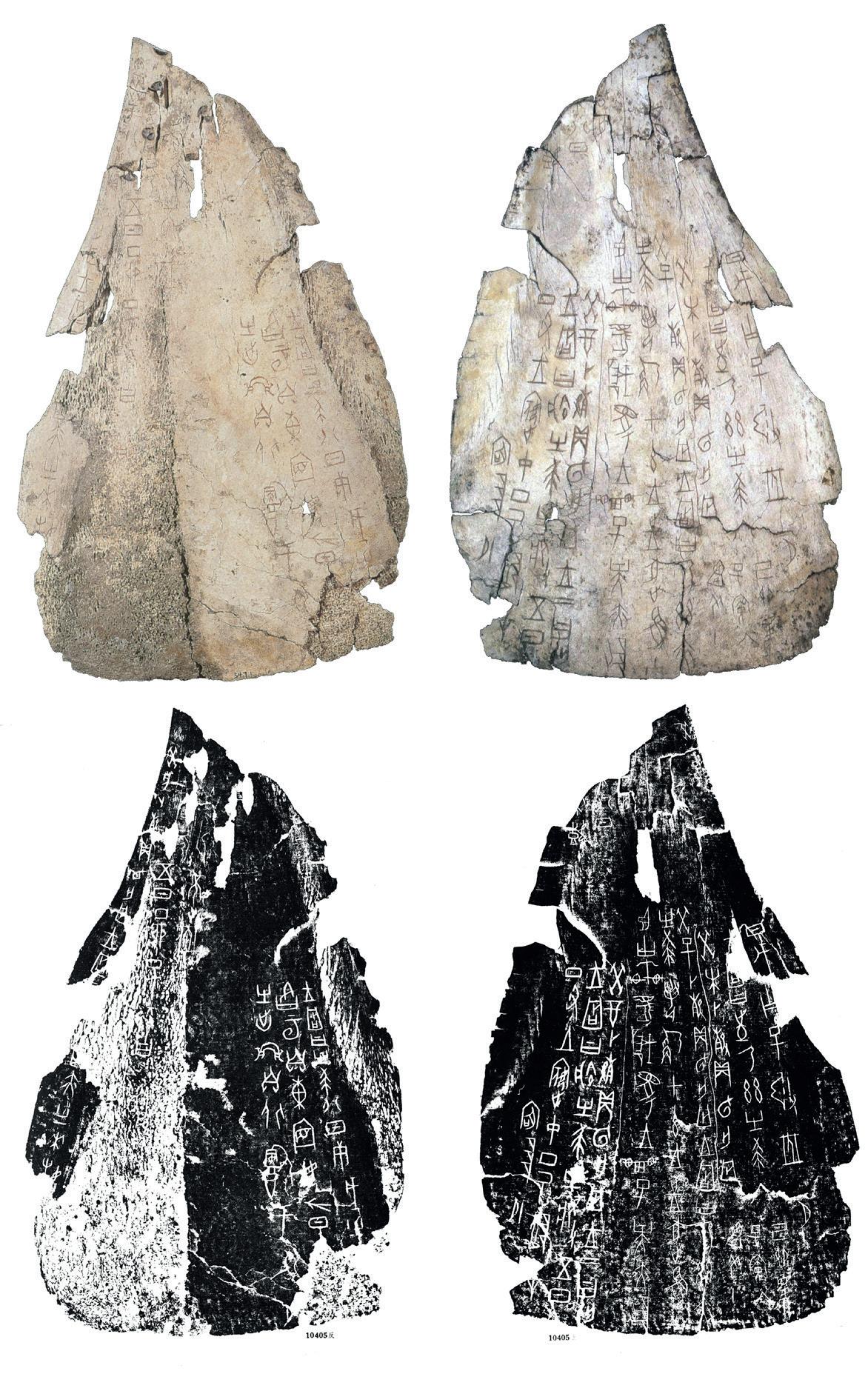
Oracle bones script 甲骨文, Sacrificial Hunting with Vermilion Coated Ox Bone Inscription《祭祀狩猎涂朱牛骨刻辞》32.2x19.8 (Shang Dynasty 1600-1046)
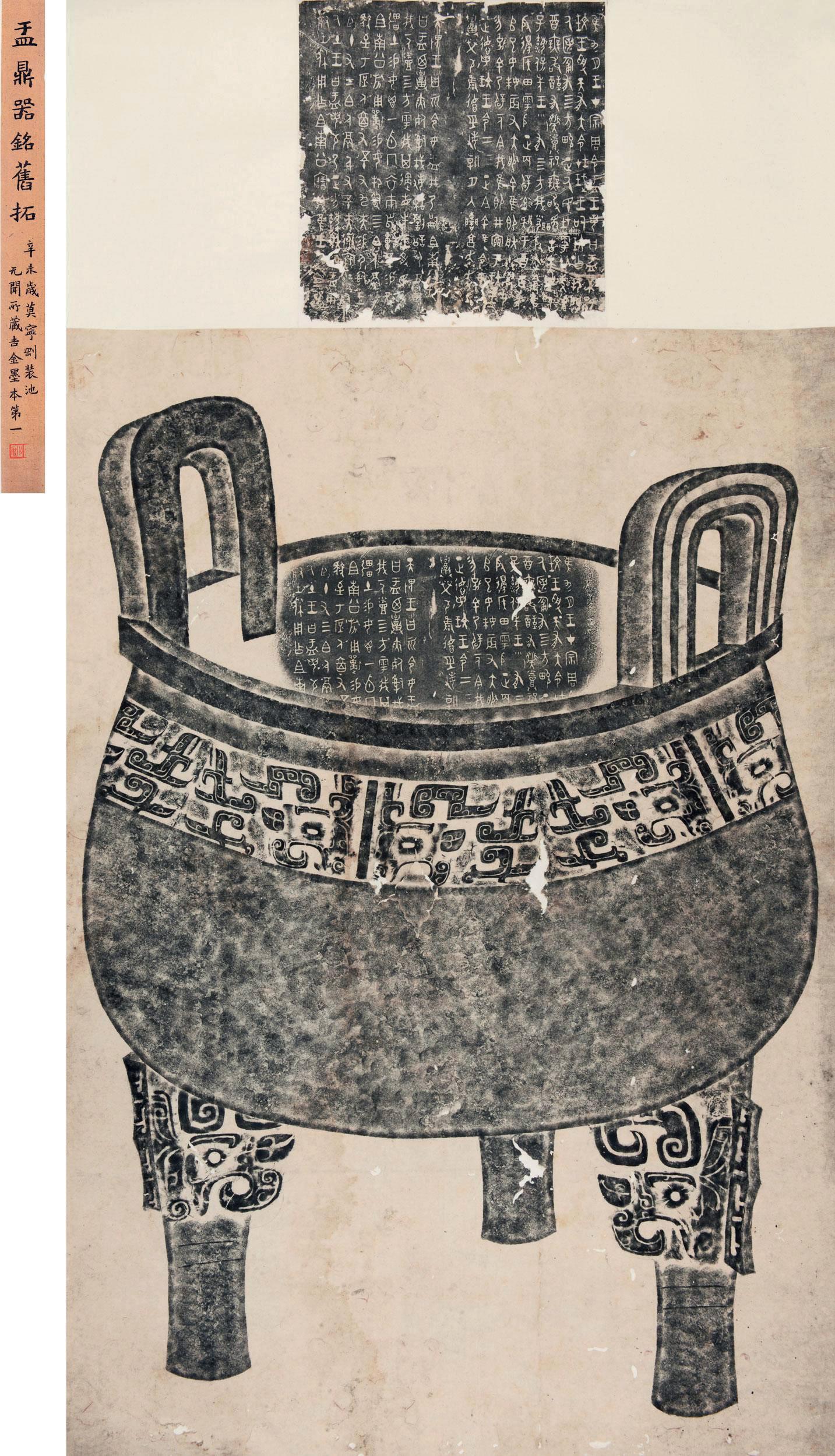
Great Yu Tripod《大盂鼎》(rubbing) 102 cm high, 77.8 cm in diameter, weighs 153.5 kg. The inscription is 291 characters, Western Zhou (1046-771).
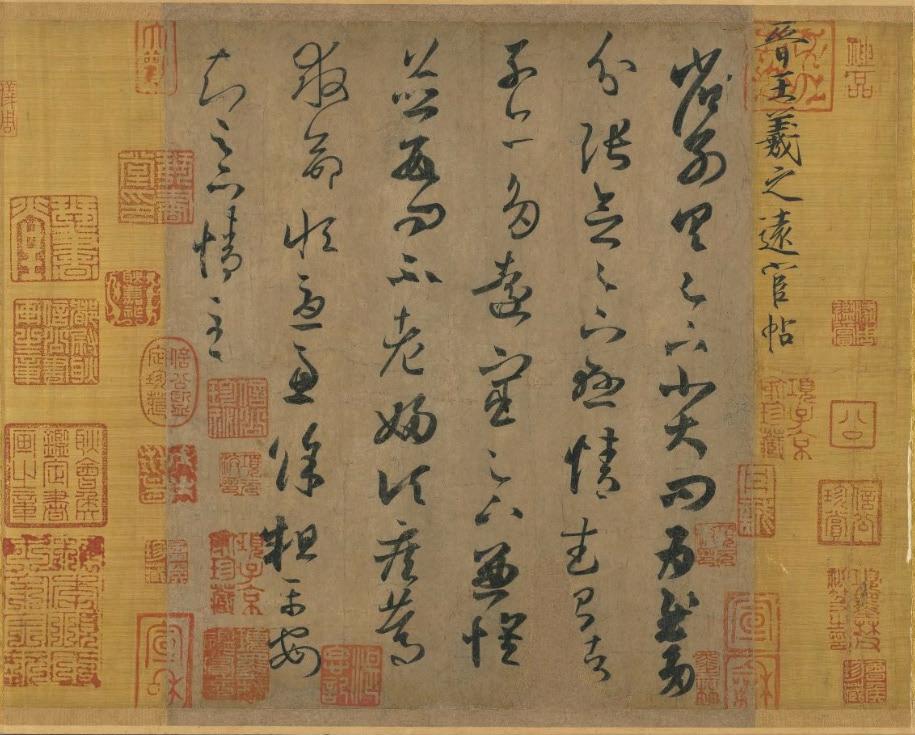
Wang Xizhi 王羲之 (303-367/321-379) Yuan huan tie《远宦帖》ink on paper, 24.8x21.5
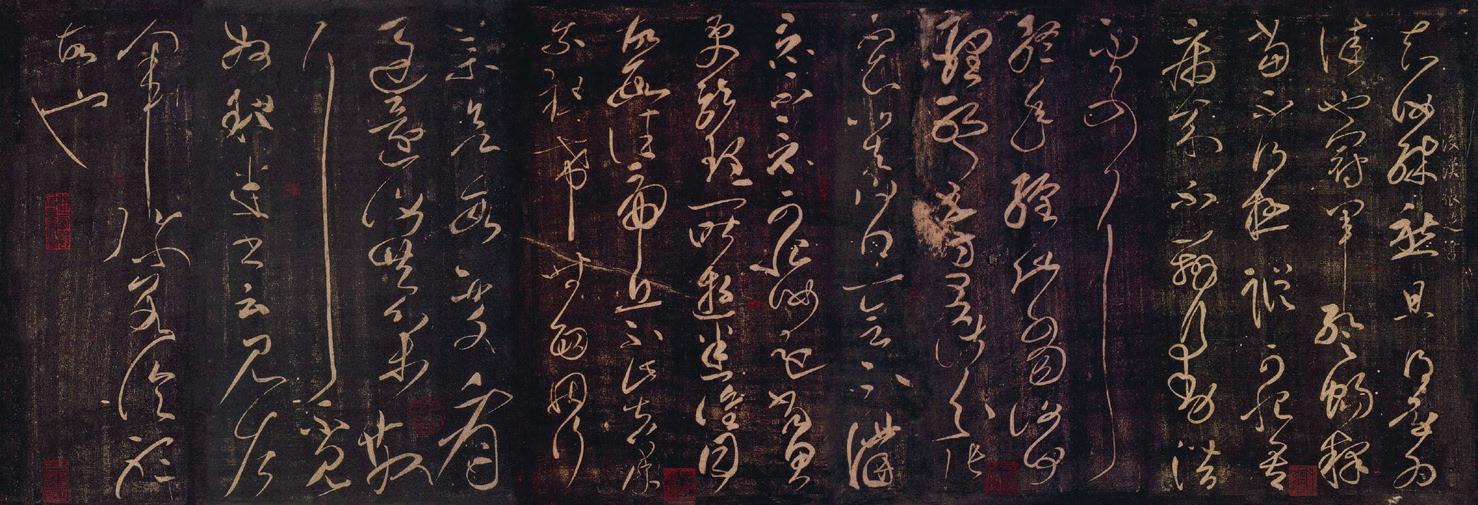
Zhang Zhi 张芝 (?-192), Guan juntie《冠军帖》(rubbing), 25x66.
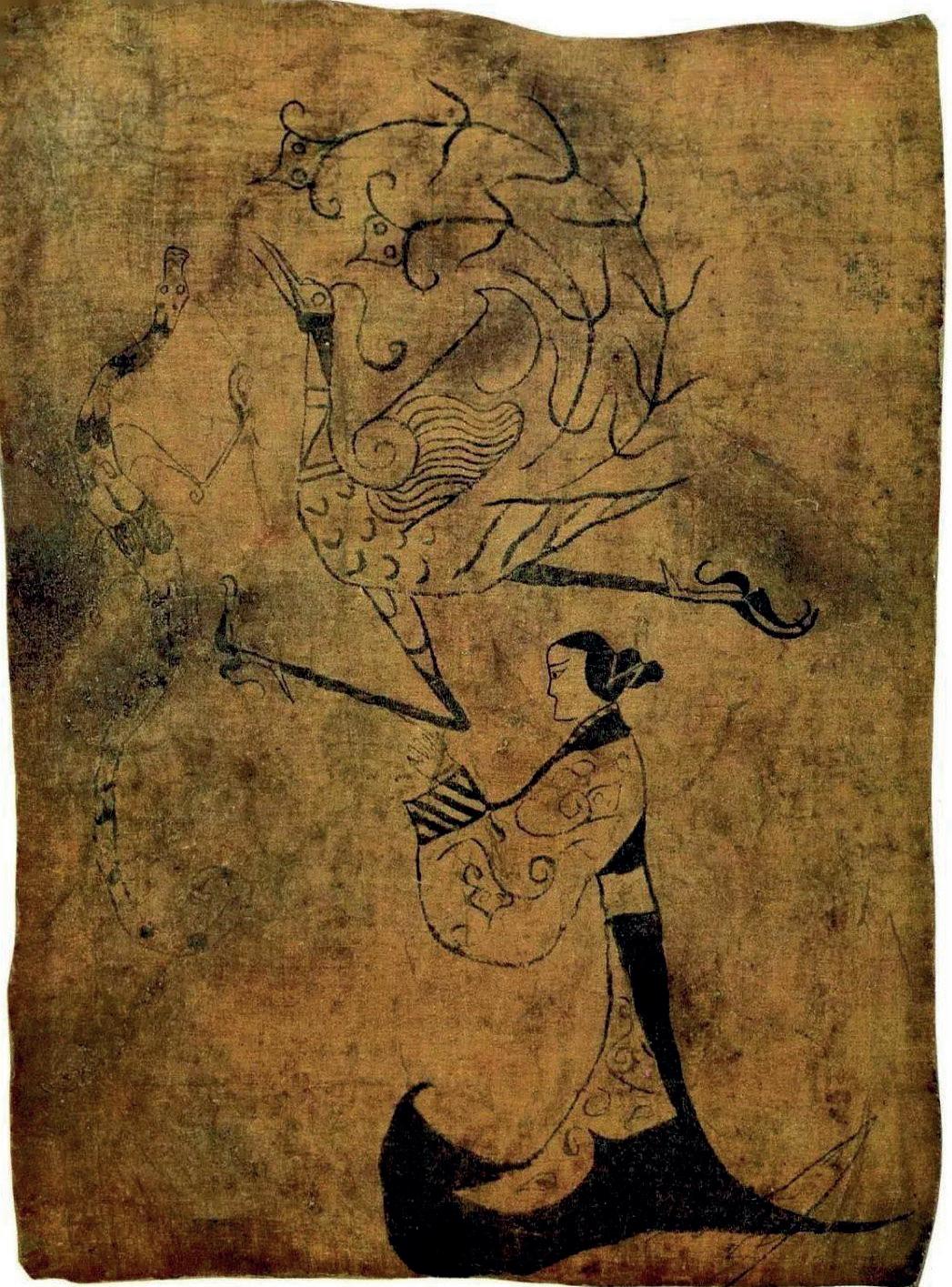
《龙凤仕女图》,ink and colors on silk, 31.2x23.2, Warring States (476-221).
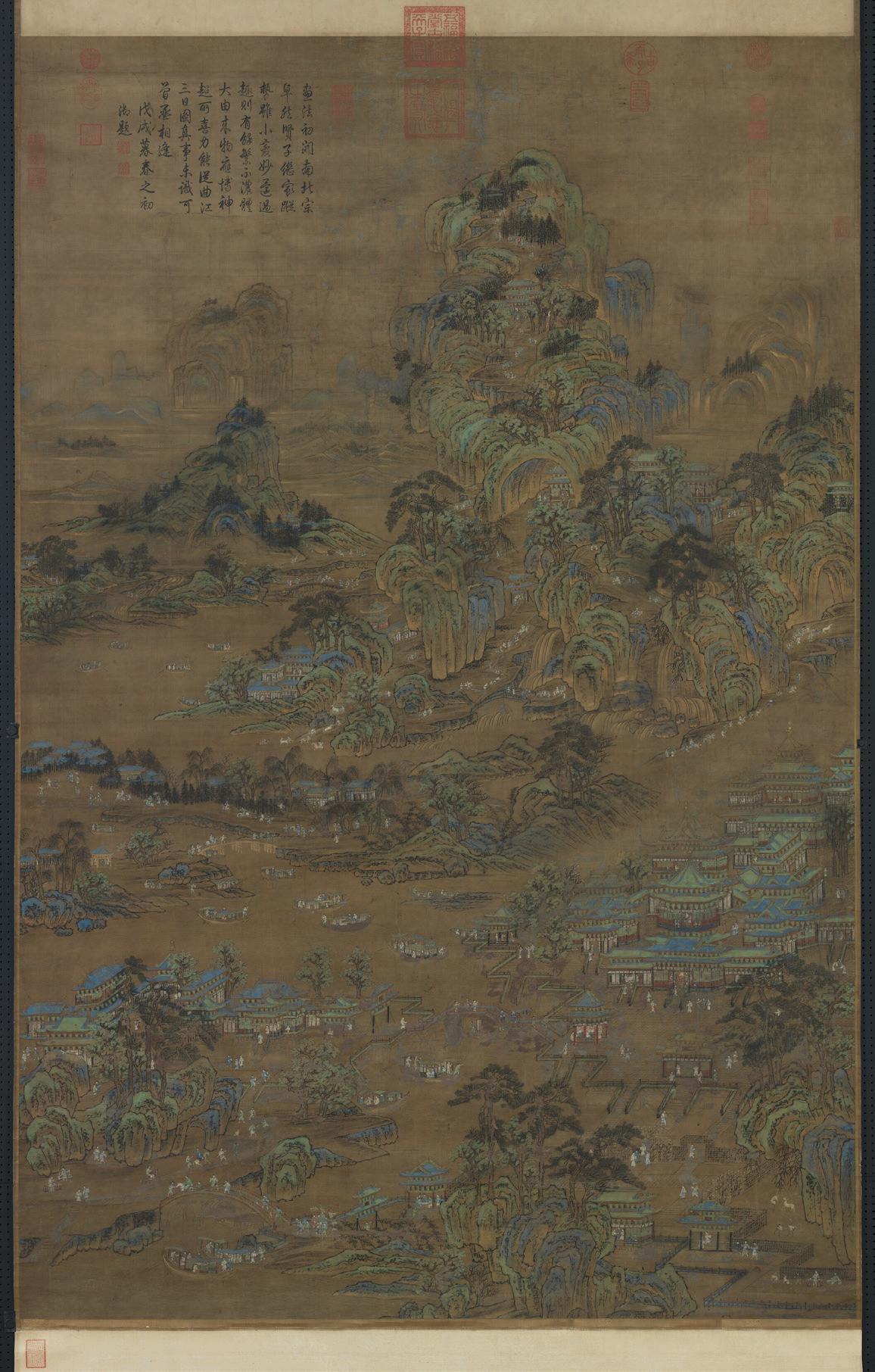
Lo Zhaodao 李昭道 (675-758, attributed), Qujiang Tu 《曲江图》, ink and colors on silk, 171.2x111.3.
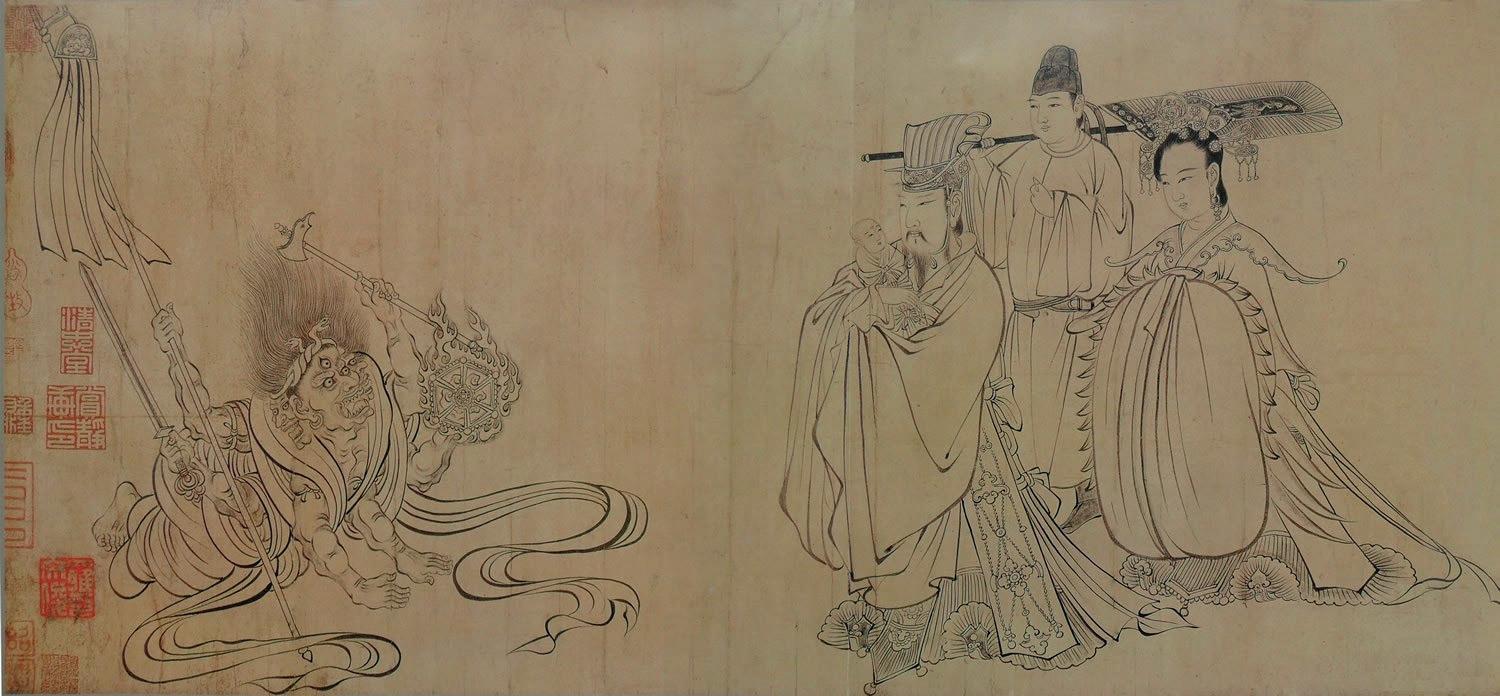
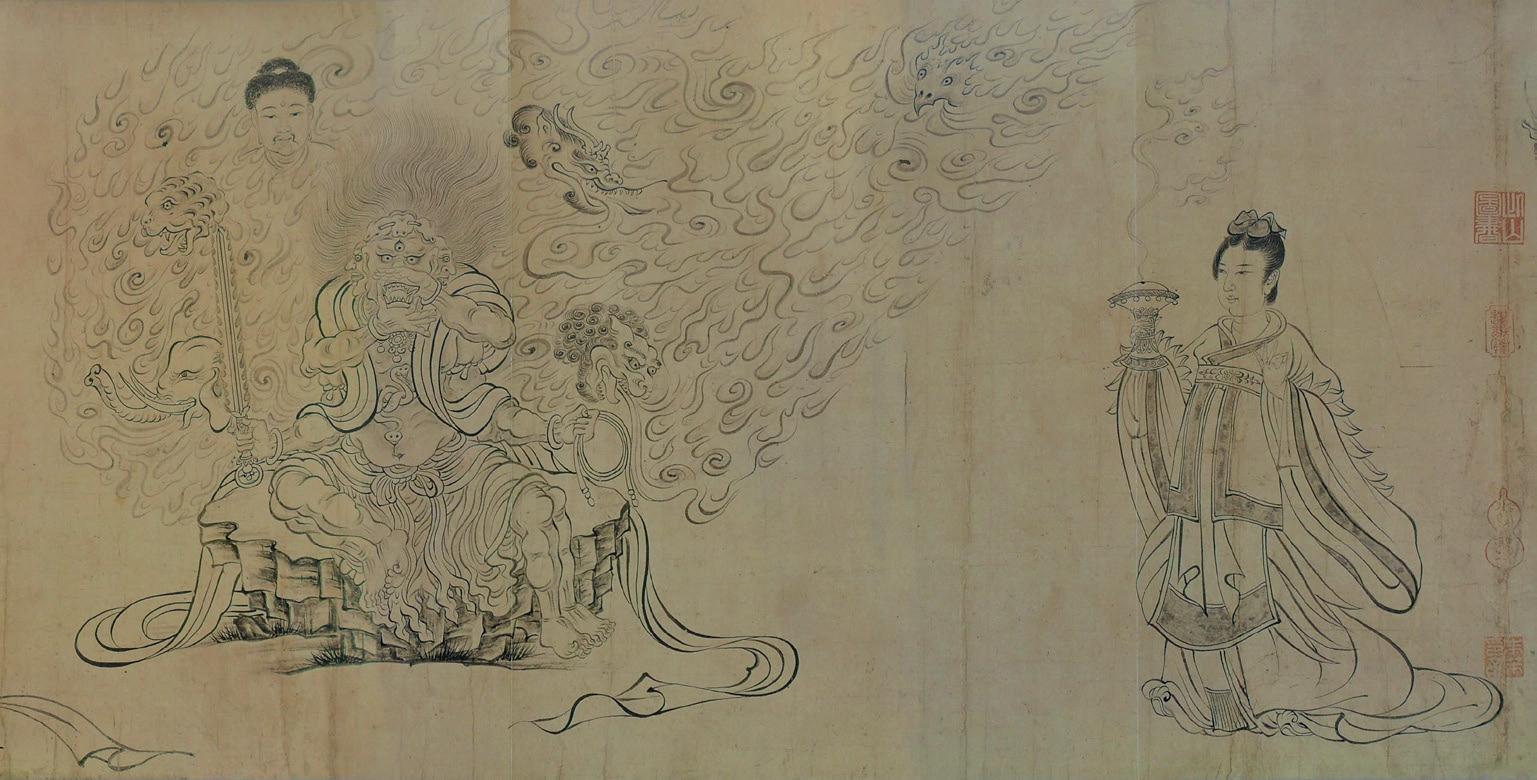
Wu Daozi 吴道子 (680-759, attributed), Goddess of Fortune who sends her son to the heavenly kingdom《送子天王图》, ink on paper, 35.5x338.
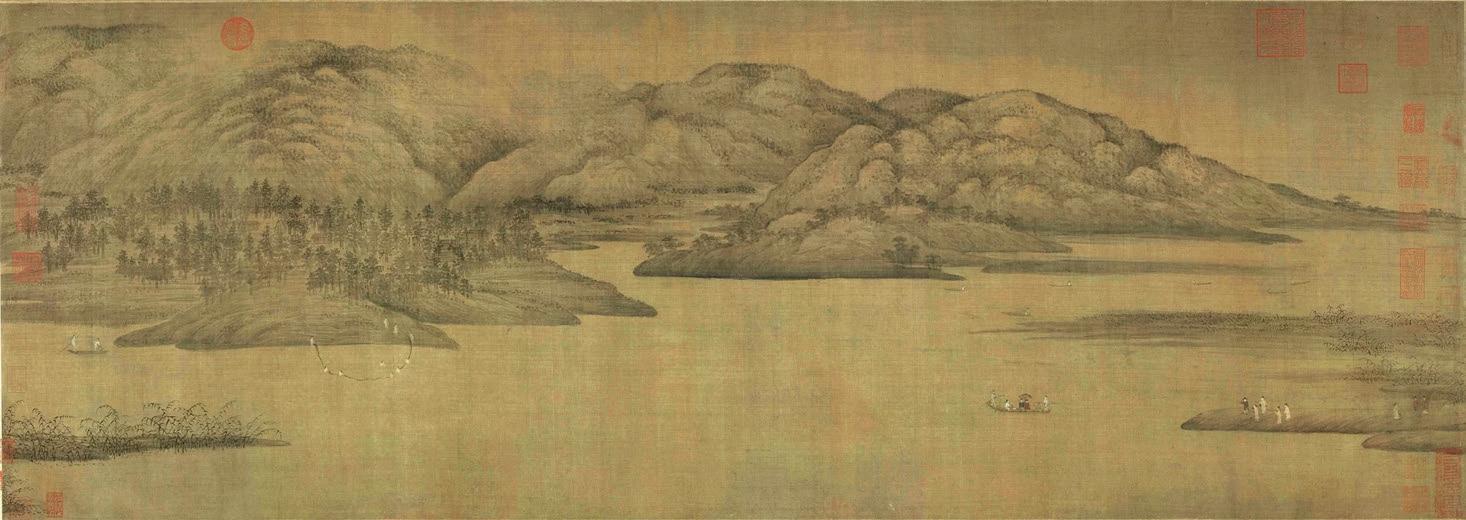
Dong Yuan 董源 (Five Dynasties period, 907-979), Xiao Xiang《潇湘图》, ink on silk, 50x141.
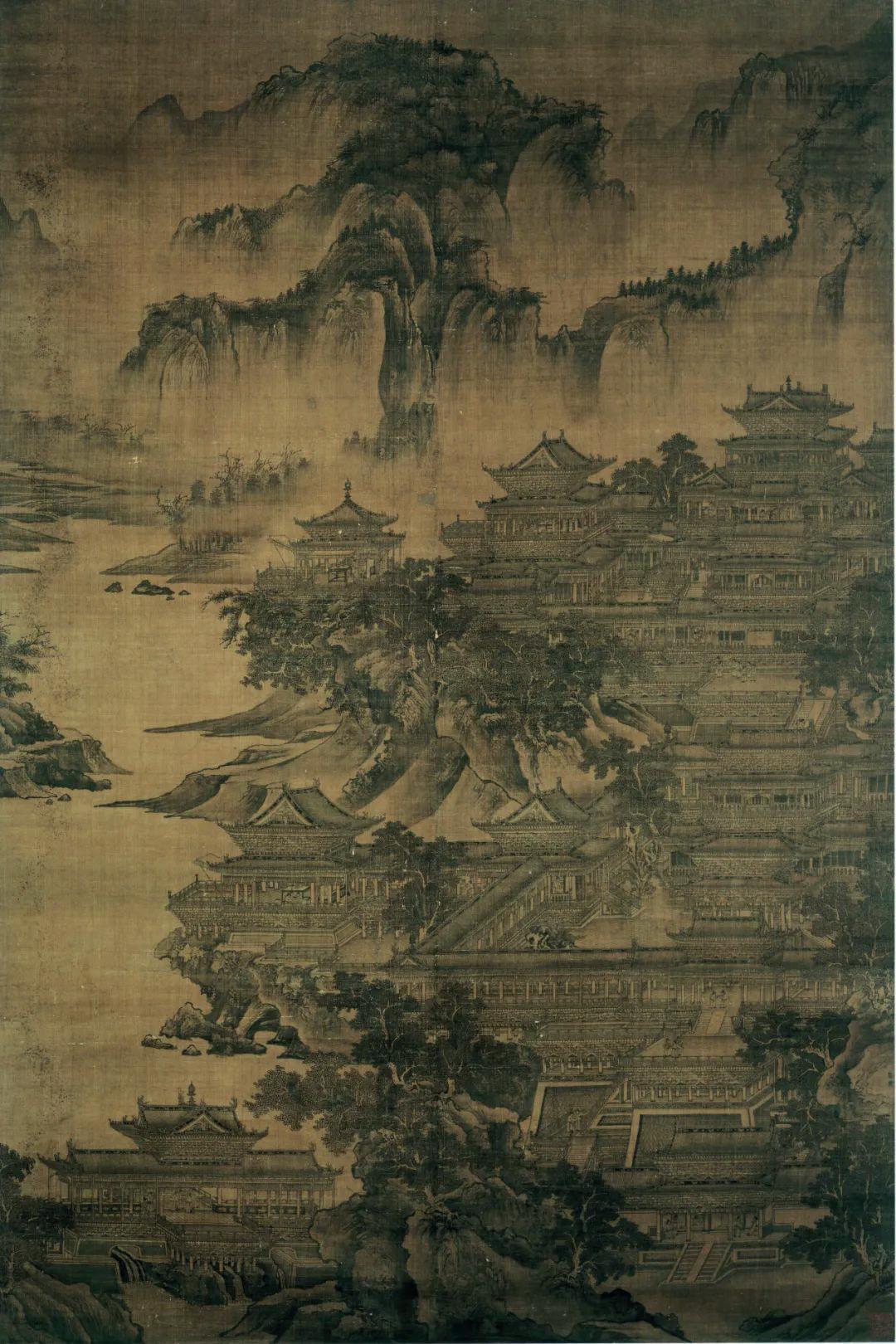
Guo Zhongshu 郭忠恕 (?-977) Ming Emperor’s summer residence《明皇避暑宫图》, ink on silk, 105.6x161.5.
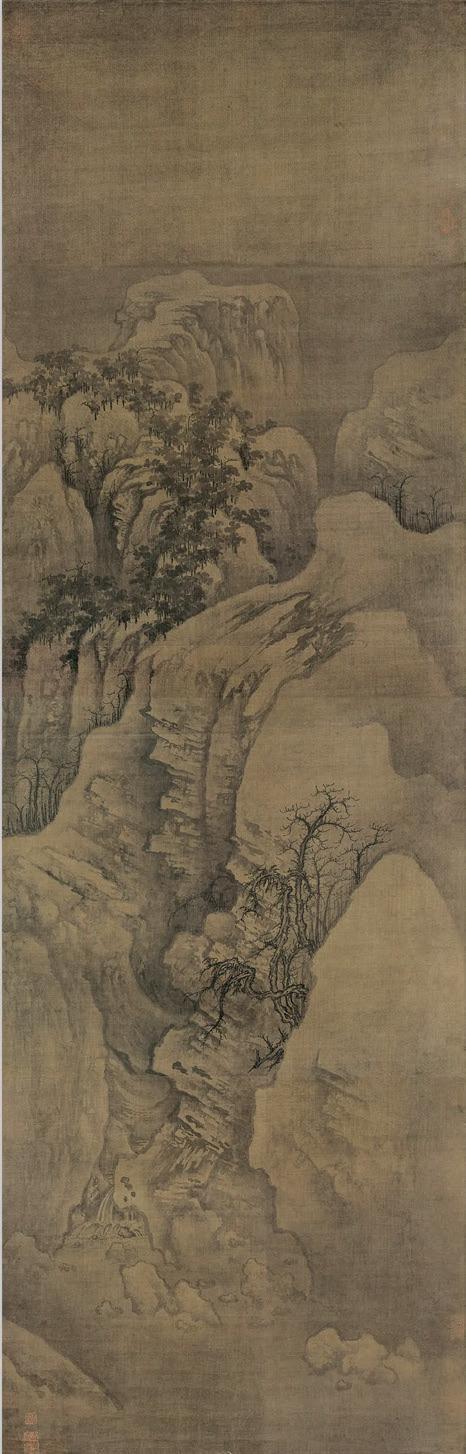
Guo Xi 郭熙 (ca. 1000-1090), Secluded valley《幽谷图轴》, ink on silk, 167.7x53.6.
苏轼 Su Shi (1037-1101) Withered Wood, Bamboo and Stone《枯木竹石 图卷》, ink on paper, 26.5×50.5
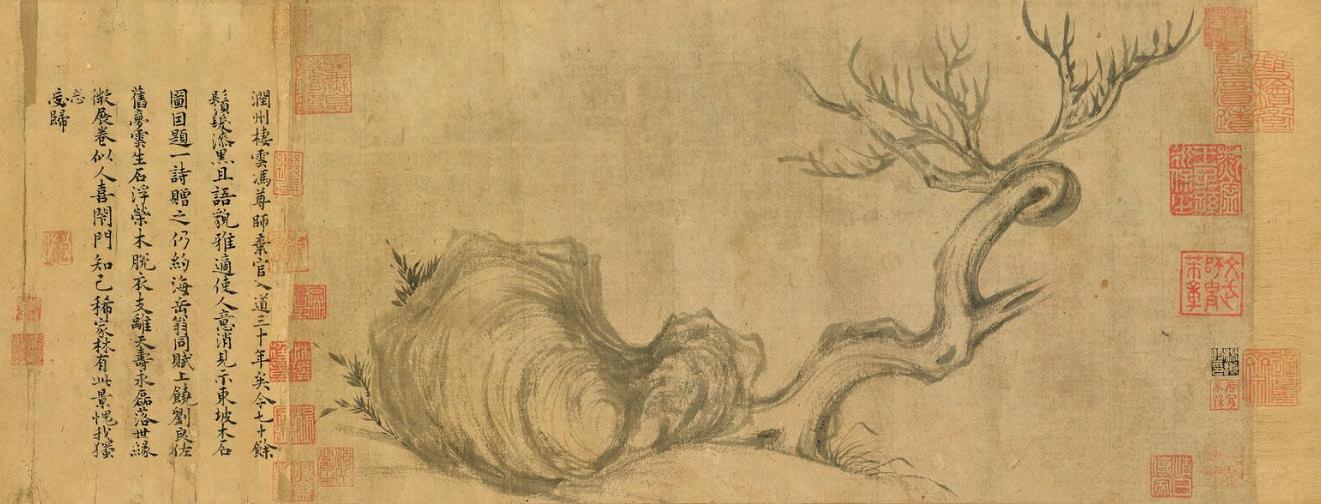
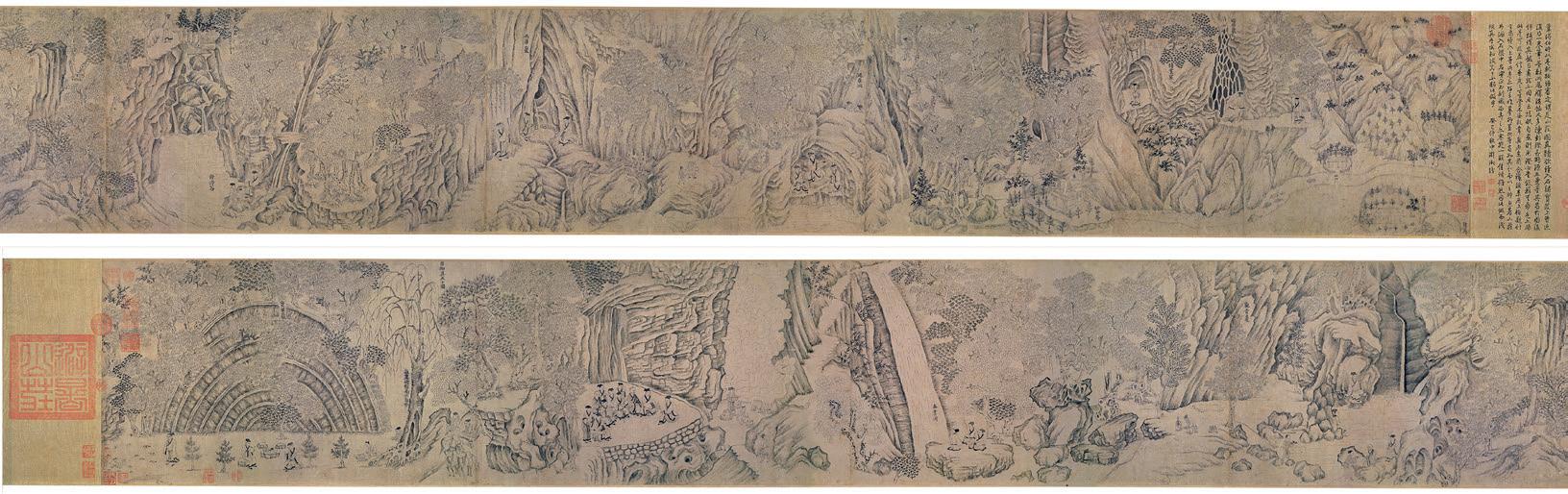
Li Gonglin 李公麟 (1049-1106), Mountain Villa Scroll 《山庄图》, ink on paper, 28.9 x 364.6.
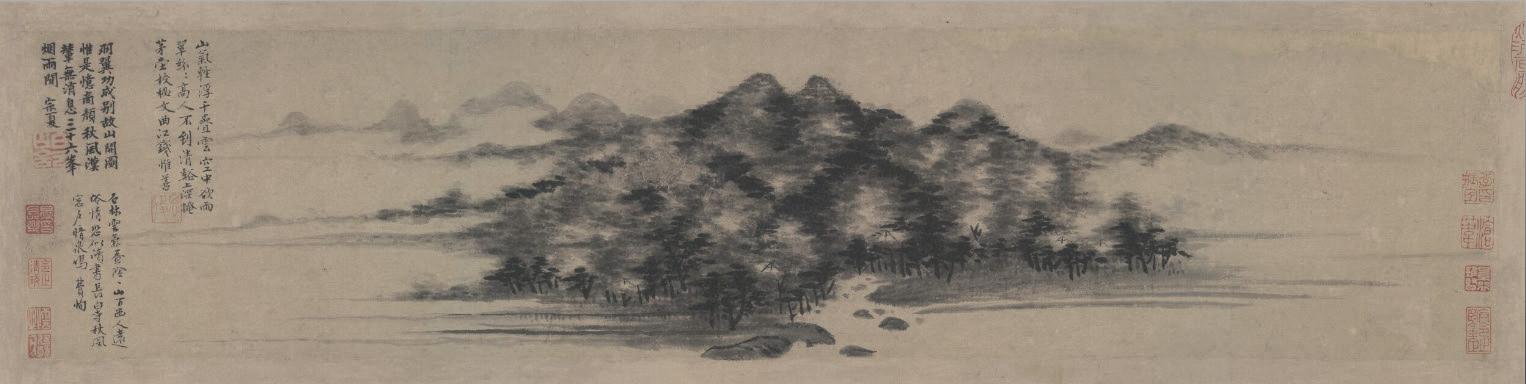
Mi Youren米友仁 (1051-1107) Clouds and Mountains 《 云山图》, ink on paper, 18.3x72.1.
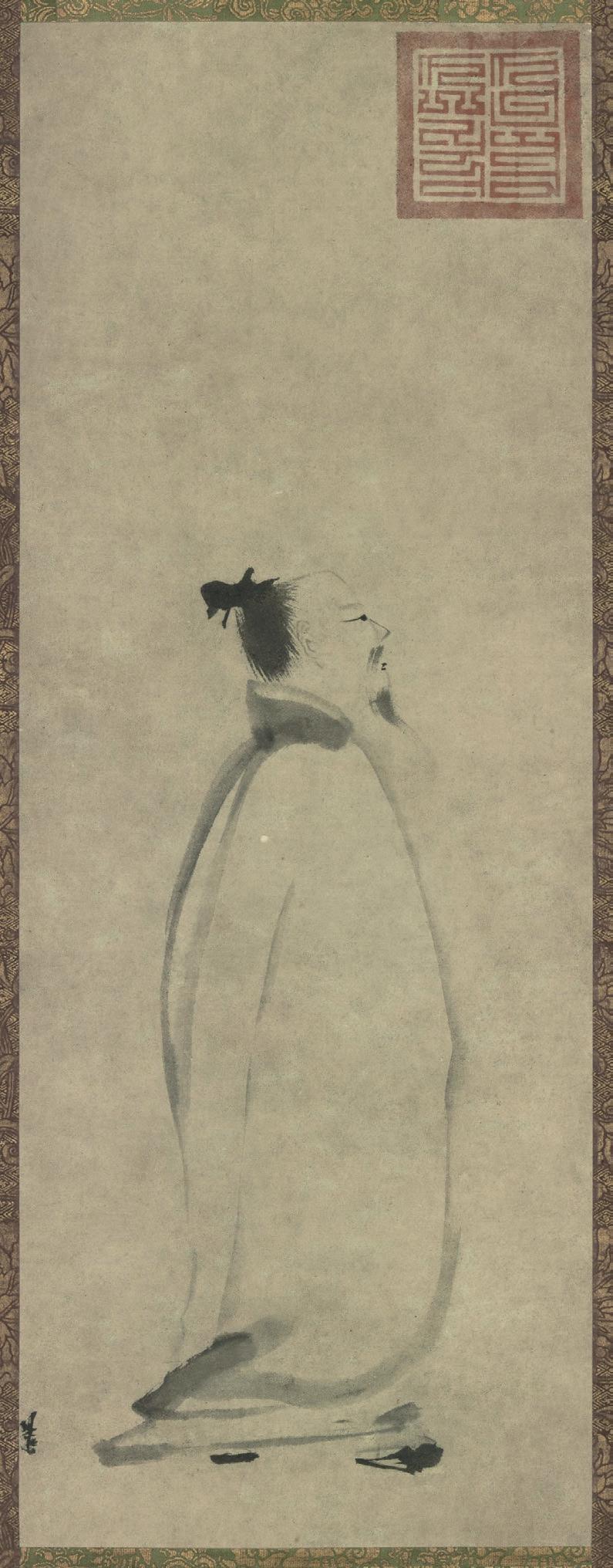
Liang Kai 梁楷 (1150-?) Li Bai’s Traveling Song 《李白行吟图》, ink on paper, 80.9x30.5.
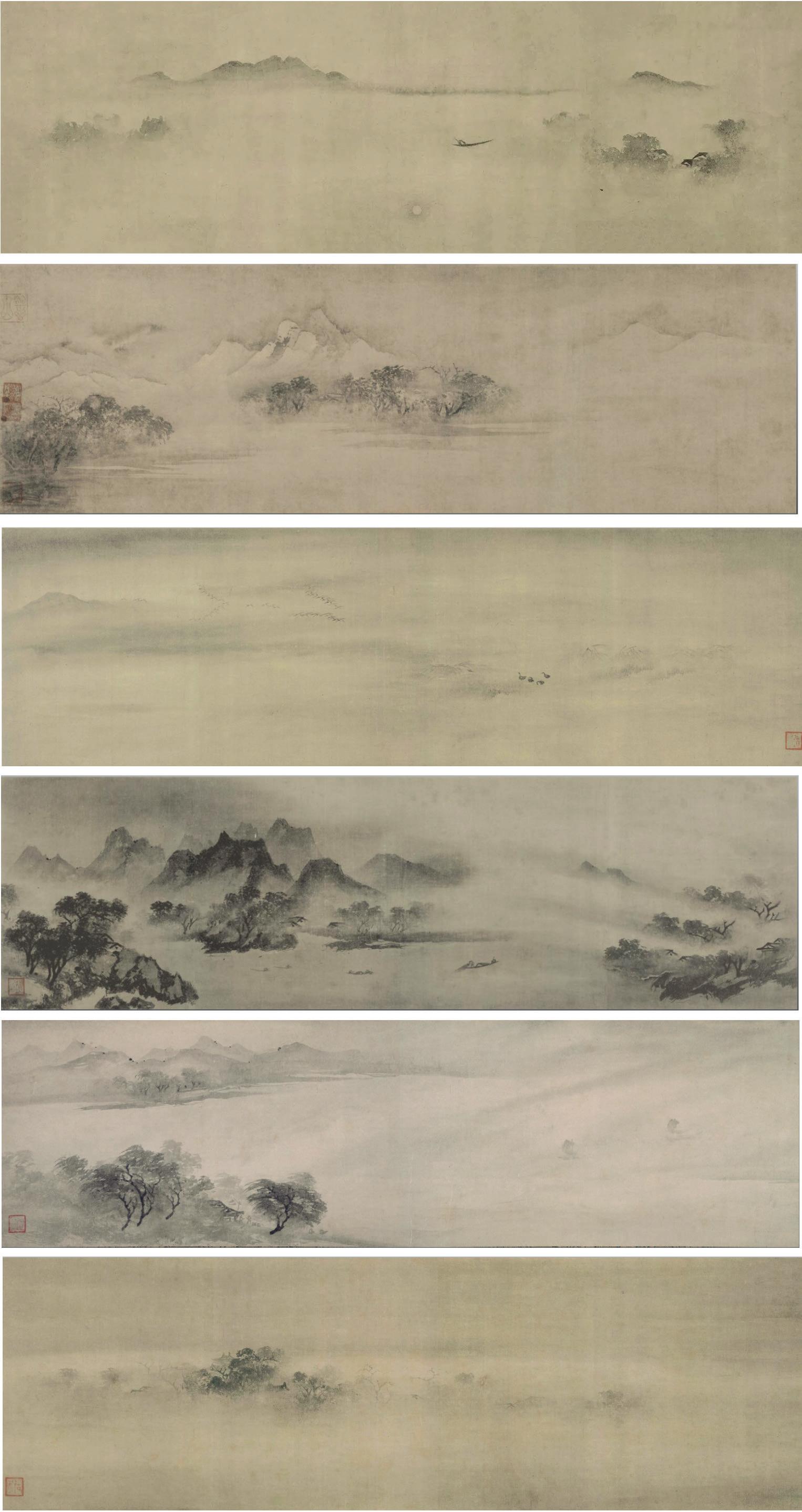
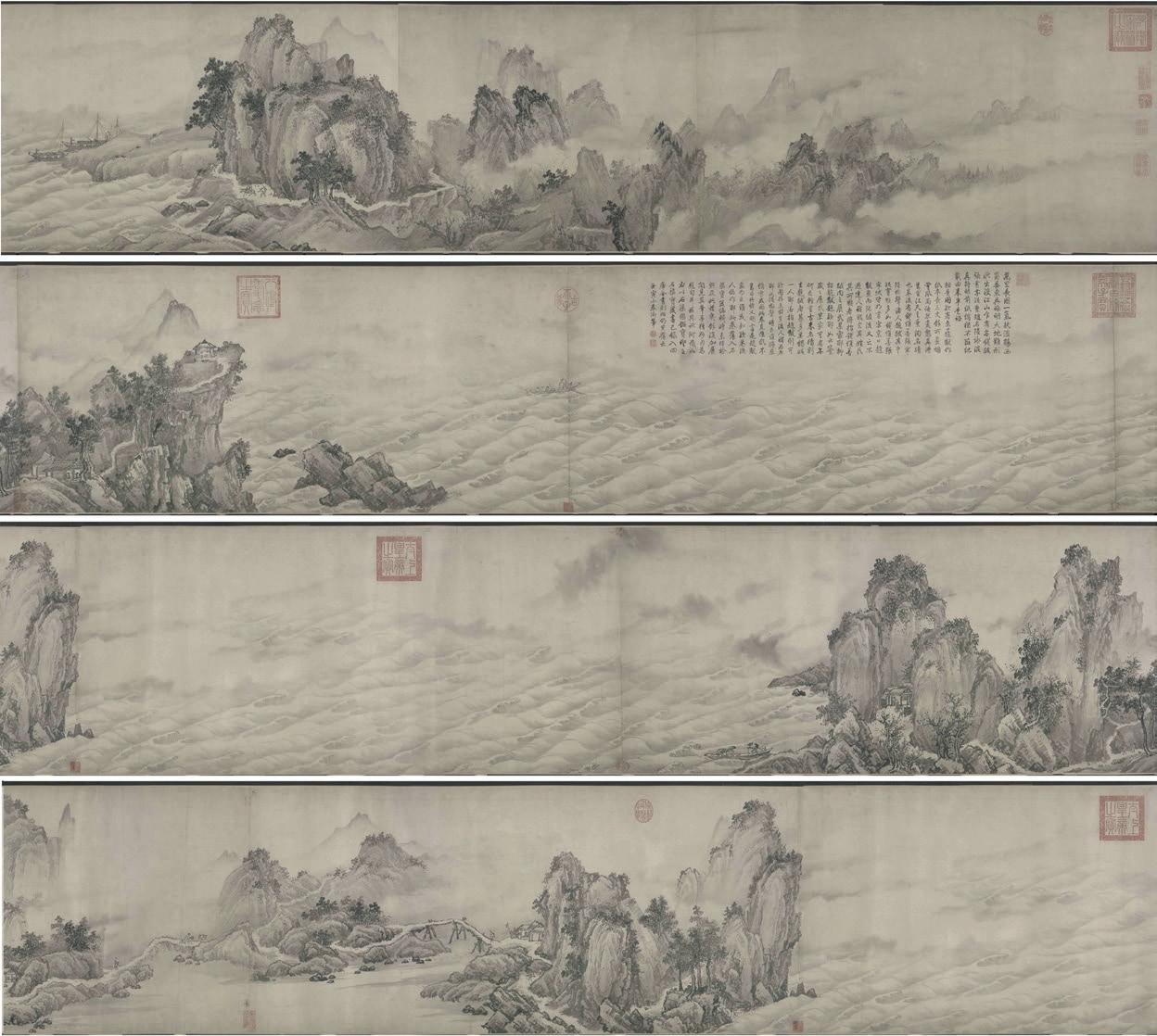
Zhao Fei 赵黻 (13th c.) Ten Thousand Miles of Rivers and Mountains《长江万里图卷》, ink on paper, 45x992.5.
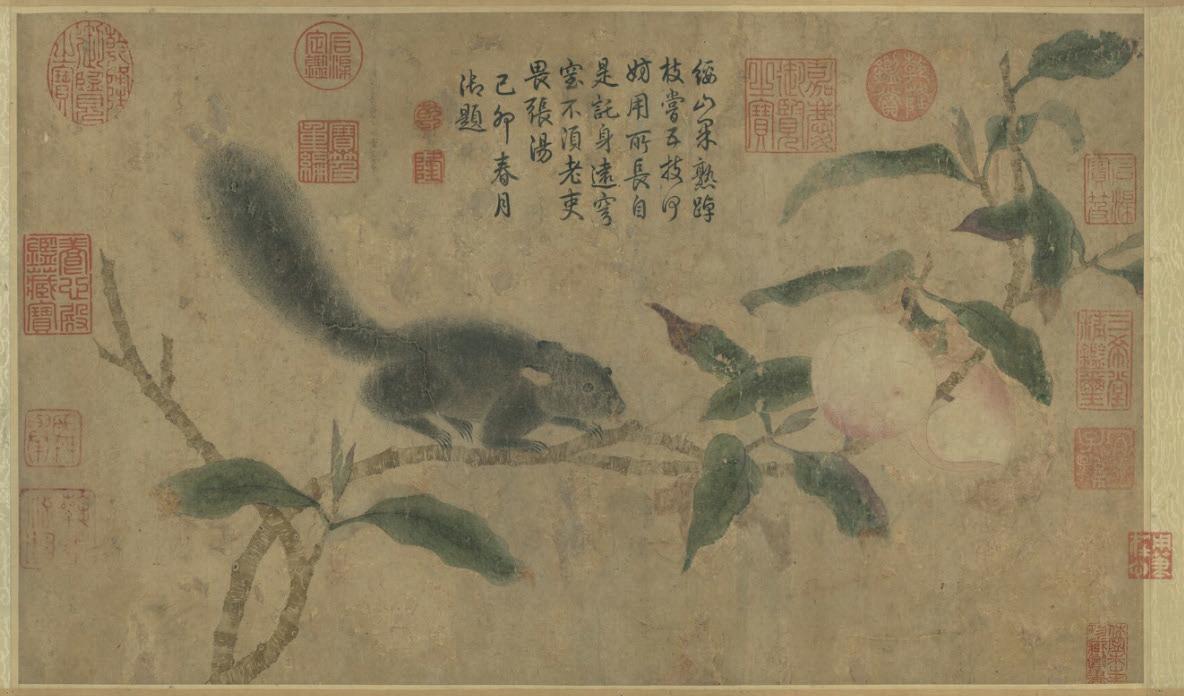
Qian Xuan 钱选 (1239-1299) Squirrel on Peach Branch 《桃枝松鼠图》, ink and colors on paper, 26.3x44.3.
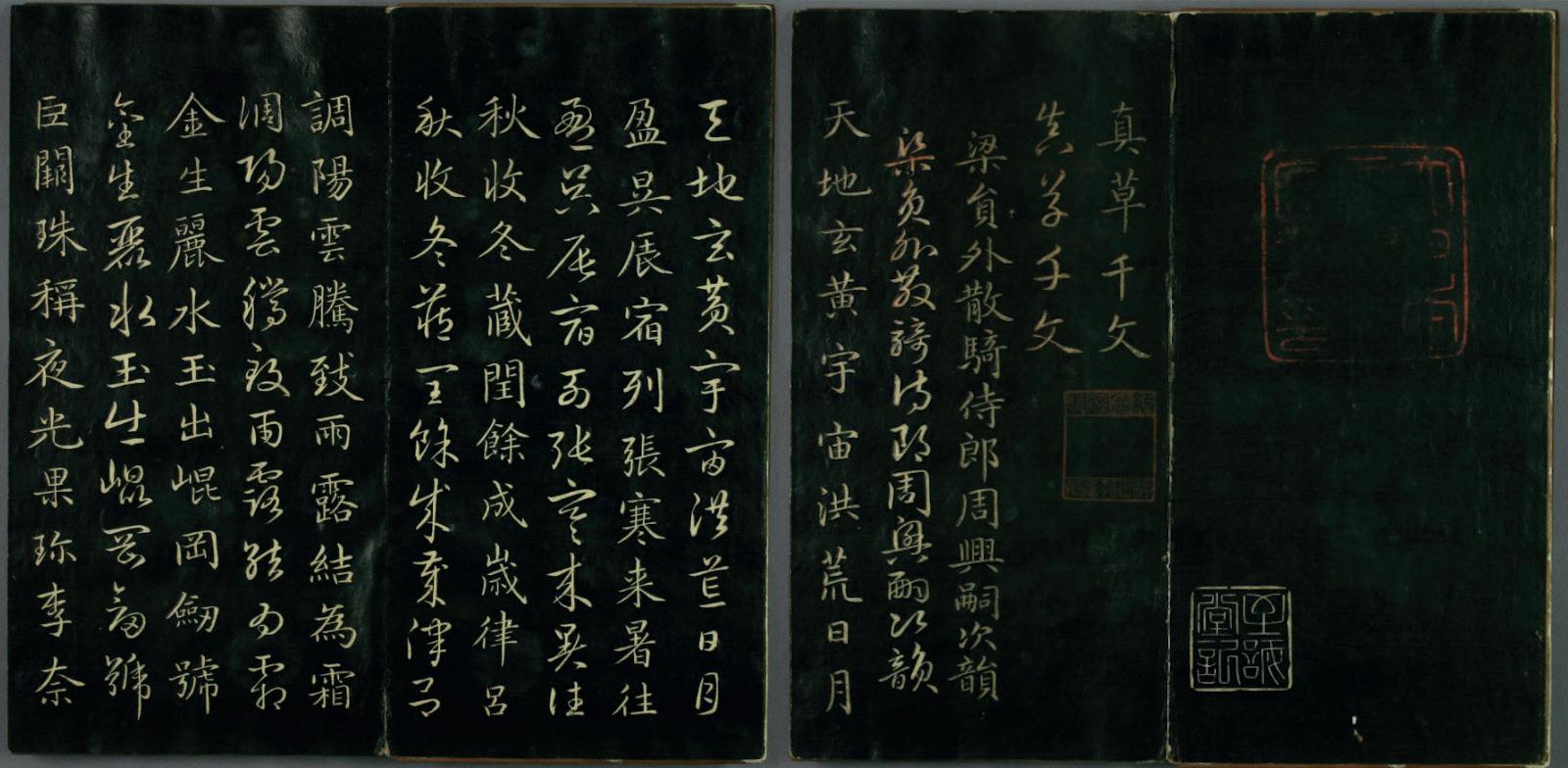
Zhao Mengfu 赵孟頫 (1254-1322) Thousand Character Classic in Regular and Cursive Scrips《真草千字文》, rubbing book.
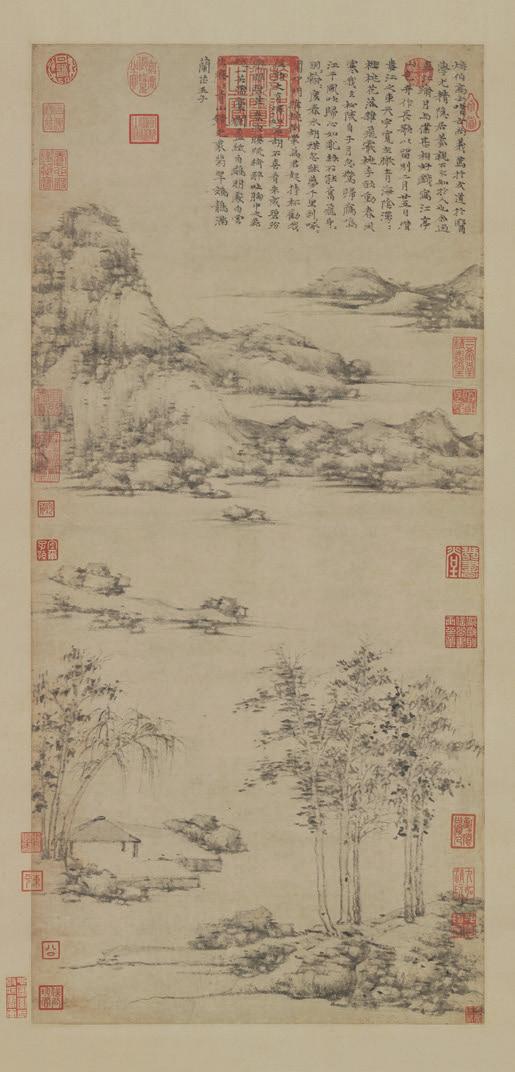
Ni Zan 倪瓒 (1301-1374) River Pavilion Mountain View 《江亭山色图》, ink on paper, 94,7x43.7.

Dai Jin 戴进 (1388-1462) Rising Sun in the Sea《海水旭日卷》, ink and colors on paper, 24x156.
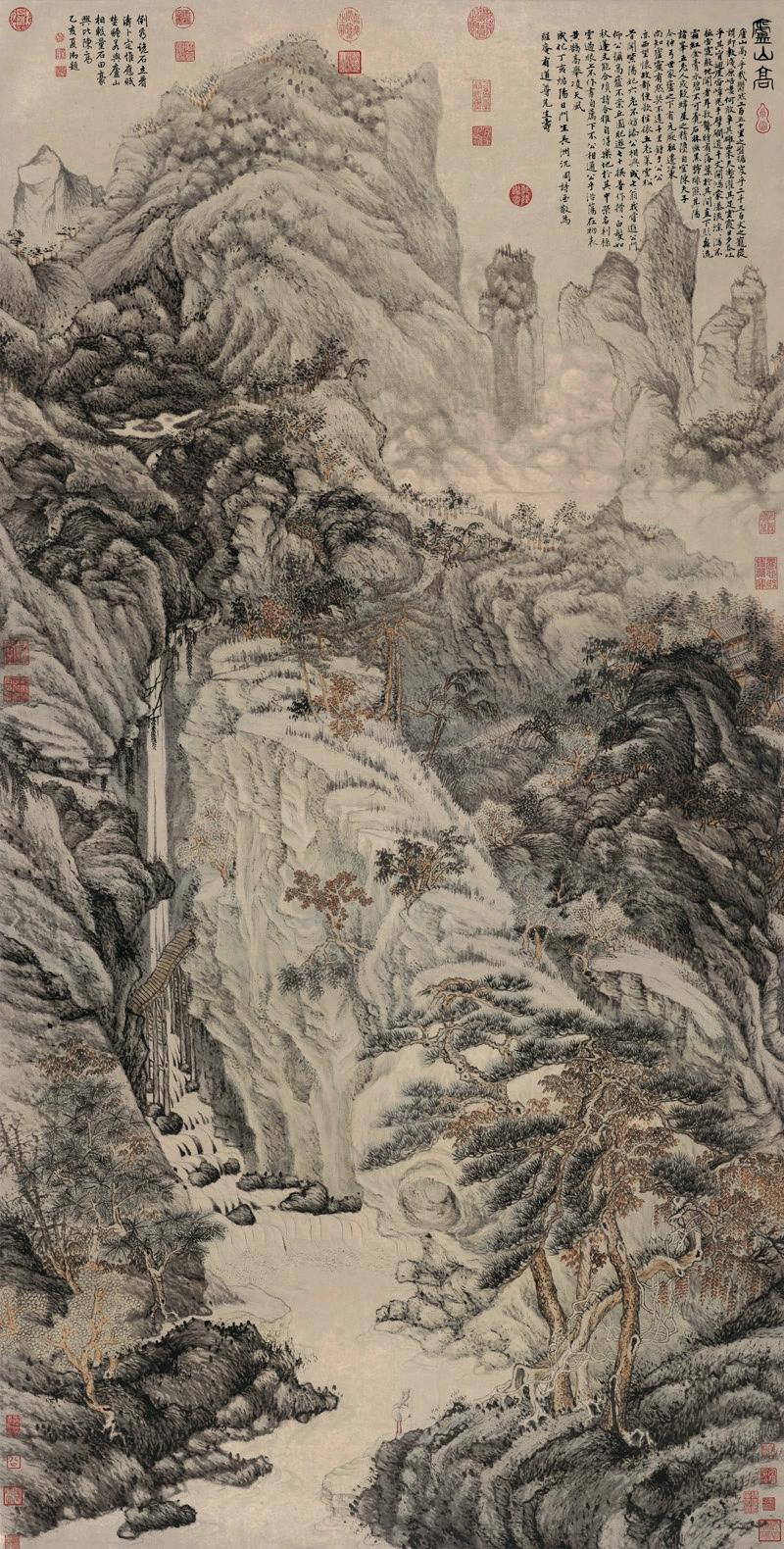
Shen Zhou 沈周 (1427-1509) Mountain Lushan Highs 《庐山高图》ink and colors on paper, 193.8x98.1.
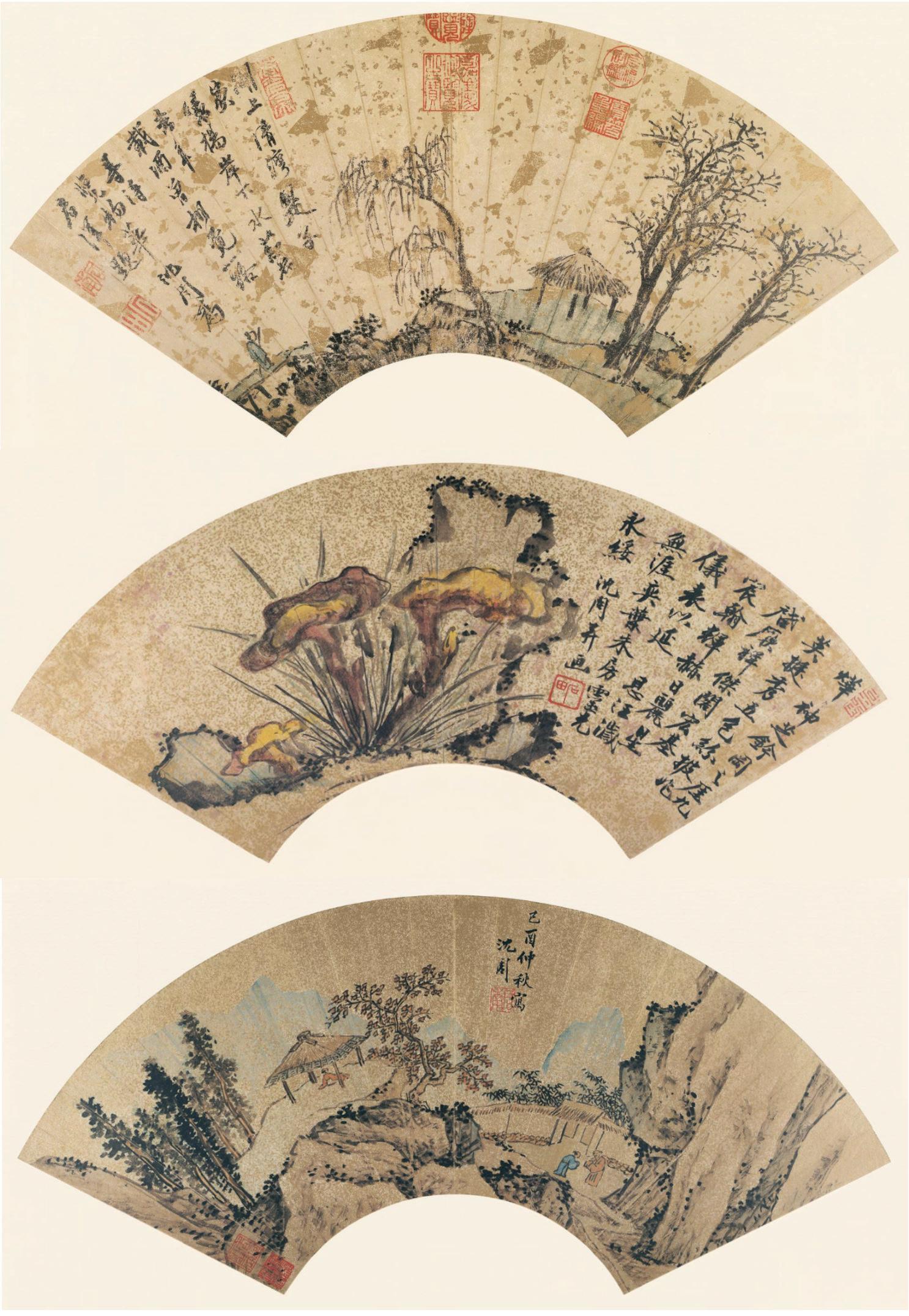
Shen Zhou 沈周 (1427-1509) Forest Pavilion《疎林亭子图》, Mushrooms and Stone《芝石图》, Mossy Road and Forest Pavilion 《苔迳林亭图》, ink and colors on paper, 15x44 (x3).
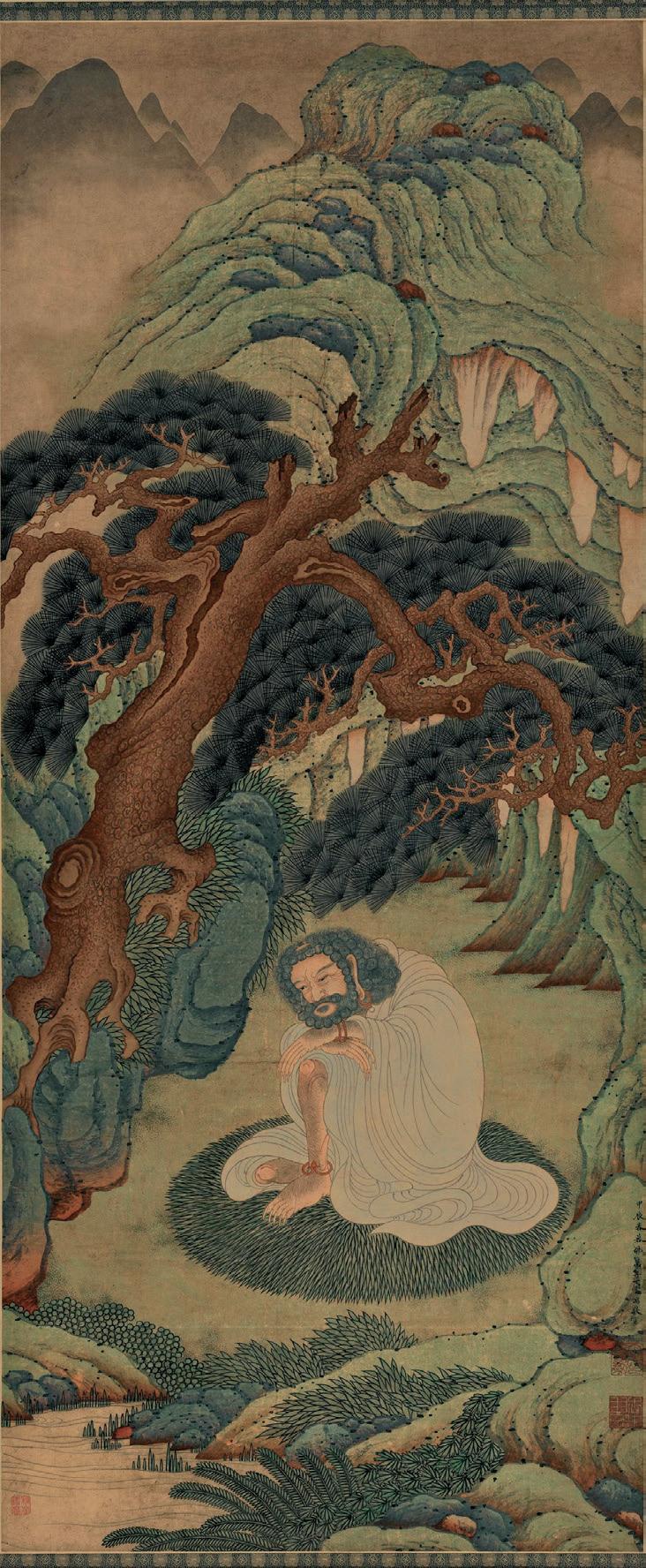
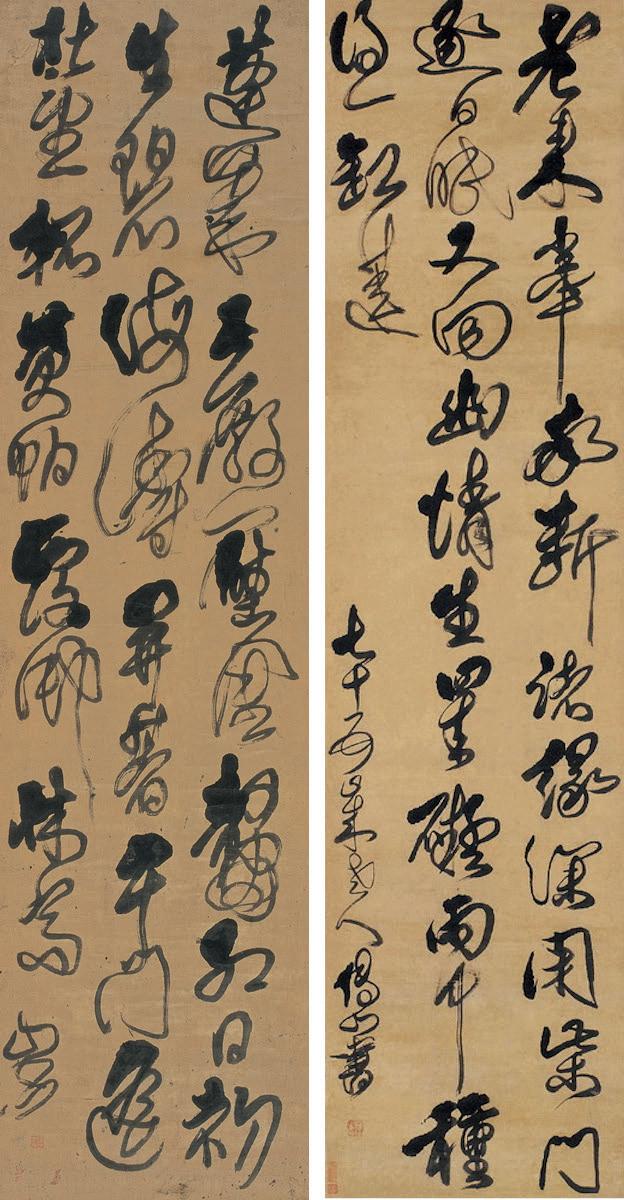
傅山(1605-1690)Poem of Verses with Seven Characters in Cursive Script《草书七言诗》, ink on silk, 170x50 (x2).
Ding Yunpeng丁云鹏 (1547-1628) Sakyamuni Buddha 《释迦牟尼图》, ink and colors on paper, 58.5x143.8.
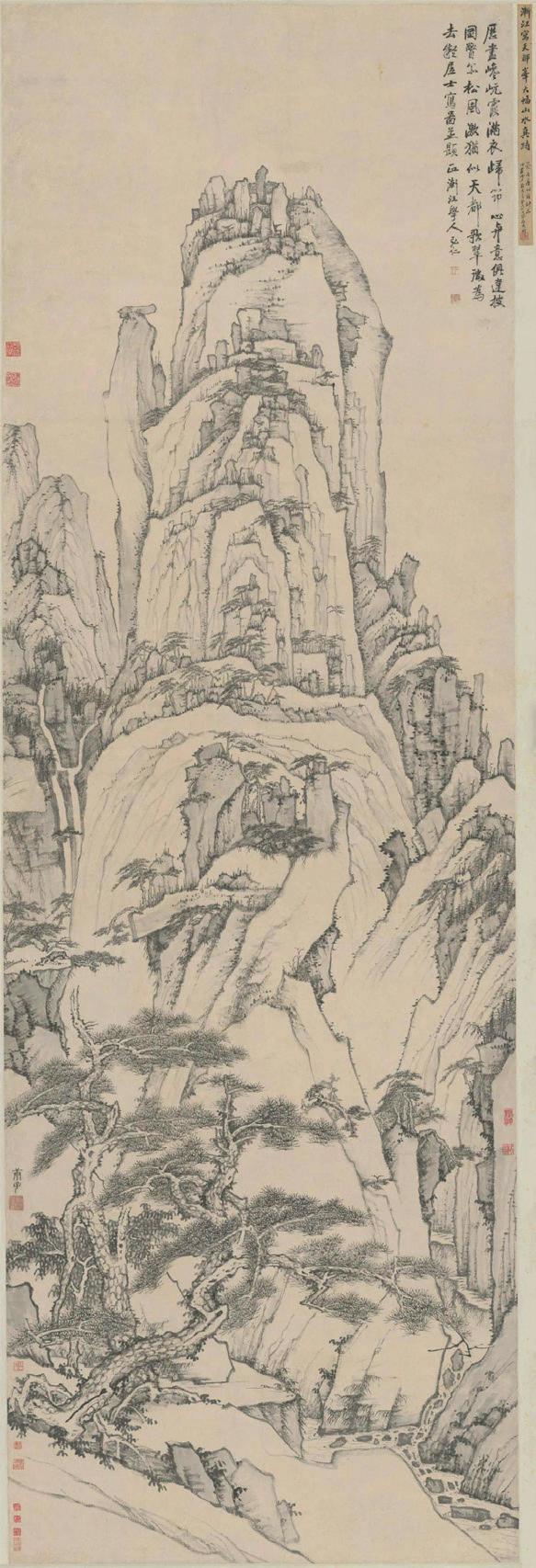
Hong Ren 弘仁 (1610-1663), Tiandu Peak of the Jianjiang River《渐江天都峰图轴》,ink on paper, 307.×99.6.
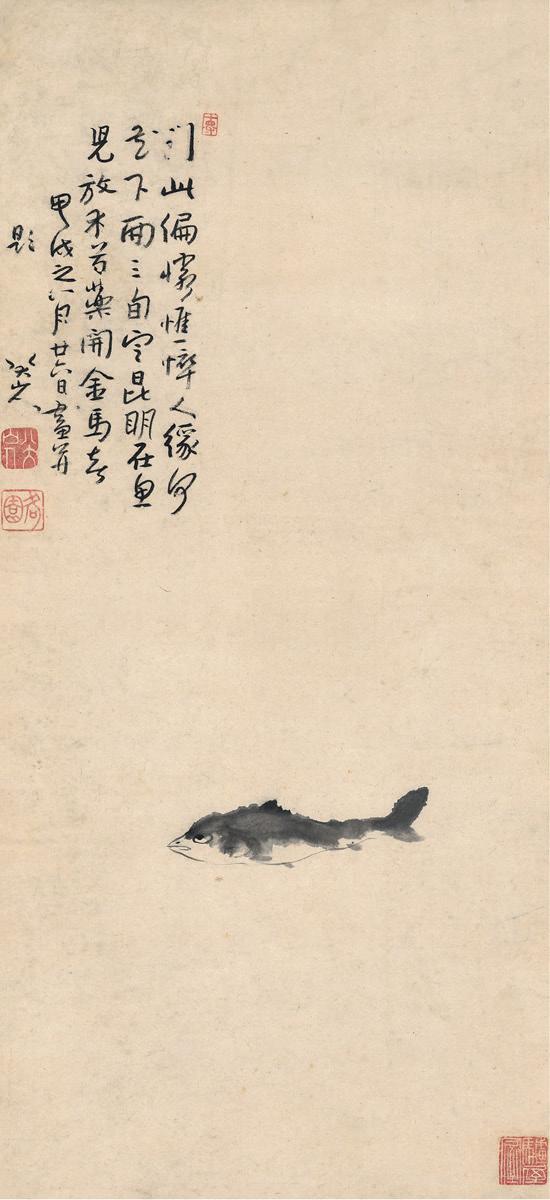
Bada Shanren 八大山人 (1626-1705)Swimming Fish《游鱼图》ink on paper.
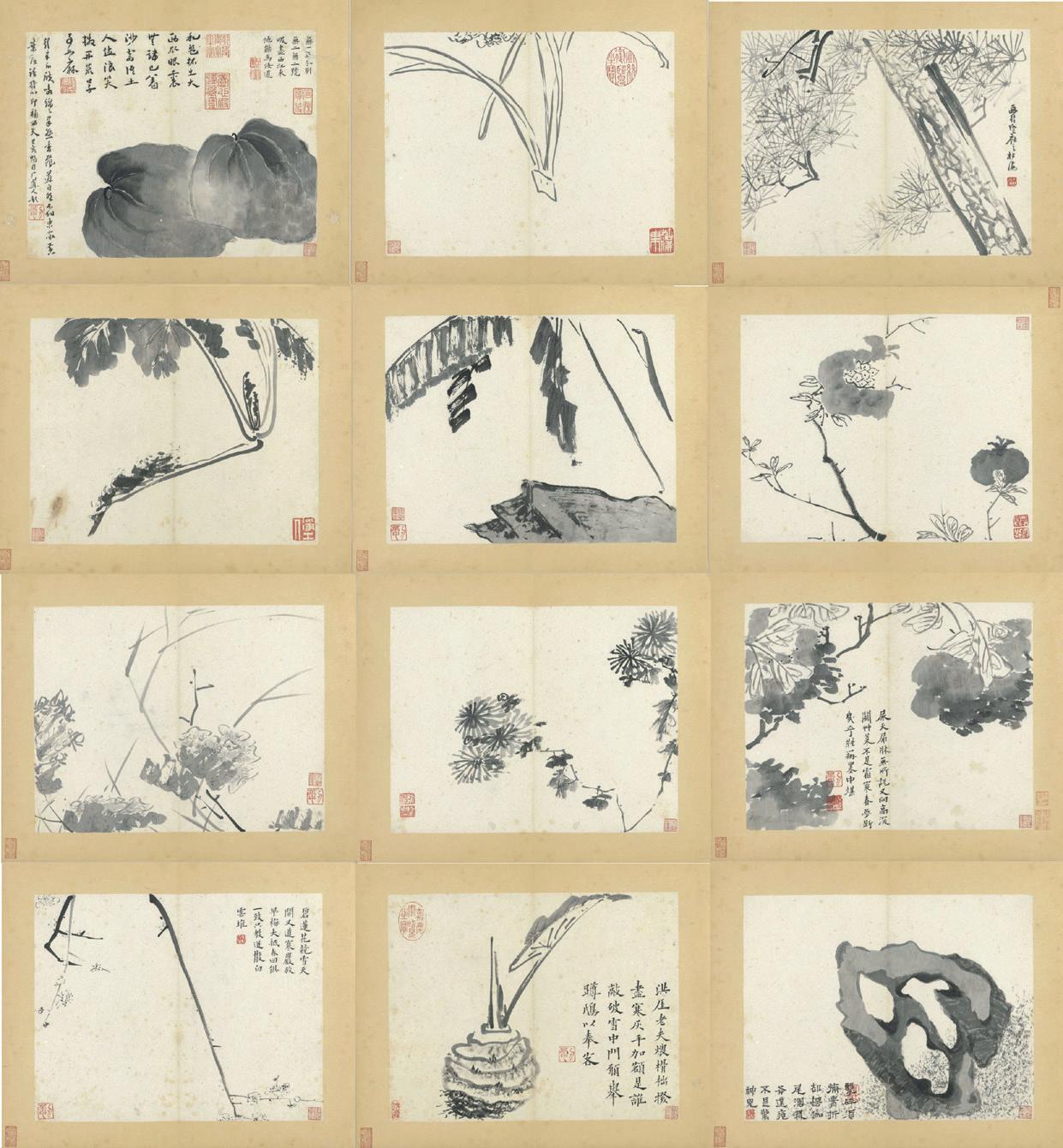
Bada Shanren 八大山人(1626-1705)Sketchbook《传綮写生册》, ink on paper, 24.6x31.5 (x12).
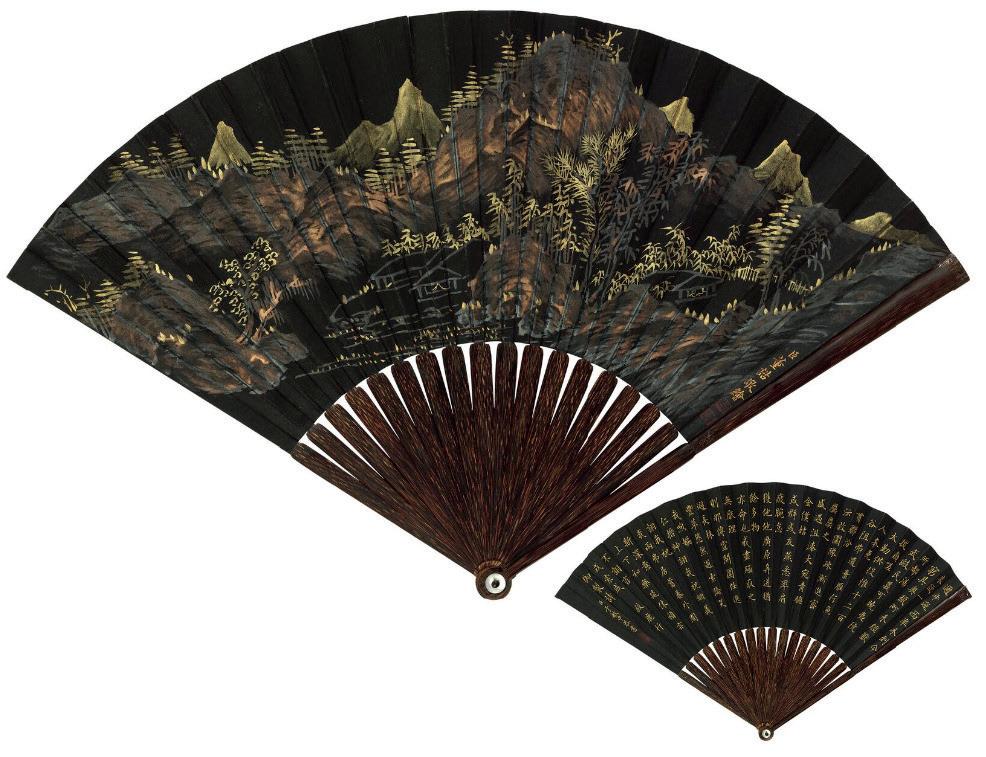
Dong Gao 董诰 (1740-1818) Gold Powder Water Village《金粉水村图成》ink and colors on paper, 16x44.
Wu Changshuo吴昌硕 (1844-19)Stone Drum Script 《篆书节临石鼓文》, ink on paper, 131.5×43, 1919.
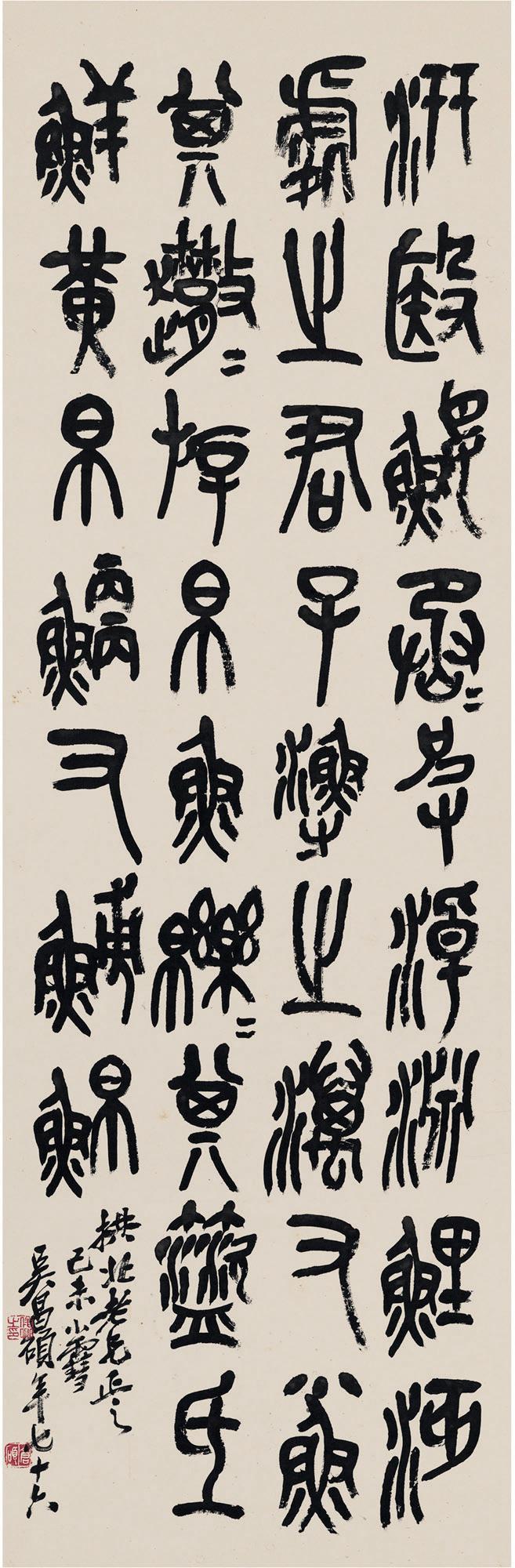
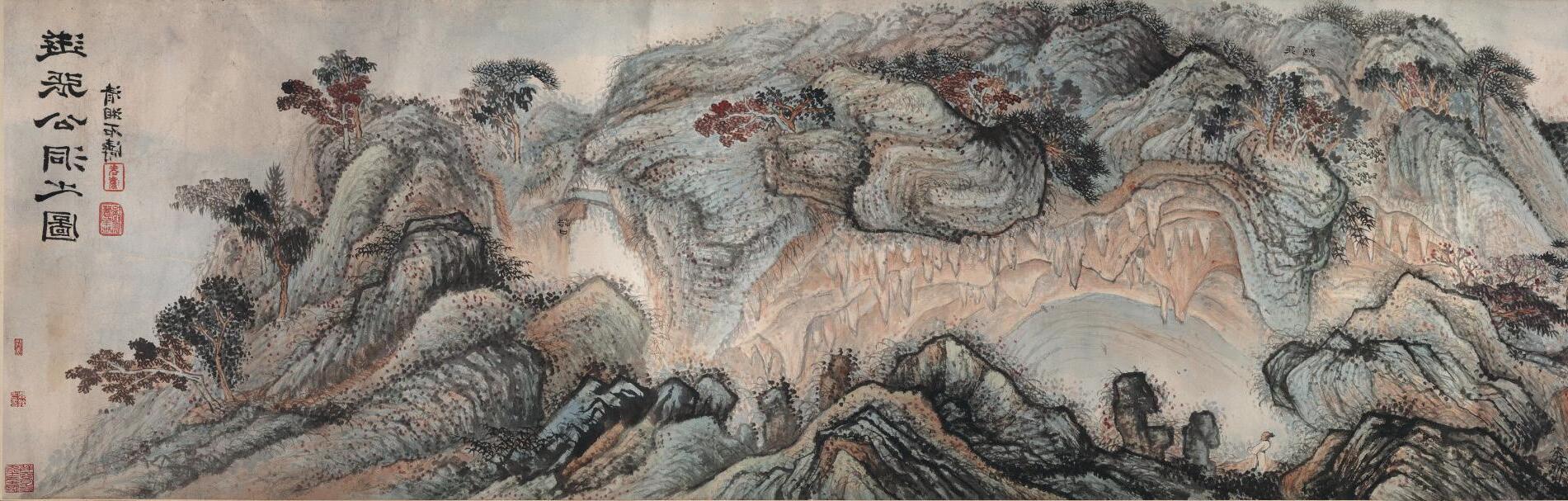
Shi Tao 石涛 (1642-1708) Outing to Zhang Gong’s Grotto《游张公
洞图》, ink and colors on paper, 45.9 x 286.4.
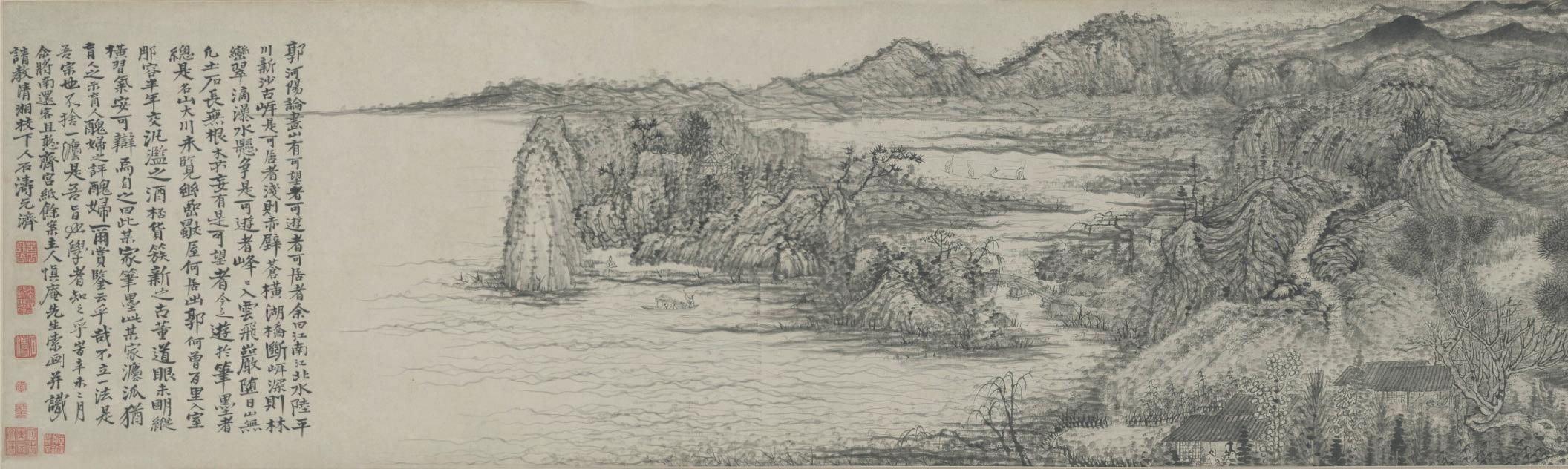
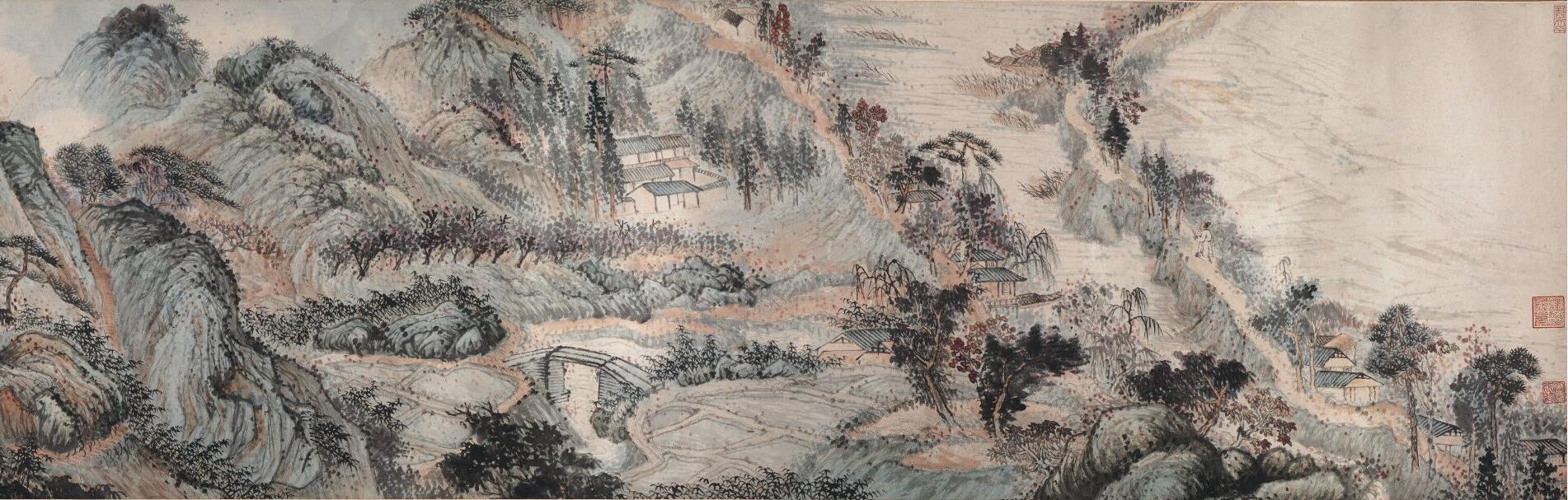
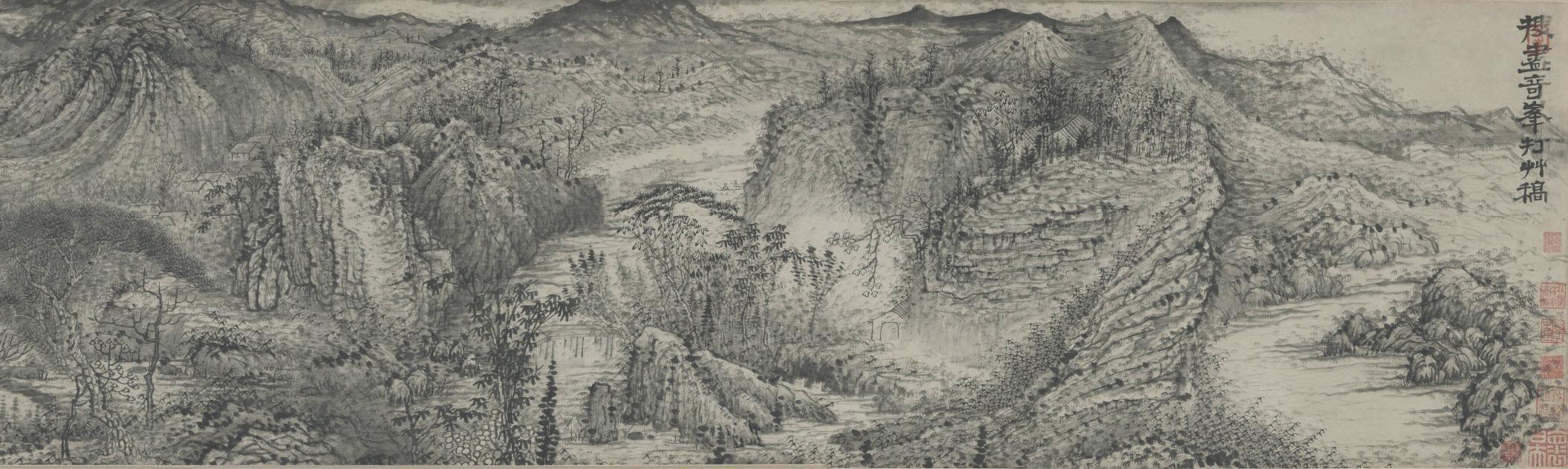
Shi Tao 石涛 (1642-1708) Looking for Magnificent Peaks and Making Sketches《搜尽奇峰打草稿图》, ink on paper, 42.8x285.5.
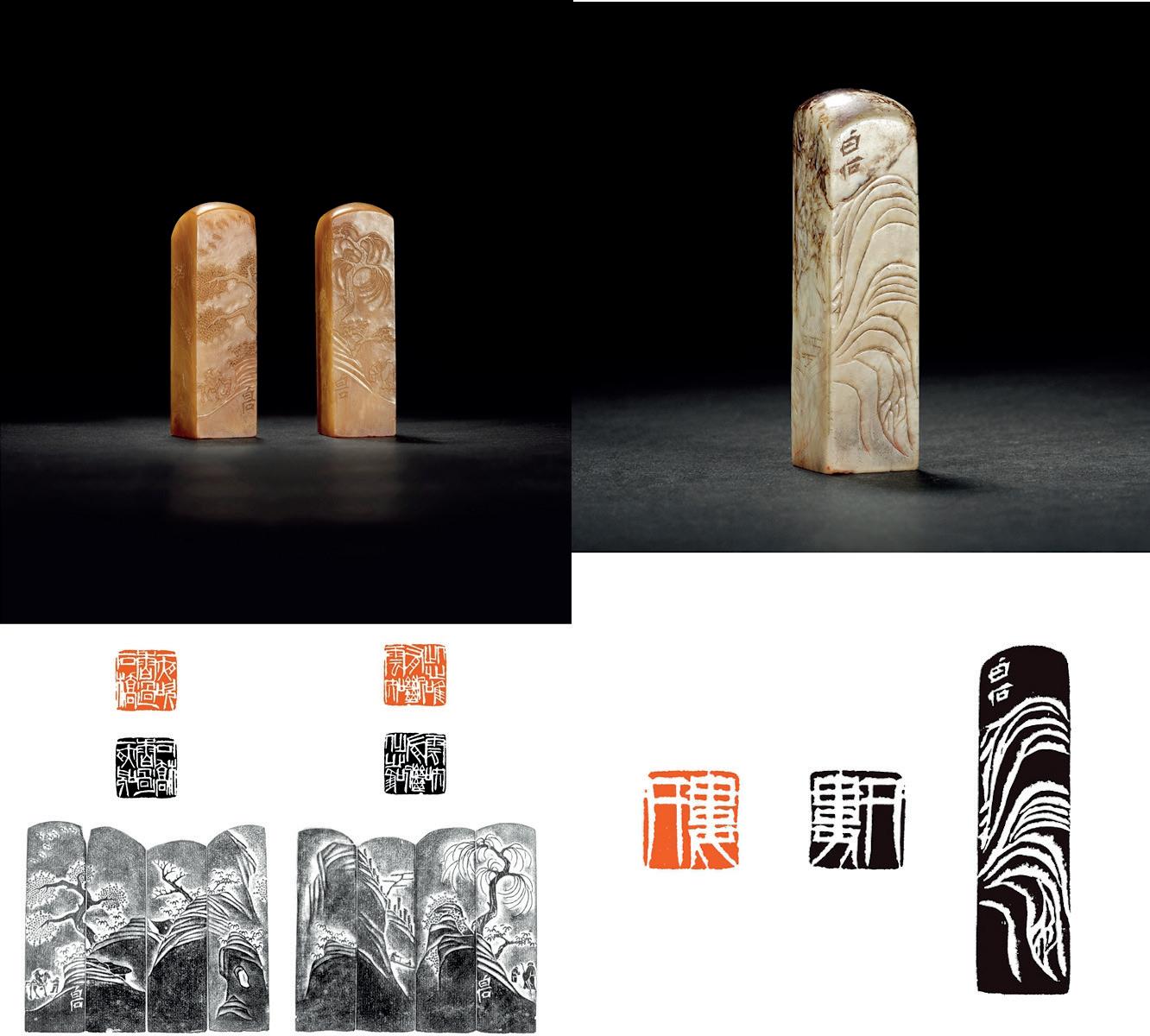
Qi Baishi齐白石 (1864-1957) Seals.
Gao Jianfu 高剑父 (1879-1951) Cool Breeze in a Lotus Pond
ink and colors on paper, 1921.
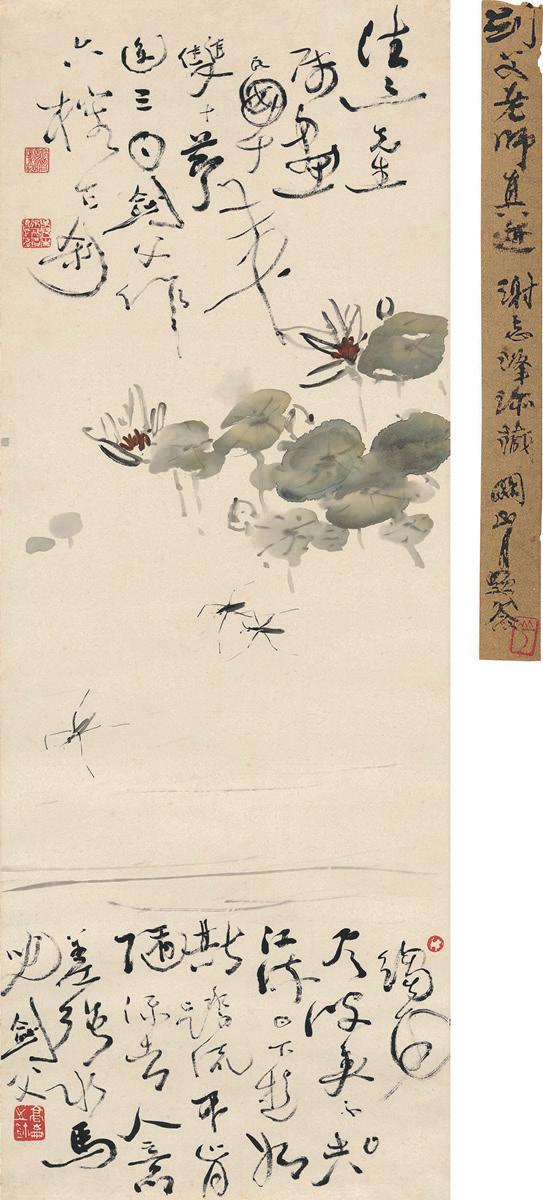
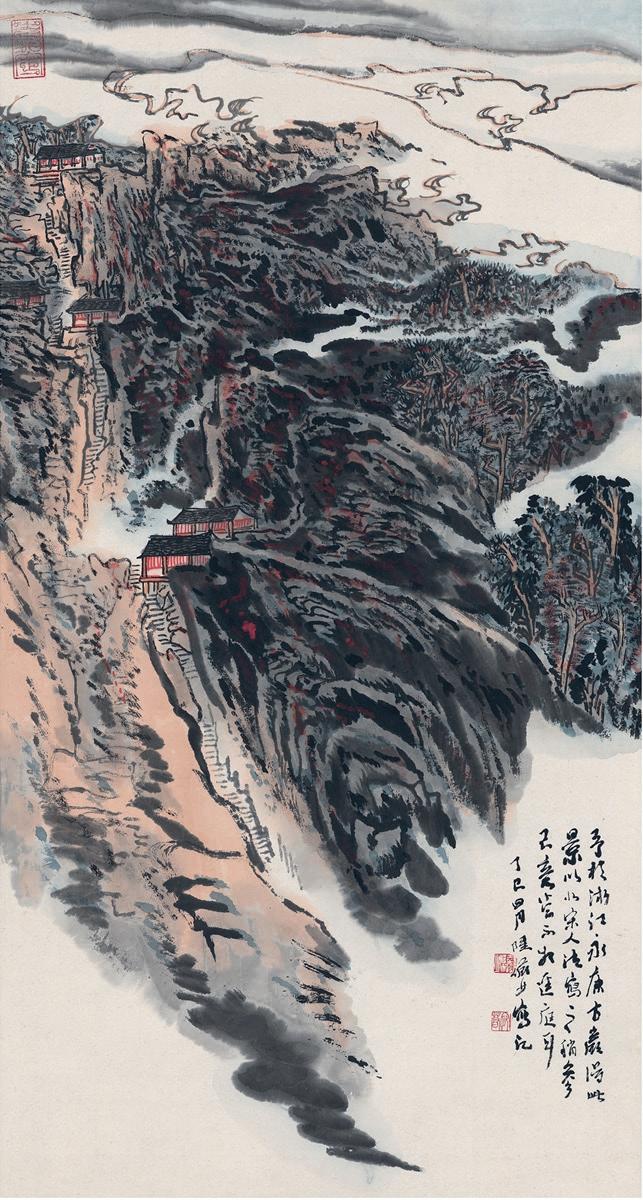
Lu Yanshao 陆俨少 (1909-1993) High River and Steep Gorge《高江 急峡》, ink and colors on paper, 133×67.
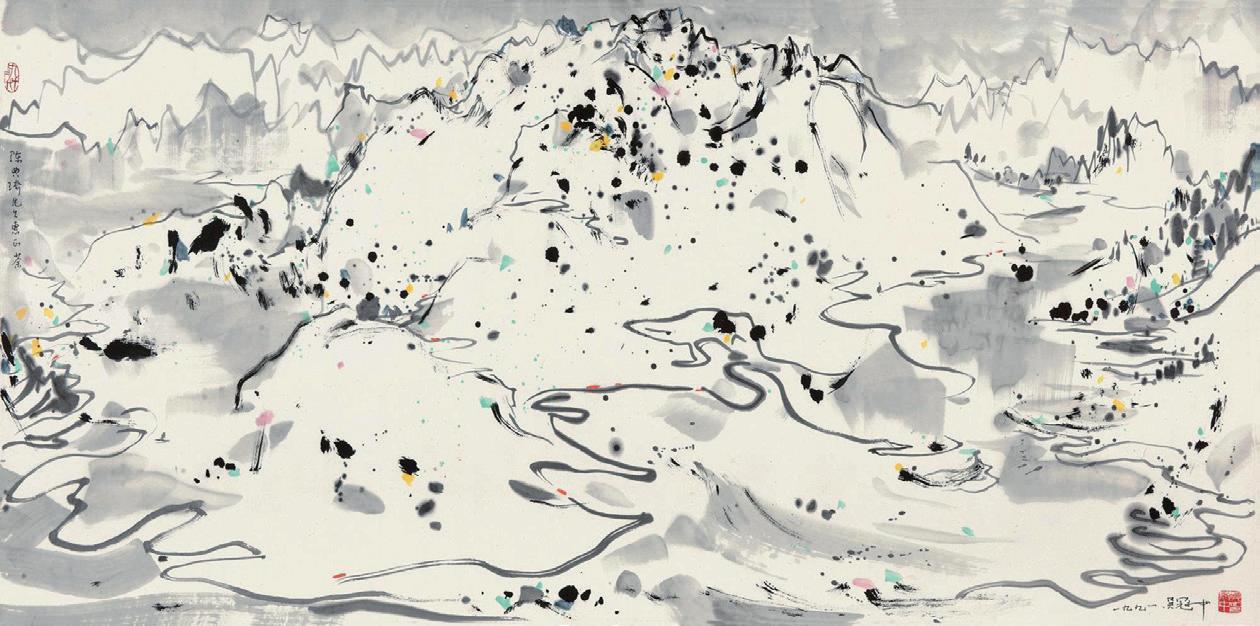
Wu Guanzhong 吴冠中 (1919-2010) Jade Dragon Snow Mountain《 玉龙雪山图》ink and colors on paper, 68x138, 1991.
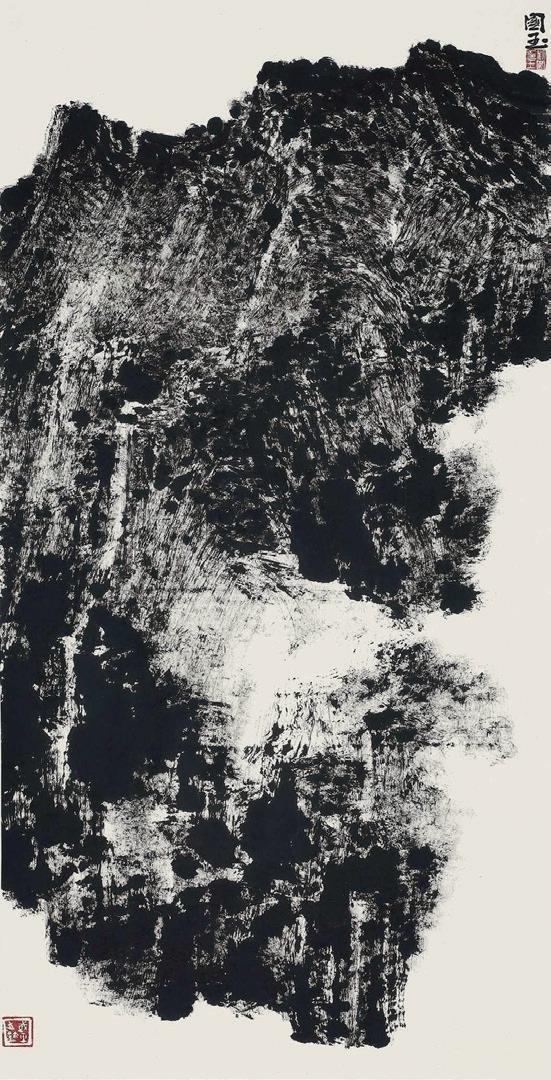
Liu Guoyu 刘国玉 (1942- ) Mountains and Waters《山水》, ink on paper, 138x68.
104
Translated by Zuha Rasheed
The main purpose of this volume is the dissemination of Far Eastern thought, in particular, the aesthetic-artistic knowledge: those that originated in China and later reached Japan and Korea where they gave rise to their respective traditions.
The need for this work can be traced back to the desire to go against the Western mentality that considers anything ‘external' or ‘untranslated' within a system of languages and cultural references contiguous to it, as something antimodern or a product of traditions that cannot be applied to the contemporary world. These views are often considered as material that is only good for historical studies that are projected into the past, and its expression, only worthy of museum culture relegated essentially to academic circles far from the needs of the 21st century society. These conceptions are the consequence of various factors. One above all, that of the arrogance of Western thought, which considers itself the only one capable of dealing with the contemporary reality and the only one that possesses the key to interpreting the globalised world, where the ease of exchanging goods and information gives the illusion of having all knowledge at one's fingertips, including that concerning different cultures.
This western-centric approach, the superficiality and twodimensionality of knowledge concerning other cultures, are often experienced in a ‘postcard' dimension and precludes true knowledge.
This manner applies to many aspects of non-Western thoughts and societies, even in the artistic and humanistic sphere, which even when studied, hardly ever leaves the confines of the academic culture. It remains crystallised and exposed as ancient relics for the use of specialists. This view has made the modern West short-sighted and impervious to the possibility of enrichment through contact
with different cultures. Very different was the situation in the past, where many cultural and technological advances arose precisely from contact with foreign populations. Specifically, Western art could benefit greatly from the knowledge of the aesthetic and philosophical theories that characterise Chinese art, which could (and should) be recognised as a source of new points of view regarding the interpretation of the world and of individuals. Perhaps it could be a possible opportunity to offer an ‘external perspective', a further one, which could make Westerners more aware of who they are, of their limitations and also of their strengths.
A possibility that may give art, in particular Western painting, a new boost.
Chinese art, as well as Western art, has benefited from the influence of external artistic expressions in the past. In the last century, it was precisely through contact with Western art that a rich and fruitful dialogue was established in Chinese art. This was due to the fact that the Chinese and Western systems are vastly different. What is tradition for China is often innovation in the West and vice versa. Why then deprive ourselves of the opportunity for a new and innovative point of view?
In addition to introducing the different conceptions of Chinese aesthetics, particularly in relation to calligraphy and painting, this volume aims to give voice to the great artists, both Chinese and Western, from antiquity to modernity who have expressed their ideas, also in theoretical terms.
The comparative approach, under the banner of a conciliatory rather than a divisive attempt, will try to emphasise how many revolutionary and avant-garde ideas and visions of the different schools of painting of Western modernity underpin traditional Chinese thought, which, with a harmonising spirit, has always been aimed at creating a ‘unique', liquid and non-monolithic thought which would be able to accommodate the different visions and interpretations of
In the Chinese cultural system, artistic practice has always played a central role in both social and personal spheres, becoming the basis of the individual's education and serves as a vehicle for human expression within society. During the ancient times, calligraphy and poetry were the two fundamental arts, and painting was included later. These three artistic expressions occupied (and still occupy) the highest position in the Chinese art world, differentiating themselves from other practices considered closer to craftsmanship as they were linked to commission. It is in this context that the figure of the literary painter, wenrenhua文 人画1, was formed, which from the Tang period (618-907) onwards was distinguished from the professional painter. The intellectual artist became a characteristic figure in the Chinese humanistic landscape. They are the ones who devote themselves to art in order to elevate their personality and express themselves, their ideas and emotionality, and have a positive influence on society. As the Tang poet, Du Fu 杜甫 (712-770) states: “Ten days to paint a river, five days to paint a rock” 2, verses that refer to the fact that art cannot express itself under the pressure of delivery deadlines, but rather follow the artist's inspiration and creativity. This freedom in artistic production is precisely what distinguishes the intellectual artist from the professional artist, who bind their work to commission, bowing to the needs of the market. Those who practice practising art in order to attain fame and wealth, from a Chinese perspective, is equivalent to that of the craftsman and does not reach the level of the pure artist. In the West, at least until the beginning of the 19th
1 A term coined by Dong Qichang 董其昌 (1555-1636), in earlier eras other terms were used to refer to the intellectual-scholar artist, such asshifuhua士 夫画, a term used by Su Shi 苏轼 (1037-1101).
2“十日画一水,五日画一石。”《戏题王宰画山水图歌》in Du Fu 杜甫, Dufushige shangxi ji《杜甫诗歌赏析集》[Analysis of Du Fu's poems and songs], Boshu shushe 巴蜀书社, Chengdu 成都1993, p.249, translation mine.
109 the world, growing and becoming stronger through union and assimilation (有容乃大 yourongnaida).
century, artists worked on commission. It was only from the conceptions of aestheticism and de l'artpourl'artthat some artists began to produce for purely expressive purposes, following a path independent of the client's requests. This perhaps is a situation that in contemporary times, due to the capitalist approach of societies, is increasingly difficult to achieve, and the artists find it difficult to free themselves from the plots of the market, being obliged too often to tie their production to commercial needs.
Another special characteristic of the literary artists is their multi-faceted nature. In addition to being a painter, they are also calligraphers, theorists, historians, critics, philosophers and philologists, and produce both on a practical and theoretical level, active in the artistic and intellectual sphere, similar to the homo universalis of the Western Renaissance. It was for this reason, the wenren hua had an exceptional influence in the evolution of the arts and aesthetic thought in China, and constitute one of the most relevant voices characterising the diverse Chinese cultural landscape.
The shaping of the figure of the intellectual artist, or the typical characteristics of Chinese pictorial and calligraphic expressions such as the stylistic features, and the language of painting and calligraphy are the result of a process of inheritance and transmission. These developed gradually through a long period of brush and ink practice (bimo 笔 墨), becoming a vehicle of communication between the various artistic expressions and creating a dialogue with poetry, literature and philosophy. The evolution of the arts is one of the elements that form part of the complex system that characterises Chinese thought, which tends towards unification rather than sectorisation, where each change has been inextricably linked to previous states, tending to influence future generations. It is an endless process that turns backwards and projects forward, repeatedly processing the old and creating the new. As a result, art is
constantly enriched, developed and improved. In order to achieve a high level of expression, it is particularly important to cultivate one's artistic abilities through the development of feelings, morality, intellectual character, artistic spirit and skill in the use of brush and ink, in order to build a system that expresses the self with a contemporary spirit and an independent personality. Painting and calligraphy are based on humanistic value orientation, the language of brush and ink is aimed at expressing ideas and writing mental images, allowing the noumenon and creativity of art to be extended, with an open heart and mind (xin 心), thus establishing a dialogue with the world.
Tradition, chuantong传统, “handing down” 传 and leading to “unification” 统, endures and evolves over thousands of years, therefore tradition cannot always have the same face. Tradition is the indelible essence that has crossed the ages, with a strong tolerance and profound continuity. In the vast and fertile soil of tradition, generations of artists and thinkers have been nurtured. The teaching of artistic and aesthetic theory is inseparable from the process of mastering the teachings of the ancients and at the same time from personal learning and growth through the practice of sketching, creation, calligraphy, seal carving, poetic inscriptions and aesthetic theory. The simultaneous cultivation of all levels of learning, movement skills and innovation are carried forward step by step and are continually consolidated and promoted, until the gradual refinement of humanistic thinking and artistic character, in a composite of techniques and virtues that complement each other. If one is not aware of the methods and techniques, one would lack the ability to control the brush and ink or any other expressive medium. Likewise, if one does not cultivate a high soul and spirit one may not be able to express one's personality and positively influence those who enjoy the artistic works. The transformation of the artist goes from
practising brush and ink, to understanding the humanities, and to encompassing all of life, the ancient and the modern, the indigenous and the foreign, to the pioneering and the traditional. And in this process, building one's own spirit and independent personality, forming a solid foundation through deep accumulation and fully stimulating potential creativity.
Following the modalities of Xie He's sixth canon of painting3“transmitting and copying” (传移模写), copying does not only refer to copying and studying the works of tradition in order to know and learn techniques and theories, but also and above all, it is to gain the ability to grasp the spirit and attitude of the masters of the past and the study of nature as to understand and assimilate its teachings. Transmission is, in other words, the reworking and merging of the heritage of the ancients and nature with one's own interiority and personality, as well as with the historical and social needs of the contemporary world with the aim of creating new forms of expression that can eventually be reworked by subsequent generations.4
The Chinese pictorial and calligraphic (in a certain sense also ‘poetic') materials are paper or silk, brush, ink and the ink stone5, which has remained almost unchanged throughout the ages. Therefore, the attention of artists and theorists have focused on the technical development and use of these materials, which, by virtue of their simplicity,
3 Xie He 谢赫 (5th-6th century) was a theoretician and painter, famous for genre and figure painting. He theorised the ‘six canons' (or ‘six methods', liufa 六法) of Chinese painting, which became the principles followed by painters, critics and theorists of later periods, which are: generating a sense of spiritual resonance and vitality; using the brush in accordance with the bone method; matching the object through the agreement of forms; adapting the application of colour to the characteristics of the object; dividing, planning and placing; transmitting and copying.
4 For more on this, see Lin Haizhong 林海钟, ‘Discourses on Chinese Painting. On Chuanyi moxie, the method of transmission and copying' 谈传移摹写', in Shanshui,No. 3, 2021, pp. 28-33.
5 Called ‘The four treasures of the scholar's studio' (wenfanagsibao文房四宝), the ink is in a solid state that when combined with water and rubbed on stone forms the liquid ink ready for use.
are characterised by great versatility and expressiveness, forming a highly sophisticated technical apparatus widely applicable in any historical moment. It become a fundamental source of inspiration and expressiveness. Task of the contemporary artist are to apply and ‘update' this baggage in relation to the times in which they live, trough process of selecting, enriching, modifying and adding. In China, this relationship between tradition and creation has generated an uninterrupted evolutionary flow of artistic practice (and thought in general) spanning more than two millennia. In the different historical periods, the evolution of painting and calligraphic techniques have been more or less fruitful, but even in the less creative moments that are more tied to academic formality and a more traditional approach, there have always been great figures of artists and intellectuals who have been active in countering the ‘subjugation' and lack of creativity of their contemporaries.
This process of ‘accumulation' does not always have positive implications. What makes up the tradition may not necessarily be useful and suitable to the needs of the artist or the era in which they live, so it is necessary to establish a form of dialogue with the past, by studying it, understanding it, in order to grasp its useful teachings, without ever submitting to it, that is, emending and discarding what one does not consider suitable to the expressiveness of the time and oneself. The process of enhancing one's technical and intellectual skills does not end with the end of schooling, it is rather a process that accompanies the artist throughout life. This process can be divided into three stages. The first consists of studying the masters, from ancient to contemporary times, observing their works, investigating their techniques, spirit, life and theoretical texts. The second stage involves the study of nature, its creative process, its variations and continuous change and growth, in order to improve oneself and be inspired by it. The last stage is the creative one, where
the artist's implementation of the knowledge is assimilated, reworking it with their own intimacy and vision, adapting it to his own expressive needs and those of their time, enriching tradition and giving voice to their own spirit. This process must be repeated throughout one's entire life, for each time one grows and evolves, one assimilates new skills as one's outlook broadens and one's capacities are refined, so that each time one returns to the study of the masters or of nature, one learns new concepts whith it new ideas. Rules are to be learned, assimilated and then forgotten, they must not bridle, but act as a support to creativity both positively and negatively. Shi Tao6 writes:
It has been said: ‘the man of great virtue has no rules' this does not mean that he is without rules, the absence of rules is the rule, which is the best rule/method. All things have principles but they also have flexibility, they have a rule but there is also variation. It is necessary to know the principles and the variation of their flexibility; to know the rule and the application of transformation. Painting is the great rule of the natural variation of things in the world. It is the essence and beauty of the form and strength of mountains and rivers, the continuous process of the force of creation, the flow and propagation of the life energy of Yin and Yang, and through brush and ink, one can represent the sky, the earth and the ten thousand things and cultivate oneself.7
Tradition is not, as some historical avant-gardes have tried to claim, a burden we carry around and which crushes our creativity. There is no need to ‘destroy museums and libraries', as Marinetti stated in the FuturistManifesto(1909).
6 Shi Tao 石涛 (1642-1708) , a celebrated painter, calligrapher, poet, theorist, innovator and monk of the Qing era (1644-1911). He wrote an important treatise on painting Mountains and Waters, the DiscoursesonPaintingofthe BitterGourdMonk,Kuguaheshanghualunlu《苦瓜和尚画语录》.
7 又曰:”至人无法。”非无法也,无法而法乃为至法。凡事有经必有权,有法必有 化。一知其经,即变其权;一知其法,即功于化。夫画,天下变通之大法也,山川 形势之精英也,古今造物之陶冶也,阴阳气度之流行也,借笔墨以写天地万物而 陶泳乎我也。” Bruni, G., La risonanza dello spirito. Sulla pittura e calligrafia cinesi, Morcelliana, Brescia 2023, pp. 148-149. All texts from Larisonanzadello spirito.Sullapitturaecalligrafiacinesiare translated by the author
According to the vision of Chinese art education, tradition is the support, the base and the foundation that elevates our creativity, as it provides the means for its expression, but should never stifle it. The American artist Mark Tobey, whose theories greatly influenced 20th century art and music, understood the importance of studying his own tradition and that of other cultures:
To rediscover the past is to move forward. There is no surcease when we constantly destroy what we have built. The future is carved with the implements we created before it was upon us. The past offers the art student different roads, all converging towards his present.8
The tradition constantly updated by intellectual artists, is always richer in means. It is the theoretical and technical support that leads creativity to go beyond these teachings, and not at all through a process of destruction and erasure of the past, which would instead bring evolution back to the initial level. The other source of inspiration, is the different traditions. It is necessary not to limit oneself to the one that exhibits the most elements of familiarity, and it is crucial to have the audacity to open one's eyes to foreign ones. This is a task that implies open-mindedness and an effort of study, but would undoubtedly bear original and unexpected fruit.
I have often thought that if the west coast [of America] were as open to the aesthetic influence of Asia as the east coast was to Europe, we would be a very rich nation!9
Clearly, theft of images and mere copying have nothing to do with this process of enrichment of self and tradition. The study and reworking are fundamental elements in
8 Tobey, M., “Reminiscence and Reverie,” MagazineofArt , vol.44, no. 6, Oct., 1951 p. 230.
9 Ivi , p.37.
this process, since different traditions have developed along different paths, but always in response to the needs generated by the human spirit, which can be shared universally. This process of knowledge must eschew academicism, which crystallises thought and deprives it of the life it needs to interact and influence society, but also avoid the superficial collage of exotic ideas. The artist and intellectual must always act as a go-between, creating original thought that is not anachronistic, has a positive influence on human life, and provide a bright perspective for the future. In this sense, artistic and intellectual thought can be said to follow similar patterns to the evolution of Western scientific thought, which builds on the work of previous generations, correcting and implementing it, and adapting it to the needs of the present time. If science were to start over from the beginning each time, erasing the trace of the path trodden by past scholars, and breaking the evolutionary thread of knowledge and discoveries, it would not lead to any progress and innovation. The same applies to artistic-intellectual thought. These characteristics are typical of Chinese thought from the earliest times. The study of the ancients was fundamental in the formation of the individual. Confucius himself (Kongzi孔子, 551-479) already in the 5th century BCE speaks of the importance of the past and its teachings with the desire to readapt them to his own contemporaneity. The same openness can also be seen with regard to foreign traditions. For example, fundamental in the evolution of Chinese thought were Buddhist concepts, which from the second century of the Common Era were introduced by Chinese travellers and scholars who crossed Western borders, bringing back Buddhist texts and teachings, which influenced Chinese spirituality, philosophy and art. A phenomenon that, thanks to the encounter with Daoism, led to the formation of Chan (禅, known in the West as Zen according to the Japanese pronunciation) thought, which
today has achieved great influence on a global scale. This approach is typical of Chinese intellectuals, who are aimed at the search for harmony both on a practical and theoretical level, tending towards philosophical syncretism, attempting to create a united and non-conflicting thought or thoughts, that are not fragmented and tending towards opposition as it often happens in the West. The possibility of unifying thoughts does not lead to a cultural levelling, but gives the individual the freedom to draw on all the different theoretical and philosophical expressions, grasping the elements most in line with their own world-view and developing them in order to create their own idea and interpretation of reality, as a famous saying goes, 它山之石可以攻玉, tashanzhishikeyi gongyu, “the other mountain's stone can polish jade”10 . Being a slave to sectarianism, fashions, outward beauty and therefore superficiality, are all factors that can quickly lead to fame, but without having a positive influence in the contemporary world, and perhaps unlikely to be remembered by subsequent generations. Learning from the masters of the past, from nature and its principles, from life in general, are the fundamental elements that characterise humans and their expressiveness. The appreciation for nature and the desire to live in close contact with it has often led the figure of the literary artist to overlap with that of the hermit11 who depending on their philosophical orientation and the political situation, could physically abandon social life to go and live immersed in
10 The last verse of the poem TheCryoftheCrane in the Books of Odes , 《诗经-小雅-鹤鸣》.
11 The eremitic culture, yinshiwenhua 隐士文化, has been an important expression of Chinese culture since the third millennium BCE with distinctive characteristics and far-reaching influence up to contemporary times. The Confucians embraced it during periods of political instability, while for the Daoists, it became the ideal condition to devote oneself to self-cultivation: the eremitic conception conceived the secular world as a world from which to distance oneself, in order to enter into a relationship of communion and contact with nature, developing the most intimate aspects of one's personality, favouring spontaneity, and thus acting free from utilitarianism. Hermitic life did not necessarily lead to isolation, but often created an alternative social network to that of the political world, aimed at the exchange of ideas, study, literary and artistic production.
nature, or otherwise aspire to it12. This would mean embracing the desire to get away from the materialism of the secular world, from its anxieties, abandoning the fashions of the time, eschewing the thirst for fame and glory, the pursuit of wealth and the desire for power. This is similar to Gauguin's desire to escape the city, which took him to Tahiti, where before he left he wrote, “I want to be free to paint without any glory whatsoever in the eyes the of others and I want to die there and to be forgotten here.”13 This physical or spiritual estrangement from the secular world led the artist to despise commissioned production, bowing to public tastes and following trends, wrote Ni Zan14, a literary painter of the Yuan period (1279-1368) who expressed himself in complete freedom, without finalising his production: What I call painting, is nothing more than using the brush freely, without care, without seeking the likeness of form, merely aimed at my delight. Recently I was wandering around and arrived in a town. Those who asked me for paintings wanted them according to their instructions, and what is more, specifying the time in which they were to be delivered. I was vulgarly humiliated and insulted, in every possible way. What an injustice, it is like blaming a eunuch for not having a beard!15
The conceptions that characterise the hermit culture and
12 The pseudonyms of many intellectual artists have terms such as hermit, man of the mountains and woodsman (a topical figure along with fisherman indicating a hermitic lifestyle) etc., even though they have not actually embraced this lifestyle, expressing their closeness to this type of culture, following its principles at least on a spiritual and intellectual level.
13 LettertoJ.F.Willumsen,Pont-Aven,Autumn1890, Chipp, H. B., Theoriesof modernart , University of California Press, London 1968, p. 79.
14 Ni Zan 倪瓒 (1301-1374), also known as Yunlin zi 云林子, was a painter, calligrapher and poet who dissipated his family's wealth and devoted himself to wandering in the Tai Lake area ( Taihu 太湖). He was one of the ‘Four Masters of Yuan' (Yuan sijia 元四家) together with Wu Zhen, Huang Gongwang and Wang Meng. Ni Zan excelled in painting mountains and water and bamboo, following Dong Yuan's example and being influenced by Zhao Mengfu, whose style was characterised by simplicity.
15“仆之所谓画者,不过逸笔草草,不求形似,聊以自娱耳。近迂游来城邑,索画 者必欲依彼所指授,又欲应时而得,鄙辱怒骂,无所不有。冤矣乎, 讵可责寺人 以不髯也!” YunlinonpaintingMountainsandWaters《云林论画山水》, Bruni, G., op.cit. , p. 134..
the attitude of the wenren hua towards life and society, which will later also be applied to artistic practice, are akin to the Daoist concept of wuwei 无为, or ‘acting without effort', in freedom, avoiding oppositions and contrasts, without following external desires, but only one's own predisposition in relation to one's surroundings, hence the topical association with water, which has no form, has complete freedom of movement and while appearing weak, it can erode stone. In order to reach the highest level of expressiveness, the artist must also follow this approach, he must allow himself to be involved in the movement of the universe and become part of its flow and pulsation. Shen Zongqian16 writes in Jiezhou's Collection of Studies on Painting17: “the highest and deepest level [of creation] is reached when one acts halfway between intention and nonintention”.18
Physical and mental freedom follow the patterns of ‘carefree wandering', xiaoyao you 逍遥游, a conception conceived by Zhuangzi (庄子, ca. 369-286), who is one of the most famous hermits and theorists of Daoism, whose goal was a free and untroubled existence through aimless wandering, forgetting the boundaries of object and self, and reaching the realm of altruism, futility and anonymity in order to live a happy existence. Zhuangzi's writings consist of an extensive collection of anecdotes, allegories, parables and fables, often humorous or irreverent, whose main themes are the spontaneity of action and freedom from the human world and its conventions, illustrating the falsity of man-made superstructures to interpret and experience reality. Zhuangzi promoted a peaceful and serene lifestyle in
16 Shen Zongqian 沈宗骞 (1736-1820), famous painter, calligrapher, poet and theorist of the Qing dynasty (1644-1911).
17 Jiezhouxuehuabian《芥舟学画编》.
18 有意无意之间,乃是微妙之极境矣。” Shen Zongqian 沈宗骞, Jiezhou xuehua bian [Jiezhou's CollectionofStudiesonPainting]《芥舟学画编》, Renmin meishu chubanshe 人民美术出版社, Beijing 北京 1959, p. 64 (translation mine).
119
order to become one with the Dao, the Way19, spontaneously following nature and not the complex and artificial social and personal laws created by man. Among the shortest and most significant is the fable entitled TheButterfly'sDream :
Once Zhuang Zhou (Zhuangzi) dreamt he was a butterfly, he was such a lively and happy butterfly, he didn't know he was Zhou. Suddenly I woke up and was startled that I was Zhou. Was it Zhou who had dreamt of being a butterfly or had the butterfly dreamt of being Zhou? Between Zhou and the butterfly, there must be a division. This is what is called the variation of substance.20
In his dream, Zhuangzi and the butterfly become one, expressing the desire to live in nature, to be part of it and to become inseparable from it, while at the same time mocking the separation imposed by man between dream and reality. According to Zhuangzi's thought, heaven and earth should be in harmony and unity, nature and man are originally one, but due to the superstructures created by man, it is no longer possible to develop in accordance with nature. The story shows Zhuangzi's desire to merge with the universe and to dance in harmony with all things in the world, in order to achieve the state of ‘unity of man and nature' (Tianrenheyi 天人合一21). The purpose of human life is to seek happiness and joy, and the only way is to strive for one's inner tranquillity is to not to be bound by the form or be oppressed by things and to return to one's true self,
19 Dao 道, is an ancient and complex term with many meanings, which originally meant way, road or proceeding, became the basic concept of the Daoist philosophy (daojiao 道教) but common to all currents of Chinese philosophical thought, indicating the Way where all the forces of the universe flow, its becoming and changing, that which channels all creative energies and their movement, acquiring the meaning of method,laworprinciple
20 胡蝶之梦为周与?周与胡蝶,则必有分矣。此之谓物化。” Fang Yong 方勇 (ed.), Zhuangzi 《庄子》, Zhonghua shuju 中华书局, Beijing 北京 2010, p. 42. All texts from Zhuangz i are translated by the author.
21 Although a very old philosophical conception, this four-character sequence is first found in Qiancheng , the seventeenth chapter of ZhengMeng 《正蒙乾称篇》 by Zhang Zai 张载 (1020-1077), a philosopher and educator, one of the founders of Neo-Confucianism during the Northern Song dynasty.
one that is not bound by constraints. A life aimed at lightheartedness and simplicity will become one of the topoi of the literary artist, and eventually be applied to artistic practice. The great literary artist Su Dongpo22 writes in the poem SongoftheSouth :
In the mountains when it rains I take my wine, I fall asleep in my clothes when it clears up in the evening. I do not hear the morning bells ringing. In dreams I am a happy and lively butterfly, my body in total lightness.
Old age approaches, I return home without having achieved anything. I only desire a field and a home without ambition, great men will mock me. The only thing I desire is the sandy road along the lake, to walk where there is no mud.23
A carefree life leads to freedom and tranquillity of the heart and mind. A life free from vulgarity (or mud and dust according to Chinese symbolism) is fundamental for the artist, who must realise his art without restraints and materialistic bonds, as recounted in another short story by Zhuangzi:
The monarch Song Yuanjun wanted a painting, so many master painters came from all over, received the greeting and stood at attention, moistened their brushes and ink, [from as many as there were] half of them stood outside [waiting]. One painter arrived late, calmly without haste, received the greeting, did not get up and returned to his quarters. A minister went to see, found him undressed and sitting cross-legged, his body naked. Said the sovereign: ‘Well yes, he is a true painter.'24
The true painter and artist needn't be interested in the
22 Su Shi 苏轼 known as Su Dongpo 苏东坡, was a celebrated and prolific poet, calligrapher, painter, theorist, historian, literary scholar and official, a leading figure in Song literary circles, who is still considered the literary artist par excellence.
23“带酒冲山雨,和衣睡晚晴。不知钟鼓报天明。梦里栩然蝴蝶、一身轻。老去 才都尽,归来计未成。求田问舍笑豪英。自爱湖边沙路、免泥行。” Su Shi 苏轼, Dongpoyuefujian [Yuefu di Dogpo] 《东坡乐府笺》, Shanghai guji chubanshe 上海古籍出版社, Shanghai 上海 2017, p. 100 (translation mine).
24“宋元君将画图,众史皆至,受揖而立,舐笔和墨,在外者半。有一史后至者,譠 譠然不趋,受揖不立,因之舍。公使人视之,则解衣盘礴,裸。君曰:‘可矣,是真画 者也'。” Zhuangzi, op.cit., p. 349.
sovereign's favour or the wealth obtained from it and must not want to be appreciated through etiquette. Those with these priorities would not have a quiet mind and heart as they would be agitated by lust, striving to reach the object of desire and discomposed by the possibility of failure, thus, trapping creativity and self-expression. The true artist transcends the world by forgetting profit, fame, and making all external distractions disappear.
Tobey writes:
I am of the opinion that those who erase the past too quickly, do not know where they are in the present. Such impersonalism seems to be a phenomenon of our time and must be a child of our over-industrialisation and our belief in the material man.25
25 Tobey, op.cit. , (2021) p. 69.
Ancient Chinese culture is rich in ecological wisdom, and within the figurative arts, the painting of Mountains and Waters, shanshuihua山水画 is the most relevant expression of the ecological spirit, both in practice and theory. In the eyes of Chinese painters, the natural environment is a perceptive and transcendent world, an ideal form of beauty where through high-level painting one can awaken and elevate people's senses, by grasping nature in its continuous change, and adapting oneself harmoniously to the natural rhythms of the world in order to merge with the vitality of the universe and achieve physical and mental pleasure. In these terms, painting and calligraphy become a graphic expression of the artist's spirit and of the aesthetic relationship between humans, nature and society, where the Confucian humanist and Daoist naturalist conceptions enter into synergy, creating a close relationship between nature and man. Mountains and rivers not only give aesthetic pleasure and inspire creativity, but also shape and nourishes the spirit. When the subject observes the Mountains and Waters through an empathic process, his or her spirit, through participation in the constant flux and change of the cosmos (passive empathy), is consciously infused into the object, so that the surrounding nature also welcomes the human spirit and emotions (active empathy). Human and nature merge, the environment is personified and expresses human emotions and feelings, achieving the status of Tianrenheyi , the ‘unity of nature and man', a fundamental notion underlying Chinese eco-aesthetic thought. Tianren heyiindicates a holistic view of the world, where the human (ren人) and the sky (tian天), unite (he合) into one (yi一), with tianindicating nature, its laws and its Way. This view is found as far back as the Yijing26 , Confucianism, Daoism, Buddhism
26 Yijing 《易经》, an ancient classic that explains the changes in the world of the sky and earth, contains simple and complex laws of nature is a compilation
and other minor schools of thought, and is ever present in China's cultural philosophical substratum.
“Heaven, earth and I were born together, and all things and I are one “27. Zhuangzi with these words expresses the unity between the rules that govern nature, the physical nature or earth (di 地) and human, both of which are part of the same vital and evolutionary process, since man and all things in the world (wanwu 万物) and their variations (wanbian 万变) are united and “heaven and earth are the parents of ten thousand beings"28 and humans are part of it, because all things are an organic whole (wanwuyiti万物一体).
Such conceptions describe a way of thinking that is not anthropocentric but neither does it centralise nature, where harmony and mutual relations are the fundamental elements. This concept contains a strong environmental consciousness and a humanistic spirit, which had an enormous influence on Chinese thought in general.
Since ancient times, many scholars and philosophers have tried to explain and make humans understand the need for this approach to the world around them, to bring them closer and unite them with nature, both physically and spiritually. In a passage from the YellowEmperor'sClassicof Internal Medicine29, one of the oldest Chinese medical texts attributed to the semi-mythological Yellow Emperor (27172599), we read:
of ancient Chinese wisdom. It describes the world from a holistic perspective, seeing man and nature as an organic and inextricably linked whole, that is, ‘the unity of man and nature'. Its content covers philosophy, politics, life, literature, art, science and many other fields, and is a classic common to all schools of thought.
27“天地与我并生,万物与我为一” Zhuangzi, op.cit. , p. 31.
28“天地者,万物之父母也。” Ivi , p. 295.
29 The Huangdineijing 《黄帝内经》 is one of the earliest Chinese medical texts and one of the four classics of traditional medicine, which is based on the theories of Daoism, presents a ‘holistic medical model' of nature, biology, psychology and society. The text laid the foundation for understanding human physiology, pathology, diagnosis and treatment.
124
The sky has the sun and the moon, and the human has two eyes. There are nine states on earth and nine orifices in humans. In the sky there is wind and rain, in humans there is joy and anger. There is thunder and lightning in the sky and the human makes sounds and noises. There are four seasons in the sky and human beings have four limbs. [...] The sky has Yin and Yang, human have husband and wife. The year has three hundred and sixty-five days, human beings have three hundred and sixty-five joints. The earth has high mountains and human beings have shoulders and knees. The earth has deep valleys and human beings have armpits and popliteals. [...] These are the correspondences between humans, sky and earth.30
The isomorphism between nature and man is the simplest aspect of the concept of universal harmony, where the structure of the human body and its life reflects the structure of heaven and earth, which is called rentian tonggou 人天 同构, ‘man and heaven have the same structure'. There is always a continuous correspondence between inner and outer, macrocosm and microcosm, in a continuous flow of the vital blow and breath (qi 气). When qi flows man and nature reach the highest level of prosperity and wellbeing, interacting and influencing each other, coexisting and developing harmoniously. This status is superior to the cognitive approach, the result of the separation of subject-man and object-nature (that characterises Western thought), which sees nature as an external element that can be the object of aesthetic appreciation, or scientific research aimed at the (often fictitious or temporary) betterment of mankind. To achieve the status of union, it is necessary to be in direct and profound contact with nature, establishing an empathic relationship with it, considering it our simile and not a separate entity. Observing the natural environment
30“天有日月,人有两目。地有九州,人有九窍。天有风雨,人有喜怒。天有雷电, 人有音声。天有四时,人有四肢。[...]天有阴阳,人有夫妻。岁有三百六十五日, 人有三百六十节。地有高山,人有肩膝。地有深谷,人有腋腘。地有十二经水,人 有十二经脉。[...] 此人与天地相应者也。Yao Chunpeng 姚春鹏 (ed.), Huangdi neijing《黄帝内经》[YellowEmperor'sClassicofInternalMedicine], Zhonghua shuju 中华书局, Beijing 北京 2010, p. 1347 (translation mine).
is not only an aesthetic act, but also a means of selfcultivation and purification of the soul, aimed at eliminating the utilitarian contradiction between the human and nature. Only by forgetting the secular life, material needs, and by participating in the flow of qi , would it be possible to live following the Dao, the Way, a modality expressed by Laozi 老子 (5th century BCE) who explains the laws of life of the sky, the earth, humans and the entire universe in a few words: “Man follows the earth, the earth follows the sky, the sky follows the Dao and the Dao follows naturalness“31 .
These conceptions had great influence in later epochs and in the formation of traditional thought in various fields of knowledge, be it from the medical to the philosophical, or from the social to the aesthetic, they were all characterised by the common idea that the creative and evolutionary principles proper to the natural world are the same as those that govern the development of humans and their social and cultural expressions.32 The creative force of nature is the same as that which belongs to the creativity of human, the breath and vital energy is common to all creatures and creations in the universe. Therefore the artist must put himself in tune with these forces, enter into resonance with them, grasping their visible and invisible aspects.
Painting is a graphic expression of the artist's spirit and an aesthetic relationship between man, nature and society. In this dynamic, the artist and theorist Zong Bing33 introduced
31 “人法地, 地法天,天法道,道法自然 “ Wang Bi 王弼 (ed.), LaoziDaodejing zhu [Laozi's Classical of the Way and Virtue Annotated]《老子道德经注》, Zhonghua shuju 中华书局, Beijing 北京 2011, p. 66 (translation mine).
32 In the Huainan zi 《淮南子》, an important collection of texts on various topics of the 2nd century BCE, from the myths of antiquity to contemporary government, he analyses the figure of the perfect ruler in numerous passages, and finds as a philosophical foundation the notion that the rules of politics and government follow the same as those of the natural world.
33 Zong Bing 宗炳 (375-443) was a calligrapher, musician, theorist and painter who refused official positions to devote himself to art, Buddhism and the life of the travelling hermit. He was the first theoretician of Muontain and Water painting. He wrote, IntroductiontoMountainandWaterPainting , Hua shanshui xu , 《画山水叙》 an extremely dense and short text that reveals for the
the concept of the Dao into the painting of Mountains and Waters: The Dao is invisible but present and through the practice of painting, it is revealed by the form of the natural environment that is depicted. This is why one must not be a slave to visual perceptions, otherwise it would be like reading a metaphor literally and, ignoring its true meaning, which goes beyond the words used. Zong Bing writes:
This [travelling among the mountains] is also called the joy of the benevolent and virtuous man34. The wise man follows the Dao in spirit, the virtuous man understands it. The shape of the mountains and the waters show the Dao's charm, and the man of virtue takes pleasure in it.35
This invisible but perceptible element which has no form and reflects the vitality of the universe and its process of creation and destruction, became a fundamental characteristic and an essential element in Chinese painting, which would later be standardised as qiyunshengdong气韵生动, namely ‘generating a sense of spiritual resonance and vitality'. It is the first of Xie He's six canons of painting36, the realisation of first time the secrets of Muontain and Water painting and the reasons why it should be practised. It lays the foundation for the evolution of this artistic practice, touching on a whole range of topics and expounding various ideas that will be developed by future generations.
34 Confucius in Lunyu《论语》6.23, “The Master said, ‘The wise man rejoices in the water, the benevolent in the mountains. The wise man is active, the benevolent man is calm: the wise man has many joys, the benevolent man lives long life.”, “子曰:知者乐水,仁者乐山。知者动,仁者靜。知者乐,仁者寿。” Yang Bojun 杨伯峻 (ed.), LunyuYizhu[TranslatedandAnnotatedDialogues]《论语 译注》, Zhonghua shuju 中华书局, Beijing 北京 1980, p. 62 (translation mine).
35“又称仁智之乐焉。夫圣人以神法道,而贤者通,山水以形媚道而仁者乐。” Bruni, G., op.cit. , p. 47.
36 The first principle is the most complex and least delineated of the six, and countless artists and scholars, both Chinese and non-Chinese, have devoted themselves to its explanation. The first canon implies the concept of qi, which must be perceived and understood by the painter in order to be transmitted by the work. Qi or life force/breath is an element that belongs to the category of the invisible and formless, which cannot be seen, described or formalised because it is immaterial, changeable and unpredictable, but can be perceived. This method, unlike the others, cannot be taught or studied, but can only be achieved through a process of inner cultivation that will bring one to a state where one can perceive and express the flow of qi, the representation of which makes the work alive, as is the painted subject. For a list of some trans-
which became, and still is, the main goal of Chinese painting. Being able to express spiritual resonance is the main and most difficult task for the artist. This is because it is not enough to rely on the senses and technique alone, which is why it cannot even be taught (qiyunfeishi气韵非师), but an elevation of the spirit is needed to resonate with the natural world, through distancing oneself from the material desires. Guo Ruoxu37 writes in ImpressionsonObservedPaintings :
The six canons have been discussed in great detail for centuries. However, only the last five canons can be studied from the use of the brush in accordance with the bone method.38 As far as the resonance of the spirit is concerned, it is an innate knowledge and it cannot be attained by fine technique or even years of practice. It must arise instinctively in the spirit, either you have it or you don't. What I am trying to say is that the great works of antiquity were done by high-level scholars of great virtue or by sages who lived immersed in nature. Because they lived in the benevolence and pleasure of the arts, they devoted themselves to deep thoughts about the mysteries of existence and noble sentiments, which found expression in their paintings. They had high personalities, as the resonance of the spirit could only be as high, and when the resonance of the spirit is high, the vitality [of the work] reaches the same level. What is called the highest level, is one which grasps the spirit of things. All paintings must possess the resonance of the spirit to be considered treasures of time. Otherwise, even if they are done with skill and ingenuity, they are nothing more than commercial objects. It is called painting, but it is not.39 Thus, in the practice of painting, it is not the meticulous lations of the first principle see Lin, Y. (1969), pp. 49-50.
37 Guo Ruoxu 郭若虚 was a famous connoisseur of painting and calligraphy and an art critic in the Northern Song dynasty (960-1127).
38 From the second onwards.
39“六法精论,万古不移。然而骨法用笔以下,五者可学。如其气韵,必在生知, 固不可以巧密得,复不可以岁月到。默契神会,不知然而然也。尝试论之,窃观自 古奇迹,多是轩冕才贤,岩穴上士。依仁游艺,探赜钩深,高雅之情,一寄于画。
人品既已高矣,气韵不得不高;气韵既已高矣,生动不得不至。所谓神之又神, 而能精焉。凡画必周气韵,方号世珍。不尔虽竭巧思,止同众工之事。虽曰画,而 非画。” in Yu Jianhua 俞剑华, Zhongguo Gudai Hualun jingdu [Analysis of WritingsonthePaintingofChineseAntiquity]《中国古代画论精读》, Renmin meishu chubanshe 人民美术出版社, Beijing 北京2014, p. 59. All texts from the AnalysisofWritingsonPaintinginAncientChinaare translated by the author.
representation of the subject or the virtuosity of technique that is important, but rather leaving room for the spiritual and emotional relationship between man and nature, which leads to self-elevation. The formation of the artistic conception of Mountain and Water painting is based on the artist's thoughts and emotions integrated with the essence of the mountains and rivers. The reflection of this unity in the artistic production shows that the painter's personality realises the fusion and resonance of the object and the self, corresponding to the natural environment and natural aesthetic values.
The relationship between exteriority and interiority, macrocosm and microcosm, nature and man, from an educational point of view, was to be the basis of the artist Zhang Zao's 张璪 thought (Tang era 618-907). He expressed in the concept of Waishizaohua,zhongdexinyuan外师造化,中
得心源, which translates to ‘Nature and its creative process are the external master, the heart is the inner source', which means that the artistic creation derives from the teaching of nature, and the beauty of nature cannot automatically become the beauty of art, but requires an inner reworking on the part of the artist, combining his or her personality, knowledge and experience with the external world. For this process of transformation, the artist's inner structures and feelings are indispensable. A concept very similar to that expressed by one of the early expressionists Emil Nolde:
Conscientious and exact imitation of nature does not create a work of art. A wax figure confoundingly lifelike causes nothing but disgust. A work becomes a work of art when one re-evaluates the values of nature and add one's own spirituality.40
It is necessary to be in contact with the natural environment, to grasp and understand its beauty, rhythm, harmony, complexity, and variation. All of this will not only help to 40 Chipp, H. B., op.cit. , p. 146.
improve one's artistic and expressive abilities, but will also enrich the artist's personality, elevating his or her spirit and morals, as he or she is influenced by the process that governs the universe. Knowledge and experience of nature and the world in general will remain one of the two main elements in the formation of the intellectual artist, which, together with the study of tradition, will create a training system based on the coexistence of humanistic teachings and experience of nature and life in general. This vision will be reaffirmed by the greatest intellectual artists over the centuries, Zhao Xihu41 of the Song period writes:
When there are ten thousand books in your mind, and your eyes are filled with the wonders of the past and the horse-drawn carriage has left its tracks halfway around the world, you may start using the brush.42
Dong Qichang43 emphasises the need to have a multifaceted culture, learned from books but more importantly from life experience and the teaching of nature:
It is also important to devote oneself to study, to read ten thousand volumes, to walk ten thousand li44, to rid the mind of dust and murk, so that naturally the mountains and valleys will be internalised, the boundaries will be established, the hand will paint spontaneously, and all the Mountains and Waters will be full of life.45
41 Zhao Xihu 赵希鹄 (1170-1242), a connoisseur of painting and calligraphy, wrote the DongtianQingzhi《洞天清禄》, a guide for painting enthusiasts.
42“胸中有万卷书,目饱前代奇迹,又车辙马迹半天下,方可下笔。” Yu Jianhua, op. cit. , p. 87.
43 Dong Qichang 董其昌 (1555-1636) was a famous minister, painter, scholar, historian, theorist, and calligrapher of the late Ming dynasty (1368-1644), considered one of the most distinguished intellectual artists in history.
44 Li 里, a unit of length that has fluctuated between 400 and 600 metres throughout the ages, standardised in the early 1900s at 500 metres.
45然亦有学得处,读万卷书,行万里路,胸中脱去尘浊,自然丘壑内营,成立鄞 鄂,随手写出,皆为山水传神矣。” Yu Jianhua, op.cit. , p. 730.
130
Up to the modernity of Huang Binhong46, who states “The wise man is a sharp and intelligent man who has obtained the method from nature, nature is the method”.47
In the Western world, the great painter Paul Cézanne supported this view, arguing that: “All things, particularly in art, are theory developed and applied in contact with nature”48 […] “The Louvre is a good book to consult but it must only be an intermediary. The real and immense study that must be taken up is the manifold picture of nature.”49
The contact between man and nature elevates creativity and the spirit, improving the individual's existence, making him forget the cares of life in the secular world, distancing him from its vulgarity, which binds artistic production to the needs of the market, making it a mere means to satisfy material desires, leading to conceit and arrogance. Nature leads to a higher dimension, which sees man in harmony with the world around him, achieving inner peace, tranquillity of the heart and freedom of the mind. The painting of Mountains and Waters can become a means of estrangement from reality. Through woyou 卧游, the ‘travelling in the mind', which in the literal sense of the words means ‘wandering while lying down'. It is the ability of the act of painting (and of observing the painting) to transport the subject out of the materiality and difficulties of everyday life, into the wilderness, among mountains, rivers and forests. Zong Bing introduced the concept of
46 Huang Binhong 黄宾虹 (1865-1955), famous 20th century painter, scholar, calligrapher, theorist and historian.
47“圣人就是一种聪明人,但也得法乎自然,自然就是法。”《国画之民学》in Huang Binhong 黄宾虹, HuangBinhongshuhuajibian[Collectionofwritings oncalligraphyandpaintingbyHuangBinhong]《黄宾虹书画集编》, Shanghai shuhua chubanshe 上海书画出版社, Shanghai 上海 1999, vol. 2, p.450, (translation mine).
48 Letter to Charles Camoin , 22nd of February 1903, in Chipp, H. B., op.cit. , p. 18.
49 LettertoEmileBernard , 12 th of May 1904, ivi , p. 19.
woyou , and a spiritual journey (shenyou神游) that leads the observer to experience a state of happiness and perception of the Dao, following Zhuangzi's ‘carefree wandering'. In an era characterised by stress from external pressures or social isolation, the practice of woyou is an excellent way to get away from the worries of everyday life and get in touch with nature, thus also having a therapeutic function on a psychological level. In the final section of the Introductionto PaintingMountainsandWaters , Zong Bing writes:
So I live a quiet life regulating the flow of life energy (qi), I empty a glass of wine and strum my lute, I unroll a painting and sit in front of it, I explore distant lands, and without resisting the multitude of nature's promptings, I find myself in solitude, in wilderness, without a trace of a human being. Towering mountain peaks and summits, clouds and forests are lost in the distance. The wise and virtuous shine from antiquity50, and all the pleasant aspects [of nature] merge in the mind. What else do I need? My spirit is happy, being in this state what else should I ask for!51 In these terms, painting becomes the fundamental expression to bring man, whether an artist or observer, closer to nature. Guo Xi52, by virtue of his Confucian humanistic thought, needed to reach out to those living in society, because according to Confucius' thought, in times of peace and prosperity, man must give their support to society (rushi 入世), and therefore he proposed an alternative to retreating from the secular world (yiny i 隐逸). Guo Xi, through the concept of woyou , also brings those who cannot leave the
50 Through the experience of wuyou, one not only overcomes spatial perception, but also temporal perception.
51 “于是闲居理气,拂觞鸣琴,披图幽对,坐究四荒,不违天励之藂,独应无人之 野。峰岫峣嶷,云林森眇。圣贤映于绝代,万趣融其神思,余复何为哉?畅神而 已,神之所畅,孰有先焉!”Bruni, G., op.cit., p. 50.
52 Guo Xi 郭熙 (ca. 1000-1090) was an outstanding painter and painting theorist of the Northern Song dynasty, who practised Taoism in his early years and was later called to the imperial painting academy. He wrote The Noble MessageoftheForestsandSprings,Linquangaozhi 《林泉高致》 a theoretical text on Muontain and Water painting that is characterised by a broad thematic spectrum, which considers many aspects of Muontain and Water painting from various perspectives, such as theoretical, practical, compositional, thematic, moral, spiritual, aesthetic, historical, material and philosophical.
cities closer to nature, through a spiritual retreat within society:
Why does the man of virtue love Mountains and Waters? [Because] they are often places of retreat for self-cultivation; carefree abandonment among springs and rocks is a source of happiness. Hermits, fishermen and woodcutters bring comfort, having the call of flying cranes and the howls of monkeys close by; the yoke of toil and the bustle of secular life is what disgusts man's sensibilities. Mists, fogs, supernatural beings and sages are what man's soul yearns for, but cannot see. Only that in a time of peace and prosperity, loyalty to the ruler and parents is very deep. If one wishes to maintain one's integrity, to abandon one's office and withdraw [from society] is to go against moral principles and righteous action, how can a righteous and honest man isolate himself at a great distance, abandon social life and worldly affairs, and equate himself with the purity of [Xu You who lived on the mountain] Ji [along the river] Dun, or Huang and Qi. […] Now a skilful hand depicts them in their entirety; without leaving the room one seems to have the sensation of sitting between springs and valleys, of vaguely hearing the voices of monkeys and the chirping of birds, of being dazzled by the beauty of the illuminated mountains and the reflections of the waters. Is it not precisely this that quickly [satisfies] the will and captures our hearts and minds? This is the original reason [that explains] why mountain painting is so precious in our world. 53
Later in the text, Guo Xi expounds the theory of the sike四 可, the four ways of experiencing the natural environment, 53 Xu You 许由 was a semi-legitimate hermit who lived during the reign of Emperor Yao (ca. 2356-2255), the emperor admiring his virtue proposed to succeed him to the throne, but Xu You refused, cf. Zhuangzi,Xiaoyaoyou《庄 子·逍遥游》4. Huang Qi refers to the ‘Four Canutes of Mount Shang', ‘Shnagshan sihao' 商山四皓, Xia Huanggong 夏黄公, Qi Liji 绮里季, Lu Li 甪里 and Dong Yuangong 东园公, four famous hermits who retired from public life by opposing the atrocities against the Confucians (fenshu kengru 焚书坑儒) of Qin Shihuang 秦始皇 (259-210), the first emperor of the Qin (221-206). “ 君子之所以爱夫山水者,其旨安在?丘园养素,所常处也;泉石啸傲,所常乐也; 渔樵隐逸,所常适也;猿鹤飞鸣,所常亲也;尘嚣缰锁,此人情所常厌也;烟霞仙 圣,此人情所常愿而不得见也。直以太平盛日,君亲之心两隆,苟洁一身,出处节 义斯系,岂仁人高蹈远引,为离世绝俗之行,而必与箕、颍埒素,黄绮同芳哉。[…] 今得妙手郁然出之,不下堂筵,坐穷泉壑;猿声鸟啼,依约在耳;山光水色,滉漾 夺目。此岂不快人意,实获我心哉?此世之所以贵夫画山之本意也 。” Yu Jianhua, op.cit., p.632.
which are divided into two groups, one considering the playful and pleasant, but momentary aspect, what we now call tourism, and the other, considered superior, in which one loses their conception of oneself, becoming one with the environment, so much so that they forget to return home and to makes nature one's home.
There is an adequate conception in the world that tells us that there are natural environments where thay can walk, where one can lose oneself with their gaze, where one can travel and where one can live. All paintings that manage to reach these [two latter] levels are excellent works, those where you walk and lose yourself with your gaze are not at the level of those where you live or travel. Why is this? If you look at the mountains and rivers of modernity, these occupy several hundred li, although they are considered places where one can travel or live, only in three or four out of ten can one live and travel. Man's desire of virtue for forests and springs is precisely towards these exquisite places. This is why painters must create based on this idea, and works must be judged by looking for these assumptions. This is what is called not losing the original intent [of the painting].54
Being one with nature, a union both physical and mental, gives one the opportunity to experience the process of life flowing and palpitating in all things, their continuous change in the cycle of life, and shows the invisible of the spirit and life breath, as well as to gain the ability to recognise the inner beauty of things (neimei内美), which encompasses all those characteristics that cannot be seen, but perceived. The great painter and theorist Shi Tao writes:
When I was less than fifty years old, I had not yet been born into mountains and rivers, I did not believe they were something useless, but let them exist independently of me. Now the mountains and rivers speak through me, the mountains and 54“世之笃论,谓山水有可行者,有可望者,有可游者,有可居者。画凡至此,皆人 妙品,但可行、可望不如可居、可游之为得。何者?观今山川,地占数百里,可游可 居之处,十无三四,而必取可居、可游之品。君子之所以渴慕林泉者,正谓此佳处 故也。故画者当以此意造,而鉴者又当以此意穷之。此之谓不失其本意。” Ivi , p. 94.
rivers were generated in me, and I was born of them. I sought out the highest and most extraordinary peaks to sketch them. The mountains and rivers and I meet in spirit and the traces unite, so in the end it is all in Dadi.55
These are just a few examples of how the union of nature and man has always been a central element in Chinese thought from antiquity to the present day. This vision can also be found in the West, where in addition to the typical 'projection of subjectivity' in nature, there is a mutual feeling and communication. We read in the famous lines of Childe Harold'sPilgrimageby Lord Byron:
I live not in myself, but I become Portion of that around me; and to me, High mountains are a feeling, but the hum Of human cities torture: I can see Nothing to loathe in Nature, save to be A link reluctant in a fleshly chain, Classed among creatures, when the soul can flee, And with the sky, the peak, the heaving plain Of ocean, or the stars, mingle, and not in vain.
Are not the mountains, waves, and skies a part Of me and of my soul, as I of them? Is not the love of these deep in my heart With a pure passion? should I not contemn All objects, if compared with these?56
In the first half of the 20th century, there were artists who went beyond the emotional aspect alone, for a more complete union. In a letter by Henri Matisse we read:
55 Another name of Shi Tao. “此予五十年前未脱胎于山川也;亦非糟粕其山川, 而使山川自私也。山川使予代山川而言也,山川脱胎于予也,予脱胎于山川也。 搜尽奇峰打草稿也。山川与予神遇而迹化也,所以终归之于大涤也。” ivi , p. 152.
56 Byron, G. G., ChildeHarold'sPilgrimage , W. B. Conkey Company, Chicago, 1900 pp. 166-167.
The future painter must feel what is useful for his development –drawing or even sculpture – everything that will let him become one with Nature, identify himself with her, by entering into the things – which is what I call Nature – that arouse his feelings.57
In China, the desire to bring humans closer to and unite them with nature has inevitably led to influence the evolution of general thinking and consequently the conceptions related to technical and practical production in the field of art and in the formation of aesthetic thought. A factor also mediated by the different approach that man has had towards nature since ancient times. Throughout Chinese history there has always been a desire to know and understand these places that inspired wonder and mystery. A phenomenon that can be seen in the compilation of texts such as the Classic of MountainsandSeas , Shanhaijing《山海经》58 (5Th-3Th century), which transmits a vast amount of knowledge accumulated during previous eras. The Shanhaijing is an encyclopaedia of the life of ancient societies, which contains information on geography, history, mythology, astronomy, zoology, botany, medicine, religion, anthropology, ethnography, oceanography and the history of science and technology. It is a herbarium, lapidary and bestiary, which encompasses ancient knowledge related to mountainous areas, seas and wildernesses within and outside China. This appreciation and curiosity for mountains, which we find from the earliest ages of Chinese culture, led to the admiration of mountain environments rather than fear them. These were places that were home to beasts and ferocious creatures, but also to sages and immortals, gods and spirits, who possessed knowledge precious to humans.59 On the contrary, in
57 LettertoHenryClifford , 14th February 1948, in Chipp, H. B., op.cit., p. 140
58 R. Fracasso (ed.), Librodeimontiedeimari(Shanhai jing). Cosmografiae mitologianellaCinaantica , Marsilio, Venezia 1996.
59 On the importance of mountains in the Chinese cultural panorama cf. Paolillo M., Monti mondani, mondi montani. La montagna nella tradizione letterariocinesetramitoerealtà , in Paesaggifisiciemetafisicinelleletterature d'Orienteed'Occidente , Textus, L'Acquila 221, pp. 169-199.
the West, at least until the modern times, wilderness and mountains were viewed with detachment and sacredness, as they were often considered places where the divine resided. Or they were seen with terror, considering them to be horrid, fearsome and places of perdition, to be shunned, where nature terrified because of its power and uncontrollability, which contrasted with the meek and idyllic, where man was able to act and control, the topical bucolic place of western classical literature, as in the bucolic poetry with a pastoral theme and idyllic country setting of Theocritus, the Virgil of the Ecloguesor the Arcadian poetry of the Renaissance. This poetic genre, being closely linked to the desire to escape from the secular world, nevertheless finds affinities with Chinese hermit culture. The same goes for utopian Arcadia, which is characterised by wild (but mild) nature, possibly inhabited by supernatural beings. Towards mountains in western antiquity, there was possibly a proto-scientific or philosophical approach since they were part of the natural sciences, numerous authors and philosophers wrote about the general behaviour of natural phenomena, from Plato to Epicurus, to Lucretius' Dererumnatura , or Seneca's Naturales quaestiones . There were also encyclopaedic approaches such as that of Pliny's Naturalis historia , and more specific ones such as the lapidaries, herbaria , bestiaries, the geographical treatises such as Pomponius Mela's De chorographia and Giovanni Boccaccio's De montibus, silvis, fontibus, lacubus, fluminibus,stagnisseupaludibusetdenominibusmarisliber , but in no case were mountains in themselves treated. An interesting unicum is Valerio Faenzi's De montium origine , published in 1561, in which ten theories on the origins of mountains are given, bringing together all the knowledge of the time on this subject60. In the West the concept of landscape, and thus the aesthetic appreciation for nature arose when there was a break with natural life, and when the world of nature became an entity ‘external' to man, whom,
60 Faenzi V., Sull'originedellemontagne , Tararà, Verbania 2006.
having distanced himself from it, felt the need to get close to it again. Francesco Petrarch, in a letter to Dionisio Roberti, commonly known as Ascesa al monte Ventoso (Ascending Monte Ventoso)61 , gives us perhaps the first attempt to appreciate the landscape62, well representing the moment of transition from natural life and the loosening from it (even between the Middle Ages and the Renaissance). As the great sociologist Simmel explains it:
Our whole life is characterised by the estrangement from nature to which economic life and the city life that depends on it forces us. But perhaps only through this distancing is it possible for the true aesthetic and romantic feeling of nature to emerge. Those who are used to living in immediate contact with nature can certainly subjectively enjoy its virtues, but they lack that distance from it from which alone an aesthetic vision is possible.63
It is a moment of passage because at the beginning of the climb Petrarch and his brother Gherardo encounter an old shepherd (who still lives in the wilderness), tries to dissuade them:
We were seen by an old shepherd standing in the cove of the mountain, and with many words he dissuaded us from that ascent, saying that fifty years ago he too succumbed to his youthful impetus and ascended that last peak, bringing back nothing but the repentance of his long toil, and his flesh and clothes torn and shredded by thorns and rushes: and that neither before nor since was it known that anyone else had put themselves to that trial.64
However, Petrarch and his brother continued their climb,
61 Familiares, IV, 1.
62 Cf. Burckhardt, J., TheCivilizationoftheRenaissanceinItaly , Phaidon press, Vienna/London, p. 154.
63 Simmel, G., Filosofiadeldenaro , UTET, Torino 1984, pp. 670-71, (translation mine).
64 Petrarca F., Lettere Di Francesco Petrarca: Delle Cose Familiari Libri VentiquattroLettereVarieLibroUnico.LettereSeniliDiFrancescoPetrarcaVolgarizzateEDichiarate , Le Monnier, Firenze 1863, p. 483. (translation mine)
Petrarch struggling hard as he was still weighed down by his attachment to earthly things, but nevertheless managed to reach the summit of the Figliuoletto, as the locals called it at the time, where they stopped to rest and admire the landscape:
Moved at first by that vast spectacle, and by I don't know what unusual lightness of air enchanted me, I was stunned. I looked, and saw the clouds beneath my feet. And less unbelievable seemed to me then the fame of Atos and Olympus, seeing with my own eyes in the mountains less famous what I had heard of them.65
Unfortunately, the aesthetic pleasure of observing the landscape does not last long, as Petrarch pulls out the book of St. Augustine's Confessions and casually reads a passage (Augustine, Confessions X, 8, 15.) that deprives him of the wonder he has just experienced:
Men go to admire the heights of the mountains, the swollen wavesofthesea,thelongcourseoftherivers,theimmensityof theocean,therevolutionsofthestars,andofthemselvesthey takenocare . I confess; I was stunned by those words [...], I closed the book in disdain with myself, because I did not cease to admire earthly things, while from the pagan philosophers themselves I should have learned that nothing more than the human soul is to be admired, the greatness of which no comparison can be made; and tired of contemplating the mountain, I turned the eyes of my mind on myself, nor from that moment was there anyone who heard a word come out of my lips, until we reached the plane.66
We thus see an almost successful attempt at recognising the beauty of the surrounding natural environment, and thus the birth of the aesthetic category of landscape. The path will in fact still be long and arduous, for a vision that will not however seek the now lost unity between man and nature. On the contrary, for some artists, nature will
65 Ivi , p. 486.
66 Ivi , pp. 488-489.
be considered a hostile entity, take Leopardi's “motherunkind stepmother” (“mother of man in bearing them, their stepmother in malice.”67), an external evil and terrible entity, which shocks in its grandeur, generating that feeling of the sublime that was the leitmotiv of 19th century landscape painting. A feeling that, at best, elevates man, or rather, elevates those who can grasp it, as Percy Bysshe Shelley acknowledges in the poem MontBlac :
The wilderness has a mysterious tongue Which teaches awful doubt, or faith so mild, So solemn, so serene, that man may be, But for such faith, with Nature reconcil'd; Thou hast a voice, great Mountain, to repeal Large codes of fraud and woe; not understood By all, but which the wise, and great, and good68 Interpret, or make felt, or deeply feel.69
This poetry is a perfect example of the complex relationship between man and nature, especially when there is no divine presence behind it, which explains its power and makes it accessible.70 Even in a historical period such as that characterised by the emergence of the aesthetic taste for the wild and the uncontrollable natural environment which is typical of Romanticism, its strength and power is recognised, and even though fascinated, astounded or terrified by it, man still remains external to it. Rainer Maria Rilke writes in his essay OnLandscape :
To look at the landscape as something distant and foreign, remote and abstract that finds its fulfilment in itself - this was necessary if it, the landscape, was to become a means and occasion for an
67 Leopardi, LaGinestra , v. 125.
68 Note how in the texts of the Chinese tradition, sages and men of virtue instead enjoy the wilderness, see footnote 32.
69 Shelley, P. B., MontBlanc , Tararà, Verbania 1996, p. 8.
70 As for example in HymnbeforeSun-rise,intheValeofChamouniby Samuel Taylor Coleridge.
autonomous art: it had to be distant and very different from us, to become towards our destiny a liberating paragon. It had to be almost hostile in sublime indifference in order to give with its objects a new meaning to our lives.71
Perhaps it is for this reason the term landscape is not suitable to refer to Chinese paintings with a natural theme. The very concept of landscape implies a foreign and detached observer, who may not develop an empathic relationship, and only interact with it mainly through sight. And eventhough emotionally or aesthetically influenced by the natural environment, it is done so through a cognitive approach, which implies an external position on the part of the subject. Fundamentally an external, unknown, mysterious and a different element. For Rilke, in nature, we are alone:
Let's face it: the landscape is a stranger to us, and one is terribly alone among the flowering trees and flowing streams. Alone with a corpse, we will not feel as vulnerable as when alone among the trees. As mysterious as death can be, more mysterious is a life that is not our life, that does not participate in our life, and as it were, celebrates its own feasts, in which we participate with some embarrassment, like guests who have arrived by chance speaking another language, and we stand by and watch.72
In other cases, one feels the need to relate to it, but without ever entering into union with it. As Caspar David Friedrich, a landscape painter, and a devout Christian who was sensitive to the natural environment writes:
Art asserts itself as a mediator between nature and man. The original is too large and lofty for the masses to grasp. The copy, the work of man, is closer to his weakness. Thus one also understands the oft-repeated opinion that the copy pleases more than nature, in other words, the real. And one also understands the saying ‘it 71Rilke, R. M., Delpaesaggioealtriscritti , Enrico Caderna, Milano 1949, p.3031, (translation mine).
72 Rilke, R. M., Worpswede , Verlag von Delhagen and Klafing, Bielefeld und Leipzig, 1905, p. 4 (translation mine).
is so beautiful that it looks like a painting', while one says ‘it is so beautiful that it looks real'.73
In these terms, China rejects the anthropocentric approach of Western origin, the focal perspective which emulates the artist's optical and static perception, implying an external position, without any kind of empathy towards it, in order to express, improve, enrich itself, considering nature a ‘passive' element to be exploited. Thus, painting Mountains and Waters intrinsically acquires a role of social and environmental criticism, which is defined not in a negative and confrontational approach to man's destructive activity towards nature, but as a positive and conciliatory criticism that leads man to love nature, to empathise with it, leading him to develop an empathetic feeling and consequently the need to protect and safeguard it. And therefore understanding its actual value, beauty and importance in sustaining the life of human beings, the sky, the earth and all the expressions of the world and all life that flows from it.
73 Friedrich, C. D., Scritti sull'arte , Abscondita, Milano 2001, p.19, (translation mine).
The eye is the organ of visual perception, the one that allows us to understand the physical form of things and the outward appearance and materiality of our surroundings. Generally in the Western mentality, these elements are what characterise the perceptual ‘reality' and consequently the ‘real' form of things. In ancient Western art and in that of the era from the Renaissance to modernity, the similarity of form was one of the main elements in assessing the quality of the work, because “for more than two thousand years the West has been the victim of an illusion erected as dogma: art is and must be a perfect or complete imitation of nature.”74 A factor that still persists in the contemporary world, where verisimilitude still very often fascinates the observer. A good example of this would be the success that the Hyperrealism movement has had since the 1970s. In pictorial practice, an element closely linked to visual perception is the use of linear perspective, a technique scientifically formalised by Leon Battista Alberti (1404-1472) in DePictura , a treatise that made the anthropocentric perception of the surrounding reality one of the fundamental elements in Western pictorial production in the centuries to come. Conversely, in China, the interest in the representation of the external form of the subjects to be painted soon lost importance, leaving room for the necessity of the representation of the spirit and vital energy that characterises the subject. The discourse on the difference between the “true” zhen 真 and the “verisimilitude” si 似, had already been dealt with in early Confucian and Daoist literature and was applied to painting between the 9th and 10th centuries by Jing Hao75, who made it the main
74 Roger, A., Courttraitédupaysage , Gallimard, Paris 2017, p. 17 (translation mine)
75 Jing Hao 荆浩 (c. 850-911) famous painter of the late Tang period and the Five Dynasties. He served as an official and then retired from public life. He
theme of his work on painting theories and techniques. The NotesontheTechniquesoftheBrush , Bifaji《笔法记》is a multifaceted and complex piece of writing in dialogical form where narrative and descriptive elements alternate with pure theory, reflecting the author's Confucian education, which is interwoven with Daoist visions and theories, harmonising them into a complete theoretical system. A young painter, identifiable as Jing Hao, asks a wise hermit:
Painting is [representing external] beauty, what is important is the resemblance to obtain reality, how can one distort [this truth]? The old man said, ‘That is not true. Painting is delimiting76. Examine the object and grasp its truth. The outer appearance of things is grasped from the outer form, the substance of things is grasped from the inner reality; one cannot take the outer form for the inner reality. If one does not understand this method and only looks for resemblance, it is impossible to reach the truth in the painting.” I replied, “What is resemblance? What is truth?” The old man replied, “Resemblance means obtaining the form and losing the life-breath, truth is when both life-breath and substance have vigour. So if the life-breath is transmitted by the [outward] appearance and the form, the form is dead.77
We see how the young painter's conceptions are very similar to those of the Western tradition, but are crushed by the hermit because only its external appearance is communicated, and not the vitality of the subject. The reproduction of the external form is a still elementary way of approaching painting and the relationship with its subject, which is akin to the conceptions set out in the HanFeizi78 , a followed the teachings of Zhang Zao. Very few works have survived and the few existing paintings attributed to him are still in doubt as to their authenticity.
76 Differentiate, planning.
77“画者华也,但贵似得真,岂此挠矣。”叟曰:“不然。画者,画也。度物象而取其 真。物之华,取其华,物之实,取其实,不可执华为实。若不知术,苟似可也,图真 不可及也。”曰:“何以为似?何以为真?”叟曰:“似者得其形遗其气,真者气质俱 盛。凡气传于华,遗于象,象之死也。” Bruni, G., op.cit., p. 78-79.
78 Han Fei zi《韩非子》text attributed to the legist Han Fei 韩非 (ca.280-233), is a collection of texts describing the political philosophy of Legist thought.
text from the 3rd century BCE, where we read:
A traveller made a painting for King Qi, the king asked: ‘what is most difficult to paint?' [the traveller] replied: ‘dogs and horses are the most difficult.' [the king]: ‘what is easiest?' he replied: ‘demons and spirits are the easiest. Dogs and horses are known to men, they have them before [their eyes] from morning till night, you cannot go wrong, that is why they are the most difficult. Demons and spirits have no outward form, they cannot be seen, that is why they are the easiest.79
This passage recalls the vision of early painting where importance was given to the outward form (xing 形), a representation that conformed to the eye, and not yet giving importance to the spirit (shen神), the inner form and beauty. With the passing of the ages and the evolution of painting, the relationship with the subject to be painted, or the exterior form, while retaining its representative function became a means by which to express the spirit. This conception was first expounded by the great painter Gu Kaizhi80 in the formula “to use form to represent spirit” (yixingxieshen 以形写神)81, emphasising the fact that when a painter represents objective reality, he should not only pursue the realism of the external image, but also the likeness of the spiritual essence. These conceptions led to the great differentiation that is a key element in Chinese painting theory. It is the difference between the external form, which is perceived by the eyes, and the ‘complete' image, which
79“客有为齐王画者,齐王问曰:”画孰最难者?”曰:”犬马最难。””孰最易者?” 曰:”鬼魅最易。夫犬马、人所知也,旦暮罄于前,不可类之,故难。鬼魅、无形 者,不罄于前,故易之也。” Yu Jianhua, op.cit. , p. 4. Concept reaffirmed about a century later in Huainan zi 《淮南子》.
80 Gu Kaizhi 顾恺之 (348-409) was an outstanding painter, painting theorist and poet of the Eastern Jin Dynasty. For his high achievements in literature and painting, he was known as the ‘master of painting', the ‘master of literature' and the ‘master of madness'. He specialised in portraits, Buddhist themes, animals, Mountains and Waters.
81 The passage is found in his text IntroductionofFamousPaintingsoftheWei and Jin Dynasties 《魏晋胜流画赞》, specifically referring to figure painting, which was later applied to all forms of painting.
unites the external, physical and visible elements with the spiritual, non-visible ones (xiang象)82. Division similar to that proposed by Franz Marc between shelland kernel :
Everything has an appearance and essence, the shell and kernel, mask and truth. What does it say against the inward determination of things that we finger the shell without reaching the kernel, that we live with appearance instead of perceiving the essence, that the mask of things so blinds us that we cannot find the truth?83
Shen , the spirit, is not perceived with sight, but with the heart and mind, it is that which is not visible, which acts beyond materiality, and requires an elevated soul to be perceived, understood and transmitted. That is what Xie He's first and most important canon of painting aspires to, the generation of a sense of spiritual resonance and vitality. Vasily Vasil'evič Kandinsky's considerations fall within this perspective:
Theformistheouterexpressionoftheinnercontent. Therefore one should not make a deity of form. One should fight for the form only insofar as it can serve as means of expression of the inner resonance. Therefore one should not seek salvation in one form.84
The external form is only the container, to know its content one must observe and connect with the subject to be painted. Nature is where life is born and develops, characterised by change and variation. Bianhua变化, staticity is not characteristic of nature, which even though it may seem inert to our eyes, it is always in constant movement, in a process of creation and destruction that knows no end. Paul Cézanne, a painter considered to be the initiator of 20th century artistic research, claimed that “all pictures
82 For an in-depth study see Jullien, F., TheGreatImageHasNoForm,orOn theNonobjectthroughPainting , University of Chicago Press, Chicago 2009.
83 Aphorisms 1914-1915, in Chipp, H. B., op.cit. , p. 180
84 Ivi, p. 157.
painted inside, in the studio, will never be as good as the things done outside”85, referring precisely to the fundamental importance of direct experience with nature and its processes. As a great observer of nature, he realised its complexity and variety and understood the limit of static observation. He writes in a letter to his son Paul:
Here on the edge of the river, the motifs are very plentiful, the same subject seen from a different angle gives a subject for study of the highest interest and so varied that I think I could be occupied for months without changing my place, simply being a little more to the right or left.86
Chinese painting considers the natural environment as a place of study, where the artist takes note with his sketches, heart and mind of the characteristics and variations of the natural environment, without therefore devoting himself to enplein air painting, which is considered limiting, precisely because it binds the artist to the visual perception of the environment he wants to reproduce, to stillness and unifocality. This is why Chinese painting is fundamentally a studio painting, where the artist represents the images that come from the mind and heart, which have filtered, assimilated and processed those perceived by the eyes. Explicative is a passage from The Noble Message of the WoodsandSpringsby Guo Xi, where he writes:
A mountain seen up close looks one way, and another seen from a distance, and yet another from further away. Each distance has its own particularity, this is called ‘the mountain changing shape at every step'. The front view of a mountain has one view, another view from the side, and another from behind. Its appearance changes from every angle, as many times as it does the point of view. Therefore, it is necessary to realize that a mountain combines in itself several thousand shapes.87
85 LettertoEmileZola , ca. 19th October 1866, in Chipp, H. B., op.cit., p. 16,
86 LettertohissonPaul,8 th September 1906, in Chipp, H. B., op.cit., p. 22,
87“山近看如此,远数里看又如此,远十数里看又如此,每远每异,所谓山形步步 移也。山正面如此,侧面又如此,背面又如此,每看每异,所谓山形面面看也。如
147
Reading this passage, it is evident that enpleinair painting is not a suitable practice to represent the complexity of a mountain or nature in general, and how a static and unifocal gaze is totally inadequate. The traditional Western ways of representing the natural landscape are solely linked to human's perception of it, privileging the external aspect that is perceived by the eyes, almost always from a distance, as this is the only way to be able to embrace a large portion of the territory. In China, on the other hand, the artist approaches the environment in various ways in order to be able to grasp all its variations, thus from afar, up close, inside, by crossing it, and living in it, in a dynamic experience that requires time and work of assimilation to harmonize with it.
The first themes dealt with in the theoretical texts on Muontain and Water painting concerns the proportions of the various subjects and the possibility of representing large distances on small surfaces such as those of the pictorial support, for example in Zong Bing's IntroductiontoMuontain andWaterPainting , we read:
Thus, opening a new sheet of silk, the distant [mountains] are reflected in it and the shape of the Lang88 peak of the Kun mountains can be embraced in a cun89 square. A vertical stroke of three cun equals 1000 ren90 in height, a horizontal ink stroke of a few chi expresses the distance of a hundred li. Therefore, the person who admires the painting only has to worry about the lack of skill [of the painter] and the small size will not affect its natural strength. In this way the splendour of the Song and Hua Mountains and the spirit that is at the origin of all things91 can be expressed in a painting.92
此是一山而兼数十百山之形状,可得不悉乎?” Bruni, G., op.cit. , p. 97-98.
88 Langfeng, the main peak of the legendary Kunlun Mountains, where the immortals live.
89 In Zong Bing's time, one cun was equivalent to about 2.58 cm.
90 One ren is equivalent to about 8 chi , one chiis 0.258 m.
91 Xuanpin 玄牝in Daodejing《道德经》, 6, refers to the origin of all things.
92“今张艺肖素以远映,则昆阆之形,可围于方寸之内。竖画三寸,当千仞之高手
Automatically, the need arises for reflection on the proportions of the subjects to be painted, which however, will not follow the logic of perspective through statements such as ‘what is near is large and what is far is small'.
Wang Wei93 in On MountainsandWaters , Shanshuilun 《山水论》 writes:
When painting Mountains and Waters, the idea must precede the brush. Mountains measure a zhang , trees a chi , horses a cun and human figures a fen94. Distant human figures have no eyes, and distant trees have no branches. Distant mountains have no stones, but must be as vague as an eyebrow. Water from afar has no waves and they are at the same height as clouds.95
In these passages, we see how the author never speaks of the change in size in proportion to where the observer is standing, precisely because a tree seen from near or far in reality always has the same height, its shrinking is an illusion of the eye. The difference in size of the subjects within the work is only partially related to the factor of proximity or distance, but there are other components, such as the artist's expressive needs, and the elements he wants to give prominence to or which less, and how these elements relate
横墨数尺,体百里之迥。是以观画图者,徒患类之不巧,不以制小而累其似,此自 然之势。如是,则嵩华之秀,玄牝之灵,皆可得之于一图矣。” Bruni, G., op.cit., p. 49.
93 Wang Wei 王维 (ca. 690-761) , official, celebrated poet, calligrapher and painter. His poetry had nature as its subject, singing of the solitary life in the mountains, evoking painting with his verses, and poetry with his paintings, creating the artistic conception of the ‘Zen of painting'. Unfortunately, no original painting by Wang Wei has been handed down. Considered by later generations to be the progenitor of the Southern School or literary painters and ink painting of the Mountains and Waters, shuimo shanshui 水 墨山水, who almost renounced colour by using all the expressiveness of ink, in particular through the technique of pomo 破墨, the broken ink, not to be confused with pomo 泼墨, a painting technique involving the use of a lot of water and ink, creating highly expressive effects, much used in contemporary times, traditionally Wang Qia 王洽 (? -805), another important exponent of shuimoshanshui , is considered its initiator.
94 During the Tang Dynasty, a zhang is 3.07m equivalent to 10 chi , 1 chi 0.307m to 10 cun, 1 cun 3.07cm to 10 fen , 1 fen0.307cm
95“凡画山水,意在笔先。丈山尺树,寸马分人。远人无目,远树无枝。远山无石, 隐隐如眉。远水无波,高与云齐。” Bruni, G., op.cit. , p. 65 .
to each other within the painting, between the main and secondary subjects. The differences in size of the various subjects are not in relation to the observer or the painter of the scene, but are in relation to each other. Wang Wei continues in his text:
When observing [the natural environment] one must first look at the general atmosphere of the environment, then distinguish between the clear and the less clear [In the pictorial act] and decide on the relationships between principal and secondary elements, like a king surrounded by his subordinates, the ridge tops must be powerful and solemn.96
A concept later adopted by Guo Xi:
A great magnificent mountain is the commander of the multitude of mountains [surrounding it], and the hills and mounds, forests and ravines are distributed according to an order of size and distance. His appearance is like that of a magnificent emperor addressing the sun97, [surrounded] by officials who hasten to pay him homage98, [who] shows no sign of arrogance and bears due respect.99
From the earliest texts, we see how the experience of the environment is not limited to what the visual cone passively captures, but necessitates an understanding of the relationships between the elements of the natural world, as they exist regardless of our presence. Thus, our position in relation to the world loses its centrality. The complexity of the natural environment and the desire to
96“观者先看气象,后辨清浊。定宾主之朝揖,列群峰之威仪。” ivi , p.66.
97 In antiquity, the court where the emperor sat was in the north facing south, i.e. towards the sun.
98 In Shelley's poem MontBlanc , elements often recur to describe Mont Blanc as a ruler, but always with ominous overtones, for example: ‘Mont Blanc appears—still, snowy, and serene; /Its subject mountains their unearthly forms pile around it, / ice and rock; broad vales between', Shelley, op.cit., p. 6.
99“大山堂堂为众山之主,所以分布以次冈阜林壑,为远近大小之宗主也。” Bruni, G., op.cit., p. 97.
150
relate to it without flattening it with a single anthropocentric vision, has led to the development of a whole series of techniques and theories to be able to confront it, better understand it and represent it in painting.
Since the Song dynasty (960-1279), there was a desire to standardise perspective techniques in order to describe the expressive possibilities of the artist when approaching the painting of Mountains and Waters in a general way, according to the system of tripartite perspective or as it is called in Chinese of the “three distances”, sanyuan 三远. The first to formalise it was Guo Xi, but it was taken up and modified by later artists and theorists such as Han Zhuo100 and Huang Gongwang101.
All the various ways of viewing the natural environment and the three-distance systems can be used simultaneously in the same painting, as they are all means to best represent the complexity of the natural scenery.
The rich system of approach to the environment created by the Chinese thinkers reveals the complexity and depth necessary for man's interaction with nature, which in painting goes to create a work that engages not only visually, but also emotionally and spiritually, through a knowledge of the environment that cannot be achieved and expressed through the visual approach of focal perspective. Guo Xi classifies the three distances into: height distance (gaoyuan 高远), the one that observes and reproduces the subject as if it were looked at in all its height, from top to bottom and from bottom to top, used in particular to depict large mountainous bodies in order to express all their grandeur and imposingness; depth distance (shenyuan 深远), which
100 Han Zhuo 韩拙 was a younger contemporary painter and theorist than Guo Xi. He wrote CompleteCollectiononthePurityofMountainsandWaters (Shanshuichunquanji 《山水纯全集》), a collection of ten treatises on painting.
101 Huang Gongwang 黄公望 (1269-1354) was an official but later retired from public life, a skilled painter, calligrapher, poet and musician. He was one of the ‘Four Masters of Yuan' 元四家 along with Wu Zhen, Ni Zan and Wang Meng. He wrote MethodsonWritingMountainsandWaters,Xieshanshuijue《写山 水诀》, a very technical treatise on painting Mountains and Waters.
151
precisely describes the depth of the environment, therefore valleys, rivers, or other natural elements that develop in depth, moving away from the observer; and plane distance (pingyuan平远), which describes landscapes in the distance, with mountains that develop more horizontally than vertically, often characterised by large empty spaces that increase the sensation of distance and vastness. Han Zhou's three distances have a more atmospheric characterisation than those of Guo Xi. The first is called the distance of vastness (kuoyuan 阔远) which is characterised by large expanses of water separating the observer from the mountains rising in the distance, again increasing the feeling of emptiness and the perception of vast spaces. The second is called the distance of vagueness (miyuan 迷远), where mists and fogs almost conceal the landscape, creating a feeling of mystery and stillness. The last is the hidden distance (youyuan 幽 远), where natural elements are found at a great distance, creating a scenery unreachable by the observer. During the Yuan dynasty, Huang Gongwang unified the previous standardisations:
When it starts at the bottom and continues [in the distance] without interruption it is called the distance of the plane, when [one sees] the depth between neighbouring mountains it is called the distance of the vastness, the distance of the height is what one sees beyond the mountains at a great distance.102
In addition to the formalisation of the three distances, which had much influence on later generations of painters, it is possible to find in various theoretical or poetic texts, or through the observation of works, other methods of visual approach by the artist to the subject matter to be represented. In two poetic texts by Su Dongpo, a dynamic rather than static approach to the observation of the natural environment is proposed. The first two lines of the poem On
102“从下相连不断谓之平远,从近隔开相对谓之阔远,从山外远景谓之高远。” Bruni, G., op.cit., p. 126.
theWallsofXilin《题西林壁》we read: “Looking from the front it becomes103 a chain, on one side you can see the peaks, far away, near, high and low is always different “104 . The same concept is expressed in another poem entitled On the River Looking at the Mountains《上江看山》 , in which the author describes how the mountains change their appearance on his way as his boat flows down the river.
Looking at the mountains from a boat they are like running horses, hundreds of groups pass by in an instant.
From the front the irregular shape of the mountains suddenly changes, behind the peaks in disorder as if running wild.
I look up at a winding path, vaguely discernible among the high mists are travellers.
From the boat I raise my hand wishing to speak to them, but the lone boat heads south like a bird in flight.105
Mountains and Waters are grand entities, those who set out to admire them in order to understand their structure must do so from afar, in this way it is possible to grasp their morphology and atmosphere.
Or as Su Dongpo writes in the final two verses of On the WallsofXilin : “I cannot see the real appearance of Mount Lu, for I stand among its mountains”.106
Another element that confirms the absence of the unifocal perspective in the painting of Mountains and Waters is how certain subjects are depicted, which possess strong
103 It refers to Mount Lu, which is not a solitary mountain but encompasses a mountainous area of about 300 square kilometres.
104“横看成岭侧成峰,远近高低各不同” 《题西林壁》in Zeng Zaozhuang 曾 枣庄 (ed.), Su Dongpo shici《苏东坡诗词》[Su Dongpo's poems and lyrics], Zhonghua Shuju 中华书局, Beijing 北京 2021, p.326 (translation mine).
105“船上看山如走马,倏忽过去数百群。前山槎牙忽变态,后岭杂沓如惊奔。仰 看微径斜缭绕,上有有行人高缥缈。舟中举手欲与言,孤帆南去如飞鸟。” Su Shi 苏轼, Su Shui shiji hezhu [CollectionofSuShi'spoemswithcommentary]《蘇 軾詩集合注》, Shanghai guji chubanshe 上海古籍出版社, Shanghai 上海 2001, p. 18 (translation mine).
106“不识庐山真面目,只缘身在此山中。” 《题西林壁》 in Zeng Zaozhuang (ed.), op.cit., p.326.
geometric and volumetric characteristics, which inevitably cannot escape a perspective treatment, such as certain types of stones and rocks and buildings in particular. In the same portion of space, buildings can, in fact, follow different perspectives, which are combined to meet the painter's artistic needs and in no way respect the laws of subjective vision.
The complexity of reflections on visual modalities therefore makes observation from a single, static point of view an insufficient modality for investigating and representing nature and its complexity, which is why Chinese artists from the earliest times have endeavoured to find techniques to materially represent the variety and depth of their subject. In contemporary times, this limitation has been understood by artists and writers. The anthropocentric and visual West has not deepened (and this is almost a paradox) the theory of observation because, starting from an external and static position underlying the laws of the unifocal perspective, it has not been able to enter into harmony with the object of observation, and understand its complexity and therefore must deepen and develop the visual techniques and practices. Calvino, in a short text entitled Ipotesididescrizione diunpaesaggio(Hypothesesforthedescriptionofalandscape) , which introduces the volume Esplorazioni sulla via Emilia (ExplorationsontheViaEmilia) , clearly explains the problem:
Whenever I have tried to describe a landscape, the method to be followed in the description becomes just as important as the landscape described. One begins by believing that the operation is simple, delimiting a piece of space and pointing out everything one sees there; but then I immediately have to decide whether what I see I see by standing still, as painters usually do, or at least they did, at the time when painters painted landscapes from life - a time that lasted three centuries to say the least, a very short phase in the history of painting - or I see it by moving from one point to another within this fraction of space so as to be able to say what I see from different points, that is, by multiplying the
points of view within a three-dimensional space. This second system presents itself as the fairest when dealing with a rather large space, which the eye cannot embrace in a single glance; and on the other hand, writing is an operation of movement in itself. Although now that I am sitting here writing I seem to be stationary, it is the eyes that are moving, the outer eyes that run back and forth following the line of letters that runs from one edge of the paper to the other, and the inner eyes that also run back and forth between the scattered things of memory, and I try to give them a succession, to draw a line between the discontinuous points that memory keeps isolated, torn from the true experience of space; I have to reconstruct a continuity that has been erased in memory with the footprint of my steps or the wheels that took me along paths I took once or hundreds of times. So it is only natural that a written description is an operation that stretches space in time, unlike a painting or even more so a photograph that concentrates time in a fraction of a second until it disappears as if space could exist on its own and suffice for itself. But it must immediately be said that while I flow through the landscape to describe it as it results from the different points of its space, it is of course also in time that I flow, that is, I describe the landscape as it results in the different moments of time that I spend moving. Thus a landscape description, being charged with temporality, is always narrative: there is an I in movement, and each element of the landscape is charged with its own temporality, that is, with the possibility of being described at another present or future moment.107
We read how in the representation of the landscape, the figurative arts, such as painting and photography, create static works, which describe the landscape by capturing it in its instantaneousness, since they are limited by a single, unifocal perspective, annulling time and leaving space as the only expressive element.
The question of the representation of the passage of time within a painting has been addressed many times in Western aesthetics. Leonardo Da Vinci, in his scientific-artistic research, attempted to resolve this issue with a scientific 107 Cavazzoni, E, EsplorazionisullaviaEmilia.Scritturenelpaesaggio , Feltrinelli, Milano 1968, (translation mine).
approach typical of his modusoperandi . In representation, time is closely linked to the concept of movement, since this is how it is perceived in human eyes. In the Renaissance, time was represented with the artifice of sfumato , a technique used extensively by Leonardo to represent the materiality of air that makes the figures in the distance less distinct to the eye, but which will not be sufficient for the purpose of representing movement, since this methodology reduces the passage of time to instantaneousness108. Leonardo would apply his visions to anatomy and weathering, acting on the expression of simultaneity, thus nullifying the instantaneousness of the present109. At the beginning of the 20th century, artists such as Marcel Duchamp and Giacomo Balla would return to the time/movement issue and they too would follow the path of simultaneity, multiplying the subjects or parts of them, representing different positions in the same painting110. Here again, it is human who observes the world and its change in the passage of time, which will eventually lead to the consummation of all things, and hence to death. Therefore, it is time that flows in relation to man, as man perceives and understands it. Whereas in the painting of Mountains and Waters, time and its flowing and changing is that of nature, which is not linked to the movement of the pictorial subjects. They are focused on the changing of the seasons, the atmospheric elements, the moments of the day, their transaction or in the representation of the vitality of the subjects that follow the rhythms and mutations of the universe. Therefore essentialy, time is expressed through variation, bianhua变化.
For Calvino, on the other hand, the temporal issue lies in 108 Batkin, L. M., LeonardodaVinci , Laterza, Roma-Bari 1988, p. 98.
109 For an in-depth study on the subject cf. Parioli, E. “L'imitazione e il tempo: totalità dell'istante, contemporaneità del differito e atemporalità simbolica nella teoria pittorica ed epistemologica di Leonardo da Vinci” inStudiRinascimentali:rivistainternazionalediletteraturaitaliana , 19, 2021, pp. 43-57.
110 See Duchamp's NudeDescendingaStaircaseNo.2and Balla's Dynamism ofaDogonaLeash.
the way the artist relates to the natural environment, which is then reflected in the work he produces, how the painter with his static approach cancels the passing of time and the observer whom in a single glance, is able to embrace the entire work, or the entire landscape. This is due to the fact that the Western painter voluntarily or involuntarily, or inevitably in the case of photography, bends his expressiveness to the laws of optics. As Georg Simmel observes in his fundamental considerations on landscape, a portion of nature is still not landscape, but requires an act of the observer who looks at it and absorbs its matter and recreates or recomposes it within himself, thus creating the landscape111. But this process always develops according to the laws of optics, which is how Western eyes perceive and express the material world, at least since the end of the medieval period. When we speak of the laws of optics, we refer primarily to focal or Albertian perspective and not so much to the naturalistic representation of the subject. The landscape painters of Western modernity deliberately sought visually real effects, but even looking at contemporary landscape painting we see how the artist has moved away from the mimetic representation of nature, but still hardly separates himself from the bondage of unifocal perspective.
On the other hand, writing, as Calvino explains it, is an operation that develops in space and time, since the writer, by analysing the landscape from different points of view, shifts spatially and temporally, hence the description of a landscape being laden with temporality will always tend towards narrative. This discourse is also applicable to the painting of Mountains and Waters, and the methods that follow those described by Calvino for writing. In reproducing this natural complexity, the painter will have to proceed in the manner described by Calvino to describe the landscape. Therefore following his reasoning, the painting of Mountains
111 Cf. Simmel, G, Saggi sul paesaggio , Armando, Roma 2006. Simmel, G.. 2007. Philosophy of landscape [1913]. Theory, Culture & Society 24 (7–8): 20–29
and Waters is a narrative description of the constant motion of nature, its variation and its relationship to man. Observing such a work is both a tale and a dynamic experience, and it is, precisely because of the formal characteristics of the painting, the observer is led to travel through it. Therefore, when the observer's eye rests on a work composed according to these canons, it will not remain static, as there would be no centre of attraction like that of the focal perspective and the observer will not be able to observe the totality of the work except through movement, thus cancelling the instantaneousness of the visual experience. This movement would lead the observer to interact with the work and feel part of it. This outcome results from the fact that the painter has not placed himself outside the natural environment, but has experienced it.
For these reasons, it is not appropriate to use the term landscape when referring to the painting of Mountains and Waters as it implies staticity, detachment and taking into account a portion of the terrain112, specifically that which is in front of the observer's eyes. These are the elements that conflict with the relationship that the Chinese artist has with nature and with his mode of pictorial expression, which is the use of sight and the consequent assignment of value. As Alberti writes in DePictura :
Here alone, leaving other things aside, I will say what I do when I paint. In the beginning, where I must paint, I write a quadrangle of right angles as large as I want it to be, which I consider to be an open window through which I can see what will be painted there.113
This technique clearly implies anthropocentrism, staticity and the artist's estrangement from the painted subject, factors that will consequently be experienced by the observer.
112 In most European languages, the term landscape contains the root paysorland-, terms that both indicate a portion of land.
113 Alberti, L. B., Opere volgari, Laterza, Bari 1973, vol. 3, p. 36 (translation mine).
This problem posed itself very early to Chinese painting artists and theorists and led to a long and rich reflection that implicitly questioned the limits of sight and how to overcome them, often bending visual laws to artistic needs, in order to be able to express pictorially a subject as complex as the natural environment.
The sense of sight in Chinese thought is a secondary perceptual tool, and only one of the means of approaching the environment, but not the only one, let alone the main one which was and still is the case in Western art. The same applies to the act of expression and painting, which is not based on the representation of external forms and appearances and manifesting only the external beauty. A famous verse by Su Dongpo, which will be repeatedly quoted in later epochs, quotes: “Who speaks of painting in terms of the resemblance of forms, has a vision that approaches that of a child”.114 Or as the aesthetics and landscape researcher Alain Roger puts it: “The only people who evaluate their work by the yardstick of resemblance are Sunday painters and amateurs.”115 .
114 in “论画以形似,见与儿童邻。”Ji Yuanchong 计渊冲 (ed.), Shushi shici xuan [SelectionofpoemsbySuShi]《苏轼诗词选》, Hunan renmin chubanshe 湖南 人民出版社, Changsha 长沙 2007, p.210 (translation mine).
115 Roger, A., op.cit, p. 18.
As already noted, in the Chinese context, the figure that most influenced the evolution of the arts and aesthetic thought was the literary painter, wenrenhua , an intellectual whom, in addition to dealing with historical and theoretical aspects, devotes himself to artistic practices such as painting, calligraphy and seal engraving. This intermingling of the arts led to the establishment of a theory that considers painting and calligraphy to be sister arts, as they share the same materials and techniques. This aspect, starting from the Tang period116 was highly developed throughout the ages. Shuhuatongtuan 书画同源, which means “calligraphy and painting have the same origin”117, is a factor also found in the pictographic origin of Chinese characters or the xie character 写, which means to write, but can also have the meaning of describing, thus representing, drawing and painting118.
Calligraphy and painting, both being based on the line, not
116 In the chapter OntheUseofthePaintbrushbyGu,Lu,ZhangandWuof ZhangYanyuan'sLidaiminghuaji(FamousPaintingsofHistory , 张彦远《历代 名画记-论顾陆张吴用笔》) , the use of calligraphic techniques in painting is discussed for the first time.
117 [The constellation] Kui has angles and rays, dominating the prose and poetry of the [realm] below, [Can] Jie has four eyes, looked up and was inspired by the shapes. Juxtaposing the traces of birds and turtles he determined the shape of the characters. The creative forces [of the cosmos] could no longer hide their secrets, so from the sky rained grain, demons and spirit could no longer hide their form, so they wept in the night. At that time painting and calligraphy had the same substance without division, the system of imitation of form was created but it was still rudimentary, it was not possible to transmit ideas, so writing was created, it was not possible to see forms, so painting was created. It was the intention of heaven, earth and the sages. “奎有芒角,下主辞 章,颉有四目,仰观垂象。因俪鸟龟之迹,遂定书字之形。造化不能藏其秘,故天 雨粟,灵怪不能遁其形,故鬼夜哭。是时也,书画同体而未分,象制肇创而犹略, 无以传其意,故有书,无以见其形,故有画。天地圣人之意也。”《历代名画记-叙 画之源流》 in Zhang Yanyuan 张彦远, Lidaiminghuajiquanyi[Famouspaintingsofhistoryfulltranslation]《历代名画记全译》, Guizhou renmin chubanshe 贵州人民出版社, Guiyang 贵阳 2009, pp. 2-4 (translation mine).
118 Character present in terms such as xiesheng写生 sketching, literally writing life; i 写意 freehand painting, literally writing the idea or xieshi 写实 realistic painting, literally writing reality.
only share materials, but also techniques and artistic vision, creating a single aesthetic, technical, and expressive system.
Zhao Mengfu 赵孟頫 (1254-1322), a renowned calligrapher, painter, scholar, theorist, historian and poet, expresses these concepts in the poem ElegantRocksandScatteredTrees《秀 石疏林图》:
Rocks like feibai119, trees like zhou120
Writing bamboo follows the method of the eight strokes121. He who comes to understand this has understood that calligraphy and painting have a common origin.122
Many art theorists deepened and continue to deepen this concept. On a practical level, in addition to the sharing of techniques, which was a tendency developed to unite calligraphy and painting through the inscription of poems or other texts in the paintings either by the author himself or by other artists, with the addition of seal engraving, had created a continuous communication between the arts. And this has become one of the main characteristics of Chinese painting, where the painting becomes a work that encompasses painting, calligraphy, poetry and engraving. In Chinese art, particularly in painting and calligraphy, the heart and the hand are the two elements that shape the artist's expressiveness, representing elevation of spirit and practical skill. In Chinese thought, the heart, xin 心, is both heart and mind, the organ of feelings, emotions, thought and ideas, and the abstract element from where the idea, yi 意, arises. Painting and calligraphy share the same techniques
119‘Flying white' (feibai飞白), a calligraphic form practised with a dry brush in order to leave white spaces within the stroke.
120 Zhouwen 大籀文, a sub-category of dazhuan 大篆, the sealed form before standardisation by Li Si 李斯 (246-208).
121 The eight fundamental traits in the composition of a character in kaishu the regular form, the EightMethodsofYong,Yongzibafa 永字八法, i.e. the eight traits that make up the character yong 永 ‘eternal'.
122“石如飞白木如籀,写竹还应八法通。若也有人能会此,须知书画本来同。” Bruni, G., op.cit., p. 120.
and materials, which are the brush (made up of animal hair and has a fine central point), ink (soot made from wood, oil or lacquer combined with animal glue), and paper (not only made from rice, but produced from a mix of plants) or silk. Both these forms of art are based on the variation of line and stroke, so the appropriate use of the brush is a vehicle for expressiveness. The hand and wrist are the link between the heart and the brush, which must be fluid, moving without restraint, as the wrist is the connection between the artist's heart/mind, and the hand that holds the brush and the paint medium, which is the catalyst of the internal energies that unfold on the paper.
The hand must hold the brush so that the wrist has total freedom of movement, the brush between the index, middle and thumb, which pivots the movements of the ring finger. This method gives maximum expressiveness to the brush, which can thus be used to its full potential. Guo Xi writes in TheNobleMessageoftheWoodsandSprings:
It is said that Wang Youjun123 loved geese, this is because the suppleness of their necks made him think of the suppleness of a man's wrist when structuring characters. This is the same when discussing the use of the brush in painting. It is commonly said that those who are good at calligraphy are often also good at painting, the skill being due to the suppleness of the wrist and the fluidity in the use of the brush.124
Moving the brush in all directions, pressing, rotating, tilting, are all gestures that must be performed at the same time, all of which contribute to the creation of the line and its strength and tension. The Ming-period theorist and calligrapher Tang
123 Wang Xizhi, 王羲之 (303-361), the most celebrated calligrapher in the Chinese tradition, called the ‘Sage of Calligraphy' shusheng书圣. An undisputed master, he excelled in all forms of calligraphy, his style is calm and natural and his strokes are subtle, beautiful and robust, freeing himself from the influence of the calligraphy of previous eras.
124 “故说者谓王右军喜鹅,意在取其转项如人之执笔转腕以结字,此正与论画 用笔同。故世之人多谓善书者往往善画,盖由其转腕用笔之不滞也。” Yu Jianhua, op.cit., p.643.
162
Linchu 汤临初 in NotesonCalligraphywrites:
How do you use the brush in writing? its strength is all in the wrist, in the body of the goose. Only the neck is flexible, the hand is like the head of the goose, the wrist like the neck of the goose, it can go up and down, rise and fall, back and forth left and right, in every direction without exception.125
Variety and complexity of gesture is not for its own sake, but represents the variation, mutation and the richness of nature. Its continuous diversity, the growth and transformation of the life process are expressed abstractly in calligraphy or figuratively in painting. Therefore, the dexterity of the wrist and hand is not enough, but it is necessary for the heart and mind to be in tune with the universe, so as to be able to comprehend its expressiveness and creative forces, which are common to those that give rise to the artistic act. In these terms, only when the heart and hand are in tune will it be possible to create a work of value, giving importance to every stroke. Sun Guoting126 in his ManualofCalligraphy writes:
[Calligraphy] has the genius of nature's creations, and cannot be realised by mere skill. In fact it can be said that wisdom and ingenuity are present at the same time, the heart/mind and the hand [acting] in tandem without restriction. The brush does not move in vain, when it goes downwards there must be a reason. In the horizontal stroke there must be the variety of the tip rising and falling. Within the dot there must be the differences in the
125“盖作书用笔,其力全凭手腕,鹅之一身,唯项最为圆活,今以手比鹅头,腕作 鹅项,则亦高下俯仰,前后左右,无不如意。” 《书指》in Qiao Zhiqiang 乔志强 (ed. ), MingQingshulunshangdu[ThepleasureofreadingtextsonMingand Qingcalligraphy]《明清书论赏读》, Shanghai renmin meishu chubanshe 上海 人民美术出版社, Shanghai 上海 2020, p.53 (translation mine).
126 Sun Guoting 孙过庭 (646-691) was a celebrated theorist and calligrapher of the Tang dynasty who achieved imperishable fame with his text Shupuor ManualofCalligraphy《书谱》, a handwritten text in cursive form, which dovetails with the meaning of the text itself, creating a perpetual dialogue between practice and theory, as well as teaching on different levels.
pressure and rotation of the brush.127
In this way it will be possible to express the characteristic variation of the universe. The painting will also make use of ink, which, due to its relationship with water, varies in intensity and dryness. “The five colours of ink”, mofen wuse 墨分五色, refer to five types of ink: burnt, jiao焦, semidry, which has some lustre; dense, nong 浓, which is very dark, with added water, hence more opaque; heavy, zhong 重, contains more water than dense ink and is slightly lighter in colour; light, dan 淡, is more watery and less dark; and light, qing 清, is very light, being almost entirely water. The variations between these five types contain all the shades of colours without having to use pigments, it is our brain that adds them. This vision is in the spirit of the predominantly ink painting of the literati artists, where the idea carries with it the meaning and not the outward appearance, making colours a distraction, as they attract the eye away from the meditative dimension that leads to appreciating the meaning of the work. Zhang Yanyuan128 writes in Lidaiminghuaji:
The creations of heaven and earth follow Yin and Yang, the ten thousand phenomena are distributed and interconnected. The mysterious virtues [of the universe] are not expressed in words, but it is the work of the spirit alone. Plants and trees sprout and blossom continuously, without having to wait for green and cinnabar; clouds and snow float and spread, without having to wait for the white powder. The mountains do not need azurite and emerald green, and the phoenix does not have to wait [for
127 “同自然之妙,有非力运之能成。信可谓智巧兼优,心手双畅。翰不虚动,下必 有由。一画之间,变起伏于锋杪。一点之内,殊衄挫于毫芒。” Meng Huixiang 孟 会祥 (ed.), Shupu[ManualofCalligraphy]《书谱》, Haiyan chubanshe 海燕出版 社, Zhengzhou 郑州 2015 (translation mine).
128 Zhang Yanyuan 张彦远 (815-907) , minister, theorist, collector, scholar, scholar, calligrapher and painter. He wrote texts on art of great historical and theoretical value, in particular the Lidaiminghuaji《历代名画记》e the Shuafa yaolu 《书法要录》, texts with a similar structure, the first dedicated to painting and the second to calligraphy. Both consist of ten volumes, in which theoretical and historical elements concerning painting and calligraphy are treated, including analyses of various artists and transcriptions of some theoretical texts from antiquity, which would otherwise have been lost.
someone] to apply the five colours. So if the ink can produce the five colours129 one can be satisfied. If one were to stick exclusively to the five colours, one would move away from the essence of the object. The most important thing in the representation of an object is to avoid showing its apparent form and colours in a very careful and meticulous manner, and to reveal technical ingenuity and scrupulousness. Therefore, one should not worry about not expressing [all the elements] of the object, but rather expressing it too fully. Since we know the nature of the object, why do we have to express it in every way? It is not a deliberate attempt not to show the complete image. If one does not know the essence of an object, one does not really know it.130
The variation, bianhua 变化, of brush and ink reflects the dynamics of Yin and Yang, of the ancestral opposites that do not repel each other, whose relationship creates the phenomena of the universe, according to a process of opening and closing, dispersion and accumulation, like breathing, a process that cannot be represented through mimicry. Variation is the basis of the work, from the minute brush stroke to the overall composition, whether calligraphic or pictorial. Shen Zongqian 沈宗骞 (1736-1820) writes in Jiezho'sCollectedStudiesonPainting:
In doing calligraphy there is a way on how to start using the brush, if you have the will to go vertical first you go horizontal, if you want to go horizontal first you go vertical. In painting the opening and closing movements follow the same principle. For example, when the brush is about to go up, a descending force must first be applied; when the brush is about to go down, an ascending force must first be applied; when the brush is about to become light, it must first be heavy; when it is about to become heavy, it must first be light; if you want to control it, it must first be let free;
129 Blue, yellow, red, white and black.
130“夫阴阳陶蒸,万象错布。玄化亡言,神工独运。草木数荣,不待丹碌之采; 云雪飘扬,不待铅粉而白。山不待空青而翠,凤不待五色而綷。是故运墨而五色 具,谓之得意。意在五色,则物象乖矣。夫画物特忌形貌彩章,历历具足,甚谨 甚细,而外露巧密。所以不患不了,而患于了。既知其了,亦何必了,此非不了也。 若不识其了,是真不了也。”
《历代名画记·论画体工用拓写》, Zhang Yanyuan, op.cit. , pp. 87-88.
when you want to free it, it must first be controlled. These are all modes of opening and closing.131
Shi Tao in his treatise DiscoursesonthePaintingoftheBitter GourdMonkdevotes a chapter to the movement of the wrist, he writes:
If the wrist has the intelligence of the heart/mind, the painting possesses variety. If the brush is clear and precise, the form will not be confused. If the wrist receives solidity [the stroke] is incisive and deep, when it receives emptiness it dances in the air rising and lowering harmoniously, when it is straight it hides the tip [of the brush], when it is inclined it achieves perfection [of the strokes] sideways, when it is fast, force takes command, when it is slow, it makes lovely arcs and curves, when there is creativity, everything comes together naturally, when the pulse receives variety, the result can be strange and unexpected, when it receives the marvellous, it has the mastery of the divine, and when it receives the spirit, it has the soul of rivers and mountains.132
Those of the brush are abstract strokes, basic elements without any apparent meaning, which, following the manner of the signs of a writing system, compose an image or a character. Just as in the formation of a word, each element has a precise value and position, and any superfluous component will confuse the final meaning. In calligraphy, there are numerous strokes that, assembled form the character. Traditionally, the fundamental strokes in the composition of a character are eight, and standardised in the ‘eight rules of the Yong character', Yongzibafa永字 八法133, the eight strokes that make up the ‘eternal' yong
131“作书发笔,有欲直先横,欲横先直之法。作画开合之道亦然。如笔将仰,必先 作俯势,笔将俯,必先作仰势,以及欲轻先重,欲重先轻,欲收先放,欲放先收之 属,皆开合之机。” Shen Zongqian, op.cit. , p. 85.
132腕若虚灵,则画能折变;笔如截揭,则形不痴蒙。腕受实则沉着透彻,腕受虚 则飞舞悠扬,腕受正则中直藏锋,腕受仄则欹斜尽致,腕受疾则操纵得势,腕受 迟则拱揖有情,腕受化则浑合自然,腕受变则陆离谲怪,腕受奇则神工鬼斧,腕 受神则川岳荐灵。 Bruni, G., op.cit. , p. 150-151.
133 There were other types of standardisation, one of the oldest being that of Bizhen tu 《笔阵图》 which provides for seven types of strokes, in other
永 character. In painting, especially Mountain and Water painting, there are five stages or levels to represent the subject to be painted. Initially, the outlines and main structure are delineated, and this is called gou 勾. The variation of the line is fundamental in order to communicate the essential characteristics of the subject, not only the form, but also the material qualities, such as hardness or softness, smoothness or roughness. Next comes the most important stage, that of texture or pattern, cun 皴, a category that encompasses numerous stroke techniques aimed at representing the texture of rocks, mountains, trees, soil, water and clouds, in order to represent the geological and morphological variety of the natural environment. Over the ages, the techniques of texture have multiplied in order to meet the artist's needs, from the use of various types of dots, lines or strokes made with the tip or the side of the brush, strokes that also in combination with the variety of ink, which can be dry or wet, diluted or dense, have infinite expressive possibilities134. Then follow two phases that go to give chiaroscuro to the subject, one performed with the dry brush, which goes to increase the contrast of the texture, ca擦, literally ‘rubbing', and ran 染, the ‘colouring', that is, the application of very wet ink, more or less dark to increase the contrast between light and shadow. The last phase is the application of dots, dian 点, increasing the contrasts between solids and voids, refining, enriching and increasing the variety of the work. Again, the brush strokes are abstract elements that, depending on how they are used, give meaning to the cases up to 72 types of stroke; these rules should be applied to regular writing, hence to kaishu . For more on this topic see Tseng Y., A history of Chinese calligraphy, Chinese University, Hong Kong 1939. p. 227-230.
134 Texture techniques, cunfa 皴法, are numerous, especially when it comes to the depiction of mountains and rocks, each artist can potentially create their own depending on their expressive needs. Some examples are the axe stroke texture, fupi cun 斧劈皴, which in turn divides into large and small, which is executed with the side of the brush; the vegetablefibretexture,pima cun 披麻皴, which divides into long and short, are soft, curved lines executed with the tip of the brush in the centre of the line; the raindropand ricedottexture , yudiancun 雨点皴, midiancun 米点皴, two types of textures made with dots, the first with a vertical trend and the second tending towards horizontal.
painting. For example, the dot, apparently a simple and insignificant sign, can take on numerous meanings depending on how it is used and in what context. Dong Yuan135, a great 10th century Mountain and Water painter, used to paint mountains in the distance using dots only, as dot or pointillist painters used to do in Europe at the end of the 19th century. In other circumstances, they can be used to represent the texture of nearby rocks, from the trees in the distance to the leaves on the branches a short distance away, moss between the rocks, lichen on the trunks of ancient trees, river pebbles or woods sprouting through the mists. It is not the formal, visual representation that communicates meaning, but the use of a type of stroke consistent with the natural laws and principles of the object, which must therefore be represented not by following visual perception, and mimetic realism but also follows the creative forces that characterise it through the force of the movement of the pictorial or calligraphic gesture (shi 势), which starts from the artist's heart/mind, and is passed through the hand and transmitted to the brush and ink. In this way one will be able to fulfil the first principle of Xie He's painting, which is the generation of a sense of spiritual resonance and vitality. As Shen Zongqian writes:
The method (Dao ) that characterises the relationship between brush and ink is totally dependent on force (shi). The force being that movement of going and returning, of opposition or abandonment, nothing more. [...] All creations have different forms, whose variations have multiple aspects, all of which are closely related to the life breath (qi) that takes on the charm of vitality. This is what is called force (shi). In the discussion of the six principles of painting, the first is called the sense of resonance and vitality, and this is what it means. When we speak of the vital force and movement of the brush, we are referring to that force that goes to represent the intrinsic qualities and characteristics of the object. [...] The conformation of mountains and the shape of 135 Dong Yuan 董源 (10 th c.), together with Li Cheng 李成 and Fan Kuan 范宽, was one of the ‘Three Great Northern Song Masters' 北宋三大家. A minister and painter, he was a master of Mountains and Waters, but also painted figures and animals.
168
trees is due to the life force (qi) of nature (of heaven and earth). The accumulation of the ink and the brush strokes come from the spirit and power of the heart/mind and pulse [of the artist]. Where there is the life force there is also the force of movement. The life force generates the movement force, the movement force drives the life force. The force of movement can be seen, the vital force cannot, so if you want to express the force of movement first you have to cultivate the vital force. The life force can flow when the force of movement comes into harmony with it. Therefore, life force and movement force spring from the same source, flowing naturally, flowing with disengagement, but nevertheless moving appropriately.136
It is for these reasons the artist must be aware of the principles or li理 (a term originally meaning the veins of jade, but also order and arrangement) that characterise the natural world, in order to respect them in ones work and thus harmonise it with the world. Therefore, it is not enough to know the shape of things, but deeper knowledge is necessary, in this regard the great intellectual artist Su Dongpo in his Noteson theJingyinTemplePaintingswrites:
According to my experience in analysing paintings, [subjects] such as human figures, animals, buildings, or utensils all have a fixed form. On the other hand, mountains, stones, bamboos, trees, water and waves, mists and clouds, although they do not have a fixed form, they have fixed principles137. Anyone can recognise an inadequate form, but even an experienced painter may not recognise an inadequate inner structure. [...] if the inner structure is not appropriate, and the whole is corrupted. Therefore [those elements] without a fixed form, one must pay the greatest attention to the inner structure. All craftsmen can correctly represent the outer form [of things], but as for their inner structure, a man who is not virtuous, even with great talent 136“笔墨相生之道,全在于势。势也者,往来顺逆而已。[…] 万物不一状,万变不 一相,总之统乎气以呈其活动之趣者,是即所谓势也。论六法者,首曰气韵生动, 盖即指此。所谓笔势者,言以笔之气势,貌物之体势,方得谓画。[…] 山形树态,受 天地之生气而成。墨滓笔痕,托心腕之灵气以出。则气之在是,亦即势之在是也。 气以成势,势以御气。势可见而气不可见,故欲得势,必先培养其气。气能流畅, 则势自合拍。气与势原是一孔所出,洒然出之,有自在流行之致,回旋往复之宜。 不屑屑以求工,能落落而自合。 ” Shen Zongqian, op.cit. , p. 84, 86. 137 Inner structure/rule.
This implies that theory, practice and pictorial creation also find their origins in the natural world, where man, nature and its laws are part of a single holistic system, where the existence of one of the parts is in close correlation with the others, without hierarchies of any kind, abandoning anthropocentrism and the split between subject and object, abandoning the position of observer, forgetting oneself, as for Su Dongpo's poem OnaBambooPaintingbyYukeinChao Bizhi's collection which describes Wen Tong139 in the act of painting his bamboos.
When Yuke paints the bamboo, one sees the bamboo and not the man
How is it that the man is not seen? By forgetting and losing his body
His body transforms into bamboo, emanating infinite freshness and innovation
Zhuangzhou140 is no longer in this world, who can understand this mystery?141
Knowledge of the principles requires in-depth study of the subject and not mere observation. Only then would it be possible to create a mental image of it before painting it. In this way, one would be able to represent its changes and variations. Therefore it is essential that before making a stroke it is preceded by the idea, so that there is a connection
138“余尝论画,以为人禽宫室器用皆有常形,至于山石竹木水波烟云,虽无常形 而有常理。常形之失,人皆知之;常理之不当,虽晓画者有不知。[...] 若常理之不 当,则举废之矣。以其形之无常,是以其理不可不谨也。世之工人,或能曲尽其 形,而至于其理,非高人逸才不能辨” Bruni, G., op.cit. , p. 114.
139 Wen Tong 文同 (1018-1079) known as Yuke was a civil servant, poet, painter and calligrapher, famous for his bamboo paintings; he was well versed in the calligraphic form of cursive, seal style, scribal style and ‘flying white' (feibai). He is also remembered for his culture and moral integrity.
140 Zhuangzi 庄子
141“与可画竹时,见竹不见人,岂独不见人,嗒然遗其身,其身与竹化,无穷出清 新。庄周世无有,谁知此疑神?” 《书晁补之所藏与可画竹》in Bruni, G., op.cit., p. 113.
170 and skill will not be able to differentiate it.138
between mind/heart and hand. This necessity can be found in the earliest theoretical texts on calligraphy, which would later also be reflected in pictorial theory, where Zhang Yanyuan writes:
Harmonising his work with that of the creation [of nature], which takes the brush of Master Wu142, leads to what is called the idea before the brush. In this way, when the painting is finished, the idea is still there. All beautiful and excellent things are done this way, it doesn't just apply to painting! Like the Ding cook who avoided the whetstone and the Ying craftsman who could spin the axe143. Blind copying is a useless effort to offer the mind, he who takes the place [of the one who] chops [the wood] will surely cut off a hand.144 If the idea is disordered, one becomes a slave to the outward form.145 This concept is also present in Western thought, for instance Friedrich writes:
To begin and then complete a painting with the hands, without first having it in spirit, is a frequent operation. It is then and only then that artistic rules are useful and work miracles, since they create nothing out of nothing with great pain.146
Followed by Mark Tobey, an artist who studied Chinese calligraphy and Zen practice, which substantially influenced his pictorial production, and made the calligraphic strokes
142 Wu Daozi 吴道子 (680-759), highly celebrated educator, calligrapher and painter of the Tang era, named the ‘Sage of Painting' 圣画. Renowned for human and supernatural figures from the Buddhist and Daoist repertoire, flowers, plants, birds, animals and landscapes, and his wall paintings are famous.
143 The cook Ding and the craftsman Shi are characters in two episodes in Zhuangzi who, following the Dao, excelled in their practice, see Zhuangzi, Yangshengzhu《庄子-养生主》2 and Zhuangzi,Xuwugui《庄子-徐无鬼》6.
144 He who takes the carpenter's place in chopping wood will probably do himself harm, meaning that one should not think he can do better than one who is an expert in a given field, cf. Daodejing《道德经》74.
145“合造化之功,假吴生之笔,向所谓意存笔先,画尽意在也。凡事之臻妙者, 皆如是乎,岂止画也!与乎庖丁发硎,郢匠运斤。效颦者徒劳捧心,代斫者必伤其 手。意旨乱矣,外物役焉”《历代名画记·论顾陆张吴用笔》Zhang Yanyuan, op. cit. , p. 83.
146 Friedrich, op.cit. , p.24.
one of his most significant expressive elements. This led him to the creation of the famous ‘White Writing', a method of expression that was the forerunners of abstract expressionism. Tobey claimed that: “The movement of the brush on the surface is one with the revealing of the idea”.147 In these terms he speaks of his contact with Chinese techniques:
I have just had my first lesson in Chinese brush from my friend and artist Teng Kwei148. The tree is no more a solid in the earth, breaking into lesser solids bathed in chiaroscuro. There is pressure and release. Each movement, like tracks in the snow, is recorded and often loved for itself.149
A well-formed and structured idea is thus fundamental to artistic expression. As Chinese painting is an art that tends towards subtraction rather than accumulation of elements, each stroke carries the meaning given to it by the idea, and the idea must be so strong and continuous in the work that it is able to express itself even in the absence of the brush stroke, which is called the “the idea present, yet the is brush absent” 意到笔不到. The importance of the idea is explained in these terms in the early Qing period (16441911) manual TheTeachingsofPaintingoftheMustardSeed Garden:
The ancients said: ‘writing/painting must be linked to what is called the idea, if there is no idea, it is not possible to lower the brush'150. [Painted figures] without eyes, they must give the impression of looking, without ears as if they were listening, everything must be suggested by one or two strokes of the brush, simplifying by eliminating the superfluous, simply achieving
147 Tobey, Tobey, M., Geografiedell'immaginazione–LapitturatraOccidenteeOriente , Christian Marinotti Edizioni, Milano 2021, p.22, (Translation mine).
148 Teng Baiye 滕白也 (1900-1980) painter and sculptor who also studied in France and the USA.
149 Tobey, M., op.cit. (1951) p. 230.
150 Start painting or writing.
naturalness. As a matter of fact, ten thousand brushstrokes cannot describe and express, what one or two strokes are able to manifest. This means reaching the highest level of expression.151
This level is perhaps attainable when the heart and mind are in a state of calm and tranquillity, or in a state that is reached by freeing oneself from material desires, from lusts for money and fame, and by distancing oneself from the desire to prevail over others, and by abandoning the cult of the ego, of appearance. Thus we read in the chapter Getting AwayfromtheDustof Shitao's DiscoursesonthePaintingofthe BitterGourdMonk:
When man gets obscured by things, he gets caught up in dust, when man gets used by things, his heart/mind becomes troubled. A heart/mind troubled by rigid representation leads to selfdestruction, the dust covering the brush and ink is a limitation for oneself, in this situation man is stuck. This damage leads to nothing good, in the end it deprives the heart/mind of happiness. I let things follow the obfuscation of things, let dust take hold of dust, so as not to disturb the heart/mind, when the heart/mind is not disturbed there can be painting.152
The mind/heart must ultimately be free not only from utilitarianism, but from all external limitations, which is a status attainable through cultivation and self-elevation. Sun Guoting writes:
The heart/mind must not shy away from finesse, the hand must not forget to become expert. If movement and application reach perfection in skill and mastery, the rules will be clear in the heart and mind, naturally one will move freely without restriction. The
151“故曰:写而必系曰意,以见无意便不可落笔。必须无目而若视,无耳而若听, 旁见侧出,于一笔两笔之间,删繁就简,而就至简,天趣宛然。实有数十百笔所不 能写出者。而此一两笔忽然而得,方为入微。”《芥子园画传·人物屋宇谱》in Wang Gai 王概, JieziYuanHuazhuan[TheTeachingsofPaintingoftheMustardSeed Garden]《芥子园画传》, Renmin meishu chubanshe人民美术出版社, Beijing 北 京1993, v. 1, pp. 237-238 (translation mine).
152“人为物蔽,则与尘交,人为物使,则心受劳。劳心于刻画而自毁,蔽尘于笔墨 而自拘,此局隘人也。但损无益,终不快其心也。我则物随物蔽,尘随尘交,则心 不劳,心不劳则有画矣” Bruni, G., op.cit. , p. 154-155.
idea first and the brush later, away from worldly things with fluidity, the brush will move smoothly and the spirit will fly.153
Therefore, expression is not only that of thought, or of reasoning produced by the brain, but it is also of emotion and feeling, of the inner self of the artist, who through calligraphic techniques and inspiration from the natural environment represents himself, becoming one with the language chosen to express himself, which in turn shares the principles of the creation of the universe. Art is not the representation of the visual but of the relationship between the personal microcosm and the macrocosm of the world, similar to Matisse's modusoperandi:
These drawings seem to me to sum up observations I have made for many years on the characteristics of drawing, characteristics that do not depend on the exact copying of natural forms, nor on the patient assembling of exact details, but on the artist's profound feeling of the artist in front of the objects which he has chosen, on which his attention is focused, and the spirit of which he has penetrated.154
Modalities that manifest a move away from the cold reasoning and calculated, scientific construction of the work, are characteristic of much art from the Renaissance to the 18th century, to give more space to feeling and emotion, a typical feature of Romanticism. In numerous passages of Friedrich's writings on art, he often criticises his contemporaries for a lack of feeling and an excess of reasoning. He writes: “Out of nothing nothing can be born, and what cold, bare reason conceives and devises cannot reach the heart, from which it sprang”.155
153“心不厌精,手不忘熟。若运用尽于精熟,规矩谙于胸襟,自然容与徘徊,意先 笔后,潇洒流落,翰逸神飞。” Bruni, G., op.cit., p. 59.
154 Henri Matisse, ExactitudeisnotTruth , 1947, in Chipp, H. B., op. cit., p. 137.
155 Friedrich, op.cit., p.16.
174
Gao Qifeng156 argued at the opening of a lecture entitled TheArtofPaintingIsNotLifeless , held at Lingnan University in Guangzhou in 1925:
I am of the opinion that painting is not a dead thing, but that it is something full of life, with infinite possibilities for change. Each era has its own characteristics, its own spirit and its own world views, which is why I often warn my students that the practice of painting should not be for the attainment of fame or personal prestige, nor for aesthetic gratification or as a pastime. Today's world is plagued by hunger and misery, and students must embrace these as their own afflictions, and then work hard to produce works that are of benefit to man and nature and at the same time express the new spirit of the age.157 This refers to an inspirational and beneficial function of art that goes beyond mere aesthetic pleasure and of social and personal improvement and progress. Art that goes beyond materialism, and communicates ideas handed down through the ages, which is also enriched and readapted to the contemporary world in order to optimise and improve it. This would require evolution at a ‘humanistic' and spiritual level through humanitarian and ecological values as they represent the basic need of human beings, which is to be able to coexist and thrive amongst each other and the environment in which we live.
Chinese aesthetics develops between a humanistic vision, expressing the feeling and the human spirit of the period
156 Gao Qifeng 高奇峰 (1889-1933), originally from Panyu (Guangzhou), was a painter, art teacher, publisher and revolutionary. Together with his brother Gao Jianfu and Chen Shuren (the ‘Three Masters of Lingnan', Lingnansanjie 岭南三杰, innovators of traditional art and pioneers of modern Chinese art) he founded the LingnanSchoolofPainting (Lingnanhuapai 岭南画派). The famous painter Xu Beihong (1895-1953) 徐悲鸿 describes him as a ‘promoter of true art and leader of artistic circles'.
157“我以为画学不是一件死物,而是一件有生命能变化的东西。每一时代自有 一时代之精神的特值和经验,所以我常常劝学生说,学画不是徒博时誉的,也 不是聊以自娱的,当要本天下有饥与溺若已之饥与溺的怀抱,具达己达人的观 念,而努力于缮性利群的绘事,阐明时代的新精神。” Gao Qifeng 高奇峰, Gao Qifengxianshengrongailu[InmemoryofMrGaoQifeng]《高奇峰先生荣哀 录》, Zhongguo tushu da cidian bianji guan bianyin 中国图书大辞典编辑馆编 印. Beijing 北京 1934 (translation mine).
in which they live, and an environmentalist vision in its relationship with the generative forces of nature. The aim of the work is to communicate these instances in order to have a positive influence on the observer, generating a sense of empathy towards each other and the natural world.
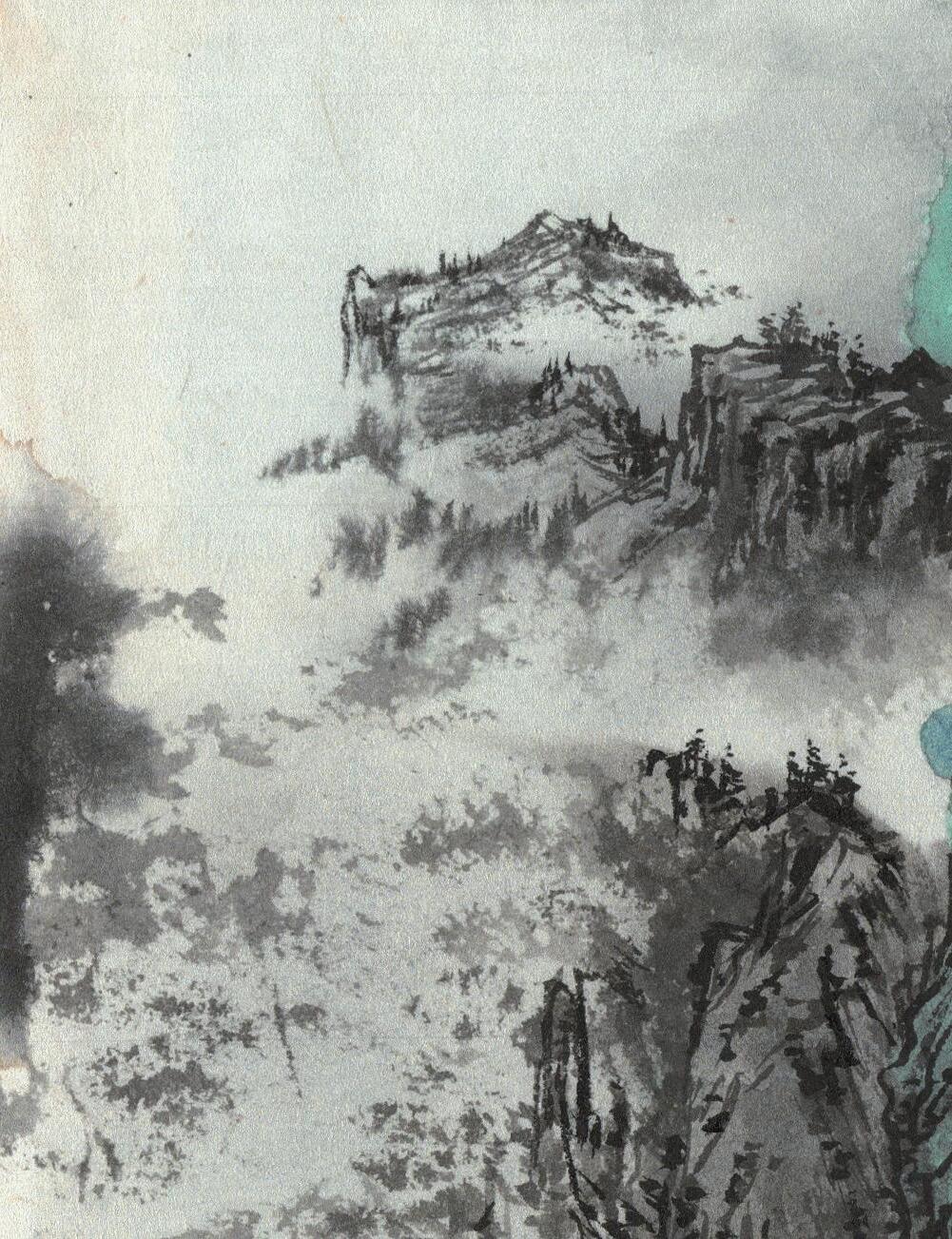
Notasull’autore:
GIACOMO BRUNI, dottore di ricerca in Teoria dell'arte e della letteratura all'Università Jinan di Guangzhou, ha praticato pittura cinese presso l'Accademia Nazionale di Belli Arti di Hangzhou. Ha esposto le sue opere in varie città della Cina e d'Europa. All'inizio del 2020 ha fondato Shanshui projects, con l'intento di promuovere la pittura cinese contemporaneaattraversounarivistadisettore,mostreeworkshops.