
International Relations & Politics in the EUPeace, Conflicts & Human Rights
The European Union (EU) was created in the wake of the Second World War, largely to prevent further mass conflict by focusing on economic and political integration.
Beginning in 1951 with six members, the EU has grown to a current membership of 27 nations, almost half a billion citizens, covering most of the European continent. It is the first time in history that so many nations have been willing to sacrifice certain aspects of national sovereignty in order to achieve peace and stability, but also economic and social justice. The ‘European experiment’ is now an established reality. However, the future of the EU is far from certain. With Brexit, immigration challenges and the rise of the political far-right, it is poised between protecting national interests and further integration.
The EU is a symbol of pan-European cooperation and diplomacy after centuries of ceaseless upheaval. Even amid ‘Euro-scepticism’ and the growing divisions created by economic austerity, the EU continues to inspire citizens all over the world.
The development of a united Europe
During the programme, students will analyse the historical, political and economic foundations of the rise of the European Union, from its post-World War II origins to the historic enlargements of 2004, 2007 and 2013. Students will also examine the present tensions within the EU and their direct relationship to the various aspects of European integration. The course focuses on the protection of human rights within the EU, especially in the context of European integration, the UN framework for the protection of fundamental freedoms and the European Convention on Human Rights. By the end of the programme, students will have received comprehensive coverage of the key political, legal and economic policy areas of the EU. This programme is ideal for students interested in exploring EU international relations, history and politics, economic and legal issues, and the global challenges and opportunities that it faces today.
Inside the ‘European experiment’
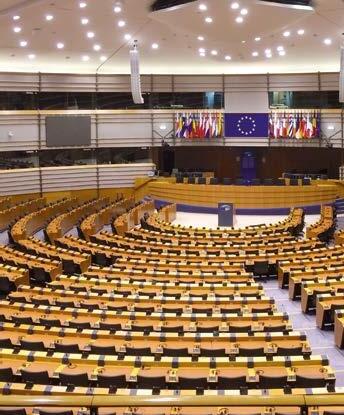
True to the tradition of applied learning, the International Relations and Politics in the EU programme is not confined to the classroom. Field trips with visits to EU institutions and relevant international organisations in Brussels and The Hague allow students to deepen their understanding of the EU and its political and legal processes.
They will also have the opportunity to wander through the quaint streets of Maastricht and to immerse themselves in European culture and tradition during their time off.
An intensive study abroad experience
Maastricht is the ‘birthplace’ of the European Union and a symbol of pan-European identity. Maastricht University is an internationally renowned research university focused on internationalism and themes of European integration. With dozens of academic programmes in English, students cannot pick a more beautiful city in which to get to know the EU.


“The beauty of Maastricht, the new friends that you still talk to four months after, the snow - the things that make you wish three weeks didn’t go by so quickly. It was the most memorable experience and I would do it again and again if I had the chance!”
Khang Nguyen , The University of Melbourne
Academics
Credits
Maastricht University uses the European-wide ECTS (European Credit Transfer System) to measure academic progress. The total workload for this January programme is 36 class hours, during which time students earn 7.5 ECTS credits. How ECTS credits transfer back depends on their home university or college.
Programme structure
The programme is an intensive three-week course and an immersive learning experience.
Students are required to:
• Do a set of readings prior to coming to the Netherlands;
• Submit a final paper, which is due three weeks after the end of the programme.
The following is included in the programme:
• An introduction to get to know the university and the city of Maastricht. This introduction includes a tour of Maastricht and the surrounding area;
• Two field trips, which include visits to EU institutions and relevant international organisations that complement and contextualise what is learned in the classroom.
Practical information
Programme dates January 2026 Saturday 3 - Saturday 24 January 2026

Tuition
The tuition fee for January 2026 is € 2,275* and includes:
• Registration at Maastricht University;
• Course materials;
• Introduction;
• Field trips;
• CES services (such as support from a wellbeing officer and 24/7 emergency assistance).
Housing
Most CES students stay at the International Student Guesthouse of Maastricht University, where they have the following options:
• Single or double room (shared bathroom facilities);
• Private kitchen or communal cooking facilities.
Housing costs for January 2026 range from € 668 to € 904*.
Visa & residence permit
• A temporary residence permit is not needed for stays shorter than 90 days;
• Some students will need a visa (MVV) to enter the Netherlands (costs are not included in the tuition fee). Detailed information can be found on embassy websites.
Insurance
Students need sufficient health care, liability and travel insurance for the duration of their stay. Most students are covered through their home university. Please refer to the CES website for more information.
Application requirements
Applicants are required to:
• Have a minimum GPA of 3.0;
• Be in good academic standing.
CES programmes are competitive. Therefore, early application is recommended. More information about the programme and the online application form can be found on the CES website.
Application deadline January 2026 Wednesday 15 October 2025
* For detailed and up-to-date tuition and housing fees, please check our website. Although this brochure was made with the utmost care, no rights can be derived from it.
