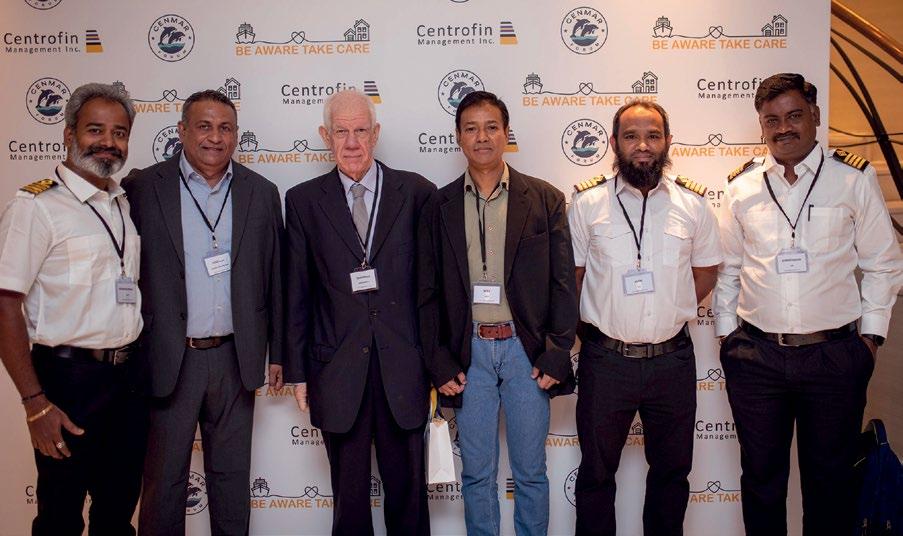
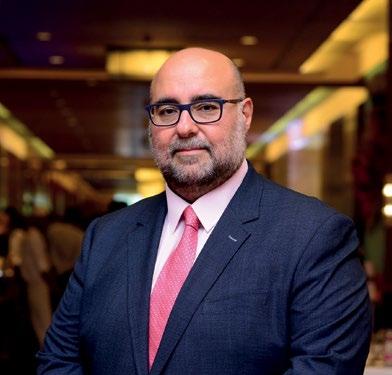
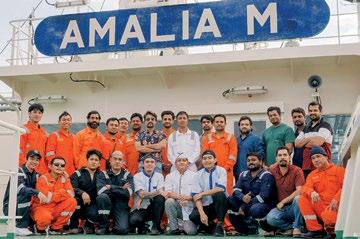
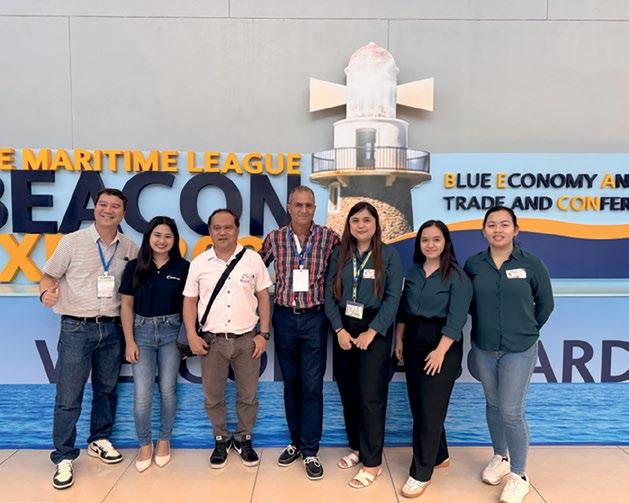
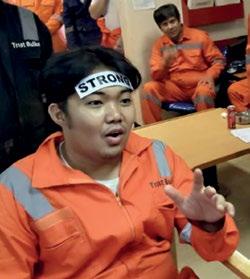
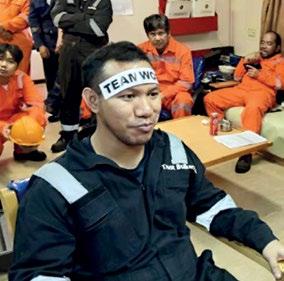
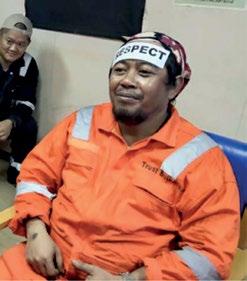
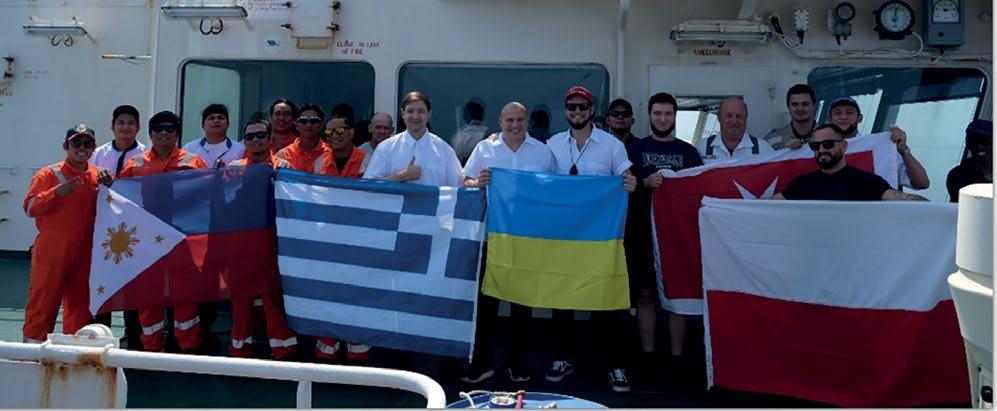
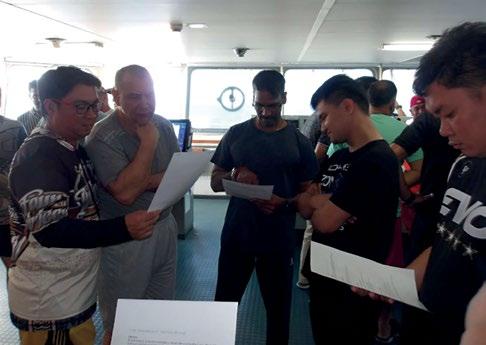
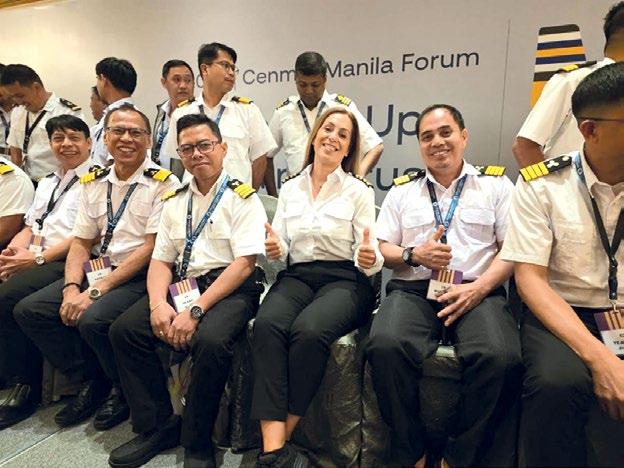
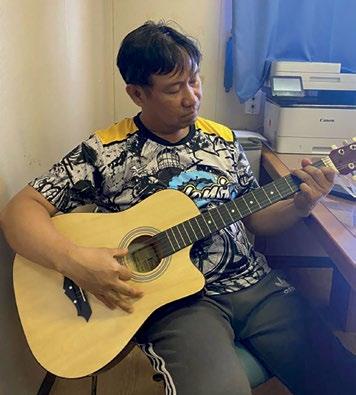
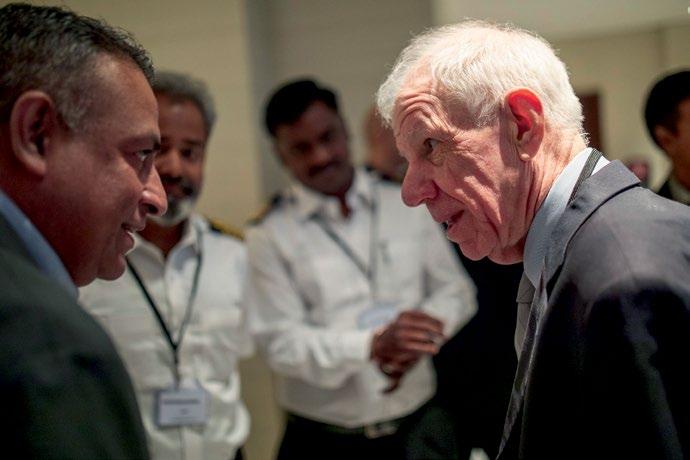
I would like to start with the topic of Company Forums. More specifically, I would like to recount my personal experience of the Athens Forum, covered in the Company News section by Oleksandr Stryzhov, where I had the good fortune of making several new acquaintances. During registration, I gravitated towards a group of four of our Seafarers and a manager at CENMAR India with whom I am proudly pictured below.
This group with a wealth of maritime industry knowledge made me, a mere neophyte, feel welcome to join them at their table in the Forum setting, and we learned from each other during the audience participation presentations in the two morning sessions. To my mind, our interaction was an example of how approachability and respect underpin the Forum’s theme of ‘’Speaking Up, Building Trust’’.
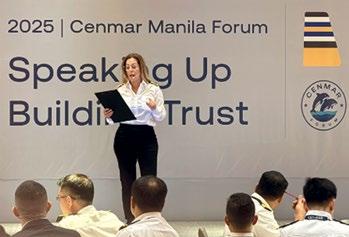
Even with my very limited experience of attending Forums, I noticed how they have evolved not only in terms of presentation standards and innovative, interactive learning activities but also in relation to the heightened sense of unity among the attendees. I am not alone in this assessment as my observation was reiterated by Elli Moretti, a seasoned Forum organiser and presenter, in her brief resume of the Manila Forum in the Safety First section.
The theme of unity is taken up by Chara Markatzinou in the Mental Well-Being piece, in which one of the Company’s best ever Campaigns is explained. The participation rate and visual record
of our Seafarers involved in the specified activities bear testament to our Seafarers’ awareness, acknowledgement, appreciation and acceptance of the importance of this initiative.
Elsewhere, there is coverage of a recent First Aid course by new contributor Athina Reppa, and Georgina Verropoulou as well as vital information and advice about strokes in the Physical Health section. Additionally, the Technical Department peers into the potential future of nuclear reactors in the maritime industry in an article by Christos Chatzigiaksoglou.
As regards the Crew Department, George Magioras weighs in with a commentary on the Company’s inaugural participation in the EXPO MARINO 2025 event held in Manila, which is another clear indicator of the Company’s continued evolution. Last, but by no means least, in the Moving Forward, Looking Back submission, there is an insightful interview with Ms. Maria Mothoniou about Risk Assessment and Management of Change. My thanks go to all those who have contributed to this issue of Wavelength.
I sincerely hope you enjoy this issue of Wavelength. If you have any comments, suggestions or questions regarding the content, please do not hesitate to contact me at contact@wavelength.gr
Best wishes, Nick Seaman
. In this issue
In stellar company with (left to right): Captain Mohangandhi, Mr. Rajesh Nair (Cenmar India Manager), Captain Kole, Chief Engineer Alam and Chief Engineer Damodaran
Message from the Management
December is already here and January 2026 is just around the corner!
The New Year always evokes mixed emotions. Depending on each person’s mindset it can mean joy and optimism, skepticism and restraint, or even sadness and loneliness. Usually it is a mixture of all or some of these.
Scrolling through social media I’ve seen quite a few Year-end/ Wrapped videos. Technology is everywhere so we cannot even make a recap of the year without it (I’m tempted to use it too). It’s amazing how technology ,including the ever popular but fearsome AI, is becoming a helpful companion for everyone even on your journeys: watching out for storms, helping with navigation, managing big data, and making things a little easier when you’re far from home. Technology is there to support you, so that you can focus on what really matters: looking out for each other and staying safe.
of your shore colleagues, and the care between all of us. That connection is what helps everyone return home safe to the people and families waiting ashore, whose love and patience are a powerful part of this journey, too.
From my side I remain humbled by your resilience, thankful for your loyalty, and most of all grateful for your dedication to this way of life because seafaring is more than a profession. May this year bring you smooth sailing, good health and moments of joy.Here’s to fair winds, safe journeys, and coming home to warm embraces and smiles every time.
Sending heartfelt wishes to all our Seafarers and our Shore Staff for a happy and safe 2026!
Always remember that you are truly appreciated, beyond words!
As we all set sail into the New Year, both literally and metaphorically, I hope you always feel the strength of your shipmates, the support
Anthony Lambros
First Aid Training for Office Employees – November 2025
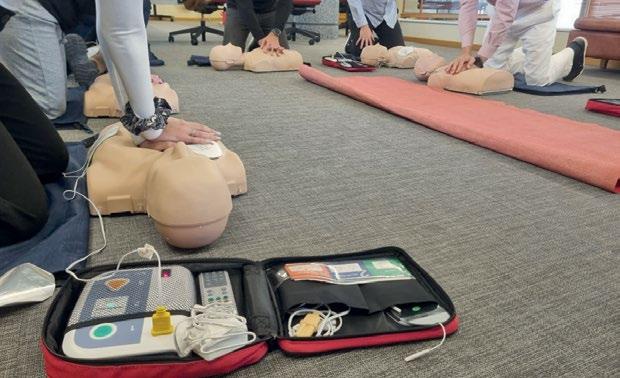
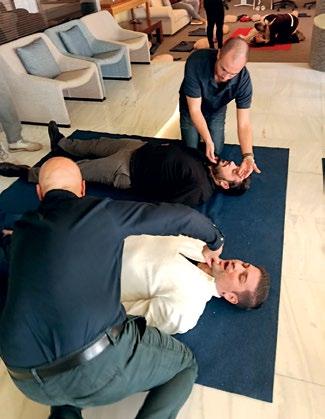
From Monday 24th to Friday 28th November 2025, the Office Security Team (OST) successfully organised a First Aid Seminar. A total of 78 colleagues out of 150 office employees attended, resulting in an impressive participation rate of 52%.
About the Office Security Team
The OST consists of four members: George Malles, Dimitris Fakiris, Georgina Verropoulou and Athina Reppa, who are responsible for ensuring safety and emergency preparedness at Head Office. The team continuously works towards enhancing awareness around evacuation procedures, emergency response protocols and overall safety culture.
By Athina Reppa & Georgina Verropoulou
In addition, the OST manages the Company’s Response Team. The Response Team currently consists of 34 designated members from various floors and departments and is responsible for coordinating evacuations and assisting colleagues during emergencies. Our aim is to organize regular training activities, promote safety knowledge across all departments and minimize the risk of injuries in the workplace.
2025 First Aid Seminar
This year’s First Aid Seminar marked a pivotal step towards strengthening our Company’s safety culture and ensuring that every employee feels confident when facing an unfortunate situation. Over the course of each eight-hour training session, participants engaged in practical, scenario-based exercises and gained essential life-saving skills which will potentially make
a difference both in the workplace and in everyday life.
From recognizing the early signs of a heart attack to performing CPR and using an Automated External Defibrillator (AED), these seminars reflect our Company’s ongoing commitment to a safe, prepared and resilient workplace.
What We Learned
Throughout the sessions, employees strengthened their ability to:
1. Recognize emergency situations quickly and respond safely.
2. Assess a person’s level of consciousness and breathing.
. Company News
3. Perform CPR correctly and confidently and apply the Chain of Survival.
4. Operate an Automated External Defibrillator (AED), located in the Reception area and on the 4th floor.
5. Manage adult choking incidents.
6. Place an unconscious but breathing person in the recovery position
7. Provide basic First Aid for bleeding, burns, trauma, fainting, seizures and diabetic emergencies.
8. Support injured individuals until professional help arrives.
9. Better understand the building’s emergency procedures.
10. Coordinate calmly with the Response Team during evacuations.
CENMAR Forum 2025
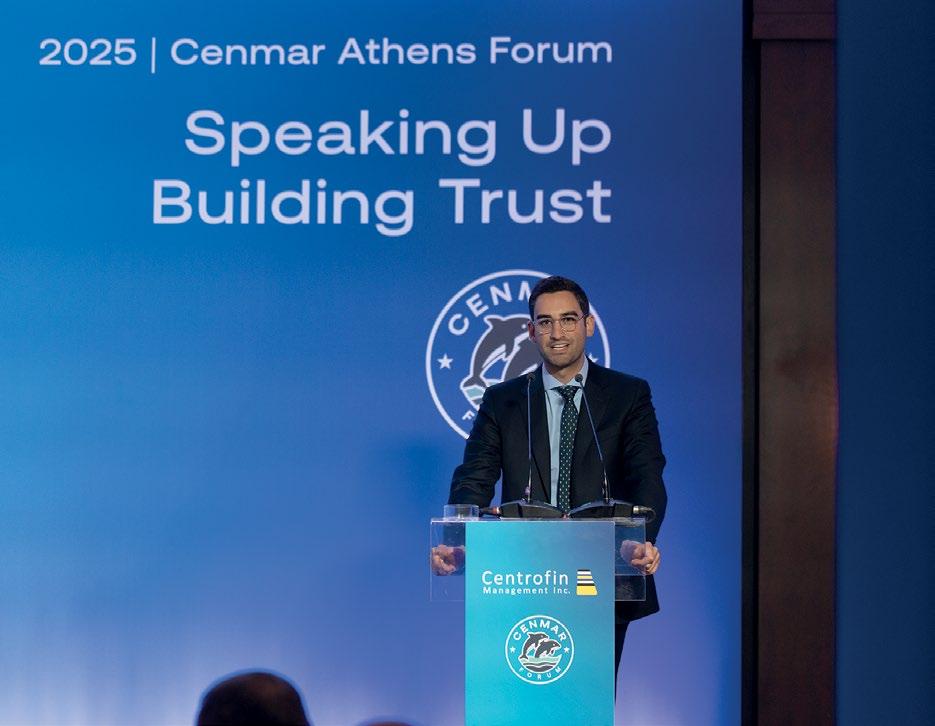
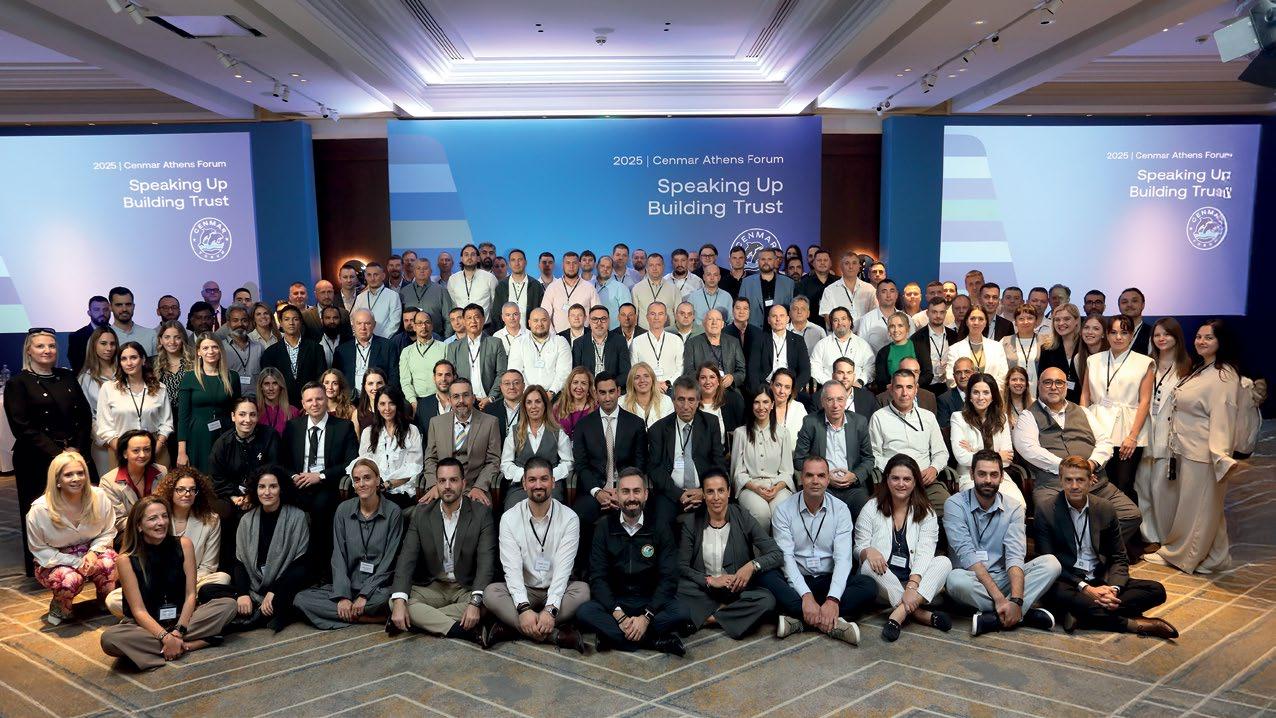
The core spirit of this year's Forum was guided by the principle: "Speaking up, Building trust." This imperative drove the extensive discussions at the CENMAR Forum 2025 in Athens, held successfully on October 9th and 10th.
It was particularly encouraging to witness such a strong turnout of Ukrainian, Indian and Philippino colleagues and friends, fostering professional fellowship and unity in one place.
The two-day event featured a comprehensive agenda, delving into a broad spectrum of subjects critical to modern ship management and safety. The topics covered many essential areas, including:
• Regulatory Compliance: PSC Inspections: The Role of the Flag State and Vetting Evolution.
• Operational Management: SIMOPS Coordination and Bunkering Revisited.
• Strategic Planning: The Company’s Expansion & Modernization plans and the transition to Q-Manual: Our Digital SMS.
• Seafarer Welfare & Readiness: Emergency Preparedness & Crisis Decision Making and Mental Readiness in HighStake Operations.
• Commercial & Future Focus: Beyond the Contract and the critical topics of Sustainability and ESG.
11. Act with confidence and reduce panic when dealing with real emergency situations.
Looking ahead
Further training sessions are being planned, including Firefighting and Evacuation awareness sessions. These aim to further strengthen our Company-wide emergency readiness and overall safety culture.
By Oleksandr Stryzhov
The CENMAR Forum 2025 offered far more than just technical updates; it provided a vital space for professional and cultural unity, underscoring the belief that trust and open communication are the true anchors of a resilient and safe maritime future.
The event concluded with a special ceremony recognizing the loyalty of officers who have been with the Company for a long time.
Our sincere gratitude goes out to all who organized this event at such a high level, including the excellent speakers, the dedicated CENMAR Ukraine Team, and all those who participated in the event.
Assessing an individual’s physical condition
Yannis Procopiou delivering the Opening Address
For those who missed it, the entire Forum was streamed live and remains available on our YouTube Channel. We are one team, no matter whether we are on board or ashore.
I wish you all calm seas, safe voyages, and I will be happy to see you next time!
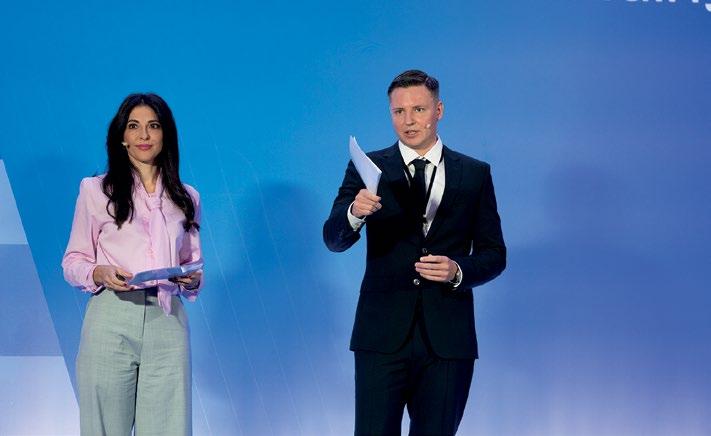
Hosts Margarita Tsaousi and Oleksandr Stryzhov
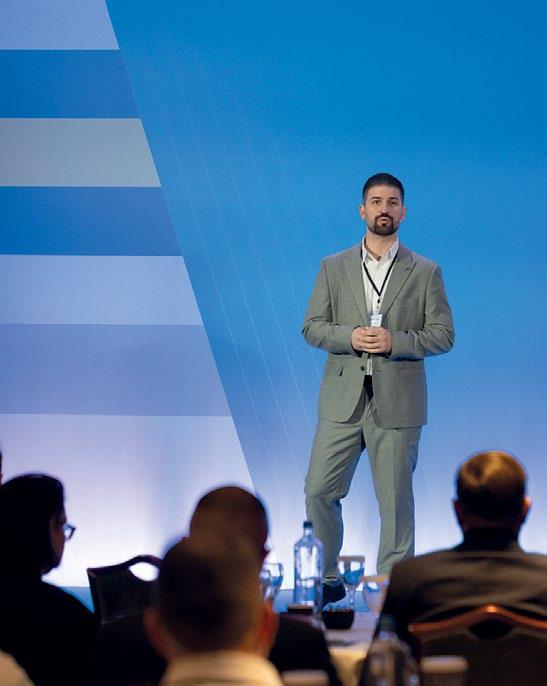
Ioannis Pantos outlining the Company’s expansion and modernization plans
Dimitris Fakiris presenting “Failing Safely vs Failing Lucky”
Molten Salt Reactors for the Nuclear Powered Ships of the Future
Several navies around the world operate scaled-down versions of nuclear power stations aboard ships and submarines to provide propulsion and ancillary power. These naval reactors are typically cooled by high-pressure water and many (including those of the U.S. Navy) require highly enriched uranium fuel. While this technology has proven suitable for military applications, it has little to no direct application in commercial civilian shipping, where cost, safety, and regulatory concerns are very different.
The shipping industry, however, is under growing pressure to decarbonize. The International Maritime Organization’s (IMO) Carbon Intensity Indicator (CII) and Energy Efficiency Existing Ship Index (EEXI) have already come into force, and the industry faces a binding target of net-zero greenhouse gas emissions by 2050. Against this backdrop, new developments in nuclear technology are attracting renewed attention.
One of the most promising concepts is the Molten Salt Reactor (MSR), an idea first explored in the 1950s (Aircraft Reactor Experiment) and 1960s (Molten-Salt Reactor Experiment). MSRs avoid the need for high-pressure water cooling, offer greater longterm safety, and can be designed for mass production, which may reduce capital costs. These attributes make them a compelling candidate for zero-emission deep-sea propulsion.
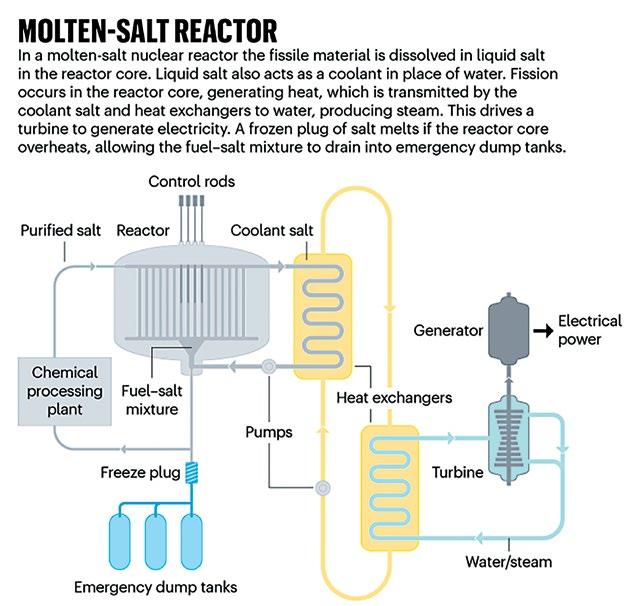
A molten salt reactor (MSR) is a class of nuclear fission (atoms are split apart releasing energy) reactor in which the primary nuclear reactor coolant and/or the fuel (Uranium, Thorium, Lithium) is a molten salt mixture.
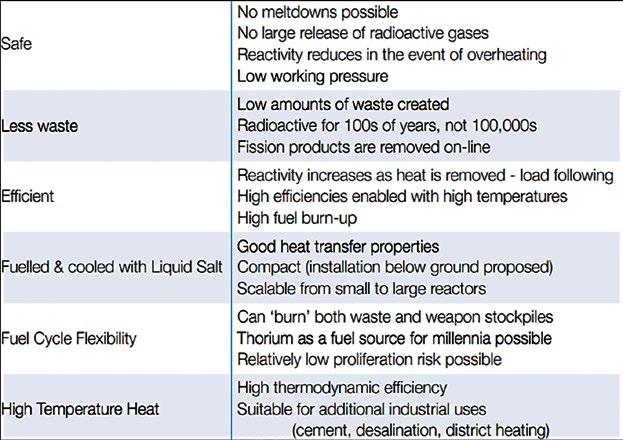
MSRs are considered safer than conventional reactors (PWR: pressure water reactors – Figure 2) mainly because:
a. they operate with fuel already in a molten state, and in event of an emergency, the fuel mixture is designed to
drain from the core to a containment vessel where it will solidify in fuel dump drain tanks. This prevents the uncontrolled nuclear meltdown and associated hydrogen explosions (as in the Fukushima nuclear disaster) that are at risk in conventional (solid-fuel) reactors.
By Christos Chatzigiaksoglou
b. they operate at or close to atmospheric pressure, rather than the 75-150 times atmospheric pressure of a typical light-water reactor (LWR), hence reducing the need for large, expensive reactor pressure vessels used in LWRs.
For maritime propulsion, the MSR technology is comparable to a battery that holds sufficient charge to provide up to 25 years of propulsion at variable power settings. The carbon-free propulsion system saves many years of expense on fuel oil for transoceanic propulsion, providing the maritime industry with an economic and environmental case.
Nuclear propulsion in merchant shipping, because nuclear fuel is relatively cheap, could :
• permit a container ship to operate at 35 knots or a tanker at 21 knots in contrast to the lower conventional speeds.
• carry the same cargo with fewer vessels on a specific route.
• maintain full fleet flexibility for growing trade demand.
• new ship designs can be considered due to the small mass and volume of fuel consumed. This allows either an increase in cargo deadweight capacity or greater flexibility in hull design to meet other constraints that would normally be difficult to relax. If the first option is chosen, the propeller power density could become too high for a single-screw propulsion system, necessitating a twin- or triple-screw arrangement, which could also provide benefits in steering control or propulsion redundancy.
Nuclear ship propulsion offers the advantage of producing no CO2, NOx, SOx, volatile organic compounds, or particulate
Figure 1: Molten salt reactor principle
Figure 2: MSR benefits in comparison to a traditional PWR (pressure water reactor)
emissions during operation. Refueling would be managed through long-term contracts with ready-made elements rather than the spot market. While there is considerable experience with naval PWRs, applying nuclear power to merchant ships would require a complete shift in design, construction, and operation, driven by rigorous safety cases and systems engineering. Challenges remain, including international regulation, crew training and retention, security, public perception, waste management, high capital costs, and the establishment of supporting infrastructure. Insurance is also a major obstacle, as unlike naval ships, governments are unlikely to underwrite commercial nuclear vessels.
Other disadvantages to consider include:
1. Radioactive waste: MSRs still produce waste that must be safely managed over the long term.
2. Material degradation: Reactor components face constant exposure to hot, corrosive salts and radiation, which can shorten their service life.
3. Ship integration: Isolating the reactor’s hightemperature systems from the ship’s structure and other compartments is a major design challenge.
4. Decay heat removal: When fuel salt is drained into tanks, it continues producing heat and requires highly reliable cooling systems.
5. Core graphite limits: Graphite in the reactor core can warp or weaken under prolonged neutron exposure, affecting performance.
6. Shielding complexity: Because the fuel is dispersed within the salt, radiation shielding becomes more complicated compared to solid-fuel reactors.
Developments :
• South Korea is actively pursuing the development of molten salt reactors, particularly for maritime applications. Collaborations between the Korea Atomic Energy Research Institute and Samsung Heavy Industries aim to create molten salt reactors for marine propulsion and floating nuclear power plants, targeting commercial operation by the mid-2030s. These reactors are designed to operate with a single refueling cycle over the vessel's lifetime, supporting stringent maritime carbon emission regulations. Additionally, the Ulsan National Institute of Science and Technology is leading a consortium to develop a Generation IV 20-megawatt fast-spectrum small modular reactor with a 40-year fuel life, also intended for marine propulsion and floating nuclear plants, with commercial deployment targeted around 2035.
• USA: Core Power, TerraPower, Southern Company, and Orano are developing modular molten salt reactors for maritime propulsion and green fuel. Prototype demonstrators are now expected in the late 2020s to early 2030s. Pilot testing is underway, including integrated
Farewell Vasyl
salt tests and the Hermes molten salt-cooled reactor at Oak Ridge, supported by DOE funding and streamlined regulations. The U.S. government is also supporting these initiatives through funding programs and regulatory streamlining.
Figure 3: Molten Salt Reactors by Core Power
• Canada : Terrestrial Energy (Canada) is advancing its Integral Molten Salt Reactor (IMSR) design through the Canadian Nuclear Safety Commission’s pre-licensing review. The company aims for deployment in the early 2030s. Moltex Energy, also based in Canada, continues research into waste recycling and molten salt fuel cycles, though progress has been slower than initially expected due to funding and regulatory challenges.
• China achieved criticality of its first thorium-fueled molten salt reactor in 2023, successfully refueled it without shutdown in 2024, and plans larger prototype reactors by the late 2020s, cementing its lead in thorium MSR technology.
• Europe : The Netherlands’ Thorizon One and France’s XAMR (Naarea) aim to demonstrate waste-burning and thoriumfueled designs by the 2030s. Denmark’s Copenhagen Atomics, in collaboration with Switzerland’s Paul Scherrer Institute, plans thorium MSR experiments in 2026, while the UK’s MoltexFLEX focuses on small modular molten salt reactors. Collectively, these efforts, supported by EU initiatives like the ENDURANCE project, position Europe as a key player in next generation nuclear energy.
In 2024, Maersk, in partnership with Lloyd’s Register and Core Power, launched a feasibility study into the use of fourth-generation nuclear reactors, including potentially MSRs, for commercial container shipping in Europe. The study covers regulatory and safety frameworks and positions nuclear propulsion as a possible decarbonization pathway within 10–15 years.
Molten salt reactors could become a viable path to zero-emission shipping, but their future depends on overcoming regulatory, financial, and technical hurdles. For now, the industry’s role is to monitor progress closely, preparing for a potential medium to long term transition.
We say goodbye to our dear colleague, Fitter Vasyl Levchenko, who passed away from an as yet unspecified health issue on board M/V Casta Diva on 1st November 2025. Vasyl had been a valued member of our Company since 2015, known for his steady professionalism, his kindness, and the calm strength he brought to every task. His unexpected loss has deeply affected all who sailed with him and all of us ashore. We extend our heartfelt condolences to his family, friends, and crewmates. Vasyl will be remembered with respect and gratitude. May he rest in peace.
Moving Forward, Looking Back
In today’s rapidly evolving maritime environment, the ability to anticipate, assess, and effectively manage risk has never been more critical. As global shipping routes expand, regulatory frameworks tighten, and vessel technologies become increasingly complex, maritime stakeholders—from ship owners and officers to port authorities and classification societies—must navigate a landscape where operational challenges can shift without warning. Risk Assessment (RA) and Management of Change (MoC) have therefore emerged as essential pillars of safe and efficient maritime operations. By systematically identifying hazards, evaluating their potential impact, and implementing structured responses to operational changes, the industry can reduce incidents, strengthen resilience, and foster a culture of proactive safety. This interview explores how modern risk assessment practices and robust MoC frameworks are shaping decision-making across the maritime sector, ensuring that vessels, crews, and cargo move across the oceans with greater confidence and control. Have you ever wondered how Risk Assessment and Management of Change has altered over the years?
Let’s explore how different Risk Assessment and Management of Change are today with the assistance of Ms. Maria Mothoniou (MAM), SQE Officer.
VEK: How were RA and MoC handled in the industry in previous years?
MAM: In the past, both Risk Assessment and Management of Change were considered good practices but were not required as standard procedures in the shipping industry. Gradually, safety standards became stricter. With the introduction of IMO, SOLAS, and later the ISM Code, RA became a mandatory part of daily operations. MoC followed the same path: it began as an optional safety tool but slowly became a required process within the maritime SMS. Today, both RA and MoC are essential tools that every company must use to identify hazards, manage risks, and ensure safe operations.
VEK: What were the main challenges with regard to the Company’s initial approach to RA and MoC?
MAM: As the industry became more demanding, the main priority was to pass audits and inspections with clear results from 1998 (ISM Implementation) -2021. Although the RA and MoC processes were functioning and provided the necessary documentation, it soon became clear that the Company needed a deeper and more practical use of these tools. The objective was for all Company personnel and all crew on board to understand and use RA and MOC not just for compliance, but as real safety tools to minimize hazards ashore and on board.
One of the main challenges was that most crew members and employees initially viewed RA and MOC as bureaucratic procedures which increased the workload. In reality, when these processes are followed properly, they identify potential hazards in advance and prevent exposure to unsafe conditions or issues with authorities. The measures defined through RA, and the actions
defined through MoC are the steps each person must take to protect themselves, the operation, and the Company’s property from unexpected risks.
By Vaia Kyrodimou
VEK: The Company decided to hire a dedicated RA/MoC Coordinator in 2021. What has been changed since then?
MAM: As the industry introduced stricter standards and more regulations from 2020 onwards, including TMSA requirements, SIRE 2.0 expectations, and Rightship KPIs, the need for a more structured RA and MOC system became essential. At the same time, the company’s fleet was expanding, creating the need of recruiting more shore personnel. These factors made it clear that RA and MoC could be handled by the SQE Department. So, a dedicated RA & MoC Coordinator was hired in 2021 to meet both current and upcoming regulatory demands.
With the Coordinator, RA and MoC became structured responsibilities. The Company’s procedures improved and a standardized tracking system was introduced. Detailed statistics for vessel reporting were also developed, providing monitoring, and clearer trends. Moreover, Departments at the office began organizing themselves more effectively:
• For Risk Assessments, each department actively identifies hazards and determines suitable control measures.
• For Management of Change, each department initiates the process and ensures proper follow-up.
Training and awareness also increased. During every familiarization of the four top officers, a dedicated RA/MOC presentation is delivered. A full RA & MoC training programme has also been launched on the Company’s training platform. These improvements have led to a significant increase in vessel RA reporting:
• Annual CMSAR 2021: 6,676
• Annual CMSAR 2024: 15,374
Additionally, the Company’s Generic RA List has expanded to include more operational activities. TMSA, SIRE 2.0 and Rightship KPIs for RA/MoC are now checked regularly by the SQE Department to stay aligned with industry expectations and to be prepared for new requirements.
VEK: What is the vision for the future of RA and MoC in the Company?
MAM: The Company aims to further develop RA and MoC to meet upcoming requirements from SIRE 2.0 DBMS, TMSA, and RISQ 3.2, and to ensure full compliance. A key part of the vision is to make RA and MOC more automated so that the process is easier to follow, more controlled, and becomes a natural part of daily work for both office personnel and crew. At the same time, the Company seeks to enhance the involvement of vessels in the MoC process, ensuring that crew personnel recognize and initiate MoCs whenever changes (equipment, structural, procedural etc.) occur.
As the fleet continues to expand, the Company needs stronger systems that can support growth, while maintaining high safety standards. The goal is for RA and MoC to be used consistently by everyone.
Marine Operations
Reporting Matters – On Board and Ashore
In the shipping industry, reporting plays a vital role both on board our vessels and ashore. It provides the essential link between ship and shore, supporting safety management, regulatory compliance, operational reliability, and crew safety, security and welfare. Reports related with incidents, near misses, operational performance, and working conditions allow the Company to understand shipboard realities and to take informed, effective and timely actions.
By Pinelopi Orianou
Accurate and timely reporting is an integral part of everyday life on board and ashore. It should not be viewed as a purely administrative task, but as a practical safety measure that protects personnel, the vessel, and the environment. No incident should be considered too minor to report, as even small events or unsafe conditions may escalate if they are not identified and addressed as early as possible. Prompt reporting enables the Company to provide guidance and support, take preventive actions if required, protect interests and maintain appropriate records and evidence in accordance with safety and compliance requirements. It also reflects the high standard of professionalism expected from all crew members.
On board, reporting plays a critical role in accident prevention and risk management. Reports of near misses, unsafe acts, defective equipment, or hazardous conditions help identify risks before they result in incidents such as injury, damages, or pollution. Similarly, reports concerning equipment stoppages, breakdowns, or failures of critical systems—whether or not they immediately affect the voyage—allow relevant operational and safety issues to be addressed properly and proactively.
Reporting is not limited to technical or operational matters. Incidents involving personal confrontations, inappropriate behaviour, bullying, harassment or other type of conduct that may affect crew welfare must also be reported. Such reporting supports a respectful and professional working environment and ensures that concerns are handled promptly, fairly and in line with applicable Company procedures.
Interactions with third parties represent another important area where effective reporting is essential. This includes interaction with pilots, surveyors, inspectors, terminal representatives, Port Authorities, agents, stevedores, contractors, and other visitors on board. Any unsafe acts, conflicts, property damage,
or requests that contradict Company instructions and policies, applicable local or international regulations, or voyage orders must be reported promptly to Head Office to ensure that appropriate action can be taken.
Ashore, reports received from vessels provide critical visibility across the fleet. By reviewing and analyzing this information, shore-based teams can identify trends, recurring issues, and emerging risks. This supports continuous improvement in procedures, training, planning, and resource allocation. Feedback from our Seafarers is particularly valuable in ensuring that Company policies and instructions remain practical, effective, and aligned with real operating conditions and requirements.
Open and transparent reporting is also the foundation of a strong safety culture. The Company operates in accordance with a noblame approach, where the objective of reporting is to learn from experience, prevent recurrence, and improve safety—not to assign fault. When crew members are confident that reports will be used constructively, trust is strengthened and safety awareness is enhanced.
Environmental protection and regulatory compliance depend equally on accurate reporting. Information related to fuel consumption, emissions, operational challenges, and environmental incidents supports compliance with international regulations and company procedures, while also contributing to more efficient and sustainable operations.
Ultimately, effective reporting is a shared responsibility between ship and shore. It relies on clear communication, consistency, and mutual trust. Senior officers are responsible for ensuring that reporting requirements are clearly communicated and consistently applied on board, while every crew member has a duty to report incidents, near misses, and concerns without delay.
Reporting connects the experience and knowledge of our Seafarers with shorebased management. It turns challenges and risks into learning opportunities and ensures that appropriate action is taken. Therefore, every report matters. By keeping the Company fully informed at all times, our Seafarers play a direct role in protecting lives, vessels, and the environment, while supporting safe, compliant, and professional operations across the fleet.
Mental Well-Being
Stronger Together: Building a Culture of Respect at Sea
By Chara Markatzinou
This quarter, our fleet completed the “Stronger Together: A Culture of Respect at Sea” Health & Safety Campaign — an initiative inspired by the results of our 2nd Happiness, Well-Being & Mental Health Survey. With 575 crew members participating, the survey showed real progress in teamwork, emotional support, and social atmosphere on board. It also reminded us of the continued need to strengthen ethical conduct, fair treatment, and inclusive behaviour across all ranks and nationalities.
From August to October 2025, every vessel worked closely with the office to bring this campaign to life. Through H&S meetings, guided discussions, and a series of interactive activities, crews explored what respect, diversity, equity, and inclusion truly mean in daily shipboard practice.
What Happened On Board
Crews engaged in:
• Respect Moments – recognising acts of fairness and positive behaviour
• Inclusion Moments – short cultural presentations celebrating traditions
• Perspective Swaps (“Walk in My Shoes”) – shadowing colleagues from other departments
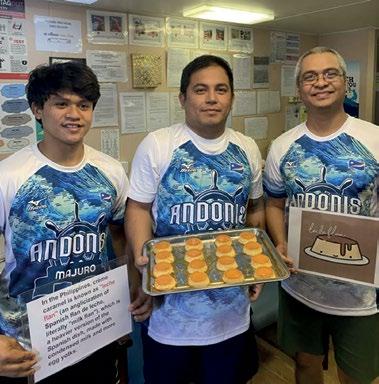
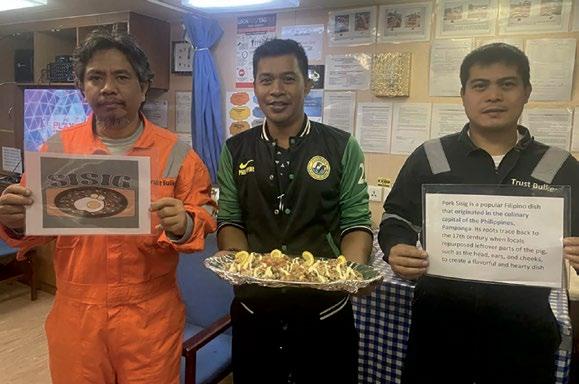
• Cultural Curiosity Tables – sharing customs, food, and stories
• “Same Job, Different Needs” discussions – understanding equity and varying abilities
Through this structured collaboration between vessels and the office, teams strengthened communication and brought DEI principles into everyday work.
What Crews Told Us
Feedback from vessels was overwhelmingly positive. Across the campaign, seafarers reported:
• A deeper appreciation of colleagues’ roles, challenges, and backgrounds
• More open conversations during H&S meetings, with active listening and perspective-taking
• Greater awareness of unconscious biases and the value of respectful communication
• Improved teamwork and fewer small misunderstandings in multicultural settings
• Stronger empathy, patience, and willingness to support each other
• Recognition that respect directly contributes to safety, wellbeing, and morale
One vessel noted that even short cross-department swaps helped the crew “understand the daily physical and mental strains faced by colleagues”, while another highlighted that learning about personal hobbies “built confidence, trust, and meaningful connection”.
Empathy Support
Respect Awareness Morale
Culture Unity Teamwork Inclusion
Needs Stronger Appreciation
Well-Being Patience
Understanding
Why It Matters
This fleetwide effort shows how powerful collaboration between vessels and the office can be. Through shared activities, open dialogue, and continuous support, crews saw firsthand that: Respect builds safety.
Inclusion builds teamwork.
Understanding builds stronger ships.
Thank you to all vessels for your commitment, your photos, and your reflections. I would also like to personally thank you for the time and effort you dedicated to engaging in these activities despite your demanding workload, and for your continuous support. Together, we continue to shape a fleet culture where every person feels valued, heard, and respected — every day, on every voyage.
Please go to the “Voices from the Fleet” section beginning on page 13 to view amazing photos sent by the vessels reflecting the high spirit during the Campaign.
We're happy to share that M/T Amalia M. passed the recent SIRE 2.0 inspection on 30/08/2025 with zero deficiencies. This exceptional performance not only reflects the professionalism, teamwork, and strong safety culture demonstrated by her Officers and Crew at the time of the inspection but also by the teams who served on board before them. It’s a prime example of consistent teamwork across crew rotations—and we trust future crews will continue to uphold the same high standards. Well done, Amalia M. crew—and thank you to everyone for your continued dedication!
In the third quarter of 2025, there were 49 promotions across the Company fleet. The list of those ratings and officers who gained a promotion together with their vessels and promotion details in chronological/alphabetical order appears in the table below.
01.07.25 GERON John Patrick MIKELA P. 3/O to 2/O
01.07.25 RAMOS Danilo NIRIIS WPR to OLR
01.07.25 TIANGAO Ervinwynn SMYRNA 3/O to 2/O
03.07.25 FLORIDA Reymart NAMRATA C/TR to AC
03.07.25 ROQUERO Jomari NAMRATA OS to ASD
04.07.25 MACAJETO Romeo NAMRATA ASD to BSN
05.07.25 DUENAS Robert DINO E/TR to WPR
05.07.25 MALTSEV Sergii SERENO 2/E to C/E
18.07.25 QUIROZ Benjamin Jr. GUARDIAN WPR to OLR
21.07.25 HERNANDEZ Juancho MERBABU ASD to BSN
21.07.25 MACALALAD Emil NILOS WPR to ASE
22.07.25 RAVISHANKER Vijay Shanker MERAPI 3/M to 2/O
22.07.25 SINGH Adarsh AGIOS NIKOLAOS TME to 4/E
22.07.25 VINOYA Ben George NINEMIA WPR to ASE
29.07.25 PANDEY Chandan Kumar CAPTAIN A. STELLATOS TME to 4/E
01.08.25 BOBITA Ernest CASTA DIVA WPR to OLR
01.08.25 ESTREMERA Cesar Jr. APAGEON 4/E to 3/E
01.08.25 TINDAAN Arturo Jr. CORAL ISLAND WPR to OLR
06.08.25 CAMALES Vhone Rhyan KAPSALI D/TR to OS
08.08.25 CRUZ Ryan Joseph IRINA D/TR to OS
09.08.25 ABELA Carl Ian ALLIANCE E/TR to WPR
12.08.25 MIFLORES Jeico APAGEON D/TR to OS
12.08.25 PUNZALAN Narciso APAGEON MMN to STWRD
14.08.25 PONTILLAS Ryan WAVE WPR to ASE
20.08.25 LIBO-ON Jason NIRIIS 3/E to 2/E
23.08.25 YADAV Sunil Kumar SEMERU TME to 4/E
24.08.25 ORTEGA Lewis SEMERU E/TR to WPR 25.08.25 JAROMAMAY Nino Ben Rick KAPSALI 4/E to 3/E
28.08.25 CHUNGATH Marvan CAPTAIN A. STELLATOS 3/M to 2/M
28.08.25 NALVIS Ryan MIKELA P. D/TR to OS
01.09.25 JUNTILLA Mark Anthony POLYMNIA OS to ASD
01.09.25 YAMAT Kalvin Karl CEHAMILTON ASD to BSN
05.09.25 POPV Vladyslav APNOIA 3/O to 2/M
07.09.25 MIRANDA Marcbehm Lawrence ALLIANCE C/O to MSTR
07.09.25 SABERON Basil DANAE WPR to ASE
08.09.25 KUMAR Raja CEBERMUDA TNO to 3/O
10.09.25 KULAKOV Maksym NAMRATA 2/E to C/E
12.09.25 OSTASHKO Mykola COSTAS P. A/E to 4/E
17.09.25 MENDOZA Lee Robin NINEMIA ASD to OS
18.09.25 CONCIDA Nestor Jr. CASTA DIVA STWRD to CCK
18.09.25 PIVEN Mykyta SERENO APR/OFF to 3/O
18.09.25 SHOSTAK Vladyslav SERENO APR/E to E/C
20.09.25 CALINGANSAN Vincent COSTAS P. WPR to ASE
22.09.25 SAINI Shankar AGIOS NIKOLAOS C/O to MSTR
26.09.25 PADRONES Jason NILOS 2/M to C/O
28.09.25 ECALDRE Louie SERENO E/TR to WPR
28.09.25 GALOLO Christian KAPSALI ASE to 4/E
30.09.25 IVANOV Maksym DIMITRI D/TR to APR/ OFF
30.09.25 KONOVALOV Sviatoslav DIMITRI 3/O to 2/O
Most worthy of a special mention on the list are two new Masters and two new Chief Engineers. More specifically, the newly promoted Captains are Shankar Saini and Marcbehm Lawrence Miranda aboard M/T Agios Nikolaos and M/V Alliance respectively. Those promoted from 2nd Engineer to Chief are Sergii Maltsev on M/T Sereno and Maksym Kulakov on M/T Namrata. Additionally, in keeping with a precedent set in the last issue of Wavelength, Nestor Concida Jr., who has been promoted to Chief Cook aboard M/V Casta Diva also deserves to be singled out.
Of course, every single one of our Seafarers on the list is to be warmly congratulated. Each one of you has demonstrated your abilities and commitment, and your efforts have been fully acknowledged and rewarded accordingly by the Company. And never forget that your work is greatly appreciated on every voyage, everywhere.
Crew Department
CENMAR at EXPO MARINO 2025
SMX Convention Center Manila | 29 September – 1 October 2025
CENMAR (Century Maritime Agencies, Inc.) proudly joined EXPO MARINO 2025 as a Bronze Sponsor, marking our first participation in this major maritime event held at the SMX Convention Center in Manila.
The exhibition gathered seafarers, cadets, maritime professionals, and industry partners from across the Philippines, giving CENMAR an excellent opportunity to strengthen its presence in the local maritime community.
Opening Ceremony & Ambassador's Message
The event opened with an inspiring speech from the Ambassador of Greece to the Philippines, who shared the symbolic journey of Odysseus returning to Ithaca—
encouraging all seafarers to remain resilient and focused. Our team proudly represented the Company throughout the three-day exhibition. The booth welcomed professional seafarers, cadets, industry executives, and long-time partners. Visitors received giveaways with the CENMAR logo such as umbrellas, mugs, notebooks, and tool pens.
By George Margioras
Training Superintendent Captain Rommel Reyes attended the full event, while Crew Operator Captain Dionysis Bogdanos supported by the CENMAR office and the Expo. Staff participated on a rotating schedule, ensuring warm and constant engagement.
EXPO MARINO 2025 was a successful experience for CENMAR visibility in the Philippine maritime industry. The strong turnout and team spirit created a solid foundation for future participation.
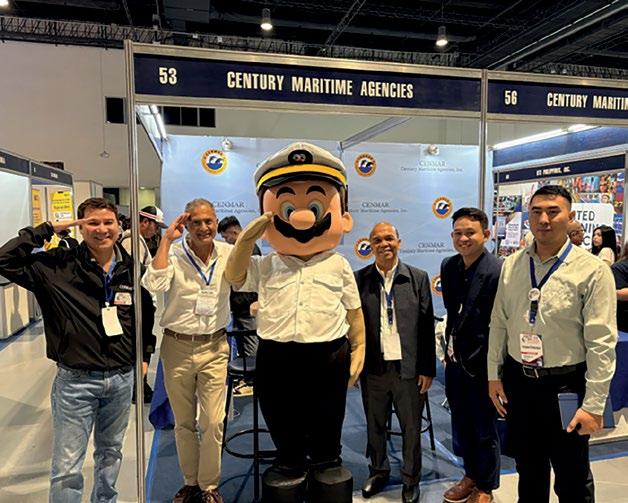
CENMAR staff along with Capt. Rommel Reyes and George Margioras From left to right: Capt. Rommel Reyes, G. Margioras, Capt. Super Mario, Capt. Rogellio Paramio/ VP of DMMA along with his colleague
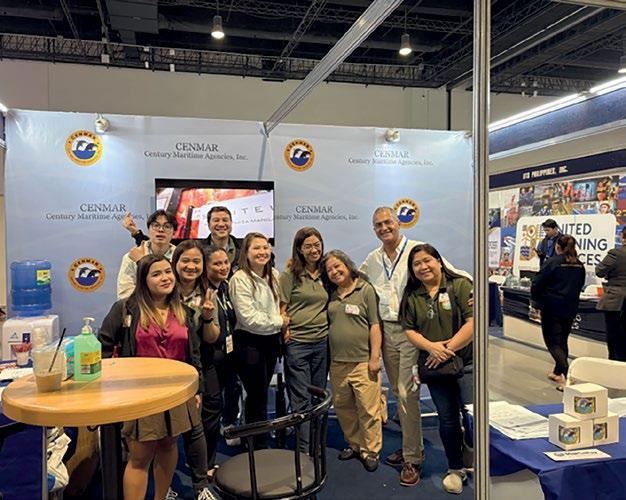
CENMAR staff along with Capt. R. Reyes and G. Margioras
CENMAR staff along with Capt. R. Reyes and G.Margioras
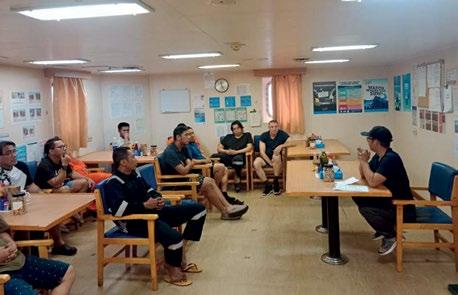
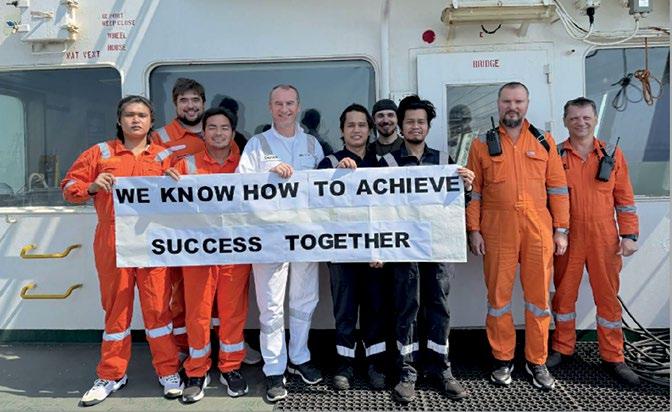
In celebration of our Health and Safety Campaign with the theme ‘Stronger Together: A Culture of Respect at Sea,’ our crew enthusiastically joined a fun and interactive Pinoy Henyo game that highlighted the importance of teamwork, communication, and respect on board. More than just a game, this activity served as a powerful reminder that safety begins with understanding and cooperation among all crewmembers.
M/V Polymnia
M/T Apanemo_ Cultural Curiosity Table
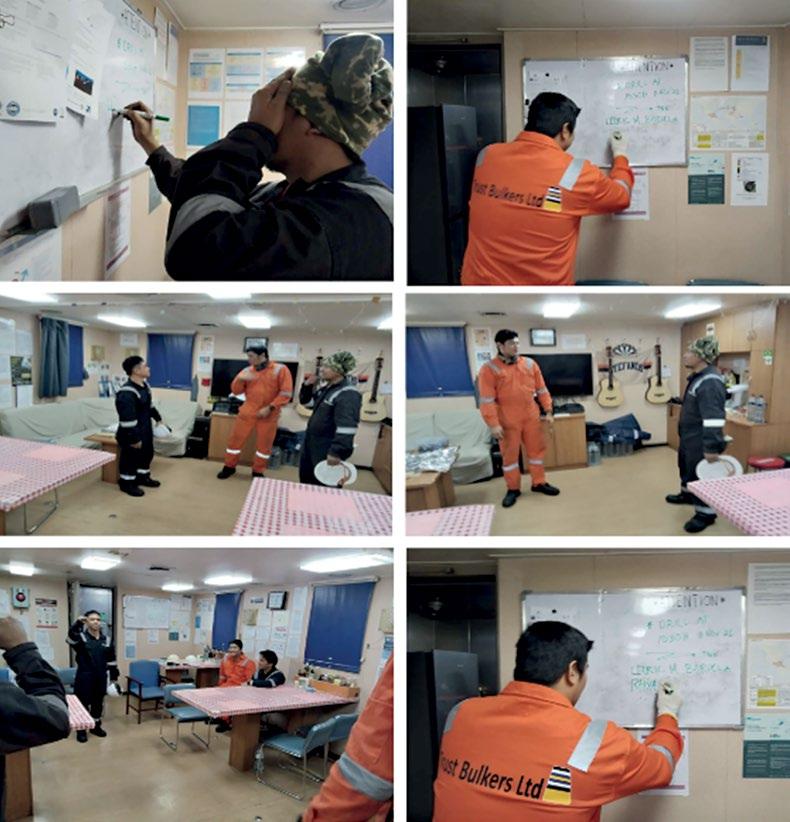
M/T Sundoro, Walk in my shoes
M/T Dimitri, Walk in my shoes
MESSAGE FROM THE DPA:
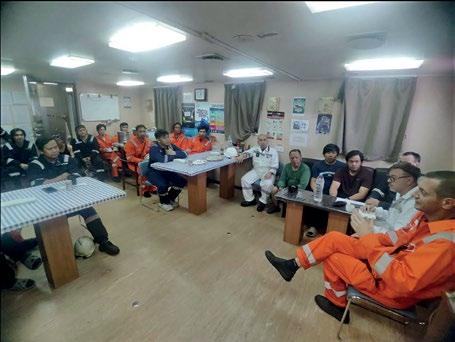
Manila Forum - Bonding Time!
Dear seafarers,
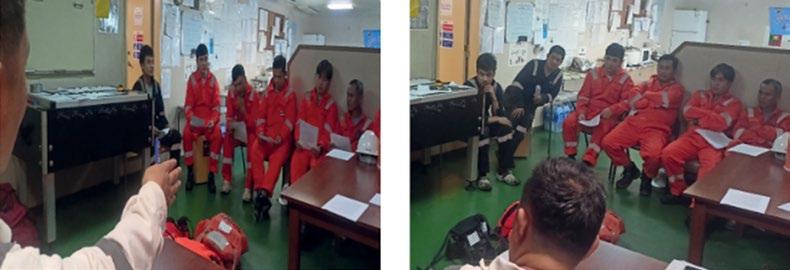
Our yearly appointment with our Seafarers during November at Manila was a great success from my point of view. We gathered together for 2 full days. And by we, I mean almost 200 seagoing staff and around 15 shore based personnel together with our CENMAR staff, who provided valuable assistance in organizing the event!
It was truly a bonding experience focusing on our safety culture and the human element.
I saw everyone embracing the values we want to bring up and embrace:
- Speaking Up: Participation was the best ever.
- Building Trust: Believing and proving that we are evolving
SMS NEWS
- Psychological safety: The feeling was exactly the same as being among the members of our family.
And that culture is the one that makes our vessels safer and allows our people to get home safe!
I wish you safe voyages and a safe return home.
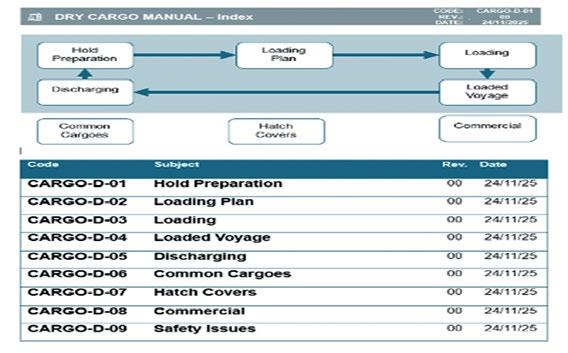
Have you seen our new Dry Cargo Manual? It is simplified and we hope will prove friendlier for our Seafarers to use. It has 33% fewer words but nothing is missing. It has a structure based content in a logical / chronological order.
Become familiar with your new Manual!
Elli Moretti
PS. Have you been using your SWO Card? It is an important tool for enhancing Speaking Up on board your vessel!
Ellie Moretti, SQE Manager /DPA
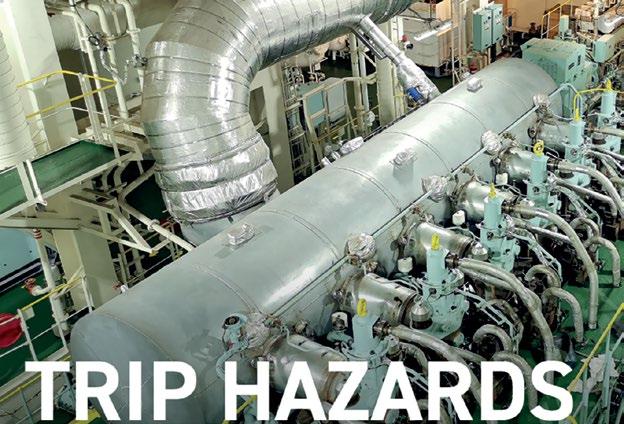
Crew Watch Safety: Trip Hazards plus Slips & Falls
Source: Britannia P&I, Crew Watch, September 2025
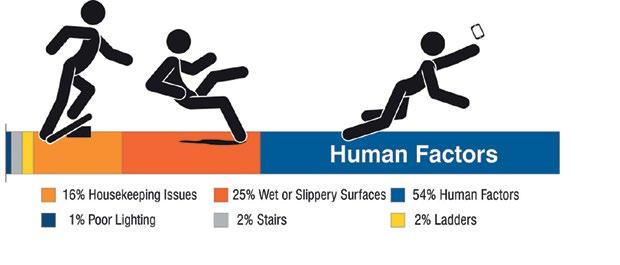
Machinery spaces on board ships contain many slip, trip, and fall hazards.
And this is the most common cause of personal injuries!
- REMOVE TEMPORARY HAZARDS
Temporary hazards should ideally be identified during the work planning and risk assessment processes. Constant vigilance from all personnel, along with the right equipment and safe working practices is how you can reduce the risk. This is particularly important during periods such as dry dock, when many hazards may be present simultaneously.
Slipping hazards are generally the result of leakage, spillage or poor housekeeping. Effective preventative measures are:
- adequate maintenance,
- good operational practices
- and regular cleaning.
Ongoing cleaning (not just upon completion of a task) during maintenance can be overlooked but is vitally important to keep the workplace safe.
Nobody should enter a machinery space without proper PPE.
The use of flexible hoses, electrical cables, and portable tools are all necessary parts of conducting work in machinery spaces. However, these items present substantial tripping hazards, and their use should be controlled as far as possible.
Hoses or electrical cables should be led in a way that prevents them from becoming a tripping hazard. Where this is not fully possible, consider the use of cable ramps to cover them or S hooks to suspend them clear of walkways. Portable tools and other items should not be left unattended, keep them in a designated area when not in use.
- IDENTIFY PERMANENT HAZARDS
Identifying permanent hazards such as pad eyes on deck, access arrangements, and changes in flooring height often relies on
personal observation. Experience and knowledge sharing is of great importance to assist others. Regular health and safety inspections by the ship’s safety officer is also a productive way to identify hazards. IT IS NOT
A TICKBOX EXERCISE!
Whilst permanent solutions to prevent trip and fall hazards are preferred, it is not always feasible to do so. In situations where permanent removal or modification is not possible, different solutions are required. It is recommended that tripping hazards should be adequately highlighted:
• either by painting or marking them. Items such as changes in floor height, isolated physical tripping hazards, and the final steps of ladders/stairways should be painted in a contrasting colour.
• The use of warning signage, particularly glow in the dark warning signs or strips, can also draw attention to hazards.
• Walkways or access routes throughout a machinery space should be clearly highlighted and obstructions (temporary or permanent) should not normally be present in these areas.
• When relying upon markings and signage, it is important that the highlighting should be maintained and reapplied
• Adequate lighting should be assured by the approved initial ship design. Occasionally, lighting is modified or replacement lamps are not as bright, leading to a reduction of ambient lighting in an area.
• A management of change procedure should be followed if repositioning lighting, and generally the same specification lamps should be used when replacement is required to prevent areas of poor visibility.
• Familiarisation tours for personnel should include identification of known hazards and the actions to take should any unsafe conditions be discovered.
Slips, trips, and falls can cause life changing injuries and are ALWAYS avoidable. Encourage active reporting – Speak Up, follow safety procedures, and maintain good housekeeping. These are the 3 golden rules to minimize Slips, Trips & Falls.
Situational Awareness, though, will make them go away entirely!
Physical Health By Chara Markatzinou
Understanding Stroke: Essential Awareness for Seafarers
Source: Adapted from Britannia P&I Crew Watch (September 2025), Dr. Katherine Sinclaire, Senior Medical Advisor, MedSea.
What Is a Stroke?
A stroke occurs when the blood supply to a part of the brain is interrupted or reduced, depriving brain tissue of oxygen and nutrients. Within minutes, brain cells begin to die. A stroke is always a medical emergency requiring an immediate response. There are two main types of stroke:
• Ischaemic stroke: This is caused by a blockage—such as a blood clot—in an artery supplying the brain.
• Haemorrhagic stroke: This occurs when a blood vessel within the brain ruptures.
A third, less severe form is the Transient Ischaemic Attack (TIA), often referred to as a mini-stroke. The symptoms of this type of stroke are temporary, but serve as an important warning for future, potentially more serious strokes.
According to the World Health Organization (WHO), stroke is the second leading cause of death globally, responsible for approximately 6.5 million deaths each year, and is a major cause of long-term disability.
Why Stroke Awareness Matters at Sea
Life at sea involves working in a remote setting with limited access to immediate medical care occurring on board. A stroke can rapidly become life-threatening if not recognised early. Every seafarer plays an important role—not only by managing their own health but also by staying alert to changes in the health of those around them.
How to Recognise a Stroke: THINK FAST
Early recognition saves lives. Use the FAST acronym:
• F – Face drooping: Ask the person to smile. Does one side droop?
• A – Arm weakness: Can they raise both arms and keep them up? Does one arm drift downward?
• S – Speech difficulty: Is their speech slurred, unusual, or difficult to understand?
• T – Time to call: Seek emergency medical assistance immediately.
Other Possible Symptoms
Sudden:
• Numbness or weakness of the leg, arm, or face (especially on one side)
• Confusion or difficulty understanding speech
• Vision problems in one or both eyes
• Trouble walking, dizziness, or loss of balance
• Severe headache with no known cause
Note: Symptoms in women may sometimes include less specific signs such as confusion, disorientation, general weakness, or fatigue. A high degree of vigilance is essential.
Risk
Factors for Stroke
Many stroke risks can be managed or reduced. Key risk factors include:
• High blood pressure (hypertension) – the leading cause
• Smoking
• Diabetes
• High cholesterol
• Obesity
• Physical inactivity
• Excessive alcohol intake
• Atrial fibrillation (irregular heartbeat)
Stroke Prevention Tips for Seafarers
1. Keep Your Blood Pressure Under Control
• Take prescribed medication exactly as directed.
• Bring enough medication to last your full contract.
• Monitor your blood pressure monthly or as recommended by your doctor.
2. Maintain Healthy Daily Habits
• Avoid smoking.
• Eat balanced meals low in salt, sugar, and saturated fats; increase fruits, vegetables, and whole grains.
• Stay physically active—aim for 30 minutes of moderate exercise most days.
• Maintain a healthy weight.
• Limit alcohol intake to recommended safe levels.
3. Know Your Medical History
• If you have had a TIA, hypertension, diabetes, or irregular heartbeat, you face a higher risk—follow prevention measures closely.
• Keep your medical records updated and disclose relevant history during pre-employment medicals.
If a Stroke Is Suspected On Board: ACT FAST
• Contact your telemedical provider (e.g. Tritan) immediately
• Check and record vital signs: blood pressure, heart rate, respiratory rate, oxygen saturation, temperature, and blood sugar (if possible).
• Note the exact time symptoms began—critical information for medical professionals.
• Keep the affected person calm and lying down with their head slightly elevated.
• Do not give food, drink, or medication unless instructed by a medical professional.
Final Message to Seafarers
Stroke prevention begins with personal responsibility. By maintaining good health, recognising early warning signs, and responding quickly, you can protect yourself and your colleagues. Support each other, seek advice early, and always follow medical guidance.
M/V Coral Island, Walk in my shoes
M/V Venture_ Same Job, Different Needs
M/V Philippos A, Cultural Curiosity Table
M/V Danae, Cultural Curiosity Table
M/V Stefanos, Same job, Different Needs
M/T Pserimos, Walk in my shoes
Introducing our Shore Staff
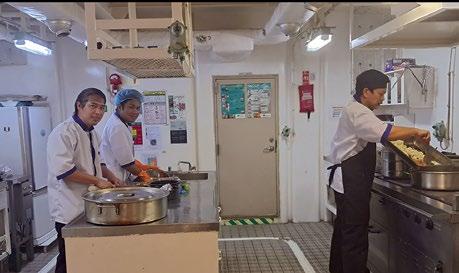
In this installment, the final two members of the Marine Operations Department will be introducing themselves along with four of their colleagues from the Purchasing Department. Like all of the Shore Staff who have introduced themselves thus far, they are highly capable, motivated, committed individuals, so their snapshot of their professional lives make for an interesting read. So, get to know them!
Penelope Tsibi
Hello Everyone!
My name is Penelope Tsibi, known to most of you as PT.
I have been working at the Company since 2000. I started as a Technical Department Assistant.
During the 20 years I spent in this department, I gained a lot of knowledge and experience related to the engineering component of the vessel.
Since 2020 I have been part of the Marine Operations Department as a Marine Operations Assistant.
My primary role involves arranging for security guards, renewing of flag certificates and ensuring that International Carrier Bond and Standard carrier alpha code certificates are in order. I also monitori all Audits related to Marine, Cargo, Mooring and Navigational operations, securing their implementation according to our SMS system, and the intervals and rectification processes.
My colleagues in Marine Operations have been very supportive since I joined the Department, and I am glad to be a part of a distinguished, professional, dedicated, supportive and friendly team. After almost three decades I feel grateful to be a part of this Company, which is a significant part of my life.
During these 25 years in the Company I have come to realise that excellent and supportive cooperation with all our Seafarers is the ultimate key to success. This is because all our Seafarers with their dedication and professionalism are also members of this team, which makes the collaboration between office and ships vital in the smooth operations of all fleet vessels. Wishing all our Seafarers calm seas and safe voyages ahead.
Maria Vamvaka
I’m Maria, and I’ve been with the Company for almost seven years.
My journey here began at the Reception Desk, continued in the Freight & Insurance Department, and later brought me to Marine Operations—first as a Marine Operations Assistant and, for almost the past 18 months, as an Operator in Fleet 3.
In my current role, I have the privilege of working closely with our Seafarers every day. This collaboration is not just part of my job; it’s something that truly inspires me.
Being there to support you, to listen, and to help with anything you may need has shaped me both personally and professionally. Through our daily communication, I learn, grow, and become better at what I do, thanks to you.
Here’s to the years ahead and to our continued journey of growing together: Ship & Head Office as one team and one family.
Apostolos Moraris
I joined the Company back in 1996 and have since been a member of what is now known as the Purchasing Department, responsible for the supply of spares and lubricants. Prior to that, I began my career in the Hellenic Navy, where I served as an Engineer from 1990 to 1995. This experience proved invaluable, providing me with deep technical knowledge and a solid understanding of the operational needs of vessels, particularly regarding spare parts and lubricants.
I feel truly blessed to have been part of this Company from its early years and to have contributed to the growth and continuous improvement of our Department. It is always a pleasure to welcome new colleagues to the team, as it gives me the opportunity to share my knowledge and experience, helping them develop the skills required for their roles.
I would also like to thank all of our Seafarers for their support and cooperation over the years and for successfully overcoming many obstacles and navigating through challenges together.
Katerina Diamantopoulou
My name is Katerina Diamantopoulou and I have been in the Company for six and a half years; the first three as a Legal Assistant and then as a Purchasing Officer. I hold a BSc and an MSc in Shipping Management from the University of Piraeus and from ALBA Graduate Business School, respectively. My shipping journey began back in 2015, when I started my career in a Ship-owning company and continuing as a trainee in EMSA. My role is to supply vessels with high-quality provisions and stores in a timely and cost-effective way. I believe that the key to success among teams is communication. My goal is to have the best possible communication with our vessels so that I can understand their needs and fulfill them.
It is a pleasure and a great honor for me to be part of the Company, which has given me the opportunity to evolve both as a professional and as a person. I hope to maintain a long-term, fruitful co-operation, sharing the same values and goals towards achieving the Company’s vision.
Jenny Karakoulouxi
Hello everyone! My name is Jenny Karakoulouxi and I joined the Company 3 years ago as a Purchasing Officer, aiming to ensure the timely supply of our vessels with provisions, stores and chemicals. Coming from a family with a long seafaring tradition, I pursued a Bachelor's degree in Shipping, followed by a Master's degree in Supply Chain Management, which helped me broaden my industry knowledge and build a strong understanding of logistics and procurement processes.
Before joining the Company, I spent nine years working in the Marine Division of a major oil company. During those years, I gained a detailed insight into how the energy markets operate and experienced the full delivery cycle from the supplier's perspective. Over the past three years here, I have gained hands-on experience in procurement and supplier communication and have been exposed to the fast-paced and dynamic environment of a shipping company. Every day brings a new challenge and an opportunity to learn, and that's what I find most rewarding in this role. I am very happy to work with all of you on a daily basis, and I am looking forward to the years to come!
Charis Kiousi
My name is Charis Kiousi, also known as CKK, and I am currently working as a Purchasing Officer, primarily handling spare parts and lubricants cases.
Before joining the Company, I worked on the other side of the Purchasing Process, as a Junior Sales Manager at a well-known Agent and Supplier, representing a wide range of Makers — mainly Japanese Main Engine and Auxiliary Equipment Manufacturers, Workshops. During that time, my responsibilities included:
• Troubleshooting
• Inquiries & Quotations
• Placing and Monitoring Purchase Orders
• Overseeing Forwarding Operations and Cross-checking Invoice Accuracy
That experience gave me a valuable insight into both sides of the Supply Chain, along with the knowledge and skills to approach each case in detail, while understanding the Supplier’s perspective.
Since I was around 15 years old I’ve had the opportunity to attend vessels as a Visitor, a Supplier, and as an Owner’s Representative, counting over seven vessel attendances so far.
I have always been passionate about the technical aspects of my work, and I genuinely enjoy studying vessel manuals, analyzing drawings, and exploring maintenance histories.
I also have a natural drive for problem-solving and love a good challenge — I don’t give up until I find a solution.
Now entering my third year with the Company, I’ve become increasingly familiar with our procedures, mentality, and most importantly, the people — both on board and ashore.
My discussions with my more experienced colleagues, especially those who have spent time at sea, as well as my interactions with the crew during vessel attendances, have given me a deeper appreciation for the challenges they face.
Understanding even a glimpse of the life on board has made me more empathetic and determined to provide prompt and effective solutions that help make their work — and life at sea — a little easier.
History
Humankind’s First Sea Voyages
According to analyses conducted on archaeological finds, the oldest boat in the world is around 10,000 years old. The boat in question, which was discovered in Holland, is known as the Pesse canoe, a three-foot long dugout made from the Pinus Sylvestrus tree. It is now housed in the Drents Museum in Assen, Holland.
While this direct evidence suggests that our relationship with travel by sea dates back to around 8000 BC, there is indirect evidence that sea travel goes back even further. A 12,000-year-old carving that depicts some 20 men in a reed vessel in Azerbaijan adds two millennia to the relationship and that might not be the end of the story.
Due to the perishable nature of ancient boats made from organic material, it may be that another approach is needed to determine how long we have been travelling by sea. One such approach was adopted by researchers from Japan and Taiwan who were studying East Asian Paleolithic peoples who moved between islands. Evidence that the first humans arrived in Japan around 30-35,000 years ago was partially explained that their migration was facilitated by land bridges, but there was a strong belief that some had arrived by boat. In order to support this notion, the team, led by Professor Yousuke Kaifu from the University of Tokyo, set out to test whether such voyages were possible using only the materials available in the Paleolithic era. The
first two types of craft tested were rafts. The first was made of reeds strapped together with vines and the second was made of bamboo. Neither was fit for purpose as they moved too slowly to be able to negotiate the Kuroshio Current, which the craft would have to traverse on the voyage from Taiwan to Japan’s Ryuku Islands.
Experimental test to cut down a big tree
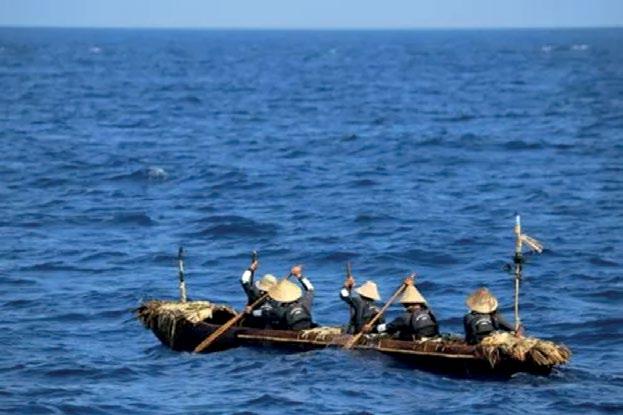
The third option explored was a dugout canoe that had been made from a cedar tree which was 25ft (7.5m) long and 3ft (0.91m) wide. After the tree had been harvested and hollowed out using only tools available in the Paleolithic era, the stage was set for the recreation of a voyage that took place over 30,000 years ago. Five paddlers, four of whom were male, would attempt to paddle from Wushibi, Taiwan to Yonaguni Island, a distance of 140 miles (225km). They accomplished the exhausting crossing, which has been described as an “amazing feat” in 45hrs.
Several conclusions were drawn from this successful venture, one of which was that crews that traversed the seas in the distant past must have been incredibly skilled and far more knowledgeable than we have given them credit for. The second part of this conclusion is supported by what has been revealed about the Antikythera mechanism through recent experimentation and much more recent knowledge (20th century) that has not been fully utilized yet.
Four men and one woman paddled 140 miles (225 kilometers) from Wushibi, Taiwan to Yonaguni (above). It took over 45 hours, but the crew made it across the Kuroshio current and arrived safely at Yonaguni.
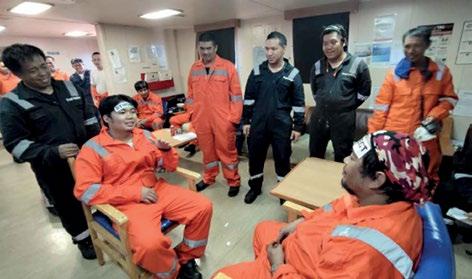
M/V Smyrna, Walk in my shoes
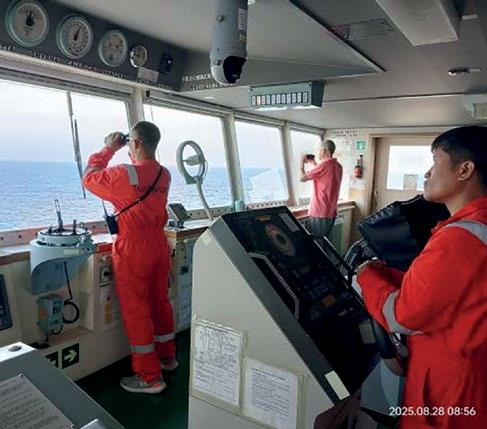
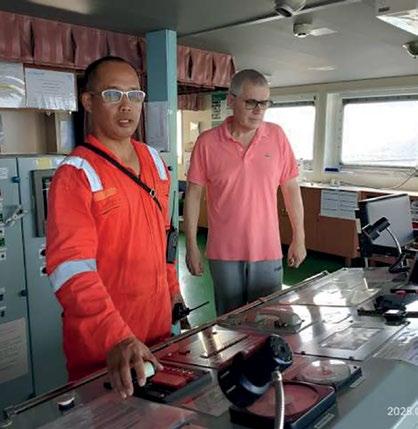
The Chief Officer (in the orange coverall) is actively operating the ship's controls, which is typical of the Master's (or Captain's) or an OOW's (Officer of the Watch) duty when maneuvering or conning the vessel. Essentially, the Chief Officer is performing the active role of conning the ship from the main control panel, while the Master is observing or supervising from a secondary position, which is the scenario being defined as the "role swap". This kind of supervised training or delegation might occur in a controlled environment as part of professional development.
M/T Apnoia, Same Job, Different Needs
M/V Andonis_ Cultural Curiosity Table
Pioneers of the Waves
Hasekura Tsunenaga
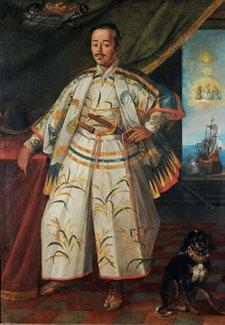
Hasekura Rokuemon Tsunenaga was born in 1571. Not much is known about his early life apart from the fact that he became a mid-level noble. He lived in the Sendai Domain in Northern Japan and was in the service of the daimyo (a powerful feudal ruler) Date Masamune. In addition, it was recorded that he served as a samurai in the Japanese invasion of Kone under Toyotomi Hideyoshi, who was the daimyo that united Japan in the Sengoku period. This invasion took place in 1597.
Fifteen years later, Hasekura’s father was indicted for corruption, which meant that all his belongings and property were confiscated. In 1613, his father was executed. Under normal circumstances, Hasekura Tsunenaga would have suffered the same fate, but Date Masamune provided him with an opportunity to redeem his family’s name by placing him in charge of a diplomatic mission to Europe. On his return he would be able to reclaim what had been confiscated.
At that time, Japan and Europe were totally separate entities, but contact between Spain, which was a world power at the beginning of the 17th century, and Japan was initiated after Spanish ships that came to grief off the Japanese coast led to Spaniards being given assistance. This was followed by a trade agreement, allowing Spain to conduct business in Japan whenever necessary. In return, a mission from Japan to visit the Spanish court was arranged, and that is when Hasekura Tsunenaga was nominated as a leader and pioneer.
Hasekura portrayed during his mission in Rome by Archita Ricci, 1615. Source: wikipedia.org
Following the meeting, Hasekura Tsunenaga travelled around Spain for 8 months before voyaging in the Mediterranean. While sailing, bad weather caused the diplomatic mission to seek shelter in SaintTropez, where they received a warm welcome. This encounter was the first recorded instance of FrancoJapanese relations. His next stop was Italy, where he met with Pope Paul V, who informed his visitor that he was unable to make trade agreements prior to King Philip of Spain engaging in such agreements.
When Hasekura Tsunenaga met with King Philip III for a second time, the Spanish ruler declined to sign any trade agreement, stating that the Japanese envoy was not a representative of the Japanese ruler, Tokugawa Ieyasu. So, after spending two years in Europe, Hasekura Tsunenaga left for Mexico in June 1617.
He remained in Mexico for five months during which time he sold a cargo of fine pepper and laquerware from Kyoto on the Mexican market. However, he was not allowed to return to Japan with the silver he and the commander of the San Juan Bautista, Yokozawa Shogen, had acquired. This was because the Spanish King had ordered that the money, apart from 20,000 pesos in silver, had to be spent on goods in Mexico.
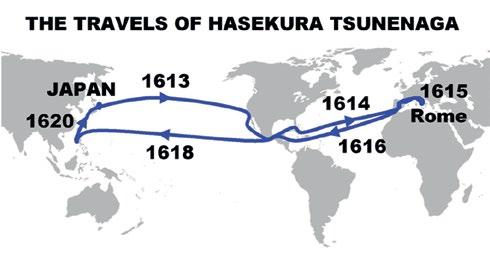
Itinerary and dates of the travels of Hasekura Tsunenaga. Source: wikipedia.org
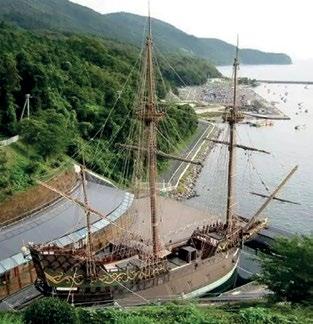
The Shogun declared that a new ship should be built for voyage. The vessel, which was built at Ishinomaki within two months, was initially named Date Maru and later San Juan Bautista Construction was a collaborative effort between Japanese carpenters and Spanish shipwrights. After establishing the objectives, which included discussions of trade agreements with the King of Spain and a meeting with the Pope in Rome, the ship set out in September 1613 with 180 people on board.
The Date Maru’s first destination, however, was not Europe, but Acapulco (New Spain).
A replica of the Japanese-built galleon San Juan Batista , in Ishinomaki, Miyagi, Japan. www. newworldencyclopedia.org
Hasekura Tsunenaga spent two months there before journeying to Mexico City in March 1614. He was given a ceremonial reception, and spent time in Mexico before departing for Europe via Cuba in June 1614.
About four months later, he reached Sanluclar de Barrameda in Spain. He eventually met King Philip III in Madrid, and during the meeting, he gave the King a letter from Date Masamune, in which a request was made for a trade treaty with Spain. The King’s immediate response was favourable as he stated he would endeavour to accommodate the daimyo’s request.
On his way back to Japan, he stopped in the Philippines in April 1618. On his arrival, the vessel was taken by the Spanish government for defensive purposes against the English and Dutch. As a result, he had a new ship built, and during construction, he purchased goods for Date Masamune.
Hasekura Tsunenaga returned to a very different Japan from the one he departed in 1614. He discovered that the attitude towards foreigners had radically changed, and that non-Japanese residents were frequently persecuted. It was this shift that had led to King Philip’s rejection of a request for trade.
Although Hasekura Tsunenaga’s final years were not well documented, it is known that he found no favour with those in power. He passed away in 1622 and after his death, his descendants were persecuted, and the privileges of his family were taken away from them.
There are some who consider Hasekura Tsunenaga a failure. However, it must be remembered that in the early 17th century, few Japanese had ventured out of the country, and there were isolationist policies in place that made his mission virtually impossible. Therefore, he could conversely be regarded as a pioneer who forged relationships and initiated early contact with the outside world.
1. Make the names of TWO Company vessels by using all the letters in the following sentence: CAN LOU DRIVE RENTALS?
4. Which four-letter word can be placed after the words to the left and before the words to the right? DUTY
2. The letters in the chemical symbols for arsenic, gallium, osmium and strontium can be rearranged to form the name of a unique sea. What is the name of the sea?
3. Which three-letter word can be used to complete the following words? CH_ _ _ING, F_ _ _ER, AL_ _ _S and H_ _ _LESS?
5. In 5 steps change the word WET to DRY by changing one letter at a time to form intermediate words.
6. What is the missing number (X)? 0, 2, 24, 252, X
Quiz
1. Where was the maritime pioneer Lief Erikson born?
A. Norway B. Greenland
C. America D. Iceland
2. Which of the following is NOT the responsibility of the person on board who has been handed the conn?
A. engine commands B. deck operations
C. maneuvering gear D. steering the vessel
3. Which of the following seas is unique in that it is not bordered by land?
A. Sargasso B. Arafura C. Coral D. Andaman
4. A ship is in a port with the coordinates 51.94° N, 4.15° E. Where is the ship?
A. Southampton B. Barcelona C. Rotterdam D. Hamburg
Brain your Answers
5. Which vessel in the Company fleet is the largest in terms of DWT?
A. M/T Pserimos B. M/V Casta Diva
C. M/T Dino D. M/T Ninemia
6. Which type of fire extinguisher should you use on a fire involving flammable gas that is burning?
A. water B. carbon dioxide C. powder D. foam
7. By what percentage did seaborne trade increase from 2023 to 2025?
A. 0.5 B. 1.1 C. 1.5 D. 2.1
8. Which of the following vegetables is an ingredient of moussaka, a well-known Greek dish?
A. broccoli B. eggplant C. okra D. artichoke
Survival at Sea
Michael Bolong and Ambrose Wavut
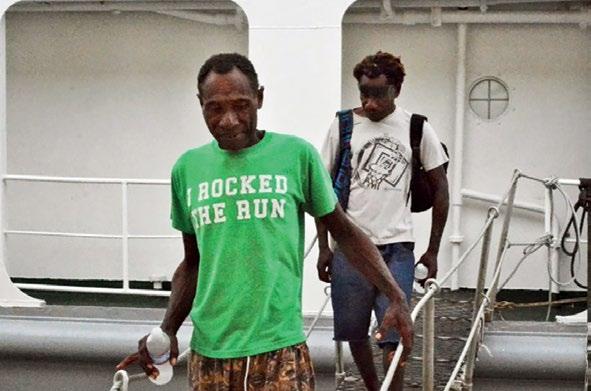
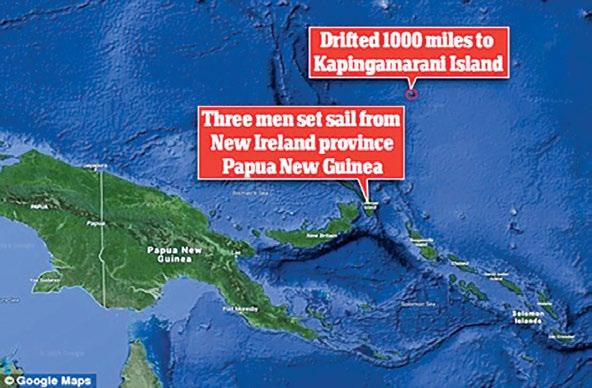
It is not uncommon for those who venture out into the waters off Papua New Guinea to encounter difficulties, but when, on 14th August 2014, Michael Bolong, 54, Ambrose Wavut, 28, and his father-in-law, Francis Dimansol, set off from one of the Tanga Islands, a remote archipelago off the north coast, they did not expect to face a life or death situation. Although their home island of Lif was close enough for them to see their destination when they began their journey, a storm brewed up so quickly that they were taken completely by surprise. They soon became disorientated, and to make matters much worse, their fuel ran out, leaving them adrift and at the mercy of the waves. This point marked the beginning of a 15-week fight for survival aboard a craft that was far from robust.
There were few provisions on board the boat. So, the three men were forced to go on a diet of rice and flour which lasted for two weeks, and were consumed after being ‘cooked’ in the hot sun. They then had to improvise with the materials they had taken aboard. They made spears from a pot handle and nails, which allowed them to catch fish and turtles. These catches were dried on the tin roofing they had for construction at their initial destination. They even managed to drag a small shark aboard which kept them adequately fed for a few days. However, their marine food supply was not continuous, and there were times they had to go hungry. During these times, they resorted to eating a few coconuts they had found floating on the sea around them. They also used the sheeting to collect rain water. Unfortunately, their hopes of being rescued had been dashed on two occasions when fishing vessels came close but failed to spot them. These events meant that Francis Dimansol, who was unable to summon enough strength to fight on, succumbed to the ordeal after 13 weeks adrift.
A fortnight later, a trawler called Yap Seagull approached them. The fishermen recognized their plight and rescued
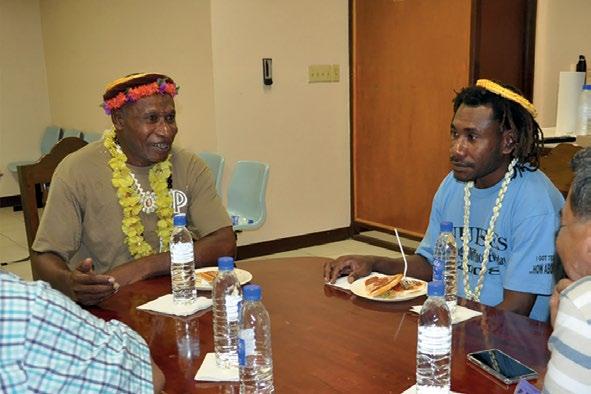
them near the Pacific archipelago of Micronesia. They were taken to a hospital in the Micronesian capital of Palikir on Pohnpei Island, where they were placed under observation. Their hospital stay was relatively short as apart from being thin and suffering from sunburn, they were in good physical condition. During this period, local groups and charities organised a collection of clothes and food as well as a place to stay for the two survivors. Those who contributed included the Salvation Army, the Pohnpei Fishing Club and the Australian Embassy.
After they had been discharged and phoned home to let their loved ones know that they were safe, plans were made to repatriate Michael Bolong and Ambrose Wavut. The International Organisation of Migration (IOM), which provides assistance for stranded migrants, funded their return home after their short stay in the Micronesian capital.