The POINT
Is it time to change course on your heifer inventory?
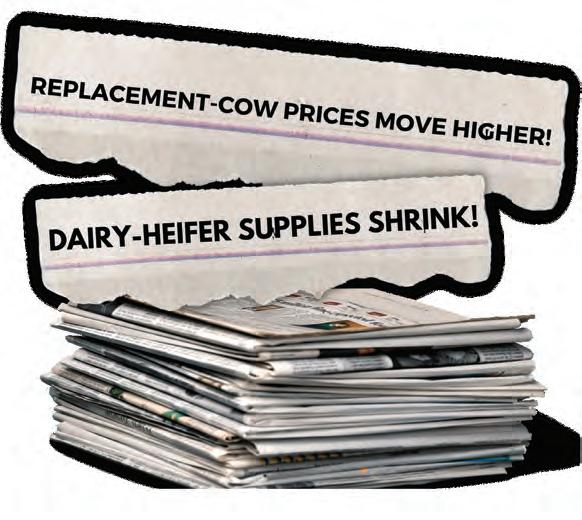

You’ve likely seen the headlines about shrinking heifer numbers around the U.S. Herds right-sizing heifer inventories, dairy expansions, and the trend to buy instead of raise replacement heifers continues to push replacement values higher and higher. If you’re like many of your peers, you may be wondering if it’s time to adjust your breeding strategy.
Obviously, I’m not an economist, so it’s difficult to recommend if you should or should not create and sell additional replacements based solely on expected demand. I can, however, confidently encourage you to think through the decision carefully, taking time to investigate key elements and potential pitfalls. If the new national landscape regarding replacement numbers has you contemplating entering this market, consider the following before changing course with your breeding program.
Know your market and costs
This seems obvious, but do you have a secure market for surplus heifers that is actually profitable? When someone sells replacements, and I ask about the price, they’re usually pleased with around $2,500; which, here in Wisconsin, is a great price. But my question always is, did they make money?
Hopefully, you know your rearing cost in detail, but if not, in most cases that number is well more than $2,000. When you combine that expense with the lost-opportunity cost of selling beef x dairycross calves, today, I surmise $2,500 is probably not enough. So, is your local market going to value your animals/genetics high enough to pay you a premium over market price?
Know your facility capacity
Overcrowded heifer pens can be disastrous leading to potential lost growth and development, decreased reproductive performance, poor hoof health, and everything in between. Many of these side effects last long into the future, impacting the performance of animals you keep for your dairy herd. Remember, you are a milk producer first and seller of cattle second. Do not allow the byproduct of your dairy (replacement heifers or beef calves) to negatively affect milk production..
Understanding feed inventory
Although we have been blessed with more rain later in the season, it has still shaped up to be a dry summer. Bear in mind,
Fall 2023
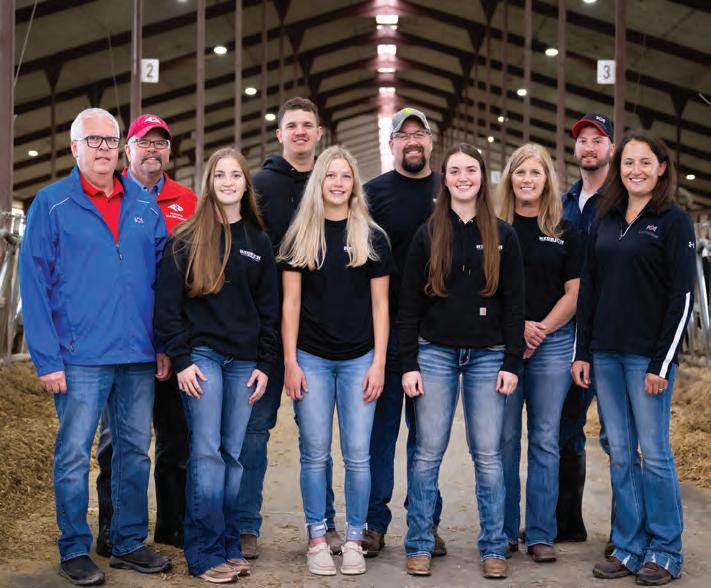
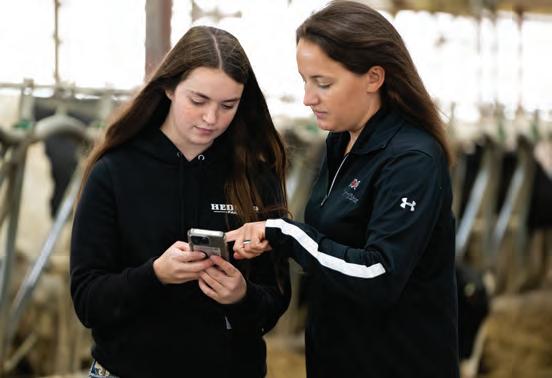
Photo: Hedrich Rivers Bend Dairy LLC, Hilbert, Wisconsin with their CentralStar team. See page five for their story.
Cole Mark, Director of Consulting and Profit Strategies Continued on page 2.
Continued from page 1.
Continued
already-high feed costs are likely to increase through the year, and who knows what coming years will bring. This environment can lead to increased rearing costs and/or feeding sub-par feed, which will negatively affect growth and future performance.
already-high feed costs are likely to increase through the year, and who knows what coming years will bring. This environment can lead to increased rearing costs and/or feeding sub-par feed, which will negatively affect growth and future performance.
Immediate sales or added expense
Immediate sales or added expense
With the current milk price possibly impeding your dairy’s cash flow, raising and selling excess heifers can sound promising. However, doing so will add significant additional expense for the next several years. You won’t reap the benefit for two to three years, if you sell them as springers, which is when the demand
With the current milk price possibly impeding your dairy’s cash flow, raising and selling excess heifers can sound promising. However, doing so will add significant additional expense for the next several years. You won’t reap the benefit for two to three years, if you sell them as springers, which is when the demand
is usually the strongest. In addition to the added cost, you will forgo the sale of valuable beef x dairy-cross calves available today.
is usually the strongest. In addition to the added cost, you will forgo the sale of valuable beef x dairy-cross calves available today.
As a mentor early in my career used to say, there may be money to be made by selling replacements at times, but you will never lose money by only raising what you need. Before you decide to change course with your breeding program, invest the time to consider your operation’s capacity to withstand that risk, should markets shift against your favor. For help evaluating which decision is right for your farm, reach out to me or a member of your CentralStar team.
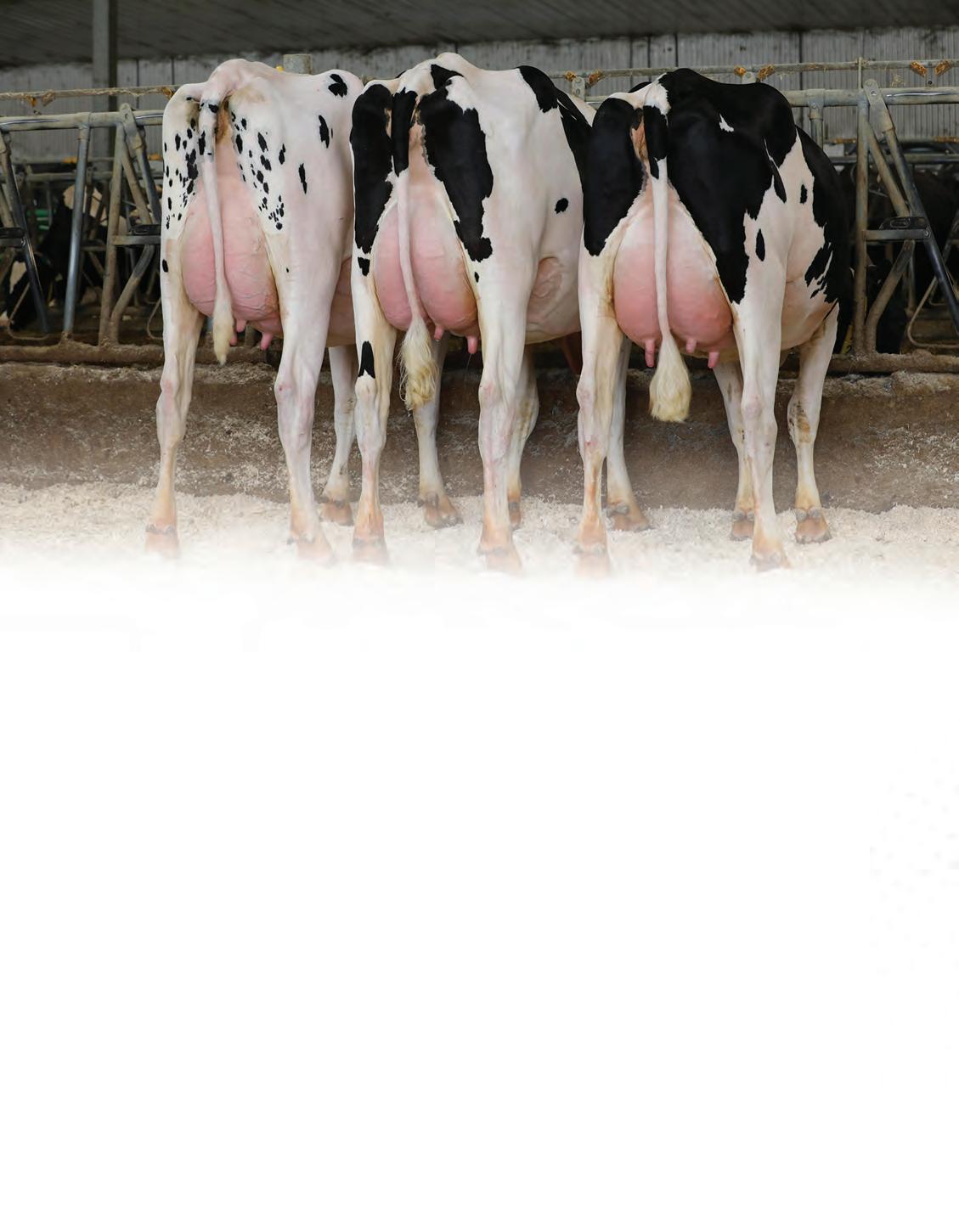
PROVEN HOLSTEINCFPREL % 7HO14454 LIONEL 24699 7HO14545 JAMARCO 21198 7HO14229 TAHITI 18399 14HO7770 HELIX 18299 7HO14320 ALPHABET 17799 7HO14804 BARCLAY 17299 7HO14438 GODDARD 17299 7HO14985 RUPERT 17194 7HO14992 LEMUEL 17091 7HO15097 GRANADA 16997 14HO7796 GRIFF 16299 7HO15085 PARFECT 15298 PROVEN JERSEYCFPREL % 7JE1792 NAVIDAD {6} 16299 7JE1758 JX THRASHER {6} 15199 7JE1789 JX CHATHAM {4} 13097 7JE1800 RENFROW 11994 7JE1630 KESTREL-P 11895 7JE1814 DIMITRI-P 11095 7JE1769 JX ARCHIE {5} 9798 7JE1816 TUCKER {6} 9684 14JE1762 CASTRO 8898 14JE769 JX STONEY {3} 8499 14JE1810 BULWURX-P 8490 7JE1699 JX PINE {6} 7999 7HO14320 ALPHABET Daughters, Ferme Rochelau Inc., QC, CAN, photo by Swale. Dollars. Select high component sires to add solids to your bulk tank. Contact your Select Sires representative today to improve components and profitability! 08/23 CDCB-S/HA/AJCA Genomic Evaluations. All Jersey sires are BBR 100. All sires are JH1F, except DIMITRI-P (JH1C). All sires are JNSF, except RENFROW and BULWURX-P (JNSC).
As a mentor early in my career used to say, there may be money to be made by selling replacements at times, but you will never lose money by only raising what you need. Before you decide to change course with your breeding program, invest the time to consider your operation’s capacity to withstand that risk, should markets shift against your favor. For help evaluating which decision is right for your farm, reach out to me or a member of your CentralStar team. from page 1.
ADD SOLIDS, ADD
TIS THE SEASON
Reduce the risk of parasite infection with a routine deworming strategy.
EpriGard®

Internal and external parasite control for beef and dairy cattle. Kills 39 species and stages of internal and external parasites. Controls adult worms and fourthstage larvae, lice, mange mites, grubs and horn flies. Active ingredient: Eprinomectin at 5g/L. No milk or meat withholding.
Ivomec® Eprinex®
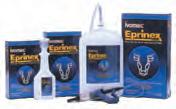
Parasite control that kills 39 species and stages of internal and external parasites. Controls adult worms and fourth-stage larvae, lice, mange mites, grubs and horn flies. No milk withholding or meat withdrawal (when used according to label). Rebate savings ends 10/31/23.
CONVERT™ Gel
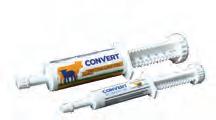
Contains beneficial bacteria and egg-based specialized proteins which assists in the reduction of scour-causing organisms by altering their growth environment. Antibiotic-free. Use at birth or when calves are lethargic, not eating or doing poorly.
BioFresh® Microbial Gel
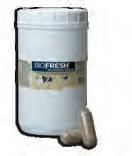
Enhances feed intake, improves ruminal fermentation, and supports immune function for dairy and beef cattle of all ages at weaning, receiving, transporting, calving, off-feed or during low-intake periods. Supplies beneficial bacteria, egg-based specialized proteins and critical vitamins and minerals. 5ml for calves under 500lbs., 10ml for calves 500lbs. – adult cattle. Save 10%. Ends 10/1/23 - 10/31/23.
PLAN AHEAD
Woolover®
Original Woolover is a high-performance blanket that keeps animals warm and dry, allowing nutrients to be used for growth. Made of 70% wool and 30% polyester. Limited supply.
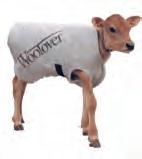
UM3602 - Small (77-99lbs) $42.00 $24.00
UM3605 - Medium (99-121lbs) $42.00 $24.00
UM3603 - Large (121lbs and up) $42.00 $24.00 $18.00 when you buy 50 or more!
BioFresh® Microbial Bolus
Gets fresh cows on feed faster, reducing potential metabolic disorders and DAs. Proven effective in reducing SCC by boosting immune function of cows affected by environmental challenges. Supplies critical vitamins and minerals, beneficial bacteria, and egg-based specialized proteins.
$55.00
AC11020 - 280cc
AC11011 - 50ct $125.00 AC11012 - 400ct $860.00
AC9057 - Single-dose 15cc $7.50 AC9006 - Multi-dose 60cc $18.20
MR30252 - 2.5L $270.92 MR30253 - 5L $365.73 MR30254 - 10L $678.55 MR19499 - 20L $1,267.59
AC2848
5L $271.62
-
Healthy
Talk to your CentralStar team or shop www.mycentralstar.com for the complete product line. Prices subject to change without notice. 3
PROTECT CALF HEALTH
From birth to weaning, every challenge a calf encounters reduces the chance of reaching their full potential. Ensure calves receive the protection they need.
First Day Formula®
Colostrum replacer or supplement for newborn calves. Fortified with essential vitamins and chelated trace minerals.
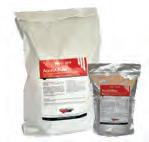

High-quality-whey-protein concentrate from select Grade A dairies, free of organisms causing colostrum-transmissible diseases, like Johne’s disease. Each dose contains 150 IgG. CR Deluxe includes First Defense Technology™.
AVOID FEED CHALLENGES
Feed is likely your farm’s single greatest expense. Feed contaminated with mycotoxins negatively impacts herd health, production, and reproduction. Mitigate feed challenges by protecting it at ensiling, routinely testing for mycotoxins, and feeding specific direct-fed microbials which allow nutrients to be properly utilized.
Select DTX™

Research-tested and field-proven effective for protecting cattle against mycotoxin challenges. Proprietary cell wall-deficient bacteria provide broad-range protection against mycotoxins. Use when symptoms are present and feed tests show problems. Available in concentrate for easy mixing at feed mills. Multiple
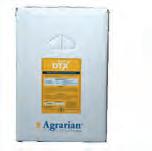
discount available.
Misco Digital Refractometer
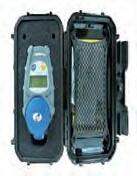
Test colostrum to determine quality and IgG scale. Measures colostrum quality and serum total protein. A0668 also measures milk-solids percent or hydration.
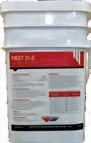
First 21™
Bridge the immunity gap during the first three weeks of life. Available as a complete milk replacer or nutritional supplement. Incorporates three natural sources of antibodies (plasma, egg yolk, and colostrum) to promote gut health and immune support.
AccelAIRate
Alleviates symptoms of respiratory disease and supports recovery from respiratory distress. Helps reduce irritation of the throat and suppress coughing, stimulates appetite, and drives feed intake. Contains Mannon-Oligosaccharides (MOS), Beta-Glucans and Nucleotides to protect against secondary pathogens.
CONVERT™ BIG Calf Powder
Assists calves from birth through weaning while consuming milk or milk replacer. Beneficial bacteria and egg-based specialized proteins improve nutrient absorption, restrict pathogen growth, enhance immune function and stimulates starter-feed intake. Mix 5g with colostrum or milk for same benefits as 15ml of CONVERT Gel.
- 12.5lb pail
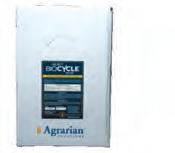
Select BioCycle Plus™
Producers feeding BioCycle Plus report reduced SCC, improved reproductive performance, increased digestive capacity and improved general health. Use when metabolic diseases and toxin challenges are present. Available in concentrate for easy mixing at feed mills. Multiple box/bag-purchase discount available. Buy
Accel Ensile+
Forage inoculant assists with expediting pH decline to stabilize feed, reducing dry-matter losses and improving digestibility and forage quality. Contains three enzymes which work together to aid in fiber break down and increase nutrient absorption. Field, university, and laboratory researched. One of the most economical products on the market. Pre-order now for next season.
$560.00 AC9059
$124.00
AC9058
- 2.2lb jar
A0040
4.4lb $74.00 A0041 - 22lb $298.00
-
$84.00 A0083
20lb $221.50
A0080 - Complete Milk Replacer 50lb
- Supplement
A0043
$39.25 A0044 - CR (replacer or
$655.00 A0045 - CR Deluxe (replacer) 500gram $46.25 A0046 - CR Deluxe (replacer) 20lb $780.00 A0047 - CS (supplement) 200gram $16.95
- CR (replacer or supplement) 500gram
supplement) 20lb
A0667 - Handheld COL STP $535.00 A0668 - Handheld COL STP MS HYD $630.00
A0611
$
A0612
500gram $382.00 A0613
100D
50lb $99.50 A0653 ASB
500gram $440.00
- 100W - Wet 100gram
86.50
- 500W - Wet
-
- Dry
- Contains L. bucherni
box/bag-purchase
AC9004 - 50lb $285.00 AC9009 - Concentrate 50lb $355.00
AC9005 - 50lb $378.00 AC9027 - Concentrate 50lb $462.00 AC9199 - Concentrate Non-GMO 50lb $490.00
5, get 1 FREE. Ends 10/31/23.
800.631.3510 • www.mycentralstar.com Prices subject to change without notice. 4
Technology for the next generation
"CowManager® is providing the technology the future needs for the next generation,” shared Craig Hedrich of Hedrich Rivers Bend Dairy LLC. Craig, his wife Amy, along with kids Jenna, Tyler, Lauren and Kara operate the 400-cow dairy and farm 2,500 acres in Hilbert, Wisconsin.
“Rivers Bend Dairy is always looking towards the future,” shared Laura Styczynski, CentralStar CowManager Specialist. “They want to better the dairy and set it up for the next generation so it can continue to be operated with family and very little outside help. CowManager has been a big benefit for them in that way.”
Three years ago, the Hedrich family decided to install a herd monitoring system and chose CowManager. Along with using CowManager in the milking herd, all breeding-age heifers are tagged with a CowManager sensor. We recently checked in with them to learn about their decision.
Why were you looking for a herd monitoring system?
Craig: We’re not always here because we do a lot of cropping. We like that we can monitor the cows when we are in the fields. We can look at CowManager any time of the day, no matter where we are at.
Why did you choose CowManager?

Amy: We looked at several other systems, including collars. We investigated everything that was available in the industry. We chose CowManager because it seemed easy to use, easy to install, and very user-friendly. It provided what we were looking for without having to invest a large amount of money or make updates to the parlor.
How has CowManager changed your work?
Jenna: CowManager has helped us a lot with labor. Often our whole family is gone at the same time. Having the app on our
phones lets us monitor the cows when we are gone. When we are here, it gives us a list to help us know which animals to go look for. Because of that, we are not walking the pens to search and check every cow. With CowManager we know which ones need to be looked at, when they went off feed, when they are in heat, and when their activity changed.
How has CowManager changed your processes?
Jenna: One thing that has changed is that we breed all the heifers off the monitors. We no longer use tail paint or walk the pens. We strictly focus on what the CowManager tags tell us. Since we started doing that, our heifer pregnancy rate has been nearly 100%. Almost every animal we check is pregnant. We love having the tags in the heifers. It has saved us a lot of tail paint and a lot of watching for standing heats.
Scan the QR code to hear from more Midwest dairy producers about their experiences with CowManager.
Identifies animal misidentification
Speeds identification of superior animals
Expedites right-sizing replacement inventory
Generates opportunity to market top-end genetics
Creates a healthier, more productive herd
Focuses time, labor, and feed costs on superior animals
Pinpoints animals with the highest potential
Enhancing producer profitability through integrated services.
5
Herd Manager, Jenna Hedrich and CowManager Specialist, Laura Styczynski. Ask your CentralStar team to get started.
In the first article, I explored milk weights, components, and somatic cell count (SCC). These features were likened in importance to our own keys, wallet, and cell phone, because with them in hand, we can get anywhere and do anything. Now, it’s time to go beyond, and explore three more areas the ZoetisCompeer Financial study identified among the top six-factors that affect profitability on Midwest dairies, which can also be monitored through the 402-Herd Evaluator report.
Net Herd Replacement Cost (NHRC)

NHRC is the difference between the cost of a replacement heifer and the value of the replaced cull cow per hundred weight of milk produced. Figure 1 lets us look at some factors that feed into NHRC, which represents the biggest difference in dollars between the most profitable herds and the least profitable herds. At the time of the study, the most profitable herds averaged 91 cents NHRC; however, that benchmark is likely lower today as replacement costs and cull-cow values have greatly increased since then.
Herds with lower cull and death rates have lower NHRC, allowing them to keep more third- and greater-lactation cows around. This age group already paid for themselves and generally produce the most Energy Corrected Milk (ECM) of all cows in the herd. I recommend herds have a goal of ≤ 6% death rate and 25-30% overall cull rate to keep their NHRC in check.
was some voluntary reason culling increased. Understanding why turnover has slowly and steadily increased enables us to identify action items that could increase the dairy’s profitability.
Pregnancy Rate
Now we are moving into an area that many have relied on CentralStar for years: reproduction. Pregnancy rate is known to be one of the top six factors affecting profitability. It’s driven by conception rate and service rate, which is the percentage of eligible cows inseminated in a 21-day window. In Figure 2, we can see this herd’s conception rate has been on a steady downhill trend during the last year, while pregnancy rate has decreased but levelled off since about October. This snapshot tells me it’s time to rally the troops to investigate what’s changed, so we can stop the trajectory of this essential metric.
Herd Inventory
Beyond the six factors known to affect profitability, the 402Herd Evaluator report can also help monitor herd inventory. In Figure 3, we see this herd is carrying excess heifers (103% on current DHI test-day). Recent estimates show the cost of raising a heifer to the milking string is about $2,000-$2,500. Because of this high cost, dairies really need to evaluate if the excess heifers are worth it.
If the dairy believes it is necessary to raise extra heifers
Monthly monitoring of milk production, components, SCC, NHRC, death loss, and pregnancy rate gives you greater insights to manage and make adjustments that will have an impact on profitability. The DHI 402-Herd Evaluator report provides a quick snapshot of these areas, and combined with CentralStar’s team of experts, can help your dairy be more profitable and reach your goals.

As I head out of the house to face whatever the day brings, I carry a whole box of tools along with my keys, wallet, and cell phone to help make the dairy producers I work with the most profitable that I can. If you would like access to the 402-Herd Evaluator report or if you want to tap into the expertise of the CentralStar team, contact me. CentralStar’s goal is to “enhance producer profitability through integrated services,” so reach out and let us help you get the most out of your dairy herd.
 Sporer, PhD. CentralStar Records Analysis Consultant

Herd Inventory Current Prev. Test 04-03 2022 Top 25% Affiliate Avg Total Cows 916 934 953 ~~~ 339 Total Heifers 939 932 1,021 ~~~ 339 Heifers as % of Total Cows 103 100 107 125 97 Calves Born Dead (%) 0 0 0 < 1 3 Total Calvings 79 87 73 ~~~ ~~~ Total Pregnant Cows 509 509 521 ~~~ ~~~ Total Pregnant Heifers 320 314 327 ~~~ ~~~ Figure
Learn more about DHI and the Herd Evaluator Report. Apr May Turnover and Death-Loss Rates 0 5 10 15 20 25 Percent of total herd Jun Jul Aug 30 Sep Oct Nov Dec Jan Mar Feb Mar Apr Month (2022-2023) Turnover Death Loss 35 40 Figure 1 Figure 2 Apr May 30 35 40 Percent Jun Jul Aug 45 Sep Oct Nov Dec Jan Mar Feb Mar Apr Month (2022-2023) 50 55 Pregnancy and Conception Rates Pregnancy Rate Conception Rate
3
Kelly
kelly.sporer@mycentralstar.com
Call for Board Candidates





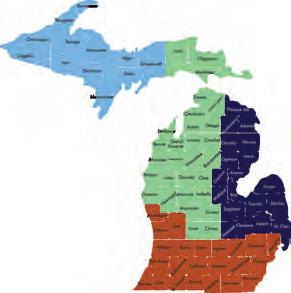
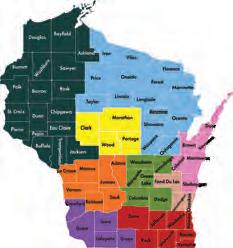


this year, Director elections will be conducted in districts 1, 4, 7 and 10. Common stockowners that meet the qualifications and submit a candidate application by November 1, 2023 are eligible to run for the appropriate available position. Visit www.mycentralstar.com for more information. Scan the QR code to access the application. Presorted Standard Class U.S. Postage PAID Lansing, MI Permit #505 P.O. Box 23157, Lansing, MI 48909-3157 800.631.3510 • mycentralstar.com Return Service Requested Connect with us at: CentralStar, its agents or employees cannot and do not guarantee the conception rate, gender, quality or productivity to be obtained in connection with the use of its products or recommended techniques. It makes no warranties of any kind whatsoever, expressed or implied, which extend beyond the description of its products and hereby disclaims all warranties of merchantability and fitness for a particular purpose. In the unlikely event that any of our products shall be proven to be defective, damages resulting from their use shall exclude consequential damages and be limited to the purchase price of the product. Find complete trademark and warranty statement at mycentralstar.com/production-information. All gender SELECTed semen is processed using SexedULTRA technology. ™SexedULTRA and SexedULTRA 4M are trademarks of Inguran LLC.™gender SELECTed semen is a trademark of Select Sires Inc. ®NxGEN and Mastitis ResistantPRO® are registered trademarks of Select Sires. Select DTX is a trademark of Select Sires and manufactured by Agrarian Solutions, Middlebury, Indiana. 7 4 10 1 LET’S MAKE THEM ALL #1 COWS 0% FINANCING Ask your CentralStar team for complete details on this new customer offer, as well as specials for existing customers. CowManager’s unique ear sensor measures ear temperature combined with eating, rumination, and activity, which results in more accurate and earlier alerts. So you can catch sick cows days before they show clinical signs, and never miss a heat. 3 MONTHS FREE SOFTWARE HEALTH FERTILITY NUTRITION and
Later
