association with American Conservatory Theater

Soulpepper Theatre Company & Adam Blanshay Productions In



association with American Conservatory Theater
Center Theatre Group’s production of the play will take place at the Ahmanson Theatre—home to the Tongva and Chumash peoples. Center Theatre Group acknowledges, with deep respect, their memories, their lives, their descendants, and their continued and ancestral stewardship of this land.
Kim’s Convenience’s setting of Regent Park of Toronto, Canada is within the traditional territory of the Anishinaabe, Haudenosaunee, Huron-Wendat, and Mississaugas of the Credit, covered by Treaty 13 and the Williams Treaties.

“What is my story?! Hm? What is story of me, Mr. Kim? My whole life is this store.” —Appa
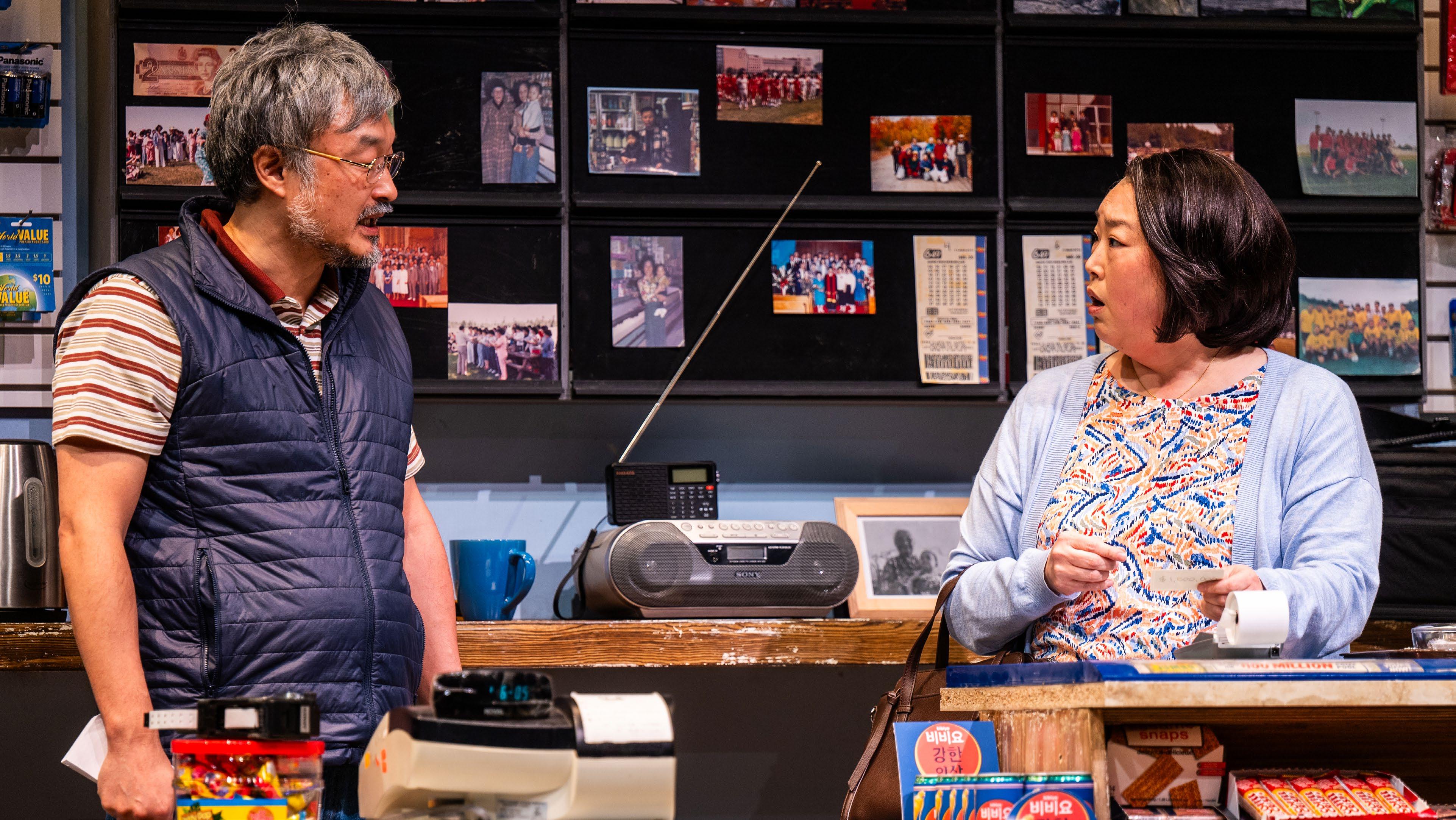
Kim’s Convenience tells the story of a Korean immigrant family and their convenience store in Toronto, Canada. Appa, the father, has been running his own business for decades and is ready to hand it over to one of his children. The problem is that his daughter, Janet, is more interested in professional photography, and his son, Jung, left the family years ago. On a day in the life of their shop, we see encounters with clientele (some wanted and some unwanted), a budding romance, and reflections on the family’s journey to build a decent life as immigrants in the West. Set in 2012, the story provides a glimpse of the deep Christian faith within Korean culture as well as the challenges that immigrant communities face in the early days of gentrification.
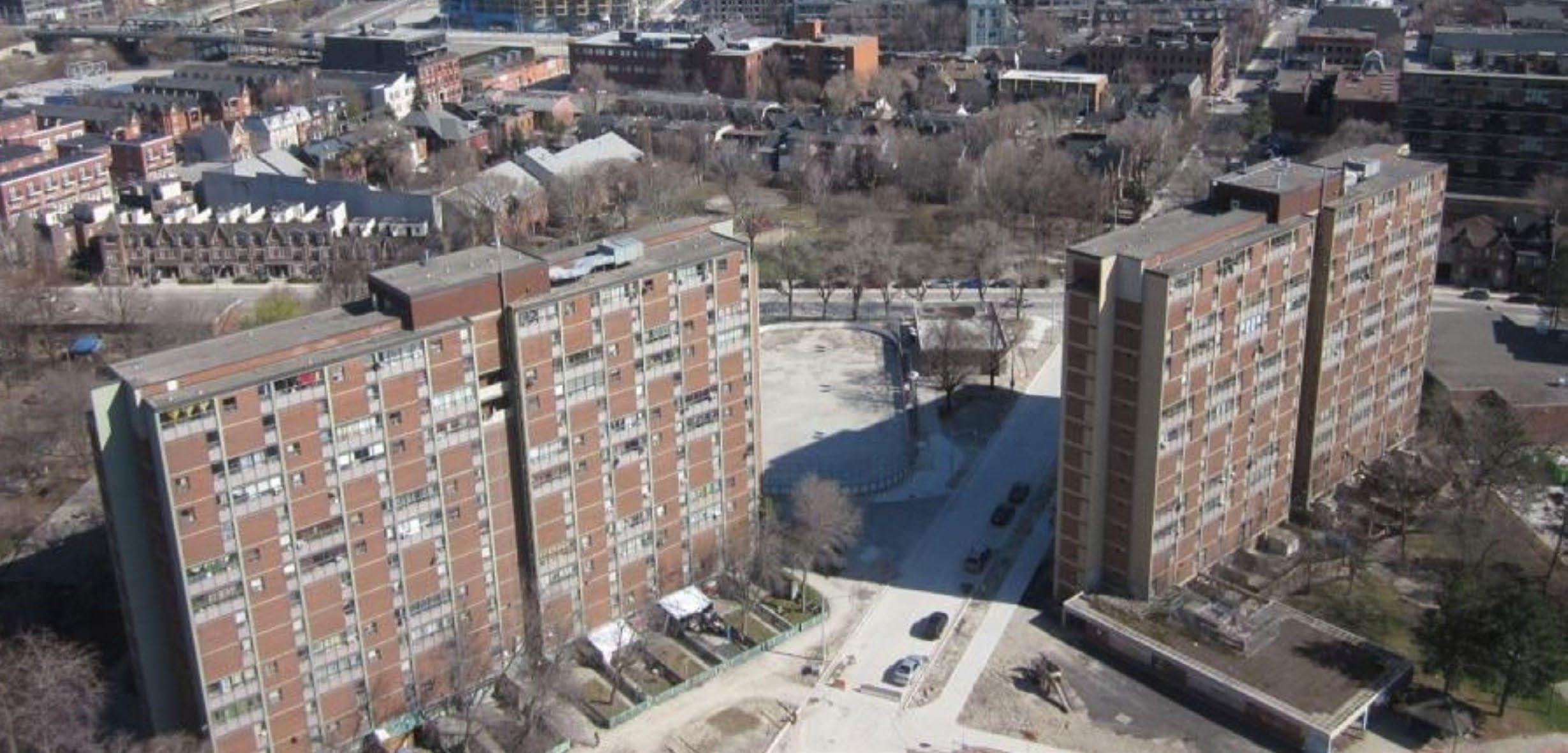
“...once those condos are up and ready, Regent Park isn’t gonna be Regent Park anymore.”
—Lee
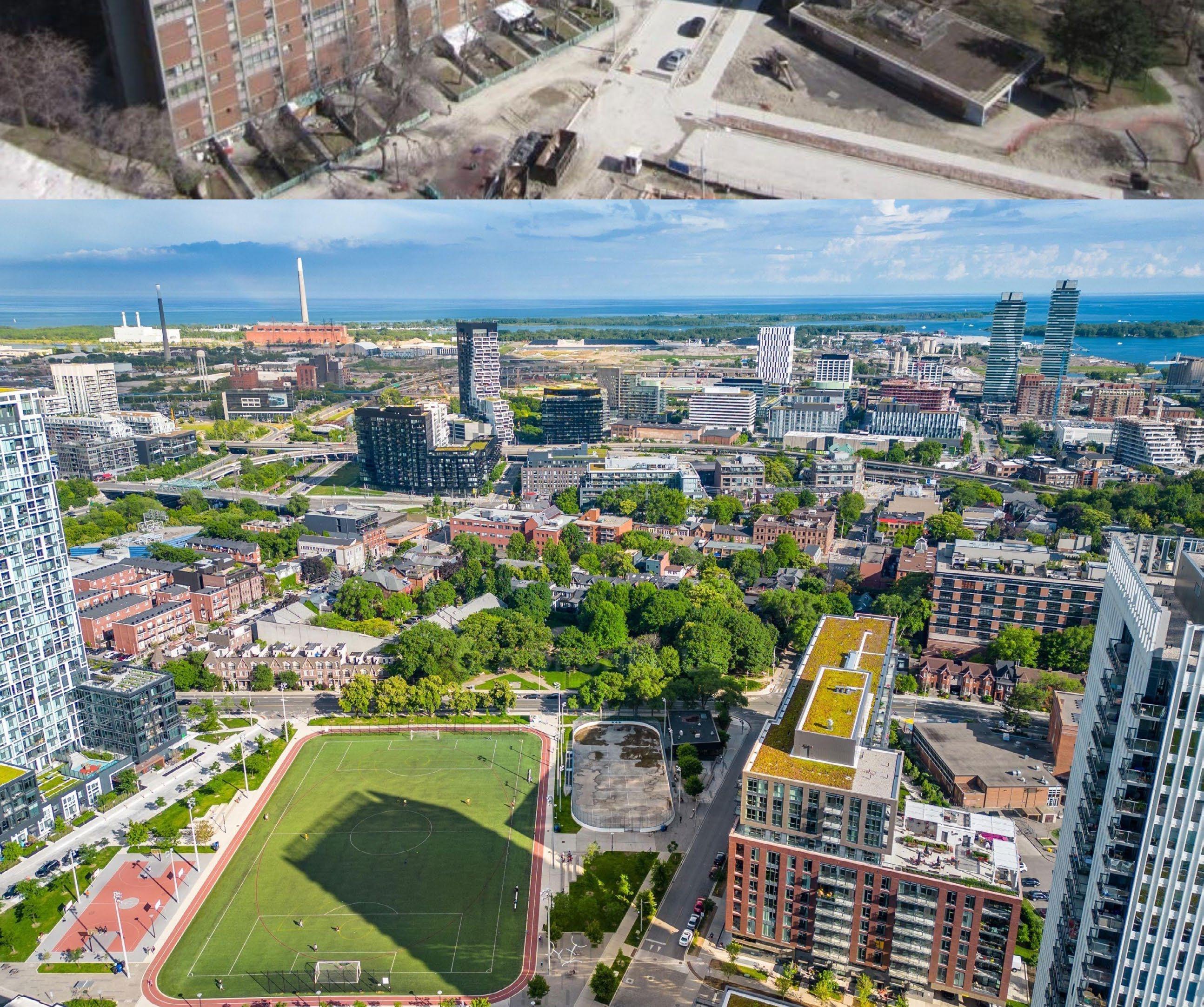
Kim’s Convenience takes place in Regent Park, a neighborhood formed as a Toronto public housing project in the 1940s. While the initial vision for the community was to create a space of opportunity for those in need, it ultimately fell short of these expectations. Notably, the neighborhood included no infrastructure, businesses or retail spaces, or even a park within its bounds, acquiring a reputation as a place that nobody wanted to inhabit. In the early 2000s, The Daniels Corporation created a vision to revitalize the community as part of Toronto’s Downtown East gentrification project. Since 2006, they replaced and added to existing RGI (rentgeared-to-income) units with new housing of the same type, designed an effective infrastructure, and won countless awards for their redevelopment of the neighborhood.
Despite the project’s positive global response, steep and inconsistent rent increases at Evolv, one of the rental buildings in Regent Park developed by The Daniels Corporation, have forced many longtime community residents to move. Kim’s Convenience is set in 2012, a few years after the onset of Regent Park’s controversial revitalization.
The specific location of the play is Kim’s Convenience, a small family-owned corner store. In Canada, convenience stores have traditionally thrived despite supermarket competition because their small size allows them to more easily adapt to changing markets, shifting products and food service products based on consumer preferences.
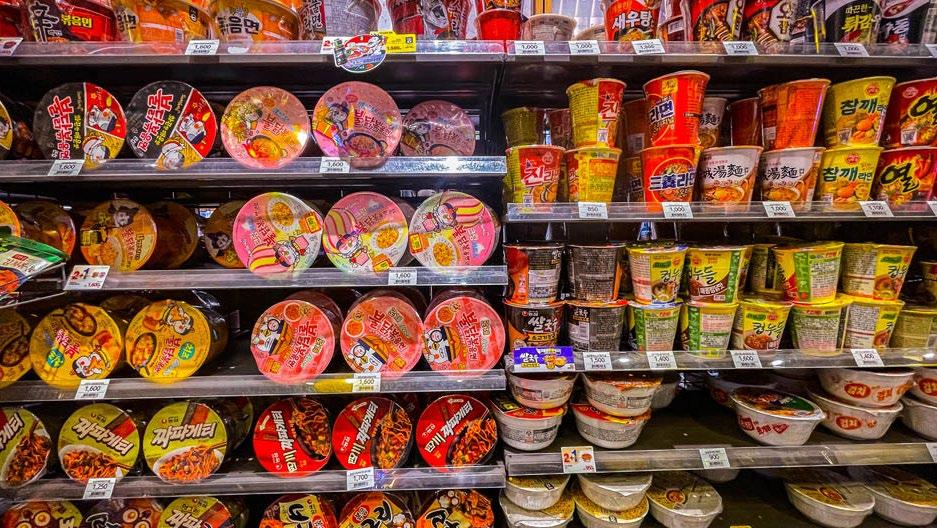
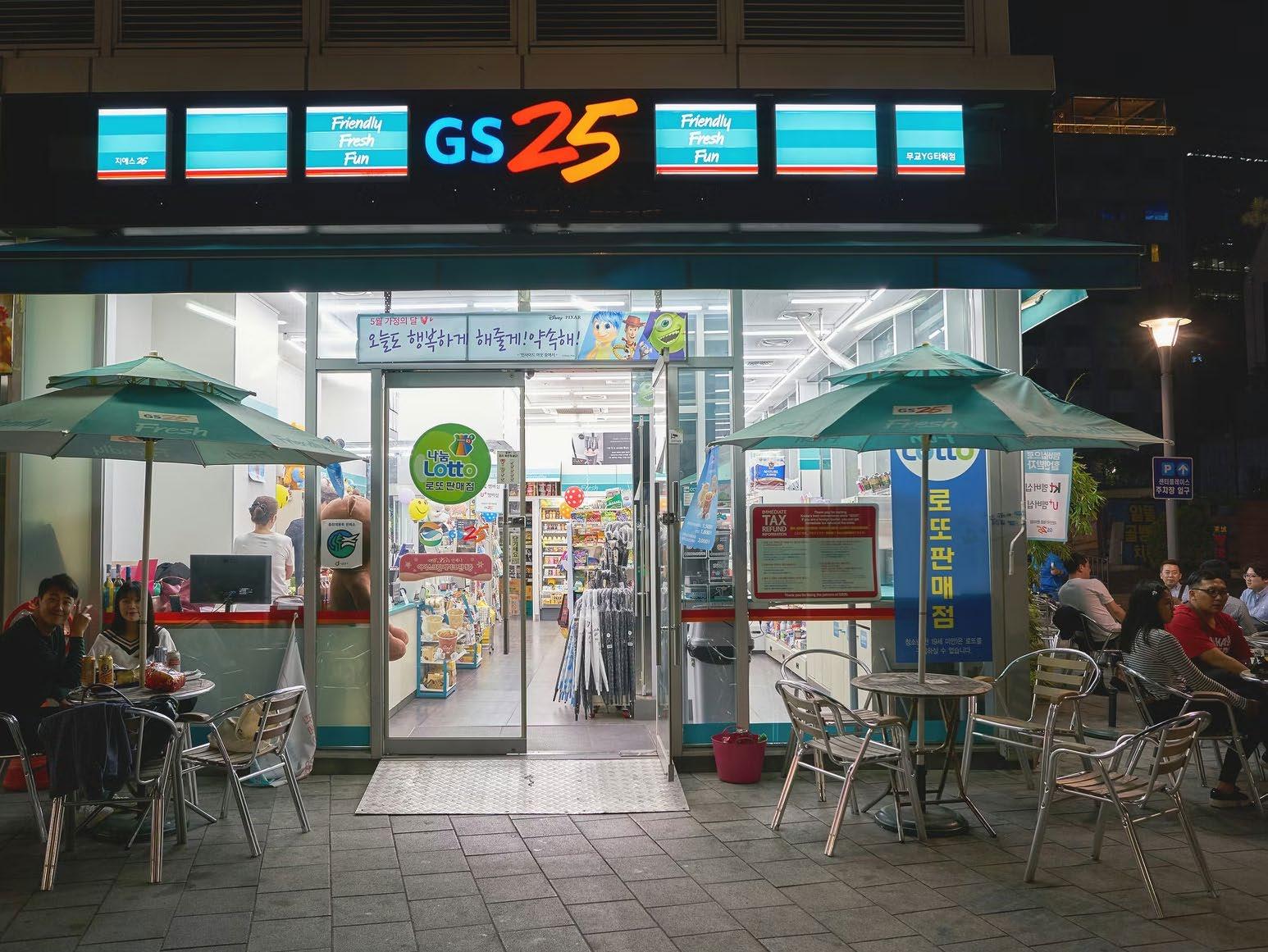
Additionally, South Korea is considered the global king of convenience stores, overtaking Japan and Taiwan with the highest density of stores, roughly one for every 950 people. These twenty-four-hour service centers are a cheap and easy option for everything from food and drinks to home goods and lifestyle services. Arriving from a culture boasting the most impressive and abundant convenience stores in the world, Korean immigrants have naturally brought the trend West and started their own shops. Since Toronto has the largest Korean immigrant population in Canada, a shop like Kim’s has been a common space within the city’s bounds.
Despite their popularity, in recent years, KoreanCanadian convenience stores have suffered amidst new regulations. In 2025, for example, United Korean Commerce & Industry Association of Canada released a statement opposing the banning of nicotine pouches in their stores, noting that this restriction results in a significant loss of income and clientele. Paired with gentrification projects constructing supermarket competition, this trend shows how shops that have thrived for generations are now facing pressure to either adjust or risk closure.
“This community need me. Even if Walmart moving in, people in neighbourhood need this store.”
—Appa
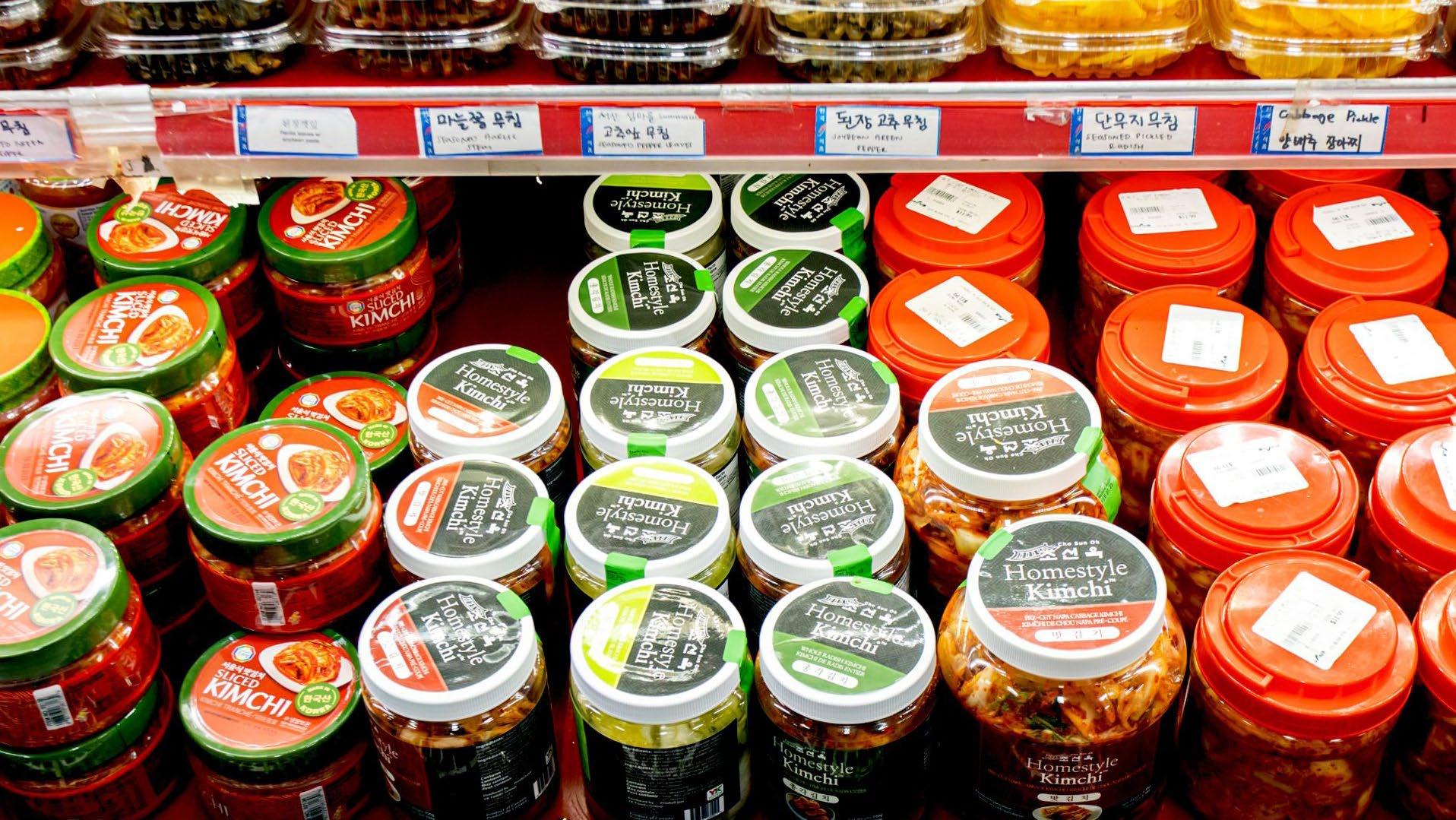
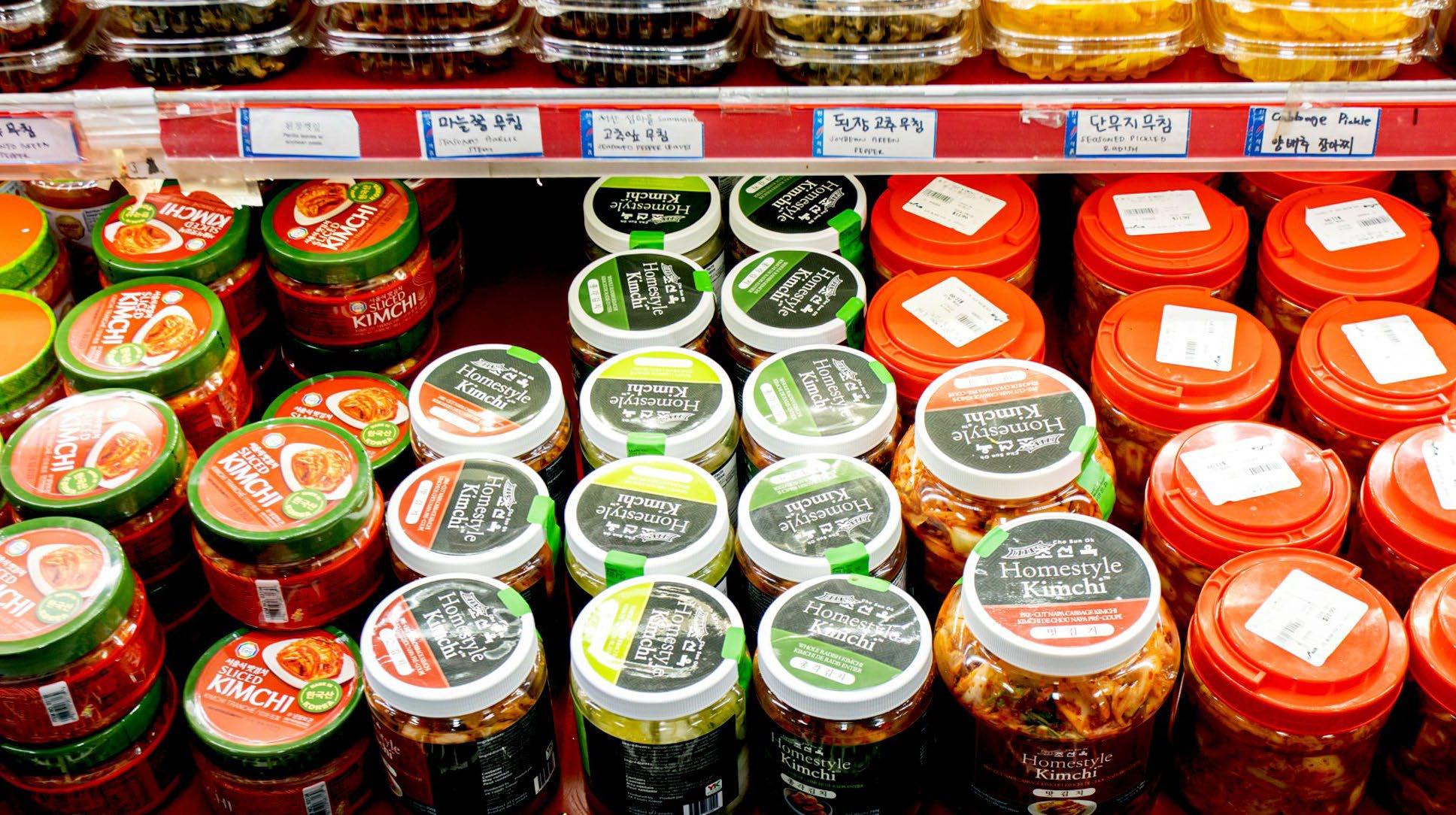
“Gamja Tang or Pork Mando Soon dubu?”

—Alex

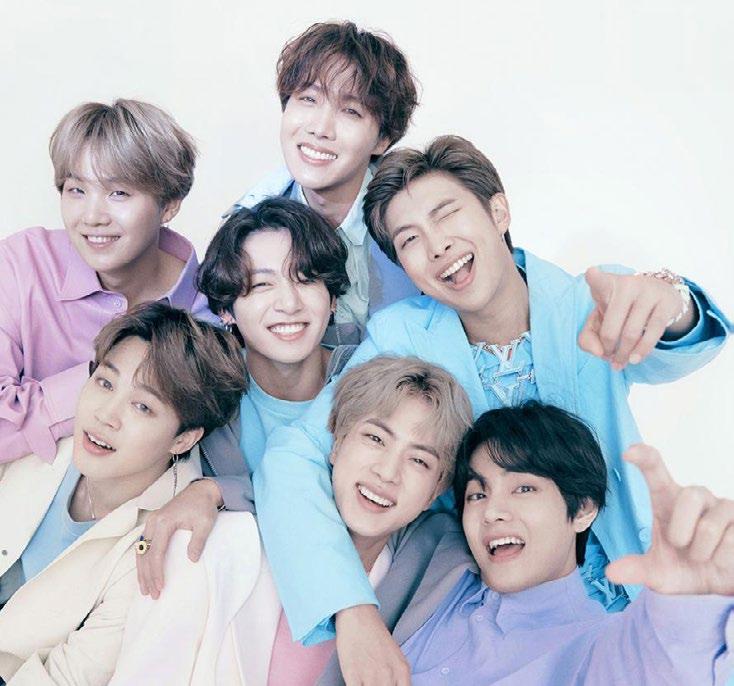
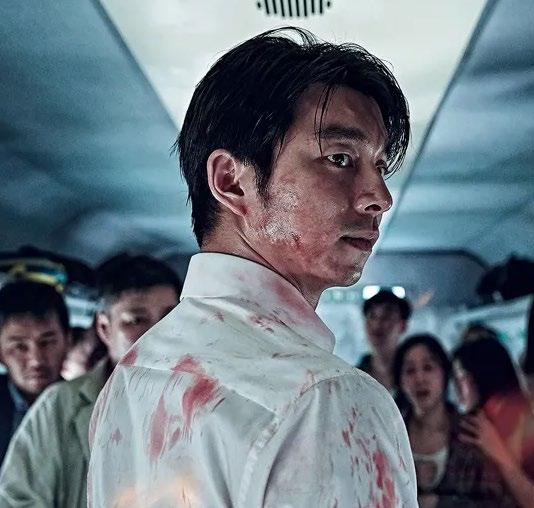

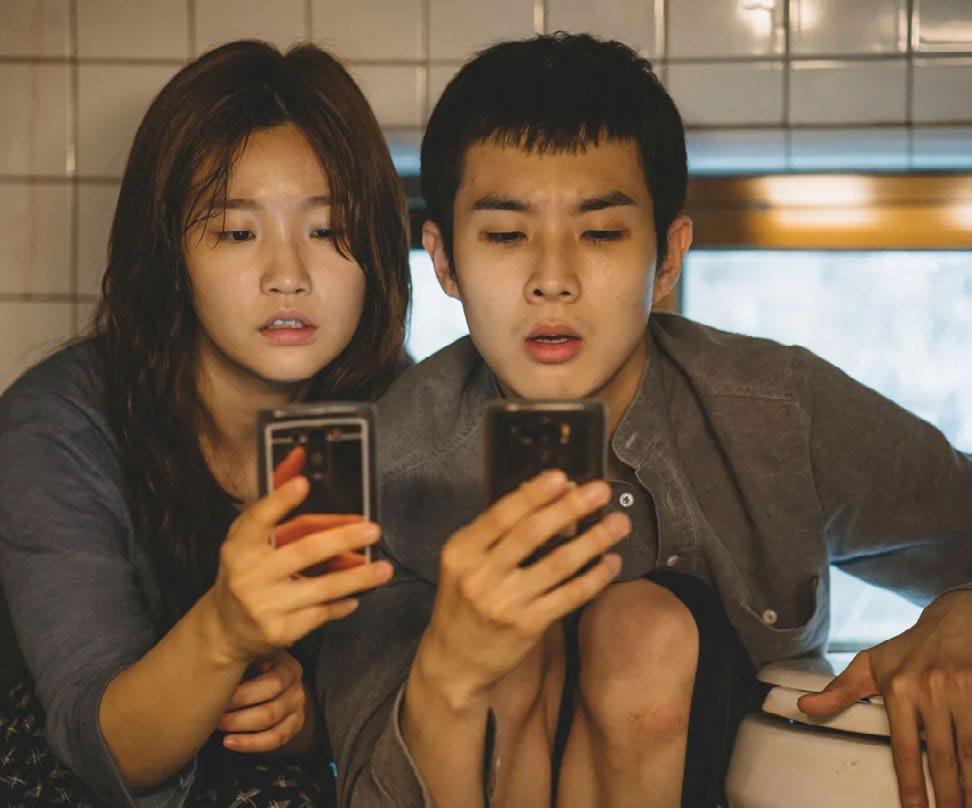

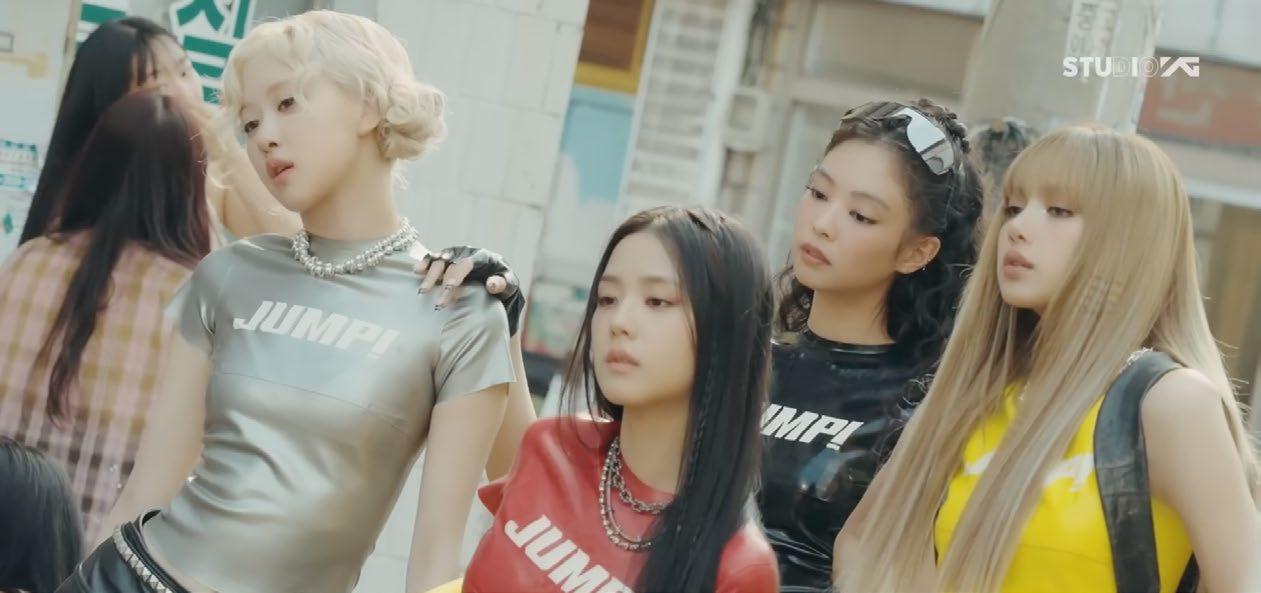
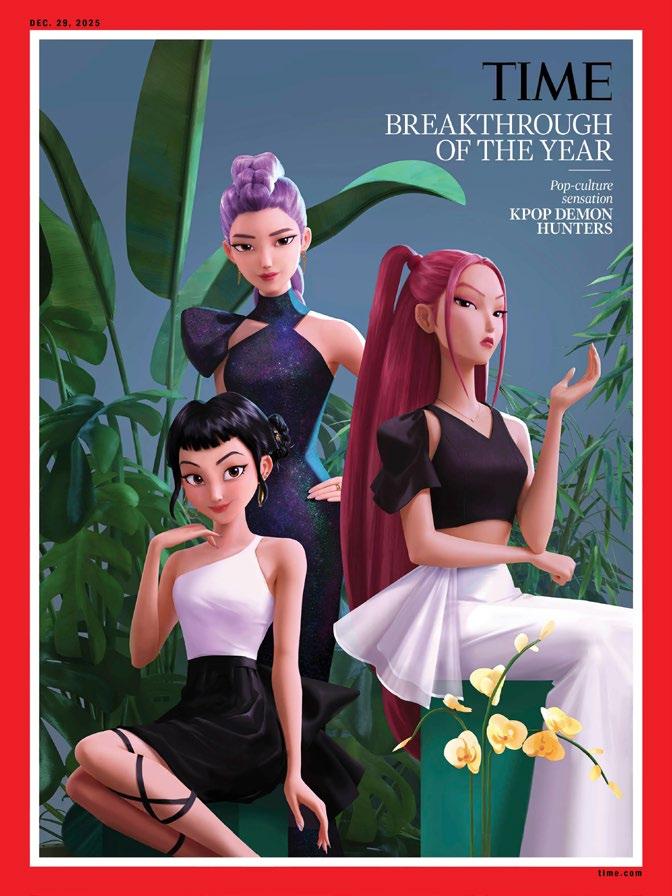
The setting of Kim’s Convenience in 2012 places it within the moment of hallyu, or the current Korean wave. During the past thirty years, there has been a global fascination with South Korean culture, from K-pop music to fashion and food items, all resulting from both national branding and the viral popularity of social media influencers.
In 2012, the year of the play’s setting, Psy’s song “Gangnam Style” became a global craze; in 2019, the film Parasite won the Oscar for best picture; and the infamous Squid Game series was released on Netflix in 2021; with the unmatched phenomenon that is the boy band BTS rising in stardom along the way. In 2025, KPop Demon Hunters became Netflix’s most-watched animated film and continues to garner various nominations and awards.
Amidst the hallyu craze, there has been an increased study of the Korean language worldwide, as it now holds the second most popular position in Asian languages on Duolingo, and the enrollment of American college students in Korean-language courses has nearly tripled. Given the play’s hallyu context, it is reasonable that a character like Alex, a Black Canadian, would be well-versed in Korean restaurants and dishes.
32-year-old 2nd generation Korean Canadian man. Son of Appa and Umma.
“I didn’t dream I’d end up renting cars to people, living in a shit hole, fighting all the time.”
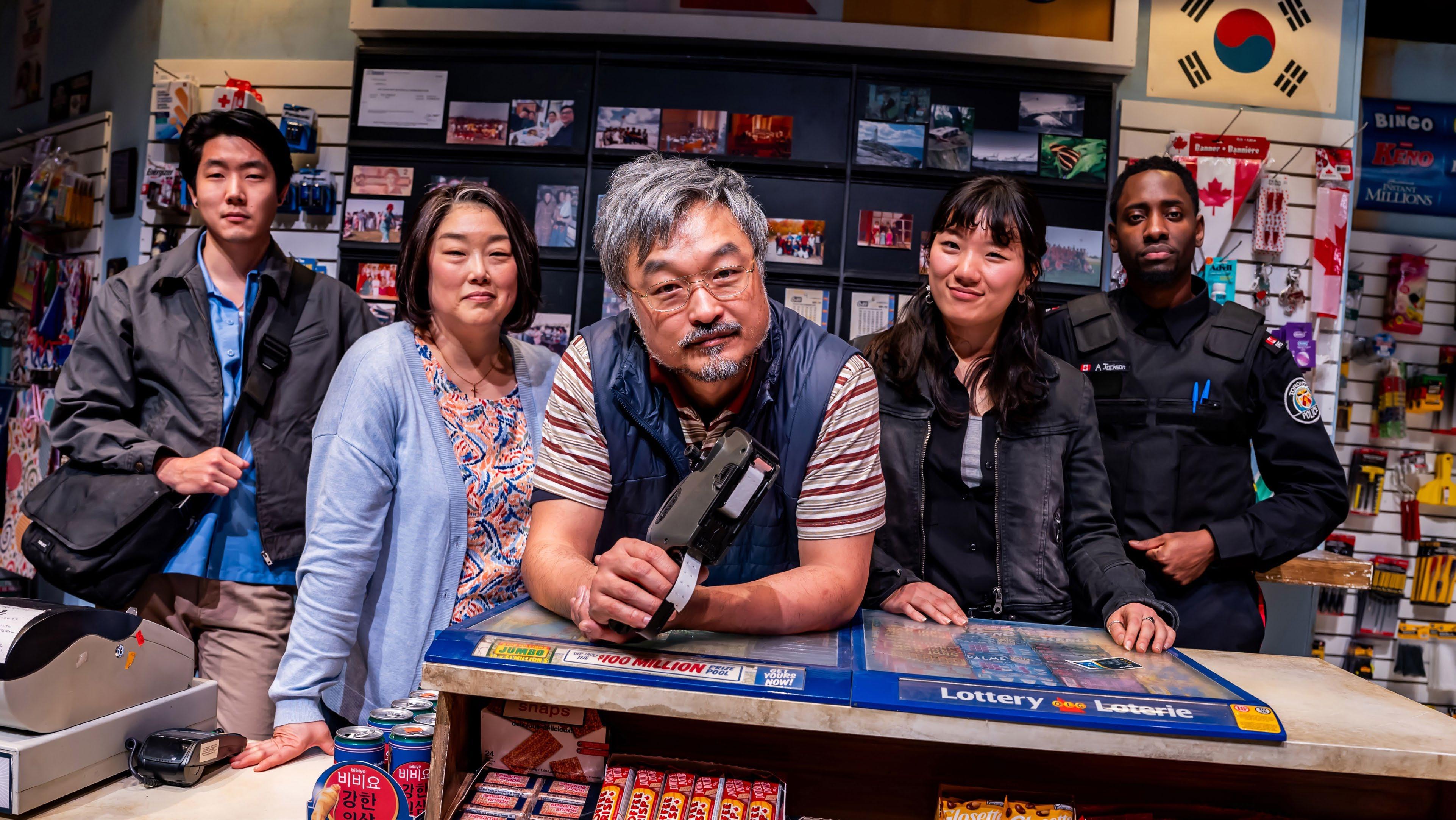
56-year-old 1st generation Korean Canadian woman. Wife of Appa.
“Bible say time to start, time to finish. Now is time to finish.”
32-year-old police officer. A childhood friend of Jung.
59-year-old 1st generation Korean
Canadian man. The owner of Kim’s convenience store.
“Me and Umma is struggle whole life to make life for you.”
30-year-old 2nd generation Korean Canadian woman. Daughter of Appa and Umma.
“But didn’t you do what you had to do so I wouldn’t have to do what I had to do but could choose what I wanted to do?”
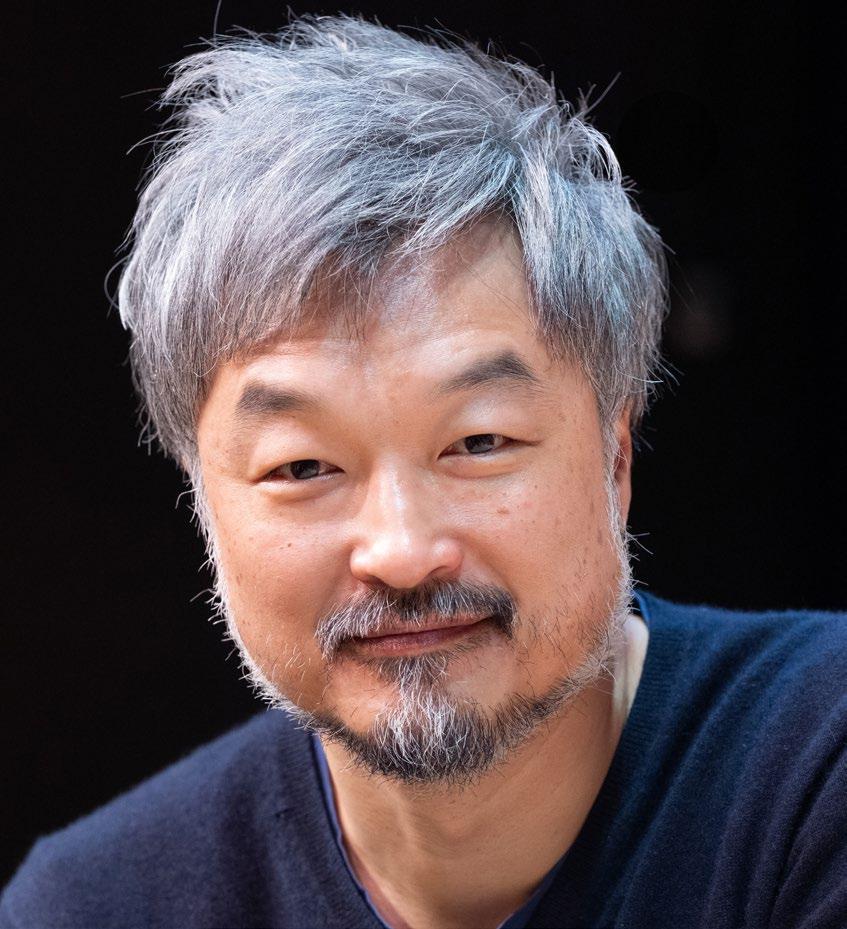
Key artists of Kim’s Convenience have participated in its development within many spaces. Playwright Ins Choi has performed both the Jung and Appa roles, and he returns as Appa in this production. Director Weyni Mengesha directed both the Canadian premiere production at Soulpepper Theatre and now this revival, along with joining the television series as one of the directors in Season 3.
Ins Choi is a writer and actor born in South Korea and raised in Canada. When his family immigrated in the 1970s, his uncle started a business called Kim’s Grocer, and both families lived above the shop while his dad worked as a pastor. When he decided to become a storyteller, he observed that there were very few professional models of Asian writers or complex Asian roles. His life’s work thus became a mission to expand Asian representation. He received his BFA from York University’s acting program and a Master of Theological Studies degree from the University of Toronto.
“The first generation survives so that the second generation can tell those stories.” —Choi

Weyni Mengesha is an Ethiopian Canadian director of stage and screen raised by immigrant parents. Traveling to Ethiopia as a child, she observed that while the media presented her family’s home country as a place of despair, its reality was rich and vibrant. In high school theatre, she experienced a lack of access to Black Canadian roles and stories and became inspired to repair the gap. She studied acting and then directing at York University. With decades of directing experience in theatre and film across the globe, she has led Kim’s Convenience in its Canadian premiere production and now this revival.
“There’s an intimacy to theatre that creates an ideal temporary community where we’re all together, sharing stories”
— Mengesha
“People who have only seen the TV show will be surprised by the dramatic thread running through the play”
—Choi
Kim’s Convenience has a unique history as a script that started as a play, became a hit TV sitcom, and then returned to its theatre roots. Choi first wrote the play in 2005 while struggling as an Asian actor to find complex and authentic roles. He joined the theatre company fu-GEN that centered Asian Canadian stories and felt inspired to write a personal drama within a safe space. He spent seven years developing the story in its early stages.
The play premiered at the Toronto Fringe Festival in 2011 after countless rejections from local companies, experienced great success, and then moved into its first full production at

Soulpepper Theatre in 2012. Following a years-long tour in Canada, it was developed into a CBC television series in 2016–the first to boast an all-Asian cast–and it later became a global phenomenon when it was acquired by Netflix. It enjoyed five successful seasons before ultimately returning to the stage.
In 2023, producer Adam Blanshay, asked to bring Kim’s Convenience to London for it’s European premiere in partnership with the Park Theatre, starring writer Ins Choi as Appa. After a sellout run at the Park Theatre Kim’s Convenience transferred to Riverside Studios before beginning a UK Tour in 2025. The European production inspired a revival production at Soulpepper Theatre, in association with American Conservatory Theatre and Adam Blanshay Productions, which ignited the current North American Tour being seen across the country today.
While Choi starred as son Jung in many of the earlier productions of Kim’s Convenience, he currently performs the role of father Appa, a testament to the impressive span of the play’s popularity. Fifteen years later, Choi is now a father himself, and feels that this was the role he was meant to play.
“Having a corner store where people know your order, your name or your bad habits is important.”
—Choi

The mission of Kim’s Convenience is to provide a genuine encounter with the first- and secondgeneration Korean immigrant experience in Western spaces. While located in Canada specifically, Choi’s drama offers a universal exploration of the immigrant struggle to succeed within the broader diaspora, while centering the particularities of Koreans specifically. It also functions as an ode to the neighborhood corner store and its communal necessity at a time when gentrification threatens small businesses on a global scale. Choi thus offers a monumental platform for not only authentic Asian representation but also support of local businesses.
“We all begin our lives in the shadow of our parents or our caregivers, but we all want to make a mark. We all want to achieve something.”
—Choi

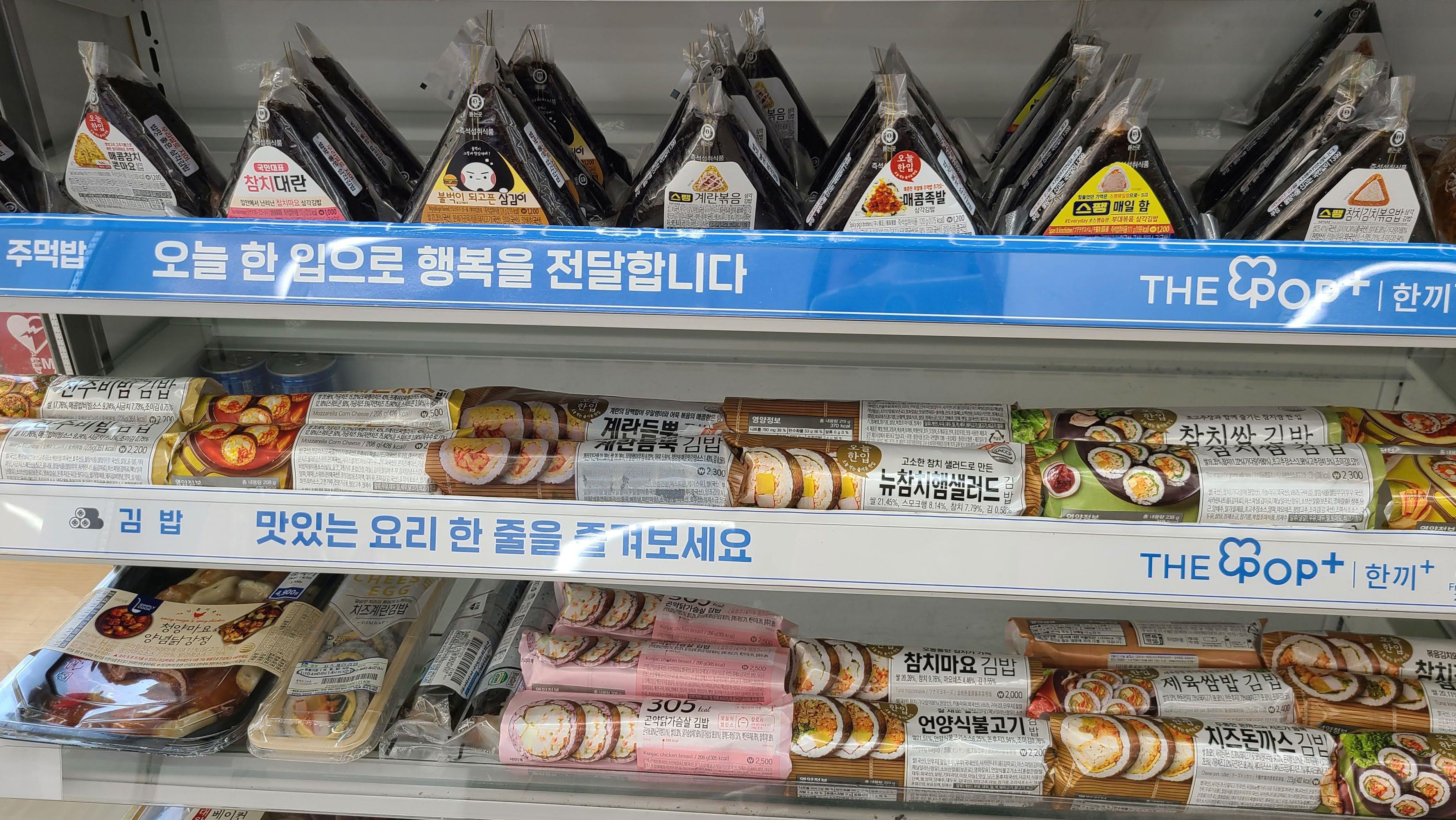
Gentrification is when a typically minority-composed neighborhood becomes populated by more affluent residents and higher-end businesses. This transition has become common in big cities, as lower property values and proximity to attractive city centers appeal to wealthier residents now uninterested in pricey suburban isolation. Amidst this shift, residents who have lived in these neighborhoods for generations can no longer afford to inhabit them. Residents become displaced, big businesses push out locally-owned shops, and the character of the neighborhood shifts along with their departure. In Kim’s Convenience, the Regent Park neighborhood is experiencing gentrification, which is why Mr. Lee wants to buy the long-running Kim’s business for a decent price.
“...once Walmart moves in, I’m sorry to say but that’s it. No one can compete with that kinda buying power.”
—Appa

From 1910 to 1945, concluding with the end of World War II, Japan occupied (ruled) the country of Korea. The result was a mission to eliminate crucial aspects of Korean culture in favor of Japanese features. Schools and universities forbid speaking of the Korean language, public spaces and entertainment shifted to Japanese, and it became illegal to teach history without approval from Japanese authorities. At this time, over 200,000 Korean historical documents were burned, native species and monuments were destroyed, and many families eventually adopted Japanese surnames to avoid discrimination.
Years after Japan’s departure from Korea, tension still exists today between the cultures. In the 2018 Olympic Winter Games, for example, one commentator faced scrutiny for claiming that Japan was to thank for Korea’s cultural and technological power, which many Koreans found insulting and a total erasure of their years of suffering under occupation.
During the 2010s, the time of Kim’s Convenience, it is clear that Appa’s generation still carries deep wounds from the occupation, which is why he refuses all interaction with any Japanese products such as the Honda outside his door.
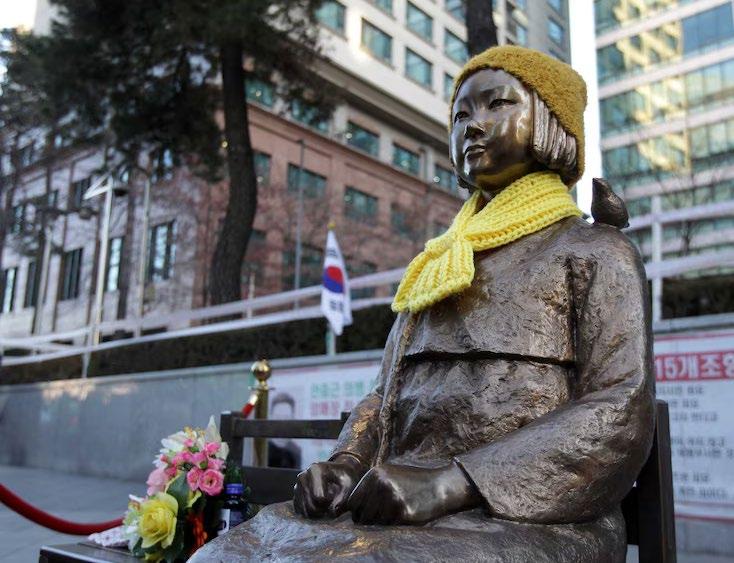
“How many times do I have to tell you, Appa, Japanese people aren’t the only ones driving Japanese cars.”
—Janet
There has been a prominent Korean community in Toronto for decades, a context that originated when Canadian Christian churches frequented Korea on religious missions following the Japanese occupation and second World War. The Canadian missionaries became embraced as a source of hope during troubled times. Years after the war, mission groups started sponsoring Korean students to study in Canada, and many other missionary-connected immigrants and their families soon followed. A mass migration of Koreans to Canada occurred in the 1960s and 1970s, and playwright Ins Choi and his family were a part of this group. Many of these new residents, most prominently located in Toronto, started businesses, becoming more likely than any other resident group to enter the retail field that the Kim family occupies.
“...the story of Korean immigration in Toronto melds the church and the store…they’re like the mother and father of the Korean community.”
—Choi
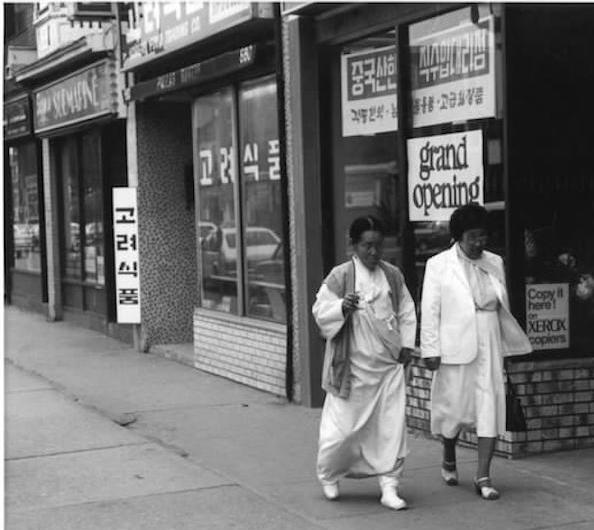
Due to racist legal exclusions, it was not until the 1960s that the mass arrival of Koreans and other Asia natives became possible in Canada. In these early years, new Eastern immigrants constructed churches as central spaces for community, forming the bedrock of most families like the Kims. However, similar to Jung and Janet in Choi’s story, a lot of second-generation kids who had grown up in the church became disinterested in remaining there by the late 1990s. This departure has been called a “silent exodus” in which many young Korean Christians became dissatisfied with what they considered to be outdated foundations: that being a good Korean mandated Christian faith, and that a community of a single ethnicity was preferable within the church. Despite their breaking from the physical church, many young Korean Canadians have maintained their faith connection, yet on their own terms. Christianity is thus still embedded within the culture, but it manifests differently with each generation.
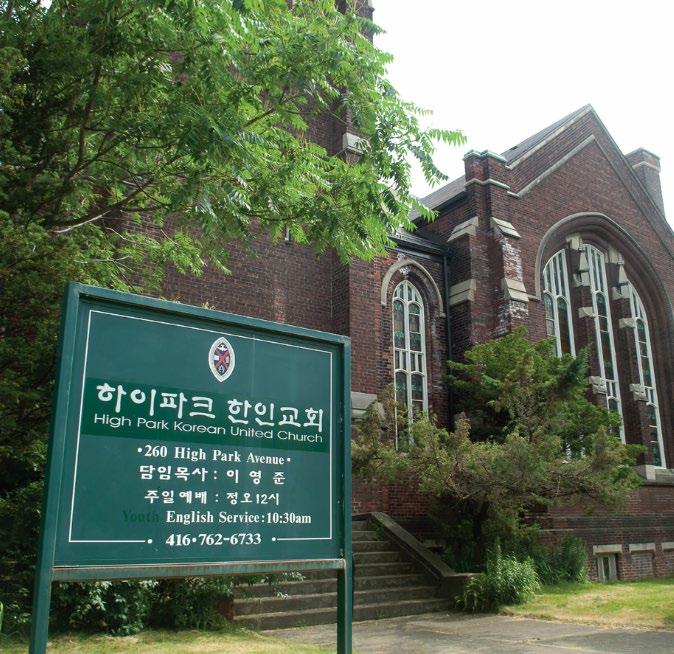
“What meaning is there to sharing the word of God if I have no love? Without love, it’s meaningless and amounts to nothing.”
—Umma and Jung
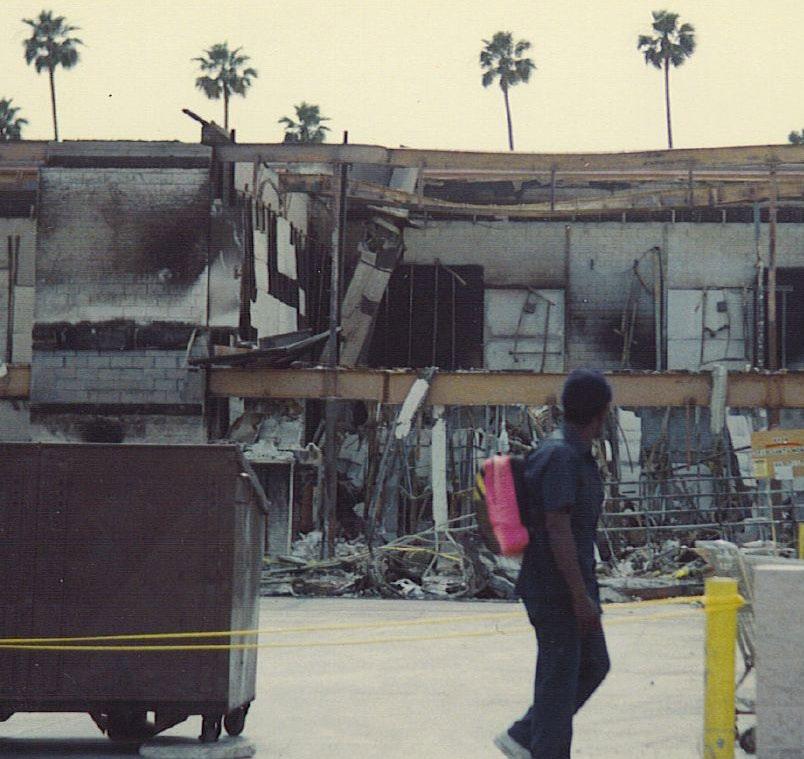
The LA Riots, often called the Rodney King Riots, was a sixday period of civil unrest that occurred in Los Angeles in 1992. It came about after three white officers were acquitted (faced no trial) for aggressively beating a Black man named Rodney King during a traffic stop. Due to widespread frustration that the men were not being held accountable for their actions, Black residents took to the streets, looting from and destroying local Korean businesses.
The targeting of Korean shops was not a random choice. At that time, Korean corner stores, just like Kim’s in Toronto, were common in poor Black American neighborhoods, and residents frequented them while Black shop owners resented their stronghold of the market. Additionally, a year prior to the uprising, Latasha Harlins, a fifteen-year-old Black teenager, had been shot and killed by a Korean shop owner. Korean businesses thus became a scapegoat amidst the rebellion, a symbol of oppression from foreigners that many felt undeserving of their status within the neighborhood.
Due to the prominence of the positive “model minority” myth that many Asians hold within America, and its sharp contrast with the negative image of Black delinquency, there is still tension between Asians and Black Americans, as the latter resent the frequent perception of their comparative inferior status. This is another factor that many have come to associate with the tragedy of the riots and is an aspect that continues to form tension between Asians and Black Americans today, which is widely acknowledged globally.
In the play, when Appa sees that Janet is interested in dating Black Canadian Alex, he shares that his Korean friend in LA actually experienced kindness from a Black client amidst the unrest, and he is therefore okay with the joining of the cultures that their dating would represent. This is one of many examples within the play that both addresses and also revises cultural stereotyping, as even Janet assumes that her own father is anti-Black before this moment.
“Alex is not Korean but if you want to marry him, that’s ok with me.”
—Appa
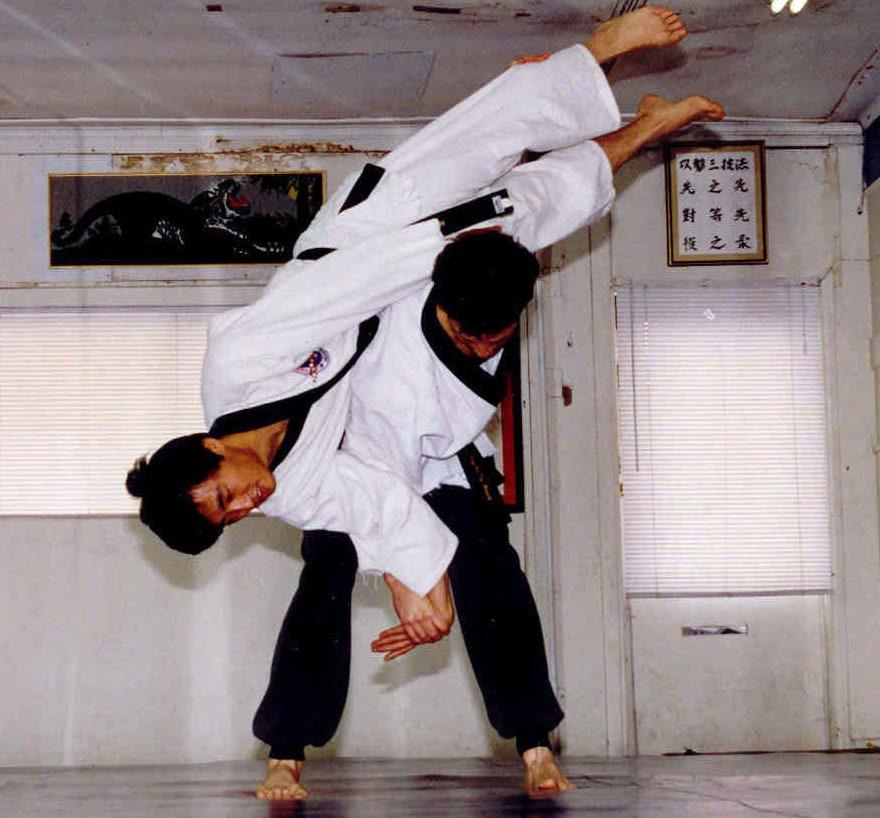
Hapkido is a Korean martial art whose name translates to “the way of coordinated power.” The art includes influences from both China and Japan, but its unique features are considered particular to Korea. It became a prominent practice in the 1950s and 1960s through the guidance of Choi Yong-sul, who spent his childhood in Japan practicing the art and then returned to develop it within his native Korea. Its three core principles are harmony (Hap), energy (Ki), and the way (Do), and its strategy for engaging with multiple attackers has become a wellrespected technique for self-defense among law enforcement and military organizations.
“I know hapkido. You know hapkido? It’s Korean fighting style. That’s big mistake for you.” —Appa
A crucial aspect of modern Western culture is the experience of immigrant kids and the children of immigrants, contexts with which many young people today can relate. Harvard’s Immigration Initiative calls a person born outside of the country but now residing here first-generation, someone who came here as a child 1.5-generation, and the offspring of immigrant parents who are born here second-generation. This means that Jung and Janet–Appa and Umma’s children–are classified as second generation kids. Additionally, just like many first-generation immigrants experience collective fear and discrimination despite their differences, 1.5-generation and second-generation kids have much in common, such as the need for code-switching and disconnection from their parents’ longstanding history in another culture.
Describe your own experience with immigrant identity in America. Are you first-generation, 1.5-gen, or second-generation, and if so, how have you connected to or disconnected to other immigrant groups? Or–if you do not personally fall into one of these groups, what has been your interaction with those who do?
“Appa invest to you and what you doing? Waste time. Waste money. Waste hope. What I still owe to you?”
A key aspect of generational divides is code-switching, which is when young people shift their language or speaking style between parents/adults and friends. What has been your own experience with code-switching?
Have you ever experienced a misunderstanding with a parent or other adult that you feel is due to generational differences? If so, what did you say or do?
A central theme of the Kim’s Convenience story is legacy, or what you leave behind for your family or community. Appa wants to ensure that his children maintain the family business so he can have something to show for a life of hard work. At the same time, Janet and Jung have distinct perspectives about the inheritance or acquiring of that legacy. Janet prefers photography to the family business, while Jung holds a life-long interest in carrying on that legacy, despite years of absence. The parental desire to leave something behind is common, and it’s interesting to observe how children respond to this expectation differently.
“I just sell store then my story is over. Who is Mr. Kim? nobody know that. You take over store, my story keep going.” —Appa
Have you ever felt pressure from your parents or other adults to achieve a specific goal that was not your own? How did you respond?
What sort of change in the world do you hope to contribute as part of your own legacy?
Cultural stereotyping is presented in many forms within the Kim’s Convenience story. Appa generalizes his diverse customers as a means to predict their behavior within his business, and the customers also generalize him, with clients like Jamaican Mike assuming his passivity as an older Korean man and therefore trying to take advantage of him. The story thus presents many lines of stereotyping, but it also clearly means to critique and question such behavior. It aims to feature such thinking as oldfashioned, as something that older generations practice while young people find it harmful and embarrassing.
“Fat Black girl is no steal. Fat white guy, that’s steal.
Have you ever felt stereotyped due to your cultural heritage? What did you say/do?
Have you ever come to realize that you had stereotyped someone from another culture? What was the result of that recognition?
Fat guy is Black, brown shoes, that’s no steal. That’s cancel out combo.”
Can you think of examples from either your own life or the media that reveal young people’s desire to avoid cultural stereotyping?
What is your Kim’s Convenience? In other words, do you have a local business that you frequent where you are happy to be a familiar face?
Kim’s Convenience is featured as a long-standing fixture of the Regent Park community within Choi’s play, with visitors like Mr. Lee presented as familiar faces who maintain a close relationship with their local businesses. Appa knows Lee’s parents, and Lee is aware of the challenges that the Kims have faced with Jung since he was young. The Korean convenience store has been a historical gathering space in both Canada and the U.S., where owners like Appa know customers by name and enjoy an engagement with their surrounding neighborhood.
Who’s your Mr. Kim? In other words, who is a familiar person within your neighborhood that everyone knows and respects? What is your own interaction like with them?
“Oh, Mr. Lee! My black friend with Korean last name” —Appa
If you could design an ideal community space, what would it provide?
About Regent Park. Live in Regent Park.
Actor and playwright Ins Choi: “If a character is written truthfully, lovingly, it’s not a stereotype.” by Alice Saville. The Guardian, September 6, 2024.
Artistic director Weyni Mengesha sets the stage for diverse stories. TO Live.
Asian Heritage in Canada: Ins Choi. Toronto Metropolitan University.
Changemakers Series Ep4: What Art Teaches Us in Perilous Times with Weyni Mengesha by John Monahan. University of Toronto, HartHouse.
Convenience Stores in Canada - Market Research Report (2015-2030) by Federico Irigoyen. IBISWorld, August 2025.
How Japan Took Control of Korea by Erin Blakemore. History, Updated May 28, 2025.
Independent Convenience Stores Across Canada Prepare to Celebrate National Convenience Week and Call for Action to Help Local Stores Stay Open. United Korean Commerce & Industry Association of Canada, August 14, 2025.
Ins Choi. The Huntington, June 2025.
Ins Choi. Our Theatre Voice.
Instant Ramen and Influencers: Inside the World of South Korean Convenience Stores by Jessie Yeung. CNN Travel, July 18, 2024.
“I’ve been preparing for this my whole life”: Kim’s Convenience creator Ins Choi on the show’s new theatrical production by Anthony Milton. Toronto Life, January 29, 2025.
Kilian Melloy Interviews Playwright Ins Choi, whose play, ‘Kim’s Convenience,’ opens at The Huntington by Kilian Melloy. New England Theater Mirror, October 30, 2025.
‘Kim’s Convenience’ Is A Sitcom About Asian Immigrants — With Depth by Ashley Westerman. NPR, January 9, 2019.
Korea Town and the History of Koreans in Toronto by Joel Levy. Toronto Guardian, August 20, 2013.
Rent Hikes Undermine Regent Park Revitalization Efforts by Laura Hull. The Bridge Community News, February 2025.
Rodney King Riots: Korean-Black Conflict by Luke Owens. HistoryHub, July 26, 2023.
South Korea brought K-pop and K-dramas to the world. The Korean language could be next by Jessie Yeung. CNN, January 17, 2023.
The Ancient Origins and Modern Evolution of Hapkido Techniques by Execute Martial Arts.
Understanding Gentrification and Displacement. The Uprooted Project at The University of Texas at Austin.
Why these Asian Canadians are leaving their parents’ churches by Stephanie Bai. Broadview, January 18, 2022.
Christine Breihan
Resident Teaching Artist
Zachary Bones
Teaching Artist
Tara Ricasa
Teaching Artist
Carene Mekertichyan
Teaching Artist
Julie Taiwo Quarles Writer
Lila Wakili Senior Graphic Designer
Traci Kwon Arts Education
Initiatives Director
GHOST LIGHT
Center Theatre Group’s Student Matinee Program is made possible in part by the City of Los Angeles Department of Cultural Affairs, California Arts Council, The David William Upham Foundation, Edison International, Ella Fitzgerald Charitable Foundation, Lawrence P. Frank Foundation, L.L. Foundation for Youth, Pasadena Showcase House for the Arts, Sascha Brastoff Foundation, and Center Theatre Group Affiliates.
Additionally, Education & Community Partnerships programming is made possible by the following individuals and partners: Robert Abernethy, Anonymous (2), Wendy Chang, Bernie Cummings & Ernie Johnston, Noah Francis, Gary and Cindy Frischling, Marc and Aliza Guren, Supervisor Lindsey P. Horvath, Melissa McCarthy, Cindy Miscikowski, Louise Moriarty and Patrick Stack, Edward and Deena Nahmias, The Capital Group Companies Charitable Foundation, Tom Safran, Glenn and Andrea Sonnenberg, and Diana Buckhantz and the Vladimir & Araxia Buckhantz Foundation.
Bank of America, Dwight Stuart Youth Fund, Friars Charitable Foundation, The Otis Booth Foundation, The Rosalinde and Arthur Gilbert Foundation, Rosenthal Family Foundation, and U.S. Bank.


A ghost light is an electric light bulb that theatres leave burning onstage whenever a theatre is dark. The light ensures that nobody accidentally hurts themselves in the dark building. Some superstitious theatre folks also believe that a ghost light keeps any spirits who may live in the theatre happy and at ease.
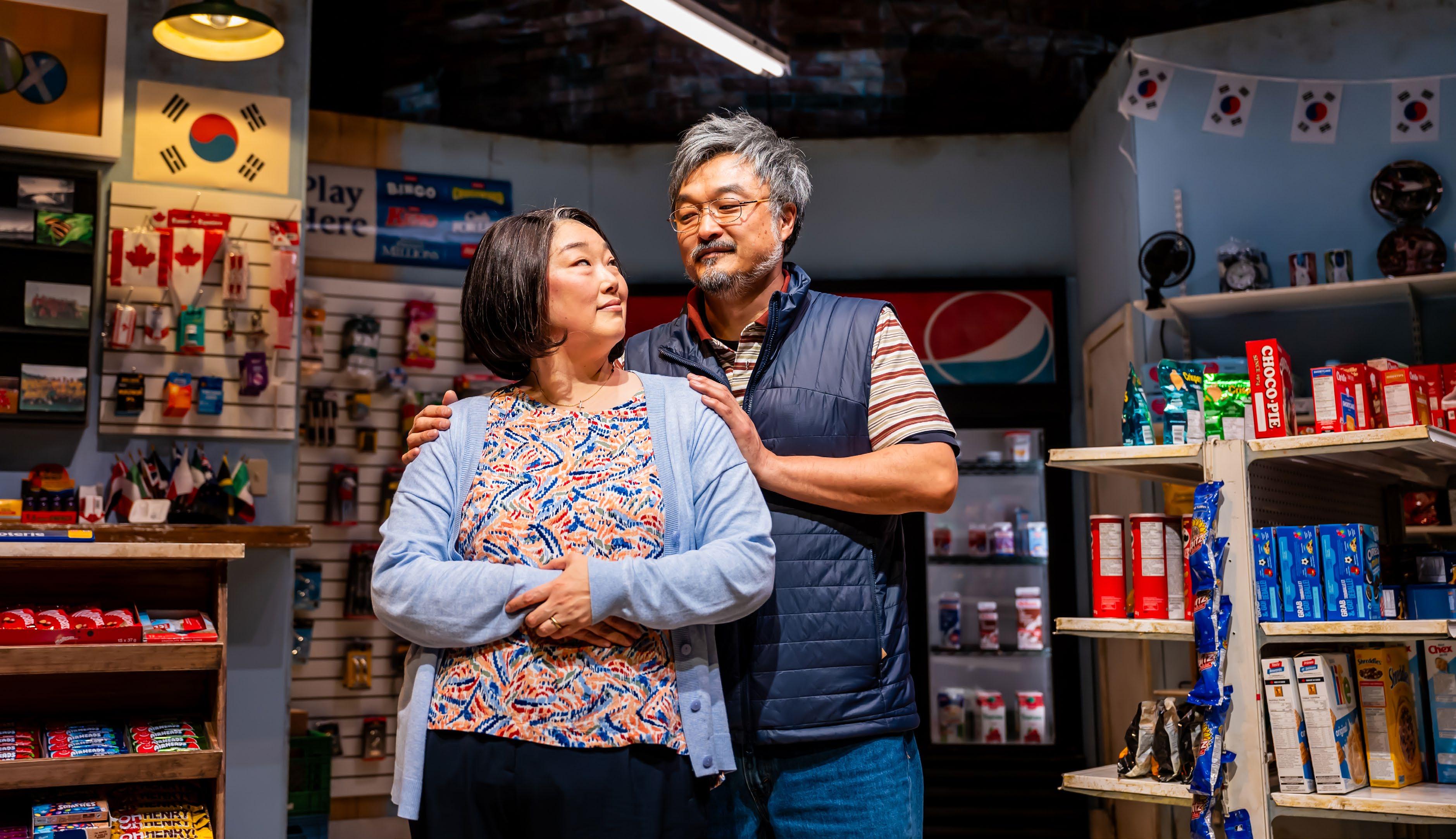

“My story is not Kim’s Convenience. My story is you. And Janet. And Umma. And Sonam. You understand?” —Appa