




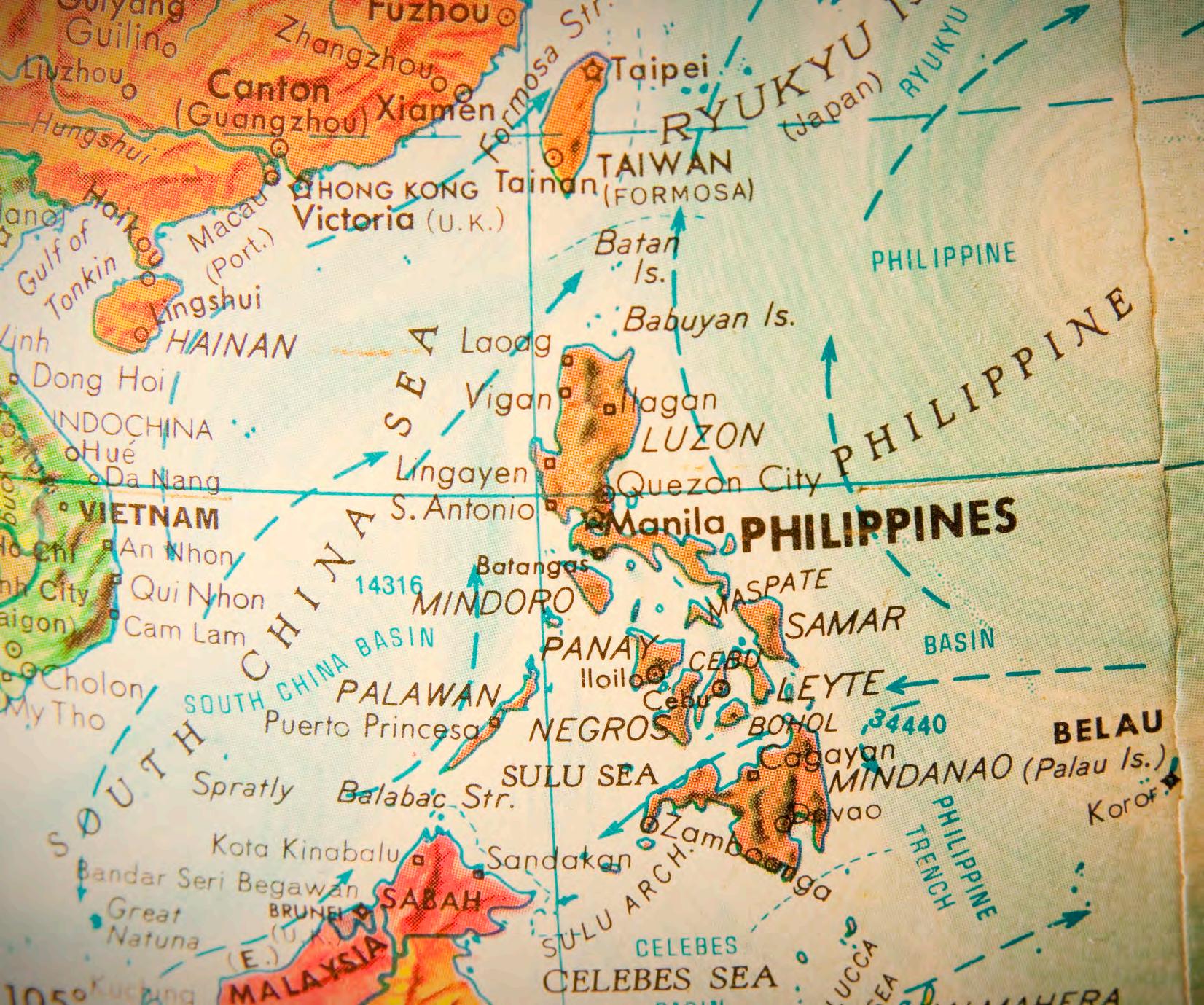

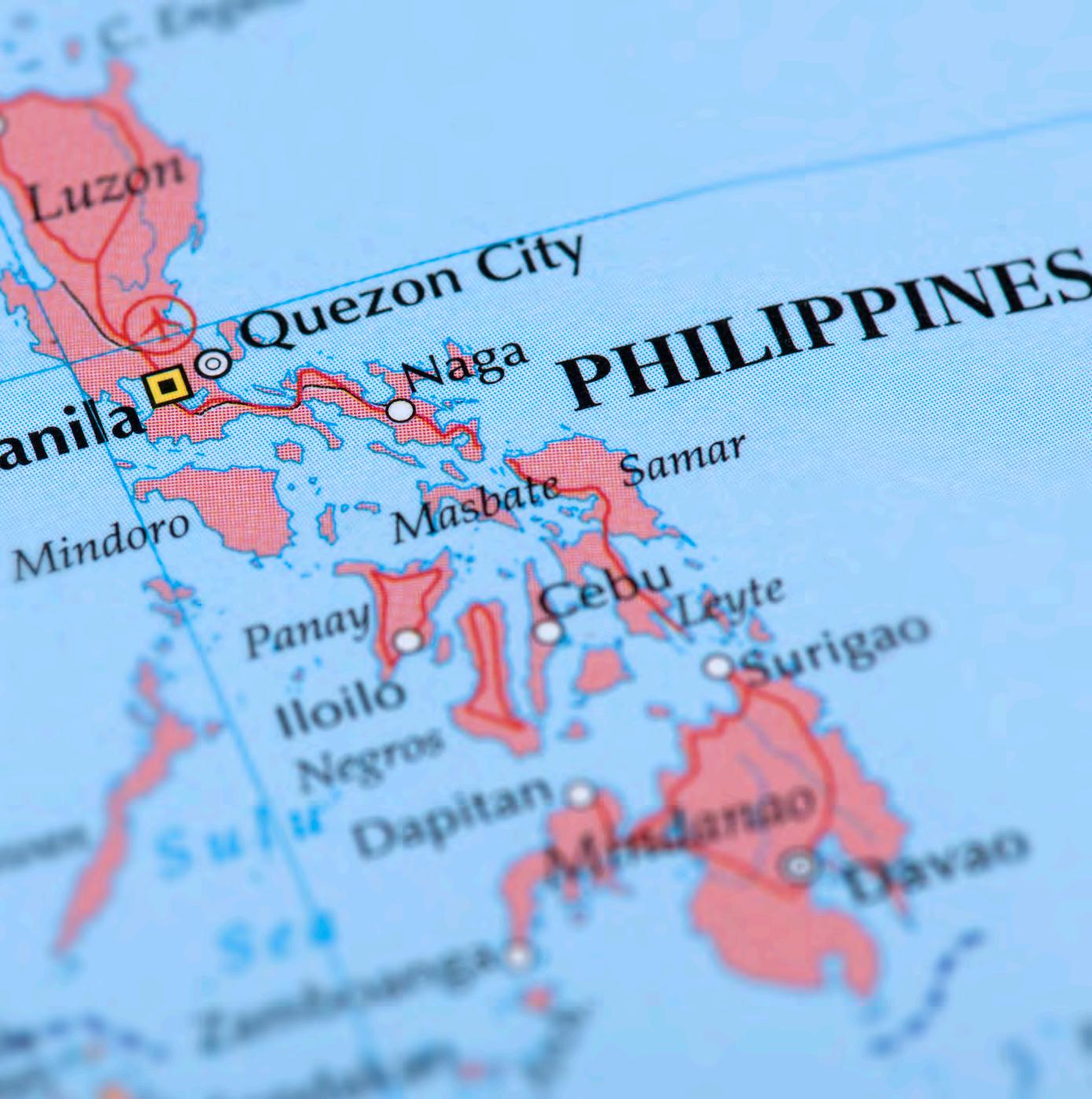
Here Lies Love is set in Manila, Philippines, the capital city of a nation made up of over 7,000 islands. Located in Southeast Asia in the Pacific Ocean, it is home to many Indigenous Peoples of the Philippines, including the Igorot in northern Luzon, and the Lumad on the southern island of Mindanao. We acknowledge and honor all the Elders and Indigenous Peoples of the Philippines who are the culture bearers and are our past, present, and future storytellers.
Center Theatre Group’s production of the musical will take place at the Mark Taper Forum—home to the Tongva and Chumash peoples. Center Theatre Group acknowledges, with deep respect, their memories, their lives, their descendants, and their continued and ancestral stewardship of this land.
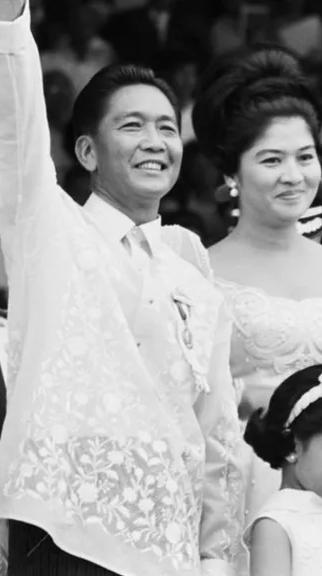
Here Lies Love is a disco musical about former First Lady of the Philippines Imelda Marcos and her family’s rise to power and subsequent fall at the hands of the Philippine People Power Revolution. The audience witnesses her journey starting from her growing up in Leyte before moving to the big city of Manila. Upon meeting politician Ferdinand Marcos, their romantic courtship leads to marriage. During Marcos’ first presidential campaign, Imelda slowly amasses more influence and political power.
When Senator Ninoy Aquino speaks out in opposition to the Marcoses, Imelda and Ferdinand have him imprisoned alongside all the other political leaders who were organizing against them. President Marcos declares martial law, taking full control of the nation in the name of public safety. After Aquino spends seven years in prison, Imelda sends him to the United States in exile. Marcos wins his second re-election campaign, but political scandals and corruption rock the regime. Imelda steps more into the spotlight as her husband appears less frequently.
Meanwhile, Aquino plans to return to the Philippines, but is assassinated when he gets off his plane at Manila International Airport. As Aquino’s body is brought through the Manila streets, the Philippine people show up in hundreds of thousands to pay respects, including Aurora Aquino, Ninoy’s mother.
Aquino’s death sparks the beginning of the People Power Revolution, where hundreds of thousands of Philippine people call for Marcos to step down. Though another presidential election is held with Marcos as the winner, the Philippine people take to the streets in nonviolent protest for four days. At the end, the Marcoses flee the Philippines.
The show’s title references Imelda’s self-proposed headstone.

“I COULD BE A DANCER MAYBE, I COULD BE A JUDGE.”
–Prologue: American Troglodyte
IMELDIFIC
the host of the show, a drag queen who idolizes Imeda


“THERE ARE MANY WAYS TO WIN A GAME”
– A Perfect Hand
FERDINAND MARCOS
Imelda’s husband and President of the Philippines

“WHAT’S WRONG –WHAT’S RIGHT?”
– Why Don’t You Love Me
IMELDA MARCOS
born Imelda Romualdez, former First Lady of the Philippines, Ferdinand’s wife
“I GOTTA SPEAK MY MIND NO MATTER WHAT THE COST.”
– Opposite Attraction
NINOY AQUINO
Philippine Senator and political opposition to the Marcoses, Aurora’s son and Cory’s husband


“MY SON WAS A DRUMMER THIS I NOW UNDERSTAND.”
– Just Ask the Flowers
AQUINO’S MOTHER / AURORA AQUINO
Ninoy’s mother and storyteller during his funeral

“IT’S NO INSULT TO BE POOR.”
– Solano Avenue
ESTRELLA
Imelda’s maid friend from her hometown in Tacloban
ENSEMBLE group of Filipino/a/x and Asian American Pacific Islander performers who play multiple characters including Interviewers, Press Attaches, and TV Reporters.
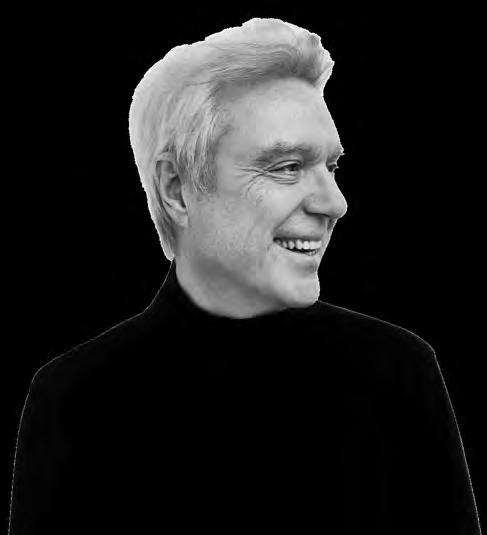
David Byrne is a Scottish-born musician and artist, best known as the frontman for American artrock group, Talking Heads which he co-founded in the 1970s. After the group dissolved in 1991, Byrne continued his solo career, spanning music, film, and theater. Byrne has received numerous awards including an Oscar and GRAMMY and was inducted into the Rock and Roll Hall of Fame as part of Talking Heads.
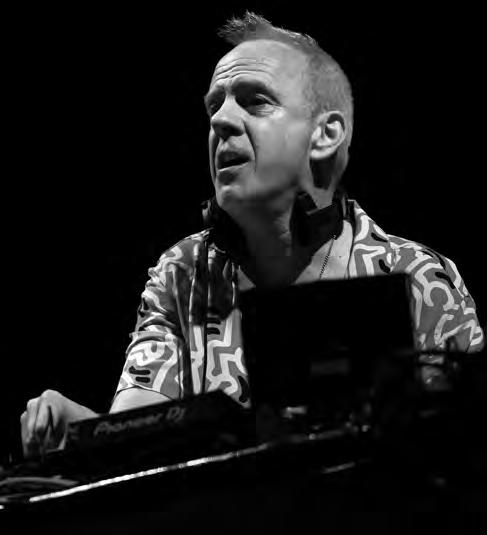
FATBOY SLIM Music
Fatboy Slim, born Quentin Leo Cook, eventually changing his named to Norman Cook, is a music artist, composer, and DJ from the United Kingdom. Slim holds a place in the Guinness Book of Records for achieving the most UK Top 40 hits under different names.
“This story is very relevant to today, not only in the U.S., but lots of places around the world where democracy is in danger and the disparity of wealth becomes extreme.
The Marcos’ celebrity and power in politics feels very contemporary, from the 60s, 70s, into the 80s, this is the template that has been followed ever since. What the Philippine people did, a peaceful revolution, is a lesson for all of us.”
–David Byrne

SNEHAL DESAI Director
Prior to being named Center Theatre Group’s new Brindell & Milton Gottlieb Artistic Director, Snehal Desai was the Producing Artistic Director of East West Players, the nation’s largest and oldest Asian American theatre company. As an artistic leader, Desai has sought to raise awareness on social issues that affect Angelenos through impactful and empowering storytelling. He is a graduate of Emory University and the Yale School of Drama.
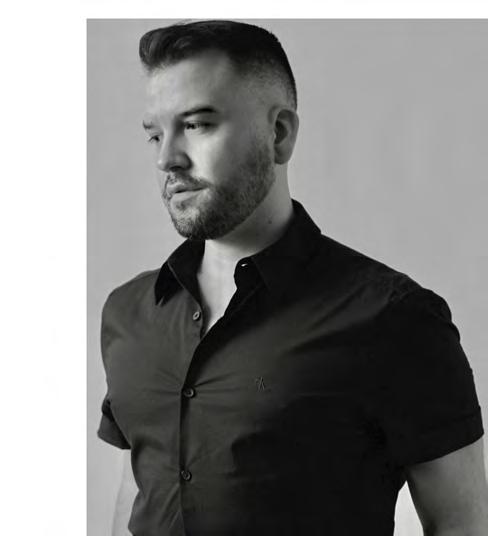
WILLIAM CARLOS ANGULO Choreographer
William Carols Angulo is a director, choreographer, playwright, and educator of South American descent, from Chicago, IL. Angulo won a Jeff Award for his original choreography for Paramount Theatre’s revival of West Side Story, and he was honored with an ALTA Award for his choreography in La Havana Madrid at Steppenwolf Theatre and The Goodman Theatre. He holds a BFA. in musical theatre and drama from Indiana University and trained on scholarship at Hubbard Street Dance Center and Ballet Chicago.
Joining the creative and design teams are additional Filipino/a/x and Asian American Pacific Islander artists.


Here Lies Love tells a fictionalized account about actual historical events.
While some of the lyrics are lifted directly from speeches and inspired from interviews, recordings, and quotes, the creators make choices that may not always be historically accurate. To tell a story in an hour and a half, writers may opt to simplify parts of the history, combining historical figures into one character or omitting certain perspectives to keep the focus on the main character. It is recommended that theatergoers investigate these histories for themselves to see what a production may have missed or changed!
Other musicals that use a similar biographical storytelling device include Evita about Argentina’s Eva Perron, Hamilton about Alexander Hamilton, and On Your Feet! about Emilio and Gloria Estefan.
“I Know That When My Number’s Up When I Am Called By God Above Don’t Have My Name Inscribed Into The Stone Just Say: Here Lies Love...”
– Imelda, “Here Lies Love”

Here Lies Love is a story told primarily through songs with very little traditional dialogue, which appear more commonly in musical theatre. The music is heavily influenced by the genre of disco, a type of popular dance music.
Disco comes from the word “discotheque” and was most popular in the 1970s. New York City was the epicenter for the disco scene, and in the 1970s disc jockeys—or DJs—were playing disco music at clubs around the city, including at the iconic Studio 54. Some notable song examples from this genre include “I Will Survive” by Gloria Gaynor, “September” by Earth Wind and Fire, and “Hot Stuff” by Donna Summer.
This all-new production will also feature a television variety show component. The Imeldific character is modeled after talk show hosts and some design elements are inspired by these game shows. Philippine TV variety shows continue to be a staple in households across the country. Broadcast by major media outlet ABS-CBN, variety shows include different segments and games where audiences get to play. Some of the most popular shows in Philippine history include Eat Bulaga! and Wowowee.
Though variety shows in the United States are not as popular, the genre still influences television including late-night talk shows and NBC’s Saturday Night Live.
“The mindset of the Marcos regime and the mindset of disco music to me doesn’t seem all that distant....”
–David Byrne, The Guardian (2014)

The Philippines is an island country of Southeast Asia located in the western Pacific Ocean. The Philippine people are also referred to as Filipinos and Filipinas. It is an archipelago of more than 7,000 islands and islets and is neighbor to Vietnam, Malaysia, Indonesia, and Japan. Its capital city is Manila, which is located on Luzon, one of three major islands with the other two being Mindanao and Visayas.
Named after King Philip II of Spain, the Philippines was a colony of Spain for over 300 years. Approximately four-fifths of the population identify as Roman Catholic.
Under U.S. rule for 48 years from 1898 to 1946, English is one of two official languages, Filipino, based on Tagalog, being the second. However, there are estimated to be more than 150 languages spoken in the Philippines, influenced by geography and the ethnic groups in the region. The Philippine government and public school system were copied from U.S. political and educational systems.
1565–1896: Spain begins colonizing the Philippines in 1565. By August 1896, the Philippine nationalists revolted against Spanish occupation.
1898: The U.S. declares war on Spain in April 1898. By December 10, The Treaty of Peace in Paris ends the war between the United States and Spain. The U.S. buys the Philippines from Spain for $20,000,000. No Filipinos were included in the discussions.
U.S. INVOLVEMENT, INTEREST, AND INTERFERENCE IN THE PHILIPPINES
1899–1902: The Philippine Republic declares war on U.S. forces on February 4, 1899 resulting in the Philippine-American War from 1899-1902. American involvement continues by claiming that the Philippine populace is incapable of self-government.
1946: The Philippines gains independence from the United States after World War II on July 4, 1946.
1954: Imelda and Ferdinand Marcos meet one evening at the House of Representatives. Eleven days later, they are legally married.
1969: Aquino publicly criticizes the First Lady’s expensive construction projects.
1970: Referred to as The First Quarter Storm, the Philippine people, especially university students, lead mass protests for political reform from January 26 to March 17.
1983: Aquino returns to the Philippines and is immediately assassinated. Hundreds of thousands of people fill the streets of Manila for Aquino’s funeral procession.
1972–1979: Marcos declares martial law, citing the threat of the Communist Party. During this time, 70,000 people are incarcerated, 35,000 tortured, and 3,200 killed.
1950s–1980s: U.S. involvement extends into every single Philippine election during the 1950s. U.S.-Philippine international relations are heavily intertwined, including visits from American political figures on Philippine soil (including Ronald Reagan) and visits from the Marcoses to the White House.
1969: Marcos is re-elected for a second term. An economic crisis combined with the effects of the Marcoses spending creates public dissatisfaction.
1965: Marcos is elected President of the Philippines. After hospitalization and therapy, Imelda joined her husband during his campaign.
1980: Aquino leaves for the United States after spending seven years in prison.
1971: The Plaza Miranda bombing kills nine people and injures many others. Marcos blames the Communist party. Aquino and other opposition leaders are imprisoned.
1986, FEB 22-25: Participating in a peaceful mass demonstration, hundreds of thousands Filipinos gather at Epifanio de los Santos Avenue, or EDSA. The revolution was nonviolent and ended without a single casualty.
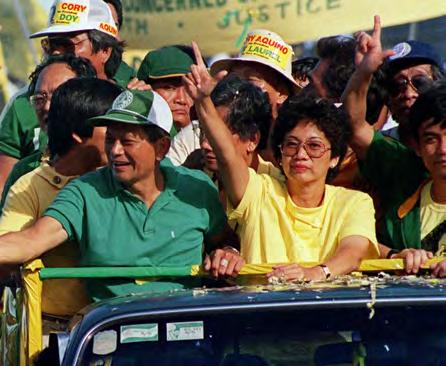
1986, FEB 7 Marcos holds a snap election, running against Corazon “Cory” Aquino, Ninoy’s widow. Marcos is declared the winner despite accusation of fraud.
PRESENT DAY: There continues to be an American military presence in the Philippines. Current president Ferdinand “Bong Bong” Marcos Jr., was invited by former President Biden for a state visit, signaling a continued Philippines-U.S. relationship.
“OUT EV’RY NIGHT IN NEW YORK AND PARIS CHAMPAGNE AND DANCING –WHILE BACK HERE AT HOME PEOPLE BARELY SURVIVING –THEY’RE LIVING IN SHANTIES! OUR COUNTRY’S IN TROUBLE–BUT THE PARTY GOES ON!”
–Aquino, “The Fabulous One (I’m ‘a risin’)”
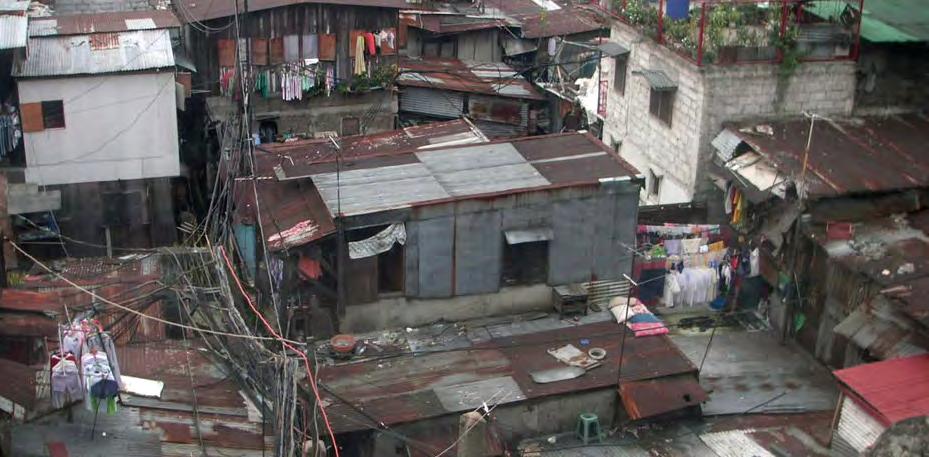
In the Philippines throughout the 1960s, 70s, and 80s, many rural areas tended to be under resourced, while the urban areas tended to be better resourced. This led to migration from small, rural areas to the urban areas around metropolitan Manila.
Unfortunately, many areas around the city could not keep up with the rapid population growth. An estimated third of the population lived as squatters in shantytowns, where families lived together in structures built from cardboard or other found materials. Philippine people living near the water built nipa huts, a type of home utilizing bamboo stilts and natural fibers.
Imelda Marcos, however, ordered these shantytowns and nipa huts cleared and all their occupants displaced. Using her authority as the First Lady and Human Settlements Minister, Imelda signed an agreement with airport authorities to demolish the shantytowns around the Manila International Airport and relocate the residents. Manila was developing, but at the expense of some of the poorest families in these urban areas.
During the same time period, the Philippines was experiencing a severe economic recession. Wages for the Philippine working class fell while the higher price of goods made it harder to survive. All of these contributed to more agitation, strikes, and mass demonstrations, which the Marcos regime later used as rationale for declaring martial law.

Imelda and Ferdinand Marcos met after a day on the floor of the House of Representatives and they were legally married eleven days later. They had similar but different lives growing up.

“AND THE WHOLE WORLD CAN SEE THEY’RE OUR JACKIE AND JOHN NOW THE MAN FROM THE NORTH AND THE TACLOBAN ROSE MAKE A BEAUTIFUL DREAM”
–Imeldific as Press Attache/Women, “Sugartime Baby (Never So Big)”
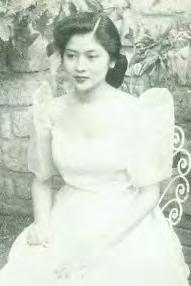

Imelda Marcos was born as Imelda Romualdez on July 2, 1929 in Manila. In childhood, she lost her mother to pneumonia and her family moved to Tacloban, a smaller city on the island of Leyte. In 1949, Imelda earned the title of “Rose of Tacloban” after winning a local beauty contest. She then left Tacloban to live with her cousin in Manila and focused her energy towards growing her circle of influence.

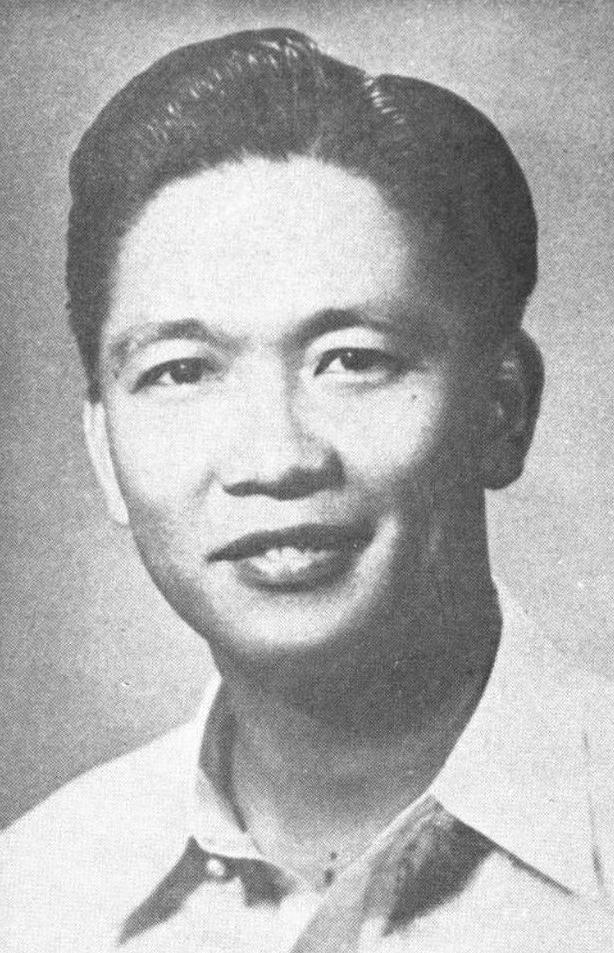
Ferdinand Marcos was born September 11, 1917 in Ilocos Norte. After completing his law degree at the University of the Philippines, he served as an officer with the Philippine armed forces during World War II. He began his political career after the war, serving as a member of the House of Representatives and then as a member of the Senate from 1959 to 1965.
Ferdinand Marcos had served as a lawmaker for 15 years before his election as the Philippine’s 10th president on December 30, 1965. Imelda was a frequent presence during his presidential campaign, often being asked to sing by those in attendance, which she did despite appearing shy at first. During political rallies, Imelda and Ferdinand portrayed a happy wife and husband that were likened to the U.S.’s “political power couple” of Jackie O. and John F. Kennedy. The Marcoses political strategy was effective, winning over the Philippine people in a landslide victory.
“But I wonder, in this economic climate, such a massive edifice… is this the best use of our money? And the terrible human cost!”
–Aquino
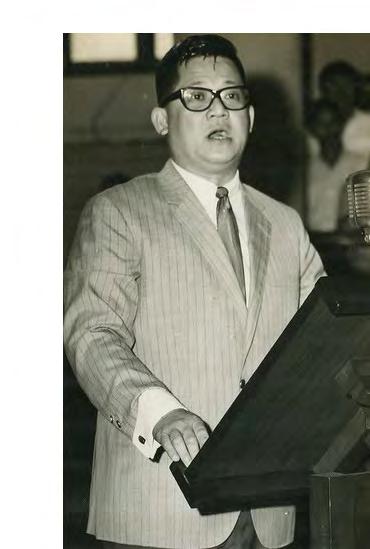
As time went on, the image of the Marcoses as perfect wife and husband disintegrated. Imelda’s focus as First Lady became arts and culture. She commissioned several buildings, including the Cultural Center of the Philippines, Manila Film Center, and the Heart Building.
Political opponents, including Ninoy Aquino, pointed out the stark contrast of these multibillion-peso construction projects alongside acres of slum housing and Philippine people struggling to make ends meet. Most of these construction projects racked up the national debt and it was reported that 169 construction workers died during construction of the Cultural Center.

On December 30, 1969, Marcos was re-elected for his second term, but his term was rocked by troubles and scandal. The debt-fueled spending during their first term came to light, as the nation fell into an economic crisis with rapid inflation. Dovie Beams, an American actor, released recordings of an affair between her and President Marcos, contradicting the public image the Marcoses had created of the ideal couple.
“IN PUBLIC NO LESSWHAT YOU DID TO ME! IT TAKES A WOMANTO DO A MAN’S JOB. ”
– Imelda, “Poor Me”



Imelda stepped into more power and authority as her husband appeared less frequently in public in the later years of his presidency. Ferdinand suffered from lupus erythematosus, and Imelda increased her political presence in her husband’s absence. Her increasing political power meant that she had control over public and private funds equaling 50% of the total government budget. As Minister of Human Settlements, she held the authority to seize any urban property even if it was occupied by the Philippine people.
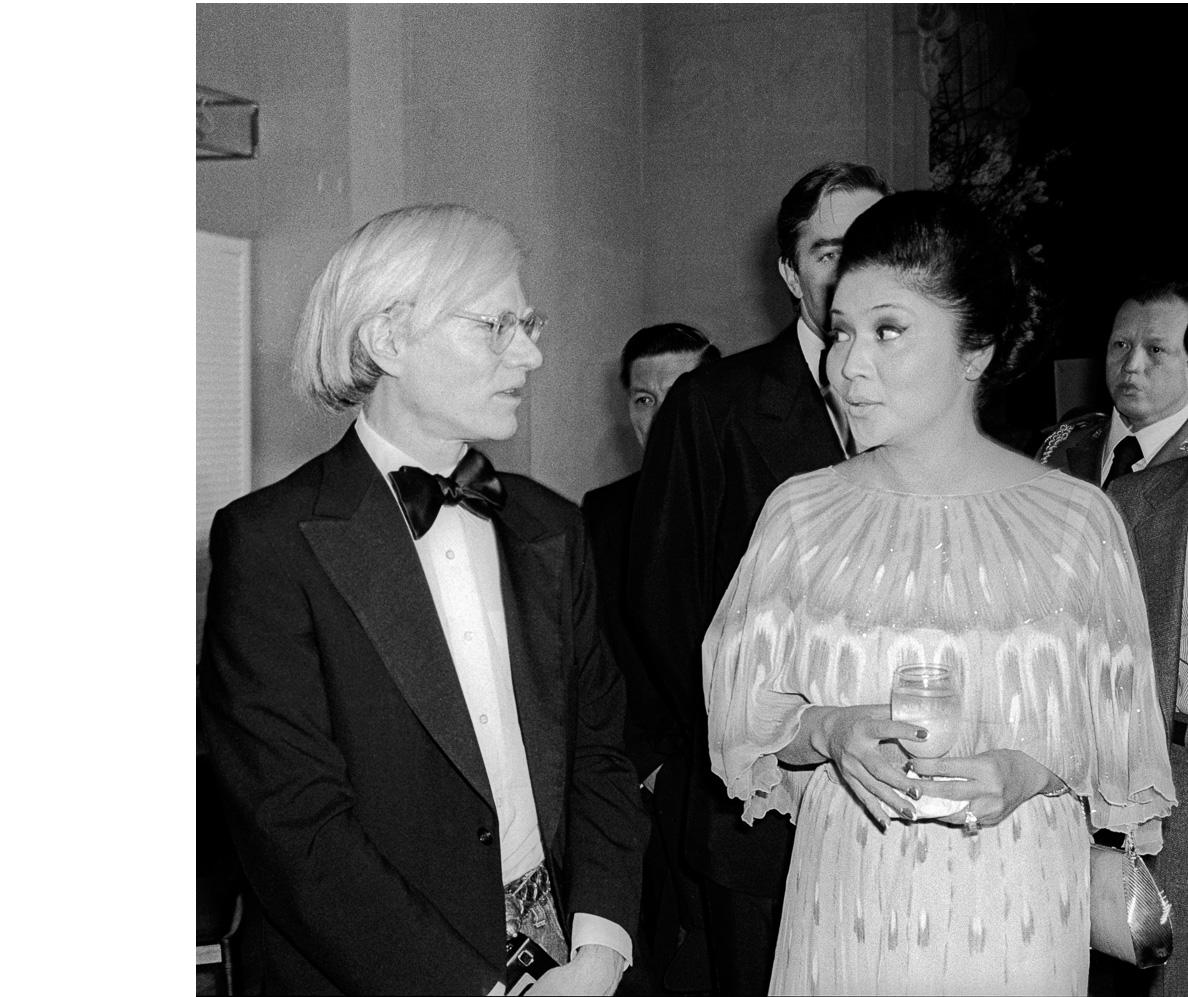
On the international stage, Imelda notably used her beauty and charm to enchant world leaders. During her time as First Lady, Imelda would frequently travel around the world on diplomatic visits, both with and without her husband. She notoriously visited Studio 54 in New York City, where she was known to enjoy partying and dancing in disco clubs. She also went on extravagant shopping sprees funded by the growing wealth of the Marcos family that most likely came from government funds. This contributed to an infamous image that continues to be linked with her to this day: Imelda’s more than 1,000 pairs of designer shoes which were found in the Presidential Palace after the Marcoses fled.
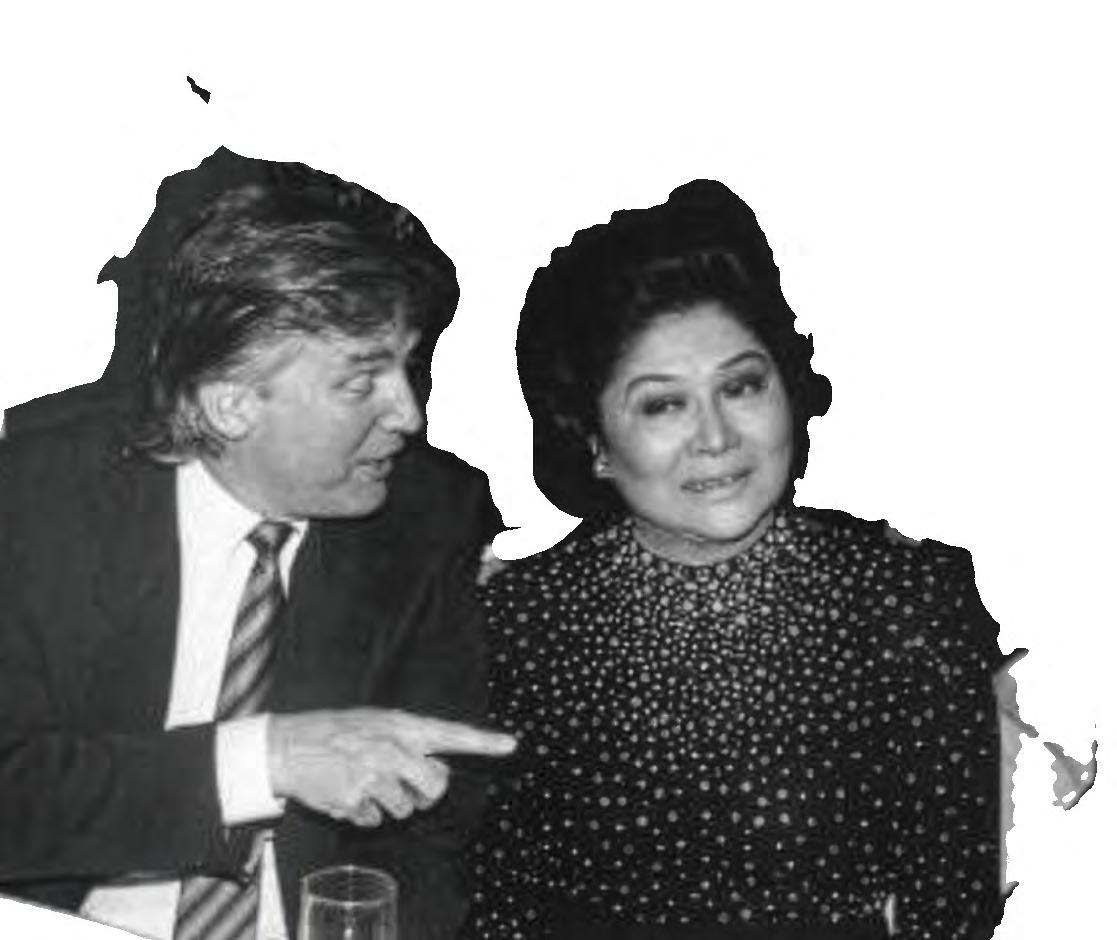
“RONALD REAGAN—MAO ZEDONG— THEY’RE ALL THE SAME. KISSINGER—ANWAR SADAT— LET ME EXPLAIN.
TALK A BIT, A LITTLE DANCE, CHAMPAGNE ON ICE. AN HOUR OR TWO—RELATIONSHIP— WE’RE FRIENDS FOR LIFE!”
–Imelda / Women, “Please Don’t”
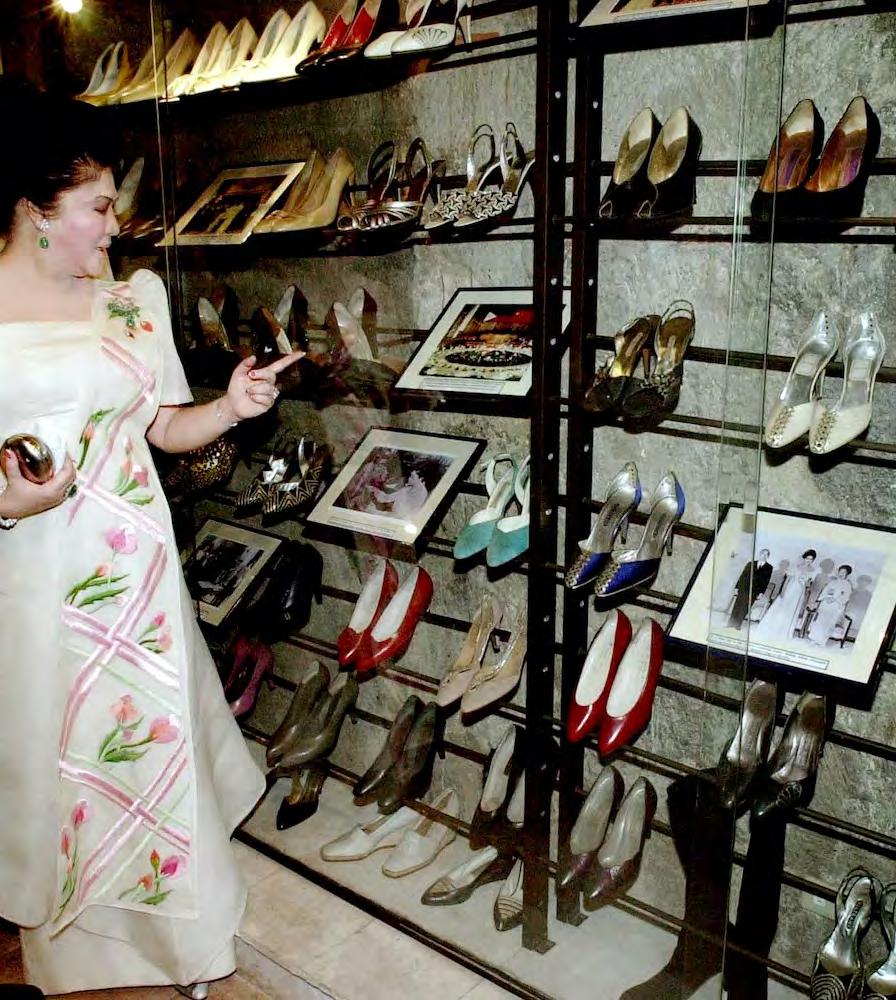

“It’s typical…the way the Marcos Government overreacted, clubbed, beat, and manhandled the student demonstrators… of course the students were protesting the graft and corruption rampant in this administration.”
–Aquino
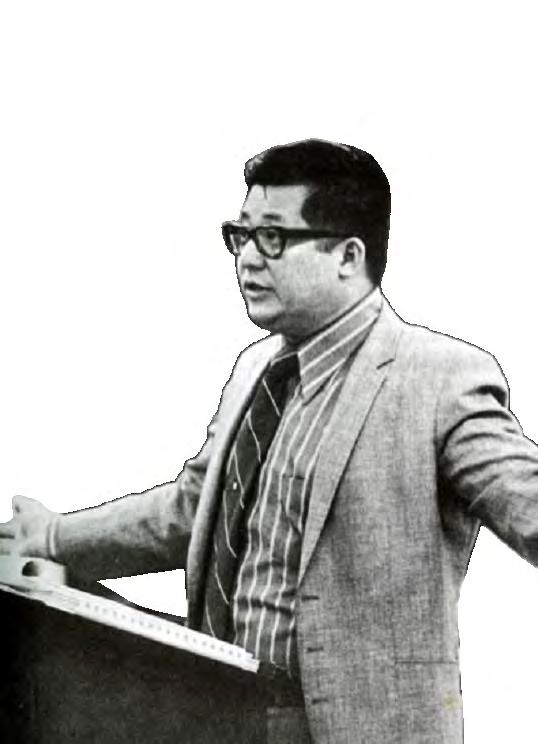
The Philippine people’s demand for reform slowly simmered, threatening to boil over. The period known as the “First Quarter Storm” spanned January to March 1970. Thousands of Filipinos protested for political reform. Youth activist organizations popped up while political parties gathered together to try and prevent a third Marcos presidential term.
Protests and demonstrations were sometimes met with violence from the police and military. These demonstrations culminated in the bombing of a political rally at Plaza Miranda on August 21, 1971. There were nine killed and many others injured. Present that night were prominent leaders of the Liberal Party. President Marcos blamed the Communist Party, but people suspected the President staged the attack.
“A BOMB WENT OFF THIS MORNING— RAINING BODIES ON TV. THEY ARE BLAMING THE INSURGENTS THEY ARE BLOCKING OFF THE STREETS. AND THE SMOKE IS RISING SLOWLY, FROM THE BARREL OF A GUN. THE SOLUTION TO DISRUPTION— ORDER 1081.”
–Female Ensemble Member, “Riots & Bombs”
Proclamation No. 1 – The President shall direct the entire government and the Armed Forces of the Philippines.

President Marcos responded to the Miranda bombings by signing Proclamation No. 1081 on September 21, 1972, citing the threat from the Communists, and placed the Philippines under a state of Martial Law. Martial Law, or Batas Militar in Tagalog, refers to the replacement of civil rule by military rule. A Philippine President may declare martial law in any part of the nation in cases of lawless violence, invasion, or rebellion.
Under martial law, the government may enforce curfews, the military can try non-military members in court (atypical during peace time), and a citizen’s protection against unlawful imprisonment is suspended. Anyone who spoke against President Marcos and demonstrators from students to prominent political leaders were charged and imprisoned. Notably, Ninoy Aquino, who had worked to gather momentum and opposition, was imprisoned on September 22, 1972.
Martial law lasted for nine years. During that time, 70,000 people were incarcerated, 35,000 were tortured, and 3,200 were killed.
Proclamation No. 2 – The President shall order that a curfew be maintained and enforced throughout the Philippines.
Proclamation No. 3 – All rallies, demonstrations, and other forms of group actions are prohibited.
Proclamation No. 4 – Now I, FERDINAND E. MARCOS, by virtue of the powers vested upon me do hereby place the entire Philippines under martial law.
“I
SAW NOBODY LEAVE. I DIDN’T SEE FEAR OR TERROR. IT FELT LIKE A MOVIELIKE THE END OF AN ERA. NOBODY GOT HURT, AND NOBODY DIED.
I’LL REMEMBER THIS DAY, I’LL REMEMBER THIS TIME.”
–Ensemble, “God Draws Straight”

Ninoy Aquino spent seven years in prison but was permitted to leave the country in 1980 to go to the United States for a heart operation. From there, he watched the presidential election on June 16, 1981 where Marcos won by a huge margin. Much of the opposition boycotted the election, and there were widespread reports of a rigged election, which Marcos denied. In the unrest, Aquino saw the opportunity to return and run for president, and in 1983, he returned to the Philippines. He was assassinated immediately upon landing at Manila International Airport. Aquino’s funeral on September 1, 1983 brought thousands of people to the streets of Manila.
Even those who supported the Marcoses began to defect and join the demonstrations. Marcos held a snap election on February 7, 1986 where his opponent was Corazon “Cory” Aquino, Ninoy’s widow. In a disputed election, the government declared Marcos the winner.
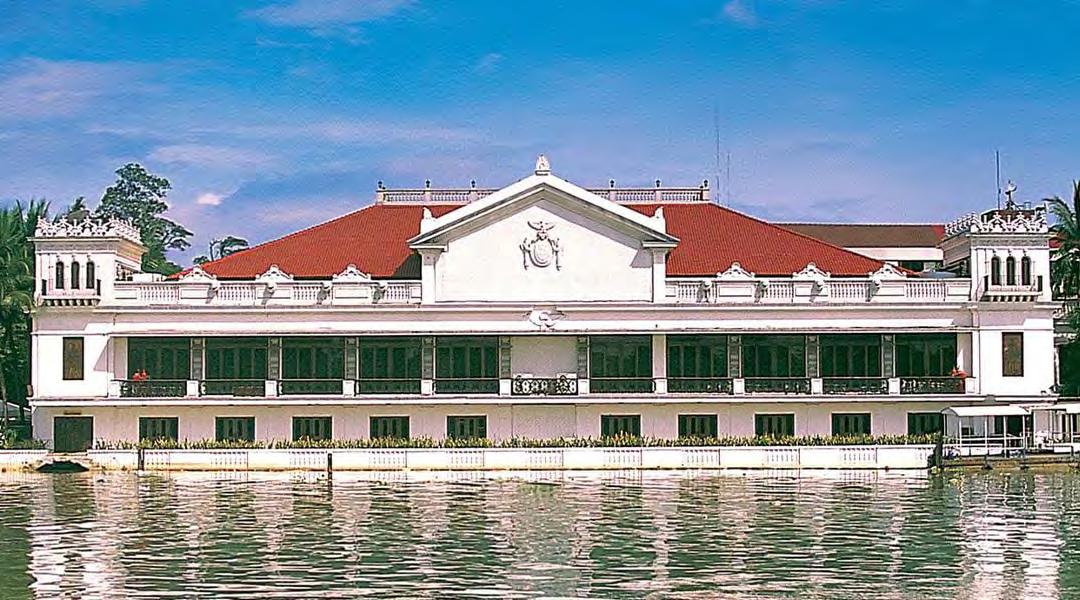
In response, the Philippine people rose up in revolution. On the first day, hundreds of thousands of Filipinos gathered at Epifanio de los Santos Avenue in Manila in a peaceful mass demonstration. People across all different parts of society filled the streets, including military defectors who stood against the tanks and armed battalions that Marcos sent in retaliation. The People Power Revolution was nonviolent and ended without a single casualty. On February 25, 1986 the Marcoses fled to Hawai‘i on a U.S. marine helicopter provided by President Ronald Reagan.


“WHEN THE CHOPPERS TOOK OFF, LEAVING MALACAÑANG.
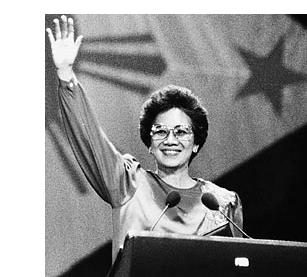
WE KNEW IT WAS OVERKNEW IT WAS THE END, AND THERE’S SO MANY PEOPLE EV’RYBODY IS HERE.”
–Imeldific and Ensemble, “God Draws Straight”

Corazon “Cory” Aquino was sworn into office on February 25, 1987. She was the 11th president of the Philippines and the first female president.
The Marcoses would stay in exile in Hawai’i from 1986 to 1991. Ferdinand Marcos died in September 1989. Though Imelda Marcos would eventually face trial in New York City for fraud, most of the money was never recovered. The Manila International Airport was renamed the Ninoy Aquino International Airport, a name that remains to this day.
The Marcoses returned to the Philippines in the 1990s. In 2022, Ferdinand “Bongbong” Marcos Jr., Imelda and Ferdinand’s son, ran for the Philippine presidency and became the 17th president of the Philippines. Bongbong Marcos used social media, especially Facebook and TikTok, heavily during his presidential campaign, claiming that his father’s regime was a “golden period” for the Philippines.
The Philippines has faced economic under-development and, within the last decade, an increasing number of natural disasters, particularly typhoons which have devastated large portions of the country. Many have turned elsewhere to earn a livelihood. The term, “Overseas Filipino Worker” or OFW, refers to the large number of Philippine people (approximately 1.83 million in 2021) who pursue work opportunities internationally.
According to the Pew Research Center’s report of the Top 10 U.S. metropolitan areas by Filipino population, Los Angeles ranks first with a population of 506,000. Historic Filipinotown in Los Angeles was designed by the city as a historic-cultural neighborhood in 2002.
“Troglodyte” describes a member of any people who lived or were thought to live in caves. It can also mean a person who has reclusive habits or outdated or reactionary attitudes toward the world. In this song from Here Lies Love, the characters sing about the longing to be like Americans who seem to do whatever they want, with no regard for anyone else. There has been a long history of the Philippine people buying into the idea that American is better—its music, cars, and fashion. However, many Americans know very little about Philippine history or culture.
“AMERICANS ARE DANCIN’ ON FRIDAY NIGHTS AMERICANS ARE DRIVIN’ GIGANTIC CARS
AMERICANS ARE DOIN’ THAT EXERCISE.
AMERICANS ARE LIVING LIKE TROGLODYTES “
–Imeldific and Ensemble, “American Troglodyte”
? How does being an American benefit you?
?
How do those privileges impact your daily life, or when you travel?
How might ignorance about world events and different cultures limit growth or impact decision-making?
? What are the parts of American history you feel are missing from your education? What do you wish you knew more about?
Stories hold a lot of power. They help us connect with each other, offer new perspectives on our own communities, and give us a deeper understanding of other cultures and ways of being. This means that storytellers have a big responsibility for the people they tell stories about. Here Lies Love is a story that portrays one perspective of Imelda and the Philippine people who were affected by the Marcos regime. While the musical does center Filipino characters and history, the script was written by white British artists and developed for American audiences. This new production, helmed by AAPI artists, is reckoning with that Western perspective. Through that reckoning, they are making intentional choices that honor cultural specificity and resist catering to the white American gaze.
“Here Lies Love...is a similarly charged space for working out the legacies and futures of the Philippines as a former colony of the United States and a young nation state, bringing up concerns about historical distortion, artistic responsibility, and truth and creative license in a time of misinformation.”
–Amanda L. Andrei, AMERICAN THEATRE
Who would you trust to tell the story of your life? What images, music, or artwork would you want included?
? What harm can happen when people tell stories about communities or cultures that they are not a part of? What are things we can do to reduce that harm?
? Why do you think some communities have more agency to tell their own stories than others? Whose perspectives do you wish you got to hear more?
? What do you think the personal cost of collecting massive amounts of wealth and power might be? What would you be unwilling to sacrifice for wealth or power?
In the pursuit of wealth and political power, Imelda and Ferdinand Marcos became symbols of excess and greed by the end of their regime. Despite claims that everything she did was for the love of her people, Imelda’s actions while in power led to loss of friendships, loss of life (both accounted and unaccounted for), and loss of a moral center. This story highlights the fact that absolute wealth and power come at a steep cost.
? How do you define “wealth”? Is it just the amount of money you have, or is it more than that?
“ANYTHING I WANTED, ANYTHING I WISHED. BUT MONEY CAN BURN YOU AND IT WON’T SET YOU FREE.”
–Aquino, “Child of the Philippines”
? What are the ways that people, individually or as a collective, can share wealth and power?
Eventually, the Philippine people overthrew the Marcoses in a peaceful, nonviolent mass demonstration. People across all parts of society filled the streets, no longer concerned about social class or differences. University students especially played an important part throughout the People Power Revolution. This unity across ages, classes, and identities was a powerful act of political resistance, a beacon of the power of the people. Leaders and dictators who seek to hoard power for themselves know they must separate and divide people, leaving them isolated and feeling powerless. It is an act of resistance to remember your individual agency and act in solidarity with others in your community in the face of tyranny.
“TEN THOUSAND OR MORE- AND THEY’VE WAITED FOR HOURS WHEN I ASKED “WHY ARE YOU HERE” THEY SAID, “JUST ASK THE FLOWERS”
–Aquino, “Child of the Philippines”
? What are some other examples in which mass protests and demonstrations led to revolutionary change? What made them successful?
?
In what ways have you seen the power of the many win over or resist the power of a few?
? Have you ever attended a protest or demonstration? What causes and beliefs are you fighting for? If you haven’t, what would inspire you to take action?
STUDENT MATINEE
PROGRAM PROJECT FACULTY
Christine Breihan Resident Teaching Artist
Zachary Bones Teaching Artist
Tara Ricasa Teaching Artist
Carene Mekertichyan Teaching Artist
Mara Palma Writer
Cheyne Gallarde Graphic Designer
Traci Kwon Arts Education Initiatives
Director
Beginnings of Martial Law. Ateneo ML Museum. https://learn.martiallawmuseum.ph/magaral/declaration-of-martial-law/
Bongbong Marcos: The Philippine president battling the Dutertes by Koh Ewe. BBC News, May 12, 2025 www.bbc.com/news/articles/c3wd62y9xydo
David Byrne Musical Here Lies Love Charts Rise and Fall of Imelda Marcos by Hannah Ellis-Petersen. The Guardian, September 26, 2014. www.theguardian.com/music/2014/sep/26/david-byrne-musical-herelies-love-imelda-marcos
Fatboy Slim - Biography by Isabelle Casey. HELLO!, Updated June 27, 2023. www.hellomagazine.com/profiles/20091008148/fatboy-slim/
Here Lies Love | Album Sampler | About. David Byrne, 2016. www.davidbyrne.com/explore/here-lies-love/videos
Here Lies Love in Critical Contexts: A Public Syllabus by Nerve V. Macaspac and Lara Saguisag. NYU Web Publishing, 2023. https://wp.nyu.edu/herelieslovesyllabus/
Manila Squatters are an Eyesore for Mrs. Marcos by Pamela G. Hollie, Special To the New York Times. The New York Times, June 30, 1982. www.nytimes.com/1982/06/30/world/manila-squatters-are-an-eyesorefor-mrs-marcos.html
Overseas Filipino Workers: The Modern-Day Heroes of the Philippines by Laurinne Jamie Eugenio. Harvard International Review, August 11, 2023. https://hir.harvard.edu/overseas-filipino-workers-the-modern-day-heroesof-the-philippines/
Poverty and Politics in the Shantytowns of Philippines by Steve Lohr. The New York Times, August 19, 1984. www.nytimes.com/1984/08/19/weekinreview/poverty-and-politics-inthe-shantytowns-of-philippines.html
Slum Evictions in Manila Embarrass the World Bank. The New York Times, October 7, 1976. www.nytimes.com/1976/10/07/archives/slam-evictions-in-manilaembarrass-the-world-bank-evictions-from.html
The Complicated Triumph of ‘Here Lies Love’ by Amanda L. Andrei. American Theatre, August 1, 2023. www.americantheatre.org/2023/08/01/the-complicated-triumph-of-here-lies-love/
The Dazzling, Daring History of Disco by Ashlee Sierra. PBS SoCal, June 25, 2024. www.pbs.org/articles/the-dazzling-daring-history-of-disco
The Politics of Nostalgia and the Marcos Golden Age in the Philippines by Fernan Talamayan. Asia Review 2021. SSRN, Revised December 6, 2022. https://ssrn.com/abstract=4215572
The Roots of the Philippines’ Economic Troubles by Edward L. The Heritage Foundation, May 31, 1984. www.heritage.org/asia/report/the-roots-the-philippines-economic-troubles
FURTHER RESOURCES
The Kingmaker 2019 Documentary by Lauren Greenfield
Here Lies Love 2010 Album by David Byrne and Fatboy Slim
Center Theatre Group’s Student Matinee Program is made possible in part by the City of Los Angeles Department of Cultural Affairs, California Arts Council, The David William Upham Foundation, Edison International, Ella Fitzgerald Charitable Foundation, Lawrence P. Frank Foundation, L.L. Foundation for Youth, Pasadena Showcase House for the Arts, Sascha Brastoff Foundation, and Center Theatre Group Affiliates.
Additionally, Education & Community Partnerships programming is made possible by the following individuals and partners: Robert Abernethy, Anonymous (2), Wendy Chang, Bernie Cummings & Ernie Johnston, Noah Francis, Gary and Cindy Frischling, Marc and Aliza Guren, Supervisor Lindsey P. Horvath, Melissa McCarthy, Cindy Miscikowski, Louise Moriarty and Patrick Stack, Edward and Deena Nahmias, The Capital Group Companies Charitable Foundation, Tom Safran, Glenn and Andrea Sonnenberg, and Diana Buckhantz and the Vladimir & Araxia Buckhantz Foundation.
Bank of America, Dwight Stuart Youth Fund, Friars Charitable Foundation, The Otis Booth Foundation, The Rosalinde and Arthur Gilbert Foundation, Rosenthal Family Foundation, and U.S. Bank.


A ghost light is an electric light bulb that theatres leave burning onstage whenever a theatre is dark. The light ensures that nobody accidentally hurts themselves in the dark building. Some superstitious theatre folks also believe that a ghost light keeps any spirits who may live in the theatre happy and at ease.
“Democracies
are only as strong as the will of the people... The will to obey or the will to rise up.” –Ensemble