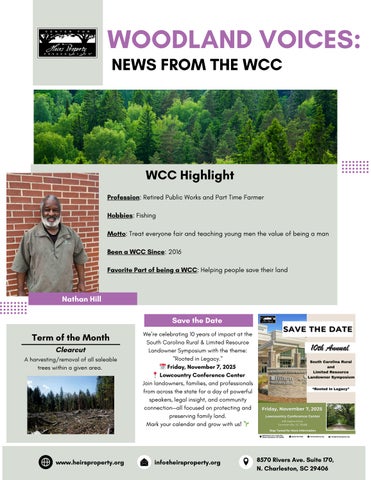


Profession: Retired Public Works and Part Time Farmer
Hobbies: Fishing
Motto: Treat everyone fair and teaching young men the value of being a man
Been a WCC Since: 2016
Favorite Part of being a WCC: Helping people save their land
Save the Date
Term of the Month
A harvesting/removal of all saleable trees within a given area.

We’re celebrating 10 years of impact at the South Carolina Rural & Limited Resource Landowner Symposium with the theme: "Rooted in Legacy " �� Friday, November 7, 2025 �� Lowcountry Conference Center
Join landowners, families, and professionals from across the state for a day of powerful speakers, legal insight, and community connection all focused on protecting and preserving family land Mark your calendar and grow with us! ��


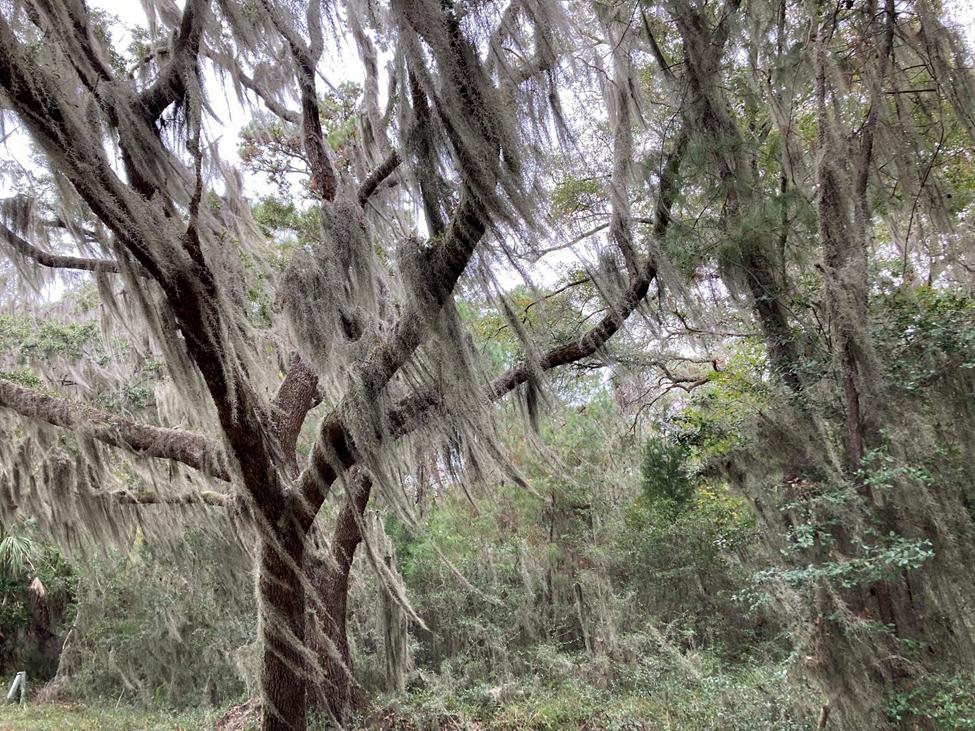
One of the unique things associated with our Lowcountry Landscape is the moss streaming down from our trees. If you look at any coffee table book of photographs of the South, or postcards from the south, they will feature trees with Spanish moss on them We don’t think about it because for folks who live here it is literally “part of the scenery. ”
Have you ever seen Spanish moss draped on the branches of a live oak tree and wondered “what the heck is that?” If you live in the Lowcountry of South Carolina you are probably not far from moss covered trees or shrubs. If you don’t have any in your yard, you have certainly seen it while walking or driving around our town. We live in a sub-tropical climate here in the Lowcountry and have several thousand different species of plants and trees in our area Spanish moss is an odd ball among them, and you may not even think of it as a flowering plant. In fact, it is botanically cataloged in the Bromeliad family of plants called the Bromeliaceae. The scientific name is Tillandsia usneoides. Ironically, this is the same family as pineapple. Don’t worry there will not be a quiz on these factoids at the end of the story. Spanish moss is not parasitic like Mistletoe. It does not take any nutrients from the sap of the tree. It only hangs on the tree as a way to collect sunlight, water, and nutrients. There may be some minimal shading caused by the moss but since it is generally in the lower branches, any negative effects on tree growth would be nil
Unlike most of the flowering plants around us, this plant is considered an epiphyte. This is a class of plants that do not root to the ground.Instead, it latches on to trees and shrubs. Epiphytes do not derive water and nutrition from the ground, but from the air and from their host plant. Examples of other epiphytes that occur here are orchids and a few ferns like the resurrection fern. If you look closely at Spanish moss you will see a tangle of greyish tendrils The “leaves” are more like scaly, pubescent wires They curl around each other forming a mat If you look at it through a magnifying glass, you will see many tiny scales and hairs on the leaves. This allows them to collect water and nutrient-bearing particles from the air.