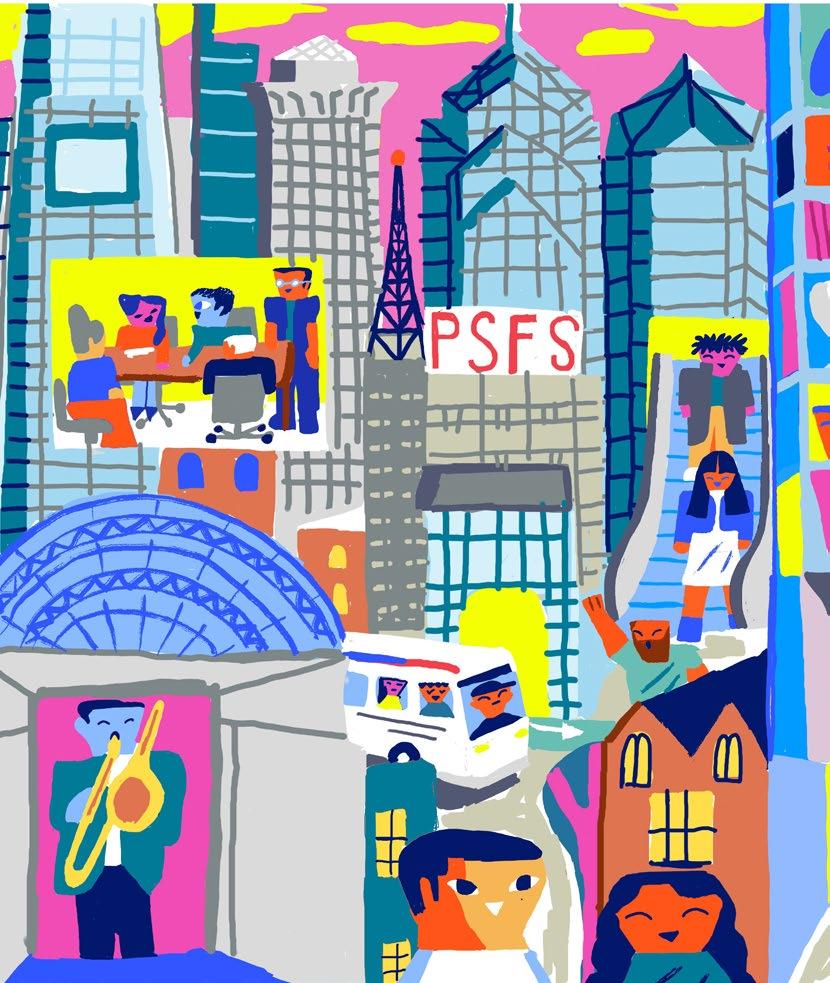
State of Center City Philadelphia 2026
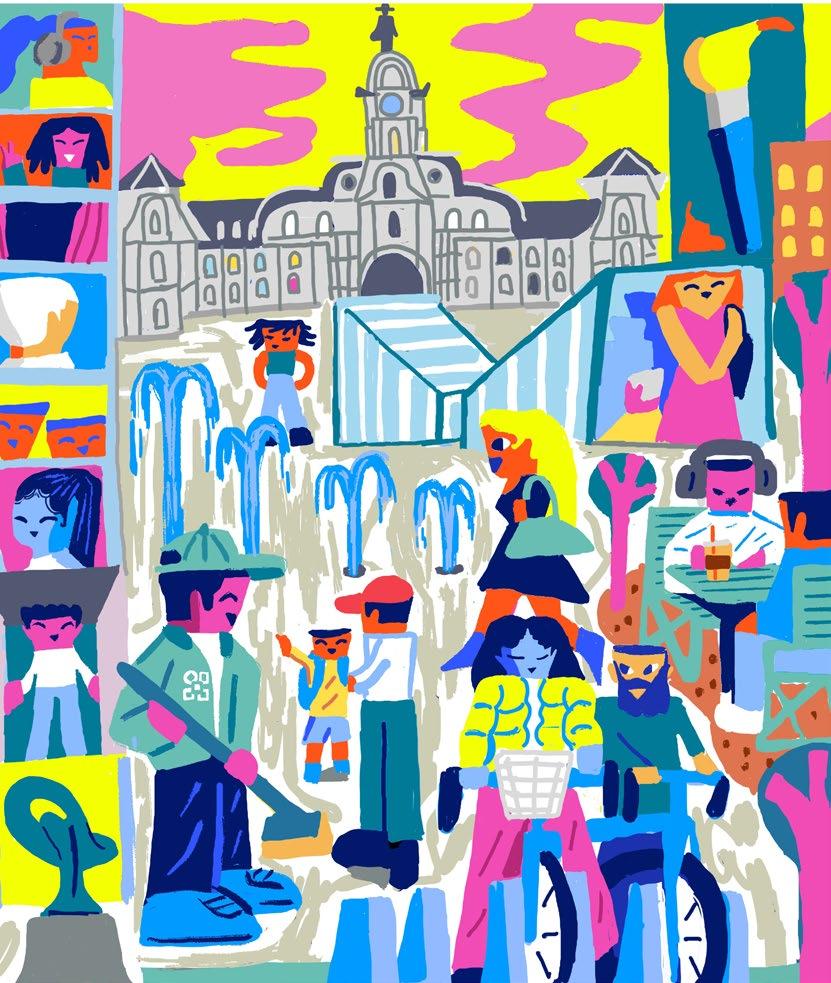
Center City is the one place in this metropolitan area where accessible opportunity exists for everyone.

Center City is the one place in this metropolitan area where accessible opportunity exists for everyone.
From Delaware Avenue to the Bellwether District, cranes are rising in parts of the city that, just a decade ago, seemed improbable. Last year, Philadelphia recorded the fewest homicides since 1966; the city’s economy supports more jobs than it has since 1980. The Wall Street Journal and The New York Times both named Philadelphia the #1 must-visit destination in 2026.
The mood is confident. This confidence is well earned and well deserved, but brings with it a temptation to take Center City, the heart of the region, for granted.
As investment spreads across the city, as corridors are rightfully celebrated, and neighborhoods are vigorously championed, Center City has slipped from the focus of Philadelphia’s civic conversations. It is assumed to be fine. It is assumed to be privileged. It is assumed to be self-sustained. It is assumed to be resolved. This report is a case against those assumptions and underscores Center City's indispensability to the entire region. Consider it a call for “recentering” Center City, if you will.
“The downtown is the only part of the city that belongs to everybody. It doesn't matter where you may find your home; the downtown is yours, too.”
The Only Place in the Region that Belongs to Everyone … and Where Everyone Belongs In Walkable City, Jeff Speck writes, “The downtown is the only part of the city that belongs to everybody. It doesn't matter where you may find your home; the downtown is yours, too. Investing in the downtown of a city is the only place-based way to benefit all of its citizens at once.”
It is worth considering this notion. Greater Center City occupies just 6% of Philadelphia's land, yet contains 309,000 jobs, more than exist in 20 of the largest suburban employment nodes in the region combined. Together with neighboring University City, the urban core accounts for 53% of all employment in Philadelphia. But the scale matters less than what it means for Philadelphians. Half of those jobs do not require a college degree. They are jobs in hospitality and retail, in healthcare and building services, in arts and food service and are accessible to residents at every level of education and experience. And every job is reachable by public transit from every corner of the city and the region. This is what makes Center City, as well as University City, categorically different from every other jobs hub in the region: it is not a campus, not an office park, not a corridor built for one industry or one demographic of worker. It is the one place in this metropolitan area where accessible opportunity exists for everyone.
Speck continues: “Every relocation decision, be it a college graduate's or a corporation’s, is made with an image of place in mind. That image is palpable and it is powerful. It is resolutely physical: a picture of buildings, streets, squares, cafés, and the social life that those places engender. Whether good or bad, that image is hard to shake. And, with rare exception, that image is downtown.”
In 2026, as Philadelphia steps onto the biggest international stage it has occupied in a generation, welcoming the world for America's 250th birthday, the FIFA World Cup, the MLB All-Star Game, and the chance to dine in our newly Michelin-starred restaurants, the image being formed will be formed in Center City. Every visitor, regardless of where their event takes place, will sleep in a Center City hotel, walk our sidewalks, ride transit, and eat in our restaurants, given that 68% of Philadelphia's hotel rooms are in Center City. The impression the world carries home will be formed in Center City.
The Economic Engine Center City’s importance runs deeper than image, deeper than tourism, deeper than any single year’s worth of events. One in every 10 jobs across the entire 11-county metropolitan region is located here. Nine percent of Philadelphia's total real estate value is held in Center City buildings, yet only three-tenths of one percent of the city's buildings are located there. Workers commuting in from outside the city account for a third of all wage tax revenues, revenues that fund schools, parks, libraries, and services in every neighborhood and Council District. Investing in Center City is not in competition with investing in other neighborhoods; it is the precondition for it. The fiscal base that makes neighborhood investment and improvement possible is disproportionately generated downtown. The transit network that connects residents across the city to opportunity converges here. The image that attracts talent, visitation, businesses, and new residents to the region is formed here. If you fail to protect the center, you weaken everything connected to it.
The image that attracts talent, visitation, businesses, and new residents to the region is formed here. If you fail to protect the center, you weaken everything connected to it.
Which is why three unresolved policy issues matter urgently, not just for downtown, but for the whole region. Incomplete progress on tax reform continues to suppress the business growth and corporate relocation that would strengthen Center City as a regional jobs hub and, with it, the city's fiscal position overall. The funding fragility of SEPTA, the network that delivers 3.3 million potential workers and visitors to Center City’s doorstep, is an economic development problem, a neighborhood equity problem, and a climate problem simultaneously; every neighborhood in Philadelphia whose residents depend on buses, trains, and metro to reach downtown jobs has a direct stake in resolving it. And the presence of Philadelphians experiencing homelessness on downtown sidewalks and in public spaces, many of whom are living with addiction, mental illness, or both, is a challenge that is shaping perceptions of Center City in ways the data do not fully capture. This is a citywide challenge. Addressing it with compassion and sustained investment is both a moral obligation and a prerequisite for the kind of public environment that a thriving Center City requires.
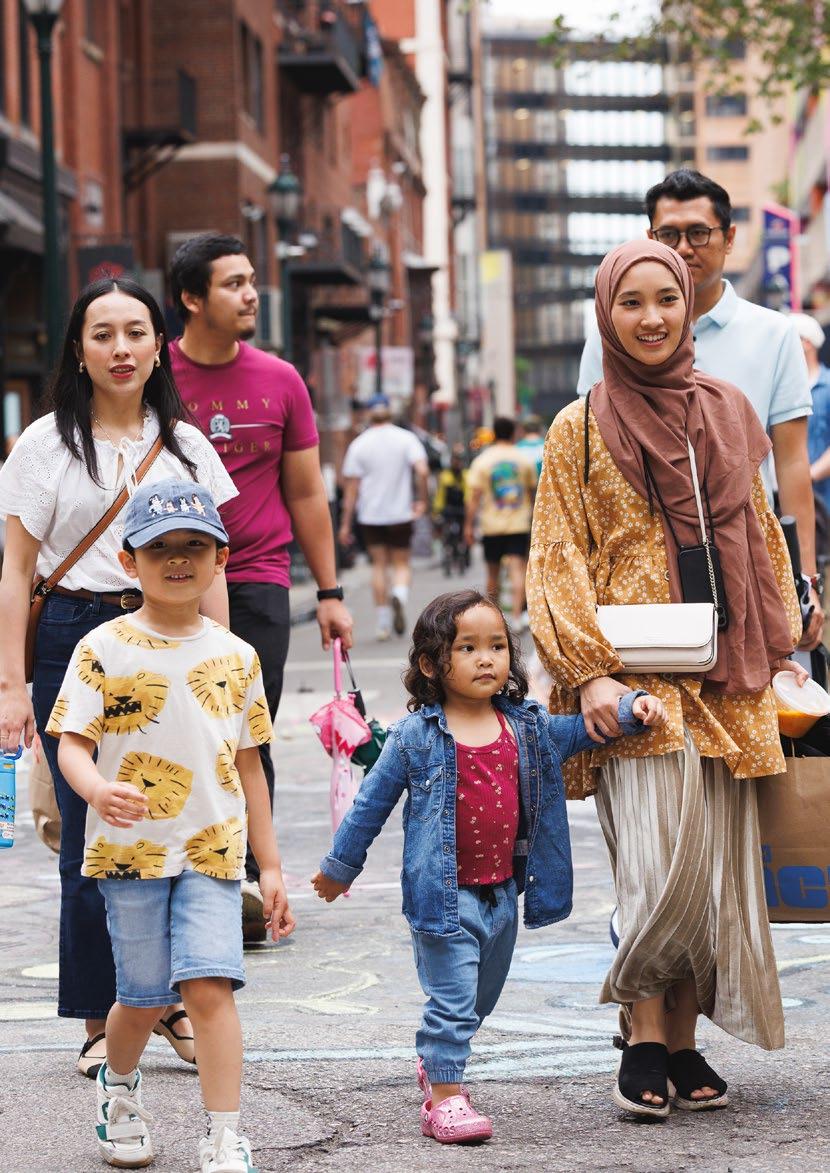
Center City remains a place where diverse groups of people gather, encounter one another, and share physical space.
Much has been written about the troubling rise of loneliness and isolation in modern life, a crisis accelerated by a culture that has placed growing value on the remote, the private, and the digital, from where we work and shop to how we celebrate and socialize. We work from home. We shop online. We stream instead of attending. We think that we are socializing by scrolling. So much of life has migrated elsewhere that the sidewalks and public spaces where unscripted human connection still happens at scale have taken on heightened significance.
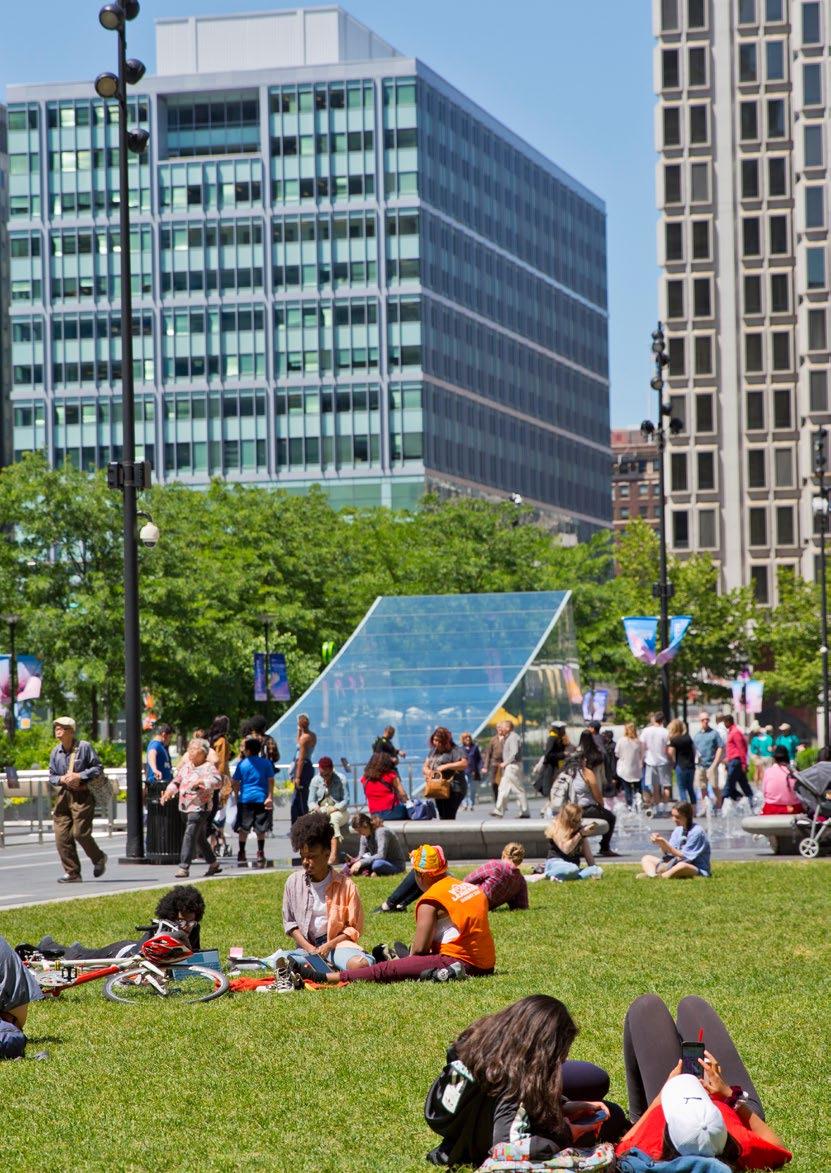
Center City remains a place where diverse groups of people gather, encounter one another serendipitously, and share physical space, perhaps one of the last places in the region where that kind of encounter happens reliably and at scale. On a typical day, as many as 400,000 people are on foot in downtown Philadelphia. Workers, residents, students, tourists, patients, conventioneers, shoppers, diners moving through the same streets and squares, sharing the same sidewalks and transit platforms and park benches. The density that makes Center City economically formidable makes it socially vital in a way that no suburban campus, no big-box corridor, no digital platform can replicate.
The density that makes Center City economically formidable makes it socially vital in a way that no suburban campus, no big-box corridor, no digital platform can replicate.
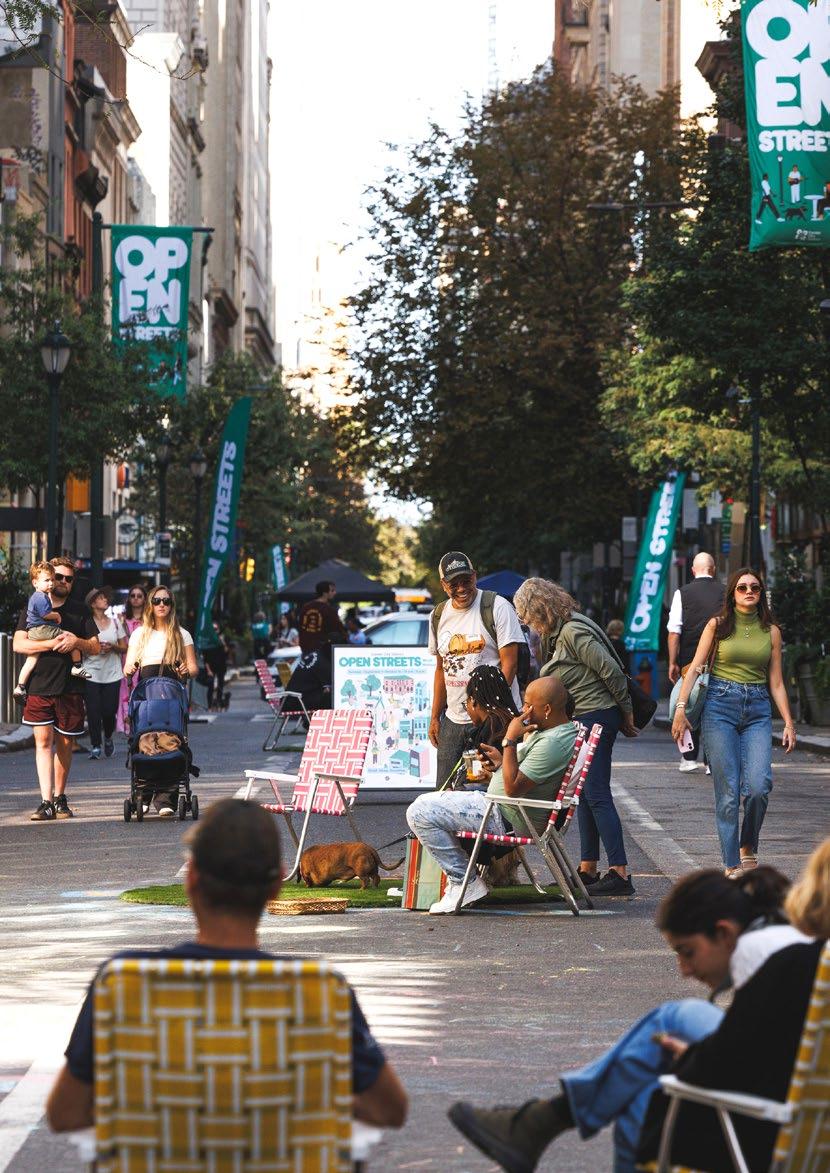
A construction worker from Kensington and a lawyer from Paoli line up for tacos. A college student living in West Philadelphia and a retiree living in Society Hill share a seating cluster at Open Streets. A janitor from Mayfair and a banker from Chestnut Hill share an elevator ride. A family visiting from Kansas City and a couple from West Oak Lane enjoy the Ballet X performance at Arts on Center Stage at Dilworth Park. These encounters happen because Center City is genuinely shared, genuinely public, and genuinely open to everyone who arrives. In an era of accelerating privatization of daily life, the places where public life still happens have taken on a significance that goes well beyond commerce or tourism. They are, in some sense, the last hope of pluralistic democracy.
This report is a love letter to the performance and potential of our downtown, organized around the three pillars of CCD's vision for downtown, commerce, culture, and connection, and grounded in the belief that a thriving Center City generates opportunity and prosperity for the entire city and region. The findings are, on balance, a story of strength and resilience.
Center City is a fast-growing place of choice that competes with dynamic downtowns nationwide, and in so many ways we are winning. Thousands of housing units are being built and occupied, many by young and educated newcomers who come here to work in healthcare, tech, and professional services. One in eight residents of Philadelphia reside in Greater Center City, an area that has grown for more than two decades to a population of 210,000 residents. Retail occupancy is at a seven-year high as expansion-oriented brands vie for space on Walnut and Chestnut streets. Retail occupancy has stabilized at 84%, the nighttime economy is thriving, and the city's cultural institutions, second in concentration only to New York City, are drawing record attendance. Accolades for our food scene are pouring in as entrepreneurs and established restaurateurs continue to bring new and exciting concepts. For the third straight year, Philadelphia has been named America's Most Walkable City. Its office market, while challenged, carries a vacancy rate lower than nearly every comparable American city, and leasing activity in 2025 reached a six-year high. And, of course, Center City remains among the easiest and most pleasant places in America to discover on foot, by bike, and via transit thanks to our decades of investment in rail infrastructure, bike lanes, and safe sidewalks and public spaces.
A
Speck closes his argument with a note of optimism that also carries a demand: “A beautiful and vibrant downtown can be the rising tide that lifts all ships … a little bit of great downtown can help push a whole city into the great category. That is the place to begin.”
Center City is on very strong footing, built over three decades of intentional investment by public agencies, private developers, cultural institutions, and Center City District, if we do say so ourselves. These achievements should not be taken as evidence that the work is finished. Rather, we should seek to supercharge our city and region’s economic heart to amplify and accelerate growth across Philadelphia. Let’s proceed, full speed ahead, and lift all ships.
Warmly,

Prema Katari Gupta President and CEO
P.S. I hope that you find this year’s State of Center City report useful and enjoyable, and reflective of CCD’s organizational obsession with analytical rigor and optimism rooted in data. This report is the culmination of months of work from CCD’s incredibly talented research, design, and communications teams. I’m especially grateful for Lauren Smith’s unflappable project management, Clint Randall’s thoughtful and innovative leadership of our economic development team with the capable support of Jimmy Salfiti and Jessie Brain, and Dave Orantes’s art direction, communications expertise from JoAnn Loviglio and Leo Manning, as well as Philadelphia artist Branch Coverdale’s vibrant illustration.
1 2
It is the largest and densest diversified employment hub in the city.
Greater Center City occupies just 6% of Philadelphia’s land area, but holds 42% of its jobs.
Center City’s attractions, restaurants, culture, and jobs are accessible to all.
3.3 million residents of Greater Philadelphia can reach Center City with a single transit trip.
4 5
Strong Center City population growth keeps the city’s overall population growing.
From 2011 to 2024, Center City population increased by 28% while the city overall only grew by 4%.
People from hundreds of ZIP codes across 11 counties hold downtown jobs. 1 in 10 jobs in Greater Philadelphia are in Center City.
3
Center City offers opportunities to everyone.
Half of all jobs downtown do not require a bachelor’s degree.
6
Center City’s live/work environment and density create high quality of life. Center City residents have an average commute of 24.4 minutes, 18% shorter than the metro area average.
7 8 9
More city residents work in Center City than anywhere else in Philly or the suburbs. Center City and adjacent University City collectively employ more Philadelphians than the rest of the city combined.
As the high-rise core of our city, Center City’s real estate carries outsized impact.
9% of Philadelphia’s total real estate value is held in Center City buildings, but only 0.3% of all buildings are located in Center City.
10 11
Center City is home to arts and cultural institutions that can inspire our own residents and visitors from across the world. Our downtown is second only to New York in its concentration of arts and cultural institutions.
13
Most visitors to our region from around the country and the world stay in and explore Center City. 68% of Philadelphia’s hotel rooms are in Center City.
Demand for living in or near Center City’s jobs and amenities drives housing production.
44% of all housing built in Philadelphia in 2024 was built in Greater Center City.
Center City enables car-free commuting, which reduces congestion, pollution, and crashes.
40% of Greater Center City residents walk, bike, or take public transit to their jobs.
12
Center City’s amenities, services, stores, restaurants, and parks attract new residents and talented employees from all over.
Nearly half of Center City apartment dwellers moved here from outside the area, and 64% intend to stick around.
80% of pedestrian volume returned to Center City as of March 2026 (compared to 2019 levels)
42% of jobs citywide are located in Greater Center City
1,879 housing units were completed in 2025
906,542 visitors attended an event at the Pennsylvania Convention Center in 2024
107,762 SEPTA riders daily in Center City (on average)
309,000 jobs in Greater Center City
210,710 residents live in Greater Center City
3.3 million hotel rooms occupied in 2025
827 retailers are located in Center City
51% of jobs in Center City do not require a bachelor's degree
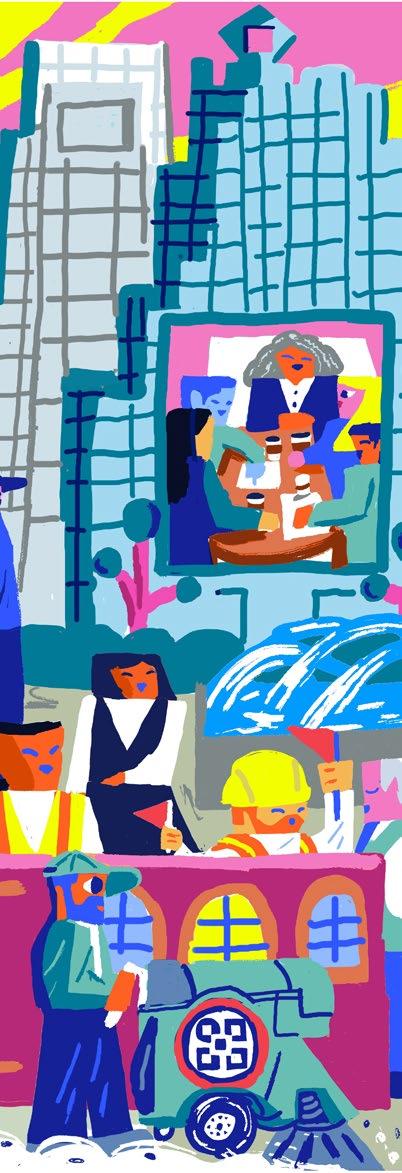
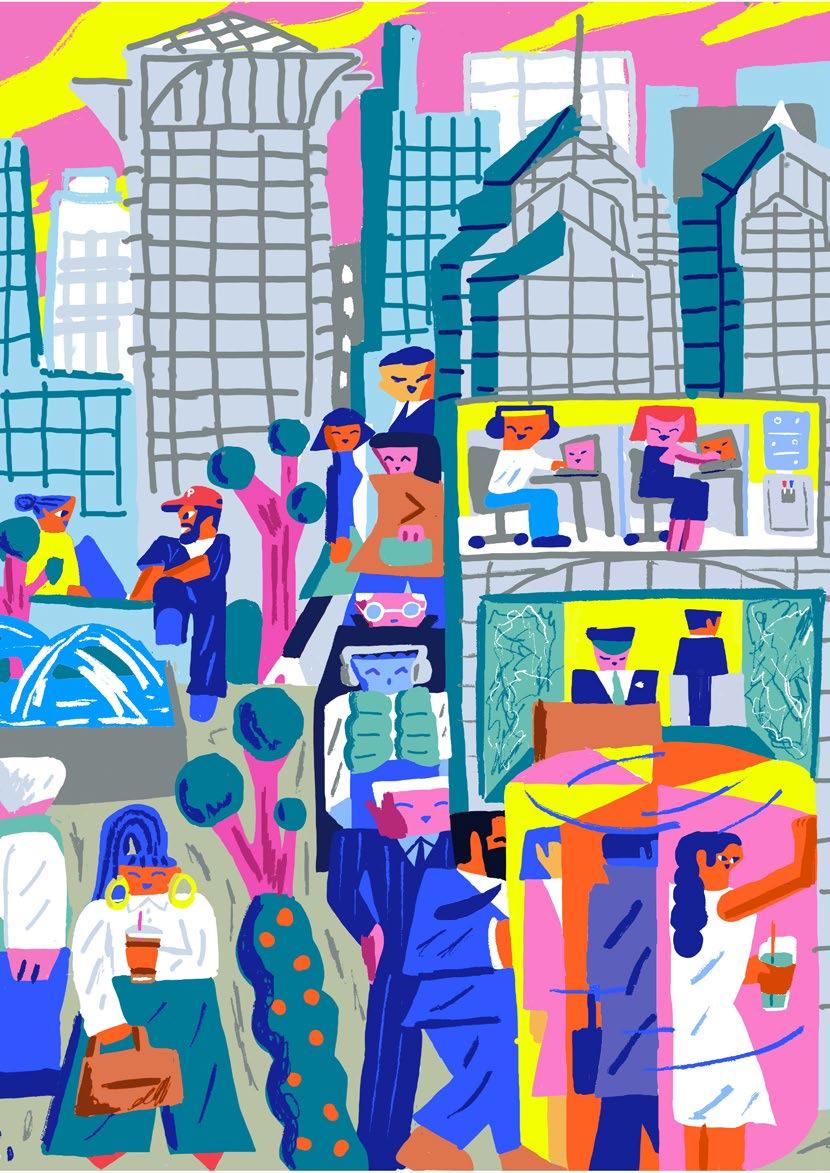
Center City is Greater Philadelphia’s largest employment hub with 309,000 jobs.
The commercial heart of our city and region, Greater Center City is home to 309,000 jobs representing 42% of all employment in the City of Philadelphia. Together with neighboring University City, Philadelphia’s two largest employment hubs contain 53% of the city’s jobs, all of them reachable by public transit. Three out of 10 employed city residents work here, as do one in eight residents of the entire 11-county metropolitan region. Half of all downtown jobs do not require a college degree, offering economic opportunities for everyone.
Center City’s regional share of jobs has not changed for several years, despite Philadelphia County recovering and adding jobs faster than the combined suburban collar counties. The most recent iteration of the Tax Reform Commission issued a 2025 report recommending changes on what the city taxes and to what degree. Insufficient progress on tax reform and on securing sustainable and adequate funding for SEPTA limits Center City’s ability to become an even more attractive and dynamic employment center.
42% of jobs are in Greater Center City
The largest employment hub
Greater Center City occupies just 6% of Philadelphia’s land area but holds 42% of its jobs.
More Philadelphians work in Center City and University City than the rest of Philadelphia combined.
Reverse commutes While 40% of Philadelphians reverse commute, only 10% to 12% of Center City residents leave the city for work.
Preliminary data through June 2025 from the Bureau of Labor Statistics show that Philadelphia is approximately 26,000 jobs ahead of its previous peak employment number in 2019. The Pennsylvania collar counties of Bucks, Chester, Delaware, and Montgomery have varied widely in their trajectories since 2019 but collectively have added just over 15,000 jobs. On a percentage basis, Philadelphia employment has grown 3.7% in that time, more than triple the growth rate of the surrounding suburbs.
Net change in jobs, 2019-2025
Philadelphia County has added more jobs since 2019 than the four Pennsylvania collar counties combined.
Source: Bureau of Labor Statistics, QCEW survey
The most recent ZIP code level jobs data reveal that Greater Center City surpassed 309,000 jobs between Girard Avenue and Tasker Street, river to river, eclipsing its 2019 totals in line with the city overall. A quarter million of these jobs exist in core Center City, from Pine Street to Vine Street, with the remaining 59,000 in the surrounding ZIP codes.
Total jobs, Greater Center City and major suburban employment hubs, 2023 ZIP code level data show that there are more jobs in Center City than in 2019.
Source: U.S. Census Bureau, Longitudinal Employment-Household Dynamics, 2023
Half of these 309,000 jobs do not require a bachelor’s degree, creating opportunities for Philadelphians regardless of experience or education in sectors like hospitality, retail, and other services. Center City supports more than 7,800 jobs in arts and entertainment, over 11,000 retail positions, and nearly 26,000 jobs in accommodations and food services.
Center City jobs by sector, 2023
Source: Bureau of Labor Statistics
109,843
Office jobs
67,613
Eds & meds
52,876
Services (retail, restaurants, hotels, other)
36,199
Government & utilities
7,865 Arts & entertainment
7,434 Transportation & warehousing
6,675 Construction
21,090 All other jobs
The sectors that fill Center City’s office buildings with 110,000 jobs — finance, insurance, information, legal, real estate, and other business and professional services — are attracted to Center City because of our downtown’s large and growing population of highly educated resident workers. It is the dense concentration of job opportunities across all sectors and educational attainment levels that distinguish Center City from other employment nodes in the region.
In fact, Greater Center City by itself contains 34,000 more jobs than 20 of the largest suburban employment nodes combined. Philadelphia’s second-largest employment center, University City, creates even greater employment density and diversity at the region’s center. Another 11% of the city’s jobs (84,000) are found here. Together, Center City and University City hold a majority — 53% — of all employment in Philadelphia. In a city covering 142 square miles, more jobs exist in the central 11 square miles than in the other 131 square miles put together.
Greater Center City and major suburban employment hubs, 2023
The combined employment totals of 20 Census Designated Places (CDPs), townships, and boroughs across the northern and western suburbs do not offer as many employment opportunities as Center City Philadelphia.
Source: U.S. Census Bureau, Longitudinal Employment-Household Dynamics, 2023
The urban core’s concentration of jobs is also significant at the regional level: 13% of all jobs in our 5,000 square mile, 11-county metropolitan region — one in eight — are in Center City and University City. The strength of our urban core and the sectors that sustain it are therefore of vital importance to all 6 million residents of Greater Philadelphia. Residents from every Philadelphia ZIP code and hundreds of towns across southeastern Pennsylvania, New Jersey, Delaware, and Maryland are employed by companies and institutions in Center City and University City. In fact, half of all jobs in Center City and University City are held by people residing outside of Philadelphia. At the citywide level, workers from outside the city account for a third of all wage tax revenues.
This is made possible by our regional network of highways, subways, trains, trolleys, and buses that converge in Center City and University City, with the three Regional Rail stations of Jefferson, Suburban, and 30th Street connecting Philadelphia’s economic heart to millions of residents. Growing jobs in the urban core increases reliance on, and underscores the importance of, public transit. Stabilizing, sustaining, and improving public transportation goes hand in hand with promoting job growth at the center of our region.
Center City workers by home ZIP code, 2026
Center City’s workforce comes from nearly every ZIP code in the 11-county region. SEPTA, PATCO, and NJ Transit make it possible to support 300,000 jobs in just a few square miles.
Source: Placer.ai
Number of Center City workers
0-500
501-1,000
1,001-3,000
3,001-5,000
5,001-8,944
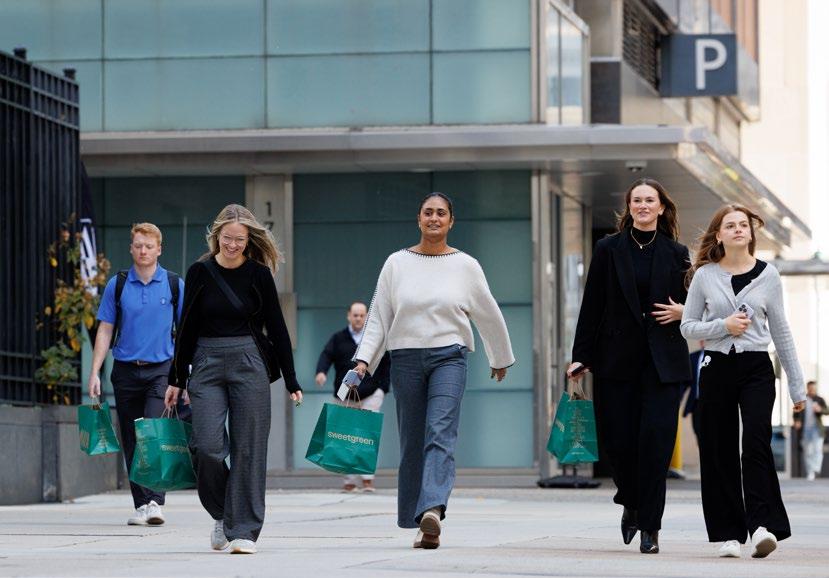
Philadelphia residents hold 667,000 jobs across our region. Around 40% of city residents leave the city to work, a significant reverse-commuting phenomenon enabled by highway investment, suburban sprawl, and regressive taxes within city limits that have helped other employment hubs grow around the region. For the remaining 60% of city residents who work within the city, more Philadelphians work in Center City and University City than the rest of Philadelphia combined.
More Philadelphians work in the nine ZIP codes of Center City and University City than the other 37 city ZIP codes combined.
Source: U.S. Census Bureau, Longitudinal Employment-Household Dynamics, 2023
Looking at job locations of city residents by ZIP code, core Center City’s four ZIP codes along with University City make up the top five employment destinations. In fact, only three suburban locations crack the top 20 employment locations for Philadelphians: King of Prussia, Bensalem, and Conshohocken. Approximately 22,000 jobs are held by Philadelphians in these suburbs collectively; Center City supports seven times as many jobs for city residents.
193,164
Work in Center City & University City
>
191,709
Work in the rest of Philadelphia
Zooming in to residents of the Greater Center City area, two sources reveal that there is a strong correlation between choosing to live in or near downtown and working there. The latest American Community Survey (ACS) data from the Census Bureau reveal that just 10.5% of all residents of Greater Center City work outside of Philadelphia County. Center City District’s own survey of 700 downtown apartment renters completed in 2025 and presented in our Who’s Moving to Center City report found that just 12% of respondents worked in the suburbs, 51% reported working in Center City or adjacent University City, 21% worked from their Center City homes, and the remaining 16% worked within city limits but outside of the core.
Previous research on return-to-office (RTO) rates has confirmed this dynamic, with those living within two miles of their Center City jobs coming back at rates above 90% even as more distant workers stayed home. Together, these findings support the notion that many downtown residents are actively employed here and specifically seek out short commutes that our walkability and mixed-use environment offer.
While 42% of all Philadelphia’s jobs exist in Greater Center City, key sectors are overrepresented given the concentration of high-quality office space and the presence of major cultural and hospitality destinations.
Center City contains a majority of all jobs in these sectors:
Source: U.S. Census Bureau, Longitudinal Employment-Household Dynamics, 2023
88% public administration 83% finance & insurance
83% information
77% professional, scientific, & technical Services 68% utilities 53% administration & support
51% arts, entertainment, & recreation
51% other services (excluding public administration)
Center City and adjacent areas make up a small percentage of Philadelphia’s land but support most of its jobs. It is the only employment node accessible via public transit by 3.3 million residents across the 11-county region. Reliable transit is essential for serving the economic engine of our metropolitan region. Job growth in the urban core supports transit ridership.
250,000 jobs in core Center City 33% of Philadelphia’s jobs exist in 1.4% of its land area.
309,000 jobs in Greater Center City 42% of Philadelphia’s jobs exist in 6% of its land area.
84,000 jobs in University City
Another 11% of all city jobs exist in 2.3% of its land area.
393,000 jobs combined
Greater Center City and University City contain 53% of the city’s jobs in 8% of its land area. There are more jobs here than in the other 92% of Philadelphia put together.
Our 11-county region supports 3 million jobs. One in eight of those jobs are in Center City and University City, which make up just .002% of our metropolitan area.
Share of jobs in Greater Center City and University City
745,931 53%
2,997,448 13%
Source: U.S. Census Bureau, Longitudinal Employment-Household Dynamics, 2023
Greater Center City and its neighbor University City are without equal in the city or region in their scale, growth, and potential as employment centers. They offer jobs across all sectors for people of all experience and education levels, all reachable from across the metropolitan area via public transit. Their 393,000 jobs employ city residents from every ZIP code and City Council district. Their importance and impact are undeniable, but they are not inevitable.
Incomplete tax reform has suppressed growth and discouraged the relocation of firms to Center City from other places, the arrival of COVID decimated the daytime population for several years, and ongoing SEPTA crises have made commutes arduous and unpredictable. Center City is the city and region’s economic heart, and its health and vibrancy determine the trajectory and potential of every surrounding neighborhood and suburban community. As its primary circulation system, SEPTA must be not only stabilized but optimized to allow Center City to operate at its maximum potential. Downtowns are cities’ calling cards and first impressions, the places where most business travelers, tourists, and conventioneers are likely to spend time. For area residents, they must be a place that’s useful and important (and a source of pride) for everyone. They are places to shop and dine and celebrate, but more than anything they are places to work and seek out economic opportunity.
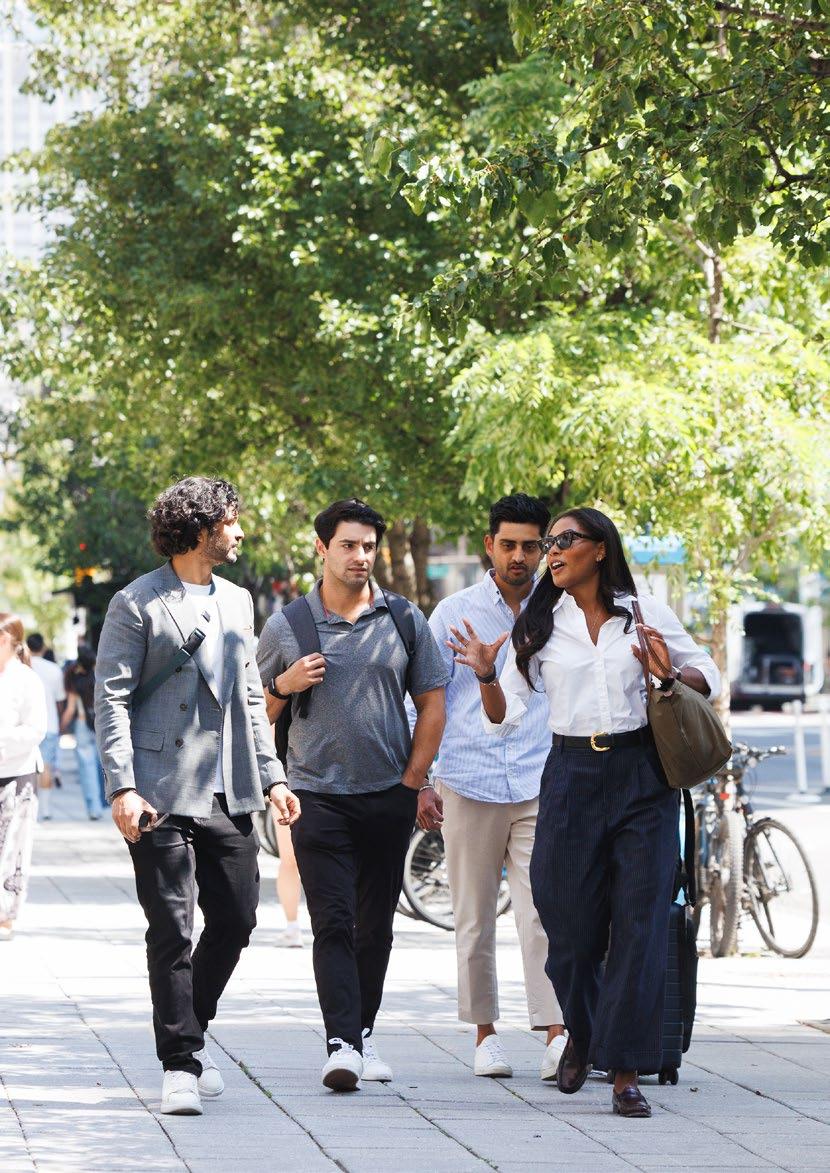
Investments in our office district and SEPTA are essential for attracting and retaining companies and workers.
Center City’s office market is stabilizing despite persistently high vacancy. 2025 saw another increase in total leasing activity as large existing tenants renewed, several relocated or expanded, and a handful announced new downtown locations. On the supply side, more clarity around conversion prospects has teed up the elimination of more than 2 million square feet of office space from the inventory. These trends are sustaining trophy class and otherwise high-quality buildings as they experience the lion’s share of activity while also removing some of the most challenged buildings from consideration. Sustained demand for downtown apartments makes this scale of conversion possible, allowing Philadelphia to avoid the much higher vacancy rates plaguing other downtowns.
For most other owners and investors, the path forward has diverged into two distinct paths: reinvest in outdated-but-viable office space to benefit from the ongoing flight to quality, or pursue redevelopment alternatives. The end result will be a more mixed-use office district that can remain lively at night and ultimately serve to improve the investment proposition for the properties that remain. Transitioning the office district to a more full-service neighborhood will further differentiate it from other office locations within the region and should help make it more appealing to much-needed inbound tenants.
In this chapter
Reimagining obsolete office space
The benefits of locating your business downtown
Leasing reaches a recent high
More than 2 million square feet of office space is planned for imminent conversion to apartments, reducing oversupply.
Employers cite talent accessibility, retention, and the desire of workers to be in Center City among reasons to locate or expand downtown.
Leasing activity reached a six-year high in 2025, and there are more tenants looking for space than there were a year ago.
Trophy office space remains highly sought after despite slowing demand for office space overall. Trophy office buildings boast a vacancy rate of less than half that of Class A buildings, with trophy vacancy declining throughout 2025 to 11.6% as new leases were signed. Class A and B vacancies crept up in 2025, due in part to flight-to-quality relocations of existing tenants.
Center City office vacancy by class Trophy buildings in Center City are maintaining healthy occupancy levels. It is the aging Class A and B buildings where the most significant vacancy exists.
Source: CoStar
Philadelphia’s central business district (CBD) — the generic term used to describe the primary urban core office clusters in cities — is experiencing far less vacancy than many major markets. Data from JLL for the fourth quarter of 2025 report a 20.4% vacancy rate for Philadelphia, while the CBDs of Atlanta, Austin, Dallas, Denver, Minneapolis, Portland, and San Francisco all have vacancy rates above 30%. Among the largest cities, only New York has a lower downtown vacancy rate than Philadelphia.
Downtown office vacancy, major U.S. cities, Q4 2025 Most major downtowns have a larger vacancy problem than Philadelphia.
While significantly more diffuse across dozens of office parks and different townships, office vacancy in the suburbs is greater than that of Center City. A handful of high-performing submarkets like Conshohocken and Radnor are attracting the lion’s share of new leasing activity while vacancy holds or widens in many parts of the region, most notably in the office submarkets to the north of Philadelphia. In aggregate, suburban office vacancy exceeds Center City vacancy by approximately 4 million square feet. Owners of suburban office product and the municipalities that have historically relied on them for significant tax revenues and employment face an uncertain future in settings far less adaptable than Center City.
Total office vacancy, select area submarkets, Q4 2025
Most suburban submarkets have higher vacancy rates than Center City’s office market, creating millions of square feet of vacancy spread across the region. Source: JLL
Leases of large blocks — meaning a full floor or greater — are what move the office market most significantly. While nearly 23% of all office space is vacant, large blocks of space, particularly higher-quality high-rise space, are scarce. Of the approximately 8 million square feet of vacancy in Center City office buildings, less than half a million square feet of it exists in a trophy or Class A high-rise large block. Of the 57 available spaces offering a full floor or more to tenants, 10 are in high-rise portions of higher-quality buildings. Class B buildings contain more large blocks than trophy and Class A buildings combined.
Large blocks of available space by building class as of Q1 2026
Given that large blocks in older buildings are less likely to lease, some of the biggest vacancies in the market may persist unless converted or significantly upgraded.
Source: CoStar
Center City saw more leasing activity in 2025 than in any year of this decade, with deal volume up 10% over 2024. Subleased space made up a larger share of total activity as tenants seeking higher quality spaces took advantage of vacated floors from previous downsizings in Class A and trophy buildings. Average deal size grew in 2025: 118 office leases were completed, compared to 164 in 2024, and yet more total space transacted across these leases. Data on tenants currently in the market suggest that 2026 leasing could keep pace with 2025 volumes, with firms reporting anywhere from 1.4 million to 1.8 million square feet of total tenant requirements looking to execute new leases.
Annual office space leased (square feet)
Source: CoStar
The largest leases were renewals of existing tenants. These renewals included some significant expansions of smaller tenants alongside modest contractions of the largest law firms. A handful of new entrants to the market all landed in top-of-the-line buildings.
Center City’s primary office district stands out from the vast majority of central business districts in other U.S. downtowns. It can be traversed in ten minutes or less on foot, it is adjacent to the city’s highest-density residential neighborhoods and high street shopping, and it is built atop a regional transit system and underground concourse network that enables car-free, weatherproof commuting to most of its buildings. Over the last two decades, its boundaries have stretched as it has welcomed new towers for Comcast, Morgan Lewis, and Chubb while simultaneously filling with apartments, hotel rooms, and retail.
Major office buildings stretch from City Hall to the Schuylkill River and from Market to Arch streets, supported by more than a dozen hotels of varying price points. With projects including 2222 Market, 2300 Market, and 2400 Market, the district has expanded westward in the last 10 years.
Retail has adjusted over time as the composition of the office district has changed. Recent additions have added nighttime options and entertainment such as MOTW Coffee and Pastries and Five Iron Golf. Significant vacancy remains in the ground floors of office buildings, with many spaces large enough to suit tenants hard to accommodate elsewhere in Center City. Strategic retail leasing could enliven the area and help extend the vibrancy of Walnut and Chestnut streets northward.
The modern office district has included residential buildings from the beginning, with more than 1,500 units along JFK Boulevard. Since 2000, more than 5,200 units have been added largely through conversions but also through ground-up buildings. Another 1,000 units are in development within the office district itself.
Penn Center created a sprawling network of outdoor spaces, subterranean hallways, and retail areas that are underutilized, with ownership fragmented across different sections. Well-maintained parks border the office district and serve as amenities, but they do not feel integrated into the district itself. Investments in the pedestrian experience above and below ground have the potential to vastly improve the attractiveness, convenience, and retail prospects in the area.
Hotel Residential
Conversion
New retailers
Retail vacancy
Office & hotels
More than a dozen hotels are in or near the office district.
Residential & conversions
Thousands of residential units have been added to the office district through conversions and ground-up projects.
Notable new retailers are chipping away at the district’s many ground-floor and concourse-level vacancies.
Public realm (parks, plazas, and concourses)
Pedestrian spaces at street level and underground are a unique and largely untapped opportunity.
A measure of the change in occupancy, absorption has been net negative across the office district for the entirety of the 2020s. The years 2022 and 2023 saw the most downsizing of tenants, resulting in larger losses of occupancy. In 2024 and 2025, a new story emerged: negative absorption slowed significantly across all buildings, turning modestly positive for trophy buildings while Class A and B buildings experienced far less of an exodus. The marginal losses trophy buildings experienced in prior years reflect that tenants are staying put in high quality space while new tenants backfill spaces vacated by shrinking tenants.
In relative terms, the 2025 data tell a positive story of stability: trophy buildings chipped away at their vacancy while the rest of the inventory held steady. Going back decades, Philadelphia’s CBD has seen predominantly flat or slightly negative absorption due to sluggish employment growth in office-occupying sectors. This is why the total amount of office inventory in Center City has fluctuated over time but remained largely constant for the last 40 years.
Philadelphia has not succeeded in growing office employment downtown. Rather, tenants have upgraded their spaces over time, with some remarkable success stories like Comcast and Chubb generating brand new towers while millions of square feet of outdated space found new life as apartments, hotel rooms, and condominiums.
Net absorption of office space, trophy vs. Class A and B buildings (square feet) Trophy buildings have seen a net increase in occupancy in recent years while the rest of the inventory continues to lose occupancy.
Source: CoStar
Absorption
The city and region attract a tremendous amount of private sector and government investment through the National Institutes of Health (NIH) and the venture capital markets. Philadelphia-based organizations received $1.3 billion in NIH funding through the 12-month period ending September 2025. Data on institutional funding for the federal fiscal year of 2025 reveal that the University of Pennsylvania comes in fifth for total awards. On the venture capital side, our region cracked the top 10 global markets in Pitchbook’s Global VC Ecosystem Rankings last year with 470 deals attracting $3.8 billion in investment, placing Philadelphia 10th overall and 7th for both “software as a service” (SaaS) and fintech deals. In a separate ranking by CommercialCafe, Philadelphia’s innovation system ranked 8th among large U.S. cities ahead of Chicago, Los Angeles, and New York. For the first time in recent memory, our metropolitan area topped the largest 25 across the country for job growth last year.
From a talent perspective, the case for locating businesses and new ventures in Center City is strong: our 2025 Philadelphia Employment Report highlighted the city’s growth in college-educated talent to 260,000 residents, of whom 70% are in the prime 25-to-34 age bracket. Philadelphia’s population of young and educated residents has grown more than twice as fast as the suburbs since 2011, giving Philadelphia County a talent pool 2.5 times larger than second-place Montgomery County. Approximately 50,000 of the city’s college-educated young professionals live in Greater Center City and University City.
Several recent office leasing stories reflect a response to this impressive aggregation of talent, including Chubb’s decision to consolidate operations at 20th and Arch while adding significantly to its workforce, as well as Stateside Vodka’s decision to plant its corporate headquarters in the East Market development. These are encouraging stories worth celebrating, but they are exceptions in a market that has seen total demand for office space decrease, ongoing utilization of remote and hybrid positions, and cases of firms locating in taxadvantaged or less burdensome environments instead of Center City.
After considerable recovery through 2022 and 2023, volumes of office workers in the West Market Office District have plateaued somewhere between 50% and 60% of prepandemic levels. When other pedestrians are added into the data, total foot traffic in the office district hovers closer to 70% of previous norms.
With flexible and hybrid work arrangements here to stay, there are a few key strategies available for increasing the total volume of office workers and street life in this part of the city. The first is thoughtful events that cater to the desires of the downtown workforce. CCD’s Sips program has a track record of success in generating surges of activity and higher rates of RTO on Sips Wednesdays: 5,500 additional pedestrians were measured in the office district alone, and double that number filled the streets of Center City compared to typical summer weekdays. Programs like Sips prove that employee engagement can move the RTO needle, reinforcing the value of activities that connect Center City employees to one another and to the dozens of events and hundreds of nearby businesses that make working downtown an experience no suburban office park can match.
Office district worker volumes compared to 2019
Office worker recovery climbed steadily in 2022-2023 but has since leveled off. Averaged across all days of the week, we see approximately half of previous volumes on any given day.
Source: Placer.ai
Total office district foot traffic compared to 2019
Recovery Everyone
Total foot traffic in the office district has stabilized at around 70% of previous levels when all users (office and service workers, residents, other visitors) are factored in. A more mixed-use district will help grow and stabilize daily traffic.
Source: Placer.ai
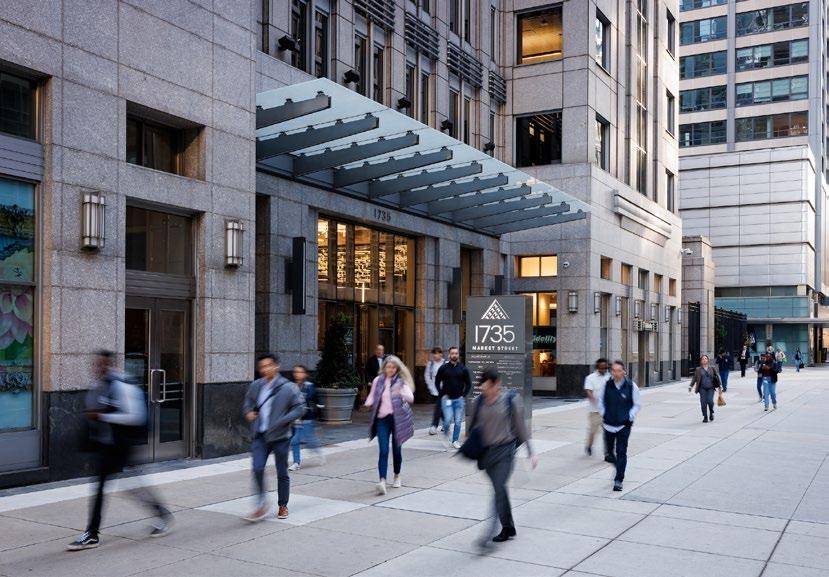
The longer-term work of encouraging higher rates of RTO (and more business creation and relocation to Center City) is coordinating and amplifying investments in the office district to make it as dynamic and appealing a place to be as possible. The private market can address some of this by itself: partial and complete conversions are upping the residential density of the neighborhood and creating a critical mass of people outside of office hours. The area is poised to become a seam that knits together Rittenhouse Square and Logan Square, rather than a rift that divides them. More residents can create demand for retail diversification.
As the mix of uses (and users) intensifies in the office district, improvements in the public realm — office plazas, sidewalks, the underground concourse — can enliven the area while making it more functional and convenient for residents, workers, and shoppers. CCD is engaging this year with dozens of office district tenants, building owners, brokers, and business owners this year to hear more about what these stakeholders see as the most critical improvements to prioritize. A livelier and more engaging office district serves multiple goals at once: creating a peerless work environment that can outcompete other U.S. downtowns in luring new employers from elsewhere, and supporting their growth while continuing the work of making Center City the most livable and walkable downtown in the country.
Conversions of iconic buildings are defining the development landscape
In 2025, 21 major projects were completed from Girard Avenue to Tasker Street, river to river. Nearly two dozen projects are currently under construction and another 19 are in the proposal stage, representing more than $2 billion in new investment. Multifamily apartment buildings continue to generate most new construction activity. Another 3,500 units were completed in 2025 across Greater Center City, with 2,400 more on the way. Several large-scale projects including Pearl Properties’ Harper Square (set to be the tallest apartment building in Philadelphia) are going vertical this year.
While new landmarks redefine the skyline, conversions of iconic buildings are a defining feature of the development landscape in 2026. Two of Philadelphia’s largest structures are on the path to new life: Centre Square and the Wanamaker Building. Together they will deliver more than 1,100 housing units, 300 hotel rooms, refreshed office space, and hundreds of thousands of square feet of retail — fundamentally transforming the blocks on both sides of City Hall.
Avenue of the Arts in the spotlight
Ambitious conversions are the largest projects
Public investments reshape public space
Several of the former University of the Arts buildings are already undergoing redevelopment.
Centre Square and the Wanamaker Building will collectively reinvigorate 3.2 million square feet of space around City Hall.
New parks and streetscapes are taking shape to make Center City more livable and accessible.
Last year, we highlighted Market East and South Broad Street in their moments of change and uncertainty. One year on, visions are taking shape along both corridors as well as Market Street west of Broad in the office district.
Centre Square
Center City’s largest building has a redevelopment plan for its 1.8 million square feet: a 300-room hotel facing City Hall, more than 500 apartments, an infusion of retail into its street-level podium, and some preserved office space.
Terra Hall
Temple University’s expansion and relocation from 1515 Market into the former University of the Arts building will grow its physical presence and visibility in Center City significantly.
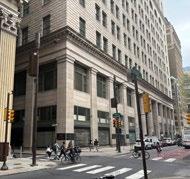
The Wanamaker Building
Construction is underway on a complete reinvention of the 1.4 million square foot landmark, with 622 apartments, multi-tenant retail across the Macy’s footprint, several floors of office space, and rooftop amenities.
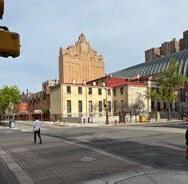
Village of Industry and Art (VIA)
Scout is actively building studios, maker spaces, and apartments for artists and artisans in the former Hamilton and Furness halls at Broad and Pine. Its courtyard bar, Frankie’s Summer Club, reopens for its second season during construction.
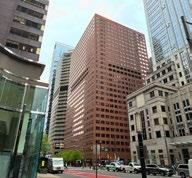
Ten Penn Center
The top half of this office building will become 273 units, joining Three Parkway and 1880 JFK Boulevard as the latest in a trend toward partial-building conversions.
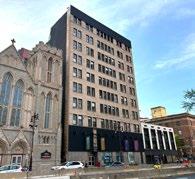
Anderson Hall
84 apartments and new retail will activate the former UArts property across from the Kimmel Center and VIA. In partnership with Carl Dranoff, the adjacent parking garage will open as The Stoop Pigeon, a women-owned all-day café and sports bar
Center City Real Estate Developments
More than $2 billion in real estate investment is underway across Greater Center City, along with significant infrastructure investments in parks, bridges, and streetscapes.
Source: Developments Database 2026, Center City District
Under construction Proposed Completed Status
Public infrastructure Proposed
Under construction
Total square footage
10,000
10,001-50,000
50,001-100,000
100,001-500,000 > 500,000
Significant projects that came to fruition in 2025 include the conversion of 1701 Market into 17 Market West and the completion of 2301 JFK, a curvilinear apartment building facing 30th Street Station. Set for 2026 completion are the Chubb Center, Center City’s first new office building since the completion of the law firm Morgan Lewis’ headquarters at 2222 Market, and CHOP’s Morgan Center for Research and Innovation abutting the South Street Bridge. Projects underway with completion dates beyond 2026 include the second phase of Piazza Alta in Northern Liberties and 2012 Chestnut Street, a mixed-income tower developed by Alterra Property Group through a ground lease with the Philadelphia Housing Authority.
Total square footage completed or under construction, 2025
Source: Center City District
Completed and in-progress residential units
3,568 2025
934 2026
Major Center City projects completed or under construction
$2.14 billion in major development
8,240 residential units
1,438 2027 and beyond
555,000 of commercial square footage
354,713 of new retail square footage
Population
Retail
Arts & Institutions
Visitors & Tourism
Greater Center City (Girard Avenue to Tasker Street, river to river) stands as the third largest residential downtown in the country and the fastest-growing area in Philadelphia. From 2011 to 2024, Greater Center City’s population surged 28%, surpassing 200,000 residents. Today, one in eight Philadelphians call Greater Center City home.
That growth is reshaping the fabric of downtown. Rising educational attainment and household incomes reflect a shifting demographic profile, as an influx of new residents continues to transform the character of the city’s urban core.
In this chapter
1 in 8
Population growth sustained by housing growth
Demographics continue to shift
One of every eight residents of Philadelphia live in Greater Center City, making it one of the fastest growing neighborhoods in the city.
Core Center City’s absorption rate is high, meaning these new apartment buildings are being filled.
Rising incomes and educational attainment signal a growing customer base and talent pool for employers.
In just 30 years, core Center City has nearly doubled the number of residents and housing units and established itself as a highly desirable place to live.
Center City & Philadelphia demographics Center City’s population continues to grow, and inflows of new residents are helping to shift the demographic snapshot.
Source: U.S. Census Bureau, ACS
Center City residents have traditionally had higher educational and earning levels than Philadelphians as a whole, and that gap has widened over time. From 2011 to 2024, the share of residents with at least a bachelor's degree grew from 73% to 80%, while median household income climbed 57%, from $64,100 to $100,869.
That concentration of educated, high-earning residents does more than reflect demand for downtown living — it actively drives it. More people living near downtown means more foot traffic for retailers, a deeper talent pool for employers, and more workers close enough to their offices to come in regularly. With a strong pipeline of new housing set to welcome thousands of additional residents in the coming years, Center City is well positioned to keep building on that momentum.
Like many large cities, Philadelphia saw its population dip during the pandemic years. But while the city overall continued to lose residents through 2023, Greater Center City’s population saw a brief decline and rebounded more quickly. That momentum has only accelerated: in 2025, Philadelphia’s population grew by 1.6%, while core Center City climbed 4% and Greater Center City rose 3.3%, according to Placer.ai.
Population growth Center City’s population growth continues to outpace Philadelphia overall.
Source: Placer.ai
From 2011 to 2024, Greater Center City's population grew by 28%—7 times the citywide rate of 4% over the same period.
Source: ACS 5-Year Estimates
Center City is not only attracting new residents — it's keeping them. A CCD survey of residents in newly built apartment buildings found that 44% relocated from outside the region entirely, while 41% were already Philadelphians who chose to live downtown. And most plan to stay: nearly two-thirds expect to be renting in Philadelphia in three to five years, and 16% intend to own a home in the city. This provides a meaningful signal that downtown is converting newcomers into long-term residents.
Home location prior to moving
A CCD survey of residents living in newly built Center City apartment buildings found that 44% relocated from outside the region entirely, while 41% were already living in the city.
Source: Center City District
Center City Absorption in Units
From 2011 to 2024, Greater Center City's population grew 28%, with the strongest gains concentrated in ZIP codes 19106 and 19123. That growth has been fueled by an expanding housing stock, much of it driven by large developments completed under the 10-year tax abatement.
The demand is real. Greater Center City's occupancy rate stood at 90% in 2025, reflecting robust absorption across the area. Over 4,000 units were absorbed last year alone, the strongest single-year performance on record, bringing cumulative absorption to 20,803 units since 2020. In short, more people are moving in than moving out, even as new units continue to come online.
Greater Center City absorption in units
Over 4,000 units were absorbed in 2025, the strongest single year in recent history.
Greater Center City Absorption in Units
Source: CoStar
Greater Center City housing stats Source:
$2,171
2,534
2,801
Center City’s retail mix stands alongside the best urban shopping cities in America.
Center City’s retail occupancy has largely held steady after a steep recovery through 2022; a sign of a market that has found its footing. Twice a year, Center City District surveys the number of occupied and vacant storefronts from Vine Street to South Street. As of March 2026, retail occupancy rose to 84% across Center City District.
The mix of retailers is evolving alongside the neighborhood itself. As downtown’s residential population has grown, retailers have followed, catering to a customer base that lives, works, and shops within walking distance. Digitally native brands, many making their first move into brick-andmortar, continue to choose Center City as their entry point destination in the Philadelphia market.
In this chapter
Occupancy remains strong
Nightlife supports dining
National-level retail
Center City retail occupancy reaches 84% as new retailers choose Center City as a place to locate.
Pedestrian volumes, especially during late hours, support Center City’s renowned dining scene.
Center City’s retail mix, specifically along Rittenhouse Row, compares well with the best city shopping experiences in the U.S.
Center City’s retail mix, specifically along Rittenhouse Row, stands alongside the best urban shopping streets in America. It draws twice the visitor density of Georgetown, and more people live within walking distance of Rittenhouse Row than Newbury Street in Boston or State Street in Chicago.
Center City retailers by type
39%
33%
Storefronts by business footprint, 2026
74%
Center City is on the leading edge of retail expansion in the Philadelphia region. Major brands made big commitments to Center City in 2025, including Nike’s Jordan World of Flight’s first North American location, new-to-market outposts for brands like Abercrombie & Fitch and Veronica Beard, expansions for local favorites like Mitchell & Ness, and high-profile dining concepts from hometown restaurateurs (Jesse Ito, Michael Schulson, Stephen Starr) and national operators (Tyson Cole’s Uchi, Kevin Kelley’s Kitchen + Kocktails).
Recently opened
Coming soon
Selected recently opened retailers





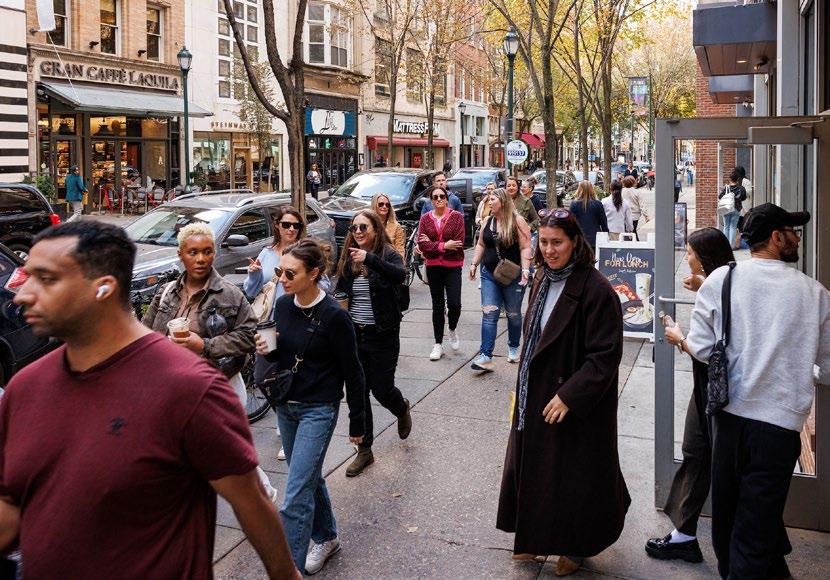
As Center City’s retail environment continues to evolve with new stores and concepts, occupancy levels have been stabilizing in recent years. While the broader retail environment is challenged by rising prices and less consumer certainty, the outlook for Center City’s retail mix remains strong.
As Center City’s population and density continue to grow, grocery stores have increased to meet demand. Recent openings of a Giant supermarket at Broad Street and Washington Avenue and a Sprouts Farmers Market along the waterfront serve as anchor retailers for large developments. German grocer Lidl is expected to open at Broad Street and Girard Avenue. Several grocery stores have a growing presence in Center City.


is highly resilient and has bounced back quicker than daytime work crowds.
Center City’s pedestrian volumes are sustained throughout the night in Rittenhouse Row and Midtown Village. Rittenhouse Row’s weekday nighttime volumes have nearly reached 2019 baseline levels, while weekends are 2% higher than 2019. The nighttime economy is highly resilient and has bounced back quicker than the daytime worker crowds, in large part due to Center City’s booming residential growth.
Center City is home to 543 nightlife destinations, which includes restaurants, bars, nightclubs, theaters, and music venues. Of these establishments, 514 (95%) are either independently or regionally operated.
Hourly weekday pedestrian volumes
Source: Placer.ai
Hourly weekend pedestrian volumes
Hourly Weekday
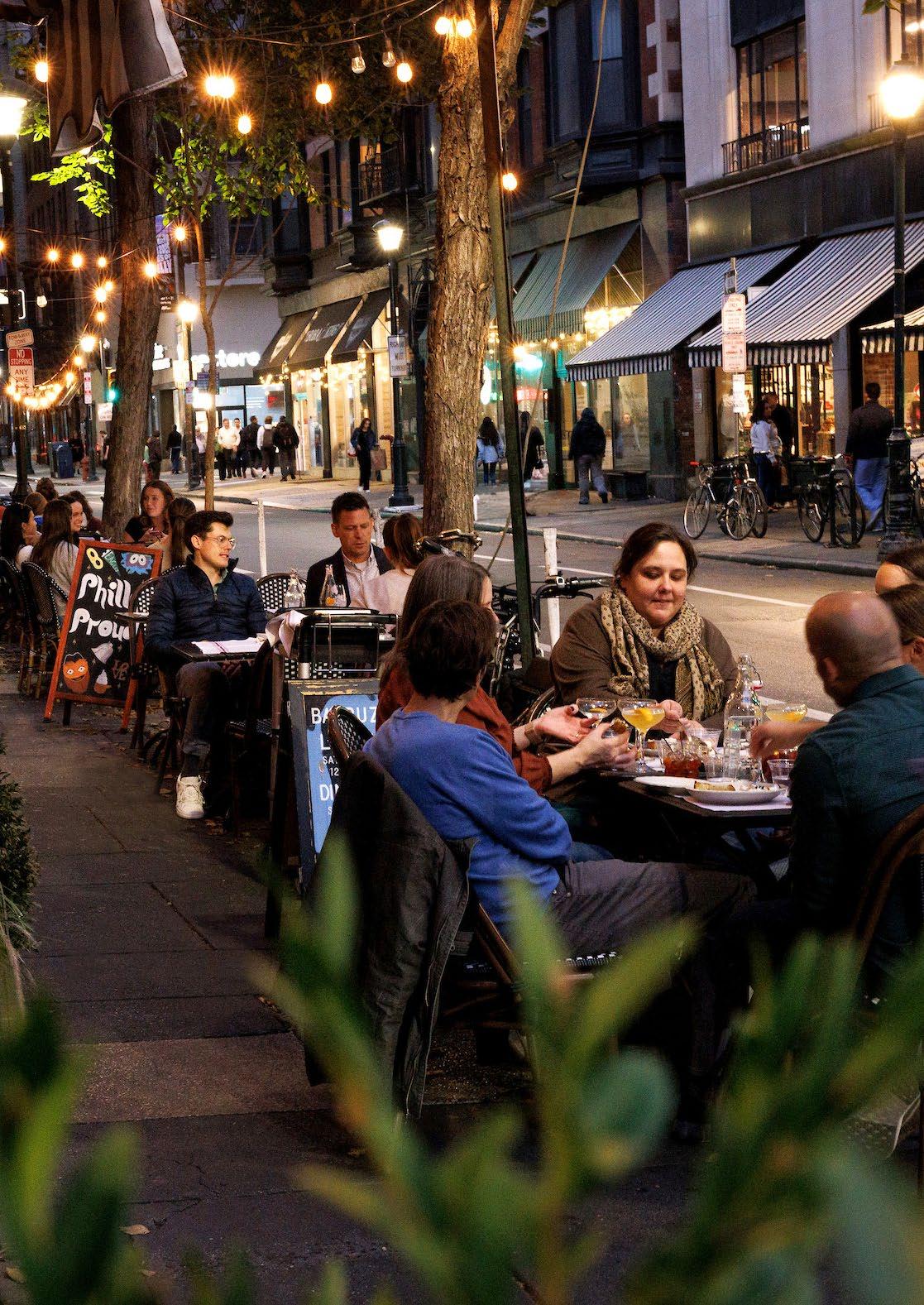
What do shoppers want? Since 2024, Center City District has surveyed residents, workers, and visitors to better understand their shopping habits and what types of retailers are most sought after in Center City. According to the survey, shoppers want more clothing and consumer goods options such as local boutiques, luxury retail stores, department stores, and fast fashion retailers.
Top five requested brands:
Zara
Nordstrom
Bloomingdale’s
Mango
Crate & Barrel
Top five requested categories:
Local boutiques
Luxury retail stores
Fast fashion
Department stores
Grocery stores
Center City is one of America's great dining cities — home to the highest concentration of restaurants and nightlife in the region, and an increasingly frequent presence on the national stage.
Michelin Star awardees
Friday Saturday Sunday, Her Place Supper Club
Michelin Bib Gourmand awardees
Sally, Dizengoff
Michelin recommended restaurants
Little Water, Vernick Food & Drink, My Loup, High Street, Forythia, Vedge, Vetri Cucina, Zahav
James Beard Award Best Chef Mid-Atlantic Region finalist
Jesse Ito (Royal Sushi & Izakaya), Amanda Shulman (Her Place Supper Club)
James Beard Award Outstanding Chef semifinalist
Greg Vernick (Vernick Fish)
James Beard Award Outstanding Bar finalist
The Lovers Bar (Friday Saturday Sunday)
Restaurants by accolades in 2025
Center City’s walkable streets offer a “museum without walls.”
Center City’s arts and culture sector is flourishing, with new institutions, repurposed landmark properties, and a growing public art landscape cementing downtown’s place among America’s premier cultural destinations. The sector supports thousands of jobs, draws visitors from around the world, and generates significant revenue for both the institutions themselves and the city as a whole.
Beyond traditional theaters and museums, Center City’s walkable streets also offer a “museum without walls” — an extensive collection of public art on view round-the-clock, free to anyone who passes by. It’s a distinction recognized nationally: in 2025, USA Today named Philadelphia the “Best City for Street Art in America.”
In this chapter
Center City's more than 210 arts and culture institutions rank it second among peer downtowns, and in 2025, it added one of the most anticipated cultural openings in the country. Calder Gardens, dedicated to the work of Alexander Calder, brought a striking new presence to the Benjamin Franklin Parkway: an 18,000-square-foot Herzog & de Meuron-designed building set within lush gardens, conceived as a space for quiet contemplation. It joins a cultural landscape that already includes world-class art museums, historic parks, and independent galleries, reinforcing Center City's place among America's premier destinations for the arts.
Total arts and culture organizations
Center City has more than 210 arts and culture organizations, ranking second among peer downtowns.
Source: SMU Data Arts
Total Arts and Culture Organizations
Performing Arts History Museums & Organizations Museums (Non-History)
Midtown Manhattan
Center City Philadelphia
Downtown Washington, D C
Downtown Manhattan
Downtown Chicago
Downtown Boston
Downtown Seattle Downtown San Francisco
Attendance continues to grow year-over-year at many of Center City’s cultural institutions. Rising ticketed admissions coincide with recent trends such as an increase in residents, higher international travel, and creative marketing and programming initiatives. 14 theaters, museums, and organizations provided admissions data.
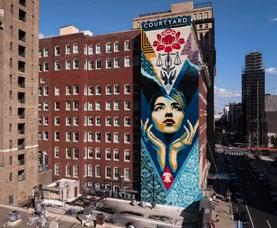
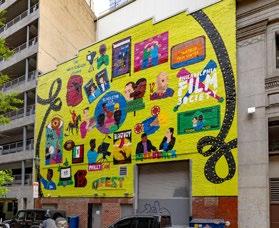
Center City is rich with public art, creating a “museum without walls” with over 250 sculptures and other works of art across downtown. In 2025, Philadelphia received the USA Today 10Best Readers’ Choice Award for Best City for Street Art in America.
Public art by type
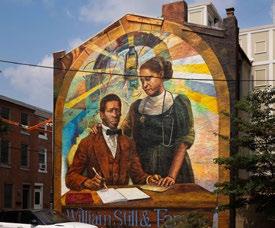
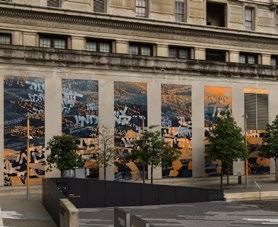
625 South Delhi Street
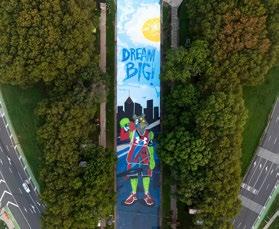
King
2451 Benjamin Franklin Parkway
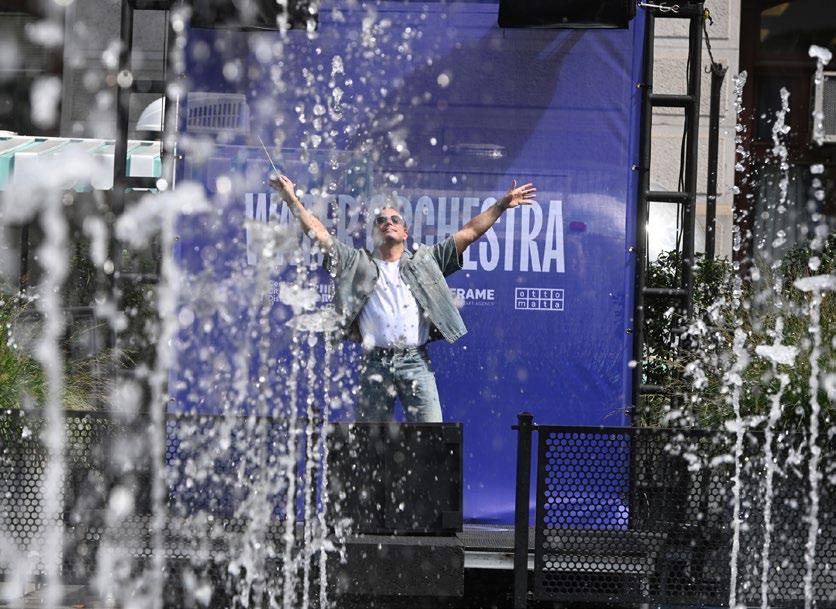
In September 2025, Center City District partnered with The Philadelphia Orchestra to bring an interactive art installation to Dilworth Park. Water Orchestra, conceived, produced, and distributed by a trio of Montréalbased creative organizations, allowed park visitors to playfully conduct the water fountains in real time to the compositions of The Philadelphia Orchestra. This installation kicked off the orchestra’s 125th anniversary.
Following the sudden closure of the University of the Arts, several new owners acquired portions of the university’s real estate portfolio, signaling a new chapter for these prominent Avenue of the Arts properties.
Village of Industry and Arts (VIA) Scout, the developers of the Bok Building, acquired Hamiton and Furness halls on the Avenue of the Arts to transform former UArts dormitories into affordable artist housing and provide space for artists, makers, and small businesses. Organizations including AIA Philadelphia, BlackStar Projects, Community Design Collaborative, and DesignPhiladelphia began moving to VIA in 2025. The building will welcome residents and additional businesses throughout 2026.
In 2024, Temple University acquired Terra Hall at Broad and Walnut streets with plans to move its Center City campus to the building. Following renovations, Terra Hall will reopen in 2027 and serve more than 2,000 students, including many enrolled in Temple’s art, music, and dance programs. This will advance President John Fry’s vision to deepen partnerships with the city’s arts and cultural institutions.
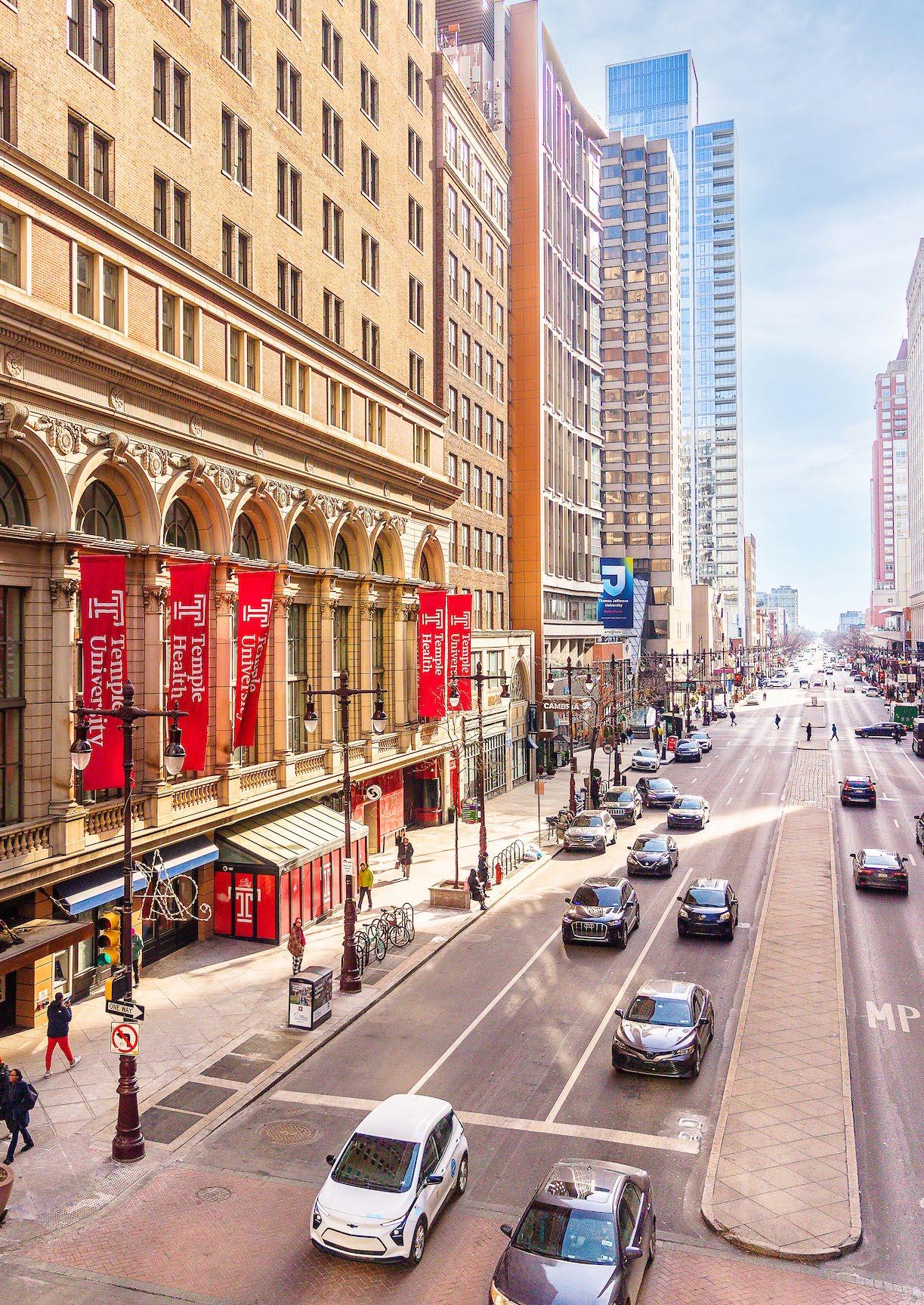
On an average day in Center City there are 343,296 pedestrians downtown.
Center City draws thousands of people every day — to live, work, and explore. In 2026, Philadelphia is stepping into an especially prominent national spotlight, earning recognition from major travel and news publications and welcoming a new wave of visitors to the city’s urban core.
Strong weekend visitation, growing international travel, and strong convention attendance are all driving the demand that benefits hotels, restaurants, and the hospitality sector while bolstering city tax revenue. With a rising residential population and expanding direct international flight routes, Center City is well positioned to meet that demand in 2026 and beyond.
Convention activity grows
Hotel performance holds
The Convention Center welcomed 906,000 attendees in 2025 and expects even more in 2026.
All hotel metrics remain strong; occupancy and demand slightly increased leading into 2026.
The average daily volume of visitors traving to Center City reached over 200,000, in 2025 inceasing by 4% from the year prior. This underscores the growing regional and national interest in Philadelphia as a destination.
March 2026 pedestrian volumes were largely positive across retail corridors: down 7% year-over-year in Market East, but up 10%, 15%, and 16% in Market West, Midtown Village, and Rittenhouse Row, respectively. Compared to pre-pandemic baselines, total Center City foot traffic in March 2026 stood at 80% of 2019 levels.
Core Center City pedestrian volumes by population, hourly, 2025
Source: Placer.ai
Volumes by pop
Residents Non-Resident Workers Visitors
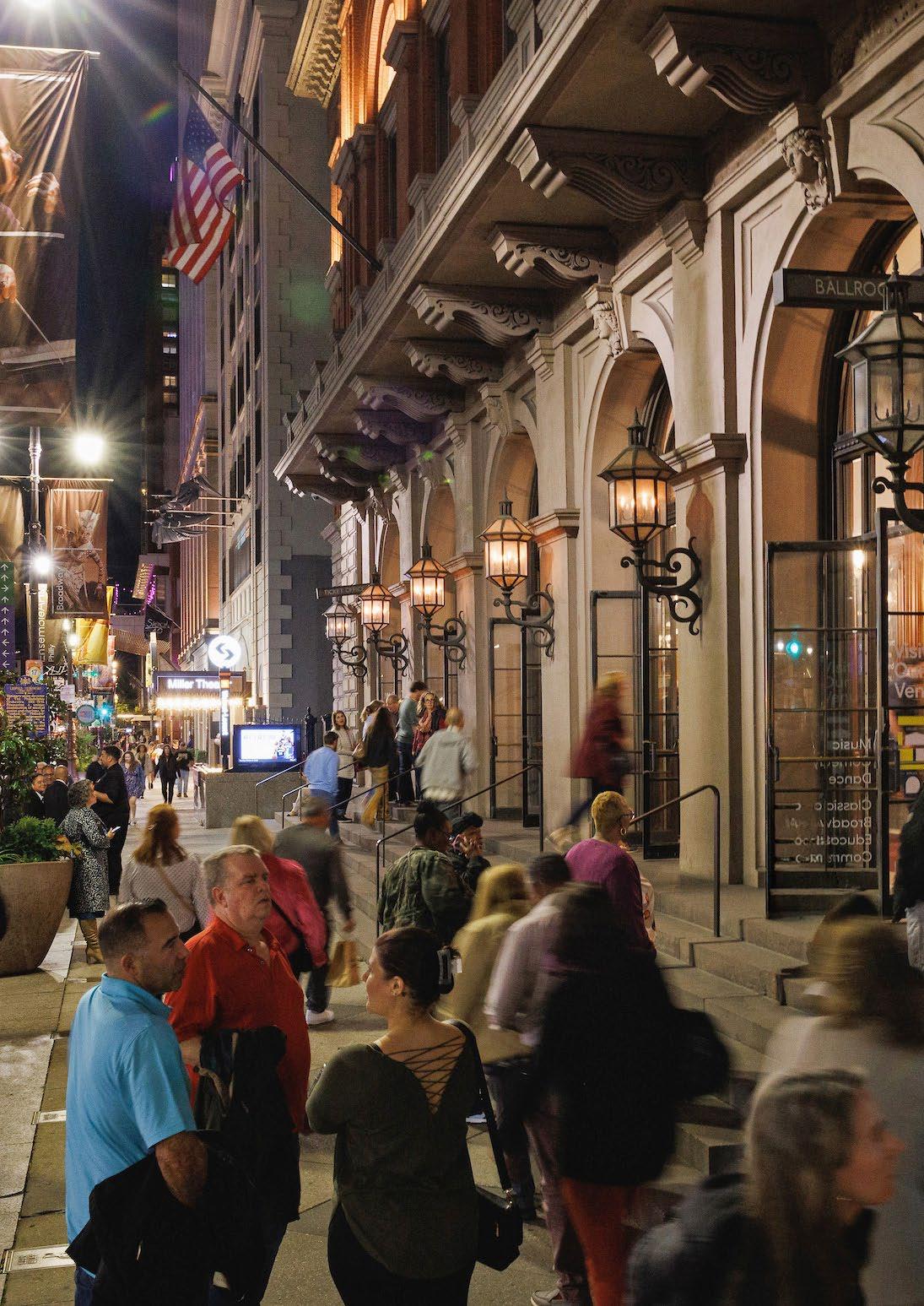
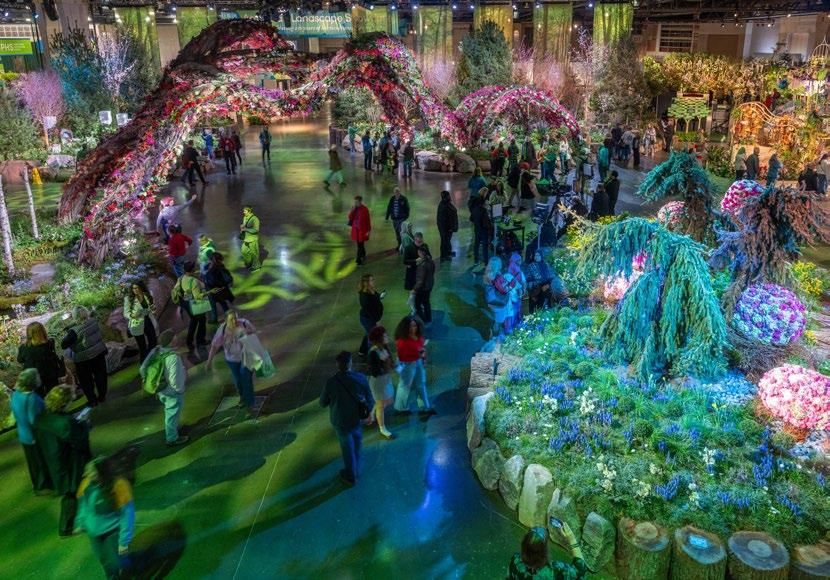
In 2025, the Pennsylvania Convention Center hosted 152 events and over 906,000 attendees. 2026 is projected to be another big year with 127 events expected to draw more than 1 million visitors.
Total events
2025
Attendees
152
906,542 2026 (projected)
127
1,035,245
Center City’s 13,381 hotel rooms generated nearly $700 million in total revenue in 2025, creating a powerful ripple effect through the rest of the economy. Demand and occupancy increased slightly from 2024, while revenue per available room (RevPAR) remained stable. Strong hotel metrics position Center City to accommodate increased visitation in 2026.
The Four Seasons earned a two-key Michelin rating, and the W Philadelphia was recognized as one of the best hotels globally by Conde Nast Traveler in 2025.
Center City hotel metrics
Source: STR
66.5% hotel occupancy
$695 million
total hotel revenue
Number of hotel rooms
$211 average daily rate
$142 revenue per available room
In summer 2025, American Airlines began nonstop flights from Philadelphia International Airport (PHL) to Edinburgh and Milan, and Aeroméxico began nonstop service to Mexico City. In 2026, American is adding direct flights from PHL to Budapest and Prague, and relaunching nonstop flights to Santiago, Dominican Republic. In summer 2027, the airline will introduce a nonstop to Porto, Portugal. PHL welcomed over 4 million international flight passengers in 2025.
Accolades
• USA Today’s 10Best Readers’ Choice Awards voted Philadelphia as the “Most Walkable City to Visit in the U.S.”
• Travel + Leisure named Philadelphia on the list of 50 must-visit culinary destinations in 2026.
• BBC Travel, CNN, The New York Times, Architectural Digest, and The Wall Street Journal named Philadelphia as one of the best places to travel in 2026.
New direct flights from Philadelphia
Existing direct flights from Philadelphia
Canada Caribbean & Central America Europe
Halifax
Montreal
Quebec
Toronto Aruba Bermuda Cancun
Grand Cayman
Liberia, Costa Rica
Montego Bay
Nassau Providenciales
Punta Cana
Saint Lucia
Saint Maartin
Santa Domingo
Doha
Public Realm & Walkability
Transit
Bicycling
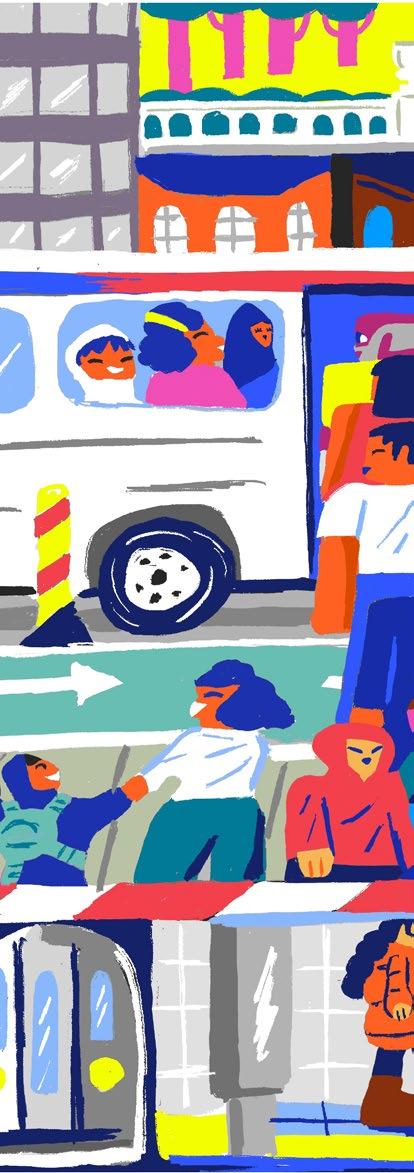
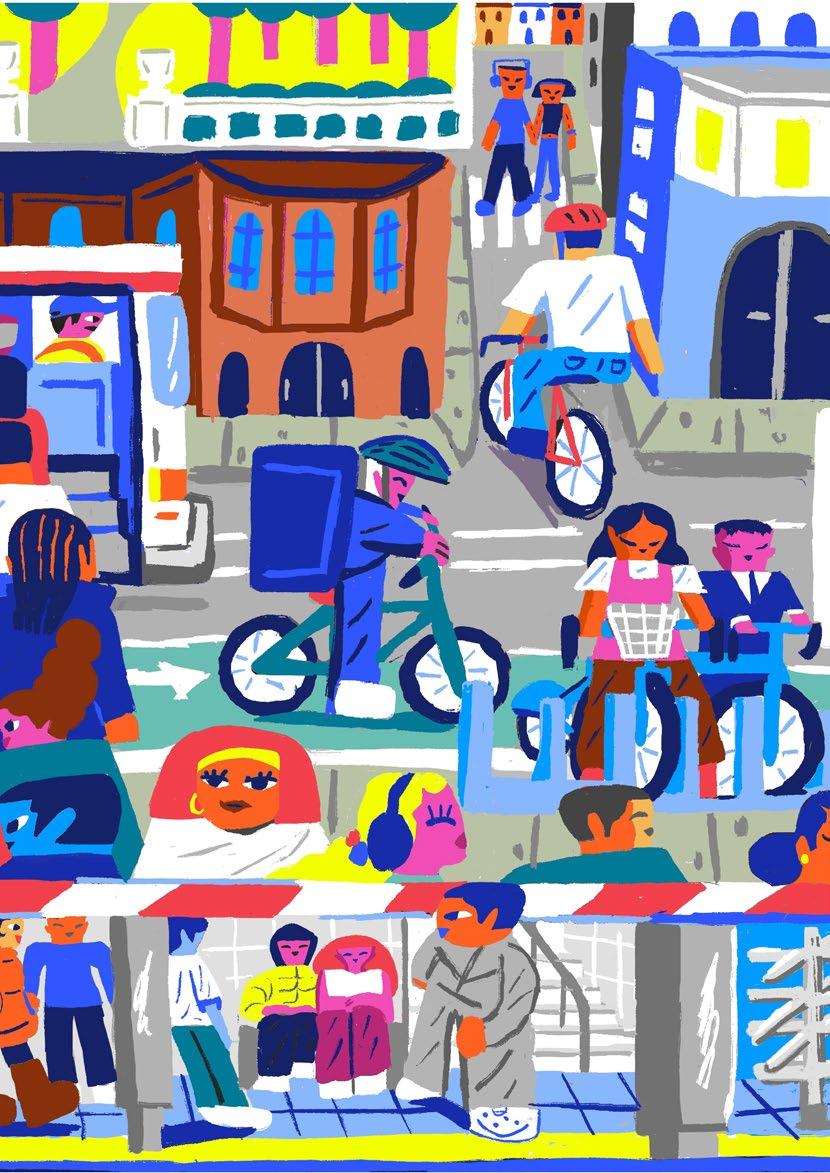
You can walk Center City, river-to-river, in less than an hour.
Within just two square miles, Center City gives pedestrians access to 250,000 jobs, over 800 retail locations, and nearly 1,000 food & beverage spots. At a leisurely pace, you can walk Center City river-to-river in less than an hour. Human-scale streets and dense, mixed-use development put culture and everyday life right around the corner and make walking the easiest way to get around.
What makes downtown special is the public realm you encounter the moment you step outside. Pedestrianized zones, parks, outdoor seating, and wayfinding aren’t just amenities bolted onto a car-oriented environment — they are the environment, designed from the start for people rather than vehicles.
In this chapter
Streets shines CCD’s car-free streets initiative creates major benefits for retailers and visitors.
Taking a fresh look at our alley network
Reappraising sidewalk seating
Surveying finds Center City alleyways are an important yet underutilized asset.
As the number of outdoor dining seats declines, City Council updates permitting process to encourage more participation.
For a third straight year, Center City Philadelphia was named America’s Most Walkable City in USA Today’s 10Best list. This walkability, and the proximity to everyday amenities, is a major asset and a significant driver of demand to live and work in Center City.
According to the National Association of Realtors Community and Transportation Preference Survey, when deciding where to live today: 79% of respondents rate being within an easy walk of places like shops and parks as very or somewhat important; 72% say being within a short commute to work is very or somewhat important; and 65% say having public transit nearby is very or somewhat important. Among respondents who value walkability, 78% would be willing to pay more to live in a community that provides it — a notable increase from 60% in 2017.
In September 2024, Center City District launched Open Streets, closing portions of Walnut and 18th streets to cars on select Sundays and opening them to pedestrians. The key goals were to attract visitors, increase business sales, and create an enjoyable environment for everyone.
Sixteen months and 20 events later — 16 along West Walnut Street and four in Midtown Village — the results speak for themselves. Retailers expanded beyond their doors and into the street with expanded displays and pop-up events, while CCD brought in ambient entertainment. Businesses along Walnut Street reported a 62% jump in foot traffic on Open Streets Sundays and a 38% increase in sales compared to a typical weekend.
In March, CCD announced it would expand the program to 20 dates in 2026, extending it across both West Walnut Street and Midtown Village
Center City’s density is one of its greatest assets — and one that, like all great walking cities, reveals more the better you get to know it. To help pedestrians find their footing, Center City District installed the city’s first comprehensive wayfinding system in 1997, with directional signage, maps, and transit identifiers throughout downtown. Nearly 30 years later, CCD is exploring a full refresh of that system to meet the needs of a downtown that looks very different than it did in the late 1990s.
As technology advances and public needs evolve, SEPTA is adapting as well. Its new Metro wayfinding program is already rolling out across the B, L, and T lines, replacing outdated signage with clearer, more legible information designed to work better for riders with visual impairments and non-English speakers.
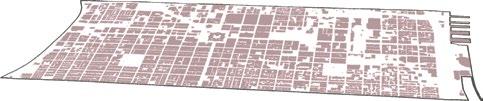
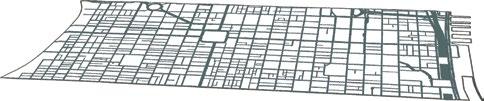
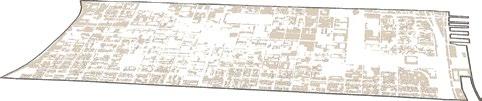
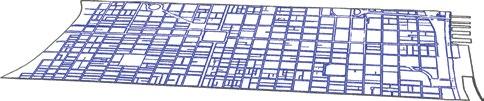
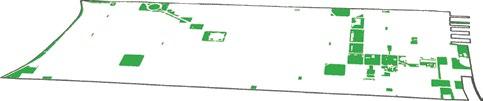
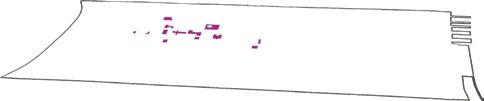
public realm—the spaces people can freely move through—includes a mix of sidewalks, streets, parks, plazas, and alleys.
Despite being the most heavily traveled part of the region, less than a quarter of Center City’s 1,300 acres is dedicated to pedestrians, even though as many as 400,000 people are on foot there on a typical day. Nearly everyone who experiences Center City — residents, workers, students, and visitors — does so as a pedestrian, navigating a combination of publicly and privately controlled spaces.
Understanding the public realm’s complexity, composition, and the roles different stakeholders play is essential for guiding investment and improving the shared experience. Center City District continues to advance public realm improvements through initiatives such as Open Streets, alleyway network analyses, and upgraded wayfinding.
Parks
Center City’s parks cover just 8% of its land area but rank among the most visited destinations in the city. Center City District manages and programs four of them — Dilworth Park, Sister Cities Park, John F. Collins Park, and Cret Park — each a distinct public oasis in the heart of downtown. Dilworth Park alone drew a record 12.9 million visitors in 2025.
A major public-private investment is underway to create Penn’s Landing Park. A world-class waterfront destination spanning nearly 12 acres over a cap on I-95, it will deliver a scale of new public space in Center City not seen in generations. It is slated for completion by 2030.
Alleys
More than 2.5 miles of alleyways thread through Center City, easy to overlook and impossible to do without. They carry bikes and absorb deliveries, double as streets, and — perhaps most surprisingly — serve as the primary entrance to nearly 150 homes and businesses. They are infrastructure hiding in plain sight.
In 2025, CCD released Reclaiming Alleys: A Fresh Look at One of Philadelphia’s Oldest Networks, examining how improved oversight and creative investment could transform these spaces. The report’s recommendations range from straightforward fixes, like enforcing secured dumpster lids to reduce litter and illicit behavior, as well as more ambitious opportunities for outdoor dining, commerce, and public art.
Buildings—42%
Buildings occupy more space than any other element of the built environment.
Streets—19%
Roadways for cars include curb lanes, where competing functions like parking, loading, rideshare drop-offs, and restaurant seating vie for limited space.
Privately controlled space—18%
A large share of the public realm is accessible private property, including parking lots, courtyards, and shopping centers open to the public.
Sidewalks—13%
Sidewalks are the most used and connected part of the public realm, making their quality, safety, and programming essential.
Parks—8%
With little opportunity to add more park space—the Penn’s Landing cap being a notable exception—it is crucial to maximize usage and quality.
Office plazas—<1%
Office plazas occupy a tiny fraction of the public realm, yet they offer opportunities to enliven streetscapes and enhance the office district.
Alleys—<1%
Despite facing some quality-of-life challenges, Center City’s alleys offer opportunities to be transformed into valuable and active public assets.
Sidewalks connected serving their essential.
With space—the notable maximize available
investment.
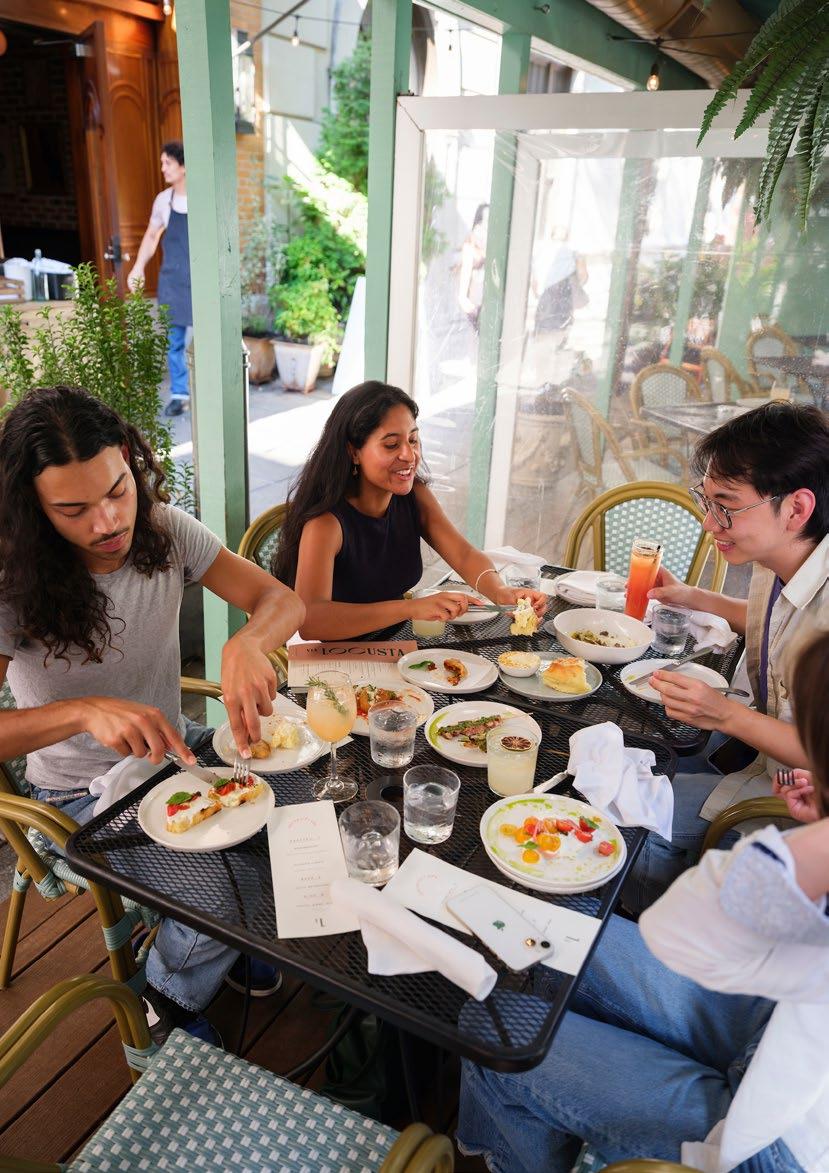
Outdoor dining has long been an important part of the urban experience, giving diners an al fresco option and allowing them to take advantage of quiet streets, wide sidewalks, and a sense of being connected to the larger fabric of the city.
Center City District surveys outdoor dining seats annually. The numbers follow a familiar postpandemic arc: at the peak in 2021, there were more than 3,000 additional seats compared to 2019, as restaurants expanded onto sidewalks and into parking lanes with temporary “streetery” structures. As indoor dining restrictions were lifted in 2022, those structures came down and outdoor seat counts declined. Today, outdoor dining in Center City remains more abundant than it was before the pandemic but well below the peak level.
City Council approved legislation in 2025 to streamline the permitting process and expand the zones where sidewalk seating is allowed by-right, with the goal of sustaining and growing an experience that many Philadelphians first experienced out of necessity but now expect as a year-round amenity.
Core Center City outdoor dining counts, by year
Outdoor seating counts have fallen each year since 2021 but still remain above 2019 levels.
Outdoor Seating in September 2019-2025
Source: Center City District
3,913
Philadelphia ranks 5th among major U.S. cities for its share of residents who walk, bike, or take public transit to work.
Center City is the economic hub of the Delaware Valley — and its central location is one of its most powerful advantages. Suburbs and communities have grown outward in every direction, but all roads, rails, and transit lines lead back downtown. That centrality, combined with Center City’s scale and density, creates the critical mass that makes such a concentration of jobs, culture, and commerce possible. A healthy downtown ecosystem functions best with a variety of ways to effectively get in, out, and around it.
Center City is growing, and Philadelphia’s transportation network needs to evolve with it. As e-bike micromobility, digital wayfinding, and automated rideshare services like Waymo are opening new ways to move around downtown, they create greater urgency for public transit systems to provide a competitive level of service. Peer cities have responded by doubling down on their systems — investing in frequency, reliability, and the overall rider experience. With Philadelphia stepping onto the global stage in 2026, the urgency to do the same has never been greater.
In this chapter
Center City offers more transportation options than anywhere else in the region. Its extensive network of transit lines, highway connections, and bicycle infrastructure enables large numbers of people to access downtown, while the highly walkable street network makes it easy to move around once they arrive.
How people choose to travel depends largely on how far they are going. At roughly two miles across, core Center City can be traversed from river to river in about 15 minutes by car, around 20 minutes by transit or bicycle, and about an hour on foot. More than 70% of trips under a mile that end downtown are made on foot. For trips between three and five miles, nearly 30% are made by public transit. The result is a district where no single mode dominates and where spreading trips across all of them keeps congestion down and air quality up.
Mode share of trips made to and through core Center City, 2025
On an average day, 85% of all trips within or to Center City under a half-mile were made on foot.
Source: Replica
Core CC Travel Mode Share
Center City residents enjoy a rare urban luxury: home, work, and everything in between located within close proximity, resulting in a commute that’s five minutes shorter than the Philadelphia Metro average.
While a five-minute difference may not sound significant, it adds up to roughly 46 hours saved per year. For the tens of thousands who live in Center City, the calculus is even simpler: leave the car behind and walk.
Average commuting times by region, 2024
Source: ACS, 2024 (5-Year Estiate) Average Commute Times
The average 24.4 minute commute time in Core Center City is:
17.8%
10.3%
Non-auto commute share by city, 2024 Philadelphia’s share of residents who walk, bike, or use public transportation as their method of commuting (25.6%) ranks fifth among the largest U.S. cities. Citywide, 16.7% say they use public transit, 7.1% walk, and 1.8% bicycle.
Source: ACS, 2024 (5-Year Estimate)
Public transportation Walk Bicycle
More than 3.3 million residents in the Greater Philadelphia region live within a mile of a one-seat transit ride to Center City.
One-seat transit rides provide a direct trip from the origin to Center City without the need to transfer or change lines. Combined with access to multiple interstate highways and a range of intercity travel options, this underscores Center City’s role as the hub of the region’s connectivity.
Areas within 1 mile of a transit stop to Center City
No single system does more to keep Center City functioning than SEPTA. In 2025, the network faced a punishing series of challenges: federally mandated inspections pulled a substantial portion of the Regional Rail fleet from service between October and December, tunnel damage cut off key trolley connections from West Philadelphia, and an ongoing funding crisis forced unprecedented service reductions in August before emergency capital funds stabilized operations.
In her 2026 budget address, Mayor Cherelle Parker announced $895 million in city funding for SEPTA over the next five years, along with continued support for the Key Advantage and Zero Fare programs. Still, a long-term, stable funding solution from the state remains critical to the economic health of our city and region.
Despite the significant disruptions of 2025, total systemwide ridership grew 12% over 2024. While average weekday bus ridership dipped 3.3%, ridership across the Broad Street (B) Line, the Market-Frankford (L) Line, and Subway-Surface Trolley (T) lines rose by 5%. SEPTA is building on that momentum with a series of targeted investments to improve the rider experience.
Railcars and station upgrades
New trolleys are scheduled for delivery in 2027, along with station upgrades and traffic-signal prioritization. The L line will receive new railcars entering service in 2029.
Bus lanes and enforcement cameras
SEPTA, the City of Philadelphia, and PennDOT have jointly painted about 1.75 miles of red bus lanes along Market, Chestnut, and Walnut streets. The painted lanes more strongly discourage cars from using them, reducing bus delays. SEPTA and the Philadelphia Parking Authority have equipped buses with AI-assisted cameras that automatically ticket vehicles parked illegally in the lanes, which also serve as bike lanes.
Cleaning, safety, and security
SEPTA has increased its cleaning and maintenance staff by 150 people since 2021, bringing the total to more than 700 systemwide. SEPTA reported a 10% drop in serious crimes across the system from 2024 to 2025, supported by a larger transit officer force and new full-length faregates to reduce fare evasion.
Metro signage and wayfinding improvements
The full rollout of new wayfinding and signage continues across the B, L, and T lines. In March, SEPTA announced a pilot program to install digital, solar powered e-reader signs that will display real-time bus arrival information at select bus stops, with a broader rollout planned for the future.
Center City is the hub where the region’s public transportation network converges. On an average weekday, over 128,000 people board trains or trolleys at Center City stations. The busiest stations — Suburban Station, City Hall, and Jefferson Station — each serving an average of 29,591, 18,026, and 12,312 passengers per day, respectively. PATCO adds to this activity, bringing an average of 8,200 riders into Center City from New Jersey each weekday.
Average weekday transit ridership, 2025 Source:
The recently reopened PATCO Franklin Square Station will further encourage ridership within Center City, as riders can now travel directly from Franklin Square to the Rittenhouse Square area on PATCO.
The Delaware River Port Authority is targeting mid-2026 for expanded payment options on PATCO, including contactless card, cellphone, and smartwatch payments. This upgrade, which is already available on SEPTA, will allow riders to use both systems interchangeably and simplify cross-system transfers.
NJ Transit operates 16 bus routes that circulate around Center City and carry riders throughout New Jersey, including frequent service to the Cherry Hill Mall year-round and to Cape May, Wildwood, and Atlantic City beaches in the summer.
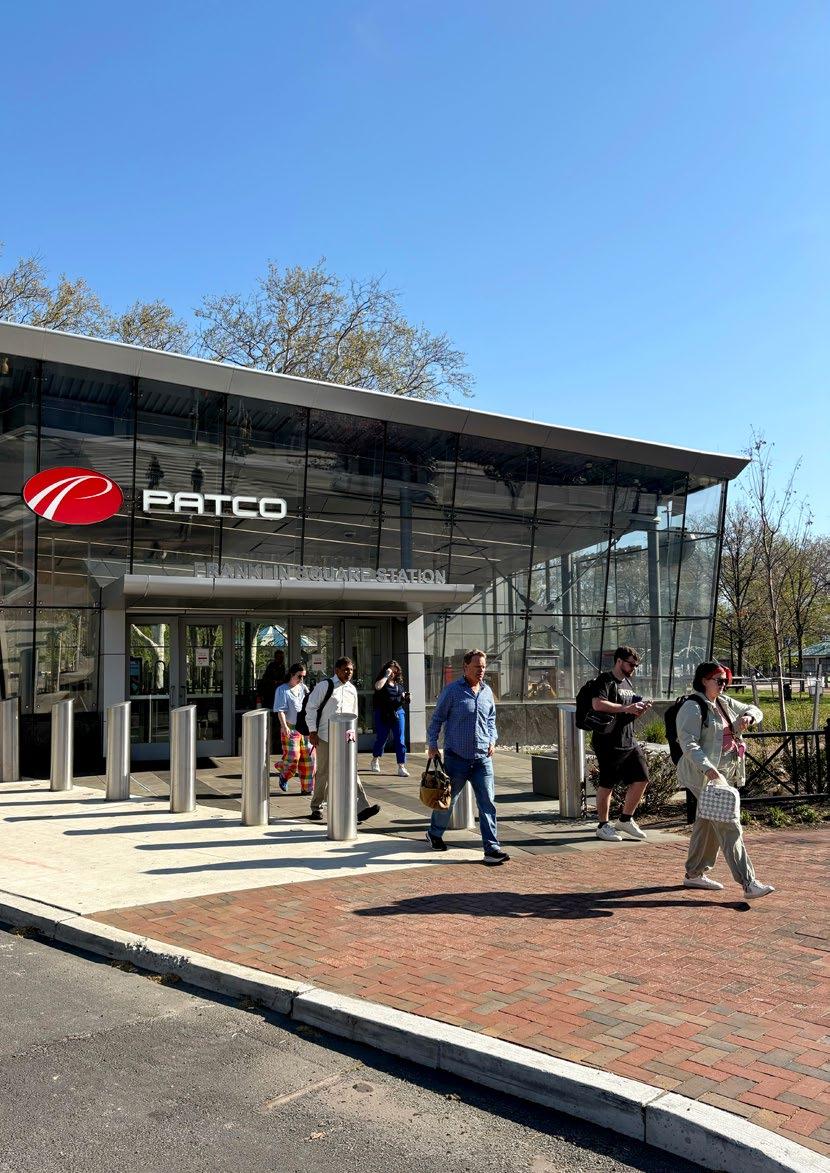
Center City consistently ranks among the top urban areas in the country for bicycling.
The bicycle predates the automobile by nearly 70 years, and in cities like Philadelphia that were designed from the start for human-scale navigation, cycling as a mode of transportation has never really gone away. Lightweight, affordable, and requiring a fraction of the space of a car, bikes have always been a natural fit for dense urban streets.
Today, sustained investment in bicycle infrastructure is translating that natural fit into measurable results. Center City consistently ranks among the top urban areas in the country for bicycle commuting, and bikeshare usage grows every year. The benefits extend well beyond cyclists: every car trip replaced by a bike ride eases congestion, cuts emissions, improves air quality, and makes streets safer and more pleasant for everyone.
In this chapter
We’re a biking city
New protected bike lanes
Center City and its surrounding neighborhoods rank among the nation’s highest for bicycle commuting.
Bicycle infrastructure improvements around Center City continued in 2025, including a new connection along the Schuylkill River trail from Grays Ferry.
Indego growth continues Philadelphia’s bikeshare ridership grew 7% in 2025, with further expansion of the system planned.
Center City ranks 12th nationwide among PUMAs (Public Use Microdata Areas) in the share of residents who bike to work, which translates to about 4.5% of all commuters — or more than 4,000 commuters per day. South Philadelphia ranks seventh nationally, and the River Wards and University City regions also place within the top 100. Center City’s high residential population, walkable streets, expanding bicycle infrastructure, and dense concentration of jobs create ideal conditions for bicycle commuting as well as significant cost savings.
Philadelphia has more than 300 miles of bike lanes citywide, and the network continues to expand. Beyond simply adding striped lanes, it’s essential to provide a seamless network of protected routes and create a cohesive, well-connected system, so riders are not constantly shifting between bike lanes and mixed-traffic streets.
Center City District is partnering with the Philadelphia Streets Department and the Office of Transportation and Infrastructure Systems to improve the 13th Street bike lane from Locust to Chestnut. Green bike lane paint was recently added, and CCD has procured a set of rubber bump curbs to upgrade the current flex-posts, providing stronger separation between cyclists and drivers.
The City also introduced several new improvements to the bike lane network in and around Center City in 2025, including:
Penn Square
A new bicycle lane was installed along Penn Square, which circles City Hall, marked with bright green paint to clearly define key north–south and east–west travel paths.
Chestnut and Walnut streets
The City, SEPTA, and PennDOT finished repaving West Chestnut and Walnut streets, introducing red bus lanes that also function as dedicated bicycle lanes, creating a seamless connection to the eastern section.
Schuylkill River Trail
A new bridge completed the Schuylkill River Trail extension, stretching south from Christian Street to connect Grays Ferry directly to the rest of the trail network. The next phase, now under construction, is creating a river crossing parallel to Grays Ferry Avenue that would link Bartram’s Garden and additional parts of South and Southwest Philadelphia to the full network.
Incremental additions to the protected network
Smaller but no less critical, protected lanes were added to the Center City network. Concrete-curb separated bike lanes were installed on Race Street from 6th to 8th, a separated bike lane was installed along 23rd Street from Race to Market, and the Walnut Street painted lane from 22nd to 23rd was upgraded to a separated lane.
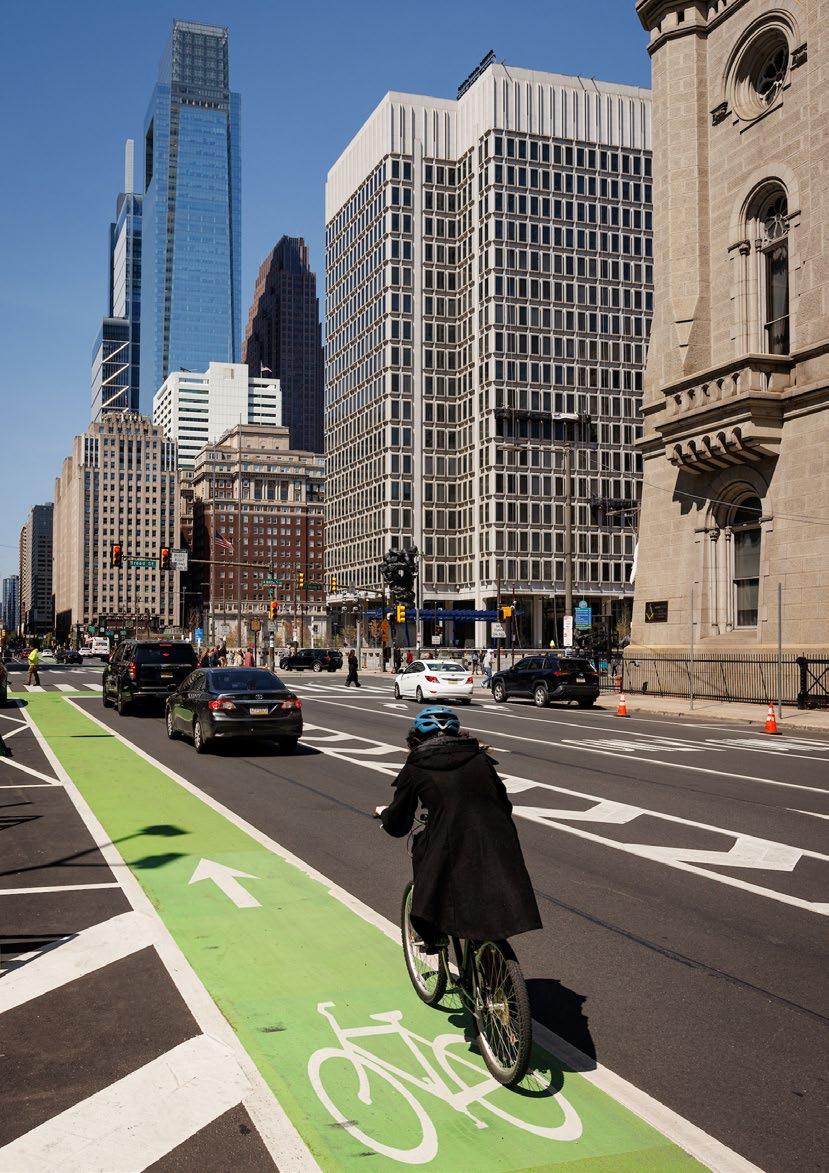
Creating a network of bike lanes is important to give riders a seamless trip through many parts of the city without needing to move in and out of mixed vehicular traffic. The City of Philadelphia’s investment in bicycling infrastructure has greatly expanded Philadelphians’ ability to get to and around Center City by bicycle.
700,000
estimated bikeshare trips that started or ended within Center City
53 Indego bike stations
19.8 miles of bike lanes
New Indego bike station
Indego bike station
Painted Advisor y/shared
Separated bike facilities
Indego bikeshare turned 10 in 2025 and remains as popular as ever. The system logged nearly 1.4 million rides last year, up 7% from 2024 and 83% higher than 2019.
Much of that growth is driven by expansion. Indego added 36 new stations in 2025, extending the network into Northwest, West, and River Wards neighborhoods, with another 40 stations planned for 2026. Center City gained three new stations last year: 12th and Walnut, 8th and Chestnut, and 7th and Race in Franklin Square. The numbers reflect how important the system is for downtown travelers: 61% of all Indego trips either started or ended in Center City.
Indego has also expanded its electric bicycle fleet to meet demand: 65% of all trips in 2025 were taken on electric bicycles, a clear sign that e-bikes are no longer a novelty but a preferred way for many cyclists to get around.
Top 10 most frequently used Indego stations
All of the top 10 most-used Indego stations in 2025 were located in and around Center City neighborhoods, accounting for nearly 305,000 total trips in 2025.
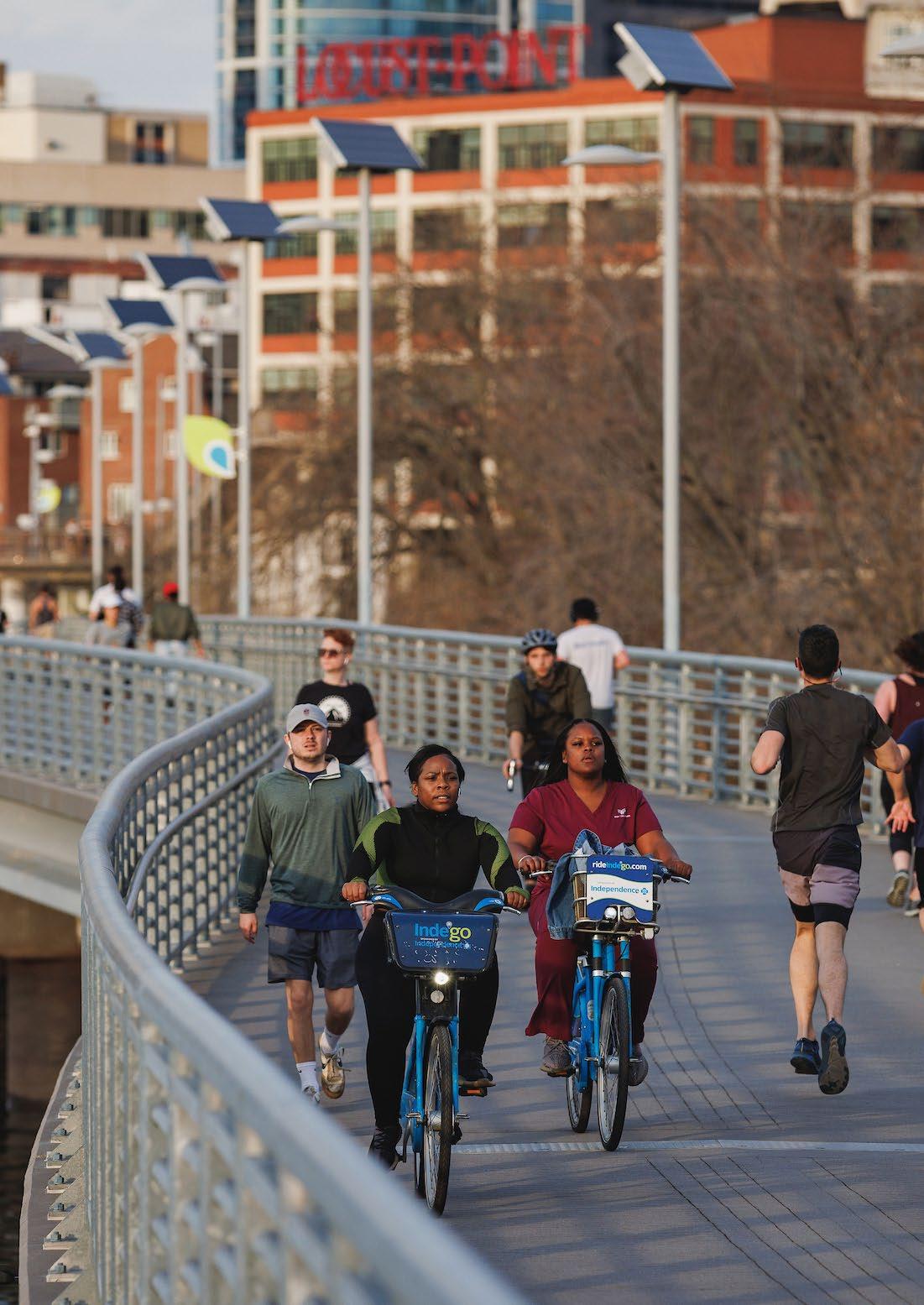
The State of Center City 2026 team includes Jessie Brain (Manager of GIS Mapping Services and Technology), Amy Genda (Vice President of Strategy and Design), Holly Keefe (Manager of Membership and Development), JoAnn Loviglio (Vice President of Communications and Public Relations), Leo Manning (Director of Strategic Communications), Jeremy Morton (Economic Development Intern), Clint Randall (Vice President of Economic Development), Jimmy Salfiti (Economic Development Manager), Lauren Smith (Director of Research and Special Projects), Bonnie Thompson (Senior Director of Digital Marketing), and Dana Womack (Digital Marketing Manager). This document was designed by Dave Orantes (Art Director) with art created by Branch Coverdale.
Information Sources
Bureau of Labor Statistics
Calder Gardens
City of Philadelphia
CoStar
ESRI
Franklin Square
Indego
InterAct Theatre Company
JLL
MLS
Mural Arts
Museum of the American Revolution
NJ Transit
PATCO
Penn Museum
Philadanco
Philadelphia Convention and Visitors Bureau
Philadelphia Museum of Art
Philadelphia Visitor Center Corporation
Placer.ai
Reading Terminal Market
Replica
SEPTA
SMU Data Arts
STR
U.S. Census Bureau, American Community Survey
U.S. Census Bureau, Longitudinal Employment Household Dynamics
The Wilma Theater
Photography Credits
Peter Checchia Photography & Arts
Kendon Photography
Steve Legato Photography
Dave Orantes, Center City District
Matt Stanley Photo
Pennsylvania Horticultural Society www.wefilmphilly.com
Steve Weinik Photography
CCD Board
Prema Katari Gupta, President & CEO
Paul L. Badger Jr., The Badger Group
Valerija (Rija) Beares, CBRE
Anna Boni, Parkway Corporation
John J. Connors, Brickstone Realty
Christopher Cullom, Thomas Jefferson University
Jeffrey DeVuono, Brandywine Realty Trust
Allan Domb, Allan Domb Real Estate
Brenton Hutchinson, BOMA
Paige Jaffe, Square Retail Consultants
Jamal Johnson, Comcast
Daniel Killinger, National Real Estate Developers
Robert D. Lane Jr., Esq., Bob Lane Advisory
Paul R. Levy, CCDF
Gregory B. Muller, SSH Real Estate
Drew Murray, Logan Square Neighborhood Association
James Pearlstein, Pearl Properties
Randall L. Scott, Coretrust Capital Partners
H. Hetherington Smith, Savills
Jack Soloff Jr., Savills
Angela Val, Visit Philly
Carol Watson, Kimpton Hotel Palomar Philadelphia
Tina Byles Williams, Xponance
CCDF Board
Jaimie S. Field
Michael C. Forman, Future Standard
Thomas J. Gravina, Evolve IP
Prema Katari Gupta, Ex officio, CCD
James L. Paterno, Stockton Real Estate Advisors
Evan Seltzer, Comcast
Gerard H. Sweeney, Brandywine Realty Trust
Richard Vague, Gabriel Investments
CPDC Board
Ryan Ade, JLL
Rija Beares, CBRE
Brian Berson, Parkway Corporation
Mark T. Celoni, P.E., Pennoni Associates
Edward M. D’Alba, P.E., Emeritus
Harold Dichter, Aramark
Aaron Graves, Cushman & Wakefield
Joseph Healy, AIA, LEED AP BD+C, WRT
Branton Henderson, Bank of America
Monica Jindia, Commonwealth Land Title Insurance Co.
Ajamu Johnson, Comcast/NBCUniversal
Peter Kelsen, Esq., Blank Rome
Alan C. Kessler, Esq., Duane Morris
Daniel Killinger, National Real Estate Development
Bradley A. Krouse, Esq., Klehr Harrison Harvey Branzburg
Robert D. Lane Jr., Esq., Bob Lane Advisory LLC, Emeritus
Rachel Lewis, Morgan, Lewis & Bockius
Shawn McCaney, William Penn Foundation
Matthew N. McClure, Ballard Spahr
Mark Merlini, Brickstone Realty
David Moos, AIA, CosciaMoos Architecture
Anne Papageorge, University of Pennsylvania
James R. Pearlstein, Pearl Properties
Missy A. Quinn, Chubb
Jon S. Robins, Greenberg Traurig
Christopher W. Rosenbleeth, Esq., Stradley Ronon
Stevens & Young
Mark L. Silow, Esq., Fox Rothschild
H. Hetherington Smith, Savills
Christophe P. Terlizzi, Associated Real Estate Consultants
Jason A. Tucker, The Goldenberg Group
Erik F. Williams, Saul Ewing
CPDC Members
ABM
Allan Domb Real Estate
Allied Universal
Alterra Property Group
Aramark
Ballard Spahr
Bank of America
BDO
Blank Rome
Blueprint Commercial
Brandywine Realty Trust
Brickstone Realty
Brown & Brown
CBP Architects
CBRE
Chubb
Clemens Construction Co. Inc.
Colliers
Comcast
Commonwealth Land Title Insurance Co.
Conner Strong & Buckelew
CosciaMoos Architecture
Cozen O’Connor
CraftNOW Philadelphia
Cushman & Wakefield of Pennsylvania
Dranoff Properties
Duane Morris
Econsult Solutions Inc.
Field Operations
Firstrust Bank
Fulton Bank
Gensler
The Goldenberg Group
Goldman Properties
Greater Philadelphia Cultural Alliance
Greenberg Traurig
HDR
HNTB
JLL
KieranTimberlake
Klehr Harrison Harvey Branzburg
The Klein Company
Korman Communities
The Lighting Practice
Lubert-Adler
Morgan, Lewis & Bockius
MPN Realty
Narducci Electric Co.
National Real Estate Development
O’Donnell & Naccarato
Olin
Parkway Corporation
Pearl Properties
PECO
Pennoni Associates
Pennsylvania Horticultural Society
Philadelphia Parking Authority
PIDC
PMC Property Group
PNC Bank
Posel Management Co.
Post Brothers
Preservation Alliance for Greater Philadelphia
Reading Terminal Market
Saul Ewing
Savills
Scully Co.
Seravalli
SSH Real Estate
Stockton Real Estate Advisors
Strada
Stradley Ronon Stevens & Young
TD Bank
University of Pennsylvania
Urban Engineers
William Penn Foundation
WRT
State of Center City 2026 Event
Presenting Sponsor
Associate Sponsors
Allied Universal
BDO
Brown & Brown
Savills
The Lighting Practice
Urban Engineers