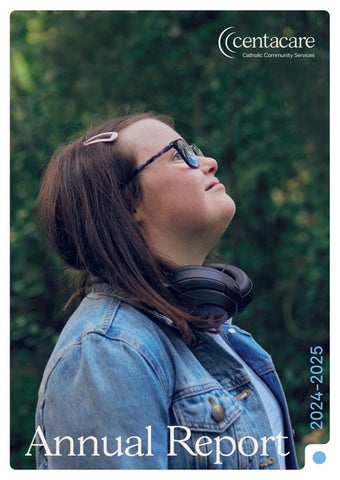
Annual Report 2024-2025

Page 1


At Centacare, our journey begins near the water – a place of renewal and reconnection. Here, ancient songlines flow like rivers through time, guiding us across Country and illuminating pathways between land, sea and sky. We honour the world’s oldest continuous culture, a living tapestry woven through tens of thousands of years of story, song and connection.

We acknowledge with deep sorrow the enduring wounds of colonisation – the dispossession of lands, the silencing of languages, and the generations of suffering. These truths live within us, carried in our stories and hearts. We honour Elders past and present, whose resilience and wisdom continue to guide us.

This report reflects our commitment to collaboration, truth-telling, and shared purpose. Like threads woven through fabric, our collective strength is born of unity, understanding and compassion. We walk alongside individuals, families, and communities – listening deeply, responding with empathy, and nurturing future generations of leaders.

As healing waters move gently across this Country, may our actions rise with them, carrying forward a vision of truth, kindness, and enduring justice.

A MESSAGE FROM MURINTHI CENTACARE’S ABORIGINAL WORKFORCE

“Taking the time to reflect allows us to reconnect with our purpose and keep working to translate hope into action.”
LEANNE HADDAD — EXECUTIVE DIRECTOR

This past year has been one of transformation, growth and shared purpose at Centacare – a year where our Strategic Plan came to life in the everyday actions of our teams.

Guided by a focus on building strong and supported teams, we’ve continued to turn hope into meaningful change for the people and communities we serve.

Across 2024–25, we saw remarkable resilience and commitment from our staff, partners and those we walk alongside.

Our teams came together at unit days, conferences and development forums to learn from one another, strengthen connections and celebrate achievements.

Our new governance committees also came to life – leading key initiatives in service improvement, compliance, risk management and digital cybersecurity. At the heart of each committee, the client’s voice was elevated to inform and guide our decisions.

We began the year by contributing three submissions to the Royal Commission into Domestic, Family and Sexual Violence, sharing our expertise in prevention, father-inclusive practice and regional service delivery.

These contributions will help shape reforms that make safety and support more accessible for those who need it most.

We understand the transformative power of education, and we are committed to being active players in the development and professionalisation of our sector.

Leveraging on fifteen years of experience as a Registered Training Organisation, we launched the Centacare Institute, where learners found new career pathways and a renewed sense of purpose.

We also introduced Power UP – a free online safety program co-designed with Port Adelaide Football Club and funded by the eSafety Commissioner. Featuring messages from AFL and AFLW players, the interactive modules engage young people aged 15–17 with important issues such as consent, privacy and respectful online behaviour. These initiatives reflect our commitment to innovation, empowerment and lifelong learning.

Through collaborative efforts, we launched a new website that offers a more enhanced experience for clients and visitors.

After two years of dedicated work, we began embedding our Stabilising Trauma in Everyday Practice (STEP) Therapeutic Framework across Centacare. Co-developed by Dr Jackie Amos and Dr Liz Coventry, STEP strengthens how we engage with clients and support our workforce.

The work is complex, but when we invest in people with genuine, trauma-informed support, we see lasting change in the lives of individuals and families.

We launched SPRING – a state-first program supporting young people aged 11–18 to reduce hospital presentations through flexible after-hours mental health outreach.

With Sellicks Play and Connect and PEAS in a Pod, we reframed existing community programs to expand the range of supports and increase our impact.

We also celebrated milestones across our services – the 20th anniversary of Unify Family Reunification Services, 10 years of headspace Port Adelaide, and the transformation of Auricht House in Elizabeth North – a bright and welcoming space for people with a disability to grow their independence.

We entered a new era of housing investment, securing federal funding through Safe Places to build five new homes in Mount Gambier and Murray Bridge for women and children experiencing domestic and family violence.

Recognising the severe housing shortages and stigma surrounding domestic violence in some regional areas, our projects will bridge the gap in support for culturally diverse victim-survivors by providing a safe environment with better access to essential services and community networks.

We advanced the reinvigoration of the Otherway Centre, an Aboriginal-led space guided by Uncle Les Wanganeen and our Aboriginal Governance Committee. Supported by Catholic Charities, work began on the Healing Garden – marking a new chapter in our reconciliation journey.

Finally, we remember and honour the late Dale West, our longest-serving Director, who passed away following his courageous battle with leukemia. Dale’s humble commitment to social justice and his enduring care for people remain embedded in our culture and continue to inspire our work.

To the Archbishop, our Councils, Catholic Charities, donors, our executives, leaders and dedicated staff – thank you. Your belief in our mission enables us to reach more people and create lasting change across South Australia.

As we continue to grow under our Strategic Plan –Connecting Communities, Connected Lives – we look ahead with confidence and purpose, grounded in compassion and the collective strength of our Centacare community.

July

2024–2025

LAUNCH OF SPRING AND ROYAL COMMISSION INTO DOMESTIC, FAMILY AND SEXUAL VIOLENCE

August

LAUNCH OF NEW WEBSITE

UNIFY AND LEANNE HADDAD WERE FINALISTS AT THE SA CHILD PROTECTION AWARDS

November

September LAUNCH OF CENTACARE INSTITUTE

ACHIEVED ACCREDITATION UNDER THE QUALITY IMPROVEMENT COUNCIL HEALTH AND COMMUNITY SERVICE STANDARDS

February

January LAUNCH OF POWER UP

March

COMPLETED OUR NETWORK CYBERSECURITY IMPROVEMENT

June

COMMENCED ORGANISATION-WIDE ROLL-OUT OF STEP THERAPEUTIC FRAMEWORK MODULES

Centacare is part of the Catholic Church Endowment Society Inc, embracing the Catholic Church, Diocesan Centre, Education and Community Services.

A beacon of hope

In times of growing uncertainty and social division, the work of Centacare Catholic Community Services continues to shine as a beacon of hope, solidarity and compassion.

Across South Australia, countless individuals and families are finding strength and support through Centacare’s many services – a living expression of the Gospel in action.

Recent figures from the Australian Council of Social Services reveal that one-in-seven Australians are living below the poverty line, with one-in-six children now experiencing poverty hardships. That equates to approximately 3.7 million people living on less than half the median income.

These realities call us to renew our commitment to those on the margins, ensuring our collective response is shaped by love, dignity and solidarity.

The legacy of Pope Francis, whose papacy so profoundly embodied a Church for the poor and those most in need, continues to inspire this mission under the leadership of Pope Leo XIV.

As we journey through the Jubilee Year of 2025 – Pilgrims of Hope – we are invited to rediscover the mercy of God and to become signs of renewal, reconciliation and hope in our world.

As you read this annual report, may you see more than the record of a year’s work; may you recognise the living presence of Christ among us – in every act of care, every restored life and every gesture of kindness.

May the Lord bless the staff and volunteers of Centacare abundantly, and may we continue to walk together in faith, hope and love.

“In this Jubilee year, we are reminded that our work is more than a profession – it is a shared mission of compassion, justice and service.”
PATRICK O’REGAN — ARCHBISHOP OF ADELAIDE

Client safety

At Centacare, the safety and wellbeing of children, young people and vulnerable individuals are at the core of our values and actions.

With oversight from our Client Safeguarding Committee, we foster a culture that safeguards children, young people and vulnerable individuals, ensuring they feel protected, valued and empowered.

Closing the gap

We are committed to strengthening the wellbeing of Aboriginal and Torres Strait Islander individuals, families and communities.

Guided by Aboriginal voices and lived experiences, we work to deliver material outcomes for a more equitable and connected future.

Diversity, equity and inclusion

We create an inclusive environment that welcomes and respects people of all ages, religions, ethnicities, cultures, abilities, lived experiences, gender identities and sexual orientations.

Together, we build connected communities where every individual feels seen, heard and valued – where lives flourish through solidarity and care.

20,426

clients were supported across 63 services and 36 locations.

7,264 children and young people were supported.

990

clients identify as culturally and linguistically diverse.

1,785

clients identify as Aboriginal and/or Torres Strait Islander.

300

clients identify as non-binary and/or gender diverse.

558 individuals form our permanent and casual workforce.

59.1M annual revenue. in Thenumbers year

Innovative and evidence-informed

We are recognised as a future-focused, teaching, research and learning organisation.

Social impact and sustainability

We strive for sustainable, diverse, and innovative funding to drive social impact for clients and communities.

Strong and supported teams

Our workforce is engaged, skilled and supported to grow within a healthy, professional and ethical culture.

Closing the gap

We aim to collectively achieve material outcomes for Aboriginal and Torres Strait Islander staff, clients and communities.

Diversity, equity and inclusion

Inclusiveness and a shared commitment to equity are deeply embedded within our culture and practice.

Person-centred

All people who walk through our doors feel seen, heard, safe, valued and connected.

Supporting choice and independence

Being person-centred means truly listening to what matters most to the individuals we support.

This year, several clients of our Disability Services made important choices about where they wanted to live, decisions that reflect their growing confidence and voice in shaping their own lives.

Our team supported each person every step of the way, through planning meetings, visits to new homes, and ongoing communication with families and other providers – to ensure the moves were smooth and guided by informed decisions.

At our Children’s Services Unit, the continued embedding of our therapeutic framework ‘Stabilising Trauma in Everyday Practice’ (STEP) has strengthened our personcentred approach, promoting client dignity and self-reflection.

Staff have actively engaged with the STEP modules and utilised the relational map as a practical tool in therapeutic conversations, supporting clients to explore their relational patterns.

Photovoice is a reflective practice that empowers participants to express their stories using personally selected images and words. In September, our Breathing Space program proudly held a Photovoice exhibition, celebrating the theme ‘See my voice, my identity as a mum’. This powerful event brought together courageous young women, staff and key stakeholders to honour the lived experiences of motherhood,

trauma and child removal, through a therapeutic and creative lens.

At Carlow Place, one of our homelessness services, we have integrated routine follow-up contacts into our daily practice to ensure continuity of support for young people who have recently left the program.

These follow-ups are targeted to those who may still require assistance in areas such as accommodation stability, safety planning, wellbeing needs, or connection to specialist services.

This proactive approach enables young people to re-engage with support when they are ready, strengthens ongoing trust and rapport, and contributes to improved long-term outcomes.

Our Client Safeguarding Committee reviewed existing agency practice on client incident reporting to inform robust changes that are fully aligned with the highest standards of client protection and care.

Your LINC incorporates the Assessment of Quality of Life tool, which clients use to explore and measure their wellbeing across domains such as independent living, relationships, mental health, coping and sensory experience. This process aligns with the strategic focus on co-designed, trauma-responsive services shaped by individual needs and the client’s voice.

No matter who I talked to, I always felt respected, valued, welcomed and supported.
CLIENT — YOUR LINC

64% of children and young people supported by Unify were reunified with their families.

86% of clients avoided hospitalisation with support from our SPRING program.

EXPLORE SPRING: Transforming Mental Health Support • centacare.org.au/news

*We have changed our client’s name and picture to protect her privacy.

Celeste’s fight for safety

Celeste*, a woman aged 34 and her three children – aged 3, 7 and 9, fled from Queensland to Renmark after experiencing long-term domestic violence from the children’s biological father. Celeste and her children were protected through a basic contact intervention order. However, she felt vulnerable and unsure of the level of support she would receive once in South Australia.

The father eventually discovered that the children were attending school in Renmark and travelled to take them back to Queensland.

Our Riverland Domestic Violence Service provided significant support to the local school in developing a safety plan if the father attended the school. We also partnered with SAPOL and referred the family to the Family Safety Network. The children were referred to the Together4Kids service for help navigating trauma and adjusting to family changes. Celeste also received a phone and funding for essential household items to begin their new lives.

Through our advocacy, the Queensland Police have now amended the intervention order to allow the father only telephone contact with the children.

We continue to voice concerns about the need for improved communication between interstate police and child protection departments to ensure that families are truly safe when relocated.

A long-term mission

Foster carer, Nunzia, has spent the last nine years fostering babies and making every effort to ensure their safe reunification with their families. She says that “it’s not always easy, but it’s the most rewarding choice I have ever made.”

She deep dives into providing care and support, knowing that children will usually return to their families within 12-18 months.

Dianne and her husband, Michael, are also long-term reunification foster carers. Over seven years, five children they cared for have been reunited with their families. They emphasise how the support for the foster care team makes all the difference: “We can call them any time we need advice, a good cry, or need to vent…we have been very blessed to have the support from Centacare.”

A trained workforce that fosters excellence

Building and maintaining strong, supported teams remains central to delivering services that uphold client dignity, choice and wellbeing.

In September, we hosted a Child Protection Morning Tea, offering a space for deep reflection and meaningful dialogue. While the event acknowledged the challenges facing the child protection sector, it also celebrated the dedication of staff who continue to make a meaningful difference in the lives of children, young people and their families.

Over at Port Adelaide, headspace uses evidence-based approaches to support young people’s mental health. This requires our staff to engage in continuous professional development, ensuring that we offer best practice care and respond to the changing needs of young people in our community.

Our Adelaide metropolitan locations have enjoyed several visits from the animals in our Animal Wellbeing Program. These safe interactions with animals support staff wellbeing and foster a positive team culture.

Our regional teams have also stepped up, with our Whyalla DV and Homelessness staff hiking the Alligator Gorge Narrows Trail and enjoying a day of connection and much-needed reinvigoration in the context of their work.

In line with fostering a continuous learning environment, our Children’s Services Unit staff engage in a variety of learning modalities, including reflective

practice, refresher and booster sessions, practice-based skill development, Community of Practice and workshops.

Across the disability sector, recruitment and retention continue to present challenges. A casualised workforce and competitive market make it increasingly difficult to attract and retain skilled and values-aligned staff.

At our Disability Services, we implemented an extensive training plan to strengthen the capability and confidence of our workforce.

The training plan includes 28 comprehensive online training modules designed to align with the NDIS Practice Standards and support a culture of quality and continuous improvement.

The modules cover key areas, including person-centred support, human rights, incident management, infection control and high-intensity daily personal supports. This robust training framework ensures our teams deliver safe, responsive and high-quality care.

Throughout this year, we continued to provide student placement opportunities that offer hands-on experience to the next generation, map paths of development for the upcoming workforce, and contribute to our position as an employer of choice.

I am grateful for the chance to grow in my role and support my unit and peers. Their trust gave me the confidence to perform at a higher level and succeed.

STAFF – DISABILITY SERVICES

9 staff members were promoted to management.

84% permanent staff retention.

Prepared for the real world

In May, our Disability Services team completed recertification and training for a new group of Maybo trainers.

The course covered essential skills in personal safety, disengagement, redirection and guiding techniques, all focused on responding to challenging behaviours using low- and non-restrictive methods.

With this training now complete, our disability support services are excited to introduce an expanded team of trainers.

This network will ensure we can continue to offer up-to-date Maybo training for both new staff and as refresher courses, helping our team stay well-prepared to manage real-world situations effectively.

The new trainers will be equipped to deliver this vital training directly to colleagues, promoting safe and supportive environments for staff and clients.

The experience also provided personal growth opportunities for the trainers, who will now play a key

EXPLORE

Honouring Susie Smith • centacare.org.au/news

role in guiding their peers through the learning process. This collaborative approach not only strengthens team capabilities but also enhances the overall safety and wellbeing of those we support.

This initiative further aligns with our mission to ensure a safe, respectful and supportive environment for all.

As we continue to evolve and grow, this expanded network of trainers will enable us to remain at the forefront of delivering high-quality care and support, with ongoing training that meets the highest industry standards.

“By building a sustainable internal trainer network, we can maintain a consistent and structured approach to Maybo practices across the team.”
LESLEY CUTTS — DISABILITY SERVICES

As the gap closes, we unite and grow

Guided by our values of compassion, respect and justice, we strive to create an environment where all individuals can thrive and flourish.

The Aboriginal Governance Committee was established in November 2024 to oversee the effective governance, voice and representation of Aboriginal staff across Centacare.

The purpose of the committee is to provide advice and guidance on cultural matters that enhance outcomes for Aboriginal staff and clients, promoting and fostering a whole-of-organisation approach to reconciliation.

Our Aboriginal staff developed, led and facilitated Aboriginal Cultural Realisation training sessions. Through personal storytelling and historical analysis, our Uncle in Residence, Les Wanganeen, guided participants through the enduring impacts of colonisation, challenging the myth of peaceful settlement. He explored the legacy of harmful laws and historical policies that fractured communities and eroded cultural identities.

The training includes interactive activities highlighting the cultural devastation caused by dispossession and the forced loss of land and identity, leading to a profound reflection on the impacts of intergenerational trauma, systemic barriers and our roles as allies. The training concludes with a reaffirmation of its core purpose: to move beyond awareness into allyship and cultural realisation – ensuring we continue to walk alongside Aboriginal and Torres Strait Islander peoples with

respect, responsibility, purpose and integrity.

The Next Steps Program has a strong and valued partnership with the Aboriginal Sobriety Group to support Aboriginal young people transitioning from care to independence. Through this partnership, young people are connected to culturally safe, specialist supports that strengthen their sense of identity.

Our Child Protection Morning Tea, celebrated in September, centred around Commissioner for Aboriginal and Torres Strait Islander Children and Young People, April Lawrie, sharing the key findings of her ‘Holding on to Our Future’ report, prompting critical discussion on the increasing number of Aboriginal children and young people entering the care system.

In our Foster Care Program, most Aboriginal and Torres Strait Islander children and young people have been supported to return to their families safely. Whilst they were in care, the carer households prioritised their connection to culture following the Commissioner’s recommendations.

Our Aboriginal staff played a leading role in co-designing the Otherway Centre’s Cultural Hub –an initiative developed with deep commitment to enhancing support, choice, and self-determination for our Aboriginal workforce.

Every time I deliver cultural training, it challenges my thinking. Just when I think I’ve learned everything, I learn something new.
UNCLE LES WANGANEEN

55 clients were supported by our Community Connections Program.

Kindred Spirits attended

16 community and cultural events in partnership with other agencies.

Breaking cycles of disadvantage

Kindred Spirits offers a short-term, flexible in-home service that works with families to develop strategies and skills for a safe and nurturing home while promoting positive school attendance for children and young people.

A 12-year-old young person residing with their grandparents was referred to the Kindred Spirits (KS) Program by the school due to increasing school absenteeism and concerns about social isolation within the family unit.

Presenting concerns included the young person’s disengagement from education, the grandparent’s limited connection to support services, and broader risk issues stemming from the family’s difficulty engaging with external providers.

The KS First Nations Coordinator quickly established rapport with the family and conducted a comprehensive, strength-based needs assessment. This process revealed that the grandparent required significant support to ensure the stability and wellbeing of the household.

With the grandparent’s consent, the KS First Nations Coordinator provided targeted system navigation and warm referrals, including support through Grandcarers SA and My Aged Care.

The KS First Nations Coordinator also offered emotional and culturally sensitive support to reduce mistrust of services and increase the grandparent’s confidence in seeking help.

Through regular engagement, the KS First Nations Coordinator supported the family to recognise the young person’s significant caring responsibilities, which were directly affecting their ability to participate in school. A referral was made to Carers SA for long-term support.

With these supports in place, the young person’s school attendance improved by 46% – and they are now attending four full days per week.

The family is now linked with longer-term services that are working with them to address their identified needs and build sustainable support systems.

There is great value in the early relationship-based intervention that the Kindred Spirits Program provides in breaking cycles of service disengagement and educational disadvantage.

Making culture and inclusion count

We drive transformation from within to impact action in diversity, equity and inclusion across our sector.

In 2024, the Diversity, Equity and Inclusion (DEI) Committee launched the Counting Culture Survey to map the demographic diversity profile of our workforce and enable us to measure and assess the impact of diversity and inclusion initiatives over time, at individual, team and organisational levels.

Our early intervention domestic violence service, EASE, has actively engaged with key stakeholders in the Limestone Coast.

Through these efforts, EASE has established strong partnerships with the Australian Migrant Resource Centre (AMRC) to develop and deliver a session on healthy relationships tailored to culturally diverse clients.

Looking ahead, EASE plans to develop a culturally appropriate and safe educational series focused on domestic and family violence prevention, promoting awareness, and enhancing community safety across diverse cultural groups.

In response to community feedback, our Carlow Place homelessness service offers gender-neutral accommodation, where the allocation of vacancies is purely based on assessed needs.

At headspace Port Adelaide, the community engagement element of the service model is crucial for

improving mental health literacy, reducing stigma, encouraging early help-seeking and promoting access to our services.

We leverage the advice of our Youth Reference Group and Community Engagement Office to ensure that our initiatives are endorsed by and are relevant to young people.

A large proportion of our disability services workforce represents diverse cultural backgrounds, bringing a wealth of perspectives and experiences to the unit.

We are focusing on inclusive communication to ensure every staff member feels informed, respected and valued. Initiatives include using clear messaging, visual communication tools and offering varied channels for teams to provide feedback.

Our Children’s Services Unit is partnering with a dedicated project officer and our Strategy, Research and Innovation unit to co-design a lived experience framework that will reset and strengthen our current approach.

The framework will enhance how we capture and respond to lived experience perspectives across care, intensive family services and child protection settings, ensuring that lived experience actively shapes the way we work.

I joined the Youth Reference Group to be able to impact youth mental health and to help the community in every way I can.

MEMBER – HEADSPACE PORT ADELAIDE YOUTH REFERENCE GROUP

19,000 hours of support were provided at our Kolbe Day Options centre.

32% of young people accessing headspace Port Adelaide identified as LGBTQIA+

EXPLORE

Supporting young carers

• thesoutherncross.org.au

Reconnecting with joy

Jacob*, aged 18, presented to our Reconnect Mental Health Service with depressive symptoms, including hopelessness, negative thoughts about himself, persistent sadness and suicidal ideation.

His goals centred on fostering self-compassion and acceptance, strengthening community connections, and improving mood and daily functioning.

Our support began while he was still in Year 12 and continued through community-based visits after graduation.

In collaboration with his worker, he explored and challenged negative core beliefs, gained insight into his fear responses and started breaking patterns that were contributing to his depression.

Reflecting on his experience, Jacob shared, “You’ve allowed me to live a bit more… you have well and truly given me a glimpse of what it’s like to be safe.”

*We have changed our client’s name to protect their privacy.

The moment life changed

A client of our supported accommodation services, who was living with severe kidney failure and managing dialysis treatment sessions three days each week for six years, received the life-changing news that a kidney had become available for him.

This moment marked the end of countless hospital visits and strict routines that had defined much of his daily life.

He underwent a kidney transplant just before Christmas. While there were a few complications and adjustments with settling into the new routine after surgery, he has shown remarkable resilience and steady progress in recovery.

“After having my kidney transplant, I am having fewer disappointments.”, he said.

His journey is a testament to perseverance and hope, as well as the importance of ongoing support from staff in achieving an improved quality of life.

Driven by reflection and accountability

Our clients are experts in their own lives. They play an active role in the focus and length of the therapeutic work.

Centacare’s Next Steps Program, funded by the Department for Child Protection and delivered in partnership with Housing Choices South Australia, helps young people transition from residential care to independent living.

An evaluation conducted by our Strategy, Research and Impact Unit, in partnership with Flinders University, found that over three-quarters of clients secured independent accommodation with none experiencing primary homelessness when interviewed.

The evaluation found significant improvements in relationships, life skills and engagement with health and education services. It also reported a fourfold increase in employment participation – highlighting the program’s effectiveness in fostering stability, and long-term wellbeing.

In June, our Therapeutic Crisis Intervention for Families (TCI-F) trainers attended the Building Caring Communities International Conference.

This landmark event gathered practitioners, researchers, policy leaders and people with lived experience from around the world. The focus was on sharing knowledge, strengthening systems and inspiring change in how we support children, young people and families.

From Centacare, Chantal Dodd, Therapeutic Practice Lead, presented on how Restore Intensive Family Services adapted the TCI-F model to support families experiencing adolescent violence. Her presentation highlighted how trauma-responsive approaches can significantly enhance family safety and wellbeing.

headspace Port Adelaide integrated Single Session Thinking (SST) into the services we offer. SST is a framework that offers clients one session at a time.

It is based on the idea that every encounter can be therapeutic – a brief intervention may be enough to meet a young person’s needs. In this approach, the client has an active role in determining the focus and length of the therapeutic work.

In July 2024, Auricht House introduced a revised day option service, complemented by an Independent Living Skills (ILS) program. The ILS program has been designed around Schalock’s Eight Quality of Life Domains.

The program’s objective is to support individuals with disabilities in increasing their independence and developing skills to live in their preferred housing.

We recognise that quality of life is more than just daily support – it is about health, connection and living a meaningful life.

I like how you speak to me...I felt unseen and weird for years, and you’re helping with my identity.” CLIENT – BREATHING SPACE

17,677 service hours were provided by

Restore.

15 restrictive practices were eliminated from our disability services clients’ support plans. PLAY PEAS in a Pod video • centacare.org.au/our-services

At the heart of our work

Across Centacare, innovation is grounded in evidence, compassion and community insight. This year, our programs have shown how flexible, trauma-informed, and culturally responsive design can change lives –from new parents and young children to families and young people in crisis.

Through SPRING, young people aged 11–18 experiencing psychological or suicidal distress are supported in homes, schools and community settings – meeting them where they feel safe.

The program’s outreach model reduces the need for hospitalisation, with 86% of clients avoiding hospitalisation during their service period. As one caregiver reflected, “Thank you for your support, guidance and caring nature. I know it was only for a short time, but I’m sure you’ve had an impact.” That impact is reflected daily in calmer homes, re-engaged students and young people regaining a sense of hope.

The EASE program (Earlier Access to Support and Engagement) continues to break ground in early intervention for domestic and family violence. Working alongside culturally diverse and regional communities in Naracoorte and Bordertown, EASE has co-designed and delivered Healthy Relationships sessions that

build awareness around coercive control and safety planning. One participant shared, “I didn’t know if what I had experienced was domestic violence – now I can see how this has impacted my life for a very long time.” The service’s community-embedded model has strengthened local trust, leading to ongoing programs such as Resilient Women and culturally tailored case management supports.

In Onkaparinga, programs like PEAS in a Pod and Sellicks Play & Connect (SPAC) highlight the power of connection in the early years. Across four 10-week PEAS sessions, 20 families and 36 participants built friendships, resilience and reflective parenting skills. “It’s about you – support and connecting with others who get it,” a parent shared.

At our SPAC’s program, we have over three hundred new individual members, including toddlers, parents, grandparents, and uncles and aunts, who have described our spaces as “excellent, stress-free” for learning and belonging.

These initiatives reflect our commitment to prevention, connection and growth – helping individuals and families thrive through approaches that are local, evidence-informed and full of heart.

Building a framework with long-term impact

Our therapeutic framework represents a significant investment in the social and emotional wellbeing of the communities we serve.

By implementing and embedding our STEP Therapeutic Framework’s evidence-based, traumaresponsive principles into everyday practice, we enhance staff’s capability to consistently recognise and respond to trauma with empathy.

This shared therapeutic language and approach enhance service quality and cohesion, strengthen organisational culture, and improve client outcomes, promoting resilient communities.

A planned organisation-wide integration of STEP into supervision, leadership development and service delivery promotes reflective practice, workforce wellbeing and capacity to deliver high-quality, trauma-informed care. By investing in this sectorleading, evidence-informed model, we are fostering a skilled and resilient workforce – while driving long-term social impact for our clients and communities.

In July, we celebrated 20 years of providing family reunification services in South Australia, from humble beginnings in 2004 at The Corner Store in Plympton to becoming the largest provider in the state under Unify Family Reunification Services.

The program was a finalist for the Outstanding Service Award in Sector Development at the 2024 SA Child Protection Awards. It was recognised for its innovative use

of Narrative Exposure Therapy as a trauma processing tool within the child protection space, demonstrating leadership in therapeutic practice and sector development. At the event, our Executive Director, Leanne Haddad, was also a finalist for the Lifetime Achievement Award, recognising her 30-year career in the child protection sector, spanning quality assurance, training, policy and executive leadership.

In September, our Whyalla Homelessness Service partnered with local agencies to host a sleepout event that raised over $26,000 for young people experiencing homelessness.

Staff in our Strategy, Research and Impact Unit edited a special issue of the Australian and New Zealand Journal of Family Therapy titled ‘Moving Beyond Moral Condemnation of Parents: Vulnerable Children and Families in the Context of Trauma, Neglect and Abuse.’ This issue explored how intergenerational trauma shapes family systems and challenged the view that harm stems solely from individual behaviours.

Drawing on contributions from academics, practitioners and lived-experience voices, the issue highlighted the importance of non-judgmental, family-centred approaches that address shame, moral condemnation, and systemic disadvantage – while promoting relational healing.

This team

has changed my life

and

assisted me in reconnecting

with my culture. I am no longer on the run, I am safe, my kids are safe.”

CLIENT – RIVERLAND DV SERVICE

27% of our Limestone Coast DV Service clients returned for ongoing wrap-around support and guidance.

37% of clients supported by our Murray Mallee and Adelaide Hills DV Service presented challenges with mental health issues.

Rising to the challenge

Embolden is the peak body for Domestic, Family and Sexual Violence services in South Australia. It represents 26 organisations and discrete services delivering specialist support statewide. In 2024, Embolden led the call for a Royal Commission into Domestic, Family and Sexual Violence (DFSV), which commenced on 1 July.

We made three submissions to the Royal Commission.

The first, developed in collaboration with Power Community Ltd (the not-for-profit arm of Port Adelaide Football Club) highlighted our joint prevention efforts, which combine community engagement and specialist expertise to address the root causes of DFSV and strengthen primary prevention initiatives.

The second draws on insights from staff in our RESTORE Intensive Family Support Service to emphasise the need to disrupt abuse perpetration through targeted, father-inclusive, trauma-informed practice to improve family safety and break intergenerational cycles of violence.

The third submission focused on the organisation’s experience of delivering specialist domestic violence services in rural, regional and remote South Australia, highlighting significant gaps in support for victimsurvivors – including early intervention, recovery programs and strategies.

We are proud to have helped shape reforms that recognise the distinct needs of South Australia and strengthen safety and support pathways for those impacted by domestic, family and sexual violence.

“We have been actively engaged in the process from its inception, advocating for the need for a Commission, contributing evidence, operational insights and strategic recommendations.”
MEGAN WELSH — EXECUTIVE MANAGER, DV SERVICES

17,000+

Year 10 students have participated in the Power to End Violence Against Women Program.

A milestone in violence prevention

On Sunday, 15 June, we joined Port Adelaide Football Club and Power Community Limited (PCL) at Adelaide Oval to mark a decade of Power to End Violence Against Women – a groundbreaking primary prevention program harnessing the power of sport to shift attitudes and promote respectful relationships.

Held before Port Adelaide’s match against Melbourne, the event brought together program partners, government representatives, AFL and AFLW players, educators, and community service organisations to reflect on the program’s impact and growing reach across South Australia.

A panel discussion featured Centacare’s Executive Director Leanne Haddad, former Port Adelaide captain and long-time program ambassador Tom Jonas, AFLW player and Empowered facilitator Amelie Borg, and PCL First Nations Program Lead Christine Glenn.

Leanne reflected on our long-standing commitment to domestic and family violence prevention and how the partnership with Port Adelaide began through the leadership of the late Dale West, who was remembered during the event for his pivotal role in shaping the program’s early development.

The panel highlighted the value of multi-sector collaboration and how the influence of sport, combined with co-designed education and specialist knowledge can create powerful change in schools, communities and beyond. With demand for the program now three times higher than what can currently be delivered, continued partnership and investment remain key.

To mark the milestone, nine Port Adelaide players took to the field wearing specially designed guernseys featuring a symbol near the hemline that represents the two in five women who have experienced violence since the age of 15.

The design served as a powerful visual reminder of the prevalence of gender-based violence and the need for collective action to end it.

Centacare, Power Community Limited, and the Department for Education remain committed to equipping young people with the knowledge and confidence to foster healthy, respectful relationships – and to say no to violence in all its forms.

Changing the game

A powerful new program designed to help young people navigate the online world safely was launched at the Port Adelaide Football Club on February 17.

Developed in partnership with Power Community Limited, Centacare Catholic Community Services, CatholicCare Northern Territory and the eSafety Commissioner – Power UP is an innovative digital initiative that equips students aged 15–17 with knowledge and skills to stay safe online.

The launch event featured an inspiring line-up of speakers, including Dr Charlie King AM, a renowned Gurindji sports commentator and anti-familyviolence advocate, who spoke about the importance of fostering respect and safety – both online and in the community.

Senator Karen Grogan addressed the event, reinforcing the importance of proactive online safety education alongside Paul Clark, the eSafety Commissioner’s Executive Manager of Education, Prevention and Inclusion.

EXPLORE Power UP • institute.centacare.org.au

Mapped against the Australian curriculum, Power UP is a free, interactive program for schools. Teachers and students are provided with online resources and discussion points around how to enhance online safety and promote digital wellbeing. Working directly with a remote Aboriginal community, the program has also developed community-specific modules, including in the Eastern Arrernte language.

Aimed at students from South Australia and the Northern Territory (but open to all students and teachers nationwide), Power UP is set to open conversations and empower young people with the knowledge to stay safe, make informed choices and navigate the digital world with confidence.

“Online safety is going to become a more critical issue in society as the years go by, and we have to be ready.”
WILLEM DREW — PORT ADEALAIDE FOOTBALL CLUB PLAYER

Governance, quality and accountability

Implementing a refreshed governance model to strengthen collaboration, decision-making and transparency.

This year marked a significant evolution in our governance and assurance framework, with the introduction of a new governance structure, standing committees and a series of external audits that affirmed the organisation’s commitment to excellence.

Following months of consultation and design, a refreshed governance model was established to strengthen decision-making, accountability and collaboration across Centacare.

The Executive Leadership Team (ELT) remains the principal management body, supported by two advisory groups – the Centacare Advisory Council and the Directors’ Strategic Planning Group – which provide both external and internal perspectives on strategic direction and priorities, mission alignment and organisational performance.

“Good governance is far more than an administrative process – it’s essential for ensuring an organisation’s work stays aligned to its mission.” Liam Connelly, Director, Corporate and Business Operations.

A key development was the formation of seven new agency standing committees: Aboriginal Governance; Client Safeguarding; Diversity, Equity and Inclusion; Financial Governance; Research, Evaluation and Data; Strategy,

Audit and Risk; and Work Health Safety and Wellbeing.

Each committee brings diverse expertise from across the agency to provide evidence-informed advice to the ELT and guide continuous improvement activities in their respective areas.

This new structure was commended during our most recent Quality Innovation and Community (QIC) audit, which rated the organisation as meeting all five national standards.

Auditors highlighted our streamlined governance and committee model as an innovative and critical framework for the future, alongside praise for its client-centred practice and culture of collaboration.

Further accreditation success followed, with full certification achieved under the National Safety and Quality Mental Health Standards for Community Managed Organisations (CMO Standards) for Your LINC and headspace Port Adelaide services.

These outcomes, along with additional Work Health and Safety, NDIS, and Registered Training Organisation (RTO) reviews, reflect a mature and values-based approach to governance – one that ensures we remain accountable, responsive and continually improve for the communities we serve.

Through creating committees in which non-executive roles hold the position of Chair, we have sought to develop and empower our future leaders.
LIAM CONNELLY — DIRECTOR

640

young people were supported by headspace

Port Adelaide.

4.5

months is the average length of support provided to Your LINC clients.

Our digital transformation

Adapting to today’s rising complexities, our Information and Communication Technology (ICT) team has continued to strengthen the organisation’s digital foundation. Through a series of strategic uplifts across core technology areas, we have enhanced resilience, security, and operational efficiency.

Over the past year, the team implemented a comprehensive cybersecurity program that incorporates advanced identity and access controls, next-generation threat detection, and behavioural email security.

We also modernised our disaster recovery and backup capabilities by adopting cloud-based solutions that use immutable storage, ensuring compliance, data integrity and rapid recovery in the event of disruption.

Our network infrastructure was further strengthened to support increased demand and ensure consistent, high-performance connectivity across all sites.

We transitioned to a new worker safety app that enhances protection for outreach staff and provides a scalable platform for future development.

To validate these improvements, we engaged external specialists to conduct Essential Eight benchmarking and penetration testing.

We also deepened collaboration with ICT teams from South Australia’s leading community service providers, sharing expertise, strengthening collective defences and protecting against shared risks.

The global CrowdStrike outage on 19 July served as a timely reminder of the critical role our ICT experts play in ensuring the reliable delivery of our community programs. Within 48 hours, our team recovered most of our infrastructure from the outage’s impact.

Their work, often behind the scenes, underpins our ability to serve others without interruption. We don’t take their extensive efforts for granted as we continue our path of digital transformation.

“While on the surface it may just look like a room with racks, what we provide is the foundation for reliable service delivery.”
BRENTON DENNEY — MANAGER ICT SERVICES

The value of lived experience

At the Centacare Institute, education is about more than qualifications – it’s about building purpose, confidence and practical pathways to meaningful work.

Each year, learners from all walks of life step into our classrooms seeking to make a difference in their own lives and in the lives of others. Through nationally recognised training in peer work, mental health, homelessness, and alcohol and other drugs, they find not only practical skills but a renewed sense of direction.

Mel, who changed careers in her 40s, described discovering peer work as “the moment everything clicked.” She said, “Centacare Institute has shown me the incredible value of lived experience and the power of sharing our stories. It’s helped me build confidence and recognise my strengths – empathy, compassion and connection.”

For Daniel, completing the Certificate IV in Mental Health Peer Work “opened a door I never thought I’d be able to re-open.” After years of managing his own mental health challenges, he said the experience was “life-changing,” giving him the knowledge and

confidence to return to work and use his lived experience to support others. Now employed within our Your LINC North program, he says, “The trainers created a supportive space where we could learn to draw on our experience in a purposeful way.”

For Maria, the same course offered a second chance at sixty. Living with chronic illness, she had retired from full-time work a decade earlier.

Maria shared: “Returning to study was a big decision, but my tutors were incredibly supportive and flexible. I felt encouraged every step of the way.”

Maria has since accepted a role in the same centre where she completed her placement. “It has been a challenging but rewarding journey – and I would do it all over again.”

With their stories, we reflect how the Centacare Institute transforms learning into something deeply human – education that changes lives, inspires hope and helps people positively shape the future of others.

Remembering #DPW

On 14 June 2025, our longest-serving Director, Dale P. West, passed away at 68 years of age following his courageous battle with leukemia.

Dale was a man of routines, with an impeccable memory and a genuine fascination with the number 27. He trusted his desk calendar more than any other technological device. During the pandemic, he found in the clever use of hashtags a way to connect with staff through daily missives.

Dale began his leadership at Centacare in 1989 with just 14 staff and a handful of programs. Over the next three decades, he built the organisation into one of South Australia’s leading social service providers. It grew to more than 540 staff and 60 programs across mental health, alcohol and other drugs, domestic and family violence, homelessness, disability, children and family services.

At the heart of Dale’s leadership was a fierce commitment to social justice and a deep care for people – both clients and staff. His legacy is a Centacare culture that remains values-driven, client-focused, and grounded in respect.

Dale was widely respected across Australia as a formidable voice in the Catholic social services sector. As a longstanding member of Catholic Social Services Australia, he played a pivotal role in shaping the work of Centacare and CatholicCare organisations across the nation. He also chaired numerous boards in the community and education sectors, always leading with humility, humour and heart.

A passionate advocate for those doing it tough, Dale was exceptionally generous with his time and support for refugee families and people living with disability. His impact extends far beyond Centacare, leaving a lasting imprint on the broader community services landscape.

Dale retired in 2021 after thirty-two years of dedicated service, but he continued to inspire through his wisdom, humility and belief in people’s capacity to drive change.

“Dale’s influence remains deeply embedded in the culture of the organisation.” Leanne Haddad, Executive Director.

We remain committed to carrying forward Dale’s vision – where client needs are always the first focus, and compassionate service is the guiding principle. In his words, “it is the resilience of our clients that inspires us to continue when the challenges are greatest.”

Centred around you

Service Delivery

Areas of Support

Service Delivery

In 2025, Catholic Charities funded meaningful projects through the generosity of their supporters.

Breathing space

Centacare’s Breathing Space program fills a critical service gap for young women aged 25 or under who have experienced child removal.

Brokerage support has enabled our clients to access vital resources, including household items, clothing, food support and Christmas gifts. It has also covered larger expenses such as provisional driver’s licence testing fees and autism spectrum disorder (ASD) assessments.

Pioneering steps

The development and implementation of the STEP Therapeutic Framework represents an ambitious and pioneering project that will not only position us as a sector leader but will also directly improve outcomes for both staff and clients.

This investment has the potential to create meaningful change in people’s lives by embedding a trauma-responsive culture across the organisation. The funding received facilitated the creation of the final four digital modules.

A staff member said: “It is both humbling and a privilege to be part of something that feels so groundbreaking. The linking of trauma and attachment theory in such an accessible way gives each of us a new toolkit.”

A cultural hub

The Otherway Centre has been reinvigorated as a cultural hub for our Aboriginal workforce and community. In consultation with our Aboriginal staff, we have redesigned the interior space of the Centre, creating a culturally safe and supportive environment where people can work, connect, and thrive.

A Centacare client said: “I love seeing the new changes, the added touches of our own. I can see the vision for the future of the Centre and am excited to see how it will grow.”

Sustainable growth

For the 2024-25 financial year, we are pleased to be reporting a surplus of $657k. This surplus was driven by the receipt of capital grants from the Australian Government’s Safe Places emergency accommodation program. Excluding this capital grant, our underlying operating result was a $126k deficit.

Our operating revenue grew by 7.6% over the 2024-25 financial year, attributable to the successful tender to deliver Your LINC Mental Health Services.

Our expenses increased by 5.9%, with most of this growth attributed to employee costs. We maintain a focus on strategic investment in our IT environment and financial reporting to enhance data-driven decision-making for efficiencies across our services.

While we continue to face financial pressures from rising operational costs and funding deficits, our financial position remains solid, reflecting our commitment to sustainable growth.

250+ posts across all channels.

6.6K followers on Facebook, Instagram and LinkedIn.

206K reach across Instagram and Facebook.

35K LinkedIn impressions.

Looking to learn?

I have learnt so many skills that I feel I can be a person again... I look forward
CLIENT – ALBAN PLACE

A positive ripple effect

GOVERNMENT FUNDERS

• Adelaide Primary Health Network

• Attorney-General’s Department

• Child and Adolescent Mental Health Service

• Country Primary Health Network

• Department for Child Protection

• Department for Correctional Services

• Department for Education

• Department for Health and Wellbeing

• Department of Human Services

• Department of Social Services

• eSafety Commissioner

• National Disability Insurance Scheme

• National Indigenous Australians Agency

• SA Health

• SA Housing Authority

• Skills SA

OTHER FUNDERS/GRANTS

• Ac.care Communities for Children Murray Bridge

• AnglicareSA Communities for Children Playford and Onkaparinga

• Association of Independent Schools

• Catholic Charities

• Catholic Education SA

• headspace National

• Morialta Trust Grant

• Our Town Berri

• Roman Catholic Archdiocese of Adelaide Charitable Trust

• Safe Pets Safe Families

• St Vincent Trust

• Wyatt Benevolent Society

MEMBERSHIPS

• Australian Association for Infant Mental Health

• Australian Mediator and Dispute Resolution Accreditation Standards

• Catholic Social Services Australia

• Child and Family Focus SA

• Community Centres SA

• Embolden

• Employee Assistance Professional Association of Australasia

• Family and Relationship Services Australia

• Family Law and Pathways Network

• Foodbank

• Lived Experience & Advocacy Network

• Homelessness SA

• Mental Health Coalition of SA

• National Disability Services

• Onkaparinga Collaborative Approach

• Playgroup SA

• Settlement Action Network

• South Australian Council of Social Services

• South Australian Network of Drug and Alcohol Services

• Southern Adelaide Suicide Prevention Collaborative

• Suicide Prevention Australia

ALLIANCE PARTNERS

Adelaide North West Homelessness

• UnitingSA

• Aboriginal Sobriety Group

• AnglicareSA

• St John’s Youth Services

• The Salvation Army (SA)

• Uniting Communities

Country North

• Uniting Country SA

• Centacare Catholic Country SA

• The Salvation Army (SA)

• West Coast Youth and Community Support

Statewide Domestic and Family Violence

• Women’s Safety Services SA

• Centacare Catholic Country SA

• First Nations Healing

• Junction Australia

• The Salvation Army (SA)

• Uniting Country SA

• Yarredi Services

PARTNERS

• AccessEAP

• Access Wellbeing

• Australian Refugee Association

• Catholic Care NT

• Carers SA

• Centre for Social Impact

• City of Port Adelaide Enfield

• Embolden

• Emerging Minds

• Flinders University

• Habit Health

• Housing Choices

• Invisible Walls UK

• Junction Community Centre

• KWY Aboriginal Corporation

• Legal Services Commission

• Local Health Networks

• Mission Australia

• Morella Community Centre

• Northern Adelaide Mental Health Alliance

• Port Adelaide Football Club

• Power Community Limited

• Relationships Australia

• Skylight Mental Health

• South Australia Police

• Southern Cross Education Institute

• Statewide Eating Disorder Service

• SYC

• Tafe SA

• Tauondi Aboriginal College

• The Southern Cross newspaper

• Uniting Care Wesley Bowden

• University of South Australia

• Urgent Mental Health Care Centre

• Western Community Mental Health

• Women’s and Children’s Hospital

• Women’s Information Service SA

• Women’s Legal Services

• Young Carers SA

• YouTurn

DONORS

• Adelaide Medical Solutions

• Adelaide Parks Rotary Club

• Barossa Mitre 10 Golf Day

• Brighton Bombers Football Club

• Brother Michael Christmas Appeal

• Cardijn College

• Catherine McAuley School

• Catholic Women’s League SA

• Coles Berri

• Comfort Quilters

• Compass Catholic Community

• Emmaus Catholic Parish Knitting Group

• FJS Lawyers

• Keith Catholic Women’s League

• Kildare College

• Lakes Rotary Blue Lake Fun Run

• Lions Club of Berri and Gambier City

• Mannum Knitting Group

• Mypolonga Primary School

• Nazareth Catholic Community

• Norwood International High School

• Orange Tree Quilters

• OZ Harvest

• Parrington Finance

• Pasadena Kindergarten

• Playford Women’s Shed

• Queen Adelaide Canasta Group

• Rima’s Luncheons

• Rotary Club of Berri

• Sacred Heart College

• Saint Ignatius College

• Share the Dignity

• Soroptomist International

• Southern International Women’s Day

• Sri Sathya Sai Global Council Australia

• St Aloysius College

• St Martin’s Church

• St Michael’s College

• St Michael’s Primary School

• St Vincent de Paul

• The Sisters of Saint Joseph CentreWest

• Terry While Chemmart Hallet Cove

• TIDE Church

• Vietnam Veterans Federation Quilting

• Whitefriars Catholic School

• Woolworths Loxton

• Xavier College

• Yvonne and Brian Petersson

• Zonta International

METROPOLITAN ADELAIDE

ADELAIDE SA 5000

45 Wakefield Street

HQ: 08 8215 6700

Access SA: 08 8215 6799

Counselling: 08 8228 8900

Plan Management: 08 8228 8940

ALDINGA SA 5173

Cnr Quinliven Road and How Road 08 8215 6310

BLAIR ATHOL SA 5084

Malvern Place 08 8303 6610

ELIZABETH DOWNS SA 5113

Dads Business Shop 7A

Elizabeth Rise Shopping Centre 26 Hamblynn Road 08 8412 9500

ELIZABETH PARK SA 5113

The Centa 34 Yorktown Road 08 8412 9570

ELIZABETH SOUTH SA 5112

Carlow Place 08 8412 9520

FULLARTON SA 5063

Louise Place 08 8412 9530

GILLES PLAINS SA 5086

Wandana Community Centre 14 Blacks Road 08 8215 6330

MORPHETT VALE SA 5162

Coolock House 08 8412 9560

NOARLUNGA CENTRE SA 5168

Level 1, Commonwealth House Colonnades Shopping Centre 08 8303 6600

POORAKA SA 5095

Hannah Place 08 8303 6670

PORT ADELAIDE SA 5015

78-80 St Vincent Street

headspace Port Adelaide 08 8215 6340 Centacare 08 8303 6660

SALISBURY SA 5108

33 Carey Street 08 8412 9500

SEATON SA 5023

413 Grange Road 08 8159 1400

STEPNEY SA 5059

80C Payneham Road 08 8228 8950

REGIONAL SOUTH AUSTRALIA

BERRI SA 5343

MERU COUNTRY

Riverland Domestic Violence Service 08 8215 6380

Regional Safety Hub (The Haven) 2 Ahern Street 0473 066 856

MOUNT GAMBIER SA 5290

BOANDIK COUNTRY

Level 1, 62 Gray Street 08 8303 6630

Regional Safety Hub (The Haven) 6 Watson Terrace 0439 169 925

MURRAY BRIDGE SA 5253

NGARRINDJERI COUNTRY

3/2 Sturt Reserve Road 08 8215 6320

WHYALLA STUART SA 5608

BARNGARLA COUNTRY

5 Colebrook Street 08 8215 6370

OUTREACH LOCATIONS

• ADELAIDE HILLS

• ANGASTON

• BAROSSA

• BLANCHETOWN

• CADELL

• COORONG

• EYRE PENINSULA

• FLEURIEU PENINSULA

• GAWLER

• GOOLWA

• GRANT

• KANGAROO ISLAND

• KAROONDA

• LAMEROO

• LANGHORNE CREEK

• LIMESTONE COAST

• LOWER LIGHT

• LOXTON

• LUCINDALE

• MID MURRAY

• MID NORTH

• MILLICENT

• MOUNT BARKER

• MOUNT MARY

• MURRAY MALLEE

• NAIRNE

• NARACOORTE

• PENOLA

• PINAROO

• RENMARK

• ROBE

• SOUTHERN MALLEE

• STRATHALBYN

• TATIARA

• TAYLORVILLE

• VICTOR HARBOR

• WAIKERIE

• WATTLE RANGE

• YANKALILLA

EXPLORE

Our Locations

• centacare.org.au/locations

Murray
Bridge
Adelaide
Whyalla
Barossa
Berri
Kangaroo Island
Mt Gambier
KAURNA COUNTRY

ARCHBISHOP OF ADELAIDE PATRICK O’REGAN

EXECUTIVE OF THE CURIA

DIOCESAN FINANCE COUNCIL

EXECUTIVE DIRECTOR LEANNE HADDAD

ADVISORY COUNCIL

DIRECTOR CORPORATE AND BUSINESS OPERATIONS LIAM CONNELLY

DIRECTOR STRATEGY, RESEARCH AND INNOVATION DR JONATHON LOUTH

EXECUTIVE MANAGER

CHILDREN’S SERVICES

AMALIE MANNIK

EXECUTIVE MANAGER MENTAL HEALTH, COUNSELLING AND WELLBEING SERVICES

KIM FORMOSA

EXECUTIVE MANAGER DOMESTIC VIOLENCE, HOMELESSNESS AND YOUTH SERVICES MEGAN WELSH

EXECUTIVE MANAGER CARE AND SUPPORT SERVICES HELEN YATES

EXPLORE Our Governance Structure • centacare.org.au/about

Archdiocese of Adelaide

45 Wakefield Street

Adelaide SA 5000 08 8215 6700

enquiries@centacare.org.au centacare.org.au

Centacare has an ongoing commitment to building and maintaining a Child Safe Organisation. We endorse the Charter of Rights for Children and Young people and promote those rights in our policy and practice.

We are committed to the National Catholic Safeguarding Standards.

Centacare welcomes people who are intersex, gender diverse and of all sexualities.

Statement regarding the traditional owners of the land

For thousands of years, Aboriginal peoples have walked on this land, in their country. Their relationship with the land is at the centre of their lives. We acknowledge the Aboriginal peoples and their stewardship and spiritual connection with their lands.

Centacare is nationally accredited against the Quality Improvement Council (QIC), Australian Health and Community Services Standards.

Turn static files into dynamic content formats.

Create a flipbook