QUALITY REPORT FOR JANUARY 1 - DECEMBER 31, 2025
OUR WATER MEETS AND EXCEEDS ALL STATE AND FEDERAL STANDARDS
The City of Celina wants its water residents and customers to know that they receive safe, high-quality drinking water that is regulated to the highest standards. Celina’s water system has a “Superior” rating with the Texas Commission on Environmental Quality (TCEQ), and it exceeds all state and federal drinking water standards. We recognize the Upper Trinity Regional Water District (UTRWD) for producing high-quality drinking water. This report is intended to provide you with important information about your drinking water and the efforts made by the water system to provide safe drinking water. It summarizes the quality of the water we provide to our residents and customers. In order to ensure that our tap water is safe to drink, the Environmental Protection Agency (EPA) prescribes regulations which limit the amount of certain contaminants in water provided by public water systems. The City of Celina’s analysis was done using data from the most recent EPA and TCEQ required tests and is presented in the pages that follow. We hope this information helps you become more knowledgeable about what is in your drinking water. The Food and Drug Administration (FDA) regulations establish limits for contaminants in bottled water, which must provide the same protection for public health.
WHERE DOES OUR DRINKING WATER COME FROM?
The City of Celina provides purchased surface water from Upper Trinity Regional Water District. Upper Trinity provides safe and reliable drinking water service to more than 25 communities and utilities in Denton and Collin Counties. Upper Trinity has two water treatment plants—the Tom Taylor Water Treatment Plant in Lewisville and the Tom Harpool Water Treatment Plant in Providence Village. The treatment process at both plants assures that Celina residents and customers receive the best drinking water—for both taste and health. Upper Trinity Regional Water District provides the surface water to the City of Celina from Lake Lewisville and Lake Chapman which are located in Denton, Delta, and Hopkins Counties. The TCEQ completed an assessment of the source water, and results indicate that our sources have a low susceptibility to contaminants. This report describes the susceptibility and types of constituents that may come into contact with the drinking water source based on human activities and natural conditions. The sampling requirements for our system are based on this susceptibility and previous sample data. Any detections of these contaminants may be found in this Water Consumer Confidence Report. For more information on source water assessments and protection efforts for our system, contact (972) 382-9886.

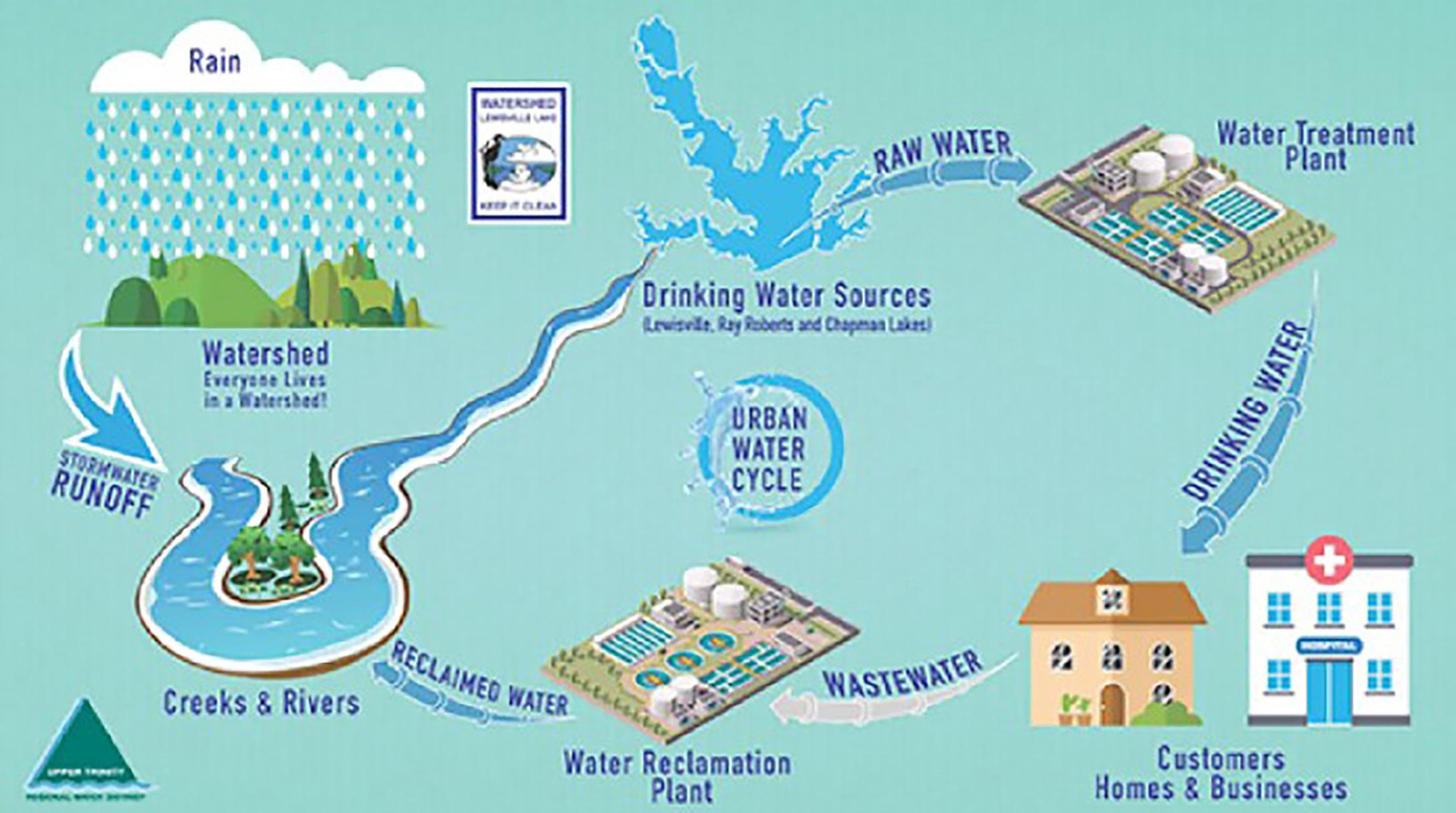
POSSIBLE CONTAMINANTS IN DRINKING WATER SOURCES
The sources of drinking water (both tap water and bottled water) include rivers, lakes, streams, ponds, reservoirs, springs, and wells. As water travels over the surface of the land or through the ground, it dissolves naturally occurring minerals and, in some cases, radioactive material, and can pick up substances resulting from the presence of animals or from human activity. Drinking water, including bottled water, may reasonably be expected to contain at least small amounts of some contaminants. The presence of contaminants does not necessarily indicate that water poses a health risk. More information about contaminants and potential health effects can be obtained by calling the EPA Safe Drinking Water Hotline at (800) 426-4791.
SPECIAL NOTICE: WEAKENED IMMUNE SYSTEMS
You may be more vulnerable than the general population to certain microbial contaminants, such as Cryptosporidium, in drinking water. Infants, some elderly, or immunocompromised persons such as those undergoing chemotherapy for cancer; persons who have undergone organ transplants; those who are undergoing treatment with steroids; and people with HIV/AIDS or other immune system disorders, can be particularly at risk from infections. You should seek advice about drinking water from your physician or health care providers. Additional guidelines on appropriate means to lessen the risk of infection by Cryptosporidium are available from the Safe Drinking Water Hotline at (800) 426-4791.
CONTAMINANTS THAT MAY BE PRESENT IN SOURCE WATER INCLUDE:
• Microbial contaminants, such as viruses and bacteria, which may come from sewage treatment plants, septic systems, agricultural livestock operations and wildlife.
• Inorganic contaminants, such as salts and metals, which can be naturally-occurring or result from urban storm water runoff, industrial or domestic wastewater discharges, oil and gas production, mining or farming.
• Pesticides and herbicides, which may come from a variety of sources such as agriculture, urban storm runoff and residential uses.
• Organic chemical contaminants, including synthetic and volatile organic chemicals, which are byproducts of industrial processes and petroleum production, and can also come from gas stations, urban stormwater runoff and septic systems.
• Radioactive contaminants, which can be naturally occurring or the result of oil and gas production and mining activities.
Lead can cause serious health effects in people of all ages, especially pregnant people, infants (both formula-fed and breastfed), and young children. Lead in drinking water is primarily from materials and parts used in service lines and in home plumbing. CITY OF CELINA is responsible for providing high quality drinking water and removing lead pipes but cannot control the variety of materials used in the plumbing in your home. Because lead levels may vary over time, lead exposure is possible even when your tap sampling results do not detect lead at one point in time. You can help protect yourself and your family by identifying and removing lead materials within your home plumbing and taking steps to reduce your family’s risk. Using a filter, certified by an American National Standards Institute accredited certifier to reduce lead, is effective in reducing lead exposures. Follow the instructions provided with the filter to ensure the filter is used properly. Use only cold water for drinking, cooking, and making baby formula. Boiling water does not remove lead from water. Before using tap water for drinking, cooking, or making baby formula, flush your pipes for several minutes. You can do this by running your tap, taking a shower, doing laundry or a load of dishes. If you have a lead service line or galvanized requiring replacement service line, you may need to flush your pipes for a longer period. If you are concerned about lead in your water and wish to have your water tested, contact City of Celina at (972) 382-9886. Information on lead in drinking water, testing methods, and steps you can take to minimize exposure is available at https://www.epa.gov/safewater/lead.
Contaminants may be found in drinking water that may cause taste, color, or odor problems. These types of problems are not necessarily causes for health concerns. For more information on taste, odor, or color of drinking water, please contact the system’s business office.
According to the water loss audit submitted to the Texas Water Development Board for January through December 2025, our system experienced a total water loss of 9.0%, amounting to an estimated 190,977,738 gallons. Additionally, the City’s Water Conservation Plan set a targeted goal of 140 gallons per capita per day (GPCD), and this past year, we successfully achieved a total GPCD of 113.
WATER CONSERVATION AND LEAKS
Even though our planet consists of 70% water, there are still many parts of the world that suffer from a clean water shortage. We’re dedicated to keeping our water pure for everyday use, while also protecting the environment with good conservation practices. As a functioning city, it’s crucial that we avoid wasting water by whatever means necessary. To achieve this we need to work together to reduce waste, prevent damaging water quality, and improve water management. As a socially responsible society, we must make every effort to save the water we have today to provide a sufficient supply for future generations!
SMART WATER, STRONG COMMUNITY
OUTDOOR CONSERVATION TIPS FOR CELINA
As Celina continues to grow, protecting our natural resources remains a top priority. One of the most important resources we share as a community is water. While the Earth is covered by approximately 70 percent water, access to clean, usable freshwater is far more limited. Communities across the country are facing increasing challenges related to water supply, drought conditions, and environmental sustainability.
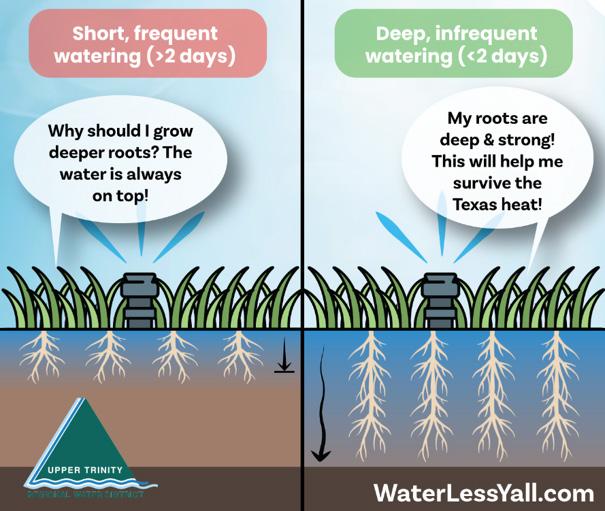
For Celina residents, outdoor water conservation plays a key role in ensuring a reliable and sustainable water supply for the future. Lawns, landscaping, and outdoor activities can account for a significant portion of household water use, especially during the warmer months. By adopting efficient watering practices and making small adjustments to daily routines, residents can help reduce water waste while maintaining healthy, vibrant landscapes.
Working together as a community to conserve water not only protects our environment but also helps ensure that future generations continue to enjoy a dependable water supply.
The Power of Community in Water Conservation
Water conservation is most effective when everyone plays a part. Individual actions may seem small, but when combined across thousands of households, they create a meaningful impact on our City’s water resources.
By reducing waste, improving irrigation practices, and making thoughtful landscaping choices, residents can help
preserve Celina’s water supply while also lowering utility costs and minimizing environmental impact. These shared efforts strengthen the long-term sustainability of our community and protect one of our most valuable natural resources.
Four Simple Steps To Outdoor Water Conservation
Reducing outdoor water use does not mean sacrificing a beautiful yard. With the right techniques, residents can maintain attractive landscapes while using water more efficiently.
Prevent Water Evaporation
•
•
•
Avoid watering on windy days when water can quickly drift away.
Use drip irrigation systems for trees and shrubs and low-angle sprinklers for lawns.
• Water lawns early in the morning or in the evening to reduce evaporation, especially during hot summer months.
Cover pools and spas when not in use to significantly reduce water loss.
Plant Water-Efficient Vegetation
•
•
• Choose drought-tolerant and native plants that thrive in Celina’s climate.
Native plants require less water and maintenance once established.
Many municipalities and water providers offer resources that highlight water-efficient landscaping options.
Utilize Rainwater Harvesting
•
• Install a rain barrel or cistern to collect water from roof gutters.
Harvested rainwater can be used to irrigate plants and gardens, reducing reliance on the municipal water supply.
Maintain Healthy Lawns
•
•
• Keep grass about three inches tall during the summer months to help retain soil moisture.
Avoid removing more than one-third of the grass blade at a time when mowing.
Leave lawn clippings on the grass to return nutrients and moisture to the soil naturally.
Check Your Sprinkler System for Wasted Water
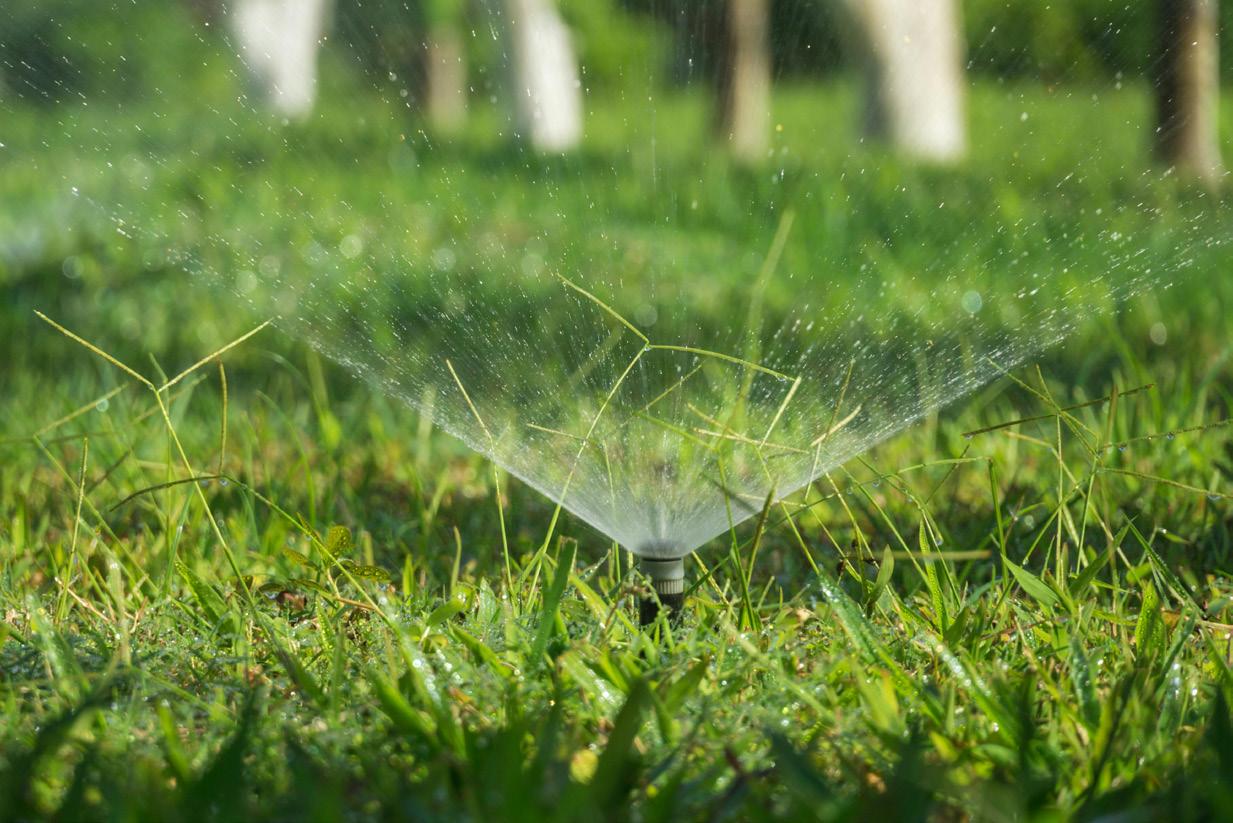
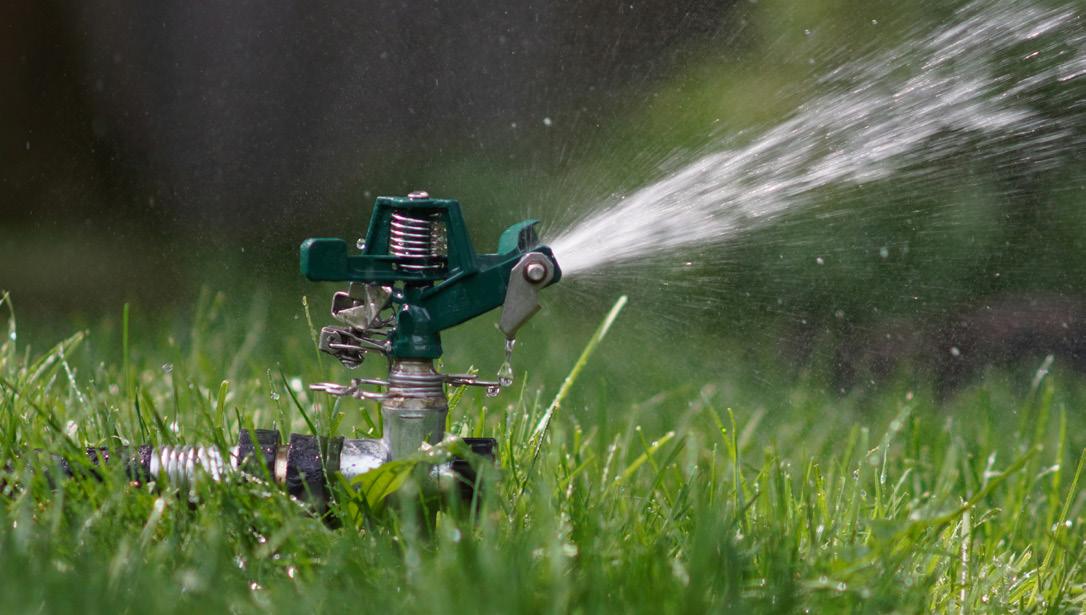
Outdoor irrigation systems are convenient, but they can also be a major source of water waste if not properly maintained. Experts estimate that up to 50 percent of water used for outdoor irrigation is lost due to inefficient systems, runoff, or evaporation. Even a single broken sprinkler head can waste as much as 10 gallons of water per minute.
The Environmental Protection Agency’s WaterSense program recommends a simple four-step process to ensure irrigation systems operate efficiently:
•
•
•
Connect: Look for leaks in hoses, valves, and pipe connections. Even a small leak the size of a ballpoint pen tip can waste more than 6,300 gallons of water per month.
Direct: Adjust sprinkler heads to ensure water is directed only toward landscaped areas – not sidewalks, driveways, or streets.
• Inspect: Turn on your sprinkler system and check for clogged, broken, or missing sprinkler heads.
Select: Adjust your irrigation schedule seasonally or use the “Seasonal Adjustment” setting if your controller includes that feature.
Regularly checking your system can prevent unnecessary water loss and improve irrigation efficiency.
Irrigation Evaluation Program
The City of Celina is committed to water conservation and efficiency. As part of this effort, we offer a complimentary Irrigation Evaluation Program exclusively for Celina water utility customers. This program helps homeowners optimize their irrigation systems to reduce water waste while maintaining a healthy landscape.
Additional Water-Wise Outdoor Tips
Small changes in daily habits can also make a noticeable difference in outdoor water use. Consider incorporating these practices into your routine:
•
Scan to learn more & sign up
Test your sprinkler system by placing straight-edged cans around your yard to measure how long it takes to fill them with one inch of water.
Install rain shutoff devices that automatically stop irrigation systems during rainfall.
Sweep patios, sidewalks, and driveways instead of using a hose for cleaning.
Adjust sprinkler heads regularly to prevent water from spraying paved surfaces.
• Apply approximately one inch of water per week during summer months to maintain most Texas grasses.
Use drip irrigation in flower beds and landscape areas to deliver water directly to plant roots.
These simple strategies can significantly reduce water waste while helping landscapes stay healthy and resilient.
A Shared Commitment to Celina’s Future
Water conservation is not just about saving water today – it is about protecting a vital resource for tomorrow. As Celina continues to grow, thoughtful water use will play an increasingly important role in ensuring that our community remains sustainable, resilient, and environmentally responsible.
By making small changes in how we water lawns, maintain irrigation systems, and design landscapes, residents can contribute to a stronger and more sustainable water future. Together, these efforts help preserve our water supply, support healthy outdoor spaces, and ensure that Celina continues to thrive for generations to come.
CITY OF CELINA PUBLIC WORKS WATER DIVISION
DEFINITIONS AND ABBREVIATIONS
Action Level (AL): The concentration of a contaminant which, if exceeded, triggers treatment or other requirements which a water system must follow.
Action Level Goal (ALG): The level of a contaminant in drinking water below which there is no known or expected risk to health. ALGs allow for a margin of safety.
Avg: Average: Regulatory compliance with some MCLs are based on running annual average of monthly samples.
Level 1 Assessment: A Level 1 Assessment is a study of the water system to identify potential problems and determine (if possible) why total coliform bacteria were found.
Level 2 Assessment: A Level 2 Assessment is a very detailed study of the water system to identify potential problems and determine (if possible) why an Escherichia coli (E. coli) maximum contaminant level (MCL) violation has occurred and/or why total coliform bacteria were found on multiple occasions.
LRAA: Locational Running Annual Average.
Maximum Residual Disinfectant Level Goal (MRDLG): The level of a drinking water disinfectant below which there is no known or expected risk to health. MRDLGs do not reflect the benefits of the use of disinfectants to control microbial contaminants.
Maximum Residual Disinfectant Level (MRDL): The highest level of a disinfectant allowed in drinking water. There is convincing evidence that addition of a disinfectant is necessary for control of microbial contaminants.
MCL (Maximum Contaminant Level): The highest level of a contaminant that is allowed in drinking water. MCLs are set as close to the MCLGs as feasible using the best available treatment technology.
MCLG (Maximum Contaminant Level Goal): The highest level of a contaminant that is allowed in drinking water. MCLs are set as close to the MCLGs as feasible using the best available treatment technology.
N/A: not applicable
NTU (Nephelometric Turbidity Units): A measure of turbidity in water.
pCi/L (Picocuries per Liter): A measure of radioactivity in water equal to 10-12 curies. Quantity of radioactive material producing 2.22 nuclear transformations per minute.
ppb (Parts per Billion): One part per billion is roughly equal to one packet of artificial sweetener sprinkled into an Olympic-size swimming pool.
ppm (Parts per Million): One part per million approximates one packet of artificial sweetener sprinkled into 250 gallons of iced tea.
RAA: Running Annual Average.
TT (Treatment Technique): A required process intended to reduce the level of a contaminant in drinking water.
Turbidity: A measure of the clarity of water. While turbidity has no known health effects, it can interfere with disinfection and provide a medium for microbial growth. Turbidity may indicate the presence of disease-causing symptoms, such as nausea, cramps, diarrhea, and associated headaches.
TOC (Total Organic Carbon): Has no known health effects. However, TOC provides a medium for the formation of disinfection by-products. These include trihalomethanes (THMs) and haloacetic acids (HAAs). Drinking water containing these by-products in excess of the MCL may lead to adverse health effects, liver or kidney problems, or nervous system effects, and may lead to an increased risk of getting cancer.
2025 WATER QUALITY REPORT
CITY OF CELINA CONSTITUENTS DETECTED FOR 2025
Erosion of natural deposits; Leaching from wood preservatives; Corrosion of household plumbing systems.
Corrosion of household plumbing systems;
of natural deposits.
In the month of November, 1.67% of sample(s) returned as positive
the environment.
Coliforms are bacteria that are naturally present in the environment and are used as an indicator that other, potentially harmful, waterborne pathogens may be present or that a potential pathway exists through which contamination may enter the drinking water distribution system. We found coliforms indicating the need to look for potential problems in water treatment or distribution. When this occurs, we are required to conduct assessment(s) to identify problems and to correct any problems that were found during these assessments.
Lead Service Line Inventory: The City of Celina has successfully completed the required Lead Service Line Inventory in compliance with the Lead and Copper Rule Improvements (LCRI). Residents and stakeholders can view the online service line inventory by visiting the City of Celina’s website or directly accessing it through the following link: https://experience.arcgis.com/experience/0e4ee6bd375443ff95ba376d74eaa3bc
UNREGULATED CONTAMINANT MONITORING RULE 5 (UCMR 5)
The City of Celina sampled for contaminants as part of the EPA’s Fifth Unregulated Contaminant Monitoring Rule(UCMR 5). This monitoring helps the EPA and states evaluate the occurrence of determine the prevalence of substances that do not yet have federal drinking water standards to determine whether future regulations may be appropriate.
UCMR 5 monitoring results for the City of Celina are available to the public. Customers may request a copy of the complete UCMR 5 results by contacting the City of Celina Public Works Department at (972) 382-9886 or by visiting 10165 County Road 106, Celina TX 75068. You may also access all the test results with the EPA UCMR5 Data Finder: https://www.epa. gov/dwucmr/fifth-unregulated-contaminant-monitoring-rule-data-finder Please distribute this information to individuals who consume this water, particularly those who may not have received direct notification, such as residents of apartments, nursing homes, schools, food establishments, medical facilities, and businesses.
What should I do?
You are not required to do anything, but as our customer, we want you to know that this information is available to you. For the 2025 monitoring year, one UCMR 5 contaminant was reported at or above EPA’s minimum reporting level. All other UCMR 5 contaminants included in the provided results were reported below the minimum reporting level (< MRL).
DETECTED UCMR 5 CONTAMINANTS
Note: UCMR 5 results are reported in micrograms per liter (µg/L). One µg/L is equivalent to one part per billion. PFPeA does not currently have a federal maximum contaminant level (MCL).
UCMR 5 CONTAMINANTS REPORTED BELOW EPA MINIMUM REPORTING LEVELS
FOR MORE INFORMATION
For more information or to report service problems or leaks, contact the Public Works Department at (972) 382-9886. For questions about your utility bill, please contact Utility Billing at (972) 382-3345.
PARA ASISTENCIA EN ESPAÑOL
Este reporte incluye información importante sobre el agua para tomar. Para asistencia en español, favor de llamar al telefono (972) 382-9886.
GET INVOLVED
City Council Meetings are held at 5:00 PM on the second Tuesday of the month. The Celina City Council Chambers are located at 112 N. Colorado St, Celina, TX 75009. Please note that City Council Meetings are also streamed live to on the City website, www.celina-tx.gov/livestream. For more information, call (972) 382-2682.