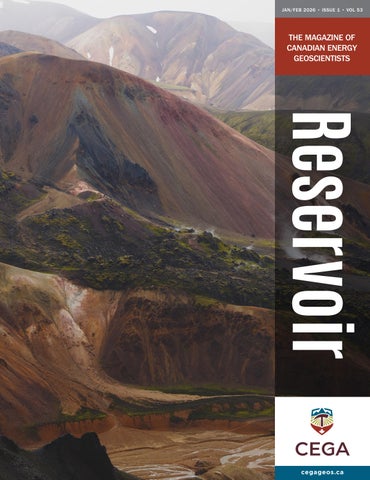
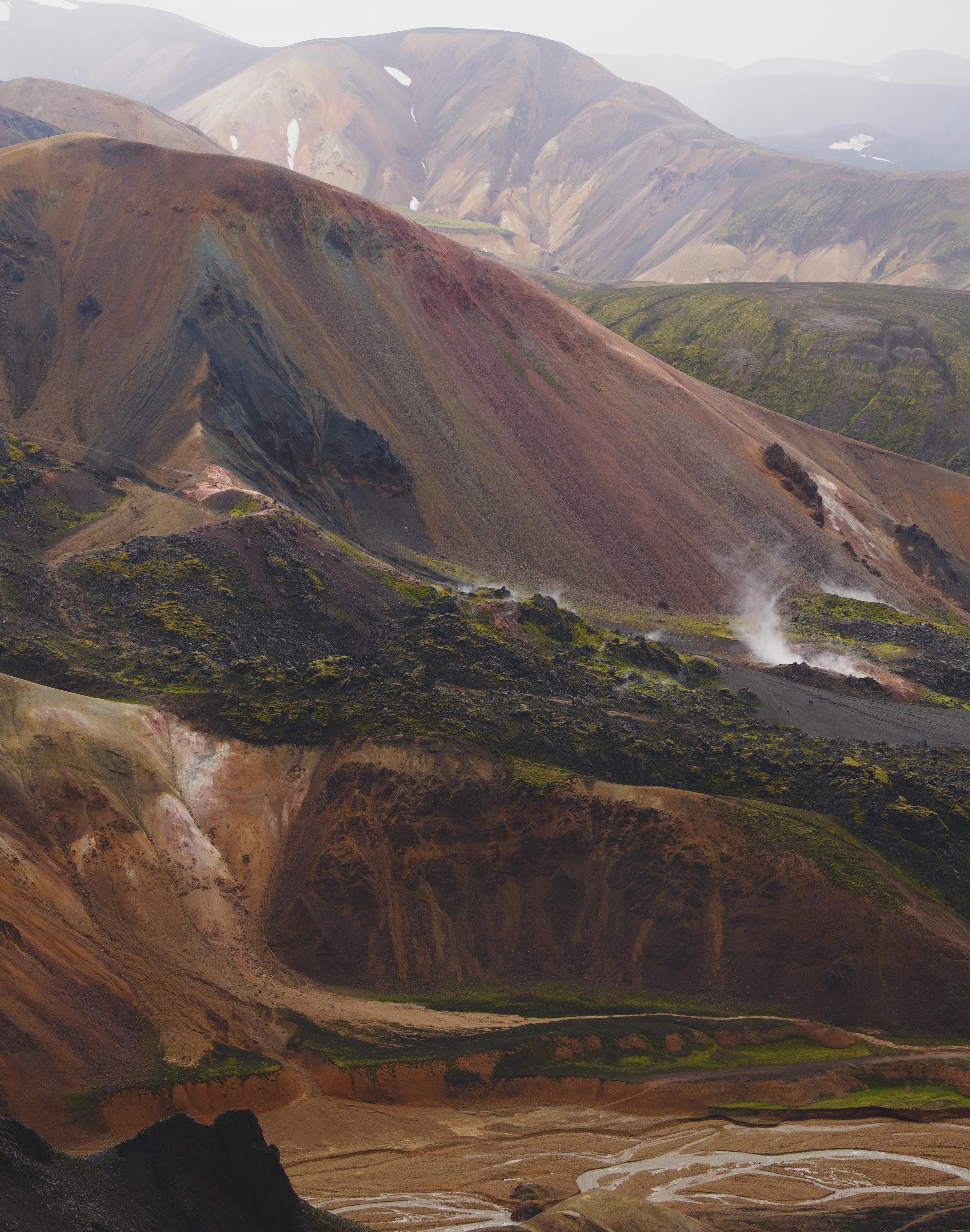
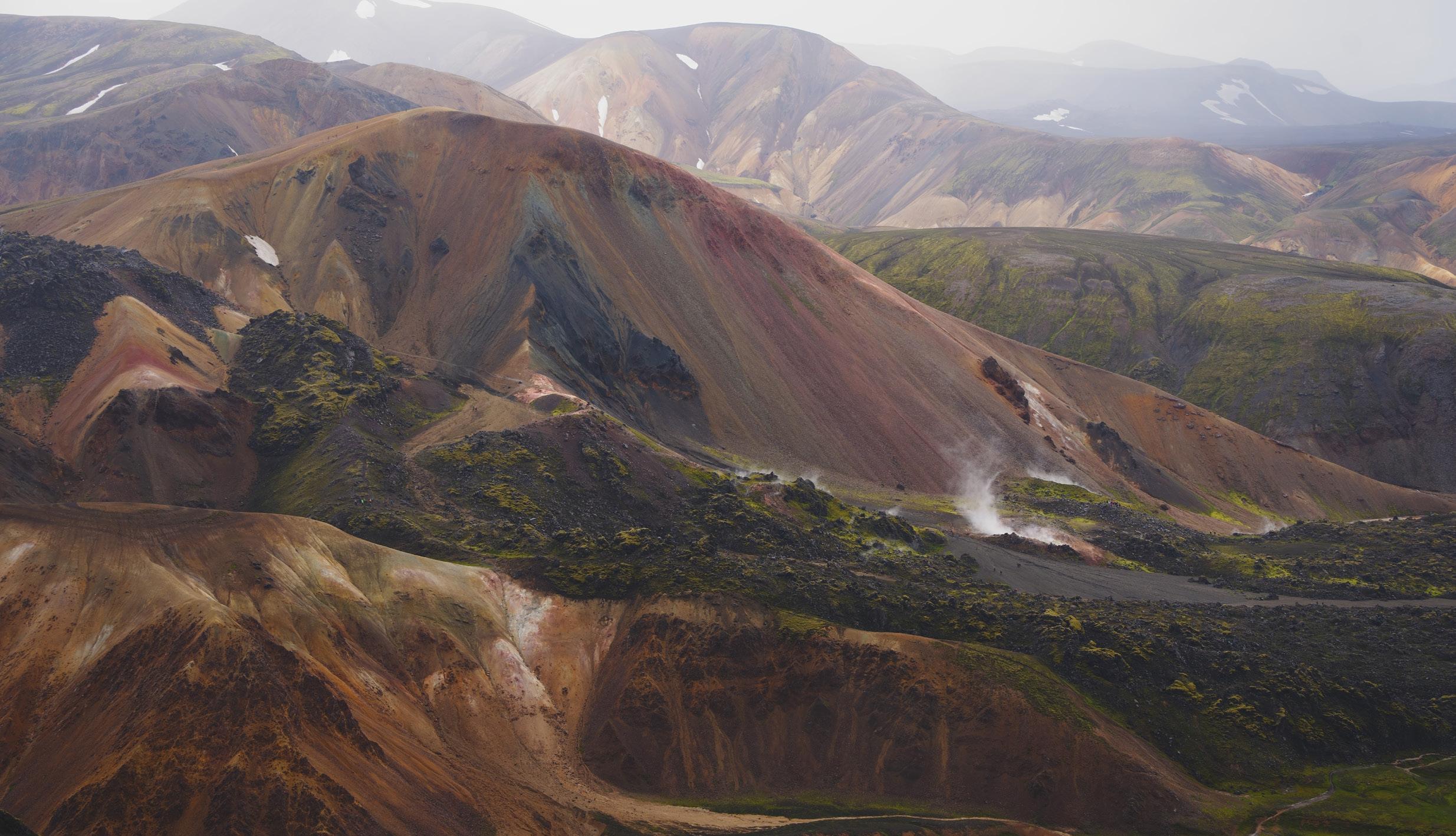
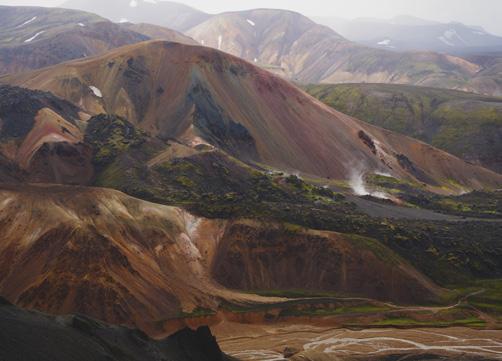
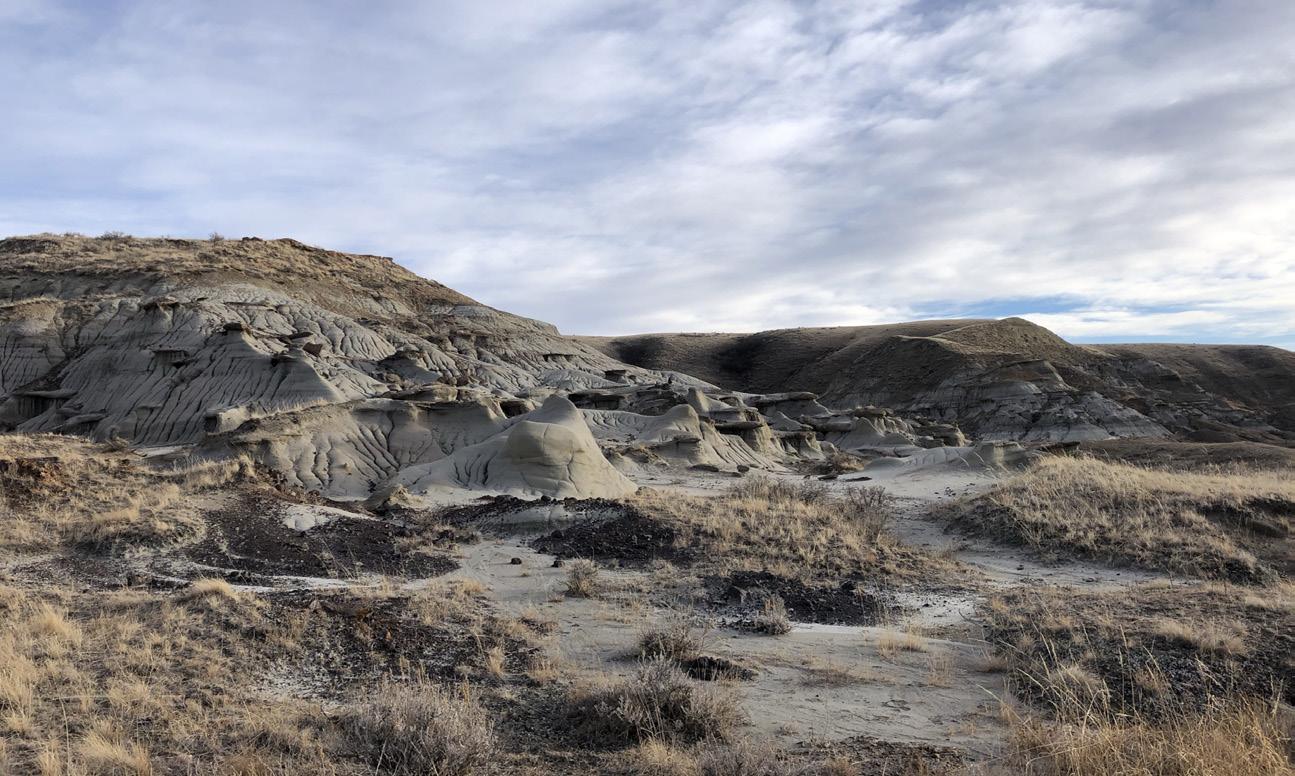
The hiking trails at Landmannalaugar in the Fjallabak Nature Reserve are well known for their colourful rhyolitic lava flows dating to approx. 1477. A more recent basaltic flow covers the rhyolite at the base of Brennisteinsalda Mountain on the edge of the Laugahraun lava field. The flows lie within the Torfajökull Caldera that occurs at the intersection of three divergent seismic zones, including the Mid-Atlantic Rift, in the central part of the island. The area is unusual due to the high proportion of rhyolite relative to basalt. Active fumaroles in the valley indicate the presence of a hydrothermal system within these cooling volcanic units.
Photo by: Dave Robinson
FROM THE EDITOR
SARAH SCHULTZ, TECHNICAL EDITOR FOR THE RESERVOIR
WELCOME BACK
TO OUR JANUARY AND FEBRUARY ISSUE OF THE CEGA RESERVOIR!
CEGA has great workshops and technical talks scheduled in the beginning of 2026. Please check the CEGA website for registration details..
In this issue we present the continuation of our regular articles:
• From the Desk of the AER
In this issue we present the following articles:
• In Memoriam: Norman Claude Wardlaw
• Field Trip Season in Review
• Jon Noad: CSI: Sedimentology – Untapped opportunities for cross-pollination
The annual Geospiel will be held April 16 – 18, 2026. Registration is open for the event.
The Geoconvention and CEGA Core Conference committees are still accepting abstracts for the 2026 conference which will be held in May 2026. Please check out the conference websites to submit an abstract or to get more information regarding this event.
We look forward to receiving your manuscripts for the upcoming 2026 issues of the CEGA Reservoir..
Sarah Schultz
PUBLICATIONS INFORMATION
The RESERVOIR is published 6 times per year by the Canadian Energy Geoscience Association. The purpose of the RESERVOIR is to publicize the Association’s many activities and to promote the geosciences. We look for both technical and non-technical material to publish.
The contents of this publication may not be reproduced either in part or in full without the consent of the publisher.
No official endorsement or sponsorship by the CEGA is implied
for any advertisement, insert, or article that appears in the RESERVOIR unless otherwise noted. All submitted materials are reviewed by the editor. We reserve the right to edit all submissions, including letters to the Editor. Submissions must include your name, address, and membership number (if applicable). The material contained in this publication is intended for informational use only.
While reasonable care has been taken, authors and the CEGA make no guarantees that any of the equations, schematics, or
devices discussed will perform as expected or that they will give the desired results. Some information contained herein may be inaccurate or may vary from standard measurements. The CEGA expressly disclaims any and all liability for the acts, omissions, or conduct of any third-party user of information contained in this publication. Under no circumstances shall the CEGA and its officers, directors, employees, and agents be liable for any injury, loss, damage, or expense arising in any manner whatsoever from the acts, omissions, or conduct of any third-party user.
BOARD OF DIRECTORS 2026
PRESIDENT ELECT
Christa Williams
Canadian Discovery Ltd. christa.williams@cegageos.ca
LinkedIn
FINANCE DIRECTOR ELECT
Thomas Plumridge
Freehold Royalties directorfinance@cegageos.ca
LinkedIn
EDUCATION DIRECTOR
Rachelle Pinnow
Cenovus Energy education@cegageos.ca Linkedin
PAST PRESIDENT
Shelley Leggitt
Kiwetinohk Energy Corp. shelley.leggitt@cegageos.ca
LinkedIn
CONFERENCES DIRECTOR
Taylor Berezowski
conferences@cegageos.ca
LinkedIn
PUBLICATIONS DIRECTOR
Michael Wamsteeker
ExxonMobil publications@cegageos.ca
LinkedIn
PRESIDENT ELECT
Astrid Arts
Cenovus Energy astrid.arts@cegageos.ca
LinkedIn
OUTREACH DIRECTOR
Dilpreet Khehra University of Calgary outreach@cegageos.ca
LinkedIn
GROWTH & ENGAGEMENT DIRECTOR
Gareth Williams
Touchstone Exploration Inc. membershipdirector@cegageos.ca
LinkedIn
OFFICE CONTACTS
MEMBERSHIP INQUIRIES
Tel: 403-264-5610
Email: membership@cegageos.ca
FINANCE DIRECTOR ELECT
David Lipinski
AtkinsRealis directorfinance@cegageos.ca
LinkedIn
MEMBER PROGRAMS DIRECTOR
Scott MacKnight
Whitecap Resources Inc. membershipdirector@cegageos.ca
LinkedIn
CEGA OFFICE
#415, 500 4th Ave SW
Calgary Alberta, Canada T2P 2V6
Tel: 403-264-5610 | cegageos.ca
ADVERTISING INQUIRIES
Latoya Graham
Tel: 403-513-1230
Email: latoya.graham@cegageos.ca
CONFERENCE INQUIRIES
Kristy Casebeer
Tel: 403-513-1234
Email: kristy.casebeer@cegageos.ca
MANAGING DIRECTOR
Emma MacPherson
Tel: 403-513-1235
Email: emma.macpherson@cegageos.ca
CSI: Sedimentology
Untapped opportunities for cross-pollination
JON NOAD | STANTEC CONSULTING; SEDIMENTAL SERVICES; UNIVERSITY OF ADELAIDE
INTRODUCTION
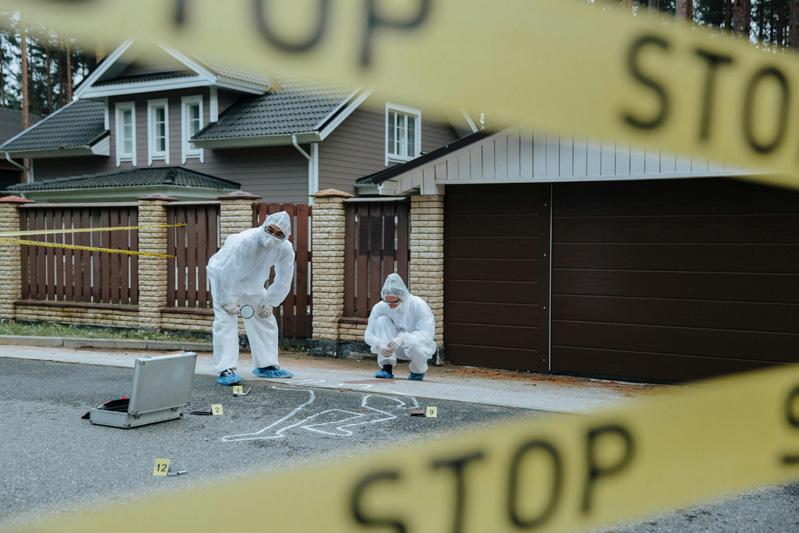
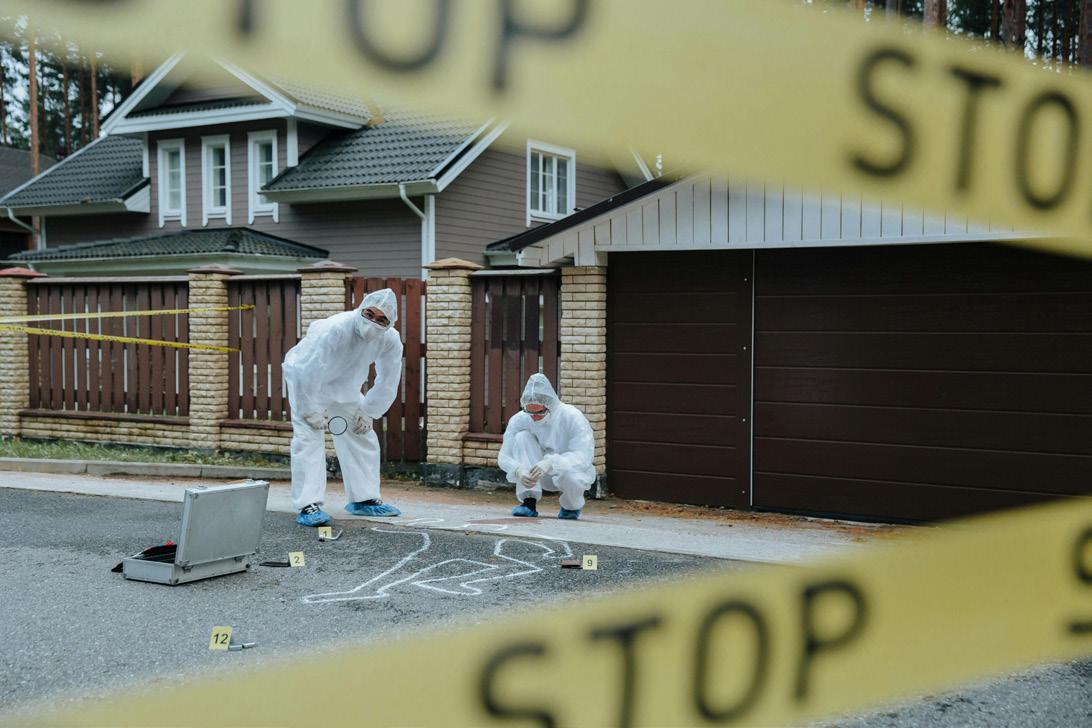
Shows involving homicides and associated crime scene investigation (CSI) are among the most popular on television. The public is fascinated by the work that goes into collecting and analysing data from crime scenes in the field (Figure 1), whether it be DNA, wounds and bloodstains, footprints, tire tracks, or even evidence of arson. Skeletal analysis can provide a detailed profile, and even a life history, of the victim, and there is almost always a method to estimate time of death (TOD).
As sedimentary geologists, our fieldwork has very similar objectives: using data from the “scene” to estimate depositional setting, flow velocities and water depth, and the nature of deposition. Grain size, sedimentary structures, bed thicknesses, sediment colour and composition, provenance and, most importantly, context allow us to build a picture of the “scene” at the time of deposition. Palaeontological data can tell us a great deal about our “victims” (AKA fossils), while trace fossils record organism behaviour, sometimes immediately prior to death. Stratigraphy, index fossils, and correlation can be used to determine TOD (time of death or deposition).
Entire university courses focus on forensic science, and I believe there is much that the geologist could learn from techniques utilized by crime scene investigators—and vice versa. Some concepts that are potentially useful to geos are highlighted below.
THE CASE...
A young dinosaur has met its end, but beyond that, little is known. Who was this dinosaur? How old was it? How did it die? The boxes presented through this article track and interpret the (geological) forensic evidence used to solve this unexplained death.
WORKFLOW
Both forensics and sedimentary geology have well-established workflows to identify cases and collect and interpret data relating to crimes or geological puzzles (Table 1). Data collection is key and should not be influenced by theories regarding what happened. The use of analogue data is often critical to making correct interpretations.
TOOLS OF THE TRADE
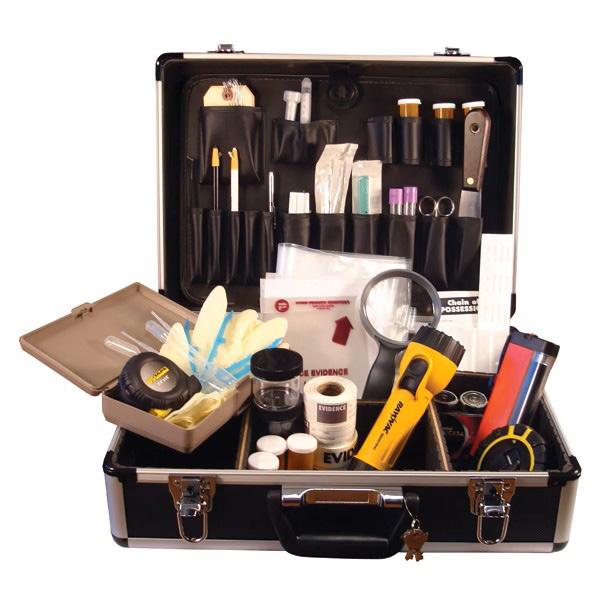
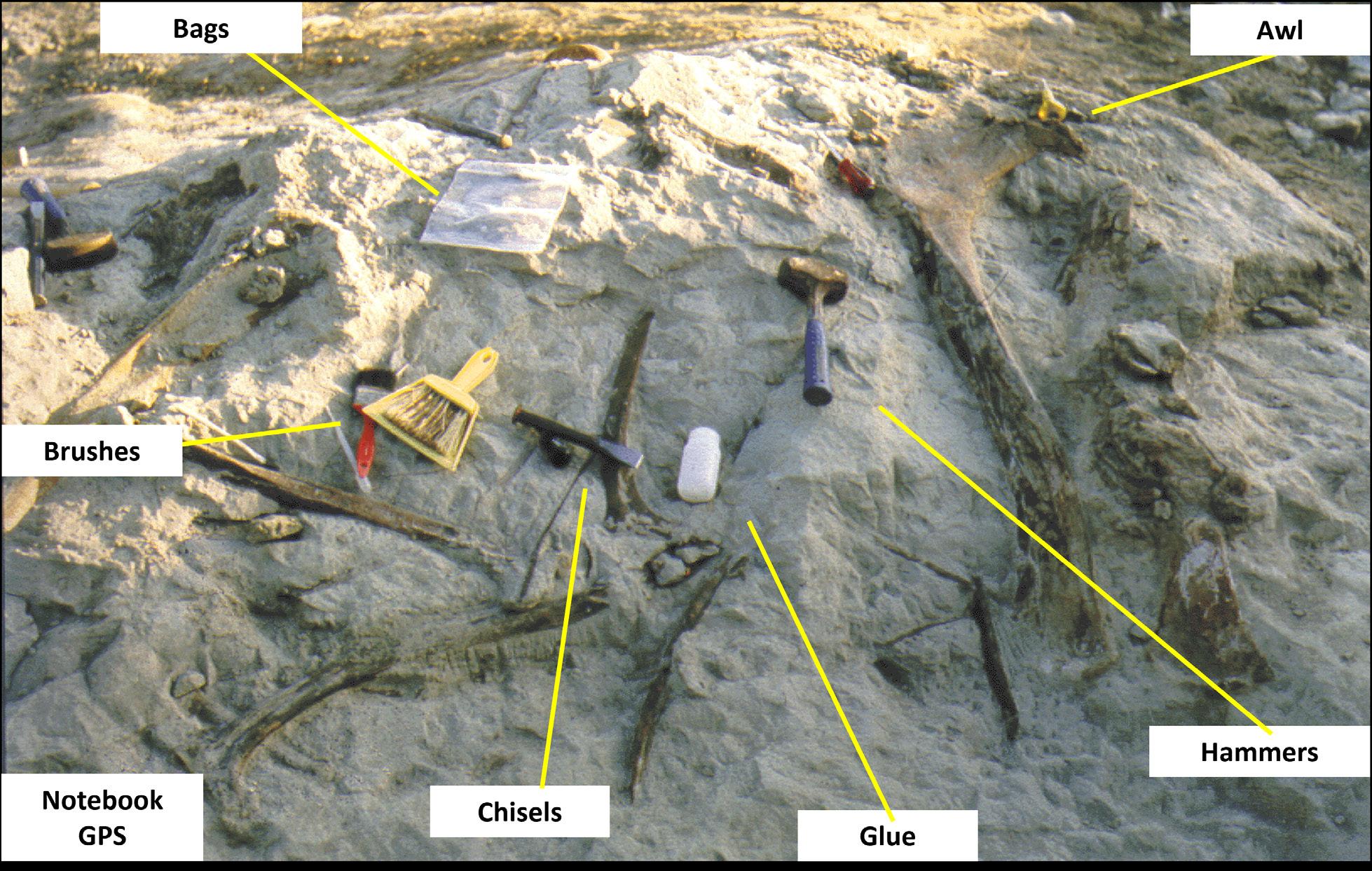
The crime-scene investigator typically carries a case that contains everything normally used to collect evidence (Figure 3). This kit may be supplemented by additional tools, depending on the complexities of the crime scene; a standard tool kit includes crime scene tape, camera and video equipment, a sketchpad and pens, a magnifying glass and tweezers, evidence bags, fingerprint casting kits, and glue. All these items would also feature in the geologist’s field bag, along with hammers, chisels, and awls (Figure 4). Additional items used at crime scenes usually include protective clothing, a flashlight, UV light, laser, infrared (geologists generally don’t need to work in the dark but use lasers to scan rocks in 3D), a serology kit, and an entomology kit.
BACK AT THE LAB
Soil analysis can be very valuable tool in identifying where the crime took place. This is comparable to examining thin sections and cuttings, which can help to pin down grain size, sorting, composition, and provenance. The analysis of tool and drag marks (Figure 5) and impressions can narrow down the murder weapon and how the victim was moved. In geology, the sedimentary structures can show current direction, and there may be bite marks and scratches on bones. Both sciences use chemistry in various ways, and there are many types of trace evidence (e.g., hairs, fibres, materials of all kinds). Ichnological traces also provide important evidence of victim (i.e., the organism/fossil) behaviour. Firearm examination may also be very useful in solving crimes.
Figure 1. Forensic team and chalk outline (Cottonbro Studio)
CSI: FORENSICS
DISCOVERY Reporting by public Cordon off area
COLLECT DATA
Evidence collection (and storage) unit:
• Lift fingerprints, collect hair and fibres, other evidence
• Photograph crime scene, all evidence, victim (if present)
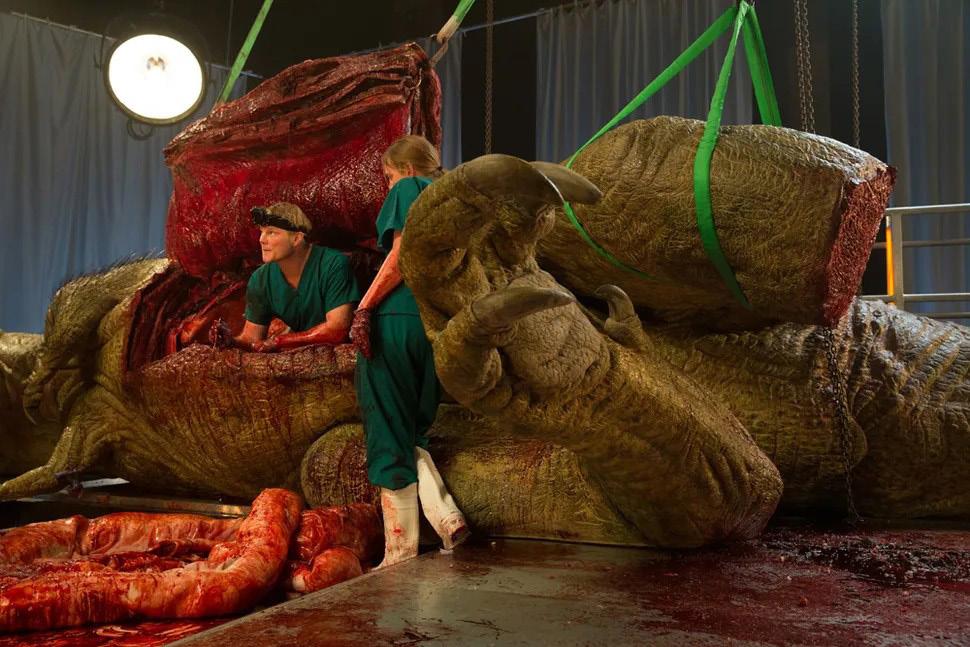
Figure 6. Tyrannosaurus rex autopsy (www.livescience.com)
PROCESSING THE BODY
We are all familiar with autopsies. The coroner measures the body’s height and weight, takes photographs, and attempts to determine the time and cause of death (COD) (Figure 6). They look for possible trace evidence, test for toxicology, and scour the corpse for artefacts, scars, tattoos, and signs of disease. The condition of the carcass (Figure 7) and insect remains may help to determine how long it has been outside. Fingerprints and dental records are collected and the skeleton is analyzed to attempt to determine age, stature, sex, and possibly race. It may even be possible to reconstruct the face of our victim.
2. THE AUTOPSY
• Victim beheaded
• Skeleton of body absent
• Victim: John/Jane Dino
• Cause of Death (COD): unknown
Speaking as a palaeontologist, I can confirm that we collect an almost identical dataset, particularly when working on a fossil vertebrate. Its length is measured, and muscle scars on the bones are used to reconstruct the tissue distribution and weight. Evidence of skin is treasured or, in extraordinary cases, even internal organs may be preserved. The degree of decay of the carcass may also indicate how long it was exposed before burial. The COD may be recorded in the sediments in which the animal is preserved (especially if the death was catastrophic, such as due to fire or predation). Overall, I think palaeontologists have something to learn from modern autopsies, including facial reconstruction techniques and identifying the manner of death.
Figure 7. Stages of decay of mouse (Iancu et al. 2018)
Figure 8. Head of a baby ceratopsian dinosaur from Princess South, Alberta
CEGA File XCSPG1125
TIME OF DEATH (TOD)
I suspect that estimating the time of death is not nearly as straightforward as the forensic crime shows seem to make it. These estimates are based on real data often gathered during close examination of the corpse. It is not as easy when animals have been dead for millions of years but, geologically, time of death can be estimated from associated microfossils and macrofossils or by correlating sedimentary deposits or significant horizons to those in other areas. Ash beds are also useful chronological markers for dating.
FINGERPRINTS
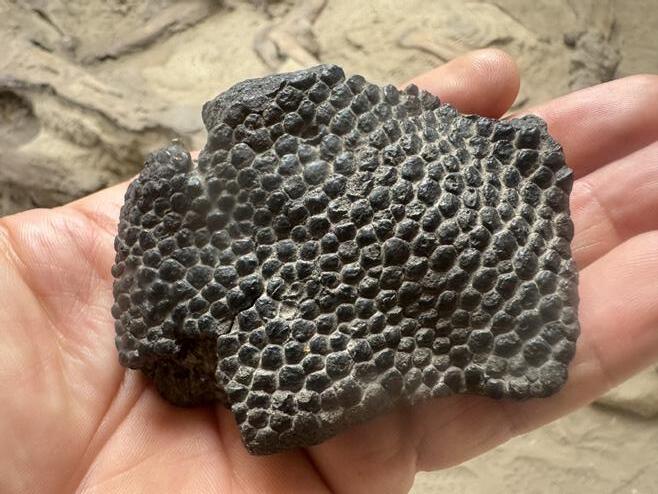
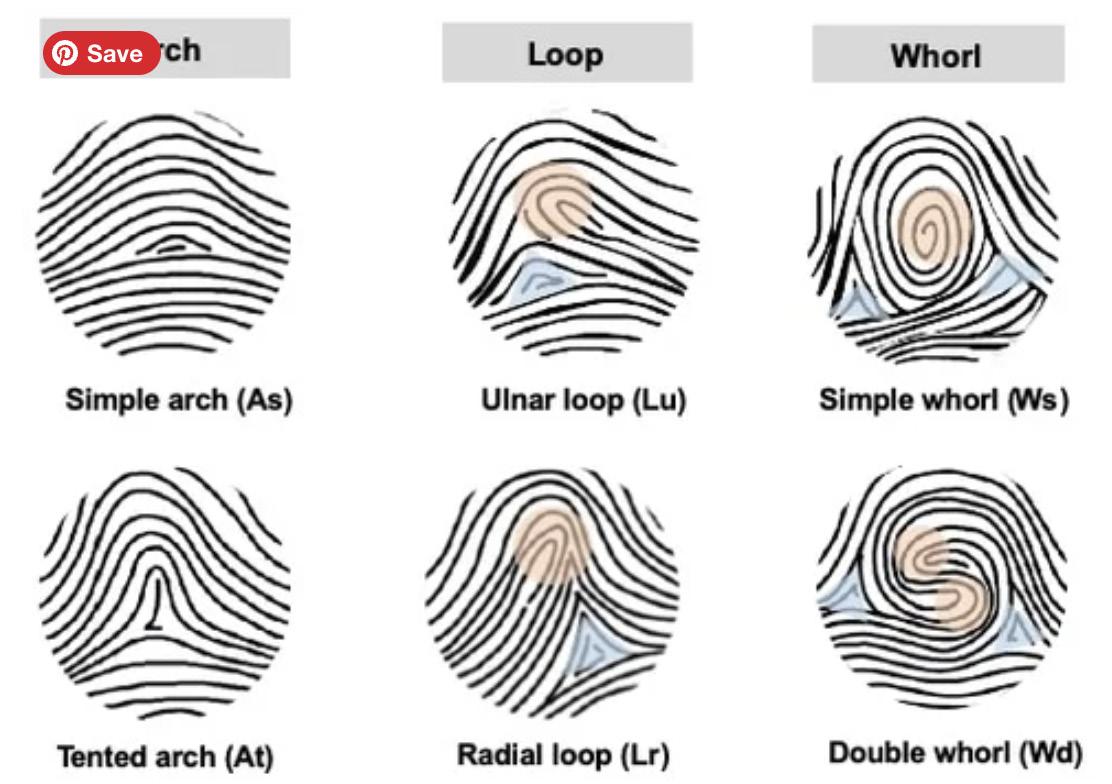
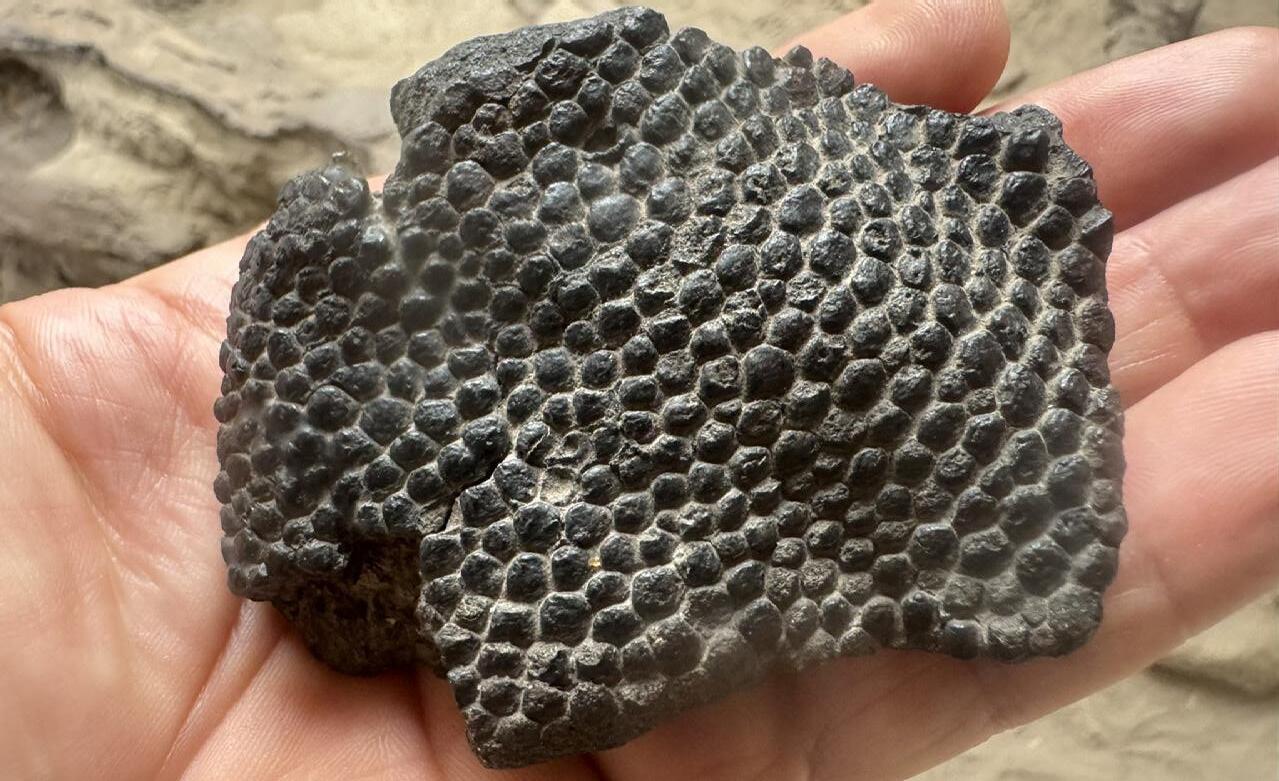
Fingerprints comprise friction ridges on finger pads. They were first classified (Figure 10) by Purkinje in 1823, a classic of scientific literature. The oldest prints date back 6000 years to earthenware on an archaeological site in northern China (Holder et al. 2003). They are subdivided into patent prints (made of a substance), plastic prints (pressed into soft material), and latent prints (invisible to the naked eye). Superglue vapour can be used to tease out prints on many surfaces. Complex digital technology is used to clean up and process fingerprints and this process could readily be applied to palaeontological remains, especially trackways and skin impressions (Figure 11). Many examples of the latter have come to light over the last few years, particularly in Alberta and the US, and a database might help with identifying the types of dinosaurs involved.
BLOODSTAINS
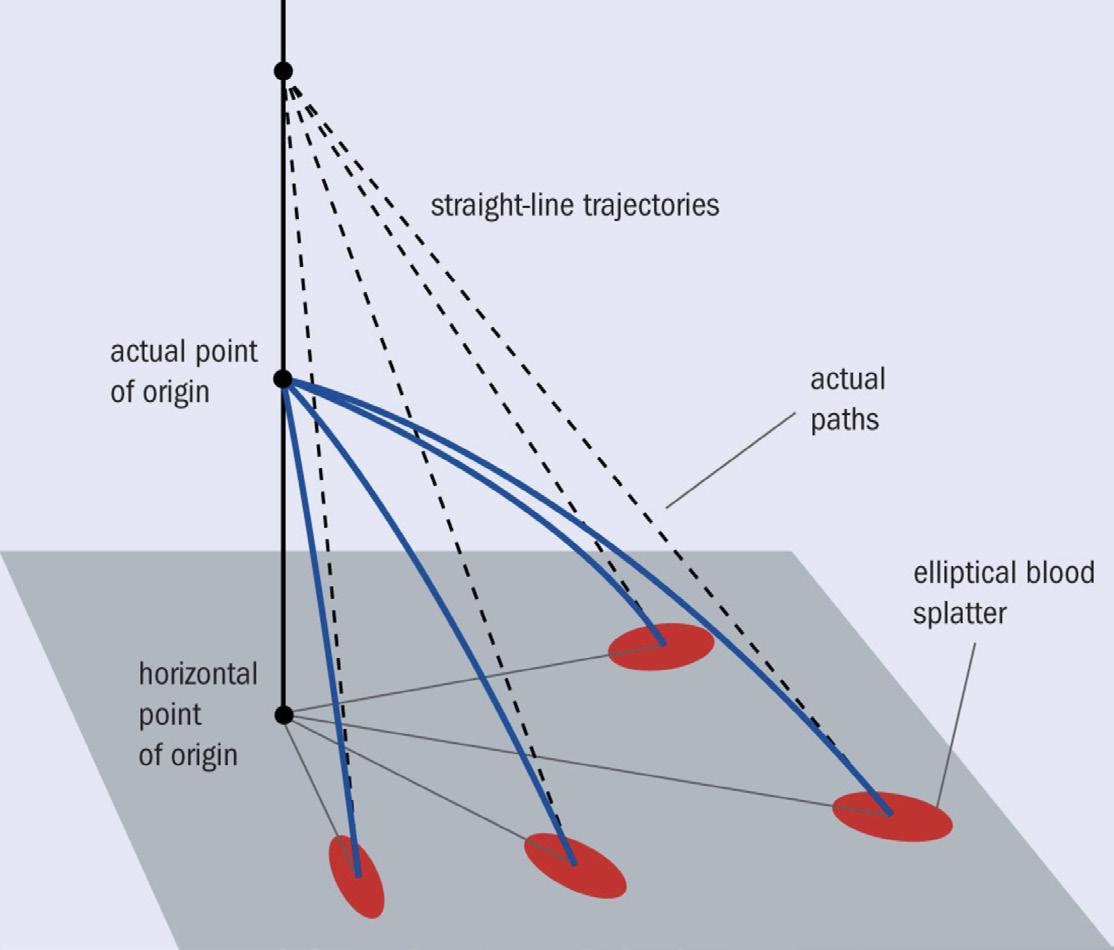
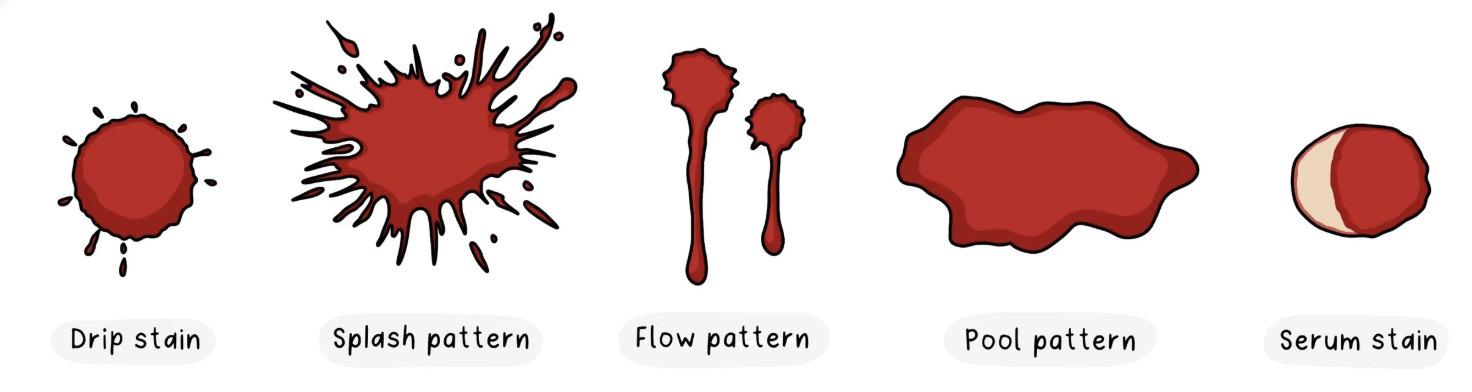
Bloodstain analysis is a key tool in interpreting crime scenes. The shape and location of the drops provide directionality (Figure 12). Blood oozes, gushes, or drips before clotting, leaving elongated ovals when falling from a narrow angle (Figure 13). The forensic analyst looks for the point of convergence (2D) and point of origin (3D). Prior impact (a gunshot or blow) will affect the velocity of the spatter. Blood may also be transferred to other objects.
Geologists already look at raindrop impressions (Figure 14), utilized as traces of ancient weather. They can provide data on wind direction and velocity. It may also be possible to identify water shed by prehistoric animals when shaking themselves after getting wet. The interpretation
3. TIME OF DEATH (TOD)
• TOD confirmed as 75.94 Ma
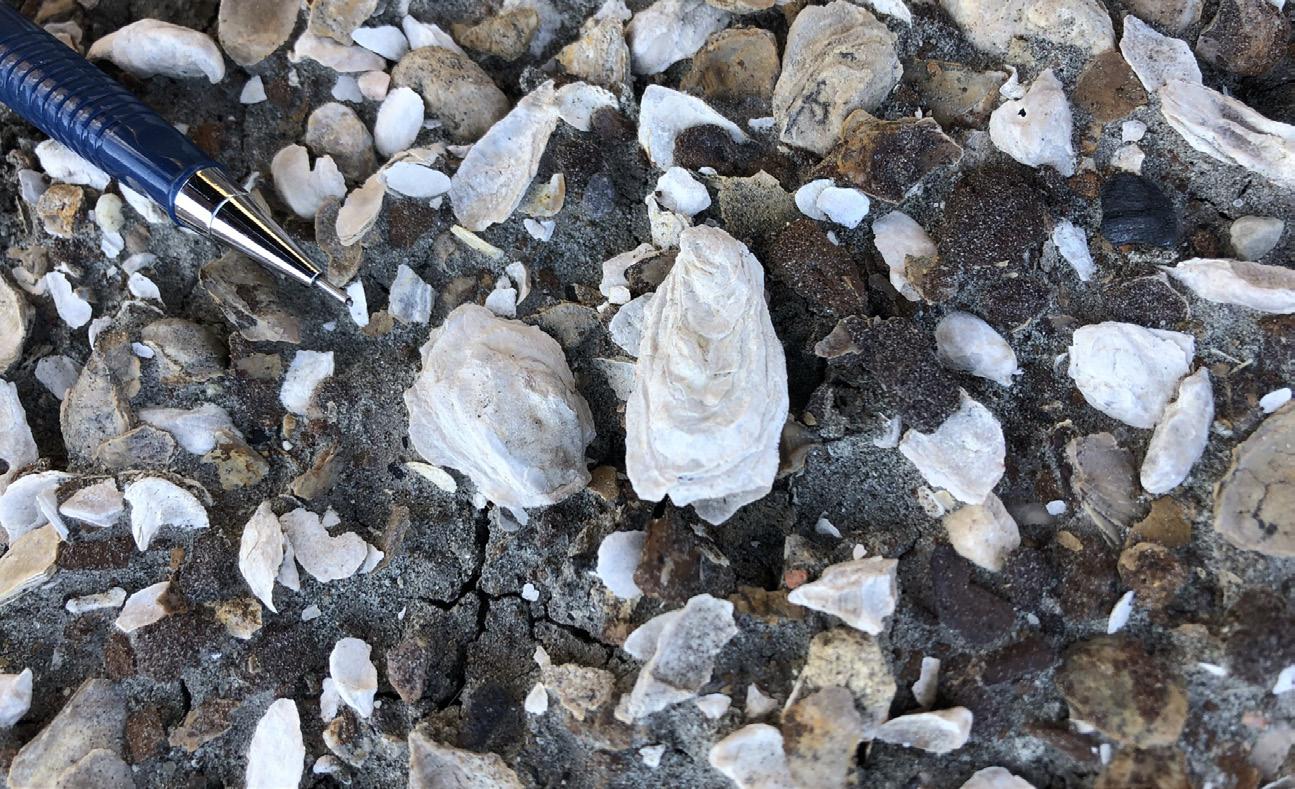
• Based on associated fossil oyster bed, indicating a marine incursion
• Timeline can be correlated to other mass mortalities
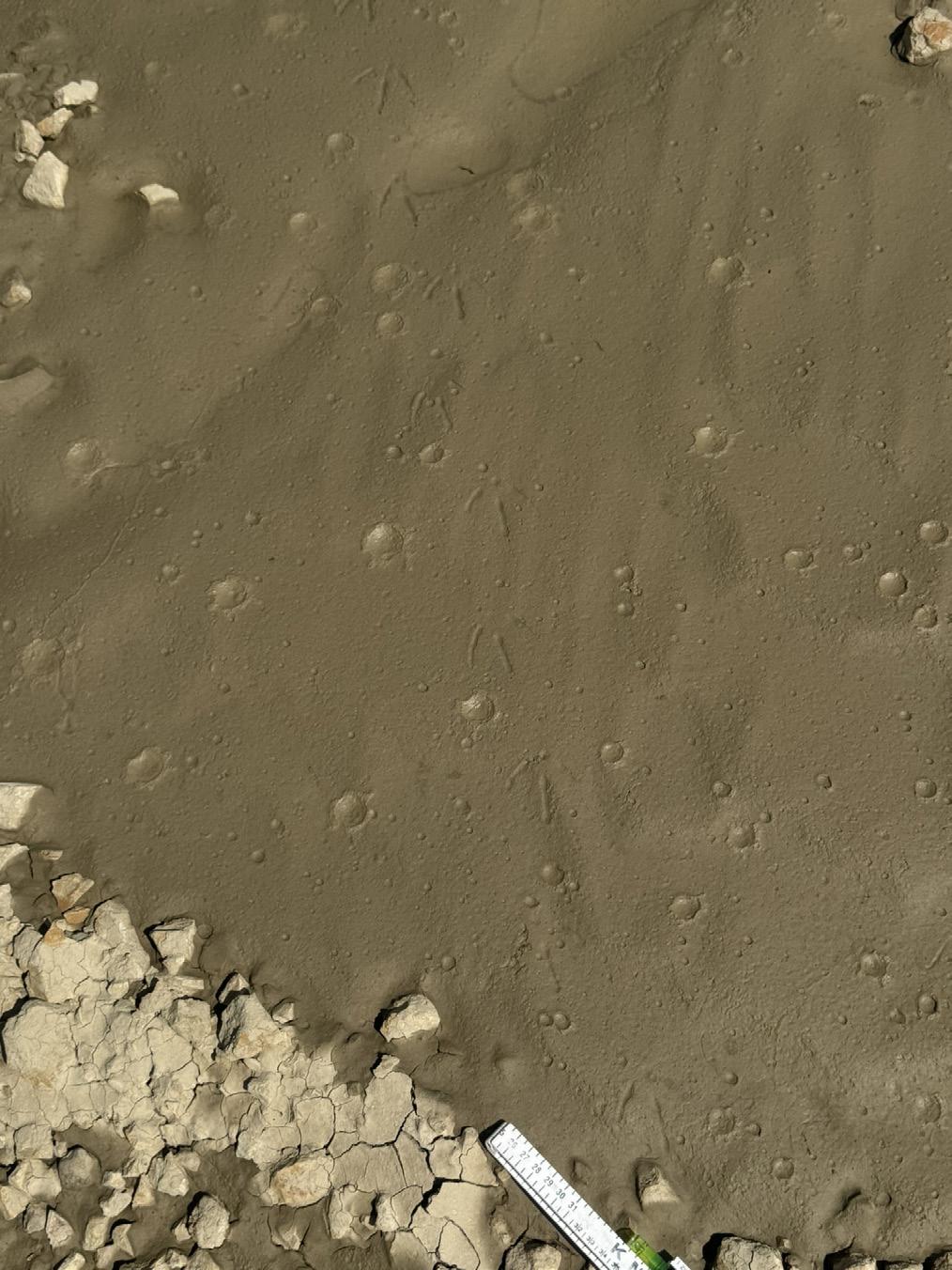
of other types of traces, such as squelch prints (left by vertebrates in mud, much like the reader when wearing wellies; Figure 15) could be enhanced using forensic techniques.
TRACE DATA
Trace data is extremely important in bringing perpetrators to justice. It can take many forms. Footprints are very useful, not only in identifying the shoe size and type, but in establishing the behaviour (and gait) of the criminal. The study of trace fossil trackways is very similar, and the depth, spacing, and size of the tracks can help to determine the size of the animal and how fast it was moving (Figure 16). Footprints may be patent, plastic, or latent (as with fingerprints).
Tire tracks can also give an idea of the speed of movement, as well as the identity of the track maker (using the tread pattern). The treads may be worn or have distinguishing marks. They can also give an idea of how heavily the vehicle was laden. The same interpretative skills can be applied to animal tracks. Tool marks left by indentations, sliding, cut marks, etc., can also be matched to tools and may be left in fabric, leather, and other materials (Figure 17).
Figure 9. Oyster bed from Princess South, Alberta
CEGA File XCSPG1125
Figure 10. Common types of fingerprints (EurekaAlert!)
4. FINGERPRINTS (SKIN IMPRESSION): VERY YOUNG DINOSAUR
• Skin impression preserved as ironstone cast
• Small features may indicate a juvenile
• These fossils may be overlooked in the field, especially if poorly preserved
Figure 13. Types of blood stain (www.Scientistwhodraws.com)
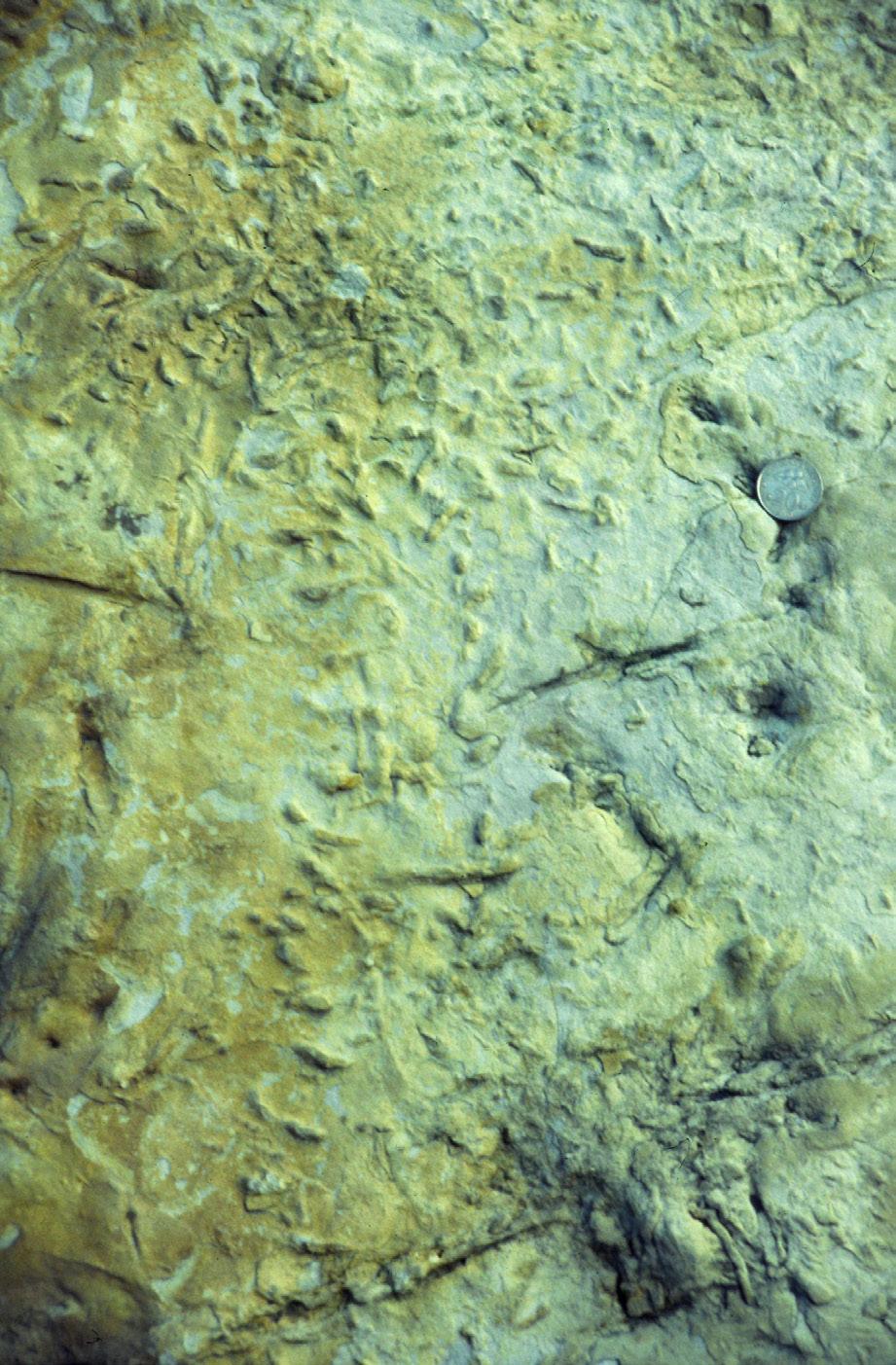
Figure 11. Dinosaur skin impression from the Campanian, Dinosaur Provincial Park, Alberta
While many of the same techniques are used in both forensic science and sedimentology, the former has better databases and search engines. It also use items like spray lacquer to preserve tracks in soft mud. Palaeontologists use modelling software to reconstruct how tracks were made; this software could easily be applied to crime scenes.
ARSON
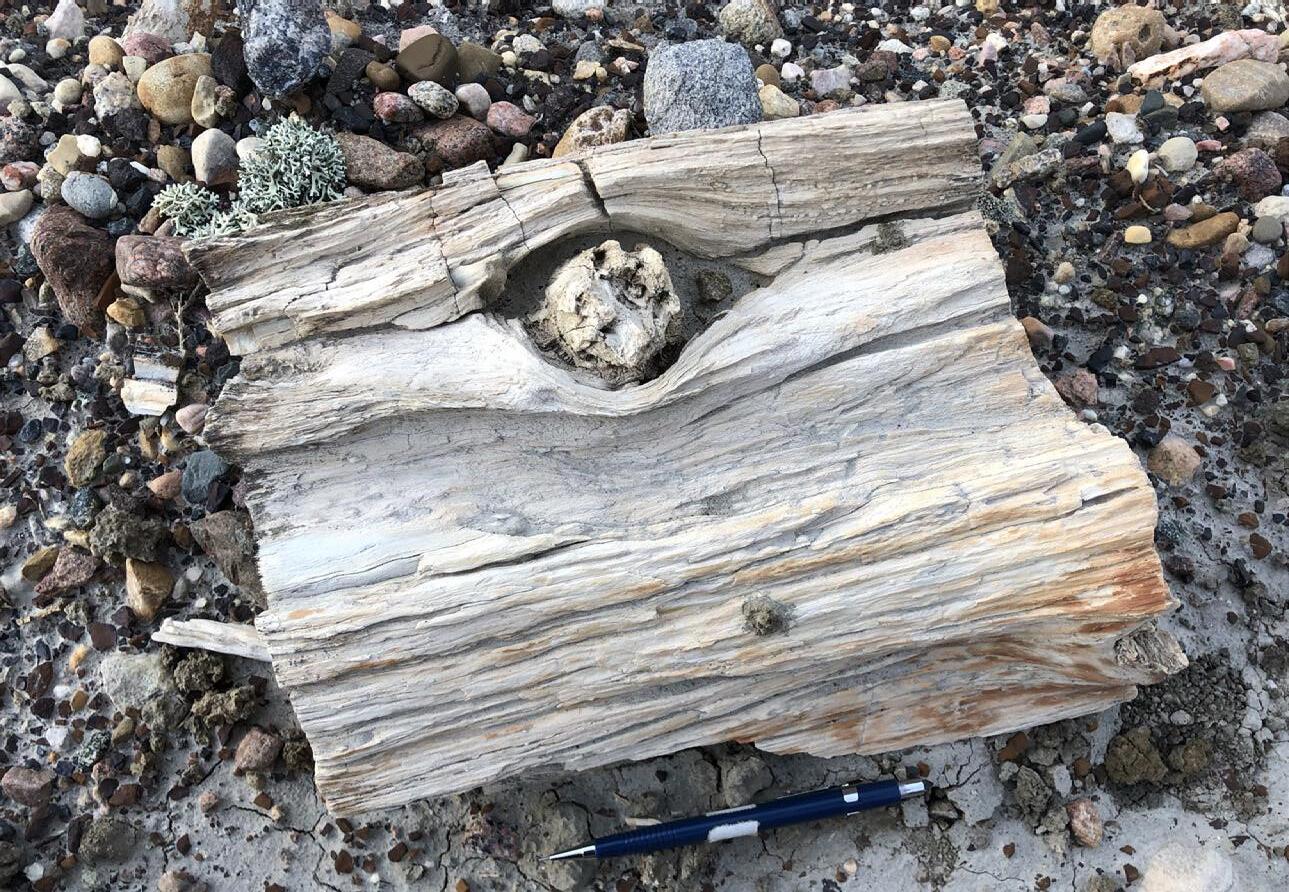
While not part of our crime scene, evidence of prehistoric forest fires is common. Modern investigations into arson look for the point of origin and the cause of the fire. A fire needs fuel, oxygen, and heat. Experts analyze wood and how structural materials have been affected. Match heads contain diatoms that can be discerned after a fire. Combustible compounds can be identified by gas chromatography or mass spectroscopy. Many techniques can be applied to ancient fires, including estimating the heat generated, determining how the fires spread, and using spectroscopy on burnt wood (Figure 18). The absence of evidence of combustion may also be useful (Figure 19).
SOLVING THE CRIME
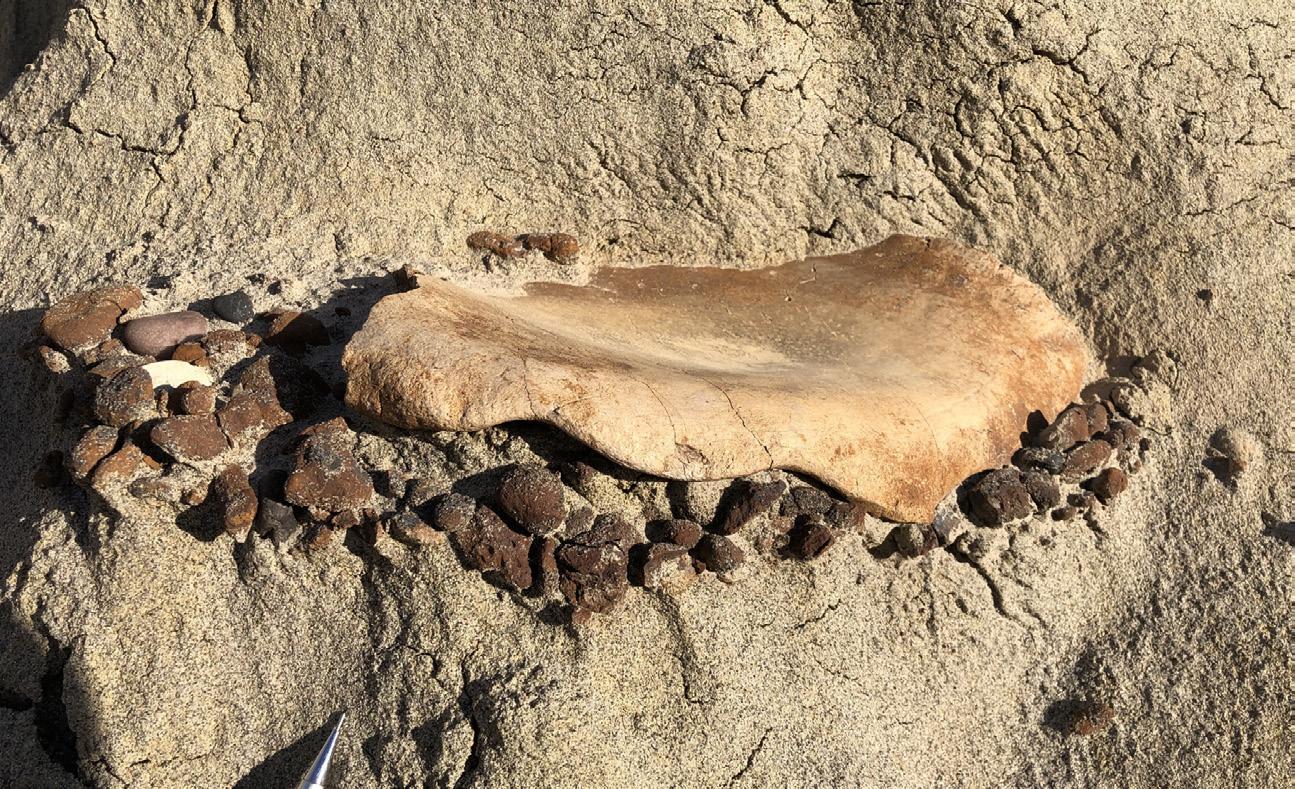
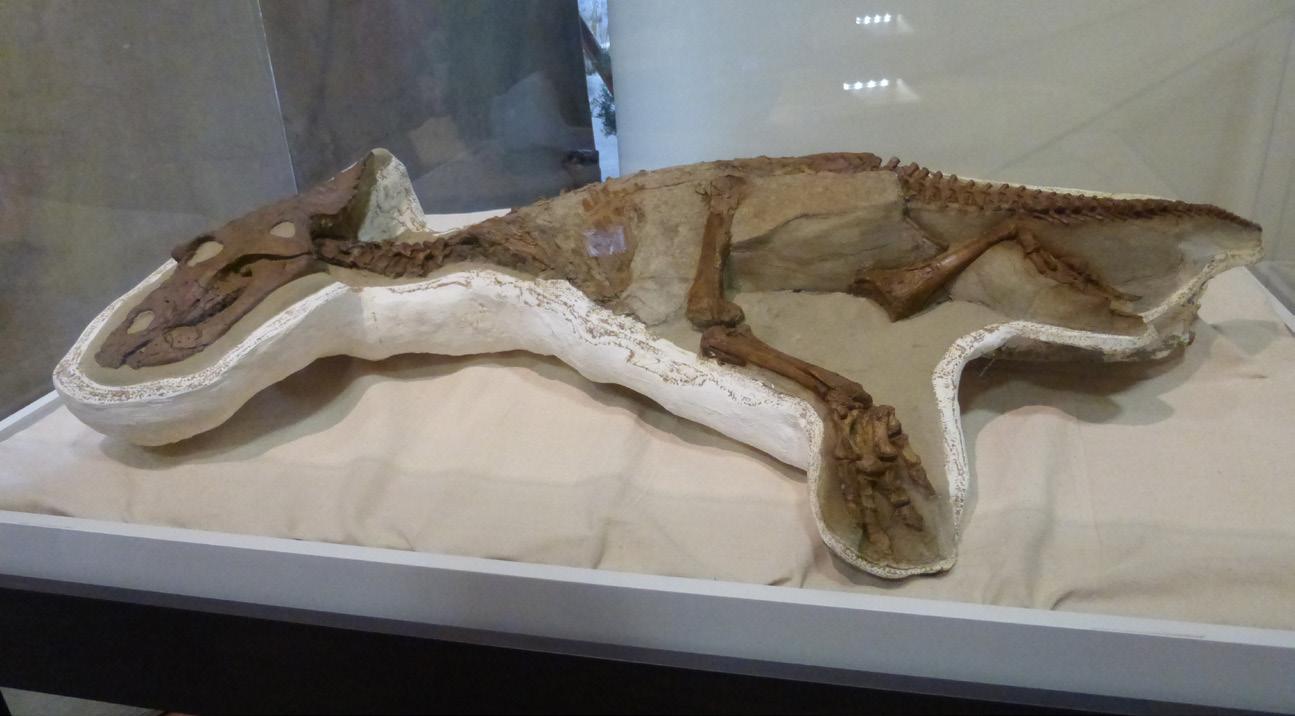
Our dinosaur victim was a baby ceratopsian, probably a Centrosaurus, less than a week old (Figure 20). It was killed, along with at least ten other dinosaurs (based on the total number of bones present on a single erosion surface), in a flood that tore through an existing channel, drowning dinosaurs of all ages and accumulating their bones on a sedimentary, mud clast-clad dune (Figure 17) in the river around 76 million years ago.
Figure 14. Modern raindrop impressions, North Calgary, Alberta
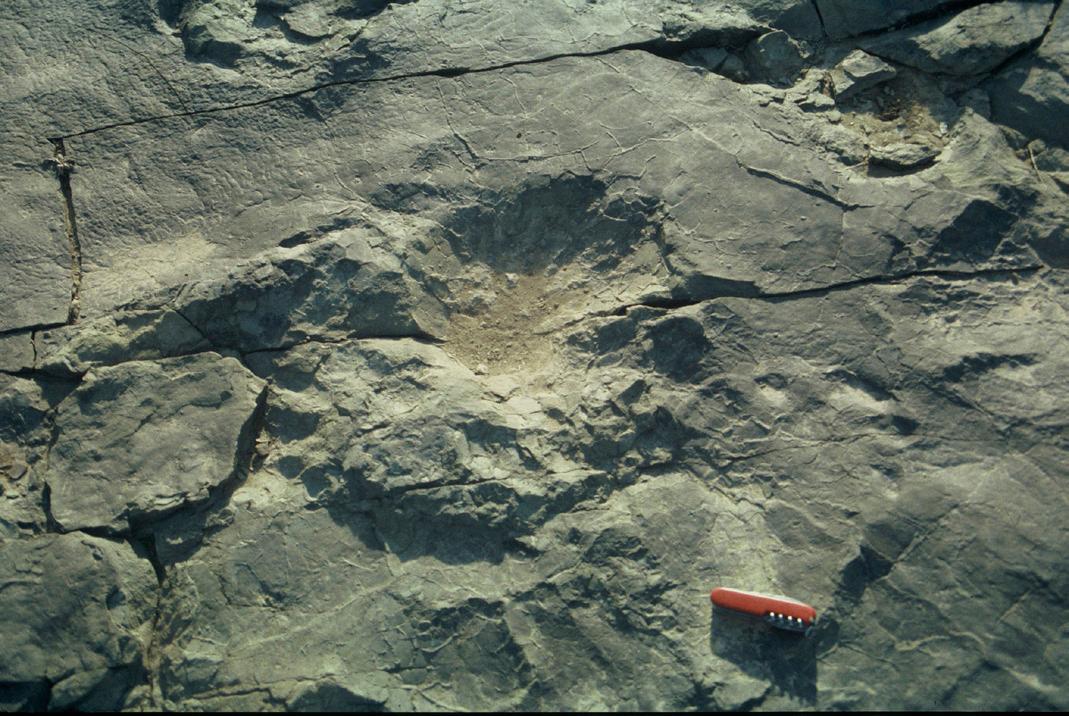
Figure 15. Squelch print left by Bradysaurus, Gansfontein Farm, South Africa
Figure 16. Miocene mangrove lobster trackways made by a lobster with a limp, Sandakan, Eastern Borneo
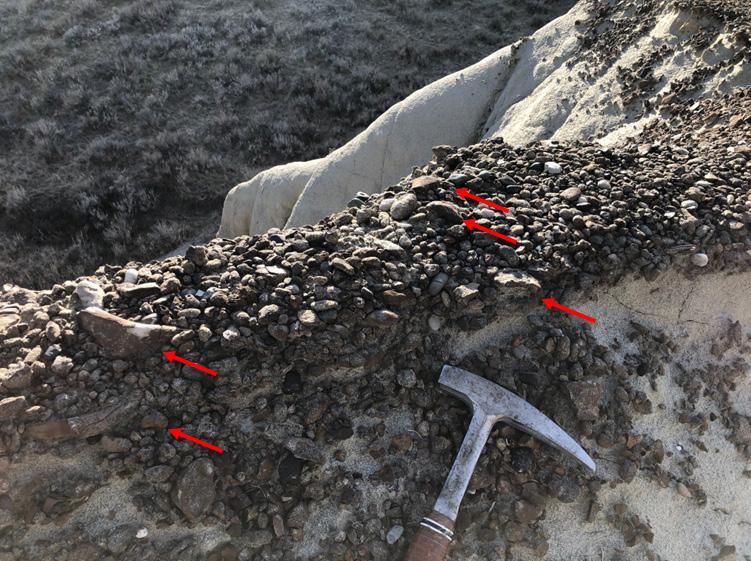
5. IMPRESSIONS: SMEARED MUDCLAST BED WITH BONES (ARROWED)
• Trace evidence at crime scene
• Mud clasts suggest fast flowing current
• Scattered bones indicate a possible death assemblage
Figure 17. Mud-clast bed with several dinosaur bones, Princess South, Alberta
Figure 18. Fossil tree with coalified rim that may represent burning, Late Cretaceous, Springbank, Alberta
SUMMARY
There is undoubtedly cross-over between forensic science and sedimentary geology and palaeontology. These sciences use data collected at the crime scene to understand what happened at the time of death or deposition. There is clearly a huge opportunity for the two branches of science to learn from one another. New forensic techniques are continuously being developed and have the potential to be applied to many sedimentary conundra. Finally, I see no reason why a sedimentology-related TV series cannot attract a similar audience to NCIS and Criminal Minds: I suggest calling it “Clastic Sedimentary Investigation” or CSI for short.
CEGA File XCSPG1125
6. FOSSIL WOOD IN GOOD SHAPE
• No evidence of arson
• Suggests that food was plentiful
CEGA File XCSPG1125
VICTIM: JUVENILE CENTROSAURUS
COD: DROWNING. SKELETON DISSOCIATED AFTER DEATH
REFERENCES
Holder, E.R., L.O. Robinson, and J.H. Laub. 2003. The Fingerprint Sourcebook. US Department of Justice, www.nij.gov
Iancu, L., E.N. Junkins, G. Necula-Petrareanu, and C. Purcarea. 2018. Characterizing forensically important insect and microbial community colonization patterns in buried remains. Sci. Rep., 8 (2018), p. 15513.
Lyle, D.P. 2019. Forensics for Dummies. 2nd Edition. Learning Made Easy, Wiley. 382 pp.
Purkinje, J.E. 1823. Commentary on the Physiological Examination of the Organs of Vision and the Cutaneous System. Unpublished thesis.
Figure 19. Fossil wood, possibly from Metasequoia (dawn redwood), Campanian, Princess South, Alberta
Figure 20. Case Closed.
2026 CEGA REGIONAL GRADUATE STUDENT SCHOLARSHIP
Four awards, in the amount of $2500 each, will be awarded across Canada with three MSc awards defined by regions and a PhD award not defined by region. The three MSc regions are defined as follows: Atlantic and Quebec universities | Ontario universities | Western universities
If there are a lack of applicants from one or more regions, the distribution of the awards may be adjusted by the committee.
PURPOSE
To provide financial support for geology, earth science, and geological engineering graduate students (MSc or PhD candidates) who are pursuing a thesis-based degree with a dissertation in the field of earth science having application to the Canadian energy industry.
ELIGIBILITY
Candidates for this award must be
• in the first year of their MSc or PhD degree program in geology, earth science, or geological engineering, enrolled full-time at a Canadian university; and
• a student member of CEGA at the time of application (membership for students is free and sign up can be done online at www.cegageos.ca).
Eligible topics of study include sedimentology, structural geology, stratigraphic studies involving clastic or carbonate rocks, paleontology, geochemistry, hydrogeology, petrophysics, and reservoir geology, as well as emerging energy topics, such as geothermal, carbon sequestration, hydrogen, helium, and critical minerals.
Recipients are eligible to receive this award only once per degree.
APPLICATION DETAILS AND CRITERIA
Candidates must fill in and submit the online application form and a 400–600-word outline of their proposed thesis topic that should include
• an overview of the thesis, including the goal(s), methodology of investigation, anticipated outcomes, and results;
• the importance and/or potential significance of the research to energy or sedimentary geology (how will your thesis affect the development of Canadian or global energy resources and/or improve the interpretation of sedimentary rocks?);
• a description of the new or innovative concepts or techniques developed in your thesis; and
• a description of the practical aspects of your thesis (e.g., might your work be useful for other future researchers or petroleum geologists?).
Candidates must be in good academic standing and include a letter from their supervising professor indicating their support and/or involvement in the thesis.
The application form can be found online at www.cegageos.ca/ community/awards under the Regional Graduate Scholarships tab. The thesis outline and supervisor letter can be attached to the online application or submitted separately by e-mail to studentawardthesis@ cegageos.ca.
ENTRY DEADLINE: Friday, February 6th, 2026
DEADLINE DATE
Candidates must submit their completed online application to the CEGA Regional Graduate Student Scholarship Committee by February 6, 2026. The committee will review the submissions and contact the awardees by April 17, 2026. Award winners will have their names published in the June/July issue of the CEGA Reservoir.
CONTACT:
For additional information, please contact Andre Chow (studentawardthesis@cegageos.ca) CEGA Regional Graduate Student Scholarship Chair
IN MEMORIAM
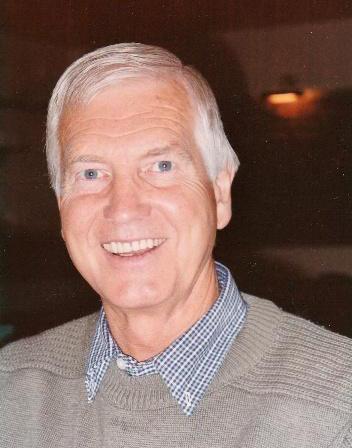
Norman Wardlaw passed away peacefully in Calgary, Alberta, on Thursday, October 9, 2025, at the age of 89 years.
Norman was born in St. Augustine, Trinidad and Tobago, on November 22, 1935. He spent his early years playing outdoors in the garden chasing farm animals in Trinidad.
He also learned the handy use of a golf club to keep deadly jungle snakes out of the family bungalow.
At the age of five he boarded a steamship to travel back to Manchester, UK, across the North Atlantic with his family. While attending grade school Norman was captivated with all scientific subjects and had a deep passion for playing rugby and hiking in the English countryside.
Norman had a great curiosity for earth science and a love of exploring the outdoors. Geology was a perfect fit! He graduated from the University of Manchester (B.Sc. 1957) and the University of Glasgow (Ph.D. Geology 1961). After immigrating to Canada, he began his professional teaching career at the University of Saskatchewan.
Norman’s early research at the University of Saskatchewan focussed on depositional models, diagenesis, and chemistry of Middle Devonian evaporates, particularly their bromide content, which can help to determine the original environment of salt formation. This research had important implications to potash mining. He also researched unusual Cretaceous marine evaporates in basins in Brazil.
At the University of Calgary, Norman’s research focussed on the critical factors controlling multi-phase fluid flow in conventional petroleum reservoirs. To do this he built a reservoir laboratory in the Geology and Geophysics Department where he could study
Norman Claude Wardlaw
these highly complex interactions at pore-scale using mercury capillary pressure equipment, pore casts, glass plate micro models, and image analysis (the latter from pore to outcrop scales). His fundamental research has proven critical to predicting recovery efficiency for resource and reserve calculations of oil and gas in conventional reservoir rocks, and crucial to integrating reservoir geology and engineering in primary, secondary, and tertiary oil production.
Underlying the significance of his reservoir research, Norman won major awards from petroleum technical societies, including the Canadian Society of Petroleum Geologists (CSPG) Link Award (1975) for best luncheon talk on pore systems in carbonates as revealed by pore casts and capillary pressure data. This was followed by winning the CSPG Medal of Merit Award (1979) for the best petroleumrelated paper published in 1978, entitled “Estimation of recovery efficiency by visual observations of pore systems in reservoir rocks” (N.C. Wardlaw and J.P. Cassan). He was a distinguished lecturer for the American Association of Petroleum Geologists in 1983. He received a Lifetime Technical Achievement Award from the Society of Core Analysts (1997). In academia, Norm received the Award of Excellence for Outstanding Research from the Faculty of Science, University of Calgary (1991), and nationally, the prestigious honour of being elected a Fellow of the Royal Society of Canada (1998).
Besides being an outstanding teacher and researcher, Norm volunteered in different capacities as chairman, director, panelist, and advisor on high-profile geoscience and related technology resource committees for various government agencies, associations, and universities across Canada and in the USA.
While at the University of Calgary, Norm’s expertise in reservoir geology led to consulting
jobs at many petroleum companies (in Calgary and internationally) for oil and gas development in conventional reservoirs. Norm retired from the University of Calgary in 1993 as Professor Emeritus and promptly incorporated Wardlaw Petroleum Consulting. This led to a new career of extensive consulting and collaboration opportunities throughout the world. In 1997 he became an affiliate with Epic Consulting Services Ltd., which provided even more new reservoir-related challenges to solve. In addition, Norm continued teaching by delivering very popular short courses on reservoir geology to professional societies, including the CSPG, and in-house to oil and gas exploration companies in Calgary and globally.
Norman met his future wife Carole (née Shirkey) while teaching at the University of Saskatchewan. They were married in New York City in 1964. Together they had two sons, David and Richard, and raised their family in both Saskatoon and later in Calgary.
Norman was both adventurous and artistic. He loved nature, animals, and the great outdoors. His favourite activities included cross-country skiing, hiking, mountaineering, and kayaking. All these activities he shared with his family, always leading to many adventures, stories, and fond memories. He also loved sketching and painting watercolours of landscapes and animals at the zoo. Norman took up Djembe drumming late in life and participated in many drumming sessions, including a stadium performance!
Norman is survived by his sons, David (Patti) and Richard (Jennifer); four wonderful grandchildren, Olivia, Ayla, Sophia, and Clara; sister-in-law Jackie Wardlaw, and many nieces and nephews. He was predeceased by his loving wife of sixty years, Carole, and his brother, Alastair.
Alberta Palaeontological Society 29th Annual Symposium
SATURDAY, MARCH 14, 2025
Saturday - Sunday | 9 AM to 5:00 PM | MountRoyal University JENKINS THEATRE, MAIN BUILDING LEVEL 1 (LOWER LEVEL), MOUNT ROYAL UNIVERSITY
9:00 – 9:15 am Opening Statements Cory Gross, APS President Symposium Introduction Mona Trick, APS Symposium Chair
9:15 – 10:15 am Tracing Faunal and Environmental Changes Through Time: The Palaeontological Power of Fish Microvertebrate Fossils
Dr. Julien Divay, Palaeoichthyologist, Hon. Research Associate, Royal Tyrrell Museum of Palaeontology
10:15 – 10:30 am COFFEE BREAK
10:30 – 11:30 am Fishes in a Suit of Armour - The Story of Placoderms, One of Our Oldest Jawed Relatives
Dr. Melina Jobbins, Palaeobiologist, University of Manitoba
11:30 – 12:00 pm The Impact of Heavy Industry on Significant Discoveries of Fossil Marine Reptiles in Alberta
Darren H. Tanke, Senior Technician II, Royal Tyrrell Museum of Palaeontology, Drumheller, Alberta
12:00 – 1:00 pm LUNCH BREAK
1:00 – 1:30 pm The Driftwood Canyon Fossil Beds, Smithers, Northern British Columbia - An Amazing Well-Preserved and Highly Diverse Eocene-age Terrestrial Paleoecology
Tako Koning, P. Geol, Senior Geologist - Consultant
1:30 – 2:00 pm Left Behind: Previously Unrecognized Trace Fossils with Stories to Tell Dr. Jon Noad, Stantec Consulting; University of Adelaide
2:00 – 3:00 pm POSTERS & DISPLAYS BREAKOUT SESSION AND COFFEE BREAK Poster presenters are requested to be with their posters
3:00 – 3:30 pm Alberta’s Paleocene Insects: New Insights from a Fossil Legacy
Kano Sasaguchi, Department of Biological Sciences, University of Alberta
3:30 – 4:30 pm Three-Horned Faceoff: A Tale of Canadian Triceratops and Why They Matter
Dr. Emily Bamforth, Curator, Philip J. Currie Dinosaur Museum
4:30 – 4:45 pm Hope Johnson Award Presentation Mona Trick, APS Symposium Chair
4:45 pm
Closing remarks for Paleo 2026 Mona Trick, APS Symposium Chair
From the Desk of the AER
Your First Stop for Alberta Geoscience Data and Information
Alex MacNeil, Principal Geoscientist
In January I will celebrate my five-year anniversary as Principal Geoscientist at the Alberta Energy Regulator (AER), which includes the Alberta Geological Survey (AGS). As I reflect on my time at the AGS and AER, one of the things that has continually impressed me is the vast amount of valuable data and information that is readily available from the AGS website, www.ags.aer.ca. This article is a quick tour of the website, highlighting some items that catch my attention; perhaps this will entice you to give the site a visit—you may find an extra piece of data or insight that provides a competitive advantage or, simply, piques your interest as a geoscientist.
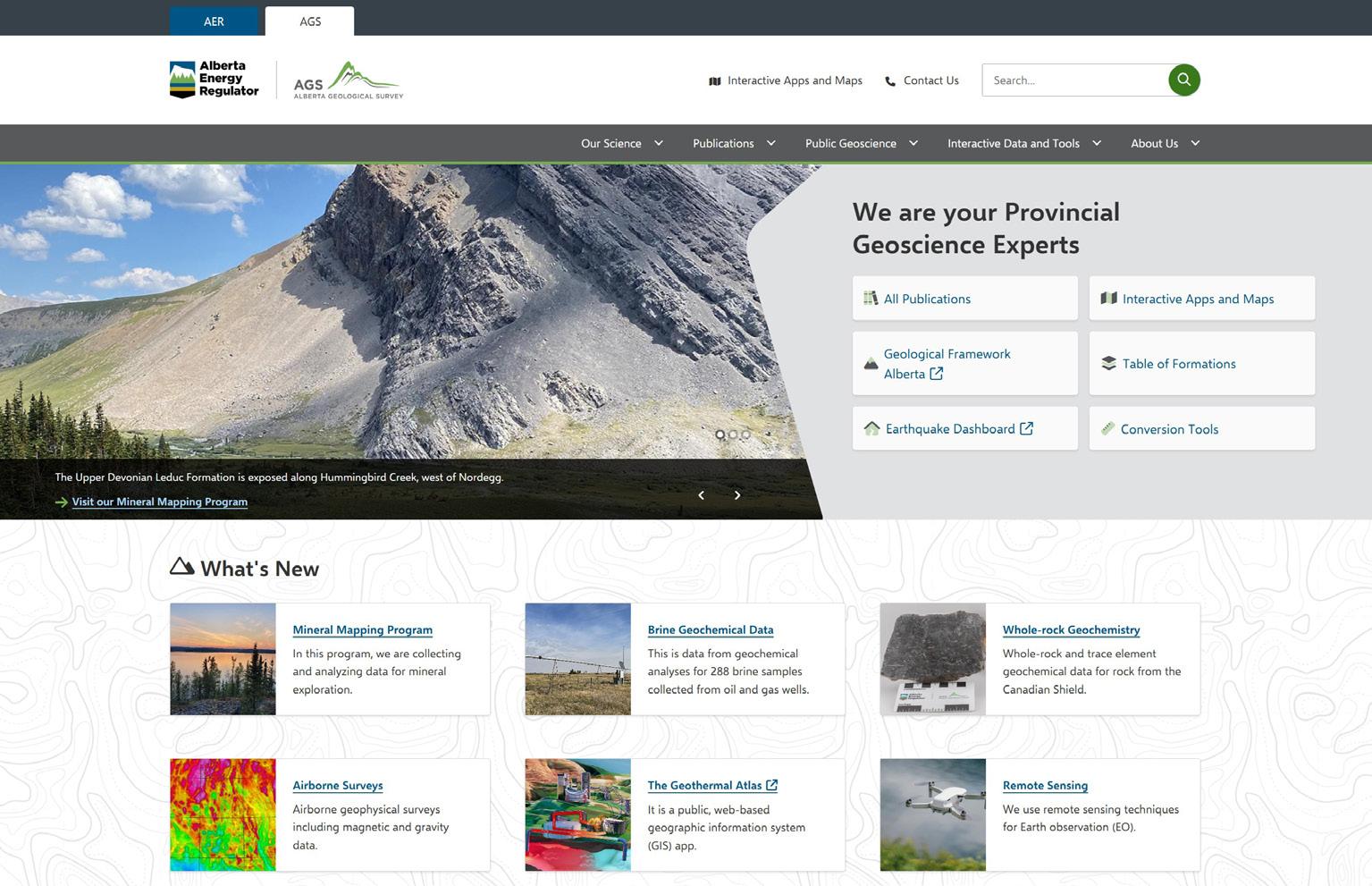
Apart from a beautiful image of the Upper Devonian Fairholme margin exposed at Hummingbird Creek, west of Nordegg, the Home Page (Fig. 1) has two key parts: links to publications and other useful information, such as conversion tables, and “What’s New.” This Friday morning, with my fresh coffee, it’s the “What’s New” section that catches my attention. The six call-outs highlight the
Mineral Mapping Program and its focus on mineral exploration; airborne surveys, including magnetic and gravity data (did you know that the AGS recently collected some of the highest-quality airborne surveys in North America, covering most of the province?); brine geochemical data (288 analyses from oil and gas wells); the Geothermal Atlas (the other day I used the high-quality temperature
grids for select subsurface intervals. If you’re working in exploration and basin dynamics, some of the data in the Atlas may be of interest); whole-rock geochemistry (analyses from the Canadian Shield in the northeastern part of the province); and remote sensing and Earth observation techniques.
1
The home page of the Alberta Geological Survey.
FIGURE
Provincial Geoscience Experts
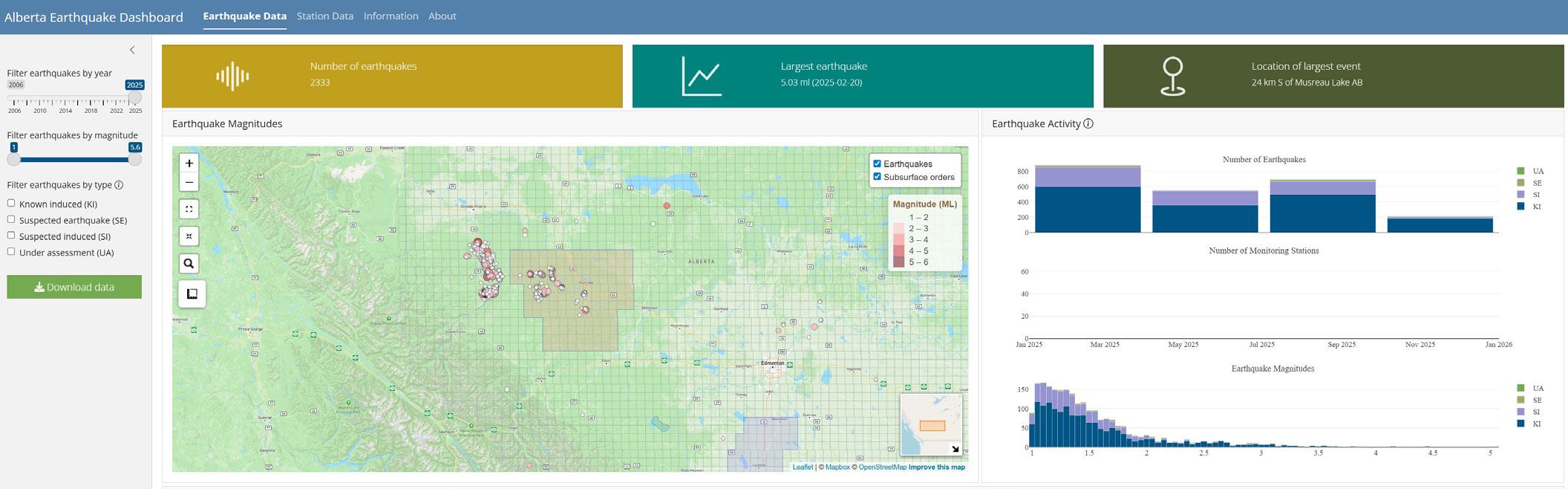
On the right-hand side of the Home Page is a series of links to a range of topics. The Earthquake Dashboard (Fig. 2) is my next click and a comprehensive collection of windows allows me a range of filtering options. I can see that year-to-date, the province has detected 2,333 earthquakes, most of which were induced by oil and gas operations, but almost all of them were below the threshold for feeling the earthquakes at surface. The dashboard reflects the dedicated efforts of the AGS and AER to build and enhance its technical expertise in this discipline, helping to ensure public safety and responsible energy development.
My next click is on Interactive Apps and Maps, and apart from some minerals and geothermal apps, the one that catches my attention for further viewing is the Core Data Interactive Map. it houses high-resolution core photographs and hyperspectral imagery
for cores from oil and gas wells from across Alberta (the current version is two-years old and is due for an update). We have an initiative underway to periodically update this app with core descriptions prepared by AGS staff. Anyone will be able to use the app to see if a core description exists for an area of interest or a specific set of cores they may be studying, providing you with a head start before heading to the Core Research Centre. Our standard at the AGS is to prepare core descriptions using WellCad software, and the scope of each description is a function of the project for which the description was collected. Some core logs will be more detailed than others—but, they are free and something to work with before collecting your own observations from the core.
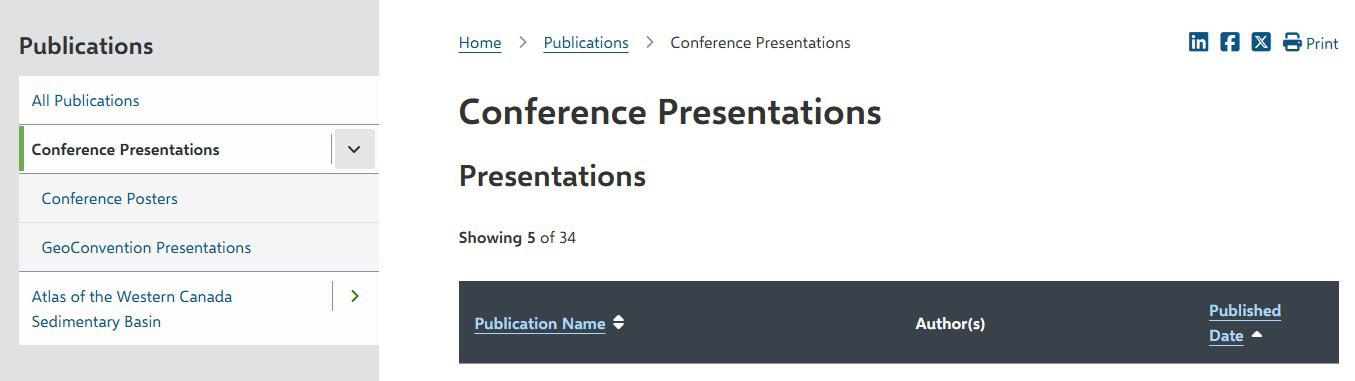
A hidden treasure is the link under Publications to Conference Presentations (Fig. 3). With dozens of geoscientists at the AGS, we present our findings at numerous conferences every year, often providing
the latest data, information, and insights from various projects before the material is formally published. Several presentations from this and previous years are listed and can be viewed. Some of the recent additions include presentations on groundwater, induced seismicity, and the Basal Cambrian Sandstone. Finally, I visit the Atlas of the Western Canada Sedimentary Basin link, where all the chapters from that significant publication are available for free download. There are also links to the well control data, maps, and shapefiles. Significant effort is underway by a number of volunteers to produce an updated version of the Atlas for the 100-year anniversary of CEGA in 2027. Stay tuned!
I hope this whirlwind tour of the website has revealed some hidden gems available for free at your fingertips. I encourage you to visit soon—it’s an impressive collection of data and information from a trusted source.
FIGURE 2
FIGURE 3
A screen capture of the interactive Earthquake Dashboard.
A
REGISTER TODAY
Registration includes:
✓ Two days of technical talks
✓ Coffee breaks
✓ Lunch each day
✓ Two networking receptions
REGISTRATION INFORMATION
Member rate: $525.00
Non-Member rate: $725.00
CEGA Student rate: $200 00
Tickets available until Jan 30 at 4pm.
This year's program features a dynamic lineup of 20 technical presentations highlighting the latest advancements in pore space utilization, maximizing unconventional reservoirs, new technologies, and optimizing heavy oil reservoirs.
What ’s Inside These Sessions?
These sessions bring together leading experts showcasing realworld case studies, emerging technologies, and practical workflows designed to support energy security, sustainability, and effective subsurface development.
The single-track format ensures you won’t miss a single presentation
What will you learn?
Attendees will benefit from four curated sessions covering advanced reservoir characterization, unconventional resource development, porespace utilization and CCUS, and new approaches for optimizing heavy-oil recovery.
Calling All Geoscientists: Join the Second Annual CEGA Geospiel!
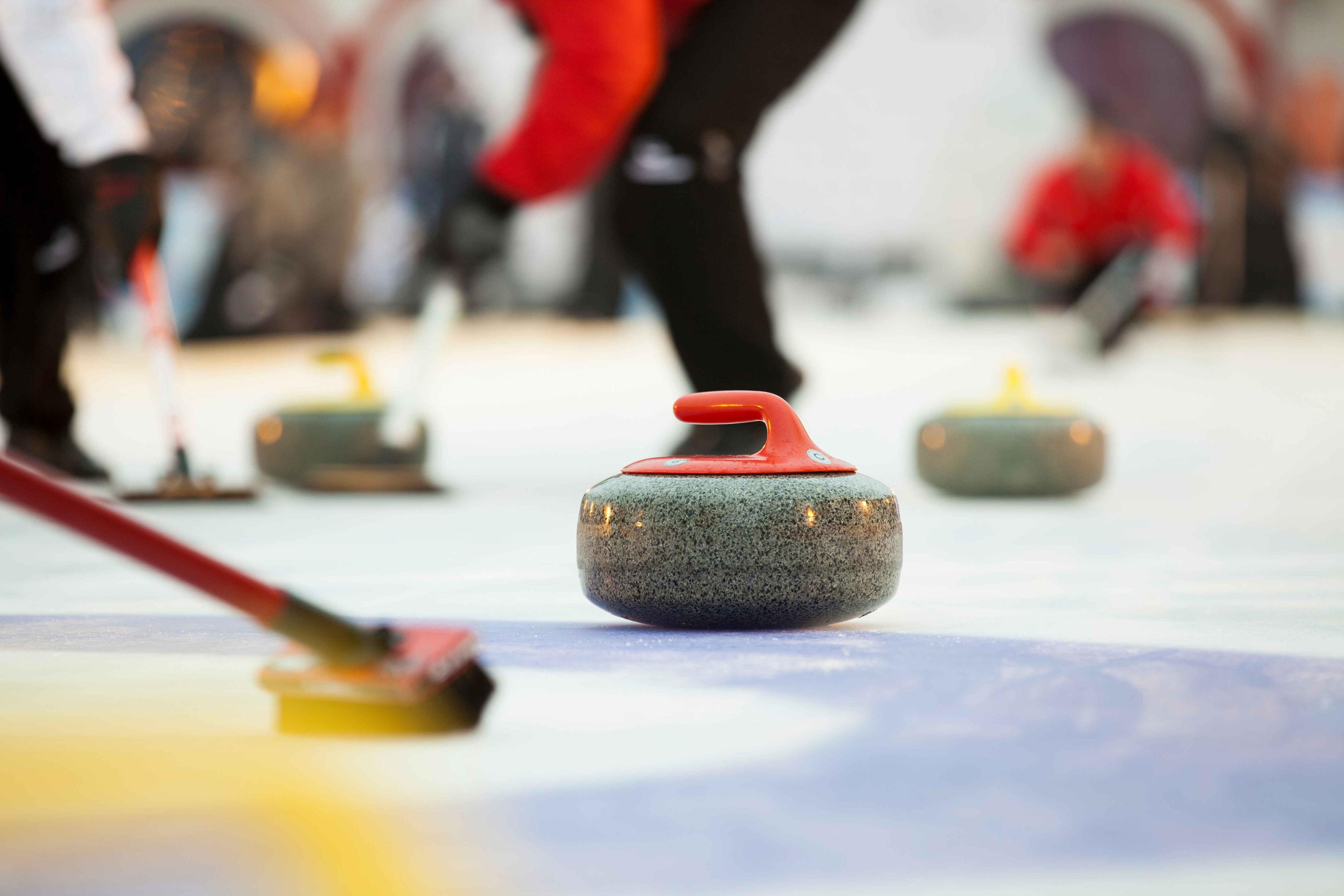
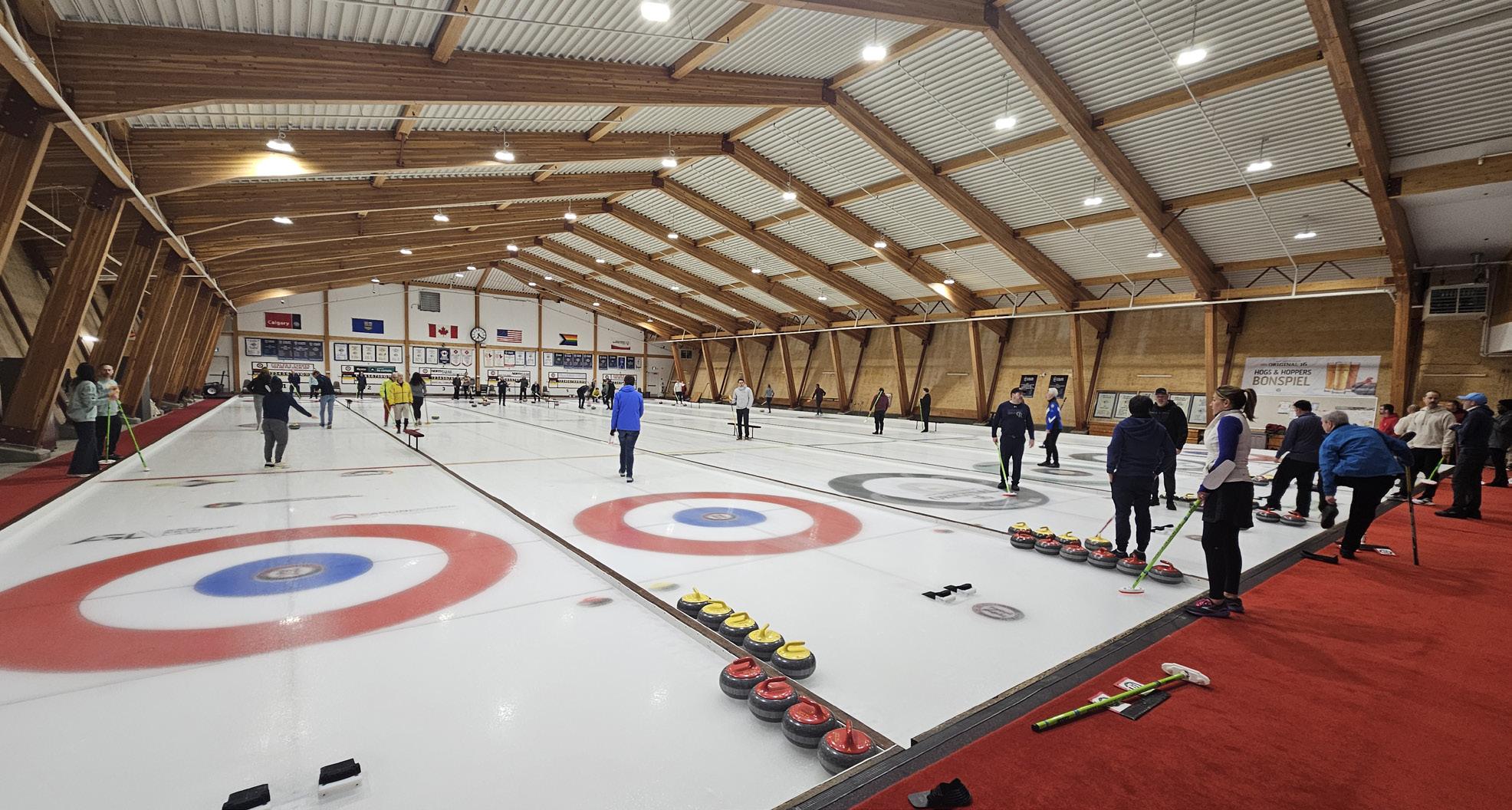
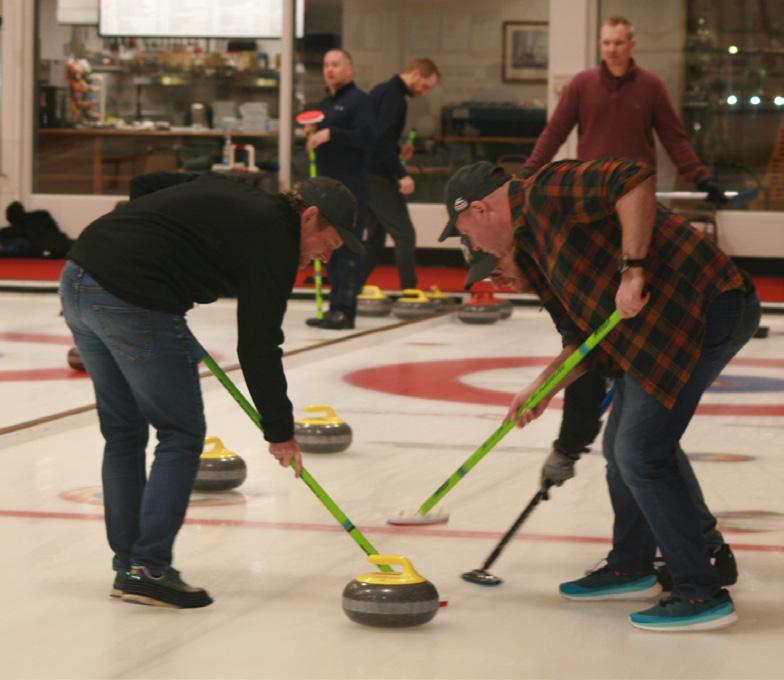
After last year’s outstanding success, get ready to slide into action with the second CEGA Geospiel (the ultimate curling bonspiel) happening at North Hill Community Curling Club from April 16–18, 2026! Due to popular demand, we have expanded the 2026 tournament to fit even more teams. Whether you’re a beginner, intermediate, or advanced curler, the Geospiel is designed for everyone.
Teams are guaranteed to play a minimum of three games, providing plenty of opportunities to sweep your way to victory, or at least have a blast trying! Register as a team of four, or sign up solo and be paired with others to form a complete team. No matter where you’re at in your curling journey, you’ll find a group that suits your experience and guarantees plenty of fun with CEGA colleagues and sponsors.
Curling and geology share a common foundation: both require precision, strategy, and an understanding of the forces at play. Whether you’re delivering stones, sweeping with speed, or calculating your next move, you’ll feel right at home on the ice.
Not only will you enjoy exciting games, but every registration also includes access to cool prizes and an unforgettable banquet. It’s a great way to celebrate your victories, network with fellow curlers, and enjoy some delicious food after a great day on the ice. The Geospiel isn’t just about curling—it’s about bringing the geoscience community together for a fun and rewarding three days!
So, whether you’re a first-timer or a seasoned pro, don’t miss out on this incredible weekend of curling. Space is limited, so register early to secure your spot in this unforgettable event.
Thank you to all the sponsors who made last year’s event so memorable. If you are interested in sponsoring the tournament this year, please contact membership@ cegageos.ca
IAN & TRACY THEUNISSEN, CO-CHAIRS, 2026 CEGA GEOSPIEL
2025 Field Trip Season
In
Review
ANDRE KOLADICH
The 2025 CEGA field trip season was another great one, with five trips held from May to September spanning a variety of geographic areas, industry play types, and geological points of interest. Source-rock plays and carbonates were examined in two technical field seminars, ancient stromatolites and the K/Pg boundary were observed in two excursions as part of the Go Take a Hike Together series, and local Tyndall stone was the focus of a Go Take a Walk Together outing.
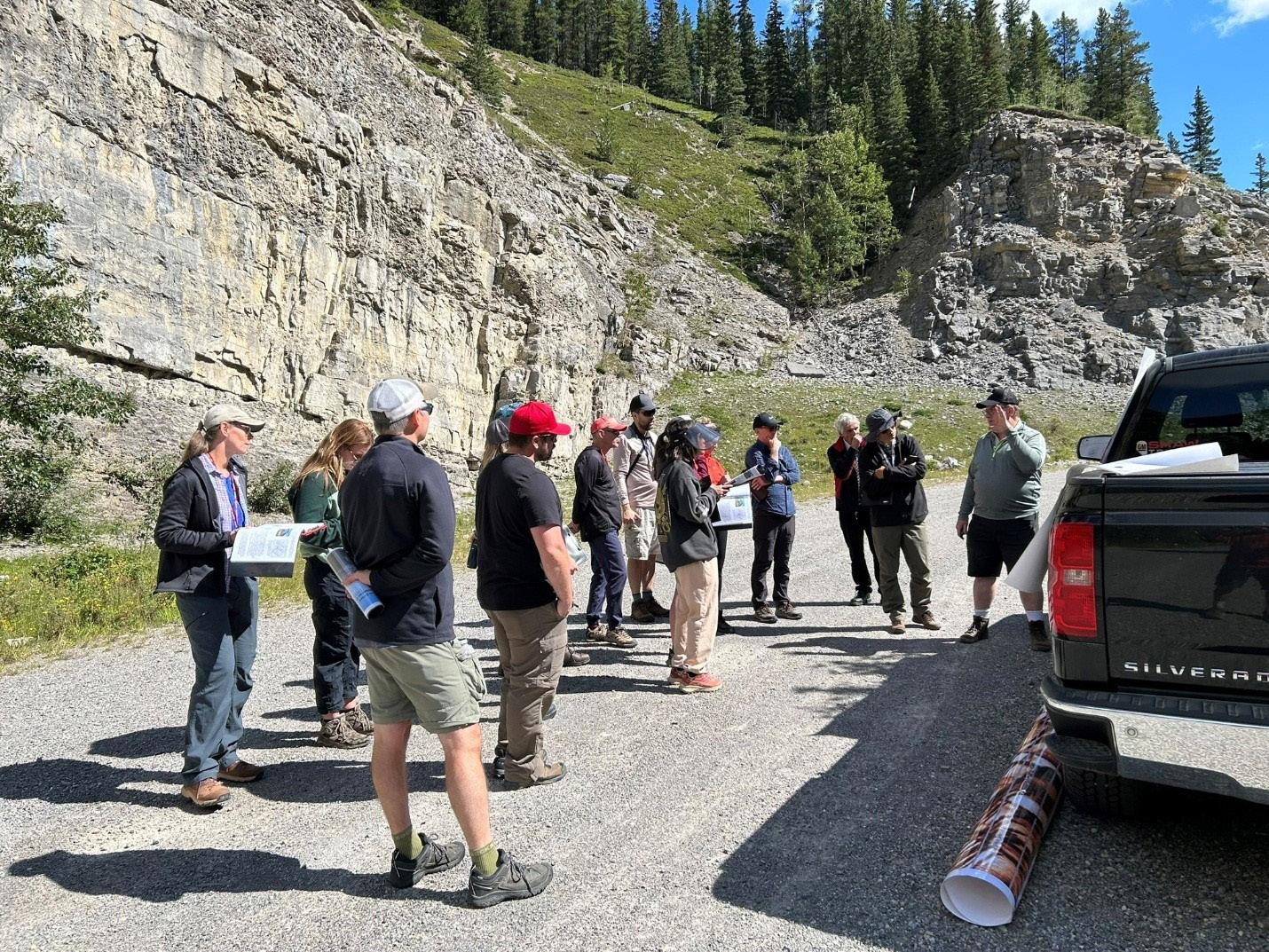
The season kicked off on May 15 with Per Pedersen, Simon Poirier, and Patti Fraino leading the Montney in the Mountains: Field-Based Observation on Fractures, Fabric and Reservoir Heterogeneity technical field seminar. This field trip explored key outcrops and cores in the Canmore area with a focus on natural fractures and their relationship to sedimentary facies, setting the stage for a discussion of Montney hydraulic fracture geometries, effective fracture heights, and optimum landing zones of horizontal wells.
In July, Tako Koning led the Tyndall stone walking tour to view Ordovician fossils in inner-city Calgary. Participants gained insight into the sedimentary history, paleoecology, and organisms that existed in shallow tropical seas over 450 million years ago, all preserved within Tyndall stone gathered from the Garson Quarry near the town of Tyndall located 30 km northeast of Winnipeg, Manitoba. Fossil highlights included gastropods, large sponges, straight-shelled nautiloids, tabulate coral heads, solitary rugose corals, and extensive mottling caused by organisms burrowing into sediment to create trace fossils, such as Thalassinoides.
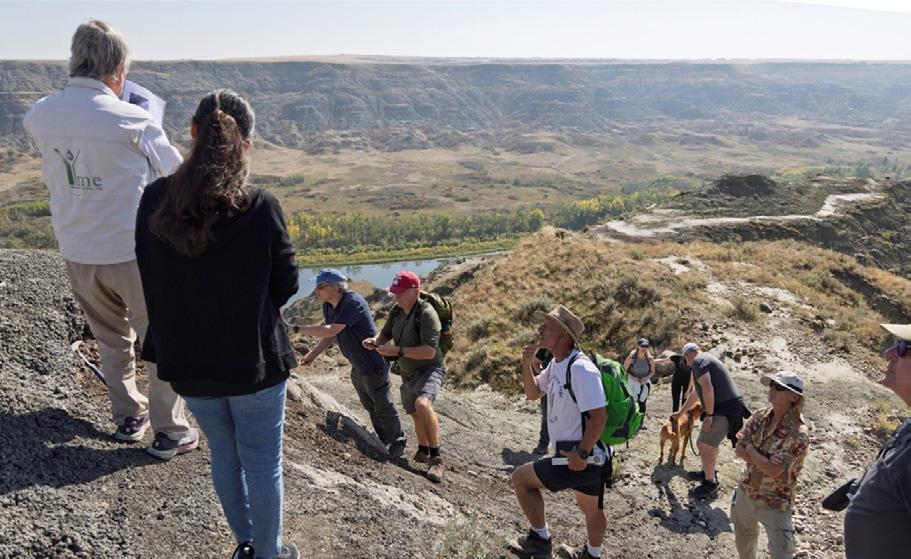
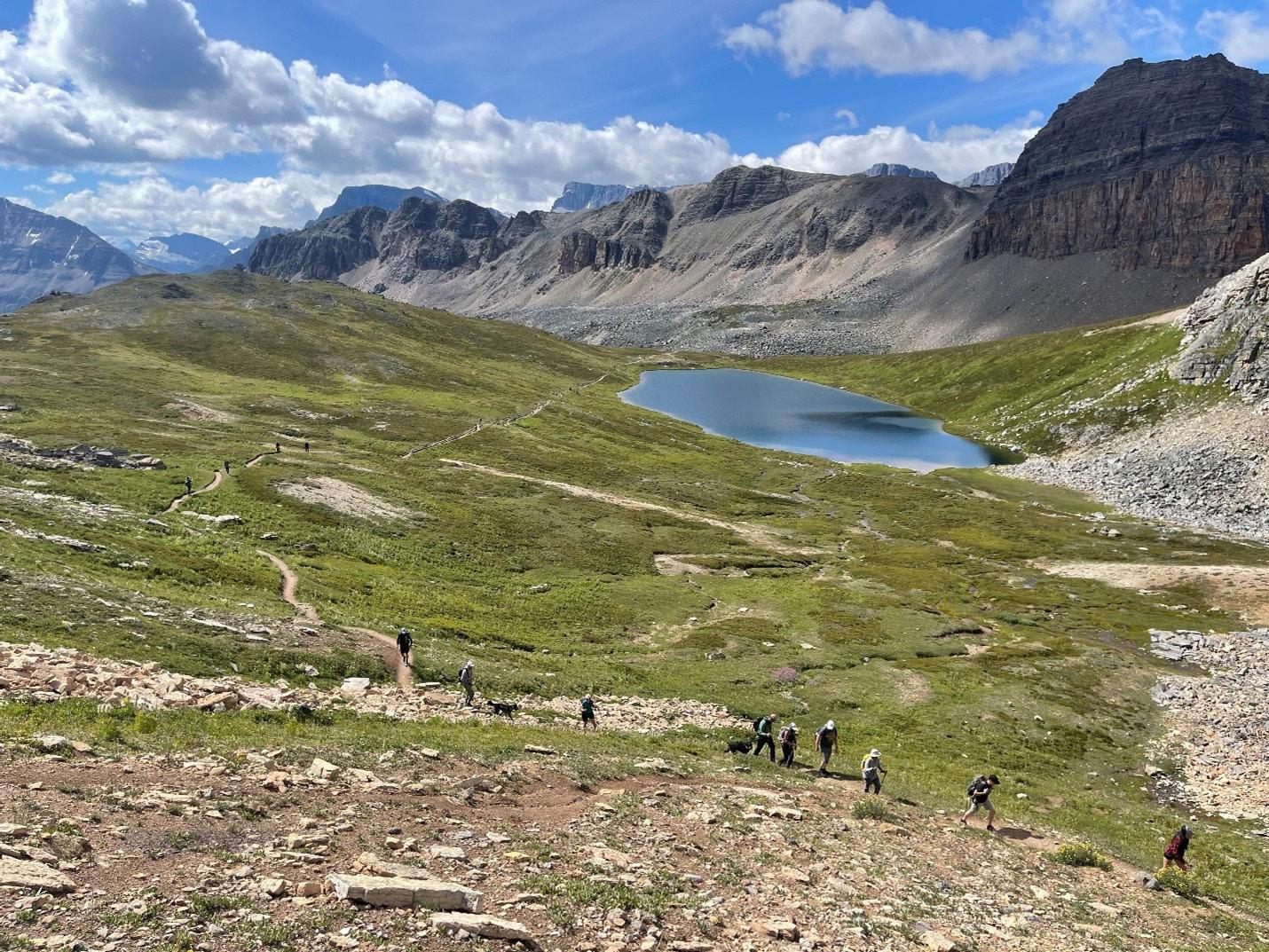
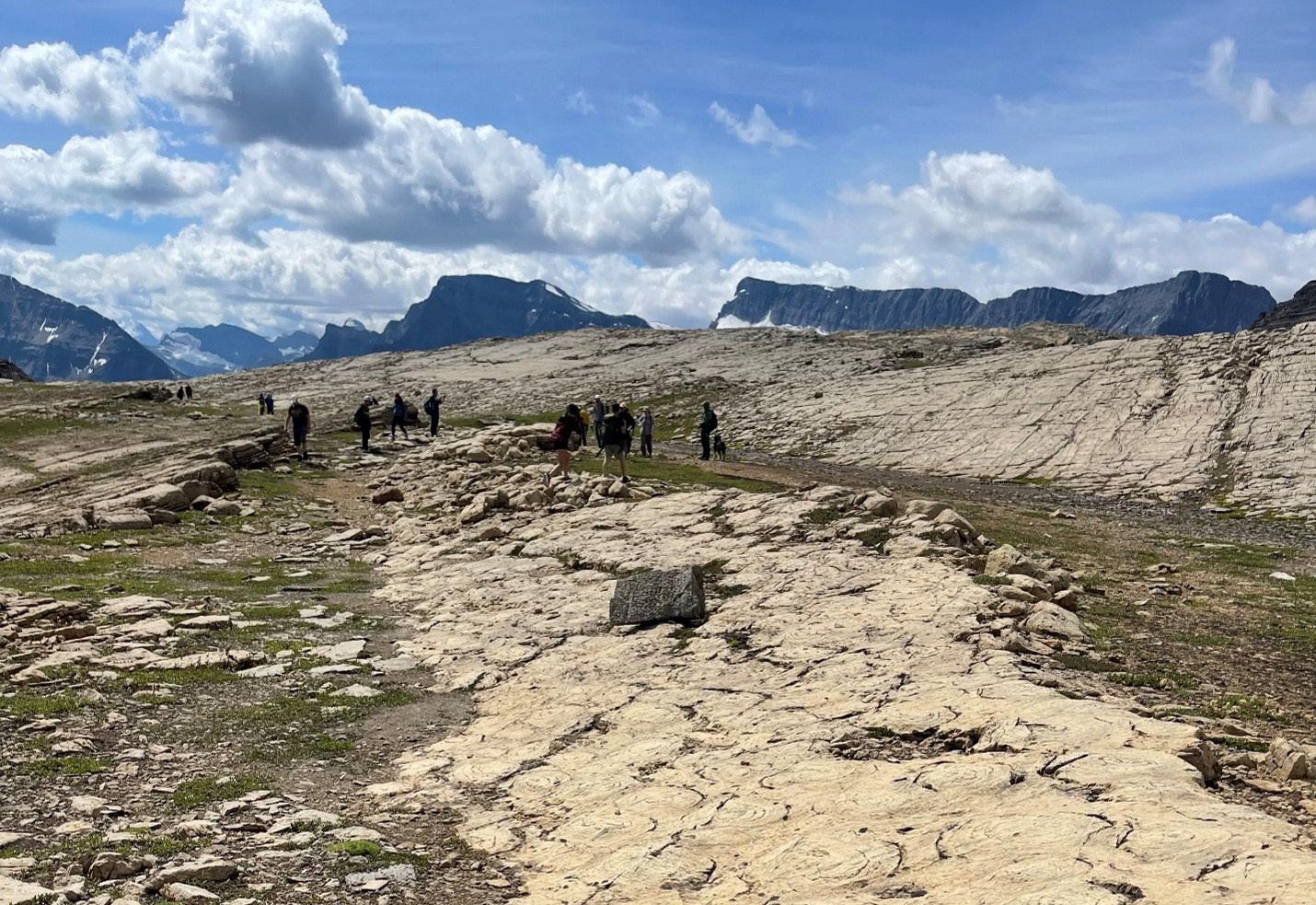
August brought the return of warm weather to the Rocky Mountains, and Astrid Arts and Andre Koladich took advantage of conditions to lead a group of 25 enthusiastic participants to the Helen Lake stromatolite beds in Banff National Park. Although Helen Lake is
frequently visited by numerous hikers every season, many people are unaware of the spectacular 3D stromatolite outcrops that can be reached by climbing up the unnamed ridge beyond the lake. The domal stromatolites are visible in cross-section and plan view over an area that stretches close to a kilometre. Hikers were rewarded with an outstanding day of sunshine with much enjoyment of the beautiful alpine scenery and geological wonders.
Also in August, Murray Gilhooly and Byron Veilleux led a oneday Mississippian Canyon Creek field trip in Kananaskis Country, examining carbonate outcrops from the Mount Head, Turner Valley, Shunda, Pekisko, and Banff formations. Lithofacies were placed within a sequence stratigraphic context and compared with equivalent subsurface units within the nearby Moose Mountain gas field. Key diagenetic events, local structural geology, and the distribution of fractures were related to reservoir quality and correlated with a productive cored gas well in the Moose Mountain field.
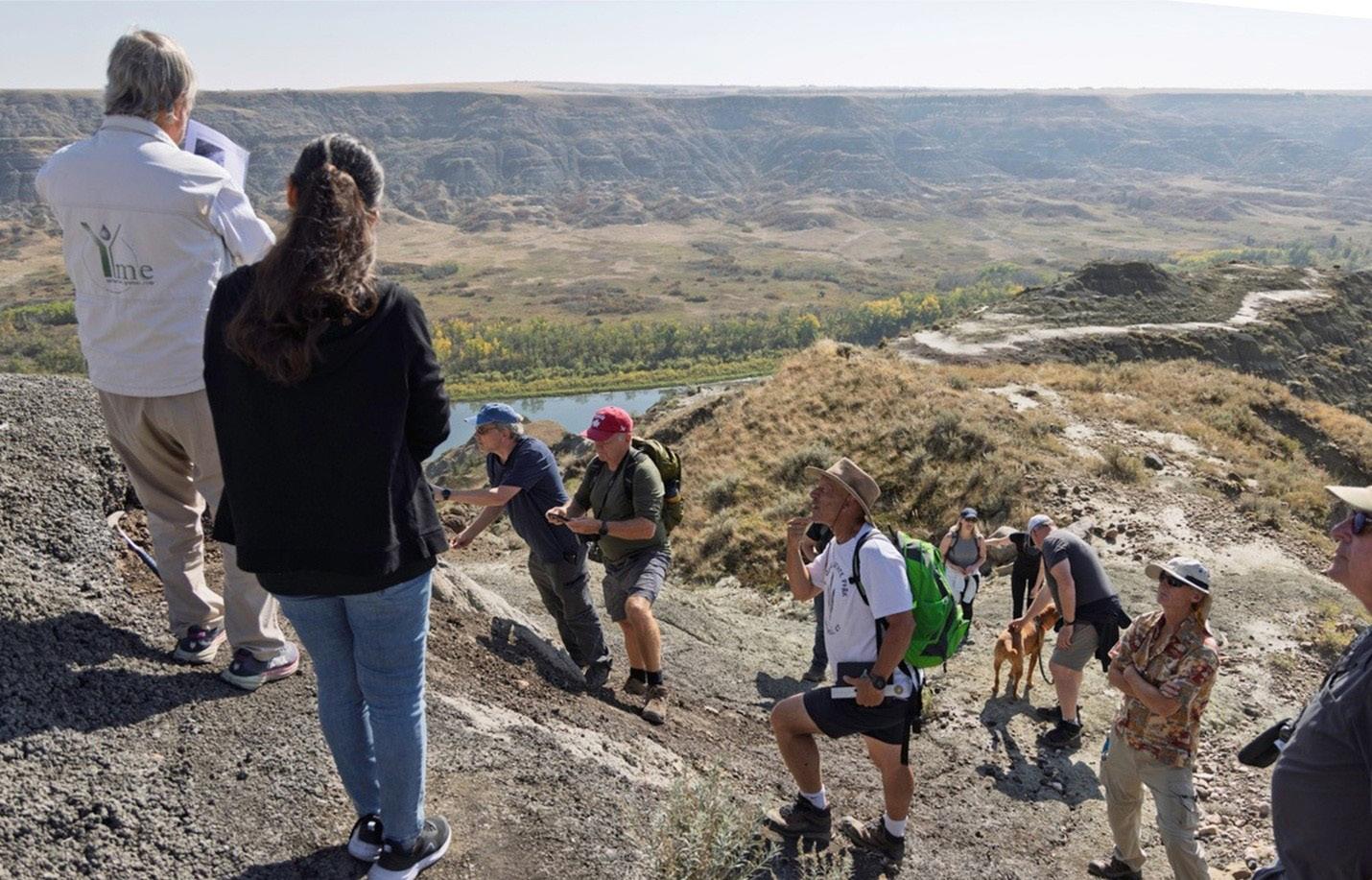
Tako Koning was out again in September, leading a trip to view the K/ Pg mass extinction boundary on Knudsen’s Farm near Huxley, Alberta. The outcrop is on the north side of the Red Deer River valley, south of Dry Island Buffalo Jump Provincial Park. The exposed contact reveals evidence of fallout from the impact of an asteroid, 12 km in diameter, at the Yucatan Peninsula in Mexico, resulting in a 200-km-wide crater named Chicxulub. This asteroid strike has been dated to 66.5 Mya and caused a mass extinction, the effects of which were seen worldwide,
Go Take a Hike Together: Helen Lake. Photos by Tanis Clemenson.
including in central Alberta. The importance of the contact was appreciated by all who saw and placed their finger on it!
The 2025 field trip season had excellent participant attendance. Special thanks to all the trip leaders, especially the volunteer leaders hosting free hikes for the CEGA community. Trip leaders will continue to hone future itineraries to accommodate participant interests. The Field Trip Committee is currently working on the lineup for the 2026 season. We are open to suggestions from our members and are always looking for more volunteers. Please click the link if you would like to submit a suggestion for our Go Take a Hike Together series.
SUBMIT HERE
The CEGA Field Trip program provides opportunities for members to gain field experience, including GeoTours to international locations, the free series Go Take a Hike Together, and guided trips to geological points of interest in Alberta, British Columbia, and Saskatchewan. There were plenty of opportunities to get outside this season, connect with your geo-community, and see some great outcrops. We hope to see you on our 2026 field trips!
Happy trails!
Go Take a Hike Together: Helen Lake. Photos by Tanis Clemenson.
Canyon Creek Mississippian field trip.
Photo by Murray Gilhooly.
Go Take a Hike Together: K/Pg mass extinction boundary at Knudsen’s Farm.
Photo by John Cody.
2026 UPCOMING EVENTS INFORMATION
JANUARY
January 27
Tuesday, 11:30 AM -1:00 PM In-Person Technical Luncheon
Facies Sedimentology, Heterogeneity and Reservoir Quality of a New Montney Turbidite Play, Simonette, Alberta
Speakers: Thomas F. Moslow, Ph.D., P.Geol., Moslow Geoscience Consulting Ltd.
Coupled Reservoir-Geomechanical Study of CO2 Injection and Storage in the Suboptimal Depleted Oil Reservoir of the Hugin Formation, Volve Field, North Sea
Speaker: Ahmad Brahmanta Aulia
Location: New CEGA Classroom, 500 4 Ave SW, Calgary, AB
Location: New CEGA Classroom, 500 4 Ave SW, Calgary, AB
MARCH
March 14 In-Person
Saturday - Sunday 9 AM to 5:00 PM
Paleo 2026 Symposium
Location: Mount Royal University 4825 Mt Royal Gate SW, Calgary, AB
March 19
Thursday, 11:30 AM - 1:00 PM In-Person
Technical Luncheon
Deciphering the influence of inherited basin topography on Early Cretaceous sediment routing in the Western CA Foreland Basin: insights from stratigraphic data & zircon geochronology