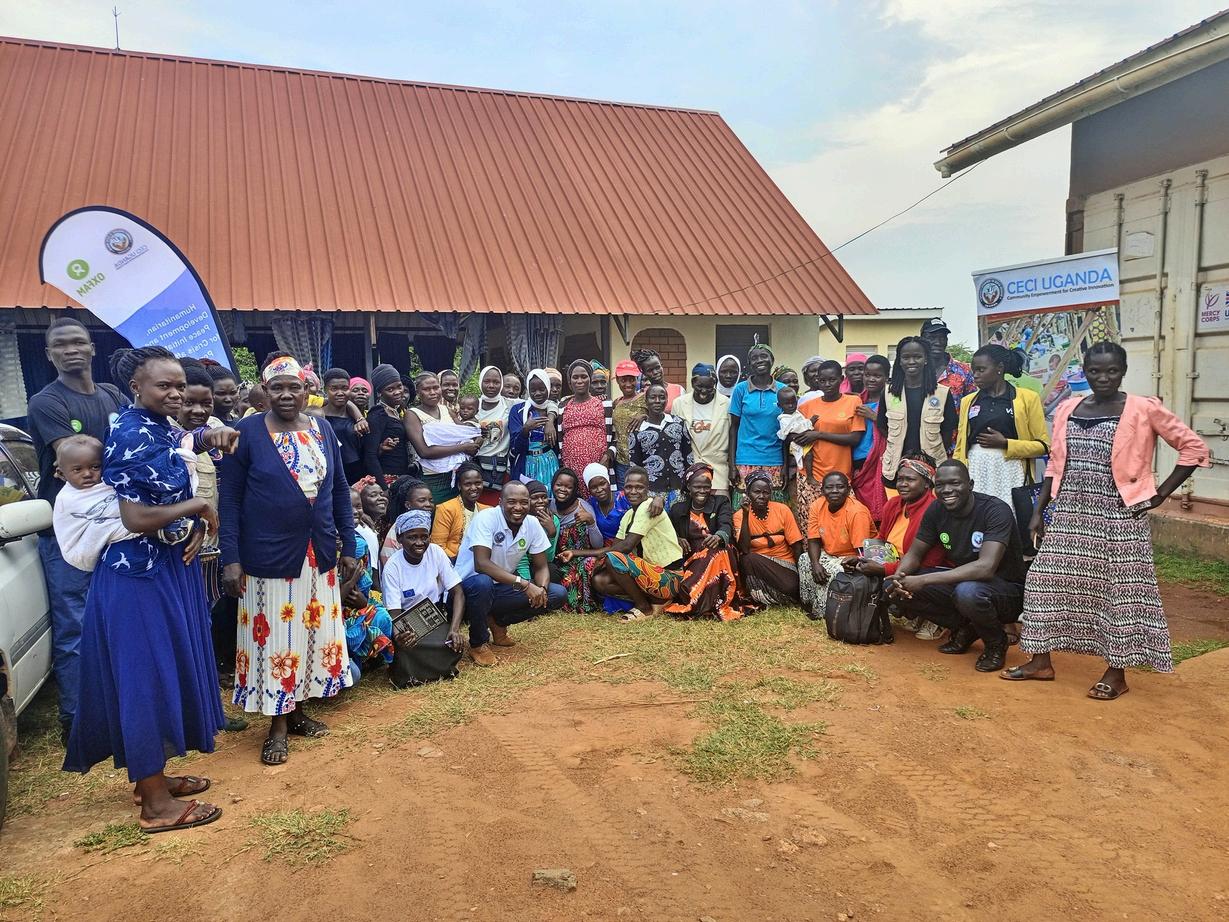
PEOPLE IN UGANDA BENEFITED DIRECTLY FROM OUR PROGRAMS
128
learners enrolled in an Accelerated Education Program (AEP) on full scholarships
167
pupils trained in the Karl Popper Debate Methodology
60
women trained in gender transformative leadership, human rights, public speaking, and peacebuilding
78
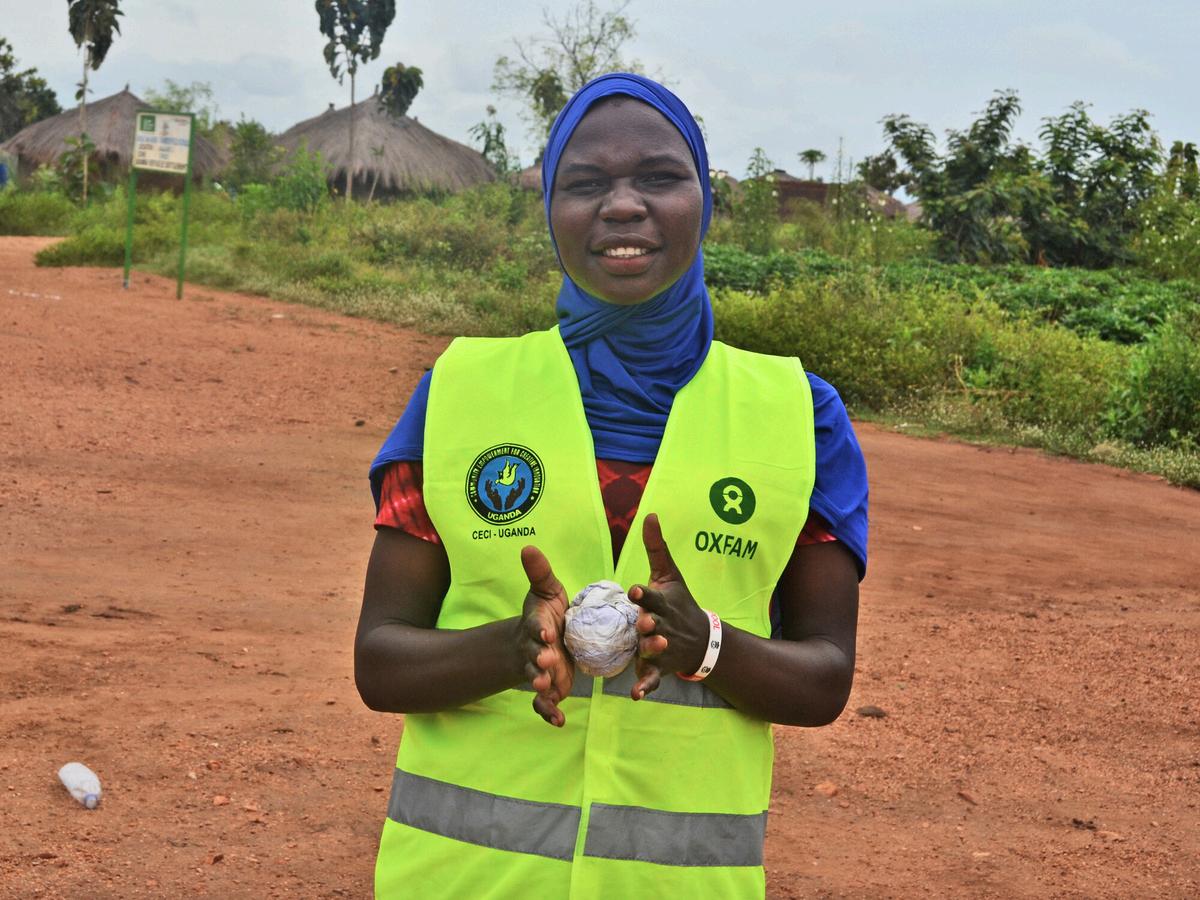
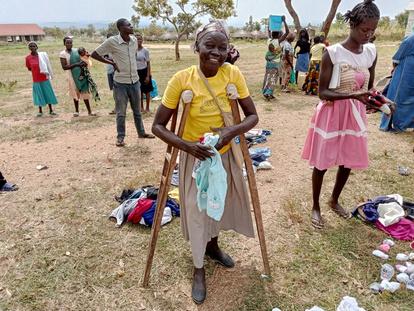
rubbish pits dug for 78 households of persons with special needs, benefiting 312 people
139
youth enrolled in Business, Technical, Vocational Education and Training on full scholarships
1200
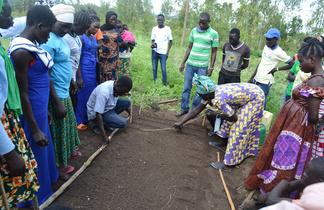
trees planted with an 85% survival rate
21
women elected into various leadership roles in their communities
393
people supported to participate in local, national, and international events promoting peaceful coexistence
47
learners wrote and passed their Uganda Certificate of Education exams, progressing to A-Level
11
community peace and environmental structures made of 110 members supported with tools
102
women reached with information on women rights and contesting for community leadership positions
06
women groups supported with 42 million UGX in cash grants
10
debate clubs established in 10 public primary schools
31
awareness campaigns carried out on GBV and conflict prevention, human rights, women leadership, AEP, BTVET, and MHPSS
170
mothers engaged as girl child education advocates through 4 mother-tomother support sessions
8300
people educated on GBV and conflict prevention, human rights, women’s leadership, environmental protection, and shared resource utilization
FOREWORD
DEAR FRIENDS,
It is with great pride and gratitude that we share our 2023 Annual Report with you. After three long years of COVID-19, refugee families faced even tougher challenges in 2023 They struggled with reduced food rations, cash transfer cuts, increased poverty, and more children dropping out of school These hardships made it even harder for many families to recover from the effects of the COVID-19 pandemic
In response, CECI and its partners stepped up to support their recovery and empowerment We helped women and youth rebuild their livelihoods and become leaders in their communities by giving them access to capital, vocational training, financial literacy, entrepreneurship opportunities, and farming tools and seeds. Our scholarships ensured children and youth could continue their education.
We also fostered social cohesion among refugees and host communities through community dialogues, cultural exchange, sports, and awareness campaigns, building more peaceful and gender-just communities These communities were also supported to plant trees, promote clean energy, and adopt sustainable practices to mitigate the effects of climate change
PATRICK CHANDIGA JUSTINE A FOUNDER & BOARD CHAIR
This year marked the end of our 2020–2023 Strategic Plan During this period, we implemented over 15 major projects that improved the lives of 178,410 people. We are now developing a bold 5-year plan for building safer and resilient communities to guide us through 2028. This new plan builds on what we have learned and achieved over the past three years. It reflects our commitment to scaling our impact, involving communities even more, and adapting to the changing needs of those we serve
As you will read in this report, we directly impacted 16,004 people, including women and girls, youth, children, and persons with disabilities, in Koboko, Obongi, and Yumbe districts They benefited from our locally led interventions in peacebuilding, education, livelihoods, and environmental conservation These results would not have been possible without the generosity of all the donors, partners, and stakeholders that we worked with.
We are truly grateful for your trust and support in helping people recover better and build resilience. We hope you take pride in the change you have helped accomplish. We invite you to join us as we work together towards a more peaceful and self-reliant future.
With gratitude,
DIRECTOR
BENSON KHEMIS SORO EXECUTIVE
CECI UGANDA: A REFUGEE-LED ORGANIZATION
Community Empowerment for Creative Innovation (CECI Uganda) is a refugee-led organization (RLO) founded in May 2017 to prevent violent conflicts and alleviate poverty, fostering peaceful coexistence and self-reliance in refugee and host communities. Through locally-led innovations in peacebuilding, education, livelihood, and environment, CECI Uganda empowers youth, women, and girls to prevent violent conflicts, build resilience, rebuild livelihoods, and actively participate in development. Guided by our core values of professionalism, teamwork, honesty, commitment, personal development, accountability, and transparency, CECI Uganda is committed to creating sustainable solutions that are driven by local needs
MISSION
To promote peace, self-reliance and dignity through recreational activities, education and other innovations going beyond relief and development.
VISION
An Empowered, Peaceful and Self-reliant community.
PEACEBUILDING
OBJECTIVES
We seek to: Build peace and improve social cohesion among refugees and with host communities.
Build skills to support development and peace. 2. Promote girl child education and early childhood development.
community
and understanding of
We strengthen the role of youth and women in preventing and resolving conflict to promote the peaceful resolution of disputes and reconciliation, build and increase peaceful coexistence and social cohesion
LIVELIHOOD
We build skills that support development and peace, build resilience, and increase employability among youth and women in both refugee and host communities
We improve access to formal and informal education for children, youth, women and girls to promote positive development EDUCATION
ENVIRONMENT
We engage youth and women to promote community-led environmental conservation and climate action in refugee and host communities
OUR STORY
In 2016, the outbreak of war in Yei, South Sudan, forced our founder Patrick Chandiga Justine Abure to flee to Uganda, becoming the third generation in his family to experience forced migration He initially sought refuge in Rhino Refugee Settlement, where he faced hate speech, ethnic discrimination, and violence due to his ethnicity. Driven by the need for safety and stability, Patrick was forced to move once again to Koboko, Uganda.
While serving as an Evangelist at the Koboko Seventh-Day Adventist Church, Patrick founded the Community Empowerment for Creative Innovation (CECI Uganda) in May 2017 in response to rising violent conflict, ethnic discrimination, cultural intolerance, hate speech, and poverty in refugee communities On August 14, 2017, CECI Uganda formally registered as a Community-Based Organization with the Koboko District Local Government and later incorporated as a Company Limited by Guarantee in 2021
Since then, CECI Uganda's programs have improved the safety and well-being of 178,410 people, including women and girls, youth, and men from refugee and host communities. Our programs have fostered peace and social cohesion, rebuilt livelihoods, expanded access to formal and informal education, and strengthened community participation in environmental protection across Koboko, Yumbe, and Obongi districts
Today, CECI Uganda has expanded its services to benefit over 200,000 refugees and host community members Through increasing access to education, financial resources, business, technology, entrepreneurship, and vocational training, CECI is developing skills in peace and conflict resolution, and promoting the use of alternative energy sources. CECI remains steadfast in its commitment to empowering communities, fostering peaceful coexistence, and building self-reliant communities
learners enrolled in an Accelerated Education Program (AEP) on full scholarships
47
learners wrote and passed their Uganda Certificate of Education exams, progressing to the Uganda Advanced Certificate of Education
139
youth enrolled in Business, Technical, Vocational Education and Training (BTVET) on full scholarships
02
Community Education Committees and Youth Education Clubs were formed with 51 members
309 people reached with information on Accelerated Education Program
02
entrepreneurship and science, technology, engineering, and mathematics (STEM) clubs established in schools
11% increase in school attendance
08
campaigns conducted to mobilize youth and school dropouts to enroll in AEP and BTVET on full scholarships
MOBILIZING COMMUNITIES FOR EDUCATION
Kuluba and Lobule sub-counties in Koboko report low primary and secondary school attendance and completion rates. At Waju II Primary School in Lobule Refugee Settlement, only 79 out of 780 pupils attend school on an average day, according to the head teacher
In response, CECI established two Community Education Committees (CECs) and Youth Education Clubs (YECs) made of 51 members to address this issue and increase community participation and engagement in gendersensitive and inclusive education and skilling CECI also formed two entrepreneurship and science, technology, engineering, and mathematics (STEM) clubs in schools made up of 40 members, including 16 female and 21 refugees to help students develop a passion for a career in STEM and build skills in digital literacy, problem solving, creativity, critical analysis, teamwork, and communication.
These CECs, YECs, and STEM clubs carried out eight advocacy campaigns across the two sub-counties, reaching 309 people, including 191 men, 118 women, and 5 persons with disabilities (PWDs), with 66% of them aged 14–35
21 bicycles were provided to members of Community Education Committees to support the mobilization of out-ofschool children for enrollment in AEP
Participants included parents, teachers, youth, school dropouts, and community and religious leaders from both refugee (100) and host (209) communities.
These campaigns raised awareness about the importance of education, the Accelerated Education Program, and enrollment processes They also mobilized parents to send their children to school and encouraged out-of-school children and youth particularly female students who had dropped out to return to school and continue their education As a result, 128 learners, including 79 refugees, 41 hosts, 59 females, and 69 males, enrolled in an Accelerated Education Program at Millennium and Padrombu secondary schools on full scholarships. Additionally, 139 others (81 female, 44 refugees) enrolled in Business, Technical, Vocational Education and Training (BTVET) on full scholarships. Out of those enrolled in AEP, 47 sat for and passed their Uganda Certificate of Education (UCE) exams, of whom 16 have progressed to the Uganda Advanced Certificate of Education (UACE) Also, the average attendance has increased by 11% within 12 months of the campaigns
42
members of the Board of Governors (BOG) and Parent-Teacher Association (PTA) from two schools were trained on AEP integration, safeguarding, and providing support to learners and teachers
A SECOND CHANCE AT EDUCATION: AGELE’S JOURNEY FROM SEVEN YEARS OF WAITING TO A FIRST GRADE PASS
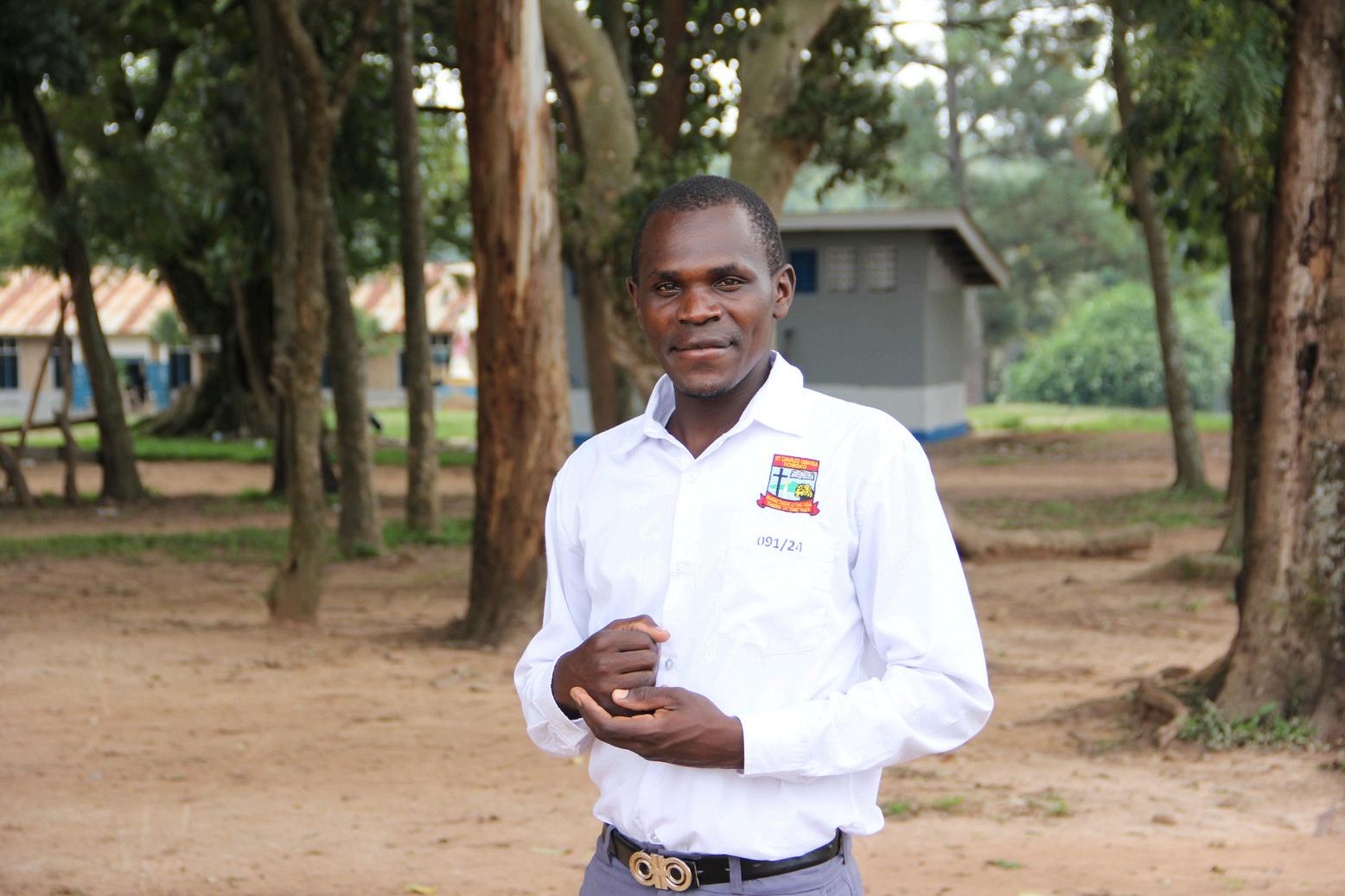
Agele Patrick, a 22-year-old resident of Kuluba Sub County, was one of 128 learners supported by CECI’s Accelerated Education Program (AEP) in 2023. At 15, Agele lost his father who was his sole supporter and was forced to drop out of school in 2015 due to lack of tuition He spent seven long years at home watching his dream of continuing his education slip further away with each passing year
In 2022, Agele’s life took a turn when he was awarded a scholarship to re-enroll in school through CECI’s AEP program Despite having only a few months to prepare for his UCE exams after years away from school, his determination and hard work paid off.
In 2023, Agele sat for his Uganda Certificate of Education (UCE) exams and achieved a first grade with an aggregate of 29. Today, Agele is studying Senior Five at St. Charles Lwanga College Koboko under CECI’s Bridge Scholarship, supported by War Child Canada
"For seven years, I struggled to find a way back to school," Agele said "Thanks to the AEP program, I am now back in school, and I have a second chance to achieve my dreams. I am determined to become the first in my family to finish A level and join university."
Agele’s story is a testament to the life-changing power of education. With programs like the AEP, young people who were once forced to drop out of school are now rewriting their futures His journey highlights the resilience of youth and the importance of giving second chances to those who need them most With continued support, programs like the AEP can help more young people like Agele rebuild their lives, achieve their dreams, and inspire others in their communities.
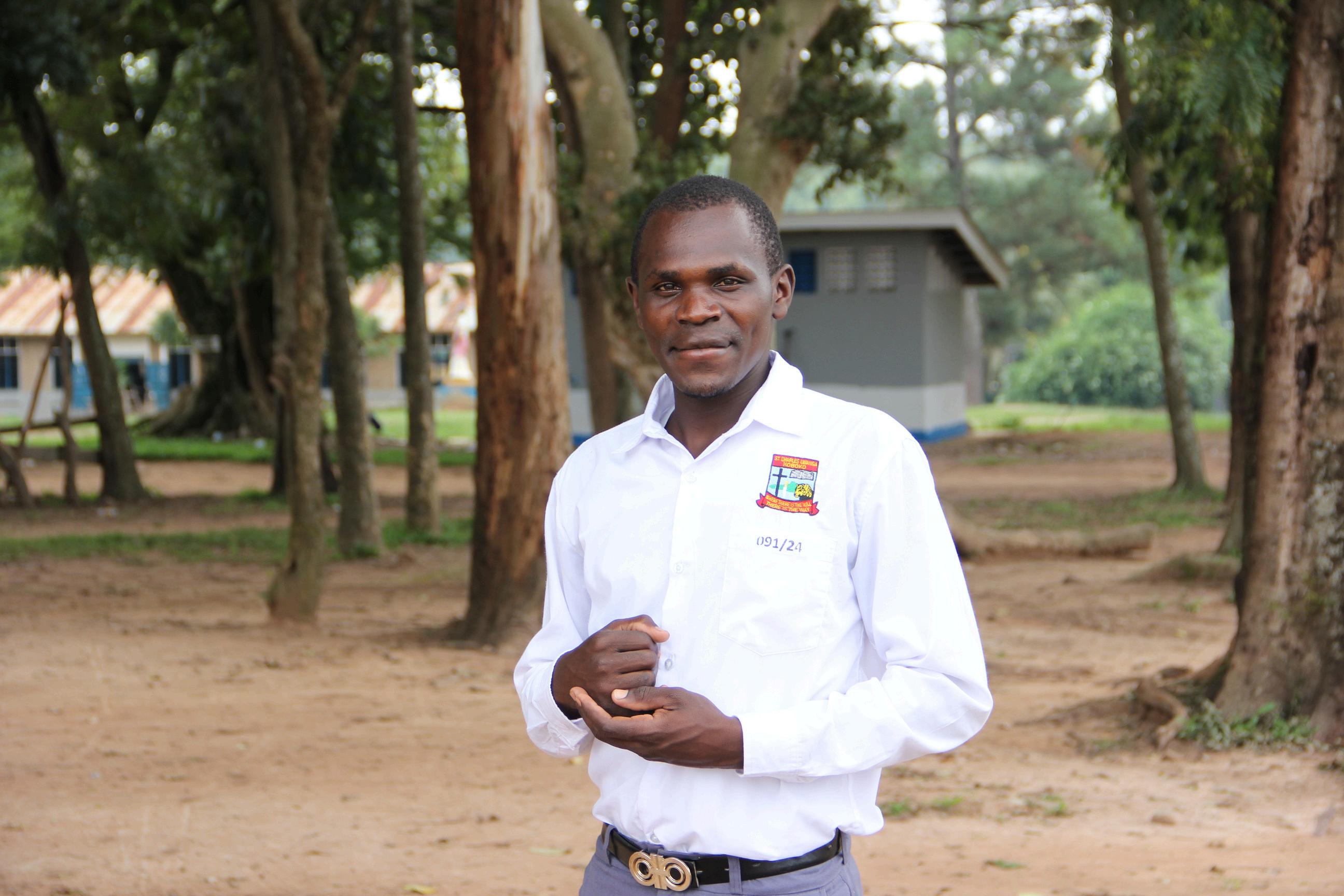
Agele Patrick at Koboko Town College where he is currently studying for his Uganda Advanced Certificate of Education with a scholarship from CECI Uganda
learners enrolled in an Accelerated Education Program
mothers engaged as girl child education advocates through mother-to-mother support sessions
94% were youth aged 14-35
44% were refugees
3.5% were people with disabilities
mother-to-mother support sessions conducted in two subcounties
ENGAGING MOTHERS AS GIRL CHILD EDUCATION ADVOCATES
CECI conducted 4 Mother-to-Mother (M2M) support group sessions in Kuluba and Lobule Sub-counties to advocate for girl child education. The sessions engaged 170 mothers, including 74 refugees, 96 nationals, and 4 persons with disabilities (PWDs), with 94% aged 14–35. Sessions focused on promoting positive behavioral attitudes and practices to encourage girl child education and increase enrollment in CECI’s Accelerated Education Program (AEP) Mothers were trained on their roles and responsibilities within the M2M committees and equipped with knowledge to foster a supportive environment for their daughters
Key topics included discouraging harmful traditional practices such as early marriage and unwanted pregnancies, while emphasizing the importance of sending both girls and boys to school. The active involvement of these mothers in raising community awareness on the benefits of accelerated education contributed to the enrollment of 128 learners in schools across the two subcounties. Among them were 79 refugees, 41 host community members, 51 females, and 69 males These efforts demonstrate the critical role of M2M support sessions in empowering mothers to take action, driving access to education, and addressing barriers to learning within their households and communities
167
pupils trained in the Karl Popper Debate Methodology
10
debate clubs established in 10 public primary schools
86
debaters from 10 schools participated in an interschool debate tournament 52% girls 48% boys 85% nationals 15% refugees
primary school teachers trained as debate patrons and matrons 22
men
women
FOSTERING LEADERSHIP AND PEACEFUL COEXISTENCE IN SCHOOLS
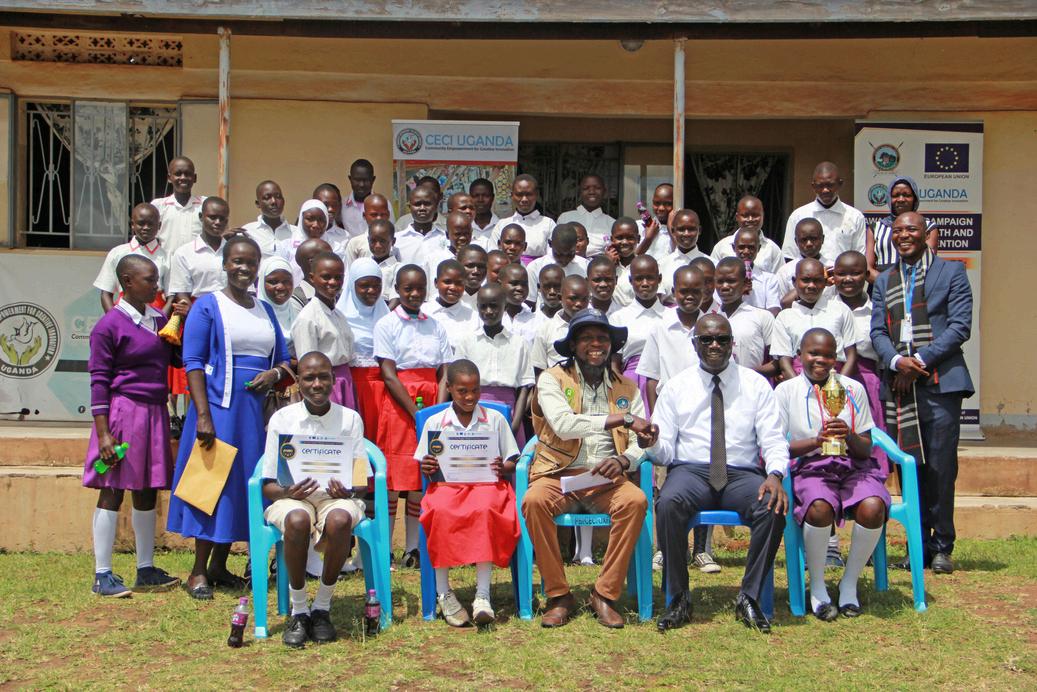
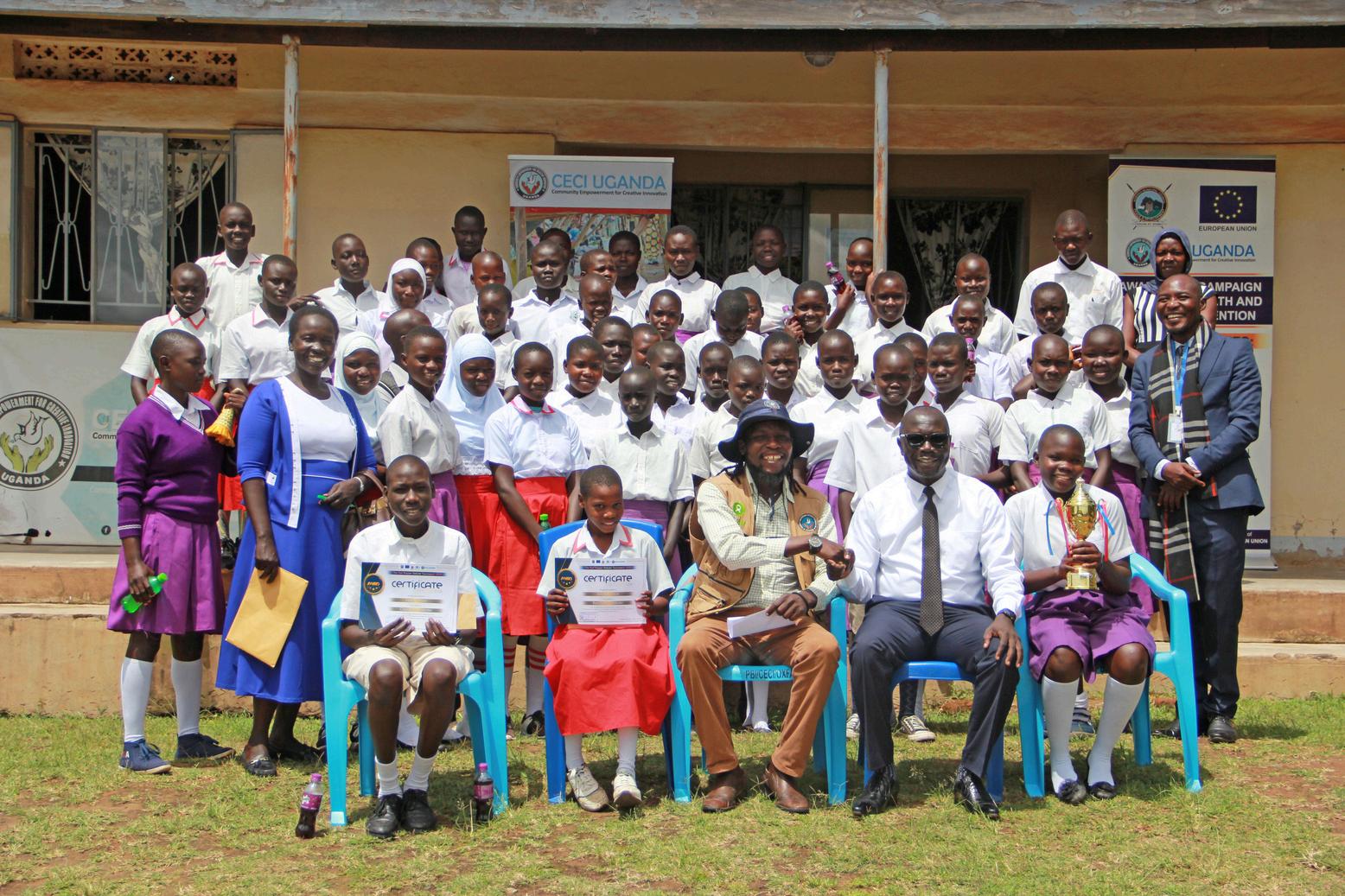
CECI established and strengthened 10 debate clubs with 167 pupils across 10 public primary schools in Koboko Also, 22 debate patrons and matrons from these schools were trained in the Karl Popper Debate Methodology to train and mentor student debaters on the model. These clubs participated in an inter-school debate tournament organized by CECI, bringing together 86 debaters from 10 schools to debate motions on key issues such as human rights, protection, peaceful coexistence, and other development concerns.
Teachers reported improvement in student debaters’ English grammar, confidence, and public speaking skills Schools credited these debates with fostering peaceful coexistence amongst pupils, raising awareness of human rights, preparing pupils for future leadership, and strengthening relationships between schools. His Worship Senya Wilson, Mayor of Koboko Municipality, praised these debates for their role in shaping the future of these learners, saying, “Debates build confidence, discipline, and prepare learners to seize future opportunities through education and leadership.”
His Worship Senya Wilson, Mayor of Koboko Municipality, with CECI Director and debaters from 10 primary schools during an interschool debate tournament - 2023
MILLION
in cash grants provided to 6 refugee women groups made up of 85 members
refugee women leaders trained in financial management, compliance, and budgeting 19
rubbish pits dug and constructed in 78 households of persons with special needs, benefiting 312 individuals
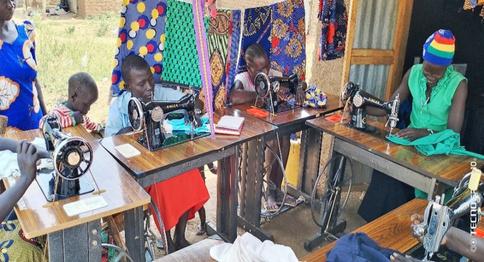
tailoring training Centre established and equipped with 10 tailoring machines
individuals from 70 households sensitized on proper waste disposal and management
refugee women trained in tailoring and garment cutting
EMPOWERING REFUGEE WOMEN THROUGH CASH TRANSFERS
CECI supported six women groups made up of 85 refugee women with 42,000,000 UGX in flexible and unrestricted cash grants Each group received 7,000,000 UGX to initiate projects and programs that address their unique needs and priorities, while strengthening their capacity for public participation and leadership within refugee and host communities in Bidibidi Refugee Settlement Also, 19 women leaders (3 from each group) received training in financial management, compliance, and budgeting, and all six women groups were supported to open bank accounts at Centenary Bank. These groups are engaged in tailoring and garment cutting, trading general merchandise, waste management, and saving and lending.
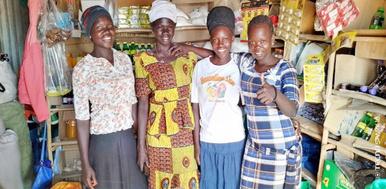
One group raised awareness on proper waste disposal and management in 70 households of 280 members and dug and constructed 78 rubbish pits in 78 households of persons with special needs (PSNs), benefiting about 312 individuals, as a measure to reduce infections and diseases Another group bought 10 tailoring machines and established a Tailoring Training Centre that trained 20 women and now makes 560,000 UGX in profit In Zone 3 (Village 8), one group that trades general merchandise grew the funds it received by 3 million UGX and started a VSLA group that has lent 10 women funds for business, tuition, and medicine. Groups report improved access to loans and better financial management, women report improved household income and livelihood, and supported PSN households report improved sanitation and hygiene.
Since we formed this group in 2017, we never received any funding We have now expanded our business, procured more materials, and even bought a tailoring machine to make school uniforms.
NgongitaWomenGroup Chairperson
The rubbish pits we constructed have improved waste management, reduced infections, and created unity and peaceful coexistence in our community We are proud of the positive impact we’ve made.
GraceOpani,Womenfor ChangeSecretary
This initiative has made us proud. We can now support our families with school fees, soap, and medicine, and the work we’re doing has earned us respect in our households and the community.
AmaecoraWomenGroup Chairperson
60
women and girls from 11 villages trained in gender transformative leadership, human rights, public speaking, and peacebuilding
80% were refugees
70% were youth
4% were people with disabilities
21
women elected into various leadership roles in their communities
102
women reached with information on women rights and contesting for community leadership positions
EMPOWERING WOMEN TO LEAD AND BUILD PEACE AT THE LOCAL LEVEL
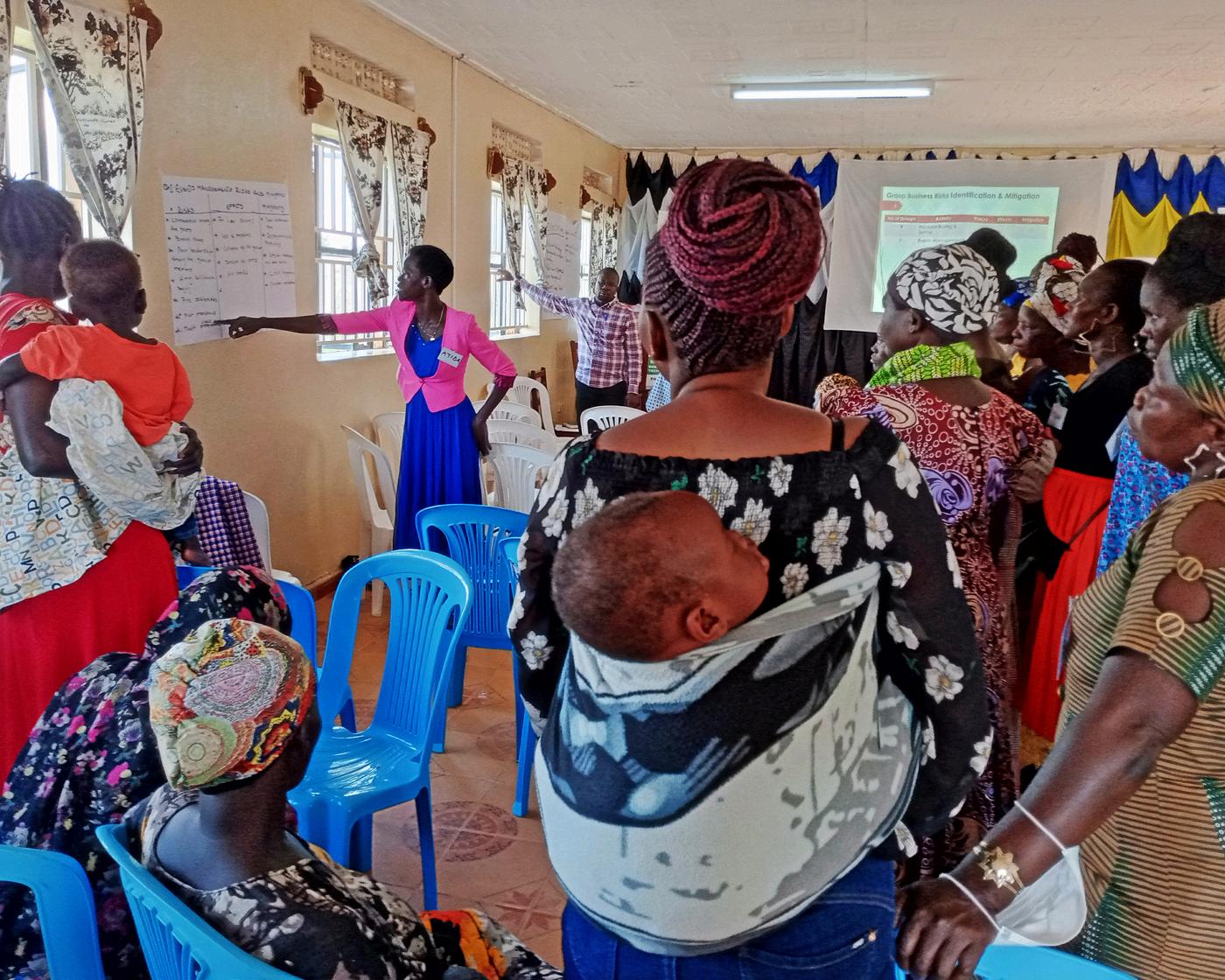
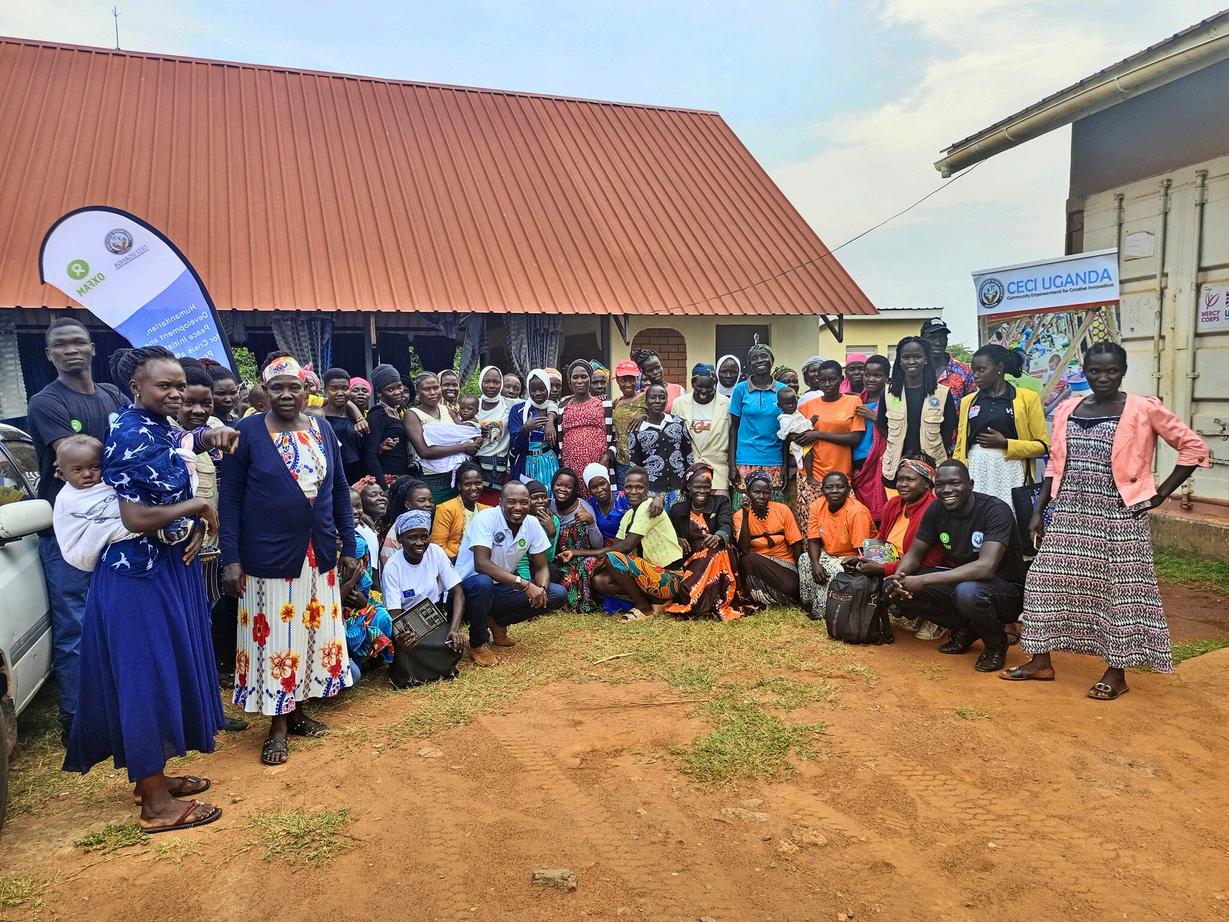
CECI trained 60 women and girls from 11 villages in Zone 3 of Bidibidi Refugee Settlement on gender transformative leadership, human rights, public speaking, and peacebuilding The training prepared women to take on leadership roles, seek psychosocial support when needed, and become ambassadors of peace in their communities
67% of the participants report the knowledge and skills they gained from the training strengthened their role and participation in leadership, planning, decision-making processes, and peacebuilding interventions in their households, groups, and communities. Amongst them, 21 women have been elected into leadership roles in the Refugee Welfare Councils of their communities. These women, together with 93 others elected across the zone, are now actively shaping community planning and decision-making processes on issues that affect their lives and communities
Rose Muja, elected Chairperson of her village, said, “After attending the training, I decided to run for the Chairperson position in my village I was able to use the skills and confidence that I gained from the training to win the race, and now I’m supporting other women to do the same and become leaders in our community.”
Similarly, Kicere Santa, now the Vice Chairperson of her village, said, “The training by CECI gave me the courage to stand for the Vice Chairperson position in Village 8 when it fell vacant. I used to be chaotic [...], but the training and the leadership role I now hold have changed me greatly.”
After the training, these women formed a Women and Girls Forum, which has since organized three awareness sessions, reaching 102 women with information on how to contest for community leadership positions. These sessions sensitize women on their rights and responsibilities and inspire them to participate in decisions that affect their lives and communities. Reflecting on these sessions, Rose said, "We now have more women who feel confident to challenge barriers to leadership and bring change to our communities."
Women during our training on gender transformative leadership, human rights, public speaking, and peacebuilding in Bidibidi Refugee Settlement - 2023
CREATING SPACES FOR WOMEN TO LEAD
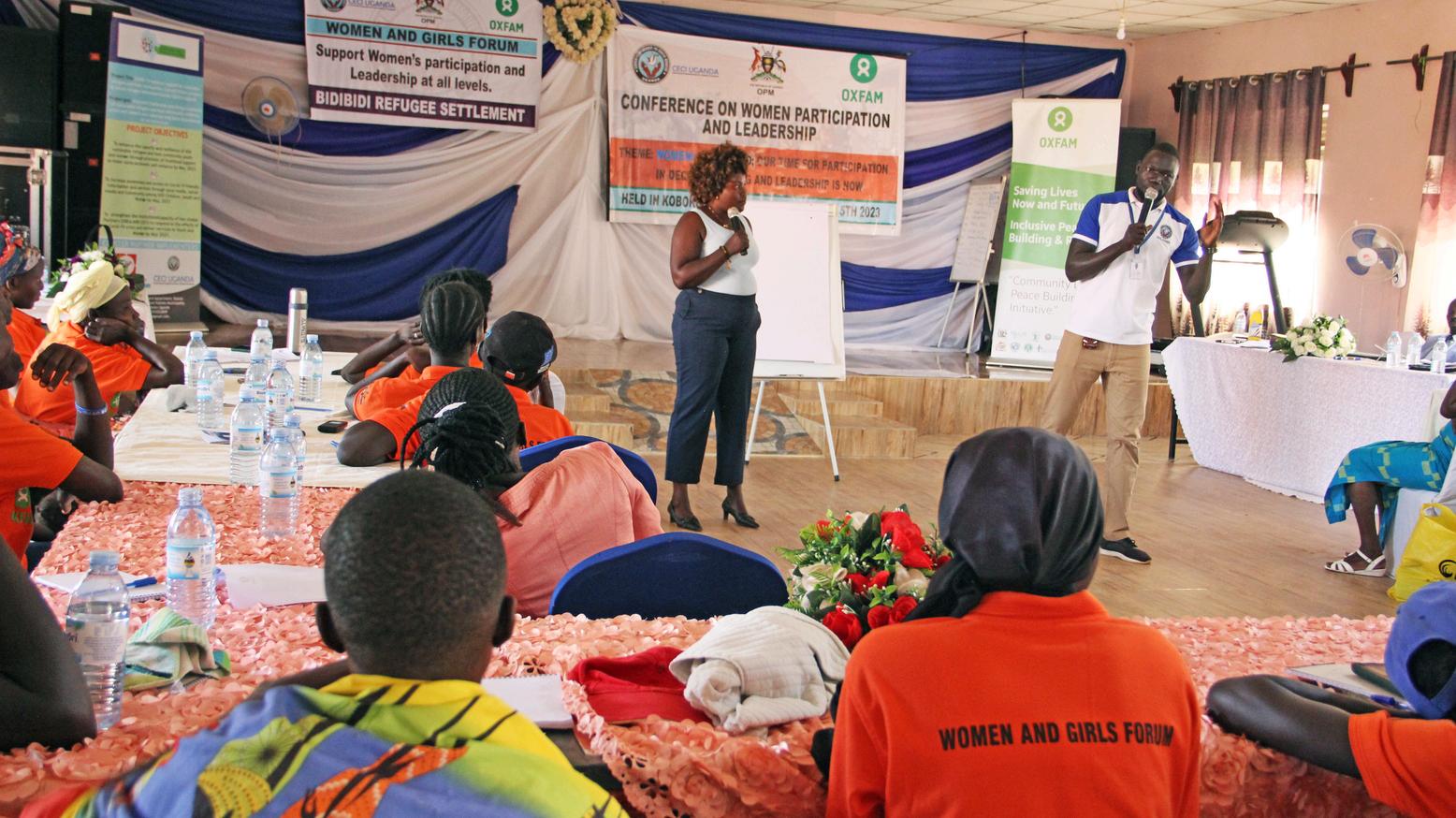
In Koboko, our regional conference on women participation and leadership brought together 30 women aged 18 and 50 from 11 villages in Bidibidi and Imvepi Refugee Settlements and their host communities It was designed, run, and facilitated entirely by women The conference allowed these women to discuss how poverty, gender stereotypes, male dominance, low self-esteem, cultural norms, and educational disparities affected their participation in decision-making processes and leadership roles, and identify practical ways for advancing their participation.
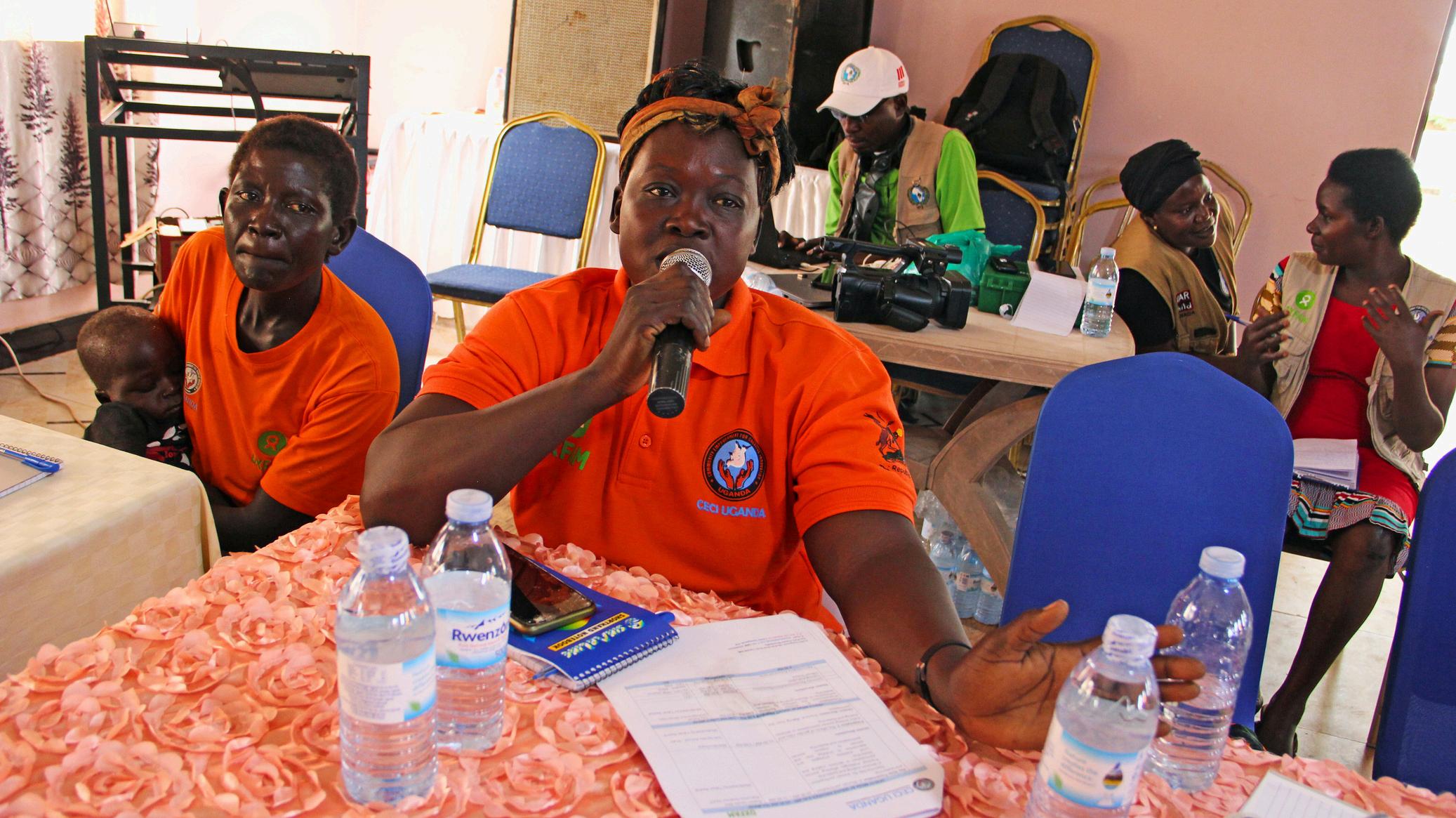
The inclusive and supportive space the conference created enabled participants like Esther, a South Sudanese refugee, to be able to share their powerful stories of resilience and success with other women Esther began her entrepreneurial journey with just $200, a small loan from a friend, which she used to start a tailoring business With a grant and mentorship from CECI, her business expanded to include 26 sewing machines and 12 embroidery machines, employing 15 people and generating over $550 in monthly income. Today, her business is valued at more than $8,000.
Reflecting on her journey, Esther said, “When you give us [women] the resources we need to support ourselves financially, you're enabling us to do great things. We can take control of our lives and make meaningful contributions to our families and communities.” Esther's experience shows how empowering women economically can make them selfreliant, transform their lives, and pave the way for substantial growth, enabling refugee and host community women to take on leadership roles and actively participate in their communities.
Scan QR Code or go to the link below to watch it now on YouTube https://youtu be/L R0IQ6umbs
West Nile TV Featured the Women Regional Conference
Women from refugee and host communities during our regional conference on women participation and leadership in Koboko
Over 80% of the participants at the conference identified promoting economic empowerment for women as key to breaking barriers to women’s participation in leadership and development
Alongside this, the women identified a range of other strategies for increasing their participation, which include:
Investing in adult literacy and skills training for women and girls to empower them to learn and lead;
Engaging men as allies in the promotion of women's leadership and participation; Engaging governments, businesses, donors and organizations to invest in women’s livelihoods and initiatives;
Developing business and financial literacy skills of refugee and host community women;
Developing business and financial literacy skills of refugee and host community women;
Enhancing access to capital for refugee and host community women to start, scale, and grow their businesses;
Promoting gender-responsive parenting in refugee and rural households and communities to break the cycle of discrimination;
Investing in women leadership development programs that encourage them to aspire to leadership and support them as they prepare for leadership roles; Utilizing current women's spaces and creating new ones;
Convening annual conferences for women to meet to discuss progress, assess barriers, and reevaluate and reinforce strategies for increasing their participation in leadership and decision-making in their households and communities
"This conference was more than just a gathering; it was the birth of a local movement for gender justice, women’s participation, and leadership "
~ Rose, the chairperson of the South Sudan Active Women Association
Esther sharing her entrepreneurial journey with women from refugee and host communities during our regional conference on women participation and leadership in Koboko
11
community peace and environmental structures made of 110 members provided tools to enhance their work
1000
community members mobilized and educated on GBV, human rights, environmental protection, and peaceful coexistence
1,200
trees planted with an 85% survival rate
100
community members mobilized as environmental vigilantes actively protecting green spaces
06
local environmental champions recognized with awards for their outstanding contributions to tree planting and environmental protection
4,000 people informed on environmental protection, human rights, and peaceful coexistence through audio messaging and banners
EMPOWERING COMMUNITY PEACE AND ENVIRONMENTAL STRUCTURES FOR SUSTAINABLE IMPACT
CECI supported 11 community peace and environmental structures in Bidibidi Refugee Settlement, comprising 110 members, including women, men, girls, religious and cultural leaders, and environmental champions These groups were equipped with essential tools such as fruit and tree seedlings, slashers, hoes, rechargeable public address speakers, gum boots, chairs, stationeries, T-shirts, and banners. These tools enabled them to effectively raise awareness on critical issues, including GBV prevention, human rights, peaceful coexistence, environmental protection, and women’s participation and leadership, while actively restoring degraded environments through tree planting and wetland restoration
1200
fruit and tree seedlings distributed to environmental groups for planting
With this support, the groups mobilized and engaged over 1,000 community members through dialogue and awareness sessions These focused on planting trees, reducing bush burning, and safeguarding green spaces, leading to the formation of a network of more than 100 environmental vigilantes actively protecting green spaces To date, these efforts have resulted in the planting of 1,200 trees, with an 85% survival rate, thanks to community-led care and monitoring. Additionally, environmental awareness campaigns extended their reach to an estimated 4,000 individuals through audio messaging and banners, amplifying the impact of these initiatives
243 tools provided for tree planting and community mobilization: 20 slashers, 20 hoes, 5 PA speakers, 20 gum boots, 30 chairs, 3 banners, and 145 T-shirts
A significant milestone was the recognition of six environmental champions for their outstanding contributions to tree planting and environmental protection These champions, representing both refugee and host communities, played pivotal roles in mobilizing others to participate in conservation activities. As Ade Alex, the RWC III remarked, “These groups are well-positioned to continue promoting peaceful coexistence and environmental resilience in Zone 3 and beyond ”
75
million UGX donated by Muni University to support environmental groups in conserving shea nut trees in Kei and Midigo sub-counties
BUILDING PEACE THROUGH MITIGATING THE EFFECTS OF CLIMATE CHANGE
CECI facilitated a stakeholder meeting on peace and climate change that brought together 28 representatives, including 9 women and 10 refugees, for a dialogue Representatives were from local groups of women, youth, cultural and religious leaders from both refugee and host communities, as well as from local environmental groups, the Office of the Prime Minister, Yumbe District Environment Office, UNCHR, the police, and five local partners
Various conflict triggers were identified, and the meeting came up with action points to support refugees and host communities to mitigate and adapt better to climate changes These include: investing in alternative sources of energy, planting trees, engaging youth and women in environmental protection as advocates, mainstreaming environment protection into churches and mosques, raising community awareness, and supporting subcounties to develop and review bilaws on environmental protection
Representatives were also introduced to Uganda's environment and climate change frameworks, such as the National Environment Management Policy 1994, the Uganda National Climate Change Policy 2015, and the National Environment Act 2019 "This is the first time I’ve seen organizations come together with such commitment," said the Settlement Commandant. "We must act now —plant trees, stop bush burning, and protect our environment for future generations "
1,200
people educated on how to mitigate, prevent, and respond to GBV and conflict
67% Women
21% Girls
29% Boys
21% Men
3,000
people received education on mental health and psychosocial support (MHPSS)
23
community awareness sessions and campaigns were carried out in 10 villages with a focus on GBV awareness and prevention
100
local leaders report improved knowledge of GBV and how to support GB V survivors
60
cases of GBV and resource-related conflicts resolved and referred
FOSTERING PEACE AND GBV AWARENESS THROUGH COMMUNITY DIALOGUES
In Bidibidi Refugee Settlement, Zone 3 (Villages 1-5), 1200 community members received education on how to mitigate, prevent, and respond to GBV and conflict in their households and neighborhoods through our 13 communitydriven awareness sessions Also, 100 local leaders and community members reported improved knowledge of the negative consequences of GBV on children, women, and men, and how to respond and support survivors, through their participation in our four community dialogues on GBV These sessions and dialogues reached 1300 refugees and hosts with information on GBV and conflict resolution where they are and in the everyday languages they speak
So far, our community groups Women and Girls Forum, Salaam Male Champions, and the Alliance of Cultural and Religious Leaders which are made up of 70 locals have resolved 39 cases of GBV and resource-related conflicts and referred 21 others to local leaders, partners, police, and health facilities for further support, out of which 8 have been resolved and closed
As reported in the August 2023 Protection Sector Coordination Working Group meeting, incidences of GBV, theft, and resource-sharing conflicts reported to local leaders and partners have decreased by 20%, down from 40% following these sessions
To reach more community members with information on GBV and mental health and psychosocial support (MHPSS), our Women and Girls Forum and Salaam Male Champions have established a 30-member Music, Dance, and Drama (MDD) group, which has since carried out 10 sensitization campaigns across 10 villages, engaging 3,000 individuals from both refugee and host communities. Joyce, one of the participants in the sensitization campaign held in Village 5, said “I learned how to recognize cases of GBV and where to report them for action ”
refugees and host community members participated in an intercultural gala
men women PWDs refugees
nationals
Scan QR code or go to the below link to watch it now
Intercultural Gala Documentary on YouTube https://youtu be/RxVjHEUBrsE
PROMOTING PEACEFUL COEXISTENCE THROUGH CULTURE
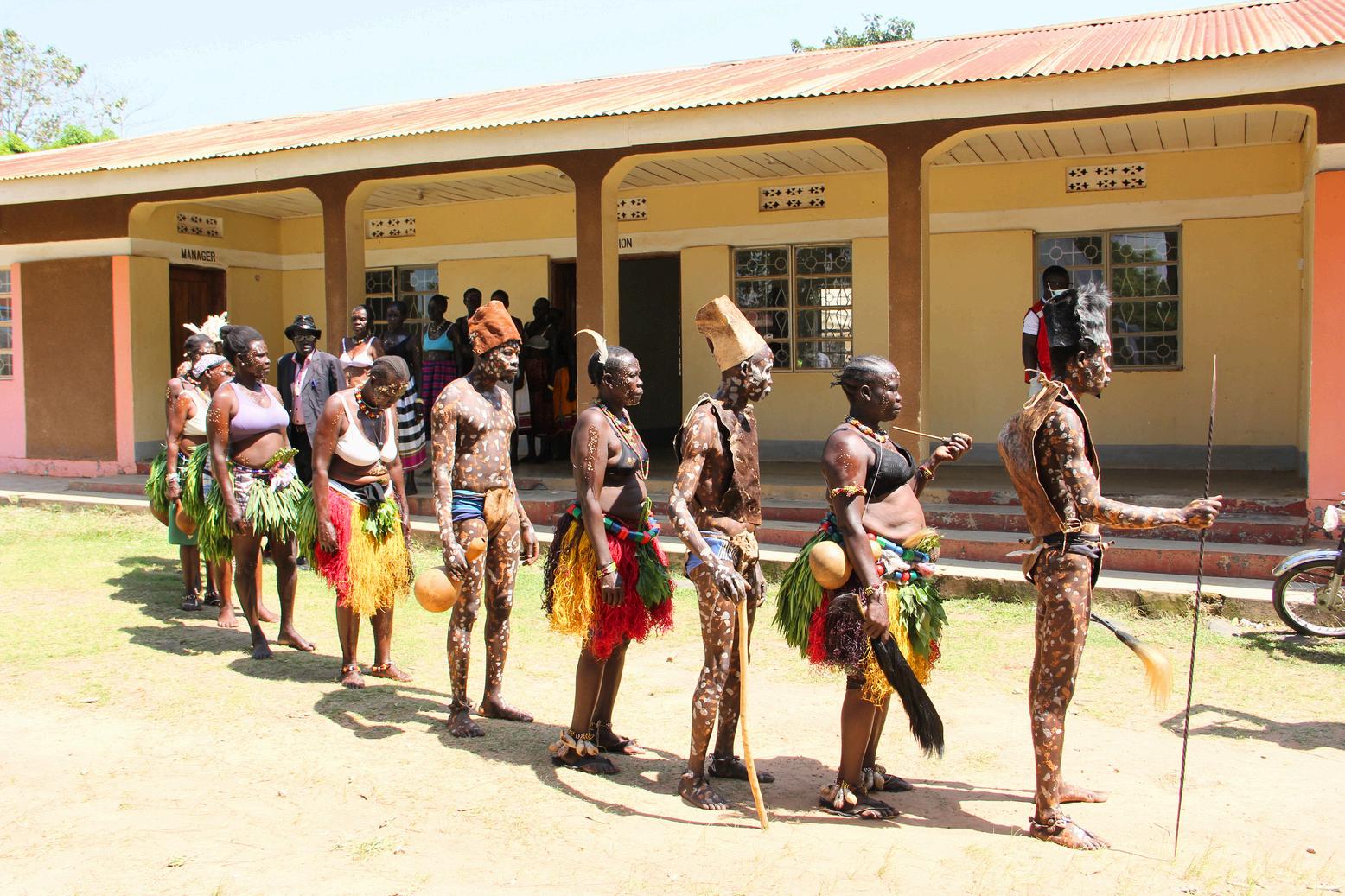
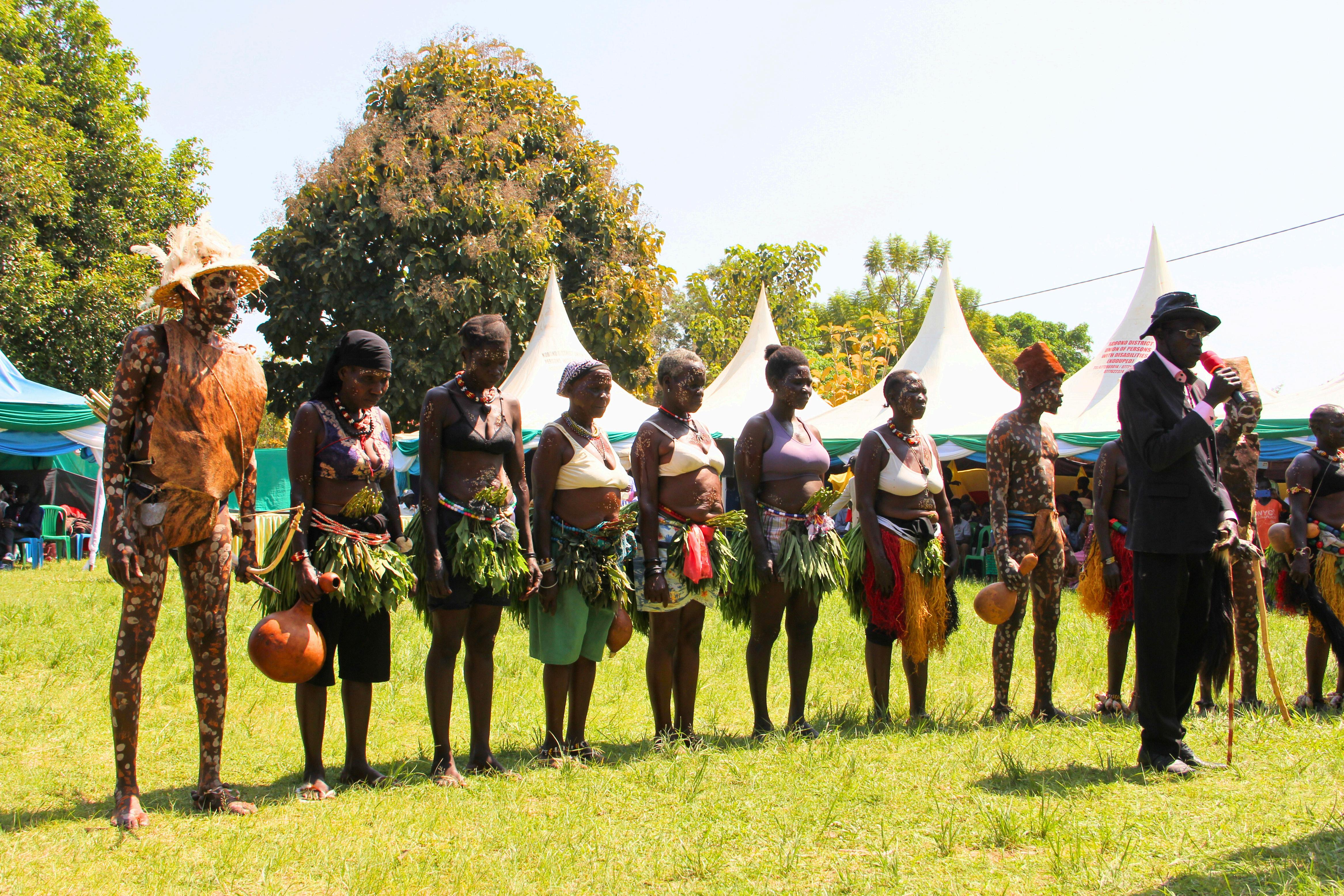
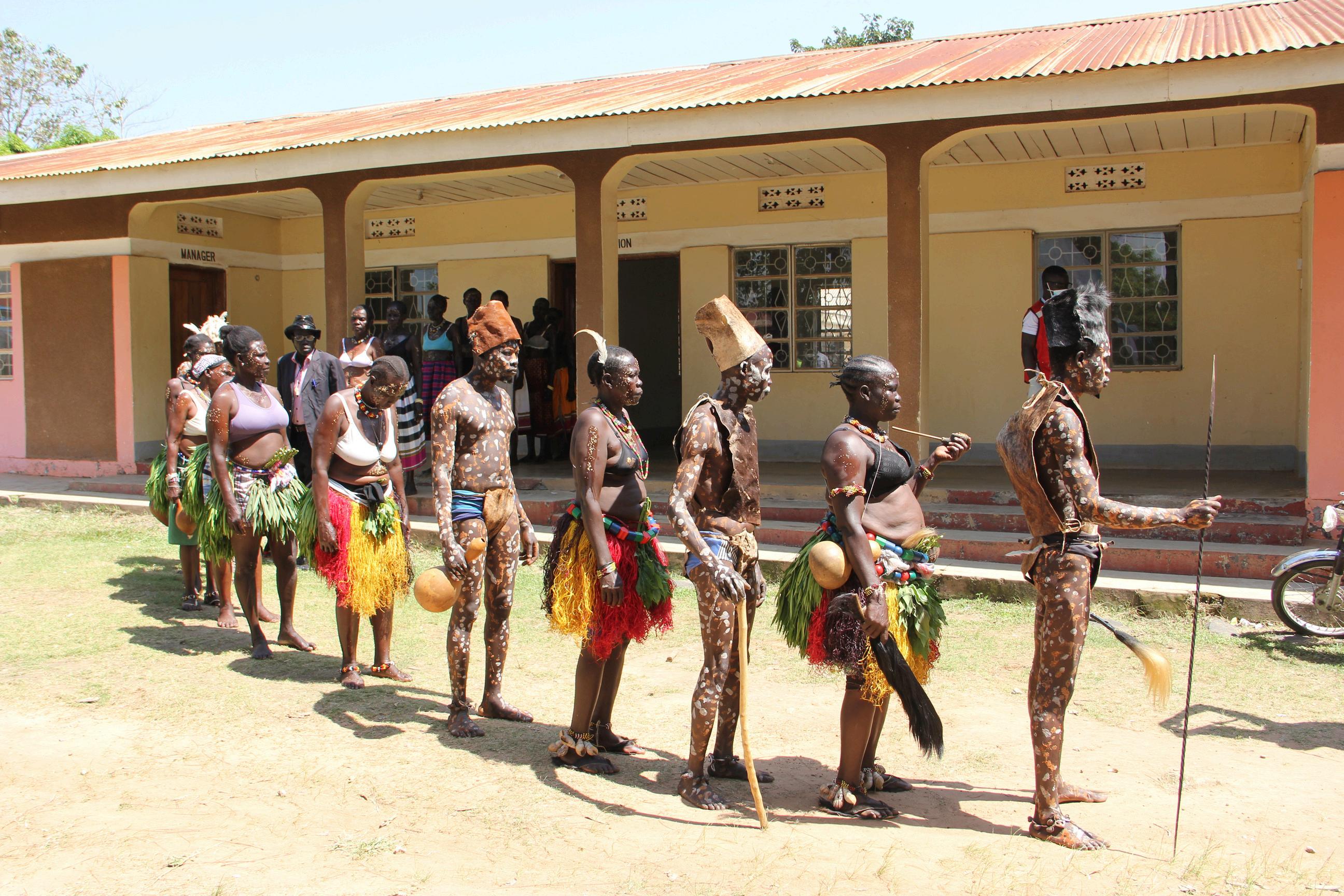
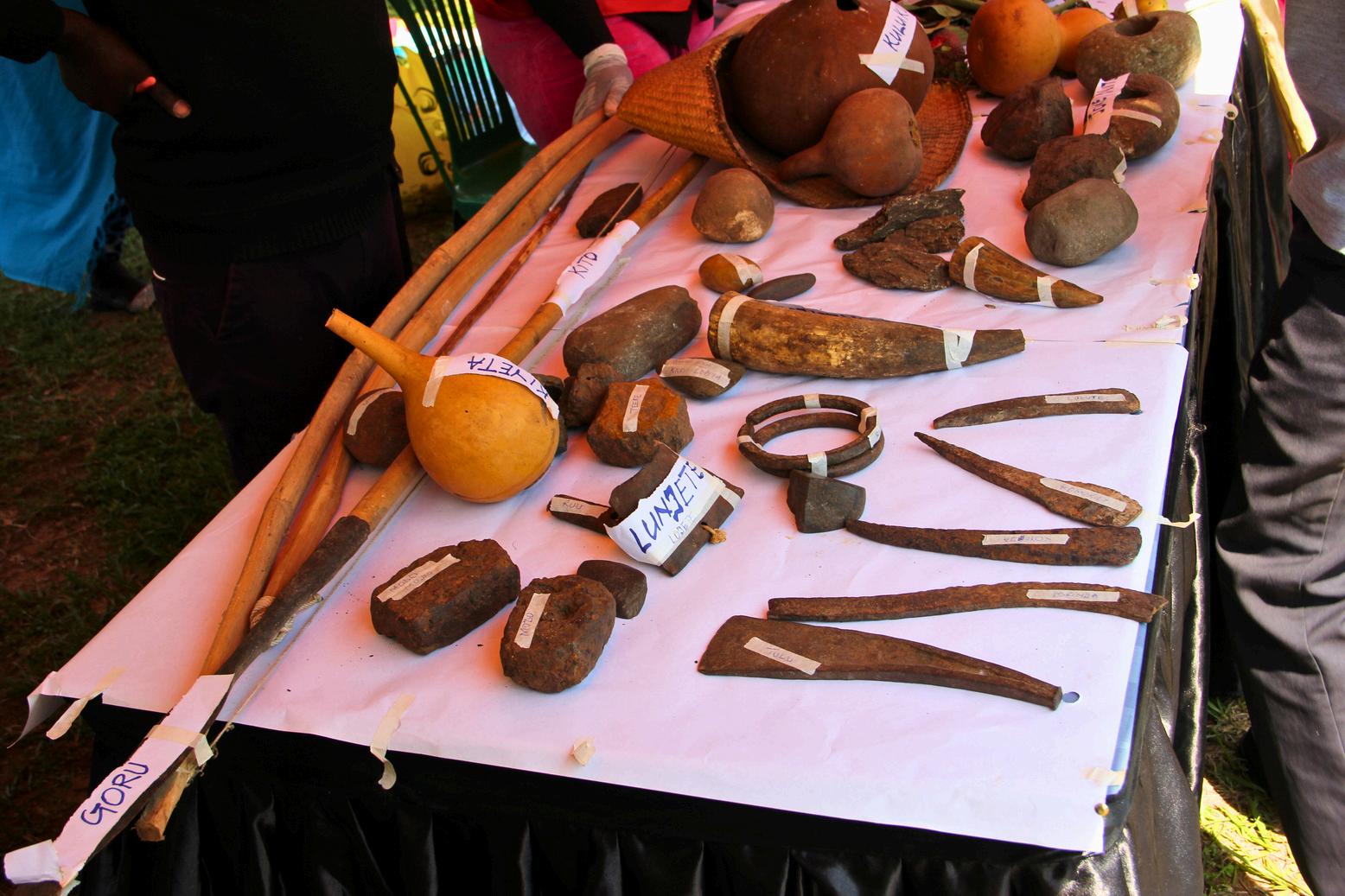
CECI’s Intercultural Gala in Koboko provided a safe space for 326 refugees and host community members to come together from four distinct ethnic communities to reconnect with and celebrate their cultural heritage Through a showcase of traditional foods, drinks, medicine, ornaments, dances, arts and crafts, and tools for farming and defense from four communities, including the Dinka, Kuku, Kakwa, and Lugbara, the gala allowed these communities to celebrate each other’s culture. It also allowed their leaders to engage in dialogue about how to further integrate and support each other and forge bonds of trust and collaboration, strengthening a shared identity and promoting peaceful coexistence
Participants also bought one to three items showcased, such as traditional foods, ornaments, crafts, and tools from other cultures, further supporting each other's cultural expressions and promoting tolerance and acceptance of diverse identities Over 75% of the participants felt this shared cultural exchange renewed their sense of pride, belonging, identity, and understanding, reinforcing the importance of cultural preservation as a powerful tool for enhancing peaceful coexistence and community resilience. In his closing remarks, the paramount chief of the Kakwa community, His Highness Mustafa Ami, said, “…this gala gave us a platform to share our cultures with each other and our children,” building a foundation for ongoing unity and social cohesion in Koboko and beyond
Lugbara community performing traditional dance during our intercultural gala in Koboko - 2023
VOICES FROM THE INTERCULTURAL GALA
“Being here today reminds me of the beauty of our heritage. I feel proud to share my culture and see others embracing it. This is more than just an event; it's a way for us to heal, connect, and feel at home again." Grace Lado, 27, South Sudanese Refugee
"This gala is proof that cultural diversity strengthens us. When refugees and hosts come together to celebrate traditions, we create a foundation of trust, unity, and respect. We should continue building on this to make our communities stronger and more resilient " His Highness
Mustafa Amin, Kakwa Paramount Chief
"Supporting events like these aligns with our vision for inclusive development When refugees and hosts unite over shared culture, we move closer to a peaceful and cohesive society This is a model for the future " Mr Mitala, Resident District Commissioner, Koboko District
"Our traditions are part of who we are as Kakwa people Today we had a chance for our youth to learn where they come from and feel proud of it I hope this becomes an annual tradition to keep our heritage alive " Hon Todoko Isaac, Cultural Coordinator, Tu Mata Na Kakwa R E F
V E N T O R G A N I Z E R
E
GOVERNMENT
"We wanted to provide a space where people could reclaim their cultural identity and inspire others to value diversity This gathering has shown that when we celebrate our roots, we build a path towards peace and harmony " Jackie Ben, MaMara Sakit, Event Co-organizer
"This cultural gala exemplifies the power of community-led initiatives. When organizations like CECI and Ma-Mara Sakit step forward to celebrate and preserve culture, they contribute to the district’s social cohesion and reinforce our development goals. Such events not only bring us together but also enrich our community’s strength and resilience " Mr Alonga Simon, Chief Administrative Officer, Koboko District
Traditional tools, arts and crafts exhibition and gallery during our intercultural gala in Koboko - 2023
393
people supported to participate in local, national, and international events promoting peaceful coexistence
4,300
people reached with messages on GBV prevention, women’s leadership, and shared resource utilization through songs, dances, and dramas
69% were females
31% were males
80% were refugees
SUPPORTING COMMUNITY PARTICIPATION IN EVENTS ENHANCING PEACEFUL COEXISTENCE
CECI supported 393 refugee youth, women, local leaders, peer educators, and VSLA groups from Koboko and Bidibidi Refugee Settlement to participate in local, national, and international events promoting peaceful coexistence These included World Refugee Day, International Women’s Day, International Peace Day, International Youth Day, and the 16 Days of Activism Against Gender-Based Violence Through traditional songs, dance, and drama, they spread critical messages about peace, GBV prevention, women’s leadership, and shared resource utilization, reaching over 4,300 people (2,967 females and 1,333 males) across Koboko Municipality, Lobule, and Bidibidi Refugee Settlements.
Their participation in these events has strengthened their confidence and positioned them as key stakeholders in decision-making processes They are now recognized contributors in monthly settlement coordination meetings, protection coordination meetings, and Sexual and Gender-Based Violence (SGBV) sector coordination meetings
01
Gender-based Violence awareness song recorded
To date, they have presented critical issues affecting women in over 12 meetings, engaging directly with implementing partners, UN agencies, and the Office of the Prime Minister, ensuring women voices are heard and influence interventions and policies
During the 16 Days of Activism, the groups helped develop the campaign theme song “Saka Na’bu” (Staying Well) The song calls for the end of all forms of violence against women and girls and children, and the empowerment of these groups through equal access to education and opportunities. The song was played at events, broadcast on local radio, and garnered over 4,676 views on YouTube, amplifying its impact beyond the immediate communities and spreading awareness to wider audiences.
These initiatives have strengthened community participation, raised awareness about critical issues, and positioned refugee and host community members as active leaders in fostering peaceful coexistence and addressing shared challenges
Saka Na’bu (Staying Well) - Franko Lokunyumi
Scan QR code or go to the below link to stream it on YouTube
https://youtu be/Rn xmoY3-FQ?si=Bj7uTyTK DoI9qEu
03 refugee-led organizations (YETA, Lugbara Kari, and I CAN South Sudan) hosted our exchange learning visits for peacebuilders
85
peacebuilders from Bidibidi refugee settlement were facilitated to participate in two exchange learning visits to Imvepi and Rhino Refugee Settlements
39
02
women peacebuilders were facilitated to participate in the exchange learning visits community grievances resolved in Uyanga Village, addressing theft and attempted GBV
STRENGTHENING PEACEFUL AND GENDER JUST SOCIETIES
THROUGH EXCHANGE LEARNING FOR AND AMONG PEACEBUILDERS
CECI facilitated 85 leaders of local community peace structures from Bidibidi Refugee Settlement, including women, men, youth, and religious and cultural leaders, to participate in two exchange learning visits to Imvepi and Rhino Refugee Settlements. During these visits, participants shared their experiences using the Gender Analysis and Learning Systems (GALs) methodology to empower women and increase their participation in leadership, planning, decision-making processes, and peacebuilding in Bidibidi with peers in Imvepi and Rhino
They also learned about alternative dispute resolution mechanisms used by their colleagues in Imvepi and Rhino to resolve conflicts and foster reconciliation. The platform created by these sessions allowed for community peace structures in Bidibidi, Imvepi, and Rhino to exchange knowledge, share experiences, and learn from each other best practices for community engagement in peacebuilding These practices are now being adapted and replicated in their own communities to resolve conflicts, empower women and promote peaceful coexistence between refugees and host communities
THANK YOU!
We extend our heartfelt gratitude to all the incredible individuals, organizations, and partners who generously contributed their time, expertise, funds, and materials throughout 2023. Your unwavering support means the world to us, and we are deeply grateful for all that you’ve done.
DONORS/FUNDING PARTNERS
War Child Canada (WCC)
OXFAM Denmark (IBIS)
OXFAM Canada
Mastercard Foundation
Children Rights and Violent Prevention Fund (CRVPF)
European Union
Global Whole Being Fund
r0g Agency for open culture and critical transformation
Koboko Municipal Council (KMC)
COLLABORATIVE PARTNERS
Youth Social Advocacy Team (YSAT)
I CAN South Sudan
Umoja Rescue Agency (UREA)
Lugbara Kari CEFORD
Ma Mara Sakit
Youth Empowerment to Act (YETA)
John Paul II Justice and Peace Center (JPIIJPC)
International Rescue Committee (IRC)
Finnish Church Aid (FCA)
Civil Society Budget Advocacy Group (CSBAG)
Danish Church Aid (DCA)
BOARD OF DIRECTORS
Patrick Chandiga Justine Abure, Founder & Chair
Benson Khemis Soro, Secretary & Executive Director