

Legend on the radar - on the CECE radar political phase - political discussions at the EU level preparatory phase - evaluation studies; impact assessments; stakeholders consultations legislative phase - EU Commission proposals; readings by EU Parliament and Council; trialogue negotiations; final proposals & publication in the OJEU implementation - entry into force & monitoring
As I begin my tenure as President of CECE, my focus is firmly on the opportunities and challenges ahead. The coming months and years will be defined by how our sector positions itself in a rapidly evolving industry. For CECE, this moment offers the opportunity to advance regulatory clarity and reinforce the relevance of the construction and mining sectors for Europe’s future.
One of my priorities is to have concrete and measurable goals. In 2026, this includes the publication of secondary legislation on the road circulation of construction machinery, as well as the publication of the guidance document supporting the implementation of Machinery Regulation. I consider it essential that we continue to actively encourage and support this process, advocating for timely publication.
Furthermore, I see trade relations between Europe and the United States as an important area of focus during my presidency. Transatlantic trade plays a central role for manufacturers in our sector, supporting market access, investment and competitiveness. In this context, CECE remains committed to maintaining constructive dialogue with policymakers and stakeholders across our industry.
2026 will also be the year for important international trade shows. These events are not only showcases for technological progress, but also essential platforms to
connect with industry leaders, policymakers and partners. CECE values its partnerships with trade show organisers very highly and is proud to participate as an exhibition partner at the following events.
Starting with CONEXPO-CON/AGG in Las Vegas in March, the year continues with SaMoTer in Italy in May. In June, KOMATEK in Istanbul and CSPI-EXPO in Japan will offer a vital bridge between European and international markets, as well as bauma CONEXPO INDIA in late September and bauma CHINA in November. These moments will be instrumental in broadening the reach of our sector.
Finally, looking ahead to the CECE Congress taking place on 27-29 October 2026 in London, it will offer an opportunity for the industry to come together. It will provide an important platform for open discussion on ongoing developments in our sector. I see it as particularly important to make space in these discussions for young professionals, as this addresses one of the sector’s most pressing challenges: attracting the next generation. I believe bringing their perspectives into the conversation allows the industry to reflect on its future and evolve in a way that is dynamic and innovative for the years to come.
Looking ahead, I am confident that CECE and its members are continuing to drive progress, shaping the construction and mining industries in Europe.


Phil Layton CECE President
CECE is the voice of the European construction and mining equipment manufacturers. Founded in 1959, we are an European-level federation that engages with EU policymakers on behalf of our membership. Through our national member associations, we speak on behalf of an industry made of 1,200 companies employing 300,000 people and creating a value of € 59 billion annually.
Relying on a wide network of industry experts engaged across a broad range of policy areas, we coordinate the views of our members with the aim of achieving a fair and competitive regulatory environment. Our advocacy work addresses the broad spectrum of policies that impact the manufacturing and the construction industries in Europe.
We are committed to Constructing the Europe of Tomorrow by securing a globally competitive European construction and mining equipment industries through four main goals.
OUR
OUR ASSOCIATE MEMBERS

RICCARDO VIAGGI Secretary General

MARTINA GRIFFO Policy Manager

SEBASTIAN POPP Economic Affairs Manager

ROMA GUZIAK Senior Communications Manager

ENRICO BORELLA Public Affairs Manager

JASMIN SCHERBEL Communications Intern

LAURA FIUMARA Policy Manager

SCHERBEL Press Officer

PABLO GULMANELLI DE YTURRIAGA Technical Policy Intern

CECE Summit 2025 took place under the theme “Smarter Rules, Stronger Industry” to explore EU’s work on regulatory simplification and its impact on the construction equipment sector.
The Summit kicked off with a networking dinner and reception, offering an opportunity to connect with peers and industry leaders. During the evening, Martina Griffo, Policy Manager at CECE officially launched the Market Surveillance brochures, providing practical guidance on machinery compliance and regulatory requirements. Remarks were also given by Brando Benifei, Member of the European Parliament, and Barbara Bonvissuto, Director at DG Grow, European Commission, emphasising strong enforcement, collaboration and upcoming measures to ensure fair competition and consumer trust.
Moderated by Secretary General, Riccardo Viaggi, the Summit brought together over 120 participants, including



policymakers, technical experts, industry leaders and press to discuss whether cutting red tape and simplifying regulations can deliver real and measurable changes for the industry.
The Summit opened with a welcome speech by former CECE President, Jose Antonio Nieto, setting the stage for a day of in-depth discussions. He emphasized the urgency for transforming regulatory ambitions into practical outcomes. Riccardo Viaggi framed the topic as more than a policy goal, describing simplification as a strategic necessity to build a leaner, more resilient framework for the European construction equipment sector.
The first keynote speaker Jaroslaw Pietras, Research Associate at the Wilfried Martens Centre for European Studies, titled “How do we understand simplification and what is its real impact on business?”. Jaroslaw explored the complexities of regulatory simplification and its implications for the industry.
He emphasized that the success of simplification should not be measured by the number of rules removed, but by its real effects on innovation, productivity and the trust between regulators and industry.
Followed by Barbara Bonvissuto, who presented the first steps of the Omnibus Package, outlining the Commission’s approach to cutting unnecessary complexity and reducing administrative burdens across the Single Market.
The Summit also featured an engaging and forward-looking panel debate on the political stakes of simplification, bringing together diverse perspectives from policymakers, industry representatives, and CECE experts. The panel included Ulrich Adam, Director General at Orgalim, Barbara Bonvissuto, Laura Fiumara, Policy Manager at CECE, Bjoern Juretzki, Head of Unit at DG Connect. Panellists discussed how to balance political ambition with practical feasibility, ensure consistency across
EU departments, and maintain trust between regulators and businesses. Covering topics from digital policy coherence, they agreed that meaningful simplification must be an ongoing, resultoriented process.
Following the panel, Koert Debeuf, Professor of Politics at VUB, provided a compelling perspective on the current geopolitical environment. Koert traced the shift from globalisation to “tribalisation” and highlighted how rising political and economic tensions are testing Europe’s unity. He argued that the EU must strengthen its strategic autonomy and act collectively to remain a stabilising force.
As Summit Knowledge Partner, Nicholas Fearnley, Head of Global Construction Forecasting at Oxford Economics, presented a comprehensive overview of the European construction market. He explained that while overall economic growth will rely on consumers, the sector is set to recover, supported by renovation projects, infrastructure investment, and rising demand for data and energy networks. Fearnley also pointed out that labor shortages, productivity pressures, and financial constraints remain key challenges that will shape the pace and scope the industry’s rebound.
The Summit concluded with closing remarks by Jose Antonio Nieto, followed by CECE’s new President Phil Layton announcing the CECE Congress 2026 in London. A special thank you was

extended to Roma Guziak, Senior Communications Manager at CECE, for her ten years of dedication and significant contributions to CECE.
The exchanges throughout the day highlighted the value of continued dialogue between industry and policymakers, as the sector works toward more practical and workable regulation.
We extend our gratitude to our sponsors, including Oxford Economics, DLL, and Media Partner Construction Europe. Their support was instrumental in making the Summit a success and bringing together experts and participants from across the sector.
Discover the new platform for compliant construction machinery www.compliantconstructionmachinery.eu



The daily tasks of the Committee for European Construction Equipment (CECE) are managed by the CECE office in Brussels, consisting of two technical policy managers, technical policy intern, the senior communications manager, communications & events assistant, public affairs manager for mining and the secretary general. The team’s work is supported and supervised by the Board, composed of the managing directors of the national member associations. The Board meets six times a year. Twice a year, the CECE General Assembly – the highest governing body of CECE – gathers the presidents of the national member associations, who discuss the CECE work programme, review the organisation’s achievements, set priorities and approve the work of the Board.
The General Assembly is chaired by the CECE President, seconded by two VicePresidents, each elected for 2 years. The president is also the first CECE representative in external relations, supported by the secretary general.
The work of CECE is organised by topics as well as products. The work on topics is handled by Commissions supported by dedicated Project Teams for specific tasks. Topics relevant for a particular range of products are handled via Product Groups The organisation and proper functioning of the Commissions, Teams and Groups, as well as the timely interaction and consultation between them, is initiated and coordinated by the CECE Office.
The High-Level Technical Policy Advisory Group (HLTPAG) consists of high-level technical and engineering executives of leading companies with a strong interest in European affairs and their impact on the business. The group advises CECE with regard to strategic positioning, sector priorities and industry positions on technical subjects. The Decarbonisation Task Force (CO2TF) advises CECE on industry positions and priorities on environmental subjects. The group’s members support the advocacy work of CECE through speaking engagements or participation in meetings with policy makers.
The Digitalisation Task Force (DTF) established in 2019, follows the market developments around telematics and connectivity, digital technologies and IoT to assess the impact of the EU data policies on the digital transformation of construction equipment.
The Technical Commission (TC) brings together a wide variety of technical experts from national associations and companies. They review the work of the Project Teams (PTs) and discuss technical topics not covered by a specific PT. The TC is also a platform to inform non-PT members about the ongoing work.
For advice on and support of the CECE advocacy strategy, CECE regularly calls on the company representatives that are operating in the “EU capital”, the CECE Brussels Advocacy Network

Product Groups (PG) consist of industry representatives manufacturing the same type of equipment. They meet to exchange information - in accordance with European regulations and laws on competition - and to promote technical and economic cooperation.
CECE’s Statistical Commission (SC) brings together statistical and market experts from member associations and companies in order to optimise the statistical service of CECE. The representatives of CECE’s Statistical Commission together with representatives of the sister associations from Japan, Korean and North-America form the Intercontinental Statistical Committee (ISC), which takes care of the worldwide statistical systems for the construction equipment industry.
The topic of trade is handled by CECE’s Trade Policy Commission (TPC). The group exchanges on access to foreign markets, global supply chains, and raw materials. The goal of the TPC is to spread awareness about the most important trade topics mainly within the EU, but also worldwide.
The group continued monitoring the latest developments in the digital and green transformations of the business models. The HLTPAG merges this area with the key policy developments coming from the European Commission.
A key topic on the long-term timeline of the HLTPAG has been the new simplification drive by the EU on the regulatory environment. We have monitored all the so-called Omnibus Packages and have assessed their potential long-term impact on the OEMs producing in Europe.
During a Bauma year like 2025, we have also looked at the innovations in the construction machinery industry and exchanged on what needs to happen to enable those innovations. We have engaged with the EU on Research and Innovation entities like the European Innovation Council. Our member companies that were present at Bauma have hosted several EU policymakers at their Bauma pavilions, showing the cutting-edge technology that goes into a piece of construction equipment.
We have advised the CECE Board on certain strategic discussions such as CBAM and the impact of import duties from the US. The HLTPAG also supported the CECE Board on decarbonisation developments taking place at national level, such as in Germany and the Nordics or within other European trade associations, like the European Rental Association.
Finally, the group welcomed the conclusion of the activities which led to the publication of the market surveillance brochures, with the official launch of the www.compliantconstructionmachinery.eu platform.
With the simplification files in full swing, we will focus on ensuring the strongest link between the CECE Technical Commission and our group, most of all for timely reporting of the most consequential impacts. In addition, we will monitor all new initiatives looking at decarbonisation policies and how we can best leverage CECE’s position on this topic to take part in the proper debates at national and European levels. Finaly, we will support CECE in giving the necessary push through the finish line to regulatory initiatives like the secondary legislation of the implementation of the harmonised road circulation requirements.
”CECE’s member companies are committed to Europe as a manufacturing hub for construction machinery. To keep this realistic, the current simplification drive must continue and other long-standing competitiveness problems in Europe must be solved. Legislation like CBAM seems to be going in the opposite direction and the HLTPAG will keep this on its radar for 2026.”

CECE HIGH-LEVEL TECHNICAL POLICY ADVISORY GROUP
Chair: Eugen Schobesberger (Liebherr) Number of experts: 18
The High-Level Technical Policy Advisory Group (HLTPAG) consists of leading figures of member companies with a strong interest in European policy and its technical impact on the construction machinery sector. The group advises CECE with regards to strategic considerations on sector priorities and industry positioning on technical subjects.
DIGITALISATION
Chair: Holger Pietzsch,
Moog Construction
Number of experts: 42

The EU set out specific actions for Europe’s digital transformation by 2030. The adoption of digital technologies will bring substantial advantages increasing the overall added value of the construction machinery industry. Data management is considered the key element to enable the digital transition. The CECE Task Force on Digitalisation follows the market developments around telematics and connectivity, digital technologies and IoT to assess the impact of the EU data policies on the digital transformation of construction equipment.
The Digitalisation Task Force (DTF) consolidated its increasingly important role in supporting CECE’s interpretation and implementation of the EU Data Act, particularly regarding data holders’ obligations in business-to-business (B2B) contexts. Building on work initiated in 2024, the DTF was actively involved in identifying, structuring, and analysing representative use-case examples, as well as examining the predominant data-sharing business models in the construction equipment sector, that laid the foundation for a more structured contribution in 2025.
In 2025, the DTF provided targeted technical expertise within the CECE Ad-hoc Group on Data Act implementation, supporting the development of the Data Act Implementation Guide, a project led by CECE PT Data working group and finalised in mid-April. Through strengthened collaboration with PT Data, the Task Force played a key role in defining the types of data within the scope of the Data Act, developing practical use-case examples for construction machinery, and clarifying the roles and responsibilities of the various economic operators involved. This successful cooperation underscores the growing importance of knowledge-sharing on horizontal regulatory topics affecting the sector.
In 2026, the DTF will continue to support CECE workgroups in assessing the technical impacts of new regulations on the industry. In addition, the experts will focus on data and standardisation, particularly in mixed-fleet environments, as well as the digitalisation of the construction jobsite. This expanded scope goes beyond traditional telematics data to include metrics such as material flow, volume, weight, personnel data, availability, qualifications, safety operations, energy usage, and tracking.
““For users and manufacturers of connected devices, the EU data act has profoundly redefined access and use of data. The clarification of scope, impact and requirements for the construction sector has been the priority focus and achievement for CECE’s task force in 2025.”
Chair: Alan Tolley, JCB
Number of experts: 36

Decarbonisation has become an everyday matter and construction equipment manufacturers have ramped up their efforts in terms of innovation and technology provision to the market. CECE stands ready to propose operational policy directions to fast-track the decarbonisation of the wider construction industry. The CECE Task Force on Decarbonisation is primarily assigned to develop advocacy material stemming from the CECE four-pillar approach to decarbonisation set out in CECE 2021 position paper on decarbonisation.
Throughout 2025, the CECE Decarbonisation Task Force (CO2TF) focused its work on advancing the CECE Product Carbon Footprint (PCF) Guidelines project. Following the establishment of the CECE PCF Sub-group in late 2024, a dedicated Drafting Team composed of specialised OEM representatives and CO2TF members developed a harmonised and reliable methodology for calculating the carbon footprint of products within CECE’s scope. During the year, CO2TF experts finalised Work Package I, covering the logistics and manufacturing phases, as part of the broader life-cycle assessment framework underpinning the PCF Guidelines. In parallel, the CO2TF worked on raising awareness at both European and national levels of the decarbonisation needs of construction machinery manufacturers, promoting the CECE 4-pillars approach that goes beyond a sole focus on electrification. Task Force members also advocated for a unified decarbonisation strategy addressing shared challenges across the construction and agricultural machinery sectors.
In 2026, the CECE CO2TF will continue to further develop the CECE PCF Guidelines, with particular emphasis on the machine in-use phase and the refinement of the carbon footprint calculation methodology. In addition, a key priority will be to strengthen advocacy efforts in support of the implementation of CECE’s 4-pillar approach to decarbonisation.
“The CO2 Task Force continues to monitor CO2/Decarbonisation policy developments in Europe - much of it at national level - and to produce material that can be used for advocacy of the industry’s position to policy makers and others. Also, material that can be used by member associations and companies for their sustainability activities. This year we have made considerable progress in producing PCF Guidelines, with a small sub-group of specialists meeting frequently to deliver this quite ambitious tool. We also reviewed to CECE Decarbonisation Position Paper (2021) and agreed it continues to be relevant and useful. In 2026, we will continue to work on the PCF Guidelines as well as continuing with our monitoring activities and production of materials to support advocacy activities.”

Chair: Stefan Nilsson, Volvo CE
Number of experts: 96
The world of technical regulation is managed by the CECE Technical Commission. The Commission brings together a wide variety of technical experts from national associations and companies. They review the work of CECE Project Teams.
In 2025, the Technical Commission (TC) reinforced its position as the central forum for CECE members to address horizontal and cross-cutting regulatory and technical priorities, while fostering high-level engagement with representatives of other industries as well as the European Commission (EC). High-level presentations and exchanges marked the year, including dedicated Q&A sessions with DG GROW officials on the New Legislative Framework (NLF) revision, offering members direct insights into the EC legislative roadmap while reinforcing CECE’s role as a trusted partner in regulatory discussions. Furthermore, the TC also coordinated the finalisation and launch of CECE’s Market Surveillance brochures and dedicated online platform, presented during the CECE Summit 2025 and shared with EU institutions and relevant stakeholders, while continuing dialogue with national authorities on conformity assessment practices.
CECE also hosted the 2025 JTLM edition in Innsbruck, Austria, facilitating the exchanging of information on ongoing legislative and normative activities worldwide. As usual, the Technical Commission played a big role in the JTLM setting of the agenda and CECE role in the event.
Looking towards 2026, the TC will prioritise the developments around the EU Product Act. This will include monitoring the legislative procedures for the revision of the NLF, as well as the Market Surveillance and Standardisation Regulations, alongside preparing for the upcoming 2026 JTLM in Dallas (USA).
“In summary, the TC engagement has been very good during the year. The well-attended quarterly meetings have been characterised by informative reporting from the CECE staff and the committed project teams, as well as open dialogues with invited industry representatives and EU officials. All of this has given us the necessary conditions for successful advocacy work.”
In 2025, the TC advocacy efforts were mainly invested in engaging discussions on the revision of the NLF, presenting CECE’s position to DG GROW and participating in targeted consultations. The TC coordination role in setting the CECE policy priorities and key activities on the relevant dossiers was crucial in shaping the legislative landscape and ensuring that the construction machinery industry’s interests were adequately represented. These activities, led by the expertise of the Technical Commission, guaranteed that CECE’s and its members’ contributions were considered throughout the regulatory process.
In 2025, the PTE group continued to monitor electrification developments and engage in technical discussions on emerging standards and interoperability. Key topics included updates to the Matrix of Standards for Electrification, the endorsement of ISO 14990-4 on arc flash safety, and the IEC proposal for fuel cell technologies (IEC 62282-4-601) targeting hybrid systems for excavators and wheel loaders. The group also explored battery transport limits and their implications for rental operations, while following initiatives such as ENI’s OEM roundtable on voluntary market standards for large electric machines. Insights from ElaadNL’s Testlab highlighted challenges and opportunities in smart charging, interoperability, and power quality for heavy-duty equipment.
For 2026, PTE will monitor the development of electrification standards and global initiatives. The group will continue to track IEC and ISO projects. Engagement with stakeholders will remain essential to ensure that CECE members are prepared for evolving requirements and technological advancements.
“2025 was a year of consolidation in PT Electrification, where we built upon the foundations that had previously been established. 2026 will see PT Electrification increase its liaison activity with external stakeholders as the sector continues to evolve in the dynamic area.”
In 2025, CECE maintained engagement with stakeholders and monitored developments in electrification standards and initiatives. In 2026, CECE will continue to represent industry interests in discussions on emerging technologies and regulatory frameworks, ensuring that any future measures remain practical and aligned with sector needs.
Chair: Dale Camsell, CEA
Number of experts: 50

The Project Team on Electrification considers the main technical requirements, legislation and standards related to electric drives, the energy supply and systems for construction machinery products.
Chair: Sofia Cerny, Volvo CE
Number of experts: 69

Among the dossiers tackled by CECE Project Team 3R stand, unparalleled, restrictions on substances used in the construction equipment sector, new ecodesign requirements, batteries and waste batteries. CECE follows a wide array of legislative and regulatory initiatives, such as restrictions under the REACH Regulation, Revised F-Gases Regulation, Batteries Regulation and Ecodesign for Sustainable Products Regulation (ESPR).
Throughout 2025, the work of CECE Project Team 3R focused on the most relevant developments in EU chemicals legislation and policy. A key priority was the revised PFAS restriction proposal under the REACH Regulation, following ECHA’s sector-bysector evaluation of PFAS uses and applications carried out during the year. As an ECHA accredited stakeholder, CECE actively participated in the 2025 meetings of the Risk Assessment Committee (RAC) and the Socio-Economic Analysis Committee (SEAC) dedicated to the assessment of PFAS restrictions. Significant attention was also given to the implementation of the Stockholm Convention on Persistent Organic Pollutants (POPs). In this context, CECE contributed feedback to the European Commission’s consultations on the relevant delegated acts, both adopted and currently under preparation. In parallel, CECE PT 3R closely followed the implementation of the Batteries and Waste Batteries Regulation. As a member of the Commission’s Expert Group on Waste (Battery Regulation), CECE engaged on key aspects such as due-diligence obligations, labelling requirements, derogations related to the removability and replaceability of portable batteries, as well as marking and information obligations. The team’s work primarily focused on the practical implementation of these new requirements, in particular through non-legislative acts. On ESPR, the publication of the ESPR Working Plan for 2025-2030 was also monitored with particular attention to the JRC study on iron and steel.
The important upcoming developments related to the revised PFAS restriction proposal under the REACH Regulation will remain a key priority in 2026. In particular, CECE plans to respond to the public consultation on the SEAC Draft Opinion, expected to be launched in March 2026 following the completion of ECHA’s sector-by-sector assessment. The announced revision of the REACH Regulation will also be closely monitored, with a specific focus on emerging requirements for digital information along the supply chain, including evolvement of the Digital Product Passport concept. In addition, significant attention will be devoted to the Environmental Omnibus Simplification Package, including the potential discontinuation of the SCIP database. Finally, CECE will continue to monitor the development of secondary legislation under the Batteries Regulation and engage as appropriate.
‘‘’Environment and Sustainability are still high focus areas for the EU Commission and it shows in the broad PT3R legislative portfolio. We continue our essential work to ensure our industry sector is considered in the legislative development, and appropriate advocacy actions will be taken. Collaboration with sister associations will be important to strengthen our positions in specific files and topics”.
In 2025, CECE strengthened its engagement with the Commission’s DG ENV unit responsible for the implementation of new requirements for rechargeable industrial batteries under the Batteries Regulation. Experts from PT 3R regularly participated in public consultations and contributed written input to the Commission’s Expert Group on Waste. In parallel, CECE submitted additional feedback on the Commission’s draft delegated acts concerning MCCP and LCPFCA restrictions under the POPs Regulation. To address the industry’s need for simplification and reduced administrative burdens arising from environmental legislation, PT 3R also developed a position paper on the EU Environmental Omnibus package.
In 2025, the PT Engine group continued to monitor and engage in discussions on key regulatory and technical developments. A major focus was on hydrogen and alternative fuels, with progress on UNECE Regulation 96 and the EU implementing decision enabling type approval for mono-fuel hydrogen engines. The group also followed the European Commission’s plans to amend Stage V regulations to include hydrogen as a reference fuel and prepared for the upcoming ISO 8178 revision, expected in early 2026, which will introduce fuel-flexible testing methods. The group maintained its attention on Low Emission Zones (LEZ) and Zero Emission Zones (ZEZ), updating its existing position papers. Global emissions and regulatory trends were another key area of focus, with updates on initiatives such as California’s Clean Construction Program, China’s draft NRMM Stage V regulation, and India’s consideration of future emissions standards. The group also addressed technical challenges, including in-service monitoring requirements for Stage V and the implications of the EPA Power Spread Rule in the US.
For 2026, the PT Engine group will prioritise supporting the implementation of hydrogen and alternative fuel regulations within the EU framework, ensuring that type approval processes remain practical and technology neutral. The group will continue to track national LEZ and ZEZ initiatives and assess the need for updated guidance, while maintaining engagement with the GEME Working Group and other CECE initiatives to ensure consistency.
“During 2025 we have noted many stakeholders offering their vision of future Decarbonisation strategies for our sector. CECE has taken the opportunity to remind the need for a broad technology neutral approach and we will continue to send this clear message during 2026. We understand that in March 2026 the Commission will publish its review on the in-service monitoring requirement of the Stage V legislation, and we will be ready to react on any conclusions from the report that could impact machine manufacturers when the Commission begins development of its future nonroad emissions regulation.”
In 2025, the group coordinated with industry associations such as EUROMOT and AEM to ensure alignment on key issues and internally with the CECE Decarbonisation TF. International developments were closely monitored, and insights were shared with CECE members to maintain a competitive and informed position in global discussions on emissions and decarbonisation. Looking ahead to 2026, the group will continue its advocacy efforts by engaging with the European Commission on amendments to Stage V regulations and the implementation of hydrogen type approval processes. Ensuring CECE members’ concerns are represented in technical and political discussions will remain a priority.

Chair: Jason Ong, Komatsu Number of experts: 75
European construction equipment manufacturers play a vital role in society by significantly reducing emissions of nitrogen oxides, hydrocarbons, and other harmful particulates. Emissions from new construction equipment are now at their lowest levels ever. The CECE Project Team Engine Emissions addresses key issues related to EU regulations on emission limits and the type-approval of internal combustion engines for non-road mobile machinery, while closely monitoring relevant national and European policy developments. The team also examines the suitability of alternative fuels for construction machinery to ensure alignment with evolving environmental goals and regulations.

Chair: Marie Poidevin, Evolis
Number of experts: 77
The EU Digital Single Market strategy is driving legislative initiatives that will have a broad impact on the construction machinery sector, from the protection of personal data to the data generated by machines. This includes questions as ownership of the data, transfer, portability, liability, interoperability, data security. Identifying the main concerns regarding the obligations of the recent and coming new regulations lies in the hands of the experts of CECE Project Team on European Data Policy.
This year, PT Data experts continued to support CECE members in navigating the rapid transition from legislative adoption to the implementation phase of the EU’s digital regulatory framework. As the Data Act, Cyber Resilience Act (CRA), and Artificial Intelligence Act (AI Act) moved closer to their first major application deadlines, the group focused on clarifying the obligations for manufacturers, coordinating with Orgalim, and ensuring that the specificities of the construction equipment sector were consistently reflected. A major milestone in 2025 was the finalisation and launch of the Orgalim Data Act Implementation Guide in mid-April. CECE experts, through the dedicated CECE Ad-hoc Group on the Data Act implementation, composed of experts from both PT Data and Digitalisation Task Force (DTF), contributed significantly to the interpretation of the new Data Act obligations for data holders, and substantial development of the guide. On cybersecurity, PT Data followed the early implementation steps of the CRA, including the Commission’s ongoing work on the CRA interpretation guidelines. Specifically, the focus was on the recent Commission’s FAQs on the CRA as well as ensuring a consistent application timeline with the Machinery Regulation. Regarding the AI Act and approaching its implementation milestones, PT Data looked at the definition and classification of ‘AI systems’. Furthermore, throughout 2025, PT Data closely monitored the developments of the Digital Omnibus Simplification Package, which distinguishes between Digital Omnibus on the digital acquis and Digital Omnibus on AI.
PT Data will concentrate on the Digital Omnibus(es) on the digital acquis and on AI, which introduce targeted simplifications to the Data Act, GDPR, cybersecurity rules, and the AI Act. Building on the exchanges held throughout 2025, the group will focus on the practical implications of these initiatives. In parallel, PT Data will actively engage in the Digital Fitness Check, expected to stress-test the cumulative impact of the EU’s digital rulebook and for which CECE is preparing sector-specific input. The implementation of the CRA will remain a central priority, with members closely following the evolution of the Commission’s FAQs and the development of the CRA interpretative guidelines.
“In recent years, new legislation has made coordination work and the development of specialised guidance necessary. The Commission is now leading us towards a different kind of work, with a focus on the implementation phase. Are these new requirements coherent and straightforward to implement? Can we simplify the lives of manufacturers? The industry has some proposals and we, at CECE PT Data, hope that legislators will take our input on board so that manufacturers are not burdened with successive, costly requirements.”
In 2025, PT Data strengthened CECE’s advocacy role and engagement with the European Commission – particularly DG CNECT – on the implementation and simplification of the Data Act and key digital regulations. The group worked to clarify practical implications of the Data Act and contributed to the Commission’s evolving interpretative work under the continuously reviewed FAQs on Data Act. This cooperation formed the basis for CECE’s position paper on the Digital Omnibus, promoting greater regulatory coherence across data, cybersecurity, and AI legislation. These efforts were amplified during bauma 2025 trade fair and the CECE Summit 2025, where CECE and DG CNECT representatives jointly examined the political and operational stakes of digital simplification, reinforcing CECE’s call for a more predictable and proportionate digital framework for industry.
In 2025, the PT Noise group focused on the implementation of Delegated Regulation 2024/1208, which amends Annex III of the Outdoor Noise Directive (OND) and will apply from 22 May 2025. CECE continued to monitor the application timeline and provided input on clarifications for the OND guidelines, including proposals on how to address excavators used in material handling applications. The group also welcomed the publication of Directive 2024/2839, which removed Article 16 reporting obligations, significantly reducing administrative burdens for manufacturers. CECE actively contributed to discussions on the OND guidelines revision, which will follow a three-step process throughout 2025 and early 2026. A key development was the European Commission’s launch of brainstorming sessions on policy options for a potential future OND revision. CECE submitted a written response outlining priorities such as harmonisation, inclusion of electrified machines, and reducing regulatory burdens. The group also advanced discussions on electric-driven machines, agreeing to hold a dedicated workshop in September to develop a position paper on their integration into OND requirements.
For 2026, PT Noise will continue to engage in the OND guideline revision process, focusing on the third round of updates scheduled for early 2026 and ensuring that CECE’s potential proposals are reflected in the final text. The group will also maintain its involvement in discussions on electrified machines, working toward clear regulatory approaches that allow fair comparison with traditional engine-driven equipment. Additionally, PTN will monitor any developments related to a potential full revision of the OND and remain active in the Noise Expert Group to influence future policy directions.
“With the publication of the delegated acts to the Outdoor Noise Directive (OND) and knowing that there are no plans from the European Commission to fully revise the legislation, the Project Team will focus mainly on the finalisation of the Guidelines to the Delegated Act. We will also keep working with the European Commission on properly addressing electrically driven machines under the OND to ensure that testing procedures will be tailored to the characteristics of the electrically driven products providing European customers with sound power level resulting values which they can use to properly compare products. We will also keep working with the European Commission on chances to simplify legislation whenever possible.”
In 2025, CECE sustained strong advocacy efforts within the OND framework, providing written input to the European Commission on policy options and contributing to guideline drafting. The association also supported the removal of Article 16 reporting obligations and deepened its involvement in discussions on electrified machines. In 2026, CECE plans to continue its advocacy by engaging with the European Commission on the OND guideline revision and the integration of electrified machines.

Chair: Alessandro Rossi, Caterpillar
Number of experts: 75
The PTN focuses on ensuring the fair and efficient implementation of the Outdoor Noise Directive in line with industry needs. The group contributes to the Annex III revision, monitors broader revision initiatives, advocates for industry interests, and explores practical noise testing solutions, particularly for electrified machines. It also collaborates with the European Commission and stakeholders to shape a regulatory framework that reflects technological advancements and future challenges.
Chair: Alessandro Rossi, Caterpillar Number of experts: 54

The PTR Road group is committed to ensuring that the Regulation (EU) 2025/14 on the approval and market surveillance of non-road mobile machinery circulating on public roads reflects the interests of our industry. The group achieves this by actively monitoring the legislative process, proposing suggestions and amendments, and participating in stakeholder engagement meetings. Additionally, they maintain a close watch on National Road Homologation initiatives.
In 2025, CECE concentrated on implementing Regulation (EU) 2025/14, finalising technical requirements and securing seats in the EC Expert Group. In 2026, CECE’s efforts will focus on influencing delegated and implementing acts, ensuring industry priorities are embedded in their provisions. Key actions include clarifying conformity assessment procedures, promoting digital certificates of conformity, and driving timely completion of the two-year legislative process.
In 2025, the PTR group focused on the implementation phase of Regulation (EU) 2025/14 on the approval and market surveillance of non-road mobile machinery (NRMM) circulating on public roads. Following its publication in January 2025, CECE actively contributed to shaping the delegated and implementing acts that will define technical and administrative requirements under this new framework. The group worked extensively within the Industrial Task Force (ITF), finalising the technical requirements document and sharing it with the European Commission in August. Key topics addressed included braking systems, speed and speedometer tolerances, glazing, lighting and marking devices, field of vision, and provisions for electric and batterypowered machines. The group also monitored emerging priorities such as autonomous driving and UNECE regulations on batteries. CECE worked to secure three seats in the newly created EC Expert Group on Agricultural Tractors and Mobile Machinery (WGATM), which will oversee the works related to the Regulation (EU) 2025/14.
For 2026, PTR will concentrate on influencing the drafting of delegated and implementing acts, ensuring that technical requirements remain practical and aligned with industry needs. CECE will advocate for clarity on threshold methodology and conformity assessment procedures, while continuing to simplify administrative templates and promote digital solutions for certificates of conformity. The group will also monitor developments on autonomous driving, UNECE battery regulations, and national homologation initiatives to prevent market fragmentation. Active participation in the EC Expert Group (WGATM) and bilateral meetings with the Commission will be critical to securing industry input during this decisive phase.
“After a productive 2025 we are now going to enter a new phase where we will try to work together with our partners in the ITF (Industrial Task Force) as well as the European Commission to define the technical and administrative requirements which will be set in the Implementing and Delegated acts. We will therefore need to maintain a strong commitment to ensure that those new legislative acts remain in line with our industry needs.”
In 2025, the PT Machinery group continued to play a central role in shaping the interpretation and implementation of the Machinery Regulation (MR). The group actively contributed to the drafting of the Guide to Application, addressing critical topics such as contact with overhead power lines (OPL), seating, protection against corruption, supervisory functions, self-evolving behaviour, vibration, and substantial modification. Cybersecurity and AI provisions under the MR remained high on the agenda. CECE co-signed a position paper calling for postponement of these provisions to align with the Cyber Resilience Act timeline and engaged in discussions with the European Commission to clarify grey areas. Beyond MR, PTM monitored developments while responding to the European Commission’s public consultations on the revision of the Standardisation Regulation, Market Surveillance Regulation and NLF. The group also remained active on related legislation, including the Omnibus IV Package, the Radio Equipment Directive (RED) guide revision, and the Pressure Equipment Directive (PED) guidelines.
For 2026, PT Machinery will continue its active involvement in the MR Guide drafting process. The group will monitor the implementation timeline for MR provisions and advocate for practical, technology-neutral solutions, particularly for OPL detection. Standardisation will remain a priority, with CECE contributing to discussions on the revision of the Standardisation Regulation, Market Surveillance Regulation and NLF while also addressing concerns related to EN 474 and HAS assessments. The group will also follow developments on the RED and PED guides and maintain engagement on the Omnibus IV Package to safeguard industry interests.
“During 2025 PT Machinery has focused strongly on development of the MR guide and raising industry concerns on the functioning of the European Standardisation process. Both topics are of critical importance to members and I would like to take the opportunity to thank PT members and the CECE Secretariat who have been actively participating in these discussions. For 2026 these themes will continue to dominate but we will be ready to support the industry in the important ongoing consultations on the NLF and Market Surveillance. In addition we will continue to closely monitor developments in the Commission’s program for simplification and reduction of administrative burden, 2025 has shown that while this can bring real benefits for industry it can also introduce unexpected challenges.”
Looking ahead to 2026, the group will continue its advocacy efforts by engaging with the European Commission on the implementation of the Machinery Regulation. Ensuring CECE members’ concerns are represented in technical discussions, standardisation processes and EU-institutional discussions will remain a priority. The group will also pursue advocacy for postponement of MR-related provisions under the Omnibus IV Package and the EU Product Act and maintain pressure for research funding on OPL detection solutions.

Chair: Jason Ong, Komatsu
Number of experts: 55
The PT Machinery group is focused on ensuring the effective implementation of the Machinery Regulation (MR) and protecting the industry’s interests. The group achieves this by engaging with key European institutions and sister associations, actively drafting proposals for the interpretation of the Essential Health and Safety Requirements (EHSRs) in the MR Guide. Additionally, the group closely monitors standardisation matters, including the Standardisation Request and CENCENELEC activities, while advocating for the interests of CECE members in ongoing regulatory and legislative processes.
The CECE work is organized as well by different products. The work of CECE Product Groups focuses on improving the quality and timing of the products, enabling easy communications amongst mixed fleets and advancing machine’s productivity. Different types of equipment require different approach.
Chair changeover: Stéphane Guillon, Fayat Group
Secretary: Richard Cleveland, EVOLIS/CECE
Number of experts: 35 (22 manufacturers and 13 national associations)

HIGHLIGHT IN 2025:
The group directed its efforts towards the: - round table on economic trends; - translation and dissemination of the market surveillance brochure on EN14439:2010-03 standard.
PRIORITY FOR 2026:
The group will focus on:
- fair competition: actions of dissemination and information; - information about New 14439; - round table on economic trends.
“In 2025; the world market generally improved, but the European industry is still suffering a severe non-fair competition coming from some external players. To contrast this trend, we plan to intensify actions of information towards customers and market surveillance authorities.”
HIGHLIGHT IN 2025:
After launching the idea to start a work on product carbon footprint for road equipment, some discussions started with representatives of the High-level CO2 group, and also at a later stage, through the channel of CECE governance bodies and the High-Level Advisory Group. During 2025, CECE Road Equipment monitored the new work related to product environmental footprint under the responsibility of the new CECE CO2 task-force .
PRIORITY FOR 2026:
Envisage to reconduct meetings of PG Road Equipment in order to discuss the topic of interest taking into account the activity of the new CECE CO2 task-force.
“Our ambition is to define a roadmap for road construction equipment: all together we must find common solutions to address the sustainable transition challenge.”
Chair: Christophe Simoncelli, Manitowoc
Secretary: Luca Nutarelli, Unacea/CECE
Number of experts: 9

The group focused its activities on:
- hosting round table discussions on the market situation, fostering a collaborative environment to address challenges and identify opportunities;
- analysing the market scenario and refining the statistical program to ensure a comprehensive and accurate representation of the concrete equipment landscape.
The group’s priorities will revolve around:
- exploring new market surveillance tools;
- expanding the reporting network with new product groups;
- organising regular market round table discussions;
- organising a meeting in presence by a European manufacturer.
“Global market conditions in 2025 remained overall solid, while Europe continued to show weakness, particularly in Central and Northern regions, whereas Southern European markets performed comparatively better. At the same time, rising costs and pricing pressures are intensifying, while ongoing geopolitical and trade-related uncertainties continue to limit growth visibility.”

Chair: Daniel Dupuy, Arden Equipment
Secretary: Sebastian Popp, VDMA/CECE
Number of experts: 50
Chair: Dirk Schwarzer, Putzmeister
Secretary: Luca Nutarelli, Unacea/CECE
Number of experts: 90

We continued our annual group meetings at manufacturers and were hosted by Caterpillar UK in Leicester this time. The visit did not only provide excellent opportunity to intensify the cooperation between attachments manufacturers and OEMs but also gave group members the opportunity to combine it with a visit to Plantworx exhibition.
Cooperation between suppliers of hydraulic attachments and carrier manufacturers continues to be high on the agenda for this year also.
“Enhancing the scope of our statistics programmes is very important to us, and we are excited to welcome three new statistics reporters in 2026.”
The year 2025 saw the consolidation of the position of CECE Mining as a key actor in the European mining industry policy eco-system. We deepened the dialogue with policymakers, strengthened collaboration with existing stakeholders and established ties with new partners.
Interest and participation by member companies to the activities of CECE Mining increased steadily throughout 2025. The Product Group Mining (PG Mining) passed the cap of 50 members from over 30 companies and national associations.
In December, we welcomed a new member into the CECE family: a pure mining equipment OEM from Poland with strong presence in the underground and copper segments.
As in the previous year, the PG Mining is a place where our industry meets partners: during the in-person meeting in Brussels on the side of the CECE Summit, we invited speakers from EIC and EIT Raw Materials to present opportunities in the field of innovation, R&D funding and business opportunities unlocked in EU partner countries.
Our policy monitoring activities continued focusing on the implementation of the Critical Raw Materials Act (CRMA). During 2025, the
European Commission announced a total of 60 raw materials mining, refining and recycling projects that received the Strategic Project status under the CRMA. The projects were selected for their contribution to strengthening the European raw materials value chain and to diversify sources of supply. These projects will benefit from reinforced political, administrative and financial support by the EU, Member States and public investors like the European Investment Bank.
In May 2025, CECE took part in a HighLevel Conference on EU Raw Materials Policy organized in Krakow by the Polish Presidency of the European Council. The conference was an opportunity for European Commission, Member States, mining companies and other important actors to reflect on the progress towards the realisation of the CRMA’s objectives, share ideas and best practices to turn the measures included in the Act into concrete actions.
The work on advocacy focused on strengthening the relationship with DG GROW of the European Commission. However, the most relevant development was the dialogue with DG INTPA which in the coming years will coordinate the initiatives on raw materials linked to the Global Gateway Program.
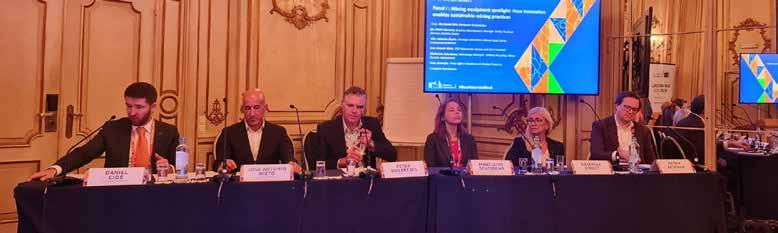
During bauma 2025, CECE Mining supported the organization of a mining industry panel organized by VDMA. Jose Antonio Nieto, CECE President and CEO of Putzmeister Iberica took the stage alongside policymakers, mining company Rio Tinto and VDMA Mining and Minerals Chairman Marcus Wirtz to discuss the role of mining in our economies and societies and challenges mining industry is facing in Europe.
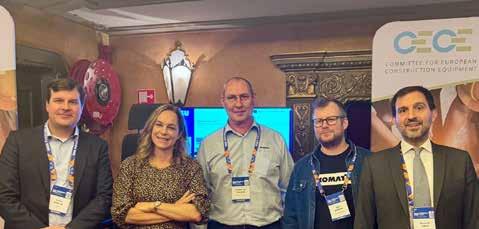
Additionally, CECE Mining took Martin Lange, Policy Officer at the European Commission’s unit in charge of the CRMA, for a tour of the bauma fairgrounds and a series of meetings with CECE member companies exhibiting at bauma. The visit allowed to showcase the latest technology developed by our members and to bring policymakers closer to the industry professionals to exchange about the uptake of net zero technologies by mining operators, competitiveness and challenges companies are facing.
For the second year in a row, CECE participated in the EU Raw Materials Week, the most important EU stakeholder engagement event for the raw materials
and mining sector organised by the European Commission which took place in November in Brussels.
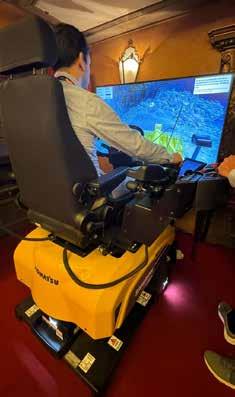
Two CECE member companies decided to take part in the exhibition area and demonstrated the latest technology used for training operators and for mineral processing. The initiative attracted a considerable amount of attention from the participants and contributed to raising awareness about the role played by our sector in the mining value chain.
CECE also hosted an event on the topic of innovation and how it contributes to sustainable mining practices. Speakers
from OEMs presented solutions in the fields of automation, electrification and battery materials recycling and debated with EU officials on how to accelerate deployment of such technologies which are crucial to sustainability of mining and recycling operations.
CECE Mining achieved remarkable results in terms of visibility and relevance in just two years of activity thanks to team efforts and strong support from participating OEMs and national associations. Our work will continue during 2026 to ensure that measures and actions put forward by policymakers are in line with our industry priorities and long-term objectives.
CECE collects and provides an up-todate market data for many types of construction equipment, and provides a leading indicator for the development of European construction equipment markets. The information is coveted by the participating companies and considered a well-developed source of business intelligence.
CECE runs both European and international sales statistics and is one of the partners of the Intercontinental Statistics Committee which provides worldwide statistics. CECE statistics coverage extends to earthmoving equipment, road equipment, tower cranes, concrete equipment and hydraulic attachments.
CECE Statistical Commission, with representatives from manufacturers and national associations,
oversees the proper functioning of the statistical exchange, and manages the constant process of enlargement and improvement.
Since 2008 CECE runs a monthly business trend enquiry, the CECE Business Barometer. The objective is to provide the members with a regular business trend indicator of the European construction equipment industry. The companies taking part in the Barometer receive a report about the economic situation in Europe each month.
The CECE Business Climate Index summarises the survey answers on the evaluation of the current business situation and the expectations for the next 6 months regarding sales, and is published on the CECE website on quarterly basis.

CECE STATISTICAL COMMISSION
Chair: Bernhard Gruber, Liebherr
Secretary: Sebastian Popp, VDMA/CECE
Number of experts: 30
HIGHLIGHT IN 2025:
We have successfully launched a market estimating programme for Europe, based on total market estimates of involved OEMs. Members agree this has a great potential to support internal decision-making processes and want it to be continued and expanded.
We’ll continue to work on increasing data quality and timeliness. We are very excited that with the addition of Laurel Ogren to our statistics team – which now consists of Natallia, Laurel, and Sebastian – we are in a great position to further increase the added value of statistics for our members.
“I am looking forward to a year with many opportunities to further strengthen European construction equipment statistics and enhance our global cooperation on ISC level.”
CECE BUSINESS CLIMATE INDEX
Source: CECE Business Barometer, February 2026

A weekly newsletter introduced in February 2020. A regular update on topics and challenges related to EU legislation and the workings of CECE in general. It includes three regular sections on EU News, CECE News and Exhibition Partner News.
For members and partners only. The Quarterly Economic Bulletin provides insight in the situation of the European construction equipment markets as well as the macro-economic environment.
For members and partners only. The Technical Bulletin describes developments in the field of technical regulation at a detailed level.
For members only. This annually updated market intelligence tool offers a clear overview of policies, subsidies and programs supporting fleet renewal with lower-emission vehicles.
Every month CECE surveys senior European construction equipment industry representatives about their opinion on the state of industry. The objective of the CECE Business Barometer is to obtain a regular business trend indicator and describe the economic climate. CECE published the summary of the results on quarterly basis.
CECE publishes its Annual Economic Report in the spring of each year, providing an in-depth look at the state of the European construction equipment sector. The CECE Annual Economic Report is publicly available at www.cece.eu to help promote the knowledge and understanding of the sector amongst a wider audience.
CECE publishes its Report of Activities on an annual basis. In this report we present who we are and we showcase our main activities. This report is publicly available at www.cece.eu
CECE is making a conscious effort on gaining more visibility and growing its YouTube channel where you can view all our videos. With 86 videos, including a corporate CECE video, CECE movie presenting the Mining section, animation on CECE Annual Economic Reports and various interviews with EU institutions representatives and industry experts, CECE has gained 8K views in 2025 on X and LinkedIn alone. CECE YouTube channel has 31K views in total.
Visit our YouTube channel to stay in
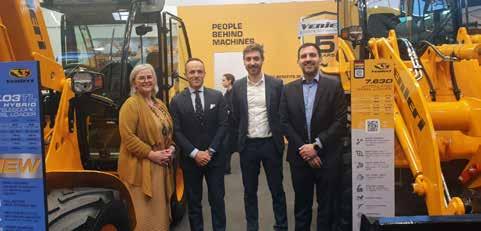
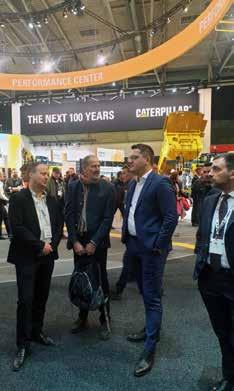
During bauma 2025, CECE hosted multiple guests from the European institutions: MEP Christian Doleschal on Monday, accompanied by a delegation of state politicians from Bavaria, Martin Lange, Policy Officer Raw Materials, DG GROW, European Commission on Tuesday, Antonio Biason, Legal & Policy Officer, DG CNECT, European Commission on Thursday and Katharina Knapton-Vierlich, Head of Unit for Construction with Pieter Staelens, Head of Sector for Competitive Construction from the European Commission on Friday. All guests had the opportunity to visit CECE member companies’ booths in order to learn about the impressive range of products and the latest technologies in the sector. Bringing together the construction equipment industry and the European Institutions is our main function, as these occasions provide stakeholders
with a deeper insight into the complexity of the construction equipment sector and pave the way for more effective and open communication.
On Monday, CECE organised a comprehensive tour of CECE member companies’ booth for MEP Christian Doleschal and his group of Bavarian politicians. Christian Doleschal had a unique opportunity to see the wide range of products that CECE membership represents. Thank you to Christian Doleschal and to the member companies that hosted us for this insightful discussion on regulation and innovation.
On Tuesday, our Guest of the Day, Martin Lange, started the day with a bauma FORUM panel discussion on the Mining Challenge – security of supply of commodities, automation, ESG. Alongside him in the panel were CECE President José Antonio Nieto, Ana Londoño Botero of Rio Tinto, MEP Hildegard Bentele and Dr Marcus Wirtz, Chairman of VDMA Mining & Materials. Afterwards, Martin Lange was invited on a tour of CECE Mining member companies, who showcased the advancements and developments that take the sector ever closer to decarbonising mining.
On Thursday, Antonio Biason was our next Guest of the Day. After inviting Antonio Biason as a speaker in CECE Congress 2024, we were pleased to
welcome him as a speaker in our CECE Workshop on Data Act Implementation at bauma. Following a highly insightful and clear presentation on the next steps for our industry with regard to the implementation of the Data Act, Antonio Biason was also taken on a tour of CECE member companies. The tour highlighted companies making inroads in digitalisation and was an important chance for questions to be answered both on the policy and industry sides.
On Friday, our final Guests of the Day were Katharina Knapton-Vierlich and Pieter Staelens. Katharina KnaptonVierlich commenced her visit with a keynote speech in the bauma FORUM on European Construction Policy and the political priorities of the European Commission, followed by a panel discussion on sustainable construction. In the meantime, Pieter Staelens met with CECE members, who presented the latest technologies and trends in our sector, and was later joined by Katharina KnaptonVierlich before concluding the tour.
Thank you to all our guests for joining us at bauma and thank you to CECE members for showcasing the state of the art machinery!
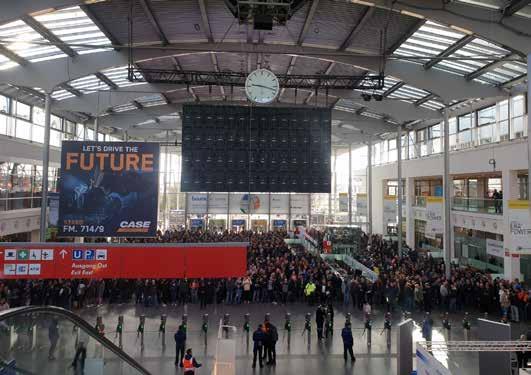
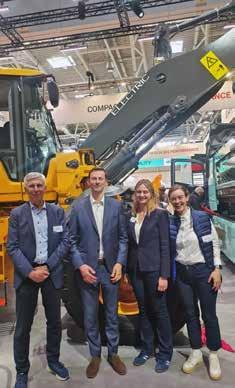
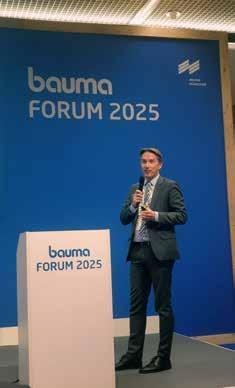
CECE celebrated the opening of its new offices in December 2025. CECE has officially moved to a new home in the heart of Brussels’ European quarter. This location enhances our proximity to key EU institutions and strengthens our ability to engage with partners, policymakers and stakeholders across Europe. We look forward to welcoming you to our new offices!

Our new address:
Rue Jacques de Lalaing 4
1040 Brussels
Since beginning of 2025, CECE has joined the European Forum for Manufacturing (EFM), a forum providing European political leadership for the development of multilateral public policies addressing the economic, social and environmental challenges facing manufacturing globally. By joining EFM, CECE ensures that the construction equipment industry has a strong voice in shaping EU policies that impact manufacturing, innovation and global competitiveness. Through EFM’s platform, CECE can collaborate with key stakeholders to drive sustainability and technological advancements, reinforcing the sector’s role in Europe’s economic and industrial leadership.


During its 2025 Summit, CECE announced a new platform helping navigate EU compliance requirements. This new online platform provides practical, up-to-date guidance to help customers, users, customs officials and market surveillance authorities navigate EU compliance requirements for construction machinery. It offers clear checklists, inspections guidance and regulatory explanations for specific machine categories, supporting fair competition, safety and a level playing field in the EU Single Market.
To learn more, visit www.compliantconstructionmachinery.eu
Since its creation in 2020, the Construction 2050 Alliance has worked to advance the needs and priorities of the wider construction and built-environment sector at the European level, with CECE among its members. In 2024, the year of the EU elections, the Alliance called for a cross-stakeholder coordinated and integrated EU-policy approach to improving the climate resilience of the sector’s process and output under the new European Commission mandate.
To learn more, visit www.euconstruction2050.eu

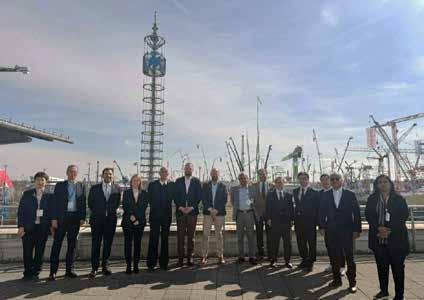
CECE holds regular dialogue with the major construction equipment associations in other parts of the world, in particular those in the USA, China, Japan, South-Korea and India, in order to keep abreast of relevant developments in the respective regions and to share expertise and knowledge. Once a year, the secretary generals meet in the framework of the Global Construction Alliance (GACE), usually during one of the international trade fairs. The IAC receives input from the JTLM, the Joint Technical Liaising Committee, and the ISC, the International Statistics Committee.
CECE was proud to host the Global Alliance for Construction Equipment, GACE meeting at bauma 2025, welcoming high-level delegations from China, Korea, India, Japan, the US, and Europe.
North-America, AEM
Association of equipment manufacturers
Japan, CEMA
Japan construction equipment manufacturers association
Korea , KOCEMA
Korea contruction equipment manufacturers association
India , ICEMA
Indian contruction equipment manufacturers association
Brazil , SOBRATEMA
Brazilian association for contruction and mining technology
China , CCMA
China construction machinery association
CECE gives coveted patronage to a limited number of worldleading sector exhibitions. With this role, CECE contributes to achieving successful trade fairs and promote business and valuable networks that are created around these occasions.
For decades, international trade fairs have been a key activity and focal point for many industries. Typically, exhibiting and attending tradeshows is one of the pillars of modern sales and marketing activity for many industries. Trade fairs have played a key role in the development of modern market economics, involving face-to-face networking across an industry between all the stakeholders, from suppliers and customers to investors and experts, and many more.
300 000 OVERALL EMPLOYMENT
CECE is therefore happy to have sign up in 2025 a new Exhibition Partner – KOMATEK. KOMATEK is Türkiye’s leading construction-equipment exhibition, taking place in Istanbul

from 3 to 6 June 2026. Highlighting the importance of this collaboration, CECE will hold the meetings of its Board and General Assembly during the exhibition.
1 200 COMPANIES
To find out more about the CECE International Exhibition Partnership Programme visit cece.eu/exhibitions/partnership-programme
59 BN € REVENUES
SOURCE: CECE
15 BN €
300 000 OVERALL EMPLOYMENT
1 200 COMPANIES
59 BN € REVENUES
15 BN € EXTRA EU EXPORT
SOURCE: CECE