Citizens YF
FAGDEL
Engelsk for Restaurant- og matfag / Naturbruk
THERESE HOLM
MONICA OPØIEN STENSRUD
Oslo 2026
Materialet i denne publikasjonen er omfattet av åndsverklovens bestemmelser. Uten særskilt avtale med Cappelen Damm AS er enhver eksemplarfremstilling og tilgjengeliggjøring bare tillatt i den utstrekning det er hjemlet i lov eller tillatt gjennom avtale med Kopinor, interesseorgan for rettighetshavere til åndsverk. Enhver bruk av hele eller deler av utgivelsen som input eller som treningskorpus i generative modeller som kan skape tekst, bilder, film, lyd eller annet innhold og uttrykk, er ikke tillatt uten særskilt avtale med rettighetshaverne. Bruk av utgivelsens materiale i strid med lov eller avtale kan føre til inndragning, erstatningsansvar og straff i form av bøter eller fengsel.
Design og sats: Welt, Erlend Askhov Omslagsdesign: Erlend Askhov Omslagsillustrasjoner: Jon Arne Berg
Forlagsredaktører: Birger Nicolaysen og Patricia Kathleen Bronte
Bilderedaktør: Birger Nicolaysen
Trykk: Livonia Print Sia, Latvia 2026
Utgave 1 Opplag 1
ISBN 978-82-02-89699-7
Papiret i Cappelen Damms bøker er hentet fra bærekraftig skogsvirke. Ingen av forlagets produkter bidrar til avskoging eller forringelse av skog. Cappelen Damm arbeider for å redusere miljøbelastningen fra våre bøker så mye som mulig.
Les mer om Cappelen Damms miljøarbeid ved å scanne QR-koden: www.citizens.cdu.no www.cdu.no
Referring to this textbook using APA 7th
In a text: (Holm & Stensrud, 2026, p. 000) 000 = the page number where the quote/information is found
In List of References: Holm, T. & Stensrud, M.O. (2026). Citizens YF Fagdel –Engelsk for Restaurantog matfag / Naturbruk. Cappelen Damm
Preface
We are pleased to present an English textbook created especially for you as a student of Restaurant and Food Processing or Agriculture, Fishing and Forestry. As you work through the different topics in this book, we hope you will find them interesting, relevant to your studies and helpful for developing your skills so you can become a confident English user in your future profession.
The textbook is organised into three main chapters, each focusing on essential aspects of your education and future working life. At the end, you will find a vocational glossary to support your language learning, with definitions of terms and Norwegian translations.
Chapter 1: Careers
This chapter explores a variety of jobs within your field. You will meet people working in different professions, learn about day-to-day tasks and key skills, and reflect on your ambitions and career choices. You will also have the opportunity to practise writing a job application and to consider what makes work meaningful and rewarding.
Chapter 2: Tools & Procedures
Here you will learn about the tools, equipment and procedures used in your line of work. The chapter covers workplace vocabulary and provides practice in understanding and following written and oral instructions. You will also reflect on the importance of clear communication in the workplace and see how English is used in authentic professional situations. The chapter also includes practical tasks for talking about equipment and learning procedures.
Chapter 3: Caution!
The final chapter focuses on challenges and safety issues in your future profession. You will explore important topics such as health and safety routines, recognising occupational hazards, reporting accidents and dealing with workplace problems. Through real-life stories, scenarios and tasks, you will reflect on responsibility, reputation and how to handle difficult situations. The chapter helps you develop language for risk assessment and promotes safe, professional working habits. Other topics include workplace challenges related to ethical behaviour, for example professionals who “cut corners” at work.
Each chapter offers a variety of texts and tasks to help build your English skills and professional competence. At the end of each chapter, you can review your progress and reflect on what you have learned. Throughout the book, you will find opportunities to develop speaking, reading, listening and writing skills – always connected to your education programme.
Our hope is that this textbook will support you as you improve your English, and that you enjoy the learning experience.
We wish you every success in your studies!
Monica & Therese
Chapter 1: CAREERS
Chapter 2: TOOLS & PROCEDURES
Chapter 3: CAUTION!
Note:
→ Listening texts and recordings of reading texts: citizens.cdu.no
→ Challenging tasks are marked with a darker colour like this:
→ Exam preparation: information, examples of exam tasks and useful tips for answering them at citizens.cdu.no
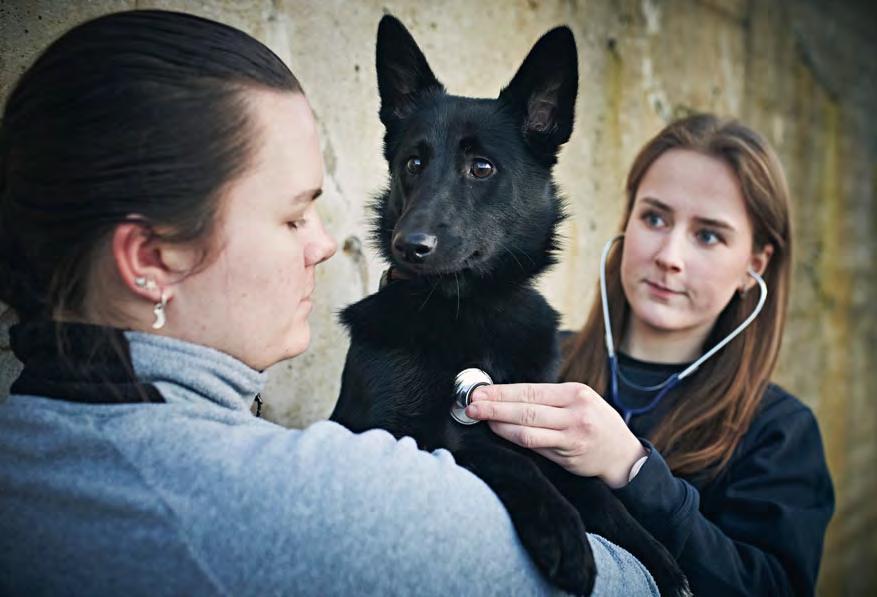
Careers 1
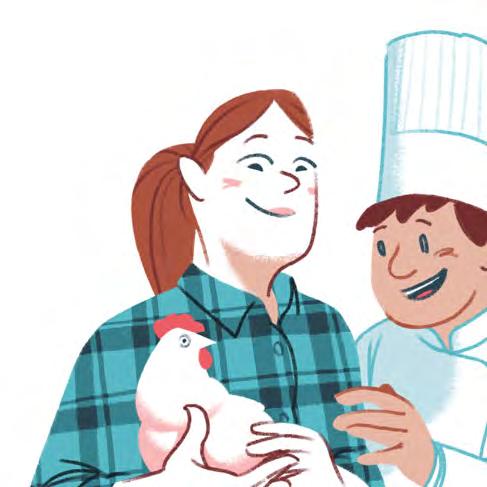


Focus
In this chapter, you will:
→ listen to, understand and use words and phrases related to your future profession
→ learn about different professions within your education programme
→ reflect upon various aspects of careers in your education programme
→ learn how to write a job application
Reflect
Discuss with a partner:
A What is most important to you when choosing a future career: good pay, good colleagues or interesting work?
B Is it important for you to work where you already live, or would you like to travel to work somewhere else?
C Have you always known what you want to become, or are you curious and open to possibilities?
Chapter keywords
→ career
→ profession
→ occupation
→ task
→ skill
→ quality
→ professional
→ workplace
→ job application
Why Did You Choose this Education Programme?
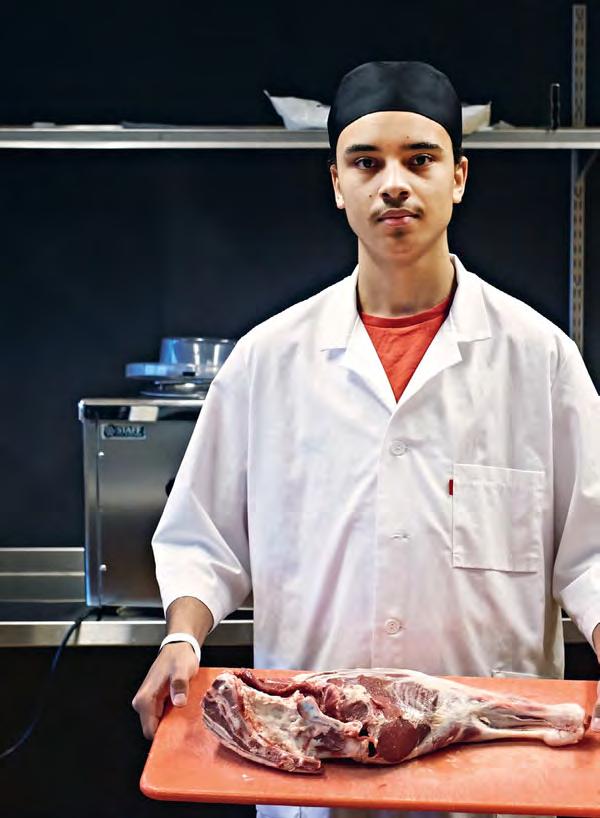
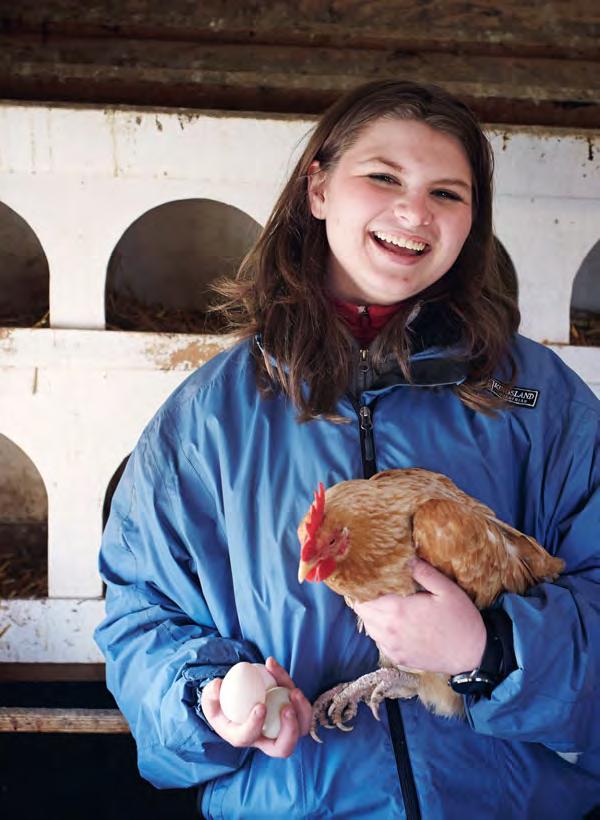
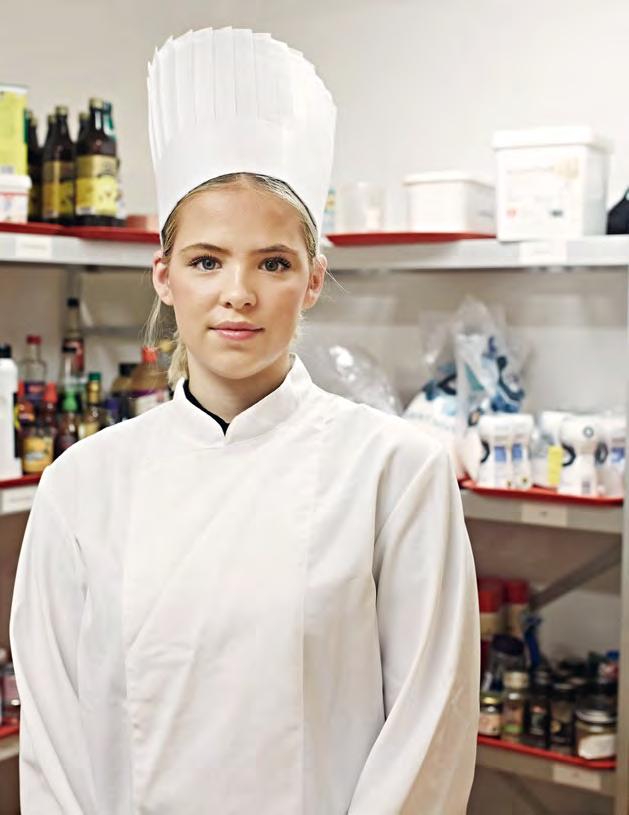
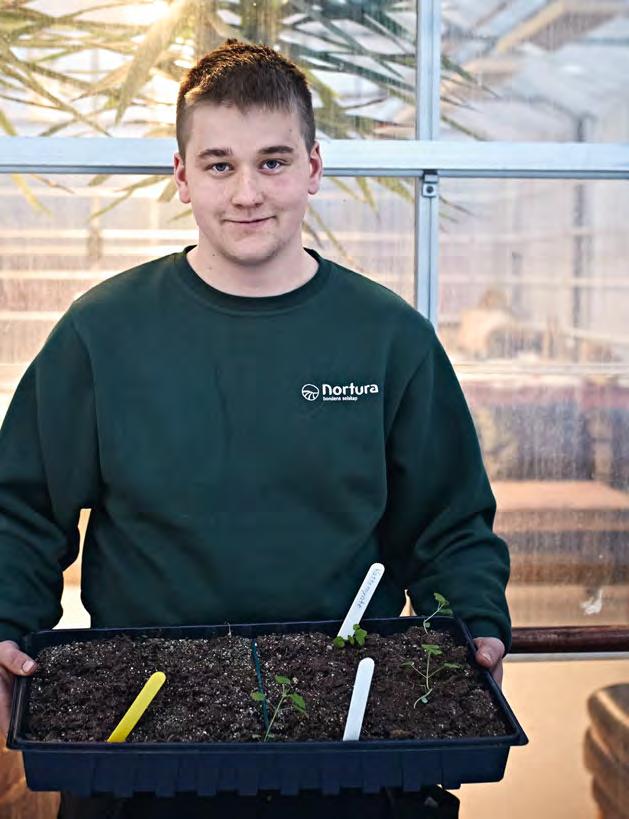
Below are interviews with two students from Restaurant and Food Processing and two students from Agriculture, Fishing and Forestry. The interviews were carried out when the students were almost done with their first year. Choose the two people who are relevant for your own education programme, and then work with either task 1 or task 2.
Interview 1:
Why did you choose Restaurant and Food Processing?
MIRIAM (16): My boyfriend is a second-year student at Restaurant and Food Processing, and he talked so much about how the school days are very varied and practical. That sounded a lot better than just sitting behind a desk all day.
THOMAS (17): My dad is a meat cutter, and he has always spoken very highly of his job. He also introduced me to the world of barbecuing and smoking meat. So when it was time for me to choose an education programme, Restaurant and Food Processing just made sense.
What would you like to work as, and how will English be relevant for you in your future profession?
MIRIAM: I would love to be a cook in a restaurant. It’s so fast-paced and fun, and I will need my English skills. In many kitchens in Norway today, people come from different countries to work, and they need a common language to communicate in. I’ve actually used English a lot already during my work placement, because many of my co-workers don’t speak Norwegian. I even got recipes written entirely in English and had to understand and use them … quickly!
THOMAS: I’m not a hundred percent sure, but I’m leaning towards becoming a meat cutter or food production technician. I’ve tried both during my work placement this year, and each job has its positive and negative sides. It’s hard to say exactly how much English I’ll need, but some of the equipment I’ll be working with has instructions in English, and some of the people I’ll be working with might not speak Norwegian, so English will probably be useful.
What have you learned about the importance of communication within Restaurant and Food Processing?
MIRIAM: How are you supposed to get things done in a kitchen without talking to each other? Customers might get the wrong food, or somebody in the kitchen might get hurt if they don’t understand that they need to move out of the way.
THOMAS: I’ve learned that you need to be able to communicate clearly and efficiently. For example, when you work as a meat cutter, there can be many people on the production line. If something happens at your station, it will affect other parts of the line, so you must let your coworkers know what is going on.
meat cutter kjøttskjærer/ kjøtskjerar fast-paced hektisk work placement praksisperiode co-worker medarbeider, kollega / medarbeidar, kollega recipe oppskrift food production technician fagarbeider i industriell matproduksjon / fagarbeidar i industriell matproduksjon equipment utstyr efficient effektiv production line samlebånd/ samleband to affect å påvirke / å påverke
plant nursery planteskole/ planteskule
animal husbandry worker dyrefagarbeider/ dyrefagarbeidar
organically grown økologisk dyrka
work placement praksisperiode doggy daycare dagkennel farm park besøksgård/ besøksgard
co-worker medarbeider, kollega / medarbeidar, kollega disease sykdom/sjukdom injury skade
Interview 2:
Why did you choose Agriculture, Fishing and Forestry ?
JON (18): When I started upper secondary school, I was sure I wanted to be a dentist, but in my first year I had a part-time job at a plant nursery, and I really loved it. It came as a complete surprise to me that this was something I enjoyed so much, but I like helping things grow and also doing physical work. So I made a quick decision and switched education programmes. I haven’t regretted it.
LISA (16): It’s simple: I love animals! I have known since I was a kid that I wanted to be an animal husbandry worker.
What would you like to work as, and how will English be relevant for you in your future profession?
JON: My plan is to become a gardener and hopefully one day own my own plant nursery with organically grown vegetables and bee-friendly flowers. English will be important to me when customers come by who don’t speak Norwegian and when I’m working with people who don’t have Norwegian as their first language.
LISA: I would love to work in a zoo! This might sound like a weird childhood dream, but I have wanted to work with animals ever since I visited the Kristiansand Zoo when I was three. During my work placement, I worked in a doggy daycare and at a farm park, speaking English to owners and visitors who don’t speak Norwegian. English will also come in handy when I work in a zoo, because my co-workers may come from many places outside Norway. I might even move to another country if that means I can get a job at a zoo.
What have you learned about the importance of communication within Agriculture, Fishing and Forestry ?
JON: Honestly, I can sometimes go for hours without talking to anyone when I am working – apart from the flowers and plants because I talk to them all the time! However, I do report back to my co-workers if I notice something that looks like disease on the plants. I also talk to customers when the plant nursery is open for business, but that’s only during certain parts of the year.
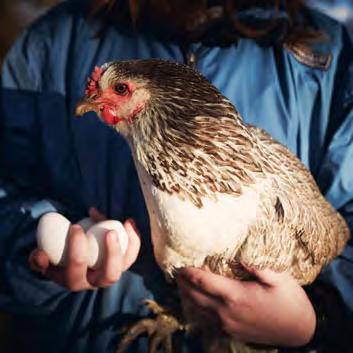
LISA: Animal husbandry workers sometimes work in teams. They must be able to communicate clearly, since misunderstandings could lead to injuries for animals or people. Speaking in a soft and calm voice to animals is also very important to keep them peaceful. It doesn’t matter much what you say to animals – the important thing is how you say it.
1 Understand:
Interview 1
Are the statements below true or false? Correct the false statements with information from the interview.
Miriam chose Restaurant and Food Processing just because she likes making food.
Miriam wants to become a cook in a restaurant.
Miriam thinks that communication is very important when working in a kitchen.
Thomas’s father had no influence on his son’s choice of education programme.
Thomas is completely sure that English will be very important in his future profession.
Thomas believes that communication is very important when you work as a meat cutter.
2 Understand:
Interview 2
Are the statements below true or false? Correct the false statements with information from the interview.
Jon has always known that he wants to be a gardener.
Jon will not have any use for English in his job.
Jon talks to the plants and flowers at the plant nursery.
Lisa chose Agriculture, Fishing and Forestry because she wants to work in a zoo.
Lisa has not used English during her work placement period.
Lisa says that that animal husbandry workers do not need to know how to communicate well.
3 Interact & Create: Interview
In pairs, interview each other using the questions below. While your partner is speaking, take notes rather than writing full sentences.
Question 1: Why did you choose Restaurant and Food Processing / Agriculture, Fishing and Forestry?
Question 2: What would you like to work as, and how do you think English will be relevant for you in your future profession?
Question 3: When and why do you use English outside the classroom?
After you have finished the interview, use your notes to write a short text in the same style and structure as the one you have just read. Make sure your text includes the key information from the interview and is written in complete sentences.
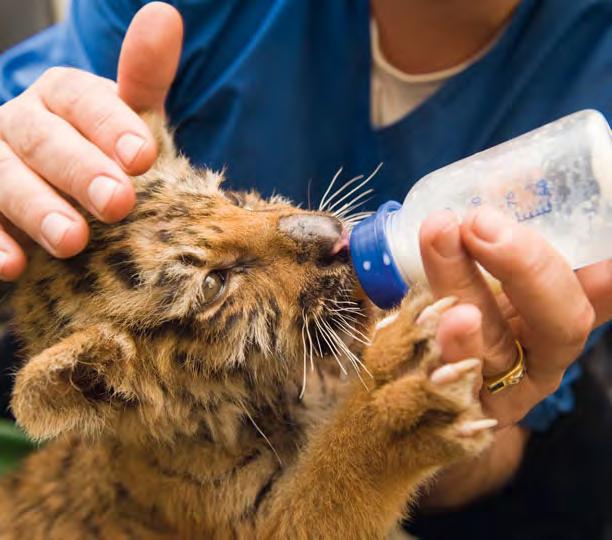
Lisa wants to work in a zoo. Is this something you would enjoy too?

Waiter

Restaurant and Food Processing
Glosssary: see p.
Analytical thinking
Test soil and crop samples
Advise on fertilisers and pesticides
Key tasks
Develop farming plans
Agronomist
Working environments
Key tasks
Agriculture, Fishing and Forestry
Key tasks Operate equipment Test water
Record data
Forestry worker
Monitor tree growth
In companies that sell products to farmers In plant nurseries

Companies that sell tools and equipment
1 Create: Quiz
On your own, make a quiz with five questions based on the mind map.
Examples: In which occupation is analytical thinking important? ( Answer : aquaculture technician) / In which occupation are customer service skills important? ( Answer : waiter)
Swap quizzes with a partner. See who can answer the most questions correctly.
2 Create: Mind map
The following occupations were not included in the mind map:
Agriculture, Fishing and Forestry: reindeer husbandry, skilled worker – fisherman –farrier – skilled equestrian – gardener – landscaper –aquaculture, skilled worker
Restaurant and Food Processing: food production technician – seafood production technician – fresh food specialist – meat cutter –pastry chef – sausage maker – butcher
Choose three of these occupations and create a mind map with the same kind of information as in the mind map on p. 10.
3 Practise: Listening
My chosen occupation
Look at the questions below and make sure that you understand what they mean before listening to the audio recording about Owen Davies or Jim Stevens at citizens.cdu.no.
RESTAURANT AND FOOD PROCESSING: OWEN DAVIES
What is the text mainly about?
1 Owen’s daily routine as a student in Christchurch
2 The duties of a professional butler
3 Owen’s dream of becoming a butler and his passion for the profession.
What is the main purpose of the text?
1 To explain how to apply for a job as a butler
2 To describe Owen’s hometown in New Zealand
3 To introduce Owen and share his unusual career ambit ion
What is true about Owen?
1 He currently works for a noble English family.
2 He studies at a college that helps him prepare for a career as a butler.
3 He lives in London and plans to move to New Zealand.
AGRICULTURE, FISHING AND FORESTRY: JIM STEVENS
What is the text mainly about?
1 Jim’s love of living in Aberdeen
2 Jim’s life at sea and his passion for becoming a fisherman
3 Different types of fish found outside the coast of Scotland
What is the main purpose of the text?
1 To explain the history of fishing in Scotland
2 To share Jim’s personal story and motivation to become a fisherman
3 To teach people how to catch mackerel
What is true about Jim?
1 He inherited a fishing business from his g randfather.
2 He decided to become a fisherman because he g rew up in a fishing family.
3 He never goes out fishing when the sea is calm.
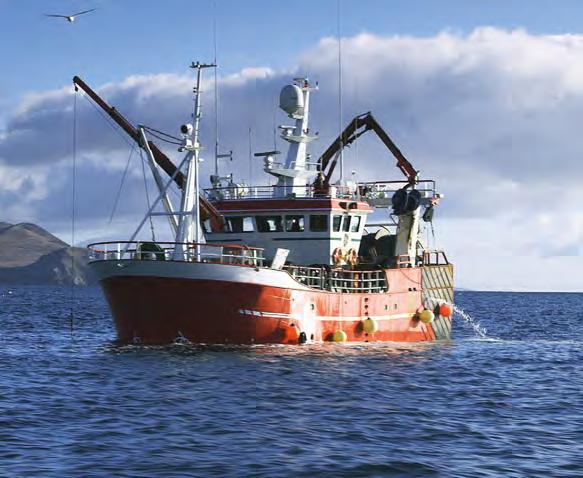
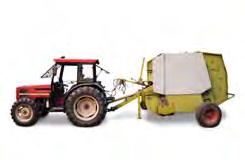
There are many different jobs within Agriculture, Fishing and Forestry and Restaurant and Food Processing. Here you can check out some of them. Note: a job can also be called an occupation, a profession, a career, a vocation or a trade.
What Are They Doing?
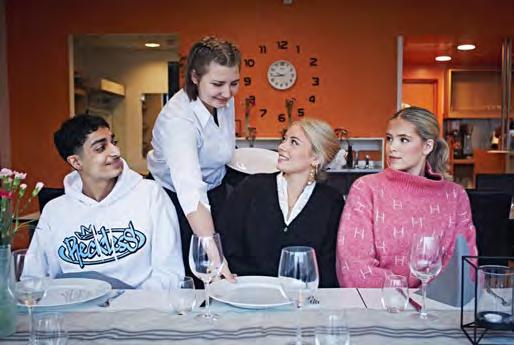

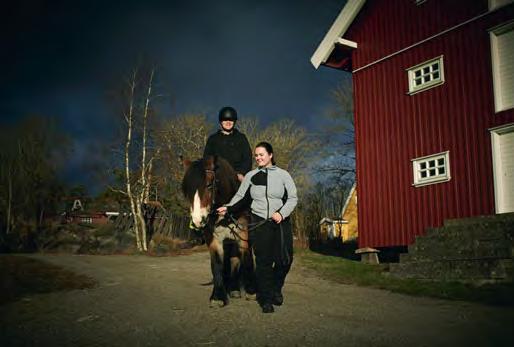
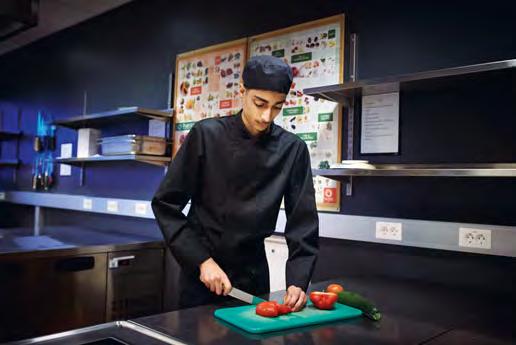
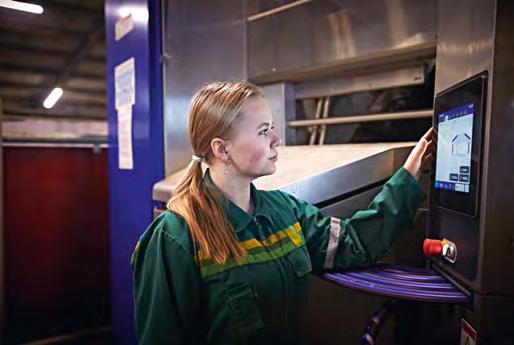
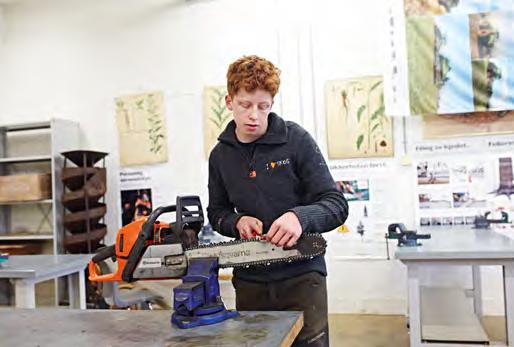
1
Practise:
Workplace vocabulary
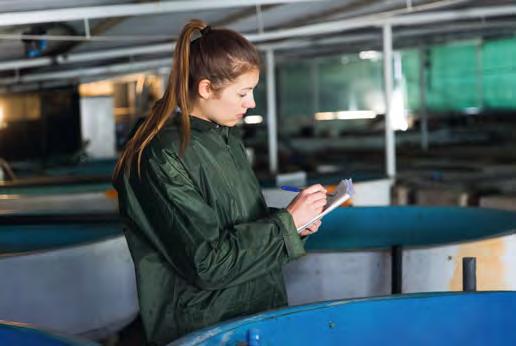
Who does what? Which picture on p. 13 matches each description?
A baker is pouring water into a baking machine.
A skilled equestrian is teaching a student to ride a horse.
An aquaculture technician is monitoring water quality in a fish breeding incubator.
An animal husbandry worker is using a milking robot to milk cows.
A cook is cutting vegetables.
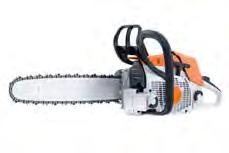
A forestry worker is doing maintenance on a chainsaw.
A waiter is serving food and talking with customers.
2 Practise:
Workplace vocabulary AGRICULTURE, FISHING AND FORESTRY
Below are possible occupations you can choose. Match the Norwegian title with the correct English translation.
A. agronom 1. reindeer husbandry worker
B. anleggsgartner/anleggsgartnar2. gardener
C. dyrefagarbeider/dyrefagarbeidar3. fisherman
D. fagarbeider i reindriftsfaget / fagarbeidar i reinsdriftsfaget 4. skilled equestrian
E. fagoperatør i akvakultur5. landscaper
F. fisker/fiskar6. farrier
G. gartner/gartnar7. aquaculture, skilled operator
H. havbrukstekniker/ havbruksteknikar
8. forestry worker
I. hestefaglært9. aquaculture technician
J. hovslager/hovslagar10. animal husbandry worker
K. skogsoperatør11. agronomist
Here are short descriptions of some of the jobs in task 2A. Find out which job matches each description:
1 Monitors and maintains the health of fish and other aquat ic species in fish farms. Helps with feeding, breeding, harvesting and water quality.
2 Studies soil, crops and farming methods to help increase ag ricultural productivity. Provides advice to farmers on crop rotation, fertilisers and pest control.
3 Cares for horses’ hooves by trimming and shaping them and fit ting horseshoes. Gives advise on hoof health and detects signs of lameness or disease.
4 Plants and maintains flowers, trees, lawns and other greenery in parks, gardens or private properties. Prunes, weeds and ensures proper watering and fertilisation.
5 Maintains and manages forests by planting trees, thinning and protecting against pests and disease. Helps with timber harvesting and environmental conservation.
For help answering this task, see the Vocational Glossary (p. 100).
3 Practise: Workplace vocabulary
RESTAURANT AND FOOD PROCESSING
Below are possible occupations you can choose. Match the Norwegian title with the correct English translation.
A. baker/bakar 1. pastry chef
B. ernæringskokk2. fresh food specialist
C. fagarbeider/fagarbeidar, industriell matproduksjon
D. fagarbeider/fagarbeidar, sjømatproduksjon
E. ferskvarehandler/ ferskvarehandlar
3. baker
4. meat cutter
5. sausage maker
F. kjøttskjærer/kjøttskjerar6. seafood production technician
G. kokk7. butcher
H. konditor8. nutritional cook
I. pølsemaker/pølsemakar9. cook
J. servitør10. food production technician
K. slakter/slaktar11. waiter
Here are short descriptions of some of the jobs in task 3A. Find out which job matches each description:
1 Cuts, trims, and prepares meat for sale or further processing. Gives advise to customers on cuts of meat and ensures proper storage and hygiene.
2 Handles and sells goods with limited shelf life, such as dair y, meat and produce. Ensures proper storage conditions and advises customers on freshness.
3 Prepares bread, pastries and other baked goods from scratch or using mixes. Ensures quality through accurate measurement and baking techniques.
4 Prepares and cooks food in restaurants, cafés, or other food establishments. Plans menus, handles ingredients and ensures food safety and presentation.
5 Prepares sausages by grinding meat, mixing in spices and filling casings. Develops new recipes and ensures safe production and packaging.
For help answering this task, see the Vocational Glossary (p. 99).
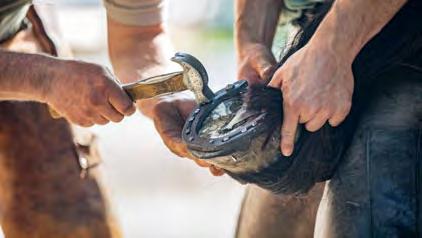
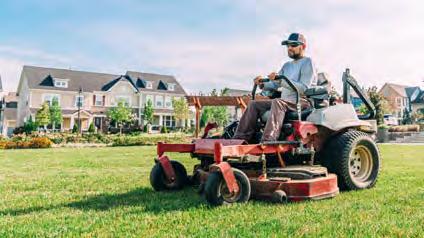
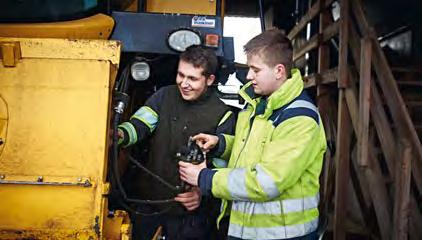
4 Create: Writing
Write a caption (bildetekst) for each of the photos below where you describe what is happening in the photo, and who is doing it. Write the captions using the -ing form. Example: A cook is making a meal.
Use the name of the correct occupation for each photo and combine it with one of the verbs.
Occupations: Agriculture, Fishing and Forestry agronomist – farrier – landscaper
Verbs: cut – inspect – shoe
Occupations: Restaurant and Food Processing fresh food specialist – baker – pastry chef
Verbs: decorate – serve – check
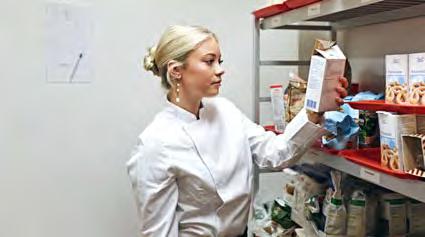
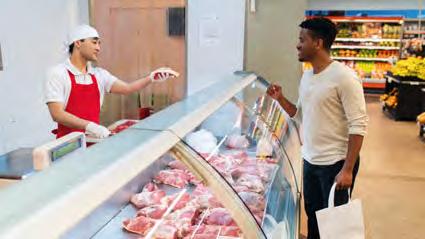
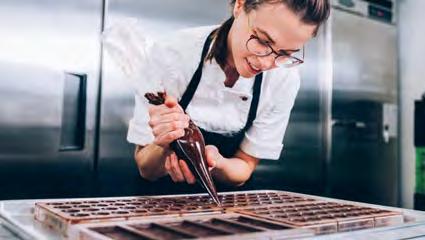
Practise:
Vocabulary
A In pairs, divide the words below between you and find out what they mean. Use each word in a sentence to show that you understand its meaning.
Student 1: occupation – hygiene – cook – raw materials – dietary preference – skilled equestrian – logging crew
Student 2: quality – baker – nutritional value –responsibilities – forestry worker – safety procedures – competitive
B Explain the words to each other, using your sentences as examples.
Four Occupations
Glosssary: see p. 108
When choosing a future career, your decision should be based on both personal interests and job opportunities. The text on pp. 17–18 gives short descriptions of four occupations, including information about each job and the skills it requires. The first two jobs are in Restaurant and Food Processing and the next two are from Agriculture, Fishing and Forestry.




COOK
What do they do?
A cook is responsible for preparing meals by carefully combining flavours, colours and textures. However, the job of a professional cook goes far beyond making good food and presenting it nicely. Cooks must make sure that all meals are prepared safely and meet high quality standards. To do this, cooks need to be knowledgeable about raw ingredients, nutritional values, hygiene practices, food traditions and international culinary trends. Planning is an important part of the job, as cooks must design menus that consider the freshness and quality of ingredients, preparation methods, hygiene conditions, costs and presentation. Cooks work in many different environments, such as restaurants, hotels, institutional kitchens, school cafeterias, ships and oil rigs.
What qualities or skills do they need?
As a cook, you need a good sense of aesthetics and taste, as well as a solid understanding of nutrition, hygiene and safe food handling procedures. You must stay organised and be able to plan carefully, especially when creating balanced and cost-effective menus. A good cook should be flexible, so you must be able to adapt to different working situations and customers’ dietary requirements. It is also important for you to keep up with current food trends and maintain high standards, even when working under pressure.
BAKER
What do they do?
A baker produces a wide variety of baked goods and combines traditional craftsmanship with modern baking technologies. Baking is one of the oldest trades in the world, and today’s bakers often choose between working with large-scale, automated production lines or using small-scale, handcrafted methods. Bakers continuously adapt their products to follow changing international trends, which has led many bakeries to offer items like bagels, focaccia, pizza buns, pita and naan. Like all food production professionals, bakers must follow strict hygiene rules and regulations. They are responsible for personal cleanliness, ensuring product quality and properly storing, packing and labelling their baked goods.
What qualities or skills do they need?
If you want to be a baker, you need strong technical skills in both traditional and modern baking methods. You must have a thorough understanding of hygiene practices and pay close attention to detail to ensure that all products are handled and labelled correctly. Planning and calculating skills are very important for managing ingredients and keeping costs down. You should also keep up with current food trends to meet consumer demand and stay competitive in a changing market.
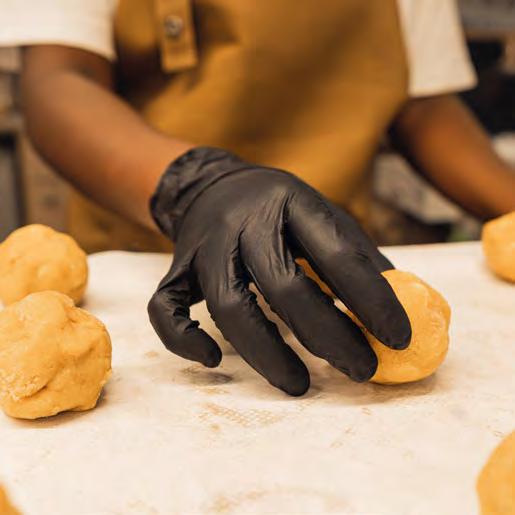
a Name two tasks carried out by a cook and two tasks carried out by a baker.
b What qualities or skills do both cooks and bakers need?
SKILLED EQUESTRIAN
What do they do?
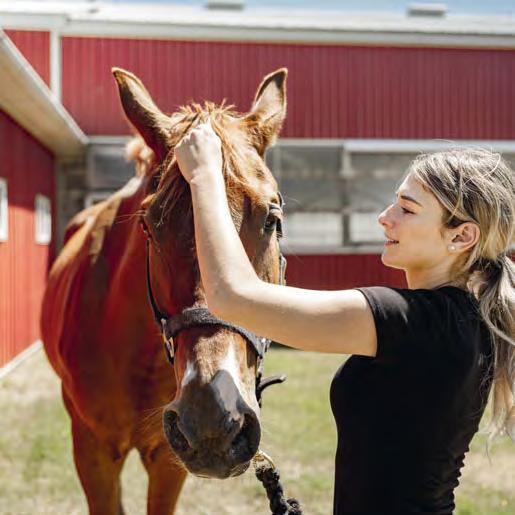
A skilled equestrian takes care of horses by feeding, cleaning, bandaging and transporting them. They also organise and lead horse-related activities, such as riding lessons, competitions and tourism experiences. In addition, they decide which horses are best suited for things like racing, carriage driving or therapeutic programmes. Skilled equestrians deal with customers, handle sales and keep records to meet quality management standards. They must always follow health and safety regulations. Because horses need care around the clock, equestrians must often work early mornings, evenings, weekends and holidays.
What qualities or skills do they need?
As a skilled equestrian, you must have a genuine love for animals and be able to work calmly and confidently around them. You need strong riding and training skills, as well as knowledge of animal behaviour and welfare. Good communication skills are important for working with clients, and attention to detail is needed for documenting work. Since the job involves transporting horses, you must have a valid driving licence. Equestrians must also be flexible and physically prepared for the demands of a job that does not follow standard working hours.
FORESTRY WORKER
What do they do?
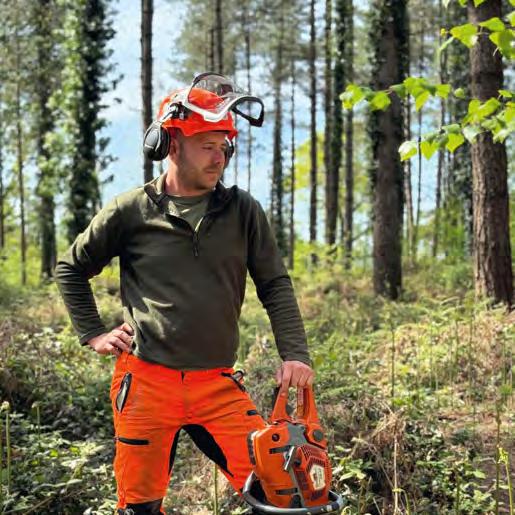
A forestry worker is often part of a team that cuts and processes trees in logging operations. The work is often divided into specialised roles: tree fellers use chainsaws or machines to cut down trees, buckers trim branches and cut the trees into logs, and choke setters attach cables to the logs for transport. Other workers operate heavy machinery such as harvesters, which cut and process trees, and skidders or forwarders, which move logs from the forest to collection areas. Grapple loaders are then used to load the timber onto trucks for transport.
What qualities or skills do they need?
Forestry workers must be comfortable working outdoors and being close to nature. Even with modern machines, it is essential that you have physical strength and endurance because of the manual tasks involved. You need to be skilled at operating logging equipment and must always follow safety procedures. As a forestry worker, you should also be able to work well in a team and adapt to the demands of a physically challenging and everchanging environment.
a What are some of the tasks a skilled equestrian performs?
b Why does a skilled equestrian need a driving licence?
c What machines do forestry workers use to help with their work?
d Why do forestry workers need to be physically strong?
checklist: Go to citizens.cdu.no to find a list of the most important points from the text you have read.
1 Understand: Who?



According to the text, who … spends a lot of time with horses? uses chainsaws and large machines? plans menus? trains animals for therapy and competitions? calculates the cost of raw ingredients for recipes? makes sure meals are safe and follow hygiene standards? should enjoy working in nature? must have strong technical skills?
must follow safety procedures at all times?
2 Create: Word bank



3 Practise & Interact: Workplace vocabulary
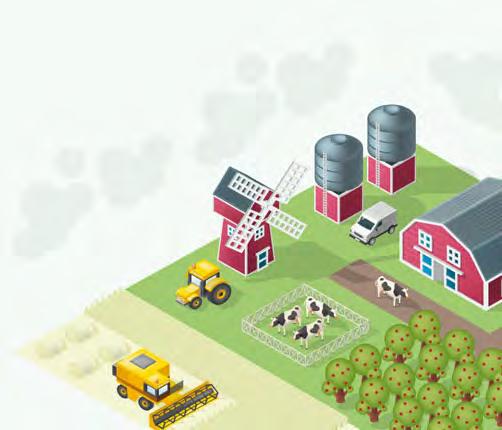
Below are some of the objects you can see in the illustration above. Work together to translate the words into Norwegian.
Read through the text again to find words. Copy the table below and write at least four words in each category.
Word list A
I know what these words mean.
Word list B I think I know what these words mean. Check in a dictionary or ask someone.
Word list C I do not know what these words mean. Check in a dictionary or ask someone.
Example: quality –egenskap Example: genuine Example: grapple loader
Write a sentence for each word you have written in word lists B and C.
Choose two words from your list B and two words from your list C. Write an explanation in English for each word.
Example: genuine → If something is genuine, it is real and exactly what it appears to be.
barn – silo – windmill – cow – fence – orchard – field – hay – grain – tractor – combine harvester – plough – truck – grass – fruit –tree – farm road – storage
Play I Spy with one or more partners. I Spy is a guessing game where one player chooses an object on the illustration and announces to the other player(s) that “I spy with my little eye something beginning with ...”, naming the first letter of the object (in English). The other player(s) tries to guess what the first player is spying. You get one point for each correct guess. Take turns.
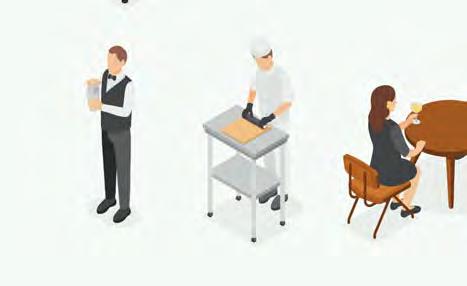
4 Practise:
Workplace vocabulary
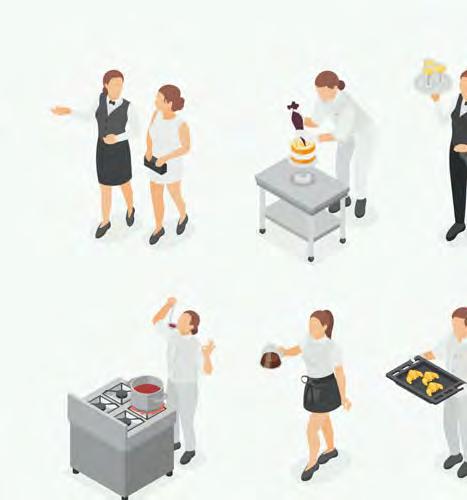
In pairs, help each other label the parts of the illustration above with words from this list:
cook, pastry chef, waiter, baker, dough, glasses, coffee pot, stove, pot, piping bag, baking tray, worktable, cocktail shaker, serving tray, cutting board, hostess, bartender
Here are descriptions of five of the words from task 4A. Identify what is being described:
→ This item is used for squeezing soft mixtures through a nozzle to decorate cakes or fill pastries.
→ This item is used as a flat surface for safely cutting and preparing food.
→ This item is used for carrying and presenting food or drinks.
→ This item is used for holding food while it bakes in the oven.
→ This item is used as a sturdy surface for preparing and assembling food.

Choose between the following items:
baking tray – worktable – serving tray – piping bag –cutting board
5 Create: Writing
Choose one task:
Choose an occupation within Restaurant and Food Processing or Agriculture, Fishing and Forestry (see lists on pp. 99 –100) which was not mentioned in this text. Write a similar text about it, answering these two questions:
→ What do they do?
→ What qualities or skills do they need?
Practise:
Making notes
Choose three different people on the next pages to read about: Jennifer, Peter and Gary (Restaurant and Food Processing), or Ruth, Bruce and Henriette ( Agriculture, Fishing and Forestry).
While reading the three texts, write down 4 –5 keywords about each of the people.
Professional Pride
pro·fes·sion·al·ism
noun
The competence or skill expected of a professional. The key to quality and efficiency is professionalism.
OXFORD ENGLISH DICTIONARY
Having professional pride means being proud of your work. Here, six workers explain what makes them proud of the work they do.
M Y STO RY

Glosssary: see p. 108
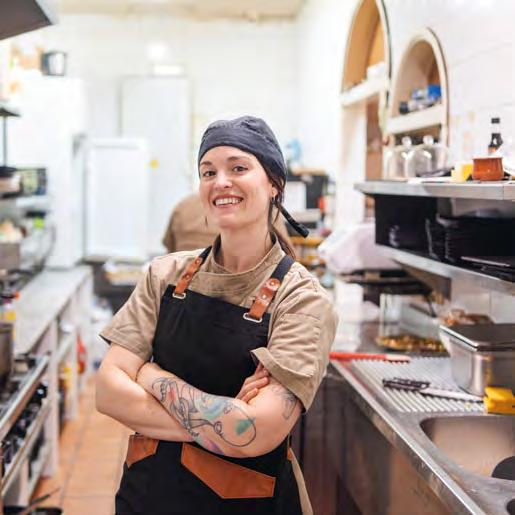
JENNIFER FRENCH:
I work as a cook at an all-vegan restaurant called “Vegan Paradise”, and I take great pride in preparing tasty and nutritious meals that most customers seem to truly enjoy. Last week, a customer was clearly confused and angry because the restaurant was meat-free. He loudly exclaimed that he had never eaten a proper meal without meat before. However, when he tasted the food I had made for him, he was visibly impressed and ate it all with a smile. Making vegan food for a sworn meat-lover makes me proud of my cooking skills.
PETER BROWN:
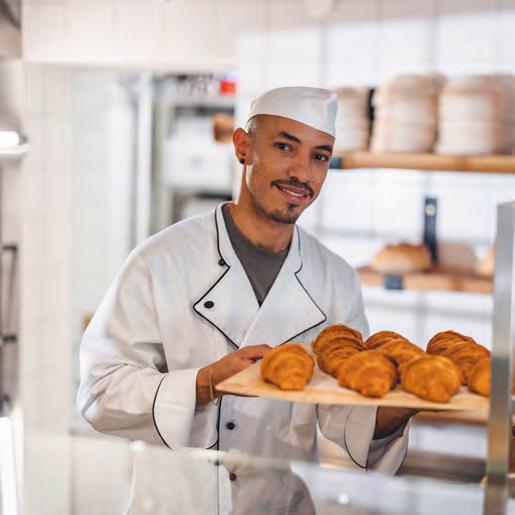
I’m a baker, and I own a bakery that specialises in baked goods for people who want something tasty and quick on their way to work. Takeaway usually creates a lot of packaging waste and single-use plastic, but I am proud to say that at my bakery most customers bring their own reusable cups for tea and coffee, as well as bags or boxes for other items they buy. We created this culture at the bakery through advertisement and giving rewards to customers who bring their own containers. Because it worked, we are able to keep the prices down and help the environment by producing as little waste as possible. We also sell all leftovers at greatly reduced prices.

RUTH WILSON:
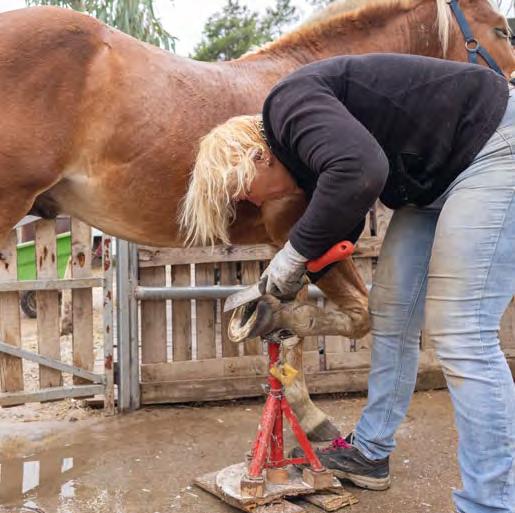
I’m a farrier, which means I shoe horses for a living. I’ve done this for over ten years and love spending time with these magnificent animals. Out of the hundreds of horses I’ve worked with, one stands out: Spirit. Spirit had caused so much trouble for other farriers that they refused to go near him, afraid of getting hurt. His owner called me when Spirit lost a shoe on a hind leg. When I arrived, Spirit was tense and restless. I approached slowly, gave him time, and stayed calm. After a while, I managed to shoe him safely. His owner was truly impressed. This difficult horse really did test me and my skills, and I am still proud when I look back on the experience.
GARY LEECH:
I’m 20 and work as a waiter for a company that organises events like weddings. I enjoy my job, but I used to hate speaking in public. This became a problem because, as head waiter, I’m expected to present the menu at events. I always refused, but two weeks ago, we were badly understaffed, and I was the only one who could present the menu. My mouth felt like cotton and my knees shook as I walked up to the microphone. Eighty-nine pairs of eyes were on me. I closed my eyes, took a deep breath, and somehow listed the appetisers, main courses and desserts in the right order. I couldn’t believe how well it went – and I’m really proud of myself. This experience will make it easier to present the menu the next time.

BRUCE HENDERSON:
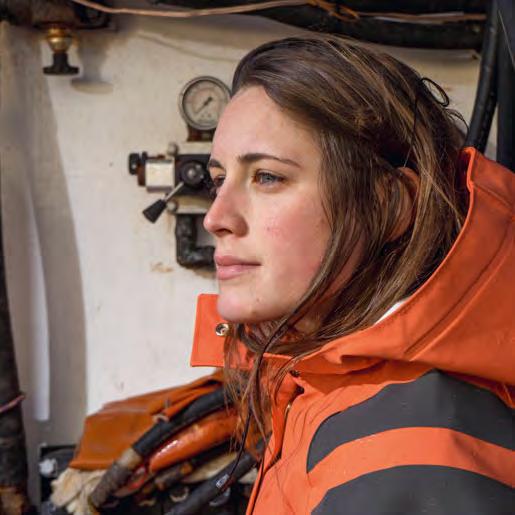
I’m an agronomist, and I have taken over my family’s farm. When I first started making decisions on the farm, my father and grandfather resisted some of my ideas. We had always planted spring wheat on most of our fields, and here I came in, wanting to plant durum wheat instead! I remember my grandfather’s resounding laugh when I told him that I wanted to grow “pasta wheat”. But I believed in myself, and luckily, the yield was high that year and durum wheat paid more per tonne than spring wheat. Now, I am proud to say that even my grandfather supports the change.
HENRIETTE JENSEN:
I have read an article that said that in 2024, 501 women were registered as full-time fishermen in Norway. I’m proud to be one of them. The work can be hard both physically and mentally, but I love it so much. I’m part of a crew on a fishing boat and the working environment is supportive and constructive. We help each other to be the best fishermen we can be – and yes, “fisherman” is the term we use, no matter our gender.
1 Understand & Reflect
In pairs, discuss the following questions:
What do these three people work with? What kind of skills does each of them need in their job, do you think?
What makes them proud of their professions?
In your opinion, who has the best reason to feel proud? Explain your answer.
2 Practise: Workplace vocabulary
Match the job with the correct work-related keywords. It is likely that many of the words are new to you, so use dictionaries and other sources for help.
farrier net, trap, water pump, analysis kit aquaculture technician digital food scale, sifter, rolling pin, cooling racks baker meat grinder, food scale, sausage stuffer, sausage casings sausage maker anvil, rasp, hoof tester, hoof gauge
Translate the work-related keywords into Norwegian.
Work in pairs. Write the names of all the items from your education programme in the list in task 2A on pieces of paper. Place the pieces face down on the table. Student A chooses a piece and tries to describe the item to Student B who tries to guess what it is.
3 Create: Writing
Choose one of the following tasks:
Write a text about an imaginary person who is one of the following:
Restaurant and Food Processing: fresh food specialist, pastry chef, nutritional cook, seafood production technician or sausage maker
Agriculture, Fishing and Forestry: animal husbandry worker, reindeer husbandry worker, gardener, skilled equestrian or forestry worker
Use the texts on pp. 21–23 as models. You should include:
→ what tasks this person performs at work
→ what skills this person needs to do this job
→ what makes this person feel proud at work
Write a text about having pride in the work you will do in the future. Include the following:
1 Introduction: Descr ibe the job you have chosen to focus on. What tasks will you have to do? What skills and knowledge will you need? Make sure to include at least one sentence telling the reader what your short text is going to be about.
2 Second paragraph: Wr ite about one aspect of the job that you think will make you feel proud. Explain this part of the job clearly and give examples to show why you think it will make you feel proud.
3 Third paragraph: Wr ite about another aspect of your job that you believe will make you feel proud. Explain how and why this aspect is important to you.
4 Conclusion: Sum up your ideas from paragraphs two and three. Reflect on how being proud of your work can make you a better employee.
Interview: Learning a Trade
1 Practise:
Listening for information
AGRICULTURE, FISHING AND FORESTRY
Who’s who? Place the descriptions with the correct person.
Who is hoping to learn how to lay paving stones and cobbles?
Who already knows a bit about where he will be doing his apprenticeship?
Who loves being a fisherman because he gets to work with people he likes?
Who had to abandon his workplace because of a fire once?
Who has not been selling plants yet in his job?
Who only works in the summer?
Who wants to be a gardener?
2 Practise:
Listening for information
RESTAURANT AND FOOD PROCESSING
Who’s who? Place the descriptions with the correct person.
Who must recommend cooking methods to customers?
In this interview, you will meet three young Norwegians speaking with a British journalist. He is visiting Norway to write an article about the vocational courses offered in Norwegian upper secondary schools. To learn more, he has chosen to meet three students of
→ Agriculture, Fishing and Forestry
→ Restaurant and Food Processing
Listen to the interview with the students from your own vocational education programme at citizens.cdu.no.
Then work with either task 1 or task 2.
Who thinks Martin’s job is sickening?
Who enjoys marinating, smoking and salting down fish?
Who works with dairy products and wants to specialise in product development?
Who has completed their in-service training at a butcher’s shop?
Who needs to be extremely cautious about hygiene in their job?
Who says that the job involves caring about animal welfare?
3 Create: Writing
Choose one of the tasks below.
Write a text where you explain the differences between the three occupations presented in the interview.
Based on the interview, which of the occupations do you find most interesting? Write a text in which you explain why.
Reflect
What do you think people will eat in the future? Write down three foods or ingredients you believe will be more common in the next 30 years and explain why you think so.
The Future of Food C H A LLE N GE
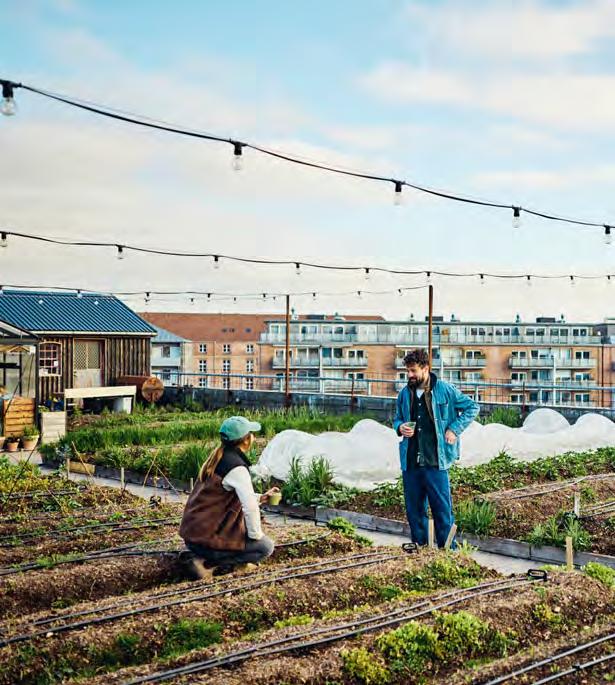
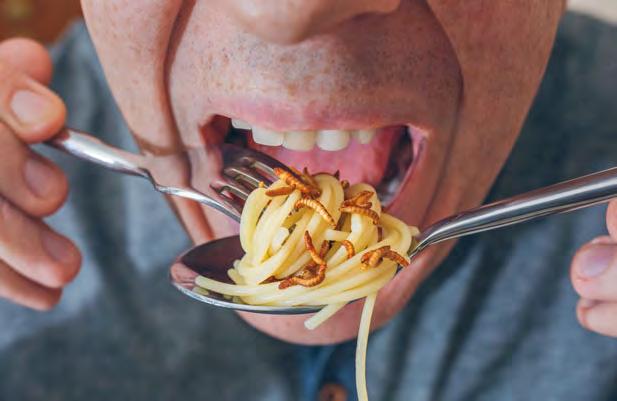
Will we one day grow meat in labs and salad in skyscrapers? No one knows for sure, but one thing is clear: something must change. By 2050, there will likely be nine billion people to feed, and our planet is already under pressure. Agriculture is a major threat to rivers, lakes and coastal environments, and up to 40 per cent of farmland worldwide is facing soil erosion, reduced fertility or overgrazing.
As our climate changes, so too will the ways we grow our food. Fortunately, many people are working on new ways to produce healthy and delicious food while protecting the environment.
More efficient farms
Across the tropics, forests are being cleared to make way for pastures and farmland: 80 per cent of all new tropical farmland comes at the cost of losing forests, and this brings huge environmental consequences. However, we could produce 50 per cent more food without expanding farmland by increasing yields, changing diets and using water and fertiliser more efficiently.
Test-tube beef
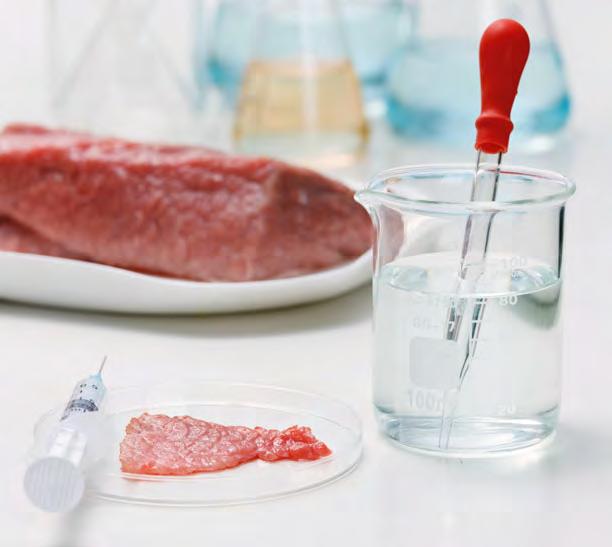
The livestock industry uses 75 per cent of all agricultural land for grazing and growing animal feed, and it produces at least 18 per cent of all greenhouse gas emissions. Some argue that we can grow safer, healthier meat from animal cells, instead of from living animals – thereby reducing animal suffering, waste and pollution.
Next generation fish farms
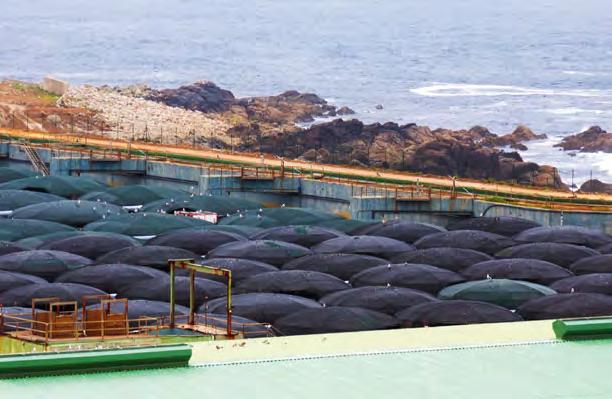
Promising new fish farming methods rely on giant tanks, where nutrients, water and waste are recycled – sometimes also to grow plants – and fish cannot escape. These methods could help protect wild fish stocks, which have been severely depleted by overfishing. In addition, closed-system fish farms do not have the same environmental downsides as certain cage or pen fish farms, which use more wild fish for feed and can cause pollution and disease.
Staying power
Most farm crops, including wheat, rice and maize, must be replanted every year. The roots of these “annual” plants are shallow, and farmers often rely on resource-intensive methods to grow them. In contrast, many wild plants, like wheatgrass, are “perennials” – they live for several years and produce food over many seasons. Their deeper roots help stabilise and enrich soils. So, what if we bred crops with deep, perennial roots?
Castles in the sky?
By 2050, there will likely be two billion more people in the world. Feeding them the way we do now would require an enormous amount of agricultural land that simply does not exist. However, with 70 per cent of people expected to live in cities, why shouldn’t we grow food where people live? Urban farms already exist in yards, on roofs and on balconies. Some have even suggested farming inside skyscrapers!
The future of eating
Our population is growing, while standards of living are changing and our environment is under greater pressure. How will future food production meet the rising demand? Will we need to change our diets? Can technology offer solutions? New trends in biotechnology, health science, processing and cooking technologies, along with the challenges of climate change, will all affect what we eat.
It is impossible to predict exactly which foods will become fashionable in the future. Most likely, some exist now but are not widely used; others have not yet been discovered or invented; and some will be so radically different that we would hardly recognise them as food today.
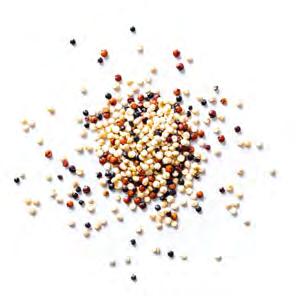
Mix of black, red and white quinoa seeds
Underused and overlooked
About 2,500 plant species have been domesticated for food. However, almost half our food calories today come from just three grains: wheat, maize and rice. What about the thousands of other plant species – and the wide variety of animals – that are often overlooked in European countries? These resources could help solve problems such as the need for more resilient ways to produce food and the challenge of meeting higher demand without depleting natural resources. Here are a few promising examples:
→ Algae: Seaweed and other types of algae, already popular in Japan, are highly nutritious and can be grown in both fresh water and salt water.
→ Insects: Over 2,000 insect species are already eaten around the world. Insects are rich in protein and require much less land, water and food than animals raised for meat.
→ Quinoa: This grain from the Andes mountains contains all the essential amino acids the human body needs for protein, and it is gluten free.
→ Peach palm: The peach palm grows well in Central and South America and produces a large, nutritious fruit. Its spiny trunk makes the fruit hard to harvest – but breeders are now developing spineless varieties.
Foods of tomorrow?
Many foods we will eat in the future do not yet exist. Researchers are always experimenting with plant and animal ingredients, processed foods and even packaging, to improve flavour and nutrition. Here are a few examples – but the biggest changes may come from ideas we cannot yet imagine.
→ Breathable chocolate: Want the taste of real chocolate without the calories? You can now inhale tiny particles of chocolate as a mist.
→ Patch in a pinch: In the future, some essential nutrients could be given to soldiers and astronauts through a patch on the skin, allowing for quick absorption in emergencies.
→ “Smart packaging ”: Food packaging may soon be able to monitor its contents, detecting when food is ripe or spoiling – or actively help prevent food from spoiling.
The road ahead
As we look to the future, it is clear that feeding the growing global population will require creative solutions, open minds and a willingness to try new approaches. Whether these solutions come from high-tech laboratories, forgotten seeds or simply changing what we put on our plates, the choices we make will shape both our health and the health of the planet. With new ideas and technologies emerging every day, the future of food holds exciting possibilities – and it is up to all of us to make sure it is both sustainable and delicious.
checklist: Go to citizens.cdu.no to find a list of the most important points from the text you have read.
1 Understand
What are some of the environmental problems caused by current agricultural practices?
Why is test-tube beef considered a more sustainable option than traditional livestock farming?
What is the main advantage of growing perennial plants instead of annual ones?
What are two reasons why urban farming might become more common in the future?
Give two examples from the text of “overlooked” or “underused” foods and explain why they might be important for the future.
2 Create: Summary
Write a summary of the text. Focus on giving a general description of the main ideas of the text. Try using your own words as much as possible.
3 Reflect: Quotes
Discuss the following quotes from the text in pairs or small groups.
“Something must change.”
What do you think the author means? Do you agree?
“Will we need to change our diets? Can technology offer solutions?”
What is meant by this? What kinds of changes do you think are coming? Are they exciting or worrying?
“Some [future foods] will be so radically different that we would hardly recognise them as food today.”
How do you feel about this? Would you be willing to try new and unfamiliar foods?
4 Reflect
Many popular foods may become rare or vanish completely, due to climate change and environmental stress. This includes food items such as coffee, chocolate, bananas and avocados.
Talk or write about the following:
How would you feel if one of your favourite foods became unavailable or very expensive?
Do you think most people will be open to replacing these foods with alternatives? Why or why not?
What might alternatives to coffee, chocolate, bananas and avocados be? Research alternative food items and discuss whether they will be popular.

5 Create: Writing
Choose between writing a response to → Henry, a farmer
→ Samira, a cook
In your text, refer and respond to Henry or Samira and contribute your own perspectives. Comment on and question, agree and/or disagree, with what has already been written.
The recommended length for the text is approximately 150 –200 words.
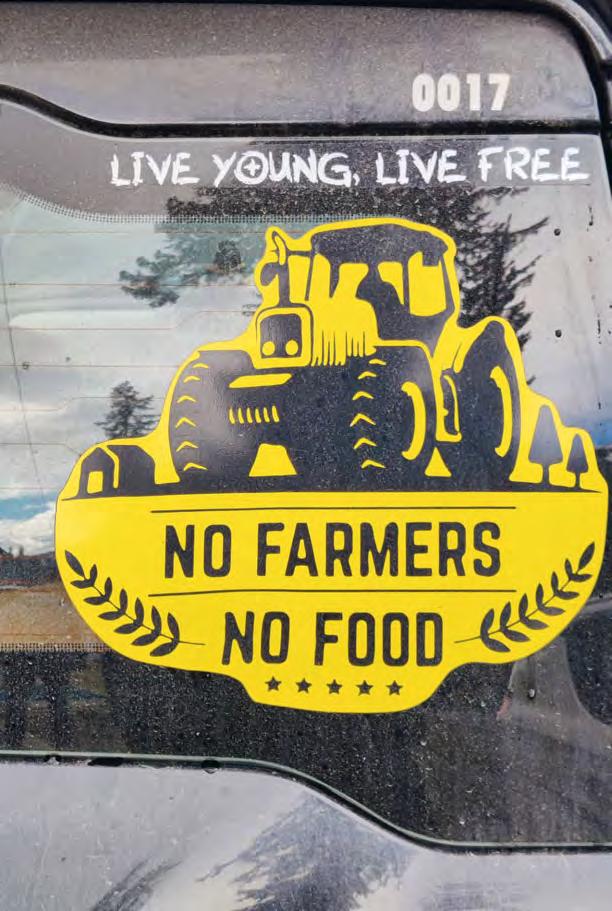
HENRY:
“Agriculture is a major threat to rivers, lakes and coastal environments, and up to 40 per cent of farmland worldwide is facing soil erosion, reduced fertility or overgrazing.”
I read that sentence this morning, and honestly, it stung. I’ve farmed this land my whole life, and I care deeply about nature. But I also know how tough it’s become to grow food without pushing the land too far.
Every year, I see the soil changing. It’s drier now. The rains come later – or all at once. We’re expected to produce more food than ever, but the land just isn’t what it used to be. Some say that lab-grown meat and vertical farms are the future, but what about people like me? What will happen to farmers if our work becomes “old-fashioned”?
I’m not against new technology. I just hope the future of food still includes those of us who’ve spent our lives growing it.
– Henry, 54, farmer
SAMIRA:
The idea of the “future of food” sounds exciting … until I start to think about what we might lose. I run a small restaurant that’s built on flavour – real, fresh ingredients. Now I’m hearing that chocolate, coffee, bananas, and even avocados might disappear or become extremely expensive because of climate change.
How do you rewrite a menu when the foods your guests love most are under threat? Should I start serving insect burgers and algae smoothies? I’m open to trying new things, but I also feel sad. These ingredients aren’t just trends –they’re part of people’s memories, comfort, even their identity.
I worry that the future of food might leave some of our favourite tastes behind. Is there a way to move forward without losing the heart of what makes food meaningful?
– Samira, 38, chef and restaurant owner
1
Application Letter
An application letter is a document where you state your interest in a job, scholarship or something similar. Competition can be tough, so your application letter needs to stand out. Here is what you should include. (Note that some companies use standardised formats that you fill in when you apply for a job there.)
Structure of the text:
This is one way your application letter can be structured if it is sent as a separate document attached to an email, e.g. in Word or as a PDF.
1 The address and contact information of the sender. If you are writing an email, you include your contact information at the bottom, after your signature.
(2 The address of the receiver – if this is mentioned in the advertisement)
3 The date
4 A polite greeting, for example: Dear Sir/Madam, Dear Mr Brown, Dear Mrs Johnson
5 a) Explain why you are writing the letter and introduce yourself
b) Information on your background
c) Explain why you think you are suitable for the job/scholarship/position
d) If applying for a part-time job, you should include when and how much you are able to work
6 Closing politely, for example: I am looking forward to hearing from you, Thank you for your consideration
7 Polite ending, for example: Sincerely, Yours sincerely
8 References: the names of people a potential employer can contact to find out more about you, for example a former employer or teacher.
It is always important to tailor your application letter to what you are applying for. Some advertisements (ads) may require you to provide specific information. Read the ad carefully to make sure you include what is asked of you.
What you should include in all application letters:
→ Polite phrases that show respect for the person you are addressing. This is important in formal letters.
→ Linking words that tie the text together.
→ Positive words that help you “promote” yourself.
Do not:
→ use abbreviations: write “do not” and “I am”, not “don’t” and “I’m”.
→ write much longer than a page. The purpose of an application letter is to get you an interview, so it should be short and precise.
Example ad and application letter
James is looking for a part-time job. He wants to work mainly on weekends. He studies Restaurant and Food Processing, and he would like a job that is relevant to his studies. He sees this notice in the window of a bakery in his neighbourhood.
BAKERY ASSISTANT WANTED
Crumb & Co. is seeking a reliable and enthusiastic bakery assistant to help during our busy morning and weekend shifts.
Tasks include:
→ assisting with baking and preparation
→ packing and labelling products
→ maintaining a clean working environment
→ serving customers during rush hours
Some experience is a bonus, but full training will be provided. We are looking for someone punctual, friendly and hardworking.
Apply to: crumbbakery@crumbandco.co.uk
Sender →
Date →
Opening greeting → Why he is writing →
James’ application letter:
Background: work experience →
James Clarke
12 Maple Lane
Nottingham NG1 2DF
email: james.clarke23@gmail.com
Phone: (079) 384 9281
20 October 2026
Dear Sir or Madam, I wish to apply for the position of bakery assistant at Crumb & Co., as advertised. My name is James Clarke, I am 18 years old and currently studying Restaurant and Food Processing at Birmingham City College. I hope to work full-time in the food industry once I finish my studies, preferably as a pastry chef.
I have always enjoyed baking and helping out in the kitchen, and I have had my work placement at Sweet Treats Café where I prepared baked goods and cleaned the kitchen. Furthermore, I volunteered during a local food festival, assisting with setup, serving and customer service. As a result, I have excellent references you may call.
Background: interests →
Why he is suitable →
What kind of employment he is looking for →
Closing politely →
Polite ending →
Signature →
References →
In my spare time, I like trying out new recipes, especially bread and pastry, and sharing them with friends and family. Therefore, I often spend time reading cookery books. I have wanted to be a pastry chef since I was a little boy. It is my dream job
I am organised, reliable and love working in a fast-paced environment. To sum up, I believe this job is a great match for my passion and skills.
I am available to work mornings and weekends, although I am flexible during school holidays.
Thank you for considering my application. I look forward to hearing from you at your earliest convenience
Yours sincerely,
James Clarke
References:
Lara Benton, manager at Sweet Treats Café – 07700 901042
Paul Davies, teacher – 07700 909183
TASKS
1 Choose one job from the list on pp. 99 –100 to apply for. The employer wants to know what kind of person you are and why they should hire you. Write a short text (80 –120 words) where you describe yourself using positive words (adjectives).
What to include:
Who you are (a short introduction) – What you are good at (skills and qualities) – Why you would be a good worker for this job
Helpful adjectives you can use (look them up if you are uncertain of what they mean): hardworking – reliable – responsible – motivated – skilled – flexible – friendly – eager to learn – precise – meticulous – adaptable – quick learner – respectful – trustworthy – patient – innovative – team-oriented – honest –safety-conscious – attentive – diligent – determined –punctual
Sentence starters you can use:
→ I am a … person who …
→ My friends and teachers say that I am …
→ I am good at …, and I always …
→ I believe I would be a good employee because …
2 A representative from your local job centre is visiting your school and leaves behind a leaflet for the students attending vocational courses. The leaflet advertises an international apprenticeship programme for the company WorkStart Placements.
Write an application letter, using the structure shown on p. 32 and vocabulary you have practised in this chapter.
LOOKING FOR AN APPRENTICESHIP?
We are looking for students in vocational training programmes in Restaurant and Food Processing or Agriculture, Fishing and Forestry. We work with a range of local and international companies and are eager to match motivated students with great training environments.
We are looking for someone who:
→ is currently studying a vocational subject
→ is reliable, positive and willing to learn
→ has good references from school or previous work
→ is enthusiastic about their field of study
Please send your application letter and CV to: WorkStart Placements c/o Nina Orellana nina@workstartplacements.org
We look forward to hearing from you!
3 When you have finished writing your application letter in task 2, swap with a partner and give each other feedback by pointing out two things the application does well and one thing that can be changed to improve it.


Chapter 1
1 Review:
Focus points
Use this scale to describe your level for each of the “I can …” statements below:
Very well – Well – Needs some work – Needs lots of work
→ I can understand and use words and phrases related to my future profession.
→ I can talk and write about many different professions within my education programme.
→ I can reflect upon various aspects related to professions within my education programme.
→ I can write a job application suited to the job I am applying for.
2 Review:
Key terms
A In pairs, divide the keywords on page 5 between you and find out what they mean. Use each word in a sentence to show that you understand its meaning.
B Then explain the words to each other, using your sentences as examples.
3 Review:
Discussing and writing paragraphs
A Discuss with a partner: In which of the occupations in this chapter would you most and least like to work?
B Write a short reflection note (two to three paragraphs) explaining the choices you discussed in task 3A.
4 Review: Poster
Make a poster presenting your future occupation using text and pictures.
Target audience: students in Years 9 and 10
Purpose(s): To inform and convince
Your poster should include:
→ a description of what the work involves and typical places of work
→ skills you need in this occupation
→ relevant illustrations
When finished, present your poster to your classmates in groups of four.
(You may also want to display your posters in your classroom for the rest of the class to see.)
Tools & Procedures


Focus
In this chapter, you will:
→ learn about different tools and pieces of equipment used within Restaurant and Food Processing and Agriculture, Fishing and Forestry
→ reflect upon the importance of being able to use English as your language of work
→ listen to, understand and use words and phrases related to your future profession
→ create oral and written texts relevant to your future profession, such as instructions and procedures
Reflect
A How do you think good English skills could be useful in your future workplace?
B What are some tools or equipment you might use in your future job?
C Why is it important to follow specific procedures or instructions at work?
Chapter keywords
→ tool
→ procedure
→ equipment
→ communication
→ lingua franca (common language)
→ invention
→ instructions
→ workplace vocabulary