Citizens
FAGDEL
Engelsk for Elektro og datateknologi
THERESE HOLM
MONICA OPØIEN STENSRUD
Materialet i denne publikasjonen er omfattet av åndsverklovens bestemmelser. Uten særskilt avtale med Cappelen Damm AS er enhver eksemplarfremstilling og tilgjengeliggjøring bare tillatt i den utstrekning det er hjemlet i lov eller tillatt gjennom avtale med Kopinor, interesseorgan for rettighetshavere til åndsverk. Enhver bruk av hele eller deler av utgivelsen som input eller som treningskorpus i generative modeller som kan skape tekst, bilder, film, lyd eller annet innhold og uttrykk, er ikke tillatt uten særskilt avtale med rettighetshaverne. Bruk av utgivelsens materiale i strid med lov eller avtale kan føre til inndragning, erstatningsansvar og straff i form av bøter eller fengsel.
Design og sats: Welt, Erlend Askhov Omslagsdesign: Erlend Askhov Omslagsillustrasjoner: Jon Arne Berg
Forlagsredaktører: Birger Nicolaysen og Patricia Kathleen Bronte
Bilderedaktør: Birger Nicolaysen
Trykk: Livonia Print Sia, Latvia 2026
Utgave 1 Opplag 1
ISBN 978-82-02-89708-6
Papiret i Cappelen Damms bøker er hentet fra bærekraftig skogsvirke. Ingen av forlagets produkter bidrar til avskoging eller forringelse av skog. Cappelen Damm arbeider for å redusere miljøbelastningen fra våre bøker så mye som mulig.
Les mer om Cappelen Damms miljøarbeid ved å scanne QR-koden: www.citizens.cdu.no www.cdu.no
Referring to this textbook using APA 7th
In a text:
(Holm & Stensrud, 2026, p. 000)
000 = the page number where the quote/information is found
In List of References:
Holm, T. & Stensrud, M.O. (2026). Citizens YF Fagdel – Engelsk for Elektro og datateknologi. Cappelen Damm.
Preface
We are pleased to present an English textbook created especially for you as a student of Electrical Engineering and Computer Technology. As you work through the different topics in this book, we hope you will find them interesting, relevant to your studies and helpful for developing your skills so you can become a confident English user in your future profession.
The textbook is organised into three main chapters, each focusing on essential aspects of your education and future working life. At the end, you will find a vocational glossary to support your language learning, with definitions of terms and Norwegian translations.
Chapter 1: Careers
This chapter explores a variety of jobs within your field. You will meet people working in different professions, learn about day-to-day tasks and key skills, and reflect on your ambitions and career choices. You will also have the opportunity to practise writing a job application and to consider what makes work meaningful and rewarding.
Chapter 2: Tools & Procedures
Here you will learn about the tools, equipment and procedures used in your line of work. The chapter covers workplace vocabulary and provides practice in understanding and following written and oral instructions. You will also reflect on the importance of clear communication in the workplace and see how English is used in authentic professional situations. The chapter also includes practical tasks for talking about equipment and learning procedures.
Chapter 3: Caution!
The final chapter focuses on challenges and safety issues in your future profession. You will explore important topics such as health and safety routines, recognising occupational hazards, reporting accidents and dealing with workplace problems. Through real-life stories, scenarios and tasks, you will reflect on responsibility, reputation and how to handle difficult situations. The chapter helps you develop language for risk assessment and promotes safe, professional working habits. Other topics include workplace challenges related to ethical behaviour, for example professionals who “cut corners” at work.
Each chapter offers a variety of texts and tasks to help build your English skills and professional competence. At the end of each chapter, you can review your progress and reflect on what you have learned. Throughout the book, you will find opportunities to develop speaking, reading, listening and writing skills – always connected to your education programme.
Our hope is that this textbook will support you as you improve your English, and that you enjoy the learning experience.
We wish you every success in your studies!
Monica & Therese
Chapter 1: CAREERS
Chapter 2: TOOLS & PROCEDURES

Chapter 3: CAUTION!
Note:
→ Listening texts and recordings of reading texts: citizens.cdu.no
→ Challenging tasks are marked with a darker colour like this:
→ Exam preparation: information, examples of exam tasks and useful tips for answering them at citizens.cdu.no

Careers 1



Focus
In this chapter, you will:
→ listen to, understand and use words and phrases related to your future profession
→ learn about different professions within Electrical Engineering and Computer Technology
→ reflect upon various aspects of careers in Electrical Engineering and Computer Technology
→ learn how to write a job application
Reflect
Discuss with a partner:
A What is most important to you when choosing a future career: good pay, good colleagues or interesting work?
B Is it important for you to work where you already live, or would you like to travel to work somewhere else?
C Have you always known what you want to become, or are you curious and open to possibilities?
Chapter keywords
→ career
→ profession
→ occupation
→ task
→ skill
→ quality
→ professional
→ workplace
→ job application
Why Did You Choose this Education Programme?
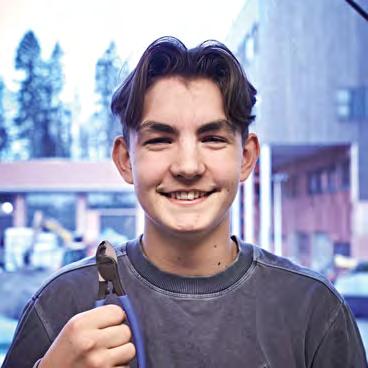
Here is an interview with three students from Electrical Engineering and Computer Technology. The interview was carried out when the students were almost done with their first year.
Electrical Engineering and Computer Technology Elektro og datateknologi passionate about glødende opptatt av / glødande opptatt av profession yrke petroleum industry oljeindustri
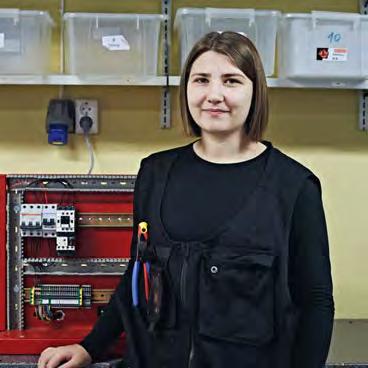

Why did you choose to study Electrical Engineering and Computer Technology?
JACOB (17): Well, it was this or Information Technology, but I realised that I could do information technology, like programming and all that stuff, in my free time. Electrical engineering is something that I’m very passionate about, and I can also do it as a profession because it’s more hands-on. With coding, you just sit behind a computer screen and type, but I like to use my hands and move around, building things from the ground up.
ANNELI (17): I chose it because it’s different and I really wanted to do something practical, like work with both my hands and my brain. Other than that, I’m not sure. It just appealed to me.
BENJAMIN (17): I chose this as a stepping stone towards working in the petroleum industry. I’ll probably go on to study automation next year.
Do you have any family members who also work in this profession?
JACOB: Yes, kind of – my mum’s uncle works as an automation mechanic for oil platforms, so he’s out at sea a lot, but yes, that seems cool.
ANNELI: No, I don’t.
BENJAMIN: Yes, both my aunt and my uncle work in the offshore industry, so I guess I have been a bit inspired by what they have told me about their jobs.
Anneli
Jacob
Benjamin
What do you think you want to work as?
JACOB: I used to think I’d work in the petroleum industry, on a platform, like my uncle, but I’ve realised that I’m more of a land kind of guy. Also –this is really far into the future – I’m looking forward to having a family. With that in mind, I would want to stay on shore. So, I’m planning to become an electrician and work locally.
ANNELI: Next year, I’m planning to study automation – I think I want to work as an automation mechanic or in a similar role. I haven’t decided 100 per cent yet, but there seem to be many interesting job opportunities in that field.
BENJAMIN: I want to work as an ROV operator, eventually. I saw a documentary about this kind of job a couple of years ago, and I’ve been a bit obsessed with it ever since. If that doesn’t work out, my back-up plan is to join the army and work as a mine clearer.
Do you think you will use English in your future profession?
JACOB: Most likely, yes. We already use English words for some terms, techniques or machines. Also, you need a language to speak with colleagues who can’t speak Norwegian very well.
ANNELI: Yes, I think I will. I don’t really mind, because I speak English at home all the time with my mum, who is Australian.
BENJAMIN: I think it’s almost a requirement when you’re working in the offshore industry, where the crew come from different parts of the world. From what I understand, the documents and manuals you need to read are also written in English.
job opportunity jobbmulighet/ jobbmoglegheit
ROV operator FU-operatør requirement krav manual bruksanvisning, manual / bruksrettleiing, manual
1 Understand: True or False
Are the statements below true or false? Correct the false statements with information from the interview.
Jacob had Electrical Engineering and Computer Technology as his only subject choice.
Jacob does not want to work on an offshore platform.
Anneli knows exactly what she wants to do in the future.
Anneli uses English outside of the classroom.
Benjamin wants to work in the oil industry.
Benjamin does not think English will be important in his future profession.
2 Interact & Create: Interview
In pairs, interview each other using the same questions that the students in the text answered. While your partner is speaking, take notes rather than writing full sentences.
After you have finished the interview, use your notes to write a short text in the same style and structure as the one you have just read. Make sure your text includes the key information from the interview and is written in complete sentences.
Here are a few examples of occupations within Electrical Engineering and Computer Technology:
Glossary: see p. 105
Houses and apartments
Commercial buildings and institutions
Industrial sites like factories and warehouses
Work
Install, maintain and repair electrical systems

Install and operate
Maintenance
Alterations
Key
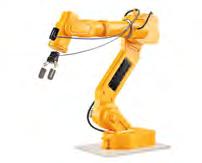
Automation mechanic
Understand
Electrical Engineering and Computer Technology

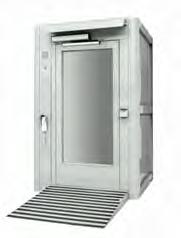

Install and connect different types of cabling
Test and troubleshoot networks, security and control systems
Install and test safety components
1 Create: Quiz
On your own, make a quiz with five questions based on the mind map.
Example: In which occupation is a good knowledge of English necessary? ( Answer : maritime electrician)
Swap quizzes with a partner. See who can answer the most questions correctly.
2 Create: Mind map
The following occupations were not included in the mind map:
computer electronics technician – control panel fitter – drone operator – production electronics technician – avionics technician – locksmith
Choose three of these occupations and create a mind map with the same kind of information as in the mind map you studied earlier.
3 Practise: Listening
My chosen occupation
Look at the questions below and make sure that you understand what they mean. Then go to citizens.cdu.no and listen to Sam Dylan from New Zealand.
What is the text mainly about?
1 A boy named Sam who wants to move from New Zealand to New York
2 A boy who wants to quit school
3 A boy who is studying electronics
What is true about Sam? (More than one answer is correct.)
1 He is very happy with his studies.
2 He is from Australia.
3 He plans to move abroad to find a job.
What two aspects of his studies is Sam particularly interested in?
1 Telecommunications technology
2 Power-supply installation
3 CNC machinery
4 Robotics and automation
There are many different jobs within Electrical Engineering and Computer Technology. Here you can check out some of them.
Note: a job can also be called an occupation, a profession, a career, a vocation or a trade.
What Are They Doing?


1 Practise: Workplace vocabulary
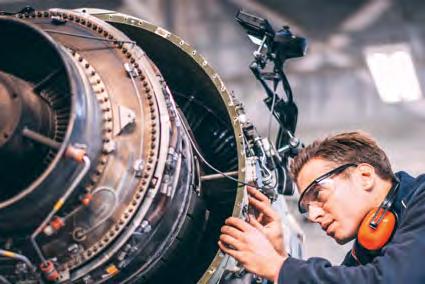
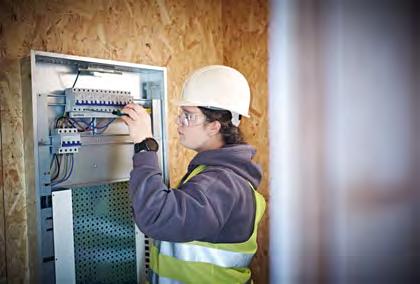
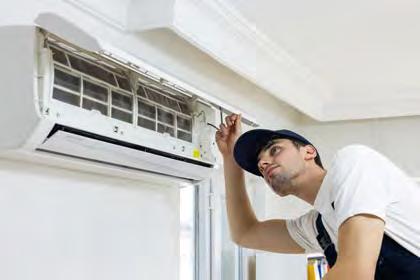
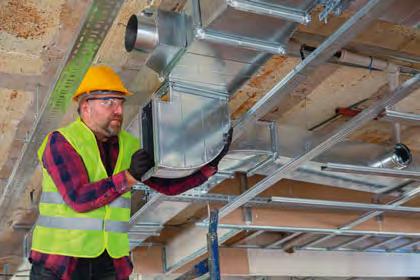
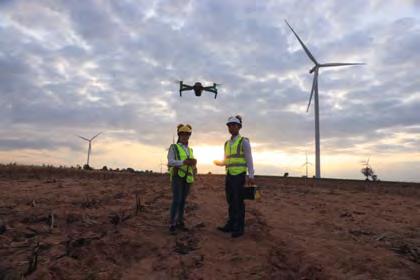
Who does what? Which picture matches each description?
Two electricians are standing on stepladders while working.
An avionics technician is repairing a small airplane’s jet engine.
A ventilation technician is installing a ventilation duct.
Two drone operators are using a drone to inspect a wind turbine farm.
A refrigeration and heat pump fitter is inspecting a heat pump.
Electricians are installing solar panels on a roof.
A control panel fitter is working on a distribution panel.
2 Practise: Workplace vocabulary
Below are possible occupations you can choose as a student of Electrical Engineering and Computer Technology. Match the Norwegian title with the correct English translation.
A. elektriker 1. train electrician
B. heismontør 2. automation technician
C. FU-operatør 3. lift fitter
D. togelektriker 4. power-supply operator
E. energimontør 5. computer electronics technician
F. automatiker 6. production electronics technician
G. telekommunikasjonsmontør7. ROV operator
H. energioperatør 8. electrician
I. produksjonselektroniker9. power-supply fitter
J. tavlemontør 10. telecommunications installer
K. dataelektroniker 11. control panel fitter
Here are short descriptions of some of the jobs in task 2A on p. 11. Find out which job matches each description:
1 Builds, installs and inspects electrical distribution panels.
2 Is employed with offshore petroleum enterprises and participates in oil/gas search operations and in the development, operation and closing phases of an oil field enterprise.
3 Installs, modernises, repairs, tests and maintains lifts.
4 Works in the processing and mechanical industry, building, repairing and maintaining automatic processing systems and machines.
For help answering this task, see the Vocational Glossary (p. 98).
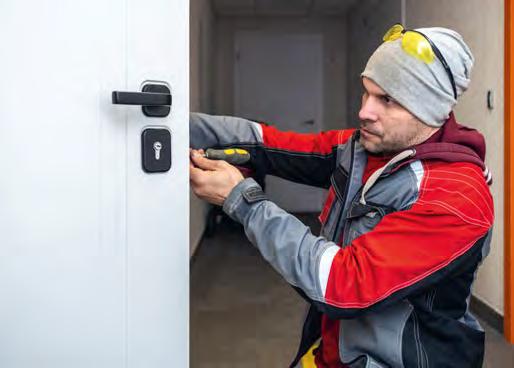
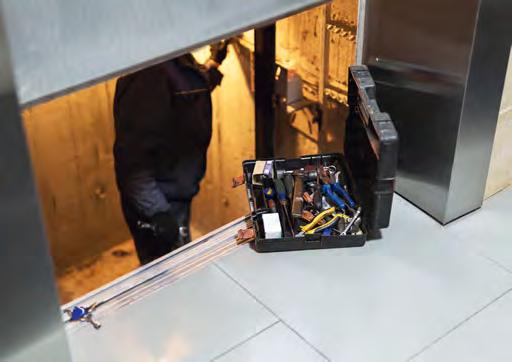
3 Create: Writing
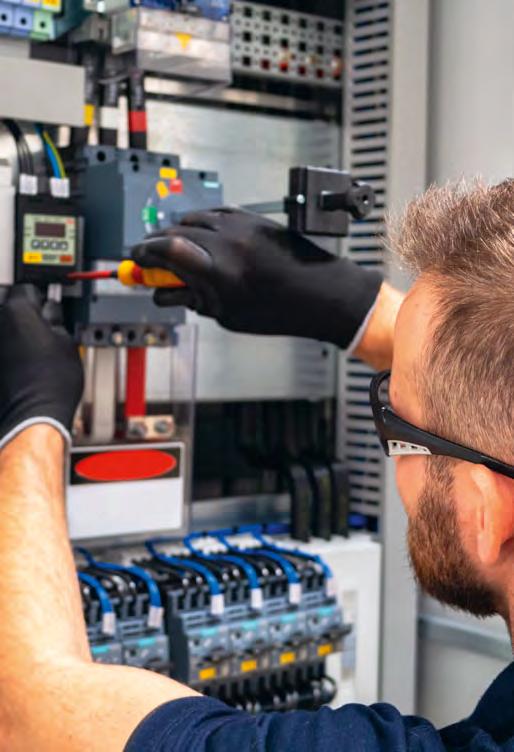
Write a caption (bildetekst) for each of the photos below where you describe what is happening in the photo, and who is doing it. Write the captions using the -ing form. Example: A control panel fitter is talking to a colleague.
Use the name of the correct occupation for each photo, and combine it with one of the verbs.
Occupations: lift fitter – electrician – locksmith
Verbs: install – change – maintain
Practise:
Vocabulary
A In pairs, divide the words below between you and find out what they mean. Use each word in a sentence to show that you understand its meaning.
Student 1: meticulous – variety – agile – (to be) patient –problem-solving capabilities
Student 2: maintain – equipment – independent –intricate – cramped
B Then explain the words to each other, using your sentences as examples.
Four Occupations
Glossary: see p. 105
As a student of Electrical Engineering and Computer Technology, you have a large variety of options when you start specialising in a certain occupation. When choosing a future career, you should consider both personal interests and job possibilities. Maybe you are someone who loves physical work and using your hands, or perhaps you enjoy fixing something that does not function. The text on the next pages gives short descriptions of four occupations, including information about each job and the skills it requires.

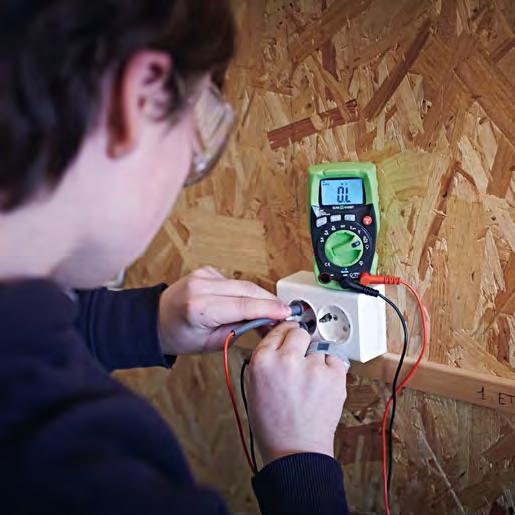
ELECTRICIAN
What do they do?
Electricians install, maintain and repair systems that provide power, lighting, heating, communication and control. They work with different kinds of equipment and wiring in homes, businesses and industrial buildings. Electricians frequently use tools such as screwdrivers, wire strippers and drills to connect and fix electrical systems safely. In addition, they use ammeters, voltmeters, thermal scanners and cable testers to troubleshoot and ensure that components are working correctly. Electricians often work alone but may also collaborate with others if they are part of a crew in a larger company.
What qualities or skills do they need?
As an electrician you must be able to communicate with customers, suppliers and people in other professional fields. You should be able to think independently and solve problems, but you also need to be able to work well in a team with colleagues and other professionals. If you want to be an electrician, you must be meticulous and have good hand-eye coordination. You should be both healthy and agile, because working conditions can be challenging. You also need to follow complicated instructions – sometimes in English – very closely.
LIFT FITTER
What do they do?
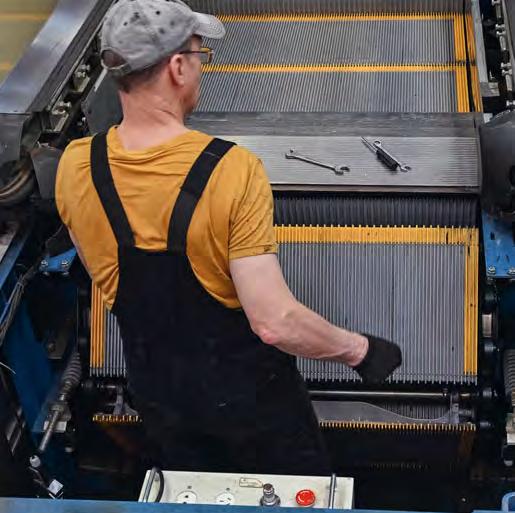
In addition to installing and fitting lifts, a lift fitter also has to repair, test and maintain them. They may also work with escalators, moving walkways and other lift equipment. Lift fitters also work on restaurant dumbwaiters (a lift for transporting food) and patient hoists like those found in hospitals and nursing homes. In short, the job involves everything from intricate tasks like connecting electrical wires to control panels and electric motors, to welding steel rails to the frames of elevator shafts.
What qualities or skills do they need?
The job of lift fitter requires a wide range of skills. Firstly, you must be able to read and interpret blueprints, instructions and regulations. You may also have to demonstrate new equipment to clients and produce risk assessment reports for insurance and legal purposes. You need to be able to respond quickly to emergency callouts. Additionally, you should not be afraid of heights, and you must be able to do some heavy lifting. As a lift fitter, you must be agile and prepared to work inside cramped areas such as elevator shafts and machine rooms. It is important to be meticulous, to have good eyesight and colour-normal vision.
a What does an electrician normally do?
b Give some examples of equipment a lift fitter can install.
c Why do both electricians and lift fitters need to be healthy and agile?
TELECOMMUNICATIONS INSTALLER
What do they do?
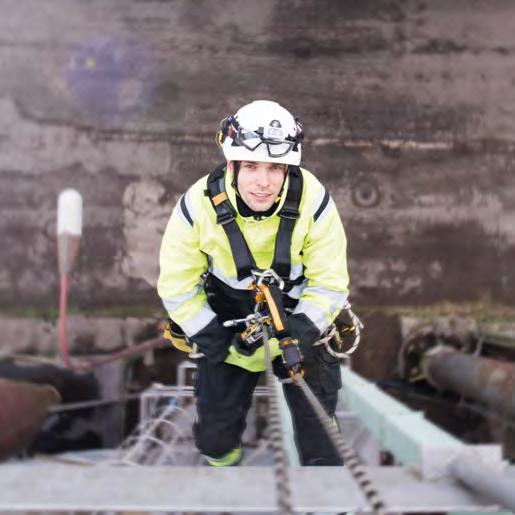
There is a growing demand for people to install, test and maintain the sophisticated wiring of data systems in homes and workplaces. The different kinds of tasks that a telecom installer might have to perform include the planning, development, installation and operation of systems and installations for all sorts of networks. They might work with copper, fibre-optic and hybrid cables, local computer networks (e.g. LAN, WLAN, WIFI) and alarms and security systems.
What qualities or skills do they need?
The telecommunications installer’s job can be physically demanding and might involve working at great heights. You need to be thorough and patient and be able to work independently but also as part of a team. As a telecommunications installer, you need to provide good service and to have adequate colour vision.
PRODUCTION ELECTRONICS TECHNICIAN
What do they do?
A production electronics technician assembles electronic components onto circuit boards and puts them together, either fully or partly, into finished electronic products. They use and programme computer-controlled production equipment, robots, tools and machines. Usually, the production of circuit boards takes place in computercontrolled machines, but it can also be done manually. Other common tasks include testing funtionality and product quality, troubleshooting and programming circuits.
What qualities or skills do they need?
As a production electronics technician, you must have good eyesight, fine motor skills, attention to detail and strong problem-solving capabilities to notice and address problems when they arise. You need to be able to work accurately and have a strong focus on quality and safety. It is necessary to be patient and interested in practical work, and also to be good at collaboration and communication.

a Name two tasks carried out by a telecommunications installer and two tasks carried out by a production electronics technician.
b Why do you need good eyesight in these two professions?
CHECKLIST: Go to citizens.cdu.no to find a list of the most important points from the text you have read.
1 Understand
According to the text, who …
must have good eyesight and fine motor skills?
uses voltmeters and thermal scanners?
might need to do some heavy lifting?
assembles electronic components onto circuit boards?
will install all kinds of networks?
repairs, tests and maintains lifts?
needs good hand-eye coordination?
must respond to emergency breakdown call-outs?
needs to be patient?
works with alarms and security systems?
needs good communication skills as well as personal skills?
should be interested in practical work, and also good at collaboration and communication?









2 Create: Word bank
Read through the text again to find words. Copy the table below and write at least four words in each category.
Word list A I know what these words mean.
Example: independently – selvstendig/sjølvstendig
Word list B I think I know what these words mean. Check in a dictionary or ask someone.
Example: adequate
Word list C I do not know what these words mean. Check in a dictionary or ask someone.
Example: risk assessment
Write a sentence for each word you have written in word lists B and C.
Choose two words from your list B and two words from your list C. Write an explanation in English for each word.
Example: adequate → Something which is adequate is good enough for a particular purpose or need.
3 Practise: Workplace vocabulary
Below are some icons and terms related to electrical work. Work together in pairs to translate the terms into Norwegian.



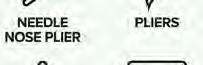
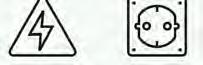
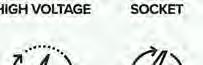




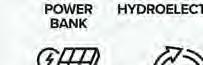





Choose five of the terms and write short descriptions of them.
Example: A carpet knife is a knife with a small disposable blade that can retract into the handle.
Join another pair and tell each other about the terms you have described.
4 Create: Writing
Choose an occupation within Electrical Engineering and Computer Technology that is not mentioned in this text and write a similar text about it, answering these two questions:
→ What do they do?
→ What qualities or skills do they need?
The vocabulary lists on p. 98 may be useful to you here.
5 Practise: Workplace vocabulary
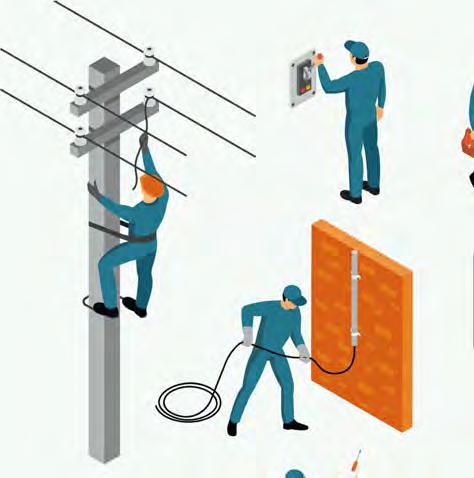
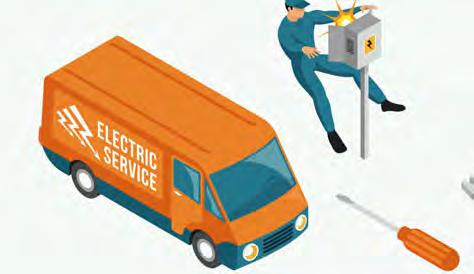
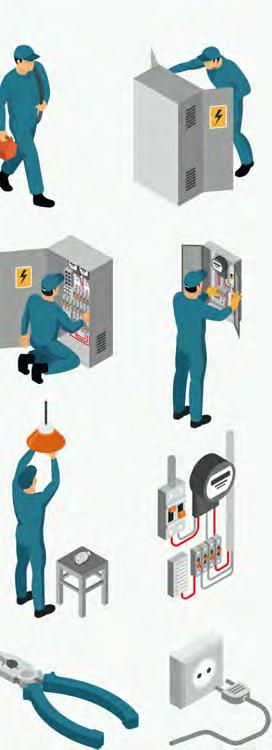
Label the parts on the illustration below with words from this list:
utility pole – pliers – distribution board – light fixture –socket – electrical wires – fuse box – service van –screwdriver – toolbox – junction box – wire spool –electrical cabinet
Here are descriptions of some of the words from 5A. Identify what is being described:
→ This item is used to fasten or loosen screws in electrical work.
→ This item contains switches and breakers that control electrical circuits in a building.
→ This item is used by electricians to travel between different job sites.
→ This item is used to measure how much electricity a building consumes.
→ This item is mounted on a wall and is where you plug in things to get electricity.
Understand & Mediate
Work in pairs. Each of you chooses three different people: Amar, Jane and Len, or Alex, Aleen and Mark.
A Individually, read the three texts and write down 4–5 keywords about each of the people you have chosen.
B Use the keywords to tell your partner about the people you have read about.
Professional Pride
pro·fes·sion·al·ism
noun
The competence or skill expected of a professional. The key to quality and efficiency is professionalism.
OXFORD ENGLISH DICTIONARY
Having professional pride means being proud of your work. Here, six workers in jobs within Electrical Engineering and Computer Technology explain what makes them proud of the work they do.


AMAR KHALID:
I work as an electrician, so my job is to keep lights on, machines running and homes comfortable. I install wires, sockets and lights, and electric car chargers. I fix problems and make sure everything is safe. What I love about my job is helping people. When I fix the power in someone’s house, I feel proud. I also enjoy learning new things. Technology changes, and I learn to work with new systems. This makes my job exciting and means it is never boring.
Glossary: see p. 105
JANE BROWN:
I am a locksmith, and my job can be quite demanding: people need their doors opened 30 minutes before you even arrive! In addition, there are new things to learn all the time. There are always new locks and mechanisms on the market, not to mention the digital locks that are becoming more and more popular. Some of my colleagues find it hard to keep up, but I take great pride in being up to date and ready to tackle new technology.

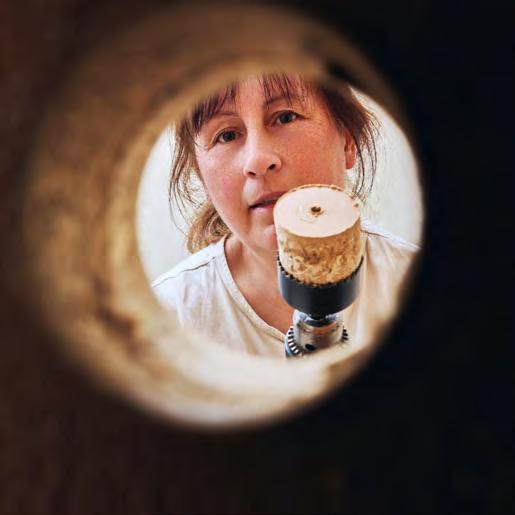
LEN BARLOW:
I am an electrician, and I have specialised in solar panel installation for the past two years. The company I work for is quite small, but the demand for renewable energy sources is growing. We have plenty of work lined up for the foreseeable future. I spend a lot of my working hours outside, either on rooftops installing the panels, or on the ground connecting the panels to an electrical system. I feel very proud to have a job that helps build a better future. Using solar power means we use less oil and gas, and it helps fight climate change.
ALEX JENKINS:
People today want to be connected at all times, and as a telecommunications installer, I help them with that. Installing Wi-Fi routers, TV/satellite systems, alarm systems and fibre-optic and network equipment in homes and offices can all be part of my workday. I have had this job for seven years now, and no two days are the same. I take great pride in what I do because when I have done my job, people have fast internet, strong Wi-Fi and clear phone signals. This means that individuals, families and companies can talk, stream and work online.
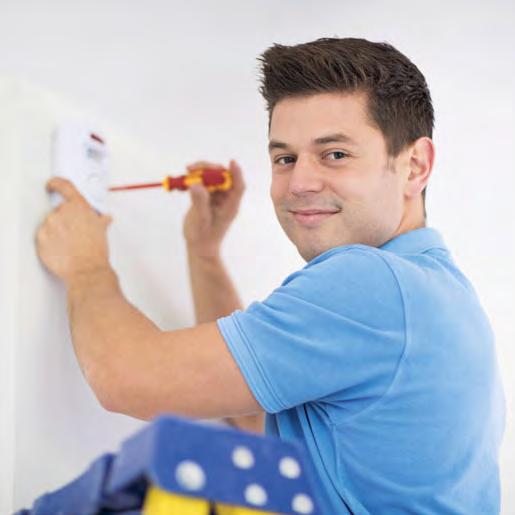

MARK MITCHELL:
Working as an electrical appliance technician, I often visit people’s homes where a household appliance is broken. It can be a washing machine that won’t drain, an oven that won’t heat or a refrigerator that suddenly stops cooling. The moment I love most about the job is when I get the appliance to work again and see that the customer is relieved. It’s not just about wires, circuits and spare parts – it’s about helping people in their daily lives. Every time I leave a home knowing that something now works again because of me, I feel a quiet sense of pride.
CHECKLIST: Go to citizens.cdu.no to find a list of the most important points from the text you have read.
ALEEN MACKENZIE:
My job is mainly about helping bring people’s ideas to life. As an operator in graphic production, I produce different types of materials like posters, company logos, folders, banners, signs and labels. I get to take a client’s idea and turn it into a physical object, following the process closely from start to finish. I like that there is both a creative and a technical aspect to the job, and it is quite cool that my work is sometimes seen by thousands of people! The thing that makes me most proud of my job, though, is collaborating with clients until they are happy and creating a product that they are pleased with.

1 Understand & Reflect
After working in pairs and presenting the different people to each other, you should now be able to discuss the following questions:
What do these people work with? What kind of skills does each of them need in their job, do you think?
What makes them proud of their professions?
In your opinion, who has the best reason to feel proud? Explain your answer.
2 Practise: Workplace vocabulary
Match the person/job with the correct work-related keywords. It is likely that many of the words are new to you, so use dictionaries and other sources for help.
Amar, electrician cable crimper – multimeter – fibre-optic fusion splicer – heat gun
Len, electrician working with solar panel installing utility knives – graphic design software –cutting mats – heat press
Alex, telecommunications installer
hex keys – needle-nose pliers – utility knife – flat blade screwdriver – multimeter
Aleen, operator in graphic production wire strippers – mounting brackets –multimeter – safety harness
Translate the work-related keywords into Norwegian.
Work in pairs. Write the names of all the items in the list in task 2A on pieces of paper. Place the pieces face down on the table. Student A chooses a piece and tries to describe the item to Student B who tries to guess what it is.
Here are descriptions of some key responsibilities of a power-supply fitter. Place the missing words correctly in the text in the white box. Choose from the following words:
cable – repairs – hydraulic – voltage – buildings
A power-supply fitter installs, maintains, (1), and starts up operations at electrical plants – for example:
→ electrical wiring systems of high and low (2)
→ signalling and remote-operated systems
→ electrical (3) systems of high and low voltage
→ various station installations
→ electrical installations for (4)
→ railway and streetcar operations
→ mechanical and (5) equipment
3 Create: Writing
Choose one of the following tasks:
Write a text about an imaginary person who is an automation technician, an avionics technician, a train electrician or a power-supply fitter. Use the texts on pp. 18–20 as models.
You should include:
→ what tasks this person performs at work
→ what skills this person needs to do this job
→ what makes this person feel proud at work
Write a text about having pride in the work you will do in the future. Include the following:
1 Introduction: Descr ibe the job you have chosen to focus on. What tasks will you have to do? What skills and knowledge will you need? Make sure to include at least one sentence telling the reader what your short text is going to be about.
2 Second paragraph: Wr ite about one aspect of the job that you think will make you feel proud. Explain this part of the job, and give examples to show why you think it will make you feel proud.
3 Third paragraph: Wr ite about another aspect of your job that you believe will make you feel proud. Explain how and why this aspect is important to you.
4 Conclusion: Sum up your ideas from paragraphs two and three. Reflect on how being proud of your work can make you a better employee.

Interview:
Learning a Trade
→ Practise:
Vocabulary
Match these words from the audio recording with the correct translation: safety regulations – work placement – electrical power system – distribution panel – vocational –apprenticeship
fordelingsanlegg – el-energisystem – sikkerhetsforskrifter/ tryggingsforskrifter – utplasseringsperiode – læretid –yrkesfaglig/yrkesfagleg
In this interview, you will meet three young Norwegians speaking with a British journalist. He is visiting Norway to write an article about the vocational courses available in Norwegian upper secondary schools. To learn more, he has decided to meet three students from the Electrical Engineering and Computer Technology programme.
Listen to the interview at citizens.cdu.no before working with the tasks.
Glossary: see p. 105
1 Practise:
Listening for information
Who’s who? Place the descriptions with the correct person: Martin, John or Linda.
Who has installed an electrical distribution panel?
Who is studying in the north of Norway?
Who will be working in Oslo next year?
Who thinks satellite technology is interesting?
Who is working at their old school?
Who wants to be an astronaut?
Who received a T-shirt from a grateful student?
Who is in doubt about the apprenticeship?
Who visited Edinburgh during the apprenticeship?
2 Create: Writing
Choose one of the tasks below:
Write a text where you explain the differences between the three occupations presented in the interview.
Based on the interview, which of the occupations do you find most interesting? Write a text in which you explain why.
How do you think jobs in Electrical Engineering and Computer Technology will change in the future? In pairs, try to come up with three changes that you think will happen in the next 30 years, and explain why you think so.
The Future of Electricians C H A LLE N GE
to evolve å utvikle (seg) renewable energy fornybar energi
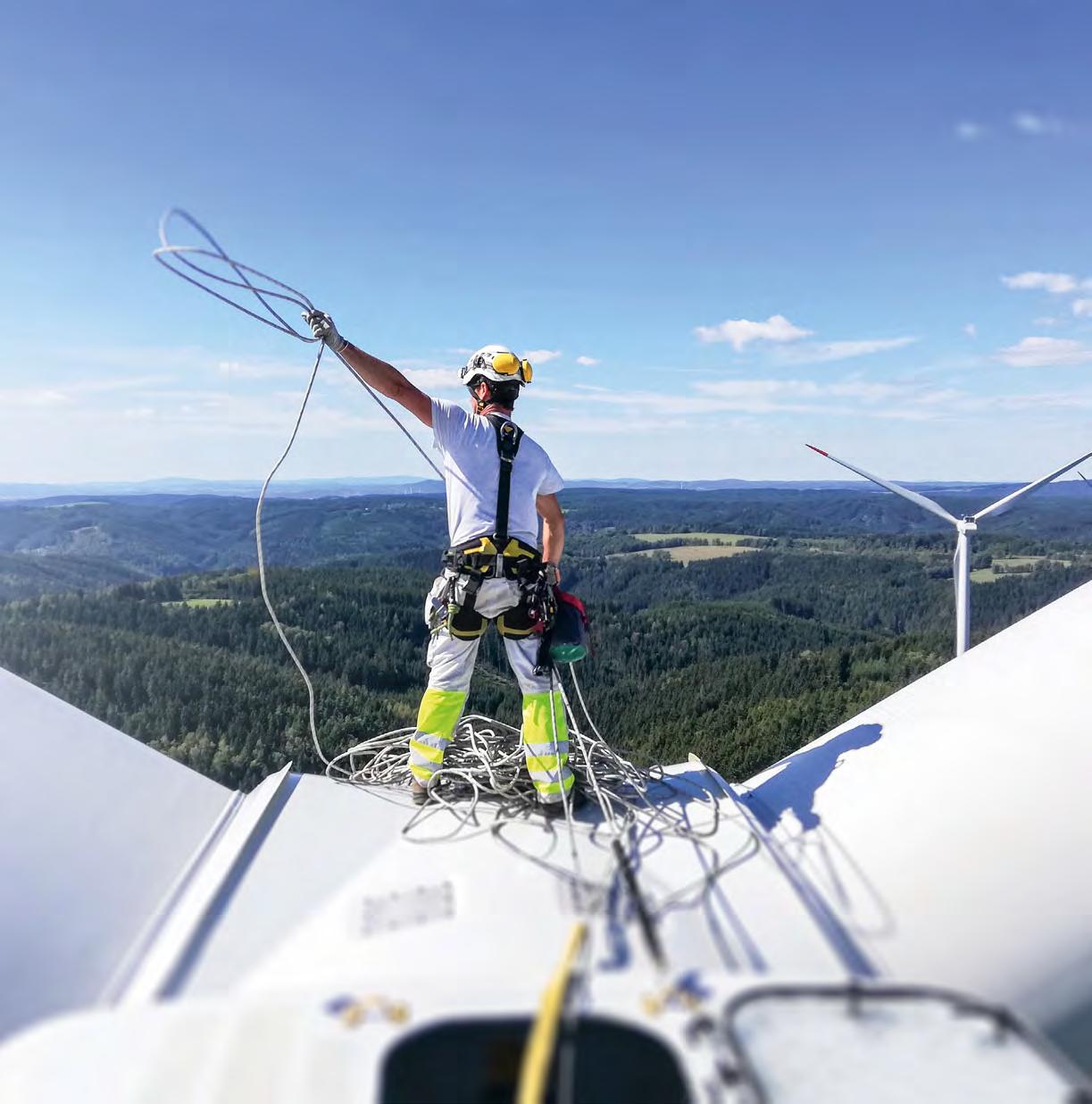
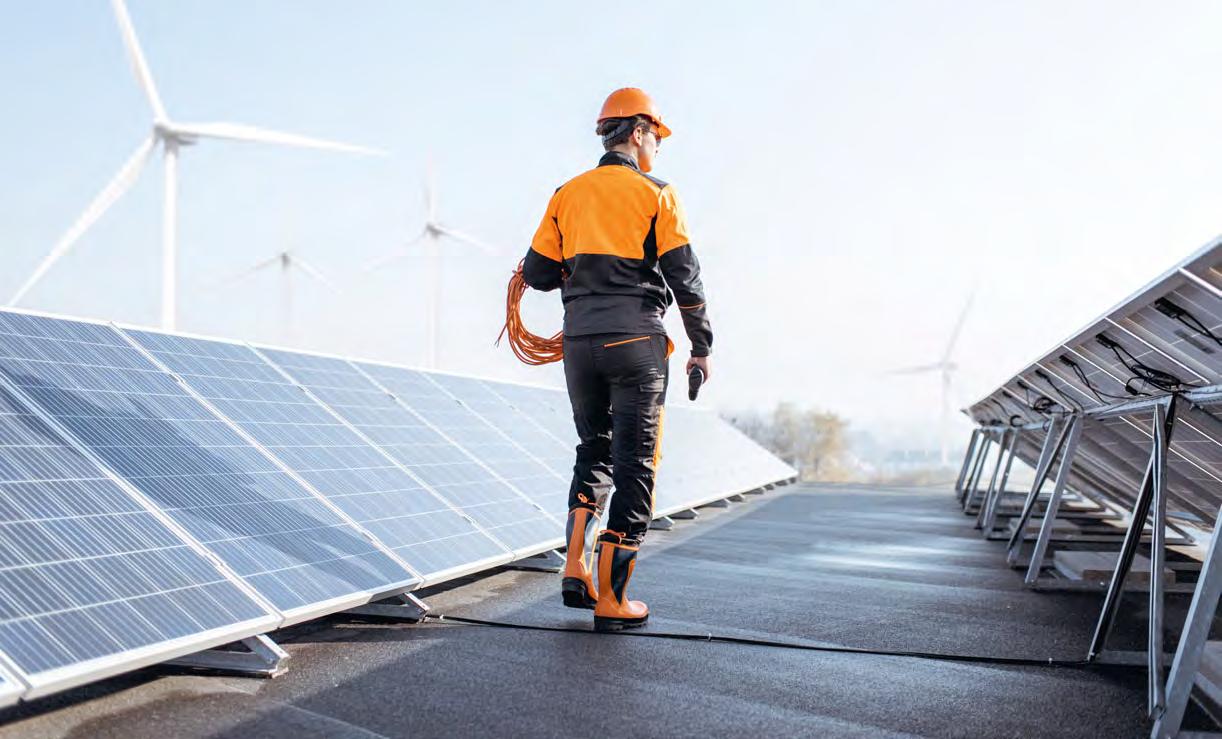
The world of electrical work is evolving rapidly, and the role of electricians will be more important than ever in the coming years. Technology is advancing, there is a growing need for skilled tradespeople, and there is more focus on renewable energy. Because of this, the electrical industry is changing.
advancement framskritt sustainable bærekraftig/ berekraftig storage lagring employer arbeidsgiver/ arbeidsgivar cutting-edge solution nyskapende løsning / nyskapande løysing to adapt å tilpasse (seg) obstacle hindring to stay competitive å bevare konkurranseevnen demand krav competence kompetanse
Technological advancements
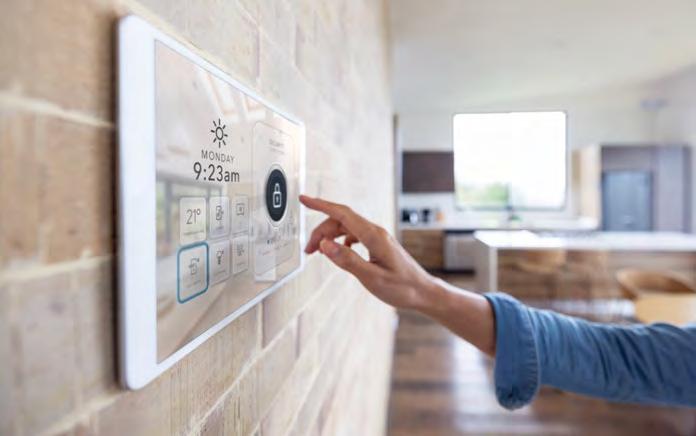
As “smart systems” become more common in homes and buildings, electricians will be essential for installing, maintaining and repairing these new technologies. Additionally, as more people buy electric cars, there is more demand for skilled electricians to install and maintain specialised EV charging stations.
Renewable energy
As the world uses more sustainable energy, there will be more need for electricians to install and maintain solar power systems, wind turbines, battery storage systems and other green technologies. Employers will be looking for more electricians who are trained in renewable energy systems.
The role of electricians in new technologies
The integration of new technologies is at the heart of the electrical industry’s evolution. From smart home automation to the installation of electric car charging infrastructure, electricians are playing a central role in bringing cutting-edge solutions to life. Artificial intelligence (AI) technology can help electricians find and fix problems more quickly, as well as plan smart electrical systems in buildings. Therefore, it is important for electricians to stay up to date on the latest AI developments.
The challenges facing electricians
While the future presents many opportunities, there will also be challenges. Electricians will need to adapt to changes in the industry and deal with various obstacles to stay competitive in a quickly changing job market. The core skills required for electrical work remain the same, but electricians will need to keep updating their knowledge and skills to meet the demands of this changing field.
Essential skills for future electricians
To succeed in the electrical industry, electricians will need a combination of traditional skills and new competencies. The following skills will be especially valuable.
→ Technical proficiency: A solid foundation in electrical theory and practice will remain essential. Electricians have to be skilled at wiring, circuit installation and troubleshooting electrical systems. However, increased focus on high-tech systems means electricians should also learn about new technologies.
→ Expertise in smart home systems: Electricians will need to understand smart systems, wireless networks and how different types of software work together. Smart homes will be controlled from apps, powered by connected devices that communicate across brands and systems. For electricians, this means less traditional wiring and more digital troubleshooting, system integration and smart technology expertise.
→ Experience with renewable energy: With the expansion of solar, wind and other renewable energy systems, electricians who focus on these technologies will have a distinct advantage.
→ Strong problem-solving abilities: The ability to troubleshoot advanced technologies, such as automated systems and electric vehicle chargers, will be in high demand.
→ Adaptability: The electrical industry is constantly evolving. Electricians must be flexible and willing to learn new skills to keep up with any emerging technologies and trends. Whether it means staying updated on safety regulations or learning to work with new systems, adaptability will be the key to success in the future.
proficiency dyktighet, kompetanse / dyktigheit, kompetanse foundation grunnlag to troubleshoot å feilsøke device innretning troubleshooting feilsøking adaptability tilpasningsevne/ tilpassingsevne to emerge å dukke opp
1 Understand
In pairs, use information from the text to answer the questions below. Write complete sentences.
How are technological advancements changing the tasks electricians perform?
Give some examples of green technologies that electricians need to be familiar with.
How do smart home systems influence the skills electricians need to develop?
2 Create: Summary
Write a summary of the text. Focus on giving a general description of the main ideas of the text. Try using your own words as much as possible.
3 Reflect: Quotes
Discuss the following quotes from the text in pairs or small groups.
“The role of electricians will be more important than ever in the coming years.”
What do you think the author means? Do you agree?
“From smart home automation to the installation of electric vehicle charging infrastructure, electricians are playing a central role in bringing cutting-edge solutions to life.”
What is meant by “cutting-edge solutions”? What is meant by “bringing to life”?
4 Reflect
Talk or write about the following questions:
Which part of an electrician’s future job do you find most interesting? Why?
Do you think learning about renewable energy is important for electricians? Explain your answer.
How do you think electricians’ job will change in ten years?
Will an electrician still use the same tools ten years in the future? Which future tools would you like to have in your profession?
Which skills mentioned in the text do you already have? Which ones do you need to develop?
5 Create: Writing
@GottaLoveIT has read the text “The Future of Electricians” and has posted about it on his social media. Write a response to his comment. In your response, refer and respond to the text and contribute with your own perspectives. Comment on and question, agree and/or disagree, with what has already been written.
The recommended length for this text is 150 –200 words.
@GottaLoveIT:
Wow, I love this! At home, I already use loads of smart technology, and it makes things much easier. Why not use smart technology and AI to help people do their jobs better? It’s not just about working faster – electricians get to do more interesting jobs and have more chances to learn new stuff. To me, this is the future, and I can’t wait to see all the exciting new tech and ideas in Electrical Engineering and Computer Technology jobs in the future.
6 Create: Writing
Think about how new technology will affect your future job. Then write a short text (about 100 –150 words) where you share your thoughts.
You can use these questions to help you:
→ Which new technologies do you think will be most exciting to work with?
→ What skills do you think you need to learn to be successful in the future?
→ What part of your future job will make you feel proud or motivated?
You can use some of these sentence starters in your text:
→ In the future, I think workers in Electrical Engineering and Computer Technology will …
→ The skill I most want to develop is …
→ I will feel proud when …
→ The text says that … I think this is true because …
→ One challenge for workers in Electrical Engineering and Computer Technology in the future will be …
→ I agree with the idea that electricians must … because …
→ I would like to work with … because …
→ I think electricians will need to study … so that …
→ The job is important because …
7 Practise:
Reading comprehension
Read the text about a piece of old technology that has evolved over time. Then work with the tasks that follow.
THE LIGHT SWITCH
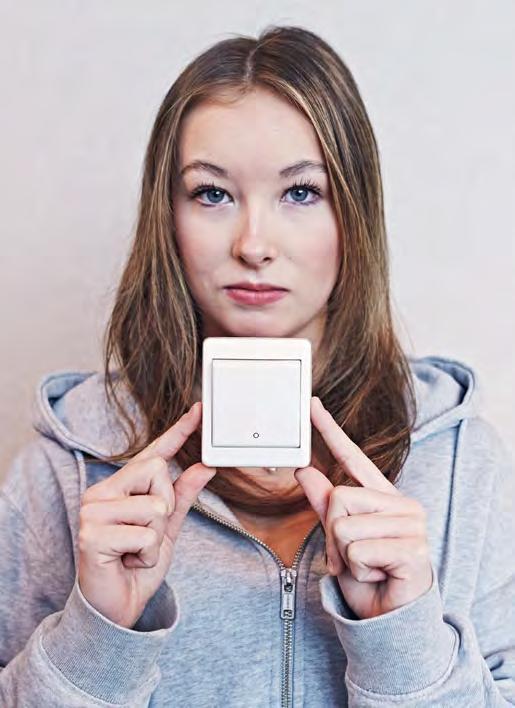
The light switch is a very useful invention because it makes our lives easier. It was invented in 1884 by John Holmes. The technology inside his invention, called quick break, is still used in many light switches today!
In 1890 Granville Woods invented the first dimmer switch. It made it possible for people to choose how bright or dark they wanted a room to be. He created this switch for theatres.
In 1916 William J. Newton and Morris Goldberg invented the toggle light switch. Just like driving on different sides of the road, the direction which represents “on” is also different from country to country. In the United States the “on” position is “up”, but in the UK, Ireland, Australia and New Zealand it is “down”.
In 1985 William Kahn invented an infrared light switch. This switch has a motion sensor and comes on when someone or something moves. It is very useful if you are carrying something with both hands when you walk into a dark room.
The very latest technological development uses a speech detection device. It is now possible to turn the lights on by talking. You can also control the lighting in your house using apps. Who knows what light switches will be like in the future!
Put these light switches in the order they were invented: toggle light switch – speech-detection switch –infrared switch – quick-break switch – dimmer switch
Who invented the following switches? dimmer switch – infrared switch – toggle switch –quick-break switch
Interact:
Talking & Writing
Below is a talk an electrician apprentice gave to a class at a secondary school.
THE POWER GRID
“Good morning, everyone! Today, I want to tell you how electricity gets to our homes.
Have you ever wondered how just flicking a switch turns the light on? It might sound a bit tricky, but I’ll keep it as simple as possible. Electricity is what makes the light work and charges your phone when you plug it in. This electrical power is measured in volts, and different things need different amounts of volts to work. For example, a 9-volt (9V) battery can power a clock, a car battery is usually 12V, and the electrical sockets in Norwegian homes are usually 230V.
So, the electricity at home is a lot stronger than the electricity you find in a small battery. Your 9V battery is safe and won’t hurt you, but the 230V electricity in the wires at home is much, much more powerful and can be very dangerous. So please don’t ever mess with any electrical wires or sockets at home. Just stay away!
In Norway, homes get electricity in two main ways. We have something called IT and TN systems. The IT system gives 230 volts to your house. The TN system can provide both 400 volts and 230 volts and is used in most new buildings. In a lot of other countries, they mostly use the TN system.
Now, let’s see where electricity begins. Nearly all our electricity is made far away from where we live. If you’ve seen the big cables on tall towers stretching across fields and next to roads, you’ve seen part of the huge system for transporting electrical energy. We call this the power grid. These cables connect your home all the way back to the places that make electricity, called power stations.
In a power station, something like wind, steam or fast-running water turns a big wheel called a turbine. The turbine spins electrical coils mounted on a metal shaft inside a machine called a generator. When the coils are
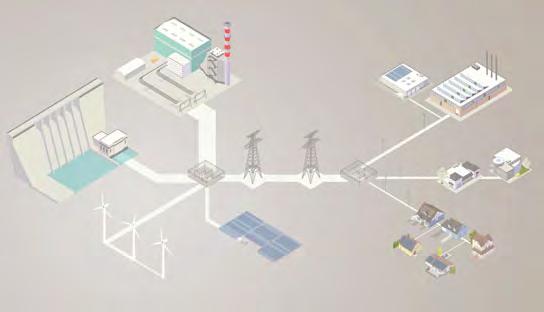
revolved around inside the magnetic field of the generator, it produces electrical power. That is how electricity is made, usually at about 25,000 volts.
You might think 25,000 volts is a lot (and it is!), but to travel the long distance to your home, the electricity needs even more power. Transformers make the electricity much stronger, up to about 400,000 volts. This is because when the power is higher, less current flows through the wires, and that reduces energy loss when transferring electricity. Then, big metal towers called pylons carry the electricity across the country.
As the electricity gets closer to towns, factories and houses, more transformers reduce the voltage step by step. This is to make the electricity safe and useful for whatever needs it. The last big transformer is called a substation. It brings the voltage down to either 230 volts or 400 volts, depending on the system, before the electricity is sent into our homes.
And that’s how the power grid brings electricity all the way to you! Thanks for listening!”
Working in pairs, tell each other how the electric grid works using the following keywords from the lecture:
generator, water, voltage/volts, turbine, substations, transformer
Make a timeline that shows the journey of electricity from the power station to your home. Use words, arrows, and simple drawings to show each main step.
In your pair, choose a different electricity-related topic and write a similar text for the same target audience. Here are a few ideas for research:
generator, automatic circuit breaker, transformer, battery, turbine, solar power
9 Research
Individually or in pairs, research what can happen if a mobile phone receives too much electricity. Write a short summary (5-8 sentences) in clear language for other students. Your summary should include what can happen to the phone and why this happens.
Diagram of electrical power sources, transmission lines and customers. It includes a power plant, a hydroelectric dam and generator, wind turbines and a solar panel array.
Application Letter
An application letter is a document where you state your interest in a job, scholarship or something similar. Competition can be tough, so your application letter needs to stand out. Here is what you should include. (Note that some companies use standardised formats that you fill in when you apply for a job there.)
Structure of the text
This is one way your application letter can be structured if it is sent as a separate document attached to an email, e.g. in Word or as a PDF.
1 The address and contact information of the sender. If you are writing an email, you include your contact information at the bottom, after your signature
(2 The address of the receiver – if this is mentioned in the advertisement)
3 The date
4 A polite greeting, for example: Dear Sir/Madam, Dear Mr Brown, Dear Mrs Johnson
5 a) Explain why you are writing the letter and introduce yourself
b) Information on your background
c) Explain why you think you are suitable for the job / scholarship / position
d) If applying for a part-time job, you should include when and how much you are able to work
6 Closing politely, for example: I am looking forward to hearing from you, Thank you for your consideration
7 Polite ending: Sincerely, Yours sincerely, and your name.
8 References: the names of people a potential employer can contact to find out more about you, for example a former employer or teacher
It is always important to tailor your application letter to what you are applying for. Some advertisements (ads) may require you to provide specific information. Read the ad carefully to make sure you include what is asked of you.
What you should include in all application letters:
→ Polite phrases that show respect for the person you are addressing. This is important in formal letters.
→ Linking words that tie the text together.
→ Positive words that help you “promote” yourself.
Do not:
→ Use abbreviations: write “do not” and “I am”, not “don’t” and “I’m”.
→ Write much longer than a page. The purpose of an application letter is to get you to an interview, so it should be short and precise.
Example ad and application letter
Jamie is looking for a part-time job, mainly on weekends. He is studying to be an electrician and would like a job in relation to this. Jamie sees this notice in his local electronics shop, Curry’s:
SALES ASSISTANT WANTED
As a sales assistant you would carry out tasks like:
→ greeting and helping customers
→ organising the store
→ cashier duties
Full training will be given, but you should have a strong interest in electrical devices. We are looking for someone punctual, friendly and hardworking.
Apply via email to: currysteam@curryselectronics.co.uk
Sender →
Here is Jamie’s application letter:
POLITE PHRASES LINKING WORDS POSITIVE WORDS
Jamie Payne
27 Colmore Row
Birmingham B3 2EW
email: Jamiepayne@hotmail.com
Telephone: (020) 8384 6454
Date →
Opening greeting → Why he is writing →
Background: work experience →
20 June 2026
Dear Sir or Madam
I w ish to apply for the position in your shop, as advertised in your shop window. My name is Jamie Payne. I am 17 years old and go to the Birmingham City College, where I specialise in ICT services.
I have previously worked as a babysitter, which I enjoyed a lot. As a result I have excellent references you may call. Furthermore, I have worked as a sound technician in a school play, which taught me how to stay focused in a st ressful environment.
Background: interests →
Why he is suitable →
What kind of employment he is looking for →
Closing politely →
Polite ending → Signature →
References →
In my spare time I like to play football and computer games. My main interests are computers and programming. Therefore, I spend a lot of time reading up on this. I have wanted to work with computers since I was a little boy.
I think the position as a sales assistant is perfect for me. I have a true passion for electrical devices such as computers and mobile phones. I am tidy, service minded and love to be around people. I am also trustworthy, as my references w ill tell you.
I am looking for a position on weekends, although I am flexible. If there are busy periods I can help out on weeknights and holidays as well.
I am looking forward to hearing from you at your earliest convenience.
Yours sincerely, Jamie Payne
References:
Lara Benton, babysitting employer – 07700 901042 Paul Davies, teacher – 07700 909183
TASKS
1 You are applying for a job as an electrician (or another profession, see p. 98 for job titles in English). The employer wants to know what kind of person you are and why they should hire you. Write a short text (80 –120 words) where you describe yourself using positive words (adjectives).
What to include:
Who you are (a short introduction) – What you are good at (skills and qualities) – Why you would be a good worker for this job
Helpful adjectives you can use (look them up if you are uncertain of what they mean):
hardworking – reliable – responsible – motivated – skilled – flexible – friendly – eager to learn – precise – meticulous – adaptable – quick learner – respectful – trustworthy – patient – innovative – team-oriented – honest –safety-conscious – attentive – diligent – determined –punctual
Sentence starters you can use:
→ I am a … person who …
→ My friends and teachers say that I am …
→ I am good at …, and I always …
→ I believe I would be a good employee because …
Write an application letter, using the structure shown on p. 30 and vocabulary you have practised in this chapter.
LOOKING FOR AN APPRENTICESHIP?
We are looking for students in vocational training programmes in Electrical Engineering and Computer Technology. We work with a range of local and international companies and are eager to match motivated students with great training environments.
We want someone who:
→ is currently studying a vocational subject
→ is reliable and willing to learn
→ has good references from school or previous work
→ shows a positive attitude
Please send your application letter and CV to: WorkStart Placements c/o Nina Orellana nina@workstartplacements.org
We look forward to hearing from you!
2
A representative from your local job centre is visiting your school and leaves behind a leaflet for the students attending vocational courses. It advertises an international apprenticeship programme with the company WorkStart Placements.
3 When you have finished writing your application letter in task 2, swap with a partner. Give each other feedback by pointing out two things the application does well and one thing that can be changed to improve it.


Chapter 1
1 Review:
Focus points
Use this scale to describe your level for each of the “I can …” statements below:
Very well – Well – Needs some work – Needs lots of work
→ I can understand and use words and phrases related to my future profession.
→ I can talk and write about many different professions within my education programme.
→ I can reflect upon various aspects related to professions within my education programme.
→ I can write a job application suited to the job I am applying for.
2 Review:
Key terms
A In pairs, divide the keywords on page 5 between you and find out what they mean. Use each word in a sentence to show that you understand its meaning.
B Then explain the words to each other, using your sentences as examples.
3 Review:
Discussing and writing paragraphs
A Discuss with a partner: In which of the occupations in this chapter would you most and least like to work?
B Write a short reflection note (2–3 paragraphs) explaining the choices you discussed in task 3A.
4 Review: Poster
Make a poster presenting your future occupation using text and pictures.
Target audience: Students in Years 9 and 10
Purpose(s): To inform and convince
Your poster should include:
→ a description of what the work involves and typical places of work
→ a brief description of the education and training you will need
→ skills you need in this occupation
→ relevant illustrations
When finished, present your poster to your classmates in groups of four. (You may also want to display your posters in your classroom for the rest of the class to see.) For relevant words and phrases you might need, see pp. 98–104.
Tools & Procedures

Focus
In this chapter, you will:
→ learn about different tools and pieces of equipment used in Electrical Engineering and Computer Technology
→ reflect upon the importance of being able to use English as your language of work
→ listen to, understand and use words and phrases related to your future profession
→ create oral and written texts relevant to your future profession, such as instructions and procedures
Reflect
A How do you think good English skills could be useful in your future workplace?
B What are some tools or equipment you might use in your future job?
C Why is it important to follow specific procedures or instructions at work?
Chapter keywords
→ tool
→ procedure
→ equipment
→ communication
→ lingua franca (common language)
→ invention
→ instructions
→ workplace vocabulary