Citizens
FAGDEL
Engelsk for Bygg- og anleggsteknikk
THERESE HOLM
MONICA OPØIEN STENSRUD
© CAPPELEN DAMM AS, Oslo 2026
Materialet i denne publikasjonen er omfattet av åndsverklovens bestemmelser. Uten særskilt avtale med Cappelen Damm AS er enhver eksemplarfremstilling og tilgjengeliggjøring bare tillatt i den utstrekning det er hjemlet i lov eller tillatt gjennom avtale med Kopinor, interesseorgan for rettighetshavere til åndsverk. Enhver bruk av hele eller deler av utgivelsen som input eller som treningskorpus i generative modeller som kan skape tekst, bilder, film, lyd eller annet innhold og uttrykk, er ikke tillatt uten særskilt avtale med rettighetshaverne. Bruk av utgivelsens materiale i strid med lov eller avtale kan føre til inndragning, erstatningsansvar og straff i form av bøter eller fengsel.
Design og sats: Welt, Erlend Askhov Omslagsdesign: Erlend Askhov Omslagsillustrasjoner: Jon Arne Berg
Forlagsredaktører: Birger Nicolaysen og Patricia Kathleen Bronte
Bilderedaktør: Birger Nicolaysen
Trykk: Livonia Print Sia, Latvia 2026
Utgave 1 Opplag 1
ISBN 978-82-02-89705-5
Papiret i Cappelen Damms bøker er hentet fra bærekraftig skogsvirke. Ingen av forlagets produkter bidrar til avskoging eller forringelse av skog. Cappelen Damm arbeider for å redusere miljøbelastningen fra våre bøker så mye som mulig.
Les mer om Cappelen Damms miljøarbeid ved å scanne QR-koden: www.citizens.cdu.no www.cdu.no
Referring to this textbook using APA 7th
In a text: (Holm & Stensrud, 2026, p. 000) 000 = the page number where the quote/information is found
In List of References: Holm, T. & Stensrud, M.O. (2026). Citizens YF Fagdel – Engelsk for Byggog anleggsteknikk. Cappelen Damm.
Preface
We are pleased to present an English textbook created especially for you as a student of Building and Construction. As you work through the different topics in this book, we hope you will find them interesting, relevant to your studies and helpful for developing your skills so you can become a confident English user in your future profession.
The textbook is organised into three main chapters, each focusing on essential aspects of your education and future working life. At the end, you will find a vocational glossary to support your language learning, with definitions of terms and Norwegian translations.
Chapter 1: Careers
This chapter explores a variety of jobs within your field. You will meet people working in different professions, learn about day-to-day tasks and key skills, and reflect on your own ambitions and career choices. You will also have the opportunity to practise writing a job application and to consider what makes work meaningful and rewarding.
Chapter 2: Tools & Procedures
Here you will learn about the tools, equipment and procedures used in your line of work. The chapter covers workplace vocabulary and provides practice in understanding and following written and oral instructions. You will also reflect on the importance of clear communication in the workplace and see how English is used in authentic professional situations. The chapter also includes practical tasks for talking about equipment and learning procedures.
Chapter 3: Caution!
The final chapter focuses on challenges and safety issues in your future profession. You will explore important topics such as health and safety routines, recognising occupational hazards, reporting accidents and dealing with workplace problems. Through real-life stories, scenarios and tasks, you will reflect on responsibility, reputation and how to handle difficult situations. The chapter helps you develop language for risk assessment and promotes safe, professional working habits. Other topics include workplace challenges related to ethical behaviour, for example professionals who “cut corners” at work.
Each chapter offers a variety of texts and tasks to help build your English skills and professional competence. At the end of each chapter, you can review your progress and reflect on what you have learned. Throughout the book, you will find opportunities to develop speaking, reading, listening and writing skills – always connected to your education programme.
Our hope is that this textbook will support you as you improve your English, and that you enjoy the learning experience.
We wish you every success in your studies!
Monica & Therese
Chapter 1: CAREERS
Chapter 2: TOOLS & PROCEDURES
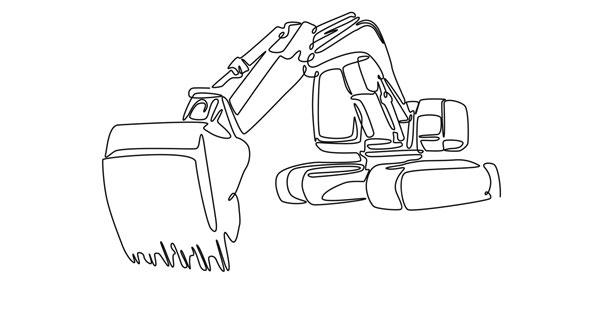
Chapter 3: CAUTION!
Vocational Glossary
Note:
→ Listening texts and recordings of reading texts: citizens.cdu.no
→ Challenging tasks are marked with a darker colour like this:
→ Exam preparation: information, examples of exam tasks and useful tips for answering them at citizens.cdu.no
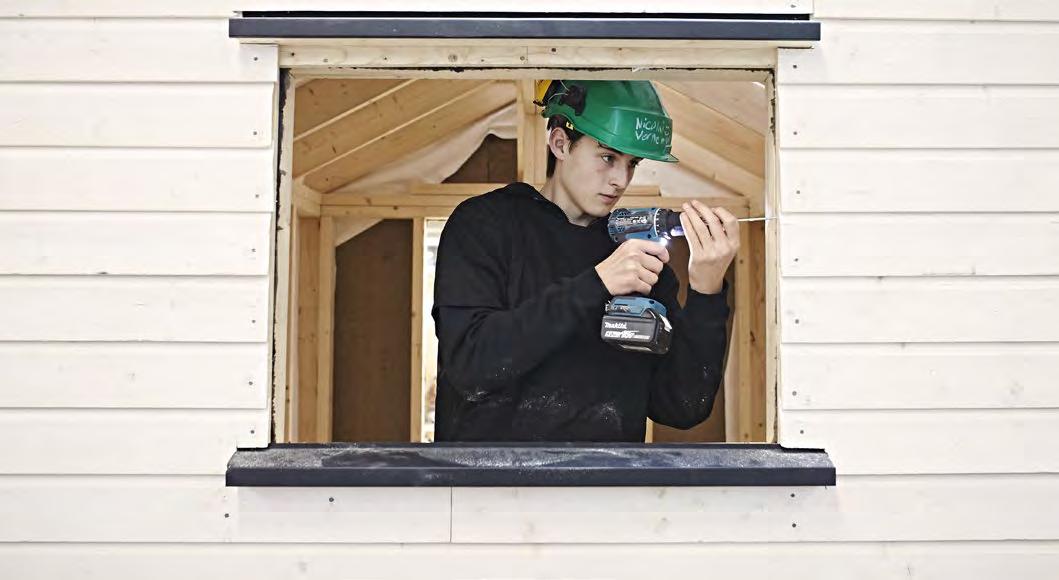
Careers 1
Focus
In this chapter, you will:
→ listen to, understand and use words and phrases related to your future profession
→ learn about different professions within Building and Construction
→ reflect upon various aspects of careers in Building and Construction
→ learn how to write a job application
Reflect
Discuss with a partner:
A What is most important to you when choosing a future career: good pay, good colleagues or interesting work?
B Is it important for you to work where you already live, or would you like to travel to work somewhere else?
C Have you always known what you want to become, or are you curious and open to possibilities?
Chapter keywords
→ career
→ profession
→ occupation
→ task
→ skill
→ quality
→ professional
→ workplace
→ job application
Why Did You Choose this Education Programme?
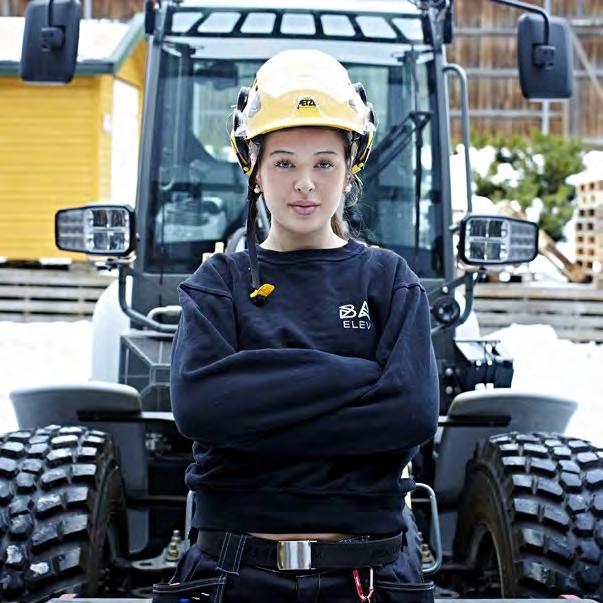
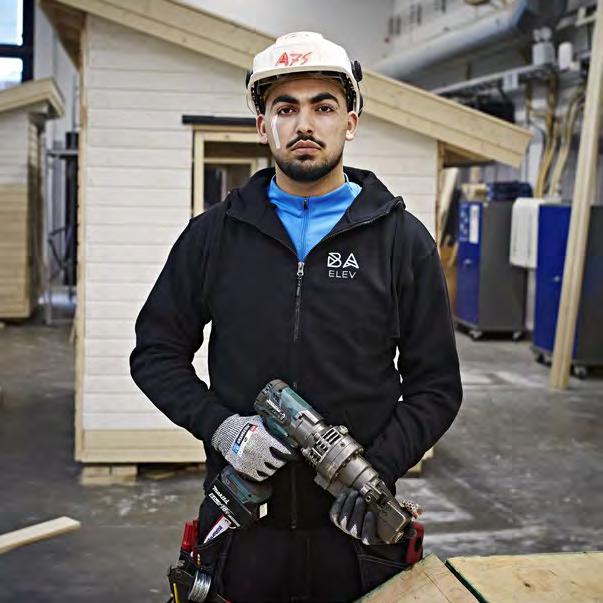
Here is an interview with two students from Building and Construction. The interview was carried out when the students were almost done with their first year.
Why did you choose to study Building and Construction?
LUCAS (17): In Year 10, I honestly didn’t know what I wanted to do next, and I felt really bored with school. Then we visited this school for an Open Day and got to see the classrooms and workshops. I spoke to a couple of guys in the second year, and they had only good things to say about studying here. So when it was time to apply, I put this as my first choice – and I’m so glad I did.
JULIA (17): I have an older brother and sister who both studied here, so I’ve known that this is what I want to do since I was little! Big machines fascinate me, and I also see how much both my siblings love their jobs in the building and construction industry. I’m kind of following in their footsteps, and I don’t think anyone was surprised when I put Building and Construction as my first choice after Year 10.
Do you have any family members who also work in this profession?
LUCAS : Yes, my uncle is a bricklayer, but the rest of my family work in healthcare.
JULIA : Yes, in addition to my brother and sister, my dad also works within this profession. My dad and brother are construction machinery operators, and my sister is a road and construction worker.
What do you think you want to work as?
LUCAS : At the moment, I’m thinking about becoming a concrete industry worker. When we did some work in that field in the workshop at school, I realised I have a bit of a talent for it. I enjoy working with formwork, and I’ve heard it’s quite easy to get a job. It would be fun to help build big buildings, so I can tell people later that I made them!
JULIA : Since I grew up around people who really love the construction industry, it’s probably no surprise that I also want to work there! My dad jokes that he should start his own construction company, since all three of his children have chosen careers in construction. My plan is to get a craft certificate as either a road and construction worker or a construction machinery operator – I haven’t decided yet.
1 Understand: True or False?
Are the statements below true or false? Correct the false statements with information from the interview.
�� Lucas chose Building and Construction because of his brother.
�� Lucas thinks that finding a job as a concrete industry worker is not going to be a problem.
�� Julia has several family members who work in building and construction.
�� Julia plans on working in her family’s company.
workshop verksted/verkstad to apply (to) å søke (på) / å søkje (på) siblings søsken profession yrke bricklayer murer/murar construction machinery operator anleggsmaskinfører/ anleggsmaskinførar road and construction worker vei- og anleggsarbeider / veg- og anleggsarbeidar concrete worker betongfagarbeider/betongfagarbeidar formwork forskaling craft certificate fagbrev
2 Interact & Create: Interview
�� In pairs, interview each other using the same questions that the students in the text answered. While your partner is speaking, take notes rather than writing full sentences.
�� After you have finished the interview, use your notes to write a short text in the same style and structure as the one you have just read. Make sure your text includes the key information from the interview and is written in complete sentences.

Designing
Choosing
Landscaper
Public

Private homes/gardens
1 Create: Quiz
�� On your own, make a quiz with five questions based on the mind map.
Example: In which occupation are good maths skills necessary? ( Answer : plumber)
�� Swap quizzes with a partner. See who can answer the most questions correctly.
2 Create: Mind map
The following occupations were not included in the mind map on pp. 8–9:
scaffolder – glazier – mason – road and construction worker – industrial painter – insulator
Choose three of these occupations and create a mind map with the same kind of information as in the mind map you have studied.
3 Practise: Listening
My chosen occupation
Look at the questions below and make sure that you understand what they mean before listening to Matthew Dott from New Zealand at citizens.cdu.no.
�� What is the text mainly about? (One answer is correct.)
1 A boy trying out for the football team.
2 A boy who wants to become a bricklayer.
3 A boy changing his mind about becoming a bricklayer.
�� Why did he choose this profession? (One answer is correct.)
1 His parents told him he had to.
2 He had no other options.
3 He knows the profession well from family members.
�� What is true about Matthew? (More than one answer is correct.)
1 He is originally from India.
2 His father and uncle own the company he works for.
3 He likes to sit in front of a computer all day.
4 He is strong, which you must be to become a bricklayer.
There are many different jobs within Building and Construction. Here, you can check out some of them. Note: a job can also be called an occupation, a profession, a career, a vocation or a trade.
What Are They Doing?
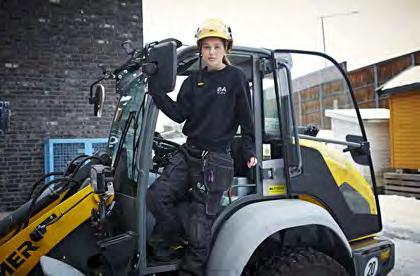
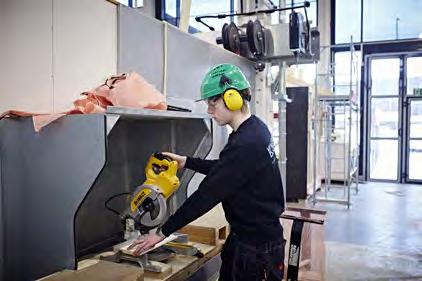
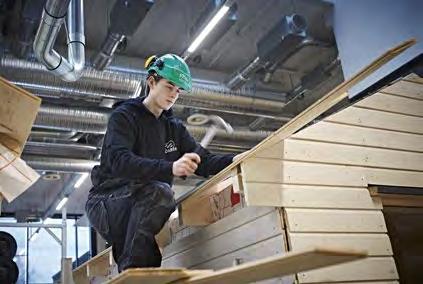
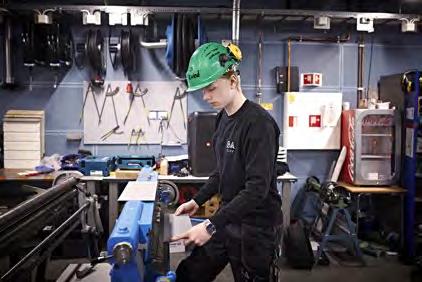
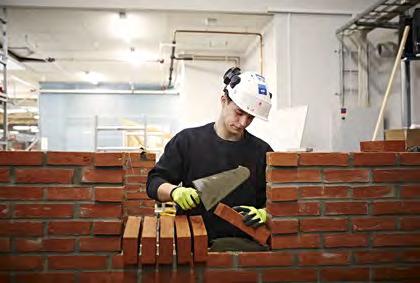
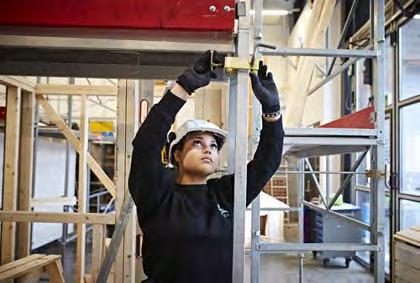
1 Practise:
Workplace vocabulary
Who does what? Which picture matches each description?
�� A carpenter is hammering nails on a roof construction.
�� A bricklayer is laying bricks to build a brick house.
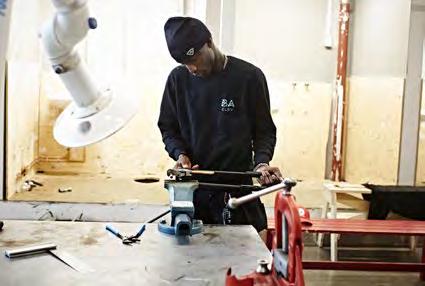
�� A plumber is bending a copper pipe.
�� A scaffolder is inspecting a scaffold.
�� A carpenter is cutting plank ends.
�� A construction machinery operator is exiting a front-end loader.
�� A tinsmith is measuring metal plates.
2 Practise: Workplace vocabulary
�� Below are some possible occupations you can choose as a student of Building and Construction. Match the Norwegian title with the correct English translation.
A. maler 1. scaffolder
B. isolatør 2. glazier
C. asfaltør 3. tinsmith
D. snekker/tømrer4. furniture maker
E. møbelsnekker 5. plumber
F. stillasbygger 6. painter and decorator
G. glassfagarbeider 7. carpenter
H. rørlegger 8. insulator
I. anleggsgartner 9. landscaper
J. blikkenslager 10. asphalter
�� Which of the professions from task 2A will …
→ fix your clogged toilet?
→ build a shed in your backyard?
→ level out your uneven garden?
→ help you safely reach the top of your house when you paint the exterior?
→ g ive your house the colour you have been dreaming of?
→ build your dream kitchen?
→ make your old wooden cabin warm and cosy?
→ g ive you a lovely, smooth driveway?
For help answering this task, see the Vocational Glossary (p. 98).

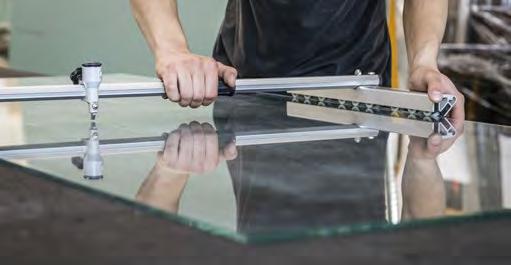

3 Create: Writing
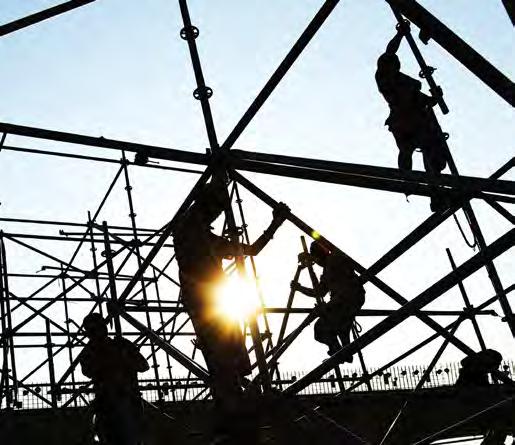
Write a caption (bildetekst) for each of the photos below where you describe what is happening in the photo, and who is doing it. Write the captions using the -ing form. Example: A toolmaker is talking to a colleague.
Use the name of the correct occupation for each photo, and combine it with one of the verbs:
Occupations: painter – scaffolders – carpenter – glazier –institutional cleaner
Verbs: polish – cut – erect – lay – paint

Practise:
Vocabulary
A In pairs, divide the words below between you and find out what they mean. Use each word in a sentence to show that you understand its meaning.
Student 1: furniture – vehicles – fabricate – petroleum – supervise
Student 2: asphalter – troubleshoot – rock blaster –miner – occupation
B Then explain the words to each other, using your sentences as examples.
Four Occupations
Glossary: see p. 105
As a student of Building and Construction, you have a large variety of options when you start specialising in a certain occupation. When choosing a future career, you should consider both your personal interests and job opportunities. Maybe you are someone who loves physical work and using your hands, or perhaps you enjoy fixing something that does not function. The text on the next pages gives short descriptions of four occupations, including information about each job and the skills it requires.


INDUSTRIAL CARPENTER
What do they do?
Industrial carpenters work in the furniture and furnishing industry, where they fabricate elements and assemble products. They may work in factories or on site and use different types of instruments, hand and power tools, and machinery. Industrial carpenters also supervise machinery, troubleshoot problems and carry out maintenance and repairs.
What qualities or skills do you need?
As an industrial carpenter, you should be able to work from blueprints, as well as calculate dimensions. You need technical understanding, good hand-eye coordination, and to be healthy and agile, as the work can be physically demanding. In this profession, you should also have a sense of aesthetics. This means that you should be able to understand what makes an object appealing, for example, its look, colour, shape and design.
ASPHALTER
What do they do?
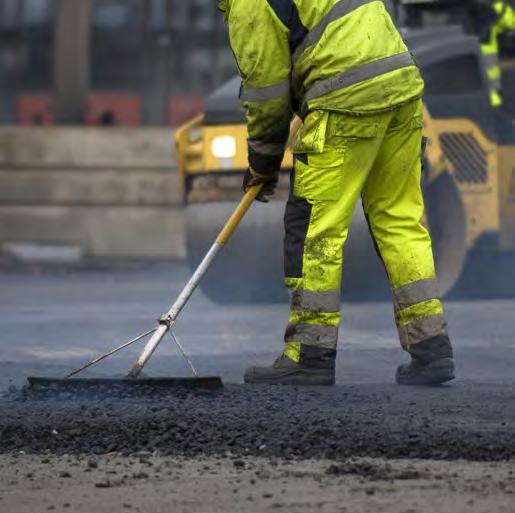
Asphalters usually work in road construction, where they lay asphalt concrete. However, they may also work with mastic asphalt, which is waterproof and used to seal roofs, floors, swimming pools and similar surfaces. In addition, asphalters may help produce asphalt products in the petroleum industry.
What qualities or skills do you need?
When you are an asphalter, you need to be able to operate different types of asphalt-laying vehicles and machinery, carry out inspection work and help with work planning, including mark-outs. You must also be able to handle extremely hot working conditions.
a What does an industrial carpenter do?
b Where do asphalters typically work?
c Under what kinds of temperatures do asphalters often work?
ROCK BLASTER AND MINER
What do they do?
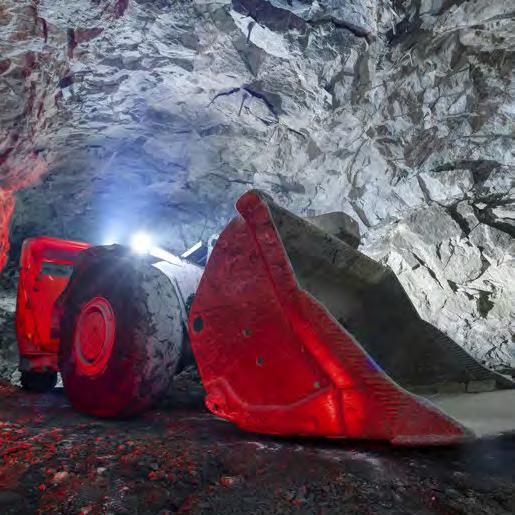
Rock blasters and miners work in the mining or construction industries and do a variety of jobs. These include drilling and blasting, securing rock or stone surfaces and structures, as well as using and maintaining heavy-duty machinery and equipment. They are also involved in work planning and mark-outs.
What qualities or skills do you need?
This job requires you to be in good physical condition. Because rock blasters and miners both do manual labour and operate advanced machinery, you need practical skills as well as technological understanding. Following safety regulations is very important, as explosives are used in this occupation.
SCAFFOLDER
What do they do?
Scaffolders often work on construction sites, on demolition sites or private properties. Their job is to build safe and sturdy scaffolds around buildings for other workers to use. Scaffolders make sure the scaffolds are secure and take them down after the work is finished.
What qualities or skills do you need?
As a scaffolder, you need to know a lot about safety when working at heights. You need to be able to stay calm in stressful situations and work well with others. As the job can be physically demanding, it is important to be healthy and to be able to work for a long time without getting tired. You also need to be thorough and pay attention to details.

a Name two tasks carried out by a rock blaster and miner and two tasks carried out by a scaffolder.
b What would you say is the most important skill to have in each of these two professions?
CHECKLIST: Go to citizens.cdu.no to find a list of the most important points from the text you have read.
1 Understand: Who?
Who …
�� makes and assembles wood products?
�� often works in hot conditions?
�� combines manual labour and machinery?
�� needs to know about public health and safety?
�� often works in road construction?
�� works with furniture?
�� works in the petroleum industry?
�� secures or uses explosives on rocks?
�� helps people reach the top of buildings?
�� may work on building sites or in factories?
�� uses explosives and must be highly conscious of safety risks?
2 Create: Word bank
�� Read through the text again to find words. Copy the table below and write at least four words in each category.
Word list A
I know what these words mean.
Word list B
I think I know what these words mean. Check in a dictionary or ask someone.
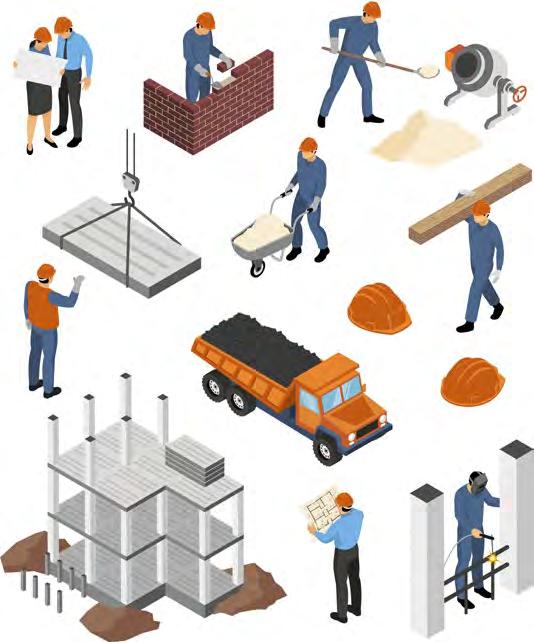
3 Practise: Workplace vocabulary
�� Work with a partner and write down everything you see in this illustration of a building site by creating two columns. In one you write down all the things you see (e.g. truck), and in the other you write down all the actions that are taking place (e.g. carrying).
Word list C
I do not know what these words mean. Check in a dictionary or ask someone.
Example: specialise – spesialisere seg Example: supervise Example: troubleshoot
�� Write a sentence for each word you have written in word lists B and C.
�� Choose two words from your list B and two words from your list C. Write an explanation in English for each word. Example: troubleshoot → When you troubleshoot, you try to figure out what is wrong or not working.
�� Play I Spy with one or more partners. I Spy is a guessing game where one player chooses an object on the illustration and announces to the other player(s) that “I spy with my little eye something beginning with ...”, naming the first letter of the object. The other player(s) tries to guess what the first player is spying. You get one point for each correct guess. Take turns.
4 Create: Writing
Choose an occupation within Building and Construction that is not mentioned in this text, and write a similar text about it, answering these two questions:
→ What do they do?
→ What qualities or skills do they need?
The Vocational Glossary on p. 98 may be useful to you here.
Understand & Mediate
Work in pairs. Each of you chooses three different people: Jennifer, Peter and Gary, or Ruth, Bruce and Harry.
A Individually, read the three texts and write down 4–5 keywords about each of the people you have chosen.
B Use the keywords to tell your partner about the people you have read about.
Professional Pride
pro·fes·sion·al·ism
noun
The competence or skill expected of a professional. The key to quality and efficiency is professionalism.
OXFORD ENGLISH DICTIONARY
Having professional pride means being proud of your work. Here, six workers in jobs within Building and Construction explain what makes them proud of the work they do.


Glossary: see p. 105
JENNIFER FRENCH:
I work as a landscaper for a company in Surrey, England. I always knew I wanted to be a landscaper, and I feel very proud to have a job that shapes people’s surroundings. I also love that I get to operate machinery. People still get surprised when the operator is a woman. For me, one of the most fun parts of the job is when people don’t expect a woman to step out of the loader. But I think this is starting to change!
PETER HENDERSON:
I am a carpenter from Sydney, and I work for my family’s business, Henderson Maintenance. We always have plenty of work, believe me! There are many old buildings in this city, and lots of them need restoration. That is a big challenge! I feel very proud every time we turn an old, run-down house into a nice family home.

GARY LEECH:
I have been a heavy vehicle operator for ten years now. Most kids are fascinated by big machines, but my fascination never stopped! Being able to drive heavy machinery is a skill that still makes me proud. At the moment, I mostly work with shovel loaders. However, for my next project in the spring, I will get to drive bulldozers. My favourite machines are diggers. I find it really satisfying to lift and move massive rocks and dirt.
RUTH ROBINS:
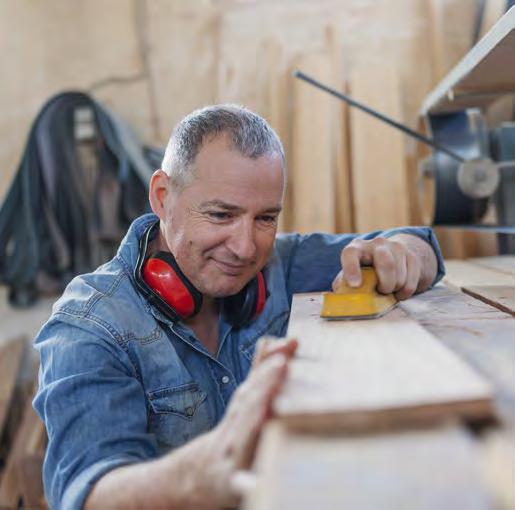
I have wanted to be a furniture maker ever since I visited a workshop on a school trip in lower secondary school. The idea of making something beautiful and long-lasting, not to mention restoring old furniture, means a lot to me. I feel proud when I can give a piece of furniture the right care and make it last longer.

BRUCE BROWN:
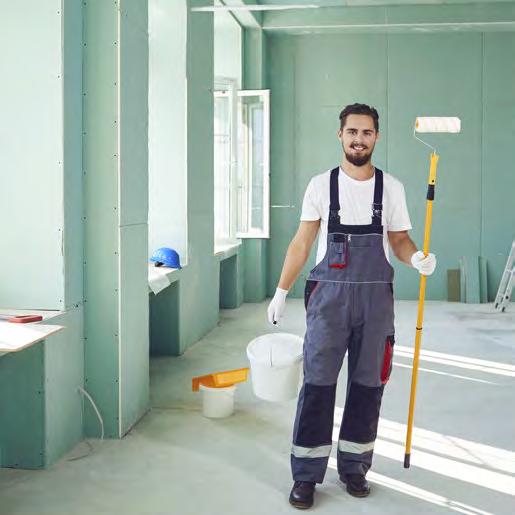
I work as a painter, mostly in private homes. This means I meet a lot of families, which I enjoy. Another good thing about being a painter is that you see results quickly. Even though preparing takes time, the painting itself is fast. It makes me happy and proud when families are excited about the new look of their home. I never paint my own flat though, which drives my boyfriend crazy. He would like a trendier colour scheme at home.
HARRY STANTON:
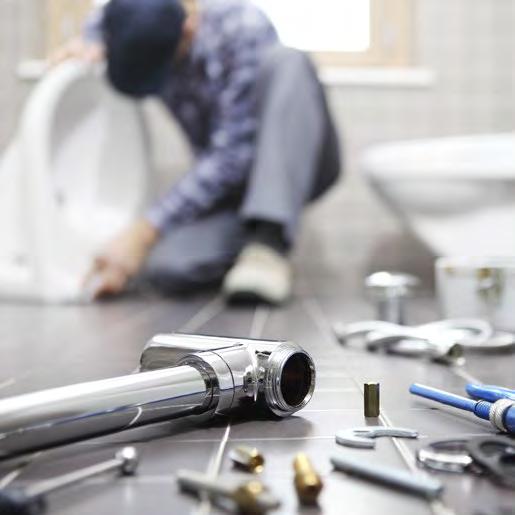
When I started in construction, I considered many different jobs. I actually became a plumber by chance because it was the easiest way to get an apprenticeship. But I’m glad I chose plumbing! I enjoy being a crucial part of big building projects. I also like listening to stories about sewage systems in the old days, when everything flowed in open channels in the streets. Imagine the smell! This makes me feel proud about the role of plumbers in today’s society. People don’t always see or appreciate our work until there is a problem with their pipes or sewage. Then they are glad people like me are around.
1 Understand & Reflect
After working in pairs and presenting the different people to each other, you should now be able to discuss the following questions:
�� What do these people work with? What kinds of skills does each of them need in their job, do you think?
�� What makes them proud of their professions?
�� In your opinion, who has the best reason to feel proud? Explain your answer.
2 Practise:
Workplace vocabulary
�� Match the person/job with the correct work-related keywords. It is likely that many of the words are new to you, so use dictionaries and other sources for help.
Peter, carpenter painter’s tape, roller, ladder, putty knife Gary, heavy vehicle operator tube cutter, pliers, flashlight, pipe wrench
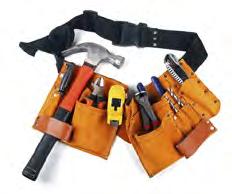
Bruce, painter bulldozer, loader, backhoe, dump truck Harry, plumber hammer, laser level, multi cutter, drill
�� Translate the work-related keywords into Norwegian.
�� Work in pairs. Write the names of all the items in the list in task 2A on pieces of paper. Place the pieces face down on the table. Student A chooses a piece and tries to describe the item to Student B who tries to guess what it is.
�� Below are descriptions of the key responsibilities of an industrial cleaner. Place the missing words correctly in the text. Choose from the following words:
climate – chemicals – ceilings – customer – planning –cleaning
→ cleaning and maintenance of walls, (1), inventory and floors
→ selection and use of the right (2)
→ selection of suitable methods for (3) and using machines and equipment for such work
→ service, (4) relations and communication
→ indoor (5) and hygiene
→ calculations and (6), use of ICT tools
3 Create: Writing
Choose one of the following tasks:
�� Write a text about an imaginary person who is a roofer, mason, road and construction worker or furniture maker. Use the texts on pp. 17–19 as models.
You should include:
→ what tasks this person performs at work
→ what skills this person needs to do this job
→ what makes this person feel proud at work
�� Write a text about having pride in the work you will do in the future. Include the following:
1 Introduction: Describe the job you have chosen to focus on. What tasks will you have to do? What skills and knowledge will you need? Make sure to include at least one sentence telling the reader what your short text is going to be about.
2 Second paragraph: Write about one aspect of the job that you think will make you feel proud. Explain this part of the job clearly, and give examples to show why you think it will make you feel proud.
3 Third paragraph: Write about another aspect of your job that you believe will make you feel proud. Explain how and why this aspect is important to you.
4 Conclusion: Sum up your ideas from paragraphs two and three. Reflect on how being proud of your work can make you a better employee.

Interview: Learning a Trade
Glossary: see p. 105
1 Practise:
Listening for information
Below are some statements. Who could they belong to: Linda, John or Martin?
�� “Dumpers and diggers, I dig them!”
�� “We do noise reduction and sealing.”
→ Practise:
Vocabulary
Match these words from the audio recording with the correct translation:
surface – sealing – building site – toughened – digger –hydraulics – specialise
spesialisere seg – gravemaskin – byggeplass – overflate –herda – hydraulikk – forsegling/tetning
�� “Oh, there are different types: laminated, toughened, stained.”
�� “There’s so much more to this job than making windows.”
�� “We do heat and cold conservation, and frost and fire protection.”
�� “A delicate touch is needed; this is in itself fragile material, you know.”
�� “It’s a lot more than stuffing wall cavities.”
In this interview, you will meet three young Norwegians speaking with a British journalist. He is visiting Norway to write an article about the vocational courses available in Norwegian upper secondary schools. To learn more, he has decided to meet three students from the Building and Construction education programme.
Listen to the interview at citizens.cdu.no before working with the tasks.
�� “I might work on oil rigs and with aircraft.”
�� “I get to use my maths skills all the time.”
�� “I have to specialise in three machines or vehicles.”
�� “I might be working in quarries.”
�� “The power of hydraulics is just amazing.”
2 Create: Writing
Choose one of the tasks below.
�� Write a text where you explain the differences between the three occupations presented in the interview.
�� Based on the interview, which of the occupations do you find most interesting? Write a short text in which you explain why.

Reflect
A What does it mean to have good communication skills? What makes communication “good”?
B Why is good communication important in the following situations?
→ when a carpenter needs to work together with a plumber on a building site
→ when two rock blasters and miners are working together to secure a tunnel
Bricklayers and Communication
Ahmed is a bricklayer. This is what he says about the importance of good communication skills in his workplace:
“Bricklayers build and repair walls and other structures. We also read plans, measure and lay materials, and mix mortar. In short, we make sure everything is level, strong and safe, and follows safety rules. But the job is not just about physical work. Communication plays a very important role in everyday work on a building site. We need good speaking and writing skills in this job to communicate with colleagues, customers and suppliers.
Using the correct jargon is very important, because mixing up the names of tools or materials can cause mistakes, delays or even safety issues. For example, it’s not helpful to give somebody a trowel if what they really needed was a plumb line! We need to be certain that we’re talking about the same things.
On many building sites, workers come from different countries, so English is often the language we use together. This means I need to be patient when I explain tasks, tools or materials to colleagues from abroad who might still be learning the words. But communication is about more than just speaking the same language. Body language is also important, because showing frustration can harm good working relationships. If I stay calm and supportive, I help create a positive and respectful atmosphere on site.
Customers also come from different cultures. As with colleagues, I have learnt that greetings, communication styles and ideas of personal space can be very different from person to person. Being aware of this helps me to avoid any misunderstandings or awkward situations.
Many of my customers don’t know much about bricklaying, so sometimes I need to explain things in “everyday language” instead of “bricklayer language”. It is important that customers understand what work is being done, why it is necessary and how much it will cost. This helps build trust, avoid misunderstandings and ensure everyone has realistic expectations about time, materials and results. To make explanations easier, I often use my phone to show pictures or translations. I also find it easier to use English in written communication, like when I order building materials. Then I have time to look up words and find the best way to explain clearly.
Being professional means staying calm and respectful, even if the client is frustrated. I do not blame others or make excuses. Instead, I only focus on solutions. I have also learned to confirm all details before starting a project. It is important that everyone agrees from the very beginning, so we can avoid problems later. Good communication in my field is about building trust, one conversation at a time.”
bricklayer murer/murar communication skill kommunikasjonsevne to measure å måle mortar mørtel level plan supplier leverandør jargon fagspråk trowel murskje/murskei plumb line loddsnor, loddline to harm å skade supportive støttende/støttande greeting hilsen/helsing to build trust å bygge tillit / å byggje tillit solution løsning/løysing to confirm å bekrefte / å stadfeste
1 Understand
In pairs, answer the questions below. Point to examples from the text in your answers.
�� Who do bricklayers communicate with on the job?
�� Why is it important to use the correct names for tools and materials?
�� Why do bricklayers need to speak English on many building sites?
�� Why is body language important when talking to co-workers?
�� What tools or methods does the writer use to explain things clearly?
�� What does being professional mean for a bricklayer?
2 Interact
Work in pairs. Look at the list of “Top 10 Communication Skills at Work” on the right.
�� Student 1 reads the first piece of advice: “Listen actively: Pay full attention (…).”
�� Student 2 asks: “Why is this important at work?”
�� Student 1 explains: “Because …”
�� Student 2 reads the next piece of advice and so on. Repeat until you have covered all ten points.
TOP 10 COMMUNICATION SKILLS AT WORK
1 Listen actively: Pay full attention when others speak. Show you understand by nodding, repeating key points and asking questions if anything is unclear.
2 Be polite and respectful: Show good manners such as saying “please” and “thank you”. Always treat co-workers, supervisors, customers and clients with respect, even in stressful situations.
3 Speak clearly and simply: Use short, direct sentences when explaining something. Avoid slang so everyone can understand you easily.
4 Ask questions and seek help: Do not be afraid to ask if you do not understand an instruction or a customer. It is better to ask twice than to make a mistake.
5 Use correct vocational vocabulary: Learn and use the technical words for tools, materials and procedures in your trade. This helps you communicate clearly with colleagues and follow instructions exactly.
6 Adapt your language to the situation: A customer or client may not understand professional terms as well as your co-workers.
7 Use positive body language: Smile, make eye contact and stand in a way that shows you are open and willing to work.
8 Choose the right communication medium: Decide whether to use face-to-face conversation, phone calls, emails or written reports based on the situation. Pick the method that makes your message clear and reaches the right person quickly.
9 Communicate well with your team and adapt to others: Share information with your teammates and listen to their ideas so work goes smoothly.
10 Report problems quickly: If you see something unsafe or a mistake happens, tell the right person immediately. This helps keep the workplace safe and efficient.

3 Reflect: Talking & writing
�� Which communication skills do you believe are the most important in your future job? Rank the skills listed in task 2 from 1 (most important) to 10 (least important). Give reasons for your opinion.
�� Compare your list with another student’s list and discuss the similarities and differences in your rankings. Then work together to make a new, combined list.
4 Reflect: Cases
Read the descriptions of two different situations where you need good communication skills. Discuss with a partner what you would do in each situation.
Case 1: You have a job where two people are needed on the morning shift to handle customers and new deliveries. However, your colleague is always late for work. Your colleague gets the same wage as you, even though she works up to one hour less every day. How would you solve this situation?
Case 2: You are responsible for training two new employees, a Polish man and an Iranian woman. You must use English to communicate with them. What should you be aware of when you communicate with these new colleagues?
5 Create: Writing
Write a short text (150 –200 words) about why communication will be important in your future workplace. You can include:
→ Why good communication matters when working with customers or co-workers
→ E xamples of what good or bad communication might look like
→ How communication can solve problems or prevent misunderstandings
→ Any experiences you have (from work, school or even daily life) where communication made a difference
6 Practise: Workplace vocabulary
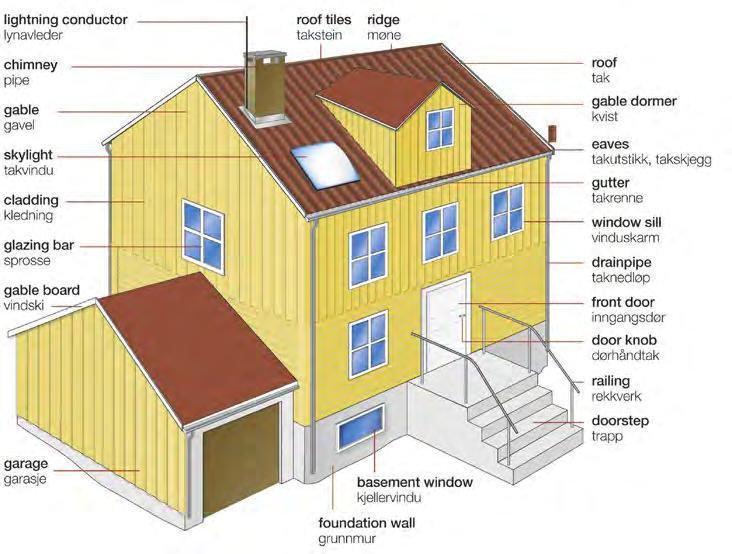
�� Study the drawing of the exterior of a house above on your own. Then work in pairs. One of you should have the drawing in front of you and ask the other one if they know the translation of ten items shown in the drawing (you can start by naming them in English if you like). How many were correct? Then swap roles.
�� Match each part of a house in list A with the correct description from list B. Write the sentences out in full, e.g. The gutter is a channel for draining the rainwater off the roof.
A B
guttera channel for draining the rainwater off the roof
skylighta ledge at the bottom of a window roof tileswhat goes round the edges of a window roof a window set in the roof
eaves a pipe to lead the smoke into the air chimneythe lower edges of a roof
window silla step in front of an entrance
window frameflat pieces of clay or concrete to cover the roof
front doorthe upper covering of a building doorstepthe main door
�� Using task B as an example, write your own description of the following parts of a house:
cladding – railing – gable dormer – ridge – drainpipe
�� What other parts are found in houses? Can you name them in English?
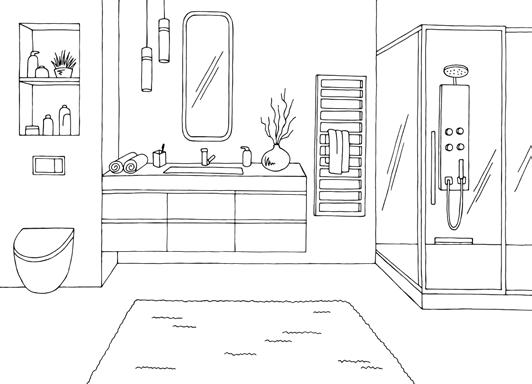
�� In pairs, explain to each other where you can find the following items in the drawing of a bathroom:
shower head – wash basin – toilet bowl – mirror – shower cubicle – towel drying rack – bath mat – soap – portable shower head – bathroom cabinet – lights
Reflect
How do you know that a job within the building and construction industry is something for you? In pairs, try to come up with three reasons why.
The following text is a humorous article from the Australian careers website Year13. It looks at some truths and some stereotypes about jobs in building and construction.
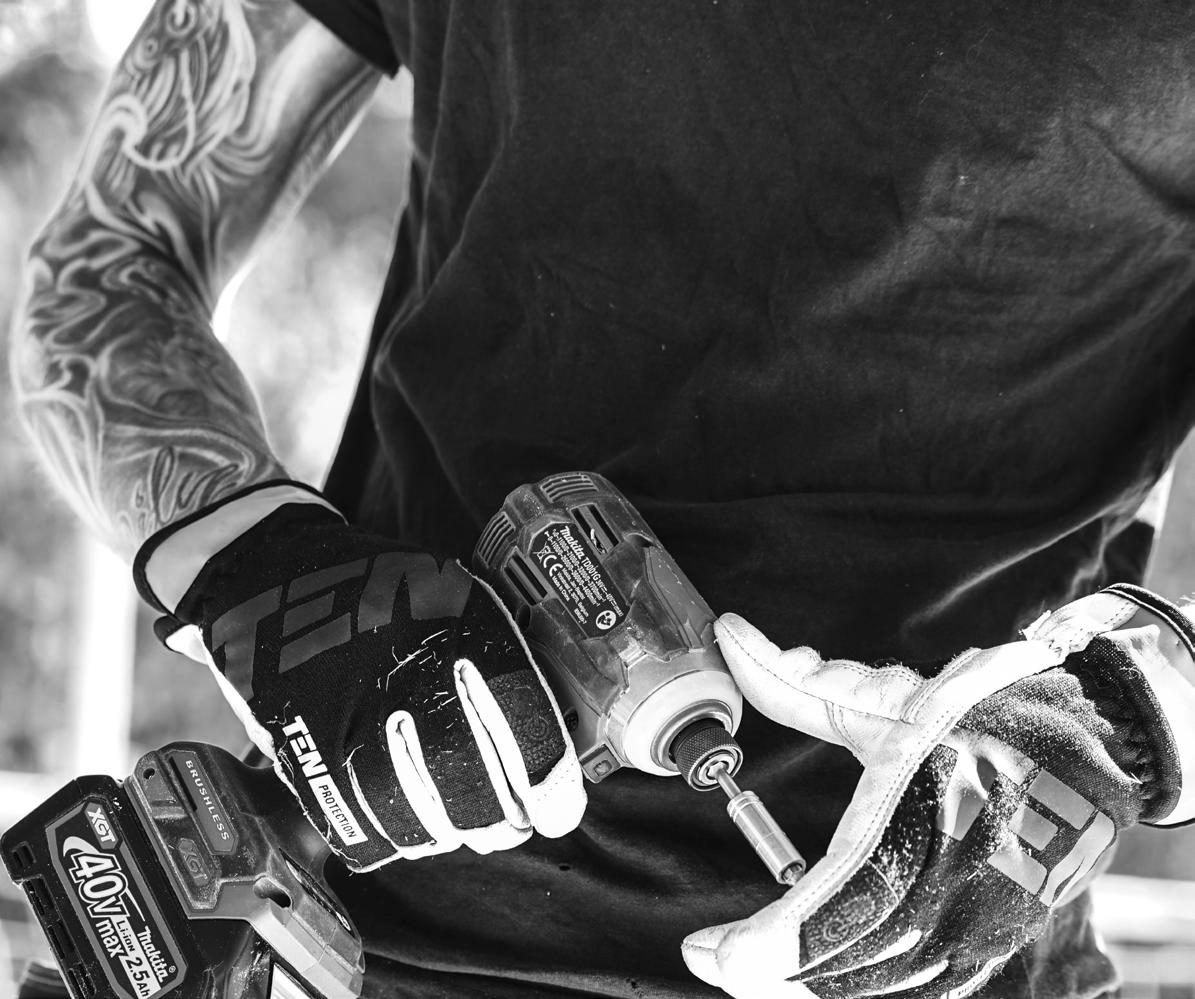
The building and construction industry is massive in Australia. It’s a world of endless work, practical-minded people and projects that range from the very small to absolutely enormous.
If you’re not sure whether the building and construction industry is your style, then have a little read of the points on the next page. If some of these points sound like they describe you, then there is a big chance this is the career path for you.
Glossary: see p. 105


→ The thought of working behind a desk all day gives you shivers You’re made to be active. You’re made to move around. You’re made to live! The idea of spending 40 hours a week indoors, glued to a screen whilst you sit on some uncomfortable wheelie-chair is your idea of a living hell. You’re less meetings-and-spreadsheets and more of a let’s just get out there and do it.
→ You always preferred being practical over learning theory
At school, you’re not afraid to get your hands dirty. You like all the practical subjects where you can get hands-on and actually show something tangible that you’ve made yourself. You prefer learning about how things work. Real, moving things that actually do stuff – not theories or politics or philosophies or any of that nonsense.
→ You low-key think high-vis looks pretty cool
Maybe it kind of brings out your eyes. You would even wear it out at night if the bouncers stopped turning you back. “Just you wait,” you tell them. “In a few years everyone will be wearing it.”
→ You want to start earning money now, not in five years
When you think of going to uni, you think of spending at least three years completely broke, only to wind up with an entry-level job. You think of balancing a full-time study load with a crappy job and trying to find time to hang with your mates in between. You think of assignments and assessments and exams and spending hours upon hours hitting the books.

Then you think of doing a trade. You think of getting career experience whilst you study and getting paid to do it. You think of finishing your studies and walking straight into a full-time job. You think of not having to work on the weekends while all your mates at uni do.
→ Banter is a way of life
If you can’t banter, then what’s the point? You only get one life, so why sign up for a career that doesn’t let you have fun on the job? Tradies work hard, but they have a good time doing it. The building and construction industry is known for building tight-knit groups of mates who meet on the job. You’re outside, you’re working together and you’re pulling each other’s legs every opportunity you can get.
→ You want to do heaps of travel
Trades are jobs that you can take anywhere around the world with you and still pick up work. While most jobs you can get with a uni degree can be taken overseas, they’re kind of limiting in that you probably have to stick to the major cities and you probably have to commit to at least six months in the one place. If you did a trade like carpentry, you could travel across an entire country and pick up small jobs the whole way across. Trades are a skill that let you live in nearly any location around the world.
→ You’re the one who can fix things
Whenever your mates break something, you’re the one they bring it to. Somehow, you just seem to have a better understanding of how physical things move and work than your mates do. You don’t understand why people don’t just buy some WD-40 and fix their squeaky doors and dodgy bikes.
(Excerpts)
1 Understand
Below are some expressions found in the article, highlighted in italics. In pairs, discuss what each expression means, and write down your answer.
�� The thought of working behind a desk all day gives you shivers
�� some uncomfortable wheelie-chair is your idea of a living hell
�� You always preferred being practical over learning theory
�� You low-key think high-vis looks pretty cool
�� only to wind up with an entry-level job
�� Banter is a way of life
�� You’re outside, you’re working together and you’re pulling each other’s legs every opportunity you can get.
�� You don’t understand why people don’t just buy some WD-40 and fix their squeaky doors and dodgy bikes.
2 Create: Summary or checklist
Choose task A or B.
�� Write a summary of the text. Focus on giving a general description of the main ideas of the text. Try using your own words as much as possible.
�� To sum up the article for a friend, write a checklist that contains five important points that the article makes.
3 Reflect: Quotes
The purpose of the article you have read is to inform future students of a career in Building and Construction, but also to entertain. Discuss the following quotes from the text in pairs or small groups.
�� “You’re less meetings-and-spreadsheets and more of a let’s just get out there and do it.”
Do you agree? Are jobs in the building and construction industry just about physically doing something? Can you think of professions that also require meetings and planning?
�� “You prefer learning about how things work. Real, moving things that actually do stuff – not theories or politics or philosophies or any of that nonsense.”
Do you agree that building and construction jobs do not require learning theories? Are building and construction workers not interested in politics or philosophies?
�� “You think of not having to work on the weekends while all your mates at uni do.”
Is it true that building and construction workers always have the weekends off? Can you think of any professions where you are expected to also work during weekends?
�� “Trades are a skill that let you live in nearly any location around the world.”
Do you agree that if you are educated in building and construction, you can work anywhere in the world? What could be some challenges if you chose to move to another country and wanted to continue working in a building and construction profession?
4 Reflect: Talking or writing
Talk or write about the following questions:
�� Which part of a future job in building and construction do you find most interesting? Why?
�� The article does not mention any specific skills or qualities someone working in building and construction should have. Which skills or qualities do you think are most important for someone to do well in their profession?
�� The article asks: “why sign up for a career that doesn’t let you have fun on the job?” What does having fun on the job mean to you?
5 Create: Writing
Two students have read “When You Know You’re Meant to Be in the Construction Industry” and have posted about it on a social media platform. Write a response to their comments. In your response, refer and respond to the texts and contribute your own perspectives. Comment on and question, agree and/or disagree, with what has already been written.
The recommended length for this text is 150 –200 words.
@IamLiam:
Hey, this describes me perfectly! I love making stuff with my hands, and I hate having to sit still behind a desk at school. Books annoy me and theory isn’t my jam. I like to just fiddle around with things until I figure out how they work. Who needs theories anyway? It’s much better to have a go, and if it doesn’t work, you just try again! Right? And really, how hard can it be to paint a wall or lay some tiles? Why do you need two years at school to learn that? I’m pretty sure I could pick it up in a couple of weeks and start working and earning some much-needed money instead. Why should I keep my nose in a book when I could just try things out and learn as I go?
@DoNotCallMeSam:
Hey @IamLiam, I get what you’re saying, and I also prefer working with my hands instead of sitting at a desk. That’s why I’m really interested in this study programme. But I still think school is important, even for practical jobs.
I mean, painting a wall or laying tiles might look easy, but doing it properly, safely, and so it lasts takes real knowledge. I want to understand why things work the way they do, not just how to copy what someone else does. That way, I can fix things if there’s a problem on a real job.
I also like that the programme mixes practice with theory. Even if you don’t love books, the theory helps you understand materials, tools, safety and how not to mess things up. For me, learning it properly at school first seems like a better way to get good at the job and actually build a future in it, not just earning quick money.
6 Create: Writing
Think about your future job. Then write a short text (about 100 –150 words) where you share your thoughts. These questions might help you:
→ What do you think will be the most exciting to work with?
→ Do you think your job will change a lot in the future? Why or why not?
→ What skills do you think you will need to learn to be a successful worker in the future?
→ What part of a job in Building and Construction makes you feel proud or motivated?
You can use some of these sentence starters in your text:
→ In the future, I think it will be exciting to work with…
→ The skill I most want to develop is …
→ I will feel proud as an [insert your profession] when …
→ The text says that … I think this is (not) true because…
→ One challenge for workers in the future will be …
→ I agree with the idea that workers must … because …
→ I think workers will need to study and learn … so that …
→ The most interesting part of the text for me was …
→ I would like to work with … because …
7 Practise: Workplace
vocabulary
Workers in Building and Construction have many different tasks. Look at each line of words below. In each line there is one word which has nothing to do with the other three. Can you find the “odd one out” in each line? Make sure you know what the words mean and be prepared to defend your choices to the rest of the class afterwards.
�� file – screwdriver – tape measure – electric drill
�� welding mask – gloves – ladder – hard hat
�� operate – whisper – install – repair
�� scaffolder – carpenter – electrician – asphalter
Application Letter
An application letter is a document where you state your interest in a job, scholarship or something similar. Competition can be tough, so your application letter needs to stand out. Here is what you should include. (Note that some companies use standardised formats that you fill in when you apply for a job there.)
Structure of the text
This is one way your application letter can be structured if it is sent as a separate document attached to an email, e.g. in Word or as a PDF.
1 The address and contact information of the sender. If you are writing an email, you include your contact information at the bottom, after your signature
(2 The address of the receiver – if this is mentioned in the advertisement)
3 The date
4 A polite greeting, for example: Dear Sir/Madam, Dear Mr Brown, Dear Mrs Johnson
5 a) Explain why you are writing the letter and introduce yourself
b) Provide information on your background
c) Explain why you think you are suitable for the job
/ scholarship / position
d) If applying for a part-time job, you should include when and how much you are able to work
6 Closing politely, for example: I am looking forward to hearing from you, Thank you for your consideration
7 Polite ending: Sincerely, Yours sincerely, and your name
8 References: the names of people a potential employer can contact to find out more about you, for example a former employer or teacher
It is always important to tailor your application letter to what you are applying for. Some advertisements (ads) may require you to provide specific information. Read the ad carefully to make sure you include what is asked of you.
What you should include in all application letters:
→ Polite phrases that show respect for the person you are addressing. This is very important in formal letters.
→ Linking words that tie the text together.
→ Positive words that help you “promote” yourself.
Do not:
→ Use abbreviations: write “do not” and “I am”, not “don’t” and “I’m”.
→ Write much longer than a page. The purpose of an application letter is to get you to an interview, so it should be short and precise.
Example ad and application letter
Jamie is looking for a part-time job, mainly on weekends. He is studying Building and Construction and would like a job in relation to this. Jamie sees this notice in his local hardware store:
ASSISTANT WANTED
The Tool Shop is looking for an assistant to help out on weekends and in busy periods. You will carry out tasks like:
→ g reeting customers
→ organising the store
→ assisting customers
→ cashier duties
Full training will be given, but a strong interest in tools and hardware will be helpful.
Apply to: manager@thetoolshop.co.uk
Sender →
Date →
Opening greeting → Why he is writing →
Here is Jamie’s application letter:
Background: work experience →
Background: interests →
Jamie Payne
27 Colmore Row
Birmingham B3 2EW
email: Jamiepayne@hotmail.com
Telephone: (020) 838 6454
14 November 2026
Dear Sir or Madam
I wish to apply for the job as assistant in your shop, as advertised in your window. My name is Jamie Payne. I am 17 years old and go to Birmingham City College. Here I am studying Building and Construction, and I hope to become a scaffolder when I am finished.
I have previously worked as a babysitter, which I enjoyed. As a result, I have excellent references you may call. Furthermore, I have been helping my uncle build his cabin. He is a carpenter by profession and has taught me a lot.
In my spare time I like to ride my bicycle and restore old furniture with my father. I would say that I have a good knowledge of everything from nuts and bolts to power tools, and I would love to learn more.
Why he is suitable →
What kind of employment he is looking for →
Closing politely →
Polite ending →
Signature →
References →
I think the position of assistant is perfect for me. I have a true passion for tools and hardware. I am tidy, service minded and love to be around people. In addition, I am hard-working and genuinely interested in the products you sell.
I am looking for a job on weekends, although I am flexible. If there are busy periods I can help out on weeknights and holidays as well.
I am looking forward to hearing from you at your earliest convenience.
Yours sincerely, Jamie Payne
References:
Geoffrey Cooper, carpenter 07700 901042
Miriam Tremblay, babysitting customer 07700 909183
Akal Singh, teacher 07700 901278
TASKS
1 You are applying for a job in building and construction (choose one of the jobs described on pp. 98–99). The employer wants to know what kind of person you are and why they should hire you. Write a text (80 –120 words) where you describe yourself using positive words (adjectives).
What to include:
Who you are (a short introduction) – What you are good at (skills and qualities) – Why you would be a good worker for this job
Helpful adjectives you can use (look them up if you are uncertain of what they mean): hardworking – reliable – responsible – motivated – skilled – flexible – friendly – eager to learn – precise – meticulous – adaptable – quick learner – respectful – trustworthy – patient – innovative – team-oriented – honest –safety-conscious – attentive – diligent – determined –punctual – handy
Sentence starters you can use:
→ I am a … person who …
→ My friends and teachers say that I am …
→ I am good at …, and I always …
→ I believe I would be a good employee because …
2 A representative from your local job centre is visiting your school and leaves behind a leaflet for the students who are attending vocational courses. The leaflet advertises an international apprenticeship programme for the company WorkStart.
Write an application letter for the job, using the structure shown on p. 32 and vocabulary you have practised in this chapter.
WORK PLACEMENT OPPORTUNITIES
We are looking for students in vocational training programs in Building and Construction. We work with a range of local and international companies and are eager to match motivated students with great training environments.
We are looking for someone who:
→ is currently studying Building and Construction
→ is reliable and willing to learn
→ has good references from school or previous work
→ shows a positive attitude
Please send your application letter and CV to: WorkStart Placements c/o Nina Orellana nina@workstartplacements.org
We look forward to hearing from you!
3 When you have finished writing your application letter in task 2, swap with a partner and give each other feedback by pointing out two things the application does well and one thing that can be changed to improve it.

Chapter 1
1 Review:
Focus points
Use this scale to describe your level for each of the “I can …” statements below:
Very well – Well – Needs some work – Needs lots of work
→ I can understand and use words and phrases related to my future profession.
→ I can talk and write about many different professions within my education programme.
→ I can reflect upon various aspects related to professions within my education programme.
→ I can write a job application suited to the job I am applying for.
2 Review:
Key terms
A In pairs, divide the keywords on page 5 between you and find out what they mean. Use each word in a sentence to show that you understand its meaning.
B Then explain the words to each other, using your sentences as examples.
3 Review:
Discussing and writing paragraphs
A Discuss with a partner: In which of the occupations in this chapter would you most like to work, and in which would you least like to work?
B Write a short reflection note (two to three paragraphs) explaining the choices you discussed in task 3A.
4 Create: Poster
Make a poster presenting your future occupation using text and pictures.
Target audience: Students in years 9 and 10
Purpose(s): To inform and convince
Your poster should include:
→ a description of what the work involves and typical workplaces
→ a short explanation of the education and training you will need
→ skills you need in this occupation
→ relevant illustrations
When finished, present your poster to your classmates in groups of four. (You may also want to display your posters in your classroom for the rest of the class to see.) For relevant words and phrases you might need, see pp. 98–104.
Tools & Procedures
Focus
In this chapter, you will:
→ learn about different tools and pieces of equipment used in Building and Construction
→ reflect upon the importance of being able to use English as your language of work
→ listen to, understand and use words and phrases related to your future profession
→ create oral and written texts relevant to your future profession, such as instructions and procedures
Reflect
A How do you think good English skills could be useful in your future workplace?
B What are some tools or equipment you might use in your future job?
C Why is it important to follow specific procedures or instructions at work?
Chapter keywords
→ tool
→ procedure
→ equipment
→ communication
→ instructions
→ common language
→ appliance
→ workplace vocabulary