“What glory is the privilege of the believer. We bear the signature of God. We believed, and by His grace He placed His signet upon us. We are not our own. We are His. His seal is forever upon us. We are ‘sons and daughters of God.’ We yielded, and He made us His servants. We bear the signature that marks us as bondservants of the living and eternal God.”
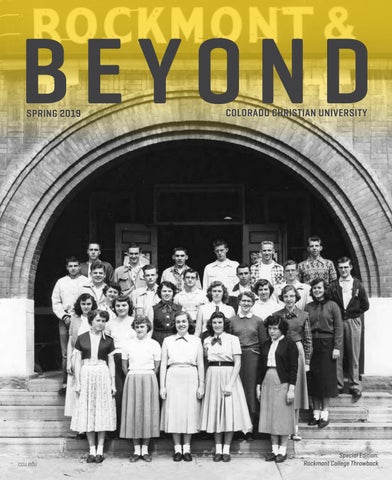
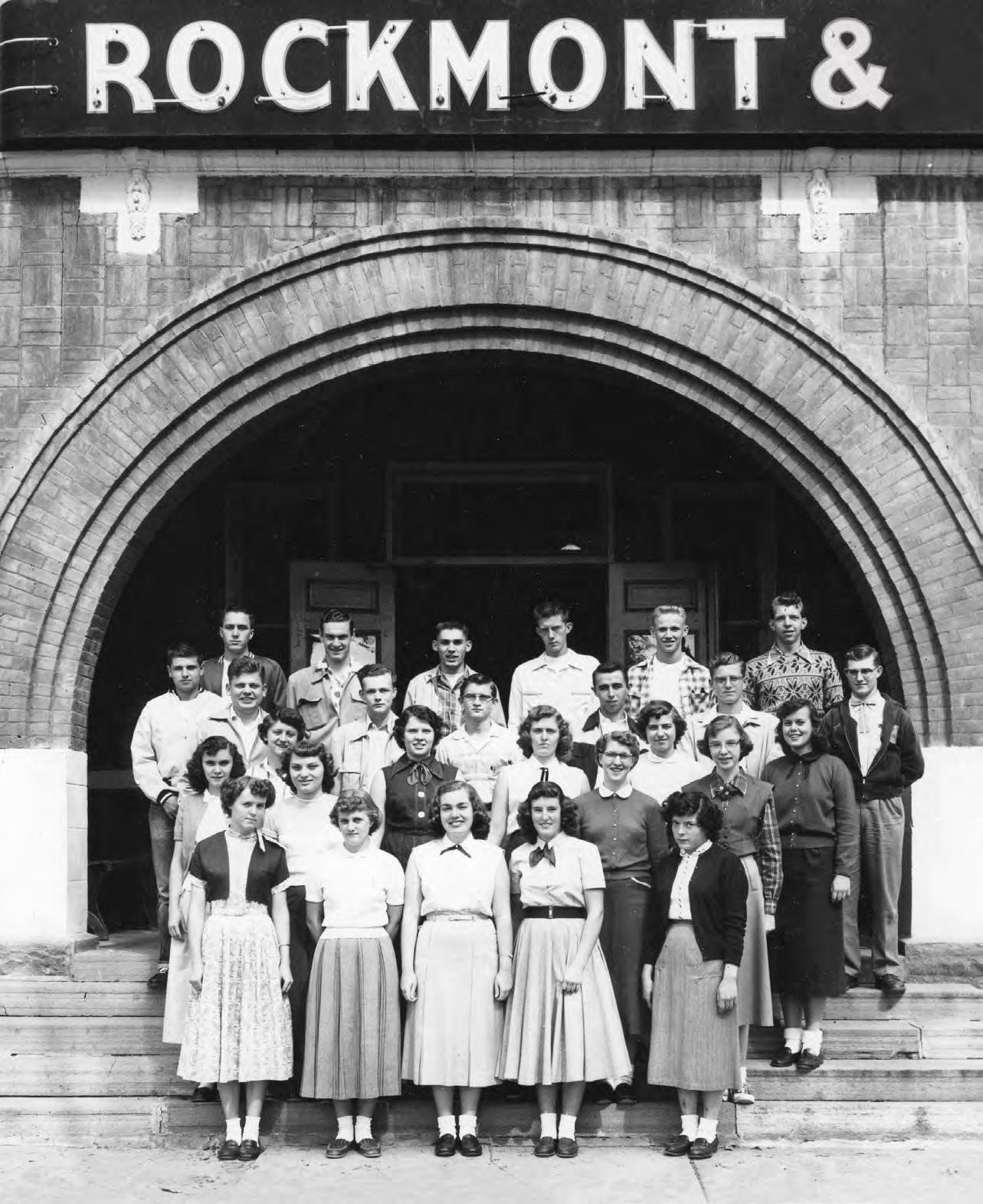
These words were penned 70 years ago in 1949 by the late Sam Bradford, who served as the first president of Rockmont College, a heritage institution of Colorado Christian University. In this edition of BEYOND, we look back on the years of Rockmont College, joyously reflecting and giving God glory for who He is and for what He has done through CCU and through our faithful heritage institutions.
Rockmont College was a pioneering institution for its time. Rockmont dared to be different: a private, interdenominationally Christian, and independently governed institution that prepared young people with a solid education for a meaningful life of Christian service in a contemporary society, during a time when the popular trend was toward larger, taxsupported universities, (when many people were challenging the very existence of Christian higher education — yes, even then). In 1956, the governor of Colorado, Edwin Johnson, said of Rockmont College, “Ever since its founding first as the Denver Bible Institute, Rockmont’s objective has been ‘to train young people for Christian service.’ Certainly, there can be no more worthy objective than this.”
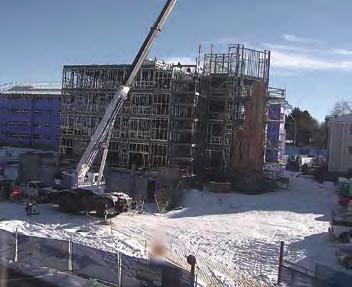
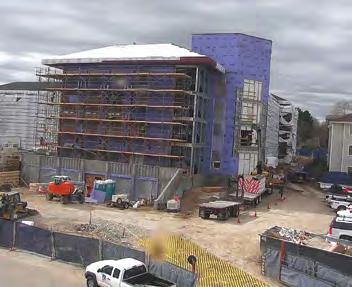
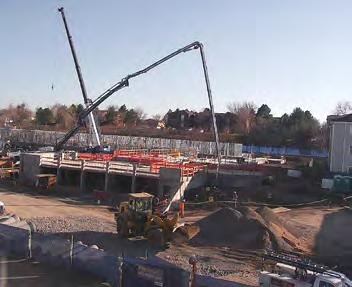
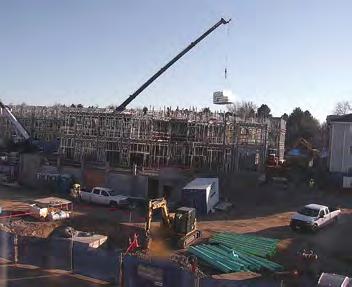
This fall, Colorado Christian University will dedicate our new residence hall, appropriately named Rockmont Hall, in honor of Rockmont College — and the many faithful individuals who served and studied there. Since the earliest days of Rockmont, thousands of students have come and gone, the University has been blessed by growing enrollments, the campus facilities have seen countless improvements, and new programs have been launched to train the next generation of Christian leaders.
Over time, many things about the University have changed. But one thing has remained the same, we are committed to offering an excellent education and a firm foundation that rests on the grace and truth of Jesus Christ. As President Bradford said, truly, “we are not our own, we are His.” Colorado Christian University is His, as well, and the history of our institution bears His signature and His continued hand of provision.
Today, I thank God for the privilege to be part of a team that continues to help students develop a bigger picture of who God is and a bigger picture of what God is calling them to be. Certainly, there can be no more worthy objective than this.
Yours in His service,
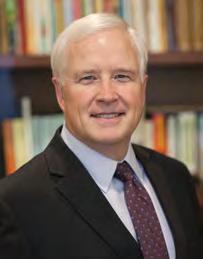
DONALD W. SWEETING, Ph.D. President Colorado Christian University
BEYOND
A publication of Colorado Christian University
Our Magazine
In BEYOND, our goal is to share the story of CCU, as well as God’s faithful provision for more than 100 years. We aim to share the stories of the people who go beyond and make CCU the great university it is today. Whether you’re an alum or a friend, this magazine is designed for you, because your story, our story, His story, is meant to be told.
BEYOND Production & Creative Team
Vice President of Business Affairs & CFO: Dan Cohrs
Assistant Vice President of Communications & Creative Services: Chris Franz Director of Communications & University Spokesperson: Lance Oversole ’06
Communications Project Manager: Emma Alsdorf ’12, MOL ’16
Graphic Designer: Martha Snowbarger
Writer & Editor: Aaron Burnett
Photographer of Artifacts: Jason Young
Special Thanks
Special thanks to the archive division of the Cliffton L. Fowler Library and Briana Martin, assistant librarian for research and instruction, for the many contributions that made this issue possible.
University Advancement Team
Vice President of University Advancement: Eric Hogue
Senior Director of Development & Planned Giving: Kathy Pettit
Director of Athletic & University Development: Neil Holden
Director of Alumni & Parent Relations: Kara Johnston
Associate Director of Foundation Relations: Becky Girtman
Data Services Coordinator: Matt Rummel
Executive Assistant to the Vice President: Jill Sneed
Mission
Christ-centered higher education transforming students to impact the world with grace and truth.
Colorado Christian University cultivates knowledge and love of God in a Christ-centered community of learners and scholars, with an enduring commitment to the integration of exemplary academics, spiritual formation, and engagement with the world. We envision graduates who think critically and creatively, lead with high ethical and professional standards, embody the character and compassion of Jesus Christ, treasure the gospel, and who thereby are prepared to impact the world in their callings.
Colorado Christian University 8787 W. Alameda Ave., Lakewood, Colorado 80226 303-963-3000 | ccu.edu
News & Highlights
Here’s an overview of what’s happening
at CCU
CCU Launches University’s First Doctoral Program
Colorado Christian University launched its frst doctorallevel degree program, a Doctor of Nursing Practice (DNP) in Visionary Leadership in January. The DNP is an online, practice-focused doctorate that prepares experts in specialized advanced nursing practice. Graduates will be able to apply credible research and translate evidencebased practice into improved health outcomes. The frst cohort began classes in April.
Counseling Center Dedicated in Honor of Dr. Larry J. Crabb
The Larry J. Crabb Center for University Counseling was dedicated at Colorado Christian University on November 29, 2018. The center is staffed by full-time, state-licensed mental health professionals and counseling interns which provide counseling services to the nearly 1,400 traditional undergraduate students at CCU’s Lakewood campus. It was dedicated in honor of Dr. Larry J. Crabb, distinguished scholar in residence and former chair of the graduate-level counseling degree program.
School of Nursing and Health Professions Simulation Center Dedicated
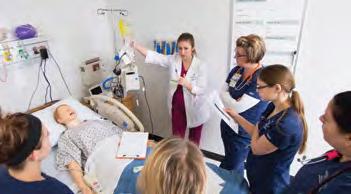
The School of Nursing and Health Professions Simulation Center was dedicated January 4. The more-than-4,600square-foot facility will serve as the hub for the University’s hands-on training for healthcare-related programs. The simulation center has been customized to meet standards defned by the International Nursing Association of Clinical Simulation and Learning (INACSL). The facility is the University’s frst stand-alone simulation center.
CCU’s Reanier, Request Finish Second at Moot Court National
Championship
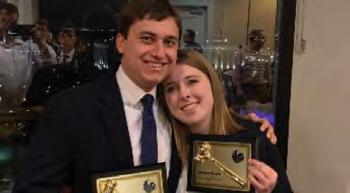
Colorado Christian University students Courtney Reanier ’22 and Janson Request ’22 placed second in oral advocacy at the American Moot Court Association National Championship Tournament. The pair led a strong performance for CCU, which had a University-record four undergraduate teams compete at the national tournament held at Florida A&M University College of Law January 12-13.
Online Education Programs Continue to Expand
CCU has embraced cutting-edge resources to provide instruction and learning opportunities. In 2018, more than 95 percent of students in the College of Adult and Graduate Studies took at least one class online, and more than 88 percent of students took classes exclusively online through CCU Online. The total number of students enrolled in online classes exceeded 6,700 as of August 2018, an increase of 57 percent since 2015.
Girl Suffering From Incurable Brain Tumor Joins CCU Softball Team
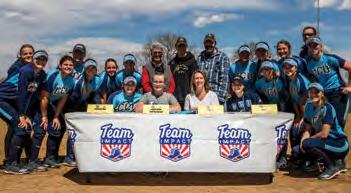
Lorelai Kinzer was announced as the newest member of the CCU softball team in April. The 13 year old has been battling an incurable brain tumor for three years. Lorelai will join the team in the dugout during games and attend practices between doctor visits. She was paired with CCU’s softball program through a partnership with Team Impact. The organization uses the power of the team to improve the lives of children facing serious illnesses.
The CCU Fund supports students by connecting your generous donations to student scholarships, academics, and experiences. Consider donating today to impact the lives of CCU students.
CCU.EDU/CCUFUND
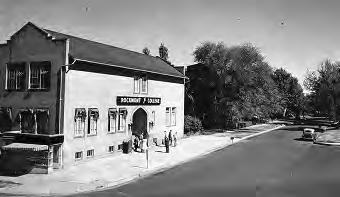
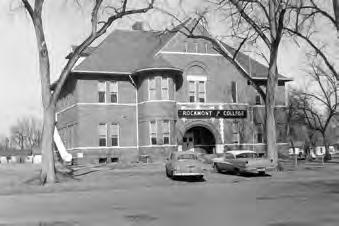
Rockmont College 1955
Colorado Christian University 2018
CROCKMONT HALL Introducing
The newest addition to the CCU campus is about to be complete
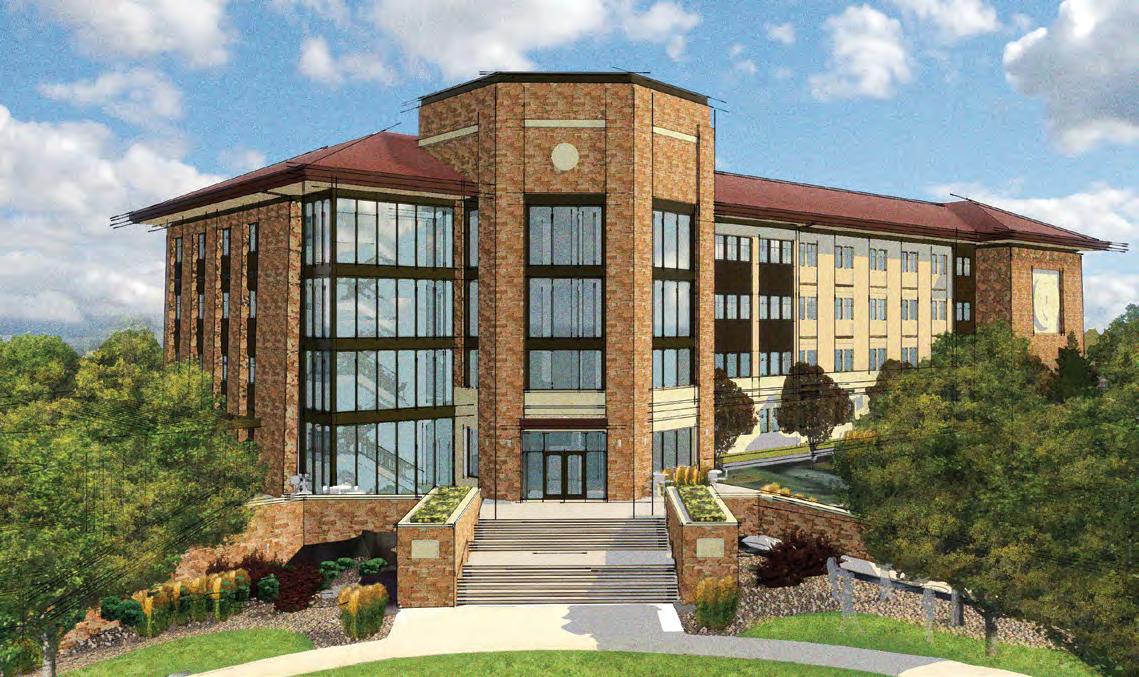
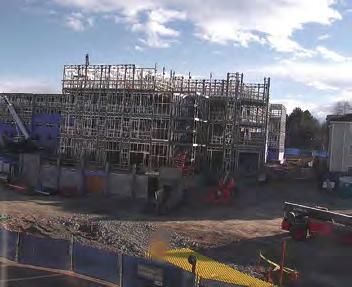
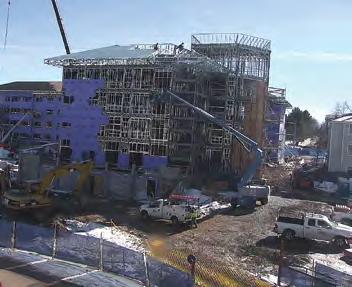
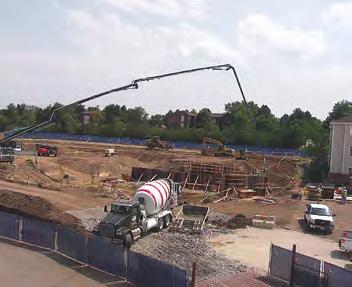
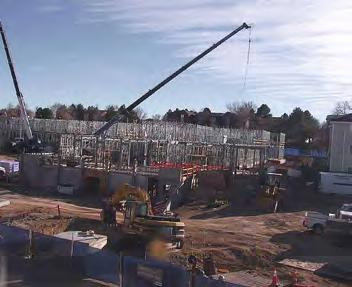
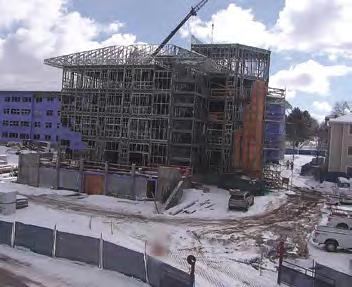
onstruction on Colorado Christian University’s newest residence hall is heading into the homestretch as the building is set to accept its first residents this fall. The 115,000-square-foot facility will open for the 2019-20 academic year. Named in honor of one of CCU’s heritage institutions, Rockmont Hall stands at the corner of Alameda Avenue and Cody Street in Lakewood.
“Rockmont Hall will serve as the cornerstone for the residential quadrant of the University’s campus. As CCU’s fourth new building in six years, it will continue the dramatic transformation of our Lakewood campus,” said Shannon Dreyfuss, vice president for Campus Development at CCU.
The new four-story Rockmont Hall will house 330 undergraduate students and offer a variety of amenities, including eight lounges and common social spaces; a graband-go café; and advanced technology, including internet connectivity from each room and Wi-Fi access throughout the facility. All of the student accommodations will be apartment style, matching CCU’s other residence buildings.
Originally founded as Denver Bible Institute in 1914, the institution was renamed Rockmont College in 1948-49, and sought to fill the demand for a Christian, liberal arts college in the greater Denver area. In 1967, Rockmont College relocated to Lakewood on what is now the current location of Colorado
“Rockmont Hall will serve as the cornerstone for the residential quadrant of the University’s campus.”
Christian University. In 1985, Rockmont and Western Bible College merged to become Colorado Christian College (CCC). CCC became Colorado Christian University in 1989, after the institution began offering graduate-level degrees.
A21960s Chevrolet Corvair, $5, and a Costa Rican soccer player sound more like the start of a bad joke than the ingredients to an athletic career that spanned five Winter Olympics. But for Arturo Kinch ’79, these three elements played an outsized role in a lifetime that would be spent spreading the gospel message.
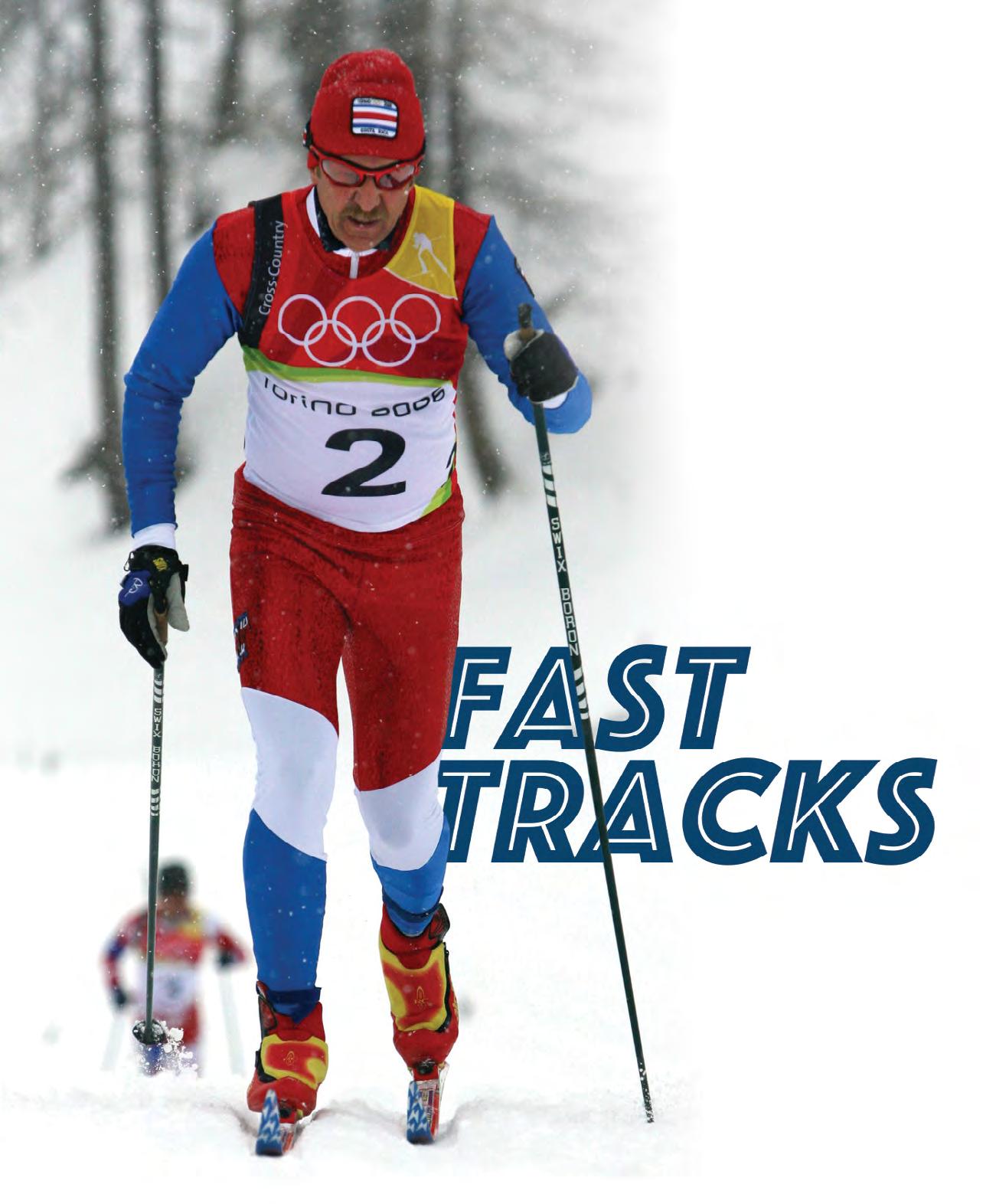
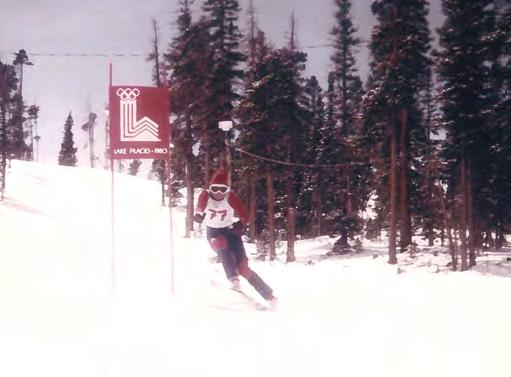
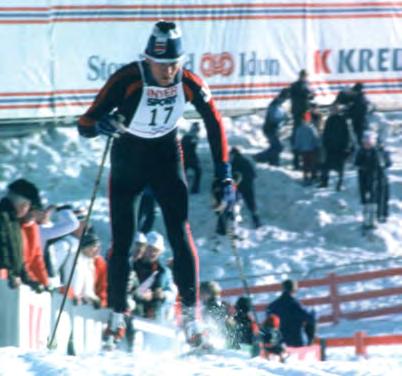
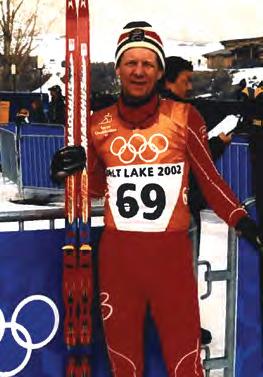
The Rockmont alumnus has risen to worldwide notoriety as the one-man Costa Rican Winter Olympic team. Kinch was the first skier to represent the tropical nation in the Winter Olympics, and one of only three Winter Olympians of all-time from the country. Now 63 years old, he competed in all three alpine ski events at the 1980 Lake Placid games. After the Nordic World Championships in 1982, he was the one ski racer to compete in both alpine and Nordic disciplines at the 1984 Sarajevo and 1988 Calgary Olympics. In 2002 Salt Lake City and 2006 Torino games he competed in only Nordic events. Kinch has used his unique platform to share his testimony throughout the world.
Skiing propels Olympian
Arturo Kinch ’79 to share the gospel around the world
LIFE IN THE STATES
The son of missionaries to Costa Rica, Kinch enjoyed dual U.S.-Costa Rican citizenship. He followed in his older siblings’ footsteps when he moved to Iowa to finish his final two years of high school at Cono Christian School in 1972.
A lifetime of playing soccer in his Central American homeland had the budding athlete picturing a future full of Olympic and World Cup glory on the pitch. His first goal though was to secure a scholarship to play soccer in college. That goal would eventually lead him to Lakewood and the campus of Rockmont College.
“I went out for the ski team, and boy, it was a blast. I was the first one on the hill and the last one to get off.”
“Soccer was just picking up some momentum. Even though it was the number one sport it in the world, it wasn’t in the United States,” Kinch said. “We were immediate stars, so to speak. We tried to capitalize on it.”
After experiencing considerable success in the high school ranks, Kinch fielded multiple scholarship offers to continue his athletic and academic career at the collegiate level. A former high school classmate and Rockmont student, Richard “Dick” Marceaue ’77, convinced Kinch to give Rockmont a shot even though it wasn’t offering Kinch an athletic scholarship or a guaranteed spot on the soccer team.
“He wanted some new players to help him at Rockmont. I blame it all on him,” said Kinch on his recruitment by Marceaue. “I really wanted a Christian education.
Rockmont wasn’t a Baptist school or Presbyterian school it was Rockmont College and it was a Christian liberal arts college which didn’t raise a lot of thresholds for people. My whole emphasis was using my life, as my parents had, to point people to the Lord. Rockmont seemed like a good fit.”
ROCKMONT ROCKETS WATCH OUT
Despite never having been to Colorado, Kinch headed to Lakewood for preseason soccer camp in the fall of 1974. He made the team and started the opening game, but his season was short-lived. A leg injury in the opening minutes of the match forced Kinch to redshirt the season.
“That was the beginning of the Lord working on me in some areas of pride. I was pretty hotshot,” Kinch said. “It was pretty tough for someone whose goal was to make the Olympic [soccer] team.”
After recuperating from his injury and looking to stay in shape during the winter, Kinch joined the Rockmont men’s basketball team his sophomore year, even though he had never played before. The hardwood neophyte saw limited action.
However, during his downtime Kinch also joined his roommate in the Colorado high country.
“I had never skied in my life, but my roommate at the time, Thorwald Lemke, who was from Austria, was on the Rockmont ski team. He would go up to the races with the team in the Rockmont van, leaving me his souped-up Corvair to use to go to class,” Kinch said. “After class, I was able to drive up to watch some of the races and cheer for the team. I became more and more enthused about the possibility of trying it someday before I graduated,”
Kinch added. “I had never been on a ski slope, never seen one, never had any ski clothes, and actually very little winter clothes. I would sit there and watch him and go ‘wow, that’s pretty cool. Maybe someday I’ll try it.’”
Inspired by his roommate’s performance on the slopes, Kinch decided to give it a go in the spring of 1975, buying old gear at a ski swap. “For five bucks I bought a pair of used skis, boots, and bindings. I had all the equipment.”
The native Costa Rican joined thenRockmont-ski-coach Neil Wolkodoff ’79 for his first time on the slopes.
“It was freezing cold, hardly anyone on the hill, so I had the hill to myself. It was too cold for them, but I was so excited to finally try skiing. I never fell and he [Wolkodoff] was impressed,” Kinch said. “That summer I kept thinking ‘this was pretty fun.’ It was probably more fun than basketball because I’m kind of short.”
When he returned to Rockmont for his junior year (1976-77) Kinch resumed his spot on the soccer team, but decided to try out for the ski team during the winter.
“I went out for the ski team, and boy, it was a blast. I was the first one on the hill and the last one to get off,” Kinch said.
The novice skier took naturally to the hill, moving up from the slowest of 10 skiers at the beginning of the team camp to the third
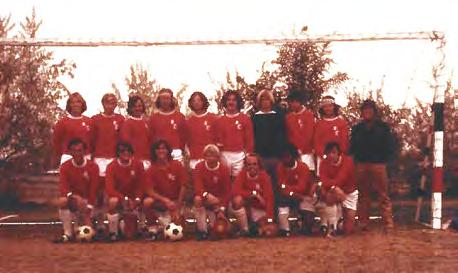
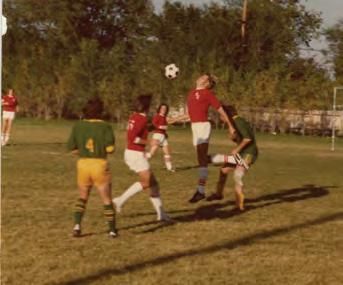
Rockmont soccer team; Kinch is the blonde in the front, middle
seeded skier by the start of the season. By the end of the spring Kinch was the top point earner on the squad. He continued to improve and was awarded the team MVP twice during his career.
ONTO THE WORLD STAGE
Kinch’s first glimpse of skiing’s world stage came during his senior year at Rockmont. He joined fellow Rockmont student and ski team member Joe Beach — who now serves as a pastor at Amazing Grace Church in Englewood, Colo. — at an international ski camp that included athletes from Japan, Canada, and the United States. Kinch was voted most improved at the camp.
“I met some key coaches that said they were amazed and I started thinking maybe God wants me to use my dual citizenship in skiing versus soccer.”
Around this time Kinch’s dream of playing for the U.S. soccer team began to dim despite years of work that culminated with a tryout for the national team.
“My soccer career started fading. I tried everything possible, but I felt the Lord close the door,” Kinch said. “I submitted it to prayer and said ‘O.K., Lord you know this was a big dream and if I’m not to play soccer You must have something better.’ That’s when doors started opening in skiing and closing in regard to soccer, so I just kept taking one step at a time, by faith.”
It was at that time that Kinch, with the help of his mother, dove into the bureaucratic tangle required to form a national ski association for Costa Rica. The two-year process had never before been undertaken by a tropical nation, but Kinch wasn’t fazed. The recent college graduate’s perseverance paid off as the Costa Rica Ski Association was approved in time for Kinch to compete in the XIII Winter Olympic Games held in Lake Placid, N.Y., in 1980.
Before he could set off for the world stage Kinch would receive one more boost from the Rockmont community. Dr. David Beckman, president of the college and a mentor and father figure to Kinch and many other students, surprised the erstwhile Olympian with an airline ticket to the games.
“Things like that are bumps in the road. You think, ‘Lord, I didn’t sign up for this.’”
“He found out that I was going to drive my Volkswagen to Lake Placid. He said ‘Art you’re not going to do that. I’m going to buy you a ticket so you can get there. You’re on your own coming back, but I’m going to fly you there.’”
A PLATFORM FOR CHRIST
In Lake Placid, Kinch competed in his first international downhill, finishing 41st. A knee injury suffered during training for the giant slalom (his strongest event) pushed Kinch to the bottom of the final standings and eventually forced him out of the slalom, his final event. He didn’t let
his injury sour him on the sport though, as he remained convinced of his calling to spread God’s love through his athletic achievements.
“Things like that are bumps in the road. You think, ‘Lord, I didn’t sign up for this.’ But God was working on my character and focusing my eyes on Him, rather than just striving to get a medal that would tarnish and people would forget,” Kinch said.
It wasn’t until 1982 that God’s plan was manifested to Kinch. Back in Colorado and fully rehabbed from his injury two years earlier, Kinch had registered for the International Ski Federation (FIS) Nordic Ski Championship in Oslo, Norway. This was an act of faith as Kinch had never cross-country skied and didn’t have a place to stay in Norway or a way to get there.
A few weeks before the championships the Lord brought Terje “TJ” Sordal back into Kinch’s life. The two men had met on a ski lift in Oregon the year prior. Kinch offered the Norwegian-born Sordal a place to stay as Sordal passed through Denver. Upon hearing Kinch’s goal of competing in the upcoming world championships, Sordal invited Kinch cross-county skiing with him the next day. The Norwegian was so impressed with the alpine skier’s
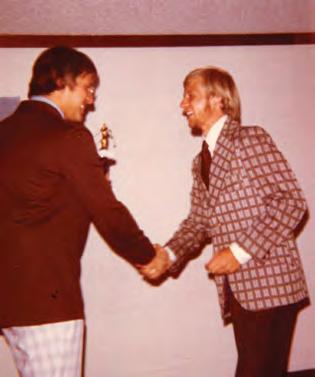
Kinch receiving his MVP award at Rockmont, his frst ski trophy
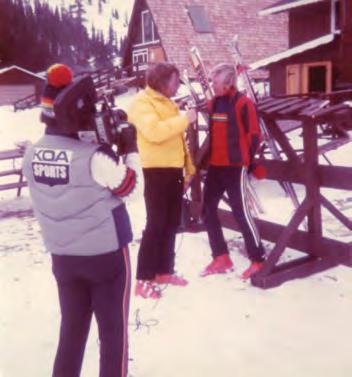
Larry Zimmer (KOA Sports) interviewing Kinch in training for Lake Placid, 1979
abilities he bought Kinch a pair of Nordic skis, a ticket to Oslo, and arranged for Kinch to stay with Sordal’s parents during the championship
Driving to Chicago to catch his flight to Oslo, Kinch’s life was permanently changed. The young man was stripped bare by his realization that God’s kingdom was not expanded through Kinch’s athletic achievements, but rather through Kinch’s obedience to God’s will.
“I was so focused on winning or being in the Top 10. God had to strip me of that. I had to learn what I call ‘God’s concept of success.’ He calls us to be faithful, he doesn’t call us to win,” Kinch said. “Once I gave it up, recommitted my life and my skiing, I said ‘however you want to use my skiing I’m willing.’ That was a turning point in my whole career.”
With his newfound approach of ministry through surrender, Kinch went on to race in four more Olympics and numerous international competitions. He was able to share his testimony to millions of people through TV and radio interviews, speaking engagements, and face-to-face interactions.
The Rockmont grad became known for his refusal to quit, even when facing long odds. In each of his Olympic appearances Kinch
faced unexpected obstacles, from bouts of cold and flu to paperwork delays forcing him to switch events at the last minute.
“I had to learn what I call ‘God’s concept of success.’ He calls us to be faithful, he doesn’t call us to win.”
“Along the way the Lord has used my perseverance to get a lot of attention,” Kinch said. “Jesus didn’t quit and He didn’t give up on me, that’s why I didn’t quit.”
A LIFE LIVED
TO THE FULLEST
Today Kinch lives near Charlotte, N.C., with his wife, Rosemary, who he refers to as his greatest cheerleader. The couple have four grown children and four grandchildren.
Kinch looks back fondly on his college experience.
“Rockmont was a stepping stone to greater things. It afforded me an education and the Christian values throughout my education that I wanted,” Kinch said. “The
opportunities were key and something that God used to give me not just a wellrounded education, but also to explore different areas that perhaps I had never considered. One of which was skiing.”
The unlikely winter Olympian recognizes the divine presence in a life that veered so far from the one he had planned.
“Only God can pull this off and use what I certainly didn’t set out to achieve.”
1980 Lake Placid Winter Olympics
1984 Sarajevo Winter Olympics
1988 Calgary Winter Olympics
2002 Salt Lake City Winter Olympics
2006 Torino Winter Olympics
Rockmont College
The birth of Christian liberal arts education in the Rocky Mountain region
Editor’s note: This article is compiled from “Colorado Christian University, The First 100 Years” by Janet
M. Black, Ph.D.
Colorado Christian University celebrates a rich history, with three heritage schools joining together to form one strong educational community in the 1980s. Each of the heritage schools has a story to tell; each points to the marvelous grace of the Lord Jesus Christ working through individuals — dedicated visionaries, gifted teachers, and students — who creatively pioneered Christian education in the Rocky Mountain region.
The first heritage school, Denver Bible Institute (DBI), found humble beginnings in the autumn of 1914. Clifton L. Fowler started DBI with two students and one teacher in an old plumbing shop. From this inauspicious beginning, the institute would grow in both enrollment and scope. DBI transitioned to Denver Bible College in 1945 with the addition of bachelor degrees. An increased emphasis on Christian liberal arts led to the school’s eventual rebranding as Rockmont College in 1948.
By the mid-1940s, Denver Bible College experienced the blessing of an overflowing student enrollment partly because of President Sam Bradford’s prior influential Baptist ministry and partly because of the 1944 GI Bill, which supported higher education for veterans. Bradford and his administration believed the label “Denver Bible College” limited the school; he desired a wider influence. He proposed “Rockmont College” as the new name for “dear old
DBI.” The name drew on the Rocky Mountain region and echoed a program that Bradford admired, Westmont College in Santa Barbara, California.
John Wood ’49, a student editor of The Student Voice, wrote,
Rockmont College is the third step in the growth of an institution originally founded in 1914 as Denver Bible Institute. Because of the growing demand among conservative Christians for a Christian liberal arts college, the Rockmont College program was set up.
CHRISTIAN LIBERAL ARTS
Seeking ongoing accreditation with the newly formed Accrediting Association of Bible Institutes and Bible Colleges, Rockmont required each student to complete 30 credit hours of Bible coursework. The liberal arts program was built around this foundation.
What did a four-year plan look like for the typical Rockmont student? Biblical studies and worldview classes, along with English and communications formed the first year. Second-year students studied social sciences, literature, and science, along with Bible courses. Third-year students declared their majors and began language and vocational courses along with natural sciences. Finally, senior students took electives in their majors and studied Christian doctrine.
As a Bible college and then as a liberal arts college, Rockmont continued to train students for Christian service. The
1950 Signet, the college yearbook, shows the seniors planned careers as pastors, missionaries, educators, and youth workers. Mission Prayer Bands, the Embryonic Preachers’ Club, and the Soul Winners’ Club continued to draw enthusiastic students alongside the
Click-in Time Club (photography) and the Rockhounds (geology/paleontology). Christian service in the form of fieldwork dominated many students’ weekends, as they ministered in neglected areas around Denver and in mountain Sunday schools.
When Bradford offered his resignation from the presidency of Rockmont in 1950, the school had recently experienced peaking growth. However, a sharp decline in student enrollment soon followed. After a high of more than 230 students at the end of the 1940s, the 1953 enrollment hovered at the mid-150 range.
Dr. W. Randall Skillen Jr., who had been a faculty member, dean, and executive
vice president under Bradford, was elected the new president of Rockmont in 1950. The young Skillen family enjoyed the extracurricular activities of students, opening their home for the yearly Halloween parties and accompanying students on music tours. Once, students pranked their president by installing an outhouse on his front yard.
Skillen led the school during a season of turmoil caused by the financial pressures of declining enrollment and a struggle over Rockmont’s move into liberal arts education. The idea of a Christian liberal arts college, given Rockmont’s history as a Bible institute, caused some confusion among alumni and donors. Skillen tried to compensate for the financial stress by reducing faculty to a part-time basis and leading Rockmont more strongly in the direction of liberal arts from a Christian worldview. The inequity in pay and the lack of buy-in by alumni and supporters culminated in the resignation of Skillen and the January 1954 appointment of Archie H. Yetter ’28 as acting president.
For practical reasons, Yetter was an ideal candidate to lead Rockmont: he was a 1928 alumnus of DBI, he had built a fine reputation as a Bible teacher, and he was known as a man of integrity among churches he pastored in metro Denver.
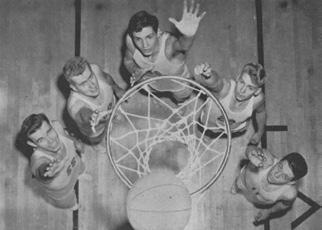
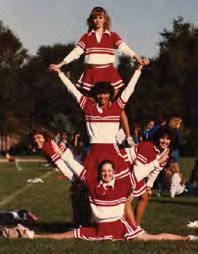
In the early 1950s, student activities included a strong music program, with annual performances of “The Messiah” and “Elijah,” and instrumental groups such as a band and a brass quartet. The athletics program and activities included a men’s basketball team complete with cheerleaders.
NORTHWARD BOUND
Yetter took on the presidency at the forefront of some drastic changes ahead. With its debts, decreasing enrollment, and withdrawing alumni support, Rockmont needed to sell its property and find a less expensive “home.” After some exploration of properties on Santa Fe Drive south of Denver, the administration
was surprised by the City of Longmont’s generous welcome, and Rockmont moved north of the Denver metro area.
Rockmont opened its doors in Longmont in the fall of 1954 in the abandoned Bryant School. The college rented space in homes and nearby apartments for dormitories, and President Yetter opened his basement as a dining hall.
The academic program was streamlined: students could choose among music, education, religion, and general education studies. The men’s basketball team, the Rockets, survived and competed in a community gymnasium, and the music program continued under the new direction of Gaylord Taylor ’52.
How was this small school to thrive? Yetter led the school toward a vision of a new campus. The 1957 Signet, opens to an inside cover that lays out plans for the new campus. This design phase contains sketches of dormitories, classrooms, a gym, an auditorium, an observation tower, athletics fields, and a president’s home. Two years later, the 1958–1959 Signet shows pictures of the completed first building, a multi-functional structure with a two-story center hub.
The energy and financial support to build this 25-year campus plan was slow to materialize, and Rockmont struggled to grow. The small number of students set the tone for close community. Many students appreciated the firm Bible foundation they received, and they were inspired for Christian service. Desiring to return to full-time teaching, Yetter worked with the board to find a new president. Dr. L. David Beckman answered the call.
When Beckman joined the Rockmont family, the challenges were nearly overwhelming. Rockmont was in a serious financial condition. Its annual budget was about $51,000, and it owed faculty back salaries of $42,000. Moreover, a $200,000 bond issue was due in four years. The class
sizes were small. Four students comprised the Senior Class of ’64, and each member served as an officer in the class — with no competition.
A NEW HOME IN LAKEWOOD
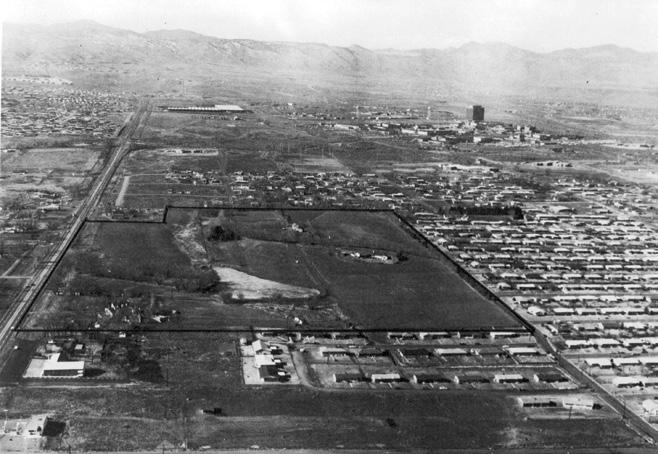
Soon, a vision for a new campus back in the Denver metro area caught hold, and under Beckman’s leadership in 1966, Rockmont purchased 43 acres in Lakewood for $320,000. Funds were raised through a bond issue that paid off previous debts and included some costs associated with the new property.
In the fall of 1967, Rockmont opened its new campus with excitement and growth. The 1966–1967 enrollment at the Longmont campus had been 107, which increased to 129 in 1967–1968 at the Lakewood campus.
Competitive athletics continued as part of Rockmont’s program. The head soccer coach made temporary arrangements for athletic activities, such as makeshift soccer goals erected on the northeast practice field.
TIGHT FINANCES
After its 1967 move to Lakewood and unable to sell its Longmont campus, Rockmont entered the 1970s under continued financial distress. After selling a portion of its 43 acres to a commercial medical project and securing its Longmont property to
the Reynolds family who held an unpaid balance on the Lakewood property, Rockmont limped through the first few years of the 1970s.
In their efforts to overcome the financial difficulties, Rockmont administrators offered creative solutions. Toward the end of one faculty and board discussion at Rockmont, a seed was planted to begin an adult education school within the college, which came to fruition in 1973 under the direction of Gene Marlatt, an assistant professor of social science.
Marlatt’s work was forward thinking for the era, and the school came to be called the School of Innovative Studies, retaining this moniker until the late 1990s. This move into adult education would help Rockmont survive future financial tests, but it also opened up educational opportunities for non-traditional students who sought convenient locations and course offerings, credentialing for professional purposes, and a full college experience that fit into their already busy adult lives. In the first year, 20 students enrolled, and the numbers increased to over 100 the following year.
Although financial pressure and property concerns stressed the administration of Rockmont, the college’s focus remained on enabling students to change the world. For instance, the counterculture movement of the 1960s and 1970s was met by the Jesus Movement and what 1970s vernacular called “street Christians” — believers who came out of the hippie and drug
culture. Rockmont opened its admission to street Christians even though this move disrupted the “appearance” of Rockmont students to the public.
ACADEMIC GROWTH
By 1974, Rockmont was back on solid footing, strong enough to gain candidate status for regional accreditation in the North Central Association of Colleges and Schools. Looking forward, Rockmont began plans to expand its existing campus.
The increased enrollment demanded the development of new majors, including biology, sociology, business, and staterecognized teacher certification. Sports remained a staple of school recognition with a new ski team, and Rockmont began a new student newspaper, the Rockmont Observer.
By 1981, Rockmont achieved full accreditation from the North Central Association, and it followed this confirmation of its quality programs by adding a new outreach in 1982: nontraditional education. Teachers seeking recertification credit enrolled in accelerated weekend courses, with more than 100 new students attending the inaugural courses.
Completing nearly 20 years of strong leadership through lean times and bountiful provision by God, President Beckman retired from Rockmont and was awarded president emeritus status. Rockmont’s board named Dr. William Wilkie as the new Rockmont president.
Denver Bible Institute (DBI) founded in Denver.
1954
The institute is Denver Bible College Rockmont officially chartered changes its name to College with the Colorado Rockmont College to relocates to State Board of more accurately reflect Longmont, Education and its growing mission as a Colo. changes its name regional Christian liberal to Denver Bible arts college. College.
In 1984, President Wilkie sought a way to pay off Rockmont’s remaining debts by dissolving the resident campus. Wilkie had planned to use part of the proceeds to establish a foundation that would help put Christian students through other schools in Colorado. On February 15, 1984, Rockmont’s board voted to close the school. Immediately, faculty, and alumni led a heroic effort to save Rockmont and raise needed funds. Wilkie resigned from the presidency and after the brief interim presidency of Professor Marlatt, Dr. Beckman was invited to lead Rockmont again.
TWO INSTITUTIONS BECOME ONE
Stan Harwood, former president of the board of Western Bible Institute, recalled that the original idea for a merger with Rockmont began in 1965 when he had talked with William Berntsen, president of Northwestern College in Minnesota. “You’re too small,” Berntsen said. “You need to get bigger and have more of an impact upon the community.” He suggested WBI merge with Rockmont, the only other Christian evangelical college in the region.
Dr. Beckman, the president of Rockmont at that time, met with Harwood. However, the faculty of Rockmont voted not to merge and the WBI administration believed the individual philosophies of the schools could not mesh.
In 1971, leaders of WBI and Rockmont again considered a merger. By this time, Rockmont had established its campus in
Lakewood. The discussion progressed, but the differences between the two institutions had broadened. However, as both schools developed their own programs and outreaches, they became much closer in their educational philosophy.
While Rockmont was in the throes of financial uncertainty and reorganization, WBI — which had transitioned to Western Bible College in 1975 — faced leadership challenges resulting in Dr. Joe Wall filling the position.
With Dr. Wall as president of WBC, a merger with a liberal arts college appeared more possible. Instead of creating obstacles, the problems both colleges faced made them more compatible. Presidents Beckman and Wall became friends and colleagues, and the weakened financial state of Rockmont did not daunt the president of WBC. Neither did WBC’s earlier staunch position against the liberal arts discourage Beckman. “I think a merger could have great potential,” Beckman said in an article for the school paper. “Both schools have a lot to offer each other. Each has programs that would be enhanced by a merger — it is almost as if our strengths and weaknesses fit perfectly together.”
The idea of a merger was ready for negotiation. Beckman and Marlatt were the primary negotiators for Rockmont while Wall and Frank Ames ’77 (WBC), vice president for academic affairs, represented WBC. The doctrinal statements for each school were different, but this issue was worked out, causing some turmoil in the respective faculties. The leaders of the merger invited the members of each school’s faculty to
teach at the new college, as long as faculty members could agree with the statement of faith and philosophy of education.
Dr. Beckman was appointed as chancellor to work closely with Dr. Wall, who would be president. Marlatt from Rockmont was appointed the new academic advisor and Ames from WBC the academic dean. In order to ensure fairness, the merged board consisted of the same number of members from each school.
Merging programs caused some concern because both schools wanted to retain their accreditations: North Central Association and the American Association of Bible Colleges. In order to keep WBC’s accreditation with AABC, the merged institution would require 30 hours of Bible for all majors. In order to keep NCA accreditation achieved by Rockmont, Beckman would remain president of the merged institution for the first few months and “Bible” would not be included in the new name. Rockmont kept its liberal arts curriculum and WBC kept its strong biblical studies and Christian ministries programs.
In the end, the new institution was called Colorado Christian College (CCC). After a brief summer with Beckman as president, Wall was president of the new school for the next six years. CCC later became Colorado Christian University.
Through all its peaks and valleys, Rockmont provided the foundation on which a thriving Christian liberal arts University stands today.
1967
Rockmont College relocates to CCU’s current campus in Lakewood, Colo.
1973
The School of Innovative Studies is started at Rockmont College. The school would eventually become the College of Adult and Graduate Studies at CCU.
1985 1989
Rockmont College Colorado Christian and Western Bible College and Colorado College merge to Baptist University form Colorado merge to form Christian College. Colorado Christian University.
Then & Now
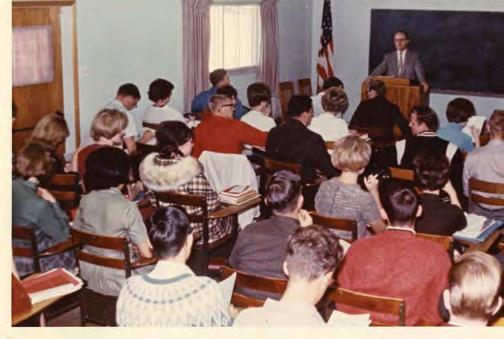
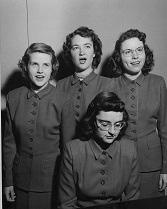
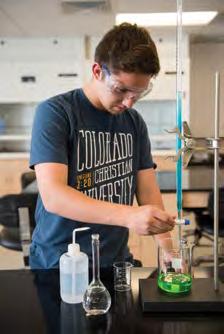
Colorado Christian University’s evolution into a Christian liberal arts college can be traced to Rockmont College more than seven decades ago. Across the next few pages, look back at the history of Rockmont College side-by-side with CCU today.
During the institution’s transition from a Bible college to a liberal arts university, Christ-centered education has remained CCU’s foundation. Today, that foundation continues to be expanded as the University strives to educate with grace and truth.
CCU continues to grow academically and has been named in the top 2 percent of colleges and universities by the American Council of Trustees and Alumni in its annual What Will They Learn? survey of college general education curricula for seven consecutive years.
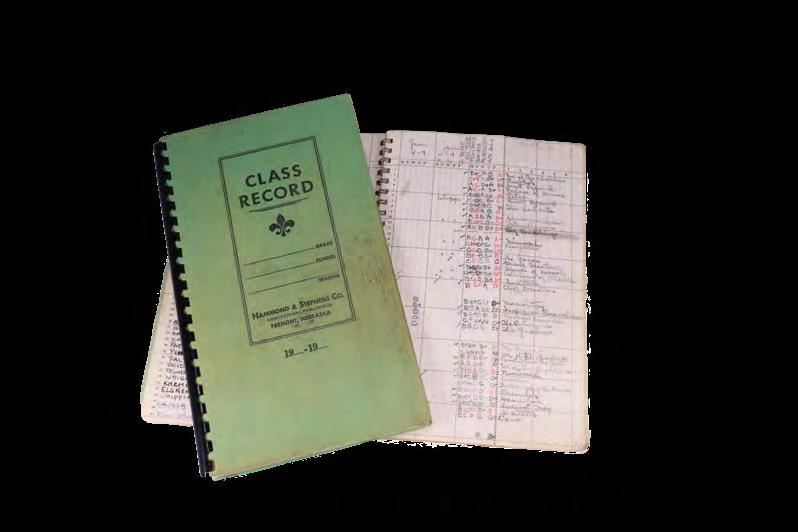
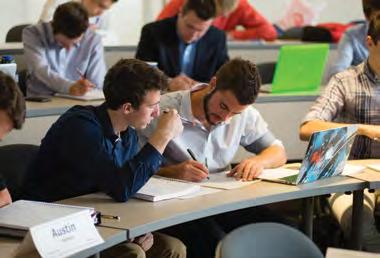
grade books have come a long way since the 1950s
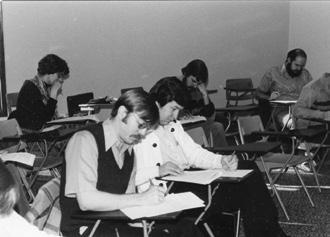
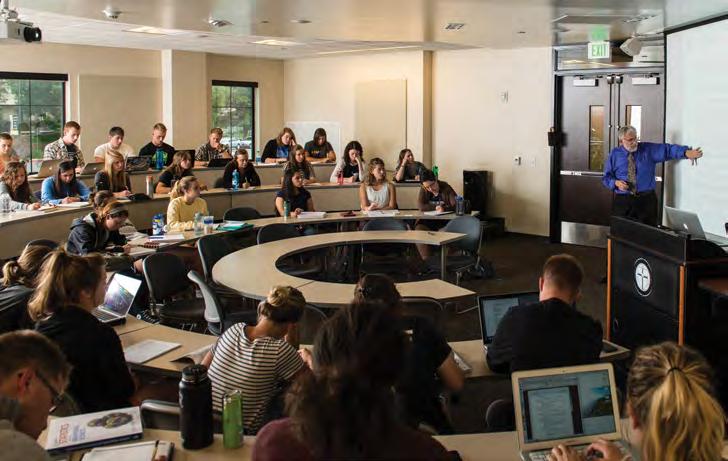
Collaborative learning
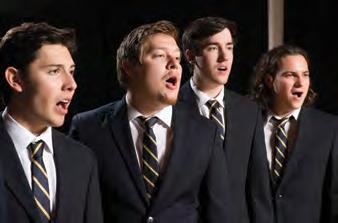
Men’s chorus
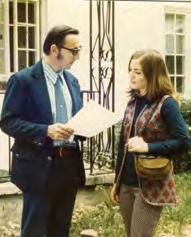
Faculty as mentors
“My classes give real-life examples of how to apply what we’re learning and professors share their personal experiences of how they use the concepts. The small classes also allow opportunities for discussions to deepen our understanding of these new ideas.”
Julia Gottschalk ’20
B.S. Business Administration and B.A. Strategic Communication
Leprino Hall
Then & Now
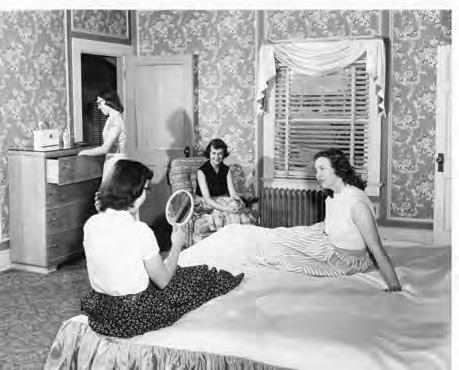
“In my senior year, everyone at Alameda Residence Hall attended the annual Spring Banquet — a beautifully lavish affair. It so happened that this was held during Dorm Wars insanity that year. ...
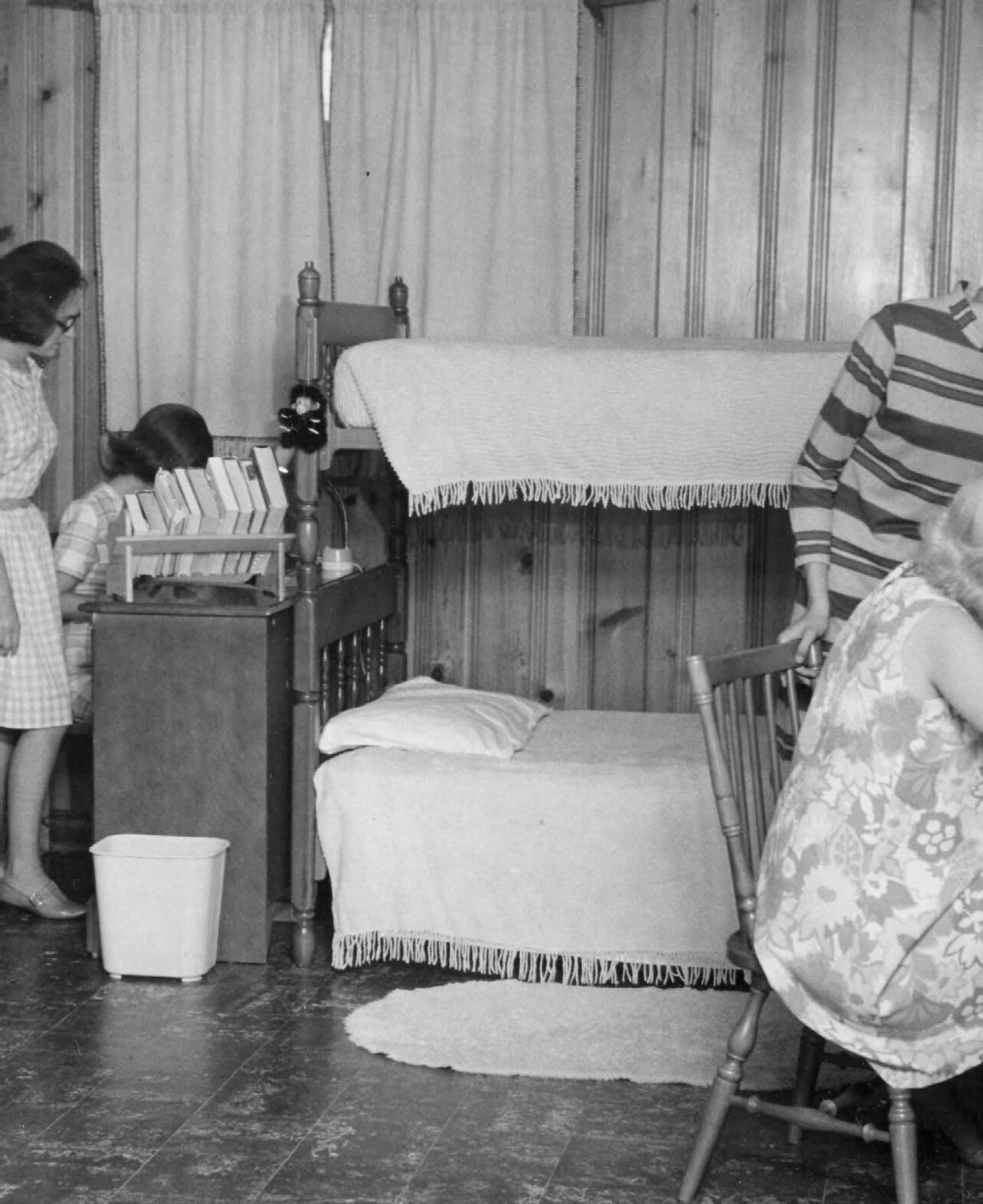
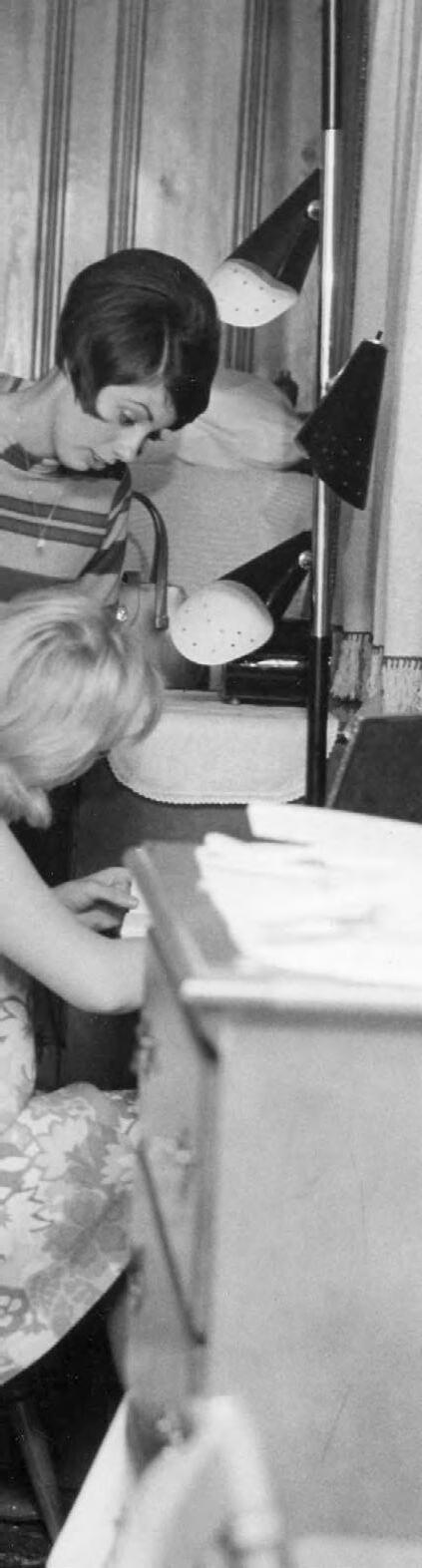
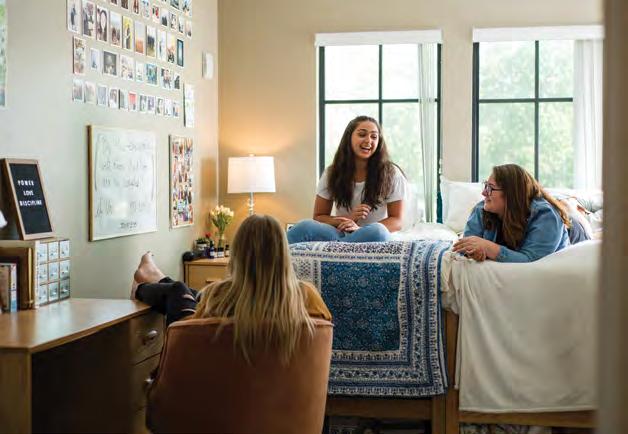
1950s Dorm room
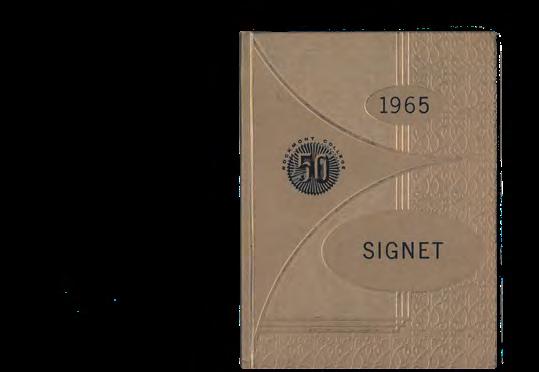
1965 Yearbook when Rockmont celebrated 50 years!
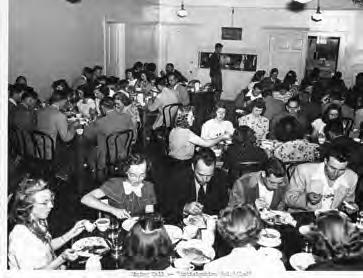
1950s Cafeteria
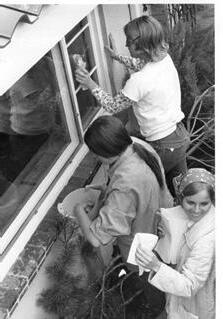
1970s Service project
“When we returned to the dorm that night we were greeted by TP’d trees, silly string blocking every room, burnt limburger cheese on the stove, our ‘unmentionables’ in the freezer, water balloons covered in shaving cream that fell from every door, and the contents from several feather pillows everywhere. The guys had gotten sweet revenge while we were gone. What a riot!”
B.A. Christian Education From Alumni Memories, October 1994
Pauline R. Richter ’78
The day-to-day activities of students, faculty, and staff bind a university together, serving as the heartbeat of the institution. Life-long memories and friendships are forged through the events that make a campus a community.
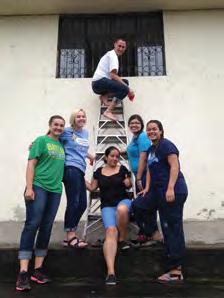
CCU2 theWORLD Students in Ecuador
“Being in the CCU community has given me the opportunity to have more authentic relationships and
access to great programs like Best of Colorado and CCU2theWorld.”
Chad Parsons ’19
B.S. Business Administration and Computer Information Systems
Student Life
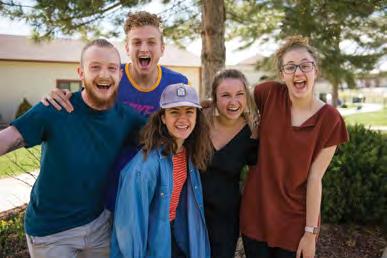
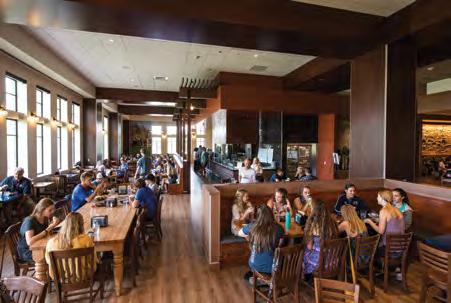
2019 Dining Commons
Current student apartment
Spring on the Lakewood campus
Then & Now
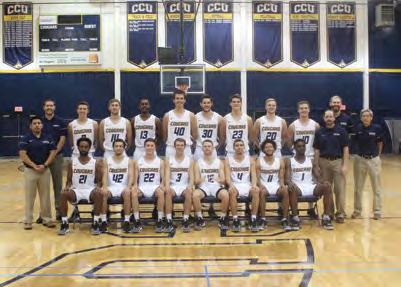
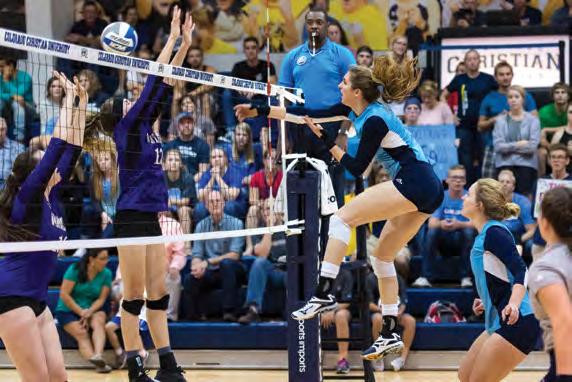
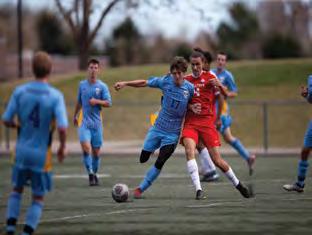
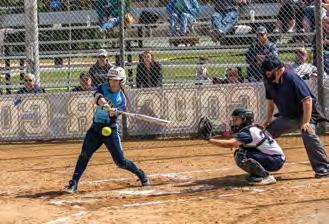
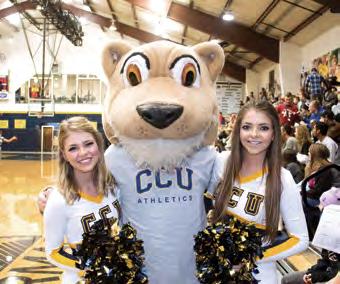
Athletics at CCU have come a long way since the first students donned the crimson of Rockmont. No longer are the teams named the Rockets, but the high-flying spirit of those early competitors lives on in the Cougar student-athletes of today.
“I am so excited to see our new facilities be built and heighten the attention of CCU athletics. Most importantly, I am thankful to be a studentathlete by incorporating my faith and glorifying God with my love and passion for softball.”
Stephanie Day ’20
B.S. Accounting and Business Administration, student body president and softball player
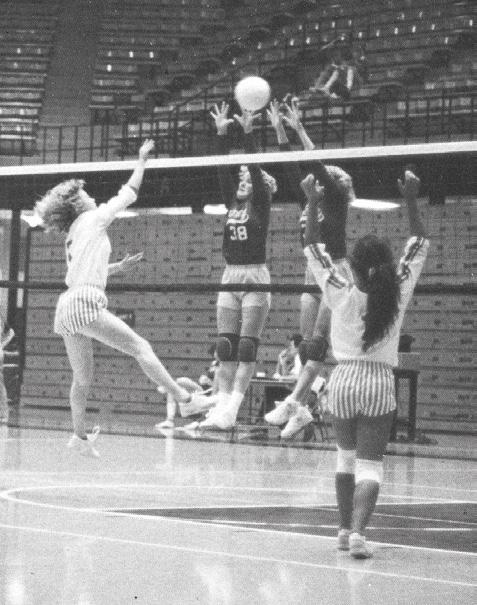
Women’s volleyball
Men’s soccer
Women’s softball
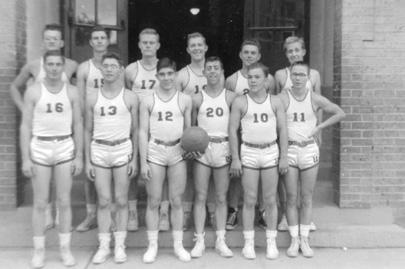
Men’s basketball
Then & Now
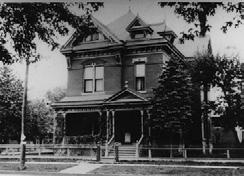
Rockmont College campus on Glenarm Place in Denver 1949-1954
First Longmont Campus 1954-1958
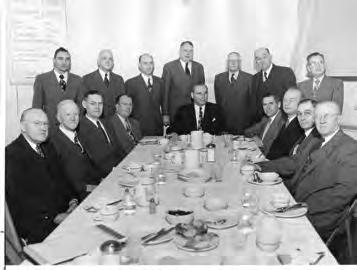
1950 Board of Trustees
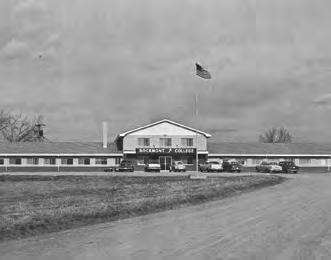
Second Longmont Campus 1958-1967
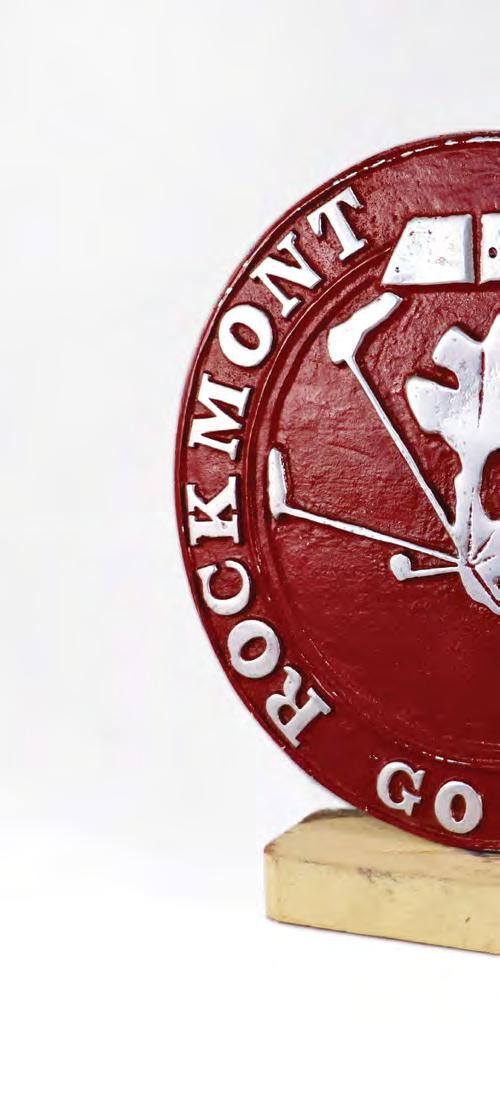
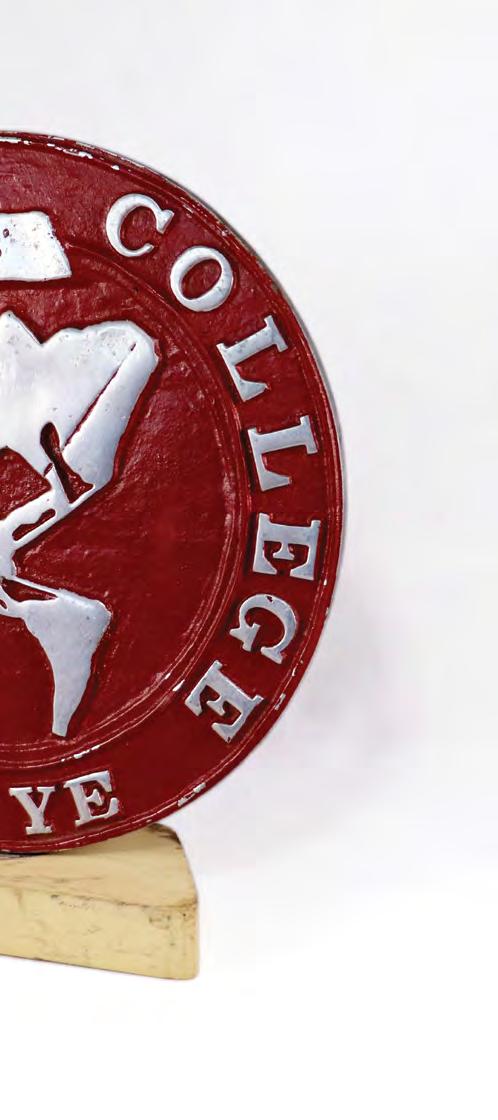
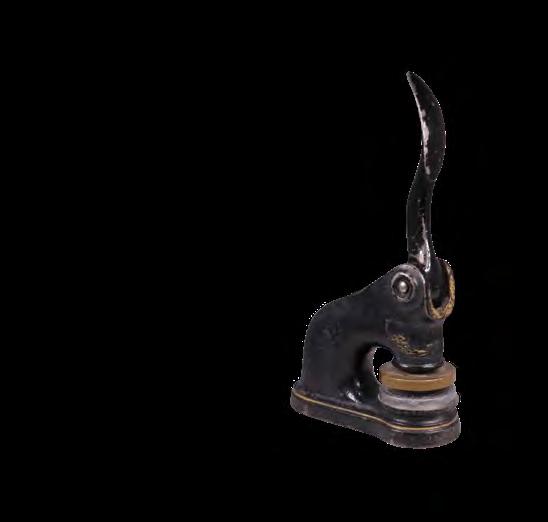
College seal and press
Original Lakewood campus
The Rockmont
Lakewood campus today
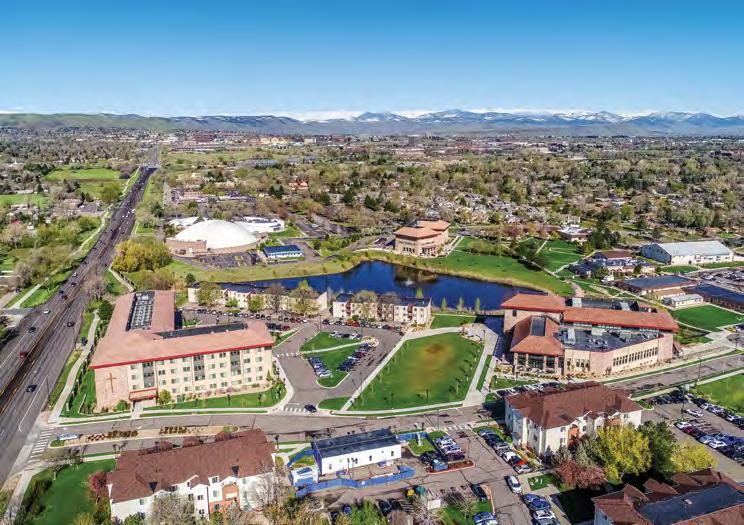
Nestled between Denver to the east and the Rocky Mountains to the west, Colorado Christian University has called Lakewood, Colo., home since 1967 when Rockmont College relocated from Longmont, Colo. The seeds of development were planted shortly after relocation and are now coming to fruition. The campus is currently undergoing an extensive makeover to meet the needs of a growing student population and CCU’s strategic priority of becoming a great university.
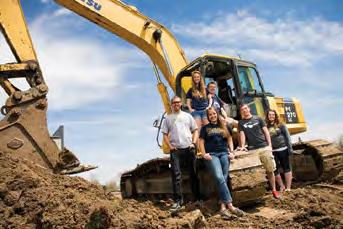
After nine consecutive years of record-setting enrollment in the College of Undergraduate Studies, CCU broke ground in 2018 on Rockmont Hall. The 115,000-square-foot residential building is slated to open in fall 2019. It will join Anschutz Student Center, Leprino Hall, and Yetter Hall as facilities completed since 2014.
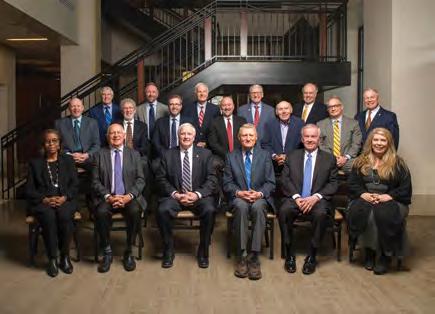
2019 CCU Board of Trustees
Campus redevelopment
Campus Development
Colorado Christian University’s late president Bill Armstrong said “Great buildings don’t make a great university, but a great university requires great buildings.”
With this in mind, CCU is redeveloping its Lakewood campus to meet the current and future needs of a growing student body.
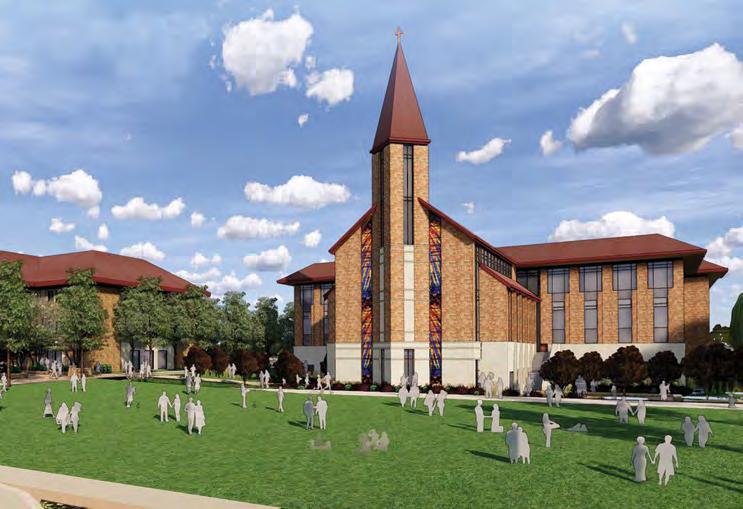
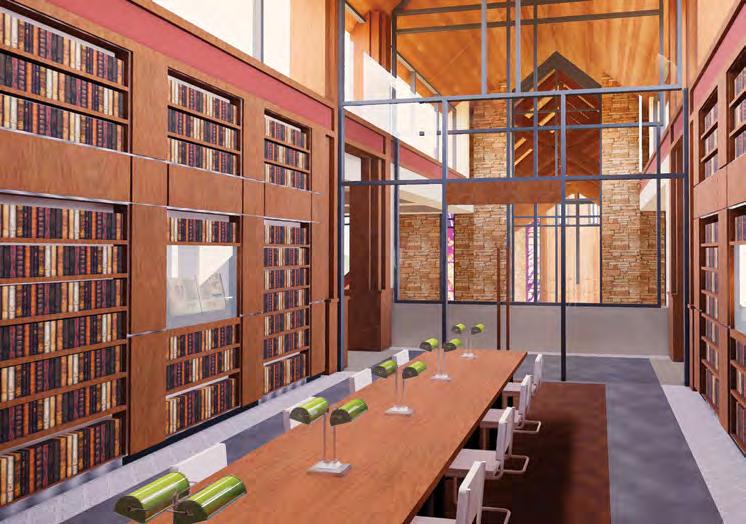
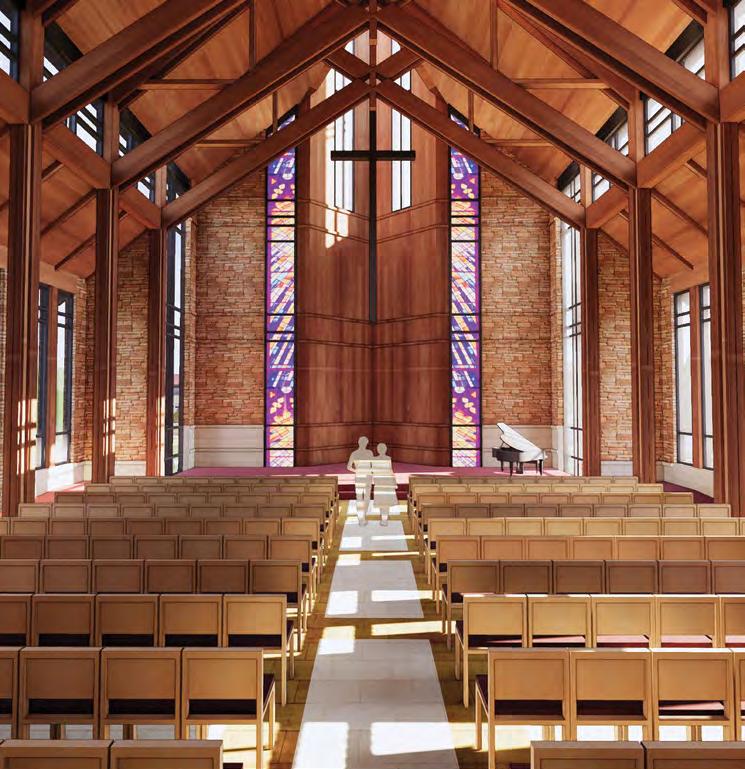
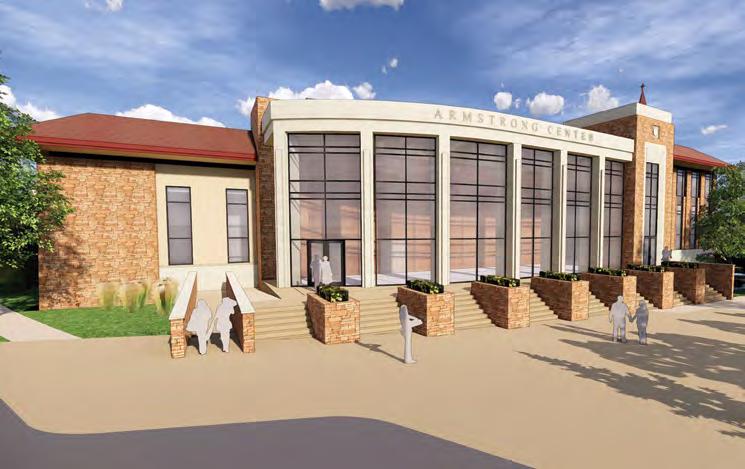
The Armstrong Center will be the academic and spiritual cornerstone of CCU’s campus, serving as the vibrant new home for the School of Music, University library, and the University Media Center. The facility will provide academic support; promote spiritual growth; foster engagement with University faculty, staff, and guests; and offer new amenities that strengthen the uniqueness of a CCU education — education of the mind and the heart.
Now is your opportunity to be a part of God’s plan as He
provides for CCU’s future.
To speak with Eric Hogue, vice president of University Advancement, about how you can be a part of the Armstrong Legacy Initiative, please call 303.963.3093 or email ehogue@ccu.edu.
Armstrong Center Highlights
• A dedicated 200-seat chapel — a unique, yet familiar and sacred space
• A 500-seat performance theater
• The School of Music returns to campus, with more than 5,000 square feet of dedicated practice space for individual musicians, small ensembles, and the full symphonic band
• Expanded program for the new Library Media Center, including a special collections reading room, individual and group collaboration spaces, and dynamic media lab spaces
BUILDING A LEGACY
The Armstrong Center
Funding for the Armstrong Center is nearing the finish line, but opportunities to impact future generations for Christ remain.
Endowment
$50 Million
Academic Building
$19.2 Million
Armstrong Center
$30.2 Million
$21.9 million funded and pledged as of April 1, 2019
Armstrong Legacy Initiative
The Armstrong Legacy Initiative of Colorado Christian University is an effort to secure $30.2 million for the Armstrong Center, and $19.2 million for our second new academic building. An additional $50 million will also be pursued to provide a new endowment fund for need-based student scholarships. These causes were championed by Bill Armstrong during his tenure as CCU president, and they are causes that are at the heart of the Armstrong Legacy Initiative.
Seeking His Calling
Micah Schwarz ’21
B.A. Biblical Studies
Choosing a college can be a daunting task. Academic programs, location, campus community, and cost all play a role in determining the right fit. And while a college education can be a life-changing accomplishment, it can also be financially out of reach for potential students.
Micah Schwarz ’21 was a top-flight student growing up in Colorado Springs, Colo., but knew he would need to choose wisely where to attend college. He said his financial aid package at CCU helped the University stand out.
“They offered me the best scholarships, which made CCU the most affordable college for me,” Schwarz said. “While the education we’re receiving is worth it, a lot of us still can’t afford it without help. That’s why I’ve really appreciated the scholarships that I’ve received. It gives us access and opportunity to learn and grow and become the people God’s called us to be.”
Schwarz was awarded the Trustees’ Scholarship, which was the highest academic scholarship at the time. That allowed him to compete at the annual World Changers contest where he was awarded an Impact Scholarship. Additionally, he received a partner school scholarship and a Beckman Scholarship. Much of his scholarship funding is made possible through the CCU Fund and its generous donors, something that is not lost on the Biblical Studies major.
“Those scholarships have given me the opportunity to access this priceless education,” Schwarz said. “I want to express our deep gratitude for those generous donations, especially for those of us who can’t afford it. There is a lot of fruit coming from it. I’ve seen it demonstrated in my own life already and in the lives of my fellow students around me.”
Schwarz said he was surprised to receive the Beckman Scholarship. “That one, I’m still amazed that I got… I was just randomly blessed with this additional scholarship that was a huge answer to prayer because it made CCU that much more affordable.”
GOD’S PLAN, NOT OUR OWN
Schwarz was raised in a Christian home and dedicated his life to Christ at a young age.
“I’ve grown up knowing who Christ is because I saw him in my parents’ lives.”
In fourth grade he began volunteering at church as a junior leader assisting adults with younger children.
“I knew God wanted me to be involved with his people and his church early on,” Schwarz said. “That played a big part of my story because I realized it was something I was passionate about and love — taking the knowledge that I have and passing it on to the next generation.”
Schwarz began his college career as a Secondary Education major, hoping to impact future generations. But his plans
and his major have changed as God moved in his life.
“I felt God leading me toward Biblical Studies, which was strange because I felt very much called to a teaching role. I thought, ‘Alright God, what’s your plan with this?’ And all I’ve been hearing for the most part is just ‘trust Me,’” Schwarz said. “Which in one sense is really reassuring because I know I can trust God with that, in the other sense, I’m like ‘O.K. God, I want a little bit more sense of a plan.’”
“Those scholarships have given me the opportunity to access this priceless education.”
Schwarz said he feels the call of the Great Commission and is exploring how he can serve on Christ’s terms, not his own. During his time in Lakewood, Schwarz said he continues to be challenged and to grow.
“I have learned a lot about myself. I’ve seen some of my strengths and talents naturally come out. I’ve had professors really pour into me, challenge me, and grow me in those strengths,” Schwarz said. “I’ve seen a lot of my shortcomings and weaknesses and have been challenged on what it looks like to overcome those challenges, and how Jesus calls us to grow in those and not just accept our shortcomings.”
STAYING INVOLVED
The sophomore currently works as an admissions ambassador — a job he says is only difficult when he has to pare down which of the many aspects he loves about CCU when talking with potential students and their families. He hopes to provide the same connection he felt the first time he visited campus.
“When I came and visited I fell in love, mostly with the people. I walked on campus
and I was able to experience the community and the fellowship that a lot of other colleges talked about, but I actually felt it when I walked on campus.”
He also volunteers with Whiz Kids, a Denver-based nonprofit focused on bridging the achievement gap for children that fall below the poverty line. He began volunteering with the organization as a way to stay connected with the next generation similar to what he had when volunteering at his home church in Colorado Springs.
“I knew I was going to miss my connection of serving at the church and being with the kids, so I wanted something doing that, and I wanted something where I was giving back.”
In the fall, Schwarz will serve as a resident assistant in the yet-to-be-completed Rockmont Hall. He is excited to form new traditions to match the stairwell traditions at other on-campus CCU apartment buildings.
LOOKING TO THE FUTURE
While Schwarz isn’t sure yet where God will lead him, he’s glad for the rigorous education he continues to receive at CCU.
“CCU is not a blinded, faith-driven education, which I really appreciate. My professors present multiple sides to every issue and challenge us to think for ourselves,” Schwarz said. “That training and equipping is priceless. We’re learning to think critically and think for ourselves. We’re being prepared for life on our own and to be witnesses for Christ in whatever we do.”
You can help students like Micah follow God’s calling in their lives. Visit CCU.EDU/CCUFUND or use the enclosed envelope to donate to the CCU Fund today.
Ken Stafford served 33 years in ministry, including eight years as a missionary in the Ivory Coast — experiences that would inspire his children’s and grandchildren’s career and life choices.
Passi
ng the Torch
Three generations call Rockmont and CCU home
When Ken Stafford ’53 enrolled at Rockmont College he likely didn’t know the impact it would have on both his family and the world. Three generations and more than five decades later, the legacy he left, is one that continues to shape the Stafford family.
Following in his footsteps were four family members: a daughter and three granddaughters. Ken’s daughter, Carol (Stafford) Deaville ’70, attended Rockmont, earning a B.A. in Applied Religion, before continuing her education to become a registered nurse.
“My two years at Rockmont College in Longmont, Colo., were foundational. I was taught by Dr. David Beckman and Mrs. Florence Jones and other godly leaders,” Deaville said. “Life-long friendships were established from sharing life in the dorms, choir tours, class projects, and school activities.”
After seeing the impact Rockmont had on both their grandfather and mother, Bonnie (Deaville) Westermann ’04 and Debbie Deaville ’07, were joined by their cousin, Jenny Stafford, on the Lakewood campus of Colorado Christian University in the early
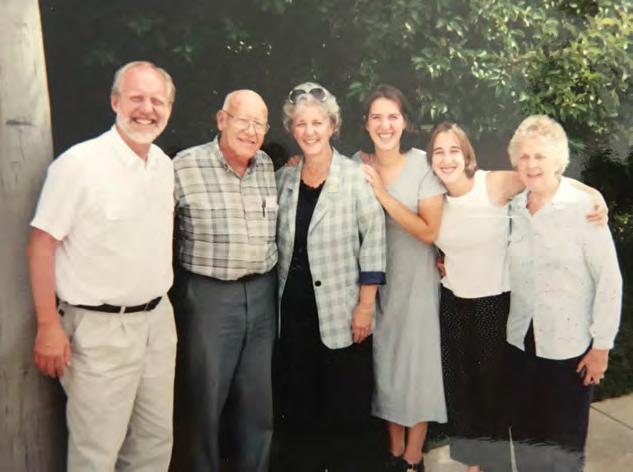
Left to right: Gary Deaville, Ken Stafford, Carol Deaville, Bonnie Westermann, Debbie Deaville, and Marge Stafford
2000s to gain similar life experiences and education as their predecessors.
A LEGACY OF SERVICE
After attending other schools, Ken Stafford looked to Rockmont to provide the Christian foundation he knew he would need to serve as a missionary. The Christcentered education he received at the liberal arts college propelled Stafford on a lifetime of ministry that reached all the way to the west coast of Africa.
“CCU was the place because that was where my mother had gone and my grandfather had gone.”
Stafford served 33 years in ministry, including eight years as a missionary in the Ivory Coast — experiences that would inspire his children’s and grandchildren’s career and life choices.
“He always wanted to be a missionary and bring the Bible to people who did not have the Bible in their language,” Westermann said of her grandfather. “That’s what he did in the Ivory Coast.”
Children often take after a parent’s work and passion, as was the case with Carol Deaville and her father. Deaville attended Rockmont before continuing her education to become a registered nurse, a position she would hold for 47 years. Service to others was always a priority for the family, and Deaville credits her call to nursing to her parents’ mission work.
Not only did Stafford spread the Good News in Africa, he also taught at an Arizona Indian Bible school, served in counseling ministries in Salt Lake City and Chicago, and worked with Compassion International in Colorado Springs.
“Because my grandfather was able to become a missionary in Africa, that transformed both my mom’s life into becoming a nurse and my uncle’s life,” Westermann said. Her uncle, Wess Stafford, served for 20 years as the president of the child-advocacy ministry, Compassion International.
FAMILY TIES
For Westermann, the Rockmont and CCU community has been a part of her life from the beginning.
“I knew that CCU was where I was going to end up. CCU was the place because that was where my mother had gone and my grandfather had gone,” Westermann said.
She wasn’t at CCU long before the family connection grew deeper. Westermann’s cousin joined her at CCU after her freshman year, her sister followed the next year.
“It was fun for the three of us to be there together,” Westermann said. “I loved it. I met life-long friends there. I met my husband [Dan Westermann ’04] there.”
She added that some of her fondest memories at CCU were harvest festivals, one of the many events she helped plan as a student.
“I really enjoyed having so many kids on campus and being able to give them candy and have a safe place for them to be at and show them God’s love as they get to be part of our campus.”
The now mother of two elementary-age boys is excited to build a connection to CCU for the next generation, hoping the family legacy of serving others and loving Christ is shared with her sons.
“I was able to take my kids to the harvest carnival, and that was really fun too,” Westermann said. “I loved it. I used to run this event and now they get be part of it.”