mosaic is published four times a year by Canadian Baptist Ministries. Copies are distributed free of charge. Bulk quantities available by request.
Contact us at:
7185 Millcreek Drive
Mississauga, ON L5N 5R4
Tel: 905.821.3533
mosaic@cbmin.org www.cbmin.org
Managing Editor: Jennifer Lau
Editor: Laurena Zondo
Associate Editor: Giselle Randall
Design:
Genesys Creative Inc.
Mission of Canadian Baptist Ministries
Encouraging passionate discipleship for local and global mission.
As partners in the Canadian Baptist family we exist to serve the local church in its grassroots mission. Together we impact our communities and beyond through the love of Christ.
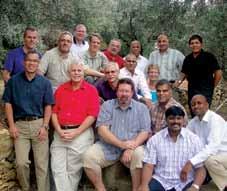
There were only 16 people in the room, but we came from five of the world’s continents: South America, Asia, Africa, Europe, and North America. As a group, we spoke 13 different languages: Arabic, Cantonese, English, French, German, Indonesian, Kinyarwanda, Mandarin, Portuguese, Spanish, Swahili, Telugu, and Turkish. All of us were CBM staff. As I looked around at the diversity of people, culture, and language, all of which are a part of our staff, I thought to myself: this is what it means to be a global mission organization.
Scan this code using your smart device to us on Facebook
There was an era when Canadian Baptist mission was about Canadians going to far-off places to share and demonstrate the Gospel. We then shifted to an era where we realized that mission was two-way, i.e. that we were in partnership, which meant that as we shared, we ourselves were transformed and enriched. We are now shifting into an era where mission is multi-way, where we are learning about God and about ministry from multiple sources in multiple cultures.
The group of 16 were gathered in Beirut, Lebanon, so that we could learn from one another about leadership formation. A story would be shared from Bolivia, and a response would be made from Rwanda. Something would be added from Hong Kong. As each context and each culture participated in the learning experience, we experienced a richness that would be impossible to duplicate in a mono-cultural setting.
This issue of mosaic is about “global discipleship,” which is about learning to be disciples of Jesus in our global context. The experience I had in Lebanon was a small picture of what it means to be a global disciple. Our discipleship takes places in a local, specific context, but it is informed by and also influences the global context. In mid-October I participated in Ride for Refuge, a Canada-wide event that raised funds for refugees and other marginalized people. Several hundred cyclists rode in the Hamilton, Ontario ride: eight degrees Celsius temperatures accompanied by gusty winds! By doing this, we were helping to connect Canadians with refugee ministry that takes place both in Canada and around the world. This, too, was a small picture of what it means to be a global disciple.
Global discipleship is about lifting our heads out of the sand and looking around at our world, and realizing that it is a world that God loves, which means that we are called to love it too. It is about rethinking and reshaping how we live and act, as a response to that love. I invite you to lift your discipleship into the global context that God is working in today.
Rev. Sam Chaise General Secretary of CBM
@samchaise_cbm
facebook.com/cbmin.org
cbminorg.wordpress.com
is a community forum of local and global voices united by a shared mission. mosaic will serve as a catalyst to stimulate and encourage passionate discipleship among Canadian Baptists and their partners.
What on Earth
by John Prociuk
is a Global Disciple ?
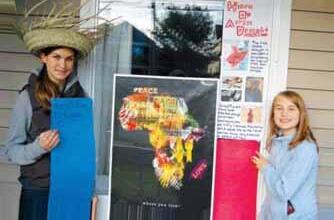
A teacher in the Maritimes raises awareness of the Child Labour Rehabilitation School in India, mobilizing her elementary school to make a contribution to help suffering children.
An Ontario artist refines her lifestyle and spending habits after global ministry experiences in Africa, the Middle East and South America.
A youth group from a small church on the Canadian prairies clears a field as part of a Canadian Foodgrains Bank initiative to feed the hungry.
These people are hearing a call from God to follow the way of Jesus Christ in the world.
They
are global disciples.
The term “global disciple” is rich in meaning. “Disciple” refers to following Jesus and relying on his grace and strength to be faithful to God’s intentions. The word “global” refers to our world today, in all its beauty and brokenness, complexity and possibility.
Global discipleship is rooted deeply in God’s design and intentions for a new heaven and earth, which the Bible describes as the Kingdom of God. This Kingdom plan was established and broke surface most fully in our world in the life and ministry of Jesus Christ who brought good news to the poor. He forgave sins, fed the hungry and released the oppressed. He restored sight to the blind, healed the sick, ate with sinners and confronted authorities who misused power.
In response to a broken world in need of transformation, Jesus showed us what
God’s Kingdom looks like at ground level. It spreads and flourishes whenever individuals are personally transformed by Christ, when church communities touch the pain of the world with God’s love, and when Christians around the world join hands in ministry efforts and partnerships that integrate truth and love with mercy and justice.
Our world today desperately needs the transforming love of Christ, and disciples who follow his way in all the earth.
Ten years into this century, one of every two children in the world still lives in poverty. In a world that contains enough food for everyone, 25,000 people die daily of hunger or hunger-related causes. Nearly a billion people, almost one in six, entered this millennium unable to read a book or sign their names, yet less than one percent of what the world annually spends on
Photo: Johnny Lam Photography
Jesus’ words and actions seamlessly informed and supported one another.
The same is true for global disciples.
weapons would be sufficient to send every child to school. Seventy-four people die of AIDS hourly, and malaria kills a child every 45 seconds. The next time you quench your thirst, consider that a billion people still do not have access to safe drinking water.
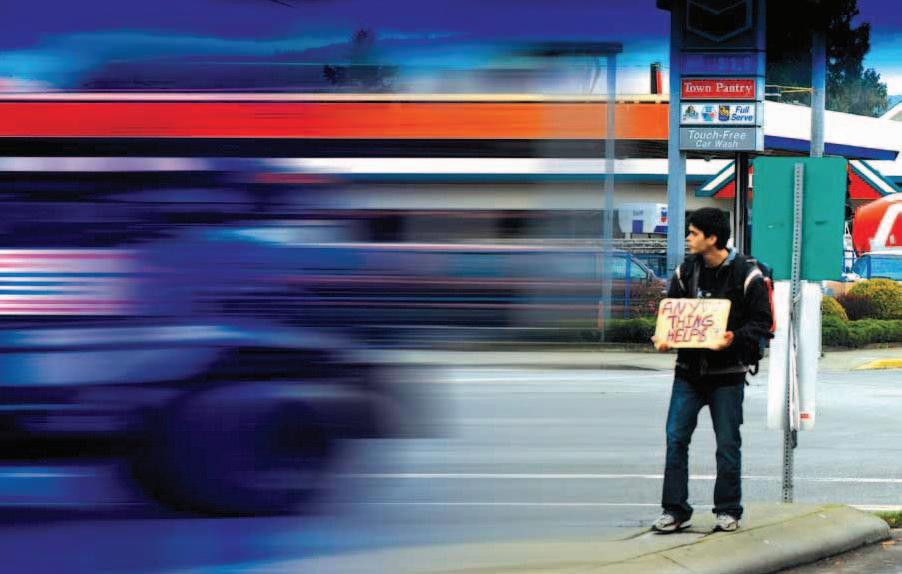
The problems are not just far away.
Amidst significant wealth, more than three million Canadians live in poverty, and one in ten children in Canada struggle to have their basic needs met. In First Nations and Inuit communities, one in four children grows up in poverty.
It is crucial but more difficult to measure spiritual and relational problems that impoverish the soul. Today Christianity is the dominant religion in Canada and the world, which speaks to the spread of the Gospel message. Yet horoscopes remain the spirituality of choice in Canada’s daily newspapers. In countries that boast human freedom and material prosperity, people struggle with addiction to work and wealth accumulation. This is often legitimized as a “normal way of life” in our culture, encouraged by the marketplace and passively endorsed by the church. Yet at the same time, a thriving counselling industry is kept busy addressing stress, addiction, relationship breakdown and loneliness.
Our shrinking world has linked humanity through global economies and information technology, making
cooperation essential for tackling common problems. The human family is also connected by deeper matters of the heart — the need for forgiveness, reconciliation, community, and hope. Evil is found not only in political dictators and suicide bombers, but can also take root in every heart that ignores the call to love our neighbour as ourselves.
God wants everyone to experience fullness of life. His Kingdom desire is that all people be restored and nourished by “food that satisfies” — physically, spiritually and relationally. This fullness or salvation is shalom (wholeness) that emerges from truth, mercy and justice. Jesus showed us what this looks like, both in his words and actions. Flowing out of intimacy with his Father, Jesus modelled God’s love for all life — body and soul, mind and heart, individuals and communities, and all creation. Jesus’ words and actions seamlessly informed and supported one another. The same is true for global disciples. Our words and actions need to come from the deepest source of living water, and then continually reinforce and refine one another.
Being a global disciple begins with important individual decisions. It is a “turning” to a new way of life, becoming a “new creation.” This may involve memorable moments of personal commitment and public
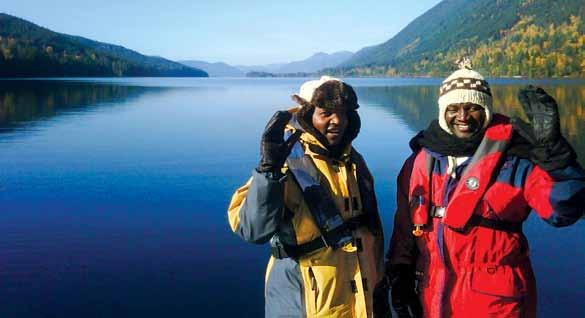
Two Kenyan pastors, Julius and Samuel, visit a church in British Columbia, enhancing God’s work in the lives and ministries of Christian leaders on Vancouver Island.
confession, but it does not stop there. Like the Apostle Peter, we may need repeated experiences of Christ speaking into our lives, jarring us to an ever-deepening commitment to the world. Many need this to overcome satisfaction with mediocrity and the dreary comforts of complacency. Like Jonah’s call to Nineveh or Moses entering Egypt, we may be challenged to go places we do not want to go or engage people or situations that are threatening or inconvenient. Yet God promises to be our companion when we go.
We cannot be global disciples alone. We need people to work alongside us, together being inspired by the Holy Spirit and the rich legacy of those who have followed Christ in history. The story of Christ’s global work through his people began when the Spirit breathed to life the very first church in Jerusalem, making public the message of Christ in a gorgeous symphony of international languages. Soon the first followers of Jesus were shining light in every direction: eating together and offering hospitality to Jews and Gentiles alike, pooling and sharing resources so that those in need would find provision, boldly proclaiming that Christ was Lord, welcoming and baptizing those who were being saved, and taking an uncompromising stand against the corrupt power structures and misguided ideals in their communities.
Before long, the apostles moved out of Jerusalem and followed Christ into the wider world. Leaders like James, Paul, and Peter worked creatively and courageously to help both Jewish
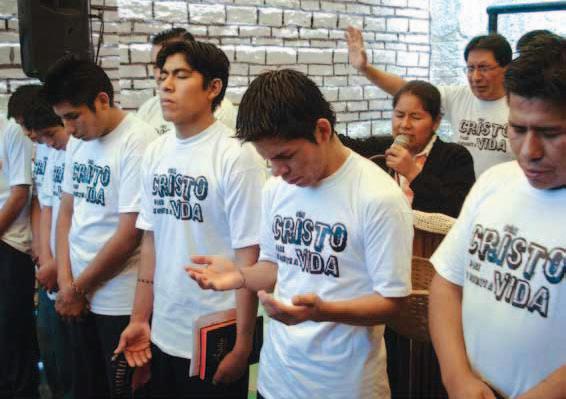
The obedience of global discipleship is energized by the desire to both pray and become an answer to Jesus’ prayer: Your Kingdom come, your will be done on earth as it is in heaven. Pictured: A poignant moment in prayer during a baptism service inside one of Bolivia’s maximum security prisons, one of the fruits of the Casa de la Amistad program that reaches out to inmates and their families, including children who live in prison with their incarcerated parent.
and Gentile Christians adjust their thinking to promote innovative ministry, always respecting the need of the “stranger” in proclaiming the good news of Christ. Their ministry initiatives included helping widows, orphans, and the elderly. They transferred finances across borders to support foreigners ravaged by famine. Extending grace and deepening relationships was more important than power or control, and sustaining a new humanity through the Gospel was more important than institutional success or local superiority. They listened to one another, learned together, and relied deeply on the Lord who was transforming the world.
Global discipleship today still emerges from churches and partnerships that are nourished by God through prayer, worship, and mutual learning. CBM emphasizes the importance of shared support through dialogue, listening from every direction and forging ministries that are sustainable and mutually beneficial. Some of our modern expressions include creative ventures in education, sustainable community development, micro-enterprise and establishing centres for integral mission. Partnering wisely with Christians around the world requires discernment and humility in the use of money, authority, and expertise. Wise and generous leadership is crucial.
Following the call of Jesus into our world — global discipleship — is exciting, but not easy. It is undeniably costly, but if we lose our lives for his sake, we will encounter the living God already working and discover our deepest purpose and joy. Human nature and the ways of the world can lure us off track, so Jesus himself said we need to take up our cross to follow him. Yet by so doing, choosing to die to an old way of life, we will find our true life.
Wherever you are in your journey with Christ, today is a day that you can begin or deepen your global discipleship adventure. Today is the day to hear and respond to the call to follow Jesus.
Rev. John Prociuk worked with the Global Discipleship team at CBM this past year as a consultant. He helped develop CBM’s new global discipleship resource, The Call to Follow: Living the Way of Jesus in the World, which features study tracks for personal, small group and church use. Go to www.thecalltofollow.org to buy and download this resource today.
What Does Living the Way of Jesus in the World Mean to You?
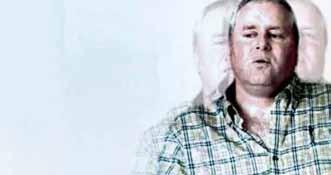
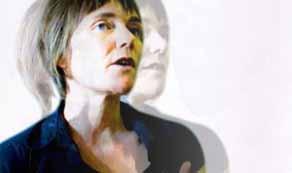
Outtakes from video interviews in The Call to Follow, CBM’s new global discipleship resource.
What are practical signs of the presence of the Kingdom of God?
It’s not about religion, it’s about relationship. If you’re just doing church and into religion, you’re missing it — that is not the Kingdom of God. It is not church, it is not a program. It is about tasting the heart and Spirit of God.
How has your global discipleship experience impacted ministry for you and your church in Canada? We’re so into our things and our lifestyles, and then you go overseas and it just shakes you because you see people who have nothing and are in desperate need, and you just come back thinking, I need to shift my priorities… What’s really important, what are we about as a church? What’s the call of God on our lives? What’s our mission?
Byron Richardson Farmer
What inspires you most about Jesus?
I think Christ turned everything on its head. He said the unexpected, he said the outrageous. He challenged people’s stereotypes, he challenged complacency. I think that’s kind of what the voice of God does. God challenges us to relook at things, to reconsider things, to not be satisfied with the status quo.
How have you encountered God through your global discipleship experience?
We visited an Ethiopian church and a Sudanese church. They were so hospitable. I don’t even know where they could have come up with the resources to feed us, to shower us with food and hospitality. Creativity in the face of adversity is the way of Christ. Finding potential or finding beauty in places where people expect it not to be found.
Sharon Tiessen Artist
What are practical signs of the presence of the Kingdom of God?
From feeding the poor… to being light and salt… to fighting injustice… to being agents of peace and reconciliation, peacemakers, and that’s very much needed in our part of the world.
What inspires you most about Jesus?
His turning around all the standards: in becomes out, out becomes in, the first becomes last, the last becomes first. So what inspires me most about Christ is his love and grace, that can turn someone like me into a co-worker in his field.
How would you describe an authentic follower or disciple of Jesus Christ?
There are probably more than 2000 verses in the Bible that talk about feeding the poor, so that would be very high on my list. How can I be following Christ and Christ has that heart for the poor and I don’t feed the poor?
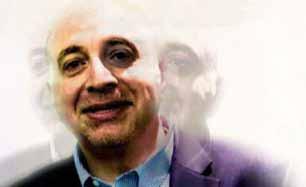
Elie Haddad
CBM Global Field Staff
Just T HINK
What are practical signs of the presence of the Kingdom of God?
Fundamentally it’s about reconciliation — with God, with each other, with the world, with ourselves.
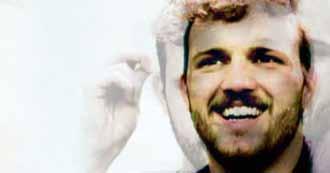
Kevin Makins
Pastor
What inspires you most about Jesus?
Jesus is the most interesting, bizarre, upside-down person who ever walked the earth. What we see in Jesus is this man who is God who refuses to be pinned down, who dances around the questions but gives answers to questions they weren’t asking.
How would you describe an authentic follower or disciple of Jesus Christ?
Jesus says you know a tree by its fruit, and so I would say the only way to identify, as much as we can identify the heart of somebody, [is to] look at the fruit — are they living lives of mercy and compassion and justice and creativity and love? Are they producing the fruit of the Spirit — generosity, self-control, patience, kindness? Are they living lives of goodness?
For more information about The Call to Follow: Living the Way of Jesus in the World visit www.thecalltofollow.org
Global Kids in Action
Young Disciples Take up the Call to Follow
Dear CBM,
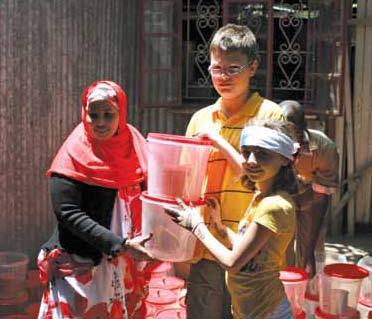
When our senior pastor, Mark Doerksen, planned to go on sabbatical last winter, he and his wife Mary decided to take their children — 13-year-old Micah and 11-year-old Aby — with them to England and Africa to expand their worldview. They travelled for five weeks, spending two weeks in Kenya visiting CBM Global Field Staff Aaron and Erica Kenny and the Eastleigh Community Centre. Micah and Aby spent time with students in the younger classes and the Iftin women’s class.
Beyond the classroom, they delivered water filters to 52 families in the community. In order to provide these water filters, Micah and Aby got their Sunday School and school involved in fundraising. Initially, the goal was for the Sunday School children to donate enough money for three water filters. Micah challenged a group of 20 kids to bring in $75, offering to treat each one to a slurpee out of his own money. The kids were up to the challenge and the following Sunday, $150 was collected — enough for six water filters. At their school, Micah and Aby asked for each of the 220 students to donate $1. But the staff, students and parents really got behind this project and the school raised enough to purchase 46 water filters.
I believe that the kids got excited about the project in part because of Micah and Aby’s wonderful work in promoting it. In presenting the fundraising opportunity to the church and school, they worked hard to put together a presentation about Kenya and the essential need for clean water. After they returned from their trip, they again reported on their experiences with lots of pictures for the kids to enjoy.
We appreciate the efforts of the Doerksen family in reaching out to Somali refugees in Kenya and we hope that our church can maintain a connection to this valuable CBM ministry.
Sincerely,
Virginia Moore Children’s Ministry Coordinator Willowlake Baptist Church
Winnipeg
Aby
Micah
It started as “goat or sheep” instead of “trick or treat.”
I’ve never been very comfortable with the idea of Halloween. So five years ago, we decided to do something radical and find a way to shine God’s light in our neighbourhood. For several years I have explained to trick-or-treaters that we were sending the money we would have spent on candy, pumpkins, and costumes to children in another country who needed it more than they did. It started as “goat or sheep” instead of “trick or treat.” We give out hot chocolate and let the kids (and parents) vote for the most important need. Two years ago clean water won hands down.
This year, Katie, my 13-year-old daughter, took charge of all the planning and chose two needs in Africa: the drought in the Horn of Africa and peacebuilding in Rwanda. I guess I’ve worked myself out of a job, as Katie explained our project to more than a hundred trick-or-treaters and I took my place in the background pouring hot chocolate. The kids signed our poster and “voted.” In the end we had 95 “votes” for drought relief and 36 “votes” for peacebuilding in Rwanda.
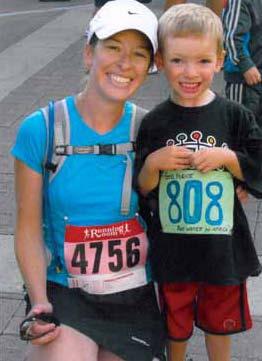
Our grandson Jonah is only 4 ½ but has already developed a heart for the poor. He got out his piggy bank and gave me 13 cents and asked me to take it for the people in Africa the next time I went. He remembered I went to Kenya in 2009 on a CBM short-term mission trip. I told him I would send it to CBM. Before supper that evening, he said grace and prayed that it would rain in Africa. He later joined his mom on a Walk for Africa, completing the whole 5 km, even running some of it. He has raised $1,350.13 for famine relief. Needless to say, we’re very proud of him.
Glenys and Dave Holten
First Baptist Church Calgary
No one seems to mind that we’re not giving them candy (although it felt strange to us at first!) and we get some people who think we’re asking for donations (but we’re not!). Katie and Hannah enjoy visiting with their friends who stop by and don’t miss the trick-or-treating at all.
I guess I’ve learned, if you don’t like something, you DO have the power to make a choice and bring change.
Trina Warren Stellarton, Nova Scotia
Katie
Hannah
Jonah
Who is My Neighbour?
Reaching Out to Canada’s Aboriginal Community
by Lois Mitchell CBM’s Justice initiatives Coordinator
Canada’s relationship with its First nations neighbours is one rooted in cultural ignorance. While we’re all vaguely aware that wrongs of all kinds were committed — treaties broken, children abused, basic human needs neglected, fundamental rights violated, cultures trampled — we are just now slowly beginning to grasp the boomerang effects of injustice.
Our Aboriginal neighbours have cultural memories of exploitation and abuse at the hands of European settlers. For First Nations peoples there are vivid memories in the collective soul, and despite our protestations that we mean no harm and are not personally responsible for the offences of our country’s forefathers, the truth is that we continue to benefit and they continue to be excluded — subtly or not so subtly — from the “good life.”
It’s no secret that conditions on reserves today are often deplorable in things like housing, water and infrastructure, and that Aboriginal Peoples are over-represented in pretty much ALL of the negative social indicators, such as addiction, incarceration, suicide, violence, and abuse. It’s left a trail of lament and marginalization and created a sense of despondency and despair.
But here’s the thing: we cannot undo the exploitation or erase the pain or reprogram the cultural memories. Justice cannot be served. No amount of compensation will make things right. No formal apologies, no matter
how well crafted, will restore what was taken. But we are, with cautious optimism, taking the first real steps toward understanding and perhaps repentance and reconciliation.
There is a way forward if we have the courage to take it. The way forward is through the practice of a genuine, Spirit-led, love-infused, hospitality — the generous, spontaneous sharing of who we are and all that we have. It’s possible with God’s help.
The first critical step is to realize that First Nations peoples are not hapless victims.
Canadian Baptists, from one end of the country to the other, are taking tentative steps toward getting to know their First Nations neighbours, in their space and on their terms. It’s opening up the potential for friendship,
hospitality, trust, forgiveness, encouragement, hope, repentance, love, and a shared future together.
A Nurse in the North
CBM S TRATEGIC A SSOCIATE FAITH
H OLW yN is a nurse who has been working in northern native communities of the Ojibwa people for the past 10 years. Through her work at the nursing station and through going to a community church, Faith has been invited to share her program — called Groups of Hope — in several Ojibwa communities.
Groups of Hope is a biblically based support group program to help people of all ages, ethnicities and personal background come to a place of hope despite their losses. As Faith reflects on these last 10 years among the Ojibwa people, she says, “I realize that we only earn the right to minister and share when we build a relationship of respect with individuals.”
A Translator out East
D IANNE F RIESEN IS A CBM S TRATEGIC
A SSOCIATE who now works in linguistics and Bible translation with the Mi’kmaq people. She affirms the importance of relationship, authenticity and mutual respect. “It seems to me that the Mi’kmaq live in a parallel universe to the other people of Cape Breton,” she says. “We all go to town to shop and eat; we are in the same stores, but our lives never seem to overlap… I have come into the community to learn from them and to work with them. I have found many avenues of life-on-life ministry that go both ways.”
Last October, Dianne attended a national event organized by the Truth
and Reconciliation Commission of Canada, which seeks to bring awareness to the impact of the Indian Residential School system. “Until I came to work among Mi’kmaq people, I had never heard of residential schools,” Dianne says. “But I have now seen their effect.”
The conference gave opportunity for aboriginals, government and church representatives, and other interested people to gather and work towards reconciliation by publically telling the truth about what happened and providing opportunities for people to forgive and find peace.
Before the conference, organizers visited each reservation in Atlantic Canada to collect statements from people who had been to residential schools. “Listening to the stories of people who had gone to residential school was heart-wrenching. In the sharing of their stories, I felt that God was active,” Dianne says.
A Church out West
N EW L IFE C OMM u NIT y B APTIST
CHu RCH , like much of the surrounding area of Duncan, British Columbia, is situated on disputed land — that is, land that is claimed by First Nations peoples. “It’s a painful history and it has produced a painful present, characterized by such things as a high incidence of suicide, alcoholism and drug abuse, teenage pregnancy and incest, domestic violence, and health issues of every kind,” notes Pastor Mark Buchanan.
But Mark sees the possibility of a different future in the making as he and the church respond to the wounds inflicted over the years through the practice of humble and honest hospitality with their neighbours.
He was invited to speak recently at a local event called The Gathering, a conference for First Nations Christians. “It was refreshing to worship the Lord God alongside Cowichan and Cree, Sioux and Lakota, Pennelekut and Squamish, Ojibwa and Carrier, and many more, but to do so in a style that incorporated the dances and drums, the chants and war whoops, the regalia and headdresses, of indigenous people.”
Mark’s vision is for a radical transformation based on an evangelistic movement that is “crosscultural, trans-political, multi-ethnic, intergenerational, class-defying, and wildly bountiful.” It’s a redemptive evangelism that will tell a new and powerful story of healthy relationships between people, between people and God and between people and the land — shalom in the neighbourhood!
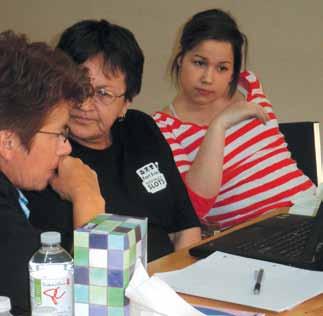
A workshop to train translators from three First Nations groups.
tribes and both bride and groom helped to pay for the wedding!
Lo e
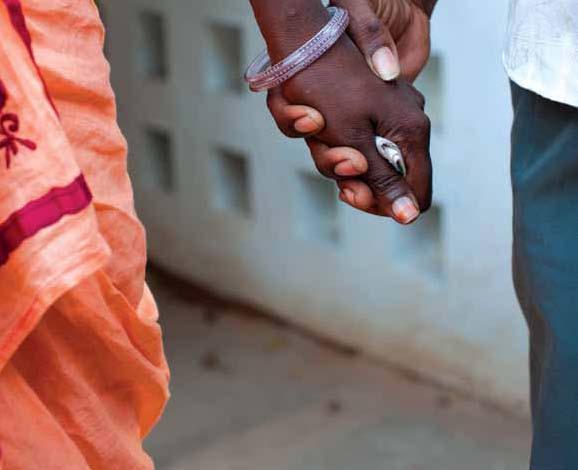
Two young people with HIV overcome despair and stigma to start a new life together. A Guardians of Hope love story from India.
by Laurena Zondo, Editor, mosaic
When her parents died, young Satyavathi went to live with her grandma. But soon she had to drop out of school and work in the fields to take care of her elderly grandma. Satyavathi ended up marrying at a very young age, but tragedy struck yet again when her husband died within six months of marriage. She too became ill and testing revealed that she was HIV positive. She and her grandma were thrown into despair — they had no hope that Satyavathi could ever marry again nor have children — they suffered extreme stigma in the village and were abandoned by friends and family.
In another village, Josepu was suffering the same fate. He lived alone with his mom and had to start work in the fields at a young age to earn a living. He regretted not being able to go to school. But then life became even harsher when he became mysteriously ill. Testing revealed that he was HIV positive. He was shocked and had no idea how he had contracted the disease. He too faced extreme stigma in the village and his mom was despondent — who would ever agree to marry her son with this dreaded disease?
But then God intervened, recalls Josepu’s mom. “I was very worried. I am getting old and who will marry my
son with his problem [HIV status]?
Who will take care of him? Then God provided an opportunity.”
She speaks fondly of the matchmaking efforts of two community health volunteers who work with Guardians of Hope (GOH), a CBM program that provides care and support for AIDSaffected people. These volunteers live in the villages and are trained by GOH (led by CBM Field Staff Jasmine Jonathan) to recognize the symptoms of HIV and AIDS and provide counselling. They encourage people to go for testing and follow up to ensure that they stay on antiretroviral treatment, which improves health and prolongs life.
The volunteers also encouraged Satyavathi and Josepu to attend GOH monthly meetings, where they could talk openly and honestly about their life and the issues they face with other HIV-positive people from around the region. It’s where they met each other.
With the advice and help of the GOH volunteers, who even spoke with the families to arrange the marriage, Satyavathi and Josepu were overjoyed to marry. It was a simple, but powerfully significant event. As well as breaking barriers in life with HIV, the two brave young people broke traditional social barriers — they came from two different
With a loan from GOH, the newlyweds bought a buffalo and started a small milk business. But the best news is the birth of their first child, a healthy baby boy, this past October — a true miracle — as they thought they could never have children until they received counselling in prevention of mother-to-child transmission.
“Though we are both HIV positive, we lead a happy life. God is blessing us with a child,” says Josepu. “Don’t lose your hope in life. Go forward. We encourage you to have hope,” he advises other young people facing stigma.
When Satyavathi went into labour, Mrs. Suseela, one of the GOH volunteers, accompanied her to the nearest government hospital. Learning of her HIV status, the doctor refused to conduct the delivery. Satyavathi ended up giving birth on the way to the next hospital over 50 km away. Mrs. Suseela conducted the delivery in the auto rickshaw. Today both mom and baby are doing well thanks to the care and support of GOH and access to antiretroviral treatment to prevent mother-to-child transmission. Mrs. Suseela was honoured for her role at the December 1st World AIDS Day program held by the GOH team in India.
India is home to one of the world’s largest number of people with HIV. But what’s not clear is whether new infection rates are increasing or it’s simply becoming more known and reported. Stigma remains a big challenge. “We had many problems in the villages because of stigma,” notes Jasmine, “but our awareness campaigns are helping people to understand the severity of the disease and know that there is a drug that can prolong life, and this knowledge, with counselling, gives them hope in life.”
Photo:
El Alto State of Mind: Canadian pastors travel to Bolivia to gain a new perspective on ministry
by Doug Ward Pastor, Kanata Baptist Church in Ontario
In fall 2010, 12 pastors from across Canada travelled to Bolivia to immerse ourselves
in another culture and country, one we knew little about except by book, and to experience what God is doing in a setting very different from our own.
We wanted to confront our cultural assumptions and peel away the layers of self-imposed tradition. We so easily slip into doing ministry the way we always have, in ruts worn deep with well-meaning intentions. We wanted to see with new eyes.
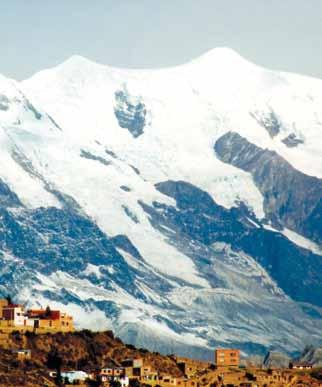
Our time in Bolivia began in Cochabamba, elevation 2,570 m. After acclimatization we soon learned what a lack of oxygen could do to the body. Rising 3,650 m to La Paz and then
It formed for us the perfect metaphor. Like the change in elevation, we experienced some light-headedness and discomfort as our CBM and local hosts took us to visit a drug recovery halfway house, a prison ministry, children’s work in some of the poorest and most needy areas, ministry to the children of women incarcerated in prison, small businesses supported by microcredit and run out of homes, and to a remarkable, fledgling community centre in the exploding city of El Alto.
In the early mornings we gathered on the rooftop of our hotel in La Paz and spoke about God’s work in that place and prayed over the city. At night we gathered to compare notes on what we had seen and experienced,
Sheldon Dyck (First Baptist Church, London) and Rhonda Britton (Cornwallis St. Baptist Church, Halifax) with two leaders from the local Bolivian Baptist Union church.
and listened to each other’s heartbeat for work in Canada — stitching those realities together with what we had learned about the Lord’s work through our Bolivian brothers and sisters. A lot of healing took place in our own lives as we agonized with our new friends, saw firsthand the remarkable acts of God, and dreamed about refreshed ministries.
We left Bolivia with a renewed zeal to rejuvenate our sometimes oxygendeprived faith and to relate to our neighbourhoods through different eyes.
Editor’s Note: Many thanks to a generous donor who provided the opportunity for dozens of pastors to go on short-term mission trips over the past year.
Setting
the
Stage
in the DeS ert
by Tama Ward Balisky
Artistic Director, Sacred Canopy
What do you get when you bring together 30 children, a story from Genesis, and a stage in the desert?
Here’s the story of a peacebuilding initiative in northeast kenya between Bantu Christians and Somali Muslims.
A scrubby thorn tree, a tile-lined fountain and a stage in the desert on the outskirts of Garissa, Kenya: this was to be the setting for a public telling of the biblical story of Hagar and Ishmael, a desperate woman and her son, whose lives were spared in the wilderness with the appearance of a miraculous spring of water.
It is a story of God’s care and provision, one that had been on my mother’s (former CBM missionary Joan Ward) heart for many years as she worked among the Somali people in North Eastern Province and witnessed the suffering of war and famine.
It is also a story shared in common by Muslims and Christians. When my mother asked if Sacred Canopy — a theatre-arts initiative based out of Grandview Calvary Baptist Church in Vancouver that has worked with children and youth in staging biblical narratives for the last 14 years — would consider partnering with the Bula Hagar Medical Clinic to tell this story, it struck me as a Spirit-led way to build understanding and trust between two communities that live with a suspicious and tenuous peace at best.
We arrived in northeast Kenya in July 2011. Though I had spent most of my holidays here in my teenage years, I now hardly recognized the town. Not only had Garissa grown from a frontier outpost into a sprawling urban metropolis, more notably it had adopted what to my experience was a very aggressive and fundamentalist form of Islam. One local contact explained that the change was due to the recent influx of religious leadership and money from the Middle East as well as to the recruiting presence of the militant group Al-Shabaab currently controlling much of neighbouring Somalia.
Whatever the cause, the effect of this politicized religious climate on our project was that our Muslim contacts were cautious about being involved in a public event that required collaborating with Christians. These same individuals were, however, more than willing to serve as consultants. Through the days of preparation leading up to the presentation, they offered cultural artifacts and insight on script translations. We elicited traditional Somali songs from camel herdsmen and elderly village women.
But our storytelling dream might have run aground were it not for a remarkable group of 35 children, youth and adults from a church in a neighbouring town. Under the leadership of their pastor, these Bantu Christians embraced the opportunity to dramatize the story of Hagar and Ishmael, even to the point of adopting Muslim dress and learning Somali and Muslim traditional songs and dances.
It was beautiful to witness and participate in this give-and-take, including all the awkwardness and laughter, between three people groups (Somali, Bantu and Canadian) whose lives are otherwise separated by religious, cultural and ethnic divides.
The one thing bringing us all together, besides our humanity, was this age-old story about a discarded woman and her thirst-quenched son.
Then came our hour of trial...and necessary humbling! On the night before our first big outdoor rehearsal, some villagers who were not aware of
Most importantly we made a point of inviting the very community and religious leaders whom we had inadvertently offended. One of the Muslim chiefs who took us up on our offer to attend was so moved by the presentation and the vision of peacebuilding behind it that he
The one thing bringing us all together, besides our humanity, was this age-old story about a discarded woman and her thirst-quenched son.
the project’s goals walked by the church and were alarmed to see Christians dressed in Muslim garb. They spread a rumour through the community that Christians were preparing for jihad (holy war) by making fun of Muslim dress and culture.
The furor they caused was enough that the next morning, in consultation with the village chiefs and religious leaders, and in the interests of the safety of all involved, we made the difficult decision to cancel the longenvisioned public storytelling at Bula Hagar Clinic. Instead, we adapted the presentation to take place the next day inside the secured precincts of a smaller walled compound where the invitations could be guest specific.
has invited us to consider a future storytelling project, this time to take place in his community.
And so, as is often the case on the journey of faith, the lesser road proved in the end to be the road down which God would have us travel. For while our storytelling had a smaller public impact than what we had envisioned, it was ultimately more grounded in growing relationships of trust.
Now back in Vancouver, as media stories depict growing animosity between Christians and Muslims around the world, we are more compelled than ever to believe that our small initiative in peacebuilding through the telling of shared stories may have a part to play in the reconciliation between peoples for which Jesus gave his life.
Sacred Canopy hopes to hold a similar storytelling event, called Hagar in Common, in collaboration with the Muslim community in Vancouver next year.
For more peacebuilding initiatives you can support, go to www.cbmin.org
Tama with storytellers. connecting…
Shelley Neal, a member of Kingsway Baptist Church in Toronto, shares about her family’s short-term mission experience in Rwanda.
Why did you decide to go on a short-term mission (STM) trip?
My 18-year-old son, Thomas, travelled with CBOQ (Canadian Baptists of Ontario and Quebec) youth to the Dominican Republic to support rural areas with education and building projects. He came back excited… and with a different and deeper sense of God… I was beginning to long for the chance to try this, visit a new place and a new people, and gain a new understanding of God in our world… In September 2010, Kingsway Baptist Church signed on as a STE P ( Serving, Training, Energizing Partnerships) church in Rwanda. The call went out to the congregation to consider be comi ng a pa rt of the fi rst ST M t rip... Several years earlier, I had the great honour to be in a Bible study group with a beautiful young w oman who experienced the genocide in Rwanda. She kept promising that one day she would take me “home.” We lost contact...then came the call to go to Rwanda...my family and I ventured out with 11 other individuals from our church.
What did you find challenging/ stretching about the experience?
The day we visited the genocide museum... Quietly and mournfully we passed by the pictures, clothes, bones and videos of the terror. It hurt your soul and boggled your mind. I reflected on the power of the human soul to live through such evil. But it was the last room on the tour, the room of the children murdered during the genocide... How do you respond? Now imagine that yo u have take n your 16-year-old daughter on this journey with you. How do you help her to deal with all she has just seen? We left the museum in unimaginable sadness, unable to speak. In the afternoon, we visited Children of Hope, a project that focuses on children orphaned due to a variety of circumstances such as AIDS and the genocide. The doors
of our bus opened and children ran from all directions, singing, dancing and waving. These little ones led us to the first home… a family of five children who had worked hard for a better life. They had started in a small 4’x4’ house with absolutely nothing and moved into this three-room hut with a partial roof. It was beautiful as the eldest showed us around her home with pride... The children gathered in the largest room to sing and pray with us. It was such a wonderful contrast to the morning.
At dinner that evening, Kathleen Soucy, CBM Global Field Staff in Rwanda, came alongside my daughter Katie, who asked her in tears, “Where is God in all this?” Kathleen’s response, “In you!” opened up a sensitive discussion that deeply impacted Katie...it empowered her to see how God could work in her life to take the message about Rwanda back to her world and make a change. Back home, Katie works with a determination to spread the message
about Children of Hope...and to use the abundance of resources available to her to the best of her ability.
What was it like worshipping in a different cultural context? Did this deepen/broaden your faith?
What struck our entire family was how the Rwandans we met fully relied on God. Prayer began and ended every occasion and situation. We prayed for safe travel, we prayed over students, we prayed over relationships, we prayed over lesson plans, we prayed over building sites, we prayed over coffee beans, we prayed for each other and we prayed for our children… As we prayed together, we felt the power and joy of prayer.
Why did your family decide to become monthly donors to CBM?
We wanted to follow up with the promise that we made to those children that we would STEP alongside and support their learning as they develop the skills to sustain their own life and help each other. We promised to tell the people in our world of the wonderful progress that they have made. I have great hope in their ability to make life better for themselves and their brothers and sisters. I have a lot to learn from their determination and reliance on God to provide.
CBM’s STEP program is a global discipleship program that allows churches in Canada the opportunity to develop deeper relationships with churches in another country. For more about STEP, visit www.cbmin.org
Katie visits with Children of Hope in Rwanda.
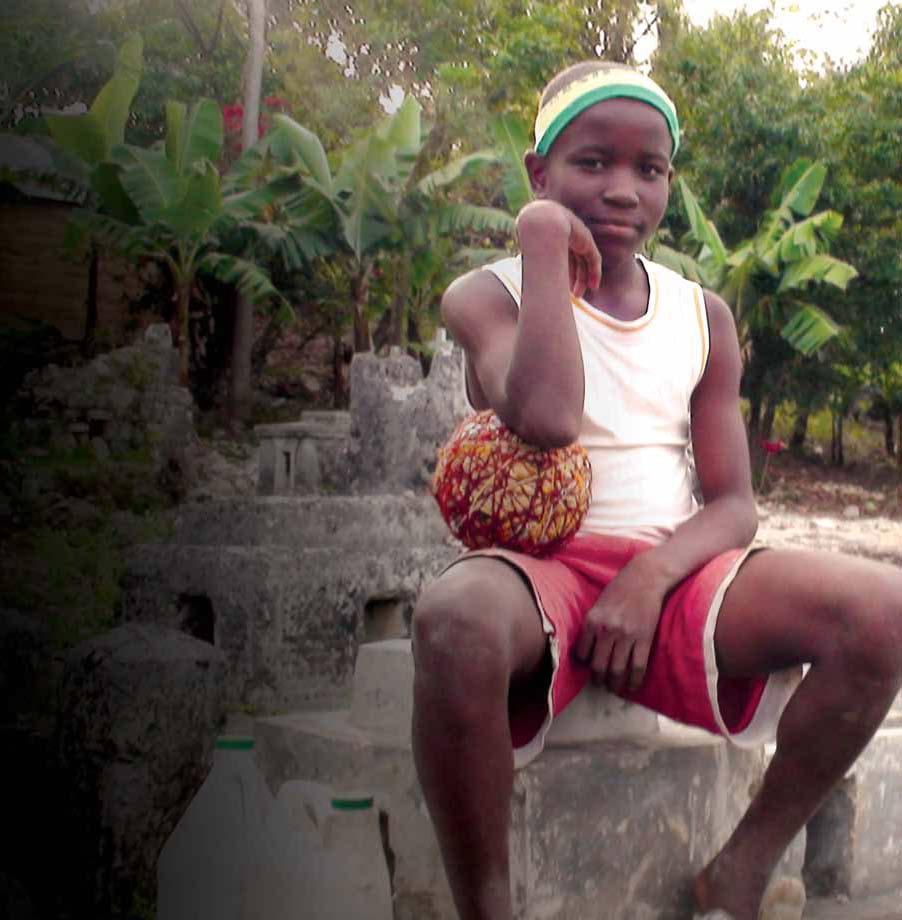
Who: Village football star
Where: Rural Grand Goave, Haiti
What: A visit with one of the communities assisted by CBM’s earthquake relief effort
Two years after the devastating earthquake that left much of Haiti’s infrastructure in ruins, CBM continues to help local partners rebuild. In this part of the country, CBM supports medical work through a small clinic. The health needs are big, and mostly water-related, as the village water tank was damaged in the earthquake.
Housing is another priority. CBM will be helping the community build 1,000 rubble houses using a cost-effective, innovative design — walls made of mesh wire cages are packed with rubble from the earthquake, producing a home that is better able to withstand strong earthquakes (up to 8.9 on the Richter scale) and cleans up the streets of rock and debris at the same time.
Teams from CBM will be going to Haiti throughout 2012 and 2013. Contact CBM’s Short-term Mission Department for more info at 905.821.3533.
your gifts in action
AS A PArTNE r IN M ISSI oN with CBM Global Field Staff Jeff and Deann Carter (based in Czech Republic), you have had an impact on youth ministry across Europe, the Middle East and even Canada! Jeff serves as the youth Ministry Training Coordinator for the European Baptist Federation (EBF), which has a presence in 51 countries. Jeff is also a faculty lecturer at International Baptist Theological Seminary, where he has created youth leadership courses for the Masters and Certificate programs. Jeff was responsible for creating the online training resource HORIZONS, which provides a full course in international youth leadership for volunteer youth workers. The program is currently available in five languages (with three more in development) and offered in 26 countries.
Solidarity Sunday
This Mother’s Day, May 13, 2012, join Canadian Baptists across the country as we stand in solidarity with women in India, who are often perceived to have less value than men. They face significant challenges — insufficient food and medical care, lack of education and training, high maternal mortality rates — and yet play a crucial role in community development.
Help encourage, empower and bring dignity to women in India. Mark the date today and/or order your free solidarity ribbons early.
For more information, email communications@cbmin.org
CBM Global Field Staff Jeff Carter with students from across Europe, the Middle East and Canada at the annual EBF Leadership Conference. It is one of the most significant training events that CBM does on an international level with the 51 countries of the EBF and Canada, through the partnership of Acadia Divinity College (Nova Scotia) and the EBF. After the conference, students have the opportunity to do short ministry visits to the countries where their European counterparts are involved in ministry.
Email communications@cbmin.org for more information.