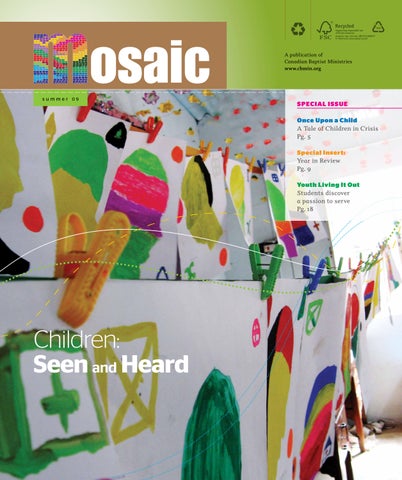
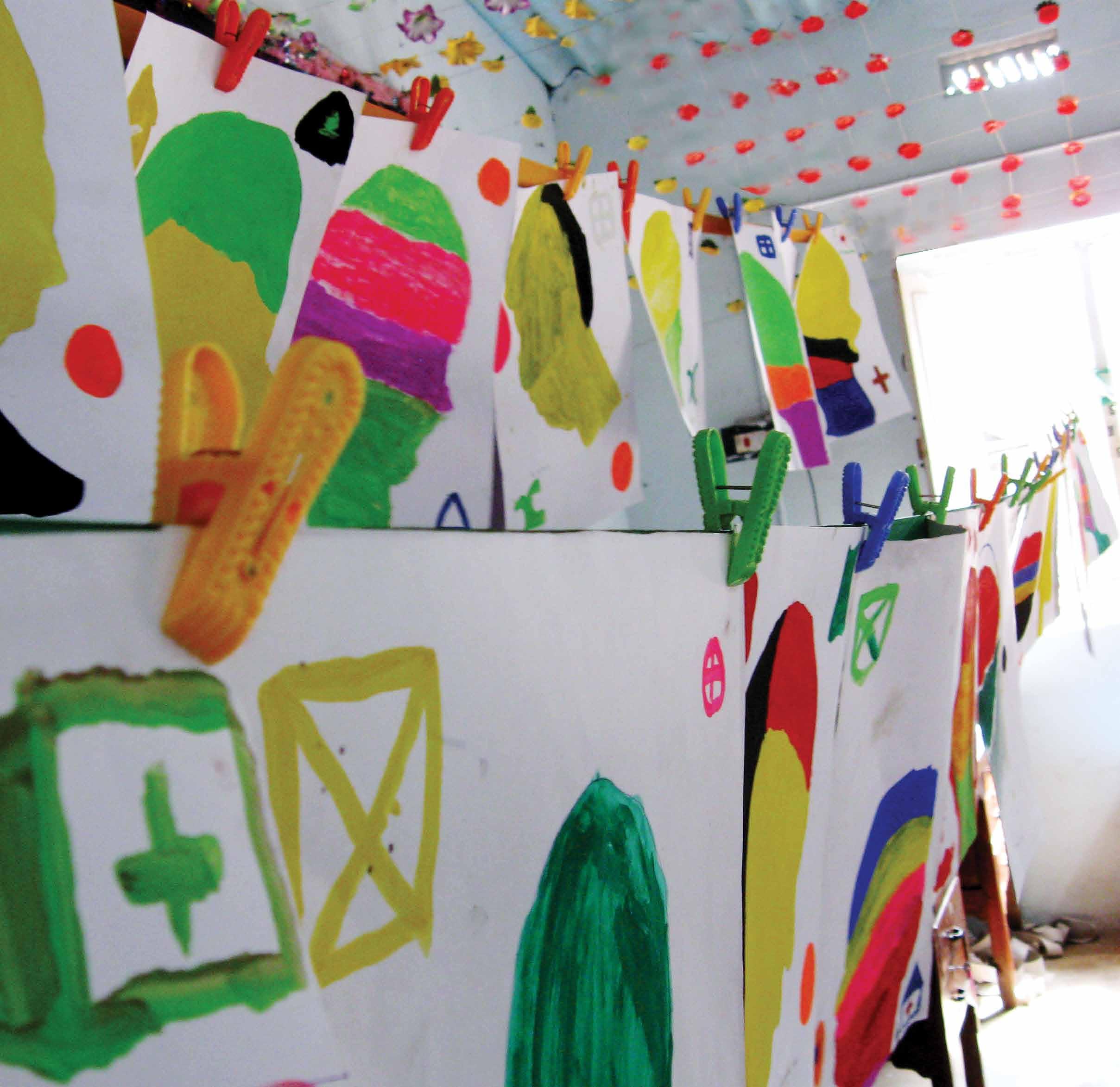
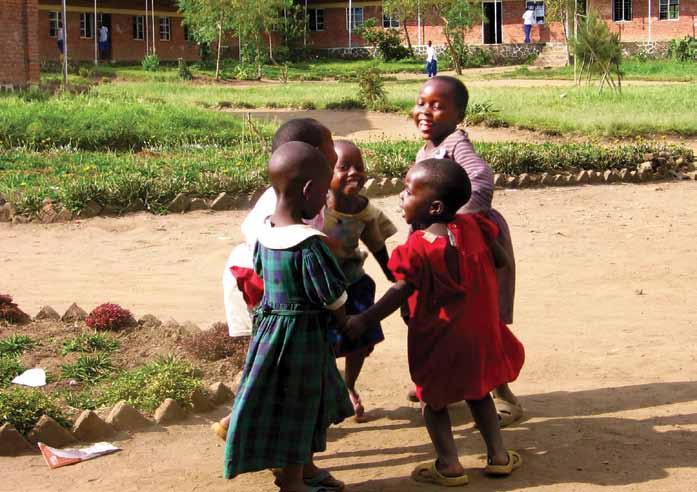
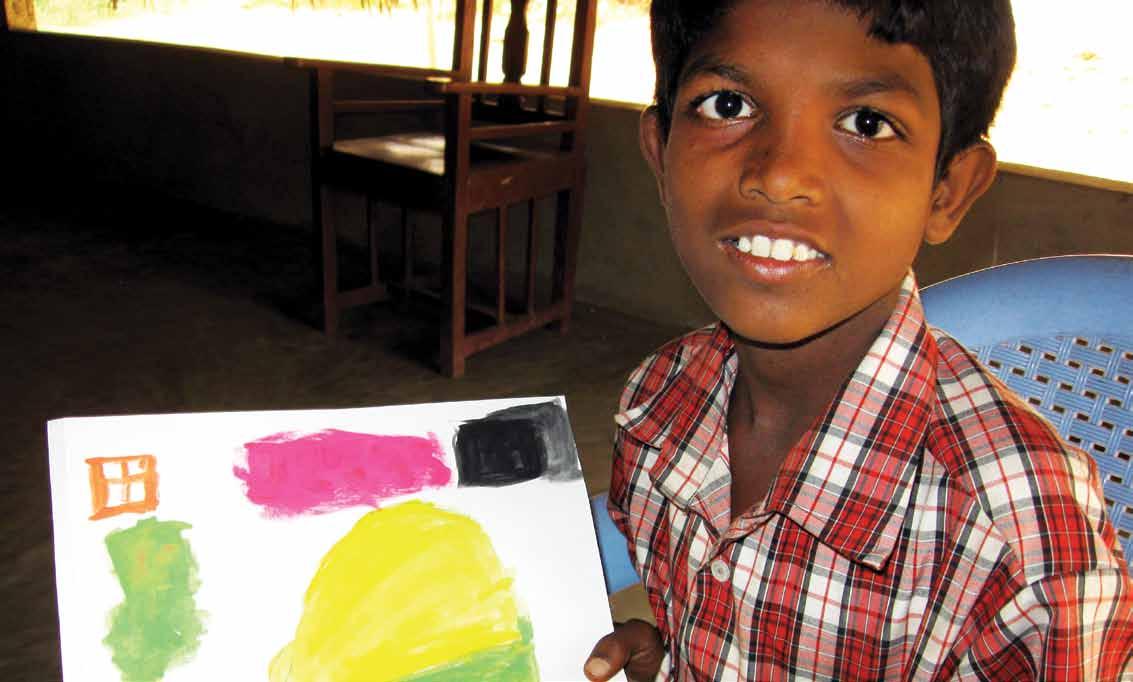
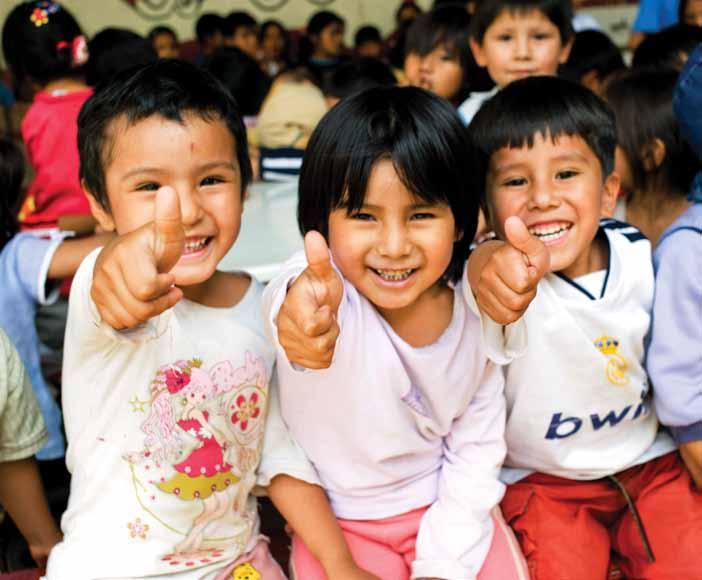
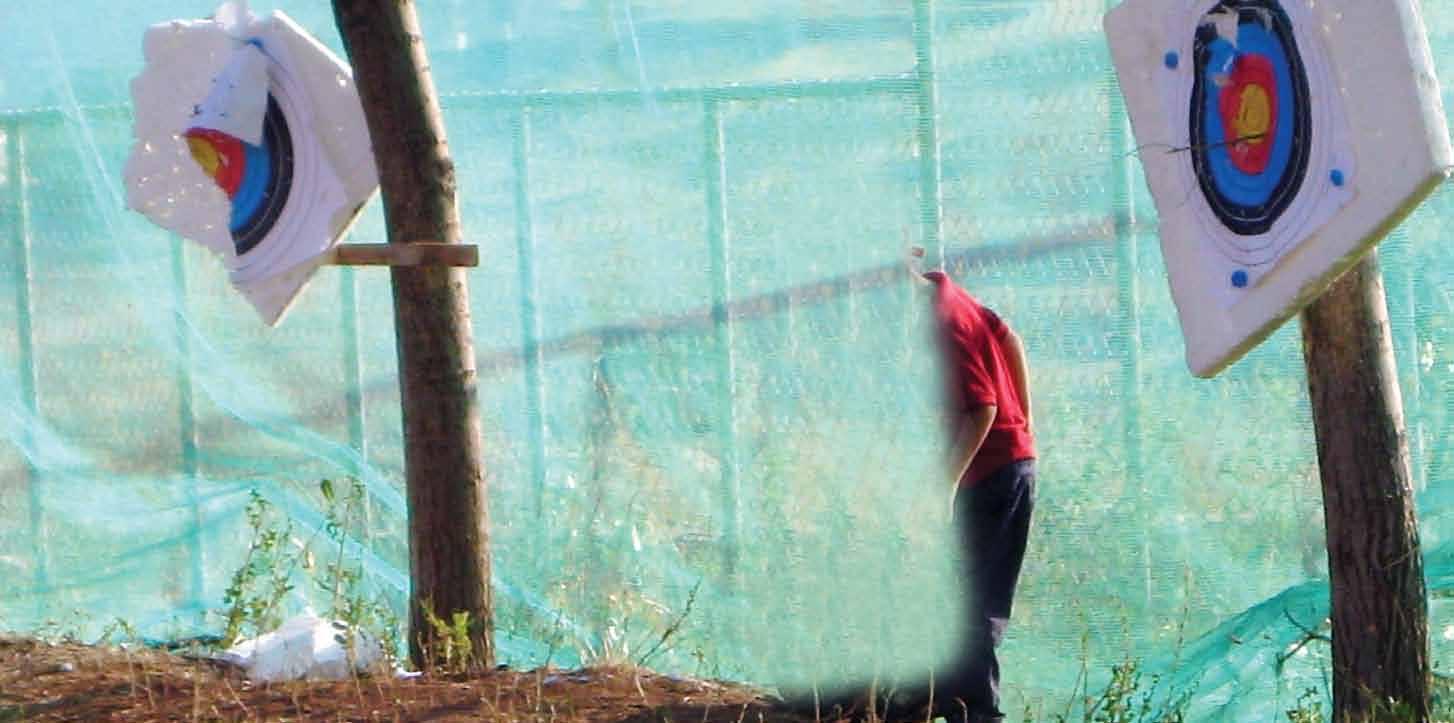
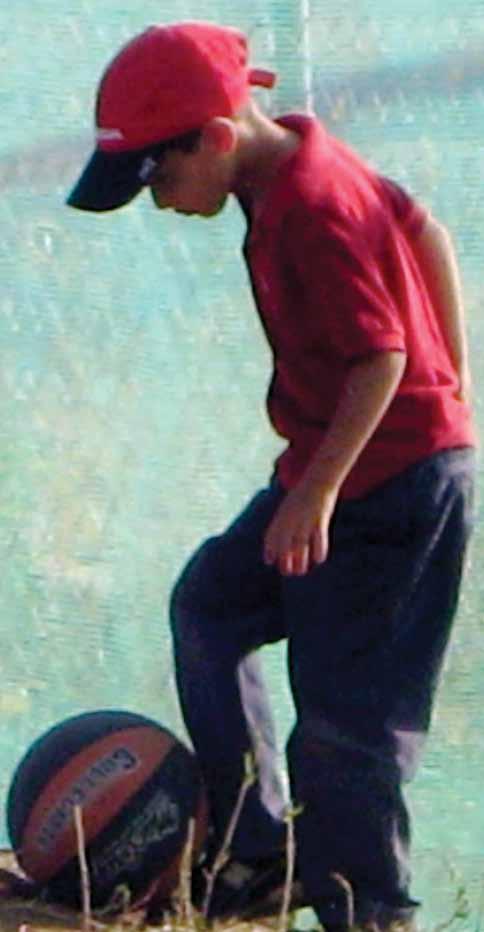
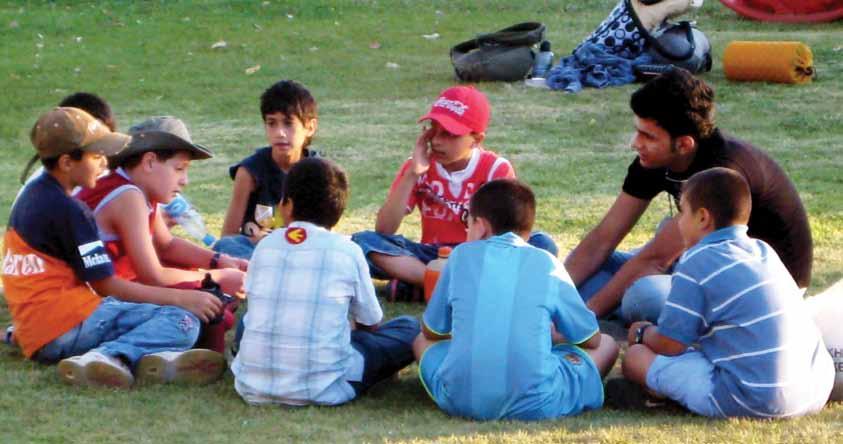
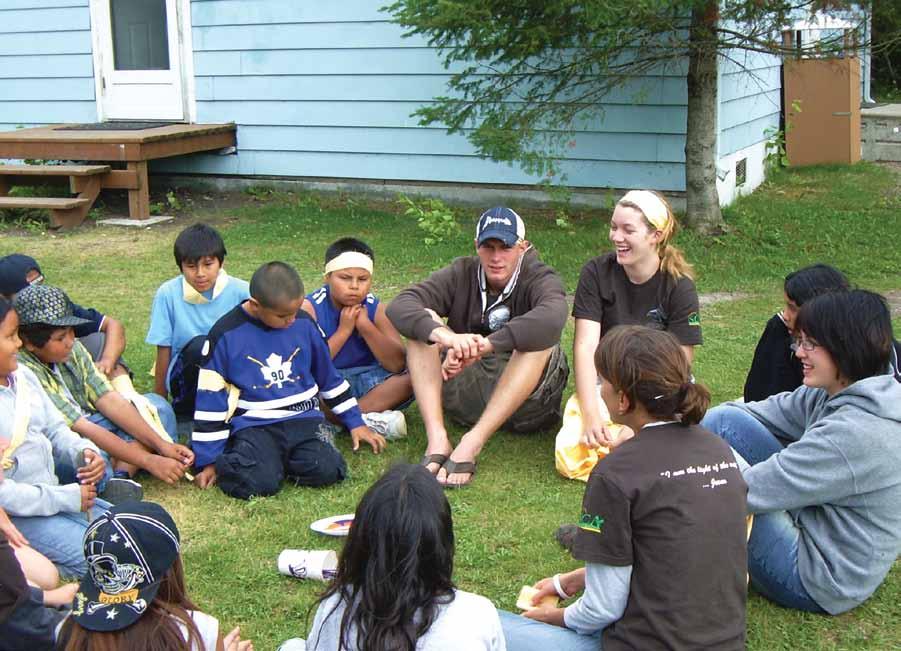
On the cover Former child labourers in India express their hopes, dreams and challenges through art. It was part of a special series of activities conducted by Laura Ward and Laurena Zondo at the Child Labour Rehabilitation School this past spring. The event culminated in an afternoon dedicated to play.
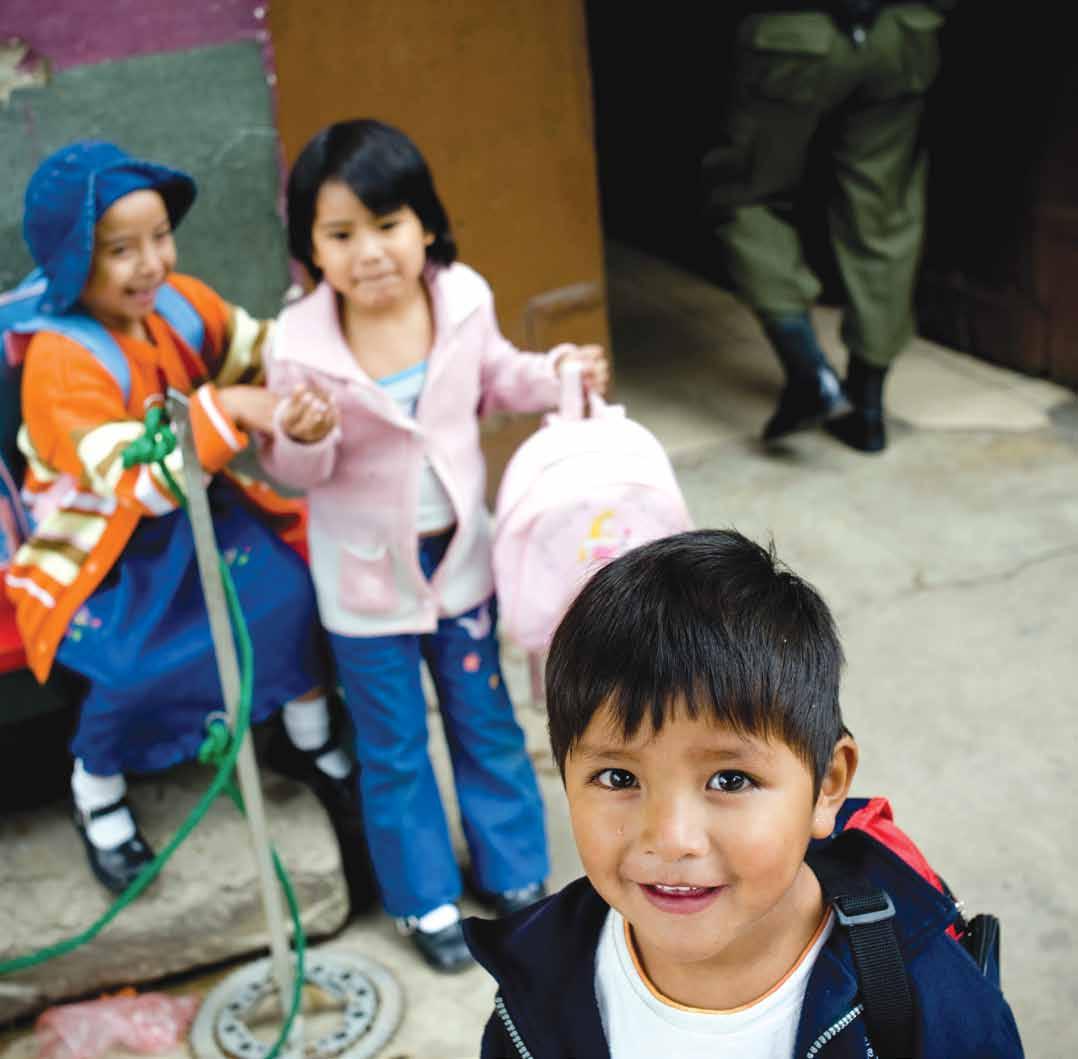
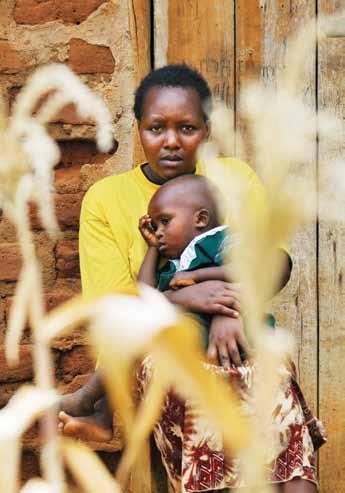
See our feature this issue, page 5, for more about CBM’s Children of Hope program in Bolivia, India and Rwanda.
We sometimes get asked why mosaic features so many photos of children. No, it’s not because the editors happen to like children (although we do).
The unfortunate reality is that children are the most vulnerable group in the world – and yet they are also among the most hopeful and resilient.
As you read this issue, you will be introduced to amazing children and youth who are struggling to overcome hardship and challenging circumstances. These are not stories about victims – they are inspiring tales about human dignity and incredible faith amidst life’s most painful circumstances. They offer us a picture of the church at work today. Children and youth lead the way.
Join us in celebrating the lives of children and youth everywhere. We are thankful to know them. We hope you are too. May they inspire each one of us to also be hopeful – even daring – as we get out there and make some changes today.
Purpose of mosaic
mosaic is a community forum of local and global voices united by a shared mission. mosaic will serve as a catalyst to stimulate and encourage passionate discipleship among Canadian Baptists and their partners.
5 c ontents
Page 3 g-files
“It was the best of times and it was the worst of times”
feature Page 5
Once Upon a Child A Tale of Children in Crisis
special insert Page 9
Year in Review
Page 16 Communities in Crisis
Page 13 The View ethically speaking Page 14 Childhood vs. Livelihood
Page 18 Youth Living It Out
Page 20 Grassroots Heroes
www.cbmin.org
Managing Editor: Jennifer Lau
Editor: Laurena Zondo
Associate Editor: Giselle Culver Contact us at:
Mission of Canadian Baptist Ministries Encouraging passionate discipleship for local and global mission.
1 g-files
It was the best of times and it was the worst of times
would be a good byline for an annual report from CBM reflecting on 2008. We have much to be thankful for over the last year. Even amidst the surprises of economic meltdowns and regional conflict we still have much to be thankful for. For instance, we have witnessed an unprecedented expansion of CBM’s mission and ministry over the last 5 years. 2008 was no different.
by Rev. Dr. Gary Nelson General Secretary of CBM
Here are just some highlights
• Improved response during crisis situations. Due to the quick reaction of our partners in Kenya during the election crisis at the beginning of the year, we were able to provide funding and relief to many who were ripped from their homes and placed in refugee camps. We also responded quickly to help victims of the massive earthquake in Sichuan, China and have committed to supporting local churches through the rebuilding and rehabilitation process.
• The unfolding of exciting opportunities through our partnership in Lebanon. A program that is primarily focused around leadership development through the ministry of the Arab Baptist Theological Seminary (ABTS) in Beirut is multiplied in the church planting that students do as part of leadership formation training. Over 13 Arab countries are impacted by ABTS and CBM. Through ABTS we also participate in inter-faith dialogue and peace-building throughout the Arab world.
• The amazing church planting and evangelism taking place in other countries. Sometimes it feels like we are just on for the ride as God moves in El Alto, Bolivia. There have been over 34 churches started in the last years in what has become the fastest growing city of Bolivia, a reflection of the increasing urbanization of the global population.
• The development of a Diploma in Integral Mission (DIM) Program. Designed by Rupen Das, Deputy Director of The Sharing Way, this program is recognized and credited through Carey Theological College.
tIt trains Global Field Staff and development workers in program design and management as they work with local churches to build their capacity when addressing community needs. The DIM Program began in Africa last year and will be moving on to the Middle East this fall. Other development organizations have already asked to join the program.
• Taking our responsibility of global discipleship seriously. The Live It Out Challenge is an amazing call for Canadian Baptists to live simply, justly and faithfully as followers of Jesus Christ. The Live It Out Challenge is not just a good idea, it is a call to take Jesus at his word when he encourages us to find life by losing it. Living simply, justly, and faithfully are life-giving principles that form in us a deeper and more faithful walk with God.
• Two new food aid/food security programs in Africa in cooperation with the Canadian Foodgrains Bank. Projects worth well over a million dollars that will not just address relief issues when food is scarce but also will begin to build on local expertise around creating agricultural methods that are sustainable even in drought conditions.
• Effective youth ministry training ministry. Field Staff Jeff Carter and Vasil Vasilev have developed a strategic model that is amazing to see expanding. Some people ask me if we are still doing mission in Europe–I say in more countries than ever before – 52 of them to be exact!
These are just a few ways in which the last year was one of the best times. However, 2008 will also be known for the economic crisis that gripped the world. It had impact on us as well. While we had an unprecedented year in giving, many donors expressed concerns about their ability to give in the next year. Partners around the world experienced unexpected cuts from other organizations and as a result came to us to request more. CBM has a policy that the most vulnerable are the focus and so we have kept our commitments.
We thank you for your support and please know that it is more needed in 2009 than ever before. We believe that God has a future for us and that the opportunities that are being laid before us must be seized. These are just a few themes emerging…
A continued emphasis on the local church and Integral Mission
CBM is committed to the ministry of the local church as the centre of God’s mission activity. Our movement toward an integral approach to ministry measures effectiveness by whether or not the witness of the local church (both in Canada and globally) is strengthened through word and deed by what we do. Recently one of our international partners was asked to start a church in an area where they had been offering relief during drought conditions. The invitation came from people who had witnessed how much they were loved and cared for through this compassionate servanthood.
Navigating uncharted territories
You should expect CBM to continue to navigate more uncharted territories. For 135 years we have cut new ground, moved outside the box, and you should expect no less from us now. Nowhere is that more apparent than in the STEP (Serving, Training and Energizing Partnerships) program. This innovative program places the church in a partnership with CBM in its mission to the world. Together with our partner, we share a ministry not simply financially but in ministry activity as well. The impact on the STEP churches has been amazing. It also enables them
to be a part of a “best practices” conversation about what makes good mission.
Global Discipleship at home
The future for CBM will be found in our ability to call people to deeper life in Christ. CBM is not a parachurch organization – we were birthed from the local church and we continue to be connected to a network of Canadian Baptist churches. As part of this network, we do not simply deliver programs around the globe. Uniquely woven into our identity as a denominational mission organization, we also have a responsibility for discipleship formation in Canada, a mandate which we take very seriously.
While it may have been the best and worst of times, this is the time in which God has placed us for mission and ministry.
Thank you for your partnership, your prayer and financial support. Together we are stronger and together we can paddle the white water of these times as we excitedly anticipate what God is going to do.
Once Upon a Child
A Tale of Children in Crisis
by Laura Ward Strategic Program Officer of The Sharing Way & Laurena Zondo Editor of mosaic
Nine-year-old Jean hides in the bushes near his house. He’s paralyzed with fear. Banana leaves cover most, but not all, of the ugly scene that is unfolding. He tries to shut out the screams. He glimpses a flash of his mother’s brightly coloured dress. She’s sprawled out on the ground. Finally, mercifully, she dies.
He dies too, in a way.
Fifteen years after the Rwandan genocide during which over 1 million people were killed, it’s still too painful to think about. His younger sisters occasionally wake up crying uncontrollably. One refuses to leave her school dorm. She stays in bed, immobile. He doesn’t know what to do with her. He’s scared, but has no one to go to for advice. There are many lingering questions. They have no idea what happened to the rest of the family.
But life goes on. Left to fend for themselves, they somehow survive. They band together and look to each other for support. A few years later, a young girl moves in with them. While she and her mom survived the genocide, her mom still died because of it raped and deliberately infected with HIV.
Jean’s story is a composite of many stories. There are many Jeans.
Today an alarming number (nearly 20 percent) of all of Rwanda’s children are orphans. Large numbers of them live on their own. According to UNICEF, there are over 100,000 child-headed households in Rwanda.
Post-traumatic stress is just one part of the emotional crises children and youth face today. There’s also exploitation and abuse. Other kinds of violence are also at play. Preventable and treatable diseases like malaria and HIV and AIDS are creating more orphans and further weakening the fragile social fabric.
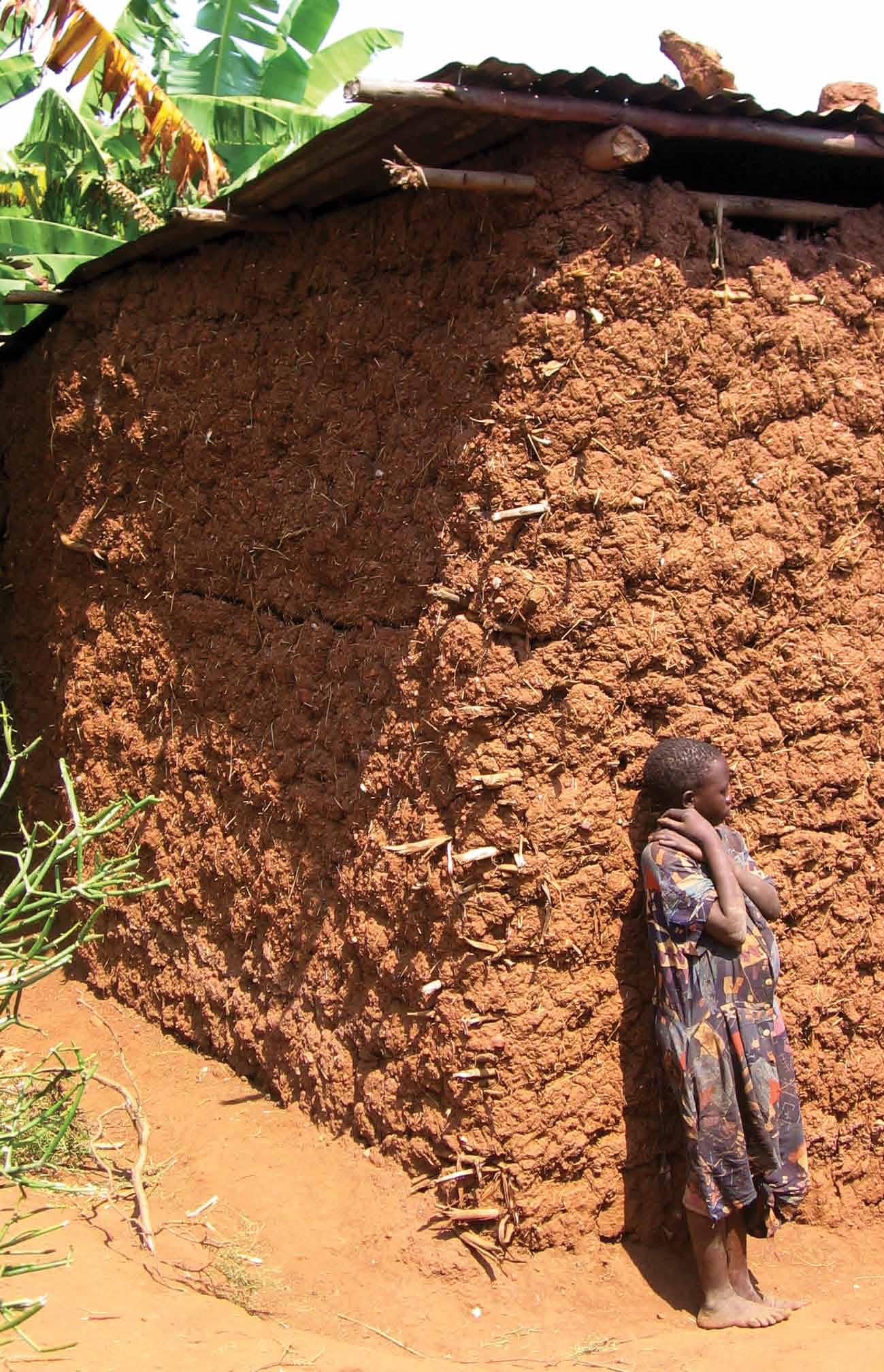
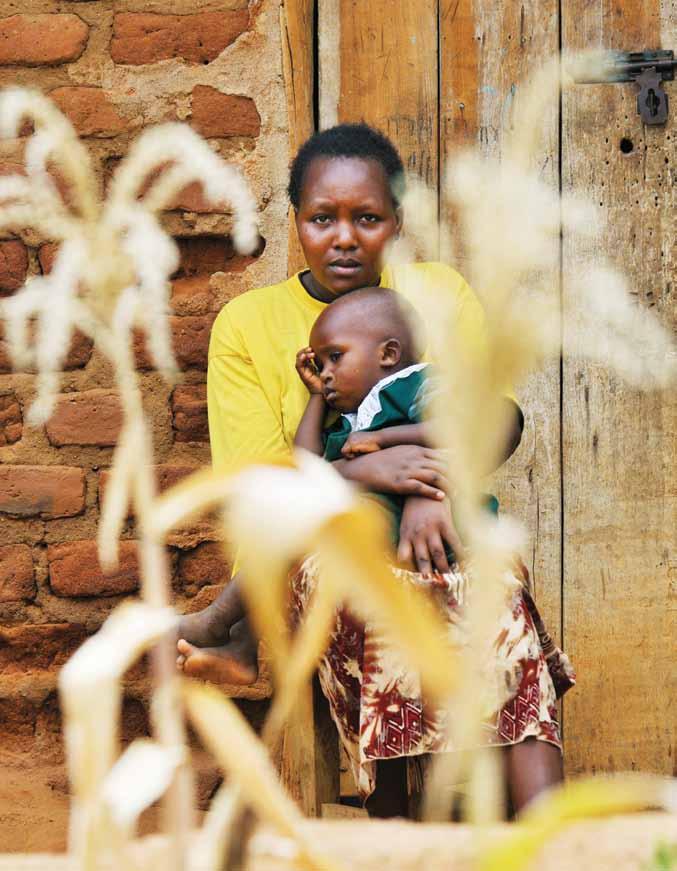
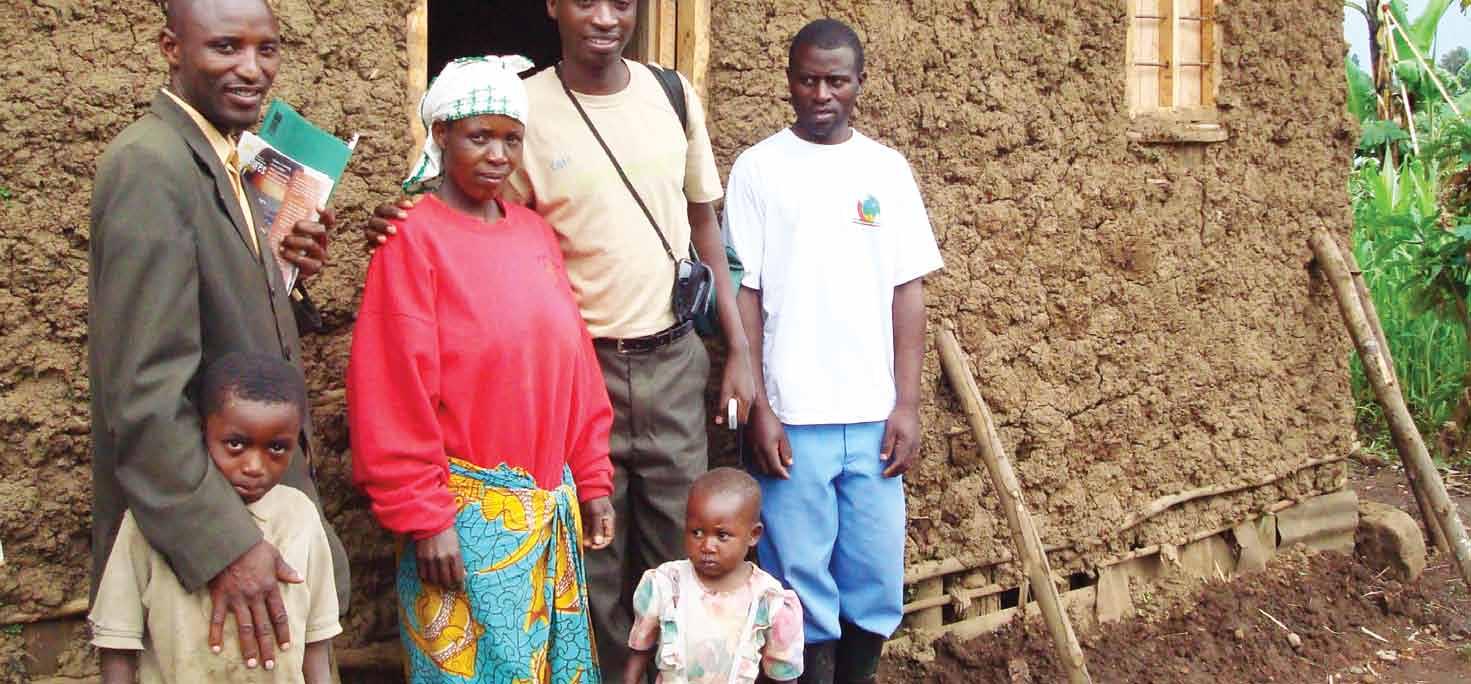
Poverty continues to wreak havoc. Older children skip meals so younger siblings can eat. They farm small, insufficient plots of land and are unable to grow enough to provide for the family. They can’t afford the rising cost of food basics, such as flour, rice, beans and cooking oil. They live in leaky, mud huts and lack access to simple medical care. Education is out of their reach as they struggle to earn their daily bread.
In the midst of desperate, crisis situations, an amazingly resilient group of children have come to be known as Children of Hope.
Working with partners in Rwanda, India and Bolivia, The Sharing Way, CBM’s relief and development department, has developed Children of Hope projects to address the psychosocial and socioeconomic vulnerabilities of children living in crisis, as well as to build on their strengths.
It’s an integral approach that strives to involve children in all aspects of programming, from initial research and design to implementation, monitoring and evaluation. Children and youth have opportunities and resources to act and advocate on their own behalf for their own interests. Their ideas and views are valued, respected and
incorporated. A variety of creative methods are used to facilitate their involvement. These range from problem solving diagrams, focus group discussions, mapping and activity profiles, to the use of song, games, art and drama.
as sewing and mechanics, for the 300 children who had to give up their studies to provide for their brothers and sisters. With this training, they can now start their own businesses to better support their families.
Mentorship and spiritual nurture are key components in programming. In Rwanda, a pilot project was started in 2007 among 188 child/youth-headed households in three regions. Besides training youth to be peer mentors, adults in the community were identified and trained to help provide social support, care and encouragement. These volunteers work without pay and are often struggling themselves to take care of their families. Yet they feel a burden for the children and take the time to visit. Some have even adopted children into their own family.
Children have started to call their mentors “mum and dad”. The mentors have been trained to be effective advocates for the children; to recognize and report the specific needs and successes of the households; to stand up for injustice; and to give voice to the children and youth, to empower them and help them reach their God-given potential.
The program also helps to pay school fees so that children can continue their studies and provides literacy classes and skills training, such
Delphine*, who at 16 has been taking care of her two brothers since the aunt they were living with died, is thankful for the sewing training. She graduated this past February. “Men used to always say ‘come’, and try to take advantage of me. Now I can tell the men ‘you come, I’ll sew you a shirt!’” (*not her real name)
She is happy, confident about her future, and plans to start a business with the other girls and boys in the youth association that has formed out of this project.
Rwanda is not alone in the struggle. Amongst India’s booming economy, large numbers of people are left behind. Most belong to the lowest classes in a rigid class structure that still largely dictates one’s position and future. India is home to one of the world’s highest number of malnourished children.
Children of Hope in Bolivia helps children who live in prison with an incarcerated parent.
Children of Hope in Rwanda helps children living in a child/youth-headed household.
Farmers can’t earn enough to feed their families – their land is not fertile, or if they are born into the “landless classes,” they labour in others’ fields, often in unjust conditions.
Children are forced to work even though child labour has officially been outlawed in India. Poverty feeds on the soul, creating despair and desperation. Some fall into alcoholism. Many sink deeper and deeper into debt, trapped by exorbitant interest rates.
In India, a group of Christian community development workers
the community where their school is located. They have begun planning the next phase of programming. Education remains at the top of the needs list, especially in the tutoring and mentoring of students, so they may fully integrate into government schools and successfully complete their studies. Older youth and parents also remain in great need and would like to access credit and skills training to reduce family debt and adequately provide food and shelter.
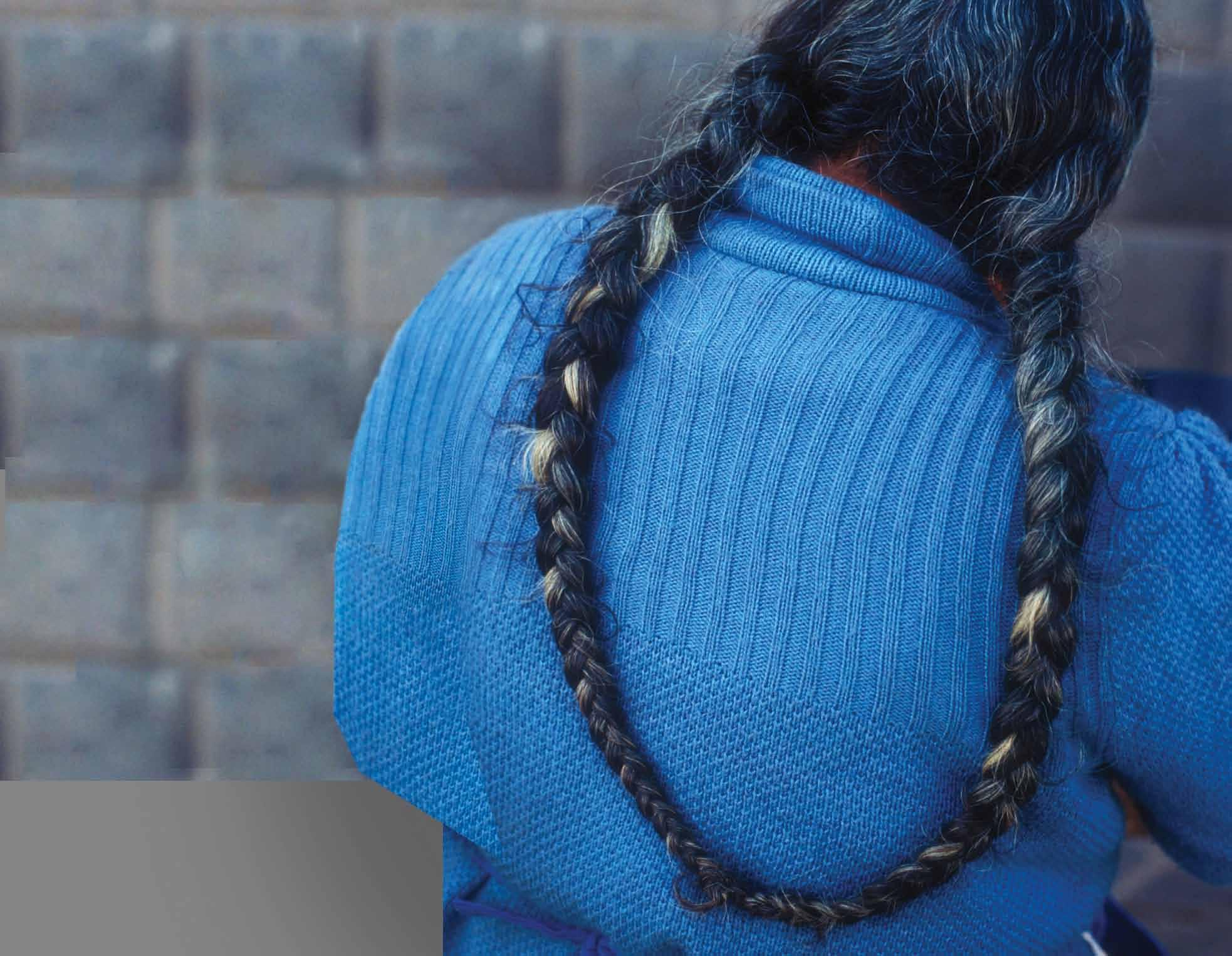
“Blue is for my house and for my parents...I love my parents, they make me happy,” explains 12-year-old Nelima, during an art class at the Child Labour School.
started a school for child labourers. Teachers and social workers in the Samatha project visit the parents and encourage them to enrol their children. While this is a huge sacrifice for the family, parents can see the possibility of long-term benefit. The school started with just a handful of students. Today, 70 children attend. And a church has been planted as a small group of staff, children and parents started meeting for worship. The school continues to serve as a community centre and offers parenting workshops and counselling. Teachers and students often visit other villages and perform puppet shows to spread awareness about child labour and to encourage parents to send their children to school.
A recent survey by Samatha showed that child labour has been eliminated in
“I picked pink for Sunday School; we can learn many things about God…[He] does miracles in our life…when I had to work [grading and sorting onions in a factory] my father used to take the money we earned and drink. But after I started coming to school, and praying, he changed. Now he is not drinking. We saved money and are building a house.”
In Bolivia, it’s a similar story. A developing country, it is trying to pull its people out of poverty, to have ownership and a share in the benefit of its own wealth of natural resources. It’s a fight that can set them up against multinational interests. Large numbers of youth and parents leave the countryside, even the country, to search for jobs. Many fall prey to the lure of quick, easy money through drug trafficking. Prisons are full of those who don’t succeed. Often their children go to jail with them, if no other alternatives for care are available.
Some parents find it safer for their children to be with them in prison rather than with friends or relatives who might mistreat or exploit them. Ivana was only nine years old when she
went to prison. It’s a difficult life, but she loves her mom very much and wants to be with her. “It made me sad, but I don’t blame her…she tries to take care of us. This happened, but I’m thankful because here I accepted Jesus as my Saviour…I’m happy to be with my mom and my family. I hope she gets out of jail soon and that we never separate.”
In jail, Ivana and her younger brother help their mom by doing laundry to earn money for their keep. In Bolivia, you pay for your cell and for your food. “It’s too crowded, kids are fighting all the time, and mothers have to work hard, day and night, to make money because there is not enough,” says Ivana, about life in prison. But what she worries about most is her family who are not in prison. “I miss my little sister. My father came from Argentina [where he lives with his new family] and took her. I’m sad that my father is not here.”
Her brother really misses their dad, too. When asked what he wishes for, he looks away, trying to hide the tears welling up. “This question is hard for me…that my parents get together again, but I don’t know how this can be.”
Life in prison is especially tough on women. Many end up abandoned by their husbands.
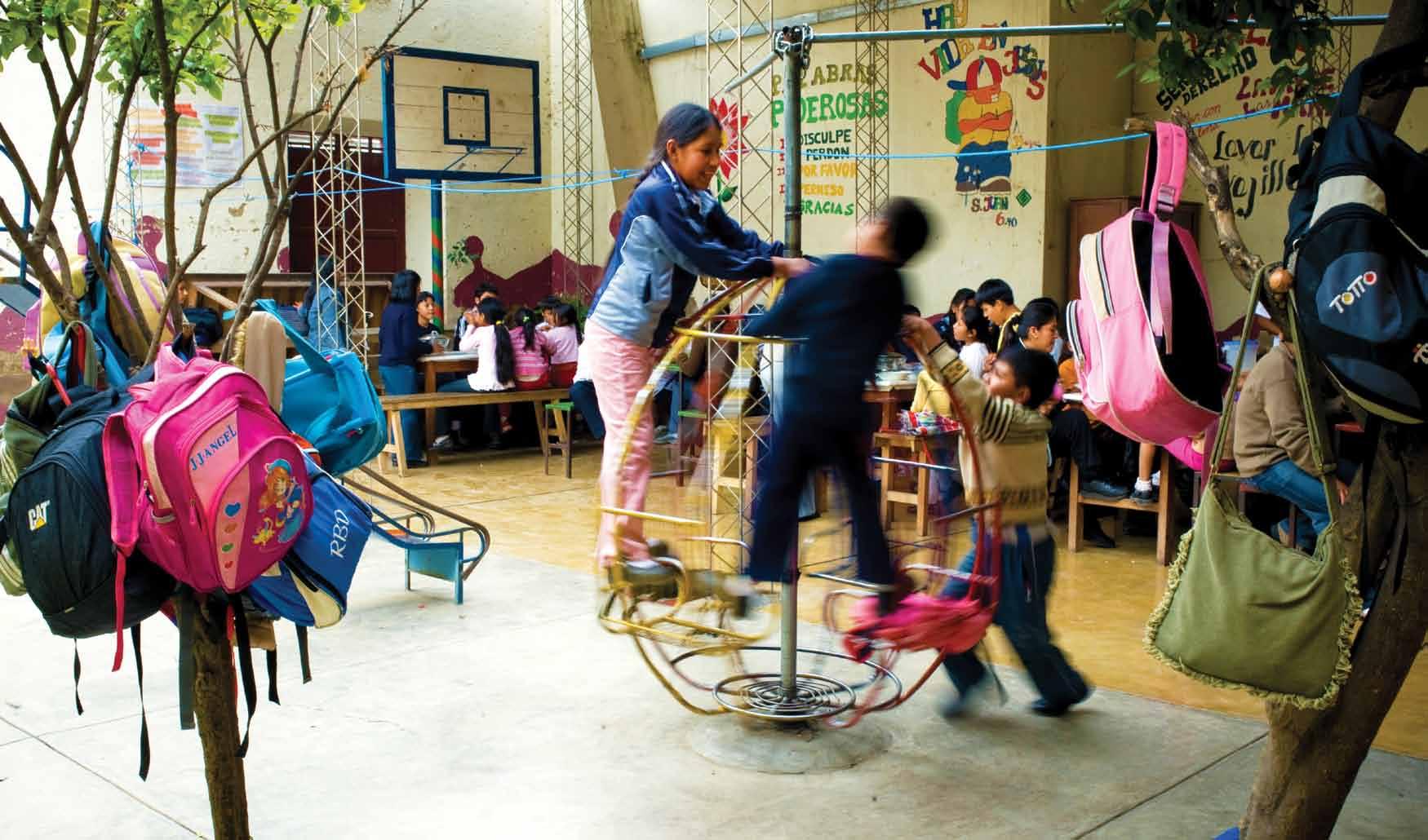
In Bolivia, a small group of teachers and staff, including a psychologist and a prison chaplain, create a safe haven at Friendship House (Casa de la Amistad) a home away from home for 120 children who live in prison with an incarcerated parent. Each day children are able to leave the prison. Younger ones spend all day at the Casa, located across the plaza from the men’s and women’s prisons. Older ones go to school and then head to the Casa for a hot lunch, help with homework and playtime before heading back to prison for the night.
Children feel the love and care of the staff, and call them “aunts and uncles.” The program also focuses on the needs of parents in jail. Staff visit and provide
counsel. They also provide skills training and follow up with families once they are released to help parents effectively reintegrate into society.
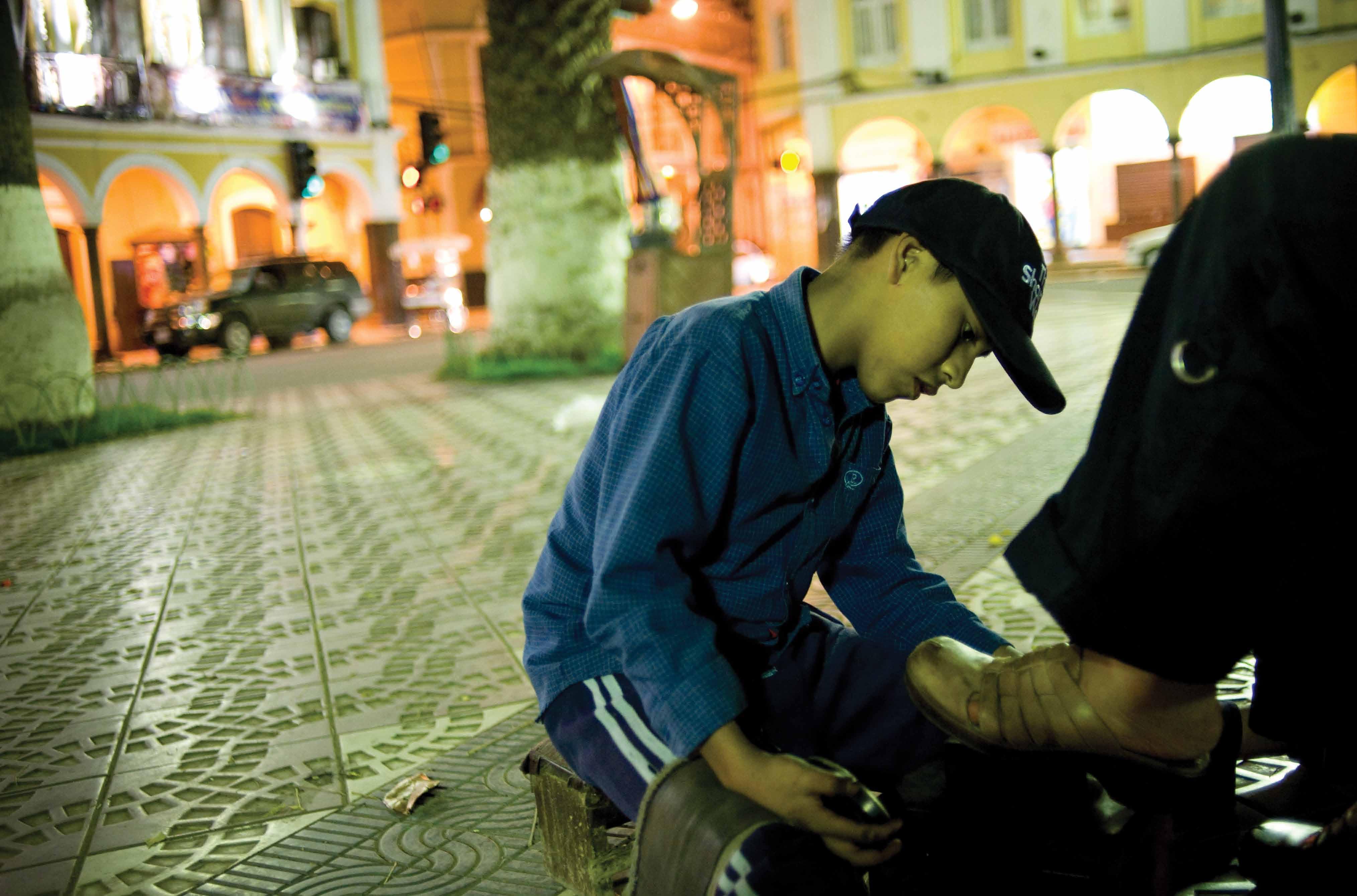
Life for your average family in Bolivia can also be tough. Nine-yearold Justino has already been working for four years. Before and after school and on weekends he shines shoes in the plaza.
“On a very good day I can earn up to $3,” he proudly notes. “I help to support the family. I give my money to my mom so she can go to market [buy food] and buy me clothes.”
Jireh, another Children of Hope project, is a drop-in centre for children like Justino who shine shoes and do other jobs to supplement family income. It’s helping to protect them from the dangers of life on the streets. Besides counselling and help with homework, children have time for fun. They receive a hot, nutritious meal – for some their only meal of the day. Older youth receive skills training to earn a better income. Justino has brought several of his friends to Jireh because “I want them to have help, also.”
Children living in crisis go about their daily lives dealing as best they can with issues as they arise. These children not only struggle to survive, they confront social alienation and exploitation. What is largely overlooked,
however, is their strength and resilience and the gifts and abilities they offer. They play a major role in creating a new community – one where people work together to improve life for all.
They truly are children of hope!
It seems only fitting to give them the last word. Their words of advice for other children facing crisis:
Bringing us together makes us like a family. We have planted a seed of love that is like a root that cannot be taken away.
Diana, 16 years old, is the head of her household in Rwanda
Don’t lose hope because everything is possible in Jesus. He is going to help us in every bad moment we have… God loves you, loves all children around the world…
Ivana, 13 years old, lives in prison with her mom in Bolivia
t t t
The Sharing Way strives to involve children and youth in all aspects of the Children of Hope projects. We take a rights-based approach, where children and youth: Are not merely passive recipients of protection and assistance Are active participants and rights holders in society
Children Are Seen, Heard and Valued! , , , ,
Have the right to express their opinion and to participate in the matters that affect them (UN Convention of the Rights of the Child, article 12, 1989)
Most importantly, each child has been created in God’s image and has the right to a relationship with the Creator. He is Father to the fatherless. He sets the lonely in families, the family of God.
connecting...
“Children’s rights of security, a safe home, adequate nutrition and education are violated everyday because of violence. Some of them are watching their parents powerless, unable to offer them protection…Many studies have proven that the legacy of violence can be transmitted from one generation to the next when there is no strong movement of healing and change.”
– Regine King, a psychotherapist who is a Rwandan genocide survivor and one of the dedicated volunteers who has assisted in the development of the Children of Hope program in Rwanda.
This intergenerational legacy of violence and desperation must be stopped. CBM supports partners in Rwanda, India and Bolivia who are creating a new legacy, one where children are free to dream again; to live in hope of a bright and healthy future for them and the generations to come. Specific socio-economic projects have been implemented in each Children of Hope project to enhance livelihoods and improve income generation. Give online to support these valuable projects today at www.cbmin.org.
Photo: Shannon Jensen
Year in Review t
At CBM, we believe in integral mission, that ministry in the name of Christ through word and deed creates lasting change. Through our national and international church partnerships, we have the privilege of seeing this happen.
Here’s just a glimpse of a few dedicated men and women who are leading the way.
In Sustainable Community Development
In Grassroots Leadership Development
Lourdes Lisbeth Chipata, a graduate of the Bolivian Baptist Seminary (BBS), now serves as a prison chaplain in both the men’s and women’s prisons in Cochabamba, a major Bolivian city. A big part of her job involves working with children who live in prison with their incarcerated parent because there is no other family support available. She and her husband, another BBS graduate, have just taken on another challenge, pastoring a new church
plant in the outskirts of Cochabamba where many of the poor end up living. This dedicated couple offered to work for free until their fledgling congregation can afford to pay them.
Our world is crying out for new leadership in all sectors of society. Thanks to your support, our global partners can continue to respond to the challenge, preparing dedicated, quality leaders like Lourdes who have a passion to serve, mentor and empower others. It’s having a ripple effect in Angola, Bolivia, Canada, Europe, India, Indonesia, Kenya, the Middle East, and Rwanda.
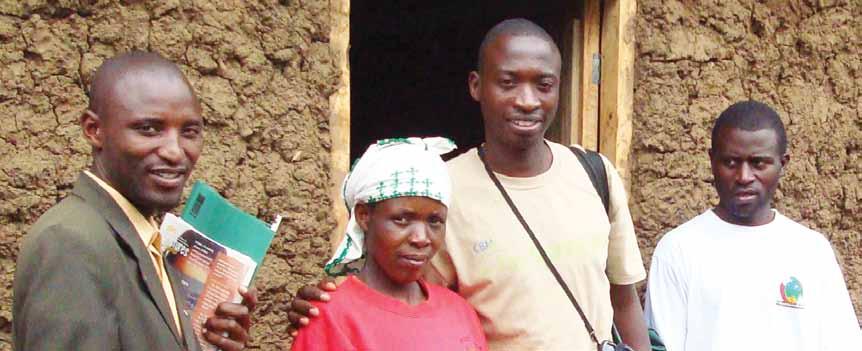
Andre Sibomana visits families most impacted by HIV and AIDS as part of his work as Coordinator of the Guardians of Hope (GOH) program on behalf of the Association of Baptist Churches of Rwanda (AEBR). GOH provides microcredit and skills training, care for orphans and widows, counselling and spiritual support, and awareness and prevention activities among youth. Growing out of the GOH program is Children of Hope, a pilot project launched in 2007 to address the critical needs of child/ youth-headed households in Rwanda.
Besides attending night school at the AEBR’s seminary, Andre was one of the 42 development workers, pastors and CBM Field Staff from Angola, Bolivia, Canada, India, Kenya and Rwanda to participate in the new integral mission course launched by CBM and Carey Theological College in 2008.
Families around the world are in crisis. Thanks to your support, The Sharing Way (CBM’s relief and community development department) can respond through people like Andre who are committed to working with local communities to develop and use local resources to meet the most pressing needs. Top of the priority list includes: clean water, stronger crops to combat drought, nutritious food, better health/local clinics, more access to school for children and youth, ecological farming to protect the environment, and small business development for family income. All in the name of Christ, through the local church, in communities around the world.
Lourdes
Andre
In Pioneer Outreach
Dedicated students at Kalimantan
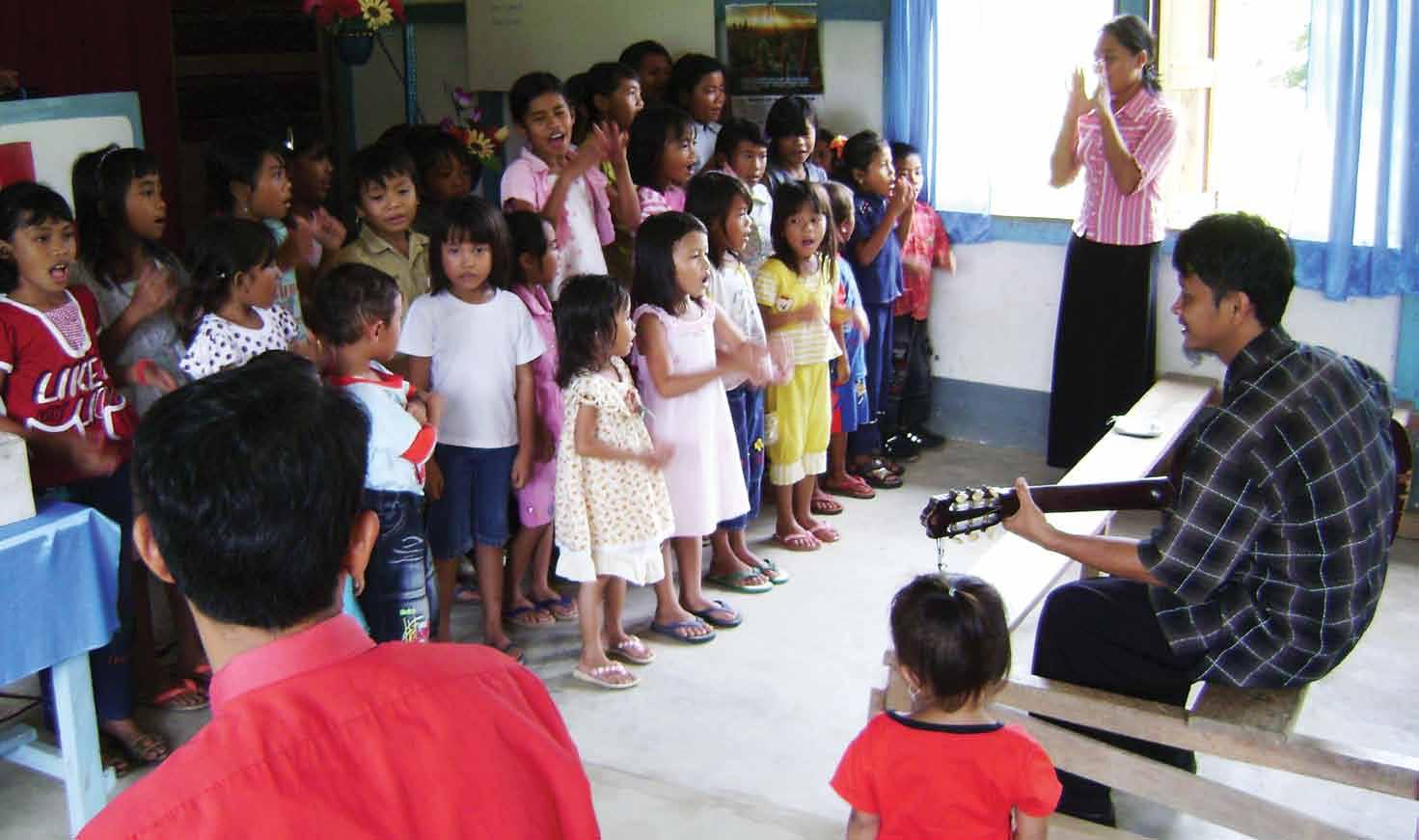
Theological Seminary (STK) in Indonesia give up their weekends and holiday breaks to travel many hours, often in difficult circumstances, to reach remote regions. There they lead children’s programs, encourage local believers with prayer and worship services, and conduct outreach activities to help spread the good news of a God who loves and cares for all people.
In 2008, over 350 students were enrolled at STK, operated by the Convention of Indonesian Baptist Churches (KGBI). Many are able to study through the STK’s 10 satellite schools. These young people are committed to spreading the good news in the world’s largest Muslim nation by helping to plant churches that will be engaged in their communities.
Today the KGBI has over 400 congregations in 21 of Indonesia’s 33 provinces.
All people are in search of a God who truly loves and cares for them. Your support ensures that people like the students at STK are trained and equipped to effectively reach out with a love that builds bridges of trust and understanding.
With your support, we can continue to help people explore God’s leading in their life, wherever that might take them.
In Global Discipleship
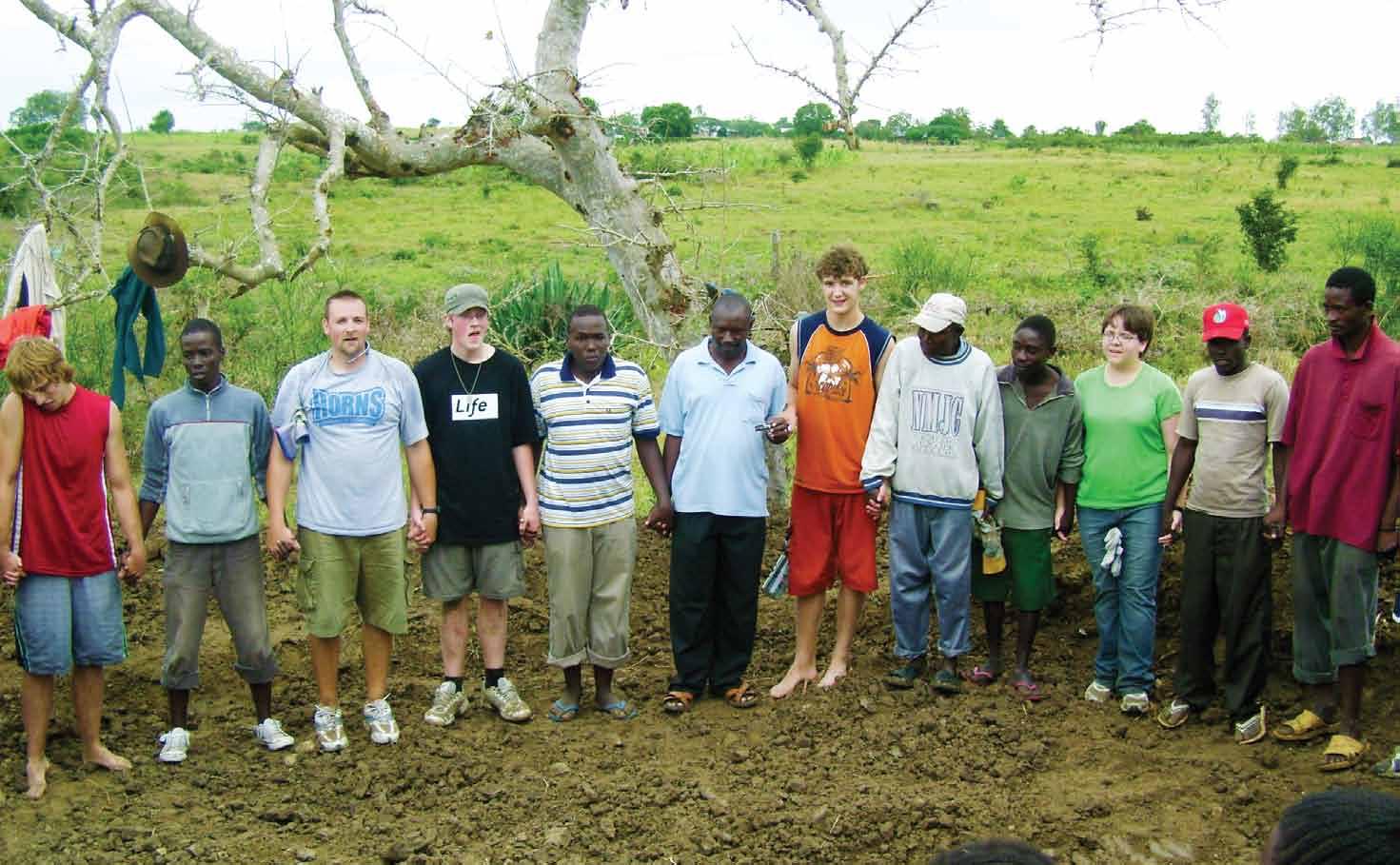
Youth from Whitby Baptist Church in Ontario and Faith Community Baptist Church in Claresholm, Alberta went all out this summer, travelling to Kenya to meet and work alongside youth. This short-term mission experience was an important part of their participation in the Baptist World Alliance Youth Conference, held in Leipzig, Germany. There they met over 6,300 youth from 89 different countries. All were encouraged to dive deeper in their faith. 262 youth and youth leaders from Canadian Baptist churches participated in this conference.
In 2008, the Short-Term Mission department facilitated the experiences of 551 people in 17 countries. Through CBM’s emphasis on global discipleship, people of all ages are being encouraged to dive deeper in their faith. For some this meant a short-term mission experience. For others, it meant joining the Live It Out Challenge and making the commitment to live more simply, justly, and faithfully.
v i e w the
On working with children and youth in Lebanon…
When the war broke [July 2006] in Lebanon… we felt the need to do a camp for traumatized children, and saw there was a need to go on with this ministry… Our vision is to see the young generation in Lebanon and the Arab world – including Syria, Iraq and Jordan – dedicated and set apart to serve God and others… Our goal is not to take the children and youth out of their churches but to empower them to work inside their churches. We started doing different camps and later seminars and children’s leader training.
Kids going to our camps are… Kids from Baptist churches, kids from the Beirut Baptist School, where 90% of them are Muslim… last year we started a camp for needy children who come from different orphanages, street children… It was amazing… We heard stories that really broke our hearts –abused children, children who had many problems.
One of the biggest challenges
Many children are traumatized from the war. The war has left deep scars… Dealing with such children is different...
Lebanon has always been unstable. That’s the spirit and the mood that we are always living in… It’s a challenge to be working with children who sometimes have fear… [fear of] losing, the loss of their identity, who they are, in their own eyes.
A story that broke my heart
One kid who had seen his dad killing his mom in front of his eyes and that has left a deep scar inside of him. We know that this will not go away in a camp of four days… but we believe that if we show them a different kind of love… God’s love and our love to that kid made a huge difference. In the beginning of the camp he didn’t want to hear anything about God. Little by little he could talk more about his story. We believe that there was a difference.
Positive changes I have seen in children
We had a girl who lost her mom. Her mom battled cancer for many years… And this girl grew up to be very aggressive and she gained lots of weight. Her dad was taking care of her mom so he couldn’t give her enough time so they put her in a boarding school. She was so much in pain because of losing her mom and losing
her dad because he didn’t have time for her… She was really hurt…she doesn’t like to socialize with any of the kids because of her appearance, she hates herself, the way she looks, she didn’t want to come… At the end of the camp we could see a change in her behaviour and in her life. She wanted to come to the second camp.
A dream
We are praying for the opportunity to add audio devotions to our website, so any child in Lebanon and the Arab world can listen to the devotion…and write their comments or questions. We are searching for volunteer counselors who can answer their questions. Especially for the Arab world, children can’t go to camps –[so to have] a website every child in the Arab world can have access to is our dream.
God is at work in a small country of the world!
New Short-Term Opportunities in 2010
We’re excited to announce a new partnership between the Canadian Baptist Youth network and the Lebanese Baptist Children and Youth department that will help us to provide short-term mission opportunities in Lebanon, as well as mutual exchange and learning opportunities for Canadian and Lebanese youth workers and pastors.
We are now booking for summer camps in June 17 – July 1, July 9 – 23, Aug. 5 – 19. Plans are also underway for a Youth Workers Conference in Lebanon in the fall of 2010, which will include a stream for camping ministries (VBS, sports camps & summer camps) to share resources and ideas from Lebanon and Canada. Please contact the Short-Term Mission department for details at stm@cbmin.org.
Gladys Haddad, Youth & Children Coordinator, Lebanese Society for Education and Social Development, shares her passion for ministry.
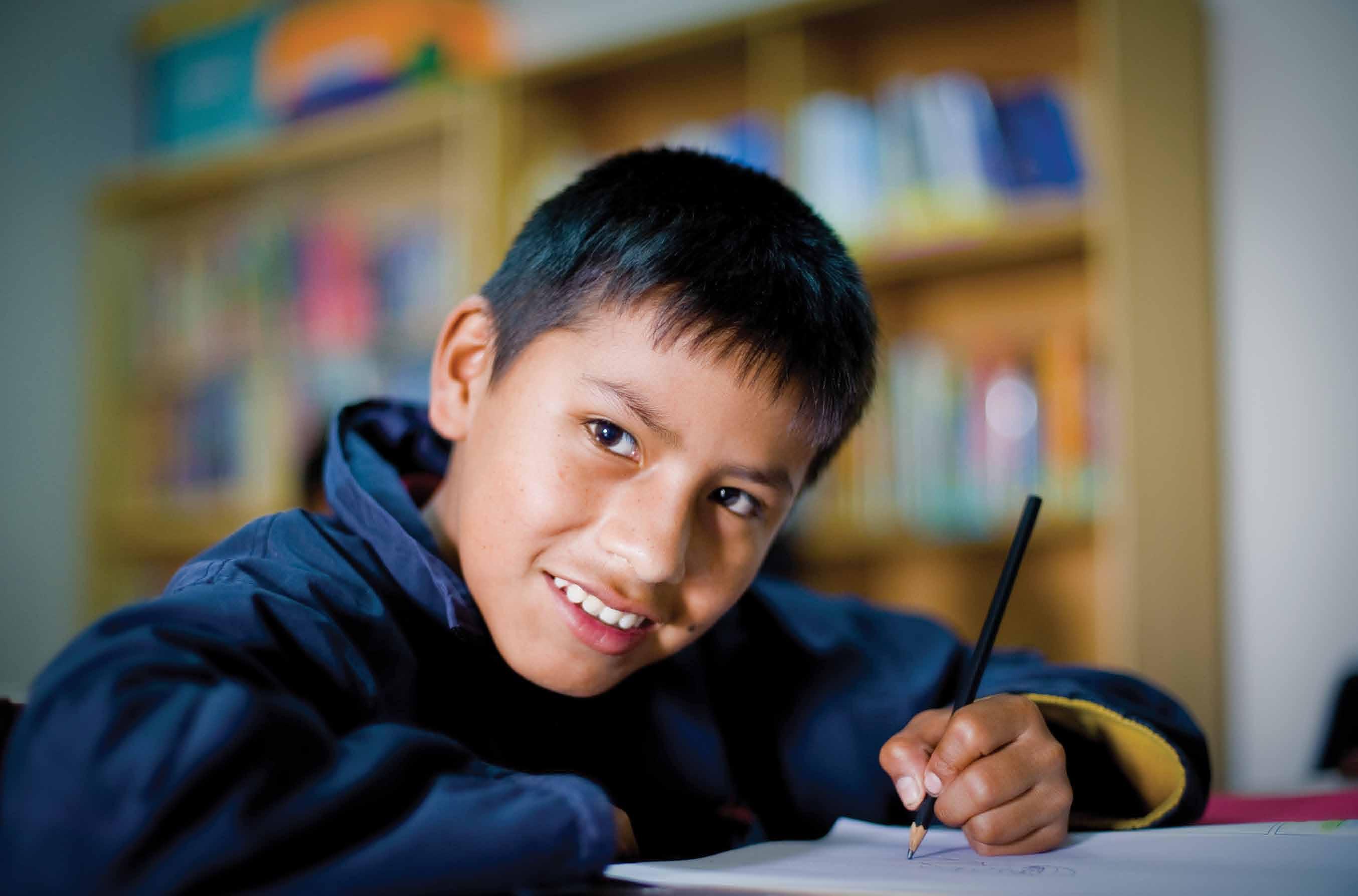
Justino Age 9 Bolivia
childhood
Communities in Crisis
by Faith Holwyn CBM Strategic Associate Field Staff
“Is there a solution?” We asked each other. “What can we do to make a difference?”
As I drove home from a restful weekend at the beach, I flicked on the radio just in time to hear a special news report. Tears pricked my eyelids and slipped down my cheeks as I listened to news about children going hungry; of adults, youth and children caught in perilous drug addiction. They were talking about a “community in crisis” in northern Ontario – a place where I was heading the next day.
I was going to a Native community where I would work for a month as a nurse. It was work that I loved, and over the eight years I had been employed by the Federal Government I had met some wonderful people – both colleagues and members of the Ojibwa community.
I couldn’t help but feel God’s hand in this!
The next day in Winnipeg I chatted with a pilot whose company flew into the community each day. He knew the community and its members well, and he spoke of the heartache he felt for the children. He too had heard the news report and handed me two CDs – copies he had made – one for the chief and council and one for the nursing station.
The following day we gathered around the table in the public health room at the nursing station – three nurses and eight Native staff members – and together we listened to the CD. They confirmed what was reported. Yes, there are children who are hungry because all of the family’s income is going to buy drugs, to feed an addiction.
“What can we do?” we questioned each other. We decided to invite the chief and Band Council to the nursing station to listen to the report with us. We hoped to convey to these community leaders that we wanted to help and give them our support.
A few days later we met. One after another, the chief, four councillors and five of the staff from the nursing station shared their concerns.
They talked about the high rate of drug sales and usage within the community; about youth who were angry and disconnected from their culture; and about hungry children who looked into empty refrigerators or cupboards at home.
“Is there a solution?” we asked each other. “What can we do to make a difference?”
A week later, on an early morning walk before work, I met a young woman taking her toddler to school. We started to chat, and I discovered that she was on her way to prepare a soup and sandwich lunch for 75 children and young adults. The Band Council had hired her and four students to provide a free lunch Monday to Thursday for those in the community who wanted to come. She told me that on Friday they cooked a big hot meal. This was the last meal for many of the children until Monday, another staff later shared with me.
Addictions exact a heavy toll not only on individuals, but also on families and communities. Many drugs, including Tylenol No. 3, Percocet and crack, are all readily available in this community, and many look to these chemicals to deaden the inner pain of loneliness, unemployment, poverty and hunger.
But the light I saw in the eyes of those who talked to me about this community’s solution for its hungry children showed me that there is hope.
It was yet another powerful lesson about how important it is for communities to come up with their own solutions. I have seen this dynamic in Canada and other countries around the world. Only as communities come together to work on solutions is there hope for change that makes a lasting difference.
One community put up posters in the Northern Store (the community grocery store, post office and gathering place) which read: “Drug dealers and Bootleggers, you are killing your people one by one! We don’t want what you are selling in our community. Think of the people you are hurting and STOP!”
My work continues to be mostly among women in emotional and spiritual pain. I see them carry the pain of the community — the loss of loved ones through violence related to alcohol or self-destruction through suicide. They see youth and children being caught up in addiction or other destructive behaviours, like vandalism of public property. In one community I had the privilege of leading several weekend retreats for women.
Twelve women of various ages met to share together, feel uplifted by being in a circle of trusted friends and experience God’s presence and healing in their lives. Although they would return to the challenges and issues in their lives, believing that God cared for them and their communities made a difference. It led to a sense of hope and the ability to see things from a new perspective.
There are many “communities in crisis” in our country.
Last year, Prime Minister Stephen Harper offered an official apology that acknowledged some of the grave wrongs that were done to our First Nations people — children forced from their homes to be educated in a language that was not their own and told that they must abandon the culture that had held their people together for centuries.
But that apology is just a beginning. We have far to go in our journey to love and respect our Native people — both those living in remote communities and those who are part of the urban population.
I put before you a challenge.
Let’s pray for reconciliation, and seek ways to build relationships with these neighbours of ours.
Let’s look for practical ways to show Jesus’ love. As we do, we will learn about the strength that Native communities have had over the years in the face of incredibly difficult situations. And we will find all of our lives enriched as together we explore ways to meet the challenges of our day.
Faith has conducted workshops among women in Canada and Bolivia and is now expanding her work to other countries. She recently published a book, The Groups of Hope Program: Walking with God in Difficult Times about her reconciliation and healing ministry. To order a copy, email her at holwyn@hotmail.com.
Over seven years ago, Lorne Park Baptist Church (Mississauga, Ontario) sent work crews to renovate Eagle Bay Camp in northern Manitoba. They also helped with cooking and running camp programs. It was the start of their outreach to the Aboriginal community.
Today they also travel to reserves – one in Manitoba and one in Ontario — to do children’s summer ministry.
The whole congregation is on board, from seniors to youth. “We have probably had between 60 and 70 people who have been on at least one of these mission trips,” says Senior Pastor Dale Rose. Lorne Park is just one example of Canadian Baptist churches across the country seeking to deepen their commitment to their Aboriginal neighbours.
In the coming months, the Canadian Baptists of Western Canada will help bring together key church leaders so they can learn from one another’s experiences. Pastor Mark Buchanan from New Life Community Church in Duncan, BC, and Cowichan elder Jenny Martin will help facilitate a conference around Aboriginal issues.
Editor’s Note:
Youth Living It Out
by Amy Hurlburt
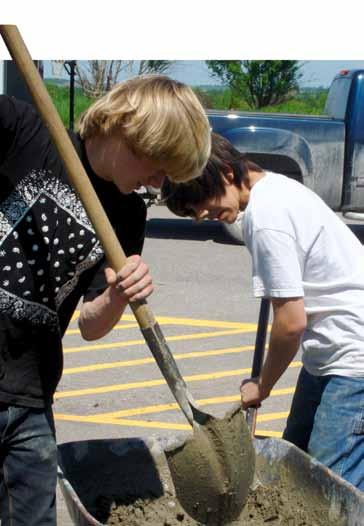
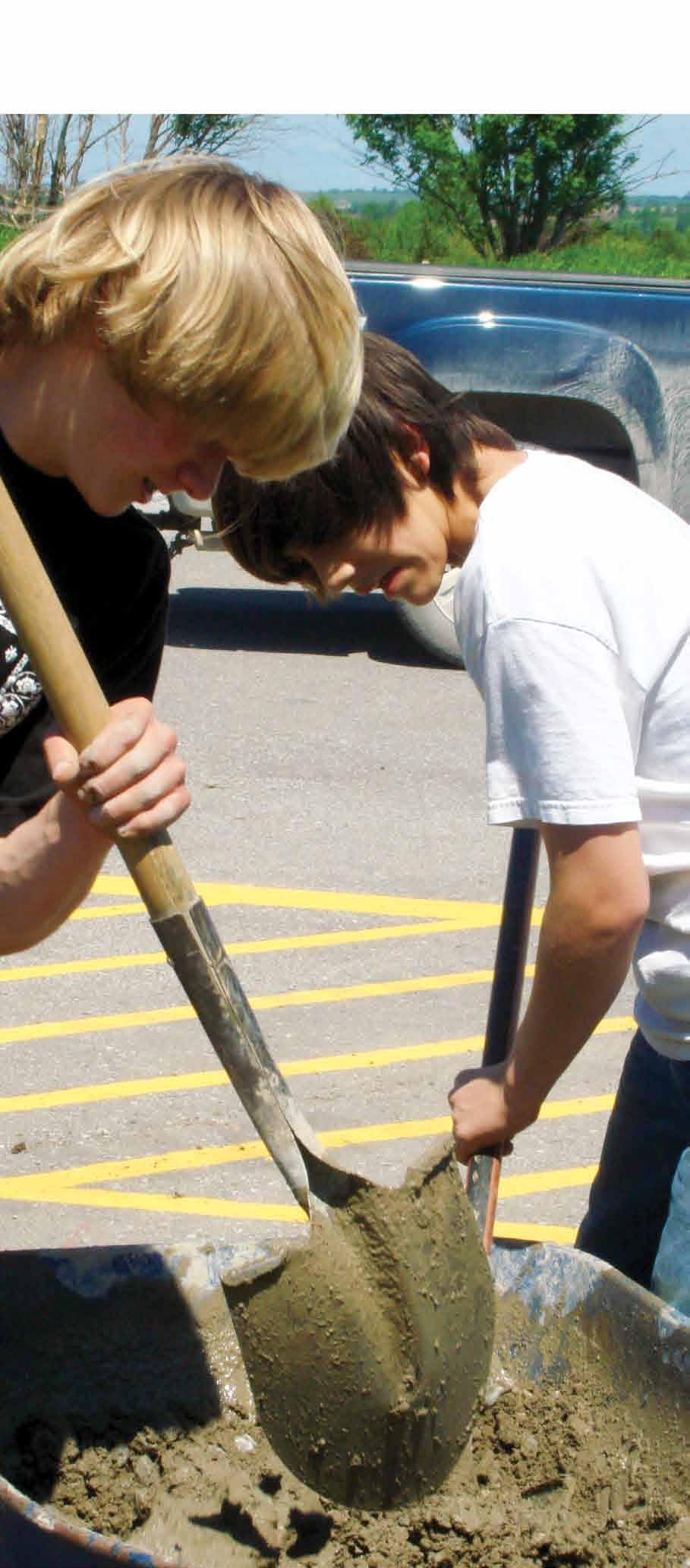
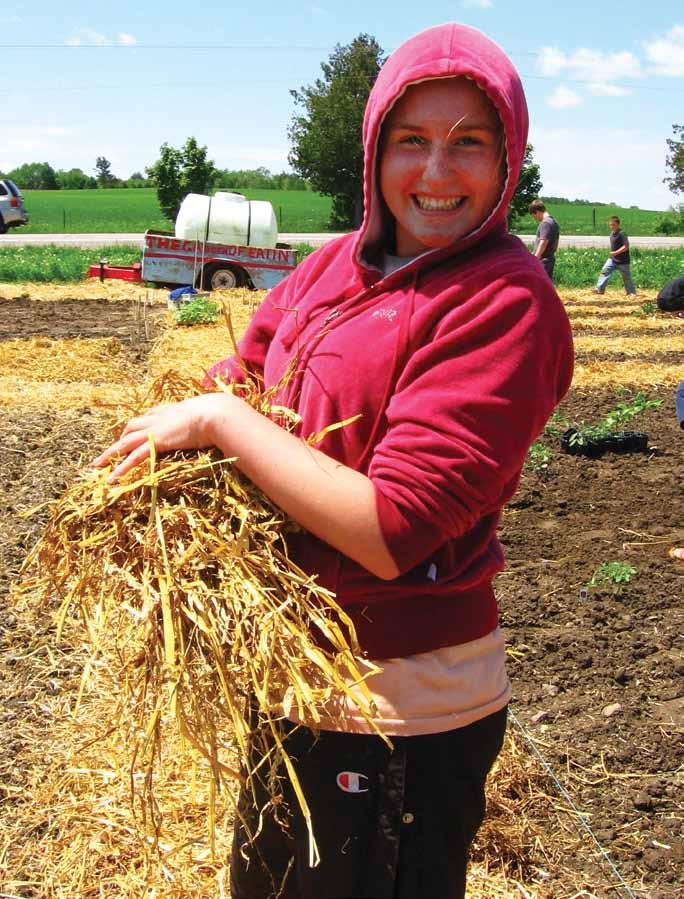
From Friday, May 29 to Sunday, May 31, 2009, Uxbridge Baptist Church (in Ontario) held a wide-scale volunteer outreach program. It was a fusion of the CBM challenge to “Live It Out” – to live simply, justly, and faithfully – and a local annual event called KidsFest, which pairs up Christian adults and kids who share a common interest for one weekend to develop both their practical skills and a learning relationship.
“I’ve had so much fun working with my mentors!” enthused Chantel Noble, a grade nine student who participated in the group that planted a community garden. “They’re really funny, and a lot of fun to work with. I’m learning a lot more about gardening.”
The learning process wasn’t a one-sided lesson.
“Mentorship nothing!” laughs Joe Lawson, a mentor in one of the carpentry groups. “Adrian and Ren [the two members of the group] have been amazing – they’ve been teaching us stuff all day!”
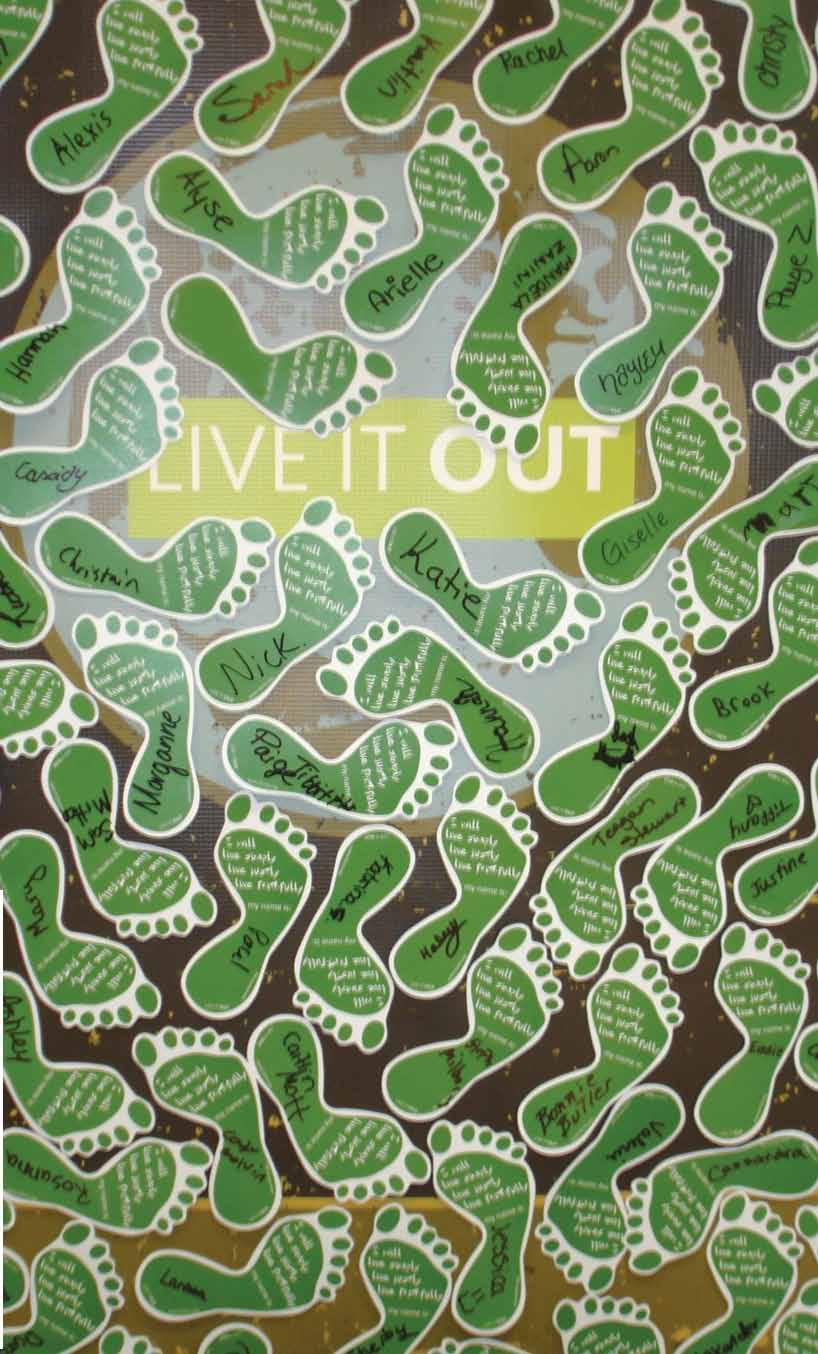
Throughout the weekend, the themes of living simply, justly, and faithfully were highlighted each night, and prompted a great response from the youth, many of whom signed the pledge to devote themselves to living by that set of criteria.
“I’m not sure exactly where I’ll go from here,” says Jordan Bierema, a grade eleven student who signed the pledge. “I guess this is a good start— doing more volunteer stuff like this […] caring less about myself and more about others.”
t Pictured left to right: Willem Healey and Jadon Vakharia help to build an arbour.
“Well, I think the primary focus of this weekend since we’re all doing these service projects would be to live faithfully, and to do things that show our faith,” says Katie Wilson, also in grade eleven. “For me, going on from here, I want to start by focusing on living simply…I have a lot of stuff, so I’m going to work on clearing it out and minimalizing my life.”
Perhaps most inspiring was the genuine desire of so many students to continue serving after the weekend! Esther Dawson, a grade eight participant in the group giving makeovers to female residents in a local long-term elder-care facility, is already planning to go back with her whole group next month.
“It was so cool to see the reaction [of the women] …they were so grateful, and they don’t get a lot of visitors…we just got to make them feel special and pretty, and be friends with them.”
The overall impact of the weekend was huge — maybe even overwhelming — if you consider the number of projects accomplished. “There are 26 different service projects and we have partnered with 10 different organizations” noted Jen Wilson, one of the organizers. “The projects are all local…Everything from carpentry and landscaping to web design to painting.”
It was an experience that shows life as it is meant to be: God’s people gathering together for his purpose, leaving individual gifts and skills entirely up to his disposal. The possibilities are endless…and so are the tasks He sets for us.
What do you think about the Uxbridge Baptist Church Live It Out Weekend?
mosaic was there and here’s a little of what we heard!
It’s an opportunity for us to connect with other community groups and basically to find ways to live out our faith and our love of God in real and practical ways and to partner with other community organizations that are already doing things today and sort of coming alongside and supporting them and just demonstrating the love of God in real ways with them.
I think it’s a really good way of showing God’s love to people because showing people God’s love is easier than telling them about it if they don’t know about him...we made frozen meals [for people going through hard times] so they can just pop them in the oven… my friend and I were thinking we should do this more often – give back to the community and make meals more often… this weekend has made me more aware that we are supposed to live out our faith, we are supposed to show people God’s love every day.
Editor’s Note:
Baptist Church. She plans to go to university this fall to study journalism
Join the Challenge. Learn more about Live It Out at www.cbmin.org
Well, Jen approached me about it because I’m an artist…I really liked the idea because I mean it’s a gift God’s given me and I’ve always wanted to give back and find ways that I can use it for God. It really appealed to me that way. And working with, mentoring young girls as well, that’s a really great way to do it. I remember what it was like at that age and contact with people that I could look up to and get advice from really meant a lot to me. So I’d like to do that for them.
,Tamara McKenny,
one of the mentors
Chantel Noble gets some hay for the community garden.
Amy Hurlburt attends Uxbridge
Mariel Barkey, 15-year-old student
Tim Teakle, Youth Pastor, UBC
The Sharing Way Annual Appeal
The world’s climates are edging quickly toward irreversible change, which has a major impact on food security. Many vulnerable communities simply do not have the capacity to withstand the changes brought on by climate change. The result is tens of millions of people plunged into poverty, hopelessness and desperation, without the means to provide for their families in even the most basic terms.
Through The Sharing Way’s Annual Appeal, Hunger for Change – Environment for Life, your church will learn how we as God’s people can help support agricultural projects that bring about sustainability, responsibility and community for all.
Leader’s Kits will be mailed to churches in August.
Contact communications@cbmin.org for more information.
Grassroots Heroes
Here’s something to celebrate…
This past May, almost 1,800 youth and youth leaders from across the Maritimes attended Springforth ’09 in Moncton, N.B., one of Canada’s largest annual youth events, sponsored by the Convention of Atlantic Baptist Churches.
The theme of Springforth was Live It Out, based on CBM’s justice campaign that challenges people to live simply, live justly and live faithfully. More than 400 youth signed up for a 30-Day Challenge with suggestions on how to live out their faith in everyday life.
As a hands-on opportunity to live justly, offerings were taken at both the High School and Middle School events, with each offering going towards a CBM project.
• High School students raised $2,177 – enough to help protect eight families in Bolivia from Chagas disease by home improvements such as installing tin roofs, cement floors and plastering walls. Bolivia has the highest Chagas infection rate in the world.
• Middle School students raised $1,754 – enough to provide 156 mosquito nets and 973 vaccinations for children in Kenya, to help stop the spread of malaria and other preventable diseases.