osaic

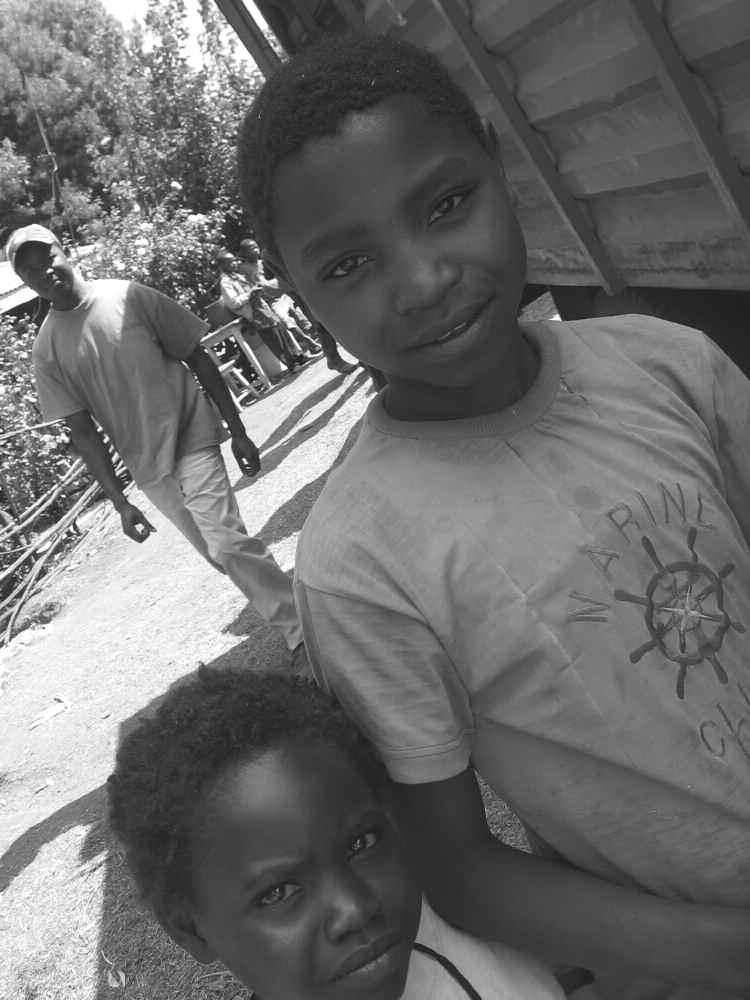
They fled with their mother to escape being attack ed So did hundreds of others in their area Now they live in a mak eshift camp CBM has committed to providing $50,000 in emergenc y relief – crucial funding which our par tners, the Africa Brotherhood Church and the African Christian Church & Schools are using to provide basic food and supplies
mosaic is published 4 times a year by Canadian Baptist Ministries
Managing Editor: Jennifer Lau
Editor: Laurena Zondo
Copies are distributed free of charge
Bulk quantities available by request
Contact us at:
7185 Millcreek Drive
Mississauga, Ontario L5N 5R4
Tel: 905.821.3533
mosaic@cbmin.org www cbmin org
M ission of Canadian Baptist M inistries
Encouraging passionate discipleship for local and global mission.
I’m writing this during a particularly difficult period of time for our field staff and partners in Kenya where a few months ago tribalism reared its destructive head after the presidential elections and they were caught in the eye of the storm
Kenya however, has had the potential to explode for a long time The calm cloaked an economic, social and ethnic tension that was smoldering just below the sur face An economic gap was increasingly disappointing the hopes of the majority of Kenyans no matter what their ancestral tribe
Some of the largest slums in Africa can be found in Nairobi, the capital city of Kenya Most of the urban violence took place in Kibare, a slum where over 1.5 million people call home
Early in the morning hundreds of thousands of people flood out of this slum to their employment – they are the economic backbone yet they share little in the resulting wealth of the countr y. Only blocks away from their one-room mud shacks are some of the most palatial and opulent homes of the Kenyan aristocracy. Only a few are benefiting from the emerging new wealth and most Kenyans are deeply aware of this
We see the same kind of stor y unfolding in other countries – in the developing economic giants such as India and China
The economic and social gap in such places is opening the chasm of frustration and anger In Kenya, where media would like to make this simply a stor y of tribal conflict, the violence is more the result of disillusionment People are angr y at the injustice
When you consider the socio-economic tensions at work in our own cities here in Canada, it makes you wonder What will happen as more of our people become disillusioned?
Purpose of mosaic
mosaic is a community forum of local and global voices united by a shared mission. mosaic will serve as a catalyst to stimulate and encourage passionate discipleship among Canadian Baptists and their partners.
Where is the hope?
I saw the hope when I approached a church on the outskirts of Nairobi – a multicultural church of tribes and nations On their proper ty they were pitching tents to house the more than 300 displaced people who fled to this church for safety They were taken in, fed and clothed by a flood of church volunteers – many of whom were young adults and youth
This was not an isolated occurrence It is taking place throughout Kenya – among those who are fed up but not willing to give in to the forces of violence and power swirling around them
I believe that the hope of Kenya is in the determination of so many of its courageous people who desire to see each other not as tribe or socio-economic groups but as participants in making their countr y a better place to live for all
I believe that the hope of Kenya, and Africa overall, is in the young emerging leaders who no longer are willing to play the old games - who no longer are willing to simply pad their own pockets at the expense of others – rather they are ser vant leaders who have the best interests of others in mind
This past March, the Africa Brotherhood Church, CBM and Carey Theological College signed a new agreement for partnership in leadership development to work on a variety of initiatives. In May, these same partners will launch a program to provide training in integral mission to development workers
Raising up a cohort of new young leaders and nurturing effectiveness and spiritual maturity in older leaders cannot be ignored It is one of our world’s most crucial needs.
Rev Dr Gar y Nelson is the G eneral Secretar y
e t h i c a l l y s p e a k i n g
In 2008, for the first time in human histor y, a majority of people will live in cities.
Ever y two seconds, one person joins the planet's expanding urban population.
The UN Population Fund calls for a "revolution in think ing" to help cities unleash their potential to spur economic growth and solve social problems. www.worldwatch.org
CBM calls for a “revolution in think ing” to help churches unleash their potential to ser ve in their communities
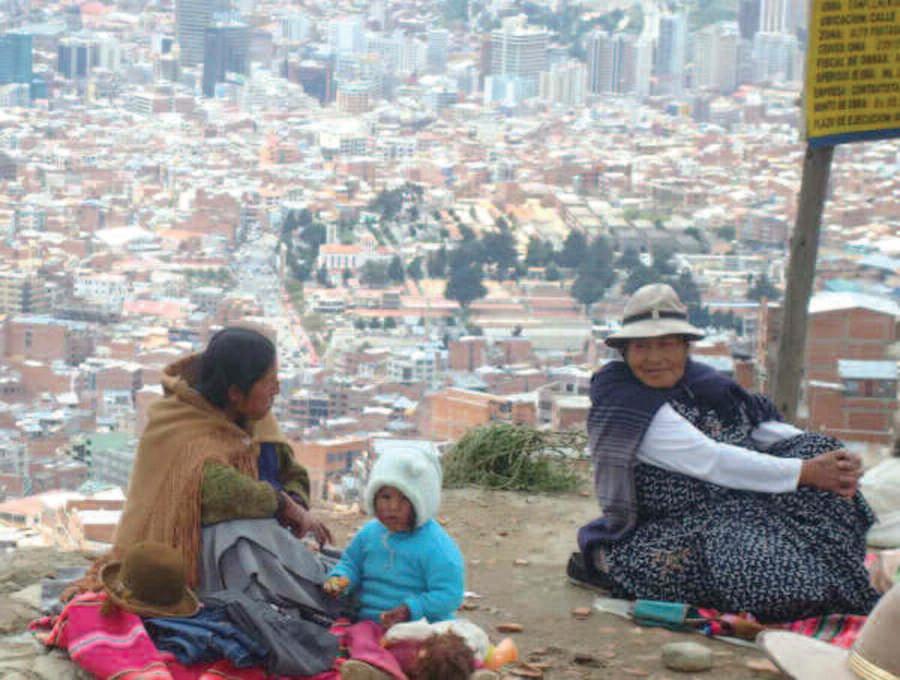
El Alto, Bolivia, home to one million people on the Altiplano. This year funds raised by CBM’s Solidarity Sunday suppor ts an integral approach to mission among the 45 churches, congregations or preaching points of the Bolivian Baptist Union in El Alto.
Formation is at the hear t of CBM -- one of our four k ey, strategic ministries But what is it all about? And how is it changing?
Since well before the Enlightenment, theological education belonged to the academy As early as the 18th Centur y, European and North American training programs (which were subsequently exported through the modern mission movement to the developing world) employed a seemingly cookie-cutter model It entailed courses in Biblical studies, systematic theology, Church histor y, and Pastoral theology David Bosh described this as 'the Church speaking about the Church to the Church' There was little room within this model for additional fields of enquir y and learning
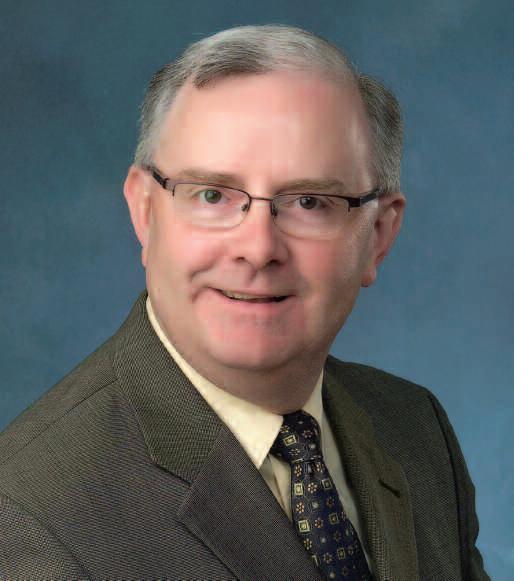
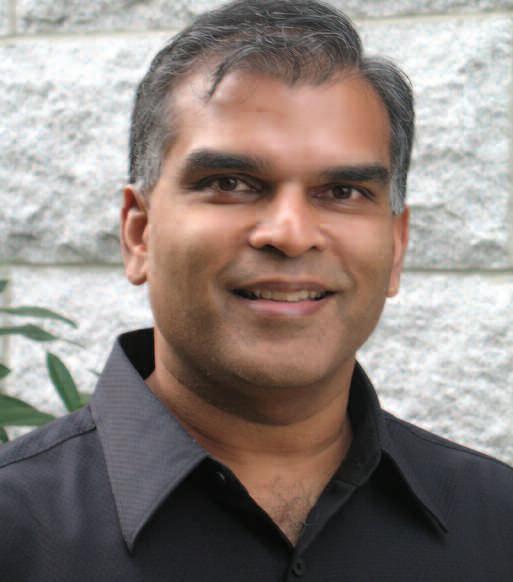
As the Church started to grow at unparalleled rates in most parts of the world, nascent grassroots programs began to emerge offering cost-effective, highly accessible training to lay leaders, clergy and for specialized ministries These programs have gained universal renown and are impacting leaders worldwide From the classic ‘come-to’ model to a more flexible ‘go-to’ approach, from ver y sterile ivor y towers to grass huts and tea rooms, leaders are being trained for “the equipping of God’s people for works of ser vice, so that the body of Christ may be built up ” (Eph 4:12)
CBM partners with churches and schools in Canada and around the world, to help raise up a new generation of Christian leaders
mosaic asked four prominent Canadian Baptist leaders to share some of their experience and insight into the changing face of leadership development.
Q: What is the most significant change that you are seeing (or that you would like to see) in how people are being prepared to lead? In theological education? In the church?
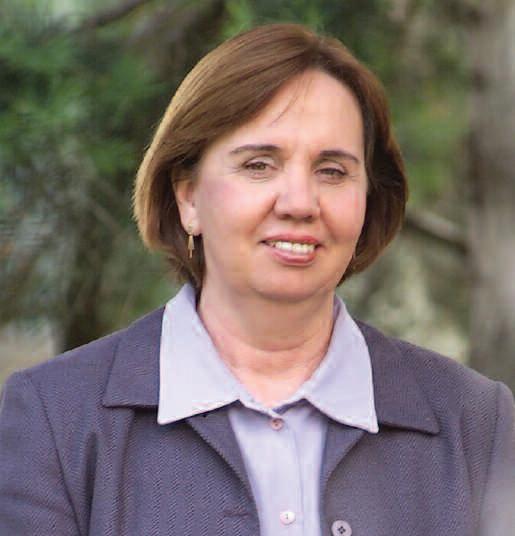

Harry : The issue of what it takes to prepare today ’ s ministr y leaders is front and center of most of the conversations I have about the church and her mission Probably the most significant change that I have obser ved is the focus on developing the leader as a person while not forsaking the development of the necessar y skills for ser vice in the church in it ’ s 21st centur y cultural context. Carson Pue’s book, Mentoring Leaders has as it ’ s subtitle, Wisdom for Developing Character, Calling and Competency. This gets at this core issue. An overall mentoring perspective in the approach to theological education and local church leadership development is emerging as a new or renewed trend This also necessitates a closer relationship with local churches in the development of leaders who will gain practical ministr y experience while interacting with the biblical, theological and historical foundations of the Christian faith

Janet: Increasingly, seminaries are recognizing that theological education is leadership education While students need excellent educational preparation in the classic theological disciplines, as well as in practical ministr y skills, they need to be developed as leaders Some seminaries, like Tyndale, have a
Chair of Leadership, something unheard of in past. But the church needs a particular kind of leader -- what I would call a missional leader We need to do far more than teach people how to run a church We need to develop ministr y leaders who lead the people of God to join in the mission of God's in this world -- to engage the culture with the gospel

Sam: I see four significant changes that are taking place, all of which I think are good and should continue:
1 The location of education is shifting from the school/academy back to where it should be, i e the local church This means that people learn as they do, and they learn in community, instead of being taken away from that community and context Churches are discovering gifted people in their midst who rise into positions of leadership (both staff and volunteer) but who then need additional training to sustain their leadership and enhance it This means that schools are re-positioning themselves to be brokers of education/ training, instead of being places of training At Carey, all of our coures/training is designed to be accessed by people who do not live nearby, so that they can continue to function in their local context
2 The method of education is shifting, out of a classroom focus and into a “ministr y setting” focus Instead of learning theor y for three years and then hoping to apply it later, students are learning theor y as they practice ministr y This means that theor y can feed into ministr y and ministr y can inform/challenge theor y. This also means that students can reflect theologically and biblically on their practice of ministr y, to ensure that pragmatism or technique do not overshadow biblical values in their ministr y
3. The focus of education is shifting away from simple skill-development, and towards spiritual formation This is not to say that skills are unimportant; rather, it is saying that the character of a leader is more important Leaders will function in a
more sustainable and effective way over the long-term when they have discovered how their spirit gets formed by God as they lead Leadership thus functions out of personhood, not out of de-personalized skill-sets
4 The bifurcation of education is breaking down, away from a clergy/lay distinction, and towards education for the whole people of God The dynamics of leading in ministr y are the same regardless of whether one is designated “pastor ” or not The effectiveness of a typical church is significantly influenced by the effectiveness of their non-staff leadership

Terry : I have obser ved with excitement several significant changes Essentially, there is a movement towards diversifying leadership training, through the creation (or acknowledgement) of multiple centres of learning No longer is the seminar y the primar y focus of leadership development In most parts of God's World, financial burdens, family constraints and current ministr y involvement render it quite impossible to give oneself to theological studies for 3 - 4 consecutive years Also, in some places the focus has shifted from reaction towards contemplation, with a greater focus on spirituality Likewise, a movement has been raised up whereby students are being challenged to grapple with the complex issues of Gospel and Culture, and what it means to become a mission(al) church Creative models of distance education, growing out of the older TEE ( Theological Education by extension) are emerging The Internet and correspondence programs have enabled many pastors to pursue their education while carr ying on ministr y This becomes ver y beneficial in Muslim or restricted access countries. Churchbased leadership development is widespread A number of our CBM staff are leading the charge in non-traditional leadership development models Lastly, and quite inevitably, the economic reality of running an institutional program has prompted many innovative and marketable alternatives
Q: What makes a good leader? How would you describe an effective leader? What are two or three of the "must have" skills?
Harry : A good leader is someone who is growing as a person of integrity with a great sense of self including giftedness and growth areas They will need to be an ardent listener and develop a sense of
vision for their ministr y and inspire others to join them. They must be people who are careful to exegete a church and it ’ s setting recognizing that God desires to work through all His people as they discover their giftedness for ser vice together in that context A good leader must pray for wisdom and courage and a combine a great sense of humor with the confidence ( faith ) that while we strive for unity in the Spirit, God’s work is often carried out in the chaos of human relationships.

Janet: There is no single profile of an effective leader. Women and men of all personality types and dispositions can be effective leaders It's easy to think that only extroverted, up-front, assertive kinds of people make good leaders There are, however, some common qualities of effective leaders:
a) Effective leaders listen well In making decisions, or setting visions, they attend to the wisdom, insights, and perspectives of the people around them
b) Effective ministr y leaders embody a paradoxical balance of both confidence and humility
c) Leaders lead That may seem self-evident or even vacuous, but for many people who have been shaped by narratives of ser vanthood and selfeffacement, it's a significant spiritual step to simply embrace with holy abandoment the leadership challenges and opportunities God sets before us
Sam: A good leader is able to navigate in the midst of ambiguity because their inner compass (which is formed by God) enables them to do so They are always paying attention, to God, to their particular context, and to the larger world . . . by paying attention they are learning and being sensitized to opportunities and challenges, and out of this flows vision and direction. They are then able to translate that into “what to do” this week They are also able to inspire others and get them on board.
Terry : There is much ado about what makes a good leader – on most people’s list are such attributes as vision, integrity, communication skills, empowerment and a strong dose of charisma. Personally, I am drawn to follow women and men who, like the children of Issachar, understand the times and know what ought to be done. (I Chronicles 12:32) There is also something highly formative about leaders who have
experienced some form of hardship or suffering because it develops depth and humility Usually, we become competent to lead in and through our own brokenness
Q: Your "final thought" on grassroots leadership formation is
Harry : The formation of Christian leaders must focus on helping people develop as disciples of Jesus Christ in their context recognizing the role of the body of Christ in this process and remembering that ministr y by God’s design requires the involvement of the whole orchestra rather than a lone instrument Helping pastoral leaders to develop their role as the conductor while at the same time a member of the orchestra is a great task and privilege
Janet: Ever yone exercises leadership -- even those who have no formal leadership roles We exercise leadership even in the simple conversations we have each day -- because to lead means to be a person of influence The task of leadership formation is helping people be godly, effective stewards in the spheres of influence in which they live their ever yday lives
Sam: Ultimately it all comes down to relationship, and specifically, to key mentoring relationships Leadership is caught more than taught, and I can’t imagine how someone can develop into a good leader over the long run without being exposed to good leaders that they can see, reflect on, and converse with
Terry : In the Western World, our conventional approach to leadership formation is not ver y ‘grassroots’ It can be elitist, sectarian and monolithic I sincerely question how much someone can learn about leadership in a course or seminar Our obser vations from partners in the Majority World teach us that leaders aren’t formed in incubators but through the harsh and often conflicting dynamics of local churches Perhaps we attribute the word ‘leader ’ too soon, as if it were a qualifier at the entr y level, whereas it could well be bestowed as a hallmark of completion; ‘well-done, good and faithful ser vant ’
Through CBM, you can help train a new generation of leaders in a variet y of ways –from the traditional seminar y program to unique and innovative methods
Call us today at 905 821 3533
by Jeff Car ter, CBM field staff in Czech Republic
“Leaders are neither born nor made. Leaders are summoned. They are called into existence by circumstances, and those who rise to the occasion are leaders…”
Leonard Sweet, Summoned to Lead
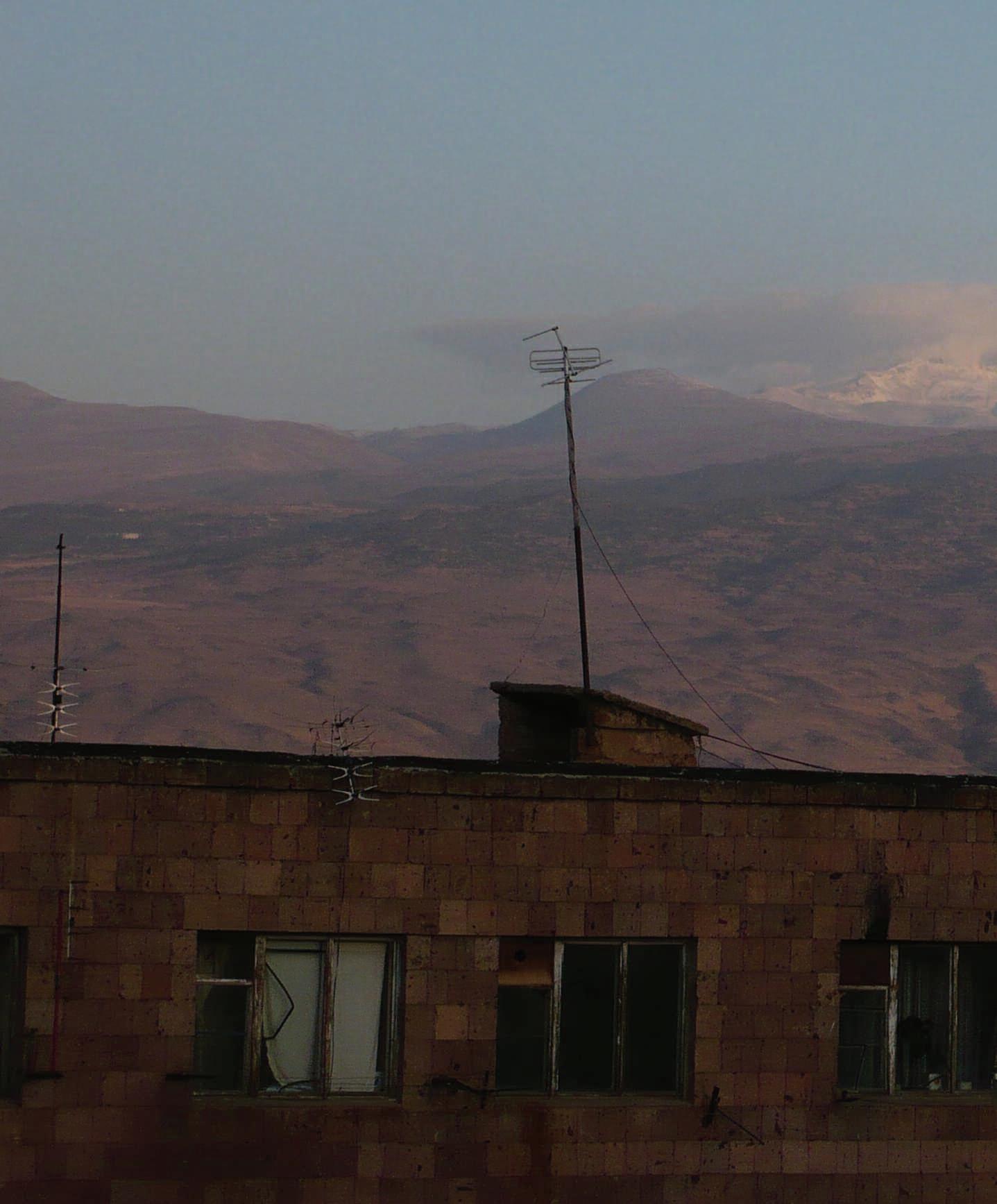
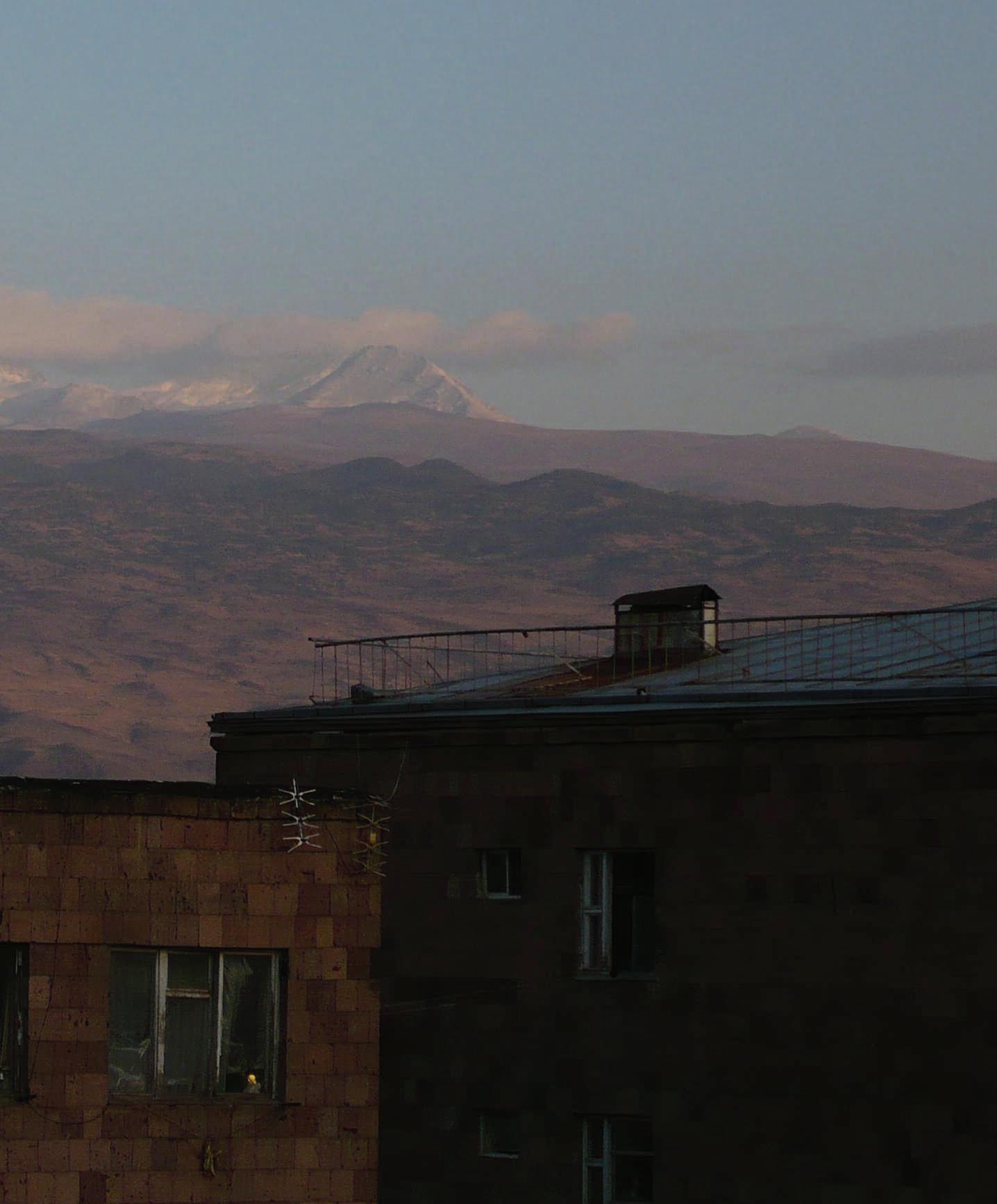
Mount Ararat in Armenia -- the infamous resting spot of Noah’s ark Armenia was the first countr y to adopt Christianity as its religion in 301 AD. Today it is one of the most persecuted faiths in this region. And yet Armenia is also now home to one of the fastest growing unions of the 52-countr y European Baptist Federation. CBM field staff Jeff and Deann Car ter and Vasil Vasilev are currently work ing with the EBF in leadership formation and development of training resources
Iam constantly amazed, and yet also strangely comforted, by the way the teachings of Jesus run counter to the values and mores that the world holds dear. Where people seek after power, Jesus taught that the meek will inherit the earth. Where the world seems to favour the confident ladder-climbers who will stop at nothing to fulfil their own ends, Jesus extols the virtues of being peacemakers and servants. Jesus would indeed make an interesting, if not controversial, lecturer for the Har vard School of Business!
One of the topics Jesus addresses over and over again, either direc tly or indirec tly, is the subjec t of leadership I t is almost amusing to me how Jesus patiently and deliberately took time to admonish those who sought power through the misuse of their position His logic on this issue runs counter to the definition of success found in the multitude of today ’s leadership theories that line our bookshelves Jesus’ teaching offers topsy tur vy advice that seems utterly absurd to his disciples.
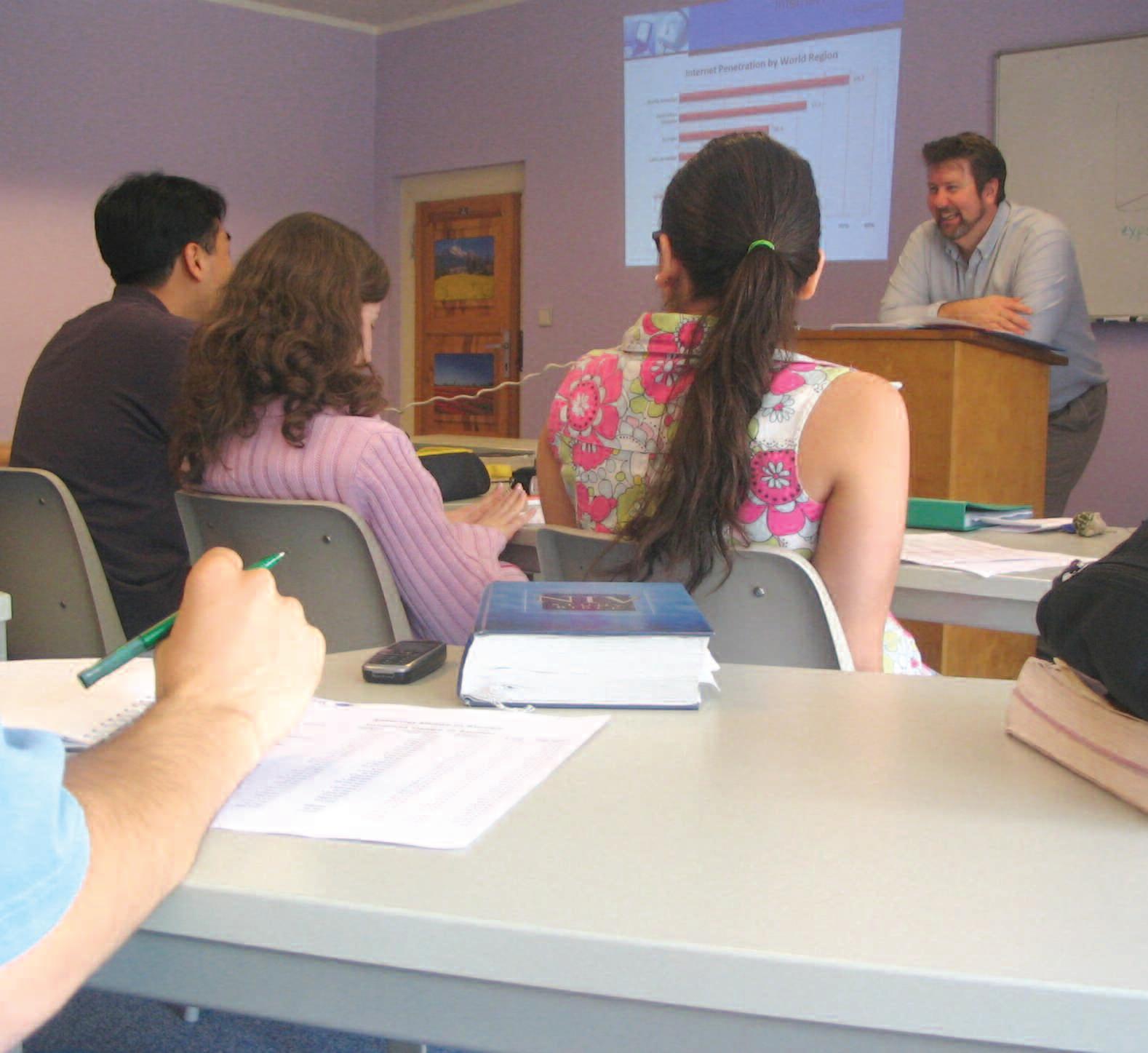
Students in the course on Interpreting Contemporar y Youth Culture designed and taught by CBM field staff Jeff Car ter. I t is offered at the International Baptist Theological Seminar y in Czech Republic as part of the Certificate of Applied Theology program Jeff was instrumental in developing this program for students who are chosen by their respective Baptist Union in their countr y to take one year of intensive English training and theological study Students attend from all over Europe and the Middle East.

My son Zachar y is per forming in a musical adaptation of Charles Lutwidge Dodgson’s stor y of Alice in Wonderland. In one scene, the Red Queen contradicts ever ything Alice considers normal, turning all she k new as proper and correct upside down –up is down, bad is good, sour is sweet
Perhaps the disciples experienced such “wonderland” moments of logical ver tigo when they encountered Jesus’ teaching about leadership, which also turned ever ything they had ever been taught about striving for personal success and gain upside down Love your enemies? Show compassion to those who persecute you? Love others as you would love yourself? What does it all mean?
We often picture the last supper with Jesus in true M ichelangelo fashion – men gathered around a low table in a candle-lit room, the picture of peace and serenit y –but it is also fraught with the pett y arguments of the disciples who verbally wrestle as to who is the greatest leader among them Again, Jesus points out, almost mocking them (or is it pit y?), that they should consider themselves ser vants I t was not the first time Jesus had to remind them to sacrifice their own interests and ambitions All the ideals
Jesus held before them seemed to escape the disciples’ understanding until they witnessed his ultimate sacrifice – a crown of thorns and a cross rather than a golden crown and a k ingly throne
One might think it safe to assume that the contex t in which Jesus lived and taught was perhaps a more simple time with less of the complexities we face today. How could the concepts and struggles faced by young leaders of today ’ s world compare to those of a more “primitive” time? Is there actually a chance of adequately addressing our contex t and lives with any sense of relevance? When one carefully examines the socio-political climate and context in which Jesus ministered – the foreign occupation of countries; poverty, gender and race inequalit y ; status and class struggles; the list could go on and on – we see that Jesus could address the United Nations G eneral Assembly today with complete relevance!
Different times Similar issues Similar answers
Jesus’ disciples were products of their culture, and to follow in his steps called into question ever ything they had been taught by family and societ y I t was not any easier for them to accept what he called them to
give up than it would be for a 21st Centur y politician, teacher, tax auditor or fisherman today
O ver the past six years I have been amazed at how the transformation of Europe is unfolding before our eyes.
Since 2003, the European Union has expanded to a total of 27 countries with the addition of 12 new countries (of which the Czech Republic is one) Many of these countries (from Romania to Estonia) have been undergoing a sharp and deep transformation during this time This is par ticularly evident in the former “have not ” , Eastern-bloc countries that for so long were held back, socially and economically, from being full par tners on the world stage
Paranoia, control, and self-ser ving structures of old have been stripped away lik e the dust y sheets that cover furniture stored in an old attic As the cobwebs of oppression fly in ever y direction, a breath of fresh air sweeps away the domination of the past
With this new air come new revelations and new ventures
Capitalism – cheap credit, striving for affluence and multinational corporations swooping to monopolize and offer variety where selection was once a luxur y – is now the standard The young, under-30 crowd has almost no memor y of the difficult times that caused their parents and grandparents such hear tache
This “new ” Europe is far from economic utopia There are still deep divides over race and culture There is still massive economic disparit y, hyper inflation, and uncer taint y –some countries newly enjoying political autonomy and democrac y fear they are selling themselves to an even greater occupation as they give up more and more autonomy to the European Union.
Among the young in Europe, the word is “the sk y is the limit ” to mak e money and become affluent, for those who are willing to seize oppor tunit y, work hard and grasp the proverbial brass ring God and faith do not even enter the equation.
This is the world in which we minister today
In 2002, my wife Deann and I, along with our son Zachar y, came to Europe to work in the area of leadership formation and to develop youth ministr y training Since
then a great deal has happened toward that goal.
Today we find ourselves at the stage of launching several initiatives that we are praying will help encourage young leaders across the family of the European Baptist Federation (EBF) As the acting coordinator of Youth M inistr y Training for the EBF, I am astounded and humbled by the great cooperation among the 52 nations that mak e up this vast territor y, which encompasses Western, Central and Eastern Europe, the M iddle East and Eurasia
Over and over again, I find myself teaching students in a multi-ethnic, multi-national setting, brought together by the common call on their lives – to ser ve God and win others to Christ
International Baptist Theological Seminar y
Last year I received a request to star t the development of a new module for youth ministr y at the International Baptist Theological Seminar y based in Prague
This year the module will be offered through the Masters of Applied Theology program, so students are now able to focus their studies in Youth Leadership and Development Our accrediting body, the Universit y of Wales, has also given approval for the introduction of a Cer tificate of Youth Leadership, and we are work ing with the facult y to determine a timeline for implementation
I t has been an unimaginable joy to be included on the facult y team and to teach students and give seminars at the seminar y For the past three years I have been teaching a course in Interpreting Contemporar y Youth Culture to students enrolled in the Cer tificate of Applied Theology. These are students who have been chosen by their respective Baptist Union in their countr y to tak e one year of intensive English training and theological study They are the lay leaders, seminar y professors and ministers of the future of these various countries.
I t has been a wonder ful privilege to teach students from Moldova, Romania, Uk raine, Russia, Israel, Spain, Poland, K azak hstan, and Serbia, to name only a few These students often come to study on scholarships since many of them are from economically challenging situations CBM and Canadian Baptists have been generous to assist in scholarships for these students.
Last year we had a student named Liridon, a young man from the Muslim-
dominated area of Kosovo, a region of Serbia that has suffered recent conflict and controversy During his time in the program, he and his fellow classmate Marco, a Serbian, became friends despite the obvious political tension that reigned around them
This is the nature of the EBF, where countries that have political differences or even a histor y of atrocities between them can work together and put these differences aside to address the urgent need of reaching out to European and Middle Eastern societies I t is not easy to ser ve as leaders in these areas, where the evangelical population is small and often seen as a cult or sect I have grown to deeply appreciate the global family atmosphere of the EBF and feel that it ’ s a foretaste of heaven as we stand before God, with all of our tongues praising him together!
In 2003, I was commissioned to do a study of the 52 countries of the EBF to determine the needs for training and leadership development in youth ministr y for each countr y After 18 months of intensive research, it was found that one of the greatest needs was a common training resource to encourage and equip young leaders across many cultural realities
This fall we will launch a new training course, Horizon Challenge, which I have been work ing on I t will be offered to seminaries, youth depar tments and also be available on the internet Many youth leaders are isolated and cannot afford to come to special training conferences so this new online resource will be made available in English, Arabic, Russian and subsequent other languages as resources become available for translation
At the moment the material is being “test run” in Poland as the ver y first Horizon Challenge School of Leaders I have travelled to neighbouring Poland over a five-month period, one week end a month, to teach the new material to see if it is adequate to release to a larger audience. So far, the weekends have been ver y encouraging and the calibre of the young leaders who have attended has been inspiring.
One such leader is Peter Szczesny, a second-year medical student, who has been ver y involved in our conversations around the lecture topics, and has shared his journey to faith with me
The son of two doctors who are atheists, Peter at one time rebelled against the world and was a Satanist Now, he wants
to become a medical missionar y for Christ At 21 he is engaged to be married to a young Christian woman this August If he stayed in Poland or moved to another countr y, he would be guaranteed a comfor table, lucrative life
Instead, he has chosen a life of sacrifice and ser vice.
In addition to his studies, Peter is currently tr ying to develop a network of evangelical youth workers across Poland to pool resources and create a dynamic force to win young Poles to Christ Peter is typical of what I see time and time again of the many young Christian leaders and professionals who are sacrificing “position” and “power ” , setting their own ambitions aside to live out their vocation ser ving Christ
Whether it ’ s a young woman doing translation of theological books in Armenia, a young Lebanese couple ser ving as youth leaders in their church giving up a promising career in a family business, or a Romanian teacher who is reaching out to k ids in his communit y and school despite state criticism for his effor ts, God has shown me the multitude of “upside down” sacrifices that young leaders in Europe are mak ing to lead from behind
M inistr y for us in the European Baptist Federation continues to be an incredible journey with much more yet to be done Pray that these young leaders will continue to strive after K ingdom values and let their lives shine as examples of radical obedience
Our world is in critical need of leadership, well-trained men and women with a hear t for ser ving, for look ing out for the best interests of others Mak e an investment today Suppor t CBM field staff lik e Jeff and Deann Car ter and Vasil Vasilev who are helping to train and mentor the nex t generation of leaders Contact communications@cbmin org for more details on how you can become a Par tner in M ission
While ever yone has a stor y, some linger in your mind, not to be forgotten Liridon’s is one such stor y.
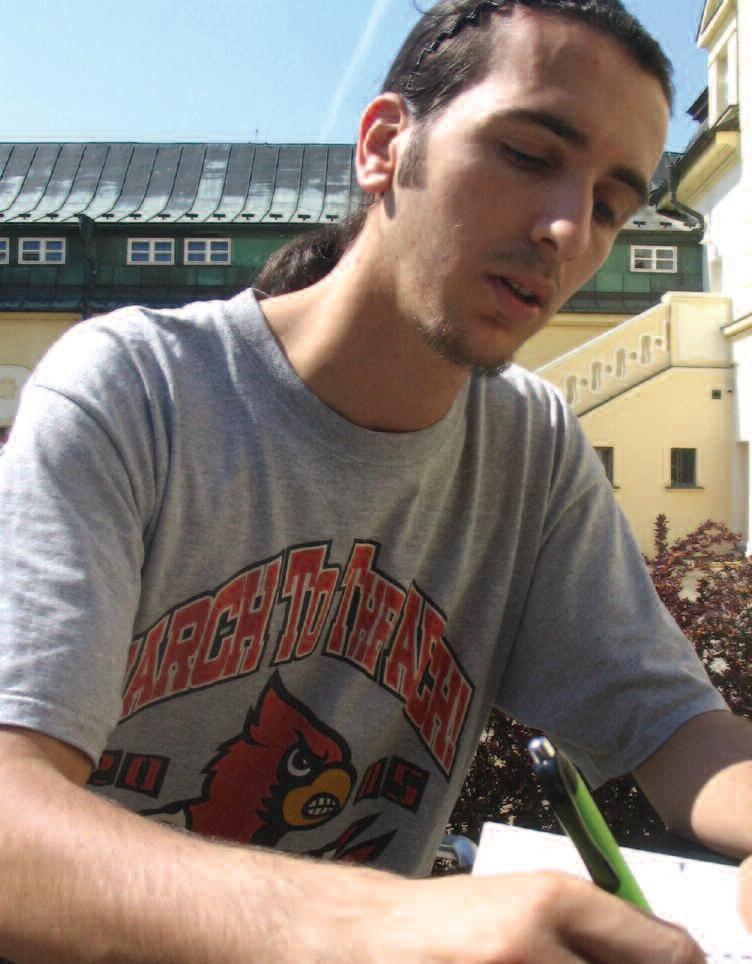
When Liridon was young, the war in Kosovo forced his family to move around a lot Eventually, he and his mom fled to Macedonia as refugees, while his dad and brothers stayed behind as soldiers in the conflict Life was difficult, but Liridon and his mom met people who were helping refugees, and who invited them to church Both eventually became believers Liridon vividly recalls his experience
“I was 13 years old I felt the Holy Spirit, felt something exciting, strange and good inside during the ser vice…I k new that God wanted to tell me something God was calling me I t was hard for me to believe what people at church were telling me. I t was more that God was work ing within me and touched me ”
“I t was a gift to move to Macedonia, ” he now says Liridon and his mom returned to Kosovo after the major conflict and she star ted the first evangelical church in a region where the majorit y are Muslims “My town is ver y Muslim, ver y strict. There are about 8 mosques, ” explains Liridon They suffered much persecution from others in the communit y. “My brothers
wondered what was wrong with me, ” he says with a slight smile. “People didn’t understand they told me that it ’ s a big sin to change your faith They tried to mak e others hate me.”
But Liridon’s father was different Though a devout Muslim himself, he respected the new faith of his wife and son. He even gave his wife land and helped her build a church He did all this as a gift to his wife and still helps her with repairs and maintenance Liridon helped around the church and assisted in distributing food and other supplies they collected to give to the more needy around them “ We have lots of orphans and widows They need food and clothes, and during winter, wood for stoves ”
At high school, students mock ed Liridon and teachers made his life difficult “ Why do you want to tak e this test? Do you k now how hard it is?” they would ask him, hoping to provok e him to give up and drop out He didn’t, but when they failed him anyway, he realized he would have to go to school in another cit y
The new high school was not much different But Liridon met one person, a classmate, who became a close friend who suppor ted him and encouraged him They had many conversations about life and faith and his friend became a believer also and was baptized
They are still friends today
“I lost a year but gained a believer, ” he notes happily
Liridon continued to help his mom with the new church and was excited to discover that he had been accepted to study at the International Baptist Theological Seminar y in Prague, Czech Republic, where CBM field staff Jeff Car ter was one of his teachers in the Cer tificate of Applied Theology course.
For Liridon, it was an opportunity “to come and be with Christians” , but he had a rough start. “I was sometimes offended or shocked I had different reactions from people It was hard at first I had questions about Christian community, to see that ever ything is not per fect I grew up in my faith ”
At IBTS, Liridon became friends with students from Spain, Hungar y, Romania, South Korea, Russia, K azak hstan – and Serbia, in spite of the ongoing tension in his countr y. “Reconciliation is still hard, ” explains Liridon, “because people who had family k illed by Serbians – they still remember I t ’ s hard to forget for both sides. People saw ever ything ”
Liridon graduated from IBTS in 2007 and
is now in post-secondar y studies, majoring in crime prevention. There is high employment (up to 70 percent in some areas) and pover t y in his countr y Many youth in the cities have become caught up in drugs, alcohol and crime, says Liridon “I want to be a policeman, lik e an undercover cop, and share the gospel; to tak e youth from the streets into the church ”
In Februar y 2008, Kosovo declared independence from Serbia and there have been violent outbursts opening old wounds Please continue to pray for Liridon, his mom and other believers throughout the region as they seek to be peacemak ers
In Januar y 2008, Vasil Vasilev, k nown as “ Vasko” to his friends, joined the CBM team as the Associate Coordinator of Youth Leadership Training for the European Baptist Federation (EBF) and will be based in Czech Republic
In his new role in grassroots leadership formation on behalf of CBM and EBF, Vasko will continue to build on the foundational work being done in training and resource creation for youth leaders in 50 countries across Europe, Eurasia and the M iddle East He will also assist in the hosting of CBM shor t-term mission teams in this region.
For the past several years, Vasko has been integral in the formation of youth ministr y training and strategy development in his home countr y of Bulgaria, work ing on behalf of the Baptist Union of Bulgaria Vasko comes with the strong endorsement from not only his home union but also from many corners of Europe, as he has also ser ved for the past five years on the Executive Committee of the European Baptist Federation Youth and Children Depar tment

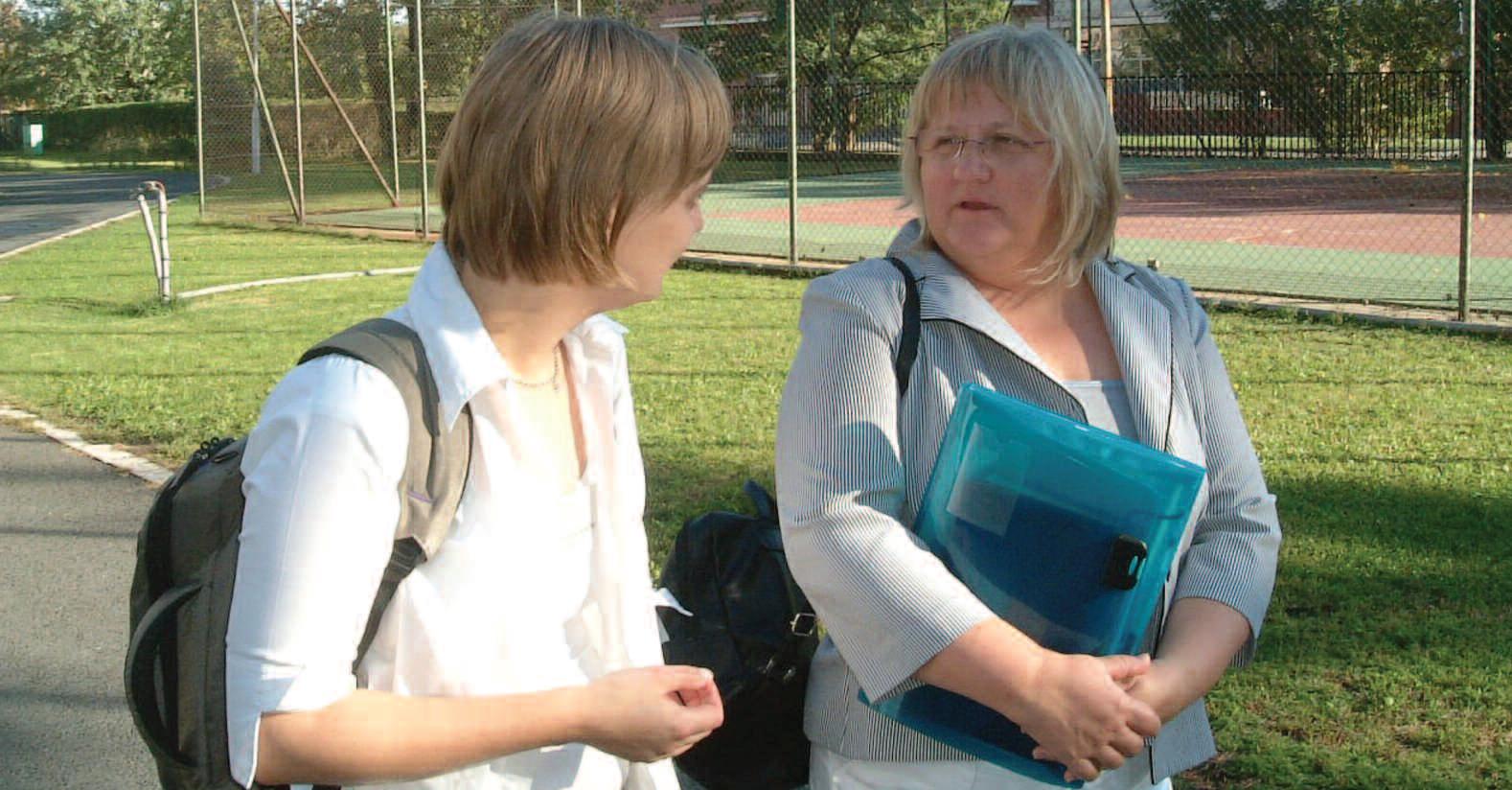
Terr y Smith, CBM’s direc tor of Par tnerships & Initiatives, chats with Dr. Ksenija Magda, a leading Christian theologian in Eastern Europe.
Terr y : Ksenija, for the past 6 years, our Canadian Baptist family – and par ticularly the Baptist Women – have been praying for you What has been happening in your life?
Ksenija: Well, first of all, thanks for your prayers and suppor t I have just submitted my disser tation for the degree of PhD at London School of Theology I t has been a long, hard process and I am glad to have finished my par t
Terr y : Your PhD! Wow! (Said with a hint of jealousy ) What have you written on?
Ksenija: I have written on the notion of territorialit y in mission in the work of the Apostle Paul about how the place shapes the way people think. Paul was who he was because of where he lived and how culture shaped his view of the Gospel and the role of faith. He wasn’t just a Jew in the Roman Empire or a Roman citizen with Jewish roots He was, lik e us all, mark ed by his cultural and geographical milieu.
Terr y : Speak ing of milieu, tell us about your background.
Ksenija:I was born in Yugoslavia before you were allowed to ask if you were Serbian, Croatian or whatever My parents ushered us away to G ermany when I was 9 years old and I was raised and educated there I met Tomas Magda at a Bible camp when we were young adults and we were married a year later We studied theology together in Belgrade and have done all of our ministr y together as a couple
Terr y :The Balk ans have been horribly divided by countless wars that we in the West can’t quite understand What was the place of faith in that contex t?
Ksenija: People lik e to say that they were religious wars, but most of us who went
through it know that it was about economics and power, not just about being Catholic, Or thodox or Muslim. I was blessed to be raised in a family of devout and faithful Baptists who steered us clearly through this maze.
Terr y : How did you manage to complete a PhD while raising children, teaching theology and work ing in a church?
Ksenija: God surprised me When I decided to get this star ted, my husband was just transferred to a new church I had a little closet where I did my writing; no windows, no doors and no heating! But the odd blessing was that in this church setting, women were not really welcomed into active public ministr y so I was able to concentrate on my studies
Terr y : What is it lik e to be a leading Christian theologian in Eastern Europe – and a woman?
Ksenija: Baptist tradition hasn’t been necessarily hospitable to the public witness of women I have, at times, felt put down and marginalized But I have discovered real joy in k nowing that I am doing what God wants, in spite of any opposition I might experience For me, the ‘happy place’ is wherever God places us I t allows me to not feel insecure about my call
Terr y : Was your ministr y ever challenged because you are a woman?
Ksenija: Perhaps early on, some students in theology didn’t accept me as their instructor They would sit in the back of the class, mak e fun of me and even accuse me of being a feminist But my revenge [retribution] came when they would approach me by their
Professor Ksenija Magda (pictured right) with a students.
third year of studies and ask me to be their super visor in their final disser tation!
Terr y : Who would you say has been your mentor?
Ksenija: Honestly, it was a Catholic sister… when we moved to G ermany, she became my teacher, my friend and my model She was ver y demanding and exacting with us and trained me in languages and philosophy and helped me reach my capacit y as a young person.
Terr y : You have three children and a really busy family. How does being a mother help you understand mission?
Ksenija: I have discovered that when you are involved in new ministr y, there are a lot of dir t y diapers You need to love new believers just like a mother loves her children, in spite of the challenges Our students, new believers and church planting all help us learn patience, trust and forgiveness
Terr y : Thanks, Mom, er, I mean Dr Magda Before we close, do you have any final words for Canadian Baptists?
Ksenija: I could never have completed my studies without the love, suppor t and prayers of the Baptist women of Canada Lynn Smith especially, but also others lik e Brenda Halk and many more, prayed for me, encouraged me and pushed me on Your financial suppor t has been a true blessing and I thank you
Terr y : Actually, Ksenija, we as Canadian Baptists thank you, for your courage, faithfulness and the model that you and Tomas are for the Baptist churches in Europe Our prayers are with you!
by Dr Lois M itchell, Coordinator of CBM’s Justice Initiatives
When we speak of “gender issues, ” people often think of the many issues facing women: sexual violence, lack of oppor tunity or political voice, educational deficits, maternal mor tality and other health issues, religious oppression…These are all ver y real issues, but they are not just women’s issues They are issues that affec t us all
Isn’t that what we tell our k ids when their idealism runs headlong into a brick wall of realit y? Even as adults we sometimes forget that there are millions of children, women and men – of all ages and colours, of all levels of education, of all countries, of all levels of income and pover t y, of all degrees of abilit y and disabilit y – who are holding the shor t end of the stick. Life is not fair And it ’ s dispropor tionately not fair for many women and children But the truth is the unfairness affects us all Sometimes there’s a clear enemy – a dictator, a natural disaster, a polic y, a religious ideology, a bully – something or someone that can be blamed for the unfairness More often than not, it ’ s hard to pin down any one thing I t just happens Good people strain against oppression in all its forms – tr ying to act justly and to promote fair systems – but despite our effor ts, inequities persist in ever y society and in ever y system
I t ’ s hard to trust a God who seems to stand by as some of the most vulnerable members of societ y experience horrendous emotional, physical and sexual abuse Who can blame those who find it difficult to trust a God who allows evil to persist –and even flourish – who allows such disparit y, who permits some to live in outrageous affluence while others languish in suffocating pover t y?
to which more than a billion of them are now subjected
And yet more than halfway into the 15-year timeline, the richest one-fifth of the world’s population controls 86 percent of the world’s wealth
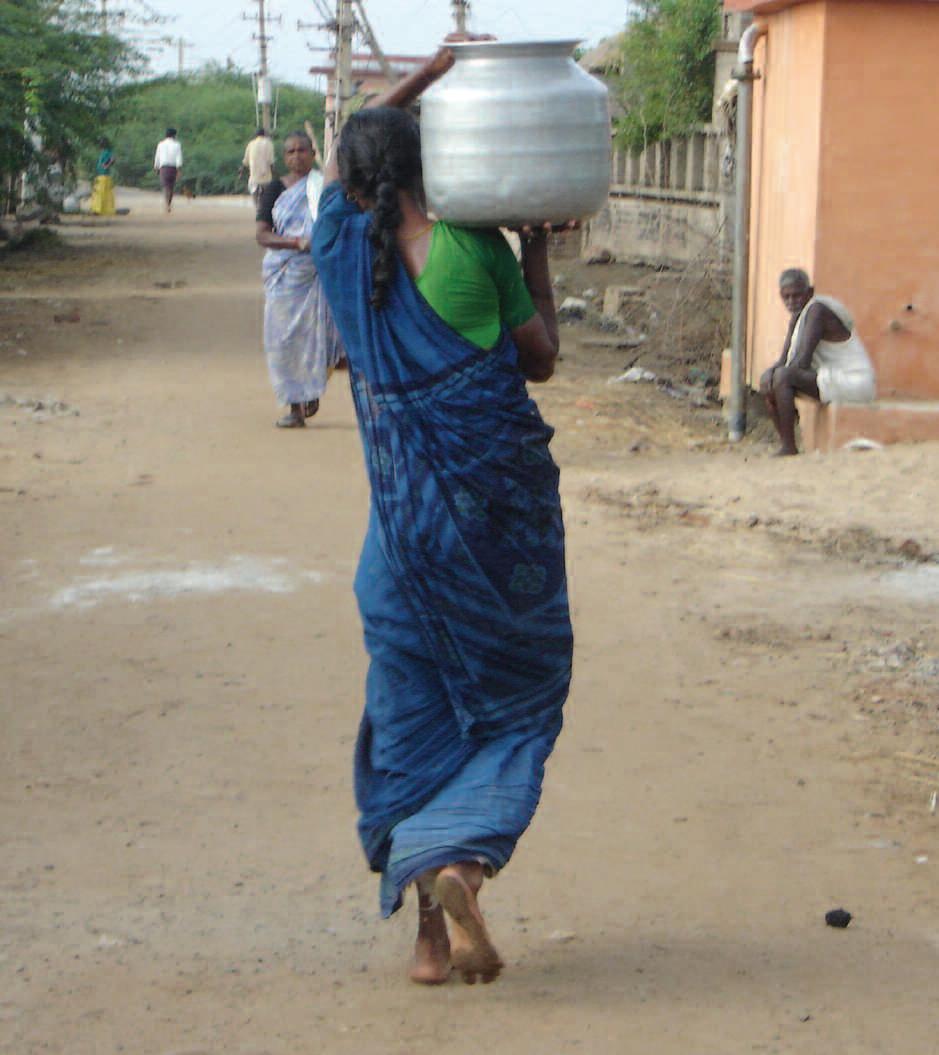
As many as 4 million girls and women are sold into prostitution each year
Each year 2 million girls/women suffer genital mutilation, often in conditions that lead to lifelong pain, infection and premature death

For women, the picture is even worse
Consider these statistics, cited by Stephen Lewis:
Up to 3 million women die ever y year because of gender-based violence or neglect
The gap between the rich and poor of the world is growing, despite the determination of the United Nations in the year 2000 to eradicate ex treme pover t y by 2015 In a preamble to the M illennium Development Goals, the UN said:
We will spare no effor t to free our fellow men, women, and children from the abject and dehumanizing conditions of extreme pover t y,
1 in 5 women is a victim of rape or attempted rape during her lifetime
Approximately 600,000 women die in childbir th and millions more are victims of infanticide in countries that value male over female children
Women account for almost half of all HIV and AIDS cases worldwide; in Africa, close to 70 percent of infected people are women.
Women are educationally handicapped; about 66 percent of the world's 876 million illiterate people are women.
Society groans under the weight of hese gender issues and both men and omen are impacted and diminished by ender inequities As Canadian Baptist Ministries works with partners in various orners of the world, it is becoming creasingly apparent that gender issues e vitally important and need to be etter addressed
Work ing alongside women in Kenya, wanda, Bolivia, El Salvador, India, the zech Republic, China, Eastern Europe, ebanon – well, ever ywhere that CBM is ork ing! – we thank God for the mazing strength and remark able esilience of women Despite numerous rdships, they press on, work ing within the parameters and limitations of their cultures to care for their families, mobilize their communities and inspire their churches In the midst of crushing oppression, hope refuses to be ex tinguished and it is often women who are tending and coaxing the tiny flame
Development agencies are all coming to the same conclusion: it is vitally impor tant that women be involved in the formulation and implementation of strategies for development ever ywhere in the world Or, to put it bluntly, without the involvement of women, effor ts at development fail
In his book, Development as Freedom, Amartya Sen writes: ”No longer the passive
recipients of welfare-enhancing help, women are increasingly seen, by men as well as women, as active agents of change: the dynamic promoters of social transformations that can alter the lives of both women and men ”
We have seen this in action for ourselves On a women’s study tour to Kenya in the summer of 2007, our team of 14 was humbled and inspired by the way women of the Africa Brotherhood Church are mobilizing their communities to address crucial needs lik e access to water, food securit y, education and income generating activities They ’re up to the challenge Are we?
Here are just two of the ways CBM is involved in recognizing the role of women in development and empowering them to be even more effective agents of change:
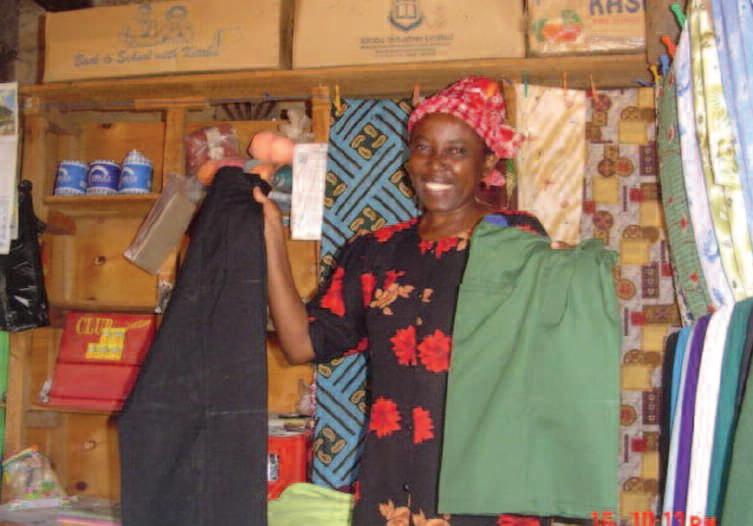

• In Kenya, micro-credit loans mean women are able to start small businesses; Lucy Nzula (pictured) purchased a sewing machine and materials, and is now able to pay school fees for her children. The loan she repays then goes into the collective “pot ” to help another family
• In India, literac y is a crucial issue and an estimated two-thirds of women cannot read and write. Through women’s groups, members are able to access education, including literac y, and training to learn mark etable sk ills and to gain employment As a result of the encouragement and suppor t of these groups, many women have become leaders in the communit y
You can continue to provide much-needed funding for these community-based programs. Donate online today www cbmin org
by Ana Salomoa Canga, Development Coordinator for The Sharing Way in Angola and G ender Specialist
In traditional African culture, the roles for boys and girls were clear : boys herded livestock, girls fetched water and firewood Boys hunted, girls per fected their cook ing prowess They grew up k nowing what societ y expected of them. Boys k new they had to be strong, hardwork ing and wise so they could tak e good care of their wives and children; girls k new they had to be hardwork ing and submissive so they could find good husbands who would tak e care of them Both sexes were seen to be playing their different roles towards successful homes
prostitution and unprotected sex, thus contributing to the spread of this deadly disease
Thus would their lives be lived: according to the age-old pattern of societal norms rather than individual aspirations In other words, it wasn't up to women to mak e their lives successful I t was up to their future husbands This notion robbed them of the initiative and creativit y to mak e and demand changes
We need to strive together to work against injustice in all its forms
The United Nations estimates that up to 80 percent of Africa's farm work is shouldered by women Yet in many patrilineal societies in Africa, complex systems of laws prevent women’s abilit y to inherit, own and manage land Discriminator y customar y laws allow women to use land only under the super vision of a male guardian such as their father or husband
In South Africa – where HIV and AIDS is rampant – women’s inabilit y to own and manage land only exacerbates the problem Pover ty can force women to engage in dangerous activities such as
Women also suffer injustice in the classroom Many girls have to drop out of school because meagre resources cause preference to be given to boys since they are perceived to be the ones to tak e care of their parents and ex tended family But growing unemployment, lack of training or access to small business loans, drought and other environmental crisis, inequalit y in global trade, are mak ing it difficult for anyone – male or female – to earn an adequate income
But the picture is not all bleak. In Angola, and other regions of Africa where The Sharing Way is work ing with national church par tners in communit y development, all people – male and female, young and old – are benefiting Through our integral approach that addresses both spiritual and physical needs through the empowering ministr y of the church, all are seen to have dignit y and value All can contribute in some way And that is creating the most remark able change of all!
“
There is a stereotype out there that youth ministr y is a shallow and dying world. But the truth is that many of the ‘nex ts’ in local church ministr y and missions have emerged from youth ministr y. Here is a look at some of the critical think ing going on and the new direc tion we’re headed.
by Rev Rob Nylen
Is youth ministr y dead?”
This was the topic of conversation at a gathering of regional youth directors I attended two years ago As a movement, youth ministr y is just a little over 50 years old, and is showing symptoms of being in a season of reflective evaluation
A number of k ey warning signs trouble those in youth leadership
First, many local church leaders are wondering where all the youth go after they graduate from high school More than 70 percent of youth become disconnected from the local church during their young adult years, forcing leaders to ask serious questions about the k ind of disciples that our youth ministries are producing
Second, the experience of being a “youth” today is changing significantly Adolescence star ts earlier and lasts longer This lengthened time of “becoming” is complicated by a mark eting culture that targets this age group aggressively –proclaiming a gospel that says if you have “image and stuff ” you will be happy Youth has become stereot yped as a time of freedom, choice, limited responsibilit y and unlimited thrill
Third, they are the “wired” generation with iPods, cell phones, X Boxes, PlayStations, Wii’s, MSN and of course access to the Internet
Yet, increasing numbers of youth are lonely, bored and restless, tired of all the
enter tainment; many are look ing for some thing, some cause, to give their life to Instead of tr ying to enter tain youth into the K ingdom (which many of our youth ministries have done), we can invite youth into a K ingdom lifest yle which offers them the challenge and purpose they are so hungr y for
Finally, youth have become disconnected from the larger church family The term “silo
Yet, increasing numbers of youth are lonely, bored and restless, tired of all the entertainment; many are looking for some thing, some cause, to give their life to
ministr y ” is sometimes used to describe the relationship of youth ministr y to the rest of the adult congregation What star ted as an attempt to offer youth a place where they can be together in a specialized program has turned into a ministr y experience where youth are completely isolated from the rest of the church family We believe this has hur t our effor ts at discipleship The new language emerging out of youth ministr y circles today is “intergenerational” and “family based ” For over a decade now, CBM has been providing a forum to wrestle with these
issues While the name of this committee has changed over the years, CBM Youth continues to tak e seriously its role to reflect on the changes that are needed and ask difficult questions The team is made up of the youth directors from the four conventions and unions across Canada as well as k ey CBM staff
Canadian Voices
O ver the last five years, the CBM Youth team has spent a lot of time (over countless cups of coffee!) listening to what local church leaders have to say about the state of youth ministr y
This culminated in issuing an invitation to 40 k ey youth leaders from across the countr y to meet in Vancouver There was an over flowing of energy as leaders were allowed space for honest dialogue, a time to share some of the pitfalls, joys and hopes for the youth they care about so deeply, and an oppor tunit y to reflect on where they sense God is leading.
I think that all left fiercely committed to ministr y with youth and young adults but with a move towards a more intergenerational discipleship experience I t was a pivotal meeting and while a summar y is still a work in progress, here are some of the beginning foundations that will now guide us as we seek to be more effective at mak ing disciples and meeting the needs of a cause-hungr y generation.
Passionate Disciples develop their faith journey in the midst of messy community
We are seeing youth grow up to under-
stand that they need a place where they can be real and be cared for Passionate Disciples practice the spiritual disciplines Youth are discovering the buffet of ways in which they can experience G o d ’ s n o u r i s h i n g g r a c e
Passionate Disciples need spiritual mentors Across Canada youth are hungr y and open for someone to walk with them as they journey through adolescence and into young adulthood Passionate Disciples are engaged in local and global compassion. Youth are engaged in what is happening worldwide and are eager to respond with both hands and hear t
Passionate Disciples are critical think ers and culturally engaged. Many of our youth are wanting to discover how they can communicate their faith by being involved in justice initiatives both locally and overseas
Passionate Disciples still believe in the local church Youth are finding renewed hope as they are allowed to be involved in the mission of local churches These six foundations are not pipe dreams – they exist in some form in our local churches across the countr y We are excited at the openness among our leaders to explore new ways to create global disciples who have hear ts that pound with K ingdom values!
Much of our new direction and energy has been inspired by our colleagues overseas Within the last few years, we have had three mutual mentoring trips, which involved 5-6 k ey youth leaders from different par ts of Canada visiting with CBM field staff and the youth leaders they connect with These trips provided us with the rare oppor tunit y to listen to youth work ers on the ground in places lik e Rwanda, Indonesia, El Salvador and Prague
And guess what? We heard many of the same themes: most notably – the need for change!
This past fall some of us on the CBM Youth team had the privilege of spending a week with David and Suzannah Nacho in El Salvador and studying integral mission. Through daily study and readings as well
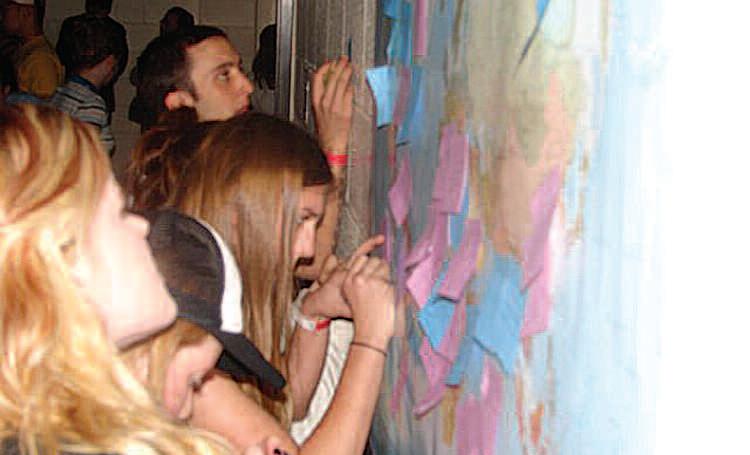
Youth ministry is alive and well – just read some of the writing on the wall.
At Springforth 2007 (one of Canada’s largest youth events sponsored by Convention of Atlantic Baptist Churches), youth made a giant wish list…I want to cook for the homeless in Italy; help to develop agriculture in Niger and tell them about Jesus; create a place for street kids in NYC; bring a child to Christ at camp; find a cure for cancer; I wanna write songs that lead others to Christ; change the survival rate for AIDS; to help rebuild Afghanistan after the war; be a missionary in London, England; do missions in Cape Breton; thank my mom by making her dreams come true; bring Jesus to the youth of Nova Scotia; actively share Christ at Bridgewater High School; drinkable water for everyone…
as visiting sites where integral mission is incarnated, we gained insight into what ministr y might look lik e in our own Canadian contex t when people are allowed to live out their passion for the poor!
During visits to farmers’ and crafters’ co-ops and other initiatives, we began to see ways our local churches can engage and ser ve in their communities We believe it is this model of mission that will allow Canadian youth leaders to build bridges in our post-Christian world
But our strongest youth ministr y connection overseas has been with Jeff and Deann Car ter in the Czech Republic. The Car ters have work ed hard to provide dozens of Canadian youth work ers an amazing oppor tunit y to learn and grow, to spend time with youth work ers from Czech Republic, G ermany, Malta, Lebanon, Israel, Russia, Bulgaria and many other places Again, in these conversations we have been able to learn and discern new ways for youth ministr y in Canada
So, is youth ministr y dead? Absolutely not!
Are some of our ways of doing youth ministr y ineffective? In some cases, yes The task of rethink ing what youth ministr y looks lik e in our Canadian Baptist contex t is an exciting one and CBM Youth looks for ward to continuing the conversation, locally and globally
Editor ’s Note: After ser ving for many years as the youth director for the Convention of Atlantic Baptist Churches, Rob Nylen recently became senior pastor at Main Street Baptist Church in Saint John, New Brunswick He remains committed to youth ministr y and will continue to encourage more of the intergenerational discipleship experience in his new role
All churches should have a place where they can experiment with new models and forms of mission, a place where they can tak e risks For many churches, this place has been in our youth ministries
by Suzannah Nacho, CBM field staff in El Salvador
Moisés Funes, the mayor of Alegría, El Salvador, was on his way back from visiting a communit y project with two of his co-work ers, Zulma and Wilber, when a man on the side of the road motioned for them to stop As he ask ed them for directions, he pulled out a gun, and shot Moisés in the face three times and Zulma once Zulma died instantly Wilber managed to escape into the bushes of a coffee plantation Somehow, Moisés was still alive when Wilber returned and hailed down a passing car to tak e him to the hospital But he died minutes later on the way
Moisés had been elected mayor of Alegría, a small but growing town of nearly 15,000 people, a year-and-a-half earlier, at age 30 Alegría is covered by leafy green coffee bushes that slope down the side of the volcano and is home to a geo-thermic energy plant Coffee picking and the plant offer a few months of work, yet the majority of the year many are left jobless, caught up in a cycle of poverty
Moisés’ election represented hope The previous mayor ’ s 12-year term in power had done ver y little for the people’s welfare When he learned of his electoral defeat to Moisés, he sold off the public spaces of the volcano’s lagoon and the soccer field to private owners – leaving the municipality in debt. The new mayor, Moisés, had little political experience, but had always worked as an administrator and quickly grew into the position.
His co-workers and friends had great respect for him Council members described his leadership in terms of teamwork and friendship What most characterized Moisés was his profound caring and openness to listen to people, notes IBE development
director Oscar Rodriguez, one of his colleagues “[People] asked him for help, whether it was for health needs, a new home, etc [his] humanity and simplicity made it possible to break down barriers in the municipal population and consequently raised his level of commitment to change the reality for people in Alegría; a commitment that little by little, like yeast, grew in spite of the difficulties, contradictions and threats; he never renounced his dream to make profound changes to improve the lives of the people ”
Through CBM, Canadian Baptists are connected to the town of Alegría and its people The relationship started in Januar y 2007 with the commitment to build homes for those suffering in extreme poverty That inaugural day, Moisés presented CBM General Secretar y Gar y Nelson with the key to the city Three months later, houses were being built with the help of CBM short-term volunteers
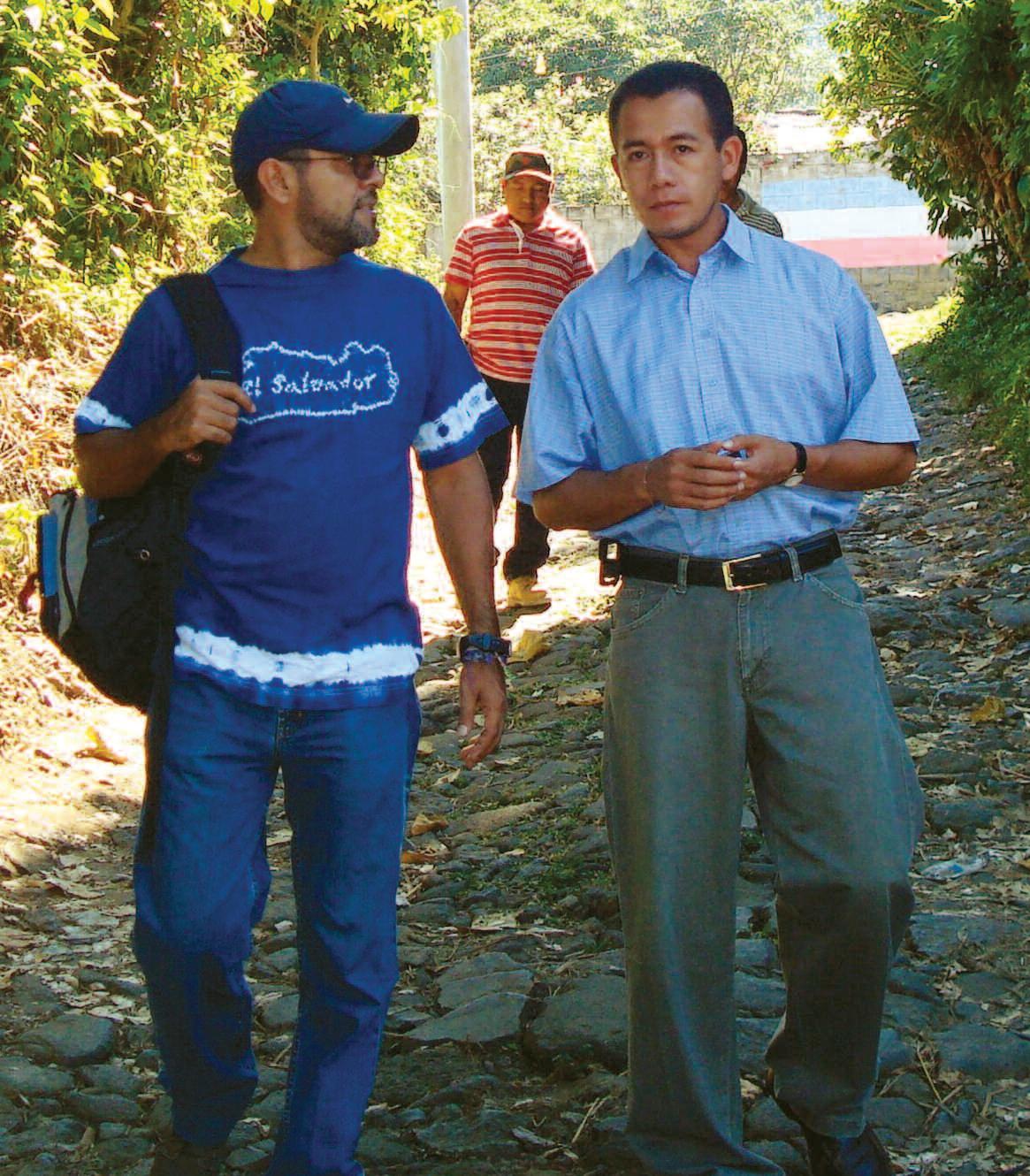
Moisés Funes, the mayor of Alegría (pictured right) visits a community development project supported by Canadian Baptists through The Sharing Way with Oscar Rodríguez (pictured left), Director of Development for Emmanuel Baptist Church in El Salvador
Over the following months I was able to get to know Moisés and was impacted by his reflective character, ability to recognize the power of words and the importance of understanding
In March, Moisés and I had the opportunity to work side by side, building a house Between digging and hauling blocks we found time to sit and chat It has become one of my most treasured experiences
We shared our stories, vision and what had brought us to this place Barefoot kids in T-shirts ran by as he told me about the local poverty Looking me in the eyes, he confessed, “Suzannah, I never would have dreamed I would have the opportunity to work with Canadians and foreigners ” He paused and then added, “ To see you now, your face covered with dirt, a white face we only see in movies and billboards, soiled and messy, is something I never expected ”
We sat for a moment in silence We both recognized the work of God.
For those who knew Moisés, both Salvadorans and Canadians, news of his murder was a tragic shock that made us question our societal and political assumptions in El Salvador, and challenged our Christian understanding of hope.
A large part of Moisés’ work aimed at increasing opportunities and living conditions for the poor, through social reforms and development projects As a practicing Catholic, he acknowledged the sovereignty of God, and together with Emmanuel Baptist in El Salvador and churches in Canada, we sought to understand and live out God’s good news for the poor
This work of justice contradicts the reality of violence and unequal distribution of resources that characterizes El Salvador
Although months have passed since Moisés’ death, the investigation has been slow and dubiously handled Yet, whether or not his death was politically motivated, his life had political and social implications as he worked to combat the system of poverty Moreover, his life and death continue to confront a social reality that endorses a status quo characterized by systemic violence
Ever y day thousands of Salvadorans are denied adequate access to clean water, housing, medical care, education and viable solutions for employment It ’ s estimated that in 2007, 67 people a day left the countr y People forced to leave their families and risk their lives because they didn’t see a future in El Salvador
Moisés’ commitment to ser ve the people of Alegría through listening to them and creating solutions together speaks to each of us, whatever our context Seeking justice and meeting spiritual as well as physical needs is essential to our proclamation of the gospel and our witness as the Church
Oscar Romero spoke of just that in one of his homilies: “God's reign is already present on our earth in myster y When the Lord comes, it will be brought to per fection. That is the hope that inspires Christians
We know that ever y effort to better society, especially when injustice and sin are so ingrained, is an effort that God blesses, that God wants, that God demands of us ”
(Archbishop Oscar Romero, March 24, 1980 He too died for his beliefs, for his actions on behalf of the poor.)
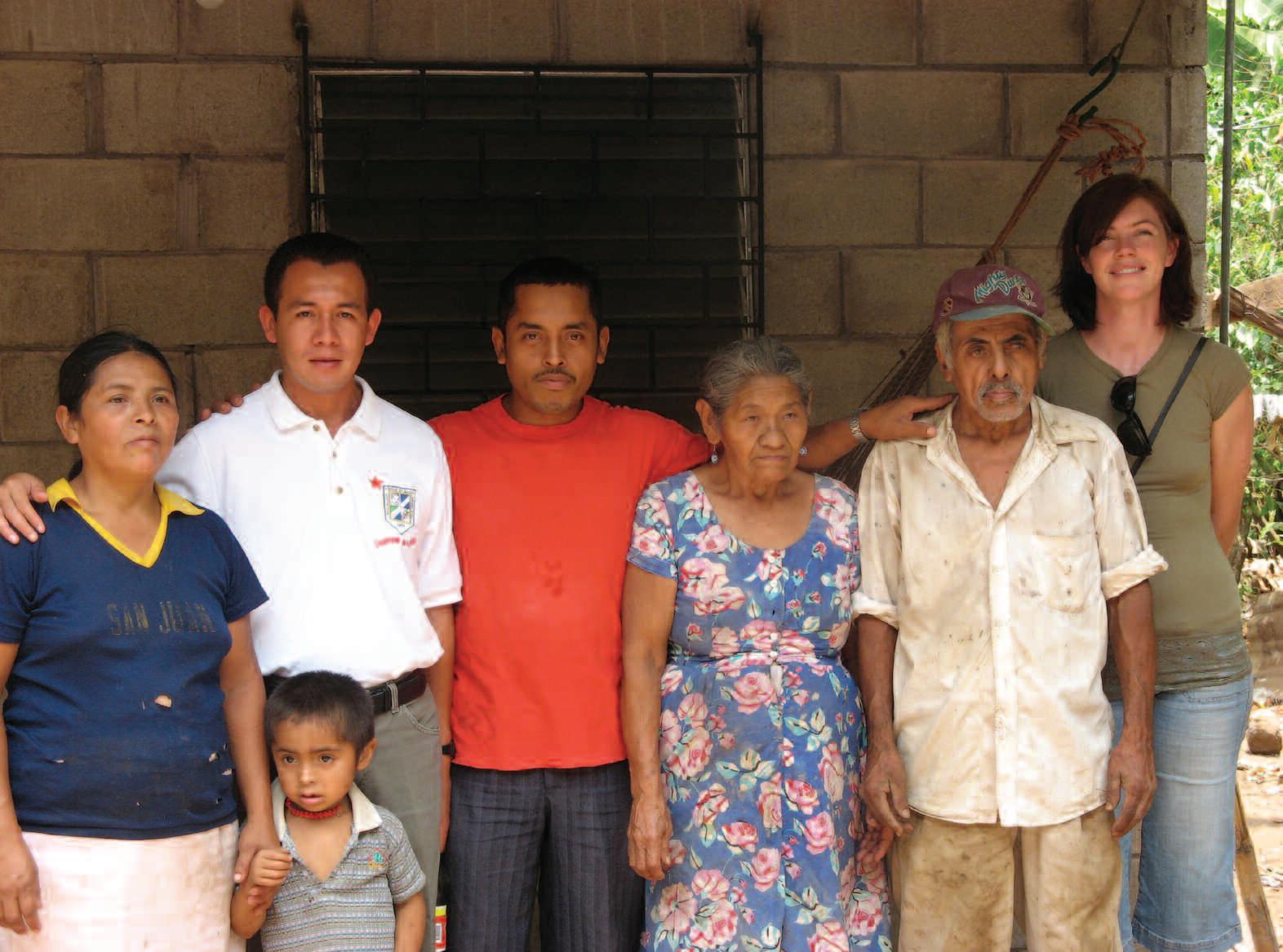
By the people For the people Pictured: Mayor Moisés Funes (second from the left) and CBM field staff Suzannah Nacho (far right) with one of the families to benefit from a build project in which they all participated in, in some way.

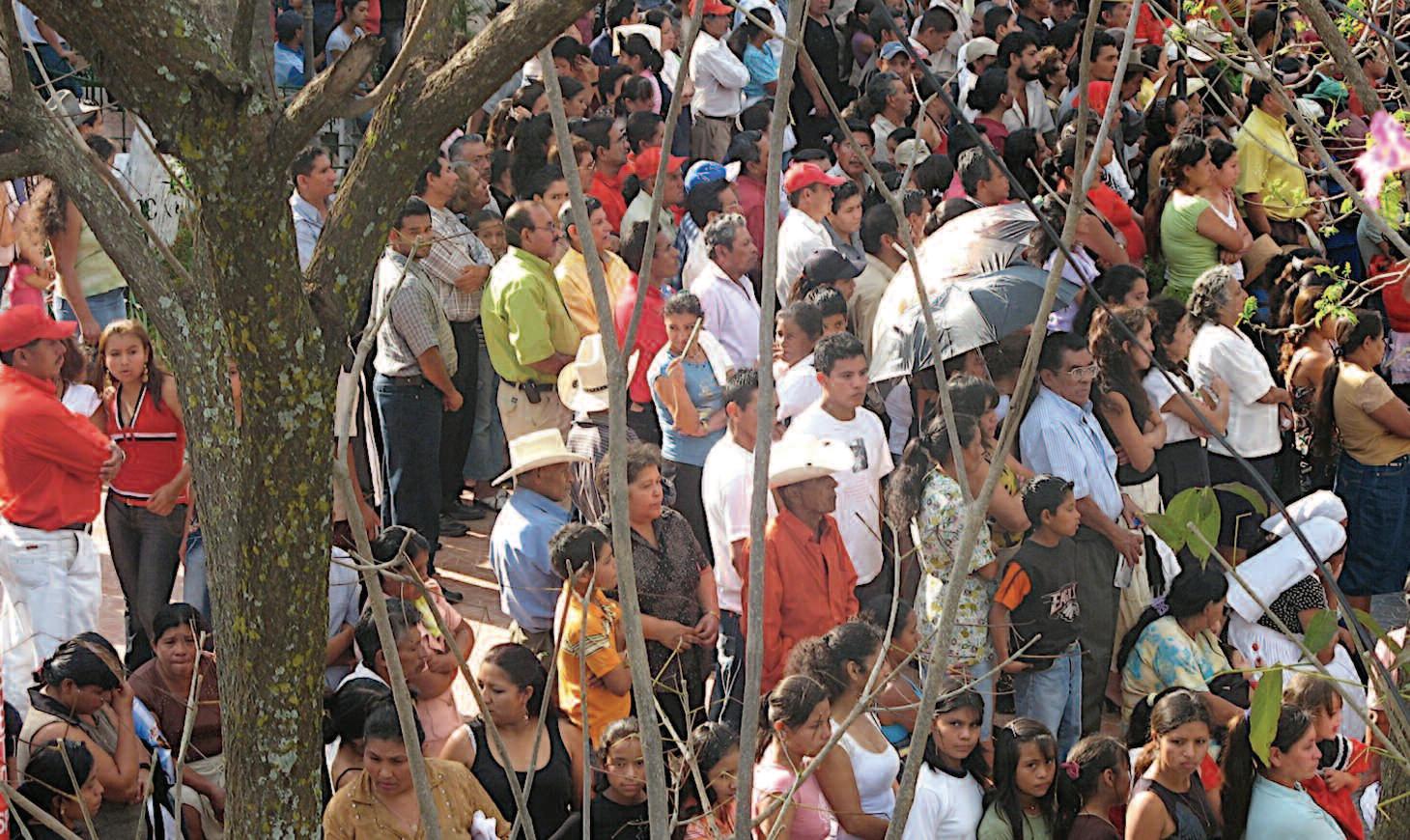
The tragic death of Moisés, mayor of a town tuck ed away in the small Central American countr y of El Salvador, did not go unnoticed In fact, it had a great impact on many people From the large crowds that gathered in the streets of Alegría for his funeral which included CBM field staff and local church par tners to those far away who held vigils the Sunday after in Canadian churches such as Broadmoor Baptist in Richmond, BC Broadmoor is one of CBM’s STEP churches to sign a par tnership with Emmanuel Baptist Church in El Salvador as par t of deepening their mission commitment and involvement in the developing world Last year they sent a team to help build houses in Alegría STEP: Ser ving, Training, Energizing Par tnerships
See more photos at http://picasaweb google com/suzannahn/MoisesAndZulmaFuneral
Oscar Rodríguez is the Direc tor of Development for Emmanuel Baptist Church in El Salvador.
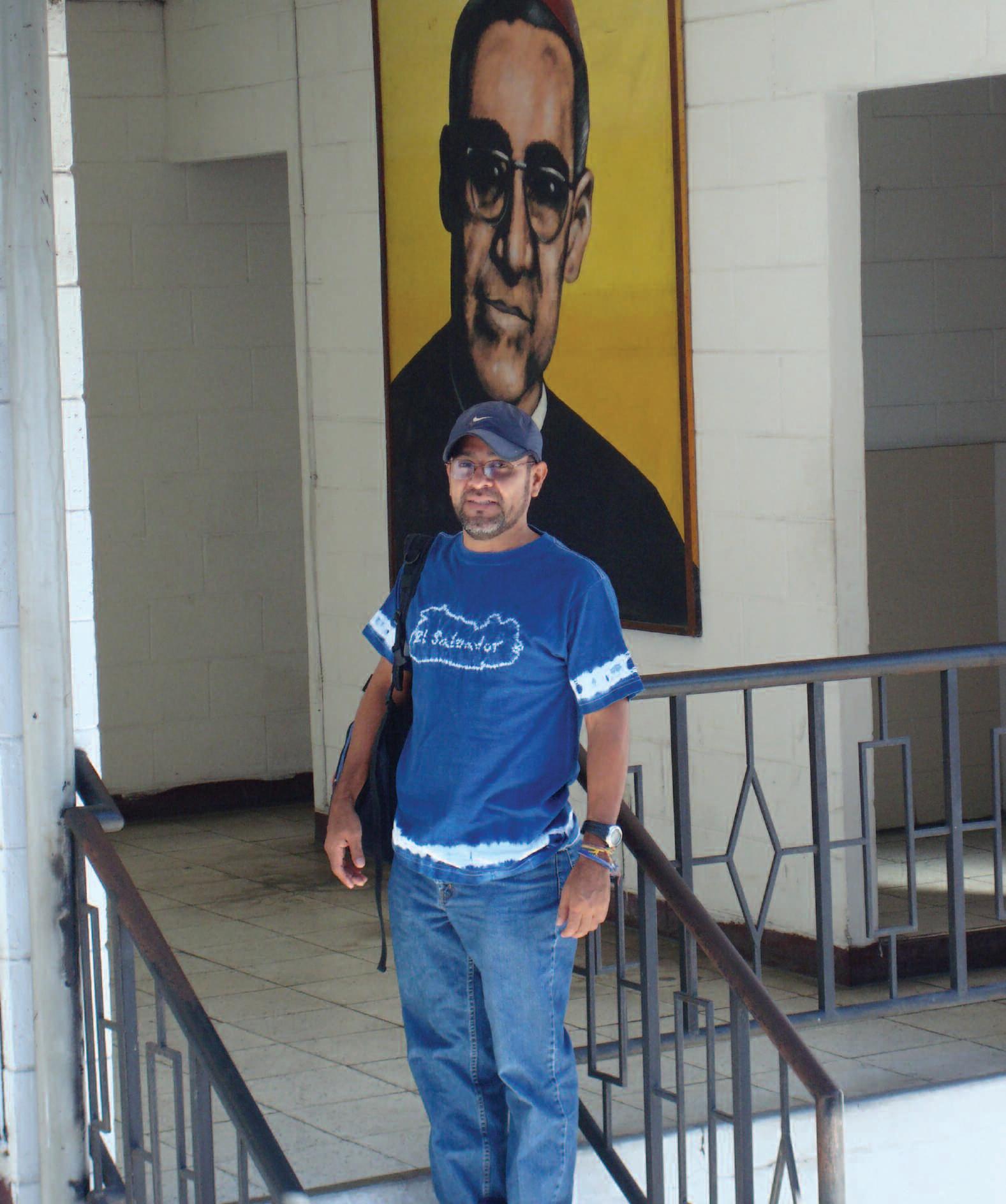
Q: Oscar, what does hope look lik e to the poor?
A: Hope is rooted in two things – faith in God and an understanding of our local reality This is a popular theme in El Salvador today with the big elections coming in 2009 Politicians on both sides tr y to co-opt people’s view of hope. But political change isn’t the source of hope God is! So when we speak of hope, it means we listen to God speak ing for, through and with the people.
Q: You are a prett y inspiring person to be around. Who has inspired you in your work?
A: My father was a political activist during the war and taught me that engagement isn’t optional. When I was 13 or 14, God showed himself to me in a real way, and I have wanted to be an activist for God ever since. Then, when we moved to Guatemala, I
was mentored by indigenous people who taught me a lot More recently, the writings of Msr Romero have been my guide
Q: When I see the realit y of your countr y, its unachieved hopes and dire needs, I wonder, ‘ Where in the world do you even begin?’
A: At Emmanuel, we begin with the need to restore human esteem The war, oppression and economic conditions here have robbed people of their dignit y. Their dreams have been denied and it ’ s possible for them to fall into a victim mentalit y, an “I can’t do it ” attitude – the belief that there is no way out. Restoring their self-esteem and self-respect enables them to break out of their helplessness and to realize their own capabilities. Our job isn’t to tell people about dignit y but to help them discover it in themselves
Q: Cool! How does it work concretely?
A: Emmanuel and CBM’s shor t-term ministries program par tner with the people in villages to build affordable housing I t ’ s amazing to watch how this works. The k ey is not that we come and work for them but that they are given the tools to achieve their dreams. They are the main builders… we just come and help them That way, they re-encounter dignit y as they learn how to impact their own lives and provide for their families
Q: How would you describe the people you are touching in your development work?
A: I often mar vel at the faith of the poor They have so much more faith than we do
But they are stuck in pover t y c ycles that can mak e them feel victimized Our projects, ser vice and engagement aren’t the change agent for the restoration of dignit y I t ’ s a joy for the teams who visit to watch people discover that they are themselves the best agents for change
Q: Do you ever get the sense that teamwork slows down the work?
A: I t ’ s much more complicated to work as a team than alone, but the results are cer tainly wor thwhile As humans, we are always conflicted We are selfish That ’ s why the c o l l e c t i v e ( t h e t e a m ) i s s o v a l u a b l e
Sometimes I think Jesus would have been really happy to not have had to work with the 12 disciples But they were his work! We need each other I lik e watching how David and Suzannah work together David teaches, Suzannah cares for people and is really organized! They are a good complement to our team
Q: Are volunteers mak ing a difference?
A: Si, Senor! And they come with a spirit of being co-learners with Emmanuel If they come think ing they are here to build a house, they are wrong They are helping to build a family, which is vital to the reconstruction of El Salvador. People who have a home often express how safe, clean and full of hope they feel Each volunteer has brought some hope with them – and tak en some back with them So together, we can mak e a difference
– Terr y Smith
by Dr. Gordon Poley
Almost three years ago, Gordon K ing, director of The Sharing Way, spok e at Sunny Brae Baptist in Moncton, New Brunswick, about the par tnership between Canadian Baptists and the Bolivian Baptist Union He happened to mention the electrical problems at the Baptist Theological Seminar y in Cochabamba His remark planted a seed in some hear ts
Sometimes it tak es a while for God’s people to respond to His voice We often feel inadequate and think, “I’m not spiritual enough What could I possibly do?”
Even Moses, one of the greatest leaders in the Old Testament, balk ed five times when God spok e to him from a burning bush. During that spectacular confrontation, the Lord ask ed Moses, “ What is that in your hand?"
"A staff," he replied.
You probably k now the rest of the stor y How God used Moses and that simple stick to per form great miracles before Pharaoh and for the people of God in the wilderness God seems to delight in tak ing something ordinar y and using it in an ex tra-ordinar y way We saw this in our own church
“ What is that in your hand?" ask ed the Lord.
"A pair of pliers," responded a few electricians
And so a shor t-term mission trip was planned for October 2007 to help with repairs to the outdated electrical system of the Seminar y - established in the 1940s
Just how significant is this seminar y?
Well, the Bolivian Baptist Union formed in 1936 with seven churches Today, there are over 500 churches and church plants! Where are the leaders going to come from to ser ve all of these churches? Who is going to train them? The Bolivian Baptist Seminar y is absolutely crucial for the spread of the Gospel and the strengthening of the churches
I t was a great joy to meet many of the seminar y students CBM field staff, Terr y Jank e, proudly talks about his bumper crop of 24 first-year students in the “Spiritual Formations” class, par t of a new approach to
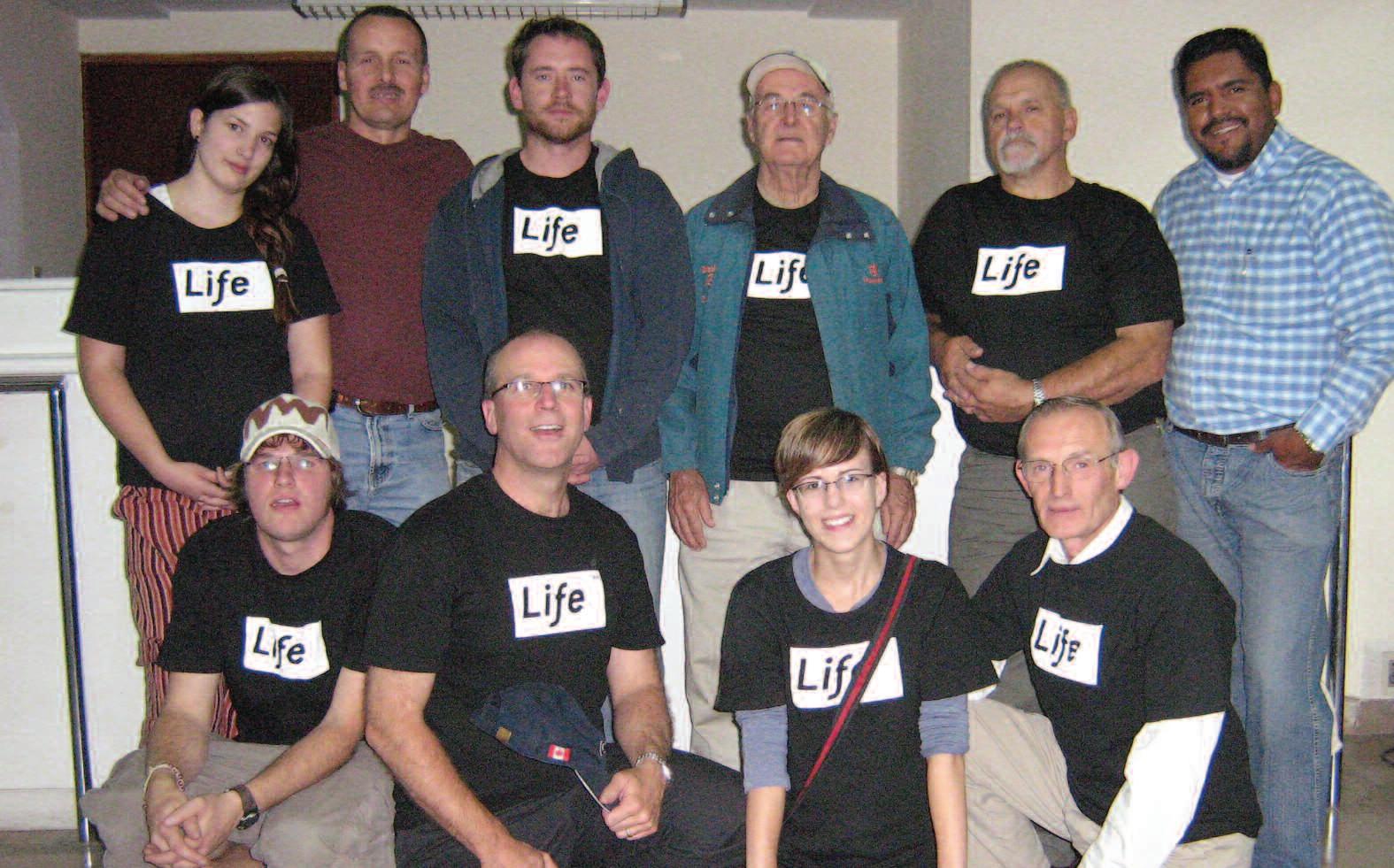
leadership formation initiated by Terr y and his wife Pat
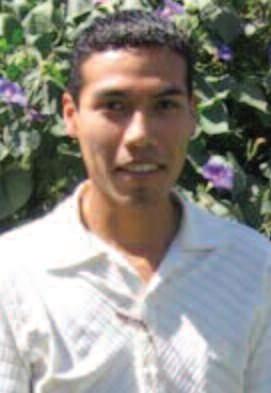
One of these students is Ismael R amirez (see sidebar). He had stopped going to church when he was 14 years old “Church had become routine for me, ” he shared with our team “I t was mandator y For five years I lived my own life my way But then, in my wandering, God found me and there was a
Ismael R amirez Rivero, age 22, is from Cochabamba.
Why did you become a seminar y student?
I want to deepen my knowledge of God’s Word so I can be an effective ser vant of God in pastoral ministr y or missions
What ministr y are you involved in?
As President of the Baptist Youth in Cochabamba, my Field Placement involved working with youth groups in worship,
radical change. Now my greatest dream is to be useful to Him So I am here at the Seminar y, getting ready to be used by God ”
How do ordinar y Canadian Baptists get involved in meeting ordinar y needs in places lik e Bolivia? They simply listen to God when He asks, "What is in your hand?"
And whatever it is, if it ’ s given to God, He will do ex traordinar y things
evangelism, discipleship and ministr y What do you hope to do after seminar y?
I want to help train leaders and plan development projects
What are some of your hobbies?
Playing the guitar, singing, volleyball and hiking.
connec ting…
You can help students lik e Ismael by suppor ting CBM’s block grant to the Bolivian Baptist Union For 2008, CBM has committed to providing $55,000 to help fund a variet y of ministr y including leadership formation at the Cochabamba Seminar y Email communications@cbmin.org for more info
Got the bug for a meaningful short-term experience?
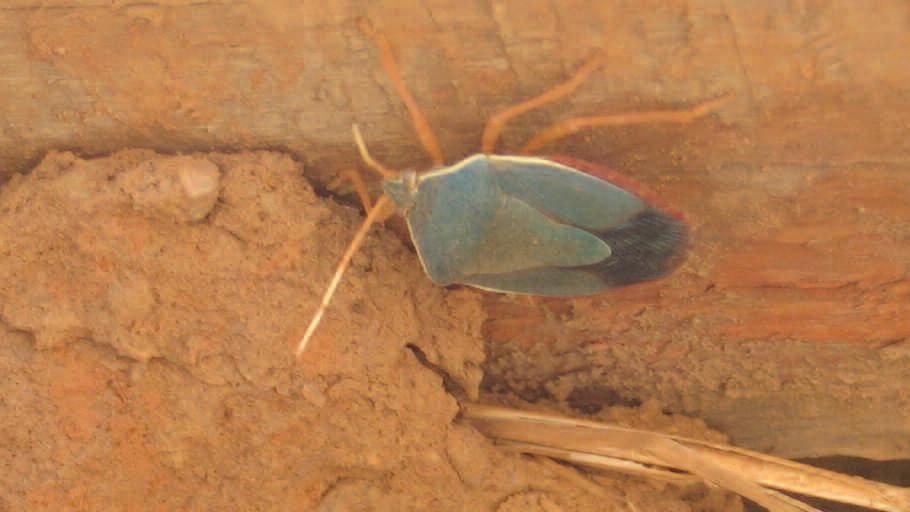
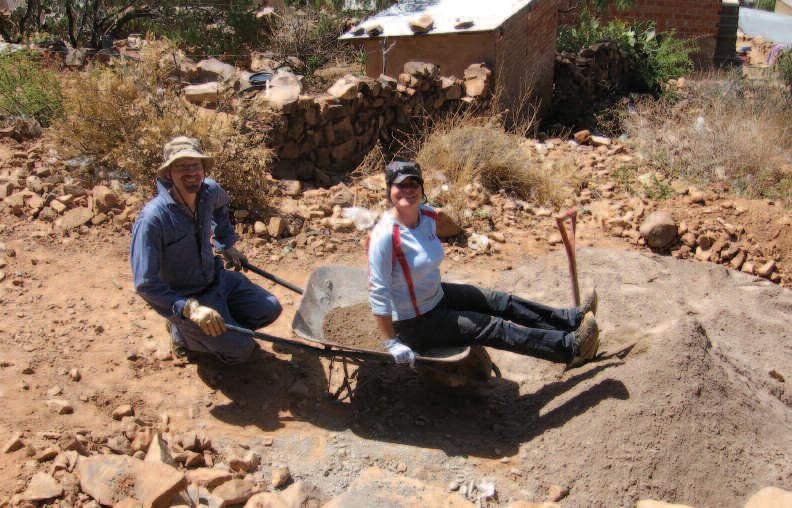
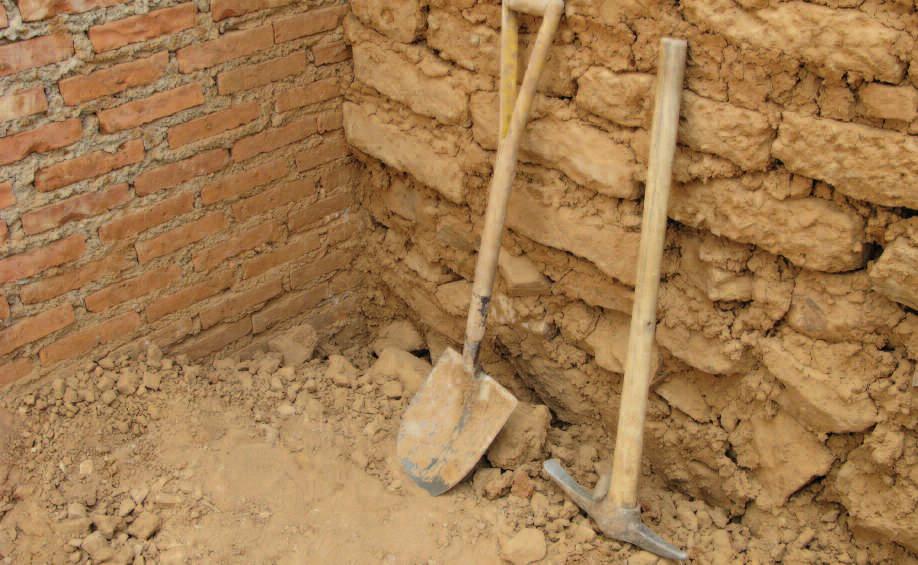
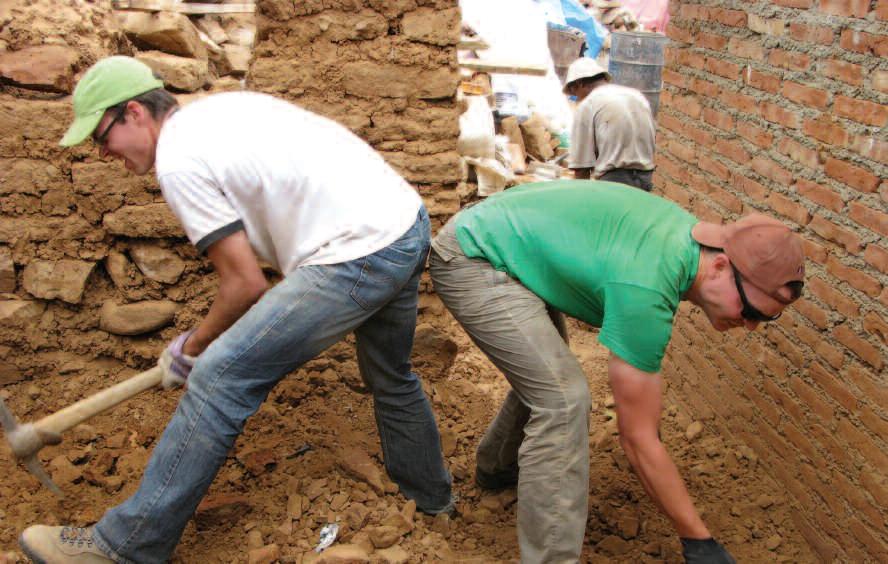
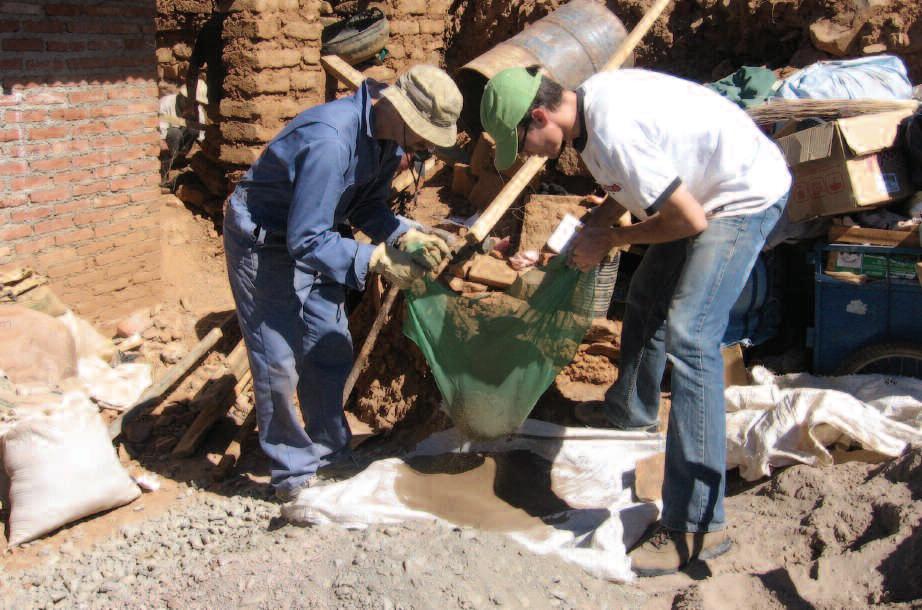
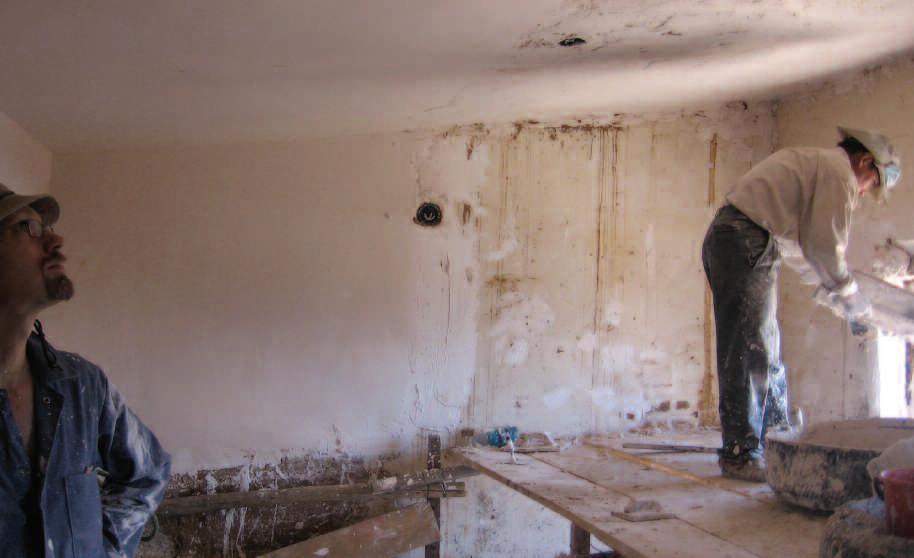
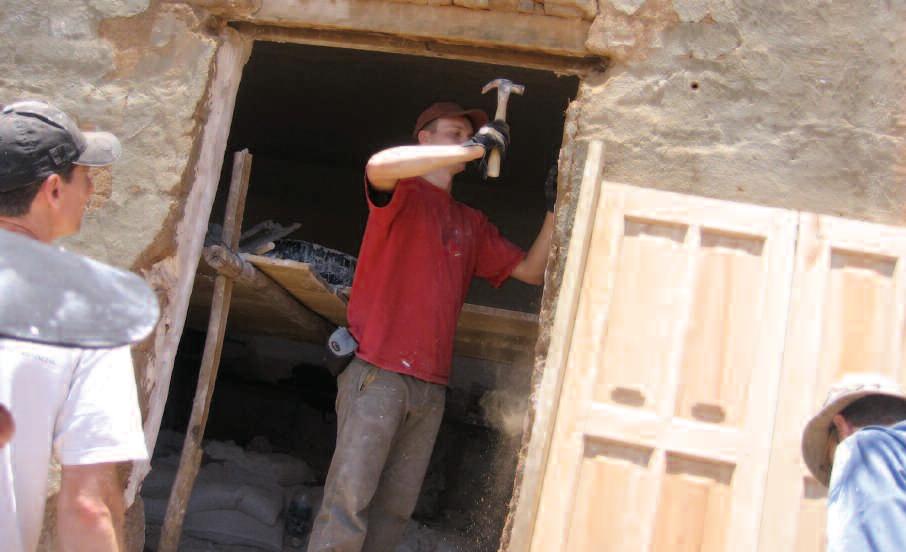
In 2008-2009, CBM is offering several different kinds of opportunities in Bolivia, including helping out with a public awareness campaign about Chagas disease (a parasitic disease carried by the vinchua bug) You can also help with home
improvements such as plastering walls, constructing cement floors and providing tin roofs, to remove the living places of this bug
Bolivia has the highest Chagas infection rate in the world. It is the fourth leading cause of illness in Bolivia and can cause serious health problems with the heart and intestines It can be fatal without prompt
diagnosis and treatment Chagas accounts for 13% of deaths of Bolivians between 15 and 75
You can help make a difference
Contact CBM’s Short-Term Missions Team at 905 821 3533, email stm@cbmin org or go online at www cbmin org for current opportunities
by Malcolm Card, CBM Africa Team Leader
There are many threads woven throughout my life, many people and experiences that have given my life shape and colour, meaning and purpose But in one moment, those threads started to unravel
During a routine medical examination in September 2006, just before we were to return to Africa, I was told that I had colorectal cancer Treatment was expected to last up to one year Daily treatments of radiation and chemotherapy began immediately, with surger y in Januar y 2007 followed by five months of intensive chemotherapy
This “valley time” did not mak e sense to me The threads of my past had not
prepared me for this The present became a blur of appointments and hospital visits, of setbacks and disappointments, and of questions – lots and lots of questions
The future was unthink able and the uncer taint y of the present was at times unbearable
During these months, I fell into a deep, at times desperate, struggle with my faith I had been brought up with a strong sense of faith, surrounded by family, friends and colleagues who never seemed to experience doubt But as the threads of my life unraveled, I experienced doubt, questions, loneliness and deep disappointment in myself because
of my lack of faith
While I k new that God was present in the midst of my struggles, I had a profound sense of being alone A verse that became ver y impor tant to me was Psalm 46:1: “God is a safe place to hide ” ( The Message)
That is what I did – I ran and hid with God in my own emotional cave
In some ways, I am still hiding
We returned to Africa in October 2007, a remark able gift of God However, my life is still shadowed by the events of this past year Where was my faith when the threads that held me together came undone? All of my theological k nowledge did not seem to
matter Years of trusting in God, of experiencing God as active and involved in my life, did not seem to help God being a safe place to hide was about as good as it got
I t seems to me that many times when we speak of faith it is more of a “cheap” faith Really, we cannot claim faith if we k now where our nex t meal is coming from or where we will sleep tonight I was questioning my faith because I had no threads to mak e sense of the present. No threads to create a future No threads to hold me together
In My Utmost for His Highest, Oswald Chambers writes, “ Waiting for God to act is fleshly unbelief I t means that I have no faith in Him I wait for Him to do something in me so that I may trust in that But God won’t do it because that is not the basis of the God-man relationship it is a question of faith in God – a ver y rare thing We only have faith in our feelings ”
Reading these words before my valley, I completely agreed But in the valley, they made no sense All I had were questions and more questions
I work ed with CBM for 26 years In 1998, I left to pastor a church in Woodstock, New Brunswick I thought this would be the place where I could live out my other passion of shepherding So I was surprised to get a call from CBM in 2004 They were look ing for a “mature” (code for “old”) couple to ser ve in Kenya and wondered if we were interested The invitation included a pivotal role for my wife Patt y to lead a new program called Guardians of Hope, work ing with our African church par tners to fur ther develop their ministr y among those most impacted by the HIV and AIDS pandemic
We moved to Africa in late 2004 But a shor t two years later, when a doctor told me that I had cancer and would need to stay in Canada indefinitely, I had a discussion (really an argument) with God “I have only a few years left! I went to Africa in response to your invitation – now you have grounded me back in Canada ”
At a point when I thought I was mak ing a difference, in a place where I could be of some ser vice, at that precise moment my life was put on hold with cancer. Why me? Why now? What was God tr ying to say to me?
Remember the last chapters of Job? The point of those chapters has to do with “why ” questions God is clear with Job that as a mere man the “why ” questions are beyond his limited capacit y. Once I realized that this situation – which made no sense to me –would never mak e sense to me, I went
through a period of fear and loneliness Fear that my time was ver y limited. Fear of uncompleted dreams and aspirations Loneliness, because my questions had no answers.
Dr Paul Brand says that the single greatest enemy of recover y is fear I read about the peace of God, I prayed for the peace of God, but on most days “fear ” won the battle
There seemed to be no meaning in this situation
The only way my situation could have meaning was an explanation from God and he was silent I was left with my thoughts and my deepest fears The silence of God was deafening during those months I had expected the heavens to open and the Lord to speak I k new that God would not be tak ing me down this road if He did not have something for me to learn But the more I tried to listen, the louder the silence of His response During those months, waiting seemed to diminish me I only grew more inward, isolated and confused I went deeper into my cave
Dr. Paul Brand says that the single greatest enemy of recover y is fear. I read about the peace of God, I prayed for the peace of God, but on most days “fear ” won the battle.
Passages lik e Romans 8:23-25 made no sense “ That is why waiting does not diminish us; any more than waiting diminishes a pregnant mother We are enlarged in the waiting We, of course, don’t see what is enlarging us But the longer we wait, the larger we become, and the more joyful our expectanc y. ” ( The Message)
Today, I can see the truth of these words
As I read the lives of the saints and contemplated some of the great think ers, I discovered that I had company on my journey of doubt and questioning. O thers who struggled with doubt, fear, uncer taint y and confusion I found comfor t in the Danish theologian, Soren K ierk egaard, who wrote in Fear and Trembling and the Sick ness unto Death, “Abraham, I cannot understand, in a cer tain sense there is nothing I can learn from him but astonishment ”
“Now all is lost God requires Isaac, I sacrifice him and with him my joy – yet God is love and continues to be that for me; for in the temporal world God and I cannot talk
together, we have no language in common I took comfor t in the thought that perhaps I was not communicating with God because we had no common language For someone who has work ed in crosscultural situations most of his life, who often finds himself in situations where he does not understand the language being spok en, this made sense I realized that I needed some interpretation of my situation, some interpretation of what God was saying to me in my valley And God provided I see now that I had many interpreters during my valley days – my wife, my children, the CBM family worldwide, the many people who took time to call, to encourage, to pray and to be present As Henri Nouwen wrote in The G enesee Diar y, “In times of doubt or unbelief the community can carr y you along, so to speak; it can even offer on your behalf what you yourself overlook, and can be the contex t in which you recognize the Lord again ”
“ The way to God alone is seldom traveled alone The body of Christ, His church, reinforces its individual par ts when they are weak ”
One of the strengths of Africa is the spirit of communit y Another is the view of life When we Canadians talk about the future, we talk in terms of look ing ahead, gesturing in front of us When we talk about the past, we gesture behind us In many African cultures, they do the opposite They talk of the past as something ahead of them, because they have seen it, experienced it and lived it The future, on the other hand, is what they have not yet seen, experienced or lived and therefore it is behind, unk nown I have come to appreciate, even tak e on, this African perspective When the threads that held my life together unraveled, I gave up on the past I dismissed ever ything that had given my life meaning I put it behind me, unappreciated. If I had k ept my past in front of me, to encourage me, my life might have had more balance Today, I view my past as a series of “God acts” that have been to my good – oppor tunities to live and thrive in God’s grace This k nowledge gives a foundation to my present.
And my future, well, it is behind me –always a surprise, always uncer tain but always safe in the hands of my Creator, my Savior As I regain both my physical and spiritual strength, I am moving out into the open, out of my cave, out of my valley, into the foothills of God’s grace and provision
What happened in Kenya? Why all the violence?
Where was the Church? According to Dr. Julius Karanja, Moderator of the African Christian Church & Schools, there are some things to consider, such as…

Since the time of independence, there have been issues that needed to be addressed. For instance, the issue of land When the colonial government came to an end, and the white settlers were leaving, the land was not given to the poor, not even those who fought for independance the government said ‘Hakuna Chaburi’( there is nothing to be given for free), if you want land, you buy from the white settlers So who got the land? The people with money. This is an issue that is ver y, ver y, ver y sensitive in the minds of Kenyans I t has never been handled.

The other issue is pover ty Many are ver y poor people, no jobs, and the c ycle of unemployment k eeps repeating…we have the issue of job distribution Who gets the good jobs? The ones who are friends with the leadership, the ones who are close to the leadership, so the others just watch In the hear ts of the people this is ver y hur ting because in the process somebody is sidelined and feels that there is no fair distribution of employment, no fair distribution of wealth
The issue of corruption in the government ver y highly placed people have been found to be practicing corruption, but we feel that we would not be able to process that person and yet we are able to tak e a ver y poor person who mak es little money to cour t, so a poor person feels oppressed
The greatest hope for Kenya is if the process [of change] is owned by the Kenyans not forced by the international communit y We need constitutional review We want a parliament that is able to pass laws that look after the Kenyan people We want to see a judiciar y that is not corrupt, able to mandate independently so that it can tak e the ministers, the president to cour t when things are not going right; a polic y that helps poor people to get land Kenyan people are loving people, hardwork ing, they don’t have that hatred All the problems come from the top if the leadership is together, Kenya will be back to
where we were before, even better, because Kenyans will be able to say that this is our countr y, this is our government, these are our leaders
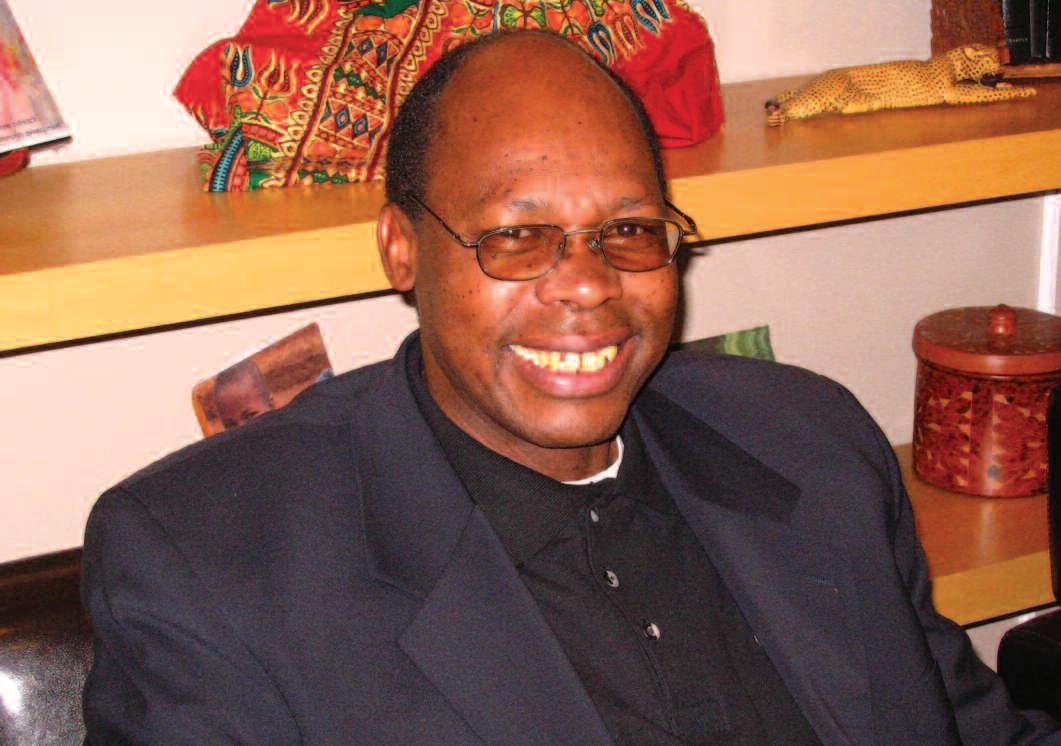

The hostility [violence] was more on the par t of those who were trained and organized [for this]…most of the local people continued to show their generosit y to their fellow Kenyans tak ing them into their homes and helping with many things

This experience will help the Church now to move for ward…to k now their role in society to be the voice of the voiceless to challenge the injustice of the society. I think the Church should never be silent when there is corruption the Church should be credible in the eyes of the people…able to have moral authorit y to speak out to be the light
What matters is the k ind of faith that we prac tice though we are ver y many in numbers - Kenya is 80% Christian - that k ind of majorit y did not help us k eep our countr y out of problems because our faith seems to be sk in deep I t ’ s ver y shallow When we are shak en, we fall apar t I think we need more training We need emphasis in strengthening our faith, in leadership training, evangelism to much more help our people better understand the Bible - that it is when we can deep root our people so that they will be able to withstand the trials that come


I t is time for the Canadian Church to wake up…to reach out to others. I t is time to discover what our resources are time that we star t moving together, to share the resources we each have I have found that most of the churches here [in Canada] have elderly people How will this Church look lik e in the nex t 10 to 20 years? Are you not going to close those churches because there is nobody to worship, to maintain them?
The Church in Africa is growing ever y day you find young people are coming to the churches What is happening in Africa that is not happening in Canada? I think it is impor tant that we see the global church as a missionar y church as one that has some connections, interactions, so that the gift that the south has can be shared with the nor th and what the nor th has can be shared with the south I feel that the time has come when we have to be examining our mission together, our focus together, and ask ourselves, how best will we be able to do the mission, all of us, because I think we have something special that we can offer
The key challenge we face right now is HIV/AIDS it is k illing lots of our people and is something that is not able to be controlled the way that we expected When we hear that there is no cure for this, it is ver y scar y to the African people It is ver y scar y to also see the conflic ts that are happening in Africa because when we have conflict, we are not able to develop ourselves with the resources that we have and pover t y becomes an issue; hunger becomes an issue; unemployment becomes an issue; there are so many things, education becomes an issue, when there is conflict. I think Africans should be helped to be able to avoid conflicts We can actually mak e this happen, even through the churches we can do this

Canadian Baptists can best help the African Christian Church & Schools by work ing together in addressing the challenging issues
- Laurena Zondo
Dr K aranja was in Canada this past Spring to par ticipate in V iew from the South, a CBM initiative to create more dialogue and shared learning between our Canadian and international par tners. To hear more about what ’ s on his mind, go to www cbmin org
n 1: One person
can make a difference. 2: I t ’s all about attitude and faith. 3: A willingness to just do something.
4: More of ten than not, they may never realize their impac t on others.
After hearing a mission presentation at the Myrtle G Herman Women’s Missionar y Society ( WMS) meeting early Januar y, Linda Wentzell decided to celebrate her 60th birthday by asking family and friends to each give 60 cents – an amount which, when added together, would provide a goat for a farmer in Rwanda through CBM Two weeks later she had received $347 – enough to provide a goat and also send 9 primar y students in Rwanda to school
Ruth Shute, another WMS member, suggested that members of the entire congregation at Western Shore United Baptist Church in Nova Scotia might also be interested in par ticipating Each time there was a birthday to celebrate in the church, the WMS group offered to put up a poster to highlight what the birthday person’s “wish” was
The response was incredible.
In Januar y, three birthdays raised $786 30 (for a goat, 2 seeds and tool kits for farmers,
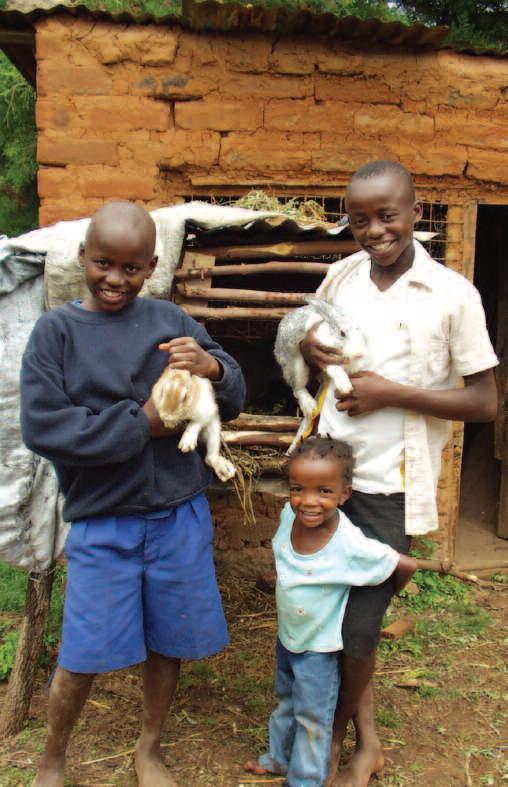
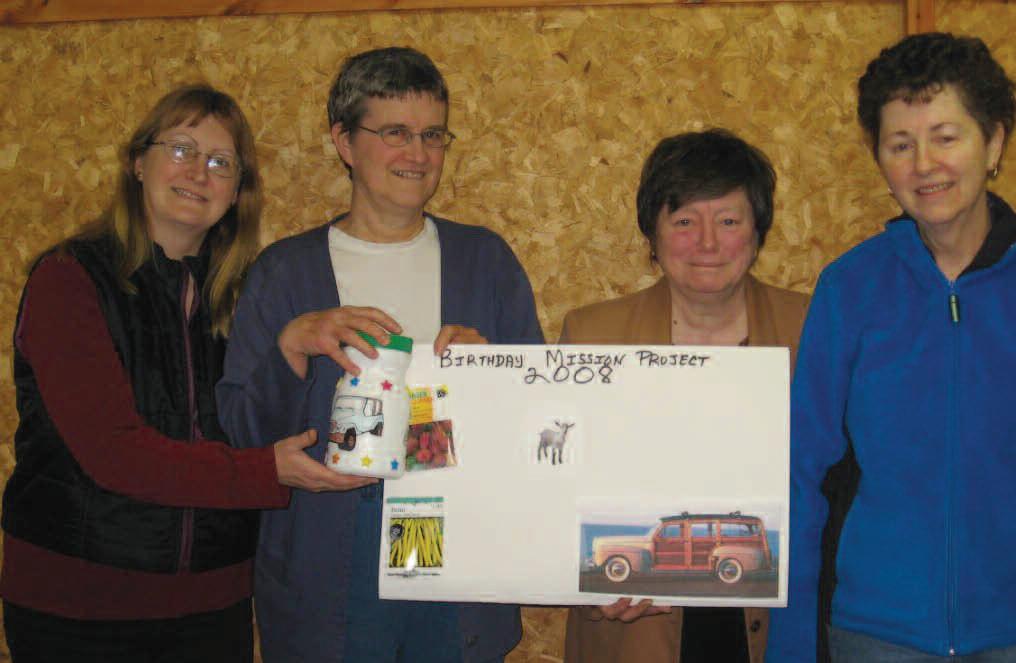
schooling for 9 primar y students and even help with transportation for pastors in Kenya) In Februar y, birthday donations made it possible to provide 100 vaccinations to children in Kenya as well as seeds and tool kits and schooling for primar y students The
March birthday provided 40
Who knows how many more people’s lives will continue to be touched by this one small church – and to think that it all started with one person celebrating their birthday in a different way!