mosaic is published by Canadian Baptist Ministries. Copies are distributed free of charge. Bulk quantities available by request.
Contact us at:
7185 Millcreek Drive
Mississauga, ON L5N 5R4
Tel: 905.821.3533
mosaic@cbmin.org www.cbmin.org
Managing Editor: Jennifer Lau
Editor: Laurena Zondo
Associate Editor: Giselle Randall
Design: GenesisXD
Mission of Canadian Baptist Ministries
Encouraging passionate discipleship for local and global mission.
As partners in the Canadian Baptist family we exist to serve the local church in its grassroots mission. Together we impact our communities and beyond through the love of Christ.
Scan this code using your smart device to us on Facebook
development and community health care, as well as facilitating short-term mission teams with expertise in these fields.
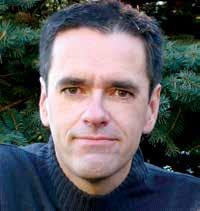
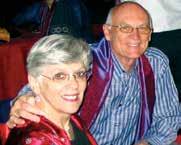
Ken
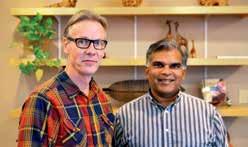
(pictured left), CBM’s new President of the Board, is the guest writer for Sam’s column in this issue of mosaic.
In Kwendin, Liberia in 2007 my wife Joyce and I were moved to tears as we were welcomed by more than a hundred children singing to us in their school compound. Their enthusiasm and harmony captured our hearts. Many of their teachers remembered gratefully the presence of our Canadian Baptist missionaries some 20 years earlier, before the country was plunged into a devastating civil war.
As Canadian Baptists we share a rich history of working together to make a huge difference here in Canada and around the world. Story after story could be told of people whose lives have been transformed because of our mission together. We can all be grateful for the ways God has blessed our support for missionaries and mission. As I begin to chair our CBM Board, I look forward to working with the General Secretary, Sam Chaise, and his team both in Canada and overseas as they lead us in our mission.
Listen to any news report and you will hear of people desperately in need of compassion and the good news that God loves them. We do so much more together than any of our churches could accomplish alone. I’m delighted at the identity we share. Our four regional denominations form a vibrant family of Baptists across our country.
Now we have the privilege of re-engaging with Liberia, as CBM Global Field Staff Tim and Diane Bannister settle in. Our presence provides hope in a time of need. The Bannisters are assisting our partner, the Liberian Baptist Missionary and Educational Convention, in the strategic areas of education, sustainable agricultural
Let’s use our strength to make a difference everywhere as we express our worship and service. I invite you to step up with your prayers, financial support and participation. You can have a part in extending God’s kingdom — one person at a time.
Editor’s Note: Winter 2013 marks the 10th anniversary of mosaic. We will be celebrating with a commemoration issue in the spring. Tell us which story, photo or feature is your favourite. Email mosaic@cbmin.org.
@samchaise_cbm
facebook.com/cbmin.org
cbminorg.wordpress.com
Bellous
mosaic is a community forum of local and global voices united by a shared mission. mosaic will serve as a catalyst to stimulate and encourage passionate discipleship among Canadian Baptists and their partners.
and
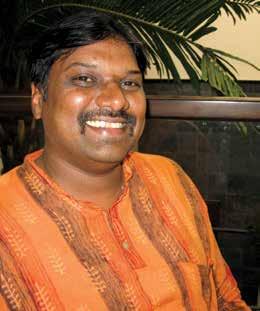
Suraj Komaravalli
CBM’s Team Leader in India
David Morehouse
Pastor of The Journey Church in Moncton, New Brunswick
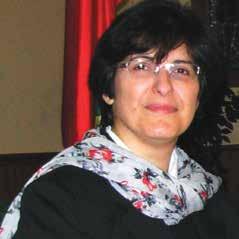
Alia Abboud Director of Development
Partner Relations, Lebanese Society for Educational & Social Development in Lebanon
A virtual roundtable on what mission looks like around the world today.
Facilitated by sam Chaise CBM General Secretary
God’s call has always been the same: make disciples; love your neighbour; heal the sick; speak the good news; love justice; walk humbly with God. But the way this call gets expressed keeps shifting as the world changes. To broaden our vision and understanding about what some of the new expressions of mission look like today, we asked five representatives from around the world to share their perspective.
There is a wonderful diversity in their responses and in what we see emerging in mission around the world. Rather than looking for “one-size-fits-all” solutions that are cloned and franchised, Christ’s followers all over the world are entering into the unique things God is doing in their own context, and becoming a part of it. By doing this we are modelling ourselves after Jesus, who in the Incarnation “moved into the neighbourhood” (as Eugene Peterson puts it) and became one of us. God’s call has always been for His people to embody the gospel in word and deed, where they are, and when they are.
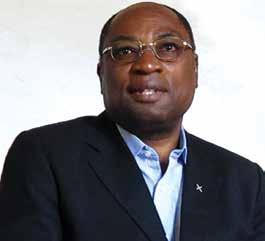
Dr. Kakule Molo
General Secretary, Baptist Church in Central Africa, Democratic Republic of Congo
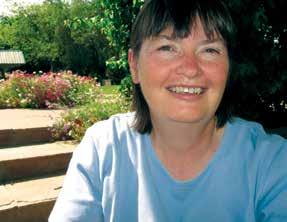
Joyce Hancock
CBM Global Field Staff in Brazil
What’s different in your context now compared to 20 years ago, necessitating a change in how you engage in mission?
Alia: Globalization, internet, social media and networking brought in a flood of information and knowledge that is fast shaping the future of what is one of the most youthful regions of the world (according to UN estimates1 around 60% of the population in the Arab World is under 25 years old). Also, the so-called “Arab Spring” that may very much be a consequence of this exposure. This is equally true of the Church that is gradually revisiting its understanding of, and approach to, mission, and its attitude towards “the other”.
Kakule: In the past 20 years, the mission of the Church has been very much focused on faith and salvation. But the recent political and social developments in the Great Lakes Region of Africa have shown an inadequacy between faith and the challenges that Christians encounter in daily life.
Suraj: Increased education levels ... today many in India believe education is the source of success in life. As a result, education has turned out to be a competitive field where there is tremendous pressure on children to perform well … many go overseas to study and some settle down. The negative effect of this is brain drain.…
Media and internet have influenced the youth to such an extent that they are now exposed to porn and drugs and other unhealthy lifestyles … some of this impacts on the spread of HIV. Poverty, hunger, gender inequality, and environmental degradation continue to afflict so many, mainly because of political and institutional failings.
Globalization has brought in consumerism and migration. The Church today is slowly losing her dependence on God to depending on material things. Consumerism has entered
the church … due to globalization, slums have increased in cities. There is less agricultural land and more difficulties for farmers. Unemployment has also increased … today is the information technology age. E-mails, internet, cell phones, etc. is the current lifestyle.
David: The pluralization of our country has taken an even greater effect on eroding a certain confidence and certainty in the Christian belief. When we now live in a country where the increase of the Muslim faith has grown, and the increase of the internet has exposed people to a much wider perspective of world views, confidence in the message of Christianity has weakened, even at a local church level. I find that what has changed for me now is I am far more apologetic in my preaching. I find I’m doing a lot more “competing with other gods”. I find my preaching is more missional in that way. I’m always trying to speak to the sceptic, the cynic and the pluralist, who are much more prevalent in our congregation.
1 UNEP’s Arab Human Development Report 2009 –Challenges to Human Security in the Arab Countries
What are some examples of how you share God’s love “in deeds”?
Kakule: Ministering to the victims of poverty, injustice and violence by assisting them physically, by responding to their needs, and psychologically, by helping them recover from their trauma.
Alia: Individuals with special needs are one highly marginalized segment in our society that God drew our attention to several years back. Today, we have SKILD Center for Smart Kids with Individual Learning Differences that not only works with the individuals with special needs to help them realize their potential, but also creates awareness in schools and the community as to their right to inclusive education, and inclusion in the community, as well as the families’ rights to get the needed support … Another vulnerable people that we’re currently working with are Syrian refugees in the region. The crisis is by far greater than what the surrounding countries can handle, yet with support from our global Baptist and Christian family, we seek to address the immediate basic needs of many who are residing with host communities.
Advocating the issue of Palestinian refugees in Lebanon is another act of love, drawing attention to the Biblical view of their predicament. Our 2012 Middle East Conference focused on this issue, looking at it in light of God’s command for justice
We have developed a community care within our church where we have those who are mobilized to help people respond to others’ needs on a practical week-by-week basis. We have a monthly offering that we take up that helps remind people of doing that. We also give support to our food banks. We have a grocery cart in our church lobby which reminds people to give. We also push service projects for our small groups to participate in (e.g. working at a community kitchen).
What are some new ways you engage in mission in your context?
What are some examples of how you share God’s love “in words”?
Alia: Our children and youth ministry holds periodic camps and follow-up events that are both recreational and spiritual in nature. These are opportunities during which children — including those who are highly at-risk — openly hear about God’s love and plan for their salvation. Our Beirut Baptist School, where the spiritual track is equal in importance to the academic track, was highly commended by an AdvancED Quality Assurance Review Team “for providing Christian values in a Muslim community while respecting the dignity of each religion”. We also equip leaders — Arab men and women — who go back to their respective countries where they evangelize, disciple new believers, plant churches.…
Kakule: Sharing the good news of Jesus Christ, the “wounded healer”, who after He had suffered humiliation and death, was elevated over all and was made the saviour of all humankind. In so doing, we remind victims of injustice and violence that they are both beneficiaries and agents of that good news.
David: For us, we create a good environment of communication of the Christian faith. We work really hard at communicating at a practical, yet expository level of the Bible. We really think about our language, as we strive to have an outward focus where our words are understandable and approachable. I would say that one of the key ways we communicate the Gospel is we hold in tension that idea of truth and grace, which I think is much truer to the Gospel than only truth, or only grace.
Joyce: I lead Bible classes and worship services at Free Flight along with other staff and volunteers. I encourage my students to follow God in practical ways. I speak about many cultural norms that are not in-line with Christian teaching. I share answers to prayer and evidences of God’s work in my life as an example for others. I encourage others in ministry — it is very easy to become frustrated.
Alia: Social engagement is one avenue, including pursuing issues of justice and mercy, advocacy too. Rather than being perceived as the minority of minorities, we’re keen on being seen as active and effective members of the community, citizens who add value to the nation. Jesus recognized the good things that are in “the other” and so building bridges and dialogue with “the other” is another important avenue.
Joyce: At Free Flight, we train community members to become the leaders. These people are always preparing and taking on more responsibility. They are seeking to serve according to God’s calling on their lives just as I am and God works through them as well as through me.
Suraj: The Church is gifted with different professionals who could become a blessing to the unemployed by giving training … This is a necessity in a context when the caste system still plays a major role in determining who gets employed. People who mainly come from lower caste communities are many times sidelined by the higher castes … The Church should work towards the uplifting of the unemployed among the lower castes.
Female infanticide, value of the girl child and dowry deaths is a concern. Mission should emphasize
awareness and value for women and the girl child. The church can work wonders in changing attitudes.
David: We make use of technology far more … it is now a “have to” … from multimedia, to utilizing the You Version app in our preaching, to engaging people at a much more multi-century level that technology affords … this requires a level of new technical proficiency which is challenging for pastors … you have to be very thoughtful at a local church level to make it engaging, especially for the next generations.
We also are recognizing that we have to be much more strategic in the use of our time. The busyness factor of people has increased dramatically over the last 20 years. We find that at times it’s better to create events, rather than weekly occurrences in people’s lives. People are highly distracted these days.
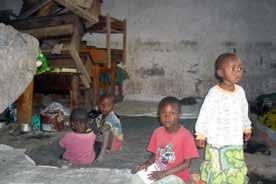
Editor's Note: Since the printing of this article, a rebel insurgence took place in DR Congo resulting in the displacement of thousands of refugees and many casualties. Many of our partners regularly experience conflict in their countries, so please remember to keep our partners in your prayers. See our Facebook page for the most current updates: facebook.com/cbmin.org
The Mobile Growth Spurt
For the first time in history, there will be a consumer technology that exceeds the size of the entire human population by early 2013 – the mobile phone.
Source: TomiAhonen Mobile Forecast 2012-2015 (http://communities-dominate.blogs.com/)
7.1 billion
Early in 2013, it’s estimated that there will be more active mobile phone connections on the planet than people living. No other technology has even come close.
4 5 6 7
1.3 billion
3
1 BILLION 2
the Village together
by Aaron Kenny, CBM Global Field Staff in Kenya
For over 30 years, CBM has been serving in Kenya’s North Eastern Province (NEP), a semi-arid region stretching along the Kenya-Somalia border. Over the past year, we have been coming alongside 12 villages in Garissa District, meeting with local officials and elders within these communities. We continue to learn about the stresses their people face from the influx of displaced families affected by drought and instability within the region. In the village of Bula Bahkari, for example, people have suffered from ethnic division and conflict, as competing Somali and Wailwana tribal groups struggle for limited resources and access to the Tana River. It was a community divided, but by God’s grace the story is changing.
In February 2012, two of CBM’s NEP team, Yattani Gollo and William Wako, met with local clan leaders from Bula Bahkari, under the shade of an Acacia tree
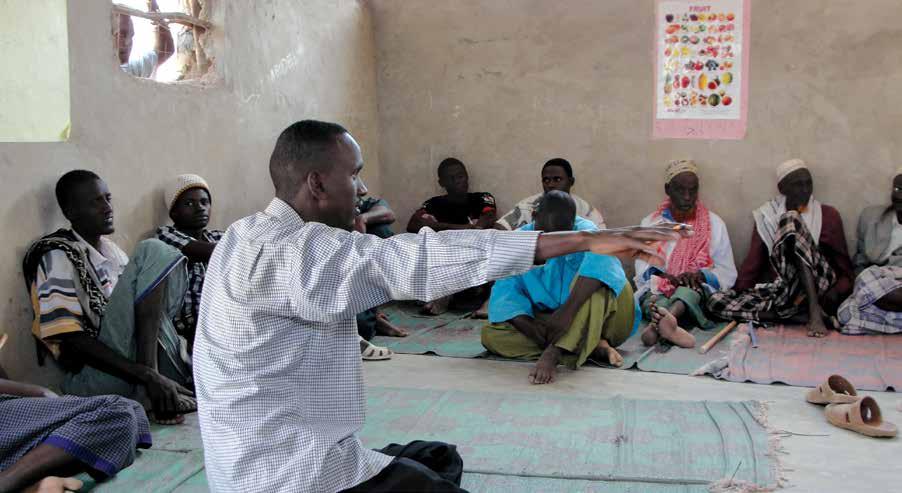
A focus group discussion facilitated by Yattani Gollo, one of CBM’s National Field Staff in Kenya, to assess the food-for-work project in the North Eastern Province.
at the centre of the village, to help bring about peace and reconciliation. Prior to this gathering, CBM had established a food-for-work project with other villages in this area, helping communities open up roads and farmland to better their community. The villagers were provided with tools and as they cleared thorn bush, built roads and established cooperative farms. They were compensated through supplementary food rations and cooking oil.
In Bula Bahkari, the obstacle was a land dispute between these two tribal
groups. In the NEP, land is held in trust by the local government and rights to land use involve multiple levels of agreement. To add complexity to the situation, Somali and Wailwana people live in ethnic tension and so just having these two groups sit together under a tree was a giant step forward.
In the weeks that followed, William, Yattani and the village elders met together with the local government appointed chief and district officer. The breakthrough came when Wailwana elder Bahkari, whom the village is named after, stood up in the circle and declared that Bula Bahkari was no more, and in its place there would be Bula Pamoja, literally in Kiswahili “The Village Together”. In this single act of humility and grace, life for the people of this community was given a new beginning.
Today, the Somali and Wailwana people of Bula Pamoja are working together. Their first project was the construction of a school — the first permanent structure in the community. With the help of CBM they are feeding and educating nearly 80 children every day at the school as the community works together in building cooperative farms along the Tana River.
“When I see the Somali kids and Wailwana kids learning together, eating together and playing together, that gives me a great hope that peace will last,” shares Yattani. “Seeing the Malakote and Somali building houses together, ladies fetching water together as they trek three kilometres to the Tana River and back; that gives me hope that peace will last … God is starting something new. It is a new adventure that as God’s ambassadors, we have responded to the needs of this community and walk with them in this forgotten generation. Our presence, prayer, talking to them and sharing our love from the Prince of Peace gives me hope.”
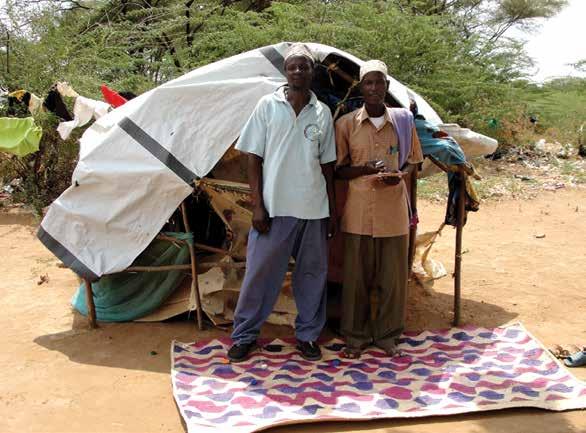
Juma (Wailwana elder) and Yussuf (Somali elder) praying together.
Juma was born and raised in Bula Pamoja. He is part of a minority community now living in Garissa District. He shared his story with Yattani Gollo, one of CBM’s National Field Staff in Kenya.
I was born and brought up in Tana River but moved to Garissa District due to lack of land, for my parents do not possess any land. I belong to the minority of Malakote who have been marginalized since historical times both by the government and the majority rival tribes (Somali). I had come into contact with CBM a few months ago after they conducted a peace meeting between us and the Somalis. I learnt a lot in the peace meeting … In the beginning, attending the meeting was a problem because we are seen as second class citizens and second class human beings by the Somalis, and we never thought that we could meet with Somalis to discuss issues on peace.
In the community peace meetings, we were taught about governance, peace, resource sharing, working together and also human rights of each community. Previously our children could not go to school because we were poor; hence they serve as labourers for the richer Somalis and earned small wages or none at all … we experienced threats and intimidation … the community considered us as unfit to live and work with them in social, political and economic areas.
Thank you to CBM who has brought us together. CBM has helped to empower me and my community, and to develop confidence and understand human rights … I have made several friends of Somali origin as we discussed peace within our community and I am now the chairman of this peace committee.
Five Questions Before You Move to Thailand
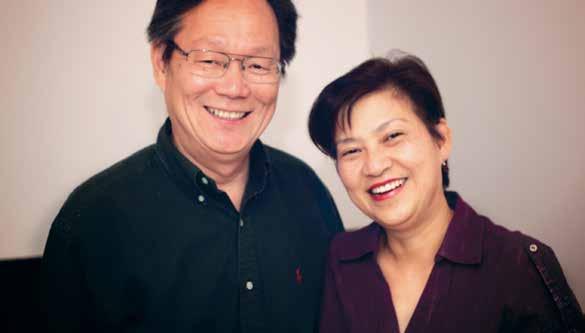
Conrad and Fiona Kwok are the newest Global Field Staff appointed by CBM to East Asia. They will be serving at the Bethel Bible Institute (BBI) in Northern Thailand where they will teach and mentor students from Burma, Thailand and China.
by Jennifer Lau Director of Global Discipleship & Communications
Q: Conrad, you’ve been a pastor and church planter in the Toronto area for many years. Fiona, you have a longstanding position with the Canadian Baptists of Ontario and Quebec. How did you come to the decision to take this next step in ministry?
Conrad: In the past ten years I have had many opportunities to participate in overseas mission work to Northern Thailand and China. I was involved in training and equipping young leaders for local churches. Each time I went the burden on me increased as I saw the needs there. After my first trip back from Northern Thailand in 2006, deep down in my heart I felt that God may call us one day to serve in that part of the world. Since then, every year when I’ve returned from a trip there, the distance between Canada and Northern Thailand shortened. God’s calling became more and more clear.
Fiona: In 2011, I joined our church short-term mission trip to Northern Thailand and Burma, and I knew right then, that was it! Leaving our comfort zone is not easy emotionally and physically, choosing to leave our church, the brothers and sisters we have known for over 20 years, our children, etc. After repeated prayers in the last couple of years, we have decided to obey and follow God’s calling. His road and will is higher than ours. Our obedient response has brought us tremendous excitement, joy, and peace. We believe this next step is for the good of those who love Him.
Q: Your students come from rural areas in Burma, China, and Thailand. Many of them return to minister in their home villages after receiving training. Tell us more about their challenges and the sacrifices they make to study at BBI. Conrad: This is one of the reasons that we would like to serve the students in this area. The students at BBI are mainly from very poor rural villages. Life at BBI is very simple, but it is still better than most of their home villages. However, these students did not choose a nicer environment or a better paying career to advance themselves, but are willing to pick up their cross to follow Jesus. Almost all of them will go back to their home villages to serve.
Fiona: They spend four years at BBI, leaving their family and loved ones. A lot of them, especially those from Burma and China, are not able to go home to visit during the four years because it is too expensive. They come to BBI because they want to equip themselves to serve in God’s Kingdom, to serve wherever God wants them to serve. A student from Burma told me her story, that she knew God was calling her to study at BBI. When she talked to her family, they were very angry because if she left, she would not be able to earn money to support the
family. She prayed and sought God’s guidance and decided to obey God’s calling. It was a great challenge to make this decision, but she also ended up seeing God’s provision for her family while she was studying in BBI.
Q: Bethel Bible Institute is located in the Golden Triangle, the heroin production and consumption capital of the world. How important is it to strengthen the Christian witness in this part of the world?
Conrad: The Golden Triangle is still an area that is seriously impacted by heroin production and consumption. Many of the students both at BBI and the Operation Dawn Discipleship training centre have battled different kinds of drug addiction — some of them even have AIDS. Today, they have repented and are willing to follow Jesus. This is a living witness to God’s grace. They were “renewed”, have a new life, and have walked out of the darkness and entered into the light of God. The Gospel will be proclaimed across the Golden Triangle through these witnesses.
Q: Your desire for long-term service started with short-term mission trips to BBI and it obviously played a pivotal role in your lives. What would you say to people who may be considering a short-term mission trip?
Conrad: Our church, Brampton Chinese Baptist Church, has organized four shortterm mission trips to Northern Thailand since 2008. Among these team members is a couple who has already committed themselves to the Lord to be full-time servants. They are now studying in seminary to be equipped. In the future, one of the areas I would like to work is to establish training platforms for missionary work, i.e. to build
bridges between North America and Asia, encouraging North American churches to support the work in Asia by sending short-term mission teams. When they come to the field, they can experience the power of the Gospel and broaden their Christian view and heart.
Fiona: I would say to those who may be considering a short-term mission trip, it is very important to have a humble and obedient heart. We are there not because we have come from North America to help; in fact during a short-term mission trip we are not able to help much. We are there to learn what God wants us to learn, from the environment and our fellow Christians.
Q: You have a few busy months ahead, as you prepare for your departure to the field. In what specific areas can people support and pray for you?
Fiona: Before our departure to the field, we would really appreciate continuous support and prayer. We need prayer for a few things: that God would touch people’s hearts so that we can have more opportunities to share our vision with churches; that we will raise enough team support to be able to leave for the field by summer of next year; that we can make a smooth transition from our home church; and that God will provide us with energy and wisdom to handle all the challenges ahead with our home and family.
connecting…
You can be a part of God’s story in East Asia. Help get Conrad and Fiona Kwok to Asia. Become their Partner in Mission.
Go to www.cbmin.org or call us at 905.821.3533
One of the Kwok’s short-term mission trips to East Asia.
A story of CBM in Turkey
An exciting chapter of Canadian Baptists’ unique ministry in one of the world’s largest Islamic nations drew to a close in 2012 with the departure of CBM’s last Field Staff. Here are some highlights from over the years.
by David Phillips
Canadian Baptist plans for Christian witness in Turkey began in a strange place: on the public square in Cochabamba, Bolivia, in 1977.
Marshall Thompson’s statement to thenGeneral Secretary John Keith who was visiting, “John, I feel that our work here in Bolivia is drawing to a close, and that God is calling us to witness in the world of Islam …,” resulted in a 16-month research assignment in Cairo. Its purpose: to survey the possibilities of Christian witness and service in the Middle East.
The amazing story of those first years in Turkey is vividly told in Marshall Thompson’s fast-paced book, Hot and Cold Turkey. In 1979, after studying at the Islamic Institute at McGill University, the Thompsons arrived in Istanbul, the capital city of Turkey. A military coup took place a year later. There was only one Turkish speaking Protestant church in Istanbul and it was sheltered in the safety of a consulate. Less than 100 Protestant believers dotted the country. To be a Turk automatically meant being a Muslim. The Thompson’s assignment: Mission Impossible — to make disciples for Jesus Christ among Turkish citizens.
John Keith and Bob Berry, CBM’s leaders at the time, focused on strategy. Many Christian organizations were using secretive methods, but authentic witness demands honesty and transparency. “Everything in our early history emphasized friendship, friendship, friendship,” recalls John. “Much that was being done in secret could actually be done openly. Marshall brought a breath of fresh air. Specific correctives were
introduced. Bibles were being smuggled for the wrong reasons — they could be purchased cheaper abroad, and Bible smuggling tales were an effective fundraising device. In fact, the seizing of smuggled Bibles was prejudicing the legitimate sale of Bibles produced in Turkey.”
God was calling other workers with a vision for a strong Turkish Protestant church. Tom and Gladys Donelon, who lived in Istanbul for many years, extended hospitality to hundreds of young Turkish men and women. Short-term workers joined the Thompsons in Istanbul, serving for two years — Frank and Vera Burnham, Roberta Cumming and Ian Easter. Christian counselling was made available to many by Doug and Janet Spinney who spent three years in Istanbul; their counselling ministry continued through trained Turks after they left. John and Betty Forrester also spent three years in Turkey and continue meaningful relationships with Turks who became their close friends.
By the late 1980s, the number of Christians was growing significantly. A contemporary translation of the New Testament played an important part in this growth. It was at this time that Mary Mitchell arrived as a teacher of English at a local university. Mary was invited to lead new believers through a study of the Christian Scriptures. Turkish believers were courageously sharing their newfound Christian faith. Mary ably recruited teachers from various Christian organizations serving within the country from 1990 – 2001. Through her unique gifting as a teacher, by 2001 when she had retired
Transformation happens slowly — the Gospel is shared, people find Christ, disciples are made, Christian leaders emerge, and lives are made whole.
after 13 years in Turkey, over 500 Christian men and women had participated in at least one course.
Ron and Catherine Albinet arrived in Turkey in 1992; disciplined language study led to Ron’s teaching the Bible and practical courses such as spiritual growth and formation. The Albinets had many opportunities to share the gospel with Turks over the years, especially with the taxi drivers who received their fair share of New Testaments. The four Albinet children, all born in Turkey, understand and speak the language.
Mary and Ron worked together to publish Lion’s “History of Christianity” in Turkish. Many other books were also translated, providing the means for ongoing theological training.
Cathie and I were privileged to end our years with CBM by working in Turkey. People were trained for Christian ministry; we hosted guests from overseas and led tours to the Seven Churches region of Turkey. Cathie made significant contributions to refugees from surrounding countries, many of whom now live in the West.
Turkey is one of the main spots on the world’s refugee highway. These young men are all orphans who have fled war and their respective homelands.
Emerging Turkish pastors have to be bold leaders, but obstacles to the legality of churches remain. Across Turkey’s 81 provinces there are about 110 organized Protestant fellowships, and perhaps another 100 “house groups”. Only one fellowship has received permission to build a church building since 1923. The recently released Malatya court records show that for every 15 persons in Turkish Protestant churches, three are police plants.
Today, Turkey is a country in flux. There are increasingly louder calls for a constitution based more on the values of the European Union. Economically, the country is doing better than any of its neighbours; hundreds of kilometres of subway lines are being built, highways are being broadened into four lanes, bullet trains already crisscross the country, and tall condo buildings endlessly add to the density of Istanbul. Turkey, surrounded by countries with their own internal problems, has its own unsolved issues which include unrest in Syria, Kurdish language issues and minority rights (for Christians and Jews).
Transformation happens slowly — the Gospel is shared, people find Christ, disciples are made, Christian leaders emerge, and lives are made whole. Refugees, the poor and homeless are receiving care. Spiritual transformation is taking place, yet the huge task of making disciples remains in a land where 99.9% of the population (over 75 million people) have yet to experience the love of Jesus Christ.
Editor’s Note: David and Cathie Phillips spent 36 years of faithful service with CBM – a ministry career that placed them in Brazil, Bolivia, Canada and Turkey. Aside from their field service, from 1994-2000 David also served as the first General Secretary of CBM, formed through the merger of the Canadian Baptist Federation and Canadian Baptist International Ministries. In 2000, David and Cathie returned to overseas ministry in Istanbul, Turkey, where David was involved in theological education and later spearheaded the development of indigenous discipleship materials that would address the needs of Turkish believers. Cathie was drawn to ministry among the thousands of refugees who struggle to survive in Istanbul. The Phillips retired in 2011 and returned to Canada. In 2012, CBM’s last Field Staff in Turkey, Ron and Catherine Albinet, returned to Canada to pursue what they feel is God’s new leading in the next phase of their lives and ministry.
since 2006, David and suzannah Nacho have served with CBM in El Salvador and Argentina. In May 2011, they moved to Bolivia, to work with CBM’s partner, the Bolivian Baptist union, on theological education and leadership formation. They share a little about their life and ministry so far in Latin America.
Q: What gift or insight do you think the church in Latin America has to offer to the Canadian church?
D: Well, I think it’s a very simple, but very important gift … the idea that the church is not a place that you attend, like going to the theatre, it’s a place where you are engaged, where you build relationships …there’s no way around it, there’s nothing fancy about it, but it’s something that is profound, something that can get lost in North America’s individualistic tendencies.
S: I think one thing that I’ve appreciated more since having kids is that the church is a place to raise your children. I know in Canada that is also true, but I think in Bolivia where there are less kinds of resources — less parks, less things for a mother to do with children — you can bring them to church and that’s where
they can colour, get to know other kids, do activities, have camps together, things that you wouldn’t necessarily find … so church is a place for children to be taken care of … and to do some things they wouldn’t normally be able to do.
Q: And one of the biggest challenges faced by young leaders in Latin America today is…
D: Being recognized and supported by older leaders … having a stronger culture of supporting younger leaders will be a great blessing … Another challenge … not just for young leaders but all leaders, especially in the urban context which Latin America is turning into … you have lots of young people who have gone through university and taken other training so you as a pastor have to keep up with that level of training, whereas before if you went to seminary that level
was good enough because most people in the church didn’t go to university, but now you have to preach and engage and think at a different level, so that has to be taken into account when thinking about preparing and training leaders.
Q: What’s a highlight from over the last year that you’ve witnessed?
D: Over the last year we have been working with CETI (Certificate of Interdisciplinary Theological Studies) which creates a study group base in the local church — a sense of deeper commitment to integral mission, but profoundly rooted in a communal spirituality, not just an individual relationship with a project or with God even, but a sense of community in engaging with God’s task in mission. We’ve seen some good insights and good initiatives coming out of these churches.
Q: Can you explain more about what CETI is?
D: The vision for CETI was created back in Argentina in the late ‘70s by Rene Padilla and other Latin American theologians who felt that theology is not just for missionaries and pastors, it’s for every Christian; every Christian needs a theological perspective on church, on family, on work and society … CETI works at the graduate level, through an online program which I’m a part of, and there are students all over Latin America who are studying … and have the opportunity to interact with each other.
connecting…
You can become a Partner in Mission of David and Suzannah Nacho.
Go to www.cbmin.org or call 905.821.3533 to sign up today.
The Boys of West Bank
by Jeff Carter CBM Global Field Staff
It was an eye-opening experience to see life behind “the wall” when I had the privilege of spending a week last fall in the West Bank in Israel (Palestine). I had been invited to speak to potential mentors and youth leaders interested in using the Horizons online youth leader training program.
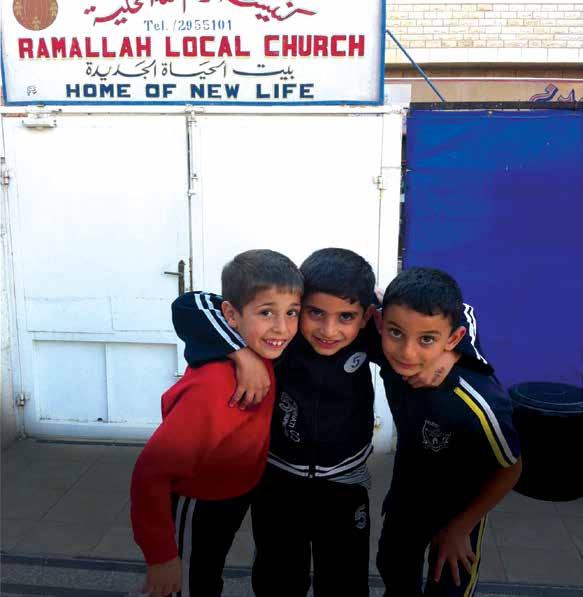
I was based in Ramallah and hosted by Michael Kakish, a young leader who works alongside his father in supporting the small handful of Baptist churches in this predominately Muslim region. Through Michael, I also had several opportunities to speak in churches and teach at Bethlehem Bible College, as well as visit with the new youth director of Israel.
Politics aside (if that is possible), I was deeply impacted by seeing what everyday life is like for people who live and work in West Bank, in an atmosphere of constant stress. Once during my brief stay, we just missed a riot at a main check point. God showed me the incredible humility, resiliency and faith of this small group of believers.
My host Michael was gracious and caring — seeing how he and his young family are living a life of intense sacrifice and witness had a profound effect on me. Michael works with his father at a small home for orphaned boys. Michael’s father was raised in this same boys’ home which was sponsored by the Baptists in the 1950s.
Years later he became a director. Today he and his son Michael help to lead this ministry now called Ramallah Christian Outreach & Home of New Life. It’s a small yet significant program run out of the local Baptist church.
Once, when the church was threatened to be shut down by a group of people, the local Arabic-speaking Muslim community stood up for the church and insisted that they be left alone. They recognized the love and charity of the Christians and respected them for what they are trying to do in the community.
I now pray for these young boys who are learning of Christ’s love through the care and action of these local believers and the future impact that they may have in their community. And I pray for the beautiful believers who I now know a little better. They live in the land that Jesus once lived in, dedicated to sharing the love of Jesus regardless of the personal cost or danger.
connecting…
You can be a part of God’s story in Europe and the Middle East. CBM Global Field Staff Jeff Carter serves as Youth Ministry Training Coordinator for the European Baptist Federation which has a presence in 51 countries. Jeff was responsible for creating the online training resource HORIZONS, which provides a full course in international youth leadership for volunteer youth workers. The program is currently offered in 26 countries and 6 languages. Become a Partner in Mission of Jeff and Deann Carter today.
Go to www.cbmin.org or call us at 905.821.3533.
Summer Work Camp in Cuba
by Carole Phillips CBM’s Short-term Mission Coordinator
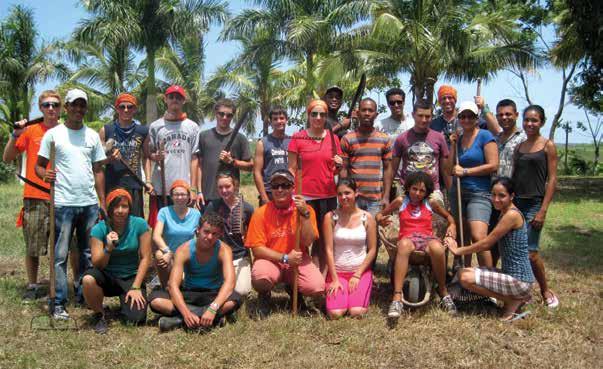
This past August, eight youth and two pastors from First Baptist Church in Welland, Ontario, were CBM’s first short-term mission team to Cuba.
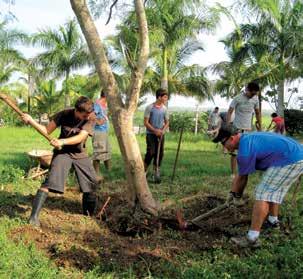
For two weeks, they worked alongside Cuban youth to help renovate the only camp of the Fraternity of Baptist Churches of Cuba. They cleared a field for recreational activities, did some structural work on the dining room and laid new underground pipes.
There was a great connection between Canadian and Cuban youth. Not only were the teams there to work, but they would be forging new friendships, sharing cultural experiences, worshipping together, and in the process learning either some Spanish or English.
As one of the team, it was a privilege for me to see how God had been preparing each of us for this time together. Worshipping together in both Spanish and English in small homes, churches and at the camp was a blessing. Tasting new kinds of food, laughing together as Canadians tried to explain a moose (there are no large animals in Cuba), using a machete for the first time to cut down weeds — these were just some of the experiences that brought us closer together.
Testimonies were also shared and despite culture differences and language barriers, among other distinctions, we could all relate to the hurts that people were expressing, rejoicing at the way God had brought healing and excited at what God continues to do through each one of us.
“God has revealed to me how great his love really is and how much he has planned for each one of us,” said one of the Canadian participants. “God reminded me that it’s not the material goods that make people happy, it’s truly the people they surround themselves with and the outlook they have on life.”
The team felt that what they were doing would benefit many people in the future. Yet it wasn’t just the “doing”, it was also the “being”. Being aware of the people around them, being humbled at having so much when others have so little, being open to how God wanted to work through them, being honest with each other as a team, being accountable to a church that blessed them in what they were doing, and being the first of many more teams to come to Cuba.
Canadian and Cuban youth worked together this past summer to renovate the camp of the Fraternity of Baptist Churches of Cuba.
NEW short-Term Mission Opportunities in 2013
WHErE: Cuba
WHEN: March 8 – 22 and June 21 – 28
WHAt: Help with repairs to the camp of the Fraternity of Baptist Churches of Cuba near Havana. You will help tear down and build new concrete walls, paint and also be involved in some agriculture work, visit churches and homes and experience Cuban culture and way of life.
WHErE: Haiti
WHEN: May 25 – June 1
WHAt: Help build homes from recycled rubble of buildings destroyed by the earthquake using an innovative technique developed by Conscience International to create a more earthquake-resistant house.
For more information and/or to apply, email stm@cbmin.org.
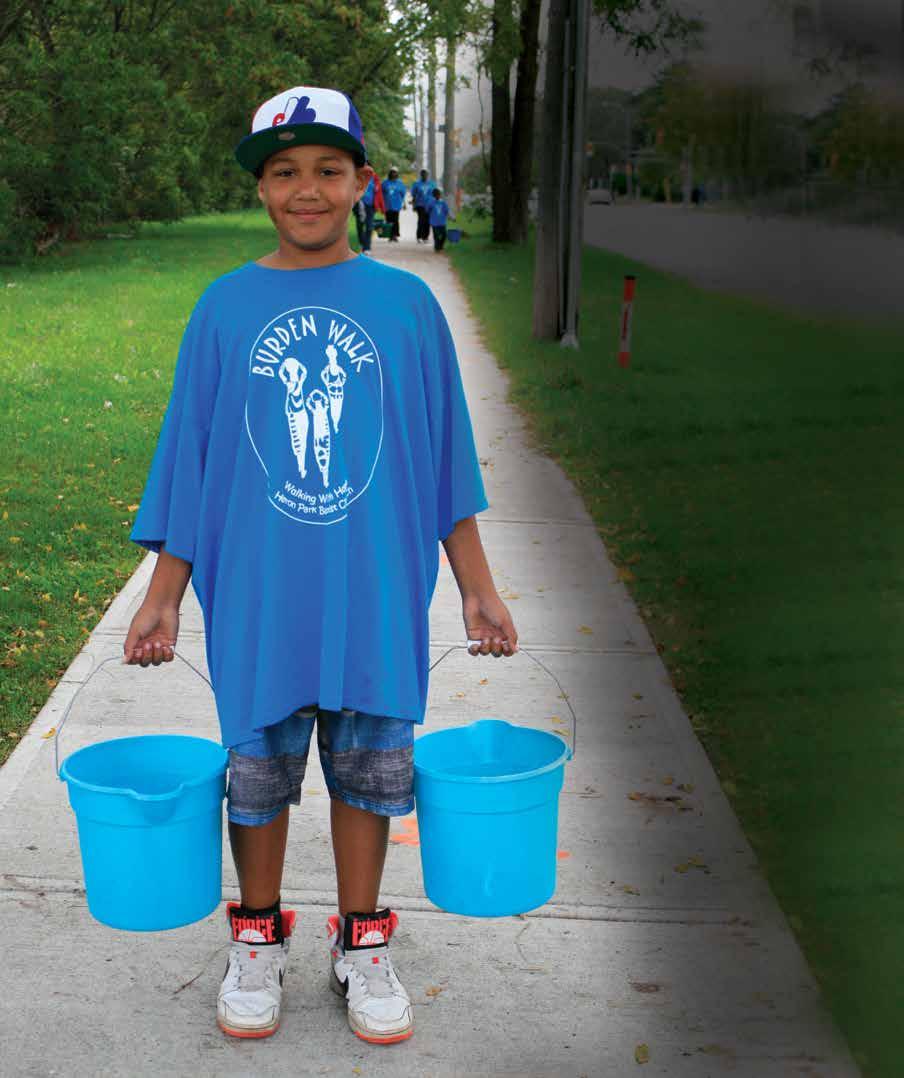
Who: Benjamin Udeh, 10 years old
Where: Scarborough, Ontario
What: Burden Walk to raise funds for CBM’s Guardians of Hope
For the past six years, Heron Park Baptist Church has held an annual Burden Walk to raise funds and awareness for CBM’s Guardians of Hope, a program that helps families most impacted by HIV and AIDS in Africa and India.
All ages participate in the walk, carrying buckets of water for 3-4 kilometres down a main street in the church’s neighbourhood, as an act of solidarity with women and children in developing countries who often have to walk many kilometres a day for water. The walk ends in a celebration, with a potluck meal. Throughout the year, the church also takes up a special monthly offering. Each year, they raise several thousand dollars for Guardians of Hope.
Watch a video of the impact Heron Park’s water walk has made on lives in Africa.
grassroots heroes
Global Harvest
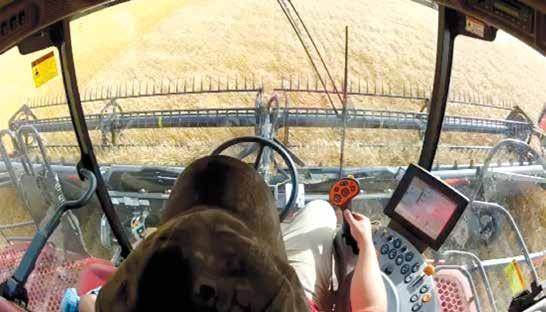
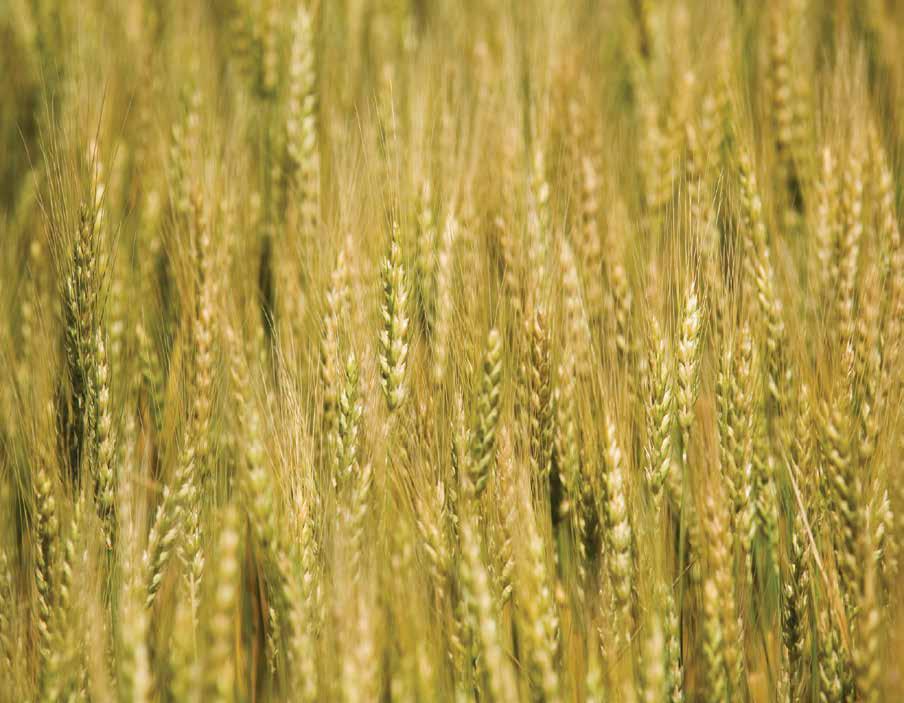
Thirty years ago a pair of Alberta farmers took some newly-harvested grain from Coronation and trucked it to Linden where some Mennonite partners received it and donated it to a newly-formed cooperative called the Canadian Foodgrains Bank (CFGB), of which CBM is one of the founding members.
this small beginning mushroomed into the first grow project, in which Brownfield Baptist Church has helped farmers from the community grow grain together and donate the entire yield of the field. The farmers were always willing to donate their time and equipment and knowledge — the challenging part was to raise funds to rent the land and buy fertilizer and other inputs. Along came Lorne Park Baptist Church in Mississauga (ON) and Westview Baptist Church in Calgary — two urban churches who decided to partner with their rural brothers and sisters by donating funds for land rental and necessary inputs.
On September 21, 2012, 15,000 bushels of wheat were harvested at the Coronation/ Brownfield Project which resulted in a donation that was matched 4:1 by CIDA, for a total of nearly $600,000 to support food security programs in developing countries including the Democratic Republic of Congo, Kenya, Rwanda, Bolivia, and India where CBM partners with CFGB and local churches in food security.
Mark the date. s olidarity s unday
On Mother’s Day, May 12, 2013, join with Canadian Baptists across the country as we stand in solidarity with families impacted by Chagas disease in Bolivia.
Plan today to participate. Order your free solidarity ribbons early. For more information, email communications@cbmin.org.