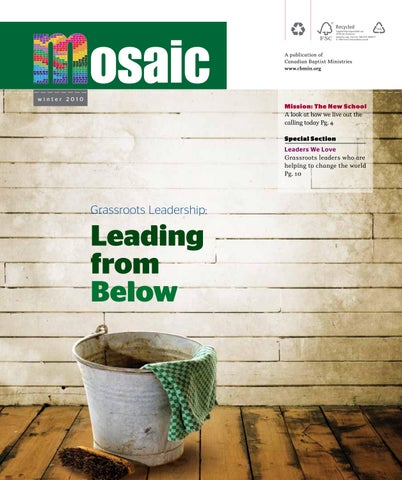
mosaic is a community forum of local and global voices united by a shared mission. mosaic will serve as a catalyst to stimulate and encourage passionate discipleship among Canadian Baptists and their partners.
Person of the Year
The end of a year. The beginning of a new one. It’s a time that brings a flurry of best and worst lists. One of the most esteemed and sometimes controversial is Time’s Person of the Year. Nominees are drawn from the headlines, people considered to have made a significant contribution or impact in the world. It has inspired us to come up with our own Who’s Who list. An upside-down version — leaders we’ve nominated from the grassroots. This issue of mosaic is dedicated to sharing their stories. You might be surprised by who’s on the list. They represent the leaders among us, people who are making an impact (often unbeknownst to them) in the lives around them. Truly they are people to celebrate — even emulate — as they passionately and faithfully pursue God’s calling in their lives.
Our feature highlights your role in their story, a connection made possible through CBM’s world of partnerships.
Together, these stories provide insight into what makes a good leader. They inspire us to look at each person as a potential leader, to recognize and help develop the gifts and talents in those around us. We hope you are encouraged to continue to help train and equip more such leaders in our world through CBM’s integral approach to ministry that strives to empower churches, locally and globally, to serve.
Who is on your list? Email us your suggested candidate for person of the year. In 300 words or less, tell us a little about the person in your church who most inspires you and why. Our next issue will feature some of your nominees! Email your submissions to mosaic@cbmin.org.
mosaic is published four times a year by Canadian Baptist Ministries. Copies are distributed free of charge. Bulk quantities available by request.
Contact us at: 7185 Millcreek Drive Mississauga, ON L5N 5R4
Tel: 905.821.3533
mosaic@cbmin.org www.cbmin.org
Managing Editor: Jennifer Lau
Editor: Laurena Zondo
Associate Editor: Giselle Culver
5 contents
g-files
Page 3
Servant Leaders: Imitators of Christ feature Page 4
Mission: The New School
A look at how we live
ethically
Page 8
Church: Body or Building?
Special Section:
Page 10
Leaders We Love Grassroots leaders who are helping to change the world
Mission of Canadian Baptist Ministries Encouraging passionate discipleship for local and global mission.
1 g-files
Servant Leaders: Imitators of Christ
Leaders reproduce and influence. This is by no means a new concept.
Leaders have always brought themselves to the task. It is an inescapable reality that Apostle Paul describes well as he writes to the Thessalonians “you also became imitators of us and of Christ Jesus” (I Thessalonians 1:6).
The implication of this statement is foundational. Paul realized people imitate or absorb the character of their leaders. He understood that leadership is first of all a question of character and substance long before it is a question of technique or skill and who a leader is gets copied. Leaders make ripples like stones thrown into a large pool of water and these ripples affect the life of the church and its people in ever-widening circles. They create
by Rev. Dr. Gary Nelson General Secretary of CBM
waves of movement that affect the mood, atmosphere and vibrancy in their congregation. Most importantly, they shape the missional “IQ” and intent of the church they lead.
Fundamentally the core question of leadership from a theological framework is, “What do you want to clone?” And the corollary question will be, “What will you celebrate?” The answer to these questions is telling in what it reveals about a leader’s values and measurements of effectiveness. Clergy working from a sense of self awareness intentionally develop personal core values and characteristics that portray the kind of communities of faith they are called to form. These characteristics must first be modelled by the leaders before they are ever incarnated into congregational life.
All the literature on leadership points to the idea that leaders shape values and mobilize people through character, not just technique and efficient management frameworks. Efficiency and technique may create good processes and systems but they do not build deep communities of faith that effectively move into the borderlands of mission and ministry. Leaders make a difference and the only thing they have control of in that process is who they are.
This issue of mosaic speaks to this. You are going to be introduced to leaders from around the world who are making a difference. They come from all walks of life, but God is using each of them to transform communities and people, because ultimately it is His Story in their story.
Mission:
A look at how we live out the calling today.
by Colin Godwin
CBM Global Field Staff in Rwanda
The New School
The late 20th century transportation revolution and global immigration patterns have contributed to putting the traditional view of missionaries out of business. Mission is not just over there, it is on our doorstep as well. So what does it mean for those today who live out a divinely inspired calling to preach and demonstrate the gospel of Christ in another culture? My answer to this question is summed up in one word: partnership.
Partnership: Helping the Church Help the Poor
In most cases, powerlessness goes hand in hand with poverty.
Today, the effects of the industrial and technological revolutions have created economic disparities between rich and poor that the world has never seen, so that the hourly pay after tax of a North American unionized construction worker is roughly equivalent to two or three weeks salary for a construction worker in the developing world. In personally confronting the global chasm between rich and poor, CBM Global Field Staff, along with CBM’s national partners in countries around the world, do so within the bounds of partnership.
What this means is that Canadian Baptist Ministries does not try to help the poor on its own. We only work against poverty through our national partners. This is significant, because often it would be more efficient just to do the job on our own. In Christian partnership, we want to do more than to
distribute a series of handouts with a Canadian flag stamped on a bag of rice. We choose not to operate that way because our ultimate goal is to help our African, Asian, or Latin American sisters and brothers in their own efforts to reach out to the poor in Jesus’ name. This is often a significant challenge, for it amounts to enabling a poor church to develop the skills and resources to help vulnerable people in their community who are even poorer.
One of my students, named Manasseh, finished his final project last month and will graduate soon. He is a middle-aged man with significant responsibilities in his denomination. Because of the disruption of the genocide in 1994, he was not able to complete secondary school, and yet he nonetheless received a call for pastoral ministry. By God’s grace he was able to finish his secondary school diploma as an adult, and be admitted into our college through an advanced placement program. He loves the Lord and he loves his church. His family and church have made extraordinary efforts to make sure he is fully trained for ministry. His thesis project in his final year focused on developing a biblical work ethic in order to help the poor out of poverty, including practical ways that the church can facilitate this through various projects that do not necessarily require outside assistance.
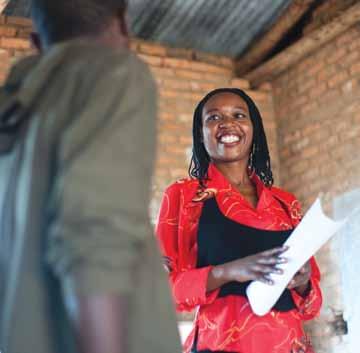
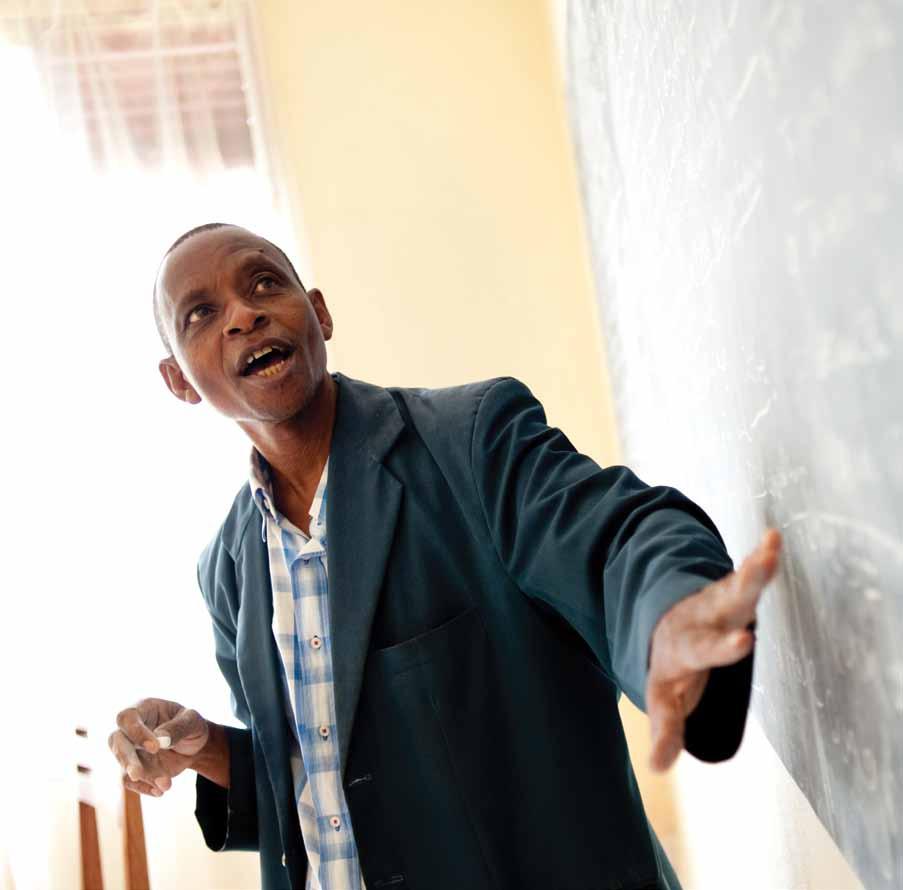
t A Kenyan professor teaches an English course at the Baptist International Theological University in Rwanda.
Partnership means that education is not just about sharing information. Canadian staff share their lives with those among whom they serve; in return, national Christians share their lives as well, and all are transformed a little more into the image of Christ.
,
Partnership: Helping the Church Train Leaders
Missionaries who travelled overseas in the 19th and early 20th centuries usually were preachers, teachers or medical professionals. The training of leadership remains a central preoccupation of those of us called to working overseas. We mentor church planters, train church leaders, and work to develop the capacity of our partners to promote sustainable development. Although some leaders have received excellent training, they are still few and far between. Almost all of them have made enormous sacrifices in order to pursue their education. In Rwanda, the General Secretary of the Association of Baptist Churches in Rwanda, André Mfitumukiza, had to sell his house in order to gather the assets necessary for he and his wife to do masters level study in theology. They took these kinds of risks because they wanted to be better equipped to lead their denomination in its witness for Christ.
Canadian field staff working in education continue to work as specialists to make it possible for the largest number of church leaders to have an education. This can have an enormous impact on the church as a whole as a new generation of leaders emerges with the kind of tools it needs to evangelize, help the poor and vulnerable, and train others to do the same.
As we all know, training is not just about degrees. All of our CBM Field Staff work in some way as educators, applying their own special set of skills to the local context through those around them.
In Belgium, I was not officially a theological educator. I was an evangelist and church planter. In our last years in Belgium most of my time was spent sharing everything I knew with Rémy Paquet, the young Belgian pastor who took over the church we planted. We became good friends, and, in true partnership, he taught me many things as well about the faithfulness of God in Christian ministry.
Partnership means that education is not just about sharing information. Canadian staff share their lives with those among whom they serve; in return, national Christians share their lives as well, and all are transformed a little more into the image of Christ.
Here in Rwanda, I have a more formal role in theological education. I enjoy working with my students very much, but my greatest impact will probably be on the other members of the faculty as I try to work as a catalyst to make all of us better teachers, scholars
and Christian leaders. So far, this has covered everything from how to manage finances to how to use collaborative teaching methods that place more value on the students’ opinions than traditional ‘chalk and talk’ methods allow.
One of our professors is from a war-torn area of the Congo. In October, two of his nephews were abducted by local militia as they played by the edge of the village. A note was left where they were playing asking for a ransom of five thousand dollars each to be paid within a week or else the boys would be killed. This was more than their extended families could ever come up with in such a short span of time. We prayed together as a faculty for their release and praised God when we learned that they had managed to escape. Because they had diarrhoea, their captors allowed them to go to the bathroom together a small distance from the camp, which allowed them to slip away quietly. These two boys may be some of the only people to ever thank God for loose bowels since that is what made their escape possible!
Training leaders overseas comes with a set of cross-cultural challenges.
Outside of North America, there are different rules for what makes up good leadership and good management, and good Christian behaviour can be cast in a different light because of cultural values, or because emerging from the catastrophes of war, poverty, or a holocaust can take on more importance than whether reports should be filed on Tuesdays, or whether budgets should or should not include a healthy percentage of offerings for the denominational leadership.
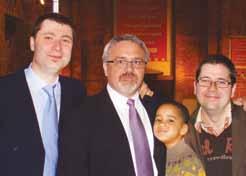
Pictured left to right: Rémy Paquet, Terry Smith, CBM’s Director of Partnerships & Initiatives, with friends at Rémy’s induction service.
Partnership: Helping the Church Reach the Lost
Karen and I led our family to Belgium in 1996 because the Belgian Baptist Union was in need of missionaries to help them plant churches. The denomination barely had enough pastors for their existing churches, and no evangelists available to begin new churches in areas of the country that were unevangelized. By the grace of God, we succeeded in planting a church in an area of over 50,000 people that had no Protestant or Evangelical witness. The last Protestant church in the area closed its doors in 1794, so we definitely had to start from scratch!
A significant number of Canadian Baptist missionaries are involved directly in what we call pioneer outreach — ministries aimed at beginning Christian fellowships in regions where there is no church. Of all the ministries that we do under the partnership model, this is probably the most independent of the national church. Even so, we do not plant Canadian Baptist churches anywhere in the world. We always try to work as an extension of the ministry of our local partner.
Without minimizing the commitment of missionaries that help the church to minister to the poor or to train new leaders, the level of linguistic and cultural skills required by those involved in joint pioneer outreach is probably the greatest of the three. For the love of Christ and a people very different from themselves, these missionaries work hard to leave Canada behind in order to begin an indigenous church that will one day be able to send its own missionaries to reach others who do not yet know Jesus Christ as Saviour.
Partnership: Helping the Church Make Disciples
Last time I was in Canada, one faithful Christian asked me why we would encourage Canadians to participate in short-term missions, spending a lot of money on flights and accommodation in order to visit mission work overseas. Wouldn’t it be better just to send the money?
The pastor at the church gave a great answer to the question: just as Jesus became like one of us in order to save us, the only way to participate in God’s mission to the world is
relationally. While it is true that this mission work cannot happen without the faithful gifts of God’s people, ultimately God doesn’t just want our money, he wants us.
A heartfelt commitment to God’s mission in the world can be expressed through your devoted prayers and your sacrificial giving to enable those who are called to work overseas. Short-term teams that visit CBM’s work on the field return to Canada as changed people. They become advocates for the poor that we feed in Jesus’ name, the lost that we reach in Jesus’ name, and the leaders we train to make the
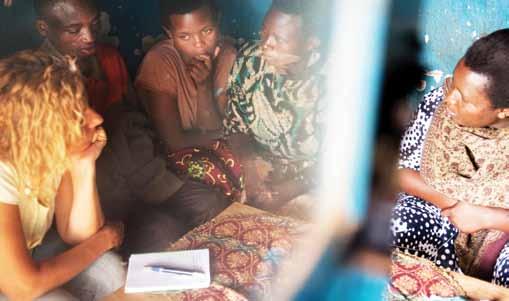
A visit with one of the child/youth-headed households supported through a joint initiative of CBM and the Association of Baptist Churches (AEBR) in Rwanda. Pictured with the family of orphans: (right) Esperance Niyigena, AEBR’s Children of Hope Coordinator and (left) Laurena Zondo, editor, mosaic.
church more able to be a light for God in its own context. National Christians welcome Canadian guests with open arms, knowing the value of new relationships in God’s eyes is far greater than the simple cost of a plane ticket.
Canadian staff working on behalf of Canadian Baptist Ministries do not often experience the same sort of demands on them as the first missionaries that left Canada for Africa, South America and Asia in the last part of the 19th century. We fly in planes, have access to email, and are able to visit our friends and family in Canada more often than once in 37 years as was the experience of Adoniram Judson, pioneer among the Burmese and the Karen peoples who buried two of his three wives and six children, spent a year in a Burmese prison, and had only one home assignment in 37 years of missionary service. What has not changed is our commitment to sacrifice and to serve. We might be able to do it ‘on our own’ without national partners, but we choose to work in close collaboration with our peers overseas because that is the model that Jesus showed us in his earthly ministry.
About the Author:
After 10 years of evangelism and church-planting in Belgium, Colin Godwin, CBM Global Field Staff, now serves in leadership development in Rwanda. He was recently appointed as CBM’s new Africa Team Leader replacing Malcolm Card when he retires later this year.
Body?
Leaders we love
Margaret Mead, the cultural anthropologist, once stated, “Never doubt that a small group of thoughtful, concerned citizens can change the world. Indeed it is the only thing that ever has.” Hmmm…sounds sort of like Jesus and his band of disciples a small group of thoughtful, committed and passionate people who changed the world. Someone at the time said of them, “If their purpose or activity is of human origin, it will fail. But if it is from God, you will not be able to stop them; you will only find yourselves fighting against God.” (Acts 5:34)
In the following section, you are going to meet some remarkable people a small group of women and men who, in their own way, are helping to change the world. T hrough mentoring relationships, courses they teach, programs they direct and acts of compassion, they are making a difference. And little by little, this group of grassroots leaders is helping to change the world. Join mosaic and our team of special contributors as we celebrate their passion and commitment.
by Terry Smith, CBM’s Director of Partnerships & Initiatives
“I realized that I could help these children develop their talents and gifts.”
Editor’s Note:
In this issue of mosaic, The View, page 19, features Alexi, one of Epa’s street kids who has been living on the streets since he was seven years old.
Epaprodite Nzunpize
Location: Rwanda
Occupation: Seminary Student and Founder of Amizero (Hope)
Ministry: Street Children
Only 26 years old, Epa is “mom” to 45 children living on the streets in Kigali, capital city of Rwanda. She has a great burden for her kids. They love and trust her in return. Many drop by her dorm room looking for food, a place to stay or just someone to share their problems with. Some are emotionally scarred from selling their bodies for food. Others wrestle with the temptation to use drugs, or steal to earn quick cash.
Epa understands their challenges. She too has struggled with poverty all of her young life. “I come from a very poor family, ” she shares. Epa is one of seven children raised by a single but very determined mom who made great sacrifices to ensure a basic education for her own kids. Epa still often goes without food to put herself through post secondary school. She is determined to finish her studies. She wants to become a pastor and is one of only 10 female students at the Baptist International Theological University.
She was inspired to reach out to street children after taking a course on church and development and hearing about how “a pastor must find and develop the gift of every Christian.”
One day, seeing street children playing near her church, she went over and struck up a conversation. “I realized that I could help these children develop their talents and gifts,” she shares.
Thirty kids enthusiastically responded. They started to meet with Epa on Saturday mornings at the church. They began to bring along other street kids. A year later, over 45 meet. Many have accepted Christ. Five were recently baptized. Besides prayer, singing and dancing, they’re learning poetry and theatre. Epa hopes that her kids can eventually earn money with their new talents.
In our eyes, Epa has already graduated, top of the class. She’s truly an inspiration.
“God calls each person to act as a leader by living the values of the kingdom in a broken world.”
Byron Richardson
Location: Alberta
Occupation: Farmer, Coronation Canadian Foodgrains Bank
Grow Project
Ministry: The Hungry
an expression of their commitment to God and his work in the world. This generosity was not limited to their family. A number of farmers in the area joined together to form a combined effort known as the Coronation CFGB Grow Project.
They provide an inspiring model of leadership.
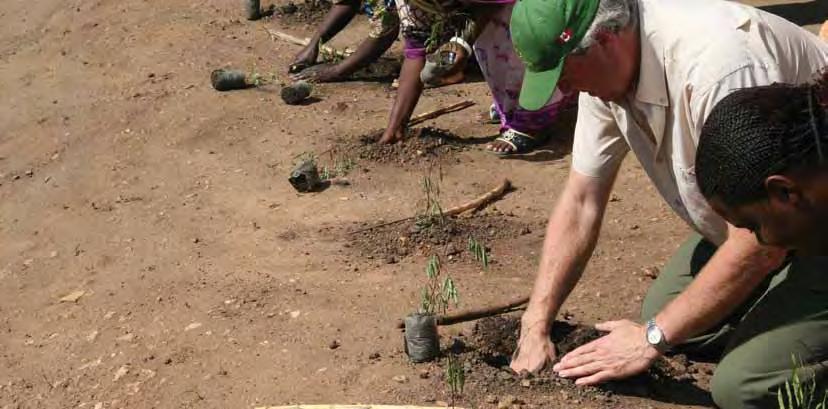
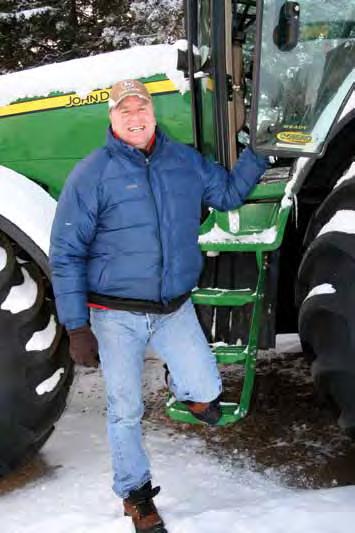
Local farmers provide their equipment as well as labour and operating costs for seeding, spraying, and harvesting. Byron spends countless hours requesting donations of seed, fertilizers and other inputs from the agro-businesses around Brownfield. An urban church, Lorne Park Baptist in Mississauga, Ontario, collects money each year to rent the land used to grow the CFGB crop. The annual harvest with matching grant funds from CFGB generates an average of $250,000 a year. There are tens of thousands of people in developing countries who owe their lives to the farmers in Brownfield.
Good leaders always pay a price to live by their values. In 2006 there were prospects of a good harvest. However, there were unexpected warnings of a snow storm that would strike within 48 hours. A snowstorm at harvest time damages the quality of grain and greatly reduces the price, from 20 to 50 percent. Members of the Coronation Project, Byron, Larry Scheffelmaier, Bob Webber and others, consulted each other about moving their heavy equipment out to the field early to rescue as much as possible before the storm hit.
Where would they start? Larry said: “Let’s take the Lord’s crop first!” This decision cost each farmer about $40,000 in revenue that year.
Byron Richardson and the farming families who make up the Coronation CFGB Grow Project lead by example in ensuring that there is food for the hungry. It’s a compelling example of compassion and steadfast endurance.
by Gordon King, Director of The Sharing Way, CBM’s relief and development department
Ann Muinde
“Our purpose is to provide hope for the hopeless.”
Location: Kenya
Occupation: Chair, Kalimani Women’s Self Help Group Ministry: HIV and AIDS
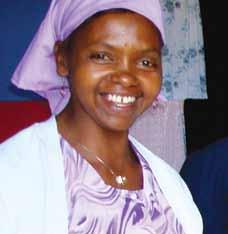
Ann Muinde lives in a market town in the hills near Machakos, Kenya. She is the mother of two children. To help support her family and her community she has several small-scale businesses — doing printing, selling bags of cement and selling cloth for tie-dyeing.
She is also the Chairperson of the Kalimani Women’s Self Help Group, which focuses on assisting families most affected by HIV and AIDS. They help many widows and orphaned children in the area. They also assist blind children with school fees.
Today, through funding from CBM’s Guardians of Hope program, Ann’s group has been able to expand their efforts. Many of the widows have
Ping Ping Ren
Location: China
Occupation: Teacher and Counsellor Ministry: Students
Ping Ping Ren comes from a poor village in rural China called “Cold Water.” In a region where many students stop going to school after Grade 9 because they are needed on the family farm or there is no money for further education, Ping Ping persevered and graduated from university with a diploma in English in 2004. She was hired as an English grammar teacher at Tumen River Vocational School (TRVS), founded in 2002 to provide the training and opportunities that are out of reach for so many in this region of Jilin Province.
“Ping Ping has set an example in all her responsibilities as an English grammar teacher, student counsellor
and supervisor in the dormitory, while demonstrating quiet leadership as a mature Christian,” says Peter Hahn, Founder and Principal of TRVS.
“Her positive can-do attitude and inclusiveness are infectious; her students feel they are valued, concerned and motivated… What is noteworthy is she also supports her siblings with her small income and extra salary working part-time tutoring the city students on her private time.”
With support from Canadian Baptist Women and Crandall University (formerly known as Atlantic Baptist University), Ping Ping has received a full scholarship to pursue her education in Canada. Her desire is to be better equipped for ministry in China — to bring “living water” to many villages.
by
Pak Loh, CBM’s Chinese Ministries Team Leader
joined them. “My joy is seeing people becoming empowered community members,” says Ann.
As one of the group leaders, Ann helps plan the activities, visits the widows, helps train the members in skills for setting up their own businesses such as tie-dyeing and encourages the young women to get tested for AIDS and know how to safely care for the sick.
Last year Ann helped set up a poultry business with the widows.
Why does she do what she does?
“I have been so impacted to see people value their lives and I have learned to be more giving. I believe our sacrifice now for the poor is honoured by God, as it says in Matt 25:34-36.”
by
Patty Card, CBM’s Guardians of Hope Coordinator
“My family and I struggled, cried, and almost gave up hope, but finally we began to see God work and to see significant changes. “
Pastor Yosep
Location: Indonesia
Occupation: Dean of Students, Kalimantan Theological Seminary
Ministry: Young Leaders
He was living with his wife and five children in Yogyakarta when a devastating earthquake struck on May 27, 2005. “Our home was destroyed and we narrowly escaped with our lives,” recounts Pastor Yosep. “Fearing a tsunami we fled from our crumbled house. In the ensuing chaos we became separated from each other, but praise the Lord, the tsunami never materialized and we were eventually reunited in safety.” Pastor Yosep then became part of the Convention of Indonesian Baptist Churches (KGBI) team distributing assistance and ministering to those who experienced significant losses as a result of the earthquake.
Other challenges he has faced include leading a small, struggling congregation, Tiberias Baptist Church, where he served as pastor from 1985 to 2004. “When I first came to the church it was dysfunctional and growth had stagnated. I saw few results for many years. My family and I struggled, cried, and almost gave up hope, but finally we began to see God work and to see significant changes. The church began to grow and continued to grow for the rest of my time there.”
Pastor Yosep is from the Kanayatn Dayak people group, so he has a deep cultural awareness of the challenges that they face as one of Western Borneo’s aboriginal peoples. He credits the influence of former CBM missionaries, “my spiritual fathers,” in helping to determine his calling as pastor and teacher. He is one of the young leaders in the KGBI who has benefited from CBM scholarships, completing a Master in Christian Education in 2004 and a Master of Theology in 2008.
He remains committed to using his rich cultural background and broad educational experience to serve his people. Pastor Yosep, who has been teaching at Kalimantan Theological Seminary since 1995, is also Dean of Students at the seminary. He is a good example of the integration of knowledge and practice as he maintains an active local church ministry, while being deeply involved in training leaders for the growing churches of Indonesia.
by Bill Dyck, CBM’s Indonesia Team Leader
Gaspard Bizimania
Location: Istanbul
Occupation: Office Manager, Inter-parish Migrant Program Ministry: Refugees
Gaspard Bizimania is a man without a country. Instead of becoming bitter and wallowing in self-pity, he is committed to helping others in desperate situations. He is a strong Christian presence in turbulent times.
In 1994, Gaspard was a foreign student in Moscow. Returning to his home in Rwanda he stopped in Istanbul to visit a friend. During that week the Rwanda genocide exploded. Travel for Rwandans was cut; he could not return to his studies and he could not go back home.
Gaspard became involved as Office Manager and cultural bridge at the Istanbul Inter-parish Migrant Program.
Svjetlana Mraz
Location: Croatia
Occupation: Vice Chair, Youth and Children Committee, European Baptist Federation Ministry: Youth
I remember when I first met Svjetlana Mraz almost seven years ago; I was interviewing her in her husband’s church in Zagreb, Croatia. She was one of the few women in senior youth leadership that I had ever met in Europe, let alone from a former communist-occupied nation. With more than 20 years of experience working with young people in the former Yugoslavia, and then through the subsequent years of struggle, war and eventual freedom from being a socialist republic, Svjetlana brings more energy, dedication and dynamism that I have seen in people half her age.
In her own words, she tells me, “Today, 19 years after the collapse of Yugoslavia, Croatia is a very different country. Croatia is predominantly
Roman Catholic and during this time it became more and more obvious that other church denominations would not have an equal place in society. Baptist believers in Croatia experienced very turbulent times in a short period of history and all of that has influenced the ministry to youth.”
Svjetlana has served in various capacities over the years, from being part of the Baptist World Alliance Youth Committee and International Planning Committee for the Baptist World Conference in Leipzig last year (where she coordinated family group ministry) to being the Vice Chair of the Youth and Children Committee of the European Baptist Federation, on which we have the opportunity to serve together.
In 2009, Svjetlana started the new Masters of Theology youth program at the International Baptist Theological Seminary in Prague – one of the first students to enrol.
by Jeff Carter, CBM Global Field Staff
He is liaison and advocate between our office and hospitals and works as travel liaison for repatriation and resettlement. He is an interpreter between six languages — Turkish, Russian, French, English, Kinyarwanda and a bit of Swahili — and gives counsel and advice on health, legal and cultural issues. Often he has background information for difficult cases. He also runs the Soup Kitchen on Saturdays for about 65 men.
Eighteen months ago his wife and two children were resettled in the United States. Gaspard is still waiting for the documentation to come through that will permit him to join them.
by Cathie Phillips, CBM Global Field Staff
“...Baptist believers in Croatia experienced very turbulent times in a short period of history and all of that has influenced the ministry to youth.”
“...You can’t just tell people ‘God bless you’, you must look for ways to help them.”
Williams Ortuño Morales
Location: Bolivia
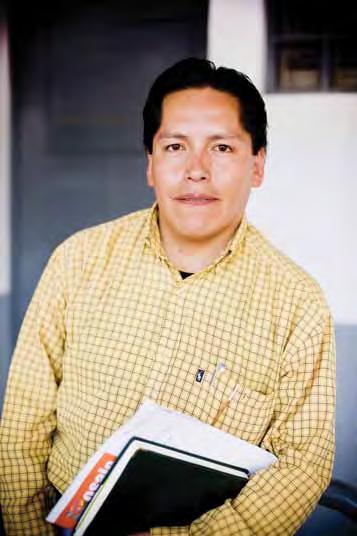
Occupation: Pastor and Administrator, El Alto Economic Initiatives Ministry: Microcredit
While studying to be an engineer, Williams had a change of heart, “a call of God to become a pastor” after he encountered an InterVarsity Christian group and accepted Christ. He enrolled in the Bolivian Baptist Seminary in Cochabamba and finished his studies through the extension program offered in La Paz.
He also completed administration studies because “it is difficult to be a pastor in Bolivia — the income you make is not enough to support a family — and it gives you one more way to serve the Lord.”
Williams is a sincere leader who cares deeply about those around him. Some of his most effective ministry has been working for the past 12 years with youth, “many of whom come to the city from rural areas and don’t have a high self-esteem.”
For Williams, a good pastor is one who “not only worries about people’s salvation, but also worries about how people are living here on earth, that they have jobs, food to eat…You can’t just tell people ‘God bless you’, you must look for ways to help them.”
His greatest joy is in the changed lives he is already seeing through a pilot program, a microcredit initiative supported by The Sharing Way, that he administers. “People are doing better, they are empowered, encouraged to do bigger things...they can access larger credit through banks to further develop their small business and are even hiring others in the community.”
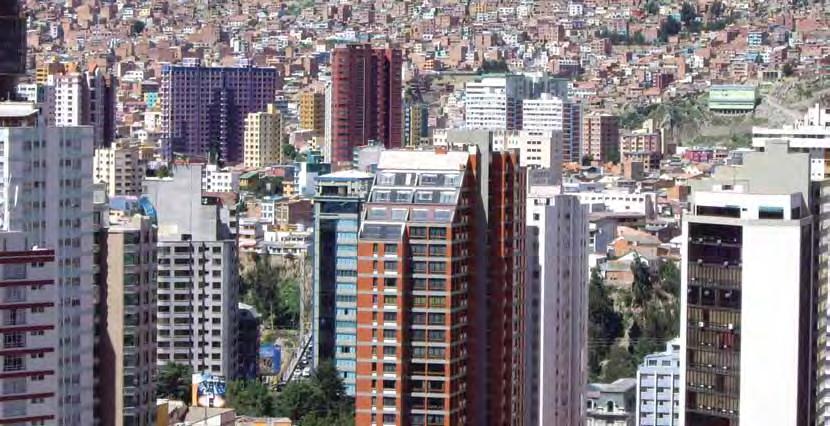
The program was launched among the 12 Baptist churches of El Alto, a growing metropolis of one million people on the outskirts of the capital city of La Paz. It’s a place where people come in search of a better life from other regions but often end up jobless. This coming year Williams’ greatest wish is to provide over 250 families with a little credit. Under his faithful guidance, it’s sure to be a solid investment that not only brings hope to people in need but also glory and honour to God.
Lalitha Krupa Rao
Location: India
Occupation: Principal, Eva Rose York Bible and Technical Training School
Ministry: Young Women
Grace and dignity are the first words that come to mind when talking about Lalitha. “Nanascarum…welcome…come and have tea on the veranda.” Lalitha’s calm welcome was partnered with a quiet yet strong passion for the work of the school when our Canadian Baptist Women’s Leadership team visited in January 2008. It quickly became apparent that she is fiercely determined to protect, preserve and provide a future for the Eva Rose York Bible and Technical Training School in Tuni, India.
She shared with us the history of this remarkable school, which over the years has provided vulnerable young women, mostly between the ages 16-18, with a rare opportunity for mentorship and
“the call of God on my life.”
training. Most of the girls come from families at the bottom of India’s caste system where life is harsh and options for a better life very limited. Many end up abandoned. The school becomes their new family.
Lalitha herself has a remarkable history, the first woman to serve as pastor in this region where she helped plant a church before taking on leadership of the school with her husband. After his death, she continued to lead. Today, though past retirement, she faithfully remains at the helm until a suitable replacement can be found.
In recent years the school program has been updated to include community development initiatives through a
Edward Nzinga
Location: Kenya
program taught by CBM Global Field Staff Jasmine Jonathan, The Sharing Way’s Development Coordinator for India.
Lalitha, a woman whose leadership developed due in part to Canadian Baptist women, continues to influence the next generation of leaders. Thank you, Lalitha, for leading the way for improved opportunities for our young Baptist sisters in India.
by Brenda Mann, Executive Director, Canadian Baptist Women of Ontario & Quebec
Occupation: Principal, Eastern Kenya Integrated College Ministry: Education
By the time he was 11 years old, Edward managed his own small business making charcoal, which he would sell for about 90 cents a bag. He helped to support the family after his dad had a road accident and was unable to work. From a young age, Edward exemplified the qualities of hard work and determination and a passion for education.
Despite the family’s poverty, he somehow managed to finish high school and worked as a teacher for a few years before returning to school to pursue God’s call on his life for Christian ministry. After studying at the Africa Brotherhood Church Divinity School and Pan African Christian University, he worked in several Africa Brotherhood Churches (ABC) and became Academic Dean at Faith Bible College in Nairobi. He continued to study and received his Masters Degree in Leadership and
Education from the Pan African Christian University in 2007.
He is currently Principal of Eastern Kenya Integrated College, a school he was asked to help create for the ABC church to integrate theology and education. He took on the challenge despite the personal cost — his salary with the church would be half of his present earnings.
When he arrived at the school there were nine theology students. Today some 316 students now study theology, education and communication technology through four campuses and a faculty of 31 professors (full and part-time).
Edward is now preparing for his own PhD studies at the University of South Africa. What remains at the heart of all of his accomplishments so far in his young career? For Edward it’s simple: “the call of God on my life.”
by Malcolm Card, CBM’s Africa Team Leader
“Through accompanying prostituted women we try to listen for their cries and then amplify their voices for justice and dignity.”
Location: Vancouver
Occupation: Founder and Director, REED
(Resist Exploitation, Embrace Dignity)
Ministry: Advocacy
The Vancouver 2010 Olympic Winter Games will bring the world to Canada. But it will also bring something else — an increase in human trafficking to meet the demand for paid sex. Human trafficking is a form of slavery where people, mainly women and girls already vulnerable to exploitation, are recruited, transported, sold and controlled.
“Buying Sex is Not a Sport” is a campaign aimed to raise awareness around sex trafficking and the demand that fuels sexual exploitation — not only during mega-events like the Olympics but on a daily basis. It’s an initiative of REED (Resist Exploitation, Embrace Dignity), an organization founded by Michelle in 2005 after working at a drop-in centre for prostituted women in the Downtown Eastside in Vancouver, and living and working with trafficked women in the squatter areas of Manila.
“Resisting exploitation means a commitment to standing with and for women who are being bought by men and working for their liberation through addressing structural evil,” says Michelle.
Two qualities of Michelle’s leadership are passion and courage. She is passionate about making a difference, in the name of Christ, in the face of horrendous injustice and exploitation. And she demonstrates great courage in the face of threats from entrenched criminal organizations who live off the spoils of trafficking and prostitution on the one hand, and growing opposition from groups seeking to legalize and legitimize the sex trade industry.
connecting...
We invite you to invest in people who have a passion for serving. Make a donation today to grassroots leadership development. www.cbmin.org.
As well as working to address systemic issues, REED seeks to embrace women in mercy and friendship, “offering our lives, our community, our presence, but from a position of invitation and not power.”
by Blair Clark, CBM’s Associate General Secretary
Michelle Miller
v i e w the
by Laurena Zondo
Ever wonder what it’s like growing up on the streets?
Nineteen-year-old Alexi gives some insight. He’s one of the 45 street kids, aged five and up, who now call themselves Amizero (Hope), a ministry founded by Epa, a young student at Baptist International Theological University in Rwanda.
A little about myself…
I started life on the streets…I was seven years old…my grandpa chased my mom away after she had several kids by different fathers…I have no idea where she is now…I came to the city by myself. I was in poor shape, sleeping under canvas…it was very sad, I didn’t have parents… I would steal and was imprisoned…then I went back to stealing and taking drugs and alcohol… you make a lot of money stealing…being high made me feel strong. One day I was walking around the neighbourhood and ran into Pastor Michel. He talked to me and introduced me to Epa.
What I think about Epa…
I was one of the first to join her group. I became a Christian because of Epa’s teaching…sometimes I go to her place for food. She is like my mom now.
Where I live…
I sleep outside at the market and gather coal and do other small jobs to make money. I don’t steal anymore but make a lot less…about $1-2 a day.
My biggest challenge is…
I have many, many problems…the biggest is not having a place, a home, and fighting mosquitoes (at night)…not having a home is a bigger problem than lack of food or work…many other boys are living like me.
I wish that…
I would like to go to school…I have never gone to school…I would like to study a trade like plumbing or carpentry.
My advice to other kids living on the streets…
Becoming a Christian is the most important thing…you have to have some hope that God will provide for you.
What gives me hope is…
I have peace when I come to this group (Amizero)…no one beats me here or puts me in jail…I have brought five other kids here…I am not tempted to go back to my life of stealing and drugs because of the Bible, it tells me to have patience and courage.
GRASSROOTS HEROES
Solidarity Sunday
On Mother’s Day, May 9, 2010, join with Canadian Baptists across the country as we stand in solidarity with vulnerable families in Rwanda. Mark the date today and/or order your free solidarity ribbons early. For more information, email communications@cbmin.org or visit our website at www.cbmin.org.
Teens Hungry for Change in Nova Scotia
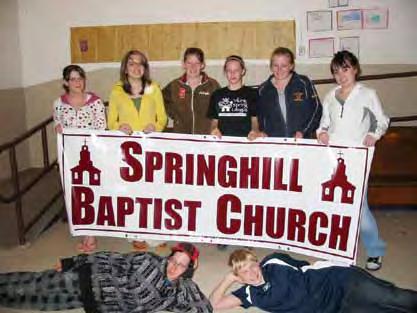
Springhill Baptist Church Youth Group organized and participated in a local food drive called The Cupboard is Bare Night. Going door-to-door canvassing for non-perishable food donations, they collected enough items to fill the back of a half-tonne truck.
“Our youth wanted to show the church family that missions can start at the local level,” proudly notes Bill Adshade, one of their youth leaders. “The food drive was part of a Bible Study showing that missions can start right here in their own home town and that there are people in need right here in their own community.” Not content however to keep their efforts at the local level, “some of our Senior High youth have expressed a desire to go on a short-term mission, possibly to El Salvador or Bolivia.”