The most common question we’ve been asked over the past months at CBM is whether we will be cutting our ministry budget for 2009.
While it is true that in this time of economic uncertainty CBM has been adversely impacted, we believe that God is great and will always honour those who work for the good of His kingdom.
As you will read in this issue on evangelism and outreach, everyday all over the world our Field Staff and international partners use the funding you provide to share the Good News of Christ to those who desperately need to know the love and hope He offers to all.
So, the short answer to the question is that “no” we will not be cutting our commitments to our partners in 2009, and we promise to continue being diligent stewards of your offerings. Whether it’s through a water project or a well-trained pastor, with your partnership and God’s faithfulness, we will continue to offer the gift of new life to those who need it most.
available by request.
Purpose of mosaic mosaic is a community forum of local and global voices united by a shared mission. mosaic will serve as a catalyst to stimulate and encourage passionate discipleship among Canadian Baptists and their partners.
Contact us at: 7185 Millcreek Drive Mississauga, ON L5N 5R4 Tel: 905.821.3533
mosaic@cbmin.org www.cbmin.org
Managing Editor: Jennifer Lau
Editor: Laurena Zondo
special feature Page 12 Global Field Staff Poster Page 14 Getting on the Map
Page 17
Bagging up Christmas in July
ethically speaking Page 18 Time Well Spent?
Mission of Canadian Baptist Ministries Encouraging
1 g-files
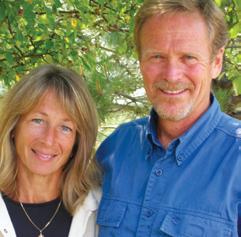
by Rev. Dr. Gary Nelson General Secretary of CBM
After Jesus started hanging out with tax collectors like Zacchaeus and other “undesirables” not often found in the synagogue, the religious establishment began to mutter complaints. It seems that the religious of the day were incensed at his inconvenient and unorthodox approach to faithful living. To their whimpering derision he cries out his intentions, “the son of man came to seek and to save what was lost.” (Luke 19:1-10).
Have we lost this passion for the lost?
No! Don’t tell anyone at CBM that they don’t care about evangelism – it would shock them to think you even entertained that idea. The hope that people might come to know Jesus is the fuel that fires their passion. In fact, they would say that everything they do – both in word and deed – is a witness to the Good News of Jesus Christ.
“To seek and to save what was lost.” These are words that cause Elie and Mireille Haddad to remain in Lebanon during this time of uncertainty, and not just survive but expand the ministry of the Arab Baptist Theological Seminary (ABTS) in Beirut. Their desire is to produce church leaders and evangelists
for numerous countries in the Middle East. I love Elie’s words: “Most of the time we are just catching up to God. Think about the fact that there are 3,000 Christians in Algeria and only three pastors. The belief is that they are growing at six new Christians a day. The only place that theological training can take place legally for new pastors for Algeria is at ABTS.”
“To seek and to save what was lost.”
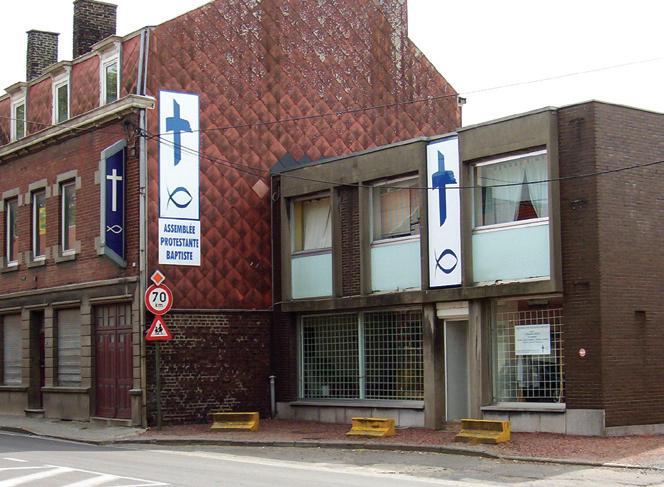
These are the words that caused Colin and Karen Godwin to discern a call to church plant in Belgium, considered one of the most difficult places in the world for missionaries. But plant they did and today a new church has sprung up. This past summer, they left for a new ministry assignment: leadership development in Rwanda. They leave behind a new Belgian pastor they nurtured to Christ and mentored over the years.
“To seek and to save what was lost.”
Lost and Found
These are the words that fuel Darrell and Laura Lee Bustin and Bill and Janice Dyck to do more than simply train pastors, but instead form passionate evangelists and missional church planters for the Church in Indonesia. Students at the seminary go out each weekend and are involved in church planting and evangelism on a regular basis. They are now joined by Johnny and Paige Byrne-Mamahit, who moved this year from Balikpapan (East Kalimantan) where they were church planting in an urban setting to Pontianak (West Kalimantan). They leave behind a vibrant new church led by a national pastor.
Through word and deed, the lost are found. It is what Jesus came to do. How can we do anything less? It is our mandate as the Church and we cannot pick and choose our preference. It is a full meal deal.
If we ignore the world, we betray the Word of God which sends us out to serve the world. If we ignore the Word of God, we have nothing to bring to the world.
René Padilla, Latin American theologian who began the Kairos Foundation in Argentina, one of CBM’s newest partners.
photo:
Why
e-van-gel-ism n.
1. a preaching of the gospel; earnest effort for the spread of the gospel.
2. the work of an evangelist.
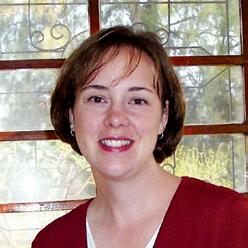
by Blair Clark CBM Associate General Secretary
Depending on your perspective, the answer to this simple question could be considered anything from a “no brainer” to highly controversial.
Before he became the Apostle Paul, Saul hated evangelizers and did everything in his power to either kill or imprison them – that is, until he himself was evangelized by none other than the risen Christ! He then became evangelism’s most eloquent champion.
The same was true of Sadhu Sundar Singh, a young Indian who fervently persecuted Christian evangelizers in his native India – that is, until he himself was converted through an encounter with the resurrected Christ that was almost identical to that of Paul some 1,900 years earlier and he, like Paul, became a powerful evangelist.
Why evangelism?
At the “no brainer” end of the spectrum, because “God so loved the world that he gave his only begotten Son, that whosoever believeth in Him should not perish but have everlasting life”, or because “I am not ashamed of the gospel, because it is the power of God for the salvation of everyone who believes: first for the Jew, then for the Gentile”, or because “the wages of sin is death, but the gift of God is eternal life through Christ Jesus our Lord.”
We could go on and on quoting verses from Scripture that clearly and unequivocally present the case for evangelism. We could also give many more examples of amazing and dramatic conversions that have been occurring for 20 centuries and which continue to occur today. And yet in Christian church after Christian church in Canada today –and Baptist churches are not exempt from this reality – evangelism is ignored, paid lip service, strongly challenged, flat-out denied and even vehemently opposed.
Consider the impact of Charles Templeton. He was converted in 1935, planted a church on Avenue Road in Toronto in 1941 (which continues today in a different location as Bayview Glen Alliance Church), co-founded Youth for Christ International (YFC) with Billy Graham and worked alongside Graham as an YFC evangelist in the early 1950s.
But then in 1957 Templeton declared himself an agnostic and spent the rest of his life opposed to evangelism and the Christian church. Through his books, articles, speaking engagements and broadcasting work, Charles Templeton was a strong voice in the demise of evangelism in Canadian churches until his death in 2001.
In the face of horrific human evil, the existence of a good, loving and holy God is questioned.
There are several aspects of a biblical understanding of evangelism that have become increasingly unacceptable in Western society.
First is the exclusive claim of the Gospel that there is only one way to God (John 14:6, Acts 4:12).
Western Christians often react to this as though it is synonymous with imposing Western values and culture on the rest of the world. What they ignore is that Christianity is an Eastern religion, and that it has an incredible capacity to express itself in very diverse cultures all over the world. They also miss the fact that the Gospel is inclusive, and in verse after verse, beginning with God’s promise to Abraham in Genesis 3:12 and culminating in John’s vision in Revelation 7:9-10, that inclusiveness is repeatedly affirmed. God’s grace is freely offered, through Jesus Christ, to every human being on the face of the earth.
A second problem is the underlying need for salvation that is rooted in God’s holiness, our basic sin problem as human beings, and God’s impending judgment. All three are routinely
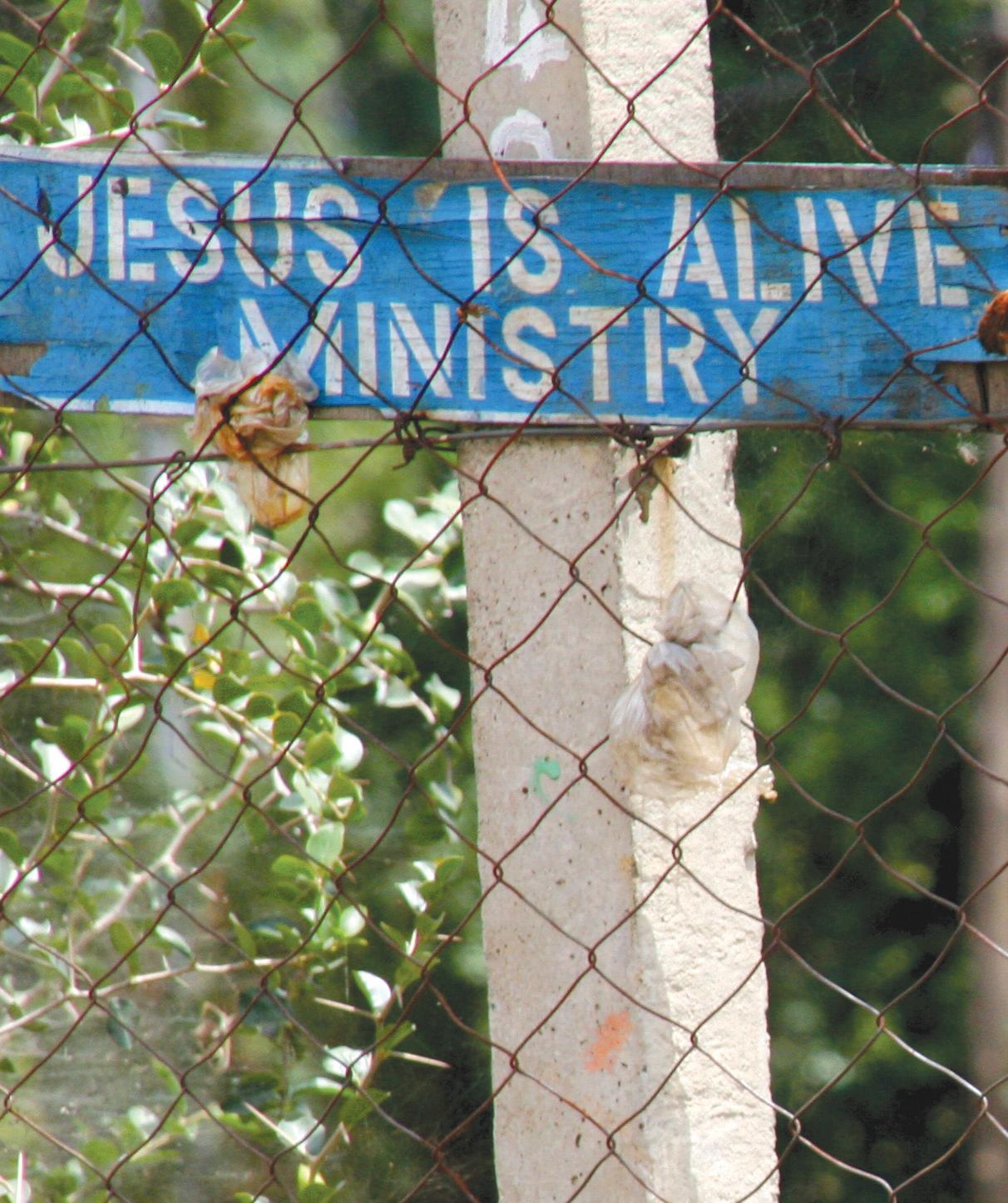
Today the Mizo in northeastern India are one of the three largest Baptist conventions in Asia.
tscoffed at, challenged or dismissed outright as being old-fashioned, primitive and intellectually indefensible.
In the face of horrific human evil, the existence of a good, loving and holy God is questioned. In the name of evolving human goodness, the idea of human depravity or sinfulness is demeaning. In a world of terribly unjust justice systems, the belief in a God who will legitimately exercise perfect justice is pure fantasy. And yet in the face of such skepticism there are amazing examples of God’s continuing power to transform lives through the communication of the same good news announced by Peter in Jerusalem on the day of Pentecost.
Western Christians often react to this as though it is synonymous with imposing Western values and culture on the rest of the world.
One of the great examples of evangelism that is beginning to impact a number of our Baptist churches today involves the Karen refugees from Burma who are being resettled in Canada. The Karen are one of 10 distinct tribal groups located northeast of the Bay of Bengal. Each had a distinct understanding of a good, loving and powerful creator God who was not to be represented by any kind of image.
They also believed that this God had revealed himself to them in a book but their ancestors had lost that book, and so over time they had lost most of their
knowledge of this God. Some of their legends maintained that one day God would send a “white brother” to them who would bring back the book that would reintroduce them to God. These people groups are the Karen, the Kachin, the Lahu, the Wa, the Shan and the Palaung of Burma, the Kui of northwestern Thailand, the Lisu of western China and the Naga and Mizo peoples of northeastern India.
Today, the Karen, the Naga and the Mizo form three of the largest Baptist conventions in Asia, numbering in the millions. They are believers today because in each case, God sent men and women like the Judsons from the USA and the Burpees from Canada, people who were committed to evangelism, sharing the Good News of the Gospel with the people of Burma.
In the face of such strong challenges to evangelism in our contemporary Canadian society, the two most powerful counter-arguments to motivate and encourage us are regular exposure to lives, past and present, that have been transformed by the Gospel, and a biblical understanding of the centrality of evangelism in God’s kingdom purposes for His missional church.
Rev. Blair Clark
Associate General
Secretary of CBM
Blair and his wife
Janet served as CBM
missionaries in Indonesia for over seven years.
To Burma and Back
Hundreds of Burmese Baptist refugees, brought to Canada by our government, are finding a warm welcome and a spiritual home in Canadian Baptist churches all across the country.
West End Baptist in St. John’s, Eglise évangélique baptiste de Limoilou in Quebec City, Bromley Road Baptist and McPhail Baptist in Ottawa, First Baptist in London and First Baptist in Regina are just a few of the growing number of Canadian Baptist churches that are being blessed by an influx of Burmese Baptist believers.
Our connections with Burma date back to 1814, when Maritime Baptists began supporting the first American Baptist missionary, Adoniram Judson, in his work in Burma. In 1845, the Maritime Baptists sent their first missionaries, Rev. and Mrs. Richard Burpee, to join the American Baptist work in Burma. For a variety of reasons, Canadian Baptist work in Burma ended in the 1870s, our connections with Burma ceased and India became the exclusive focus of our mission work until the end of the century.
Fast forward to the early 1990s.
The situation for Burma’s ethnic minorities worsened following the earlier arrest of Aung San Suu Kyi, whose National League for Democracy Party had won 82% of the parliamentary seats in the 1990 election.
As the ruling generals consolidated their power and increased their repression and tyranny, The Sharing Way (CBM’s relief and development department) and many other Baptist groups began channeling assistance to the growing number of Burmese fleeing to refugee camps in Thailand. Their focus was on helping to improve housing, schools, clinics, and agricultural capacity.
Following the cyclone that devastated the Irrawaddy delta area of Burma earlier this year, the entire world witnessed the incredible disregard for human life by the ruling generals. Again it was the predominantly Christian Karen people living in that delta area who experienced the largest loss of life and the greatest suffering and deprivation as relief agencies were denied access to them.
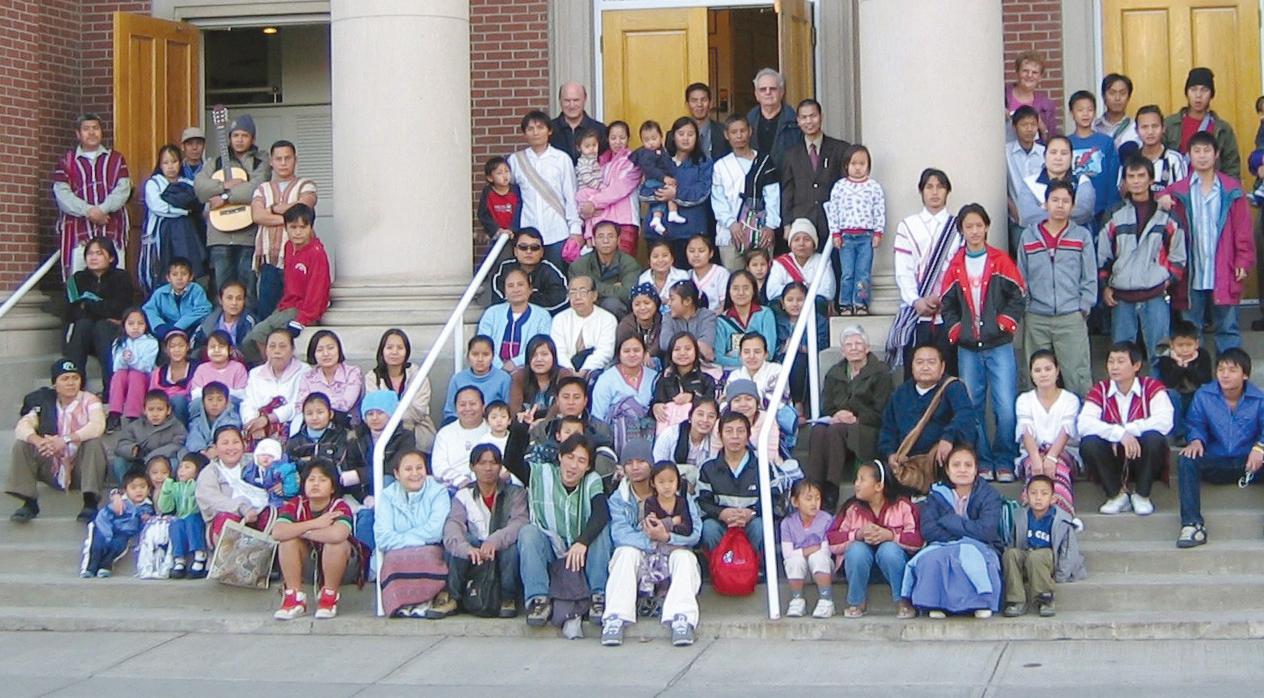
tNew Friends in Christ Church, a congregation of about 100 Karen believers, now meets at First Baptist Church in Regina on Sunday afternoons.
Finally recognizing the extent of the suffering of the Karen and the continuing intransigence of Burma’s ruling junta to end their systematic persecution of ethnic minorities, countries such as Canada and the US have taken on the large scale sponsorship of thousands of Burmese refugees, primarily from the camps in northern Thailand.
The vast majority of those coming to Canada are Karen, many of them Baptist believers, and finding a church home is a high priority for them upon arrival. They are making an impact on the churches welcoming them in.
“It has given many in our church an opportunity to serve and be involved. Many people who are serving feel genuinely blessed,” notes Rev. Sheldon Dyck, Pastor of First Baptist Church in London, Ontario.
“We have the joy of new friends and new life in our church. The Karen told us that they prayed God would provide a church home for them in London. They see us as the answer to their prayers; we see their presence as an answer to our prayers.”
For more on the amazing story of the Karen people read Eternity in Their Hearts by Don Richardson.
Burma:
A country of over 50 million people in Southeast Asia that borders on Bangladesh, India, China, Laos, and Thailand. More than 100 languages are spoken by 135 ethnic groups that comprise Burma.
Myanmar: The ruling junta changed the country’s name to Myanmar, but all pro-democracy groups in the country prefer to use its historic name, Burma.
Karen:
One of the largest ethnic minority groups in Burma (the most realistic present estimate is between five and seven million).
About 40% of the Karen are Christian, with the remainder being either animist or Buddhist. They have been involved in a struggle for freedom since the end of World War II. Almost all of the Burmese refugees coming to Canada are Karen.
Fast Facts
photo: Wayne Wyatt
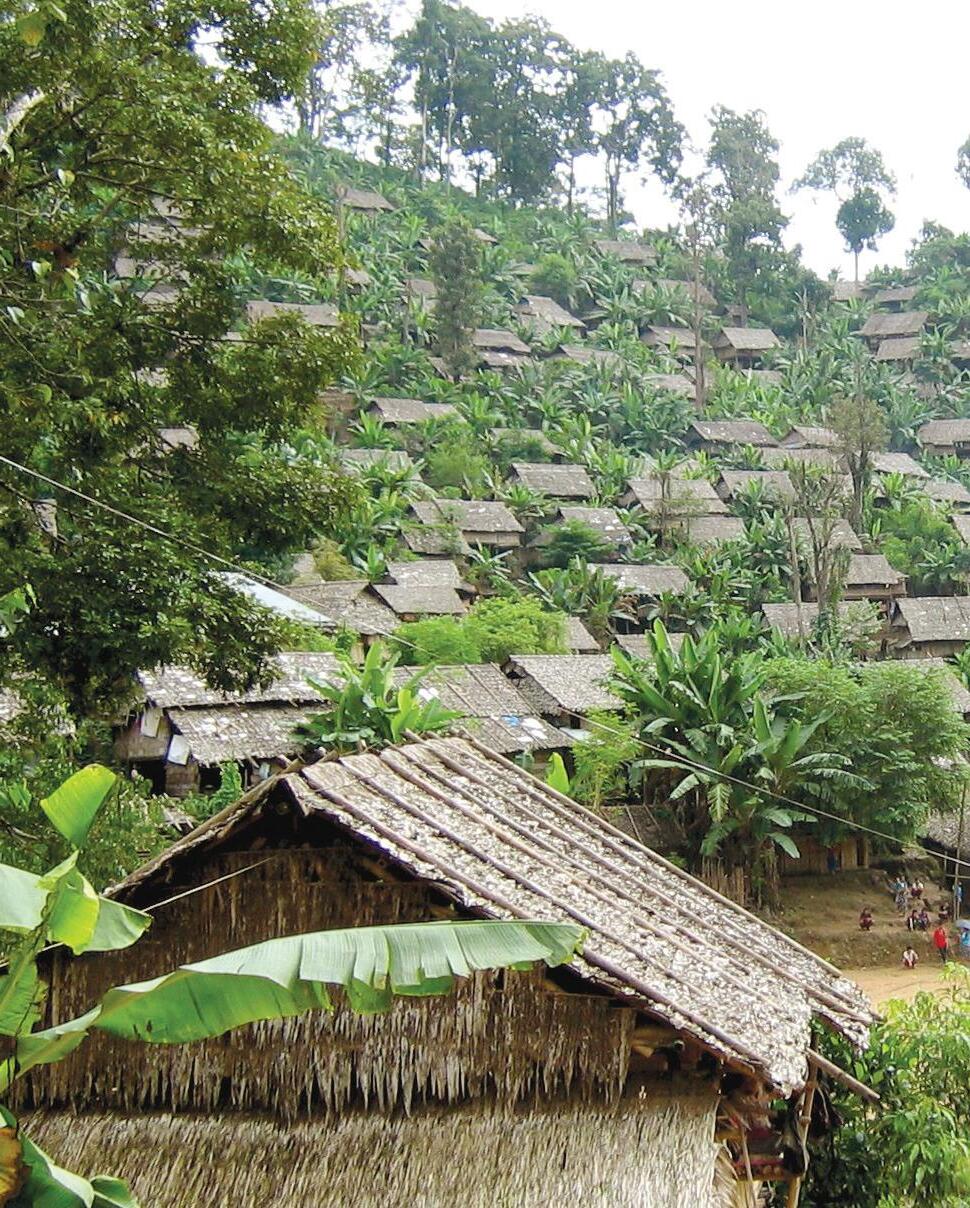
t Mae La Oon is one of nine refugee camps in Thailand, housing 140,000 refugees from Burma – the largest refugee population in Southeast Asia. In Mae La Oon, most belong to the Karen ethnic group, which has faced severe persecution by the Burmese government.
Trek to Thailand
by Giselle Culver CBM Communications Assistant
After a long journey through deep jungle on treacherous roads, two Canadians, Wayne and Marlene Wyatt, finally arrived at Mae La Oon, a refugee camp in Thailand on the border of Burma. They came with letters and photos from friends and family now living in Canada.
Wayne and Marlene attend First Baptist Church in Regina, where many members of the congregation have provided friendship and support for resettled Burmese refugees. As the Wyatts got to know the Burmese Karen people, they wanted to learn more about their lives and where they came from. So in October 2007 they travelled to Thailand.
While in Mae La Oon camp, they were hosted by the Karen Baptist Bible School, waking each morning to roosters crowing and students singing morning devotions. Although the people had very little, the Wyatts were treated with generous hospitality, and felt God’s presence in the midst of difficult circumstances.
Mae La Oon is one of nine refugee camps in Thailand, housing 140,000 refugees from Burma – the largest refugee population in Southeast Asia. Burma’s ethnic minorities have faced severe persecution by the Burmese government. Villagers caught in the middle of the long conflict between the Burmese army and armed ethnic opposition groups have experienced many human rights abuses – forced relocation, forced labour, the burning of villages, imprisonment, torture.
Many of the people who fled to Thailand have been “warehoused” – confined in camps – for decades. Unable to return home or integrate into the local population, their lives are on hold. Of all the refugee camps, Mae La Oon is the most remote and difficult for aid workers to reach. About 15,000 people are crowded into the camp, which lacks adequate water, sanitation facilities and health care. Bamboo houses built on stilts climb the steep hillsides, where monsoon rains often cause dangerous landslides.
Canada is one of the countries that has responded to the United Nations High Commissioner for Refugees’ call to resettle Burmese refugees, and has accepted almost 3,000 over the past two years. About 250 have settled in Regina.
After living in a refugee camp with no electricity or running water, even simple, everyday tasks such as shopping, cooking, banking, or using public transportation are a challenge. “When we first walked into their apartment,” says Wayne, “canned goods were in the fridge. They were living out of plastic bags. They didn’t know what hangers or closets were for.”
“There’s so much for them to learn,” says Marlene. “They’ve had huge obstacles.”
For Wayne and Marlene, their relationship with God has grown and deepened as they have put their faith in action to help the Karen people.
, , I was the type of Christian who sat on the pew up in the balcony and didn’t get too involved in the church. But when we met the Karen people, we got involved. As we serve them, we serve Jesus.
Wayne Wyatt
photo: Wayne Wyatt
Rebirth of the Church in Antioch
For the past two years, my wife Catherine has gone down to the regional women’s conference in Antakya, better known as Antioch in English. She and our girls have helped look after the kids at the conference so that the women who attend can take full advantage of this time. While there, Catherine discovered that there is a wonderful, alive church community thriving in the area. While listening to her stories of the church there, what has impressed me most is how the community of faith is growing because the believers in the community are making costly choices to live out their faith.
In one family, the husband had a well-paying job with the municipality, in a country where good jobs are hard to find. However, the couple felt a call on their lives to leave their fellowship, job and community, and move down to Antioch to help with the church there. After moving, the man found another job as a janitor in a local medical clinic, making much less money than he had made in his previous job. While cleaning one day, he was accidentally stabbed by a needle left lying around. A lengthy illness followed, where even his life was in jeopardy for a while. But the church community rallied around the family, supporting them and creating lasting bonds of fellowship. Today, the couple continues to serve effectively in the church.
Several years ago, another man living in Antioch was searching for God. Being from the Islamic faith, it was most natural for him to search for God in Islam. However, after searching for some time and seeing no response from God, he gave up altogether. Some time later, he felt an urge to go into the cafeteria at his workplace, where he started to flip through a newspaper, and
Did you know?
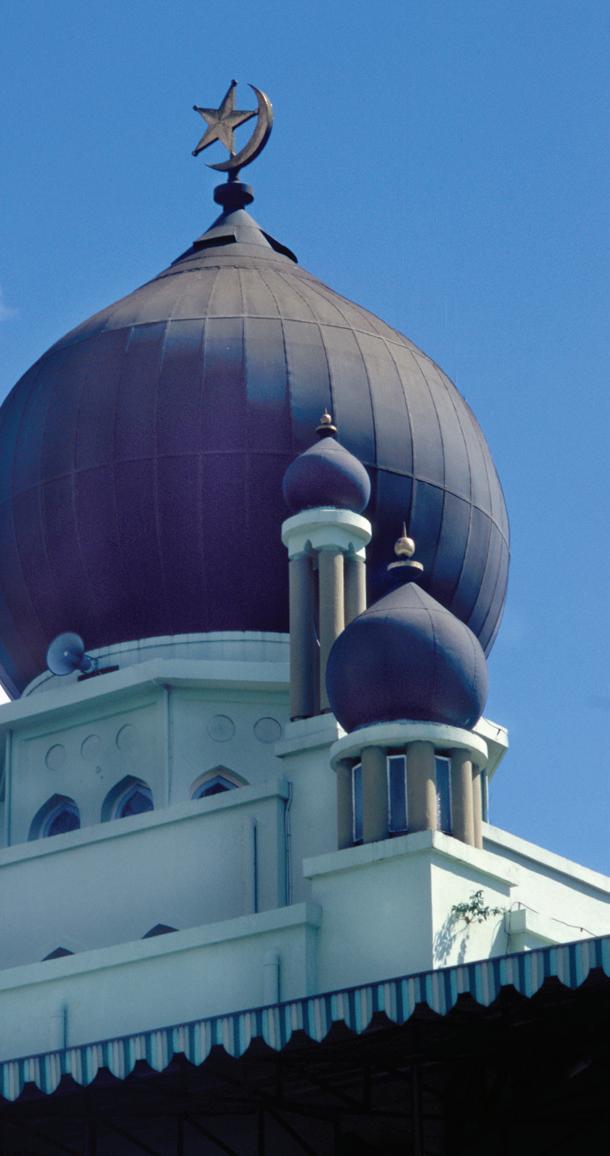
There are only about 4,000 evangelical Christians in Turkey, which has a population of 73 million people. To put it in perspective, this means that in a city the size of Saskatoon (230,000), there would be 13 believers. Yet God is building his church in this state-controlled Islamic land.
saw an ad offering a New Testament. He replied to the ad and after receiving the New Testament, he also began to do a Bible correspondence course. His brother, who had been searching with him, pulled back in fear of the reaction of family and friends, and he was left to continue his search alone. Eventually, he started attending a local church and came to faith.
As he considered the road ahead, he knew he would face opposition from his large, extended family. He didn’t want to
continue alone, particularly without his wife who was not positive towards the Christian faith.
For one month, he faithfully read passages of the New Testament over his wife while she lay sleeping beside him at night. At the end of the month, she came to faith. “I feel that the words read over me went into my very soul, and played a crucial role in my coming to faith,” she joyfully shares.
As they feared, they were ostracized by their family for some time because of their new faith. But recently, the ice has started to melt and some relatives are finally talking to them again. This has led to opportunities to share their faith.
So, how is God restoring his church in these ancient lands?
In Matthew 16:13-18, Jesus says that he will build his church through those who know who he is, who come to faith in him. It begins with a confession like Peter’s in this passage, that Jesus is the Christ, the Son of God.
To make this confession is a big step for those from Islamic backgrounds who simply acknowledge Jesus as a great prophet. Yet for those who do step out in faith, great things are possible.
Because of believers such as these, the kingdom of God is growing in the Middle East.
photo: John Forrester
by Ron Albinet
CBM Field Staff in the Middle East
Jennifer Lau Managing Editor of mosaic
mosaic: Chinese ministries are growing phenomenally around the world. What role can Canadian Baptist churches play in helping to develop Chinese ministries? Many churches may not know how to proactively reach this group.
TM: I think they have a huge role to play, particularly with newer immigrants from China who end up going to Baptist churches. We like them to come, but we are not very intentional. It’s not a missional posture, it’s an attractional posture. So few of us really try to incarnate ourselves in the Chinese community to build bridges of friendship. We’re still mostly concerned about our own existence and not really about the mission that God is working all around us.
Tom Mei Senior Pastor of Broadmoor Baptist Church in Richmond, BC
Pak Loh CBM’s Chinese Ministry Team Leader
In his role as Chinese Ministry Team Leader, Rev. Pak Loh focuses on three particular areas of ministry: providing a resource network to help link ChineseCanadian Baptist churches and other Canadian Baptist churches that have Chinese ministries; strategically developing a Chinese Diaspora ministry; and establishing a ministry presence in China on behalf of Canadian Baptists.
PL: You’re right, Tom. Some Chinese people intentionally don’t want to go to a Chinese church. They want to go to an English-speaking church to overcome cultural and language barriers. If Canadian Baptist churches had more of an idea how to reach out to them, it would be a phenomenal ministry opportunity. However, not a lot of churches have that mindset. It’s challenging.
mosaic: So what are they supposed to do? Where do people go to talk about Chinese ministries?
PL: Trinity Baptist Church (Vancouver) is a good example. Trinity has been blessed with good Chinese pastoral input from people like Tom and (former CBM Global Field Staff) Ivan Ho. But other churches may not have that type of mindset to reach out until one day they look out and all of a sudden they see 20% of the congregation is Chinese. The church leadership needs to make a significant shift in thinking about ministry. People haven’t necessarily seen the potential. I think we can help churches see it.
TM: One of the basic things that the church needs is a heart for mission. They may sometimes see these people as a threat or wonder ‘why can’t these people be like us’. Well, they can’t be. They’re not. I think we need to repent from that attitude and humbly walk before our God and receive these newcomers as gifts
from Him – not only as us “helping” them, but them helping us to enlarge our vision of who God is.
We have an English as a Second Language ministry here at Broadmoor that we don’t advertise and we have 150 students. One of the things the students help us with is to read the Scriptures in a new way and it’s like seeing the Bible fresh and new again. People coming from Asia and other countries who do not come from a Christendom past do not have the same kind of angst toward church. Listening to them engage in Scripture is like listening to it being read for the first time again. How wonderful is that?
These people are not “work” for us or problems to be solved or challenges to be overcome. They are a gift God has given to help us grow and know him better. If we took that posture, we would receive these people much differently.
PL: Tom, do you think it’s that easy? We’re Chinese and we’re telling our Canadian counterparts to receive us.
TM: No, it’s not easy, but following Jesus isn’t always easy. We have only one or two [Canadian Baptist] Chinese churches in Western Canada. We have a long way to go, but there’s lots of opportunity. What it means is for us to become servants and that’s a difficult thing.
mosaic: What do you need to help develop more ministry among Chinese people?
TM: I need workers. I need partners. I need people willing to plant churches. We have so many Chinese people in Western Canada. We need to send missionaries to begin to build relationships. I don’t think it’s rocket
science. We just need to have the heart to do it. When we see the number of people coming from other countries, it’s an opportunity lost for the Kingdom. I think that’s a shame.
mosaic: Recently, several news publications have run articles about the staggering numbers of people converting to Christianity in China. It’s estimated to be upwards of 100 million. You’ve both gone to China and worked among the people. To what do you attribute that?
PL: Initially in the 1950s, when the Communists came in, they kicked out all the missionaries and the believers went underground. All that suffering refined their faith in a significant way. The growth is coming out of their persecution and dissatisfaction with Communist ideology. Out of that, a movement was created, particularly after June 4 (Tiananmen Square massacre)
TM: The church is growing in China because the Spirit of God is working among Chinese people in a way that is unprecedented in the history of the world. Why I am so passionate that we Canadian Baptists need to be involved in China or Chinese ministries is because God is involved in a big way – not a little way. And because God is involved we need to be involved. We need to be involved in God. I’m not passionate because I’m Chinese. I’m passionate because God is doing something that is amazing and transformative. There’s a new paradigm emerging as to what it means to be a Christian today and what a Christian looks like. The majority of Christians in the world do not come from the West or the North anymore.
mosaic: Any last thoughts?
TM: I’d like to see a better network between Chinese churches in Toronto and Vancouver. The reality is that we have struggling work here [in Western Canada]. We could meet at least for encouragement. I call it “Dim Sum Diplomacy”. We would go a long way if we gather a network of people together. We also need to pray. My hope is that we can all see the reality of what God is doing throughout the world and what he wants to do through us in ministries to Chinese people. To be honest, we need to be transformed. This can be one of the things God can use to move us.
Pak, I wish you to be doubly anointed by the Holy Spirit so that you have courage to engage in all that you need to do and have your ministry expand.
PL: I’d also like to encourage you, Tom. You’ve been a very significant part of Chinese ministries in our denomination. But, I’d like to see more people working with us. Plan together, draw resources, dream together and see where it will lead.
Editor’s Note:
This past September, Pak Loh took a small team of pastors to assess the progress of relief and reconstruction efforts in earthquake-devastated areas of Sichuan Province. The team visited nine different sites and was deeply burdened by the need for support. As a result, CBM has committed to partnering with Chinese-Canadian Baptist churches to raise funds for the rebuilding of two churches in Dazhou and Guangan. The funds raised will not only help restore the buildings, but also help the churches expand ministry into their local communities.
If you would like to help support the reconstruction of churches in China, please call us at 905.821.3533 or make a donation online at www.cbmin.org
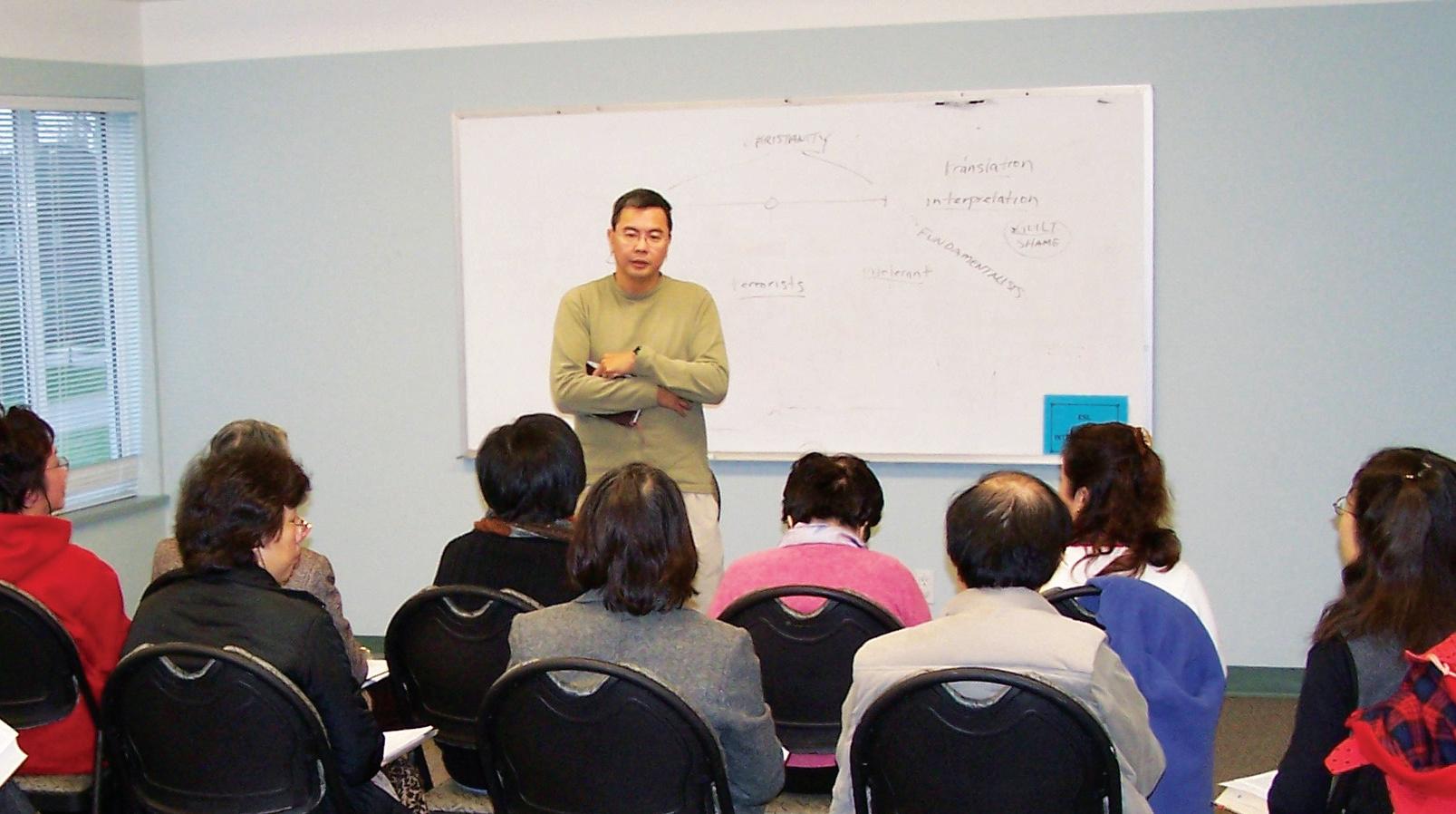
t Senior Pastor Tom Mei is one of the teachers in the ESL program offered by Broadmoor Baptist Church in Richmond, BC.
2009 Encouraging passionate discipleship for local and global mission Partners in Mission
Global Field Staff
Global Field Staff are fully appointed personnel who work in one of CBM’s priority countries and within our four strategic ministry focus areas.
Strategic Associates
Strategic Associates are either appointed by other agencies or have arrangements that preclude them from being Global Field Staff. They are involved in ministries related to CBM’s strategic focus areas.
On special assignment in India: Judson Pothuraju and David Sarma
June & Pablo Castellon –John & Ruth Chan Germany Dianne Friesen Cameroon Barbara Fuller Moldova
Doug & Jill Janzen Jasmine Jonathan Aaron & Erica Kenny Kenya Suraj Komaravalli India Pak Loh Canada Jim & Diane McBeth Angola Gato Munyamasoko – Rwanda Sam Mutisya Africa
David & Suzannah Nacho – Argentina
David & Cathie Phillips –Middle East Ana Salomão Canga Angola Bruno & Kathleen Soucy – Rwanda Dorothy Sowden Angola Vasil Vasilev Czech Republic Emigdio Veizaga Bolivia
Malcolm & Patty Card Africa Paul & Kelly Carline Kenya
Jeff & Deann Carter Czech Republic Rupen & Mamta Das Lebanon
Patrick & Ria Deneut French Canada
Bill & Janice Dyck Andy & Rebecca DesRoches – Kenya
Colin and Karen Godwin – Rwanda
Duane & Carin Guthrie – Bolivia
Joyce Hancock Brazil
Tim & Diane Bannister Kenya Rebecca Alward Bolivia
Ron & Catherine Albinet – Middle East
Johnny & Paige ByrneMamahit – Indonesia
Dan & Melody Grove Cameroon Ron & Sharon Harris India/Canada Faith Holwyn Canada/Bolivia
Bob & Amy Jones Hong Kong
Darlene Neily Thailand Mike & Kathy Steinborn Burkina Faso
Getting on the Map
byTerrySmith
,CBM’sDirectorofPartnerships&Initiatives
For the average observer, especially someone from North America, having your church identified on the map may seem like quite a trivial matter. After all, churches have always been an important and viable social agency or recognized institution in our Anglo-Saxon society. But in many parts of the world, churches have been marginalized, dismissed as irrelevant, discredited for their narrow exclusivist truth claims and, in some cases, even persecuted.
Consider the case in the Francophone world.
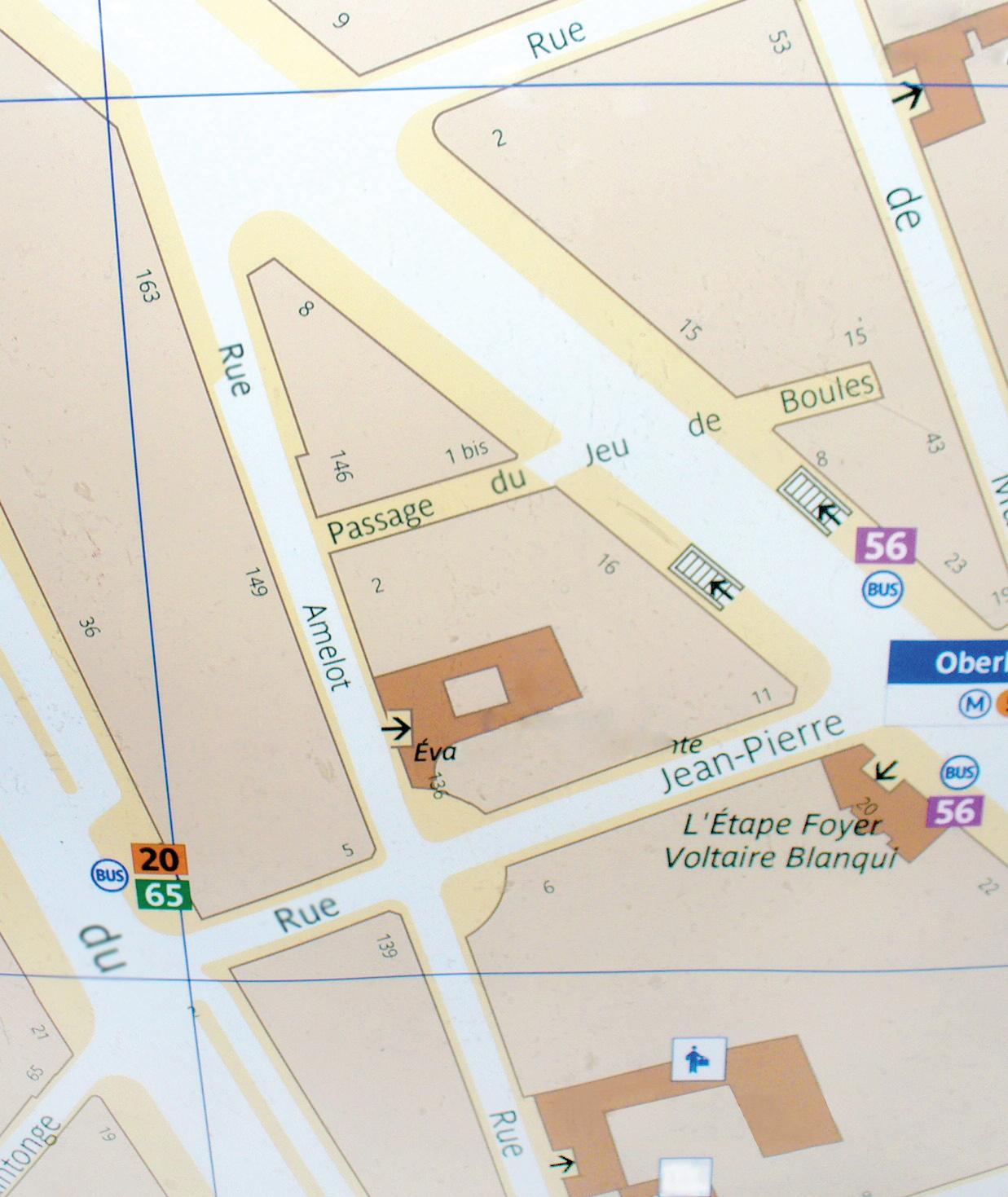
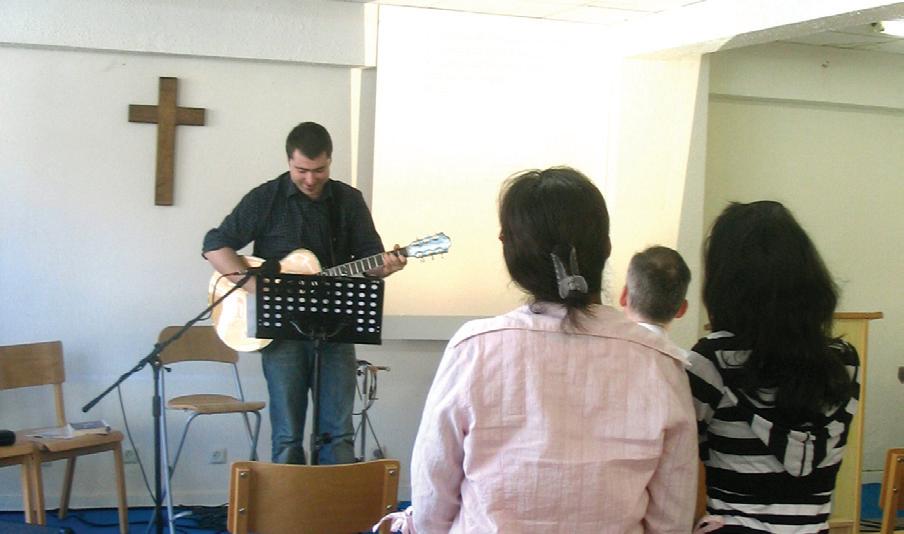
Seventeen long years – that’s how long it took for a small, urban church-plant (Le CEP – or The Vine) that we began in the city of Paris to gain official recognition by the civil authorities in the largest Francophone city in the world. When our church was identified on the Metro map, we felt that we had turned a big corner.
Don’t get me wrong. It doesn’t mean that during that time, the church didn’t have a real witness. Despite some hiccups along the way, the church was a healthy, worshipping community, engaged in local and global mission. Many lives were touched by the care and commitment of church members. It had an engaging social presence within a relatively poor neighbourhood. Its ethnically diverse and young leadership was making significant inroads into the spiritual or religious landscape of Paris.
But frankly, how long should it have taken for a nascent local Francophone church to be acknowledged as a viable and legitimate social institution? How long should it take to ‘get on the map’?
Whereas most of the mission attention in the 1970s and 1980s was looking at the 10 /40 window (a reference to the most ‘unreached’ or unevangelized peoples who live within the 10th and 40th degree north of the equator, across the Arab World, Indian sub-continent and Asia), CBM was aligning its strategic focus in the French-speaking world with that of our Francophone partners. They realized that what was once the most evangelized part of the Western world through the cultural hegemony of the Catholic Church was rapidly becoming the ‘de-reached’, those who had once been faithful members of their local church but had left it ‘en masse’ (no pun intended!).
Working with our French-speaking partners in Belgium, France and Quebec to plant and grow healthy churches became our strongest contribution.
The Deneut and Watt families went to Belgium in the mid-1980s to work at establishing a church in the town of Grȃce-Hollogne. This church is now being led by one of Patrick Deneut’s protégés, Jean-David Herman. Colin and Karen Godwin, after a time of learning and adaptation in GrȃceHollogne, headed across the Meuse river to the town of Fléron (both communities make up part of the greater metropolis of Liège), where they planted a church. It is now being pastored by Rémy Paquet, whom Colin trained for two years.
It isn’t surprising to hear that small evangelical churches in Frenchspeaking quarters are struggling to gain official recognition, to have a voice that is heard in the public forum and to break away from the social stigma that is commonly associated with a minority religious movement. Perhaps in part due to their small size and limited influence, the Belgian Baptist Union (BBU) was confronted with a serious threat to its public witness by being wrongly labeled a ‘sect’ by the media in the early 1990s. It was a potentially devastating blow for the BBU, but through the valiant efforts of their leaders, supplemented by outside aid from eminent Baptists like Jimmy Carter, Billy Graham and Denton Lotz, Belgian Baptists have moved from a marginal and, at times, vilified religious movement, into the mainstream of Belgian Protestantism.
The accusations against the Belgian Baptist Union were a sober wake-up call to take bold steps to strengthen their presence and visibility. They worked hard, in partnership with CBM, to enhance their standing – to get on the map. Today, they are considered one of the principal Protestant denominations in their country. Their social impact is appreciated in schools through effective chaplaincy programs, in compassionate deeds for refugees and asylum-seekers and in programs for marginalized youth.
In Quebec, where 35 churches are part of the French Baptist Union, multiculturalism has become key to their inclusion and identification. In fact, an interesting model of this is demonstrated in a very recent church-plant in downtown Montreal called ‘Action Missionnaire Multiculturelle’. Pastored by Rev. Jose da Silva, this multilingual church has deliberately oriented its witness to recent immigrants, offering language help, legal counsel and housing assistance in refugee resettlement situations.
Elsewhere in French-speaking Canada, many churches are made up
This past summer, Patrick and Ria
were reassigned from Belgium to Quebec to help develop a new generation of church-planters.
connecting...
CBM has joined hands with the French Baptist Union (one of our four Canadian Baptist partners) in an aggressive commitment to plant 10 new churches in the next 10 years. Through a matching grant campaign, we hope to raise $1 million for Francophone church-planting in Ontario, Quebec and New Brunswick.
You can make an online donation today at www.cbmin.org.
of visible minorities and through their deep commitment to Christian witness ‘back home’, have been active in challenging poverty and political corruption.
One of the challenges that remain for Francophone Baptists is to learn to use their small size and flexible structures to penetrate more nimbly into the social fabric of society. The good news is that the churches that are getting on the map are practicing integral mission in their local context.
Protestants are working more ecumenically than ever, not just in evangelistic endeavours like Quebec Espoir 2008 but in cooperative exchanges for social change. Catholics are noticing the impact of tiny church-plants in places like St. Henri and Hochelaga, two of Montreal’s poorest neighbourhoods.
CBM is committed to helping our Francophone partners train culturally relevant, socially engaged churchplanters who have a commitment to moving beyond traditional means of church-growth and being bold in their public witness in education, refugee centres, the media and public policy. Getting on the map, but also living on the edge is a precarious position that allows us to be a force for change.
To take your position on the spiritual edge of things is to learn how to move safely in and out, back and forth, across and return. It is a prophetic position, not a rebellious or antisocial one. When you live on the edge of anything with respect and honor, you are in a very auspicious position.
Richard Rohr Radical Grace
Deneut
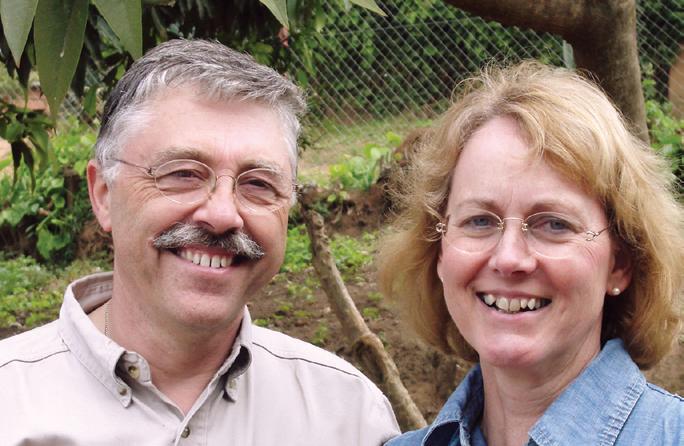
Rémy Paquet is the new pastor of a church planted in Fléron, Belgium by CBM Global Field Staff Colin and Karen Godwin.
1 2 3
Why do French-speaking churches find it so difficult to ‘get on the map’?
There are three relevant angles to help unravel this challenge:
Religious plurality:
For centuries, Protestants and Jews were considered “minorités tolérés”, Catholicism being the religion of the King and the Kingdom. During the French Revolution, minority movements were rewarded for their support of the revolutionaries and received citizenship. By 1792, the laws of France established a strict non-religious nature to French society through the laws of separation of Church and State. Interestingly, the purpose of these laws was the opposite of the newly founded Republic of the United States. For the Americans, the goal was to preserve the Church from the government’s interference. For the Europeans, the goal was to protect the State from the Church’s meddling. In France, by 1905, strict laws of separation allowed religious movements to exist but forbade them to make any political declarations.
Secularization:
The grip of secularization took place earlier, more strongly and quite probably more encompassingly in Western Europe and Quebec than in English-speaking quarters. Although an ambiguous term at best, secularization refers to the progressive loss of religion’s influence over the modern world, with its resulting social and cultural marginalization. World-views become desacralized and the Church (or any other religious institution) loses its power to give a framework for public life. Some social scientists feel that in a highly secular culture, merely stabilizing and maintaining a Christian presence is good news in itself. But maintenance generally means losing ground.
Laicization:
Rarely used in the English language, the word refers to the dismantling of a public voice for the Church. Religious orders, including denominations and their institutions, no longer have a legitimizing voice and become merely private associations. Many sectors of society, previously considered the moral and administrative domain of the Church, were stripped of their ties to the Church (public health and primary education being the most obvious).
Today there is a crisis of identity among mainline Francophone Protestants. They tend to see themselves as guardians of a meaningful past but less engaged in the contemporary struggle for a relevant witness. Too often, Protestants became the very actors of their own marginalization by abdicating a voice in the public forum.
BaGGing Up Christmas in July
by Suzanne Taylor
Surrounded by a warm welcome.
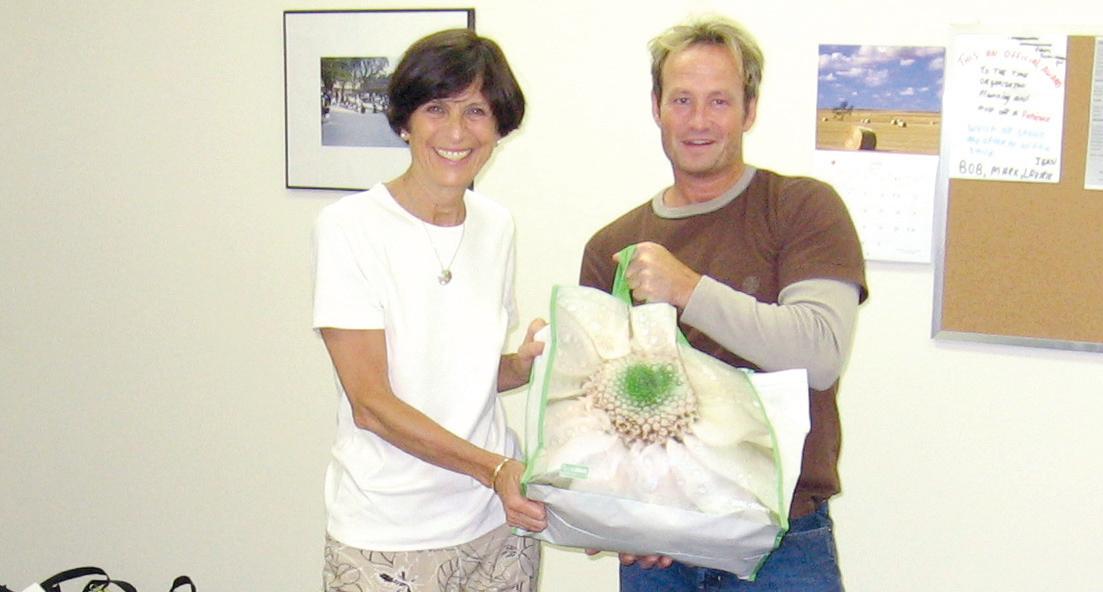
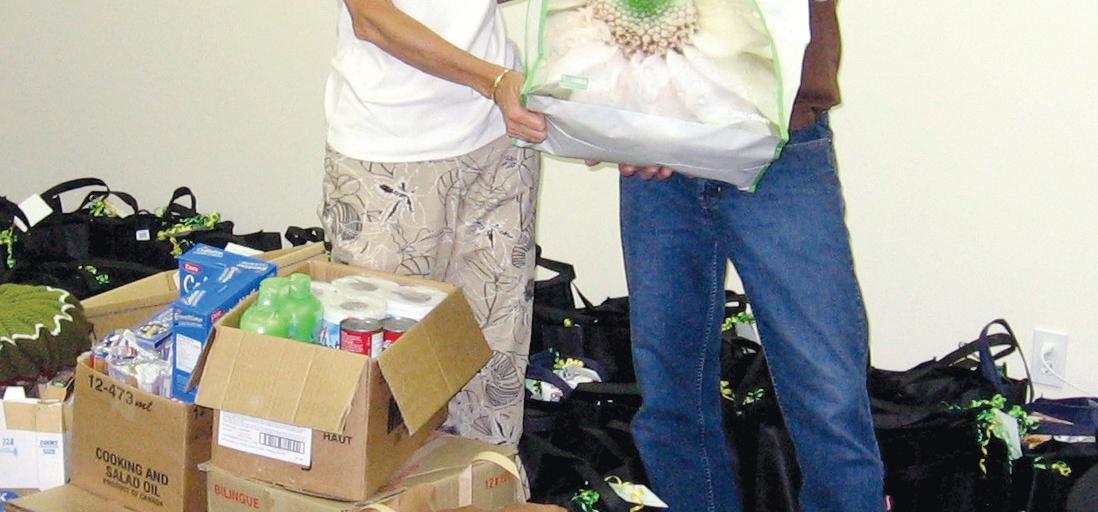
Suzanne Taylor with Mark, night manager at the apartment complex, and all 64 welcome bags for new residents.
, ,
A dinner conversation with friends on issues of homelessness and lack of affordable housing in our community of Port Alberni, Vancouver Island sparked an idea. The outcome made a difference in the lives of 42 new residents.
Over a period of months, several community discussions had taken place around the new housing unit that would soon open. Local residents voiced concerns about all of the so-called “undesirable” people who would be moving into the community, and their fears that it would lead to no end of problems.
I heard similar concerns raised at a dinner conversation with friends. My heart was stirred to action. I had worked with “those kind of people” for almost a year. God’s immeasurable compassion led me to a deeper understanding, appreciation and love for those seen as the “unlovely”.
Suzanne Taylor lives in Vancouver and is a member of West Point Grey Baptist, but she also attends First Baptist Church in Port Alberni, where she works during the week and often spends weekends.
I left that evening determined that something should be done to off-set the attitudes and concerns I was hearing. Before reaching home, God revealed an idea! Why not welcome the new residents to the neighbourhood with an old-fashioned welcome basket?
I called Pastor Jim and shared the burden and vision with him. He liked the idea and said “talk to Erica”.
Talking to Erica is like a direct link to God’s switchboard, because suddenly all pathways began to open. Emails and phone calls tumbled over each other as Erica called on her network of contacts and friends in and outside the church. We contacted decision makers within
the housing project to see if they thought our idea was a good one. We sought their advice about what to include in the welcome baskets and kept them up-to-date on progress.
Erica and Pastor Jim asked for advice and support from the leadership of the church about adopting this outreach project. Ideas began to percolate about raising money to buy the items for the welcome baskets. Soon, a garage and bake sale, along with a silent auction, became the fundraising events.
We contacted local businesses and invited them to donate items. That same day, the manager of a large store called back. They would contribute several items. What an encouraging start. How good is our God! We informed the community of the garage and bake sale through local media.
People at First Baptist Church started dropping off baked goods and donated items. Soon the huge church gymnasium was full. Volunteers from the church worked for hours sorting, pricing and arranging all the items, including a “free for the taking” section.
When the big day arrived, many folk from the community stopped by just to see what we were doing and they got caught up in the fun.
At the end of the day, over $1,500 had been raised.
Over the next few days, more church volunteers helped to pack up the baskets (which were actually recycled bags donated by several local stores), and left-over items were given to local thrift stories.
Mark, the night manager at the apartment complex, watched, wide-eyed, as the welcome bags were unloaded. “You talked about helping, but I had no idea it would be like this!” he delightedly exclaimed. “As you know, many of our tenants came with little more than a plastic bag of clothing and groceries from the food bank.”
“What a welcome!” beamed one of the newly arrived residents.
What a witness! We have maintained contact with our new neighbours and are encouraged to seek other ways to serve Christ in our area.
Editor’s Note:
t
195 HRS
The average Canadian Christian spends 195 hours * a year in spiritual pursuits
*based on daily personal devotions (15 minutes/day) and attending weekly worship services (2 hours/week)
well Time ?Spent
The average adult Canadian watches over 1,500 hours of television in a year
The numbers are staggering and mean that the average Canadian adult spent more than 166 hours last year watching television commercials. This is equivalent to the number of hours worked in a month by the average Canadian worker!
**2006, based according to research conducted by
Riding the Line Between Faith & Culture
by Paige Byrne-Mamahit, CBM Field Staff in Indonesia
Islam is as much a culture as it is a religion. One of the biggest struggles we face is how to join in the community but challenge those aspects of the culture that are religious when both are woven together so tightly it is impossible to separate them. Others also share this struggle. Consider the story of Joy*.
photo: Steven H.O. Jones
connecting...
For the last seven years, Johnny and Paige Byrne-Mamahit have worked in East Kalimantan, where they helped to plant a church in a large, urban centre. In fall 2008, they moved to West Kalimantan where they will continue to develop church planting strategies and encourage national missionaries and pastors in their work. You can become one of their Partners in Mission. Call us at 905.821.3533 for more information.
Did you know?
Pontianak, the capital city of West Kalimantan, sits right on the Equator. It is home for the Kalimantan Theological Seminary and for our three CBM Field Staff teams in Indonesia (Bill and Janice Dyck, Darrell and Laura Lee Bustin and Johnny and Paige Byrne-Mamahit).
Joy is a young Muslim woman who prays to Jesus. She grew up in a mainly Muslim family, and married into a strong Muslim family. Her six-year-old daughter attends a private Muslim school.
It is not possible for Joy to “become a Christian” and keep her husband and her place in their community – it would be unthinkable for the wife of a Banjarese, which by definition means Muslim.
So Joy keeps her faith a secret for now.
While we do have some similar struggles of faith and culture here in the West – we are, after all, regarded by most of the world as “Christian” – we also enjoy a greater level of separation
between the two. Our multicultural approach allows for people of many different faiths to join together in community. Our laws offer protection for personal faith.
Such acceptance does not always exist within defined ethnic groups. In Joy’s world, laws may exist on paper, but not in reality. The reality is that Joy could lose her family, her livelihood, and her standing in the community if she declared herself a Christian.
Joy is faced with a dilemma. How can she continue to celebrate religious and cultural events with her family, and also be a follower of Christ and a witness within her community?
How long can she dance between these two worlds? How can her faith
grow? What does it look like to become a Banjarese Christian when Banjarese (an unreached people group who number 4.5 million) are by definition Muslim? What would a Banjarese Baptist church look like? What would their pattern of worship be? Where would they worship, and what kind of music would they use in worship?
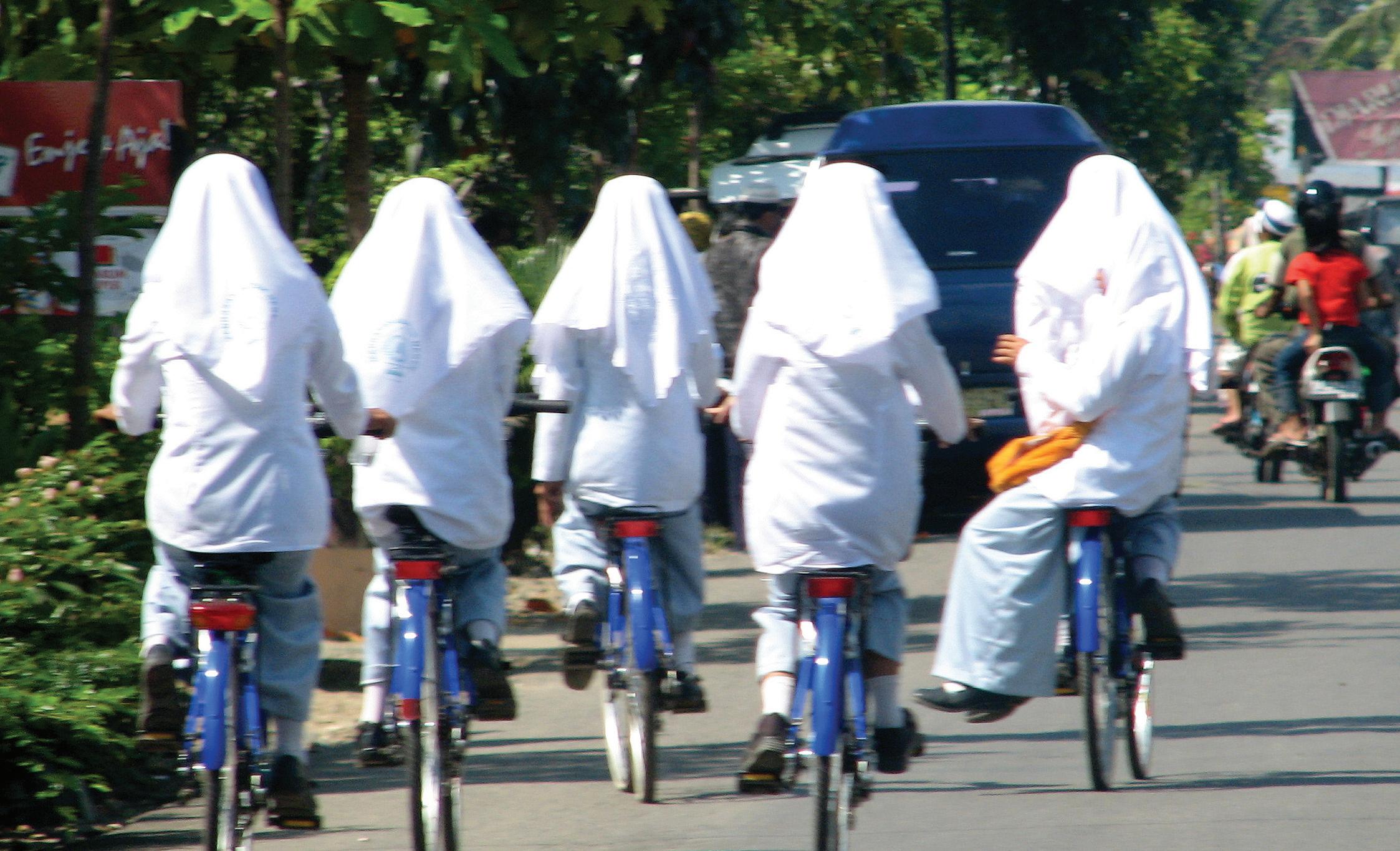
These are some of the issues my husband Johnny and I have wrestled with as we work with the Convention of Indonesian Baptist Churches to train new leaders and plant more churches in the world’s largest Muslim nation, which is home to over 250 tribal groups speaking 880 different languages. It’s an exciting yet challenging time.
(*Joy is not her real name)
Living between old and new worlds –young people are the new prophetic voice of the church in Eastern Europe.
Clash of Cultures
by Jeff Carter, CBM Field Staff in Europe
For so long, most of Eastern Europe was ignored by the world, almost forgotten. Then the wall came tumbling down. Many of us can remember the day when images of people scrambling over the shattered remains of the Berlin wall flashed across our television screens. It’s hard to imagine that freedom from an oppressive regime could be realized, and yet, it happened in 1989.
But that was merely one symbol. It could not fully convey the emotional, social and spiritual damage done to millions of people in once proud and vibrant nations. Rich local heritage, fervent religious piety and national pride were seemingly erased and economies decimated. The supposed ideals of communism left behind bureaucracies riddled with corruption. Infrastructure was weakened and corroded.
Most youth from these countries today have no memories of that time. They only have the somber stories that have been passed on by older siblings, parents and grandparents. They are the first “free” generation and, as Western ideals of materialism, affluence, pop culture, globalization and technology are now awash throughout the region, it’s creating an interesting situation.
There is a new kind of divide happening – one that’s both generational and cultural. Mere metres from the Kremlin (the once mighty seat of Soviet Russia and steps from Lenin’s tomb) there are now ultra modern shopping malls, American restaurants and large neon billboards advertising Versace and Nike, not unlike Times Square in New York.
The good news is that in these former Eastern Bloc countries there is new life in the Church!
Once hidden, ignored, jeered at, and in extreme cases persecuted, the Church did all it could just to survive. Today, the fastest growing churches are in those very countries where communism did its best to eradicate them. Countries like Ukraine, Russia, Moldova, Romania, Armenia, are the fastest growing in church planting and conversions. They are the largest, by sheer number of church members, in all of Europe.
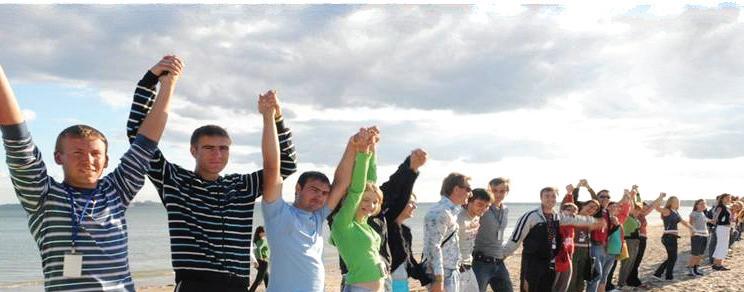
Stretched out along the shores of the Black Sea, thousands of Christian youth from former Eastern Bloc countries pass a Bible from person to person, a symbol of unity in sharing the message of Christ to all nations.
While it’s still not easy and some churches are under incredible regulatory pressures from state churches (Orthodox and Catholic), Baptist churches are on the rise.
Most of the growth is happening among young people!
This past summer I witnessed another symbolic and historic event – the very first Youth Congress organized by the Eurasian Baptist Youth Federation. It was held in Odessa, Ukraine, a former Communist stronghold, at an old training facility once used for Communist indoctrination of youth during the Soviet era. Back in the 1970s, there were over 40,000 such facilities. Yet here we now met, a group of Christians singing, praying, studying the Bible and eating together among the crumbling ruins. Our God is truly awesome!
My heart raced as I watched the worshipping throng of over 3,200 young people from incredibly diverse backgrounds, some from countries currently at war with each other. They hailed from 19 nations spread across a vast area: Moldova, Belarus, Russia, Turkmenistan, Tajikistan, the Caucuses, to name just a few. It took some of the young participants six days journey by train to attend this event! Their dedication and sacrifice is inspiring. It’s a new world and a new hope in the shadow of the past.
connecting...
Unlike many North American churches, those in Europe and the Middle East lack well-trained leaders, paid workers or programming dedicated to the growing youth population of their churches. CBM Field Staff Jeff Carter and Vasil Vasilev have developed a first-rate leadership development program that will equip youth workers to bring faith into a youth culture and at the same time bring youth into the church culture. This program is truly an encouragement to many. We’ve already heard positive reports from countries such as Georgia, Portugal and Spain, to as far north as Finland, Norway and Sweden. CBM has committed to providing $13,000 in 2009 for youth leadership development initiatives in Europe. You can donate online today at www.cbmin.org. On the blogs
Yattani is one of the 42 development workers, pastors and CBM Field Staff from our partnerships in Africa, India and Bolivia to participate in the new Diploma in Integral Mission – a program developed by CBM and Carey Theological College.
Yattani works in the tough, North Eastern Province of Kenya, in Dadaab and Garissa, teaching in schools and helping at clinics in three camps –home for over 200,000 refugees.
view the
Some of the challenges in ministry in the refugee camp
You will be slapped by the need –the physical needs that are there, and the medical needs…this was a hard thing for me to come to terms with…to see people waiting, waiting for many months, for someone to attend to their medical needs…these are people who are desperate. They have a lot of psychological oppressions, people who were running for their lives. There are some who have lost all of their family in the war, it’s still sad for them.
Some of the ways we are helping in Garissa
We are working with a government hospital, there are these TB patients who are isolated, and we provide breakfast, like eggs and milk, because the medicines are so strong. Early in the morning, we go and visit. We are also running early childhood education programs, helping the Somali community which is one of the more illiterate communities here in Kenya…But mostly, we are doing a ministry of presence, giving out our lives, talking to the people.
On Islam and Christianity
There is much misunderstanding… sometimes we Christians put on an attacking face…we need to show love…to see people with the eyes of God, how he views them.
My biggest dream
To be able to help them [the Somali community] realize the potential they have…especially as we work together, to alleviate poverty that is found, in an area that most people don’t want to go to…God loves Somalis. He loves them just as he loves any of the other tribes. In Kenya, most of the other churches do not get involved with the Somali people because they have fear. But for me, I want to live with them, I want to learn their culture, to integrate the principles of love and compassion and the joy that Christ gives with them.
In my deepest, darkest moments
I go into my room and I pray. There are those days when you feel that it’s so dark, everything is like, you can’t do it. But the joy I get is when I look at the word of God. The joy I get is when I talk to God and ask him for help, and he’s been always helpful. He’s always been a very close God, encouraging, especially in this ministry which is very challenging.
My advice
We need to realize that the Jesus who died for me and for you, died for the same neighbour who is right there. It’s not just work of the missionary or the pastor – all of us have the responsibility. You don’t need theological training or mission experience to do that because it’s all about the love that God has given you that you are sharing with your neighbour. It’s important for us to step out in faith, go from our locked doors, go to our neighbours and share with them the love of Jesus Christ which is amazing love of transformation.
My greatest joy
I come from a Muslim background and one of my joys will be that God will shed his light in the lives of Muslim communities like the Somalis…people most churches, most organizations, fear to go to, but I thank God for Canadian Baptists, who for the past years, through their projects have been able to develop their relationship with the community, still are [working] there, to be able to share the love of God with them. So for me it is a great joy to work with them. I’m also really enjoying working with the Carlines [CBM Global Field Staff].
Final thing on my heart
I want to say thank you. Thank you for praying for us. Thank you for supporting Somali ministry. Thank you for partnering with people like the Carlines, whom God has called to Somali ministries, Aaron and Erica [Kenny], and others here in Kenya…It’s been a joy to see all this teamwork…to be together this past week [at the Integral Mission course in May 2008] with all the various partners that work with CBM. It’s been a blessing, to see how God is really helping us to work together and more transform communities…So I want to say thank you so much. We continue to appreciate your prayers. We love you.
Editor’s Note:
We wish to extend congratulations to Yattani and his new bride, Salome. After their wedding this past December, they plan to settle in Garissa where they will continue to share their lives with the community. May God richly bless you in your new life together.
Excerpts from a conversation with Yattani. by Laurena Zondo
Solidarity Sunday
On Mother’s Day, May 10, 2009, join with Canadian Baptists across the country as we stand in solidarity with our brothers and sisters in Indonesia.
Mark the date today and/or order your free solidarity ribbons early. For more information, email communications@cbmin.org or visit our website at www.cbmin.org.
Here is just one of the inspiring stories of people who are engaged in the fight against AIDS in their own unique way.
Walking for Water in Canada
Imagine having to carry all the water you need each day. How many buckets would it take for your bathing, cooking and cleaning?
Think you could muster the strength to endure 2 kilometres, carrying a pail full of water?
That’s exactly what people of Heron Park Baptist Church in Scarborough, Ontario attempted in their Burden Walk on Saturday, October 18th, 2008. At the end of the day, they raised over $4,000 for CBM’s Guardians of Hope, a grassroots, church-based program that reaches out to those most impacted by HIV and AIDS in Africa.
One of the event organizers, Wayne Monaghan, shared their experience: Only a few of our members have ever carried water for home use. Most of us have no sense of the burden this represents. For many families in Africa, it comprises a significant part of the day for one or more family members. We wanted our church and community to gain a sense of this one burden and be able to respond.
Nearly half of our congregation, 120 people, went out on the street with our plastic blue pails full of water. We got more than a little reaction from people along the way as we walked two kilometres up Lawrence Avenue, a major thoroughfare in the east end of Toronto. Our oldest participant, who at 82 is waiting for knee replacement surgery, put her pail in the basket of her walker and walked the whole way. Incidentally, she also raised the most money in pledges!
We challenge other Canadian Baptist churches to join us. To bear some of the burden of people living with HIV and AIDS