In this special issue of mosaic, we present a year in review. It’s a celebration of your gifts in action, from the prayers, tithes and offerings to all of the faithful acts, large and small, over this past year.
May you capture the vision of God through these stories. Be inspired by one pastor in Asia, a former witchdoctor, who now plants new churches. One mother in Africa impacted by AIDS who now has new hope for a better future. One farmer in Latin America who is now able to provide nutritious food for his family.
But these stories also present a challenge. God is more than able to accomplish his purposes, but he has chosen to use you and I to play a vital part in it. What an incredible opportunity to work together with the creator of the universe! Are we up to the challenge? If we truly believe that all things come from God, to be used for his purposes, do we live it out on a daily basis? In our corporate life, as his Church? Is he calling us to do more?
PS. In our last issue of mosaic, we raised the issue of global funding and priorities in a world of dire need. The aim of our ethically speaking section is to provoke critical thinking — a chance to delve deeper and ask questions together. What are the things we value? What do we talk about? Do we buy into the popular messages that are conveyed in our society?
We don’t have the answers, but we hope you keep asking the questions. Continue the conversation at www.cbmjustice.blogspot.com.
mosaic is published four times a year by Canadian Baptist Ministries. Copies are distributed free of charge. Bulk quantities available by request.
Managing Editor: Jennifer Lau
Editor: Laurena Zondo
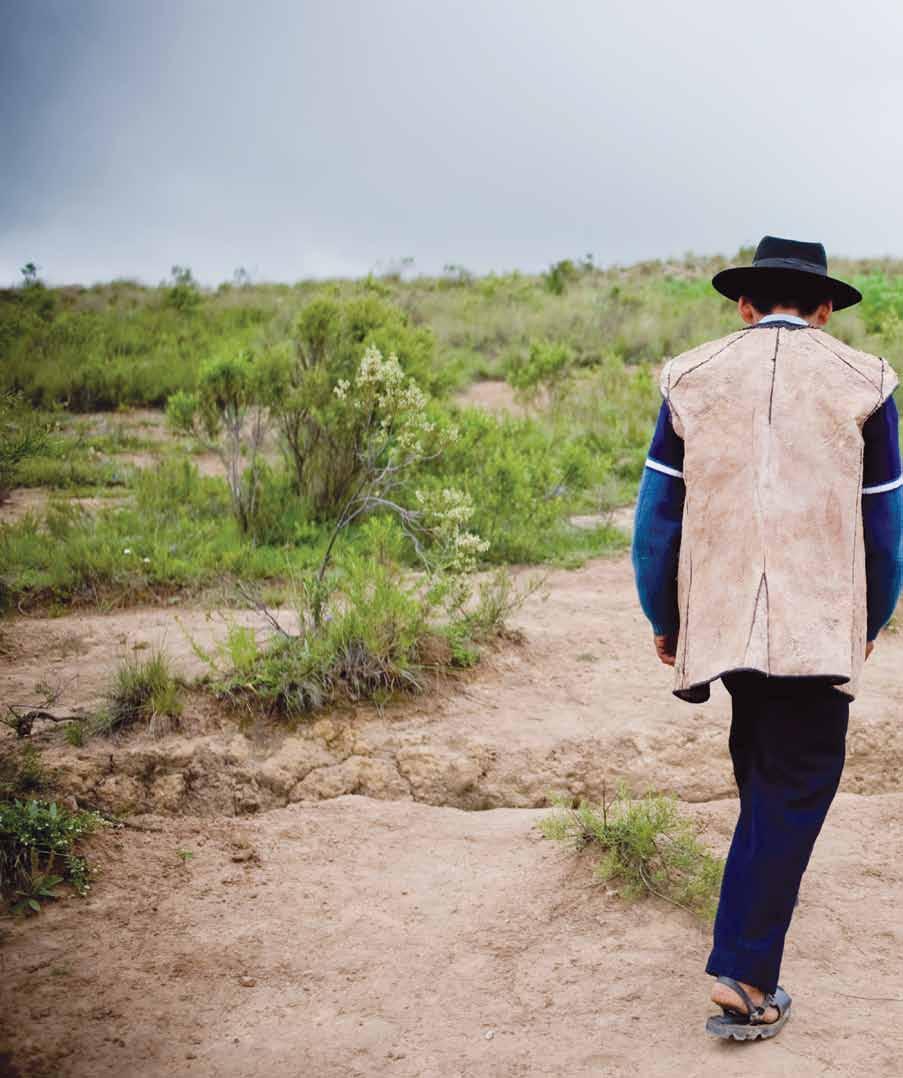
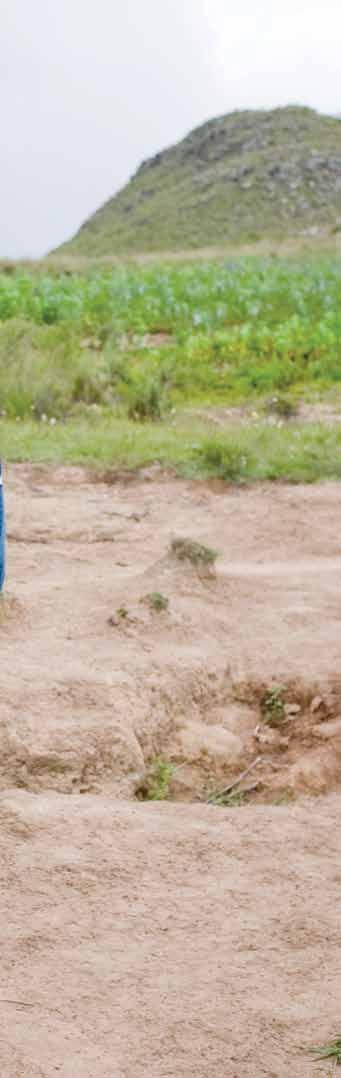
BOLIVIA
Together
Brenda Halk, President of the CBM Board, joins Laurena Zondo, mosaic’s editor , to look back over the past year and look forward to the challenges and opportunities of what lies ahead in our ministry together
mosaic: What one phrase best sums up the past year for CBM?
Brenda: I think it would be “lean and keen.” Lean in the sense that we’ve made tough decisions about what we have to do to survive the recession — we’ve had to make tough cuts, major cuts in operating expenses — and yet we’re keen. We’re still excited about our mission, still visioning about ministry, and moving full steam ahead, hoping finances bounce back and looking for new sources of revenue.
mosaic: Tell us about a significant highlight from the past year.
Brenda: Well, I have not been President that long [Brenda officially started in September], but it was so reassuring to see the bounce back in investments. Even more than that, though, was this year’s response to the earthquake in Haiti… people’s generosity has empowered us to meet needs and follow God’s leading into new ministry opportunities in this region…often we’re having to put the brakes on new initiatives and things our partners are asking us to help out in…it would be great if we had the money we need all the time.
mosaic What would you like to see more focus on?
Brenda: When our partners need so little for their ministry and you can’t even give them that much, it’s very disappointing. It’s been a tough year for all of us, and there’s a domino effect. Giving is down in churches, in conventions, and it’s impacting the most vulnerable. When times are tough, it’s even more important to support ministry locally and globally, especially among the poor who are most affected. It’s a huge challenge for all of us to give more sacrificially to do this…the Live It Out challenge shows that it’s not so much about money, but about justice. We’re apportioned more than our share, and we should have the good sense to know that and be generous, and we don’t always do that…and justice, in a bigger sense…we have amazing opportunities to listen to the voices of our partners and the poor, and help their voices be heard.
be no hesitation in giving…the response to Haiti shows people know this. They saw a need and sent money. At CBM, we have great vision, enthusiasm, dedicated staff and partners, we know what we need to do…our ministry is only fenced in by our financial resources. Our possibilities are almost limitless.
mosaic : Do you have a final word or challenge?
Brenda: As an organization, we’re confident that God’s faithfulness will provide for us in order to achieve his mission. But that doesn’t mean we should be complacent. It’s difficult to ask, but we need to…it doesn’t have to be a big gift; no gift is too small when we put it together. That’s what CBM is
…people’s generosity has empowered us to meet needs and follow God’s leading into new ministry opportunities…
mosaic: And the bottom line?
Brenda: I think we have tremendous impact…if people in our churches could meet our partners overseas there would
— we can do together what we can’t do on our own, or as independent churches — we get a sense of the larger purpose. Just read through this issue of mosaic It’s full of examples of what we are doing together. That should be exciting. I hope we are encouraged to attempt even greater levels of engagement, together, in God’s mission in our world.
* See page 19 for 2009 financial highlights.
From Rabbits To Bibles
A Look Inside CBM’s Hopeful Gifts for Change Catalogue
Thanks to the support of our gift catalogue donors, we have received almost all of the funding we need this year for small farm animals and several programs that meet the needs of vulnerable children. We are still in great need of support for other areas of our ministry, including Guardians of Hope in Africa and India (see page 13 for more information), Chagas-proofing of homes in Bolivia, and our National Field Staff who work tirelessly to implement and oversee our work around the globe. Look for the new Hopeful Gifts for Change Catalogue this fall.
Support National Field Sta
Support a pastor
Guardians of Hope (HIV and AIDS support, care, testing, treatment and prevention)
Training and resources for youth leaders
Sponsor a seminary student
Church planting (Indonesia)
Chagas disease (testing, treatment and prevention)
Invest in a small business
Renovate a school (Rwanda)
Farm animals (rabbits, chicks, goats, pigs and cows)
Comparison of gifts received through the 2009 Gift Catalogue vs. program funding needed
Gifts received
Funding needed
A Life Fait h F ull
Photo: William DeMerchant Photography
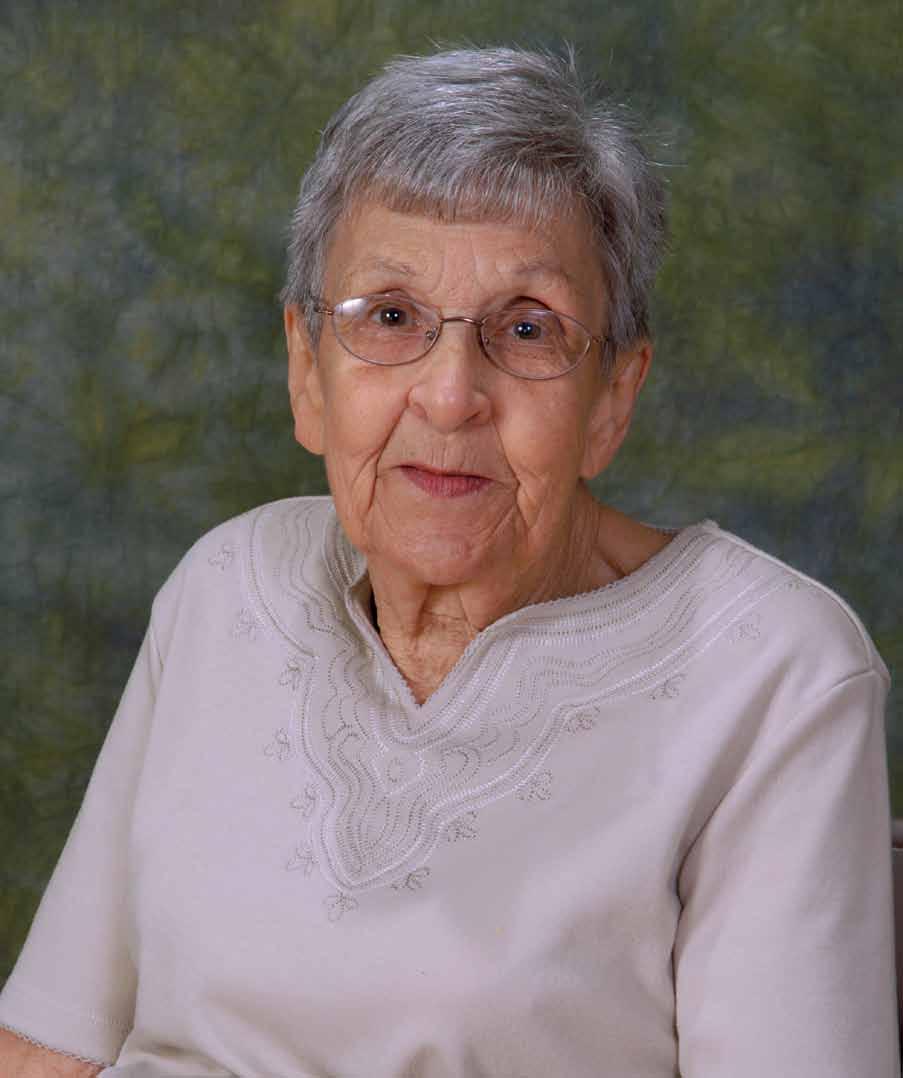
You could say that the world is her classroom. Besides teaching for 42 years in New Brunswick schools, Evelyn Ginson has taught in Kenya and Brazil as a CBM volunteer.
Today, now in her eighties, she still supports CBM Global Field Staff who teach and mentor in Indonesia, Lebanon and the Middle East.
She shared a little of her story with Linda Naves, CBM Church Relations Coordinator for Atlantic Canada.
Linda: What was your determining factor in going overseas as a volunteer?
Evelyn: My parents were very interested in mission. Mom and Dad influenced me greatly in mission work by the way they lived life. Camp had a great impact on my life as a youth….Ben and Evelyn Gullison [former CBM missionaries in India] came for 10 days of missions focus and Bible study. As a young girl I attended mission band and enjoyed it when a missionary came to our church.
I taught for 42 years. CBM was looking for teachers so I went on a short-term mission trip to Kenya during a March break [with a friend who asked her to go]. Before the trip I had made up my mind that the Lord was leading me to overseas mission. [Evelyn later returned as a long-term volunteer from 1983-1985].
Linda: What made you first decide to become a CBM supporter?
Evelyn: I think it was because of our mission band. We always met on Sundays and we knew why we were giving, and to whom, plus my camp experiences. In my younger days I picked five boxes of berries to make five cents to give to mission.
Linda: Why do you support ministry in the Middle East?
Evelyn: Because of the Haddads working and teaching in the seminary in their own country. Also, I met the Phillips in Brazil [Evelyn served as a long-term volunteer in Brazil from 1989-1991] and they had a deep impact on my life.
Linda: Why do you give monthly to CBM?
Evelyn: In the early years, I didn’t get paid each month, so I saved my money so I could give to mission. Then I started being paid each month. I realize the importance of monthly giving. Automatic withdrawal is so easy.
I live comfortably and don’t need a lot. The Heavenly Father has always looked after me. God has made it possible for me to be single and save my money for mission.
connecting…
Thanks, Evelyn!
Evelyn is one of the faithful supporters of CBM Global Field Staff Elie and Mireille Haddad in Lebanon, David and Cathie Phillips in the Middle East, and Johnny and Paige Byrne-Mamahit in Indonesia.
In addition to her regular giving over the years, she recently sold her cottage and donated the money to support more global ministries.
The Haddads have the distinction of being our first appointment to Lebanon. Elie serves as the President of Arab Baptist Theological Seminary (ABTS) while Mireille volunteers with a local compassionate ministry, working mainly with Iraqi refugees, as well as serving as a mentor and friend to the foreign students living on campus.
See the story of one of their students on the next page. >>>>>>
Join Evelyn. Become a Partner in Mission. Contact Eileen Moore-Crispin at 905.821.3533 or email eileenm@cbmin.org.
Lebanon
by Alia Abboud Director of Development and Partner Relations, Arab Baptist Theological Seminary
A remarkable school in a tiny yet strategic country in the Middle East is helping to build bridges of trust and understanding between cultures and faiths. Arab Baptist Theological Seminary, based in Lebanon, serves at least nine countries in the Arab world — Morocco, Algeria, Tunisia, Egypt, Sudan, Syria, Jordan, Iraq and Lebanon.
Here is the story of one student from Egypt.
Every Saturday from September to June, Amany, her husband Misheal, and their two young children travel to a different town in Lebanon each week to conduct a special program for children at a local school. It is part of a children’s ministry called Grain de Blé (Grain of Wheat).
The children are from different religious backgrounds. The day’s program includes games, songs and drama. Amany helps lead and especially enjoys the puppet programs. “We share the gospel message…. there is always a small group of children who stays behind with more questions about Jesus and whatever has been shared that day,” she says.
She and Misheal have been doing this for two years in addition to their studies at the Arab Baptist Theological Seminary. Their children, Nader (aged ten) and Miral (aged five), are active
participants in the programs. “Nader is like one of the leaders, taking pictures of the day’s events,” Amany says with a laugh. Amany is also involved in the five-day camps that Grain de Blé organizes for some of the children that they work with during the year, such as Iraqi children who now live in Lebanon. She loves to build relationships and share Christ’s love with everyone.
“We try to minister in every way possible, starting conversations and forming friendships with people, wherever we meet them.” Amany and her husband have become friends with individuals and families who they have met in the taxi, or while eating ice cream at a sidewalk café. “We want to serve them through our friendship,” she explains, and is quick to intercede in prayer for these new friends.
They feel that God is directing them towards mission. “Even before getting engaged to my husband, God made it clear to us that he wanted us in full-time ministry,” she notes. “A few
leadership DEVELOPMENT GRASSROOTS
years ago, we had the opportunity to meet some of the staff members of ABTS…I remember that I liked ABTS’ mission. It matched our vision: preparation for service in God’s kingdom.”
She sees how God has guided and prepared her.
Though she grew up in a family of believers and regularly attended church, she didn’t know anything about salvation until she was 11 years old. “Once, during a Sunday school class when the teacher was telling us about Christ, his death and resurrection, and that he’s done all this because of our sins, I was overwhelmed with his love for me personally and gave my heart to him,” she recalls. “I became devoted to studying the Word of God and to praying. I learned a lot from the church meetings and the encouragement of the leaders there.”
We try to minister in every way possible, starting conversations and forming friendships with people, wherever we meet them.
But life has not always been easy for her. “God allowed that I pass through difficult times when I lost my father and I had to carry a considerable responsibility at home and in ministry,” she shares.
“Then I met my husband and life partner who encouraged and helped me greatly.”
Children have a special place in Amany’s heart. “In Egypt, God used my degree in early childhood education to serve in local churches, to work with
I liked ABTS’ mission. It matched our vision: preparation for service in God’s kingdom.
children from Muslim backgrounds and from orphanages, and to teach Sunday school and at camps.”
She is now in her second year at ABTS. “I have already learned so much. I find myself doing whatever I can to learn more. I’ve noticed a big change in my knowledge and experience. I especially love dialogue around biblical themes, and have enjoyed many of those here.”
This past June, ABTS celebrated 50 years of service. Over the years, it has prepared hundreds of effective leaders
who share its vision “to see God glorified, people reconciled, and communities restored through the Church in the Arab world.”
Amany is a wonderful example of the new Christian leaders who are now emerging in the Arab world. “God has blessed me with a ministry of visiting and encouraging people in isolated places…but it is my heart’s desire to serve him among Arab communities in Arab countries or abroad. Studying theology will help sharpen my skills and open new doors for ministry.”
connecting…
Yes, your gift makes a difference. Thanks for your support!
Amany was one of the students who received a student scholarship from CBM in 2009.
These scholarships enable gifted men and women to prepare for a life of service in ministry. Consider supporting a student today.
Give online at www.cbmin.org.
Light Ghetto
by Aaron & Erica Kenny
CBM Global Field Staff in Kenya
Iftin is a Somali word for “light.” It was chosen by Somali and Oromo refugee women living in the Nairobi ghetto of Eastleigh to represent their desire to become a light of hope for their community.
Besides literacy classes, the women and youth have become involved in urban gardening, savings programs, vocational training and the creation of small businesses such as Noor Creations, where artisans produce beautiful jewelry from clay.
We thank the women who have allowed us to share their stories. Names and photos have not been used to respect their privacy.
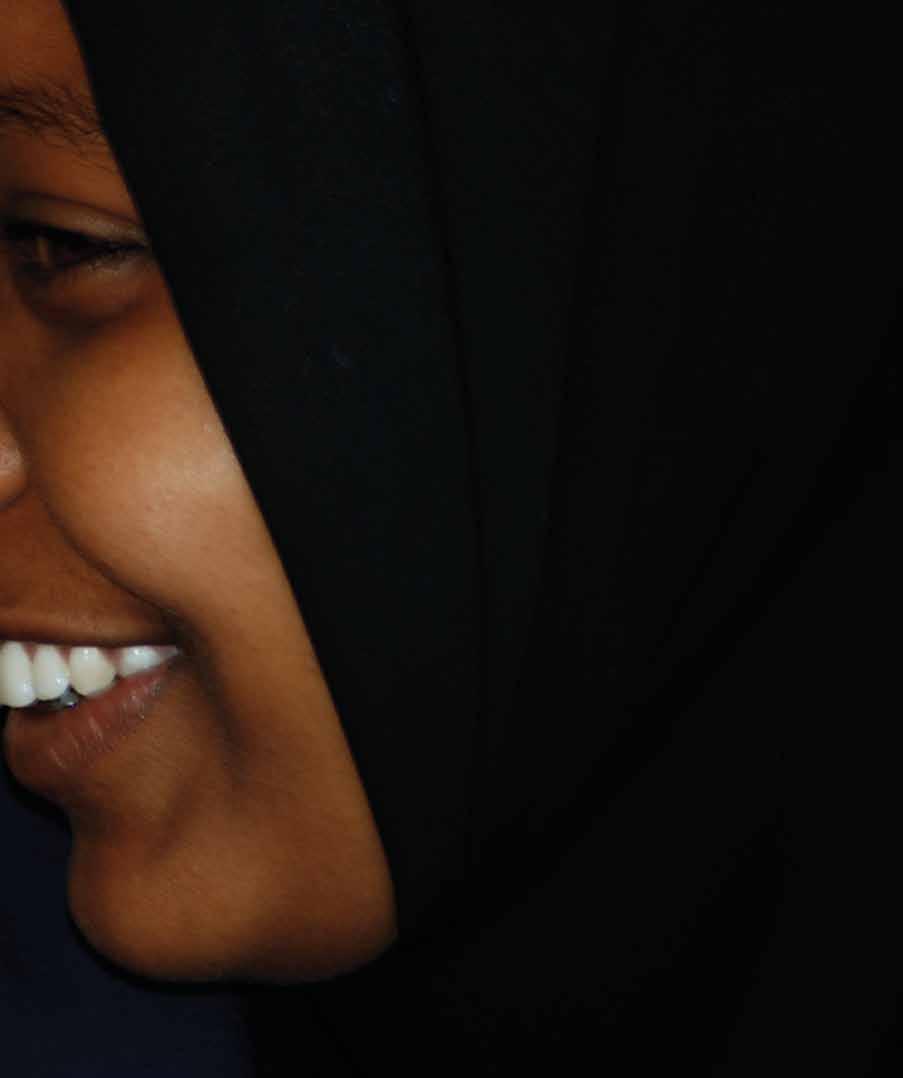
After giving birth to their fifth daughter, the young mom (not pictured) was abandoned by her husband. Left because she did not give him a son. She believes that he has returned to Somalia and taken another wife.
She remained in Kenya and lives in a twobedroom apartment with her daughters, her elderly mother, and three other extended family members. As refugees, none of them can work. They rely on a relative living in the United States who sends money to them every month to pay the rent and buy basic food (angera, pasta and rice). They very rarely eat fruits and vegetables. There is no extra money for medical emergencies.
She lives with a lot of anger. Anger because her husband left her with nothing. Anger because she can’t provide for her children. Anger because she lives in fear. But even with all this anger, she does have some hope. Hope that things won’t always be this way. She wants her daughters to have a brighter future, for all of them to have an opportunity to go to school.
Through Iftin, the Somali Women’s Urban Development Project at Eastleigh Community Centre, she has found support and friendship. Together, women are learning English and the life skills necessary for providing a future for their families. She realizes that the road ahead will not be easy, but no matter what she will face, she will not have to face it alone.
One of the rising leaders in this program is another young woman who has faced incredible challenges. She arrived in Kenya alone, excited to meet an uncle who had agreed to pay her fees so she could attend university. Her father had begged and borrowed every shilling he could find to send her to Kenya to meet her benevolent sponsor.
As days passed into weeks, she became suspicious, and the truth finally came out — her mother had secretly arranged for her to marry the uncle. She was devastated. She refused marriage and was cast out of the relative’s home. With the little money she had, she contacted her father, who apparently had no knowledge of this arrangement. The only means he had to help his daughter was another relative living in the Muslim community of Eastleigh.
“You must go to Eastleigh, or what hope is there for you?” She found her relatives — 18 women and children who were living and sleeping in a little, three-room apartment.
“For the first months, I could only sit and cry,” she shares. “I would cry and cry. I was no help to anyone, not even myself.”
After nearly a year, a friendly neighbour brought her to the Eastleigh Community Centre. “She knew that I liked to go to school and that there were
I have so much hope. connecting…
other Somali girls going to learn here,” she says. “I never knew that a place like Iftin existed.”
After joining Iftin, she soon moved into the role of a student teacher.
“I am so busy now,” she says with a smile. “I come to Iftin early each morning and I am so happy to have a job that I like so much. My father and mother are so proud that I am a teacher.”
Her life remains tumultuous, though. As well as the frustration of living as a refugee, she has had to deal
I used to cry so much. That was before Iftin.
with tribal tensions between Oromo and Somali students in the classroom. But the hardest thing is being so far away from her family in Mogadishu. We arrived at the Eastleigh Community Centre one morning and noticed her folded into tears on a classroom desk. We learned that she had received word that fighting had swept through her part of Mogadishu and that a mortar shell had hit her home. We took her back to her apartment, where Erica wept and prayed with her surrogate family of single mothers and Iftin classmates.
Aaron and Erica Kenny are CBM Global Field Staff who help to coordinate the work at Eastleigh Community Centre. They were recently appointed CBM’s Guardians of Hope Coordinators.
Check out their blog at www.fivekennys.blogspot.com
For us, the pain and sorrow of those moments represent the far too common experience of women like her living in exile.
The next morning, back at the centre, she met us with tears of joy. She had received word that her parents had managed to flee their home with all the children before the shift in fighting.
“None of my family has been harmed. Thanks be to God!”
There is little certain in a place like Eastleigh, but she has found faith that God is in control despite the evil and the hurt of this world. Beyond her role assisting other students in the English literacy classes, she joined the Iftin Women’s Self Help program as a community facilitator. Along with eight other women, she was identified in a community wide search, where Somali and Oromo women nominated other women of influence and respect to serve the community on their behalf.
She completed the first training module and has been part of forming four refugee women’s self help groups within the community.
“I have so much hope,” she shared with us recently. “If I work hard, I can help myself. I can earn money to help my mother and my father. I can even help my community. I used to cry so much. That was before Iftin.”
A Shot of Hope
development COMMuNITY Sustainable
Your gifts at work in the fight against AIDS and extreme poverty in Africa through Guardians of Hope, a program of The Sharing Way, CBM’s relief and development department.
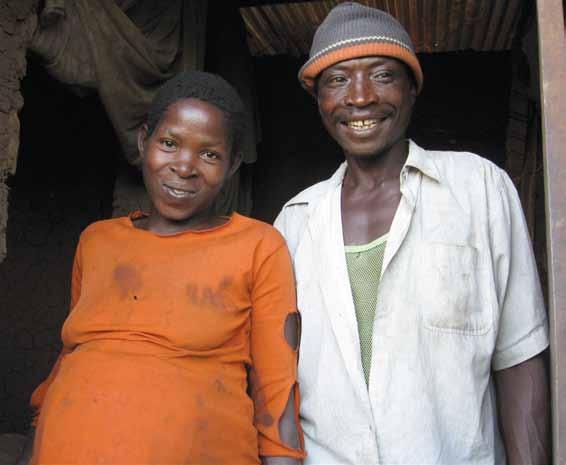
In Rwanda: Anastase and his wife Florence have been members of the local Guardians of Hope group for five years. They are happy to be expecting their second child. Because of the training and support received from the group, they are aware of mother-to-child transmission of the HIV virus and Florence has been tested. Their first child, now nine years old, tested positive and is on antiretroviral medication.
They are grateful for the pair of rabbits they received from the group. The rabbits have multiplied quickly and the couple now generously give rabbits to neighbours in need. The rabbits are becoming a popular source of much-needed protein and a way to earn extra income. They hope to earn enough to buy a goat and eventually even a cow.
In Kenya: Agnes (pictured far right) is one of the leaders in a new Guardians of Hope group that started two years ago. She counsels orphans and is encouraged by the change she has already seen. “Guardians know the issues around AIDS and how to get treatment. They also received food during the famine last year and now they are stronger and able to work…Children are happier and do much better in school because they can attend regularly and because the guardians have had training on parenting orphans.”
The children now participate in dramas about AIDS to spread awareness. “They have been made to feel they are a valuable part of the community and this has resulted in less teen pregnancy and early marriage [such as girls given in marriage because parents or guardians are too poor to feed them].”
Agnes and her group rejoice over the fact that they just harvested a very good crop of maize, and they have recently started a small savings/ microcredit association.
connecting…
Join the fight against AIDS. Become a Guardian of Hope today. Email communications@cbmin.org.
Follow Your Gifts to B o l i v i a
Small Farming for Big Change
Location: Pongoma (Potosi region)
Name: Salvatierra Family
I work as a miner in the river collecting minerals to sell to earn a little to purchase school supplies and food. In my community, we do not have vegetables to eat — we live by eating potatoes and chuño. This is not a good diet and our children are weak, so the community asked *PADEFAR to give us a solar roof to help produce vegetables.
My family and I have taken over the management of this greenhouse, and are able to plant vegetables that we can eat and sell. We are saving the revenue from sales of the vegetables to buy more seeds and plastic for roofing, because we do not want to ask for more support. I am doing this to manage well the things that God has given us so that we receive good crops that benefit families of the community.
BOLIVIA
Location: Opoqueri (Oruro region)
Name: Choque Family
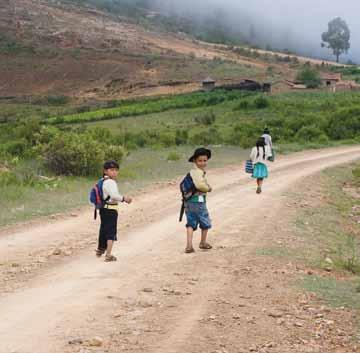
We live high in the Andes, where there isn’t much rainfall and we experience severe frost, so we rely on livestock such as llamas and sheep for our livelihood. Today our llamas are healthier and have gained weight, so we get a higher price when selling their meat and wool. Now we earn more income and can buy food and pay for our children to go to school. This is all because of the training and encouragement of *PADEFAR, which initiated a program that runs campaigns on farm animal parasite control. As a father I didn’t have the opportunity to continue my studies, but I want my children to study so they can succeed in life.
PADEFAR is a project of OBADES, the Bolivian Baptist Union’s community development program, which partners with The Sharing Way, CBM’s relief and community development department.
Atacama Desert
From Witchdoctor
to Pastor
by Bill Dyck CBM Indonesia Team Leader
This is the story of a former student of mine. We remain colleagues and friends. His life is a fascinating example of the impact of your support for outreach and church planting in Indonesia.
I was born into a family of 11 children. My father passed away when I was five years old. My mother raised me as best she could, but we didn’t have anything. I’ll put it this way — some days we’d eat, some days we wouldn’t. We survived by working for food… My family’s economic condition improved a bit as my older brothers found work.
I graduated from elementary school, but then there was no money to enroll in junior high school. After a time of patiently waiting, a relative in a nearby town volunteered to take me in so I could continue my education. But after a year and a half, when I was just 12 years old, I dropped out of school.
That was the beginning of a particularly dark time in my life.
I didn’t know what to do. There didn’t seem to be any hope in living. Then, I’m not sure how, I got the notion to learn black magic. This became my focus in life. I studied under nine different ‘gurus’ of black magic, learning what I could from each of them.
My life became increasingly black. Let’s just say I did evil, sinful things, things I don’t want to bring up and have trouble forgetting.
In short, my grandfather was a witchdoctor, my father was a witchdoctor, and now I had become one too!
One night, Jesus appeared to him in a dream. Initially, this was a powerful experience. After discussion with a Christian friend, he decided to be baptized. However, he eventually lapsed back into his former lifestyle until a peculiar chain of events.
I found myself trapped, four metres underground. I prayed to Jesus for help. After two and a half hours, praise the Lord, I was rescued.
But even after that, I still didn’t change completely.
One day, a friend invited me to join him on a quest to find ‘magic oil,’ which according to our traditional beliefs would bring untold riches.
God had different plans.
joint
outreach PIONEER
I know that it’s by Jesus’ loving grace that I am valued in the Lord’s eyes.
I didn’t find the magic oil on that journey. Instead, I found something that could reap a wealth of souls. I was led to a Baptist church and I started attending their services. During one of those times, Pastor Joey Lempas (a CBMsponsored national church planter) preached from John 15:5: ‘I am the vine; you are the branches. If a man remains in me and I in him, he will bear much fruit; apart from me you can do nothing.’ It was then that I realized that I needed to repent, surrender completely to Jesus, and rid myself of my involvement in black magic.
I was discipled in that church. Sometimes I still fall in my spiritual life, but now I get right back up. I praise the Lord for making me what I am now.
occasions, he invited me to join him, thus helping me to get involved in ministry in the interior of the country. At present he is a CBM-sponsored national church planter, called to ministry with unreached people groups in East Kalimantan. In three short months he has succeeded in re-gathering a church that had dispersed in the absence of a leader and planted new churches at two other sites.
He has since reconnected with his family and has been favourably received. He continues to be an inspiration to anyone privileged enough to know him.
With the encouragement of his pastor, he became a seminary student at Kalimantan Theological Seminary (STK). It was not an easy decision. He became estranged from his family, who remained active in the occult and were not in favour of his becoming a committed Christian, studying for the ministry, or going into ministry.
In his second year, he was assigned to be the student pastor at a church in West Kalimantan. On numerous
connecting…
I have become a servant of the Lord, have the privilege of leading a congregation, am winning others to the Lord, and have a constant desire to share what Jesus has and is doing in my life with others. I sometimes don’t feel worthy to be alive, because I sinned so much before turning to Christ as my Saviour. I know that it’s by Jesus’ loving grace that I am valued in the Lord’s eyes. May this testimony be a blessing to all and lead even more people to become faithful disciples of Jesus. May our Lord Jesus bless you.
Group fundraiser idea: In 2010, CBM has committed to providing $20,000 to the Convention of Baptist Churches of Indonesia to support national church planters.
Tim and Diane Bannister are CBM Global Field Staff who serve primarily in Short-Term Ministries in Kenya. When Canadians arrive, they’re anxious to see and do everything, but they soon make some surprising discoveries. Tim shares more.
The impact of a short-term mission trip…
Over the 10 or 12 days in the country, it’s the growing sense of relationship with Kenyan Christians that starts to define the trip itself.… As well, there is a growing realization that the Church here is defining intelligent solutions to Kenya’s problems, rather than relying on the Church in North America.… Canadians are often surprised to find that Kenyans have discovered ways of being the Body of Christ that we don’t often think about in Canada…. Imagine a church where weekday activities may well include making soap or tie-dye cloth in order to help support widows and orphans in their distress…. This sense that the Kenyan Church, as part of Christ’s body, is growing in effectiveness, tends to give Canadian Christians a sense of the Church as an enormous world-changing and life-changing force, which is greater than their earlier concepts. And then Canadians reconsider how they fit into that mission… and how their own congregation is living out its role as the Body of Christ.
Did you know?
Your response when people ask “isn’t it better to just send the money?”
As Canadians, we do have a sense that money, or more money, can solve every possible problem. But STM trips are not ultimately about that sort of thing. Kenyans are very creative, hard working, entrepreneurial people, and they are very good at coming up with Kenyan solutions to Kenyan problems… They are generally more relationshiporiented than we are, and they really do enjoy a good visit over a cup of tea or a nice meal of stew and flatbread.
The members of our Kenyan partner churches, as much as the Canadians who come on these trips, stand to benefit a lot from the establishment of relationships. It helps all of us, Kenyan and Canadian, get a sense of what Scripture talks about when it uses the word “Church.”
You are also involved in agroforestry… I have been involved in tree-planting programs in Kenya for a long time, and it has been great to see so many Kenyans developing a conservation ethic. Recently, I have been promoting a
More than 250 volunteers went on short-term mission trips with CBM last year. The youngest, 11 years old, went to Rwanda with her parents. The oldest, 85 years old, went to Bolivia.
Global discipleship
conservation farming technique that starts from the premise that God has designed the world to meet our needs abundantly. This approach encourages Kenyans (and other Africans) to see farming in the light of creation stewardship, enhancing yields by working to restore creation. This has actually resulted in farmers tripling and quadrupling their yields, while simultaneously reducing fertilizer, pesticide, and irrigation costs dramatically. After more than 20 years, this is the one program I have seen that has actually convinced me that sub-Saharan Africa can be food self-sufficient. The Church here has taken up the challenge and promoted the program, first within congregations, and then to their communities. The results really are spectacular, and what better approach can there be to food security than to work intelligently with what God has already given us?
Final thoughts…
I really do believe that STM experiences can be life changing. My dream and prayer is that people will experience God and his Church in a way that will stretch their perspective so far that they will never even try to get it back to its original shape. And you’re all invited over to our house any old time!
by Giselle Culver CBM’s Communications Coordinator
New Short-Term Opportunities
We are now booking teams to work in construction and/or children’s ministry in Kenya: Sept 1-16; Oct. 13-29; and Bolivia: Sept. 21-Oct. 7. Email stm@cbmin.org for more information.
2009 Year in Review
The Sharing Way Annual Appeal
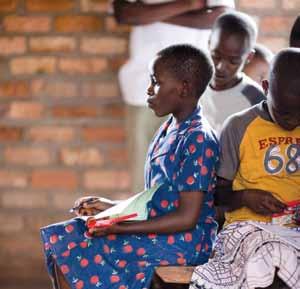
Education is a gift that lasts a lifetime. An educated child is able to imagine a life that goes beyond the despair of today and is empowered to be a vital part of making change in the world. However, the global reality is that over 100 million children are not in school today. Tragically, girls are the ones most often denied this life-changing opportunity. There are many reasons why. Poverty is the most common.
The Sharing Way believes that children everywhere, regardless of gender, have the fundamental right to receive basic education. As image bearers of God, every person should be given the opportunity to reach their full potential, as God has intended for all.
Through The Sharing Way’s Annual Appeal, Hunger for Change — Learning for Life, you can support education projects that will give thousands of children the gift of learning. Help achieve the United Nations’ Millennium Development Goal of universal primary education by 2015. Give hope for a lifetime!
Promotional material will be mailed to churches in August.
Contact communications@cbmin.org for more information.
Grassroots Heroes
To Canadian Baptist Ministries:
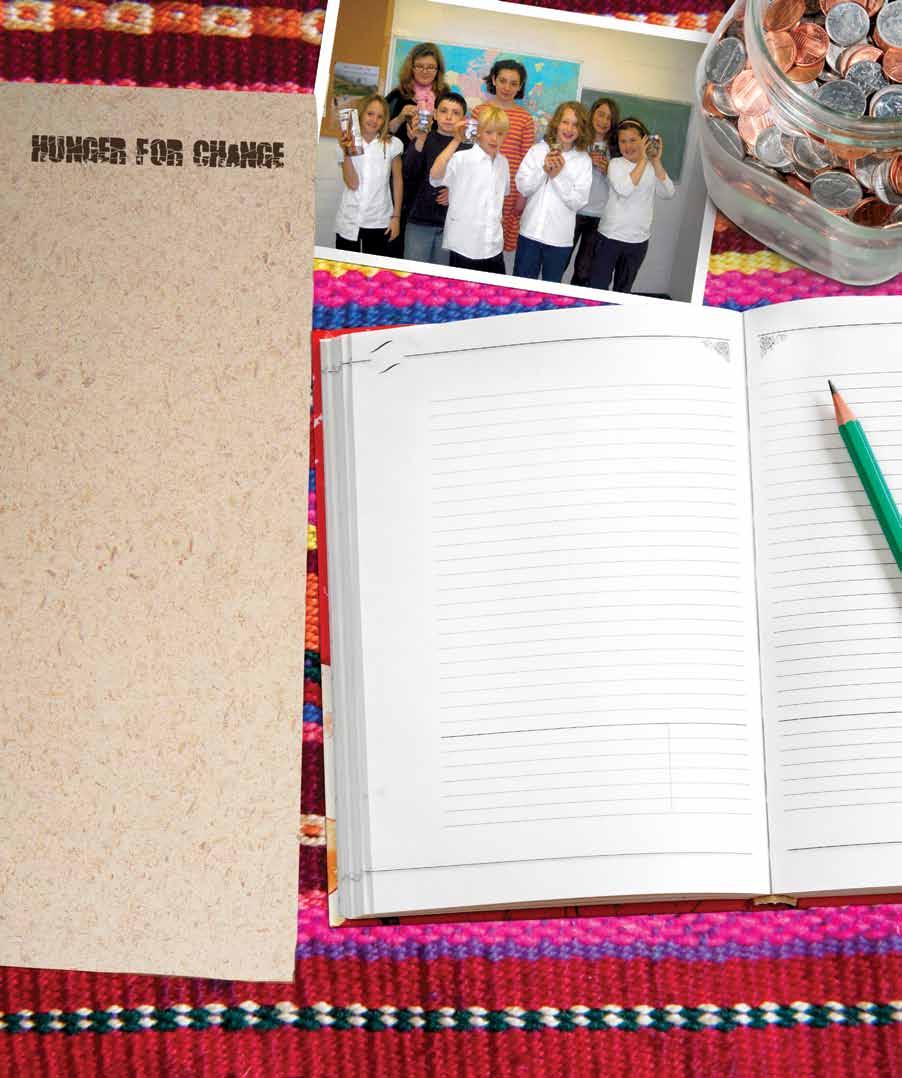
This year in our Global Adventures group (ages 9-12), which meets once a month, we have been learning about Bolivia. We have heard the stories of several children and adults, played Bolivian games and prepared Bolivian food. We have also been saving money in our “Jesus Jars” to help children in Bolivia.
On the day that the “Jesus Jars” came back to class we spent time rolling the money and counting it for the tellers. The smiles and excitement from the group was contagious. They want to help the children that we have been learning about. Enclosed you will find a cheque from these children here in Nova Scotia for children in Bolivia. Would you please see that this money is used for that purpose.
Thank you for the work that you do, in faith, in God’s service.